Article

How Can E-Bikes Accelerate X-Minute City Transitions? User Preferences, Adoption Patterns, and Associated Factors in the Global South


1
Department of Urban and Regional Planning, Institut Teknologi Sepuluh Nopember, Jalan Arsitektur, Surabaya 60111, East Java, Indonesia
2
QUT Urban AI Hub, School of Architecture and Built Environment, Queensland University of Technology, 2 George Street, Brisbane, QLD 4000, Australia
*
Author to whom correspondence should be addressed.
Sustainability 2026, 18(1), 358; https://doi.org/10.3390/su18010358 (registering DOI)
Submission received: 17 November 2025 / Revised: 12 December 2025 / Accepted: 22 December 2025 / Published: 30 December 2025
(This article belongs to the Topic Recent Studies on Climate-Neutral Districts and Cities)

Abstract

E-bikes are emerging as a competitive alternative to private cars in both urban and suburban contexts, enhancing accessibility to daily amenities and aligning with the proximity-oriented principles of X-minute city development. However, empirical knowledge remains limited regarding e-bike adopter profiles, trip purposes, influencing factors, and modal substitution patterns, particularly in urban Global South contexts. This exploratory pilot study employs correlation analysis and exploratory factor analysis to examine the sociodemographic characteristics of e-bike users in Surabaya, identify trip behavior patterns, and uncover potential determinants associated with e-bike usage within the X-minute city framework. Based on a sample of 71 e-bike users, the preliminary findings reveal notable socioeconomic patterns in e-bike adoption, with lower-income inner-city residents, particularly women in informal employment, emerging as early adopters. Additionally, two potential influence dimensions are identified: utilitarian trip chaining and active mobility infrastructure. While these findings require validation through larger-scale studies, they suggest potential for e-bikes to expand feasible X-minute city catchments and support low-carbon mobility transitions in similar Global South contexts.

1. Introduction and Background

The uncontrolled sprawling growth of cities has made the transportation sector the largest consumer of urban energy [1]. As cities continue to grow and expand, so does the demand for transportation, resulting in increased energy consumption, which is projected to surpass that of the industrial sector by 2050 [2]. This issue has prompted major cities to pursue policies that encourage a shift from fossil fuel vehicle dependency to low-carbon mobility solutions [3]. A shift from mobility to accessibility in urban planning is critical for reducing carbon emissions [4]. To effectively implement this shift toward accessibility, low-carbon mobility options, such as electric bicycles (e-bikes), must be integrated into the transportation ecosystem.
E-bikes have emerged as a promising solution to this challenge, offering a multitude of benefits that encompass health, environmental sustainability, and enhanced short-distance mobility [5]. It is now established in a variety of studies that e-bikes (a) replace multiple forms of mobility based on existing urban transport conditions [6,7]; (b) support personal and short-distance mobility [8]; (c) cover gaps in public transport networks [9]; and (d) serve as vital interventions for promoting active transportation among populations that might otherwise be sedentary [5], including women who are constrained by traditional gender roles and family responsibilities [10]. Additionally, compared with cars, e-bikes are generally inexpensive to purchase and maintain, making them an attractive option for urban commuters [11].
As cities strive to enhance accessibility and reduce carbon emissions, the integration of e-bikes has emerged as a pivotal strategy that aligns with the principles of an X-minute city. This innovative urban planning model advocates for creating neighborhoods where essential services and amenities are within X minutes’ reach by foot or by bike [12]. By prioritizing e-bikes as a key mode of transport, cities can not only facilitate shorter travel distances but also foster a culture of active mobility, thereby enhancing the overall quality of life [13].
The development of an X-minute city is influenced by a complex interplay of latent variables, including socioeconomic dynamics, infrastructure availability and quality, community involvement, and environmental factors [14,15]. Low-carbon mobility options, such as electric bikes (e-bikes), offer a sustainable alternative for urban commuting.
E-bike studies are predominantly conducted in high-income nations [16], leaving several aspects unexplored in lower-income countries like Indonesia. In major cities such as Surabaya, there is limited knowledge about users’ sociodemographic characteristics, trip purposes, influencing factors, and other modes of transportation that e-bikes are replacing. A comprehensive understanding of these local characteristics is crucial before making any public capital investments in implementing e-bike services [17]. Given the exploratory nature of this investigation and the absence of prior e-bike research in Indonesian cities, this study is positioned as a pilot investigation designed to generate initial insights and testable hypotheses. Rather than claiming definitive findings, the study aims to establish a foundational understanding of e-bike adoption patterns that can inform future empirical research and preliminary policy considerations in Surabaya and comparable Global South cities. Therefore, the research question that arises in this study is: “What factors are associated with e-bike adoption in Surabaya within the framework of the X-minute city concept?”.
This study adopts the term ‘X-minute city’ rather than the more commonly referenced ‘15 min city’ framework. This deliberate terminological choice reflects two key considerations. First, the 15 min threshold, derived primarily from European and North American urban contexts, may not directly translate to cities in the Global South, where urban morphology, transportation infrastructure, and socioeconomic conditions differ substantially [18,19]. Second, the ‘X’ designation acknowledges that optimal accessibility thresholds should be empirically determined based on local conditions rather than imported wholesale from different contexts. In Surabaya, a city characterized by diverse settlement typologies ranging from dense urban kampungs to sprawling suburban developments [20], a flexible conceptualization of proximity-based urban planning is more analytically appropriate. Throughout this paper, ‘X-minute city’ refers to the broader principle of chrono-urbanism that prioritizes time-based accessibility to essential services and amenities through active mobility modes, with the specific temporal threshold remaining an empirical question rather than a predetermined constant.
This research examines the emerging role of e-bikes in the context of implementing the X-minute city concept in Surabaya. The primary aim of this study is to reveal the characteristics of e-bike users who support X-minute city implementation and who face challenges in implementing the X-minute city concept. After having recognized the potential e-bike user characteristics, the next objective of the study is to identify the factors that are associated with e-bike usage in the context of the X-minute city concept in Surabaya.

1.1. The X-Minute City Concept: Origins and Adaptations

The X-minute city concept represents a transformative approach to urban planning, emphasizing the importance of proximity, sustainability, and equity. This model, rooted in chrono-urbanism, advocates for decentralized urban planning where residents can access essential services, employment, and recreational opportunities within a specific time radius by foot or bike [21]. Core characteristics of this concept include mixed land use, compact urban design, the promotion of active transportation, and addressing socioeconomic inequalities to ensure equitable access for marginalized groups [22]. By reducing the need for long commutes, this approach fosters more resilient and livable urban environments [23].
While the X-minute city concept has generated substantial scholarly and policy interest, critical examination reveals significant limitations in its applicability to Global South urban contexts. The framework emerged primarily from European urban planning traditions, with prominent implementations in cities such as Paris, Barcelona, and Melbourne, which share characteristics of established infrastructure [24], formal land tenure systems [25], and relatively homogeneous urban morphologies [26]. However, cities in the Global South often exhibit fundamentally different spatial configurations, including extensive informal settlements [27], fragmented infrastructure networks [28], and complex layering of formal and informal economic activities [29] that challenge straightforward application of proximity-based planning principles.
Recognition of these contextual limitations has prompted scholars and practitioners to explore variations in X-minute city implementation that account for diverse urban conditions. Logan et al. [12] proposed the “X-minute city” terminology precisely to acknowledge that optimal accessibility thresholds should be empirically determined rather than universally prescribed, with the variable “X” representing context-specific temporal targets ranging from 10 to 20 min depending on local conditions. This flexibility allows planners to calibrate accessibility goals to actual travel speeds, infrastructure availability, and service distribution patterns in specific urban environments. Emerging research has begun to examine X-minute city applicability in Global South contexts, though this literature remains limited. In the Indonesian context, the dense, organically developed urban kampungs that characterize many cities may represent existing approximations of X-minute city neighborhoods, though with significant infrastructure and service deficits that limit their full realization [30,31]. Understanding how e-bikes might enhance accessibility within these diverse urban typologies represents a critical research gap that this study begins to address.

1.2. E-Bikes Within X-Minute City: Factors, Methods, Equity, and Gaps in the Global South

The integration of low-carbon mobility options, particularly e-bikes, is pivotal to effectively implement the accessibility goals of the X-minute city framework. E-bikes have emerged as a promising sustainable solution because they offer numerous benefits, including health [32], environmental sustainability [33], and enhanced short-distance mobility [34]. Studies conducted predominantly in high-income nations have established that e-bikes actively replace multiple forms of mobility [35], support personal and short-distance travel [36], and cover critical gaps in public transport networks [37]. Studies from multiple contexts report that e-bike use increases enjoyment and reduces perceived mobility constraints, contributing to both physical health and mental well-being [38,39,40,41], thereby enhancing the overall quality of life in urban areas.
The potential for e-bikes to expand X-minute city accessibility is substantial. While traditional definitions of 15 min accessibility assume walking speeds of approximately 5 km/h, e-bikes enable travel speeds of 15–25 km/h, effectively tripling the geographic area accessible within the same time frame [42,43]. This expanded catchment area has significant implications for urban accessibility, potentially bringing amenities and employment opportunities within X-minute reach for residents who would otherwise require automobile travel [44]. However, e-bikes should be understood as one component within a broader sustainable mobility ecosystem rather than as essential or sufficient for X-minute city implementation. Walking, conventional cycling, and public transit remain foundational to the X-minute city concept, with e-bikes serving to extend accessibility for longer trips, challenging terrain [45], or users with physical limitations that preclude unassisted cycling [46]. Moreover, the integration of e-bikes into public transit systems can further enhance accessibility within the X-minute city model by solving the “last-mile” problem [47].
However, realizing this potential requires adequate infrastructure and supportive policy environments, and e-bike promotion introduces urban management challenges that planners must address. The development of dedicated cycling lanes, secure parking facilities, and charging infrastructure is essential to support widespread e-bike adoption [48]. Safety concerns arise from e-bikes’ higher speeds compared to conventional bicycles, creating potential conflicts with pedestrians in shared spaces and with motor vehicles on roads lacking protected cycling infrastructure [49]. Furthermore, the integration of e-bikes into existing urban mobility systems requires coordination across transportation, land use, and environmental planning domains that may challenge siloed governance structures. Policy measures including financial incentives, tax exemptions, and supportive regulations play crucial roles in promoting e-bike uptake while managing these challenges [50,51].
Existing research has identified multiple categories of factors associated with e-bike adoption and usage. At the individual level, demographic characteristics including age, gender, income, and education have shown varying relationships with e-bike use across contexts [52,53]. Physical ability, health status, and fitness levels influence e-bike appeal, with e-bikes being particularly attractive to individuals who find conventional cycling physically demanding [5,54,55]. Built environment factors significantly shape e-bike usage patterns. Population density, land use mix, and proximity to commercial and activity centers are positively associated with e-bike demand [56]. Cycling infrastructure—particularly separated bike lanes that provide safety from motor vehicle traffic—influences both adoption decisions and route choices [48,57,58]. Terrain and topography affect e-bike appeal, with hilly areas showing higher e-bike uptake relative to conventional bicycles [59]. Distance to public transit stops influences e-bike use for first-mile/last-mile connections [9]. Policy and economic factors also play important roles. Vehicle ownership costs, fuel prices, and public transit fares affect the relative attractiveness of e-bikes as a transportation mode [60]. Purchase subsidies, tax incentives, and employer-provided benefits significantly influence adoption decisions [50,51].
The growing body of e-bike research has employed diverse methodological approaches, each offering distinct insights while presenting specific limitations [61]. Survey-based studies represent the most common methodology, utilizing cross-sectional questionnaires to capture user demographics, trip purposes, attitudes, and stated preferences [62,63,64]. Sample sizes in survey-based e-bike studies vary considerably, from small convenience samples of 50–100 users to larger probability samples exceeding 1000 respondents, with corresponding implications for statistical power and generalizability. Travel diary and trip log methodologies provide more detailed behavioral data by asking participants to record their trips over defined periods [65,66]. These approaches capture temporal patterns, trip chaining behavior, and mode choice sequences. GPS tracking and smartphone-based data collection represent emerging methodologies that capture objective travel behavior without relying on participant recall [67]. These approaches can document actual routes, speeds, trip durations, and destinations with high precision, enabling spatial analysis of e-bike mobility patterns. Studies integrating both objective and subjective measures remain relatively rare but offer the most comprehensive understanding of how physical and perceived environments shape e-bike adoption [68].
Emerging scholarship on micromobility equity highlights the importance of examining who benefits from new mobility technologies and who may be excluded [69]. In many Global South cities, informal transportation modes already play crucial roles in serving populations underserved by formal transit systems [70]. E-bikes may either complement or compete with these existing informal mobility solutions, with implications for transport justice and accessibility equity that remain underexplored.
Gender dimensions of e-bike adoption warrant particular attention. Research from various contexts suggests that women’s mobility patterns differ systematically from men’s, often involving more complex trip chains related to household responsibilities and care work [71]. E-bikes’ potential to facilitate flexible, multi-stop journeys may hold particular significance for women’s mobility needs, yet gender-disaggregated analyses remain scarce in the e-bike literature.
Despite these recognized achievements and established relationships in the literature, e-bike studies are overwhelmingly predominantly conducted in high-income nations, leaving critical aspects unexplored in lower-income countries like Indonesia. Specifically, there is limited empirical knowledge regarding the following key areas in Global South urban contexts:
  • User sociodemographic characteristics: understanding who the early adopters are and their unique socioeconomic profiles [8,63,72].
  • Trip purposes and substitution effects: detailing local trip behaviors and which existing modes of transportation e-bikes are replacing [66,73,74].
  • Influencing factors: identifying the local determinants, such as economic policies, gender roles, and the distinct urban form of settlements like kampungs, that shape e-bike usage and preference within the applied X-minute city framework [75,76,77].
  • Policy adaptation: determining if and how European/American X-minute planning concepts can be successfully applied to the challenges and opportunities of emerging cities [78,79,80].
The preceding review identifies a convergence of research gaps that this study addresses. First, the near-complete absence of e-bike research from Indonesian cities, despite Indonesia’s urban population of over 150 million and rapidly growing transportation challenges, represents a significant geographic blind spot in the literature. Second, the equity dimensions of e-bike adoption, particularly regarding income and gender, remain underexplored globally and entirely unstudied in Indonesian contexts. Third, the relationship between e-bike usage and X-minute city accessibility frameworks has received minimal empirical attention, with most e-bike research focusing narrowly on commuting rather than the broader accessibility to daily amenities that X-minute city planning encompasses. Fourth, methodological approaches that examine both user characteristics and urban contextual factors within integrated frameworks remain rare. These methodological and thematic gaps underscore the need for exploratory investigations that can generate hypotheses for subsequent, more rigorous testing, precisely the contribution this study aims to make.
This exploratory pilot study begins to address these gaps by examining e-bike user characteristics, trip purposes, and associated factors in Surabaya, Indonesia’s second-largest city. By investigating who adopts e-bikes, for what purposes, and in association with which urban and policy factors, the study generates initial insights into e-bikes’ role in accelerating the accessibility goals of the X-minute city framework in an understudied Global South context [67].

2. Research Design

This research uses a quantitative approach to its objectives. This approach allows researchers to collect numerical data and apply correlational analysis to find variables of the e-bike user characteristics that are correlated with the rise in usage frequency in the context of the X-minute city concept. Factor analysis is used to explore the latent structure from the principal elements of the X-minute city concept that construct e-bike users’ preferences in the context of Surabaya city.

2.1. Population, Sample, and Sampling Limitations [62]

The target population for this study comprised e-bike users in the city of Surabaya, Indonesia. Given the absence of a comprehensive registry of e-bike users and the mobile, dispersed nature of this population, probability sampling methods were not feasible for this exploratory investigation [81]. Instead, data were collected using convenience sampling through accidental intercept methods, whereby researchers approached e-bike users encountered in various neighborhoods during the data collection period.
To capture variation across different urban contexts, data collection was conducted across multiple neighborhood types, including urban kampungs (informal inner-city settlements), cluster housing developments, public housing (rusun), and townhouse communities. However, it is important to note that this approach does not constitute formal stratified sampling, as quotas were not predetermined and proportional representation across strata was not systematically achieved.
The final sample comprised 71 e-bike users. While this sample size meets the minimum threshold sometimes cited for exploratory factor analysis (minimum 50 cases or a 5:1 subject-to-variable ratio) [82], it falls below more conservative recommendations of 100+ cases or 10:1 ratio [83].

Limitations of the Sampling Approach

Several important limitations of the sampling strategy must be acknowledged. First, the non-probabilistic convenience sampling approach introduces substantial selection bias, as the sample cannot be assumed to be representative of the broader e-bike user population in Surabaya. Users who were more visible, accessible, or willing to participate may be overrepresented [84,85]. Second, the sample size of N = 71 limits the statistical power of the analyses and the stability of factor solutions. Third, there is a documented under-representation of high-income users in the sample, likely attributable to difficulties in accessing gated residential communities [86] and the lower visibility of e-bike use in these areas. These limitations position this study as hypothesis-generating rather than hypothesis-testing, with findings requiring validation through larger, more systematically sampled investigations.

2.2. Data Collection Method

Primary data were collected from the 10 to 31 July 2024 using two types of questionnaires that were distributed to respondents who were using e-bikes in the selected neighborhoods. The first questionnaire explores several latent variables associated with the adoption of e-bikes, and the second one covers latent variables from the X-minute city elements that drive people’s intentions to use e-bikes for their daily amenities.
The first questionnaire contains closed-ended questions regarding the variables of e-bike user characteristics. It is a quantitative questionnaire consisting of 5 questions with nominal answer choices, such as type of housing typology, gender, willingness to use an e-bike to access the nearest public transport, willingness to use an e-bike to replace other modes of transport for short trips (under 5 km), and willingness to use an e-bike to replace other modes of transport for long trips (under 15 km). Additionally, there are 11 questions with ordinal answer choices, such as how often do you use an e-bike, how often do you use an e-bike in a single trip, how far you travel by e-bike in one trip, age category, highest level of education, monthly income range, popularity level of e-bikes, number of motor vehicles owned, traffic conditions in the residential area, difficulty of finding parking, and distance to the nearest public transport point.
The second questionnaire contains closed-ended questions on variables related to the concept of the X-minute city. It is a quantitative questionnaire with Likert-scale answers ranging from 1 to 5 to rate 15 questions related to respondents’ reasons for using an e-bike in the context of an X-minute city. Five questions are related to travel purpose and patterns, such as using an e-bike for work, shopping at markets or stores, recreation at parks/playgrounds/sports arenas, going to school, going to healthcare facilities/places of worship, and other service facilities. Two questions are related to economic factors and policies, such as using an e-bike because of rising transportation costs (fuel prices, public transport fares) and the high cost of motor vehicles (taxes and maintenance). Five questions are related to built environment factors, such as using an e-bike due to mixed land use patterns, good urban design, availability of e-bike parking facilities, dedicated bike lanes, and access to public transport. Additionally, three questions are related to safety and security factors, such as using an e-bike due to the presence of busy public activities and the availability of good lighting and signage infrastructure.

2.3. Data Analysis Method

This study uses three types of quantitative analysis methods, frequency distribution analysis, correlation analysis, and factor analysis, to analyze the questionnaire responses from the 71 respondents selected as the research sample. The respondents’ multiple-choice answers were converted into nominal and ordinal data and then processed using a statistical approach with JASP 0.19 software.
The selection of analytical methods was guided by both the research objectives and the constraints of sample size. More advanced approaches, such as logistic regression, structural equation modeling, or machine learning methods, could potentially offer greater predictive power and model complex relationships. However, these techniques require substantially larger sample sizes to produce reliable estimates and avoid overfitting [87,88]. Given the exploratory nature of this pilot study and the sample of 71 respondents, we employed correlation analysis and exploratory factor analysis as appropriate first-step analytical strategies. Spearman’s rho correlations were selected over Pearson correlations due to the ordinal nature of the Likert-scale data, which violates the parametric assumptions required for Pearson’s method [89]. Exploratory factor analysis was chosen to inductively identify underlying dimensions from the X-minute city variables, rather than confirmatory factor analysis, which would presuppose a theoretical structure requiring validation. Future research with larger samples should employ more sophisticated modeling techniques, including logistic regression to predict e-bike adoption and structural equation modeling to test the hypothesized relationships identified in this exploratory investigation.
In the first questionnaire, the questions related to e-bike user characteristics, which were answered using a nominal scale, were analyzed using a frequency distribution to observe the central tendency and data distribution of these variables in relation to the variable of e-bike usage intensity. Meanwhile, for the questions answered using an ordinal scale, both in the first questionnaire regarding e-bike user characteristics and the second questionnaire regarding X-minute city elements, Spearman’s rho correlation analysis was used to assess which variables showed a strong correlation, either positive or negative, with the intensity of e-bike usage as a daily micro-mobility mode. A significant relationship was considered to exist when the p-value was less than 0.05. Spearman’s rho correlation analysis was used because the data were ordinal; therefore, the parametric assumptions were not met.
In the second questionnaire, Exploratory Factor Analysis (EFA) was used to explore the latent variables of the X-minute city that shape the public’s preference for using e-bikes in their daily mobility. This method is particularly useful for exploring the latent structures of psychological constructs behind people’s preferences [90], emphasizing its role in the validation of theoretical constructs in the context of Surabaya City [91]. The factor loading values that emerged showed how much each variable from the second questionnaire was related to a factor (a broader concept or theme). A higher number indicated a stronger relationship, whereas a lower number indicated a weaker relationship. Principal component analysis was used as the basis for determining the number of factors formed from variables with factor loading values above 0.4. Additionally, the orthogonal rotation method (Varimax) was used to ensure that the factors formed were not correlated with each other.
Prior to conducting the Exploratory Factor Analysis (EFA), the ‘Transportation cost’ variable was removed from the analysis due to concerns about potential multicollinearity with ‘Vehicle prices and taxes’ (Spearman’s ρ = 0.713, p < 0.001). This decision was made to improve the stability and interpretability of the factor solution. The refined EFA was conducted on 13 variables.
The results of the Kaiser–Meyer–Olkin (KMO) test, presented in Table 1, indicate an overall measure of sampling adequacy (MSA) value of 0.660, which exceeds the recommended threshold of 0.50 and is classified as “mediocre” to “middling” according to Kaiser’s guidelines. All individual variable MSA values exceeded 0.50, confirming the suitability of the data for factor analysis. Additionally, the results of Bartlett’s test of sphericity (Table 2) indicate a significant chi-square value (χ2 = 184.451, df = 78, p < 0.001), confirming that the correlation matrix is not an identity matrix and that the variables share sufficient common variance for factor extraction.
Subsequently, validity and reliability tests were conducted on the 71 collected questionnaires. The validity test, performed using Pearson’s correlation, revealed that out of all the variables considered, only the streetlight variable had a p value greater than 0.05, indicating that it was not valid and thus excluded from further analysis. Conversely, the reliability test, conducted using Cronbach’s α, showed values exceeding 0.7, confirming that the assumption of reliability testing for the consistency of the questionnaire as an instrument for measuring the research variables was fulfilled.

3. Analysis and Results

3.1. E-Bike Users’ Perspective

The results of sampling across strata based on gender, housing typology, and income differences indicate variations in e-bike user characteristics in terms of usage frequency, cycling duration, cycling distance, and the substitution of other transportation modes with e-bikes.
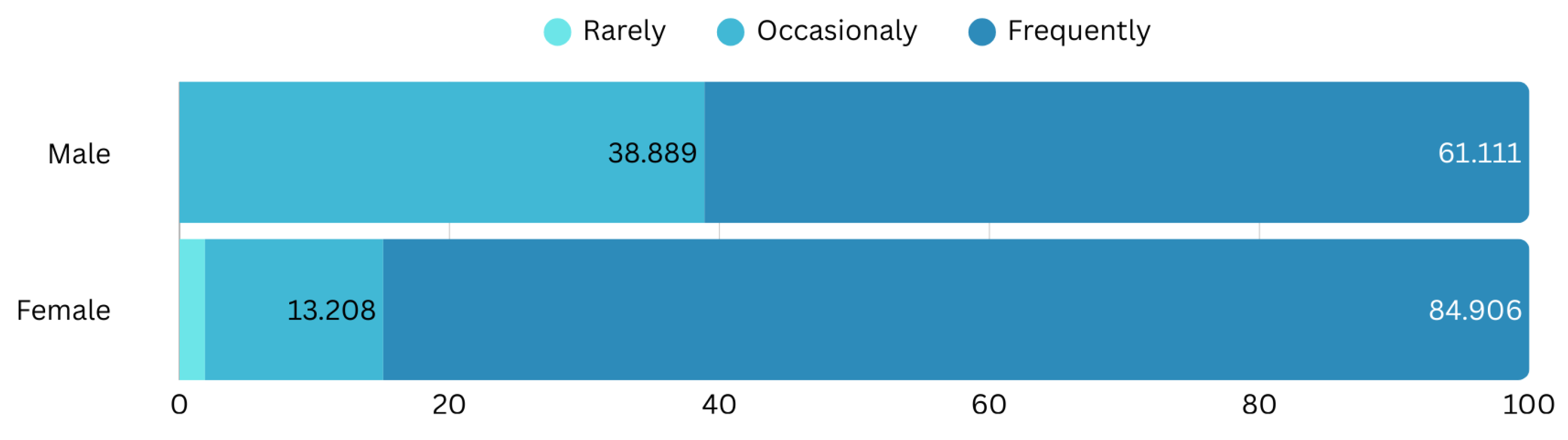
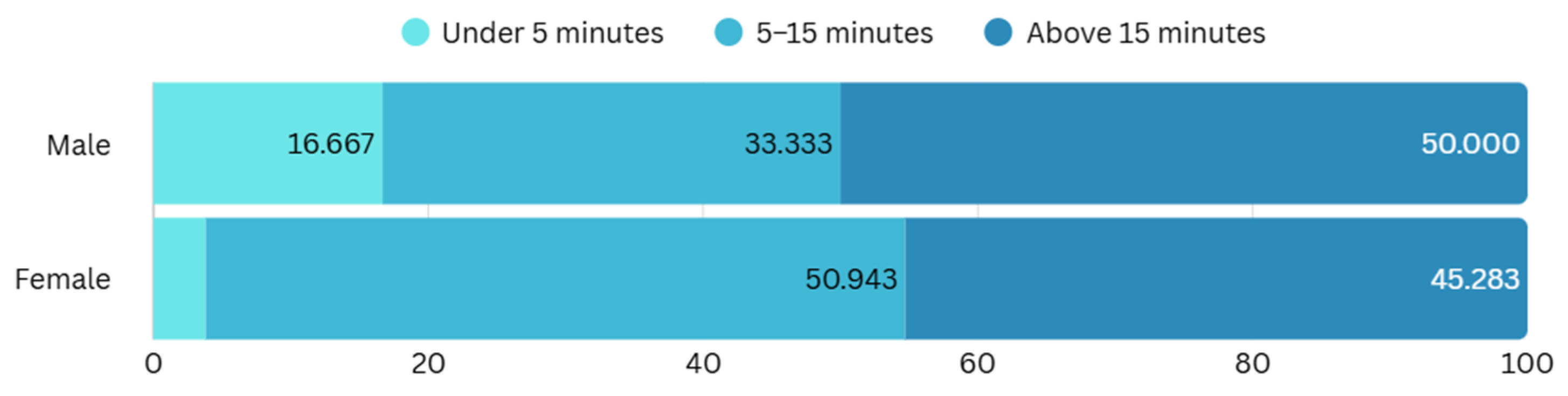
Regarding gender differences, Figure 1 shows that women use e-bikes more frequently than men. However, regarding cycling duration, there is no significant difference between male and female users (Figure 2). This is evident as both male and female respondents are generally capable of using e-bikes for more than 15 min per trip.
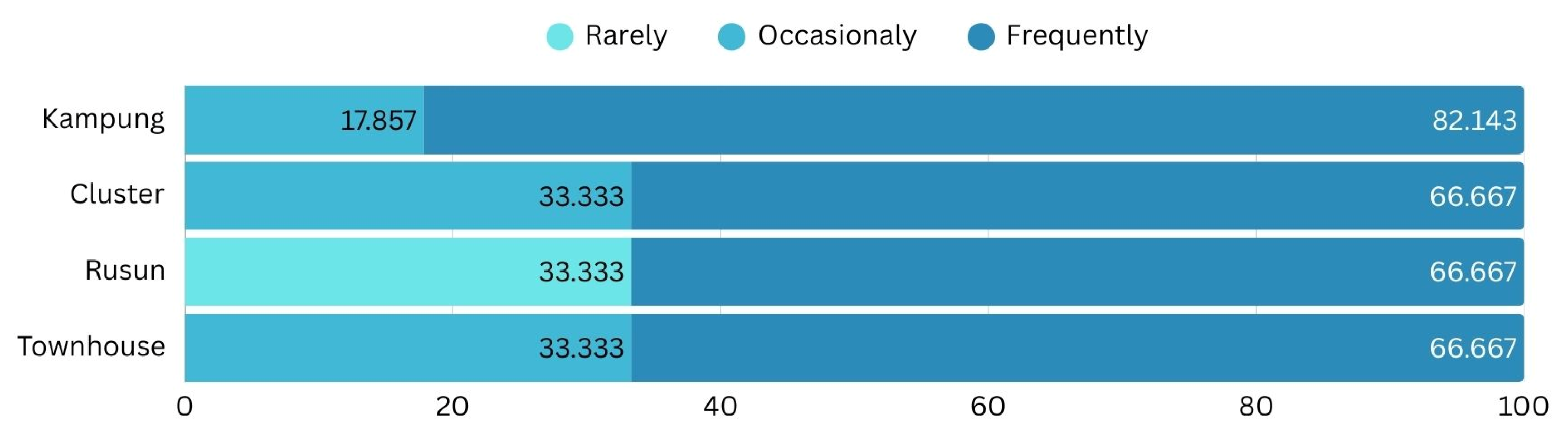
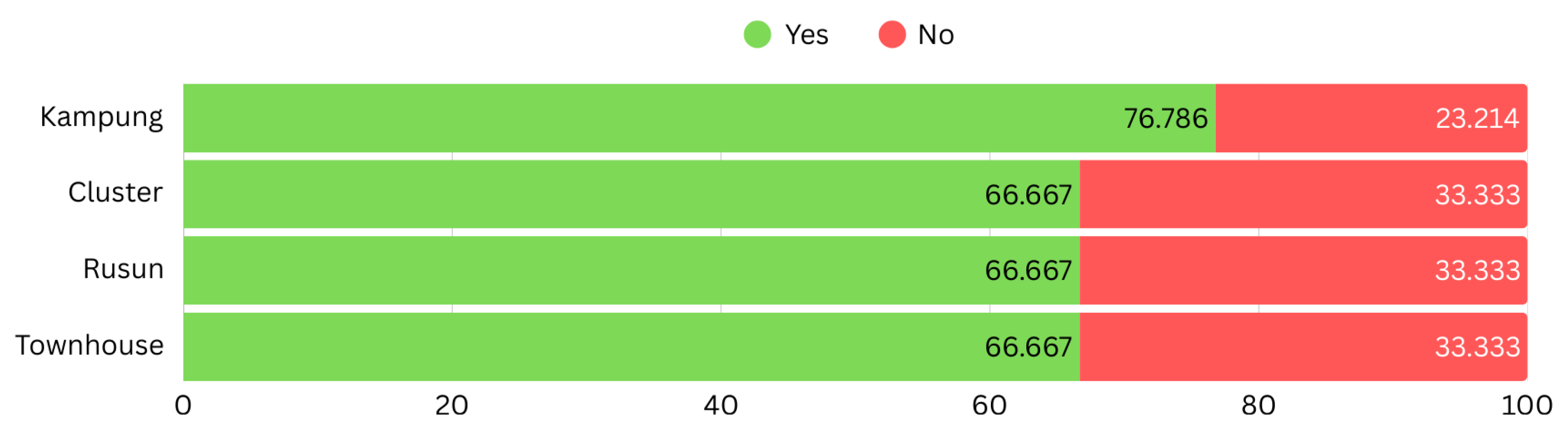
Figure 3 and Figure 4 provide preliminary insights into mode substitution patterns across housing typologies. Most respondents across all housing types (66.7–76.8%) express willingness to use e-bikes as substitutes for other transport modes on trips of 5–15 km. Kampung residents show the highest substitution willingness (76.8%), potentially reflecting limited transportation alternatives in these dense, often underserved inner-city areas. However, these findings must be interpreted cautiously. The current data capture states willingness to substitute rather than actual substitution behavior, and does not specify which transportation modes would be replaced. Future research should employ more detailed mode substitution questions that ask respondents to identify the specific alternative mode they would have used for recent trips in the absence of an e-bike.
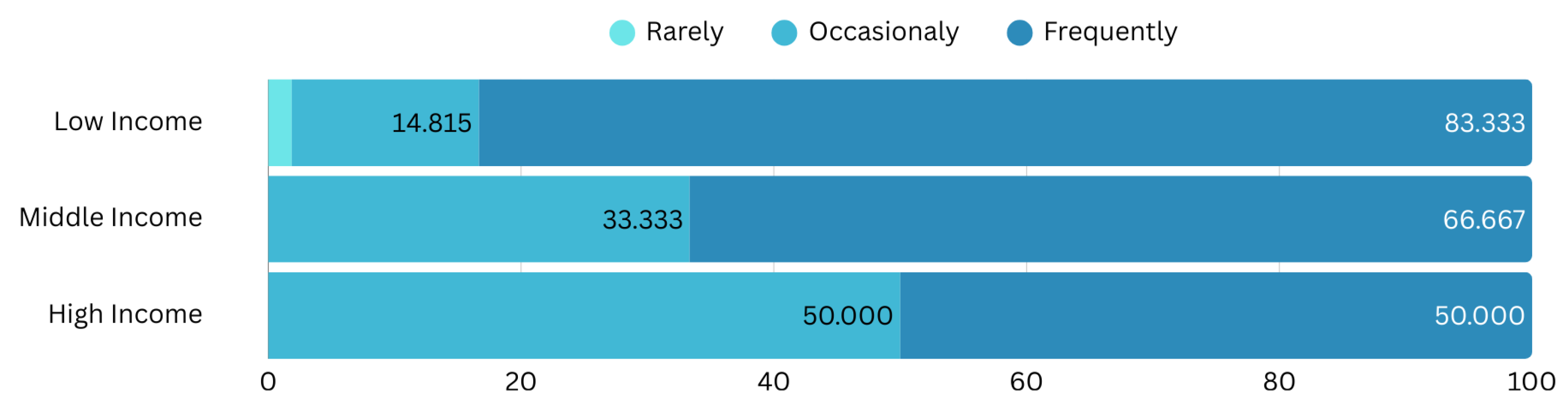
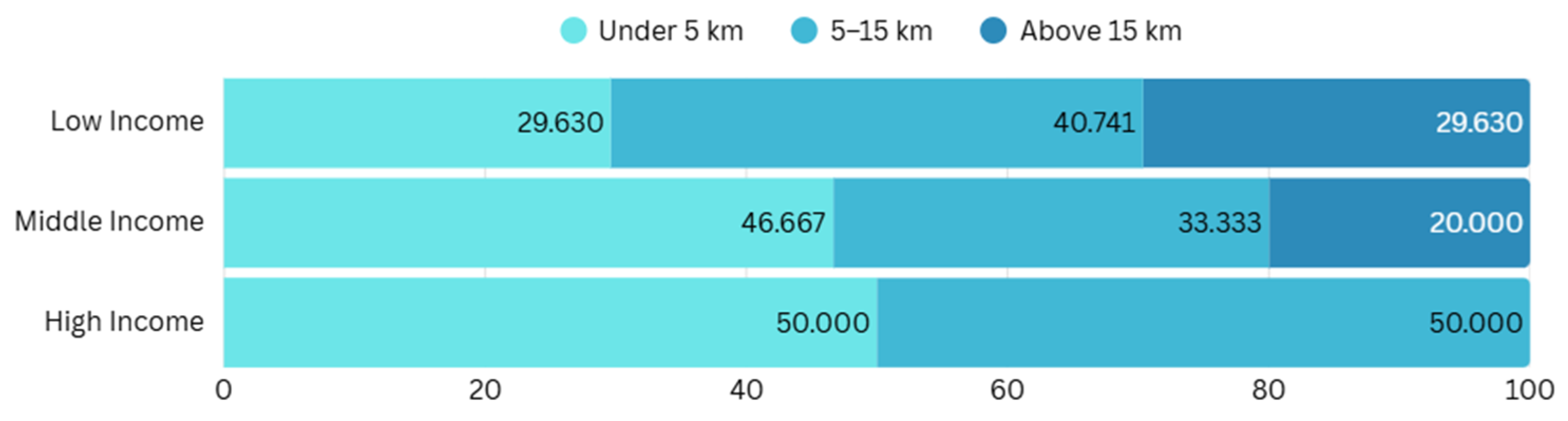
Regarding income differences, Figure 5 indicates that low-income respondents use e-bikes more frequently, with 83% of them using an e-bike. This proportion is higher compared to 66 percent of middle-income respondents and 50 percent of high-income respondents. Additionally, e-bike users from the low-income group tend to travel longer distances, although the difference is not statistically significant (Figure 6).
The results of Spearman’s rho correlation analysis conducted on the variables of e-bike user characteristics in Surabaya reveal that only occupation and distance traveled show statistically significant correlations with e-bike usage frequency (p < 0.05) (Table A1). However, it is important to interpret these correlations with appropriate caution given their magnitude. The correlation between occupation and e-bike usage frequency (ρ = −0.294, p = 0.013) represents a weak negative association according to conventional interpretation guidelines, suggesting that while informal workers tend to use e-bikes more frequently, occupation explains only approximately 9% of the variance in usage frequency. Similarly, the correlation between distance traveled and usage frequency (ρ = 0.264, p = 0.026) is also weak, indicating a modest positive relationship. These weak correlations, while statistically significant, should be interpreted as preliminary indicators of potential relationships warranting further investigation with larger samples rather than as strong predictive factors.

3.2. E-Bikes in the Context of X-Minute City

In the context of e-bike usage within the implementation of the X-minute city concept, the use of e-bikes for worker and student mobility showed positive correlations with e-bike usage frequency, with correlation values of 0.320 and 0.282, respectively. Furthermore, the use of e-bikes for commuting to work demonstrated a positive correlation with service and commercial trips, with correlation values of 0.494 and 0.313, respectively. Table A2 also indicates that using e-bikes to access intermodal transit systems and in mixed-use areas is positively correlated with e-bike use for worker mobility. On the other hand, in the context of student mobility, using e-bikes for school commutes also showed a moderate positive correlation with commercial and service trips, with correlation values of 0.398 and 0.342, respectively. Additionally, transportation costs and the availability of parking facilities for e-bikes were positively correlated with student e-bike mobility.
In the context of the built environment that supports the X-minute city concept, the results of Spearman’s correlation analysis indicate that the availability of recreational functions and dedicated bike lanes are variables associated with respondents’ use of e-bikes to access intermodal transit systems. Moreover, the availability of dedicated bike lanes shows a positive association with e-bike use for commuting to work and accessing services and recreational functions. Furthermore, e-bike usage in mixed-use areas is associated with vehicle price and transportation costs, although this association is weak in magnitude.
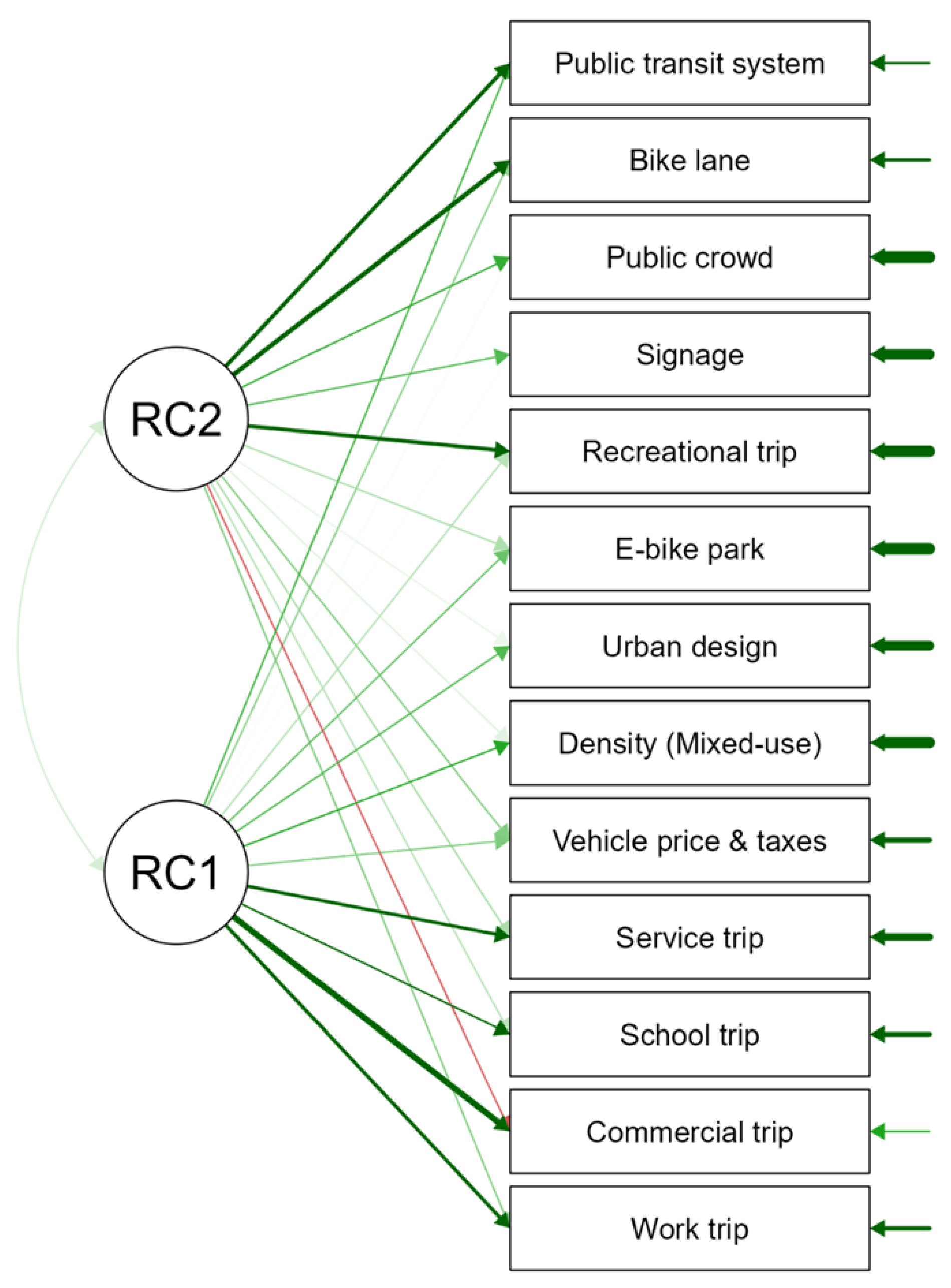
The EFA using principal component extraction with Varimax rotation revealed a two-factor structure (Table 3). The chi-squared goodness-of-fit test for the model was non-significant (χ2 = 59.829, df = 53, p = 0.242), indicating acceptable model fit. Together, the two factors explained 28.2% of the total variance in the data, with Factor 1 accounting for 15.5% and Factor 2 accounting for 12.7% of variance after rotation.
Factor 1 comprises variables related to utilitarian trip purposes, including commercial trips (loading = 0.675), work trips (0.575), service trips (0.567), and school trips (0.504). This factor can be interpreted as representing the capacity of e-bikes to facilitate multi-purpose utilitarian trip chaining. The internal consistency reliability for Factor 1 was acceptable (Cronbach’s α = 0.644). Factor 2 includes variables related to cycling infrastructure and recreational mobility: bike lanes (0.618), public transit system access (0.593), and recreational trips (0.588). This factor can be interpreted as representing active mobility infrastructure, reflecting the built environment conditions that support e-bike use for leisure and intermodal connectivity. The internal consistency reliability for Factor 2 was acceptable (Cronbach’s α = 0.684).
Notably, several variables did not load meaningfully on either factor and exhibited high uniqueness values (>0.80), including vehicle prices and taxes (0.877), urban design (0.884), signage (0.885), public crowd (0.841), and e-bike parking availability (0.888). This suggests that these variables, while potentially relevant to e-bike usage, do not cluster with other variables in this sample and may represent distinct, independent considerations for e-bike users in Surabaya. The high uniqueness of the density/mixed-use variable (0.812) is particularly noteworthy given the theoretical importance of land use mix in X-minute city frameworks.

4. Findings and Discussion

4.1. Characteristics of E-Bike Users Associated with X-Minute City Implementation

The findings from this exploratory study reveal that individuals with lower educational backgrounds were among the earliest adopters of e-bikes as a daily mode of transportation in Surabaya. The majority worked in the informal sector and earned below the minimum wage. These findings present a notable contrast to studies conducted in Switzerland and the United States, which have found that e-bike users predominantly consist of families with above-average incomes and education levels [53]. This divergence suggests that e-bike adoption patterns may vary substantially across different socioeconomic and geographic contexts, highlighting the importance of context-specific research in the Global South.
The largest concentration of e-bike users was observed in inner-city neighborhoods, particularly in urban kampungs—densely populated residential areas located near activity centers characterized by narrow, irregular alleyways that have become integral to the city’s structure [92]. This pattern is consistent with findings by He et al. [56], who reported that population density and proximity to activity and commercial centers are associated with increased demand for e-bike use. Moreover, settlements in urban kampungs have developed with productive activities and are inhabited by individuals with diverse characteristics [30,31]. Due to their density, diversity, and high levels of economic activity, urban kampungs appear relatively well-suited for implementing X-minute city principles to create vibrant and human-centered urban environments [14].
The findings indicate that e-bike usage frequency is higher for utilitarian trips, particularly among informal workers and housewives. This pattern aligns with findings from studies on e-bike mobility patterns in other contexts, which showed that e-bikes are used more frequently for work and business trips than for recreational purposes [65,66]. The positive correlations between work trips and both commercial (ρ = 0.313) and service trips (ρ = 0.494) suggest that e-bikes may facilitate trip chaining—the combining of multiple purposes within a single journey. This interpretation is supported by the EFA results, which identified utilitarian trip chaining as the first latent factor underlying e-bike usage preferences.
The use of e-bikes for utilitarian trips appears more prevalent in mixed-use areas. Urban kampungs in Surabaya function not only as residential areas but also as centers of informal economic activity and social interaction [93]. E-bikes may support the principles of the X-minute city framework by fostering socioeconomic benefits, such as promoting local businesses and enhancing community engagement. In such urban spaces, residents are likely to spend more time and money in their local neighborhoods, potentially contributing to economic vitality and social cohesion [94,95]. Furthermore, the increased accessibility to amenities and services within a compact urban layout may reduce vehicular dependence, leading to lower greenhouse gas emissions and improved public health outcomes [96]. These various factors may contribute to e-bikes being easily adoptable and becoming a popular mode of transportation in urban kampungs, even though many e-bike users already own other motor vehicles.
While this study did not directly measure spatial variations in built environment characteristics, the observed differences in e-bike adoption across housing typologies suggest that spatial context plays a meaningful role. Urban kampungs, characterized by narrow alleyways, high density, and proximity to activity centers [97], appear to provide environments conducive to e-bike use—potentially because e-bikes can navigate these spaces more easily than cars or motorcycles, and because short distances to amenities align with e-bikes’ effective range [98]. In contrast, the lower adoption rates observed among residents of newer, suburban developments may reflect the challenges these environments pose for e-bike integration: longer distances to essential services, road networks designed for automobile traffic, and limited cycling infrastructure [99,100]. These spatial hypotheses warrant systematic investigation through studies that incorporate objective measures of built environment characteristics, including street network connectivity, land use mix indices, and cycling infrastructure availability, alongside user survey data.
The majority of frequent e-bike users in the sample were women, with an average age of over 40 years, who use e-bikes for more than 15 min per trip. Studies from various regions have shown similar patterns, where the most active users in the Netherlands and Japan are older adults, while users in North America and Australia are typically between 40 and 60 years old, and users in China tend to be younger [101]. This pattern suggests that e-bikes may enhance the mobility of demographic groups who face physical limitations when using conventional bicycles, particularly women and middle-aged individuals [63]. Compared with conventional bicycles, e-bikes tend to increase travel distance, transportation time, and trip frequency without requiring extensive physical preparation or strength. E-bikes may remove barriers to active transportation for people with physical limitations and certain health conditions [54,55,102]. Several studies have also reported that using e-bikes increases enjoyment and reduces perceived mobility constraints [40,41].
Traditional gender roles often require women to prioritize family responsibilities, which can limit their access to formal employment. Gender discrimination in the labor market may further push women toward informal occupations [103]. The informal sector’s flexibility enables women to participate in the workforce without the constraints typical of formal employment [104]. The evidence from this study suggests that e-bike usage may accommodate women’s flexible mobility needs, enabling them to engage in informal economic activities. This, in turn, may contribute to achieving gender equality and empowering women both socially and economically, potentially removing barriers to implementing the X-minute city model [76,105,106,107]. Such flexibility cannot be easily accommodated by public transportation systems that rely on fixed routes and schedules [108].

4.2. Characteristics of E-Bike Users Facing Challenges in X-Minute City Implementation

In the context of Surabaya, e-bikes appear to have yet to be widely adopted by high-income groups as an alternative means of transportation. A possible explanation for this finding is that most individuals in this group tend to gravitate toward newly developed low-density suburban areas, which offer spacious homes and a perceived higher quality of life compared to older urban neighborhoods [109]. Most of these areas are gated communities located far from public transportation, making residents highly dependent on private motorized vehicles [110]. Research indicates that gated communities have become a global phenomenon, reflecting urban elites’ desire for safety and social status [111].
The correlation analysis results indicate that the availability of bike infrastructure, such as separated bike lanes and recreational facilities, is associated with increased e-bike usage for commuting to transportation hubs. E-bike use also appears more prevalent in areas close to public transportation stops. Although most public transportation points are still outside the bikeable range of Surabaya’s suburban neighborhoods, most respondents indicated willingness to use e-bikes to access these transport points. These results suggest that e-bikes have potential to address first-mile/last-mile challenges in areas with limited public-transport coverage [112]. This insight could be valuable for developers of high-income residential areas in suburban locations, encouraging them to adopt X-minute city approaches in urban planning.
Consequently, public investment may be most effective when prioritized toward developing safe cycling infrastructure networks, such as separated bike lanes, to connect residential pockets with the nearest public transport hubs and nearby urban recreational facilities. Studies have found that the presence of dedicated cycling paths and safe transitions from streets to bike lanes can alleviate some of the safety concerns that women report, thereby potentially encouraging more frequent e-bike use [57,58]. Moreover, e-bike users tend to ride at slower speeds for recreational purposes than for work-related trips [113]. As a result, the availability of dedicated bike lanes is important for avoiding conflicts with faster-moving motorized vehicles.
In addition, the presence of bike-supporting systems—including traffic calming measures, ample bike parking stations, and direct pedestrian access around transport hubs—should be strategically developed across neighborhoods within X-minute city distance. These measures may help ensure seamless e-bike usage and enhance user perception of safety and convenience [114,115]. Such initiatives may encourage high-income groups to reduce their reliance on private cars and adopt e-bikes for accessing daily amenities, as poor cycling infrastructure, limited end-of-trip facilities, and difficulties integrating bicycles with public transport have been identified as significant barriers to e-cycling uptake [8].

4.3. Factors Associated with E-Bike Usage in the Context of the X-Minute City Concept

The results of the exploratory factor analysis (Figure 7) suggest a two-factor structure underlying the X-minute city variables associated with e-bike usage in Surabaya. These two factors together explain 28.2% of the variance in the data, indicating that while meaningful patterns exist, substantial variation in e-bike usage preferences remains unexplained by the measured variables. This finding underscores the complexity of e-bike adoption decisions and suggests that additional unmeasured factors likely play important roles.
The first factor associated with e-bike usage in the context of the X-minute city concept relates to the e-bike’s capacity to facilitate multi-purpose utilitarian trip chaining. This factor encompasses commercial trips, work trips, service trips, and school trips, with commercial trips showing the strongest loading (0.675). The clustering of these utilitarian trip purposes suggests that e-bike users in Surabaya may value e-bikes for their convenience, speed, and flexibility in combining multiple daily activities within a single journey. This finding aligns with the core principle of the X-minute city framework: creating environments where residents can meet most of their daily needs within a short travel radius from their homes, fostering vibrant communities that minimize the need for long-distance travel [116,117]. The internal consistency of this factor (α = 0.644) indicates acceptable reliability, though the moderate value suggests some heterogeneity in how respondents perceive these different trip purposes.
The second factor associated with e-bike usage relates to active mobility infrastructure, comprising bike lanes, public transit system access, and recreational trips. The loading of recreational trips on this infrastructure-oriented factor (rather than with utilitarian trips on Factor 1) is noteworthy. This pattern suggests that in Surabaya, recreational e-bike use may be more strongly associated with the availability of dedicated cycling infrastructure than with the trip-chaining behaviors that characterize utilitarian use. Bike lane infrastructure, particularly separated bike lane networks that connect residential areas to public transit systems and recreational facilities, emerges as a key factor associated with e-bike use in this context. Increased access to recreational activities in the community—such as public open spaces, playgrounds, sports facilities, and other urban leisure areas—can enhance the quality of urban life [118]. By offering a more personal mode of transportation with freedom of movement, e-bikes have become a promising first- and last-mile mobility option for accessing public transportation [96] and may promote active mobility around transport hubs and recreational functions. The internal consistency of this factor (α = 0.684) indicates acceptable reliability.
Importantly, several variables that were hypothesized to be associated with e-bike usage did not load on either factor and exhibited high uniqueness values. These include vehicle prices and taxes (uniqueness = 0.877), mixed-use density (0.812), urban design quality (0.884), signage (0.885), public crowd/activity (0.841), and e-bike parking availability (0.888). The high uniqueness of these variables has several potential interpretations:
First, these factors may operate independently rather than clustering with other variables, suggesting that they represent distinct considerations for e-bike users that do not co-vary with trip purposes or infrastructure availability. Second, the relatively small sample size (N = 71) may have limited the statistical power to detect factor loadings for these variables. Third, in the Surabaya context, these factors may be less salient to e-bike users than in contexts where the X-minute city framework was originally developed.
The absence of a distinct “external policy factors” dimension suggests caution in interpreting economic incentives as a coherent driver of e-bike adoption in this sample. While rising vehicle prices, maintenance costs, and transportation costs may individually influence e-bike adoption as government policies aimed at energy transition [119,120], these economic factors did not cluster together or with other variables in this analysis. This finding does not negate the potential importance of economic factors but suggests that their relationship to e-bike adoption may be more complex than a simple economic incentive dimension.

5. Conclusions

This exploratory pilot study examined e-bike adoption patterns and associated factors in Surabaya, Indonesia, within the framework of the X-minute city concept. The findings, while preliminary due to sample size limitations, offer initial insights that may inform both future research and policy considerations in similar Global South urban contexts.
The adoption of e-bikes by lower-income groups in Surabaya provides preliminary evidence that appropriate mobility solutions can emerge organically when they align with local needs and economic constraints. Consequently, X-minute city planning should consider accessibility across socioeconomic boundaries rather than assuming uniform adoption patterns. Urban kampungs, with their existing density, diversity, and economic activity, may represent suitable environments for X-minute city implementation. Their integration into formal planning frameworks, rather than their replacement, could potentially accelerate the achievement of X-minute city goals while preserving social cohesion and cultural identity. The notable presence of women engaged in informal economic activities among e-bike adopters suggests that X-minute city planning should account for gender-specific mobility needs and economic patterns. Flexible transportation options like e-bikes may help address gender inequality by expanding women’s economic opportunities within their immediate urban environment.
The lower adoption rate of e-bikes observed among high-income groups highlights the need for differentiated planning approaches between inner-city and suburban residential areas. The findings provide preliminary evidence supporting infrastructure investments in dedicated bike lanes that connect residential areas to public transport hubs and recreational destinations. The exploratory factor analysis identified active mobility infrastructure—comprising bike lanes, public transit connectivity, and recreational accessibility—as a coherent dimension associated with e-bike usage preferences. This suggests a strategic framework for addressing first-mile/last-mile challenges through e-bike integration with public transportation, along with the importance of comprehensive bike-supporting systems to enhance perceived safety and convenience.
The EFA results provide tentative empirical support for positioning e-bikes as components in X-minute city mobility frameworks, with two distinct dimensions emerging: utilitarian trip chaining and active mobility infrastructure. The demonstrated clustering of multiple trip purposes (work, commercial, service, school) on a single factor suggests that e-bikes may facilitate the diverse, multi-stop journeys that characterize daily life, aligning with X-minute city objectives of creating compact, accessible urban environments. However, the modest variance explained (28.2%) and the high uniqueness of several theoretically important variables (including mixed-use density and urban design) indicate that e-bike adoption in Surabaya is influenced by factors beyond those measured in this study.
Several directions for future research emerge from this exploratory study. First, investigating how urban infrastructure and policy measures can be adapted to support e-bike use by high-income groups in suburban residential areas is essential. This includes examining disincentives for car use, such as reduced parking availability, increased parking fees, car-free zones, and emissions-based vehicle taxation. Second, a more detailed assessment of economic impacts—evaluating both direct and indirect benefits of e-bike integration on local businesses, healthcare costs, productivity, and property values—would provide valuable data to inform policy decisions. Third, identifying optimal policy and regulatory frameworks, including zoning regulations, developer requirements, and tax incentives to support e-bike integration, represents a critical area to explore. Fourth, future studies should employ larger, probability-based samples to validate the factor structure identified here and to enable more sophisticated modeling approaches. Fifth, integrating objective GIS-based measures of the built environment (land use mix indices, cycling infrastructure availability, distances to amenities) alongside subjective survey data would strengthen the ability to assess relationships between urban form and e-bike usage. Sixth, future research should employ more detailed mode substitution questions that ask respondents to identify the specific alternative mode they would have used for recent trips in the absence of an e-bike, enabling more precise assessment of e-bikes’ role in modal shift. Seventh, examining the broader sustainability implications of increased e-bike adoption—including potential reductions in transport-related emissions, improvements in air quality, and changes in household energy consumption—would offer important insights into the environmental benefits and trade-offs of e-bike-enabled mobility transitions [121,122,123].
This study was conducted across various housing typologies throughout Surabaya. It is important to acknowledge the potential bias stemming from difficulties in obtaining permits to collect respondent data in residential typologies with high privacy levels, such as cluster housing and luxury apartments, leading to under-representation of these populations. The findings should be interpreted as preliminary insights that identify important patterns warranting further investigation through larger-scale, more systematically sampled studies. Despite these limitations, this exploratory research contributes to the limited body of knowledge on e-bike adoption in Global South cities and provides a foundation for evidence-based urban mobility planning in Surabaya and comparable contexts.

Author Contributions

I.H., P.N. and H.R.H.: Data collection, processing, investigation, analysis, and writing—original draft; T.Y.: Supervision, conceptualisation, writing—review and editing. All authors have read and agreed to the published version of the manuscript.

Funding

This research was funded by Institut Teknologi Sepuluh Nopember, grant number 1920/PKS/ITS/2024.

Institutional Review Board Statement

An official exemption prepared by authors’ institution that indicates that this study does not need ethical approval.

Informed Consent Statement

Informed consent was obtained from all subjects involved in the study.

Data Availability Statement

The data are contained within the article.

Conflicts of Interest

The authors declare no conflicts of interest.

Appendix A

Table A1. Spearman’s correlations of e-bike user characteristics.
NSpearman’s RhopEffect Size (Fisher’s z)SE Effect Size
AgeEducation710.1720.1520.1740.122
AgeOccupation71−0.2330.051−0.2370.123
AgeIncome710.2750.0200.2830.123
AgeHealthy lifestyle71−0.0760.527−0.0770.121
AgeE-bike popularity710.2110.0770.2150.122
Agevehicle ownerships710.1350.2610.1360.122
Agetraffic condition71−0.0840.487−0.0840.121
AgeParking problem71−0.0850.483−0.0850.121
AgePublic-transport hub71−0.0360.769−0.0360.121
AgeCycling duration710.0160.8960.0160.121
AgeCycling distance710.1220.3100.1230.122
AgeE-bike usage frequency710.0980.4170.0980.121
EducationOccupation710.1430.2330.1440.122
EducationIncome710.3740.0010.3930.124
EducationHealthy lifestyle710.1210.3140.1220.122
EducationE-bike popularity710.0390.7450.0390.121
Educationvehicle ownerships710.1070.3730.1080.121
Educationtraffic condition71−0.2970.012−0.3060.123
EducationParking problem71−0.2420.042−0.2470.123
EducationPublic-transport hub71−0.1680.161−0.1700.122
EducationCycling duration71−0.2140.073−0.2170.122
EducationCycling distance71−0.2010.093−0.2040.122
EducationE-bike usage frequency71−0.0920.445−0.0920.121
OccupationIncome710.1450.2280.1460.122
OccupationHealthy lifestyle710.1800.1340.1820.122
OccupationE-bike popularity71−0.1950.104−0.1970.122
Occupationvehicle ownerships71−0.0050.968−0.0050.120
Occupationtraffic condition71−0.0280.815−0.0280.121
OccupationParking problem710.0920.4460.0920.121
OccupationPublic-transport hub71−0.2350.048−0.2400.123
OccupationCycling duration71−0.0720.553−0.0720.121
OccupationCycling distance71−0.1720.151−0.1740.122
OccupationE-bike usage frequency71−0.2940.013−0.3030.123
IncomeHealthy lifestyle710.1560.1940.1570.122
IncomeE-bike popularity71−0.1260.293−0.1270.122
Incomevehicle ownerships710.0400.7440.0400.121
Incometraffic condition71−0.1210.317−0.1210.122
IncomeParking problem71−0.2020.092−0.2050.122
IncomePublic-transport hub71−0.0430.721−0.0430.121
IncomeCycling duration71−0.1320.273−0.1330.122
IncomeCycling distance71−0.1660.166−0.1680.122
IncomeE-bike usage frequency71−0.1920.108−0.1950.122
Healthy lifestyleE-bike popularity71−0.1370.256−0.1370.122
Healthy lifestylevehicle ownerships710.0140.9070.0140.121
Healthy lifestyletraffic condition71−0.0600.621−0.0600.121
Healthy lifestyleParking problem71−0.0550.650−0.0550.121
Healthy lifestylePublic-transport hub71−0.2030.089−0.2060.122
Healthy lifestyleCycling duration71−0.0890.461−0.0890.121
Healthy lifestyleCycling distance71−0.0840.484−0.0850.121
Healthy lifestyleE-bike usage frequency71−0.1970.100−0.1990.122
E-bike popularityvehicle ownerships71−0.0250.837−0.0250.121
E-bike popularitytraffic condition71−0.0810.500−0.0820.121
E-bike popularityParking problem710.0380.7510.0380.121
E-bike popularityPublic-transport hub710.2710.0220.2780.123
E-bike popularityCycling duration710.1880.1170.1900.122
E-bike popularityCycling distance710.1990.0960.2020.122
E-bike popularityE-bike usage frequency71−0.0250.836−0.0250.121
vehicle ownershipstraffic condition710.0570.6350.0570.121
vehicle ownershipsParking problem710.0180.8810.0180.121
vehicle ownershipsPublic-transport hub710.1870.1180.1900.122
vehicle ownershipsCycling duration710.0220.8580.0220.121
vehicle ownershipsCycling distance710.0510.6730.0510.121
vehicle ownershipsE-bike usage frequency71−0.2220.063−0.2260.122
traffic conditionParking problem710.0310.7960.0310.121
traffic conditionPublic-transport hub710.1430.2360.1440.122
traffic conditionCycling duration710.1480.2190.1490.122
traffic conditionCycling distance710.2030.0900.2050.122
traffic conditionE-bike usage frequency71−0.1800.134−0.1820.122
Parking problemPublic-transport hub710.0480.6900.0480.121
Parking problemCycling duration710.1970.0990.2000.122
Parking problemCycling distance710.2040.0890.2060.122
Parking problemE-bike usage frequency710.0970.4190.0980.121
Public-transport hubCycling duration71−0.0370.758−0.0370.121
Public-transport hubCycling distance710.0410.7350.0410.121
Public-transport hubE-bike usage frequency710.0630.6010.0630.121
Cycling durationCycling distance710.653<0.0010.7810.127
Cycling durationE-bike usage frequency710.1850.1220.1880.122
Cycling distanceE-bike usage frequency710.2640.0260.2700.123
Source: Authors’ analysis.
Table A2. Spearman’s correlations of X-minute city principal elements.
NSpearman’s RhopEffect Size (Fisher’s z)SE Effect Size
Work tripCommercial trip710.313 **0.0080.3230.123
Work tripRecreational trip710.240 *0.0440.2440.123
Work tripSchool trip710.245 *0.0400.2500.123
Work tripService trip710.494 ***<0.0010.5420.125
Work tripTransportation cost710.1310.2760.1320.122
Work tripVehicle price and taxes710.256 *0.0310.2610.123
Work tripDensity (Mixed-use)710.300 *0.0110.3100.123
Work tripUrban design710.1590.1860.1600.122
Work tripSignage710.1050.3820.1060.121
Work tripPublic crowd710.0110.9290.0110.120
Work tripE-bike park710.1380.2520.1390.122
Work tripBike lane710.2310.0520.2360.123
Work tripPublic transit system710.360 **0.0020.3770.124
Work tripE-bike usage frequency710.320 **0.0070.3310.123
Commercial tripRecreational trip710.1010.4020.1010.121
Commercial tripSchool trip710.398 ***<0.0010.4210.124
Commercial tripService trip710.281 *0.0180.2890.123
Commercial tripTransportation cost710.0770.5230.0770.121
Commercial tripVehicle price and taxes710.0770.5210.0780.121
Commercial tripDensity (Mixed-use)710.2120.0760.2150.122
Commercial tripUrban design710.2220.0630.2250.122
Commercial tripSignage71−0.0520.666−0.0520.121
Commercial tripPublic crowd71−0.1270.293−0.1270.122
Commercial tripE-bike park710.1600.1820.1620.122
Commercial tripBike lane71−0.2110.077−0.2150.122
Commercial tripPublic transit system71−0.0600.620−0.0600.121
Commercial tripE-bike usage frequency710.1770.1400.1790.122
Recreational tripSchool trip710.1240.3040.1240.122
Recreational tripService trip710.2140.0730.2180.122
Recreational tripTransportation cost710.0460.7020.0460.121
Recreational tripVehicle price and taxes710.1180.3260.1190.121
Recreational tripDensity (Mixed-use)710.2120.0750.2160.122
Recreational tripUrban design710.0750.5340.0750.121
Recreational tripSignage710.0810.5000.0810.121
Recreational tripPublic crowd710.1970.0990.2000.122
Recreational tripE-bike park710.1980.0970.2010.122
Recreational tripBike lane710.281 *0.0180.2890.123
Recreational tripPublic transit system710.396 ***<0.0010.4190.124
Recreational tripE-bike usage frequency710.1430.2340.1440.122
School tripService trip710.342 **0.0030.3570.124
School tripTransportation cost710.240 *0.0440.2450.123
School tripVehicle price and taxes710.1780.1380.1800.122
School tripDensity (Mixed-use)710.2250.0590.2290.123
School tripUrban design710.1240.3050.1240.122
School tripSignage718.532 × 10−40.9948.532 × 10−40.120
School tripPublic crowd710.1490.2140.1500.122
School tripE-bike park710.235 *0.0480.2400.123
School tripBike lane710.1240.3020.1250.122
School tripPublic transit system710.2330.0510.2370.123
School tripE-bike usage frequency710.282 *0.0170.2900.123
Service tripTransportation cost710.0990.4110.0990.121
Service tripVehicle price and taxes710.0460.7040.0460.121
Service tripDensity (Mixed-use)710.1430.2350.1440.122
Service tripUrban design710.2240.0600.2280.123
Service tripSignage710.0750.5330.0750.121
Service tripPublic crowd710.0160.8980.0160.121
Service tripE-bike park710.1810.1300.1830.122
Service tripBike lane710.234 *0.0490.2390.123
Service tripPublic transit system710.260 *0.0290.2660.123
Service tripE-bike usage frequency710.1150.3420.1150.121
Transportation costVehicle price and taxes710.713 ***<0.0010.8940.128
Transportation costDensity (Mixed-use)710.303 *0.0100.3130.123
Transportation costUrban design710.1060.3770.1070.121
Transportation costSignage71−0.1150.338−0.1160.121
Transportation costPublic crowd710.0830.4930.0830.121
Transportation costE-bike park71−0.2150.071−0.2190.122
Transportation costBike lane710.1070.3730.1080.121
Transportation costPublic transit system710.1040.3890.1040.121
Transportation costE-bike usage frequency71−0.0810.502−0.0810.121
Vehicle price and taxesDensity (Mixed-use)710.248 *0.0370.2530.123
Vehicle price and taxesUrban design710.0760.5270.0760.121
Vehicle price and taxesSignage71−0.0080.950−0.0080.120
Vehicle price and taxesPublic crowd710.1300.2810.1310.122
Vehicle price and taxesE-bike park71−0.0230.852−0.0230.121
Vehicle price and taxesBike lane710.2310.0520.2350.123
Vehicle price and taxesPublic transit system710.2130.0750.2160.122
Vehicle price and taxesE-bike usage frequency710.0400.7380.0400.121
Density (Mixed-use)Urban design710.1780.1380.1800.122
Density (Mixed-use)Signage71−0.0950.431−0.0950.121
Density (Mixed-use)Public crowd710.1690.1580.1710.122
Density (Mixed-use)E-bike park710.0980.4170.0980.121
Density (Mixed-use)Bike lane71−0.0520.666−0.0520.121
Density (Mixed-use)Public transit system710.1970.1000.1990.122
Density (Mixed-use)E-bike usage frequency710.0620.6100.0620.121
Urban designSignage710.1630.1730.1650.122
Urban designPublic crowd710.376 **0.0010.3960.124
Urban designE-bike park710.391 ***<0.0010.4130.124
Urban designBike lane71−0.1330.270−0.1330.122
Urban designPublic transit system71−0.0260.827−0.0260.121
Urban designE-bike usage frequency710.2110.0780.2140.122
SignagePublic crowd710.2290.0550.2330.123
SignageE-bike park710.0700.5640.0700.121
SignageBike lane710.268 *0.0240.2750.123
SignagePublic transit system710.0700.5650.0700.121
SignageE-bike usage frequency710.2130.0740.2160.122
Public crowdE-bike park710.278 *0.0190.2860.123
Public crowdBike lane710.0850.4810.0850.121
Public crowdPublic transit system710.1450.2280.1460.122
Public crowdE-bike usage frequency710.2240.0610.2280.123
E-bike parkBike lane710.243 *0.0410.2480.123
E-bike parkPublic transit system710.0940.4340.0950.121
E-bike parkE-bike usage frequency710.0860.4760.0860.121
Bike lanePublic transit system710.490 ***<0.0010.5360.125
Bike laneE-bike usage frequency710.0570.6380.0570.121
Public transit systemE-bike usage frequency710.1730.1480.1750.122
* p < 0.05, ** p < 0.01, *** p < 0.001. Source: Authors’ analysis.

References

  1. Grushevenko, D.; Kapustin, N. Modelling of Energy Consumption in the Transport Sector. AIP Conf. Proc. 2023, 2552, 080015. [Google Scholar] [CrossRef]
  2. Gao, J.; Pan, L. A System Dynamic Analysis of Urban Development Paths under Carbon Peaking and Carbon Neutrality Targets: A Case Study of Shanghai. Sustainability 2022, 14, 15045. [Google Scholar] [CrossRef]
  3. Thaller, A.; Fleiß, E.; Brohmer, H.; Köstenbaumer, D.; Posch, A.; Athenstaedt, U. When Perceived Fairness and Acceptance Go Hand in Hand–Drivers of Regulatory and Economic Policies for Low-Carbon Mobility. PLoS Clim. 2023, 2, e0000157. [Google Scholar] [CrossRef]
  4. Thompson, H. The Case for Compact, Electric Cities: Lessons from Tianjin, China’s Mobility Transformation. J. Urban Regen. Renew. 2025, 19, 15. [Google Scholar] [CrossRef]
  5. Fyhri, A.; Heinen, E.; Fearnley, N.; Sundfør, H.B. A Push to Cycling—Exploring the e-Bike’s Role in Overcoming Barriers to Bicycle Use with a Survey and an Intervention Study. Int. J. Sustain. Transp. 2017, 11, 681–695. [Google Scholar] [CrossRef]
  6. Moser, C.; Blumer, Y.; Hille, S.L. E-Bike Trials’ Potential to Promote Sustained Changes in Car Owners Mobility Habits. Environ. Res. Lett. 2018, 13, 044025. [Google Scholar] [CrossRef]
  7. Dahl Wikstrøm, R.; Böcker, L. Changing Suburban Daily Mobilities in Response to a Mobility Intervention: A Qualitative Investigation of an E-Bike Trial. Sustainability 2020, 12, 2413. [Google Scholar] [CrossRef]
  8. Bourne, J.E.; Cooper, A.R.; Kelly, P.; Kinnear, F.J.; England, C.; Leary, S.; Page, A. The Impact of E-Cycling on Travel Behaviour: A Scoping Review. J. Transp. Health 2020, 19, 100910. [Google Scholar] [CrossRef]
  9. Bigazzi, A.; Wong, K. Electric Bicycle Mode Substitution for Driving, Public Transit, Conventional Cycling, and Walking. Transp. Res. D Transp. Environ. 2020, 85, 102412. [Google Scholar] [CrossRef]
  10. Adam, R.I.; da Quinhentos, M.L.; Muindi, P.; Osanya, J. Gender Relations along the Maize Value Chain in Mozambique. Outlook Agric. 2020, 49, 133–144. [Google Scholar] [CrossRef]
  11. Sumbodo, W.; Wahyudi, W.; Setiadi, R.; Kriswanto, K.; Arif, B. Design and Fabrication of Electric Bike with Sliding Frame. J. Appl. Eng. Sci. 2021, 19, 948–953. [Google Scholar] [CrossRef]
  12. Logan, T.M.; Hobbs, M.H.; Conrow, L.C.; Reid, N.L.; Young, R.A.; Anderson, M.J. The X-Minute City: Measuring the 10, 15, 20-Minute City and an Evaluation of Its Use for Sustainable Urban Design. Cities 2022, 131, 103924. [Google Scholar] [CrossRef]
  13. Rodríguez-Hernández, K.L.; Narezo-Balzaretti, J.; Gaxiola-Beltrán, A.L.; Ramírez-Moreno, M.A.; Pérez-Henríquez, B.L.; Ramírez-Mendoza, R.A.; Krajzewicz, D.; Lozoya-Santos, J.d.-J. The Importance of Robust Datasets to Assess Urban Accessibility: A Comparable Study in the Distrito Tec, Monterrey, Mexico, and the Stanford District, San Francisco Bay Area, USA. Appl. Sci. 2022, 12, 12267. [Google Scholar] [CrossRef]
  14. Khavarian-Garmsir, A.R.; Sharifi, A.; Hajian Hossein Abadi, M.; Moradi, Z. From Garden City to 15-Minute City: A Historical Perspective and Critical Assessment. Land 2023, 12, 512. [Google Scholar] [CrossRef]
  15. Pozoukidou, G.; Angelidou, M. Urban Planning in the 15-Minute City: Revisited under Sustainable and Smart City Developments until 2030. Smart Cities 2022, 5, 1356–1375. [Google Scholar] [CrossRef]
  16. Fishman, E.; Cherry, C. E-Bikes in the Mainstream: Reviewing a Decade of Research. Transp. Rev. 2016, 36, 72–91. [Google Scholar] [CrossRef]
  17. Bai, S.; Jiao, J. Dockless E-Scooter Usage Patterns and Urban Built Environments: A Comparison Study of Austin, TX, and Minneapolis, MN. Travel. Behav. Soc. 2020, 20, 264–272. [Google Scholar] [CrossRef]
  18. Bueno-Suárez, C.; Coq-Huelva, D. Sustaining What Is Unsustainable: A Review of Urban Sprawl and Urban Socio-Environmental Policies in North America and Western Europe. Sustainability 2020, 12, 4445. [Google Scholar] [CrossRef]
  19. Shukla, N.; Das, A.; Mazumder, T. Assessment of Urban Form Resilience: A Review of Literature in the Context of the Global South. Environ. Dev. Sustain. 2023, 27, 2863–2899. [Google Scholar] [CrossRef]
  20. Septanti, D.; Ahmed, I.; Setyawan, W.; Sarah, C.; Surya, N.T. Community-Based Risk Analysis: Assessing Multi-Hazard Vulnerabilities in Urban Kampungs in Surabaya, Indonesia. Preprints 2025, 2025110494. [Google Scholar] [CrossRef]
  21. Yang, C.; Qian, Z. The New Paradigm of Future Cities? Facilitating Dialogues between the 15-Minute City and the 15-Minute Life Circle in China Based on a Bibliometric Analysis. Trans. Plan. Urban Res. 2024, 3, 294–312. [Google Scholar] [CrossRef]
  22. Allam, Z.; Khavarian-Garmsir, A.R.; Lassaube, U.; Chabaud, D.; Moreno, C. Mapping the Implementation Practices of the 15-Minute City. Smart Cities 2024, 7, 2094–2109. [Google Scholar] [CrossRef]
  23. Phang, S.-Y.; Wong, Y.C.; Hoskins, S. Should the X-Minute City Include Commutes? An Evaluation Using Commute and Well-Being Data from the Singapore Life Panel®. Int. J. Smart Sustain. Cities 2025. [Google Scholar] [CrossRef]
  24. Apatenko, T.; Bezliubchenko, O. Priorities and Disadvantages of City Block Development. Munic. Econ. Cities 2024, 1, 35–42. [Google Scholar] [CrossRef]
  25. Geyer, H. Customary Land Management Systems and Urban Planning in Peri-Urban Informal Settlements. Urban Stud. 2025, 62, 310–327. [Google Scholar] [CrossRef]
  26. Orozco-Messana, J.; Vegas, F.; Mileto, C.; Cantero, V. Approximation to the Concept of 15mC in the Historic Centre of Valencia (Spain): Demographics, Economy, Housing and Emblematic Establishments. In Proceedings of the HERITAGE2025 International Conference on Earthen & Vernacular Heritage Conservation, Adaptive Reuse & Urban Regeneration, València, Spain, 10 September 2025. [Google Scholar]
  27. Dovey, K. Informal Urbanism and Complex Adaptive Assemblage. Int. Dev. Plan. Rev. 2012, 34, 349–368. [Google Scholar] [CrossRef]
  28. Guma, P.K. On Tackling Infrastructure: The Need to Learn from Marginal Cities and Populations in the Global South. J. Br. Acad. 2022, 10, 29–37. [Google Scholar] [CrossRef]
  29. Phelps, N.A.; Aritenang, A. The Economic Circularity of Informality? Evidence from Patterns of Informal Business Innovation in Bandung. Environ. Urban. 2023, 35, 390–410. [Google Scholar] [CrossRef]
  30. Utami, A.S.P.R.; Setijanti, P. Spatial Flexibility for Housing in Urban Kampung toward Sustainability. IOP Conf. Ser. Earth Environ. Sci. 2024, 1351, 012019. [Google Scholar] [CrossRef]
  31. Yuliastuti, N.; Sukmawati, A.M. Creative Urban Kampung Based On Local Culture, A Case Of Kampung Bustaman Semarang. J. Archit. Urban 2020, 44, 128–137. [Google Scholar] [CrossRef]
  32. Sampieri, A.; Paoli, A. Incorporating Active Commuting into Daily Life: A Narrative Review of e-Bikes’ Impact on Health and Urban Air Quality. Front. Sports Act. Living 2025, 7, 1662076. [Google Scholar] [CrossRef] [PubMed]
  33. Wang, S.-M.; Xu, Z.-H. Analysis of Technology Acceptance and Planned Behavior of Using Shared E-Biked to Support the Sustainable Transportation Development Goal in Smart Cities. Front. Psychol. 2025, 16, 1551522. [Google Scholar] [CrossRef] [PubMed]
  34. Wulan, R.; Yusuf, N.; Soehodho, S. Feasibility Analysis of Implementing Micromobility E-Bike Sharing in Depok City. Asian J. Eng. Soc. Health 2025, 4, 512–530. [Google Scholar] [CrossRef]
  35. Rérat, P.; Marincek, D.; Ravalet, E. How Do E-Bikes Compete with the Other Modes of Transport? Investigating Multiple Dimensions of a Modal Shift. Appl. Mobilities 2025, 10, 85–98. [Google Scholar] [CrossRef]
  36. Edberg, K. E-Biking within a Transitioning Transport System: The Quest for Flexible Mobility. Mobilities 2024, 19, 428–443. [Google Scholar] [CrossRef]
  37. Arisar, U.; Memon, A.; Soomro, R. Integrating E-Bikes and Non-Motorized Transport for Sustainable Urban Mobility: A Pathway to Achieving SDG 11.2 in Hyderabad, Pakistan. Glob. Manag. Sci. Rev. 2025, 10, 20–26. [Google Scholar] [CrossRef]
  38. Plazier, P.A.; Weitkamp, G.; Berg, A.E. Van Den Exploring the Adoption of E-Bikes by Different User Groups. Front. Built Environ. 2018, 4, 47. [Google Scholar] [CrossRef]
  39. Ling, Z.; Cherry, C.; MacArthur, J.; Weinert, J. Differences of Cycling Experiences and Perceptions between E-Bike and Bicycle Users in the United States. Sustainability 2017, 9, 1662. [Google Scholar] [CrossRef]
  40. Fyhri, A.; Fearnley, N. Effects of E-Bikes on Bicycle Use and Mode Share. Transp. Res. D Transp. Environ. 2015, 36, 45–52. [Google Scholar] [CrossRef]
  41. Popovich, N.; Gordon, E.; Shao, Z.; Xing, Y.; Wang, Y.; Handy, S. Experiences of Electric Bicycle Users in the Sacramento, California Area. Travel. Behav. Soc. 2014, 1, 37–44. [Google Scholar] [CrossRef]
  42. Liu, F.; Yasar, A.; Cui, J.; Janssens, D.; Wets, G.; Cools, M. The Development of a New Location-Based Accessibility Measure Based on GPS Data. Sensors 2025, 25, 6274. [Google Scholar] [CrossRef]
  43. Wu, S.; Chen, B.; An, J.; Nelson, A.; Dai, F.; Lin, C.; Gong, P. Measuring Global Human Accessibility to Essential Daily Necessities and Services. Nat. Commun. 2025, 16, 10709. [Google Scholar] [CrossRef] [PubMed]
  44. Hu, Y.; Sobhani, A.; Ettema, D. To E-Bike or Not to e-Bike? A Study of the Impact of the Built Environment on Commute Mode Choice in Small Chinese City. J. Transp. Land. Use 2021, 14, 479–497. [Google Scholar] [CrossRef]
  45. Arning, L.; Kaths, H. Just Another Bike? Modelling the Interdependence of Conventional and Electric Bicycle Ownership and the Influence of Topography Using Large-Scale Travel Survey Data from Germany. PLoS ONE 2025, 20, e0322291. [Google Scholar] [CrossRef] [PubMed]
  46. Way, K.M.; Bourne, J.E.; Armstrong, M.E.G. “I’m Hooked on e-Cycling, I Can Finally Be Active Again”: Perceptions of e-Cycling as a Physical Activity Intervention during Breast Cancer Treatment. Int. J. Environ. Res. Public Health 2023, 20, 5197. [Google Scholar] [CrossRef]
  47. Abdollahzadeh Kalantari, H.; Yang, W.; Ewing, R. Can E-Scooters Connect First and Last-Mile of Public Rail Transit? Lessons Learned from Intercept User Survey in Utah. Int. J. Sustain. Transp. 2025, 19, 1121–1144. [Google Scholar] [CrossRef]
  48. Carlos, M.; Robles, B. A Real Time E-Bike Parking and Sharing Management System; S3Innovation: Brussels, Belgium, 2018. [Google Scholar]
  49. Atkinson, E.; Atkinson, T. Injury Patterns and Safety Implications for Electric Bikes Compared to Mopeds in the United States. Traffic Inj. Prev. 2025, 26, S132–S140. [Google Scholar] [CrossRef]
  50. Dill, J.; Rose, G. Electric Bikes and Transportation Policy. Transp. Res. Rec. J. Transp. Res. Board. 2012, 2314, 1–6. [Google Scholar] [CrossRef]
  51. Gupta, S.; Prakhar, P.; Jaiswal, R. Examining motivations behind e-bike adoption in rural tourism through the value-belief-norm framework. Rural Soc. 2025, 34, 138–162. [Google Scholar] [CrossRef]
  52. Zhang, X.; Lim, E.S.; Chen, M. Promoting Sustainable Urban Mobility: Factors Influencing E-Bike Adoption in Henan Province, China. Sustainability 2024, 16, 10136. [Google Scholar] [CrossRef]
  53. Marincek, D.; Rérat, P. From Conventional to Electrically-Assisted Cycling. A Biographical Approach to the Adoption of the e-Bike. Int. J. Sustain. Transp. 2021, 15, 768–777. [Google Scholar] [CrossRef]
  54. Alessio, H.M.; Reiman, T.; Kemper, B.; von Carlowitz, W.; Bailer, A.J.; Timmerman, K.L. Metabolic and Cardiovascular Responses to a Simulated Commute on an E-Bike. Transl. J. Am. Coll. Sports Med. 2021, 6, e000155. [Google Scholar] [CrossRef]
  55. Johnson, M.; Rose, G. Extending Life on the Bike: Electric Bike Use by Older Australians. J. Transp. Health 2015, 2, 276–283. [Google Scholar] [CrossRef]
  56. He, Y.; Song, Z.; Liu, Z.; Sze, N.N. Factors Influencing Electric Bike Share Ridership: Analysis of Park City, Utah. Transp. Res. Rec. J. Transp. Res. Board. 2019, 2673, 12–22. [Google Scholar] [CrossRef]
  57. McClain, E.K.; Walker, K.; Kumar, G.; Bright, A.; Aziz, K.; Banchoff, A.W.; Doueiri, Z.N.; King, A.C.; Mitra, S.K. Partnering with Communities to Understand Social Determinants of Health (SDoH) Impacts on Access to Shared Micromobility. Int. J. Environ. Res. Public Health 2024, 21, 1488. [Google Scholar] [CrossRef]
  58. Saglio, A.; Robartes, E.; Chen, T.D.; Heydarian, A.; Guo, X.; Angulo, A.V. Examining Socioeconomic and Physiological Factors Affecting Preferences for Cycling Infrastructure Using Virtual Reality Experimentation. Transp. Res. Rec. J. Transp. Res. Board. 2023, 2677, 463–478. [Google Scholar] [CrossRef]
  59. Behrendt, F.; Cairns, S.; Raffo, D.; Philips, I. Impact of E-Bikes on Cycling in Hilly Areas: Participants’ Experience of Electrically-Assisted Cycling in a UK Study. Sustainability 2021, 13, 8946. [Google Scholar] [CrossRef]
  60. De Silva, M.M.; Baddewela, S.W.Y.B.P.K.; Sivakumar, T.; Nakayama, T. Promoting Sustainable Mobility by Addressing Inequities in Electric Bike-Sharing Systems. J. South Asian Logist. Transp. 2025, 5, 117–135. [Google Scholar] [CrossRef]
  61. Rérat, P. The Rise of the E-Bike: Towards an Extension of the Practice of Cycling? Mobilities 2021, 16, 423–439. [Google Scholar] [CrossRef]
  62. Zhou, J.; Zheng, T.; Dong, S.; Mao, X.; Ma, C. Impact of Helmet-Wearing Policy on E-Bike Safety Riding Behavior: A Bivariate Ordered Probit Analysis in Ningbo, China. Int. J. Environ. Res. Public Health 2022, 19, 2830. [Google Scholar] [CrossRef]
  63. MacArthur, J.; Dill, J.; Person, M. Electric Bikes in North America. Transp. Res. Rec. J. Transp. Res. Board 2014, 2468, 123–130. [Google Scholar] [CrossRef]
  64. Brüchert, T.; Quentin, P.; Bolte, G. The Relationship between Perceived Built Environment and Cycling or E-Biking for Transport among Older Adults–a Cross-Sectional Study. PLoS ONE 2022, 17, e0267314. [Google Scholar] [CrossRef] [PubMed]
  65. Jahre, A.B.; Bere, E.; Nordengen, S.; Solbraa, A.; Andersen, L.B.; Riiser, A.; Bjørnarå, H.B. Public Employees in South-Western Norway Using an e-Bike or a Regular Bike for Commuting—A Cross-Sectional Comparison on Sociodemographic Factors, Commuting Frequency and Commuting Distance. Prev. Med. Rep. 2019, 14, 100881. [Google Scholar] [CrossRef] [PubMed]
  66. Lopez, A.J.; Astegiano, P.; Gautama, S.; Ochoa, D.; Tampère, C.; Beckx, C. Unveiling E-Bike Potential for Commuting Trips from GPS Traces. ISPRS Int. J. Geoinf. 2017, 6, 190. [Google Scholar] [CrossRef]
  67. Plazier, P.A.; Weitkamp, G.; van den Berg, A.E. “Cycling Was Never so Easy!” An Analysis of e-Bike Commuters’ Motives, Travel Behaviour and Experiences Using GPS-Tracking and Interviews. J. Transp. Geogr. 2017, 65, 25–34. [Google Scholar] [CrossRef]
  68. Gumasing, M.J.J. Exploring Factors Influencing E-Bike Adoption Among Filipino Commuters: An Integrated Diffusion of Innovation and Technology Acceptance Model. World Electr. Veh. J. 2025, 16, 113. [Google Scholar] [CrossRef]
  69. Sherriff, G.; Lomas, M.J.; Blazejewski, L.; Larrington-Spencer, H. A Micromobility Buffet: E-Scooters in the Context of Multimodal Spaces and Practices in Greater Manchester. Act. Travel Stud. 2023, 3, 5. [Google Scholar] [CrossRef]
  70. Rattanapitak, W.; Upala, P.; Sirikitsathian, P. Mapping Bangkok’s Informal Transit: Geospatial Insights for Smart Mobility. In Proceedings of the 2024 IEEE International Smart Cities Conference (ISC2), Pattaya City, Thailand, 29 October–1 November 2024; pp. 1–6. [Google Scholar] [CrossRef]
  71. Campisi, T.; Skoufas, A.; Kaltsidis, A.; Basbas, S. Gender Equality and E-Scooters: Mind the Gap! A Statistical Analysis of the Sicily Region, Italy. Soc. Sci. 2021, 10, 403. [Google Scholar] [CrossRef]
  72. de Haas, M.; Kroesen, M.; Chorus, C.; Hoogendoorn-Lanser, S.; Hoogendoorn, S. E-Bike User Groups and Substitution Effects: Evidence from Longitudinal Travel Data in the Netherlands. Transportation 2022, 49, 815–840. [Google Scholar] [CrossRef]
  73. Moura, F.; Valença, G.; Félix, R.; Vale, D.S. The Impact of Public Bike-Sharing Systems on Mobility Patterns: Generating or Replacing Trips? Int. J. Sustain. Transp. 2023, 17, 1254–1263. [Google Scholar] [CrossRef]
  74. Cherry, C.R.; Yang, H.; Jones, L.R.; He, M. Dynamics of Electric Bike Ownership and Use in Kunming, China. Transp. Policy 2016, 45, 127–135. [Google Scholar] [CrossRef]
  75. Fabiansa, A.; Navastara, A.M.; Yusuf, M.; Ramadhan, M.R.; Akbar, R.A. From 15-Minutes City to Proximity Paradigm: Insights from Surabaya Rungkut Development Unit. IOP Conf. Ser. Earth Environ. Sci. 2024, 1353, 012028. [Google Scholar] [CrossRef]
  76. Allam, Z.; Bibri, S.E.; Chabaud, D.; Moreno, C. The Theoretical, Practical, and Technological Foundations of the 15-Minute City Model: Proximity and Its Environmental, Social and Economic Benefits for Sustainability. Energies 2022, 15, 6042. [Google Scholar] [CrossRef]
  77. Gupta, A.; Chitgopekar, S.; Kim, A.; Jiang, J.; Wang, M.; Grattoni, C. The Growth of E-Bike Use: A Machine Learning Approach. arXiv 2023, arXiv:2308.02034. [Google Scholar] [CrossRef]
  78. Martin, R.J. Operationalising the 15-Minute City with New Mobility Services. In Proceedings of the Annual Transport Conference at Aalborg University, Aalborg, Denmark, 22–23 August 2024; Volume 31. [Google Scholar] [CrossRef]
  79. Kim, H.-J. A Study on the Concept and Application of the 15-Minute City. J. Korea Acad.-Ind. Coop. Soc. 2023, 24, 134–139. [Google Scholar] [CrossRef]
  80. Milias, V.; Tsigdinos, S.; Tzouras, P.G.; Kepaptsoglou, K. Assessing Equitable Access in X-Minute Cities through Open Spatial Data. Environ. Plan. B Urban Anal. City Sci. 2025. ahead of print. [Google Scholar] [CrossRef]
  81. Wang, X. Use of Proper Sampling Techniques to Research Studies. Appl. Comput. Eng. 2024, 57, 141–145. [Google Scholar] [CrossRef]
  82. Ramos-Ruiz, J.E.; Solano-Sanchez, M.A.; Castaño-Prieto, L.; Garcia-Garcia, L. Why Do We Run in a Sporting Event? A Gender Perspective through the Half-Marathon of Cordoba, Spain. Soc. Sci. 2024, 13, 209. [Google Scholar] [CrossRef]
  83. Mustafa, N.K.; Ibrahim, R.; Awang, Z.; Aizuddin, A.N.; Syed Junid, S.M.A. Validation of a Quantitative Instrument Measuring Critical Success Factors and Acceptance of Casemix System Implementation in the Total Hospital Information System in Malaysia. BMJ Open 2024, 14, e082547. [Google Scholar] [CrossRef]
  84. Fleishman, J.A.; Mor, V.; Cwi, J.S.; Piette, J.D. Sampling and Accessing People with AIDS. Eval. Health Prof. 1992, 15, 385–404. [Google Scholar] [CrossRef]
  85. Poli, A.; Kåreholt, I.; Kelfve, S.; Berg, K.; Motel-Klingebiel, A. Nonparticipation in a Digital Health Intervention Study Among Older Adults: Uneven Involvement, Biased Outcomes, and the Effect of Weighting. J. Gerontol. A Biol. Sci. Med. Sci. 2024, 80, glae265. [Google Scholar] [CrossRef] [PubMed]
  86. Adnan, N.A.; Mahadzir, Z.A.; Hashim, H.; Mohd Yusoff, Z.; Abdul Rasam, A.R.; Mokhtar, E.S. Road Accessibility and Safety Analysis in Gated and Non-Gated Housing Communities. Plan. Malays. 2023, 21, 1318. [Google Scholar] [CrossRef]
  87. Cao, Q.; Jiang, Z.; Wang, Z.; Wee, L.; Dekker, A.; Zhang, Z.; Zhu, J. Minimum Sample Size Calculation for Radiomics-Based Binary Outcome Prediction Models: Theoretical Framework and Practical Example. Radiother. Oncol. 2025, 212, 111134. [Google Scholar] [CrossRef] [PubMed]
  88. Ye, Z.; Zhang, T.; Wu, C.; Qiao, Y.; Su, W.; Chen, J.; Xie, G.; Dong, S.; Xu, J.; Zhao, J. Predicting the Objective and Subjective Clinical Outcomes of Anterior Cruciate Ligament Reconstruction: A Machine Learning Analysis of 432 Patients: Response. Am. J. Sports Med. 2023, 51, NP17–NP18. [Google Scholar] [CrossRef]
  89. Kiwanuka, F.; Kopra, J.; Sak-Dankosky, N.; Nanyonga, R.C.; Kvist, T. Polychoric Correlation with Ordinal Data in Nursing Research. Nurs. Res. 2022, 71, 469–476. [Google Scholar] [CrossRef]
  90. Masyn, K.E.; Henderson, C.E.; Greenbaum, P.E. Exploring the Latent Structures of Psychological Constructs in Social Development Using the Dimensional–Categorical Spectrum. Soc. Dev. 2010, 19, 470–493. [Google Scholar] [CrossRef]
  91. Zientek, L.R. Exploratory and Confirmatory Factor Analysis: Understanding Concepts and Applications. Struct. Equ. Model. 2008, 15, 729–734. [Google Scholar] [CrossRef]
  92. Idawati, D.E. A Case of Urban Mimicry: Citra Raya, The Singapore of Surabaya. J. Archit. Environ. 2015, 14, 19. [Google Scholar] [CrossRef]
  93. Suprobo, F.P.; Mutfianti, R.D. Environmental Innovation Model with Product and Outcomes Dimension of Green Kampung in Surabaya City. Civ. Eng. Archit. 2021, 9, 1–8. [Google Scholar] [CrossRef]
  94. Calafati, L.; Froud, J.; Haslam, C.; Johal, S.; Williams, K. Place and Mobility in Wales: Challenges and Opportunities for Reducing Car Use in a Car-Dependent, Low-Density Country. Local Econ. J. Local Econ. Policy Unit. 2023, 38, 773–793. [Google Scholar] [CrossRef]
  95. Shoina, M.; Voukkali, I.; Anagnostopoulos, A.; Papamichael, I.; Stylianou, M.; Zorpas, A.A. The 15-Minute City Concept: The Case Study within a Neighbourhood of Thessaloniki. Waste Manag. Res. J. A Sustain. Circ. Econ. 2024, 42, 694–710. [Google Scholar] [CrossRef] [PubMed]
  96. Vizmpa, C.; Botzoris, G.; Lemonakis, P.; Galanis, A. Micromobility in Urban Trail Paths: Expanding and Strengthening the Planning of 15-Minute Cities. Land 2023, 12, 2181. [Google Scholar] [CrossRef]
  97. Ellisa, E. Coping with Crowding in High-Density Kampung Housing of Jakarta. Int. J. Archit. Res. ArchNet-IJAR 2016, 10, 195. [Google Scholar] [CrossRef]
  98. Bassolas, A.; Grau-Escolano, J.; Vicens, J. Spatiotemporal Variability and Prediction of E-Bike Battery Levels in Bike-Sharing Systems. Sci. Rep. 2025, 15, 7171. [Google Scholar] [CrossRef]
  99. Povoroznyk, I. Methods of Integrating Transport and Engineering Infrastructure into the Planning Structure of Residential Complexes in Suburban Areas. Curr. Probl. Archit. Urban Plan. 2025, 71, 317–334. [Google Scholar] [CrossRef]
  100. Braun, L.M.; Barajas, J.M.; Lee, B.; Martin, R. Walking the Last Mile: Barriers and Solutions to Suburban Transit Access. Transp. Res. Rec. J. Transp. Res. Board 2022, 2676, 456–467. [Google Scholar] [CrossRef]
  101. Lee, A.; Molin, E.; Maat, K.; Sierzchula, W. Electric Bicycle Use and Mode Choice in the Netherlands. Transp. Res. Rec. J. Transp. Res. Board 2015, 2520, 1–7. [Google Scholar] [CrossRef]
  102. Langford, B.C.; Cherry, C.R.; Bassett, D.R.; Fitzhugh, E.C.; Dhakal, N. Comparing Physical Activity of Pedal-Assist Electric Bikes with Walking and Conventional Bicycles. J. Transp. Health 2017, 6, 463–473. [Google Scholar] [CrossRef]
  103. Tedjomurti, F.; Suyanto, B. Behavior Trend of Buying Mask as A New Lifestyle for Women in The City of Surabaya During Pandemic. J. Soc. Media 2021, 5, 199. [Google Scholar] [CrossRef]
  104. Rimkute, A.; Sugiharti, L. The Link Between Occupations, Labor Force Participation of Married Women, and Household Technology in Indonesia. J. Popul. Soc. Stud. 2022, 31, 20–37. [Google Scholar] [CrossRef]
  105. Graells-Garrido, E.; Serra-Burriel, F.; Rowe, F.; Cucchietti, F.M.; Reyes, P. A City of Cities: Measuring How 15-Minutes Urban Accessibility Shapes Human Mobility in Barcelona. PLoS ONE 2021, 16, e0250080. [Google Scholar] [CrossRef] [PubMed]
  106. Vale, D.; Lopes, A.S. Accessibility Inequality across Europe: A Comparison of 15-Minute Pedestrian Accessibility in Cities with 100,000 or More Inhabitants. npj Urban Sustain. 2023, 3, 55. [Google Scholar] [CrossRef]
  107. Liliani, L.; Urbanus, C.B. The Role of Female Leadership and Female Entrepreneurship in Business in Surabaya. J. Econ. Bus. Account. Ventur. 2014, 17, 37. [Google Scholar] [CrossRef]
  108. Devkota, N.; Ghimire, A.; Bhandari, U.; Parajuli, S.; Poudel, U. Challenges on Taxi Management in Kathmandu Valley. Int. J. Financ. Res. 2021, 2, 154–168. [Google Scholar] [CrossRef]
  109. Telaumbanua, E.; Harsono, I.; Soegiarto, I. Urbanisation in Indonesia: The Relationship between Income Inequality, Urban Infrastructure, Access to Education, and Population Growth with Social Cohesion, Environmental Resilience, and Housing Quality to Look at Urbanisation in Indonesia. Int. J. Bus. Law Educ. 2024, 5, 603–614. [Google Scholar] [CrossRef]
  110. Ali, L.; Nawaz, A.; Iqbal, S.; Aamir Basheer, M.; Hameed, J.; Albasher, G.; Shah, S.A.R.; Bai, Y. Dynamics of Transit Oriented Development, Role of Greenhouse Gases and Urban Environment: A Study for Management and Policy. Sustainability 2021, 13, 2536. [Google Scholar] [CrossRef]
  111. Geniş, Ş. Producing Elite Localities: The Rise of Gated Communities in Istanbul. Urban Stud. 2007, 44, 771–798. [Google Scholar] [CrossRef]
  112. Guo, Y.; Zhou, J.; Wu, Y.; Li, Z. Identifying the Factors Affecting Bike-Sharing Usage and Degree of Satisfaction in Ningbo, China. PLoS ONE 2017, 12, e0185100. [Google Scholar] [CrossRef]
  113. Almannaa, M.H.; Ashqar, H.I.; Elhenawy, M.; Masoud, M.; Rakotonirainy, A.; Rakha, H. A Comparative Analysis of E-Scooter and e-Bike Usage Patterns: Findings from the City of Austin, TX. Int. J. Sustain. Transp. 2021, 15, 571–579. [Google Scholar] [CrossRef]
  114. Büchel, B.; Marra, A.D.; Corman, F. COVID-19 as a Window of Opportunity for Cycling: Evidence from the First Wave. Transp. Policy 2022, 116, 144–156. [Google Scholar] [CrossRef]
  115. Mölenberg, F.J.M.; Panter, J.; Burdorf, A.; van Lenthe, F.J. A Systematic Review of the Effect of Infrastructural Interventions to Promote Cycling: Strengthening Causal Inference from Observational Data. Int. J. Behav. Nutr. Phys. Act. 2019, 16, 93. [Google Scholar] [CrossRef] [PubMed]
  116. Allam, Z.; Nieuwenhuijsen, M.; Chabaud, D.; Moreno, C. The 15-Minute City Offers a New Framework for Sustainability, Liveability, and Health. Lancet Planet Health 2022, 6, e181–e183. [Google Scholar] [CrossRef] [PubMed]
  117. Lima, F.T.; Costa, F. The Quest for Proximity: A Systematic Review of Computational Approaches towards 15-Minute Cities. Architecture 2023, 3, 393–409. [Google Scholar] [CrossRef]
  118. Wołek, M. Sustainable Mobility Planning in Poland. Transp. Econ. Logist. 2018, 76, 13–22. [Google Scholar] [CrossRef]
  119. Xavier Kumar, M.; Muthumani, S. A Study on The Consumer Awareness Towards Electric Bikes. Int. Sci. J. Eng. Manag. 2025, 4, 1–7. [Google Scholar] [CrossRef]
  120. Sukthankar, S.; Fernandes, R.; Korde, S.; Gaonkar, S.; Kurtikar, D. Understanding Behavioral Intention to Adopt Electric Vehicles Among Motorcycle Taxi Pilots: A PLS-SEM Approach. World Electr. Veh. J. 2025, 16, 309. [Google Scholar] [CrossRef]
  121. Dizdaroglu, D.; Yigitcanlar, T. A parcel-scale assessment tool to measure sustainability through urban ecosystem components: The MUSIX model. Ecol. Indic. 2014, 41, 115–130. [Google Scholar] [CrossRef]
  122. Yigitcanlar, T. Rethinking Sustainable Development: Urban Management, Engineering, and Design; IGI Global: Hersey, PA, USA, 2010. [Google Scholar]
  123. Yigitcanlar, T.; Kamruzzaman, M.; Foth, M.; Sabatini-Marques, J.; Da Costa, E.; Ioppolo, G. Can cities become smart without being sustainable? A systematic review of the literature. Sustain. Cities Soc. 2019, 45, 348–365. [Google Scholar] [CrossRef]
Figure 1. E-Bike usage frequency based on gender difference (Source: Authors’ own creation).
Sustainability 18 00358 g001
Figure 2. Cycling duration based on gender differences (Source: Authors’ own creation).
Sustainability 18 00358 g002
Figure 3. E-Bike usage frequency based on housing typology (Source: Authors’ own creation).
Sustainability 18 00358 g003
Figure 4. E-bike substituting other means of transport (5–15 km) based on housing typology (Source: Authors’ own creation).
Sustainability 18 00358 g004
Figure 5. E-bike usage frequency based on income differences (Source: Authors’ own creation).
Sustainability 18 00358 g005
Figure 6. E-bike cycling distance based on income differences (Source: Authors’ own creation).
Sustainability 18 00358 g006
Figure 7. Factor structure of X-minute city variables associated with e-bike usage in Surabaya. Note: RC1 = Factor 1 (Utilitarian Trip Chaining); RC2 = Factor 2 (Active Mobility Infrastructure). Green lines indicate positive factor loadings ≥ 0.40. The applied rotation method is Varimax. (Source: Authors’ own creation).
Sustainability 18 00358 g007
Table 1. The result of Kaiser–Meyer–Olkin Test.
Kaiser–Meyer–Olkin TestMSA
Overall MSA0.660
Work trip0.779
Commercial trip0.633
Recreational trip0.760
School trip0.722
Service trip0.729
Vehicle price & taxes0.585
Density (Mixed-use)0.723
Urban design0.610
Signage0.501
Public crowd0.559
E-bike park0.517
Bike lane0.598
Public transit system0.750
Note: ‘Transportation cost’ variable excluded due to multicollinearity concerns. Source: Authors’ analysis.
Table 2. The result of Bartlett’s Test.
χ2dfp
184.45178.000<0.001
Source: Authors’ analysis.
Table 3. Factor Loadings.
Factor 1Factor 2Uniqueness
Commercial trip0.675 0.439
Work trip0.575 0.607
Service trip0.567 0.651
School trip0.504 0.727
Bike lane 0.6180.570
Public transit system 0.5930.514
Recreational trip 0.5880.635
Vehicle price & taxes 0.877
Density (Mixed-use) 0.812
Urban design 0.884
Signage 0.885
Public crowd 0.841
E-bike park 0.888
Factor Reliability (Cronbach’s α)0.6440.684
Note: Applied rotation method is varimax. Factor loadings below 0.40 are suppressed for clarity. ‘Transportation cost’ variable excluded from analysis. Source: Authors’ analysis.
Disclaimer/Publisher’s Note: The statements, opinions and data contained in all publications are solely those of the individual author(s) and contributor(s) and not of MDPI and/or the editor(s). MDPI and/or the editor(s) disclaim responsibility for any injury to people or property resulting from any ideas, methods, instructions or products referred to in the content.