


Abstract
Intangible cultural heritage (ICH) is deeply embedded in everyday social life, yet its officially recognized spatial distribution reflects both the independent influences of cultural traditions, development trajectories, and governance practices, and the complex interactions among them. Focusing on 494 national-level ICH items across ten categories in Jiangsu(J), Zhejiang(Z), and Shanghai(H), this study adopts a social-geographical perspective to examine both the spatio-temporal evolution and the driving mechanisms of ICH recognition in one of China’s most developed regions. After rigorous verification of point-based ICH locations, we combine kernel density estimation and the average nearest neighbor index to trace changes across five batches of national designation, and then employ the univariate and interaction detectors of the Geodetector model to assess the effects of 28 natural, socioeconomic, and cultural-institutional variables. The results show, first, that ICH exhibits significant clustering along river corridors and historical cultural belts, with a persistent high-density core in the Shanghai–southern Jiangsu–northern Zhejiang zone and a clear shift over time from highly concentrated to more dispersed and territorially balanced recognition. Second, human-environment factors—especially factors such as urban and rural income and consumption; residents’ education and cultural expenditures; and public education and cultural facilities—have far greater explanatory power than natural conditions, while different ICH categories embed distinctively in urban and rural socio-economic contexts. Third, bivariate interactions reveal that natural and macroeconomic “background” variables are strongly amplified when combined with demographic and cultural factors, whereas interactions among strong human variables show bivariate enhancement with diminishing marginal returns. In summary, these findings enrich international debates on the geography of ICH by clarifying how recognition processes align with regional development and social equity agendas, and they provide a quantitative basis for category-sensitive, place-based strategies that coordinate income policies, public cultural services, and the joint safeguarding of tangible and intangible heritage in both urban renewal and rural revitalization planning.
1. Introduction
Intangible cultural heritage (ICH) has emerged as a vital concept in global heritage studies. UNESCO’s 2003 Convention formally defined ICH as “the practices, representations, expressions, knowledge and skills that communities…recognize as part of their cultural heritage” [1], emphasizing its dynamic, people-centered nature. This worldwide consensus elevated ICH as essential to cultural diversity and creativity. At the same time, scholars note that officially recorded ICH elements are unevenly distributed across regions. For example, over one-third of UNESCO-listed ICH items are European, reflecting a continental bias [2]. Such patterns “vividly reflect the diversity of human civilizations and the richness of human ingenuity” [3]. In short, global debates on ICH emphasize both its universal value (as fostering social cohesion and quality of life [4]) and the geography of its recognition.
In China, the ICH research and protection system developed rapidly after ratification of the UNESCO Convention. By 2004–2006 China had joined UNESCO’s effort and created national and provincial ICH inventories. Academically, Chinese scholars have begun mapping this new heritage base. Existing work shows that China’s ICH is clustered in the east: for instance, one study found about 55% of China’s national ICH projects are in Jiangsu, Zhejiang and Guangdong provinces. Broad regional analyses likewise reveal high densities in eastern plains and river deltas. In the Yangtze River Basin, for example, researchers report a multi-core “six cores and one belt” distribution, with little difference across eastern, central and western segments but large inter-provincial variation [5]. The Jiang-Zhe-Hu region (encompassing Jiangsu, Zhejiang and Shanghai) stands out as an ICH concentration core of Yangtze River Delta [6,7]. To date, however, there has been no dedicated study on the distribution patterns of national-level ICH within the Jiang-Zhe-Hu region (JZH region) by systematically comparing the univariate and bivariate effects on the resource’s protection and distribution. This gap is striking given the region’s economic weight and cultural legacy.
ICH distribution is closely tied to socioeconomic and cultural contexts. Recent spatial modeling in China finds that human and social factors overwhelmingly drive ICH site densities. Regions with higher GDP, larger registered populations, and developed infrastructure tend to host more listed ICH [5]. By contrast, purely natural factors (climate, topography) or weakly institutionalized “policy environment” have weaker explanatory power [8]. This echoes a cultural-ecological view: ICH arises from long-term human–environment co-evolution, so economic and demographic forces (reflecting human activity) often outweigh raw geography [9]. Practically, ICH is also promoted as an asset for development and identity. For example, European heritage bodies note ICH enhances social cohesion and quality of life [4]. At the same time, integration of ICH with tourism and rural revitalization is widely pursued in China [10,11,12]. These opportunities raise concerns as well: some scholars warn that market and tourism “list-effects” can commodify living traditions, privileging popularized elements while sidelining local variations [13]. In sum, the interplay of culture, economy and identity in ICH is a subject of active global debate [14].
Methodological advances have begun to unpack ICH spatial heterogeneity. Researchers use GIS techniques (kernel density mapping, spatial autocorrelation, hot-spot analysis) to reveal clusters of heritage sites [15,16]. Statistical regressions (spatial Durbin, OLS, Geographically Weighted Regression) have identified some predictors. However, each has limits: for example, standard GWR fits a single spatial scale (bandwidth) to all variables, which can mask multi-scale influences [9]. In contrast, Geodetector is a powerful alternative that directly measures spatially stratified heterogeneity. Geodetector’s factor detector quantifies the explanatory power of each variable, and its interaction detector assesses whether pairs of factors reinforce or weaken each other [17,18]. In practice, studies of traditional villages and ICH show that combining Geodetector with other methods yields richer insight: geodetector can highlight dominant socioeconomic drivers and their synergies, complementing the local detail of GWR.
Despite this progress, several blind spots and controversies remain in ICH scholarship that are directly relevant to the present study. A first issue concerns the politics of recognition: international and national listing procedures have been shown to reflect existing cultural hierarchies and institutional capacities [13,19,20,21], so that regions with stronger administrative, economic, and cultural resources tend to secure more officially recognized items, while everyday or peripheral traditions remain underrepresented. This selection bias has been documented at the global scale, where European countries hold a disproportionately high share of UNESCO ICH inscriptions compared with many Asian, African, and indigenous communities [2], but similar patterns can also be observed within large countries such as China, where eastern coastal provinces concentrate a large fraction of national-level ICH. A second issue is methodological: most empirical studies still rely on relatively coarse spatial units (e.g., province- or prefecture-level statistics) and a narrow range of highly aggregated indicators (for instance, undifferentiated GDP figures that do not distinguish urban from rural contexts) [7,22,23], thereby obscuring intra-regional differences between metropolitan cores, secondary cities, small towns, and rural settlements. As a result, we know very little about how national recognition interacts with fine-scale socio-economic and cultural gradients inside highly developed regions such as the JZH region. These gaps underline the need for high-resolution, equity-oriented analyses that can reveal not only where national-level ICH is clustered, but also which combinations of income, demographic structure, educational and cultural facilities, transportation accessibility, and material heritage resources drive those patterns—and where potential mismatches between cultural vulnerability and official recognition may occur.
Against this backdrop, the present study undertakes a rigorous spatiotemporal analysis of national-level ICH in the JZH region, leveraging high-resolution data and Geodetector-based interpretation. We compile detailed site-level coordinates for all State-protected ICH elements in the JZH region, enabling grid-scale mapping of densities. Theoretically, this research moves beyond the traditional dichotomy of natural versus human factors to propose a context-dependent hierarchical driving model of ICH distribution. By conceptualizing natural factors as non-linear amplifiers and socio-economic factors as dominant univariate drivers, we reveal the production mechanism behind national heritage list formation. This approach highlights how the contemporary recognition of ICH is spatially reconstructed through the negotiation of administrative power and economic resources, distinct from the historical genesis of the cultural practices themselves. Applying Geodetector, we quantify the contributions of multiple factors (economic, demographic, cultural, infrastructural) and test their interactions in shaping local clustering. This approach extends beyond simpler overlay methods to detect scale-dependent heterogeneity. Our results reveal differentiated spatial logics across the JZH region—for example, some ICH types cluster around historic urban centers while others align with rural economic zones—and uncover socio-cultural contexts behind these patterns. By doing so, we address gaps in the literature (fine-scale analysis, equity considerations) and derive concrete policy implications for heritage governance in China’s most dynamic region.
2. Methods and Data
Distinct from studies focusing on the historical genesis or raw material origins of cultural heritage, this study investigates the spatial distribution of officially designated National-level ICH protection units. We posit that while ICH practice is intangible and regional, the designated protection units act as tangible spatial carriers, and their distribution is determined by the current natural and socio-economic environments’ ability to support their preservation.
Consequently, this study integrates theoretical methods from geography to analyze these determining factors. On one hand, it collects diverse quantitative data related to natural (as the environmental background) and socio-economic factors; on the other hand, recognizing that protection units are specific entities, it obtains more accurate firsthand spatio-temporal data on these units through points of interest (POI) verification.
Based on this, the study employs a series of quantitative analysis models to conduct spatio-temporal characteristic analyses for multiple sets of dependent and independent variables. The spatio-temporal characteristic analysis of ICH elements involves methods such as the Geographic Concentration Index, Nearest Neighbor Analysis, and Kernel Density Analysis, while the analysis of factors influencing the spatial distribution of these units utilizes the Geodetector model.
2.1. Data Collection
In 2005, the State Council of China issued the “Notice on Strengthening the Protection of Cultural Heritage” (State Issue (2005) No. 42), which mandates a policy of “protection first, rational utilization, and inheritance development.” Subsequently, in the evaluation years of 2006, 2008, 2011, 2014, and 2021, five batches of national-level ICH were identified. The focus of this paper is on 494 national-level ICH data points from the JZH region, sourced from the China ICH Network (www.ihchina.cn). Using ArcGIS 10.7 software for vector marking, the distribution points of ICH (ICH-POI) across different batches in the JZH region were mapped. Elevation, slope, and aspect data were obtained from the General Bathymetric Chart of the Oceans (GEBCO); hydrological data from OpenStreetMap (OSM); and traffic data from the OpenStreetMap website. Macro-economic output, urban and rural income and expenditure, and educational and cultural public facilities data (excluding material cultural heritage) for each province, city, or county were sourced from their respective “2022 Statistical Yearbooks.” Data from the seventh national census in 2020 were taken from the “2021 China Statistical Yearbook” for each province and city. Data on material cultural heritage were obtained from the official website of National Cultural Heritage Administration (http://www.ncha.gov.cn) (Please see the details in Table 1).
Table 1.
Description of the variables.
2.2. Data Verification
Using ArcGIS software to assess the original official data revealed that some data points did not match the actual locations of ICH sites, and many data points had errors in location and overlapping issues. To enhance the accuracy of the data, we verified and corrected ICH point locations using sources such as Baidu Map, Gaode Map, and AiQiCha in ArcGIS to ensure that the data error was controlled within 50 meters. Figure 1 illustrates the comparison of ICH locations in the JZH region before and after adjustment, showing after the adjustment of ICH-POI, the distribution in Jiangsu Province has become more concentrated, whereas in Zhejiang Province, the distribution of JZH-POI is more dispersed.
Figure 1.
Comparative Chart of National-Level ICH Data Verification in the JZH Region.
2.3. Analytical Methods
2.3.1. Geographic Concentration Index
The Geographic Concentration Index reflects the degree of concentration of a subject within a specific area [24,25]. This study uses this method to measure the aggregation of national-level ICH in the JZH region. The specific formula is:
where: Xi represents the number of national-level ICH in the i-th prefecture-level city of the JZH region; T is the total number of national-level ICH in the JZH region; n is the number of prefecture-level cities in the JZH region. The value of G ranges from 0 to 100, where a higher G value indicates a more concentrated spatial distribution of ICH, and a lower G value indicates a more dispersed distribution. This study assumes G0 as the Geographic Concentration Index if national ICH were evenly distributed among the prefecture-level cities in the JZH region. If G > G0, it indicates that the distribution of national ICH is more concentrated; otherwise, it is more dispersed.
2.3.2. Nearest Neighbor Analysis
Nearest neighbor analysis is a tool in spatial statistics used to assess the spatial distribution pattern of point features. In this study, national-level ICH are abstracted as POI data, and the nearest neighbor index is calculated to determine whether the spatial adjacency of ICH-POI is clustered, dispersed, or random [26,27]. The specific formula for calculating is as follows:
where: ANN is the nearest neighbor index; is the mean observed distance; is the expected mean distance; n is the number of national-level ICH sites; di represents the distance between the centroid of ICH site i and the centroid of its nearest neighbor; S is the area of the minimum convex polygon encompassing all ICH sites. When ANN = 1, the ICH sites tend to have a random distribution; When ANN > 1, the ICH sites tend to have a dispersed distribution; When ANN < 1, the ICH sites tend to have a clustered distribution.
2.3.3. Kernel Density Analysis
The Kernel Density Analysis method is commonly used to calculate the density of point and line features within a study area. The numerical value of kernel density can reflect the spatial distribution characteristics of distribution within the area. Areas with high kernel density values indicate a higher probability of occurrence of ICH events, while areas with low density values indicate a lower probability [24,28,29]. The specific formula is as follows:
where: f(x) is the estimated kernel density of ICH; n is the number of ICH points; i refers to the i-th ICH point; is the kernel function, where h > 0, is the bandwidth, and (x − Xi) represents the distance from the estimated ICH point x to the sample ICH point Xi. The higher the value of f(x), the more clustered the distribution of ICH points; conversely, lower values indicate a more dispersed distribution.
2.3.4. Geodetector
The Geodetector is an innovative statistical method designed to explore spatial heterogeneity and uncover the underlying factors influencing it. It calculates and analyzes the interaction between independent variables and dependent variables to determine the impact of various factors on spatial distribution [28,30,31]. The specific formula is as follows:
where: q is the explanatory power of the influencing factor; N and σ2 are the total sample size and variance of the ICH data, respectively; Nh and are the sample size and variance of the ICH data within the h-th category of the influencing factor, respectively; L is the number of categories for the h-th influencing factor. The value of q ranges from [0, 1], A higher value indicates a stronger explanatory power of the influencing factor on the spatial distribution of ICH.
This study utilizes the Geodetector to include commonly observed influencing factors from previous empirical research and incorporates additional factors related to urban and rural production, living, and cultural, educational, and entertainment activities, aiming for a more comprehensive analysis of influences. Furthermore, the overall data on ICH, as well as data across different categories, are included as dependent variables to analyze the differences between various dependent and independent variables (See Table 1). On this basis, the influencing factors are divided into two main categories: natural environmental factors, which primarily include topography (X1–X3) and hydrological factors (X4), and human factors, which encompass population and traffic (X5–X6), macroeconomic output (X7–X11), urban and rural income and expenditure (X12–X21), and educational and cultural public facilities (X22–X28). Additionally, the national-level ICH data from JZH is categorized according to the ten major categories of ICH defined by the Ministry of Culture and Tourism of the People’s Republic of China in 2008. These categories serve as the dependent variables: overall ICH (Y), traditional crafts (Y1), traditional fine arts (Y2), traditional sports, recreational activities and acrobatics (Y3), traditional dance (Y4), traditional drama (Y5), traditional medicine (Y6), traditional music (Y7), folk literature (Y8), folklore (Y9), and folk vocal art (Y10).
First, utilizing ArcGIS and employing the natural breaks classification method, the study spatially categorizes each influencing factor, setting both the dependent and independent variables to seven levels. Second, the JZH region is subjected to a gridding process, establishing a grid size of 7.5 km by 7.5 km, which generates a total of 3809 grid points. Third, these grid points are then matched with the kernel density values of the 11 categories of ICH and the 28 influencing factors, serving respectively as the dependent variables (Y) and independent variables (X) for the Geodetector. Finally, the study performs an overlay analysis of the different dependent and independent variables in the JZH region to assess their interactions and impacts.
In addition to the single-factor analysis, this study applies the interaction detector of the Geodetector model to assess how pairs of explanatory variables jointly influence the spatial distribution of national-level ICH. The interaction detector quantifies the explanatory power of two factors acting together and compares it with their respective single-factor q-values, thereby identifying whether the combined effect is weaker or stronger than the sum of the individual effects [32]. Based on the relative magnitudes of q(Xi), q(Xj), and q(Xi∩Xj), the interactions can be classified into five types: nonlinear weakening, uni-factor (single) linear weakening, bi-factor (bivariate) enhancement, independence, and nonlinear enhancement. These categories make it possible to distinguish whether a given pair of factors exerts a redundant, additive, or synergistically amplified influence on the spatial pattern of ICH. The specific criteria and classification of interaction types used in this study are summarized in Table 2.
Table 2.
Types of interaction between two factors.
3. Spatial-Temporal Distribution Patterns of National ICH in JZH Region
3.1. The Overall Spatial Distribution Patterns of National-Level ICH in JZH Region
With a total of 494 national-level ICH items and 25 municipal districts within the JZH region, the Geographic Concentration Index (G) has been calculated to be 25.91. Assuming an even distribution of ICH across each municipal district, each would have an average of 19.76 ICH items. The calculated baseline index G0 = 20. Since G > G0, this indicates that the distribution of ICH in the JZH region exhibits significant spatial clustering characteristics. Overall, the distribution of ICH shows a pattern of “major clusters, minor dispersals, and a tripod stance” (Figure 2). The high-density areas are primarily comprised of Shanghai City, Hangzhou City in Zhejiang Province, and Suzhou City in Jiangsu Province, forming the core “tripod stance”. The secondary high-density areas include Nanjing City and Yangzhou City in Jiangsu Province, along with Shaoxing City and Wenzhou City in Zhejiang Province. The medium-density areas include Changzhou City, Wuxi City, Nantong City, and Xuzhou City in Jiangsu Province, and Jiaxing City, Ningbo City, Jinhua City, and Quzhou City in Zhejiang Province, with the remaining areas classified as low-density. Overall, the clusters of ICH are mainly distributed in Shanghai, the southern part of Jiangsu Province, and the northern part of Zhejiang Province, which constitute the main cultural economic areas of Jiangnan areas.
Figure 2.
Kernel Density Analysis of overall ICH in the JZH Region.
3.2. Spatial Distribution Patterns of National-Level ICH Across Provinces in JZH, as Well as Within Ten Categories
The spatial distribution of national-level ICH in the JZH region exhibits significant inter-provincial differences (Figure 5). In Jiangsu Province, the southern area serves as the primary aggregation zone, in stark contrast to the north; the majority of ICH in Shanghai is concentrated in the urban center, demonstrating a highly clustered spatial distribution. In comparison, the distribution of ICH in Zhejiang Province is more uniform, with Hangzhou serving as the main focal point of concentration. Comparison shows that Shanghai has the highest degree of ICH clustering, followed by Jiangsu, with Zhejiang being the most spatially balanced.
The spatial distribution and quantity of the ten categories of national-level ICH in the JZH region show considerable variations, manifested in three main aspects: First, Degree of Aggregation by Category: The clustering of different ICH categories varies, as measured by the Nearest Neighbor Index. Traditional dance/music (Y4/Y7) and Folklore (Y9) are more dispersed, while traditional fine arts are more clustered (Table 3). Second, Aggregation Shapes and Distribution Areas: Traditional medicine and traditional crafts tend to cluster in point-like formations, with centers in Shanghai City, Suzhou City in Jiangsu Province, and Hangzhou City in Zhejiang Province. Folk Vocal Art (Y10) and Folk Literature (Y8) are clustered in clump shapes in the northern part of Zhejiang Province. Traditional music, traditional sports, recreational activities, and fine arts exhibit a band-like distribution that stretches across the JZH region. Traditional dance and traditional drama are distributed in a net-like pattern, covering a broad area, particularly in Zhejiang Province, Shanghai City, and the central and southern parts of Jiangsu Province (Figure 3). Third, Uneven Distribution of Categories: The distribution of categories reveals imbalances, with traditional crafts (111 items) and traditional fine arts (71 items) comprising a larger proportion, while traditional sports, recreational activities, and acrobatics have the least (18 items) (Figure 3). These aspects highlight issues of resource distribution bias and regional imbalances in the development of the ten categories of national-level ICH in the JZH region.
Table 3.
Summary of Nearest Neighbor Index for Ten Categories of National-Level ICH in the JZH Region.
Figure 3.
Kernel Density Analysis and Quantity Variation of Ten Categories of National-Level ICH in the JZH Region.
3.3. Temporal Distribution Patterns of National-Level ICH Across Five Evaluation Years in JZH
The spatial distribution of national-level ICH across five time periods in the JZH region shows a gradual shift from concentration to dispersion, except in Shanghai City (Figure 4). According to calculations using the Nearest Neighbor Index, the indices from smallest to largest for the years 2008, 2006, 2011, 2014, and 2021 indicate that the distribution of ICH was most concentrated in 2008 and most dispersed in 2021 (Table 4). The quantity of ICH from these five periods ranked from highest to lowest is as follows: 2008, 2011, 2006, 2014, and 2021, with a more rapid growth rate observed in 2006 and 2008 compared to that from 2008 to 2021 (Figure 5b). When comparing the degree of clustering of ICH in JZH with the number of ICH, except for the years 2006 and 2011, the other years show a proportional relationship; moreover, starting from 2011, the degree of clustering gradually decreases over time. This trend reflects the dynamic changes in the spatial distribution of ICH in the JZH region and suggests that the strategies for ICH protection and transmission may need to be adjusted over time.
Figure 4.
Kernel Density Analysis of the National ICH in the JZH Region Over Five Years.
Table 4.
Summary of Nearest Neighbor Indices for National-Level ICH Over Five Years in the JZH Region.
Figure 5.
Analysis of the National ICH Kernel Density and Quantity Changes in Jiangsu, Zhejiang, and Shanghai Over Five Years.
Specifically within JZH, the spatial distribution of ICH varies across the five evaluation years. Initially, Jiangsu Province’s ICH was concentrated in the central and southern regions, with a gradual expansion towards the northern areas in later periods. In Zhejiang Province, the early spatial distribution of ICH showed sporadic concentrations, which later transformed into a multi-point dispersed layout. In Shanghai, the distribution of ICH has primarily been concentrated in the central core areas of the city, although there is also a trend of outward dispersion (Figure 5a). These observations indicate that with each passing year of recognition, the ICH in these three provinces and cities has progressively shown a pattern of outward expansion.
4. Univariate Effects on the Spatial Distribution of National-Level ICH in JZH Region
From the perspective of univariate effects, the spatial distribution of nationally designated ICH is shaped by the combined influence of natural and human environmental factors, with the latter exerting a markedly stronger impact. Overall, natural environmental variables exhibit relatively low explanatory power, with most q-values approaching 0 and generally remaining below 0.1. By contrast, human environmental factors have a much more pronounced effect on ICH in Jiangsu, Zhejiang, and Shanghai, with most q-values concentrated in the 0.1–0.4 range and a few exceeding 0.6. In particular, the density of tangible cultural heritage (X28) exerts a very strong influence on the overall ICH (Y), with a q-value as high as 0.65 (Table 5). These results indicate that human environmental factors occupy a central position in the safeguarding and transmission of ICH, while natural conditions function more as long-term background constraints and spatial frameworks.
As shown in Table 5 and Appendix A (Table A1), household income and educational–cultural public facilities are the primary determinants of the spatial distribution of different ICH categories. In terms of household income and expenditure, traditional dance, traditional drama, traditional fine arts, folk vocal art, and folklore are, in general, significantly shaped by a wide range of income and consumption indicators. By contrast, traditional medicine and traditional music are more strongly influenced by residents’ income and urban per capita consumption expenditure. Educational and cultural facilities exert an even greater influence on the spatial distribution of nationally recognized traditional music and traditional medicine than on most other ICH categories, while the density of tangible cultural heritage has a consistently strong driving effect on the spatial distribution of the majority of ICH resources. Taken together, these findings underscore the need for ICH safeguarding strategies to more fully account for the environmental adaptability and specific needs of different ICH categories.
4.1. Macroeconomic Output
As a key macroeconomic indicator, per capita GDP is also one of the critical factors shaping the designation and spatial distribution of different ICH categories. The analysis shows that nationally recognized ICH in Jiangsu, Zhejiang, and Shanghai is predominantly concentrated in Shanghai, southern Jiangsu, and northern Zhejiang, all of which are characterized by comparatively high levels of per capita GDP (Figure 6(X8)). This pattern suggests a positive correlation between per capita GDP and the spatial distribution of national-level ICH in the region. In addition, at the aggregate level, the primary sector exerts a stronger influence on the spatial distribution of nationally designated ICH than the secondary and tertiary sectors. This indicates that higher values of primary industry are typically associated with areas where agricultural landscapes and rural settlements have been relatively well preserved, which in turn show a greater spatial overlap with ICH categories rooted in agrarian society—such as folklore, oral traditions, and traditional crafts.
Figure 6.
Spatial Distribution of Influencing Factors for ICH in the JZH Region.
4.2. Urban and Rural Residents’ Income and Expenditure
Household income and consumption expenditure constitute a crucial link between the macroeconomic context and the micro-world of everyday life, and they also emerge as one of the most influential groups of factors in the univariate detection results. At the aggregate level, both urban–rural disposable income (X12, X14) and urban per capita expenditure on daily goods and services (X17) exhibit relatively high explanatory power for overall ICH intensity, with q-values clustering around 0.3, while various urban–rural and rural consumption indicators, though somewhat lower, still remain at a moderate or above-moderate level. This pattern indicates that residents’ income levels and routine consumption capacity provide a fundamental material basis for the continued practice of ICH, the purchase of related products, the organization of festivals and rituals, and the participation in heritage-related experiences.
Disaggregated by ICH category, traditional dance, traditional sports, games and acrobatics, and folklore display generally high sensitivity to income and consumption variables, with some indicators reaching q-values above 0.4 or even 0.5. By contrast, traditional medicine and traditional music tend to form more pronounced clusters in urban areas where high-income, high-consumption groups are densely concentrated. Taken together, these findings suggest that household income and expenditure structures not only shape the overall intensity of ICH at the regional scale, but also, through differentiated category-specific responses, structure the ways in which diverse forms of ICH are embedded in urban and rural everyday life and carried by distinct cultural milieus.
Among these, urban–rural disposable income, urban disposable income, and per capita expenditure on daily goods and services for urban and rural residents (X12, X14, X17, X18, X21) exert a pronounced influence on the spatial distribution of traditional dance–related ICH, with all corresponding q-values exceeding 0.4 (Table 5). First, the effects of urban and rural disposable income on traditional dance are broadly comparable, which is consistent with the kernel density analysis (Figure 2) and indicates that both urban and rural areas in Jiangsu, Zhejiang, and Shanghai provide a substantive social and economic base for this category. Overall, the spatial pattern of traditional dance ICH exhibits a relatively diffuse configuration, spreading from core zones toward surrounding areas. Second, per capita expenditure on daily goods and services among urban and rural residents (X17, X21) also shows relatively high explanatory power, with the impact of rural residents’ expenditure slightly stronger than that of their urban counterparts. This pattern not only aligns with the empirical reality that many traditional dance practices remain rooted in rural public spaces and festive occasions, but also suggests that, on both the demand and consumption sides, rural areas still sustain higher levels of participation and cultural attachment. Consequently, traditional dance ICH displays a distinctive mode of “everyday embeddedness,” in which rural lifeworlds function as the core anchoring environment, while urban and rural consumption structures jointly underpin its continued practice.
By contrast, in the case of traditional medicine–related ICH, urban disposable income exerts a markedly stronger influence on its spatial distribution than rural disposable income (Table 5). This indicates that in densely populated and relatively affluent urban areas, demand for traditional medical services, associated health beliefs, and cultural identification with traditional medicine are more strongly concentrated, thereby generating a pronounced “urban bias” in the processes of national recognition and safeguarding. In rural areas, by comparison, the development of traditional medicine is constrained, on the one hand, by lower population density, the dominance of Western medicine–oriented primary healthcare, and the gradual decline of experiential practices such as “barefoot doctors” and on the other, by the institutional difficulties many privately operated traditional Chinese medical clinics face in being incorporated into public medical insurance schemes, which effectively compresses their room for survival. Taken together, these structural conditions lead to a form of reverse imbalance between urban and rural areas in the distribution of traditional medicine ICH. Moreover, its spatial pattern is markedly concentrated around Shanghai and the Hangzhou metropolitan area in Zhejiang, where high-value clusters appear in a point-like configuration (Figure 2), reflecting the extent to which more developed regions, with higher economic levels and living standards, provide a more favorable institutional and market environment for the recognition, transmission, and innovation of traditional medicine ICH.
4.3. Educational and Cultural Public Facilities
The cluster of educational and cultural public facilities (X22–X28) collectively constitutes a critical spatial platform for the practice, display, and dissemination of ICH. This group encompasses institutional facilities such as universities, vocational schools, primary and secondary schools, museums, and public libraries, as well as an indicator of tangible cultural heritage density that reflects the historical spatial framework. Overall, these factors exhibit at least a moderate level of explanatory power for the aggregate intensity of ICH, suggesting that national-level ICH in this region is to a considerable extent embedded within both the educational system and the public cultural service system: the former shapes practitioners and audiences through talent cultivation, professional training, and campus cultural activities, while the latter provides ongoing arenas of presentation through exhibition spaces, cultural venues, and routine public services. Within this factor group, the univariate effect of tangible cultural heritage density (X28) is particularly pronounced; its explanatory power for both overall ICH and multiple specific categories is significantly higher than that of the other variables, making it a pivotal linkage between “material carriers” and “intangible practices”.
Among the specific categories, traditional music ICH most clearly embodies the agglomeration effect of an “education–venue network.” Within the cluster of educational and cultural public facilities, nearly 60% of the indicators exert q-values above 0.3 for traditional music (Table 5), indicating a high degree of sensitivity to universities, vocational schools, secondary schools, and museums. Spatially, traditional music ICH is predominantly distributed in a belt extending from Huai’an to Zhenjiang, Shanghai, and Hangzhou (Figure 2), forming a distinct corridor of concentration across Jiangsu Province and Shanghai. Correspondingly, these areas also possess significantly higher numbers of educational and cultural facilities than most parts of Zhejiang (Figure 4). The strong spatial overlap between the distribution of such facilities and the clustering of traditional music ICH suggests that educational and cultural public infrastructures—by providing specialized training, performance venues, and platforms for public cultural activities—substantially enhance local residents’ participation in and visibility of traditional music heritage, thereby creating fertile institutional and spatial conditions for its deep transmission and ongoing revitalization.
By contrast, traditional crafts ICH most clearly exemplifies a co-evolutionary mechanism between tangible heritage and intangible skills. The density of tangible cultural heritage exerts a very strong influence on the spatial distribution of traditional crafts (Y1), with a q-value as high as 0.68 (Table 5). Taken together with previous findings that traditional crafts can significantly drive the conservation and revitalization of tangible heritage, this suggests a pronounced bidirectional relationship in their spatial formation mechanisms. Spatially, traditional crafts is mainly distributed in the Taihu Lake basin, forming scattered clusters in and around Shanghai, Hangzhou in Zhejiang Province, and Suzhou in Jiangsu Province (Figure 2). High-value hot spots of crafts ICH overlap closely with areas of high tangible heritage density, revealing a tight spatiotemporal synergy between the two.
For example, the construction of tangible heritage sites such as the Lu Residence in Dongyang city relies on traditional Wuzhou residential building techniques, while the celebrated bonsai landscapes in Suzhou’s Humble Administrator’s Garden, Master of the Nets Garden, and Lingering Garden are the result of Suzhou-style bonsai craftsmanship. These cases demonstrate that tangible heritage provides concrete spatial vessels and display settings for traditional skills, whereas the continued practice of those skills in turn reinforces the historical significance and aesthetic power of tangible heritage. Together they form a tripartite framework of tangible heritage, traditional skills, and spatial context, wherein each element supports and amplifies the others.
Table 5.
Results of the National-Level Intangible Cultural Heritage Geodetector in the Jiangsu-Zhejiang-Shanghai Region (q-values).

5. Interaction Effects of Drivers on the Spatial Distribution of National-Level ICH in JZH Region
In terms of interaction types, the spatial distribution of nationally designated ICH in JZH region is predominantly characterized by enhancing interactions, comprising both a substantial share of nonlinear enhancement and a considerable number of bivariate enhancement relationships (Figure 7). Notably, these two forms of interaction exhibit a clear division of labor across different variables. Background factors such as elevation (X1), slope (X2), aspect (X3), regional GDP (X7), and the output of the secondary and tertiary sectors (X10, X11)—that is, natural geographic and macroeconomic “context variables”—generally have low q-values at the univariate level and thus limited direct explanatory power for the spatial pattern of national ICH recognition. However, once superimposed with socio-cultural variables such as population, income, and cultural facilities, their interaction q-values often increase sharply through nonlinear enhancement, displaying a typical “amplification of weak factors” effect.
Figure 7.
Results of bivariate interaction detection for lCH of JZH region.
A key theoretical insight revealed by this study is the contrasting behavior of variables with differing univariate explanatory power when subjected to bivariate interaction analysis. Specifically, human-environment variables that already demonstrate strong individual explanatory strength—such as permanent population (X5), urban–rural income and consumption levels (X12–X17, X19–X21), and educational–cultural infrastructure (X22–X28)—tend to exhibit diminishing marginal returns when combined. Although their joint q-values remain high, the incremental explanatory gain beyond their individual contributions is often limited. This saturation effect stems from overlapping influence pathways among variables that signal similar levels of socio-economic development, thereby constraining synergistic amplification. In stark contrast, variables with relatively weak standalone explanatory power—such as natural geographic and macroeconomic conditions—undergo significant nonlinear enhancement when paired with favorable socio-cultural factors. While such variables function primarily as structural thresholds or latent contextual baselines in univariate models, their latent potential is activated through interaction with human-capital-driven forces. These interactions often lead to explanatory effects far exceeding additive expectations, revealing a catalytic dynamic absent in combinations of already dominant human factors.
Therefore, above asymmetrical pattern points to a deeper “threshold–activation” mechanism: strong human variables act as stabilizing forces or capital saturators, offering foundational socio-economic resources, but with limited room for further intensification when combined. However, weak structural or environmental factors operate as latent resources that, when activated by socio-institutional capital, produce emergent synergies capable of driving the spatial agglomeration of heritage recognition. It is this precise interplay—between high-capacity but saturated forces and low-capacity yet amplifiable conditions—that underpins the spatial logic of high-value heritage clustering observed in this study.
On the other hand, viewed from the magnitude of interaction q-values, different categories of nationally designated ICH display a clear pattern of categorical differentiation under multi-factor coupling. For traditional crafts (Y1), the bivariate interactions between tangible cultural heritage density (X28) and multiple variables consistently rank among the highest, with particularly prominent effects when combined with structural factors such as road density (X6). This indicates that the spatial recognition of national-level traditional crafts is highly dependent on the combination of tangible heritage ‘carriers’ and transport accessibility: the former provides the material substrates and symbolic spaces through which heritage can be certified and exhibited, while the latter secures its visibility and circulation at the regional scale.
Traditional fine arts (Y2), by contrast, are more evidently driven by a synergy between cultural consumption and educational resources. Interaction q-values involving rural residents’ educational, cultural and recreational expenditure (X20), the number of higher education institutions (X22), and per capita GDP (X8) are particularly high, suggesting that national-level traditional fine arts projects tend to be recognized and concentrated in areas that combine high levels of cultural consumption demands with a solid foundation in art education and professional training. Traditional music (Y7) exhibits dual sensitivity to both “population–economy–education” and “rural cultural consumption.” On the one hand, the composite q-values for combinations of permanent population (X5), per capita GDP (X8), and higher education, secondary and vocational schools (X22, X23, X24) are generally high, pointing to dense urban cultural settings with abundant educational resources. On the other hand, the interaction of rural educational, cultural and recreational expenditure (X20) with rural expenditure on daily goods and services (X21) also shows strong explanatory power, indicating that in rural areas with relatively high levels of cultural investment, traditional music is likewise more likely to obtain national recognition.
Taken together with the interaction patterns of traditional medicine (Y6), folklore (Y9), and folk vocal art (Y10), it becomes evident that different categories of national-level ICH are spatially embedded in distinct composite fields—such as “heritage corridors–crafts clusters,” “educational networks–artistic centers,” and “population agglomerations–cultural consumption spaces”—thus forming category-specific spectra of interactive driving mechanisms.
Linking the strength of interaction q-values with interaction types allows for a deeper understanding of the spatial configuration of nationally recognized ICH. Overall, almost all bivariate combinations yield q-values higher than those of any single factor, indicating that the currently observed spatial pattern of national ICH is not a simple spatial projection of any single environmental or socio-economic indicator. Rather, it is the outcome of multi-dimensional factors working in concert in specific combinations and being “filtered” through institutional and practical processes of nomination, evaluation, and safeguarding. In other words, bivariate interactions reveal the spatial driving logic of the recognition and protection mechanism: when different factors act synergistically, they constitute the composite threshold conditions under which ICH elements are able to be successfully nominated, approved, and subsequently protected at the national level.
In terms of interaction types, nonlinear enhancement occupies a relatively high proportion across most categories, and is particularly prevalent at the intersections of heterogeneous dimensions such as nature and society, macroeconomic conditions and cultural investment, or industrial structure and household consumption. This suggests that these combinations, beyond indicating whether a territory possesses a suitable socio-cultural environment and resource base, further superimpose an amplification effect related to whether it meets the more demanding, composite conditions required to sustain national-level recognition and long-term safeguarding. By contrast, bivariate enhancement is more commonly found within the same dimension or between highly correlated variables, reflecting a pattern of cumulative reinforcement and local saturation among similar conditions.
Specifically, variables with strong univariate explanatory power—such as population density, income levels, or cultural infrastructure—tend to produce bivariate enhancements when paired. These combinations yield high but relatively moderate interaction q-values, reflecting a pattern of bivariate enhancement that suggests saturation effects among already dominant conditions. By contrast, variables with weak univariate power—particularly those of environmental or macrostructural nature—often participate in nonlinear amplification when coupled with enabling socio-institutional factors. These pairings result in disproportionately high q-values, indicating emergent synergies that could not be predicted from single-factor performance alone. This reflects a latent capital–resource activation mechanism, where inert structures become effective only when activated by external support or favorable social capital.
In this sense, univariate analysis primarily reflects the baseline constraints imposed by individual factors, while bivariate interactions uncover a combinatory selection mechanism. The coupling of these two mechanisms explains the spatial emergence of nationally recognized ICH clusters. Natural and macroeconomic configurations—though weak as standalone predictors—can be nonlinearly amplified when coupled with pop-ulation, income, education, and cultural facilities, elevating specific areas to higher “recognition potential.” Meanwhile, interactions among strong human variables con-solidate institutional and socio-economic advantages. These findings suggest that pro-moting national-level ICH protection should move beyond linear improvements in single metrics, and instead focus on tailoring factor combinations to the sensitivities of different heritage types. Strategically integrating traditional ecological settings, modern industrial structures, educational–cultural infrastructures, and tangible heritage resources across key corridors and nodes may foster a spatial environment more conducive to ICH recognition and long-term revitalization. This combinatory and context-sensitive logic offers transferable insights for heritage protection in other countries facing similar challenges.
6. Discussion and Conclusions
6.1. Discussion
Focusing on Jiangsu(J), Zhejiang(Z), and Shanghai(H)—a cross-provincial region characterized by both a highly developed economy and a high concentration of national-level ICH—this study responds, in terms of scale and case selection, to the limitations of existing research that has largely concentrated either on the national macro-scale or on single-province (or single-basin) meso-scales, with relatively few systematic comparisons of “cross-provincial cultural regions” in developed areas [33,34]. By analyzing five ICH listing years using kernel density and nearest-neighbor methods, we reveal a shift from ‘core agglomeration’ toward ‘peripheral diffusion.’” This process both continues the nationwide pattern of “higher density in the east than in the west, more items in the south than in the north” and exhibits a clear trend of decentralization, whereby the recognition scope gradually expands from the core of the JZH region toward its peripheral areas. Compared with previous studies that primarily depict ICH spatial distribution at a single temporal snapshot [35], this study adopts a cross-sectional comparison of five recognition years to demonstrate an internal shift within JZH region from an initial “selective concentration” toward a more balanced layout of national-level recognition and safeguarding. This shift not only indicates the gradual saturation of ICH development in core regions, but also reflects the way in which institutional support at the national level has steered the spatial distribution of ICH recognition in developed provinces and municipalities toward greater territorial equity, thereby providing new temporal evidence for understanding how ICH is continuously “discovered” and incorporated into the national inventory over time.
While the inception of ICH forms—particularly traditional crafts and medicine—was historically rooted in specific natural contexts (e.g., availability of raw materials), this study analyzes their current spatial distribution through the locations of their designated protection units. Particularly, modern socio-economic factors (such as GDP, urbanization, and educational infrastructure) clearly did not influence the creation of these ancient items; however, they play a decisive role in the contemporary survival and official recognition of the protection units that host them. Regions with robust economic foundations and public infrastructure offer superior conditions for the transmission, funding, and management of these protection units, thereby steering the spatial concentration of recognized ICH toward developed areas.
Therefore, at the level of spatial mechanisms, this study Building on this premise, the study goes a step further by situating overall ICH and its ten subcategories within a single analytical framework, and employs kernel density estimation together with the univariate and interaction modules of the Geodetector model to systematically compare spatial differences in recognition outcomes and their underlying drivers. In doing so, it partly addresses a key limitation in existing research, which often focuses only on aggregate ICH or a small number of categories, and rarely probes in depth the question of why different types of ICH exhibit distinct spatial configurations [36]. Similar to recent studies that have used GIS and Geodetector to investigate ICH distributions in selected regions of China [33], this paper likewise confirms that socioeconomic and cultural factors have stronger explanatory power than natural endowments.
However, it goes a step further by distinguishing, at both the univariate and bivariate levels, between “basic environmental factors” and “socio-cultural factors” as two types of driving agents, and by paying particular attention to their differentiated behavior in interaction: natural and macroeconomic variables such as elevation, slope, and industrial structure have limited influence when considered individually, yet exhibit pronounced nonlinear enhancement when interacting with population, income, and tangible cultural heritage density; conversely, urban–rural income and expenditure, residents’ educational, cultural and recreational spending, educational and cultural facilities, and tangible cultural heritage already display strong explanatory power at the univariate level, and their interactions are more likely to manifest as “bivariate enhancement with diminishing marginal returns.” This structural contrast—whereby weak factors are amplified through interaction while strong factors tend toward saturation—enables the study to interpret, from an ecological-niche perspective, why different categories of ICH occupy differentiated “recognition niches” within JZH region. At the same time, it offers a more mechanism-oriented response to the reviewers’ concern that the analysis might otherwise remain at the level of merely enumerating correlations.
Furthermore, placing the above findings within the broader debates of international heritage geography and cultural governance reveals three main areas in which this study develops a clear dialogue and extension. First, UNESCO’s 2003 Convention and recent scholarship generally emphasize that ICH consists of practices continually reconstructed by communities in specific environmental, historical, and social contexts, and that it serves as a crucial carrier of local identity and continuity [37,38]. This study provides empirical evidence that high-value clusters of national-level ICH recognition are typically located in “culture–development coupling belts” that combine deep historical–cultural capital with strong economic capacity and public service provision, thereby spatially corroborating the intertwined relationships among locality, identity, and development.
Second, emerging research on ICH, rural revitalization, and urban–rural coordination suggests that ICH can be marginalized by development gaps, but, when supported by appropriate institutional and market arrangements, may in turn become a driver of rural revitalization and high-quality local development [39]. By linking urban–rural income structures, educational and cultural expenditure, and disparities in ICH recognition between urban and rural areas, this study demonstrates that, in the context of Zhejiang’s pursuit of common prosperity, folk ICH exhibits a spatial pattern of “urban–rural convergence” in terms of recognition and safeguarding interventions. At the same time, it shows how traditional dance tends toward more balanced urban–rural recognition, traditional medicine remains more strongly concentrated in urban settings, and traditional music and folklore follow differentiated pathways of embedding within “consumption practices–everyday spaces.” In doing so, the analysis concretizes the connections among socio-economic conditions, cultural equity, and the opportunity structure of ICH recognition. Third, while some scholars have begun to note the spatial coupling between tangible cultural heritage density and ICH distribution [40,41,42], this study further demonstrates, on the basis of Geodetector results, that tangible heritage density not only functions as a strong driving factor for national-level recognition across multiple ICH categories, but also sustains a mutually reinforcing relationship with traditional crafts. This provides quantifiable support for constructing integrated policy frameworks for the coordinated safeguarding of tangible and intangible heritage, and resonates with the international governance shift toward the holistic protection of cultural landscapes and living heritage [35].
6.2. Conclusions
This study advances the theoretical understanding of heritage geography by rigorously distinguishing between the ‘historical genesis’ of cultural practices and their ‘contemporary official recognition.’ Our findings reveal that the spatial distribution of national-level ICH is not merely a static mapping of original cultural resources, but rather the outcome of a complex ‘heritage preservation mechanism’—a spatial reconfiguration driven by the interplay of modern administrative capacity, economic capital, and cultural endowments. Furthermore, beyond simply ranking influencing factors, we conceptualize a ‘contextually hierarchical driving model of heritage viability.’ Natural geographical and socio-economic factors jointly shape heritage viability through context-dependent coupling. Geographical conditions gain significance only when activated by favorable social environments, while strong human factors often exhibit diminishing returns due to overlapping functional pathways. This structural perspective elucidates the spatial logic of heritage governance, highlighting how regional development levels reshape the visibility and preservation of traditional culture in the modern era.
Building on a systematic verification and integration of national-level ICH locations in JZH region with multi-source socioeconomic and natural environmental data, this study identifies three major characteristics in the spatiotemporal patterns of ICH recognition in the region. First, the overall spatial distribution is markedly clustered, with several high kernel-density zones emerging along major river systems and historical–cultural corridors. In particular, a “high-value core” is formed in the junction area of Shanghai, southern Jiangsu, and northern Zhejiang, from which ICH recognition diffuses outward toward surrounding cities and selected county-level areas. Second, the intensity of clustering across provincial-level units follows a hierarchical pattern of “Shanghai(H) > Jiangsu(J) > Zhejiang(Z),” while within Zhejiang, categories such as folklore display a relatively balanced spatial distribution, reflecting differentiated configurations of cultural resource allocation under the broader policy orientation of common prosperity. Third, from a temporal perspective, the five batches of national-level designation collectively reveal a shift from high concentration toward relative dispersion, with more recent inscriptions increasingly extending into areas that previously exhibited low densities of ICH. This pattern indicates an emerging exploration of spatial equity—moving from “selective concentration in core areas” to “multi-nodal expansion”—under the guidance of national policy. Taken together, these features confirm, on the one hand, the foundational influence of economic development and historical–cultural endowment on the spatial configuration of ICH recognition; on the other hand, they underscore that the national ICH inventory is not a static stock, but rather a spatial process continuously reshaped by the interplay between institutional selection and local mobilization. In conclusion, the study confirms that official ICH recognition is a socially constructed process where socio and economic development amplifies the visibility of cultural resources founded on natural thresholds.
In terms of underlying mechanisms, the analysis demonstrates that human environmental factors are the primary drivers of the spatial distribution of national-level ICH in JZH region, while natural conditions and macroeconomic aggregates exert mainly indirect and conditional effects through their interactions with human factors. The univariate results show that urban–rural income and consumption (especially urban–rural and urban per capita disposable income, as well as urban–rural and rural expenditure on educational, cultural and recreational activities and on daily goods and services), educational and cultural public facilities (including universities, vocational schools, primary and secondary schools, public libraries, and museums), and the density of tangible cultural heritage all have markedly higher explanatory power for overall ICH and most categories than natural variables such as elevation and slope. This finding is consistent with conclusions reached at the national and river-basin scales, namely that social factors generally outweigh natural factors in shaping ICH patterns.
Further bivariate interaction analysis reveals that, on the one hand, basic variables such as natural topography and industrial structure have limited influence when considered in isolation, but tend to exhibit widespread nonlinear enhancement when combined with human factors such as population, income, and tangible cultural heritage. In these cases, they function as “threshold and contextual” conditions that enable national-level recognition to occur. On the other hand, interactions among urban–rural income, consumption structure, and educational–cultural facilities predominantly take the form of bivariate enhancement and even marginally diminishing returns, indicating overlapping and partially substitutable explanatory pathways among strongly driving factors. Typical examples include: under the joint influence of bidirectional urban–rural income and consumption, traditional dance ICH displays a relatively balanced pattern of drivers across urban and rural areas; rising urban consumption elevates the degree of spatial concentration of traditional medicine ICH in cities; higher and more balanced levels of urban–rural income and expenditure in Zhejiang, compared with Jiangsu, underpin a larger share and more even spatial distribution of folk ICH in Zhejiang; and the density of tangible cultural heritage significantly promotes the spatial distribution of traditional crafts ICH. Combined with previous findings that ICH can itself strongly stimulate the conservation and activation of tangible heritage, these results jointly confirm the existence of a bidirectional incentive and co-evolutionary mechanism between tangible and intangible heritage.
At the policy and practical levels, the above findings suggest that efforts to safeguard and revitalize ICH in JZH region—and, by extension, in other regions—should shift from a focus on isolated project-based protection toward category- and place-sensitive guidance and coordinated governance. On the one hand, national-level listing and funding schemes need to pay greater attention to areas that possess rich cultural traditions but remain relatively weak in terms of income, consumption, and public cultural services. By raising urban and rural residents’ disposable income, increasing per capita consumption—particularly expenditure on daily goods and services—in both urban and rural contexts, and improving grassroots public cultural infrastructure, it is possible to provide a more resilient socio-economic foundation for ICH transmission and thereby mitigate spatial inequalities between “cultural resources” and “recognition opportunities.” On the other hand, policy should leverage the strong spatial coupling between tangible heritage density and ICH clustering by planning the integrated safeguarding and revitalization of tangible and intangible heritage along cultural corridors, in historic districts, and within traditional settlements. Instruments such as cultural ecological protection zones and cultural landscape units can be used to embed traditional crafts, folk festivals, traditional music, and related practices within coherent local cultural landscapes.
At the same time, in both urban regeneration and rural revitalization, national-level ICH should be treated as a key resource for empowering local development and shaping urban/rural brands. Through cultural tourism, creative industries, and educational initiatives, ICH can be channeled into pathways of creative transformation and innovative development within contemporary everyday life. It should be noted that this study primarily starts from the spatial distribution of recognized ICH and quantitatively examines its relationship with a range of socio-geographical factors at the current stage. Future research can deepen this work in at least two directions: first, by incorporating more process-oriented indicators—such as the period of formation, the intensity of protection policies, and the degree of community participation—in order to refine explanations of recognition and safeguarding mechanisms; and second, by combining spatial analysis with fieldwork and case studies to elucidate the practice networks and identity mechanisms of different ICH categories at the community scale, thereby recovering cultural meanings that are difficult to capture through spatial statistics alone. Through such multi-scalar research—linking macro-, meso-, and micro-level analysis—it will be possible to further extend the theoretical boundaries of a social-geographical perspective on the distribution and safeguarding mechanisms of intangible cultural heritage.
This study provides a comprehensive analysis of the spatial distribution and driving mechanisms of national-level intangible cultural heritage (ICH) across the JZH region. While the study offers robust empirical findings and methodological insights, several limitations remain. The analysis primarily focuses on spatial outcomes of ICH recognition, without incorporating more process-oriented variables such as policy intensity, community engagement, or institutional capacity. Additionally, the geospatial approach, while powerful, cannot fully capture the embedded social meanings or micro-level cultural dynamics of specific ICH practices. Future research should integrate longitudinal datasets on policy evolution and local participation, and complement spatial analysis with in-depth ethnographic or field-based investigations. At the policy level, our findings support a shift from fragmented project-based protection to coordinated, category-sensitive governance. Specifically, the spatially differentiated drivers of various ICH domains call for place-based interventions that align with local economic, cultural, and infrastructural capacities. By embedding ICH in broader regional development strategies—especially in cultural corridors, rural revitalization programs, and urban regeneration projects—governments can foster not only cultural continuity, but also social equity and regional sustainability.
Author Contributions
Conceptualization, Y.G.; methodology, Y.G., Y.Z. and S.Y.; validation, Y.G., H.H., G.L. and D.S.; formal analysis, Y.G., Y.Z., Y.H., H.H. and G.L.; investigation, Y.G., Y.Z. and Y.H.; data curation, Y.G., Y.Z., G.L. and Y.H.; software, Y.G., Y.Z., S.Y. and Y.H.; supervision, Y.G.; resources, Y.G.; project administration, Y.G., H.H., G.L. and D.S.; visualization, Y.G., Y.Z. and Y.H.; writing-original draft, Y.G., H.H. and S.Y.; writing-review & editing, Y.G., Y.Z., D.S. and H.H.; funding acquisition, Y.G. and G.L. All authors have read and agreed to the published version of the manuscript.
Funding
This research was funded by “The General Project of MOE Foundation for Humanities and Social Sciences, Youth project, grant number: 23YJCZH058”, “The Fujian Provincial Social Science Foundation, Key Project, grant number: FJ2023A014” and “The Exploration Project of the Natural Science Foundation of Zhejiang Province’s Basic Public Welfare Research Program, grant number: LY24E080006”.
Institutional Review Board Statement
Not applicable.
Informed Consent Statement
Not applicable.
Data Availability Statement
The raw data supporting the conclusions of this article will be made available by the authors on request.
Conflicts of Interest
The authors declare no competing interests.
Appendix A
Table A1.
Results of the National-Level Intangible Cultural Heritage Geodetector in the Jiangsu-Zhejiang-Shanghai Region (p-values).

References
- Kuang, R.; Zuo, Y.; Gao, S.; Yin, P.; Wang, Y.; Zhang, Z.; Cai, S.; Li, N. Research on the spatial distribution characteristics and influencing factors of central China’s intangible cultural heritage. Sustainability 2023, 15, 5751. [Google Scholar] [CrossRef] [Scilit]
- Falk, M.T.; Hagsten, E. Intangible Cultural Heritage differently exposed across continents. npj Herit. Sci. 2025, 13, 600. [Google Scholar] [CrossRef] [Scilit]
- Xu, Z.; Chai, L.; Wang, Y.; Chen, W.; Gu, D. Spatial Distribution and Tourism Potential of Intangible Cultural Heritage and Historic and Cultural Cities—A Case Study of Anhui Province, China. Land 2025, 14, 2360. [Google Scholar] [CrossRef] [Scilit]
- Shakya, M.; Vagnarelli, G. Creating value from intangible cultural heritage—The role of innovation for sustainable tourism and regional rural development. Eur. J. Cult. Manag. Policy 2024, 14, 12057. [Google Scholar] [CrossRef] [Scilit]
- Wang, J.; Chen, M.; Zhang, H.; Ye, F. Intangible cultural heritage in the Yangtze river basin: Its spatial distribution characteristics and influencing factors. Sustainability 2023, 15, 7960. [Google Scholar] [CrossRef] [Scilit]
- Shao, D.; Zoh, K.; Xie, Y. The spatial differentiation mechanism of intangible cultural heritage and its integration with tourism development based on explainable machine learning and coupled coordination models: A case study of the Jiang-Zhe-Hu in China. Herit. Sci. 2024, 12, 414. [Google Scholar] [CrossRef] [Scilit]
- Xie, L.; Feng, T.; Jiang, L.; Tian, J. Spatial distribution characteristics and tourism response of intangible cultural heritage in coastal areas of China. Sci. Rep. 2025, 15, 30148. [Google Scholar] [CrossRef] [Scilit]
- Zhang, C.; Zeng, Y.; Wu, W.; Xiao, L. Spatial Distribution Patterns and Influencing Factors of Intangible Cultural Heritage in Guangdong Province of China. Sustainability 2025, 17, 10594. [Google Scholar] [CrossRef] [Scilit]
- Wang, F.; Zhang, T.; Zhang, S. MGWR reveals scale heterogeneity shaping intangible cultural heritage distribution in China. npj Herit. Sci. 2025, 13, 367. [Google Scholar] [CrossRef] [Scilit]
- Fan, W.; Song, X.; Li, X.; Liu, B. Dilemma analysis and path exploration of the integrated development of intangible cultural heritage and tourism in Beijing from the perspective of rural revitalization. J. Resour. Ecol. 2024, 15, 565–575. [Google Scholar] [CrossRef] [Scilit]
- Yuan, C.; Gan, L.; Zhuo, H. Coupling mechanisms and development patterns of revitalizing intangible cultural heritage by integrating cultural tourism: The case of Hunan Province, China. Sustainability 2022, 14, 6994. [Google Scholar] [CrossRef] [Scilit]
- Liang, Q.; Peng, R. Constructing integrated ICH–leisure corridors for cultural dissemination: A case study of Shaanxi along the Silk Road. J. Asian Archit. Build. Eng. 2025, 1–27. [Google Scholar] [CrossRef] [Scilit]
- Zabulis, X.; Partarakis, N.; Zidianakis, E.; Kaplanidi, D. A Critical Review of the Function of Intangible Cultural Heritage as a Driver for Social Resilience and Cohesion. Encyclopedia 2025, 5, 189. [Google Scholar] [CrossRef] [Scilit]
- Kuutma, K.; Seljamaa, E.-H. Intangible Heritage and the Complexities of Inequality in the Politics of Belonging. In Handbook on Intangible Cultural Practices as Global Strategies for the Future; Springer: Cham, Switzerland, 2025; p. 179. [Google Scholar]
- Wang, X.; Zhan, S. Exploring the spatial distribution of ICH by geographic information system (GIS). Mob. Inf. Syst. 2022, 2022, 8689113. [Google Scholar] [CrossRef] [Scilit]
- Wang, X.; Zhang, T.; Duan, L.; Liritzis, I.; Li, J. Spatial distribution characteristics and influencing factors of intangible cultural heritage in the Yellow River Basin. J. Cult. Herit. 2024, 66, 254–264. [Google Scholar] [CrossRef] [Scilit]
- Ke, S.; Cui, H.; Lu, X. GeoDetector analysis of spatio-temporal patterns and driving mechanisms of farmland spatial transition within 897 counties in the Yangtze River Economic Belt, China. Humanit. Soc. Sci. Commun. 2025, 12, 923. [Google Scholar] [CrossRef] [Scilit]
- Peng, P.; Zhang, Y.; Zhao, J.; Rong, Y.; Zhao, L.; Wu, J. A study on the spatial distribution and driving factors of traditional villages–a case study of the Beijing-Tianjin-Hebei region in China. Sci. Rep. 2025, 15, 28516. [Google Scholar] [CrossRef] [Scilit]
- Harding, S. Contemporary ICH and the right to exclude. In Research Handbook on Contemporary Intangible Cultural Heritage; Edward Elgar Publishing: Cheltenham, UK, 2018; pp. 78–104. [Google Scholar]
- Maags, C. Struggles of recognition: Adverse effects of China’s living human treasures program. Int. J. Herit. Stud. 2019, 25, 780–795. [Google Scholar] [CrossRef] [Scilit]
- Xu, Y.; Tao, Y.; Smith, B. China’s emerging legislative and policy framework for safeguarding intangible cultural heritage. Int. J. Cult. Policy 2022, 28, 566–580. [Google Scholar] [CrossRef] [Scilit]
- Han, Q.; Tao, F.; Hong, Z.; Qin, G.; Wei, Y.; Chen, Y.; Zhou, T. Research on the spatiotemporal distribution and factors influencing intangible cultural heritage in Fujian Province from a multiscale perspective. Herit. Sci. 2024, 12, 239. [Google Scholar] [CrossRef] [Scilit]
- Ren, K.; Li, C.; Zhan, J.; Lam, J.F. Spatiotemporal distribution and influencing factors of intangible cultural heritage in the Guangdong-Hong Kong-Macao region. npj Herit. Sci. 2025, 13, 407. [Google Scholar] [CrossRef] [Scilit]
- Tian, L.; Sun, F.; Zhang, S. Spatial distribution characteristics of intangible cultural heritage in the YellowRiver Basin. J. Arid. Land Resour. Environ. 2022, 36, 186–192. (In Chinese) [Google Scholar]
- Li, X.; Shen, W.; Weng, F.; Ding, Z. Spatial Distribution of Vernacular Settlements in Fujian Province and Driving Mechanism Thereof. Landsc. Archit. 2023, 30, 121–129. [Google Scholar]
- Yin, D.; Shi, B.; Chen, X. Spatial distribution of sports intangible cultural heritage tourism resources in China—Based on GIS spatial analysis. J. Beijing Sport Univ. 2018, 41, 116–122. [Google Scholar]
- Li, C.; Qian, Y.; Li, Z.; Tong, T. Identifying factors influencing the spatial distribution of minority cultural heritage in Southwest China. Herit. Sci. 2024, 12, 117. [Google Scholar] [CrossRef] [Scilit]
- Li, J.; Zhao, Q.; Chen, J. Spatial distribution characteristics and influencing factors of intangible cultural heritage in yangtze river economic belt. Econ. Geogr. 2020, 40, 191–198. [Google Scholar]
- Chen, M.; Wang, J.; Sun, J.; Ye, F.; Zhang, H. Spatio-Temporal Distribution Characteristics of Intangible Cultural Heritage and Tourism Response in the Beijing–Hangzhou Grand Canal Basin in China. Sustainability 2023, 15, 10348. [Google Scholar] [CrossRef] [Scilit]
- Wang, J.; Xu, C.D. Geodetector: Principle and prospective. Acta Geogr. Sin. 2017, 72, 116–134. [Google Scholar]
- Meng, L.; Zhu, C.; Pu, J.; Wen, B.; Si, W. Study on the Influence Mechanism of Intangible Cultural Heritage Distribution from Man–Land Relationship Perspective: A Case Study in Shandong Province. Land 2022, 11, 1225. [Google Scholar] [CrossRef] [Scilit]
- Zhang, Y.Q.; Xiong, K.N.; Chen, Y.; Bai, X. Spatiotemporal changes and driving factors of ecological vulnerability in karst World Heritage sites based on SRP and geodetector: A case study of Shibing and Libo-Huanjiang karst. npj Herit. Sci. 2025, 13, 65. [Google Scholar] [CrossRef] [Scilit]
- Zhang, Z.; Cui, Z.; Fan, T.; Ruan, S.; Wu, J. Spatial distribution of intangible cultural heritage resources in China and its influencing factors. Sci. Rep. 2024, 14, 4960. [Google Scholar] [CrossRef] [Scilit]
- Gu, Y.; Zhang, Y.; Akihara, M.; Zhang, Y.; Huang, H. The Spatial and Temporal Characteristics and Influencing Factors of Intangible Cultural Heritage in Fujian Province. Land 2025, 14, 2319. [Google Scholar] [CrossRef] [Scilit]
- Lin, F.; Zhang, X.; Ma, Z.; Zhang, Y. Spatial structure and corridor construction of intangible cultural heritage: A case study of the Ming Great Wall. Land 2022, 11, 1478. [Google Scholar] [CrossRef] [Scilit]
- Cheng, C.; Pu, L. The characteristics of spatial and temporal distribution and influencing factors of intangible cultural heritage in Northwestern China. Sci. Rep. 2025, 15, 9968. [Google Scholar] [CrossRef] [Scilit]
- Deacon, H. Convention for the Safeguarding of the Intangible Cultural Heritage; UNESCO: Paris, France, 2003. [Google Scholar]
- Hu, Q.; Yang, P.; Ma, J.; Wang, M.; He, X. The spatial differentiation characteristics and influencing mechanisms of intangible cultural heritage in China. Heliyon 2024, 10, e38689. [Google Scholar] [CrossRef] [Scilit]
- Jia, A.; Yun, X.; Zheng, X.; Wen, X.; Liang, X.; Yun, Y. Towards sustainable rural revitalization: A multidimensional evaluation of rural vitality in China’s traditional villages. Sustainability 2024, 16, 5408. [Google Scholar] [CrossRef] [Scilit]
- Yang, J.; Wang, L.; Wei, S. Spatial variation and its local influencing factors of intangible cultural heritage development along the Grand Canal in China. Int. J. Environ. Res. Public Health 2022, 20, 662. [Google Scholar] [CrossRef] [Scilit] [PubMed]
- Yuan, X.; Li, Y.; Song, Y.; Lu, H.; Wang, Y.; Ge, B.; Wang, J. Spatial distribution characteristics and driving factors of 777 traditional villages in Yunnan Province: A study based on GWR model and geodetector. Land 2024, 13, 2004. [Google Scholar] [CrossRef] [Scilit]
- Yan, G.; Ruoxi, Z.; Harrison, H.; Kaiwen, C. Research on the Spatial Distribution and Driving Mechanisms of the Preservation of Multi-level Architectural Heritages: A Case Study of Fujian. New Archit. 2025, 2, 108. [Google Scholar] [CrossRef]
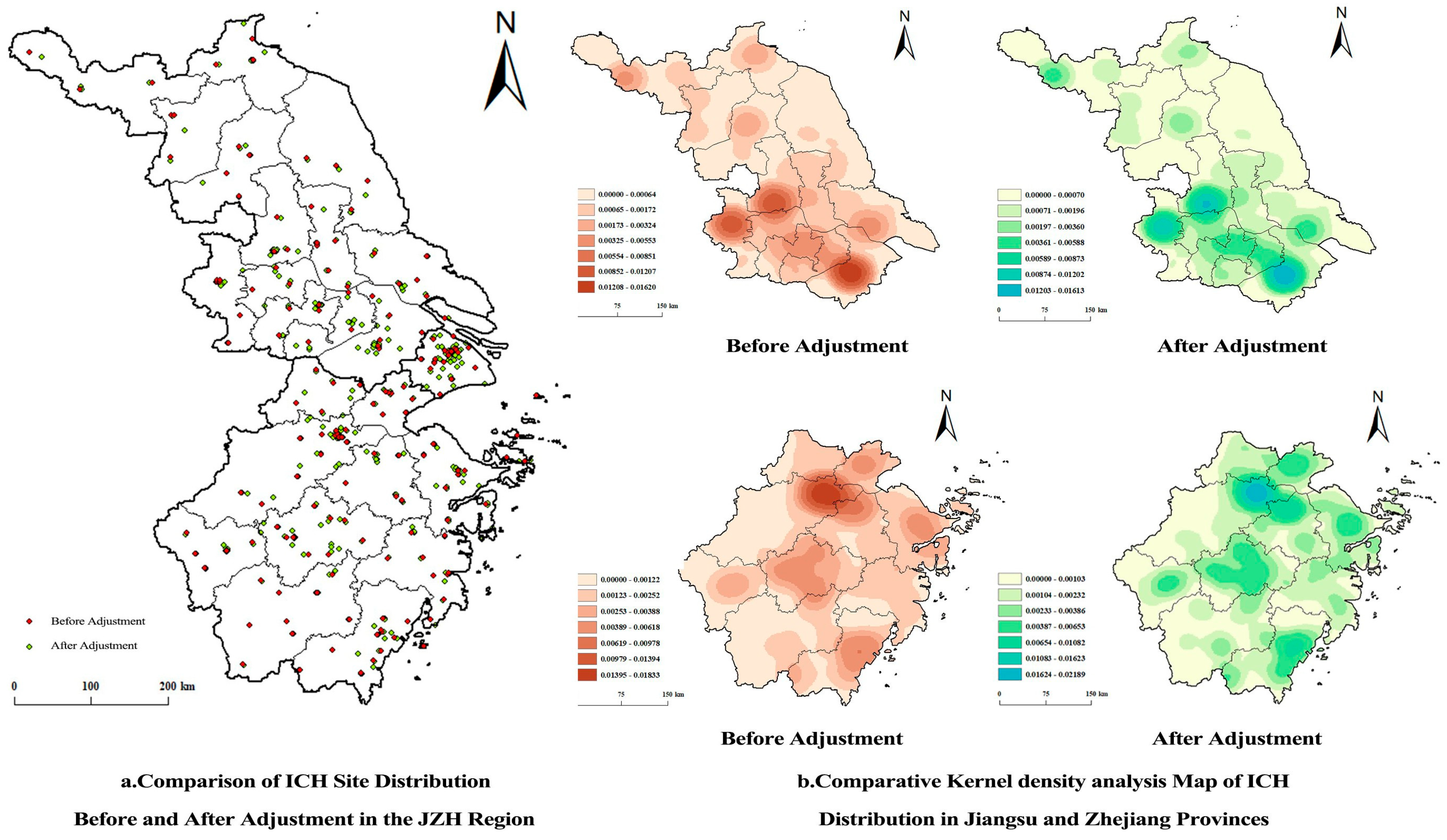
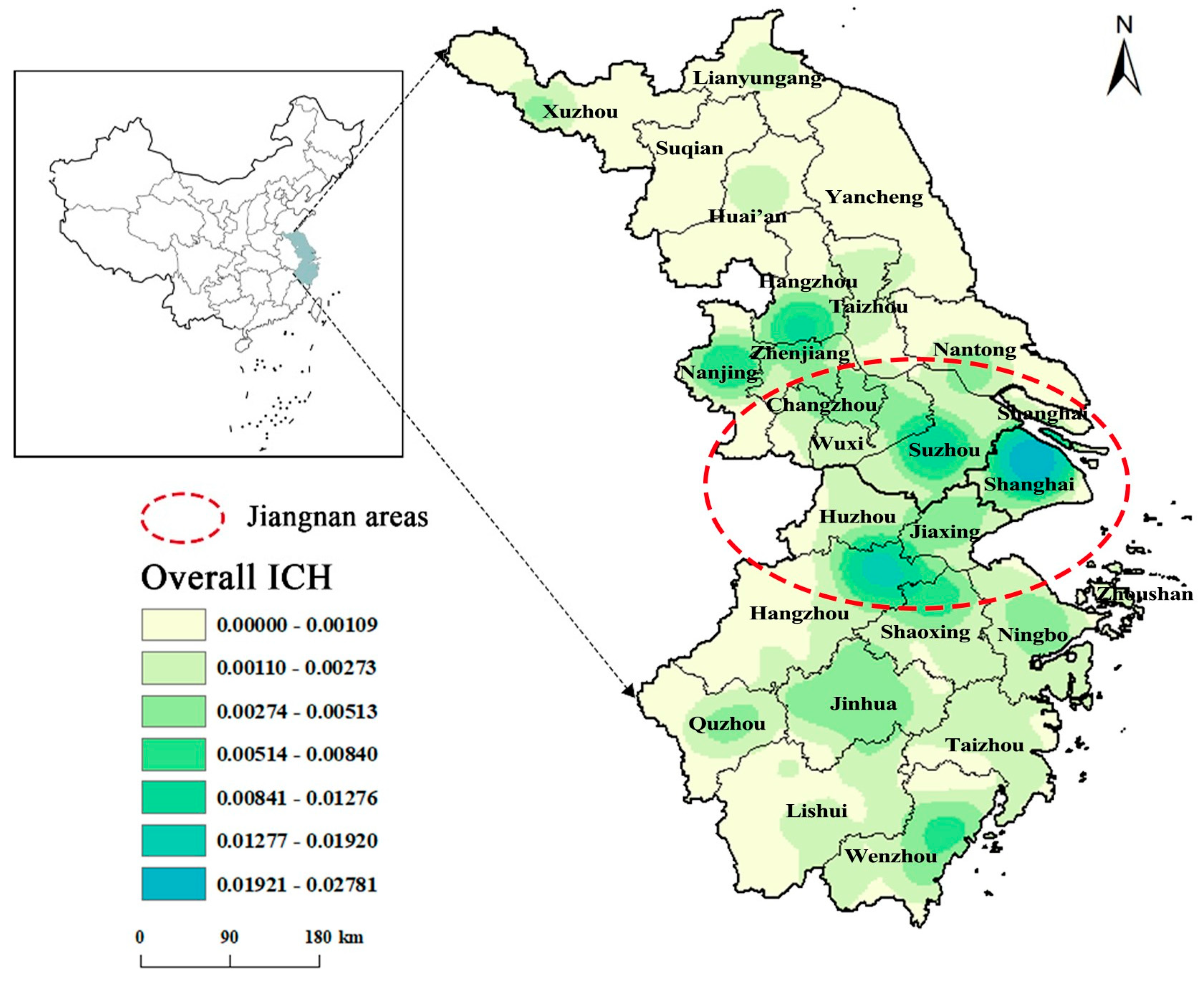
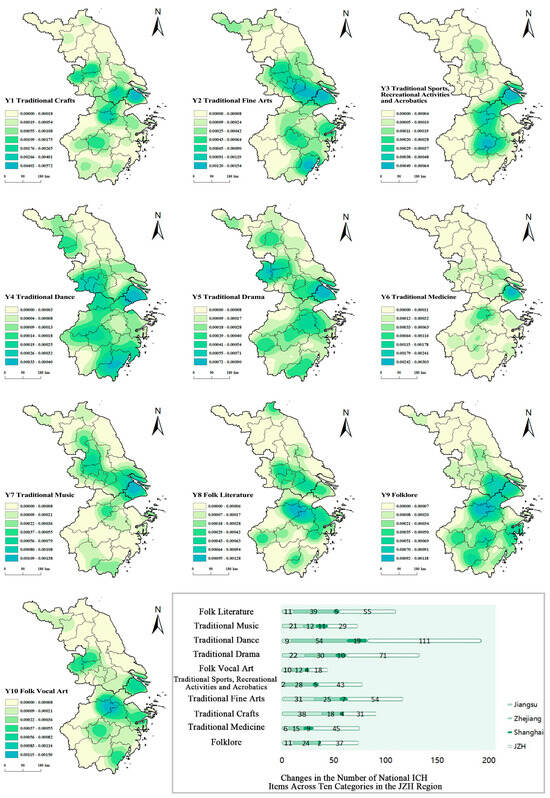
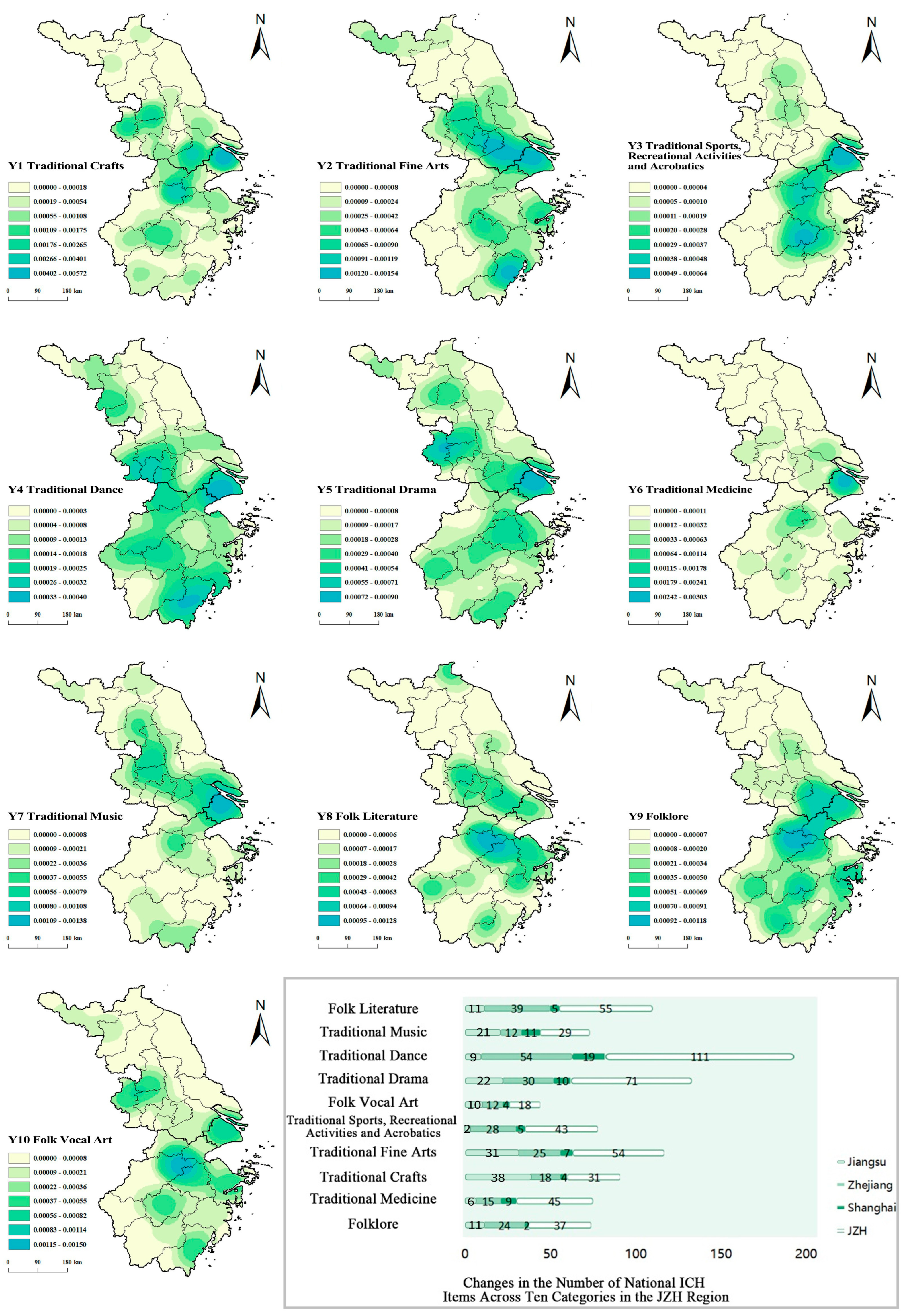
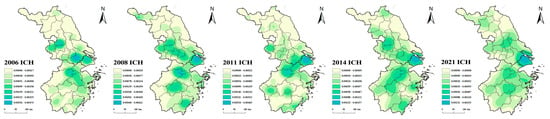
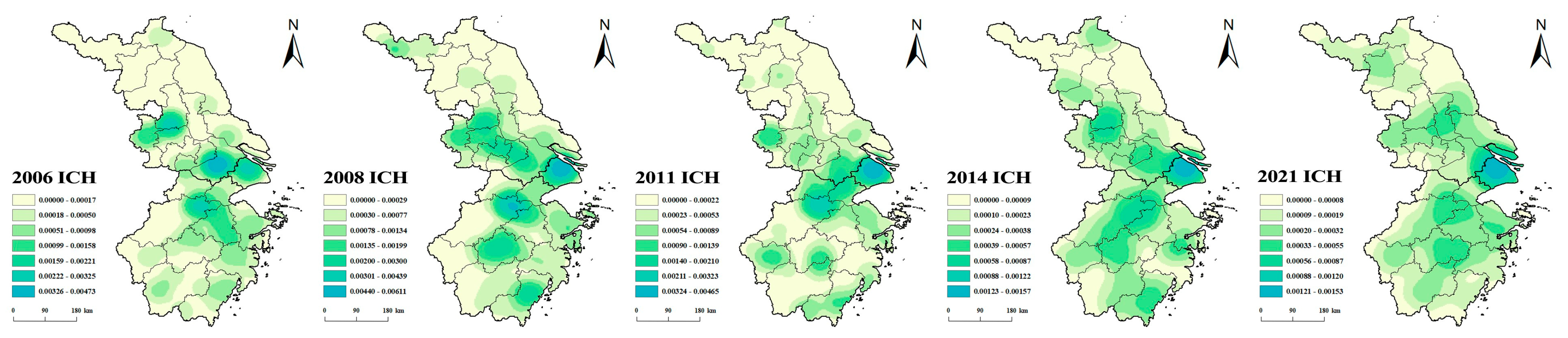
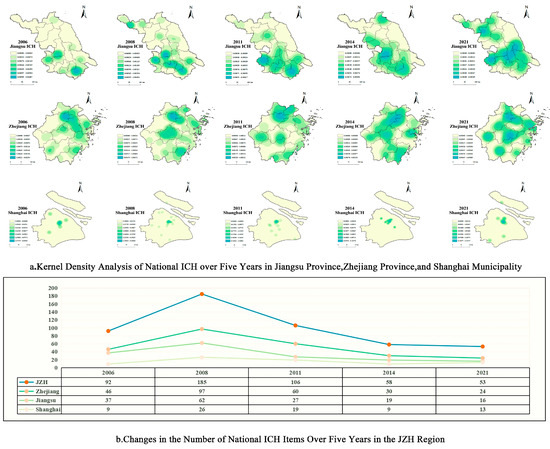
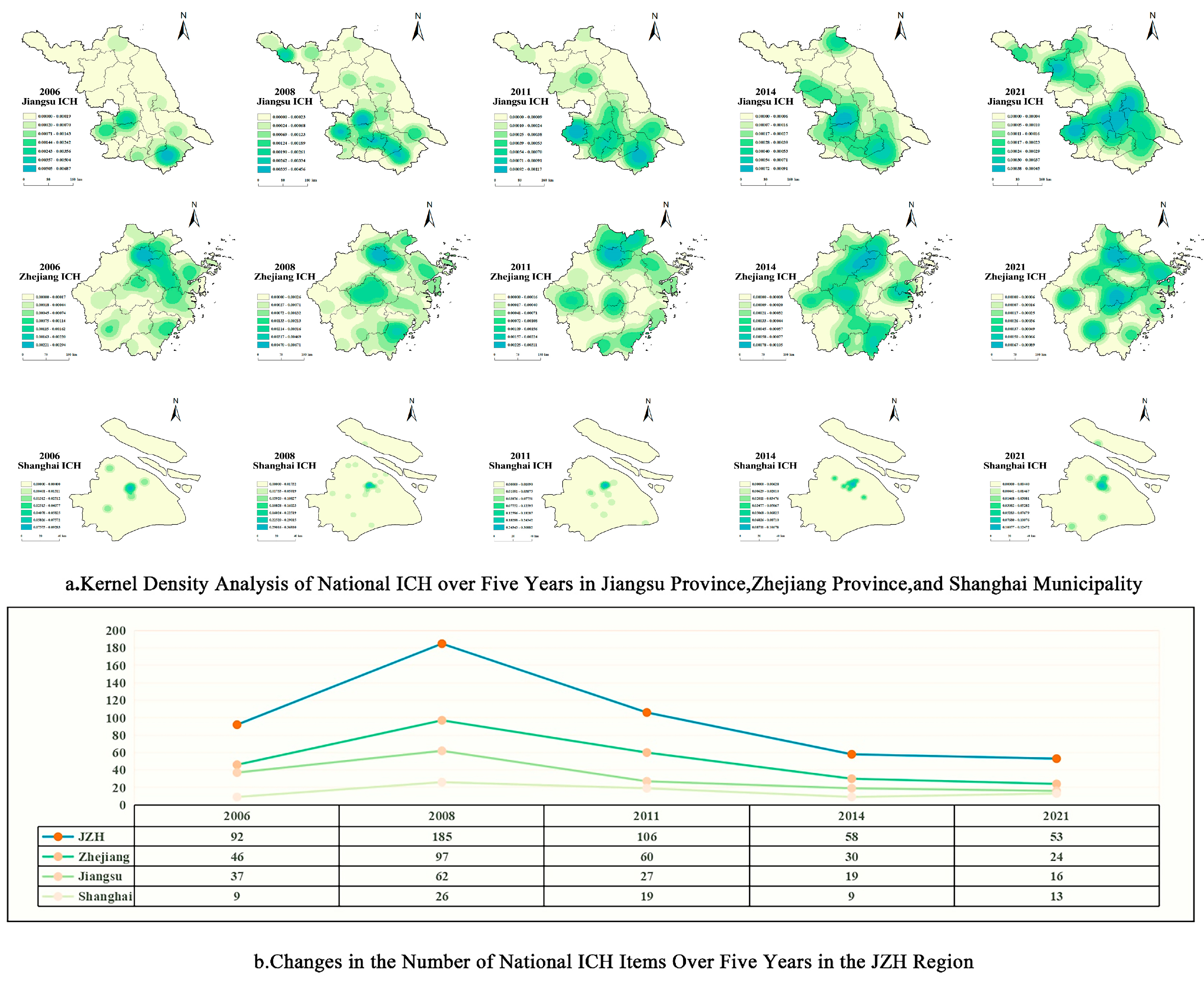
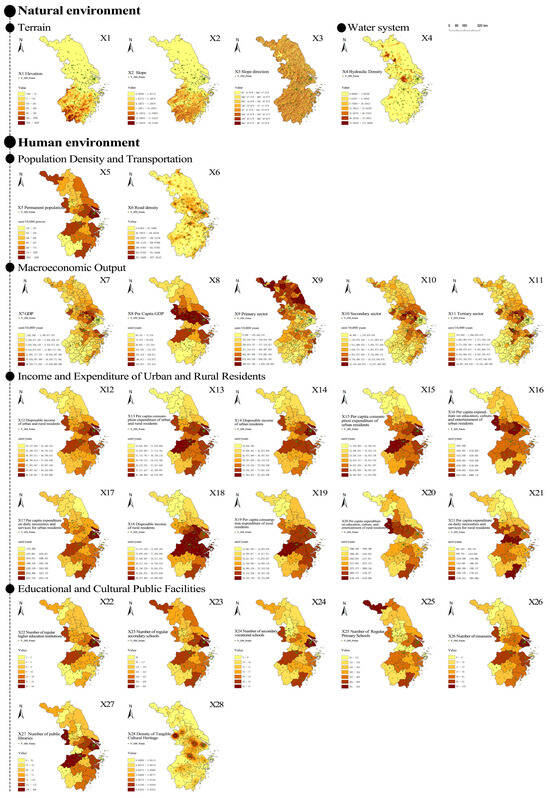
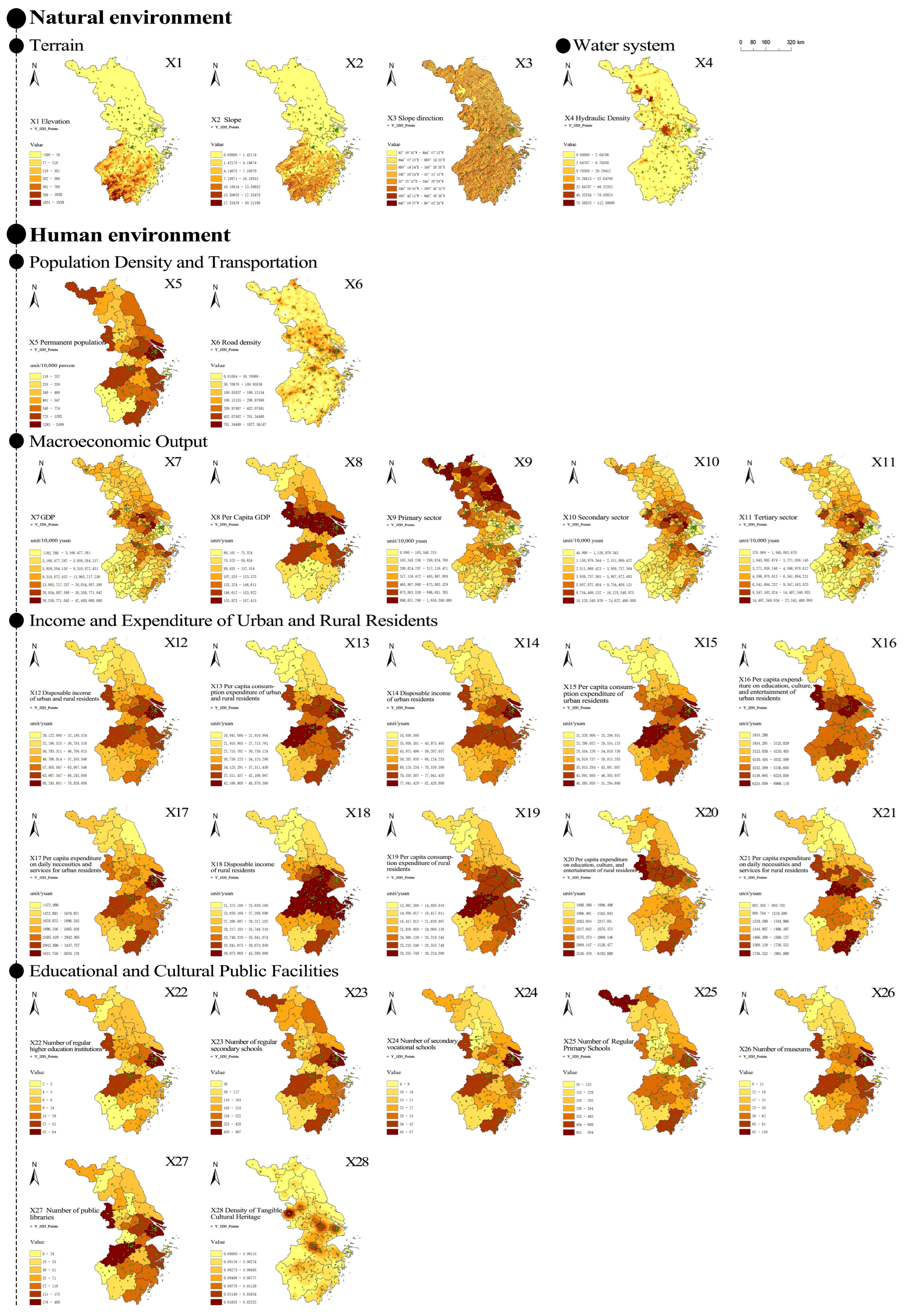
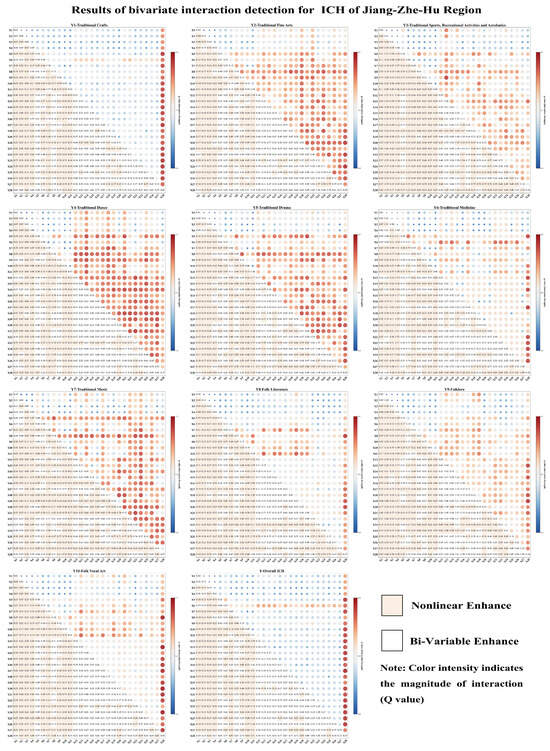
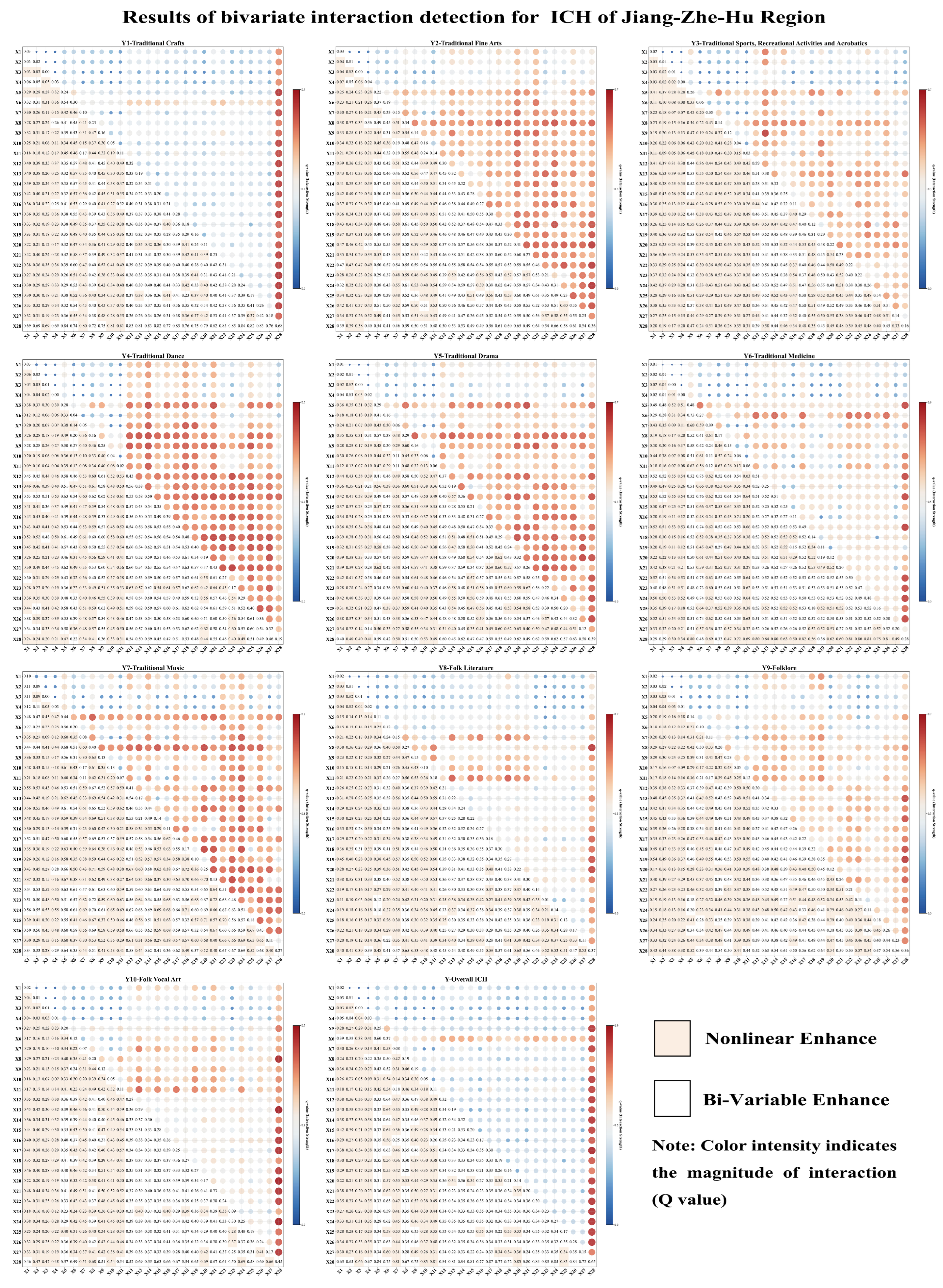

Disclaimer/Publisher’s Note: The statements, opinions and data contained in all publications are solely those of the individual author(s) and contributor(s) and not of MDPI and/or the editor(s). MDPI and/or the editor(s) disclaim responsibility for any injury to people or property resulting from any ideas, methods, instructions or products referred to in the content. |
© 2025 by the authors. Licensee MDPI, Basel, Switzerland. This article is an open access article distributed under the terms and conditions of the Creative Commons Attribution (CC BY) license.