


Abstract
Black-odorous water pollution presents a serious threat to aquatic ecosystems and severely hinders the sustainable development of the ecological environment, as conventional remediation technologies often fall short in achieving the simultaneous removal of multiple pollutants. In this study, a novel composite remediation agent was developed by integrating microbial active components with modified clay minerals—sodium-modified zeolite (Na-Z) and magnesium–aluminum–lanthanum layered ternary hydroxides loaded onto sulfuric acid-modified bentonite (Mg-Al-La-LTHs@SBt)—through gel-embedding immobilization. This integrated system enabled the synergistic remediation of both overlying water and sediment pollutants. The modified clay minerals exhibited strong adsorption capacity for nitrogen and phosphorus compounds in the overlying water. Under 25 °C conditions, the composite agent achieved removal efficiencies of 58.14% for ammonium nitrogen (NH4+-N) and 88.89% for total phosphorus (TP) while significantly reducing sedimentary organic matter and acid volatile sulfide (AVS). Notably, the agent retained substantial remediation efficacy even under low-temperature conditions (5 °C). High-throughput microbial community analysis revealed that the treatment enriched beneficial phyla (e.g., Proteobacteria) and beneficial genera (e.g., Thiobacillus) and suppressed sulfate-reducing groups (e.g., Desulfobacterota), promoting favorable nitrogen and sulfur transformations. These results provide a robust material and methodological basis for efficient, synergistic restoration of black-odorous water and the sustainable development of water resources.
1. Introduction
The degradation of aquatic ecosystems caused by water pollution is an urgent global environmental challenge. Excessive discharge of nutrients such as nitrogen and phosphorus, particularly prevalent in urban and industrial regions, has caused severe deterioration of water quality in lakes, rivers and coastal waters worldwide [1]. As reported, 41% of US rivers have excessive nitrogen pollution [2], and the average global concentration of total nitrogen measured is 1.178 mg/L, which is far above the threshold [3]. This process not only disrupts aquatic biodiversity and ecosystem services but also poses significant risks to human health and economic activities, seriously restricting sustainable development [4]. Against this backdrop, the phenomenon of black-odorous water in China represents an extreme and visible manifestation of this global issue. For instance, China’s five largest freshwater lakes in China (Poyang Lake, Dongting Lake, Taihu Lake, Hongze Lake, and Chaohu Lake) have experienced severe pollution problems [5]. These are primarily attributable to the excessive influx of external pollutants, including nitrogen, phosphorus, and sulfur [6]. These contaminants initiate a deleterious ecological cycle characterized by excessive algal and microbial proliferation, which rapidly depletes dissolved oxygen (DO) and results in anaerobic or hypoxic conditions [7,8]. Such conditions facilitate sulfate reduction and organic matter fermentation, leading to the production of malodorous gases such as hydrogen sulfide (H2S) and ammonia (NH3). Simultaneously, sulfide ions (S2−) react with ferrous (Fe2+) and manganous (Mn2+) ions in sediments to form black precipitates, including iron sulfide (FeS) and manganese sulfide (MnS), thereby causing severe degradation of water quality and ecosystem collapse [9]. Therefore, the development of efficient and sustainable technologies for the transformation and removal of these internal pollutants is urgently needed. Ecological remediation technologies are classified into physical, chemical, and biological methods [10]. Among these, adsorption is regarded as a promising approach due to its low cost and high efficiency [11]. Microbial remediation, which utilizes microbial metabolism to degrade pollutants, offers benefits such as environmental friendliness and the absence of secondary pollution [12]. However, individual technologies frequently face challenges in synergistically removing multiple pollutants and sustaining long-term effectiveness. Therefore, developing an integrated remediation system that combines physicochemical adsorption with biodegradation represents a viable strategy. Among these, clay minerals (such as bentonite and zeolite) are considered ideal adsorbent substrates for integrated remediation systems due to their large specific surface area, high permeability, ion exchange capacity, low cost, and environmental compatibility [13,14]. Nevertheless, the adsorption performance of natural clay minerals frequently does not meet the demands of contemporary remediation applications [15]. To overcome this limitation, various modification techniques have been implemented to alter their physicochemical properties [16,17]. For instance, thermal modification can disrupt the crystal lattice structure, increasing the specific surface area and porosity [18]; acid/alkali treatment enhances material porosity while also breaking chemical bonds to improve ion exchange capacity [19]; and surface modification, such as intercalation with metal oxides, introduces new active sites, significantly enhancing the targeted adsorption capacity for nutrients like phosphate and ammonium [20]. These modifications are crucial for developing high-performance adsorbents suitable for complex contaminated water environments. Consequently, the development of advanced modification methods remains a critical focus in the design of high-performance remediation materials. Clay mineral adsorbents function by concentrating pollutants, which facilitates rapid short-term improvements in water quality. However, they do not achieve complete degradation or transformation of contaminants. As a result, the incorporation of microbial remediation is essential. Functional microorganisms can effectively degrade pollutants through diverse metabolic pathways [21]. Specifically, nitrifying and denitrifying bacteria, along with actinomycetes, drive the forward cycle of nitrogen elements utilizing key functional genes [22,23]. Concurrently, lactic acid bacteria regulate the sediment microenvironment by producing acids, which suppresses the activity of sulfate-reducing bacteria and consequently mitigates the formation of odorous sulfides [24]. However, many previous integrated systems often represented a simple juxtaposition of adsorption and biodegradation, failing to establish a truly synergistic microenvironment, which made it difficult to stably maintain the remediation effect. Meanwhile, the efficacy of microbial remediation remains highly sensitive to variations in water conditions, often resulting in decreased microbial activity or viability loss [25]. Immobilization technology mitigates this limitation by anchoring microbial active components onto carrier materials, thereby enhancing their resilience to environmental stressors [26]. Among various immobilization techniques, the embedding method entraps microorganisms within a polymer gel matrix, thereby effectively enhancing microbial stability. Certain carrier materials additionally serve as carbon sources, further facilitating microbial growth [27]. Polyvinyl alcohol (PVA) and sodium alginate (SA) are particularly noteworthy due to their excellent mass transfer characteristics and high biocompatibility, providing abundant sites for microbial immobilization [28,29]. Studies have demonstrated that a PVA/SA blend at concentrations of 2%/2% improves the microbial nitrite accumulation rate (NAR), thereby supplying increased nitrite nitrogen (NO2−-N) for subsequent anammox processes [30,31]. Furthermore, the incorporation of polyethylene glycol (PEG) enhances the mechanical properties of the composite hydrogel while preserving favorable porosity and mass transfer efficiency [32]. In summary, the integration of modified clay minerals with microbial immobilization technology offers a promising strategy for constructing an efficient and stable synergistic remediation system.
To this end, this study presents the development of a new water treatment technology utilizing composite modified clay minerals integrated with microbial active components to achieve the removal of composite pollution and the long-term stability of water quality improvement. The objective is to achieve long-term remediation of black-odorous water by harnessing the synergistic effects of physicochemical adsorption and microbial processes. This research comprises three main components: firstly, the synthesis of a novel composite modified clay mineral and the investigation of its adsorption performance and mechanisms for nitrogen and phosphorus; secondly, the immobilization of a composite microbial consortium within a PEG-reinforced PVA/SA gel system to create an integrated adsorption–biodegradation remediation material; and thirdly, a systematic evaluation of the remediation efficacy of this material on both overlying water and sediment through long-term experiments simulating various seasonal conditions. Furthermore, high-throughput sequencing is employed to analyze dynamic changes in the microbial community structure, thereby elucidating the synergistic remediation mechanisms from a microecological perspective.
2. Materials and Methods
2.1. Preparation of Modified Clay Mineral Materials
2.1.1. Preparation of Modified Clay Mineral (Na-Z)
To prepare sodium-modified zeolite (Na-Z), 10 g of natural zeolite was added to 200 mL of a 0.6 mol/L sodium chloride (NaCl) solution [33]. The suspension was magnetically stirred in a thermostatic water bath maintained at 50 °C for 3 h to facilitate ion exchange. Following the reaction, the mixture was allowed to settle for 2 h, after which the supernatant was decanted. The solid residue was then repeatedly rinsed with deionized water until free of residual salts, filtered, and dried at 80 °C to a constant weight. The dried material was subsequently ground and sieved through a 200-mesh screen to yield Na-Z [34].
2.1.2. Preparation of Modified Clay Mineral (Mg-Al-La-LTHs@SBt)
The preparation of the modified clay mineral involved two sequential steps: acid activation of bentonite and subsequent incorporation of layered ternary hydroxides (LTHs) through coprecipitation. Firstly, acid-modified bentonite was prepared by treating original bentonite with a 15% (v/v) sulfuric acid (H2SO4) solution under continuous stirring at 60 °C for 4 h [35]. The resulting slurry was allowed to stand, followed by suction filtration. The collected solid was washed with deionized water until the filtrate reached a neutral pH. The washed product was then dried at 80 °C for 12 h, ground, and passed through a 200-mesh sieve.
Subsequently, magnesium–aluminum–lanthanum (Mg-Al-La) LTHs were incorporated into the acid-modified bentonite using a coprecipitation method. Precisely measured quantities of magnesium nitrate hexahydrate (Mg(NO3)2·6H2O, 1.02564 g), aluminum nitrate nonahydrate (Al(NO3)3·9H2O, 0.75026 g), and lanthanum nitrate hexahydrate (La(NO3)3·6H2O, 1.73208 g), maintaining a molar ratio of Mg:Al:La = 0.02:0.01:0.02 [36], were dissolved in 200 mL of ultrapure water. A total of 10 g of acid-modified bentonite was dispersed in this the mixed solution and stirred in a 50 °C water bath for 3 h.
The pH was adjusted to 9.5 by the dropwise addition of 2.5 mol/L sodium hydroxide (NaOH) solution. The resulting suspension was stirred at 40 °C for an additional 2 h and then aged under ambient conditions for 12 h. The solid product was recovered through suction filtration, washed with deionized water until neutral, and dried at 80 °C for 24 h. Finally, the dried material was ground, sieved through a 200-mesh screen, and calcined at 400 °C for 4 h in a muffle furnace to obtain the final modified clay mineral, designated as Mg-Al-La-LTHs@SBt (magnesium–aluminum–lanthanum layered ternary hydroxides loaded onto sulfuric acid-modified bentonite).
2.2. Scheme for Preparation of Immobilized Microorganisms
PEG, PVA, and SA were each dissolved in ultrapure water at a concentration of 2% (w/v), with continuous stirring at 80 °C until complete dissolution was achieved. After the solution had cooled to room temperature, Na-Z (2%), Mg-Al-La-LTHs@SBt (1%), and microbial active components (7%)—comprising nitrifying bacteria, actinomycetes, yeast, and lactic acid bacteria (Table S1)—were sequentially incorporated and mixed to form a homogeneous suspension, where K2S2O8 acted as an initiator, while CaCl2 and H3BO3 collectively enhanced the mechanical stability of the gel microspheres through their synergistic cross-linking and solidification properties [37,38,39]. The beads were allowed to cure for 20 min to form stable microspheres. These microspheres were then rinsed with ultrapure water until the washings reached neutral pH and subsequently stored at 4 °C for future use.
2.3. Experimental Design
2.3.1. Experiment on Adsorption of Modified Clay Minerals
The black-odorous overlying water employed in this study was collected from a depth of 0.2–0.4 m in a heavily polluted water body located in Wuhan City, China, and was stored at 4 °C for subsequent use after filtration. Initial analyses revealed concentrations of 20.27 mg/L for ammonium nitrogen (NH4+-N), 1.30 mg/L for total phosphorus (TP), and 25.97 mg/L for chemical oxygen demand (COD). To evaluate the adsorption performance of the modified clay materials, 1.0 g of either Na-Z or Mg-Al-La-LTHs@SBt was added to 250 mL of the collected black-odorous water. The suspensions were subjected to constant shaking in a thermostatic shaker at 25 °C and 150 rpm for a duration of 48 h. Following reaction, water samples were collected and analyzed to determine the residual concentrations of NH4+-N, TP, and COD. These values were used to assess the pollutant removal efficiencies of the respective adsorbents.
2.3.2. Experiment on Long-Term Restoration of Black-Odorous Water
To assess the efficacy of the composite remediation agent under realistic conditions, a simulated black-odorous water environment was established using a box-type experimental device (Figure S1). Sediment samples were collected from a depth of 0.5–0.7 m from the sediment–water interface of the same water body. Sediment samples were homogenized and pretreated to remove large impurities before being placed into the device, while the overlying black-odorous water was introduced through siphoning. Each device setup included a sediment layer of 7 cm and an overlying water column of 24 cm. Two temperature regimes—25 ± 2 °C (simulating summer conditions) and 5 ± 2 °C (simulating winter conditions)—were employed to investigate seasonal effects on the performance of the composite material. The experiment was conducted over a 30-day period. Throughout the experiment, the pH of the water body was maintained within a natural range of 6.8 to 7.5 to simulate ambient environmental conditions.
The composite remediation agent was applied at a concentration of 10 g/L. Water samples were collected on days 0, 2, 5, 10, 20, and 30 to measure concentrations of NH4+-N, total nitrogen (TN), TP, and COD. Sediment samples were collected at both the beginning and end of the experiment to analyze organic matter content, TN, and acid volatile sulfides (AVSs). Additionally, high-throughput 16S rRNA gene sequencing was performed on sediment samples from day 0 and day 30 to assess microbial community dynamics and evaluate changes in key functional taxa associated with nitrogen and sulfur cycling.
2.4. Characterization and Analytical Methods
2.4.1. Material Characterization
A comprehensive suite of analytical techniques was employed to characterize the structural, morphological, and chemical properties of the modified materials. Scanning electron microscopy–energy dispersive spectroscopy (SEM-EDS) was used to observe surface morphology and assess changes in elemental composition resulting from the modification process. Fourier transform infrared spectroscopy (FT-IR) was utilized to identify functional groups and detect changes in surface chemistry. X-ray diffraction (XRD) analysis was conducted to determine the crystalline structure and phase composition of the materials before and after modification [40].
2.4.2. Detection Methods for Pollutants in Overlying Water and Sediment
The concentration of NH4+-N in water samples was measured using Nessler’s reagent spectrophotometry. TN was analyzed using alkaline potassium persulfate digestion followed by ultraviolet (UV) spectrophotometry. TP was determined using the molybdenum–antimony (Mo-Sb) anti-spectrophotometric method, while COD was measured using the rapid digestion spectrophotometric method [41]. For sediment samples, organic matter content was quantified using the calcination loss (loss-on-ignition) method. Sediment TN was assessed using the same alkaline potassium persulfate digestion and UV spectrophotometry method as for water samples. AVSs in sediment were determined by the hydrochloric acid acidification–nitrogen gas stripping method.
2.4.3. Data Analysis Methods
The rate of the removal of the pollutant treated by the materials in this experiment was calculated using the following formula:
where C0 denotes the initial concentration of the pollutant, and Cₑ represents the pollutant concentration after treatment [42].
Removal Rate (%) = [(C0 − Cₑ)/C0] × 100
2.4.4. High-Throughput Sequencing
Genomic DNA was extracted from sediment samples preserved under frozen conditions using standardized protocols. The V3-V4 hypervariable regions of the 16S rRNA gene were amplified using barcode-indexed primers to enable sample multiplexing. The resulting amplicons were subjected to paired-end sequencing using the Illumina HiSeq and MiSeq platforms. All DNA extraction, amplification, and sequencing procedures were carried out by Magigene Biotechnology Co., Ltd. (Shenzhen, China) in accordance with industry best practices.
3. Results and Discussion
3.1. Characterization and Analysis of Modified Clay Minerals
3.1.1. Characterization and Analysis of Modified Zeolite
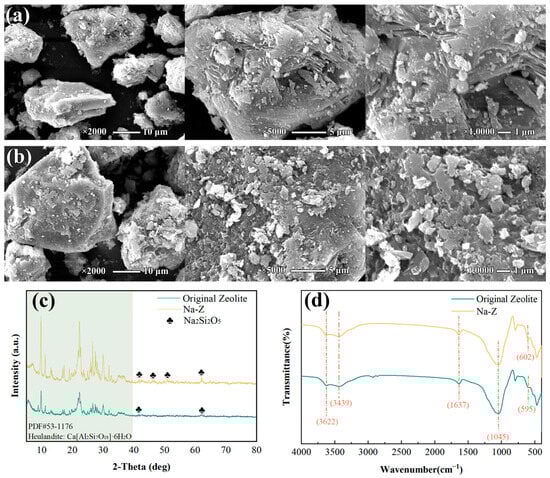
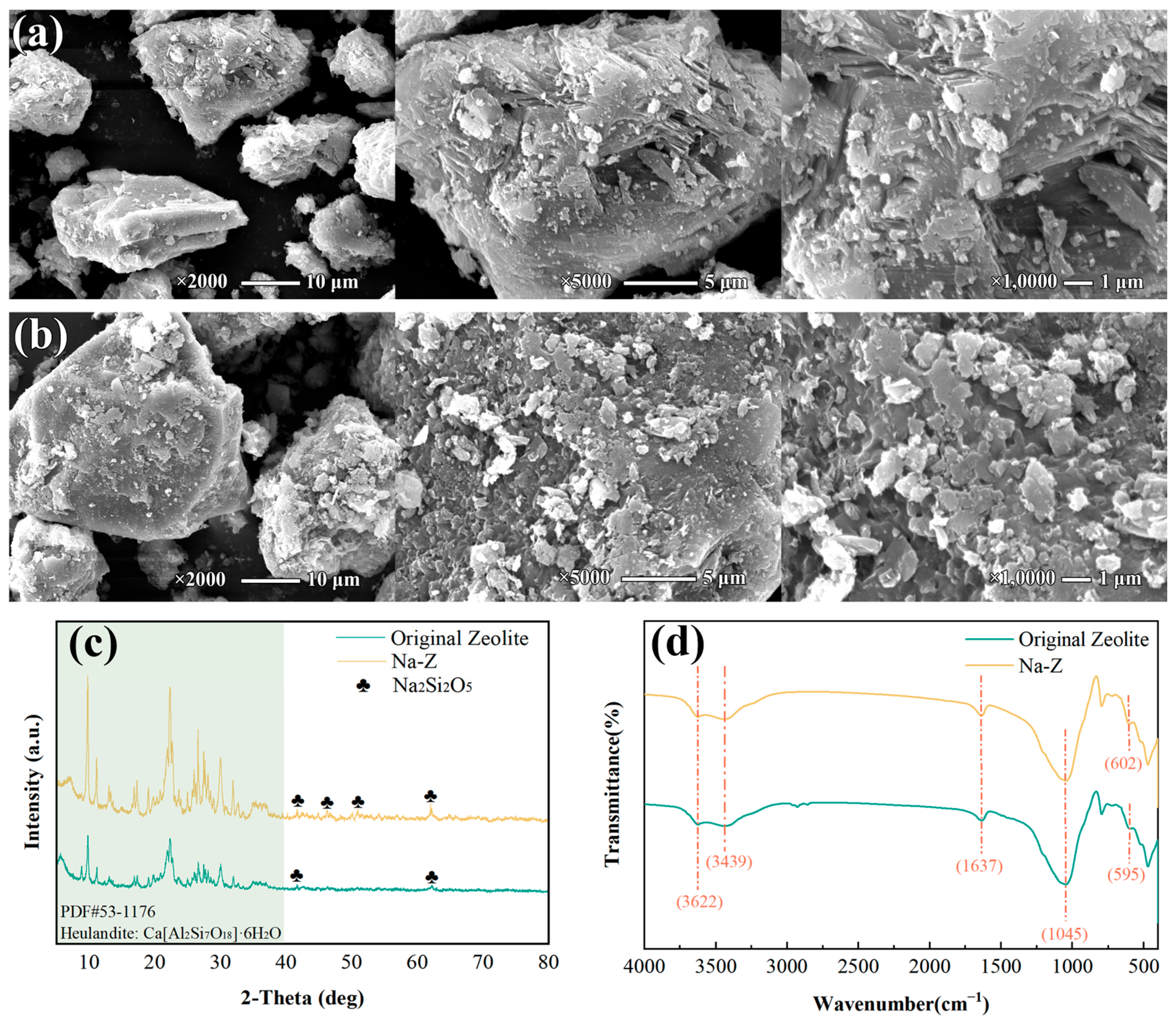
Based on the characterization results obtained from SEM, XRD, and FT-IR analyses, the effects of NaCl modification on the structural and surface properties of zeolite were investigated. The SEM images (Figure 1a,b) demonstrated that the surface of the unmodified zeolite was relatively smooth with few particles. In contrast, following NaCl modification, the sample exhibited a porous, multilayered morphology characterized by abundant fine particles, significant overlapping, and significantly increased surface roughness. These observations suggest that the modification process effectively enhanced the material’s porosity, thereby facilitating ion diffusion within the zeolite structure.
Figure 1.
Characterization of zeolite before and after modification: (a) SEM image of original zeolite; (b) SEM image of Na-Z; (c) XRD patterns; (d) FT-IR spectra.
The XRD patterns (Figure 1c) indicate that both unmodified and modified zeolites retain the heulandite framework structure, which is the most commonly employed type in water restoration applications [43]. No significant shifts were observed in the primary diffraction peaks. Notably, characteristic peaks corresponding to disodium metasilicate (Na2Si2O5) appeared near 2θ = 50° and 62°, exhibiting significantly increased intensity relative to the original sample [44]. These results suggest successful ion exchange during NaCl modification, wherein Na+ ions replaced interlayer metal ions (e.g., Al3+), resulting in partial substitution of Al–O bonds with Na–O bonds [45].
FT-IR analysis (Figure 1d) further substantiated these observations. The absorption peak at 1045 cm−1 is attributed to the stretching vibrations of the Si–O–Si/Al–O–Si framework [46], whereas the peak at 3622 cm−1 corresponds to the stretching vibration of internal surface –OH groups within the interlayer. Following NaCl modification, the intensity of this latter peak diminished, indicating an interaction between Na+ ions and hydroxyl groups. The peaks observed at 3439 cm−1 and 1637 cm−1 are assigned to the stretching and bending vibrations of interlayer water –OH groups, respectively, thereby confirming the presence of abundant hydroxyl groups and water molecules within the material [47]. The Al–OH vibration peak shifted from 595 cm−1 to 602 cm−1, suggesting variations in the bonding environment due to Na+ incorporation, which resulted in an increased vibrational frequency [46]. These results further corroborate the successful incorporation of Na+ ions, consistent with the results obtained from XRD analysis.
3.1.2. Characterization and Analysis of Modified Bentonite
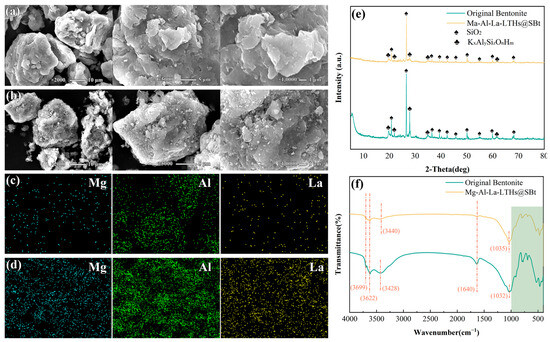
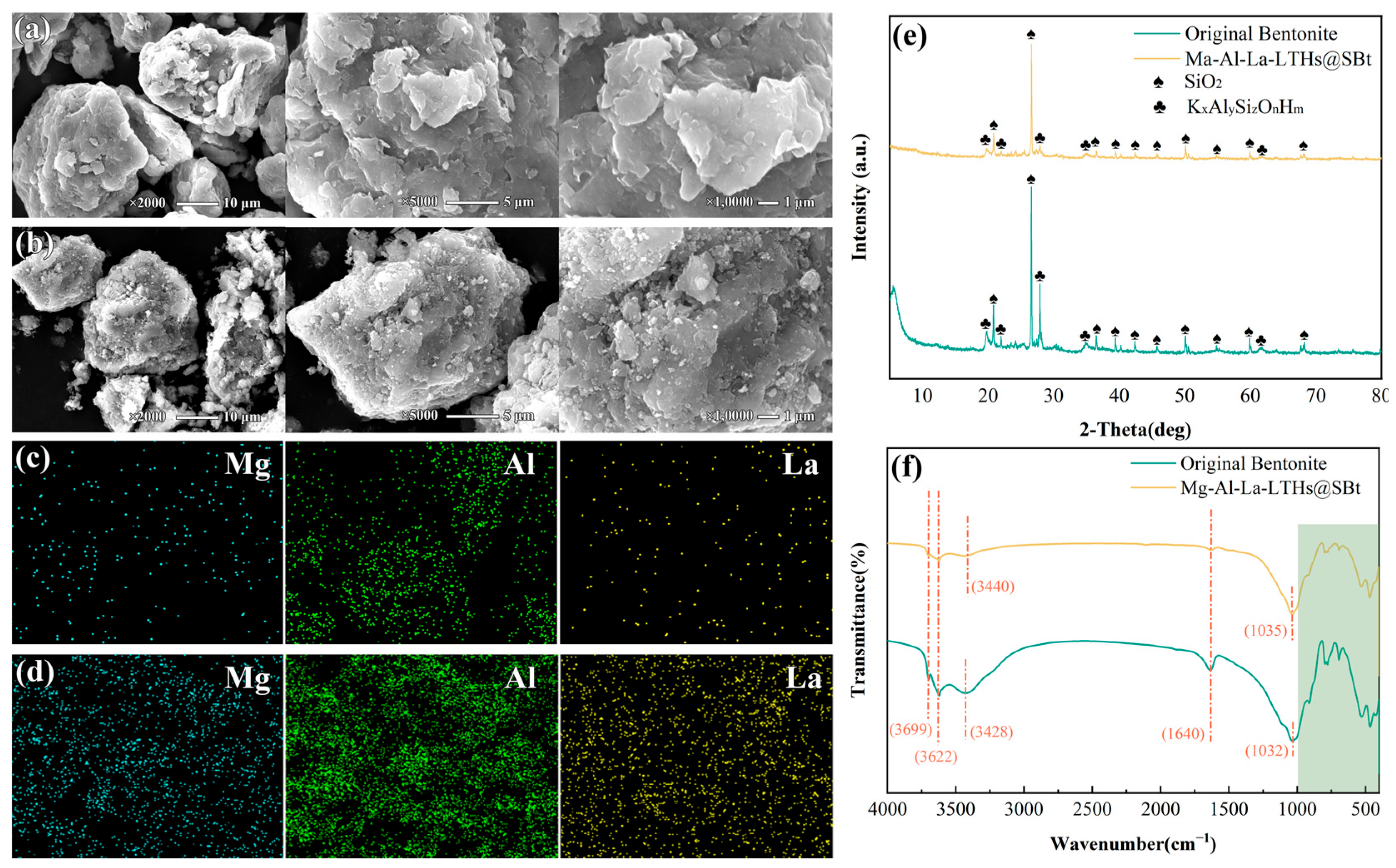
The SEM results (Figure 2a,b) reveal different variations in the surface morphology of bentonite before and after modification. The unmodified bentonite exhibited a characteristic layered structure, with evident sheet-like stacking and large, irregular surface particles, consistent with its nature as a layered silicate mineral [48]. Following composite modification, the material’s overall morphology changed significantly, with numerous fine particles adhering to the surface, indicating the successful deposition of Mg-Al-La-LTHs onto the bentonite and resulting in a roughened composite structure. This increased surface complexity is likely to enhance adsorption performance. Furthermore, EDS elemental mapping (Figure 2c,d) confirms the effective incorporation of Al, La, and Mg elements onto the acid-modified bentonite substrate. Notably, Al exhibited a regionally dense distribution, whereas La and Mg were more broadly and uniformly dispersed. These observations suggest the successful introduction of the three metal elements into the acid-modified bentonite using the coprecipitation method, thereby preliminarily establishing a ternary layered double hydroxide-modified structure.
Figure 2.
Characterization of bentonite before and after modification: (a) SEM image of original bentonite; (b) SEM image of Mg-Al-La-LTHs@SBt; (c) SEM-EDS elemental mapping of original bentonite; (d) SEM-EDS elemental mapping of Mg-Al-La-LTHs@SBt; (e) XRD patterns; (f) FT-IR spectra.
The XRD patterns of bentonite before and after modification (Figure 2e) exhibited characteristic diffraction peaks of SiO2 at approximately 2θ = 26°, 36°, 39°, 42°, 46°, 50°, 60°, and 68°, indicating that the primary silicon–oxygen tetrahedral framework of bentonite remained stable throughout the modification process. Conversely, the intensities of diffraction peaks corresponding to layered silicate minerals (KxAlySizOnHm) at 2θ = 20°, 21°, and 28° were significantly diminished. This finding is consistent with the SEM-EDS results, suggesting reconstruction of the crystalline structure during modification.
The FT-IR spectra (Figure 2f) indicate that original bentonite exhibits characteristic peaks at 3699 cm−1 and 3622 cm−1, corresponding to the free vibration of Al–OH and the stretching vibration of O–H, respectively, which reflect its typical montmorillonite layered structure [49]. In the FT-IR spectrum of Mg-Al-La-LTHs@SBt, the –OH bending vibration peak associated with interlayer water appears at 3440 cm−1, shifted from its original position at 3428 cm−1. This shift is consistent with an increased hydroxyl vibration frequency resulting from acid treatment [50]. The absorption peak at 1640 cm−1 is also attributed to the –OH bending vibration of water molecules; its decreased intensity suggests the removal of interlayer water during modification and calcination [51]. Additionally, the absorption peak of original bentonite at 1032 cm−1, corresponding to the asymmetric stretching vibration of Si–O–Si [52], shifts to 1035 cm−1 following modification, accompanied by a change in peak shape. This shift is attributed to structural perturbations induced by acid and metal modification. Within the 400–1000 cm−1 range (the green area in Figure 2f), the intensities of vibration peaks assigned to Al–O and Si–O generally decrease after modification [53], further confirming the successful incorporation of metals such as La and Mg, consistent with the XRD analysis.
3.2. Adsorption Effect of Modified Clay Minerals on Pollutants
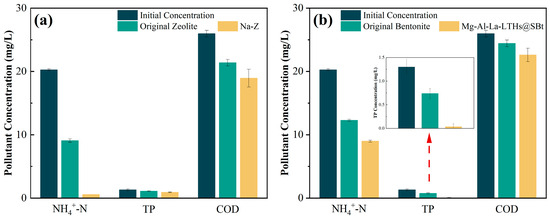
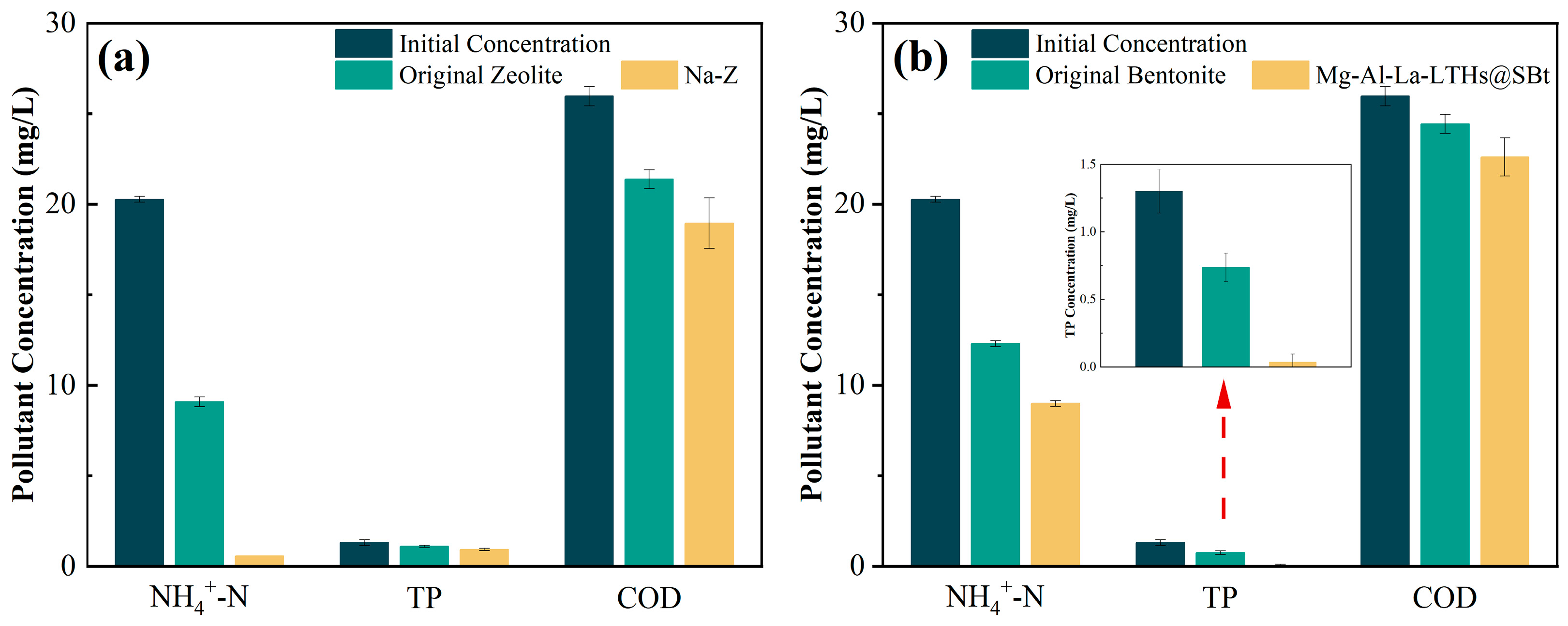
To assess the adsorption performance of Na-Z for pollutant removal, a simulated experiment was conducted using actual water samples. Figure 3a shows the concentrations of various pollutants before and after the adsorption process. In Figure 3, the vertical axis represents the residual concentration of the pollutant in water after adsorption. A lower value indicates that more pollutant has been removed by the adsorbent, reflecting better adsorption performance. As shown, the bar representing the modified material is significantly lower than that of the original material, clearly demonstrating that the modified material exhibits stronger adsorption capacity. This result confirms the effectiveness of the modification process.
Figure 3.
Adsorption performance of modified clay minerals in treating actual black-odorous water. (a) Adsorption effect of Na-Z on pollutants; (b) adsorption effect of Mg-Al-La-LTHs@SBt on pollutants.
Following treatment with original zeolite and Na-Z, the concentration of NH4+-N decreased from 20.27 mg/L to 9.08 mg/L and 0.55 mg/L, respectively, corresponding to removal efficiencies of 55.20% and 93.94%. These results demonstrate the high efficacy of Na-Z in removing NH4+-N. In contrast, both adsorbents exhibited limited removal of TP and COD. This result can be attributed to the relatively low initial TP concentration in the water and the inherently low selectivity of zeolite-based materials toward phosphorus [54]. While zeolites possess strong ion-exchange affinity for positively charged ions such as NH4+, organic contaminants are generally neutral or negatively charged. Additionally, the restricted pore structure of zeolites impedes the adsorption and diffusion of large organic molecules, thereby further limiting their overall removal capacity [55].
The removal efficiencies of conventional pollutants in black-odorous water by bentonite, both before and after modification, are illustrated in Figure 3b. The composite-modified bentonite exhibited significantly enhanced performance for all targeted pollutants compared to the unmodified bentonite, as acid modification and high-temperature calcination increased the pore structure of the material, and the loaded metal oxides have a high zero charge and a strong affinity for phosphorus [56,57]. Specifically, the removal rates of NH4+-N, TP, and COD increased by 41.38%, 125.00%, and 120.00%, respectively. These results indicate that the series of composite modifications substantially improved the adsorption capacity of bentonite, particularly for phosphorus-containing pollutants and organic matter.
3.3. Effect of Composite Remediation Agent in Restoring Black-Odorous Water
3.3.1. Performance of Composite Remediation Agent in Treating Black-Odorous Overlying Water
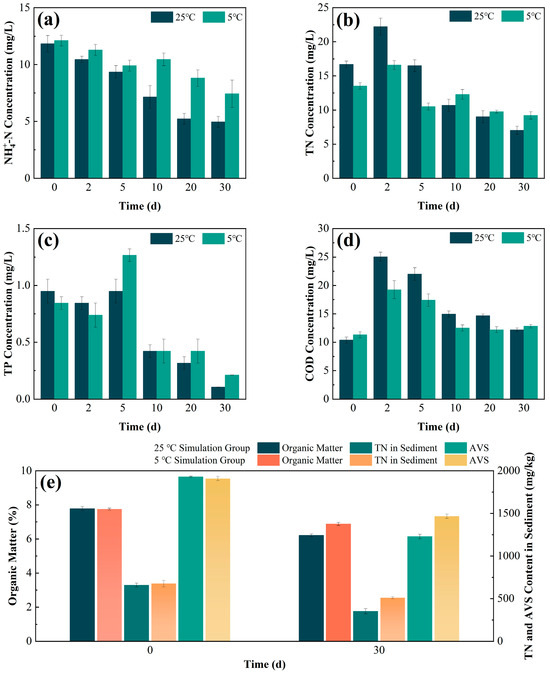
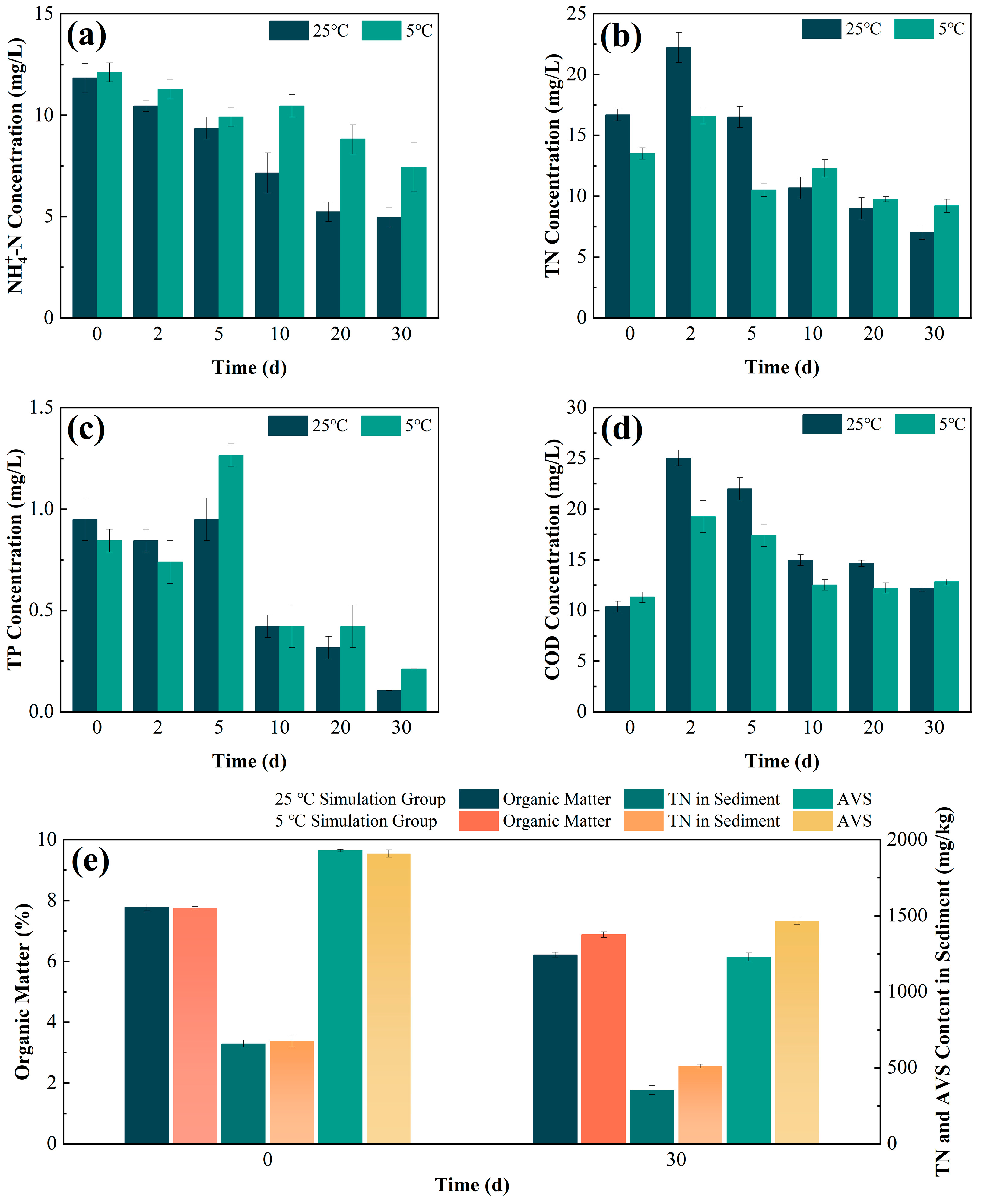
Following the addition of the composite remediation agent, the concentration of NH4+-N in the overlying water exhibited significant temperature-dependent variation (Figure 4a). At 25 °C, the NH4+-N concentration decreased steadily, achieving a removal efficiency of 58.14% by day 30. This reduction was attributed to the combined effects of adsorption and enrichment of NH4+ by the microporous structure of the agent and the Na-Z, along with the biotransformation processes mediated by nitrifying bacteria, which gradually convert NH4+-N into NO2−-N and NO3−-N [58]. At 5 °C, the low temperature significantly inhibited microbial metabolic activity, causing fluctuations in the effect of pollutant removal. These fluctuations are likely due to the interplay between contaminant desorption and a subsequent, gradual enhancement of microbial activity. During the initial stage, the removal of NH4+-N was primarily driven by material adsorption due to the inhibition of microbial activity at low temperatures. However, as the experiment progressed, a noticeable fluctuation in removal efficiency occurred. This was attributed to the reversible nature of physical adsorption, which caused a fraction of the adsorbed nitrogen to be released back into the water alongside soluble components. In the later phase, microbial activity increased as the organisms developed enhanced resistance to the low-temperature stress, leading to a trend of declining NH4+-N concentration [59].
Figure 4.
Long-term restoration performance of composite remediation agent in treating black-odorous water: (a) Variation in NH4+-N concentration; (b) variation in TN concentration; (c) variation in TP concentration; (d) variation in COD concentration; (e) variation in pollutant concentrations in sediments.
The variation in TN concentration is depicted in Figure 4b. During the initial phase, TN concentration exhibited a temporary increase, which is likely attributable to the microbial transformation of nitrogen-containing organic matter into organic nitrogen, followed by its release. As the microbial community structure further developed, nitrification–denitrification processes progressively became predominant. Under the 25 °C condition, TN was continuously removed through gaseous emission pathways (e.g., nitrogen gas), resulting in an overall fluctuating downward trend. At 5 °C, the TN concentration decreased at a slower rate, reflecting the inhibitory effect of low temperature on the microbial system responsible for nitrogen removal.
Regarding the removal of phosphorus pollutants (Figure 4c), the composite agent significantly enhanced removal efficiency through the synergistic effects of physical adsorption and microbial metabolism. Both experimental groups exhibited a dynamic pattern characterized by an initial decline, followed by recovery, and subsequent redepression. This trend suggests that the initial reduction in TP concentration resulted from microbial uptake and material adsorption. The subsequent increase in TP concentration is likely due to microbial phosphorus release and the migration and transformation of phosphorus from the sediment. Ultimately, as microbial activity intensified, TP was further immobilized and transformed. By day 30, the TP concentration under the 25 °C condition decreased to 0.11 mg/L, meeting the Class III surface water standard, with a removal rate of 88.89%. This result indicates that the composite agent outperforms many single physical adsorption and microbial remediation techniques, demonstrating the superiority of the adsorption–biodegradation synergistic system. Under the 5 °C condition, the concentration declined to 0.21 mg/L, satisfying the Class IV standard, with a removal rate of 75.00%. However, the activity of many traditional microbial remediation methods drops sharply at this temperature, which provides a new idea for solving the problem of low water body remediation efficiency in winter [60].
Figure 4d illustrates the variation in COD concentration. Immediately following the application of the agent, the dissolution of soluble organic constituents from the embedding materials (e.g., PVA, SA, and PEG) induced a pronounced increase in COD. Among these materials, SA, a natural polysaccharide, is readily biodegradable [61], whereas PVA, owing to its structural stability, resists complete degradation, thereby causing a sustained elevation in COD [62]. The elevated temperature further enhanced the initial leaching rate of organic matter (including PVA and SA), consequently resulting in a more pronounced increase in COD concentration at 25 °C compared to that at 5 °C, during the early stage of the experiment [63]. Although microbial degradation during the later stages effectively reduced a portion of the organic load, the persistent presence of recalcitrant components such as PVA resulted in final COD concentrations in both groups that remained above the initial levels.
3.3.2. Effect of Composite Remediation Agent on Black-Odorous Sediment
Figure 4e depicts the removal of pollutants from sediment by the composite remediation agent over the course of the long-term experiment. The efficiencies of sediment organic matter and TN removal at 25 °C (20.11% and 46.59%, respectively) were significantly greater than those observed in the winter simulation group (11.30% and 24.72%). The relatively higher temperature favors microbial growth, which in turn promotes the decomposition of macromolecular organic matter and enhances nitrification–denitrification processes, thereby facilitating more efficient removal of organic matter and nitrogen.
The removal rate of AVS at 25 °C (36.31%) was higher than that observed in the winter group (23.21%), suggesting that elevated temperatures enhance the activity of sulfur-oxidizing bacteria and promote sulfide oxidation [64]. However, the overall AVS removal efficiency remained relatively limited. This limitation is likely attributable to the presence of certain sulfur-reducing bacteria within the added microbial consortium, which reduce elemental sulfur to sulfides, thereby partially offsetting the removal of AVS.
3.4. Changes in Microbial Community Structure of Sediment
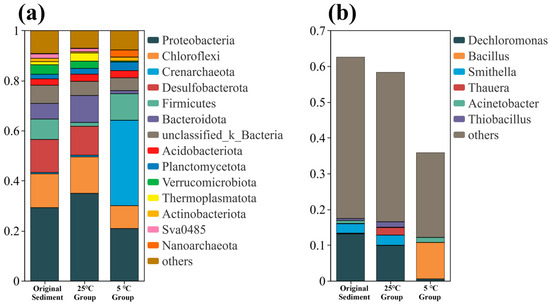
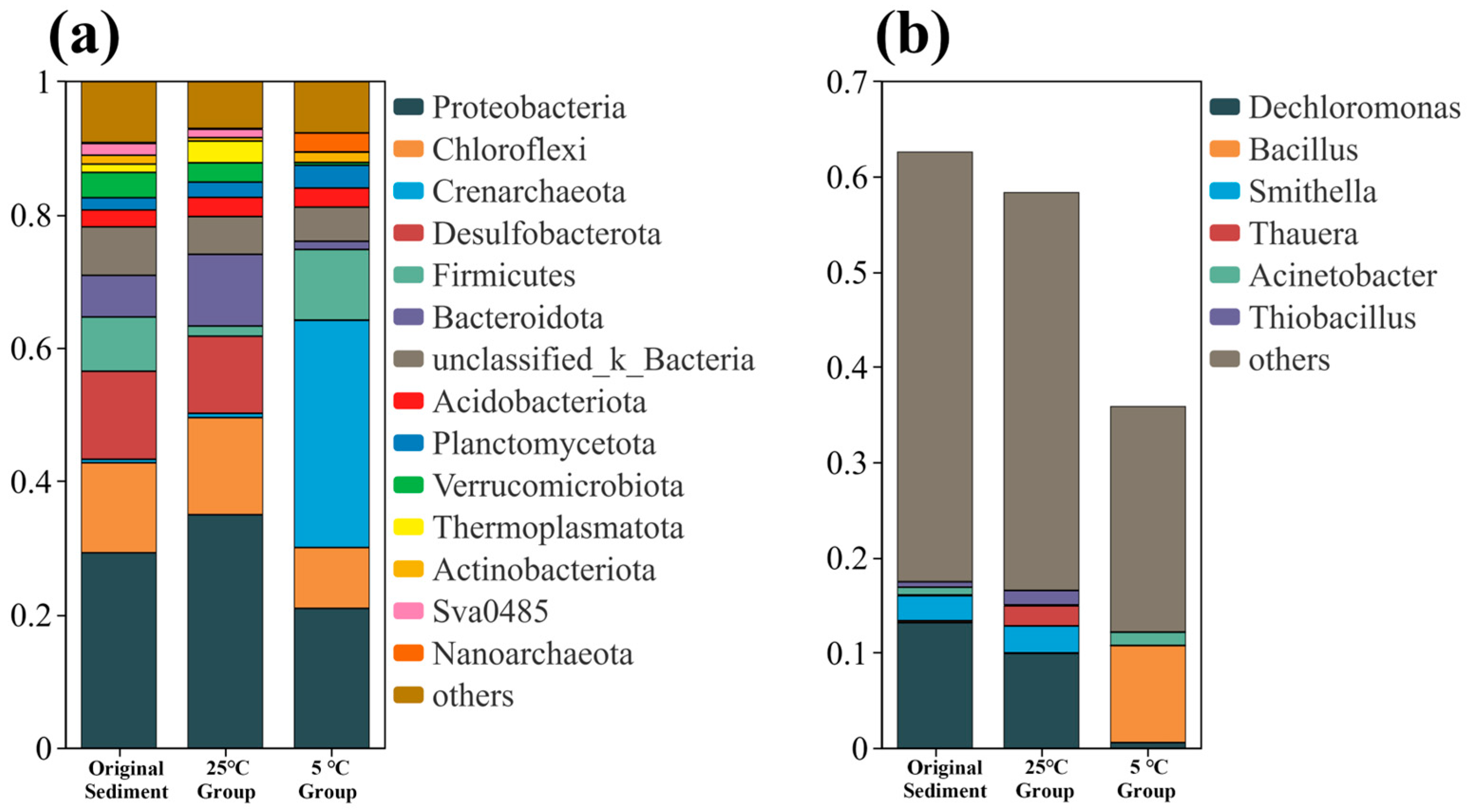
To elucidate the variations in sediment microbial community structure during the simulated water remediation experiment utilizing the prepared composite remediation agent, high-throughput sequencing was conducted to assess microbial composition and abundance before and after restoration. Analysis of microbial community composition at the phylum level (Figure 5a) indicated that, under the simulated condition of 25 °C, the dominant phyla following the 30-day remediation period were Proteobacteria (35.03%), Chloroflexi (14.55%), Desulfobacterota (11.57%), and Bacteroidota (10.76%). Notably, the relative abundance of Proteobacteria increased by 5.72% compared to pre-remediation levels. Given that this phylum includes numerous functional genera, such as nitrifying bacteria, nitrite-reducing bacteria, and anammox bacteria [65], the observed increase is considered pivotal for enhancing the transformation and removal of water pollutants. Simultaneously, the abundance of Desulfobacterota decreased, which likely contributes to the suppression of sulfate ion (SO42−) reduction to S2−, thereby mitigating the formation of blackening and malodorous H2S and metallic sulfides [66,67].
Figure 5.
Microbial community shifts in sediment before and after restoration: (a) phylum level; (b) genus level.
Under the low-temperature condition simulated at 5 °C, Crenarchaeota (34.08%) emerged as the dominant group, with its abundance significantly exceeding that observed both in the initial state and in the post-remediation state under summer-like conditions. This archaeal phylum demonstrates strong adaptability to extreme environments, such as low temperatures, and is involved in nitrogen cycling and NH4+ removal, indicating its critical role in pollutant removal under low-temperature conditions [68].
Furthermore, analysis of the genus-level microbial community structure (excluding unclassified genera, Figure 5b) revealed distinct functional shifts following the application of the composite remediation agent. The relative abundance of Thiobacillus increased compared to the original sediment at 25 °C. This genus mediates the oxidation of blackening metal sulfides (e.g., FeS, MnS) and sulfide complexes into metal sulfates, thereby contributing to the degradation of black-odorous substances [69]. Concurrently, the increased abundance of Thauera—a key contributor to aerobic denitrification—confirms that the composite agent optimized the microbial community for enhanced pollutant removal and ecological restoration [70]. In contrast, under low-temperature conditions, the limited remediation observed was associated with the proliferation of Acinetobacter in the overlying water and sediment, alongside the enrichment of indigenous Bacillus in the sediment [71].
3.5. Mechanism of Remediation Agent
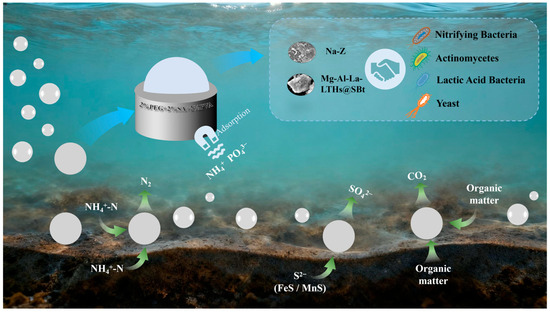
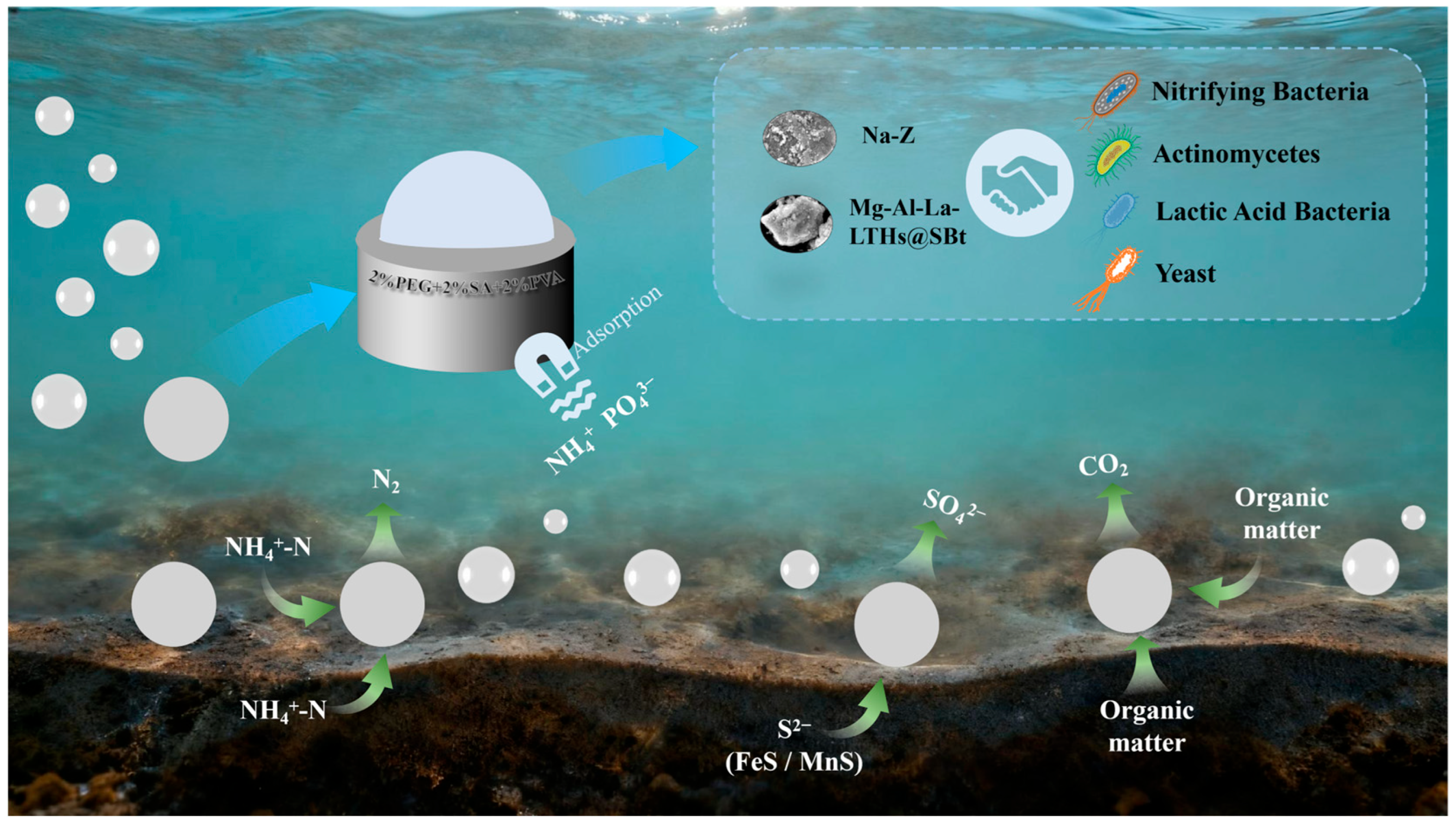
The composite remediation agent facilitates the simultaneous removal of multiple pollutants from both black-odorous overlying water and sediment through a synergistic mechanism that integrates physicochemical processes and microbial degradation (Figure 6). The application of embedding immobilization technology to combine modified clay minerals with active microbial components not only enhances the material’s mechanical strength and resistance to hydraulic shear, but also improves its settling behavior and contact efficiency at the sediment–water interface. The primary mechanisms of action can be categorized into the following two aspects:
Figure 6.
Diagram of mechanism of composite remediation agent for restoring black-odorous water.
(1) The porous structures of Na-Z, Mg-Al-La-LTHs@SBt, and the embedding matrix effectively concentrate nitrogen and phosphorus pollutants from the overlying water. The materials exhibit a high adsorption-to-desorption ratio, which prevents the re-release of fixed nutrients and thereby facilitates the stable removal of nitrogen and phosphorus from the aquatic environment.
(2) Various functional microorganisms within the active microbial consortium operate synergistically at different stages of the remediation process. During the initial phase, under anaerobic or low-oxygen conditions, facultative anaerobes such as lactic acid bacteria proliferate rapidly. These bacteria inhibit the activity of sulfate-reducing bacteria through acid production and create favorable conditions for the growth of denitrifying bacteria [72]. Yeasts, which also exhibit facultative anaerobiosis, decompose sediment organic matter through growth and metabolism, simultaneously generating organic carbon sources that are utilizable by denitrifying bacteria [73]. As remediation advances and DO levels in the water gradually increase, nitrifying bacteria oxidize NH4+ to NO3− and NO2−, thereby providing substrates for subsequent denitrification. This process facilitates nitrogen removal in the form of nitrogen gas, reduces NH3 volatilization, and mitigates the release of black odors [74,75]. Additionally, heterotrophic yeasts and actinomycetes continue to degrade organic matter in both the overlying water and sediment, leading to reductions in COD and organic matter content [76].
4. Conclusions
This study focused on the remediation of black-odorous water and sediments by developing a composite remediation agent that integrates modified clay minerals with active microbial components. Although this study remains at the proof-of-concept stage, requiring further investigation into the underlying mechanisms and practical applications, the proposed agent provides valuable theoretical insights and experimental support for the removal of pollutants from black-odorous water and the advancement of sustainable water resource management. The key conclusions are as follows:
- (1)
- The modified clay minerals (Na-Z and Mg-Al-La-LTHs@SBt) exhibited strong adsorption capabilities, particularly for nutrient pollutants. In simulated experiments using actual black-odorous water, Na-Z achieved a 93.94% removal rate for NH4+-N, while Mg-Al-La-LTHs@SBt demonstrated a 125% improvement in TP removal compared to unmodified bentonite. The porous structures and surface functional groups of these materials also fostered a favorable microenvironment for microbial colonization.
- (2)
- Under simulated seasonal conditions, the composite remediation agent exhibited superior pollutant removal at 25 °C, particularly for TN, TP, and organic matter. Despite reduced microbial activity at 5 °C, the agent maintained excellent remediation performance through its inherent adsorption properties and partial microbial functionality, demonstrating good environmental adaptability across varying temperatures.
- (3)
- High-throughput sequencing of sediment samples revealed that the treatment enriched functional microbial phyla (e.g., Proteobacteria) and beneficial genera (e.g., Thiobacillus) while reducing the abundance of sulfate-reducing bacteria (e.g., Desulfobacterota). These shifts suggest that the composite agent facilitated beneficial changes in nitrogen and sulfur cycling at the micro-ecological level, supporting a synergistic mechanism of pollutant degradation and stabilization.
Supplementary Materials
The following supporting information can be downloaded at: https://www.mdpi.com/article/10.3390/su18010033/s1, Figure S1: Schematic diagram of box-type experimental device; Table S1: Information of microbial active components.
Author Contributions
Conceptualization, B.W.; Data Curation, Q.Y.; Investigation, W.F. and D.X.; Methodology, B.L., G.L. and J.Z.; Resources, H.G.; Supervision, H.Z. and X.Z.; Validation, B.W.; Writing—Original Draft, R.N.; Writing—Review and Editing, Q.Y., B.L. and G.B. All authors have read and agreed to the published version of the manuscript.
Funding
This research was funded by the General Projects of the National Natural Science Foundation of China (Grant No. 42277055), the Natural Science Foundation of Shenzhen (Grant No. JCYJ20250604125310014), and the Xiangyang City Science and Technology Plan Project (Grant No. 2022SF01).
Institutional Review Board Statement
Not applicable.
Informed Consent Statement
Not applicable.
Data Availability Statement
The original contributions presented in this study are included in the article/Supplementary Material. Further inquiries can be directed to the corresponding authors.
Acknowledgments
The authors gratefully acknowledge the valuable comments and constructive suggestions provided by the reviewers, which significantly improved the quality of the manuscript.
Conflicts of Interest
Authors Houkun Zhang, Xiaoqiu Zhang, Wei Fang, Dong Xu, and Hui Gong were employed by the company China National Chemical Engineering Sixth Construction Co., Ltd. The remaining authors declare that the research was conducted in the absence of any commercial or financial relationships that could be construed as potential conflicts of interest.
Abbreviations
The following abbreviations are used in this manuscript:
| LTHs | Layered Ternary Hydroxides |
| PVA | Polyvinyl Alcohol |
| SA | Sodium Alginate |
| PEG | Polyethylene Glycol |
| NH4+-N | Ammonium Nitrogen |
| NO2−-N | Nitrite Nitrogen |
| NAR | Nitrite Accumulation Rate |
| TN | Total Nitrogen |
| TP | Total Phosphorus |
| COD | Chemical Oxygen Demand |
| AVS | Acid Volatile Sulfide |
| SEM | Scanning Electron Microscope |
| SEM-EDS | Scanning Electron Microscopy–Energy Dispersive Spectroscopy |
| XRD | X-Ray Diffraction |
| FTIR | Fourier Transform Infrared Spectroscopy |
References
- Tian, Y.; Hu, Y.; Su, M.; Jia, Q.; Lian, X.; Jiao, L. Mitigation Measures Could Aggravate Unbalanced Nitrogen and Phosphorus Emissions from Land-Use Activities. Environ. Sci. Technol. 2024, 58, 4627–4636. [Google Scholar] [CrossRef] [Scilit]
- Liu, N.; Meng, F.; Zhang, L.; Qin, Y.; Xue, H.; Liang, Z. Toxicity Threshold and Ecological Risk of Nitrate in Rivers Based on Endocrine-Disrupting Effects: A Case Study in the Luan River Basin, China. Sci. Total Environ. 2024, 930, 172859. [Google Scholar] [CrossRef] [Scilit]
- Naderian, D.; Noori, R.; Heggy, E.; Bateni, S.M.; Bhattarai, R.; Nohegar, A.; Sharma, S. A Water Quality Database for Global Lakes. Resour. Conserv. Recycl. 2024, 202, 107401. [Google Scholar] [CrossRef] [Scilit]
- Lupoae, O.-D.; Cristea, D.S.; Petrea, Ș.M.; Iticescu, C.; Radu, R.I.; Isai, V.M. A Mindset toward Greening the Blue Economy: Analyzing Social Environmental Awareness of Aquatic Ecosystem Protection. Technol. Forecast. Soc. Change 2025, 210, 123901. [Google Scholar] [CrossRef] [Scilit]
- Ding, C.; Zhou, J.; Jin, Z.; Zhou, H. Simultaneous Capacitive Removal of Nitrate and Phosphate Pollutants via Zr-BTB@CNTs Electrode for Remediation of Aquatic Eutrophication. Desalination 2026, 617, 119451. [Google Scholar] [CrossRef] [Scilit]
- Wang, Y.; Chen, Z.; Feng, M.; Ma, Q.; Liu, C. Enhanced Nitrogen Removal Performance of Microorganisms to Low C/N Ratio Black-Odorous Water by Coupling with Iron-Carbon Micro-Electrolysis. J. Environ. Chem. Eng. 2023, 11, 110893. [Google Scholar] [CrossRef] [Scilit]
- Li, P.; Ye, J.; Zhang, W.; Hu, F.; Guo, Q.; Xu, Z. The Blackening Process of Black-Odor Water: Substance Types Determination and Crucial Roles Analysis. J. Hazard. Mater. 2023, 443, 130295. [Google Scholar] [CrossRef] [Scilit]
- Xu, S.; Wang, J.; Wang, D.; Liao, P.; Hu, X.; Yang, Y.; Chen, J. Effective Removal of Nitrogen and Phosphorus from a Black-Odorous Water by Novel Oxygen-Loaded Adsorbents. Chem. Eng. J. 2023, 466, 143146. [Google Scholar] [CrossRef] [Scilit]
- Yu, Q.; Wen, J.; Zhang, S.; Wu, C.; Ouyang, H.; Hu, N.; Li, X.; Qiu, X. The Coupling of Sulfide and Fe-Mn Mineral Promotes the Migration of Lead and Zinc in the Redox Cycle of High pH Floodplain Soils. J. Hazard. Mater. 2024, 472, 134546. [Google Scholar] [CrossRef] [Scilit] [PubMed]
- Ali, J.; Yang, Y.; Pan, G. Oxygen Micro-Nanobubbles for Mitigating Eutrophication Induced Sediment Pollution in Freshwater Bodies. J. Environ. Manag. 2023, 331, 117281. [Google Scholar] [CrossRef] [Scilit] [PubMed]
- Wang, M.; You, X. Critical Review of Magnetic Polysaccharide-Based Adsorbents for Water Treatment: Synthesis, Application and Regeneration. J. Clean. Prod. 2021, 323, 129118. [Google Scholar] [CrossRef] [Scilit]
- Gao, Y.; Zhang, Y.; Wei, Q.; Qi, X.; Yin, Q.; Liu, B.; He, K. Response and Synergistic Effect of Microbial Community to Submerged Macrophyte in Restoring Urban Black and Smelly Water Bodies. J. Water Process Eng. 2023, 53, 103906. [Google Scholar] [CrossRef] [Scilit]
- Otunola, B.O.; Ololade, O.O. A Review on the Application of Clay Minerals as Heavy Metal Adsorbents for Remediation Purposes. Environ. Technol. Innov. 2020, 18, 100692. [Google Scholar] [CrossRef] [Scilit]
- Xu, C.; Feng, Y.; Li, H.; Yang, Y.; Wu, R. Adsorption and Immobilization of Phosphorus from Eutrophic Seawater and Sediment Using Attapulgite—Behavior and Mechanism. Chemosphere 2023, 313, 137390. [Google Scholar] [CrossRef] [Scilit]
- España, V.A.A.; Sarkar, B.; Biswas, B.; Rusmin, R.; Naidu, R. Environmental Applications of Thermally Modified and Acid Activated Clay Minerals: Current Status of the Art. Environ. Technol. Innov. 2019, 13, 383–397. [Google Scholar] [CrossRef] [Scilit]
- Novikau, R.; Lujaniene, G. Adsorption Behaviour of Pollutants: Heavy Metals, Radionuclides, Organic Pollutants, on Clays and Their Minerals (Raw, Modified and Treated): A Review. J. Environ. Manag. 2022, 309, 114685. [Google Scholar] [CrossRef] [Scilit] [PubMed]
- Barakan, S.; Aghazadeh, V. The Advantages of Clay Mineral Modification Methods for Enhancing Adsorption Efficiency in Wastewater Treatment: A Review. Env. Sci. Pollut. Res. 2021, 28, 2572–2599. [Google Scholar] [CrossRef] [Scilit]
- Wang, M.; Xie, R.; Chen, Y.; Pu, X.; Jiang, W.; Yao, L. A Novel Mesoporous Zeolite-Activated Carbon Composite as an Effective Adsorbent for Removal of Ammonia-Nitrogen and Methylene Blue from Aqueous Solution. Bioresour. Technol. 2018, 268, 726–732. [Google Scholar] [CrossRef] [Scilit]
- Velarde, L.; Nabavi, M.S.; Escalera, E.; Antti, M.-L.; Akhtar, F. Adsorption of Heavy Metals on Natural Zeolites: A Review. Chemosphere 2023, 328, 138508. [Google Scholar] [CrossRef] [Scilit] [PubMed]
- Yuan, Y.; Zhang, X.; Lei, Y.; Jiang, Y.; Xu, Z.; Zhang, S.; Gao, J.; Zhao, S. Nitrogen Removal by Modified Zeolites Coated with Zn-Layered Double Hydroxides (Zn-LDHs) Prepared at Different Molar Ratios. J. Taiwan Inst. Chem. Eng. 2018, 87, 73–82. [Google Scholar] [CrossRef] [Scilit]
- Pan, Y.; Liu, D.-F. Tapping the Potential of Wastewater Treatment with Direct Ammonia Oxidation (Dirammox). Environ. Sci. Technol. 2023, 57, 7106–7108. [Google Scholar] [CrossRef] [Scilit]
- Zhang, M.; He, T.; Wu, P.; Wang, C.; Zheng, C. Recent Advances in the Nitrogen Cycle Involving Actinomycetes: Current Situation, Prospect and Challenge. Bioresour. Technol. 2025, 419, 132100. [Google Scholar] [CrossRef] [Scilit]
- Deng, D.; He, G.; Yang, Z.; Xiong, X.; Liu, W. Activity and Community Structure of Nitrifiers and Denitrifiers in Nitrogen-Polluted Rivers along a Latitudinal Gradient. Water Res. 2024, 254, 121317. [Google Scholar] [CrossRef] [Scilit]
- Ma, X. Heavy Metals Remediation through Lactic Acid Bacteria: Current Status and Future Prospects. Sci. Total Environ. 2024, 946, 174455. [Google Scholar] [CrossRef] [Scilit] [PubMed]
- Zhang, H.; Li, B.; Ding, C.; Ni, R.; Lin, X. Core-Shell Structured Magnetic Beads Based on Sodium Alginate/Chitosan for Nitrogen Removal Enhancement. Chem. Eng. J. 2025, 512, 162203. [Google Scholar] [CrossRef] [Scilit]
- Ahmad, H.A.; Ni, S.-Q.; Ahmad, S.; Zhang, J.; Ali, M.; Ngo, H.H.; Guo, W.; Tan, Z.; Wang, Q. Gel Immobilization: A Strategy to Improve the Performance of Anaerobic Ammonium Oxidation (Anammox) Bacteria for Nitrogen-Rich Wastewater Treatment. Bioresour. Technol. 2020, 313, 123642. [Google Scholar] [CrossRef] [Scilit]
- Wang, J.; Chen, X.; Sun, H.; Li, X.; Lu, Q.; Qin, P.; Yang, Y.; Lai, D.; Luo, L.; Peng, X.; et al. Accelerated Removal and Mechanism of Tetracycline from Water Using Immobilized Bacteria Combined with Microalgae. J. Environ. Chem. Eng. 2025, 13, 115424. [Google Scholar] [CrossRef] [Scilit]
- Han, R.; Ma, H.; Su, X.; Song, J.; Liu, P.; Wu, Y.; Liu, Y. Improved Nitrate Removal by Polyvinyl Alcohol/Sodium Alginate Hydrogel Beads Entrapping Salt-Tolerant Composite Bioagent AHM M3. Desalination 2024, 591, 118009. [Google Scholar] [CrossRef] [Scilit]
- Song, J.; Li, M.; Wang, C.; Fan, Y.; Li, Y.; Wang, Y.; Zhang, W.; Li, H.; Wang, H. Enhanced Treatment of Landfill Leachate by Biochar-Based Aerobic Denitrifying Bacteria Functional Microbial Materials: Preparation and Performance. Front. Microbiol. 2023, 14, 1139650. [Google Scholar] [CrossRef] [Scilit] [PubMed]
- Zhou, D.; Tabassum, S.; Li, J.; Altundag, H. Synergistic Effect of Reinforced Cellulose Nanofibrils/Polyethylene Glycol Embedded Particles in Ammonia Nitrogen Wastewater: An in-Depth Microbial Denitrification Analysis. J. Water Process Eng. 2024, 68, 106336. [Google Scholar] [CrossRef] [Scilit]
- Mehrjou, A.; Hadaeghnia, M.; Ehsani Namin, P.; Ghasemi, I. Sodium Alginate/Polyvinyl Alcohol Semi-Interpenetrating Hydrogels Reinforced with PEG-Grafted-Graphene Oxide. Int. J. Biol. Macromol. 2024, 263, 130258. [Google Scholar] [CrossRef] [Scilit]
- Liu, C.; Yu, D.; Wang, Y.; Chen, G.; Tang, P.; Huang, S. A Novel Control Strategy for the Partial Nitrification and Anammox Process (PN/A) of Immobilized Particles: Using Salinity as a Factor. Bioresour. Technol. 2020, 302, 122864. [Google Scholar] [CrossRef] [Scilit]
- Cai, L.; Cui, L.; Lin, B.; Zhang, J.; Huang, Z. Advanced Treatment of Piggery Tail Water by Dual Coagulation with Na+ Zeolite and Mg/Fe Chloride and Resource Utilization of the Coagulation Sludge for Efficient Decontamination of Cd2+. J. Clean. Prod. 2018, 202, 759–769. [Google Scholar] [CrossRef] [Scilit]
- Zheng, X.; Liu, K.; Wu, Z.; Wang, F. Internal Curing Mechanism of Zeolite Pretreated with NaCl under Microwave and Ultrasonic Conditions. J. Build. Eng. 2023, 78, 107633. [Google Scholar] [CrossRef] [Scilit]
- Han, G.; Cui, S.; Fu, Z.; Song, X.; Chen, X.; Wang, Y. Preparation of Lanthanum-Modified Bentonite and Its Combination with Oxidant and Coagulant for Phosphorus and Algae Removal. J. Water Process Eng. 2024, 59, 104925. [Google Scholar] [CrossRef] [Scilit]
- Shi, W.; Fu, Y.; Jiang, W.; Ye, Y.; Kang, J.; Liu, D.; Ren, Y.; Li, D.; Luo, C.; Xu, Z. Enhanced Phosphate Removal by Zeolite Loaded with Mg–Al–La Ternary (Hydr)Oxides from Aqueous Solutions: Performance and Mechanism. Chem. Eng. J. 2019, 357, 33–44. [Google Scholar] [CrossRef] [Scilit]
- Chen, Q.; Ding, Q.; Li, W.; Deng, J.; Lin, Q.; Li, J. Enhanced Treatment of Organic Matters in Starch Wastewater through Bacillus Subtilis Strain with Polyethylene Glycol-Modified Polyvinyl Alcohol/Sodium Alginate Hydrogel Microspheres. Bioresour. Technol. 2022, 347, 126741. [Google Scholar] [CrossRef] [Scilit]
- Xu, K.; Tan, L.; Sun, H.; Chong, C.; Li, L.; Sun, B.; Yao, Z.; Zhuang, Y.; Wang, L. Manipulating Gelatinization, Retrogradation, and Hydrogel Properties of Potato Starch through Calcium Chloride-Controlled Crosslinking and Crystallization Behavior. Carbohydr. Polym. 2025, 357, 123371. [Google Scholar] [CrossRef] [Scilit]
- Zhang, D.; Zeng, J.; Zhang, M.; Sun, H.; Li, Y. Preparation and Properties of Functional Ionic Liquid Cross-linked Polyacrylamide-based Gel Microspheres with Compressive Strength and Stability. Polym. Eng. Sci. 2025, 65, 2642–2652. [Google Scholar] [CrossRef] [Scilit]
- Huang, S.; Zhu, X.; Fang, J.; Zhang, X.; Zhang, H.; Zhang, Z.; Wu, X.; Zhu, X. Pyrolysis Temperature Dependent Effects of Biochar on Shifting Fluorescence Spectrum Characteristics of Soil Dissolved Organic Matter under Warming. Sci. Total Environ. 2023, 892, 164656. [Google Scholar] [CrossRef] [Scilit]
- Liu, M.; Li, T.; Wang, Z.; Radu, T.; Jiang, H.; Wang, L. Effect of Aeration on Water Quality and Sediment Humus in Rural Black-Odorous Water. J. Environ. Manag. 2022, 320, 115867. [Google Scholar] [CrossRef] [Scilit]
- Nabi, F.; Peng, Y.; Kama, R.; Sajid, S.; Memon, F.U.; Ma, C.; Li, H. Enhanced Nutrient Removal from Aquaculture Wastewater Using Optimized Constructed Wetlands: A Comprehensive Screening of Microbial Complexes, Substrates, and Macrophytes. J. Water Process Eng. 2025, 69, 106634. [Google Scholar] [CrossRef] [Scilit]
- Reeve, P.J.; Fallowfield, H.J. Natural and Surfactant Modified Zeolites: A Review of Their Applications for Water Remediation with a Focus on Surfactant Desorption and Toxicity towards Microorganisms. J. Environ. Manag. 2018, 205, 253–261. [Google Scholar] [CrossRef] [Scilit] [PubMed]
- Wu, Z.; Fang, Y.; Zhou, J.; Wang, K.; Tan, B.; Zhou, J. Succinic Acid-Assisted Modification of a Natural Zeolite and Preparation of Its Porous Pellet for Enhanced Removal of Ammonium in Wastewater via Fixed-Bed Continuous Flow Column. J. Water Process Eng. 2022, 48, 102906. [Google Scholar] [CrossRef] [Scilit]
- Fu, H.; Zhong, L.; Yu, Z.; Liu, W.; Abdel-Fatah, M.A.; Li, J.; Zhang, M.; Yu, J.; Dong, W.; Lee, S.S. Enhanced Adsorptive Removal of Ammonium on the Na+/Al3+ Enriched Natural Zeolite. Sep. Purif. Technol. 2022, 298, 121507. [Google Scholar] [CrossRef] [Scilit]
- Wang, J.; Zhou, Y.; Hu, X. Adsorption of CO2 by a Novel Zeolite Doped Amine Modified Ternary Aerogels. Environ. Res. 2022, 214, 113855. [Google Scholar] [CrossRef] [Scilit]
- Li, Y.; Simon, A.O.; Jiao, C.; Zhang, M.; Yan, W.; Rao, H.; Liu, J.; Zhang, J. Rapid Removal of Sr2+, Cs+ and UO22+ from Solution with Surfactant and Amino Acid Modified Zeolite Y. Microporous Mesoporous Mater. 2020, 302, 110244. [Google Scholar] [CrossRef] [Scilit]
- Wang, F.; Zhang, R.; Donne, S.W.; Beyad, Y.; Liu, X.; Duan, X.; Yang, T.; Su, P.; Sun, H. Co-Pyrolysis of Wood Chips and Bentonite/Kaolin: Influence of Temperatures and Minerals on Characteristics and Carbon Sequestration Potential of Biochar. Sci. Total Environ. 2022, 838, 156081. [Google Scholar] [CrossRef] [Scilit]
- Stanly, S.; Jelmy, E.J.; Nair, C.P.R.; John, H. Carbon Dioxide Adsorption Studies on Modified Montmorillonite Clay/Reduced Graphene Oxide Hybrids at Low Pressure. J. Environ. Chem. Eng. 2019, 7, 103344. [Google Scholar] [CrossRef] [Scilit]
- Katti, D.R.; Thapa, K.B.; Katti, K.S. The Role of Fluid Polarity in the Swelling of Sodium-Montmorillonite Clay: A Molecular Dynamics and Fourier Transform Infrared Spectroscopy Study. J. Rock. Mech. Geotech. Eng. 2018, 10, 1133–1144. [Google Scholar] [CrossRef] [Scilit]
- Xiao, F.; Yan, B.; Zou, X.; Cao, X.; Dong, L.; Lyu, X.; Li, L.; Qiu, J.; Chen, P.; Hu, S.; et al. Study on Ionic Liquid Modified Montmorillonite and Molecular Dynamics Simulation. Colloids Surf. A Physicochem. Eng. Asp. 2020, 587, 124311. [Google Scholar] [CrossRef] [Scilit]
- Krasinskyi, V.; Malinowski, R.; Bajer, K.; Rytlewski, P.; Miklaszewski, A. Study of Montmorillonite Modification Technology Using Polyvinylpyrrolidone. Arab. J. Chem. 2023, 16, 105296. [Google Scholar] [CrossRef] [Scilit]
- Chen, J.; Liu, P.; Lu, J.; Jiang, S.Y.; Lee, C.-H.; Zhao, Y.; Li, Y.; Ruan, H.D. Calcination Effect on Multi-Adsorption Abilities of Modified Montmorillonite. Mater. Chem. Phys. 2025, 343, 131008. [Google Scholar] [CrossRef] [Scilit]
- Ghasemi, M.; Bayati, B.; Kazemian, H. Molecular Dynamics Simulation of Phosphate Separation from Water Using HEU Zeolite: Unveiling Promising Strategies for Eutrophication Control. Microporous Mesoporous Mater. 2025, 396, 113733. [Google Scholar] [CrossRef] [Scilit]
- Li, C.; Liu, L.; Liu, S.; Yuan, D.; Zhang, Q.; Han, Z. Guest Cation Functionalized Metal Organic Framework for Highly Efficient C2 H2 /CO2 Separation. Small 2024, 20, 2405561. [Google Scholar] [CrossRef] [Scilit]
- Dithmer, L.; Lipton, A.S.; Reitzel, K.; Warner, T.E.; Lundberg, D.; Nielsen, U.G. Characterization of Phosphate Sequestration by a Lanthanum Modified Bentonite Clay: A Solid-State NMR, EXAFS, and PXRD Study. Environ. Sci. Technol. 2015, 49, 4559–4566. [Google Scholar] [CrossRef] [Scilit] [PubMed]
- Gandhi, D.; Bandyopadhyay, R.; Soni, B. Naturally Occurring Bentonite Clay: Structural Augmentation, Characterization and Application as Catalyst. Mater. Today Proc. 2022, 57, 194–201. [Google Scholar] [CrossRef] [Scilit]
- Wang, Y.-L.; Yang, Y.-L.; Tan, X.; Li, X.; Zhao, L. Enhanced Nutrients Removal from Low C/N Ratio Rural Sewage by Embedding Heterotrophic Nitrifying Bacteria and Activated Alumina in a Tidal Flow Constructed Wetland. Bioresour. Technol. 2024, 413, 131513. [Google Scholar] [CrossRef] [Scilit]
- Ya, T.; Liu, J.; Zhang, M.; Wang, Y.; Huang, Y.; Hai, R.; Zhang, T.; Wang, X. Metagenomic Insights into the Symbiotic Relationship in Anammox Consortia at Reduced Temperature. Water Res. 2022, 225, 119184. [Google Scholar] [CrossRef] [Scilit]
- Liang, Y.; Gong, Z.; Zhao, Y.; Yang, Y. Assessing the Influence of the Ecological Restoration Project on the Submerged Aquatic Vegetation in the Baiyangdian Lake, Northern China. Ecohydrol. Hydrobiol. 2024, 24, 864–874. [Google Scholar] [CrossRef] [Scilit]
- Zhang, Y.; Wei, Q.; Luo, Q.; Li, J.; Lin, B. XSBR-Mediated Biomass Polymers: A New Strategy to Solve the Low Toughness and High Hydrophilicity of Sodium Alginate Based Films and Use in Food Packaging. Int. J. Biol. Macromol. 2025, 318, 144979. [Google Scholar] [CrossRef] [Scilit]
- Song, X.; Zhang, J. Sequential Combination of NaClO Chain Breakage/CuxO Catalytic Oxidation Processes for High Efficiency Treatment of Ultra-High Concentration PVA Wastewater. J. Environ. Chem. Eng. 2023, 11, 109288. [Google Scholar] [CrossRef] [Scilit]
- Zhang, L.; Li, P.; Wang, X.; He, X.; Li, E.; Lan, Q.; Liu, Y.; Yin, D. Promotion Effect of Foam Formation on the Degradation of Polyvinyl Alcohol by Ozone Microbubble. J. Environ. Chem. Eng. 2023, 11, 111192. [Google Scholar] [CrossRef] [Scilit]
- Zhao, Y.; Dong, Y.; Chen, X.; Wang, Z.; Cui, Z.; Ni, S.-Q. Using Sulfide as Nitrite Oxidizing Bacteria Inhibitor for the Successful Coupling of Partial Nitrification-Anammox and Sulfur Autotrophic Denitrification in One Reactor. Chem. Eng. J. 2023, 475, 146286. [Google Scholar] [CrossRef] [Scilit]
- Si, Z.; Song, X.; Wang, Y.; Cao, X.; Zhao, Y.; Wang, B.; Chen, Y.; Arefe, A. Intensified Heterotrophic Denitrification in Constructed Wetlands Using Four Solid Carbon Sources: Denitrification Efficiency and Bacterial Community Structure. Bioresour. Technol. 2018, 267, 416–425. [Google Scholar] [CrossRef] [Scilit]
- Wei, Z.; Xu, Y.; Shi, Y.; Zhou, X.; Lin, J.; Ruan, A. The Response Mechanism of Microorganisms to the Organic Carbon-Driven Formation of Black and Odorous Water. Environ. Res. 2023, 231, 116255. [Google Scholar] [CrossRef] [Scilit]
- Wu, Y.; Wang, W.; Liu, X.; Sheng, Y. Functional Microorganisms Drive the Formation of Black-Odorous Waters. Microorganisms 2024, 12, 487. [Google Scholar] [CrossRef] [Scilit] [PubMed]
- Bourne, D.G.; Morrow, K.M.; Webster, N.S. Insights into the Coral Microbiome: Underpinning the Health and Resilience of Reef Ecosystems. Annu. Rev. Microbiol. 2016, 70, 317–340. [Google Scholar] [CrossRef] [Scilit]
- Zhu, J.; Li, X.; Wang, Y.; Gu, X.; Wang, H.; Ma, J.; Huang, Y. Organic Sulfur-Driven Denitrification Pretreatment for Enhancing Autotrophic Nitrogen Removals from Thiourea-Containing Wastewater: Performance and Microbial Mechanisms. Water Res. 2025, 282, 123753. [Google Scholar] [CrossRef] [Scilit] [PubMed]
- Ma, Y.; Wang, B.; Li, X.; Wang, S.; Wang, W.; Peng, Y. Enrichment of Anammox Biomass during Mainstream Wastewater Treatment Driven by Achievement of Partial Denitrification through the Addition of Bio-Carriers. J. Environ. Sci. 2024, 137, 181–194. [Google Scholar] [CrossRef] [Scilit]
- Lv, S.; Zheng, F.; Wang, Z.; Hayat, K.; Veiga, M.C.; Kennes, C.; Chen, J. Unveiling Novel Pathways and Key Contributors in the Nitrogen Cycle: Validation of Enrichment and Taxonomic Characterization of Oxygenic Denitrifying Microorganisms in Environmental Samples. Sci. Total Environ. 2024, 908, 168339. [Google Scholar] [CrossRef] [Scilit]
- Smith, N.W.; Shorten, P.R.; Altermann, E.; Roy, N.C.; McNabb, W.C. Competition for Hydrogen Prevents Coexistence of Human Gastrointestinal Hydrogenotrophs in Continuous Culture. Front. Microbiol. 2020, 11, 1073. [Google Scholar] [CrossRef] [Scilit]
- Gambacorta, F.V.; Dietrich, J.J.; Yan, Q.; Pfleger, B.F. Rewiring Yeast Metabolism to Synthesize Products beyond Ethanol. Curr. Opin. Chem. Biol. 2020, 59, 182–192. [Google Scholar] [CrossRef] [Scilit] [PubMed]
- Zheng, C.; He, T.; Wang, C.; Zhang, M.; Yang, L.; Yang, L. Key Enzymes, Functional Genes, and Metabolic Pathways of the Nitrogen Removal-Related Microorganisms. Crit. Rev. Environ. Sci. Technol. 2024, 54, 1672–1691. [Google Scholar] [CrossRef] [Scilit]
- Deng, M.; Zhao, X.; Senbati, Y.; Song, K.; He, X. Nitrogen Removal by Heterotrophic Nitrifying and Aerobic Denitrifying Bacterium Pseudomonas Sp. DM02: Removal Performance, Mechanism and Immobilized Application for Real Aquaculture Wastewater Treatment. Bioresour. Technol. 2021, 322, 124555. [Google Scholar] [CrossRef] [Scilit] [PubMed]
- Yin, J.; Xie, M.; Yu, X.; Feng, H.; Wang, M.; Zhang, Y.; Chen, T. A Review of the Definition, Influencing Factors, and Mechanisms of Rapid Composting of Organic Waste. Environ. Pollut. 2024, 342, 123125. [Google Scholar] [CrossRef] [Scilit]
Disclaimer/Publisher’s Note: The statements, opinions and data contained in all publications are solely those of the individual author(s) and contributor(s) and not of MDPI and/or the editor(s). MDPI and/or the editor(s) disclaim responsibility for any injury to people or property resulting from any ideas, methods, instructions or products referred to in the content. |
© 2025 by the authors. Licensee MDPI, Basel, Switzerland. This article is an open access article distributed under the terms and conditions of the Creative Commons Attribution (CC BY) license.