Article

Quality Assessment of Farmer-Led Vermicompost Production in Semi-Arid Agroecosystems: Compliance with Global Standards


by
Fevziye Şüheda Hepşen Türkay
Department of Soil Science and Plant Nutrition, Agricultural Faculty, Kırşehir Ahi Evran University, 40100 Kırşehir, Türkiye
Sustainability 2026, 18(1), 298; https://doi.org/10.3390/su18010298
Submission received: 28 November 2025 / Revised: 20 December 2025 / Accepted: 23 December 2025 / Published: 27 December 2025
(This article belongs to the Section Sustainable Agriculture)

Abstract

This study evaluates the technical feasibility of decentralized vermicompost production by smallholder farmers within a structured rural development program. Conducted under the KOP-TEYAP initiative in Kırşehir Province, Türkiye, the research assesses whether farmers can consistently produce vermicompost that meets international quality standards following a participatory training and infrastructure support model. Fourteen farmers, selected through a merit-based process from 232 trainees, were provided with standardized production units. The produced vermicompost was analyzed for critical chemical parameters (pH, EC, organic matter, C:N ratio, K, Cu, Zn) and biological indicators (basal CO2 respiration, microbial biomass carbon) and benchmarked against regulations from the EU, France, Germany, Austria, Canada, India, and Türkiye. Results indicated that the majority of farmer-produced samples successfully met the critical thresholds for chemical quality and safety. Furthermore, biological maturity was confirmed by low basal respiration levels and high microbial biomass across the samples. These findings demonstrate that structured farmer training combined with standardized low-cost infrastructure enables smallholders to reliably produce high-quality vermicompost, validating this model as an effective agroecological strategy for rural development.

1. Introduction

Agricultural enterprises rank among the foremost sources of plant- and animal-derived waste, which contain organic materials critically important for soil ecology in intensive farming systems. For many growers, however, the necessity of properly valorizing these residues is often impeded by constraints on labor and time, creating agronomic risks. Consequently, farmers frequently opt to dispose of organic waste in ways that contribute to environmental pollution rather than channeling them back into the very soils from which they originate—soils that would most benefit from such amendments. Vermicomposting, as a mesophilic process, offers a more environmentally benign alternative to conventional composting, yielding an end product characterized by exceptionally high microbial activity and superior soil health benefits. Moreover, vermicompost poses no risk of introducing the toxic compounds, pathogen loads, salinity issues, heavy metals, or weed seeds sometimes associated with traditional composts. Through a combination of microbial metabolism and the rapid, one-day gut processing by earthworms, vermicomposting effects humification, detoxification, sanitization, stabilization, and bioaccumulation. Effective waste management therefore requires an integrated view of the entire cycle—from waste transformation and soil application through plant growth to harvest. Unlike conventional compost piles, which may attract pests and necessitate chemical interventions, vermicompost beds actively deter pest ingress through the presence of earthworms.
Sustainable agriculture is essential for addressing challenges such as climate change, food insecurity, and biodiversity loss. Practices like crop rotation, organic fertilization, and proper nutrient management improve soil health and reduce reliance on synthetic inputs, contributing to more resilient farming systems [1,2,3,4].
Among these practices, vermicomposting stands out as a sustainable method that uses earthworms to convert organic waste into nutrient-rich compost. This process enhances soil structure, soil microbial activity, amount of available nutrients and fertility while reducing the need for chemical fertilizers [5,6]. It also offers an environmentally friendly solution to organic waste management by promoting circular farm economies [7,8]. In addition to the positive effects of vermicompost on soil structure, microbial activity, and productivity, numerous studies have also demonstrated its beneficial impacts on plant health, food safety, shelf life, marketable yield, and the composition of secondary metabolites [9,10]. Increased soil organic matter stimulates microbial activity, leading to higher soil respiration rates and enhanced moisture retention; moreover, the inherently high water-holding capacity of organic materials further increases soil water content [11,12]. The addition of organic amendments to the soil ecosystem is known to rebuild soil structure degraded by drought, to regulate the soil air–water balance, and to facilitate reclamation and amelioration. Although the slower decomposition rate of organic matter in semi-arid regions is often cited as an agronomic drawback, sustainable soil health is inherently a long-term process. Consequently, the benefits of organic amendments should not be judged solely on yield parameters within a single crop cycle. Hence, incorporating organic materials—particularly those with high microbial activity such as vermicompost—is critically important for maintaining sustainable soil health even in semi-arid environments.
Semi-arid regions, which account for nearly 40% of the world’s cropland, suffer chronically low soil organic-C stocks and high nutrient leakage. Closing on-farm nutrient loops through cost-effective inputs such as vermicompost is therefore a recognized strategy to buffer climate-induced yield variability, reduce fertilizer dependency, and enhance ecosystem services [13,14,15]. Decentralized, farmer-managed recycling practices in semi-arid regions may thus play a crucial role in supporting global goals of nutrient circularity and carbon stabilization, particularly within Mediterranean-type agroecosystems [16,17] like the Konya Plain.
The adoption of vermicomposting depends heavily on farmer training. Well-structured, participatory education programs help farmers understand both the technical and ecological aspects of sustainable practices, increasing the likelihood of adoption and long-term success [18,19]. Collaborative learning also supports knowledge sharing, and studies show that such cooperative models improve the uptake of sustainable methods like vermicomposting [20,21]. When these programs incorporate local climate conditions and cultural contexts, they also strengthen resilience to environmental variability [22].
Economic feasibility is another key factor influencing the adoption of sustainable farming. Farmers are more inclined to use methods like vermicomposting when they see clear market benefits, such as higher returns from organic products and reduced input costs [23]. Growing consumer preference for organically farmed produce enhances this transition, as farmers recognize the potential for higher prices and improved market access linked to adopting sustainable practices [24,25].
Nonetheless, significant barriers remain in expanding the reach and impact of farmer training programs aimed at promoting sustainable practices. Financial constraints and insufficient access to resources—both material and educational—are prevalent challenges. Research demonstrates that farmers experiencing financial limitations are less inclined to adopt innovative practices, such as vermicomposting, which often require initial investments [26,27]. Addressing these challenges requires supportive policies, financial incentives, and targeted interventions to reach marginalized farming communities [28,29].
Rural livelihoods can be revitalized through a systematic integration of farmer training programs focused on sustainable practices. Improved agricultural productivity, coupled with increased market access for sustainably produced goods, yields significant economic benefits for farming communities [4,30]. Training initiatives should also incorporate elements of gender equity, as empowering women farmers has been shown to lead to enhanced community resilience and improved food security outcomes [20,31].
Ultimately, building a culture of sustainability through farmer education and collective action is critical for long-term transformation in agriculture [3,32]. The link between farmer training, the adoption of vermicomposting, and rural development offers a compelling framework for agroecological transition [33,34,35].
To ensure the effectiveness and safety of vermicompost, alignment with international quality standards is necessary. These regulations typically assess parameters like pH, EC, organic matter, C/N ratio, nutrient content, permissible heavy metals, and CO2 respiration. Table 1 summarizes these key criteria across global regulatory frameworks. In Türkiye, there is currently no specific official regulation solely focused on vermicompost quality. However, the Ministry of Agriculture and Rural Affairs [36] and the Ministry of Agriculture and Forestry [37,38] have issued regulations covering compost production parameters, which are also applied to vermicompost in practice.
Table 1. Overview of the regulations, guidelines, and standards in force in different countries for some compost/vermicompost quality parameters.
ParameterpHEC (dS/cm)OM (%)OC (%)Total N (%)C:NTotal K (%)Cu (ppm)Zn (ppm)µg CO2
Türkiye5.5–8.5 [36]≤10 [37]≥35% [36]N.S.N.S.≤10:1–30:1 [36]N.S.≤450 [38]≤1100 [38]N.S.
EU6.0–8.5 [39]≤1 [40]≥15% [40,41]≥7.5% [39] | ≥8.5% [40]N.S.N.S.N.S.≤200 [40] | ≤300 [39,41]≤300 [40] | ≤600 [41] | ≤800 [39]≤16 [40]
France6.0–8.5 [42]≤2.5 [43]≥30% [42]≥12% [43]≥1.0% [42,43]≤20:1 [43]N.S.≤70 [42]≤200 [42]≤5 [43]
Germany6.0–8.5 [44]≤2.5 [44]≥20% [44]10% [44]≥0.8% [44,45]≤20:1 [44]N.S.≤70 [45]≤200 [45]≤5 [44]
Austria6.0–8.5 [46]≤3.5 [46,47]≥20–35% [47]≥~10–20% [47]0.5–3.0% [47]≤20:1 [47]N.S.≤70–150 [46]≤400–500 [46]≤10 [47]
Canada6.0–8.5 [48]≤2.5 [49]≥30% [49]N.S.N.S.≤22:1 [49]N.S.≤100 [48]≤500 [48]≤5 [50]
India6.5–7.5 [51,52]≤4.0 [51,52]Not specified≥12 [51] | ≥ 18 [52,53]≥0.8 [51] | ≥1.0 [52,53]≤20:1 [51,52]≥0.4 [51] | ≥0.8 [52,53]≤300 [51,52]≤1000 [51]N.S.
EC: Electrical conductivity, OM: Organic matter, OC; Organic carbon, C:N: Carbon/Nitrogen ratio, N.S.: Not specified. MARA [36], MFAL [37], MAF [38], EPC [39], EC [40], ECN-QAS [41], AFNOR [42], ADEME [43], BGK [44], BMEL [45], BMLFUW [46], ASI [47], CCME [48], OME [49], CCoC [50], MoFCC [51], BIS [52], DAFW [53].
However, despite the existence of these standards, there is a critical lack of empirical evidence regarding the technical capability of smallholder farmers in semi-arid regions to consistently produce high-quality vermicompost that complies with them. Specifically, it remains unclear whether farmers, using basic infrastructure and limited resources, can meet these stringent safety and quality benchmarks.
This study aimed to assess the quality and sustainability potential of vermicompost produced by farmers participating in a structured rural development initiative. This study was conducted within the framework of the KOP-TEYAP initiative, coordinated by the Konya Plain Project Regional Development Administration in Türkiye. The Konya Plain is one of Türkiye’s most intensively cultivated agricultural zones, where large-scale crop production and resource management challenges frequently intersect. Kırşehir Province, located within the KOP Region, benefits from its strategic inclusion in this policy framework, which promotes sustainable agricultural practices, resource efficiency, and farmer education through regionally tailored programs.
The primary objective of this study is to quantitatively evaluate the quality of vermicompost produced by smallholder farmers following a structured training program. Specifically, the study aims to: (1) Analyze critical physicochemical and biological parameters; (2) Benchmark these parameters against established regulatory standards; and (3) Compare the variability and quality of on-farm production against a control sample produced under controlled university conditions.

2. Materials and Methods

2.1. Project Design and Farmer Training

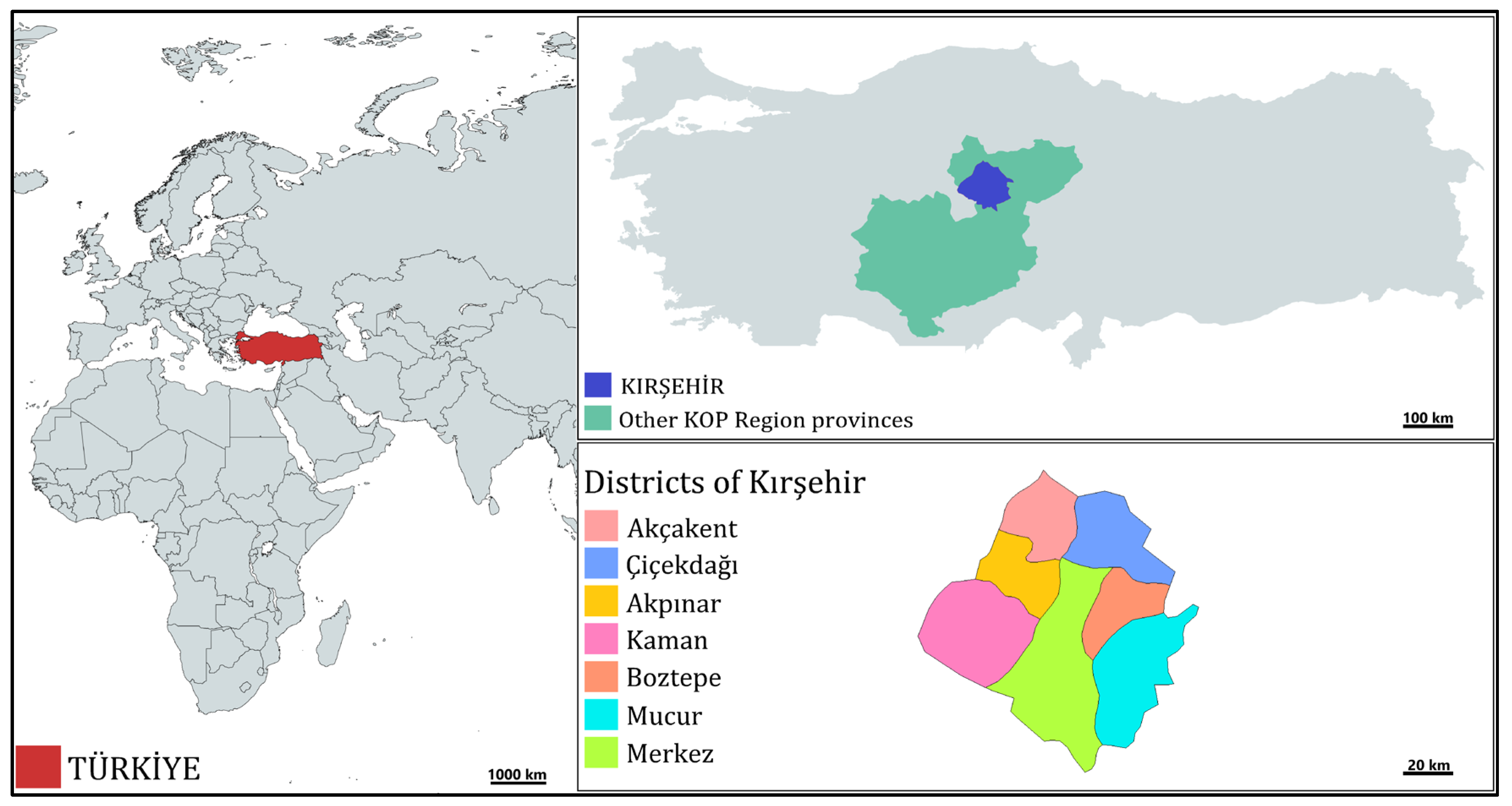
This study was implemented as part of the KOP-TEYAP rural development initiative in Kırşehir Province, Türkiye, which aims to strengthen sustainable agricultural practices through participatory capacity-building. A total of 232 farmers participated in the training sessions, which were held across seven different training centers throughout Kırşehir Province (Figure 1). At the conclusion of the program, a standardized evaluation was administered to assess participant comprehension. Based on the exam results, two top-performing farmers from each center—14 in total—were selected to receive vermicompost production equipment through a grant scheme. The selection of participants followed a merit-based purposive sampling strategy. To ensure geographical representation and mitigate spatial bias, two participants were selected from each of the seven districts of Kırşehir Province. Given that successful vermicomposting requires strict adherence to biological monitoring protocols (e.g., maintaining specific moisture and temperature ranges), ensuring that participants possessed the necessary theoretical competence was critical. This approach was chosen to minimize the risk of process failure due to operational errors, thereby allowing the study to accurately assess the technical feasibility of the production model itself rather than the variability associated with unskilled labor. Furthermore, as the equipment was provided through a public grant, selecting farmers with the highest potential for adoption was essential to ensure the effective use of resources and the sustainability of the initiative. These selected farmers, representing diverse agroecological zones, continued on with the structured training program designed to foster knowledge and practical competencies in vermicomposting.
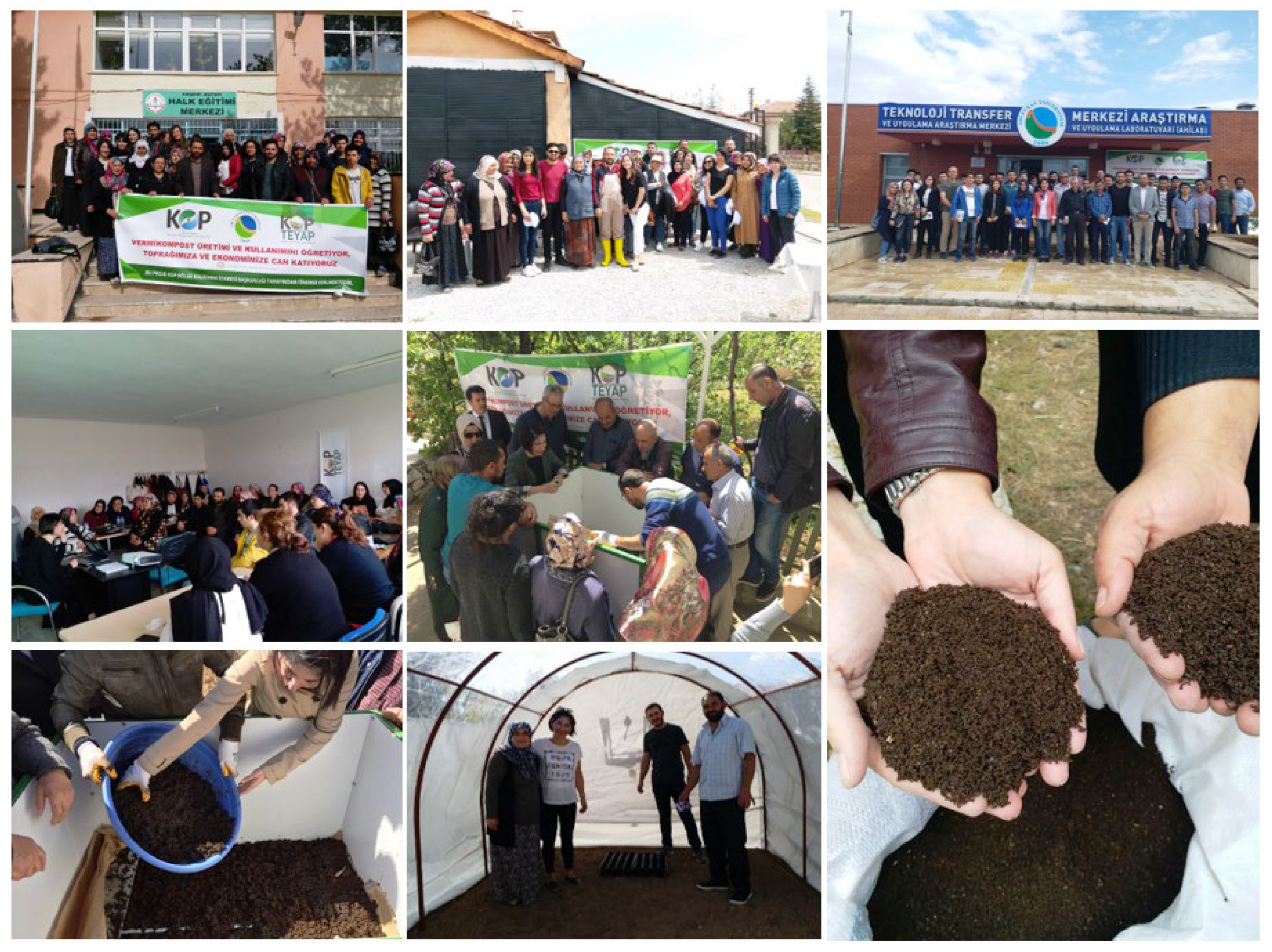
The training was conducted over multiple sessions and followed a blended model combining classroom-based theoretical instruction with hands-on field exercises, consisting of three days of theory, one day of practical application, and a dedicated field day (Figure 2). The curriculum covered key topics such as vermicomposting principles, earthworm physiology (with a focus on Eisenia fetida), feedstock characteristics, composting system design, environmental monitoring (moisture, aeration, temperature), harvesting, and quality assurance. Trainers included university faculty, extension specialists, and technical experts with prior experience in farmer-led composting initiatives.
To ensure standardization and minimize variability, all participating farmers were provided with identical equipment: a 1 m3 composting container, 2000 Eisenia fetida worms, feedstock sourcing tools (such as overalls, hats, and boots), and basic diagnostic instruments, including portable pH and EC meters. In order to enable the practical use of the produced vermicompost in plant cultivation, each farmer was also equipped with a 12 m2 portable greenhouse, vegetable seeds, and germination trays. The training emphasized a participatory learning approach that encouraged peer interaction, problem-solving, and real-time feedback. Farmers also received field manuals and visual aids to support independent learning and reinforce core practices.
Participants were further supported with follow-up visits and technical consultations throughout the production phase. These interactions were intended to troubleshoot implementation challenges, reinforce best practices, and promote long-term adoption. The project design thus integrated technical instruction with infrastructure provision and social learning dynamics to enhance farmers’ ability to sustainably manage vermicompost production.

2.2. Vermicompost Production and Sampling

The vermicompost production process was initiated following the successful completion of the training program and equipment distribution. Each of the 14 selected farmers was responsible for establishing and managing a vermicomposting unit using standardized infrastructure provided through the project. The training curriculum placed significant emphasis on the technical preparation of vermicompost feedstock, specifically mandating a 45–60 day aerobic pre-composting period for animal manure. Participants were instructed to facilitate thermophilic conditions through regular manual turning and moisture regulation, a process emphasized as essential for pathogen elimination and substrate homogenization. To bridge the gap between theory and practice, the program included dedicated field days where farmers visited active livestock facilities to observe and apply these pre-composting techniques in situ. Consequently, the training ensured that farmers could identify and produce vermicompost feedstock meeting specific physicochemical criteria required for optimal Eisenia fetida activity. It is acknowledged that vermicompost composition is inherently influenced by the feedstock. While all participants utilized cattle manure, detailed chemical characterization of the raw input for each farm was not the primary objective of this study. Instead, the study focused on assessing whether the final product generated by trained farmers could consistently meet established international quality standards despite the natural heterogeneity of on-farm manure sources. This approach was chosen to evaluate the robustness of the production protocol under realistic field conditions. Feedstock materials were partially decomposed through aerobic pre-composting before being introduced to the vermicomposting containers.
Composting units were stocked with 2000 Eisenia fetida earthworms per 1 m3 container, consistent with recommendations provided during the training. Moisture levels were maintained between 60 and 80% using periodic irrigation, and temperature and aeration were monitored through manual mixing and shade placement. Farmers were encouraged to document changes in compost texture, odor, and earthworm activity throughout the process.
The vermicomposting period varied slightly depending on ambient environmental conditions but generally ranged between 60 and 75 days. Upon completion of the composting cycle, representative samples were collected from five different points within each composting unit using the quartering method to ensure sample homogeneity. These samples were then pooled and subsampled for laboratory analysis.
In parallel, a control sample was obtained from the vermicomposting facility at Kırşehir Ahi Evran University, where the same protocols were applied under closely monitored academic supervision. All collected samples intended for chemical analysis were air-dried at room temperature, homogenized using a 2 mm sieve, and stored in sealed polyethylene containers to preserve integrity prior to analysis. For biological analyses, a portion of the samples was sieved and placed into polyethylene bags on the day of sampling, immediately preserved in a cold-chain transport container, and subsequently stored in a refrigerator upon arrival at the laboratory.

2.3. Sampling, Chemical, and Biological Analyses

The chemical and biological analyses of the vermicompost samples were performed using a suite of standardized methods, as summarized in Table 2 and Table 3 below. For the chemical analyses, organic matter was quantified using a dry burning technique, which involved adding a small volume of a 5% H2SO4 solution (dissolved in ethyl alcohol) to the sample before combustion at 550 °C in porcelain crucibles. Total nitrogen was determined by the Kjeldahl method, while pH and electrical conductivity (EC) measurements were made using a 1:10 (w/v) suspension of the soil-organic waste mixture. Total potassium was measured by flame photometry on an extract obtained after dry combustion. The CaCO3 content was determined via the Schiebler method, and the total concentrations of Ca, Mg, Zn, Cu, Mn, and Na were quantified using an Atomic Absorption Spectrophotometer on extracts produced by dry digestion.
The biological analyses included the assessment of basal respiration (CO2-C) and microbial biomass carbon (MBC-C). In the basal respiration assay, a known mass of sample was moistened to 55% of its maximum water holding capacity and incubated at 25 °C, with the CO2 produced by microbial activity captured in a NaOH solution and later titrated to quantify CO2-C [54]. For microbial biomass carbon, an additional glucose amendment was provided to stimulate basal respiration, and the resultant increase in CO2 production was used to calculate the MBC-C [55].
It is important to note that the parameters for Organic Carbon (%), C:N ratio, the ratio of microbial biomass carbon to organic carbon (C mic/C org), and the metabolic quotient (qCO2) were not measured directly but rather derived from the results of other analyses. Specifically, Organic Carbon (%) was calculated by difference from organic matter, the C:N ratio was computed using the measured values of organic carbon and total nitrogen, and both C mic/C org and qCO2 were calculated using the outputs from the basal respiration and MBC assays. These calculated values provide integrated indicators of vermicompost maturity and quality, reflecting both the chemical composition and the biological activity within the samples.
Table 2. Methods for chemical analyses of vermicompost samples.
AnalysisMethods
Organic matterDry burning (adding 1 mL of 5% H2SO4 dissolved in ethyl alcohol to each 1 g of material and burning at 550 °C in porcelain crucibles) [56]
Total NitrogenKjeldahl method [57]
pH1:10 (w/v), pH-meter in water: organic waste mixture [58]
EC1:10 (w/v), EC-meter in water: organic waste mixture [59]
Total PotassiumFlame photometry of the extract obtained by dry combustion [60]
CaCO3 Schiebler method [60]
Total Ca, Mg, Zn, Cu, Mn, NaThe extract obtained by dry digestion was analyzed by Atomic Absorption Spectrophotometer [61]
Table 3. Protocols for biological analyses of vermicompost samples.
AnalysisProtocol
Basal Respiration (CO2-C)50 g of soil is moistened with distilled water until it reaches 55% of its maximum water holding capacity and placed into 1 L Isermeyer jars. 25 mL of 0.05 M NaOH is added to the alkaline tube of the jar, and the jars are incubated at 25 °C for 3 days. The CO2 released by microbial respiration is trapped by the alkali, and the remaining OH- is titrated with standardized HCl in the presence of phenolphthalein indicator. The result is expressed as µg CO2-C g−1 dry soil [54].
Microbial Biomass Carbon (MBC-C)50 g of soil is moistened with distilled water until it reaches 55% of its maximum water holding capacity, then 200 mg of glucose is added and placed into 1 L Isermeyer jars. The amount of CO2 released from the soil is determined hourly. The maximum respiration at the end of 4 h is calculated using the equation of 40.04 µg CO2 g−1 + 3.75, and the result is expressed as µg CO2-C g−1 dry soil [55].

2.4. Data Analysis

Descriptive statistical analysis was employed to characterize the central tendency and variability of vermicompost quality parameters. Means, standard deviations (SD), and coefficients of variation (CV%) were calculated for all chemical and biological properties measured. Mean values provided insights into the average performance across different vermicomposting facilities. Standard deviations indicated the dispersion of data points around the mean, thus reflecting variability in vermicompost quality due to differing practices or input materials used by farmers. The coefficient of variation, expressed as a percentage, was utilized to facilitate comparisons across parameters irrespective of the unit scale, offering a standardized measure of relative variability. Parameters exhibiting higher CV% indicated greater heterogeneity across samples, suggesting a potential need for improved standardization or targeted training interventions to achieve more consistent vermicompost quality across farms.
Compliance assessment with international limits was conducted by benchmarking the measured parameters of farmer-produced vermicompost against globally recognized regulatory standards. International reference values were obtained from guidelines issued by the European Union, national regulatory frameworks (France, Germany, Canada, India, Austria, and Türkiye), and other pertinent global standards. For each parameter, the percentage of vermicompost samples meeting or exceeding these international thresholds was determined. Compliance charts visually depicted the extent of adherence for key parameters, facilitating rapid identification of performance levels and highlighting areas needing improvement. This methodological approach enabled a robust evaluation of the effectiveness of farmer training programs in achieving international standards for vermicompost quality.
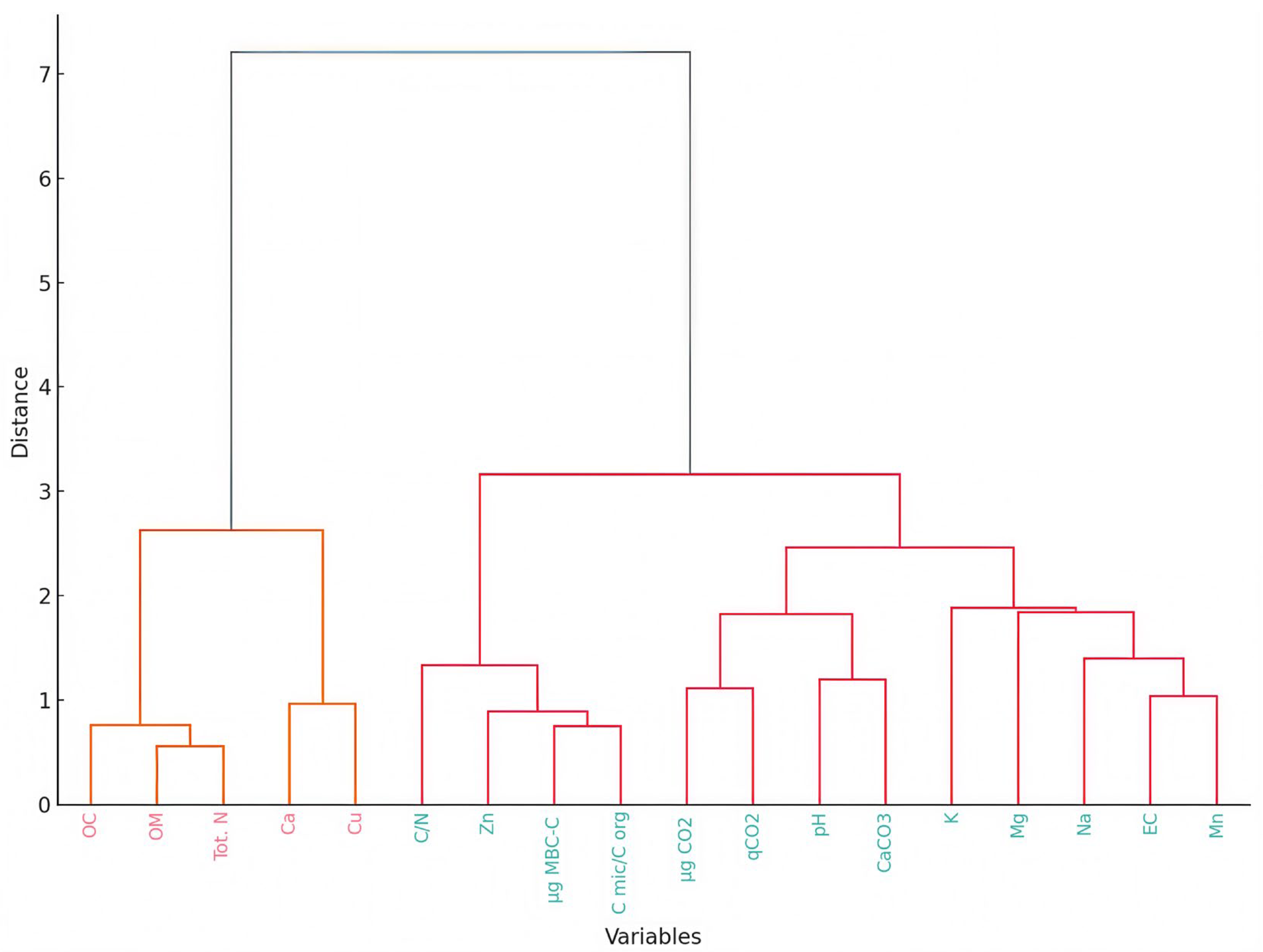
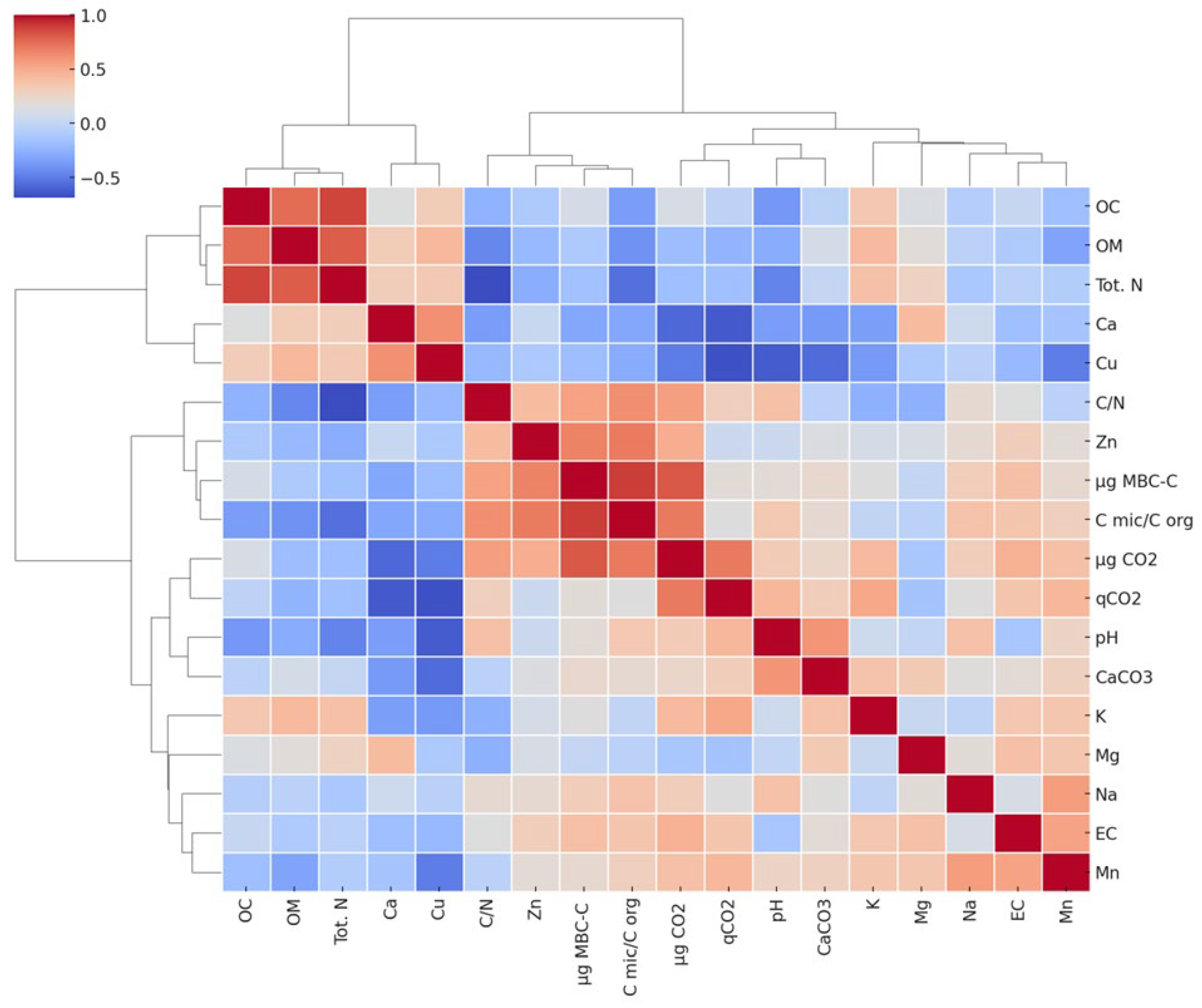
Cluster analysis was performed using hierarchical clustering techniques to elucidate relationships among measured parameters. Initially, the data were standardized (z-score normalization) to eliminate the scale differences across variables. Subsequently, hierarchical clustering was applied using Ward’s linkage method with Euclidean distance, generating dendrograms to visualize the hierarchical relationships and groupings of parameters. The dendrogram provided insights into how closely related the parameters were, allowing identification of distinct clusters based on similarity in their variations across samples. Additionally, a heatmap was produced to visualize correlation patterns among the parameters, with correlation coefficients calculated using Pearson’s method. The heatmap illustrated both the direction (positive or negative) and the strength (magnitude) of relationships among variables. This combined dendrogram and heatmap approach facilitated comprehensive interpretation of interactions and dependencies among parameters, highlighting potential drivers of vermicompost quality. All statistical analyses, including descriptive statistics, compliance assessment, and cluster analyses, were conducted using IBM SPSS Statistics software (version 28.0) [62] and R statistical software (version 4.3.2) [63], utilizing packages such as ‘ggplot2’ [64], ‘stats’, and ‘pheatmap’ [65].

3. Results

3.1. Vermicompost Quality Assessment

To evaluate the effectiveness of the training and standardized production protocols, the chemical and biological properties of vermicompost samples produced by participating farmers were systematically analyzed. This section presents a statistical overview of the key quality parameters, using box plots to illustrate their distribution and variability across the 14 production sites. The selected parameters align with international standards and are critical indicators of vermicompost maturity, nutrient richness, and environmental safety.
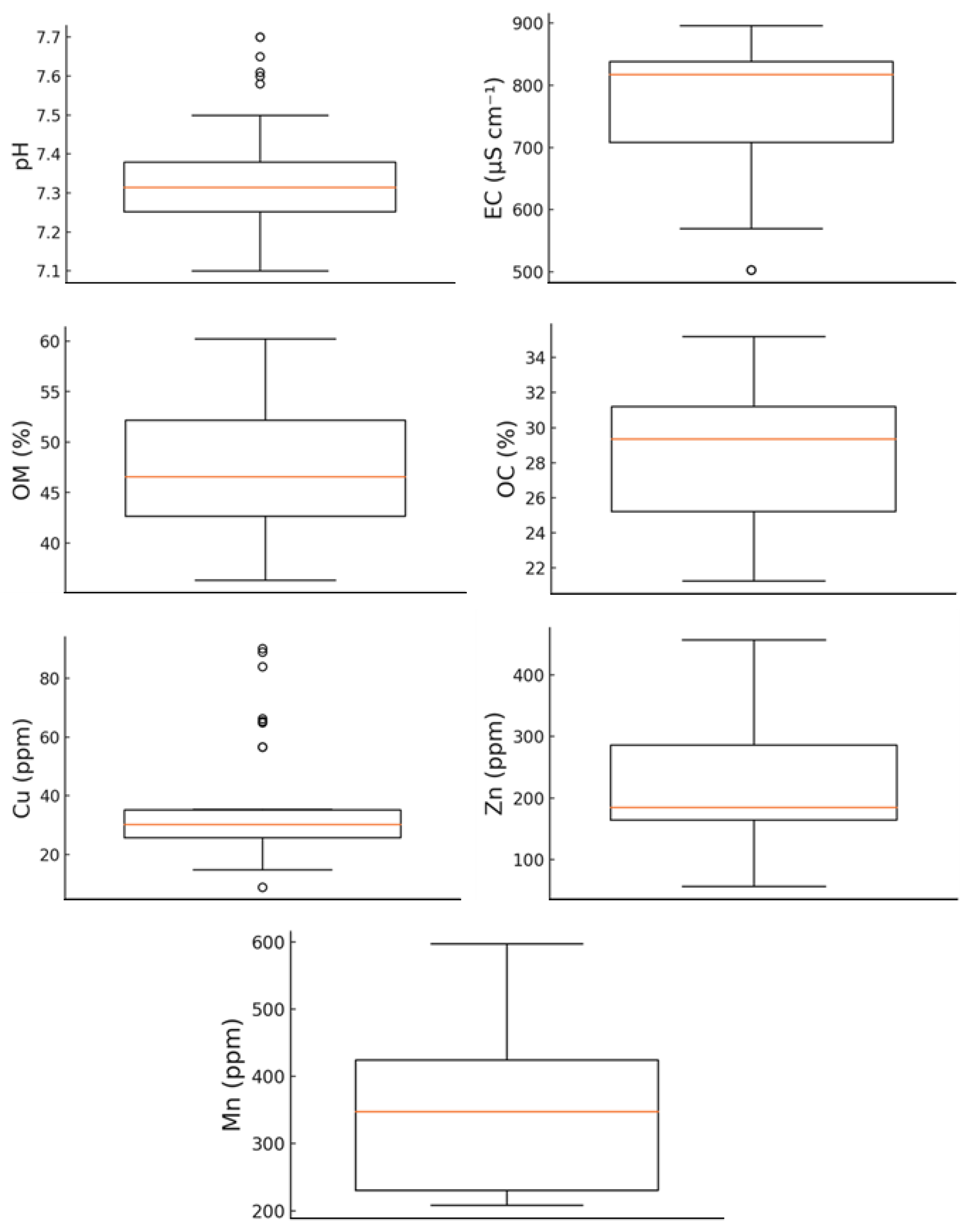
Figure 3 shows box plots of key quality parameters—pH, electrical conductivity (EC), organic matter (OM), organic carbon (OC), basal respiration (µg CO2), and selected micronutrients (Cu, Zn)—from vermicompost samples produced at 14 different facilities. These parameters were selected due to their prevalence in national and international vermicompost quality standards.
Each element in the box plots conveys specific statistical information. The central orange line inside each box represents the median (50th percentile), indicating the central tendency of the data. The rectangular box, or interquartile range (IQR), spans from the first quartile (Q1, 25th percentile) to the third quartile (Q3, 75th percentile), encompassing the middle 50% of the data. The height of the box reflects variability—greater height indicates greater dispersion, while a shorter box suggests more uniformity. The whiskers extend from the edges of the box to the minimum and maximum values within 1.5 times the IQR, and small circles beyond the whiskers denote outliers, which may result from local conditions, input variation, or sampling anomalies.
The plots highlight variability across production sites. For example, pH values are consistently within a neutral to slightly alkaline range, although a few outliers suggest possible deviations in feedstock pH or process control. EC values span a broad range, indicating differences in soluble salt concentrations, which may stem from feedstock type or insufficient leaching. OM and OC levels also show significant variability, reflecting diversity in raw material composition and decomposition stages.
The basal respiration (µg CO2) box plot reveals a wide distribution of biological activity levels, with some samples demonstrating low CO2 emissions—suggestive of either immature compost or reduced microbial populations—while others exhibit higher activity, indicating robust microbial communities. This variation underscores the role of process management in shaping biological functionality. Micronutrients such as Cu and Zn display moderate variability, though some elevated Cu outliers were observed, possibly due to contaminated inputs such as specific manures or feed additives.
Overall, these box plots reveal both the strengths and inconsistencies in farmer-produced vermicompost quality. While central tendencies generally fall within acceptable limits, the presence of outliers and broad IQRs highlight the need for continued support in feedstock selection, process control, and monitoring to ensure consistent adherence to quality benchmarks.

3.2. Compliance with International Standards

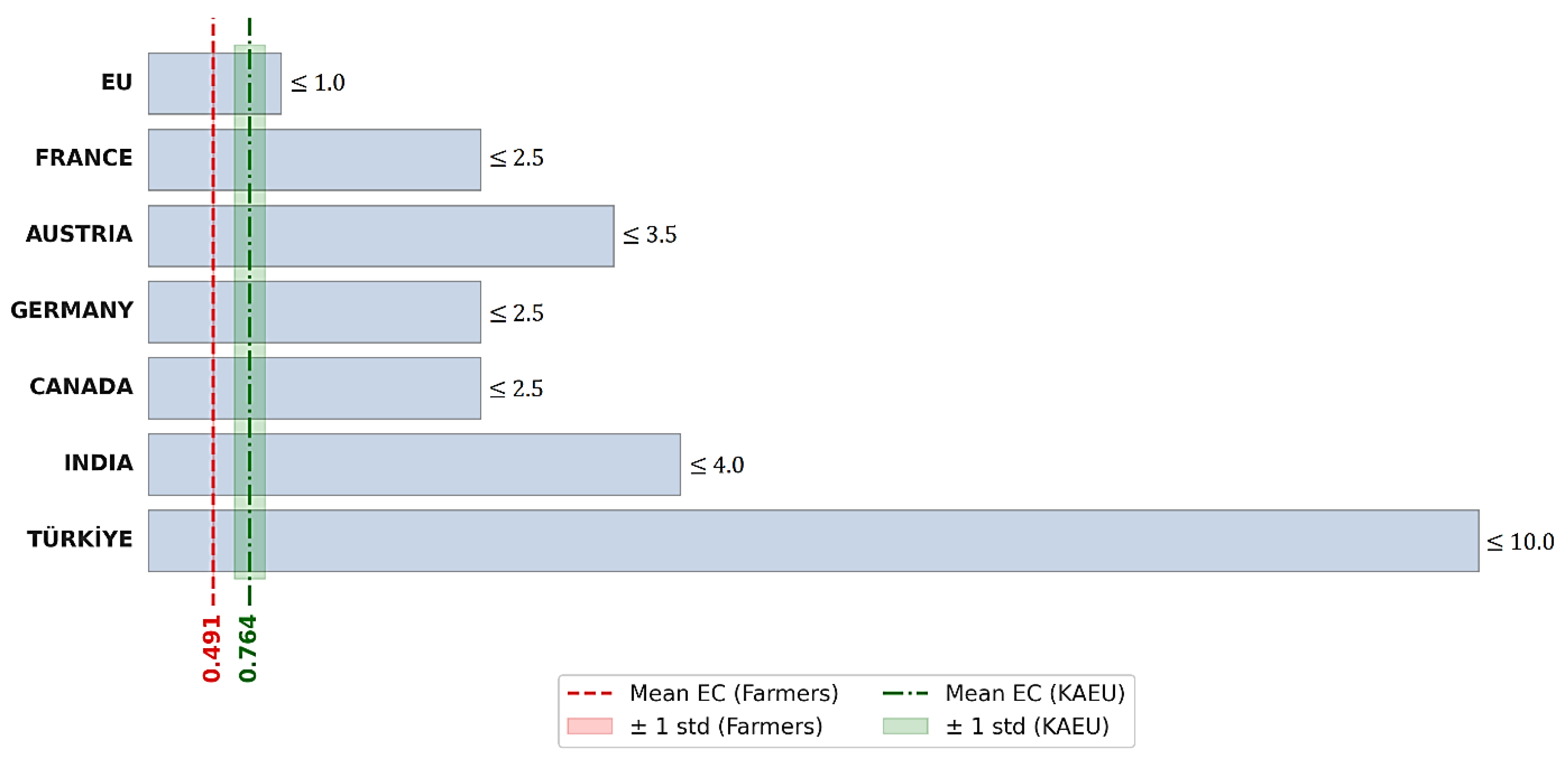
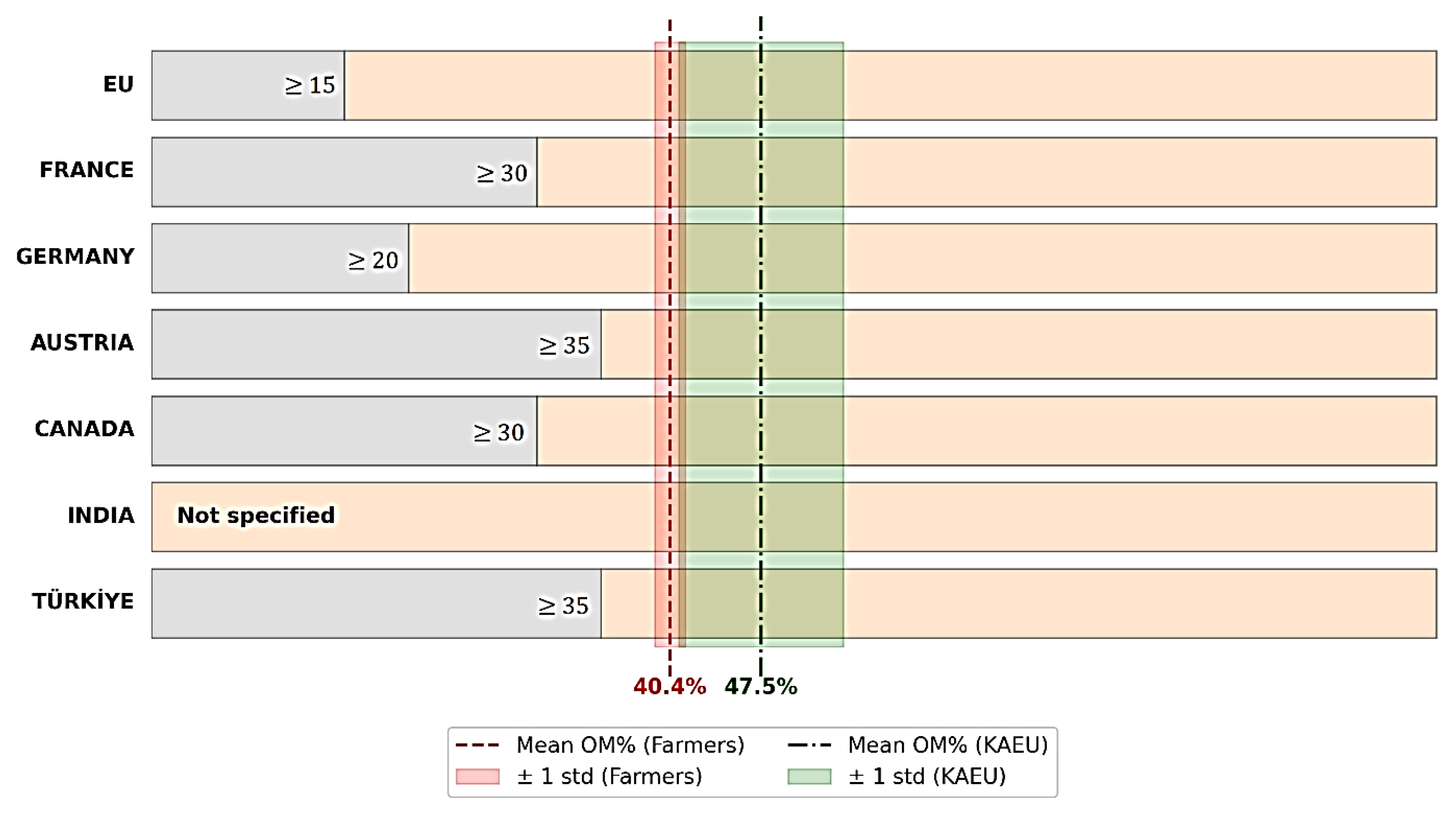
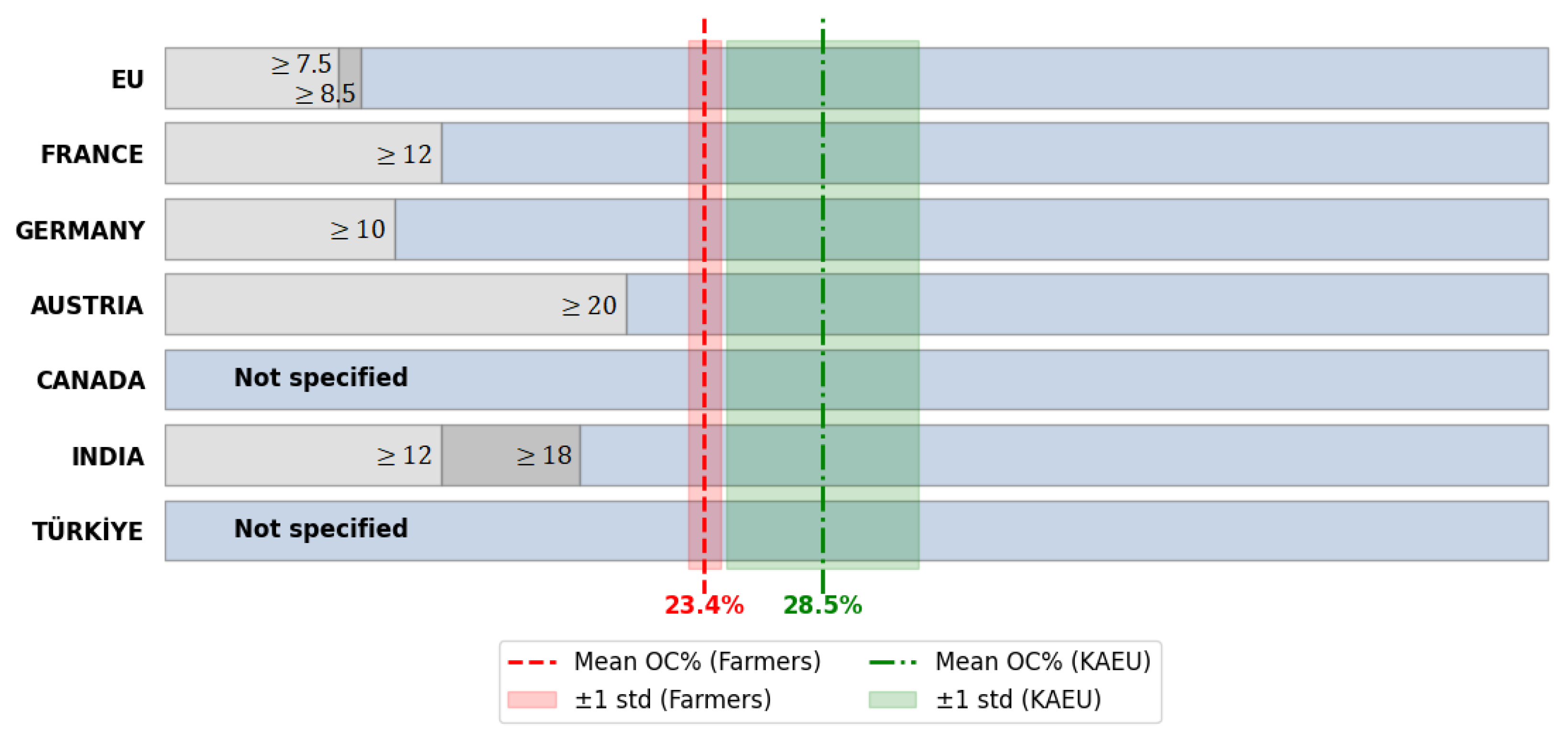
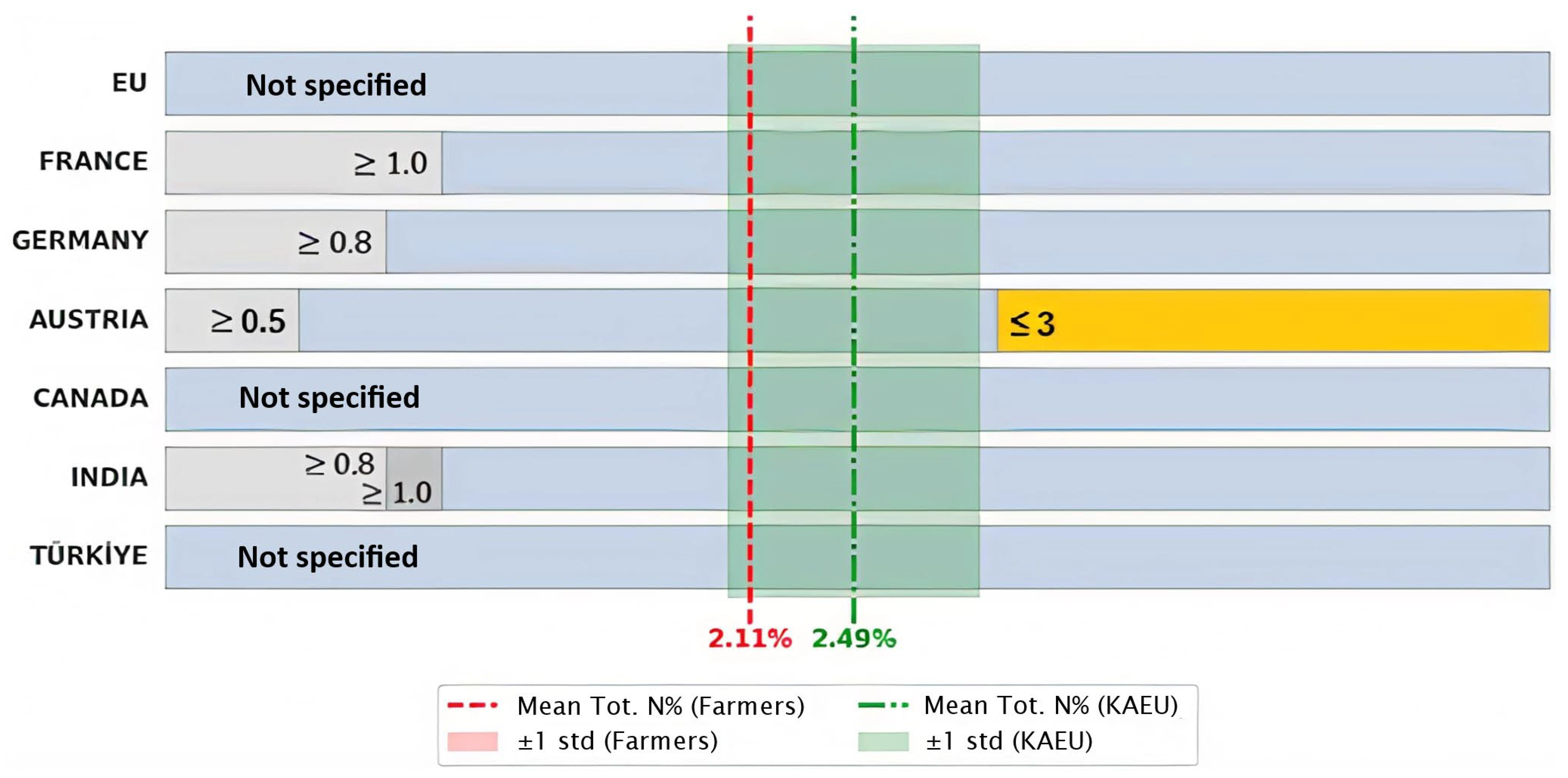
To assess the effectiveness of training and standardized practices, the vermicompost produced by participating farmers was systematically analyzed. This evaluation was carried out by comparing the results against benchmarks established by global regulatory bodies. A set of compliance charts (Figure 4, Figure 5, Figure 6, Figure 7, Figure 8, Figure 9, Figure 10, Figure 11, Figure 12 and Figure 13) was generated to visualize the proportion of samples that met or exceeded critical thresholds for key parameters, including pH, electrical conductivity (EC), organic matter (OM), organic carbon (OC), total nitrogen (N), carbon-to-nitrogen (C:N) ratio, potassium (K), copper (Cu), zinc (Zn), and microbial CO2 emission. These indicators are widely used in compost quality regulations and provide a comprehensive assessment of the chemical and biological integrity of vermicompost.
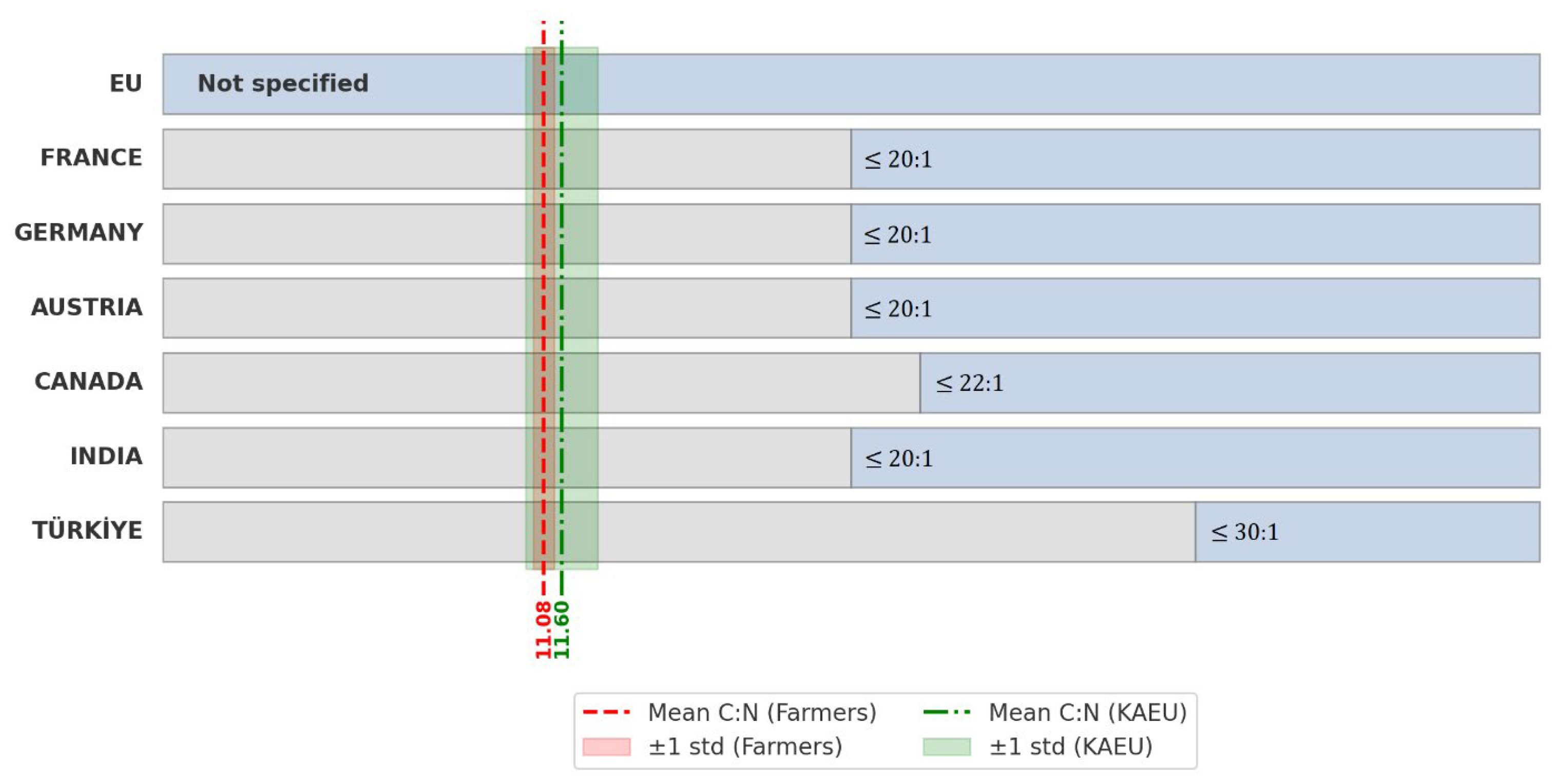
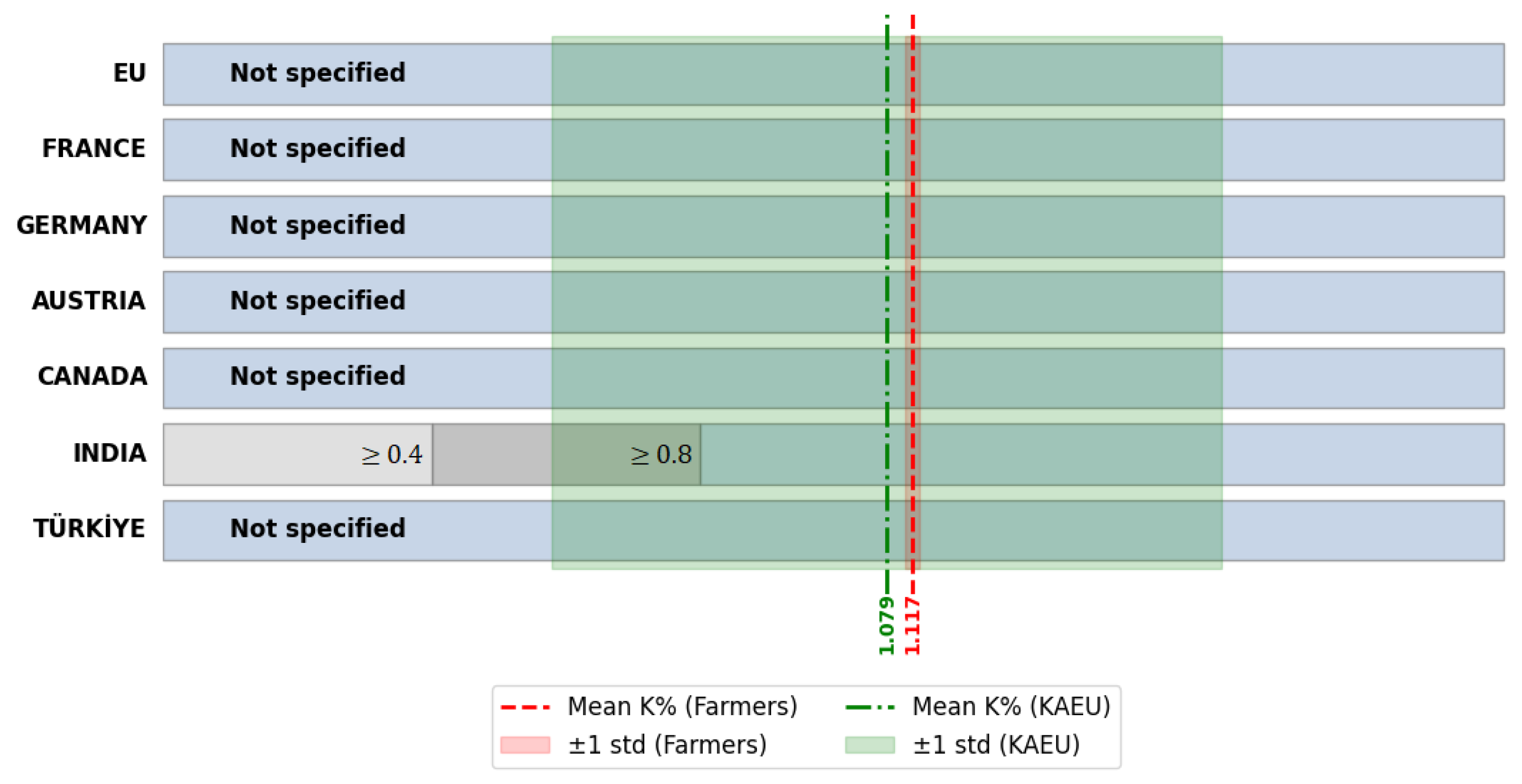
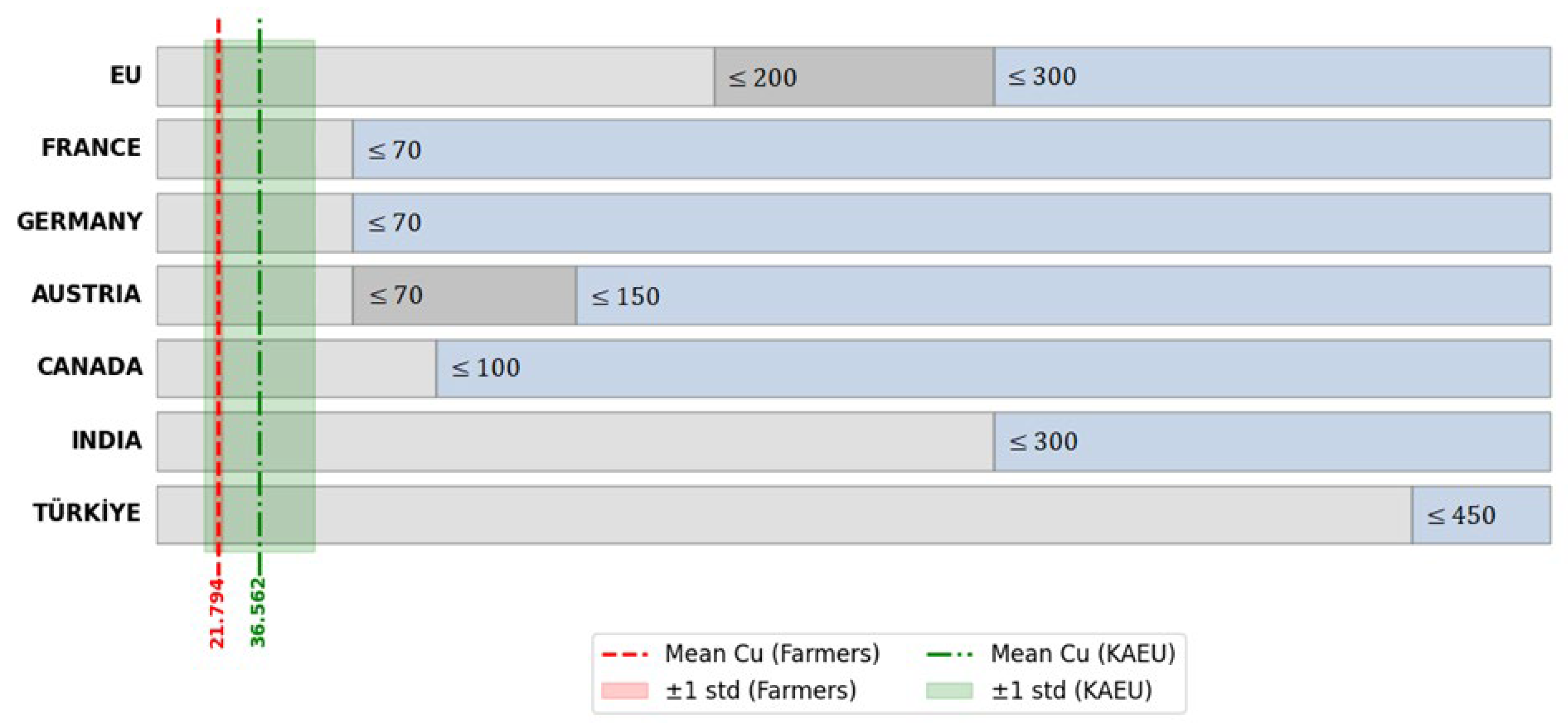
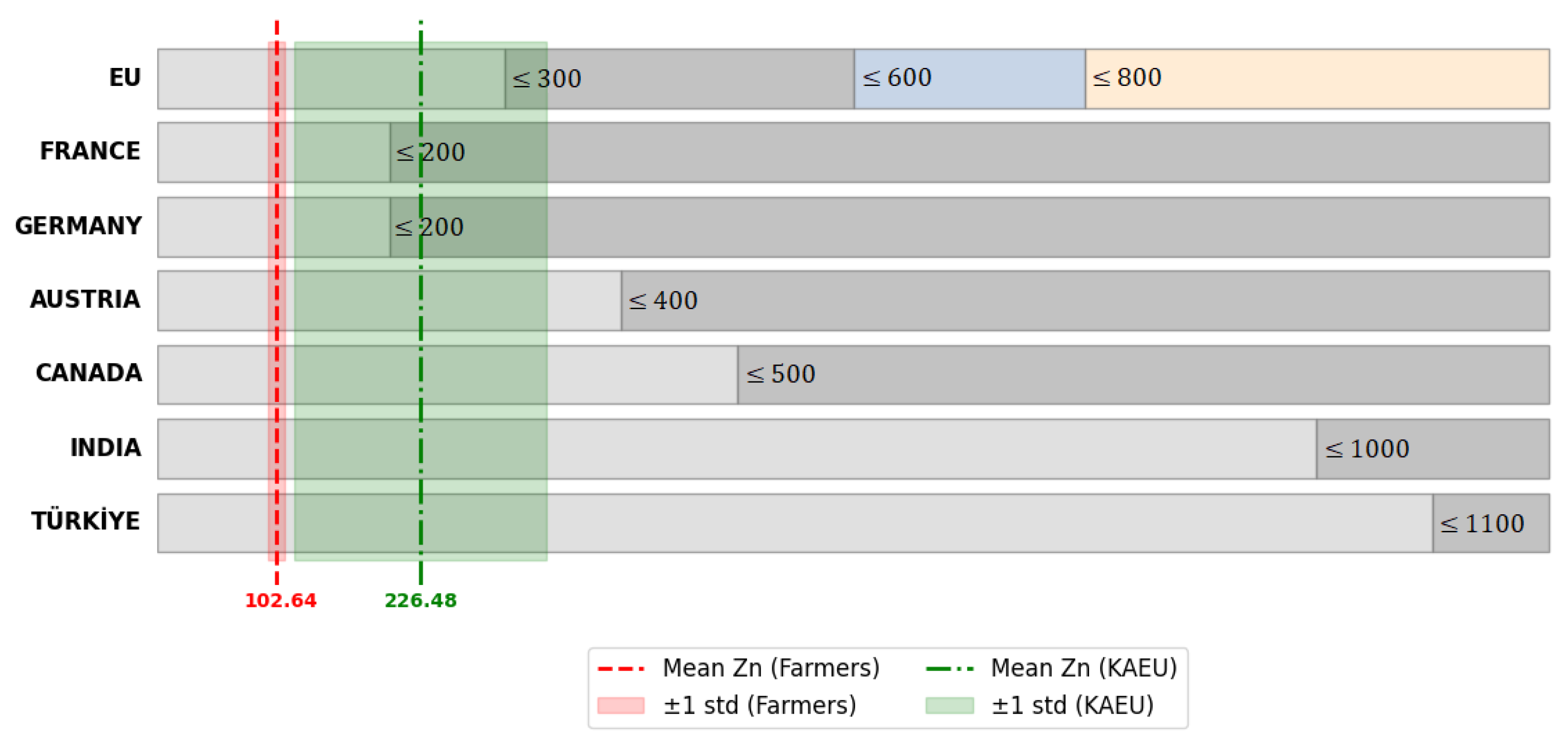
High compliance was observed across most key parameters—pH, EC, OM, OC, C:N ratio, total N, and selected heavy metals (Cu, Zn). Median values for each parameter generally fell within the recommended ranges set by institutions such as the European Union and national authorities in France, Germany, Canada, and India. In many cases, values from farmer-produced vermicompost closely mirrored those from the KAEU-controlled production facility, suggesting that the training and infrastructure support positively influenced product consistency and quality.
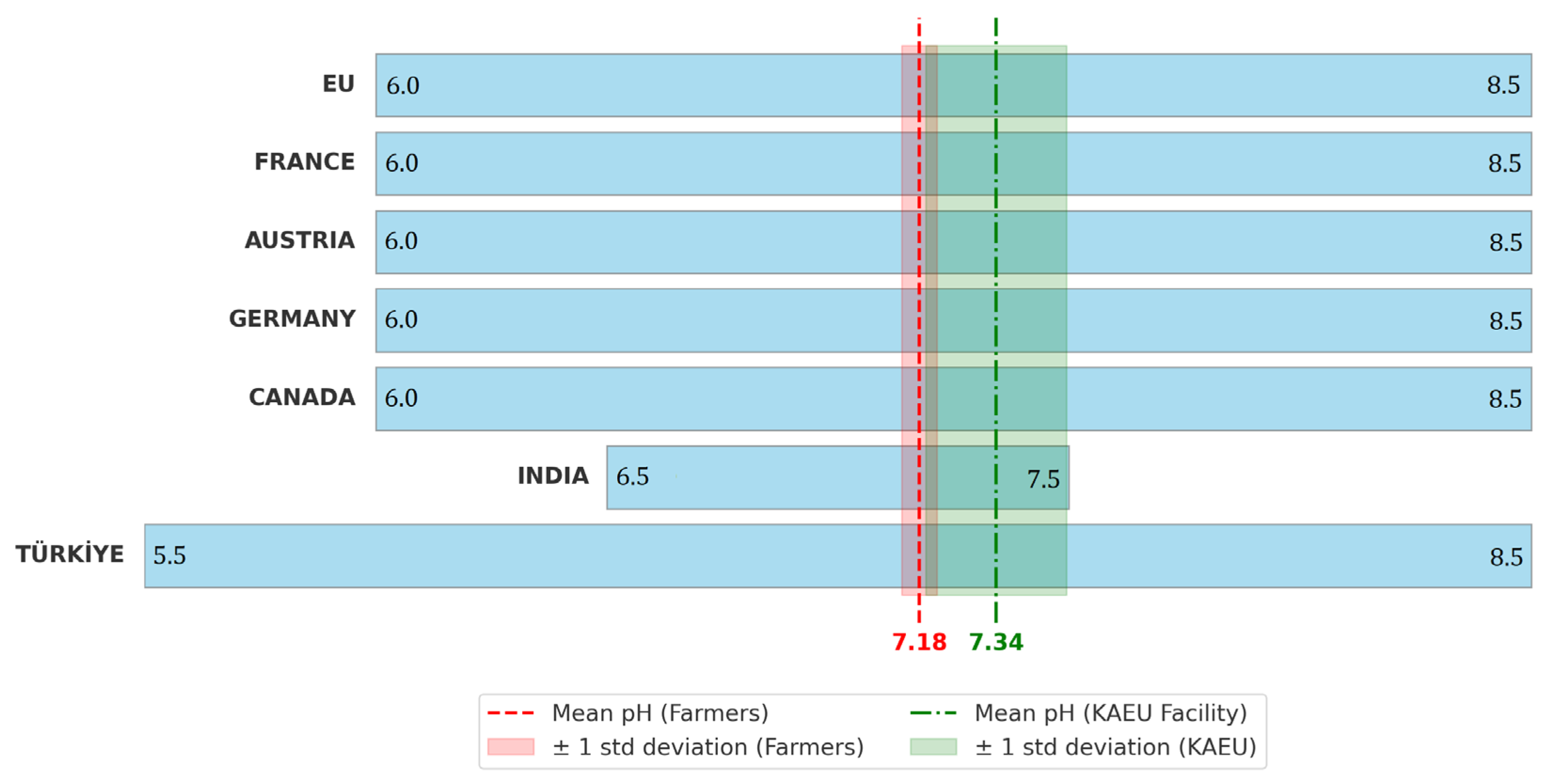
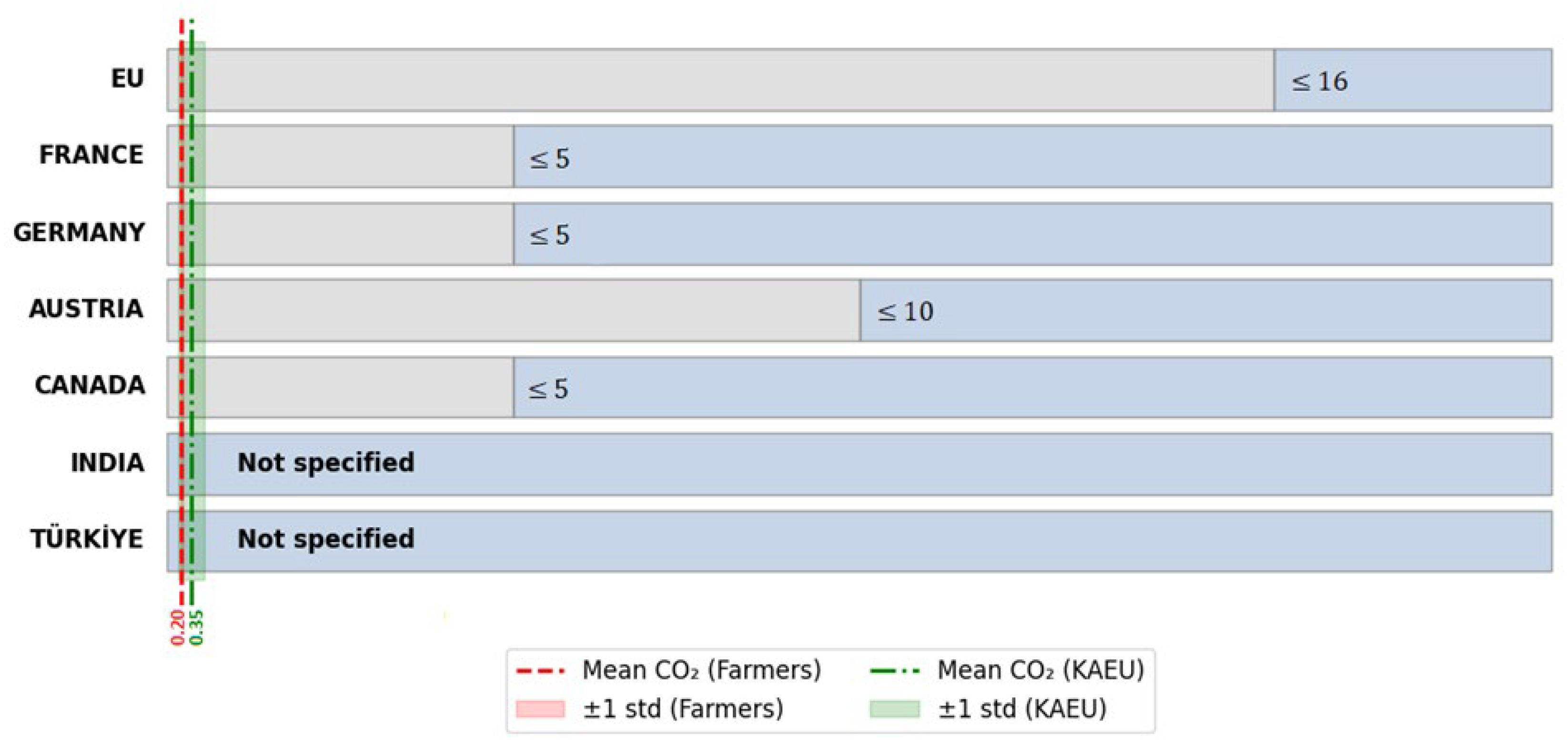
The results indicated that most vermicompost samples produced by trained farmers fell within or very near the acceptable ranges defined by international guidelines. pH levels remained in the neutral-to-slightly-alkaline range, favorable for microbial activity and nutrient availability Figure 4). EC values stayed within moderate limits, reducing the risk of salinity stress (Figure 5). Organic matter (Figure 6) and organic carbon (Figure 7) contents met or exceeded minimum thresholds, reflecting effective feedstock selection and decomposition processes. Total nitrogen (Figure 8) and C:N ratios (Figure 9) were generally balanced, supporting nutrient stability and plant growth potential. However, the average total nitrogen content of farmer-produced vermicompost (2.11%) met or exceeded the regulatory thresholds set by France, Germany, India, and Austria (≥3.0%). Furthermore, copper (Figure 11) and zinc (Figure 12) concentrations complied with safety standards, suggesting low contamination risk and careful input management. Additionally, microbial respiration, measured as CO2 emission (Figure 13), consistently remained far below the maximum permissible limits of international standards (≤5 µg CO2 g−1 dry compost for France, Germany, Canada, ≤10 µg CO2 g−1 dry compost for Austria, and ≤16 µg CO2 g−1 dry compost for the European Union). These low respiration values indicate a high degree of biological stability and maturity of the vermicompost, reflecting effective composting management and favorable conditions for sustained microbial activity.
These findings underscore the viability of farmer-led vermicompost production in meeting international standards, provided that adequate training and support are in place. Notably, the compliance results demonstrated that critical parameters—pH, EC, OM, OC, C:N ratio, total nitrogen, and heavy metals (Cu and Zn)—consistently aligned with global regulatory thresholds. This high level of adherence is particularly significant for parameters such as pH and C:N ratio, which are crucial for microbial function and nutrient stability, as well as for OM and OC, which reflect the organic richness and maturity of the compost. The conformity in heavy metal content further highlights the efficacy of training in guiding farmers toward safe input selection and contamination control. These combined outcomes validate the effectiveness of the project’s training-driven model in ensuring both the agronomic value and environmental safety of the final product.
An additional observation relates to the comparative variability of vermicompost data between the farmer-produced samples and those from the KAEU-controlled facility. While the standard deviations for the parameters measured in farmer vermicompost were generally narrow—indicating consistency across a large sample pool—the KAEU vermicompost exhibited relatively broader standard deviations. This difference is most likely attributable to the disparity in replication: the KAEU data were based on only three replicates, whereas the farmer group collectively contributed 42 replicates (three per each of the 14 participants). The larger sample size in the farmer group reduces the influence of outliers and enhances statistical robustness, thereby providing a more stable estimation of central tendencies and variability. Such sampling scale effects should be considered when interpreting comparative standard deviations across production systems.

3.3. Multivariate Analysis of Vermicompost Parameters

To better understand the interrelationships among measured variables, multivariate analyses were performed. Figure 14 presents a hierarchical clustering dendrogram derived from similarity patterns among measured chemical and biological parameters in the vermicompost samples. The vertical axis denotes dissimilarity, with shorter distances indicating stronger associations. The algorithm progressively aggregates parameters into clusters, culminating in a unified cluster at the top of the dendrogram.
Several distinct clusters are evident within the dendrogram, reflecting meaningful associations among measured parameters. Parameters such as organic carbon (OC), organic matter (OM), and total N cluster tightly, underscoring their interdependence and shared origins in organic feedstocks. These parameters are also associated with certain mineral elements (e.g., Ca, Cu), suggesting that nutrient dynamics in vermicompost are co-regulated by organic and mineral interactions. Another subcluster consists of microbial indicators, including microbial biomass carbon and CO2 emission, which reflects the cohesive behavior of biologically driven processes. Additionally, pH-related traits and exchangeable cations form a separate grouping, indicating mutual influence between acid–base balance and mineral composition. Collectively, the dendrogram illustrates how physicochemical and biological components of vermicompost are intricately interlinked, offering practical insights into production optimization.
Figure 15 displays a correlation heatmap for all measured parameters, enabling a simultaneous assessment of both correlation strength and direction. The color scale ranges from deep red (strong positive) to deep blue (strong negative), with white indicating weak or neutral correlations.
Several notable trends emerge from the heatmap analysis. Strong positive correlations among OM, OC, and total N reaffirm the central role of organic substrates in shaping nutrient composition. In contrast, micronutrients such as Cu and Zn, along with pH-associated variables like CaCO3, exhibit varied relationships with organic metrics—some aligning, others diverging—suggesting partially independent dynamics. Microbial activity indicators show distinct and sometimes contrasting relationships with nutrient parameters. Positive associations with cationic nutrients (e.g., K, Mg) may point to mineral support of microbial proliferation, whereas negative correlations with heavy metals hint at potential toxicity or inhibitory effects.
Overall, the heatmap underscores the interplay of vermicompost attributes, providing an integrated view of how parameters co-vary or diverge. This systems-level perspective is critical for refining production strategies that balance chemical maturity with microbial functionality, ultimately enhancing vermicompost quality and performance.

4. Discussion

4.1. Quality and Compliance Evaluation

Vermicompost samples produced at farmer-operated facilities exhibited a high degree of compliance with international standards for key quality indicators. Parameters such as pH, electrical conductivity (EC), organic matter (OM), organic carbon (OC), total nitrogen (total N), and heavy metals (Cu, Zn) consistently aligned with benchmarks set by European, North American, Asian, and Turkish regulatory frameworks. These results demonstrate that structured training programs and standardized production methods effectively enabled farmers to meet stringent quality requirements, supporting findings from previous studies [66].
Compliance with international norms is not only agronomically beneficial—enhancing soil structure, nutrient availability, and microbial function—but also crucial for environmental safety. Heavy metal concentrations in compost must remain within acceptable limits to prevent soil contamination and potential uptake into the food chain [67]. Likewise, optimal pH and moderate EC levels are essential for plant nutrient absorption and for maintaining a healthy soil microbiome [68]. Meeting these parameters positions the compost as a high-value, sustainable soil amendment.
Furthermore, adherence to internationally accepted compost standards may support market access and increase consumer confidence. In many contexts, verified compliance with quality standards is a prerequisite for certification or eco-labeling, which in turn improves product visibility and competitiveness [69].
Although the overall compliance rates were promising, several outliers were noted in parameters such as Cu, EC, and pH. These deviations are likely the result of local variations in feedstock composition—particularly differing proportions of livestock manure and plant residues—as well as inconsistencies in process control. For instance, elevated Cu levels may stem from manure or feed inputs containing trace metal contaminants, while pH and EC deviations could result from suboptimal curing or moisture management [67].
Addressing these issues requires more rigorous input screening and improved process monitoring. Farmers should be encouraged to pre-evaluate feedstocks for heavy metals and to maintain consistent moisture, aeration, and temperature during production. This approach is consistent with recent studies highlighting the importance of standardized management to prevent quality decline in decentralized composting systems [69].
Unlike prior studies that often rely on isolated laboratory-scale trials, this research validates the vermicomposting process across 14 distinct, real-world farm environments. This multi-site approach provides superior ecological validity, demonstrating the robustness of the training protocol against operational variability inherent in farm-based systems. Furthermore, given that Kırşehir represents a typical semi-arid agroecosystem characterized by water scarcity and temperature extremes, these findings suggest that the standardized protocol is highly adaptable and generalizable to similar dryland regions globally, such as the Mediterranean basin and Central Asian steppes.

4.2. Implications of Parameter Interrelationships (Cluster Analysis)

Multivariate analyses—specifically, cluster and correlation assessments—provided valuable insights into how various chemical and biological parameters interact within the vermicompost matrix. One key cluster emerged around OM, OC, and total N, highlighting their co-dependence and shared origin in organic-rich feedstocks. This finding echoes earlier studies that document the strong covariation of carbon and nitrogen components during composting [70].
Such linkages suggest that improving one parameter (e.g., OC) through feedstock enhancement or better decomposition management could simultaneously elevate total N levels, enhancing overall compost quality. Legume-based inputs or high-protein organic residues are known to increase both OC and total N, contributing to nutrient-rich, balanced compost [71].
Another important cluster consisted of microbial activity indicators, namely microbial biomass carbon and basal respiration. These parameters are tightly linked, as biologically active composts generally display both elevated respiration and microbial abundance [72]. Their co-behavior reinforces the value of promoting microbial proliferation—through adequate aeration, moisture management, and possibly inoculants—as a route to enhancing biological quality. Basal respiration CO2 values and microbial biomass C concentrations, which reflect microbial diversity and population increase, are also indicative of earthworm activity and can be interpreted as a proxy for the overall success of the vermicomposting process.
A third cluster connected pH, EC, and several mineral elements (Ca, Mg, K), reflecting the influence of ash and nutrient content on physicochemical properties. Balanced mineral input supports pH buffering and controls salinity, both of which are critical to plant compatibility. Extreme values—pH > 8.5 or EC > 8 dS/m—can be phytotoxic or inhibit microbial functions [71,73].
Together, these interdependencies imply that production improvements should be guided by a systems-based perspective. For example, modifying feedstock blends to optimize OM may also benefit nutrient dynamics and microbial health. Similarly, maintaining mineral balance through controlled inputs not only improves the availability of nutrient elements but also supports favorable pH and EC ranges. Understanding these linkages equips producers with the tools to enhance compost quality in a more integrated and efficient manner [74,75].

4.3. Farmer Participation and Training Outcomes

The study’s findings affirm that well-structured farmer education and support programs play a pivotal role in enhancing the consistency and quality of vermicompost production at the farm level. Farmers who received hands-on training in feedstock selection, environmental condition management, and process control successfully produced compost meeting international quality criteria. These outcomes align with broader literature showing that targeted capacity-building initiatives increase the adoption of sustainable practices [18,22].
Beyond technical improvements, qualitative observations confirmed by the funding agency’s (KOP) post-project monitoring indicated that the training program contributed socio-economic and environmental awareness. Although these ancillary outcomes were not quantitatively measured as part of this study’s primary scope, qualitative evidence was gathered through project monitoring. It was observed that following the training, a significant number of participants initiated their own vermicompost production, often adjacent to their existing cattle facilities. Subsequently, these small-scale producers expanded their operations, established formal facilities, and served as models within their communities, thereby promoting the wider adoption of vermicompost. These outcomes were identified during the project’s ‘field day’ events and confirmed during end-of-project monitoring visits by KOP (the supporting organization). This pattern mirrors success stories from other regions, where training has led to higher incomes, diversified production, and improved environmental practices [18,31].
It is important to emphasize that a comparative chemical analysis with ‘untrained farmers’ was not feasible in this study context. Since vermicomposting is a novel agro-technical practice in the region, farmers outside the training program do not produce vermicompost; their traditional practice involves stockpiling manure, which undergoes uncontrolled anaerobic decomposition. Therefore, the training provided was not merely a factor for quality improvement but the prerequisite condition for the production itself. Consequently, the study utilized a controlled university production line as the benchmark for quality rather than an untrained control group.
Recycling organic waste through vermicomposting also reduced chemical input dependency and mitigated on-farm waste issues. The resulting compost enriched soil organic matter and biological activity, reinforcing long-term soil health and resilience. Such co-benefits are widely documented and contribute to circular economy models in agriculture.

4.4. Challenges, Limitations, and Recommendations

Despite overall success, the study identified several persistent challenges. Key among them was quality variability caused by inconsistent raw material management. For example, elevated Cu concentrations and deviations in EC or pH were linked to poorly screened inputs or uncontrolled process conditions. These issues are common in decentralized composting and highlight the need for uniform feedstock guidelines [67,76].
To address such variability, project stakeholders should promote pre-testing of inputs, reinforce training in moisture and aeration control, and develop standard operating procedures (SOPs) for key production steps. Establishing a central quality assurance unit could support regular testing, provide timely feedback, and maintain compliance as operations scale [69].
Financial and policy support will be vital to ensure broader adoption. Initial setup costs remain a barrier, particularly for resource-limited farmers. Incentives such as grants, subsidies, and access to low-interest loans can reduce entry barriers and promote uptake, consistent with global findings on adoption drivers [22].
Regarding the economic feasibility for the general farming community, it is important to note that the infrastructure provided to the participants (a 1 m3 container, basic hand tools, and a starter population of worms) represents a low-capital ‘starter model’. Unlike industrial composting facilities, this modular approach is highly replicable for smallholders. The primary investment required is not financial, but educational. Once the system is established, operational costs are minimal since the feedstock (manure and crop residues) is sourced internally from the farm. Therefore, the success of the selected farmers serves as a ‘proof of concept,’ demonstrating that the barrier to adoption is technical rather than financial, making the practice accessible to the wider agrarian population.
Lastly, introducing certification schemes for farmer-produced compost could formalize quality assurance and improve marketability. Government and cooperative programs could help establish traceable systems that guarantee compliance with national or international standards, increasing trust among consumers and commercial buyers alike [69].
Integrating vermicomposting into broader rural development and sustainability frameworks can amplify its benefits. Policies linking composting with waste management, soil restoration, and climate resilience could ensure lasting impact and alignment with agroecological goals.

5. Conclusions

This study validates the technical feasibility of structured farmer training programs in enabling rural producers to generate high-quality vermicompost that aligns with international standards. Across a wide range of parameters—including pH, EC, OM, OC, total N, C:N ratio, and heavy metals—farmer-produced vermicompost consistently met or exceeded thresholds established by global regulatory frameworks.
The success of this initiative highlights the importance of combining practical education with infrastructural support to ensure consistent and safe production practices. Results from compliance analyses and multivariate assessments further underscore the value of a systems-based approach to compost production—one that recognizes and manages the interdependencies among chemical, biological, and physicochemical properties. Beyond technical quality, the program indicated potential socio-economic and environmental outcomes. Farmers not only adopted improved practices but also diversified income streams, improved soil fertility, and contributed to local circular economies through organic waste recycling.
These findings offer a replicable model for rural development initiatives aiming to promote sustainable agriculture. Scaling such training-driven vermicomposting programs—supported by clear quality standards, certification systems, and policy incentives—can accelerate ecological resilience, improve soil health, and strengthen the livelihoods of smallholder producers. As global agricultural systems strive for sustainability, farmer-led vermicomposting emerges as a practical, low-cost, and scalable solution aligned with both environmental and economic goals.

Funding

This research was funded by the Republic of Türkiye Ministry of Industry and Technology Konya Plain Project Regional Development Administration under the KOP-TEYAP Program, Grant Number 2017-1411.

Institutional Review Board Statement

Not applicable.

Informed Consent Statement

Not applicable.

Data Availability Statement

The data presented in this study are available on request from the corresponding author.

Acknowledgments

Special thanks are extended to the Kırşehir Provincial Directorate of Agriculture and Forestry for their valuable collaboration in coordinating interactions and activities with the farmers. Sincere appreciation goes to the 14 participating farmers for their enthusiastic commitment and essential contributions to this study. Additionally, Kırşehir Ahi Evran University (KAEU) is acknowledged for providing laboratory and analytical support, as well as granting access to rural training facilities through its vocational schools.

Conflicts of Interest

The author declares no conflicts of interest.

References

  1. Villa, Y.B.; Khalsa, S.D.S.; Ryals, R.; Duncan, R.; Brown, P.H.; Hart, S.C. Organic Matter Amendments Improve Soil Fertility in Almond Orchards of Contrasting Soil Texture. Nutr. Cycl. Agroecosyst. 2021, 120, 343–361. [Google Scholar] [CrossRef]
  2. Schwerdtner, U.; Lacher, U.; Spohn, M. Soy and Mustard Effectively Mobilize Phosphorus from Inorganic and Organic Sources. Nutr. Cycl. Agroecosyst. 2022, 124, 211–226. [Google Scholar] [CrossRef]
  3. Sarie, F.; Mohammad, W.; Suparwata, D.O.; Jamin, F.S. Evaluation of the Effect of Climate Change Factors, Sustainable Agricultural Practices, and Community Involvement on Sustainable Agricultural Productivity: A Case Study on Rice Farmers in Cianjur Area. West Sci. Agro 2023, 1, 15–20. [Google Scholar] [CrossRef]
  4. Setsoafia, E.D.; Ma, W.; Renwick, A. Effects of sustainable agricultural practices on farm income and food security in northern Ghana. Agric. Food Econ. 2022, 10, 9. [Google Scholar] [CrossRef]
  5. Hilmi, Y.S.; Tóth, J.; Gabnai, Z.; Király, G.; Temesi, Á. Farmers’ Resilience to Climate Change Through the Circular Economy and Sustainable Agriculture: A Review from Developed and Developing Countries. Renew. Agric. Food Syst. 2024, 39, e15. [Google Scholar] [CrossRef]
  6. Waseem, R.; Mwalupaso, G.E.; Waseem, F.; Khan, H.; Panhwar, G.M.; Shi, Y. Adoption of Sustainable Agriculture Practices in Banana Farm Production: A Study from the Sindh Region of Pakistan. Int. J. Environ. Res. Public Health 2020, 17, 3714. [Google Scholar] [CrossRef]
  7. Etongo, D.; Épule, T.É.; Djenontin, I.N.; Kanninen, M. Land Management in Rural Burkina Faso: The Role of Socio-cultural and Institutional Factors. Nat. Resour. Forum 2018, 42, 201–213. [Google Scholar] [CrossRef]
  8. Kiełbasa, B.; Pietrzak, S.; Ulén, B.; Drangert, J.-O.; Tonderski, K. Sustainable Agriculture: The Study on Farmers’ Perception and Practices Regarding Nutrient Management and Limiting Losses. J. Water Land Dev. 2018, 36, 67–75. [Google Scholar] [CrossRef]
  9. Türkay, İ.; Öztürk, L. The form, dose, and method of application of vermicompost differentiate the phenylpropene biosynthesis in the peltate glandular trichomes of methylchavicol chemotype of Ocimum basilicum L. Ind. Crops Prod. 2023, 198, 116688. [Google Scholar] [CrossRef]
  10. Kızılkaya, R.; Türkay, F.Ş.H. Vermicomposting of anaerobically digested sewage sludge with hazelnut husk and cow manure by earthworm Eisenia foetida. Compos. Sci. Util. 2014, 22, 68–82. [Google Scholar] [CrossRef]
  11. Oyege, I.; Balaji Bhaskar, M.S. Effects of vermicompost on soil and plant health and promoting sustainable agriculture. Soil Syst. 2023, 7, 101. [Google Scholar] [CrossRef]
  12. Hashemi, S.; Pourreza, M.; Agha, A.B.A. Soil macrofauna diversity and biomass associated with the “fertility islands” beneath oak trees in a semi-arid woodland. Appl. Soil Ecol. 2024, 201, 105480. [Google Scholar] [CrossRef]
  13. Nevins, C.J.; Strauss, S.L.; Inglett, P.W. Uptake of Biocrust Nitrogen by Tree Crops in a Sandy Soil Agroecosystem. Nutr. Cycl. Agroecosyst. 2024, 128, 115–130. [Google Scholar] [CrossRef]
  14. Santos-Francés, F.; Graña, A.M.M.; Ávila-Zarza, C.; Criado, M.; Sánchez, Y.S. Soil Quality and Evaluation of Spatial Variability in a Semi-Arid Ecosystem in a Region of the Southeastern Iberian Peninsula (Spain). Land 2021, 11, 5. [Google Scholar] [CrossRef]
  15. Zhao, F.; Wu, Y.; Hui, J.; Sivakumar, B.; Meng, X.; Liu, S. Projected soil organic carbon loss in response to climate warming and soil water content in a loess watershed. Carbon Balance Manag. 2021, 16, 24. [Google Scholar] [CrossRef]
  16. Badrari, H.; Ghimire, R.; Aryal, D.R.; Mesbah, A.O. Soil Profile Distribution of Organic, Inorganic, and Labile Carbon and Nitrogen Fractions Vary in Semi-arid Drylands Under Long-term Conservation Tillage Systems. Soil Use Manag. 2024, 40, e13129. [Google Scholar] [CrossRef]
  17. Fernández, C.; Garcia-Franco, N.; Almagro, M.; Díaz-Pereira, E.; Luján, R.; García, E.; Martínez-Mena, M. Cover Crops Improve the Long-term Stabilization of Soil Organic Carbon and Total Nitrogen Through Physico-chemical Protection in Rainfed Semiarid Mediterranean Woody Crop Systems. Soil Use Manag. 2024, 40, e13066. [Google Scholar] [CrossRef]
  18. Ayesha, I.; Harahap, G.; Cahya, D.L. Effect of Farmer Group Empowerment and Agribusiness Training Program on Productivity and Income of Coffee Farmers in West Java. West Sci. Interdiscip. Stud. 2024, 2, 1823–1832. [Google Scholar] [CrossRef]
  19. Liang, Q.; Ma, K.; Liu, W. The Role of Farmer Cooperatives in Promoting Environmentally Sustainable Agricultural Development in China: A Review. Ann. Public Coop. Econ. 2023, 94, 741–759. [Google Scholar] [CrossRef]
  20. Kłoczko-Gajewska, A.; Sulewski, P. Environmental Awareness of Polish Farmers Participating in Fadn. In Proceedings of the International Scientific Conference “Economic Sciences for Agribusiness and Rural Economy”, Warsaw, Poland, 7–8 June 2018; pp. 68–74. [Google Scholar]
  21. Muhaimin, A.W.; Retnoningsih, D.; Pariasa, I.I. The Role of Women in Sustainable Agriculture Practices: Evidence from East Java Indonesia. Iop Conf. Ser. Earth Environ. Sci. 2023, 1153, 012005. [Google Scholar] [CrossRef]
  22. Piñeiro, V.; Arias, J.; Dürr, J.; Elverdin, P.; Ibáñez, A.M.; Kinengyere, A.; Opazo, C.M.; Owoo, N.; Page, J.R.; Prager, S.D.; et al. A scoping review on incentives for adoption of sustainable agricultural practices and their outcomes. Nat. Sustain. 2020, 3, 809–820. [Google Scholar] [CrossRef]
  23. Haq, S.u.; Boz, İ.; Shahbaz, P. Sustainability Assessment of Different Land Tenure Farming Systems in Tea Farming: The Effect of Decisional and Structural Variables. Integr. Environ. Assess. Manag. 2020, 17, 814–834. [Google Scholar] [CrossRef] [PubMed]
  24. Yue, C.; Lai, Y.; Wang, J.; Mitchell, P.D. Consumer Preferences for Sustainable Product Attributes and Farm Program Features. Sustainability 2020, 12, 7388. [Google Scholar] [CrossRef]
  25. Zeweld, W.; Huylenbroeck, G.V.; Tesfay, G.; Speelman, S. Smallholder Farmers’ Behavioural Intentions Towards Sustainable Agricultural Practices. J. Environ. Manag. 2017, 187, 71–81. [Google Scholar] [CrossRef]
  26. Abas, A.; Er, A.C.; Tambi, N.; Yusoff, N.H. A Systematic Review on Sustainable Agricultural Practices Among Oil Palm Farmers. Outlook Agric. 2021, 51, 155–163. [Google Scholar] [CrossRef]
  27. Lamm, A.J.; Lamm, K.W.; Trojan, S.J.; Sanders, C.E.; Byrd, A.R. A Needs Assessment to Inform Research and Outreach Efforts for Sustainable Agricultural Practices and Food Production in the Western United States. Foods 2023, 12, 1630. [Google Scholar] [CrossRef]
  28. Rockström, J.; Williams, J.; Daily, G.C.; Noble, A.; Matthews, N.; Gordon, L.; Wetterstrand, H.; DeClerck, F.; Shah, M.; Steduto, P.; et al. Sustainable Intensification of Agriculture for Human Prosperity and Global Sustainability. Ambio 2016, 46, 4–17. [Google Scholar] [CrossRef]
  29. Yang, W.; Sharp, B. Spatial Dependence and Determinants of Dairy Farmers’ Adoption of Best Management Practices for Water Protection in New Zealand. Environ. Manag. 2017, 59, 594–603. [Google Scholar] [CrossRef]
  30. Yu, J.; Wu, J. The Sustainability of Agricultural Development in China: The Agriculture–Environment Nexus. Sustainability 2018, 10, 1776. [Google Scholar] [CrossRef]
  31. Heylen, C.; Meunier, F.; Peeters, A.; Ek, S.; Neang, M.; Hean, S.; Peanh, S. Multidimensional Benefits of Sustainable Agriculture Practices of Cambodian Smallholder Farmers. Sustain. Agric. Res. 2019, 9, 10–25. [Google Scholar] [CrossRef]
  32. Mbelebele, Z.; Mdoda, L.; Ntlanga, S.S.; Nontu, Y.; Gidi, L.S. Harmonizing Traditional Knowledge with Environmental Preservation: Sustainable Strategies for the Conservation of Indigenous Medicinal Plants (IMPs) and Their Implications for Economic Well-Being. Sustainability 2024, 16, 5841. [Google Scholar] [CrossRef]
  33. Gębska, M.; Grontkowska, A.; Świderek, W.; Gołębiewska, B. Farmer Awareness and Implementation of Sustainable Agriculture Practices in Different Types of Farms in Poland. Sustainability 2020, 12, 8022. [Google Scholar] [CrossRef]
  34. Jessica Ortega de Jesus, S.; Bánkuti, F.I.; Damasceno, J.C.; Perez, H.L. Influence of Psychological Factors on Dairy Farmers’ Intentions to Adopt Environmental Sustainability Practices in Paraná State, Brazil. Sustainability 2024, 16, 4500. [Google Scholar] [CrossRef]
  35. Yang, W.; Wang, L. Impact of Farmer Group Participation on the Adoption of Sustainable Farming Practices—Spatial Analysis of New Zealand Dairy Farmers. Ann. Public Coop. Econ. 2022, 94, 701–717. [Google Scholar] [CrossRef]
  36. Republic of Türkiye Ministry of Agriculture and Forestry. Regulation on Market Surveillance and Inspection of Organic, Organomineral, and Chemical Fertilizers Used in Agriculture; Official Gazette No: 27676; Republic of Türkiye: Ankara, Türkiye, 2010. Available online: https://haliccevre.com/wp-content/uploads/2017/10/tar%C4%B1mda-kullan%C4%B1lan-organik-Y%C3%96NETMEL%C4%B0K.pdf (accessed on 29 January 2025).
  37. Republic of Türkiye Ministry of Agriculture and Forestry. Regulation on Market Surveillance and Inspection of Fertilizers; Official Gazette No: 28956; Republic of Türkiye: Ankara, Türkiye, 2014. Available online: https://www.resmigazete.gov.tr/eskiler/2014/03/20140329-4.htm (accessed on 23 April 2025).
  38. Republic of Türkiye Ministry of Agriculture and Forestry. Regulation on Organic, Mineral, and Microbial-Based Fertilizers Used in Agriculture; Official Gazette No: 30341; Republic of Türkiye: Ankara, Türkiye, 2018. Available online: https://www.resmigazete.gov.tr/eskiler/2018/02/20180223-4.htm (accessed on 23 April 2025).
  39. European Union. Regulation (EU) 2019/1009 on EU Fertilising Products; Official Journal of the European Union: Brussels, Belgium, 2019. [Google Scholar]
  40. European Union. EU Ecolabel Criteria for Soil Improvers and Growing Media; European Commission EU: Brussels, Belgium, 2022. [Google Scholar]
  41. European Compost Network. European Quality Assurance Scheme for Compost and Digestate; ECN-QAS: Bochum, Germany, 2014. [Google Scholar]
  42. NF U44-051; Amendements Organiques—Dénomination, Spécifications et Marquage. Association Française de Normalisation: Paris, France, 2002.
  43. Agence de la Transition Écologique. Guide de Gestion et Valorisation des Composts et Digestats en Agriculture; ADEME: Paris, France, 2021. [Google Scholar]
  44. European Compost Network. Quality Assurance for Compost and Digestate; Bundesgütegemeinschaft Kompost e.V.: Cologne, Germany, 2021. [Google Scholar]
  45. Bundesministerium für Ernährung und Landwirtschaft. Düngemittelverordnung (DüMV)—German Fertilizer Ordinance; Bundesministerium für Ernährung und Landwirtschaft: Berlin, Germany, 2012. Available online: https://www.gesetze-im-internet.de/d_mv_2012/ (accessed on 19 May 2025).
  46. Republic of Austria. Austrian Compost Ordinance; Republic of Austria: Vienna, Austria, 2001. Available online: https://www.ris.bka.gv.at/Dokumente/BgblPdf/2001_292_2/2001_292_2.pdf (accessed on 19 May 2025).
  47. Austrian Standards Institute. Requirements for a Quality Assurance System for Composts—Part 1: Principles for Quality Assurance of a Company and of the Internal Technical Processes; Austrian Standards Institute: Vienna, Austria, 2004. Available online: https://www.austrian-standards.at/en/shop/onorm-s-2206-1-2004-04-01~p1427863 (accessed on 19 May 2025).
  48. Canadian Council of Ministers of the Environment. Guidelines for Compost Quality; CCME: Winnipeg, MB, Canada, 2005. [Google Scholar]
  49. Ontario Ministry of the Environment. Ontario Compost Quality Standards; Government of Ontario: Toronto, ON, Canada, 2005. Available online: https://www.ontario.ca/page/ontario-compost-quality-standards (accessed on 24 July 2025).
  50. Compost Council of Canada. Compost Quality Alliance (CQA) Program Manual; Compost Council of Canada: Toronto, ON, Canada, 2020. [Google Scholar]
  51. Ministry of Environment, Forest and Climate Change. Solid Waste Management Rules, 2016; Government of India: New Delhi, India, 2016. Available online: http://www.jaipurmc.org/PDF/Auction_MM_RTI_Act_Etc_PDF/SOLID%20WASTE%20MANAGEMENT%20RULES%202016.pdf (accessed on 30 August 2025).
  52. IS 16702:2018; Vermicompost—Specification. Bureau of Indian Standards: New Delhi, India, 2018.
  53. Department of Agriculture and Farmers Welfare. The Fertilizer (Control) Order, 1985 (Amended in 2009 & 2013); Government of India: New Delhi, India, 1985. Available online: https://odishaagrilicense.nic.in/public/actsRules/Fertiliser_Control_Order_1985.pdf#page=74.08 (accessed on 30 August 2025).
  54. Anderson, J.P. Soil respiration. In Methods of Soil Analysis: Part 2 Chemical and Microbiological Properties; American Society of Agronomy: Madison, WI, USA, 1982; Volume 9, pp. 831–871. [Google Scholar]
  55. Anderson, J.P.; Domsch, K.H. A physiological method for the quantitative measurement of microbial biomass in soils. Soil Biol. Biochem. 1978, 10, 215–221. [Google Scholar] [CrossRef]
  56. Ryan, J.; Estefan, G.; Rashid, A. Soil and Plant Analysis Laboratory Manual; ICARDA: Beirut, Lebanon, 2001. [Google Scholar]
  57. Bremner, J.M. Nitrogen-total. In Methods of Soil Analysis: Part 3 Chemical Methods; American Society of Agronomy: Madison, WI, USA, 1996; Volume 5, pp. 1085–1121. [Google Scholar]
  58. Thomas, G.W. Soil pH and soil acidity. In Methods of Soil Analysis: Part 3 Chemical Methods; American Society of Agronomy: Madison, WI, USA, 1996; Volume 5, pp. 475–490. [Google Scholar]
  59. Rhoades, J. Salinity: Electrical conductivity and total dissolved solids. In Methods of Soil Analysis: Part 3 Chemical Methods; American Society of Agronomy: Madison, WI, USA, 1996; Volume 5, pp. 417–435. [Google Scholar]
  60. Kacar, B. Bitki ve Toprağın Kimyasal Analizleri; Ankara Ünİversitesi Ziraat Fakültesi Eğitim, Araştırma ve Geliştirme Vakfı: Ankara, Türkiye, 1994. [Google Scholar]
  61. Page, A.L. Methods of Soil Analysis. Part 2. Chemical and Microbiological Properties; American Society of Agronomy, Inc.: Madison, WI, USA; Soil Science Society of America, Inc.: Madison, WI, USA, 1982. [Google Scholar]
  62. IBM Corp. IBM SPSS Statistics for Windows, version 28.0; IBM Corp.: Armonk, NY, USA, 2021.
  63. R Core Team. R: A Language and Environment for Statistical Computing, version 4.3.2; R Foundation for Statistical Computing: Vienna, Austria, 2023.
  64. Wickham, H. ggplot2: Elegant Graphics for Data Analysis; Springer: New York, NY, USA, 2016. [Google Scholar]
  65. Kolde, R. Pheatmap: Pretty Heatmaps, R Package Version 1.0.12; OAE publishing Inc.: Alhambra, CA, USA, 2019. Available online: https://CRAN.R-project.org/package=pheatmap (accessed on 15 December 2025).
  66. Rastegari, H.; Mehdi, N.; Maryam, S.; Petrescu, D.C. Drivers and barriers in farmers’ adoption of vermicomposting as keys for sustainable agricultural waste management. Int. J. Agric. Sustain. 2023, 21, 2230826. [Google Scholar] [CrossRef]
  67. Shen, Z.; Yu, Z.; Xu, L.; Zhao, Y.; Yi, S.; Shen, C.; Wang, Y.; Li, Y.; Zuo, W.; Gu, C.; et al. Effects of Vermicompost Application on Growth and Heavy Metal Uptake of Barley Grown in Mudflat Salt-Affected Soils. Agronomy 2022, 12, 1007. [Google Scholar] [CrossRef]
  68. Mehdaoui, I.; Mahmoud, R.; Majbar, Z.; Berrada, S.; Ben Abbou, M.; Elshikh, M.S.; Ajmal Ali, M.; Chen, T.-W.; Taleb, M.; Rais, Z. Comparing how compost and manure affect soil organic matter using a complete factorial design. J. King Saud Univ.-Sci. 2024, 36, 103471. [Google Scholar] [CrossRef]
  69. Roy, E.D.; Esham, M.; Jayathilake, N.; Otoo, M.; Koliba, C.; Wijethunga, I.B.; Fein-Cole, M.J. Compost Quality and Markets Are Pivotal for Sustainability in Circular Food-Nutrient Systems: A Case Study of Sri Lanka. Front. Sustain. Food Syst. 2021, 5, 748391. [Google Scholar] [CrossRef]
  70. Moharana, P.; Biswas, D. Phosphorus Delivery Potential in Soil Amended with Rock Phosphate Enriched Composts of Variable Crop Residues under Wheat–Green Gram Cropping Sequence. Commun. Soil Sci. Plant Anal. 2022, 53, 1000–1017. [Google Scholar] [CrossRef]
  71. Elema, W.R. Preparation and Characterization of Vermicompost Made from Different Sources of Materials. Open J. Plant Sci. 2021, 6, 042–048. [Google Scholar] [CrossRef]
  72. Lv, M.; Li, J.; Zhang, W.; Zhou, B.; Dai, J.; Zhang, C. Microbial activity was greater in soils added with herb residue vermicompost than chemical fertilizer. Soil Ecol. Lett. 2020, 2, 209–219. [Google Scholar] [CrossRef]
  73. Coulibaly, S.S.; Edoukou, F.E.; Kouassi, K.I.; Bârsan, N.; Nedeff, V.; Zoro, I.A.B. Vermicompost Utilization: A Way to Food Security in Rural Area. Heliyon 2018, 4, e01104. [Google Scholar] [CrossRef]
  74. Turp, G.A.; Ozdemir, S.; Yetilmezsoy, K.; Oz, N.; Elkamel, A. Role of Vermicomposting Microorganisms in the Conversion of Biomass Ash to Bio-Based Fertilizers. Sustainability 2023, 15, 8984. [Google Scholar] [CrossRef]
  75. Gupta, G.; Dhar, S.; Kumar, A.; Choudhary, A.K.; Dass, A.; Sharma, V.; Shukla, L.; Upadhyay, P.K.; Das, A.; Jinger, D.; et al. Microbes-Mediated Integrated Nutrient Management for Improved Rhizo-Modulation, Pigeonpea Productivity, and Soil Bio-Fertility in a Semi-Arid Agro-Ecology. Front. Microbiol. 2022, 13, 924407. [Google Scholar] [CrossRef]
  76. UCANR. Compost. Available online: https://ucanr.edu/site/solution-center-nutrient-management/compost (accessed on 5 April 2025).
Figure 1. Geographical location of Kırşehir and other provinces included in the KOP Region.
Sustainability 18 00298 g001
Figure 2. Photographs from KOP-TEYAP training activities conducted across various districts, capturing farmer participation in workshops and classroom sessions.
Sustainability 18 00298 g002
Figure 3. Distribution patterns of key chemical quality parameters in farmer-produced vermicompost (n = 42; representing 3 replicates from each of the 14 farmers).
Sustainability 18 00298 g003
Figure 4. Compliance of farmer and KAEU vermicompost samples in terms of international pH standards.
Sustainability 18 00298 g004
Figure 5. Comparative compliance with international limits for electrical conductivity (EC) in vermicompost samples.
Sustainability 18 00298 g005
Figure 6. Conformity of organic matter (OM) content in vermicompost with globally recognized thresholds.
Sustainability 18 00298 g006
Figure 7. Compliance of organic carbon (OC) levels in farmer and KAEU vermicompost relative to regulatory benchmarks.
Sustainability 18 00298 g007
Figure 8. Adherence of total N content in vermicompost to international minimum standards.
Sustainability 18 00298 g008
Figure 9. Compliance of C:N ratios with recommended limits for balanced nutrient cycling in vermicompost.
Sustainability 18 00298 g009
Figure 10. Comparison of potassium (K) content in vermicompost samples against national and international guidelines.
Sustainability 18 00298 g010
Figure 11. Compliance status of copper (Cu) concentrations in vermicompost with heavy metal safety regulations.
Sustainability 18 00298 g011
Figure 12. Zinc (Zn) content in farmer and KAEU vermicompost: alignment with international standards.
Sustainability 18 00298 g012
Figure 13. CO2 emission levels in vermicompost as indicators of biological activity and maturity: compliance with global criteria.
Sustainability 18 00298 g013
Figure 14. Dendrogram highlighting hierarchical clusters among vermicompost quality parameters.
Sustainability 18 00298 g014
Figure 15. Correlation heatmap illustrating the relationships among chemical and biological parameters in farmer-produced vermicompost.
Sustainability 18 00298 g015
Disclaimer/Publisher’s Note: The statements, opinions and data contained in all publications are solely those of the individual author(s) and contributor(s) and not of MDPI and/or the editor(s). MDPI and/or the editor(s) disclaim responsibility for any injury to people or property resulting from any ideas, methods, instructions or products referred to in the content.