1. Introduction
The 19th National Congress of the Communist Party of China formally introduced the Rural Revitalization Strategy as a major national initiative designed to promote coordinated rural and urban development. Its core objectives include expediting the modernization of agriculture, narrowing the urban-rural disparity, and fortifying the institutional mechanisms that underpin sustainable development. Subsequent national directives, including the Opinions on Key Tasks for Advancing Rural Revitalization and the No. 1 Central Document, have consistently reaffirmed rural revitalization as the central task in agricultural and rural affairs in the new era. As a result, advancing rural revitalization has become an essential pathway toward achieving Chinese-style modernization. Within this strategic landscape, priority is given to integrating digital technologies, which are seen as indispensable for optimizing rural development capacity, broadening the reach of digital resources, and supporting a sustainable shift in agriculture.
Amidst China’s current push to accelerate the expansion of its digital sector, recent data reveals that the total volume of the country’s digital economy climbed to RMB 53.9 trillion in 2023, marking a year-on-year growth of RMB 3.7 trillion [
1]. Moreover, digital economy growth contributed 66.45% to national GDP growth, highlighting its role as a core engine driving economic and social development. The digital economy facilitates the emergence of an ecosystem distinguished by economies of scale and scope, alongside long-tail effects [
2]. By reshaping production factor allocation and lowering costs in agricultural production, circulation, and related sectors, it has become an important force in enhancing rural revitalization efficiency.
While the digital economy holds immense strategic value, its assimilation into rural revitalization is still in its infancy, and the specific pathways driving efficiency gains lack clarity. In contrast to the swift digital transformation observed in the secondary and tertiary sectors, the agricultural sector lags significantly. Data from 2023 reveals that the digital economy’s contribution to agricultural value-added is modest, amounting to less than 25% of the service sector’s level and under 45% of the industrial sector’s [
3]. This indicates that digital application scenarios in agriculture are still limited, and the overall quality and depth of rural digitalization remain underdeveloped.
Against this backdrop, it is imperative to investigate how the digital economy enhances rural revitalization efficiency and to identify pathways for fostering sustainable rural transformation. Accordingly, this study quantifies the levels of rural revitalization efficiency and digital economy development, empirically examining their nexus and underlying mechanisms. Ultimately, the findings provide empirical evidence and policy implications for leveraging digital transformation to drive agricultural modernization and sustainable rural development in China.
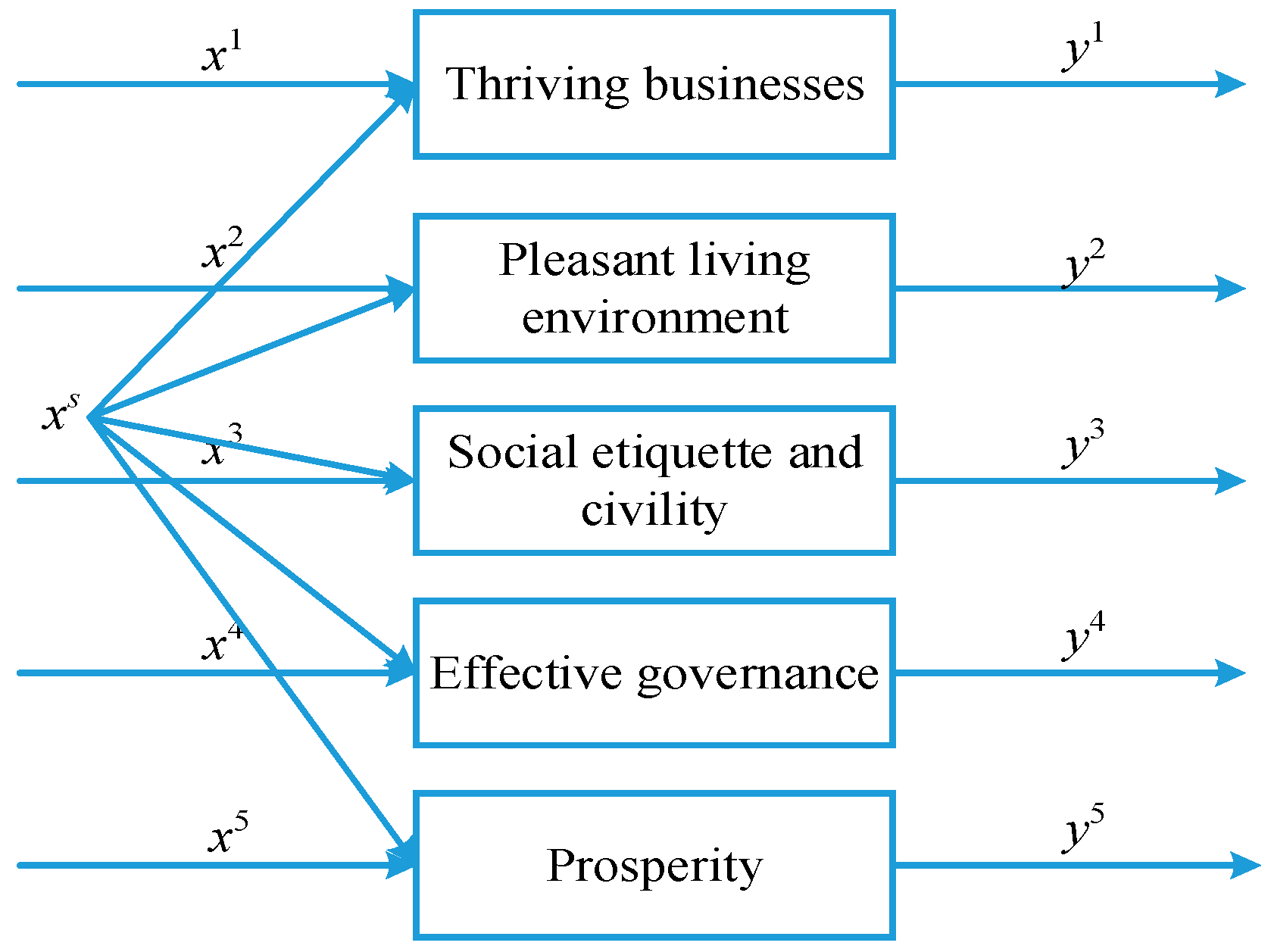
Scholarly attention has increasingly centered on methodologies for assessing rural revitalization. Regarding the formulation of assessment frameworks, researchers predominantly anchor their indicators in the directives set forth by the State Council’s ‘Rural Revitalization Strategic Plan (2018–2022).’ This document underscores the five core pillars of ‘thriving businesses, pleasant living environment, social etiquette and civility, effective governance, and prosperity’ [
4,
5,
6]. The measurement methods for assessing the overall development level of rural revitalization are based on the entropy weight method [
6,
7], principal component analysis [
8], hierarchical analysis [
9], and other index methods.
However, the aforementioned index methods do not take into account the inputs of rural revitalization, which may give rise to an often overlooked yet significant issue—some regions with a high level of rural revitalization development may suffer from inefficiency due to excessive inputs, whereas regions with lower development levels might exhibit higher efficiency due to relatively low investments. Given the multi-input and multi-output characteristics of the rural revitalization system, it is challenging to derive a specific production function for decision-making units (DMUs). Since Data Envelopment Analysis (DEA) does not require the estimation of production functions, it is commonly employed in measuring the production efficiency to effectively avoid model specification errors [
10,
11]. Existing research on efficiency in the rural context predominantly employs DEA and mainly falls into three streams, including studies on agricultural production efficiency [
12,
13], agroecological efficiency [
14,
15,
16], agricultural funding support efficiency [
17,
18], and poverty-governance efficiency [
19,
20]. However, traditional parallel DEA models [
21,
22] fail to accurately capture the shared parallel production structure of the rural revitalization input-output system. This evaluation hurdle is addressed by parallel DEA models designed to handle shared input-output dependencies [
23,
24,
25,
26,
27]. Nevertheless, there remains a lack of consensus on the measurement of rural revitalization efficiency in both academic and practical fields. This is mainly due to the fact that China’s rural revitalization program is designed as an integrated modernization program for agricultural and rural areas, executed through five interconnected aspects that progress in tandem [
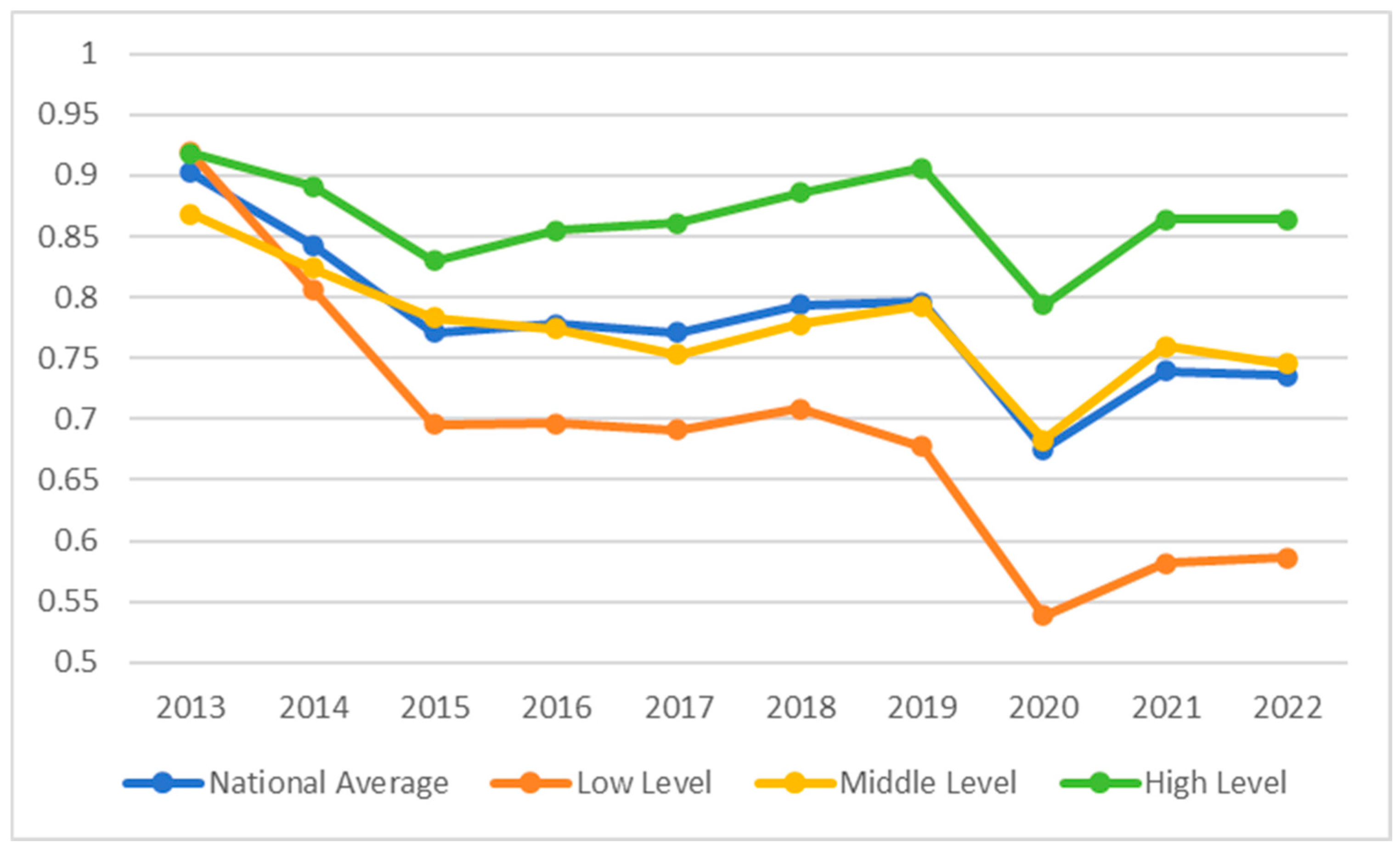
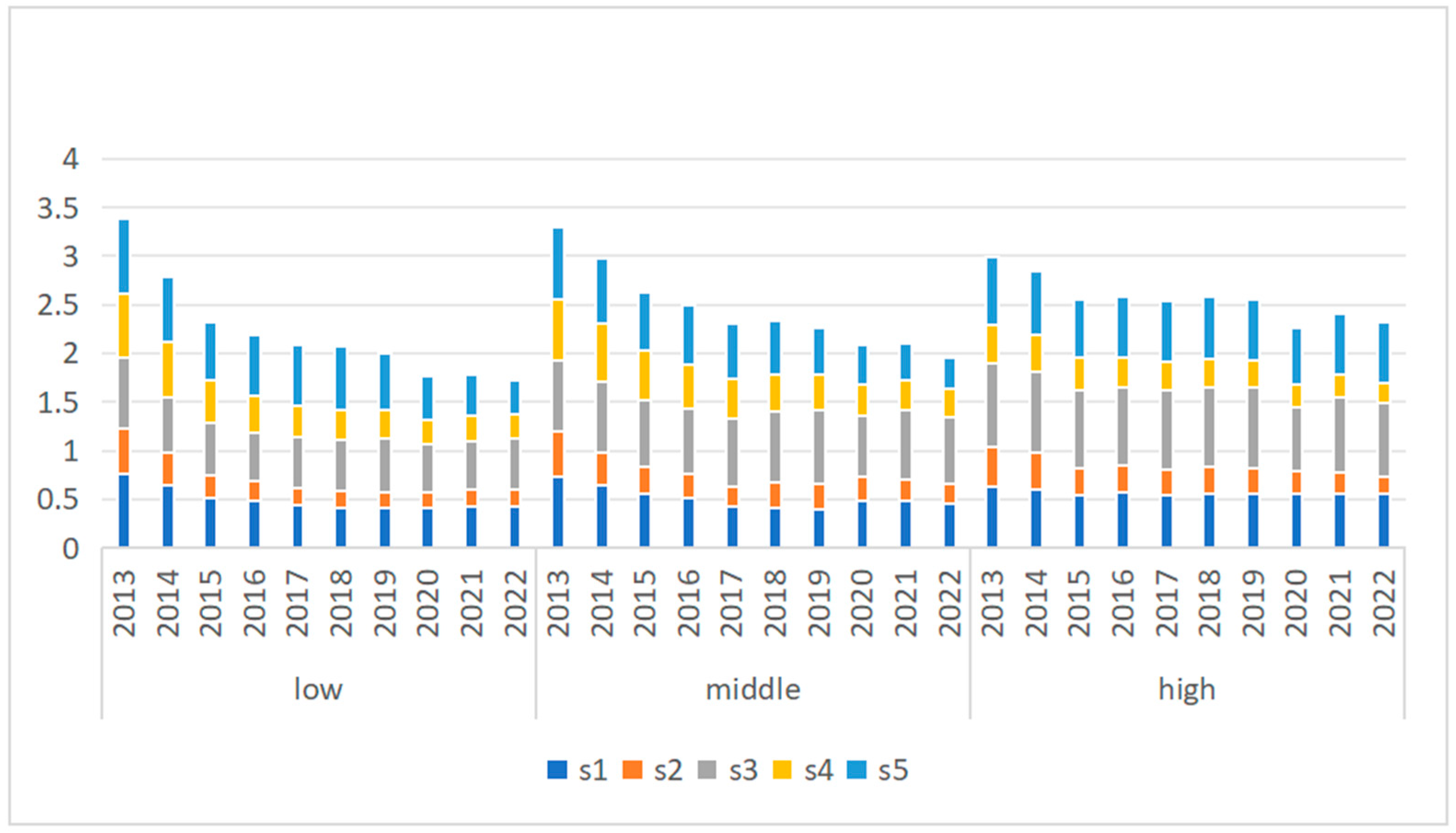
28]. These dimensions are defined by significant input sharing rather than completely distinct resource bundles since policy instruments and important inputs frequently serve many dimensions concurrently. Therefore, we use a shared-input parallel DEA framework to estimate the efficiency of rural revitalization and describe it as an overall system with five parallel subsystems. However, most existing shared-input DEA applications rely on contemporaneous frontiers, meaning that efficiency scores for different years are benchmarked against year-specific technologies. This feature weakens intertemporal comparability and makes it difficult to trace the dynamic evolution of rural revitalization efficiency over time.
Extensive scholarly attention has been dedicated to elucidating the semantics of the digital economy and gauging its maturity. From a generalized perspective rooted in digital technology, the digital economy is conceptualized as: “A spectrum of economic activities wherein digital information serves as the core production element, modern networks act as the pivotal carrier, and the efficient deployment of ICTs functions as the key engine for structural optimization and efficiency gains” [
29]. Conversely, taking a more restricted scope, the Bureau of Economic Analysis (BEA) originally categorized the sector into three distinct clusters of goods and services: infrastructure enabled by digital tech, electronic commerce, and digital media [
30]. Contemporary quantification frameworks for the digital economy principally encompass national economic accounting systems, value-added estimation protocols, satellite account compilation, and the formulation of composite indices [
31,
32]. Notably, Bridgman et al. [
33] expanded the BEA’s taxonomy by integrating digital services derived from high-tech consumer durables. In the context of Vietnam, Duc et al. [
34] gauged the economic contribution of both conventional and digitalized sectors by deploying panel models grounded in digital spillover theory. Focusing on China, Xu et al. [
35] utilized the entropy weight technique to assess the maturity of the urban digital economy. Similarly, in a provincial-level study (30 provinces), Li et al. [
36] constructed an evaluation system predicated on a tripartite architecture.
With the digital economy becoming increasingly embedded in China’s broader economic system, a growing stream of research has examined its implications for rural development. Existing studies generally suggest that digitalization can support rural revitalization through multiple channels, spanning industrial upgrading, ecological improvement, cultural development, governance modernization, and livelihood enhancement [
37], and that it has become a key lever for advancing rural development outcomes [
4,
35,
38]. To illustrate, Tian et al. [
39] elucidate that the digital economy acts as a catalyst for rural industrial resurgence by optimizing the efficacy of resource configuration, fortifying urban-rural market linkages, and expediting industrial coalescence. Expanding on this trajectory, Yan and Cao [
40] postulate that the nexus between digital economic systems and rural industrial integration manifests potential non-linearities. In a parallel vein, Wang et al. [
41] scrutinize the ramifications of the digital economy on the rejuvenation of rural industries. Notwithstanding these insights, extant scholarship has predominantly gravitated towards developmental magnitude or output performance, leaving a paucity of empirical inquiry regarding rural revitalization efficiency as a discrete evaluative criterion.
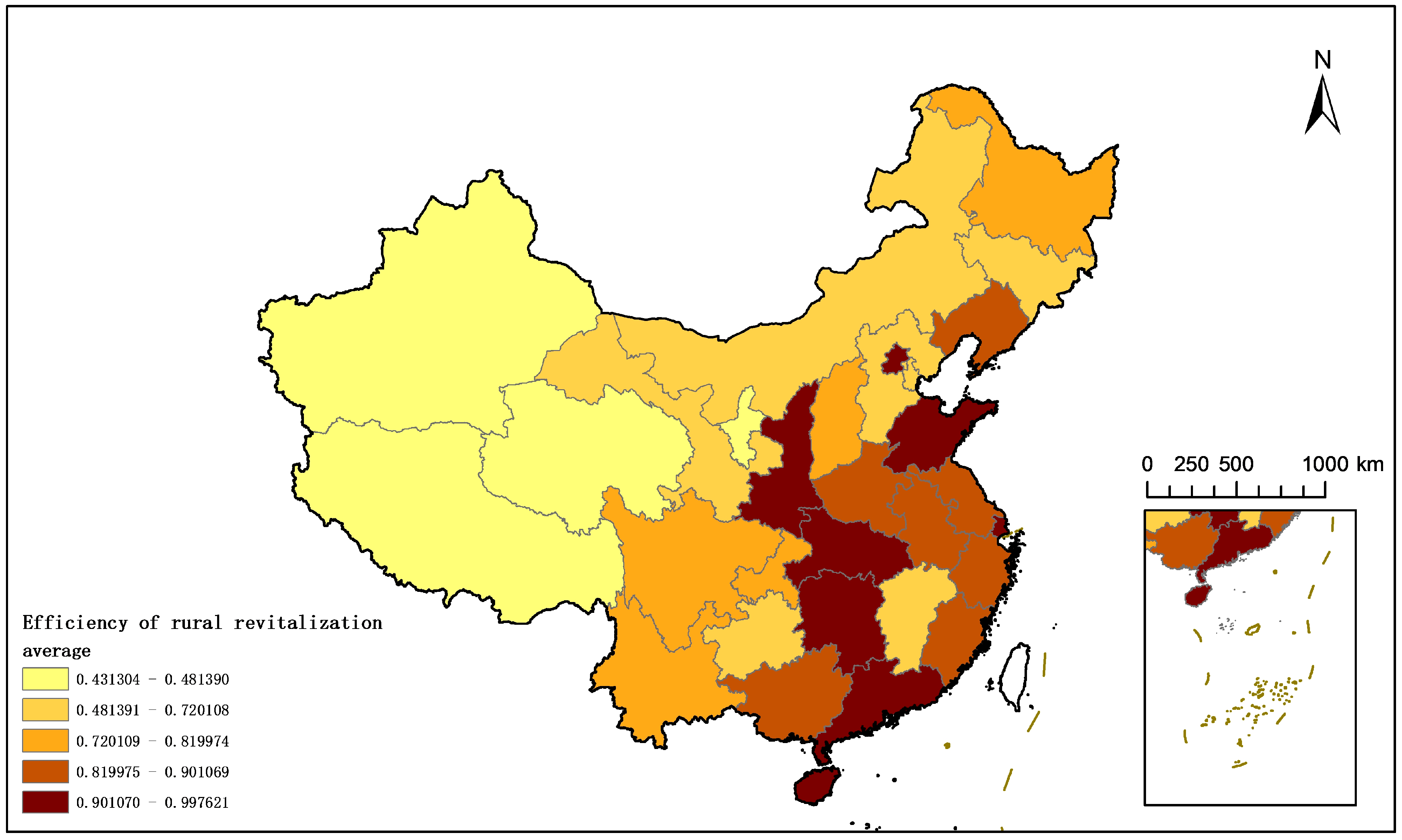
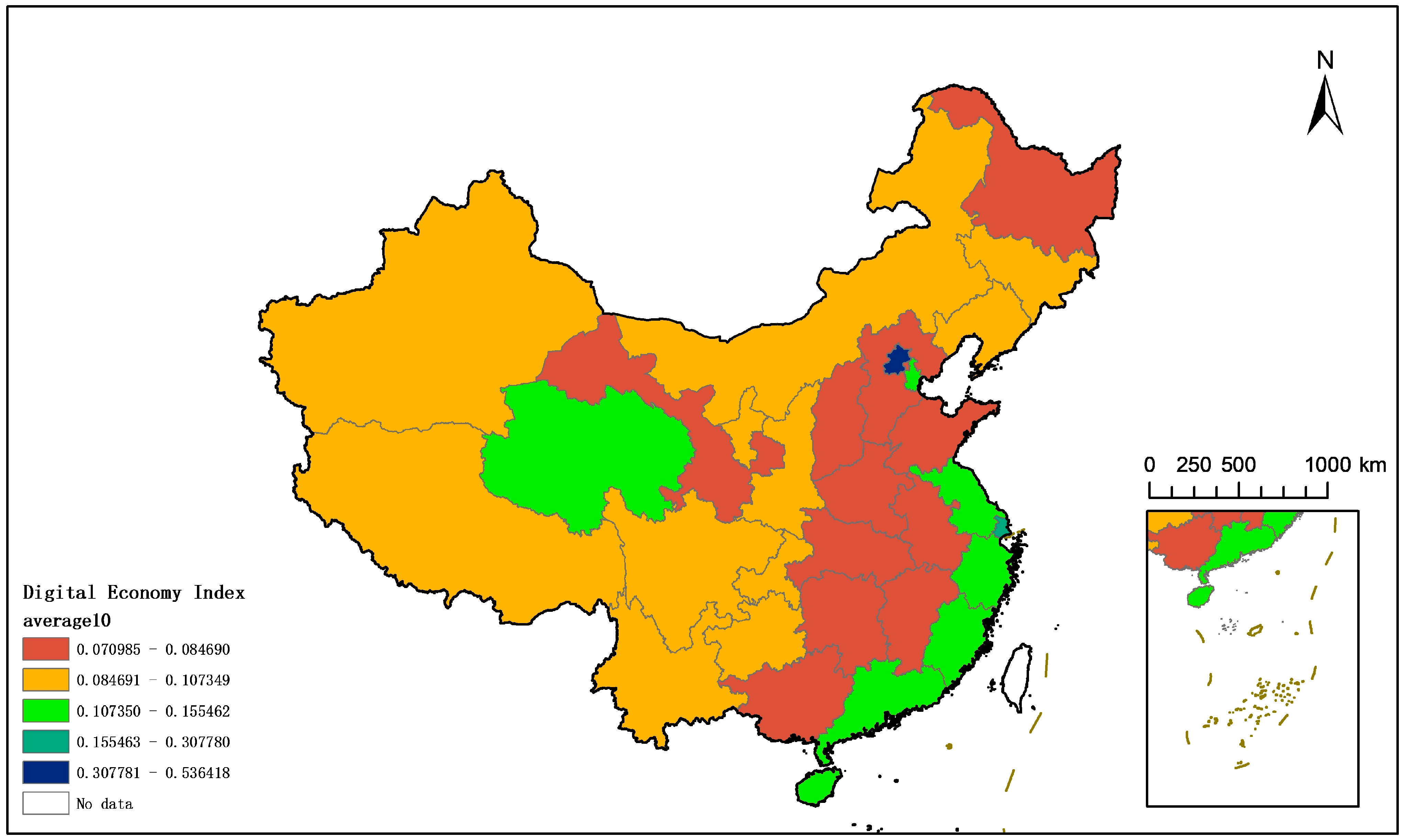
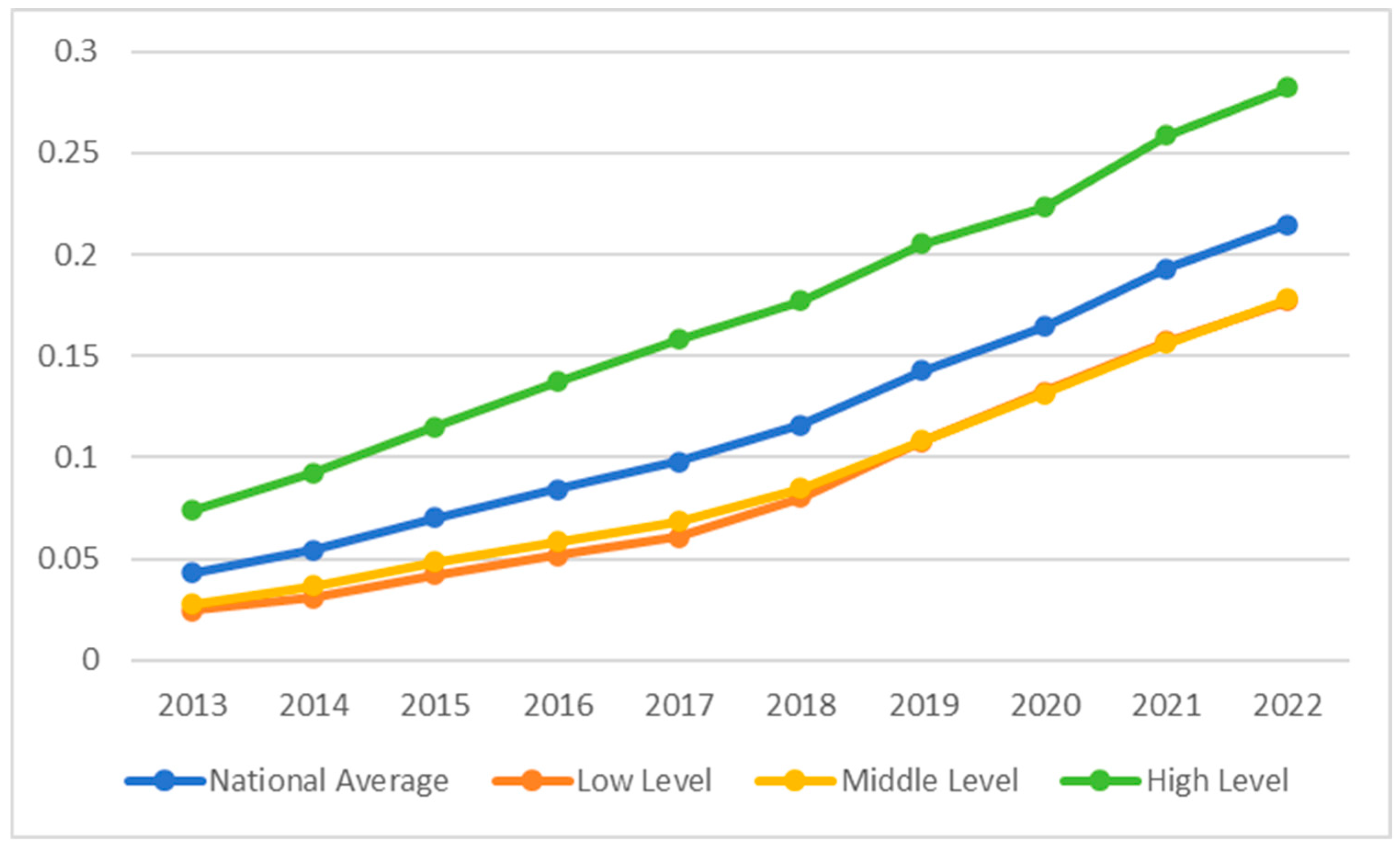
Adhering to the proposed analytical framework, this paper quantifies the level of digital economy development and rural revitalization efficiency to investigate their interrelationship and underlying mechanisms. First, regarding variable measurement, this study deconstructs the complex system structure of rural revitalization to measure its total and subsystem efficiencies via a shared parallel production process perspective, while simultaneously constructing a composite index for the digital economy using the entropy weight method combined with TOPSIS. Second, at the inter-provincial level, the study examines the spatial distribution characteristics of these two dimensions. In the final stage, the paper rigorously tests the impact of digitalization on revitalization efficiency, explicitly clarifying the transmission mechanisms served by technological innovation and non-agricultural labor engagement.
Relative to prior studies, this paper makes three main contributions: (a) This paper considers the rural revitalization system as consisting of five subsystems with shared inputs, and constructs a global DEA model with shared inputs to measure the efficiency of the total system and subsystem of rural revitalization, which has not been considered in previous studies in the literature [
18]. (b) While most research has examined how the digital economy relates to the development level or performance outcomes of rural revitalization [
42], we shift the focus to rural revitalization efficiency. (c) We investigate the mechanisms through which the digital economy affects efficiency, with particular attention to technological innovation and non-agricultural employment, thereby extending the analytical framework linking the digital economy to rural revitalization.
5. Conclusions and Policy Recommendation
5.1. Conclusions
Utilizing panel data spanning 31 provincial-level regions in China from 2013 to 2022, this research examines how the digital economy influences rural revitalization efficiency and identifies the mechanisms driving this process. To quantify both rural revitalization efficiency and digital economy development, we integrated a global parallel DEA model (featuring shared inputs) with the entropy weight-TOPSIS method. Subsequent empirical testing was conducted using two-way fixed effects, along with mediation and moderation models. The analysis yields three primary conclusions: First, the digital economy significantly drives improvements in rural revitalization efficiency, a finding validated through extensive endogeneity and robustness checks. Second, heterogeneity analysis demonstrates that the efficacy of the digital economy varies contingent upon regional disparities in rural revitalization stages, economic development, labor force scale, and internet infrastructure. At the subsystem level, while significant positive impacts are observed in thriving businesses, pleasant living environments, effective governance, and prosperity, the effect on social etiquette and civility is not statistically significant. Third, technological innovation serves as an important mediating variable and represents a key pathway through which the digital economy enhances rural revitalization efficiency, underscoring the importance of innovation in enabling digital empowerment of rural revitalization. Moreover, it is observed that non-agricultural employment significantly bolsters the efficacy of the digital economy in driving rural revitalization.
5.2. Policy Recommendation
Drawing upon the empirical conclusions, this study puts forward the following policy implications.
First, strategic priority should be assigned to the consolidation of digital infrastructure and the extensive application of the digital economy in rural zones. In view of the digital economy’s substantial constructive influence on revitalization efficiency, authorities at all tiers should channel greater fiscal resources towards rural digital hardware, encompassing broadband connectivity, digitized service hubs, and smart agrarian platforms. Building on this prerequisite, efforts should pivot towards the infusion of digital solutions into agricultural operations, rural cultural evolution, and grassroots administration. Such initiatives will propel the ‘digital village’ agenda, optimize governance mechanisms, and lay a robust foundation for sustainable revitalization.
Second, fostering the coupling of technological breakthroughs and the digital economy is necessary to cultivate fresh momentum. Empirical evidence suggests that technological innovation is an important mechanism through which the digital economy enhances rural revitalization efficiency. Therefore, by capitalizing on digital infrastructure to facilitate the seamless flow of innovation resources, regions can significantly drive the modernization and efficiency upgrading of their agricultural value chains. In parallel, It is imperative to establish sound incentive mechanisms, such as innovation subsidies, talent policies, and intellectual property protections, to encourage active participation of enterprises and research institutions in innovation activities aligned with rural revitalization needs. This approach will help foster innovation vitality and continuously enhance rural revitalization outcomes.
Thirdly, the implementation of multifaceted employment strategies is essential to capitalize on the moderating capacity of non-agricultural employment. Analysis confirms that non-farm work amplifies the digital economy’s constructive influence on revitalization efficiency. Therefore, the government should adopt measures to broaden non-agricultural employment channels. On one hand, substantial support must be directed toward platform-driven sectors, particularly rural e-commerce and creative cultural tourism. Such measures are vital for expanding the range of job options available to rural dwellers and streamlining the workforce’s transition into the digital economy. On the other hand, targeted vocational training and career development programs should be developed to enhance rural workers’ competitiveness in digital industries. Simultaneously, refining the social welfare system is key to upholding the rights of non-agricultural laborers and promoting stable labor market evolution.
Finally, policy measures must be tailored to address the heterogeneities revealed in the analysis. Regions with medium levels of economic development should prioritize strengthening digital infrastructure and platform accessibility, as they have the highest marginal gains from digital adoption. Areas with larger rural labor forces should promote digital skills training, agricultural e-commerce participation, and labor-oriented digital public services to fully leverage scale and diffusion effects. Regions with lower levels of Internet development should further expand connectivity and digital access, as they gain the most from improvements in digital infrastructure. These tailored policy pathways can better accommodate regional differences and ensure that the digital economy contributes effectively to all dimensions of rural revitalization.