1. Introduction
One of the main demographic trends in most European Union (EU) countries is population ageing. According to forecasts, by 2030, the share of Europe’s population aged over 65 years will reach 23.8%, and by 2050, it is expected to rise to 30% [
1]. Poland is among the European countries where the population ageing will be the most pronounced. Some researchers go so far as to describe it as a “demographic collapse”—according to Statistics Poland data, in 2050, seniors may constitute up to 35% of Poland’s entire population [
2].
An ageing population means a decreasing number of people of working age, and this in turn can be devastating for the economy. It is tantamount to reduced economic growth, i.a., as a result of burdening the public sector (especially health care) and a decrease in consumption volume [
3]. European economies need to start addressing this challenge now—adapting products and services to the needs of older people is considered one of the priorities of sustainable development. The concept of inclusivity is underlined, understood here as consideration of the specific needs of older adults in the design process to enable their full participation in social life. The physiological ageing process entails the occurrence of a number of degenerative changes in the human body, such as, among others, reduced joint flexibility, loss of muscle mass, impaired hearing, and vision [
4]. Seniors are more likely than younger people to develop various diseases, including, e.g., cancer, osteoporosis, neurodegenerative diseases, and depression [
5]. Sustaining their engagement, owing to its beneficial effect on mental well-being, can contribute to delaying some negative health outcomes.
This article pertains to the tourism activity of seniors. Tourism is an important sector of the economy, which accounts for nearly 10% of GDP in European countries, and employs more than 11.6% of the total EU workforce [
6]. Therefore, the European economy cannot afford to exclude seniors from tourism activity. This customer group is crucial for maintaining balance in the tourism market, so it is necessary to adjust the tourism offer to the needs of seniors in order to maintain their activity for as long as possible. Inclusivity is one of the fundamental principles of sustainable tourism, stemming from the implementation of Sustainable Development Goals (SDGs), and, in particular, Goal 10, which concerns the reduction in inequality. In the context of senior tourism, special attention should be paid to the associated Target 10.3, the implementation of which is designed to “ensure equal opportunity and reduce inequalities of outcome, including by eliminating discriminatory laws, policies and practices and promoting appropriate legislation, policies and action in this regard” [
7]. This means that sustainable tourism must be equally accessible to everyone without restrictions associated with gender, age, or health status. Development of inclusive tourism on a broader scale can bring a range of social and economic benefits to national economies.
The research goal of the study was to learn about seniors’ tourism activity and the factors hindering it, as well as to determine the relationship between tourism and seniors’ well-being.
Three research questions were formulated to achieve the assumed goal:
Research question 1: What types of tourist trips do seniors most frequently participate in? (RQ1)
Research question 2: What factors cause seniors to avoid or limit participation in tourist trips? (RQ2)
Research question 3: What is the subjective assessment of the impact of participation in tourist trips on seniors’ mental well-being and overall mood? (RQ3)
Answers to the questions above will allow us to fill the research gaps existing in the academic literature and to develop recommendations for entities engaged in activating seniors and developing tourism offers for this social group.
A simple structure of this paper serves the purpose of presenting the research results in a clear manner. The theoretical background for the research is described in
Section 2.
Section 3 looks at the methodology. The research results and the analysis of the same are included in
Section 4.
Section 5 provides the discussion and conclusions, and the final part of the manuscript—
Section 6—provides recommendations.
3. Materials and Methods
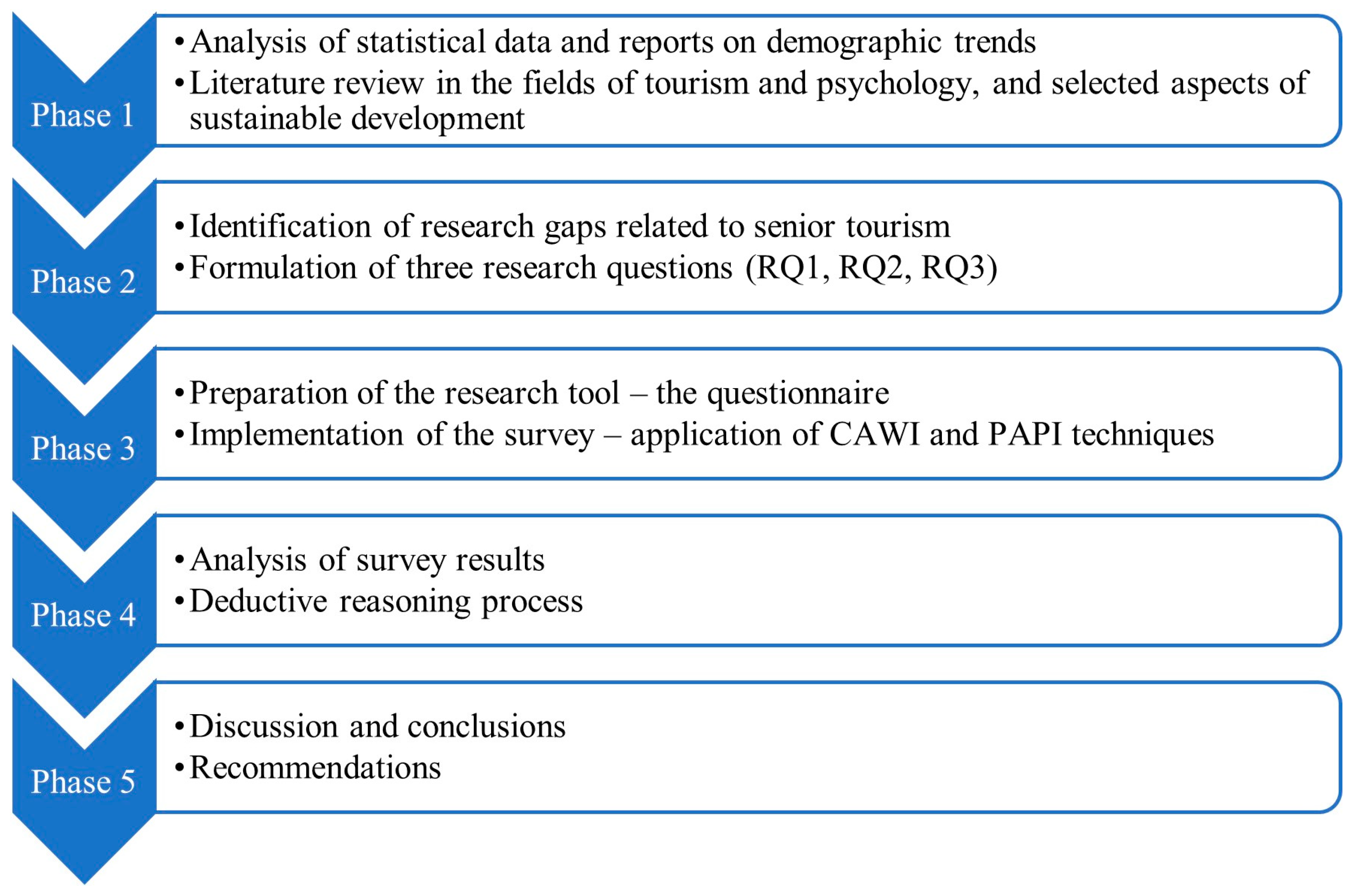
The research process was carried out in multiple phases (
Figure 1). First of all, a statistical analysis was conducted to examine demographic trends related to the age structure of the population in Poland and other European countries. A literature review was also performed in the fields of tourism and psychology, as well as in selected aspects of sustainable development, in order to identify research gaps related to senior tourism (Phase 2). In the next phase (3), a survey was conducted among seniors, i.e., individuals aged 65 and over. It should be noted that various demographic classifications define different age thresholds for seniors. For example, both the United Nations and the Polish senior policy consider people aged 60 and over to be seniors [
56,
57]. In this article, however, the approach adopted by Eurostat was applied, according to which seniors are defined as individuals aged 65 and over [
58].
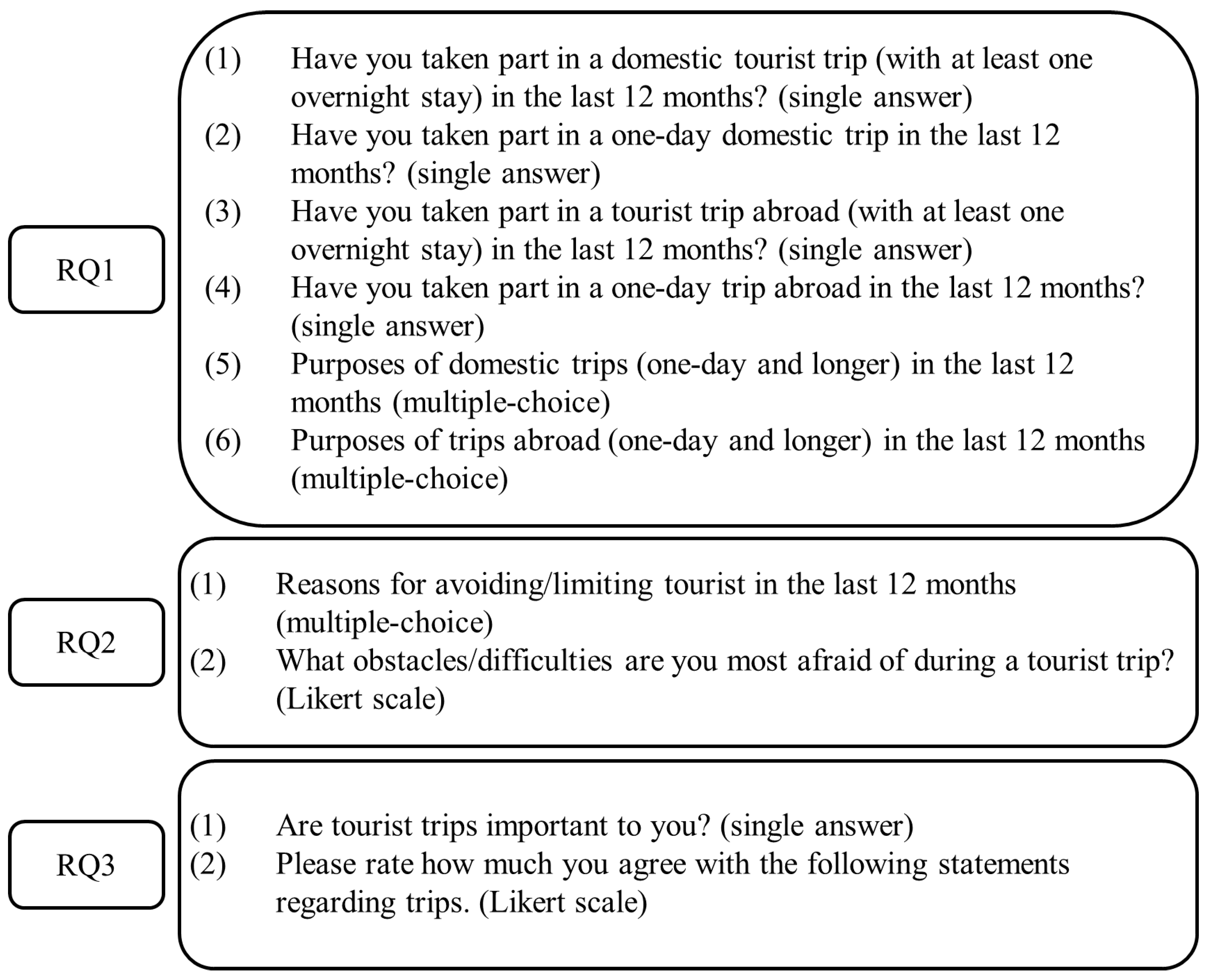
To answer the three research questions presented above (Phase 2), a questionnaire was designed (Phase 3). It consisted of 17 questions, including demographic questions (7), 5 single-answer and 2 multiple-choice, and others (10), including 4 closed-ended questions allowing for a single answer, 3 multiple-choice questions with the option to provide one’s own response, and 2 thematic question blocks presented in a tabular format, allowing for a single response on a Likert scale. A 5-point Likert scale was applied [
59]. The assignment of questionnaire items to research questions is presented in
Figure 2.
The research was carried out in Szczecin—a city located in the north-west of Poland. The population of Szczecin in 2024 (at the time of the study) was 387,700 inhabitants, of which 85,158 people met the age criteria of the selected study group [
60]. This means that seniors (aged over 65) constituted 22% of Szczecin’s population. Assuming a fraction size of 0.5, a maximum error of 5%, and a level of significance of 0.15, the required number of people in the study (sample size) was calculated: 207 people.
Seniors constitute a group that is difficult to study due to their relatively low level of social activity, as they are usually no longer in employment and tend to limit their engagement in other areas of life. Among members of this group, there are also relatively few users of the internet and social media. For this reason, it was decided to conduct the survey using two data collection techniques: CAWI and the traditional PAPI. Though the latter is now less frequently applied due to its time-consuming nature, ultimately the PAPI technique proved to be more effective in reaching respondents, yielding approximately 70% of all responses.
The survey was conducted between 1 June and 1 July 2024 with the support of senior organisations and associations. In total, 209 questionnaires were collected.
The number of responses obtained satisfies the requirement for the minimum sample size. Nevertheless, due to the previously discussed challenges in reaching respondents, it is difficult to fully classify the sample as random or to define the study as strictly statistical. A purposive sampling strategy was adopted, complemented by the snowball method. With the support of senior organisations and associations—predominantly women’s associations and so-called Universities of the Third Age—meetings with potential respondents were organised. During these meetings, the research objectives were presented, and the questionnaire items were discussed. Respondents were given the freedom to choose the mode of participation. For those opting for the CAWI technique, a QR code was provided. Researchers attending the meetings addressed questions raised by participants and verified completed questionnaires in real time. Consequently, all collected responses were valid, resulting in a 100% response rate for both channels. However, the use of non-random sampling significantly limits the scope for statistical inference. Therefore, the findings presented should be regarded as preliminary and exploratory in nature.
The study was conducted in Szczecin, the city where the authors are based, which facilitated access to institutions offering Universities of the Third Age. Szczecin also serves as a metropolitan centre in northwestern Poland, hosting various senior associations. The research will be continued. Building on the preliminary findings and experience gained, future work will aim to expand the study by applying more advanced statistical inference techniques and broadening its geographical scope.
The participants were assured anonymity, and participation in the study was entirely voluntary. No questions were asked that could have infringed on privacy or involved the collection of sensitive data.
The obtained data were analysed, followed by a deductive reasoning process (Phase 4). In the final phase (5), a discussion was conducted, conclusions were drawn, and recommendations were formulated.
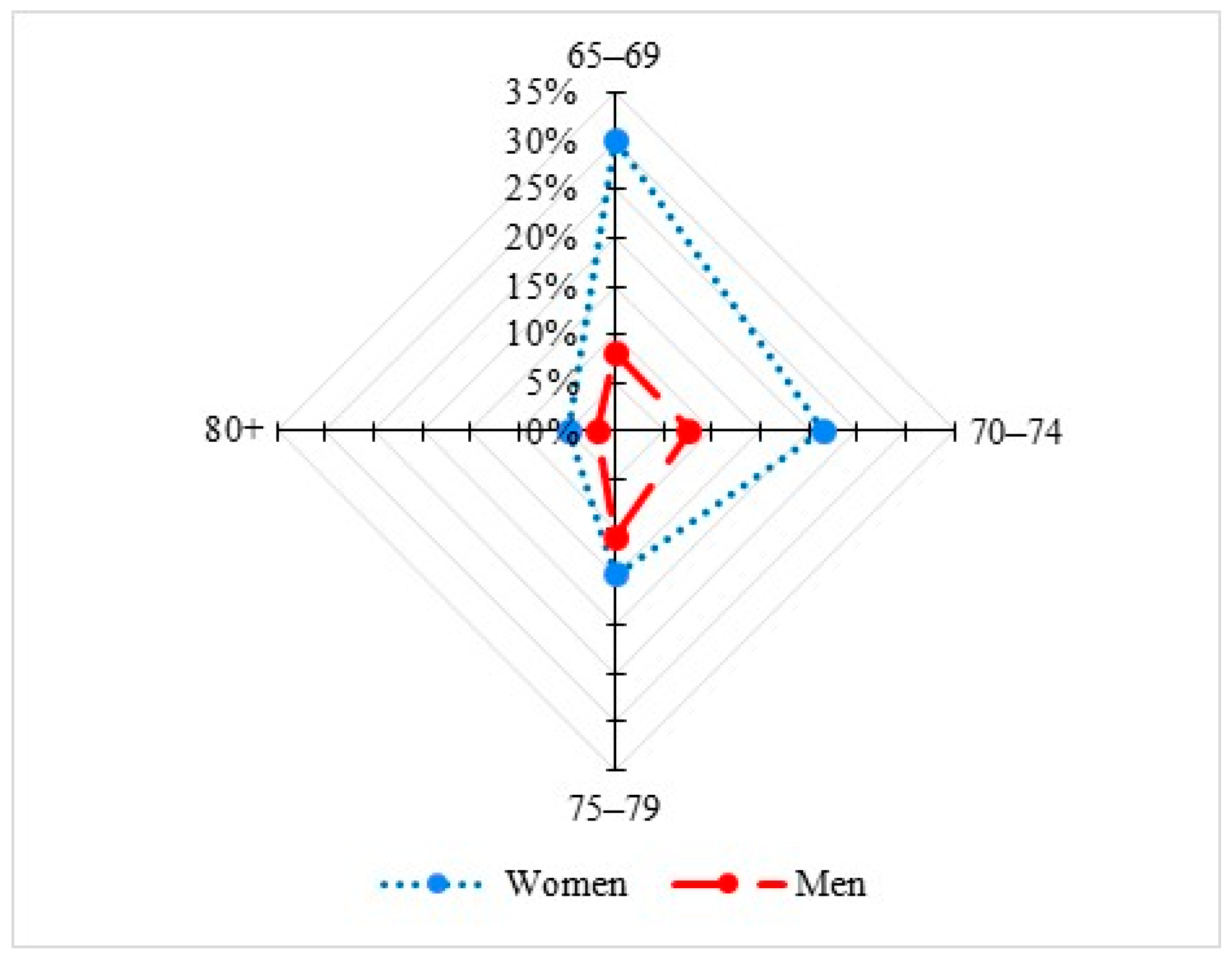
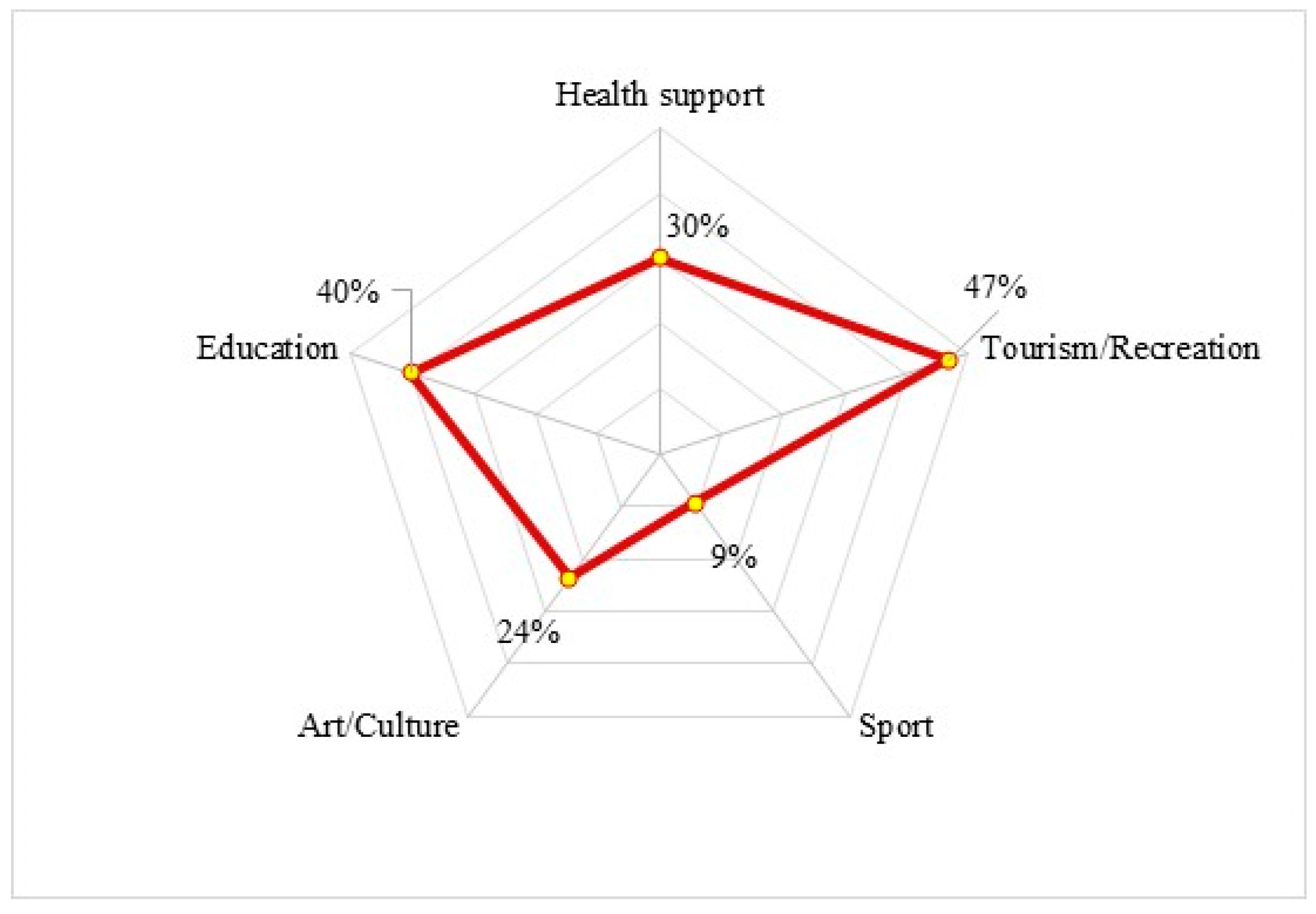
Figure 3 and
Figure 4 present selected characteristics of the surveyed group. According to the percentage distribution of respondents by gender and age group (
Figure 3), the largest subgroup of respondents (30%) was women aged 65–69, while the smallest subgroup was the oldest participants, representing 5% of women and 2% of men.
Among all respondents, 71% were women and 29% were men. Such an imbalance in the sample is mainly due to the structure of the senior organisations involved in the study. As mentioned, these were largely women’s organisations. In addition, women tend to be much more active in associations and Universities of the Third Age. The demographic structure of Szczecin, where the research was conducted, also indicates that 60% of seniors over the age of 65 are women [
60].
These proportions varied slightly across different age groups. The median age of female respondents (71 years) was lower than that of male respondents (73 years) and of the entire sample (72 years). The age distribution of all respondents shows right-skewed asymmetry, indicating that more questionnaires were completed by younger participants than by those at the average age.
Consequently, the analysis of responses in relation to respondents’ gender and age has certain limitations. However, such an attempt was made to indicate the relationships observed within the groups distinguished by these two characteristics. Considering the aim of this article and the specific nature of the surveyed group, the analysis of responses within individual age cohorts appears particularly interesting.
As part of the demographic questions, respondents were also asked to provide information on their marital status, education level, and employment situation. Sixty-two percent declared that they were married. Only 3% of responses came from individuals with primary education, while 49% had secondary education and 48% had higher education. The vast majority (82%) of the surveyed group were old-age/disability pensioners. The remaining 18% were still working, 9% were in regular employment, and another 9% engaged in occasional work. Demographic characteristic of the surveyed group is presented in
Table 1.
To further characterise the surveyed group, respondents were also asked about their membership in senior associations or other types of senior organisations. According to the responses obtained, 67% of respondents belonged to at least one organisation of this kind. The areas of their activity are presented in
Figure 4. The highest percentage of respondents indicated tourism and recreation (47%). Slightly fewer participants (40%) were members of education-related groups, which included, for example, universities of the third age. Clearly, the fewest respondents belonged to sports-related groups.
4. Results
As part of the analysis of tourist trips (RQ1) in which the surveyed seniors participated, two types of tourist trips were distinguished: trips including at least one overnight stay and one-day trips (without overnight stay), both divided into domestic and international categories. The questions concerned both the frequency and the purpose(s) of these trips. Respondents were asked to refer to the 12-month period preceding the completion of the questionnaire.
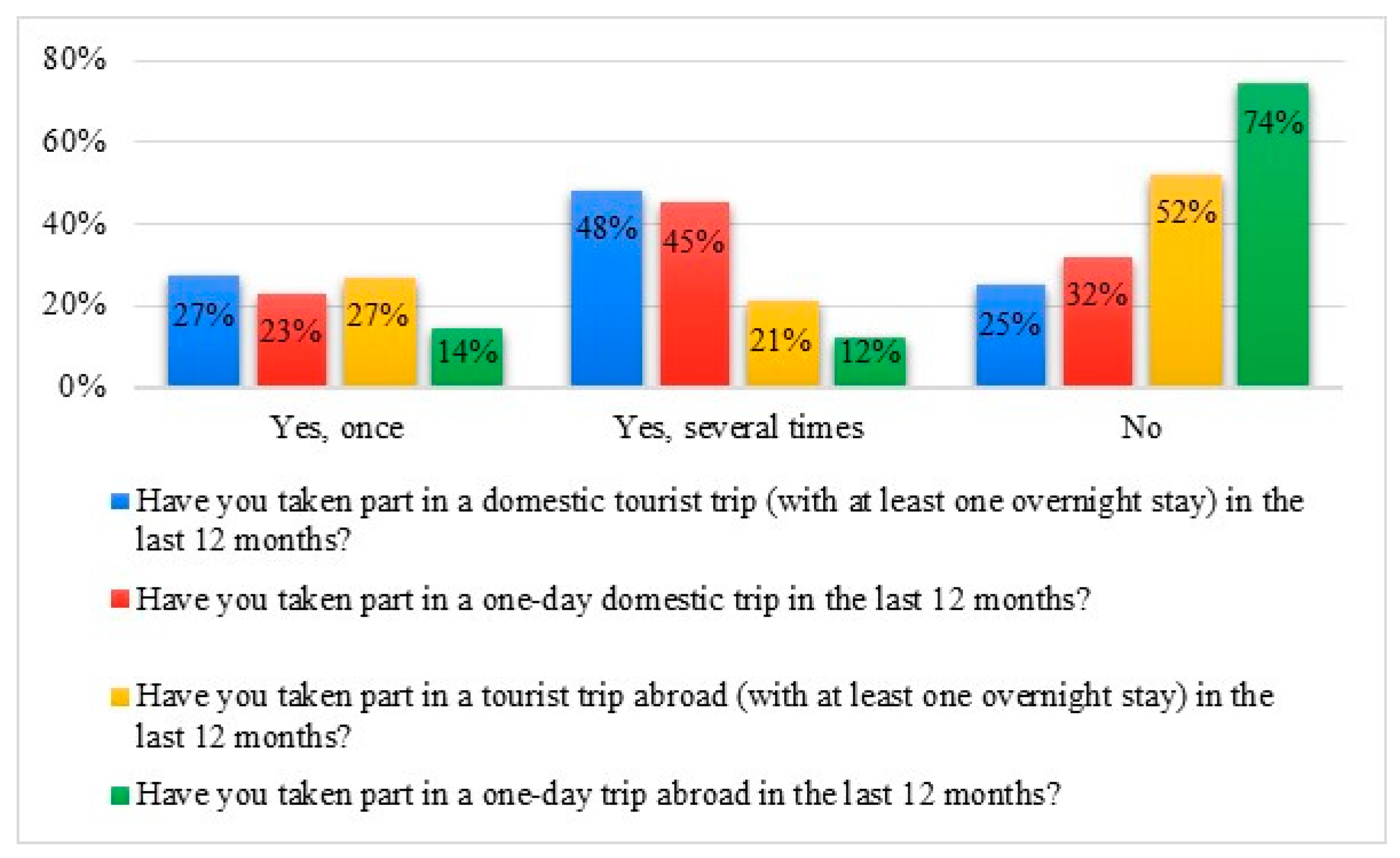
According to the percentage distribution presented in
Figure 5, domestic trips were chosen by respondents more often than international ones. Nearly half of the respondents participated in such trips several times during the year. This applied to both overnight and one-day trips. International travel was less popular among the surveyed seniors. While the share of responses indicating participation in one international trip in the past year was similar for both categories, clear differences were observed in the case of taking multiple trips—27 percentage points for overnight trips and 33 percentage points for one-day trips. Slightly more than half of respondents did not participate in any international trip involving an overnight stay, and as many as 74% did not take part in a one-day international trip.
When analysing respondents by gender, similar percentage distributions were obtained for the four questions presented in
Figure 5, indicating that gender was not a differentiating factor within the studied group.
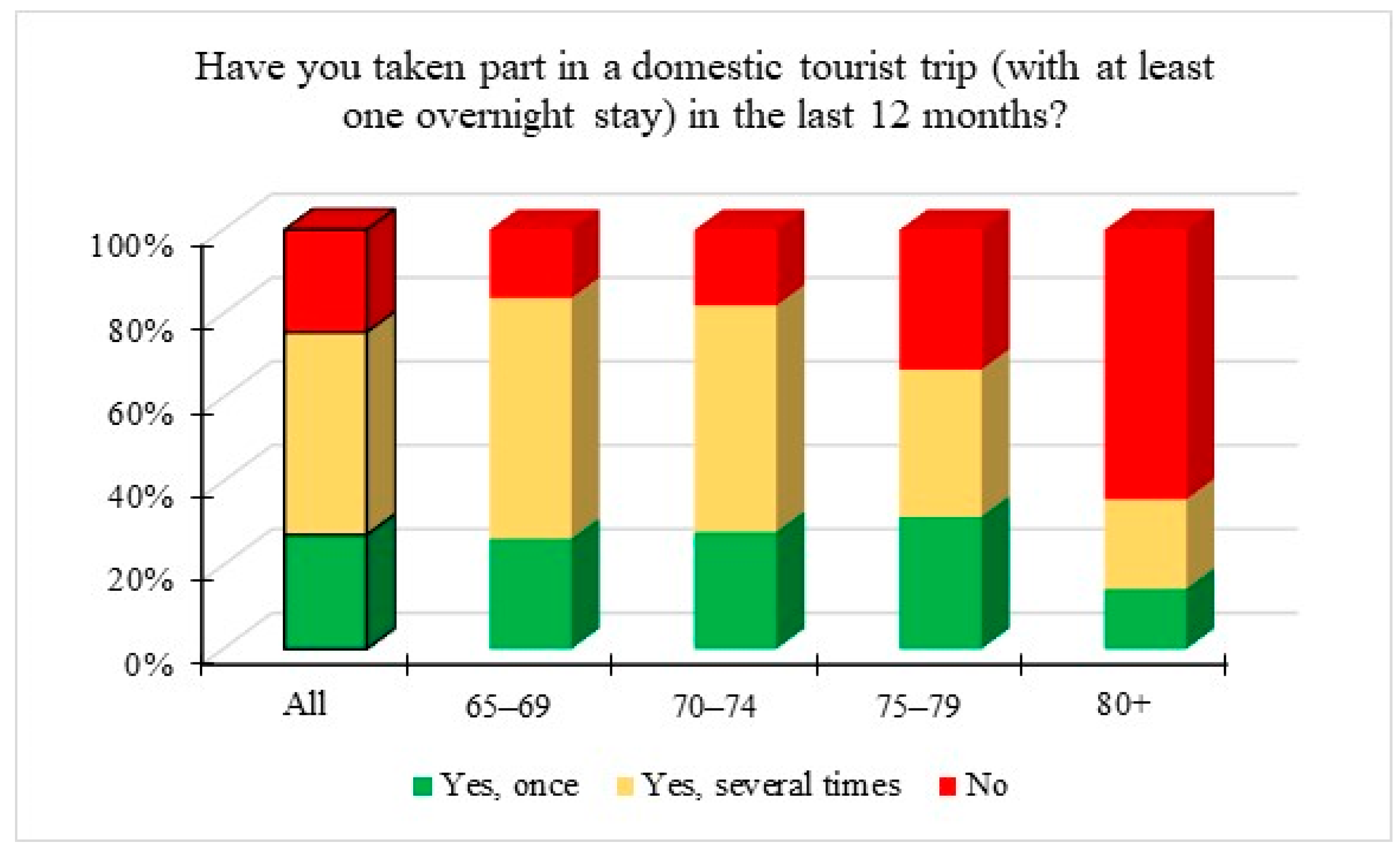
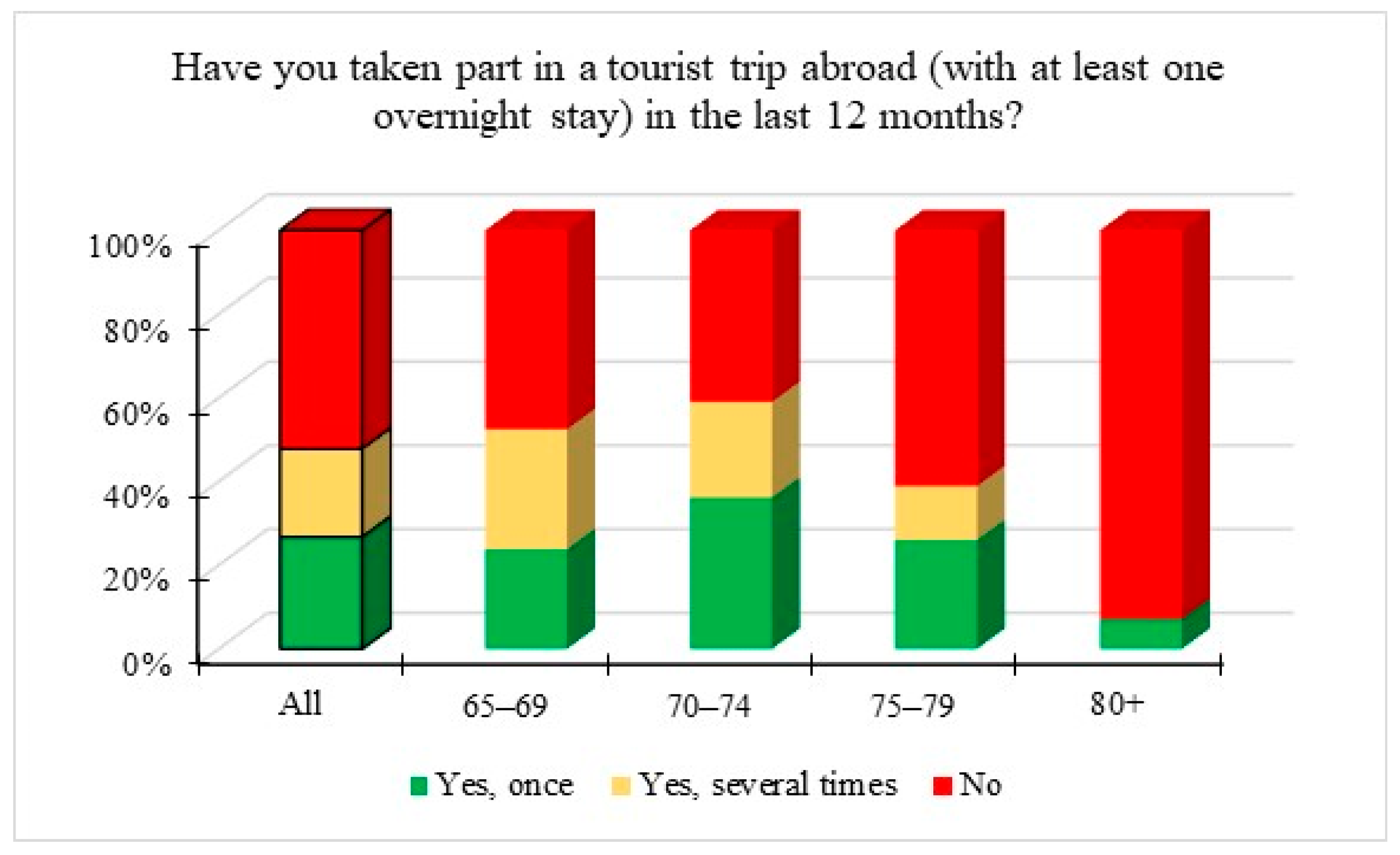
The situation slightly differs in the case of respondents’ age. According to the percentage distribution shown in
Figure 6 and
Figure 7, the seniors from the two youngest age groups (those aged 65–74) more often participated in tourist trips involving at least one overnight stay. In these age groups, the share of respondents who participated in such trips several times a year was higher than in the total sample. This correlation was observed for both domestic and international trips. In the two older age groups, a decrease in the frequency of participation in tourist trips was noted, particularly among respondents aged 80 and over. As many as 93% of individuals in this age category did not participate in any international trip, and none of them reported taking part in such trips several times a year. A similar trend was observed for one-day domestic and international trips, although the percentage differences between individual age cohorts were smaller than in the case of trips involving overnight stays.
Among the respondents, the seniors who were the least and the most active in terms of the frequency of taking tourist trips were identified and analysed. The least active group included individuals who indicated that they had not participated in any trip during the past year (based on the four questions presented in
Figure 5). This group accounted for 13% of all respondents. It included individuals from all age cohorts studied; however, as many as half of those aged 80 and over were classified as the least active seniors. The most active group, on the other hand, consisted of seniors who had participated several times during the year in both domestic and international trips, including both overnight and one-day trips. Such responses were provided by 6% of respondents, most of whom (67%) were in the youngest age group (65–69 years).
More than half (56%) of the least active respondents did not belong to any senior organisation, while the majority (58%) of the remaining respondents declared membership in health-related support groups. These types of organisations often associate individuals seeking assistance with temporary or chronic health problems, which may, to some extent, limit their participation in tourism activities. Among the most active respondents, as many as 83% belonged to organisations established for seniors. The clear majority (70%) were members of groups related to tourism and recreation. Based on these observations, it can be inferred that membership in senior organisations may encourage tourism activity. The membership itself may already constitute a form of activity.
According to the results presented in
Figure 4, 75% of the surveyed seniors participated at least once in a domestic trip with an overnight stay, and 48% in an international one. Seniors sometimes expressed concerns about staying overnight away from home, which did not, however, exclude them entirely from tourism activities. In this regard, an additional analysis of the responses was carried out. Approximately 38% of respondents who did not participate in a domestic trip with an overnight stay took part at least once in a one-day domestic trip. In the case of international travel, this share was only 12%. As many as 20% of all respondents did not take part in any trip involving an overnight stay, either domestic or international—more than half of them were aged 75 and over. Meanwhile, 32% participated at least once in a domestic overnight trip, but did not stay overnight abroad. Only 4% reported participating at least once in an international overnight trip, but not in a domestic trip with an overnight stay.
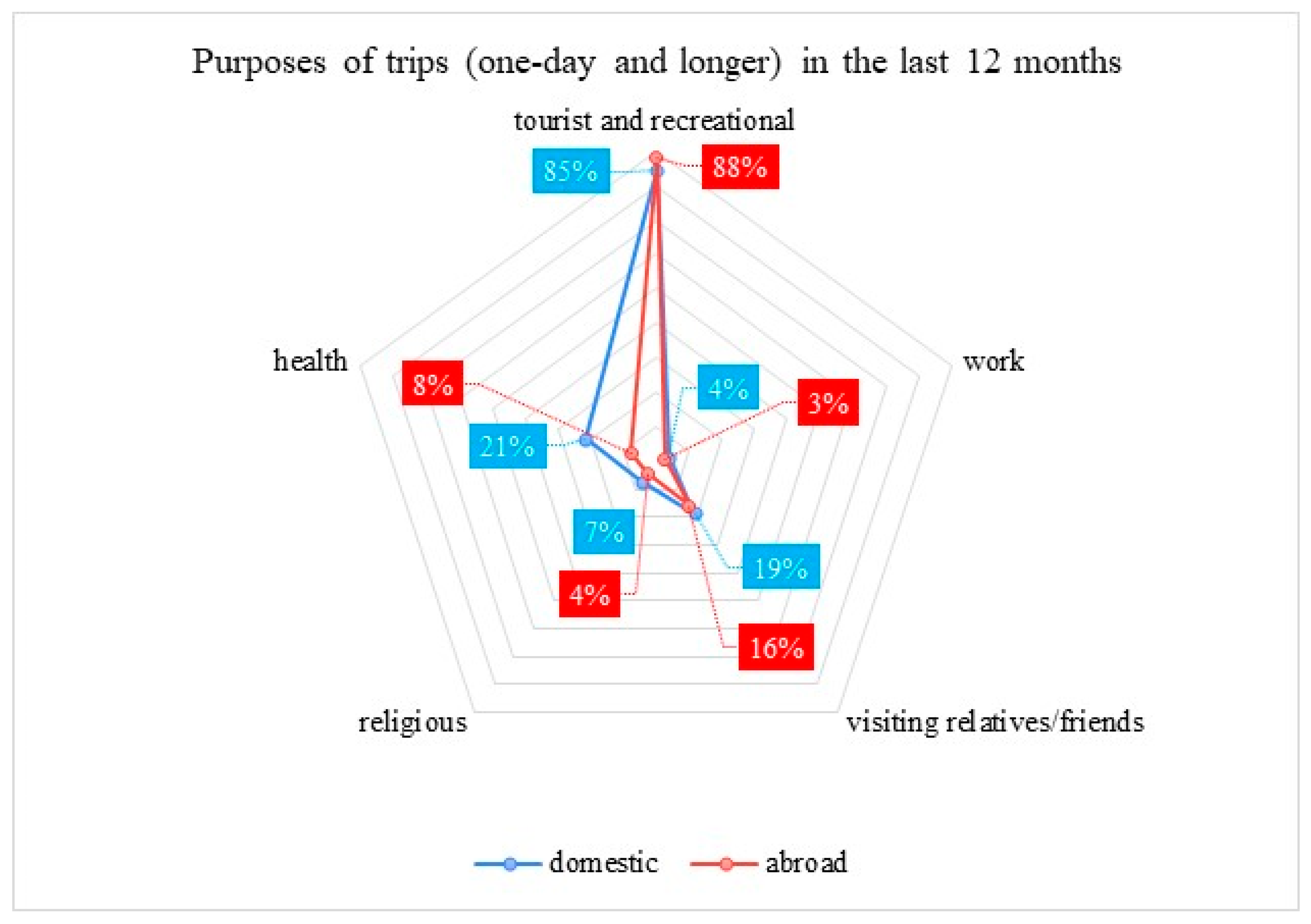
The respondents who had participated in tourist trips (both one-day and longer) during the year preceding the completion of the questionnaire were also asked about the purpose of their travel. In this case, it was possible to select more than one answer. The results are presented in
Figure 8. The vast majority of respondents indicated recreation as the purpose of their trips, which is considered the most typical and most common reason for travelling. This was the case for 85% of domestic trips and 88% of international ones. The fewest respondents travelled for work-related purposes; however, this result cannot be regarded conclusive, as only 18% of the surveyed individuals were still in employment or worked on an occasional basis. Religious travel was also relatively rare among respondents. For health-related purposes, 21% of the participants travelled to domestic destinations, and only 8% abroad. This represents the largest difference between domestic and international trips—13 percentage points—whereas for other purposes the difference does not exceed 3 percentage points. It is worth noting that Poland has a relatively well-developed network of facilities used for health-related tourism. These are available to seniors both free of charge and for a fee, which explains why health-oriented travel is more often undertaken domestically.
Similarly to the analysis of travel frequency, gender was not a differentiating factor in relation to the purpose of trips, whereas age was. In the case of domestic travel, the most distinct differences from the overall results were observed in the oldest age group. Even though also the seniors aged 80 and over most frequently indicated recreational purposes, their share was noticeably lower (by as much as 22 percentage points) than that of all respondents who travelled. The seniors aged 75–79 likewise showed clear differences compared to the overall results for domestic travel purposes. For this group, recreation was also the most frequently reported purpose (70% of those who travelled), which is 15 percentage points lower than the total. It is worth noting that the respondents from this age cohort travelled domestically for health-related purposes more often than others—34% of travellers in this age group indicated this purpose. Among the two youngest age groups, the proportion of those travelling for recreation was very high and exceeded the overall result by 5 percentage points (for the 65–69 age group) and 8 percentage points (for the 70–74 age group). As for international travel, similar relationships between age cohorts were observed, although they were even more pronounced. In the oldest group, only half of the respondents who had travelled abroad indicated recreation as their purpose—as much as 28 percentage points less than the overall share. In contrast, as many as 75% of those travelling abroad in this age group did so for health-related reasons. The youngest age group showed results most similar to those for the total sample, as was also the case for domestic trips.
As mentioned earlier, recreation was the purpose most frequently pursued by the surveyed seniors participating in both domestic and international trips (one-day and longer). It was often also the sole purpose of their travel. According to the responses, 59% of those taking part in domestic trips indicated recreation as their only purpose. Among those who had taken just one overnight domestic trip in the past year, 51% reported recreation as the sole purpose, while only 12% indicated health-related reasons as their only purpose. In the case of respondents who had taken several such trips, 59% focused exclusively on recreation. Among the seniors participating in one-day domestic trips, 60% reported recreation as the purpose of a single trip, and 67% in the case of multiple trips. As for international travel, the recreational purpose of such trips was even more evident—the percentages were higher by several to several dozen percentage points. As many as 72% of those who participated in international trips indicated recreation as their only purpose. Among the respondents who had taken a single international trip with an overnight stay, 71% travelled for recreation, whereas this share decreased to 64% among those who had taken several such trips. For one-day international trips, 83% of seniors selected recreation as the purpose of a single trip and 67% in the case of multiple trips. The latter percentage is the only one that matches the level observed for multiple one-day domestic trips.
The surveyed seniors rarely reported more than two purposes for their tourist trips—no more than 8% for domestic and 2% for international travel. In the case of domestic trips, the highest share for combined purposes was recorded for recreation and health-related travel (8%), followed by recreation combined with visiting relatives or friends (7%). When combining two purposes in their international trips, the surveyed seniors most frequently indicated recreation together with visiting relatives or friends, although this accounted for only 6% of respondents.
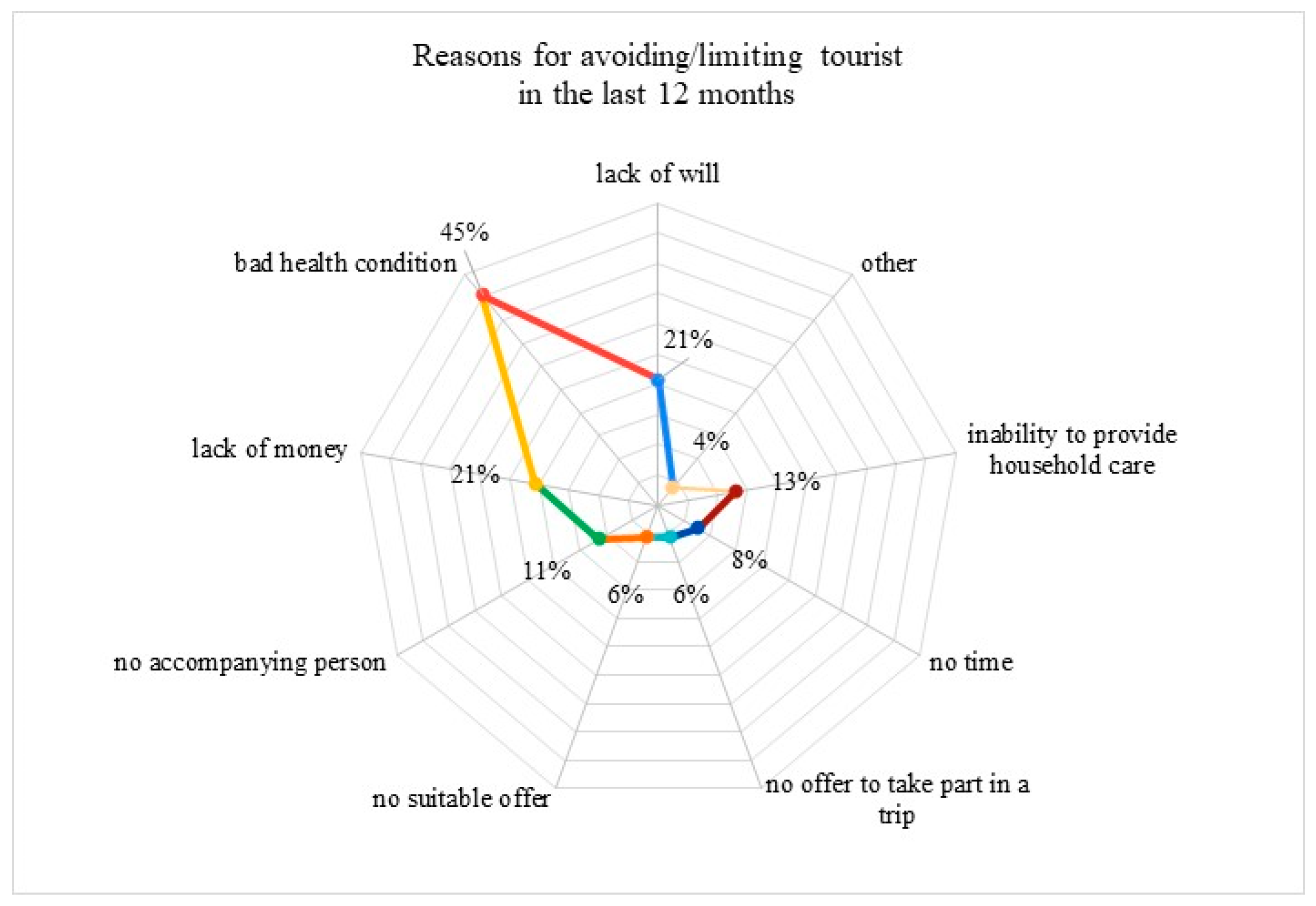
To address the second research question (RQ2), respondents’ opinions were analysed regarding the reasons for avoiding or limiting tourist trips during the 12 months preceding the completion of the questionnaire. In addition, the seniors were asked to assess the level (degree) to which they feared particular obstacles or difficulties during a tourist trip.
The question concerning the reasons for avoiding or limiting tourist trips was of a multiple-choice type and was not mandatory. It was answered only by those respondents to whom it applied, representing approximately 25% of the total sample. The results are presented in
Figure 9. The vast majority—as many as 45% of respondents indicated
bad health condition, which was followed by
lack of will and
lack of money, each indicated by 21% of respondents. The fewest respondents selected
no suitable offer and
no offer to take part in a trip. An even lower percentage was recorded only for the option indicating
other reasons, although these were not specified.
This question was answered by 25% of female and 27% of male respondents—the shares were similar to those in the overall sample. However, the percentages for individual reasons for avoiding or limiting tourist trips differed slightly between women and men. The most pronounced difference concerned the most frequently chosen reason, i.e., bad health condition; among women, this was indicated by 38% (−7 percentage points), while among men, the share reached as much as 63% (+18 percentage points). As for the remaining reasons for avoiding or limiting travel, no major deviations from the overall results were observed among women—the differences were within 2–3 percentage points. Larger variations were recorded among men, the most significant being lack of money (13%, i.e., a decrease of 8 percentage points). The responses such as no accompanying person and no offer to take part in the trip were also indicated more frequently by men—19% (+8 percentage points) and 13% (+7 percentage points), respectively. It is also worth noting that men clearly less often selected inability to provide household care—only 6% (−7 percentage points).
When analysing responses to the question about the reasons for avoiding or limiting tourist trips, broken down by age cohort, the greatest differences were observed for the most common answer, i.e., bad health condition. As many as 57% of respondents from the oldest age group considered this question applicable to them, and 75% of them indicated this reason. In contrast, this response was the least frequent in the youngest age group—32%, which is 13 percentage points below the overall figure. The bad health condition factor gained importance with age. For the remaining responses, no such clear relationship with the respondent’s age was observed.
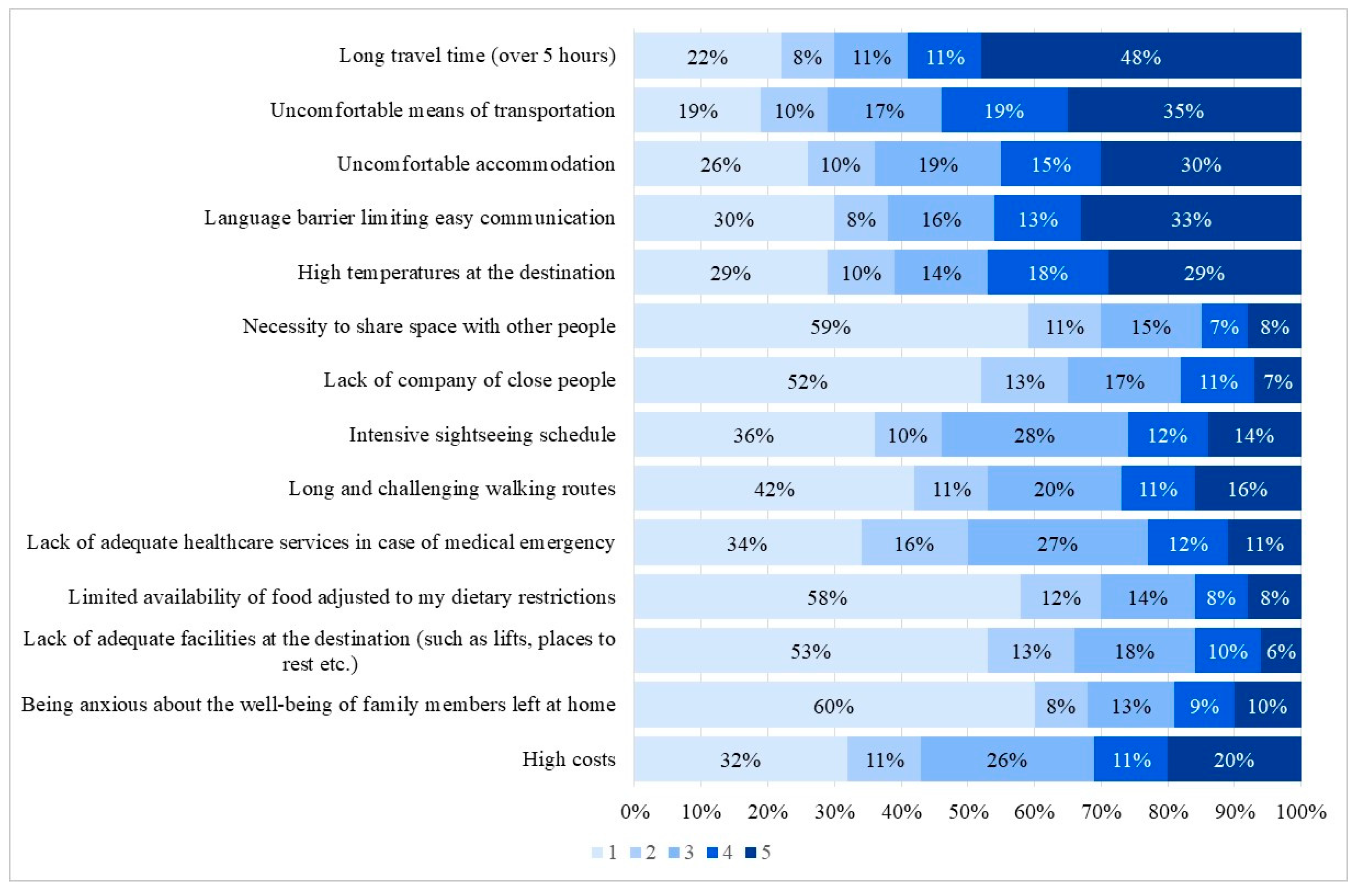
As part of the second research question (RQ2), all surveyed seniors were asked to assess the level (degree) of concern caused by various potential obstacles or difficulties encountered during a tourist trip. A 5-point Likert scale was applied, where the levels (degrees) were defined as follows: 1—very low; 2—low; 3—moderate; 4—high; 5—very high. The results are presented in
Figure 10.
The greatest concern among the surveyed seniors was raised by
long travel time (over 5 h). With respect to it, as many as 45% indicated a very high level of concern, and 59% rated it as high or very high.
Uncomfortable means of transportation also ranked high in this regard, with 54% assigning it a high or very high level (degree) of concern. The obstacles least often rated at level 4 or 5 were
necessity to share space with other people (15%),
limited availability of food adjusted to my dietary restrictions (16%), and
lack of adequate facilities at the destination (16%). At the same time, these were the factors most frequently rated at the lowest levels, reflecting low or very low concern (
Figure 10). The response
being anxious about the well-being of family members left at home also showed a low level (degree) of concern—as many as 60% of respondents rated it as very low.
For the obstacle that caused the greatest concern, an additional analysis was performed across gender and age groups. Among men, the share of those who rated their concern about long travel time at level 4 or higher was 63% (+4 percentage points compared to the total sample) and was higher than in the group of women (58%). With regard to age, this obstacle elicited stronger concern among older respondents. As many as 65% (+6 percentage points) of seniors aged 75–79 rated it at level 4 or higher, and in the oldest age cohort, this share reached 71% (+12 percentage points).
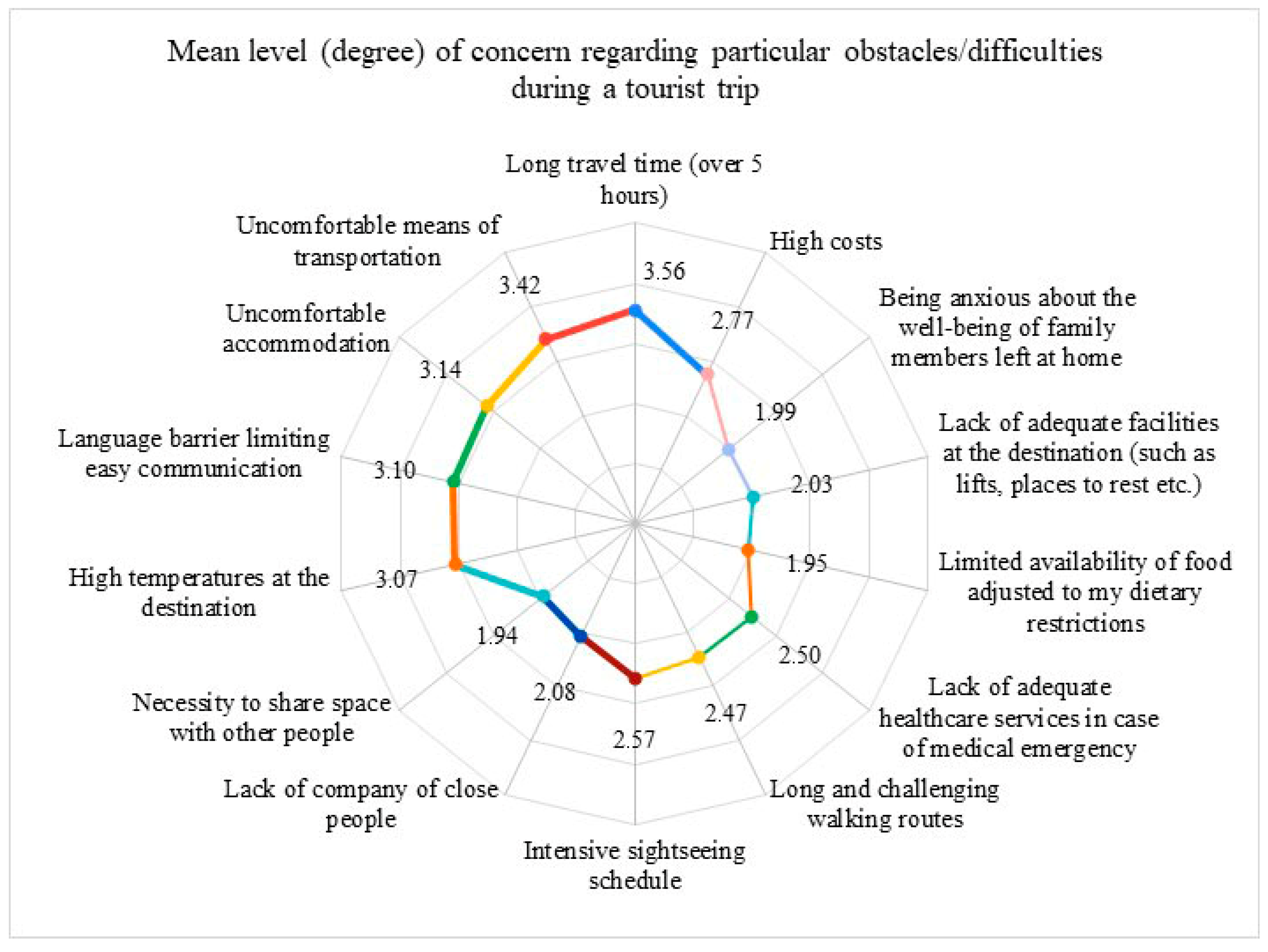
Based on the responses obtained, the mean values of the levels (degrees) of concern associated with particular obstacles or difficulties encountered during tourist trips were also calculated (
Figure 11). Considering all respondents, none of the listed obstacles or difficulties recorded an average score that would indicate a very high level (degree) of concern. The highest mean value of 3.56 was recorded for
long travel time (over 5 h), indicating a level of concern between moderate and high. This obstacle was also the one most frequently rated at level 4 or higher. The lowest mean score was obtained for the obstacle
necessity to share space with other people, which reached 1.94. A similar value (1.95) was recorded for
limited availability of food adjusted to my dietary restrictions.
To address the third research question (RQ3), concerning the subjective assessment of the impact of participation in tourist trips on psychological well-being and overall mood of seniors, the study group was asked to answer two questions. The first concerned the perceived importance of tourist trips, while the second asked respondents to evaluate a series of statements related to travel. These questions were mandatory for all respondents.
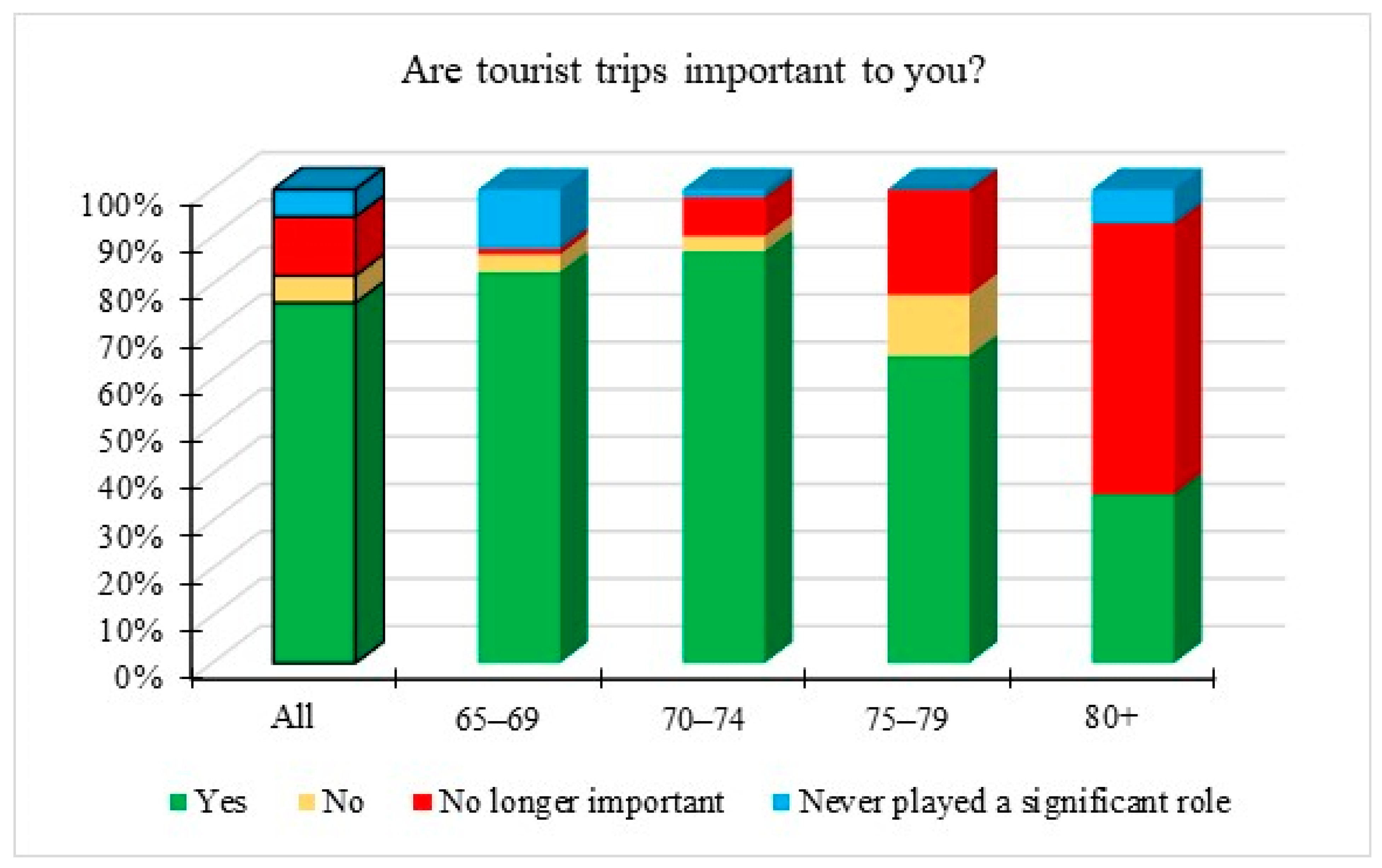
According to the results presented in
Figure 12, the vast majority of surveyed seniors (76%) considered tourist trips to be important. For 12% of respondents, the importance of travelling decreased recently, although they had valued it in the past. Only 6% stated that tourist trips were no longer important, and another 6% indicated that they had never played a significant role. Age proved to be a clear differentiating factor in assessing the perceived importance of tourist trips. In the two younger age cohorts, the share of respondents confirming the importance of tourist trips was higher than the overall result by 7 percentage points for the 65–69 age group and by as much as 11 percentage points for those aged 70–74. In contrast, the corresponding shares among older seniors were markedly lower—by 11 percentage points for those aged 75–79 and by as much as 40 percentage points for respondents aged 80 and over. The importance of this form of activity clearly declined with age. This tendency is further confirmed by the responses indicating that such trips were no longer important, although they once had been. Among the oldest respondents, as many as 57% chose this answer, while in the youngest group it was only 1%.
With regard to the perceived importance of tourist trips among women and men, the differences were not as pronounced as those between age cohorts. It is nevertheless worth noting that the share of women who considered such trips important was higher (79%) than among men (68%). Conversely, men more often indicated that tourist trips had lost their importance recently (18% compared with 10% among women).
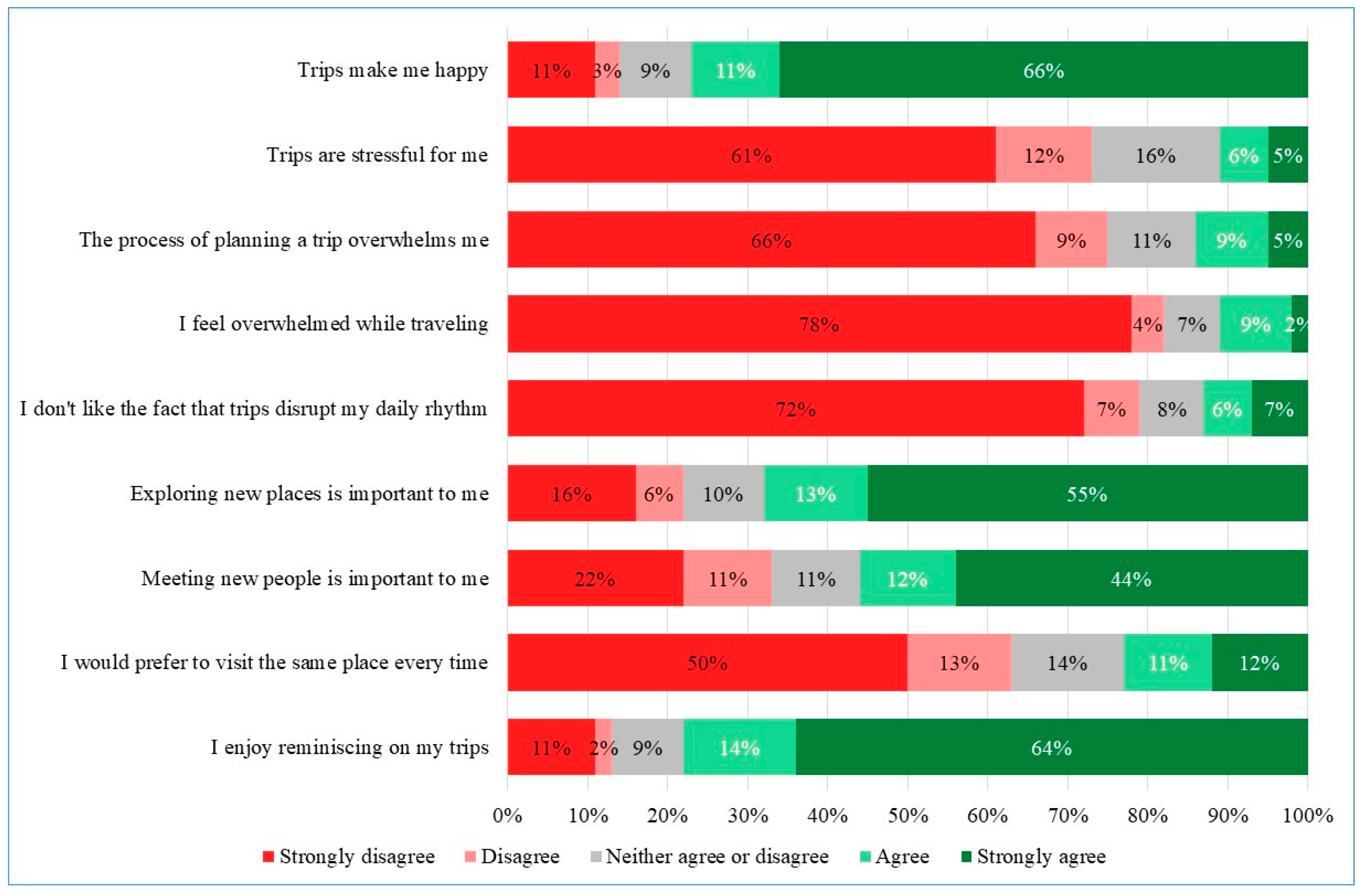
The group of surveyed seniors was asked to express their level of agreement with a series of statements concerning tourist trips, using a 5-point Likert scale, where the individual ratings were defined as follows: 1—Strongly disagree; 2—Disagree; 3—Neither agree nor disagree; 4—Agree; 5—Strongly agree. The results are presented in
Figure 13.
The analysis of the results presented in
Figure 13 focused mainly on the statements with which the majority of respondents clearly agreed, as well as those they disagreed with. The first group includes statements associated with the positive emotions that arise in connection with travelling. As many as 77% of the surveyed seniors agreed with the statement “Trips make me happy”, and 66% expressed strong agreement. Only 11% expressed strong disagreement. When analysing this statement by gender, men agreed with it clearly less frequently (70%) than women (80%). In terms of age cohorts, the lowest share (50%) of respondents agreeing with this statement was recorded in the oldest group. Similar results were obtained for the statement “I enjoy reminiscing on my trips”, although no such clear differences were observed across gender and age cohorts.
It is also worth noting the responses that showed a high level of approval and reflected the seniors’ openness to new experiences. As many as 68% of respondents agreed with the statement “Exploring new places is important to me,” and 56% with “Meeting new people is important to me.” However, the idea of meeting new people was not approved by 33% of respondents.
Based on these findings, it can be concluded that the surveyed group of seniors demonstrated a generally positive attitude towards travelling. This conclusion is further supported by the results related to the negative aspects of tourism, represented by four statements that elicited clear disapproval. As many as 82% of respondents disagreed with the statement “I feel overwhelmed while travelling,” and 78% strongly disagreed. Neither gender nor age differentiated the group in this case—similar percentages were recorded across all the age and gender cohorts. The remaining three statements reflecting negative aspects of travel were also strongly rejected by respondents: “I don’t like the fact that trips disrupt my daily rhythm” (79%), “The process of planning a trip overwhelms me” (75%), and “Trips are stressful for me” (73%).
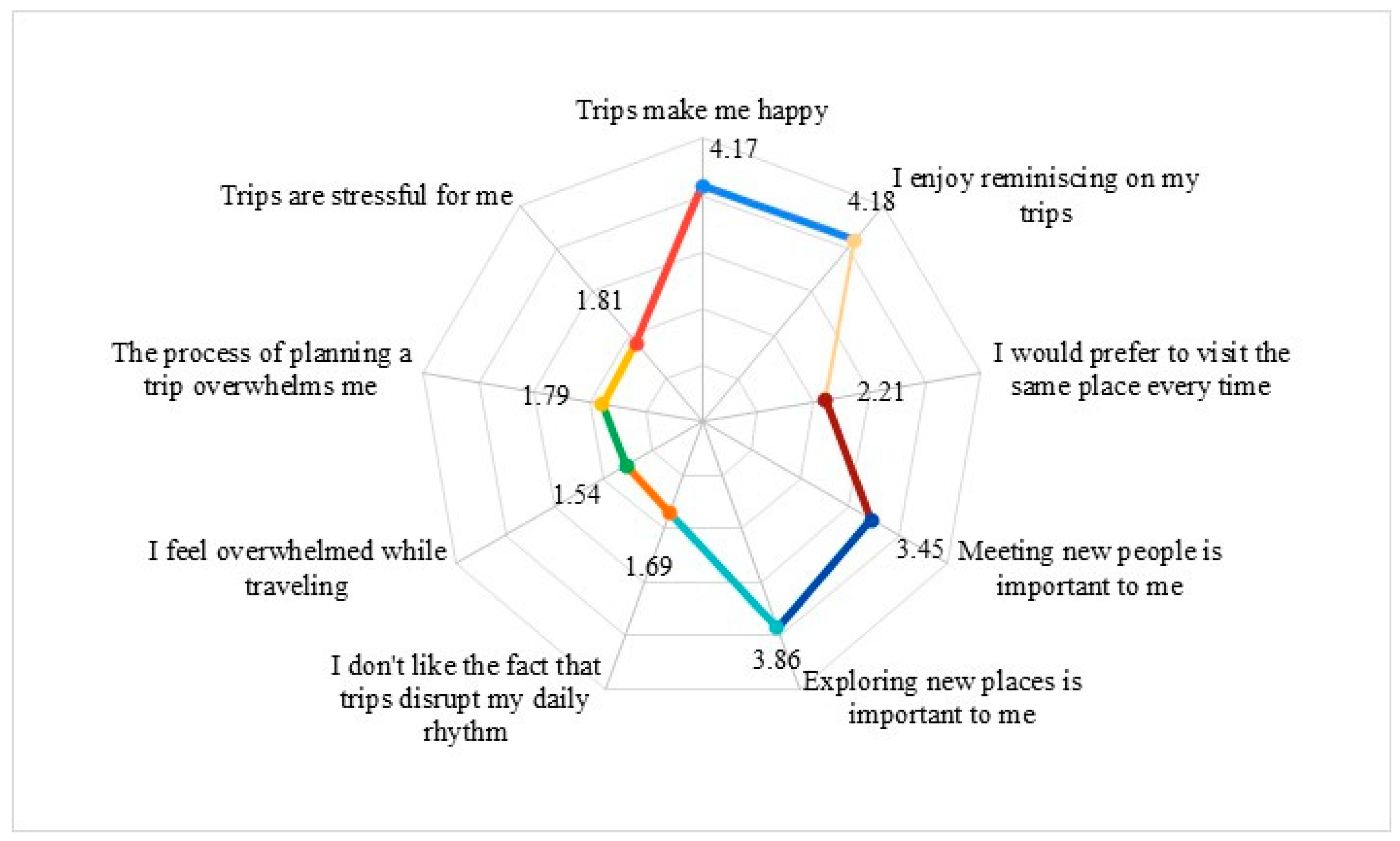
When expressing their opinions on the individual statements concerning tourist trips, respondents used a scale from 1 to 5, as before. Based on these assessments, mean values were additionally calculated (
Figure 14), which can be interpreted as the average level of agreement with each statement. Noticeably lower levels were recorded for the previously mentioned statements expressing negative feelings about tourist trips, ranging from 1.54 to 1.81. In contrast, the highest mean values were obtained for “I enjoy reminiscing on my trips” (4.18) and “Trips make me happy” (4.17).
5. Discussion and Conclusions
The results of the completed research make it possible to formulate important conclusions that may serve as a basis for developing recommendations for entities providing tourism services to seniors.
The research aimed at addressing RQ1 showed that tourist trips were most often undertaken by seniors for recreational purposes, which included both domestic and international trips. The second most common purpose indicated by seniors was health-related travel. In this case, however, such trips were clearly more frequently undertaken domestically. This may be influenced by several factors, such as Poland’s well-developed network of spa and sanatorium facilities and the possibility of obtaining financial support or subsidies for such trips from public institutions responsible for funding health care services (in Poland, the National Health Fund).
In response to RQ2, no relationship was found between the purpose of travel and either the age or gender of respondents. However, a correlation was identified between age and tourism activity. The study showed that tourism activity decreased with age. This may be related to the deterioration of health in older age groups, resulting from the physiological characteristics of the human body and constituting a natural consequence of the ageing process.
No significant differences were observed in respondents’ declarations regarding single participation in domestic and international trips involving at least one overnight stay. However, in the case of one-day trips, domestic travel was more popular among seniors. Gender, in this regard, was not a differentiating factor.
The main factor limiting tourism activity was
poor health, which was indicated more frequently by men than by women. The population’s health deteriorates with age [
61], which explains the correlation between respondents’ age and their tourism activity.
Other important factors influencing the frequency of travel, which were identified regardless of gender, included a
lack of will to travel and a
lack of money. Our findings thus confirm the previously observed relationship between seniors’ health and financial problems and the decline in their tourism activity, as noted by, among others, Pesonen et al. [
62], Przybysz and Stanimir [
32], and Amaral et al. [
63]. Typically, these are individuals who are no longer employed and receive retirement benefits that are considerably lower than regular salaries. As health deteriorates with age and medical needs increase, expenditures related to doctor visits and medications also rise. These expenses are prioritised over travel for leisure purposes.
Respondents also identified a lack of an accompanying person and a lack of available offers as factors limiting their tourism activity. Interestingly, such responses were given mainly by men. The significant differences between women and men in terms of attitudes towards ageing, the types of activities undertaken, and their characteristics may result from several factors. These include, among others, men’s lower susceptibility to social influence and their statistically longer working life, which consequently delays their engagement in social life. Women of senior age are characterised by higher levels of activity than men; moreover, they are also more open to forming new social relationships [
64,
65]. This may be one of the reasons why men prefer to travel in the company of people they know. It is also worth noting that women of senior age tend to rate their marriages as less happy than men do [
66]. This issue may also provide valuable insight into why companionship during travel appears to be more important for men, as partners are often able to travel together.
In the research section where respondents evaluated their level of concern regarding potential barriers and difficulties during tourist trips, aimed at addressing RQ3, long travel time (over 5 h) stood out as the factor that caused the greatest anxiety among the largest group of respondents. This is highly relevant, as it may explain why seniors tend to prefer trips lasting more than one day, particularly in the case of international travel. During longer trips, travel time can be spread over several days, making the journey less tiring. Considerable concern was also associated with the potential discomfort caused by uncomfortable means of transport. These findings may be crucial for those designing tourism offers targeted at seniors. A senior-centric approach is essential—one that prioritises the specific needs of this demographic group. Trips should be planned in such a way as to minimise travel time where possible, include longer rest breaks, and ensure comfortable means of transport. When developing tourism products for seniors, it is also important to pay attention to pricing. Costly offers are unlikely to attract significant interest within this group. Seniors’ concerns may also influence their choices of tourist destinations. As the society continues to age, a decline in interest in long-distance travel—such as intercontinental trips—is likely to be observed. High temperatures at the destination were also among the major concerns reported by seniors, which may further affect destination choices and discourage travel to countries located in warm climatic zones. Interestingly, this could prove beneficial from an economic perspective, as it may help mitigate tourism seasonality. Many younger travellers tend to choose destinations and periods when temperatures are at their highest. Redirecting senior tourism flows to cooler and less popular periods could therefore bring multiple advantages.
Respondents also expressed considerable anxiety about the language barrier. This is understandable, as in Poland older generations often had limited opportunities to learn foreign languages in their youth and thus generally do not possess sufficient communication skills in other languages. This concern may lead seniors, particularly in the context of international travel, to prefer organised tours that ensure the presence of tour leaders and guides who speak the senior tourists’ native language. Independently organised international trips are therefore unlikely to be very popular among older adults.
The seniors who participated in the study generally demonstrated an open attitude towards tourism, expressing a positive outlook on exploring new places and meeting new people. They also indicated that travelling was a source of positive emotions for them and that recalling their past trips evoked pleasant feelings. On this basis, it can be speculated that tourism may serve as a factor associated with life satisfaction and contribute to the overall well-being of older adults. This conclusion is further supported by the finding that most respondents disagreed with statements reflecting negative perceptions of travel.
6. Recommendations
As a result of the conducted research, which provided answers to the formulated research questions, and the discussion of the findings, several recommendations can be proposed for organisations involved in activating seniors as well as for entities developing tourism offers for this social group. At the same time, treating this study as exploratory allows for an indication of directions for further, more in-depth research of both a theoretical and practical nature.
In the future, it could be valuable to expand the study to include questionnaires addressing respondents’ mental health, which would allow for a more precise assessment of their psychological condition and their attitudes towards tourism. It should be noted that the application of standardised psychological tools in research conducted on a larger group would, with a high degree of probability, enable formulation of conclusions regarding the current level of life satisfaction among seniors who are active in tourism. Such an approach could also make it possible to identify potential links between travel, the mental health of older adults, and the sense of meaning reported by them. In this regard, it would be worthwhile to expand the study to include the issue of depression, which—due to the nature of the ageing process and its implications—poses a significant risk for older adults, both in terms of coping with physical and cognitive changes.
Examination of psychological aspects is crucial for development of the tourism industry towards greater inclusion of the needs of older customers and providing them with solutions that may help them maintain a high level of psychological well-being. Such an approach could encourage many seniors to engage in tourism activities, as adapting travel services to their specific needs may include offers related, for instance, to religious or health-related tourism. Development in these directions is already taking place and is linked to the growing awareness of the needs of this age group. Travelling may serve as a psychologically beneficial alternative to a passive way of spending free time for people of retirement age. However, future research should also explore in greater depth the economic capacity of travelling seniors. Tourism-related expenses—particularly excessive ones—may negatively affect the sense of financial stability and, as a result, contribute to a decrease in life satisfaction.
Conducting broader research could make it possible to identify potential statistically significant differences between women and men in their approaches to senior tourism. Considering the differences between the individual age cohorts within the older population could also provide important insights into more precisely defined needs among people of specific ages. Applying the results of such studies could enable a more accurate adjustment of tourism offers to the age of clients, thereby ensuring their maximum satisfaction and allowing enterprises to align more effectively with the actual demand for tourist trips. The authors also acknowledge that it would be valuable in the future to broaden the research to include other aspects related to senior tourism and to conduct additional analyses, incorporating psychological assessment tools, analyses of gender differences, as well as an exploration of ecological awareness among senior travellers.
Senior-centric tourism should become one of the main directions in tourism management. Failure to account for age-related differences among seniors may lead to overgeneralisation and, consequently, to a mismatch or even exclusion of individuals who experience greater difficulties resulting from advanced age. This, in turn, contradicts the principle of inclusivity, which underpins sustainable tourism. As demonstrated by the study, achieving inclusivity in tourism offers for seniors requires that the responsible entities consider factors of infrastructural nature (e.g., the standard of transport and accommodation facilities), economic nature (e.g., the limited financial resources of seniors), and organisational nature (e.g., shorter travel times, more frequent breaks, and selection of destinations with cooler climates). Such knowledge may serve as a solid foundation for decision-making processes within organisations providing tourism services and may contribute to the achievement of the Sustainable Development Goals, particularly through reducing inequality.