Article

Green Transformation and Carbon Performance: The Cognition–Disclosure Chain Under China’s Carbon Policy Reform

1
College of Management Science, Chengdu University of Technology, Chengdu 610059, China
2
The College of International Education (Oxford Brookes College), Chengdu University of Technology, Chengdu 610059, China
*
Author to whom correspondence should be addressed.
Sustainability 2026, 18(1), 22; https://doi.org/10.3390/su18010022
Submission received: 26 November 2025 / Revised: 12 December 2025 / Accepted: 16 December 2025 / Published: 19 December 2025
(This article belongs to the Section Environmental Sustainability and Applications)

Abstract

Under China’s “dual carbon” targets and deepening global climate governance, this paper investigates whether and how corporate green transformation (GTF) improves carbon performance (CP). Using panel data on Chinese A-share listed firms from 2008 to 2023 and multiple causal identification strategies (fixed effects, RD, DID and PSM), we find that GTF significantly enhances CP, with stronger marginal effects for firms with poorer initial carbon performance. Mechanism analyses show that carbon disclosure (CD) acts as a positive mediator in the GTF–CP nexus, whereas executives’ green perception (EGP) exerts a short-term suppressing effect. Policy analyses further indicate that the 2012 pilot emissions trading schemes and the 2021 national carbon market amplify the positive impact of GTF on CP, but local “compliance traps” around industry medians suggest strategic use of allowance trading. The study integrates EGP and CD into a cognition–disclosure framework linking GTF and CP and provides evidence on the emission-reduction effects of GTF under evolving carbon policies, with implications for carbon market design and corporate low-carbon governance.

1. Introduction

In recent years, global climate governance has been reshaped by a series of international initiatives, most notably the Paris Agreement, which has prompted governments and corporations worldwide to commit to deep decarbonization and align their emission pathways with 1.5–2 °C targets. However, evidence from a large cross-country sample shows that the emission trajectories of most major corporations remain misaligned with global climate goals, despite a rapid proliferation of corporate climate pledges and sustainability initiatives [1]. Against this backdrop, many economies have implemented market-based climate policies and disclosure regimes to steer firms towards low-carbon transformation. Firm-level evidence from the European Union Emissions Trading System (EU ETS)—the world’s largest carbon market—indicates that carbon pricing can reduce regulated firms’ CO2 emissions by around 14–16% without detectable losses in output or employment [2]. Complementary panel studies for EU member states further suggest that emissions trading systems, together with green technologies and environmental taxes, significantly improve environmental quality across different quantiles of the ecological footprint distribution [3]. Beyond Europe, research on Korea’s national emissions trading scheme shows that market-based instruments can alter firms’ energy-use efficiency and carbon intensity, although the magnitude of emission reductions may depend on policy design and enforcement stringency [4]. Against this global policy and corporate practice landscape, China—as the world’s largest emitter and a major emerging economy—provides a crucial setting in which to examine whether and how corporate green transformation can effectively translate into improved carbon performance.
In the pursuit of sustainable development and climate resilience, corporate green transformation has become an essential strategy for reducing carbon emissions. Firms globally, particularly in high-emission industries, are increasingly adopting green technologies and practices to enhance their environmental performance. This green transformation is not only driven by regulatory frameworks but also by technological advancements that enable more efficient resource use and lower environmental impacts. In China, where rapid industrialization and high carbon emissions have raised significant concerns, green transformation has been strongly encouraged by government policies such as carbon emission trading systems and green finance mechanisms [5,6]. The role of digital transformation in enhancing corporate carbon performance is particularly noteworthy. The integration of digital technologies, such as artificial intelligence and supply chain digitization, has the potential to optimize energy usage and streamline the adoption of green technologies [7,8]. Studies indicate that digital tools can significantly reduce carbon emissions and foster synergies with green innovations, offering a pathway for sustainable growth [9,10]. Moreover, the shift towards a digital economy has also been linked to improved carbon performance across various sectors in China, as firms leverage technology to reduce their environmental footprint [11,12].
Market-based environmental regulations, such as carbon trading systems, incentivize companies to pursue green innovations. The introduction of carbon credits and emissions trading not only promotes cleaner production but also fosters innovation in green technology [13]. However, the impact of these policies varies significantly across industries. For example, heavy industries face greater challenges in transitioning to green practices due to the capital-intensive nature of their operations, often resulting in limited short-term benefits from such transformations [14]. Another critical element in the success of corporate green transformation is the perception and awareness of top management. Executive green perception is crucial in integrating sustainability into business strategy and ensuring that green initiatives are implemented effectively [15,16]. However, the extent to which executives prioritize green transformation can be influenced by factors such as short-term cost pressures and a lack of immediate returns [17,18,19]. As such, fostering a strong environmental orientation at the executive level is critical to enhancing the long-term sustainability of green initiatives [20]. Furthermore, carbon disclosure practices play an essential role in enhancing corporate transparency and accountability, which are necessary for improving carbon performance. Research shows that firms with more robust carbon disclosure practices tend to perform better in terms of emissions reduction [21]. Mandatory carbon reporting, driven by government policies, not only ensures regulatory compliance but also encourages firms to adopt more environmentally friendly practices, leading to measurable improvements in their carbon performance [22,23].
China’s corporate carbon governance operates within a rapidly evolving environmental policy framework. At the national level, the government has introduced a series of instruments aimed at reducing carbon emissions and promoting green transformation. Under the authorization of the State Council, the National Development and Reform Commission (NDRC) designated seven provinces and cities to launch pilot carbon emissions trading schemes in 2012, and in 2021 China officially brought into operation its national Emissions Trading Scheme (ETS), which has become the world’s largest carbon market. The national ETS initially covers the power sector—responsible for over 40% of China’s CO2 emissions—and is designed to be gradually extended to other energy-intensive industries [24]. By creating binding emission constraints and price signals, these market-based policies provide strong incentives for Chinese firms to undertake green transformation, making China a representative and policy-rich context in which to examine how corporate green transformation translates into improved carbon performance [25].
Existing studies typically explore green transformation and carbon performance separately, without integrating carbon disclosure and transformation mechanisms into a unified framework. While managerial green cognition drives environmental strategy [26], its potential negative impacts, such as resource misallocation in high-pollution industries, remain understudied. Moreover, while carbon disclosure quality is recognized for its importance, its role as a mediator or moderator in green transformation has been overlooked. Studies on China’s carbon market have shown positive impacts, but dynamic and heterogeneous analyses at different policy stages are rare. Additionally, the limited use of multiple causal identification methods hinders robust causal inference [27].
This study contributes to the literature by enhancing the understanding of the relationship between corporate green transformation (GTF) and carbon performance (CP). It makes several key contributions: First, it is one of the first to systematically investigate the GTF-CP relationship within the context of China’s evolving carbon market, revealing a robust positive association, thereby enriching the literature on carbon market dynamics in emerging economies. Second, the study identifies a dual mediation mechanism—carbon disclosure (CD) and executive green perception (EGP)—where CD plays a positive mediating role, while EGP acts as a suppressive mediator. Structural equation modeling (SEM) further elucidates their causal pathways. Third, it contextualizes the GTF-CP relationship within China’s policy landscape, employing quasi-natural experiments (carbon trading pilot and national market launch) and advanced methodologies (difference-in-differences, propensity score matching, regression discontinuity) to demonstrate how policy frameworks amplify the positive effects of green transformation. This not only validates the role of market-based environmental policies in promoting corporate sustainability but also provides actionable insights for global carbon governance, particularly in transition economies.
The aim of this research is to unravel how corporate green transformation enhances carbon performance and to clarify the mechanisms through which this effect operates. The innovation lies in its integration of textual analysis, mediation modeling, and policy evaluation to provide a holistic understanding of green transformation dynamics, thereby offering empirical support for improving corporate carbon management practices and informing environmental policy design.
The subsequent section outlines the literature review and hypotheses, while Section 3 covers the methods and data. Section 4 presents the findings and discussion, followed by conclusions and policy implications in Section 5.

2. Literature Review

2.1. Review of Relevant Research on Enterprise Green Transformation and Carbon Performance

2.1.1. Enterprise Green Transformation and Carbon Performance

Enterprise green transformation has emerged as a pivotal driver in enhancing carbon performance through the combined effects of technological innovation, regulatory compliance, and supply chain collaboration. Empirical evidence consistently demonstrates that the adoption of cleaner production processes [28], green process innovation [29], and digitally enabled green supply chains [30] significantly reduces carbon emission intensity [31,32]. Market-based environmental regulations, such as carbon trading pilots, operate via quota constraints and carbon price signals, which incentivize firms to pursue green innovation and thereby improve their carbon performance [33,34]. Likewise, financing mechanisms such as green bond issuance [35] and green financial policies [36] help alleviate capital constraints, encouraging high-polluting enterprises to transition toward low-carbon operations and reduce emission intensity.
However, the literature also underscores sectoral disparities in transformation outcomes. Heavy industries, constrained by technology lock-in and capital-intensive processes, often encounter a situation where short-term transformation costs outweigh immediate benefits [37,38]. The policy environment plays a decisive moderating role: in jurisdictions with stringent environmental regulations, such as China’s carbon market pilots, green transformation yields significantly greater improvements in carbon performance [21,39]. By contrast, in regions with weaker enforcement, “symbolic transformation” practices may emerge, where environmental initiatives remain superficial and lack substantive emission reductions. Furthermore, digital technologies are reshaping the trajectory of carbon mitigation by enabling energy efficiency optimization [40] and fostering synergies with green innovation [41], providing emerging economies with novel pathways toward low-carbon development [42,43].

2.1.2. Executives’ Green Perception Enterprise Green Transformation and Carbon Performance

Executives’ green perception constitutes a critical mediating mechanism linking corporate green transformation to carbon performance. Studies reveal that heightened environmental awareness among executives fosters the integration of ESG practices [26] and the formal commitment to green strategic objectives [44], thereby deepening transformation initiatives. Nevertheless, this positive influence can be attenuated by short-term cost pressures, which may dilute the immediate carbon performance gains [27]. Spatial heterogeneity analyses further show that the positive moderating effect of executives’ green perception on carbon performance is more pronounced in developed eastern urban clusters [45], while resource constraints in central and western regions result in diminishing marginal effects [46].
The transformation process itself can enhance executives’ environmental knowledge—particularly in low-carbon technologies—stimulating cognitive shifts toward sustainability [47]. However, translating such cognition into tangible outcomes requires institutional reinforcement. In the absence of green human resource management and environmental training programs, executives’ environmental awareness risks remaining at a purely rhetorical level [48]. Furthermore, executives’ green values indirectly influence carbon performance by shaping the quality of environmental disclosure [49] and guiding green investment decisions [50], with these effects contingent on corporate ownership structures [51] and governance quality [52]. These findings underscore that while executive cognition is a strategic asset in green transformation, its translation into measurable carbon performance gains depends on complementary organizational and governance frameworks.

2.1.3. Carbon Disclosure Enterprise Green Transformation and Carbon Performance

Carbon disclosure serves as both an external accountability mechanism and an internal governance tool, thereby reinforcing the positive effects of green transformation on carbon performance. Mandatory disclosure policies—such as China’s Green Credit Guidelines—compel high-emission enterprises to upgrade technology and reduce emissions, whereas voluntary disclosure leverages reputational incentives to encourage green innovation [53]. A robust body of evidence demonstrates a significant positive relationship between the quality of carbon disclosure and carbon performance [53], with three primary mechanisms at work.
First, transparency-driven financing: firms disclosing detailed carbon emissions data gain better access to green financing [54], enabling greater investment in clean technologies [55]. Second, governance optimization: disclosure requirements embed environmental accountability across organizational departments [56], with particularly strong effects in state-owned enterprises and those with substantial institutional investor ownership [57]. Third, market feedback: high-quality disclosure reduces perceived environmental risk among investors, enhancing firm valuation and reinforcing the green transformation–carbon performance cycle [58].
Nevertheless, “greenwashing” behaviors—such as selective disclosure that overstates carbon performance—pose a significant challenge [27]. This underscores the need for third-party verification mechanisms, such as ISO14001 [59] certification, to enhance disclosure credibility [20]. Technological advancements, particularly blockchain, are transforming the carbon disclosure landscape by improving the traceability and reliability of carbon data, thereby reshaping the link between transparency and performance [60,61]. In sum, carbon disclosure functions not only as a reporting obligation but also as a strategic channel through which green transformation translates into sustainable carbon performance gains.
Greenwashing represents a critical concern in the context of carbon disclosure, as firms may selectively report or overstate environmental achievements to obtain reputational benefits without making substantive emission reductions. Such symbolic disclosure weakens the credibility of carbon reports and may distort the observed link between disclosure and actual carbon performance [62,63].
In addition, internationally recognized environmental management standards further contextualize the role of carbon disclosure in corporate carbon governance. ISO 14031 [64] emphasizes the use of structured environmental performance indicators to support transparent evaluation [65], while ISO 14067 [66] highlights the importance of consistent and comparable carbon footprint accounting across firms [67]. ISO 14090 [68] also underscores the need for climate-related risk disclosure as part of broader adaptation planning [69]. These standards collectively reinforce that effective carbon disclosure is not merely a reporting practice but a key component of standardized performance assessment aligned with global environmental governance frameworks.

2.2. Research Review and Research Gaps

Existing studies provide a valuable foundation for understanding corporate green transformation and carbon performance but remain fragmented. One stream examines green technological innovation, green investment, and organizational change [28,29], while another focuses on carbon emissions, carbon performance, and carbon disclosure and their implications for costs, risks, and firm value [53,70]. Yet these strands seldom converge, leaving a gap in systematic frameworks that jointly consider green transformation and carbon performance and explain how internal governance and external disclosure interact to shape carbon outcomes.
The literature also displays three limitations. Mechanistically, most studies rely on a simple “technological progress–emission reduction” logic, overlooking the suppressing role that soft governance factors—such as executives’ green perception—may play [26,27] and the mediating role of carbon disclosure quality [53]. Context-specific greenwashing around policy thresholds also remains underexplored [27]. Institutionally, research on emissions trading schemes and mandatory disclosure tends to focus on policy effectiveness rather than the dynamic and heterogeneous ways institutional shocks reshape the GTF–CP relationship [5,25]. Methodologically, many studies employ single-model designs and only partially address endogeneity or selection bias [15].
Against these gaps, this study adopts an integrated “GTF–EGP–CD–CP” chain perspective, incorporating executives’ green perception and carbon disclosure into a unified framework. It further situates the analysis within China’s evolving carbon policy environment—particularly the regional ETS pilots and the national carbon market—and highlights potential compliance traps around industry medians [21]. Methodologically, it employs multiple causal identification strategies, including fixed effects, RD, DID, and PSM, to enhance the credibility and robustness of empirical findings.

2.3. Theoretical Foundations and Hypotheses

Green transformation is rooted in the principles of sustainable development, which emphasize the need to promote economic growth while preserving environmental integrity and intergenerational equity [71]. In this sense, corporate green transformation represents a micro-level operationalization of sustainable development: by adopting green technologies, improving energy efficiency, and reducing pollution, firms align their production systems with long-term ecological balance [58,72]. However, sustainable development theory alone cannot fully explain the heterogeneous outcomes of green transformation, nor how such transformation translates into improved carbon performance within complex organizational and institutional settings.
Institutional theory provides an additional lens by highlighting how external policy pressures—such as carbon markets, mandatory disclosure requirements, and green finance instruments—shape organizational behavior [73]. Carbon markets, in particular, create binding constraints and price signals that incentivize firms to adopt low-carbon technologies and adjust production structures [74,75]. These institutional pressures not only compel firms to embark on green transformation but also heighten the strategic importance of disclosing credible carbon information [76]. Yet institutional theory likewise cannot fully explain why firms confronted with the same regulatory environment respond differently or why some succeed in transforming regulatory pressure into superior carbon outcomes while others do not.
Managerial cognition theory bridges this gap by emphasizing that corporate responses to institutional pressures depend on how decision-makers perceive, interpret, and process environmental information [77]. Executives’ green cognition shapes strategic preferences, determines whether green transformation is viewed as a cost burden or opportunity, and influences the credibility and extent of subsequent carbon disclosure [57,78]. As prior studies indicate, cognition can both enable and constrain environmental performance: while strong green perception may promote proactive environmental initiatives, it may also—under short-term cost pressures—shift attention toward symbolic compliance, thereby reducing immediate carbon performance gains [27].
Synthesizing the above theories, this study proposes an integrated framework in which green transformation affects carbon performance through a cognition–disclosure chain shaped by the interaction of institutional pressures and managerial cognition. Institutional pressures (e.g., carbon pricing, disclosure mandates) stimulate firms to undertake substantive green transformation in order to reduce compliance costs and respond to stakeholder expectations. Green transformation initiatives, in turn, reshape executives’ green cognition, expanding their environmental awareness and altering their expectations regarding long-term returns. Enhanced or weakened executive cognition influences the quality and credibility of carbon disclosure, which functions as an institutionalized behavioral response to both market scrutiny and regulatory oversight. Carbon disclosure improves carbon performance by reducing information asymmetry, attracting green financing, and strengthening internal carbon management systems. Thus, carbon performance is ultimately shaped by the dynamic interplay between external institutional constraints and internal cognitive processes. This explains why green transformation alone does not ensure improved environmental outcomes—its effect must flow through the pathways of executive cognition and disclosure quality.
Based on the above analysis, the following research hypotheses are proposed:
H1. 
Corporate green transformation has a significant positive impact on carbon performance.
H2. 
Executives’ green perception plays a mediating role between corporate green transformation and carbon performance.
H3. 
Carbon disclosure plays a mediating role between corporate green transformation and carbon performance.
Together, these hypotheses reflect the theoretical logic of the cognition–disclosure chain and emphasize that green transformation influences carbon performance not only directly, but also indirectly through changes in managerial cognition and disclosure behavior. This integrated framework provides the conceptual foundation for the empirical models developed in the next section, which test both the direct effects and the sequential mediating mechanisms underlying the transformation–performance relationship.

3. Data and Methods

3.1. Data Sources and Sample Selection

This research utilizes annual data from A-share listed companies in China, covering the period from 2008 to 2023. The data, sourced from the CSMAR and WIND databases, represents key stages of China’s carbon emission reduction policies, including the pilot phase of carbon trading and the official establishment of the national carbon market. The sample processing steps are as follows: (1) companies with missing data on any variables for the baseline regression were excluded; (2) observations from ST and ST* companies, as well as those from the financial and insurance sectors, were removed due to distinct regulatory and accounting practices; (3) continuous variables were winsorized at the top and bottom 1%. All data preparation and empirical analyses were carried out using EXCEL 2017 and STATA 18.0. All data processing and econometric analyses were conducted using STATA 18.0, including panel-data management, descriptive statistics, fixed-effects estimation, and instrumental-variable 2SLS.

3.2. Selection and Description of Variables

3.2.1. Explained Variables

Carbon Performance (CP): Carbon performance gauges a company’s efficiency in reducing carbon emissions, indicating the extent to which environmental impacts are controlled during production and business operations. This study adopts the approach proposed by Siddique [70], where carbon performance is defined as the inverse of total carbon emissions per million yuan of net sales. A higher value of this metric signifies lower carbon emissions relative to the company’s sales, implying that the company has a stronger capability to operate in a low-carbon manner.

3.2.2. Explanatory Variables

Green Transformation (GTF): This study measures the green transformation of companies using text from their annual reports, based on Loughran [79]. Hart [80] identifies five key factors that promote green transformation: green capabilities in products and processes, employee training and involvement, cross-functional green organization, formal environmental management, and strategic planning on environmental issues. Zhou et al. [81] argue that sustainable development strategies are essential for shifting companies from focusing only on economic benefits to considering environmental impacts. Companies then implement green practices like changing management models and educating employees on environmental issues. At a deeper level, green transformation relies on technological innovation to create green products, reduce pollution, and improve performance and sustainability. This study follows Zhou et al. [81] and selects 113 keywords related to green transformation in five areas: publicity, strategy, technology, pollution control, and monitoring. The frequency of these keywords in annual reports is used to measure green transformation, using the natural logarithm of the frequency (plus 1).

3.2.3. Control Variables

This paper includes the following control variables to strengthen the robustness of the regression analysis: company size, net profit margin on total assets, proportion of managerial ownership, Tobin’s Q, the sum of squared proportions of the top five shareholders, and the debt-to-asset ratio. Detailed definitions of these variables are presented in Table 1.

3.3. Modeling

3.3.1. Baseline Regression Model

The null hypothesis of no correlation between individual characteristics and explanatory variables was rejected through the Hausman test, confirming the use of fixed-effects regression. Therefore, a double fixed-effects model was set up, controlling for both industry and year fixed effects to analyze the impact of the corporate green transformation on carbon performance. The main regression model constructed in this study is as follows (Model 1):
C P i t = β 0 + β 1 G T F i t + β 2 C o n t r o l s + Y e a r + I n d u s r y + ε .
The coefficient β1 reflects the effect of the GTF on the CP of the company. A significantly positive β1 suggests that the corporate green transformation positively influences carbon performance, thereby supporting H1. Controls represents the control variable that might also affect the carbon performance and ε represents the regression residual.

3.3.2. Mediating Effect Model

To examine how corporate green transformation enhances corporate carbon performance levels, the following mediation effect test model is constructed based on the benchmark model:
M e d i a n i t = β 0 + β 1 G T F i t + β 2 C o n t r o l s + Y e a r + I n d u s r y + ε .
C P i t = β 0 + β 1 G T F i t + β 2 M e d i a n i t + β 3 C o n t r o l s + Y e a r + I n d u s r y + ε .
Specifically, Mit is the mediator variable, which includes carbon disclosure and executive green perception, while the remaining variables are consistent with the benchmark regression model.

3.4. Empirical Analysis Framework

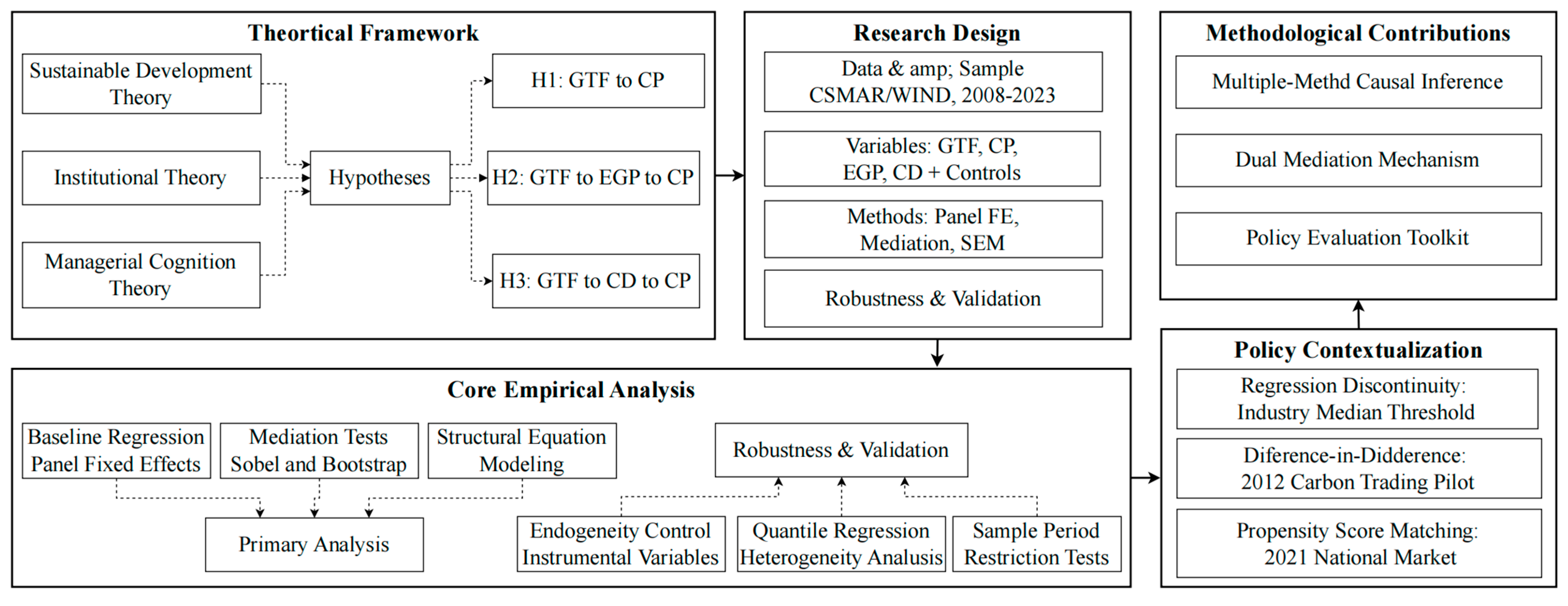
This study develops an integrated analytical framework that connects theory, research design, and empirical strategy (Figure 1). Grounded in sustainable development theory, institutional theory, and managerial cognition theory, the framework formulates hypotheses on how green transformation (GTF) affects carbon performance (CP), including the mediating roles of executive green perception (EGP) and carbon disclosure (CD).
Using a large panel of Chinese A-share firms from 2008 to 2023, the study operationalizes GTF, CP, EGP, CD, and control variables through textual analysis, disclosure assessment, and financial indicators. The empirical strategy employs panel fixed-effects models, mediation analysis, and structural equation modeling (SEM), complemented by robustness checks. The empirical work proceeds in three steps: (1) baseline regressions estimate the direct GTF → CP effect; (2) mediation models and SEM test the cognitive–disclosure mechanism; and (3) additional analyses—including instrumental variables, quantile regressions, and sample-restriction tests—validate the findings. To contextualize the results within China’s regulatory environment, the study incorporates quasi-natural experiments, such as regression discontinuity around industry thresholds, difference-in-differences for the 2012 carbon trading pilots, and propensity-score matching for the 2021 national carbon market.
Overall, the framework integrates theory and method to explain how corporate green transformation enhances carbon performance through internal cognition and external disclosure.

4. Findings

4.1. Descriptive Statistics

We conducted descriptive statistical analysis on the explained variable Carbon Performance (CP) and the explanatory variable Green Transformation (GPF), and the results are summarized in Table 2. The average value of Carbon Performance (CP) is 0.664, with a standard deviation of 0.822. This indicates significant variation in carbon performance across the sample firms. The minimum and maximum values for CP are 0.245 and 4.275, respectively, highlighting a wide range of carbon emissions relative to net sales within the sample. These variations suggest that some firms are more efficient in managing their carbon footprint, while others exhibit higher levels of carbon emissions. For Green Transformation (GPF), the mean value is 1.961, with a standard deviation of 0.846. The minimum and maximum values are 0 and 3.97, respectively. The relatively high standard deviation implies that there is moderate variability in the frequency of green transformation-related terms across the firms. The minimum value of 0 indicates that some firms do not report green transformation activities, while the maximum value of 3.97 suggests that certain firms report a high frequency of green transformation-related terms. These findings illustrate the diversity in the extent to which companies embrace green transformation practices. Overall, these descriptive statistics reveal significant heterogeneity in both CP and GPF, indicating varying levels of engagement with environmental sustainability among the sample firms. This variability lays the groundwork for further analysis of the factors influencing these practices across industries.

4.2. Correlation Analysis and Multicollinearity Test

Before performing the baseline regression analysis, a correlation analysis was conducted among the variables. The results showed moderate correlations, with all coefficients remaining below 0.5, indicating an absence of strong collinearity and supporting the model’s robustness (see Appendix A Table A3). Additionally, the variance inflation factor (VIF) values for all variables were found to be less than 5, further confirming that multicollinearity is not a serious concern. These results collectively support the reliability and validity of the model specification and subsequent regression estimation.

4.3. Baseline Results

Before conducting the regression analysis, the Hausman test results indicated the presence of fixed effects in the model. Table 3 presents the baseline regression results examining the relationship between green transformation (GTF) and carbon performance (CP). In Column (1), after controlling only for time and industry fixed effects and without adding any firm-level controls, the coefficient for GTF is 0.0117 and is significantly positive at the 1% level, suggesting that an increase in green transformation is associated with an improvement in carbon performance. In Column (2), after including control variables such as the debt-to-asset ratio (DAR), ROA, and other firm characteristics but without year and industry effects, the coefficient for GTF rises to 0.1407 and remains significant at the 1% level, indicating that the positive GTF–CP relationship is not driven by omitted observable firm traits. In Column (3), both year and industry fixed effects as well as all control variables are included; the coefficient for GTF decreases to 0.0092 but still shows a highly significant positive effect at the 1% level. Most control variables are also significant, implying that leverage, profitability, growth, size, innovation input and firm age systematically affect CP. Taken together, these results show that the positive impact of GTF on carbon performance is robust across different model specifications, providing strong evidence in support of Hypothesis H1.

4.4. Mechanism Analysis

The empirical results confirm a significant positive effect of green transformation (GTF) on carbon performance (CP). However, the underlying mechanisms remain underexplored. This study examines two key mediating pathways: Executive Green Perception (EGP) and the Carbon Disclosure Index (CD), which reflect managerial cognition and disclosure incentives during the green transformation process and the test method in this paper refers to [83,84]. Using the Sobel and Bootstrap tests while controlling for year and industry fixed effects, we assess the robustness of these mediating effects. Additionally, diagnostic tests were conducted to address potential endogeneity between GTF and the mediators. The results, shown in Table 4 indicate that both EGP and CD significantly mediate the relationship between GTF and CP. These findings provide empirical support for the proposed mechanism, demonstrating that GTF enhances carbon performance not only directly, but also indirectly by fostering executive awareness and improving carbon disclosure practices.

4.4.1. Executive Green Perception Mechanism

Executive Green Perception (EGP) is quantified using keyword frequency analysis of publicly disclosed corporate textual data, following [47]. A domain-specific lexicon is developed to capture executives’ environmental awareness, and the log-transformed total frequency constitutes the EGP index, consistent with recent methodological advances [57]. To examine its mediating role in the green transformation (GTF)–carbon performance (CP) nexus, a mediation framework is estimated. Results in Table 4 Column (1) indicate that GTF significantly increases EGP (coefficient = 0.5053, p < 0.01), while Column (2) show EGP is negatively associated with CP (coefficient = −0.008, p < 0.05). Given that CP is scored such that higher values denote superior performance, this negative association implies that the indirect effect transmitted via EGP diminishes CP. Both the Sobel (Z = −2.2695, p < 0.05) and bootstrap (p = 0.029) tests confirm the statistical significance of this adverse indirect pathway, indicating that EGP acts as a suppressing (countervailing) mediator in the GTF–CP relationship. This finding suggests that heightened executive green perception may initially reallocate managerial attention toward signaling or preparatory initiatives, or incur short-term transition costs, thereby partially offsetting the direct performance gains from green transformation.

4.4.2. Carbon Disclosure Mechanism

Carbon disclosure (CD) measures the degree of an enterprise’s environmental transparency and is reflected in the total score of the carbon disclosure assessment index. The calculation method of carbon performance (CP) is the ratio of total carbon emissions to net sales. This article aims to explore the mediating role of CD by referring to Siddique et al. [70]. Table 4 examines the mediating role of carbon disclosure in the relationship between green transformation and carbon performance. The results in Column (3) indicate that green transformation has a significantly positive effect on carbon disclosure (coefficient = 0.2036, p < 0.01), suggesting that firms with stronger green transformation strategies are more likely to disclose carbon-related information. Column (4) further demonstrates that carbon disclosure has a significantly positive effect on carbon performance (coefficient = 0.0081, p < 0.01), indicating that greater transparency leads to improved carbon outcomes. The indirect effect of green transformation on carbon performance through carbon disclosure is statistically significant at the 5% level (effect size = 0.025), confirming the mediating mechanism. Thus, Hypothesis H3 is supported: carbon disclosure plays a mediating role in transmitting the effect of green transformation to carbon performance.

4.4.3. Structural Equation Model (SEM) Analysis

Building on the previous mechanism analysis, this study extends the investigation by examining how executive green perception (EGP) and carbon disclosure (CD) jointly mediate the relationship between corporate green transformation (GTF) and carbon performance (CP), using the SEM evaluation method proposed by Bagozzi and Yi [73]. The structural equation model results (see Table 5) reveal a sequential mediation pathway in which GTF significantly strengthens EGP (coefficient = 0.6492, p < 0.01), suggesting that strategic green initiatives embed sustainability considerations into executive cognition. Heightened EGP, in turn, significantly promotes CD (coefficient = 0.4603, p < 0.01), indicating that environmentally attuned executives are more likely to institutionalize carbon transparency through formal disclosure practices. CD subsequently exerts a significant positive influence on CP (coefficient = 0.262, p < 0.01), implying that enhanced transparency incentivizes more rigorous carbon management and operational efficiency. This cognitive-to-behavioral-to-performance chain (GTF → EGP → CD → CP) illustrates how strategic transformation initiates internal shifts in managerial values, which are then operationalized into institutionalized disclosure behaviors and ultimately yield measurable environmental performance gains.

4.5. Regression of Quantiles

Based on Svensson et al. [85], the quantile regression results (Table 6) reveal that the positive effect of green transformation (GTF) on carbon performance (CP) is most pronounced among firms in the lower and middle segments of the CP distribution. At the 25th percentile, the coefficient is 0.0024 and statistically significant at the 1% level, indicating that for firms with relatively weak carbon performance, GTF initiatives are strongly linked to performance improvements. A similar magnitude is observed at the 50th percentile (coefficient = 0.0027, p < 0.01), while the effect becomes markedly larger at the 75th percentile (coefficient = 0.0133, p < 0.01), suggesting that as firms advance toward higher performance levels, the marginal benefits of GTF can intensify. In contrast, at the 90th percentile the coefficient increases sharply to 0.5286 but loses statistical significance, likely reflecting greater heterogeneity and diminishing marginal returns among top-performing firms. Overall, these results indicate that GTF exerts a robust positive influence across most of the performance distribution, though its incremental effect may weaken or become unstable at the upper tail.

4.6. Endogeneity and Robustness Issue

When examining the relationship between corporate green transformation (GTF) and carbon performance (CP) in the Chinese context, potential endogeneity remains a critical concern. While firms with more advanced green transformation are expected to exhibit superior carbon performance through proactive environmental strategies, reverse causality cannot be excluded firms with stronger CP may possess greater capacity or incentives to pursue green transformation. To address this, we implement a two-stage least squares (2SLS) estimation using lagged GTF (L.GTF) as an instrumental variable, following Xia and Chen [86]. At the same time, to ensure the robustness of the model, this study also conducted robustness tests.

4.6.1. The Instrumental Variables Approach

The relevance test confirms the strong explanatory power of L.GTF for current GTF (coefficient = 0.7024, p < 0.01; Table 7, column 1). Instrument validity is supported by a first-stage F-statistic of 31,032.36, far exceeding the Stock–Yogo 10% critical value of 16.38, and by the Anderson–Rubin and Stock–Wright LM S tests (p = 0.0015), which reject weak instrument concerns. The second-stage results (Table 7, column 2) indicate that, after correcting for endogeneity, GTF remains positively associated with CP (coefficient = 0.0125, p < 0.01), consistent with baseline estimates. These results suggest that the positive GTF–CP link is not driven by reverse causality or omitted variable bias.

4.6.2. Robustness Tests

To further verify the stability of the findings, two complementary approaches are applied. First, we conduct a sample period restriction by re-estimating the model using observations from 2016 to 2023 only, thereby reducing potential confounding from earlier policy interventions and macroeconomic shocks. Second, we perform a model specification test by replacing key control variables—substituting firm age with corporate size (CS) and return on assets with revenue growth rate (ROS)—to assess sensitivity to alternative control sets. In both cases, the GTF coefficients remain positive and statistically significant (Table 7, column 3–4), reinforcing the robustness of the results across different temporal windows and variable specifications.

4.7. Regression Discontinuity Analysis

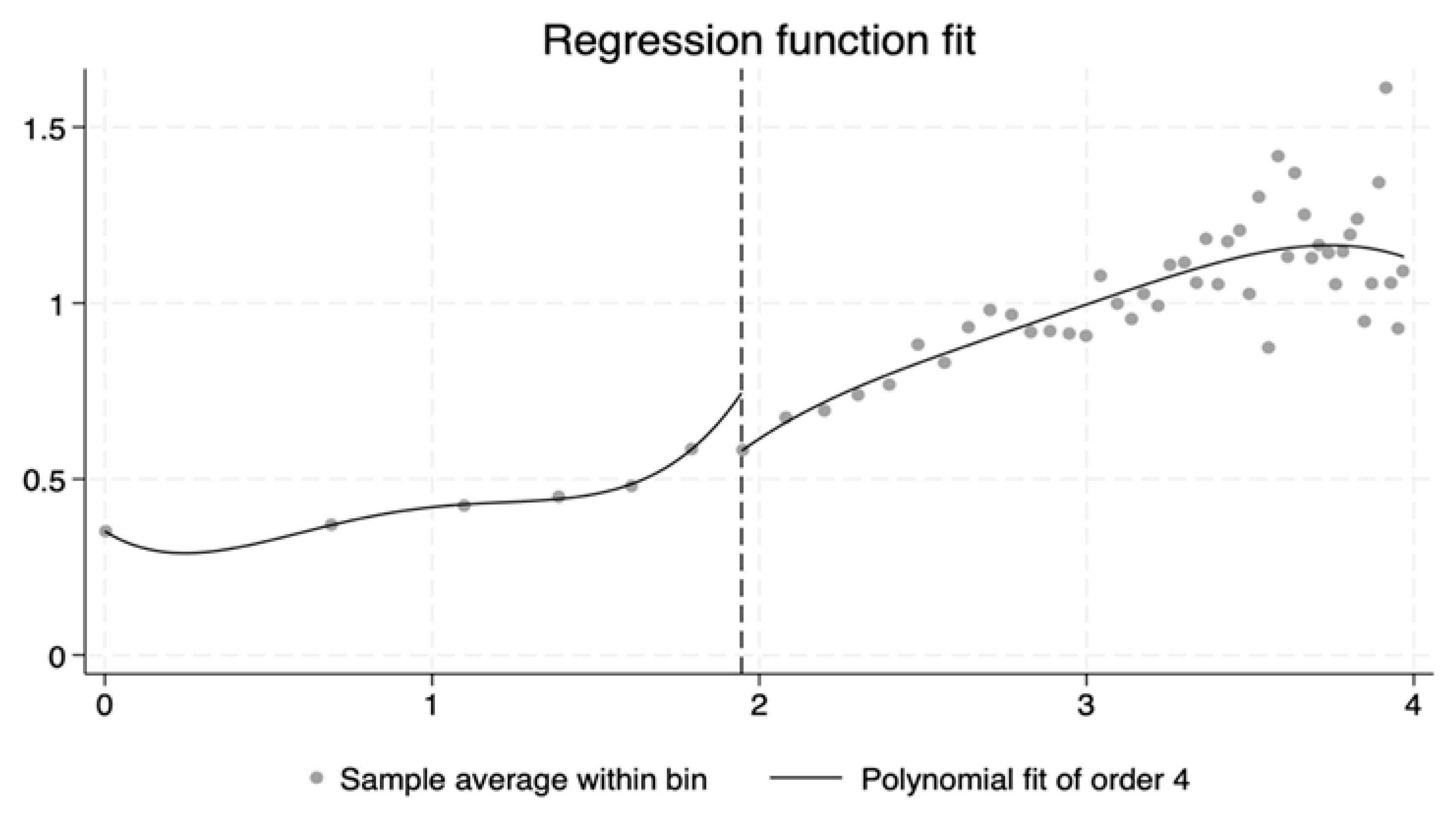
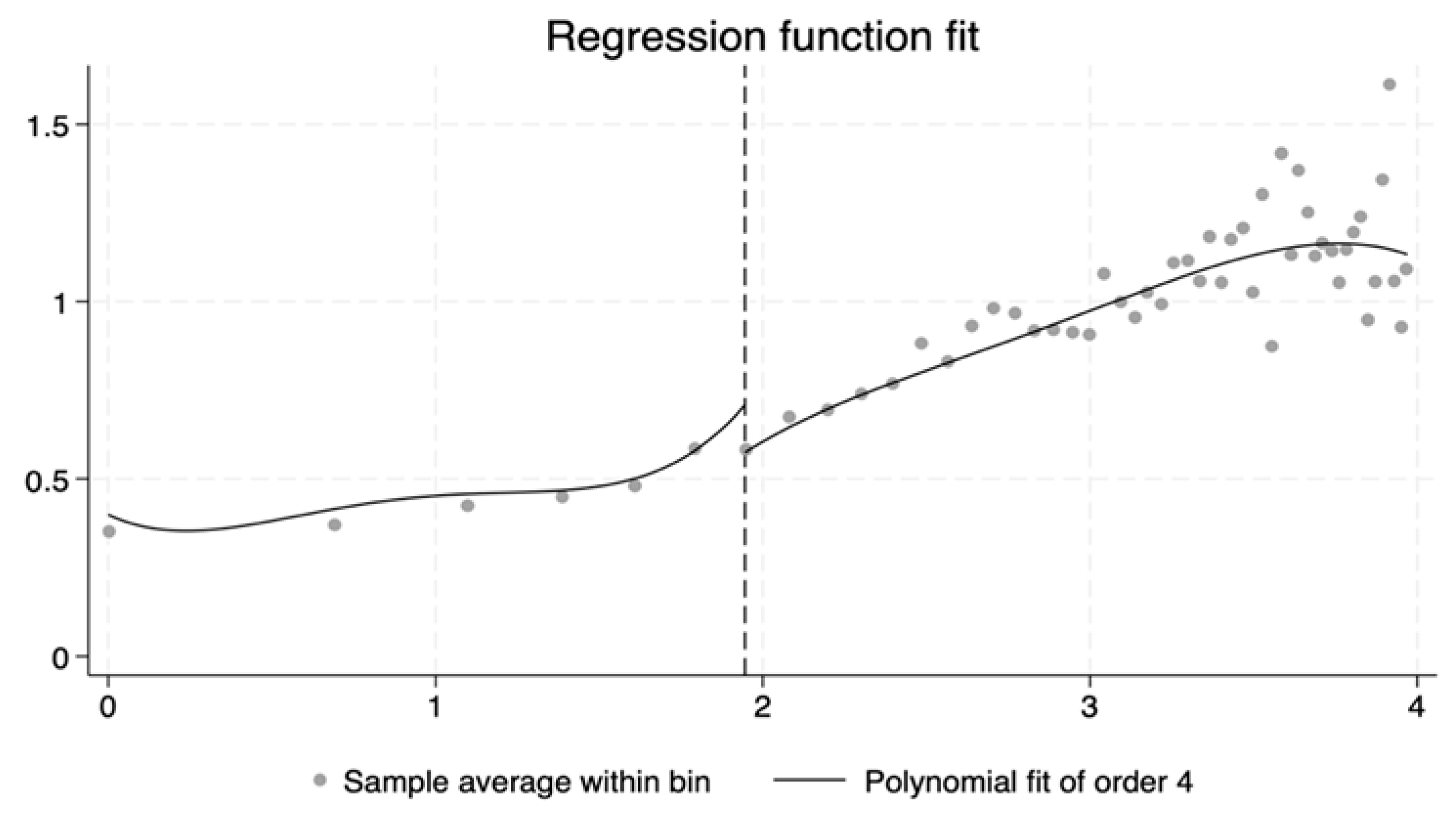
This study employs a sharp Regression Discontinuity (RD) design, following the methodology of Imbens and Kalyanaraman [87], centered on the industry median Green Transformation Index threshold (c = 1.94591) to investigate a significant causal discontinuity in the relationship between green transformation and carbon performance. Consistent with the approach of Lee and Lemieux [88], we report key RD inference statistics, including point estimates, robust z-values, p-values, and confidence intervals (CI), ensuring methodological transparency. Using local polynomial regression with a triangular kernel and mean squared error-optimized bandwidth (h = 0.517), as shown in Table 8 (Row 1), our analysis reveals a robust negative treatment effect: firms just exceeding the threshold experience a sharp 0.082-unit reduction in carbon performance (z = −3.003, p = 0.003; 95% CI [−0.192, −0.040]). This finding is visually corroborated in Figure 2 and contrasts with baseline OLS results, which suggest a strong positive relationship (coefficient = 0.5053, p < 0.01), as well as quantile regression gradients that show a monotonically increasing return from lower (25th percentile: coefficient = 0.0024, p < 0.01) to higher performers (75th percentile: coefficient = 0.0133, p < 0.01).
The observed local reversal suggests a behavioral shift induced by the threshold, with firms near the compliance cutoff prioritizing symbolic actions—such as short-term carbon credit purchases—over substantial green innovation. Importantly, this distortion is confined to firms near the compliance threshold, with 5357 left-bound and 8948 right-bound observations within the bandwidth (h). This helps explain the coexistence of the negative treatment effect with broader, system-wide positive trends. Furthermore, when controlling for firm characteristics (such as age and profitability), as shown in Table 8 (Row 2) and Figure 3, this result remains robust, reinforcing the validity of our findings. These results underscore the necessity of policy frameworks that go beyond static median benchmarks to ensure sustained quality in green transitions.

4.8. Difference-in-Differences Analysis of China’s Carbon Trading Pilot Program

To further strengthen the causal interpretation of the baseline results, we also employ a difference-in-differences (DID) approach. Specifically, we treat firms that are subject to the policy shock as the treatment group and firms that are not affected by the policy as the control group and compare the change in carbon performance before and after the implementation of the policy between these two groups. This DID design exploits exogenous policy variation over time and across firms, and the estimated treatment effect is consistent with the baseline fixed-effects results, supporting the robustness of the positive impact of green transformation on carbon performance.
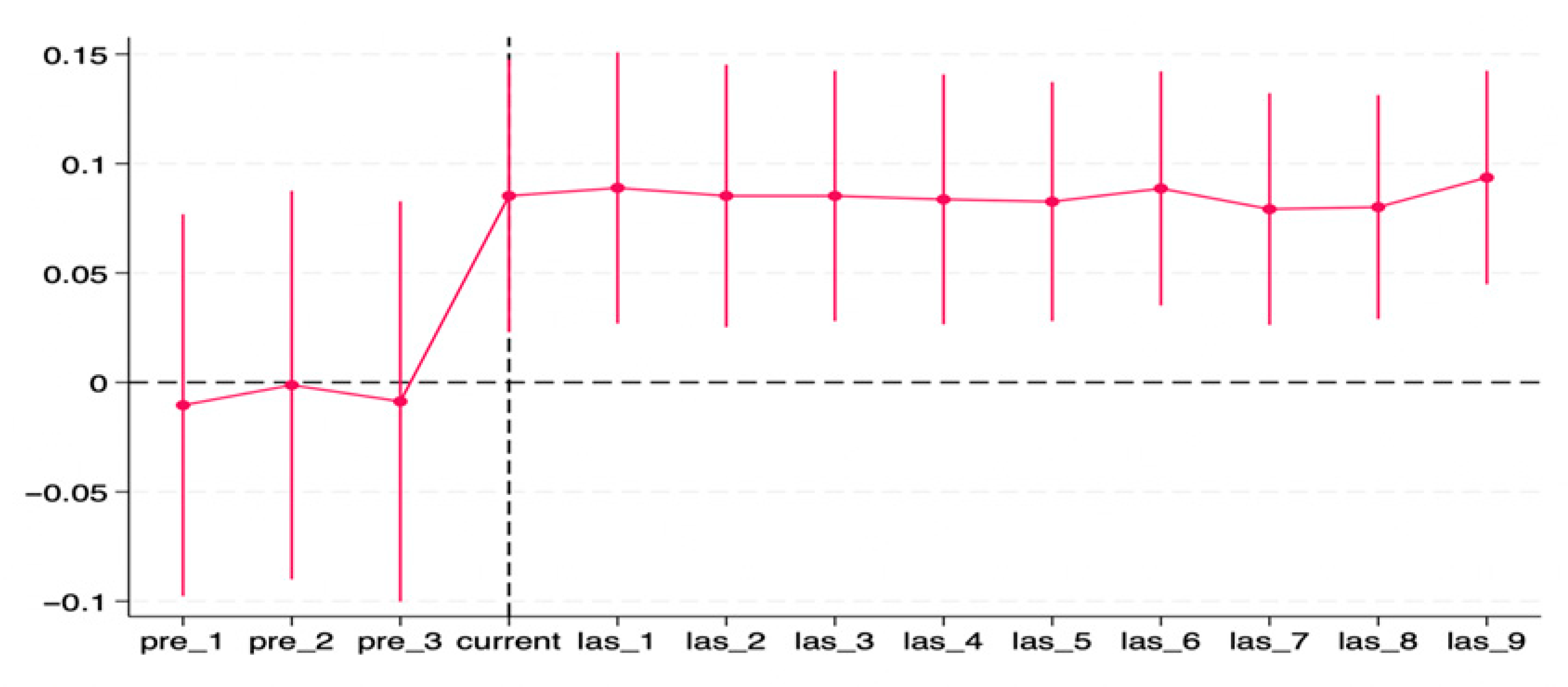
This paper refers to Zhou et al. [89] and takes the pilot policy of China’s carbon trading as a policy shock to conduct DID tests. Using firm-level data from 2008 to 2021, this study employs the 2012 carbon trading pilot policy as a quasi-natural experiment and applies a difference-in-differences approach to examine the impact of green transformation (GTF) on carbon performance (CP). Figure 4 show that, prior to the policy, the coefficients of the GTF–CP relationship fluctuated around zero and were statistically insignificant, satisfying the parallel trends assumption. Beginning in 2012 (Current), the coefficients increased significantly and remained stably positive in subsequent years, indicating that the pilot policy effectively reinforced the emission-reduction effects of green transformation. Mechanistically, the carbon trading system established binding emission quotas and market-based trading incentives, raising the opportunity cost of carbon emissions and motivating firms to accelerate investments in cleaner production, energy efficiency upgrades, and green technological innovation, thereby achieving sustained improvements in CP. The study period ends in 2021, when the national carbon market was launched and the pilot phase concluded.
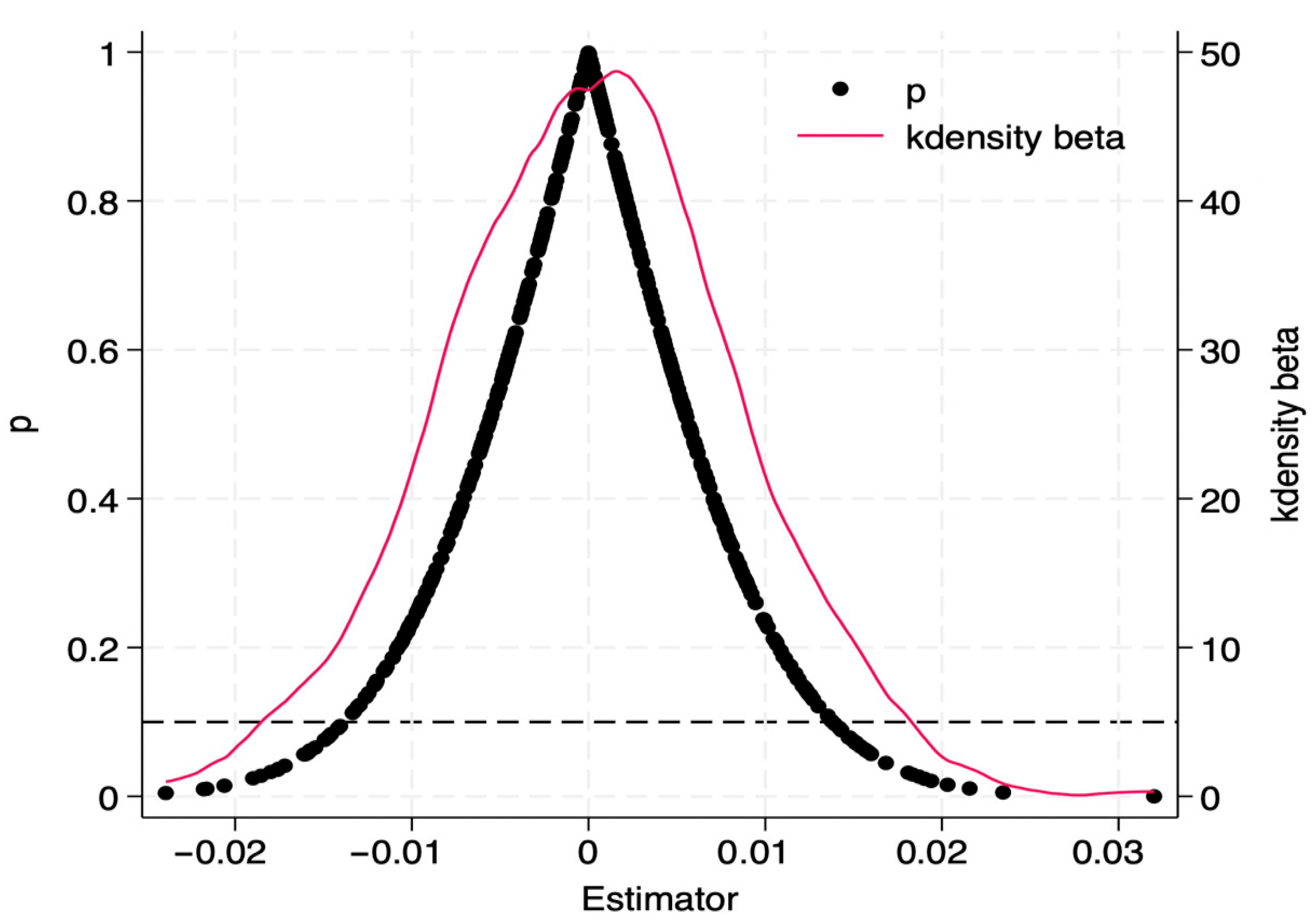
To further assess the robustness of the DID estimates, a placebo test was performed by randomly reallocating the treatment status among firms and re-estimating the DID model 500 times. Figure 5 presents the distribution of the placebo estimates along with their corresponding p-values. As shown, the vast majority of placebo coefficients are concentrated around zero, with p-values predominantly above the 0.1 significance threshold. The kernel density of the placebo estimates is sharply centered near zero and exhibits no resemblance to the magnitude or direction of the actual estimated effect in the benchmark model. This indicates that the significant positive effect of the carbon trading pilot policy on the relationship between GTF and CP in the main specification is unlikely to arise from random shocks or unobserved heterogeneity, thereby supporting a causal interpretation of the policy impact.

4.9. Propensity Score Matching Analysis After the Launch of China’s National Carbon Trading Market

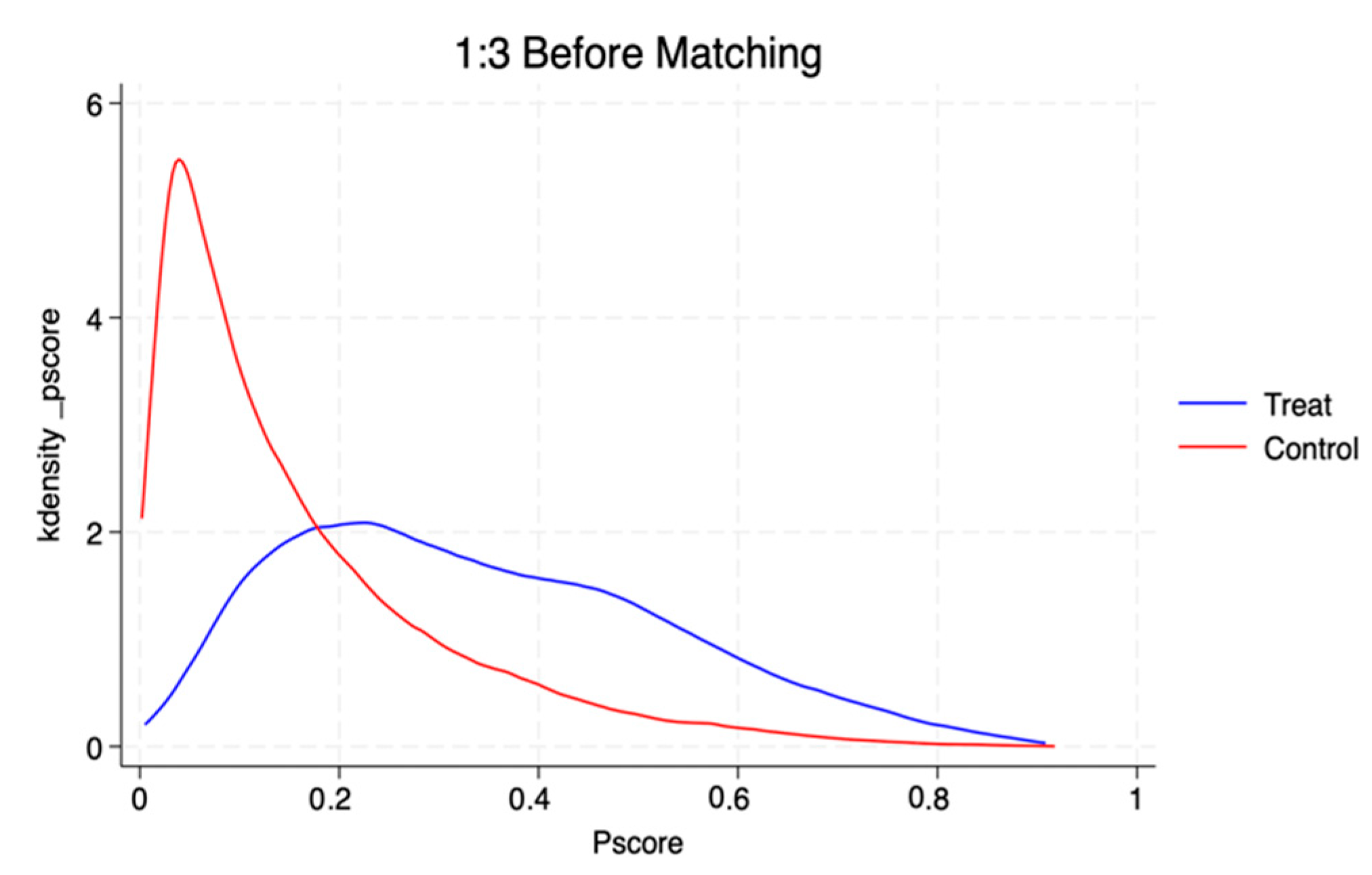
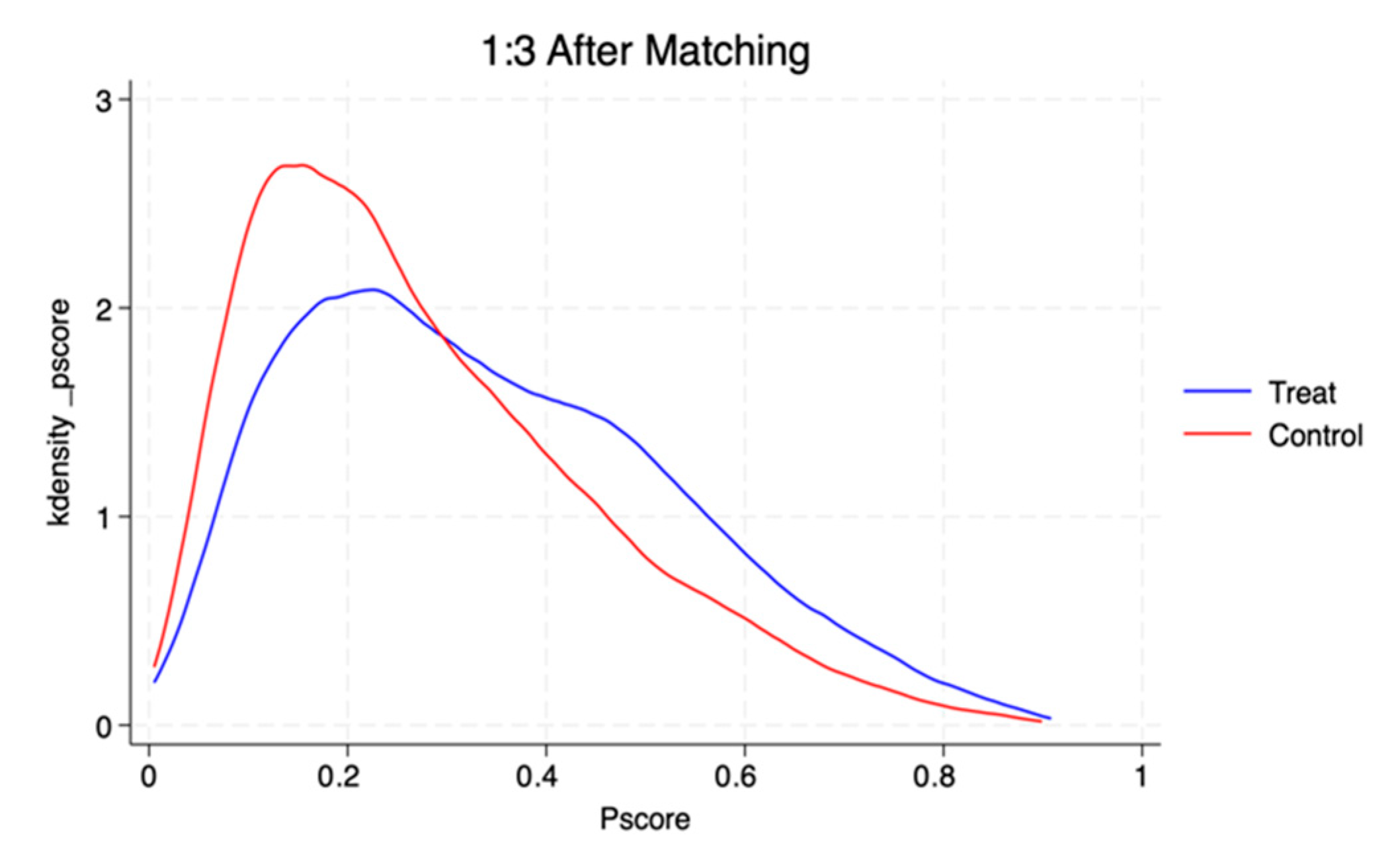
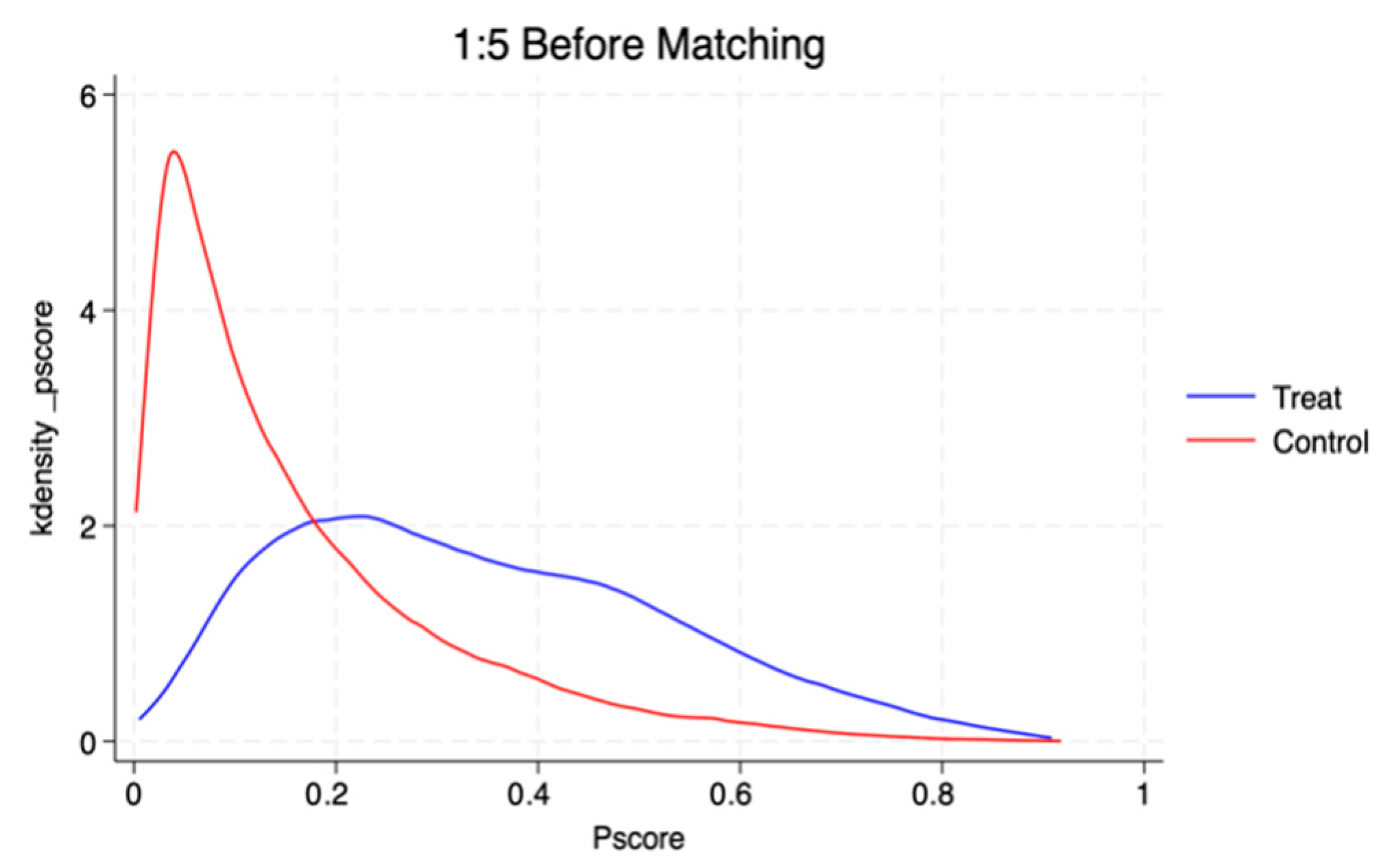
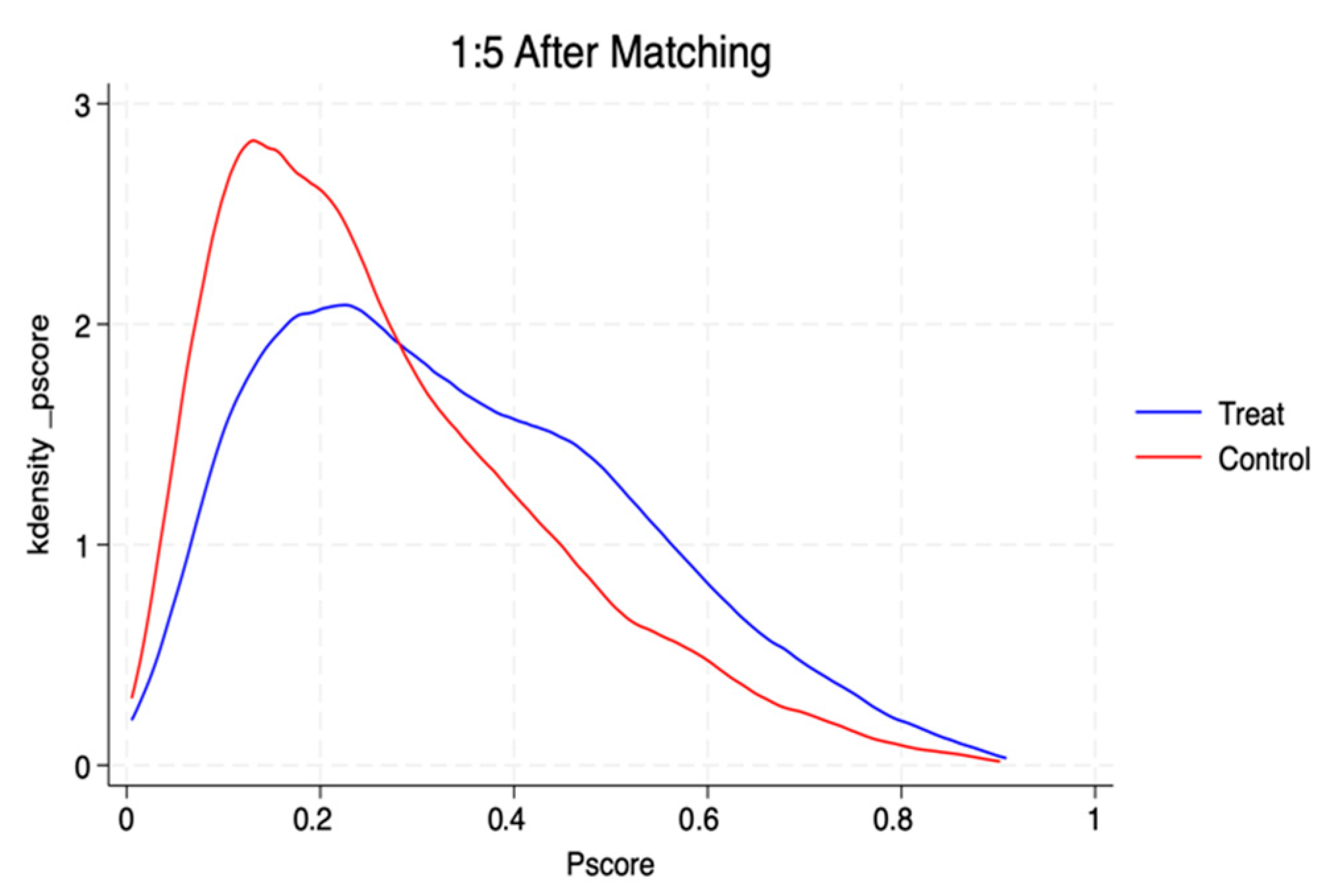
This paper refers to the method of Essama-Nssah [90] and uses the PSM test to evaluate the effect of the policy. First, based on the launch of China’s national carbon trading market in 2021, the policy dummy variable Influence is defined, taking the value 1 for years after 2021 and 0 otherwise. Green Transformation (GTF) is treated as the treatment variable, and matched samples are sought within the GTF = 0 group. Logistic regression is used to compute the propensity score for each sample, and both 1:3 and 1:5 nearest neighbor matching methods is applied for regression tests. Table 9 reports the mean treatment effects after matching, with t-values for the average treatment effect on the treated (ATT) of 156.09 and 156.13 for the 1:3 and 1:5 methods, respectively—both significant at the 1% level. The regression results in columns (1) and (2) of Table 10 indicate that, after different matching procedures, GTF continues to exert a significant positive effect on corporate carbon performance (CP) at the 5% level. These findings highlight that, even after mitigating potential endogeneity through PSM, green transformation remains significantly and positively linked to corporate carbon performance, with the comprehensive implementation of the national carbon trading policy playing a pivotal role in amplifying this effect. Figure 6, Figure 7, Figure 8 and Figure 9 illustrates the kernel density plots of propensity scores for the treatment and control groups before and after matching with different matching ratios. Before matching, there is a clear imbalance: the control group is concentrated at lower scores, while the treatment group shows a more even distribution. After matching, the distributions of the two groups become more similar, indicating an improvement in comparability. In both the 1:3 and 1:5 matching cases, the matching process effectively reduces the baseline differences between the treatment and control groups, thereby enhancing the validity of causal inference.
Based on Table 11, the Rosenbaum bounds sensitivity analysis for Propensity Score Matching (PSM) indicates that the estimated treatment effect remains robust to potential unobserved confounders within a reasonable range of hidden bias [91]. Even as the level of unobserved bias (gamma) increases from 1 to 2.5, the treatment effect estimates remain stable and statistically significant, with only marginal shifts in the Hodges–Lehmann point estimates. The consistently zero significance levels (sig+ and sig−) and narrow confidence intervals across all gamma levels further confirm the precision and robustness of the results. These findings provide strong evidence that the observed relationship holds even under potential unobserved bias, reinforcing the conclusion that, under the comprehensive implementation of the national carbon trading policy, the identified mechanism is both statistically reliable and substantively important for promoting green transformation and improving carbon performance.

5. Conclusions of the Study and Recommendations

5.1. Conclusions

Against the backdrop of China’s dual-carbon goals and the growing urgency of global climate governance, understanding how corporate green transformation (GTF) contributes to carbon performance (CP) has become a critical research question. This study addresses this gap by situating the GTF–CP relationship within China’s evolving carbon policy framework and by integrating institutional pressure with managerial cognition to reveal the cognitive–disclosure chain through which green transformation translates into measurable environmental outcomes. Methodologically, the study also advances the literature by combining multiple causal identification strategies—including fixed effects, RD, DID, 2SLS, and PSM—to enhance the credibility of the findings.
Based on panel data of Chinese A-share listed firms from 2008 to 2023, the empirical results consistently show that corporate green transformation significantly improves carbon performance. The effect is particularly pronounced among firms with lower baseline carbon performance, indicating heterogeneous marginal benefits. Quantile regression and robustness tests reinforce the consistency of these findings across different model specifications and firm characteristics. Regarding the underlying mechanisms, this study identifies two distinct mediating channels. Carbon disclosure (CD) acts as a positive mediator, strengthening the transmission of green transformation into carbon performance gains through enhanced transparency and regulatory accountability. By contrast, executive green perception (EGP) demonstrates a suppressing mediating effect in the short term, suggesting that cognitive shifts triggered by green transformation may initially divert managerial attention or resources, particularly in firms with weak environmental awareness. Structural equation modeling further validates a sequential cognitive–behavioral–performance chain (GTF → EGP → CD → CP), highlighting the interaction between managerial cognition and institutionalized disclosure practices.
To ensure the causal validity of the results, endogeneity concerns are addressed through the use of 2SLS estimation, confirming that the positive relationship between GTF and CP is not driven by reverse causality. Regression discontinuity analysis reveals a localized “compliance trap,” whereby firms just above the industry median threshold may resort to short-term carbon credit purchases rather than substantive transformation. In contrast, difference-in-differences analysis shows that China’s 2012 carbon trading pilot significantly strengthened the effect of GTF on CP, while PSM evidence demonstrates that the establishment of the national carbon market in 2021 further amplified this effect, especially for low-performing firms.
Overall, this study contributes to a deeper theoretical and empirical understanding of how green transformation enhances carbon performance. By embedding the analysis within a multi-stage carbon policy context and elaborating the pivotal cognition–disclosure mechanism, the findings underscore that institutional pressure [92] alone is insufficient; rather, its effectiveness depends on the alignment of managerial cognition and transparent disclosure systems. These insights have important implications for carbon governance, indicating that policy designs should simultaneously enhance institutional incentives, strengthen managerial environmental cognition, and improve disclosure frameworks to sustain substantive long-term reductions in carbon emissions.

5.2. Recommendations

First, targeted support should be directed toward firms with lower baseline carbon performance—aligned with the heterogeneous effects identified in our baseline and quantile regressions. The empirical results show that green transformation generates the strongest marginal improvements in firms starting from low levels of carbon performance. This suggests a structural inequality in firms’ transformation capacity. Policymakers should therefore adopt differentiated incentive schemes—including tax credits, transformation-linked subsidies, and preferential access to green credit—for low-performing firms. Such targeted tools would help amplify the policy leverage identified in our findings, narrow performance disparities, and accelerate system-wide carbon performance improvement.
Second, policy should simultaneously enhance managerial green cognition and carbon disclosure quality—reflecting the dual mediating roles identified through EGP and CD. Our mechanism analysis indicates that insufficient managerial green cognition can suppress the transformation effect, while high-quality carbon disclosure consistently amplifies it. Consequently, regulatory bodies should introduce executive training programs focused on environmental decision-making and long-term carbon risk management. At the same time, disclosure standards should be harmonized, with stricter verification, clearer reporting templates, and enforcement penalties for low-quality or misleading disclosures. Strengthening these two channels in parallel directly corresponds to the cognitive–disclosure chain observed in the empirical results and ensures that internal awareness and external transparency reinforce each other.
Third, policy frameworks should address short-term compliance behaviors such as the “compliance trap” revealed by RD analysis—while strengthening the broader effectiveness of carbon market mechanisms. The RD findings show that firms near the industry-median threshold may substitute substantive emissions reductions with short-term carbon credit purchases. To mitigate such distortions, regulators could adopt dynamic performance evaluations, introduce multi-year rolling assessment windows, and impose constraints on the share of credits allowed for compliance. These designs discourage opportunistic behaviors and reward substantive green transformation. Furthermore, the DID and PSM results demonstrate that both the 2012 carbon trading pilots and the 2021 national carbon market significantly magnify the positive effect of GTF on CP. Building on this evidence, policymakers should expand market coverage, refine allowance allocation methods, and enhance monitoring and enforcement systems, ensuring that the carbon market maintains long-term incentives for real emission reductions rather than short-term strategic adjustments.

5.3. Shortcomings and Future Prospects

This study focuses on Chinese A-share listed companies, which may limit the generalizability of the results to non-listed firms and SMEs with different governance structures and resources. The policy impacts identified are specific to China’s institutional setting and may not apply directly to other regulatory environments. Moreover, the analysis captures the mediating roles of executive green perception and carbon disclosure but lacks micro-level insights into intra-firm decision-making and behavioral dynamics.
Future research should broaden the sample to include diverse firm types and cross-country contexts to test the universality of the findings. In-depth qualitative or mixed-method studies could further reveal how managerial cognition evolves during green transformation and how disclosure practices are institutionalized. Examining industry- and region-specific variations in policy responses would also deepen understanding of corporate adaptation to carbon governance.


Author Contributions

Investigation, Z.T.; resources, T.X.; data curation, Z.T. and T.X.; writing—original draft, Z.T. and T.X.; writing—review and editing, T.X. and L.L.; visualization, L.L.; supervision, L.L. All authors have read and agreed to the published version of the manuscript.

Funding

This research was funded by Innovation and Entrepreneurship Training Program for College Students of Chengdu University of Technology grant number S202510616020.

Institutional Review Board Statement

Not applicable.

Informed Consent Statement

Not applicable.

Data Availability Statement

The raw data supporting the conclusions of this article will be made available by the authors on request.

Conflicts of Interest

The authors declare no conflicts of interest.

Appendix A

Table A1. A Carbon Disclosure Index Evaluation Table.
No.Indicator NameScoring Criteria
1Board SupervisionDiscloses the environmental philosophy, environmental policy, environmental management structure, circular economy development model, and green development situation. Assign 1 point if disclosed, otherwise 0.
2Management ResponsibilityNo disclosure of changes in management responsibilities related to environmental management earns 0 points; disclosure earns 1 point.
3Employee ParticipationDiscloses information on employee participation in carbon emission reduction, including related education and training. Assign 1 point if disclosed, otherwise 0.
4Risk Management SystemDiscloses information related to the identification, assessment, and response to environmental risks and opportunities. Assign 1 point if disclosed, otherwise 0.
5Risk Identification and AssessmentNo disclosure of climate-related risks affecting financial or business development earns 0 points; disclosure earns 1 point.
6Opportunity Identification and ManagementNo disclosure of climate-related opportunities affecting financial or business development earns 0 points; disclosure earns 1 point.
7Low-carbon Transition StrategyNo disclosure of low-carbon transition strategy earns 0 points; mention of low-carbon transition strategy earns 1 point.
8Carbon Reduction TargetsNo disclosure of carbon reduction targets earns 0 points; qualitative disclosure earns 2 points; quantitative disclosure earns 4 points.
9Other Climate Management TargetsNo disclosure of other climate-related targets earns 0 points; disclosure earns 2 points.
10Emission Reduction MeasuresNo disclosure of emission reduction actions earns 0 points; qualitative disclosure earns 2 points; quantitative disclosure earns 4 points.
11Business Transformation ProgressNo disclosure of transforming products and/or services into low-carbon products and services earns 0 points; qualitative disclosure earns 2 points; quantitative disclosure earns 4 points.
12Scope 1 Greenhouse Gas EmissionsNo disclosure of Scope 1 emissions earns 0 points; qualitative disclosure earns 2 points; quantitative disclosure earns 4 points.
13Scope 2 Greenhouse Gas EmissionsNo disclosure of Scope 2 emissions earns 0 points; qualitative disclosure earns 2 points; quantitative disclosure earns 4 points.
14Scope 3 Greenhouse Gas EmissionsNo disclosure of Scope 3 emissions earns 0 points; qualitative disclosure earns 2 points; quantitative disclosure earns 4 points.
15Carbon Emission IntensityNo disclosure of carbon emission intensity indicator earns 0 points; qualitative disclosure earns 2 points; quantitative disclosure earns 4 points.
16Emission Volume ChangeNo disclosure of total emissions (Scope 1 and Scope 2) change earns 0 points; qualitative disclosure earns 2 points; quantitative disclosure earns 4 points.
17Scope 1 Emission BreakdownDisclosure by greenhouse gas type within Scope 1 emissions earns 2 points; no disclosure earns 0 points.
18Scope 2 Emission BreakdownDisclosure by greenhouse gas type within Scope 2 emissions earns 2 points; no disclosure earns 0 points.
19Value Chain InteractionDiscloses climate-related interactions with relevant units in the value chain, earns 1 point; no disclosure earns 0 points.
20Upstream and Downstream Customer ManagementDiscloses management of climate-related risks in the supply chain, earns 1 point; no disclosure earns 0 points.
21Other Climate InformationDiscloses other climate-related information relevant to business, earns 1 point; no disclosure earns 0 points.
22VerifiabilityDiscloses carbon emissions data and has ISO14001 environmental management certification or other third-party verification for carbon disclosure, earns 1 point; otherwise earns 0 points.
Note: The sum of scores from items 5 to 26, with a maximum score of 50 points.
Table A2. Keywords of executive green perception measurement dimension.
Resource Environmental AwarenessResource Environmental KnowledgeSocial Responsibility AwarenessResource-Environmental SentimentResource-Saving Behaviors
Environmental Protection BehaviorsGreen Competitive Advantage PerceptionExternal Environmental pressuresEcological AwarenessEcological Behavior
Environmental knowledgeSustainabilityGreen MarketingGreen Product DesignEnvironmental Impact
Corporate Environmental BehaviorEnvironmental PracticeGovernment Environmental PolicyGreen Consumerism
Table A3. A Correlation Analysis.
VariablesCPGTFEGPCDDARROARGRSAIRSIIAGESizeROS
CP1.000
GTF0.273 ***1.000
EGP0.100 ***0.621 ***1.000
CD0.321 ***0.511 ***0.462 ***1.000
ROA−0.080 ***−0.028 ***−0.017 ***−0.023 ***−0.399 ***1.000
RGR−0.018 ***−0.078 ***−0.104 ***−0.094 ***0.115 ***−0.027 ***1.000
SA0.245 ***0.146 ***0.098 ***0.156 ***0.066 ***−0.083 ***0.035 ***1.000
IR−0.040 ***−0.143 ***−0.161 ***−0.141 ***0.290 ***−0.076 ***0.289 ***0.033 ***1.000
SII−0.052 ***0.044 ***0.074 ***0.130 ***0.196 ***0.112 ***0.028 ***−0.082 ***0.024 ***1.000
AGE0.090 ***0.082 ***0.112 ***0.164 ***0.398 ***−0.231 ***0.063 ***0.437 ***0.131 ***0.166 ***1.000
Size0.076 ***0.272 ***0.204 ***0.373 ***0.509 ***−0.019 ***0.047 ***0.043 ***0.096 ***0.435 ***0.441 ***1.000
ROS−0.020 ***−0.088 ***−0.169 ***−0.173 ***−0.421 ***0.427 ***0.062 ***−0.032 ***−0.056 ***−0.037 ***−0.202 ***−0.160 ***1.000
Note: *** p < 0.01.

References

  1. Cenci, S.; Burato, M.; Rei, M.; Zollo, M. The alignment of companies’ sustainability behavior and emissions with global climate targets. Nat. Commun. 2023, 14, 7831. [Google Scholar] [CrossRef]
  2. Colmer, J.; Martin, R.; Muûls, M.; Wagner, U.J. Does pricing carbon mitigate climate change? Firm-level evidence from the European Union Emissions Trading System. Rev. Econ. Stud. 2024, 92, 1625–1660. [Google Scholar] [CrossRef]
  3. Radulescu, M.; Hossain, M.R.; Alofaysan, H.; Si Mohammed, K. Do emission trading systems, green technology, and environmental governance matter for environmental quality? Evidence from the European Union. Int. J. Environ. Res. 2025, 19, 6. [Google Scholar] [CrossRef]
  4. Oh, N.; Miteva, D.A.; Lee, Y. Impact of Korea’s emissions trading scheme on publicly traded firms. PLoS ONE 2023, 18, e0285863. [Google Scholar] [CrossRef] [PubMed]
  5. Chen, S.; Fan, Q. Can market-based environmental regulation promote corporate intelligent transformation: Evidence from the carbon emission trading system. Financ. Res. Lett. 2025, 76, 106950. [Google Scholar] [CrossRef]
  6. Du, G.; Zhou, C.; Zhang, M. Does digital transformation promote local-neighborhood green technology innovation?–based on the panel data of Chinese a-share listed companies from 2011 to 2021. J. Clean. Prod. 2024, 466, 142809. [Google Scholar] [CrossRef]
  7. Guo, B.; Huang, X. Role of Digital Transformation on Carbon Performance: Evidence from Firm-Level Analysis in China. Sustainability 2023, 15, 13410. [Google Scholar] [CrossRef]
  8. He, L.Y.; Chen, K.X. Digital transformation and carbon performance: Evidence from firm-level data. Environ. Dev. Sustain. 2023, 27, 23639–23664. [Google Scholar] [CrossRef]
  9. Meng, C.; Lin, Y. The impact of supply chain digitization on the carbon emissions of listed companies—A quasi-natural experiment in China. Struct. Change Econ. Dyn. 2025, 73, 392–406. [Google Scholar] [CrossRef]
  10. Zhao, Z.; Zhao, Y.; Shi, X.; Zheng, L.; Fan, S.; Zuo, S. Green innovation and carbon emission performance: The role of digital economy. Energy Policy 2024, 195, 114344. [Google Scholar] [CrossRef]
  11. Shan, Z.; Han, X.; Huang, D.; Xu, G. Regional digital–green synergy transformation and enterprise new quality productive forces. Financ. Res. Lett. 2025, 79, 107349. [Google Scholar] [CrossRef]
  12. Tong, Z.; Li, B.; Yang, L. Digital transformation, carbon performance and financial performance: Empirical evidence from the Chinese stock market. Environ. Dev. Sustain. 2024, 27, 17129–17146. [Google Scholar] [CrossRef]
  13. Ma, Z.; Ding, C.; Wang, X.; Huang, Q. Carbon emission reduction development, digital economy, and green transformation of China’s manufacturing industry. Int. Rev. Financ. Anal. 2025, 102, 104149. [Google Scholar] [CrossRef]
  14. Tong, H.; Wang, Y.; Xu, J. Green transformation in China: Structures of endowment, investment, and employment. Struct. Change Econ. Dyn. 2020, 54, 173–185. [Google Scholar] [CrossRef]
  15. Li, S.; Bai, T. The impact of tax reform on corporate green transformation—Evidence based on the value-added tax retained rebate. Financ. Res. Lett. 2024, 60, 104881. [Google Scholar] [CrossRef]
  16. Yuan, B.; Cao, X. Do corporate social responsibility practices contribute to green innovation? The mediating role of green dynamic capability. Technol. Soc. 2022, 68, 101868. [Google Scholar] [CrossRef]
  17. Mai, Y.; Yu, K.; Zhang, X. Enhancing corporate carbon performance through green innovation and digital transformation: Evidence from China. Int. Rev. Econ. Financ. 2024, 96, 103630. [Google Scholar] [CrossRef]
  18. Wang, M.; Liu, C.; Tan, Z.; Ye, Z.; Lv, H. Synergistic pathways towards greening and digital transformations of Chinese primary energy producers: Reassessing the microeconomic effects of environmental regulation. Energy 2025, 325, 136044. [Google Scholar] [CrossRef]
  19. Zhang, J.; Wei, H.; Yuan, K.; Yang, X. New industrial policy and corporate digital transformation: Empowering or impairing? Emerging evidence from green credit policy. Energy Econ. 2024, 140, 107960. [Google Scholar] [CrossRef]
  20. Zhou, C.; Zhang, H.; Ying, J.; He, S.; Zhang, C.; Yan, J. Artificial intelligence and green transformation of manufacturing enterprises. Int. Rev. Financ. Anal. 2025, 104, 104330. [Google Scholar] [CrossRef]
  21. Wang, H.; Zhang, Z. Green Technology Innovation and Corporate Carbon Performance: Evidence from China. Sustainability 2025, 17, 5357. [Google Scholar] [CrossRef]
  22. Sun, C.; Xu, Z.; Zheng, H. Green transformation of the building industry and the government policy effects: Policy simulation based on the DSGE model. Energy 2023, 268, 126721. [Google Scholar] [CrossRef]
  23. Xu, L.; Du, X.; Tang, Q. Certainty in uncertainty: Assessing the impact of climate policy uncertainty on the green transformation of manufacturing firms in China. J. Clean. Prod. 2025, 522, 146280. [Google Scholar] [CrossRef]
  24. Zhang, W.; Sun, H.; Zhou, D. The energy saving and emission reduction effect of carbon trading pilot policy in China. Int. J. Environ. Res. Public Health 2022, 19, 9272. [Google Scholar] [CrossRef]
  25. Wan, D.; Zhang, L. Carbon emissions trading and corporate green transformation: Evidence from a quasi-natural experiment in China. J. Environ. Manag. 2025, 391, 126602. [Google Scholar] [CrossRef] [PubMed]
  26. Tu, Z.; Cao, Y.; Goh, M.; Wang, Y. Executive green cognition and corporate ESG performance. Financ. Res. Lett. 2024, 69, 106271. [Google Scholar] [CrossRef]
  27. Hao, X.; Miao, E.; Wen, S.; Wu, H.; Xue, Y. Executive Green Cognition on Corporate Greenwashing Behavior: Evidence From A-Share Listed Companies in China. Bus. Strategy Environ. 2025, 34, 2012–2034. [Google Scholar] [CrossRef]
  28. Wang, M.; Li, Y.; Li, J.; Wang, Z. Green process innovation, green product innovation and its economic performance improvement paths: A survey and structural model. J. Environ. Manag. 2021, 297, 113282. [Google Scholar] [CrossRef]
  29. Jiang, Z.; Lyu, P.; Ye, L.; Zhou, Y.W. Green innovation transformation, economic sustainability and energy consumption during China’s new normal stage. J. Clean. Prod. 2020, 273, 123044. [Google Scholar] [CrossRef]
  30. Fan, W.; Wu, X.; He, Q. Digitalization drives green transformation of supply chains: A two-stage evolutionary game analysis. Ann. Oper. Res. 2024, 355, 1483–1502. [Google Scholar] [CrossRef]
  31. Chen, Y.; Ma, X.; Ma, X.; Shen, M.; Chen, J. Does green transformation trigger green premiums? Evidence from Chinese listed manufacturing firms. J. Clean. Prod. 2023, 407, 136858. [Google Scholar] [CrossRef]
  32. Liu, Z.; Du, S.; Zhang, L.; Xie, J.; Wang, X. Does the coupling of digital and green technology innovation matter for carbon emissions? J. Environ. Manag. 2025, 373, 123824. [Google Scholar] [CrossRef]
  33. Chen, Z.; Zhang, X.; Chen, F. Do carbon emission trading schemes stimulate green innovation in enterprises? Evidence from China. Technol. Forecast. Soc. Change 2021, 168, 120744. [Google Scholar] [CrossRef]
  34. Liu, S.; Xiong, X.; Gao, Y. Market-based environmental regulations and green innovation: Evidence from the pilot carbon markets in China. Res. Int. Bus. Financ. 2025, 77, 102896. [Google Scholar] [CrossRef]
  35. Cheng, Z.; Wu, Y. Can the issuance of green bonds promote corporate green transformation? J. Clean. Prod. 2024, 443, 141071. [Google Scholar] [CrossRef]
  36. Lu, Y.; Gao, Y.; Zhang, Y.; Wang, J. Can the green finance policy force the green transformation of high-polluting enterprises? A quasi-natural experiment based on “Green Credit Guidelines”. Energy Econ. 2022, 114, 106265. [Google Scholar] [CrossRef]
  37. Abbott, W.F.; Monsen, R.J. On the Measurement of Corporate Social Responsibility: Self-Reported Disclosures as a Method of Measuring Corporate Social Involvement. Acad. Manag. J. 1979, 22, 501–515. [Google Scholar] [CrossRef]
  38. Brown, D.; McGranahan, G. The urban informal economy, local inclusion and achieving a global green transformation. Habitat Int. 2016, 53, 97–105. [Google Scholar] [CrossRef]
  39. Hou, J.; Teo, T.S.H.; Zhou, F.; Lim, M.K.; Chen, H. Does industrial green transformation successfully facilitate a decrease in carbon intensity in China? An environmental regulation perspective. J. Clean. Prod. 2018, 184, 1060–1071. [Google Scholar] [CrossRef]
  40. Lyu, Y.; Wu, Y.; Wu, G.; Wang, W.; Zhang, J. Digitalization and energy: How could digital economy eliminate energy poverty in China? Environ. Impact Assess. Rev. 2023, 103, 107243. [Google Scholar] [CrossRef]
  41. Liu, L.; Liu, L.; Liu, K.; Jiménez-Zarco, A.I. Climate policy and corporate green transformation: Empirical evidence from carbon emission trading. Res. Int. Bus. Financ. 2025, 74, 102675. [Google Scholar] [CrossRef]
  42. Gao, S.; Li, H. Digitalization and Carbon Performance: Structural Changes in Emerging Economies. J. Knowl. Econ. 2025, 16, 17728–17754. [Google Scholar] [CrossRef]
  43. Guo, B.; Hu, P.; Lin, J. The effect of digital infrastructure development on enterprise green transformation. Int. Rev. Financ. Anal. 2024, 92, 103085. [Google Scholar] [CrossRef]
  44. Singh, S.K.; Giudice, M.D.; Chierici, R.; Graziano, D. Green innovation and environmental performance: The role of green transformational leadership and green human resource management. Technol. Forecast. Soc. Change 2020, 150, 119762. [Google Scholar] [CrossRef]
  45. Zhao, C.; Kong, F. Executive green perceptions and enterprise performance from the perspective of geographical differences: Evidence from China’s four major urban agglomerations. GeoJournal 2025, 90, 199. [Google Scholar] [CrossRef]
  46. Yang, X.; Hunjra, A.I.; Grebinevych, O.; Roubaud, D.; Zhao, S. Roads to sustainable development: Pioneering industrial green transformation through digital economy policy. J. Environ. Manag. 2025, 387, 125721. [Google Scholar] [CrossRef]
  47. Li, Y.; Yue, Z.; Li, Y.; Yue, X.; Zhen, Z. The Relationship between Executives’ Green Perception and Firm Performance in Heavy-pollution Industries: A Moderated Mediating Effect Model. Sci. Technol. Prog. Policy 2023, 40, 113–123. [Google Scholar] [CrossRef]
  48. Kraus, S.; Rehman, S.U.; García, F.J.S. Corporate social responsibility and environmental performance: The mediating role of environmental strategy and green innovation. Technol. Forecast. Soc. Change 2020, 160, 120262. [Google Scholar] [CrossRef]
  49. Sun, J.; Zheng, L.; Zhan, M. New path to green transformation: Exploring the impact of corporate governance on environmental information disclosure quality of new energy companies. J. Environ. Manag. 2025, 373, 123789. [Google Scholar] [CrossRef]
  50. Liu, M.; Fang, X. How does green investor entry affect corporate carbon performance? Evidence from China. Renew. Energy 2025, 244, 122748. [Google Scholar] [CrossRef]
  51. Alzyod, M.H.; Ntim, C.G.; Malagila, J.K.; Al-Sayed, M.; Alhossini, M.A. Carbon Performance and Executive Compensation: The Moderating Role of Governance. Bus. Strategy Environ. 2025, 34, 8358–8389. [Google Scholar] [CrossRef]
  52. Tan, Y.; Lin, B.; Wang, L. Green finance and corporate environmental performance. Int. Rev. Econ. Financ. 2025, 98, 103929. [Google Scholar] [CrossRef]
  53. Liu, Y.S.; Zhou, X.; Yang, J.H.; Hoepner, A.G.F.; Kakabadse, N. Carbon emissions, carbon disclosure and organizational performance. Int. Rev. Financ. Anal. 2023, 90, 102846. [Google Scholar] [CrossRef]
  54. Wang, Q.J.; Wang, H.J.; Chang, C.P. Environmental performance, green finance and green innovation: What’s the long-run relationships among variables? Energy Econ. 2022, 110, 106004. [Google Scholar] [CrossRef]
  55. Zhong, S.; Peng, L.; Li, J.; Li, G.; Ma, C. Digital finance and the two-dimensional logic of industrial green transformation: Evidence from green transformation of efficiency and structure. J. Clean. Prod. 2023, 406, 137078. [Google Scholar] [CrossRef]
  56. Xu, H.; Fu, Y.; Li, Y.; Zhang, G.; Bi, S. Environmental information disclosure and green transformation: Evidence from Chinese manufacturing enterprises. Heliyon 2024, 10, e38402. [Google Scholar] [CrossRef]
  57. Zhou, B.; Zhang, L.; Yu, F. A study on the impact of corporate executives’ green perceptions on carbon disclosure. International Rev. Econ. Financ. 2025, 103, 104406. [Google Scholar] [CrossRef]
  58. Yang, M.; Ma, L.; Gu, Y.; Wu, W. The impacts of green bonds on the green innovation: Evidence from the corporate green transformation in China. Emerg. Mark. Rev. 2025, 65, 101252. [Google Scholar] [CrossRef]
  59. ISO 14001:2015; Environmental Management Systems—Requirements with Guidance for Use. International Organization for Standardization: Geneva, Switzerland, 2015.
  60. Zhang, Z.; Yu, Z.; Yao, C.; Zhang, Z. Environmental policy orientation and corporate green transformation: A study based on information disclosure perspective. Financ. Res. Lett. 2025, 83, 107723. [Google Scholar] [CrossRef]
  61. Zu, X.; Ni, G.; Hu, R. AI technology innovation, knowledge management and corporate environmental sustainability: Evidence from Chinese patent data. Technol. Soc. 2025, 83, 102984. [Google Scholar] [CrossRef]
  62. Lyon, T.; Montgomery, A. The Means and End of Greenwash. Organ. Environ. 2015, 28, 223–249. [Google Scholar] [CrossRef]
  63. Delmas, M.; Burbano, V. The Drivers of Greenwashing. Calif. Manag. Rev. 2011, 54, 64–87. [Google Scholar] [CrossRef]
  64. ISO 14031:2013; Environmental Management—Environmental Performance Evaluation—Guidelines. International Organization for Standardization: Geneva, Switzerland, 2013.
  65. Scipioni, A.; Mazzi, A.; Zuliani, F.; Mason, M. The ISO 14031 Standard to Guide the Urban Sustainability Measurement Process: An Italian Experience. J. Clean. Prod. 2008, 16, 1247–1257. [Google Scholar] [CrossRef]
  66. ISO 14067:2018; Greenhouse Gases—Carbon Footprint of Products—Requirements and Guidelines for Quantification. International Organization for Standardization: Geneva, Switzerland, 2018.
  67. Wu, P.; Xia, B.; Wang, X. The Contribution of ISO 14067 to the Evolution of Global Greenhouse Gas Standards—A Review. Renew. Sustain. Energy Rev. 2015, 47, 142–150. [Google Scholar] [CrossRef]
  68. ISO 14090:2019; Adaptation to Climate Change—Principles, Requirements and Guidelines. International Organization for Standardization: Geneva, Switzerland, 2019.
  69. Smith, P.; Francombe, J.; Lempert, R.J.; Gehrt, D. Consistency of UK Climate Risk Approaches with New ISO Guidelines. Clim. Risk Manag. 2022, 37, 100422. [Google Scholar] [CrossRef]
  70. Siddique, M.A.; Akhtaruzzaman, M.; Rashid, A.; Hammami, H. Carbon disclosure, carbon performance and financial performance: International evidence. Int. Rev. Financ. Anal. 2021, 75, 101734. [Google Scholar] [CrossRef]
  71. Sachs, J.D. The Age of Sustainable Development; Columbia University Press: New York, NY, USA, 2015. [Google Scholar]
  72. Gong, Q. Green transformation paths of resource-based cities in China from the configuration perspective. Reg. Sustain. 2024, 5, 100158. [Google Scholar] [CrossRef]
  73. Bagozzi, R.P.; Yi, Y. Specification, evaluation, and interpretation of structural equation models. J. Acad. Mark. Sci. 2012, 40, 8–34. [Google Scholar] [CrossRef]
  74. Chaobo, Z.; Qi, S. Can carbon emission trading policy break China’s urban carbon lock-in? J. Environ. Manag. 2024, 353, 120129. [Google Scholar] [CrossRef]
  75. Yu, X.; Shi, J.W.; Wan, K.; Chang, T. Carbon trading market policies and corporate environmental performance in China. J. Clean. Prod. 2022, 371, 133683. [Google Scholar] [CrossRef]
  76. Wang, X.; Huang, J.; Liu, H. Can China’s carbon trading policy help achieve Carbon Neutrality?—A study of policy effects from the Five-sphere Integrated Plan perspective. J. Environ. Manag. 2022, 305, 114357. [Google Scholar] [CrossRef]
  77. Simon, H.A. Administrative Behavior. In A Study of Decision-Making Processes in Administrative Organization; Macmillan: London, UK, 1947. [Google Scholar]
  78. Lin, R.; Cui, J. Manager’s green experience and corporate carbon emission performance—Evidence from Chinese heavily polluting companies. Environ. Dev. Sustain. 2024, 27, 26947–26972. [Google Scholar] [CrossRef]
  79. Loughran, T.; McDonald, B. When Is a Liability Not a Liability? Textual Analysis, Dictionaries, and 10-Ks. J. Financ. 2011, 66, 35–65. [Google Scholar] [CrossRef]
  80. Hart, S.L. A natural-resource-based view of the firm. Acad. Manag. Rev. 1995, 20, 986–1014. [Google Scholar] [CrossRef]
  81. Zhou, K.; Wang, R.; Tao, Y.; Zheng, Y. Corporate green transformation and stock price crash risk. J. Manag. Sci. 2022, 35, 56–69. (In Chinese) [Google Scholar]
  82. Yan, H.; Li, X.; Huang, Y.; Li, Y. The impact of the consistency of carbon performance and carbon information disclosure on enterprise value. Financ. Res. Lett. 2020, 37, 101680. [Google Scholar] [CrossRef]
  83. Efron, B. Bootstrap Methods: Another Look at the Jackknife. Ann. Stat. 1979, 7, 569–593. Available online: http://www.jstor.org/stable/2958830 (accessed on 23 June 2025). [CrossRef]
  84. Sobel, M.E. Asymptotic Confidence Intervals for Indirect Effects in Structural Equation Models. Sociol. Methodol. 1982, 13, 290. [Google Scholar] [CrossRef]
  85. Svensson, G.; Mysen, T.; Payan, J. Balancing the sequential logic of quality constructs in manufacturing-supplier relationships—Causes and outcomes. J. Bus. Res. 2010, 63, 1209–1214. [Google Scholar] [CrossRef]
  86. Xia, T.; Chen, X. Unlocking Sustainable Production Pathways: Digital Transformation Driving Green Dual Innovation in Chinese Enterprises. Clean. Environ. Syst. 2025, 19, 100301. [Google Scholar] [CrossRef]
  87. Imbens, G.; Kalyanaraman, K. Optimal Bandwidth Choice for the Regression Discontinuity Estimator. Rev. Econ. Stud. 2012, 79, 933–959. [Google Scholar] [CrossRef]
  88. Lee, D.; Lemieux, T. Regression Discontinuity Designs in Economics. J. Econ. Lit. 2010, 48, 281–355. Available online: https://www.jstor.org/stable/20778728 (accessed on 6 May 2025). [CrossRef]
  89. Zhou, B.; Zhang, C.; Song, H.; Wang, Q. How does emission trading reduce China’s carbon intensity? An exploration using a decomposition and difference-in-differences approach. Sci. Total Environ. 2019, 676, 514–523. [Google Scholar] [CrossRef] [PubMed]
  90. Essama-Nssah, B. Propensity Score Matching and Policy Impact Analysis: A Demonstration in EViews (Policy Research Working Paper No. 3877); The World Bank: Washington, DC, USA, 2006; Available online: http://documents.worldbank.org/curated/en/802731468135581892 (accessed on 26 June 2025).
  91. Rosenbaum, P.R. Covariance adjustment in randomized experiments and observational studies. Stat. Sci. 2002, 17, 286–327. [Google Scholar] [CrossRef]
  92. DiMaggio, P.J.; Powell, W.W. The Iron Cage Revisited: Institutional Isomorphism and Collective Rationality in Organizational Fields. Am. Sociol. Rev. 1983, 48, 147–160. [Google Scholar] [CrossRef]
Figure 1. Research Framework.
Sustainability 18 00022 g001
Figure 2. Regression discontinuity plot without control variables.
Sustainability 18 00022 g002
Figure 3. Regression discontinuity plot with control variables.
Sustainability 18 00022 g003
Figure 4. Parallel trend test results.
Sustainability 18 00022 g004
Figure 5. Placebo Test.
Sustainability 18 00022 g005
Figure 6. 1:3 Before Matching.
Sustainability 18 00022 g006
Figure 7. 1:3 After Matching.
Sustainability 18 00022 g007
Figure 8. 1:5 Before Matching.
Sustainability 18 00022 g008
Figure 9. 1:5 After Matching.
Sustainability 18 00022 g009
Table 1. Definition of variables.
Variable TypeVariable NameNotationMeasurement Method
Explained VariableCarbon PerformanceCPTotal carbon emissions (tons)/net sales (million)
Explanatory VariableGreen TransformationGPFln (The frequency of green transformation words is increased + 1)
Intermediary VariableCarbon Disclosure IndexCDln (Total score of the carbon disclosure evaluation indicators + 1) Referring to Yan et al. [82] (Appendix A Table A1).
Executive Green PerceptionEGPln (Total of keywords of the executive green perception measurement dimension + 1) (Appendix A Table A2) Referring to Li et al. [47]
Control variableCompany SizeCSln (Total for each item of the asset + 1)
Net Profit Margin on Total AssetsROANet profit/Average total assets
Revenue Growth RateRGR(Current Year Revenue−Previous Year Revenue)/Previous Year Revenue
SA IndexSASA = 0.043 × (ln size)2 − 0.04 *age− 0.737 × ln size
Debt to Asset RatioDARTotal Debt/Total Asset
Inventory RatioIRInventory/Total Asset
Net Profit Margin on SalesROSNet Profit/Total Sales Revenue
The Shareholding Ratio of Institutional InvestorsSIIShares held by Institutional Investors/Total number of shares of the Company
Age of Company ListedAGECurrent year—the year the company was listed
Table 2. Descriptive Statistics Results.
VariableObsMeanStd. Dev.MinMax
CP34,1390.6640.8220.2454.275
GTF34,1391.9610.84603.97
EGP34,1391.1180.88403.135
CD34,1392.2410.88103.912
DAR34,1390.4210.2050.050.904
ROA34,1390.0390.058−0.230.185
RGR34,1390.30.888−0.7366.905
SA34,1393.8240.2643.2114.492
IR34,1390.1470.13200.943
SII34,1390.4480.250.0040.913
AGE34,1392.0430.91803.367
Size34,13922.2611.32919.31326.452
ROS34,1390.2830.172−0.0090.825
Table 3. Baseline regression results.
Variable(1)(2)(3)
CPCPCP
GTF0.0117 ***0.1407 ***0.0092 ***
(0.0033)(0.0073)(0.0033)
DAR 0.00670.1597 ***
(0.0425)(0.0188)
ROA −0.7399 ***0.2896 ***
(0.0955)(0.042)
RGR −0.036 ***0.0119 ***
(0.0055)(0.0024)
SA 1.0447 ***−0.1207 ***
(0.0438)(0.0306)
IR −0.1964 ***−0.0749 **
(0.0684)(0.0307)
SII 0.2009 ***0.0514 ***
(0.0434)(0.1917)
AGE 0.3327 ***0.0176 ***
(0.0127)(0.0058)
Constant0.2282 *−4.3367 ***0.5527 ***
(0.126)(0.1516)(0.1649)
Year DummiesYesNoYes
Industry DummiesYesNoYes
Observations34,13934,13934,139
F-value2188.24 ***1313.48 ***2033.70 ***
R20.83040.2550.83
Note: *** p < 0.01, ** p < 0.05, * p < 0.1, and those in () are standard errors.
Table 4. Mediating mechanism results.
Variable(1)(2)(3)(4)
EGPCPCDCP
GTF0.5053 ***0.0132 ***0.2036 ***0.0075 **
(0.0054)(0.0038)(0.0058)(0.0034)
EGP −0.008 **
(0.0035)
CD 0.0081 **
(0.0033)
Sobel test (Z-val)−2.2695 **2.4325 **
Mechanism Effectiveness—Negative TransmissionMechanism Effectiveness—Positive Transmission
Bootstrap test (ind_eff-P-val)0.0290.025
The Indirect Effect HoldsThe Indirect Effect Holds
ControlYesYesYesYes
Constant−1.5373 ***0.5403 ***1.5261 ***0.5404 ***
(0.2666)(0.1649)(3.3321)(0.1649)
Time DummiesYes
Industry DummiesYes
Observations34,13934,13934,13934,139
F-value170.93 ***2012.16 ***219.25 ***2012.23 ***
R20.39980.83020.34380.8298
Note: *** p < 0.01, ** p < 0.05, and those in () are standard errors.
Table 5. Structural Equation Model results.
Variable(1)(2)(3)
EGPCDCP
CD 0.262 ***
(0.0059)
EGP 0.4603 ***−0.1661 ***
(0.0048)(0.0061)
GTF0.6492 ***0.5323 ***0.2337 ***
(0.0044)(0.0049)(0.0066)
Observations34,13934,13934,139
Note: *** p < 0.01, and those in () are standard errors.
Table 6. Quantile regression results.
Variable25% Percentile50% Percentile75% Percentile90% Percentile
CPCPCPCP
GTF0.0024 ***0.0027 ***0.0133 ***0.5286
(0.0009)(0.001)(0.0035)(2.4547)
ControlYesYesYesYes
Time DummiesYes
Industry DummiesYes
Observations34,13934,13934,13934,139
Group72727272
Note: *** p < 0.01, and those in () are standard errors.
Table 7. Endogeneity and Robustness Result.
Variable(1)(2)(3)(4)
GTFCPCPCP
GTF 0.0125 ***0.0209 ***0.0089 ***
(0.0039)(0.0062)(0.0034)
L.GTF0.7024 ***
(0.0049)
CS 0.0156 ***
(0.0047)
ROS 0.0125 ***
(0.0024)
ControlYesYesYesYes
Constant0.7566 ***0.3198 ***0.37590.162
(0.2676)(0.0418)(0.3795)(0.1904)
Time DummiesYes
Industry DummiesYes
Observations30,25030,25022,57334,139
F-value 542.86 ***1742.03 ***2030.41 ***
R2 0.83360.79420.8295
Note: *** p < 0.01, and those in () are standard errors.
Table 8. Result of RD Effect.
Point EstimateRobust Inference z-Statp-Value[95% Conf. Interval]
1RD Effect−0.0824−3.00310.003−0.191721
−0.040297
2RD Effect−0.057−2.55280.011−0.153156
−0.020119
Table 9. Mean treatment effects of propensity matching scores.
VariantSample MatchingProcess GroupControl GroupMean DifferenceStandard ErrorT-Value
1:3Before matching2.09690.31331.78360.0057314.64 ***
After matching (ATT)2.09710.3131.78410.0114156.09 ***
1:5Before matching2.09690.31331.78360.0057314.64 ***
After matching (ATT)2.09710.31281.78420.0114156.13 ***
Note: *** p < 0.01.
Table 10. PSM regression result.
Variable(1)(2)
1:31:5
GTF0.0197 **0.0188 **
(0.01)(0.0084)
ControlYesYes
Constant0.28130.2722
(0.5331)(0.45)
Year DummiesYesYes
Industry DummiesYesYes
Observations16,57519,880
R20.79330.8042
Note: ** p < 0.05, and those in () are standard errors.
Table 11. Rosenbaum bounds sensitivity analysis.
GammaSig+Sig−t-hat+t-hat−CI+CI−
1000.1729610.1729610.1709870.174952
1.5000.1423260.2073510.1405750.209572
2000.1232640.2333570.1216560.235749
2.5000.1101330.2539090.108620.256431
Disclaimer/Publisher’s Note: The statements, opinions and data contained in all publications are solely those of the individual author(s) and contributor(s) and not of MDPI and/or the editor(s). MDPI and/or the editor(s) disclaim responsibility for any injury to people or property resulting from any ideas, methods, instructions or products referred to in the content.