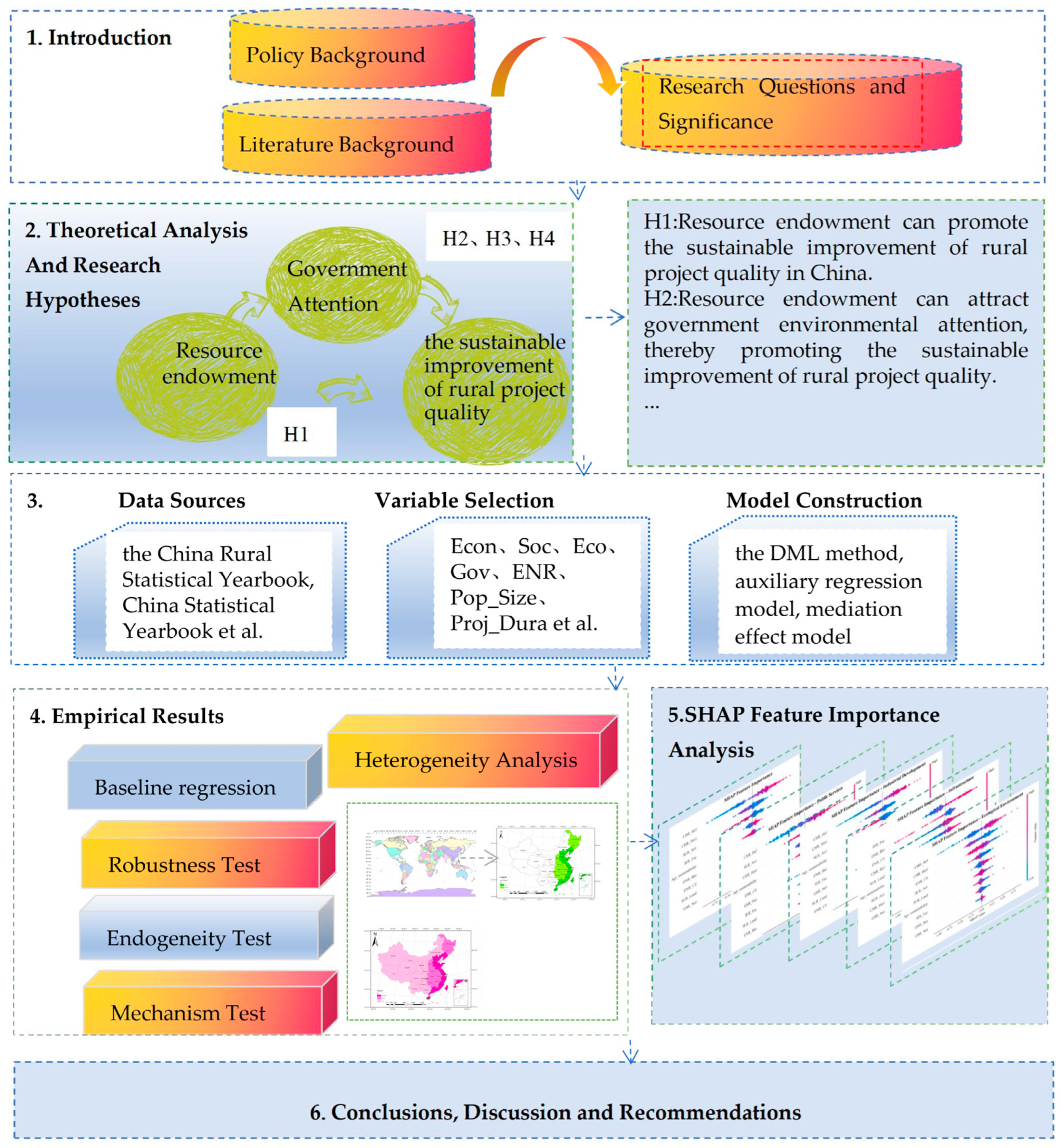
The Impact of Resource Endowment on the Sustainable Improvement of Rural Project Quality: Causal Inference Based on Dual Machine Learning


Abstract
1. Introduction
2. Theoretical Analysis and Research Hypotheses
2.1. The Promoting Role of Resource Endowment
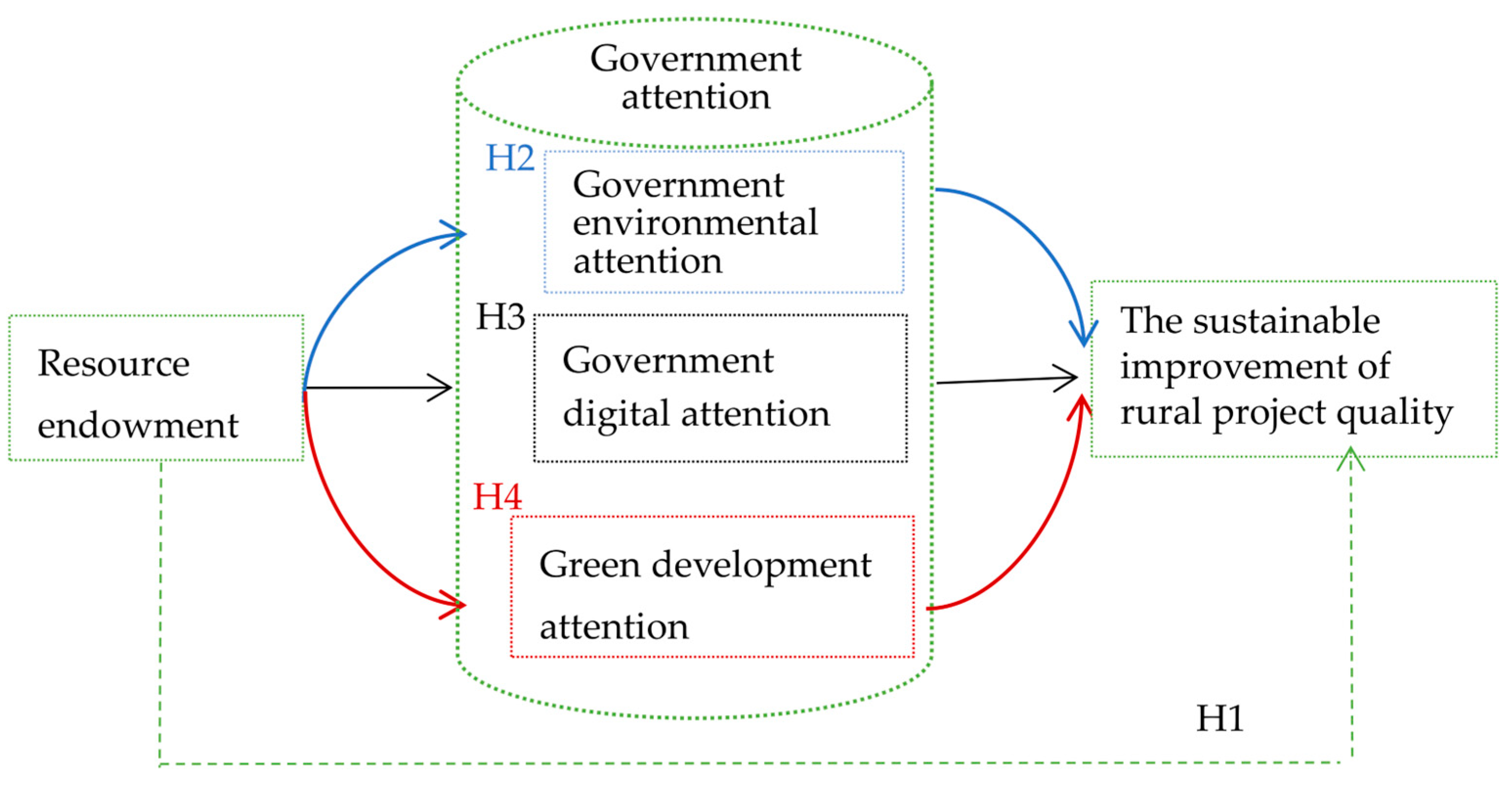
2.2. Resource Endowment, Government Attention, and the Sustainable Improvement of Rural Project Quality
3. Data Sources, Variable Selection, and Model Construction
3.1. Data Sources
3.2. Variable Selection
3.3. Model Construction
4. Empirical Results
4.1. Baseline Regression
4.2. Robustness Test
4.2.1. Adjusting the Research Sample
4.2.2. Reset the Double Machine Learning Model
4.2.3. Eliminating the Impact of Outliers
4.3. Endogeneity Test
4.4. Heterogeneity Analysis
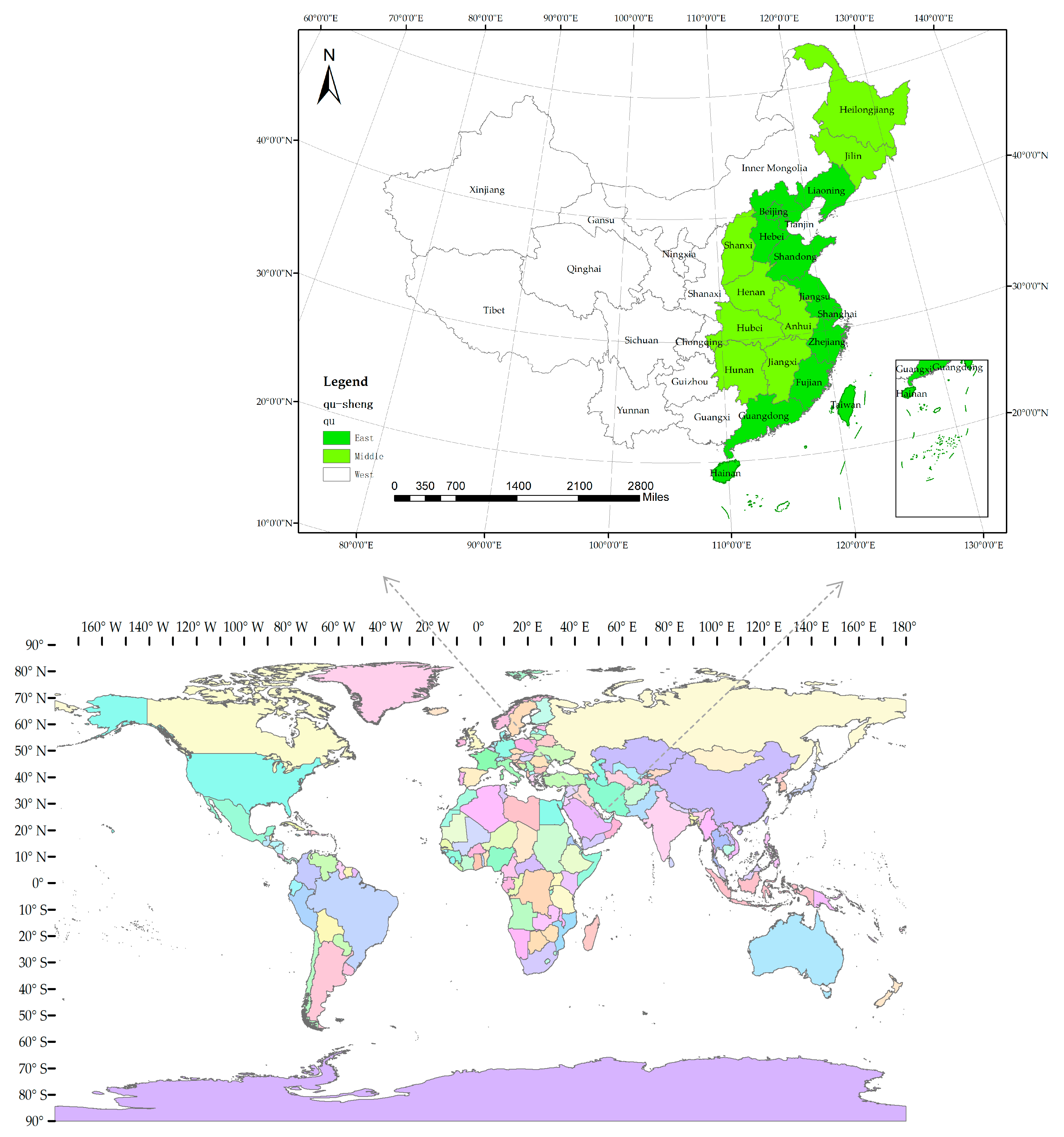
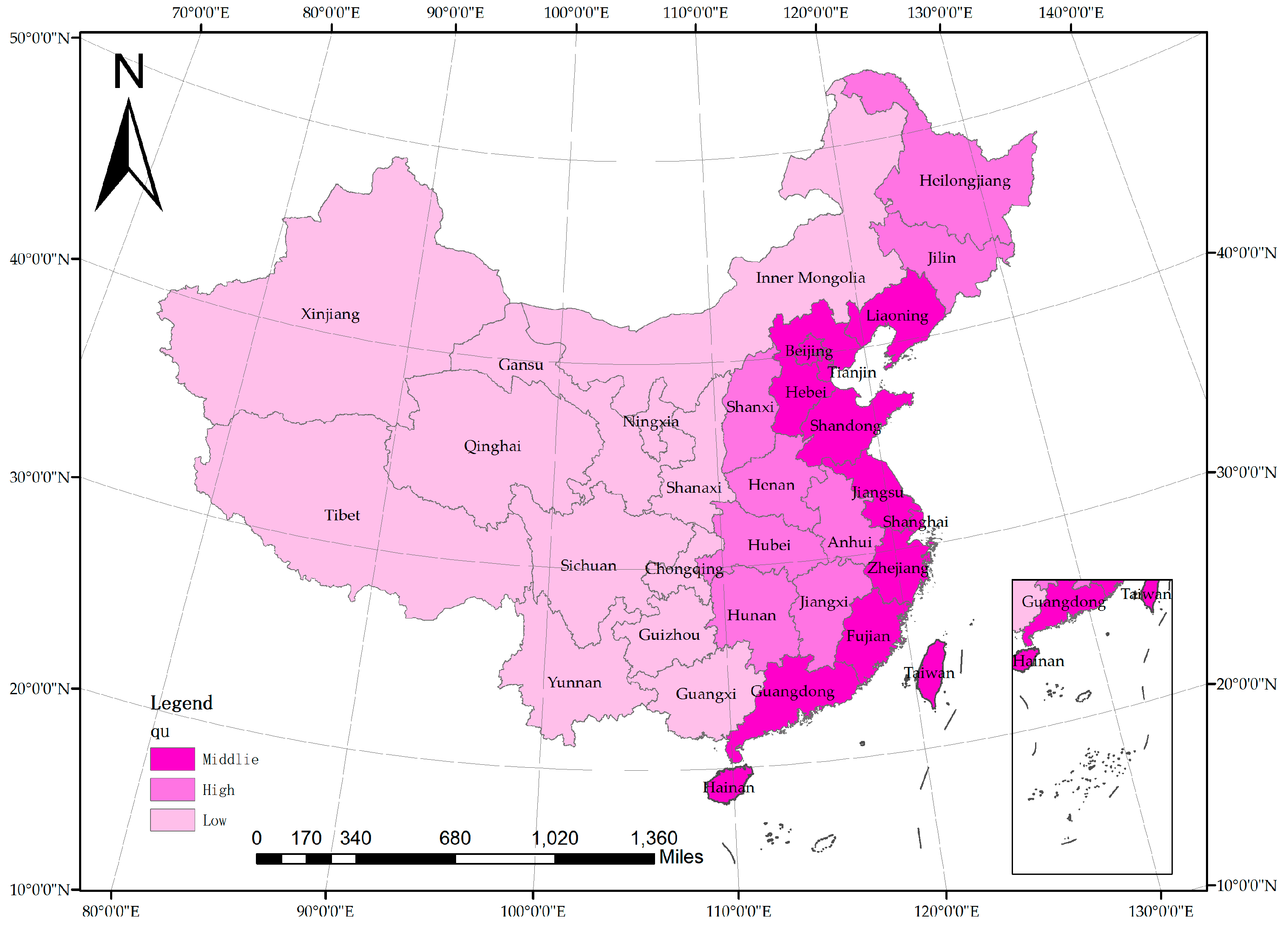
4.4.1. Geographic Location Heterogeneity
4.4.2. Project Types Heterogeneity
4.5. Mediating Effects Test
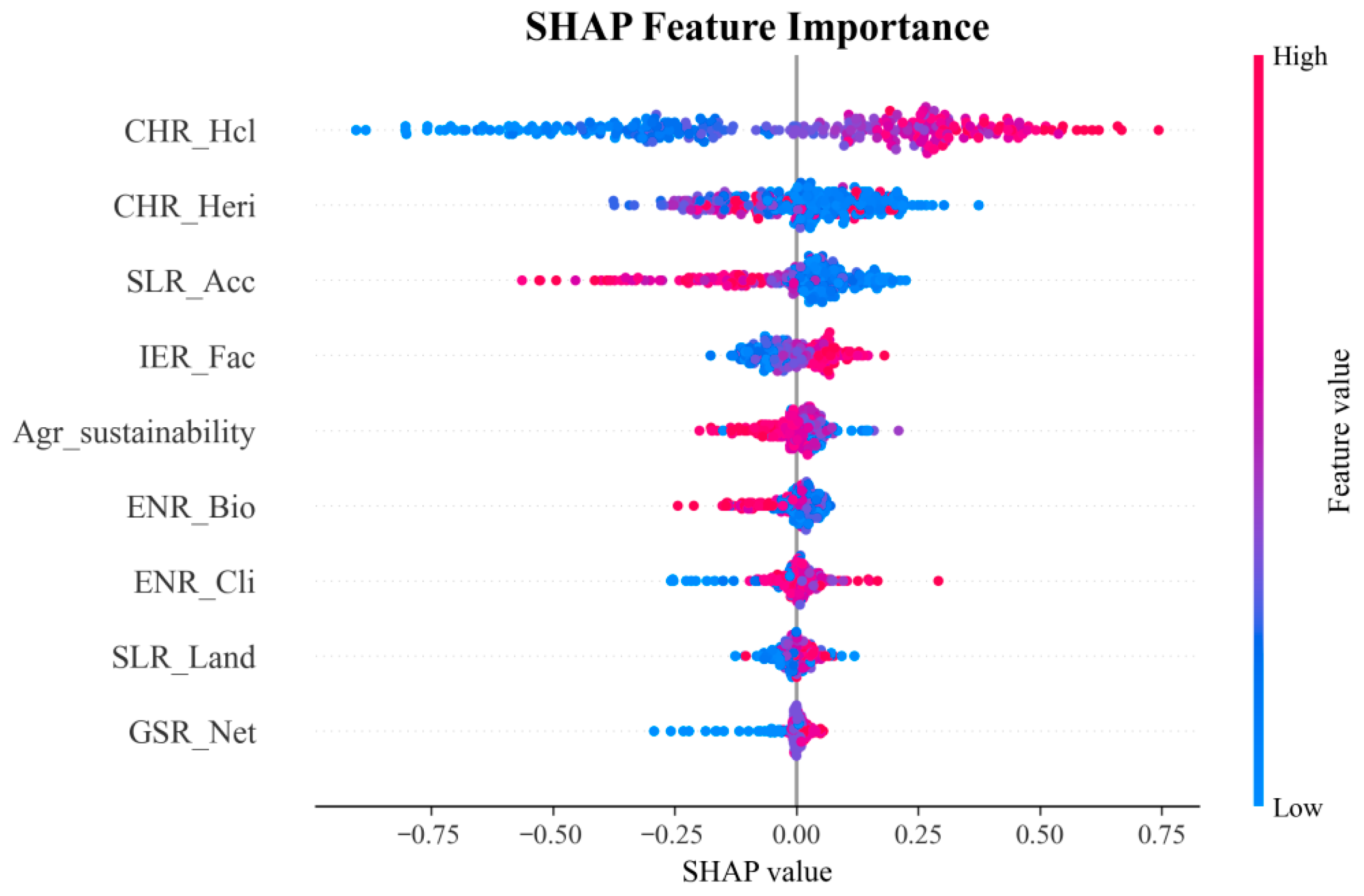
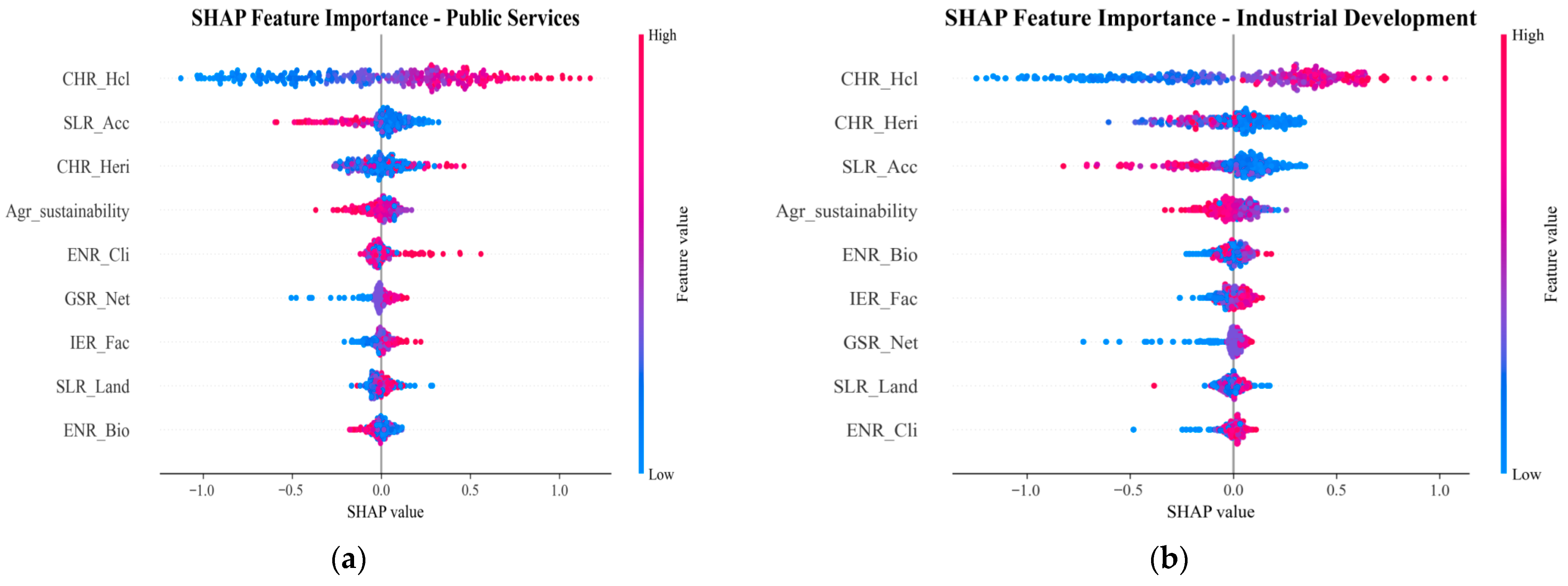
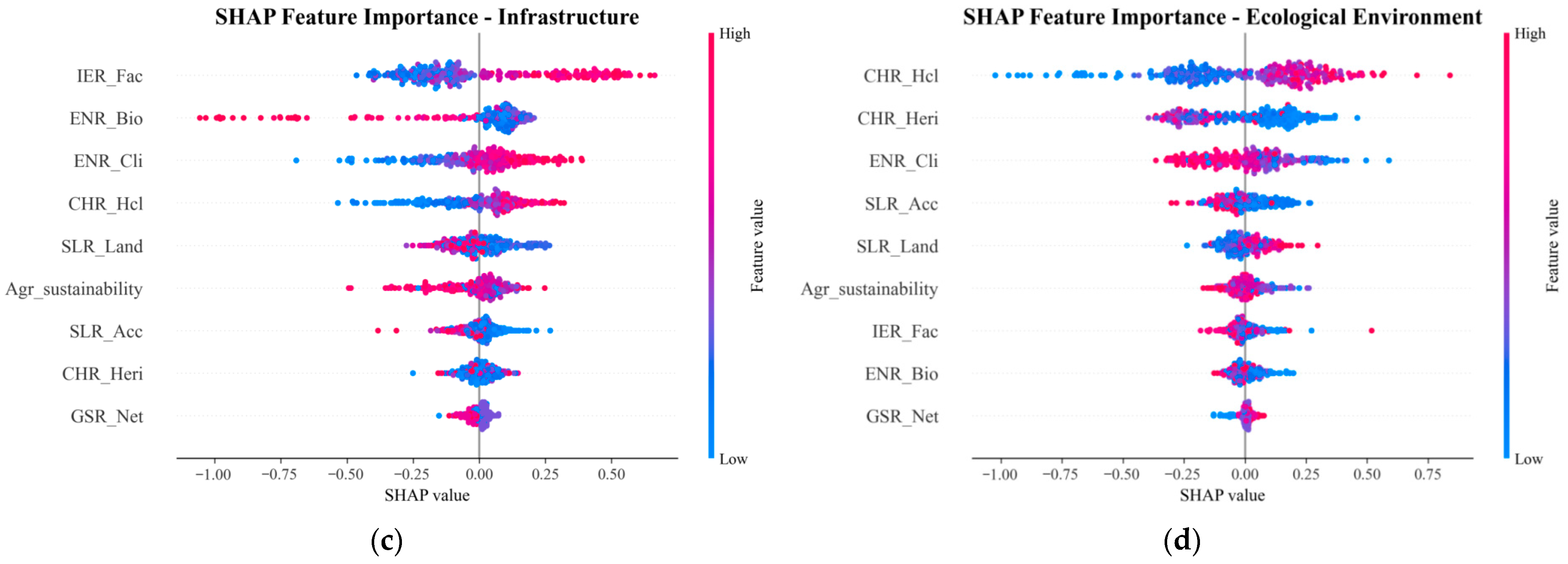
5. SHAP Feature Importance Analysis
6. Conclusions, Discussion and Recommendations
- Establish a project configuration paradigm driven by resource endowment to optimize the utility of rural construction elements. There is a significant causal relationship between resource endowment and the quality of village projects. Future rural project development should transition from traditional methods to a new endowment-focused paradigm. For example, developing a digital resource map for projects and using artificial intelligence to optimize resource allocation and accurately identify clusters, ensuring full use of local assets. Simultaneously, create a matrix aligning resource endowment with project types to ensure optimal matching and prevent resource mismatches that may affect project quality. This thereby promotes resource endowment to become an important cornerstone and key leverage for the sustainable improvement of rural project quality.
- Enhance the government’s attention allocation mechanism and strengthen its governance capacity. Intermediary verification confirms that government attention is the primary pathway through which resource endowment achieves project substantial empowerment. In project construction, scientific resource allocation and precise deployment are achieved through lifecycle performance management and linking investment intensity to official evaluations, and other policy design. This approach transforms resource endowment into project effectiveness by enhancing government governance transformation process and improving service delivery efficiency through human capital development; For long-term ecological projects, it is essential to innovate the “resource-to-value” realization mechanism and establish a system for accounting and compensating the value of ecological products; For highly standardized infrastructure projects, the “resource-to-technology” adaptation model should be optimized by prioritizing the resolution of technical bottlenecks within existing resource constraints and efficiency, ultimately creating a positive feedback loop of “resource endowment-government governance-project quality improvement.”
- Implement a differentiated quality improvement strategy, optimize the effectiveness of spatial governance, and establish dual-dimensional measures of “zoning” and “classification”. The eastern region, with its strong industrial base, should prioritize industrial development. The western region, rich in ecological resources, requires targeted support for environmental projects. The central regions can adopt a hybrid model to balance public service equalization and infrastructure modernization, achieving Pareto-optimal resource allocation. In terms of the “classification” dimension, for industrial development projects that are highly dependent on resources, the key point is on building a “resource-to-industry chain” system to facilitate the transformation of unique resources into industrial clusters; for governance-dependent public service projects, efforts should concentrate on enhancing the “resource-to-capabilities”.
Author Contributions
Funding
Institutional Review Board Statement
Informed Consent Statement
Data Availability Statement
Conflicts of Interest
Abbreviations
| DML | Dual Machine Learning |
| CNRDS | China National Research Data Service Platform |
Appendix A

| Primary Variables | Secondary Variables | Tertiary Variables |
|---|---|---|
| the sustainable improvement of rural project quality (HIQ_pro) | Sustainable development of project economic quality (Econ) | Total revenue (Econ_VA) |
| The growth rate of villagers’ income (Econ_Inc) | ||
| The growth rate of village collective economic income (Econ_COE) | ||
| The project’s return on investment (Econ_InvEf) | ||
| Sustainable development of social quality (Soc) | The infrastructure improvement rate (Soc_Infra) | |
| The public service enhancement rate (Soc_PbS) | ||
| The level of talent revitalization (Soc_Tlnt) | ||
| Sustainable development of ecological quality (Eco) | The effectiveness of air pollution control (EV_AIR) | |
| Air quality grade (EV_RNE) | ||
| Village greening coverage rate (EV_GRE) | ||
| Sustainable development of governance quality y(Gov) | Villagers’ participation (GM_PAR) | |
| Organizational management capability (GM_MGT) | ||
| Long-term operation and maintenance mechanisms (GM_MAIN) | ||
| Resource endowment (RES_end) | Ecological and natural resource (ENR) | Terrain and landform (ENR_Geo) |
| Climate (ENR_Cli) | ||
| Characteristic biological resources (ENR_Bio) | ||
| Cultural and human resource (CHR) | Cultural heritage (CHR_Heri) | |
| Talent resources (CHR_Hcl) | ||
| External relationship networks (GSR_Net) | ||
| Industrial and economic foundation resource (IER) | Agricultural sustainability (Agri_sustainability) | |
| Production facilities (IER_Fac) | ||
| Spatial and locational resource (SLR) | Transportation accessibility (SLR_Acc) | |
| Land use potential (SLR_Land) | ||
| Government attention (ATT_gov) | Environmental attention (ENV_gov) | / |
| Digital attention (DIG_gov) | / | |
| Green development attention (GRE_gov) | / | |
| Control Variables | Village population size (Pop_Size) | / |
| Proportion of the labor force population (Lab_ratio) | / | |
| Rural economic foundation (Inc_Base) | / | |
| Project implementation duration (Proj_Dura) | / | |
| The dominant project type (Proj_Type) | / |
References
- Chernozhukov, V.; Chetverikov, D.; Demirer, M.; Duflo, E.; Hansen, C.; Newey, W.; Robins, J. Double/Debiased Machine Learning for Treatment and Structural Parameters. Econom. J. 2018, 21, C1–C68. [Google Scholar] [CrossRef]
- Chen, Z.; Chen, Y.S. The Application of Double Machine Learning in Causal Inference in Social Sciences. Zhejiang Soc. Sci. 2025, 6, 72–85+158. [Google Scholar]
- Nachtigall, F.; Wagner, F.; Berrill, P.; Creutzig, F. Built environment and travel: Tackling non-linear residential self-selection with double machine learning. Transp. Res. D Transp. Environ. 2025, 140, 104593. [Google Scholar] [CrossRef]
- Cohrs, K.-H.; Varando, G.; Carvalhais, N.; Reichstein, M.; Camps-Valls, G. Causal hybrid modeling with double machine learning—Applications in carbon flux modeling. Mach. Learn. Sci. Technol. 2024, 5, 035021. [Google Scholar] [CrossRef]
- Presciuttini, A.; Frecassetti, S.; Ferrazzi, M.; Cantini, A.; Portioli-Staudacher, A. Integrating lean management and emerging technologies for enhanced sustainable performance: Empirical evidence based on double machine learning approach. Data Sci. Manag. 2025; in press. [Google Scholar] [CrossRef]
- Xie, L.L. Three Forces for the “Project Entering the Village” and Its Successful Operation: Taking the Role of Immigrant Villages in M County in the Successful Operation of Agricultural Production Projects as an Example. Gansu Soc. Sci. 2016, 1, 247–251. [Google Scholar]
- Cao, H.L.; Wang, Z.Z. The Generative Mechanism and Governance Path of Projects Being Difficult to Truly “Enter the Village and Household”: A Case Analysis Based on the Biomass Heating Project in L Township. J. China Agric. Univ. 2022, 39, 87–102.1. [Google Scholar]
- Ding, L.; Dai, Q.; He, C.; Zhang, Z.; Shi, Y. How do individual characteristics, cognition, and environmental factors affect the beneficiaries’ satisfaction of photovoltaic poverty alleviation projects?—Empirical evidence of 41 villages in rural China. Energy Sustain. Dev. 2022, 66, 271–286. [Google Scholar] [CrossRef]
- Shyu, C.W. Lessons from the World Bank’s solar home system-based rural electrification projects (2000–2020): Policy implications for meeting Sustainable Development Goal 7 by 2030. Energy Rep. 2023, 9, 2820–2838. [Google Scholar] [CrossRef]
- Kong, R.; Castella, J.C. Farmers’ resource endowment and risk management affect agricultural practices and innovation capacity in the Northwestern uplands of Cambodia. Agric. Syst. 2021, 190, 103067. [Google Scholar] [CrossRef]
- Jia, Y.J.; Gao, J.; Zhang, X.Q. Research on the Promoting Effect of Rural Public Environment and Resource Endowment on Farmers’ Common Prosperity. J. Jiangsu Univ. 2025, 27, 1–15+53. [Google Scholar]
- Li, S.; Xia, T.; Choi, Y.; Lee, H. Is It Feasible for China’s Resource-Based Cities to Achieve Sustainable Development? A Natural Resource Dependence Perspective. Land 2025, 14, 710. [Google Scholar] [CrossRef]
- Wang, C.J.; Xu, Z.; Chen, C.Y. Government’s Attention Allocation to Basic Research in the Process of Science and Technology System Reform—A Discourse Analysis Based on the Central Government Work Reports (1985–2018). Sci. Sci. Manag. S.&T. 2018, 12, 54–66. [Google Scholar]
- Li, H.R.; Deng, G.S. Research on the New Endogenous Development Path of Social Forces Participating in Rural Revitalization—A Comparison Based on Four Cases. Chin. Public Adm. 2021, 5, 15–22. [Google Scholar]
- Bourdieu, P. The forms of capital 1. In Cultural Theory: An Anthology; Routledge: Oxfordshire, UK, 2011; Volume 1, p. 949. [Google Scholar]
- Ma, Y.R.; Tian, B.H. Responsibility Awareness, Resource Endowment, and Farmers’ Participation Level in Social Governance. J. Huazhong Agric. Univ. 2022, 4, 169–180. [Google Scholar]
- Zeng, G.L.; Qin, X.S. The Coupling between Hunan’s Rural Industry Revitalization Models and Rural Resources. Huxiang Forum 2022, 35, 94–106. [Google Scholar]
- Zhuang, G.Y.; Wang, S.B.; Dou, X.M. Rethinking the Realization of Ecological Product Value from the Perspective of Green Common Prosperity. Chin. J. Soft Sci. 2023, 9, 53–63. [Google Scholar]
- Zhang, B.J.; Yang, J.W.; Hu, X.Y.; Tian, Y.N.; Li, N.N. Research on the Impact Mechanism of Corporate ESG Performance on New Quality Productive Forces: An Empirical Analysis Based on Resource-Based Theory. Sci. Decis. 2025, 04, 104–123. [Google Scholar]
- Aladejare, S.A.; Dimnwobi, S.K. Can natural resource endowment and human capital development drive clean cooking transition in sub-Saharan African countries? Energy Policy 2025, 207, 114835. [Google Scholar] [CrossRef]
- Zheng, F.; Niu, Y. Environmental decentralization, resource endowment and urban industrial transformation and upgrading: A comparison of resource-based and non-resource-based cities in China. Sustainability 2023, 15, 10475. [Google Scholar] [CrossRef]
- Zhang, Y.L.; Lei, S.P.; Le, L. The Government’s Role and Its Realization Pathways in Building a Skilled Society: An Analytical Framework Based on New Public Management Theory. Vocat. Tech. Educ. 2022, 43, 35–40. [Google Scholar]
- Yang, Y.D.; Cheng, H.W. Political Resources and Corporate Targeted Poverty Alleviation: Capital Considerations under Public Welfare Projects. Mod. Financ. Econ. 2020, 40, 64–82. [Google Scholar]
- Wang, L.Q.; Jiang, Z.L.; Na, C.H. Government Attention and the “More Words, Fewer Deeds” in Enterprise Digital Transformation. Financ. Trade Res. 2024, 35, 97–110. [Google Scholar]
- Man, H.; Sun, Y.; Wang, X.; Qin, Z.; Chen, S.; Chen, J. Effect of government environmental attention on green transformation: Empirical analysis from a spatiotemporal perspective in China. J. Clean. Prod. 2024, 473, 143595. [Google Scholar] [CrossRef]
- Gil-Garcia, J.R.; Dawes, S.S.; Pardo, T.A. Digital government and public management research: Finding the crossroads. Public Manag. Rev. 2018, 20, 633–646. [Google Scholar] [CrossRef]
- Ghosh, R.; Barral, S.; Guillet, F. Historical foundations of green developmental policies: Divergent trajectories in United States and France. Regul. Gov. 2025, 19, 370–382. [Google Scholar] [CrossRef]
- Wang, H.; Deng, W.; Zhang, Z.; Li, M. Does Government’s Environmental Attention Improve Urban Energy Efficiency? Int. Rev. Financ. Anal. 2024, 91, 103046. [Google Scholar] [CrossRef]
- Zhang, H.Z.; Sun, R.F. Research on the Impact of Government Environmental Attention on Regional Low-Carbon Development—Also on the Moderating Role of Central Environmental Interview. Macroeconomics 2023, 12, 69–84. [Google Scholar]
- Zhang, J.; Kang, L.; Li, H.; Ballesteros-Pérez, P.; Skitmore, M.; Zuo, J. The impact of environmental regulations on urban Green innovation efficiency: The case of Xi’an. Sustain. Cities Soc. 2020, 57, 102123. [Google Scholar] [CrossRef]
- Paul, S.; Das, S. Investigating information dissemination and citizen engagement through government social media during the COVID-19 crisis. Online Inf. Rev. 2023, 47, 316–332. [Google Scholar] [CrossRef]
- Iyad, D.E. Government for sustainable development: Evidence from MENA countries. J. Knowl. Econ. 2022, 13, 2070–2099. [Google Scholar]
- Li, E.; Chen, Q.; Zhang, X.; Zhang, C. Digital government development, local governments’ attention distribution and enterprise total factor productivity: Evidence from China. Sustainability 2023, 15, 2472. [Google Scholar] [CrossRef]
- Megawati, S.; Alfarizi, M.; Syamsul, M.R. Key Advantages of the Green Government Initiative in Achieving Local Public Service Performance and Sustainable Development. Int. J. Sustain. Dev. Plan. 2024, 19, 3715–3725. [Google Scholar] [CrossRef]
- Zhang, H.Z.; Sun, R.F. How Does Government Environmental Attention Affect Regional Green Technology Innovation—A Study Based on the Perspective of Government Governance. Sci. Tech. Prog. Policy 2023, 40, 12–22. [Google Scholar]
- Wang, H.N.; Ma, L. How Does Government Attention Affect Environmental Governance Effectiveness? An Empirical Test of the Mediating Role of Environmental Regulation and the Moderating Role of Promotion Incentives. Comp. Econ. Soc. Syst. 2024, 2, 119–129. [Google Scholar]
- Flores, A.; Tito-Chura, H.; Cuentas-Toledo, O.; Yana-Mamani, V.; Centty-Villafuerte, D. PM2.5 Time Series Imputation with Moving Averages, Smoothing, and Linear Interpolation. Computers 2024, 13, 312. [Google Scholar] [CrossRef]
- Tian, W.H.; Pang, Q.M. A Study on the Spatio-Temporal Coupling of Rural Revitalization and New Professional Farmer Cultivation in Western China. J. Manag. 2023, 36, 92–111. [Google Scholar]
- Li, C.; He, W.; Cao, E. Impact of green data center pilots on the digital economy development: An empirical study based on dual machine learning methods. Comput. Ind. Eng. 2025, 201, 110914. [Google Scholar] [CrossRef]
- Kriswardhana, W.; Toaza, B.; Esztergár-Kiss, D.; Duleba, S. Analytic hierarchy process in transportation decision-making: A two-staged review on the themes and trends of two decades. Expert Syst. Appl. 2025, 261, 125491. [Google Scholar] [CrossRef]
- Zhang, Y. The Driving Effect and Mechanism of Government Environmental Attention on Enterprise Green Transformation. Soc. Sci. Beijing 2025, 6, 49–62. [Google Scholar]
- Liu, M.T.; Fang, X.B.; Li, G.Q. Government Digital Attention and Enterprise Digital Innovation: Evidence from Government Work Report Text Analysis. China Econ. Q. 2023, 3, 111–142. [Google Scholar]
- Liu, J.; Kang, X.; Liu, X.H. The Impact of Local Government Green Development Attention on Green Total Factor Productivity. J. Syst. Manag. 2025, 34, 766–779. [Google Scholar]
- Kabata, D.; Shintani, M. Variable selection in double/debiased machine learning for causal inference: An outcome-adaptive approach. Commun. Stat.-Simul. Comput. 2023, 52, 5880–5893. [Google Scholar] [CrossRef]
- Sun, L.; Zhang, J. Does the Integration of Digital and Real Economies Enhance Urban Export Quality?—Causal Inference Based on Double Machine Learning. Financ. Sci. 2025, 5, 94–108. [Google Scholar]
- Liu, C.; Li, G.C.; Gao, Y. Patient Capital Expansion and New Quality Productive Forces Development: Causal Inference Based on Double Machine Learning. Mod. Financ. Econ. (J. Tianjin Univ. Financ. Econ.) 2025, 9, 3–24. [Google Scholar]
- Jiang, T. Mediating Effects and Moderating Effects in Empirical Research on Causal Inference. China Ind. Econ. 2022, 5, 100–120. [Google Scholar]
- Huang, X. The Impact of Digital Inclusive Finance on Agricultural Industry Chain Resilience—Causal Inference Based on Double Machine Learning. Commer. Res. 2025, 46–55. [Google Scholar] [CrossRef]
- Liu, J.; Fang, Y.; Ma, Y. The Driving Impact of Digital Innovation Ecosystems on Enterprise Digital Transformation: Based on an Interpretable Machine Learning Mode. Sustainability 2025, 17, 5898. [Google Scholar] [CrossRef]
- Heilemann, J.; Klassert, C.; Samaniego, L.; Thober, S.; Marx, A.; Boeing, F.; Klauer, B.; Gawel, E. Projecting impacts of extreme weather events on crop yields using LASSO regression. Weather Clim. Extrem. 2024, 46, 100738. [Google Scholar] [CrossRef]
- Han, X.-F.; Zheng, Z.-J.; Xu, J.; Dong, M.-F. Research on the Mechanism and Effect of Green Digital Infrastructure Driving Urban Green Innovation. Chin. J. Manag. 2025, 22, 95–105. [Google Scholar]
- Zhang, T.; Li, J.C. Network Infrastructure, Inclusive Green Growth, and Regional Disparities: Causal Inference Based on Double Machine Learning. J. Quant. Tech. Econ. 2023, 40, 113–135. [Google Scholar]
- Li, W.Z.; Zhai, W.K.; Liu, W.Z. How Can the “Fang Guan Fu” Reform Optimize the Business Environment?—From the Perspective of Governance Structure. J. Manag. World 2023, 39, 104–124. [Google Scholar]
- Fan, X.; Xiao, H.B. Can Science and Technology Innovation Pilots Become Innovation Growth Poles?—Empirical Evidence from 15 Pilot Policies. Stud. Sci. Sci. 2024, 42, 837–849. [Google Scholar]
- Shapley, L.S. A Value for n-Person Games. In Contributions to the Theory of Games II; Kuhn, H.W., Ed.; Princeton University Press: Princeton, NJ, USA, 1953; pp. 307–317. [Google Scholar]
- Lundberg, S.M.; Lee, S.I. A unified approach to interpreting model predictions. arXiv 2017, arXiv:1705.07874. [Google Scholar] [CrossRef]
- Yi, M.; Yao, Y.J.; Hu, M. An Interpretable Model of Public Value Consensus on Government New Media Integrating XGBoost and SHAP—Taking the Top Ten Municipal Government Accounts on “Jinri Toutiao” as Examples. Lib. Inf. Serv. 2022, 66, 36–47. [Google Scholar]


| Primary Variables | Secondary Variables | Tertiary Variables | Weight |
|---|---|---|---|
| The sustainable improvement of rural project quality | Sustainable development of project economic quality | Total revenue | 0.080 |
| The growth rate of villagers’ income | 0.120 | ||
| The growth rate of village collective economic income | 0.060 | ||
| The project’s return on investment | 0.050 | ||
| Sustainable development of social quality | The infrastructure improvement rate | 0.100 | |
| The public service enhancement rate | 0.100 | ||
| The level of talent revitalization | 0.090 | ||
| Sustainable development of ecological quality | The effectiveness of air pollution control | 0.085 | |
| Air quality grade | 0.075 | ||
| Village greening coverage rate | 0.080 | ||
| Sustainable development of governance quality | Villagers’ participation | 0.060 | |
| Organizational management capability | 0.050 | ||
| Long-term operation and maintenance mechanisms | 0.050 |
| Variables | Model (1) | Model (2) | Model (3) | Model (4) | Model (5) | Model (6) | Model (7) | Model (8) | Model (9) |
|---|---|---|---|---|---|---|---|---|---|
| HIQ_pro | HIQ_pro | HIQ_pro | HIQ_pro | HIQ_pro | Econ | Soc | Eco | Gov | |
| RES_end | 0.031 *** (0.050) | 0.034 *** (0.052) | 0.028 ** (0.041) | 0.035 *** (0.043) | 0.029 ** (0.031) | 0.026 ** (0.069) | 0.071 *** (0.103) | 0.037 ** (0.060) | 0.041 (0.170) |
| First-order terms of control variables | YES | YES | YES | YES | YES | YES | YES | YES | YES |
| Second-order terms of control variables | NO | YES | YES | YES | YES | YES | YES | YES | YES |
| Third-order terms of control variables | NO | NO | YES | NO | YES | YES | YES | YES | YES |
| Year fixed effect | NO | NO | NO | YES | YES | YES | YES | YES | YES |
| Province fixed effect | YES | YES | YES | YES | YES | YES | YES | YES | YES |
| Samples | 2840 | 2840 | 2840 | 2840 | 2840 | 2840 | 2840 | 2840 | 2840 1 |
| Variables | Model (1) | Model (2) | Model (3) | Model (4) | Model (5) | Model (6) |
|---|---|---|---|---|---|---|
| HIQ_pro | HIQ_pro | HIQ_pro | HIQ_pro | HIQ_pro | HIQ_pro | |
| RES_end | 0.035 * (0.019) | 0.041 ** (0.040) | 0.036 ** (0.017) | 0.049 *** (0.038) | 0.027 ** (0.034) | 0.019 * (0.004) |
| First-order terms of control variables | YES | YES | YES | YES | YES | YES |
| Second-order terms of control variables | YES | YES | YES | YES | YES | YES |
| Third-order terms of control variables | YES | YES | YES | YES | YES | YES |
| Year fixed effect | YES | YES | YES | YES | YES | YES |
| Province fixed effect | YES | YES | YES | YES | YES | YES |
| Samples | 2690 | 2840 | 2840 | 2840 | 2840 | 2840 2 |
| Variables | IV | IV Exogeneity Test | ||
|---|---|---|---|---|
| (1) | (2) | (3) | (4) | |
| HIQ_pro | HIQ_pro | HIQ_pro | HIQ_pro | |
| RES_end | 0.094 *** (0.070) | 0.051 ** (0.029) | 0.070 *** (0.052) | 0.041 * (0.011) |
| IV | −0.010 (0.015) | |||
| First-order terms of control variables | YES | YES | YES | YES |
| Second-order terms of control variables | NO | YES | YES | YES |
| Third-order terms of control variables | NO | NO | YES | YES |
| Year fixed effect | YES | YES | YES | YES |
| Province fixed effect | YES | YES | YES | YES |
| Samples | 2840 | 2840 | 2840 | 2840 3 |
| Variables | (1) Geographic Location Heterogeneity | (2) Project Types Heterogeneity | |||||
|---|---|---|---|---|---|---|---|
| Eastern | Central | Western | Ecological | Infrastructure | Industrial | Public Services | |
| HIQ_pro | HIQ_pro | HIQ_pro | HIQ_pro | HIQ_pro | HIQ_pro | HIQ_pro | |
| RES_end | 0.073 ** (0.065) | 0.080 *** (0.037) | 0.059 ** (0.051) | 0.041 ** (0.029) | 0.036 ** (0.014) | 0.078 *** (0.046) | 0.052 *** (0.030) |
| First-order terms of control variables | YES | YES | YES | YES | YES | YES | YES |
| Second-order terms of control variables | YES | YES | YES | YES | YES | YES | YES |
| Third-order terms of control variables | YES | YES | YES | YES | YES | YES | YES |
| Year fixed effect | YES | YES | YES | YES | YES | YES | YES |
| Province fixed effect | YES | YES | YES | YES | YES | YES | YES |
| Samples | 2840 | 2840 | 2840 | 2840 | 2840 | 2840 | 2840 4 |
| Variables | (1) | (2) | (3) | (4) | (5) |
|---|---|---|---|---|---|
| HIQ_pro | ATT_gov | ENV_gov | DIG_gov | GRE_gov | |
| RES_end | 0.069 *** (0.052) | 0.347 ** (0.0191) | 0.206 ** (0.031) | 0.412 *** (0.015) | 0.301 *** (0.021) |
| First-order terms of control variables | YES | YES | YES | YES | YES |
| Second-order terms of control variables | YES | YES | YES | YES | YES |
| Third-order terms of control variables | YES | YES | YES | YES | YES |
| Year fixed effect | YES | YES | YES | YES | YES |
| Province fixed effect | YES | YES | YES | YES | YES |
| Samples | 2840 | 2840 | 2840 | 2840 | 2840 5 |
Disclaimer/Publisher’s Note: The statements, opinions and data contained in all publications are solely those of the individual author(s) and contributor(s) and not of MDPI and/or the editor(s). MDPI and/or the editor(s) disclaim responsibility for any injury to people or property resulting from any ideas, methods, instructions or products referred to in the content. |
© 2025 by the authors. Licensee MDPI, Basel, Switzerland. This article is an open access article distributed under the terms and conditions of the Creative Commons Attribution (CC BY) license.
Share and Cite
Deng, J.; Zhang, X. The Impact of Resource Endowment on the Sustainable Improvement of Rural Project Quality: Causal Inference Based on Dual Machine Learning. Sustainability 2026, 18, 218. https://doi.org/10.3390/su18010218
Deng J, Zhang X. The Impact of Resource Endowment on the Sustainable Improvement of Rural Project Quality: Causal Inference Based on Dual Machine Learning. Sustainability. 2026; 18(1):218. https://doi.org/10.3390/su18010218
Chicago/Turabian StyleDeng, Jianmin, and Xinsheng Zhang. 2026. "The Impact of Resource Endowment on the Sustainable Improvement of Rural Project Quality: Causal Inference Based on Dual Machine Learning" Sustainability 18, no. 1: 218. https://doi.org/10.3390/su18010218
APA StyleDeng, J., & Zhang, X. (2026). The Impact of Resource Endowment on the Sustainable Improvement of Rural Project Quality: Causal Inference Based on Dual Machine Learning. Sustainability, 18(1), 218. https://doi.org/10.3390/su18010218