Article

Title Walking the Soundscape: Creative Learning Pathways to Environmental Education in Chilean Schools

by
André Rabello-Mestre
1,*,
Felipe Otondo
2 and
Gabriel Morales
3
1
Centre for the Science of Learning and Technology, Universititet i Bergen, 5007 Bergen, Norway
2
Arts and Technology Lab, Instituto de Acústica, Universidad Austral de Chile, Valdivia 5111187, Chile
3
Graduate School, Faculty of Sciences, Universidad Austral de Chile, Valdivia 5110566, Chile
*
Author to whom correspondence should be addressed.
Sustainability 2026, 18(1), 21; https://doi.org/10.3390/su18010021
Submission received: 14 October 2025 / Revised: 4 December 2025 / Accepted: 15 December 2025 / Published: 19 December 2025

Abstract

This article explores the pedagogical potential of soundscapes as creative learning tools for advancing environmental education in Chilean primary schools. Drawing on the Soundlapse project, we designed and implemented a school workshop that combined activity sheets, an online bird-sound repository, structured soundwalks, and immersive audio concerts with teachers and students in Valdivia. The study employed a qualitative, participatory design, analyzing teacher interviews through reflexive thematic analysis. Four themes emerged: (1) listening as pedagogical practice, (2) learning through place and the senses, (3) creativity and cross-disciplinarity, and (4) implementation challenges and opportunities. Teachers emphasized the transformative role of attentive listening, which reconfigured classroom dynamics through shared silence and cultivated students’ capacity for self-regulation. Soundwalks and sensory encounters with local wetlands positioned the environment as a ‘living laboratory,’ fostering ecological awareness, attachment to place, and intergenerational knowledge. Creative activities such as sound mapping legitimized symbolic and artistic modes of representation, while interdisciplinary collaborations between science and music expanded curricular possibilities. At the same time, institutional rigidity and lack of resources highlighted the importance of teacher agency, co-designed materials, and flexible frameworks to sustain these practices. We argue that soundscape-based education offers a timely opportunity to integrate sensory, creative, and ecological dimensions into school curricula, aligning with national and international calls for interdisciplinary sustainability education. By treating listening and creativity as core rather than peripheral, such approaches may open new pathways for cultivating ecological awareness, cultural belonging, and pedagogical innovation.

1. Introduction

1.1. From Noise Pollution to Transdisciplinary Soundscape Research

Over the past two decades, soundscape studies have experienced a significant growth [1,2]. This expansion has been fueled by increasing awareness of climate change and biodiversity loss, advances in affordable and powerful audio AI technologies, and the development of interdisciplinary projects among scientists, artists and local communities [3,4,5]. Research initiatives have ranged from the production of detailed noise maps to comprehensive investigations into the cultural and ecological role of the sonic environment within urban contexts and protected areas [6]. Anticipating these concerns as early as the 1960s and 1970s, R. M. Murray Schafer was the first to highlight the severity of noise pollution and to propose a holistic framework for urban sonic design that integrated technical, cultural, and educational strategies [7]. In recent decades, ambitious international studies have holistically addressed different facets of soundscapes, employing field recordings to explore complex social, scientific, cultural, and environmental issues [8,9,10]. The findings of these investigations laid the foundation for the ISO 12913-1 standard, which formalizes the concept of a soundscape as an ‘acoustic environment perceived or experienced by one or more people in a given context, and establishes both quantitative and qualitative methodologies for its assessment [11]. A particularly significant feature of this standard is its recognition of the soundscape as a ‘perceptual construct’ intrinsically linked to the physical phenomenon of sound, thus fostering its investigation from a transdisciplinary perspective that integrates scientific, creative, and perceptual dimensions [12].
While soundscape research continues to expand internationally, its application within ordinary classroom practice remains underexplored, particularly in the Global South. The perspectives of teachers are seldom documented, leaving a gap in understanding how soundscapes might contribute to creativity and environmental learning in primary education. This paper responds to that gap by examining Chilean primary teachers’ reflections after taking part in a workshop designed to experiment with listening, creativity and place-based sound activities in their teaching.

1.2. Learning Through Soundscapes

The use of soundscape recordings as a sensory educational tool can be traced back to the pioneering work of R. M. Schafer, who linked environmental concerns with sensory learning strategies informed by music [13]. His seminal texts—The New Soundscape, Ear Cleaning, and The Rhinoceros in the Classroom—propose didactic strategies that actively engage students in creative and critical listening, enhancing auditory perception by connecting it with visual, bodily, and spatial awareness [14,15,16]. In recent decades, interest in soundscape-based tools for environmental education has gradually increased, with several studies exploring their pedagogical potential from diverse perspectives. In Singapore, Ng and Tan examined the role of soundscapes in fostering cultural awareness and listening skills in primary education [17]. Building on Schafer’s notion of ‘soundmarks’ as identity tools, their project used place-based sound recordings to engage students with cultural heritage. Consistent with the ISO 12913-2 soundscape standard, the study also employed immersive Ambisonics to provide 360-degree recordings, thereby enhancing attentive listening and reinforcing links between place and identity [12]. Similarly, Blasco-Magraner et al. demonstrated how immersive 360° soundscape and visual recordings in teacher training enhanced environmental awareness, fostered critical thinking, and promoted experiential learning in interdisciplinary contexts, contributing to the preparation of socially and environmentally responsible educators [18]. Other contributions reinforce this trend. Song et al. [19] showed that music training broadens students’ perceptual and emotional sensitivity to soundscapes, while Adams and Beauchamp found that music-making in natural environments fosters creativity and focus among primary school learners [20]. Collectively, these studies align with broader efforts to translate soundscape research into educational practice, highlighting the role of contextual listening in fostering awareness, creativity, and collaboration across disciplines within a creative learning framework.

1.3. Creative Learning as a Pedagogical Framework

Creative learning has been described as ‘an eclectic approach to learning that mobilizes affective, sensory, and intellectual resources to produce new and meaningful understandings for the learner’ [21] (p. 9). At its core, it highlights the interdependence of learning and creativity, where learning is considered to involve a degree of invention, while acts of creation generate learning [22]. This dual view reframes the old ‘either/or’ tension between creativity and learning as a ‘both/and’ relationship, where conditions that nurture creativity simultaneously deepen educational engagement [23].
A configurative review of 112 studies [21] identified four recurring approaches to creative learning: (1) creative agency over learning, stressing student autonomy, open-endedness, and reflection; (2) affective and embodied pathways, emphasizing the role of play, esthetics, and emotional safety in creative engagement; (3) relational ecologies, which highlight collaboration, dialogue, and the mediating role of technologies and environments; and (4) learning by doing and making, which values hands-on, authentic, and problem-oriented practice. These themes suggest that creative learning is less a fixed method than a constellation of interdependent practices that combine epistemic agency, affective engagement, and practical inquiry.
Because of its embodied and sensory orientation, creative learning offers promising avenues for interdisciplinary and environmental education. Activities such as soundwalks, digital fabrication, or virtual reality simulations illustrate how learners can engage with environments in novel and reflective ways [24,25]. Digital tools and interactive media are not add-ons but mediators of new forms of meaning-making and collaboration [26,27]. Considered as a whole, the literature positions creative learning as a dynamic and culturally situated paradigm—one that enables students to experience learning itself as a creative, transformative process with an emphasis on personal flourishing.

1.4. Environmental Education in Chile: Gaps and Opportunities

In Chile, environmental education is primarily introduced in primary schools through Natural Science courses, yet sensory and creative dimensions remain marginal [28,29]. Although the science curriculum includes environmental content—such as biodiversity, sustainability and climate change—these topics comprise only about 5% of learning objectives, indicating limited integration of experiential or sensory-based approaches [30]. Official Environmental Education materials seek to promote awareness, critical thinking, and problem-solving within a scientific framing, but they lack explicit guidance on using sensory or creative pedagogies [31,32].
Recent curricular updates reinforce this limitation while opening new possibilities. The Curricular Prioritization and Didactic Guidelines [33] emphasize wellbeing, contextualization and integration of learning across subjects, while the Music curriculum highlights creativity, interpretation and intercultural awareness. Similarly, the National Framework for Comprehensive Education for Sustainability and Climate Change [34] calls for interdisciplinary, sensory, and participatory approaches to strengthen sustainability education at the school level.
International studies further demonstrate that engaging learners through soundscapes can support these policy goals [35,36,37]. Research shows that soundscapes can be used as cultural heritage resources to promote identity and belonging [17], as tools for developing socioemotional and environmental competencies in teacher training [38], and as effective strategies for experiential outdoor learning [20]. Moreover, systematic reviews confirm that soundscapes reflect ecological processes, offering accessible entry points for linking perception with environmental awareness [2].
Despite these advances, few concrete tools exist in the Chilean curriculum to embed multisensory approaches in practice. Soundscapes, therefore, represent a timely opportunity to bridge curricular mandates with innovative methodologies that foster engagement, socioemotional development, and ecological awareness. Acknowledging teachers’ perspectives is essential, considering their central role in transforming curricular guidelines into classroom practice. In this way, this study illustrates how creative methods, open educational resources (OER), and immersive technologies can support equity, inclusion, and transformative learning.

1.5. Research Question and Goal

Question (RQ): How do elementary school teachers perceive the pedagogical value of soundscape-based tools for integrating creativity and environmental awareness into teaching?
Goal: To examine teachers’ perspectives on the potential of soundscape-based educational tools to foster creativity and environmental awareness in the classroom.
The article proceeds as follows: Section 2 presents the methodological design of the Soundlapse workshop, detailing the educational intervention and participatory tools used, including printed materials, an online repository, soundwalks, and immersive audio concerts. Section 3 reports the findings of the thematic analysis of teacher interviews, organized into four themes that illuminate how listening, sensory learning, creativity, and institutional constraints shaped pedagogical experience. Section 4 discusses these findings in relation to existing scholarship and curricular implications for environmental and creative learning in schools, before addressing limitations and avenues for future research. Finally, Section 5 concludes by highlighting the broader significance of soundscape-based education for sustainability learning and pedagogical innovation.

2. Methods

2.1. Educational Intervention: The Soundscape Workshop

Chilean researchers from diverse fields came together in the Soundlapse project [39], an initiative that seeks to build bridges between art, science, and environmental research by using wildlife recordings from southern Chile as its primary material [40]. In recent years, one of its main areas of collaboration has been the creation of flexible and accessible tools that allow primary school teachers to incorporate soundscapes and attentive listening into diverse classroom activities. In soundscape and acoustic ecology literature, attentive listening refers to a deliberate and reflective mode of engaging with the acoustic environment. It involves focusing on the qualities, patterns, and meanings of environmental sounds rather than hearing them passively, aligning with Schafer’s notion of “ear-cleaning” and later work in soundscape education. Building on this educational focus, the Soundlapse project implemented a participatory study with two local schools in Valdivia, Chile: Escuela El Bosque, a municipal public school financed through state subsidies, and Colegio María Gracia, a private institution managed by a private provider that also receives partial public funding. The study employed a qualitative, exploratory, and participatory design carried out over a year with two local schools in Valdivia, Chile. Centered on a soundscape workshop, the intervention combined printed materials, an online bird-sound repository, structured soundwalks, and immersive concerts, engaging teachers and students from grades 1 to 6 in classrooms, outdoor spaces, and the Valdivia Wetlands Center [41]. In total, two classes of 25–30 students aged 10–13 years old participated in the study.
The main educational goal was to foster environmental understanding through active listening to local soundscapes, with a focus on birdsong. The methodology combined classroom activities with a guided field trip and sensory exercises. It promoted an interdisciplinary experience centered on observation, inquiry, and the collaborative construction of the concept of the soundscape among students and teachers.
The workshop explored how creativity and listening can enrich environmental education through interdisciplinary activities focused on attentive listening, soundscapes, and bioacoustics. As detailed in the following subsections, the methodological design generated complementary tools—printed activity sheets, an online repository, soundwalks, and immersive concerts—that structured the intervention and provided the basis for subsequent data collection and analysis.

2.1.1. Printed Activity Sheets

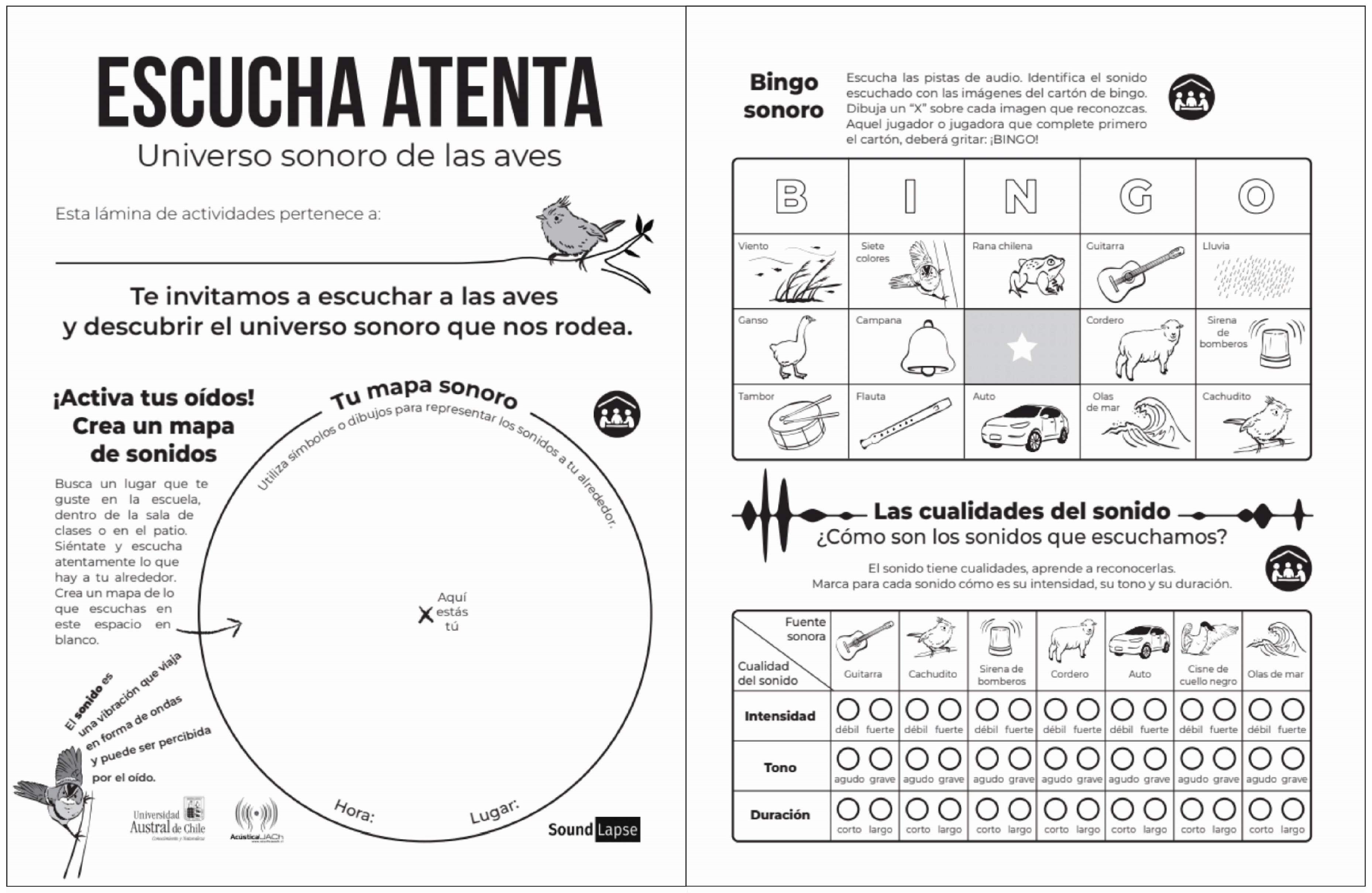
One of the main tools used in connection with the workshops was the printed sheet Escucha Atenta (Attentive Listening) [42]. The sheet was conceived as a hands-on resource to guide children through activities that cultivate attentive listening and environmental awareness. Its design combines playful illustrations with a series of structured tasks that integrate scientific, cultural, and artistic dimensions of sound. The sheet begins with a set of listening exercises, inviting students to engage in silent soundwalks, short periods of concentrated listening, and guided reflections on the qualities of sounds around them. These activities are complemented by sound mapping tasks, where students represent the spatial distribution and relative intensity of environmental sounds through drawings and symbols, linking listening to visual and spatial modes of expression. A second set of activities introduces interactive games that foster both creativity and collaboration. These include a sound bingo, where learners identify and mark off natural and urban sounds from their environment, and a Morse code exercise that encourages playful exploration of sound patterns and rhythms. Students are also invited to imitate or reproduce bird calls using their own voices, simple instruments, or everyday objects, bridging scientific observation with artistic expression. The sheet further incorporates sound quality recognition tasks, guiding students to differentiate sounds in terms of pitch, intensity, and duration. This introduces basic concepts of acoustics in a language accessible to children. Cultural connections are woven into the design through references to local traditions, such as the relationship between bird vocalizations (e.g., churrín del sur) and Mapuche musical instruments like the kultrún and trompe, reinforcing links between biodiversity and cultural heritage.
Overall, the sheet offers a modular set of activities that can be used independently or in sequence, adaptable to different educational contexts. Its low-cost format and reliance on listening and imagination rather than specialized equipment make it especially suitable for schools with limited resources. By combining observation, creativity, and cultural resonance, Escucha Atenta promotes a holistic and accessible approach to environmental education (Figure 1).

2.1.2. Online Bird Sound Repository

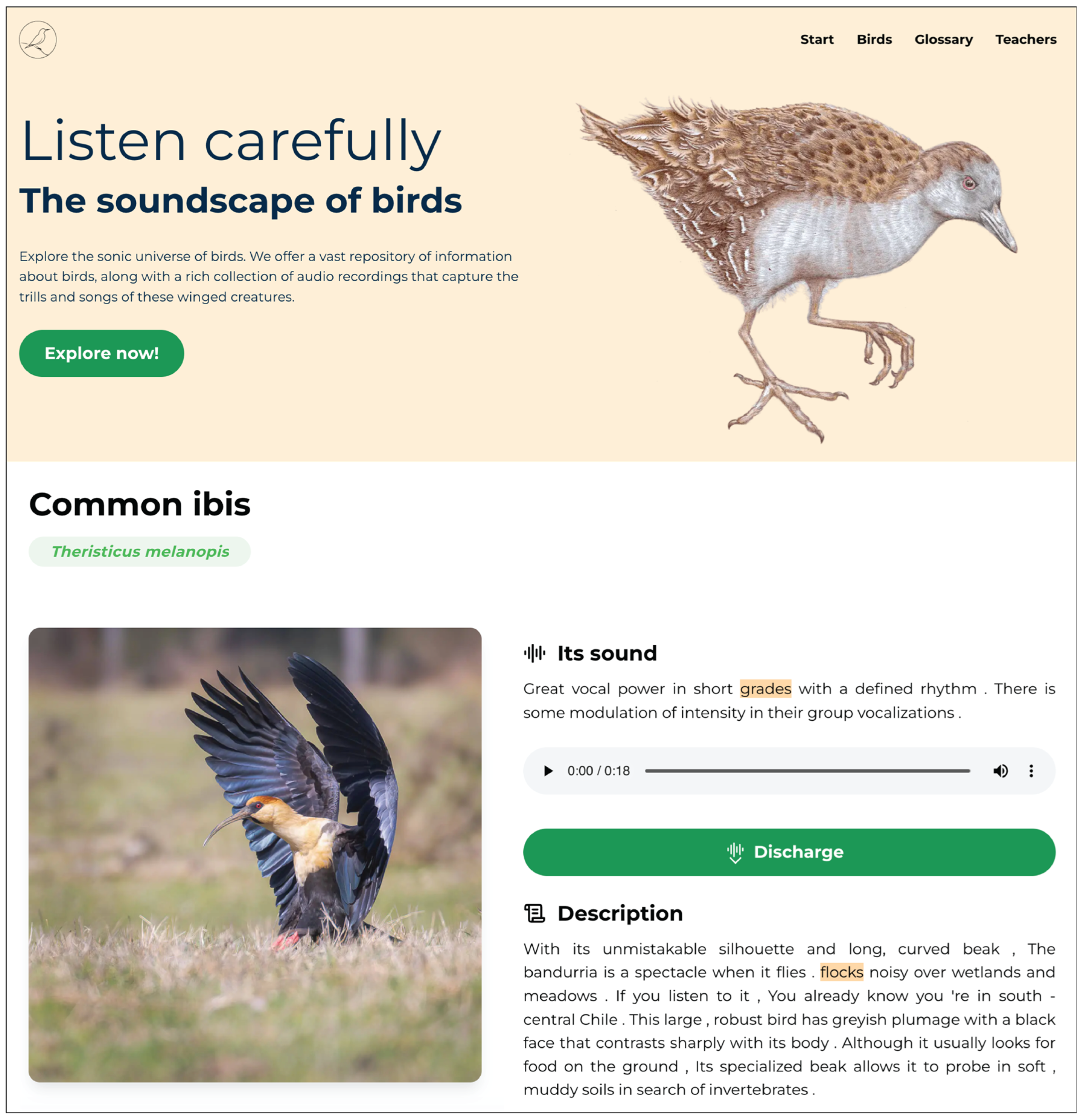
A comprehensive online repository of Chilean bird sounds, entitled Escucha Atenta: universo sonoro de las aves, was developed on the basis of field recordings conducted in three wetlands of the city of Valdivia [43]. The platform was specifically designed to support educational initiatives that foster attentive listening to the natural environment among primary school students.
The repository provides a diverse and accessible collection of recordings of bird species native to southern Chile, including the black-faced ibis (Theristicus melanopis), black-necked swan (Cygnus melancoryphus), southern wren (Troglodytes musculus), and tufted tit-tyrant (Anairetes parulus), among others. Each audio file is accompanied by detailed acoustic and musical descriptors, written in accessible language for students. These descriptors guide users in analyzing key auditory attributes such as pitch, timbre, rhythm, and texture, thereby facilitating critical listening as well as interdisciplinary integration with music and science curricula.
Beyond serving as a digital archive, the repository functions as a pedagogical tool that can be used in connection with the printed sheet described above. It also aims to raise awareness of the sonic biodiversity of Valdivia’s wetlands and to contribute to the conservation of these ecosystems. By combining creativity, technological innovation, and environmental education, the repository encourages both students and teachers to appreciate and protect the auditory richness of Chile’s natural heritage (Figure 2).

2.1.3. Soundwalks

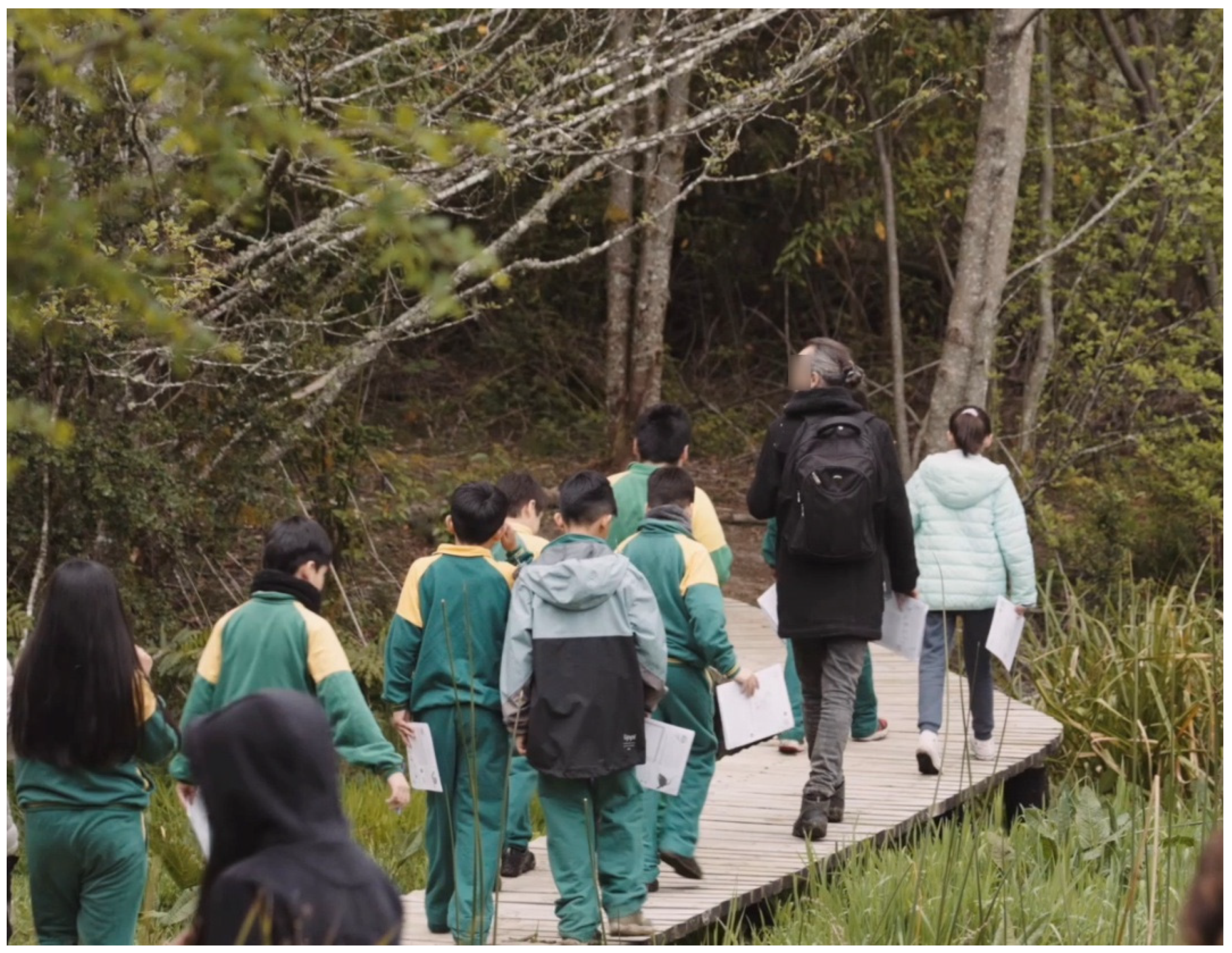
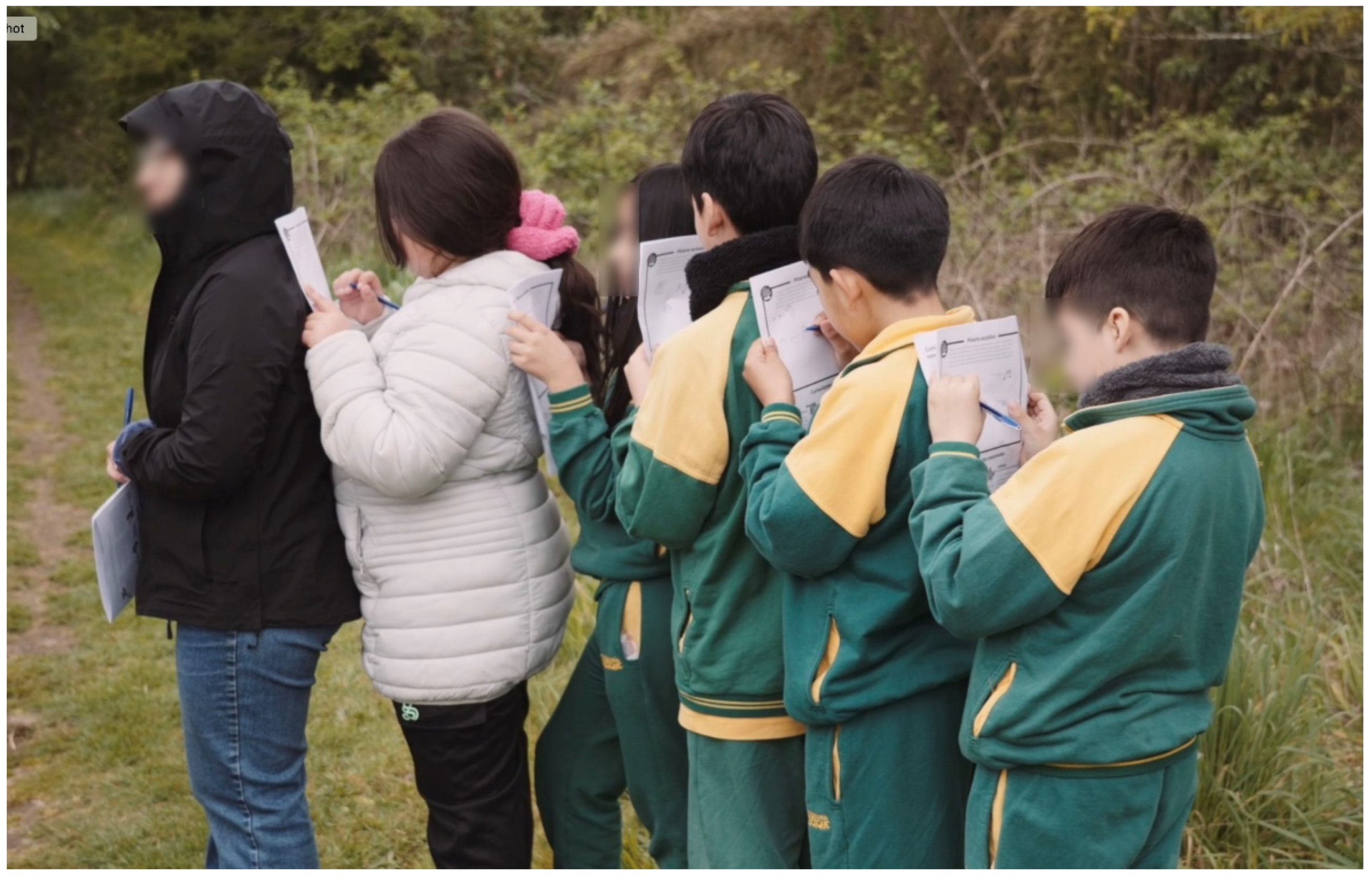
One of the core strategies of the workshop was the implementation of structured soundwalks in natural environments such as the Valdivia Wetlands Center [41]. This method combines the qualitative assessment of sonic environments with active listener engagement, following approaches pioneered by R. M. Schafer and Hildegard Westerkamp [44]. The activities were designed to foster attentive listening and multisensory awareness of the acoustic environment, with particular emphasis on biological sound sources such as birdsong. In accordance with ISO 12913-2 guidelines, participants were encouraged to engage with their surroundings across perceptual, emotional, and cognitive dimensions of sound [12]. During the soundwalks, students explored associations between acoustic stimuli and visual or spatial patterns—for example, linking rapid bird trills with dotted or dashed visual textures, or imagining correlations between sound frequencies and geometric shapes or colors. These experiences aimed to ‘unlearn’ the traditional parametrization of sound (e.g., pitch, loudness, duration) and instead activate subjective interpretations and emotional responses. The activities were conducted in silence, following adapted international protocols that guided attentional focus: shifting listening from the body to nearby and distant sound sources, distinguishing between natural and anthropogenic sounds, and reflecting on how the environment shapes auditory perception. Printed worksheets supported these walks by prompting students to document observations, rank sound sources by salience, and describe the emotional qualities of their acoustic experience.
Consistent with the principles of ISO 12913-2, the soundwalks integrated qualitative and quantitative methods for capturing user perception, including short interviews and observation-based annotations. These tools enabled both the educators and researchers to evaluate how children interpret soundscapes and connect them with ecological and esthetic values in their local environments (Figure 3 and Figure 4).

2.1.4. Immersive Audio Concert

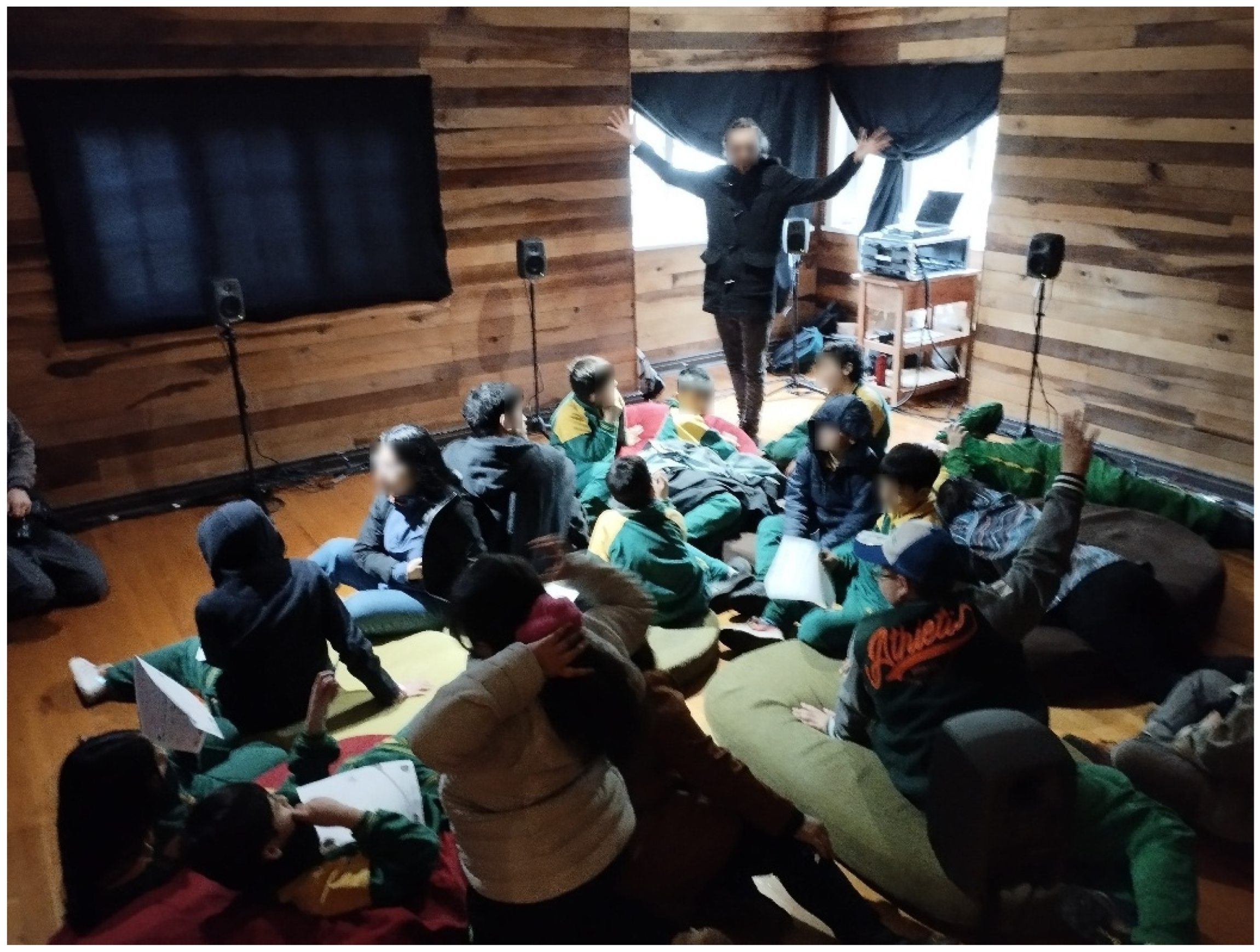
Building on research carried out within the Soundlapse project, the study sought to provide a relaxed immersive sensorial experience as a closing activity [39,45]. To accomplish this, the Escucha Atenta sheet incorporated a set of tasks specifically designed to bridge classroom learning with immersive concert experiences. In the Concierto Inmersivo exercise, students attended a loudspeaker-orchestra channel concert and were asked to transform their listening experience into creative representations. They produced simple graphic scores using drawings, words, or symbols to map the temporal evolution of the soundscape, thereby engaging with the concert not only as passive listeners but also as creative interpreters of acoustic environments. The 16-channel loudspeaker setup surrounded the audience, allowing students to experience wetland soundscapes arriving from multiple directions. Afterward, they were encouraged to describe the sounds they had perceived, focusing on aspects such as spatial origin (near or far) and perceived motion (static or moving). This activity highlighted key qualities of immersive reproduction, particularly spatial awareness and the perception of sound movement. Together, these exercises framed the immersive concert as an active pedagogical environment that merged attentive listening with creative expression. Rather than functioning solely as a dissemination strategy, the concerts became a methodological tool to strengthen connections between ecological soundscapes, sensory perception, and environmental awareness (Figure 5).

2.2. Data Collection and Analysis

2.2.1. Teacher Interviews

Data were collected in the form of semi-structured interviews with teachers and their verbatim transcripts later being subject to a thematic analysis by all three authors. Interviews were conducted both prior to and after the pedagogical field trip. This allowed the researchers to unpack the expectations of the educators as well as their reflections after activities had been carried out. Interviews with different schools were conducted separately. In total, three teachers were interviewed: two of them connected to natural science courses and one of them was a music teacher.
Interviews were conceived using a semi-structured protocol that balanced comparability across participants with flexibility to pursue emergent topics. The guide included descriptive questions (e.g., ‘Can you walk me through how you used the soundscape materials with your class?’), reflective questions (e.g., ‘What surprised you most about your students’ responses during the soundwalk or immersive concert?’), and evaluative prompts (e.g., ‘In what ways, if any, did these activities differ from your usual environmental or music lessons?’). Follow-up questions were also used to clarify specific examples of classroom practice, such as teachers’ preparations for shared silence activities, flexibility to different age groups, and ways of assessing students’ engagement over time.

2.2.2. Analytical Methods

All transcripts were analyzed using reflective thematic analysis, following the six-phase model outlined by Braun and Clarke [46]. The process began with an extended stage of familiarization and immersion in the interview data, during which preliminary impressions and potential analytic directions were noted. Transcripts were then inductively coded, allowing patterns and concepts to emerge from the data rather than being imposed a priori. A set of preliminary codes was generated and subsequently discussed among the research team to ensure cohesion, clarity, and analytic fit, as well as to confirm that the codes adequately represented the most salient and recurring aspects of participants’ accounts. These codes were then iteratively reviewed, refined, and consolidated through multiple rounds of comparison and discussion, culminating in a final set of 16 codes that were, in Saldaña’s [47] (p. 5) terms, ‘summative, salient, essence-capturing, and/or evocative.’ From this coding framework, four overarching themes were constructed that captured higher-order patterns across the dataset: (1) Listening as Pedagogical Practice, (2) Learning Through Place and Sensory Experience, (3) Creativity, Integration, and Cross-disciplinarity, and (4) Implementation Challenges and Opportunities. These themes reflect both the conceptual richness of the data and the interpretive work of the analysis. Illustrative examples of the coding process are provided in Table 1.

3. Results

3.1. Listening as Pedagogical Practice and the Value of Silence

One of the most prominent themes to emerge from the analysis concerned listening as a pedagogical practice—an intentional activity that teachers regarded as central to cultivating new forms of learning both inside and outside the classroom. Across the interviews, teachers consistently referred to attentive listening (‘escucha atenta’) as an overlooked and under-practiced skill that is otherwise extremely valuable, something even teachers themselves must practice. Listening was described as more than a technical exercise; it was framed as a practice of attentiveness and presence that could reshape classroom dynamics and open alternative avenues of learning. As one instructor explained, ‘attentive listening opened up our ears and opened up a door for a new kind of learning for students to evaluate their own environment’. This kind of listening was contrasted with the typical noise and chaos of the classroom, functioning as a kind of antidote to it. One teacher commented that, when practicing attentive listening, ‘the students themselves started lowering their voices’, which in itself was already seen as ‘a kind of learning’. Building on this reflection, the same teacher added that ‘the experience was beautiful; attentive listening opened our ears and made us realize how important it is to limit noise in the classroom.’
Elsewhere, one teacher remarked that ‘the great thing about the material is that it always brings us back to listening, which is something that doesn’t usually happen; as teachers, we always have to raise our voices’. These reflections highlight how listening disrupted the usual teacher–student dynamic: rather than amplifying control through speech, authority was reconfigured through shared silence and mutual attentiveness. This is supported by studies in Turkey and Italy [48,49], where teachers linked active listening to better self-regulation in students, who became more aware of their sound environment and were more sensitive to noise. One of the teachers said:
I tried to show them, through active listening, that there is also a lot of acoustic pollution in our classroom: students speaking and screaming. This made them more conscious and measured when it came to emitting sounds.
This sensibility to noise was not limited to the classroom. During the soundwalk, students started noticing other sources of sound pollution. A teacher noted that ‘after the activity the student went out of the classroom listening to the outside world in a different manner–more attentive to the things that are sounding’. Another one said that he was ‘pleasantly surprised by the soundwalk’, saying that students ‘managed to listen and to walk in silence through the wetlands—they seemed more connected to the surroundings.’ He further explained that ‘the pause is necessary so the children can concentrate, lower their levels of anxiety, and recognize where they are; the silence allowed them to understand the place much better.’
These accounts suggest that listening and silence were not merely technical or disciplinary exercises but were understood by teachers as transformative pedagogical tools. They fostered attentiveness, self-regulation, and an expanded awareness of place, enabling students to engage with both classroom and environment in qualitatively different ways.

3.2. Learning Through Place and the Senses

Another salient theme concerned the ways in which teachers emphasized place—the wetlands, forests, and parks of Valdivia—as a ‘living laboratory’ that allows students to learn through direct, sensory engagement. Across the interviews, teachers consistently pointed to the value of situating educational activities in the local territory, highlighting the richness of nearby ecosystems and their potential to anchor learning in meaningful, embodied ways. Rather than conceiving of environmental education as abstract or text-based, they described it as something that must be experienced through sound, touch, smell, and sight.
Teachers noted how activities like the soundwalk allowed students to connect with their environment in new ways. One teacher explained that walking silently through the wetlands was valuable precisely because it enabled students to ‘connect with the soundscape,’ fostering a deeper attentiveness to the sounds of birds, leaves, and even distant urban noises. The sensory immersion was described as liberating: ‘The soundwalk is a kind of outdoor work. It allows you to breathe fresh air, feel the humidity, the smell of the trees. For the children it is extremely important.’
These experiences transformed the wetlands and forests into classrooms in their own right, where sensory perception and ecological awareness could be cultivated simultaneously.
In several accounts, teachers linked sensory learning to identity and belonging. By learning to recognize species through their vocalizations, students were acquiring scientific knowledge and developing a stronger attachment to the places they inhabit. As one teacher explained, ‘The idea is that they begin to recognize the different elements of the forest, the wetlands, the beach… and that, over time, this allows them to develop an attachment to the place, to feel part of it.’ Another teacher drew a direct connection to intergenerational knowledge, recalling how ‘mothers and grandparents would listen to a bird and know that it was going to rain.’ This connection between sensory perception and cultural memory framed environmental education as more than ecological literacy: it was also a means of cultivating intergenerational knowledge and a sense of rootedness.
The emphasis on situated learning was particularly strong. Teachers repeatedly mentioned nearby sites—Parque Urbano El Bosque, Angachilla, Miraflores—as venues for fieldwork and as key to shaping how students perceive their surroundings. The idea that students could later share this knowledge with their families—pointing out a bandurria or identifying the call of the ranita grande chilena—illustrates how sensory education extends beyond the classroom into everyday life. In this sense, the environment was framed as a shared commons, with students positioned as both learners and as potential transmitters of ecological knowledge within their communities. All in all, these reflections show that teachers understood learning through place and the senses as both pedagogically powerful and culturally significant. The wetlands and forests of Valdivia were not seen as backdrops but as dynamic, participatory classrooms where multisensory engagement could foster ecological awareness, identity, and belonging.

3.3. Creativity, Integration and Cross-Disciplinarity

A third theme that emerged from the interviews concerned the role of creativity and cross-disciplinary collaboration in shaping the pedagogical value of the activities. Teachers highlighted how the project created spaces where artistic expression and scientific observation could coexist, making learning more engaging and inclusive. The materials—particularly the sound maps and the repository of bird songs—were seen as catalysts for encouraging students to invent their own ways of representing the world around them, while also opening possibilities for collaboration across subjects such as science, music, and environmental education.
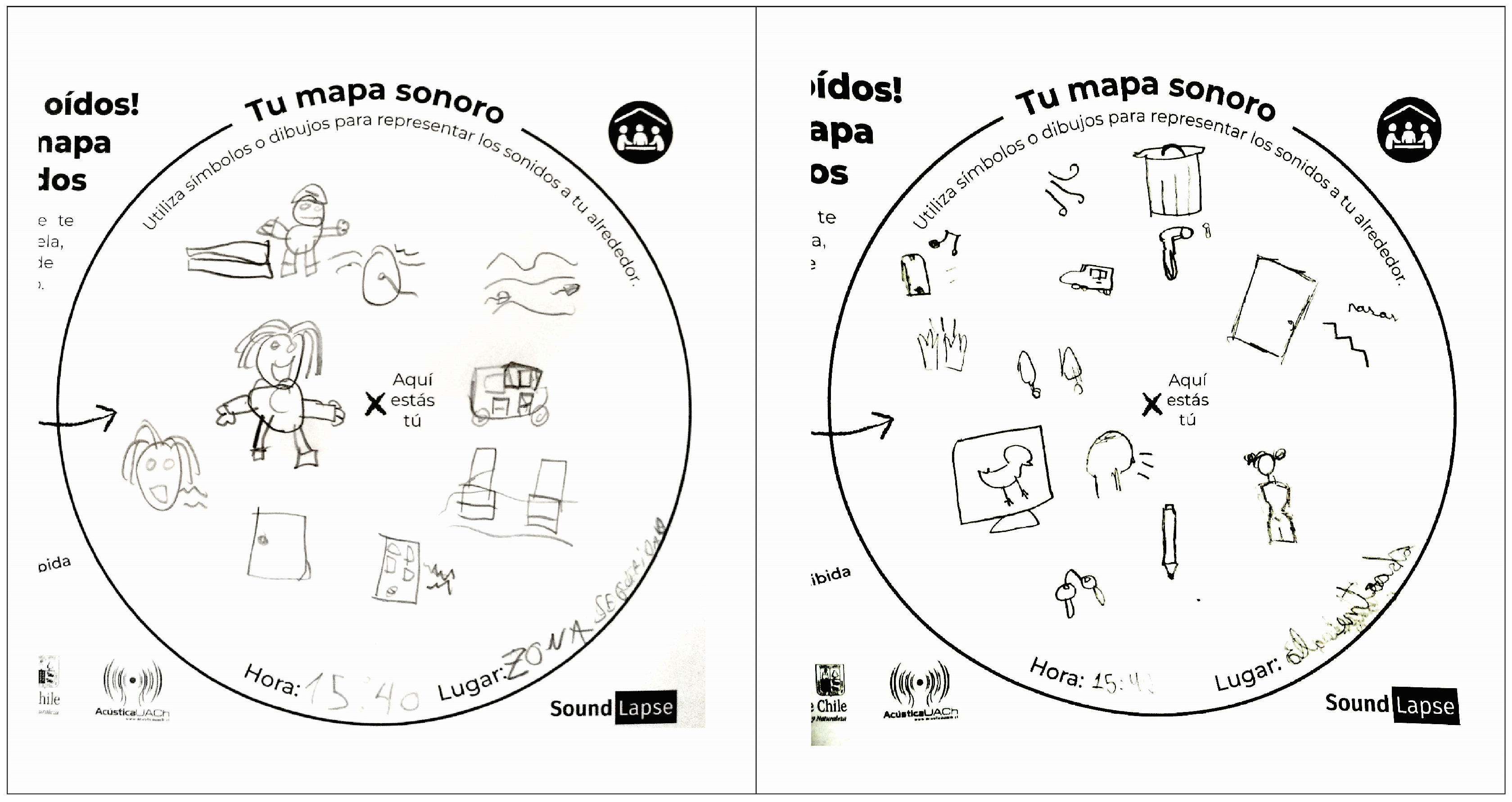
One of the most striking examples came from the sound maps, where students were asked to spatially represent what they heard. Teachers noted with enthusiasm that ‘each sound had its own unique graphic symbol,’ and that students compared their drawings to see how different peers interpreted the same source. What might have been a technical listening exercise thus became a creative activity that emphasized individuality, comparison, and dialog. Another teacher observed that the sound map ‘allowed the students to express their inner world in a simpler and more graphic way,’ highlighting the expressive dimension of learning that the activity made possible. This symbolic work validated creativity as a legitimate way of learning and reinforced the idea that environmental education could benefit from artistic practices (Figure 6).
The integration of science, music, and environmental education was also celebrated as a natural outcome of the project. Several teachers emphasized that the materials provided opportunities to break down the usual boundaries between disciplines. As one science teacher explained, she often linked content such as energy transfer or photosynthesis to drawing, using art as a vehicle for scientific understanding. Similarly, the music teacher described how ‘science on one side and art on the other allow us to interpret the workshop contents in a more integral and broad way,’ giving students access to perspectives they might not gain from a single subject. Teachers viewed these forms of integration as both enriching and necessary, since they allowed students with different strengths to engage with the same activity in diverse but complementary ways.
Teachers reflected on how these experiences could inspire them to create new teaching materials of their own. The project’s sound-based activities provided not just ready-to-use tools but also models for how creativity and interdisciplinarity might be more systematically incorporated into their everyday teaching. As one teacher put it, ‘this example of the didactic material and the way it is used can serve as a guide for developing new materials for our classes.’ Such comments suggest that the value of the project was not limited to the specific activities, but also lay in its capacity to shift teachers’ perspectives on curriculum design, encouraging them to think of their classrooms as spaces where art, science, and environmental awareness can be seamlessly integrated. Viewed collectively, these reflections show how creativity and cross-disciplinarity were not treated as peripheral elements but as central dimensions of learning. By legitimizing symbolic expression, drawing, and music as valid modes of engaging with science and the environment, teachers articulated a vision of pedagogy that was at once more integrative, more inclusive, and more attuned to the diverse ways students can make meaning.

3.4. Implementation Challenges and Opportunities

While teachers were enthusiastic about the activities and their outcomes, they also identified several challenges that limited their full potential. Classroom management was a recurring concern, especially during immersive listening moments such as the concert. One teacher reflected with some embarrassment that ‘there was a lot of laughter and disorder… this opportunity should not have been wasted,’ noting how student energy sometimes disrupted the intended atmosphere of attentiveness. The difficulty of sustaining silence over long periods pointed to a need for more structured guidance and differentiated strategies to help students remain focused during sensory exercises.
Curricular and institutional constraints also surfaced repeatedly. The music teachers, in particular, stressed the absence of official materials, remarking that ‘we often have to be the creators of the very materials we use in class.’ The rigidity of the curriculum was seen as an obstacle to integrating environmental and sensory approaches, with one teacher noting that music materials tend ‘invite very little integration with other subjects’ and that ‘it is necessary to step outside the curriculum.’ These reflections highlight how institutional frameworks can constrain teachers’ ability to sustain the kinds of cross-disciplinary and sensory learning they found valuable in the project.
At the same time, these challenges were seen as opportunities for further development. Teachers expressed enthusiasm for integrating technology and playful learning, proposing ‘a Kahoot-style game about birds’ or other digital tools that would engage students through their phones. They also imagined more advanced audio systems in classrooms that could recreate immersive soundscapes, allowing students to feel as though they were in a wetland or on the coast even when indoors. Such reflections suggest that teachers were not discouraged by the obstacles they encountered but rather motivated to adapt and expand the activities. The project, in their view, pointed to a future in which curricular structures, technological innovation, and classroom practices could be reconfigured to better support sensory and environmental education.
Indeed, one of the strengths of the workshop design was that it already demonstrated a flexible spectrum of implementation—from low-cost tools to more advanced technological elements. The workshop combined low-cost tools, such as the Escucha Atenta sheet, with higher-end elements like an online repository and a 16-channel concert. Teachers’ responses show that the core pedagogical benefits—attentive listening, sensory engagement, and creative representation—do not rely on advanced technology. In low-resource schools, these practices can be implemented through simple adaptations such as soundwalks, classroom listening tasks, basic stereo playback, or paper-based sound mapping. The printed sheet thus offers a portable, scalable framework, with more sophisticated technologies serving as enhancements rather than necessities.
Considered as a whole, the four themes that have been discussed here resonate with the creative-learning framework that sits at the base of the study. Listening as pedagogical practice demonstrated students’ agency and self-regulation; learning through place and the senses foregrounded the affective and embodied pathways of creative learning; creative activities and cross-disciplinary integration gave rise to relational ecologies that connected teachers, students, tools, and environments; and the challenges and opportunities of implementation highlighted how ‘learning by doing’ became central to teachers’ pedagogical decisions. These thematic patterns therefore anticipate the conceptual argument developed in the Discussion, where creative learning comes out as a productive lens for interpreting sensory and environmental education practices (Table 2).

4. Discussion

4.1. The Role of Creativity and Sensory Learning in Environmental Education

Our findings suggest that creativity and sensory learning are not peripheral embellishments to environmental education but constitute core mechanisms through which ecological awareness can be cultivated. In their interviews, teachers emphasized that attentive listening, silence, and embodied engagement transformed routine classroom dynamics, positioning listening as a skill to be cultivated and a form of inquiry in its own right. This aligns with recent calls to reintegrate sensory experience into environmental education [20,24,38]. Yet our results extend this scholarship by showing how sensory education can also serve as a means to reconfigure possibilities in both teaching and learning. We saw how listening functions as a form of collective regulation, shifting authority from spoken instruction to shared attentiveness.
The current literature on creative learning provides a productive lens for interpreting these dynamics. The four pathways identified by Rabello-Mestre et al. [21]—agency, affect, relational ecologies, and learning by making—were all present in teachers’ accounts. Students’ symbolic representations of soundscapes through drawings demonstrated agency and invention; their enjoyment of the soundwalks underscored the affective and embodied dimension of learning; cross-disciplinary activities enacted relational ecologies between science and art; and the practical character of the activities also typified the applied dimension of learning. In this way, soundscape-based activities actualized creative learning not in abstraction but through concrete, embodied practices.
A further implication of these findings is that soundscape-based activities invite us to reconsider what counts as knowledge in environmental education. Whereas school science has often privileged visual observation and textual description, teachers here highlighted listening, silence, and embodied awareness as equally legitimate ways of knowing. In this sense, soundscapes acted as epistemic avenues, enabling students to generate meanings that were at once ecological, cultural, and affective. This resonates with sociocultural perspectives that view learning as distributed across bodies, artifacts, and environments [27,50]. By foregrounding auditory practices, the workshops disrupted disciplinary hierarchies that separate scientific from artistic forms of inquiry, legitimizing creative and symbolic modes of representation as central to ecological understanding.
At the same time, the integration of creativity and sensory learning expanded environmental education beyond cognitive acquisition to encompass belonging, identity, and memory. Teachers emphasized how students connected bird calls not only to ecological knowledge but also to intergenerational practices, recalling how elders predicted rain through attentive listening. Such reflections underscore that ecological awareness is inseparable from cultural heritage and can foster affective ties to place. International studies have similarly shown that soundscapes can function as cultural resources for fostering identity and attachment [13,17]. By enabling students to experience themselves as both learners and inheritors of local ecological knowledge, the activities positioned environmental education as a relational and transformative process—one that cultivates care for both ecosystems and communities.

4.2. Pedagogical and Curricular Implications

The findings of this study underscore the need to reposition attentive listening as a central pedagogical practice rather than an individual exercise. Teachers consistently emphasized how shared silence and focused listening transformed classroom dynamics and helped to cultivate students’ capacity for self-regulation and mutual attentiveness. Such reflections suggest that curricular frameworks could more deliberately foreground listening as a transversal skill, relevant not only to music but to science, language, and environmental education. By elevating listening to the same status as observation and description, environmental education may open alternative epistemic pathways that enrich both ecological understanding and classroom culture.
A related implication concerns the integration of sensory and place-based learning within curricular design. The soundwalks and outdoor activities revealed how local soundscapes can function as ‘living laboratories,’ and echoed existing studies in enabling students to anchor ecological knowledge in embodied and situated experience [24]. Teachers described how such practices fostered both awareness of biodiversity and a sense of attachment to place, linking contemporary ecological issues with intergenerational cultural knowledge. Embedding sensory encounters with the environment in curricula could thus strengthen the relational dimension of sustainability education, positioning as participants in shared ecological and cultural environments.
The study also highlights the importance of advancing cross-disciplinary integration. Teachers valued the opportunities to connect science, music, and environmental education, observing that such synergies enriched learning and legitimized multiple ways of knowing. These findings suggest that curricular structures might be reconfigured to facilitate more systematic collaboration between disciplines, thereby supporting the holistic aims of sustainability education. Explicit curricular encouragement for co-teaching, joint projects, and multimodal assessment could help institutionalize such practices, ensuring that the integration of creativity and science is not left solely to individual teacher initiative.
Finally, the project points to the central role of teacher agency in sustaining pedagogical innovation. Teachers repeatedly stressed the lack of official materials and their reliance on self-produced resources, yet they also viewed the Soundlapse materials as models for future adaptation. This indicates that curricular frameworks must be accompanied by material support and professional development opportunities that enable teachers to integrate sensory and creative pedagogies into their daily practice. Co-designed toolkits, accessible repositories, and low-cost adaptable materials may empower teachers to extend the scope of environmental education while aligning with broader curricular mandates.

4.3. Practical Recommendations for Teachers

Building on these insights, we offer several practical recommendations for teachers seeking to integrate soundscape-based activities into their own classrooms. First, attentive listening should be introduced gradually, beginning with short, low-stakes listening moments that help students practice silence and self-regulation before moving to longer soundwalks or immersive sessions. Simple routines—such as asking students to identify three nearby sounds at the start of a lesson—can cultivate these habits without requiring additional resources. Second, we encourage teachers to use their local environment as an extension of the classroom, whether through school-yard listening, brief outdoor walks, or visits to nearby parks or wetlands. These do not need to be elaborate field trips; even brief excursions can foster sensory awareness and ecological connection. Third, teachers may wish to pair listening tasks with creative representations such as drawing, sound mapping, or simple graphic scores, enabling students with diverse strengths to express what they hear. Finally, cross-disciplinary collaboration can significantly strengthen these activities. Coordinating with colleagues in music, science, or language arts can generate shared projects that reinforce listening, environmental awareness, and creative expression across the curriculum. By adopting flexible, low-cost approaches and tailoring them to their contexts, teachers can make sensory and creative environmental learning both sustainable and pedagogically impactful.

4.4. Limitations and Future Research

While the study contributes novel insights into soundscape-based education, several limitations should be acknowledged. First, the scope of the intervention was restricted to two schools in Valdivia and a small group of teachers. This provides depth but limits generalizability. Expanding to diverse regions—urban, rural, and Indigenous contexts—could illuminate how cultural and ecological variation shapes pedagogical uptake. Second, our focus on teacher perspectives, while valuable, left student voices underexplored. Future research should adopt mixed-methods approaches that combine teacher interviews with quantitative indicators (e.g., pre-/post-surveys, observation scales, and longitudinal listening tasks) and systematic analyses of student experiences, learning outcomes, and long-term ecological behaviors. This would clarify whether the benefits identified by teachers are reflected in measurable changes in students’ competencies and dispositions. Third, the participatory design itself, though a strength, carried constraints. Teachers’ enthusiasm sometimes exceeded what curricular time or resources would realistically allow. More extended co-design cycles, including iterative piloting and feedback, would help align creative ambitions with institutional feasibility. Fourth, methodologically, the study used well-established qualitative tools—semi-structured interviews and reflexive thematic analysis—to explore teachers’ perspectives. While this approach yielded rich, interpretive accounts, it did not fully exploit the creative and multimodal possibilities of soundscape-based research itself. Finally, a further limitation is that the analysis relies solely on teachers’ accounts. This choice reflects both ethical and practical considerations: obtaining and analyzing children’s interviews or video data would have required additional consent procedures and time resources beyond the scope and time framework of the present project. Nevertheless, future research could incorporate student perspectives as a primary data source through group interviews, drawing, sound-mapping elicitation and child-friendly survey instruments.
Future work could experiment with complementary methods such as participatory diaries, audio recordings, noise maps, or audiovisual elicitation interviews, where participants jointly listen to and annotate recordings. Such methods would better match the sensory and creative focus of the intervention and take into account the expectations of teachers and students. The present study captures teachers’ reflections shortly after the workshop and field trip, offering only a snapshot of immediate pedagogical effects. It does not address how soundscape-based practices may develop or fade over time. Longitudinal research—through follow-up interviews, classroom observations, and repeated activities across school years—could clarify whether attentive listening, soundwalks and creative mapping become part of teachers’ regular practice or remain isolated experiences. With continued use, these activities may progressively normalize shared silence, strengthen students’ connection to local environments and encourage teachers to design their own teaching materials and sound-based lessons.

5. Conclusions

This study shows that soundscape-based education can expand environmental learning by placing listening, creativity, and sensory engagement at the core of pedagogy. Teachers’ reflections revealed how attentive listening reconfigured classroom relations, turning silence into a collective form of awareness and transforming the environment itself into a site of inquiry. Through soundwalks, creative mapping, and immersive listening, students developed ecological knowledge and a sense of belonging grounded in local and intergenerational connections. These findings point to the broader pedagogical potential of integrating artistic, scientific, and sensory practices within sustainability education. More than an enrichment activity, soundscape-based learning challenges prevailing curricular hierarchies, inviting schools to treat attentive listening as a way of knowing and their environment as living laboratories.

Author Contributions

Conceptualization, A.R.-M., F.O. and G.M.; methodology, A.R.-M., F.O. and G.M.; writing—original draft preparation, A.R.-M. and F.O.; writing—review and editing, A.R.-M. and F.O.; project administration, F.O.; funding acquisition, F.O. All authors have read and agreed to the published version of the manuscript.

Funding

This research was funded by the National Fund for Scientific and Technological Development (FONDECYT, Chile), grant numbers 1220320 and 1250388.

Institutional Review Board Statement

Ethical review and approval were obtained from the Comité Ético Científico de Investigación con Seres Humanos of the Universidad Austral de Chile (protocol code I.S.P. No. 15, approved on 15 July 2025). Written parental/guardian consent was obtained for the publication of images of minors included in this study. All images of minors presented in this article were anonymized to ensure confidentiality.

Informed Consent Statement

Informed consent was obtained from all the teachers involved in the study.

Data Availability Statement

Interview data belonging to this study is unavailable due to privacy or ethical restrictions.

Conflicts of Interest

The authors declare no conflicts of interest.

References

  1. Schulte-Fortkamp, B.; Fiebig, A.; Sisneros, J.A.; Popper, A.N.; Fay, R.R. (Eds.) Soundscapes: Humans and Their Acoustic Environment; Springer Nature: Cham, Switzerland, 2023. [Google Scholar]
  2. Turlington, K.; Suárez-Castro, A.F.; Teixeira, D.; Linke, S.; Sheldon, F. Exploring the Relationship between the Soundscape and the Environment: A Systematic Review. Ecol. Indic. 2024, 166, 112388. [Google Scholar] [CrossRef]
  3. Morales, G.; Vargas, V.; Espejo, D.; Poblete, V.; Tomasevic, J.A.; Otondo, F.; Navedo, J.G. Method for Passive Acoustic Monitoring of Bird Communities Using UMAP and a Deep Neural Network. Ecol. Inform. 2022, 72, 101909. [Google Scholar] [CrossRef]
  4. Pijanowski, B.C. Principles of Soundscape Ecology: Discovering Our Sonic World; University of Chicago Press: Chicago, IL, USA, 2024. [Google Scholar]
  5. Poblete, V.; Espejo, D.; Vargas, V.; Otondo, F.; Huijse, P. Characterization of Sonic Events Present in Natural-Urban Hybrid Habitats Using UMAP and SEDnet: The Case of the Urban Wetlands. Appl. Sci. 2021, 11, 8175. [Google Scholar] [CrossRef]
  6. Gale, T.; Astorga, E.; Adiego, A.; Báez-Montenegro, A. Expert Consensus on Buffer Zone Governance: Interface Concepts, Ecosystem Service Priorities, and Territorial Strategies Around Cerro Castillo National Park, Chile. Land 2025, 14, 1763. [Google Scholar] [CrossRef]
  7. Schafer, R.M. Five Village Soundscapes; A.R.C. Publications: Vancouver, BC, Canada, 1977; Reprinted in: Järviluoma, H.; Kytö, M.; Truax, B.; Uimonen, H.; Vikman, N. (Eds.) Acoustic Environments in Change; TAMK University of Applied Sciences: Tampere, Finland, 2009. [Google Scholar]
  8. Eclipse Soundscapes Project. Citizen Science Through Inclusive Design. Available online: https://eclipsesoundscapes.org/ (accessed on 2 October 2025).
  9. Kang, J.; Schulte-Fortkamp, B. Soundscape and the Built Environment; CRC Press: Boca Raton, FL, USA, 2018. [Google Scholar]
  10. COST Action TD0804. Soundscape of European Cities and Landscapes Project. European Cooperation in Science and Technology (COST), 2025. Available online: https://www.cost.eu/actions/TD0804/ (accessed on 2 October 2025).
  11. ISO 12913-1; Acoustics—Soundscape—Part 1: Definitions and Conceptual Framework. International Organization for Standardization (ISO): Geneva, Switzerland, 2014.
  12. ISO 12913-2; Acoustics—Soundscape—Part 2: Data Collection and Reporting Requirements. International Organization for Standardization (ISO): Geneva, Switzerland, 2018.
  13. Järviluoma, H.; Kytö, M.; Truax, B.; Uimonen, H.; Vikman, N. (Eds.) Acoustic Environments in Change; Series A: Research Papers 13; TAMK University of Applied Sciences: Tampere, Finland, 2009; ISBN 978-952-5264-78-4. [Google Scholar]
  14. Schafer, R.M. Ear Cleaning: Notes for an Experimental Music Course; Clark & Cruickshank: Toronto, ON, Canada, 1967. [Google Scholar]
  15. Schafer, R.M. The New Soundscape: A Handbook for the Modern Music Teacher; Berandol Music: Toronto, ON, Canada, 1969. [Google Scholar]
  16. Schafer, R.M. The Rhinoceros in the Classroom; Universal Edition: London, UK, 1975. [Google Scholar]
  17. Ng, H.H.; Tan, M.C.C. Soundscapes as Cultural Heritage: Lesson Ideas for the Classroom. Music. Educ. J. 2024, 111, 24–32. [Google Scholar] [CrossRef]
  18. Blasco-Magraner, J.S.; Marín-Liébana, P.; Hurtado-Soler, A.; Botella-Nicolás, A.M. The Use of Soundscapes in Environmental Education: Teachers’ Competencies in Auditory Analysis and Emotional Identification. Behav. Sci. 2025, 15, 744. [Google Scholar] [CrossRef] [PubMed]
  19. Song, B.; Zhang, H.; Du, J.; Na, N.; Xu, Y.; Kang, J. The Influence of General Music Education on the Perception of Soundscape. Int. J. Acoust. Vib. 2024, 29, 86–94. [Google Scholar] [CrossRef]
  20. Adams, D.; Beauchamp, G. The Impact of Music Making Outdoors on Primary School Aged Pupils (Aged 7–10 Years) in the Soundscape of Nature from the Perspective of Their Primary School Teachers. J. Outdoor Environ. Educ. 2021, 24, 37–53. [Google Scholar] [CrossRef]
  21. Rabello-Mestre, A.; Ness, I.J.; Glaveanu, V.P. Creative Learning—A Configurative Review of Features and Practices. Think. Ski. Creat. 2025, 56, 101775. [Google Scholar] [CrossRef]
  22. Beghetto, R.A. Creative Learning: A Fresh Look. J. Cogn. Educ. Psychol. 2016, 15, 6–23. [Google Scholar] [CrossRef]
  23. Beghetto, R.A.; Karwowski, M. Educational Consequences of Creativity: A Creative Learning Perspective. Creativity 2018, 5, 146–154. [Google Scholar] [CrossRef]
  24. Jeldes, J.C.; Cortés-Morales, S.; Renée, R.L.; Moreira-Muñoz, A. Aconcagua Fablab: Learning to ‘Become with’ the World through Design and Digital Fabrication Technologies. Int. J. Art Des. Educ. 2022, 41, 23–38. [Google Scholar] [CrossRef]
  25. Lu, L. Teaching 21st-Century Art Education in a ‘Virtual’ Age: Art Cafe at Second Life. Art Educ. 2010, 63, 19–24. [Google Scholar] [CrossRef]
  26. Gabaree, L.; Rodeghiero, C.; Presicce, C.; Rusk, N.; Jain, R. Designing creative and connected online learning experiences. Inf. Learn. Sci. 2020, 121, 655–663. [Google Scholar] [CrossRef]
  27. Lim, J.; Leinonen, T.; Lipponen, L.; Lee, H.; DeVita, J.; Murray, D. Artificial intelligence as relational artifacts in creative learning. Digit. Creat. 2023, 43, 192–210. [Google Scholar] [CrossRef]
  28. Ministerio de Educación de Chile. Orientaciones Didácticas Ciencias Naturales; MINEDUC: Santiago, Chile, 2023.
  29. Ministerio de Educación de Chile. Priorización Curricular Ciencias Naturales; MINEDUC: Santiago, Chile, 2023.
  30. Salinas, I.; Guerrero, G.; Satlov, M.; Hidalgo, P. Climate Change in Chile’s School Science Curriculum. Sustainability 2022, 14, 15212. [Google Scholar] [CrossRef]
  31. UNESCO. Educating for a Sustainable Future: A Transdisciplinary Vision for Concerted Action; UNESCO: Paris, France, 1997; Available online: https://unesdoc.unesco.org/ark:/48223/pf0000110686 (accessed on 10 October 2025).
  32. Ministerio del Medio Ambiente de Chile. Estrategia Nacional de Educación Ambiental Para la Sustentabilidad; Gobierno de Chile: Santiago, Chile, 2020. Available online: https://mma.gob.cl/educacion-ambiental/ (accessed on 10 October 2025).
  33. Ministerio de Educación de Chile. Priorización Curricular y Orientaciones Didácticas 2023–2024; MINEDUC: Santiago, Chile, 2023.
  34. Ministerio de Educación de Chile. Marco Nacional de Educación Integral para la Sustentabilidad y el Cambio Climático; MINEDUC: Santiago, Chile, 2024. Available online: https://sustentabilidad.mineduc.cl/wp-content/uploads/sites/130/2024/12/Marco-de-Educacio%CC%81n-Integral-para-la-Sustentabilidad-y-la-Adaptacio%CC%81n-al-Cambio-Clima%CC%81tico.pdf (accessed on 10 October 2025).
  35. Steele, D.; Kerrigan, C.; Guastavino, C. Sounds in the city: Bridging the gaps from research to practice through soundscape workshops. J. Urban Des. 2019, 25, 646–664. [Google Scholar] [CrossRef]
  36. Salvo, G.; Sanfilippo, L.; Brignone, A. Investigating Access to Schools through Walking: A Study of Built School Road Networks. Sustainability 2024, 16, 7452. [Google Scholar] [CrossRef]
  37. Park, Y.; Lee, B. A Study on the Music-Based Ecological Environment Convergence Class Using Children’s Songs: Focusing on Elementary School Learners. Qeios 2024. preprint. [Google Scholar] [CrossRef]
  38. Hurtado Soler, A.; Botella Nicolás, A.M.; Fernández Maximiano, R.; Martínez Gallego, S. Development of Social and Environmental Competences of Teachers in Training Using Sound and Visual Landscape. Educ. Sci. 2023, 13, 593. [Google Scholar] [CrossRef]
  39. Otondo, F.; Rabello-Mestre, A. The Soundlapse Project: Exploring Spatiotemporal Features of Wetland Soundscapes. Leonardo 2022, 55, 267–271. [Google Scholar] [CrossRef]
  40. Soundlapse Project. Soundlapse Project Website. Available online: https://soundlapse.net/?lang=en (accessed on 2 October 2025).
  41. Centro de Humedales Río Cruces (CEHUM). Available online: https://cehum.org/ (accessed on 2 October 2025).
  42. Marín, P.; Guerrero, I.; Morales, G.; Otondo, F. Material Didáctico Escucha Atenta: Universo Sonoro de las Aves; Chile, 2024. Available online: https://www.sonidosdeaves.cl/pdfs/escucha-atenta-1.pdf (accessed on 10 October 2025).
  43. Escucha Atenta: El Universo de las Aves. Available online: https://www.sonidosdeaves.cl/ (accessed on 2 October 2025).
  44. Westerkamp, H. Linking Soundscape Composition and Acoustic Ecology. Organised Sound 2002, 7, 51–56. [Google Scholar] [CrossRef]
  45. Medina, E.; Otondo, F.; Viveros, R. Assessing Ambisonics Sound Source Localization by Means of Virtual Reality and Gamification Tools. Appl. Sci. 2024, 14, 7986. [Google Scholar] [CrossRef]
  46. Braun, V.; Clarke, V. Thematic Analysis—A Practical Guide; Sage: Thousand Oaks, CA, USA, 2021. [Google Scholar]
  47. Saldaña, J. The Coding Manual for Qualitative Researchers; Sage: Thousand Oaks, CA, USA, 2021. [Google Scholar]
  48. Visentin, C.; Pellegatti, M.; Torresin, S.; Babich, F.; Prodi, N. Indoor School Soundscapes: Children’s Perceptions and the Impact of Classroom Noise on Well-Being and Listening. J. Acoust. Soc. Am. 2023, 154, 1813–1826. [Google Scholar] [CrossRef] [PubMed]
  49. Campbell, C.; Kurukose Cal, H. How Sound Shapes Our Schools: Teachers’ Perceptions of School Soundscapes. Acoustic Bulletin. 14 March 2025. Available online: https://www.acousticbulletin.com/how-sound-shapes-oteachers-perceptions-of-school-soundscapes/ (accessed on 10 October 2025).
  50. Vygotsky, L.S. Imagination and creativity in childhood. J. Russ. East Eur. Psychol. 2004, 42, 7–97. [Google Scholar] [CrossRef]
Figure 1. Section of printed activity sheets. The left side shows a sound mapping exercise, while the right side show two additional activities, a sound bingo and a timbral exercise.
Sustainability 18 00021 g001
Figure 2. Landing page of the online repository and bird sound samples platform, providing options for streaming and downloading audio recordings. Platform screenshot.
Sustainability 18 00021 g002
Figure 3. Students taking part in the forest soundwalk. Field image.
Sustainability 18 00021 g003
Figure 4. Students work on the Escucha Atenta worksheet during the soundwalk. Field image.
Sustainability 18 00021 g004
Figure 5. Teachers and students during the introductory talk before the immersive concert. Field image.
Sustainability 18 00021 g005
Figure 6. Sound maps created by students using the Escucha Attenta sheet.
Sustainability 18 00021 g006
Table 1. Examples of codes along with coding instances.
CodeExcerpt
Cross-disciplinary integration‘It makes me even happier to do [this] with the music teacher because we don’t have too many joint activities.’
The importance of listening‘With respect to the sound walk, it’s absolutely essential that the kids learn how to listen.’
Experiential learning‘It would be great if everyone, kids and grown-ups, knew how to recognize the birds. Not necessarily by seeing them, but by listening to them, which are different ways of knowing.’
Sense of place‘It is super important that everyone knows the birds that are around us and enjoys these green spaces because Valdivia is a wetland city.’
Student engagement and enjoyment‘Personally, I enjoyed it a lot and I saw that my students did it as well. I feel like [the activity] was something that they enjoyed. They had a good time and it was gratifying.’
Table 2. Thematic connections with the Creative Learning framework.
ThemesCreative AgencyAffective and Embodied PathwaysRelational EcologiesLearning by Doing and Making
1. Listening as Pedagogical Practice and the Value of SilenceStudents practiced intentional listening, regulating their own participation and recognizing noise as a shared responsibility.Shared silence lowered anxiety, increased presence, and fostered emotional attunement to the environment and to peers.Listening reshaped teacher–student dynamics through mutual attentiveness rather than directive speech; collective quietness became a relational act.Attentive listening exercises constituted practical engagements in perception, where students actively analyzed and interpreted the sonic environment.
2. Learning Through Place and the SensesStudents generated their own interpretations of the wetlands and forests, connecting sensory impressions to personal meaning.Sensory immersion (humidity, smells, bird calls) fostered embodied awareness and ecological attachment.Students connected ecological knowledge with cultural and intergenerational practices (e.g., elders predicting rain by bird calls).Soundwalks required active sensory exploration and documentation, treating the environment as a hands-on “living laboratory.”
3. Creativity, Integration And Cross-DisciplinarityStudents invented graphic symbols, maps, and personal representations of soundscapes, expressing unique viewpoints.Creative mapping and multimodal expression validated emotional and esthetic engagement with nature.Integration of science and music fostered dialog across subjects and collaboration between teachers and students.Creative tasks such as sound mapping and graphic scoring turned listening into making, transforming perception into tangible artifacts.
4. Implementation Challenges And OpportunitiesTeachers exercised agency in adapting materials, imagining digital games, and designing future activities beyond the workshop.Students’ mixed responses (excitement, difficulty with silence) reflected the emotional demands of attentive listening.Challenges revealed institutional dependencies and opportunities for collaborative curriculum redesign with colleagues and technology.Teachers emphasized the need for more structured sensory tasks; low-cost tools and adaptable materials supported practical, iterative experimentation.
Disclaimer/Publisher’s Note: The statements, opinions and data contained in all publications are solely those of the individual author(s) and contributor(s) and not of MDPI and/or the editor(s). MDPI and/or the editor(s) disclaim responsibility for any injury to people or property resulting from any ideas, methods, instructions or products referred to in the content.