3.1. Research Clusters of the Urban Sustainability Studies
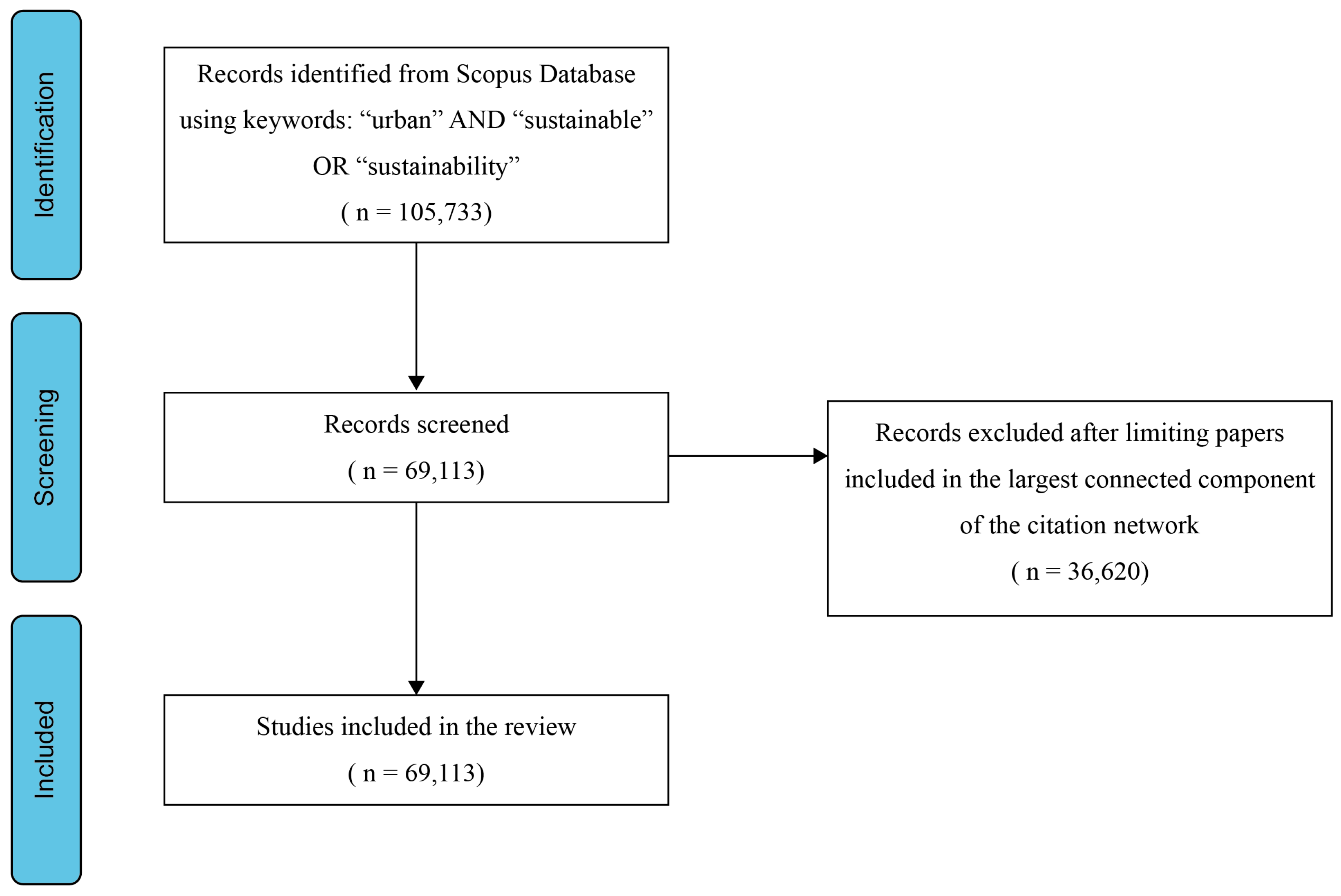
The 69,113 academic papers were sorted into 22 distinct clusters, with an analysis conducted on 19 clusters, each containing over 500 papers. The details of all clusters including more than 500 papers are provided in the
Supplementary Materials (Table S1).
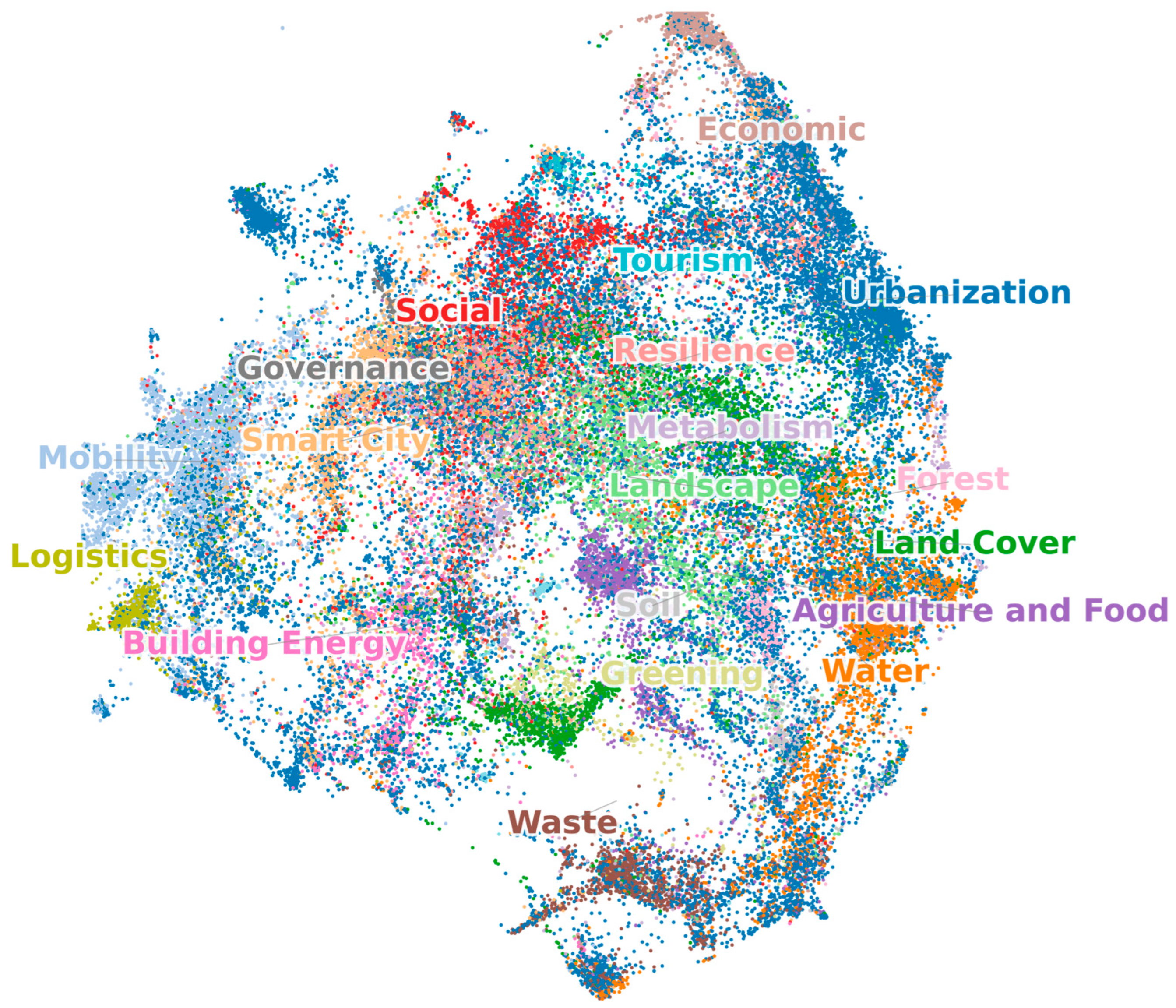
Figure 3 illustrates these clusters, with each color representing a different cluster. The authors assigned heuristic labels to each cluster after the fact, using TF-IDF and the top 20 most cited papers as a basis (
Table 1 provides detailed information for each cluster). The clusters are numbered according to the number of papers they contain. The layout of each paper was derived from text embeddings using OpenAI TextEmbedding3-Small, with the dimensions reduced to two via UMAP. In short, the nodes (papers) are arranged so that neighboring nodes are close together. Therefore, the distance between nodes on the map indicates the closeness of the relationship, but the position itself and the axes have no intrinsic meaning.
Urban sustainability studies comprised diverse research clusters. Urbanization (1) encompassed research on urbanization and associated environmental changes, including land use, biogeochemical cycles, climate (e.g., urban heat islands), hydrological systems and biodiversity. (e.g., Grimm et al., 2008) [
28]. As seen in the TF-IDF analysis including China, research targeting China, where urbanization is prevalent, was among the top 20 most-cited papers (e.g., Guan et al., 2018) [
29]. Mobility (2) was a research domain that covers various transportation modes, accessibility [
30], walkability [
31], and health issues related to air pollution linked to transportation [
32]. Water (3) encompassed research on water management, including flood [
33], water quality [
34], and wastewater management [
35]. Smart City (4) comprised studies that debate whether smart cities, which apply big data, ICT, and IoT to urban environments, contribute to sustainability [
36,
37,
38]. Land Cover (5) comprised studies on land use and land cover (LULC) related to the urban heat island (UHI) effect. Some study explored the relationship between land use and land cover change and land surface temperature using remote sensing [
39].
Landscape (6) was a series of studies on urban green spaces [
40], green infrastructure [
41] and nature-based solutions [
42]. This cluster discussed the positive and negative aspects of urban nature, such as its benefits and disparities [
43]. Social (7) was a group of studies on social sustainability. Regarding social sustainability, for example, Dempsey et al. [
44] defines it as two main dimensions of “social equity” and “community sustainability,” while Vallance et al. [
45] defines it as “development sustainability” addressing basic needs, the creation of social capital, justice and so on, ‘bridge sustainability’ concerning changes in behavior so as to achieve bio-physical environmental goals and ‘maintenance sustainability’ referring to the preservation—or what can be sustained—of sociocultural characteristics in the face of change, and the ways in which people actively embrace or resist those changes. This cluster also included research on the adaptive reuse of cultural heritage [
46]. Resilience (8) was a group of studies on resilience. It included papers on conceptualizing resilience [
47] and evaluation indicators [
48]. Agriculture and Food (9) was a group of studies on agriculture and food topics. This cluster’s papers examined the environmental sustainability and health impacts of dietary changes accompanying urbanization and rising incomes [
49], the factors driving these changes [
50], food safety within increasingly complex supply chains [
51], and the potential threats of pesticide use in urban areas [
52]. Metabolism (10) was a group of studies that quantify the overall flow of energy, water, materials, waste, and nutrients into and out of an urban region [
53].
Waste (11) focused on the management of various types of waste, including solid waste [
54] and food waste [
55], and their processing and reuse. The cluster also included the topics of bioenergy and biomaterials, which regard negative-valued waste as potential renewable feedstocks [
56]. “Economic” (12) was the only cluster in the TF—analysis that included the term “economic,” representing research that discussed the relationship between economic growth and environmental quality. The cluster primarily focused on exploring the interactions between energy consumption, carbon emissions, and the adoption of renewable energy in urban areas based on frameworks such as the Environmental Kuznets Curve (EKC) [
57,
58]. Building Energy (13) was a group of studies on energy consumption in urban buildings. This cluster’s papers included development of urban building energy models (UBEM) to support urban energy planning and building renovation decisions [
59,
60] and solar power generation potential considering urban form dependencies [
61]. Forest (14) encompassed research on the impacts of deforestation associated with urbanization [
62]. Governance (15) covered research on sustainability transitions [
63]. This cluster also examined living labs as experimental governance spaces for advancing transitions on the ground [
64,
65].
Soil (16) was a group of studies concerning soil quality, including biodiversity and contamination [
66,
67,
68]. Logistics (17) encompassed studies on urban logistics, which are essential to the urban economy but also cause negative impacts, such as congestion, emissions, and space consumption [
69,
70]. Greening (18) was a research cluster focusing on wall and roof greening and cool roofs that use high-reflectivity coatings [
71,
72]. Some studies examined cooling, carbon sequestration, and air pollution mitigation [
73]. Tourism (19) was a research cluster on sustainable tourism, including stress relief for urban residents [
74] and the need for participatory and collaborative policy approaches [
75].
The largest cluster was Urbanization (1). The related areas located near it in
Figure 3 are all other clusters, while Social (7), Resilience (8), Metabolism (10), Economic (12), and Tourism (19) are very close to Urbanization (1). This suggests that urbanization is the main focus of urban sustainability studies. The second-largest cluster was Mobility (2). The related areas are Smart City (4) and Logistics (17). These clusters focused on technology, especially in the transportation field. The third-largest cluster was Water (3). The related areas are Land Cover (5), Landscape (6) and Forest (14). All these clusters’ research were mainly based on system thinking. Building Energy (13) is close to Greening (18). These clusters focused on the building scale.
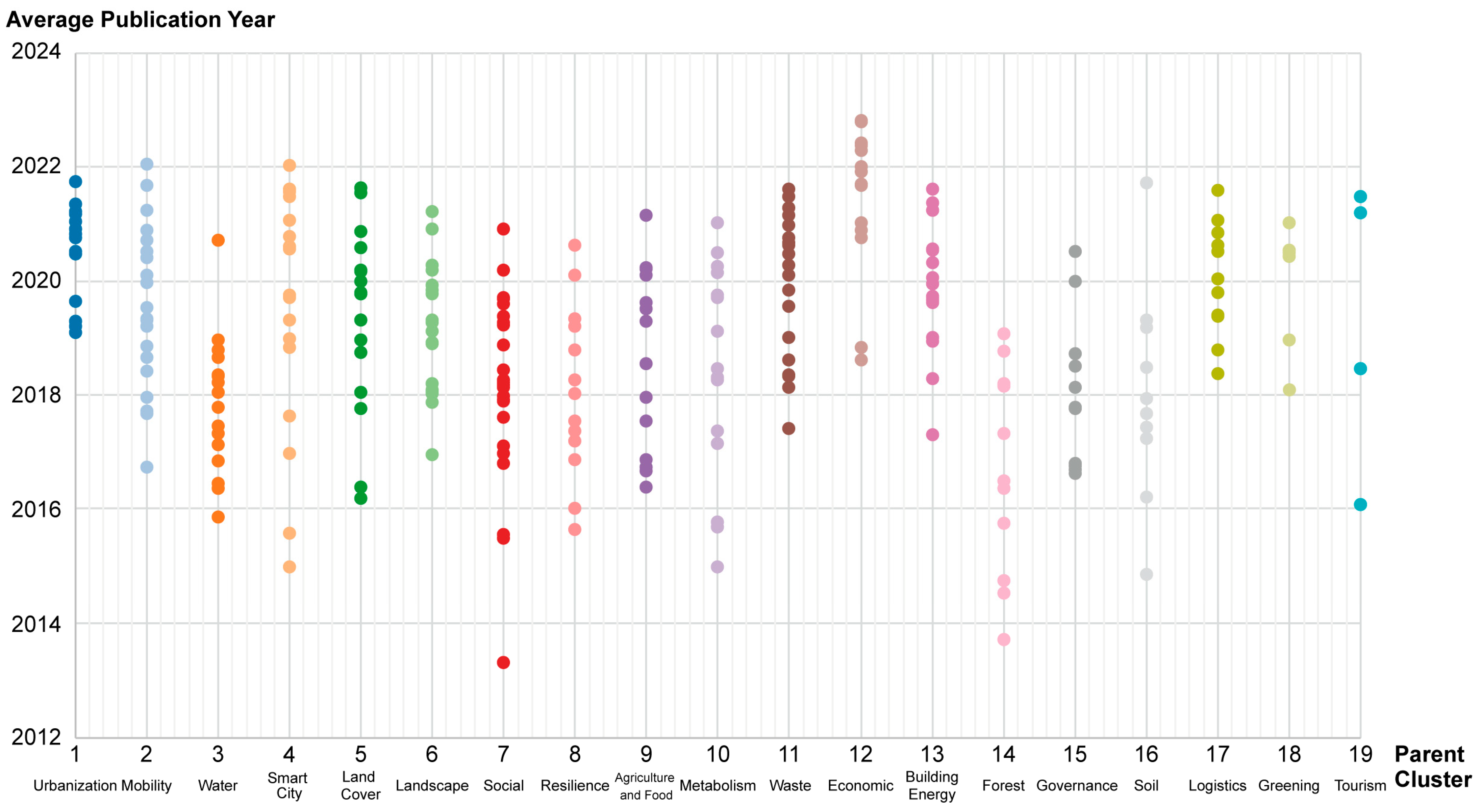
The average published years of papers in the clusters were between 2015 and 2021. The recency of the average published year indicates the level of recent scientific attention. The Economic (12), Urbanization (1), Waste (11), Logistics (17), and Greening (18) clusters contained relatively recent publications. The next newest groups were Land Cover (5), Building (13), Mobility (2), Landscape (6), and Smart City (4). The Agriculture and Food (9), Tourism (19), Governance (15), and Social (7) clusters had intermediate or slightly older average published years. The Forest (14) cluster had an average published year of 2015, meaning that relatively few papers have been published recently. The details of all clusters including more than 500 papers are provided in the
Supplementary Materials (Table S1).
However, it is not fair to conclude that topics in relatively older clusters do not attract recent scientific attention. Two reasons for the freshness of clusters are considered: research areas either emerged recently or researchers working in these areas recently associated their work with urban sustainability. Furthermore, a cluster’s “freshness” is influenced by the publication speed within that field. Publication speed is generally faster in natural sciences than in humanities and social sciences. Therefore, the fact that clusters such as Governance (15) and Social (7) are relatively older does not mean that they are less important.
The breakdown of the journal names of the top 20 most-cited papers in each cluster revealed that urban sustainability studies encompass various research areas. First, the top 20 most-cited papers comprised 215 journals. Among them, the most frequently cited journals were Landscape and Urban Planning, Renewable and Sustainable Energy Reviews, Journal of Cleaner Production, Sustainable Cities and Society, Proceedings of the National Academy of Sciences of the United States of America, Science, and Science of the Total Environment. According to these results, urban sustainability may be considered a popular topic, even in the general science category.
Table 2 lists journals with a frequency of five or higher. The details of all the journals are provided in the
Supplementary Materials (
Table S2).
The ASJC major categories comprised 22 fields (
Table 3), although the entire number of papers in the clusters may be higher. Environmental Science, Social Sciences, Engineering, Energy, and Agricultural and Biological Sciences each accounted for 5% or more. Furthermore, the ASJC detailed categories comprised 121 fields. The top frequencies were held by 3305 Geography, Planning, and Development; 2105 Renewable Energy, Sustainability, and the Environment; 2303 Ecology; 2309 Nature and Landscape Conservation; and 2308 Management, Monitoring, Policy, and Law (
Table 4). These results reaffirm that urban planning is an interdisciplinary field integrating 2300 Environmental Science, 3300 Social Sciences related to socio-economic and political aspects, and 2200 Engineering related to technology. The complete results of
Table 4 are documented in the
Supplementary Materials (Table S3).
3.2. Emerging Areas of Urban Sustainability Studies
To retrieve the trend within each cluster, we investigated the sub-clusters of each cluster.
Figure 4 shows the average publication years of the sub-clusters. In this figure, the subcluster data are aligned vertically with their corresponding parent clusters. The results in the figure indicate that relatively older/newer sub-clusters exist within each cluster. Concretely, some sub-clusters within Economic (12) represent the newest topics among all sub-clusters. Others, such as Urbanization (1), Mobility (2), Smart City (4), Soil (16), and Land Cover (5), contain the next newest sub-clusters. The details of each sub-cluster are provided in the
Supplementary Materials (Table S4).
To identify the current attractive scientific research fields, we listed 15 of the newest sub-clusters in
Table 5. The numbers in the first column indicate the parent cluster and subcluster numbers. The sub-clusters are listed in order of their average published years. The sub-clusters were numbered sequentially based on the number of papers in each cluster. The sub-clusters provide an overview of recent trends in scientific attention to urban sustainability studies. Since the parent cluster, Economic (12), had the most recent average publication year among the parent clusters, its sub-clusters occupied the top five positions in terms of freshness. Subcluster 12-5 contained many studies that analyzed hypotheses concerning the relationship between economic growth and environmental quality. These hypotheses included the Environmental Kuznets Curve hypothesis based on long-term panel data [
76,
77]. Subcluster 12-13 comprised studies on multi-objective optimization during the transition from fossil fuels to renewable energy, electrification, and efficiency improvements [
78]. This subcluster also included research on digitalization [
79,
80]. Subcluster 12-2 consisted of research examining the drivers of CO
2 emissions and effective policy levers for reduction across various countries according to industrialization [
81,
82]. This subcluster included a paper comparing the structure of association between aging populations and CO
2 emissions internationally [
83]. Subcluster 12-1 consisted of studies that primarily analyzed the relationship between ecological footprints and natural resources, renewable energy, and human capital [
58,
84]. Subcluster 12-10 analyzed the excessive development of natural resources and pollution [
85].
Subcluster 2-18 focused on urban air mobility (UAM) as a form of green transportation [
86]. Subcluster 4-10 consisted of studies that monitored traffic, air quality, and energy consumption, using high-resolution sensing and citizen participation [
87,
88]. Subcluster 12-7 consisted of studies that primarily focused on access to clean energy sources and renewable energy consumption. A certain number of these studies targeted Africa, as the TD-IDF in this subcluster included sub-Saharan Africa (SSA) [
89,
90]. Subcluster 12-6 consisted of studies that analyzed the relationship between logistics performance and environmental degradation [
91,
92]. Subcluster 1-10 examined green development on an urban scale and includes research on the impact of procurement on non-urban areas and improvements in development efficiency associated with the realization of wooden cities [
93]. Subcluster 16-6 was a group of studies analyzing and evaluating soil contamination by various heavy metals [
94,
95]. Subcluster 12-14 focused on financial technology [
96]. Subcluster 2-3 was a body of research on the X-minute cities, especially the 15 min city concept proposed by Carlos Moreno in 2016 [
97], which gained significant policy attention during the COVID-19 pandemic [
98,
99]. Subcluster 12-9 focused on economic growth, energy consumption and CO
2 emissions, incorporating tourism [
100]. Subcluster 5-17 focused on countermeasures against heatwave exposure [
101].
We reviewed the 20 most highly cited papers in each of the top 15 newest sub-clusters based on the average published year to identify future research topics. We broadly categorized these topics into three areas: theory, technology, and policy. In the theoretical realm, we identified the need for research on frameworks that integrate interactions between urbanization, economic growth, and environmental quality, and enable the assessment of their local characteristics. Specifically, research is progressing beyond linear models toward nonlinear hypothesis-based frameworks, such as the EKC [
77] and the load capacity curve (LCC) [
102]. In this context, certain factors, such as globalization, natural resources, and finance, have positive or negative impacts on the load capacity factor (LCF), which indicates environmental quality. The impacts can vary by country [
102]. Thus, further research is needed to construct an integrated framework that can detect and transform negative factors into positive ones. It is also crucial to expand theoretical frameworks that incorporate socioeconomic and political aspects, such as aging levels, human capital, education and governance factors [
100], including government stability, corruption, the rule of law, and technological progress [
82,
103,
104].
Furthermore, the need for research on urban spatial concepts has become apparent. X-minute cities have gained attention since the onset of the COVID-19 pandemic. It is necessary to verify the concept from an equity perspective by measuring disparities in responses based on race, gender, and socioeconomic status and assessing the negative impacts on individual and social freedoms, given their potential adverse effects [
98]. Additionally, more research is needed on metropolitan regions or city-regions to mitigate CO
2 emissions associated with urbanization, such as transformation into timber cities [
93]. Metropolitan areas are considered key drivers of global economic development [
105] and important spatial units in the context of sustainable societies.
Technically, data preparation was a future topic. Specifically, it includes data on renewable energy consumption, tourism, and forest area [
106] and a broader range of environmental pollution indicators beyond CO
2 emissions, including water pollution, air pollution, and land contamination [
81]. This data preparation is expected to improve econometric approaches and enable more accurate predictions, such as those related to air quality [
88]. However, privacy is a barrier to data preparation, and there is a need to expand the scope of non-intrusive load monitoring (NILM) technology [
107]. Additionally, detailed physical activity data, including walking, cycling, sports, physical education, and unstructured activities during leisure time, are needed [
108]. These data are associated with scientific interest in health.
Additionally, topics related to the development of materials and systems as underlying technologies were also presented. For instance, the necessity of researching the long-term durability of cool roof measurements has been emphasized [
109]. The necessity of optimizing systems and examining the economic viability of enhancing energy collection from road pavement solar collectors (RPSC) and reduce UHI surface temperatures has also been highlighted [
110]. Furthermore, given the anticipated extensive use of composites in future vehicles, such as EVs and UAMs, not only for lightweight structural components but also for battery housing systems and efficient energy storage, the need for composite technology development was emphasized [
111]. It was also noted that analyzing the social and economic impacts of UAM on local communities and addressing concerns about inequality, such as income disparities, is necessary [
86].
Regarding policy aspects, topics related to the generalizability and contextual applicability of policy implementation were identified. These included the effectiveness of public investment in renewable energy research and development in countries with low levels of renewable energy investment [
112], the carbon reduction effects of green technologies and renewable energy based on income levels and other socioeconomic factors [
113], the applicability of digital policies that promote growth and sustainability [
79,
80], and the impact of environmental taxes on regional characteristics [
85]. In relation to this, the importance of integrated policy evaluation was also stressed, such as the multifaceted evaluation of energy, emissions, air pollution, and health associated with heating fuel conversion [
114], and the cost–benefit of renewable energy policies and energy efficiency policies [
115]. Although the scale of analysis was mostly national, it was suggested that analyses should also be conducted at the regional level to implement region-specific policies [
104,
116].
Furthermore, multiple subcluster papers emphasized the need to expand investment in education because improving human capital significantly reduced dependence on fossil fuels [
117,
118]. Additionally, the need for long-term, environmentally oriented urban planning programs was noted based on the impacts of urbanization [
102]. Furthermore, some studies referred to the guidelines for developing and disseminating new technology. For example, regarding the introduction of cool materials, the need for comprehensive guidelines outlining the minimum regulatory requirements for the solar reflectance index (SRI) was argued [
109].
Based on the above, we identified future research topics related to theory, technology, and policy. First, although various nonlinear models concerning economic growth and environmental quality are being studied, policy design should differ depending on whether economic growth is accompanied by environmental deterioration or improvement. Additionally, nonlinear model variables are still being explored, necessitating technological development to prepare data that enable privacy protection and interoperability. Incorporating socioeconomic and governance aspects as variables is necessary for the generalizability of policies. Since theory, technology, and policy are mutually related, research integrating them to achieve their co-evolution is necessary for urban sustainability studies.
3.3. Design in Urban Sustainability Studies as an Integrated Academic Field
The issues contained within the latest sub-clusters are not necessarily themes of medium-to long-term importance. Therefore, to identify more cross-cutting and significant issues, we analyzed sub-clusters containing the word “design,” a concept that is spatially integrated with TF-IDF. Fifteen such clusters were identified. This term appeared most frequently in the TF-IDF, except for terms related to individual parent clusters. The average publication year for these sub-clusters ranged from 2013 to 2020. This suggests that these papers represent a relatively mature field. By comparing the analysis of sub-clusters containing “design” with the analysis of new sub-clusters based on publication years from the previous section, we identified cross-cutting themes that are important over the medium to long term. The importance of the research topic in this study reflects whether it has been debated for a long time yet remains unresolved to this day from the perspective of an integrated academic field (
Table 6).
Subcluster 4-4 comprised studies that primarily focused on the trade-offs between economic growth, environmental conservation, and social justice at the urban scale [
119,
120]. This subcluster included research that argued for the necessity of a national-scale housing and welfare framework from the perspective of a just city [
121]. Subcluster 6-4 comprised studies that discussed urban planning from an ecological perspective, focusing on concepts such as “safe to fail,” ecosystem services [
122] and landscape stewardship [
123]. This subcluster included papers on social-ecological-technical systems (SETS) theory for understanding the complex nature of urban systems [
124]. Subcluster 6-15 comprised studies on designs utilizing nature, such as biophilic design [
125,
126] and nature-based solutions [
127]. This subcluster included a review article on research estimating greenery levels from street views [
128] and a review article on GeoAI research [
129]. Subcluster 7-4 comprised studies exploring both positive and negative aspects of proximity, such as diversity [
130], social mixing [
131], studentification [
132], and compact cities [
133]. Subcluster 7-9 comprised studies evaluating vernacular traditional architecture from a sustainability perspective [
134,
135,
136]. Subcluster 7-11 focused on crime prevention. Some studies have argued that the theory of crime prevention through environmental design (CPTED) is a useful tool for enhancing urban sustainability [
137]. Subcluster 7-15 was a group of studies on street space design and sustainability that conceptualized sustainable streets [
138]. Furthermore, one study argued that visual diversity contributes to sustainable and comfortable spatial design in urban streets [
139]. Subcluster 7-16 included studies that evaluated public spaces from the perspective of urban sustainability and explored design methodologies [
140,
141]. This subcluster included research on urban commons. One study emphasized the importance of designing place-based rights [
142]. Subcluster 7-20 was a group of studies on urban design processes, including scenario evaluation and education [
143,
144]. This subcluster included numerous studies targeting British cities, such as the VivaCity2020 project [
144]. Subcluster 9-15 comprised a group of studies on the connection between urban agriculture and social cohesion [
145]. This subcluster included research [
146] presenting frameworks for how urban agriculture contributes to participatory city building and research [
147] aiming to bridge food policy and urban planning. Subcluster 10-15 comprised research groups focusing on biomimicry [
148] and regenerative design [
149]. Subcluster 13-2 was a group of studies analyzing the impact and trade-offs of building density, form, and layout on solar energy utilization and the suppression of excessive heat gain [
150,
151]. Subcluster 13-8 comprised a group of studies on standard parameterization systems for urban 3D morphology using LiDAR/photogrammetry and Digital Surface Models (DSM) [
152,
153]. Subcluster 13-9 comprised research groups focusing on high-rise building design [
154], such as multi-zone optimization (MUZO) to support decision-making for an entire high-rise building considering multiple floor levels and performance aspects, and generative urban design (GUD) leveraging artificial intelligence (AI) and computational capacity [
155]. Subcluster 16-5 was a group of studies focusing on the cultural landscape of rural areas [
156,
157].
We organized future research topics from the papers in these sub-clusters containing the term “design,” considering theoretical, technical, and policy aspects. We compared the results of this analysis with those of a new subcluster based on the average publication year. In the theoretical realm, it has been repeatedly suggested that a research framework is needed to expand the value conflicts between environment, growth, and fairness, as well as culture, safety, and health, across time, space, and the multi-layered structure of institutions, and to evaluate them holistically using composite indicators. For example, it was highlighted to integrate cities as SETS and develop comparative research and urban evolution that explores common principles through a systems-oriented and transdisciplinary approach [
158,
159]. Furthermore, the necessity of sequencing theory, which emphasizes the importance of prioritizing actions and decisions while acknowledging trade-offs, was also highlighted [
160]. Additionally, the need to integrate insights from environmental criminology, heritage and landscape studies, food systems, and biomimicry within the context of urban sustainability studies has become apparent. These theories can form a theoretical foundation that contributes to arranging and overcoming value conflicts. For example, some studies claimed that a multi-criteria and multidisciplinary approach should be followed in close cooperation with stakeholders, owners, and users to achieve a sustainable balance between the preservation of authenticity and the environmental retrofitting of heritage buildings [
161]. Thus, the perspective of comprehensively considering the environment, economy, and society while weighing trade-offs and synergies was consistent across both the research groups analyzed in the subcluster containing the term ‘design’ and the new subcluster based on publication year. Although the definition of urban sustainability includes societal aspects, developing theoretical frameworks that incorporate socioeconomic and political dimensions remains a challenge.
Furthermore, some terminologies and concepts differed when the scales were changed, whereas others remained the same despite the scale change. For the former, for example, regarding reducing car use, district-scale studies emphasized improving walkability, whereas city-scale studies emphasize improving air pollution. The convergence of these differing terminologies and concepts onto the same policy measures suggests the scope for exploring insights into which terminologies or narratives influence the feasibility of urban policies from the perspective of comprehensive sustainability sequencing and local political and social path-dependency. The latter included themes such as food, which are not central to conventional urban planning topics.
Technically, the preparation of regional data was identified as a future topic. In the research on multi-objective optimization, it has been suggested that new approaches, such as machine learning predictive algorithms, should be explored to address the increase in computation time associated with larger scales and more variables [
150]. Conversely, the sub-cluster with newer publication years emphasized the need for data preparation concerning broad environmental pollution indicators, indicating that data preparation at large scales remains a consistent challenge. Furthermore, the newer sub-clusters indicated that privacy protection is a barrier to data preparation. The sub-clusters containing the term “design” highlighted the need for technological development of low-cost, open citizen-participatory measurement tools, such as smartphone sensors [
162], suggesting greater potential for development in citizen science approaches. Citizen science approaches have focused on specific domains such as landscapes. Therefore, exploring the scalability of these approaches could overcome privacy protection challenges by enabling citizens to disclose information.
From the policy perspective, institutionalization and verification of policies as design under multi-level governance that transcends individual cities are required. Within this framework, it is increasingly important for the research community to develop and provide methodologies and tools that enhance decision-making and governance through both top-down (administrative planning, state intervention, and think tank concepts) and bottom-up approaches (grassroots activities, civil society, and community action groups). Methodological approaches provided by landscape ecological sciences, such as various indicator sets, multi-criteria analysis, spatial modeling, landscape mapping, and multiple forms of social assessment, were argued to be applicable to policy design [
158]. Meanwhile, the newer sub-clusters of publications highlighted the importance of research at the regional level. The regional level is perceived as a scale that should be addressed more in the future in both research and policy. A new conceptual framework for metropolitan food systems [
147] that integrates the institutional environment of planning and urban design is being explored, suggesting that regional-level research based on trans-scale topics is becoming more important.
These discussions create challenges and opportunities for transforming complexity approaches into bottom-up approaches from the perspective of integrating multiple issues. Among the papers analyzed in this study, empirical bottom-up approaches are limited. This is interpreted as contributing to the lack of social aspects as a future challenge. In environmental studies, adaptive governance [
163] represents an approach that seeks to solve environmental problems while incorporating local social issues. This resonates with passive design and biophilic principles. A holistic passive design emphasizes bottom-up, locally led frameworks that will help empower stakeholders who understand the local climate and cultural context. Leadership in Energy and Environmental Design (LEED), developed in the United States, has become a global certification system for cities and buildings, with some adaptations for local customization. For example, LEED Canada replaced U.S.-centric credit requirements with Canadian equivalents that reflect the country’s unique climate, regulatory standards, and construction practices [
164]. By incorporating these location-specific conditions, it serves as a national-level example of bottom-up localization that effectively enhances urban sustainability. Additionally, under the biophilia hypothesis [
165], biophilic design presents causal pathways showing that urban nature leads to resilient city outcomes, such as reduced vulnerability, by promoting positive health outcomes (e.g., mental health) and resilient behavior by fostering walking and physical activity, socialization, social capital, friendship, and stress reduction [
166]. Bottom-up approaches that start at the individual level are also being explored in this regard. Such approaches should be more actively introduced into the field of urban planning, where bottom-up approaches have long been discussed as seen in the work of Jacobs [
167] and Alexander [
168].