Article

Effect of Flax Fiber Content on the Properties of Bio-Based Filaments for Sustainable 3D Printing of Automotive Components


1
Industrial Technical Centre for Plastics and Composites (IPC), 2 rue Pierre et Marie Curie, 01100 Bellignat, France
2
Université Grenoble Alpes, CEA, LITEN, DTNM, 17 Avenue des Martyrs, 38000 Grenoble, France
3
Aitiip Centro Tecnológico, C/Romero 12, 50720 Zaragoza, Spain
*
Author to whom correspondence should be addressed.
Sustainability 2026, 18(1), 199; https://doi.org/10.3390/su18010199
Submission received: 5 November 2025 / Revised: 30 November 2025 / Accepted: 3 December 2025 / Published: 24 December 2025

Abstract

The growing interest in sustainable additive manufacturing has driven research into customized biocomposite filaments reinforced with natural fibers. This study evaluates the influence of flax fiber content (5–15 wt%) on the thermal, rheological, morphological, and mechanical properties of fully bio-based polyamide PA10.10 filaments intended for fused deposition modeling (FDM). Filaments containing up to 15 wt% flax fibers were produced using both conventional single-screw extrusion and the METEOR® elongational mixer to compare shear- and elongation-dominated dispersive mechanisms. Increasing flax loading enhanced stiffness (up to +84% tensile modulus at 15 wt%) but also significantly increased porosity, particularly in METEOR-processed materials, leading to reduced strength and intrinsic viscosity. Microscopy confirmed fiber shortening during compounding and revealed porosity arising from moisture release and insufficient fiber wetting. Rheological analysis showed the onset of a pseudo-percolated fiber network from 10 wt%, while excessive porosity at higher loadings impeded melt flow and printability. Based on the combined evaluation of the mechanical performance, dimensional stability, and processability, a 5 wt% flax formulation was identified as the optimal compromise for FDM. A functional automotive demonstrator (Fiat 500 dashboard fascia) was successfully printed using optimized FDM parameters (nozzle 240 °C, bed 75 °C, speed 20 mm s−1, 0.6 mm nozzle, 0.20 mm layer height, and 100% infill). The part exhibited controlled shrinkage and limited warpage (maximum 1.8 mm across a 165 × 180 × 45 mm geometry with a 3 mm wall thickness). Dimensional accuracy remained within ±0.7 mm relative to the CAD geometry. These results confirm the suitability of PA10.10/flax biocomposites for sustainable, lightweight automotive components and provide key structure–processing–property relationships supporting the development of next-generation bio-based FDM feedstocks.

1. Introduction

In recent years, there has been growing interest across industries, including automotive, in renewable materials driven by environmental concerns from both consumers and manufacturers. This trend has accelerated the need for materials that are not only sustainable but also maintain the high mechanical and thermal properties demanded by high value-added applications. Achieving these characteristics with bio-based materials is particularly challenging, as they often fall short of performance benchmarks set by conventional synthetic polymers. However, natural fibers, such as flax, have emerged as promising bio-reinforcements that enhance the properties of biocomposites while reducing reliance on petroleum-based resources [1,2,3,4].
Additive manufacturing, and especially fused deposition modeling (FDM), provides an efficient and resource-conscious route for transforming such materials into complex geometries with minimal waste. As an extrusion-based technique, FDM is compatible with fiber-reinforced thermoplastic filaments and facilitates the production of customized, lightweight parts aligned with circular-economy objectives. Research in this field has so far been dominated by PLA-based biocomposites; however, PLA’s limited thermal resistance and relatively low toughness restrict its use in engineering applications [5,6,7,8]. Expanding beyond PLA, bio-based polyamides such as PA10.10 offer superior thermal stability, mechanical robustness, and improved durability, making them attractive alternatives for applications requiring greater structural integrity [9,10,11].
The development of bio-based, high-performance materials for three-dimensional (3D) printing remains challenging, as they must meet specific structural and functional criteria to serve as viable alternatives to traditional polymers. Fiber hydrophilicity, moisture uptake, and susceptibility to breakage can adversely affect fiber dispersion, interfacial adhesion, and porosity formation during compounding and filament extrusion. These microstructural defects significantly influence filament consistency, printability, and ultimately the mechanical performance of FDM-printed components [12,13,14,15]. Maintaining uniform filament diameter and minimizing voids are therefore essential to ensure stable extrusion flow and reliable layer-by-layer deposition [16]. Twin-screw extrusion is commonly used for compounding natural fiber composites due to its strong dispersive and distributive mixing capabilities, but the associated high shear stresses can shorten fibers and increase thermal degradation. Conversely, elongational mixers, such as the METEOR® technology developed by IPC, apply controlled convergent–divergent deformation to the melt, promoting fiber dispersion while limiting shear-induced degradation [17,18,19]. However, elongational mixing may also create low-pressure regions that limit degassing efficiency, increasing the risk of entrapped air, moisture-driven porosity, and incomplete fiber wetting. The interplay among the processing route, fiber morphology, and resulting filament properties therefore warrants detailed investigation. The high processing temperature of polyamides, combined with the limitations of natural fibers such as flax, makes fiber-reinforced polyamide composites relatively rare [20,21].
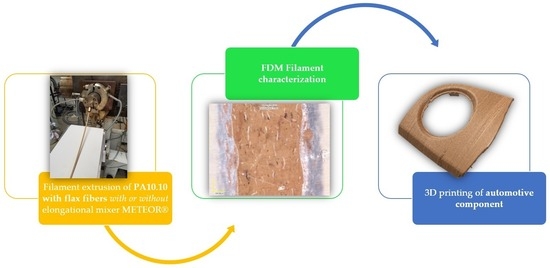
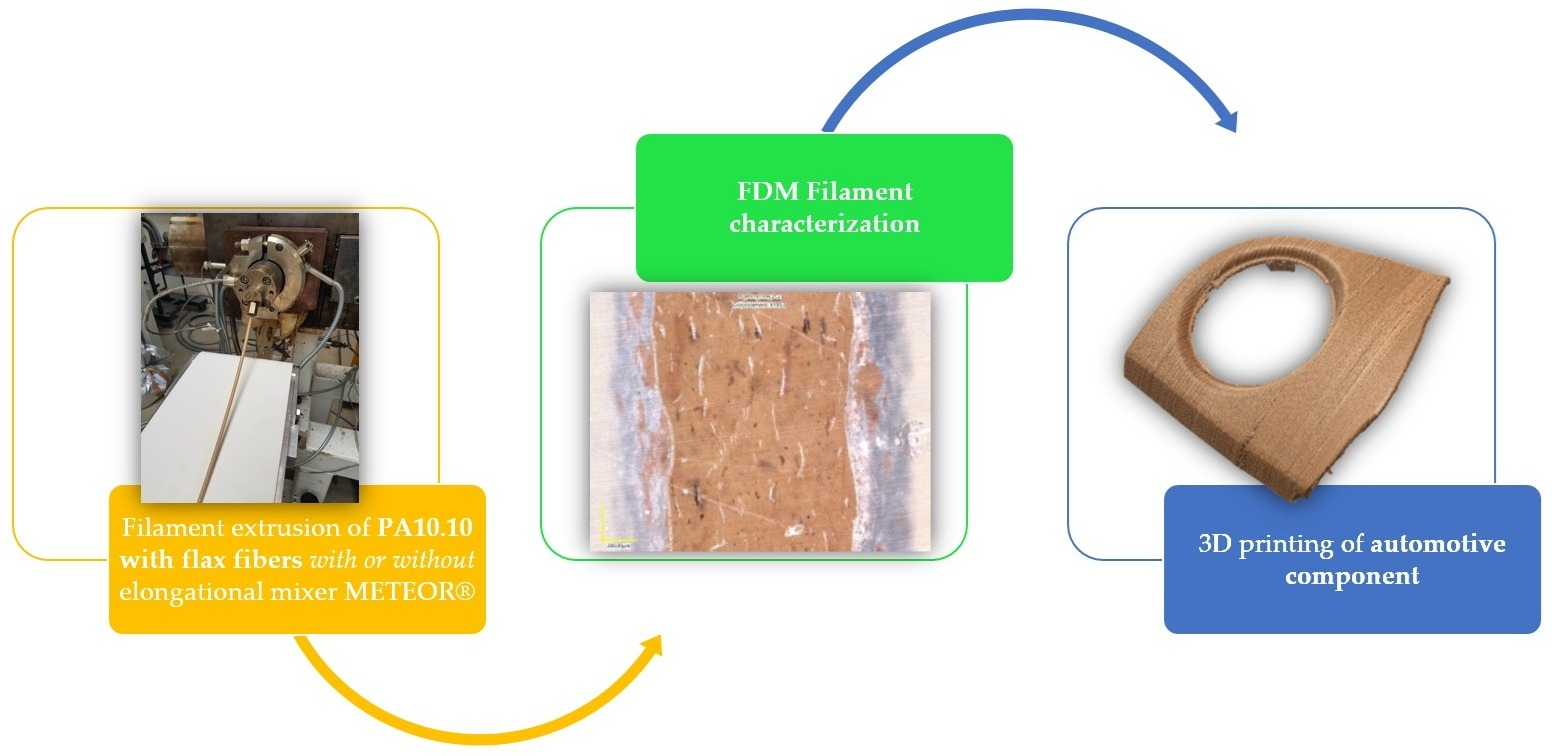
In addition to processing effects, the literature indicates that increasing fiber content alters surface roughness, diameter stability, porosity, and melt rheology—all of which influence FDM printability and final part performance [1,7,22]. Fiber length reduction and morphological changes introduced during compounding further affect melt homogeneity, flow behavior, and interlayer bonding during printing [1,23]. In this context, the present study investigates the influence of fiber content (5–15 wt%) and processing with IPC’s METEOR® elongational mixer on the microstructure, rheology, mechanical properties, and printability of fully bio-based PA10.10/flax filaments (Figure 1). We specifically evaluate the origins of porosity (air entrapment, moisture release, incomplete wetting), the evolution of fiber length and dispersion, and their combined effect on filament continuity and FDM performance. Finally, the applicability of these biocomposite filaments is demonstrated through the fabrication and testing of a functional automotive demonstrator. By establishing the critical links between fiber morphology, processing method, and printed part performance, this work contributes toward the development of sustainable, high-performance feedstocks for industrial additive manufacturing.

2. Materials and Methods

2.1. Materials

Bio-based PA10.10 (reference BioPA1010-201) was supplied by Natureplast (Mondeville, France). Untreated flax microfibers were provided by the Institute of Natural Fibers and Medicinal Plants (IWNiRZ, Poznan, Poland), with an average length of 0.46 mm and diameter of 14.44 µm.

2.2. Blend Preparation Methods

2.2.1. Twin-Screw Extrusion and Compounding

After drying the fibers and the polymers for 12 h at 80 °C, the composites were produced at CEA with a TSE24MC twin-screw extruder (Thermo Fisher Scientific, Waltham, MA, USA; L/D = 40) at 500 rpm, with a temperature screw profile corresponding to 210/205/205/205/210/205/200/200/200/205 °C.

2.2.2. Injection of Tensile Specimens

After drying the composites (12 h at 80 °C), the samples were injected into tensile specimens of 170 × 10 × 4 mm via a SELECT 150 electrical injection press (Billon, Germany Billion, Bellignat, France), with a 150-Tons closing force capacity. The temperature screw profile was 220/215/210/205 °C, and the mold was kept to 60 °C.

2.2.3. Filament Extrusion

  • FDM Line
The FDM (fused deposition modeling) line includes a single-screw extruder (Collin E30) fitted with a filament die, followed by dual silicon conveyor belts for air drying, a Zumbach system for continuous diameter and ovality measurement, and finally, a haul-off and winder system (Collin 3D filament downstream). The measure of the diameter can be correlated to the haul-off speed to adjust the diameter and stay within the range requested.
  • Adding the continuous elongational flow mixer METEOR® to the FDM Line
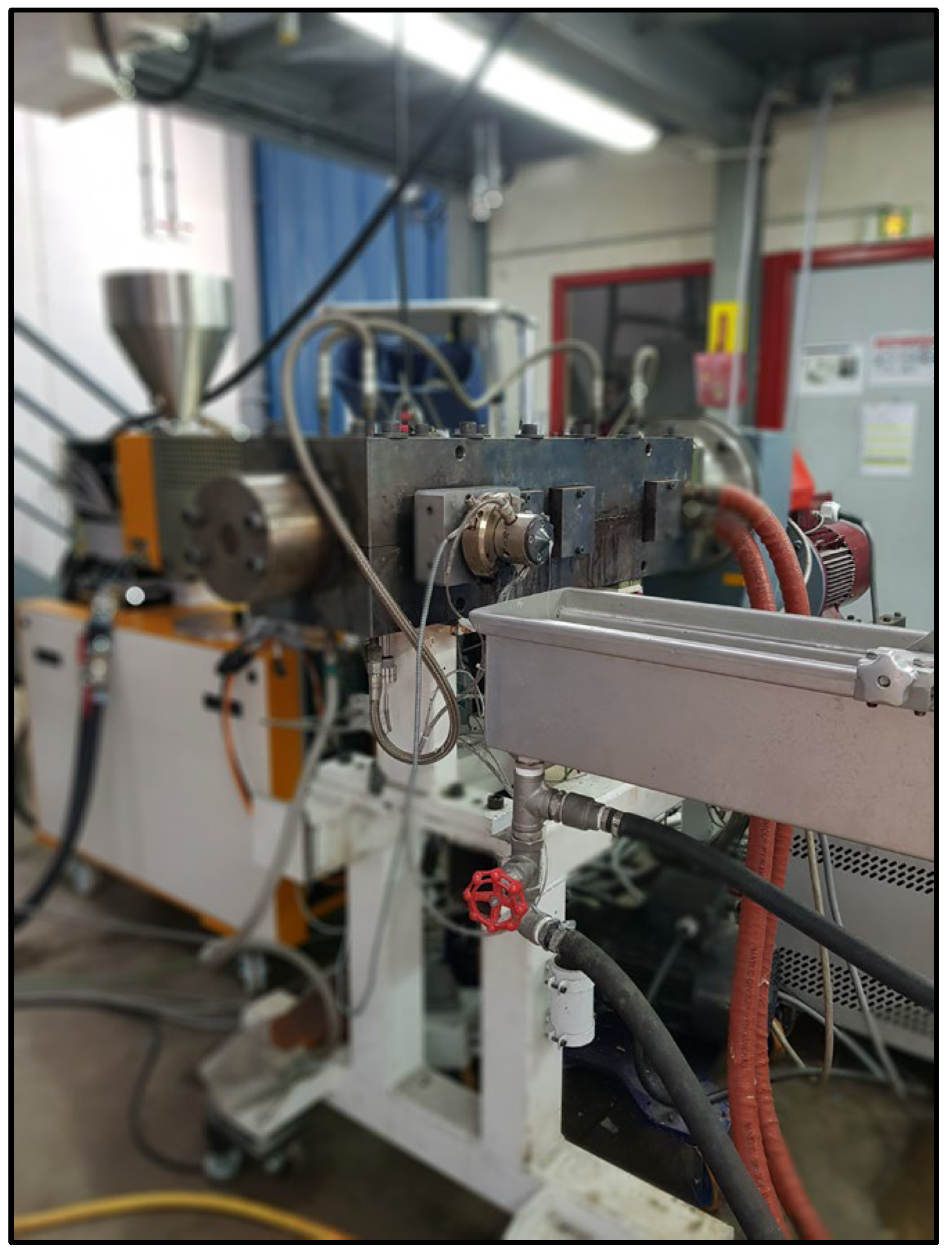
The METEOR® system (Oyonnax, France) patented by IPC (FR3054159A1 dispositif et proceed pour le mélange de matières plastiques DISPOSITIF ET PROCEDE POUR LE MELANGE DE MATIERES PLASTIQUES) [24] was developed to provide the industry with a continuous elongational mixer equipment. The screw incorporates a series of axial convergent–divergent elements designed to periodically accelerate the polymer melt. This geometry generates strong elongational deformation while keeping the shear component intentionally low. By favoring the elongational mixing action, the system enhances fiber dispersion while minimizing the excessive viscous heating inherent to shear-dominated flow mixings. In conventional shear flow, perpendicular friction effects are implied in the driving force for shear deformation to happen, whereas in elongational flow the entire axial deformation does not involve other stress components. Elongational flow involves uniform axial stretching without lateral shear, enabling more efficient distributive mixing while preserving fiber length and reducing thermal degradation. For this study, the METEOR® mixer was installed downstream of a mild-mixing single-screw extruder. The extruder ensures initial melting and conveying of the materials, while the METEOR® module provides the primary elongational mixing action before the melt enters the filament die (Figure 2).

2.2.4. Three-Dimensional Printing Line

Three-dimensional printing was performed using a BCN3D sigmax (Sant Feliu de Llobregat, Spain), with an IDEX (Independent Dual Extruder) architecture. This configuration allows the two print heads to operate independently, enabling high-quality multi-material printing with improved process flexibility. The system supports open-source programming code, providing unrestricted access to all parameters and precise control of extrusion conditions for each nozzle. The printer features a rigid-open frame metallic structure, which facilitates optimal placement of monitoring and control devices without structural interference. This design also ensures stable mechanical behavior of the gantry during printing.

2.3. Experimental Methods and Procedures

2.3.1. Rheological Properties

The viscosity index (VI) was measured directly on the filaments. The samples were first conditioned under vacuum at 70 °C for 5 h. Solutions with a concentration of 0.005 g/mL were then prepared using m-cresol as solvent. Dissolution was carried out under continuous stirring at room temperature for at least 12 h. After filtration, the solution was introduced into an Ubbelohde viscometer tube and placed in a thermostatically controlled bath (PROLINE PV24, LAUDA) programmed at 25 °C.
The rheometer used is the AR2000ex from TA Instruments (New Castle, DE, USA). Composite pellets were dried for 6 h at 90 °C. The pods were produced directly on the rheometer between the two parallel plates at 210 °C. The dimensions are 25 mm in diameter and 1500 µm in thickness. The plate–plate rheometer method involves applying dynamic oscillatory stresses in the frequency domain to study viscoelastic phenomena by observing the evolution of the storage modulus (G′)—representing the elastic component—and the loss modulus (G″)—representing the viscous component—as a function of frequency (within the material’s linear viscoelastic region). The linear viscoelastic region (LVE) was identified by strain sweep (0.01–100%) at 210 °C and 1 Hz, selecting 0.05% strain for subsequent tests.
Time sweep tests (DTS: Dynamic Time Sweep) are performed at fixed strain and fixed frequency. The results show both G′ and G″ moduli. These tests allow monitoring the evolution of the material’s structure (degradation, in this case) over time, especially when G′ becomes greater than G″.
  • Temperature: 210 °C.
  • Imposed oscillation frequency: 1 Hz.
  • Imposed strain (determined from LVE): 0.05%.
  • Test durations: 900 s (15 min) and 2700 s (45 min).

2.3.2. Moisture Content Measurement

METTLER DL37 Coulometer (Greifensee, Switzerland) is used on composite pellets. Composite pellets were dried for 6 h at 90 °C.

2.3.3. Thermal Analysis: DSC and TGA

The injected samples were analyzed on a DSC 404 F1 Pegasus® (Netzsch, Selb, Germany) during the first heating. Analysis was performed under He inert gas with a ramp of 10 K.min−1, from −25 to 250 °C. The percentage of crystallinity of the blends was calculated as follows:
Χ c = Δ H m Δ H c Δ H ° m ( 1 % w t   f i l l e r 100 ) × 100
ΔHc denotes the crystallization enthalpy, ΔHm denotes the melting enthalpy, ΔH°m denotes the standard melting enthalpy, which is 244 J.g−1 for PA10.10, and %wt filler is the total weight percentage of fiber.
DSC measurements were carried out on the filaments on a TA Instruments DSC Q100 (New Castle, USA) with 8 to 9 mg of sample placed in an aluminum pan, at a heating/cooling rate of 10 °C/min from 20 to 230 °C with 2 heating cycles.
TGA analyses were performed on the filaments, using a TA Instruments Q500 (New Castle, USA), with a heating rate of 20 °C/min from 20 to 850 °C under nitrogen.

2.3.4. Mechanical Properties

  • Injected samples
The raw polymers and the composites were subject to mechanical tests on a SYNTAX 12 Universal Testing Machine (3R, Montauban, France). Normalized 1A samples were used for both tests (ISO 527-1 [25]). Tensile tests were realized at a speed of 1 mm/min. A minimum of five specimens per sample were tested. The average values for the mechanical parameters—tensile strength, Young’s modulus, and elongation—were calculated from the corresponding Stress–Strain curves.
  • Filament samples
Mechanical tests were performed on a dynamometer ZWICKI (Ulm, Germany) tensile machine at room temperature with a 1 kN load cell at a crosshead speed of 100 mm/min. A minimum of five specimens per sample were tested. The average values for the mechanical parameters—tensile strength, Young’s modulus, and elongation—were calculated from the corresponding Stress–Strain curves.

2.3.5. Optical Microscopy

Microscopy was performed on a VHX-7100 from KEYENCE (Bois-Colombes, France). Filaments were observed in longitudinal and transversal directions to observe the internal structure and fibers orientation, length, and dispersion in the polymer matrix. Samples were prepared in a resin KM-U.

2.3.6. Roughness

The roughness of the filaments was analyzed with a MAHR Perthen (Göttingen, Germany). Probing length is 17.50 mm, and for measurements, the length is 12.50 mm. Probing speed is 0.5 mm/s.

3. Results

3.1. Influence of the Fiber Nature on the Properties of Injected PA10.10/Flax Biocomposites Samples

Upstream of filament production, the compounds were prepared using twin-screw extrusion of polyamide PA10.10 with flax fibers, with fiber loadings from 5 to 30 wt%. This method facilitates enhanced mixing between fibers and the polymer matrix, as twin-screw extruders are known to provide superior fiber dispersion and improved mechanical performance compared to single-screw systems [1]. However, screw speed remains a critical parameter: excessive rotational speeds increase melt temperature, fiber breakage, and air entrainment, while insufficient speed can lead to incomplete fiber wetting and poor mixing efficiency [26].
PA10.10 was selected due to its relatively low processing temperature among polyamides (220 °C), reducing the risk of thermal degradation of flax fibers. As indicated by Bazan et al. [27] and Feldmann et al. [20], the addition of aramid, basalt, or cellulosic fibers leads to significant material reinforcement and an increase in thermal properties (Vicat and HDT). The same trend is observed in Table 1; tensile modulus and tensile strength increase progressively with fiber loading (up to +84% tensile modulus at 15 wt%). Conversely, the material becomes more brittle, as elongation at break decreases due to restricted polymer chain mobility and the intrinsic stiffness of the fibers.
Thermal analysis further supports this behavior. DSC measurements show increasing crystallinity with fiber loading, attributable to the nucleating effect of flax fibers. As crystallinity contributes to improved thermal resistance, the heat deflection temperature (HDT) increases accordingly. Three mechanisms may enhance HDT and Vicat softening temperatures: an increase in glass transition temperature (Tg), matrix stiffening, or increased crystallinity. In the present system, the latter two effects are dominant. The Vicat temperature increases modestly (≈+2 °C at 5 wt% flax) but remains relatively stable around 196 °C, even at higher loadings, suggesting that crystallinity contributes more significantly to HDT than to softening resistance.

3.2. Three-Dimensional Filament Processing

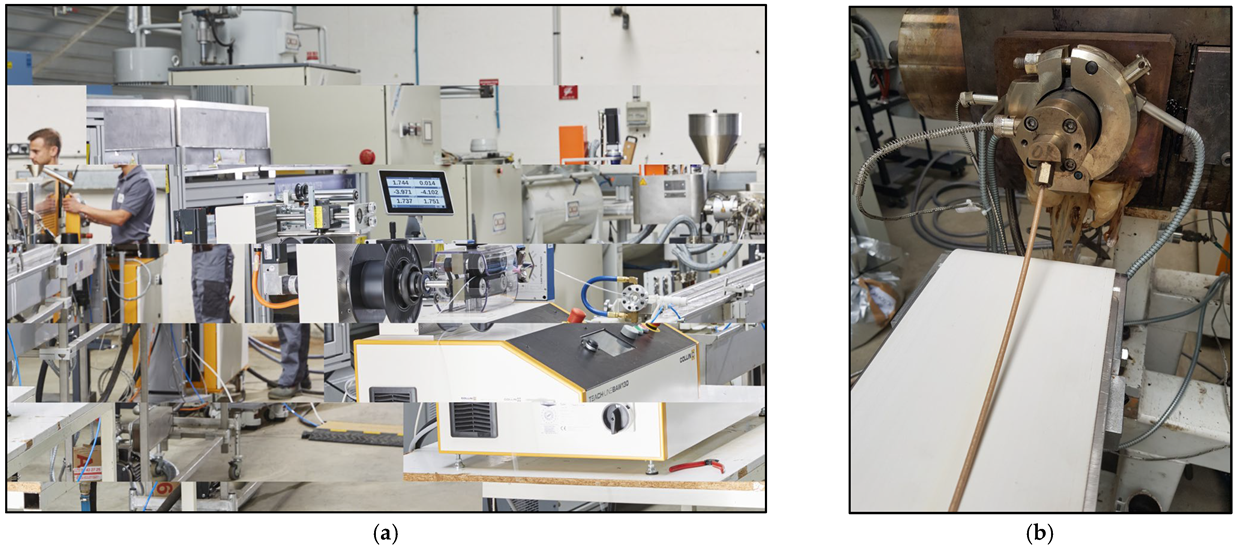
The filament production was then conducted with these previously twin-screw extruded compounds. The FDM (fused deposition modeling) line includes a single-screw extruder, a filament die, dual silicon belts for air drying, a Zumbach system for continuous diameter and ovality measurement, and finally, a haul-off and winder system (Figure 3a). Within this setup, an elongational mixer, patented by IPC under the name METEOR®, can be positioned immediately before the exit die. This component aims to minimize compound degradation during extrusion by reducing shear stress, which can improve fiber dispersion and orientation [28]. Filaments were processed both with and without the METEOR mixer under similar temperature profiles and screw speeds to allow for a comparative analysis of its impact on the material properties.
Due to the rigidity introduced by 15% fiber loading, the compounds at this concentration were challenging to extrude and form consistent filaments. This high fiber content also led to die swell, allowing only 2.85 mm diameter spools to be produced (Figure 3b). Therefore, fiber content was subsequently reduced to 5% and 10% for filament production. The optimized processing parameters used in these trials are summarized in Table 2.

3.3. Material Properties

DSC results revealed a dual melting peak at 190 °C and 200 °C that are directly associated with γ-crystalline (190 °C) and a α-crystalline (198 °C) phases present, [29] and a glass transition temperature (Tg) around 50 °C, which aligns with the expected properties of the PA10.10 matrix. TGA results showed that the mineral residue increased proportionally with fiber content, from 1.5% at a 10% fiber loading to 3% at a 15% loading (Figures S1 and S2 in the Supplementary Information).
Viscosity measurements (Table 3) indicate that at 5% and 10% fiber loading, the viscosity index remained comparable to the raw PA10.10, confirming reports in the literature that low fiber content does not significantly alter viscosity [7]. However, a slight decrease in intrinsic viscosity was observed as fiber content increased, with a pronounced drop at 15% loading, likely due to increased porosity, as discussed further in the next section, or due to a higher water uptake, causing a hydrolysis of the PA10.10. These changes in viscosity are tricky to balance, since for FDM application, it is necessary to have a melt flow index low enough to keep the shape of the printed parts and high enough for smooth printing [9].

3.4. Physical Properties: Optical Microscopy and Surface Roughness

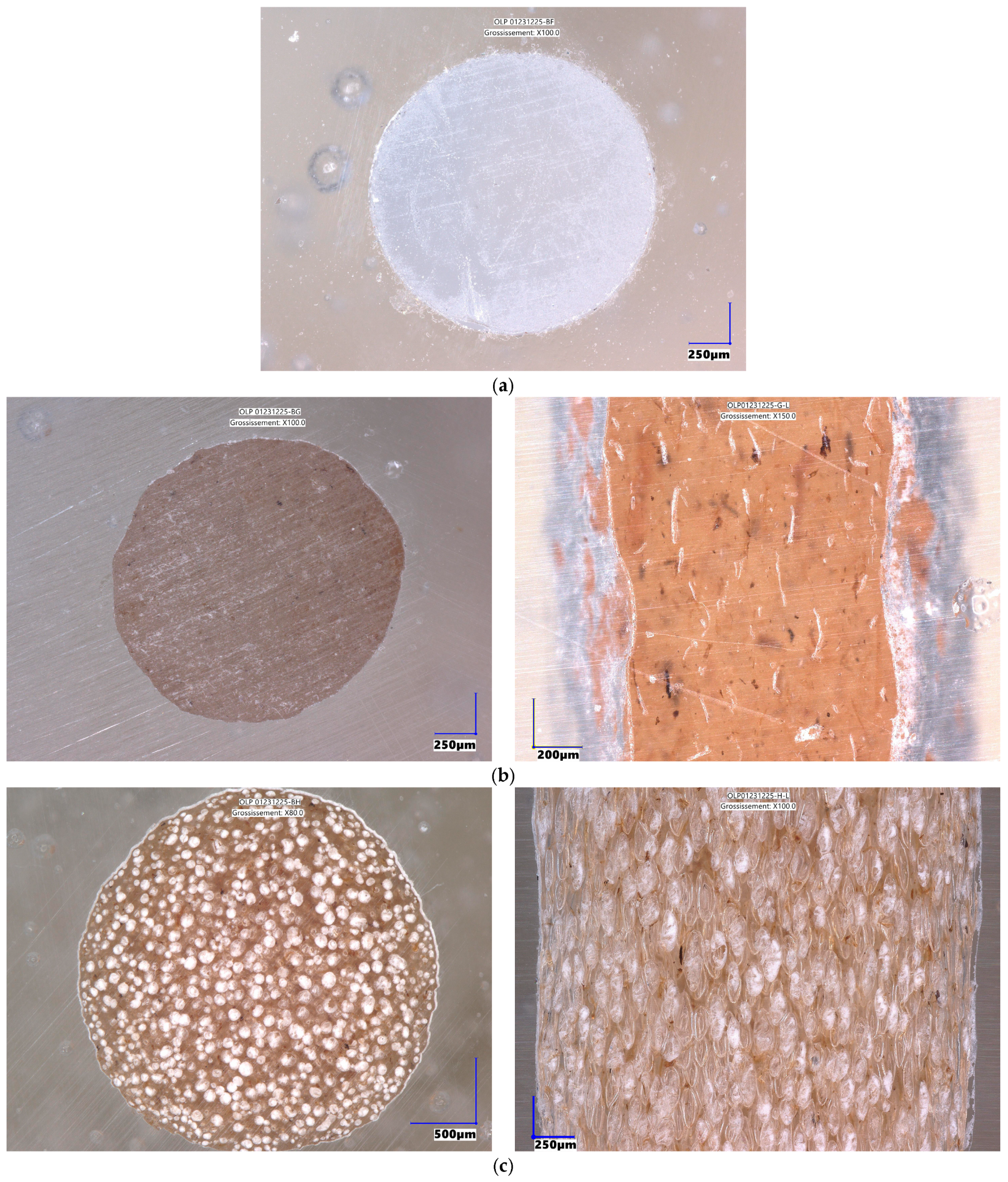
Optical microscopy was employed to assess fiber dimension, orientation, and porosity within the filaments. In Figure 4a,b, no cavities were observed. In Figure 4b, brown fiber particles appeared aligned in the flow direction with good fiber-matrix compatibility, as evidenced by the lack of voids between them. The filament surface varied slightly along its length in the transverse direction. Conversely, filaments produced using the METEOR elongational mixer exhibited significant porosity, with cavities distributed throughout the filament volume (Figure 4c). Despite this, fibers remained aligned in the flow direction and continued to exhibit good compatibility with the matrix.
Porosity was quantified by comparing cavity surface area to the total cross-sectional surface of the filament, while fiber length was measured on longitudinal sections. The fiber length distribution and porosity values are presented in Table 4. The initial average fiber length of 0.46 mm is drastically reduced by the two-steps extrusion process: twin-screw compounding followed by filament extrusion, consistent with natural fibers subjected to high shear and thermal gradients [7]. All fiber length distributions performed on around 100 fibers show a majority of short fibers, because they are cut during extrusion or because they are not aligned in the extrusion direction of the filament (see Supplementary Information). This reduction is attributed to fiber breakage driven by strong shear fields and repeated mechanical impacts within the screw elements. Filament extrusion using the METEOR® elongational mixer demonstrated that fiber length is more preserved. This confirms that the convergent–divergent deformation applied in the METEOR® chamber minimizes transverse shear stresses, thereby limiting fiber fragmentation while enhancing fiber alignment and distribution along the flow direction. Furthermore, the improved distributive mixing contributed to more homogeneous fiber dispersion. Porosity was found to increase with fiber content and was highest in samples processed with METEOR, suggesting that METEOR amplifies existing porosity rather than directly causing it. A possible explanation for this could be the slightly increased screw speed (Figure 4c), since high speeds can cause air entrapment [30,31]. The increase in fiber content leading to an increase in porosity has been already reported [7,22,26]. Deb explained that this can also be linked to the decrease in viscosity, and hence to decreased melt flow and limited wettability [23]. Gallos reported a sharp increase in porosity due to fiber aggregate [32].
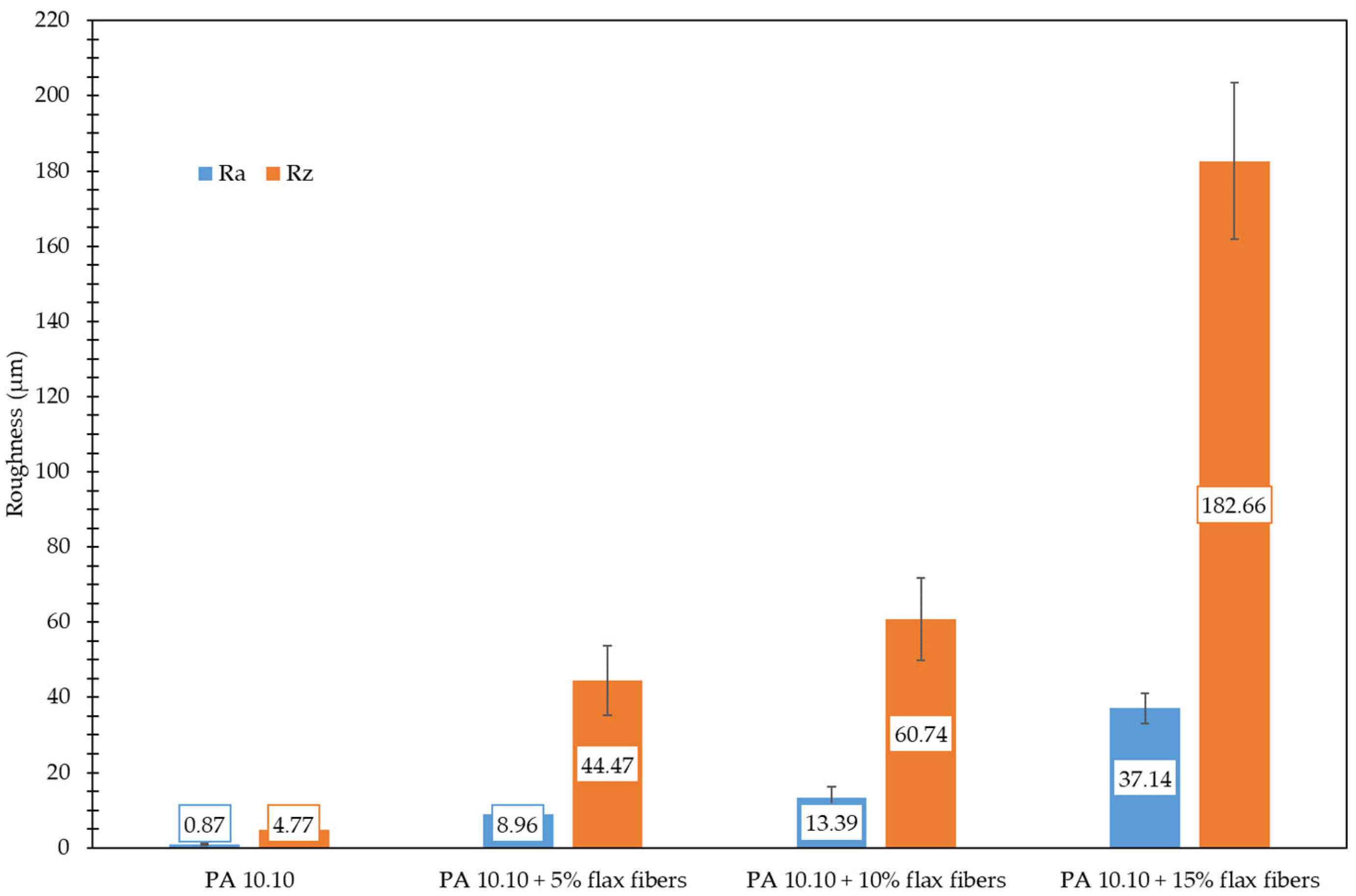
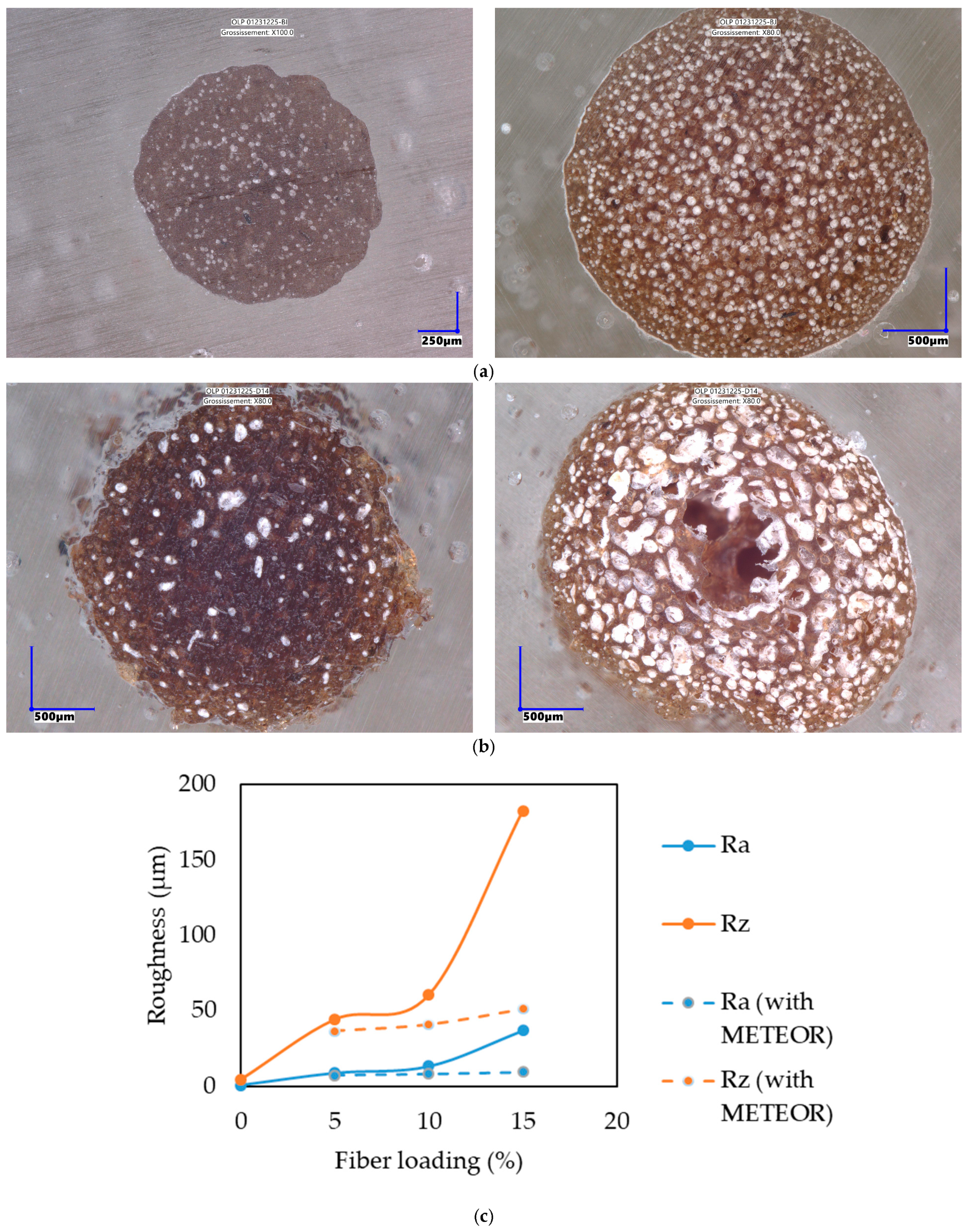
Roughness measurements on the filament surfaces corroborate optical microscopy observations: filaments processed without the METEOR® elongational mixer exhibited consistently higher surface roughness, which increased with fiber content (Figure 5, Table A1 and Figure A1). This trend is consistent with previous findings by Le Duigou and Tran, who reported that natural fibers inherently disrupt the polymer melt front and generate surface asperities due to their size, rigidity, and heterogeneous distribution within the matrix [7,33].
In contrast, the elongational mixing with the METEOR® system appeared to improve surface uniformity by promoting fiber integration within the filament. This is likely due to the enhanced ability of elongational flow to integrate fibers into the melt, reducing protrusion at the surface. The effect may also be partially attributed to the slightly higher screw speed and die temperature used with METEOR, which decrease melt viscosity through shear-thinning and favor better fiber wetting. Indeed, Depuydt similarly showed that low extrusion speeds amplify roughness due to insufficient shear to homogenize the melt, whereas higher rotational speeds improve fiber–matrix interactions and surface quality [30]. Additionally, Filgueira et al. demonstrated comparable effects in natural fiber-reinforced polyethylene, where low processing temperatures and insufficient melt flow led to high surface roughness and pore formation [34].
Despite its advantages in surface appearance, elongational processing generated a higher degree of internal porosity compared to standard FDM extrusion with a single-screw. Microscopy revealed elongated voids and cavities that were not present or much less pronounced without the METEOR system. Several mechanisms explain this behavior such as air entrapment under low-shear, low-pressure elongational flow, where the limited degassing efficiency favors bubble retention within the melt. Moisture releases from untreated flax fibers, which promotes bubble nucleation during processing; similar moisture-driven porosity mechanisms have been documented by Gallos, Pickering, Deb, and Le Duigou in natural fiber composites [7,22,23,32]. Pressure oscillations within the elongational mixing chamber could intermittently expand trapped air pockets along the flow direction, creating the elongated cavities observed. The absence of fiber surface treatment reduces interfacial adhesion and increases the likelihood of debonding-induced voids during cooling and solidification.
Overall, while METEOR contributes to better surface uniformity through improved fiber dispersion, its elongational flow profile and lower local pressures promote porosity formation. These findings highlight the need to balance shear and elongational contributions when optimizing processes for natural fiber-reinforced filaments.

3.5. Rheological Analysis—Plate–Plate Rheometry

Rheological measurements were carried out to investigate the viscoelastic behavior and thermal stability of PA10.10-based compounds containing flax fibers. In the strain sweep tests (Dynamic Strain Sweep, DSS), the linear viscoelastic region (LVR) was determined (Figure S4). A strain of 0.05% was selected for subsequent tests, as it fell well within the LVR for all samples.
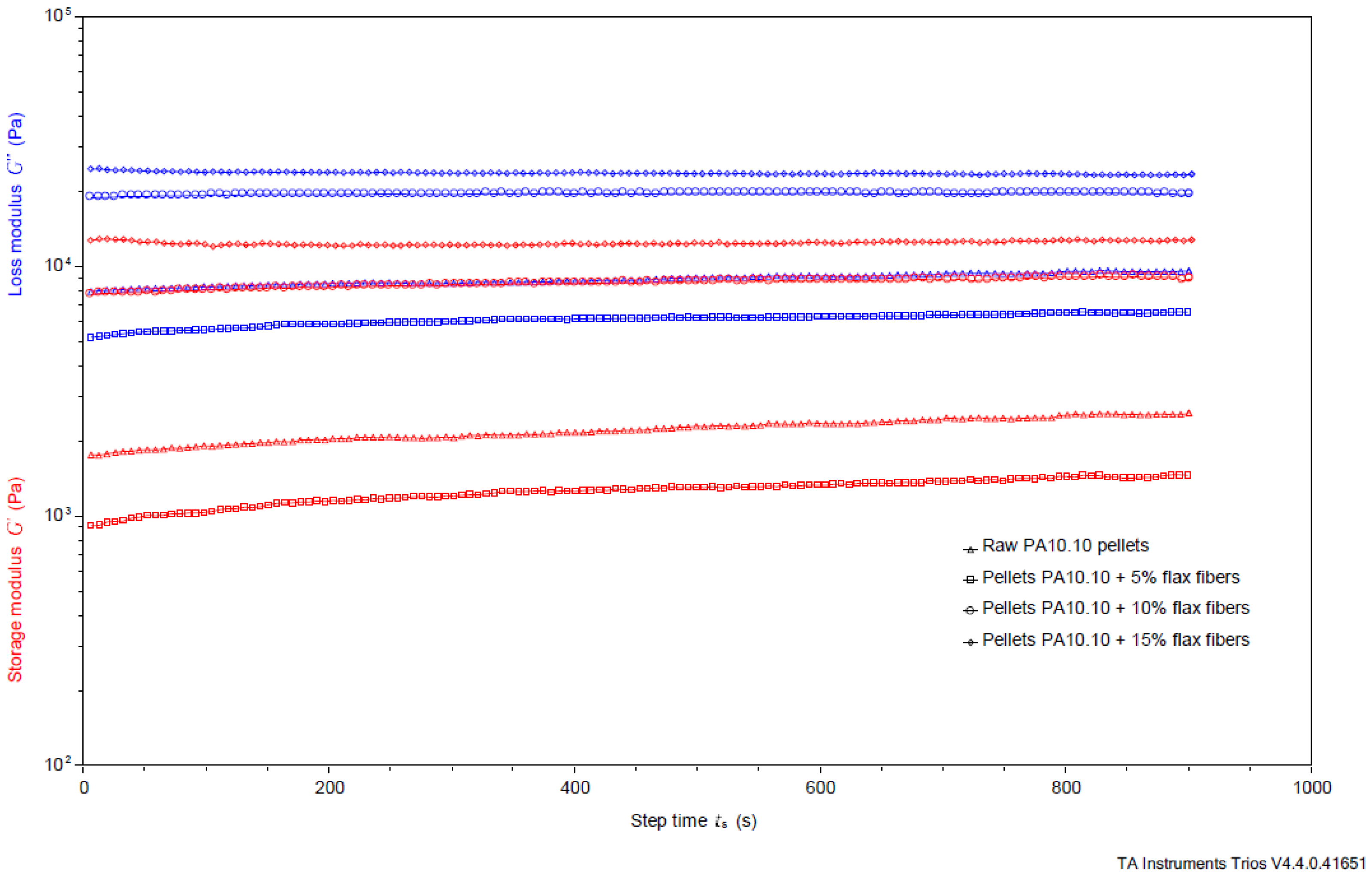
In time sweep tests (Dynamic Time Sweep, DTS), the evolution of the storage modulus (G′) and loss modulus (G″) was monitored over 15 and 45 min at 1 Hz frequency. Thermal stability was maintained for all materials throughout the duration of testing, with no signs of thermal degradation, even at 45 min. The curves obtained during the time sweep, carried out over a 15 min and 45 min period at a temperature of 210 °C, show that the rheological properties of the various materials studied remain stable (Figure 6).
The viscoelastic moduli of virgin PA10.10 were higher than those of composites containing 5% flax fibers. This reduction may be due to disruption of the polymer matrix at low fiber content, without sufficient reinforcement to compensate. At higher fiber loadings (10–15%), the storage and loss moduli increased significantly, indicating a reinforcing effect of the flax fibers on the melt structure. The increase in both G′ and G″ at 15% suggests that fibers start to form a percolated network, contributing to the elasticity and viscosity of the melt.
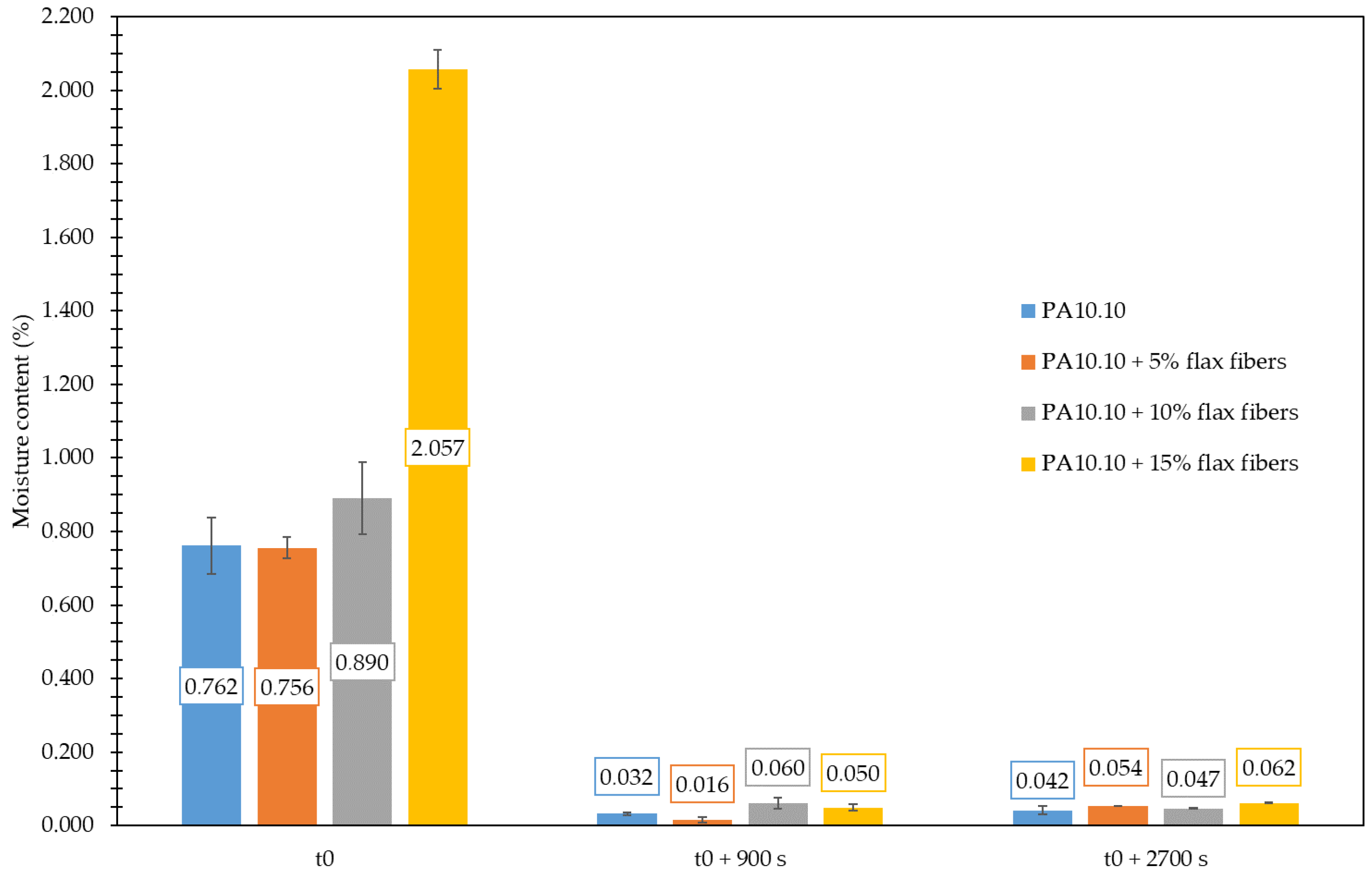
Initially, the amount of water in the various samples is relatively high, and an increase in water content is observed with increasing flax fiber content (Figure 7). After the 15 min rheological test, which includes the drying of the virgin material and the 15 min of testing at 210 °C, the water content in the samples drops significantly and remains nearly the same after 45 min of testing.
These results confirm that fiber content has a direct and quantifiable effect on the viscoelastic behavior of the filament materials. Moreover, the absence of degradation during processing at 210 °C supports the thermal compatibility of flax fibers with PA10.10 under the selected conditions. However, the mechanical advantages of higher fiber content must be weighed against the associated increase in porosity and reduced printability.

3.6. Mechanical Properties of PA/Flax Fibers Blends

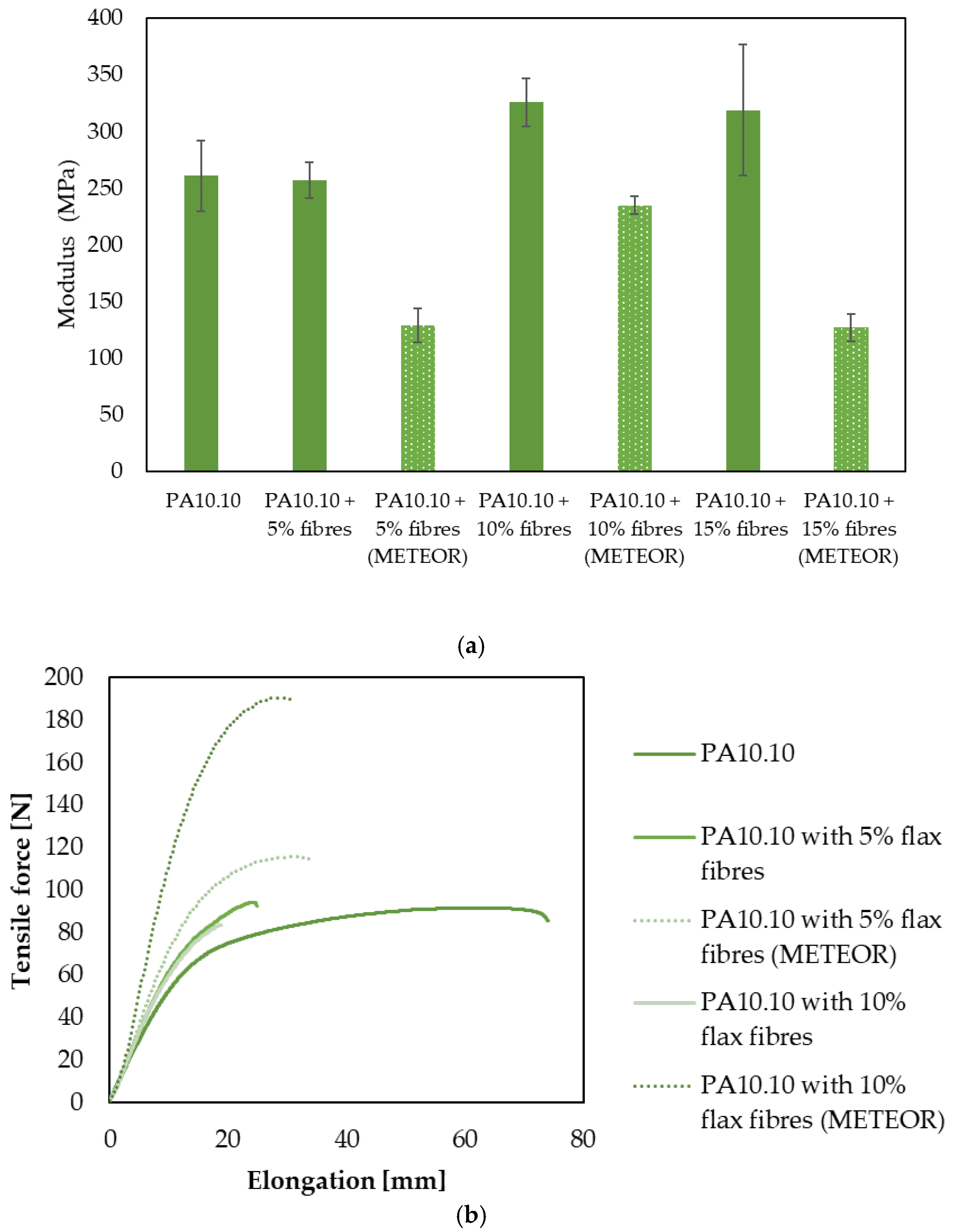
Tensile tests conducted on the filaments confirmed that fiber-reinforced filaments had a higher tensile modulus than pure PA10.10, although they exhibited reduced elongation at break, as fibers can act as stress concentrators within the matrix (Figure 8). These findings are consistent with previous studies indicating that natural fibers rarely enhance all mechanical properties in biocomposites for 3D and 4D printing [7,9].
As in the literature [20,35], the reinforcing effect of fibers was evident in Figure 8, though the METEOR-processed samples exhibited a notable reduction in tensile strength, with a 50% decrease at 5% fiber content and a further 15% reduction at 10% loading, reaching even lower levels at 15% loading. This decrease in tensile properties may be attributed to the observed porosity and reduced interfacial shear strength between fibers and the matrix, as documented by Le Duigou, which could create defects and weak bonding [7]. Fiber addition increased tensile modulus but reduced strength and ductility. METEOR-processed filaments exhibited significantly lower strength due to high porosity.

3.7. Three-Dimensional Printing and Demonstrator Development

Extrusion and printing trials were conducted on filaments containing various flax fiber loadings. Filaments produced with 15% flax content, particularly those processed using the METEOR elongational mixer, exhibited poor mechanical integrity and high brittleness. These filaments broke frequently during winding and were deemed unprintable. Limited success was achieved when printing dogbone-shaped tensile specimens using standard (non-METEOR) filaments at 15% loading.
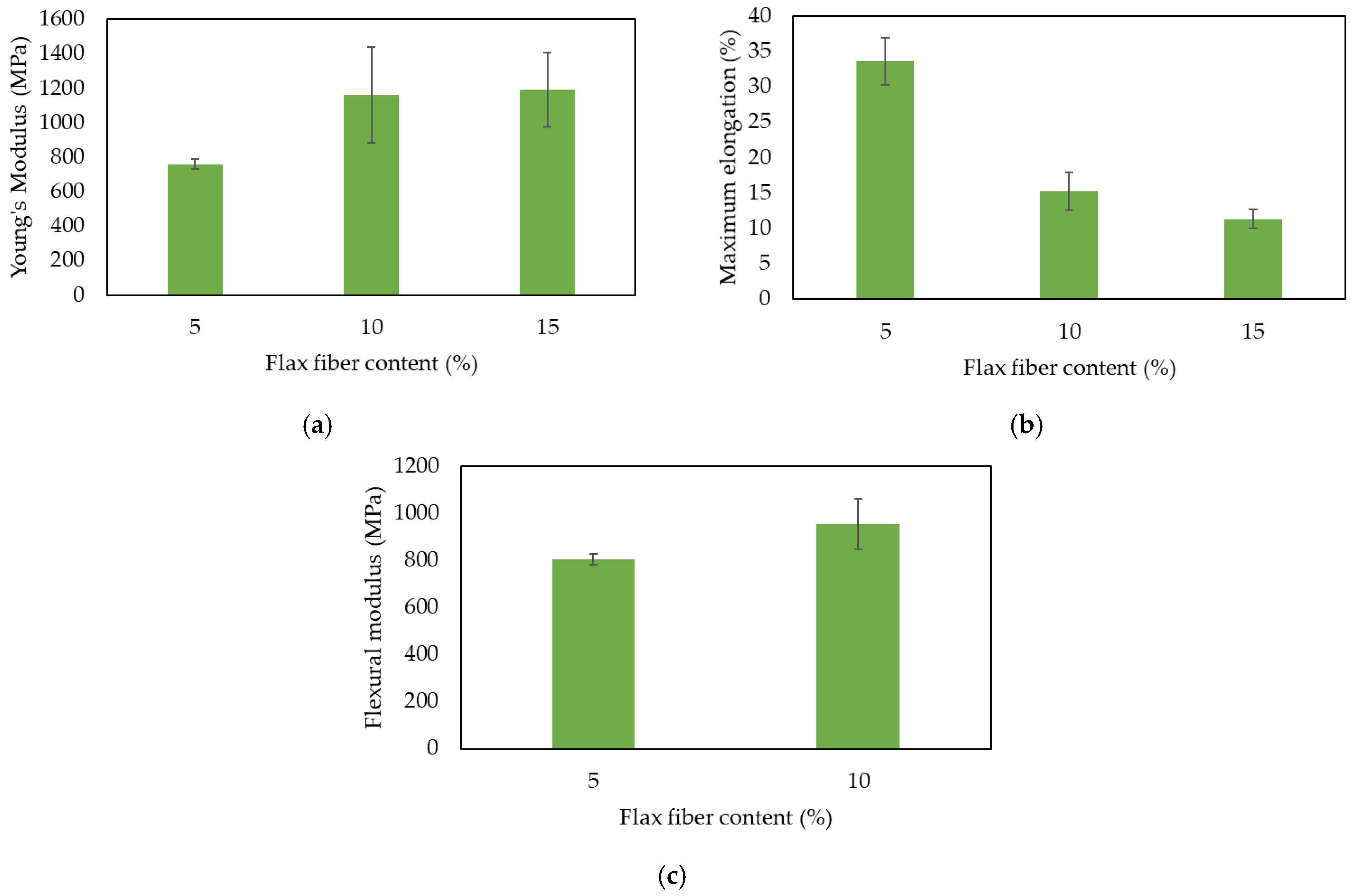
Tensile and flexural testing of 3D printed specimens revealed that tensile performance reached a plateau beyond 10 wt% fiber loading, while flexural properties remained relatively constant between 5% and 10% (Figure 9, Table A2 and Table A3). Considering both mechanical performance and printability, a 5 wt% fiber content was selected as the optimal formulation for further development.
One of the main challenges encountered during 3D printing was the pronounced shrinkage of polyamide during cooling, which led to significant warping in the first printed layers. This deformation progressively lifted the part from the build plate, ultimately causing print failure. Such behavior is characteristic of semi-crystalline polyamides, where rapid crystallization generates strong contraction stresses, especially in the lower layers that cool first.
To counteract this effect, several corrective measures were implemented. First, a polyamide-compatible adhesive was applied to the build surface to enhance bed adhesion. Second, the build plate temperature was increased to 75 °C to reduce the thermal gradient between deposited layers and the substrate, thereby slowing crystallization and mitigating residual stress accumulation. Third, printing was performed inside an enclosed chamber to eliminate air drafts and enable gradual, uniform cooling. In addition, the nozzle temperature (240 °C), bed temperature (75 °C), and print speed (20 mm s−1) were optimized to promote stronger interlayer diffusion and reduce shrinkage-induced distortion (Table 5). These combined adjustments effectively suppressed early warpage and stabilized the printing process.
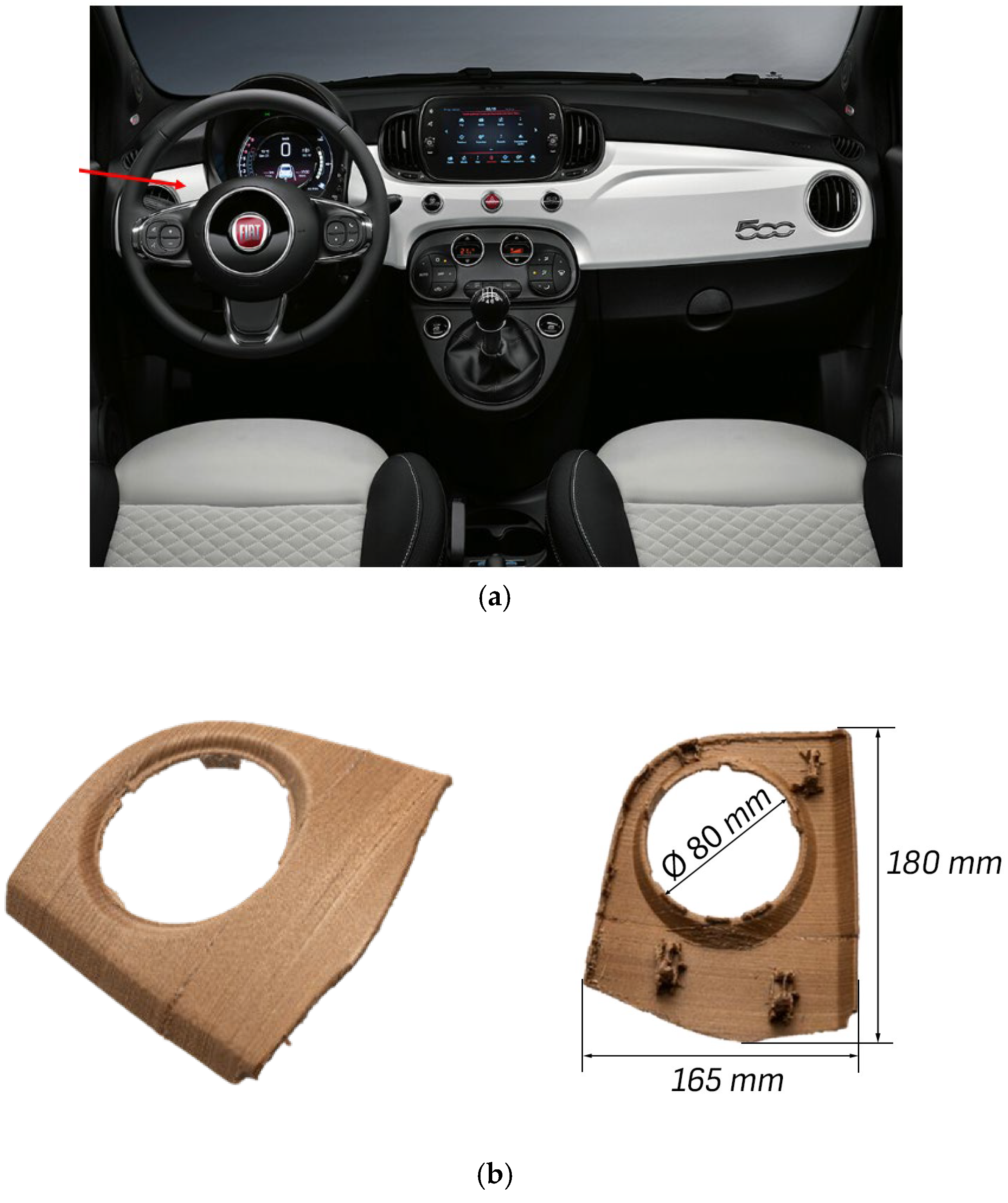
Using these optimized conditions, the bio-based PA10.10/5 wt% flax composite was successfully printed into a functional automotive demonstrator: a Fiat 500 dashboard fascia (Figure 10a). In line with the observations made by Kennedy et al. [36], which highlights the growing industrial potential of natural fiber-reinforced composites, the automotive sector provides one of the most illustrative examples of this trend. Other automotive companies such as Ford Motor have developed prototype dashboard panels using flax- and hemp-fiber-reinforced PLA filaments processed through FDM, achieving weight reductions of around 25% compared to conventional ABS dashboards.
The printed component exhibited a maximum warpage of 1.8 mm across its 165 × 180 × 45 mm geometry, corresponding to a dimensional deviation within ±0.7 mm relative to the CAD design (Figure 10b). The printed walls were 3 mm thick, and no delamination or fiber-induced surface defects were observed, confirming the compatibility of the formulation with FDM processing.
The printed parts underwent further validation, including cold impact resistance testing, thermal cycling, and light-aging assessments. All evaluations were successfully passed. In particular, the applied protective coating preserved surface appearance and prevented photo-oxidation, allowing the biocomposite to maintain its mechanical performance after aging.
These results demonstrate that bio-based PA10.10 reinforced with 5 wt% flax fibers can be processed into dimensionally stable, durable, and visually appealing interior automotive components using FDM. This highlights the potential of such biocomposite feedstocks to meet emerging sustainability and circularity requirements in mobility applications.

4. Discussion

This work demonstrates that biocomposite filaments made from polyamide PA10.10 and flax fibers can achieve mechanical and thermal performance suitable for functional automotive components manufactured via fused deposition modeling [3,5].
The addition of untreated flax fibers enabled reinforcement while maintaining acceptable filament continuity and printability at 5 wt% loading. However, the findings clearly show that the processing route and fiber content strongly govern microstructural integrity, rheological response, and final part performance.

4.1. Effect of Fiber Loading on Microstructure and Mechanical Behavior

Increasing flax fiber content from 5 to 30 wt% resulted in pronounced stiffening of the PA10.10 matrix, up to +84% tensile modulus at 15 wt% of flax fibers. This reinforcing effect is consistent with previous reports on natural fiber-reinforced bio-based polyamides [11,12]. However, the gain in stiffness was accompanied by reduced elongation at break and increased brittleness, a typical response to restricted polymer chain mobility and fiber–fiber interactions at higher loadings. At fiber contents ≥10 wt%, intrinsic viscosity decreased significantly (−15–20%), suggesting local degradation or poor melt homogenization, likely amplified by porosity and discontinuities within the fiber network.

4.2. Role of Processing Route: METEOR Elongational Mixing

The processing route substantially influenced filament structure. The METEOR elongational mixer preserved longer fibers and improved their integration within the polymer matrix, promoting smoother filament surfaces. However, METEOR-processed filaments exhibited a higher porosity level (up to +40% more void area fraction), with elongated cavities aligned along the flow direction. These defects compromised tensile properties, reducing strength by up to 25% compared with conventional formulations and limiting the printability of formulations >10 wt%.

4.3. Rheological Behavior and Implications for Printability

Rheological measurements confirmed that flax fibers substantially modify melt behavior. Above 10 wt% loading, both the storage (G’) and loss (G”) moduli increased, indicating the formation of a pseudo-percolated fiber network. While beneficial for solid-state stiffness, this network increased melt elasticity and reduced flowability, manifested as dimensional instability and intermittent flow during extrusion. These rheological changes, combined with higher porosity, explain the poor filament continuity observed at 15 wt% and the impossibility of extruding stable filaments at 30 wt%.

4.4. Optimal Fiber Loading for Functional FDM Components

Across all characterization methods, 5 wt% flax emerged as the optimal compromise between stiffness enhancement, filament dimensional stability, rheological behavior, and FDM processability. At this loading, the modulus increased by +420 MPa relative to neat PA10.10; melt viscosity remained stable, ensuring smooth and continuous filament extrusion; porosity was minimal and did not compromise tensile strength; diameter variation remained within ±0.05 mm of the 2.85 mm target for FDM processing.
These favorable properties enabled the successful printing of a full-scale Fiat 500 dashboard fascia using optimized parameters (240 °C nozzle, 75 °C bed, 20 mm·s−1 printing speed, 100% infill).
To further improve performance, future work should focus on reducing porosity (e.g., by vacuum degassing during compounding or vented extrusion particularly for elongational mixer), improving interfacial adhesion (e.g., fiber surface treatments such as silane or compatibilizers) and screw profiles to balance shear and elongational contributions, and optimizing print parameters (temperature, humidity control). This effect was already demonstrated by Depyudt et al. to produce filaments with low porosity for PLA/Flax or PLA/Bamboo [30,37].

4.5. Perspectives for Recyclability and Sustainability of PA10.10/Flax Biocomposites

Given the fully bio-based nature of both PA10.10 and flax fibers, the developed biocomposites offer a strong basis for circular material strategies, particularly because polyamides are well-established in mechanical recycling streams. The rheological and mechanical trends observed in this study, such as fiber breakage, porosity evolution, and viscosity changes highlight parameters that will be critical to evaluate under multicycle reprocessing, where additional thermal and shear histories may amplify fiber breakage and interfacial degradation. Literature reports indicate that bio-based polyamides retain a significant proportion of their mechanical properties after repeated processing, [38] suggesting that the PA10.10 matrix could sustain several recycling loops without severe loss of performance. Future work will therefore investigate the impact of controlled reprocessing on fiber morphology, crystallinity, viscoelastic behavior, and filament printability, alongside the end-of-life behavior (mechanical recyclability and biodegradation potential) of the biocomposites.
Establishing these degradation pathways and property-retention mechanisms will enable a robust assessment of the circularity potential of PA10.10/flax biocomposites for sustainable additive manufacturing applications.
The results obtained here contribute to the growing field of bio-based feedstock for high-performance additive manufacturing, supporting the transition toward circular materials for the mobility sector.

Supplementary Materials

The following supporting information can be downloaded at https://www.mdpi.com/article/10.3390/su18010199/s1. Figure S1. DSC thermograms; Figure S2. TGA thermograms; Figure S3. Fiber length distribution; Figure S4. Dynamic Strain Sweep at 210 °C/1 Hz; Figure S5. Time Sweep for 45 min at 210 °C/0.05%.

Author Contributions

Conceptualization, S.M. and F.I.; methodology and formal analysis, F.I.; validation, S.M., M.P., and M.R.; investigation, F.I., M.P., and R.N.-M.; resources, M.P., F.I., and R.N.-M.; writing—original draft preparation, F.I.; writing—review and editing, all authors.; visualization, F.I.; funding acquisition, S.M. All authors have read and agreed to the published version of the manuscript.

Funding

This work was supported by the INN PRESSME project which has received funding from the European Union’s Horizon 2020 research and innovation program under grant agreement N°952972.

Institutional Review Board Statement

Not applicable.

Informed Consent Statement

Not applicable.

Data Availability Statement

The original contributions presented in this study are included in the article/Supplementary Material. Further inquiries can be directed to the corresponding author.

Acknowledgments

We gratefully acknowledge the Institute of Natural Fibers and Medicinal Plants (IWNiRZ) for the production of flax fibers used for this study within INN PRESSME project. We thank IPC laboratory especially Jérôme Saint-André, Nour Jaouadi, Samir Kasmi, Sonia Serroukh and at IPC Alençon Benjamin Dandines.

Conflicts of Interest

Authors Florence Isnard and Skander Mani were employed by the company Industrial Technical Centre for Plastics and Composites (IPC). Authors Marta Redrado and Raquel Navarro-Miguel were employed by the company Aitiip Centro Tecnológico The remaining authors declare that the research was conducted in the absence of any commercial or financial relationships that could be construed as a potential conflict of interest.

Abbreviations

The following abbreviations are used in this manuscript:
PAPolyamide
METEORElongational mixer
3DThree dimensions
FDMfused deposition modeling

Appendix A

Appendix A.1. Roughness

Table A1. Roughness measurements.
StandardWith METEOR
SamplePA 10.10PA 10.10 + 5% flax fiberPA 10.10 + 10% flax fiberPA 10.10 + 15% flax fiberPA 10.10 + 5% flax fiberPA 10.10 + 10% flax fiberPA 10.10 + 15% flax fiber
Ra (µm)0.87 ± 0.338.96 ± 1.4913.39 ± 2.8437.14 ± 4.027.16 ± 28.17 ± 0.799.67 ±1.83
Rz (µm)4.77 ± 1.3744.47 ± 9.3560.74 ± 11.01182.66 ± 20.936.61 ± 7.7940.96 ± 2.5451.48 ± 9.91
Figure A1. Rugosity of 3D printing filaments.
Sustainability 18 00199 g0a1

Appendix A.2. Mechanical Testing on 3D Printed Specimens

Table A2. Tensile on 3D printed specimens.
3D Printed SampleYoung’s Modulus (MPa)Maximum Force (MPa)Elongation at Maximum Force (%)Force at Maximum Elongation (MPa)Maximum
Elongation (%)
PA 10.10 + 5% flax fiber760 ± 3027 ± 0.429.0 ± 2.3425.5 ± 0.533.58 ± 3.32
PA 10.10 + 10% flax fiber1160 ± 27924.9 ± 1.113.73 ± 1.7823.9 ± 1.215.24 ± 2.7
PA 10.10 + 15% flax fiber1192 ± 21520.8 ± 0.610.54 ± 0.7620 ± 0.911.3 ± 1.3
Table A3. Flexural test on 3D printed specimens.
3D Printed SampleFlexural Modulus (Mpa)Maximum Force (Mpa)Elongation at Maximum Force (%)
PA 10.10 + 5% flax fiber803 ± 2443.0 ± 1.38.25 ± 0.24
PA 10.10 + 10% flax fiber954 ± 10743.2 ± 3.37.58 ± 0.09

References

  1. Haque, A.N.M.A.; Naebe, M. Tensile Properties of Natural Fibre-Reinforced FDM Filaments: A Short Review. Sustainability 2023, 15, 16580. [Google Scholar] [CrossRef]
  2. Jamadi, A.H.; Razali, N.; Petrů, M.; Taha, M.M.; Muhammad, N.; Ilyas, R.A. Effect of Chemically Treated Kenaf Fibre on Mechanical and Thermal Properties of PLA Composites Prepared through Fused Deposition Modeling (FDM). Polymers 2021, 13, 3299. [Google Scholar] [CrossRef] [PubMed]
  3. Coppola, B.; Garofalo, E.; Di Maio, L.; Scarfato, P.; Incarnato, L. Investigation on the Use of PLA/Hemp Composites for the Fused Deposition Modelling (FDM) 3D Printing; AIP Publishing LLC: Melville, NY, USA, 2018; p. 020086. [Google Scholar]
  4. Soccalingame, L.; Perrin, D.; Bénézet, J.-C.; Mani, S.; Coiffier, F.; Richaud, E.; Bergeret, A. Reprocessing of Artificial UV-Weathered Wood Flour Reinforced Polypropylene Composites. Polym. Degrad. Stab. 2015, 120, 313–327. [Google Scholar] [CrossRef]
  5. Mazzanti, V.; Malagutti, L.; Mollica, F. FDM 3D Printing of Polymers Containing Natural Fillers: A Review of Their Mechanical Properties. Polymers 2019, 11, 1094. [Google Scholar] [CrossRef]
  6. Ahmad, M.N.; Ishak, M.R.; Mohammad Taha, M.; Mustapha, F.; Leman, Z. A Review of Natural Fiber-Based Filaments for 3D Printing: Filament Fabrication and Characterization. Materials 2023, 16, 4052. [Google Scholar] [CrossRef]
  7. Le Duigou, A.; Correa, D.; Ueda, M.; Matsuzaki, R.; Castro, M. A Review of 3D and 4D Printing of Natural Fibre Biocomposites. Mater. Des. 2020, 194, 108911. [Google Scholar] [CrossRef]
  8. Bhagia, S.; Bornani, K.; Agrawal, R.; Satlewal, A.; Ďurkovič, J.; Lagaňa, R.; Bhagia, M.; Yoo, C.G.; Zhao, X.; Kunc, V.; et al. Critical Review of FDM 3D Printing of PLA Biocomposites Filled with Biomass Resources, Characterization, Biodegradability, Upcycling and Opportunities for Biorefineries. Appl. Mater. Today 2021, 24, 101078. [Google Scholar] [CrossRef]
  9. Xiao, X. Development of Thermoplastic 3D Printing Feedstock Utilising Biomass. Ph.D. Thesis, University of Southern Queensland, Toowoomba, Australia, 2020. [Google Scholar]
  10. Giammaria, V.; Capretti, M.; Del Bianco, G.; Boria, S.; Santulli, C. Application of Poly(Lactic Acid) Composites in the Automotive Sector: A Critical Review. Polymers 2024, 16, 3059. [Google Scholar] [CrossRef]
  11. Andanje, M.N.; Mwangi, J.W.; Mose, B.R.; Carrara, S. Biocompatible and Biodegradable 3D Printing from Bioplastics: A Review. Polymers 2023, 15, 2355. [Google Scholar] [CrossRef]
  12. Syrlybayev, D.; Zharylkassyn, B.; Seisekulova, A.; Akhmetov, M.; Perveen, A.; Talamona, D. Optimisation of Strength Properties of FDM Printed Parts—A Critical Review. Polymers 2021, 13, 1587. [Google Scholar] [CrossRef]
  13. Megersa, G.K.; Sitek, W.; Nowak, A.J.; Tomašić, N. Investigation of the Influence of Fused Deposition Modeling 3D Printing Process Parameters on Tensile Properties of Polylactic Acid Parts Using the Taguchi Method. Materials 2024, 17, 5951. [Google Scholar] [CrossRef] [PubMed]
  14. Daly, M.; Tarfaoui, M.; Chihi, M.; Bouraoui, C. FDM Technology and the Effect of Printing Parameters on the Tensile Strength of ABS Parts. Int. J. Adv. Manuf. Technol. 2023, 126, 5307–5323. [Google Scholar] [CrossRef] [PubMed]
  15. Sultana, J.; Rahman, M.M.; Wang, Y.; Ahmed, A.; Xiaohu, C. Influences of 3D Printing Parameters on the Mechanical Properties of Wood PLA Filament: An Experimental Analysis by Taguchi Method. Prog. Addit. Manuf. 2024, 9, 1239–1251. [Google Scholar] [CrossRef]
  16. Soni, A.; Gupta, S.K.; Veeman, D.; Katiyar, J.K. 3D-Printed Sustainable Biocomposites via Valorization of Biomass: Focus on Challenges and Their Future Perspectives. Environ. Sci. Pollut. Res. 2025, 1–47. [Google Scholar] [CrossRef]
  17. Bourry, D.; Khayat, R.E.; Utracki, L.A.; Godbille, F.; Picot, J.; Luciani, A. Extensional Flow of Polymeric Dispersions. Polym. Eng. Sci. 1999, 39, 1072–1086. [Google Scholar] [CrossRef]
  18. Rondin, J.; Bouquey, M.; Muller, R.; Serra, C.A.; Martin, G.; Sonntag, P. Dispersive Mixing Efficiency of an Elongational Flow Mixer on PP/EPDM Blends: Morphological Analysis and Correlation with Viscoelastic Properties. Polym. Eng. Sci. 2014, 54, 1444–1457. [Google Scholar] [CrossRef]
  19. Son, Y. Development of a Novel Microcompounder for Polymer Blends and Nanocomposite. J. Appl. Polym. Sci. 2009, 112, 609–619. [Google Scholar] [CrossRef]
  20. Feldmann, M.; Bledzki, A.K. Bio-Based Polyamides Reinforced with Cellulosic Fibres—Processing and Properties. Compos. Sci. Technol. 2014, 100, 113–120. [Google Scholar] [CrossRef]
  21. Oliver-Ortega, H.; Julian, F.; Espinach, F.X.; Tarrés, Q.; Delgado-Aguilar, M.; Mutjé, P. 6-Biobased Polyamide Reinforced with Natural Fiber Composites. In Fiber Reinforced Composites; Joseph, K., Oksman, K., George, G., Wilson, R., Appukuttan, S., Eds.; Woodhead Publishing: Cambridge, UK, 2021; pp. 141–165. ISBN 978-0-12-821090-1. [Google Scholar]
  22. Gauss, C.; Pickering, K.; Tshuma, J.; McDonald-Wharry, J. Production and Assessment of Poly(Lactic Acid) Matrix Composites Reinforced with Regenerated Cellulose Fibres for Fused Deposition Modelling. Polymers 2022, 14, 3991. [Google Scholar] [CrossRef]
  23. Deb, D.; Jafferson, J.M. Natural Fibers Reinforced FDM 3D Printing Filaments. Mater. Today Proc. 2021, 46, 1308–1318. [Google Scholar] [CrossRef]
  24. Mani, S.; Pivard, L.; Duthel, H. A New Continuous Extensional Flow Mixer for Compounding and Recycling of Polymer Blends. Patent 1656930 (B1), 26 January 2018. [Google Scholar]
  25. ISO 527-1; Plastics—Determination of Tensile Properties—Part 1: General Principles. ISO: Geneva, Switzerland, 2019.
  26. Pickering, K.L.; Efendy, M.G.A.; Le, T.M. A Review of Recent Developments in Natural Fibre Composites and Their Mechanical Performance. Compos. Part Appl. Sci. Manuf. 2016, 83, 98–112. [Google Scholar] [CrossRef]
  27. Bazan, P.; Nosal, P.; Wierzbicka-Miernik, A.; Kuciel, S. A Novel Hybrid Composites Based on Biopolyamide 10.10 with Basalt/Aramid Fibers: Mechanical and Thermal Investigation. Compos. Part B Eng. 2021, 223, 109125. [Google Scholar] [CrossRef]
  28. Banerjee, R.; Ray, S.S. Role of Rheology in Morphology Development and Advanced Processing of Thermoplastic Polymer Materials: A Review. ACS Omega 2023, 8, 27969–28001. [Google Scholar] [CrossRef] [PubMed]
  29. Muthuraj, R.; Hajee, M.; Horrocks, A.R.; Kandola, B.K. Biopolymer Blends from Hardwood Lignin and Bio-Polyamides: Compatibility and Miscibility. Int. J. Biol. Macromol. 2019, 132, 439–450. [Google Scholar] [CrossRef] [PubMed]
  30. Depuydt, D.; Balthazar, M.; Hendrickx, K.; Six, W.; Ferraris, E.; Desplentere, F.; Ivens, J.; Van Vuure, A.W. Production and Characterization of Bamboo and Flax Fiber Reinforced Polylactic Acid Filaments for Fused Deposition Modeling (FDM). Polym. Compos. 2019, 40, 1951–1963. [Google Scholar] [CrossRef]
  31. Muukka, S. Bio-Oil Based Polymeric Composites for Additive Manufacturing. Master’s Thesis, Aalto University, Espoo, Finland, 2020. [Google Scholar]
  32. Gallos, A.; Paës, G.; Allais, F.; Beaugrand, J. Lignocellulosic Fibers: A Critical Review of the Extrusion Process for Enhancement of the Properties of Natural Fiber Composites. RSC Adv. 2017, 7, 34638–34654. [Google Scholar] [CrossRef]
  33. Tran, T.N.; Bayer, I.S.; Heredia-Guerrero, J.A.; Frugone, M.; Lagomarsino, M.; Maggio, F.; Athanassiou, A. Cocoa Shell Waste Biofilaments for 3D Printing Applications. Macromol. Mater. Eng. 2017, 302, 1700219. [Google Scholar] [CrossRef]
  34. Filgueira, D.; Holmen, S.; Melbø, J.K.; Moldes, D.; Echtermeyer, A.T.; Chinga-Carrasco, G. 3D Printable Filaments Made of Biobased Polyethylene Biocomposites. Polymers 2018, 10, 314. [Google Scholar] [CrossRef]
  35. Hirsch, P.; Theumer, T. Comparative Study on Polyamide 11 and Polyamide 10.10 as Matrix Polymers for Biogenic Wood-Plastic Composites. Macromol. Symp. 2022, 403, 2100492. [Google Scholar] [CrossRef]
  36. Kennedy, S.M.; Wilson, L.A.; Rb, J.R. Natural Fiber Filaments Transforming the Future of Sustainable 3D Printing. MethodsX 2025, 14, 103385. [Google Scholar] [CrossRef]
  37. Milosevic, M.; Stoof, D.; Pickering, K.L. Characterizing the Mechanical Properties of Fused Deposition Modelling Natural Fiber Recycled Polypropylene Composites. J. Compos. Sci. 2017, 1, 7. [Google Scholar] [CrossRef]
  38. Manker, L.P.; Hedou, M.A.; Broggi, C.; Jones, M.J.; Kortsen, K.; Puvanenthiran, K.; Kupper, Y.; Frauenrath, H.; Marechal, F.; Michaud, V.; et al. Performance Polyamides Built on a Sustainable Carbohydrate Core. Nat. Sustain. 2024, 7, 640–651. [Google Scholar] [CrossRef]
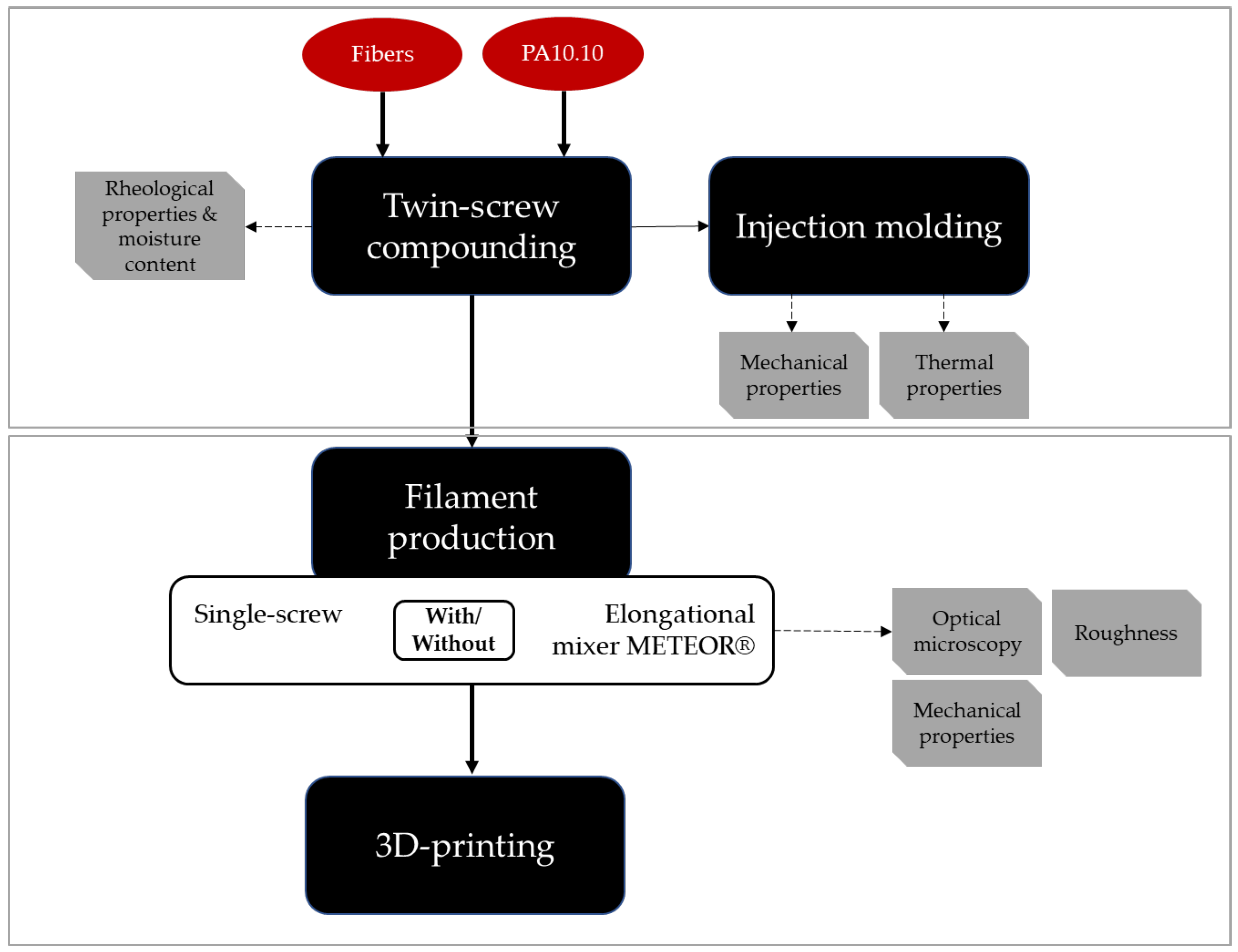
Figure 1. Flowchart of the study.
Sustainability 18 00199 g001
Figure 2. Continuous elongational flow mixer METEOR® equipped with the filament die.
Sustainability 18 00199 g002
Figure 3. (a) Scheme of our FDM production pilot line. (b) Swelling of the filament of PA10.10 with 15% flax fibers at the exit die after METEOR process.
Sustainability 18 00199 g003
Figure 4. (a) Raw filament of PA10.10. (b) Filament PA10.10 with 5% of flax fibers processed with the standard line. (c) Filament PA10.10 with 5% of flax fibers using METEOR.
Sustainability 18 00199 g004
Figure 5. (a) Filaments PA10.10 with 10% flax fibers without METEOR (left) and with METEOR (right). (b) Filaments PA10.10 with 15% flax fibers without METEOR (left) and with METEOR (right). (c) Rugosity measurements on all produced filaments.
Sustainability 18 00199 g005
Figure 6. Time sweep at 210 °C for 15 min.
Sustainability 18 00199 g006
Figure 7. Evolution of moisture content as a function of heating time at 210 °C.
Sustainability 18 00199 g007
Figure 8. (a) Tensile modulus of the filaments produced from PA10.10. (b) Tensile curves from the filaments produced.
Sustainability 18 00199 g008
Figure 9. Mechanical testing of 3D-printed dogbone specimens made from PA10.10 with flax fibers. (a) Young’s modulus. (b) Maximum elongation. (c) Flexural modulus.
Sustainability 18 00199 g009
Figure 10. (a) CAD rendering of the driver-side dashboard fascia from a Fiat 500, used as a demonstrator part. (b) Bio-based fascia parts 3D printed using PA10.10 with 5 wt% flax fibers.
Sustainability 18 00199 g010
Table 1. Evolution of the mechanical and thermal properties of PA10.10/flax injected biocomposites with the fiber content.
SampleTensile PropertiesThermal Properties
Tensile Modulus (MPa)Stress at Break (MPa)Strain at Break (%)ΔHm (J.g−1)Percentage of Crystallinity (%)Vicat (°C)HDT (°C)
Raw PA 10.101580 ± 63Not measured (too flexible)53.021.7194 ± 0.0112 ± 3.3
PA10.10 + 5% flax fibers2000 ± 12747.7 ± 0.522.7 ± 1.951.1221196 ± 0.1135 ± 0.4
PA10.10 + 10% flax fibers2600 ± 8451.0 ± 1.110.6 ± 0.352.623.9197 ± 0.1149 ± 0.6
PA10.10 + 15% flax fibers2900 ± 6851.0 ± 1.49.0 ± 0.452.725.4n.d.n.d.
PA10.10 + 20% flax fibers3416 ± 7051.1 ± 0.38.2 ± 0.251.226.2196 ± 0.5172 ± 2.4
PA10.10 + 30% flax fibers4348 ± 25955.6 ± 1.64.4 ± 0.357.933.9196 ± 0.9179 ± 0.4
Table 2. Processing parameters.
Flax Fibers Loading5%10%15%
Extrusion ProcessStandardWith METEORStandardWith METEORStandardWith METEOR
Extruder screw speed (rpm)111611251313
Mater temperature (°C)213190213191217217
METEOR parametersn.a.5 rpm/215 °Cn.a.5 rpm/215 °Cn.a.5 rpm/220 °C
Die temperature (°C)210215210215220205
n.a.: not applicable.
Table 3. IV (cm3/g) on the produced filaments.
IV (cm3/g)
Flax Fibers LoadingStandardWith METEOR
0%170.7na
5%168.0160.7
10%163.8165.6
15%152.8130.0
Table 4. Approximate porosity and fiber length.
Without METEORWith METEOR
Flax Fibers LoadingApproximate
Porosity (%)
Mean Length (µm)Approximate
Porosity (%)
Mean Length (µm)
5%/50.4 ± 58.037.188.8 ± 42.1
10%27.441.8 ± 26.732.754.0 ± 47.3
15%7.254.9 ± 30.952.058.7 ± 32.2
Fiber length is determined on around 100 fibers clearly visible.
Table 5. Key 3D printing parameters optimized for the production of demonstrator parts.
Nozzle Diameter0.6 mm
Nozzle Temperature240 °C
Layer Height0.2 mm
Speed20 mm/s
Flow Rate100%
Infill Density100%
Bed Temperature75 °C
Disclaimer/Publisher’s Note: The statements, opinions and data contained in all publications are solely those of the individual author(s) and contributor(s) and not of MDPI and/or the editor(s). MDPI and/or the editor(s) disclaim responsibility for any injury to people or property resulting from any ideas, methods, instructions or products referred to in the content.