Systematic Review

No One-Size-Fits-All: A Systematic Review of LCA Software and a Selection Framework

by
Veridiana Souza da Silva Alves
,
Vivian Karina Bianchini
*,
Barbara Stolte Bezerra
,
Carlos do Amaral Razzino
*,
Fernanda Neves da Silva Andrade
and
Sofia Seniciato Neme
Industrial Engineering Department, São Paulo State University—UNESP, Bauru 17033-360, Brazil
*
Authors to whom correspondence should be addressed.
Sustainability 2026, 18(1), 197; https://doi.org/10.3390/su18010197
Submission received: 22 July 2025 / Revised: 22 August 2025 / Accepted: 5 September 2025 / Published: 24 December 2025

Abstract

Life Cycle Assessment (LCA) is a fundamental methodology for evaluating environmental impacts across the life cycle of products, processes, and services. However, selecting appropriate LCA software is a complex task due to the wide variety of tools, each with different functionalities, sectoral focuses, and technical requirements. This study conducts a systematic literature review, following Preferred Reporting Items for Systematic Reviews and Meta-Analyses (PRISMA) guidelines, to map the main characteristics, strengths, and limitations of LCA tools. The review includes 41 studies published between 2017 and 2025, identifying and categorizing 24 different tools. Technical and operational features were analyzed, such as modelling capacity, database compatibility, usability, integration capabilities, costs, and user requirements. Among the tools, five stood out for their frequent application: SimaPro, GaBi, OpenLCA, Umberto, and Athena. SimaPro is recognized for flexibility and robustness; GaBi for its industrial applications and Environmental Product Declaration (EPD) support; OpenLCA for being open-source and accessible; Umberto for energy and process modelling; and Athena for integration with Building Information Modelling (BIM) in construction. Despite their advantages, all tools presented specific limitations, including learning curve challenges and limited scope. The results show that no single tool fits all scenarios. In addition to the synthesis of these characteristics, this study also emphasizes the general features of the identified software, the challenges in making a well-supported selection decision, and proposes a decision flowchart designed to guide users through key selection criteria. This visual tool aims to support a more transparent, systematic, and context-oriented choice of LCA software, aligning capabilities with project-specific needs. Tool selection should align with research objectives, available expertise, and context. This review offers practical guidance for enhancing LCA applications in sustainability science.

1. Introduction

The pursuit of more responsible production processes has driven society to develop methods that enable the measurement, monitoring and reduction in the environmental impacts generated by the products and services we consume. Within this context, a regenerative economic model has emerged, aiming to reduce, reuse and recycle materials and products, extending their life cycle and minimizing waste: the Circular Economy (CE) [1]. Building on this concept, a range of related themes has been established to guide the transition of business models and value chains, to measure and evaluate circularity performance, to generate and manage product circularity data sheets, and to link environmental management and the CE when addressing the sustainability and traceability of various inputs [2,3].
The implementation of the CE in this regard involves multiple strategies, ranging from designing more durable and repairable products to establishing efficient collection and recycling systems [4]. To facilitate the effective and efficient application of the CE, Reverse Logistics (RL) has emerged as a critical component.
In this sense, RL represents an essential element of the CE, referring to the process by which products are returned to the production cycle after their use [5]. This includes the collection, transportation, processing and recycling of waste within various supply chains, with the aim of reintegrating valuable materials into production and reducing environmental impact [6].
Implementing RL requires a structured system involving manufacturers, consumers and recyclers. Companies must establish product take-back schemes, while public policies can encourage and regulate such practices, ensuring that all components of the supply chain are managed sustainably [7]. In this scenario, LCA emerges as one of the most comprehensive and robust approaches for measuring environmental impacts, capable of integrating multiple stakeholders and decision-making levels [8,9].
When beginning studies or the practical implementation of LCA, it is common for questions to arise regarding the necessary steps and tools for its execution [10]. Among the first questions are: “How to perform an LCA?” or “Is it necessary to use specific software for this?” The answer to these questions may be affirmative or negative, depending on the context and complexity of the proposed analysis. From a technical perspective, it is possible to carry out an LCA manually, working directly with data and calculations. However, this process tends to be extremely time-consuming and resource-intensive, making it unfeasible for most practical applications. Therefore, the use of software is highly recommended both to optimize time and to ensure greater accuracy in the results [11].
There are various tools available for conducting LCAs. A viable option, especially in initial stages or simpler analyses, is the use of spreadsheets such as Google Sheets or Microsoft Excel. Alternatively, programming languages like Python (Version 3.13.7, Python Software Foundation, Wilmington, DE, USA) and R (Version 4.5.1 - Great Square Root, R Foundation for Statistical Computing, Vienna, Austria) also offer resources for data modelling and LCA analysis, both being free to use. A notable example is the Brightway2 (version 2.5, Brightway LCA Developers, open-source, global community) package developed in Python, which enables advanced analyses, such as integrating LCA with mathematical optimization in industrial processes. Beyond these alternatives, it is possible to use mathematical software like MATrix LABoratory (MATLAB, version R2025a, MathWorks, Natick, MA, USA) or dedicated LCA software, which stand out for their robustness and precision. Among the most widely used are SimaPro (version 10.2, PRé Sustainability, Amersfoort, The Netherlands), GaBi LCA Software (does not provide a public version number because it is a corporate, subscription-based tool with continuous updates delivered within the GaBi Solutions package developed by Sphera) and OpenLCA (version 2.5.0, GreenDelta GmbH, Berlin, Germany), each offering different approaches, interfaces, and database compatibility. For specific fields like construction or product modelling, there are also software tools integrated with Computer-Aided Design, CAD (AutoCAD, version 2026, Autodesk, San Rafael, CA, USA.), or BIM (Revit, version 2025, with updates up to 2025.4.3, Autodesk, San Rafael, CA, USA) platforms, allowing for more detailed analyses directly connected to product or building design and development.
However, the range of options is so broad that it is necessary to consider not only the tool itself but the entire process involved, which has expanded in recent years. Growing demand for sustainability indicators and parameters capable of monitoring and controlling environmental impacts, even those arising from seemingly minor stages in a product’s life cycle, has significantly changed the way managers perceive LCA applications, particularly in sectors with fragmented operators and low processing scale [12]. In this context, LCA has evolved from a cost-reduction tool to a means of adding value to products and services [13].
Despite growing academic and institutional recognition, LCA still faces challenges to become widely established in the business environment: (i) regulatory and institutional pressure for greater environmental transparency in supply chains [14]; (ii) increasing consumer demand for products with a lower ecological footprint [15]; (iii) LCA’s potential as a competitive advantage in sustainable markets [16]; and (iv) its capacity to guide strategic decisions such as material selection, production processes, and more sustainable logistics routes [17]. Despite these benefits, many companies still face difficulties implementing LCA due to technical knowledge gaps or the complexity of practical application [18].
Several factors highlight the importance of carefully selecting the LCA tool for each study. Mainly, the lack of uniformity in choosing LCA software and databases complicates comparison and consolidation of results [19]. Harmonizing databases, using common guidelines and standardized structures, ensuring inventory precision considering the diverse impact categories selected, and performing sensitivity analyses to support result reliability should all be thoroughly considered when selecting which tool and specific settings to apply [20]. Therefore, this systematic review aims to critically analyze the use of LCA software tools, map their strengths and limitations, and provide practical guidance for researchers and practitioners in selecting the most appropriate tools for diverse contexts.
This article aims to systematically review and compare LCA software tools, identifying their technical characteristics, strengths, and limitations to support decision-making in sustainability-oriented projects. Following PRISMA guidelines, 41 studies published between 2017 and 2025 were analyzed, covering 24 tools and their diverse applications. The results reveal key functional differences among widely used tools and highlight the absence of a one-size-fits-all solution. These findings have practical implications for researchers and practitioners in selecting appropriate tools based on project context. The remainder of this article is structured as follows: Section 2 presents the methodological approach; Section 3 summarizes the main findings from the literature; Section 4 discusses the implications and limitations of the study; and Section 5 provides the conclusions and suggestions for future research.

2. Background

The Life Cycle Assessment (LCA) methodology, which gained momentum in the 1960s and 1970s amid growing environmental concerns and the search for sustainable production practices [21], follows a structured set of well-established phases. This approach enables scientifically grounded decision-making and supports the continuous improvement of systems and products from a sustainability perspective.
Currently, LCA has become an essential tool for organizations seeking to align their practices with sustainable development principles [22]. It is applied in sectors such as construction, food industry, automotive, mining, energy, and waste management, contributing to more informed and conscious decisions regarding the environmental performance of technological alternatives, logistic routes, or materials. In general, it facilitates the operationalization of methods in business practice [23]. However, there is a notable gap: at least 80% of large companies worldwide do not include LCA studies in their sustainability reports. Among those that do, most apply it superficially or limit their analysis to carbon footprint, neglecting other relevant impact categories, thus increasing the risk of corporate greenwashing [24].
When linked to other mechanisms that foster sustainability, LCA has the potential to generate even greater impacts. For instance, when combined with the CE, LCA is employed to identify critical points and opportunities for improvement, ensuring that products are developed and managed in a manner that minimizes environmental impacts throughout their entire life cycle [25]. In general, the circular economy offers a sustainable model for the management of waste, products and processes, promoting the recovery and reuse of materials, reducing the demand for virgin resources and mitigating environmental impacts. RL and Urban Mining (UM) are fundamental components for implementing this model, while LCA provides a holistic approach for the continuous improvement of processes [26,27]. By adopting these principles, it becomes possible to transform the challenges posed by electronic waste into opportunities for a more sustainable future.
In addition to its environmental relevance, LCA can support broader sustainability strategies by providing a structured framework to assess trade-offs between environmental, operational, and innovation-related outcomes [28]. When applied early in the design phase, it enables the identification of solutions that not only minimize ecological burdens but also enhance process efficiency and stimulate technological advances [29]. Such integration fosters a holistic approach to sustainability assessment, allowing decision-makers to balance environmental objectives with cost-effectiveness and long-term performance improvements.
Alongside environmental and social benefits, the adoption of CE principles, when integrated with LCA, also presents notable economic advantages. As [30] observes, the redesign of product life cycles can lead to significant reductions in costs related to raw materials and waste management, while simultaneously fostering new markets centred around reuse, reprocessing, and remanufacturing. Strategies such as design for disassembly and the recycling of components facilitate the development of more efficient production chains, which are less dependent on the extraction of virgin resources [31,32]. Such redesigns not only contribute to impact mitigation but also enable value creation through material recovery, reducing losses and enhancing organizational competitiveness.
Despite these advantages, the actual uptake of LCA within organizational practice remains constrained by several significant limitations. The low integration of LCA into sustainability reporting stems from a range of factors. A recurrent limitation lies in the lack of robust quantitative data and the absence of standardized methodologies for assessing environmental impacts [33,34]. Although various LCA tools are available, usage tends to be restricted to a handful of commonly adopted systems, with ongoing challenges related to the standardization and interoperability of software platforms. Furthermore, the integration of LCA into everyday business operations often proves complex, which contributes to a preference for simplified instruments, such as checklists, as provisional alternatives.
Despite these barriers and limitations to the strategic use of LCA for industrial and business development, its capacity to provide a scientific foundation for more sustainable and efficient decision-making highlights the need to address gaps in its applicability across different sectors. For example, this can be observed in the optimization of spraying for sustainable agriculture [35], in structuring environmental cost accounting for prefabricated steel structures [36], in improving the eco-efficiency of concrete panels [37], and in exploring the relationship between artificial intelligence and building modelling technologies (BIM) within the context of smart cities [38].
LCA enables the identification of critical environmental impact points throughout the life cycle of products and processes, guiding improvements in design, material selection, and manufacturing practices. It also supports product innovation, promoting solutions with lower environmental burdens and higher added value, an aspect increasingly relevant given the growing demands from consumers, investors, and regulators [39,40]. Moreover, by generating standardized and comparable data, LCA contributes to the transparency and credibility of Environmental, Social and Governance (ESG) strategies and sustainability reports, strengthening institutional image and market competitiveness. Finally, integrating LCA with environmental management systems, such as those based on ISO 14001:2015 [41], facilitates regulatory compliance, investment attraction, and access to more demanding markets, making it a valuable ally in the transition toward more circular and resilient production models. Given the complexity and breadth of the data involved in LCA, a variety of computational tools have been developed to facilitate its application, ensuring more efficient, standardized, and reproducible analyses [42].
Available LCA tools can be classified into four main categories: (i) Paid tools, which operate with closed-source code and are subject to restricted use through contractual or licensing agreements, with no rights to modify and/or redistribute without explicit authorisation [43]; (ii) Free tools, which grant users the freedom to use, modify and redistribute the software [44]; (iii) Sector-specific tools, which are developed or customized to meet the technical, regulatory or operational requirements of a particular economic sector [45]; and (iv) Experimental and/or educational tools, designed primarily for teaching, training or the testing of new methodologies [46]. Commercial software includes widely used platforms such as SimaPro, GaBi, and Umberto (Version 5.5.4, ifu Hamburg GmbH – iPoint Group, Hamburg, Germany), which offer comprehensive interfaces, technical support, and broad database integration. These are recommended for companies and institutions conducting recurring and complex analyses, despite their high licensing costs. In contrast, free or open-source tools, such as OpenLCA and Brightway2, have gained prominence for offering good modelling capabilities and flexibility, especially in academic and institutional settings with limited budgets. However, access to certain databases or specific functionalities may incur additional costs.

3. Materials and Methods

This study is characterized as applied research, qualitative in nature, with an exploratory approach, employing a systematic literature review as its primary method [47]. The objective is to gather, analyze, and critically interpret the existing scientific production on the use and comparison of software applied to LCA, focusing on practical applications, selection criteria, limitations, and variations in results.
The research was conducted based on the PRISMA protocol (Preferred Reporting Items for Systematic Reviews and Meta-Analyses), ensuring transparency and reproducibility in the identification, selection, and analysis of studies [48]. The literature search was performed on the Web of Science, Scopus, and ScienceDirect databases. The search covered publications from January 2017 to May 2025. Additional references were identified using the snowballing technique, which is described as an effective strategy for accessing hidden or hard-to-reach populations [49].
The formulation of the search strings used in this systematic review was guided by the central goal of identifying studies that apply, compare, or discuss the use of specific Life Cycle Assessment software tools. The first search string (“Life Cycle Assessment” OR “LCA”) AND comparison AND “LCA software”, was designed to capture articles conducting direct comparisons between different tools, enabling evaluation of the influence of software choice on study results. The second search string, (“LCA tools” OR “LCA software”) AND (“case study” OR application) AND (SimaPro OR OpenLCA OR GaBi OR Umberto), aimed to identify applied studies utilizing widely recognized LCA software, highlighting their applications in real-world contexts across various sectors. The inclusion of terms such as “case study” and “application” ensured that selected articles addressed practical experiences, while the nominal listing of software tools restricted the search to those with the greatest relevance and adoption in the scientific literature.
Thus, the search strings were strategically designed to balance comprehensiveness and focus, capturing both comparative analyses and concrete applications in alignment with the objectives of this research. The extraction results are summarized in Table 1.
Considering that 189 duplicate articles were identified and removed, and an additional 25 articles were excluded based on eligibility criteria, a total of 174 articles remained for title and abstract screening. These were initially examined to identify comments, critiques, comparisons, and author positions involving at least two LCA software tools. Consequently, 140 articles were excluded for the following reasons:
(i)
Use and presentation of only one LCA tool in the study (112 articles);
(ii)
Lack of explicit identification of the LCA tool used (10 articles);
(iii)
Development of an alternative tool rather than performing an LCA or analyzing LCA tools (2 articles);
(iv)
Conducting a comparative LCA but not comparing the results or usage of different LCA software tools (16 articles).
After this screening, 34 studies remained for full-text analysis. Through additional searches using the snowballing technique, a further 12 articles were identified. These studies were found through reference analysis and searches in databases not indexed in the three main databases used in the systematic literature review.
Following the removal of duplicates between the two sources, 41 articles were retained for the final analysis. This entire selection process is illustrated in the PRISMA diagram shown in Figure 1. The detailed Prisma checklist is presented in the Supplementary Materials section. The screening of articles was carried out by one of the authors and reviewed by another author. The inclusion and exclusion criteria were validated by two authors, and the entire search process was conducted in April and May 2025. Data extraction was performed manually by the authors and cross-checked to ensure accuracy. No assumptions were made regarding missing or unclear data. No formal risk of bias assessment was conducted because the review is qualitative in nature and does not include meta-analysis.
The analysis of the documents approved after screening began with a brief bibliometric survey aimed at understanding the field of study, its temporal evolution, and the thematic areas to which it is directly linked.
The frequency with which each LCA tool was mentioned in the analyzed publications was also recorded. At this stage, each qualified mention was counted individually. Thus, if an article comparatively addressed two or more tools, each was counted once. However, if the same tool was mentioned in different studies, it was counted multiple times accordingly.
Subsequently, the tools examined were grouped into four categories based on their characteristics and the comparisons cited in the literature. This survey, together with key information on each identified tool, is available in Appendix A This categorisation enabled the comparison to be structured in a coherent and transparent manner, in line with the guidance provided by PRISMA for systematic reviews.
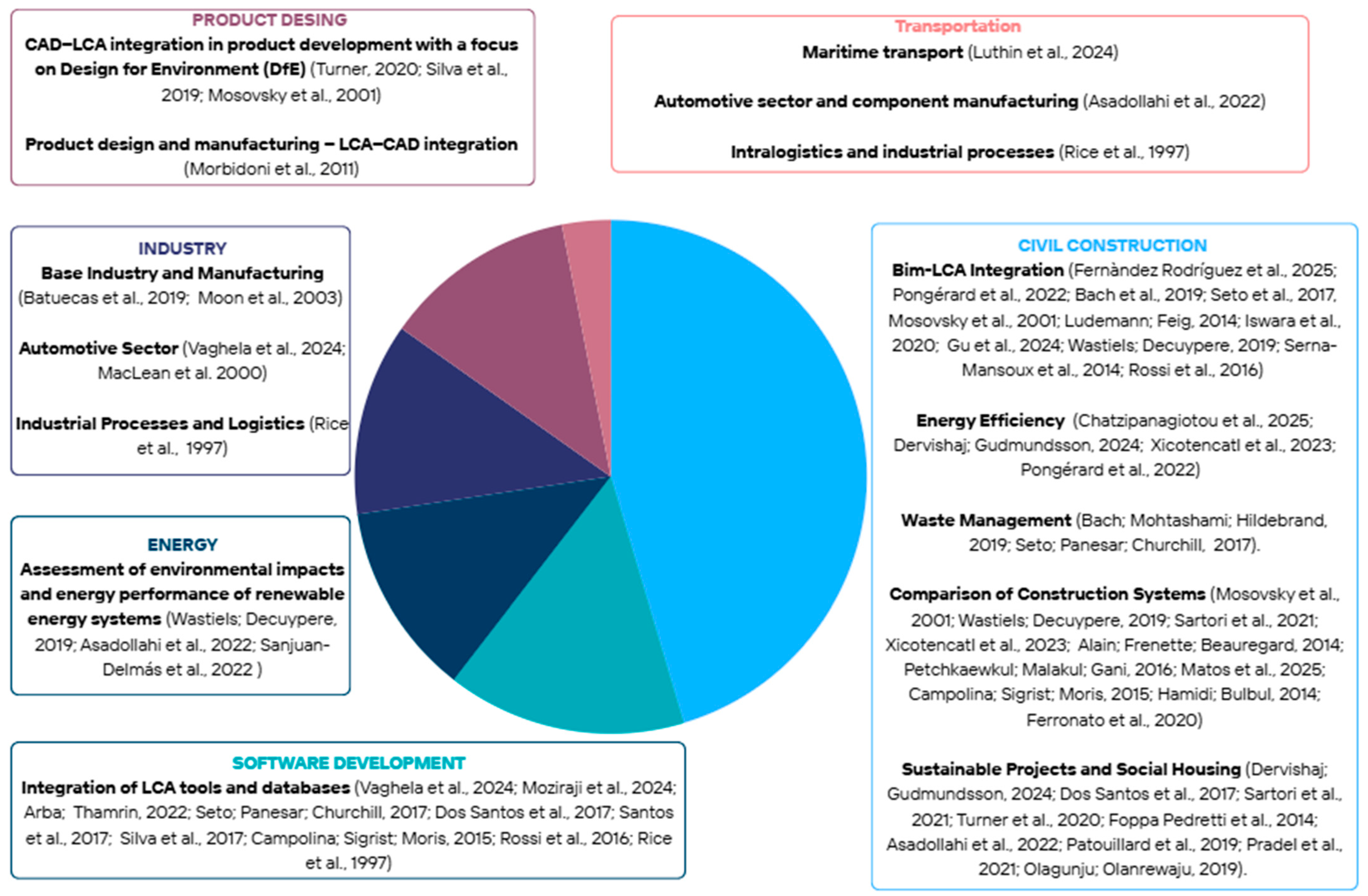
Moreover, the selected studies were classified into thematic areas based on the application sector or the central approach adopted by the authors. This categorization aimed to identify the predominant contexts in which LCA tools have been applied. For this purpose, an analytical reading of the articles’ content was conducted, focusing on objectives, methods, and results. Based on this information, each study was assigned to a single predominant thematic category. Subsequently, a chart was generated showing the frequency distribution of studies by thematic area. The relevance of integrating decision support approaches into environmental assessment frameworks has been increasingly emphasised in recent studies, which highlight their role in improving governance and management practices in sustainability-oriented systems [50].
Additionally, as a practical output of this systematic review, a decision support flowchart will be developed. This flowchart will synthesize the decision-making process for selecting an appropriate LCA software tool, aligning with the criteria identified in this review and grounded in best practices of decision support systems in operations and production management [14,51].
As part of the comparative analysis, a synthesis was developed to organize the main aspects observed in studies addressing the five most frequently cited LCA tools in the sample. This systematization was divided into four main analytical categories: (i) Technical Characteristics; (ii) Usability and Interface; (iii) Availability and Cost; (iv) Support and Updates.
Within each category, elements such as supported impact assessment methods, integrated databases, modelling capacity, served sectors, interface type, licensing model, access modality, technical support, and update frequency were highlighted. The objective was to structure a comparative overview of functionalities and limitations reported in the studies, providing a consolidated and critical perspective on the practical use of these tools in the Life Cycle Assessment context.
This approach was inspired by a methodology that highlights how the choice of LCA software is closely linked to the available databases, calculation methods, and underlying assumptions, all of which significantly influence the results obtained [15].

4. Results

Before discussing the considerations raised by the authors regarding the use of LCA tools, it is essential to acknowledge the urgency of guiding the selection of the most suitable tool for conducting an LCA, which extends far beyond simply defining the study’s goal and scope. In this context, the recommendations for the optimal way to choose an LCA tool involve various factors, which are outlined in Table 2.
In general, early studies had a narrower focus, primarily dedicated to descriptive reviews of available software and their applications in specific sectors such as transportation and electronics [52,57]. These initial publications highlighted structural limitations of the tools and sought to map basic functionalities, often emphasizing usability and ergonomics. From 2014 onwards, a qualitative and quantitative leap is observed, marked by an increase in studies with applied comparative approaches and integration with new technologies, such as combining LCA with BIM and the inclusion of tools for circularity and advanced sustainability [58].
Regarding publication venues, 34 articles were published in scientific journals, with frequent contributions appearing in three key journals: the Journal of Cleaner Production leads with the highest number of publications, reaffirming its role as the main vehicle for scientific dissemination in sustainability and life cycle assessment. The following are the International Journal of Life Cycle Assessment and the Journal of Building Engineering, both strongly represented by articles focusing on the use of LCA software, particularly in contexts related to construction, energy, and waste management. Additionally, journals such as Sustainability, Resources, Conservation and Recycling, and Sustainable Production and Consumption stand out, broadening the thematic scope to circular approaches and integrated solutions.
The remaining nine articles were published in well-established conferences in the field: the IOP Conference Series and CIRP LCE (Life Cycle Engineering) series are the most cited, serving as strategic venues for presenting methodological advances, emerging digital tools, and experimental applications of LCA. This distribution reinforces the maturation of the field, balancing consolidated publications in scientific journals with relevant contributions in specialized conferences.
The collected works are related overall to nine general thematic areas, as shown in Figure 2.
Recent literature reveals a growing interest in comparing LCA tools and in understanding the impact that the choice of such tools may have on the results obtained. Since 2017, several studies have explored this topic, initially focusing on direct comparisons between American and European tools [76], reinforcing existing debates by empirically demonstrating that different software packages can produce divergent results even when applied to the same case study [65].
From 2020 onwards, there has been a marked intensification of more robust comparative studies [76], which highlight the need for a careful selection of software tools, taking into account their technical and methodological specificities [57,65]. In this regard, research has shown that even when analysing the same buildings, the use of different LCA software, such as SimaPro and Athena Impact Estimator (Version 5.5 Build 0113, Athena Sustainable Materials Institute, Ottawa, Canada) may lead to significant variations in numerical results, reinforcing the importance of aligning the choice of tool with the objectives of the study [72]. Software such as Tally (Version 1.0, KieranTimberlake & Autodesk, Philadelphia, PA, USA/San Rafael, CA, USA) and One Click LCA (Version 4.0.9, Bionova Ltd., Helsinki, Finland) have gained prominence due to their capacity to operate in integration with BIM environments, thereby optimising environmental analysis from the early stages of project development. This trend is confirmed by studies that demonstrate the consolidation of LCA as a decision-support tool for sustainable design [88].
In parallel, a critical strand has focused on the analysis of tools and databases without necessarily conducting applied LCA studies. In this context, a category of assessment systems called Green Building Rating System (GBRS) tools have been examined critically [38], while the development of templates and formats has been discussed [72]. Furthermore, the effect of database and software selection on LCA outcomes has been investigated, with emphasis on the importance of transparency and data traceability [88].
Chronologically, an evolution in publication profiles is observed. Between 2017 and 2020, studies prioritised comparisons between tools and databases. From 2021 to 2025, the approaches became more sophisticated, emphasising integration with digital technologies (such as BIM), advances in discussions on circularity and sustainable design, and the adoption of more refined methodological practices. These developments demonstrate not only the maturation of LCA research but also the increasing complexity of the available tools, requiring professionals to possess not only technical expertise but also a critical understanding of how methodological choices influence results and sustainability-related decision-making [77].
A total of 24 LCA tools were identified: Athena, BEES (Building for Environmental and Economic Sustainability, National Institute of Standards and Technology – NIST, Gaithersburg, MD, USA), BioGrace Spreadsheet (European Commission/BioGrace Project Consortium, Brussels, Belgium), Brightway, CMLCA (Version 6.1, Institute of Environmental Sciences – CML, Leiden University, Leiden, The Netherlands), Ecodesign Studio (Interreg/EcoDesign Pilot Project, European Union), eLCA (German Federal Institute for Research on Building, Urban Affairs and Spatial Development – BBSR, Bonn, Germany), Elodie (CSTB – Scientific and Technical Centre for Building, Marne-la-Vallée, France), GaBi LCA, GREET (Version 45VH2-GREET, Argonne National Laboratory, Lemont, IL, USA), IDEMAT (Version Idemat 2025RevA8, Delft University of Technology – TU Delft, Delft, The Netherlands), Legep (University of Stuttgart/ifeu Institute, Stuttgart/Heidelberg, Germany), One ClickLCA, OpenLCA, PaLATE Spreadsheet (Version 2.0, University of California Pavement Research Center – UCPRC, Berkeley, CA, USA), Quantis Suite (Version 2.0, Quantis International, Lausanne, Switzerland), SimaPro, Solid Works Sustainability (Dassault Systèmes SolidWorks Corp., Waltham, MA, USA), Tally, TEAM (Version 4.0, SimaPro/PRé Sustainability Legacy Tool, Amersfoort, The Netherlands), TOTEM (Tool to Optimise the Total Environmental Impact of Materials, Belgian Building Research Institute – BBRI, Brussels, Belgium), Umberto, WARM (Waste Reduction Model, US Environmental Protection Agency – EPA, Washington, DC, USA), VTTI/UC Asphalt Pavement LCA Model (Virginia Tech Transportation Institute & University of California Pavement Research Center, USA). Table 3 reflects the frequency with which these LCA tools were individually qualified in the analyzed publications. It is noteworthy that each qualified mention was counted individually, even when occurring alongside other tools. Therefore, tools such as SimaPro, GaBi LCA, OpenLCA, Athena, and Umberto, frequently analyzed across different studies, show higher frequencies in the graph, being highlighted in multiple comparisons. Less recurring tools, although cited in multi-comparative articles, were counted only once per occurrence, as they were mentioned in only one article (Table 3).
It is important to emphasize that even though these are updated tools used systematically by researchers, some tools do not have a declared version, as is the case with BEES, BioGrace Spreadsheet, Ecodesign Studio, eLCA, Elodie, SolidWorks Sustainability, TOTEM, WARM, and VTTI/UC Asphalt Pavement LCA Model.
Table 3 shows the frequency with which different LCA tools were qualified in the analyzed studies. It is evident that the software SimaPro, GaBi LCA, OpenLCA, Athena, and Umberto stand out prominently, being the most frequently mentioned and qualified in the literature, demonstrating their consolidation as reference tools for conducting LCA studies. Conversely, a significant number of tools appear with lower frequency: 08 tools were cited only once, and 09 tools appeared in two studies, indicating a considerable diversity of approaches and the occasional use of specific solutions for contexts or sectors. This outcome highlights the importance of understanding each tool’s functionalities, limitations, and most appropriate applications, especially when considering different thematic areas and methodological needs.
The study that provided relevant information on the largest number of tools analyzed the application of 11 LCA tools in practical façade projects and their environmental dimension. In this comparison, GaBi, Umberto, and SimaPro were identified as the most suitable tools when assessing the required knowledge level against the LCA performed [71].
Among the findings, it is important to note that the use of spreadsheets was evaluated in the context of the bioethanol production chain from hybrid grapes. The results obtained with the spreadsheet and with SimaPro 7.3 software showed similar greenhouse gas emissions, reinforcing the reliability of the data. The BioGrace spreadsheet was highlighted as a practical and simplified tool, developed under the European Renewable Energy Directive (RED 2009/28/EC), enabling emissions calculations according to normative parameters and applying energy allocation among co-products. In contrast, SimaPro 7.3 proved more robust by incorporating a broad database (Ecoinvent) and considering additional impacts such as emissions related to machinery and equipment manufacturing, offering greater detail and flexibility for complex analyses. Both methods allowed the analysis of cultivation, processing, and transport stages, confirming the sustainability of the production chain from both technical and regulatory perspectives. However, not all studies applying multiple tools found similar results [82].
A detailed comparison between Athena and SimaPro was conducted, applied to the life cycle analysis of a six-storey commercial building constructed with glued laminated timber (glulam) in Quebec. The comparison revealed that, although Athena allows for basic LCA execution within a few hours, its flexibility and transparency are limited, particularly in relation to the customization of materials, maintenance cycles, and access to the assumptions underlying results. SimaPro stood out for its analytical depth, enabling process network visualization and detailed impact indicator analysis, but required significantly longer execution time, involving weeks of data collection and processing. It was noted that the choice of impact assessment method decisively influences the final LCA results, with variations of up to 10% in Athena results depending on the approach (by materials or assemblies) and up to 8% differences in SimaPro between partial and complete analyses [82].
When SimaPro is compared to another tool, such as the Waste Reduction Model (WARM) developed by the US Environmental Protection Agency (EPA), known for its practical application in the US context and for including economic and labour assessments, considerable discrepancies have been identified in CO2 emission results between the two software, with average differences of up to 55% [79].
A comparison of two LCA software tools in Indonesia, where local databases were unavailable, used oil exploration and production processes as the analysis scenario and Ecoinvent as the common database. The midpoint method for Global Warming Potential (GWP), ozone depletion, acidification, and eutrophication was assessed using the CML midpoint method, which is compatible with both software. Substantial differences in result presentation were observed: OpenLCA provides specific numerical values, whereas SimaPro also presents percentages and graphical displays. Despite using the same inputs, database, and method, results differed; for example, the GWP impact was 60% higher in SimaPro. This divergence was attributed to differences in conversion and characterization factors, which could not be fully determined because the software operates as closed systems [65].
Despite critiques and comparisons, some observations about software use and approaches are noteworthy. One study sought to integrate spatial dimensions into LCA tools by analyzing SimaPro, OpenLCA, Brightway LCA, and GaBi LCA, and concluded that OpenLCA is currently the most suitable tool for practitioners working with spatial data in LCA [59].
A product parameter associated with the process inventory was proposed, in which energy consumption is presented using a colour code to guide product development teams. This tool can be applied in OpenLCA, SimaPro, and BillianProduit, despite limitations regarding the use phase. It was noted that SimaPro, at least up to version 7.0 (the year of the study), did not treat the use phase as independent, presenting a functional unit issue also observed in BillianProduit. The limited scope for process phases related to use was highlighted only for OpenLCA [89].
SimaPro’s superiority was highlighted in the result presentation and inventory breadth. However, they noted GaBi’s advantage in producing clear, intuitive graphics, while OpenLCA offered simplified comparisons [65].
Differences in impact category results between the three software tools may be due to a lack of standardization in LCA characterization methods, which affects data scope and currency, both essential for accurate and meaningful environmental impact assessments. The interpretation of LCA characterization methods depends on several factors, including: (i) variability in modelling; (ii) resource coverage (with some methods covering a dozen resources and others over fifty); (iii) characterization factors; (iv) data type and source; and (v) data temporality and reserve updates [74].
An ergonomic analysis of LCA software found SimaPro to be superior. In this comparison, Umberto LCA was noted for not allowing free database integration, while SimaPro provides tailored approaches depending on research goals, and GaBi LCA offers more graphic display options. Additionally, SimaPro mainly targets companies and global consultants, whereas OpenLCA is considered better suited for academia due to its open programme structure, which allows greater adaptation [55].
An analysis of these four tools found significant discrepancies in the photochemical ozone formation and ecotoxicity categories. Differences were identified in how substances are mapped for environmental aspects, with root causes traced to data import processes and the lack of standardized methods for impact assessment implementation. However, the study was limited by the software versions used, the scope of the case study, and the absence of cut-off criteria in inventory flows [57].
A comparison of OpenLCA, SimaPro, GaBi, and Umberto in LCA studies found that OpenLCA is user-friendly that operates quickly but does not fully comply with environmental management guidelines and requires manual configuration. SimaPro was recommended for the cement industry due to its robustness and extensive databases; GaBi was described as complex, while Umberto was considered less robust and innovative. Table 4 summarizes the main aspects observed in the most cited tools [84].
Considering all the above, Table 4 was prepared to summarize the key features observed for the most frequently mentioned tools in the studies.
The information provided by the developers establishes a starting point for understanding the functionalities of the LCA tools. However, it is only through practical application (as evidenced in scientific articles) that the degree of alignment between the manufacturers’ claims and the results obtained by users can be identified, thereby revealing the true strengths and limitations of each software. Table 4 presents the strengths of these five tools (SimaPro, OpenLCA, GaBi, Umberto, and Athena). The main strengths of the most cited LCA software tools are further summarised in Table 5, while the weaknesses identified in these tools are presented in Table 6.
The comparative evaluation of LCA tools reveals that each presents strengths that make them suitable for different application contexts. For example, SimaPro stands out for its methodological robustness [85], high compatibility with databases such as Ecoinvent [65], a wide variety of impact assessment methods like ReCiPe, CML, and TRACI [65], and good graphical visualization through process networks and colourful charts [57,69]. Its flexibility for customization and reliability in normalization make it particularly suitable for complex studies with high technical rigour [69,77].
OpenLCA stands out as a free, open-source alternative with an intuitive interface and broad compatibility with international databases [55,75]. It also allows both manual and automatic modelling, producing comprehensive results with bar charts and Excel exports [54].
GaBi LCA also shows strengths such as flexible modelling [56], extensive data coverage [66], and a modern graphical interface [60], being especially effective for industrial applications.
Umberto is highlighted for its detailed simulation of energy flows [83], visual appeal with Petri nets [55], adherence to the Standard of Environmental Management [85], and recommendation for sectors such as the cement industry [66].
Finally, Athena is valued for its direct integration with Revit and other BIM tools [30], its practical applicability in the construction sector, and for offering stage-specific life cycle reports with reduced need for manual data input, such as transport or energy [66,82].
Despite these distinct qualities, it is important to recognize that each tool also presents limitations and weaknesses that may impact their selection depending on the objectives and user profile. Table 6 presents the negative aspects of the software’s analyzed. The following section discusses the main negative points observed in the analyzed tools.
The criticisms highlighted reveal, however, that no tool is universally superior. Factors such as learning curve, flexibility, cost, compatibility with databases, and capacity to integrate with other systems must be carefully considered when making a choice. Understanding these nuances is essential to avoid distorted results, promote more transparent analyses, and strengthen the reliability of Life Cycle Assessment in its multiple applications.
The findings of this study have important implications for both theory and practice in the field of LCA. From a theoretical perspective, systematic review enhances our understanding of the diverse LCA tools available, shedding light on their unique features, limitations, and suitability across various contexts. This expands the theoretical foundation by emphasizing the methodological and technological diversity inherent to LCA, while also highlighting the need for further research on interoperability, standardization, and methodological improvement. The heterogeneity observed in databases, impact assessment methods, and modelling formats limits comparability and robustness of results, revealing a theoretical gap that could be addressed through harmonization efforts and the development of minimum practice standards. Moreover, the diversity of applications and sectors covered in the literature underscores the importance of incorporating contextual, regional, and multidisciplinary factors into LCA models, including spatial, temporal, and social dimensions, to enrich traditional environmental assessment approaches.
From a practical standpoint, the study demonstrates that the choice of LCA tool is not trivial and should be carefully aligned with technical, strategic, and budgetary criteria to ensure reliable and meaningful analyses. Professionals and decision-makers should select tools that match their user profile, study objectives, and sectoral requirements. Additionally, the findings indicate the importance of cross-validation, encouraging the use of more than one tool or method to enhance the robustness and credibility of results, thus avoiding exclusive reliance on a single software or database.
Several studies have indicated that interoperability between LCA software and other technological platforms, such as BIM, ERP, and CAD, is essential to streamline modelling and expand practical applicability. In the context of the construction industry, BIM–LCA integration enables the extraction of quantities directly from the model and reduces rework [69]. In manufacturing, CAD–LCA connection facilitates the automatic capture of environmental data [62]. Although less common, integration with ERP is mentioned as having the potential to align environmental information with cost and planning data [86].
The study also highlights the growing need for integration with other technological platforms, such as BIM, ERP, and CAD systems, to streamline modelling processes and increase practical applicability in real projects. Given that some tools require high levels of technical knowledge, investment in training, educational materials, and practical guidelines are essential to enable broader access and proper use, particularly in academic environments, small enterprises, and developing countries. Finally, by clarifying the strengths and limitations of each tool, the study supports more informed and strategic decision-making processes, strengthening the integration of sustainability into public policies, industrial production chains, and innovation strategies.

5. Discussion

Given the data presented, it becomes evident that the choice of LCA tool directly influences the depth, reliability, and utility of the results obtained in environmental studies. Although efforts toward methodological standardization exist, such as adherence Standart’s ISO 14040: 2006dof Environmental management of Life cycle assessment: Principles and framework (2006) [21], the diversity in functionalities, databases, modelling formats, and technical support introduces variations that cannot be overlooked. The analysis of the 41 studies included in this Systematic Review revealed that tools such as SimaPro, GaBi, OpenLCA, Umberto, and Athena are widely adopted, yet they cater to different purposes and user profiles. SimaPro is most frequently cited in industrial and academic contexts requiring high methodological rigour; GaBi, though equally robust, stands out for its integration with Environmental Product Declarations (EPDs) and its use in specialized industrial applications; OpenLCA emerges as a viable open-source alternative for academic institutions and developing countries; Umberto demonstrates strong applicability to industrial processes, with detailed energy flow modelling; whereas Athena is more geared toward the construction sector, integrating BIM and simplified modelling functionalities.
Another limitation relates to the absence of a formal risk of bias assessment, which restricts the ability to fully evaluate the methodological robustness of the included studies. Additionally, the qualitative nature of the synthesis and the manual screening process may have introduced selection bias.
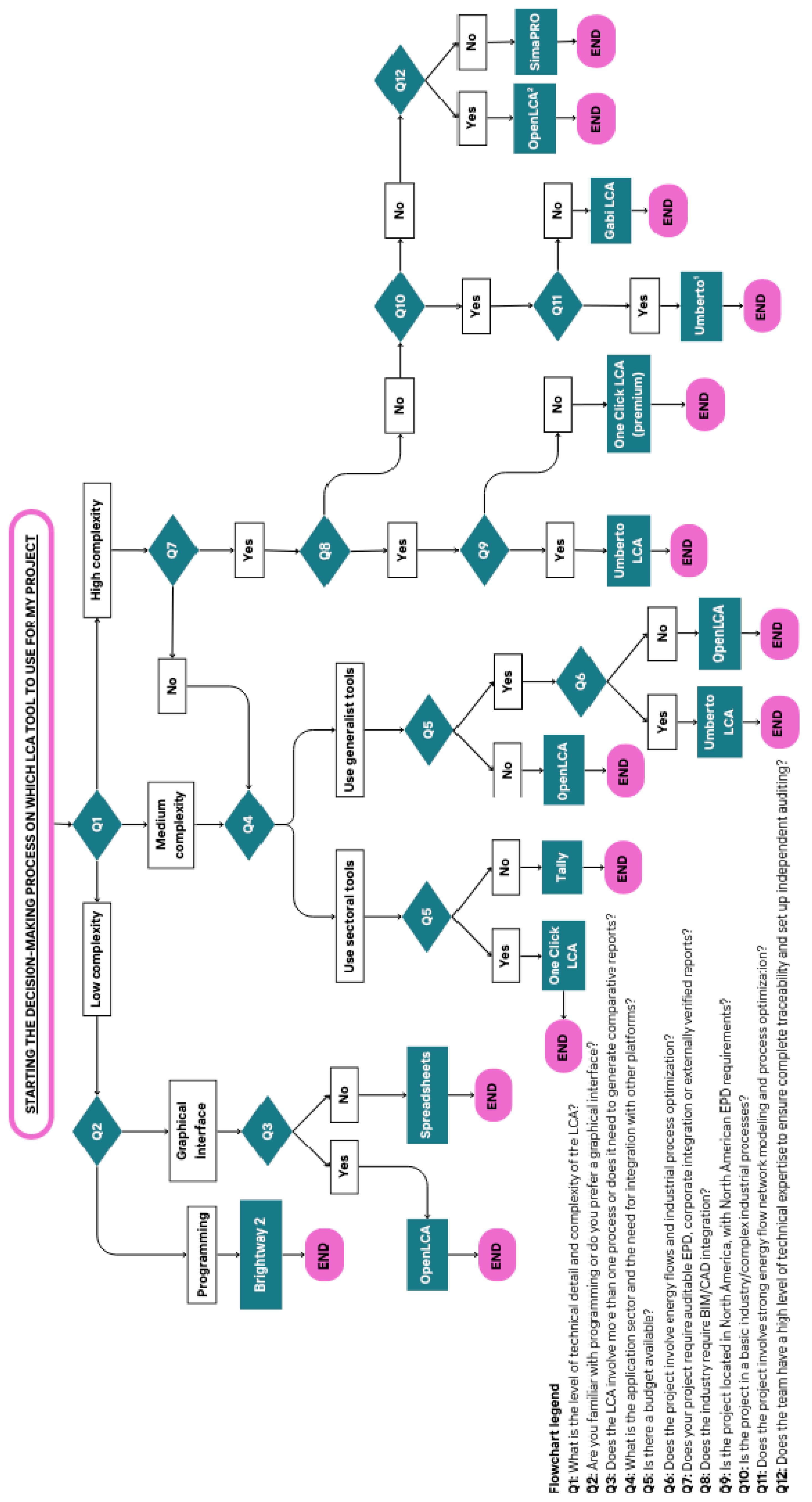
To translate the findings of this review into practical guidance, a Life Cycle Assessment Tool Selection Flowchart was developed as a visual support resource, designed to assist researchers (as presented in Figure A1, in the Appendix B), practitioners, and decision-makers in choosing the tool most suitable to their needs. The flowchart organizes key criteria identified, such as project complexity, technical requirements, budgetary constraints, and integration needs, into a logical and instructional sequence, helping to reduce common uncertainties and promote more informed and assertive decisions. The structure consists of three main decision branches (nodes), each corresponding to a distinct level of complexity and detail of the study, as described below.
Practical Guidance: Flowchart for Selecting an LCA Tool
As previously noted, the flowchart was structured around three decision nodes, formulated based on the questions emerging from the research, and encompassing those directly involved in the decision-making process for identifying the most suitable tool for each study. These nodes are directly linked to the level of technical detail and complexity of the LCA, which forms the basis of the first question to be addressed by stakeholders involved in conducting an LCA: “What is the required level of technical detail and complexity of the LCA?”, identified as Q1 in the flowchart.
This initial question offers three possible responses: high, medium, or low level of detail. Each response leads the stakeholder to subsequent questions that guide the selection of the most appropriate tool for conducting the assessment.
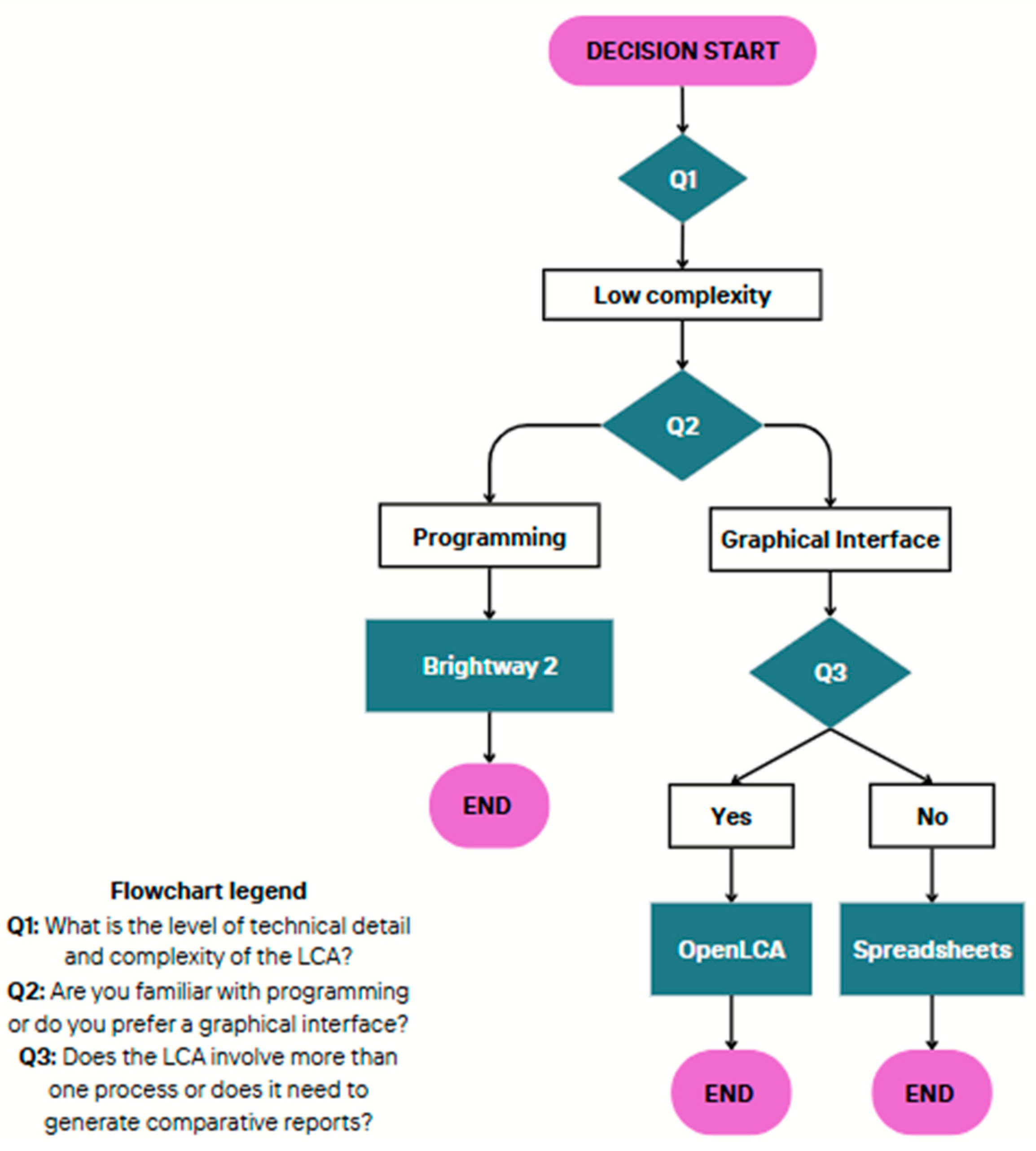
When a low level of complexity is identified, this typically refers to exploratory, initial, or screening LCAs, aimed at educational purposes, preliminary comparisons, or pilot projects. This decision path is illustrated in Figure 3 which presents the specific node of the flowchart for low-complexity studies.
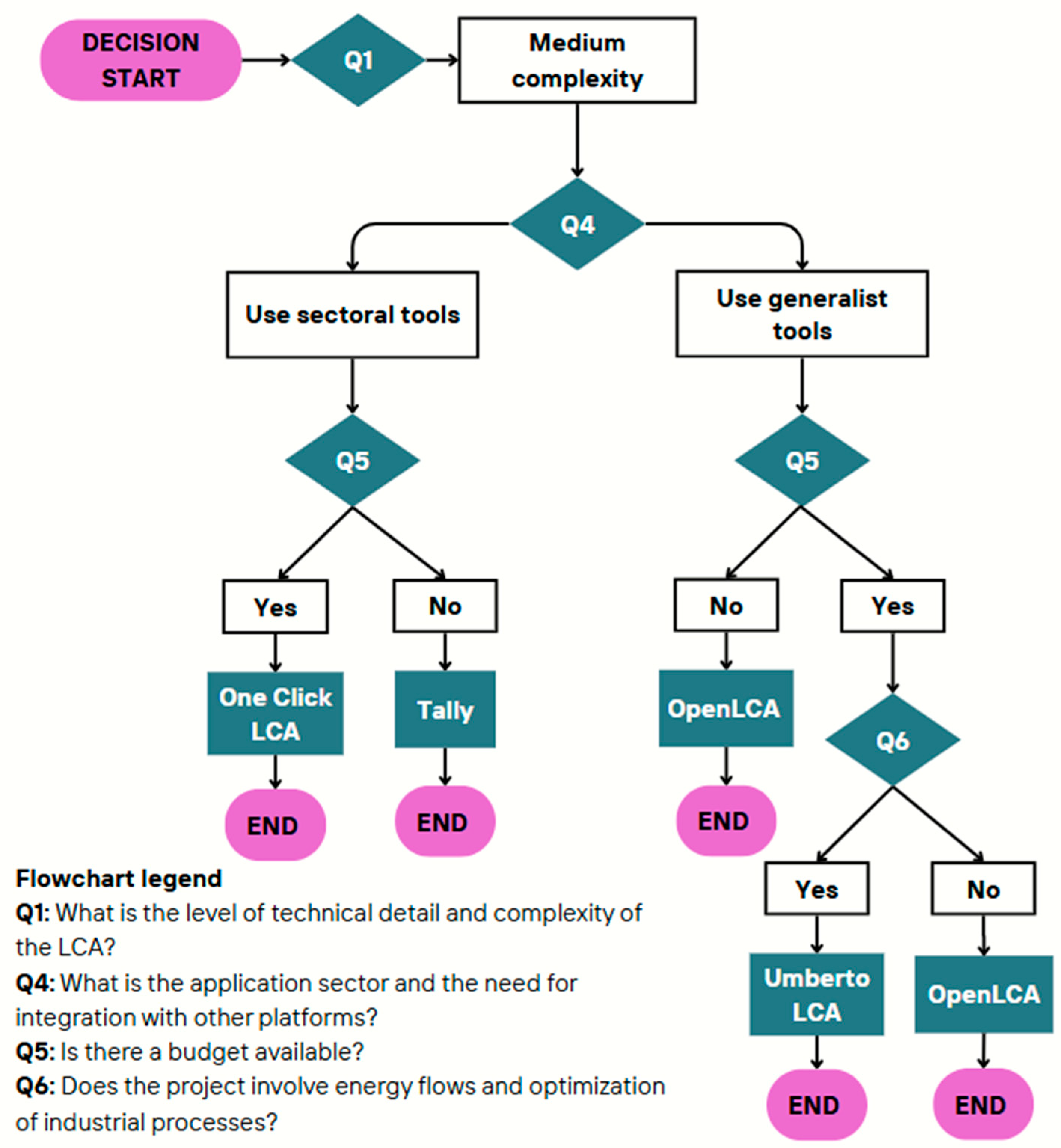
In cases where the required level of technical detail is deemed moderate, the decision path progresses to an intermediate analytical structure, incorporating greater methodological robustness without necessarily requiring the full range of resources of a complete LCA. This configuration is represented in Figure 4, which outlines the corresponding node for medium-complexity studies, including the follow-up questions that should be considered.
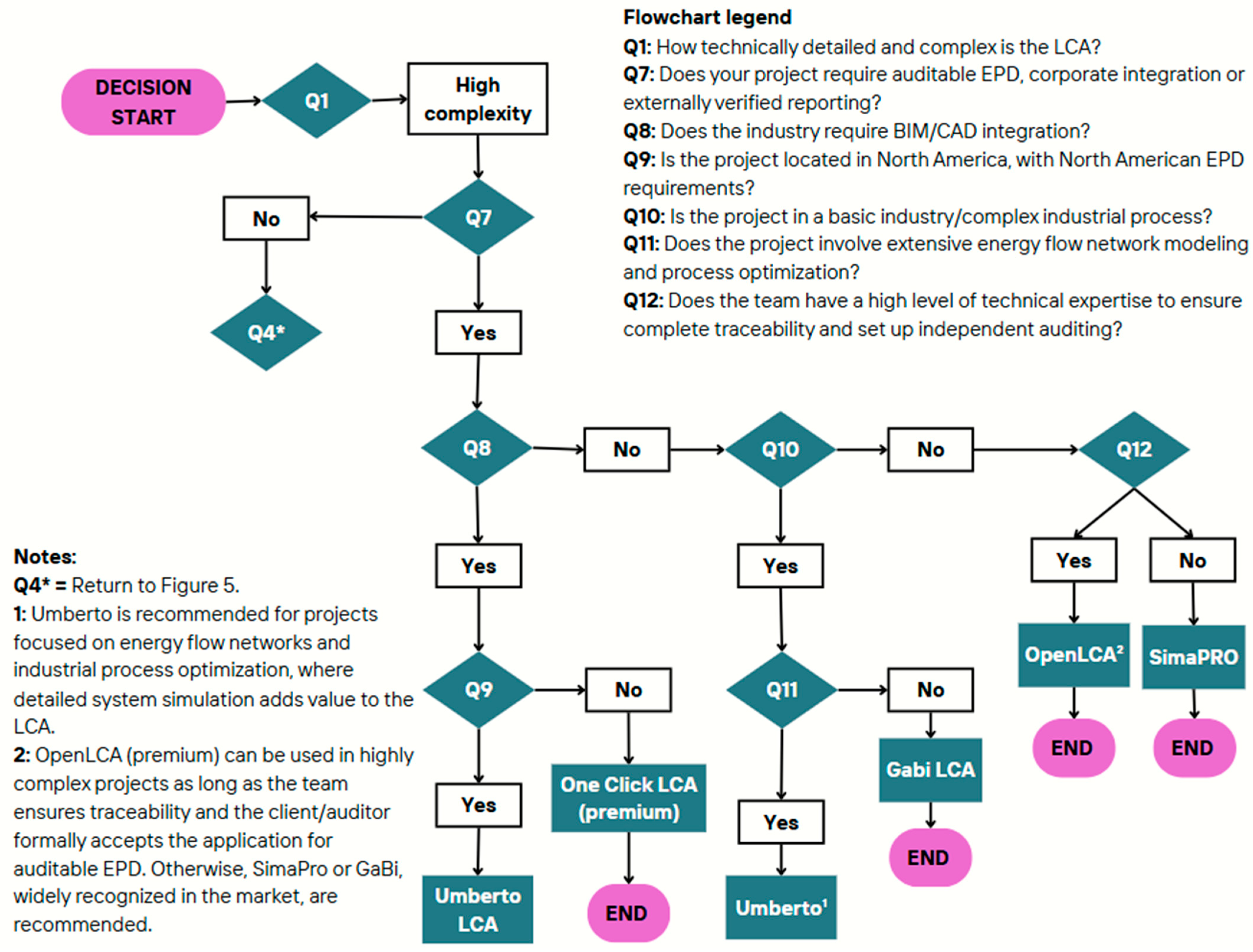
Finally, for cases requiring a high level of technical detail, the decision flow recommends the adoption of advanced tools, premium databases, and more sophisticated modelling methods, ensuring enhanced accuracy of results. This more detailed structure is outlined in Figure 5, which illustrates the node intended for high-complexity studies, including the guiding principles and supporting questions underpinning this choice.
In practical terms, Figure 3 is recommended for decision-makers conducting preliminary assessments, feasibility analyses, or educational applications, where rapid results and lower data requirements are acceptable, for example, in early-stage product design or academic coursework. Figure 4 is more appropriate for sectoral studies, environmental benchmarking, or policy support analyses, where moderate methodological detail is required to ensure comparability and reliability without incurring the high costs of advanced modelling. Figure 5 should be chosen when the LCA will support strategic corporate decisions, certification processes, or regulatory compliance in highly competitive or regulated markets, where the highest accuracy, traceability, and methodological robustness are indispensable. By explicitly associating each decision node with concrete scenarios, the flowchart’s practical value is enhanced, enabling stakeholders to quickly align the tool choice with their operational, technical, and strategic needs.
At this level, investment in paid tools or premium databases is not justified, as the cost–benefit ratio does not correspond to the depth of the analysis. Therefore, priority is given to the use of open-source or free tools, or even structured spreadsheets, in accordance with best practices recommended by ISO 14040 [21] in the Goal and Scope Definition phase.
The first decision within this branch concerns the user’s familiarity with programming: “Are you familiar with programming, or do you prefer a graphical interface?” (as presented in question Q2 of the flowchart). This decision is based on the premise that, for low-complexity studies, the learning curve must align with the technical proficiency of the implementation team. For users with programming skills, the recommended tool is Brightway2, an open-source framework based on Python, suitable for custom analyses and integration with mathematical modelling scripts. Brightway2 is particularly well suited for students, researchers, or professionals wishing to prototype simple flows and perform exploratory testing, benefiting from the modularity and documentation of the library.
For users with no programming experience or those who prefer an intuitive graphical interface, a refinement node is proposed based on the study’s structure, as identified in question Q3: “Does the LCA involve more than one process or require the generation of comparative reports?” This distinction is important, as more complex flows demand minimum traceability and clear organization of inputs and outputs, which may become unmanageable in manual spreadsheets.
When the LCA involves more than one process, the use of OpenLCA (free version) is recommended. It offers a user-friendly interface, supports open-source databases (such as ELCD and Agribalyse), and can generate basic reports even without premium features. This option allows even novice users to perform more structured modelling at low cost, while maintaining data transparency.
For extremely simplified, single-process studies, such as material comparisons or didactic analyses, structured spreadsheets (Excel or Google Sheets) are sufficient. This format allows for basic calculations, adaptation of average factors from literature, and rapid data iteration. It is especially suitable for educational projects, LCA prototyping, and initial feasibility checks.
Finally, each path within the Low Complexity branch concludes with a decision node that provides a practical tool recommendation consistent with the user’s technical profile, the required level of detail, and the structure of the data flow. This approach ensures that the decision-making process is practical, pedagogical, and aligned with best methodological practices described in LCA and Production Engineering literature.
In scenarios requiring a medium level of technical detail and complexity, the selection of an LCA tool begins to take into account sector-specific factors, the need for integration with modelling platforms, and the available budget for software licenses or premium databases, as shown in Figure 4.
In this context, medium-complexity studies are characterized by analyses that are more robust than exploratory or screening LCAs but do not yet require external auditing or the generation of auditable Environmental Product Declarations (EPDs). These typically include master’s dissertations, doctoral theses, small- and medium-scale consultancy projects, or internal process improvement initiatives [60,66].
The first refinement question within this branch is: “Does the project require direct integration with BIM/CAD?” This decision is critical, particularly in sectors such as civil construction, architecture, and engineering, where the modelling of buildings and products in a BIM environment is essential to ensure accurate inventories and coherence with project flows. Where this requirement exists, the use of sector-specific tools such as Tally or One Click LCA is recommended. Tally, for instance, is a plugin that integrates directly with Revit, allowing for the extraction of material quantities and the semi-automated assignment of impact factors. One Click LCA, in turn, offers paid modules that expand compatibility with multiple BIM/CAD formats and provide access to databases of EPDs and sector benchmarks, making it a robust option for construction companies, design firms, and consultancies engaged in high-precision projects.
If BIM/CAD integration is required, the subsequent question becomes: “Is there a budget available for purchasing a complete sector-specific tool?” If so, One Click LCA is recommended, as its license includes a broader range of features, integration with various databases, and specialized technical support. Where budget constraints exist, the basic version of Tally is a viable alternative, especially for academic use or feasibility studies, available at reduced cost or free for educational licenses.
When the project does not require BIM/CAD integration, the recommendation shifts towards more generalist tools, which are more flexible for use in industrial, manufacturing, agricultural, or general service sectors. In this case, the next question is: “Is there a budget available for acquiring paid inventory databases?” This decision is crucial, as OpenLCA, for example, is open-source and free to use, but the value of a medium-complexity LCA depends heavily on the quality and comprehensiveness of the underlying inventory data. To ensure greater reliability in results, commercial databases such as Ecoinvent or Agri-footprint are widely used and recommended for more robust comparative studies [54].
Where there is a budget for paid databases, the final refinement is: “Does the project involve energy flow modelling and optimization of industrial processes?” This question differentiates OpenLCA from Umberto. Umberto is particularly well suited to studies that require detailed modelling of material and energy flow networks, process simulation, and optimization of industrial facilities, aligning with production engineering practice and operational research. OpenLCA, when combined with premium databases, offers greater versatility for cradle-to-grave studies, covering multiple impact categories and diverse sectors without a specific focus on energy systems.
In cases where no budget is available for purchasing commercial databases, the recommendation is to use OpenLCA with public databases, such as ELCD or Agribalyse. While this may limit the precision of results, it remains a valid solution for academic research or preliminary internal assessments.
Thus, the Medium Complexity branch ensures a coherent choice aligned with the application sector, technological infrastructure, required level of detail, and financial feasibility, complying with the Goal and Scope Definition [21] and best practices in Production Engineering for the use of decision support systems [66,68].
Finally, for high-complexity projects, the selection of an LCA tool must consider traceability requirements, external auditing, compliance with international standards, and robust integration with corporate systems. These are studies that demand auditable EPDs, verified reports, and premium databases, as illustrated in Figure 5.
The first decision point is: “Does the project require an auditable EPD, corporate integration, or externally verified reports?” If the answer is negative, the flow returns to the Medium Complexity branch. If positive, the next question is: “Does the sector or project require integration with BIM/CAD modelling?”
Where such integration is necessary, it is then asked: “Is the project located in North America with region-specific EPD requirements?” If so, Athena is recommended due to its strong alignment with North American databases. For global projects or those situated outside North America, One Click LCA (premium version) is indicated, as it complies with a range of international standards and integrates with multiple BIM/CAD formats.
If the sector does not require BIM/CAD integration, the next step is to assess: “Does the project involve primary industry or complex industrial processes?” If so, further refinement is made with the question: “Does the project demand advanced modelling of energy flow networks and process optimization?” Where the answer is affirmative, Umberto is the recommended tool, given its strength in modelling material and energy flows and its alignment with industrial systems engineering. If not, GaBi is suggested, particularly favoured in the European industrial context for its robustness in handling heavy industrial processes.
If the project does not pertain to the primary sector, SimaPro is the tool of choice, recognized for its multisectoral versatility and compliance with ISO standards for LCA. Finally, the question arises: “Does the team possess a high level of technical expertise to operate OpenLCA at a premium level?” If so, OpenLCA (with premium databases) may represent a viable alternative, provided that traceability is ensured and the output is accepted by external auditors. Otherwise, SimaPro remains the primary recommendation. The High Complexity branch ensures tool selection aligned with traceability, auditability, technological integration, and regulatory requirements, thereby reinforcing good decision-making practices in the field of Production Engineering.
This study does not aim to indicate a single software as the definitive solution for LCA. Instead, it proposes a comparative framework that guides different user profiles, including companies, researchers, regulatory bodies, and students, in the selection of the most appropriate tool for their specific needs. The classification model organizes the software into three levels of maturity and is based on a set of transversal evaluation criteria (cost, usability, technical robustness, database integration, and sectoral applicability), which enable the tools to be analyzed in an integrated and comparable manner. In this way, the pitfall of presenting a “universal best choice” is deliberately avoided, recognizing that the selection of the tool is situational and strategic. In practice, users may begin with less complex software, such as OpenLCA, and progressively migrate to more robust solutions, such as SimaPro Professional. Likewise, companies may operate in a hybrid regime, using two software packages in parallel, one for rapid analyses and another for more in-depth modelling, thereby exploring areas of overlap in functionalities. This flexibility reflects the reality of the field, in which different tools may converge in common functions, yet diverge in terms of analytical depth, costs, or integration.
The integrated reading of Figure 6 and Figure 7 complements the closure of the flowchart presented in Figure 3, Figure 4 and Figure 5. While the flowchart organizes the decision-making process across different levels of complexity, the maturity pyramid (Figure 6) and the transversal evaluation criteria (Figure 7) operate as additional analytical layers, ensuring that each decision takes into account not only technical and financial feasibility, but also the progression of software maturity and its suitability to the user’s profile. These elements reinforce the notion that the selection of tools should not be understood as a linear and static process, but rather as an evolutionary and situational trajectory, adjusted to the specific demands of each study or organization.
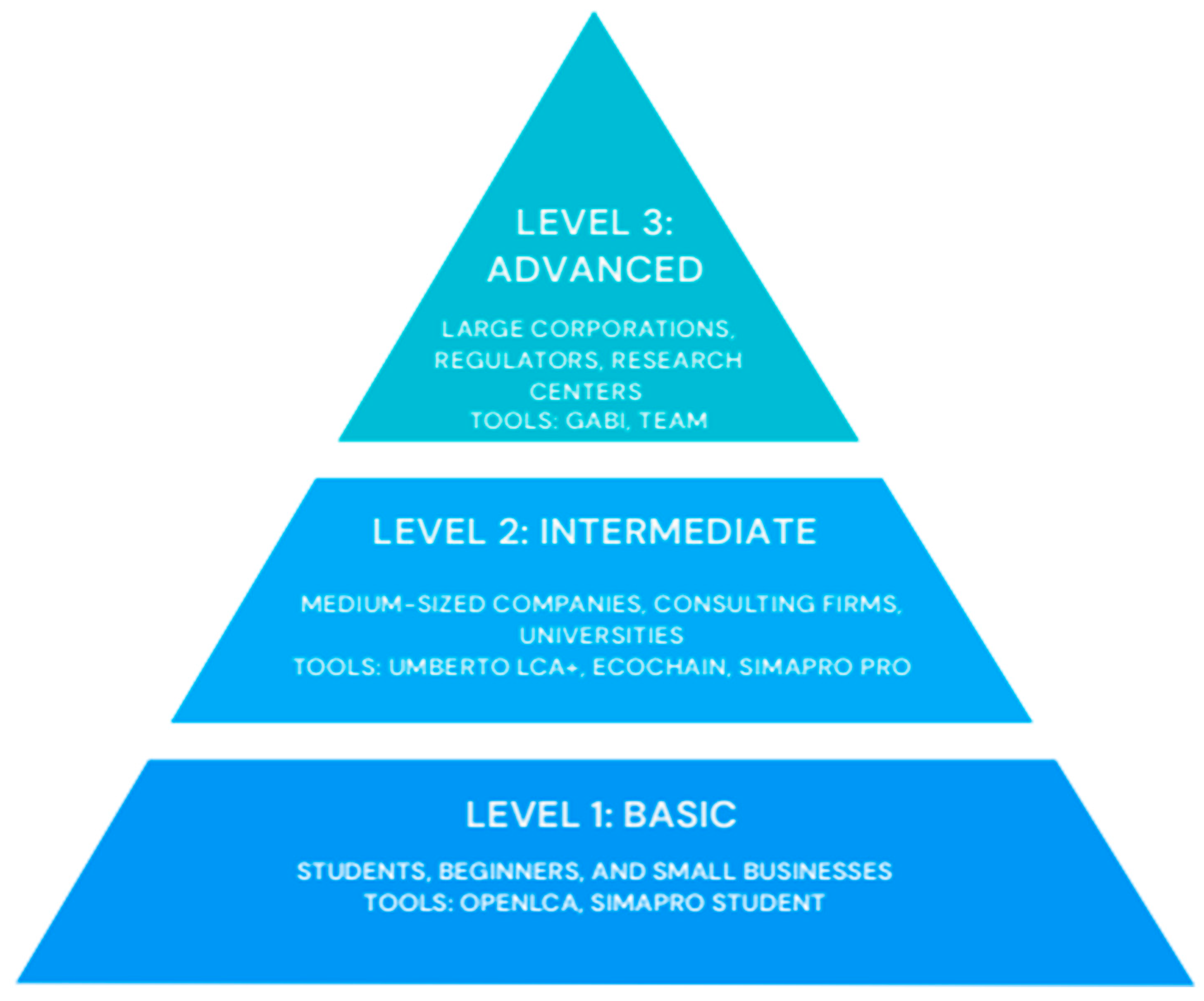
The comparative model is structured into three levels of use. Level 1, corresponding to basic software, is aimed at students, beginners, and small businesses, prioritizing low cost and user-friendly interfaces. Examples include OpenLCA, which is free and open-source but dependent on paid databases for advanced analyses; the academic versions of SimaPro Student and GaBi Education, with restricted functions for didactic purposes; in addition to structured spreadsheets, such as Excel and Google Sheets, which are frequently employed in simplified and didactic studies. At this level, specific tools also stand out, such as the BioGrace Spreadsheet, recognized in European bioenergy studies, and the PaLATE Spreadsheet, employed in environmental assessments of pavements and roads. Other examples include Brightway2, developed in Python and aimed at researchers with familiarity in programming; CMLCA, an academic software from Leiden University; IDEMAT, a free tool from TU Delft for material selection; BEES, developed by NIST for construction-related applications in educational environments; and eLCA, a free version used for academic and educational purposes in Germany.
Level 2, corresponding to intermediate software, is directed at medium-sized companies, environmental consultancies, and universities, balancing technical robustness and ease of use. Notable examples include Umberto LCA+, which combines the modelling of material and energy flows with LCA, and SimaPro Professional, widely recognized in research and market practice, but without reaching the level of integration of leading corporate software. Also included in this level is OpenLCA when operated with paid databases, such as Ecoinvent and Agri-footprint, which expand its robustness and make it suitable for applied research and medium-sized enterprises; Athena, specifically aimed at the construction sector and integrated with BIM; Tally, a plugin for Revit that allows direct integration with architectural projects; and One Click LCA in its basic or intermediate versions, cloud-based and applied to sectors such as construction and manufacturing. Other solutions in this category include Quantis Suite, used in medium-scale corporate projects; Ecodesign Studio, focused on industrial products and eco-design practices; and Elodie, employed in construction projects in Europe under commercial licensing.
Finally, Level 3 brings together advanced software, designed for large corporations, regulatory agencies, and centres of research excellence, characterized by high cost, complexity, and the need for specialized personnel. Among these are GaBi (in its Professional, Envision, and Solutions versions), widely consolidated internationally and integrated into major sectoral databases, and TEAM™, aimed at regulated sectors such as energy and transport, which requires highly trained teams and specialized consultancy. Also, part of this group is SimaPro in its full version, associated with premium databases such as Ecoinvent, Agri-footprint, and US LCI, making it suitable for corporations and regulatory bodies; as well as OpenLCA in premium configurations with robust paid databases, accepted even in audits when operated by qualified teams. Further examples include Umberto at an advanced level, with a focus on complex energy simulations applied to optimized industrial processes; One Click LCA in its premium version, which enables the generation of EPDs and broad integration with BIM and CAD platforms; and Athena in regulatory contexts in North America, particularly in construction projects with specific EPD requirements.
In summary, the central contribution of the model lies in offering a flexible and comparative framework that does not prescribe a universally superior software, but highlights the diversity of possible pathways, considering resources, objectives, and contexts of application. This approach acknowledges the dynamic and multifaceted nature of LCA, allowing different user profiles to combine, adapt, and scale their technological choices according to the maturity of their analytical and institutional demands. Figure 6 presents the conceptual representation of the three levels of maturity of LCA software (Level 1: Basic, Level 2: Intermediate, Level 3: Advanced), organized in a pyramidal structure that indicates the progression in complexity and analytical sophistication.
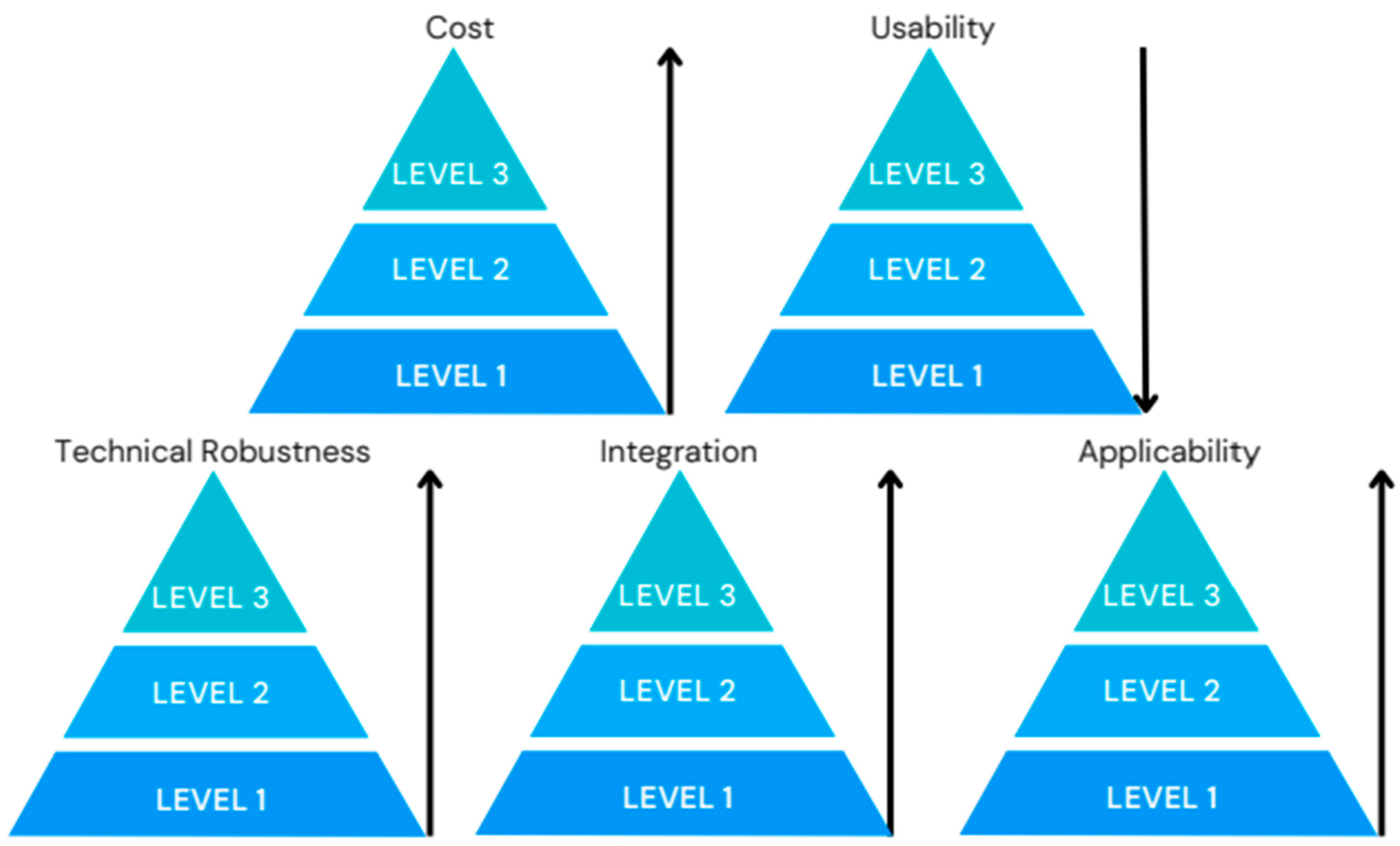
The transversal evaluation criteria, cost, usability, technical robustness, integration with databases, and sectoral applicability, may be interpreted as follows. Cost represents one of the most immediate barriers to adoption. Entry-level software, generally free of charge or low-cost, becomes attractive to students, small businesses, or educational institutions, but often presents limitations in terms of functions or data volume. As one progresses to higher levels, costs become more significant, both due to licensing fees and the need for computational infrastructure and technical support. Thus, at the top of the pyramid, only organizations with greater financial capacity are able to sustain the use of advanced software, which involves not only the acquisition of the system but also maintenance contracts and access to extensive proprietary databases.
Usability refers to the degree of accessibility and the learning curve associated with the software. Basic tools are characterized by user-friendly interfaces and simplified workflows, allowing users with little experience in LCA to generate initial analyses without intensive training. Intermediate software requires greater familiarity but still balances complexity with practical applicability. Advanced software, however, demands specialized teams and continuous training, as it offers a high level of customization and requires in-depth technical knowledge. In this way, the progression from Level 1 to Level 3 is accompanied by a decreasing trend in usability, compensated by gains in analytical depth.
Technical robustness concerns the software’s ability to handle complex modelling, multiple flows of materials and energy, and integration with different assessment methodologies. Basic software enables introductory analyses, but with limited depth. Intermediate tools already incorporate additional functionalities, such as scenario simulations and comparative reports. In advanced software, technical robustness reaches its peak, allowing for highly detailed sectoral analyses, modelling of large-scale systems, and integration with emerging technologies such as big data and artificial intelligence applied to sustainability.
Integration with databases reflects the compatibility of the tool with different types of LCA inventories and databases, whether open, paid, or sector-specific. At the basic level, integration is limited, often requiring manual supplementation or the purchase of external databases. Intermediate software offers greater flexibility, with support for different formats and the possibility of connecting with commercial databases. Advanced software, in turn, provides native integration with extensive proprietary and sectoral databases, as well as compatibility with corporate management systems such as ERPs, thereby significantly expanding its strategic utility.
Sectoral applicability, in this study, is interpreted as the depth and sophistication of application, in contrast to the mere number of potential users. Basic software has wide reach, as it can be used in educational contexts or in preliminary analyses by small companies. However, as one progresses to higher levels, the capacity to meet specific and highly regulated demands increases, such as those of the energy, transport, and chemical sectors. At the top of the pyramid (Level 3) are software solutions that allow for advanced and strategic applications, characterized by a scope restricted to specialists but with decisive impact in regulatory and corporate contexts.
This structure deliberately avoids the trap of a “universal best choice”, emphasizing that the selection of the tool depends on organizational conditions, analytical objectives, and the application context. At the same time, it recognizes that there are areas of overlap between software, since several tools share common functionalities, such as carbon footprint calculation. Thus, the choice should not be understood as dichotomous, but rather as a situational and strategic process, which may involve anything from progressive migration across levels to the simultaneous use of more than one software in order to combine complementary advantages. Figure 7 presents the five pyramidal representations indicating the progression of the transversal evaluation criteria—cost, usability, technical robustness, integration with databases, and sectoral applicability. The vertical arrows indicate the direction of increase in each criterion, highlighting their evolution according to the maturity levels of the software.
In this way, Figure 6 and Figure 7 not only illustrate the maturity levels of the software and the evaluation criteria but also provide an essential counterpoint to the initial flowchart. Together, these visual instruments establish a robust practical and conceptual orientation, supporting both beginners and experts in navigating among cost, usability, technical robustness, database integration, and sectoral applicability. This closing remark ensures that the discussion does not remain fragmented but highlights the complementarity between decision flow and evaluation criteria, thereby preparing the ground for the final recommendations set out in the Conclusion.

6. Conclusions

Life Cycle Assessment (LCA) has established itself as one of the most effective methodologies for quantifying and understanding the environmental impacts associated with products, processes, and services. However, its practical application still faces various technical, operational, and methodological challenges, especially regarding the choice of the most appropriate computational tool for its execution. Based on the Systematic Literature Review conducted in this study, it became evident that the selection of LCA software is not a trivial decision: it directly influences data quality, analytical depth, representativeness of results, and consequently, sustainable decision-making.
Mapping 22 distinct tools and analyzing 41 studies, this work demonstrated that, although there is widely established software such as SimaPro, GaBi, OpenLCA, Umberto, and Athena, none can be considered universally superior. Each tool carries a set of strengths, limitations, and requirements that make it suitable for specific application contexts. For instance, while SimaPro offers a robust and detailed framework ideal for complex analyses with high technical rigour, OpenLCA stands out for accessibility and flexibility, particularly in academic environments and developing countries. Athena proves extremely useful for analysis in the construction sector, focusing on usability and integration with BIM platforms.
Thus, the main conclusion of this work is that the choice of an LCA tool should always be guided by specific technical and strategic criteria, such as the application sector (industry, construction, energy, food, among others); the purpose of the LCA (comparative analysis, process optimization, EPD generation, ESG reporting, etc.); the technical expertise of the team involved; compatible and available databases; impact assessment methods required for the analysis; the possibility of integration with other corporate or technological tools; and the budget available for software licensing or maintenance.
It is strongly recommended that, whenever possible, studies employ more than one tool or, at least, validate their results using different methods to increase the robustness of the analysis and reduce the risk of bias caused by specific limitations of the software or databases used. Conducting sensitivity analyses, for example, can help identify critical points in inventory and methodological choices that most influence the results.
Furthermore, there is an urgent need to promote greater methodological standardization among tools, including interoperability efforts between databases, harmonization of impact assessment methods, and the definition of minimum quality criteria for modelling. The creation of practical guides for selecting LCA tools, tailored to different user profiles and productive sectors, could be an important step toward democratizing and qualifying the use of this methodology in Brazil and other developing countries.
From a business perspective, this work can significantly contribute to reducing uncertainties in the choice of LCA tools, making environmental projects more strategic, integrated, and reliable. For researchers, the systematized data presented here can aid in the design of future studies, promoting greater transparency, comparability, and methodological consistency in scientific work involving LCA.
Beyond the methodological and technical considerations discussed, it is important to acknowledge recent developments in the LCA software market that may influence the decision-making process. In particular, the introduction of subscription-based licensing models in widely used tools, such as the recent change in SimaPro’s sales model, represents a shift from perpetual licenses to recurring payments. Moreover, the growing availability of cloud-based services, together with the ongoing fragmentation and sector-specific customization of software, has expanded the range of acquisition and implementation options available to users. Although these aspects were not addressed in this systematic review due to its bibliographic scope, they remain relevant for professionals and organizations seeking to align software selection with budget planning, deployment strategies, and long-term operational requirements.
In addition, the transversal evaluation criteria presented in Figure 7 serve as a decisive complement to the flowchart and maturity pyramid, consolidating the key dimensions that should underpin any software selection process: cost, usability, technical robustness, database integration, and sectoral applicability. By explicitly incorporating these criteria into the decision-support framework, the study ensures that tool selection is not reduced to a procedural exercise, but rather grounded in a holistic and context-sensitive perspective. This reinforces the practical applicability of the framework, guiding users towards more consistent, transparent, and strategically aligned decisions.
Despite the contributions presented, this study has certain limitations. Chief among them is the exclusive reliance on information available in the selected literature, which may have resulted in the exclusion of relevant tools not indexed in the databases consulted. Furthermore, the proposed classification framework may require updates as new software solutions are launched or as the functionalities of existing tools evolve. Concerning future directions, it is recommended to conduct empirical validation of the framework in real-world projects across different sectors, investigate new approaches for integrating LCA software with other technological platforms, and apply multi-criteria methods to provide more comprehensive support for decision-making in software selection.
Future research should also explore complementary sustainability assessment approaches that were not included in the present scope, such as Social Life Cycle Assessment (S-LCA) and Life Cycle Costing (LCC). Integrating these perspectives alongside environmental LCA could provide a more comprehensive decision-making framework, capturing the interplay between environmental, social, and economic dimensions. This integration would be particularly valuable for policy development, corporate sustainability strategies, and innovation processes that aim to address the broader objectives of sustainable development.
Therefore, as more than a simple review, this article aims to serve as a decision-support tool, capable of guiding both software selection and the qualification of environmental analyses. It is hoped that the reflections presented here will contribute to a more conscious, effective, and strategic use of Life Cycle Assessment, strengthening its role as a scientific foundation for public policies, business strategies, and sustainable innovation processes.

Supplementary Materials

The following supporting information can be downloaded at: https://www.mdpi.com/article/10.3390/su18010197/s1, Table S1: PRISMA 2020 Checklist [91]

Author Contributions

Conceptualization, V.S.d.S.A., V.K.B. and B.S.B.; methodology, V.S.d.S.A. and C.d.A.R.; software, V.S.d.S.A., B.S.B. and F.N.d.S.A.; validation, V.S.d.S.A., V.K.B. and B.S.B.; formal analysis, V.S.d.S.A. and S.S.N.; investigation, V.S.d.S.A., B.S.B. and C.d.A.R.; resources, V.K.B., B.S.B. and F.N.d.S.A.; data curation, B.S.B. and V.S.d.S.A.; writing—original draft preparation, V.S.d.S.A.; writing—review and editing, V.K.B., F.N.d.S.A., S.S.N. and C.d.A.R.; visualization, B.S.B. and S.S.N.; supervision, V.K.B., B.S.B. and C.d.A.R.; project administration, V.K.B., B.S.B. and C.d.A.R.; funding acquisition, V.K.B. and B.S.B. All authors have read and agreed to the published version of the manuscript.

Funding

This research was supported by São Paulo State University (Unesp) through the PROPG Call No. 25/2025—Financial Aid for Scientific Publications of Unesp Graduate Programs—College of Exact, Technological and Multidisciplinary Sciences (Grant No. 16983), awarded to Professor Carlos do Amaral Razzino. The study also received support from the Graduate Program in Production Engineering (PPGEP/FEB-Unesp) and scholarships from the Coordination for the Improvement of Higher Education Personnel (CAPES), Brazil. Furthermore, the university received institutional support from the State Parliamentary Amendment No. 2024.066.58630, proposed by Deputy Marina Helou, aimed at strengthening academic and outreach projects in the field of sustainability.

Institutional Review Board Statement

Not applicable.

Informed Consent Statement

Not applicable.

Data Availability Statement

All data generated and analyzed during this study are available in the Open Science Framework (OSF) repository: https://osf.io/9xc8p/ (accessed on 12 August 2025).

Acknowledgments

The authors would like to thank the Provost’s Office of Graduate Studies and the Provost’s Office of Undergraduate Studies Program in Industrial Engineering of São Paulo State University (UNESP)—Bauru Campus for the academic and administrative support provided during the development of this study. We also acknowledge the Coordination for the Improvement of Higher Education Personnel (CAPES), Brazil, for its financial support.

Conflicts of Interest

The authors declare no conflicts of interest.

Abbreviations

The following abbreviations are used in this manuscript:
APIApplication Programming Interface
BIMBuilding Information Modelling
CADComputer-Aided Design
EPAEnvironmental Protection Agency
EPDEnvironmental Product Declaration
ERPEnterprise Resource Planning
ESGEnvironmental, Social, and Governance
ISOInternational Organization for Standardization
LCALife Cycle Assessment
LCILife Cycle Inventory
LCIALife Cycle Impact Assessment
PRISMAPreferred Reporting Items for Systematic Reviews and Meta-Analyses
SLRSystematic Literature Review
TOTEMTool to Optimize the Total Environmental Impact of Materials
DGNBGerman Sustainable Building Council
BNBFederal Assessment System for Sustainable Building
GREETGreenhouse gases, Regulated Emissions, and Energy use in Technologies

Appendix A

Tool Source
Athena
(Version 5.5 Build 0113)
Type of license: Free (non-commercial use)
Developer: Athena Sustainable Materials Institute (Canada)
Scope: Civil construction
Standards compliance: ISO 1404 [21], Standart’s ISO 14044: 2006 of Environmental management of Life cycle assessment: Requirements and guidelines (2006) [21], aligned with Standard’s EN 15804: 2012 of Sustainability of Construction Works—Environmental Product Declarations—Core Rules for the Product Category of Construction Products [92].
Link: https://www.athenasmi.org/our-software-data/overview (accessed on 10 August 2025)
[53,57,65,70,73,78,79,83]
BEES Online 2.1Type of license: Free
Developer: National Institute of Standards and Technology (United States)
Scope: Environmental and economic assessment of construction products
Standards compliance: Compliant with ISO 14040 [21] and Standard Classification for Building Elements and Related Sitework—UNIFORMAT II [93]
Link for download: https://www.nist.gov/services-resources/software/bees (accessed on 10 August 2025)
[21,54,59,81]
BioGrace Spreadsheet (Version 4d)Type of license: Free (Excel-based)
Developer: BioGrace Project (European Union)
Scope: Calculation of greenhouse gas emissions for bioenergy
Download link: https://biograce.net (accessed on 10 August 2025)
[57,71,83]
Brightway
(Version 2.5
Type of license: Free and open-source
Developer: Chris Mutel/Paul Scherrer Institute (Switzerland)
Scope: LCA with focus on research and advanced modelling
Standards compliance: Compliant with ISO 14040 [21]
Access link: https://brightway.dev/ (accessed on 10 August 2025)
[69,70,75]
CMLCA (Version 6.1)Type of license: Free (academic software)
Developer: University of Leiden (Netherlands)
Scope: Life Cycle Assessment, input-output analysis, sustainability evaluation
Standards compliance: Compliant with ISO 14040 [21]
Download link: https://cmlca.software.informer.com/ (accessed on 10 August 2025)
[61,70]
Ecodesign studio *Type of license: Commercial (with demo available upon request)
Developer: Altermaker (France)
Scope: Life Cycle Assessment and eco-design for industrial products
Standards compliance: Aligned with ISO 14040 [21]
Access link: https://altermaker.com/ecodesign-studio-2/ (accessed on 10 August 2025)
[53]
eLCA *Type of license: Free (web-based tool for professional and academic use in Germany)
Developer: Bundesinstitut für Bau-, Stadt- und Raumforschung (BBSR), Germany
Scope: LCAent in line with German certification systems (e.g., BNB)
Standards compliance: Compliant with ISO 14040 [21]
and aligned with EN 15804 [92].
Access link: https://www.bauteileditor.de (accessed on 10 August 2025)
[54]
Elodie *Type of license: Commercial (license-based use)
Developer: CSTB—Centre Scientifique et Technique du Bâtiment (France)
Scope: Life Cycle Assessment of buildings; used for the environmental evaluation of construction projects based on French and European regulations
Standards compliance: Compliant with ISO 14040 [21]
and aligned with EN 15804 [92].
Access link: https://info.cype.com/fr/software/elodie-by-cype/ (accessed on 12 August 2025)
[62,66]
GaBi LCA *Type of license: Commercial (paid license with free trial)
Developer: Sphera (Germany)
Scope: Industrial and corporate environmental assessment across various sectors (automotive, electronics, chemical, etc.)
Standards compliance: ISO 14040 [21] and aligned with EN 15804 [92].
https://sphera.com/product-stewardship/life-cycle-assessment-software-and-data (accessed on 10 August 2025)
[20,54,55,56,57,58,59,60,63,69,77,78,79,81,83,85,86,87,88,89,90]
GREET (Version 45VH2-GREET)Type of license: Free (publicly available for research and policy use)
Developer: Argonne National Laboratory (United States Department of Energy)
Scope: Life cycle modelling of energy systems and transportation fuels; evaluates greenhouse gas emissions, energy use, and air pollutants for a wide range of fuel pathways and vehicle technologies
Standards compliance: Aligned with ISO 14040 [21], ISO 14044 [21] principles and widely used for policy analysis, including in LCAs for regulatory and academic purposes
Access link: https://www.energy.gov/eere/greet (accessed on 10 August 2025)
[81,83]
IDEMAT (Version Idemat 2025RevA8)Type of license: Free (for educational and non-commercial use)
Developer: Delft University of Technology (Netherlands)
Scope: Material selection based on environmental indicators; provides LCI data and eco-costs values to support sustainable design
Standards compliance: Compliant with ISO 14040 [21], ISO 14044 [21]
Access link: https://idematapp.com (accessed on 10 August 2025)
[81]
Legep *Type of license: Free (for non-commercial and educational use)
Developer: Research Group for Environmental Controlling—Germany
Scope: LCA of buildings, focusing on ecological optimization in early design phases
Standards compliance: Compliant with ISO 14040 [21], ISO 14044 [21] and aligned with DGNB and BNB
Download link: https://legep.de/?lang=en (accessed on 10 August 2025)
[54]
One ClickLCA (Version 4.0.9)Type of license: Commercial (with free trial version)
Developer: Bionova Ltd. (Finland)
Scope: Civil construction and manufacturing; generation of Environmental Product Declarations (EPDs)
Standards compliance: ISO 14040 [21], ISO 14044 [21], EN 15804 [92], LEED and BREEAM
Access link: https://oneclicklca.com (accessed on 10 August 2025)
[62,66,67]
OpenLCA (Version 2.5.0)Type of license: Free and open-source
Developer: GreenDelta GmbH (Germany)
Scope: Life Cycle Assessment (LCA), Carbon Footprint, Water Footprint, Social LCA, Sustainability Assessment
Standards compliance: Compliant with ISO 14040 [21], ISO 14044 [21], ILCD, PEF, SLCA
Download link: https://www.openlca.org/download/ (accessed on 10 August 2025)
[20,53,54,55,58,60,63,64,69,75,76,77,78,80,88]
PaLATE Spreadsheet (Version 2.0)Type of license: Free (Excel-based)
Developer: University of California, Berkeley (USA)
Scope: Environmental and economic assessment of pavements and roads
Standards compliance: Compliant with ISO 14040 [21], ISO 14044 [21]
Download link: https://rmrc.wisc.edu/palate/ (accessed on 10 August 2025)
[20,57,63,83]
Quantis Suite (Version 2.0)Type of license: Commercial (with free tools available)
Developer: Quantis (Switzerland)
Scope: Corporate environmental assessment (Carbon Footprint and Water Footprint)
Standards compliance: ISO 14040 [21], ISO 14044 [21]
Access link: https://quantis.com (accessed on 10 August 2025)
[59]
SimaPro (Version Craft 10.2)Type of license: Commercial
Developer: PRé Sustainability (Netherlands)
Scope: Environmental assessment of products, processes, and services
Standards compliance: Compliant with ISO 14040 [21], ISO 14044 [21]; supports ILCD and PEF.
Link: https://simapro.com/plans (accessed on 10 August 2025)
[20,54,55,56,57,58,59,60,63,64,65,68,69,74,75,76,77,80,81,82,84,85,86,87,88]
Solid Works Sustainability *Type of license: Commercial (Professional and Premium—SolidWorks)
Developer: Dassault Systèmes (France)
Scope: Environmental assessment integrated into mechanical product design
Standards compliance: Compliant with ISO 14040 [21], ISO 14044 [21].
Access link: https://www.solidworks.com/product/solidworks-3d-cad (accessed on 10 August 2025)
[89]
Tally LCA (Version 1.0)Type of license: Commercial (paid license with 10-day trial)
Developer: KieranTimberlake, Partnership between Autodesk and Sphera
Scope: Civil construction, integration with Autodesk Revit for building analysis
Standards compliance:ISO 14040 [21], ISO 14044 [21], Standart’s of Sustainability in Buildings and Civil Engineering Works – Core Rules for Environmental Product Declarations of Construction Products and Services (ISO 21930:2017) [94], EN 15804 [92]
Link: https://apps.autodesk.com/RVT/en/Detail/Index?id=3841858388457011756 (accessed on 10 August 2025)
[54,62,66,79]
TEAM (Version 4.0)Type of license: Commercial (paid license)
Developer: PRé Sustainability
Scope: Detailed environmental assessment of products and processes
Standards compliance: 14040 [21], ISO 14044 [21]
Link: https://pre-sustainability.com (accessed on 10 August 2025)
[85]
TOTEM *Type of license: Free
Developer: Consortium led by VITO/EnergyVille, KU Leuven, BBRI, UC Louvain and ICEDD (Belgium)
Scope: Assessment of the environmental impact of buildings over their entire life cycle.
Standards compliance: Aligned with European LCA methodology best practices
Access link: https://circulareconomy.europa.eu/platform/en/toolkits-guidelines/totem-online-tool-architects-calculates-environmental-footprint-buildings (accessed on 10 August 2025)
[62,66]
Umberto (Version 5.5.4)Type of license: Commercial (paid license with evaluation version)
Developer: ifu Hamburg/iPoint-systems (Germany)
Scope: Process modelling, carbon footprint, energy and material flow diagrams.
Standards compliance: 14040 [21], ISO 14044 [21], Standart’s of Environmental Management—Material Flow Cost Accounting—General Framework (ISO 14051:2011) [95], Standart’s of Greenhouse Gases—Part 1: Specification with Guidance at the Organization Level for Quantification and Reporting of Greenhouse Gas Emissions and Removals (ISO 14064-1:2018) [93] and PEF
Link: https://www.ipoint-systems.com/software/umberto (accessed on 10 August 2025)
[53,54,55,58,60,78,81]
VTTI/UC Asphalt Pavement LCA Model *Type of license: Academic (for research use)
Developer: Virginia Tech Transportation Institute (VTTI) and University of California
Scope: Life Cycle Assessment of asphalt pavements
Standards compliance: Compliant with 14040 [21], ISO 14044 [21]
Access link: Not publicly available; restricted to the University of Coimbra–Virginia Tech partnership.
[20,63]
Warm *Type of license: Free
Developer: United States Environmental Protection Agency (EPA)
Scope: Estimation of greenhouse gas emissions reductions from waste management strategies, including source reduction, recycling, composting, incineration, and landfilling
Standards compliance: Greenhouse gas inventory methodologies
Access link: https://www.epa.gov/warm (accessed on 10 August 2025)
[73]
  • * Several LCA tools used in this study (GaBi, Ecodesign Studio, eLCA, ELODIE, Legep, SolidWorks Sustainability, TOTEM, VTTI/UC Asphalt LCA Model and the US EPA WARM tool) operate without explicit software version numbering. These platforms follow a continuous-update model, where improvements and dataset revisions are incorporated directly into the online or integrated environment. In such cases, the access date is reported as the reference for the consulted release.

Appendix B

Figure A1. LCA Software and a Selection Framework.
Sustainability 18 00197 g0a1

References

  1. Rodrigues, M. The circular economy as a pathway to a sustainable future. Trends Hub 2024, 1. [Google Scholar] [CrossRef]
  2. ISO 59000:2024; Circular Economy—Fundamentals and Principles. International Organization for Standardization: Geneva, Switzerland, 2024.
  3. ISO 59010; Circular Economy—Framework and Principles for Implementation. International Organization for Standardization: Geneva, Switzerland, 2024.
  4. Isérnia, R.; Passaro, R.; Quinto, I.; Thomas, A. The reverse supply chain of electronic waste management processes in a circular economy framework: Evidence from Italy. Sustainability 2019, 11, 2430. [Google Scholar] [CrossRef]
  5. Govindan, K.; Jha, P.C.; Garg, K. Product recovery optimization in closed-loop supply chain to improve sustainability in manufacturing. Int. J. Prod. Res. 2015, 54, 1463–1486. [Google Scholar] [CrossRef]
  6. Cao, J.; Lu, B.; Chen, Y.; Zhang, X.; Zhai, G.; Zhou, G.; Jiang, B.; Schnoor, J.L. Extended producer responsibility system in China improves e-waste recycling: Government policies, enterprise, and public awareness. Renew. Sustain. Energy Rev. 2016, 62, 882–894. [Google Scholar] [CrossRef]
  7. Shin, M.; Ryu, K.; Jung, M. Reinforcement learning approach for goal regulation in a self-evolutionary manufacturing system. Expert Syst. Appl. 2012, 39, 8736–8743. [Google Scholar] [CrossRef]
  8. Mälkki, H.; Alanne, K. An overview of Life Cycle Assessment (LCA) and research-based teaching in renewable and sustainable energy education. Renew. Sustain. Energy Rev. 2017, 68, 218–231. [Google Scholar] [CrossRef]
  9. Stewart, R.; Fantke, P.; Bjørn, A.; Owsianiak, M.; Molin, C.; Hauschild, M.Z.; Laurent, A. Life cycle assessment in corporate sustainability reporting: Global, regional, sectoral and company-level trends. Bus. Strategy Environ. 2018, 27, 1602–1620. [Google Scholar] [CrossRef]
  10. Testa, F.; Tessitore, S.; Buttol, P.; Iraldo, F.; Cortesi, S. How to overcome barriers limiting the adoption of LCA? The role of a collaborative and multisectoral approach. Int. J. Life Cycle Assess. 2022, 27, 944–958. [Google Scholar] [CrossRef]
  11. Smaniotto, R.A. The Integration of the Circular Economy into the Concept of Sustainable Development: The Role of the State and Industry in Promoting Circularity. Master’s Thesis, University of Caxias do Sul, Caxias do Sul, Brazil, 2020. Available online: https://repositorio.ucs.br/xmlui/handle/11338/6719 (accessed on 15 July 2025).
  12. Solid Waste Panorama in Brazil. Available online: https://cempre.org.br (accessed on 3 July 2025).
  13. Barreto, A.A.; Santos, T.T.S. Ecodesign and Innovation in Cosmetic Product Packaging. Undergraduate Final Paper, Centro Paula Souza, São Paulo, Brazil, 2022. Available online: https://ric.cps.sp.gov.br/handle/123456789/19061 (accessed on 15 July 2025).
  14. Ebrahimi, S.M.; Koh, L. Sustainability in manufacturing: Institutional theory and life cycle thinking. J. Clean. Prod. 2021, 298, 126787. [Google Scholar] [CrossRef]
  15. Castellani, V.; Sanyé-Mengual, E.; Sala, S. Environmental impacts of consumer goods in Europe: A process-based life cycle assessment model to evaluate the consumption footprint. Int. J. Life Cycle Assess. 2021, 26, 2040–2055. [Google Scholar] [CrossRef]
  16. David, T.E.H. Sustainable competitive advantage: A leap forward in sustainable strategy with blockchain-enabled LCA. In Life Cycle Assessment: New Developments and Multi-Disciplinary Applications; World Scientific Publishing: Singapore, 2022; p. 177. [Google Scholar]
  17. Pryshlakivsky, J.; Searcy, C. Life Cycle Assessment as a decision-making tool: Practitioner and managerial considerations. J. Clean. Prod. 2021, 309, 127344. [Google Scholar] [CrossRef]
  18. Bläse, R.; Filser, M.; Weise, J.; Björck, A.; Puumalainen, K. Identifying institutional gaps: Implications for an early-stage support framework for impact entrepreneurs. Corp. Soc. Responsib. Environ. Manag. 2025, 32, 679–697. [Google Scholar] [CrossRef]
  19. Naimin, H.H.; Hishamuddin, H.; Maelah, R.; Abdul Hameed, M.A.S.A.K.; Ab Rahman, M.N.; Amir, A.M. Cleaner power generation: An in-depth review of life cycle assessment for solid oxide fuel cells. Jurnal Kejuruteraan 2023, si6, 257–267. [Google Scholar] [CrossRef]
  20. Dos Santos, J.M.O.; Thyagarajan, S.; Keijzer, E.; Flores, R.F.; Flintsch, G. Comparison of life-cycle assessment tools for road pavement infrastructure. Transp. Res. Rec. 2017, 2646, 28–38. [Google Scholar] [CrossRef]
  21. ISO 14040:2006; Environmental Management—Life Cycle Assessment—Principles and Framework. International Organization for Standardization: Geneva, Switzerland, 2006.
  22. Di Vaio, A.; Varriale, L.; Di Gregorio, A.; Adomako, S. Corporate social performance and non-financial reporting in the cruise industry: Paving the way towards UN Agenda 2030. Corp. Soc. Responsib. Environ. Manag. 2022, 29, 1545–1557. [Google Scholar] [CrossRef]
  23. Cerchione, R.; Morelli, M.; Passaro, R.; Quinto, I. A critical analysis of the integration of life cycle methods and sustainability in business practice: Evidences from a systematic literature review. Corp. Soc. Responsib. Environ. Manag. 2024, 31, 1047–1066. [Google Scholar] [CrossRef]
  24. Ruggeri, M.; Vinci, G.; Ruggieri, R.; Savastano, M. Facing the risk of greenwashing in the ESG report of global companies: The importance of life cycle thinking. Corp. Soc. Responsib. Environ. Manag. 2025, 32, 4216–4234. [Google Scholar] [CrossRef]
  25. Guinée, J.B.; Heijungs, R.; Huppes, G.; Zamagni, A.; Masoni, P.; Buonamici, R.; Ekvall, T.; Rydberg, T. Avaliação do Ciclo de Vida: Passado, Presente e Futuro. Environ. Sci. Technol. 2010, 45, 90–96. [Google Scholar] [CrossRef]
  26. Dabo, A.-A.A.; Hosseinian-Far, A. Uma Metodologia Integrada para Aprimorar Fluxos e Redes de Logística Reversa na Indústria 5.0. Logistics 2023, 7, 97. [Google Scholar] [CrossRef]
  27. Nunes, L.J.R. Reverse logistics as a catalyst for decarbonizing supply chains of forest products. Logistics 2025, 9, 17. [Google Scholar] [CrossRef]
  28. Urbinati, A.; Shams Esfandabadi, Z.; Messeni Petruzzelli, A. Assessing the interplay between Open Innovation and Sustainability-Oriented Innovation: A systematic literature review and a research agenda. Bus. Ethics Environ. Responsib. 2023, 32, 610–629. [Google Scholar] [CrossRef]
  29. Hellweg, S.; Benetto, E.; Huijbregts, M.A.J.; Verones, F.; Wood, R. Life-cycle assessment to guide solutions for the triple planetary crisis. Nat. Rev. Earth Environ. 2023, 4, 471–486. [Google Scholar] [CrossRef]
  30. Meloni, M.A. A circular economy for consumer electronics. In Environmental Science and Technology Issues; Royal Society of Chemistry: Cambridge, UK, 2019; Volume 3, pp. 66–100. [Google Scholar] [CrossRef]
  31. Gaustad, G.; Krystofik, M.; Bustamante, M.; Badami, K. Circular economy strategies to mitigate critical material supply issues. Resour. Conserv. Recycl. 2018, 135, 24–33. [Google Scholar] [CrossRef]
  32. Dumée, L.F. Circular materials and circular design—A review of challenges for sustainable manufacturing and recycling. Circ. Econ. Sustain. 2022, 2, 9–23. [Google Scholar] [CrossRef]
  33. Daub, C.-H. Assessing the quality of sustainability reporting: An alternative methodological approach. J. Clean. Prod. 2007, 15, 75–85. [Google Scholar] [CrossRef]
  34. Lawrence, E.; Andrews, D.; Ralph, B.; France, C. Applying organizational environmental tools and techniques. Corp. Soc. Responsib. Environ. Manag. 2002, 9, 116–125. [Google Scholar] [CrossRef]
  35. Ramteke, S.V.; Varadwaj, P.K.; Tiwari, V. Optimizing UAV spraying for sustainable agriculture: A life cycle and efficiency analysis in India. Sustainability 2025, 17, 6211. [Google Scholar] [CrossRef]
  36. Liu, J.J.; Liu, H.; Liu, Y. A sustainability-oriented framework for environmental cost accounting and carbon financial optimization in prefabricated steel structures. Sustainability 2025, 17, 4296. [Google Scholar] [CrossRef]
  37. Moura, B.; Silva, T.R.; Soares, N.; Monteiro, H. Eco-efficiency of concrete sandwich panels with different insulating core materials. Sustainability 2025, 17, 1687. [Google Scholar] [CrossRef]
  38. Wastiels, L.; Decuypere, R. Identification and comparison of LCA-BIM integration strategies. IOP Conf. Ser. Earth Environ. Sci. 2019, 323, 012101. [Google Scholar] [CrossRef]
  39. Siwiec, D.; Pacana, A. Sustainable prototyping: Linking quality and environmental impact via QFD and LCA. Sustainability 2025, 17, 5818. [Google Scholar] [CrossRef]
  40. Stramarkou, M.; Boukouvalas, C.; Fragkouli, D.N.; Tsamis, C.; Krokida, M. Sustainability assessment of Tetra Pak smart packaging through economic and life cycle analysis. Sustainability 2025, 17, 4810. [Google Scholar] [CrossRef]
  41. ISO 14001:2015; Environmental management systems—Requirements with guidance for use. International Organization for Standardization: Geneva, Switzerland, 2015.
  42. Köck, B.; Friedl, A.; Serna Loaiza, S.; Wukovits, W.; Mihalyi-Schneider, B. Automation of Life Cycle Assessment: A critical review of developments in Life Cycle Inventory analysis. Sustainability 2023, 15, 5531. [Google Scholar] [CrossRef]
  43. West, J.; Gallagher, S. Challenges of open innovation: The paradox of corporate investment in open-source software. RD Manag. 2006, 36, 319–331. [Google Scholar] [CrossRef]
  44. Bretthauer, D. Open Source Software: A History; University of Connecticut: Storrs, CT, USA, 2001. Available online: https://digitalcommons.lib.uconn.edu/libr_pubs/7/ (accessed on 21 July 2025).
  45. Soust-Verdaguer, B.; Llatas, C.; García-Martínez, A. Critical review of BIM-based LCA method to buildings. Energy Build. 2017, 136, 110–120. [Google Scholar] [CrossRef]
  46. Mutel, C. Brightway: An open source framework for Life Cycle Assessment. J. Open Source Softw. 2017, 2, 236. [Google Scholar] [CrossRef]
  47. Kitchenham, B.; Charters, S. Guidelines for Performing Systematic Literature Reviews in Software Engineering; Technical Report EBSE 2007-001; Keele University: Newcastle, UK; Durham University: Durham, UK, 2007. [Google Scholar]
  48. Pan, X.; Wong, C.W.Y.; Li, C. Circular economy practices in the waste electrical and electronic equipment (WEEE) industry: A systematic review and future research agendas. J. Clean. Prod. 2022, 365, 132671. [Google Scholar] [CrossRef]
  49. Agrawal, S.; Oza, P.; Kakkar, R.; Tanwar, S.; Jetani, V.; Undhdad, J.; Singh, A. PRISMA checklist-based analysis and recommendation system for writing a systematic review. Appl. Soft Comput. 2024, 150, 100866. [Google Scholar] [CrossRef]
  50. Noy, C. Sampling knowledge: The hermeneutics of snowball sampling in qualitative research. Int. J. Soc. Res. Methodol. 2008, 11, 327–344. [Google Scholar] [CrossRef]
  51. Dewes, J.O. Snowball Sampling and Respondent-Driven Sampling: A Description of the Methods. Federal University of Rio Grande do Sul (UFRGS): Porto Alegre, RS, Brazil, 2013; un published manuscript. [Google Scholar]
  52. Vaghela, J.R.; Patel, H.; Panchal, H.; Parmar, M. Comparative Analysis on Sustainability Parameters of Traditional Tool Manufacturing Processes Using Life Cycle Analysis Tools. J. Eng. Sci. Technol. Rev. 2024, 17, 13–26. [Google Scholar] [CrossRef]
  53. Bach, R.; Mohtashami, N.; Hildebrand, L. Comparative overview of LCA software programs for application in the facade design process. J. Facade Des. Eng. 2019, 1, 13–26. [Google Scholar]
  54. Silva, D.; Nunes, A.; Moris, V.; Piekarski, C.; Rodrigues, T. How important is the LCA software tool you choose? Comparative results from GaBi, openLCA, SimaPro and Umberto. In Proceedings of the VII International Conference on Life Cycle Assessment in Latin America (CILCA), Medellín, Colombia, 12–15 June 2017; pp. 10–15. [Google Scholar]
  55. Rice, G.; Clift, R.; Burns, R. Comparison of currently available European LCA software. Int. J. Life Cycle Assess. 1997, 2, 53–59. [Google Scholar] [CrossRef]
  56. Lüdemann, L.; Feig, K. Comparison of software solutions for Life Cycle Assessment (LCA)—A software ergonomic analysis. Logist. J. Editor.-Rev. 2014. Available online: https://doi.org/10.2195/lj_NotRev_luedemann_de_201409_01 (accessed on 4 September 2025).
  57. Seto, K.E.; Panesar, D.K.; Churchill, C.J. Criteria for the evaluation of life cycle assessment software packages and life cycle inventory data with application to concrete. Int. J. Life Cycle Assess. 2017, 22, 694–706. [Google Scholar] [CrossRef]
  58. Mosovsky, J.A.; Maxwell, D.; Hassan, M.M.; Smith, D.R. Assessing product design alternatives with respect to environmental performance and sustainability: A case study for circuit pack faceplates. In Proceedings of the 2001 IEEE International Symposium on Electronics and the Environment (ISEE), Denver, CO, USA, 9 May 2001; pp. 252–257. [Google Scholar] [CrossRef]
  59. Petchkaewkul, K.; Malakul, P.; Gani, R. Systematic, efficient and consistent LCA calculations for chemical and biochemical processes. In Proceedings of the 26th European Symposium on Computer Aided Process Engineering—ESCAPE 26; Kravanja, Z., Bogataj, M., Eds.; Elsevier: Amsterdam, The Netherlands, 2016; pp. 1249–1254. [Google Scholar] [CrossRef]
  60. Silva, D.A.L.; Nunes, A.; Piekarski, C.M.; Moris, V.A.S.; Souza, L.G.M.; Rodrigues, T.L. Why using different Life Cycle Assessment software tools can generate different results for the same product system? A cause–effect analysis of the problem. Sustain. Prod. Consum. 2019, 20, 304–315. [Google Scholar] [CrossRef]
  61. Morbidoni, A.; Favi, C.; Germani, M. CAD-Integrated LCA Tool: Comparison with dedicated LCA Software and Guidelines for the improvement. In Glocalized Solutions for Sustainability in Manufacturing: Proceedings of the 18th CIRP International Conference on Life Cycle Engineering, Technische Universität Braunschweig, Braunschweig, Germany, 2–4 May 2011; Springer: Berlin/Heidelberg, Germany, 2011; pp. 569–574. [Google Scholar]
  62. Batuecas, E.; Tommasi, T.; Battista, F.; Negro, V.; Sonetti, G.; Viotti, P.; Fino, D.; Mancini, G. Life Cycle Assessment of waste disposal from olive oil production: Anaerobic digestion and conventional disposal on soil. J. Environ. Manag. 2019, 237, 94–102. [Google Scholar] [CrossRef]
  63. Moon, J.; Chung, K.; Eun, J.; Chung, J. Life cycle assessment through on-line database linked with various enterprise database systems. Int. J. Life Cycle Assess. 2003, 8, 226–234. [Google Scholar] [CrossRef]
  64. Asadollahi, A.; Tohidi, H.; Shoja, A. Sustainable waste management scenarios for food packaging materials using SimaPro and WARM. Int. J. Environ. Sci. Technol. 2022, 19, 9479–9494. [Google Scholar] [CrossRef]
  65. Santos, J.; Thyagarajan, S.; Keijzer, E.; Flores, R.; Flintsch, G. Pavement life cycle assessment: A comparison of American and European tools. In Pavement Life-Cycle Assessment; CRC Press: Boca Raton, FL, USA, 2017; pp. 1–10. [Google Scholar] [CrossRef]
  66. Moziraji, M.R.; Tehrani, A.A.; Reshadi, M.A.M.; Bazargan, A. Natural gas as a relatively clean substitute for coal in the MIDREX process for producing direct reduced iron. Energy Sustain. Dev. 2024, 78, 101356. [Google Scholar] [CrossRef]
  67. Campolina, J.M.; Sigrist, C.S.L.; Moris, V.A. A literature review on software used in Life Cycle Assessment studies. Rev. Electron. Manag. Educ. Environ. Technol. 2015, 19, 735–750. [Google Scholar] [CrossRef]
  68. Rossi, M.; Germani, M.; Zamagni, A. Review of ecodesign methods and tools. Barriers and strategies for an effective implementation in industrial companies. J. Clean. Prod. 2016, 129, 361–373. [Google Scholar] [CrossRef]
  69. Luthin, A.; Crawford, R.H.; Traverso, M. Assessing the circularity and sustainability of circular carpets—A demonstration of circular life cycle sustainability assessment. Int. J. Life Cycle Assess. 2024, 29, 1945–1964. [Google Scholar] [CrossRef]
  70. Hamidi, B.; Bulbul, T. An Evaluation of Life Cycle Analysis (LCA) Tools for Environmental Impact Analysis of Building End-of-Life Cycle Operations. In Proceedings of the Computing in Civil and Building Engineering (2014), Orlando, FL, USA, 23–25 June 2014; pp. 1943–1950. [Google Scholar] [CrossRef]
  71. Pongérard, M.; San Augustin, F.; Paredes, M. Comparison of tools for simplified life cycle assessment in mechanical engineering. In Advances in Design Engineering II: Proceedings of the XXX International Congress INGEGRAF, 24–25 June 2021, Valencia, Spain; Springer International Publishing: Cham, Switzerland, 2022; pp. 71–80. [Google Scholar] [CrossRef]
  72. Iswara, A.P.; Farahdiba, A.U.; Nadhifatin, E.; Pirade, F.; Andhikaputra, G.; Muflihah, I.; Boedisantoso, R. A Comparative Study of Life Cycle Impact Assessment using Different Software Programs. IOP Conf. Ser. Earth Environ. Sci. 2020, 506, 012002. [Google Scholar] [CrossRef]
  73. Gu, C.; Gu, H.; Gong, M.; Blackadar, J.; Zahabi, N. Comparison of using two LCA software programs to assess the environmental impacts of two institutional buildings. Sustain. Struct. 2024, 4, 1–13. [Google Scholar] [CrossRef]
  74. Serna-Mansoux, L.; Domingo, L.; Millet, D.; Brissaud, D. A Tool for Detailed Analysis and Ecological Assessment of the Use Phase. Procedia CIRP 2014, 15, 502–507. [Google Scholar] [CrossRef]
  75. Matos, R.; Rodrigues, H.; Costa, A.; Rodrigues, M.F.; Lavy, S.; Dixit, M. Life cycle assessment applied to facility management of exposed steel frames—Case study. Facilities 2025, 43, 81–94. [Google Scholar] [CrossRef]
  76. Dervishaj, A.; Gudmundsson, K. From LCA to circular design: A comparative study of digital tools for the built environment. Resour. Conserv. Recycl. 2024, 200, 107291. [Google Scholar] [CrossRef]
  77. Xicotencatl, B.; Kleijn, R.; van Nielen, S.; Donati, F.; Sprecher, B.; Tukker, A. Data implementation matters: Effect of software choice and LCI database evolution on a comparative LCA study of permanent magnets. J. Ind. Ecol. 2023, 27, 1252–1265. [Google Scholar] [CrossRef]
  78. Sartori, T.; Drogemuller, R.; Omrani, S.; Lamari, F. A schematic framework for Life Cycle Assessment (LCA) and Green Building Rating System (GBRS). J. Build. Eng. 2021, 38, 102180. [Google Scholar] [CrossRef]
  79. Alain, S.; Frenette, C.; Beauregard, R. Environmental performance of innovative wood building systems using life-cycle assessment. In Proceedings of the World Conference on Timber Engineering (WCTE 2014), Quebec City, QC, Canada, 10–14 August 2014; pp. 3159–3168. [Google Scholar]
  80. Ferronato, N.; Gorritty, M.; Guisbert Lizarazu, E.; Torretta, V. Application of a life cycle assessment for assessing municipal solid waste management systems in Bolivia in an international cooperative framework. Waste Manag. Res. 2020, 38, 98–116. [Google Scholar] [CrossRef]
  81. Turner, I.; Smart, A.; Adams, E.; Pelletier, N. Building an ILCD/EcoSPOLD2–compliant data-reporting template with application to Canadian agri-food LCI data. Int. J. Life Cycle Assess. 2020, 25, 1402–1417. [Google Scholar] [CrossRef]
  82. Pedretti, E.F.; Duca, D.; Toscano, G.; Riva, G.; Pizzi, A.; Rossini, G.; Saltari, M.; Mengarelli, C.; Gardiman, M.; Flamini, R. Sustainability of grape-ethanol energy chain. J. Agric. Eng. 2014, 45, 119–124. [Google Scholar] [CrossRef]
  83. Patouillard, L.; Collet, P.; Lesage, P.; Tirado Seco, P.; Bulle, C.; Margni, M. Prioritizing regionalization efforts in life cycle assessment through global sensitivity analysis: A sector meta-analysis based on ecoinvent v3. Int. J. Life Cycle Assess. 2019, 24, 2238–2254. [Google Scholar] [CrossRef]
  84. Olagunju, B.D.; Olanrewaju, O.A. Comparison of life cycle assessment tools in cement production. S. Afr. J. Ind. Eng. 2020, 31, 70–83. [Google Scholar] [CrossRef]
  85. Pradel, M.; Garcia, J.; Vaija, M.S. A framework for good practices to assess abiotic mineral resource depletion in Life Cycle Assessment. J. Clean. Prod. 2021, 279, 123296. [Google Scholar] [CrossRef]
  86. Arba, Y.; Thamrin, S. Perbandingan Pemodelan Perangkat Lunak Life Cycle Assessment (LCA) untuk Teknologi Energi. Jurnal Energi Baru & Terbarukan 2022, 3(2), 142–153. [Google Scholar] [CrossRef]
  87. Chatzipanagiotou, K.-R.; Petrakli, F.; Steck, J.; Philippot, C.; Artous, S.; Koumoulos, E.P. Towards safe and sustainable by design nanomaterials: Risk and sustainability assessment on two nanomaterial case studies at early stages of development. Sustainable Futures. 2025, 9, 100511. [Google Scholar] [CrossRef]
  88. Sanjuan-Delmás, D.; Alvarenga, R.A.F.; Lindblom, M.; Kampmann, T.; Oers, L.; Guinée, J.; Dewulf, J. Environmental assessment of copper production in Europe: An LCA case study from Sweden conducted using two conventional software-database setups. Int. J. Life Cycle Assess. 2022, 27, 255–266. [Google Scholar] [CrossRef]
  89. Fernández Rodríguez, J.F.; Picardo, A.; Aguilar-Planet, T.; Martín-Mariscal, A.; Peralta, E. Data Transfer Reliability from Building Information Modeling (BIM) to Life Cycle Assessment (LCA)—A Comparative Case Study of an Industrial Warehouse. Sustainability 2025, 17, 1685. [Google Scholar] [CrossRef]
  90. Maclean, H.L.; Lave, L.B.; Lankey, R.; Joshi, S. A Life-Cycle Comparison of Alternative Automobile Fuels. J. Air Waste Manag. Assoc. 2000, 50, 1769–1779. [Google Scholar] [CrossRef]
  91. Page, M.J.; McKenzie, J.E.; Bossuyt, P.M.; Boutron, I.; Hoffmann, T.C.; Mulrow, C.D.; Shamseer, L.; Tetzlaff, J.M.; Akl, E.A.; Brennan, S.E.; et al. The PRISMA 2020 statement: An updated guideline for reporting systematic reviews. BMJ 2021, 372, n71. [Google Scholar] [CrossRef]
  92. EN 15804:2012; Sustainability of Construction Works—Environmental Product Declarations—Core Rules for the Product Category of Construction Products. European Committee for Standardization (CEN): Brussels, Belgium, 2012.
  93. ISO 14064-1:2018; Greenhouse Gases—Part 1: Specification with Guidance at the Organization Level for Quantification and Reporting of Greenhouse Gas Emissions and Removals. International Organization for Standardization: Geneva, Switzerland, 2018.
  94. ISO 21930:2017; Sustainability in Buildings and Civil Engineering Works—Core Rules for Environmental Product Declarations of Construction Products and Services. International Organization for Standardization: Geneva, Switzerland, 2017.
  95. ISO 14051:2011; Environmental Management—Material Flow Cost Accounting—General Framework. International Organization for Standardization: Geneva, Switzerland, 2011.
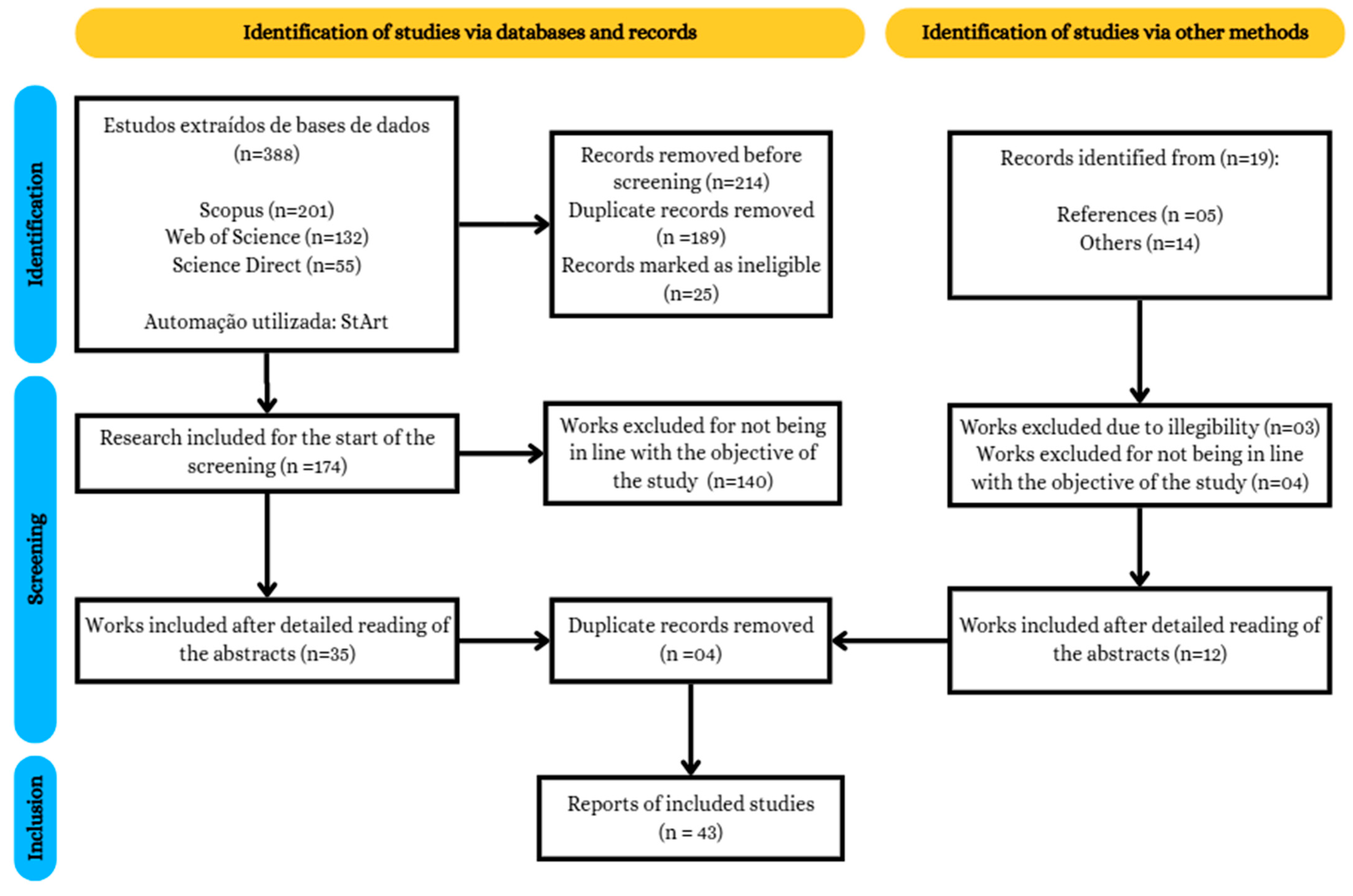
Figure 1. PRISMA Protocol.
Sustainability 18 00197 g001
Figure 2. Thematic areas of LCA [20,38,52,53,54,55,56,57,58,59,60,61,62,63,64,65,66,67,68,69,70,71,72,73,74,75,76,77,78,79,80,81,82,83,84,85,86,87,88,89,90].
Sustainability 18 00197 g002
Figure 3. Breakdown of the Low Complexity Level.
Sustainability 18 00197 g003
Figure 4. Breakdown of the Medium Complexity Level.
Sustainability 18 00197 g004
Figure 5. Breakdown of the High Complexity Level.
Sustainability 18 00197 g005
Figure 6. Pyramid of LCA software levels.
Sustainability 18 00197 g006
Figure 7. Transversal evaluation criteria of LCA software.
Sustainability 18 00197 g007
Table 1. Number of documents extracted per database.
StringScopus *Web of Science *Science Direct *
(“Life Cycle Assessment” OR “LCA”) AND comparison AND “LCA software”1016724
(“LCA tools” OR “LCA software”) AND (“case study” OR application) AND (SimaPro OR OpenLCA OR GaBi OR Umberto)1006531
Number of papers388
* Extraction with automation to include only research and conference papers.
Table 2. Factors for Selecting an LCA Tool.
FactorsJustification
OriginThe developer can be either a company or a research institution, which influences both the accessibility and the scope of the tool [52,53,54].
Suitability for application (sector and specific objective)The choice of tool depends on the intended application. Software originally developed for specific sectors (such as packaging) has often been adapted for broader uses. Selecting the appropriate tool requires aligning the software’s functionalities with the type of study (industrial, academic, environmental, etc.), the required level of detail, and the quality of available data [55].
Required user knowledge levelLCA tools cater to a range of users, from laypersons and beginners to specialists. Tools designed for experts offer advanced customization options and are commonly used in research and consultancy contexts, whereas more basic tools provide limited access to configurations [53,54].
Integrated or compatible data sourcesThe software may include fixed databases or allow the integration of various data sources. Many databases are country-specific, which can influence results, for example, due to differences in renewable energy mixes across countries [54]. Additionally, the capability to import external databases is an important feature for enhancing flexibility and accuracy in assessments [56].
Accepted data input formatsLCA calculations use mass or volume data as inputs, which can be entered manually via spreadsheets or derived from 3D geometric models. The use of spreadsheets typically requires prior calculations and data preparation [53,54].
Optimization resourcesAn ideal LCA includes optimization, which can be performed manually through repeated analyses or computationally. While spreadsheets require manual adjustments, 3D software programs facilitate automatic optimization [53,54].
General settings and customization optionsDefault settings facilitate the initial execution of LCA studies. The greater the number of predefined configurations, the easier it is to get started. For enhanced accuracy, specific adjustments can be made, such as modifications to the database, life cycle stages, and product lifespan [53].
Life cycle stages coveredLCA typically encompasses production, use, and end-of-life phases; however, different standards are considered depending on the software tool employed [53].
Result presentation formatsThe results can be presented as graphs, tables, or automated reports, facilitating the analysis and communication of LCA data [54].
User supportSome tools provide tutorials, user forums, or technical support, which facilitate learning and problem-solving [54,56].
Additional functionalitiesDifferences in the ability to accurately model functional units and define system boundaries contribute significantly to the reliability of results [54,56].
Compliance with recognized impact assessment methodsSupport and the proper application of environmental impact assessment methods need to be consistently updated and reliable [57].
Modelling capabilitiesMore advanced tools enable the evaluation of uncertainties and the sensitivity analysis of results in response to changes in data or model parameters [54].
Table 3. Individual analysis of identified LCA tools.
ToolsTotal Articles per Tool
SimaPro24
GaBi LCA21
OpenLCA17
Athena8
Umberto 7
Tally4
BEES3
Brightway, CMLCA, Elodie, Greet, One Click LCA, PaLATE Spreadsheet, TEAM, Totem, VTTI/UC Asphalt Pavement LCA Model2
BioGrace Spreadsheet, Ecodesign Studio, eLCA, IDEMAT, Legep, Quantis Suite, Solid Works Sustainability, Warm1
Table 4. Main Aspects Observed Regarding the Tools Mentioned in the Studies.
CategorySimaProGaBiOpenLCAAthenaUmberto
Life Cycle Assessment MethodologyReCiPe, CML, TRACI, Impact 2002+, etc.ReCiPe, CML, TRACI, ILCDReCiPe, CML, TRACI, ILCD, EFCustomized—focused on constructionReCiPe, CML, TRACI
Integrated DatabaseEcoinvent, Agri-footprint, etc.GaBi DB, Ecoinvent, US LCIEcoinvent, Agribalyse, ELCDOwn Athena databaseEcoinvent, GaBi DB, others
Modelling CapacityHigh—advanced simulations and process networksHigh—technical detail and customizationHigh—modular and transparent modellingLow—limited to building structuresMedium—suitable for industrial flows
Sectors ServedIndustry, research, consultanciesIndustry, sustainability, energyAcademia, NGOs, light industryConstruction sectorIndustry, manufacturing processes
Ease of UseRequires technical knowledgeModerate—requires trainingHigh—intuitive interfaceHigh—easy to operateModerate—learning curve
Interface TypeGraphical and flowchart-basedGraphical with interactive dashboardsFlowcharts and tablesSimplified interface by materials and assembliesFlow- and diagram-based
Integration CapabilityExcel, ERP, APIsSAP, ExcelExcel, SQL databases, plug-insLimited external integrationERP, Excel, specific interfaces
LicensingPaidPaidFree (open-source)Free with restrictionsPaid
Access ModelLocal installationLocal installation and webLocal installationLocal installationLocal installation
License Cost typeAnnual/lifetime planAnnual planOpen accessOpen accessAnnual plan
Update FrequencyFrequent updatesRegular updatesConstantly updated by the communitySporadic updatesScheduled updates
Technical SupportYesYes (corporate support)Limited to forumsLimitedYes
Training AvailabilityCourses, tutorials, and manualsCourse and webinarsGuides, tutorials, and forumsDocumentation on the websitePaid
Table 5. Strengths of the selected LCA software for analysis.
CriterionSimaProOpenLCAGaBi LCAUmbertoAthena
Interface and usabilityRobust, good impact visualization
[55,72]
Intuitive interface and table-based modelling [56].Beginner-friendly, modern interface [52].Graphical interface with Petri nets, less user-friendly [56,84].User-friendly interface and BIM integration [53,87].
Modelling FlexibilityHigh flexibility and customization [82,84].High flexibility with customized models [52].Robust and flexible modelling [57,75].Highly flexible and detailed [71,84]. Good for quick and simplified modelling [79].
Compatibility with DatabasesBroad
compatibility [72].
Compatible with multiple databases [66].Extensive data coverage—Ecoinvent, ELCD, US LCI [67].Ecoinvent versions 2 and 3 [71]. Database specific to the construction
sector [73].
Impact MethodsWide variety of methods—ReCiPe, CML, etc. [52].Good adaptation to multiple methods [85].Flows of ‘elements’ and ‘resources’ with proprietary characterization [85].Good adherence to ISO standards, detailed flow analysis [84].Presents impacts by life cycle phase [70].
Visualization and ReportingColourful graphs, process network [72,79]. Bar charts, top 5 indicators, Excel export [52].Fast results, advanced graphical interface [52].Clear visualizations and energy simulations [56].Automatic transport reports by city [73].
Differentiators and HighlightsHigh reliability, strong adherence to ISO standards [60,84,85].Free, transparent, ideal for academic
use [60,66]
Well-suited for EPDs and industrial applications [56,69].Recommended for material-based industries [67,78]. Good for construction projects with minimal manual data input [65].
Table 6. Negative aspects of each software analyzed.
SoftwareNegative
AthenaLimited to specific studies involving construction and building works [57].
Does not allow clear separation between life cycle stages [73].
Low flexibility in modelling and contains limitations regarding transparency of results [78,79].
Designed to cover information specific to North America [70,78].
Presents results as “Summary Measures” and “Absolute Value” [70].
SimaProGreater complexity and less practicality in defining transportation [73].
Requires a higher technical level for modelling and interpreting results [53,64].
Considered time-consuming and complex [79].
To represent different usage conditions of certain products, it would be necessary to create entire alternative life cycles, which make modelling complex and artificial [74].
High dependency on obtaining primary data about operating equipment, requiring the search for reliable secondary data [62].
Mentioned as originally a stand-alone tool that evolved to client-server versions, but with low flexibility for integration with enterprise data systems [63].
Differences in structure and format between databases prevent direct integration with commercial software like SimaPro [63].
UmbertoIt is very robust and flexible; however, it requires a high learning effort and is recommended for experienced users [71].
The user needs to have a high level of knowledge to use the tool [53].
It does not offer significant innovations for some applications and is less friendly for beginners, with a steeper learning curve [52].
Gabi LCAThe user needs to have a high level of knowledge to use the tool [53].
Has limitations in the number of available LCIA methods [52]. Its limitations may be linked to the use of a proprietary database connected to the software [60].
It has limited graphical impact but offers good cost–benefit for less complex applications [55].
Its complexity and limited focus on industrial sectors reduce its practicality (as seen in the automotive industry) [84,90].
Mentioned as a tool originally stand-alone that evolved to client-server versions, but with low flexibility for integration with enterprise data systems [63].
It is pointed out that it does not fully resolve data loss when converting between formats [81].
OpenLCADoes not allow subdivision of systems into sub-networks [56].
When there are many elements, the visualization can become cluttered and difficult to read [56].
The tool is focused on process impact assessment, and building product systems is more difficult. Additionally, the use phase has limited scope and little flexibility within the software’s modelling framework [74].
Doesnot meet with the Standard of Environmental management] requirements and requires impact assessment methods to be added manually, which limits its use [84].
Disclaimer/Publisher’s Note: The statements, opinions and data contained in all publications are solely those of the individual author(s) and contributor(s) and not of MDPI and/or the editor(s). MDPI and/or the editor(s) disclaim responsibility for any injury to people or property resulting from any ideas, methods, instructions or products referred to in the content.