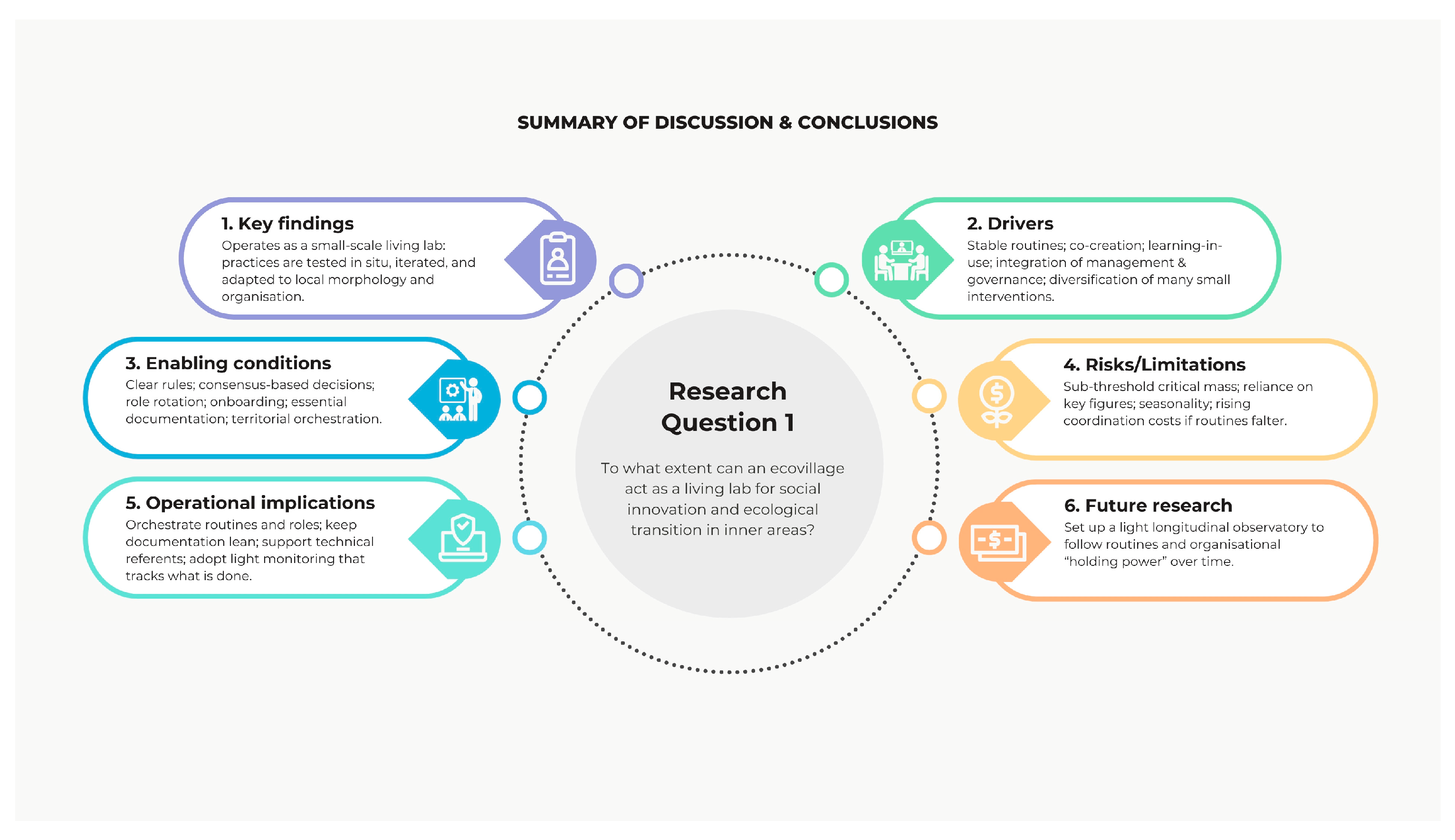
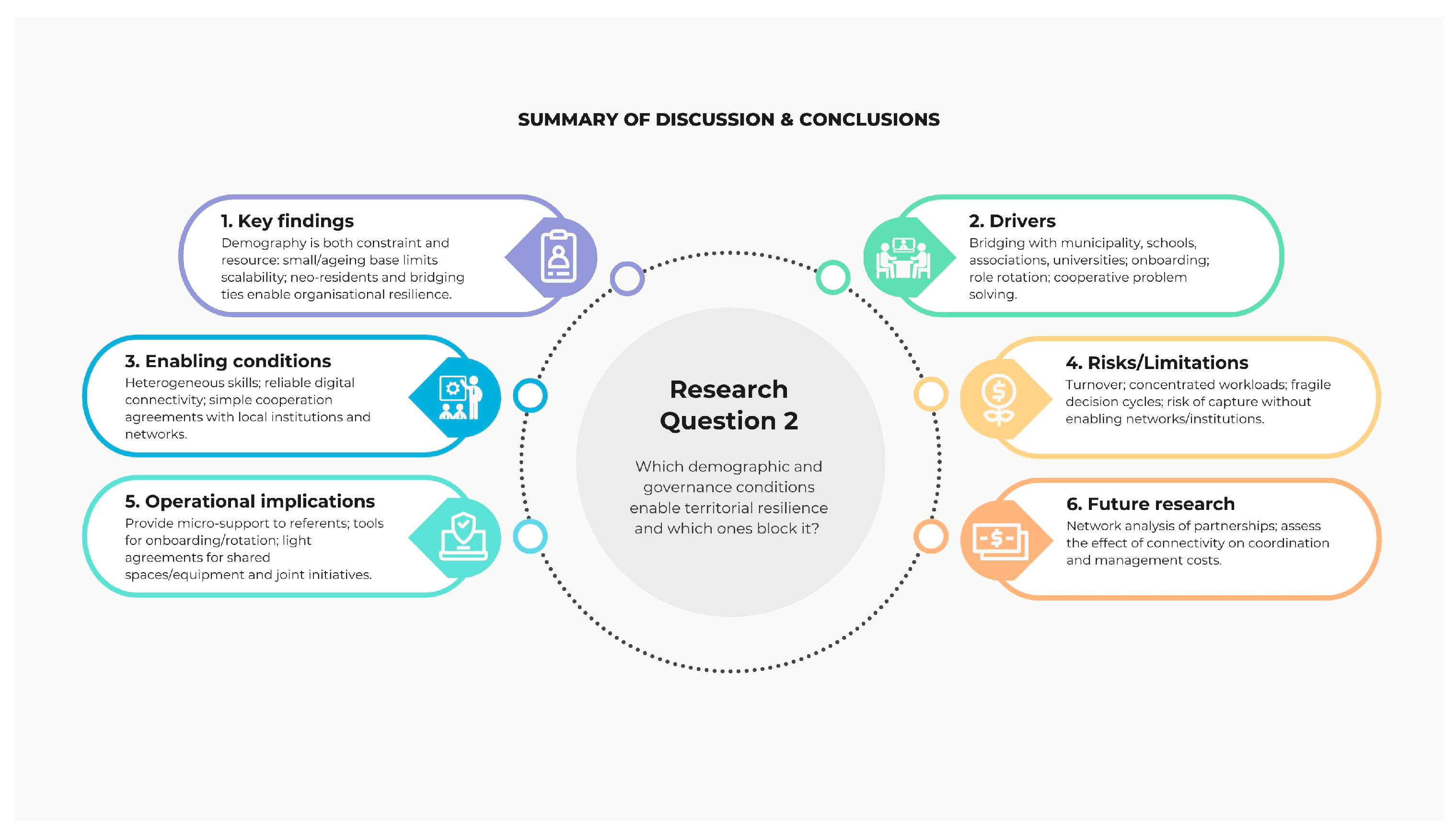
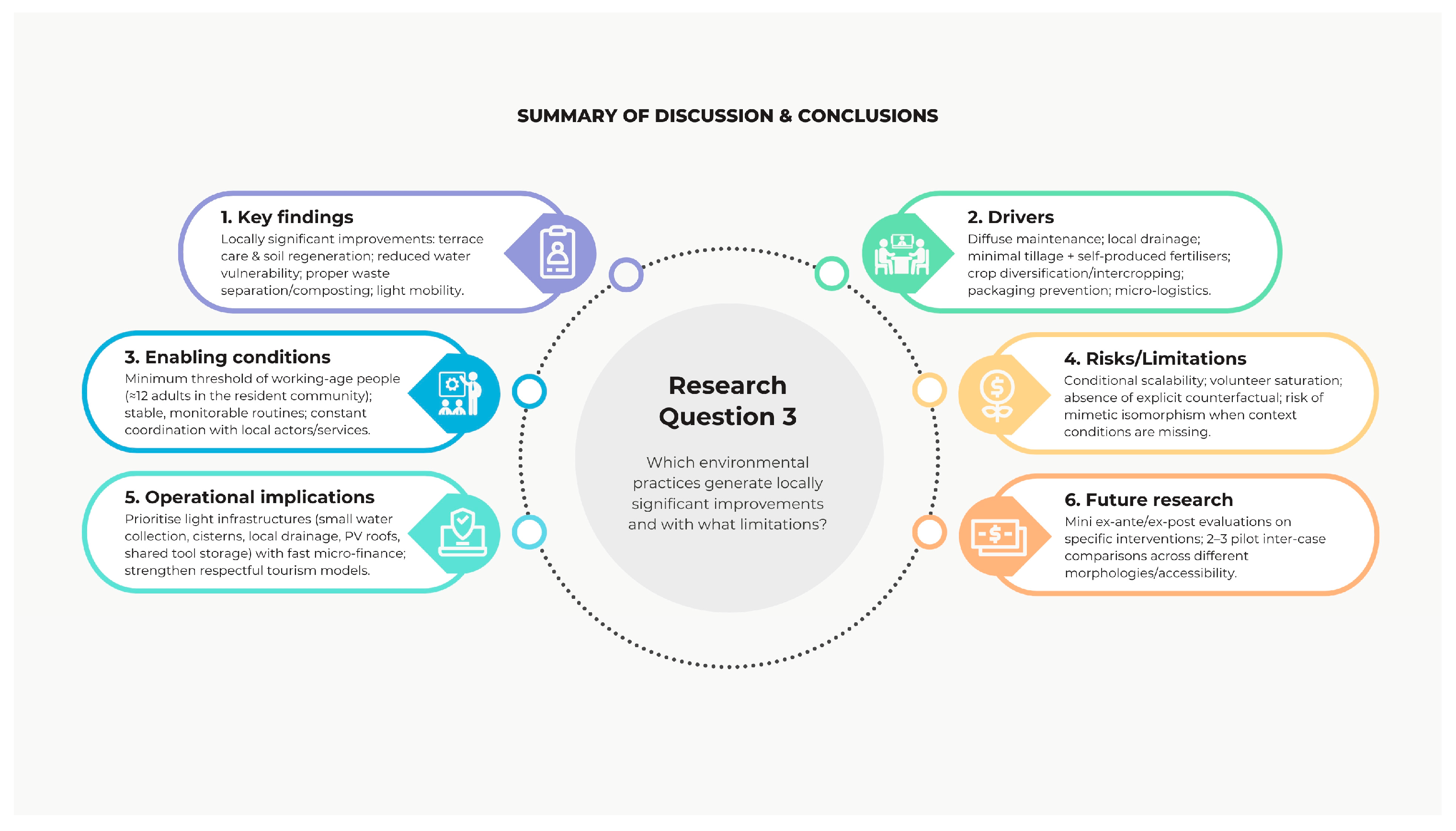
Ecovillages as Living Labs for Social Innovation: The Case of Torri Superiore


Abstract
1. Introduction
2. Materials and Methods
2.1. About Resilience and Social Innovation in Inner Areas: Conceptual Background
2.2. Research Design
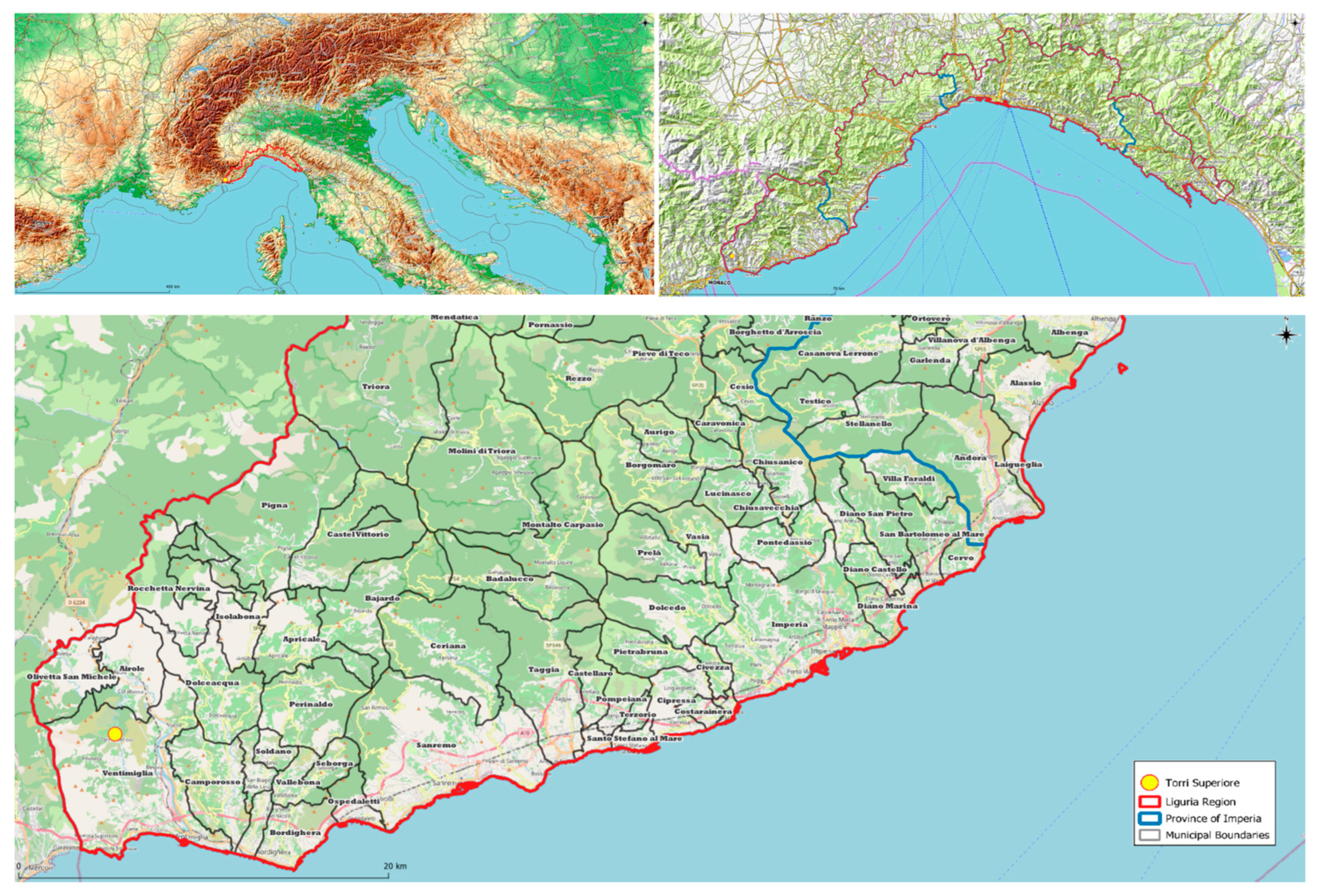
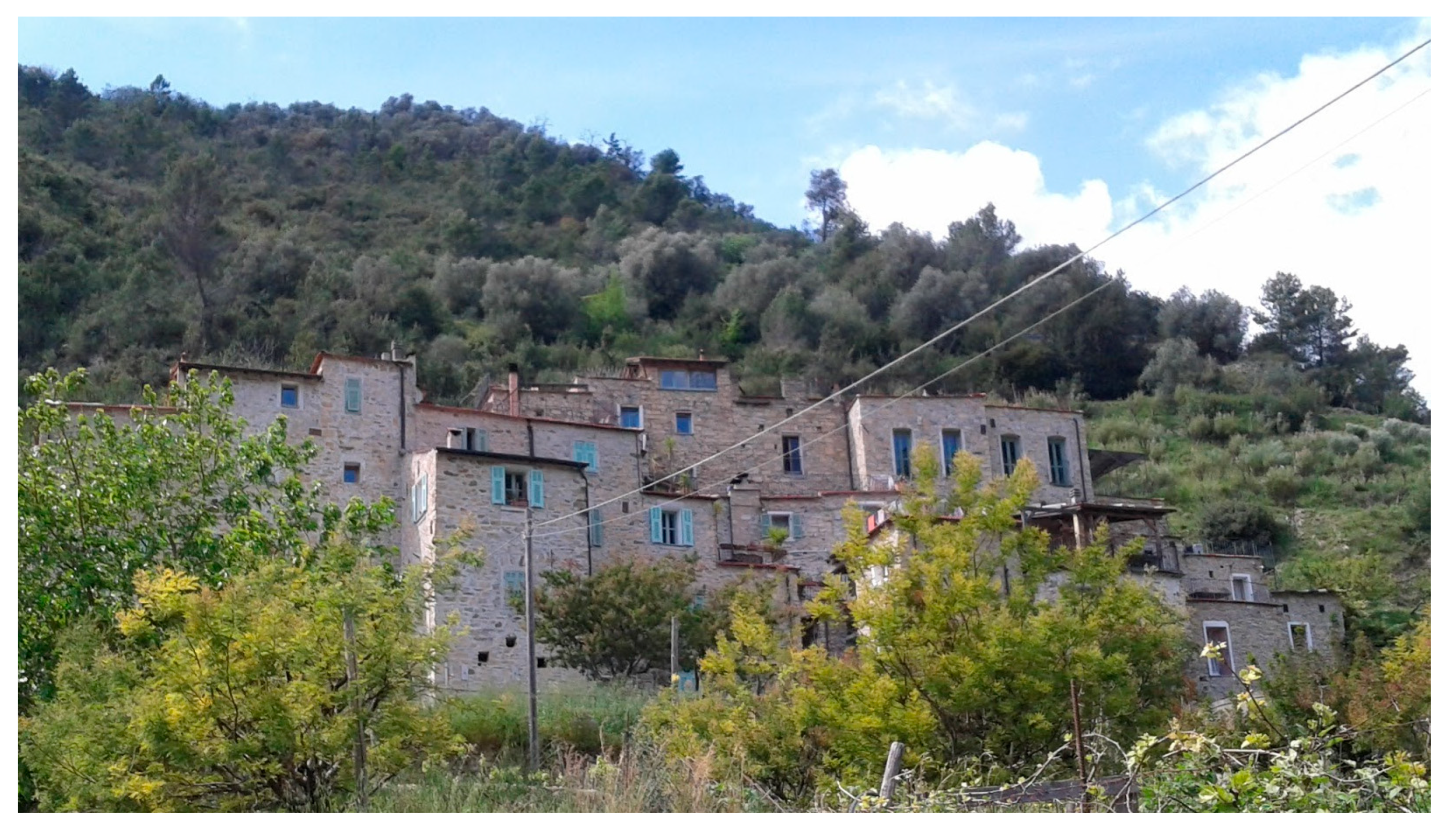
2.3. Study Area: Torri Superiore
2.4. Data & Sources
3. Results
3.1. Demography of the Area
3.1.1. National Context and SNAI (Table 1)
3.1.2. Provincial Focus and Study Area (Table 2)

| LAU Classification and Quantity | Surface (km2) | Population 1.1.2024 | Pop% | Pop Ages % 2024 | AI 2024 | Foreign %Pop | ||
|---|---|---|---|---|---|---|---|---|
| 0–14 | 15–64 | Over 65 | ||||||
| Belt (2) | 47.9 | 2153 | 15.5 | 9.8 | 59.0 | 31.3 | 205 | 14.9 |
| Intermediate (10) | 186.1 | 8562 | 61.7 | 10.4 | 61.8 | 27.8 | 225 | 14.0 |
| Periferic (7) | 208.2 | 3147 | 43.6 | 9.7 | 58.6 | 31.7 | 243 | 18.7 |
| Imperiese (19) | 442.2 | 13,862 | 100 | 10.1 | 60.6 | 29.2 | 214 | 15.2 |
3.1.3. Torri Superiore and Comparison Cluster
3.1.4. Essential Historical Series (1871–2024)
- Torri (hamlet)From the end of the 19th century to 1911, the hamlet grew to 660 inhabitants; followed by a marked decline between 1921 and 1951 (−34%), then a brief recovery between the 1990s and 2001 linked to the regeneration of the village, a new decline to 265 inhabitants (2011), and a slight recovery in recent years to 290 (2024).
- Airole and Olivetta S. MicheleAfter peaking in the late 19th century, they lost population almost continuously: Airole went from 1188 (1921) to 520 (1981) and 359 (2024); Olivetta from 659 (1931) to 304 (1981) and 190 (2024). Both have a negative natural balance and an unstable/negative migration balance in the long term; the 2024 Ageing Index is very high (367% in Airole; 355% in Olivetta). Although the foreign presence is significant in Airole (31.8%), it does not overturn the structural balance.
- DolceacquaThis town follows a divergent trend: after reaching its lowest point in the 1900s, it began a period of growth linked to tourism, property development, the landscape and more accessible service networks, rising from 1806 (1951) to 2145 (2021) and 2155 (2024). Foreigners 13.3%, relatively less unbalanced age structure (Aging Index 198% in 2024, down 22 points from 2011).
- Ventimiglia (municipality)Strong growth 1951–1981 (peak 26,283 inhabitants), then contraction to 23,018 (2021) and 22,934 (2024) due to a combination of negative natural balance and reduced migratory attractiveness after the 1980s; Aging Index 2024 238%. Sectoral economic events (floriculture crisis) and border issues in 2014–2016 accentuate instability.
3.1.5. Indicators for 2024 (Table 3)
- Reduced total population in inner municipalities; Ventimiglia remains the main demographic attraction but is declining.
- Age structure: under-15 s 9–12%, 65 + 25–36% in the cluster; resulting in an Ageing Index > 300 in Airole/Olivetta, ~200 in Dolceacqua, 238 in Ventimiglia.
- Foreigners: 31.8% in Airole, 6.5% in Olivetta, 13.3% in Dolceacqua, 12.5% in Ventimiglia; higher incidence in the peripheral municipalities of the Roia/Bevera valley (amenity + work), with a partially compensatory function.
- Accessibility: travel times to services superior to the coast and infrastructural fractures (Roia/Cuneo line historically intermittent), consistent with the SNAI classification and with Torri’s idea of functional innerness.
| LAU Classification | Surface (km2) | Population 1.1.2024 | Variation% 1951–2024 | Pop Ages % 2024 | AI 2024 | Foreign %Pop | Accessibility Min ** | ||
|---|---|---|---|---|---|---|---|---|---|
| 0–14 | 15–64 | Over 65 | |||||||
| Airole | 14.6 | 359 | −44.6 | 12.1 | 63.2 | 24.7 | 205 | 31.8 | 39.9 |
| Dolceacqua | 20.3 | 2155 | +19.3 | 11.5 | 62.6 | 25.9 | 225 | 13.3 | 40.2 |
| Olivetta S. Michele | 13.8 | 190 | −64.2 | 11.0 | 62.2 | 26.8 | 243 | 6.5 | 44.7 |
| Ventimiglia | 53.8 | 22,934 | +44.7 | 11.8 | 63.0 | 25.2 | 214 | 12.5 | 32.3 |
| Torri * | 0.12 | 290 | −15.2 | - | - | - | - | - | 49.1 |
3.2. Community Governance and Social Innovation
3.2.1. Structure and Rules
3.2.2. Participation and Routines
3.2.3. Social Capital: Bonding/Bridging
3.2.4. Organisational Capacity and Workloads
3.2.5. Inclusion and Skills
3.3. Environmental Practices and Small-Scale Environmental Improvements
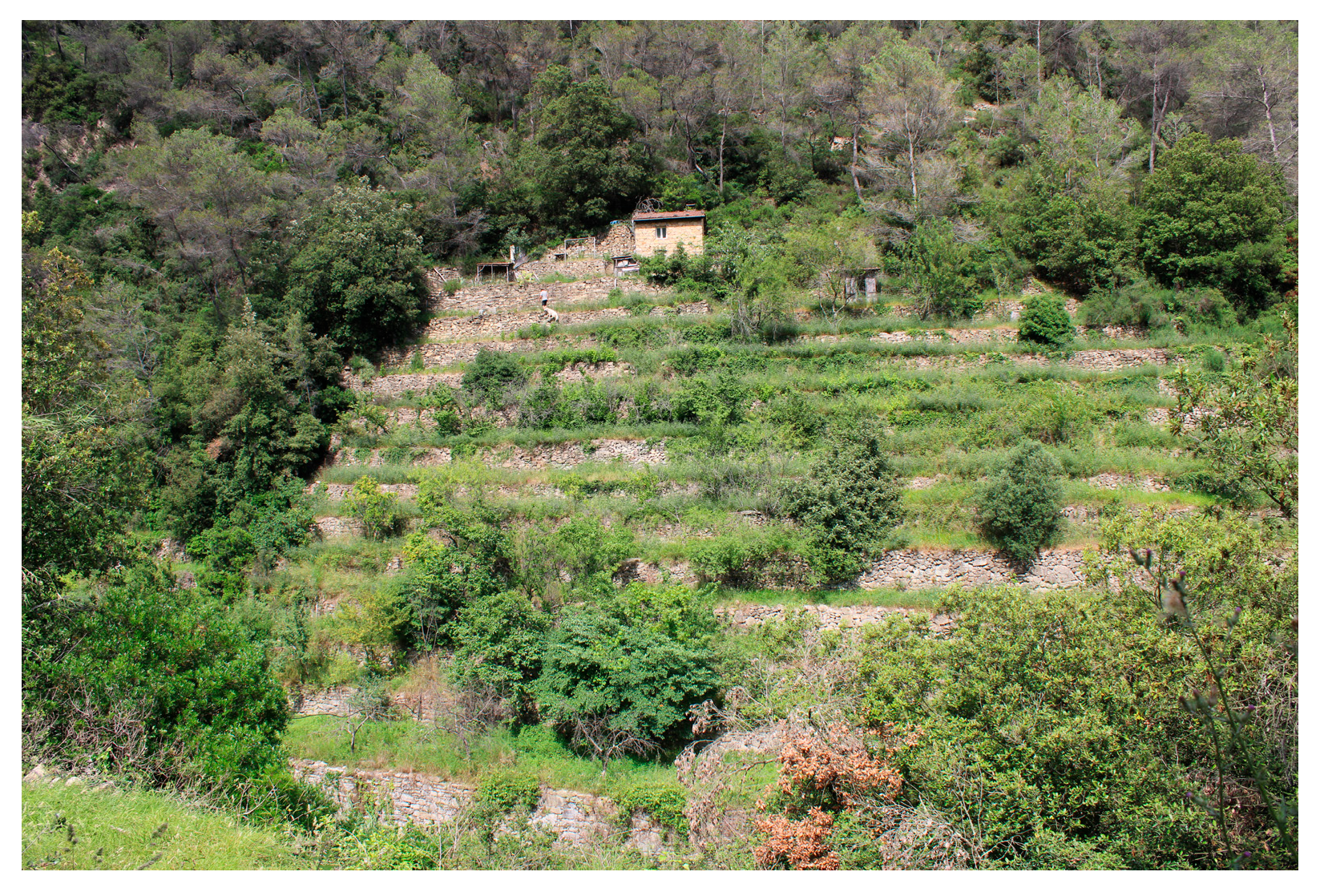
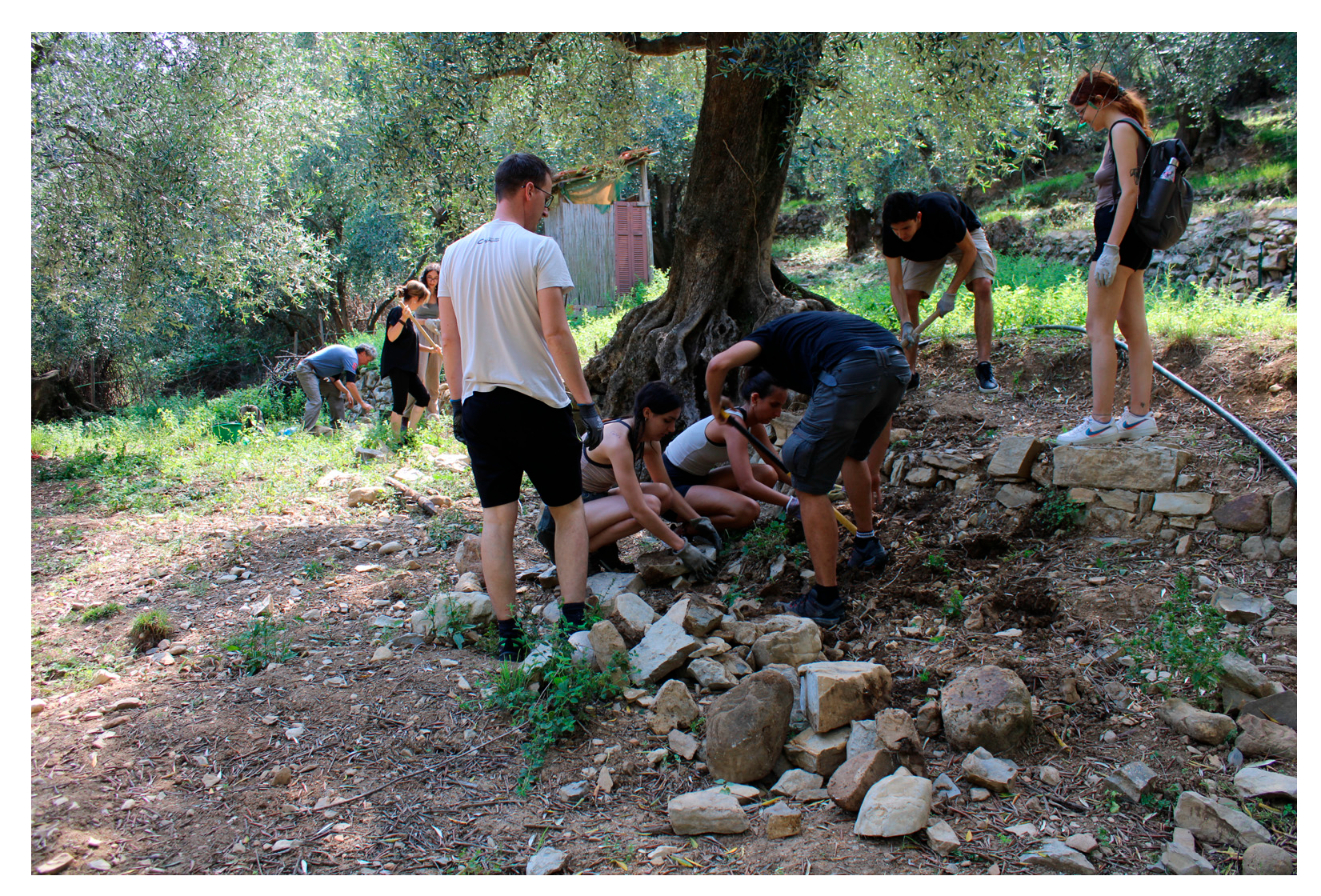
3.3.1. Protection of Terraces and Widespread Maintenance
3.3.2. Local Water Management Between Droughts and Storms
3.3.3. Agroecology as a Way of Caring for the Cultural Landscape
3.3.4. Energy, Waste and Local Circuits
3.3.5. Light Mobility and Daily Logistics
3.3.6. Sustainable Tourism as a Territorial Alliance
4. Discussion and Conclusions
4.1. Operational Implications
4.2. Limitations and Transferability
4.3. Future Research Trajectories
Supplementary Materials
Author Contributions
Funding
Institutional Review Board Statement
Informed Consent Statement
Data Availability Statement
Conflicts of Interest
Abbreviations
| CLIPS | Community Learning Incubator |
| ISTAT | National Statistics Institute |
| PV | Photovoltaic |
| RQ | Research Question |
| SI | Social Innovation |
| SCIPP | Sustainable Community Incubator Partnership Programme |
| SNAI | National Strategy for Inner Areas |
| TNSC | Ture Nirvane Social Cooperative |
| TSCA | Torri Superiore Cultural Association |
References
- NUVAP. Aggiornamento 2020 Della Mappa Delle Aree Interne. Nota Tecnica, Presidenza del Consiglio dei Ministri, Dipartimento per le Politiche di Coesione e per il Sud. Available online: https://politichecoesione.governo.it/media/2831/20220214-mappa-ai-2020-nota-tecnica-nuvap_rev.pdf (accessed on 20 October 2025).
- SNAI. Piano Strategico Nazionale delle Aree Interne (2021–2027), Presidenza del Consiglio dei Ministri, Dipartimento per le Politiche di Coesione e per il Sud. Available online: https://politichecoesione.governo.it/media/jhld12qn/psnai_finale_30072025_clean_ministro.pdf (accessed on 20 October 2025).
- Moulaert, F.; MacCallum, D.; Mehmood, A.; Hamdouch, A. (Eds.) The International Handbook on Social Innovation; Edward Elgar Publishing Ltd.: Cheltenham, UK, 2014. [Google Scholar]
- Lakatos, E.S.; Pacurariu, R.L.; Bîrgovan, A.L.; Cioca, L.I.; Szilagy, A.; Moldovan, A.; Rada, E.C. A Systematic Review of Living Labs in the Context of Sustainable Development with a Focus on Bioeconomy. Earth 2024, 5, 812–843. [Google Scholar] [CrossRef]
- Ali, S.A.; Tallou, A.; Lopriore, G.; Vivaldi, G.A.; Camposeo, S.; Vogiatzakis, I.N.; Sanesi, G. A review on the role of living labs in advancing sustainable practices in rural areas: Insights from agriculture, forestry, and agroforestry systems. Ital. J. Agron. 2025, 20, 100033. [Google Scholar] [CrossRef]
- Fauth, J.; De Moortel, K.; Schuurman, D. Living labs as orchestrators in the regional innovation ecosystem: A conceptual framework. J. Responsible Innov. 2024, 11, 2414505. [Google Scholar] [CrossRef]
- Lennon, A. Negotiating sustainability and place: Migration to an ecovillage and local community. Geogr. Ann. Ser. B Hum. Geogr. 2024, 1–22. [Google Scholar] [CrossRef]
- Zeybek, O.; Erdoğan, E. Transforming Traditional Villages into Sustainable Communities: Evaluating Ecovillage Potential in Bursa, Turkey. Sustainability 2025, 17, 2095. [Google Scholar] [CrossRef]
- Cambini, C.; Grinza, E.; Sabatino, L. Ultra-fast broadband access and productivity: Evidence from Italian firms. Int. J. Ind. Organ. 2023, 86, 102901. [Google Scholar] [CrossRef]
- Brandano, M.G.; Mastrangioli, A.; Palma, A. The digital divide and the growth of the hospitality industry: The case of Italian inner areas. Reg. Sci. Policy Pract. 2023, 15, 1509–1531. [Google Scholar] [CrossRef]
- Litfin, K. Ecovillages: Lessons for Sustainable Community; Polity Press: Cambridge, UK, 2014. [Google Scholar]
- Avelino, F.; Kunze, I. Exploring the Transition Potential of the Ecovillage Movement. In Proceedings of the European Conference on Sustainability Transitions: Dynamics & Governance of Transitions to Sustainability, Amsterdam, The Netherlands, 4–5 June 2009. [Google Scholar]
- Phillips, M. Counterurbanisation and rural gentrification: An exploration of the terms. Popul. Space Place 2009, 16, 539–558. [Google Scholar] [CrossRef]
- Phillips, M.; Smith, D.P. Comparative approaches to gentrification: Lessons from the rural. Dialogues Hum. Geogr. 2018, 8, 3–25. [Google Scholar] [CrossRef]
- ISTAT. La Demografia Delle Aree Interne: Dinamiche Recenti e Prospettive Future. Stat. Focus 2024, 1–11. Available online: https://www.istat.it/wp-content/uploads/2024/07/STATISTICA-FOCUS-DEMOGRAFIA-DELLE-AREE-INTERNE_26_07.pdf (accessed on 20 September 2025).
- Adger, N. Social and ecological resilience: Are they related? Prog. Hum. Geogr. 2000, 24, 347–364. [Google Scholar] [CrossRef]
- Folke, C. Resilience: The emergence of a perspective for social–ecological systems analyses. Glob. Environ. Change 2006, 16, 253–267. [Google Scholar] [CrossRef]
- Gambazza, G. (Contro)narrazioni per la resilienza del quartiere Isola di Milano. In Oltre la Globalizzazione—Narrazioni/Narratives; Albanese, V., Muti, G., Eds.; Società di Studi Geografici, Memorie Geografiche: Firenze, Italy, 2023; Volume 23, pp. 145–151. [Google Scholar]
- Davoudi, S. Resilience: A bridging concept or a dead end? Plan. Theory Pract. 2012, 13, 299–307. [Google Scholar] [CrossRef]
- Shaw, K. “Reframing” resilience. Challenges for planning theory and practice. Plan. Theory Pract. 2012, 13, 308–312. [Google Scholar]
- Throgmorton, J.A. Planning as persuasive storytelling in a global-scale web of relationships. Plan. Theory 2003, 2, 125–151. [Google Scholar] [CrossRef]
- Martin, R.; Sunley, P. On the Notion of Regional Economic Resilience: Conceptualization and Explanation. J. Econ. Geography 2015, 15, 1–42. [Google Scholar] [CrossRef]
- Cote, M.; Nightingale, A.J. Resilience Thinking Meets Social Theory: Situating Social Change in Socio-Ecological Systems (SES) Research. Prog. Hum. Geogr. 2012, 36, 475–489. [Google Scholar] [CrossRef]
- Dobarrio Machado Ciccarino, I.; Rodrigues, S.C.S.F. Resilience through Social Innovation for Sustainable Development. Innov. Manag. Rev. 2023, 20, 179–191. [Google Scholar] [CrossRef]
- Dematteis, G.; Governa, F. (Eds.) Territorialità, Sviluppo Locale, Sostenibilità: Il Modello SLoT; FrancoAngeli: Milano, Italy, 2005. [Google Scholar]
- van der Ploeg, J.D.; Renting, H.; Brunori, G.; Knickel, K.; Mannion, J.; Marsden, T.; De Roest, K.; Sevilla-Guzman, E.; Ventura, F. Rural Development: From Practices and Policies Towards Theory. Sociol. Rural. 2000, 40, 391–408. [Google Scholar] [CrossRef]
- Moulaert, F.; Maccallum, D. An Introduction to Social Innovation; Edward Elgar Publishing Ltd.: Cheltenham, UK, 2019. [Google Scholar]
- MacCallum, D.; Moulaert, F.; Hillier, J.; Vicari Haddock, S. (Eds.) Social Innovation and Territorial Development; Ashgate: Farnham, UK, 2009. [Google Scholar]
- Musolino, D.; Distaso, A.; Marcianò, C. The Role of Social Farming in the Socio-Economic Development of Highly Marginal Regions: An Investigation in Calabria. Sustainability 2020, 12, 5285. [Google Scholar] [CrossRef]
- Navarro-Valverde, F.; Labianca, M.; Cejudo-García, E.; De Rubertis, S. Social Innovation in Rural Areas of the European Union: Learnings from Neo-Endogenous Development Projects in Italy and Spain. Sustainability 2022, 14, 6439. [Google Scholar] [CrossRef]
- Healey, P. Collaborative Planning: Shaping Places in Fragmented Societies; Macmillan: London, UK, 1997. [Google Scholar]
- Fougère, M.; Meriläinen, E. Exposing Three Dark Sides of Social Innovation through Critical Perspectives on Resilience. Ind. Innov. 2021, 28, 19–37. [Google Scholar] [CrossRef]
- French, C. (Ed.) Building Rural Community Resilience Through Innovation and Entrepreneurship; Routledge: Abingdon, UK, 2022. [Google Scholar]
- Ravazzoli, E.; Dalla Torre, C.; Streifeneder, T. Transforming the Role of Women Farmers and of Refugees: Two Italian Experiences of Social Innovation in Mountain Areas. J. Alp. Res. 2019, 107, 2. [Google Scholar] [CrossRef]
- Dal Borgo, A.G.; Gambazza, G.; Lucchesi, F. Social Farming as a Driver of Innovation for Migrant Empowerment and Sustainability: The Italian Experience. Belgeo 2024, 1, 1–20. [Google Scholar] [CrossRef]
- ISTAT. IstatData, Banca Dati dell’Istituto Nazionale di Statistica. Available online: https://esploradati.istat.it/databrowser/ (accessed on 20 September 2025).
- ISTAT. Censimenti Della Popolazione Anni Dal 1861 al 2001, Digitalized Volumes in Istat Historical Archive and Library. Available online: https://www.istat.it/statistiche-per-temi/censimenti/censimenti-storici/ (accessed on 20 September 2025).
- Preston, S.H.; Heuveline, P.; Guillot, M. Demography: Measuring and Modeling Population Processes; Wiley-Blackwell: Hoboken, NJ, USA, 2000. [Google Scholar]
- Del Panta, L.; Detti, T. Lo spopolamento nella storia d’Italia, 1871–2011. In Territori Spezzati. Spopolamento e Abbandono Nelle Aree Interne Dell’Italia Contemporanea; Macchi Jánica, G., Palumbo, A., Eds.; CISGE—Centro Italiano per gli Studi Storico-Geografici: Roma, Italy, 2019; pp. 13–28. [Google Scholar]
- Amodio, T. Territories at risk of abandonment in Italy and hypothesis of repopulation. Belgeo 2022, 4, 1–23. [Google Scholar] [CrossRef]
- Reynaud, C.; Miccoli, S. Depopulation and the Aging Population: The Relationship in Italian Municipalities. Sustainability 2018, 10, 1004. [Google Scholar] [CrossRef]
- d’Erm, P. Vivre Ensemble Autrement. Écovillages, Habitat Groupé, Écoquartiers; Ulmer: Paris, France, 2009. [Google Scholar]
- Caffaratti, P. Risorge un villaggio abbandonato. Essere Second. Nat. 1998, 13. [Google Scholar]
- Marzano, G. L’alternativa Eco-Comunitaria Degli Ecovillaggi: La Relazionalità Pragmatica di Torri Superiore. Available online: https://www.researchgate.net/publication/259609521_L’alternativa_comunitaria_degli_ecovillaggi_La_relazionalita_pragmatica_di_Torri_Superiore (accessed on 20 August 2025).
- Leminen, S.; Westerlund, M.; Nyström, A.G. Living Labs as Open-Innovation Networks. Technol. Innov. Manag. Rev. 2012, 2, 6–11. [Google Scholar] [CrossRef][Green Version]
- Westerlund, M.; Leminen, S.; Habib, C. Key Constructs and a Definition of Living Labs as Innovation Platforms. Technol. Innov. Manag. Rev. 2018, 8, 51–62. [Google Scholar] [CrossRef]
- Rossitti, M.; Dell’Ovo, M.; Oppio, A.; Torrieri, F. The Italian National Strategy for Inner Areas (SNAI): A Critical Analysis of the Indicator Grid. Sustainability 2021, 13, 6927. [Google Scholar] [CrossRef]




| LAU Classification | Surface (km2) | Population 1.1.2024 | Variation% 2023–2043 | Pop Ages % 2024 | AI 2024 | ||
|---|---|---|---|---|---|---|---|
| 0–14 | 15–64 | Over 65 | |||||
| Intermediate | 75,837.00 | 8,020,876 | 13.6 | 12.1 | 63.2 | 24.7 | 205 |
| Periferic | 79,393.6 | 4,597,309 | 7.8 | 11.5 | 62.6 | 25.9 | 225 |
| Ultra-periferic | 22,310.1 | 706,942 | 1.2 | 11.0 | 62.2 | 26.8 | 243 |
| Internal | 177,540.7 | 13,325,127 | 22.6 | 11.8 | 63.0 | 25.2 | 214 |
| Non-Internal | 124,527.6 | 45,664,622 | 77.4 | 12.3 | 63.6 | 24.1 | 196 |
| Total Italy | 302,068.3 | 58,989,749 | 100 | 12.2 | 63.5 | 25.2 | 205 |
| Environmental Practice | Content/Form (What Is Done) | Enabling Conditions (What Must Hold) | Limits/Risks |
|---|---|---|---|
| Terraced-landscape upkeep & local drainage | Preventive cleaning of canals; drystone wall repair; pre-rainfall checks; micro-drainage fixes. | Weekly routines; sufficient active participants; role rotation & handover notes; simple checklists; coordination with municipality for heavy works. | Seasonal labour peaks; reliance on key individuals; storm damage exceeding local capacity; safety/training needs. |
| Soil regeneration (minimal tillage & self-produced fertilisers) | Low-disturbance bed preparation; compost/vermicompost/green manures; mulching; moisture-retention practices. | Seasonal task calendar; peer learning; compost area and tools; availability of organic residues; simple bed logs. | Compost quality variability; material shortages during dry spells; knowledge turnover; plot heterogeneity. |
| Crop diversification & intercropping | Mixed rotations; intercropped beds; small plot mosaics; risk-spreading planting schemes. | Rotation plans; handover notes; seed/tool sharing; basic layout records; timely weeding/harvest scheduling. | Coordination complexity; timing conflicts; seed availability; small errors propagate across mixed beds. |
| Waste prevention, separation & composting | Packaging minimisation at source; bin triage/signage; periodic compost turning; safe storage for recyclables. | Clear rules; visible signage; light monitoring (bin checks); training for newcomers/guests; municipal collection alignment. | Contamination risk; odour/pest control in summer; visitor turnover; storage space constraints. |
| Renewable energy (roof-mounted photovoltaic) & load management | PV generation; time-shifting of energy-intensive tasks; basic tracking of production/consumption peaks. | Simple meters/dashboards; usage routines; awareness sessions; maintenance contracts; shading checks. | Weather variability; inverter/battery maintenance; upfront costs; limited winter generation or shaded areas. |
| Light mobility & access management | Walking/cycling where feasible; shared rides; bundling deliveries/visits; wayfinding for safe routes. | Mobility rosters; coordination with guests/partners; tool/equipment pooling; basic digital calendar. | Topography and distance; limited public transport; weather constraints; safety for children/elderly. |
| Rainwater harvesting & small water storage | Roof/gutter capture; first-flush systems; small cisterns; localized drip/soaker lines. | Routine gutter cleaning; seasonal inspection; simple maintenance logs; micro-funding for repairs. | Dry-season scarcity; storage-capacity limits; contamination risks without filters; regulatory constraints. |
| Bridging ties & respectful micro-tourism | Agreements with schools/associations/universities; capped group sizes; co-learning activities; volunteer days. | Clear time windows; space/use rules; host roles; minimal induction for visitors; insurance/permits where needed. | Risk of resident-function displacement; seasonality; coordination overhead; expectations mismatch. |
Disclaimer/Publisher’s Note: The statements, opinions and data contained in all publications are solely those of the individual author(s) and contributor(s) and not of MDPI and/or the editor(s). MDPI and/or the editor(s) disclaim responsibility for any injury to people or property resulting from any ideas, methods, instructions or products referred to in the content. |
© 2025 by the authors. Licensee MDPI, Basel, Switzerland. This article is an open access article distributed under the terms and conditions of the Creative Commons Attribution (CC BY) license.
Share and Cite
Bergaglio, M.; Capocefalo, V.; Dal Borgo, A.G.; Gambazza, G. Ecovillages as Living Labs for Social Innovation: The Case of Torri Superiore. Sustainability 2026, 18, 188. https://doi.org/10.3390/su18010188
Bergaglio M, Capocefalo V, Dal Borgo AG, Gambazza G. Ecovillages as Living Labs for Social Innovation: The Case of Torri Superiore. Sustainability. 2026; 18(1):188. https://doi.org/10.3390/su18010188
Chicago/Turabian StyleBergaglio, Maristella, Valentina Capocefalo, Alice Giulia Dal Borgo, and Giuseppe Gambazza. 2026. "Ecovillages as Living Labs for Social Innovation: The Case of Torri Superiore" Sustainability 18, no. 1: 188. https://doi.org/10.3390/su18010188
APA StyleBergaglio, M., Capocefalo, V., Dal Borgo, A. G., & Gambazza, G. (2026). Ecovillages as Living Labs for Social Innovation: The Case of Torri Superiore. Sustainability, 18(1), 188. https://doi.org/10.3390/su18010188