


Abstract
This paper links the UN Sustainable Development Goal (SDG) of “Affordable and Clean Energy” (nr. 7) to “Partnerships” (nr. 17). These partnerships refer to stakeholders’ participation in renewable energy networks. Given that renewable energy is environmentally superior to fossil fuels and the participatory approaches foster well-being, this paper addresses economic sustainability. Therefore, the costs and benefits of electric power on the grid are compared to the distributed power networks in the EU, the USA, and India. Firstly, the present (dis)incentives for distributed energy networks are identified, concerning power generation, transmission, distribution, and consumption on the grid. Second, the costs of mini-grids and microgrids are assessed based on the existing literature. Thirdly, the benefits of such networks for individual and collective interests of producers and consumers of power are indicated. Although these partnerships are often as yet costly, incorporating those benefits into electricity prices enables price parity with the grid. Policies that pursue those benefits foster the realization of SDGs and improve the balance on the grid.
1. Introduction
In the realization of Sustainable Development Goals (SDGs), the goal of affordable and clean energy (SDG 7) can be linked to the goal of partnerships (SDG 17). This paper aims to assess the sustainability of partnerships through stakeholder participation in renewable energy distributed among participants. These participants are households and firms that supply and demand renewable energy. Such partnerships are called distributed energy networks (DEN). The focus is on the economic dimension of sustainability, assuming that the participatory approach improves well-being while the uses of renewable energy are superior to fossil fuels from an environmental perspective, as they mitigate climate change and resource scarcity. Economic sustainability is considered in the sense of lower private costs and social costs compared to prices on the grid; lower social costs are labeled as benefits. Therefore, the costs and benefits of the distributed electric power based on renewable energy are assessed. Important social and environmental advantages of renewable energy consumption can be identified, but this paper has a limited scope of assessing the costs and benefits of the distributed systems compared to large scale systems on the grid. The novelty of this paper is twofold. Firstly, the economic sustainability of distributed energy networks is assessed. This is achieved in the sense of private and social costs of power consumption comparable to, or below, the costs of power on the grid. This achievement is assessed based on experiences in the past and with regard to incentives and barriers that determine results in the near future—say, within the next generation. While comprehensive literature reviews on planning and optimization [1], energy technologies [2], project development [3] and other issues can be found, we have not found an empirical review on those costs and benefits. Given that the costs and benefits of energy use are pivotal for the dissemination of innovations, it is worthwhile to shed light on them. Second, an empirical review of changes in costs and benefits is relevant for assessing expectations about the future of distributed energy networks. They can generate an innovation spur in the energy business. High expectations are expressed by businesses in renewable energy [4], and scholars in energy [5], but it is uncertain whether they have been met or can be attained even when favorable conditions are created.
1.1. Theoretical Context
Participatory approaches in energy are emphatically advocated by trailblazers for sustainable development, based on the assumption that they will tune energy production to meet specific customer demands, thereby using scarce resources effectively [6]. Furthermore, the producing consumers in households and businesses, the so-called ‘prosumer’, would generate benefits of well-being and environmental qualities [7]. Although stakeholder participation has emerged in various sectors, including food, biomaterials, and clothing, it remains on the fringes of business operations. Economies of scale are commonly pursued on the assumption that a larger scale of production enables us to use fewer resources per product, which reduces the cost per delivered product, known as the unit cost. However, economic theories do not object to the idea of a downscaled, specialized production. Neo-classical, mainstream economic theory assumes that perfectly divisible resources are subject to resource prices. Organizational deficiencies in large-scale businesses are underpinned by behavioral theory, while specializations are expected to add value and reduce risks. In evolutionary economics, it is noted that a larger scale reduces unit costs because capital goods are often indivisible, but small-scale specializations can deliver superior qualities. Apparently, a large-scale series reduces unit costs in production, while the small-scale specializations tune qualities to demands in society. So, participatory approaches sustain themselves if they specialize in meeting societal demands cost-effectively. The issue is whether small-scale, specialized producers can attain price parity with large-scale ones, taking into consideration the societal costs that are referred to as benefits when prices decline.
In this paper, the use of electric power based on renewable energy is addressed. This choice is made regarding the uniform quality of renewable energy in the consumption of energy resources. At the same time, the results are also beneficial for achieving the SDGs related to water, forestry, pollution, and other issues. Given that choice, the costs and benefits of power on the grid are compared to those of power off the grid; it is when the grid is solely a backup. Electric power is considered rather than heat because it generates three to ten times higher value per energy unit, and its use grows faster than heat. However, the latter covers nearly 80% of global energy use. A higher value of deliveries enables more innovative specializations. Although renewable energy encompasses hydro, biomass, wind, solar, and marine resources, wind and solar are mainly covered. These resources are primarily used for decentralized power generation because they are available worldwide, though their energy density varies over time and in response to environmental conditions. The question is whether distributed energy networks, which are power systems based on stakeholder participation in renewable energy, can achieve price parity with large-scale grid systems when costs and benefits are considered. It is addressed in relation to the market (dis)incentives for shifting power from the grid towards distributed energy networks, the cost-reducing technological advancements in these networks, and the benefits of these shifts to producers and consumers.
1.2. Design of the Study
Distributed energy networks (DENs) are initiated by firms and households aiming to generate electric power partially independent of the grid, or use the grid as a backup. Therefore, fossil fuels are used in generators and microturbines, as well as renewable energy sources such as solar panels, small-scale wind turbines, bioreactors, small-scale hydropower, and fuel cells, for the generation of power. Currently, such uses of renewable energy grow though they are typically costly compared to fossil fuels. Among renewable energy resources, solar power with photovoltaic technologies (PV) is primarily used because PV units are applicable on a small scale and can be scaled up by adding more PV units. PV generates direct current (DC) that is converted into alternating current (AC) for distribution. Focus is on AC because DC is used stand-alone, e.g., in applications powered by batteries but rarely used for power distribution. The capacities of power generation of DENs are usually below a few thousand watts, which translates to the capacities of a few megawatts (MW). Their output is distributed as AC of up to a few thousand volts; it is a few kilovolts (kV), within a radius of a few kilometers. Presently, these power systems usually serve in addition to power on the grid. The latter covers large-scale capacities of a few hundred MW and more. Their output is transmitted with high-voltage AC of hundreds of kV over long distances and distributed with medium-to-high voltage in the tens of kV range over shorter distances. Both systems deliver electricity for low-voltage consumption, which is typically 220 volts (V), but 120 V in the United States of America (USA). Within DENs, mini-grids and micro-grids are distinguished. A mini-grid is a stand-alone installation for power generation and storage, used for telecom masts, lamps, signs, boats, cars, and other isolated devices, as well as in households and firms aiming at energy independence (autarchy). A microgrid connects several power generation units in households and firms into a network. While linked mini-grids can constitute a microgrid, the interconnected microgrids create virtual power plants. DENs evoked high expectations for benefits. In addition to possible private cost-savings, they would contribute to fairness in energy consumption [8], democratization of energy production [9], enhancement of regional development [10] and other advantages for well-being and economic growth. It is to be seen whether these claims can be realized. Meanwhile, more light can be shed on the costs and benefits of the DENs based on statistical data and the literature.
DENs should not be confused with numerous citizen initiatives in renewable energy that depend on the grid. In 2024, approximately 25 million households would utilize PV for their own consumption and for delivery to the grid [11]. Mushrooming individual and collective citizens’ initiatives gained significant scholarly attention in the United States of America (USA) and the European Union (EU); for example, more than 200 publications were identified in the year 2021 [12]. Reviews of the initiatives cover technologies [13], legal issues [14], development cooperation [15], community building [16], consumer equity [17], citizen emancipation [18], research priorities [19], and other issues, but there is overlap in the findings. The grid is the backbone of these initiatives, as the surplus of generated power is delivered to the grid, and shortages are covered by purchases of power on the grid. These initiatives are costly. A review of citizens’ initiatives in the EU from 2000 to 2021 reveals that approximately two million people are involved in more than 10,000 initiatives, which have created a 9.9 gigawatt (GW) capacity in power with investments of 11.3 billion euros [20]. If this data is reliable, the average investment cost was approximately 1100 euros per kW power capacity. This unit cost was three times the global average of PV, and five times that of wind and solar power combined, as estimated by the International Renewable Energy Agency for a similar period [21]. In addition, they add costly efforts on the grid. While such initiatives shift the ownership of power generation from shareholders and institutions to citizens, they are not considered DENs as they do not alter the system based on the grid. DENs are considered when participants operate largely independent of the grid, though not necessarily off the grid. While the participants pursue their well-being based on environmentally sustainable energy resources, the issue is whether their operations can be sustained from an economic perspective due to their benefits compared to the purchase of power on the grid.
2. Method
Instead of a broad literature review on the production and consumption of energy by the consuming firms and households (‘prosumption’), which can be found in the abovementioned reviews, this assessment takes a narrow scope. It is focused on consumer networks that pursue the reduction in dependence on the grid. A lower dependency implies substitutions of purchases and supplies of electricity linked to power generation and distribution in centralized systems for ones in consumer networks. Another limitation is that solely renewable energy is considered. Further, the scope is narrowed down to the assessment of costs and benefits of these distributed energy networks (DENs). These costs and benefits are assessed interchangeably in euros (EUR) or in US dollars (USD), as differences in values do not matter for this assessment; the terms “power” and “electricity” are also used interchangeably. More important are the annual changes and averages over several years, which are used to assess trends and avoid biases from fluctuating prices, respectively. Mainly, the USA, India, the EU, and a few European countries are covered, which are major global producers of renewable energy. Their production expanded during the period of high fossil fuel prices in the mid-2000s, followed by DENs a decade later. China became a significant producer of renewable energy during the 2010s, but DENs emerged as late as the 2020s, following government commissioning [22]. Hence, China is not assessed as little is found about the costs and benefits of its DENs. Given that DENs were introduced during the last few decades at various speeds across countries while the countries’ data is imperfect, the cross-country comparisons over time shed lights on main trends rather than focusing on precision in costs and benefits of power in DEN compared to the grid. Insofar as data is available, cost-reducing technological change in DEN is indicated. Furthermore, the unit costs of DEN based on PV could be overestimated because most publications cover the period from the 2010s until the early 2020s, while the prices of PV modules continue to decline. While the cost-reducing technological change in PV is fast, prudent projections of those unit costs help to avoid overstating of DENs. It is aimed at using data on the unit cost without overstating advantages and providing a preliminary structure for assessing the social costs and cost-savings called benefits. Such imperfections are part and parcel of all assessments of innovations in the early development stages.
The assessment is performed in three steps. Firstly, DENs are related to interests in power generation, transmission, and distribution, as well as consumption linked to the grid. Scale, costs, utilization of capacities, and consumer prices are assessed to define incentives and barriers for DEN in Section 3. The concept of capacity utilization in this section needs a brief explanation. Given that the installed power capacities, measured in kW and their multiples, rarely operate continuously, generated power by the installations, measured in kWh and its multiples, is usually below the maximum of 8650 production hours in a year. So, the generated power per installed capacity is assessed in kWh per kW capacity and its multiples. Capacity utilization is somewhat more specific than the ‘load factor’ often found in the literature, which is defined as the percentage of generated power to the maximum annual use of installed capacity; the load factor can consider the allowable power generation given capacity. The load factors are 0.7–0.8 for nuclear and geothermal power; 0.4–0.6 for biomass, fossil fuels, and hydro; and 0.2 for wind and 0.1 for PV. All these are measured in MWh per MW, with a maximum of 8650 MWh per MW achievable at full capacity [23]. When the unit costs are mentioned in this paper, they are always expenses per generated power throughout the year.
Second, the costs of mini-grids and microgrids are defined based on the literature in Section 4. Publications were searched on the web using combinations of keywords related to costs and benefits of local renewable energy, distributed energy, citizen initiatives, and similar topics. The literature with referenced studies was selected, preferably studies that refer to the realized projects, but a number of model studies are included for illustration. Regarding the focus of this study, the literature on costs and benefits is used. More can be found in ‘gray literature’, but reliability is low as many publications cover ideas and unverified model studies rather than realized projects. Herein, the unit costs of DENs are compared to those of the conventional power system based on the grid.
Thirdly, the social benefits of DEN are assessed. Assessments of social benefits often refer to the willingness to pay for electricity, which is dubious because it often exceeds the electricity prices manifold without tangible impacts on power prices. Furthermore, the spread of the highest to lowest willingness to pay varies across the literature reviews; for example, this spread is more than 100-fold in one review [24], approximately 10-fold in another, and negligible in yet another review [25]. Given the uncertainties, this assessment focuses on the potential social costs, meaning possible savings of the social costs that can be revealed when DENs are implemented. These benefits are categorized into the possible cost-savings for individual and collective firms and households and for producers and consumers of power. Implications for the price parity with the conventional system are shown in Section 5. Conclusions are drawn in Section 6.
3. Power in Value Chains
What are the (dis)incentives for distributed energy networks (DENs)? For an answer, the scale, costs, capacities, and prices in the value chain of large-scale power systems on the grid are considered.
3.1. Scale of Power Generation
While the annual average global energy production grew 2% from 102 petawatts (PWh) (1012 kWh) in 1990 to 158 PWh in 2015, the share of renewable energy increased by 1% to reach about 18% of all energy according to World Bank data [26]; the International Energy Agency (IEA) indicates 14% [27], and the World Energy Institute only 8% [28]. Explanation of these differences is outside the scope of this study. In 2015, approximately 89% of renewable energy production was based on biomass and hydro resources. These traditional renewable energy resources grew in line with global energy production. The remaining 11% was covered by modern renewable energy based on geothermal, wind, solar, and marine resources. Their total grew at a rate of 7% per year during that period and reached 2.3 PWh in 2015, which accounts for approximately 1.5% of all energy production [29]. While geothermal and marine energy stagnated, wind and solar energy grew at two-digit rates during those twenty-five years. Wind and solar energy primarily deliver electricity but rarely provide heat. As these deliveries grew faster than all electricity generation, their global share in all resources for power increased from 14% in 2015 to 21% in 2024 [30]. Wind with solar energy reached 4.4% and 15% in global renewable energy in those years, while hydro remained the largest renewable source of power [31]. Hence, the importance of wind and solar energy in all renewable energy increased but should not be overrated.
Massive global investments were made for that additional share of wind and solar power in the global energy mix; they grew at a rate of 14% annually during the period of high prices of fossil fuels from 2005 to 2015. These investments accounted for approximately 85% of the nearly USD 212 billion annual average investments in all renewable energy. Still, they delivered only 9% of the nearly 3000 GW average yearly capacity, which generated 7% of the 6555 TWh annual average production of all renewable energy. This assessment, based on data from the International Renewable Energy Agency (IRENA), indicates that these investments deliver little capacity per investment and even less power compared to bioenergy and hydropower [32]. So, low power generation in DEN should not be a surprise. In 2015, DEN reached 2% of global wind and solar capacity [33], meaning 0.3% of global power based on renewable energy, equivalent to 0.02% of global energy production. DENs constitute a small niche in the energy market, but a fast-growing one.
DENs mainly use solar energy based on photovoltaics (PV). The PV share in DEN’s global capacity increased from 14% to 43% between 2005 and 2019, while the shares of other renewable resources decreased. The global PV capacity for DEN increased by 46% annually from 2000 onward and reached 602 GW in 2024, equivalent to 27% of the 2.2 TW global PV capacity that year. Hence, DEN is an essential market for PV. Across countries, India covered 22% of global DEN capacity in 2020, accounting for 28% of PV in the same year. As the DEN share in India is manyfold higher than the Indian share in global renewable energy, the Indian renewable power is more decentralized than in other countries [34]. This justifies more scholarly attention for India, as most studies focus on the USA and Europe. From the early 2020s onwards, DENs have grown in China [35]. In the global power market, DENs serve small niches that grow fast, which is an incentive for investments. DENs are an important market for PV producers, but low electricity generation per investment is unattractive to consumers.
3.2. Costs of Power Generation
As the investment costs in EUR per kWh of power generation with wind decreased from 0.10 to 0.15 in 2010 to 0.03–0.05 in 2020, and with PV from 0.23 to 0.27 to 0.03–0.04, they are assumed to be as costly as fossil fuels [36]. However, the unit costs of generated power depend on the capacity utilization of the installations, which vary in time and across countries. Low utilization of the installed PV capacities poses a major barrier for DENs. Table 1 illustrates this based on capacity in MW, as well as GWh of power generation, and MWh per MW of capacity utilization in 2010 and 2020. It covers the EU, as well as Denmark and the Netherlands, which have high PV use, as well as Poland, which has low PV use, though this is fast increasing.
Table 1.
PV capacity, production, and capacity utilization.
While continuous power generation with coal typically delivers above 4000 MWh per MW, PV in the EU delivers well below half of that. Differences across countries are also observed. The capacity utilization in the Netherlands increased to twice that of the EU in 2020; while it was half that of Poland and increased, contrary to the decrease in Denmark. DENs could decrease the capacity utilization regarding experience in Denmark that smaller PV installations decreased the utilization as the scale of PV per installation decreased from nearly 6 MWp in 2012 to 0.03 MWp in 2016 [39].
Storage of generated power would help increase capacity utilization if the surplus of solar power during supply peaks can be stored for use during demand peaks. Therefore, the battery use needs to expand, as 95% of the global power in 2020 is stored in water reservoirs, which are insufficiently flexible for intermittent deliveries with PV [40]. The worldwide storage of batteries would need to increase from 0.2 TWh in 2020 to 2.5–4 TWh in 2030 [41]. This is costly, while the conversion of PV power into hydrogen, ammonia, and other chemicals is even more expensive per energy unit. So, large-scale batteries on the grid grow slowly. Though the capacity of smaller scale consumer batteries expanded from 0.2 GW in 2013 to 3.1 GW in 2019 [42], about 100 times more is needed for the storage of intermittent power within a decade. As that scale increased, the unit cost of storage in batteries decreased to one-third [43]. That fast cost-reducing technological change has been achieved due to the serial production of the lithium-ion batteries for electric cars [44,45]. Power storage in consumer batteries could expand if cheap bi-directional connectors for storage in electric cars were multiplied. Regarding the fast development of batteries, further cost reductions are plausible. Cost-reducing technological change in PV and power storage support DEN, but matching peaks in supplies and demands also needs ancillary services, which are insufficiently developed as yet [46].
3.3. Interests on the Grid
When electricity is generated, it is immediately delivered to the grid. On the grid, power is transmitted as high voltage alternating current (AC) by the Transmission System Operators (TSOs). A reliable grid needs maintenance of the transmission voltage and the alternation frequency within narrow limits. The transmitted power is distributed as mid-voltage AC by the regional Distribution System Operators (DSOs) that deliver low-voltage AC to consumers. TSOs are public utilities in nearly all countries. DSOs are public utilities in many countries, while many private DSOs operate in the USA [47]. Power generated by a DEN can be used by consumers, but the surplus of DEN power generation above the consumer demand can replace DSOs deliveries on the grid. Regarding the growing surplus of power generated by consumers, several DSOs in the United States create DENs. Meanwhile, DSOs in India are subject to government obligations, and similar obligations are also found in China. Citizens and firms in India also erect DENs when they are disconnected from the grid and experience unreliable or costly supplies on the grid. However, DENs in the EU are obstructed by regulations [48]. For example, the supply area is maximized at a few hundred meters radius of the postal codes in the Netherlands [49]. DENs must also be voluntary with equal rights for all participants [50]. Furthermore, a maximum of 500 households may participate in the Netherlands, and DENs must obtain safety certificates from the DSOs that have no interest in promoting DENs [51]. In effect, policies in the USA, India, and China encourage DENs, whereas they discourage them in the EU.
For consumers, DENs would hardly reduce the costs of transmission and distribution. This is illustrated with some data about the EU, whose grid is reliable but costly compared to India and the USA, although experts suggest that the European grids are efficiently managed [52]. The transmission costs of the TSO, based on past and expected future costs, are approximately one eurocent per kWh [53]. The costs of DSOs, including their payments to a TSO, constitute wholesale prices on the grid. These prices, which are set on auctions with automated bidding, vary by the hour in response to payments made to power suppliers and purchases by consumers. In 2022, as an example, the monthly wholesale prices in EUR per kWh fluctuated from 0.01 to 0.5 across the EU countries with a 0.12 annual average wholesale price. Payments to TSOs covered about 20% of that wholesale price, which steadily increased from 2017 to 2020, while 80% of the wholesale prices were related to the DSO costs [54]. Low-cost savings for consumers do not encourage DENs.
As TSOs transmit more fluctuating supplies of intermittent power, larger capacity on the grid during the supply peaks and more management of voltage and frequency are needed. However, global investments decline while installations on the grid diversify. Along with electricity pylons, cables, and suchlike structures, as well as capacitors, transformers, and other equipment for the ‘traditional grid’, automated balancing, advanced metering, and charging of electric vehicles emerge for the ‘smart grid’ [55]. Though investments in the ‘smart grid’ were only about one per cent of EUR 300 billion in 2020, they grew fast; estimates of investments in smart grids excluding storage in the USA during 2005–2015 vary from 17% to 23% annual average growth [56]. The increasing investment cost of maintaining capacity on the grid provides incentives for DEN while costly ‘smart grids’ hinder them.
3.4. Electricity Prices
The consumer prices of electricity are based on the unit costs of power generation, network distribution, and taxes. The annual average in EUR per kWh for 2017–2021 in Denmark, the Netherlands, and Poland is shown in Figure 1. They are based on the Eurostat data [38].
Figure 1.
Annual average electricity prices of residents during 2017–2021, divided into the costs of power generation, network and taxes.
DENs can reduce or increase the costs of power generation and networks. During 2017–2021, these costs were similar across countries in Europe. In EUR per kWh, the costs of power generation were about 0.05 in Denmark and Poland, but 0.07 in the Netherlands, while the network costs were 0.05 in Denmark and Poland, but 0.06 in the Netherlands. The taxes were 0.02 in the Netherlands, about twice as high in Poland, and 0.15 in Denmark. In 2024, the average prices of power for residential consumption were 0.22 in the EU, while 0.15 in Poland and the Netherlands, but 0.25 in Denmark. Those prices in the EU were high compared to the average price of 0.14 in the USA [57], and 0.06 in India [58].
Incentives for DEN are strong when prices on the grid are high compared to the purchasing power of consumers. Measured by the purchasing power parity across those countries, the EU is considered a country. Low electricity prices in India were higher than in the USA, while similar to the EU average; this is based on the countries’ averages during the last few decades [59]. Furthermore, households and small-scale firms in the EU and the USA pay higher prices and taxes than large-scale firms due to subsidies across the scale of power consumption, but this is not the case in India. Regarding these variations, the shares of high and low electricity prices in 2024 in the purchasing power of households are assessed. The consumer prices in EUR per kWh varied in the EU from 0.07 in Finland to 0.26 in Cyprus, based on the Eurostat, in the USA from 0.11 in the state of Nevada to 0.35 in the neighboring state of California [60], and in India from 0.05 in the state of Tamil Nadu to 0.7 in the states of Uttar Pradesh and Rajasthan [61]. The country’s average consumption of electricity and purchasing power parity per person is based on the most recent data from the World Bank as of 2023. Table 2 shows these results.
Table 2.
Consumer expenditures on electricity are in total expenditures.
Based on the average power prices and the scale of consumed power, consumers in the USA and EU27 spend on average about 3% of their total purchases on electricity, while in India, this percentage is approximately 1%. At the extreme, consumers in the USA might spend 7% of their purchases in states with high electricity prices, assuming that high prices are not offset by lower consumption, whereas the shares are 4% in the EU and 1% in India. Strong incentives for DENs are found in the USA, weaker ones in the EU, and hardly any incentives exist in India; meanwhile, unreliable power supply on the grid and a lack of the grid infrastructure are the main deterrents in India. Consumers can reduce their purchases when they reduce consumption and generate their own power during peak prices on the grid, along with dynamic pricing by DSOs. Still, such actions have pros and cons reviewed in other studies [62,63].
Main incentives for DENs are generated due to peak prices of power on the grid, along with fast cost-reducing technological change in power generation and storage, as well as the increasing costs of installations and management on the grid, while costly smart grids and vested interests of TSOs and DSOs and regulations are disincentives.
4. Costs of Distributed Energy Networks
Can the costs of the distributed energy networks (DENs) reach parity with large-scale electricity systems? For an answer, the costs of mini-grids and microgrids, and the cost-reducing change in involved technologies are assessed.
4.1. Mini-Grids
A typical mini-grid includes PV panels for conversion of solar radiation into direct current (DC) combined with power storage, an inverter for the stabilization of voltage and conversion of DC into alternating current (AC), as well as a switch box for applications, instruments for information, and connection lines [64]. Various websites display their costs, but technical expertise is required to integrate them into a sound design, install that design, and make it function properly. This expertise is scarce.
Mini-grid applications are growing. Important reasons for this include insufficient connections to the grid and unreliable grid supply. These are often encountered in mid- and low-income countries. For example, nearly 95% connectivity to the grid in 2015 in India implies that about sixty million people are unconnected, and the connected ones face insufficient or unreliable supplies; Indian power systems are ranked 108 out of 141 countries [65]. PV mini-grids are widespread in India, with more than 7.8 million applications for lamps in 1.7 million homes, 0.8 million streetlights, and nearly 0.3 million water pumps in 2022 [66]. The government demands that 10% of all PV capacity be off-grid driven by these installations. Mini-grids in India are growing, but do not outpace total PV capacity, while intermittent power generation with PV obstructs the reliability of the grid [67]. Table 3 shows the PV capacity in GW and the percentage off-grid in India.
Table 3.
PV in India: total and percentage off-grid, based on [56].
In the USA, the EU, and other high-income countries, where connectivity to the grid and its reliability are high, though declining, mini-grids are driven by the stand-alone applications and the high peak prices of on-grid power. Innovators introduce mini-grids in stand-alone, mobile applications on boats, cars, motorhomes, and other means of transportation, as well as in energy-autarchic homes when environmental and social relevance is decisive, and in remote areas when power supply on the grid is absent or unreliable. A mini-grid can also reduce the costs of power consumption when it generates and stores PV power during price peaks on the grid and uses stored power during the consumption peaks. Such peak shaving is popular in many areas in the USA during high, variable price periods in the mornings and evenings before and after work. Mini-grids also emerge in the EU when DSOs impose higher power prices on islands than on the mainland.
4.2. Microgrids
Microgrids connect multiple power-generating consumers into networks that balance supply, demand, voltage, and frequency independently of the grid. Regulations in many countries limit their capacities to several megawatts. If exceptions are permitted, larger microgrids are realized, such as a partly installed microgrid in the Chennai harbor with 5 MW of PV, 6.5 MW of wind, and 0.5 MW of biogas generators, along with 25,000 MWh of storage in compressed air [68].
The largest number of microgrids and the largest capacities are installed in the USA, where the power prices are usually variable and regulations allow DENs. Approximately 160 microgrids with a total capacity of 1600 MW were installed in 2016, when a projected 4300 MW was anticipated for 2020. By 2023, 692 microgrids with 4400 MW capacity were created [69]. DSOs in the USA often initiate microgrids aiming to mitigate risk liabilities for disrupted economic activities resulting from harsh weather, cascading outages (a chain of failures), and other grid failures. Another motivation is the deference of investments in the grid because additional grid infrastructure is costly. An additional kilometer of the grid with transformers in Europe costs EUR 1.3–3.3 million [70]. In the USA, where the scale of firms in the electricity business is larger, the additional kilometer costs EUR 0.6–3.1 million [71]. Micro-grids can also be economical compared to the grid when the ancillary power services on the grid are costly or unpredictable; among others when large efforts involve releases of congestion, corrections of voltage, and other deficiencies in obsolete installations [72]. This is often found in low-income countries such as India.
High costs of microgrids hinder wider implementation. An assessment has compared nine microgrids in California based on PV with storage whose production capacities ranged from 153 kW to 13.5 MW, as well as ten microgrids in North America based on biogas that ranged from 78 kW to 15.6 MW, and seven microgrids in other countries based on fossil fuel generators with capacities ranging from 206 kW to 112.5 MW. Those ranges indicate types of microgrids. Typical costs per MW capacity of microgrids based on renewable energy in California and North America were USD 3.5–3.8 million, while those of microgrids with use of fossil fuel generators in other countries were only USD 2.1 million [73]. In India, the capacities of microgrids are small. In 2020, 63 villages operated a microgrid with nearly 2 MW total capacity, while 500 MW was projected for 2024 by the Ministry of New and Renewable Energy; the Ministry supports communities with USD 0.01 per kWh [74]. The capacities of microgrids in the EU are even smaller. A compilation in a database shows 13 microgrids in 2021, all of which are small-scale and considered experimental [75]. For example, Poland has one microgrid serving 94 households in a former mine area, the Netherlands has one serving 46 households in the Amsterdam harbor, with a capacity of several kW per household, while no microgrid is found in Denmark by that year. While publications show energy communities, local networks, and similar labels, these are not DENs defined by the EU regulation as energy community networks [76]. Market growth is envisaged. For example, the microgrids market in the United Kingdom is estimated to be USD 2.9 billion in 2024, which is projected to grow at a rate of 17% per year [77], while another assessment estimated USD 3.8 billion in 2023 and nearly 16% annual growth [78]; however, the reliability of these estimates cannot be verified. Microgrids are costly compared to power on the grid but emerge when consumers pursue peak shaving, and DSO aims to prevent risk of liabilities, high infrastructural investments, and managerial costs.
4.3. Cost-Effective Improvements
The cost-reducing technological change in mini-grids and microgrids is observed, which results in a steady decrease in unit costs of DENs over time. The costs of PV and batteries cover the largest parts of the costs of applications, while they decrease fast due to serial production of PV panels and batteries for electric cars. Inverters, switch boxes, wires and information devices rarely constitute more than a quarter of the total costs [79]. As the costs of technologies decrease, well-designed microgrids have a significant influence on the costs of applications. An inquiry into the costs of 80 microgrids in the USA, as reported by DSOs, found that well-designed, lowest cost microgrids can approach parity with power on the grid [80]. Table 4 summarizes the results of that inquiry.
Table 4.
Costs of microgrids in the USA.
Measured in USD million per installed MW, microgrids are 36% to 81% more costly for DSOs than their grid deliveries. A good control system, utilizing thermal residues and renewable energy with storage (level 3 design), is more cost-effective than more straightforward and more complex designs (levels 2 and 4). Cost savings can also be achieved in operations. For example, computer simulations show that individual transactions between participants in microgrids yield efficient outcomes; however, such transactions require sound expertise in power generation, distribution, and transactions [81]. Better access to expertise about installations and operations in microgrids would reduce the participants’ costs, thereby fostering partnerships in energy sustainability.
The costs of the PV-based microgrids in lower-income countries are estimated by the World Bank [82]; they are called mini-grids but include microgrids. The estimates cover 53 microgrids in Asia and Africa, while 38 of these are based on PV combined with diesel generators, and hybrid on-the-grid with off-the-grid networks. A wide range of unit costs is observed. In USD per kW capacity, the costs of installation range from USD 1400 to USD 22,000; the median is USD 4800, while a cost-reducing technological change of USD 800 per year over a few years is observed. The scale of microgrids is found to be relevant. Per kW per customer, the costs of small microgrids, which are mini-grids with only a few customers, are seen above USD 4000; the range of middle–large ones are USD 2400–3300; large grids with more than 200 customers are USD 700–2000. Particularly rapid changes in the costs of large microgrids with more than 100 customers are observed. Their unit costs declined by USD 68 per customer per kW, but there is not much data on large microgrids. Fast cost-reducing technological change is also observed in another World Bank study about microgrids in lower-income countries. As global investments in microgrids have increased from USD 13 billion in 2018 to USD 16 billion in 2021, the unit costs measured in USD per kWh of power consumption by households have decreased from USD 0.55 to USD 0.38, while a load factor of 22% is typically observed. Designs that increase the load factor enable the reduction of unit costs down to USD 0.28 per kWh [83]. The latter unit cost is within the range of prices on the grid. Better assessments of microgrids also improve performance. While a few dozen of them are found on the web, which are mostly model accounts, many are unreliable because important information is missing, or accounts show dubious results. Table A1 presents seven examples with sufficient data on installed and planned mini-grids and microgrids in Egypt [84], Iran [85], two in India [86,87], Bangladesh [88], Rwanda [89], and Peru [90]. These cases show a wide range in the unit costs and capacity utilization; the latter exceed the theoretical maximum in a few cases.
As the assessments and designs improved, the unit costs of USD 0.55–0.85 per kWh in the cases during the 2010s decreased to USD 0.20–0.35 per kWh during the 2020s. Better designs can be encouraged by differentiating power tariffs according to the scale of consumption [91]. Tuning designs of applications to demands in consumption improves performance; for instance, the speed of PV-based boats and racing cars with maximized capacities of PV and batteries on-board increased yearly by two-digit rates over several years due to improved designs [84,92]. Another example of design is the integration of power storage with water storage at the water pumping stations [85,93].
Given the cost-reducing technological advancements in PV generation and power storage, DEN is expected to attain USD 0.2–0.3 per kWh in the near future. This range of unit costs matches peak prices on the grid.
5. Benefits of DEN
The economic sustainability of DEN is fostered when the benefits of well-being and environmental qualities are integrated into the decision-making about purchases of power; for example, the benefits of participation by local firms and the reduction of CO2 emissions, respectively. Herewith, it is assessed whether such social benefits of DEN can compensate for the lower unit costs of power on the grid. The question is: what benefits can be attained when the benefits are comprehended as advantages of well-designed DEN compared to large scale systems on the grid. Based on the literature, the individual and collective interests of producers and consumers are identified; the producers include generators, transmitters, and distributors of power, whereas the consumers encompass firms and households. Most benefits identified in the literature are hypothetical, given limited experiences with DEN. Furthermore, the literature about the benefits of DEN rarely specifies particular regions, and is biased by studies on the high-income USA, while India’s power system is more distributed than that and its benefits are presumably higher with regard to deficiencies on the grid.
In line with other assessments [94], the benefits are stacked on top of one another. In order to avoid double-counting, this analysis begins with the internal factors of producers and consumers, followed by their external factors. Possibilities of estimating those benefits are motivated qualitatively with + meaning that estimations are possible, +/− sometimes possible, or −, uncertain.
5.1. Producer Individual Interests
Operational benefits are mentioned in several studies [95,96,97,98,99]. Larger capacities of power storage enable the reduction in transmission capacity on the grid through the smoothing of power supply peaks. In addition, they relieve congestion in transmission and distribution because the stabilization of voltage and balance frequency on the grid is easier to attain. Assessing these benefits needs expertise from operators on the grid (+/−).
Diversification possibilities are pinpointed in [100,101,102,103,104]. DEN enables greater flexibility in the purchasing of energy resources, which reduces sensitivity to resource prices. It also facilitates price hedging, which mitigates the risks posed by economic crises, political conflicts, speculation, and other threats in the electricity value chain. Spreading finances in time improves firms’ liquidity. Such estimates are laborious because assessing risks needs much knowledge (−).
Marketing benefits are indicated in [101,102,104,105,106,107,108]. DENs enable choices between flat-rate pricing, which is easier to manage, and dynamic pricing linked to variable wind and solar energy. In addition, dedication to renewable energy reduces the costs of compliance with regulations, improves image, and enables markup in supply prices. It is possible to estimate these benefits through comparison of prices and volume in the suppliers’ sales (+).
Innovative shifts from AC to DC are argued [109]. Deliveries of DC on short distances would avoid the costs of the elevation of voltage in transformers. DENs deliver on short distances, whereas large-scale PV with AC distribution is cost-effective [110]. Furthermore, the costs of transformers in electronics can be avoided. The benefit of shifts from AC to DC can be estimated, but they are situation-specific (+/−).
5.2. Producer Collective Interests
Compared to fossil fuels, the use of renewable energy reduces the social costs of threats to health and the environment. These benefits are mentioned in [101,102,106,107,110,111]. Although those impacts of fossil fuels in power generation are severe [107], economic valuations of the impacts on health [108] and climate [112] hugely vary. In addition, the specific benefits of DENs are difficult to define (+/−).
Import dependency declines, which reduces the risks of international conflicts. These benefits, as hypothesized in [110,111,113], are achieved when local renewable energy is made available for power generation. Whilst the benefits of import independence are widely acknowledged, the valuations of benefits are laborious regarding the fluctuating resource prices and trades (−).
Local producers can generate new activities as argued in [101,102,107,110,113]. DENs enhance electricity consumption in remote areas and in situations of uncertain power caused by unstable grids, which enlarges local consumption based on renewable energy and sales by the local producers. These benefits can be estimated based on additional sales by local producers (+).
Investment deference is mentioned in [107,108,109,114,115]. Large benefits are expected regarding power losses in high-voltage transmission lines per mile and costly investment in power distribution per customer. DENs reduce these losses and costs, and enable valuable uses of local ‘wasteland’; such as locating PV and storage on polluted soils. These benefits can be estimated based on the manuals for investments and loss prevention on the grid (+).
5.3. Consumer Individual Benefits
Peak shaving saves on the cost of power use. This is shown in [104,108,112,114]. If variable prices apply, DENs benefits are high as the peak prices are several times higher than low prices. DENs also provide benefits when mergers of suppliers and regulations impose monopoly prices. These benefits are assessable based on the comparison of the power prices with the costs in power nodes of microgrids (+).
Power consumption can be reduced if the energy use is monitored. This is argued in [108,114]. Although variable prices induce energy saving and use of waste heat and other residuals, habits in behavior impede them. This benefit of DEN is disputed; for example, smart meters are often recommended for controlling energy use, but they rarely induce significant energy savings [116]. Assessment of energy savings due to DEN is disputable (+/−).
5.4. Consumer Collective Interests
The local economic benefits of DENs are highlighted in [104,110,113,116]. The direct benefits include more income for local firms as a result of local construction and operations. Indirect benefits are also hypothesized; among others, small-scale firms would generate more jobs than large-scale ones, and local energy services would improve the local economy. The direct economic benefits are assessable, but indirect ones are rather disputable (+).
Local social benefits are mentioned in [108,109,117]. DEN can provide services to isolated consumers, increase local capabilities in energy, tune energy services to demand in communities, and so on. The benefits for isolated consumers are assessable based on additional power use, but other social benefits are uncertain (+/−).
5.5. Estimation of the Benefits
Those benefits and possibilities for the assessments are summarized in Table 5.
Table 5.
Possible benefits of the distributed energy network and possibilities of assessing them.
So far, not many studies on the benefits have been found, and reliability is uncertain. A review of nine state policies in the USA that aimed to support DENs shows only three reports with data [118]. Although five states are also mentioned, the data on the states of Arkansas and Utah is not found on the web. The available reviews with the data focus on the producers’ benefits, whereas the consumer benefits are largely neglected. Table 6 presents these benefits.
Table 6.
Benefits of microgrids in a few states in the USA, excluding the avoided costs of gas (N.A. data unavailable in the report).
While individual and collective benefits of producers are reasonably covered in these estimates, the individual and collective interests of consumers are largely missed. This gap can be explained by scarce experiences with the DEN initiated by consumers [119]. The social benefits of DEN are in the range of 0.05 to 0.21 USD per kWh without considering consumer benefits. The latter is sufficient for closing the gap between the costs based on PV off the grid and the power prices on the grid, which justifies the implementation of DENs.
Benefits of DENs often compensate for their higher costs compared to the prices on grid, which implies that their integration in decision-making would enhance DENs.
6. Discussion and Conclusions
The Sustainable Development Goals (SDGs) in affordable and clean energy (SDG 7) and partnerships (SDG 17) are linked to participation in distributed energy networks (DENs). In theory, it is underlined that the partnerships of electricity-consuming households and firms with power-generating and distributing suppliers are possible and that they are cost-effective when several drivers are encouraged. This possibility is also envisioned by business and authoritative institutions. The questions are whether the partnerships geared to the distributed energy networks have generated economic power supplies in the past, and whether they can evolve into a sustainable alternative for large-scale power generation and distribution in the near future. The benchmark is price parity in consumption based on purchases from the grid. The first part of that question is answered positively for consumption in niche markets. The second part is answered positively but conditionally because favorable conditions in markets and supportive policies are needed for the economic sustainability of such partnerships. The issue of whether DENs can attain price parity with electric power on the grid is answered based on the realized facilities in several EU countries, the USA, and India.
In the past, DENs were mainly triggered by the absence of the grid in low-income areas and instabilities on the grid caused by growing intermittent power generation. Herewith, power suppliers aimed to reduce their costs in maintaining the grid and risks of liabilities for blackouts on the grid. Meanwhile, citizens and firms pursued DENs when reduction in price peaks on the grid through local power generation and storage. In addition, DENs are encouraged by governments aiming to defer investments in the grid. Finally, there are autonomous applications, meaning off-the-grid by design. All those encourage DENs. While those incentives for DENs are generated quasi-autonomously in the power markets, there are also impediments. Three major impediments are observed. So far, the costs of DENs are high, a few times above low average prices on the grid in India and the USA, while closer to higher prices in several EU countries. Next to high costs, interests in power generation and distribution often oppose DENs being considered as rival energy systems. This opposition is expressed by obstructive regulations, particularly in the EU countries. The third major impediment is poor expertise in the design and implementation of DENs. Poor expertise is reflected in overly optimistic model studies, among others. These barriers for DENs tend to decline.
The impediment of costly technologies tends to decline as the costs of installations decrease due to mass production of PV panels and batteries for energy storage and the costs of power generation decrease due to higher capacity utilization of the installations. As their scales enlarge, cheaper products are delivered. Smart grids for DENs are still costly, but devices for automatic power balancing in networks have also improved due to artificial intelligence. As the unit costs of those technologies decreased at a two-digit rate a year in the past, a cost reduction by half every five years should be expected. Presumably, this cost-reducing technological change will continue over the next few decades, in response to growing demands for PV panels and the serial production of small-scale batteries in vehicles, as well as the improvement of devices for balancing power on and off the grid. A major challenge is low, possibly even decreasing, capacity utilization of PV and wind installations in DENs. Whether the rate of cost-reducing technological change will decline or continue is disputable, but cheaper DENs can be expected within the next decades. Given fast cost-reducing technological change in photovoltaic power generation and battery storage, the number of DENs will increase and as more DENs are installed the capabilities in design and implementation will improve. Although the development of know-how about the design of DENs is inhibited by over-optimistic model results compared to realized applications, better assessments can be expected as the capabilities increase. As capabilities in design and implementation of DENs enlarge, experts find ways to change overly prescriptive regulations or find ways to go around them when DENs are found economical.
Expansion of DENs has not been as fast as envisioned by several institutions, businesses and citizens organizations pursuing renewable energy. Nevertheless, their number and scale have increased. Policies encourage them when the social benefits of DENs are integrated in decisions about public investments and purchases. Assessable social benefits include deference of unnecessary investments, diversification of energy resources and markup supplies, compliance with demands for health and environmental protection, pricing of emissions that cause climate change, as well as fostering local economic development. Public co-funding of demonstration projects in mini-grids and microgrids; learning from their results is also instrumental, which can be encouraged through price guarantees in a similar manner to feed-in tariffs for renewable energy.
Distributed power networks provide attractive perspectives for innovations in the energy business. While the innovators aim to catch the wind in sails, policies can encourage them rather than protect the status quo. The global trends in the energy business are towards higher value activities. In particular, electrification of energy consumption grows at a faster rate than all energy consumption across countries. DENs foster this valorization trend through diversification of energy services toward tuning of power generation and consumer demands in time and in areas that miss a reliable power grid. Present innovators and experts in the distributed energy networks are trailblazers in the partnerships for affordable and clean energy.
Author Contributions
Conceptualization: Y.K.; Methodology: Y.K.; Validation: Y.K., S.B. and F.C.; Formal analysis: Y.K.; Investigation: Y.K.; Resources: Y.K.; Data curation: Y.K.; Writing: Y.K.; Writing—review and editing: Y.K.; Visualization: Y.K.; Supervision: F.C.; Administration Y.K. All authors have read and agreed to the published version of the manuscript.
Funding
This research receives no external funding. All work is based on own costs.
Institutional Review Board Statement
Not applicable.
Informed Consent Statement
Not applicable.
Data Availability Statement
All data is collected from open-source statistics with references in the text. All data can be made available on request.
Acknowledgments
We are grateful to Margaret Devignan of Springer Nature for the publication of the book Economics of Renewable Energy, which is used as a data source for this assessment. We are also grateful to Viktor Krozer for discussions about the informatics technology in support of the distributed energy networks. We are thankful to the three unknown reviewers and an unknown editorial expert for their valuable comments on draft versions of this paper.
Conflicts of Interest
The authors declare no conflicts of interest.
Appendix A
Table A1.
It displays seven examples of microgrids. The table shows countries, locations, customers, PV capacity, additional power generators, power storage, annual power consumption, total costs, PV unit costs, other power source costs, unit costs, PV performance, and the reference.
References
- Ren, H.; Gao, W. A MILP model for integrated plan and evaluation of distributed energy systems. Appl. Energy 2010, 87, 1001–1014. [Google Scholar] [CrossRef] [Scilit]
- Adham, M.; Keene, S.; Bass, R.B. Distributed Energy Resources: A Systematic Literature Review. Energy Rep. 2025, 13, 1980–1999. [Google Scholar] [CrossRef] [Scilit]
- Cheng, Q.; Zhang, Z.; Wang, Y.; Zhang, L. A Review of Distributed Energy Systems: Technologies, Classification, and Applications. Sustainability 2025, 17, 1346. [Google Scholar] [CrossRef] [Scilit]
- REN21. Distributed Renewables for Energy Access, in REN21, Global Status Report. 2018. Available online: https://www.ren21.net/gsr-2018/chapters/chapter_04/chapter_04/ (accessed on 4 December 2025).
- Krozer, Y. Energy markets: Changes toward decarbonization and valorization. Curr. Opin. Chem. Eng. 2017, 17, 61–67. [Google Scholar] [CrossRef] [Scilit]
- Schumacher, E.F. Small Is Beautiful; Blond & Biggs: London, UK, 1973. [Google Scholar]
- Toffler, A. The Third Wave, 1st ed.; Bantam Books: New York, NY, USA, 1980. [Google Scholar]
- Alanne, K.; Saari, A. Distributed energy generation and sustainable development. Renew. Sustain. Energy Rev. 2006, 10, 539–558. [Google Scholar] [CrossRef] [Scilit]
- Walker, G.; Devine-Wright, P. Community renewable energy: What should it mean? Energy Policy 2008, 36, 497–500. [Google Scholar] [CrossRef] [Scilit]
- Krozer, Y. Renewable Energy in European Regions; Second Annual Conference on Competition and Regulation in Network Industries; Centre for European Policy Studies: Brussels, Belgium, 2009. [Google Scholar]
- IEA. 2025. Available online: https://www.iea.org/reports/approximately-100-million-households-rely-on-rooftop-solar-pv-by-2030 (accessed on 9 December 2025).
- Boche, A.; Foucher, C.; Lavado Villa, L.F. Understanding Microgrid Sustainability: A Systemic and Comprehensive Review. Energies 2022, 15, 2906. [Google Scholar] [CrossRef] [Scilit]
- Castillo, A.; Gayme, D.F. Grid-scale energy storage applications in renewable energy, integration: A survey. Energy Convers. Manag. 2014, 87, 885–894. [Google Scholar] [CrossRef] [Scilit]
- Eid, C.; Bollinger, L.A.; Koirala, B.; Scholten, D.; Facchinetti, E.; Lillestam, J.; Hakvoort, R. Market Integration of Local Energy Systems: Is local energy management compatible with the European regulation retail competition. Energy 2016, 114, 913–922. [Google Scholar] [CrossRef] [Scilit]
- Levin, T.; Thomas, V.M. Can developing countries leapfrog the centralized electrification paradigm? Energy Sustain. Dev. 2016, 31, 97–107. [Google Scholar] [CrossRef] [Scilit]
- Koirala, B.P.; Koliou, E.; Friege, J.; Hakvoort, R.A.; Herder, P.M. Energetic communities for community energy: A review of key issues and trends shaping integrated community energy systems. Renew. Sustain. Energy Rev. 2016, 56, 722–744. [Google Scholar] [CrossRef] [Scilit]
- Mundaca, L.; Busch, H.; Schwer, S. ‘Successful’ low-carbon energy transitions at the community level? An energy justice perspective. Appl. Energy 2018, 218, 282–293. [Google Scholar] [CrossRef] [Scilit]
- Lennon, B.; Dunphy, N.P.; Sanvicente, E. Community acceptability and the energy transition: A citizens’ perspective. Energy Sustain. Soc. 2019, 9, 35. [Google Scholar] [CrossRef] [Scilit]
- Roberto, R.; Ferruzzi, G.; Negro, V.; Noussan, M. Mapping of Energy Community Development in Europe: State of the Art and Research Directions. Energies 2023, 16, 6554. [Google Scholar] [CrossRef] [Scilit]
- Schwanitz, V.J.; Wierling, A.; Paudler, H.A.; von Beck, C.; Dufner, S.; Knutsdotter Koren, I.; Kraudzun, T.; Marcroft, T.; Mueller, L.; Zeiss, J.P. Statistical evidence for the contribution of citizen–led initiatives and projects to the energy transition in Europe. Sci. Rep. Nat. Open 2023, 13, 1342. [Google Scholar] [CrossRef] [Scilit]
- IRENA. 2025. Available online: https://www.irena.org/Data (accessed on 28 September 2025).
- Uhde, H.; Malima, G.C. Experimenting with local electricity markets in China—Multilevel drivers and barriers in the sociotechnical regime. Energy Res. Soc. Sci. 2020, 69, 101577. [Google Scholar] [CrossRef] [Scilit]
- Bolson, N.; Prieto, P.; Patzeka, P. Capacity factors for electrical power generation from renewable and nonrenewable sources. Proc. Natl. Acad. Sci. USA 2022, 119, e2205429119. [Google Scholar] [CrossRef] [Scilit]
- Zorić, J.; Hrovatin, N. Household willingness to pay for green electricity in Slovenia. Energy Policy 2012, 47, 180–187. [Google Scholar] [CrossRef] [Scilit]
- Grilli, G. Renewable energy and willingness to pay: Evidence from a meta-analysis. Econ. Policy Energy Environ. 2018, 19, 253–271. [Google Scholar] [CrossRef] [Scilit]
- World Bank. Database. 2025. Available online: https://data.worldbank.org/ (accessed on 10 September 2025).
- IEA. Supply. 2025. Available online: https://www.iea.org/reports/renewables-information-overview/supply (accessed on 10 September 2025).
- Energy Institute. Statistical Review of World Energy, 74th ed.; Energy Institute: London, UK, 2025. [Google Scholar]
- IEA. Balances. The Shares of Nuclear Power and Modern Renewable Energy Do Not Match Growth in This Publication. 2025. Available online: https://www.iea.org/reports/world-energy-balances-overview/world (accessed on 30 June 2025).
- Enerdata. Yearbook. 2025. Available online: https://yearbook.enerdata.net/electricity/share-electricity-final-consumption.html (accessed on 14 February 2025).
- IEA. Renewables. 2025. Available online: https://www.iea.org/energy-system/renewables (accessed on 10 September 2025).
- Krozer, Y. Economics of Renewable Energy; Chapter 4; Springer: Dordrecht, The Netherlands, 2022. [Google Scholar]
- IRENA. Innovation Landscape Brief: Future Role of Distribution System Operators; IRENA: Abu Dhabi, United Arab Emirates, 2019. [Google Scholar]
- IEA PV. Snapshot of Global PV Markets; IEA PVPS: Vienna, Austria, 2025; Available online: https://iea-pvps.org/wp-content/uploads/2025/04/Snapshot-of-Global-PV-Markets_2025.pdf (accessed on 9 December 2025).
- Martinot, E.; Miao, H.; Hu, R.; Zhang, M.; Yuan, M. Distributed Energy in China: Review and Perspective 2020–2025; Working Paper; World Resources Institute: Beijing, China, 2020; Available online: https://wri.org.cn/en/research/distributed-energy-china-2020-2025 (accessed on 9 December 2025).
- Lazard. Levelized Costs of Energy Analysis, version 14; Lazard: New York, NY, USA, 2022. [Google Scholar]
- Wiki Solar. 2025. Available online: https://en.wikipedia.org/wiki/Solar_power_in_the_European_Union (accessed on 14 June 2025).
- Eurostat. 2025. Available online: https://ec.europa.eu/eurostat/data/database (accessed on 14 June 2025).
- Ahm, P. National Survey Report of PV Power Applications in Denmark; P.A. Energy Ltd.: Malling, Denmark, 2016. [Google Scholar]
- DOE. Global Energy Storage Database. 2021. Available online: https://www.sandia.gov/ess-ssl/global-energy-storage-database-home/ (accessed on 17 May 2021).
- US-DOE. Energy Storage Grand Challenge Energy Storage Market; Technical Report; NREL/TP-5400-78461, published by DOE/GO-102020-5497; DOE: Washington, DC, USA, 2020. [Google Scholar]
- IEA Storage. Energy Storage. 2021. Available online: https://www.iea.org/data-and-statistics/charts/annual-energy-storage-deployment-2013-2019-2 (accessed on 9 December 2025).
- IEA. Batteries. 2021. Available online: https://www.iea.org/reports/batteries-and-secure-energy-transitions (accessed on 9 December 2025).
- Hunter, C.A.; Penev, M.M.; Reznicek, E.P.; Eichman, J.; Rustagi, N.; Baldwin, S.F. Techno-economic analysis of long-duration energy storage and flexible power generation technologies to support high-variable renewable energy grids. Joule 2021, 5, 2077–2101. [Google Scholar] [CrossRef] [Scilit]
- Lazard. Levelized Cost of Energy; Lazard: New York, NY, USA, 2025. [Google Scholar]
- Soni, V.; Verma, V. Ancillary services and consumerism in India: Comparative perspectives on renewable markets. Acad. Green Energy 2025, 2, 1–18. [Google Scholar] [CrossRef] [Scilit]
- Schittekatte, T.; Pototschnig, A. Distributed Energy Resources and Electricity Balancing: Visions for Future Organisation; Research Project Report Issue 2022/02—February 2022; Florence School of Regulation: Florence, Italy, 2022. [Google Scholar]
- EU. Directive 2019/944 of the European Parliament and of the Council of 5 June 2019 on Common Rules for the Internal Market for Electricity and Amending Directive 2012/27/EU. OJL 2019, 158, 125–199. [Google Scholar]
- Maldet, M.; Revheim, F.H.; Schwabeneder, D.; Letner, G.; Crespo de Granado, P.; Saif, A.; Löschenbrand, M.; Khadem, S. Trends in local electricity market design: Regulatory barriers and the role of grid. J. Clean. Prod. 2022, 358, 131805. [Google Scholar] [CrossRef] [Scilit]
- EU. Council of the European Union, Directive (EU) 2018/2001 of the European Parliament and of the Council of 11 December 2018 on the promotion of the use of energy from renewable sources. OJL 2018, 328, 82–209. [Google Scholar]
- ACM. Aanwijzing Netbeheer. 2023. Available online: https://www.acm.nl/nl/onderwerpen/energie/netbeheerders/ontheffing-aanwijzing-netbeheer (accessed on 29 March 2023).
- Ember. European Wholesale Electricity Prices. 2025. Available online: https://ember-climate.org/data-catalogue/european-wholesale-electricity-price-data/ (accessed on 12 September 2025).
- ACER. Report on Electricity Transmission and Distribution Tariff Methodologies in Europe; ACER: Ljubljana, Slovenia, 2023. [Google Scholar]
- ENTSO. ENTSO-E Overview of Transmission Tariffs in Europe: Synthesis; ENTSO: Brussels, Belgium, 2020. [Google Scholar]
- IEA. Unlocking Smart Grid Opportunities in Emerging Markets and Developing Economies; IEA: Paris, France, 2023. [Google Scholar]
- Pyper, J. US Advanced Energy Revenue Grew by Just 1% in 2016, GTM, 7-3-2017. 2017. Available online: https://www.greentechmedia.com/articles/read/u.s.-advanced-energy-revenue-grew-by-just-1-in-2016 (accessed on 17 May 2021).
- FRED. Electricity Prices. 2025. Available online: https://fred.stlouisfed.org/series/APU000072610 (accessed on 16 September 2025).
- Bankbazaar. Electricity Prices. 2025. Available online: https://www.bankbazaar.com/tax/electricity-duty.html (accessed on 16 May 2025).
- IEA India. Residential Electricity Prices in India and Selected Countries, 2005–2019. 2022. Available online: https://www.iea.org/data-and-statistics/charts/residential-electricity-prices-in-india-and-selected-countries-2005-2019 (accessed on 19 March 2023).
- EIA. Electricity Prices. 2025. Available online: https://www.eia.gov/electricity/monthly/epm_table_grapher.php?t=epmt_5_6_a (accessed on 15 September 2025).
- Nobroker, Electricity Prices. 2025. Available online: https://www.nobroker.in/blog/electricity-rate-per-unit-in-india/#:~:text=The%20electricity%20rate%20per%20unit,to%20%E2%82%B918%20per%20unit (accessed on 16 September 2025).
- Pressmair, G.; Kapassa, E.; Casado-Mansilla, D.; Borges, C.E.; Themistocleous, M. Overcoming barriers for the adoption of Local Energy and Flexibility Markets: A user-centric and hybrid model. J. Clean. Prod. 2021, 317, 128323. [Google Scholar] [CrossRef] [Scilit]
- Pei-Hao, L.; Steve, P. Assessing the benefits of demand-side flexibility in residential and transport sectors from an integrated energy systems perspective. Appl. Energy 2018, 228, 965–979. [Google Scholar] [CrossRef] [Scilit]
- Newkirk, P. How Solar Power Works—Off-Grid, On-Grid and Hybrid Systems. Clean Energy Rev. 2016. Available online: https://www.cleanenergyreviews.info/blog/2014/5/4/how-solar-works (accessed on 17 September 2025).
- Athawale, R. India’s Electric Grid Reliability and Its Importance in the Clean Energy Transition, Regulatory Assistance Project, Blog. 2021. Available online: https://www.raponline.org/blog/ (accessed on 9 December 2025).
- Statista. India Solar Energy Off-Grid. 2022. Available online: https://www.statista.com/statistics/1196110/india-installed-cumulative-off-grid-solar-pv-by-type/ (accessed on 16 October 2022).
- RESI. Renewable Energy Society of India, India Proposes Mandatory Energy Storage for Solar Projects to Enhance Grid Stability and Reliability. 2025. Available online: https://www.resiindia.org/post/india-proposes-mandatory-energy-storage-for-solar-projects-to-enhance-grid-stability-and-reliability (accessed on 17 September 2025).
- Misra, A.; Venkataramani, G.; Gowrishankar, S.; Ayasam, U.; Ramalingam, V. Renewable Energy Based Microgrids—A Pathway to Green Port Development. Strateg. Plan. Energy Environ. 2017, 37, 17–32. [Google Scholar] [CrossRef] [Scilit]
- C2ES. Center for Energy and Climate Solutions, Microgrids, 2025. Available online: https://www.c2es.org/content/microgrids/#:~:text=Microgrids%20provide%20a%20tiny%20fraction,in%20the%20last%20four%20years (accessed on 27 September 2025).
- Ahamer, G. Cost of energy infrastructure in Europe and Austria: Electricity, gas, oil, and heat. Int. J. Glob. Environ. Issues 2021, 20, 167–193. [Google Scholar] [CrossRef] [Scilit]
- de Loisy, N. How Much Does It Cost to Build an Electric Grid? SCMO. 2025. Available online: https://www.scmo.net/faq/2019/8/9/how-much-does-it-cost-to-build-an-electric-grid (accessed on 18 March 2025).
- Hirth, L. The market value of variable renewable, The effect of solar wind power variability on their relative price. Energy Econ. 2013, 38, 218–236. [Google Scholar]
- Asmus, P.; Forni, A.; Vogel, L. Microgrid Analysis and Case Studies Report; Navigant Consulting Ltd.: San Francisco, CA, USA, 2018. [Google Scholar]
- Businesswire. The Microgrid Opportunities in India, 2024–2025: Identifying Unelectrified Locations that are Best Fit for Electrification Through Microgrids, ResearchAndMarkets.com. 2023. Available online: https://www.businesswire.com/news/home/20200414005914/en/The-Microgrid-Opportunity-in-India-2024-2025-Identifying-Unelectrified-Locations-that-are-Best-Fit-for-Electrification-Through-Microgrids---ResearchAndMarkets.com#:~:text=In%20India%2C%20solar%20microgrids%20with,and%20Renewable%20Energy%20(MNRE) (accessed on 22 March 2023).
- Microgrids Mapping. Microgrids in the EU. 2025. Available online: https://www.microgrids-research.eu/mapping-microgrids (accessed on 19 September 2025).
- Tarpani, E.; Piselli, C.; Fabiani, C.; Pigliautile, I.; Kingma, E.J.; Pioppi, B.; Pisello, A.L. Energy Communities Implementation in the European Union: Case Studies from Pioneer and Laggard Countries. Sustainability 2022, 14, 12528. [Google Scholar] [CrossRef] [Scilit]
- UniDatos. Europe Microgrid Market Analysis. 2025. Available online: https://univdatos.com/reports/europe-microgrid-market (accessed on 19 September 2025).
- GMI (Global Market Insight). Europe Grid Connected Microgrid Market Size. 2025. Available online: https://www.gminsights.com/industry-analysis/europe-grid-connected-microgrid-market (accessed on 19 September 2025).
- GDO. Microgrid Overview; Grid Deployment Office of the US Department of Energy, NREL: Golden, CO, USA, 2024. [Google Scholar]
- Giraldez, J.; Flores-Espino, F.; MacAlpine, S.; Asmus, P. Phase I Microgrid Cost Study: Data Collection and Analysis of Microgrid Costs in the United States; NREL report NREL/TP-5D00-67821; NREL: Golden, CO, USA, 2018. [Google Scholar]
- Sousa, T.; Soares, T.; Pinson, P.; Moret, F.; Baroche, T.; Sorin, E. Peer-to-peer and community-based markets: A comprehensive review. Renew. Sustain. Energy Rev. 2019, 104, 367–378. [Google Scholar] [CrossRef] [Scilit]
- Greacen, C. Mini Grid Costing and Innovation; Learning Event; The World Bank Global Facility on Mini Grids: Accra, Ghana, 2019. [Google Scholar]
- ESMAP. Mini Grids for Half a Billion People; World Bank: Washington, DC, USA, 2022. [Google Scholar]
- Krozer, Y. Theories and Practices in Innovating for Sustainable Development; Chapter 5; Springer: Berlin/Heidelberg, Germany, 2015. [Google Scholar]
- Emmanouil, S.; Philhower, J.; Macdonald, S.; Khadim, F.K.; Yang, M.; Atsbeha, E.; Nagireddy, H.; Roach, N.; Holzer, E.; Anagnostou, E.N.A. Comprehensive Approach to the Design of a Renewable Energy Microgrid for Rural Ethiopia: The Technical and Social Perspectives. Sustainability 2021, 13, 3974. [Google Scholar] [CrossRef] [Scilit]
- Fouad, M.A.; Badr, M.A.; Abd El-Rehim, Z.S.; Halawa, T.; Bayoumi, M.; Ibrahim, M.M. Technical and Economic Analysis of Smart Micro-Grid Renewable Energy Systems: An Applicable Case Study, World Academy of Science, Engineering and Technology. Int. J. Energy Power Eng. 2019, 13, 202–207. [Google Scholar]
- Guan, H.; Ren, Y.; Zhao, Q.; Parvaneh, H. Techno-economic Analysis of Renewable-based Stand-alone Hybrid Energy Systems Considering Load Growth and Photovoltaic Depreciation Rates. Distrib. Gener. Altern. Energy J. 2021, 35, 209–236. [Google Scholar] [CrossRef] [Scilit]
- Raman, M.; Meena, P.; Champa, V.; Prema, V.; Ranjan Mishra, P. Techno-economic assessment of microgrid in rural India considering incremental load growth over years. Aims Energy 2022, 10, 900–921. [Google Scholar] [CrossRef] [Scilit]
- Masrur, H.; Or Rashid Howlader, H.; Elsayed Lotfy, M.; Khan, K.R.; Guerrero, J.M.; Senjyu, T. Analysis of Techno-Economic-Environmental Suitability of an Isolated Microgrid System Located on a Remote Island of Bangladesh. Sustainability 2020, 12, 2880. [Google Scholar] [CrossRef] [Scilit]
- Iqbal, F.; Siddiqui, A.S. Optimal configuration analysis for a campus microgrid—A case study. Prot. Control. Mod. Power Syst. 2017, 2, 23. [Google Scholar] [CrossRef] [Scilit]
- Neubauer, J.; Simpson, M. Deployment of Behind-The-Meter Energy Storage for Demand Charge Reduction; NREL/TP-5400-63162; NREL: Golden, CO, USA, 2015. [Google Scholar]
- Chang, K.-C.; Hagumimana, N.; Zheng, J.; Osarumwense, G.N.; Asemota JNiyonteze, D.D.; Nsengiyumva, W.; Nduwamungu, A.; Bimenyimana, S. Standalone and Minigrid-Connected Solar Energy Systems for Rural Application in Rwanda: An In Situ Study. Hindawi Int. J. Photoenergy 2021, 2021, 1211953. [Google Scholar] [CrossRef] [Scilit]
- Canziani, F.; Vargas, R.; Castilla, M.; Miret, J. Reliability and Energy Costs Analysis of a Rural Hybrid Microgrid Using Measured Data and Battery Dynamics: A Case Study in the Coast of Perú. Energies 2021, 14, 6396. [Google Scholar] [CrossRef] [Scilit]
- Littell, D.; Shipley, J.; Xuan, W.; Kadoch, C.; Brautigam, J.; Linvill, C.; Shenot, J. The Economics of Distributed Energy Resources; RAP: Montpelier, VT, USA, 2019. [Google Scholar]
- Schiermeier, Q.; Tollefson, J.; Scully, T.; Witze, A.; Morton, O. Energy alternatives: Electricity without carbon. Nature 2008, 454, 816–823. [Google Scholar] [CrossRef] [Scilit]
- Eyer, J.; Corey, G. Energy Storage for the Electricity Grid: Benefits and Market Potential Assessment Guide; SAND2010-0815; Sandia National Laboratories: Albuquerque, NM, USA, 2010. [Google Scholar]
- Richter, M. Utilities’ business models for renewable energy: A review. Renew. Sustain. Energy Rev. 2012, 16, 2483–2493. [Google Scholar] [CrossRef] [Scilit]
- Denholm, P.; Jorgenson, J.; Hummon, M.; Palchak, D.; Kirby, B.; Ma, O.; O’Malley, M. The Impact of Wind and Solar on the Value of Energy Storage; Technical Report; NREL/TP-6A20-60568; NREL: Denver, CO, USA, 2013. [Google Scholar]
- Burger, S.P.; Luke, M. Business Models for Distributed Energy Resources: A Review and Empirical Analysis; MIT: Cambridge, MA, USA, 2016. [Google Scholar]
- NREL. Dollars from Sense, the Economic Benefits of Renewable Energy; National Renewable Energy Laboratory: Washington, DC, USA, 1997. [Google Scholar]
- Awerbuch, S. Portfolio-Based Electricity Generation Planning: Implications for Renewables and Energy Security; SPRU, University of Sussex: Brighton, ESX, UK, 2004. [Google Scholar]
- Resch, G.; Held, A.; Faber, T.; Panzer, C.; Toro, F.; Haas, R. Potentials and prospects for renewable energies at global scale. Energy Policy 2008, 36, 4048–4056. [Google Scholar] [CrossRef] [Scilit]
- EPA. Assessing the Multiple Benefits of Clean Energy; Report EPA-430-R-11-014; Environmental Protection Agency: Washington, DC, USA, 2011. [Google Scholar]
- Adamec, M.; Pavlatka, P.; Stary, O. Costs and Benefits of Smart Grids and Accumulation in Czech Distribution System. In Proceedings of the ICSGCE Conference, Chengdu, China, 27–30 September 2011. [Google Scholar]
- Schleicher-Tappeser, R. How renewables will change electricity markets in the next five years. Energy Policy 2012, 48, 64–75. [Google Scholar] [CrossRef] [Scilit]
- Eller, A.; Gauntlett, D. Energy Storage Trends, Markets and Opportunities, Energy Sector Management Assistance Program and International Finance Corporation; World Bank Group: Boulder, CO, USA, 2017. [Google Scholar]
- Vohra, K.; Vodonos, A.; Schwartz, J.; Marais, E.A.; Sulprizio, M.P.; Mickley, L.J. Global mortality from outdoor fine particle pollution generated by fossil fuel combustion: Results from GEOS-Chem. Environ. Res. 2021, 195, 110754. [Google Scholar] [CrossRef] [Scilit]
- Markandya, A.; Wilkinson, P. Electricity generation and health. Lancet 2007, 370, 979–990. [Google Scholar] [CrossRef] [Scilit]
- Pepermans, G.; Driesen, J.; Haeseldonckx, D.; D’haeseleer, W.; Belmans, R. Distributed Generation, Definition, Benefits and Issues; University of Leuven: Leuven, Belgium, 2003. [Google Scholar]
- Li, W.; He, K.; Wang, Y. Cost comparison of AC and DC collector grid for integration of large-scale PV power plants. In Proceedings of the 6th International Conference on Renewable Power Generation (RPG), Wuhan, China, 19–20 October 2017. [Google Scholar]
- Rickerson, W.; Gillis, J.; Bulkeley, M. The Value of Resilience for Distributed Energy Resources: An Overview of Current Analytical Practices; The National Association of Regulatory Utility Commissioners: Washington, DC, USA, 2019. [Google Scholar]
- Tol, R.S.J. Marginal damage costs of carbon dioxide emissions. Energy Policy 2005, 33, 2064–2074. [Google Scholar] [CrossRef] [Scilit]
- Busch, H.; McCormick, K. Local power: Exploring the motivation of mayors and key success factors for local municipalities to go for 100% renewable energy. Energy Sustain. Soc. 2014, 4, 5. [Google Scholar] [CrossRef] [Scilit]
- Bronski, P.; Creyts, J.; Crowdis, M.; Doig, S.; Glassmire, J.; Guccione, L.; Lilienthal, P.; Mandel, J.; Rader, B.; Seif, D.; et al. The Economics of Load Defection; Rocky Mountains Institute: Boulder, CO, USA, 2015. [Google Scholar]
- Rismanchi, B. District energy networks (DEN), current global status and future development. Renew. Sustain. Energy Rev. 2017, 75, 571–579. [Google Scholar] [CrossRef] [Scilit]
- Frederiks, E.R.; Stenner, K.; Hobman, E.V. The Socio-Demographic and Psychological Predictors of Residential Energy Consumption: A Comprehensive Review. Energies 2015, 8, 573–609. [Google Scholar] [CrossRef] [Scilit]
- Akinyele, D.O.; Rayudu, R.K. Review of Energy Storage Technologies for power networks. Sustain. Energy Technol. Assess. 2014, 8, 74–91. [Google Scholar] [CrossRef] [Scilit]
- ICF. Review of Recent Cost-Benefit Studies Related to Net Metering and Distributed Solar. 2018; It refers to five cases on cost and benefit but cases on Arkansas and Utah are not found on web. Available online: https://www.energy.gov/sites/prod/files/2020/06/f75/ICF%20NEM%20Meta%20Analysis_Formatted%20FINAL_Revised%208-27-18.pdf (accessed on 9 December 2025).
- Rana, M.M.; Atef, M.; Sarkar, M.R.; Uddin, M.; Shafiullah, G. A Review on Peak Load Shaving in Microgrid—Potential Benefits, Challenges, and Future Trend. Energies 2022, 15, 2278. [Google Scholar] [CrossRef] [Scilit]
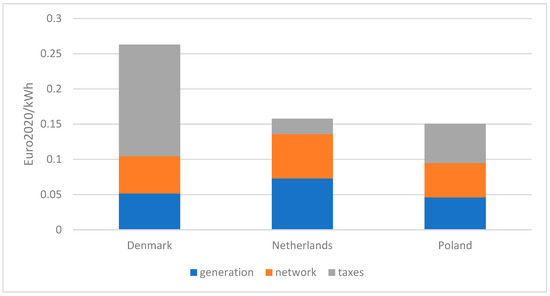
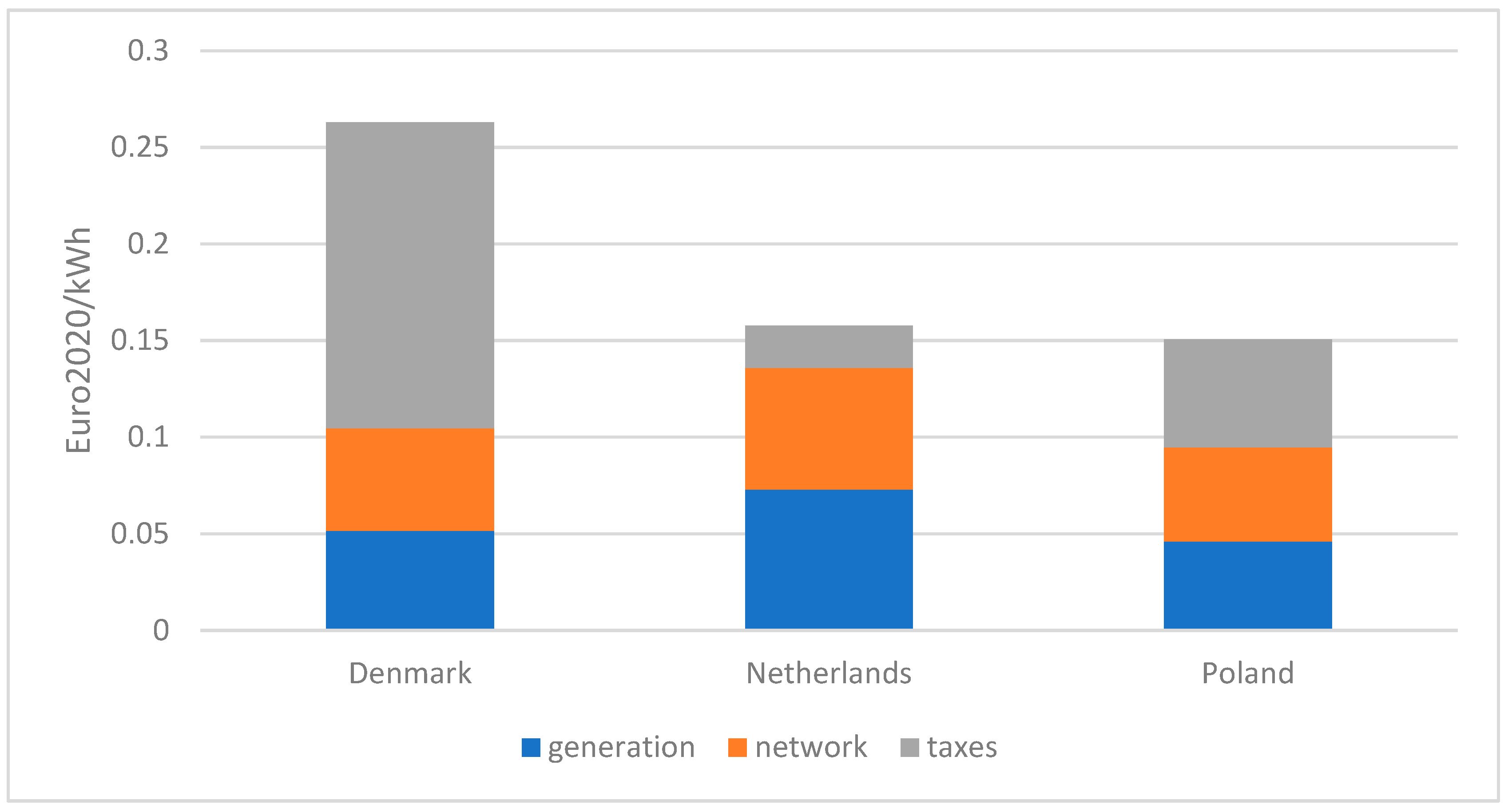

Disclaimer/Publisher’s Note: The statements, opinions and data contained in all publications are solely those of the individual author(s) and contributor(s) and not of MDPI and/or the editor(s). MDPI and/or the editor(s) disclaim responsibility for any injury to people or property resulting from any ideas, methods, instructions or products referred to in the content. |
© 2025 by the authors. Licensee MDPI, Basel, Switzerland. This article is an open access article distributed under the terms and conditions of the Creative Commons Attribution (CC BY) license.