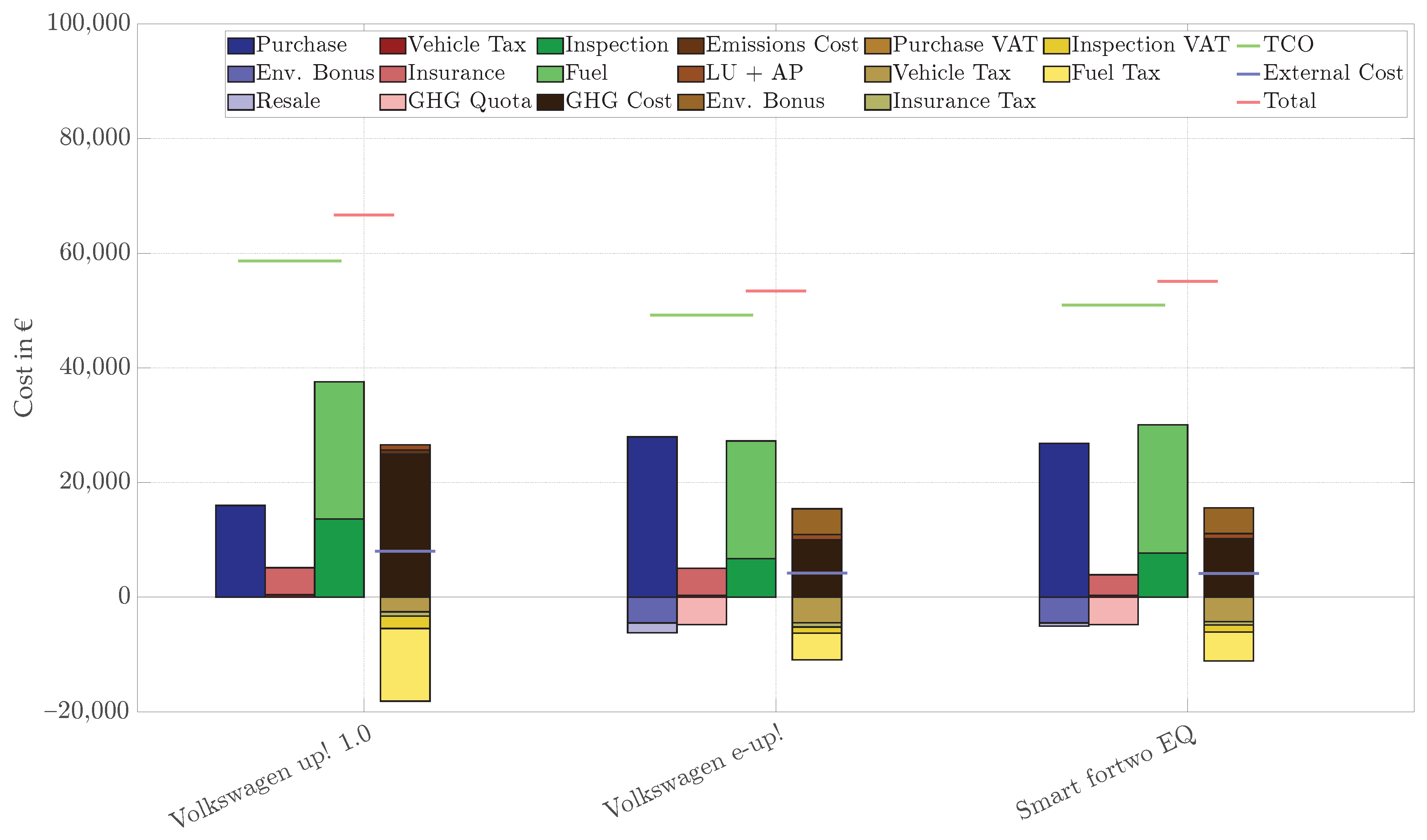
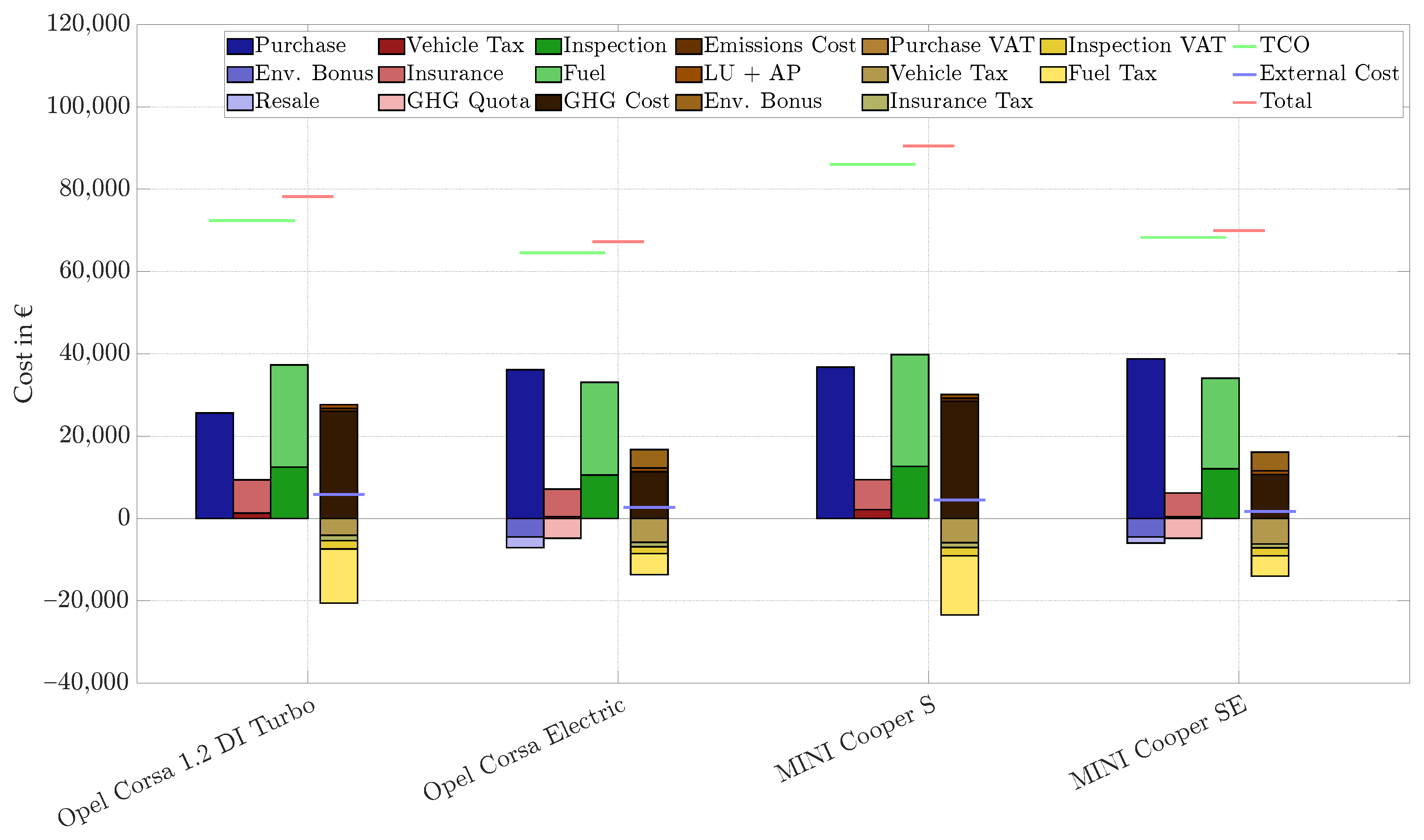
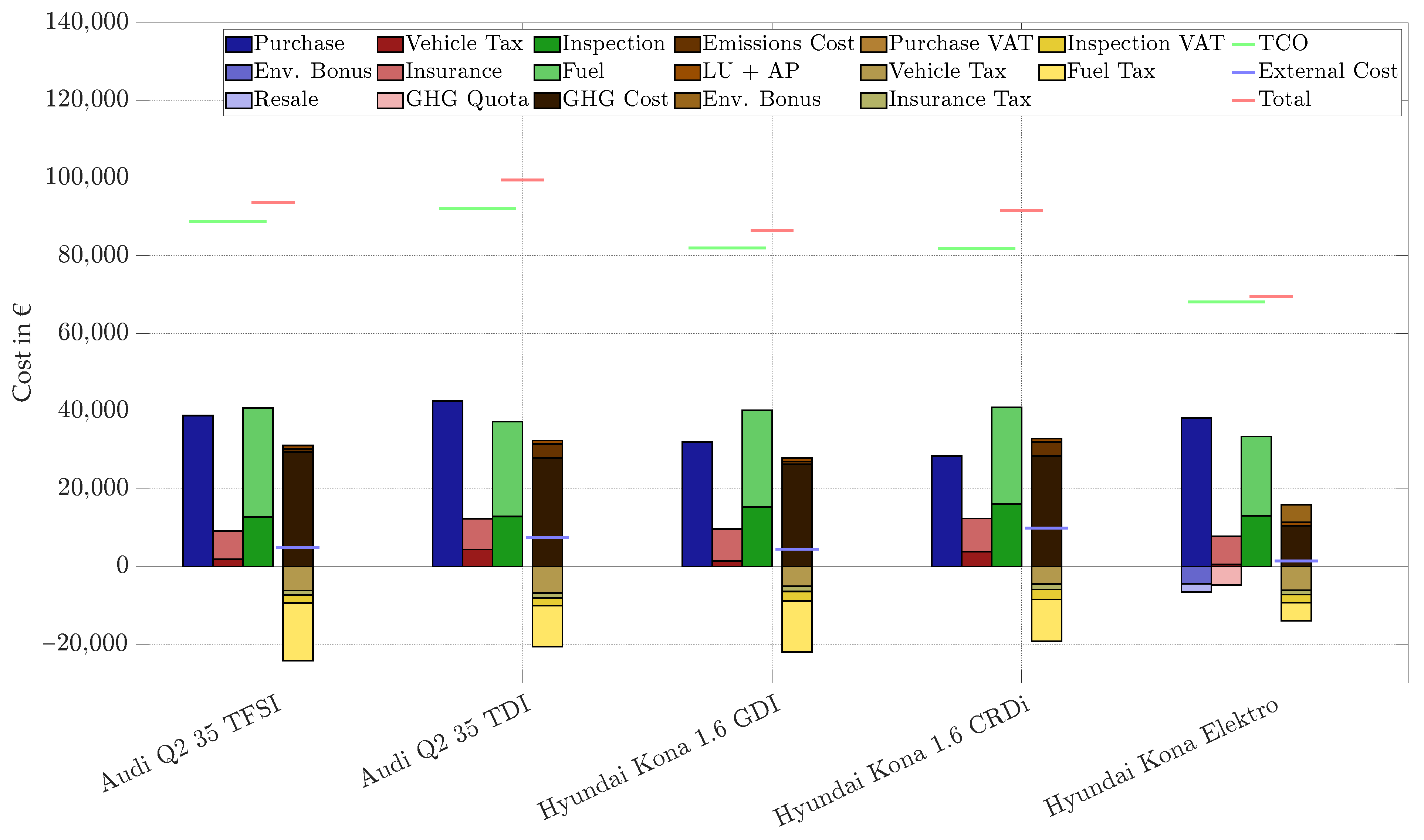
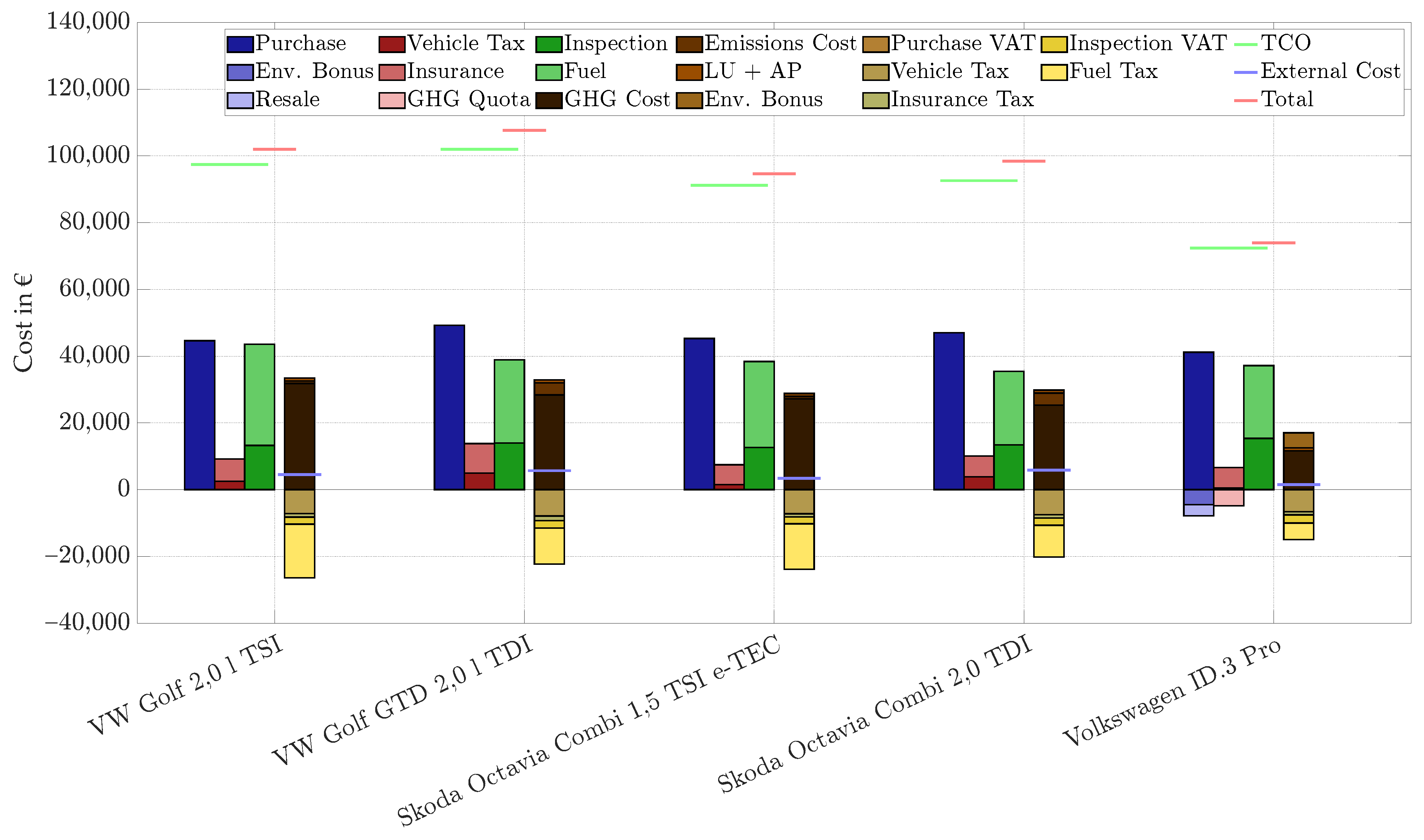
5.1. Discussion of the Results Obtained
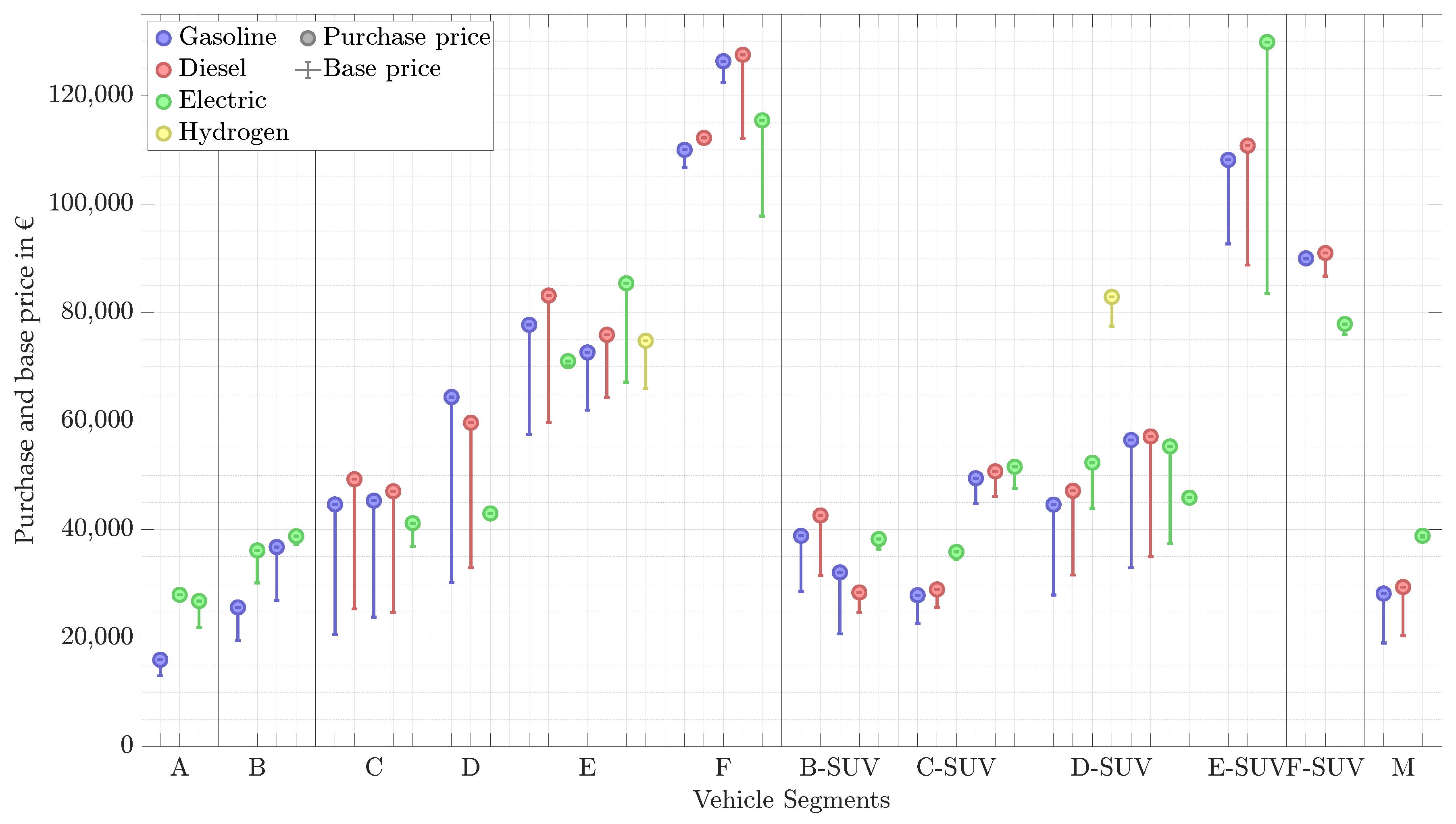
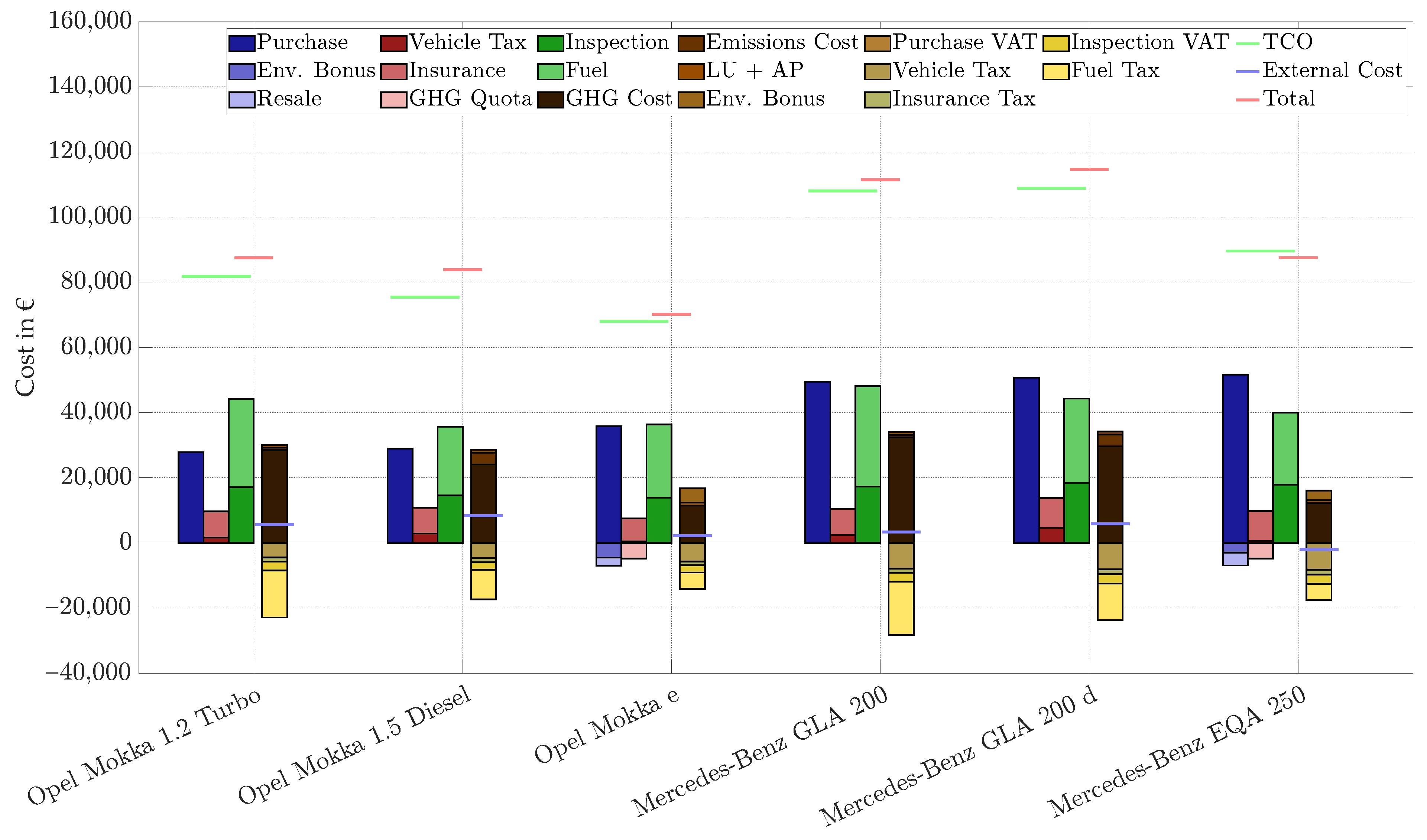
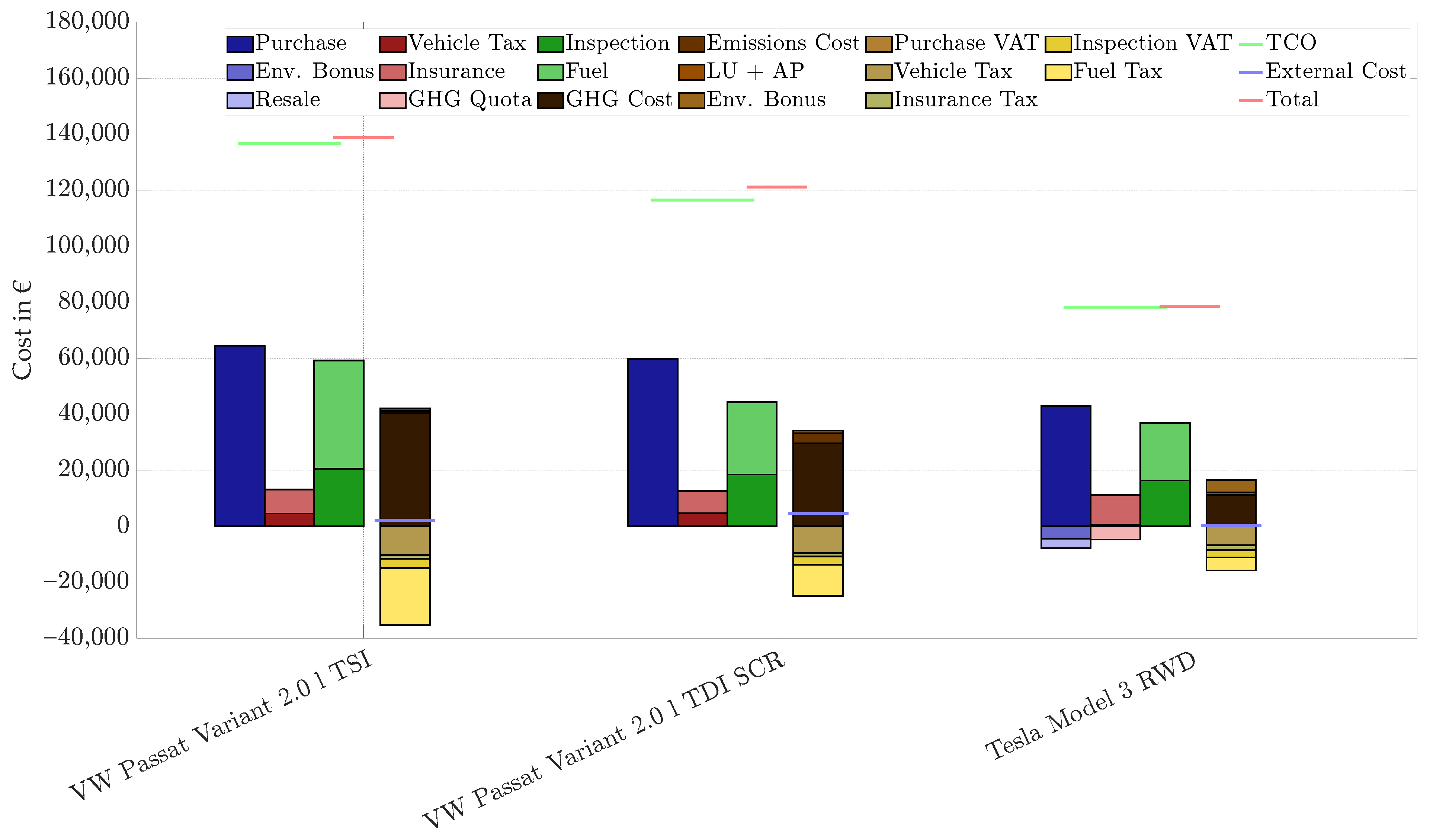
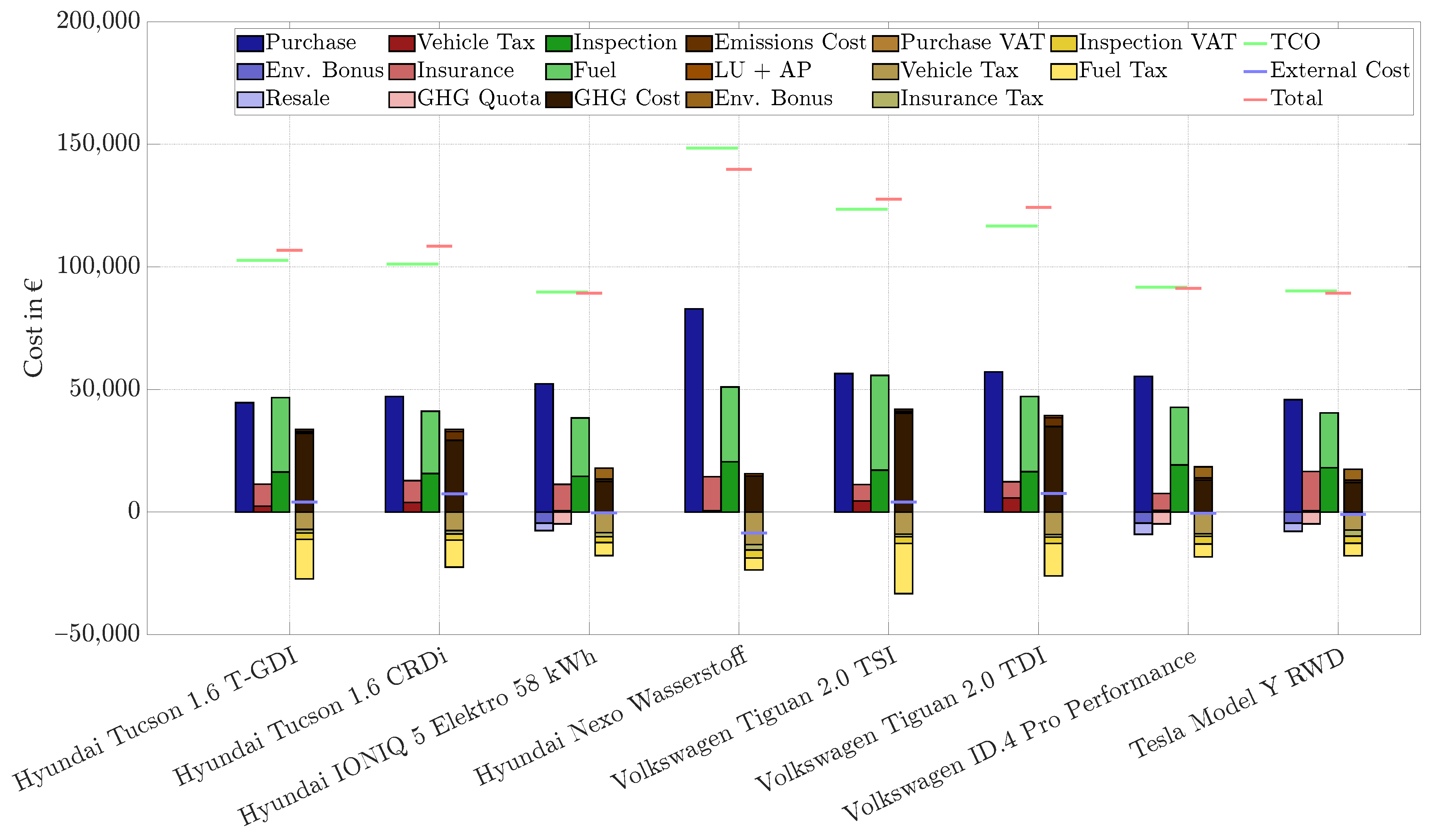
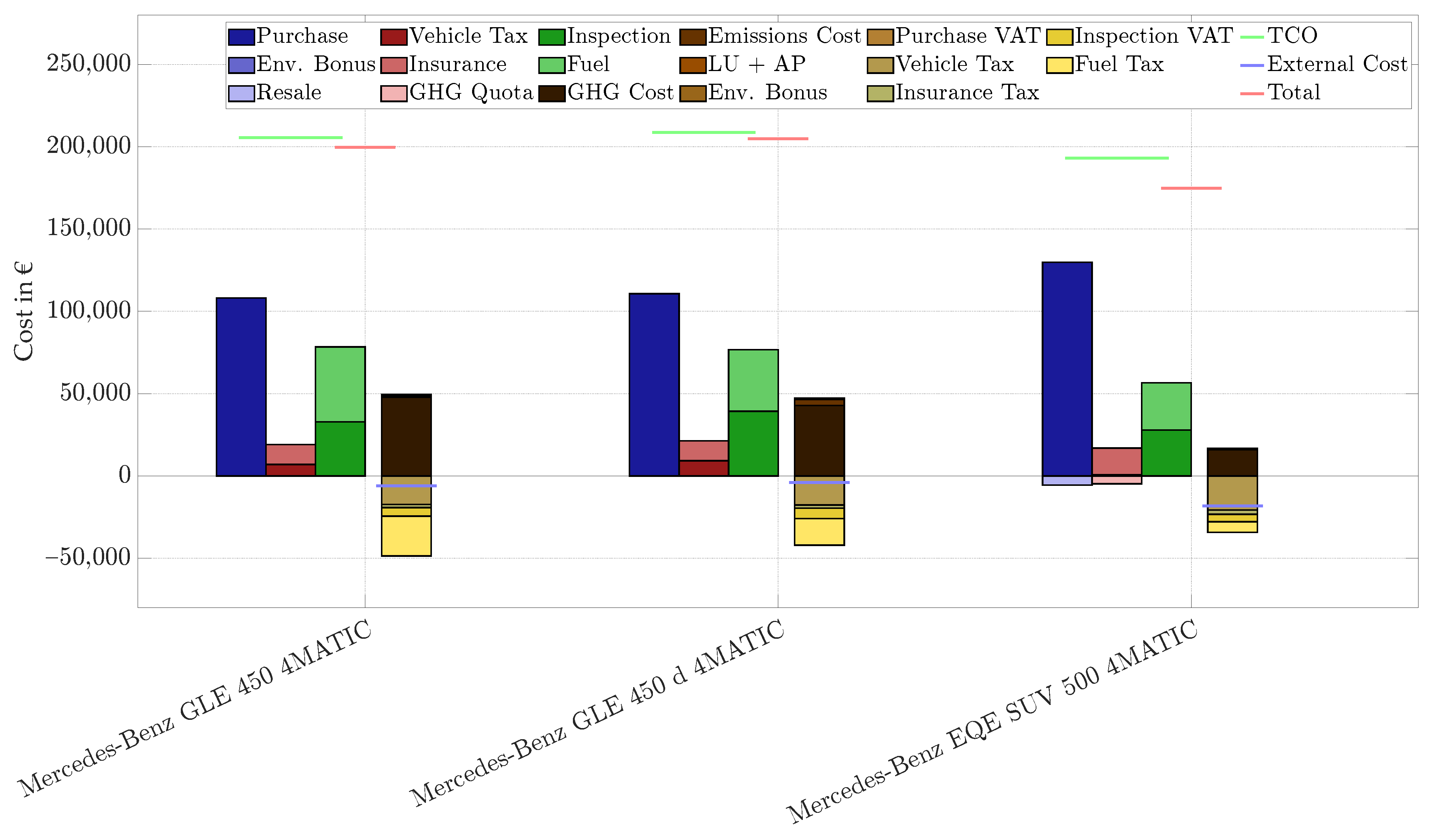
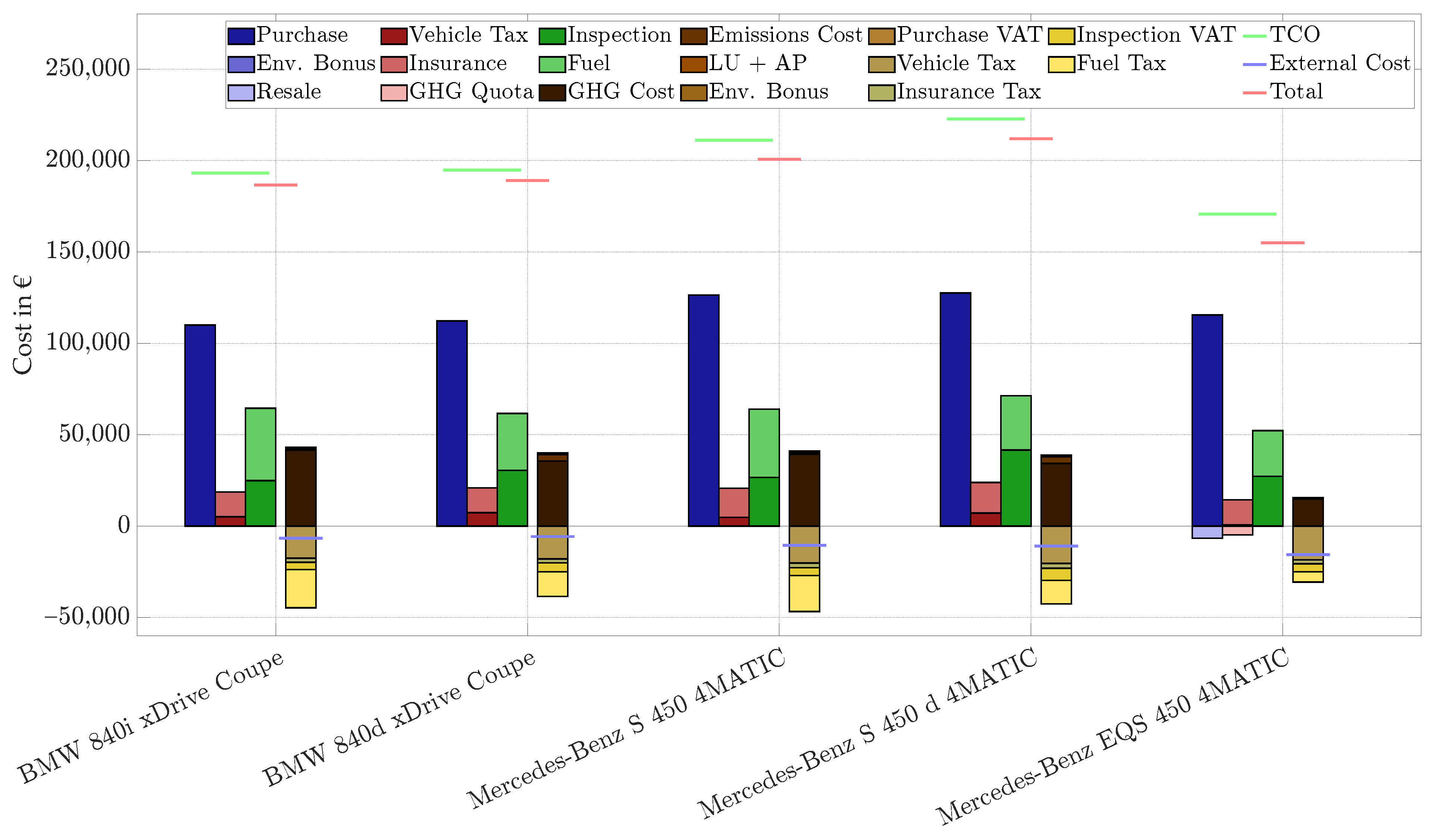
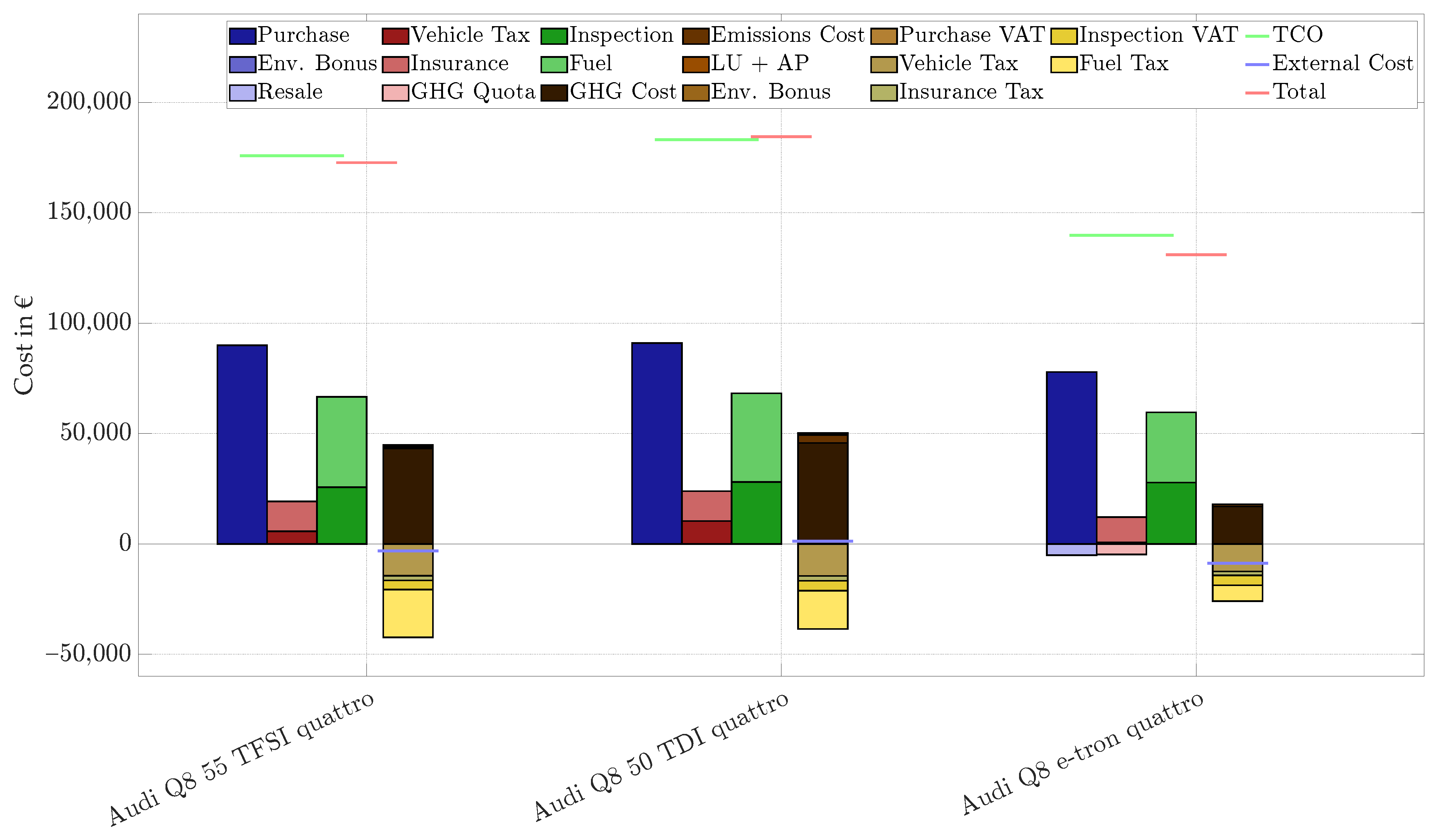
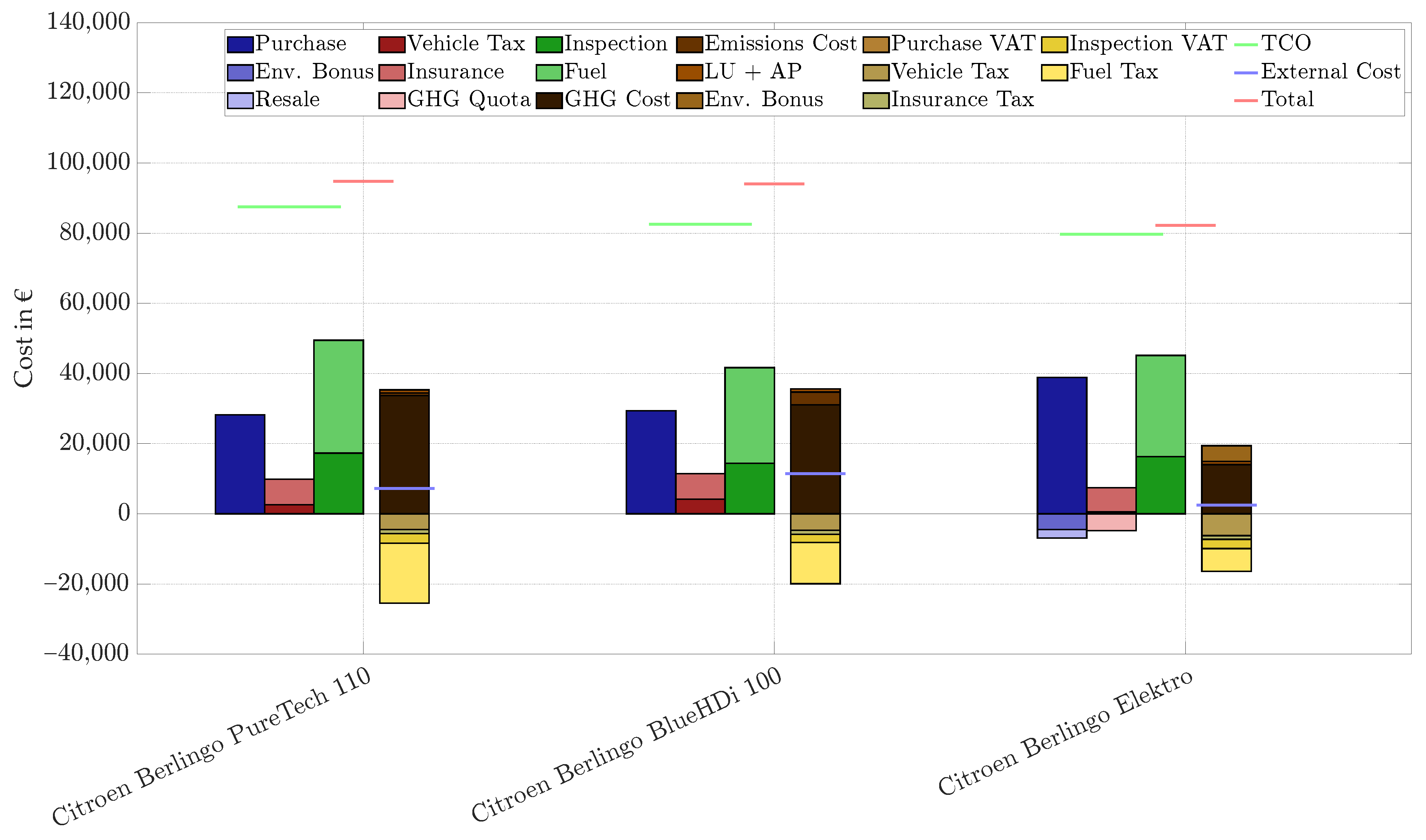
As shown in the results, the common conception that BEVs are higher in their purchase price compared to their ICEV counterparts is true for vehicles in the C segment and below. However, the environmental bonus often can reduce the price difference by a significant amount. This finding is surprising but can be easily explained by the fact that the minimum vehicle equipment for BEVs includes more features than the standard equipment for ICEVs. Since this paper compares similarly equipped vehicles, the effective price difference is lower for equivalent cars.
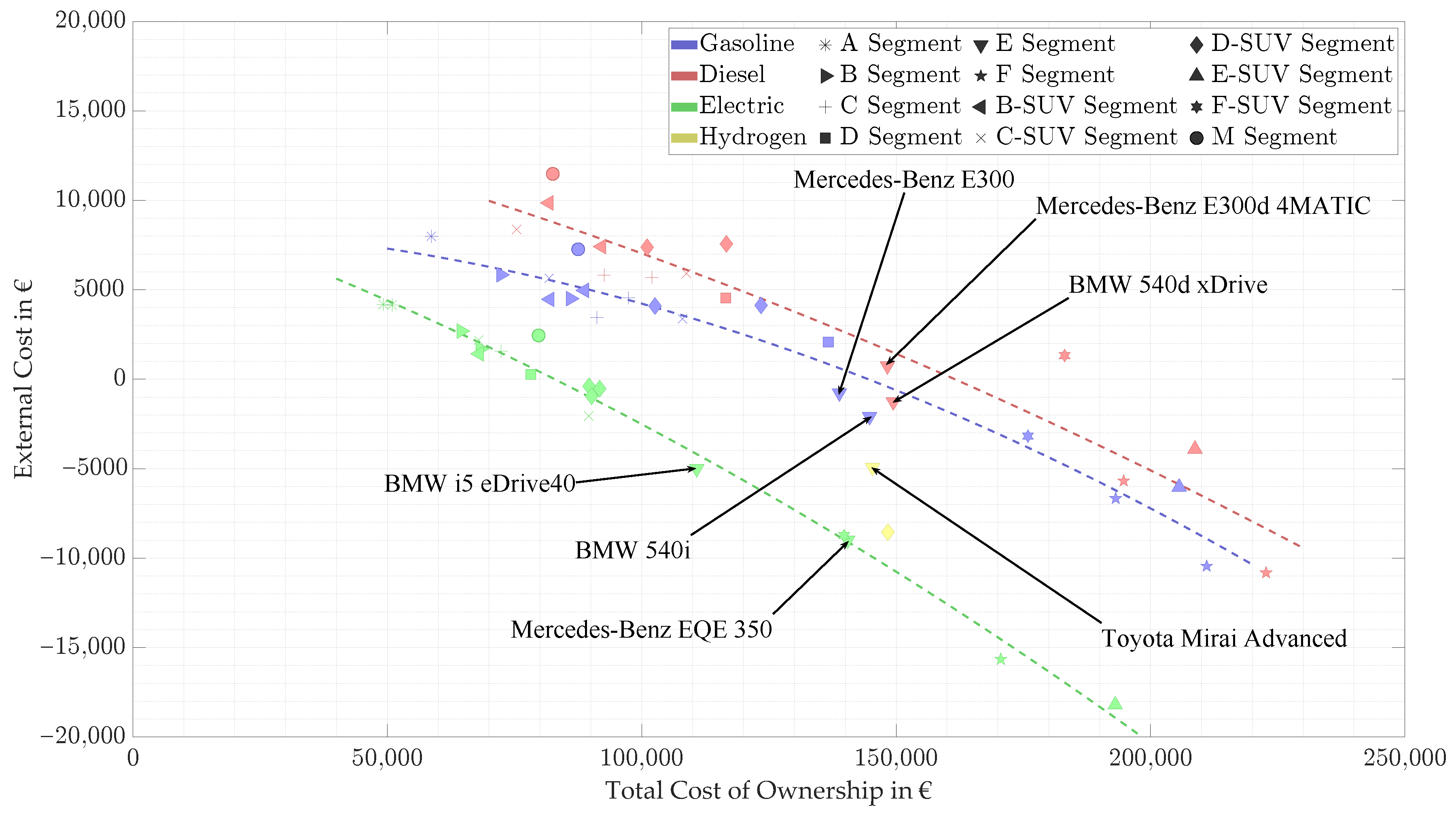
As expected, the total external cost is lowest for BEVs, mostly due to the reduction of GHG emissions. In comparison to diesel ICEVs, a significant reduction of other emissions is also observable. However, since BEVs generate lower overall tax revenue due to their lower TCO, this lead is partly reduced.
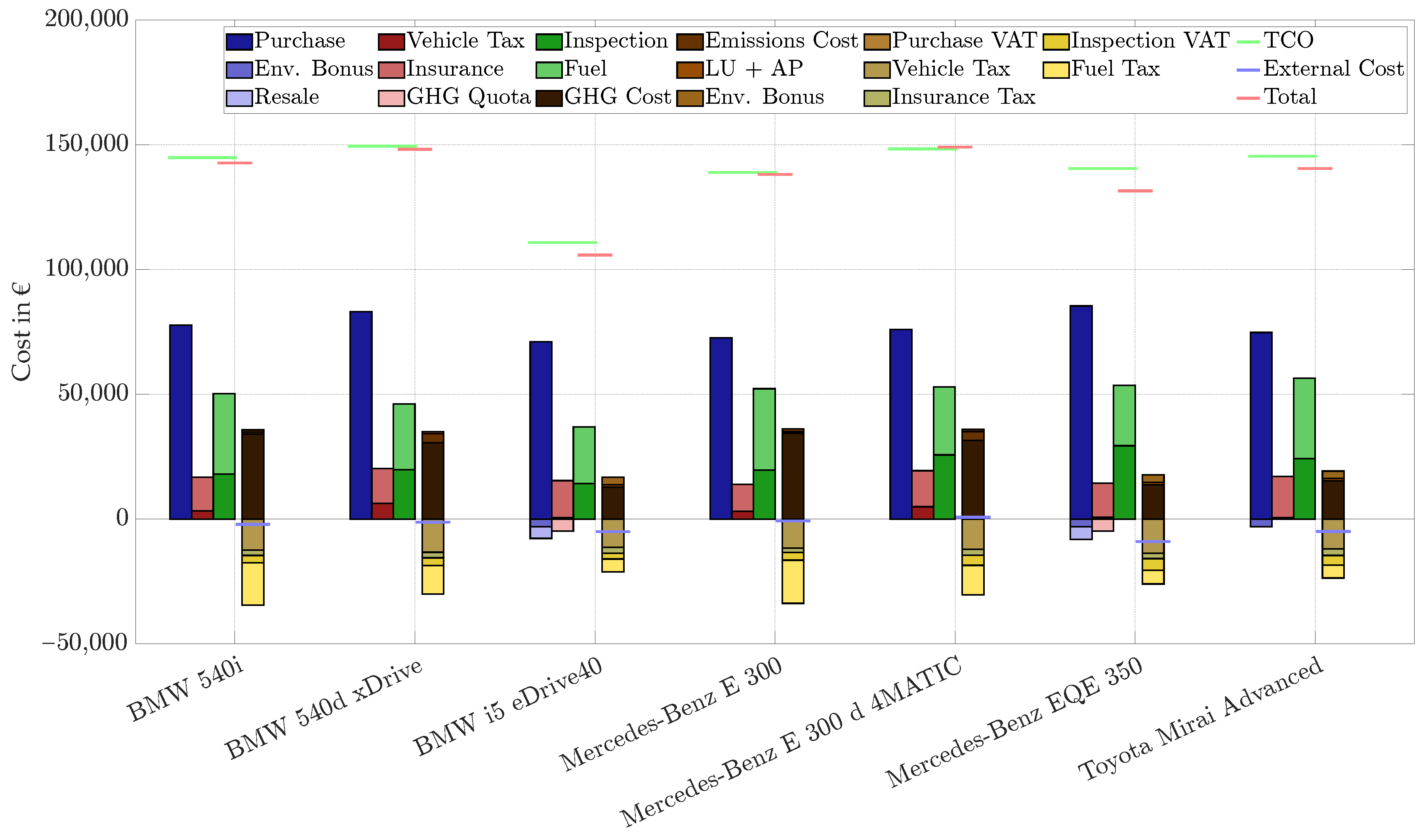
According to the results obtained within this study, all passenger vehicles cause significant external cost due to environmental damages and partly through governmental financial support. While the external cost through GHG emissions is by far the largest component, the second largest is air pollution for ICEVs and the Environmental Bonus for BEVs and FCEVs, respectively. Although the external costs are high, in many cases the generated tax revenue can exceed the environmental damages in terms of cost. Especially with vehicles within higher segments, the emissions rise slower than the vehicle costs, leading to lower overall external cost through higher tax revenue. For ICEVs, the fuel tax is the largest negative external cost component, while for the other vehicles, it is the VAT at purchase. In general, it can be said that the more expensive a vehicle is in TCO, the better it is for a society due to the lower external cost, since this theoretically leads to a redistribution of money from rich to poor. Finally, for external costs, it must be mentioned that external costs for congestion and accidents were neglected and that no vehicle would have net negative external cost (positive effect on society) if these were included. In Addition to that, tax revenue was fully calculated as negative external cost. However, while the vast majority of tax income in Germany is used for social purposes, security services, education and health services, a 100% efficiency in governmental spending is unlikely.
Another interesting finding is that different vehicle manufacturers have different pricing structures within their lineup. In some cases, such as BMW, BEVs appear to be comparable in purchase price to the equally equipped ICEVs, since the manufacturer partially forgoes the margin on optional equipment for electric vehicles. It is also possible that BMW’s BEVs are generally comparable in production cost since most of their vehicles use the same platform, regardless of the drive train. In addition, BMW manufactures components like the electric motors in-house. This leads to lower purchase prices. In other cases, for instance with Mercedes-Benz, BEVs are significantly higher in purchase price, leading to a higher TCO compared to gasoline ICEVs in the E segment. Compared to BMW, Mercedes-Benz uses different vehicle platforms for ICEVs and BEVs in higher vehicle segments and the production of major components such as the electric motors are outsourced to suppliers. This might partially explain the differences in purchase prices between the manufacturers. However, it is also possible that the manufacturers simply aim for different market positioning with their vehicles. In most cases, BEVs are priced higher than comparable ICEVs but at the same time low enough that the TCO is lower. Due to this, brand loyal consumers might be tempted to choose different drive trains depending on the manufacturer. When looking at the base prices of the vehicles under consideration, it can be seen that, in most cases, ICEVs are priced lowest in their respective segments. This can be explained by the differences in selectable vehicle equipment and drive power. Since BEVs are expected to be more expensive to produce, vehicle manufacturers likely offer an extensive base equipment to justify the higher purchase price. However, by offering the same base equipment as for the ICEV counterparts, the base prices for BEVs could be further reduced and consumers would not have to pay for equipment that they normally would not order. The large differences in base price and actual purchase price with the desired additional equipment might not be obvious to many consumers since manufacturers’ pricing information only states the vehicles’ base prices, in most cases. This leads to the perception that BEVs are generally more expensive. All of this leads to a high amount of responsibility for vehicle manufacturers when building a pricing structure. Nevertheless, it can be expected that BEVs will be chosen more often in the future due to their lower TCO.
Due to the classification of the specific vehicles into their vehicle segments, it is also interesting to see that for instance, the vehicles in the E-SUV segment have a higher TCO compared to the formally higher classified F-SUV. This leads to inconsistencies in the comparison of different vehicle segments. However, the full vehicle comparison is not affected by this.
When comparing gasoline and diesel ICEVs, it becomes clear that diesel vehicles are becoming less attractive due to their higher TCO. In most cases, the external cost of diesel vehicles is also higher, mainly due to the higher external cost through air pollution.
Finally, it has to be mentioned once more that this study only includes two FCEV models. This is due to limited availability of FCEVs in the German market. Therefore, the small sample size limits the generalizability of FCEV findings.
5.3. Limitations of This Study
The aim of this investigation was to generate a meaningful comparison between different vehicle segments and drive train types. Since the number of vehicles taken into consideration was larger than most comparable studies, some simplifications and assumptions needed to be made. In addition, problems occurred with data collection and processing.
The first simplification relating to TCO calculation is the focus solely on a single vehicle owner for the whole life cycle of the considered vehicles. In reality, it is more common to resell a new vehicle after a couple of years or buy a used vehicle, respectively. However, taking this into consideration would make the calculations unnecessarily more complex and was therefore neglected. Since the purchase of a used vehicle typically involves a transfer of ownership between two individuals who utilize the vehicle sequentially, the transaction cost constitutes revenue for the seller and an investment for the buyer. Within the TCO calculation for the vehicle, however, the transaction cost does not appear. Further, this study provides a normative rather than descriptive analysis. A rational behavior regarding the decision-making process of the consumer is assumed, while emotional influences to decision-making like range anxiety, status, design or other personal preferences were neglected.
In Germany, a significant percentage of new vehicles is not bought but financed, leased or used as company cars. Although these might be reasonable options for owners, this would further complicate the calculations performed within this study. Changing interest rates or sales statistics of an individual car dealership can greatly influence the outcome and are not representative. Thus, this investigation only considered full vehicle purchase. Vehicle depreciation is often used to calculate a residual value of a vehicle at any given time. Since this study performs a TCO investigation, the residual value at the end-of-life of each vehicle is zero, with the exception of the battery pack. Changes in technology can influence the purchase prices dramatically. For instance, new battery chemistries can lead to lower manufacturing costs of BEVs and increasingly strict exhaust gas regulations will certainly cause higher development and manufacturing costs for ICEVs. However, since this investigation assumes a vehicle purchase in 2023, new technologies do not affect the outcomes of this study.
Within this investigation, the external cost due to air pollution was generalized for the different vehicle types. In reality, each vehicle has its own pollution values but the individual measurement and interpretation would exceed the scope of this paper. In the German registration documents, a noise value is given for all vehicles, but the value is measured under unusual circumstances, being full-power acceleration. Within the environmental damages, no further investigations were performed or considered. Although there is severe environmental destruction due to raw material production, only the GHG emissions can reliably be used for this study.
The lifetime of the vehicles under consideration is estimated to be similar, with an assumption of 16 years. At this time, it is not yet foreseeable whether the majority of BEVs will last this long without major repairs within the drive train. However, there are already occasional reports of BEVs with extraordinarily high mileage and studies that suggest a very long cycle life of Li-Ion batteries, as described in
Section 3.2.1. In Addition, ICEVs often need repairs on major drive train components before they are finally decommissioned. This was also neglected due to uncertainty. For FCEVs, it is unclear whether important components like the fuel cell stack will work properly without any repairs until the vehicles’ EoL. Given these arguments, it is reasonable to conduct the calculations as described. Nevertheless, the time horizon of vehicle usage may not correspond to consumers’ actual decision-making horizon.
Another limitation of this study is the uncertainty of vehicles’ usage profiles. While the calculations are based on the vehicles’ fuel and energy consumptions as well as emissions determined with the WLTP, real-world values can differ largely depending on e.g., the type of driver, location of utilization etc. For instance, the impact of one-time costs as well as reoccurring costs is smaller with increased yearly mileage. Similarly, external costs of ICEVs are increased with total distance traveled, since the emission cost is the largest external cost component. While this is also the case with electrified vehicles, the quantitative effect is not as pronounced.
Within the external cost calculations, loss of potential working time due to congestion and charging time was not considered, since a reliable data acquisition is too complex and too many factors influence this value. Furthermore, the use of company profits e.g., for social purposes or for unethical investments was not further investigated.
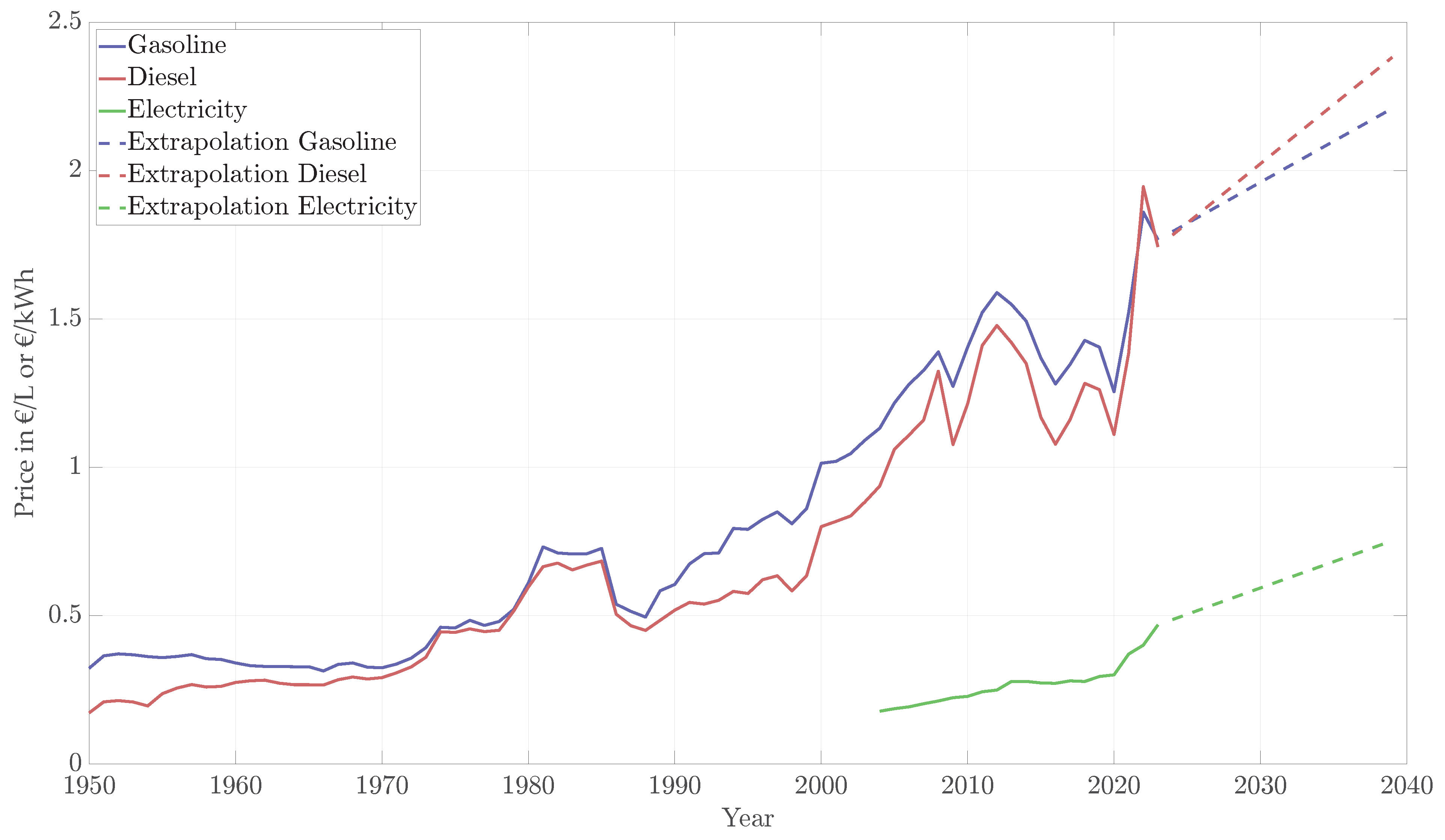
Vehicle purchase prices, purchase bonuses, etc. are under constant change at this time. In addition, fuel and electricity prices are volatile and greatly influence the results of this investigation. Although the prices are modeled in respect to their development over the past decades and include future predictions in taxation, it is uncertain how they will change over the time horizon in question. On average, the fuel and electricity costs are responsible for 26.5% of the vehicles’ TCO, ranging from 13.3% to 44.0%. An error of 20% within the fuel and energy price prediction would therefore only lead to an average TCO increase of 5.3%. Since fuel and electricity tax is dependent on the respective price, external costs are also impacted by any changes. However, the taxes are only a fraction of the consumer prices. As we have seen in the past, unusual price increases generally affect all energy sources in a similar order of magnitude.
Since this study was conducted for Germany, not all findings might be applicable for other countries. Nevertheless, most European countries have comparable tax structures as well as subsidies. Given that the purchase prices do not differ extensively within Europe and in most countries the fuel and electricity prices are similar in relation to each other, the key findings should also be useful for readers from other countries. Generally, the methodology used within this paper is applicable for all countries worldwide, given that the underlying data for the calculations is available.
As previously described, the vehicles were assumed to be purchased as new at full price. Therefore, the second hand market was not considered, although many consumers in Germany buy used vehicles with significant discounts. However, since considering used vehicles would exclude the initial loss of value, no complete TCO and external cost calculations would be possible. This leads to the limitation that, when buying used vehicles, purchase prices and governmental subsidies change for the consumers and the results from this study could potentially change. At this point in time it is unclear how residual value differs between ICEVs, FCEVs and BEVs after different time periods of usage.
Another limitation of this study is the fact that infrastructure investments were not considered. While all vehicle users generally profit from investments in new roads, bridges, parking lots etc., only users of electrified vehicles profit from investments in charging infrastructure. Since it is difficult to find out to which extent charging infrastructure, which is mostly owned by private companies, is subsidized by the government, these investments were outside of this study’s considerations.




 ,
,