


Abstract
Direct agricultural use of digestate from food waste is hindered by its high phytotoxicity, and the addition of common auxiliary materials during composting increases the project cost. In this study, mature compost (MC) was used to replace part of mushroom residue as auxiliary materials for controlled experiments at a pilot-scale horizontal double-layer mechanical composting device. The results showed that the MC addition heated up more rapidly than the control group (NC), peaking at 72 °C on day 5. The moisture content was reduced from 47.17% to 25.36%, which was lower than the final value of 28.48% in the NC. The final humic acid (HA) content in the MC group (60.88 g/kg) was higher than that in the NC (44.82 g/kg). The seed germination index (GI) for both groups exceeded 70%, meeting the national standard. The MC group achieved a final GI of 119.37%, which was significantly higher than that of the NC (81.29%). The phylum Firmicutes became the dominant group in the MC group during the thermophilic phase, demonstrating strong thermotolerance and a high capacity for degrading recalcitrant organic compounds such as cellulose. At the genus level, Bacillus demonstrated a relatively high abundance during the thermophilic phase. These findings imply that the MC addition improves the composting property, enhances the degree of humification, and shortens the composting time, providing technical support for the improvement of aerobic composting of food waste digestate, thus contributing to more sustainable waste management by promoting a circular economy and reducing reliance on external inputs.
1. Introduction
The annual production of food waste exceeds 120 million tons in China with the rapid development of urbanization and rising living standards [1]. Food waste contains substantial amounts of organic matter and nutrients (e.g., starch, sugar and proteins), which can be converted into valuable resources through appropriate treatment to mitigate environmental pollution and promote resource recovery [2]. Anaerobic digestion (AD) accounts for 74.3% of all food waste recycling in China. This process converts food waste into fertilizer and methane [3,4]. As a renewable energy source, methane can meet the daily energy needs of some residents and reduce dependence on fossil fuels [4]. However, the production of digestate per ton of food waste during the AD process reaches about 0.20–0.47 tons, and the disposal and utilization of this substantial byproduct present a significant challenge [5]. Although digestate possesses potential as a soil amendment, it contains substantial amounts of phytotoxic substances due to the moderate temperature conditions and inherent metabolic mechanisms of anaerobic digestion, thereby precluding its direct application [6]. Meanwhile, food waste often undergoes incomplete degradation due to the limited hydraulic retention time in AD, resulting in minimal formation of humus [7].
Aerobic composting (AC) is a sustainable option for treating digestate. It can produce nutrient-rich and pathogen-free organic fertilizers, while also reducing storage requirements and completing nutrient cycles [8]. AC facilitates the conversion of organic matter in the digestate into humic substances (HS) and available nutrients through a series of biochemical metabolic processes [9]. The process of humification is crucial for enhancing the maturity of compost, and compost rich -in humus is beneficial for plant growth and soil health [10].
Direct composting is frequently not the optimal strategy for food waste digestate. For instance, food waste can generate undesirable emissions such as ammonia (NH3) and nitrous oxide (N2O) during composting due to its high moisture content and ammonium nitrogen (NH4+-N) level, resulting in secondary environmental pollution [11]. The addition of auxiliary materials can improve the properties of food waste digestate by enhancing aeration, adjusting moisture content, optimizing the carbon-to-nitrogen (C/N) ratio, and improving structural porosity [12]. For instance, garden waste, which is primarily composed of lignin and exhibits low moisture content along with a high C/N ratio, is incorporated into composting systems with high nitrogen content [13]. Mushroom residue is also commonly used as conditioners in composting to adjust physicochemical properties. Mushroom residue effectively reduces moisture content and increases nitrate nitrogen availability, while sawdust serves to absorb excess moisture and provides a lignocellulosic carbon source, thereby effectively regulating the initial C/N ratio [14]. The conversion of lignin intermediates into humic substances through degradation is essential for producing high-quality compost [15].
In practical applications, the procurement of these auxiliary materials often increases transportation costs, and poses a potential risk of supply chain instability [16]. The adsorptive characteristics of auxiliary materials also potentially decrease nutrient levels in the final compost [17]. Thus, partial substitution with mature compost (MC) presents a sustainable alternative that can mitigate these challenges. MC is a stable product derived from the aerobic composting of food waste, which is characterized by low moisture content, high porosity, and abundant microorganisms [18]. Utilizing MC, a recycled product of the composting process itself, aligns with circular economy principles through reducing the need for virgin bulking agents and increasing the reuse of internal resources in the system. MC is not merely a conditioner but also functions as a microbial inoculant and a source of stable organic matter [19]. Previous studies have also shown that adding MC to green waste compost increased total nitrogen content and seed germination index [20], enhanced contents of dissolved organic matter (DOM) and humic substances (HS). HS are widely regarded as key indicators for assessing compost stability and maturity [21]. The HS are converted from humification of degradation intermediates via multiple pathways, thereby minimizing carbon loss and suppressing greenhouse gas emissions [22]. Meanwhile, the addition of MC enhanced microbial community diversity during both the mesophilic and thermophilic phases of composting, thereby effectively promoting the biodegradation of organic matter [23,24]. The addition of MC also improves pile ventilation, stabilizes volatile organic compounds, and reduces odor emissions [25].
Nowadays, the specific mechanisms by which the MC promotes humus formation during composting is still poorly understood [26]. Most of these previous experiments have been carried out only under laboratory conditions [27]. Divergence often exists between the outcomes of small-scale experiments and practical engineering applications of composting, as the expansion of the composting scale introduces greater complexity of process control [28]. This pilot-scale study provides a more reliable assessment of how MC addition influences the humification process. In addition, conventional static composting processes are associated with several drawbacks, including extended fermentation duration and limited humification efficiency [29]. Incompletely composted materials may contain harmful substances, e.g., pathogens, parasitic ova, and acidic compounds, resulting in a final product of inadequate quality for plant growth [30]. To address these limitations, this study employed a horizontal double-layer mechanical composting reactor in place of the traditional windrow composting system, thereby reducing spatial requirements and shortening the composting time [31].
This study hypothesizes that partially replacing conventional conditioners with MC will enhance the humification process, improve compost maturity, and shorten the composting duration, while maintaining or improving the quality of the final product. Unlike most previous laboratory-scale studies, this research was conducted in a pilot-scale mechanical composting reactor, providing more reliable engineering insights. The objectives of this study are to: (1) investigate the changes in physicochemical property of food waste digestate during aerobic composting; (2) explore the effect of adding MC as a substitute for auxiliary materials on the humification degree of aerobic compost; (3) study the effects of MC addition on the microbial community structure during aerobic composting through high-throughput sequencing method. The findings provide insights into the effects of MC addition on the degree of humification during food waste digestate aerobic composting.
2. Materials and Methods
2.1. Materials and Experimental Device
Food waste digestate was obtained from a food waste treatment plant in Shanghai, employing a wet, mesophilic, and single-phase anaerobic digestion process. Mushroom residue and sawdust were selected as auxiliary materials for composting. Mushroom residue was acquired from the Qingpu Lianke Composting Plant and originated from the waste generated after the cultivation of edible mushrooms. Sawdust was procured from Zhenjiang Green Forest Furniture Technology Co., Ltd. (Zhenjiang, China), and primarily consists of biomass components such as hemicellulose, cellulose, and lignin. Effective Microorganisms (EM) bacterial agent was prepared from Bacillus, photosynthetic bacteria, yeast, and lactic acid bacteria with a mass ratio of 2:1:1:1 [32]. Total viable bacterial count of the bacterial agent was 2.0 × 10¹⁰ CFU/g. Key physicochemical properties of the raw materials are summarized in Table 1.
Table 1.
Basic characteristics of aerobic composting materials.
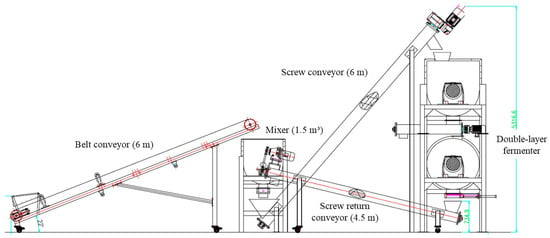
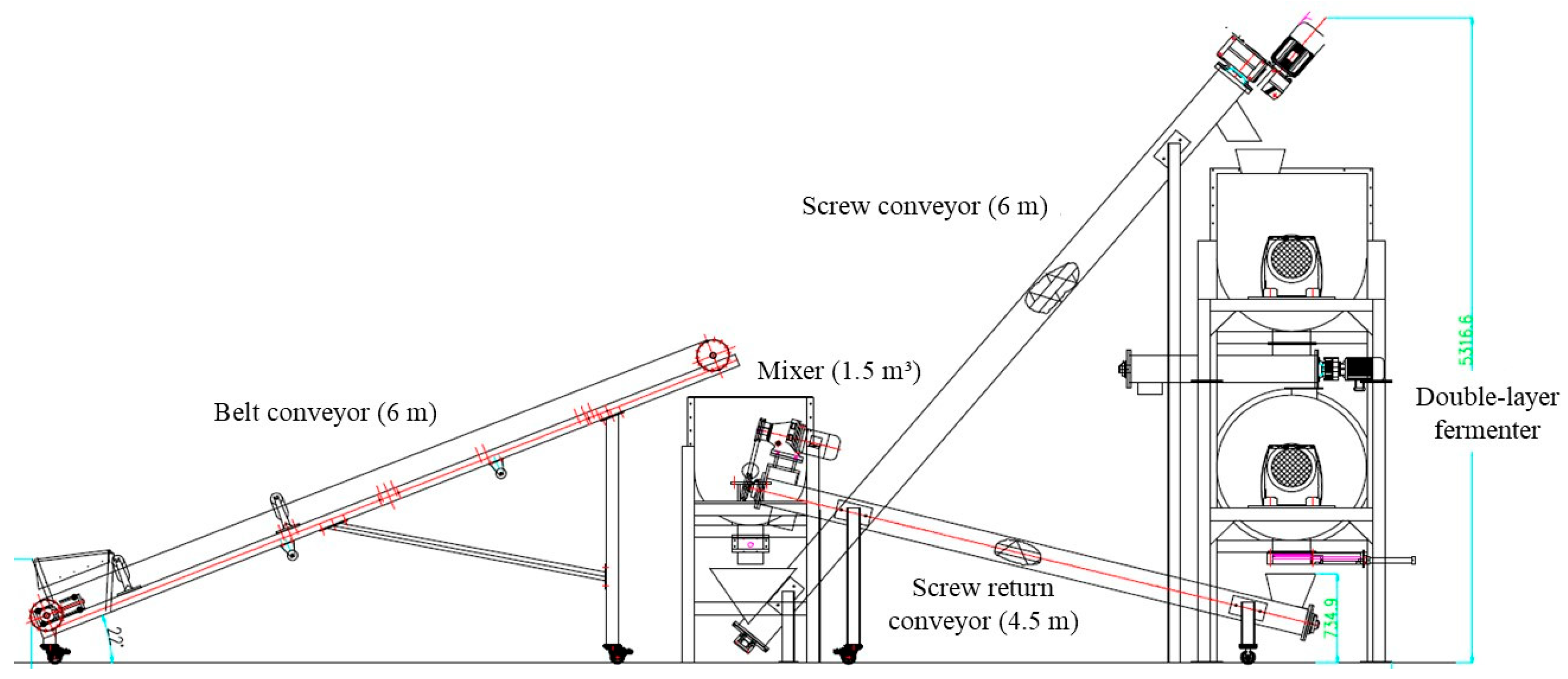
A horizontal double-layer mechanical composting reactor was designed for this study, as illustrated in Figure 1. The reactor comprises two horizontal fermentation silos, each with a design capacity of 3 m3. It is equipped with aeration, heating, and digestate recirculation systems, with a total installed power of approximately 30 kW and an energy consumption of less than 70 kWh per ton of material processed. A water replenishment system was incorporated to keep appropriate moisture for the growth of aerobic microorganisms. A gas flow meter was installed to determine the aeration rate. The aeration and mixing systems were automated using a time-based control system.
Figure 1.
Schematic diagram of pilot aerobic composting device.
2.2. Experimental Design
This pilot-scale experiment was conducted at a composting plant in Qingpu District, Shanghai, China. Two experimental groups, NC and MC, were set up to compare and analyze the effects of different auxiliary materials on compost maturity. The NC feedstock consisted of digestate (250 kg), mushroom residue (500 kg), and sawdust (100 kg), with 0.4 kg of EM bacterial agent added. Differently, the MC group was formulated by replacing half of the mushroom residue with MC obtained from the NC. The optimal aeration rate was determined to be 36 m3/h through preliminary screening, and the mixing-aeration frequency was set at 5 min/12 h. Samples were collected from the fermentation system at different composting stages, freeze-dried, sieved, and stored at −20 °C for subsequent analysis.
2.3. Physicochemical Properties Analysis
Composting temperature was monitored daily. Samples collected at different stages were freeze-dried, ground, and sieved for subsequent analysis. All other physicochemical properties were determined according to the specific methods, instruments, and standards summarized in Table 2. Germination index (GI) was measured according to the germination rate and root length of each treatment and control group using the following equation:
where the samples were replaced by ultrapure water in the control group.
GI = [germination rate of treatment × root length of treatment (mm)]/[germination rate of control × root length of control (mm)] × 100,
2.4. Determination of Organic Matter Humification During the Composting
The HS and fulvic acid (FA) of the samples were extracted through mixing 1.0 g of dry sample and 20 mL of sodium hydroxide-sodium pyrophosphate solution [33]. The contents of HS and FA were measured using a TOC Analyzer (Table 2), and then the content of HA was obtained by subtracting the FA content from the HS content.
Table 2.
Summary of analytical methods and parameters for compost samples.
Similarly, the DOM of the samples were further extracted through mixing 1.0 g of dry sample with 20 mL of ultrapure water at a ratio of 1:20 (g:mL) [40]. Three-dimensional excitation-emission matrix (3D-EEM) fluorescence spectra and UV-visible spectra were obtained to characterize the DOM. The specific instruments and measurement parameters are detailed in Table 2. The measurement of 3D-EEM was performed with excitation and emission slit widths set at 5 nm and a scanning speed of 2400 nm/min. The fluorescence regions were divided and the fluorescence region integration (FRI) indices were calculated according to the method described by Chen et al. [41]. The regional boundaries and their dominant fluorophore assignments are summarized in Table S1. The humification index (HIX) was calculated from the fluorescence data as the ratio of the integrated emission intensity in the 435–480 nm region to that in the 300–345 nm region, at Ex 254 nm [42]. Additionally, the ratio of absorbance at 250 nm to that at 365 nm (E250/E365) was calculated from the UV-visible spectra.
2.5. Microbial Community Analysis
Compost samples were collected for microbial analysis at the mesophilic, thermophilic, cooling, and mature phases, respectively, which were days 1, 8, 16, and 33 for NC and days 1, 8, 15, and 32 for MC group. The samples were stored at −20 °C. Metagenomic sequencing of the samples was performed on the MajorBio platform using primers 338F (-ACTCCTACGGGAGGCAGCAG-) and 806R (-GGACTACHVGGGTWTCTAAT-) to amplify the V3–V4 hypervariable region of the 16S rRNA gene, in order to elucidate the microbial community structure and diversity variations during aerobic composting [39]. Pearson and redundancy analysis (RDA) were conducted to investigate the relationships between environmental factors and the microbial community.
2.6. Data Analysis
Data were processed using Microsoft Excel 2020, values are expressed as mean ± standard deviation for indicators measured in 2–3 replicates. Data visualization was performed using Origin 2021 software. One-way analysis of variance (ANOVA) was conducted on the humic substance content data using IBM SPSS 19.0 Statistics, to evaluate the effect of mature compost addition on the humification degree. Three-dimensional fluorescence data were processed using FL solution 4.2. Microbial community correlation analysis was conducted via the one-stop scientific research service platform of Shanghai Majorbio Biotechnology Co., Ltd. (Shanghai, China) (https://www.majorbio.com/).
3. Results and Discussion
3.1. Changes in Physical and Chemical Properties
3.1.1. Physiochemical Properties
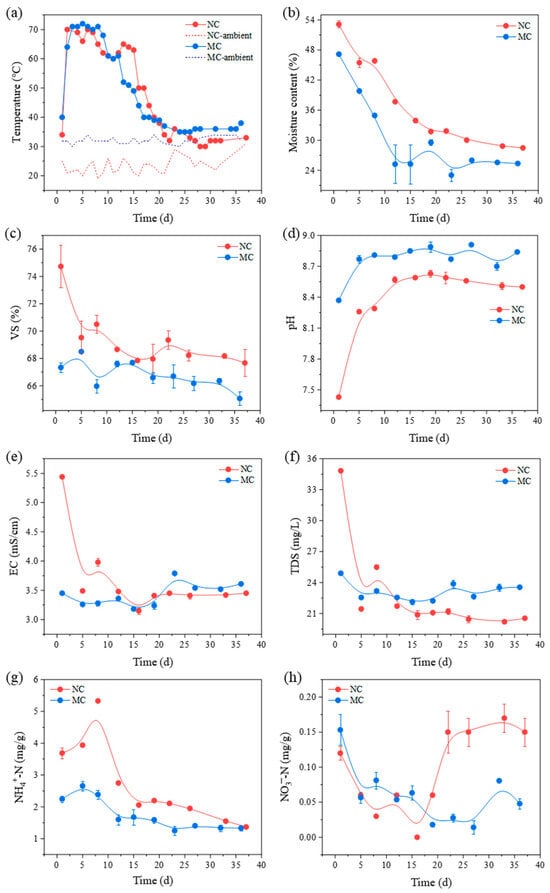
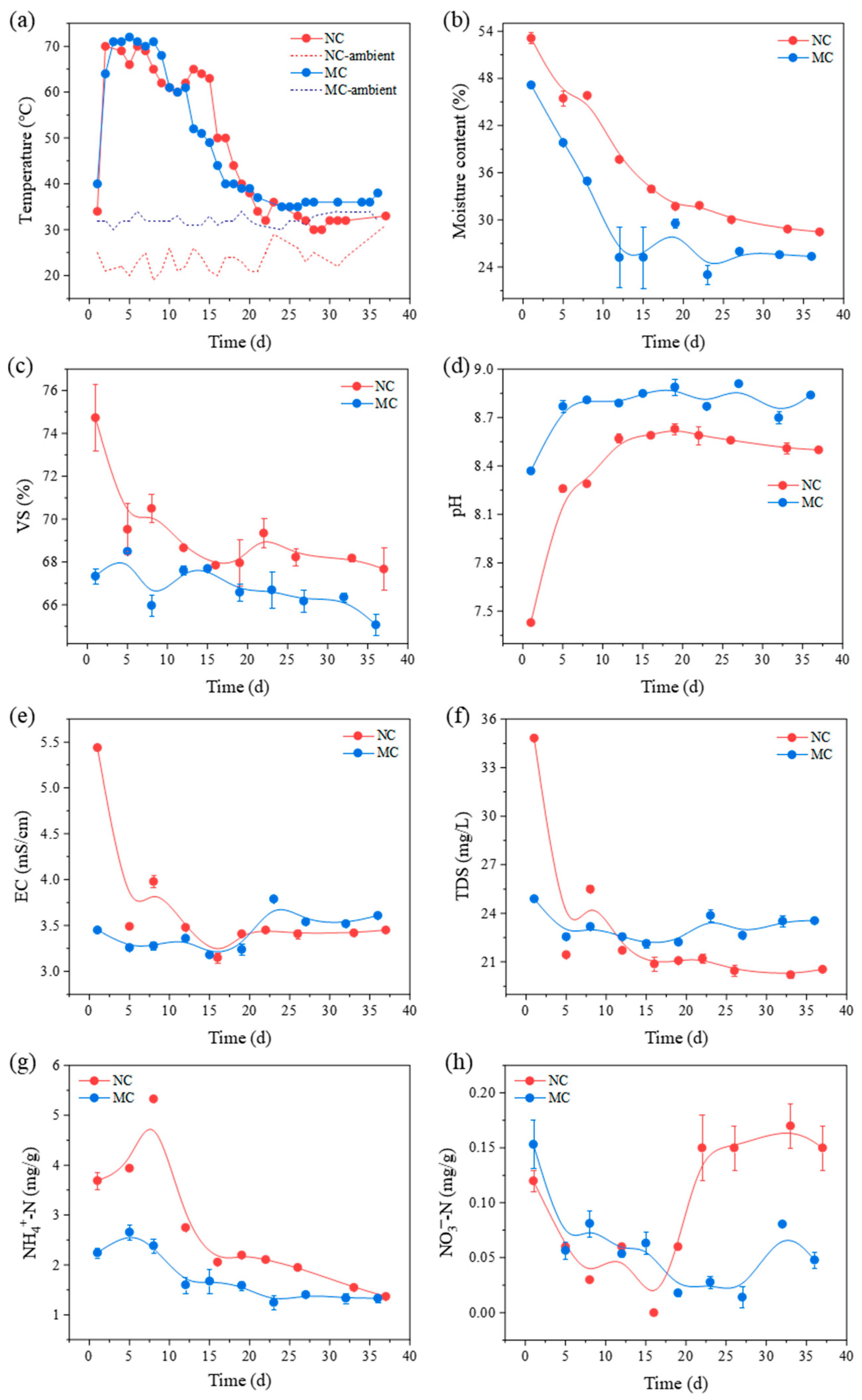
Temperature is a key indicator reflecting changes in physicochemical properties and microbial community succession during composting [43]. As shown in Figure 2a, the MC group exhibited a faster heating rate and reached a higher peak temperature in comparison with the NC. The MC group recorded a maximum temperature of 72 °C at day 5, surpassing that observed in the NC (70 °C), suggesting that the addition of MC possibly improved microbial activity of aerobic compost [44] and then promoted the enhancement of peak temperature. The phase during which the compost temperature was greater than or equal to 60 °C lasted for 11 days in the MC group. This thermophilic phase helps to kill pathogens and parasites, improving the safety of compost products [45]. However, the duration of high temperature in the MC group was shorter than that in the NC (13 days), possibly because the addition of MC accelerated the decomposition of the digestate, thereby ending the thermophilic phase earlier than the NC [46]. Additionally, the MC contained less labile organic matter than the raw mixing of digestate and mushroom residue, causing the shorter duration of high temperature for the MC group comparison to the NC.
Figure 2.
Changes in temperature (a), moisture content (b), volatile solids (c), pH (d), EC (e), total dissolved solids (f), NH4+-N (g), and NO3−-N (h) during the composting process.
As shown in Figure 2b, the moisture content of both the groups exhibited a considerably declining trend during the thermophilic phase, due to the evaporation induced by high temperature. The moisture contents of the NC and MC groups were 28.48% and 25.36% at the end of the composting, indicating that the addition of MC contributed to a lower moisture content in the final compost product. Meanwhile, the fluctuation observed in the MC group at day 19 may be attributed to the rapid degradation of organic matter [47].
The NC exhibited a higherinitial VS content of 74.74% than the MC group (67.35%, Figure 2c). Then, the VS in both the groups trended to decrease with the composting time, especially for NC, and stabilize after 25 days, implying complete biodegradation of readily degradable organics during the composting. The final VS content in the MC group (65.08%) was lower than that in the NC (67.68%), indicating that the MC group gained more stabilized compost product due to the addition of MC, likely by introducing abundant mature microbial inoculant and optimizing the microbial community structure [48].
The pH value plays a crucial role in microbial metabolism and the processes of organic matter decomposition and transformation [49]. As illustrated in Figure 2d, both of the NC and MC groups exhibited a rising trend with the composting. The onset of the thermophilic phase promoted the conversion of small-molecular organic acids such as formic and acetic acids, contributing to the initial rise in pH [50]. Owing to the incorporation of matured compost, the MC group demonstrated a higher initial pH and consistently maintained higher values than the NC throughout the process. The final pH values stabilized at 8.84 and 8.50 in the MC and NC, respectively.
Electrical conductivity (EC) serves as a key indicator of the salt load in compost, as excessively high EC levels may induce phytotoxicity through osmotic stress. As shown Figure 2e,f, the NC exhibited a higher initial EC and total dissolved solids (TDS) value than the MC group, along with a more pronounced decline, due to the rapid microbial decomposition of substantial amounts of readily degradable organic matter, which generates organic acids [51]. In contrast, the MC group, containing matured compost from the NC, exhibited relatively stable EC values throughout the process. The final EC values of both groups were approximately 3.50 mS/cm, indicating that the salt concentration and associated potential phytotoxicity were within the safe threshold (<4.0 mS/cm) [52].
3.1.2. Nutrient Content
As illustrated in Figure 2g, the NH4+-N content in both groups initially increased and then decreased. The MC group demonstrated a lower initial NH4+-N concentration compared to the NC, due to the presence of composted digestate. The accumulation of NH4+-N was attributed to rapid mineralization and ammonification of Nitrogen-containing organic matter, while the reduction of NH4+-N was contributed to the volatilization as NH3 and the nitrification to NO3−-N [53]. NO3−-N contents in the NC gradually increased as composting progressed (Figure 2h), possibly attributed to lower temperature (below 40 °C) that favored the proliferation of nitrifying bacteria and thereby promoted nitrification [54]. In contrast, NO3−-N contents of the MC group exhibited a gradual declining trend. On one hand, the high-temperature and oxygen-deficient environment during the thermophilic phase inhibited nitrification, while part of the nitrate nitrogen was lost in the form of N2 and N2O through denitrification [18]. On the other hand, the MC group originally contained lower levels of NH4+-N, resulting in the limited nitrate availability.
3.2. Organic Matter Humification and Maturity
3.2.1. Organic Matter Humification
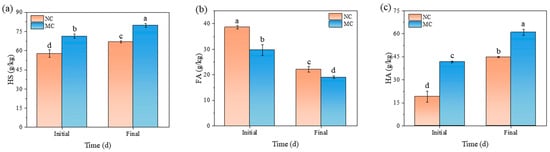
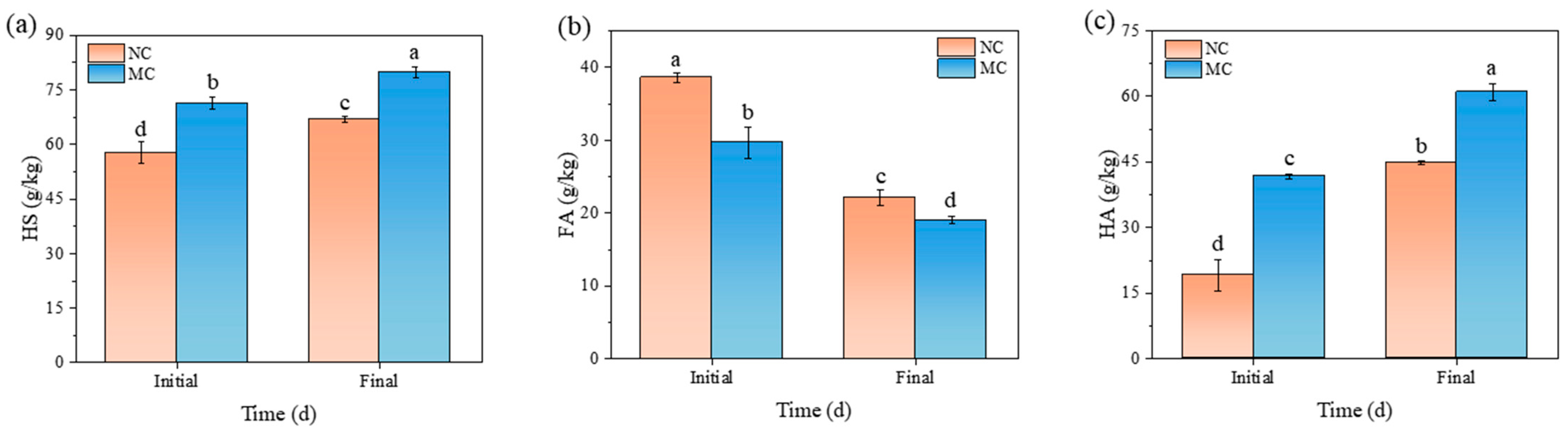
As shown in Figure 3a–c, the addition of MC exerted a highly significant effect on the contents of HA, FA, and HS (p < 0.01). The MC group exhibited higher final contents of HS, HA, and FA than the NC upon the completion of composting. Specifically, the final HA contents in the MC group reached 60.88 g/kg, respectively, surpassing those in the NC (44.82 g/k). These results demonstrate that the addition of MC promotes the accumulation of HA in the composting of food waste digestate. This effect is attributed to the fact that the MC itself contains stable humic acids, polyphenols, and quinones, which facilitate the integration of newly formed FA through adsorption or chemical cross-linking, thereby accelerating its polymerization into HA [55].
Figure 3.
Comparison of humic substances (a), fulvic acid (b), and humic acid (c) between NC and MC groups at the initial and final days. Different letters above bars indicate significant differences among groups (ANOVA, p < 0.01).
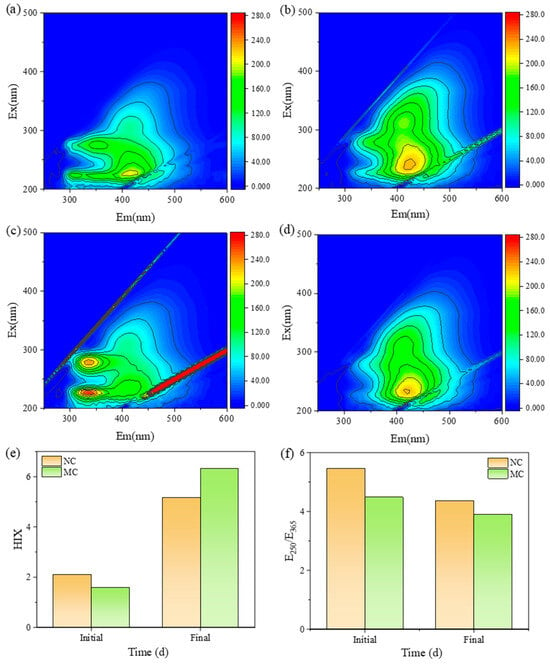
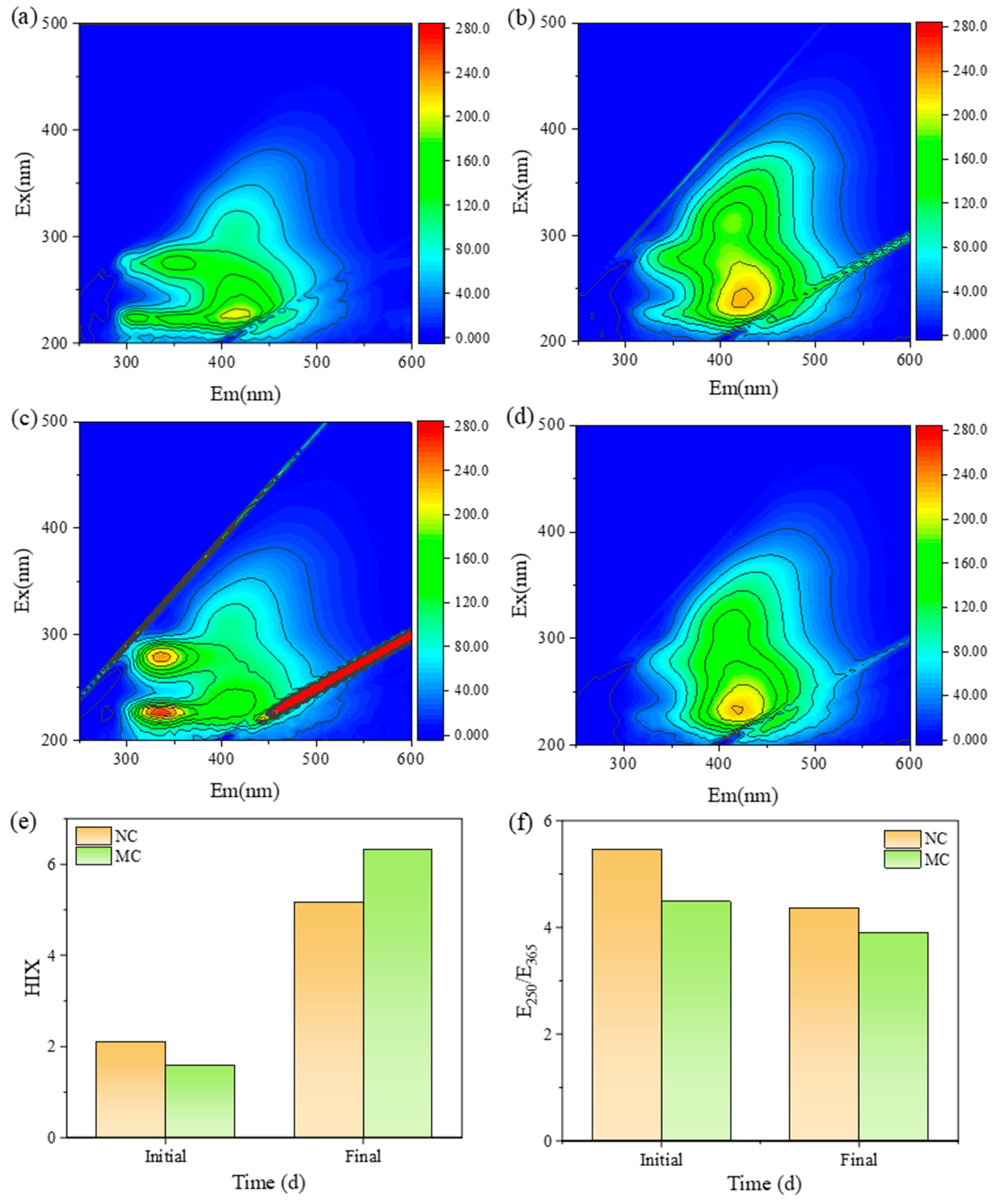
Figure 4a–d presents the 3D-EEM results of DOM samples collected at the beginning and conclusion of the composting process. As composting progressed, humic precursors such as FA and aromatic proteins gradually decreased and were converted into HS. The result further implied that the addition of MC appeared to enhance process stability and optimize the compositional structure of the compost, resulting in higher HS content than the NC [56].
Figure 4.
Three-dimensional excitation-emission matrix (3D-EEM) spectra of NC on day 1 (a) and day 37 (b) and MC group on day 1 (c) and day 36 (d) during aerobic composting process, and the comparison of HIX (e) and E250/E365 (f) at the initial and final days.
HS is primarily composed of FA-like (Region III) and HA-like (Region V) substances. The combined FRI index for the two regions was ultimately higher in the MC group (67.79) than in the NC (64.29), indicating substantial decomposition of readily degradable organic matter from the initial compost and subsequent formation of HS [57]. Meanwhile, the intensity of tyrosine-like proteins (Region I), tryptophan-like proteins (Region II), and soluble microbial by-products (Region IV) in the MC group decreased as composting progressed, possibly attributed to microbial reuse of soluble degradation products [56].
The HIX a key indicator of compost maturation increases as the degree of humification [54]. HIX is influenced not only by microbial activity and community composition but also by the intrinsic properties of the composting materials [34]. The higher HIX value indicates a higher degree of humification [58]. As shown in Figure 4e, HIX increased in both the groups compared to initial levels, with final values of 5.16 and 6.31, respectively, indicating the formation of HS as the composting [59]. The initial lower HIX in the MC group can likely be attributed to the dilution of humic-like substances by the incorporation of mature compost. As depicted in Figure 4f, the E250/E365 of both the groups gradually decreased throughout the composting process. E250/E365 is negatively correlated with the molecular weight, aromaticity, and condensation degree of organic molecules, where lower values correspond to a higher degree of humification and larger molecular sizes. The reduction of E250/E365 further confirmed a progressive increase in both the molecular weight of the organic matter and its degree of humification during the composting process.
3.2.2. Compost Maturity
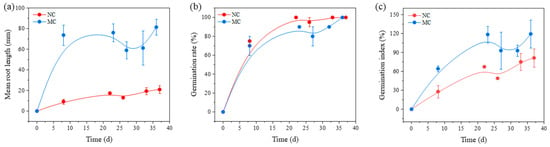
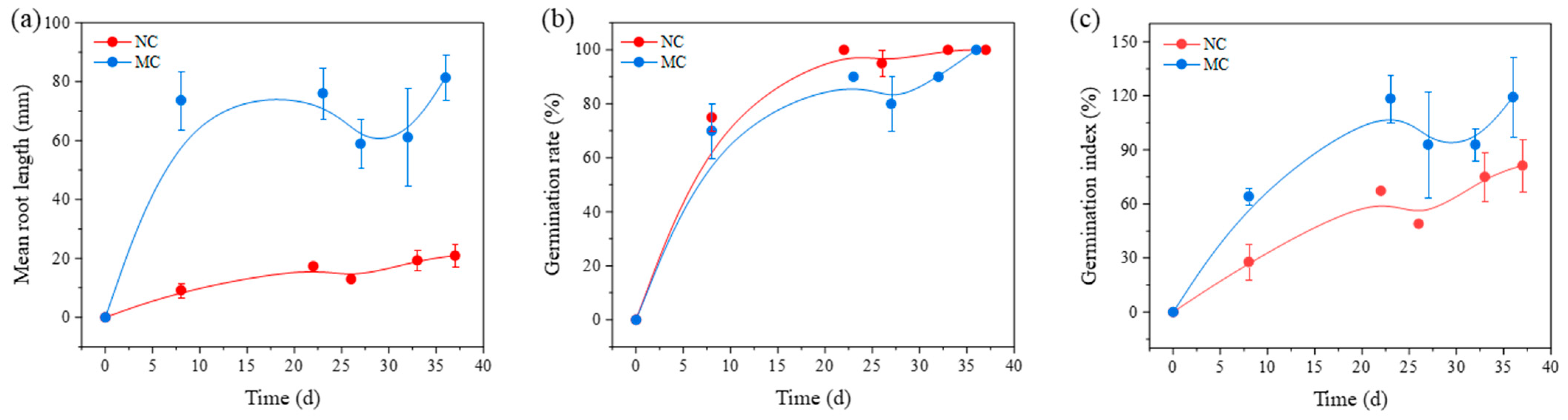
The GI is the direct and effective method to measure the maturity of compost [60]. Figure 5c showed that the GI of both groups increased progressively throughout the composting process, implying a reduction in phytotoxicity and an increase in nutrient availability. The result was attributed to the biodegradation of harmful compounds and the formation of humic substances during the composting process [45]. The final GI value of the MC group reached 119.37%, which was higher than that of the NC (81.29%). This indicates that the compost with MC addition not only achieved complete maturity and was free of phytotoxicity. The MC may be enriched with plant growth-stimulating substances, such as humic acids, thereby promoting seed germination and seedling growth [61]. The final GI values exceeded 70% for both of the groups, confirming that the compost met maturity standards for use as organic fertilizer in China (NY/T 525-2021) [62]. Although the final value of the NC met the applicable standards for Chinese agricultural use, it required more time to reach a stable GI of over 70%. The NC achieved only 75.08% at day 33, while the MC group reached 96.36% at day 12, meeting the standard 22 days earlier. This finding further demonstrates that the addition of mature compost not only promotes plant growth but also shortens the composting time, enhancing process efficiency.
Figure 5.
Changes in mean root length (a), germination rate (b), germination index (c) during the composting process.
3.3. Microbial Community Composition
3.3.1. Diversity of Microbial Communities
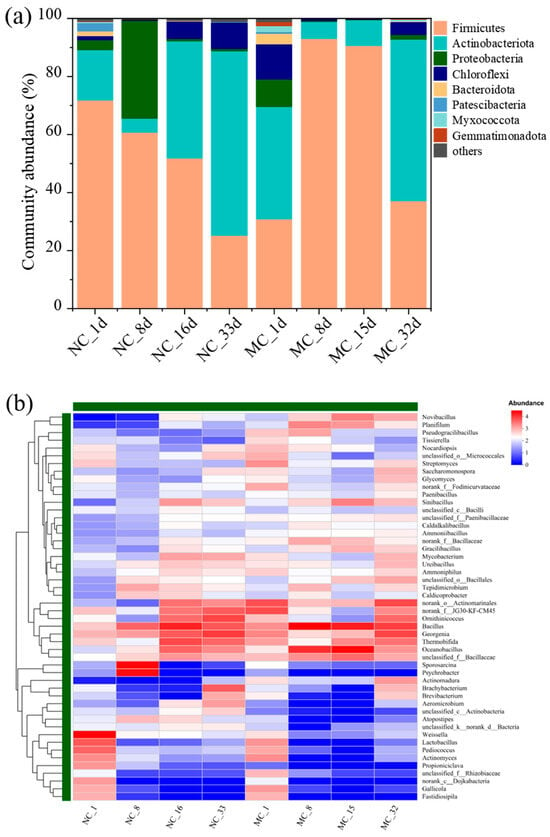
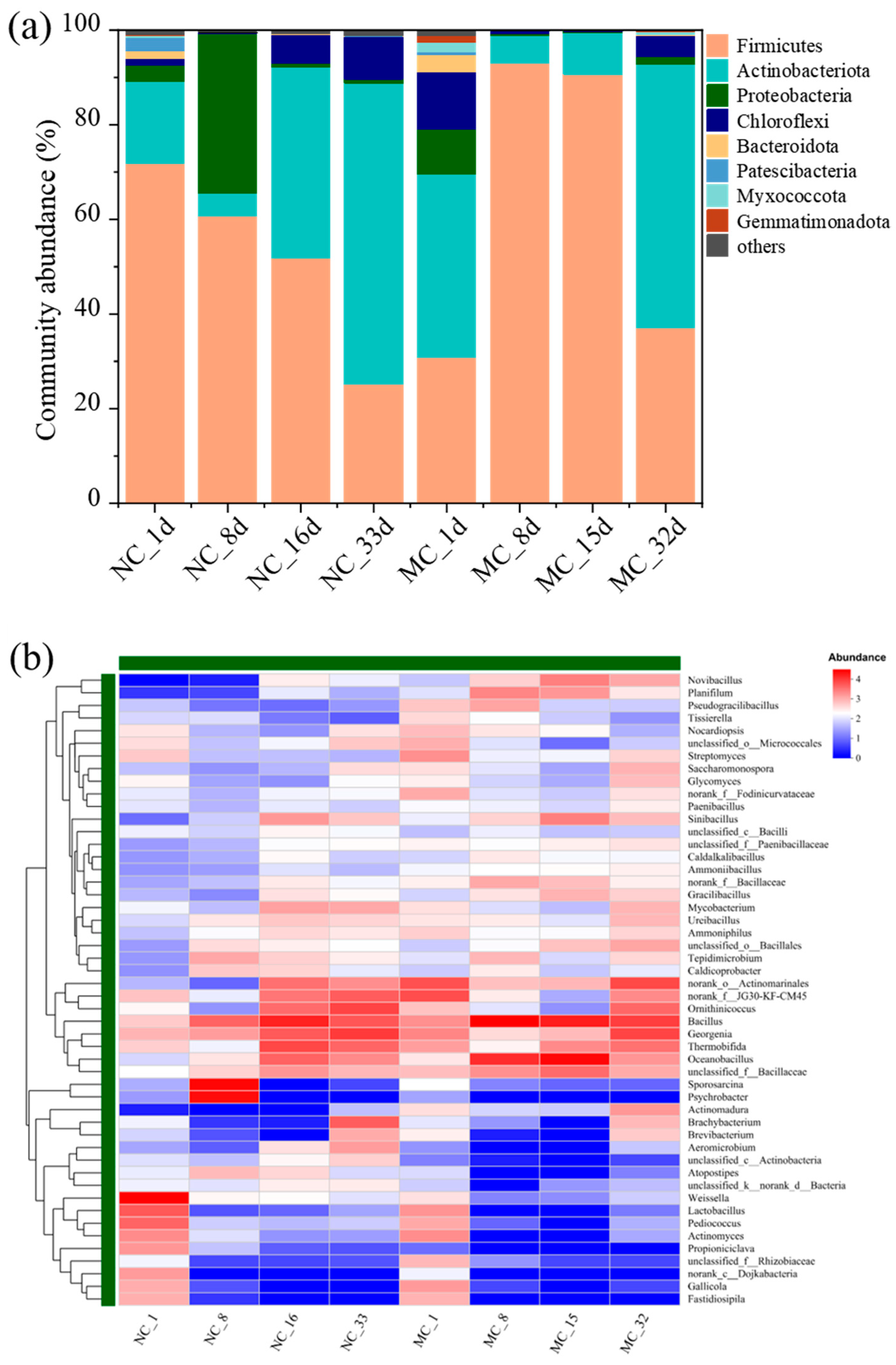
The key bacterial phyla influencing composting performance primarily include Firmicutes, Proteobacteria, Bacteroidetes, and Actinobacteria [19]. Figure 6a reveals that the microbial composition at the phylum level during composting in the NC was dominated by Firmicutes, Actinobacteria, Proteobacteria and Chloroflexi. The MC group exhibited a broadly similar profile but with notable abundance differences. For instance, although the initial abundance of Firmicutes in the MC group was lower than in the NC, it increased considerably with rising temperature, becoming the dominant phylum during the thermophilic phase and peaking at 92.99% at day 8. This marked difference in abundance indicates that the addition of MC did not introduce new species, but preferentially enriched the initially underrepresented thermophilic functional populations within the composting system [63]. Firmicutes effectively degrade organic matter, particularly cellulose and carbohydrates. Additionally, their ability to form endospores provides high thermotolerance, supporting their proliferation under elevated temperatures [64]. This possibly contributed to the more effective reduction in phytotoxicity observed in the MC group. The decline in Firmicutes during the later stages of composting was likely attributed to elevated pH and alkaline conditions, which were unfavorable for their survival and resulted in reduced abundance [65]. Proteobacteria and Firmicutes were detected in both of the groups during the initial mesophilic phase and contributed to the decomposition of carbohydrates and small organic molecules [66]. The relative abundance of Actinobacteria decreased in the initial phase but increased after the cooling stage, suggesting a favorable level of compost maturity [67].
Figure 6.
Changes in microbial community structure composition during aerobic composting process. (a) Bar chart of relative abundance at the phylum level; (b) a horizontal heatmap at the genus level.
At the genus level (Figure 6b), Bacillus, a genus within the phylum Firmicutes, represented the predominant bacteria in the MC group, which exhibits strong degradative capabilities and contributes to the conversion of complex organic components into humic acid precursors during the thermophilic phase [68]. Throughout the composting process, the MC group demonstrated a higher relative abundance of Bacillus during the thermophilic phase compared to the NC, reaching its peak at day 8, thus enhancing the composting maturation process. The presence of Oceanobacillus, another member of the Firmicutes phylum detected in the MC group, was likely to have contributed to the degradation of organic matter. Furthermore, Thermobifida is primarily involved in the decomposition of organic matter during the thermophilic phase of composting, yet it typically constitutes a low proportion of the microbial community [69]. Streptomyces, a genus known for its excellent capacity for nitrogen fixation and ability to enhance nitrogen retention efficiency, demonstrated a higher relative abundance in the MC group [70]. This higher abundance is consistent with a positive influence of the MC addition on the microbial community. Thus, Bacillus is ranked as the foremost key genus, followed by Streptomyces and Thermobifida, in mediating the accelerated decomposition and humification observed in the MC group.
3.3.2. Correlation Between Physicochemical Parameters and Microbial Community
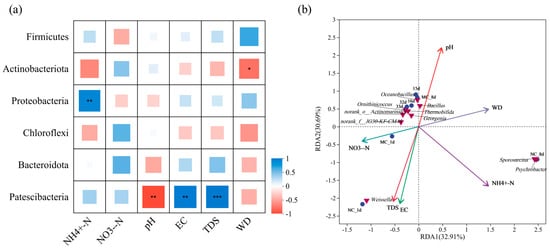
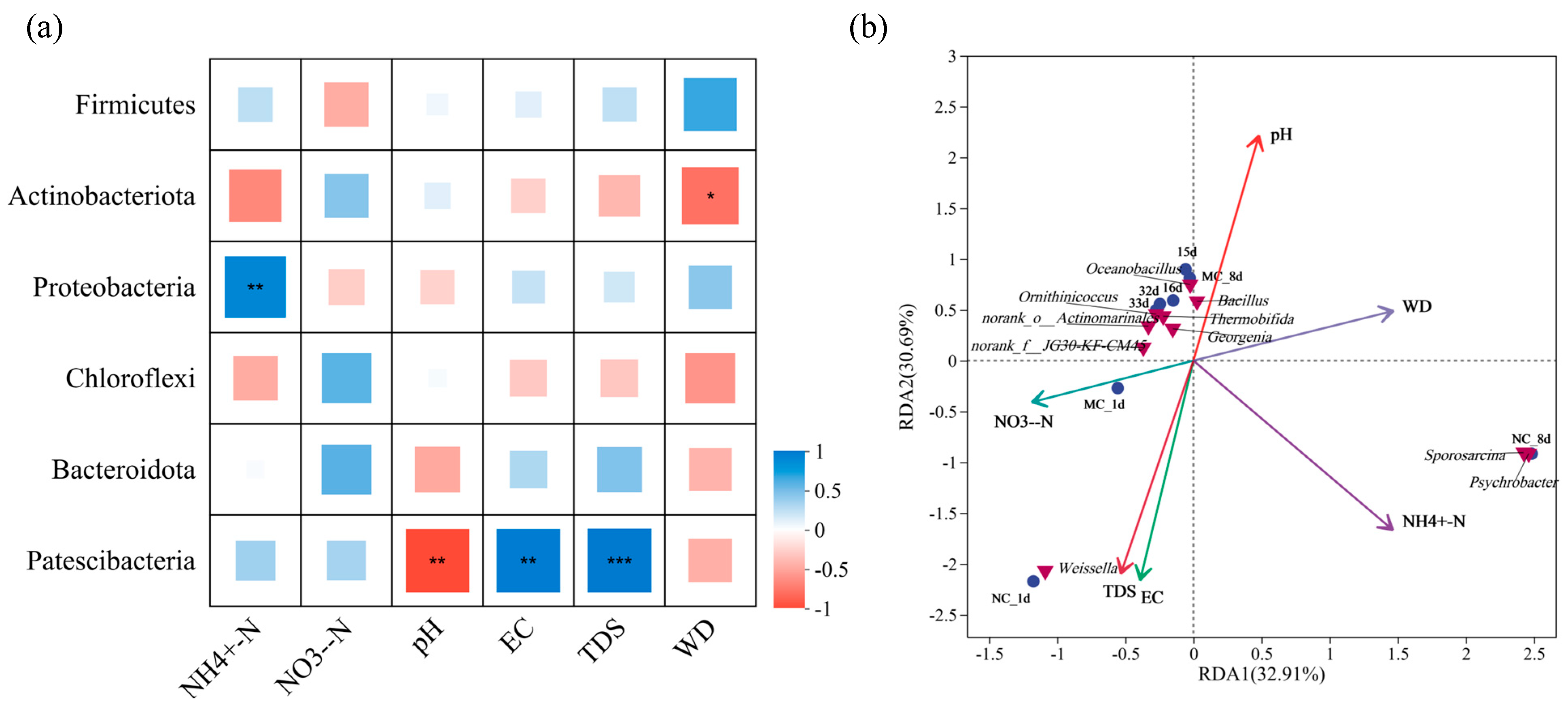
Pearson correlation analysis between environmental factors and dominant bacterial phyla are shown in Figure 7a. Patescibacteria showed a significant positive correlation with EC and TDS but a negative correlation with pH, suggesting its potential role in maintaining EC and TDS within a range suitable for aerobic composting. Proteobacteria exhibited significant correlations with both NH4+-N and temperature. This phylum is known for degrading organic matter, which raises the pile temperature and releases small molecules such as NH4+, thereby advancing nitrogen transformation and the overall composting process [18]. A significant negative correlation was also observed between Actinobacteria and temperature, consistent with its ability to biodegrade organic matter, generating energy and heat, particularly during the thermophilic phase [71]. Among the dominant phyla, Firmicutes, as thermophiles, show a positive correlation with temperature [64,72]. Actinobacteria exhibits a negative correlation, likely being inhibited under high temperatures. Their subsequent increase during the cooling phase aids in lignocellulose degradation [73]. Meanwhile, the strong correlation observed for the low-abundance Patescibacteria likely reflects its lifestyle as obligate epibionts growing on host bacterial surfaces, making it more responsive to physicochemical changes [74].
Figure 7.
Correlation analysis between microbial communities and influencing factors. (a) Pearson analysis at the phylum level; (b) RDA at the genus level (Note: WD refers to temperature). *, p ≤ 0.05; **, p ≤ 0.01; ***, p ≤ 0.001.
The redundancy analysis (RDA) of environmental factors and dominant genera is presented in Figure 7b. The primary factors affecting on bacterial genera in aerobic composting were temperature (WD), pH, EC, TDS, NH4+-N and NO3−-N. Temperature exhibited a negative correlation with NO3−-N, indicating that the elevated pile temperature exerted an inhibitory effect on the conversion of ammonia nitrogen during the thermophilic phase. Meanwhile, the observed decline in NH4+-N throughout the composting process was further corroborated by its negative correlation with bacterial genera such as Bacillus, Oceanobacillus, Thermobifida, since these genera are known for their ability to enhance organic matter decomposition and humification, especially of high-molecular-weight substances like cellulose [51]. As composting progressed, intensified humification led to the emergence of microbial populations capable of degrading recalcitrant organic matter, thereby altering compost properties [75]. Furthermore, the addition of MC represents an inoculation with an endogenous microbial community, which reduces competitive exclusion, increases microbial interactions, and promotes positive correlation effects [24].
4. Conclusions
The partial substitution of mushroom residue with MC optimized initial physicochemical properties of the composting pile, such as temperature, moisture content, and pH, thereby promoting the humification degree of the aerobic composting process. The MC group reached the maximum reaction temperature of 72 °C during the thermophilic phase, with a final moisture content of 25.36%. Consequently, the MC group demonstrated superior final values in both the HIX and HS content, measuring 6.31 and 79.9 g/kg, respectively. Moreover, the MC group met the requirements of the Chinese agricultural industry standard (NY/T 525-2021) earlier than the NC, indicating a potential reduction in the overall composting duration. Microbial analysis revealed that the addition of MC facilitated the enrichment of relevant bacterial communities during the thermophilic phase, with the phylum Firmicutes constituting over 90% of the microbial community during this phase and the genus Bacillus also exhibiting significant abundance. These findings demonstrate that the incorporation of MC not only enhanced compost maturity and agronomic value but also modified the microbial community structure, collectively contributing to a more efficient composting process. Future studies could focus on optimizing the substitution ratio of MC to maximize composting efficiency and enhance the resource utilization of the food waste digestates, to further improve the economic and environmental sustainability of their resource utilization practices.
Supplementary Materials
The following supporting information can be downloaded at: https://www.mdpi.com/article/10.3390/su18010169/s1, Figure S1: Changes in Na (a), P2O5 (b), K2O (c) during the composting process; Figure S2: Comparison of dissolved organic matter (DOM) between NC and MC groups at the initial and final days; Table S1: Definition of excitation-emission matrix (EEM) regions for fluorescence regional integration (FRI) analysis; Table S2: FRI indices of different fluorescence regions in 3D-EEM.
Author Contributions
Conceptualization, X.L.; Writing—original draft preparation, F.W.; writing—review and editing, X.L., F.W., X.Y., X.H., C.O., L.L., Y.C. (Yuliang Chen), Y.C. (Yue Chen), Z.L., D.W. and S.L.A.; supervision, X.L.; funding acquisition, X.L. All authors have read and agreed to the published version of the manuscript.
Funding
The authors are grateful for the support from the National Key R&D Program of China (2023YFC3905603), the National Natural Scientific Foundation of China (52570164), and Shanghai Committee of Science and Technology (25HB2705200). The authors extend their gratitude to Dr. Noreen Khalid (Govt. College Women University Sialkot) for providing invaluable assistance with English expression.
Institutional Review Board Statement
Not applicable.
Informed Consent Statement
Not applicable.
Data Availability Statement
The original contributions presented in this study are included in the article/Supplementary Material. Further inquiries can be directed to the corresponding author.
Conflicts of Interest
Author Chuang Ouyang was employed by the company Shanghai Environ-mental Sanitation Engineering Design Institute Company Limited. The remaining authors declare that the research was conducted in the absence of any commercial or financial relationships that could be construed as a potential conflict of interest.
References
- Li, M.; Li, F.; Zhou, J.; Yuan, Q.; Hu, N. Fallen leaves are superior to tree pruning as bulking agents in aerobic composting disposing kitchen waste. Bioresour. Technol. 2022, 346, 126374. [Google Scholar] [CrossRef] [Scilit]
- Li, W.; Gao, X.; Fan, R.; Gai, J.; Li, G.; Luo, W.; Qi, C.; Xu, Z. Cornstalks regulate bacterial dynamics to benefit organic humification in food waste digestate composting. Environ. Technol. Innov. 2025, 37, 104044. [Google Scholar] [CrossRef] [Scilit]
- Jin, C.; Sun, S.; Yang, D.; Sheng, W.; Ma, Y.; He, W.; Li, G. Anaerobic digestion: An alternative resource treatment option for food waste in China. Sci. Total Environ. 2021, 779, 146397. [Google Scholar] [CrossRef] [Scilit]
- Wang, X.; Liu, Y.; Han, X.; Song, H.; Li, Q.; Chen, M.; Li, X.; Zhang, D. Effect and mechanism of lactic acid on anaerobic digestion of acidified food waste. Renew. Energy 2026, 256, 124091. [Google Scholar] [CrossRef] [Scilit]
- Lu, J.; Xu, S. Post-treatment of food waste digestate towards land application: A review. J. Clean. Prod. 2021, 303, 127033. [Google Scholar] [CrossRef] [Scilit]
- Cheng, J.; Zhang, L.; Gao, X.; Shi, T.; Li, G.; Luo, W.; Qi, C.; Xu, Z. Multi-stage aeration regime to regulate organic conversion toward gas alleviation and humification in food waste digestate composting. J. Environ. Manag. 2024, 357, 120809. [Google Scholar] [CrossRef] [Scilit]
- Wang, N.; Huang, D.; Shao, M.; Sun, R.; Xu, Q. Use of activated carbon to reduce ammonia emissions and accelerate humification in composting digestate from food waste. Bioresour. Technol. 2022, 347, 126701. [Google Scholar] [CrossRef] [Scilit]
- Manu, M.K.; Li, D.; Liwen, L.; Jun, Z.; Varjani, S.; Wong, J.W.C. A review on nitrogen dynamics and mitigation strategies of food waste digestate composting. Bioresour. Technol. 2021, 334, 125032. [Google Scholar] [CrossRef] [Scilit]
- Jia, P.; Wang, X.; Liu, S.; Hua, Y.; Zhou, S.; Jiang, Z. Combined use of biochar and microbial agent can promote lignocellulose degradation and humic acid formation during sewage sludge-reed straw composting. Bioresour. Technol. 2023, 370, 128525. [Google Scholar] [CrossRef] [Scilit] [PubMed]
- Xu, M.; Wei, Y.; Chen, Y.; Zhou, H.; Ma, S.; Zhan, Y. Neutral initial pH enhances the formation of humic acid by inhibiting the growth of Lactobacillus in food waste composting. Environ. Technol. Innov. 2025, 39, 104271. [Google Scholar] [CrossRef] [Scilit]
- Li, D.; Manu, M.K.; Varjani, S.; Wong, J.W.C. Mitigation of NH3 and N2O emissions during food waste digestate composting at C/N ratio 15 using zeolite amendment. Bioresour. Technol. 2022, 359, 127465. [Google Scholar] [CrossRef] [Scilit]
- Aviñó-Calero, J.; Santateresa, E.; Orden, L.; Marks, E.A.N.; Martínez Sabater, E.; Andreu-Rodriguez, J.; Saéz-Tovar, J.A.; Pérez-Murcia, M.D.; Bustamante, M.Á.; Moral, R. Optimization of industrial-scale composting of dewatered pig slurry and olive mill waste using discarded tennis balls as an inert bulking agent. Environ. Technol. Innov. 2024, 36, 103799. [Google Scholar] [CrossRef] [Scilit]
- Peng, L.; Ma, R.; Jiang, S.; Luo, W.; Li, Y.; Wang, G.; Xu, Z.; Wang, Y.; Qi, C.; Li, Y.; et al. Co-composting of kitchen waste with agriculture and forestry residues and characteristics of compost with different particle size: An industrial scale case study. Waste Manag. 2022, 149, 313–322. [Google Scholar] [CrossRef] [Scilit] [PubMed]
- Yun, M.; Li, C.; Duan, Y.; Chi, X.; Zhu, X.; Ma, J.; Shen, B.; Feng, S.; Zhang, Z. Classification of bulking agents and their regulations on composting: A review. J. Environ. Chem. Eng. 2025, 13, 117318. [Google Scholar] [CrossRef] [Scilit]
- Meng, X.; Liang, X.; Wang, P.; Ren, L. Effect of thermophilic bacterial complex agents on synergistic humification of carbon and nitrogen during lignocellulose-rich kitchen waste composting. J. Environ. Manag. 2024, 370, 122799. [Google Scholar] [CrossRef] [Scilit]
- Yang, W.; Zhong, Y.; Lu, Z.; Lin, D.; Zhuo, Q.; Zeng, H.; Yang, D.; Chen, Z. Synthesis of biochar-loaded green synthetic iron nanocomposite and passivation mechanism of cadmium in pig manure aerobic composting. Environ. Technol. Innov. 2025, 40, 104377. [Google Scholar] [CrossRef] [Scilit]
- Ao, G.; Wang, Z.; Shi, Y.; Ling, H.; Sun, S.; Ping, W. Effects of exogenously added humic acid on the fate of aminoglycoside antibiotics and humification process during aerobic compost. Chem. Eng. J. 2024, 498, 155704. [Google Scholar] [CrossRef] [Scilit]
- Liu, G.; Yang, Y.; Ma, R.; Jiang, J.; Li, G.; Wang, J.; Wuyun, D.; Yuan, J. Thermophilic compost inoculating promoted the maturity and mature compost inoculating reduced the gaseous emissions during co-composting of kitchen waste and pig manure. Environ. Technol. Innov. 2023, 32, 103427. [Google Scholar] [CrossRef] [Scilit]
- Zhang, L.; Fan, R.; Li, W.; Li, G.; Luo, W.; Xu, Z. Unravelling biotic and abiotic mechanisms of mature compost to alleviate gaseous emissions in kitchen waste composting by metagenomic analysis. Bioresour. Technol. 2025, 419, 132102. [Google Scholar] [CrossRef] [Scilit] [PubMed]
- Yang, W.; Zhang, L. Addition of mature compost improves the composting of green waste. Bioresour. Technol. 2022, 350, 126927. [Google Scholar] [CrossRef] [Scilit]
- Wang, Y.; Yi, G.; Zhang, W.; Hou, J.; Daniel Tang, K.H.; Wang, B.; Li, H.; Wang, Q.; Abdelrahman, H.; Zhang, T.; et al. Ferrous salts accelerate humification and reduced carbon emissions during the co-composting of hoggery slurry and wheat husks: New insights into their biotic and abiotic functions and mechanisms. Chem. Eng. J. 2025, 512, 162570. [Google Scholar] [CrossRef] [Scilit]
- Bui, V.K.H.; Truong, H.B.; Hong, S.; Li, X.; Hur, J. Biotic and abiotic catalysts for enhanced humification in composting: A comprehensive review. J. Clean. Prod. 2023, 402, 136832. [Google Scholar] [CrossRef] [Scilit]
- Wang, J.; Gu, J.; Wang, X.; Song, Z.; Dai, X.; Guo, H.; Yu, J.; Zhao, W.; Lei, L. Enhanced removal of antibiotic resistance genes and mobile genetic elements during swine manure composting inoculated with mature compost. J. Hazard. Mater. 2021, 411, 125135. [Google Scholar] [CrossRef] [Scilit] [PubMed]
- Zhang, Z.; Yang, H.; Wang, B.; Chen, C.; Zou, X.; Cheng, T.; Li, J. Aerobic co-composting of mature compost with cattle manure: Organic matter conversion and microbial community characterization. Bioresour. Technol. 2023, 382, 129187. [Google Scholar] [CrossRef] [Scilit]
- Lin, L.; Yang, X.; Shen, Y.; Zhu, P.; Niu, S.; Alghashm, S.; Ding, G.; Wu, D.; Li, X. Inhibition of odor generation during the composting process of fecal sludge from rural toilets by decomposed compost backfilling. Bioresour. Technol. Rep. 2025, 29, 102065. [Google Scholar] [CrossRef] [Scilit]
- Zhan, Y.; Chang, S.; Chen, Y.; Chang, Y.; Chen, P.; Chen, Y.; Zhang, L.; Yang, L.; Xia, X.; Li, J.; et al. Effect of auxiliary materials on the formation of humic acid carbon and nitrogen and bacterial dynamics in kitchen waste composting. J. Environ. Chem. Eng. 2024, 12, 113190. [Google Scholar] [CrossRef] [Scilit]
- Bao, R.; Lu, X.; Huang, W.; Li, Q. Bacillus licheniformis inoculation accelerates the humification process through regulating the shikimic acid pathway and lignin degradation in pilot-scale composting. Biocatal. Agric. Biotechnol. 2025, 70, 103859. [Google Scholar] [CrossRef] [Scilit]
- Feng, Y.; Tang, Q.; Xie, W.; Yu, J.; Wang, L.; Wang, B.; Xie, H.; Zhang, M.; Bo, L.; Jin, H.; et al. Application of products derived from pyrolysis and hydrothermal carbonization as conditioners for aerobic composting produced multiple beneficial effects: Evaluation based on 10-ton pilot scale trials. Chem. Eng. J. 2025, 505, 159793. [Google Scholar] [CrossRef] [Scilit]
- Liu, M.; Ren, X.; Lin, Z.; Fang, K.; Li, K.; Fan, Q.; Yu, Z. Differential contributions of microbial necromass to humification: Hyperthermophilic vs. conventional thermophilic composting. Bioresour. Technol. 2026, 439, 133320. [Google Scholar] [CrossRef] [Scilit]
- Li, Y.; Xue, Z.; Li, S.; Sun, X.; Hao, D. Prediction of composting maturity and identification of critical parameters for green waste compost using machine learning. Bioresour. Technol. 2023, 385, 129444. [Google Scholar] [CrossRef] [Scilit]
- Wang, H.; Qin, Y.; Xin, L.; Nan, Q.; Xu, X.; Zhao, C.; Wu, W. Pilot-scale study of innovative mechanically-enhanced dynamic composting for treating kitchen waste. Bioresour. Technol. 2024, 394, 130176. [Google Scholar] [CrossRef] [Scilit]
- Zhai, S.M.; Wang, K.; Yu, F.C.; Gao, Z.L.; Yang, X.; Cao, X.Q.; Shaghaleh, H.; Hamoud, Y.A. Effects of Trichoderma harzianum combined with Phanerochaete chrysosporium on lignin degradation and humification during chicken manure and rice husk composting. Front. Microbiol. 2025, 16, 1515931. [Google Scholar] [CrossRef] [Scilit]
- Zhao, J.; Zhang, Y.; Cong, H.; Zhang, C.; Wu, J. Quantifying the contribution of lignin to humic acid structures during composting. Chem. Eng. J. 2024, 492, 152204. [Google Scholar] [CrossRef] [Scilit]
- Dong, S.; Wei, Y.; Yu, Q.; Gao, Y.; Chen, H.; Zhou, K.; Cheng, M.; Wang, B.; Wei, Y.; Hu, X. Inoculating functional bacteria improved the humification process by regulating microbial networks and key genera in straw composting by adding different nitrogen sources. Bioresour. Technol. 2024, 393, 130022. [Google Scholar] [CrossRef] [Scilit]
- Zhang, Y.; Su, X.; Zhao, S.; Chen, Y.; Lu, Z.; Wang, G.; Li, Y.; Su, H. Impact of semi-permeable membrane-coupled biochar composting on the mitigation of greenhouse gas emissions and bacterial community. Process Saf. Environ. Prot. 2025, 202, 107838. [Google Scholar] [CrossRef] [Scilit]
- Fang, C.; Mo, J.; Long, Y.; Han, Y.; Qin, Y.; Mei, Q.; Wu, W. Addition of chemical oxidation catalysts accelerates heating and humification in biodrying-enhanced composting process for kitchen waste. Bioresour. Technol. 2026, 440, 133513. [Google Scholar] [CrossRef] [Scilit] [PubMed]
- Ma, R.; Tang, R.; Zheng, G.; Wang, J.; Cui, Z.; Liu, Y.; Li, G.; Meng, F.; Yuan, J. Optimizing organic waste co-composting: Component ratio thresholds for dual enhancement of maturity and gaseous emission reduction. J. Environ. Chem. Eng. 2025, 13, 119053. [Google Scholar] [CrossRef] [Scilit]
- Wu, X.; Wang, J.; Shen, L.; Wu, X.; Amanze, C.; Zeng, W. Effect of bamboo sphere amendment on the organic matter decomposition and humification of food waste composting. Waste Manag. 2021, 133, 19–27. [Google Scholar] [CrossRef] [Scilit]
- Xing, R.; Yin, K.; Du, X.; Lin, Y.; Yu, Z.; Chen, Z.; Zhou, S. Enhanced organic matter humification by hydroxyl radical generation during electric field-assisted aerobic composting. Chem. Eng. J. 2024, 482, 148910. [Google Scholar] [CrossRef] [Scilit]
- Liu, J.; Wang, N.; Fujii, M.; Bao, Z.; Wei, J.; Hao, Z.; Fu, Q.-l.; Gao, R.; Liu, J.; Wei, Y. Insights into the roles of DOM in humification during sludge composting: Comprehensive chemoinformatic analysis using FT-ICR mass spectrometry. Chem. Eng. J. 2023, 475, 146024. [Google Scholar] [CrossRef] [Scilit]
- Chen, W.; Westerhoff, P.; Leenheer, J.A.; Booksh, K. Fluorescence Excitation−Emission Matrix Regional Integration to Quantify Spectra for Dissolved Organic Matter. Environ. Sci. Technol. 2003, 37, 5701–5710. [Google Scholar] [CrossRef] [Scilit] [PubMed]
- Wang, J.-J.; Dahlgren, R.A.; Chow, A.T. Controlled Burning of Forest Detritus Altering Spectroscopic Characteristics and Chlorine Reactivity of Dissolved Organic Matter: Effects of Temperature and Oxygen Availability. Environ. Sci. Technol. 2015, 49, 14019–14027. [Google Scholar] [CrossRef] [Scilit]
- Li, Y.; Awasthi, M.K. Unravelling the microbial ecosystem based on core environmental factors and bacteria dynamics during cyanobacteria powder amended pig manure co-composting. Process Saf. Environ. Prot. 2025, 203, 107949. [Google Scholar] [CrossRef] [Scilit]
- Yin, D.; Wang, K.; Wu, C.; Wang, Z.; Gu, Y.; Liu, P.; You, S. Refluxing mature compost to replace bulking agents: A low-cost solution for suppressing antibiotic resistance genes rebound in sewage sludge composting. Environ. Res. 2025, 269, 120811. [Google Scholar] [CrossRef] [Scilit]
- Shi, Y.; Gu, X.; Song, J.; Li, H.; Sun, C.; Wang, J.; Li, J.; Liu, W.; Bu, G.; Wang, H.; et al. Odor emissions and humification during composting of pig manure and cornstalks: Role of mixing proportions. J. Environ. Chem. Eng. 2025, 13, 117586. [Google Scholar] [CrossRef] [Scilit]
- Song, B.; Manu, M.K.; Li, D.; Wang, C.; Varjani, S.; Ladumor, N.; Michael, L.; Xu, Y.; Wong, J.W.C. Food waste digestate composting: Feedstock optimization with sawdust and mature compost. Bioresour. Technol. 2021, 341, 125759. [Google Scholar] [CrossRef] [Scilit] [PubMed]
- Li, H.; Liu, C.; Ni, J.-Q.; Zhuo, G.; Li, Y.; Zheng, Y.; Zhen, G. Impact of cellulolytic nitrogen-fixing composite inoculants on humification pathways and nitrogen cycling in kitchen waste composting. Bioresour. Technol. 2025, 416, 131819. [Google Scholar] [CrossRef] [Scilit]
- Liu, Y.; Wang, H.; Zhang, H.; Tao, Y.; Chen, R.; Hang, S.; Ding, X.; Cheng, M.; Ding, G.; Wei, Y.; et al. Synergistic effects of chemical additives and mature compost on reducing H2S emission during kitchen waste composting. J. Environ. Sci. 2024, 139, 84–92. [Google Scholar] [CrossRef] [Scilit]
- Duan, Z.; Kang, Z.; Kong, X.; Qiu, G.; Wang, Q.; Wang, T.; Yang, X.; Zhu, G.; Yue, J.; Han, X.; et al. Synergistic hyperthermophilic microbial consortia in self-elevating ultra-high temperature composting: Mechanism and application investigation for sustainable organic waste upcycling. Chem. Eng. J. 2025, 512, 162364. [Google Scholar] [CrossRef] [Scilit]
- Li, M.; Jiang, H.; Li, R.; Liu, W.; Xie, Y.; Wu, W.; Liu, D.; Wu, M.; Qiu, Z. Effects of biochar-loaded microbial agent in regulating nitrogen transformation and integration into humification for straw composting. Bioresour. Technol. 2025, 417, 131873. [Google Scholar] [CrossRef] [Scilit]
- Li, M.; Li, S.; Meng, Q.; Chen, S.; Wang, J.; Guo, X.; Ding, F.; Shi, L. Feedstock optimization with rice husk chicken manure and mature compost during chicken manure composting: Quality and gaseous emissions. Bioresour. Technol. 2023, 387, 129694. [Google Scholar] [CrossRef] [Scilit]
- Zhu, L.; Zhao, Y.; Chen, S.; Miao, X.; Fang, Z.; Yao, X.; Dong, C.; Hu, B. Alternating ventilation accelerates the mineralization and humification of food waste by optimizing the temperature-oxygen-moisture distribution in the static composting reactor. Bioresour. Technol. 2024, 393, 130050. [Google Scholar] [CrossRef] [Scilit]
- Gao, X.; Zhang, J.; Liu, G.; Kong, Y.; Li, Y.; Li, G.; Luo, Y.; Wang, G.; Yuan, J. Enhancing the transformation of carbon and nitrogen organics to humus in composting: Biotic and abiotic synergy mediated by mineral material. Bioresour. Technol. 2024, 393, 130126. [Google Scholar] [CrossRef] [Scilit] [PubMed]
- Liu, C.; Li, H.; Ni, J.-Q.; Zhuo, G.; Zhang, Q.; Zheng, Y.; Zhen, G. Synergistic effects of heterogeneous mature compost and aeration rate on humification and nitrogen fixing during kitchen waste composting. J. Environ. Manag. 2025, 373, 123743. [Google Scholar] [CrossRef] [Scilit]
- Wang, J.; Jiao, M.; Zhan, X.; Hu, C.; Zhang, Z. Humification and fungal community succession during pig manure composting: Membrane covering and mature compost addition. Bioresour. Technol. 2024, 393, 130030. [Google Scholar] [CrossRef] [Scilit]
- Xu, Z.; Li, R.; Zhang, X.; Wang, S.; Xu, X.; Ho Daniel Tang, K.; Emmanuel Scriber, K.; Zhang, Z.; Quan, F. Molecular mechanisms of humus formation mediated by new ammonifying microorganisms in compost. Chem. Eng. J. 2024, 483, 149341. [Google Scholar] [CrossRef] [Scilit]
- Wu, M.; Chen, H.; Kang, H.X.; Wang, S.; Liu, Z.; Ou, Y.; Zhang, X.; Zhang, T. Effects of medical stone amendment on promotion of humification during co-composting of mushroom stick waste and fresh cattle manure—Quality improvement and spectral characterization of DOM. J. Environ. Chem. Eng. 2025, 13, 117631. [Google Scholar] [CrossRef] [Scilit]
- Li, X.; Zhang, Z.; Wang, F.; Li, T.; Guo, Q.; Cui, X.; Hansen, H.C.B.; Kjøller, R.; Ekelund, F. Decoding the role of fungal functional groups in dissolved organic matter transformation and humification during co-composting. Bioresour. Technol. 2025, 438, 133230. [Google Scholar] [CrossRef] [Scilit]
- Liu, H.; Huang, Y.; Duan, W.; Qiao, C.; Shen, Q.; Li, R. Microbial community composition turnover and function in the mesophilic phase predetermine chicken manure composting efficiency. Bioresour. Technol. 2020, 313, 123658. [Google Scholar] [CrossRef] [Scilit]
- Wang, H.; Zheng, X.; Guo, D.; Liu, D.; Bai, B.; Shao, Y.; Yue, B.; Zhang, H.; Lin, S. Extended thermophilic phase promotes fungal-bacterial collaboration to facilitate humification in batch-fed composting. Environ. Res. 2025, 284, 122281. [Google Scholar] [CrossRef] [Scilit]
- Gao, X.; Kong, Y.; Yin, J.; Wang, J.; Li, G.; Wang, G.; Yuan, J. Carbon-mediated modulation pathways of phytotoxicity in chicken manure composting. Chemosphere 2024, 368, 143755. [Google Scholar] [CrossRef] [Scilit] [PubMed]
- Yang, X.; Shao, C.; Wang, M.; Zhang, W.; Zhang, W.; Bai, H.; Zhang, J.; Mecha, C.A.; Li, R.-H. Mechanisms of integrated porous biochar and Fe3O4 in modulating carbon emissions and humification in co-composting of cattle manure and wheat stalk. Chem. Eng. J. 2025, 518, 164730. [Google Scholar] [CrossRef] [Scilit]
- Ren, Y.; Liu, C.; Luo, J.; Deng, X.; Zheng, D.; Shao, J.; Xu, Z.; Zhang, N.; Xiong, W.; Liu, H.; et al. Substrate preference triggers metabolic patterns of indigenous microbiome during initial composting stages. Bioresour. Technol. 2025, 419, 132034. [Google Scholar] [CrossRef] [Scilit]
- Liang, X.; Wang, P.; Zhang, Y.; Li, Y.; Ji, C.; Meng, X.; Ren, L. Using excitation-emission matrix-parallel factor analysis to access the effect of temperature parameters on the humification of community kitchen waste compost. Biomass Bioenergy 2025, 197, 107787. [Google Scholar] [CrossRef] [Scilit]
- Wu, X.; Zhao, X.; Wu, W.; Hou, J.; Zhang, W.; Tang, D.K.H.; Zhang, X.; Yang, G.; Zhang, Z.; Yao, Y.; et al. Biotic and abiotic effects of manganese salt and apple branch biochar co-application on humification in the co-composting of hog manure and sawdust. Chem. Eng. J. 2024, 482, 149077. [Google Scholar] [CrossRef] [Scilit]
- Zhang, Y.; Liu, L.; Huang, G.; Yang, C.; Tian, W.; Ge, Z.; Zhang, B.; Wang, S.; Zhang, H. Enhancing humification and microbial interactions during co-composting of pig manure and wine grape pomace: The role of biochar and Fe2O3. Bioresour. Technol. 2024, 393, 130120. [Google Scholar] [CrossRef] [Scilit]
- Meng, Q.; Wang, S.; Niu, Q.; Yan, H.; Li, Q. The influences of illite/smectite clay on lignocellulose decomposition and maturation process revealed by metagenomics analysis during cattle manure composting. Waste Manag. 2021, 127, 1–9. [Google Scholar] [CrossRef] [Scilit]
- Pan, C.; Gao, W.; Mi, J.; Xie, L.; Wei, Z.; Song, C. Effect of ferrous ions combined with zeolite on humification degree during food waste composting. Bioresour. Technol. 2023, 389, 129826. [Google Scholar] [CrossRef] [Scilit]
- Huang, Y.; L, D.; Shah, G.M.; Chen, W.; Wang, W.; Xu, Y.; Huang, H. Hyperthermophilic pretreatment composting significantly accelerates humic substances formation by regulating precursors production and microbial communities. Waste Manag. 2019, 92, 89–96. [Google Scholar] [CrossRef] [Scilit] [PubMed]
- Xu, Y.; Xu, P.; Teng, H.; Yang, S.; Lang, H.; Han, L.; Peng, X.; Wang, Y.; Li, L. Short-term high-temperature pretreatment to reduce gaseous emissions and accelerate humification in food waste digestate composting: Performance and mechanisms. J. Environ. Chem. Eng. 2025, 13, 118455. [Google Scholar] [CrossRef] [Scilit]
- Xu, Z.; Gao, X.; Li, G.; Nghiem, L.D.; Luo, W. Microbes from mature compost to promote bacterial chemotactic motility via tricarboxylic acid cycle-regulated biochemical metabolisms for enhanced composting performance. Bioresour. Technol. 2023, 387, 129633. [Google Scholar] [CrossRef] [Scilit]
- Zhao, M.; Deng, Z.; Zhou, X.; Yu, Z.; Zhuang, L. Phage-host synergy facilitates transformation of dissolved organic matter in simulated composting. Chem. Eng. J. 2025, 523, 168837. [Google Scholar] [CrossRef] [Scilit]
- Zhao, Y.; Lu, Q.; Wei, Y.; Cui, H.; Zhang, X.; Wang, X.; Shan, S.; Wei, Z. Effect of actinobacteria agent inoculation methods on cellulose degradation during composting based on redundancy analysis. Bioresour. Technol. 2016, 219, 196–203. [Google Scholar] [CrossRef] [Scilit] [PubMed]
- Srinivas, P.; Peterson, S.B.; Gallagher, L.A.; Wang, Y.X.; Mougous, J.D. Beyond genomics in Patescibacteria: A trove of unexplored biology packed into ultrasmall bacteria. Proc. Natl. Acad. Sci. USA 2024, 121, e2419369121. [Google Scholar] [CrossRef] [Scilit] [PubMed]
- Kim, G.; Chung, W.; Hur, J.; Lee, H.S.; Shin, H.S. Changes in organic matter composition during poultry manure composting: A new perspective on compost maturity using DAX resin fractionation and spectroscopic analysis. Waste Manag. 2025, 205, 115015. [Google Scholar] [CrossRef] [Scilit] [PubMed]

Disclaimer/Publisher’s Note: The statements, opinions and data contained in all publications are solely those of the individual author(s) and contributor(s) and not of MDPI and/or the editor(s). MDPI and/or the editor(s) disclaim responsibility for any injury to people or property resulting from any ideas, methods, instructions or products referred to in the content. |
© 2025 by the authors. Licensee MDPI, Basel, Switzerland. This article is an open access article distributed under the terms and conditions of the Creative Commons Attribution (CC BY) license.