A Review of Environmental Quality Studies in China’s Petrochemical Port Cities Driven by a Semantic Ontology Data Model


Abstract
1. Introduction
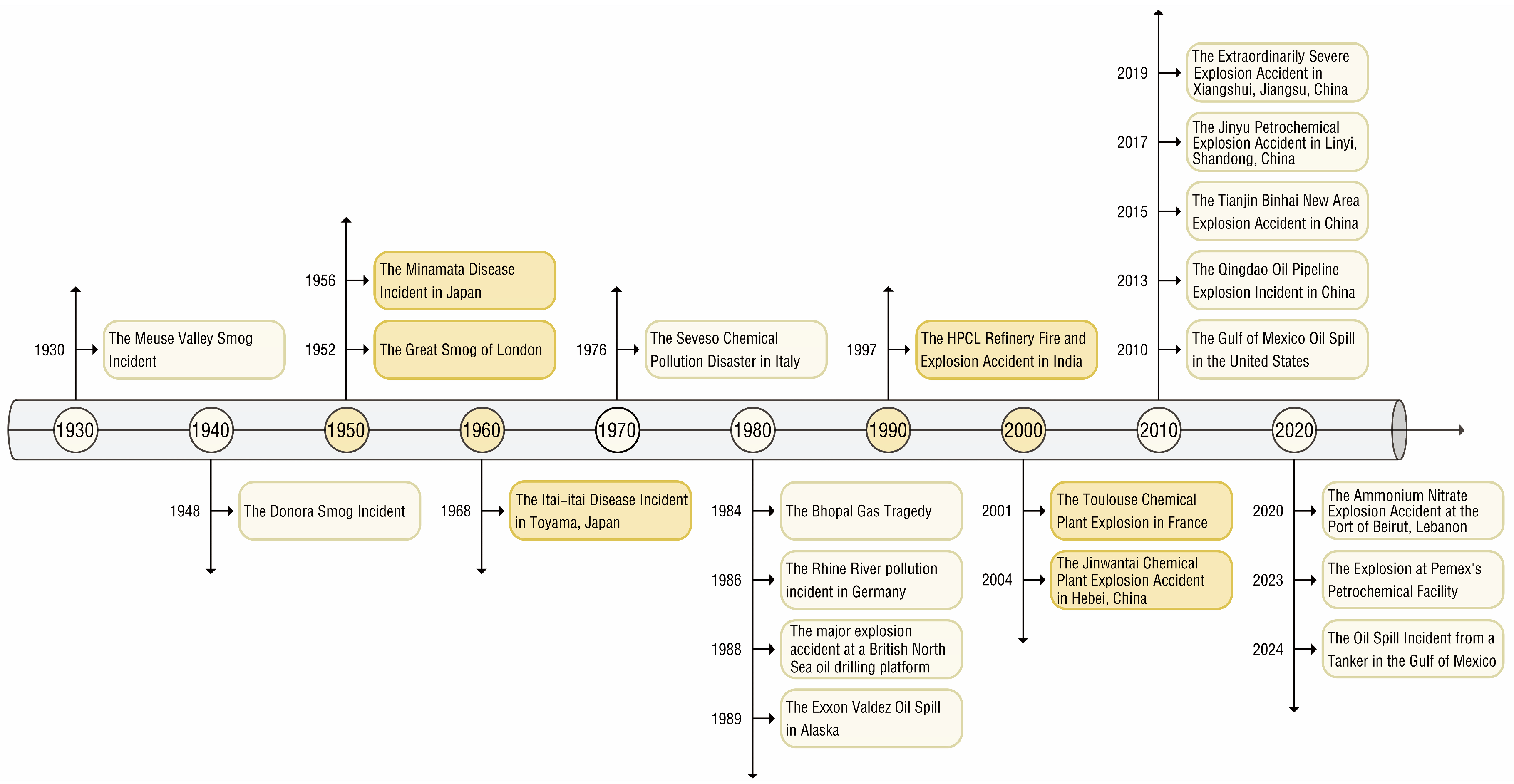
1.1. Definition and Classification of Environmental Quality
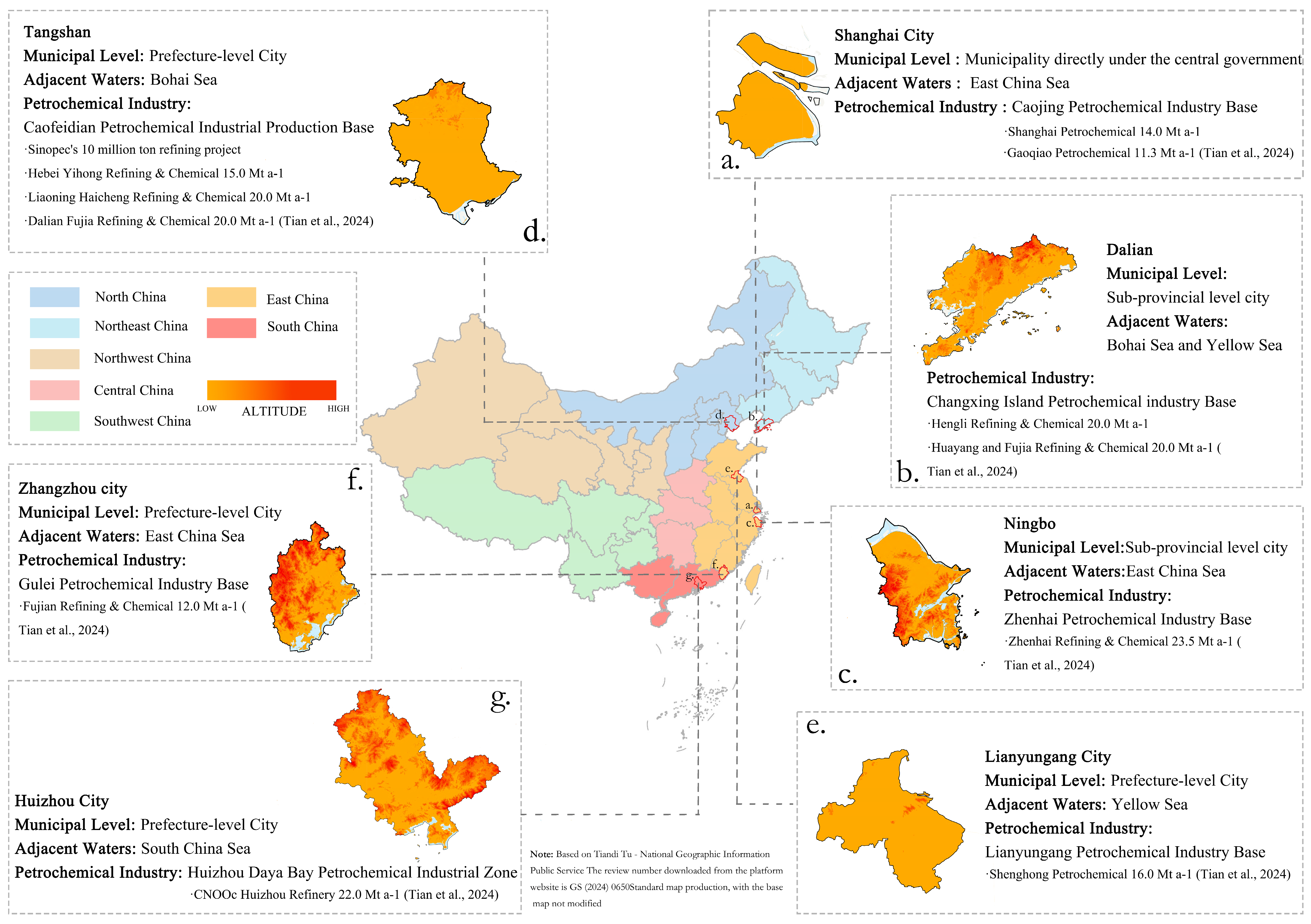
1.2. The Seven Major Petrochemical Port Cities in China
1.3. Research on Environmental Quality in Petrochemical Port Cities
2. Methods
2.1. Advanced Advantages of the Semantic Ontology Data Model
2.1.1. From Association to Inference
2.1.2. From Flatness to Structure
2.1.3. From Description to Integration
2.2. Practical Application of the Semantic Ontology Data Model
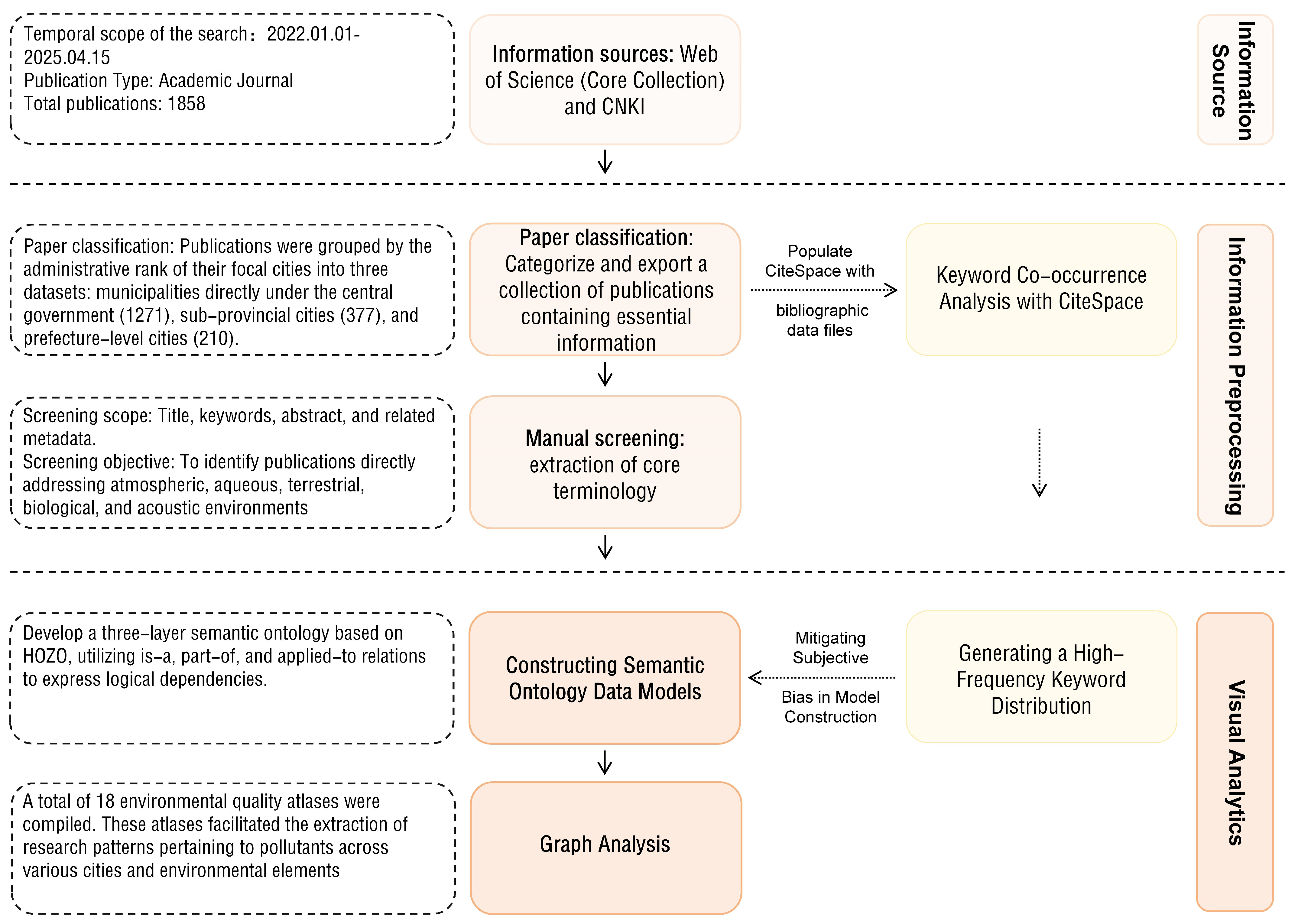
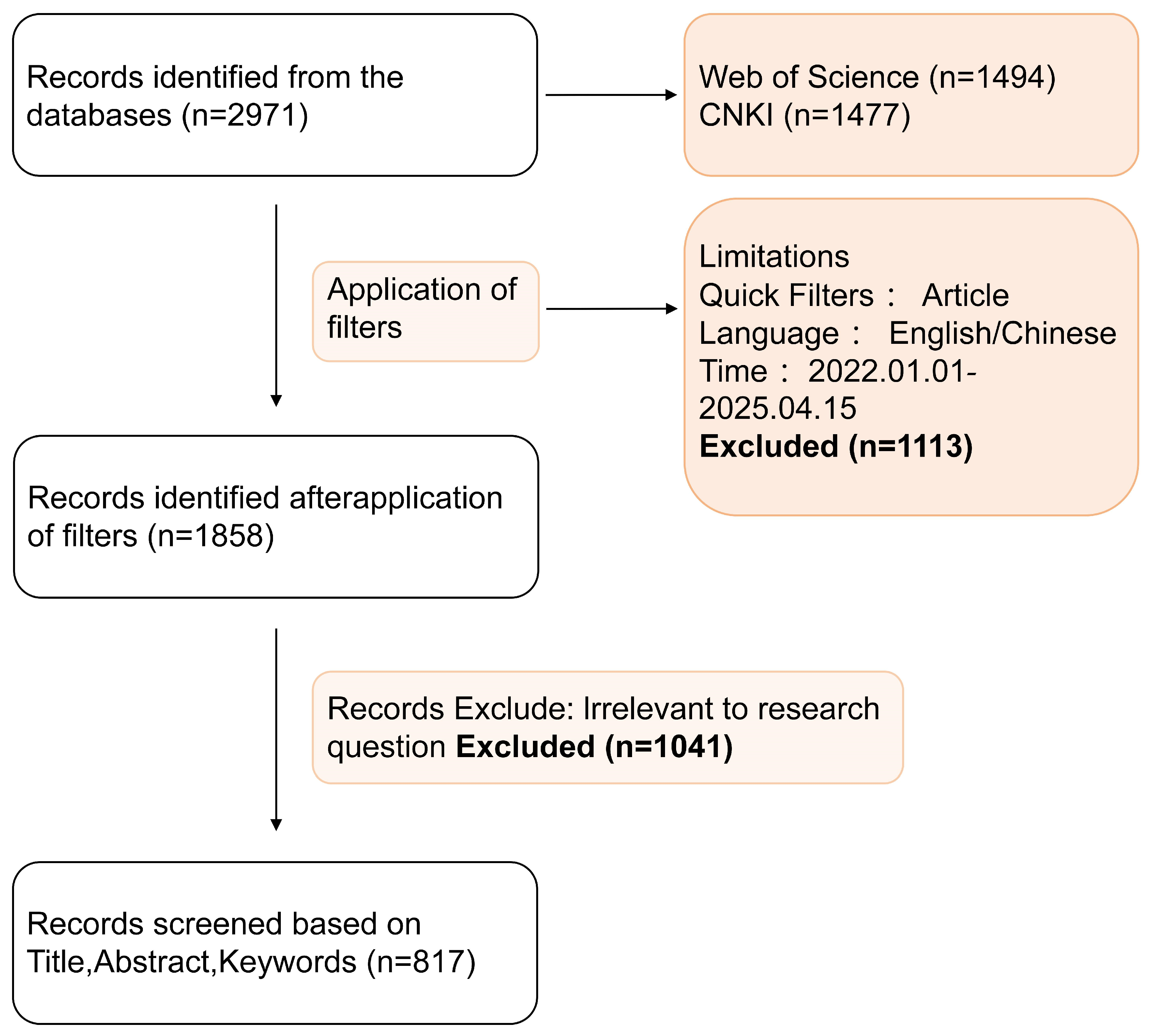
2.2.1. Information Source Identification
2.2.2. Information Preprocessing
2.2.3. Visual Analysis
3. Discussion and Analysis
3.1. Research Focus Across Different City Tiers
3.2. Analytical Framework for Semantic Ontology Data Modeling
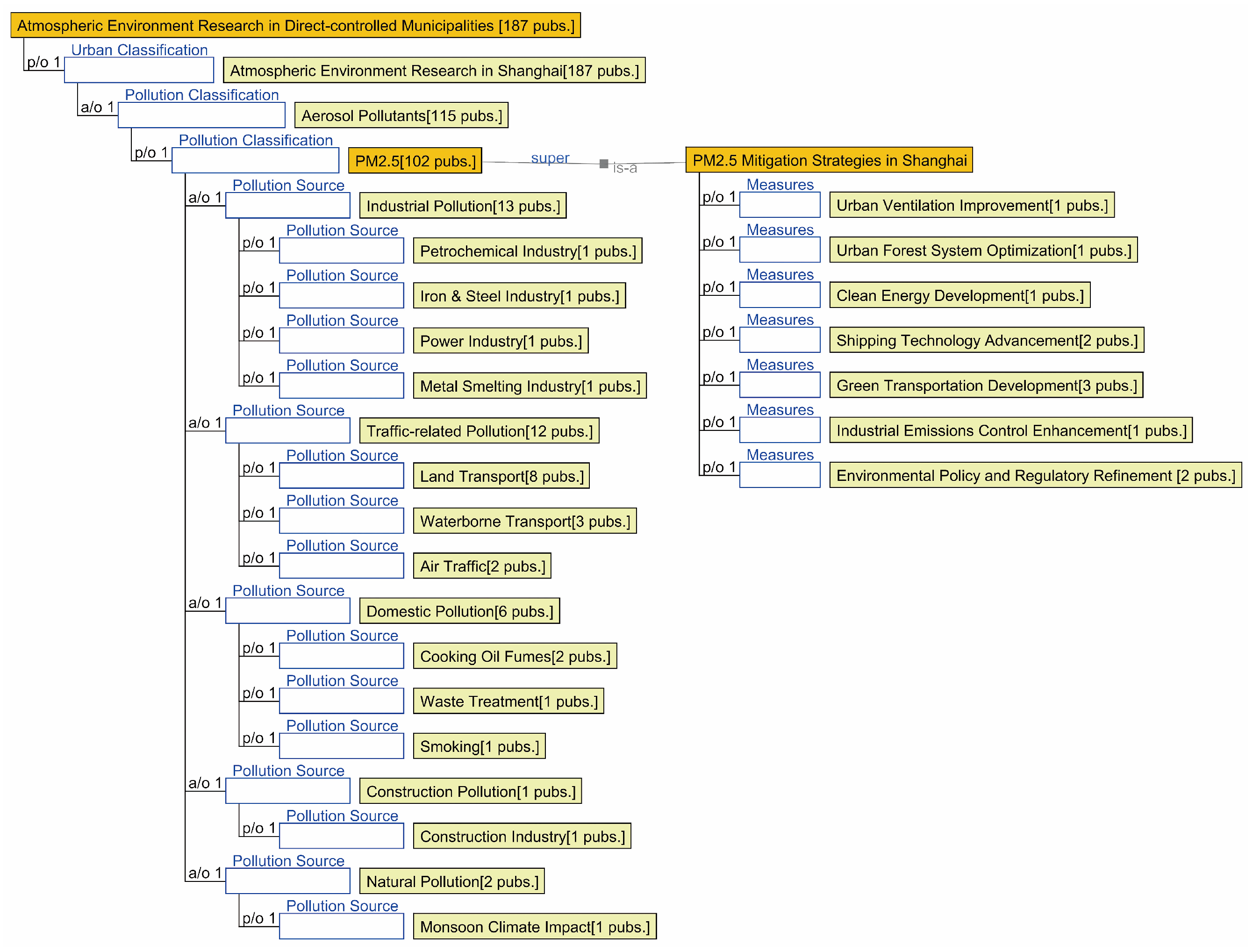
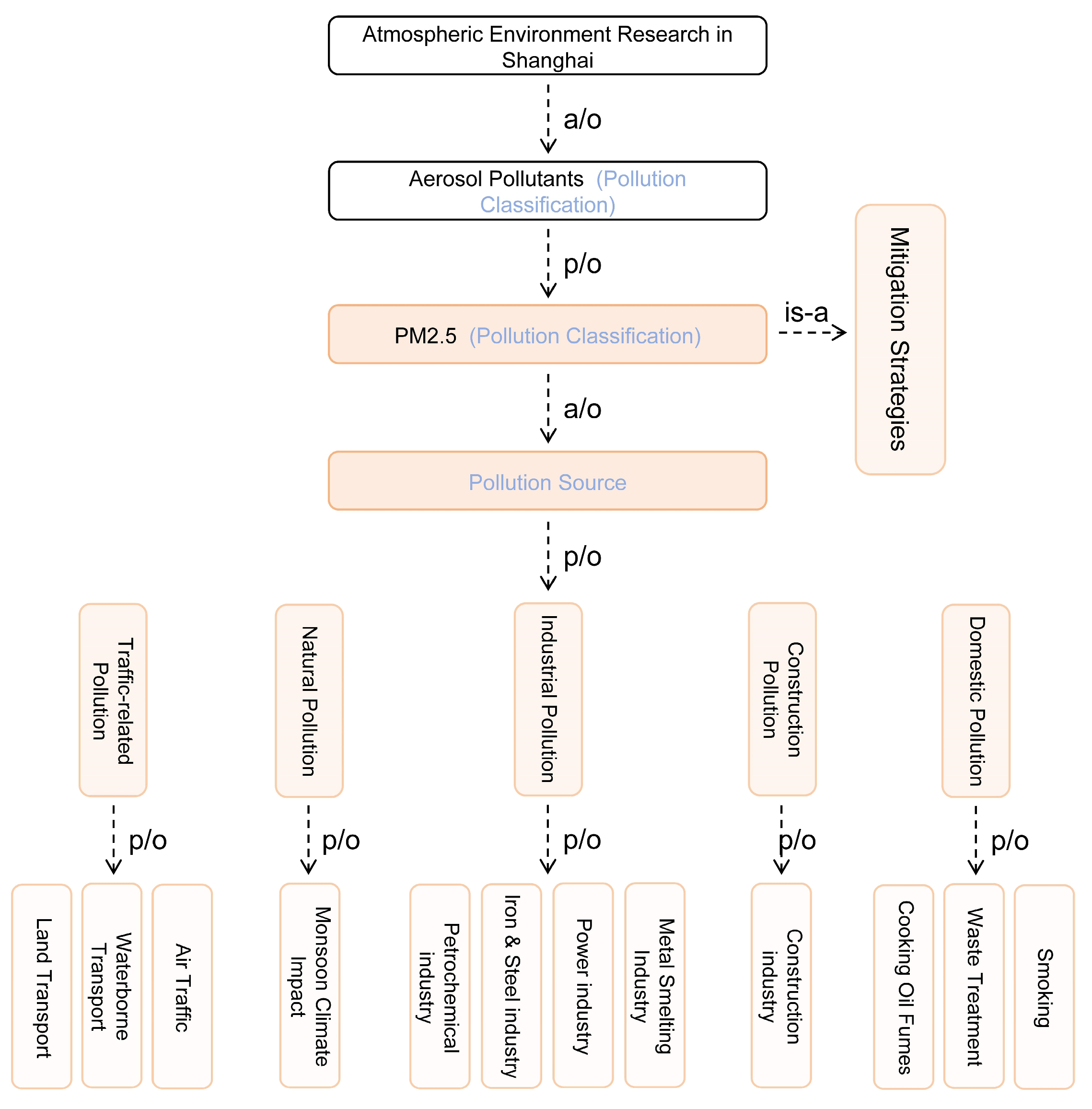
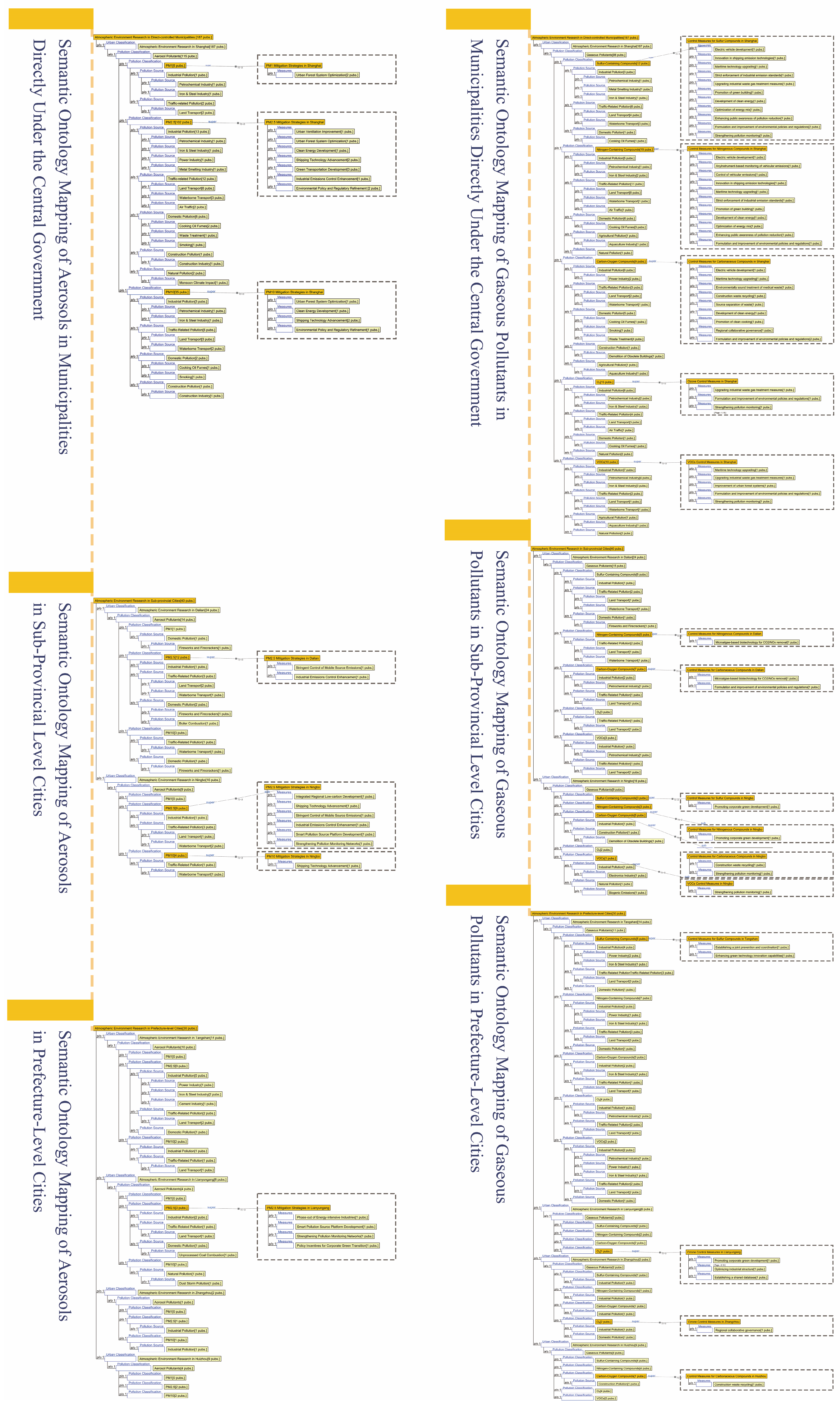
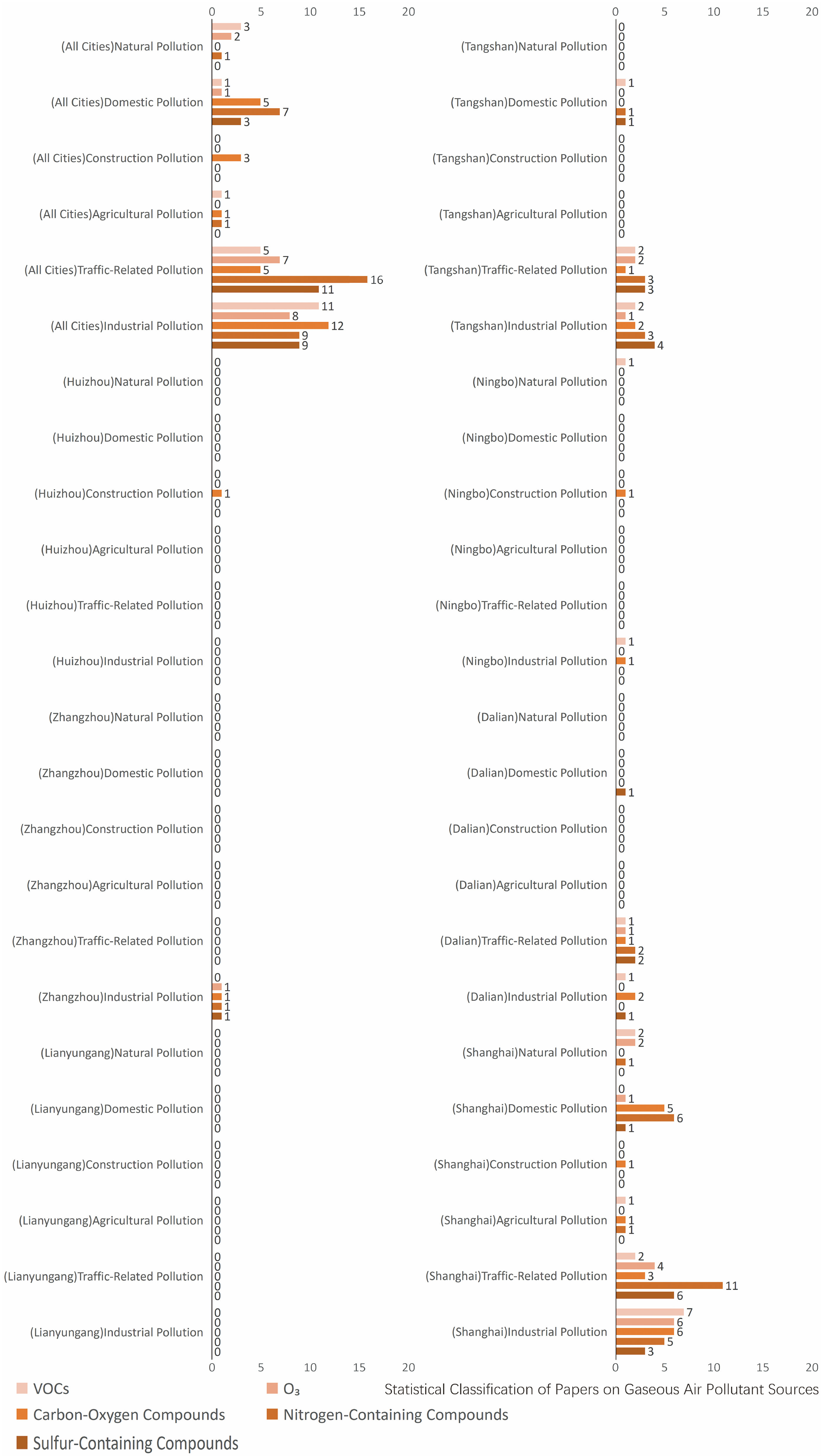
3.2.1. Atmospheric Environment Semantic Ontology Data Model Analysis
- (a)
- (b)
- (c)
- (d)
- (e)
- (f)
- (a)
- (b)
- (c)
- (d)
- (e)
- (f)
- Policy and governance system refinement covers regional coordinated governance [44,45], public awareness campaigns on pollution reduction [28], formulation and improvement of environmental policies and regulations [12,42,46], incentives for corporate green development [20,47], establishment of joint prevention mechanisms [39], and optimization of industrial structure [20].
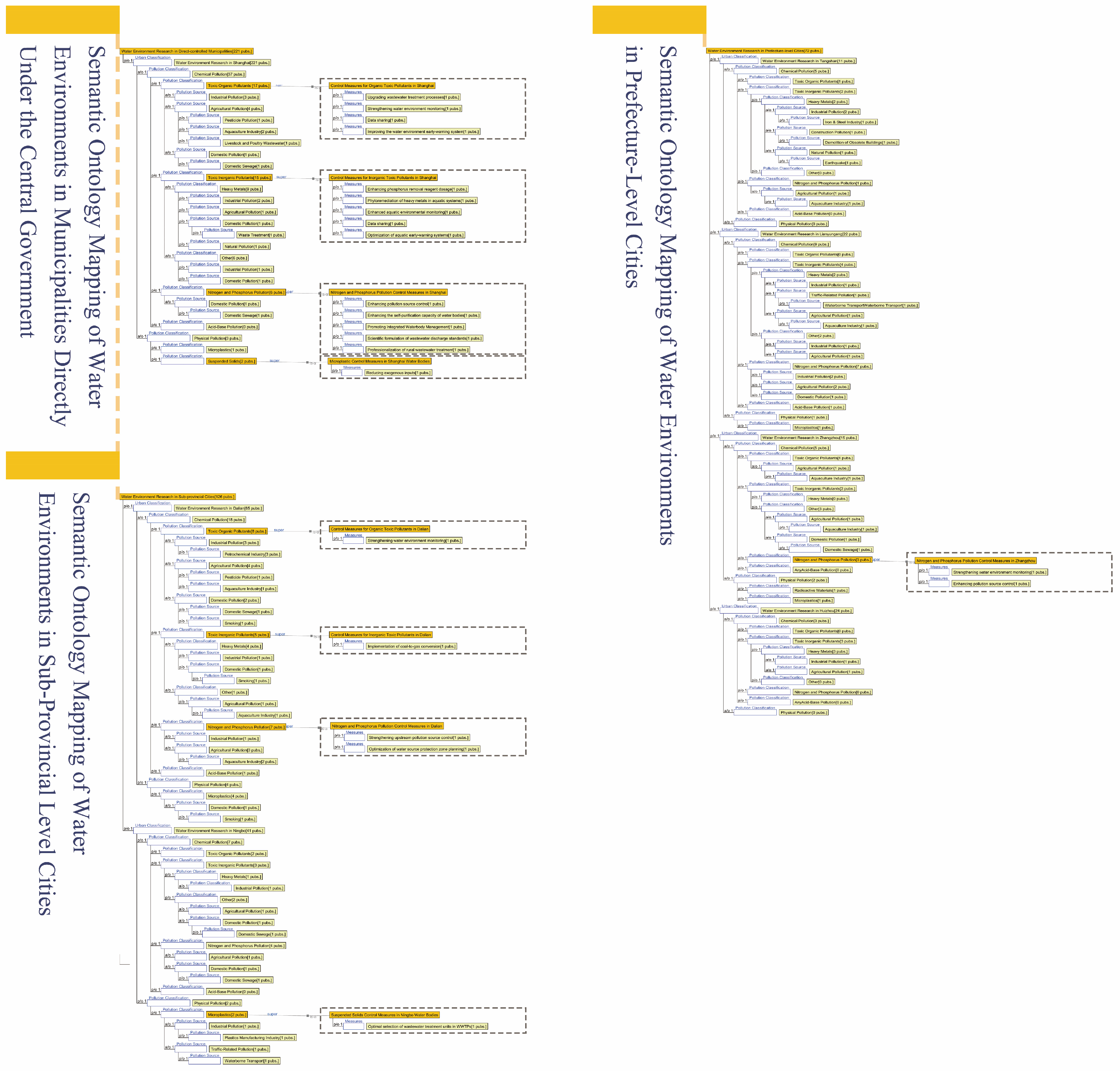
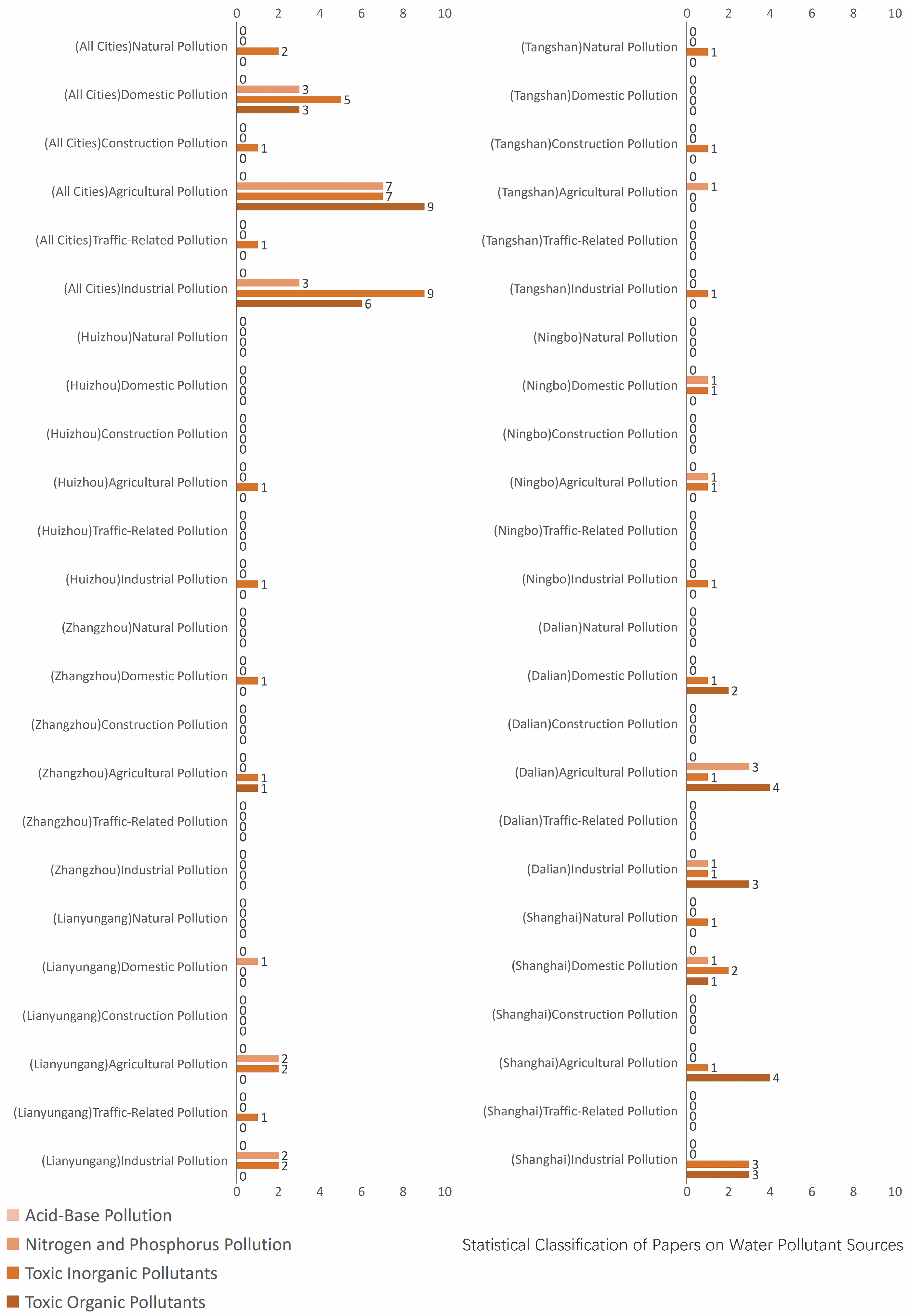
3.2.2. Water Environment Semantic Ontology Data Model Analysis
- (a)
- (b)
- (c)
- (d)
- (e)
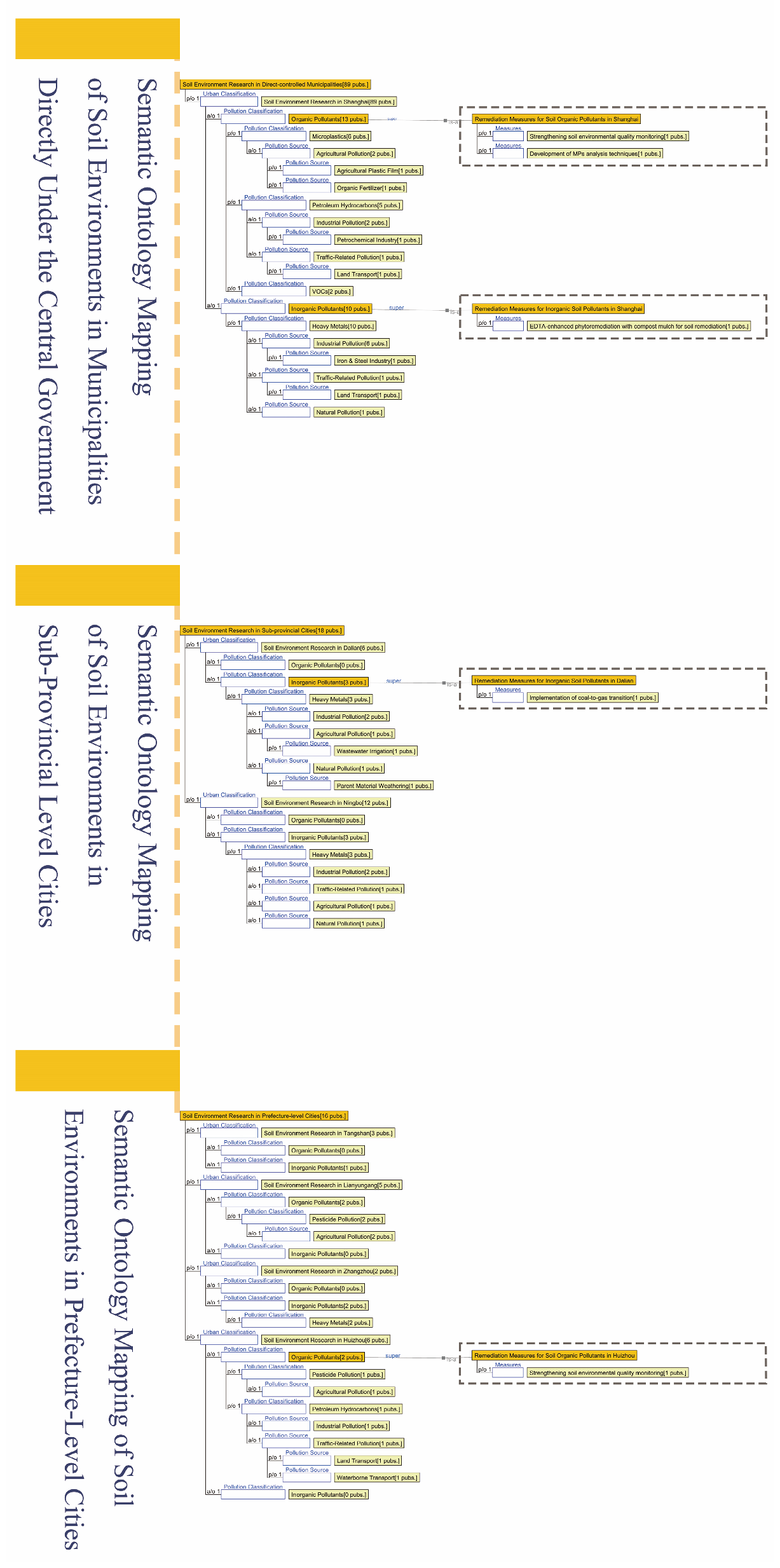
3.2.3. Soil Environment Semantic Ontology Data Model Analysis
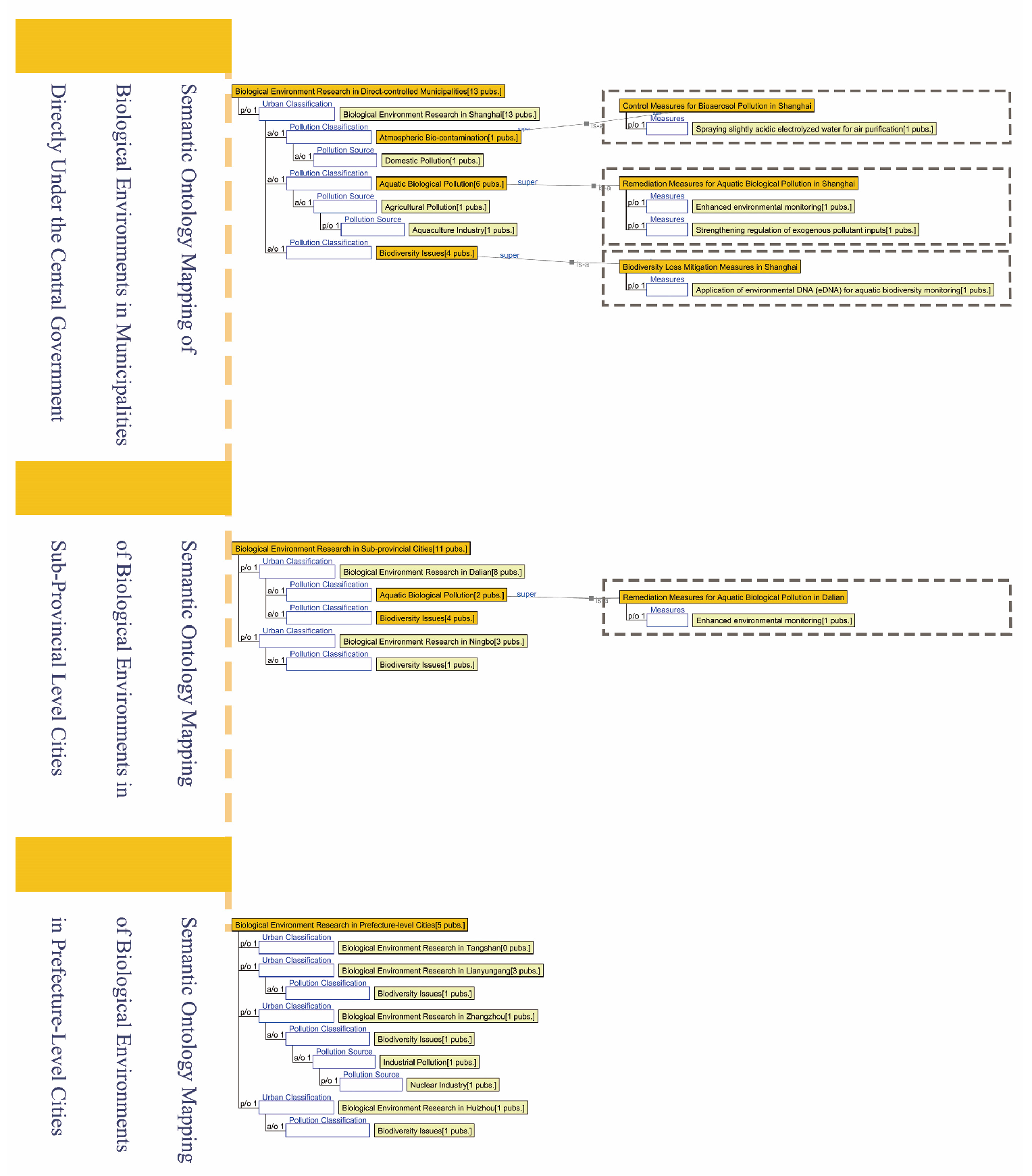
3.2.4. Biological Environment Semantic Ontology Data Model Analysis
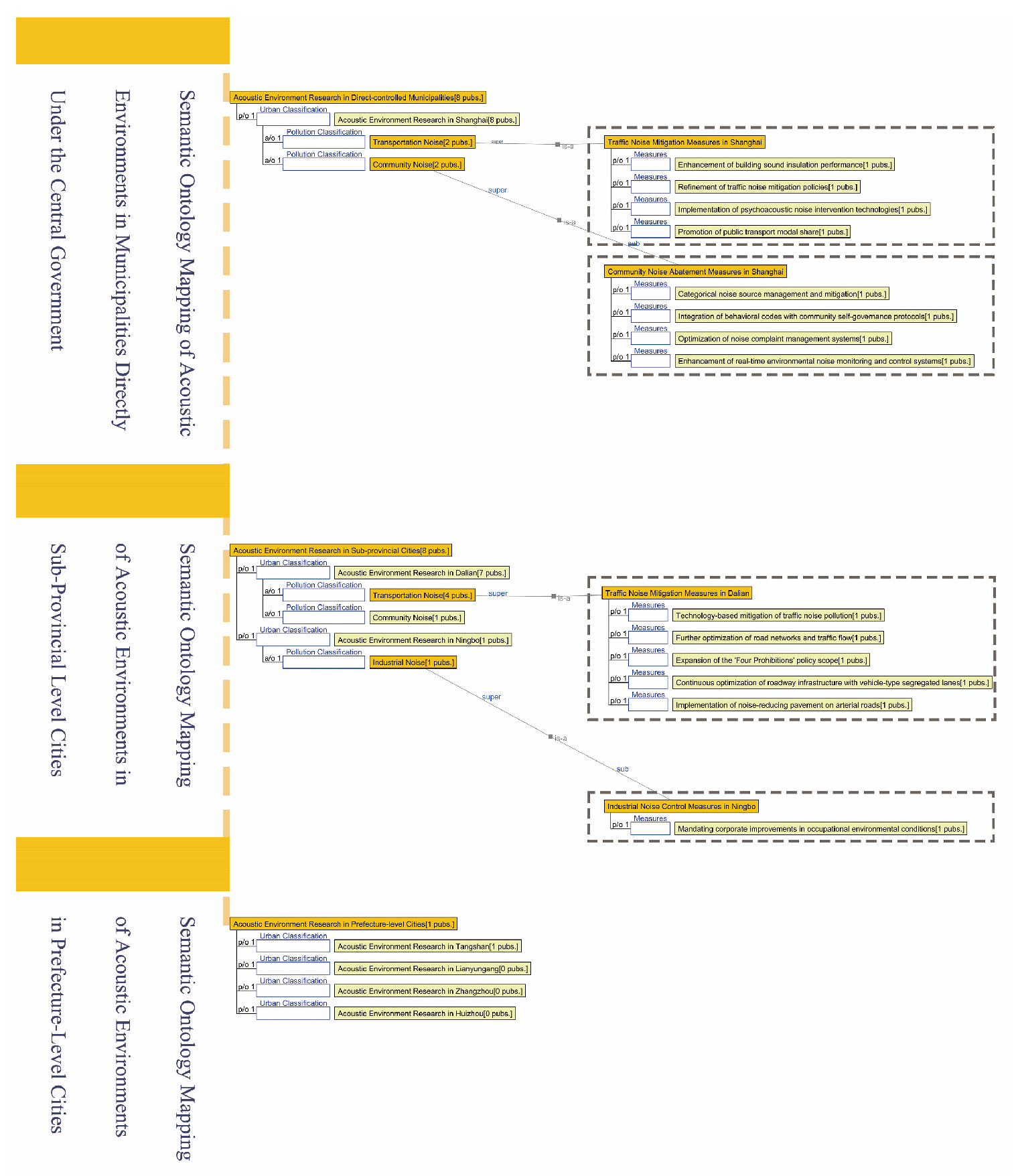
3.2.5. Acoustic Environment Semantic Ontology Data Model Analysis
- (a)
- Transportation noise control includes optimization of road networks and traffic volume [66], expansion of restricted zones for trucks, horns, motorcycles and hazardous vehicles [66], improved road infrastructure [66], use of noise-reducing pavement on major routes [66], enhanced building sound insulation [67], implementation of subjective noise intervention technologies [67], increased share of public transportation [67], and improved noise governance policies [67].
- (b)
- (c)
- Industrial noise reduction consists of measures to encourage enterprises to improve workplace conditions [68].
4. Conclusions
4.1. Summary of Existing Research
- (a)
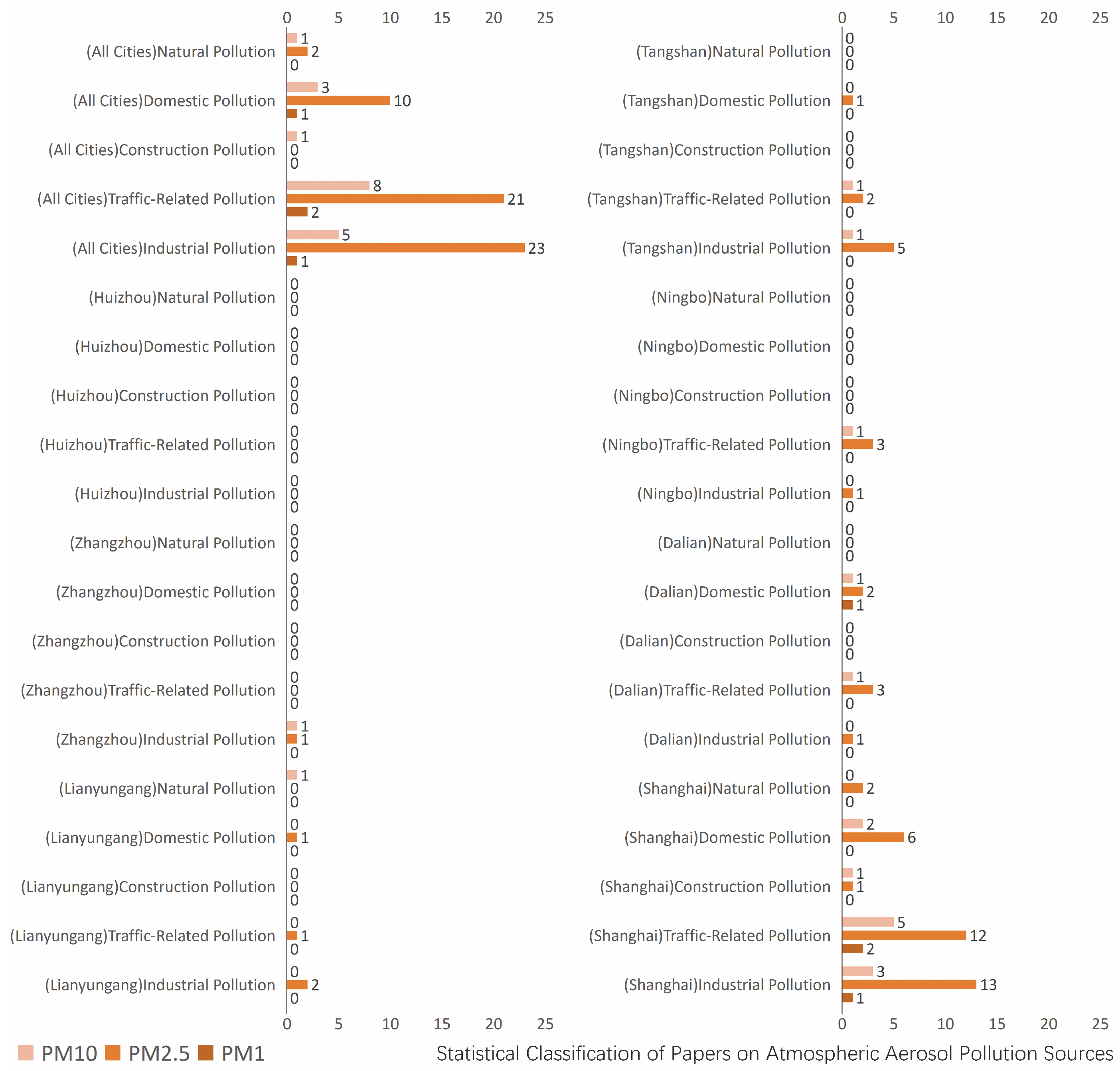
- Atmospheric Environment: Research resources are mainly concentrated in high administrative-level cities such as Shanghai, showing a significant urban selection bias. Investigative emphasis is on PM2.5 and nitrogen-containing compounds, with insufficient consideration given to PM1, PM10, VOCs, and other pollutants. Pollution source analysis shows a distinct imbalance, with industrial and transportation sources dominating research agendas, while construction and residential sources are distinctly understudied. An especially striking result is the severe lack of research explicitly associated with the petrochemical industry, as a profound disconnection from the fundamental industrial features of the cities studied.
- (b)
- Water Environment: Research on chemical pollution is highly skewed, and studies on physical pollution are particularly few. Research contents show path dependence, favoring inorganic toxic pollutants to the study of combined pollution effects. There is a systematic bias in pollution source analysis, in which agricultural sources predominate, and port-characteristic sources are ignored. The association with the petrochemical industry is extremely weak.
- (c)
- Soil Environment: There are notable geographical gaps in studies of the soil environment. Research on organic pollutants is dominated by studies from Shanghai, with several other cities recording no studies. The distribution of pollutant types suggests a coexistence of emerging hotspot-driven and traditional indicator-dependent trends, but deeper investigation of pollutants, such as VOCs, is lacking. Analysis of pollution sources diverges from main port functions, and there is hardly any association with the petrochemical industry.
- (d)
- Biological and Acoustic Environments: The research background of biological and acoustic environments is relatively weak. Biological studies are concentrated in highly populated cities, and the overall amount of acoustic environment research is far from adequate. In both areas, research perspectives are limited, with no analysis of specific pollution sources, and there is a complete lack of studies associated with the petrochemical industry.
4.2. Proposed Environmental Governance Strategies
- (a)
- Research system optimization strategy: A new research pattern of differentiated layout-precise focus-systematic integration should be established. On one hand, optimize the allocation of research resources, take the lead in implementing regional environmental research programs, increase investment in industrially important but less studied ports such as Tangshan, Huizhou, and Zhangzhou; on the other hand, change the research focus from hotspot following to problem-oriented exploration, develop Guidelines for Research on Characteristic Port Pollutants, promote systematic research on key pollutants such as PM1 subscriptPM1 PM_{1}, PM10 subscriptPM10 PM_{10}, VOCs, and petroleum hydrocarbons, strengthen interdisciplinary cooperation and cross-media integration, and build a multi-media synergistic research framework involving atmosphere, water, soil, and biology.
- (b)
- Implementation strategy of precise governance: Establish a three-party governance system combining characteristic pollutant inventory + characteristic pollution source analysis + industry-specific prevention and control. In terms of atmospheric governance, prioritize research on VOC emission characteristics and control technologies specific to the petrochemical industry, and establish a complete LDAR system. In terms of aquatic governance, establish a characteristic pollution inventory for port waters, and strengthen control over port-specific sources such as vessel operations and port activities. In terms of soil governance, carry out special surveys of the soil environment in petrochemical parks, establish a monitoring network for characteristic pollutants, and establish a robust risk assessment system.
- (c)
- Strategy of Technical Support System: A complete chain technical support system of monitoring and early warning process control and ecological restoration should be improved. Upgrade the environmental monitoring network to form an integrated air-space-ground monitoring system. Develop specific prevention and control technologies for typical pollutants, realizing key breakthroughs in aspects such as VOC treatment, petroleum hydrocarbon degradation, and noise control. Advance the development of an intelligent supervision platform to promote the transition from end-of-pipe treatment to whole-process control.
- (d)
- Policy and institutional guarantee strategy: A policy guarantee system with a standard system-responsibility mechanism-coordination platform should be established. Differentiated environmental standards should be formulated, and a customized one-port-one-policy governance plan should be developed. Environmental accountability mechanisms should be improved, and ecological compensation incentives should be established. Regional environmental coordination platforms should be cultivated to enhance joint prevention and control efforts across regions and departments.
4.3. Limitations and Future Research Directions
4.3.1. Limitations
4.3.2. Future Research Directions
Author Contributions
Funding
Institutional Review Board Statement
Informed Consent Statement
Data Availability Statement
Acknowledgments
Conflicts of Interest
References
- China Petroleum and Chemical Industry Federation: Petrochemical Industry Revenue Achieves Positive Growth. Available online: https://chinanpo.mca.gov.cn/xwxq?id=28032&newsType=1947,1943,1948 (accessed on 31 August 2025).
- Fang, S.-R.; Yao, H. Introduction to Environmental Science; Z-Library: Beijing, China, 2022. [Google Scholar]
- Tian, C.; Liang, Y.; Lin, Q.; You, D.; Liu, Z. Environmental Pressure Exerted by the Petrochemical Industry and Urban Environmental Resilience: Evidence from Chinese Petrochemical Port Cities. J. Clean. Prod. 2024, 471, 143430. [Google Scholar] [CrossRef]
- Dai, H.; Chen, J.; Yuan, Q.; Liu, P. Research on the High-Quality Development Strategy of the Petrochemical Industry. Strateg. Study CAE 2021, 23, 122–129. [Google Scholar] [CrossRef]
- Dai, H.; Chen, J.; Yuan, Q.; Liu, P. Research on the Green and Low-Carbon Transformation Development of China’s Chemical and Petrochemical Industry. Strateg. Study CAE 2024, 26, 223–232. [Google Scholar]
- Li, Z. A Study on Human Behavior in the Waterscape Space of a Residential Complex in China. Ph.D. Dissertation, Kyoto University, Kyoto, Japan, 2009. [Google Scholar]
- Wang, Y.; Dai, X.; Gong, D.; Zhou, L.; Zhang, H.; Ma, W. Correlations between Urban Morphological Indicators and PM2.5 Pollution at Street-Level: Implications on Urban Spatial Optimization. Atmosphere 2024, 15, 341. [Google Scholar] [CrossRef]
- Long, Y.; Zhang, W.; Sun, N.; Zhu, P.; Yan, J.; Yin, S. Sequential Interaction of Biogenic Volatile Organic Compounds and SOAs in Urban Forests Revealed Using Toeplitz Inverse Covariance-Based Clustering and Causal Inference. Forests 2023, 14, 1617. [Google Scholar] [CrossRef]
- Yang, Y.; Xu, Y.; Duan, Y.; Yang, Y.; Zhang, S.; Zhang, Y.; Xie, Y. How Can Trees Protect Us from Air Pollution and Urban Heat? Associations and Pathways at the Neighborhood Scale. Landsc. Urban Plan. 2023, 236, 104779. [Google Scholar] [CrossRef]
- Zhang, X.; Lyu, J.; Chen, W.Y.; Chen, D.; Yan, J.; Yin, S. Quantifying the Capacity of Tree Branches for Retaining Airborne Submicron Particles. Environ. Pollut. 2022, 310, 119873. [Google Scholar] [CrossRef]
- He, S.; Wu, X.; Wang, J. Comprehensive Economic Impact Assessment of Regional Shipping Emissions: A Case Study of Shanghai, China. Mar. Pollut. Bull. 2025, 211, 117368. [Google Scholar] [CrossRef]
- Ye, J.; Chen, J.; Wen, H.; Wan, Z.; Tang, T. Emissions Assessment of Bulk Carriers in China’s East Coast-Yangtze River Maritime Network Based on Different Shipping Modes. Ocean Eng. 2022, 249, 110903. [Google Scholar] [CrossRef]
- Xu, Y.; Xiang, J.; Lv, J. Analysis of Air Quality in a Typical Mountainous County/City in Eastern China—A Case Study of Xinchang County. Energy Conserv. Environ. Prot. 2022, 3, 44–46. [Google Scholar]
- Šabanovič, A.; Matijošius, J.; Marinković, D.; Chlebnikovas, A.; Gurauskis, D.; Gutheil, J.H.; Kilikevičius, A. Experimental Setup and Machine Learning-Based Prediction Model for Electro-Cyclone Filter Efficiency: Filtering of Ship Particulate Matter Emission. Atmosphere 2025, 16, 103. [Google Scholar] [CrossRef]
- Du, W.; Chen, L.; Wang, H.; Shan, Z.; Zhou, Z.; Li, W.; Wang, Y. Deciphering Urban Traffic Impacts on Air Quality by Deep Learning and Emission Inventory. J. Environ. Sci. 2023, 124, 745–757. [Google Scholar] [CrossRef] [PubMed]
- Ou, Y.; Bao, Z.; Thomas Ng, S.; Song, W. Estimating the Effect of Air Quality on Bike-Sharing Usage in Shanghai, China: An Instrumental Variable Approach. Travel Behav. Soc. 2023, 33, 100626. [Google Scholar] [CrossRef]
- Ting, Y.-C.; Ku, C.-H.; Zou, Y.-X.; Chi, K.-H.; Soo, J.-C.; Hsu, C.-Y.; Chen, Y.-C. Characteristics and Source-Specific Health Risks of Ambient PM2.5-Bound PAHs in an Urban City of Northern Taiwan. Aerosol Air Qual. Res. 2023, 23, 230092. [Google Scholar] [CrossRef]
- Ding, C.; Sun, W.; Wang, S.; Zou, S. Analyzing the Sources of PM2.5 at a State-Controlled Atmospheric Monitoring Substation in Dalian City Using Big Data. Sci. Technol. Inf. 2023, 21, 87–90. [Google Scholar] [CrossRef]
- Jiang, W.; Gao, X.; Yan, H.; Guo, L.; Zhang, H.; Ran, Z. Temporal and Spatial Distribution Characteristics of PM2.5 and Their Relationship with Meteorological Conditions in the Coastal Area of Lianyungang. Technol. Innov. Appl. 2022, 12, 73–75. [Google Scholar] [CrossRef]
- Wang, Y.; Li, H.; Yang, W. Analysis of Ambient Air Quality Changes and Improvement Measures in Lianyungang City During the “13th Five-Year Plan” Period. Shandong Chem. Ind. 2022, 51, 219–220, 223. [Google Scholar] [CrossRef]
- Fang, X.; Gao, B.; Cui, S.; Ding, L.; Wang, L.; Shen, Y. Regional Differences in PM2.5 Environmental Efficiency and Its Driving Mechanism in Zhejiang Province, China. Atmosphere 2023, 14, 672. [Google Scholar] [CrossRef]
- Kuang, C.; Yu, W.; Yin, Y.; Han, D.; Li, S.; Kuang, J. Heterogeneity Environmental Regulation and Provincial Haze Pollution in China: An Empirical Study Based on Threshold Model. Environ. Dev. Sustain. 2023, 25, 14715–14732. [Google Scholar] [CrossRef]
- Rahaman, S.; Tu, X.; Ahmad, K.; Qadeer, A. A Real-Time Assessment of Hazardous Atmospheric Pollutants across Cities in China and India. J. Hazard. Mater. 2024, 479, 135711. [Google Scholar] [CrossRef]
- Geng, J.; Wang, J.; Huang, J.; Zhou, D.; Bai, J.; Wang, J.; Zhang, H.; Duan, H.; Zhang, W. Quantification of the Carbon Emission of Urban Residential Buildings: The Case of the Greater Bay Area Cities in China. Environ. Impact Assess. Rev. 2022, 95, 106775. [Google Scholar] [CrossRef]
- Wang, T.; Li, K.; Liu, D.; Yang, Y.; Wu, D. Estimating the Carbon Emission of Construction Waste Recycling Using Grey Model and Life Cycle Assessment: A Case Study of Shanghai. Int. J. Environ. Res. Public Health 2022, 19, 8507. [Google Scholar] [CrossRef]
- Yang, G.; Zhang, Q.; Zhao, Z.; Zhou, C. How Does the “Zero-Waste City” Strategy Contribute to Carbon Footprint Reduction in China? Waste Manag. 2023, 156, 227–235. [Google Scholar] [CrossRef]
- Liao, N.; Bolyard, S.C.; Lü, F.; Yang, N.; Zhang, H.; Shao, L.; He, P. Can Waste Management System Be a Greenhouse Gas Sink? Perspective from Shanghai, China. Resour. Conserv. Recycl. 2022, 180, 106170. [Google Scholar] [CrossRef]
- Ali, M.A.; Assiri, M.E.; Islam, M.N.; Bilal, M.; Ghulam, A.; Huang, Z. Identification of NO2 and SO2 over China: Characterization of Polluted and Hotspots Provinces. Air Qual. Atmos. Health 2024, 17, 2203–2221. [Google Scholar] [CrossRef]
- Hua, E.; Sun, R.; Feng, P.; Song, L.; Han, M. Optimizing Onshore Wind Power Installation within China via Geographical Multi-Objective Decision-Making. Energy 2024, 307, 132431. [Google Scholar] [CrossRef]
- Li, J.; Li, S.; Zeng, Y.; Zhou, X.; Zeng, L.; Liu, M.; Cao, C.; Xia, Y.; Gao, J. Cooking-Related Thermal Comfort and Carbon Emissions Assessment: Comparison between Electric and Gas Cooking in Air-Conditioned Kitchens. Build. Environ. 2024, 265, 111992. [Google Scholar] [CrossRef]
- Wei, F.; Walls, W.D.; Zheng, X.; Li, G. Evaluating Environmental Benefits from Driving Electric Vehicles: The Case of Shanghai, China. Transp. Res. Part D Transp. Environ. 2023, 119, 103749. [Google Scholar] [CrossRef]
- Zhang, S.; Jiang, Y.; Zhang, S.; Choma, E.F. Health Benefits of Vehicle Electrification through Air Pollution in Shanghai, China. Sci. Total Environ. 2024, 914, 169859. [Google Scholar] [CrossRef]
- Dai, W.; Wang, S.; Zhang, S.; Zhu, J.; Gu, C.; Sun, Z.; Xue, R.; Zhou, B. A New Portable Open-Path Instrument for Ambient NH3 and on-Road Emission Measurements. J. Environ. Sci. 2024, 136, 606–614. [Google Scholar] [CrossRef]
- Wu, C.; Lv, S.; Wang, F.; Liu, X.; Li, J.; Liu, L.; Zhang, S.; Du, W.; Liu, S.; Zhang, F.; et al. Ammonia in Urban Atmosphere Can Be Substantially Reduced by Vehicle Emission Control: A Case Study in Shanghai, China. J. Environ. Sci. 2023, 126, 754–760. [Google Scholar] [CrossRef] [PubMed]
- Ji, A.; Guan, J.; Zhang, S.; Ma, X.; Jing, S.; Yan, G.; Liu, Y.; Li, H.; Zhao, H. Environmental and Economic Assessments of Industry-Level Medical Waste Disposal Technologies—A Case Study of Ten Chinese Megacities. Waste Manag. 2024, 174, 203–217. [Google Scholar] [CrossRef] [PubMed]
- Guo, H.; Zhou, F.; Zhang, Y.; Yang, Z. Quantitative Analysis of Sulfur Dioxide Emissions in the Yangtze River Economic Belt from 1997 to 2017, China. Int. J. Environ. Res. Public Health 2022, 19, 10770. [Google Scholar] [CrossRef] [PubMed]
- Ren, H.; Dong, W.; Zhang, Q.; Cheng, J. Identification of Priority Pollutants at an Integrated Iron and Steel Facility Based on Environmental and Health Impacts in the Yangtze River Delta Region, China. Ecotoxicol. Environ. Saf. 2023, 264, 115464. [Google Scholar] [CrossRef]
- Zhu, J.; Guo, B.; Qie, F.; Li, X.; Zhao, X.; Rong, J.; Zong, B. A Sustainable Integration of Removing CO2/NO and Producing Biomass with High Content of Lipid/Protein by Microalgae. J. Energy Chem. 2022, 73, 13–25. [Google Scholar] [CrossRef]
- Zhou, J.; Bai, X.; Tian, J. Study on the Impact of Electric Power and Thermal Power Industry of Beijing–Tianjin–Hebei Region on Industrial Sulfur Dioxide Emissions—From the Perspective of Green Technology Innovation. Energy Rep. 2022, 8, 837–849. [Google Scholar] [CrossRef]
- He, T.; Qian, X.; Huang, J.; Li, G.; Guo, X. A Mediation Analysis of Meteorological Factors on the Association between Ambient Carbon Monoxide and Tuberculosis Outpatients Visits. Front. Public Health 2025, 13, 1526325. [Google Scholar] [CrossRef]
- Xing, C.; Liu, C.; Lin, J.; Tan, W.; Liu, T. VOCs Hyperspectral Imaging: A New Insight into Evaluate Emissions and the Corresponding Health Risk from Industries. J. Hazard. Mater. 2024, 461, 132573. [Google Scholar] [CrossRef]
- Zhang, Z.; Guo, J.; Zhang, H.; Xiong, Y.; Li, J.; Wu, K.; He, W. Research on Real-Time Self-Calibration Method for SO2 UV Cameras. Acta Opt. Sin. 2023, 43, 1228005. [Google Scholar] [CrossRef]
- Shifting from End-of-Pipe Supervision to Whole-Process Control: Effectively Enhancing the Level of Atmospheric Environmental Governance—Ningbo Municipal Bureau of Ecology and Environment, Zhenhai Branch. Ningbo Commun. 2023, 8, 74–75.
- Sun, T.; Luo, Y.; Zhang, Z. Collaborative Governance of Air Pollution Caused by Energy Consumption in the Yangtze River Delta Urban Agglomeration under Low-Carbon Constraints: Efficiency Measurement and Spatial Empirical Testing. Water Air Soil Pollut. 2023, 234, 566. [Google Scholar] [CrossRef]
- Xie, S. Research on Ozone Characteristics and Control Strategy Methods in Longwen District, Zhangzhou City, Fujian Province. Ecol. Resour. 2024, 12, 22–24. [Google Scholar]
- Zhao, S.; Zhao, D.; Song, Q. Comparative Lifecycle Greenhouse Gas Emissions and Their Reduction Potential for Typical Petrochemical Enterprises in China. J. Environ. Sci. 2022, 116, 125–138. [Google Scholar] [CrossRef] [PubMed]
- Qu, Y.; Li, J.; Wang, S. Green Total Factor Productivity Measurement of Industrial Enterprises in Zhejiang Province, China: A DEA Model with Undesirable Output Approach. Energy Rep. 2022, 8, 307–317. [Google Scholar] [CrossRef]
- Mu, H.; Hou, X.; Wu, Z.; Li, J.; Wang, W.; Lu, M.; Liu, X.; Yao, Z. Pollution Characteristics and Ecological Impact of Screening Analysis of Fishing Port Sediments from Dalian, North China. Environ. Health 2024, 2, 702–711. [Google Scholar] [CrossRef] [PubMed]
- Chen, Y.; Yang, K.; Yang, M.; Lu, S.; Zhu, Y.; Xu, L.; Qian, M.; Shi, L. Screening of Priority Pollutants and Discussion on Coordinated Monitoring in the Yangtze River Delta Eco-Green Integration Demonstration Zone. Resour. Environ. Yangtze Basin 2022, 31, 358–365. [Google Scholar]
- Huang, M. Water Quality Assessment and Pollution Prevention Countermeasures for Huashanxi in Pinghe County. Strait Sci. 2024, 3, 80–83. [Google Scholar]
- Hu, L.; Jia, G.; Zhang, L. Water Quality Assessment and Pollution Characteristic Analysis of Reservoir-Type Water Sources in Dalian City. Green Sci. Technol. 2024, 26, 64–70. [Google Scholar]
- Qiu, J. Comprehensive Evaluation and Analysis of Water Environmental Quality in Major River Systems in the Shanghai Area. Des. Water Resour. Hydropower Eng. 2025, 44, 13–16. [Google Scholar] [CrossRef]
- Sun, C.; Wang, X.; Qiao, X. Multimedia Fate Simulation of Mercury in a Coastal Urban Area Based on the Fugacity/Aquivalence Method. Sci. Total Environ. 2024, 915, 170084. [Google Scholar] [CrossRef]
- Wang, Q.; Xu, H.; Gan, S.; Sun, R.; Zheng, Y.; Craig, N.J.; Sheng, W.; Li, J.-Y. Antibiotics and Endocrine Disrupting Chemicals in Effluent from Wastewater Treatment Plants of a Mega-City Affected the Water Quality of Juvenile Chinese Sturgeon Habitat: Upgrades to Wastewater Treatment Processes Are Needed. Mar. Pollut. Bull. 2025, 215, 117840. [Google Scholar] [CrossRef]
- Li, H.; Jin, W.; Zhang, W.; Hu, F.; Ye, J. Research on Comprehensive Treatment of Rural Domestic Sewage in China. Strateg. Study CAE 2022, 24, 154–160. [Google Scholar] [CrossRef]
- Zhou, H.; Jiang, L.; Xue, S. Analysis of Influent Fluctuation and Operation Strategy of a Wastewater Treatment Plant in Shanghai During the Silent Management Period. China Water Wastewater 2022, 38, 1–7. [Google Scholar] [CrossRef]
- Shi, Y.; Zhan, Q.; Zhang, L.; Wang, M.; Ye, H.; Huang, X.; Yang, G.; Cai, Y. Comparison of the Capacity and Characteristics of Representative Floating Plants for Removing Heavy Metals in Phytoremediation. Asian J. Ecotoxicol. 2022, 17, 316–325. [Google Scholar]
- Shi, Y.; Zhan, Q.; Zhang, L.; Wang, M.; Wu, D.; Lou, X.; Cai, Y. Study on the Prevention and Remediation Effect of Floating Plants on Heavy Metal Pollution in Freshwater Aquatic Products—Using Silver Crucian Carp as a Model. Qual. Saf. Agro-Prod. 2022, 1, 83–89. [Google Scholar]
- Liu, S.; Sun, F.; Ji, Y. Analysis of Spatiotemporal Distribution of Suspended Solids and Tidal Influence in Shanghai’s Major Rivers and Lakes. Water Resour. Prot. 2025, 41, 178–185. [Google Scholar]
- Jiang, L.; Chen, M.; Huang, Y.; Peng, J.; Zhao, J.; Chan, F.; Yu, X. Effects of Different Treatment Processes in Four Municipal Wastewater Treatment Plants on the Transport and Fate of Microplastics. Sci. Total Environ. 2022, 831, 154946. [Google Scholar] [CrossRef]
- Perez, C.N.; Carré, F.; Hoarau-Belkhiri, A.; Joris, A.; Leonards, P.E.G.; Lamoree, M.H. Innovations in Analytical Methods to Assess the Occurrence of Microplastics in Soil. J. Environ. Chem. Eng. 2022, 10, 107421. [Google Scholar] [CrossRef]
- Ding, Q.; Wang, H.; Yu, D.; Song, J.; Zhang, G.; Wang, Y. Basic Data Platform for Environmental Capacity and Carrying Capacity Calculation of Soil Organic Pollutants in Ningbo. J. Agro-Environ. Sci. 2024, 43, 2604–2614. [Google Scholar]
- Guo, Y.; Lin, K.; Gao, X.; Zheng, Q.; Zhou, T.; Zhao, Y. Disinfection Efficacy of Slightly Acidic Electrolyzed Water on Microorganisms: Application in Contaminated Waste Sorting Rooms across Varied Scenarios. J. Clean. Prod. 2024, 467, 142938. [Google Scholar] [CrossRef]
- Li, C.; Ling, L.; Tan, J.; Lin, X.; Wang, H.; Sun, B.; Li, Z. Challenges, Breakthroughs, and Prospects of Environmental DNA Technology in Aquatic Biological Monitoring. J. Shanghai Ocean Univ. 2023, 32, 564–574. [Google Scholar]
- Hu, L.; Xue, J.; Wu, H. Composition and Distribution of Bacteria, Pathogens, and Antibiotic Resistance Genes at Shanghai Port, China. Water 2024, 16, 2569. [Google Scholar] [CrossRef]
- Zhao, H.; Li, X.; Shen, X. Monitoring, Evaluation, and Prevention Measures of Road Traffic Noise in Areas Outside the Central Urban District of Dalian. Environ. Prot. Circ. Econ. 2023, 43, 62–64. [Google Scholar]
- Zhou, Y. Practice of Urban Acoustic Environmental Protection—A Case Study of Environmental Noise Control in Shanghai. China Environ. Prot. Ind. 2022, 6, 25–29. [Google Scholar]
- Duan, D.; Leng, P.; Li, X.; Mao, G.; Wang, A.; Zhang, D. Characteristics and Occupational Risk Assessment of Occupational Silica-Dust and Noise Exposure in Ferrous Metal Foundries in Ningbo, China. Front. Public Health 2023, 11, 1049111. [Google Scholar] [CrossRef]



 Municipality directly under the central government (WOS) Municipality directly under the central government (WOS) |  Municipality directly under the central government (CNKI) Municipality directly under the central government (CNKI) |
 Sub-provincial level city (WOS) Sub-provincial level city (WOS) |  Sub-provincial level city (CNKI) Sub-provincial level city (CNKI) |
 Prefecture-level City (WOS) Prefecture-level City (WOS) |  Prefecture-level City (CNKI) Prefecture-level City (CNKI) |
| Keywords | Centrality | Count | Keywords | Centrality | Count |
|---|---|---|---|---|---|
| Ecosystem services | 0.42 | 13 | Policy | 0.16 | 33 |
| Generation | 0.27 | 7 | Influencing factors | 0.16 | 15 |
| Economic growth | 0.26 | 12 | Yangtze river economic belt | 0.16 | 10 |
| Financial constraints | 0.24 | 4 | Public attention | 0.16 | 3 |
| Design | 0.22 | 7 | Sustainable development | 0.15 | 31 |
| Particulate matter [Atmospheric Environment] | 0.20 | 22 | Corporate governance | 0.15 | 18 |
| Drivers | 0.20 | 3 | Areas | 0.15 | 11 |
| Responsibility | 0.19 | 20 | Resolution | 0.15 | 5 |
| Energy consumption | 0.19 | 11 | Haze [Atmospheric Environment] | 0.15 | 3 |
| PM2.5 concentrations [Atmospheric Environment] | 0.19 | 3 | Deep learning | 0.14 | 10 |
| Life cycle assessment | 0.18 | 22 | Aerosol [Atmospheric Environment] | 0.14 | 6 |
| Trends | 0.18 | 15 | Social responsibility | 0.13 | 17 |
| Chemistry | 0.18 | 5 | Deposition | 0.13 | 6 |
| Municipal solid waste | 0.17 | 6 | Media attention | 0.13 | 3 |
| Exposure | 0.16 | 35 | Challenges | 0.13 | 2 |
| Keywords | Centrality | Count | Keywords | Centrality | Count |
|---|---|---|---|---|---|
| 上海 (Shanghai) | 0.18 | 16 | 重金属 (Heavy metals) | 0.02 | 5 |
| 水环境 (Water environment) [Aquatic Environment] | 0.08 | 8 | 水质评价 (Water quality assessment) [Aquatic Environment] | 0.02 | 5 |
| 土壤 (Soil) [Soil Environment] | 0.07 | 6 | 上海市 (Shanghai) | 0.02 | 2 |
| 地下水 (Groundwater) [Aquatic Environment] | 0.04 | 5 | 发展环境 (Development environment) | 0.02 | 1 |
| 养殖 (Aquaculture) | 0.04 | 1 | 发布特征 (Emission characteristics) | 0.01 | 2 |
| 幼蟹 (Juvenile crabs) | 0.03 | 2 | 评估 (Assessment) | 0.01 | 2 |
| 土壤污染 (Soil pollution) [Soil Environment] | 0.03 | 1 | 工业地块 (Industrial sites) | 0.01 | 2 |
| 空气质量 (Air quality) [Atmospheric Environment] | 0.02 | 9 | 绿色经济 (Green economy) | 0.01 | 2 |
| 水质 (Water quality) [Aquatic Environment] | 0.02 | 7 | 浮水植物 (Floating aquatic plants) | 0.01 | 2 |
| Keywords | Centrality | Count | Keywords | Centrality | Count |
|---|---|---|---|---|---|
| Satisfaction | 0.42 | 4 | Identification | 0.17 | 8 |
| Energy consumption | 0.37 | 4 | Diversity | 0.17 | 3 |
| Pollution | 0.34 | 10 | China | 0.16 | 6 |
| Quality | 0.33 | 8 | Performance | 0.15 | 16 |
| Catalyst | 0.31 | 6 | Evolution | 0.14 | 7 |
| Removal | 0.26 | 4 | Fabrication | 0.14 | 2 |
| Particulate matter [Atmospheric Environment] | 0.22 | 7 | Degradation | 0.14 | 2 |
| Source apportionment | 0.21 | 6 | Hydrogenation | 0.14 | 2 |
| Energy | 0.20 | 15 | Water quality [Aquatic Environment] | 0.13 | 2 |
| Impact | 0.20 | 11 | Model | 0.12 | 10 |
| Life cycle assessment | 0.20 | 4 | Carbon | 0.12 | 2 |
| Environmental impacts | 0.20 | 2 | Catalysts | 0.11 | 7 |
| Nanosheets | 0.19 | 6 | Air source heat pump | 0.11 | 1 |
| Long term exposure | 0.19 | 2 | Emissions | 0.09 | 4 |
| 15 System | 0.17 | 9 | 30 Environment | 0.09 | 3 |
| Keywords | Centrality | Count | Keywords | Centrality | Count |
|---|---|---|---|---|---|
| 宁波 (Ningbo) | 0.02 | 7 | 协同治理 (Collaborative governance) | 0.01 | 2 |
| Keywords | Centrality | Count | Keywords | Centrality | Count |
|---|---|---|---|---|---|
| Abundance | 0.40 | 4 | Haze | 0.16 | 2 |
| Water [Aquatic Environment] | 0.33 | 4 | Model | 0.15 | 7 |
| Management | 0.33 | 4 | Construction waste | 0.15 | 2 |
| Air pollution [Atmospheric Environment] | 0.33 | 3 | Atmospheric mercury | 0.15 | 1 |
| Allocation principles | 0.29 | 1 | Aerosols | 0.14 | 2 |
| Exposure | 0.26 | 4 | Air pollution accidents [Atmospheric Environment] | 0.13 | 1 |
| Sea [Aquatic Environment] | 0.26 | 4 | Bayesian networks | 0.13 | 1 |
| Beijing-Tianjin-Hebei region | 0.19 | 3 | Assessments | 0.13 | 1 |
| Emissions | 0.19 | 2 | Framework | 0.13 | 2 |
| Heavy metals | 0.19 | 2 | Air quality [Atmospheric Environment] | 0.12 | 2 |
| Pearl river delta [Aquatic Environment] | 0.18 | 4 | PM2.5 concentrations [Atmospheric Environment] | 0.11 | 2 |
| China | 0.17 | 15 | Pollution | 0.11 | 2 |
| Contamination | 0.17 | 3 | Sustainable development | 0.10 | 2 |
| Energy | 0.16 | 2 | Impact | 0.09 | 5 |
| Deep learning | 0.16 | 4 | Environment | 0.09 | 3 |
| Keywords | Centrality | Count | Keywords | Centrality | Count |
|---|---|---|---|---|---|
| 唐山市 (Tangshan) | 0.06 | 5 | 污染源 (Pollution sources) | 0.01 | 2 |
| 空气质量 (Air quality) [Atmospheric Environment] | 0.04 | 9 | 惠州市 (Huizhou) | 0.01 | 2 |
| 水环境 (Water environment) [Aquatic Environment] | 0.01 | 7 | 低碳 (Low-carbon) | 0.01 | 1 |
| 水质 (Water quality) [Aquatic Environment] | 0.01 | 5 | 臭氧 (Ozone) [Atmospheric Environment] | 0.01 | 1 |
| 水质评价 (Water quality assessment) [Aquatic Environment] | 0.01 | 3 | 污染物 (Pollutants) | 0.01 | 1 |
| 治理 (Governance) | 0.01 | 2 |
 |  |  |  | |||
| All Cities | Shanghai | Dalian | Ningbo | |||
 |  |  |  | |||
| Tangshan | Lianyungang | Zhangzhou | Huizhou | |||
 |  |  |  | |||
| All Cities | Shanghai | Dalian | Ningbo | |||
 |  |  |  | |||
| Tangshan | Lianyungang | Zhangzhou | Huizhou | |||
 |  |  |  | |||
| All Cities | Shanghai | Dalian | Ningbo | |||
 |  |  |  | |||
| Tangshan | Lianyungang | Zhangzhou | Huizhou | |||
Disclaimer/Publisher’s Note: The statements, opinions and data contained in all publications are solely those of the individual author(s) and contributor(s) and not of MDPI and/or the editor(s). MDPI and/or the editor(s) disclaim responsibility for any injury to people or property resulting from any ideas, methods, instructions or products referred to in the content. |
© 2025 by the authors. Licensee MDPI, Basel, Switzerland. This article is an open access article distributed under the terms and conditions of the Creative Commons Attribution (CC BY) license (https://creativecommons.org/licenses/by/4.0/).
Share and Cite
Lu, H.; Xu, Q.; Liu, J.; Wang, G.; Huang, W. A Review of Environmental Quality Studies in China’s Petrochemical Port Cities Driven by a Semantic Ontology Data Model. Sustainability 2026, 18, 120. https://doi.org/10.3390/su18010120
Lu H, Xu Q, Liu J, Wang G, Huang W. A Review of Environmental Quality Studies in China’s Petrochemical Port Cities Driven by a Semantic Ontology Data Model. Sustainability. 2026; 18(1):120. https://doi.org/10.3390/su18010120
Chicago/Turabian StyleLu, Huajian, Qifan Xu, Jing Liu, Guangyuan Wang, and Weihao Huang. 2026. "A Review of Environmental Quality Studies in China’s Petrochemical Port Cities Driven by a Semantic Ontology Data Model" Sustainability 18, no. 1: 120. https://doi.org/10.3390/su18010120
APA StyleLu, H., Xu, Q., Liu, J., Wang, G., & Huang, W. (2026). A Review of Environmental Quality Studies in China’s Petrochemical Port Cities Driven by a Semantic Ontology Data Model. Sustainability, 18(1), 120. https://doi.org/10.3390/su18010120