Systematic Review

From Waste to Sustainable Pavements: A Systematic and Scientometric Assessment of E-Waste-Derived Materials in the Asphalt Industry


by
Nura Shehu Aliyu Yaro
1,2,*,
Luvuno Nkosinathi Jele
1,
Jacob Adedayo Adedeji
1,*,
Zesizwe Ngubane
1 and
Jacob Olumuyiwa Ikotun
1
1
Sustainable Environment and Transportation Research Group (SET-RG), Department of Civil Engineering Midlands, Durban University of Technology, Private Bag X01, Scottsville, Pietermaritzburg 3021, South Africa
2
Department of Civil Engineering, Ahmadu Bello University, Zaria 810107, Nigeria
*
Authors to whom correspondence should be addressed.
Sustainability 2026, 18(1), 12; https://doi.org/10.3390/su18010012
Submission received: 28 November 2025 / Revised: 11 December 2025 / Accepted: 12 December 2025 / Published: 19 December 2025

Abstract

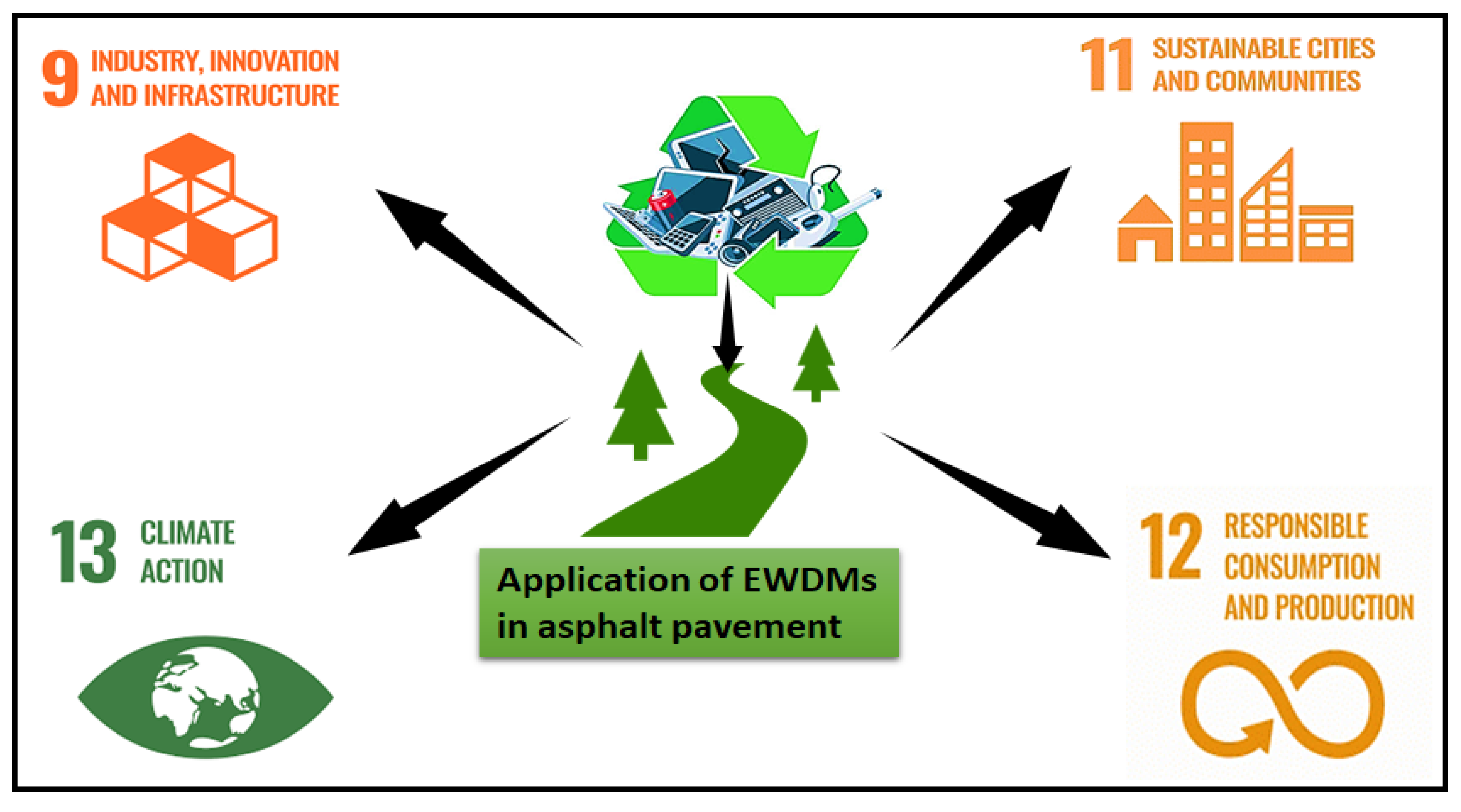
The global production of electronic waste (e-waste) has increased due to the quick turnover of electronic devices, creating urgent problems for resource management and environmental sustainability. As a result, e-waste-derived materials (EWDMs) are being explored in pavement engineering research as sustainable substitutes in line with Sustainable Development Goals (SDGs), specifically SDG 9 (Industry, Innovation, and Infrastructure), 11 (Sustainable Cities and Communities), 12 (Responsible Consumption and Production), and 13 (Climate Action). Therefore, to assess global research production and the effectiveness of EWDMs in asphalt applications, this review combines scientometric mapping and systematic evidence synthesis. A total of 276 relevant publications were identified via a thorough search of Web of Science, Scopus, and ScienceDirect (2010–2025). These were examined via coauthorship structures, keyword networks, and contributions at the national level. The review revealed that China, India, and the United States are prominent research hubs. Additionally, experimental studies have shown that EWDMs, such as printed circuit board powder, fluorescent lamp waste glass, high-impact polystyrene, and acrylonitrile–butadiene–styrene, improve the fatigue life, Marshall stability, rutting resistance (up to 35%), and stiffness (up to 28%). However, issues with long-term field durability, microplastic release, heavy metal leaching, and chemical compatibility still exist. These restrictions highlight the necessity for standardised toxicity testing, harmonised mixed-design frameworks, and performance standards unique to EWDMs. Overall, the review shows that e-waste valorisation can lower carbon emissions, landfill build-up, and virgin material extraction, highlighting its potential in the circular pavement industry and promoting sustainable paving practices in accordance with SDGs 9, 11, 12, and 13. This review suggests that further studies on large-scale field trials, life cycles, and technoeconomic assessments are needed to guarantee the safe, long-lasting integration of EWDMs in pavements. It also advocates for coordinated research, supportive policies, and standardised methods.

1. Introduction

The pavement sector is essential to the development of the world’s infrastructure, especially in light of the growing demand for mobility and the increasing pace of urbanisation [1,2]. However, the widespread use of virgin materials, such as aggregates, natural fillers, and asphalt binders, has led to serious environmental issues, such as resource depletion, increased greenhouse gas emissions, and wider adverse conservation impacts [2,3]. Furthermore, the energy-intensive nature of asphalt production and the growing amounts of municipal and industrial waste highlight the pressing need for innovative approaches such as the adoption of circular economy concepts in pavement engineering and the sourcing of sustainable materials [3,4,5].
Globally, electronic waste, or “e-waste,” has become one of the fastest-growing waste streams [6,7]. This is due to swift technological innovation and shorter product lifespans. This has led to an exponential increase in e-waste, which presents serious environmental and resource management concerns on a global scale [8,9]. According to projections, e-waste will double by 2050, resulting in 120 million tonnes annually [10,11,12]. Approximately 50% of the materials included in e-waste are metals, 21% are plastics, 10% are nickel alloys, 6% are solder residues, and 13% are other non-ferrous elements [8,10]. To address growing concerns about the transnational transport of hazardous waste, particularly from developed nations to developing nations, the Basel Convention was adopted in 1989 and put into effect in 1992 [13,14]. The extensive export of hazardous commodities, especially e-waste, to areas with lax or nonexistent environmental rules prompted this international agreement [15,16]. These actions highlighted global disparities in waste management capability and regulatory compliance, exposing recipient countries to serious environmental and health concerns [13,14].
Conventional disposal techniques such as landfilling and incineration exacerbate global sustainability issues by polluting the air, water, and soil [4,5]. Additionally, the conventional practices for disposing of and recycling these intricate streams continue to be environmentally harmful and energy-intensive [16,17]. However, upcycling e-waste components in the construction industry can provide a sustainable substitute within the context of the circular economy, balancing waste reduction with resource efficiency [18,19]. E-waste plastics show great promise as additives or partial substitutes for aggregates and cement in construction industry applications [20]. Additionally, their advantageous mechanical, thermal, and viscoelastic qualities can decrease the reliance on virgin raw materials, increase durability, and improve performance [20,21,22]. By lowering embodied carbon, completing material loops, and fostering more robust and sustainable road infrastructure, the concept of the circular economy can be directly supported [18,23].
Among the types of e-waste that can be utilised in the pavement industry are polymeric components such as plastics, high-impact polystyrene (HIPS), acrylonitrile butadiene styrene (ABS), and polypropylene (PP). Other reusable e-waste materials include the non-metallic fractions (NMF) of printed circuit boards, as well as waste toner powders (WTPs) and cartridges, which constitute a major portion of global e-waste. [17,24,25,26]. Waste toner (WT), generated during toner production and widely used in photocopiers, fax machines, and laser printers, contributes significantly to waste, with half of the 1.1 billion cartridges used each year being discarded [27].
In addition to wasting precious resources such as metals and polymers, the inappropriate disposal of this waste releases hazardous gases such as CO2 and methane into the atmosphere and groundwater [28,29]. Because of its tiny particle size and chemical composition, WT, which is made up of polyacrylate, polystyrene, SiO2, and FeO4, is categorised as hazardous [30,31]. In contrast to landfilling or incineration, recycling WT provides a more sustainable approach, reducing dangers to the environment and human health [31,32,33].
The demand for sustainable infrastructure solutions that reduce environmental effects while improving material efficiency is driving the pavement industry more [34]. A promising approach to sustainable pavement engineering is the valorisation of materials obtained from e-waste, which has the potential to lower the use of virgin materials, divert hazardous waste from landfills, and enhance pavement performance [35,36]. To evaluate global research trends and the strategic viability of incorporating e-waste materials as innovative alternatives in the asphalt pavement industry [36,37]. This study uniquely integrates scientometric mapping, a systematic literature review, and environmental analysis to examine the application of e-waste-derived materials (EWDMs) and WTs in asphalt pavements. While previous studies have explored individual aspects of EWDMs, no existing work has combined these analytical approaches to evaluate their technical and sustainability impacts. By mapping evolving research trends and incorporating empirical findings, this review identifies knowledge gaps, outlines future research directions, and contextualises the rheological, mechanical, and durability effects of EWDMs within the circular economy and Sustainable Development Goals (SDGs). The methodology underscores pavement engineering’s critical role in advancing sustainable, resilient infrastructure and informing evidence-based policy.

2. Theoretical Background

2.1. Waste Generation and Application in Pavement Engineering

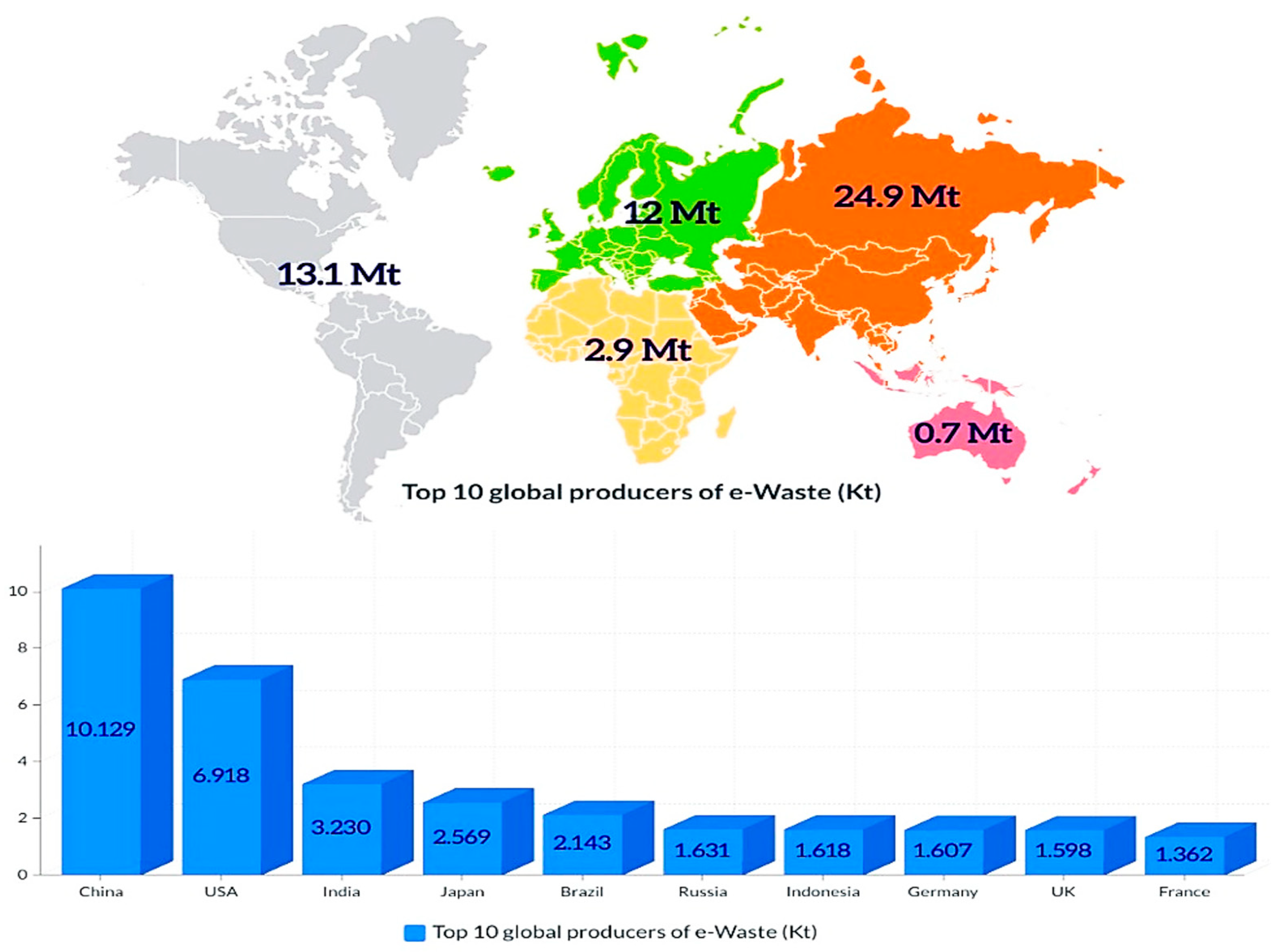
Global e-waste production reached approximately 53.6 million tonnes (Mt) in 2019 alone, a notable 21% increase over the previous five years [38,39,40,41]. By 2030, this number is expected to increase significantly to 74 Mt, nearly tripling the 2014 levels in just 16 years. Because of its rapid rise, e-waste is now the home waste stream with the fastest rate of growth in the world [14,38]. Asia produced 24.9 Mt of e-waste in 2019, making it the top producer, according to regional statistics, as shown in Figure 1. Africa and Oceania ranked second and third, with 2.9 and 0.7 Mt, respectively, followed by the Americas (13.1 Mt) and Europe (12 Mt) [42,43,44]. As of 2022, only 22.3% of the world’s e-waste has been formally collected and recycled, indicating that recycling rates for this type of waste remain extremely low [45]. Approximately 82.6% (44.3 Mt) of the e-waste generated globally was not collected, whereas only 17.4% (9.3 Mt) was formally gathered and documented. The impacts of this unmanaged e-waste on human health and the environment vary across regions [42,46].
Even while international programmes such as the Basel Convention and Extended Producer Responsibility (EPR) are meant to improve e-waste governance, implementation is still lacking, especially in middle-income and low-income countries [14,47]. These records highlight the critical need for sustainable approaches to the management and valuation of e-waste, especially in engineering applications such as pavement technology, where the concept of the circular economy can have significant positive effects on the environment and the economy [6,44]. Recently, the construction industry has been paying increasing attention to the value-adding of these EWDMs, especially in the field of pavement engineering [48,49,50]. Asphalt pavement presents strategic potential for the utilisation of EWDMs to improve performance, help reduce greenhouse gas (GHG) emissions, manage waste, and conserve resources at the same time because of its large-scale application and high material demand.

2.2. EWDM Application in Asphalt Pavement

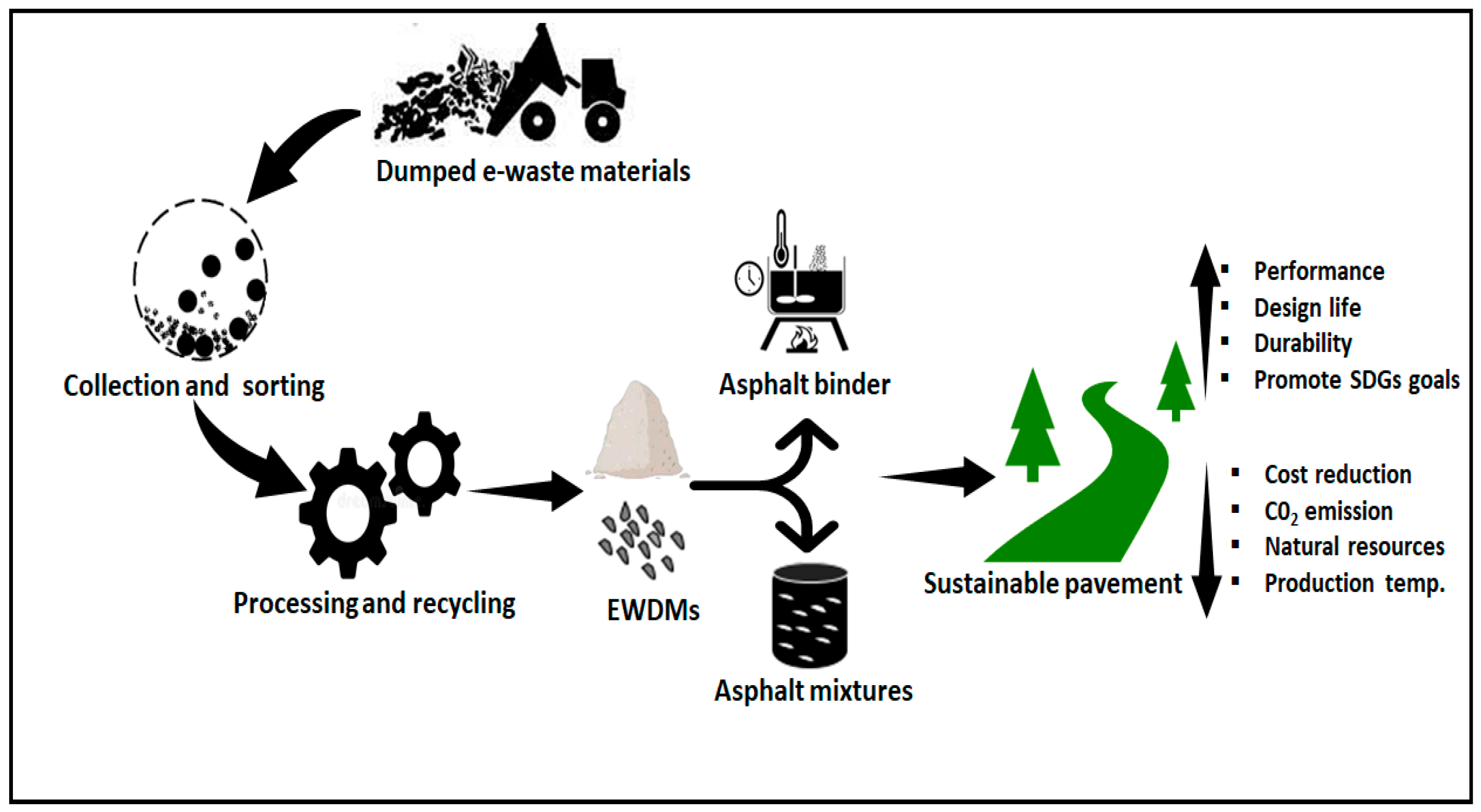
EWDM incorporation into the asphalt pavement industry will address a number of sustainability issues [15,51]. First, it has been shown that modifying asphalt binders with waste plastics and polymers produced from electronic waste can improve rheological characteristics, rutting resistance, fatigue life, and durability in a variety of traffic and climate scenarios [52,53]. Additionally, the carbon footprint associated with asphalt binder manufacturing is reduced when EWDMs are used in place of virgin asphalt binder by reducing reliance on petroleum-based resources [53]. Furthermore, EWDMs can be diverted from landfills to create useful construction material alternatives, which reduce environmental contamination, ease land usage pressure, and encourage a circular economy [18,54]. Numerous methods of valorising and upcycling EWDMs in the asphalt industry have been investigated [50,55]. ABS, ABS-PC blends, HIPS, and polyethylene fractions are among the waste plastics recovered from e-waste streams that have been used as polymer modifiers in asphalt binders, showing enhanced stability and performance at high temperatures [50,55]. Waste printer toners, which are high in thermoplastics and carbon black, have been effectively integrated into warm mix and hot mix asphalt systems, providing advantages in terms of reduced emissions, increased workability, and energy savings [25,55,56]. Furthermore, whether the NMF of shredded printed circuit boards, which are generally abundant in thermosetting resins and fillers, can be used as fine aggregates or fillers to improve stiffness and moisture resistance has been investigated [11,57,58].
With the global shift towards sustainability, the upcycling of EWDMs in asphalt pavement engineering is in line with SDGs 9 (Industry, Innovation, and Infrastructure), 11 (Sustainable Cities and Communities), 12 (Responsible Consumption and Production), and 13 (Climate Action). The pavement sector also supports national and international decarbonisation goals and promotes research in sustainable materials science by using such circular economy practices [4,59]. Additionally, with increasing and encouraging laboratory results and pilot-scale studies with positive results related to EWDMs in the asphalt industry, a number of obstacles still exist [50,60]. Concerns about long-term performance, possible hazardous material leaching, regulatory ambiguities, and variations in the composition of e-waste feedstocks all call for more studies, standardisation initiatives, and cross-sectoral cooperation [26,61,62].

2.3. Classification of EWDMs for Use in Asphalt Pavement

One interesting approach to enhancing performance while addressing sustainability and waste management issues is the incorporation of EWDMs into asphalt pavement systems [53,60]. The composition and functional behaviour of these materials, which are derived from discarded electronic components, differ greatly [21,60]. The main EWDMs are categorised systematically in Table 1 according to their place of origin, material properties, possible use in asphalt mixtures, and related sustainability advantages [50]. Carbon black obtained from pyrolysis, non-metallic PCB wastes, plastic fractions such as ABS and HIPS, and WTP are important categories [62,63]. Owing to their distinct improvements in the mechanical, rheological, or environmental performance of asphalt, each class promotes the idea of a circular economy and lessens reliance on virgin resources [50,60]. This classification serves as the foundation for comprehending their technical feasibility and coordinating subsequent studies with the objectives of sustainable infrastructure. Table 2 shows the oxide compositions of various EWDMs used in asphalt pavement.

3. Methodology

3.1. Comprehensive Research Approach

The use of EWDMs, such as WTs and plastics derived from e-waste, in asphalt pavement engineering is critically examined in this study via a thorough and integrated research framework that incorporates scientometric analysis and a systematic literature review. To ensure methodological consistency and transparency, the review procedure complied with the Preferred Reporting Items for Systematic Reviews and Meta-Analyses (PRISMA) standards [72], as can be seen in Supplementary Files S1 and S2.
By identifying significant thematic clusters, influential authors, collaborative networks, publication trends, and keyword cooccurrences in the field of e-waste incorporation into asphalt mixtures, scientometric analysis provides a data-driven mapping of the global research landscape that complements the SLR. An in-depth comprehension of the intellectual framework, new research directions, and changing knowledge trajectories surrounding e-waste valuation in pavement engineering is made possible by this quantitative bibliometric mapping. The environmental and circular economy potential analysis that follows builds on scientometric insights by offering a structured qualitative evaluation of the environmental effects and major benefits related to incorporating e-waste materials into asphalt binders and mixtures. In addition to outlining the present state of scientific understanding, this integrated methodological approach is consistent with broader sustainability and circular economy views. Additionally, it makes it possible to identify important research gaps, policy implications, and strategic orientations for promoting sustainable improvements in the design and construction of asphalt pavement.

3.2. Study Motivation, Research Objectives, and Questions

Attention to the recycling and repurposing of waste materials in pavement engineering has increased due to the increased focus on sustainability, resource efficiency, and the concept of the circular economy. Much attention has been given to e-waste, which includes WTPs and polymers resulting from e-waste and has become a promising alternative material type for asphalt pavement modification. These waste streams, which come from abandoned electronic devices, have special physicochemical properties that could improve the performance of asphalt binder, increase the durability of mixtures, and divert hazardous waste from landfills, all of which would help to protect the environment and build low-carbon pavement infrastructure. However, despite recent advances in research, there is still a lack of comprehensive understanding of global research trends, technical applications, performance consequences, and strategic policy issues related to e-waste utilisation in asphalt pavements. Thus, to assess technological developments, compile a body of existing information, and determine future research directions in this developing sector, a thorough synthesis of knowledge is needed. Therefore, the main objectives of this review are to use scientometric mapping and a systematic literature review to perform an integrated assessment of e-waste utilisation in asphalt pavement, as well as an environmental assessment. This multifaceted approach aims to assess the sustainability advantages and functional performance of EWDMs in asphalt applications, as well as to examine the development of scholarly discourse and identify strategic potential for wider industrial implementation. Thus, a set of relevant research questions was developed to direct this inquiry following the study’s analytical aspects. Table 3 lists the study objectives and related research questions.

3.3. Literature Data Retrieval Approach

For this study, a thorough assessment of peer-reviewed literature on the value of EWDMs in asphalt pavement engineering was the first step in the data collection procedure. In particular, this analysis looks into the use of polymeric e-waste streams, such as WT and e-waste plastics, which are being increasingly investigated as sustainable substitutes for altering asphalt binders and mixtures in the context of the circular economy. Using carefully chosen keyword combinations, a methodical search strategy was created to guarantee thorough coverage, including “e-waste,” “electronic waste,” “waste electronics,” “waste electrical and electronic equipment (WEEE),” “pyrolysis carbon black,” “waste toner,” “waste printer cartridge,” “printed circuit board waste,” “waste plastic,” and “e-waste-derived materials.” “Bitumen,” “asphalt,” “asphalt pavement,” “asphalt mixture,” “asphalt concrete,” “hot mix asphalt,” “binder modification,” and “asphalt modifier”.
This comprehensive strategy encompassed both experimental and review studies that addressed environmental advantages, performance evaluation, material processing, and policy significance. To capture recent technological breakthroughs in e-waste valorisation for sustainable asphalt pavement applications, the literature search was limited to peer-reviewed papers that were catalogued between 2010 and 2025. Following the completion of the search and screening procedure, the data foundation for the study’s integrated scientometric analysis, systematic review, and SWOT evaluation was established. To enhance asphalt mixture performance and address global e-waste management and sustainability issues, WT and e-waste plastics were jointly examined as complementary subsets of polymeric e-waste-generated materials for this review.

3.4. Bibliometric Data Sources and Search Phrases

The study’s systematic and scientometric analysis was supported by a thorough assessment of reliable bibliographic databases. This study aimed to document current research patterns, thematic advancements, and knowledge gaps in the scholarly discourse on the application of materials obtained from EWDMs in asphalt pavement engineering. To guarantee methodological transparency and repeatability, the review closely followed the PRISMA framework. Considering the growing amount of research in this field, it is crucial to choose databases that are regarded as having extensive coverage, rigorous indexing, and reliability in capturing peer-reviewed scientific literature. Consequently, Web of Science, ScienceDirect, and Scopus were used as the main data sources because of their well-established credibility and prevalent use in systematic reviews and bibliometric research. The inclusion of potentially pertinent studies not indexed in the primary databases was made possible by extra manual searches conducted via platforms such as Google Scholar and ResearchGate, which further improved the comprehensiveness of the review. These combined resources made it easier to find relevant studies that addressed the use, performance, and environmental evaluation of EWDMs in the asphalt pavement industry.
The next step was the search approach; this study carefully considered search terms, which were selected and tailored for every academic database that was chosen to meet the study’s objectives. Pertinent publications on the use, performance, and environmental effects of EWDMs in asphalt pavement applications are found. To find studies that address the different types of utilisation of EWDMs in the asphalt pavement industry, the keywords searched included e-waste, electronic waste, WEEE, waste toner, printer cartridge, PCB waste, NMF, pyrolysis carbon black, waste plastic, ABS, ABS-PC, HIPS, asphalt, bitumen, asphalt pavement, hot mix asphalt, warm mix asphalt, cold mix asphalt, stone mastic asphalt, asphalt mixture, binder modification, asphalt modifier, performance, and durability. By using these thorough search criteria, a wide variety of relevant research was covered, and the eligibility screening process allowed for further refinement. Table 4 shows the various data sources, search syntax formulations, and numbers of retrieved publications utilised for the study.
Boolean searches with logical operators (AND/OR) allowed for the accurate retrieval of research on the utilisation, performance, and environmental studies related to EWDMs in asphalt pavement engineering. The combination of Scopus, Web of Science, and ScienceDirect, the synergistic database strategy, guarantees thorough coverage of pertinent material from 2010 until 2025. To improve completeness, a snowballing strategy was further used to find more pertinent studies by looking through the reference lists of chosen publications. Research on the role of EWDMs in pavement engineering for better durability, mechanical performance, resource efficiency, and environmental impact reduction, as well as alignment with circular economy concepts, has remained the main focus. Table 5 shows the study research areas and keywords used for systematic literature retrieval.

3.5. The Screening Procedure and Eligibility Conditions

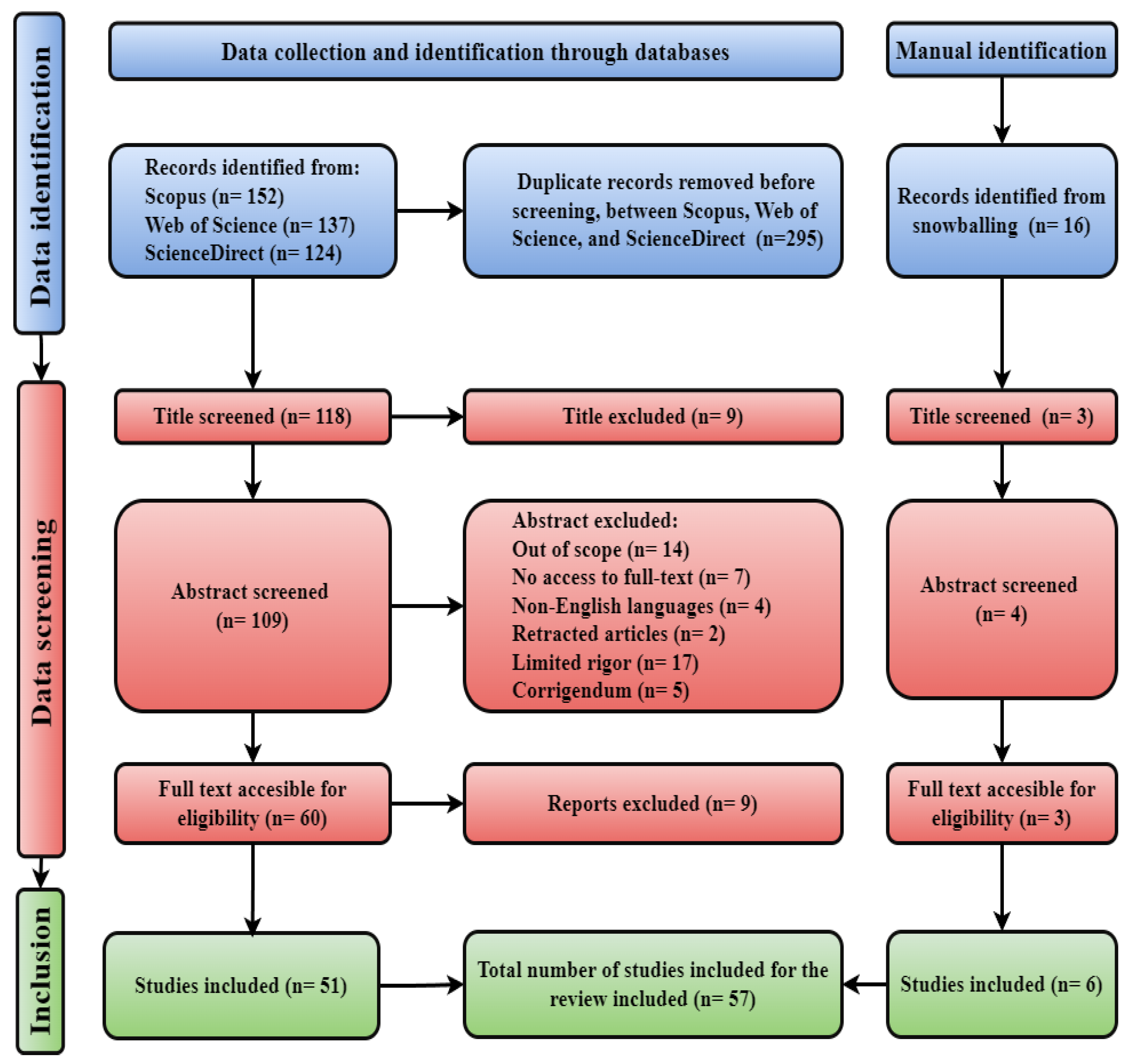
Following the PRISMA standards, a systematic eligibility screening methodology was used to guarantee methodological assessment and transparency [73,74]. A total of 413 records were found in the chosen databases after the first search. The screening procedure was carried out in several consecutive steps: removal of duplicates, abstract screening, full-text review, title, and final inclusion. Figure 2 provides a schematic PRISMA flowchart summary of the review process.

3.5.1. Inclusion Requirements

This review only included studies that satisfied the following requirements: (i) focused on the use of materials derived from e-waste, such as waste plastics, toner, printed circuit boards, NMFs, and related polymers, in bituminous mixtures or asphalt pavements; (ii) focused on asphalt technologies, such as stone mastic, warm mix asphalt, cold mix asphalt, or polymer-modified binders, that incorporate additives derived from e-waste; (iii) were published in peer-reviewed journals, conference proceedings, book chapters, or review articles; (iv) were written in English; (v) contained theoretical, experimental, or review-based insights into mechanical performance, durability, rheological behaviour, life cycle assessment, environmental impact, or benefits of the circular economy; and (vi) were published between 2010 and 2025.

3.5.2. Criteria for Exclusion

The following criteria led to the exclusion of studies: (i) studies that do not use asphalt pavement or bituminous mixtures made with materials from electronic waste; (ii) publications that discuss only alternative construction applications such as soil stabilisation, concrete, or ceramics; (iii) nonpeer-reviewed sources such as reports, patents, theses, editorials, and opinion pieces; and (iv) duplicate records, incomplete studies, or publications that do not have enough technical or performance-related data.

3.5.3. Screening Process

Several methodical processes were engaged in the screening process: Using predetermined search keywords, relevant material was first obtained from Scopus, Web of Science, and ScienceDirect. Then, manual identification was conducted through Google Scholar and snowballing. After identifying and eliminating duplicate entries, titles and abstracts were first screened for relevancy. After that, the full-text publications of the remaining studies were examined in light of the established inclusion and exclusion criteria. Finally, only studies that satisfied all eligibility criteria were incorporated into the scientometric mapping, systematic review, and environmental assessment.

3.6. Scientometric Analysis

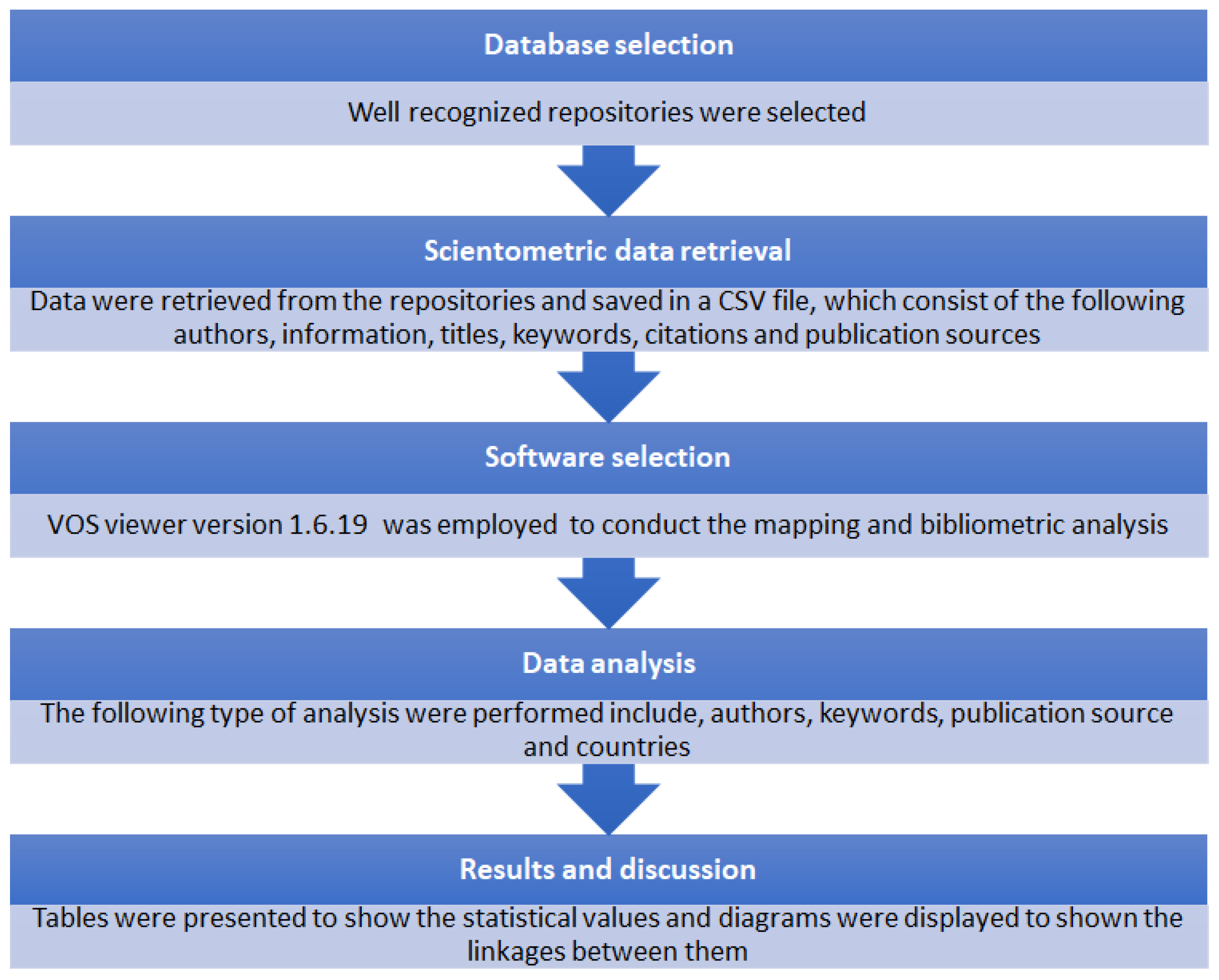
To examine the current trend and development of research related to EWDMs in asphalt pavement engineering, bibliometric mapping was carried out. Using VOSviewer (version 1.6.19), 57 suitable publications found following the PRISMA methodology were analysed. Analysis of keyword co-occurrence, country mapping, and document type. Bibliographic coupling was made possible by exporting bibliometric data in CSV format. The visualisation features of VOSviewer made it easier to find relevant publications, contributing nations, and often used keywords and highly referenced publishers about the use of EWDMs in asphalt applications. The findings are displayed via tables and network diagrams, which show trends in international collaboration and new areas of interest for sustainable pavement engineering using e-waste. Figure 3 shows the study flowchart for scientometric analysis.

3.7. Systematic Analyses

The selected articles underwent a systematic qualitative assessment to evaluate the performance, potential circular economy, and environmental effects of EWDMs in asphalt mixtures. The data included material type, incorporation method, mechanical properties (such as fatigue life, moisture susceptibility, and resistance to rutting), rheological behaviour, durability, and sustainability outcomes (such as landfill diversion and carbon reduction). The synthesis emphasised frequent data showing that EWDMs can improve asphalt binder and mixture properties, prolong pavement life, and help reduce embodied carbon.

3.8. Environmental Assessment

To assess the environmental implications of incorporating e-waste into asphalt pavements, a systematic review approach was adopted, following the PRISMA guidelines. Relevant peer-reviewed studies focusing on various EWDMs were identified and evaluated for environmental assessment. This thorough evaluation offers a strategic basis for directing future research directions, industry adoption, and policy development to promote the circular economy in pavement engineering.

4. Results and Discussion

4.1. Bibliometric Analysis

4.1.1. Publication Trends

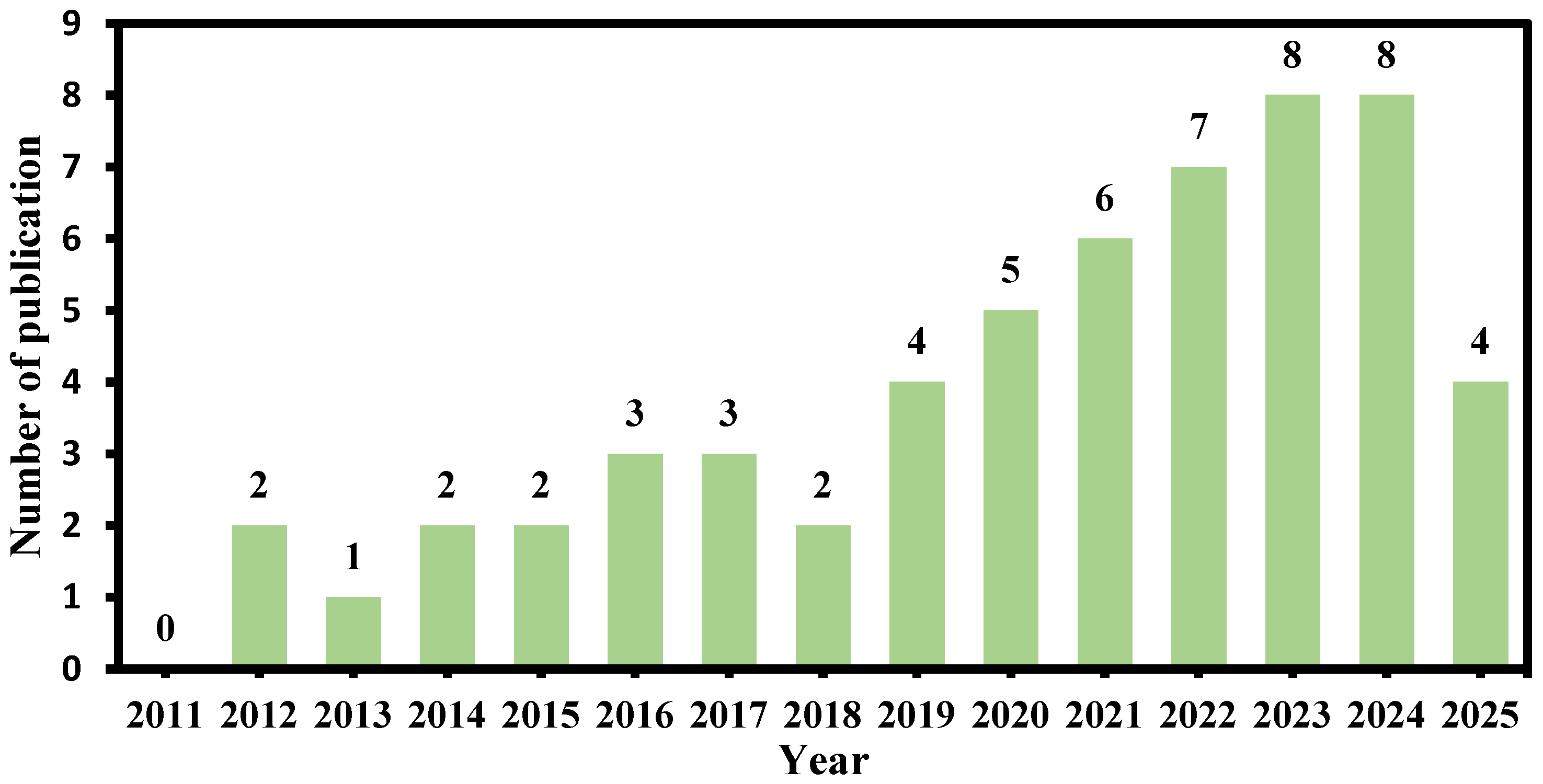
Using bibliometric data processed in Microsoft Excel, a detailed descriptive analysis was carried out to quantitatively evaluate the publication trends related to EWDMs in asphalt pavement. The dataset covers the yearly research output from 2010 to 2025 on EWDMs and how they are used in the production of sustainable asphalt pavements. A linear and ongoing rising trend is shown in Figure 4, which shows that there is an increasing amount of research on the upcycling of e-waste, including plastics, WT, and PCB waste, as substitute additives or modifiers in asphalt binder and mixtures. This consistent growth in research production is attributed to technological advancements in e-waste processing, international efforts to achieve net-zero greenhouse gas emissions by 2050, and the decarbonisation of infrastructure sectors. Additionally, increased regulatory pressure to divert hazardous waste from landfills and the ability of the pavement industry to search for sustainable materials that can improve performance while lowering environmental burdens are converging factors driving increasing academic interest. Notably, there has been a steady increase in publications over the past few years, with seven articles published in 2022, eight in 2023, and 2024, indicating ongoing momentum in this new field of study. In addition to showing that the academic community recognises the potential of e-waste for the circular economy, this expanding body of literature also emphasises how urgently more research is needed to confirm its technical feasibility, environmental advantages, and long-term field performance in asphalt pavement applications.

4.1.2. Research Contributions by Country

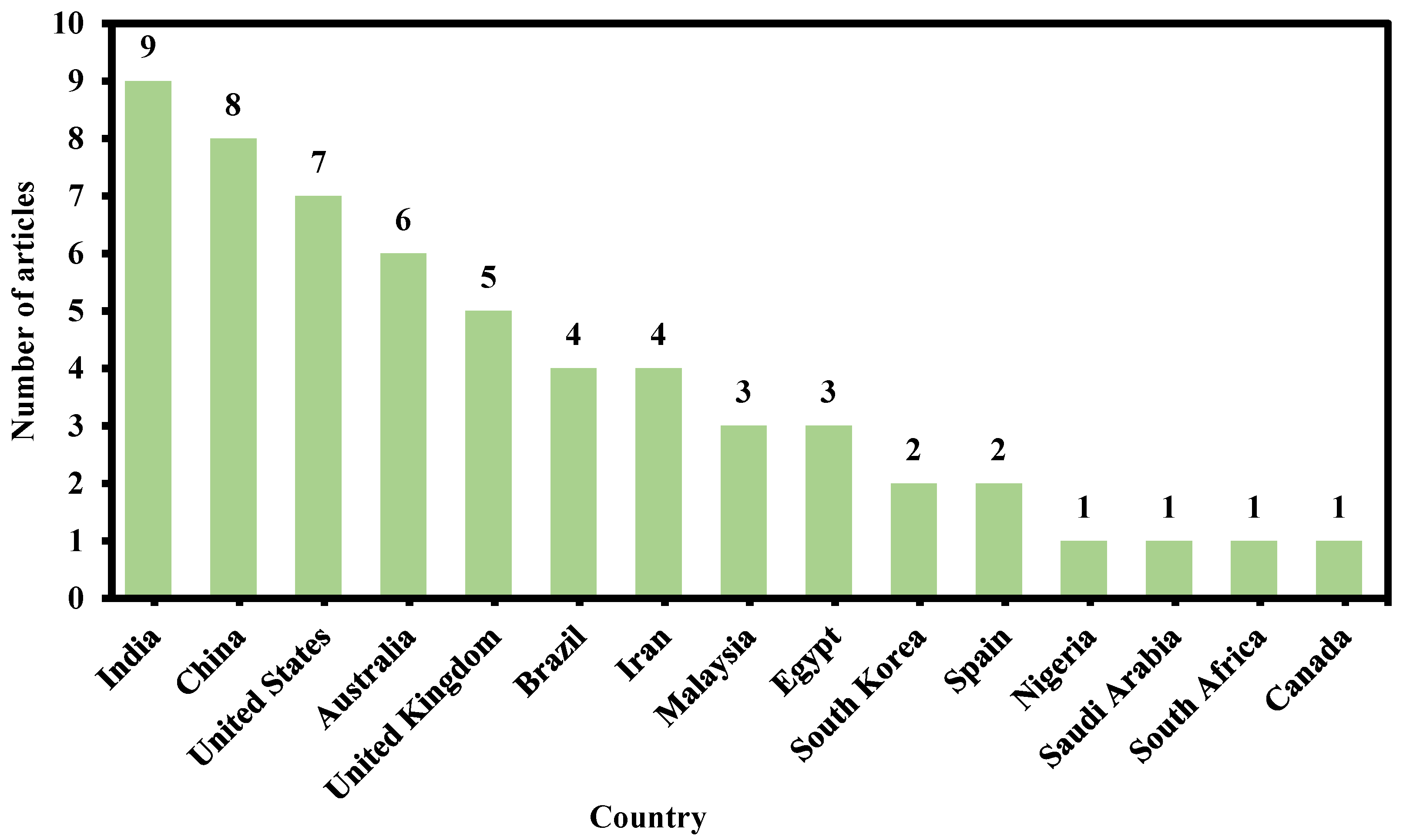
Evaluating research engagement at the national level is essential for comprehending country goals and the global trend toward sustainable infrastructure [73]. Qualitative content analysis was used to determine each publication’s national and industry context. The use of EWDMs in pavement engineering is becoming increasingly popular worldwide, according to studies that were methodically grouped by location using contextual factors. This broad participation demonstrates the dedication to an environmentally sustainable construction approach around the world. There were notable regional differences at the national level. As shown in Figure 5, research on technological advancements in e-waste for sustainable asphalt paving technologies has benefited greatly from the contributions of 15 countries. India’s 9 publications put it first, followed by China with 8 publications, the United States with 7 publications, and Australia with 6 publications, demonstrating their strong research efforts and dedication to building sustainable infrastructure, reducing emissions, and implementing circular economy regulations. In addition, the United Kingdom, Brazil, Malaysia, and Egypt have made significant contributions. Australia is unique in that it has established industry-academic partnerships to implement TonerPave technology, which uses waste printer toner (PT) in asphalt. China and India prioritise e-waste plastics, PCB residues, and pyrolysis materials, whereas Malaysia and the United States look into life cycle evaluations, binder performance, and warm mix technologies. Researchers in South Korea and Spain are developing pyrolysed e-waste for asphalt binders, whereas EU nations prioritise environmental policies and standardisation. This shows that an increasing number of people agree that e-waste valuation is a good way to achieve circular, sustainable pavement systems. These results provide insightful information for early-career researchers and practitioners looking to collaborate internationally and point to a critical gap in the need to advance knowledge sharing and capacity building in underrepresented regions, especially in developing countries in Africa and South America, where e-waste valorisation could have significant positive effects on the environment and the economy.

4.1.3. Continental Research Contributions

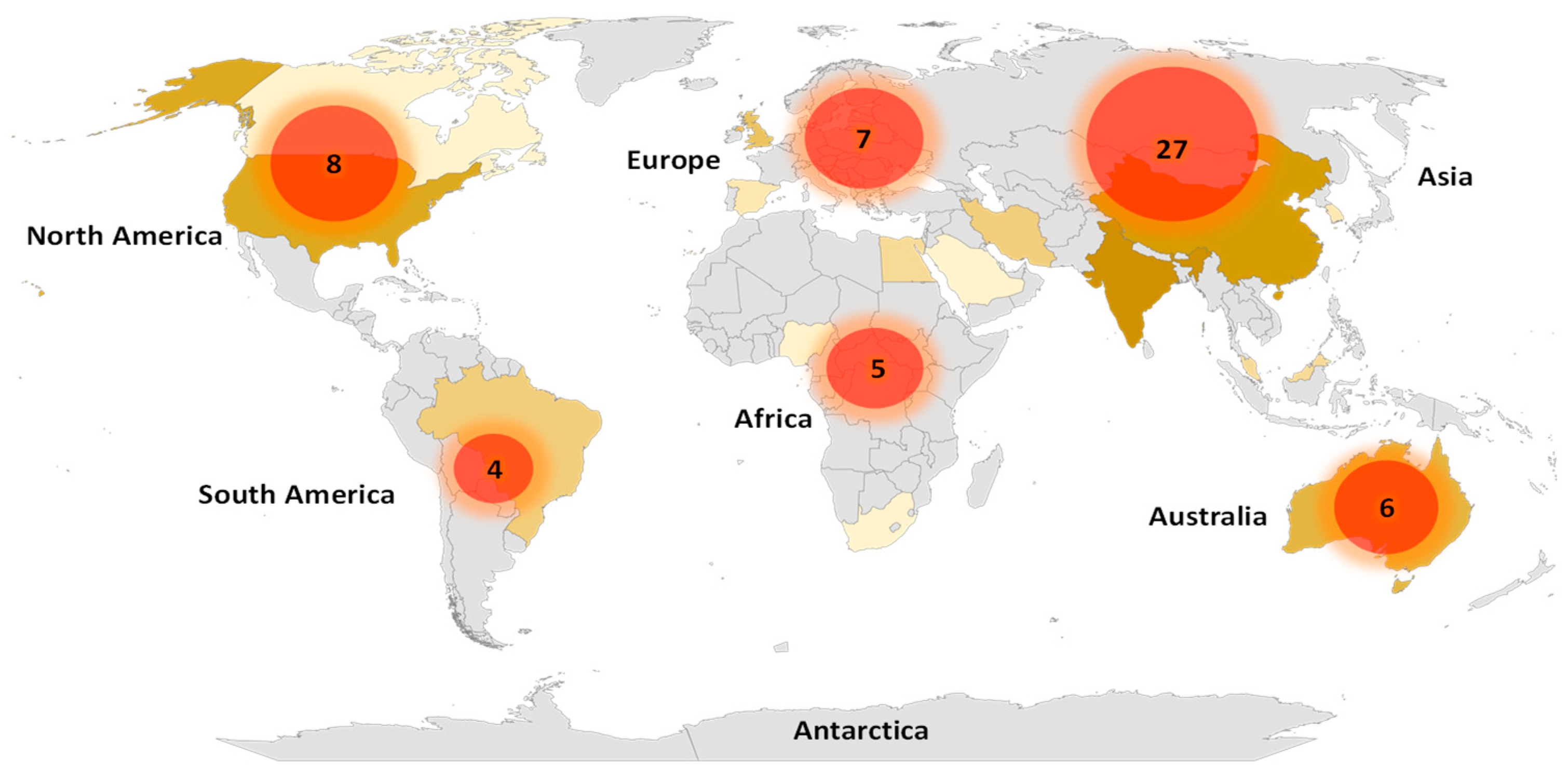
The application of research engagement at continental stages is also crucial to understanding the continent’s objectives and comprehensive inclination towards sustainable infrastructure. Figure 6 shows the continental distribution of EWDMs on asphalt pavement. There are notable regional differences in the continental distributions, which reflect different national goals, technological capabilities, and environmental regulations. The findings show that Asia has produced the most research, mostly due to India’s ongoing study into the use of polymer waste in circular economy frameworks, as well as China’s large-scale lab studies on e-waste polymers, PCB residues, and pyrolysis products. Additionally, Malaysia, Republic of Korea, and Iran have made significant contributions through cutting-edge binder modification research and sophisticated material characterisation. In particular, life cycle assessments, warm mix asphalt technology, and more general sustainability analyses reveal significant contributions from North America, which is headed by the United States. Europe places a strong emphasis on standardisation, policy development, and the incorporation of EWDMs into sustainable building practices. The United Kingdom and Spain are the main hubs for this work. However, Australia’s innovative TonerPave technology, which incorporates waste PT into asphalt pavement production, makes Oceania’s contribution, although less in volume, rather significant. While still underrepresented, emerging contributions from South America (Brazil) and Africa (Egypt, Nigeria, South Africa) are attracting increasing interest worldwide. In developing places where e-waste valorisation could have substantial environmental and economic benefits, it is imperative to promote cooperative research, capacity building, and knowledge transfer. To fully realise the sustainability potential of e-waste in pavement engineering, this global pattern emphasises both the leadership of highly developed regions and the necessity of further research and capacity building in developing countries.

4.1.4. Type of Publication

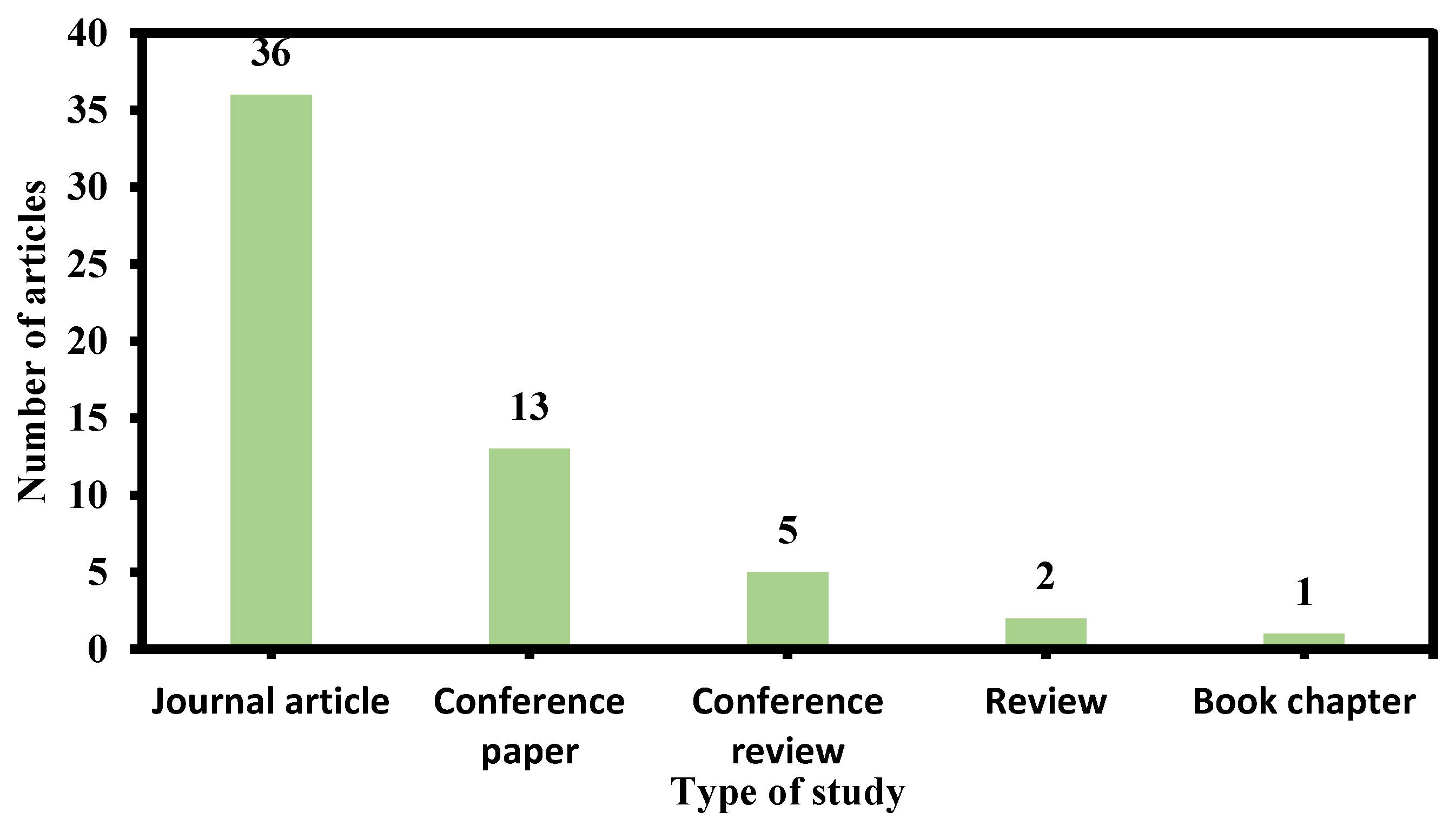
The diversity of publication types on EWDMs in asphalt pavement increased between 2010 and 2025, as shown in Figure 7. The distribution of publication types in the field of asphalt pavement application of EWDMs indicates a research landscape that is expanding and becoming more diverse. The vast majority of contributions to all publications are peer-reviewed journal papers, accounting for 36 publications and 63.16% of all publications. The integration of e-waste plastics, waste toner, and PCB residues in asphalt binders and mixtures is the subject of laboratory studies, material characterisation, performance evaluation, environmental assessments, and life-cycle analysis in these journal articles. With 13 publications, conference papers make up approximately 22.8% of the document type, which includes preliminary findings or cutting-edge technologies that have not yet been developed into full journal publications. Especially in parts where applied research is expanding quickly, these sessions act as early predictors of research trends. A smaller percentage of 5 conference reviews makes 8.77% and 2 review articles 3.51%, which summarise the body of knowledge, draw attention to current issues, and suggest areas for further study on EWDMs. In developing thorough frameworks for sustainability, the circular economy should be integrated. Only 1 book chapter, accounting for approximately 1.75%, offers specialised views and frequently covers national waste valorisation projects, standardisation issues, or regulatory frameworks. While the variety of publishing approaches determines continued knowledge expansion and cross-sector collaboration, journal articles’ dominance mirrors the field’s scientific competency.

4.1.5. Keywords Co-Occurrence

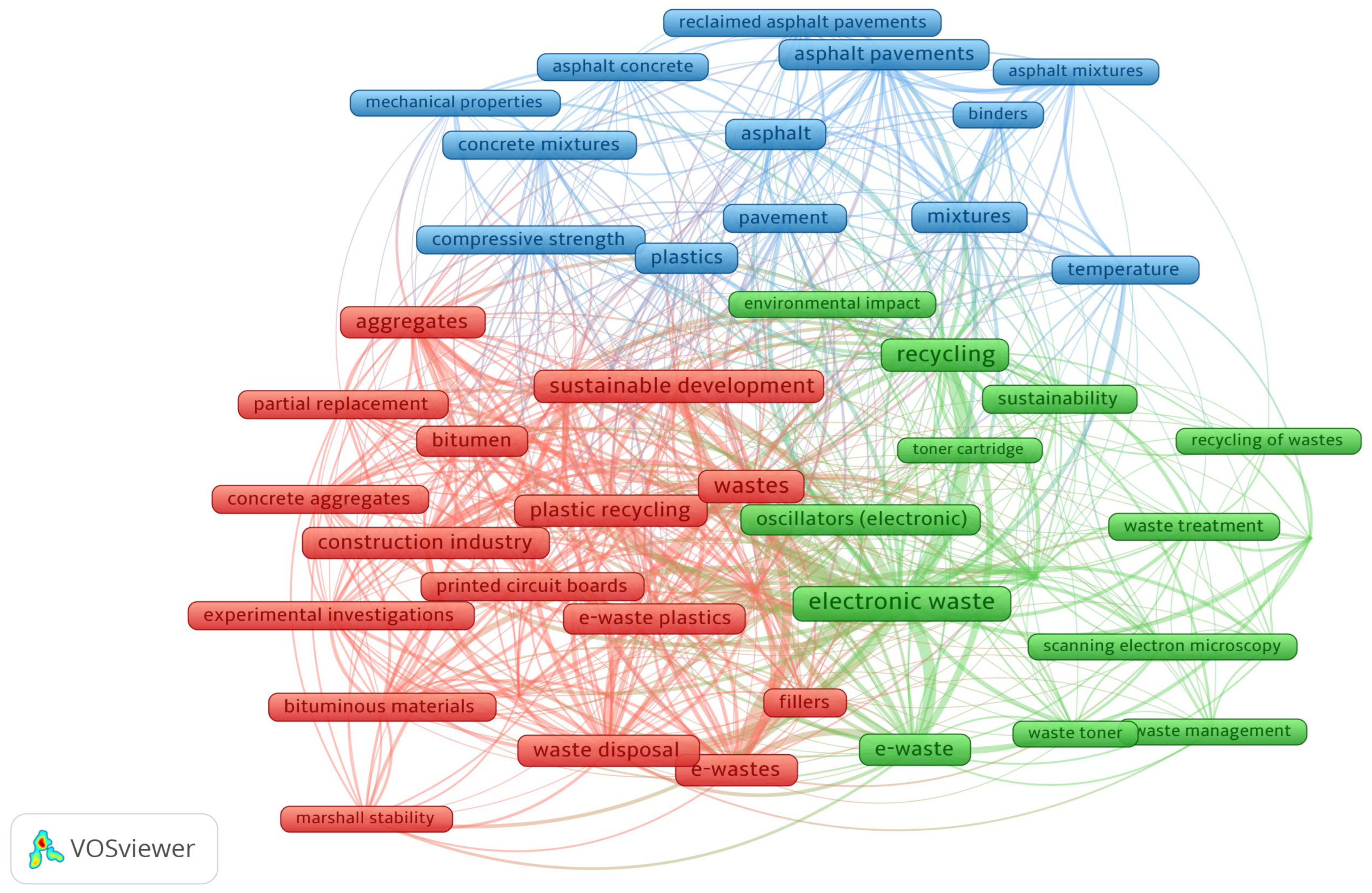
This section discusses the findings of the keyword co-occurrence analysis, which sheds light on the research goals and thematic structure of the EWDMs in the asphalt pavement sector. With all keywords included as the unit of analysis, the co-occurrence approach was used to carry out the study. For the keywords, a minimum occurrence threshold of 10 was applied, and the 41 keywords out of 893 retrieved items that met the inclusion criteria are shown in Table 6. “Electronic waste,” “Recycling,” “recycling,” “E-waste plastic,” “Asphalt,” “Sustainable development,” “Waste toner,” and “environmental impact” were among the most commonly appearing keywords, highlighting the field’s significant emphasis on environmental performance and circular economy principles.
Figure 8 shows the network map showing the keywords’ co-occurrence and linkages. While the closeness and connecting lines represent the degree of co-occurrence with other terms, the size of each node represents the keyword’s frequency throughout the literature. More significant study keywords are indicated by larger nodes. The literature’s several thematic groups are distinguished by colour-coded clusters, which are blue, green, and red. Red and blue clusters specify emerging or focused themes, whereas green clusters indicate areas of study terms that are dominant. This clustering highlights how research on EWDMs for sustainable asphalt pavement applications is becoming more intricate and multifaceted, considering factors such as sustainability, environmental impact, and interaction with the circular economy.

4.1.6. Country Network Visualisation

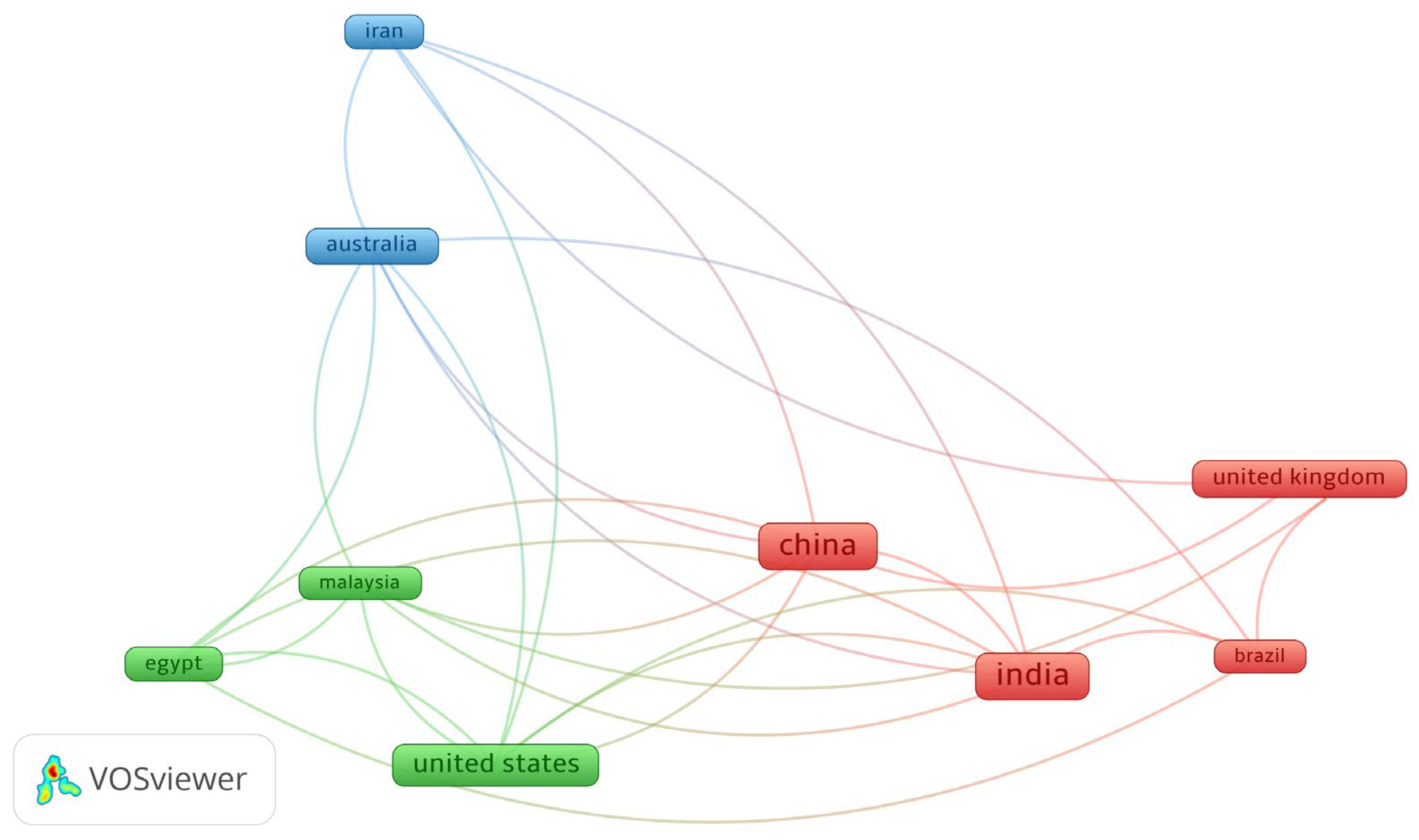
The geographic distribution of studies on EWDMs on asphalt pavement shows that a number of nations are leading in the development of sustainable paving alternatives. According to bibliographic coupling analysis with a minimum publishing threshold of three documents per nation, India, China, and the United States, with 9, 8, and 7 publications, respectively, are the top contributors, and these countries are referred to as e-waste hotspot nations, as shown in Table 7. These can be attributed to the nation’s strong sustainability legislation, substantial investments in renewable energy, and proactive waste management techniques that lead to this strong research output. Additionally, these countries’ dedication to environmental and technical innovation is demonstrated by the incorporation of recovered e-waste materials, such as plastics, toner powder, and PCBs, in asphalt binders and mixtures. These nations not only have the most publications but also have the most citations, which is significant since it shows how significant and scientifically relevant their research is worldwide. As shown in Figure 9, bibliometric network visualisation shows the influence and citation links across countries, with the size of the sphere indicating the strength of the citations. In terms of research impact, India, China, and the United States lead the way, followed by Australia, the United Kingdom, Brazil, Iran, Malaysia, and Egypt. This mapping offers scholars, funding organisations, and researchers useful information that can be used to pinpoint key players and promote global partnerships that can hasten the shift to sustainable, circular asphalt pavement solutions.

4.1.7. Visualisation of the Publication Source Network

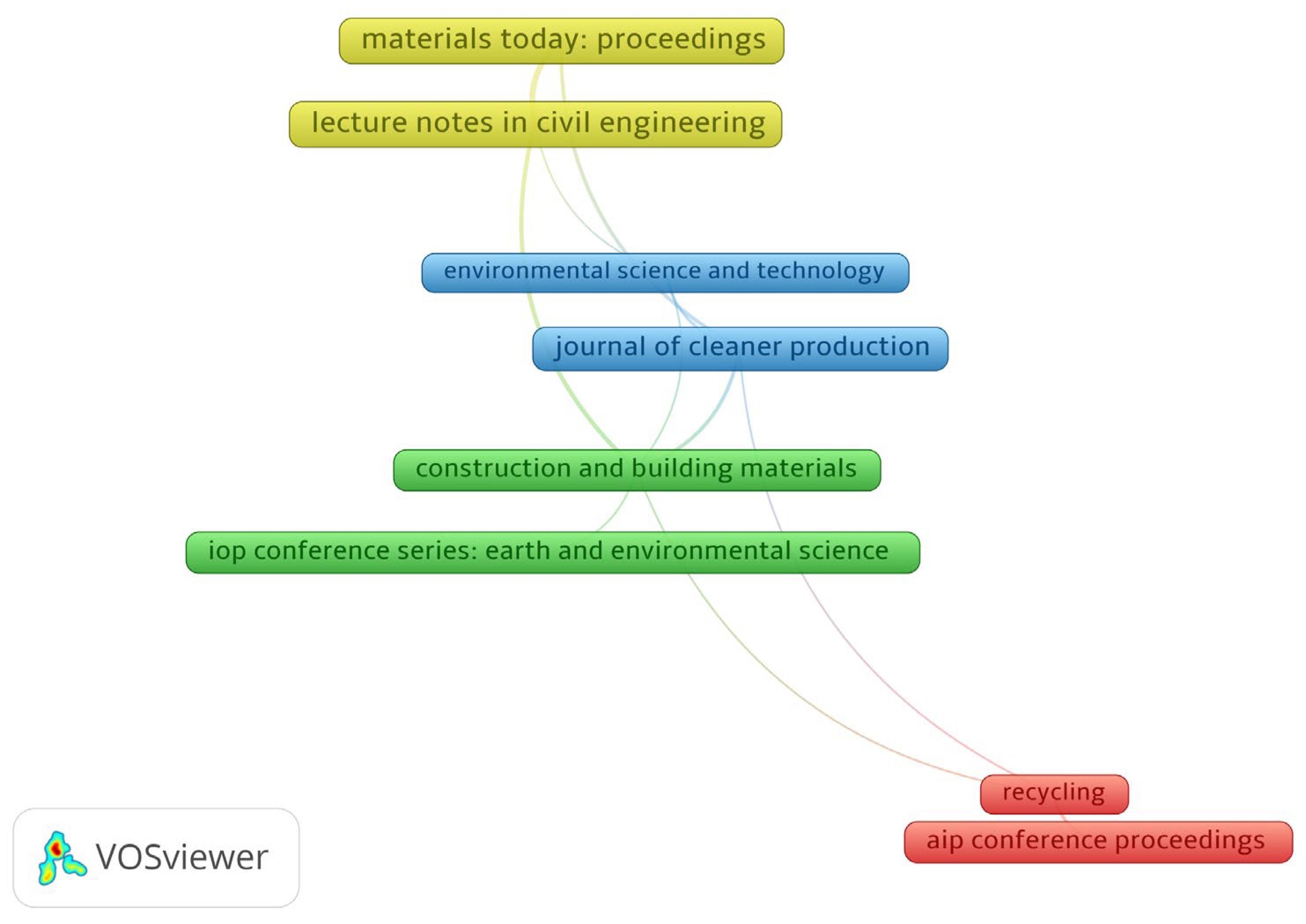
Bibliographic coupling at the source level was used in VOSviewer to examine the diffusion routes of research on EWDMs in asphalt pavement. Out of the entire dataset, only 8 key journals met the criteria by applying a threshold of at least 2 publications per source. These top sources are shown in Table 8 together with their corresponding publication numbers and citation impacts from 2010 to 2025. The most prominent of them were the Journal of Cleaner Production, Lecturer Notes in Civil Engineering, Construction and Building Materials, and Materials Today: Proceedings, which published 5, 4, 4, and 4 publications, respectively, and received 107, 98, 83, and 79 citations. Others include Recycling, AIP Conference Proceedings, Environmental Science and Technology, and IOP Conference Series: Earth and Environmental Science. All these publication sources are well known for their focus on sustainability, materials innovation, and circular economy strategies. These sources are excellent avenues for publishing studies on the upcycling of EWDMs in pavement applications.
On the basis of cocitation links, bibliometric mapping shows how these published sources relate to one another, as shown in Figure 10. Higher publication output is represented by larger nodes; the Journal of Cleaner Production, Lecturer Notes in Civil Engineering, Construction and Building Materials, and Materials Today: Proceedings seem to be the most prominent hubs. Additionally, four different groups, each represented by a different colour (green, red, blue, and yellow), were also identified by clustering analysis, suggesting that the journal themes were convergent. Stronger intellectual and citation networks across journals in the same cluster indicate common research interests, such as life-cycle analyses, polymer-modified binders, or environmental impact assessments of reusing EWDMs in asphalt pavements. This analysis highlights the critical role these journals play in influencing the study of sustainable asphalt materials and the growing acceptance among academics of the use of EWDMs as a practical means of promoting sustainability and circular resource management in pavement engineering.

5. Upcycling and Application of EWDMs in Asphalt Pavement

Asphalt binder and virgin aggregates, which are both energy intensive and carbon emitting, are major components of conventional asphalt pavement construction [75,76]. The use of EWDMs offers a sustainable solution to these challenges. In addition to enhancing their mechanical and durability performance, their incorporation into asphalt binders and mixtures conserves resources, reduces embodied carbon emissions, and diverts hazardous waste from landfills. This approach aligns with global low-carbon development goals and circular economy principles. This review systematically examines current research trends, technological developments, environmental benefits, and challenges related to the use of EWDMs in asphalt pavements.

5.1. Application of E-Waste Plastics

A sizable amount of the world’s e-waste stream is made up of plastics from discarded electronic devices, such as casings, connections, and cables [77]. Thermoplastics with desirable technical qualities, including flexibility, durability, and heat stability, such as ABS, HIPS, and polycarbonate blends, usually comprise these materials [77,78]. In the asphalt industry, various studies have evaluated the viability of incorporating e-waste into asphalt pavement. A study conducted by Colbert, et al. [79] used the Mechanistic-Empirical Pavement Design Guide (M-EPDG) to study the possibility of using polymers obtained from e-waste as modifiers to decrease the thickness of asphalt pavement designs. HIPS and ABS were added to the asphalt mixtures, both untreated and chemically treated with free radical initiators, to improve binder compatibility. The content of e-waste plastic at 2.5% and 5% by binder weight was assessed for nine different mixture formulations. M-EPDG research revealed that e-waste-modified mixtures generally decreased the necessary pavement thickness, with the most notable reduction resulting from chemically treated ABS (2.5%). This study emphasises how employing e-waste plastic as a modifier can enhance pavement design sustainability and economic viability.
In a similar study, Colbert [80] examined the incorporation of ABS and HIPS e-waste plastics into asphalt mixtures via direct blending and chemical treatment with hydroperoxide to improve molecular bonding. For the analysis, environmental assessments utilising SimaPro 7.3 and M-EPDG software (version 1.1) were carried out in conjunction with superpave binder and mixture testing, such as dynamic shear rheometer (DSR), dynamic modulus, and tensile strength ratio (TSR) measurements. Compared with traditional asphalt, the chemically treated e-waste-modified binders demonstrated better TSR, a delayed onset of tertiary flow, an enhanced dynamic modulus at low temperatures, and lower carbon emissions, underscoring their dual performance and environmental advantages for flexible pavement applications.
Furthermore, Colbert and You [81] assessed the influence of adding powdered recycled computer plastic to asphalt binders at weight percentages of 2.5%, 5%, and 15%. Bending beam rheometer (BBR), DSR, and rotational viscosity tests were used to evaluate the performance of the binder. Compared with virgin bitumen, e-waste-modified bitumen has a lower rutting susceptibility, higher viscosity, and higher blending and mixing temperatures. The modified binders showed little reduction in cracking resistance at decreased e-waste levels, maintaining low-temperature performance (m values) comparable to that of the control mixture. Additionally, Santhanam, et al. [82] evaluated the use of plastic powder from e-waste as a partial binder substitute in VG30-grade asphalt binders. For this study, e-waste plastics were added at substitution percentages of 5%, 10%, 15%, and 20% by binder weight; they make up approximately 15% of all e-waste by weight. A content of up to 15% replaces increased binder strength, but larger contents may decrease performance, according to tests performed per the Indian standard. This study highlights the viability of using polymers from e-waste as environmentally friendly modifiers in the asphalt pavement industry. Similarly, Krithiga, et al. [83] examined the use of polyethylene plastic obtained from e-waste as an additive to improve mixture performance. Marshall stability tests were carried out with different bitumen contents, and a constant 5% e-waste plastic filler (by binder weight) was added. The results showed that adding e-waste plastic enhanced flow and stability while increasing strength by approximately 10% compared with traditional binders. The study revealed that the mechanical performance of bituminous binders can be improved by the use of plastic fillers made from e-waste.
Muthukumar, et al. [37] investigated the partial substitution of binders with recycled HIPS and PCBs in asphalt mixtures. Molten recycled HIPS was mixed with bitumen to partially replace the binder and e-waste, mostly in the form of crushed PCBs up to 20 mm in size utilised as a coarse aggregate substitute. The Marshall stability method was used to develop and evaluate control and modified mixtures after the optimal binder content was determined, and the study revealed improvements in the properties of the asphalt mixtures. Similarly, Patel, et al. [84] evaluated the influence of using recycled plastic parts from e-waste as modifiers in asphalt mixtures. In this investigation, 5% and 10% waste plastic by binder weight were used to partially replace 80/100 penetration grade bitumen. According to laboratory tests conducted following Indian requirements, binders treated with plastic demonstrated higher penetration and softening point values; however, ductility decreased as the amount of plastic increased. On the basis of these results, incorporating e-waste plastic into asphalt binder enhances its thermal stability.
Singh, et al. [85] investigated asphalt modification using recycled ABS polymer, a type of e-waste, at weight-based dosages ranging from 1 to 5%. Tests using the DSR, viscosity, penetration, and softening points were used to assess the physical and rheological characteristics. The addition of ABS resulted in improved elasticity and high-temperature performance by increasing the softening point, dynamic viscosity, and rutting resistance (G*/sinδ) while decreasing the penetration and phase angle. Additionally, the stripping resistance increased. At the 4% ABS concentration, the best results were obtained, and the Marshall stability also significantly improved. Furthermore, the integration of various e-waste materials in asphalt binder was investigated by Hasan, et al. [24], who assessed asphalt binders modified with HIPS, ABS, and ABS-polycarbonate, all of which were crushed to sizes less than 300 μm. The study utilised both untreated (UT) and chemically treated (T) types of modifiers, where the latter were processed with cumene hydroperoxide to encourage covalent bonding with the PG58-28 binder. According to dissipated work analysis at 1.59 Hz, chemically treated binders demonstrated noticeably greater gains, especially in terms of rutting resistance, whereas untreated e-waste-modified binders demonstrated enhanced stiffness and elasticity above those of the control binder. According to this study, encouraging radical reactions can effectively strengthen the interfacial contact between asphalt binders and e-waste polymers, improving performance.
One of the main e-waste streams, PCB waste, was investigated by Sinha, et al. [86], who examined the use of marble dust and e-waste polymers, such as recycled PCBs and PVC components, in asphalt mixtures. Marble dust completely replaced traditional filler, whereas e-waste plastics were utilised to partially replace coarse aggregate at percentages of 0%, 4%, 8%, and 12% by aggregate weight. Marshall studies have shown that up to 12% replacement of the plastic component of e-waste enhances flow, stability, asphalt binder-filled gaps, and unit weight; stability is adversely affected by additional increases. According to this study, recycling marble dust and e-waste plastics provides an economical and environmentally friendly method for constructing asphalt pavements. Additionally, the utilisation of waste plastic and e-waste as partial substitutes for binders and fillers in bituminous mixtures was assessed. A number of tests have evaluated variables such as bulk density, voids in mineral aggregate (VMA), air voids, flow value, and stability. The study revealed that the use of plastic and e-waste in place of some standard materials increased the mechanical strength while providing an economical and environmentally friendly way to dispose of waste. Similarly, in a study conducted by Shahane and Bhosale [87], the influence of e-waste plastic powder as a modifier to improve the rheological and performance properties of asphalt binder was examined. The study findings revealed that 5% (by weight of bitumen) was the optimal content for improved performance. Moreover, at the optimal content, the Marshall stability of the asphalt mixtures was enhanced. Furthermore, at 40 °C, cyclic triaxial testing revealed a 10% increase in the dynamic modulus and a reduction in the phase angle, suggesting enhanced elasticity. Additionally, at 10 °C, the fatigue resistance improved by 19%, and at 40 °C, the rutting resistance improved by 28%. This study demonstrated the effectiveness of e-waste plastic powder in improving the resistance of asphalt mixtures to rutting at high temperatures and their ability to withstand fatigue at low temperatures. Similarly, in an experimental investigation.
Additionally, Suganthi, et al. [36] investigated the addition of nonhazardous and inert PCB components to dense asphalt mixtures, which are widely utilised in India. The e-waste was incorporated into the bitumen binder at weight percentages of 2% and 5%. The modified binders were tested for penetration, specific gravity, softening point, and Marshall stability, whereas the aggregates were assessed for specific gravity, impact value, flakiness index, and water absorption. The results were utilised to establish the ideal e-waste dose for increased pavement sustainability and durability, and the modified mixtures performed better than did the conventional blends. Mani, et al. [88] evaluated the production of modified bitumen mixtures for flexible pavements that included fly ash and e-waste. Fly ash was employed as a mineral filler, and e-waste substituted bitumen to a degree of 5–20%. Tests of the conventional binder properties and Marshall stability were used to assess the performance. The results demonstrated that replacing 10–15% of the bitumen with e-waste produced the greatest improvement in stability at a reasonable cost. Despite the need for long-term performance evaluation, this study showed promise for sustainable waste utilisation in bituminous concrete.
Furthermore, Dragomir, et al. [89] was used as a 100% replacement for lime filler in the AC16 asphalt mixtures. Following material characterisation, performance tests, such as Marshall stability, rutting, and cyclic compression, revealed that the PCB-modified mixtures were less stiff than the reference mixtures. Although the study demonstrated that utilising PCB waste in asphalt mixtures is technically feasible, more investigations are needed to maximise the mechanical performance and evaluate long-term durability, providing a possible path towards sustainable resource use in pavement construction. Additionally, Vaidevi, et al. [90] examined the use of fly ash as a filler and e-waste as a partial aggregate replacement (20%, 25%, and 30%) in dense asphalt mixtures for flexible pavements. For the study, tests were performed for the VMA, void ratio, Marshall stability, and flow value. The Marshall stability and flow parameters increased when up to 25% of the aggregates were substituted with e-waste. Fly ash as a filler did not improve the strength, but it did increase the similarity of the mixture characteristics to those of the control mixture. Additionally, Ranadive and Shinde [91] explored the use of e-waste and fly ash as filler substitutes in asphalt mixtures. In this study, e-waste was blended with a 60/70 penetration grade binder at 5%, 10%, and 15% filler mass. Marshall stability and flow experiments revealed that adding e-waste increased stability by 11%, with optimal performance occurring at 10% e-waste and 5.5% binder content. Conversely, replacing fly ash resulted in strength values that were comparable to those of the control mixture, with no discernible improvement, demonstrating e-waste’s potential as a viable substitute for filler in asphalt mixtures.
In a recent study, chopped e-waste plastic was evaluated by Sachdeva and Sharma [92] as a substitute for aggregates in asphalt concrete mixtures. The fine and coarse aggregates were substituted with 2.36 mm and 13.2 mm chopped e-waste plastic granules, respectively. The binder levels in the Marshall sample ranged from 4 to 7% of the overall mix weight. The highest Marshall stability was attained at 3.5% replacement for the 13.2 mm size, with an optimum binder content of 5.26%, and at 9% replacement for the 2.36 mm size, with an optimum binder content of 5.36%. Compared with the traditional mixture, wheel rut testing revealed that the fine- and coarse-modified mixes significantly reduced their sensitivity to rutting by 30.62% and 21.30%, respectively. This study addresses aggregate depletion and plastic waste management while highlighting the potential of e-waste plastic to improve rut resistance. Additionally, Ghabchi, et al. [93] examined the viability of partially substituting crushed e-waste for mineral aggregates in a hot-mix asphalt blend by using it as a synthetic aggregate. In this study, 15% (by volume) of the asphalt mixtures made in laboratories were incorporated with recycled e-waste, while a control mixture served as a reference. The potential for rutting and cracking was evaluated via semicircular bend testing and wheel tracking. This study revealed that incorporating e-waste is possible and provides early indications of possible economic and environmental advantages; nevertheless, more investigations are needed to evaluate long-term performance and useful field applications.

5.2. Non-Metallic Fractions

In recent years, NMFs extracted from waste PCBs have drawn increasing interest as possible additives to asphalt pavement components. These fractions, which are mostly made up of glass fibres, cured epoxy resin, and inorganic fillers, are usually not biodegradable and cause long-term disposal problems in the environment. However, NMFs have demonstrated potential as functional modifiers in asphalt binders and mixtures because of their inert chemical nature, thermal stability, and structural stiffness. To support sustainable waste valorisation in pavement engineering, this subsection examines recent research that investigated the addition of PCB-derived NMFs to asphalt. A study conducted by Shafiee and Fattahi [11] investigated the use of the drying process to incorporate NMF from recycled printed circuit boards into Superpave asphalt mixtures. The NMF was added at weight percentages of aggregates of 1%, 2%, and 3%. Performance metrics such as the TSR, Illinois Flexibility Index, and Hamburg wheel tracking were evaluated. With TSR values above 80%, the adjusted mixtures demonstrated exceptional moisture resistance as well as respectable resistance to rutting and fatigue. Under several subgrade, traffic, and climate scenarios, structural analyses utilising AASHTOW include pavement M-E design (PMED), which shows that the projected distress remains below failure criteria. This study demonstrated that dry-processed PCB waste can improve the sustainability and durability of asphalt mixtures without the drawbacks of wet-process adjustments.
Bharani, et al. [94] also assessed the viability of substituting conventional coarse aggregates (less than 20 mm) with E-PCB non-metallic chips and HIPS in asphalt mixtures. In a related study, E-PCB powder was blended with VG30 bitumen at binder weight percentages of 5%, 10%, 15%, and 20%. Marshall stability and binder tests demonstrated that increasing the content of e-waste and HIPS improved the binder stability and performance characteristics. As it encourages the reuse of sustainable materials, this study emphasises how e-waste and HIPS can improve pavement performance. Additionally, the use of E-PCB waste to modify bitumen and aggregates was studied by Kumar, et al. [95]. In the present study, e-waste powder was used to replace 6%, 12%, and 18% of the bitumen by binder weight; 12% was found to be the ideal amount. E-PCB non-metallic chips were then employed at 5%, 10%, and 15% contents to replace coarse aggregates; the highest stability and binder performance were obtained with a 10% replacement. Marshall stability tests, bitumen tests, and conventional and viscosity tests verified that the addition of 10% E-PCB chips and 12% e-waste powder greatly enhanced the mixture stability and binder qualities, indicating great promise for environmentally friendly asphalt pavement applications.
Recently, a study by Guo, et al. [96] examined the application of NMF extracted from waste printed circuit boards (PCBs) that were ground up as asphalt modifiers. NMF was added to the asphalt binders at a weight percentage of 25 and with a particle size range of 0.07–0.09 mm. With a maximum limit temperature of 69.4 °C, both classical and rheological tests revealed notable improvements in high-temperature performance, including viscosity (1225 cP at 135 °C), penetration (53.7 dmm at 15 °C), softening point (54 °C), ductility (43.5 cm at 15 °C), and G*/sin δ (3995.27 Pa t 60 °C). This study shows the sustainable application of PCB-derived NMF in improving asphalt performance. Additionally, Li, et al. [57] examined the use of NMFs from scrap PCBs as a sustainable asphalt binder modification. With an optimal NMF content of 30% by weight of binder, the study showed that adding finely crushed PCB-NMF powder, coupled with an 8% tung oil–glycerol compatibilizer, enhanced the high-temperature performance, stiffness, and rutting resistance of asphalt. The total change improved the temperature sensitivity and material stability, even if the addition somewhat decreased the resistance to low-temperature cracking. An improved dispersion without any discernible chemical interactions was found via microstructural investigation. This method presents a viable way to recycle electronic waste for use in paving applications.
Kumar, et al. [53] investigated the use of NMF to modify 80/100 asphalt binder via slurry and dry blending techniques to create VG40 grade bitumen per Indian Standards (IS:73:2013) [97]. After nine e-waste-modified binders (e-WMB1 through e-WMB9) were prepared, the best results were obtained with a 2.5 weight percent e-waste slurry content. This change met the VG40 requirements while improving penetration (from 100 dmm to 40 dmm) and increasing the softening point (from 47 °C to 50 °C). The potential of non-metallic e-waste to improve bitumen performance for flexible pavements was confirmed by rheological investigations, which revealed improved viscoelastic characteristics (lower phase angle δ) and increased load-bearing capacity (G*). A new study by Gedik, et al. [98] examined the viability of recycling wasted fluorescent bulbs to replace mineral filler in asphalt pavement layers (binder and wearing courses). The modified mixtures were evaluated in laboratory tests, such as Marshall stability, indirect tensile stiffness modulus, wheel tracking, indirect tensile fatigue, and dynamic creep tests. The results revealed that the addition of fluorescent lamp waste enhanced the performance of the asphalt mixture, especially under low to moderate traffic conditions. It also addresses environmental concerns about the disposal of hazardous e-waste and provides a sustainable and affordable substitute for conventional fillers. Table 9 summarises the research findings of various applications and the performance of e-waste plastic and PCB-NMF in asphalt pavement.

5.3. Waste Toner

Waste toner, which is mostly made up of carbon black, fine polymeric particles, and trace amounts of metal oxides, can contaminate air, soil, and groundwater if it is not disposed of properly, posing major environmental risks [31]. Nonetheless, it is a promising addition to asphalt technology because of its tiny particle size and thermoplastic nature. Table 10 summarises the research findings of various applications and the performance of WT in asphalt pavement. To overcome disposal issues, Huang, et al. [25] looked at adding WT produced by office equipment and manufacturing processes to asphalt mixtures at different doses (4%, 8%, 12%, and 16%). Asphalt binder bond strength, wheel tracking, multiple stress creep recovery, and indirect tensile strength (ITS) (Modified Lottman) tests were used to evaluate the mechanical performance, whereas densification indices and viscosity tests were used to evaluate the workability. According to the study, adding WT improved the stiffness and resistance to rutting of the asphalt binder while decreasing its susceptibility to moisture and pumping ability. Nevertheless, at all the tested dose levels, the workability and resistance to moisture-induced damage were adversely impacted by greater toner content.
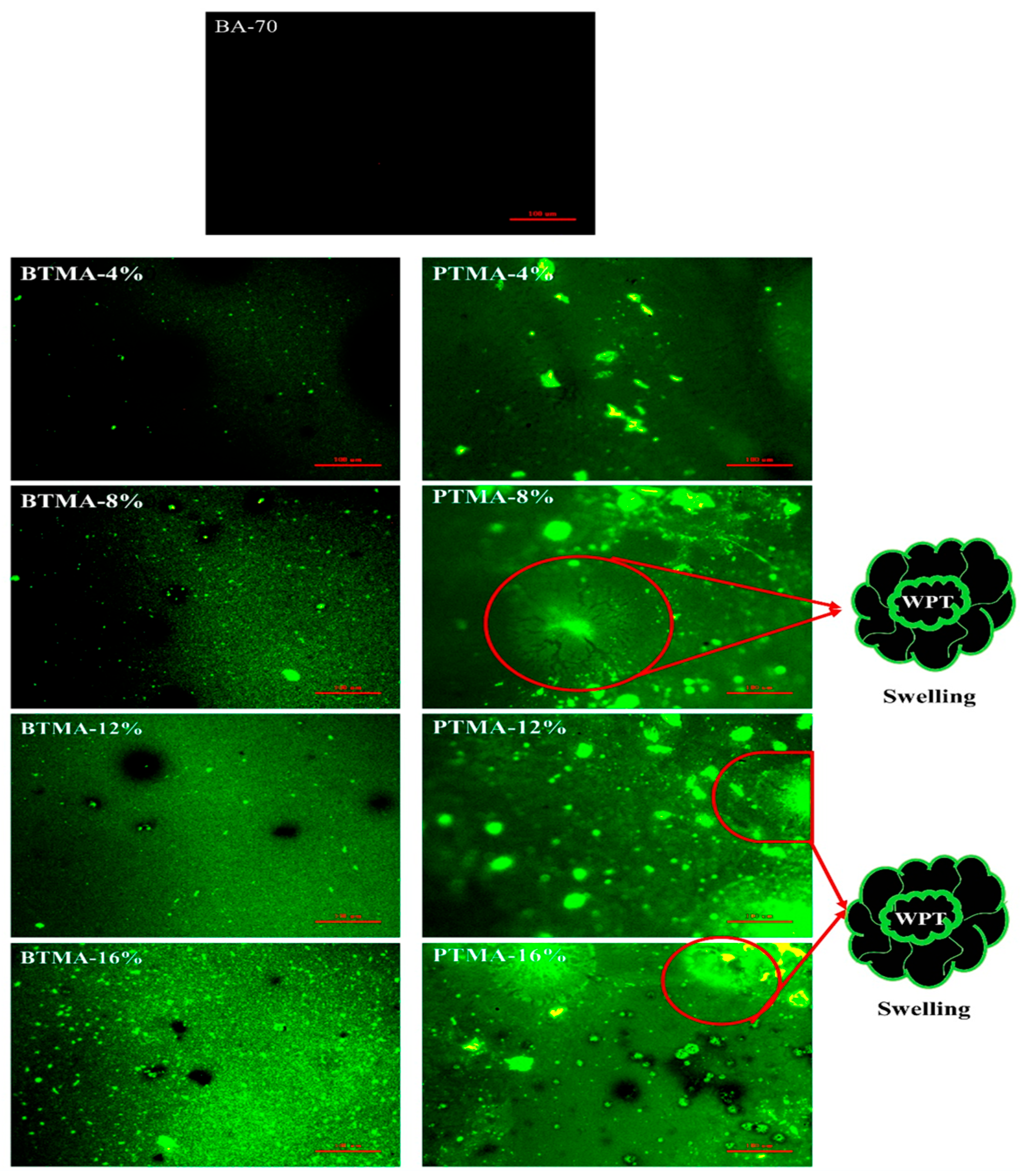
Khedaywi [56] evaluated the influence of adding WT from copiers as PEN 60/70 asphalt binder modifiers at varying proportions of 0%, 5%, 10%, 15%, and 20%. Tests for rotational viscosity, ductility, penetration, specific gravity, softening point, flash point, and fire point were conducted. The results revealed that as the specific gravity, softening point, flash point, fire point, and viscosity increased with increasing WT percentage, the penetration and ductility decreased. Waste toner, according to previous studies, improves the rigidity and high-temperature performance of asphalt binders while perhaps decreasing their flexibility. Additionally, a study conducted by Du, et al. [99] investigated the reuse of WTP as a substitute filler in asphalt mixtures to reduce pollution from waste microplastics and nanoparticles. Before inclusion, the two varieties of WTP were pretreated by being heated and ground. The interactions between WTP and asphalt were evaluated via molecular dynamics simulations, adhesion characteristics, mechanical properties, and microscopic morphology. The combination of carbon powder, polymer resin, nano-SiO2, and nano-FeO4 increased the bonding energy with the asphalt because of its high surface area and magnetic attraction. Adhesion characteristics were enhanced while preserving compatibility and storage stability at an ideal WTP level of 8%. WTP with more magnetic content (>30%) performed better in terms of bonding. The environmental viability of using pretreated WTPs as asphalt fillers was further validated by life cycle evaluation. To improve the properties of asphalt binder, Itoua, et al. [66] assessed the viability of employing WT as an asphalt binder modifier by utilising its main chemical constituents, carbon black and styrene-acrylic copolymer. The base asphalt was mixed with two distinct kinds of WTs at various contents, each with a different gradation size. The tests were extensive and included rheological (MSCR, oscillation, BBR) and chemical (XRF, ATR-FTIR, SEM-EDS, fluorescence microscopy) components. The chemical interactions of the WT and asphalt binder were validated via FTIR measurements, which also revealed the fluorescence effects of the modified binders. The ideal 8% WT content increased elasticity and rutting resistance while also improving high- and low-temperature performance, promoting the transformation of PG70-22 to PG76-22. The ideal particle size for modification was 200 mesh.
Khedaywi, et al. [67] examined the addition of WT to asphalt mixtures and binders at different concentrations (0%, 5%, 10%, 15%, and 20% by binder volume). The following tests were carried out: conventional binder tests, Superpave PG tests, and mixture performance tests (Marshall stability, dynamic creep, fatigue). The findings indicated that while increasing the WT improved the softening point, viscosity, and rutting resistance (G*/sinδ), it decreased the penetration and ductility. An increased robust modulus, decreased cumulative strain, and enhanced fatigue cracking resistance were observed in the dynamic creep and fatigue tests. By improving to PG 82-22 (5–10% WT) and PG 82-16 (15–20% WT), the modified binders’ PGs demonstrated their adaptability for high-temperature environments. The study revealed that WT improves the performance of asphalt. The impact of two distinct WT sources (WT1 and WT2) on asphalt binders and mixtures was examined by Itoua, et al. [100], who utilised an 8% dosage of WTPs. The following tests were performed: ideal cracking test (IDEAL-CT), ideal shear rutting test (IDEAL-RT), G* sinδ, G*/sinδ, penetration, softening point, and ductility. The findings showed that the viscosity of the WT2-modified binders was much greater than that of the WT1-modified binders, necessitating more energy for compaction and mixing. The two types of toners had an impact on the rheological parameters (G* sinδ, G*/sinδ), penetration, and softening point. While there was no discernible change in the CTindex values between the toner types, the IDEAL-RT test revealed increased rutting resistance for all the WT-modified mixes. In the asphalt mixtures, the addition of the wet process to the WT improved the overall rutting performance. Additionally, to improve the rheological characteristics of Trinidad Lake Asphalt (TLA) and Trinidad Petroleum Bitumen (TPB) binders, Rambarran, et al. [101] examined the impact of adding four different kinds of WTs (A, B, C, and D). DSR tests were performed when several amounts of WT were introduced (5% and 20% by weight of binder). According to the findings, the stiffness, elasticity, viscosity, and temperature susceptibility of the modified binders were all enhanced by the contribution of WTs. Interestingly, at 90 °C, binders with 5% Toner C and 20% Toner D showed better elasticity than unmodified TLA. This research provides a novel approach to waste management by demonstrating the possibility of WT as a sustainable modifier for locally produced bituminous materials.
Notani, et al. [102] investigated the use of WT as a low-cost modifier to enhance the short-term ageing resistance and moisture susceptibility of asphalt binders. Toner-modified asphalt (TMA) binders were assessed for chemical alterations via Fourier transform infrared (FTIR) spectroscopy, the viscosity ageing index (VAI), and the rheological ageing index (RAI). While viscosity was evaluated via a viscometer, viscoelastic characteristics were determined via DSR. Using TSR tests and infrared spectrum analysis, the moisture resistance was assessed. These findings indicate that WTs might be used to increase the durability and sustainability of asphalt pavement. Low doses of WT improved the ageing resistance, whereas a 12% toner content considerably increased the moisture resistance of both binders and mixes. Additionally, Shah, et al. [103] used response surface methodology (RSM) and a central composite design to optimise an e-waste toner (EWT) as a bitumen modifier. EWT was added to the asphalt binders at concentrations between 0% and 30%. The main objective of this study was to assess how the binder-toner (BT) and mixing efficiency (MER) ratios interact to affect mechanical attributes such as stiffness, Marshall stability, flow, and ITS. All the responses had R2 values greater than 0.86, indicating that the RSM models had good predictive accuracy. With a desirability of 0.97, the optimal mechanical performance was attained at a BT ratio of 0.249 and an MER ratio of 1.63. The study revealed that the RSM offers a trustworthy framework for mix design parameter optimisation and that the EWT can greatly improve asphalt performance.
In a recent study, Itoua and Sun [104] investigated the combined effects of Congo crude palm oil (CCPO) and WT as modifiers in asphalt binders. Two amounts of WT (0% and 8%) were added, while CCPO was added at weight percentages of 0.5%, 1.5%, and 2.5% of WT-modified asphalt (WTMA). Fluorescence microscopy (FM), FTIR, storage stability, the ageing index, self-healing, and DSR and BBR tests were used to evaluate rheological characteristics. Because CCPO decreased the viscosity of the WT-modified asphalt binder, lower mixing and compaction temperatures were possible. However, as the amount of CCPO increased, the rutting performance decreased, as evidenced by larger Jnr values and reduced G*/sin δ values and recovery percentages. In contrast to the 1.5% and 2.5% CCPO/WTMA-modified binders, the 0.5% CCPO/WTMA-modified binder showed the best resistance to high-temperature deformation among the composites. Conversely, compared with WT-only binders, CCPO/WT composite-modified binders demonstrated better low-temperature cracking resistance and greater fatigue resistance. Additionally, the phase stability and compatibility improved with the addition of CCPO. Even though adding CCPO decreased the initial self-healing capacity, the CCPO/WT composites eventually outperformed the base asphalt in terms of self-healing ability. Similarly, Khedaywi [105] examined the influence of WT on the dynamic creep performance of asphalt mixtures. The asphalt binder was mixed with WT at volume percentages of 0%, 5%, 10%, 15%, and 20%. A universal testing machine (UTM) was used to conduct dynamic creep experiments at three different temperatures (5 °C, 25 °C, and 40 °C) and loading frequencies (1, 4, and 8 Hz). The study assessed the accumulated strain, creep stiffness, and resilient modulus. The findings showed that while the accumulated strain continuously decreased with increasing WT percentage, the robust modulus and creep stiffness first increased but then decreased, suggesting that the addition of WT improved the rutting resistance of the mixtures at the optimal content.
Huang, et al. [106] assessed the viability of using WT as an asphalt binder. The WT was blended at different contents of 3%, 6%, 9%, and 12% into the asphalt binders. Conventional binder tests (ductility, penetration, flash point, and softening point), bending beam rheometer (BBR) tests, and multiple stress creep recovery (MSCR) tests were used to evaluate rheological performance. According to the study, the inclusion of WT increased bonding and fracture properties, decreased moisture sensitivity, and improved performance at both low and high temperatures. Significant gains were observed in rutting resistance, low-temperature cracking resistance, and fracture behaviour at intermediate temperatures in asphalt binders with up to 12% WT. Additionally, Huang, et al. [25] assessed the influence of incorporating WT at different contents at doses of 4%, 8%, 12%, and 16% on asphalt mixture workability, permanent deformation, and water damage. ITS (modified Lottman) and bitumen bond strength tests were used to evaluate moisture susceptibility and densification indices, viscosity tests were used to evaluate workability, and wheel tracking and multiple stress creep recovery (MSCR) tests were used to evaluate rutting resistance. Across all dosage levels, the results showed that adding WT decreased workability and moisture resistance while increasing binder stiffness and lowering permanent deformation. Furthermore, Tailat, et al. [107] evaluated the durability and volumetric properties of the use of toner ink (UTI) as an asphalt binder modifier in asphalt mixtures. For this study, UTI was blended into asphalt binders at various dosages of 2%, 4%, 6%, 8%, and 10%. Performance evaluations were conducted via Marshall and Cantabro loss tests. The following parameters were assessed: Marshall stability, flow value, specific gravity, VMA, VTM, and VFA. The results demonstrated that the load-bearing capability increased with increasing UTI content, with 6% UTI achieving the highest Marshall stability (32,352 N). Furthermore, the addition of UTI decreased the optimal binder content, which could result in cost savings throughout the asphalt manufacturing process and promote sustainability. Additionally, to assess the effect of WT on the rheological performance of AC30 asphalt binder, Showkat, et al. [108] added WT at weight percentages of 7%, 14%, and 21%. For the study, they evaluated the performance grade (PG), frequency sweep, temperature sweep, and MSCR tests. The study outcome shows that by adding WT, the binder’s high-temperature PG increases, and the mixing and compaction temperatures marginally increase. At low frequencies, the modified binder had a reduced phase angle (δ) and increased complex shear modulus (G*), indicating improved resistance to rutting. According to the MSCR data, the nonrecoverable creep compliance (Jnr) was reduced, and the recovery percentage was increased. On the other hand, the fatigue resistance decreased as the WT concentration increased. Although their lower fatigue performance must be considered, WT-modified binders generally show better resistance to rutting at high temperatures.
A recent study by Notani, et al. [109] evaluated the use of WTs to improve the rutting resistance of asphalt binders and mixtures. In this study, pristine asphalt binder was modified by blending WT at various dosages (4%, 8%, 12%, and 16%) of the binder. Permanent deformation resistance was evaluated via wheel tracking tests, multiple stress creep recovery (MSCR), and the Superpave parameter (G*/sinδ). The addition of WT greatly increased the resistance of the binders and mixes to rutting. Interestingly, performance improvements were observed at 12% WT, when the improvement was most noticeable. Waste toner was shown in this study to be an effective, sustainable modifier for enhancing the resistance of asphalt pavements to rutting at high temperatures. In a different study, Notani and Mokhtarnejad [110] investigated the effects of burned WT as a modifier for an asphalt binder, with an emphasis on environmental concerns, self-healing capabilities, and rheological characteristics. In this study, a DSR was employed to measure rheological performance, and Fourier transform infrared analysis was used to measure self-healing behaviour. WT was added to the asphalt binders at different contents. According to this study, increasing the WT improved the elastic component of the binder and increased its performance at high temperatures. The increased wetting and molecular diffusion at 8% WT were responsible for the best improvement in self-healing. The presence of heavy and semiheavy metals in WT, however, may pose environmental hazards, especially for aquatic areas, according to an X-ray diffraction study. Furthermore, Notani, et al. [111] also assessed the influence of WT on the fatigue properties of asphalt binders. In this study, WT was added to asphalt binders at various contents, and the fatigue resistance was assessed via DSR and linear amplitude sweep (LAS) tests. The toner was characterised via X-ray diffraction (XRD) analysis. The results revealed that asphalt binders treated with toner had better fatigue resistance, as indicated by longer loading cycles to failure, shorter fracture lengths, and lower dissipated energy. Furthermore, Notani, et al. [112] assessed how waste nanotoners affect the low-temperature characteristics of asphalt binders. Binders made of TMA had a nanotoner content of up to 8% by binder weight. BBR tests, the dissipated energy ratio (DER), derivation of creep compliance (DCC), glass transition temperature, differential scanning calorimetry (DSC), and viscoelastic modelling (Burgers model) were used to evaluate low-temperature behaviour. The findings showed that the nanotoner enhanced stress relaxation and decreased flexural creep stiffness, improving low-temperature performance. Microstructural alterations caused by nanotoner modification were successfully captured by the DCC index. According to previous studies, adding up to 8% nanotoner greatly improves the tolerance of asphalt binders to low temperatures.
Larios Rodriguez, et al. [113] examined the application of modified postconsumer plastic (MPCP), which is mostly made from toner waste, as a modifier for asphalt binder. The MPCP contains many polymeric components, such as polyester, styrene-acrylate, and styrene-butadiene, and was assessed at different dosages via Superpave performance grading, phase separation, frequency sweep, and MSCR tests. The study outcome revealed that the addition of MPCP improved the resistance of the binder to irreversible deformation by increasing its stiffness and viscosity. While 10% MPCP preserved mechanical performance and storage stability without sacrificing low-temperature characteristics, a greater MPCP content of 20% resulted in noticeable phase separation and degradation of low-temperature PG. According to the findings of this study, asphalt binders can be made more durable and resistant to rutting while still having sufficient cracking resistance when up to 10% MPCP is used. Additionally, Al-Mistarehi, et al. [114] evaluated the creep and fatigue behaviour of asphalt concrete mixtures affected by several waste fillers, including WT, waste medical ash, electrical arc furnace dust (EAFD), and waste tyre rubber. The Marshall technique was used to produce the mixes, and a universal testing machine (UTM) was used to test them for fatigue performance and both dynamic and static creep. Dynamic creep loading frequencies of 1, 4, and 8 Hz were used in tests at 25 °C and 40 °C. The findings demonstrated that rutting decreased with increasing frequency because the load and mixture had less time to come into contact. Among all the fillers, the WT performed best, obtaining the longest fatigue life; the highest resilient modulus; the highest creep stiffness; and the lowest accumulated strain. In a recent study, Lin, et al. [115] produced a novel printer waste toner (PWT)-modified bitumen by integrating PWT at 2%, 8%, and 12% concentrations, as well as an aluminate coupling agent and stearic acid synergist, into the Qilu 70# base asphalt binder. Marshall stability tests, rutting tests, softening point tests, and Superpave PG grading were used to assess the technical performance. According to the results, adding PWT increased the softening point by 3–8 °C, greatly improving the stability and resistance to rutting at high temperatures while preserving resistance to cracking at low temperatures. The study concluded that a PWT content of up to 12% offers advantages over traditional modification techniques in terms of the environment, economy, and technology while maintaining optimal performance without sacrificing low-temperature properties. The literature indicates that the application of EWDMs has various potential in the asphalt pavement industry, as shown in Figure 11.
Table 9. Summary of various applications and performances of e-waste plastic and PCB-NMF in asphalt pavement.
Type of E-WasteMaterial FormApplication and ContentModification Type and LevelTestsFindingsComments
PCB [89]PowderedMineral filler replacement (100% lime filler)Asphalt mixtureMarshall stability and flow, rutting, and cyclic compression-dynamic flowPCB-modified mixtures showed less stiffness than the control; recycling e-waste in asphalt was shown to be technically feasible.More optimisation is necessary for long-term durability and mechanical performance.
HIPS and ABS [79]Powdered for (both untreated and chemically modified using initiators of free radicals)Bitumen modifier by binder weight (2.5 and 5%).Hot mix asphaltAnalysis of the Mechanistic-Empirical Pavement Design Guide (M-EPDG)Modification of e-waste decreased pavement design thickness; the greatest reduction was obtained with chemically treated ABS at 2.5%.Limited to simulation results; long-term field performance and durability not evaluated.
Computers, plastics [81]PowderedBitumen modifier by binder weight (2.5%, 5%, and 15%)Bitumen binder modificationRotational viscosity and rheological analysis using BBR and DSRThe modified bitumen had a lower susceptibility to rutting, improved blending temperature and bitumen viscosity, and sustained low-temperature performance at a lower content.No performance and field validation is done, and high modifier content may cause workability problems.
ABS and HIPS [80]Pulverised powder (both chemically and untreated)Asphalt binder and mixture modifierSuperpave asphalt mixtures with modified binderTensile strength ratio (TSR), dynamic modulus, MEPDG rutting analysis, SimaPro emissions analysis, and superpave binder testsCompared to standard asphalt, chemically treated e-waste reduced CO2 emissions, improved low-temperature dynamic modulus, delayed tertiary flow, and increased TSR.Long-term field performance is not assessed, and specific ideal content is not well established.
PCB and PVC
[86]
Plastic fragments as coarse aggregate and Marble dust as a fillerCoarse aggregate alternative (0%, 4%, 8%, or 12%) and filler substitute with 100% marble dust.Modified asphalt concreteUnit weight, VMA, VFB, Marshall Stability, and FlowMarshall properties were improved up to a 12% plastic content, a higher percentage than that diminished stabilityNo mechanical evaluation of long-term performance or environmental impact.
N/A [82]Powdered plasticBitumen substitute by (5%, 10%, 15%, and 20%) by weightBitumen of VG30 gradeTests of strength (according to Indian standards)Binder strength was increased up to 15% substitution; after that, performance declined.Limited tests on durability and long-term field performance data are absent.
PE [83]PowderedBinder additive (5%) by weight of binderBitumen blends with various levels of bitumenMarshall flow and stabilityBoth Marshall stability and flow parameters were improved as strength was enhanced by 10% compared to conventional bitumen.Limited studies on mechanical performance tests and field evaluation tests
ABS, ABS-PC, and HIPS [24]Powdered (less than 300 μm)Asphalt binder modifier
(5 and 15%)
PG58-28 asphalt binderWork Dissipation, Rheology, and Chemical Treatment AnalysisThe covalent bonding in chemically treated modifiers resulted in dramatically increased stiffness, elasticity, and resistance to rutting; untreated modifiers likewise outperformed the control.Future research should focus on the mixture’s long-term performance and mechanical performance tests.
HIPS and PCB [94]HIPS is a coarse aggregate form, while PCB chips are in powder formCoarse aggregate substitution (<20 mm) and binder substitution by (5%, 10%, 15%, and 20%) weight of binderBinder and mixture blends of VG30Viscosity, ductility, penetration, flash/fire point, softening point, and Marshall StabilityThe binder and Marshall properties were enhanced by increasing the amount of e-waste and HIPS.Long-term permanence and further research may be required for durability under varied situations.
PCB [95]Non-metallic chips (coarse aggregate modifier); powder (binder modifier)Aggregate replacement: 5%, 10%, 15% (optimal 10% by aggregate weight); binder substitute: 6%, 12%, and 18% (optimal 12% by binder weight).Asphalt mixtures with aggregates and a modified VG30 binderViscosity, ductility, penetration, softening point, flash/fire point, and Marshall stability,The optimum stability and binder performance were achieved using 12% E-PCB powder and 10% E-PCB chips.The mechanical performance of mixes and environmental evaluations are not conducted.
E-waste plastic [92]Chopped granulesAggregate substitution: 2.36 mm for 9% fine aggregate and 13.2 mm for 3.5% coarse aggregate.Asphalt concrete mixes with a varied bitumen proportion (4–7%)Marshall Stability and permanent deformation testImproved Marshall stability and reduced rutting by 21.30% (13.2 mm) and 30.62% (2.36 mm) compared to the unmodified mixtureLimited to laboratory scale; environmental durability and long-term field performance are not evaluated.
PCB and HIPS [37]Liquid and granulesMelted HIPS is used as a binder modifier, while crushed PCBs (≤20 mm) are used as coarse material.Asphalt mixture with modified aggregate and binder (replacement levels not specified)Marshall stabilityMarshall stability was enhanced by the use of HIPS and e-waste.Limited Mechanical performance and inadequate evaluation of long-term performance
N/A [84]Crushed plasticBitumen replacement (5% to 10%) by binder weightPEN 80/100 bitumenSoftening point, ductility, and penetrationWith an increase in plastic content, ductility decreases, and penetration and softening point increase.The performance of entire asphalt mixtures was not investigated; only basic binder properties were assessed.
N/A [87]PowderedBitumen modifier
5% by binder weight
Asphalt mixtures with VG-30 binderMarshall Stability, DSR, and Cyclic Triaxial Tests (Fatigue, Rutting, Phase Angle, and Dynamic Modulus)Dynamic modulus increased by 10% at 40 °C, fatigue resistance improved by 19% at 10 °C, and rutting resistance increased by 28% at 40 °C.Further studies into the surface energy, adhesion characteristics, and morphology of the e-waste modified binder are recommended.
e-waste and waste plastic [116]Waste plastic (semi-solid), e-waste (fine particles)Bitumen and filler are partially replaced (precise dosages not provided).Hot mix asphaltBulk Density, VMA, Air Voids, Marshall Stability, and Flowincreased strength, stability, and cost-effectiveness, and verified the applicability of plastic and e-waste in asphalt pavementDosage optimisation and long-term field performance require further study
Mixed e-waste [93]Crushed artificial aggregateAggregate replacement (15%) by volumeHot mix asphaltWheel tracking and semicircular bend testEnhanced resistance to rutting and cracking, with environmental and economic benefits.Additional performance research and field assessments are needed.
N/A [91]PowderedMineral filler substitute (5%, 10%, and 15%) by filler massHot mix asphaltMarshall flow and stabilityThe study shows that 10% e-waste increased stability by 11%, whereas fly ash added little strength.Further mechanical testing and analysis of the mixture are lacking.
ABS [85]PowderedAsphalt binder modifier (1–5%) by weight of binderAsphalt binder and mixturesPenetration, Softening Point, Viscosity, Rheological Properties, and Marshall StabilityOptimal ABS percentage of 4% improves softening point, viscosity, rutting resistance, elasticity, Marshall stability, and stripping.More studies are recommended on the mixture’s long-term ageing and mechanical performance tests.
PCB [36]PowderedAsphalt binder modifier (2 and 5%) by weight of binderDense Bituminous Macadam mixturesSpecific gravity, Softening Point, Penetration, and Marshall Stability,When compared to ordinary bitumen, modified binders containing 2% and 5% e-waste demonstrated better stability and performanceIt is recommended that the surface energy and morphological characteristics of the modified binders be examined.
N/A [90]ChunksAlternative aggregate at (20%, 25%, and 30%)of mix and flyash as fillerDense bituminous mixturesMarshall Stability, Flow, VMA, Air VoidsOptimal Marshall Stability and flow were noted at a 25% e-waste replacement. Additionally, the fly ash filler’s properties remained similar to those of the control mix.More field and experimental testing is needed to fill a research gap. Additionally, life cost analyses in needed.
N/A [88]PowderedAsphalt binder modifier (5–20%) by weight and Fly ash as mineral filler.Asphalt mixturesAsphalt binder conventional properties, Marshall stability, and flowOptimal performance was noted at 10–15% e-waste replacement; binder consumption was decreased.More mechanical performance, leachability tests, and long-term performance are needed.
NMF [96]Powdered (0.07–0.09 mm)Asphalt binder modifier (25%)Asphalt binderSoftening Point, Ductility, Viscosity, Penetration, DSR (G*/sin δ), and Upper Limit TemperatureImproved rheological properties, load resistance, and high-temperature performance (viscosity: 1225 cP, softening point: 54 °C, and G*/sin δ: 3995.27 Pa).The study concentrated on binder-level performance; long-term durability and full-scale mixing were not assessed.
NMF [57]PowderedAsphalt binder modifier with 30% NMF by weight of asphalt and 8% tung oil–glycerol compatibilizerAsphalt binder modification and dispersion improvement using biobased compatibilizerPenetration, Ductility, Softening Point, SPD, DSR, BBR, FTIR, SEM, andReduced temperature sensitivity, increased stiffness, rutting resistance, and high-temperature stability; increased dispersion-based compatibility; no observable chemical reaction.There are currently insufficient evaluations of mechanical performance, long-term durability, and large-scale use.
NMF [11]PowderedFine aggregate replacement by (1%, 2%, and 3%) of the total aggregate weightSuperpave asphalt mixturesMoisture damage, fatigue, permanent deformation, and the flexibility indexModified mixtures show predicted distresses below failure thresholds, acceptable rutting and fatigue performance, and excellent moisture resistance.Further investigation should look at the effects of NMF on the modified mixtures’ chemical and microstructural characteristics.
NMF [53]Powder and slurryBitumen modifier at 2.5% optimalBase bitumen 80/100 (target VG40 equivalent)Softening Point, Penetration, and Rheology (G*, δ)2.5% e-waste slurry raised the softening point from 47 °C to 50 °C, decreased penetration from 100 dmm to 40 dmm, and improved rheological properties; it also satisfied VG40 requirements.Further studies should examine the impact of the e-waste on the mechanical, chemical, and microstructural properties of the modified asphalt binder.
Fluorescent lamps [98]PowderedMineral filler replacement (N/A)Mixtures of asphalt wearing and binder coursesWheel tracking, dynamic creep, Marshall stability, indirect tensile stiffness modulus, and indirect tensile fatigueModified mix shows enhanced mechanical performance; practical for pavements with light to moderate traffic.Lack of techno-economic analysis, leachability testing, and field research
G* = complex modulus.
Table 10. Summary of various applications and performances of waste toner in asphalt pavement.
Type of E-WasteMaterial FormApplication and ContentModification Type and LevelTestsFindingsComments
WT [25]PowderedAsphalt binder modifier by (4%, 8%, 12%, and 16%) by binder weightModified asphalt binder and mixturesViscosity, Wheel Tracking, Modified Lottman, Multiple Stress Creep Recovery, Densification Indices (Locking Point), and Bitumen Bond StrengthEnhanced rutting resistance, decreased susceptibility to moisture, improved pumping ability, and increased binder stiffness; nevertheless, with greater toner levels, there is a decrease in workability and resistance to moisture-induced damage.Appropriate mix ratios, performance in a range of environmental circumstances, and further long-term performance and toxicity tests are needed.
WT [56]PowderedAsphalt binder modifier (0%, 5%, 10%, 15%, and 20%) by binder volume.Asphalt binderViscosity, softening point, penetration, and ductilityAs the toner content increases, it improves the softening point and viscosity while decreasing penetration and ductility.The impact of WT on the mechanical and microstructural traits of the modified asphalt binder should be investigated.
WT [99]PowderedFiller replacement in asphalt mixtures (4–8%)Asphalt mixturesLife cycle assessment, adhesion testing, mechanical properties, microscopy morphology, and molecular dynamics simulationWTP with >30% nano-SiO2 and FeO4 demonstrated superior bonding; optimal performance was achieved at 8% WTP content; enhanced adhesion, bonding energy, storage stability, and environmental advantagesDetailed long-term durability and leachability under varying conditions are not assessed.
WT [66]Powdered at different gradationsAsphalt binder modifier (0 to 8%) by binder weightModified PG70-22 base asphalt binderFluorescence Microscopy, ATR-FTIR, SEM-EDS, XRF, MSCR, Oscillation Tests, and BBR8% WT improved resistance to rutting, increased elasticity, confirmed chemical contact, and better high and low temperature capabilities (PG70-22 to PG76-22).More research is needed on performance variability about e-waste source and content, and variability in properties and composition.
WT [67]PowderedAsphalt binder modifer: (0%, 5%, 10%, 15%, and 20%) by binder volumeAsphalt binder and mixturesSpecific gravity, ductility, softening point, flash/fire point, RV, RTFO, PAV, DSR, BBR, Marshall stability, dynamic creep, and fatigue (indirect tensile modulus)Increasing WT content enhanced fatigue life, improved modulus, rutting resistance, softening point, and viscosity; decreased penetration and ductility. PG advanced to PG 82-16 (15–20% WT) and PG 82-22 (5–10% WT).Long-term durability and leachability potential under various environmental conditions have not yet been evaluated.
WT1 and WT2 [100]PowderedAsphalt binder modifier (8% by wt. of binder)Asphalt binder and mixturesDuctility, softening point, penetration, G* sinδ, IDEAL-CT, IDEAL-RT, and G*/sinδThe viscosity of WT2-modified binders was higher than that of WT1, and both enhanced rutting resistance (IDEAL-RT); there was no discernible difference in CT index values.Only short-term performance is assessed; higher viscosity for WT2 raises the energy need for mixing and compaction.
WT (A, B, C, and D) [101]PowderedAsphalt binder modifier (5% and 20%) of each toner type by weight of binderTrinidad Petroleum Bitumen (TPB) and Trinidad Lake Asphalt (TLA)Rheological propertiesAll the WT shows Improved stiffness, elasticity, viscosity, and temperature susceptibility; 5% Toner C and 20% Toner D showed superior elasticity at 90 °C compared to unmodified TLA.Only rheological examination was conducted. Thus, more field validation and long-term performance are recommended.
WT [102]PowderedAsphalt binder modifier (0 to 12%) by weight of binderAsphalt binderRheological Ageing Index (RAI), Viscosity Aging Index (VAI), FTIR, DSR, Viscometer, TSRLow dosages of toner enhanced resistance to short-term ageing; Binders and mixes’ resistance to moisture was improved by 12% WT.Assessments of mechanical performance, long-term durability, and large-scale application are still lacking.
WT [103]PowderedAsphalt binder modifier (0 to 30%) by weight of binderAsphalt binder and mixturesMarshall Flow, Stability (MS), stiffness, ITS, and RSM optimisationModified mixtures show improved mechanical properties and an RSM model with R2 > 0.86. Additionally, optimal performance was attained at a BT ratio of 0.249 and a MER ratio of 1.63.Further investigation into the surface energy, adhesion characteristics, and morphology of asphalt binders and mixtures modified with WT.
WT [104]PowderedAsphalt binder modifier WT (0% and 8%) by binder weight and CCPO (0.5, 1.5%, and 2.5%) by weight of WT-modified binder.WT-modified asphalt binder combined with biobased CCPOStorage stability, self-healing, DSR, BBR, FM, FTIR, and ageing index,WT improved self-healing; CCPO decreased viscosity, increased fatigue and low-temperature cracking resistance, and improved phase stability and compatibility; maximum efficiency with 8% WT and 2.5% CCPORutting performance was decreased by increasing CCPO content (lower G*/sinδ, %R, and higher Jnr); at lower CCPO dosages, self-healing was initially lowered.
WT [105]PowderedAsphalt binder modifier at (0%, 5%, 10%, 15%, and 20%) by binder volumeAsphalt binder and mixturesAccumulated strain, Dynamic creep test, Creep stiffness, and resilient modulusWith higher WT content, resilient modulus and creep stiffness first increased before decreasing; accumulated strain also decreased, suggesting better resistance to rutting at the optimal content.At higher content, excessive WT may reduce stiffness, as it was observed that the performance is sensitive to the incorporated content.
WT [106]PowderedAsphalt binder modifier at (3%, 6%, 9% and 12%) by binder weightAsphalt binderDuctility, penetration, softening point, flash point, MSCR, and BBRAll the modified binders show improved resistance, with 12% showing more resistance to fracture, bonding, and moisture; improved rheological properties at both low and high temperatures.More comprehensive rheological and performance evaluation is required to have a complete understanding of the modified asphalt binder’s microscopic and thixotropic behaviour.
WT ink
[107]
PowderedAsphalt binder modifier at (2%, 4%, 6% 8% and 10%) by binder weightAsphalt mixtureSpecific Gravity, volumetric properties, Marshall flow and Stability, and Cantabro LossAn increase in the content of the modifier increased load-bearing capacity with maximum Marshall stability at 6%. Additionally, it decreased the optimal binder content.Various mechanical performance tests have not been assessed. Additionally, more validation of the optimal content under long-term field conditions is needed.
WT [108]PowderedAsphalt binder modifier at (7%, 14% and 21%) by binder weightAsphalt binderPG grading, frequency sweep, temperature sweep, and MSCRWT slightly raised the mixing and compaction temperatures; lowered δ at low frequencies, improved G*, and improved high-temperature PG; enhanced resistance to rutting. Additionally, the higher the WT concentration, the lower the fatigue resistance.Additional optimisation is required to mitigate the adverse impacts of WT on asphalt binder performance. More performance tests are recommended.
WT [109]PowderedAsphalt binder modifier at (4%, 8%, 12% and 16%) by binder weight.Asphalt binder and mixturesMSCR, Superpave G*/sinδ, and Wheel Tracking TestWT improved the rutting resistance of both the asphalt binder and mixture, and the optimal improvement was observed at 12% WT content.Limited assessment of fatigue, moisture damage, performance, and long-term durability.
WT [110]Burnt powderAsphalt binder modifier at (0% to 8%) by binder weightAsphalt binderRheological, FTIR, and XRD,WT increased enhanced high-temperature performance and binder flexibility; 8% WT improved self-healing via improved molecular diffusion and wetting.Lack of thorough mechanical performance and leachability tests
WT [111]PowderededAsphalt binder modifier at (0% to 8%) by binder weightAsphalt binderDissipated energy ratio, fatigue parameters, XRD, and DSR (LAS test)Modified binder shows improved fatigue resistance, which shows higher load cycles, less crack propagation, and less lost energy.Lack of leachability testing, techno-economic analysis, and field research
WT [112]Nano powderedAsphalt binder modifier at (0% to 8%) by binder weightAsphalt binderBBR, DER, DCC, DSC, Burgers model (viscoelastic modelling),WT was observed to decrease creep stiffness, increase stress relaxation, improve glass transition temperature, and DCC’s ability to accurately reflect changes in microstructureAdditional laboratory testing, large-scale design, and life cycle assessment are needed for proper comprehension of the WT effect on asphalt binder and mixtures.
WT [113]PowderedAsphalt binder modifier at (0%, 10% and 20%) by binder weightAsphalt binderPhase separation, Superpave PG, frequency sweep, and MSCRImproved rutting resistance, increased stiffness and viscosity, and optimal performance at 10% MPCP without affecting low-temperature performance.Phase separation and a decline in low-temperature performance at 20% MPCP are notable, and more mechanical tests are recommended.
WT (with other wastes) [114]PowderedFiller alternativeAsphalt mixtureThe Marshall test, fatigue testing, and UTM (dynamic and static creep)Waste toner was the best filler among the wastes studied, with the highest resilient modulus, creep stiffness, decreased cumulative strain, and longest fatigue life.No leachability test or comprehensive field validation has been carried out.
WT [115]PowderedAsphalt binder modifier at (2%, 8% and 12%) by binder weightBinder with toner and stearic acid, synergist with aluminate coupling agent.Softening point, PG, Marshall stability, and Rutting test,Modified asphalt binder maintained low-temperature cracking resistance while increasing high-temperature stability and rutting resistance, and it increased the softening point by 3–8 °C.Long-term performance, leaching, and environmental impact were not assessed.
G* = complex modulus.

5.4. EWDM Interaction with the Asphalt Binder

The performance and grading of modified asphalt binders are largely determined by the type and extent of interaction between the modifier and the pristine asphalt binder [103,117]. These interactions at the molecular level are crucial in controlling important rheological and mechanical characteristics of EWDMs [53]. To evaluate the effectiveness of the modification and long-term performance of such sustainable additives, a comprehensive grasp of these interactions is necessary [53,103]. To better understand the compatibility, dispersion behaviour, and modification mechanisms of EWDMs and asphalt binders, a variety of analytical techniques have been used to characterise and clarify their physicochemical interactions.
To examine the molecular interactions in binders treated with WT and Congo crude palm oil (CCPO), Itoua and Sun [104] used Fourier transform infrared (FTIR) spectroscopy. The C–H asymmetric and symmetric stretching of methylene groups, which are suggestive of long-chain fatty acids in CCPO, are represented by the main absorbance bands that emerged at approximately 2924 and 2852 cm−1. While the band at 1600 cm−1 represented aromatic C=C stretching from toner components, a clear peak at 1743 cm−1 was ascribed to C=O stretching of ester bonds in triacylglycerols. Other peaks at 1450 and 1381 cm1 were linked to the bending vibrations of CH2 and CH3, which are characteristic of fatty acid chains and alkanes, respectively. In addition to the signal at 721 cm−1 associated with C–H out-of-plane bending, the bands at 1160 and 1098 cm−1 also corroborated C–O stretching in esters, indicating substantial functional group integration between the asphalt matrix and modifiers.
In another study by Itoua, et al. [66], the PT banknote toner (BT) functional group was observed to be mainly aromatic and acrylic resins. Figure 12a–d displays the FTIR spectra of PT, banknote toner (BT), and their modified asphalt blends (BTMA and PTMA). The different absorption bands observed in BTMA and PTMA indicate molecular variations. Notably, BT displayed peaks at 757, 871, and 1609 cm−1. These peaks were likely caused by aromatic C=C stretching at 1609 cm−1 and C–H bending at 757 cm−1. There is yet no name for the 871 cm−1 peak. With respect to aromatic C–H stretching, carbonyl (C=O) stretching, ester C–O stretching, and aromatic ring bending, PT showed peaks at 3020, 1720, 1150, and 696 cm−1. A degree of chemical alteration rather than only physical blending was shown by the FTIR analysis, which verified the creation of novel functional groups in BTMA and PTMA and suggested that chemical interactions took place between the waste toners (WBT and WPT) and the base asphalt binder.
Fluorescence microscopy (FM) has also been used to study the dispersion behaviour of toner waste in asphalt binders. A study conducted by Sachdeva and Sharma [92] assessed the compatibility and dispersion of WT and Congo crude palm oil (CCPO) in asphalt binders via FM. The WT-modified asphalt showed prominent fluorescent spots, indicating successful WT dispersion and a fluorescence response under blue light, whereas the base asphalt showed no fluorescence. When CCPO was added, the composite binder displayed WT domains that were finer and more evenly distributed, indicating better compatibility and increased interfacial interaction between the WT and the asphalt matrix. Similarly, Itoua, et al. [66] also used FM to examine the dispersion behaviour of two WTs (printer and banknote) in asphalt binders, as shown in Figure 13. Compared with the base binder, both BTMA and PTMA clearly produced bright patches, demonstrating the fluorescent nature of the toner-modified binders. While PTMA slightly agglomerated at the 4% concentration, perhaps as a result of decreased compatibility during mixing, BTMA appeared as fine, spherical particles that were evenly distributed. The light areas grew and created a semi-network structure inside the asphalt matrix at 8% bank note toner. The existence of sufficient material to improve the interaction with the binder was also indicated by the considerable swelling observed at 8% bank note toner. This structural improvement might improve the rheological performance of the modified asphalt.
Furthermore, to examine the microstructural behaviour of 75 μm WT particles within asphalt binders, Khedaywi, et al. [67] performed a high-resolution scanning electron microscopy (SEM) investigation of asphalt binders with different WT contents (0%, 5%, 10%, 15%, and 20%). The analysis revealed that there were noticeable voids in the rather homogenous structure of the unaltered asphalt binder. The WT-modified samples, on the other hand, presented unique morphological characteristics: the primarily spherical WT particles appeared as agglomerates of different diameters, indicating their heterogeneous nature. Larger WT particles in the asphalt matrix stuck to the binder surface, whereas finer particles efficiently filled in spaces, resulting in a microstructure that was denser and more compact.
In another study, Li, et al. [57] used SEM at 600× and 800× magnifications to examine the microstructural behaviour of asphalt binders modified with different amounts of compatibilizer and PCB-derived non-metallic fractions (PCB-NMFs). This study examined the dispersion properties of PCB-NMF particles at weight percentages of 0%, 4%, 8%, 12%, and 16% before and after a tung oil glycerol compatibilizer was added, as shown in Figure 14. According to the images, the PCB-NMF particles showed poor dispersion in the absence of a compatibilizer, producing obvious clusters as a result of variations in polarity and density in comparison to the asphalt matrix. The performance of the binder may be harmed by the microstructural inhomogeneity caused by this clustering. The particle size and degree of agglomeration significantly decreased with increasing compatibilizer content, particularly at the 8% level. The better compatibility and interfacial bonding were indicated by the homogeneous distribution of the NMF particles throughout the asphalt matrix at this ideal dosage. This microlevel evidence demonstrates that a biobased compatibilizer can be used to effectively alleviate the physical incompatibility between asphalt and PCB-NMF. The enhanced dispersion at the ideal dose improved the homogeneity and performance of the modified binder.

6. Environmental Implications for Upcycling EWDMs in Asphalt Pavement

E-waste that is improperly disposed of in landfills causes significant strain on waste management systems in addition to hastening the loss of available land [22,118]. Additionally, the release of hazardous materials from e-waste into nearby water bodies can cause serious water contamination, and the airborne spread of fine particulate matter from specific e-waste components can contribute to air pollution [119,120]. The risk of soil contamination increases when landfills are located close to agricultural areas, which may have an impact on ecosystem health and food security [118,121]. Therefore, there are several risks to human health and environmental integrity associated with the uncontrolled disposal of e-waste [120]. Figure 15a shows some challenges associated with the disposal of e-waste, whereas Figure 15b indicates the benefits and opportunities of using EWDMs in the asphalt industry. Given these difficulties, a viable circular economy option is the value-adding of e-waste as a sustainable material resource for the production of asphalt pavement [55,122]. The incorporation of plastics and WT components from e-waste into asphalt mixtures can partially replace virgin bitumen and polymers, lowering the need for energy-intensive raw materials and preventing hazardous trash out of landfills [50,60].
Additionally, a number of studies have shown that adding polymeric e-waste elements to asphalt mixtures can improve their performance, including their resistance to rutting, durability, and overall mechanical behaviour, often at a potentially lower life-cycle cost [37,60]. This approach positions the use of e-waste as a feasible route towards resilient and sustainable pavement infrastructure by reducing environmental pollution and waste management problems while also reducing the carbon footprint and increasing resource efficiency [37,55]. All of these results point to the strategic potential of using e-waste in a circular economy framework while also highlighting important areas that need more study and the creation of new policies. In line with the concepts of the circular economy, the incorporation of materials obtained from e-waste into asphalt pavement offers substantial technological, financial, and environmental advantages [18,123]. On the other hand, several difficulties need to be carefully considered to direct future studies and real-world applications. Table 11 shows an overview of the influence of e-waste application in asphalt pavement.

7. Circular Economy Potential of EWDMs in Asphalt Pavement

Integrating the concepts of the circular economy with the objectives of sustainable development is currently a top concern for institutions and organisations [124,125]. Sauvé, et al. [126] noted that reducing future environmental damage requires optimising resource recovery and recycling. This calls for reducing waste through innovative green policies, eco-friendly technologies, and encouraging business cultures [127,128]. Reusing electronic trash, especially WT, offers asphalt pavement engineers a significant chance to further the objectives of the circular economy. When hazardous e-waste is converted into paving materials, the amount of embodied carbon decreases, resource lifespans increase, and landfill pressure decreases [129]. These advantages are supported by empirical data; for example, because of the high carbon intensity of OPC, replacing up to 15% of OPC with WT in cement systems lowers the embodied CO2 by approximately 14.3% [130]. By using less raw material and keeping e-waste out of landfills, using WT in asphalt mixtures instead of petroleum-based polymers or fillers has comparable environmental advantages. This strategy is demonstrated by Downer and Close the Loop’s TonerPave technology in Australia.
TonerPave has demonstrated both commercial and environmental viability since its inception in Melbourne (2013) and subsequent extension to Sydney (2015) [131]. Approximately 100 recycled toner cartridges and up to 30% RAP, which is much higher than industry standards, are included in each tonne. By reducing landfill waste and saving resources, this integration of various waste streams promotes the objectives of the circular economy. Because TonerPave lowers manufacturing temperatures by 20 to 50 °C and reduces CO2 emissions by approximately 270 kg per tonne, it saves more than 24,000 kg of CO2 a year [131]. By reducing the dependency on bitumen derived from fossil fuels, Sydney reached its 2030 emission reduction goal of 70%. It is still reasonably priced at approximately $150 per tonne, which is in line with traditional asphalt [131]. It is certified as carbon neutral, and the minor variations in material costs are compensated for by lower resurfacing expenses overall. Through the programme, more than 20,000 tonnes of WT have been recycled since 2012, helping Sydney achieve its sustainability objectives [131].
Additionally, Du, et al. [99] compared the economic and environmental implications of three WTP treatment methods: asphalt application (A-WTP), non-incineration (N-WTP), and incineration (I-WTP). The environmental indicators used were the smog potential (SA), photochemical ozone production potential (POCP), acidification potential (AP), and global warming potential (GWP). The best performance was shown by the A-WTP, but the environmental load was the largest for the I-WTP. At 7.385 kg CO2-eq/kg-WTP, the GWP of the I-WTP was 1.87 and 1.73 times greater than those of the N-WTP and A-WTP, respectively, with CO2 accounting for 91.7% of the total emissions. AP levels were comparable on all routes, primarily due to SO2 and NOx. The highest POCP (0.00124 kg/kg-WTP) was likewise recorded for the I-WTP because of its relatively high CH4 emissions. The heating and mixing operations at both the I-WTP and N-WTP produced significant PM10 emissions, as shown. Additionally, according to a life cycle cost (LCC) analysis, the I-WTP and N-WTP were 0.71 and 0.92 CNY/kg more expensive than the A-WTP, respectively. The cost of additives and extensive treatment accounted for 70.35% of the N-WTP expenses. The environmental costs of the I-WTP, primarily from CO2 and PM10 emissions, were 2.85 and 1.69 times higher than those of the N-WTP and A-WTP, respectively, while having a slightly lower LCC than the N-WTP.
These results demonstrate the great potential of WTs as scalable, environmentally responsible, and reasonably priced materials for sustainable pavement engineering in the circular economy [123,129]. By lowering embodied CO2 and substituting high-carbon raw ingredients in cement and asphalt, as indicated in Table 12, its utilisation supports global sustainability goals. This potential is demonstrated by TonerPave, which provides a low-carbon, commercially feasible asphalt binder additive. Furthermore, lowering greenhouse gas emissions, saving resources, and minimising the use of virgin materials promote sustainability. However, to define implementation standards, evaluate environmental implications, and improve processes, further study is necessary. Figure 16 shows the circular economy potential of utilising EWDMs in asphalt pavement.

7.1. EWDMs’ Contribution to Sustainable Development Goals

In the construction industry, incorporating EWDMs into asphalt pavement is a real-world implementation of circular economy principles that directly advances several SDGs [133,134], most notably SDG 9 (Industry, Innovation, and Infrastructure), SDG 11 (Sustainable cities and communities), SDG 12 (Responsible Consumption and Production), and SDG 13 (Climate Action), as shown in Figure 17. First, by supporting the use of low-carbon technology and alternative materials in pavement engineering, this creative approach advances SDG 9 and fosters the development of sustainable infrastructure. The use of thermoplastics and processed NMFs from e-waste promotes industry diversity and lessens reliance on traditional, energy-intensive bituminous binders [18,135]. It enhances localised material supply networks, encourages research on binder-modifier compatibility, and promotes innovation in material science, all of which are crucial for economies with limited resources [18,136].
In addition, it supports greener public work, lessens the accumulation of solid waste, and increases the resilience of transport infrastructure, all of which help achieve SDG 11 [133]. Additionally, it promotes SDG 12 states that a move towards more sustainable patterns of production and consumption is reflected in the recycling and repurposing of e-waste materials [137,138]. Utilising EWDMs enhances resource efficiency, supports closed-loop systems in the asphalt industry, and reduces solid waste creation by prolonging the life cycle of electronic components and minimising the extraction of novel raw materials [137,138]. Furthermore, from an environmental point of view, both bitumen extraction and e-waste incineration contribute to SDG 13 (climate action) by lowering greenhouse gas emissions [133,134]. The environmental impact of technological waste is lessened by recycling important components such as plastics and glass fibres, which also lowers the overall carbon intensity of pavement construction [116,139].

7.2. Implications for the Application of E-Waste in Asphalt Pavement

The incorporation of EWDMs into asphalt pavement engineering shows how circular economy principles, decarbonisation, and resource efficiency may be used to further global sustainability agendas [116,139]. Australia’s TonerPave case study offers a real-world example of how e-waste can be effectively valorised on an industrial scale, yielding financial and environmental advantages without sacrificing technical excellence [131]. Several important policy conclusions can be drawn from recent studies. First, regulatory agencies should aggressively encourage the value-adding of e-waste streams such as WTs by establishing unambiguous standards, directives, and certification procedures that guarantee environmental compliance, performance, and safety [140]. TonerPave’s declaration of carbon neutrality per Australia’s National Carbon Offset Standard serves as an example of how crucial clear evaluation procedures are to fostering stakeholder trust [131,141]. Second, public procurement laws and monetary incentives that promote the use of low-carbon and recycled building materials can hasten industry adoption, especially in cases where initial scaling costs or technological uncertainty are still obstacles [140,142]. Pilot programmes run by the government, such as those in Sydney, offer useful templates that other jurisdictions might use. Third, platforms for knowledge transfer and international cooperation should be promoted, especially in developing nations where the amount of e-waste and the demand for infrastructure are growing quickly [136,143]. Successful concepts such as TonerPave can be imported into various contexts to satisfy local infrastructure sustainability goals and global e-waste management concerns at the same time [131].

8. Future Research Directions and Gaps

To improve sustainability, maximise performance, and promote circular economy initiatives in the pavement industry, some important areas for further research are suggested, building on the knowledge gathered from recent studies on the inclusion of e-waste in asphalt mixtures:
More microstructural and performance tests: To gain a better understanding of the microstructural interactions between e-waste polymers, toner residues, PCB non-metallic fractions, and asphalt binders, advanced characterisation techniques such as nanoindentation, atomic force microscopy (AFM), SEM, transmission electron microscopy (TEM), or molecular dynamics (MD) simulations should be used more frequently. Under various loading and environmental circumstances, these techniques can clarify the physical, chemical, and interfacial behaviours that control the rheological, mechanical, and durability characteristics of asphalt mixtures treated with EWDM.
E-waste incorporation technoeconomic analysis: Evaluate the financial effects of incorporating materials obtained from EWDMs into flexible pavement applications. Assessing lifespan cost reductions, reducing reliance on landfills, creating jobs in the material recovery and processing industries, and assessing the long-term value proposition for public infrastructure projects are all included in this.
Impact on the environment and life cycle assessment (LCA): Perform thorough LCA studies on asphalt mixtures modified with EWDM to measure their environmental advantages and trade-offs, such as carbon emissions, residual toxin leachability, and energy consumption during the manufacturing, application, and end-of-life phases.
Strengthening policy and institutional processes: Enhancing the institutional and legislative frameworks that control the reuse and management of e-waste in the building industry. The 4Rs, reduce, reuse, recycle, and recover, should be applied in infrastructure development projects by policy. To promote the responsible disposal and industrial adoption of EWDMs, incentive-based mechanisms (such as tax breaks or fines) should be combined with clear regulations on e-waste segregation, material handling, and environmental compliance.
Promote comprehensive waste management systems: Encourage the use of comprehensive waste management systems that emphasise resource recovery at the source, waste prevention, and material minimisation. The use of intelligent technology for automated sorting, effective recycling of non-metallic and polymeric e-waste fractions, and energy recovery through waste-to-energy (WtE) programmes can promote energy-neutral paving solutions and drastically reduce reliance on landfills.
Establishment of Circular Economy Frameworks: Finally, incorporating e-waste valuation into frameworks for the circular economy necessitates interdisciplinary research that addresses policy incentives, public acceptance, quality control procedures, and regulatory standards. These initiatives support the shift to low-carbon, climate-resilient, and resource-efficient transportation infrastructure.
Encouraging Private Sector Participation through PPPs (Public-Private Partnerships): By creating PPP frameworks, the private sector may be encouraged to actively participate in the development of circular waste infrastructure. This entails making investments in material recovery facilities, specialising in recycling factories for electronic waste, and constructing regional processing facilities for the production of EWDM. These types of partnerships have the potential to increase jobs, the economy, and the effectiveness of asphalt-modified material supply chains.
The process for processing e-waste can be optimised by looking at scalable and sophisticated methods for processing it, especially for removing non-metallic and polymeric fractions that work well with bituminous binders. To improve material quality and environmental safety, a focus should be placed on enhancing mechanical and thermal treatment techniques.
Evaluation of the Policy and Regulatory Framework: Looking at how well current waste management regulations encourage the reuse of e-waste in buildings. Strategic avenues for mainstreaming the use of EWDM in asphalt technologies can be found in comparative policy studies with nations that have effectively adopted circular practices.
In conclusion, filling these gaps will strengthen the scientific knowledge of the interactions between EWDMs and asphalt while also promoting sustainable pavement engineering techniques, aiding international initiatives to reduce the accumulation of e-waste and accomplish sustainable development objectives in the pavement industry.

9. Conclusions

The value of EWDMs in asphalt pavement applications has gained increasing attention as pavement engineers strive for more sustainable solutions. This review carried out a comprehensive assessment that included bibliometric analysis via VOSviewer to map research indicators, trends, and existing gaps in the literature. In addition, the technological advantages and inherent challenges of incorporating EWDMs into asphalt pavements were examined.

9.1. Key Findings

This review confirms that EWDMs can significantly enhance asphalt performance. Materials such as ABS, HIPS, toner-derived carbon black, PCB powder, and fluorescent lamp waste improve the stiffness, viscosity, rutting resistance (up to 35%), and Marshall stability (20–30%) while also extending the fatigue life. These improvements are driven by the uniform dispersion, porous microstructure, and strong physical interactions with the bitumen. Key material properties, including chemical structure, surface morphology, and functional groups, support better binder aggregate adhesion, moisture resistance, and ageing resistance. EWDMs contribute to more durable pavements under various environmental conditions, supporting sustainable asphalt applications.

9.2. Implications for Industry and Policy

The use of EWDMs in asphalt supports the circular economy by reducing reliance on virgin resources and reducing carbon emissions. For example, substituting waste toner for high-carbon raw materials in cement or asphalt systems can reduce embodied CO2 by approximately 14% per kg of material, and applying waste toner plastic to asphalt results in significantly lower CO2 equivalent emissions, approximately 1.73–1.87 times less than incineration. Some e-waste fractions also immobilise heavy metals and reduce leaching risks. These benefits, along with cost savings and improved pavement performance, highlight the value of EWDMs. To support safe and scalable adoption, policymakers should develop standardised processing protocols, quality control systems, and effective regulatory incentives.

9.3. Gaps

Despite the encouraging performance of EWDM-modified asphalt, several obstacles prevent its broader use. These include the lack of standardised pretreatment and mix-design procedures, the range of appropriate doses (2–12%), the heterogeneity of e-waste sources, and the scarcity of long-term field performance data. The creation of standardised processing and performance evaluation techniques, life cycle and technoeconomic analyses to determine sustainability and cost effectiveness, and extensive field experiments to validate laboratory results are necessary to close these gaps. To guarantee the long-term sustainability and regulatory compliance of EWDM applications on asphalt pavements, environmental safety issues such as heavy metal leaching, microplastic release, and safe handling of hazardous fractions must also be thoroughly examined.
In conclusion, the use of EWDMs in asphalt pavement offers a technically sound and environmentally responsible substitute for traditional resources. Significant carbon emission reduction, improved mechanical performance, lower production costs, and compliance with international sustainability goals are the main benefits. However, to fully realise the potential of EWDMs in developing robust and low-carbon pavement infrastructures, the present technical limits and scale-up issues must be addressed through ongoing interdisciplinary research.

Supplementary Materials

The following supporting information can be downloaded at: https://www.mdpi.com/article/10.3390/su18010012/s1, File S1: PRISMA 2020 Main Checklist. File S2: PRISMA 2020 flow diagram for new systematic reviews which included searches of databases, registers and other sources.

Author Contributions

Conceptualization, N.S.A.Y. and J.O.I.; methodology, N.S.A.Y. and Z.N.; software, N.S.A.Y. and J.A.A.; validation, N.S.A.Y., L.N.J., J.A.A., Z.N. and J.O.I.; formal analysis, N.S.A.Y. and J.O.I.; investigation, N.S.A.Y., L.N.J., J.A.A., Z.N. and J.O.I.; resources, J.O.I. and J.A.A.; data curation, N.S.A.Y., J.O.I. and L.N.J.; writing—original draft preparation, N.S.A.Y.; writing—review and editing, N.S.A.Y., L.N.J., J.A.A., Z.N. and J.O.I.; visualisation, N.S.A.Y., J.A.A. and J.O.I.; project administration, J.A.A. and J.O.I.; funding acquisition, Z.N., J.A.A. and J.O.I. All authors have read and agreed to the published version of the manuscript.

Funding

This research received no external funding and the APC was funded by Durban University of Technology.

Institutional Review Board Statement

Not applicable.

Informed Consent Statement

Not applicable.

Data Availability Statement

No new data were created or analyzed in this study.

Acknowledgments

The authors respectfully acknowledge Durban University of Technology (DUT), South Africa, for their tremendous assistance and availability of research facilities. Access to these materials was critical to the effective completion of this study.

Conflicts of Interest

The authors do not have any conflicts of interest with other entities or researchers.

References

  1. Ajirotutu, R.O.; Adeyemi, A.B.; Ifechukwu, G.-O.; Iwuanyanwu, O.; Ohakawa, T.C.; Garba, B.M.P. Future cities and sustainable development: Integrating renewable energy, advanced materials, and civil engineering for urban resilience. Int. J. Sustain. Urban Dev. 2024, 12, 235–250. [Google Scholar]
  2. Tafida, A.; Alaloul, W.S.; Zawawi, N.A.B.W.; Musarat, M.A.; Abubakar, A.S. A Review of Eco-Friendly Road Infrastructure Innovations for Sustainable Transportation. Infrastructures 2024, 9, 216. [Google Scholar] [CrossRef]
  3. Salehi, S.; Arashpour, M.; Kodikara, J.; Guppy, R. Sustainable pavement construction: A systematic literature review of environmental and economic analysis of recycled materials. J. Clean. Prod. 2021, 313, 127936. [Google Scholar] [CrossRef]
  4. Liu, Z.; Kringos, N. Transition from linear to circular economy in pavement engineering: A historical review. J. Clean. Prod. 2024, 449, 141809. [Google Scholar] [CrossRef]
  5. Chen, L.; Yang, M.; Chen, Z.; Xie, Z.; Huang, L.; Osman, A.I.; Farghali, M.; Sandanayake, M.; Liu, E.; Ahn, Y.H. Conversion of waste into sustainable construction materials: A review of recent developments and prospects. Mater. Today Sustain. 2024, 27, 100930. [Google Scholar] [CrossRef]
  6. Ouro-Salim, O. Urban mining of e-waste management globally: Literature review. Clean. Waste Syst. 2024, 9, 100162. [Google Scholar] [CrossRef]
  7. Ali, W. Optimizing the e-waste management in India: A sustainable mathematical modeling approach to circular economy. Qual. Quant. 2025, 59, 4647–4678. [Google Scholar] [CrossRef]
  8. Sachdeva, A.; Sharma, U. An overview of utilization of e-waste plastic in road construction. In Sustainable Civil Engineering Practices: Select Proceedings of ICSCEP 2019; Springer: Singapore, 2020; pp. 101–109. [Google Scholar]
  9. Vishwakarma, A.; Kanaujia, K.; Hait, S. Global scenario of E-waste generation: Trends and future predictions. In Global E-Waste Management Strategies and Future Implications; Elsevier: Amsterdam, The Netherlands, 2023; pp. 13–30. [Google Scholar]
  10. Wäger, P.; Böni, H.; Buser, A.; Morf, L.; Schluep, M.; Streicher, M. Recycling of Plastics from waste electrical and electronic equipment (WEEE)–tentative results of a Swiss study. Proc. R 2009, 9. [Google Scholar]
  11. Shafiee, M.; Fattahi, M. Performance Evaluation of an Asphalt Mix Containing Non-Metallic Fractions of Recycled Printed Circuit Boards. J. Civ. Eng. Constr. 2024, 13, 59–66. [Google Scholar] [CrossRef]
  12. Coalition, E.-W. A New Circular Vision for Electronics: Time for a Global Reboot; World Economic Forum: Geneva, Switzerland, 2019. [Google Scholar]
  13. Khan, S.A. E-products, E-waste and the Basel Convention: Regulatory challenges and impossibilities of international environmental law. Rev. Eur. Comp. Int. Environ. Law 2016, 25, 248–260. [Google Scholar] [CrossRef]
  14. Baldé, C.P.; Kuehr, R.; Yamamoto, T.; McDonald, R.; D’Angelo, E.; Althaf, S.; Bel, G.; Deubzer, O.; Fernandez-Cubillo, E.; Forti, V. The Global E-Waste Monitor; International Telecommunication Union (ITU): Geneva, Switzerland; International Solid Waste Association (ISWA): Bonn, Germany, 2024; pp. 1–147. [Google Scholar]
  15. Fawole, A.A.; Orikpete, O.F.; Ehiobu, N.N.; Ewim, D.R.E. Climate change implications of electronic waste: Strategies for sustainable management. Bull. Natl. Res. Cent. 2023, 47, 147. [Google Scholar] [CrossRef]
  16. Grandhi, S.P.; Dagwar, P.P.; Dutta, D. Policy pathways to sustainable E-waste management: A global review. J. Hazard. Mater. Adv. 2024, 16, 100473. [Google Scholar] [CrossRef]
  17. Ajekwene, K.K.; Aigbokhan, E.; Akindele, O.; Yibowei, M.; Momoh, F.; Ugonna, U. Electronic waste (e-waste): Sources, proliferation, effects & management in developing nations. IOSR J. Eng. 2022, 12, 12–27. [Google Scholar]
  18. Sarkhoshkalat, M.M.; Afkham, A.; Bonyadi Manesh, M.; Sarkhosh, M. Circular Economy and the Recycling of E-Waste. In New Technologies for Energy Transition Based on Sustainable Development Goals: Factors Contributing to Global Warming; Springer: Berlin/Heidelberg, Germany, 2024; pp. 319–354. [Google Scholar]
  19. Le, M.-H.; Lu, W.-M.; Chang, J.-C. Recycling e-waste and the sustainable economy: A bibliometric exploration. Sustainability 2023, 15, 16108. [Google Scholar] [CrossRef]
  20. Kumar, G.; Bansal, T.; Haq, M.; Sharma, U.; Kumar, A.; Jha, P.; Sharma, D.; Kamyab, H.; Valencia, E.A.V. Utilizing E-Waste as a Sustainable Aggregate in Concrete Production: A Review. Buildings 2024, 14, 2495. [Google Scholar] [CrossRef]
  21. Bamigboye, G.O.; Effiong, J.U.; Ede, A.N.; Olukanni, D.O.; Okoro, C.W.; Adebesin, J.A. Review of the use of E-waste in concrete production: Challenges and prospects. Emergent Mater. 2024, 7, 821–845. [Google Scholar] [CrossRef]
  22. Mohammadi, S.; Jin, D.; Liu, Z.; You, Z. Incorporation of E-Waste plastics into asphalt: A review of the materials, methods, and impacts. Encyclopedia 2025, 5, 112. [Google Scholar] [CrossRef]
  23. de Abreu, V.H.S. Implementing Circular Economy Principles in Road Transport: Enhancing Efficiency to Mitigate Resource Depletion and Carbon Footprint. In Carbon Footprint Assessments: Case Studies & Best Practices; Springer: Berlin/Heidelberg, Germany, 2024; pp. 289–312. [Google Scholar]
  24. Hasan, M.R.M.; Colbert, B.; You, Z.; Jamshidi, A.; Heiden, P.A.; Hamzah, M.O. A simple treatment of electronic-waste plastics to produce asphalt binder additives with improved properties. Constr. Build. Mater. 2016, 110, 79–88. [Google Scholar] [CrossRef]
  25. Huang, J.; Kumar, G.S.; Sun, Y. Evaluation of workability and mechanical properties of asphalt binder and mixture modified with waste toner. Constr. Build. Mater. 2021, 276, 122230. [Google Scholar] [CrossRef]
  26. Parthasarathy, M. Challenges and emerging trends in toner waste recycling: A review. Recycling 2021, 6, 57. [Google Scholar] [CrossRef]
  27. Westerdahl, J.; Belhaj, M.; Rydberg, T.; Munthe, J.; Darbra, R.M.; Àgueda, A.; Heise, S.; Ziyang, L. Additives and other hazardous compounds in electronic products and their waste. In Global Risk-Based Management of Chemical Additives I: Production, Usage and Environmental Occurrence; Springer: Berlin/Heidelberg, Germany, 2012; pp. 57–81. [Google Scholar]
  28. Ren, J.; Huang, X.; Liu, J.; Mao, J.; Liang, C.; Cheng, Z.; Zhu, H.; Xu, J.; Dong, Z.; Newlands, M. Reusing Waste Toner Powder as Functional Additives for Alkali-Activated Slag. Case Stud. Constr. Mater. 2025, 22, e04783. [Google Scholar] [CrossRef]
  29. Gaikwad, V.; Kumar, U.; Pahlevani, F.; Piadasa, A.; Sahajwalla, V. Thermal transformation of waste toner powder into a value-added ferrous resource. ACS Sustain. Chem. Eng. 2017, 5, 11543–11550. [Google Scholar] [CrossRef]
  30. Ruan, J.; Dong, L.; Huang, J.; Huang, Z.; Huang, K.; Dong, H.; Zhang, T.; Qiu, R. Vacuum-gasification-condensation of waste toner to produce industrial chemicals and nanomaterials. ACS Sustain. Chem. Eng. 2017, 5, 4923–4929. [Google Scholar] [CrossRef]
  31. Shahib, M.I.; Dsouza, G.C.; Vijayakumar, R. A review on end-of-life waste toner powder: Recovery, utilization and upcycling. Waste Manag. 2025, 204, 114911. [Google Scholar] [CrossRef] [PubMed]
  32. Naseri, H.; Hosseini, P.; Jahanbakhsh, H.; Hosseini, P.; Gandomi, A.H. A novel evolutionary learning to prepare sustainable concrete mixtures with supplementary cementitious materials. Environ. Dev. Sustain. 2023, 25, 5831–5865. [Google Scholar] [CrossRef]
  33. Ádám, B.; Göen, T.; Scheepers, P.T.; Adliene, D.; Batinic, B.; Budnik, L.T.; Duca, R.-C.; Ghosh, M.; Giurgiu, D.I.; Godderis, L. From inequitable to sustainable e-waste processing for reduction of impact on human health and the environment. Environ. Res. 2021, 194, 110728. [Google Scholar] [CrossRef]
  34. Hu, W.; Shu, X.; Huang, B. Sustainability innovations in transportation infrastructure: An overview of the special volume on sustainable road paving. J. Clean. Prod. 2019, 235, 369–377. [Google Scholar] [CrossRef]
  35. Sharma, S.; Boora, A. Application of E-Waste in the Construction of Concrete Pavements: A Comprehensive Review. In E3S Web of Conferences; EDP Sciences: Evry, France, 2024; Volume 194, p. 01031. [Google Scholar]
  36. Suganthi, S.; Arunkumar, R.; Premkumar, R.; Suthahar, P.; Venkatasubramanian, R. E-waste infused bituminous mix for flexible pavements. Mater. Today Proc. 2023, in press. [Google Scholar]
  37. Muthukumar, S.; Bavithran, O.; Nandhagopal, A.; Snehasree, T. Stability study on eco-friendly Flexible pavement using E-waste and Hips. Int. J. Civ. Eng. Technol. 2017, 8, 956–965. [Google Scholar]
  38. Wirtu, Y.D.; Godana, U.A.; Tucho, G.T. A Review of public perception and awareness of e-waste management in developing countries: Challenges and opportunities for sustainable solutions. Environ. Rev. 2025, 33, 1–12. [Google Scholar] [CrossRef]
  39. Serpe, A.; Purchase, D.; Bisschop, L.; Chatterjee, D.; De Gioannis, G.; Garelick, H.; Kumar, A.; Peijnenburg, W.J.G.M.; Piro, V.M.I.; Cera, M.; et al. 2002–2022: 20 years of e-waste regulation in the European Union and the worldwide trends in legislation and innovation technologies for a circular economy. RSC Sustain. 2025, 3, 1039–1083. [Google Scholar] [CrossRef]
  40. Saha, L.; Kumar, V.; Tiwari, J.; Rawat, S.; Singh, J.; Bauddh, K. Electronic waste and their leachates impact on human health and environment: Global ecological threat and management. Environ. Technol. Innov. 2021, 24, 102049. [Google Scholar] [CrossRef]
  41. Chan, J. The Largest Global Producers of E-Waste and the Need for Change. Brook. J. Int’l L. 2022, 48, 215. [Google Scholar]
  42. Murthy, V.; Ramakrishna, S. A review on global E-waste management: Urban mining towards a sustainable future and circular economy. Sustainability 2022, 14, 647. [Google Scholar] [CrossRef]
  43. Mir, M.A.; Chang, S.K. Saudi Arabia E-waste management strategies, challenges and opportunities, effect on health and environment: A strategic review. Emerg. Contam. 2024, 10, 100357. [Google Scholar] [CrossRef]
  44. Perkins, D.N.; Drisse, M.-N.B.; Nxele, T.; Sly, P.D. E-waste: A global hazard. Ann. Glob. Health 2014, 80, 286–295. [Google Scholar] [CrossRef]
  45. Lepawsky, J. Mapping chemical discardscapes of electronics production. Geoforum 2022, 132, 113–124. [Google Scholar] [CrossRef]
  46. Forti, V.; Balde, C.P.; Kuehr, R.; Bel, G. The Global E-Waste Monitor 2020: Quantities, Flows and the Circular Economy Potential; United Nations University/United Nations Institute for Training and Research: Geneva, Switzerland; International Telecommunication Union: Geneva, Switzerland; International Solid Waste Association: Wien, Austria, 2020. [Google Scholar]
  47. Mihai, F.-C.; Gnoni, M.G.; Meidiana, C.; Schneider, P.; Ezeah, C.; Elia, V. A global outlook on the implementation of the Basel Convention and the Transboundary Movement of E-waste. In Paradigm Shift in E-Waste Management; CRC Press: Boca Raton, FL, USA, 2022; pp. 49–75. [Google Scholar]
  48. Selvakumar, S.; Adithe, S.; Isaac, J.S.; Pradhan, R.; Venkatesh, V. A study of the printed circuit board (PCB) e-waste recycling process. In Sustainable Approaches and Strategies for E-Waste Management and Utilization; IGI Global: Hershey, PA, USA, 2023; pp. 159–184. [Google Scholar]
  49. Chel, A.L.; Wani, A.; Shetty, N.C.; Kaushik, G. Utilization of Micro-Nano Plastics Derived from Electronic Waste into Bitumen for Sustainable Environment. In Micro-Nano Plastics Exposure, Environmental Degradation and Public Health Crisis; Springer: Berlin/Heidelberg, Germany, 2025; pp. 269–279. [Google Scholar]
  50. Bayagoob, A.A.; Péter, F. The utilization of e-waste in asphalt pavement: A review. J. Adv. Ind. Technol. Appl. 2022, 3, 62–72. [Google Scholar] [CrossRef]
  51. Yaro, N.S.A.; Sutanto, M.H.; Baloo, L.; Habib, N.Z.; Usman, A.; Yousafzai, A.K.; Ahmad, A.; Birniwa, A.H.; Jagaba, A.H.; Noor, A. A comprehensive overview of the utilization of recycled waste materials and technologies in asphalt pavements: Towards environmental and sustainable low-carbon roads. Processes 2023, 11, 2095. [Google Scholar] [CrossRef]
  52. Tetley, S.; Lewis, T.; Nortje, W.; Koekemoer, D.; Visser, H. Asphalt Modified with Recycled Waste Plastic in South Africa Encouraging Results of Trial Section Performance. In International Road Federation World Meeting & Exhibition; Springer: Berlin/Heidelberg, Germany, 2021; pp. 1125–1135. [Google Scholar]
  53. Kumar, K.; Kumar, A.; Srivastava, M.; Chandra, H.; Singh, R.K. Study of physical and rheological properties of modified bitumen prepared by blending non-metallicpart of e-waste. Int. J. Adhes. Adhes. 2023, 127, 103516. [Google Scholar] [CrossRef]
  54. Asteray, D.B.; Elsaigh, W.A. Waste Plastic to Roads–HDPE-modified Bitumen and PET Plastic Fibres for Road Maintenance in South Africa: A Review. Waste Manag. Res. 2024, 42, 932–946. [Google Scholar] [CrossRef] [PubMed]
  55. Needhidasan, S.; Agarwal, S.G. A review on properties evaluation of bituminous addition with E-waste plastic powder. Mater. Today Proc. 2020, 22, 1218–1222. [Google Scholar] [CrossRef]
  56. Khedaywi, T.S. Study on utilising waste toner in asphalt cement. Road Mater. Pavement Des. 2014, 15, 446–454. [Google Scholar] [CrossRef]
  57. Li, S.; Sun, Y.; Fang, S.; Huang, Y.; Yu, H.; Ye, J. Recycling non-metallic powder of waste printed circuit boards to improve the performance of asphalt material. Materials 2022, 15, 4172. [Google Scholar] [CrossRef]
  58. Premur, V.; Vučinić, A.A.; Melnjak, I.; Radetić, L. Reuse of the recycled nonmetallic fraction from waste printed circuit boards in pavement industry. Environ. Eng. Manag. J. 2018, 17, 2719–2729. [Google Scholar] [CrossRef]
  59. Huang, W.; Hu, J.; Luo, S. The technological innovation pathway for green, low-carbon, and durable pavement construction and maintenance. Sci. China Technol. Sci. 2024, 67, 3959–3961. [Google Scholar] [CrossRef]
  60. Krithiga, P.; Preethi, M.V.; Samritha, K.; Mena, K.S.K. Review on Utilizing E-Waste Plastic in Bitumen for Better Strength and Sustainable Environment. In Sustainable Materials and Smart Practices: NCSMSP-2021; Materials Research Forum LLC.: Millersville, PA, USA, 2022; Volume 23, p. 381. [Google Scholar]
  61. Luhar, S.; Luhar, I. Potential application of E-wastes in construction industry: A review. Constr. Build. Mater. 2019, 203, 222–240. [Google Scholar] [CrossRef]
  62. Shahabuddin, M.; Uddin, M.N.; Chowdhury, J.; Ahmed, S.; Uddin, M.; Mofijur, M.; Uddin, M. A review of the recent development, challenges, and opportunities of electronic waste (e-waste). Int. J. Environ. Sci. Technol. 2023, 20, 4513–4520. [Google Scholar] [CrossRef]
  63. Guo, J.; Guo, J.; Xu, Z. Recycling of non-metallic fractions from waste printed circuit boards: A review. J. Hazard. Mater. 2009, 168, 567–590. [Google Scholar] [CrossRef]
  64. Choudhary, D.; Kaithwas, S.; Sharma, R.; Mishra, A.; Singhai, S.; Powar, S.; Singh, A. Recycling of waste toner derived from exhausted printer cartridges as adsorbent for defluoridation of water. Environ. Technol. Innov. 2024, 34, 103572. [Google Scholar] [CrossRef]
  65. Yordanova, D.; Angelova, S.; Dombalov, I. Utilisation options for waste toner powder. J. Environ. Sci 2014, 3, 140–144. [Google Scholar]
  66. Itoua, P.I.; Sun, D.; Li, P.; Shen, S. Influence of waste toner on asphalt binder: Chemical and rheological characterization. Molecules 2023, 28, 2794. [Google Scholar] [CrossRef] [PubMed]
  67. Khedaywi, T.; Haddad, M.; Al-Masaeid, H.; Mharib, I.A.; Hawari, S. Characterization of binder and asphalt mixture modified with waste toner. Int. J. Transp. Sci. Technol. 2025, in press. [Google Scholar] [CrossRef]
  68. Dankwah, J.; Anderson, M.; Owusu-Ansah, Y. Waste Toner Powder, a Potential Resource for Iron and Steelmaking Technologies. In Proceedings of the 7th UMaT Biennial International Mining and Mineral Conference, Tarkwa, Ghana, August 2022; Available online: https://conference.umat.edu.gh/wp-content/uploads/2022/10/Darkwah-et-al-.-2022.pdf (accessed on 1 October 2025).
  69. Hossain, R.; Sahajwalla, V. Material microsurgery: Selective synthesis of materials via high-temperature chemistry for microrecycling of electronic waste. ACS Omega 2020, 5, 17062–17070. [Google Scholar] [CrossRef]
  70. Otsuki, A.; Dodbiba, G.; Fujita, T. Two-liquid flotation: Heterocoagulation of fine particles in polar organic solvent. Mater. Trans. 2007, 48, 1095–1104. [Google Scholar] [CrossRef]
  71. Sohaili, J.; Muniyandi, S.K.; Mohamad, S.S.; Ariffin, A. Effect of particle size and amount of nonmetallic PCB materials on the mechanical properties of rHDPE/PCB composites. Mal. J. Fundam. Appl. Sci 2019, 15, 260–267. [Google Scholar] [CrossRef]
  72. Dickson, K.; Yeung, C.A. PRISMA 2020 updated guideline. Br. Dent. J. 2022, 232, 760–761. [Google Scholar] [CrossRef]
  73. Yaro, N.S.A.; Sutanto, M.H.; Hainin, M.R.; Habib, N.Z.; Usman, A.; Bello, M.S.; Wada, S.A.; Adebanjo, A.U.; Jagaba, A.H. Soft computing applications in asphalt pavement: A comprehensive review of data-driven techniques using response surface methodology and machine learning. J. Road Eng. 2025, 5, 129–163. [Google Scholar] [CrossRef]
  74. Page, M.J.; McKenzie, J.E.; Bossuyt, P.M.; Boutron, I.; Hoffmann, T.C.; Mulrow, C.D.; Shamseer, L.; Tetzlaff, J.M.; Akl, E.A.; Brennan, S.E.; et al. The PRISMA 2020 statement: An updated guideline for reporting systematic reviews. BMJ 2021, 372, n71. [Google Scholar] [CrossRef]
  75. Liu, Y.; Liu, Z.; Zhu, Y.; Zhang, H. A Review of Sustainability in Hot Asphalt Production: Greenhouse Gas Emissions and Energy Consumption. Appl. Sci. 2024, 14, 10246. [Google Scholar] [CrossRef]
  76. Styer, J.; Tunstall, L.; Landis, A.; Grenfell, J. Innovations in pavement design and engineering: A 2023 sustainability review. Heliyon 2024, 10, e33602. [Google Scholar] [CrossRef] [PubMed]
  77. Buekens, A.; Yang, J. Recycling of WEEE plastics: A review. J. Mater. Cycles Waste Manag. 2014, 16, 415–434. [Google Scholar] [CrossRef]
  78. Deshmukh, D.; Kulkarni, H.; Srivats, D.S.; Bhanushali, S.; More, A.P. Recycling of acrylonitrile butadiene styrene (ABS): A review. Polym. Bull. 2024, 81, 1–38. [Google Scholar] [CrossRef]
  79. Colbert, B.W.; Diab, A.; You, Z. Using ME PDG to study the effectiveness of electronic waste materials modification on asphalt pavements design thickness. Int. J. Pavement Res. Technol. 2013, 6, 319. [Google Scholar]
  80. Colbert, B.W. The Performance and Modification of Recycled Electronic Waste Plastics for the Improvement of Asphalt Pavement Materials. Ph.D. Thesis, Michigan Technological University, Houghton, MI, USA, 2012. [Google Scholar]
  81. Colbert, B.W.; You, Z. Properties of modified asphalt binders blended with electronic waste powders. J. Mater. Civ. Eng. 2012, 24, 1261–1267. [Google Scholar] [CrossRef]
  82. Santhanam, N.; Ramesh, B.; Agarwal, S.G. Experimental investigation of bituminous pavement (VG30) using E-waste plastics for better strength and sustainable environment. Mater. Today Proc. 2020, 22, 1175–1180. [Google Scholar] [CrossRef]
  83. Krithiga, P.; Preethi, M.V.; Samritha, K.; Mena, K.S.K. Experimental Investigation of Bitumen by Using E-Waste Plastic as Filler. In IOP Conference Series: Earth and Environmental Science; IOP Publishing: Bristol, UK, 2022; Volume 1125, p. 012003. [Google Scholar]
  84. Patel, V.J.; Kumavat, H.R.; Tapkire, G.V. An Experimental Study of Bituminous Pavement adding Electronic-Waste to Increase the Strength Economically. Int. J. Innov. Res. Sci. Eng. Technol. 2007, 6. [Google Scholar] [CrossRef]
  85. Singh, P.K.; Suman, S.; Kumar, M. Influence of recycled acrylonitrile butadiene styrene (ABS) on the physical, rheological and mechanical properties of bitumen binder. Transp. Res. Procedia 2020, 48, 3668–3677. [Google Scholar] [CrossRef]
  86. Sinha, R.; Kumar, S.; Garg, S.; Prasad, N.M. Use of electronic waste plastic in asphalt mix with marble dust as filler. Indian J. Eng. Mater. Sci. 2021, 28, 36–45. [Google Scholar] [CrossRef]
  87. Shahane, H.A.; Bhosale, S.S. E-Waste plastic powder modified bitumen: Rheological properties and performance study of bituminous concrete. Road Mater. Pavement Des. 2021, 22, 682–702. [Google Scholar] [CrossRef]
  88. Mani, S.S.; Mohamed, I.S.; Prabu, P.N.; Rajkumar, M.; Suresh, M. Experimental study on bituminous pavement by using e-waste and fly-ash. J. Environ. Res. Dev. 2015, 9. [Google Scholar]
  89. Dragomir, M.; Cadar, R.; Boitor, R. Using E-waste in asphalt mixtures–A laboratory investigation. In IOP Conference Series: Materials Science and Engineering; IOP Publishing: Bristol, UK, 2021; Volume 1138, p. 012022. [Google Scholar]
  90. Vaidevi, C.; Sahana, D.; Sripriya, E.; Tamilselvi, T.; Vijayan, D. Utilization of e-waste in flexible pavement. In AIP Conference Proceedings; AIP Publishing: New York, NY, USA, 2020; Volume 2271. [Google Scholar]
  91. Ranadive, M.; Shinde, M.K. Performance evaluation of E-waste in flexible pavement-an experimental approach. Int. J. Civ. Struct. Environ. Infrastruct. Eng. Res. Dev. 2012, 2, 1–11. [Google Scholar]
  92. Sachdeva, A.; Sharma, U. Utilization of E-waste Plastic as Aggregate Replacement in Bituminous Concrete Mixes. In Proceedings of the Fifth International Conference of Transportation Research Group of India. Lecture Notes in Civil Engineering; Singh, D., Vanajakshi, L., Verma, A., Das, A., Eds.; Springer: Singapore, 2022; Volume 218. [Google Scholar] [CrossRef]
  93. Ghabchi, R.; Mihandoust, M.; Datta, D. Electronic Waste (E-Waste) as Synthetic Aggregate for Hot-Mix Asphalt. In Proceedings of the International Airfield and Highway Pavements Conference 2023, Austin, TX, USA, 14–17 June 2023; pp. 83–91. [Google Scholar]
  94. Bharani, S.; Rajesh, M.; Sivaprashad, R. Experimental investigation of modified bitumen in flexible pavements by using electronic waste and high impact polystyrene. Mater. Today Proc. 2023, in press. [Google Scholar]
  95. Kumar, G.R.; Santhosh, K.; Bharani, S. Influence of E-waste on properties of bituminous mixes. Mater. Today Proc. 2021, 37, 2719–2724. [Google Scholar] [CrossRef]
  96. Guo, J.; Guo, J.; Wang, S.; Xu, Z. Asphalt modified with nonmetals separated from pulverized waste printed circuit boards. Environ. Sci. Technol. 2009, 43, 503–508. [Google Scholar] [CrossRef] [PubMed]
  97. Reashma, P.S.; Nivitha, M.R.; Veeraragavan, A.; Sikdar, P.K.; Krishnan, J.M. Development of unmodified binder specifications for India. Transp. Dev. Econ. 2017, 3, 12. [Google Scholar] [CrossRef]
  98. Gedik, A.; Selcuk, S.; Lav, A.H. Investigation of recycled fluorescent lamps waste as mineral filler in highway construction: A case of asphaltic pavement layers. Resour. Conserv. Recycl. 2021, 168, 105290. [Google Scholar] [CrossRef]
  99. Du, X.; Hu, K.; Zhang, F.; Liu, J.; Gillani, S.T.A. Characteristics of waste toner powder and its interaction effect on the physicochemical properties of asphalt binder. Constr. Build. Mater. 2025, 458, 139484. [Google Scholar] [CrossRef]
  100. Itoua, P.; Sun, D.; Shen, S. Investigating the Properties of Asphalt and Asphalt Mixture Based on the Effect of Waste Toner. Carbon 2024, 59, 55+88. [Google Scholar]
  101. Rambarran, S.; Maharaj, R.; Mohammed, S.; Sangster, N. The utilization of waste toner as a modifier in trinidad asphalts. Recycling 2022, 7, 74. [Google Scholar] [CrossRef]
  102. Notani, M.A.; Hajikarimi, P.; Moghadas Nejad, F.; Khodaii, A. Performance evaluation of using waste toner in bituminous material by focusing on aging and moisture susceptibility. J. Mater. Civ. Eng. 2021, 33, 04020405. [Google Scholar] [CrossRef]
  103. Shah, S.A.R.; Hussan, S.; Kahla, N.B.; Anwar, M.K.; Baluch, M.A.; Nawaz, A. Performance Evaluation and Optimization of Binder-Toner and Mixing Efficiency Ratios in an E-Waste Toner-Modified Composite Mixture Using Response Surface Methodology. Infrastructures 2024, 9, 200. [Google Scholar] [CrossRef]
  104. Itoua, P.I.; Sun, D. Evaluation of waste toner asphalt containing crude palm oil from Congo: Rheological properties, compatibility, self-healing and aging characteristic. Case Stud. Constr. Mater. 2024, 20, e03082. [Google Scholar] [CrossRef]
  105. Khedaywi, T.S. Laboratory study to evaluate the effect of waste toner on dynamic creep of asphalt concrete mixtures. In Proceedings of Fifth International Conference on Sustainable Construction Materials and Technologies (SCMT5), London, UK, 14–17 July 2019; Kingston University: London, UK, 2019; pp. 14–17. [Google Scholar]
  106. Huang, J.; Li, X.; Kumar, G.S.; Deng, Y.; Gong, M.; Dong, N. Rheological properties of bituminous binder modified with recycled waste toner. J. Clean. Prod. 2021, 317, 128415. [Google Scholar] [CrossRef]
  107. Tailat, O.Y.; Oluwasola, E.A.; Afolayan, A. Volumetric and Abrasion Loss Properties of Asphalt Mix Modified with Used Toner Ink. Int. J. Innov. Res. Dev. 2021, 10. [Google Scholar] [CrossRef]
  108. Showkat, B.; Suresha, S.; Akhandappagol, N. Study of rheological and creep recovery properties of asphalt binder modified with waste toner. J. Mater. Civ. Eng. 2020, 32, 04020331. [Google Scholar] [CrossRef]
  109. Notani, M.A.; Hajikarimi, P.; Nejad, F.M.; Khodaii, A. Rutting resistance of toner-modified asphalt binder and mixture. Int. J. Pavement Res. Technol. 2020, 13, 1–9. [Google Scholar] [CrossRef]
  110. Notani, M.A.; Mokhtarnejad, M. Investigating the rheological and self-healing capability of toner-modified asphalt binder. Proc. Inst. Civ. Eng. Constr. Mater. 2020, 173, 123–131. [Google Scholar] [CrossRef]
  111. Notani, M.A.; Moghadas Nejad, F.; Khodaii, A.; Hajikarimi, P. Evaluating fatigue resistance of toner-modified asphalt binders using the linear amplitude sweep test. Road Mater. Pavement Des. 2019, 20, 1927–1940. [Google Scholar] [CrossRef]
  112. Notani, M.A.; Moghadas Nejad, F.; Fini, E.H.; Hajikarimi, P. Low-temperature performance of toner-modified asphalt binder. J. Transp. Eng. Part B Pavements 2019, 145, 04019022. [Google Scholar] [CrossRef]
  113. Larios Rodriguez, J.; Sebaaly, P.; Hitti, E.; Hajj, E.; Hand, A. Impact of modified post-consumer plastic (MPCP) toner on asphalt binder properties. Transp. Res. Rec. 2025, 2679, 953–962. [Google Scholar] [CrossRef]
  114. Al-Mistarehi, B.W.; Khadaywi, T.S.; Hussein, A.K. Investigating the effects on creep and fatigue behavior of asphalt mixtures with recycled materials as fillers. J. King Saud Univ. Eng. Sci. 2021, 33, 355–363. [Google Scholar] [CrossRef]
  115. Lin, C.; Chen, C.; Lian, J. Properties of printer waste toner modified bitumen. In Proceedings of the 2016 2nd International Conference on Sustainable Energy and Environmental Engineering (SEEE 2016), Xiamen, China, 18–19 December 2016. [Google Scholar]
  116. Dombe, S.; Tapase, A.B.; Ghugal, Y.; Konnur, B.; Akshay, P. Investigation on the use of E-waste and waste plastic in road construction. In Recent Developments in Pavement Engineering: Proceedings of the 3rd GeoMEast International Congress and Exhibition, Egypt 2019 on Sustainable Civil Infrastructures–The Official International Congress of the Soil-Structure Interaction Group in Egypt (SSIGE); Springer: Berlin/Heidelberg, Germany, 2020; pp. 85–99. [Google Scholar]
  117. Yang, Q.; Lin, J.; Wang, X.; Wang, D.; Xie, N.; Shi, X. A review of polymer-modified asphalt binder: Modification mechanisms and mechanical properties. Clean. Mater. 2024, 12, 100255. [Google Scholar] [CrossRef]
  118. Hameed, R.; Divyabharathi, R.; Yadav, K.K.; Debbarma, P.; Singh, S.V.; Arabi, A.I.A.; Abbas, A.; Durgude, S.A.; Alam, M.W.; Wang, C. A review on sustainable management strategies for navigating the piling e-waste crisis and associated environmental threats. Toxicology 2024, 511, 154019. [Google Scholar] [CrossRef]
  119. Mohammed, S.; Kaida, N. Opportunities and challenges for circular economy in the Maldives: A stakeholder analysis of informal E-waste management in the Greater Malé Region. J. Environ. Manag. 2024, 358, 120944. [Google Scholar] [CrossRef]
  120. Srivastava, A.N.; Sikarwar, V.S.; Bisen, D.; Fathi, J.; Maslani, A.; Lopez Nino, B.N.; Barmavatu, P.; Kaviti, A.K.; Pohořelý, M.; Buryi, M. E-Waste Unplugged: Reviewing Impacts, Valorization Strategies and Regulatory Frontiers for Efficient E-Waste Management. Processes 2025, 13, 2014. [Google Scholar] [CrossRef]
  121. Munni, M.N.; Karim, M.R.; Haque, M.; Khan, S.; Khan, M.A.S.; Hossain, I. Awareness, Safety Practices and Associated Factors Among E-Waste Recycling Workers in Bangladesh. Environ. Health Insights 2024, 18, 11786302241271555. [Google Scholar] [CrossRef]
  122. Farjana, S.H.; Mungombe, T.M.; Gamage, H.M.K.; Rajwani, A.S.; Tokede, O.; Ashraf, M. Circulating the E-Waste Recovery from the Construction and Demolition Industries: A Review. Sustainability 2023, 15, 12435. [Google Scholar] [CrossRef]
  123. Yaro, N.S.A.; Sutanto, M.H.; Habib, N.Z.; Napiah, M.; Usman, A.; Jagaba, A.H.; Al-Sabaeei, A.M. Application and circular economy prospects of palm oil waste for eco-friendly asphalt pavement industry: A review. J. Road Eng. 2022, 2, 309–331. [Google Scholar] [CrossRef]
  124. Hobson, K. The limits of the loops: Critical environmental politics and the Circular Economy. In Trajectories in Environmental Politics; Routledge: London, UK, 2022; pp. 158–176. [Google Scholar]
  125. Parajuly, K.; Fitzpatrick, C.; Muldoon, O.; Kuehr, R. Behavioral change for the circular economy: A review with focus on electronic waste management in the EU. Resour. Conserv. Recycl. X 2020, 6, 100035. [Google Scholar] [CrossRef]
  126. Sauvé, S.; Bernard, S.; Sloan, P. Environmental sciences, sustainable development and circular economy: Alternative concepts for trans-disciplinary research. Environ. Dev. 2016, 17, 48–56. [Google Scholar] [CrossRef]
  127. Ogunmakinde, O.E.; Egbelakin, T.; Sher, W. Contributions of the circular economy to the UN sustainable development goals through sustainable construction. Resour. Conserv. Recycl. 2022, 178, 106023. [Google Scholar] [CrossRef]
  128. Bucknall, D.G. Plastics as a materials system in a circular economy. Philos. Trans. R. Soc. A 2020, 378, 20190268. [Google Scholar] [CrossRef]
  129. Srivastav, A.L.; Markandeya; Patel, N.; Pandey, M.; Pandey, A.K.; Dubey, A.K.; Kumar, A.; Bhardwaj, A.K.; Chaudhary, V.K. Concepts of circular economy for sustainable management of electronic wastes: Challenges and management options. Environ. Sci. Pollut. Res. 2023, 30, 48654–48675. [Google Scholar] [CrossRef]
  130. Peralta Ring, R.; Cordoba, G.; Delbianco, N.; Priano, C.; Rahhal, V. Circular Economy Approach: Recycling Toner Waste in Cement-Based Construction Materials. Sustainability 2024, 16, 4707. [Google Scholar] [CrossRef]
  131. Oad, P.K. Innovation in the Road Construction Sector and Its Benefits to the Industry. Master’s Thesis, Queensland University of Technology, Brisbane, Australia, 2016. [Google Scholar]
  132. Coopland, P.; Winter, M. The Use of Waste-Derived Materials in Road Construction; Briefing Report; Coopland Consultancy Ltd.: Dumfries, UK, 2021. [Google Scholar]
  133. Anuardo, R.G.; Espuny, M.; Costa, A.C.F.; Espuny, A.L.G.; Kazançoğlu, Y.; Kandsamy, J.; de Oliveira, O.J. Transforming E-waste into opportunities: Driving organizational actions to achieve sustainable development goals. Sustainability 2023, 15, 14150. [Google Scholar] [CrossRef]
  134. Ghosh, B.K.; Mekhilef, S.; Ahmad, S.; Ghosh, S.K. A review on global emissions by E-products based waste: Technical management for reduced effects and achieving sustainable development goals. Sustainability 2022, 14, 4036. [Google Scholar] [CrossRef]
  135. Haba, B.; Djellali, S.; Abdelouahed, Y.; Boudjelida, S.; Faleschini, F.; Carraro, M. Transforming plastic waste into value: A review of management strategies and innovative applications in sustainable construction. Polymers 2025, 17, 881. [Google Scholar] [CrossRef]
  136. He, Y.; Kiehbadroudinezhad, M.; Hosseinzadeh-Bandbafha, H.; Gupta, V.K.; Peng, W.; Lam, S.S.; Tabatabaei, M.; Aghbashlo, M. Driving sustainable circular economy in electronics: A comprehensive review on environmental life cycle assessment of e-waste recycling. Environ. Pollut. 2024, 342, 123081. [Google Scholar] [CrossRef]
  137. Phogat, P.; Kumar, S.; Wan, M. A scientometrics study of advancing sustainable metal recovery from e-waste: Processes, challenges, and future directions. RSC Sustain. 2025, 3, 2434–2454. [Google Scholar] [CrossRef]
  138. Abogunrin-Olafisoye, O.B.; Adeyi, O.; Adeyi, A.J.; Oke, E.O.; Ojediran, G.O. Sustainable Waste Electrical and Electronics Equipment Recycling in Nigeria, Policies and Emerging Technologies. Environ. Qual. Manag. 2025, 34, e70020. [Google Scholar] [CrossRef]
  139. Kaliyavaradhan, S.K.; Prem, P.R.; Ambily, P.; Mo, K.H. Effective utilization of e-waste plastics and glasses in construction products-a review and future research directions. Resour. Conserv. Recycl. 2022, 176, 105936. [Google Scholar] [CrossRef]
  140. Assaad, R.H. Examining low-carbon material initiatives: Existing policies, impacts on the procurement of projects, current challenges, and potential solutions to reduce embodied carbon in the construction industry. J. Leg. Aff. Disput. Resolut. Eng. Constr. 2024, 16, 04523060. [Google Scholar] [CrossRef]
  141. Lee, E.; Tan, E.; Tingey, J. Disclosures of Carbon Credits in Australia. Available at SSRN 5134021. 2025. Available online: https://papers.ssrn.com/sol3/papers.cfm?abstract_id=5134021 (accessed on 7 October 2025).
  142. Sajid, Z.W.; Aftab, U.; Ullah, F. Barriers to adopting circular procurement in the construction industry: The way forward. Sustain. Futures 2024, 8, 100244. [Google Scholar] [CrossRef]
  143. Liu, K.; Tan, Q.; Yu, J.; Wang, M. A global perspective on e-waste recycling. Circ. Econ. 2023, 2, 100028. [Google Scholar] [CrossRef]
Figure 1. Major producers of e-waste around the world [42].
Sustainability 18 00012 g001
Figure 2. PRISMA flowchart summary for the review process.
Sustainability 18 00012 g002
Figure 3. Study flowchart for scientometric analysis.
Sustainability 18 00012 g003
Figure 4. Publication trend for EWDMs in asphalt pavement.
Sustainability 18 00012 g004
Figure 5. Research contributions by country for EWDMs in asphalt pavement.
Sustainability 18 00012 g005
Figure 6. Continental research contributions for EWDMs in asphalt pavement.
Sustainability 18 00012 g006
Figure 7. Types of publications related to EWDMs in asphalt pavement.
Sustainability 18 00012 g007
Figure 8. Network mapping for keyword co-occurrence related to EWDMs in asphalt pavement.
Sustainability 18 00012 g008
Figure 9. Country network visualisation related to EWDMs in asphalt pavement.
Sustainability 18 00012 g009
Figure 10. Visualisation of the network of publication sources related to EWDMs in asphalt pavement.
Sustainability 18 00012 g010
Figure 11. EWDM’s upcycling potential in the asphalt pavement industry.
Sustainability 18 00012 g011
Figure 12. ATR-FTIR spectra for (a) banknote toner (BT), (b) printer toner (PT), (c) asphalt changed with BT (BTMA), and (d) asphalt modified with PT (PTMA) [66].
Sustainability 18 00012 g012
Figure 13. Fluorescence micrographs of unmodified asphalt binder and waste toner-modified binders at various dosages [66].
Sustainability 18 00012 g013
Figure 14. SEM images of asphalt modified with PCB-NMF at various compatibilizer dosages: (a) 0%; (b) 4%; (c) 8%; and (d) 12% compatibilizer [57].
Sustainability 18 00012 g014
Figure 15. (a) Challenges associated with the disposal of e-waste and (b) benefits of using EWDMs in the asphalt industry.
Sustainability 18 00012 g015
Figure 16. Circular economy potential of utilising EWDMs in asphalt pavement.
Sustainability 18 00012 g016
Figure 17. Application of EWDMs in asphalt pavement contribution to SDGs.
Sustainability 18 00012 g017
Table 1. EWDM categorisation for use in asphalt pavement.
CategorySourceMaterial PropertiesApplication
E-waste Plastics (Polycarbonate, ABS-PC, HIPS, and ABS)Plastic parts found in electronics, appliances, and casingsimproved viscoelasticity, thermoplastic behaviour, and high bitumen compatibilityBinder modification, improved fatigue life, and increased flexibility
Waste toner powderWasted toner cartridges for printersIron oxide, carbon black, fine powder, and thermoplastic polymersAsphalt binder modifier and filler replacement
P-CB, or pyrolysis-derived carbon blackPyrolysis of rubber and plastics from e-wasteStrong adsorption capabilities, large surface area, and carbon-rich powderAsphalt binder modifier and filler material
Non-metallic Fractions (NMF) of PCBsProcessing material from printed circuit boardsGlass fibre, thermoset polymers, epoxy resin, and fibrousAsphalt binder modifier, filler material, and additive
Fluorescent Powder and Components of Rare Earthfluorescent bulbs and Specialised electronic trashPhosphorus, luminous qualities, and trace metalsPigment or experimental filler (limited study)
Table 2. EWDM oxide composition.
ReferenceType of E-WasteOxide Composition (%)
SiO3Fe2O3Al2O3P2O5MnOSO3CO2TiO2Cr2O3ZrO2V2O3ZnOCaO
[64]Waste toner10.25-0.45-0.20.5-----0.30.4
[65]Waste toner powder32.20.350.73--- 0.95---2.650.33
[65]Waste toner powder41.050.350.75---0.011.45---0.950.82
[66]Bank note toner1.484.45-0.05-2.7632.166.79 2.22--44.15
[67]Waste toner25.142.2--0.222.47-2.460.960.89-5.919.03
[66]Printer toner4.9392.09--0.420.62-0.55 0.08-
[68]Waste toner ash4.4780.083.850.160.310.94-4.620.180.010.01-1.98
[69]PCB plastic36.80-11.440.20--------12.7
[68]Waste toner ash3.0083.573.910.120.420.77-1.740.13-0.01-1.09
[69]Computer screen glass chips68.30.12.8--3.9------7.8
[70]Fluorescent powder-0.011.325.00--------1.8
[71]PCB43.240.779.170.06-0.33-0.44-0.02-0.0218.98
[65]Waste toner powder40.831.11.52---0.025.39---0.20.42
[68]Waste toner ash1.5584.443.130.120.132.73-3.320.03-0.10-1.37
Table 3. Study SLR objectives and research questions.
ObjectivesQuestions
1To use scientometric analysis to map the research landscape on the use of e-waste–derived materials, such as waste plastics and waste toner, in the asphalt pavement industry.RQ1: What are the main publication trends, key terms, nations that contribute, patterns of collaboration, and new themes that have emerged in the literature on the integration of e-waste into asphalt pavements?
2To conduct a systematic assessment of the modification mechanisms, performance, and environmental benefits of incorporating e-waste-derived materials into asphalt binders and mixtures.RQ2: How are e-waste materials handled and mixed into asphalt pavements, and what effects do they have on binder modification, mixture performance, and durability?
3Conduct an environmental implication analysis to evaluate the strategic benefits, opportunities, and circular economy potential of incorporating e-waste in asphalt pavement engineering.RQ3: What are the primary benefits and issues influencing the use of e-waste materials in asphalt pavement, and how can these findings be used to guide future research and policy frameworks?
Table 4. Bibliometric retrieval techniques used for different data sources.
Data SourceSearch Syntax FormulationArticles
Scopus(TITLE-ABS-KEY (“e-waste” OR “electronic waste” OR “waste toner” OR “PCB waste” OR “NMF” OR “waste plastic” OR “ABS” OR “HIPS”)) AND (TITLE-ABS-KEY (“asphalt” OR “bitumen” OR “pavement” OR “asphalt concrete” OR “road construction” OR “asphalt modifier”))152
Web of ScienceTS = (“e-waste” OR “electronic waste” OR “waste toner” OR “PCB waste” OR “NMF” OR “waste plastic” OR “ABS” OR “HIPS”)
AND TS = (“asphalt” OR “bitumen” OR “pavement” OR “asphalt concrete” OR “road construction” OR “asphalt modifier”)
137
ScienceDirect(“e-waste” OR “electronic waste” OR “waste toner” OR “PCB waste” OR “non-metallic fraction” OR “NMF” OR “waste plastic” OR “ABS” OR “HIPS”) AND (“asphalt” OR “bitumen” OR “pavement” OR “asphalt concrete” OR “road construction” OR “asphalt modifier”)124
Table 5. Research areas and keywords used for systematic literature retrieval.
Research AreasSearched Keyword
E-waste source“e-waste,” “electronic waste,” “electronic waste,” “waste electrical and electronic equipment (WEEE),” “waste toner,” “waste printer cartridge,” “printed circuit board (PCB) waste,” “non-metallic fraction (NMF),” “pyrolysis carbon black,” “waste plastic,” “acrylonitrile butadiene styrene (ABS)”, “ABS-PC,” “High Impact Polystyrene (HIPS)”
Application“Asphalt,” “bitumen,” “asphalt pavement,” “asphalt mixture,” “asphalt concrete,” “hot mix asphalt,” “warm mix asphalt,” “binder modification,” “cold mix asphalt,” “asphalt modifier”
Performance“Mechanical performance,” “durability,” “rutting resistance,” “moisture susceptibility,” “fatigue life,” “binder properties,” “rheological properties,” “viscoelastic behaviour,” “stiffness modulus,” complex modulus (G)”, “phase angle (δ)”, “low-temperature cracking,” “ageing resistance,” and “thermal susceptibility.”
Sustainability and environmental aspects“Landfill diversion,” “life cycle assessment (LCA),” “carbon reduction,” “CO2 emissions,” “hazardous waste management,” “ environmental analysis,” and “circular economy”
Table 6. Most keywords used in EWDM research for asphalt pavement applications.
S/NKeywordsOccurrenceTotal Strength
1Electronic waste82419
2Wastes78403
3Recycling75396
4E-waste plastic70389
5Waste disposal68371
6Asphalt64358
7Bitumen63345
8Sustainable development61324
9Waste toner57311
10E-waste55305
11Mixtures51293
12Plastic recycling48267
13Waste treatment45259
14Aggregates43251
15Partial replacement40248
16Construction industry39231
17Asphalt concrete38225
18Asphalt pavements36217
19Pavement34198
20Plastics33192
21Printed circuit board31184
22Waste management29178
23Mechanical properties28169
24Reclaimed asphalt pavement25164
25Bituminous materials23152
26E-wastes22145
27Toner cartridge21137
28Temperatures19129
29Asphalt mixtures18115
30Concrete aggregate1799
31Oscillator electronic1597
32Marshall stability1383
33Sustainability1272
34Experimental investigations1069
35Concrete mixtures963
36Environmental impact953
37Binders847
38Fillers739
39Recycling wastes635
40Compressive strength527
41Scanning electron microscope420
Table 7. Major countries with at least five published articles linked to the subject.
S/NCountryDocumentsCitationsTotal Link Strength
1India949190
2China841182
3USA736131
4Australia624110
5UK518101
6Brazil41589
7Iran41175
8Malaysia3952
9Egypt3545
Table 8. Sources that have published at least two publications in related research.
S/NSourcesDocumentsCitations
1Journal of Cleaner Production5108
2Lecturer Notes in Civil Engineering498
3Construction and Building Materials483
4Materials today: proceeding479
5Recycling364
6AIP Conference Proceedings351
7Environmental Science and Technology248
8IOP Conference Series: Earth and Environmental Science231
Table 11. Overview of the influence of e-waste application in asphalt pavement.
AreaInfluence of E-Waste Application in Asphalt Pavement
Effect on asphalt binder and mixtures
  • Enhances stiffness modulus, fatigue life, and resistance to rutting.
  • Improves lifespan and resistance to ageing at the optimal dosages
  • Enhances binder rheological properties
  • Excessive content affects workability and performance.
Environment
  • Reduces environmental pollution (contamination of soil, water, and air)
  • Conserves natural resources by substituting virgin bitumen and polymers
  • Reduce CO2 emissions through embodied carbon savings;
  • Supports the circular economy and Sustainable Development Goals (SDGs).
Limitations
  • Limited long-term performance data under field situations;
  • Complicated processing requirements for specific e-waste components (such as non-metallic PCB fractions)
  • Leaching and environmental issues may occur if improperly encased.
  • Lack of thorough technical guidelines and standards
Table 12. Economic benefits of WT in construction and its cross-sector CO2 reduction [99,130,131,132].
ApplicationMaterial ReplacedEconomic ImpactEnvironmental Impact
Production of cement mortarOPC replacement with WT up to 15%Lower cost advantages due to the use of WT compared to cementEmbedded CO2 decreased by 14.3% as a result of the high OPC carbon footprint (95% of total emissions).
WT modified binder blended with recycled asphalt pavementConventional binder and mineral aggregatesLower cost advantages due to higher RAP content and reduced virgin aggregate demand.Incorporating RAP by 15–30% results in additional annual emission savings of approximately 23,000 kg CO2.
Warm mix asphalt modified with WT (Australian TonerPave Case)Partially substituting petroleum-based asphalt binder and polymers.About $150 per tonne (equivalent to regular asphalt)Decrease of 270 kg CO2 per tonne, lowering of production temperature by 20 to 50 °C, and annual savings of approximately 24,000 kg CO2
Comparing the use of WTP as an asphalt modifier (A-WTP) to regeneration (N-WTP) and incineration (I-WTP)Additives for virgin binder and base asphalt modificationThe life cycle costs of A-WTP were the lowest, whereas those of I-WTP and N-WTP were 0.71 and 0.92 CNY/kg, respectively.GWP was approximately 7.385 kg CO2-eq/kg-WTP for I-WTP, while A-WTP had the lowest emissions. 91.7% of GHG was attributed to CO2 emissions from I-WTP. N-WTP and A-WTP had lower environmental externality costs, whereas I-WTP had 2.85× and 1.69× higher costs, respectively.
e-waste managementMinimising landfills and incinerationPotential revenue from the use of the circular economy and reductions in disposal costsPrevents CO2 from burning and reduces leachate pollution. Promotes SDGs 9, 11, 12, and 13 through sustainable waste valorisation.
Disclaimer/Publisher’s Note: The statements, opinions and data contained in all publications are solely those of the individual author(s) and contributor(s) and not of MDPI and/or the editor(s). MDPI and/or the editor(s) disclaim responsibility for any injury to people or property resulting from any ideas, methods, instructions or products referred to in the content.