Systematic Review

Sustainable Agricultural Interventions to Climate Change in South African Smallholder Systems: A Systematic Review and Bibliometric Analysis


by
Chenaimoyo Lufutuko Faith Katiyatiya
1,* and
Thobeka Ncanywa
2
1
Faculty of Education, Walter Sisulu University, Mthatha 5117, South Africa
2
Directorate of Research and Innovation, Walter Sisulu University, Mthatha 5117, South Africa
*
Author to whom correspondence should be addressed.
Sustainability 2026, 18(1), 114; https://doi.org/10.3390/su18010114
Submission received: 21 November 2025 / Revised: 11 December 2025 / Accepted: 15 December 2025 / Published: 22 December 2025
(This article belongs to the Section Sustainable Agriculture)

Abstract

Agriculture provides food and nutrition security essential for improving livelihoods. However, the region has been experiencing extreme weather events, which cause challenges ranging from reduced agricultural production to threatening food insecurity and lower income. The study aims to evaluate the susceptibility of smallholder farmers to climate change and identify key sustainable agricultural interventions through a systematic review and bibliometric analysis. The Scopus database retrieved the literature on sustainable agriculture following the Preferred Reporting Items for Systematic Reviews and Meta-Analysis guidelines. Publication trends, co-occurrence of citations, and thematic evolution were analysed. The findings show that conservation agriculture and climate-smart agriculture and their role in improving climate resilience among smallholder farmers were the commonly studied interventions. The adoption of these interventions by farmers can positively aid in attaining the Sustainable Development Goals and the Agenda 2063 Goals. This will help mitigate climate change effects while improving agricultural production, fostering entrepreneurship, and enhancing nutrition and livelihoods in South Africa. The findings from the study can inform policymakers in designing localised, scalable, and evidence-based solutions to improve smallholder farmers’ level of resilience. Institutional and governmental support for smallholder farmers in implementing sustainable interventions is important.

1. Introduction

Globally, agriculture is the backbone of food and nutrition security, providing employment and contributing to ending hunger and poverty, and economic advancement [1]. Despite the global decline of employment and gross domestic product (GDP) linked to agriculture, the sector is significant in developing countries like South Africa [1]. Africa depends mainly on agriculture, with Sub-Saharan Africa (SSA) employing about 60% of the total workforce, contributing approximately 20% to the GDP, and driving the expansion and improvement of the economy [2]. The SSA’s population is expected to double by 2050. Smallholder agricultural production is, therefore, significant in attaining the United Nations’ Sustainable Development Goals (SDGs), specifically, 1 (No poverty), 2 (Zero hunger), 13 (Climate action), and 15 (Life on land), while improving food and nutrition security [3,4]. Smallholder agricultural production is also important in achieving the objectives of the African Union’s Agenda 2063 on sustainable food production [4].
Agricultural production in South Africa is dualistic, consisting of smallholder and commercial farming systems, which are diverse depending on whether they adopt either traditional or conservative methods or advanced farming technologies [2]. According to Bhatnagar et al. [5], the agriculture sector’s vulnerability to climate change is driven by its elevated dependence on weather conditions. Climate variability threatens food production and rural livelihoods, especially as extreme weather events remain prevalent [6]. As the population continues to increase, coupled with the increasing demand for food, sustainable interventions to ameliorate climate change are necessary [5].
Previous research has shown that climate change negatively affects agricultural production. For instance, rising temperatures affect crop phenology and shorten growing cycles, reducing total biomass and crop yield. Heat stress further influences yield losses by increasing evapotranspiration and depleting soil moisture, thereby inducing water stress, which results in reduced yield [7,8]. Climate change effects on livestock production include heat stress, water scarcity, and reduced feed and forage availability [9,10]. A report by the Intergovernmental Panel on Climate Change (IPCC) [11] indicated that by 2050, average temperatures are anticipated to rise above 1.5 °C on a global scale, worsening climate change effects on water supplies and agriculture. This will also hamper efforts to achieve the SDGs and necessitates sustainable adaptation measures to climate variability [12].
According to Branca et al. [3], Mthethwa et al. [13], and Slayi et al. [14], challenges associated with climate change extend beyond environmental stressors as they affect agricultural productivity and livelihoods. They are exacerbated by limited resources, socio-economic factors, institutional issues, and political influence [15,16]. Understanding the existing state of agricultural production and the vulnerability of smallholder farmers in South Africa is important, as this will assist in developing relevant strategies and enhancing climate change resilience [17,18]. Therefore, the study addressed the following questions: (1) What are the sustainable agricultural interventions to address climate change and reduce the vulnerability of smallholder farmers in South Africa? (2) What key research trends and thematic areas can be identified on sustainable agricultural interventions and the climate change vulnerability of South African smallholder farmers?
Several studies were conducted on climate variability and agriculture in South Africa [13,14,19,20]. However, continued research on effective mechanisms ideal for improving smallholder farmers’ climate resilience is required. Research gaps exist in the availability of a holistic approach to mitigating climate change. An assessment of how research on sustainable agricultural interventions and climate change adaptation has evolved is also imperative.
The study employs a bibliometric analysis to evaluate the existing literature on sustainable agricultural interventions and smallholder farmers’ vulnerability to climate change in South Africa. Analysis of publication trends, key research themes, and knowledge gaps will provide insight into the research on climate change. The results from the study will contribute to discussions on agriculture and climate-related policies and inform research on strengthening climate resilience among smallholder farmers’ contributing to achieving the SDGs and Agenda 2063 goals. Extension officers and other relevant stakeholders can use the findings on sustainable interventions to train and inform farmers since they work hands-on with them on agricultural activities.

2. Theoretical Literature Review

The study adopts the climate change vulnerability theory, which highlights the extent to which communities are subjected to, and are impacted by climatic stressors and their adaptation capabilities [21,22]. The vulnerability theory is based on three components, which are exposure, which focuses on the level to which a system is exposed to significant climatic variation; sensitivity, which focuses on the extent to which a system is exposed to significant climate stimuli, and adaptive capacity, which focuses on the ability of a system to adjust to climate change, moderate damage, and manage the impact [11,23,24,25]. According to Aurélien [26], socio-economic, environmental, and institutional factors influence climate change vulnerability and ascertain how communities respond to climate-related challenges.
Several studies have applied the vulnerability theory in relation to agriculture and smallholder farming. Sarkodie et al. [27] and Rana et al. [28] note that income, poverty, health status, and level of education contribute to climate vulnerability, as they determine farmers’ capacity to implement adaptive measures. Ngcamu [29] argues that inadequate infrastructure, including poor roads, irrigation systems, and market access, affects the coping mechanisms of farmers to severe weather incidents. Crane et al. [30] applied the theory in addressing agricultural vulnerability locally, highlighting how smallholder farmers’ resilience depends on the availability of resources and institutional support.
Other studies [31,32,33] highlight the significance of agroecology, its diversity, and policy interventions in reducing the vulnerability of farmers to climate stressors. However, regardless of the increase in related research, information on how smallholder farmers adapt to climate change using sustainable agricultural interventions in South Africa is limited. The study adds on to the knowledge on climate adaptation, and climate change remains an ongoing challenge in South Africa. The study also explores current trends in research on sustainable smallholder farming, identifying key opportunities for future research. The study, therefore, builds upon the climate change vulnerability theory to explore how different adaptation strategies enhance the resilience of farmers. This is significant in efforts towards achieving the SDGs and Agenda 2063 goals in a South African context.

3. Materials and Methods

3.1. Identification of Information Sources

The literature search was conducted using the Preferred Reporting Items for Systematic Reviews and Meta-Analyses (PRISMA) guidelines as described by Page et al. [34] using the keywords “sustainable intervention”, “climate-smart agriculture”, “resilience farming”, and “sustainable farming” in the title, abstract, and author keywords. The Scopus database was chosen to retrieve relevant documents based on its wide and comprehensive overview of a variety of multidisciplinary research outputs [35,36]. The database also provides an extensive coverage of quality journals and a broader range of publications from developing regions such as Africa. It highlights consistent metadata that integrates effectively with analytical tools, such as Visualisation of Similarities (VOS) Viewer and Biblioshiny, suitable for exploring research on climate-smart agriculture and related themes. The Scopus database was also prioritised over other databases because it allows retrieval of large volumes of bibliometric data with a maximum of 2000 documents at a time [37]. ResearchGate and institutional repositories were used to access full papers that could not be retrieved using Google search, where necessary.

3.2. Study Selection Criteria

The initial search yielded 3011 articles whose titles and abstracts were screened and assessed for eligibility. A total of 878 documents were retrieved from the Scopus database and exported to Mendeley as an RIS file for further screening and identification of duplicates. About 709 documents were extracted as eligible, as shown in Figure 1. The final search query used was ‘(((“sustainable intervention*” OR “climate-smart agriculture” OR “agricultural adaptation” OR “resilience strategy” OR “sustainable farming” OR “conservation agriculture”) AND (“climate change” OR “climate adaptation” OR “climate resilience” OR “extreme weather” OR “drought” OR “flood” OR “temperature variability”) AND (“smallholder farmer*” OR “subsistence farmer*” OR “rural farmer*” OR “small-scale agriculture”) AND (“South Africa”))) AND PUBYEAR > 2013 AND PUBYEAR < 2026 AND (LIMIT-TO (AFFILCOUNTRY, “South Africa”)) AND (LIMIT-TO (SUBJAREA, “AGRI”) OR LIMIT-TO (SUBJAREA, “SOCI”) OR LIMIT-TO (SUBJAREA, “ENVI”) OR LIMIT-TO (SUBJAREA, “VETE”)) AND (LIMIT-TO (LANGUAGE, “English”))’. Documents included were literature written in English, full-text papers, and peer-reviewed articles. Studies excluded were non-English written and non-peer-reviewed papers. The limit of the literature search was based on studies published between 2014 and 16 March 2025. A PRISMA-2020 checklist [34] is provided as a Supplemental File (see Supplementary Material). A comprehensive analysis of the retrieved studies allowed for the elimination of bias and enabled a structured thematic approach to critically analyse the relevant literature. The search results were exported in a CSV file format to Microsoft Excel for bibliometric analysis.

3.3. Bibliometric Analysis

Bibliometric analyses were conducted with an emphasis on performance analysis, collaboration network analysis, and science mapping of climate change and smallholder farmers’ vulnerability research using a bibliometric analysis which adopted the guidelines by Barasa et al. [38], Chimi et al. [39], Donthu et al. [40], and Öztürk [41]. Performance analysis outlines publication timelines, influential articles, and author productivity. Collaboration network analysis identifies connections among authors, institutions, and countries in the field [38,39]. Science mapping, using co-citation and keyword co-occurrence, highlights knowledge interrelations and thematic evolution [40,41]. The Visualisation of Similarities (VOS) Viewer analysis was conducted according to van Eck and Waltman [42]. A bibliometric analysis and VOS Viewer provides an outlook on sustainable agricultural interventions and how vulnerable smallholder farmers are to climate change in South Africa. A bibliometric analysis assesses the literature from databases and offers more information about the state of research on a given topic [35]. It shows research trends highlighting prospective future research directions regarding a specific field [43]. Therefore, performance analysis of the literature retrieved included metrics on total publications, number of contributing authors, single-authored publications, co-authored publications, total citations, average citations, and international co-authorships. Science mapping was conducted to show the most cited publications, funding bodies, and affiliations of authors [36,37,40]. The study considered different bibliometric approaches highlighting that while performance analysis efficiently measures productivity, science mapping provides deeper insights into structural relationships and thematic trends [38,40,41]. This method was preferred for its quantitative rigour and visualisation capabilities, providing a better and comprehensive understanding when compared to what is achievable through traditional systematic reviews [40].
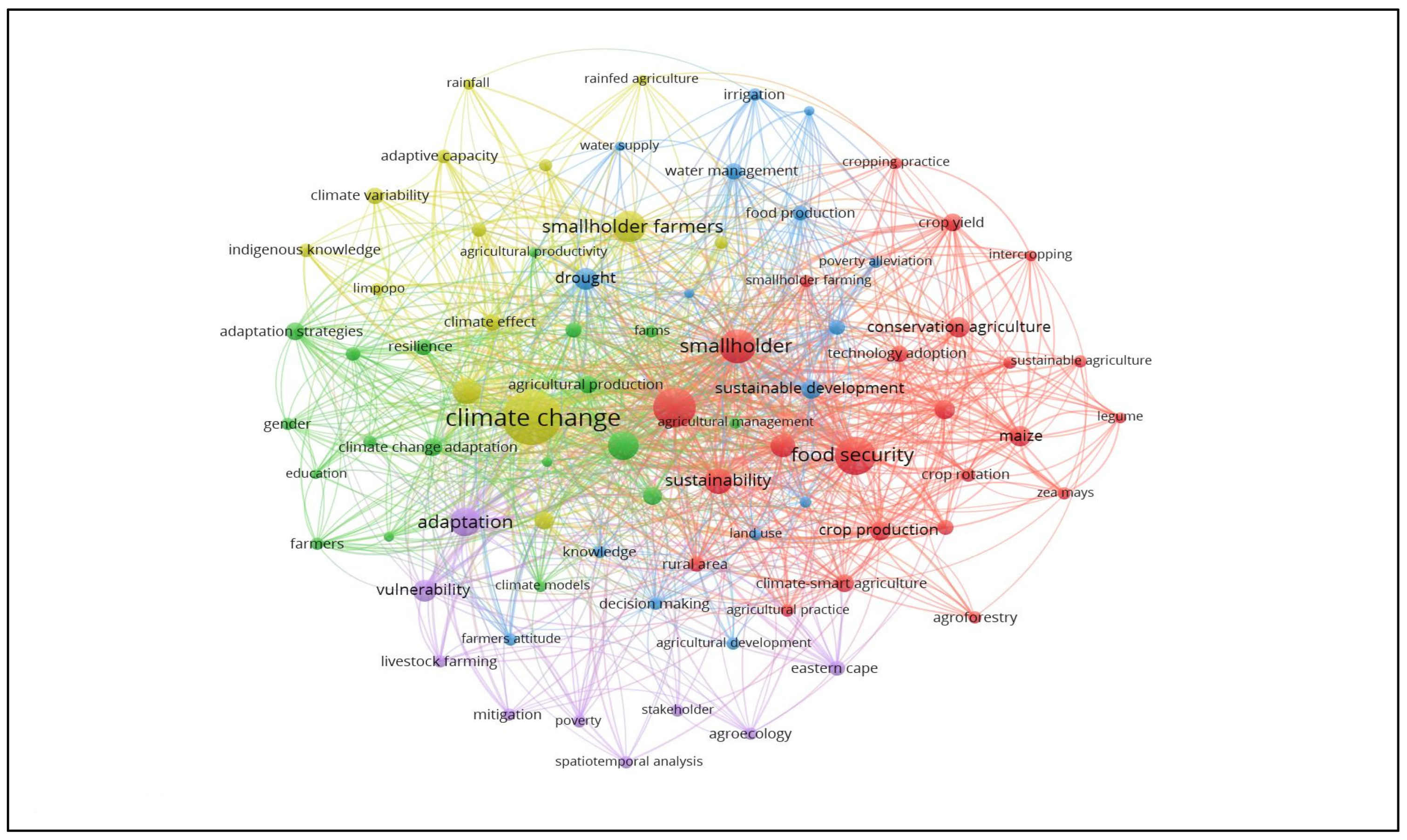
The VOS Viewer provided a network analysis showing visualisation and clustering of key findings from the data [40,42]. The VOS Viewer analysed keywords’ co-occurrence and total strength, where five was set as the minimum number of occurrences. This threshold was set to ensure the inclusion of relevant concepts within the climate change and sustainable agriculture research domain that would aid in identifying core themes. This approach aligns with best practices for enhancing the clarity and robustness of bibliometric visualisations [40]. Label, node sizes, and distance between nodes were evaluated. The increased keyword co-occurrence was represented by a large label and node size [44]. The network and density visualisations were mapped. Keywords were grouped into clusters with a common theme associated with each cluster.

4. Results and Discussion

4.1. Characteristics of Data

Table 1 showed the descriptive analysis of the retrieved literature from the Scopus database on sustainable agricultural interventions to climate change and the vulnerability of smallholder farmers in South Africa revealed significant contributions to scientific research. A total of 709 publications were published between 2014 and March 2025 with an average age of 3.51 years and average citation per document of 13.84. Aggregated keywords comprising more than 3494 keywords and 2940 author’s keywords highlight the multidisciplinary nature of the research of sustainable agriculture and climate change. Author collaborations showed 833 authorships with 47.95% international co-authorships, highlighting the significance of global researchers in contributing towards research on sustainable interventions to climate change and vulnerability among smallholder farmers in South Africa. The retrieved dataset showed 28.6% growth in publications which included 503 articles, 115 reviews, and 80 conference papers.

4.2. Publication Trends on Climate Change, Smallholder Farming, and Sustainable Interventions

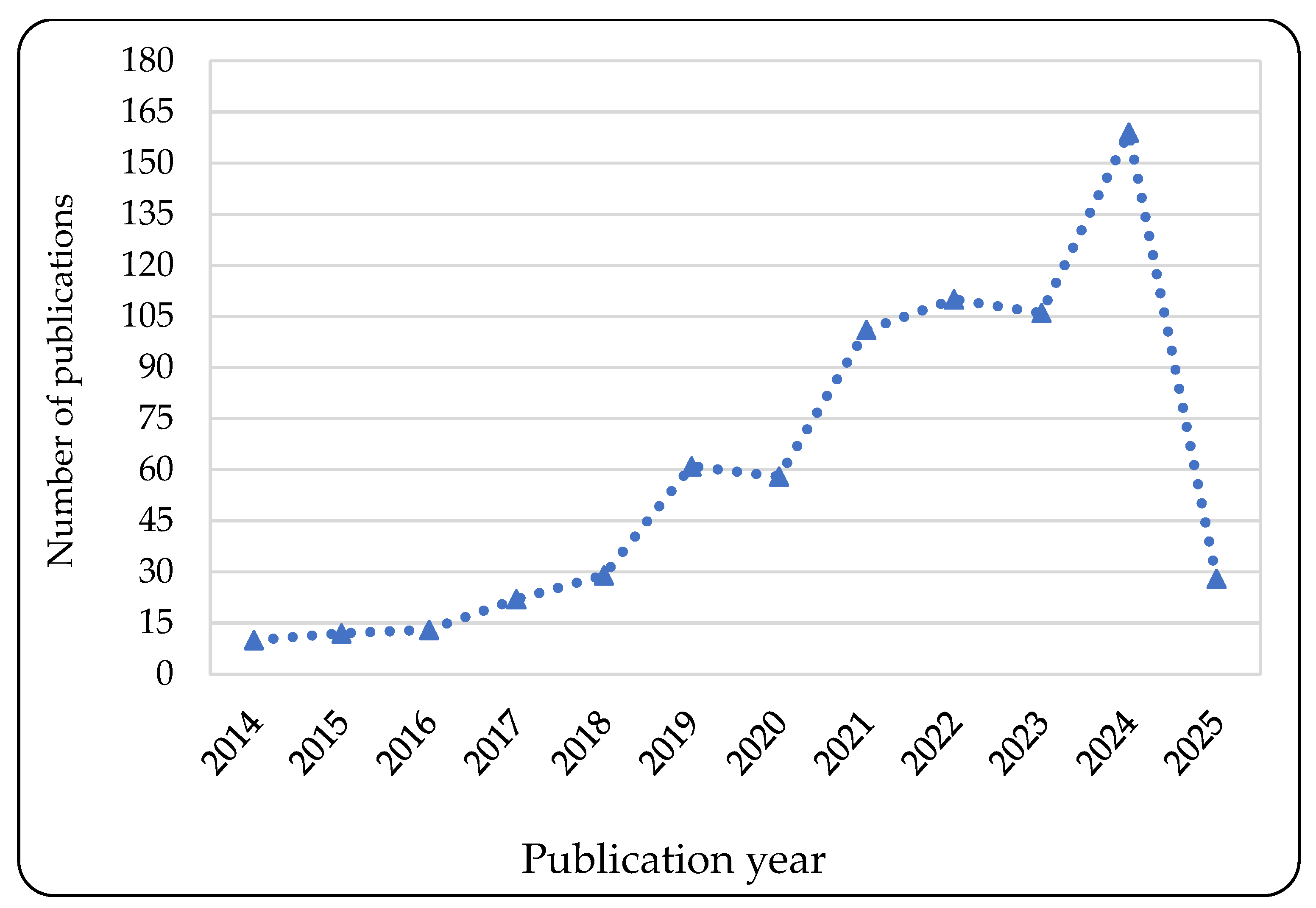
Figure 2 shows the basic bibliometric results of the survey over 11 years. Publications increased from 10 in 2014 to 61 in 2020. There was a significant increase in publications from 58 in 2021 to 101 in 2022. This highlighted an increased interest in the research area. A steady publication increase was observed from 10 to 158 over the study period. The observed trend could be related to an increase in the quest to adopt sustainable interventions in mitigating and adapting to climate change and implementing these practices in the production of crops and livestock [18,43]. Agriculture production has been linked with increased greenhouse gas (GHG) emissions which affect humans and the environment [45]. Chemicals such as pesticides, herbicides, and fertilisers used in crop and feed production have been reported to cause eutrophication, contamination of groundwater, and bioaccumulation which affects the environment [43]. Residues of chemicals have also been reported in meat and meat products, and these have detrimental effects when consumed by humans. To address climate change challenges, research is focused on the identification, development, and implementation of strategies to combat its impact, especially among marginalised communities and smallholder farmers who produce most of the food consumed globally.

4.3. Distribution of Subject Areas on Climate Change, Smallholder Farmers’ Vulnerability and Sustainable Agricultural Interventions

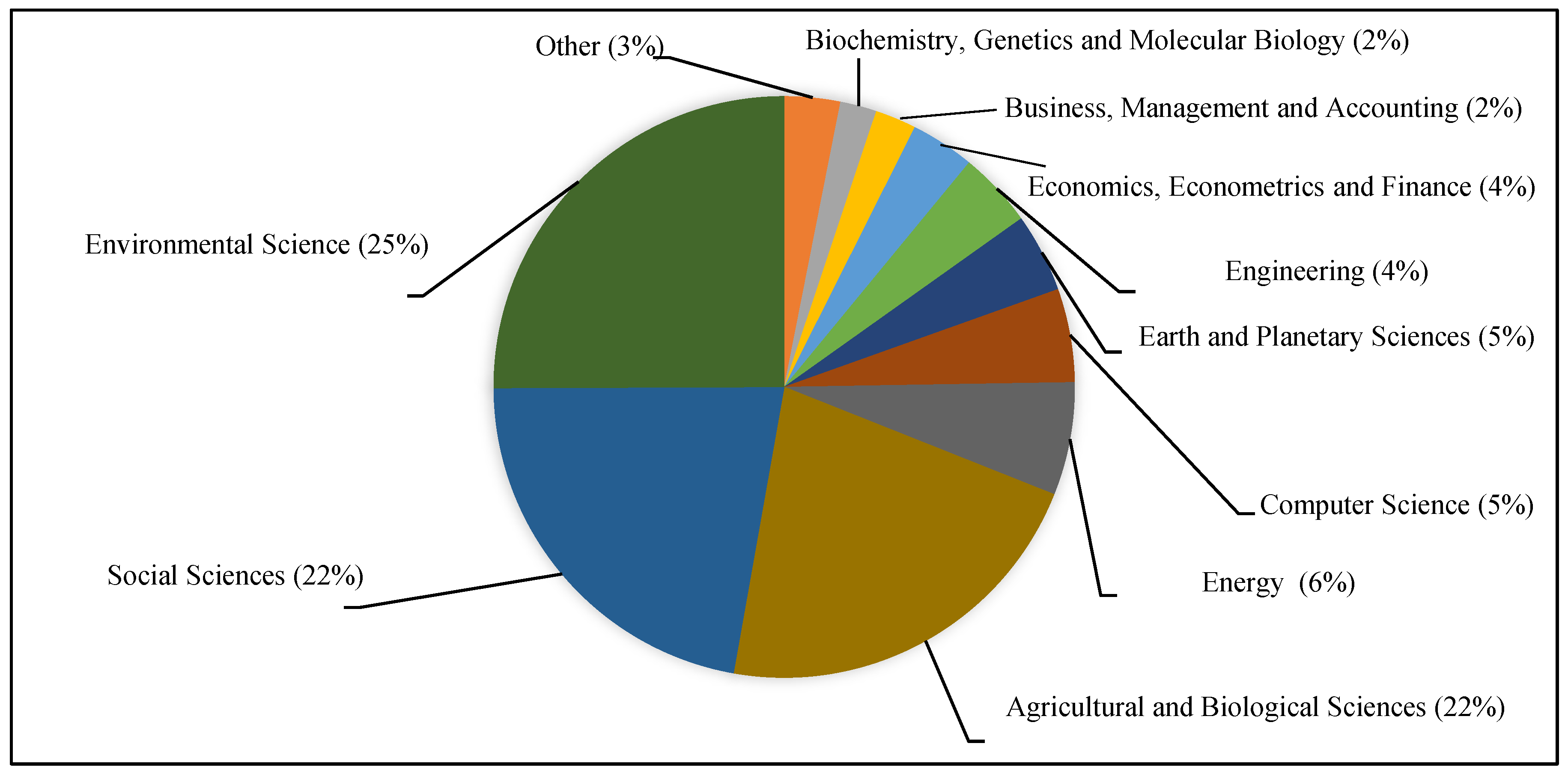
Figure 3 shows that research on climate change and smallholder farming has been published between 2014 and March 2025. The findings show that researchers from different fields are researching climate change and smallholder farming to identify solutions to challenges experienced across the country. Total publications were 395 for environmental science, 349 for agricultural and biological sciences, and 343 for social sciences. The dominance of the environmental science field could be associated with how researchers align climate change research from the environmental perspective [46]. Most publications indexed on Scopus are in science, technology, engineering, and mathematics. Similar trends were reported on climate-smart agriculture (CSA) research by Zaidi et al. [43]. This shows that climate change’s impact is affecting different areas, and efforts are being made in research that will assist in mitigating it in the respective fields.

4.4. Cited Publications on Climate Change, Smallholder Farmers’ Vulnerability, and Sustainable Agricultural Interventions

Data retrieved from Scopus showed that the top 20 publications on climate change and smallholder farming that were highly cited had between 27 and 152 citations, as shown in Table 2. Articles were the most cited publications, contributing more than 70%, followed by reviews.
In contrast, Zaidi et al. [43] found that top-cited publications on CSA research were reviews. An analysis of top-cited research provides insight into the trends of specific areas, facilitating the identification of gaps for future research and informing the implementation of necessary recommendations. The top-cited article by Senyolo et al. [47] reported that the harvesting of rainwater, use of seed varieties that are tolerant to drought and mature early, seed varieties, and conservation agriculture were innovations ideal for CSA for South African farmers. The authors further highlighted that costs, labour, and management requirements associated with the adoption of rainwater harvesting and conservation agriculture were a challenge compared to drought-tolerant and early-maturing seeds [47].
The second most cited publication by Abegunde et al. [48] had 140 citations. The authors showed that in the King Cetshwayo District Municipality, crop diversification, crop rotation, and organic manure usage were often implemented as CSA practices [48]. The extent to which these practices are adopted is influenced by several factors, including media coverage, climate change perceptions, education, type of agricultural production, access to agricultural extension services, income, land size, on-farm agricultural knowledge and skills, and affiliation to an agriculture-related association or group [48]. The least cited publication in the top twenty by Ogundeji [49] had 27 citations. Ogundeji [49] showed that farmers commonly employed strategies such as better varieties of crops and different dates of planting when adapting to climate change. These were followed by livelihood diversification, herd management, planting of trees, organic fertiliser application, and insurance conservation of soil and water [49].
Table 2. Top twenty most cited research on climate change, smallholder farmers’ vulnerability, and sustainable agricultural interventions between 2014 and March 2025.
ReferenceSource TitleCitationsDOIDocument Type
Senyolo et al. [47]Journal of Cleaner Production15210.1016/j.jclepro.2017.06.019Article
Abegunde et al. [48]Sustainability 13810.3390/SU12010195Article
Tongwane and Moeletsi [50]Environmental Development11010.1016/j.envdev.2016.06.004Article
Myeni and Moeletsi [51]Sustainability7910.3390/su11113003Article
Sinyolo [52]Technology in Society6910.1016/j.techsoc.2019.101214Article
Kom et al. [53]GeoJournal6210.1007/s10708-020-10272-7Article
Olorunfemi et al. [54]Journal of the Saudi Society of Agricultural Sciences5610.1016/j.jssas.2019.03.003Article
Ojo et al. [55]Science of the Total Environment5210.1016/j.scitotenv.2021.148499Article
Mutengwa et al. [56]Sustainability 5110.3390/su15042882Review
Swanepoel et al. [57]South African Journal of Plant and Soil4110.1080/02571862.2017.1390615Review
Popoola et al. [58]Sustainability 4010.3390/su12145846Article
Zerihun et al. [59]Development Studies Research3910.1080/21665095.2014.977454Article
Cammarano et al. [60]Food Security3810.1007/s12571-020-01023-0Article
Ncoyini et al. [61] Climate Services3410.1016/j.cliser.2022.100285Article
Pangapanga-Phiri and Mungatana [62]International Journal of Disaster Risk Reduction3210.1016/j.ijdrr.2021.102322Article
Khoza et al. [63]Gender, Technology and Development3110.1080/09718524.2020.1830338Article
Muzangwa et al. [64]Agronomy3110.3390/agronomy7030046Article
Popoola et al. [65]GeoJournal3010.1007/s10708-017-9829-0Article
Myeni and Moeletsi [66]Agriculture 2910.3390/agriculture10090410Article
Ogundeji [49]Agriculture 2710.3390/agriculture12050589Article

4.5. Affiliations, Contributing Authors and Geographic Distribution of Research on Climate Change, Smallholder Farming, and Sustainable Agricultural Interventions

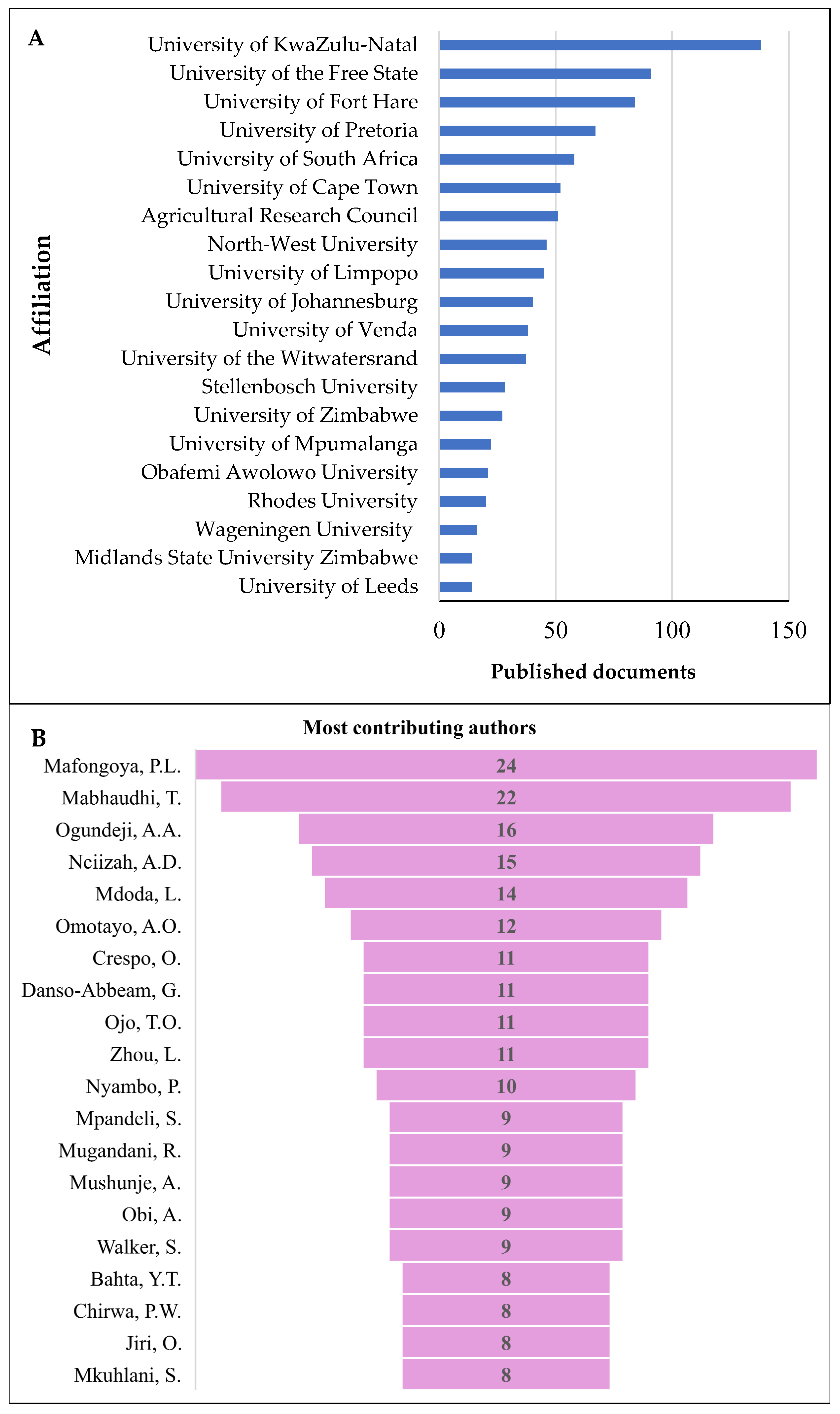
The top twenty affiliations and contributing authors on climate change and smallholder farmers’ vulnerability research are shown in Figure 4A, B, respectively. The results show that all the institutions published more than 10 publications as indexed in the database for Scopus between 2014 and 2025. Institutional publications followed the order of the University of KwaZulu-Natal (139), University of Free State (91), University of Fort Hare (85), University of Pretoria (67), University of South Africa (59), and the University of Cape Town (52). Each of these universities produced more than 50 publications on climate change and smallholder farmers’ vulnerability. The high research outputs could be attributed to strong collaborations and access to funding and resources for climate-related studies, aligning with the findings of Zaidi et al. [43]. It is noteworthy that the University of Free State has strengthened its research focus on climate change by establishing six new research chairs dedicated to researching its impacts [67]. Filho et al. [68] emphasised the significance of universities in advancing climate change research and education with a special focus on mitigation and adaptation strategies. The findings from this study confirm that universities dominate, corroborating previous reports from the Academy of Science of South Africa (ASSAf) [69,70]. Similarly, Zhou et al. [19] highlighted that universities lead climate change studies through surveys, literature reviews, and experimental research. Increased, ongoing research on climate change and agricultural production in South Africa by universities, research institutions, and relevant stakeholders is paramount. This will provide cutting-edge findings that can contribute to policy formulations and encourage implementation by smallholder farmers. Research involving smallholder farmers will be more beneficial to them since findings can be communicated directly to the participants through platforms such as workshops and training where potential solutions and prospects for any challenges faced by the communities can be addressed.
Amongst the twenty most contributing authors, eleven had 10 or more publications between 2014 and March 2025 (Figure 4B). The authors were Mafongoya, P.L (24; University of KwaZulu-Natal), Mabhaudhi, T (22; University of KwaZulu-Natal), Ogundeji, A.A (16; University of Free State), Nciiza, A.A (15; Agriculture Research Council, and University of South Africa), Mdoda, L (14; University of KwaZulu-Natal), Omotayo, A.O (12; North-West University), Crespo, O (11; University of Cape Town), Dansi-Abbeam, G (11; University of Free State), Ojo, T. O (11; University of Free State, and Obafemi Awolowo University), Zhou, L (11; University of Fort Hare), and Nyambo, P (10; University of Fort Hare). These authors highlight the significance of collaborative research and efforts being made by different institutions on exploring sustainable interventions and climate change issues.
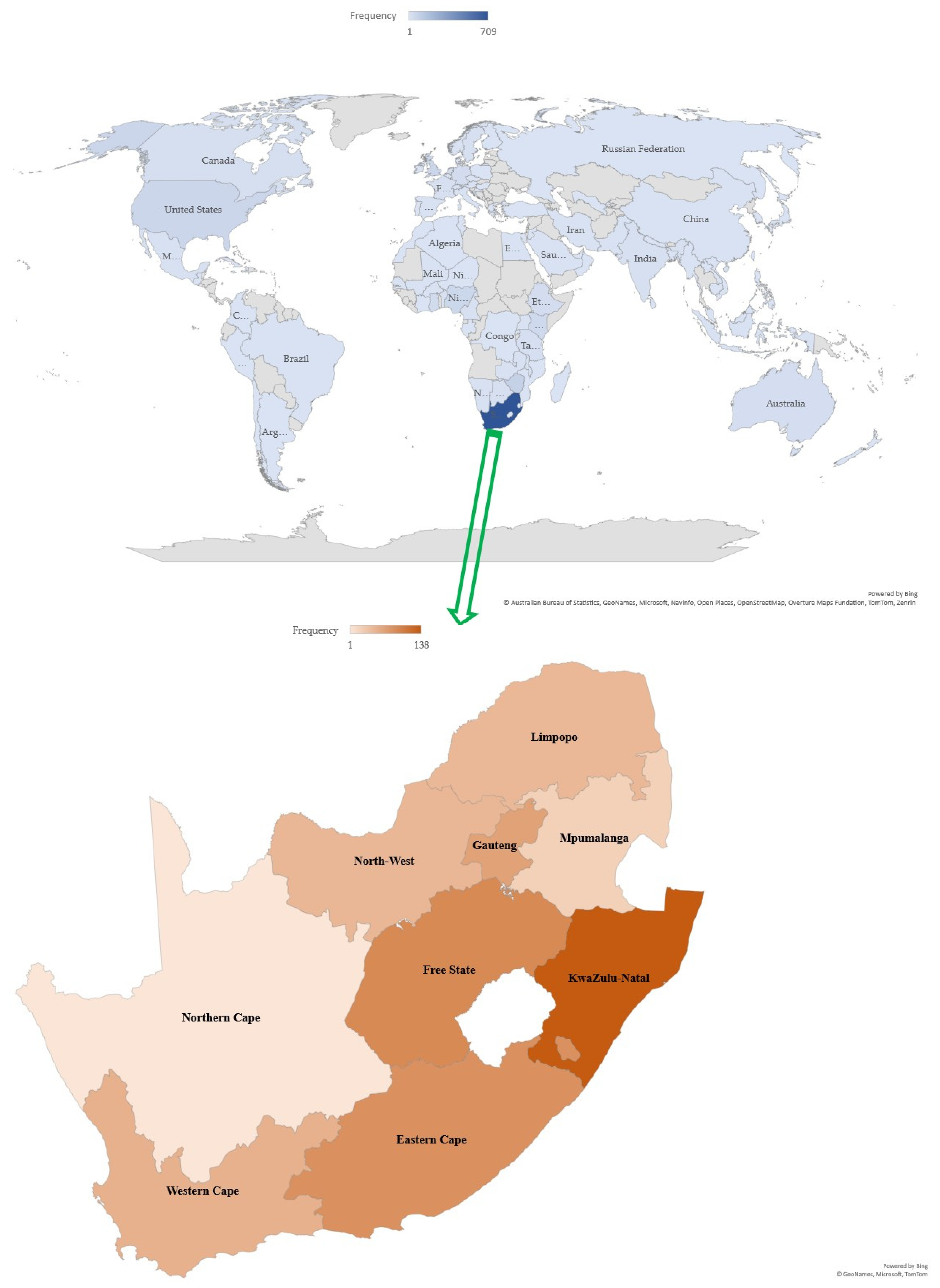
The geographic distribution of publication frequencies covered by the study is shown in Figure 5. The study focused on South Africa, as highlighted by the dark blue shade showing dominant publications. South Africa shows a strong research infrastructure, highlighting notable opportunities for future research in underrepresented provinces such as the Northern Cape. KwaZulu-Natal dominates the research landscape while Free State, Western Cape, Gauteng, North-West, Limpopo, and Mpumalanga reflect moderate research activity [71]. The findings concur with Zhou et al. [72]. The differences indicate potential for balanced agricultural policy development and targeted research to address local vulnerabilities [73]. Future studies could address data gaps and explore cross-border dynamics, value chain integrations, and gender impacts, ensuring comprehensive evaluations of climate change and smallholder farming agricultural challenges.

4.6. Funding Organisations

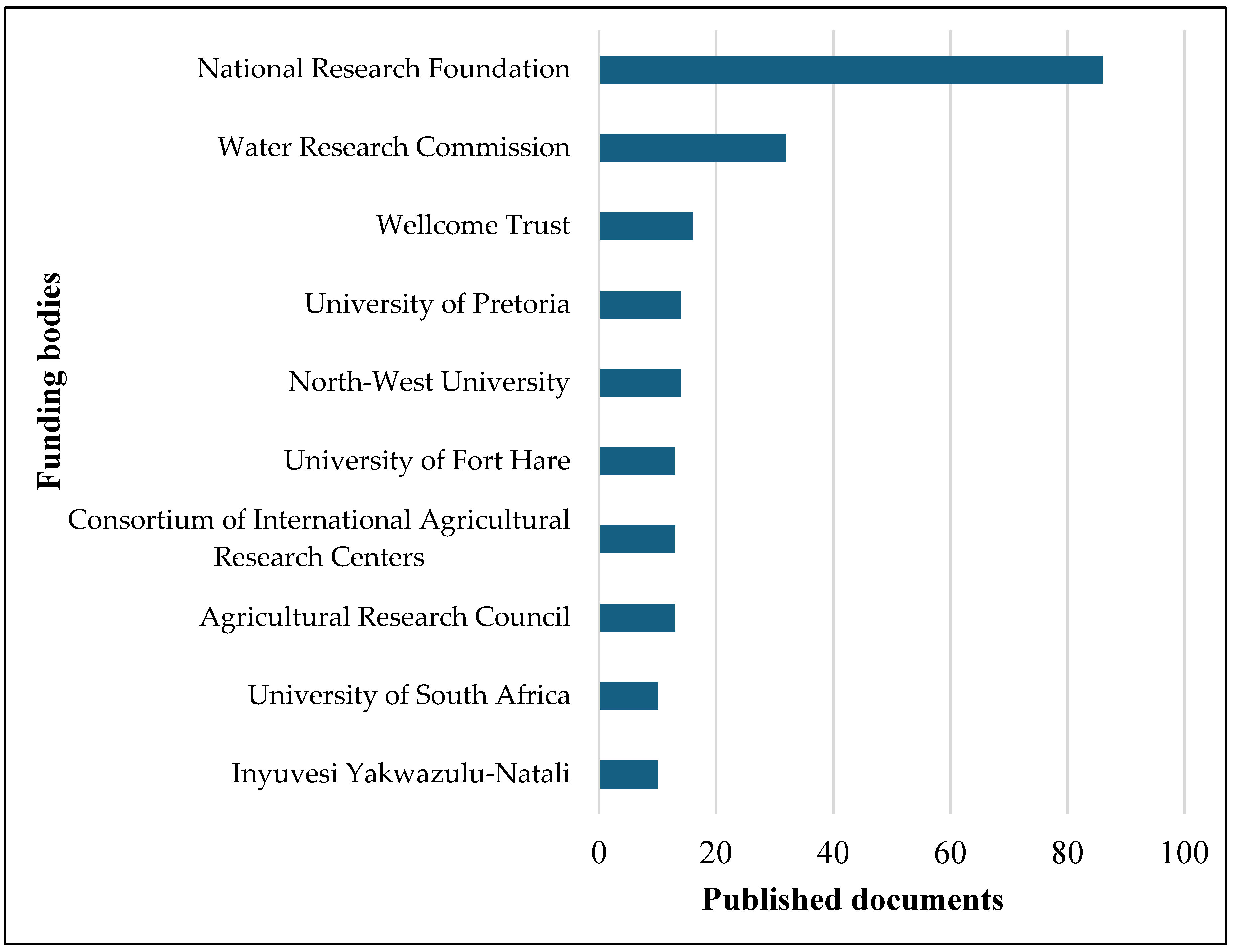
The top ten bodies actively funding research on agriculture and smallholder farmers’ vulnerability to climate change between 2014 and 2025 are shown in Figure 6.
Most publications (86) were supported by the National Research Foundation (NRF) of South Africa while the Water Research Council of South Africa funded 32 publications. The observed results were expected as the NRF drives towards the development of sustainable researchers with technical expertise in line with its vision, mission, and values to impact society [74]. The results of the Water Research Commission (WRC) corroborate the organisation’s role in conducting water research that links with its strategy of enhancing adaptation and resilience to climate change [75]. Funding from universities in South Africa contributed to publications below 15 per university over the past 11 years. This could be attributed to the status of postgraduate research that is available or ongoing and the availability of resources which contribute to publications. The top publications with one or more authors funded by the NRF were on climate change-related issues and have 140 citations [48], 62 citations [53], and 39 citations [59]. Publications with one or more authors whose research received funding from the WRC in the top five focused on utilisation of local crops [76] and has 104 citations, irrigation [77] with 64 citations, climate change adaption capacity [78] with 46 citations, precision agriculture [79] with 40 citations, and sustainable water use [80] with 36 citations. These results highlight the significance of funding sources in supporting research on climate change and sustainable interventions employed by smallholder farmers forming part of achieving the SDGs and Agenda 2063 priorities [46].

4.7. Keyword Co-Occurrence in Climate Change, Smallholder Farmers’ Vulnerability, and Sustainable Agricultural Interventions

A total of 81 keywords met the minimum occurrence of five and were grouped into five clusters showing 1938 links and 5428 as the total link strength. The ten most commonly featuring keywords were climate change, smallholder, food security, adaptive management, agriculture, adaptation, smallholder farmers, farming system, and sustainability ranging from 278 to 1136 total link strength (Table 3).
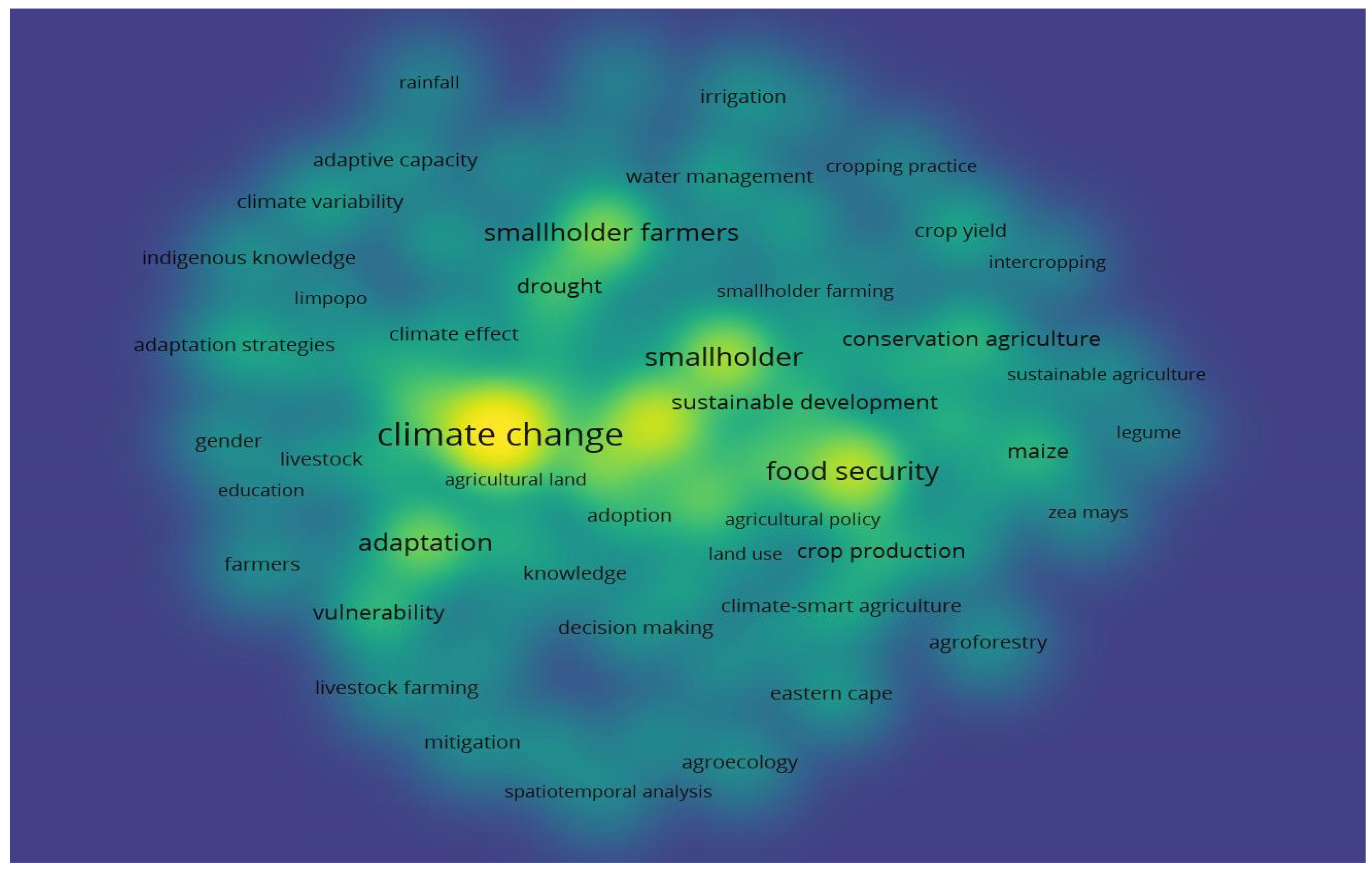
Network mapping and key density visualisation of author keyword occurrence during the study period (2014–March 2025) revealed five distinct clusters (Figure 7 and Figure 8). Figure 7 shows the node sizes and labels, with the ten most frequently occurring keywords appearing. Climate change, food security, smallholder, and sustainability were common words, suggesting them as the main thematic research areas based on the retrieved literature. The node sizes denote the frequent occurrence of a keyword with climate change and food security being the largest, thereby highlighting their central role in the literature. The identified five clusters can be distinguished by different colours (red, green, blue, yellow, and purple; Figure 7 and Figure 8).
Each cluster represents a specific focus, as shown in Table 4. The red cluster has a theme on ‘Climate-smart agronomic practices and food security’. It is associated with keywords such as conservation agriculture, CSA, crop production, maize, legume intercropping, sustainable agriculture, and technology adoption. This suggests strong links between sustainable agricultural practices and food security. The theme is also significant in exploring technological strategies to enhance smallholder farmers’ adaptive capacity. The cluster links with the vulnerability theory as it highlights sustainable practices that can be employed by farmers to reduce climate vulnerability as they increase the availability of food which significantly boosts food security and adaptive capacity. The cluster also aligns with sensitivity as it shows how food systems and agriculture production such as maize production and crop yields are affected directly by climate change. It also highlights that smallholder farmers are dependent on agriculture, which is sensitivity to rainfall, temperature, and soil fertility changes. Technology adoption and conservation interventions such as agroforestry and intercropping indicate efforts towards enhancing adaptive capacity among smallholder farmers. Therefore, the cluster highlights the vulnerability of food systems that depend on climate-sensitive resources while revealing ongoing interventions to promote sustainability through CSA innovations. This aligns with Kandel et al. [81], who reported that adoption of interventions such as agroforestry improve household food security. Molua et al. [82] and Abegunde and Obi [83] emphasised that conservation agriculture is a climate-smart innovation that enhances soil health and moisture retention and improves crop resilience and yields while mitigating environmental degradation. However, it is imperative for smallholder farmers to implement multiple CSA interventions as that is more effective in boosting productivity than adopting a single strategy [84].
The green cluster has a theme on ‘Climate change adaptation and resilience’. It contains keywords such as adoption, adaptation strategies, education, gender, farmers’ knowledge, and agricultural workers. The theme emphasises socio-cultural and agro-ecological approaches to climate stress, elaborating the importance of perspectives on indigenous knowledge and gender in climate change adaptation. This highlights strong links between farmers’ awareness and their capacity to implement climate-change-sustainable agriculture practices. The cluster aligns with the core of the vulnerability theory as it highlights adaptation strategies and resilience that are employed by farmers for coping with climate risks. This is significant in reducing the vulnerability of farmers to climate change. The cluster also encompasses the aspect of exposure, sensitivity, and adaptive capacity associated with the theory. The association of climate change, adaptation, and resilience indicates efforts being made by researchers in understanding how food and agriculture systems are coping with exposure [25]. The keywords ‘climate change adaptation’ and ‘climate effect’ highlight interdisciplinary responses to increasing climate stress and localised coping interventions. Gender shows the significance of women in agriculture and their associated challenges. The cluster also highlights how crucial services offered by agricultural workers, such as extension officers, and the information exchange is in equipping farmers with relevant adaptation skills.
The blue cluster has a theme on ‘Water management and agricultural development’, highlighting perspectives on sustainability crucial in the agriculture sector. Keywords in the cluster include land use, poverty alleviation, agricultural policy, and water management. The cluster highlights that water management plays a significant role in improving food production and poverty alleviation. The linkage of the cluster with the theory reveals strong links to adaptive capacity highlighting mitigation potential from exposure driven by agronomic and technological interventions by farmers [81]. These interventions moderate the impacts of exposure and reduce dependency on rainfall especially in arid and semi-arid environments [25]. The cluster also addresses that when water is managed properly, exposure and sensitivity to drought occurrence and water scarcity, which form part of vulnerability frameworks, is reduced [85,86]. It reveals that water governance is significant in climate resilience. South Africa faces water scarcity challenges; therefore, efficient water use in agricultural production is important. Previous studies [10,87,88,89] showed how livestock production can be enhanced when water is scarce.
The yellow cluster emphasises a theme on ‘Climate change indicators, agricultural productivity and smallholder farmers’. Keywords in the cluster include rainfall, climate variability, crops, rainfed agriculture, drought, agricultural productivity, irrigation, and climate effects. Changing rainfall patterns affect rainfed agriculture, compromising crop yield, hence, climate adaptation is important in enhancing productivity. Smallholder farmers are commonly resource-limited and depend on natural resources for agricultural productivity, therefore their adaptive capacity is limited, increasing their vulnerability to climate change. The cluster links with the vulnerability theory because it shows factors that influence the sensitivity and exposure of smallholder farmers to climate change, and these form part of the vulnerability assessments. Exposure to rainfall and droughts enhances adaptive capacity as farmers apply water management, use indigenous knowledge, and implement localised and specific adaptation responses aimed at reducing vulnerability. This is supported by Chao [90], who highlighted that local adaptation measures can reduce vulnerability and enhance adaptive, absorption, and transformation capabilities of climate-resilient food systems.
The purple cluster has the theme ‘Socioeconomic and spatial aspects’, which emphasises the risk, adaptation capacity, and farming systems. It includes keywords such as mitigation, vulnerability, livestock farming, agroecology, and stakeholder. It reveals that adaptation and mitigation efforts in climate change research provide more insights on how smallholder farmers could cope with climate-related challenges. These extend beyond socioeconomic and spatial factors that influence adaptation, such as decision making [91]. Livestock farming indicates that resilience in animal production is required to combat climate stressors. Stakeholders’ involvement encourages collaborative efforts to address vulnerability among smallholder farmers and building adaptive capacity. This is significant when climate knowledge and skills are shared and implemented into action. The cluster’s linkage with the vulnerability theory is centred around the significance of social and institutional frameworks in the adaptive capacity of smallholder farmers and their ability to respond to climate risks [25]. Therefore, vulnerability is not only encompassed by natural factors, but educational, institutional, and economic aspects also contribute to how farmers holistically perceive risks and implement adaptation strategies [33]. Ogisi and Begho [91] also postulated that personal, gender, socio-psychological, economic, environmental, structural, institutional, and policy aspects influence adaptive capacity and adoption of sustainable interventions to climate change.
The network and density maps show dense linkages with keywords such as agricultural management, adaptation, and sustainable development, bridging the clusters. This further highlights that academic research on climate change and agriculture, especially among smallholder farmers, shows interventions that are diverse and interconnected. The interventions range from agronomic interventions to socio-environmental resilience, which is significant in achieving sustainable food systems under climate stress. The maps also provide a landscape on academic research exploring climate vulnerability and how research has evolved interconnectedness of climate stress indicators, sensitivity of agricultural production, and the adaptation capacity of smallholder farmers. This highlights the significance of the vulnerability theory in providing an understanding of mitigating mechanisms in smallholder production systems. The theory also provides an understanding of the maps, as it highlights them through environmental attributes such as drought, climate variability, and rainfed agriculture. It also shows sensitivity in food production such as maize and other crops and smallholder farming, which are affected by climatic variation. Henceforth, adaptive capacity through indigenous knowledge, irrigation, adaptation strategies, and technology adoption employed by smallholder farmers is promoted for sustainable agricultural production [25].

4.8. Key Findings on Sustainable Agricultural Interventions to Climate Change

Climate-smart agriculture is a key sustainable intervention that allows smallholder farmers to build resilience against climate change through enhancing productivity, improving adaptation, and decreasing GHG emissions [75,76]. Shoko et al. [92] reported that CSA is centred around three fundamental pillars which are adaptation, mitigation, and food security. The CSA practices vary across agro-climatic zones, including climate-related information services, agroforestry, conservation of water and soil, rainwater harvesting, and use of crop varieties [12,78,79]. For instance, the adoption of CSA practices in Ghana has been linked to reduced emergence of pests and diseases, enhanced outputs and incomes, and improved food security [75]. However, challenges such as land insecurity, the emergence of pests and diseases, high costs of improved crop varieties, and inadequate support hinder widespread adoption [75].
Livestock farming can benefit from CSA through adaptable breeds, improved feed strategies, and supportive policies and services [80]. However, the implementation and dispersion of CSA technologies in South Africa have been lagging, and this has been mostly attributed to constraints related to technology, socio-economy, institutions, financial challenges, ineffective policies, and small farm sizes [21,79].

5. Limitations, Practical Implications, and Opportunities for Future Research

This study was not without limitations. The literature search covered studies conducted from 2014 to March 2025, published in English, and utilising the Scopus database. This could have excluded other relevant studies outside the current study period that were published in different databases. Future studies should expand the timespan and search terms while incorporating the relevant literature from other available databases and grey literature.
The literature on integrating climate change, adaptation strategies, and sustainable agricultural interventions is broadening; however, several critical research gaps remain. The literature remains limited in its focus on specific thematic and geographic areas relevant to the adoption of CSA. Livestock farming transforms the livelihoods of smallholder farmers and contributes to agricultural GHG emissions; however, it is often underrepresented. Most studies usually focus on crop-related systems, leaving a critical gap in understanding and designing climate-smart strategies for livestock farming or mixed farming. Therefore, future research should explore livestock systems in climate change adaptation. Geographically, climate change research in South Africa is unevenly distributed, with provinces such as Limpopo and Eastern Cape, which are known to be dominated by rural populations and high climate variability, being sparsely represented in the literature. Area- or region-specific research is essential in tailoring sustainable intervention practices such as CSA, as the country exhibits varied climatic, agro-ecological, and socio-economic attributes. Future studies should therefore address CSA in the country’s different landscapes and possible comparison with other regions in Southern Africa.
Methodological tools, such as decision support systems, remain marginal in the literature, with keywords such as decision making, climate models, and spatiotemporal analysis occurring less frequently and lacking strong interconnectedness. This highlights that the research is still emerging and strengthening the development and use of such tools that empower smallholder farmers to make informed, climate-resilient decisions. Therefore, future studies on relevant methodological tools are imperative. Future studies should also explore policy and institutional dimensions linked to climate change. The absence of keywords such as policy, governance, or institutional support highlights weak linkages between scientific research and policy frameworks necessary for scaling CSA. A stronger focus on policy linkages can facilitate the development of enabling environments for CSA implementation. Future research should also focus on gender dimensions and social inclusion. The keyword ‘gender’ occurs in the literature; however, it is not central. Using keywords such as ‘youth’ and ‘social equity’ is scarce, indicating a lack of emphasis on vulnerable and marginal populations. The CSA interventions risk being inequitable and less effective in enabling broad-based resilience, without an inclusive lens. Addressing these gaps through integrated, regionally nuanced, socially inclusive research will enhance the effectiveness and equity of adopting CSA practices among smallholder farmers.

6. Conclusions

The paper presents a bibliometric analysis of sustainable agricultural interventions and the vulnerability of smallholder farmers to climate change in South Africa. The findings of this study indicate an increasing trend in research focusing on climate change and the vulnerability of smallholder farmers in the country. Significant contributions were observed from the University of KwaZulu-Natal, while the NRF is a primary funding body for related publications. Climate-smart agriculture and conservation agriculture emerge as the most widely sustainable interventions among smallholder farmers. The study concludes that sustainable agricultural interventions aid in the reduction in smallholder farmers’ vulnerability to climate change. Future research should explore adoption rates, opportunities, and constraints associated with these interventions to enhance agricultural entrepreneurship. In-depth exploration of different agro-ecological zones, livestock systems, methodological tools, policy and institutional dimensions, and gender scope in CSA is required. It is recommended that smallholder farmers collaborate with extension officers, disaster management professionals, and other relevant stakeholders in effectively implementing these practices. Localised, timely financial support and continued training should be offered to farmers by the government, non-governmental organisations, research institutions, practitioners, and public–private partnerships on climate change and different mitigation and adaptation strategies. This will promote the resilience of smallholder farmers and develop South Africa’s agriculture sector in a sustainable way.

Supplementary Materials

The following supporting information can be downloaded at: https://www.mdpi.com/article/10.3390/su18010114/s1, Table S1: PRISMA 2020 Checklist.

Author Contributions

C.L.F.K.: Conceptualization, Methodology, Formal Analysis, Investigation, Writing of Original Draft, and Visualisation. T.N.: Conceptualization, Methodology, and Review and Editing. All authors have read and agreed to the published version of the manuscript.

Funding

This research received no external funding.

Informed Consent Statement

Not applicable.

Data Availability Statement

All the data utilised is contained in this paper.

Acknowledgments

The authors appreciate the support they received from Walter Sisulu University. C.L.F.K. acknowledges the Postdoctoral Research Fellowship awarded by the Directorate of Research and Innovation, Walter Sisulu University.

Conflicts of Interest

The authors declare no conflicts of interest.

Abbreviations

The following abbreviations are used in this manuscript:
ASSAfAcademy of Science of South Africa
CSAClimate-smart agriculture
GDPGross Domestic Product
SDGSustainable Development Goal
SSASub-Saharan Africa
IPCCIntergovernmental Panel on Climate Change
NRFNational Research Foundation
WRCWater Research Commission

References

  1. Anik, A.R.; Rahman, S.; Sarker, J.R. Five Decades of Productivity and Efficiency Changes in World Agriculture (1969–2013). Agriculture 2020, 10, 200. [Google Scholar] [CrossRef]
  2. Nofiu, T.T.; Akande, R.S.; Abdulkareem, H.K.K.; Jimoh, S.O. Does the Relative Size of Agricultural Exports Matter for Sustainable Development? Evidence from Sub-Sahara Africa. World Dev. Sustain. 2025, 6, 100212. [Google Scholar] [CrossRef]
  3. Branca, G.; Cacchiarelli, L.; Haug, R.; Sorrentino, A. Promoting Sustainable Change of Smallholders’ Agriculture in Africa: Policy and Institutional Implications from a Socio-Economic Cross-Country Comparative Analysis. J. Clean. Prod. 2022, 358, 131949. [Google Scholar] [CrossRef]
  4. The Sustainable Development Goals Center for Africa. Africa 2030: SDGs Within Social Boundaries Leave No One Behind Outlook. 2021. Available online: https://sdgs.opm.go.ug/wp-content/uploads/2021/09/Uganda-VNR-Report-2020.pdf (accessed on 23 March 2025).
  5. Bhatnagar, S.; Chaudhary, R.; Sharma, S.; Janjhua, Y.; Thakur, P.; Sharma, P.; Keprate, A. Exploring the Dynamics of Climate-Smart Agricultural Practices for Sustainable Resilience in a Changing Climate. Environ. Sustain. Indic. 2024, 24, 100535. [Google Scholar] [CrossRef]
  6. Katiyatiya, C.L.F.; Majaha, J.; Chikwanha, O.C.; Dzama, K.; Kgasago, N.; Mapiye, C. Drought’s Implications on Agricultural Skills in South Africa. Outlook Agric. 2022, 51, 293–302. [Google Scholar] [CrossRef]
  7. Wu, L.; Elshorbagy, A.; Helgason, W. Assessment of Agricultural Adaptations to Climate Change from a Water-Energy-Food Nexus Perspective. Agric. Water Manag. 2023, 284, 108343. [Google Scholar] [CrossRef]
  8. Ullah, A.; Nadeem, F.; Nawaz, A.; Siddique, K.H.M.; Farooq, M. Heat Stress Effects on the Reproductive Physiology and Yield of Wheat. J. Agron. Crop Sci. 2022, 208, 1–17. [Google Scholar] [CrossRef]
  9. Katiyatiya, C.L.F.; Muchenje, V. Hair Coat Characteristics and Thermophysiological Stress Response of Nguni and Boran Cows Raised under Hot Environmental Conditions. Int. J. Biometeorol. 2017, 61, 2183–2194. [Google Scholar] [CrossRef] [PubMed]
  10. Chikwanha, O.C.; Mupfiga, S.; Olagbegi, B.R.; Katiyatiya, C.L.F.; Molotsi, A.H.; Abiodun, B.J.; Dzama, K.; Mapiye, C. Impact of Water Scarcity on Dryland Sheep Meat Production and Quality: Key Recovery and Resilience Strategies. J. Arid Environ. 2021, 190, 104511. [Google Scholar] [CrossRef]
  11. IPCC. Summary for Policymakers. In Impacts, Adaptation and Vulnerability; Contribution of Working Group II to the Sixth Assessment Report of the Intergovernmental Panel on Climate Change; Pörtner, H.-O., Roberts, D.C., Tignor, M., Poloczanska, E.S., Mintenbeck, K.A., Alegría, A., Craig, M., Langsdorf, S., Löschke, S., Möller, V., et al., Eds.; Cambridge University Press: Cambridge, UK, 2022; pp. 3–22. ISBN 9781139177245. [Google Scholar]
  12. Antwi-Agyei, P.; Baffour-Ata, F.; Alhassan, J.; Kpenekuu, F.; Dougill, A.J. Understanding the Barriers and Knowledge Gaps to Climate-Smart Agriculture and Climate Information Services: A Multi-Stakeholder Analysis of Smallholder Farmers’ Uptake in Ghana. World Dev. Sustain. 2025, 6, 100206. [Google Scholar] [CrossRef]
  13. Mthethwa, K.N.; Ngidi, M.S.C.; Ojo, T.O.; Hlatshwayo, S.I. The Determinants of Adoption and Intensity of Climate-Smart Agricultural Practices among Smallholder Maize Farmers. Sustainability 2022, 14, 16926. [Google Scholar] [CrossRef]
  14. Slayi, M.; Zhou, L.; Jaja, I.F. Constraints Inhibiting Farmers’ Adoption of Cattle Feedlots as a Climate-Smart Practice in Rural Communities of the Eastern Cape, South Africa: An in-Depth Examination. Sustainability 2023, 15, 14813. [Google Scholar] [CrossRef]
  15. Selokane, B.; Maseko, N.; Cira, N.; Katiyatiya, C.L.F.; Mazenda, A. Towards Resilient Farming: Addressing Climate-Smart Agriculture Constraints in Selected Southern African Countries. SN Soc. Sci. 2025, 5, 215. [Google Scholar] [CrossRef]
  16. Khumalo, N.Z.; Mdoda, L.; Sibanda, M. Uptake and Level of Use of Climate-Smart Agricultural Practices by Small-Scale Urban Crop Farmers in EThekwini Municipality. Sustainability 2024, 16, 5348. [Google Scholar] [CrossRef]
  17. Omotoso, A.B.; Omotayo, A.O. The Interplay between Agriculture, Greenhouse Gases, and Climate Change in Sub-Saharan Africa. Reg. Environ. Change 2024, 24, 1. [Google Scholar] [CrossRef]
  18. Zenda, M. A Systematic Literature Review on the Impact of Climate Change on the Livelihoods of Smallholder Farmers in South Africa. Heliyon 2024, 10, e38162. [Google Scholar] [CrossRef] [PubMed]
  19. Zhou, L.; Slayi, M.; Ngarava, S.; Jaja, I.F.; Musemwa, L. A Systematic Review of Climate Change Risks to Communal Livestock Production and Response Strategies in South Africa. Front. Anim. Sci. 2022, 3, 868468. [Google Scholar] [CrossRef]
  20. Zenda, M.; Rodolph, M.; Harley, C. The Impact of Climate Variability on the Livelihoods of Smallholder Farmers in an Agricultural Village in the Wider Belfast Area, Mpumalanga Province, South Africa. Atmosphere 2024, 15, 1353. [Google Scholar] [CrossRef]
  21. Adger, W.N. Vulnerability. Glob. Environ. Change 2006, 16, 268–281. [Google Scholar] [CrossRef]
  22. Füssel, H.M.; Klein, R.J.T. Climate Change Vulnerability Assessments: An Evolution of Conceptual Thinking. Clim. Change 2006, 75, 301–329. [Google Scholar] [CrossRef]
  23. Jamshidi, O.; Asadi, A.; Kalantari, K.; Azadi, H.; Scheffran, J. Vulnerability to Climate Change of Smallholder Farmers in the Hamadan Province, Iran. Clim. Risk Manag. 2019, 23, 146–159. [Google Scholar] [CrossRef]
  24. Das, S.; Ghosh, A.; Hazra, S.; Ghosh, T.; Safra de Campos, R.; Samanta, S. Linking IPCC AR4 & AR5 Frameworks for Assessing Vulnerability and Risk to Climate Change in the Indian Bengal Delta. Prog. Disaster Sci. 2020, 7, 100110. [Google Scholar] [CrossRef]
  25. Smit, B.; Burton, I.; Challenger, B.; Huq, S.; Klein, R.; Yohe, G.; Adger, W.; Downing, T.; Harvey, E.; Kane, S.; et al. Adaptation to Climate Change in the Context of Sustainable Development and Equity. In Climate Change 2001: Impacts, Adaptation and Vulnerability; Cambridge University Press: Cambridge, UK, 2001; pp. 879–912. [Google Scholar]
  26. Henri Aurélien, A.B. Vulnerability to Climate Change in Sub-Saharan Africa Countries. Does International Trade Matter? Heliyon 2025, 11, e42517. [Google Scholar] [CrossRef]
  27. Sarkodie, S.A.; Ahmed, M.Y.; Owusu, P.A. Global Adaptation Readiness and Income Mitigate Sectoral Climate Change Vulnerabilities. Humanit. Soc. Sci. Commun. 2022, 9, 113. [Google Scholar] [CrossRef]
  28. Rana, I.A.; Khan, M.M.; Lodhi, R.H.; Altaf, S.; Nawaz, A.; Najam, F.A. Multidimensional Poverty Vis-à-Vis Climate Change Vulnerability: Empirical Evidence from Flood-Prone Rural Communities of Charsadda and Nowshera Districts in Pakistan. World Dev. Sustain. 2023, 2, 100064. [Google Scholar] [CrossRef]
  29. Ngcamu, B. Climate Change and Disaster Preparedness Issues in Eastern Cape and Kwazulu-Natal, South Africa. Town Reg. Plan. 2022, 81, 53–66. [Google Scholar] [CrossRef]
  30. Crane, T.A.; Delaney, A.; Tamás, P.A.; Chesterman, S.; Ericksen, P. A Systematic Review of Local Vulnerability to Climate Change in Developing Country Agriculture. Wiley Interdiscip. Rev. Clim. Change 2017, 8, e464. [Google Scholar] [CrossRef]
  31. Prosperi, P.; Allen, T.; Cogill, B.; Padilla, M.; Peri, I. Towards Metrics of Sustainable Food Systems: A Review of the Resilience and Vulnerability Literature. Environ. Syst. Decis. 2016, 36, 3–19. [Google Scholar] [CrossRef]
  32. Gumel, D.Y. Assessing Climate Change Vulnerability: A Conceptual and Theoretical Review. Rev. Artic. J. Sustain. Environ. Manag. 2022, 1, 22–31. [Google Scholar]
  33. Das, S.; Goswami, K. Progress in Agricultural Vulnerability and Risk Research in India: A Systematic Review. Reg. Environ. Change 2021, 21, 24. [Google Scholar] [CrossRef]
  34. Page, M.J.; McKenzie, J.E.; Bossuyt, P.M.; Boutron, I.; Hoffmann, T.C.; Mulrow, C.D.; Shamseer, L.; Tetzlaff, J.M.; Akl, E.A.; Brennan, S.E.; et al. The PRISMA 2020 Statement: An Updated Guideline for Reporting Systematic Reviews. BMJ 2021, 372, n71. [Google Scholar] [CrossRef]
  35. Okolie, C.C.; Danso-Abbeam, G.; Groupson-Paul, O.; Ogundeji, A.A. Climate-Smart Agriculture amidst Climate Change to Enhance Agricultural Production: A Bibliometric Analysis. Land 2023, 12, 50. [Google Scholar] [CrossRef]
  36. Vieira, R.A.; McManus, C. Bibliographic Mapping of Animal Genetic Resources and Climate Change in Farm Animals. Trop. Anim. Health Prod. 2023, 55, 259. [Google Scholar] [CrossRef] [PubMed]
  37. McManus, C.; Pimentel, F.; de Almeida, A.M.; Pimentel, D. Tropical Animal Health and Production: A 55-Year Bibliographic Analysis Setting the Course for a Globalized International Reference Journal. Trop. Anim. Health Prod. 2023, 55, 160. [Google Scholar] [CrossRef]
  38. Barasa, P.M.; Botai, C.M.; Botai, J.O.; Mabhaudhi, T. A Review of Climate-Smart Agriculture Research and Applications in Africa. Agronomy 2021, 11, 1255. [Google Scholar] [CrossRef]
  39. Chimi, P.M.; Fobane, J.L.; Matick, J.H.; Mala, W.A. A Two-Decade Bibliometric Review of Climate Resilience in Agriculture Using the Dimensions Platform. Discov. Appl. Sci. 2025, 7, 273. [Google Scholar] [CrossRef]
  40. Donthu, N.; Kumar, S.; Mukherjee, D.; Pandey, N.; Lim, W.M. How to Conduct a Bibliometric Analysis: An Overview and Guidelines. J. Bus. Res. 2021, 133, 285–296. [Google Scholar] [CrossRef]
  41. Öztürk, O.; Kocaman, R.; Kanbach, D.K. How to Design Bibliometric Research: An Overview and a Framework Proposal. Rev. Manag. Sci. 2024, 18, 3333–3361. [Google Scholar] [CrossRef]
  42. van Eck, N.J.; Waltman, L. Software Survey: VOSviewer, a Computer Program for Bibliometric Mapping. Scientometrics 2010, 84, 523–538. [Google Scholar] [CrossRef] [PubMed]
  43. Zaidi, A.; Ajibade, S.S.M.; Shah, M.A.; Bashir, F.M.; Falude, E.; Dodo, Y.A.; Adewolu, A.O.; Ngo-Hoang, D.L. Evolution of Climate-Smart Agriculture Research: A Science Mapping Exploration and Network Analysis. Open Agric. 2024, 9, 20220396. [Google Scholar] [CrossRef]
  44. Shoko, K.D.; Musakwa, W.; Kelso, C. A Bibliometric Analysis of Smallholder Farmers’ Climate Change Adaptation Challenges: A SADC Region Outlook. Int. J. Clim. Change Strateg. Manag. 2024, 17, 174–197. [Google Scholar] [CrossRef]
  45. Zheng, H.; Ma, W.; He, Q. Climate-Smart Agricultural Practices for Enhanced Farm Productivity, Income, Resilience, and Greenhouse Gas Mitigation: A Comprehensive Review. Mitig. Adapt. Strateg. Glob. Change 2024, 29, 28. [Google Scholar] [CrossRef]
  46. Mantlana, B.; Nondlazi, B.X.; Naidoo, S.; Ramoelo, A. Insights on Who Funds Climate Change Adaptation Research in South Africa. Sustainability 2025, 17, 1993. [Google Scholar] [CrossRef]
  47. Senyolo, M.P.; Long, T.B.; Blok, V.; Omta, O. How the Characteristics of Innovations Impact Their Adoption: An Exploration of Climate-Smart Agricultural Innovations in South Africa. J. Clean. Prod. 2018, 172, 3825–3840. [Google Scholar] [CrossRef]
  48. Abegunde, V.O.O.; Sibanda, M.; Obi, A. Determinants of the Adoption of Climate-Smart Agricultural Practices by Small-Scale Farming Households in King Cetshwayo District Municipality, South Africa. Sustainability 2020, 12, 195. [Google Scholar] [CrossRef]
  49. Ogundeji, A.A. Adaptation to Climate Change and Impact on Smallholder Farmers’ Food Security in South Africa. Agriculture 2022, 12, 589. [Google Scholar] [CrossRef]
  50. Tongwane, M.; Mdlambuzi, T.; Moeletsi, M.; Tsubo, M.; Mliswa, V.; Grootboom, L. Greenhouse gas emissions from different crop production and management practices in South Africa. Environ. Dev. 2016, 19, 23–35. [Google Scholar] [CrossRef]
  51. Myeni, L.; Moeletsi, M.; Thavhana, M.; Randela, M.; Mokoena, L. Barriers Affecting Sustainable Agricultural Productivity of Smallholder Farmers in the Eastern Free State of South Africa. Sustainability 2019, 11, 3003. [Google Scholar] [CrossRef]
  52. Sinyolo, S. Technology Adoption and Household Food Security among Rural Households in South Africa: The Role of Improved Maize Varieties. Technol. Soc. 2020, 60, 100214. [Google Scholar] [CrossRef]
  53. Kom, Z.; Nethengwe, N.S.; Mpandeli, N.S.; Chikoore, H. Determinants of Small-Scale Farmers’ Choice and Adaptive Strategies in Response to Climatic Shocks in Vhembe District, South Africa. GeoJournal 2022, 87, 677–700. [Google Scholar] [CrossRef]
  54. Olorunfemi, T.O.; Olorunfemi, O.D.; Oladele, O.I. Determinants of the Involvement of Extension Agents in Disseminating Climate Smart Agricultural Initiatives: Implication for Scaling Up. J. Saudi Soc. Agric. Sci. 2020, 19, 285–292. [Google Scholar] [CrossRef]
  55. Ojo, T.O.; Adetoro, A.A.; Ogundeji, A.A.; Belle, J.A. Quantifying the Determinants of Climate Change Adaptation Strategies and Farmers’ Access to Credit in South Africa. Sci. Total Environ. 2021, 792, 148499. [Google Scholar] [CrossRef] [PubMed]
  56. Mutengwa, C.S.; Mnkeni, P.; Kondwakwenda, A. Climate-Smart Agriculture and Food Security in Southern Africa: A Review of the Vulnerability of Smallholder Agriculture and Food Security to Climate Change. Sustainability 2023, 15, 2882. [Google Scholar] [CrossRef]
  57. Swanepoel, C.M.; Swanepoel, L.H.; Smith, H.J. A Review of Conservation Agriculture Research in South Africa. S. Afr. J. Plant Soil 2018, 35, 297–306. [Google Scholar] [CrossRef]
  58. Popoola, O.O.; Yusuf, S.F.G.; Monde, N. Information Sources and Constraints to Climate Change Adaptation amongst Smallholder Farmers in Amathole District Municipality, Eastern Cape Province, South Africa. Sustainability 2020, 12, 5846. [Google Scholar] [CrossRef]
  59. Zerihun, M.F.; Muchie, M.; Worku, Z. Determinants of Agroforestry Technology Adoption in Eastern Cape Province, South Africa. Dev. Stud. Res. 2014, 1, 382–394. [Google Scholar] [CrossRef]
  60. Cammarano, D.; Valdivia, R.O.; Beletse, Y.G.; Durand, W.; Crespo, O.; Tesfuhuney, W.A.; Jones, M.R.; Walker, S.; Mpuisang, T.N.; Nhemachena, C.; et al. Integrated Assessment of Climate Change Impacts on Crop Productivity and Income of Commercial Maize Farms in Northeast South Africa. Food Secur. 2020, 12, 659–678. [Google Scholar] [CrossRef]
  61. Ncoyini, Z.; Savage, M.J.; Strydom, S. Limited Access and Use of Climate Information by Small-Scale Sugarcane Farmers in South Africa: A Case Study. Clim. Serv. 2022, 26, 100285. [Google Scholar] [CrossRef]
  62. Pangapanga-Phiri, I.; Mungatana, E.D. Adoption of Climate-Smart Agricultural Practices and Their Influence on the Technical Efficiency of Maize Production under Extreme Weather Events. Int. J. Disaster Risk Reduct. 2021, 61, 102322. [Google Scholar] [CrossRef]
  63. Khoza, S.; de Beer, L.T.; van Niekerk, D.; Nemakonde, L. A Gender-Differentiated Analysis of Climate-Smart Agriculture Adoption by Smallholder Farmers: Application of the Extended Technology Acceptance Model. Gend. Technol. Dev. 2021, 25, 1–21. [Google Scholar] [CrossRef]
  64. Muzangwa, L.; Mnkeni, P.N.S.; Chiduza, C. Assessment of Conservation Agriculture Practices by Smallholder Farmers in the Eastern Cape Province of South Africa. Agronomy 2017, 7, 46. [Google Scholar] [CrossRef]
  65. Popoola, O.O.; Monde, N.; Yusuf, S.F.G. Perceptions of Climate Change Impacts and Adaptation Measures Used by Crop Smallholder Farmers in Amathole District Municipality, Eastern Cape Province, South Africa. GeoJournal 2018, 83, 1205–1221. [Google Scholar] [CrossRef]
  66. Myeni, L.; Moeletsi, M.E. Factors Determining the Adoption of Strategies Used by Smallholder Farmers to Cope with Climate Variability in the Eastern Free State, South Africa. Agriculture 2020, 10, 410. [Google Scholar] [CrossRef]
  67. Damons, A. Research Chairs Focus on the Impact of Climate Change; University of the Free State: Bloemfontein, South Africa, 2024. [Google Scholar]
  68. Filho, W.L.; Sierra, J.; Kalembo, F.; Ayal, D.Y.; Matandirotya, N.; de Victoria Pereira Amaro da Costa, C.I.; Sow, B.L.; Aabeyir, R.; Mawanda, J.; Zhou, L.; et al. The Role of African Universities in Handling Climate Change. Environ. Sci. Eur. 2024, 36, 130. [Google Scholar] [CrossRef]
  69. Academy of Science of South Africa (ASSAf). Second Biennial Report to Cabinet on the State of Climate Change Science and Technology in South Africa; Academy of Science of South Africa (ASSAf): Pretoria, South Africa, 2019. [Google Scholar]
  70. Academy of Science of South Africa (ASSAf). First Biennial Report to Cabinet on the State of Climate Change Science and Technology in South Africa; Academy of Science of South Africa (ASSAf): Pretoria, South Africa, 2017; ISBN 9780994711700. [Google Scholar]
  71. Chitakira, M.; Ngcobo, N.Z.P. Uptake of Climate Smart Agriculture in Peri-Urban Areas of South Africa’s Economic Hub Requires up-Scaling. Front. Sustain. Food Syst. 2021, 5, 706738. [Google Scholar] [CrossRef]
  72. Zhou, L.; Kori, D.S.; Sibanda, M.; Nhundu, K. An Analysis of the Differences in Vulnerability to Climate Change: A Review of Rural and Urban Areas in South Africa. Climate 2022, 10, 118. [Google Scholar] [CrossRef]
  73. Hlahla, S.; Ngidi, M.; Duma, S.E.; Sobratee-Fajurally, N.; Modi, A.T.; Slotow, R.; Mabhaudhi, T. Policy Gaps and Food Systems Optimization: A Review of Agriculture, Environment, and Health Policies in South Africa. Front. Sustain. Food Syst. 2023, 7, 867481. [Google Scholar] [CrossRef] [PubMed]
  74. National Research Foundation NRF. VISION 2030: Reimagining the Future. 2025. Available online: https://www.saasta.ac.za/wp-content/uploads/2021/06/NRF-Vision-2030.pdf (accessed on 13 June 2025).
  75. Water Research Commission. Annual Report 2023/2024; Water Research Commission: Pretoria, South Africa, 2024; Volume 4. [Google Scholar]
  76. Mabhaudhi, T.; Chibarabada, T.P.; Chimonyo, V.G.P.; Murugani, V.G.; Pereira, L.M.; Sobratee, N.; Govender, L.; Slotow, R.; Modi, A.T. Mainstreaming Underutilized Indigenous and Traditional Crops into Food Systems: A South African Perspective. Sustainability 2019, 11, 172. [Google Scholar] [CrossRef]
  77. Mabhaudhi, T.; Mpandeli, S.; Nhamo, L.; Chimonyo, V.G.P.; Nhemachena, C.; Senzanje, A.; Naidoo, D.; Modi, A.T. Prospects for Improving Irrigated Agriculture in Southern Africa: Linking Water, Energy and Food. Water 2018, 10, 1881. [Google Scholar] [CrossRef]
  78. Mpandeli, S.; Nhamo, L.; Moeletsi, M.; Masupha, T.; Magidi, J.; Tshikolomo, K.; Liphadzi, S.; Naidoo, D.; Mabhaudhi, T. Assessing Climate Change and Adaptive Capacity at Local Scale Using Observed and Remotely Sensed Data. Weather Clim. Extrem. 2019, 26, 100240. [Google Scholar] [CrossRef]
  79. Gokool, S.; Mahomed, M.; Kunz, R.; Clulow, A.; Sibanda, M.; Naiken, V.; Chetty, K.; Mabhaudhi, T. Crop Monitoring in Smallholder Farms Using Unmanned Aerial Vehicles to Facilitate Precision Agriculture Practices: A Scoping Review and Bibliometric Analysis. Sustainability 2023, 15, 3557. [Google Scholar] [CrossRef]
  80. Abafe, E.A.; Bahta, Y.T.; Jordaan, H. Exploring Biblioshiny for Historical Assessment of Global Research on Sustainable Use of Water in Agriculture. Sustainability 2022, 14, 10651. [Google Scholar] [CrossRef]
  81. Kandel, G.P.; Bavorova, M.; Ullah, A.; Pradhan, P. Food Security and Sustainability through Adaptation to Climate Change: Lessons Learned from Nepal. Int. J. Disaster Risk Reduct. 2024, 101, 104279. [Google Scholar] [CrossRef]
  82. Molua, E.L.; Sonwa, D.; Bele, Y.; Foahom, B.; Mate Mweru, J.P.; Wa Bassa, S.M.; Gapia, M.; Ngana, F.; Joe, A.E.; Masumbuko, E.M. Climate-Smart Conservation Agriculture, Farm Values and Tenure Security: Implications for Climate Change Adaptation and Mitigation in the Congo Basin. Trop. Conserv. Sci. 2023, 16, 1–21. [Google Scholar] [CrossRef]
  83. Abegunde, V.O.; Obi, A. The Role and Perspective of Climate Smart Agriculture in Africa: A Scientific Review. Sustainability 2022, 14, 2317. [Google Scholar] [CrossRef]
  84. Kabato, W.; Getnet, G.T.; Sinore, T.; Nemeth, A.; Molnár, Z. Towards Climate-Smart Agriculture: Strategies for Sustainable Agricultural Production, Food Security, and Greenhouse Gas Reduction. Agronomy 2025, 15, 565. [Google Scholar] [CrossRef]
  85. Ayanlade, A.; Oluwaranti, A.; Ayanlade, O.S.; Borderon, M.; Sterly, H.; Sakdapolrak, P.; Jegede, M.O.; Weldemariam, L.F.; Ayinde, A.F.O. Extreme Climate Events in Sub-Saharan Africa: A Call for Improving Agricultural Technology Transfer to Enhance Adaptive Capacity. Clim. Serv. 2022, 27, 100311. [Google Scholar] [CrossRef]
  86. Füssel, H.M. Vulnerability: A Generally Applicable Conceptual Framework for Climate Change Research. Glob. Environ. Change 2007, 17, 155–167. [Google Scholar] [CrossRef]
  87. Mupfiga, S.; Katiyatiya, C.L.F.; Chikwanha, O.C.; Molotsi, A.H.; Dzama, K.; Mapiye, C. Meat Production, Feed and Water Efficiencies of Selected South African Sheep Breeds. Small Rumin. Res. 2022, 214, 106746. [Google Scholar] [CrossRef]
  88. Olagbegi, B.R.; Chikwanha, O.C.; Katiyatiya, C.L.F.; Marais, J.; Molotsi, A.H.; Dzama, K.; Mapiye, C. Physicochemical, Volatile Compounds, Oxidative and Sensory Profiles of the Longissimus Muscle of Six South African Sheep Breeds. Anim. Prod. Sci. 2023, 63, 610–622. [Google Scholar] [CrossRef]
  89. Halimani, T.; Marandure, T.; Chikwanha, O.C.; Molotsi, A.H.; Abiodun, B.J.; Dzama, K.; Mapiye, C. Smallholder Sheep Farmers’ Perceived Impact of Water Scarcity in the Dry Ecozones of South Africa: Determinants and Response Strategies. Clim. Risk Manag. 2021, 34, 100369. [Google Scholar] [CrossRef]
  90. Chao, K. Family Farming in Climate Change: Strategies for Resilient and Sustainable Food Systems. Heliyon 2024, 10, e28599. [Google Scholar] [CrossRef] [PubMed]
  91. Ogisi, O.D.; Begho, T. Adoption of Climate-Smart Agricultural Practices in Sub-Saharan Africa: A Review of the Progress, Barriers, Gender Differences and Recommendations. Farming Syst. 2023, 1, 100019. [Google Scholar] [CrossRef]
  92. Shoko, K.D.; Kelso, C.; Musakwa, W. Climate Change Adaptation by Smallholder Farmers in Southern Africa: A Bibliometric Analysis and Systematic Review. Environ. Res. Commun. 2024, 6, 032002. [Google Scholar] [CrossRef]
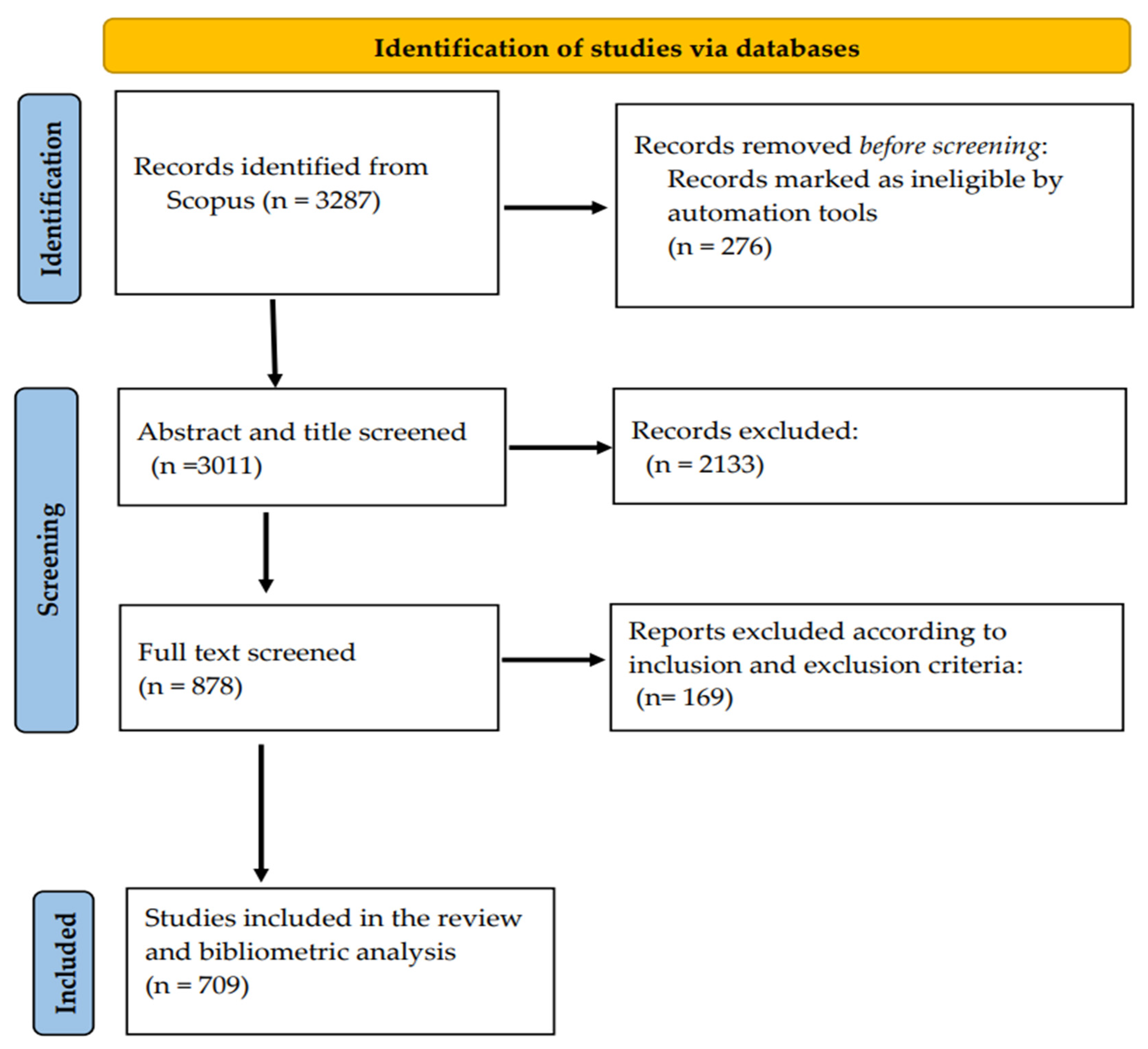
Figure 1. Flow diagram for the literature search, adopted from Page et al. [34].
Sustainability 18 00114 g001
Figure 2. Changes in development of publications on climate change and smallholder farmers’ vulnerability and sustainable agricultural interventions between 2014 and March 2025.
Sustainability 18 00114 g002
Figure 3. Distribution of subject areas on climate change, smallholder farmers’ vulnerability, and sustainable agricultural interventions between 2014 and March 2025.
Sustainability 18 00114 g003
Figure 4. Top twenty affiliations (A) and contributing authors (B) on climate change, smallholder farming, and sustainable agricultural interventions research between 2014 and March 2025.
Sustainability 18 00114 g004
Figure 5. Geographic distribution of studies on climate change, smallholder farming, and sustainable agricultural interventions research between 2014 and March 2025.
Sustainability 18 00114 g005
Figure 6. Top ten active funding bodies of research on climate change, smallholder farming, and sustainable agricultural interventions between 2014 and March 2025.
Sustainability 18 00114 g006
Figure 7. Network visualisation of the co-occurrence of keywords on publications on climate change, smallholder farmers’ vulnerability, and sustainable agricultural interventions between 2014 and March 2025.
Sustainability 18 00114 g007
Figure 8. Density visualisation of the co-occurrence of keywords in publications on climate change, smallholder farmers’ vulnerability, and sustainable agricultural interventions between 2014 and March 2025.
Sustainability 18 00114 g008
Table 1. Main performance analysis metrics of data.
CharacteristicsResults
Period2014:2025
Sources574
Documents709
Annual growth rate (%)28.6
Document average age3.51
Average citation per document13.84
Keywords plus (ID)3494
Author’s keywords (DE)2940
Authors833
Authors of single authored documents42
Single authored documents45
Co-authors per document1.19
International co-authorship (%)47.95
Article503
Review115
Book chapter80
Conference paper5
Source: Authors’ compilation based on bibliometrics analysis.
Table 3. Top ten most frequently occurring keywords related to climate change, smallholder farmers, and sustainable agricultural interventions between 2014 and 2025.
KeywordOccurrencesTotal Link Strength
Climate change2311136
Smallholder96667
South Africa121615
Food security112460
Adaptive management52411
Agriculture64395
Adaptation68363
Smallholder farmers76317
Farming system42304
Sustainability54207
Table 4. Clusters and themes identified from the keywords on climate change, smallholder farmers, and sustainable agricultural intervention research.
ClusterExtracted ThemeSelected KeywordsImplication
Red clusterClimate-smart agronomic practices and food securityAgroforestry, conservation agriculture, crop rotation, intercropping, maize, legume, CSA, agricultural technology, cropping practice, farming system, sustainable agriculture, sustainabilityTechnology-driven adaptation to improve production and food security.
Green clusterClimate change adaptation and resilienceClimate change adaptation, adoption, climate models, agricultural management, adaptation strategies, education, gender, farmers’ knowledgeSociocultural and agro-ecological strategies, knowledge and skills are important in climate change mitigation and building resilience.
Blue clusterWater management and agricultural developmentAgricultural policy, decision making, water management, water supply, water use efficiency, poverty alleviation, food production, food supply, irrigation, land useThe government plays an essential role in building resilience of farmers.
Yellow clusterClimate change indicators, agricultural productivity and smallholder farmersRainfall, climate variability, climate effect, rainfed agriculture, indigenous knowledge, smallholder farmersClimate variability is a direct threat to smallholder farmers as it influences agricultural productivity.
Purple clusterSocioeconomic and spatial aspectsVulnerability, agroecology, mitigation, livestock farming, adaptation, poverty, spatiotemporal analysis, stakeholderDiverse coping mechanisms to climate change involving risk assessment, adaptation capacity and farming systems.
Disclaimer/Publisher’s Note: The statements, opinions and data contained in all publications are solely those of the individual author(s) and contributor(s) and not of MDPI and/or the editor(s). MDPI and/or the editor(s) disclaim responsibility for any injury to people or property resulting from any ideas, methods, instructions or products referred to in the content.