Article

Impact Paths of the Entrepreneurial Behavior of the Underclass Groups’ Involved in Urbanization: A Case Study of Zhejiang Province, China

1
School of Public Administration, China University of Geosciences, Wuhan 430074, China
2
School of Media Engineering, Communication University of Zhejiang, Hangzhou 310018, China
3
School of Spatial Planning and Design, Hangzhou City University, Hangzhou 310015, China
*
Author to whom correspondence should be addressed.
Sustainability 2025, 17(9), 3844; https://doi.org/10.3390/su17093844
Submission received: 27 February 2025 / Revised: 18 April 2025 / Accepted: 23 April 2025 / Published: 24 April 2025
(This article belongs to the Section Sustainable Urban and Rural Development)

Abstract

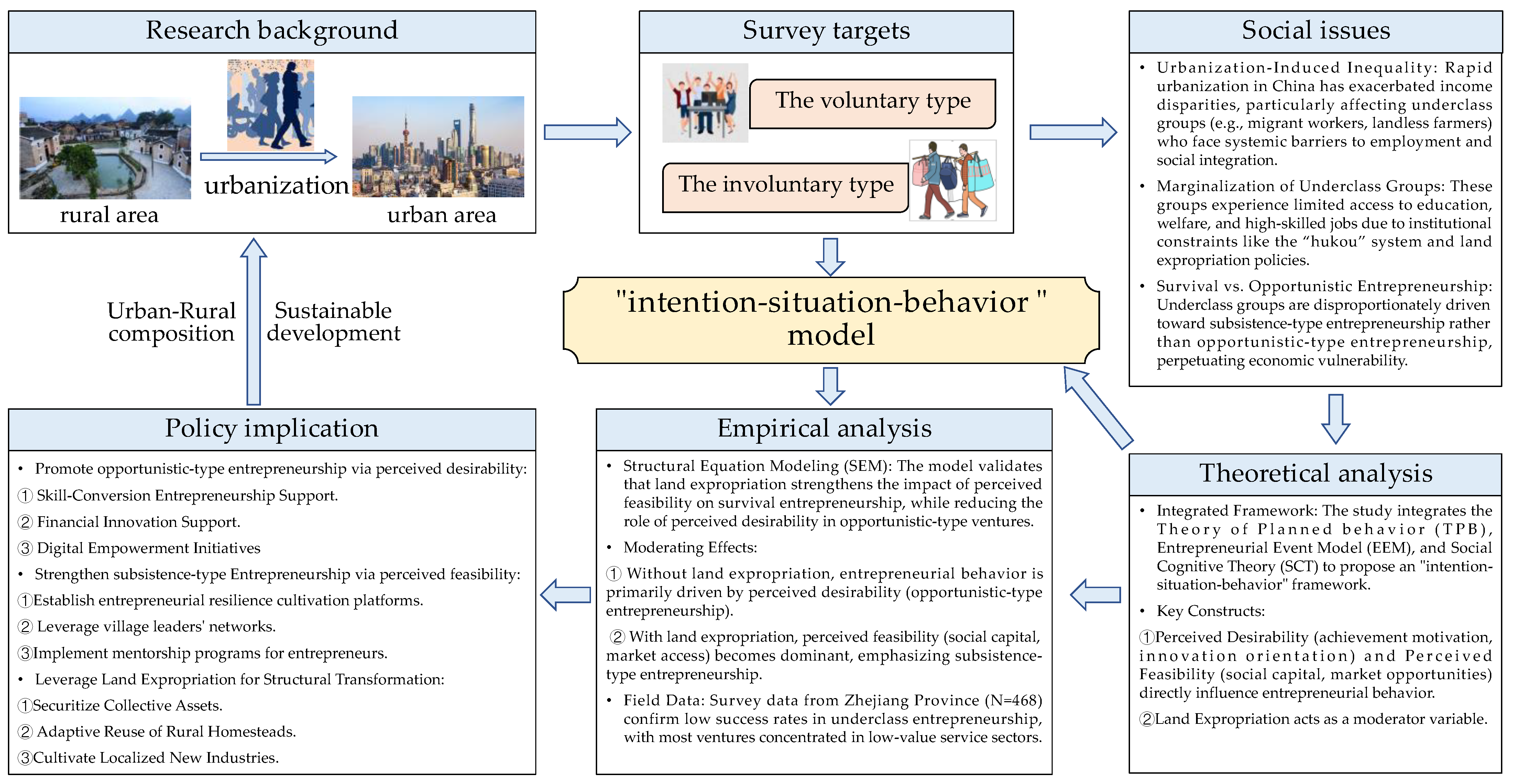
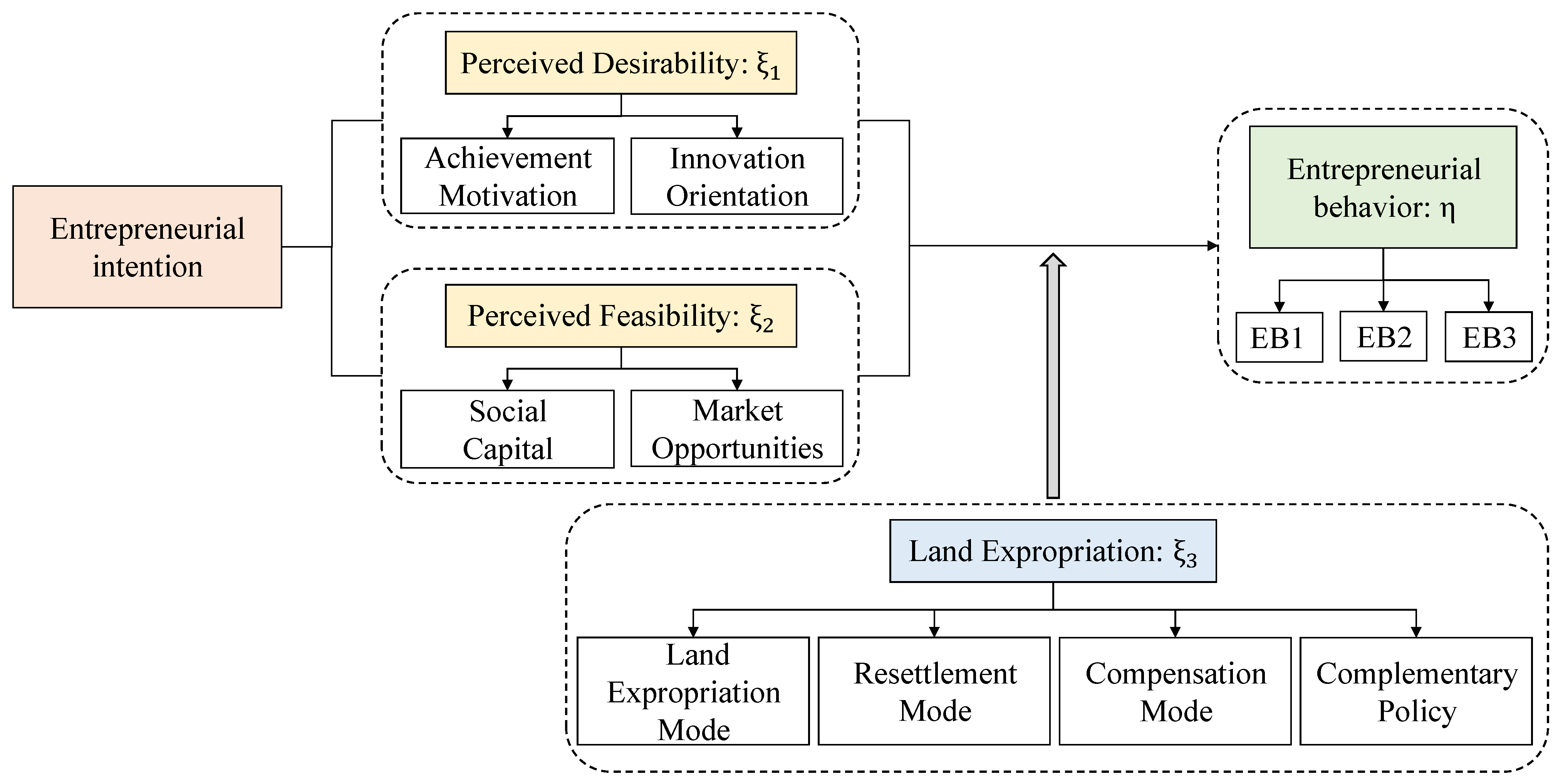
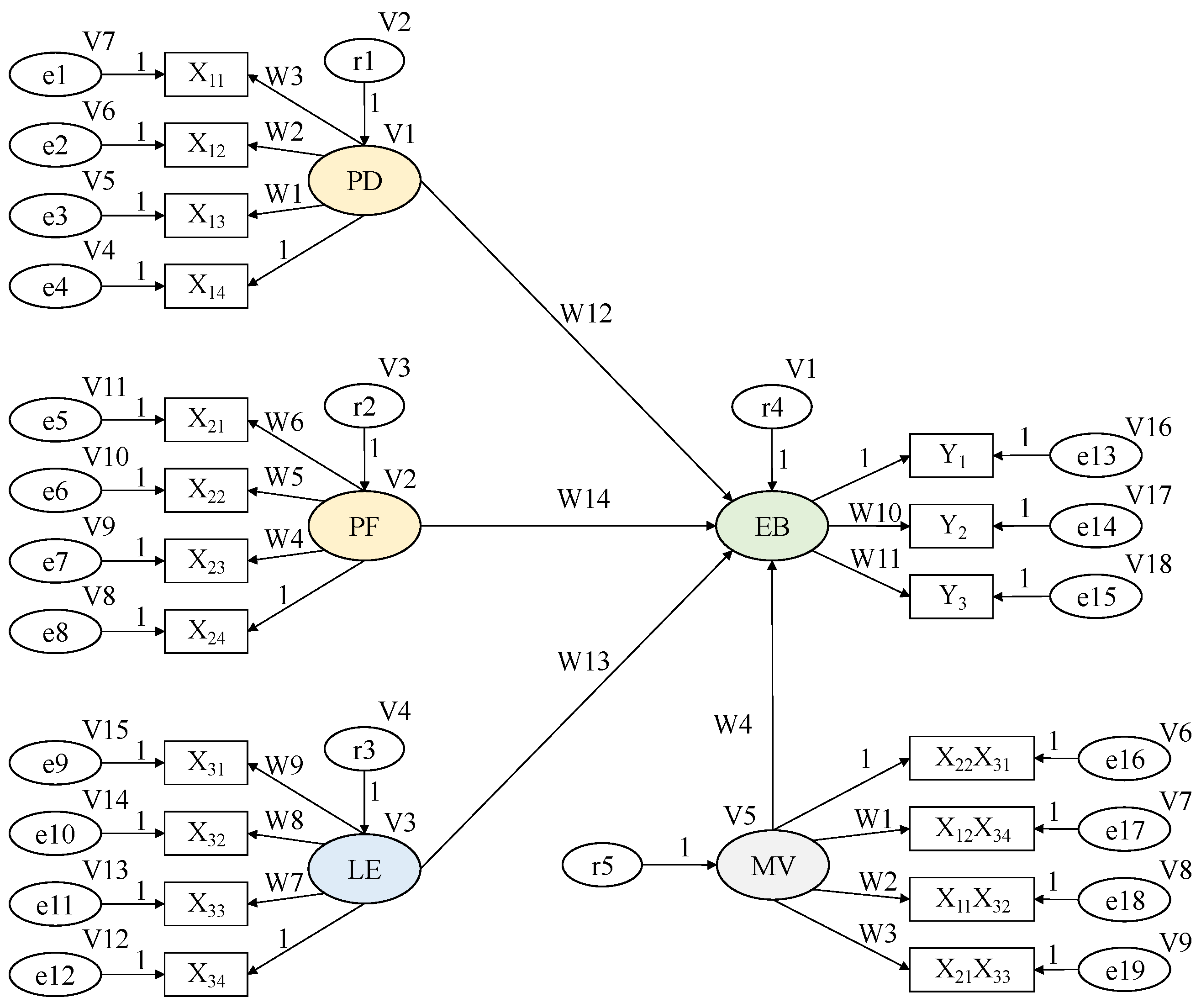
The aim of this paper is to clarify the influence mechanism and role paths of the entrepreneurial behavior of the underclass groups (EBUG) involved in urbanization from a microcosmic perspective and propose sustainable development paths for the transition of underclass groups’ entrepreneurship from the subsistence type to the opportunistic type. Based on the theories of planned behavior, the entrepreneurial event model, and social cognitive theory, this study constructs a theoretical framework of “intention–situation–behavior” of the EBUG involved in urbanization. Through a questionnaire survey conducted in three major urban agglomerations in Zhejiang Province, the theoretical model is validated by using structural equation modeling (SEM). On the one hand, perceived desirability, perceived feasibility, and land expropriation all have a significant positive influence on entrepreneurial behavior. On the other hand, land expropriation has a significant moderating effect on entrepreneurial intentions and behaviors. When the moderating role of land expropriation is not considered, underclass groups are more likely to engage in opportunistic-type entrepreneurship, which is primarily driven by perceived desirability such as achievement motivation and innovation orientation. In contrast, when land expropriation is considered, these groups tend to focus on survival entrepreneurship, which is mainly influenced by perceived feasibility factors such as social capital and market opportunities. The future survival and development of underclass groups is contingent upon urbanization, with the potential to influence the stability and sustainable development of society. The government should enhance the underclass groups’ perceived desirability through skill conversion, financial innovation, and digital empowerment; improve their perceived feasibility through the entrepreneurial resilience-building platform and the “Village Sage Mentorship System”; and refine the land expropriation policy by means of the securitization of collective assets, the multifunctional utilization of rural homesteads, and the cultivation of localized new business formats. By doing so, it can promote the transformation of the underclass groups’ entrepreneurship from the “subsistence type” to the “opportunistic type”.
Keywords: urbanization; underclass groups; entrepreneurial behavior; sustainable development; path analysis model urbanization; underclass groups; entrepreneurial behavior; sustainable development; path analysis model