Article

Design, Development, and Performance Evaluation of an Oxyhydrogen (HHO) Generator for Enhanced Fuel Efficiency


1
Department of Mechanical Engineering, School of Engineering, Holy Spirit University of Kaslik (USEK), Jounieh P.O. Box 446, Lebanon
2
Habitat and Energy Unit, Group of Mechanical, Thermal and Renewable Energies—Laboratory of Applied Physics (LPA-GMTER), Faculty of Sciences, Fanar Campus, Lebanese University, Fanar P.O. Box 90656, Lebanon
*
Authors to whom correspondence should be addressed.
Sustainability 2025, 17(9), 3811; https://doi.org/10.3390/su17093811
Submission received: 6 March 2025 / Revised: 4 April 2025 / Accepted: 9 April 2025 / Published: 23 April 2025

Abstract

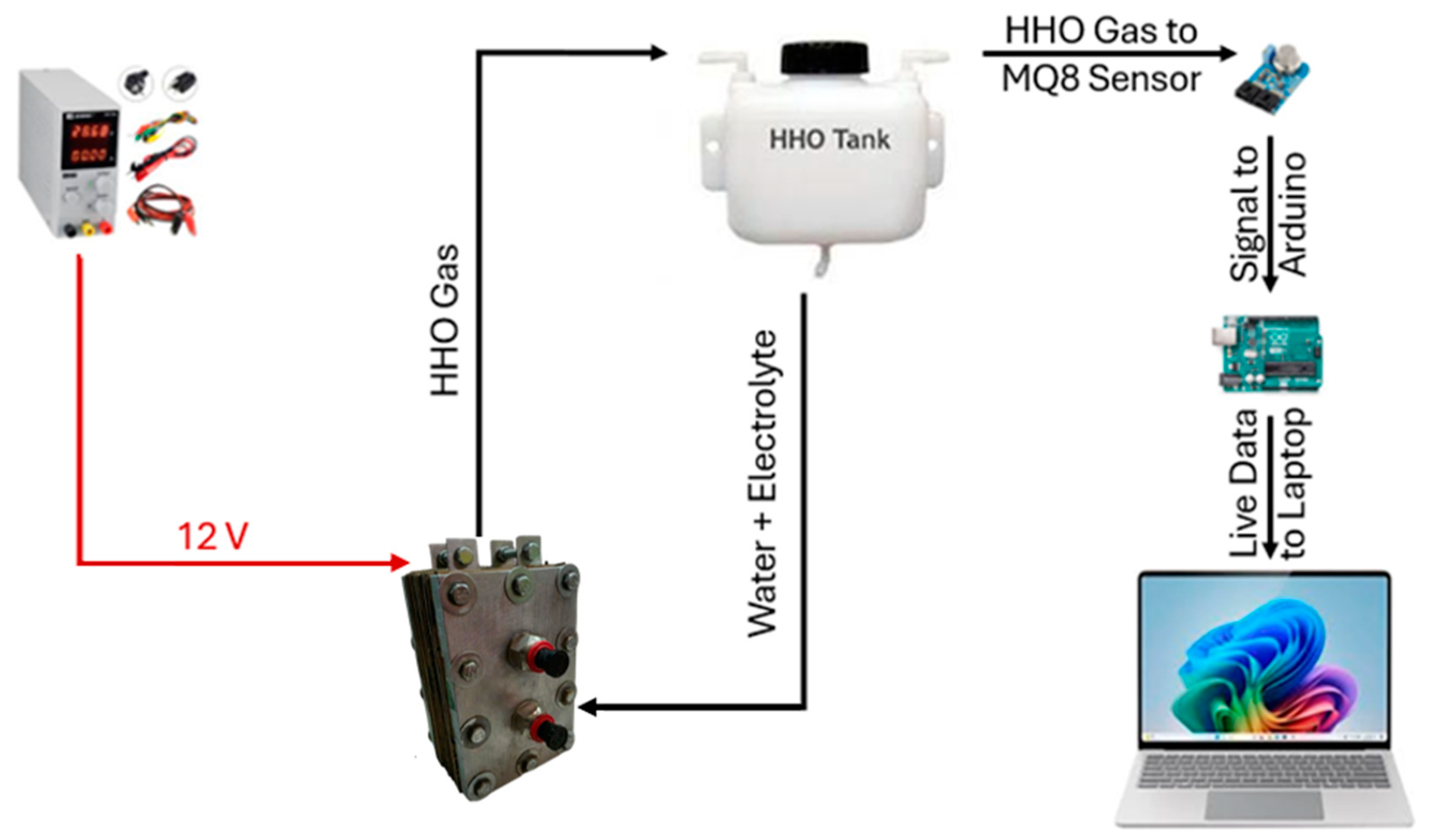
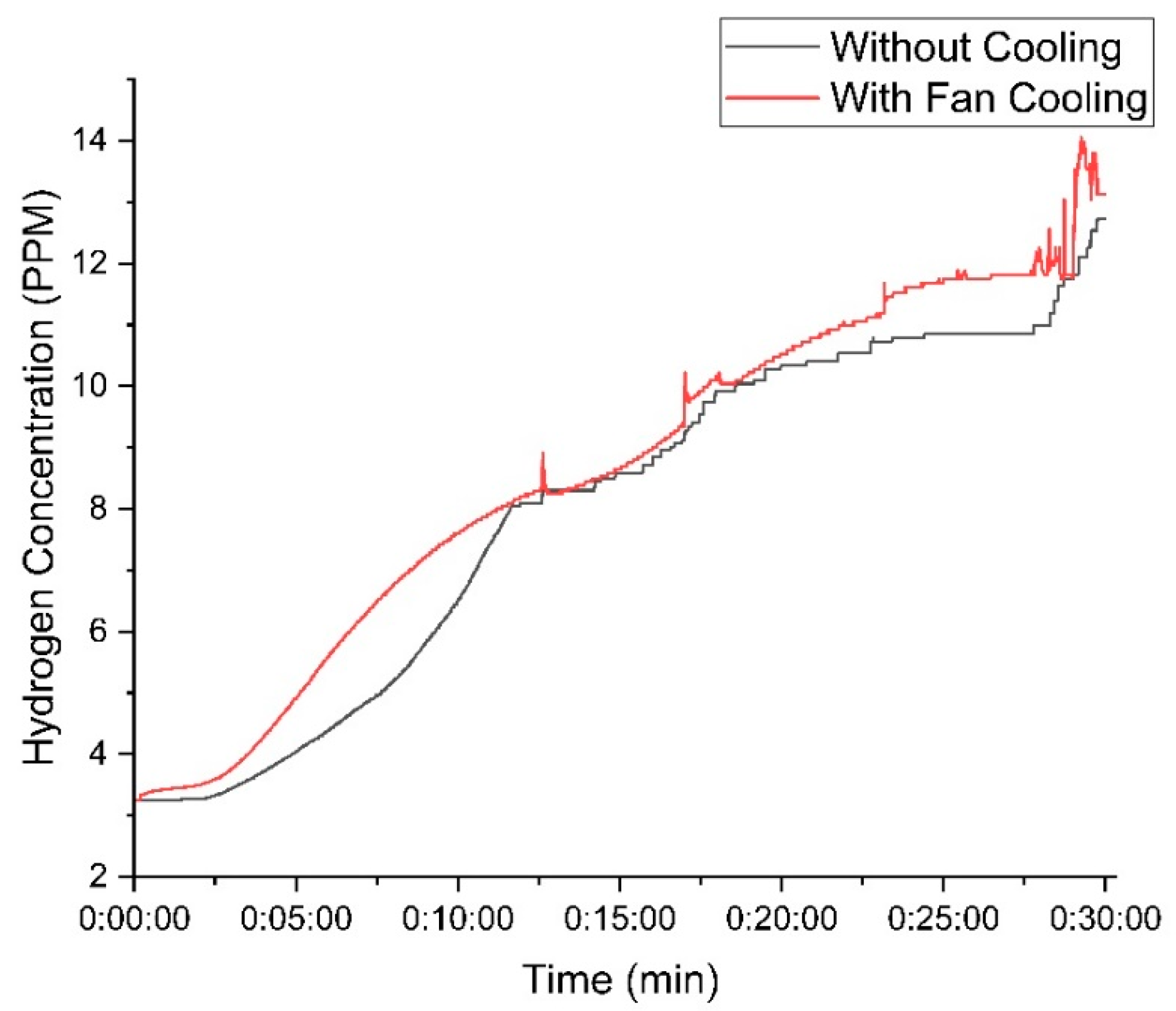
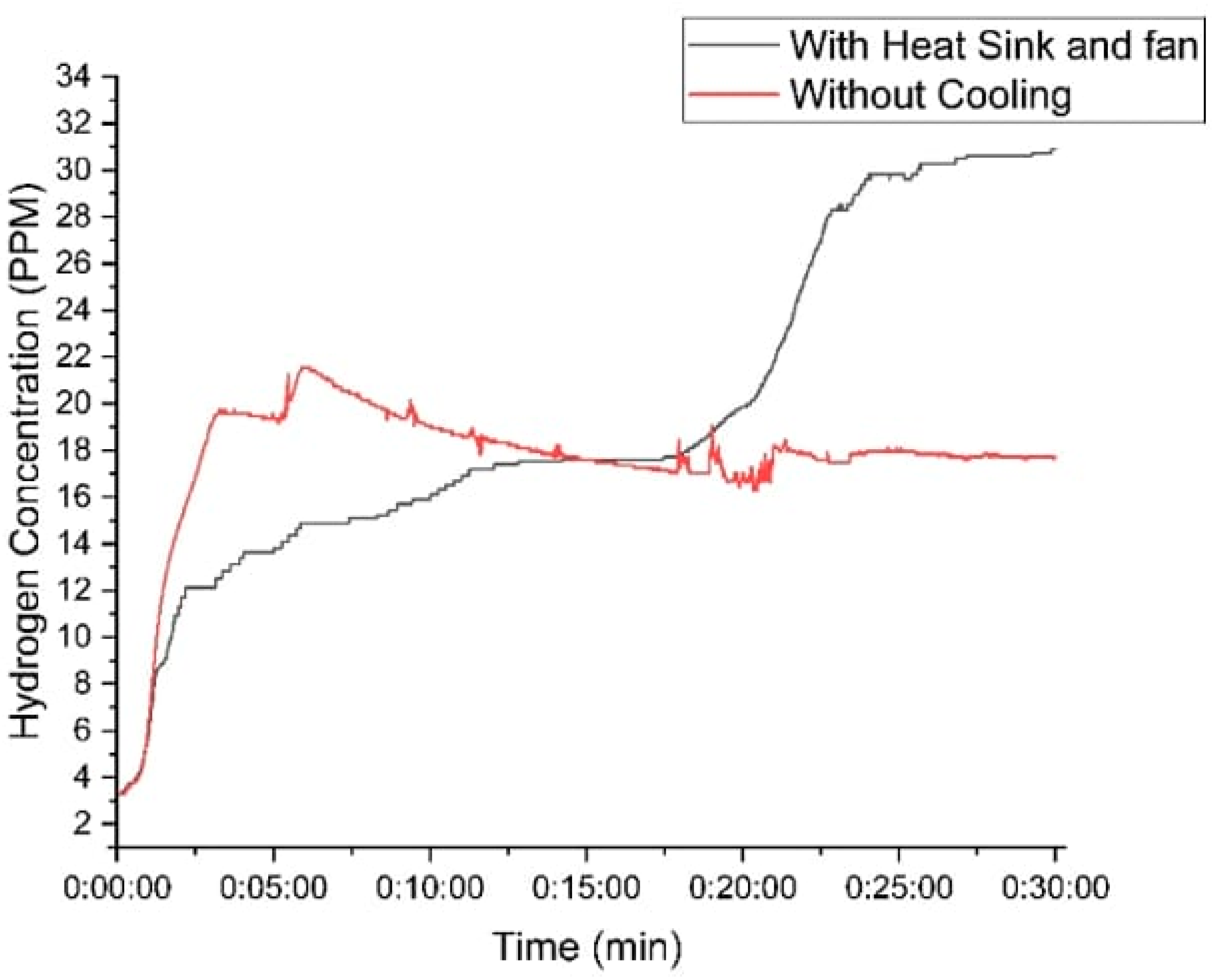
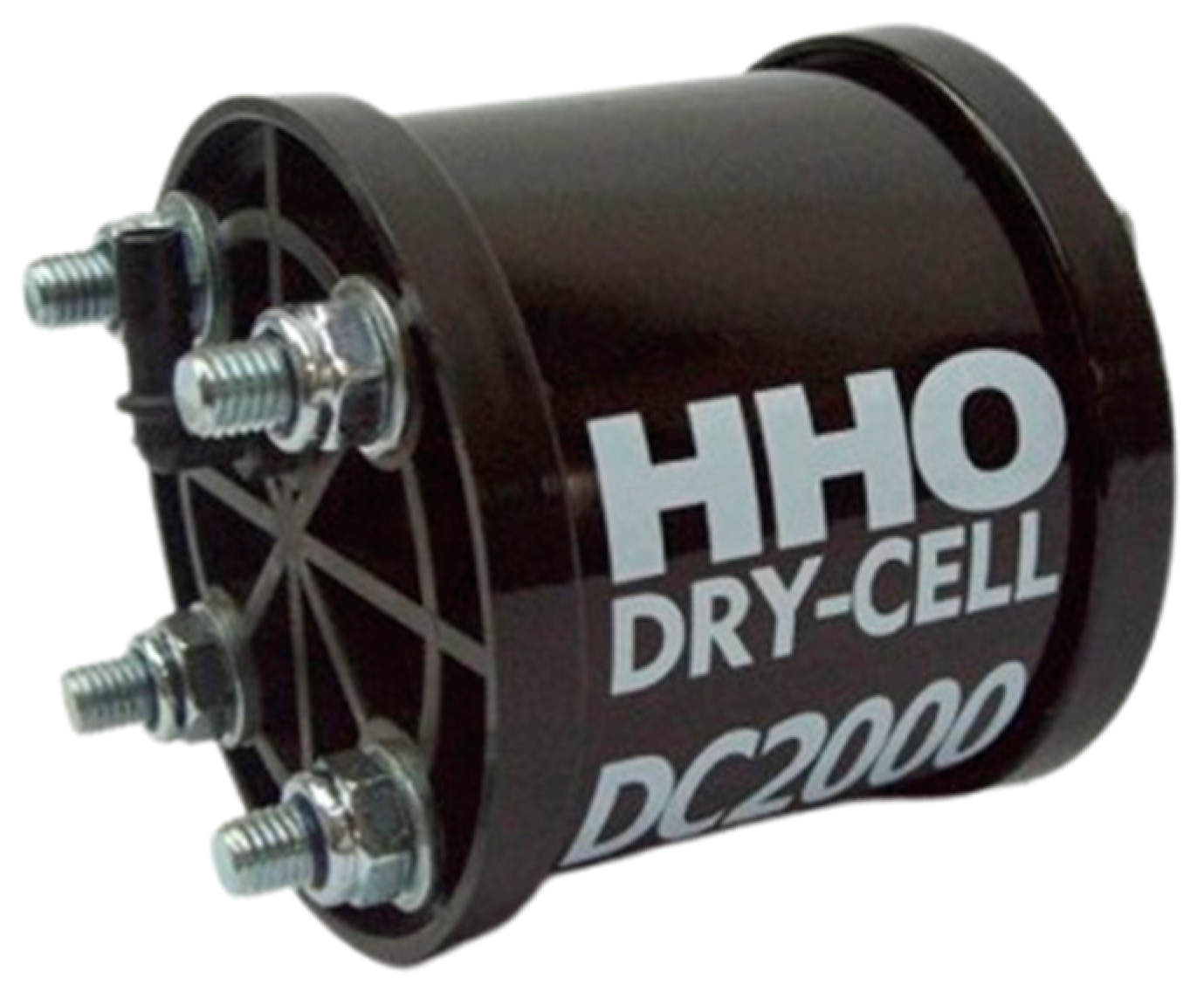
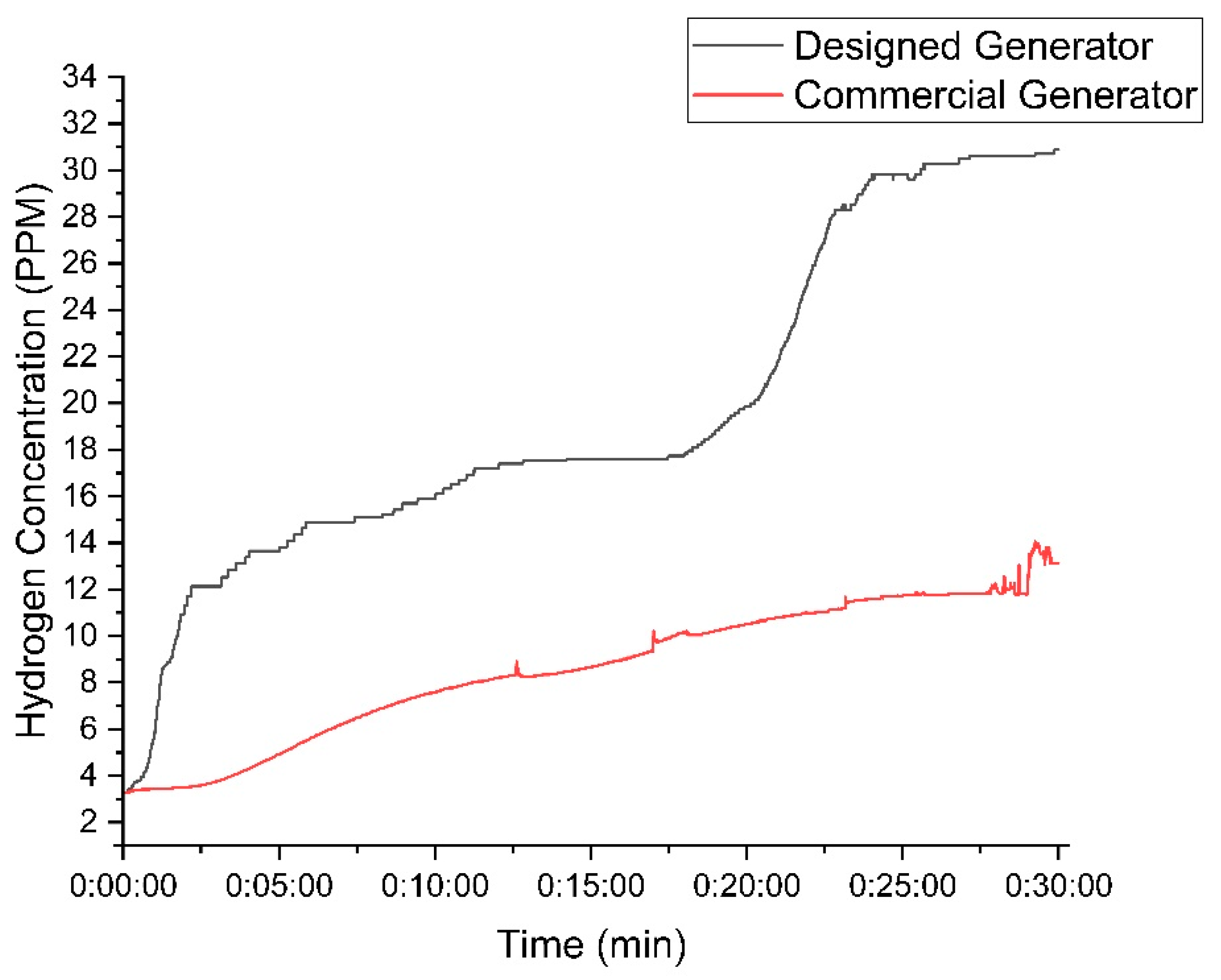
The growing need for clean and efficient energy has led to more interest in hydrogen-based technologies for improving combustion. Oxyhydrogen (HHO) generators have become a possible way to improve fuel efficiency and reduce emissions in engines by adding hydrogen to the air–fuel mix. However, problems like energy loss, uneven hydrogen output, and inefficiency have slowed their use. This study looked at the design, development, and testing of a better HHO generator that solves these issues by adding a better cooling system and adjusting the potassium hydroxide (KOH) mixture (20 g, 25 g, and 30 g). The goal was to see how these changes affect hydrogen production, energy use, and system stability. The results showed that increasing the KOH mixture improved hydrogen production and electrical conductivity. The cooling system helped reduce energy loss and kept the output steady. The improved generator, using 30 g of KOH and the cooling system, produced a peak hydrogen concentration of 31 PPM—more than double that of a regular unit (14 PPM). It also worked with an efficiency of 21.4%, using 25 W of power compared to 30 W for the regular unit, saving 16.7% in energy. These findings show that this improved HHO generator could be a good and efficient solution for cars and renewable energy uses.
Keywords: HHO generators; hydrogen; fuel efficiency; emissions reduction; renewable energy; automotive industry HHO generators; hydrogen; fuel efficiency; emissions reduction; renewable energy; automotive industry