Article

Sustainability Analysis of Commercial-Scale Biogas Plants in Pakistan vs. Germany: A Novel Analytic Hierarchy Process—SMARTER Approach

by
Fizza Tahir
1,2,
Rizwan Rasheed
1,*,
Mumtaz Fatima
1,
Fizza Batool
1 and
Abdul-Sattar Nizami
1,3,*
1
Sustainable Development Study Centre, Government College University, Lahore 54000, Pakistan
2
Department of Bioprocess Engineering, Technische Universität Berlin, 10623 Berlin, Germany
3
Graduate School of Energy and Environment, Korea University, Seoul 02481, Republic of Korea
*
Authors to whom correspondence should be addressed.
Sustainability 2025, 17(5), 2168; https://doi.org/10.3390/su17052168
Submission received: 1 January 2025 / Revised: 4 February 2025 / Accepted: 24 February 2025 / Published: 3 March 2025

Abstract

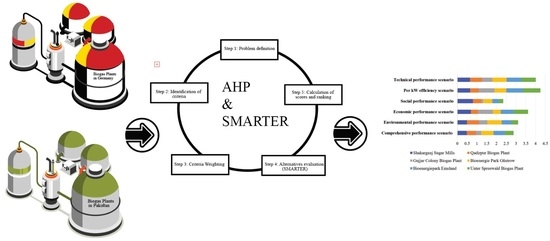
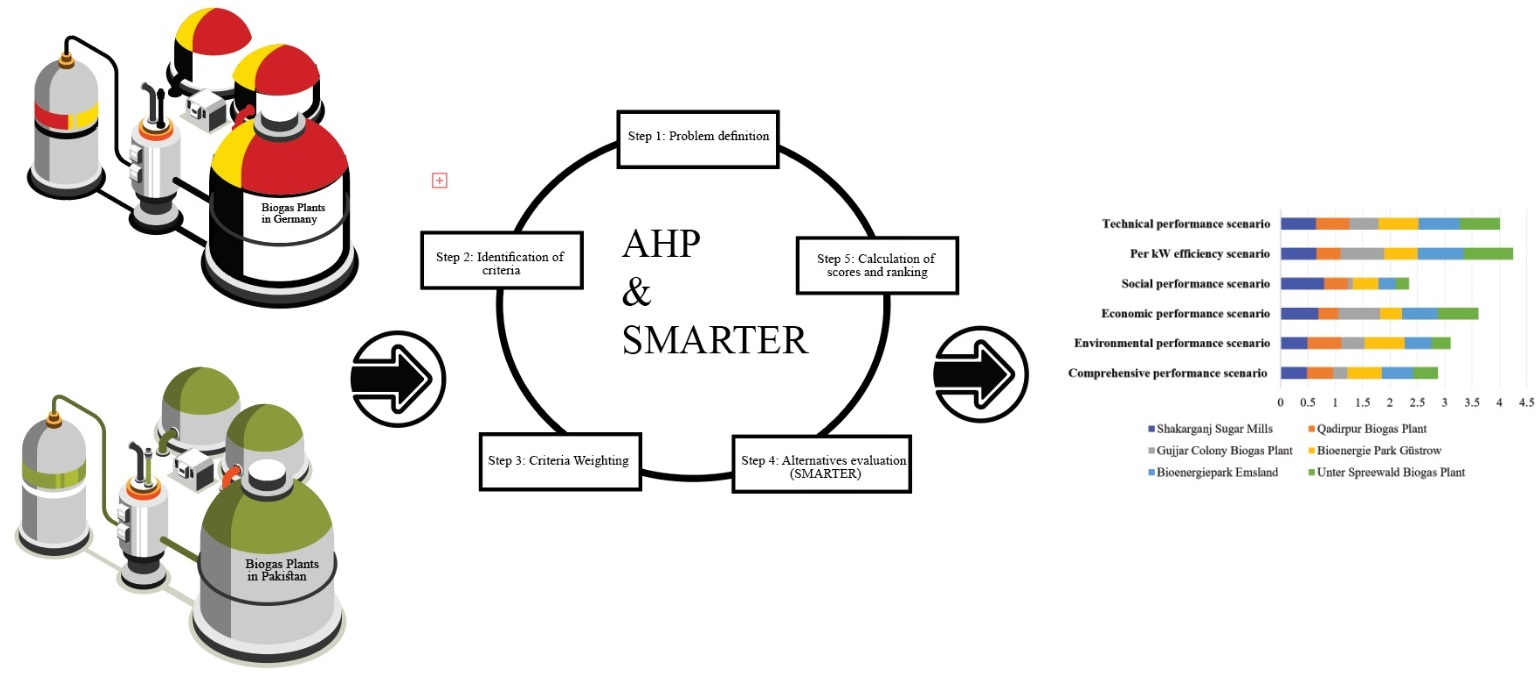
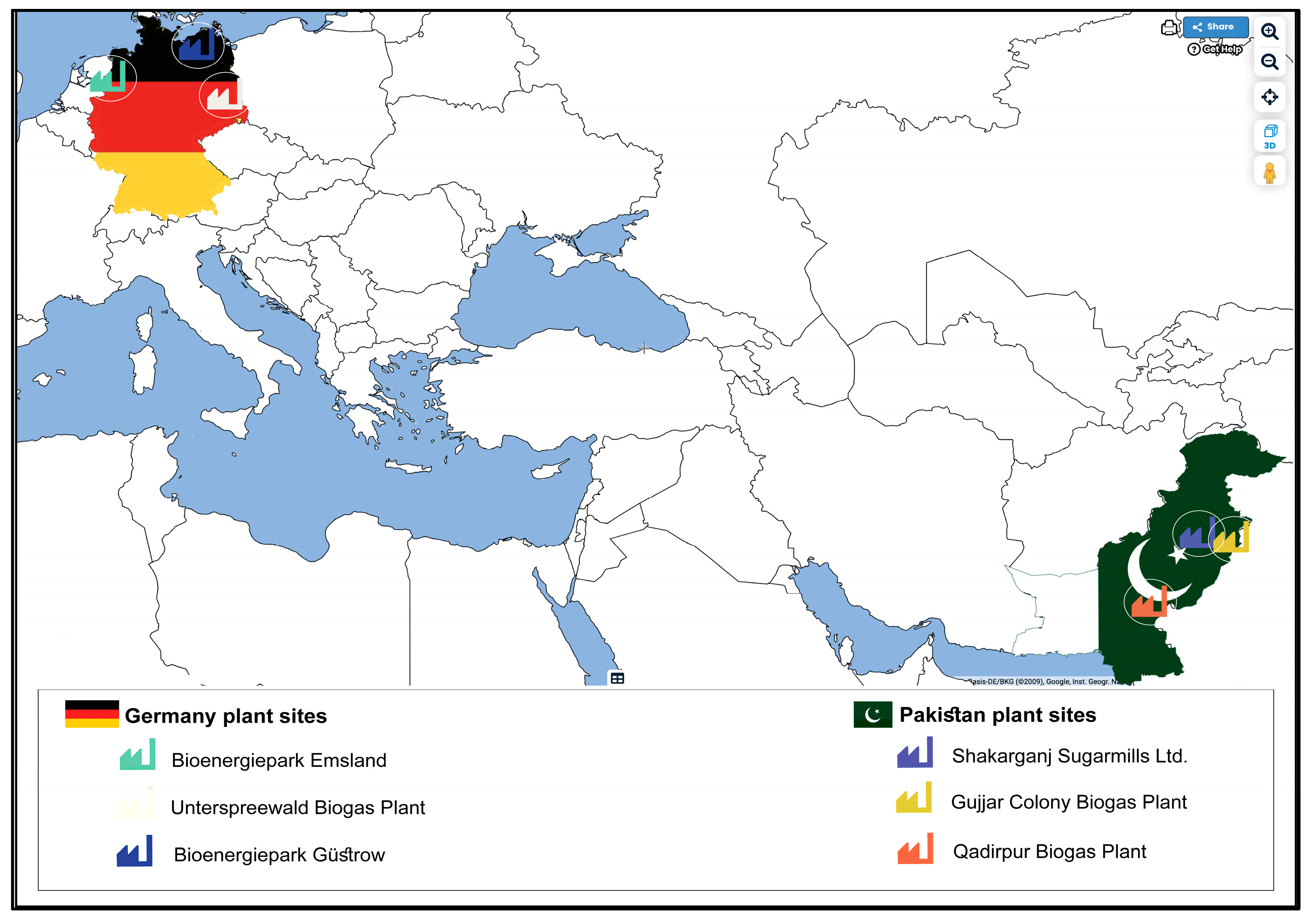
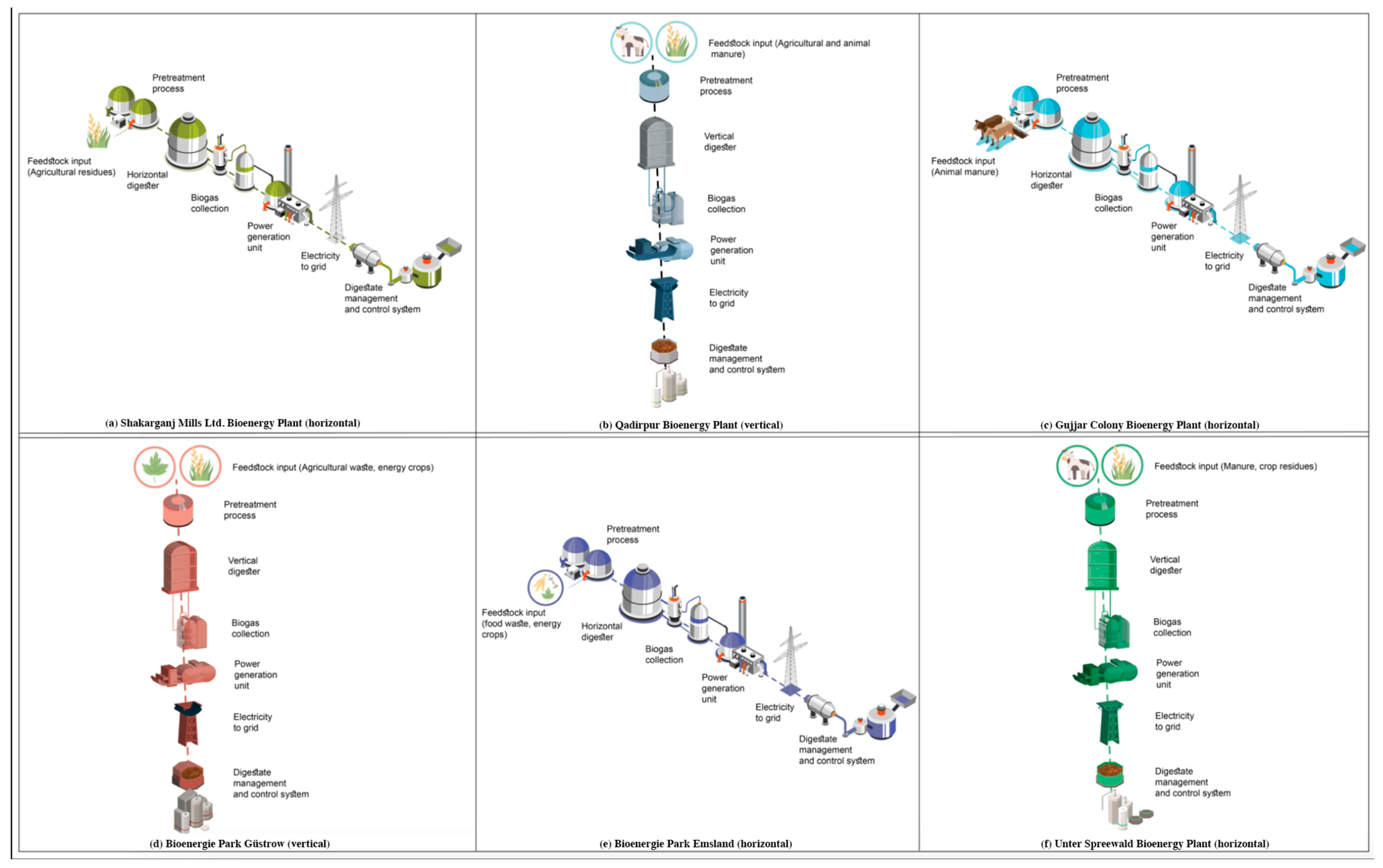
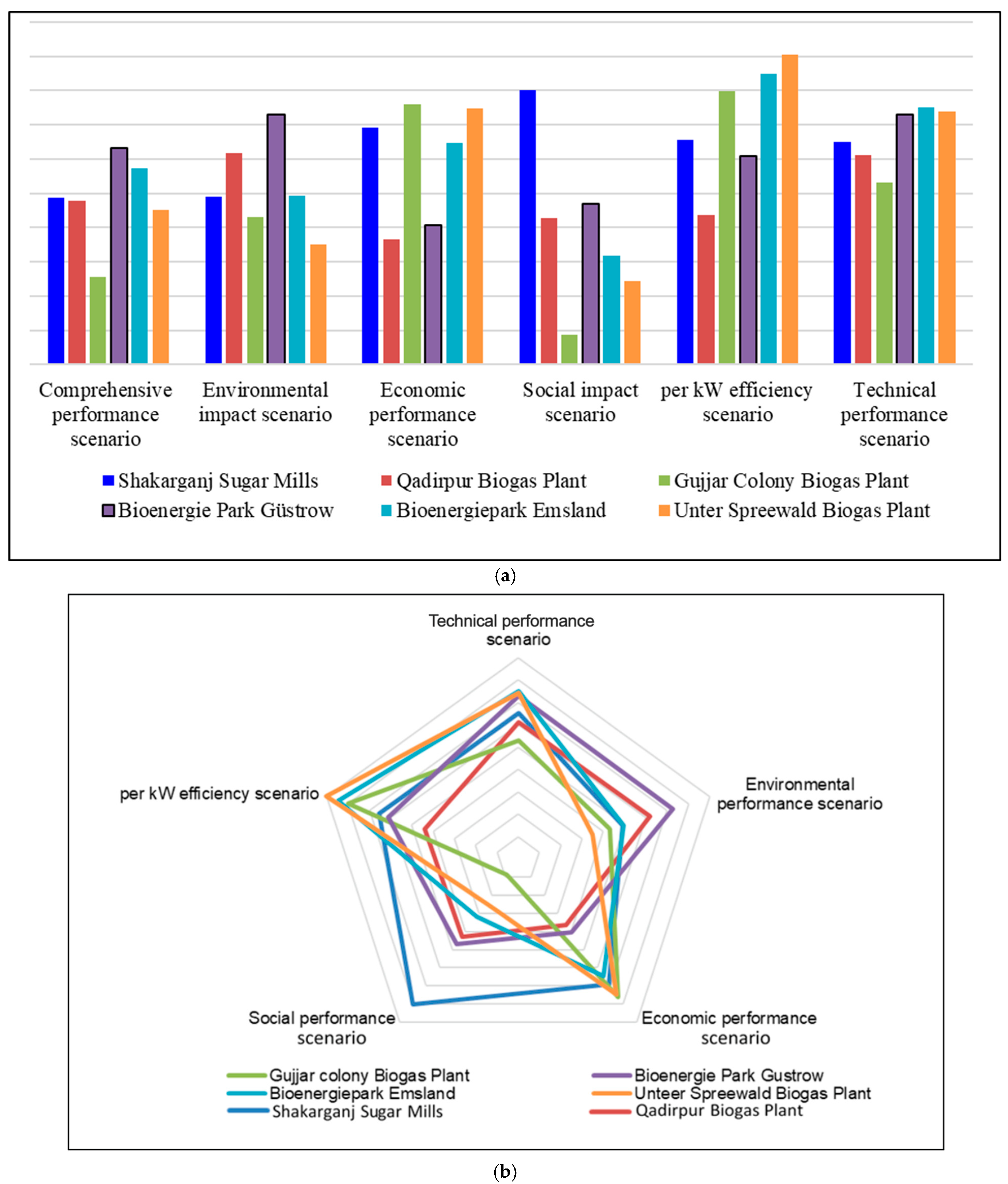
The development of biogas technology is essential as a renewable energy source, aiding global initiatives in sustainable energy production and waste management. Geographical, technological, and economic factors significantly vary the efficiency and viability of biogas facilities by area. This study compares the techno-economic, social, and environmental impacts of biogas plants in Germany and Pakistan using a multicriteria decision-making method that combines the Analytic Hierarchy Process and SMARTER. This research has determined the weighting factors and then assessed the comparative performance of six selected biogas facilities based on five different scenarios: (i) comprehensive base-case, (ii) environmental performance, (iii) economic performance, (iv) social performance, and (v) per-kW energy efficiency. Three of these biogas facilities are in Pakistan (a low–medium-income developing country) and three in Germany (a high-income developed country). The findings of the study indicate that technical performance is the most heavily weighted criterion, playing a crucial role in determining the overall sustainability scores. Germany’s Bioenergie Park Güstrow stood out as the leading performer, achieving sustainability scores of 63.1%, 72.9%, and 73.0% across the comprehensive base-case, environmental, and per-kW efficiency scenarios, respectively. In the same scenarios, the Gujjar Colony Biogas Plant in Pakistan recorded the lowest scores of 25.4%, 43.2%, and 53.0%. The plants selected from a developed country showed a progressive score of high impact towards sustainability in most of the scenarios. In contrast, plants selected from a developing country showed low bioenergy deployment due to various factors, highlighting the gaps and flaws in achieving optimized energy generation and sustainable growth. The critical techno-economic and socio-environmental findings of the study are vital for policymakers, industry, engineers, and other relevant stakeholders seeking to enhance the performance, scalability, and sustainability of biogas technologies across developing and developed economies.
Keywords: biogas; waste-to-energy (WtE); AHP and SMARTER; sustainability; environmental management; circular economy biogas; waste-to-energy (WtE); AHP and SMARTER; sustainability; environmental management; circular economy
Graphical Abstract