Article

Urban Furniture Design Strategies to Build Healthy and Inclusive Neighborhoods

by
Alessandra Rinaldi
*,
Sara Viviani
and
Daniele Busciantella-Ricci
Innovation in Design & Engineering (IDEE) Laboratory, Department of Architecture, University of Florence, 50121 Florence, Italy
*
Author to whom correspondence should be addressed.
Sustainability 2025, 17(3), 859; https://doi.org/10.3390/su17030859
Submission received: 10 December 2024 / Revised: 14 January 2025 / Accepted: 17 January 2025 / Published: 22 January 2025
(This article belongs to the Special Issue Building a Healthy Future: Public Health and Sustainable Solutions)

Abstract

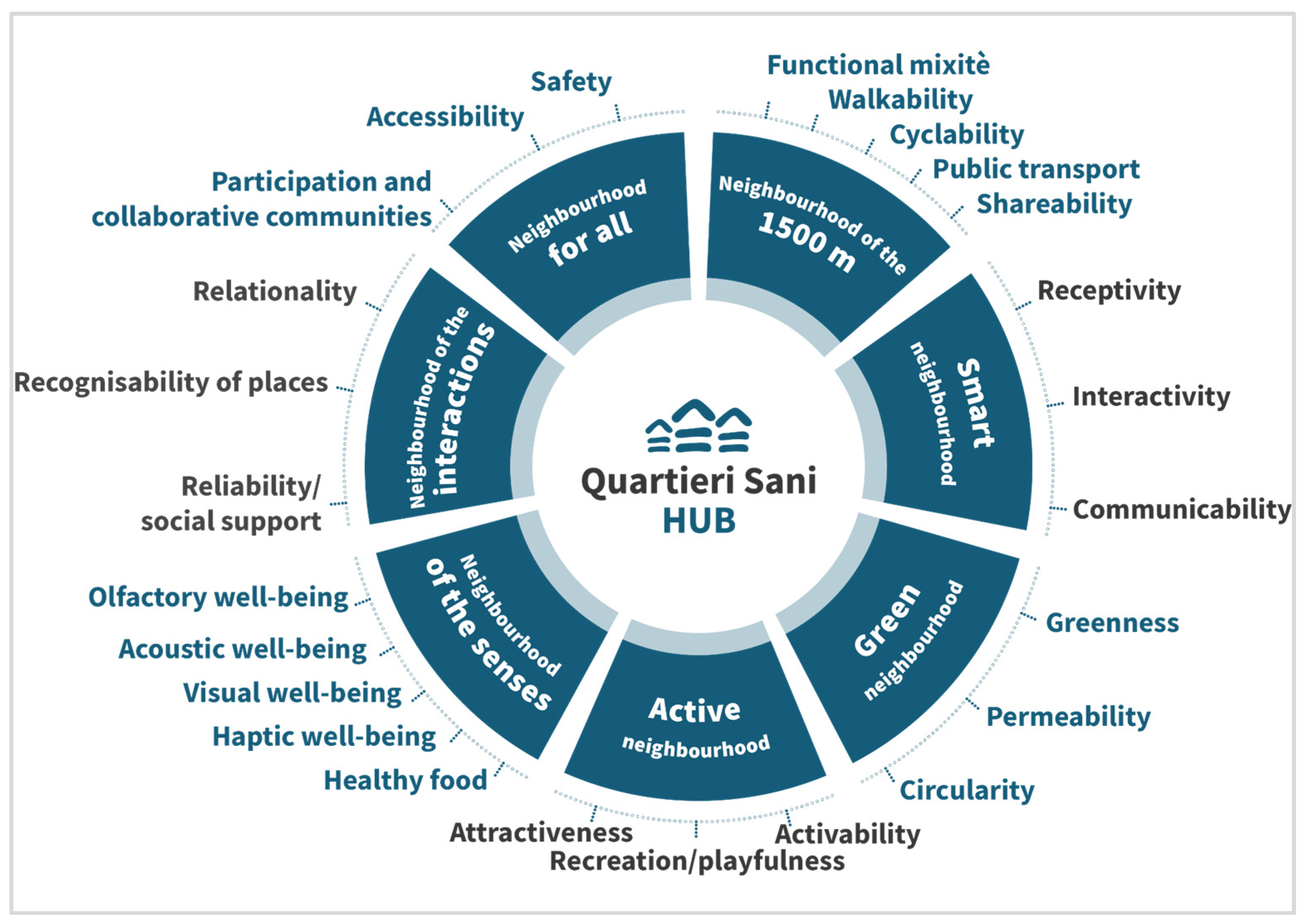
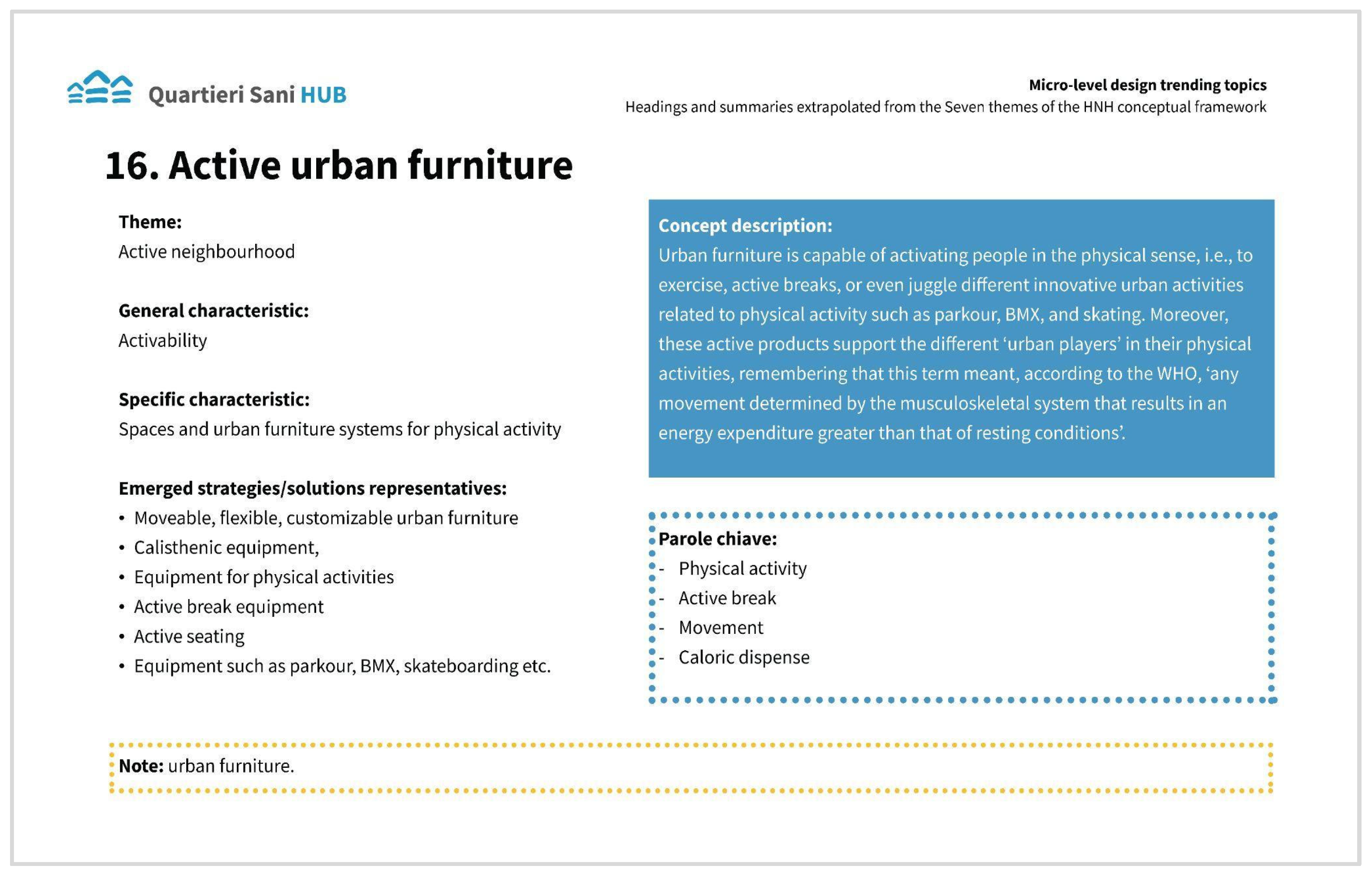
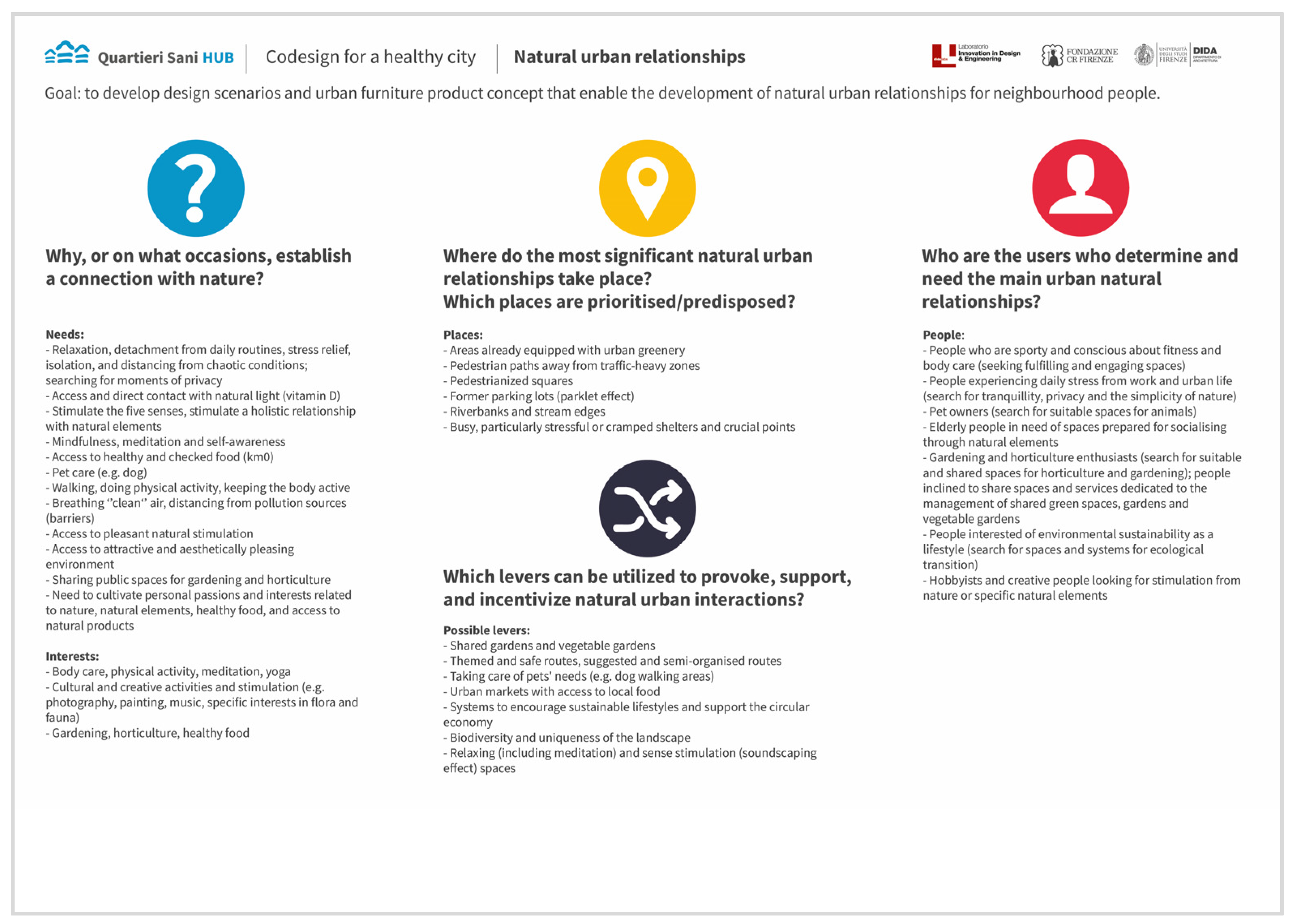
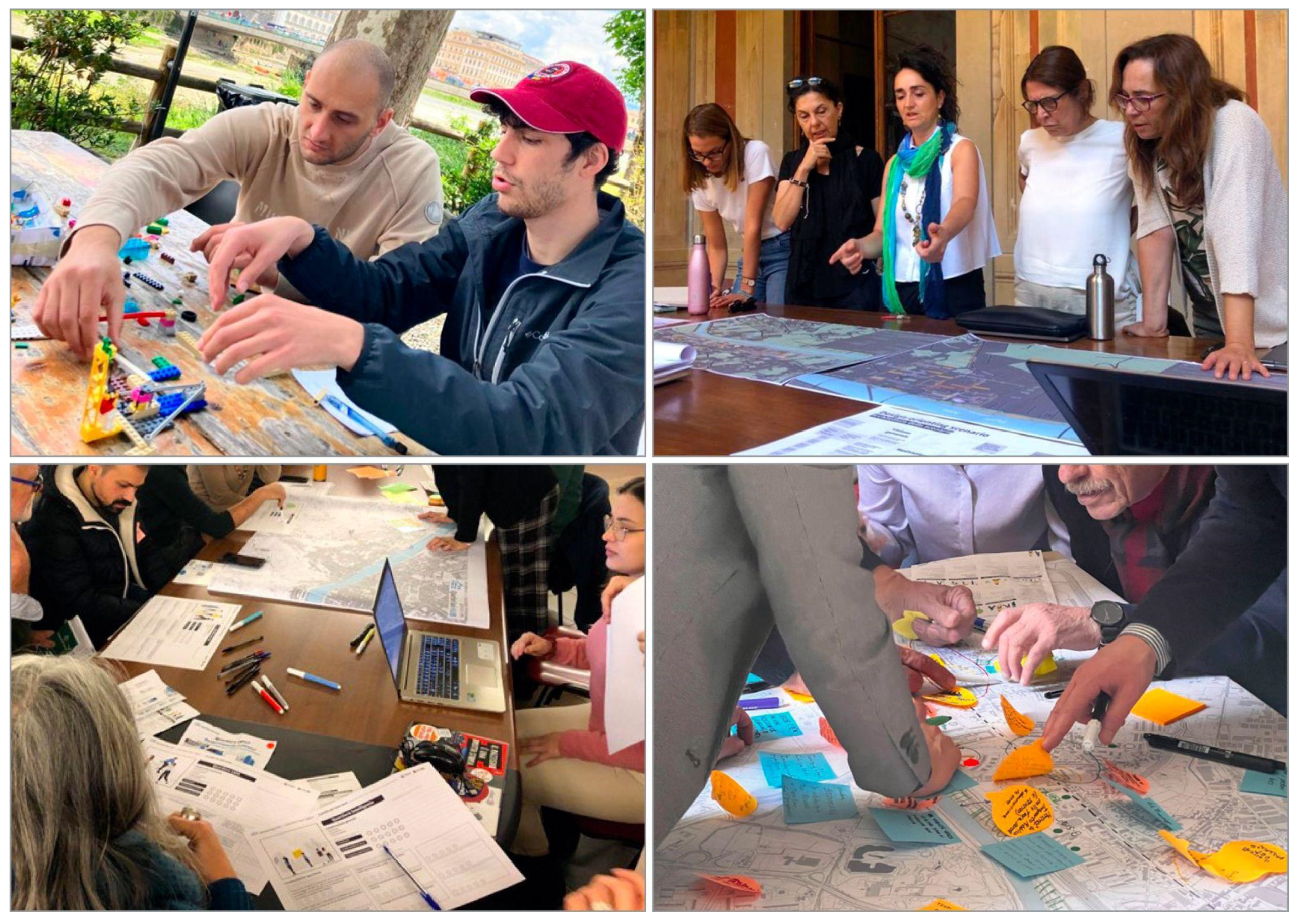
Several guidelines provided by the World Health Organization as well as frameworks in the scientific literature suggest focusing on the built environment, i.e., indoor and outdoor spaces, including urban furniture, for promoting public health as it acts as a promoter of healthy lifestyles. The paper presents part of the results emerged from the HNH research project, which addresses the topic of neighborhood health at a systemic transdisciplinary and trans-scalar level of the project (macro-, meso-, up to micro-level). In particular, the results at the micro-scale of the urban furniture design are presented, which are related to the following research questions: (i) what are the strategic design requirements of street furniture for a healthy neighborhood and (ii) what are the micro-scale design scenarios for orienting the choices of the public administration in the creation of a healthy neighborhood. Through the use of a conceptual framework developed in the research, as a tool both to measure the quality of the built environment and to develop participatory design activities and co-design workshops, the research arrives at the categorization of urban furniture into domains, sub-domains, and related products categories, for each of which design strategies and scenarios are defined. The results highlight the potential and importance of urban furniture design in promoting a healthy built environment, underlining the strategic role of tangible products as healthy touchpoints to promote healthy lifestyles.
Keywords: healthy neighborhood; urban furniture design and innovation; built environment innovation; product design; design thinking; co-design methods; active aging healthy neighborhood; urban furniture design and innovation; built environment innovation; product design; design thinking; co-design methods; active aging