Article

Coordination or Conflict? The Synergistic Effect and Driving Mechanism of Green Technology Innovation and Tourism Green Development

1
College of Business Administration, Guizhou University of Finance and Economics, Guiyang 550025, China
2
Institute of Tourism and Culture Industry, Yunnan University of Finance and Economics, Kunming 650221, China
*
Author to whom correspondence should be addressed.
Sustainability 2025, 17(3), 1278; https://doi.org/10.3390/su17031278
Submission received: 3 January 2025 / Revised: 19 January 2025 / Accepted: 26 January 2025 / Published: 5 February 2025

Abstract

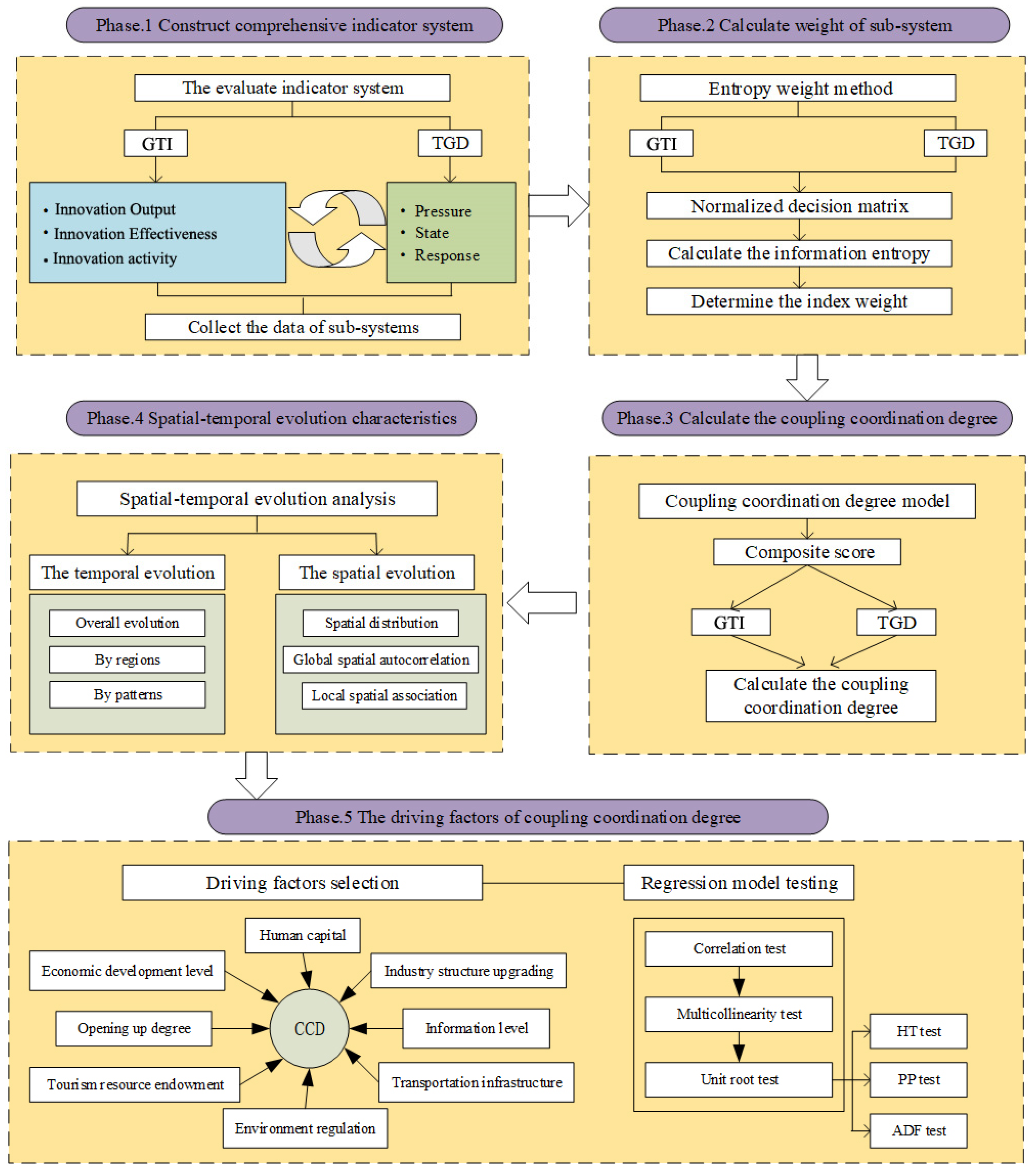
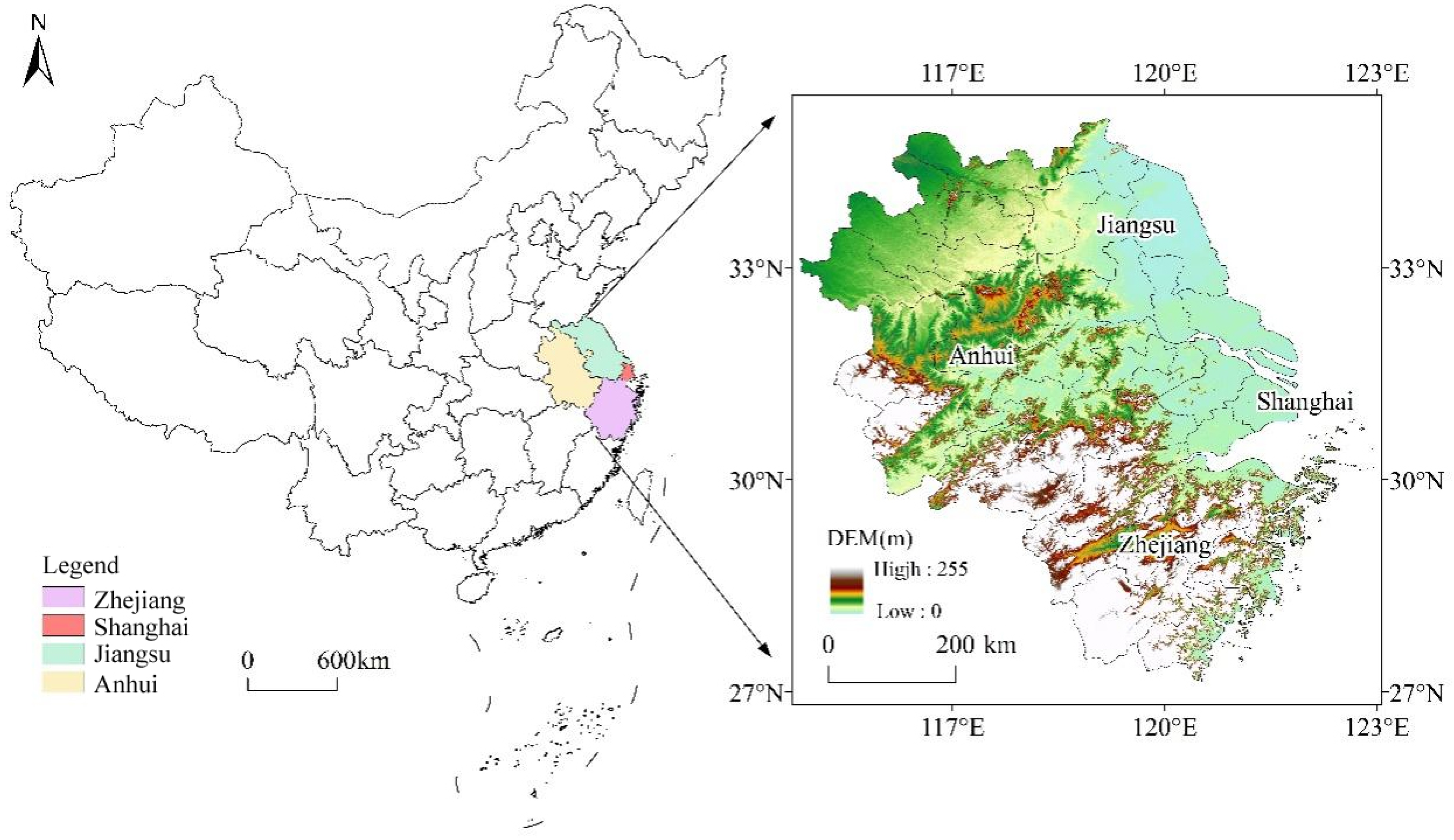
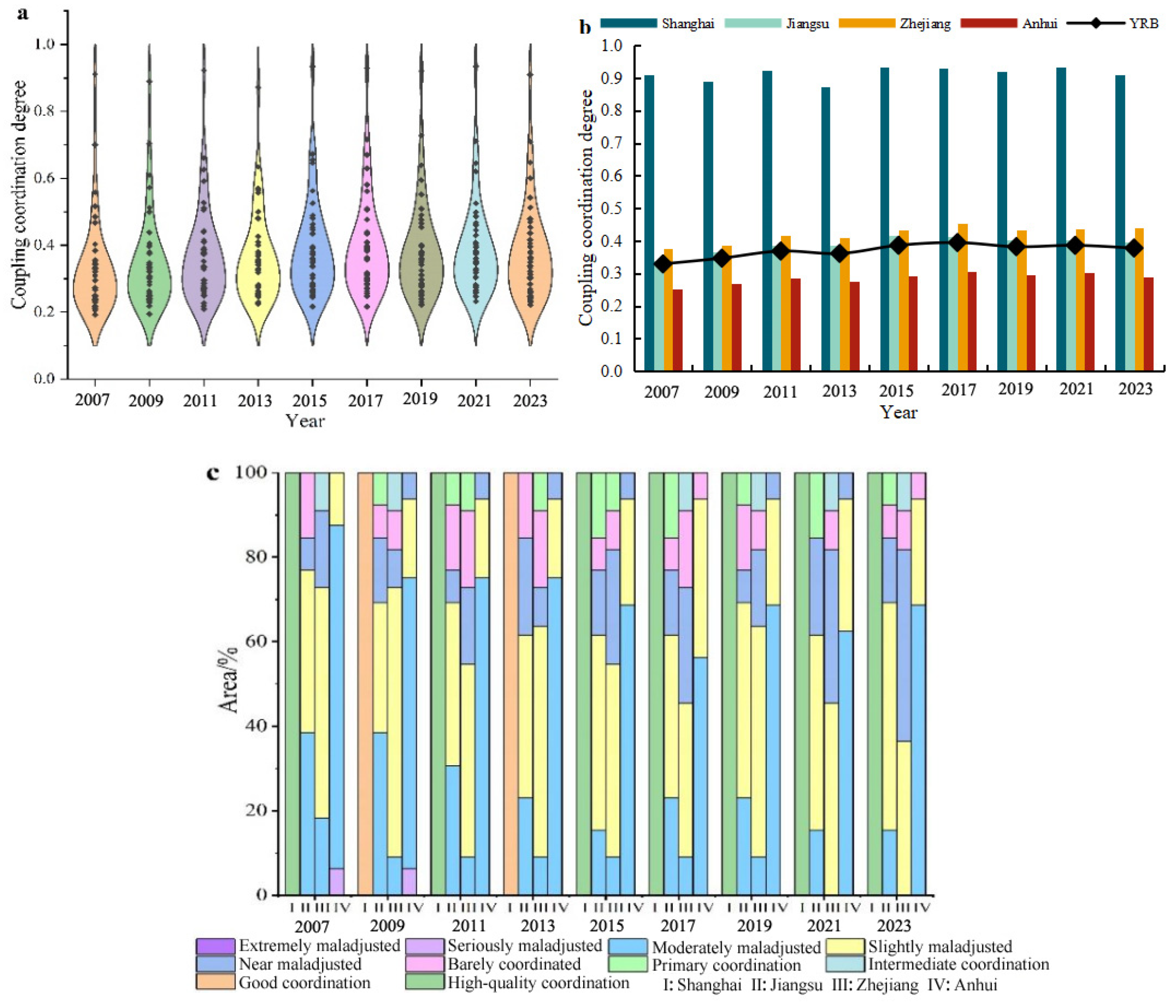
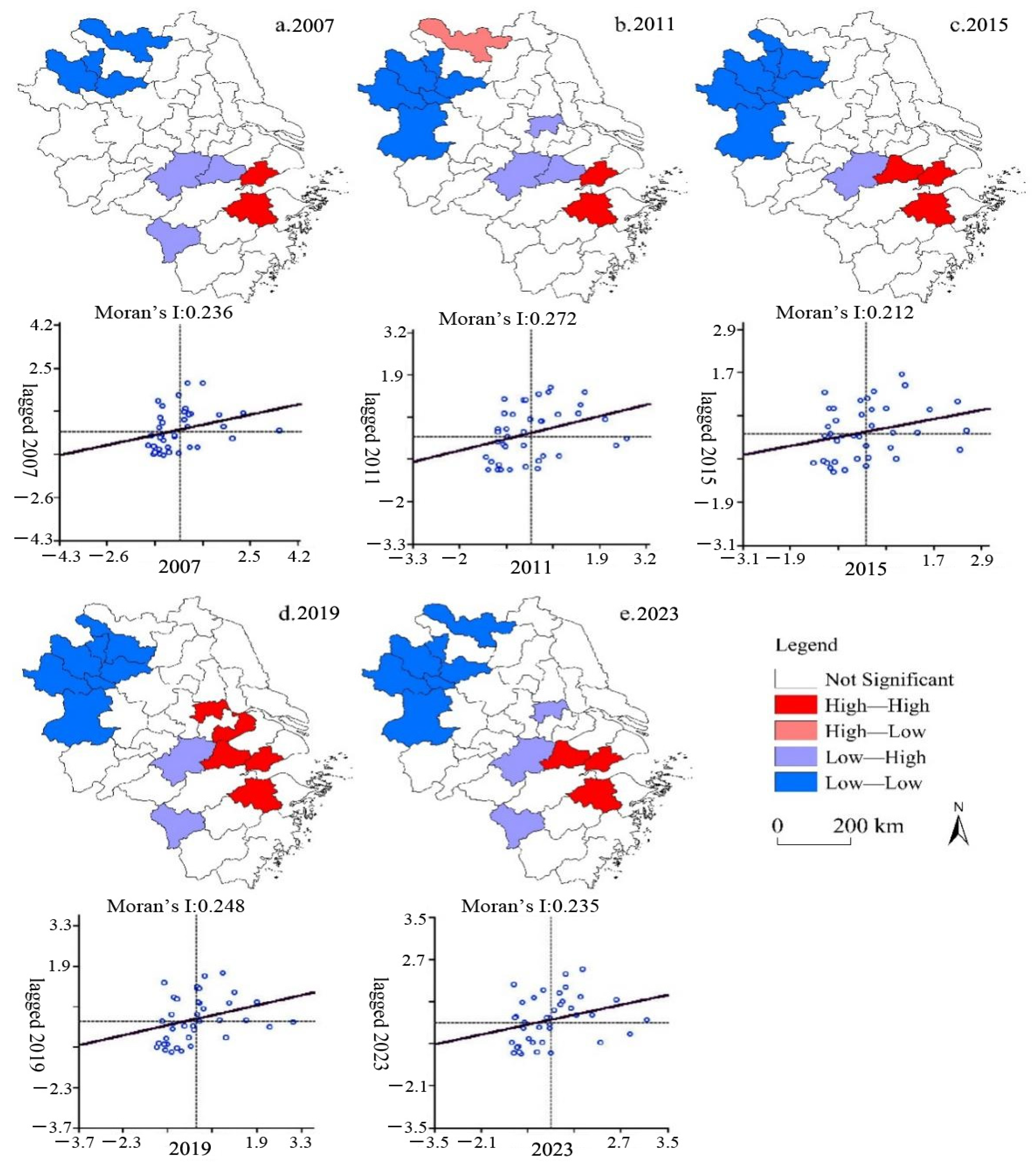
Exploring the dynamic synergistic effect and driving mechanism of green technology innovation (GTI) and tourism green development (TGD) is of great significance for reducing the environmental footprint of tourism, enhancing the capacity of sustainable development, and promoting the practical application of green technology and industrial upgrading. This study takes 41 cities in the Yangtze River Delta (YRD) region of China as research objects, and the time span of the study is from 2007 to 2023. The dynamic synergistic effects and driving mechanisms of GTI and tourism green development (TGD) are revealed by comprehensively adopting the coupled coordination model and panel quantile regression model. The results of this study show that (1) the average value of the coupling coordination degree (CCD) shows a small upward trend, with regional differences for Shanghai > Zhejiang > Jiangsu > Anhui. (2) High coupling coordination degree (CCD) areas are spatially concentrated in provincial capital cities, with prominent spatiotemporal heterogeneity characteristics and spatial correlation. (3) Industrial structure, human capital, and tourism resource endowment have a significant contribution to the coupling coordination degree, while informationization level and transport facilities show heterogeneous influence effects in different sub-location contexts. The level of openness and environmental regulation did not show the ‘pollution shelter’ effect, confirming ‘Porter’s hypothesis’ to some extent. (4) This study not only provides new evidence for the synergistic effect of green technological innovation and the green development of tourism, but it also provides an important reference for green technological innovation to empower the high-quality development of tourism.
Keywords: green technology innovation; sustainable tourism green development; synergistic effect; spatial and temporal evolution; driving mechanism; the Yangtze River Delta region of China green technology innovation; sustainable tourism green development; synergistic effect; spatial and temporal evolution; driving mechanism; the Yangtze River Delta region of China