1. Introduction
Urban walkability is critical for promoting sustainable, livable, and healthy cities. However, cities in the Gulf Cooperation Council (GCC) region face unique challenges in fostering walkable environments. Car-centric urban designs, extreme climatic conditions, and cultural considerations make it difficult to develop pedestrian-friendly spaces that align with regional needs. The existing international frameworks for assessing walkability often fail to address these context-specific challenges, necessitating the development of tailored assessment tools for GCC urban streets.
The absence of region-specific walkability indicators limits the ability of urban planners in the GCC to prioritize pedestrian infrastructure effectively. This gap perpetuates car dependency, leading to issues such as increased traffic congestion, environmental degradation, and reduced opportunities for active transportation. Additionally, walkability’s potential to enhance community interactions, public health, and overall quality of life will remain underutilized without appropriate assessment frameworks. Developing regionally specific indicators is essential for urban planners to evaluate and address these issues effectively [
1,
2].
To address this gap, this study aimed to develop a tailored walkability assessment tool for GCC urban streets by identifying and prioritizing region-specific indicators. Such tools will support urban planners in promoting pedestrian-friendly environments, aligned with broader sustainability goals like Saudi Arabia’s Vision 2030. This research focuses on ensuring that the proposed tool considers the unique environmental, social, and cultural dynamics of the GCC region. The proposed tool builds upon a list of walkability indicators compiled through a thorough review of the most relevant elements identified in the literature.
To achieve this, a Delphi survey was conducted to elicit local experts’ perceptions of appropriate walkability indicators. The Delphi method was chosen because it allows an expert consensus to be obtained through iterative rounds of surveys interspersed with structured feedback [
1]. This approach is particularly desirable in areas where empirical evidence is limited or inconsistent [
2]. The Delphi method has been widely applied across various fields, including education, business, and health [
2,
3].
The process began with an open-ended inquiry in the first round, designed to capture the experts’ initial thoughts and ideas [
2,
3]. The responses were then transformed into a structured questionnaire used in subsequent rounds. In the second round, participants were asked to rate the proposed walkability indicators on a Likert scale, with opportunities to provide comments and recommendations [
2,
4]. If agreement among participants was insufficient, the questionnaire and feedback process were repeated until consensus was achieved [
4].
Investigations involving multiple stakeholders benefit greatly from the Delphi method, due to its ability to mitigate the biases commonly associated with group-based methods such as focus groups. The anonymity in the Delphi process helps to reduce the influence of dominant individuals and alleviates peer pressure, ensuring that each participant’s perspective is equally represented [
5,
6]. This anonymity also avoids the manipulation and compulsion often present in face-to-face group dynamics [
7,
8]. Moreover, the electronic implementation of the Delphi process ensures participant privacy, accommodates geographically dispersed experts, and overcomes challenges such as the travel restrictions during the COVID-19 pandemic [
9,
10]. Automated data collection and analysis ensure that all expert perspectives are fairly and systematically considered [
10].
To identify the most important walkability factors for incorporation in the conceptualized audit tool, this study used a two-round Delphi technique. The factors respond to the unique characteristics and needs of GCC cities. Details in relation to the application of the methodology, the analysis of the Delphi rounds, as well as results from the panel of experts are discussed in the subsequent sections.
Recent research has highlighted the importance of innovative traffic and transportation engineering solutions to improve energy efficiency in smart cities, focusing on multidisciplinary approaches to address global urban challenges [
11]. Similarly, efforts promoting active travel, such as walking and cycling to school, have been shown to support sustainable mobility, as evidenced by studies conducted in the Southern Poland region [
12]. These studies provide valuable context for understanding the role of walkability in fostering sustainable urban environments, particularly in regions with distinct socio-environmental challenges like the GCC.
This paper is structured as follows:
Section 2 discusses previous research,
Section 3 discusses the Methodology,
Section 4 discusses the Methods,
Section 5 presents the Discussions,
Section 6 gives the Limitations,
Section 7 gives the Future work, and the last section gives the Conclusions.
2. Literature Review
2.1. Importance of Walkability
Walkability extends beyond facilitating pedestrian movement, becoming a cornerstone of livable, healthy, and sustainable urban communities. Studies have emphasized that walkable urban designs improve public health, foster social interactions, and support local economies by increasing foot traffic for businesses [
13,
14,
15]. By reducing car dependency, walkable environments also address issues such as pollution, traffic congestion, and sedentary lifestyles [
16]. These benefits underscore the multifaceted importance of walkability in urban design. A walkable urban environment contributes to vibrant, inclusive communities while supporting local economies and addressing broader health and environmental challenges.
2.2. Definition and Dimensions of Walkability
Walkability is defined by dimensions such as accessibility, safety, comfort, and attractiveness, which collectively encourage pedestrian activity and create engaging spaces [
17,
18]. Urban design theories emphasize compact, human-scale environments that prioritize pedestrian needs over vehicular traffic [
14,
19]. Features such as infrastructure proportioned to human dimensions and visual appeal enhance pedestrian satisfaction and make walking a preferred mode of transportation [
20]. These definitions highlight the need for urban designs that are not only functional but also visually and physically inviting, making walking a viable and desirable alternative to motorized transport.
2.3. Urban Frameworks and Pedestrian Design
Various frameworks have provided structured approaches to evaluating walkability. The hierarchy of walking needs organizes pedestrian requirements into five levels: feasibility, accessibility, safety, comfort, and pleasure. This framework systematically prioritizes interventions but may lack adaptability to socio-cultural and climatic contexts [
21,
22]. The social-ecological model emphasizes the interplay between individual behaviors, social influences, and the built environment, highlighting the importance of aligning walkability strategies with social norms and policies [
23,
24]. The complete streets framework advocates multimodal streets that prioritize accessibility and safety, while promoting sustainable urban development. However, it may not sufficiently address pedestrian-specific needs in car-centric environments like the GCC [
25,
26]. Similarly, the ‘eyes upon the street’ theory, proposed by Jacobs [
27,
28], emphasizes natural surveillance and pedestrian activity for safer, livelier streets. However, it lacks quantitative tools for systematic evaluation [
29]. These frameworks collectively highlight the need to balance pedestrian priorities with broader urban design considerations.
2.4. Specific Context of the GCC
The GCC region presents unique challenges and opportunities for walkability. Extreme climatic conditions, rapid urbanization, and cultural considerations such as privacy preferences and gender-specific spaces significantly influence pedestrian behavior [
30,
31]. Urban planning in GCC cities must balance modern design principles with traditional social norms to create inclusive and comfortable pedestrian environments. For example, designing walkable areas requires solutions such as shaded pathways, proximity to community landmarks like mosques, and climate-responsive infrastructure. National strategies like Saudi Arabia’s Vision 2030 emphasize walkability as a core component of reducing car dependency and enhancing urban livability [
32]. These unique factors necessitate tailored frameworks that respect local cultural and environmental realities, while promoting sustainable urban growth.
2.5. Methods and Tools to Evaluate Walkability
Assessing walkability requires a combination of quantitative and qualitative approaches. Quantitative methods, such as geographic information systems (GIS), are commonly used for spatial analysis, to evaluate connectivity, land use, and accessibility [
33]. On the other hand, qualitative approaches, such as perception-based surveys and interviews, capture subjective pedestrian experiences and preferences, offering insights into how urban design influences pedestrian satisfaction [
34]. More comprehensive methods, such as those combining both GIS-based tools and perception-based evaluations, provide a holistic view of pedestrian environments, addressing physical infrastructure and user perception simultaneously [
35]. Such tools are particularly relevant for GCC cities, where urban planners must navigate challenges such as high temperatures and privacy concerns when developing walkability solutions.
2.6. Challenges of Walkability in the GCC
The GCC faces distinct challenges to walkability, stemming from extreme heat, privacy concerns, and car-centric urban designs. Features such as shaded pathways, weather-resistant furniture, and water misting systems are essential to mitigate the region’s harsh climate [
30,
31]. Privacy considerations also necessitate gender-sensitive and culturally appropriate designs, ensuring that public spaces respect traditional social norms [
36]. These challenges highlight the need for tailored solutions that incorporate both modern urban planning principles and local values. Additionally, the rapid urbanization in the GCC requires frameworks that balance sustainability with functionality, creating walkable environments that support pedestrian activity, health, and social cohesion.
A review of the literature highlights the critical role of walkability in enhancing the quality of urban life and promoting sustainable cities. Established frameworks such as the hierarchy of walking needs, the social-ecological model, and complete streets emphasize the importance of creating pedestrian-friendly environments by focusing on safety, comfort, and accessibility. For GCC cities, specific challenges such as an extreme climate, rapid urban growth, and cultural considerations require unique strategies, including shaded pathways, better pedestrian infrastructure, and culturally sensitive designs. Additionally, initiatives like Saudi Arabia’s Vision 2030 underscore the importance of walkability in reducing car dependency and improving urban livability. Overall, the literature provides essential insights that inform the development of tailored walkability solutions for the GCC region.
3. Methodology
Various methods are popularly used in collecting expert opinions on various research, including brainstorming [
37], the nominal group technique (NGT) [
38], and the Delphi technique. Each of these methods possesses some unique merits and demerits and can be used in different scenarios.
Brainstorming thus becomes imperative concerning community or group sessions to generate or create ideas. It encourages the generation of ideas and creativity, and is rapid and effective, while also being explorative. However, brainstorming also has its demerits, such as being susceptible to conformity and groupthink, where participants are subject to dominant voices, and it often lacks the iterative refinement that is needed to reach a consensus on certain complex issues, as well as requiring personal attendance, which limits many experts from participating, as he/she might be in a different geographical position.
The nominal group technique (NGT) also extracts expert-related opinions. The NGT is a technique that supports idea generation, structured discussions, and group voting between members for the ranking of priorities. It has several benefits, such as being more structured than brainstorming, reducing some issues of dominance, including quantitative rankings, and, of course, certain limitations: it requires physical meetings, thus limiting participation. It also suffers from a lack of anonymity, which does not help in mitigating issues of bias arising from power dynamics.
In contrast, the Delphi technique can use a series of anonymous questionnaire responses to narrow down the opinions of experts to reach a consensus. The Delphi method protects individuals involved in the exercise from peer bias and domination, accommodates dispersed experts by implementing electronification, and involves iterative refinement of ideas with structured feedback. These characteristics become weaknesses, in that it is very time-consuming, with multiple rounds, and requires careful formulation to ensure clarity and engagement. Considering that many cultural, environmental, and urban design issues have to be dealt with in cities of the GCC countries, the Delphi method was chosen because it provides a structured and consensus-seeking process, reducing biases and supporting the input of experts from different areas and locations. The Delphi approach is a method in which experts can anonymously provide their opinions in order to soften the voices of domineering individuals. It allows systematic feedback and iterative development of diverse issues, and brings together widely spread experts and puts them in a common area when there are travel restrictions, as in the case of the present COVID-19 pandemic. These features make it quite apt for identifying and prioritizing walkability indicators in a GCC context, as the socio-cultural and environmental factors vary significantly.
This study adopted a consensus threshold of ≥70% agreement for identifying key walkability indicators in the Delphi process. While it is acknowledged that there is no universally established cutoff for consensus in the literature, the choice of a 70% threshold was consistent with prior studies employing the Delphi method. The research in [
2,
39] suggested that a 70% agreement level is a common benchmark in Delphi studies, providing a balance between rigor and practicality in achieving a meaningful expert consensus.
This threshold was selected to ensure that indicators deemed important reflect a broad level of agreement among participants, while allowing for the diversity of opinions inherent in multidisciplinary topics like walkability. Higher thresholds, such as 80% or 90%, were considered but deemed overly restrictive, potentially excluding indicators with significant support due to minor variations in expert ratings. Conversely, lower thresholds, such as 60%, might include indicators with insufficient consensus, diluting the focus of the findings.
The ≥70% cutoff was also appropriate given the study’s aim of developing a regionally tailored framework for the GCC, where expert perspectives were critical in addressing unique cultural, climatic, and urban challenges. This threshold allowed for the inclusion of indicators that resonated with a majority of the expert panel, while maintaining methodological rigor.
A traditional Delphi survey uses open-ended questions in the first round to establish subjectivity, but the Delphi method utilized in this study was refined using structured questionnaires to reduce the time intensity [
2]. This approach is particularly useful where data are scarce [
2]. However, that is why some proponents of this method state that starting with surveys may lead to bias [
40]. Testing content validity is possible when using pre-established closed-ended questions, and the initial round offers a basis for an expert review, which contributes to an increased methodological rigor [
2].
Another strength of the modified Delphi method is that the qualitative responses input for analysis in the subsequent rounds need not be processed rigorously. In addition, it increases the response rate, because structured questionnaires are usually easier for respondents to fill out than open-ended questions [
2,
41]. The above-outlined benefits made it possible to use the modified Delphi technique in this study.
This was followed by a systematic literature review to gather all the necessary information on basic characteristics associated with walkability. During the first round, the participants were offered a list of questions, part of which were based on closed questions, and the others were addressed in the form of open-ended questions, where the authors of the indicators could also add more indicators. This approach made the system flexible, while enhancing the collection of qualitative feedback. Respondents could also give additional comments for the specific questions, adding expertise information to the dataset.
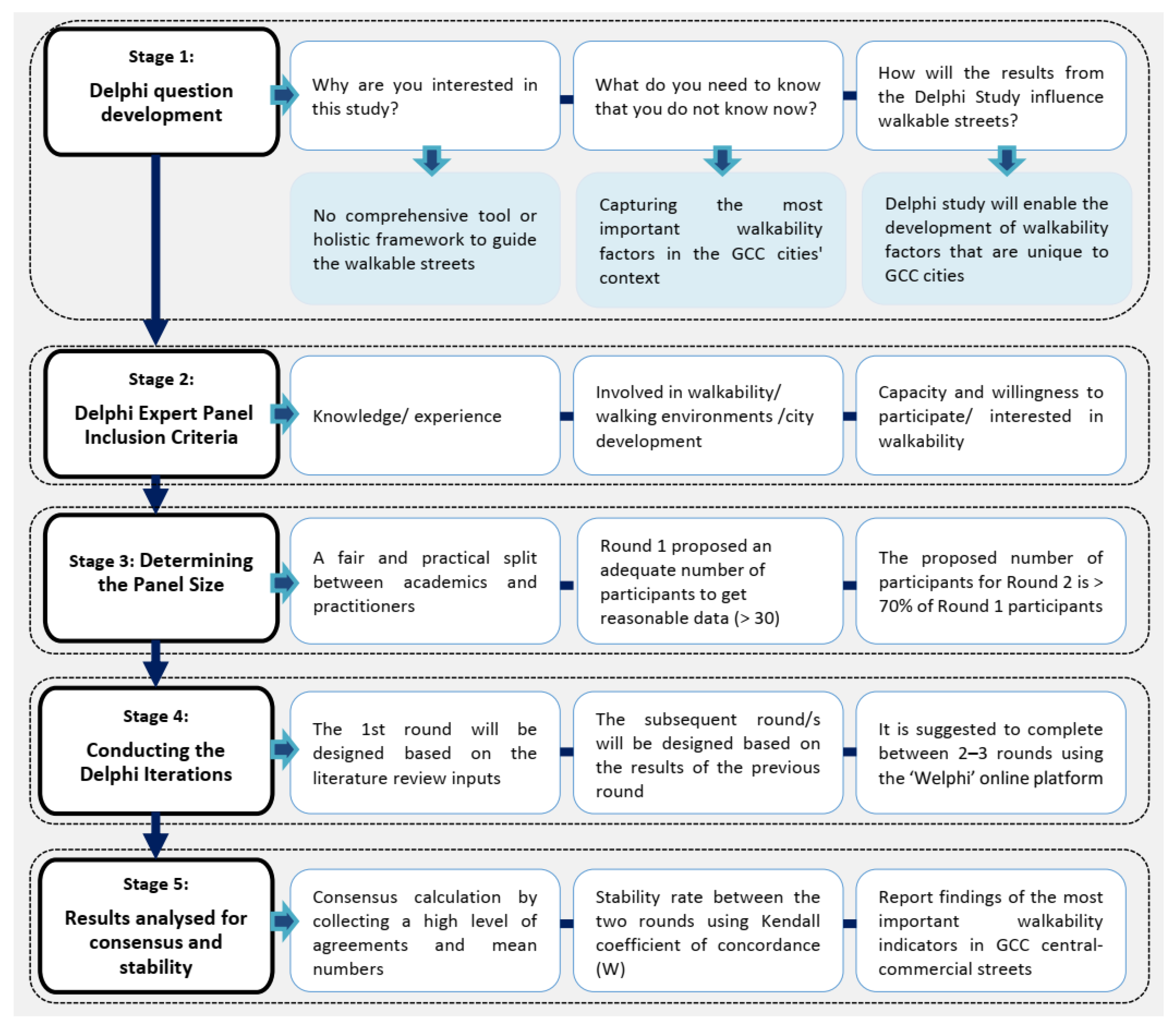
The following elements of the Delphi method [
42] were carefully adopted in this research: the question types, the selection of the panelists, the decision on the number of panelists for the study, and the number of rounds in the survey. These steps are elaborated upon in the following sections, supported by the flow diagrams
Figure 1 that outline the five phases of the Delphi process and their functionalities.
3.1. Panel Selection
The Delphi method starts with the identification of a relevant panel and depends on its membership—as do the collected data—while the selected experts significantly shape the outcomes of the study [
4,
43,
44]. According to the literature, experts are generally considered to be people with substantial knowledge in the particular topic area [
45]; it is necessary to select experts deliberately and not from a hat, thus they should be acquainted with the specialization [
46]. Many Delphi studies operate using the predictions of selected panels of domain experts [
47,
48,
49]. However, simple experience does not necessarily ensure the competencies needed, because activity and interest are the key determinants of continuous participation in a process [
50].
Participant selection needs well-defined inclusion criteria, even though there are no standard norms. According to some authors, factors like qualifications, amount of experience, papers published, numbers of authors in the world, and their readiness to respond are potential factors that may be taken into consideration [
51]. Furthermore, the expectation is that a larger collective sample, especially one with heterogeneous demographics, will be more reliable in generating complete results [
52]. Experts are often chosen conveniently, by snowball sampling and through the literature, enabling the panel size and composition to vary and be large [
53].
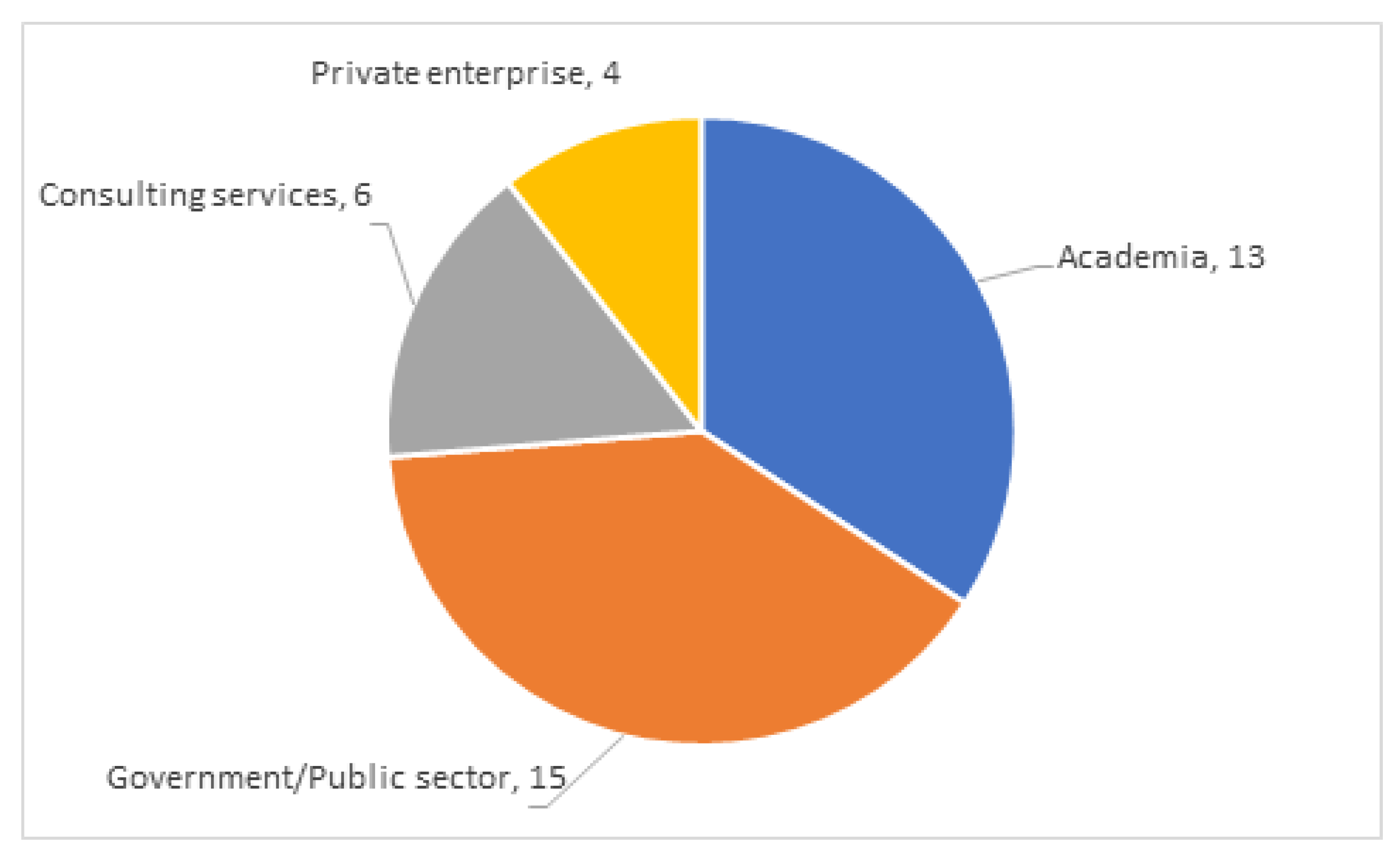
In the current study, the expert pool comprised professionals involved in walkability programs and urban planning, as well as academic scholars in the planning of city development. The total number of specialists involved in the study is illustrated in
Figure 2. The sample was chosen purposively to include only those who showed high interest in the study area and willingness to spend time to complete all rounds within the Delphi study. Participants were contacted online throughout the data collection period and the researcher communicated with them frequently.
Expert participants were mainly identified through the external project supervisor working at King Saud University in Riyadh, where most of the participants were contacted and selected. Moreover, other potential contributors were suggested by certain participants. The second round ended and a two-week period was set aside for designing and preparing the next round, with sufficient time left for readjustment in case multiple rounds were necessary.
3.2. Level of Consensus
The process in Delphi is very dependent on consensus, which is, in fact, the cornerstone of the approach. Although, as mentioned earlier, consensus definitions exist for the Delphi studies, there is much variation among them [
54]. Thus, according to [
55], consensus means agreement or disagreement by several panel members with a statement, while for [
56] it means ‘the consolidation around the middle figure within the smallest possible range’.
Establishing consensus in such cases is often not straightforward, particularly since the literature lacks classification criteria [
8]. It is essential that at the start of the Delphi process, both an overall definition of consensus and more precise decision rules are defined [
52]. The analysis of consensus is still somewhat unclear in terms of categorization [
57]. For example, some researchers have used a consensus defined as agreement above 50 percent [
8], whereas others used a 50 percent to 80 percent range [
49,
58,
59]. Other research also utilized stricter levels of consensus [80% and above [
49,
58]] or unanimity [
57].
Other methods of ranking responses involve grouping them into higher or lower levels of consensus, while others do not consider proportions. For example, ref. [
60] divided consensuses into high
70%), moderate
60%), and low
50%), with no cases of a consensus rating below 50%. These classifications give some other meanings to agreeableness levels.
Some other familiar methods of statistical estimation for assessing a consensus include means, variability measures like standard deviation, medians, and measures of dispersion such as IQR and agreement scores [
8]. Researchers like [
61] have indicated that a consensus is found when the inter-rater agreement is at or above 70% or the responses are within a certain range. Nevertheless, the thresholds range between 50 ane 97 percent, which may seem quite random in light of prominent items that may stand right on the border [
54,
62]. To this end, researchers have suggested that it is advisable to employ more than one index of agreement, which may use percentiles such as IQR; standard deviation; or 2-fold, 3-fold, or 4-fold categorical responses to guarantee that an optimal consensus analysis is conducted [
63].
In addition, a combination of descriptive statistics together with agreement percentages is frequently adopted. For instance, Refs. [
64,
65] found that consensus was reached where at least 70% of panel members agreed and rated 4 or more on the Likert scale.
In the current study, consensus was defined as achieving a score of 8–10 on an 11-point Likert scale from at least 70% of respondents, with a minimum mean score of ≥7, as detailed in
Table 1. Those factors that did not meet these criteria for indicators were reviewed in the subsequent rounds by the expert panel. This was a structured approach that provided methodological coherence to the research, but at the same time allowed refining the determined indicators in the course of the study.
3.3. Procedure and Data Management
It has been suggested that reaction times shorter than one week in the Delphi process may not allow participants enough time to complete the round, while longer periods (more than two weeks) may result in incomplete responses. For this study, Delphi participants were given 12 days to respond in each round, following recommendations from [
4]. Initially, participants were provided with a general overview of the study and completed an informed consent form. Definitions and explanations were provided to clarify terminology. Both closed and open questions were included to capture the participants’ experiences with walkability in the central areas of GCC cities. The importance of each walkability indicator was assessed using an 11-point Likert scale, ranging from 0 (not important at all) to 10 (very important).
The effectiveness of Likert-type scaling in survey research has been an all-important subject for many investigations into measuring subjective experiences and attitudes; however, recent literature has demonstrated that an 11-point measurement scale provides users with more discrimination across items and thus increases the reliability of the collected data points. More response options would influence the reliability and validity of the survey instruments. The effectiveness of the Likert scale depends on the number of response options, which can lead to their data being ordinal or even interval in nature [
66]. A common trap that has direct relevance to Likert scales is being confused between subjective and qualitative measures. Systematic reviews emphasize the need for clarity in designing scales to avoid misinterpretation of data [
67]. Concerns about the loss of information and possible bias from Likert survey responses suggest that one should carefully consider the design of scales for an accurate representation of the data [
68].
The middle alternative in a Likert scale is also critical for truly capturing respondents’ sentiments. It is without a question, and respondents should be able to make choices corresponding to the situation in which they are required to answer, for example, in a sensitive situation such as health discrimination [
69]. The everyday discrimination scale for oral health settings clearly shows how there can be variations in response options, to disentangle health inequalities [
70]. It has also established the necessity of an 11-point scale for Likert ratings, for further discrimination and reliability in survey research. Thus, well-designed response options, including middle alternatives, are required to capture the range of complexity in the attitudes and experiences that people have.
3.3.1. Piloting the Delphi Tool
The pilot study was conducted with five officials from the Ministry of Municipal and Rural Affairs and Housing, Riyadh Municipality, and the Royal Commission for Riyadh City, all of whom are Riyadh residents who have worked in urban development programs. Three of them have completed projects related to pedestrian improvement in Riyadh and Al-Khobar. These officials were invited by email on 3 February 2021 to be part of the pilot. The Delphi platform was adopted to complete the surveys, and the first-round questionnaire was also sent as a Microsoft Word doc file. Of the five participants, all responded and completed the forms within a week.
The pilot study served several purposes: measuring the comprehensiveness of the survey, testing the respondent’s comprehension and problem-solving skills when it came to answering questions, and establishing the amount of time the survey would take to complete. Concerning the questionnaire used, modifications were made to the form after using it on the experts. In some cases, indicators were elaborated with text, and the phrase ‘presence of’ was added to some objective measures, for instance, security cameras, abandoned buildings, and graffiti. In addition, one of the participants proposed limiting the number of open-ended questions, as they still took a lot of time; another three participants confirmed that the list of criteria in the questionnaire was numerous. Despite this, they chose to proceed with the first-round questionnaire.
3.3.2. Delphi Tool Development
The Delphi survey used for this study’s evaluation included five key dimensions: cultural imperative, functionality, safety, appearance, and usability. The research was grounded in a theoretical context and both systematic and narrative methods were used in the design. For each dimension, there were specific walkability indicators in the proposed audit tool for the built environment. As shown in
Table 2, the narrative literature yielded 18 cultural indicators from the PRISMA systematic review, and 26 functional indicators, 30 safety indicators, 21 aesthetic components, and 16 comfort attributes were identified. Such an approach guaranteed a balanced assessment of the issue, since each of the identified areas had an impact on the company’s performance.
3.3.3. Invitation to Participants
This research worked with a pool of potential experts within the population, amounting to 102 people. Participants were invited through the researchers’ networks, with the help of the external supervisor, who helped the researchers connect to scholars working in the relevant field. Participants received invitations through Welphi, as well as the details of the study and how to proceed. From the sixty respondents, two participants were dropped after completing the round one questionnaire. One was deemed inexperienced based on his or her bachelor’s degree and the other was deemed inexperienced based on his or her academic background, which included vast experience but the area of specialization was in economics. After consultation with the research team, they were excluded from the panel for failure to meet the inclusion criteria.
3.4. Delphi Rounds
The number of rounds may differ from one Delphi study to another. Unlike other kinds of surveys, the Delphi design should preferably consist of a minimum of two rounds under controlled conditions [
71,
72]. The process can be repeated as needed until consensus has been reached, although studies are usually comprised of between two and ten rounds [
2,
3]. Typically, the results of traditional Delphi studies meet the degree of consensus within three cycles [
2,
73], but when there is considerable variance, the cycles can be continued [
73,
74]. In this study, the level of consensus was attained at round two.
The essentials of the Delphi technique include the number of rounds in the study, how data are managed, the analysis of the data accrued, and the appropriate ethics employed in the research. This framework makes sure that all the member institutions move through a structured and all-encompassing process of arriving at a consensus.
3.5. Number of Rounds
Delphi rounds usually continue until a dominant view or expert opinion emerges, but this may occur exceptionally. Ideally, three iterations will be effective to achieve validity, reliability, and the inter-observer reliability for the participants [
2,
9]. Nonetheless, it was found that, commonly, modified Delphi studies may consist of only two rounds in cases where early consensus is reached [
43], which were the aforementioned Rounds 2 and 3 of the present research.
To fulfill this, this study applied a pre-survey using the literature review and modified Delphi survey, and included two rounds using pre-selected indicators from the PRISMA study and consensus level. In round two, consensus was reached regarding the indicators that precipitate walkability in cities of the GCC region based on the data collected. Since there was no need for further rounds of consensus building, no more of them were needed.
3.5.1. Round 1
The first objective of this study was to identify the experts’ views and confirm the content of the walkability indicators generated from the literature. A total of 102 participants responded positively to the invitation sent to them for this round. Additional client questionnaire appraisal took place through an invitation sent in an email on the 18 March 2021, with a link to the questionnaire on the Welphi page. Respondents ranked each indicator on an 11-point Likert scale from 0 to 10, also providing an opportunity to propose new indicators or, vice versa, reject them or give feedback. The last reminders were sent on the 4th and 8th days of the experiment and the survey was closed soon after.
3.5.2. Round 2
Only participants who completed the first round were invited to participate in the second round. The same methodology was followed as in the first round. On 10 April 2021, an invitation email with a Welphi link was sent to the 38 eligible participants. Similarly to round one, the experts rated the importance of indicators on an 11-point Likert scale (0 = not important, 10 = very important) and suggested additional indicators if needed. Of the 38 participants, 27 completed the second round, achieving a response rate of 71%.
In this round, attention was focused on the 69 indicators that had not reached consensus in the first round. Participants reviewed the scores and feedback from round one, allowing them to refine their evaluations and provide additional suggestions. The 42 indicators that achieved consensus in the first round were reviewed first, and participants had the opportunity to offer further input. Subsequently, the remaining indicators were re-ranked. By the conclusion of the second round, seven additional indicators had reached the threshold for inclusion in the proposed walkability audit tool.
3.6. Data Analysis
This study used an online application, Welphi, that facilitates the Delphi process, including closed and open-ended questions. Interpreting the nine responses of the Delphi rounds required the use of two methods of analysis. Continuous data, including the importance ratings measured on the 11-point Likert scale and demographic data, were analyzed using descriptive statistics in SPSS software version 27, which was developed by Norman H. Nie at Stanford University. The open-ended responses were subjected to qualitative analysis, and the software NVivo (Release 1.5.2), which Lumivero, USA designed, was used to code and organize the data on the walkability issues and the challenges perceived by participants.
4. Results
A Delphi study with an expert panel was conducted to identify key indicators for a walkability audit tool tailored for the GCC region. The study took place from 18 March to 23 April 2021 and involved two rounds of data collection. The expert panel’s feedback helped determine the most important walkability indicators specific to the region’s urban design needs.
4.1. Timeline and Response Rate
The sample for the Delphi procedure included 102 experts, all of whom work or are interested in the area of walkability. Out of them, 38 completed the first round and 27 completed the second, which gave us a 71% response rate. The minimum response rate was set at 70% for each round, as recommended after the first round [
43].
Table 3 shows the panel numbers and response rates for each round. The Delphi survey commenced on 18 March 2021, and the first of the rounds took 12 days. The second round started on 10 April 2021 and concluded on 23 April 2021, after passing another 12 days.
4.2. The Demographic Characteristics of the Expert Panel
A total of 38 participants took part in this study: 36 (95%) males and 2 (5%) females, which is typical of the professions in the GCC. Most of the participants, 26 in total (68%), were between 35 and 44 years old, while 8 participants (21%) were between 45 and 54 years old. There were 38 experts in the panel, and 11 nationalities were included in the sample; 28 of the experts (74%) were Saudi nationals. With regard to education, 23 participants (61%) reported a master’s degree, while 12 of the participants (32%) had a doctoral degree. Surprisingly, one expert (5%) was reported to hold a bachelor’s degree, and only one had a professorial level of education. All the experts had a working experience of at least five years in a related field. The largest percentage were in urban planning at 55%, while 21% were in urban design and 11% in civil engineering. Education-wise, 59% had a bachelor’s degree, 20% had a master’s degree, while only 3% had a doctorate. Concerning experience, 45% had 6–20 years, 26% had 11–15 years, and 11% had 6–10 years or over 30 years of experience. The largest percentages of respondents worked in the government section (39%) and in the academic sector (34%). Detailed demographic information is available in
Table 4.
4.3. Perspectives on Walkability in GCC Cities
In order to obtain a clearer understanding of the concept and practice of walkability within the context of the GCC, a set of propositions were included in the first-round questionnaire to reveal various factors. Through these questions, the experts’ views on the various aspects were sought, to encompass all the important aspects regarding walkability based on the region’s environment, culture, and infrastructure. With these questions in mind, the study was able to gather basic information that guided the creation of a walkability audit tool appropriate for GCC cities.
4.3.1. Perspectives on Pedestrian-Friendly Environment
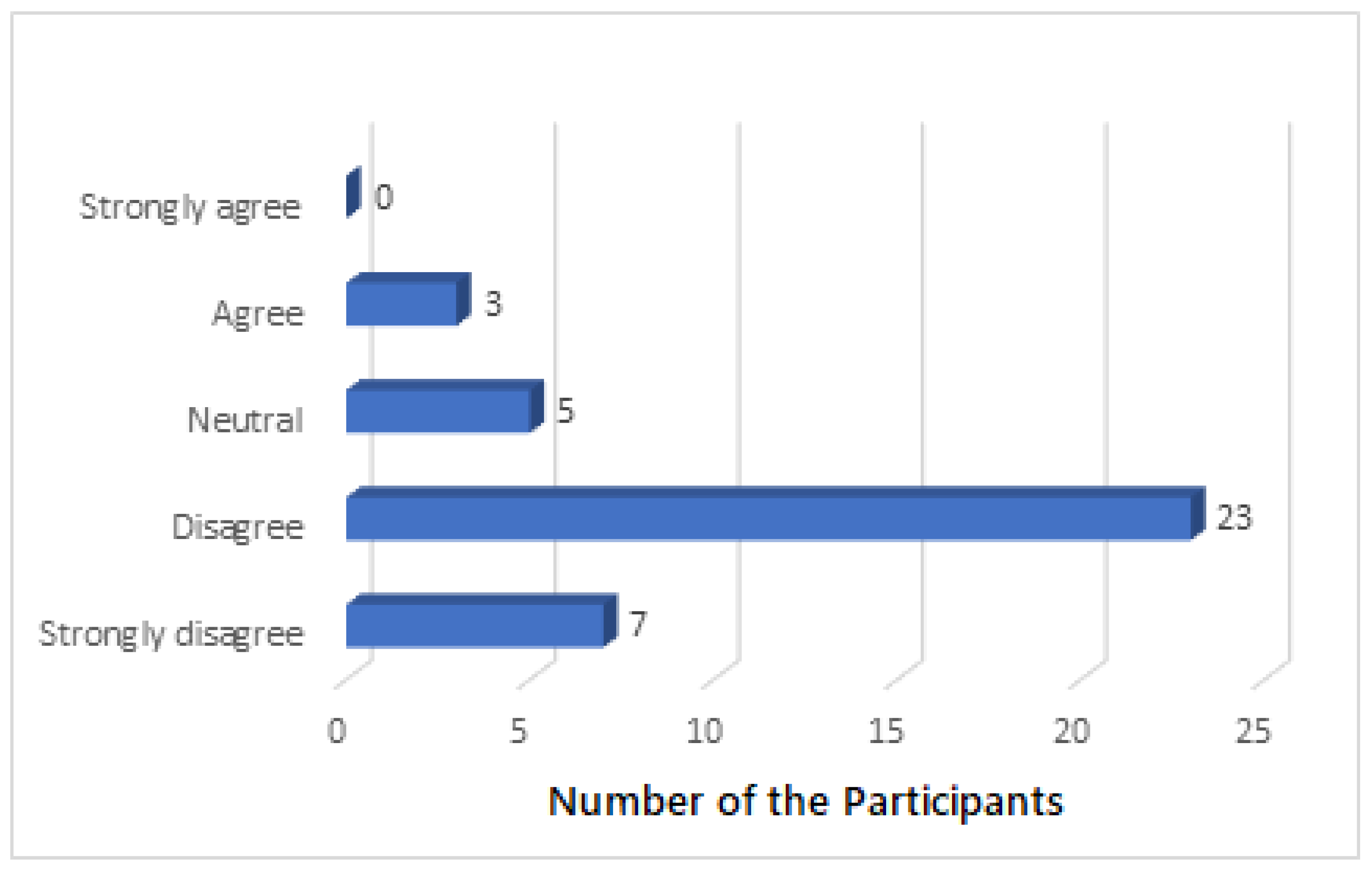
Interview questions were related to the accessibility of commercial areas for pedestrians in the central districts of GCC cities. As shown in
Figure 3, most experts, 23 (61%), strongly disagreed with the statement, while 7 (18%) of the experts only disagreed. Three (8%) respondents strongly agreed, while 5 (13%) were non-committal. A total of 19 qualitative comments were given by participants and some participants responded to more than one question. Thematic coding revealed 42 responses, categorized into seven themes, as shown in
Table 5. The majority of experts (14, 33.3%) deemed the infrastructure design for pedestrians as the main reason for their negative perception, four experts mentioned aesthetic concerns, and two stated harsh weather as a factor affecting walkability.
4.3.2. Priorities for Development
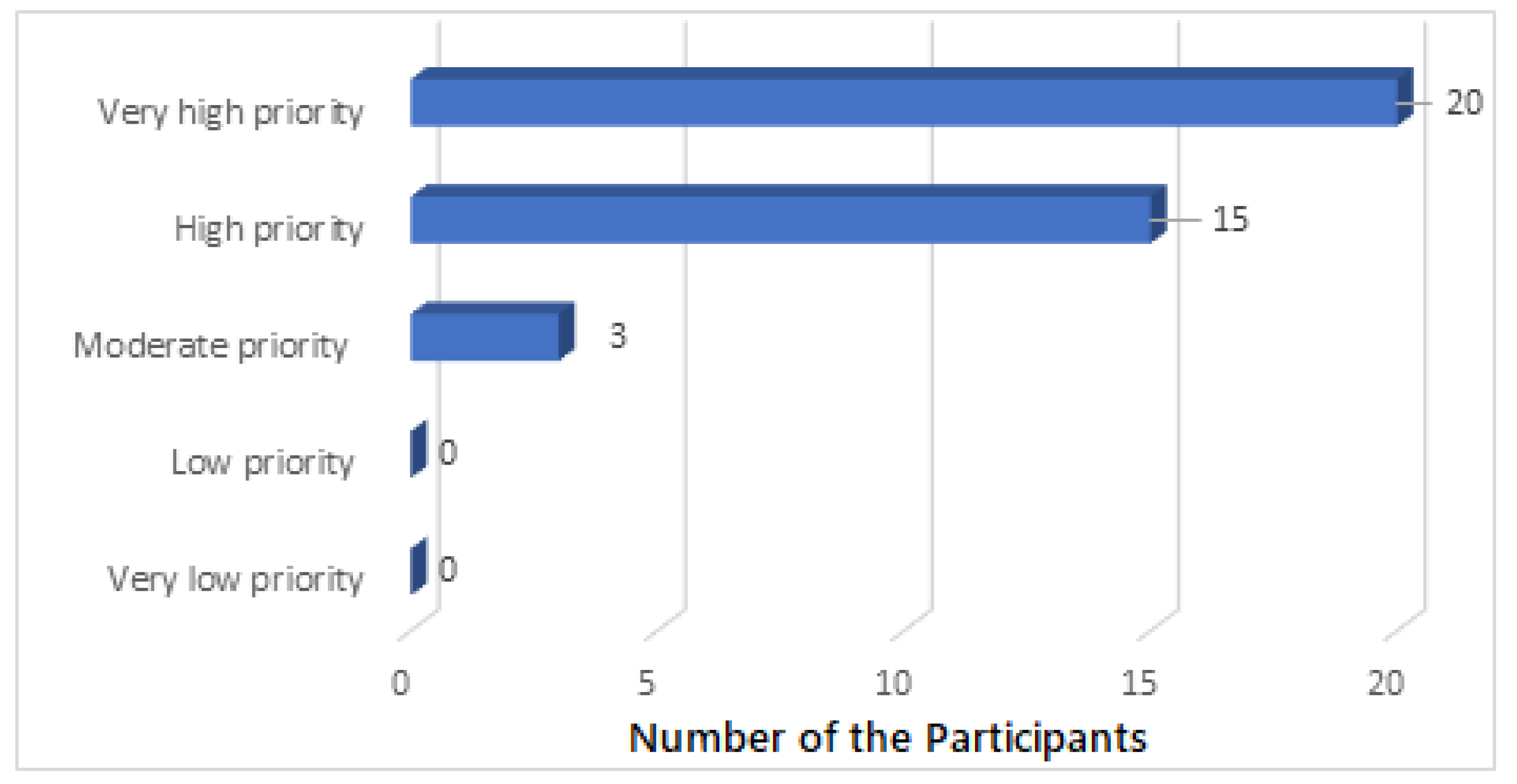
Interviewees were questioned on the importance of commercial streets in the central zones of GCC cities. According to
Figure 4, 20 (53%) of the experts perceived this as being of very high priority, while 15 (39%) perceived it as a high priority, and 3 (8%) rated it as a moderate priority. There were 15 qualitative comments categorized into 22 codes related to the theme of development priority. According to 5 (22.7%) experts, the development of pedestrian infrastructure should be considered a high priority, as shown in
Table 6. These responses highlighted the importance of creating pedestrian-friendly spaces to support urban development and improve walkability in the central areas of GCC cities.
Some of the professionals stated that the current priority should be a decrease in traffic car usage and an increase in the role of public transport. The same experts also recommended adding value to the visualization of the central streets. One expert also associated street development with the framework of Saudi Vision 2030.
4.3.3. Extreme Weather Discourages People from Walking
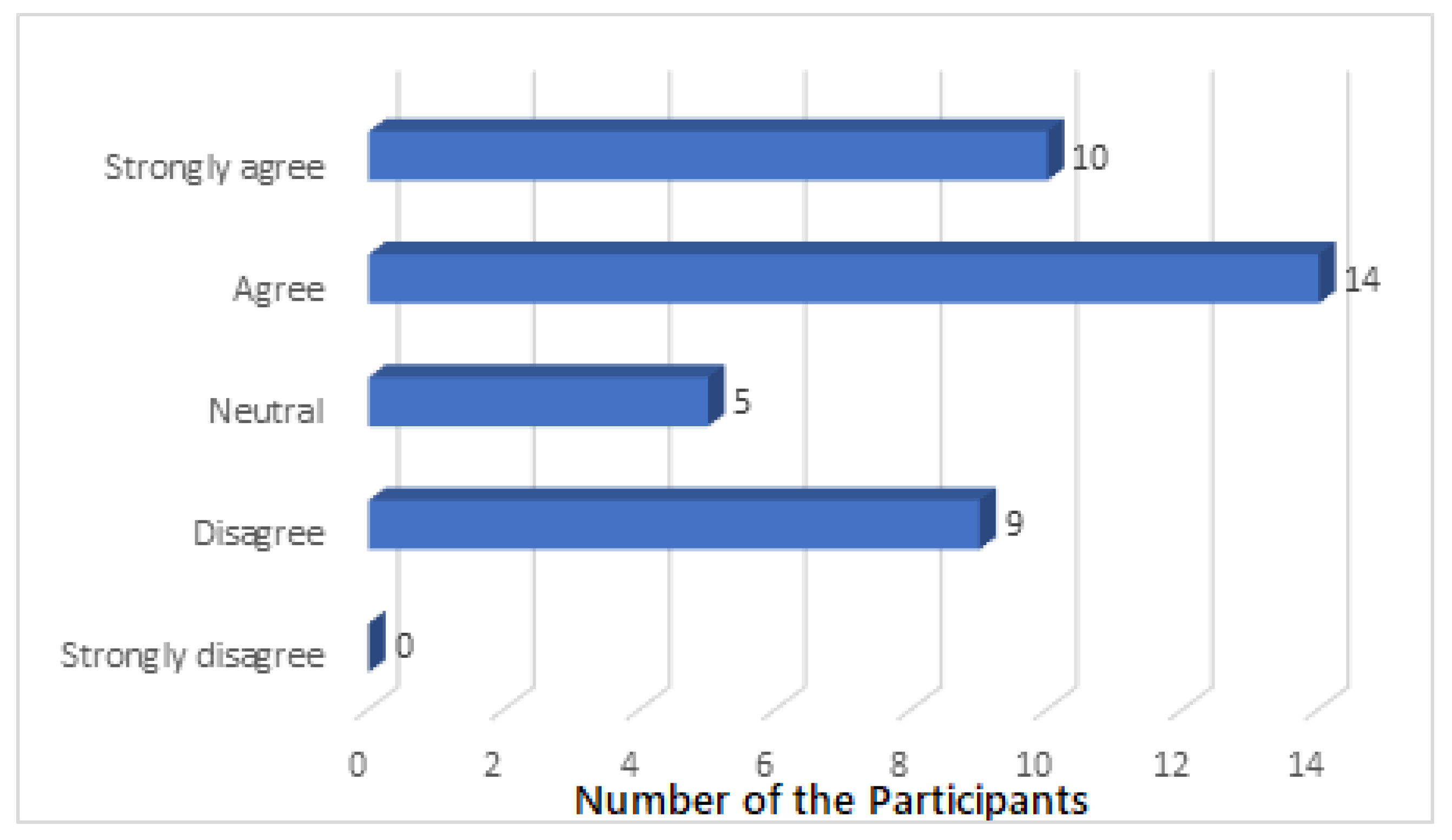
There was some disparities regarding possible extreme weather in the gulf, while imposing some threats against perusing commercial streets in GCC cities. As shown in
Figure 5, 10 (26%) strongly agreed, 14 (37%) agreed, 5 (13%) were neutral, and 9 (24%) disagreed. Data obtained from the comments made by the experts gave 17 comments, and the coded responses were 42. The majority agreed that temperature affects walking, with 15 (35.7%) highlighting this issue, as shown in
Table 7. Some of the responses included reducing vehicle use, increasing green coverage, and using structures to offer shade as a way of combating heat, as well as enhancing walkability.
4.3.4. Environmental Features
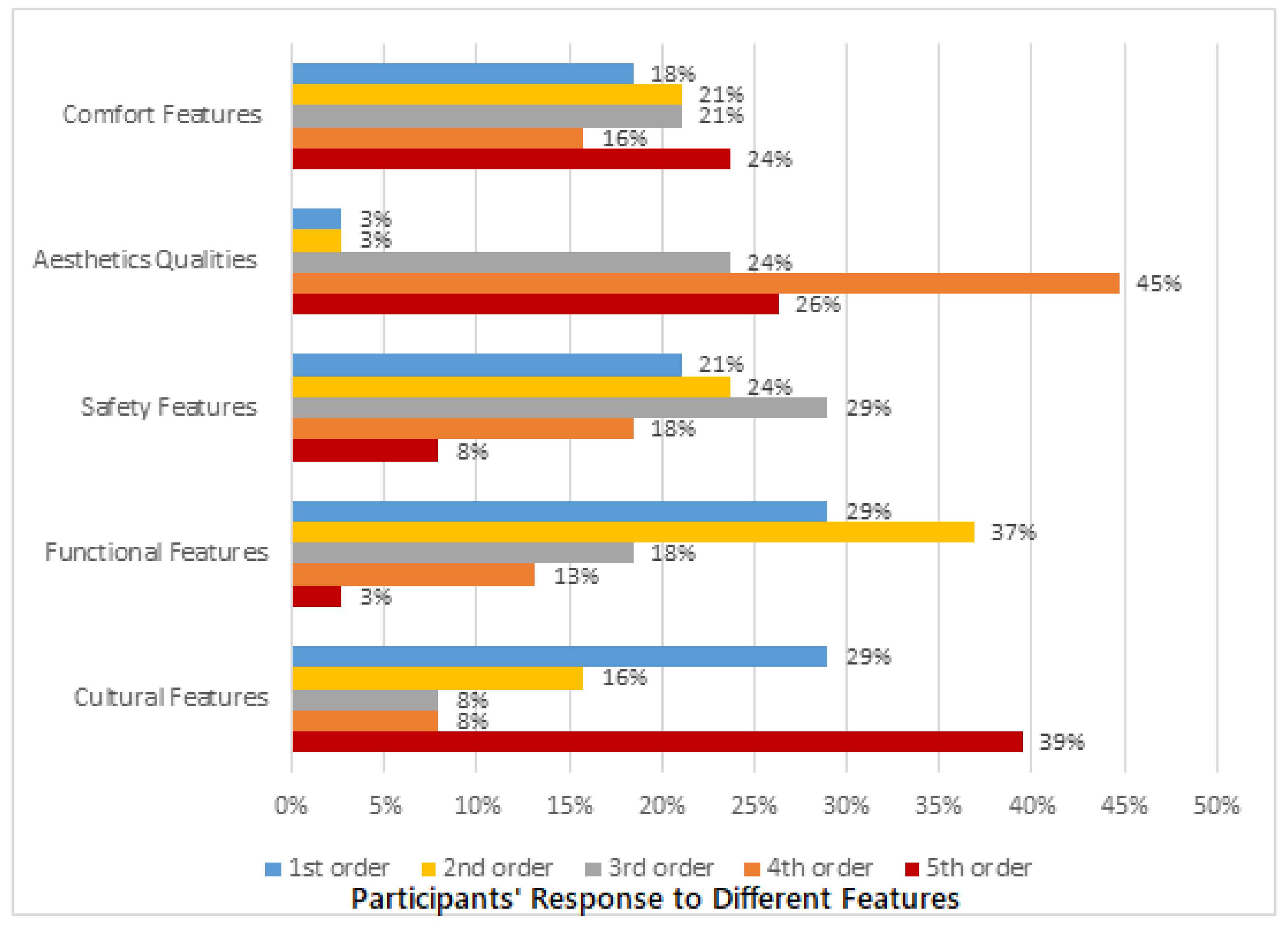
Participants expressed diverse opinions on the importance of five related environmental features, as shown in
Figure 6. Conventionally, there was a significant shift witnessed in regard to the priority given to cultural features, where 11 (29%) of the respondents ranked these features as more important, while 15 (39%) of the respondents ranked these features as the least important. Fourteen (37%) ranked functional features as the second highest aspect of concern, and 11 (29%) ranked safety features as the third highest aspect of concern. According to the results shown below, 17 participants (45%) placed aesthetic qualities fourth, while 9 (24%) placed comfort features as the least important of the five categories.
4.4. Walkability Challenges in GCC Cities
Eighteen comments were offered as experts described their experiences and opinions on different walkability concerns and difficulties. These responses were categorized into 65 distinct issues, grouped under 12 main themes, as shown in
Table 8. The largest percentage, 21.5%, specified environment, including high temperatures, intensity of the sun, and lack of proper cooling as the most commonly encountered issue among the identified challenges. Another consultant observed that the temperature and humidity in GCC countries are the highest globally and this posed a massive problem in the development of walkability projects.
The second problem that raised concerns with equal frequency to the first was the absence of pedestrian facilities, for 12 respondents (18.4%). This included lack of street furniture; little or no tree cover; deficits in parking bays; poorly designed footways; and deficiencies in services like sitting, bin, water, and toilet amenities.
Safety emerged as the other important factor, where 11 (16.9%) experts highlighted the problem of unsafe pedestrian crossings, dangerous junctions, traffic jams, and inadequate night lighting. Some scholars observed that pedestrians seem to enjoy lower status than cars in GCC cities, especially in core zones.
Specific to diversity, seven of the experts (10.7%) stated that cultural issues were a challenge that impacted the participating organizations. Thus, one of the key themes highlighted the need to draw public attention to cultural aspects of walking, as many people have no desire to walk.
Five of the subjects (7.6%) cited regulatory issues as an impediment to enhancing walkability. The first identified that a major problem of planning in the core central areas is that pedestrian paths are irregular and the overall walking surface and material is not uniform; the second emphasized that problems concerning private land ownership and property rights discourage growth in these areas.
5. Discussion
5.1. Round-One Findings
The round-one Delphi survey was conducted using the Welphi platform (Welphi, 2021). The indicators included in the survey were based on the findings from the literature review and were grouped into five main categories: culture, function, safety, aesthetic qualities, and comfort. These categories comprised 22 macro-level environmental attributes, totaling 111 specific indicators, which served as the study variables. These indicators formed the foundation for evaluating the walkability in GCC cities.
5.1.1. Indicator Rating and Consensus for Round One
The Delphi tool aimed to reach a consensus on the importance of 111 potential walkability indicators with the help of a Likert scale that ranged from 0 (not important) to 10 (extremely important). Consensus was obtained if at least 70% of the researchers endorsed low-importance, high-importance, or both indicators, and the mean score was 7 or above. This evaluation consisted of five sections, with each section on a different page, and a brief explanation of the purpose of each indicator and how to complete each section was given.
For the cultural assessment as indicated in
Table 9, three of the 18 items received high consensus, with an agreement rating from 71% to 87% and mean Likert values from 7.95 to 8.92. These were taken into the tool, and the following were copied into the tool: Partial consensus was obtained for six indicators, with kappa values ranging between 0.565 and 0.697, and mean values ranging between 7.05 and 8.05. These were returned to the second round for further assessment. Nine indicators were not classified as consensus, and they had an inter-observer reliability between 21% and 61%, and their mean values were between 3.95 and 6.82. Some of these were also sent back for redetermination.
During the first round, the expert panel formally ranked 26 functional indicators, and 10 of these achieved high consensus levels. Agreement on these indicators ranged from 74% to 95%, with mean scores between 7.89 and 9.05 on the 11-point Likert scale. These indicators were accepted into the tool. Nine functional indicators achieved partial consensus, with agreement levels ranging from 58% to 66% and mean scores of 7.05 to 8, as shown in
Table 10. These indicators were returned to the panel for further evaluation in round two. Lastly, seven indicators failed to achieve consensus, with agreement ranging from 29% to 53% and mean scores of 5.34 to 6.53. These were also sent back to the expert panel for re-evaluation in the second round.
As presented in
Table 11, 14 of the 30 safety indicators achieved high consensus in round one. Agreement among the experts ranged from 74% to 92%, and the mean Likert scores were between 7.79 and 9.34 on the 11-point scale, leading to their inclusion in the tool. Eleven indicators gained partial consensus, with agreement between 55% and 68% and mean scores ranging from 7 to 8.03. These were returned for re-evaluation in round two. Finally, five safety indicators failed to reach consensus, with agreement ranging from 37% to 58% and mean scores of 5.61 to 6.74 and were also sent back to the panel in round two.
As outlined in
Table 12, when comparing responses to the aesthetic qualities, consensus was obtained for 4 out of 21 qualities. The indices that were found to have high levels of agreement ranged from 71% to 89% while the mean Likert rated between 8 and 9.03, and these formed the tool. It was possible to achieve partial consensus for 13 indicators based on Kappa coefficients between 0.55 and 0.68 and mean scores between 7.05 and 8.21. These were forwarded for re-evaluation in round two. Finally, four items, reaching between 42% to 55% agreement and mean scores of 5.34 to 6.71 were not finalized in the first round and therefore were sent to the panel in round two.
As shown in
Table 13, 11 of the 16 comfort indicators achieved high consensus. Expert agreement for these indicators ranged from 74% to 89%, with mean Likert ratings between 8.13 and 8.97, leading to their inclusion in the tool. Partial consensus was reached for four indicators, with agreement levels ranging from 53% to 68% and mean scores from 7.21 to 7.63. These indicators were forwarded to the expert panel for further evaluation in round two. One indicator, ‘presence of institutional zone/governmental buildings’, failed to reach consensus, achieving 47% agreement and a mean score of 6.26, and was also sent for reassessment in round two.
5.1.2. Additional Indicators Suggested by the Panel—Round One
During the Delphi process, participants were encouraged to modify indicators, add comments, and propose new indicators for potential inclusion in the walkability tool during the second round. Out of 38 experts, nine provided suggestions in the first round. Some of these suggestions were repeated, such as respect for pedestrians by drivers, pavement conditions, and proximity to attractions. However, others, such as awareness of walking’s importance and urban legislation, were excluded as they were unmeasurable. Four suggestions were deemed relevant and included for evaluation in the second round, as detailed in
Table 14.
5.2. Round Two Findings
After completion of the first round, among the indicators, 42 were incorporated in the proposed tool, as majority of the expert panel agreed with the selection of these indicators. Out of the total 155 indicators, only 69 indicators could not obtain a sufficient percentage of agreement and hence all such indicators were put forward to the second round for further comparison. These included, where possible, the same categories of importance as the ones used in the first round, so that the indicators could be classified systematically.
5.2.1. Indicator Rating and Consensus for Round Two
To finalize the Delphi process, the 69 ‘walkability indices’ that could not achieve consensus in the first round were reviewed, and the experts who participated in the first round were given feedback. The assessment of these WASBs/CI indicators occurred as in the first round. As illustrated in
Table 15, in this round, 2 out of the 15 cultural indicators achieved high consensus, signifying expert agreement, and these two indicators were incorporated into the suggested walkability tool.
Expert panel consensus was achieved on two cultural factors, namely ‘availability of a mosque or prayer room’ and ‘wheelchair accessibility to mosques’ which had an agreement of 70% and scored a mean value of 8.11 and 78%, respectively, out of the total respondents, scoring a mean value of 8.67, respectively. Partial consensus was achieved for four of the above indicators, with mean responses of 7.11 to 7.63 and percentage agreements of 59% to 67%. Nine indicators were evaluated, and nine indicators demonstrated mean scores that ranged between 3.59% and 59%, with an interobserver agreement between 15% and 65%.
Out of the 16 functional indicators, ‘parking availability’ was found to be the most accepted, having 70% agreement and a mean score of 8.15 on an 11-point Likert scale rating. Four more characteristics, namely ’drainage’, ’meeting places (nodes)’, ’type of land use’, and ’mixed-use buildings’ only had a partial consensus, since the agreement was scored between 59 and 67 percent and the mean scores obtained were 7.73 to 7.96 percent. Eleven indicators did not reach consensus, with agreements ranging from 22% to 56% and mean scores between 4.78 and 6.96, as shown in
Table 16.
As presented in
Table 17, two out of 16 safety indicators, ‘presence of abandoned buildings’ and ‘pedestrian wayfinding signage’, achieved consensus with 70% agreement and mean scores of 7.15 and 8, respectively. These indicators were included in the tool. Seven safety indicators reached partial consensus, with agreements ranging from 56% to 63% and mean scores from 7 to 7.48. Seven indicators did not achieve consensus, with agreements between 30% and 59%, and mean scores ranging from 5.04 to 6.74.
As shown in
Table 18, consensus was achieved for two out of 17 aesthetic qualities: ‘landmarks’ and ‘tree spacing’, with 70% agreement and mean scores of 8.26 and 8.15, respectively. Nine indicators achieved partial consensus, with agreements ranging from 52% to 63% and mean scores between 7.11 and 7.67. Six aesthetic qualities did not achieve consensus, with agreements ranging from 37% to 56% and mean scores between 5.96 and 6.96.
As shown in
Table 19, no comfort indicators in round two achieved consensus. However, three indicators—‘water cooler’, ‘setbacks and arcades’, and ‘maintenance of buildings’—achieved partial consensus, with agreements ranging from 52% to 67% and mean scores between 7.15 and 7.7. Two indicators, ‘presence of residential zones’ and ‘presence of institutional zones/governmental buildings’, received lower agreement levels of 48% and 37%, with mean scores of 6.93 and 5.63, respectively.
5.2.2. Evaluation of the Four Suggestions from Round One
Four suggestions from the first round were evaluated in the same way as the indicators: experts were asked to rate their validity. The three suggested indicators were rated on an 11-point Likert scale, but none achieved high consensus, so they were excluded. Additionally, the suggestion to combine cultural indicators with comfort indicators was evaluated through a closed-ended question. Seventeen (63%) of the 27 experts disagreed with this suggestion, leading to its exclusion as well. The results are summarized in
Table 20.
5.2.3. Additional Indicators Suggested by the Panel—Round Two
Experts were also asked to provide additional comments or suggestions in this round, and 19 (73.1%) of them responded that no further indicators were necessary. However, four experts (15.4%) suggested ‘parking availability’, ‘presence of abandoned houses’, ‘accessibility to mosques’, and ‘tree spacing’, all of which gained high agreement after re-ranking in the second round. Three experts (11.5%) proposed ‘intangible matters’, ‘economic aspects’, and ‘social aspects’, but these indicators were not considered relevant elements of the built environment to be included in the proposed tool, as shown in
Table 21.
5.3. The Combined Findings of Both Delphi Rounds
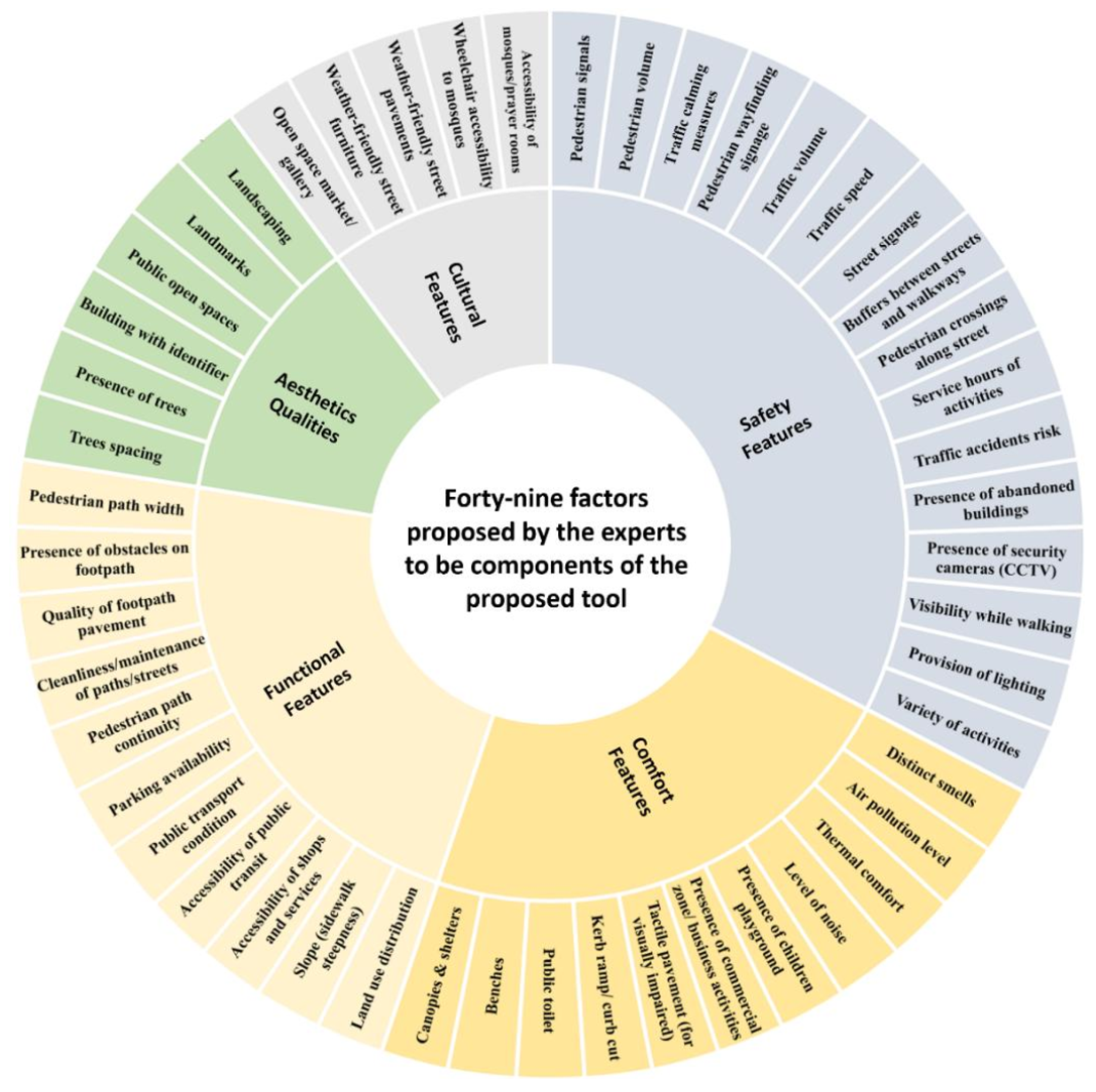
The results of the two Delphi rounds identified a set of key indicators for measuring walkability in the commercial streets of central GCC cities. Out of the 111 indicators evaluated, 49 (44.1%) achieved high importance, as at least 70% of the experts deemed them essential for inclusion in the proposed tool. These indicators were crucial for assessing walkability in the region’s urban environment, as shown in
Figure 7.
From the cultural indicators that were included in the first and second Delphi rounds, five from all cultural indicators (27.8%) achieved high importance for inclusion in the result. These five cultural indicators were ‘heat-resistant pavements’, ‘weather-resistant street furniture’, ‘open space markets/galleries’, ‘accessibility of mosques/prayer rooms’, and ‘wheelchair accessibility to mosques’. For the 13 cultural indicators (72.2%), fewer than 70% of experts agreed on their high importance, leading to their exclusion from the proposed tool. This decision reflected the need for a stronger consensus among experts to ensure the relevance and significance of the indicators for measuring walkability in the central areas of GCC cities.
Among the functional indicators evaluated in the first and second Delphi rounds, 11 (42.3%) were deemed of high importance for inclusion in the tool. These indicators were considered essential by at least 70% of the expert panel, reflecting their critical role in assessing the walkability of commercial streets in the central areas of GCC cities. These 11 functional indicators were ‘pedestrian path width’, ‘presence of obstacles on the footpath’, ‘quality of footpath pavement’, ‘cleanliness/maintenance of paths/streets’, ‘pedestrian path continuity’, ‘public transport conditions’, ‘accessibility of public transit’, ‘accessibility of shops and services’, ‘slope (sidewalk steepness)’, ‘land use distribution’, and ‘parking availability’. For 15 of the functional indicators (57.7%), fewer than 70% of the experts agreed on their high importance. As a result, these indicators were excluded from the proposed tool. This exclusion highlights the need for stronger consensus to ensure the indicators’ relevance and significance in evaluating walkability in the central commercial streets of GCC cities.
Among the safety indicators evaluated in the first and second Delphi rounds, 16 indicators (53.3%) were deemed of high importance for inclusion in the tool. These indicators received broad agreement from the expert panel, reflecting their critical role in assessing the safety of commercial streets in the central areas of GCC cities. These 16 safety indicators were ‘variety of activities’, ‘provision of lighting’, ‘visibility while walking’, ‘presence of security cameras (CCTV)’, ‘traffic accident risk’, ‘service hours of activities’, ‘pedestrian crossings along streets’, ‘buffers between streets and walkways’, ‘street signage’, ‘traffic speed’, ‘traffic volume’, ‘traffic calming measures’, ‘pedestrian volume’, ‘pedestrian signals’, ‘presence of abandoned buildings’, and ‘pedestrian wayfinding signage’. For 14 of the safety indicators (46.7%), fewer than 70% of the experts agreed on their high importance, leading to their exclusion from the proposed tool. Regarding the aesthetic quality indicators, six (28.6%) achieved high importance for inclusion in the tool, demonstrating broad expert consensus on their significance for evaluating the walkability of commercial streets in the central areas of GCC cities. These six indicators of aesthetic qualities were ‘landscaping’, ‘public open spaces’, ‘buildings with identifiers’, ‘presence of trees’, ‘landmarks’, and ‘tree spacing’. For 15 of the indicators of aesthetic qualities (71.4%), less than 70% of the participants showed agreement that they were of high importance. Therefore, they were excluded from the proposed tool.
From the comfort indicators that were used in the first and second Delphi rounds, 11 comfort indicators (68.7%) scored high values for inclusion in the tool. These 11 comfort indicators were ‘canopies and shelters’, ‘benches’, ‘public toilets’, ‘kerb ramp/kerb cut’, ‘tactile pavement (for the visually impaired)’, ‘presence of commercial zones/business activities’, ‘presence of children’s playgrounds’, ‘level of noise’, ‘thermal comfort’, ‘air pollution level’, and ‘distinct smells’. For five of the comfort indicators (31.3%) less than 70% of the experts agreed that they were of high importance. Therefore, they were excluded from the proposed tool.
5.4. Stability of Delphi Rounds
To compare the level of opinion and rate the stability of the results between the two Delphi rounds [
75], intra-class correlation coefficients were used. The consensus achieved regarding the 69 common indicators was 0.95 in the first round and the second round. If a coefficient of concordance is higher than 0.70, a high consensus is reached, and further, the Delphi process can be completed [
76]. Individual score convergences were analyzed using medians and interquartile ranges for each indicator, which are presented in
Appendix A. The second round provided good reliability with
, showing that the participants’ responses were consistent. It is noteworthy that this consistency reflects the coincidence of the expertise of the participants and the stability of their experience. Refinement was deemed unwarranted, in that further rounds could not be expected, due to levels of absolute agreement being unlikely in complex studies, while the current results showed reliability and stability. The current results imply that one or two more rounds would not contribute much.
5.5. Addressing Extreme Weather with Climate-Responsive Solutions
As discussed in this study and other research efforts, extreme weather conditions in the GCC, especially high temperatures and direct sunlight, are recognized as major barriers to walkability. Participants in the Delphi survey argued for the need for provision for amenities such as shading, cooling systems, and heat-resistant materials to mitigate these concerns. A similar method could be adopted to address the extreme weather conditions as in other parts of the world with similar conditions. Shading could be enhanced using tree canopies, pergolas, and fabric structures. As in Melbourne Australia, where planners used green corridors with densely planted trees to mitigate the heat island effect and create a much more pedestrian-friendly experience. To further integrate Abu Dhabi’s ‘Urban Heat Mitigation Strategy’, shaded pathways designed with cooling technologies such as water mist sprays and reflective materials, resulted in temperatures being reduced by as much as 10 degrees Celsius along pedestrian routes.
Misting and other types cooling of systems are by far the most promising approaches in the publicly used spaces of Dubai, as further uses of strategically placed misting stations along footways hold great potential for improving thermal comfort. However, this is only the first promise, which would still need effective enhancement through proper street orientation, urban ventilation corridors, and building designs that favor shading. There are also heat-resistant pavements that use special reflective coatings and light-colored materials to reduce surface temperatures, as seen in Phoenix, Arizona. Such pavements should be taken into consideration and adopted within GCC cities, where pavement durability under very high heat is the primary concern for utility. In creating pedestrian-friendly environments in extreme climates for GCC cities, implementing these solutions requires alignment with local cultural and architectural norms, ensuring that interventions are both functional and socially acceptable.
5.6. Comparative Analysis
A comparative analysis with previous walkability studies revealed universalities and the results showed that walkability has different requirements in different regions and areas. Walkability is context-specific to urban design.
Safety is a crucial dimension, with pedestrian crossings (87% agreement) and visibility while walking (84% agreement) having all-in positive votes from well-informed experts. This statement is corroborated with much of the global studies, such as Southworth (2005) [
14] and Ewing and Handy (2009) [
29], which emphasized safety within the fundamentals of walkability. Unlike these Western studies, however, the GCC experts focused on typifying special safety problems from the street, such as footpath buffers to traffic calming measures, grounded in the widespread local automobile dependency.
Measures like thermal comfort (82%) and weather-resistant furniture (87%) reflect the extreme climatic conditions in GCC cities. This is in contrast from temperate studies like that of Speck (2012) [
77], which gave little importance to thermal comfort. Moreover, the inclusion of elements such as shaded pathways and mist water systems corresponded to the recommendations by Cheshmehzangi (2021) [
78] for the development of hot-area climate-resilient urban settlements.
The culturally specific indicators such as prayer rooms and semi-private spaces were highly valued by the GCC experts but hardly mentioned in the works in non-GCC contexts. For instance, while Forsyth (2015) [
18] and Leyden (2003) [
79] put their focus on social interaction and mixed-use spaces, they did not account for any spaces that were male/female segregated or privacy-allowing designs, as within the GCC.
These comparisons show the modifications needed in the context of specific walkability instruments that are part of global constructs.
5.6.1. Statistical Validation of Results
The findings of this research show that the results were statistically valid via a structured Delphi process applied with rigorous criteria for consensus: Cohesion Thresholds: Indicators were considered of high priority if they were rated as high importance by ⩾70% of the experts (scores 824) with a mean score of ⩾7. The indicator “thermal comfort” achieved an 82% agreement and a mean score of 8.76, reflecting strong consensus. Measures of Variability: Interquartile ranges (IQRs) and standard deviations were analyzed to assess the variability in responses. For instance, the IQR for “weather-resistant furniture” was only 1.00, indicating very little variability and strong agreement among experts. Use of an 11-Point Likert Scale: The breadth of this scale is such that it minimizes measurement error and maximizes differentiation among indicators, in line with the findings of Boone and Boone (2012) [
80]. Thus, the combination of these statistical measures demonstrated the reliability and soundness of the results for developing walkability.
5.6.2. Implications
The theoretical implications of this research show that the attitudes of this study connect with global discourses on walkability that are culturally and climatically specific. Unlike the earlier frameworks such as that of complete streets [
81], which revolved around multimodal transportation, this study opened avenues into walkability research through the inclusion of unique factors from the GCCs, such as heat-resistant pavements or culturally sensitive spaces. The results highlight the need for adaptable walkability frameworks in different contexts, especially within regions going through rapid urbanization with severe climates.
The practical implications of this study show that the findings can be used by urban planners and policymakers to prioritize initiatives aimed at improving walkability across cities in the GCC. Thermal comfort features such as shaded pathways and cooling systems could be included in pedestrian infrastructure to relieve the extreme effects of weather conditions. Cultural considerations such as prayer rooms and family spaces should also be included to develop walkable environments that satisfy societal norms. The audit tool customized for this study gives tangible implementation guidelines for policymakers for sustainable urbanization policies, thus contributing to goals of regional development, such as Saudi Arabia’s Vision 2030. This will open doors towards mobility–inclusivity–sustainability frameworks across the GCC. These will also afford transferable lessons to other locations with similar or closely related challenges.
6. Limitations
This study makes a major contribution to the understanding of walkability in urban streets in the GCC, while also developing a region-specific audit tool; however, the following are limitations of this study. Representation of demographics in the expert panel: The expert panel was found to be made up of mostly male members (95%), of which most were Saudi citizens (74%). Such a composition is a reflection of the availability of experts in urban planning, design, and civil engineering in the GCC region; however, it may also pose a bias. Fewer female voices and less expert representation from the other GCC countries limits the generalization of results to all demographics and cultural contexts in the region. Future studies should, therefore, strive for a more diverse representation, towards a comprehensive understanding of indicators of walkability. Climatic and Temporal Factors: The indicators identified herein are specific to the climatic and urban conditions prevailing in the GCC, especially the issues created by too much heat. Being location-specific, the research results may not be transferrable to other regions with different environmental conditions. The study processing during the COVID-19 pandemic added to this possible limitation regarding expert availability and interest.
Sample Size and Iterative Rounds: First, though the second round of Delphi elicited a response rate of 71%, the 27 experts had a limited breadth of opinion. Second, only two rounds were conducted, which is an unpromising indication of iterative refinement in a standard Delphi round.
Geographic and Cultural Encompassment: The focus of this study was on the GCC, but the voices of people familiar with the urban condition of Saudi Arabia were mostly included. Hence, the full variety of urban planning practices, cultural differences, and challenges in walkability from the perspective of experts from all GCC countries may not necessarily have been captured. Hence, a wider scope, including experts from other GCC nations, would better contribute toward the use of the research findings.
Reliance on Experts’ Opinions: This study adopted a modified Delphi method, requiring extensive reliance on expert opinions for obtaining consensus on walkability indicators. While the method works well in grounding a lack of empirical evidence in specific areas, it was subjective and included perspectives from end-users who might not be pedestrians. Future research should, thus, focus more on a user-centric approach in complementing the experts’ exploratory findings using surveys or focus groups involving diverse pedestrian populations.
Climatic and Temporal Factors: The indicators identified herein are specific to the climatic and urban conditions prevailing in the GCC, especially the effects created by too much heat. Though location-specific, the research results may not be transferrable to other regions with different environmental conditions. The study processing during the COVID-19 pandemic added to this possible limitation in terms of expert availability and interest.
Sample Size and Iterative Rounds: First, though the second round of the Delphi method elicited a response rate of 71%, the 27 experts had limited breadth of opinion. Second, only two rounds were conducted, which is an unpromising indication of iterative refinement for a standard Delphi round.
One more restriction of this study was the modified Delphi method, which puts efficiency first, rather than the open-ended exploratory trait of conventional Delphi methodologies. This methodology facilitated systematic evaluation of predefined indicators of walkability and might have limited the obtainment of rich qualitative data likely to generate fresh insights into the initial limits of this study. Future research could be supplemented by open approaches such as focus groups or conventional Delphi rounds to capture an even wider range of perspectives and unexpected factors.
7. Future Work
Henceforth, future studies should capture different viewpoints by including end users as well as experts from all GCC countries, thereby increasing the walkability indicators’ generalization and inclusivity. Longitudinal studies could be conducted to assess the long-term effects that such indicators may have, while sophisticated technologies such as GIS and AI could improve assessments of walkability. Comparative studies across different cultural and climatic contexts would be valuable in establishing the adaptability of the framework. Policy implications, gender inclusivity, and user-friendly tools could provide practical and equitable urban planning results.
8. Conclusions
The findings of this study were derived from a two-round modified Delphi survey, to prioritize the walkability indicators in the context of Gulf Cooperation Council (GCC) cities. The study collected data from an expert panel, and finally, a list of 69 walkability indicators were compiled, and these will be used in developing an assessment tool for the commercial streets of the central areas of GCC cities. Based on the study findings, safety indicators were perceived to be the most important, in light of the comfort and functional indicators. Again, though they were subcategories, the priority given to aesthetic qualities and cultural factors was slightly lower than in the case of the other categories, while all the categories received a high degree of consensus regarding their inclusion in the proposed tool. The established indicators were detailed and covered a broad range of aspects, enabling the evaluation of walkability in the region’s urban hubs and guaranteeing that pertinent elements affecting the quality of pedestrian movement will be looked into when the subsequent urban planning processes are initiated. This paper also highlighted the experts’ perceptions and asked the experts to express their opinions on specific points, to give a greater understanding of some walkability-related subjects. Through a series of questions that were put to the experts, it was determined that there is an urgent need to develop the infrastructure of the GCC city central areas to be more pedestrian-friendly, in parallel with developing an efficient public transportation system and reducing the number of cars. The participants acknowledged that the current situation in GCC cities makes the central areas conducive to driving. Moreover, the experts emphasized the unsuitability of pedestrian infrastructure for the local environment. The experts agreed that the development of commercial streets in central areas should be prioritized; especially the development of pedestrian infrastructure. In general, according to the experts’ perceptions, to be more pedestrian-friendly, we must focus on increasing the vitality of the commercial streets in the central GCC areas. This can be achieved by paying more attention to improving walking environments. The participating experts emphasized that environmental considerations are the biggest challenge, including the weather.
The insights gained from this study extend beyond the identification of indicators, providing a framework for practical applications in urban planning and policy development. The findings can inform sustainable urbanization initiatives, particularly those aligned with regional strategies such as Saudi Arabia’s Vision 2030. Additionally, this research lays a foundation for future studies to explore the integration of emerging technologies, such as smart mobility solutions, into walkability tools. Ultimately, these efforts aim to create more inclusive, resilient, and sustainable urban environments, not only in the GCC but also in other regions with similar challenges.