
Article

Hydrodynamic Aging Process Altered Benzo(a)pyrene Adsorption on Poly(butylene adipate-co-terephthalate) and Poly(butylene succinate) Microplastics in Seawater


1
College of Materials and Chemical Engineering, Harbin Engineering University, Harbin 150001, China
2
Shandong Key Laboratory of Coastal Zone Environmental Processes and Ecological Security, Yantai Institute of Coastal Zone Research, Chinese Academy of Sciences, Yantai 264003, China
3
University of Chinese Academy of Sciences, Beijing 100049, China
*
Author to whom correspondence should be addressed.
Sustainability 2025, 17(24), 11344; https://doi.org/10.3390/su172411344
Submission received: 28 November 2025 / Revised: 10 December 2025 / Accepted: 12 December 2025 / Published: 18 December 2025
(This article belongs to the Special Issue Plastic Pollution Reduction and Sustainable Marine Ecosystems)

Abstract

The environmental behavior of biodegradable plastics under long-term hydrodynamic aging processes in seawater remains poorly understood, although plastic pollution has attracted global concern. This study obtained poly(butylene adipate-co-terephthalate) (PBAT) and poly(butylene succinate) (PBS) microplastics that endured 36-month hydrodynamic aging in seawater to elucidate their physicochemical transformations and interactions with benzo(a)pyrene (BaP). Hydrodynamic aging markedly altered surface morphology, generated cracks and pores, and enriched -C=O and -OH groups, indicating oxidative degradation. Adsorption experiments showed that BaP adsorption capacity of virgin PBAT/PBS reached 213.3/235.3 μg g−1, while it increased to 233.3/258.2 μg g−1 after hydrodynamic aging in seawater. Elevated salinity and alkaline conditions reduced BaP adsorption on microplastics. Notably, hydrodynamic aging mitigated the risk of BaP desorption from PBAT in ectothermic organisms. Gibbs free energy calculations indicated that the adsorption process was primarily driven by hydrophobic effects, hydrogen bonding, and van der Waals forces. These findings highlight that long-term hydrodynamic aging substantially modifies the interfacial properties of biodegradable plastics to alter their capacity for mediating the environmental fate of hydrophobic organic pollutants in marine ecosystems.

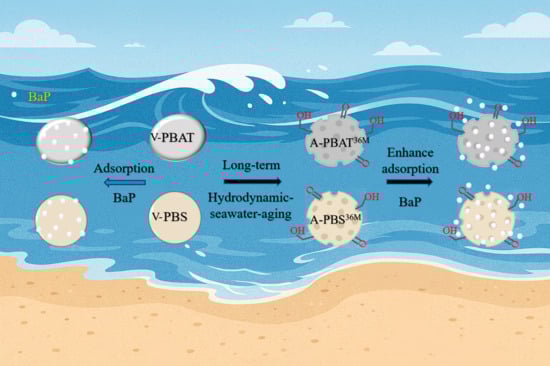
Graphical Abstract

1. Introduction

Plastic contamination is now regarded as one of the most serious challenges for the global environment, especially for marine ecosystems due to tremendous discharge [1,2,3]. Tremendous amounts of plastic debris enter the oceans each year to gradually fragment into microplastics (<5 mm in diameter, MPs) [4] that are widely distributed from surface waters to deep-sea sediments [5]. The persistence of MPs enables their continuous accumulation, posing both physical and chemical threats to marine organisms [6,7]. They are taken up by many species, causing internal damage, impairing health, and being transferred through food webs [8]. Moreover, large surface area and hydrophobic character enable them to act as carriers of hazardous substances, including heavy metals, persistent organic pollutants [9], and polycyclic aromatic hydrocarbons (PAHs) [10,11]. The long-term stability, ubiquity, and contaminant-transporting capacity of MPs make them critical ecological risk factors in marine environments [12]. Biodegradable plastics, particularly petroleum-based degradable polymers such as poly(butylene adipate-co-terephthalate) (PBAT) and poly(butylene succinate) (PBS), have been proposed as environmentally friendly alternatives to mitigate persistent plastic pollution [13]. However, their aging behavior under dynamic marine conditions and their potential role as vectors of toxic pollutants remain poorly understood.
After entering the marine environment, plastics undergo multiple aging processes, including photooxidation, thermal degradation, and seawater immersion, which markedly alter their physicochemical properties and interactions with pollutants [14,15]. Increasing evidence indicates that aging processes cause the formation of cracks and greater surface roughness, along with the generation of abundant oxygen-containing functional groups on microplastic surfaces. These changes enhance plastic–pollutant interactions, thereby strengthening the adsorption of hydrophobic organic contaminants [16]. However, most existing studies have focused on ultraviolet irradiation, chemical oxidation, or static seawater exposure [14,17]. In reality, the ocean is a highly dynamic system in which turbulence, waves, and currents impose continuous hydrodynamic stresses on plastic debris [18,19]. These hydrodynamic processes can accelerate surface erosion, promote micro-fragmentation, and alter surface chemistry in ways that differ fundamentally from static aging [20]. Despite its environmental relevance, hydrodynamic seawater aging of petroleum-based biodegradable plastics has received little attention. In particular, how this dynamic aging process modulates their interfacial properties and, in turn, governs their affinity toward toxic pollutants remains poorly understood. Gaining a better understanding of this gap is vital to accurately evaluating the environmental risks posed by biodegradable plastics in marine ecosystems.
Benzo(a)pyrene (BaP) is a representative and highly toxic polycyclic aromatic hydrocarbon (PAH). It is a well-known, strongly hydrophobic, persistent compound that is frequently detected in soil, water, and other environmental matrices and poses serious carcinogenic risks [21]. It can have serious impacts on marine organisms and ecosystems [21]. Its hydrophobicity favors interactions with nonpolar or weakly polar plastic surfaces [22,23]. Under hydrodynamic seawater aging, however, surface oxidation and morphological alterations of plastics may further enhance their adsorption affinity toward BaP. Understanding how hydrodynamic seawater aging modulates BaP adsorption on biodegradable plastics is therefore essential, as it directly determines their role as environmental vectors of toxic pollutants.
In order to fill this gap, a systematic study was performed to investigate how long-term hydrodynamic seawater aging alters the physicochemical properties of petroleum-derived biodegradable microplastics (PBAT and PBS) and affects their capacity to adsorb BaP. Simulated fluid flow conditions were employed to mimic natural oceanic turbulence and wave action, enabling assessment of hydrodynamic aging on both non-degradable MPs and BaP adsorption. The primary objective was to elucidate the aging behavior of biodegradable MPs under hydrodynamic seawater conditions and to reveal their interfacial interactions with marine pollutants. The findings are expected to offer important insight into how petroleum-based biodegradable plastics behave in the environment and to enhance the ecological risk assessment of their potential role as carriers of toxic contaminants in marine systems.

2. Materials and Methods

2.1. Chemicals and Materials

BaP (>99% purity) was obtained from Macklin Biochemical Co. (Shanghai, China). PBAT, PBS, and PE were supplied by Wanhua Chemical Group (Yantai, China), with all particle sizes below 0.5 cm and in granular form. PBAT, PBS and PE were selected because PBAT and PBS were among the most widely used biodegradable polymers [24], while PE was a representative conventional non-degradable plastic that remained dominant in the environment [25]. By including both biodegradable (PBAT/PBS) and conventional (PE) plastics, their aging and pollutant adsorption behaviors could be compared, providing a baseline for environmental risk assessment. Acetonitrile and methanol were purchased from Merck. A BaP stock solution (1.0 g L−1) was prepared in methanol and kept at −20 °C until use. Prior to adsorption experiments, the stock was diluted with sterilized seawater to the desired concentrations to obtain the BaP working solutions. Natural seawater (salinity ~28‰) collected from the Yantai coast was passed through 0.22 μm glass fiber membranes, sterilized, and used for the tests.
The characterization procedures (SEM, BET, FT-IR, XPS, HPLC, etc.) were performed as described previously in our earlier work [21].

2.2. The Preparation of Hydrodynamic-Seawater-Aged MPs

50 g of PBAT, PBS, and PE were subjected to long-term aging under simulated hydrodynamic seawater conditions. Microplastics were introduced into a glass container (20 × 15 × 15 cm) containing 2.0 L of sterilized seawater. A small wave-maker was used to maintain continuous agitation of microplastics in 2.0 L of sterilized seawater, simulating the mechanical stress and water movement typical of marine environments [26,27]. After 36 months of agitation, the aged PBAT/PBS MPs were designated as HA-PBAT36M/HA-PBS36M. The parallel control non-degradable PE MPs after 36 months of agitation were denoted as HA-PE36M. The virgin PBAT, PBS, and PE particles were referred to as V-PBAT/V-PBS/V-PE.

2.3. Adsorption and Desorption Assays

For the adsorption kinetics experiments, 0.06 g of MPs was placed into capped glass bottles containing 40 mL of BaP solution (200 µg L−1). The bottles were incubated in a darkened orbital shaker at 170 rpm and 25 °C. Supernatants were sampled at 0, 0.5, 1, 2, 4, 8, 12, 24, and 48 h. The 48 h duration was selected to ensure adsorption equilibrium was reached, based on common practice in microplastic–pollutant interaction studies and confirmed by our preliminary kinetic data [28,29]. For analysis, 1 mL of supernatant was mixed with an equal volume of methanol and subsequently quantified using HPLC. Blank controls without MPs or BaP were included to rule out external interference. All assays were performed in triplicate.
Isothermal adsorption experiments were conducted using BaP at initial concentrations of 0, 50, 100, 200, 500, and 1000 μg L−1. The assays were performed under continuous shaking at 170 rpm and temperatures of 15, 25, and 35 °C. Samples were collected once adsorption equilibrium had been reached.
To evaluate the desorption behavior of BaP from MPs, the microplastics at adsorption equilibrium were transferred into 40 mL of sterilized seawater. At predetermined intervals (0, 0.5, 1, 2, 4, 8, 12, 24, 48, and 72 h), 0.5 mL of the supernatant was withdrawn and analyzed for BaP concentration by HPLC.
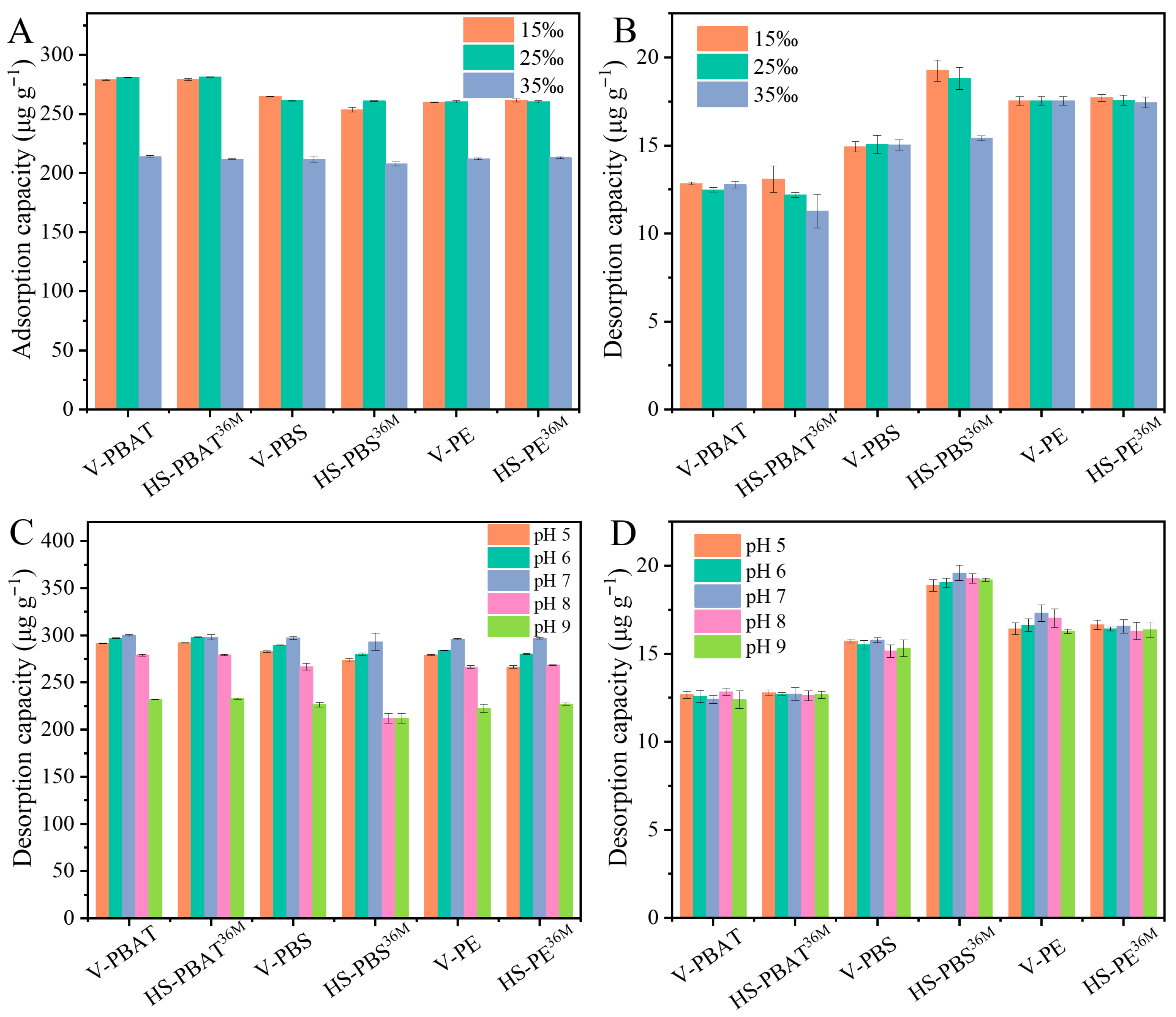
V-PBAT, HA-PBAT36M, V-PBS, HA-PBS36M, V-PE, and HA-PE36M were used to examine how pH and salinity influence the sorption and release behavior of BaP on MPs. Reaction salinities were adjusted to 15‰, 25‰, and 35‰, while pH values were set at 5.0, 6.0, 7.0, 8.0, and 9.0. The BaP concentration was maintained at 200 µg L−1, and supernatant samples were collected once adsorption–desorption equilibrium was reached.

2.4. Desorption in the Simulated Gastric Fluid

The release of BaP from the biodegradable microplastics was studied in simulated gastric solutions to assess the risk posed by ingested MPs to marine animals. 18 °C and 38 °C were selected to approximate the gastric environments of ectothermic and endothermic species. Additionally, pH values of 1.2 and 7.0 were applied to simulate the fasting and post-feeding digestive states [30,31,32,33,34].

3. Results and Discussion

3.1. Adsorption and Desorption of BaP on Hydrodynamic-Seawater-Aged MPs

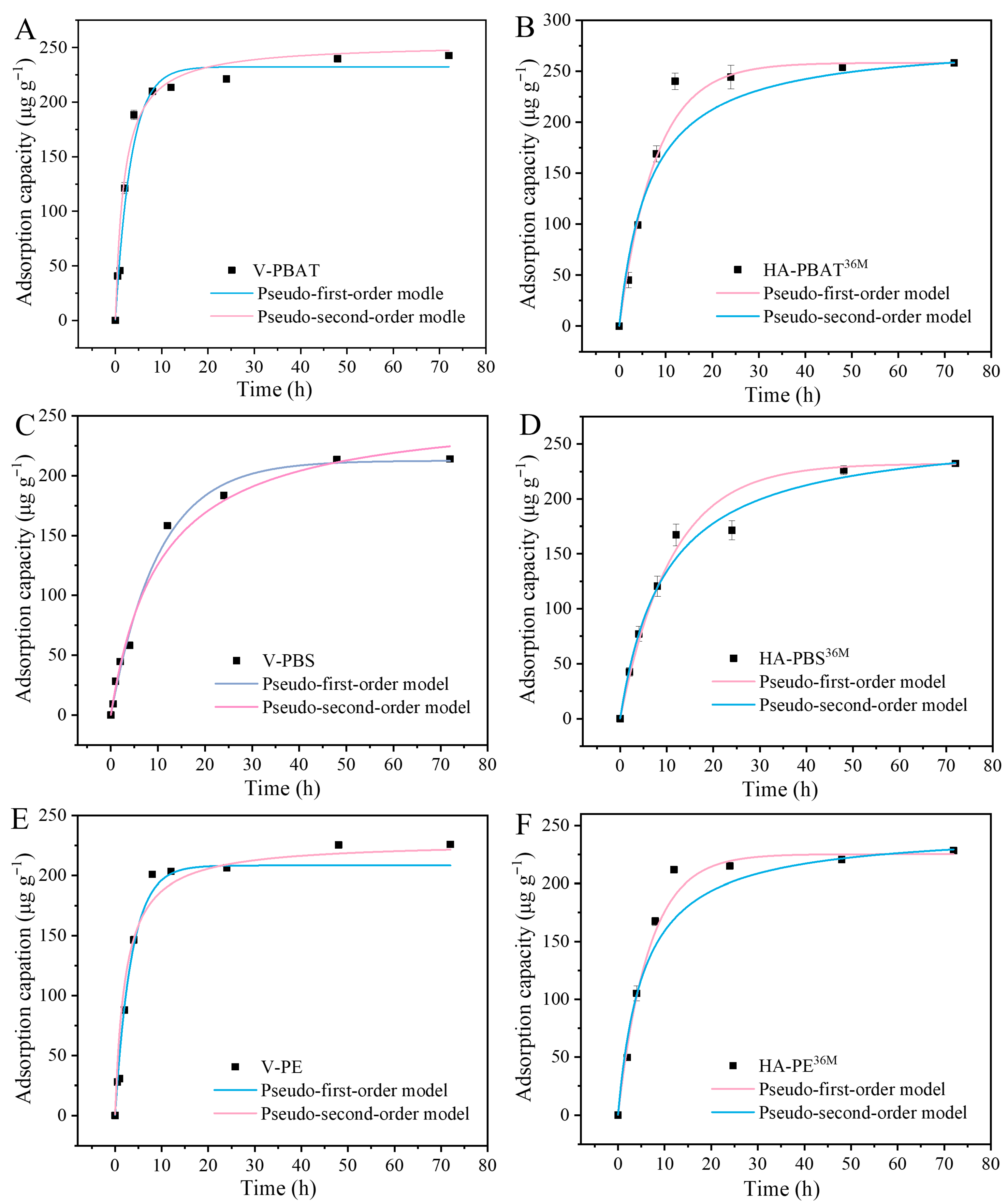
The maximum BaP adsorption of V-PBAT reached 235.3 μg g−1, whereas HA-PBAT36M exhibited a pronounced increase to 258.2 μg g−1 in seawater (Figure 1A,B). PBS displayed a similar pattern, with V-PBS adsorbing 213.3 μg g−1 and HA-PBS36M reaching 233.3 μg g−1 (Figure 1C,D), indicating that hydrodynamic aging substantially enhanced the adsorption capacity of PBAT and PBS for BaP. This suggests that the ecological risk posed by biodegradable plastics as pollutant carriers could be intensified under marine hydrodynamic conditions. In contrast, conventional PE showed minimal change in adsorption after hydrodynamic aging, with maximum adsorption capacities of 225.8 μg g−1 for V-PE and 228.2 μg g−1 for HA-PE36M (Figure 1E,F), reflecting its higher structural resilience.
All adsorption systems reached equilibrium within 48 h, indicating that interactions between BaP and MPs proceeded relatively rapidly under the experimental conditions. Kinetic modeling showed that adsorption on V-PBAT, HS-PBAT36M, and V-PBS generally followed pseudo-first-order kinetics, suggesting that physical adsorption, likely governed by van der Waals forces and hydrophobic interactions, may serve as the rate-limiting step [35]. In contrast, adsorption on HS-PBS36M conformed to pseudo-second-order kinetics, implying that chemisorption, potentially involving hydrogen bonding or π–π stacking, predominated [36,37]. For PBS, hydrodynamic seawater aging may have enhanced BaP adsorption by increasing surface roughness and introducing oxygen-containing functional groups [38]. Overall, these results indicate that hydrodynamic aging in seawater could alter the dominant adsorption mechanisms of MPs, shifting them from primarily physical processes toward those with significant chemical contributions.
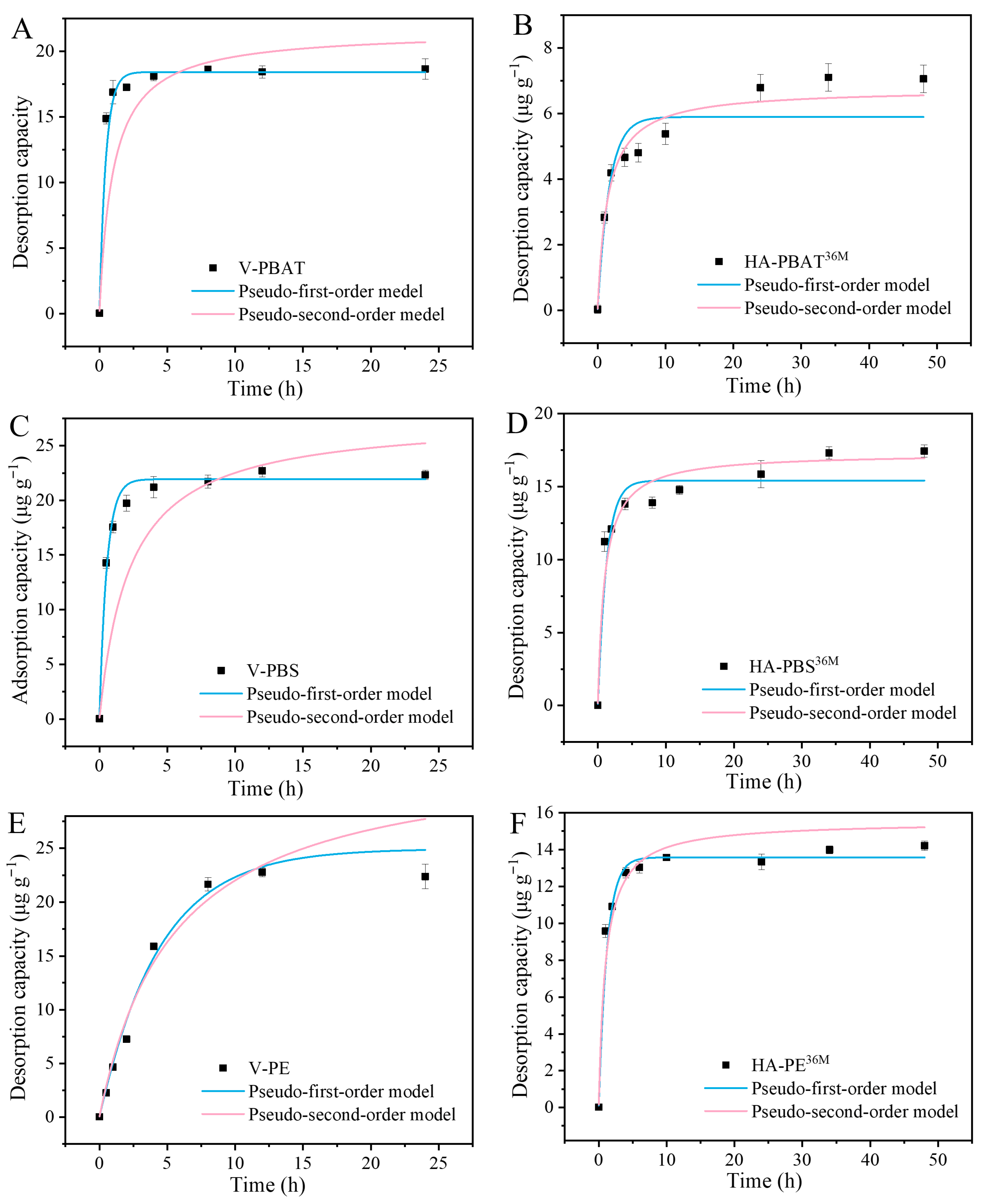
The desorption of BaP from MPs was investigated to assess the potential release of contaminants (Figure 2). The adsorption of BaP on V-PBAT/HA-PBAT36M was 18.6/7.1 μg g−1 (Figure 2A,B), and on V-PBS/HA-PBS36M, it was 22.3/17.4 μg g−1 (Figure 2C,D). In the case of PE, desorption declined slightly from 22.4 μg g−1 for V-PE to 14.2 μg g−1 for HA-PE36M (Figure 2E,F), indicating that hydrodynamic aging had a comparatively limited effect on PE, likely due to its chemical stability and lower susceptibility to surface modification.
The reduction in desorption from biodegradable MPs was possibly attributable to changes in surface properties, such as increased roughness and the emergence of oxygen-containing functional groups, which might enhance BaP binding. The desorption kinetics were described using both pseudo-first-order and pseudo-second-order models (Figure 2). The desorption of BaP from V-PBAT, V-PBS, V-PE, and HA-PE36M was better represented by the pseudo-first-order model (R2 = 0.991/0.996/0.989/0.996) than the pseudo-second-order model (R2 = 0.923/0.88/0.979/0.940), indicating that physical desorption processes dominated [39]. Conversely, desorption from HA-PBAT36M and HA-PBS36M was better fitted by the pseudo-second-order model (R2 = 0.983/0.990) compared with the pseudo-first-order model (R2 = 0.953/0.985). Previous studies showed that chemical interactions potentially associated with newly formed functional groups during aging contributed substantially to the desorption process [40]. These findings indicate that hydrodynamic aging could decrease the desorption of BaP by modifying surface characteristics of MPs, with biodegradable polymers being more affected, whereas conventional PE showed only minor changes due to its inherent chemical stability [41].

3.2. Influence of pH and Salinity on BaP Adsorption/Desorption by MPs

The effects of pH and salinity on BaP adsorption–desorption by MPs were systematically evaluated (Figure 3). Hydrodynamic aging did not significantly alter BaP adsorption on biodegradable plastics. The adsorption capacities of BaP on all MPs were reduced at 35‰ salinity relative to 15‰ and 25‰ (Figure 3A,B). This trend was likely attributable to the elevated concentrations of cations (Na+, K+, Mg2+, and Ca2+) in high-salinity seawater, which reduced interparticle electrostatic repulsion, promoted micro-aggregation, and thereby decreased the effective surface area [42]. Notably, hydrodynamic aging exerted a measurable influence on BaP desorption from HA-PBAT36M and HA-PBS36M, and the desorption capacity declined progressively with increasing salinity. This phenomenon was attributed to the introduction of polar functional groups such as hydroxyl, carboxyl, and carbonyl during long-term hydrodynamic aging in seawater. These newly formed groups were found to enhance π–π interactions, hydrogen bonding, and electrostatic interactions with BaP. Consequently, BaP was more tightly bound to the surface.
The adsorption of BaP on MPs showed no change under different pH conditions. Among all microplastics, the adsorption of BaP was highest under neutral conditions. This may be because microplastics exhibited neutral or near-zero surface potentials at neutral pH, which minimized electrostatic repulsion with BaP [43]. The desorption capacity of BaP from HA-PBS36M was higher than V-PBS. After hydrodynamic seawater aging, the surface chemical functional groups of HA-PBS36M increased, and pores were formed, providing more convenient pathways for the re-release of BaPs of microplastics, and their desorption became less reversible [44].

3.3. Desorption in the Simulated Gastric Fluid

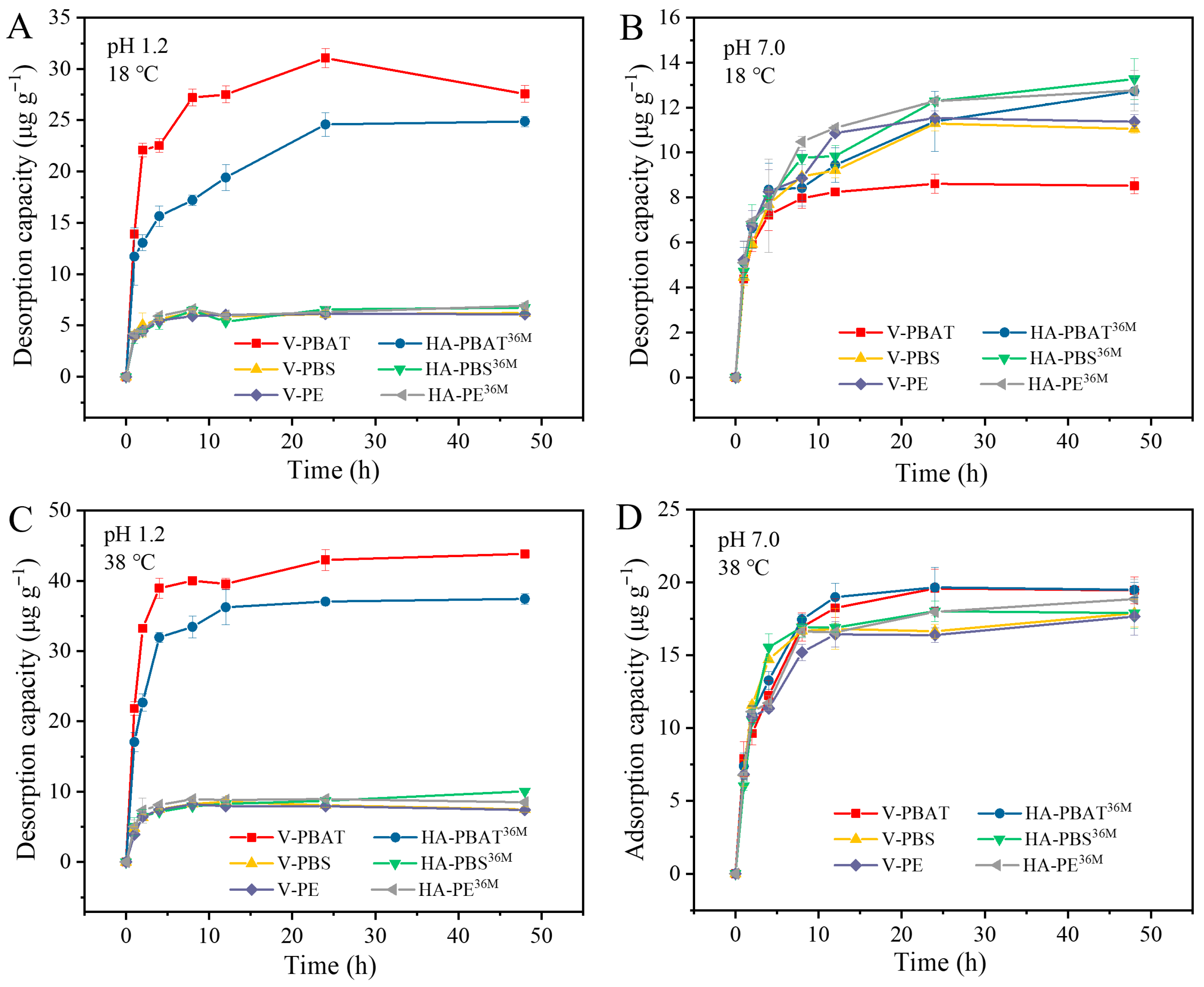
Under fasting conditions, the highest BaP desorption (26.9 μg g−1) was observed on V-PBAT in cold-blooded animals, whereas HA-PBAT36M exhibited a reduced capacity of 25.1 μg g−1 (Figure 4A). In contrast, BaP desorption on V-PBS, HA-PBS36M, V-PE, and HA-PE36M remained around 5.0 μg g−1 (Figure 4A). In warm-blooded animals, desorption amounts were higher, reaching 42.1 μg g−1 on V-PBAT and 37.6 μg g−1 on HA-PBAT36M, while the other MPs exhibited slightly increased values (Figure 4C). Under fed conditions, BaP desorption from V-PBS and HA-PBS36M decreased compared with fasting, whereas desorption from V-PBS, HA-PBS36M, V-PE, and HA-PE36M increased (Figure 4C,D). Overall, BaP desorption was consistently greater in warm-blooded animals than in cold-blooded animals. PBAT released substantially more BaP than PBS or PE in simulated gastric systems, suggesting that ingested PBAT microplastics may pose greater toxicological risks to marine organisms. Although hydrodynamic aging mitigated the desorption risk of PBAT in cold-blooded species, BaP release remained elevated in warm-blooded species. Moreover, PBS and PE, while generally less prone to BaP desorption, exhibited increased release under fed conditions, indicating that digestive state could amplify the ecological risks of these plastics.

3.4. Adsorption Isotherms of BaP on Different MPs

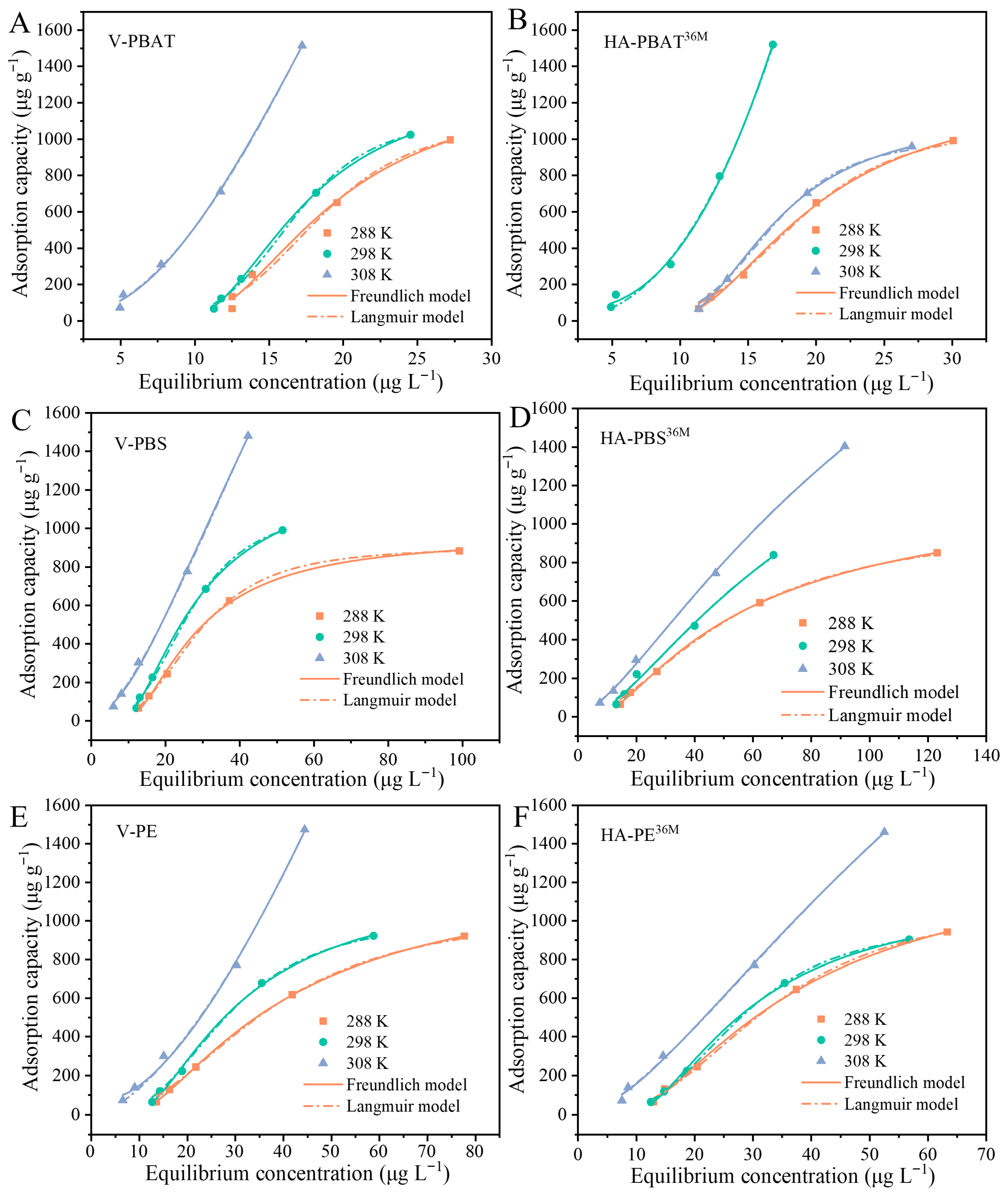
The adsorption isotherms of BaP on six kinds of MPs were evaluated using Langmuir and Freundlich models (Figure 5). For V-PBAT and BA-PBAT36M, the adsorption of BaP increased at first but subsequently declined, showing a maximum at 298 K. In contrast, the adsorption on V-PBS, BA-PBS36M, V-PE, and BA-PE36M continued to rise with increasing temperature and reached the highest level at 308 K. Both models fitted the data well (R2 > 0.90). The Freundlich 1/n values were consistently below 1, indicating favorable adsorption of BaP onto these microplastics [45].
The enthalpy change (ΔH0) related to BaP adsorption onto HA-PBAT36M shifted from positive to negative values as the temperature rose from 15 °C to 35 °C, indicating a transition from endothermic to exothermic adsorption behavior. This reversal was considered to have been driven by entropy effects at lower temperatures as well as conformational rearrangements [45]. The disruption of solute–water interactions was accompanied by heat uptake, which promoted adsorption. The adsorption was likely controlled by enthalpic contributions and dominated by hydrophobic forces or π–π stacking, resulting in a net release of heat at higher temperatures [45]. By contrast, adsorption on V-PBAT, V-PBS, HA-PBS36M, V-PE, and HA-PE36M displayed ΔH0 values that remained positive and increased with rising temperature, reflecting a thermodynamically endothermic process on these MPs.
The theoretical ranges of ΔG0 for hydrogen bonding and van der Waals interactions were estimated as 2–40 kJ·mol−1 and 4–10 kJ·mol−1 [46], respectively, whereas hydrophobic interactions were characterized by bond energies of 0–5 kJ·mol−1. The absolute ΔG0 values were calculated to be 1.96–7.35 kJ·mol−1, indicating that BaP sorption onto the six MPs was dominated by hydrophobic partitioning, along with contributions from weaker intermolecular forces such as hydrogen bonding and van der Waals attraction.

3.5. Mechanisms of BaP Adsorption onto Hydrodynamically Aged PBAT/PBS MPs

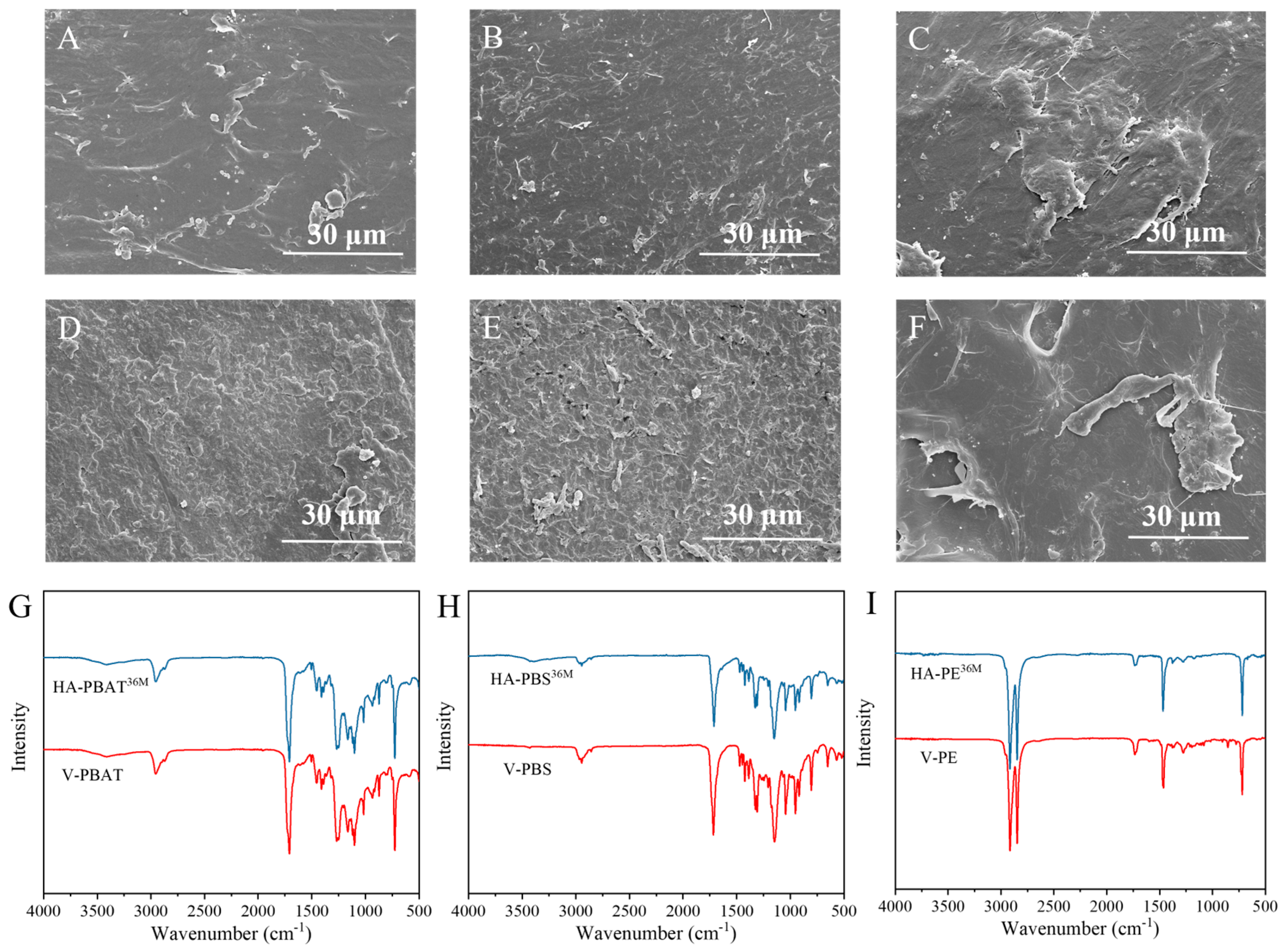
The biodegradable PBAT and PBS microplastics exhibited significant surface changes after 36 months of hydrodynamic seawater aging, whereas the non-biodegradable PE MPs remained largely unaltered (Figure 6A–F). BET analysis further revealed that the surface areas of biodegradable PBAT/PBS increased after 36 months of hydrodynamic aging (Table A1), from 0.1872/0.1920 to 0.1926/0.2475 m2 g−1. These increases suggested that hydrodynamic aging enhanced their surface roughness and porosity, thereby improving their adsorption potential for BaP. In contrast, the surface area of PE remained essentially unchanged (0.1875 to 0.1616 m2/g), suggesting that long-term hydrodynamic aging did not induce any increase in porosity. These results highlighted a sharp contrast: biodegradable MPs underwent pronounced surface oxidation and microstructural changes that facilitated pollutant adsorption. Non-biodegradable PE preserved its surface structure during aging, resulting in minimal change in BaP adsorption.
Surface functional group changes in MPs were investigated using ATR-FTIR spectroscopy (Figure 6G–I). For HA-PBAT36M and HA-PBS36M, the absorption band around 3340 cm−1 (-OH) was more pronounced, likely resulting from aging processes or the adsorption of oxygen-containing organic matter [47]. In contrast, PE MPs exhibited minimal changes in their ATR-FTIR spectra, reflecting their chemically stable surface. These findings suggest that hydrodynamic seawater aging could promote the formation of oxygen-containing functional groups on biodegradable MPs, whereas non-biodegradable PE remains largely unaffected.
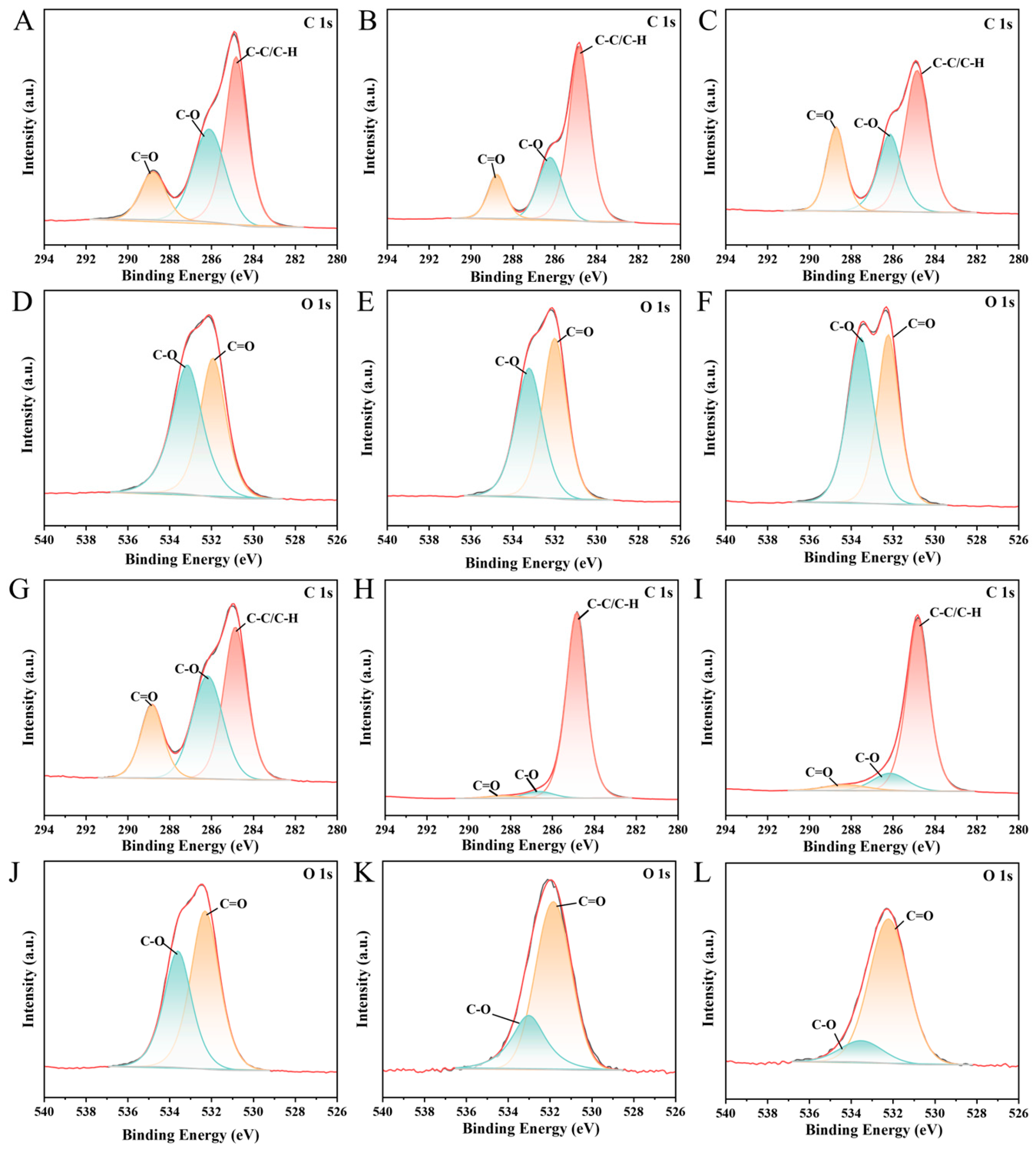
XPS analysis indicated pronounced surface oxidation of biodegradable MPs after long-term hydrodynamic aging (Figure 7). Following 36 months of seawater exposure, the O/C molar ratio of PBAT increased from 35% to 36%, while that of PBS rose from 47% to 51%. The increase in O/C ratios indicated progressive oxidation of the polymer backbones, confirming that long-term hydrodynamic aging promoted surface chemical aging of both PBAT and PBS [48]. High-resolution C 1s spectra revealed notable redistribution of oxygen-containing functional groups (Table A2): for PBAT, the -C–O binding energy shifted from 286.09 to 286.2 eV and the -C=O binding energy from 288.78 to 288.75 eV; for PBS, the corresponding shifts were from 286.12 to 286.13 eV (-C–O) and 288.68 to 288.79 eV (-C=O). Similarly, high-resolution O 1s spectra showed redistribution of oxygen functionalities: the -C–O/-C=O peaks of PBAT shifted from 533.14/531.91 to 533.21/531.98 eV, while those of PBS shifted from 533.36/532.05 to 533.55/532.25 eV. These observations suggested that surface C–O and -C=O groups of petroleum-based biodegradable MPs were preferentially enhanced during hydrodynamic seawater aging, whereas conventional PE maintained high chemical stability under the same marine conditions.
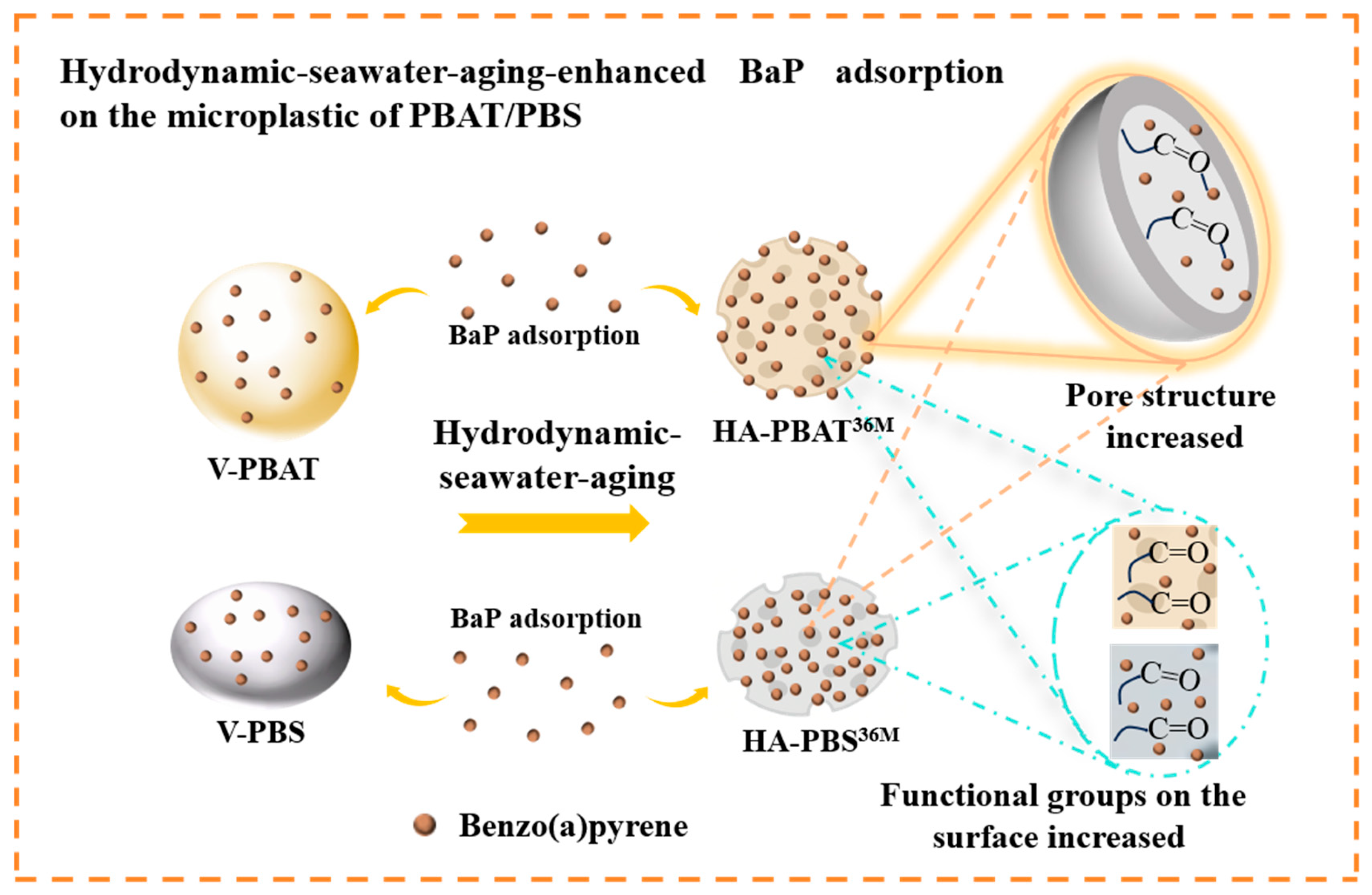
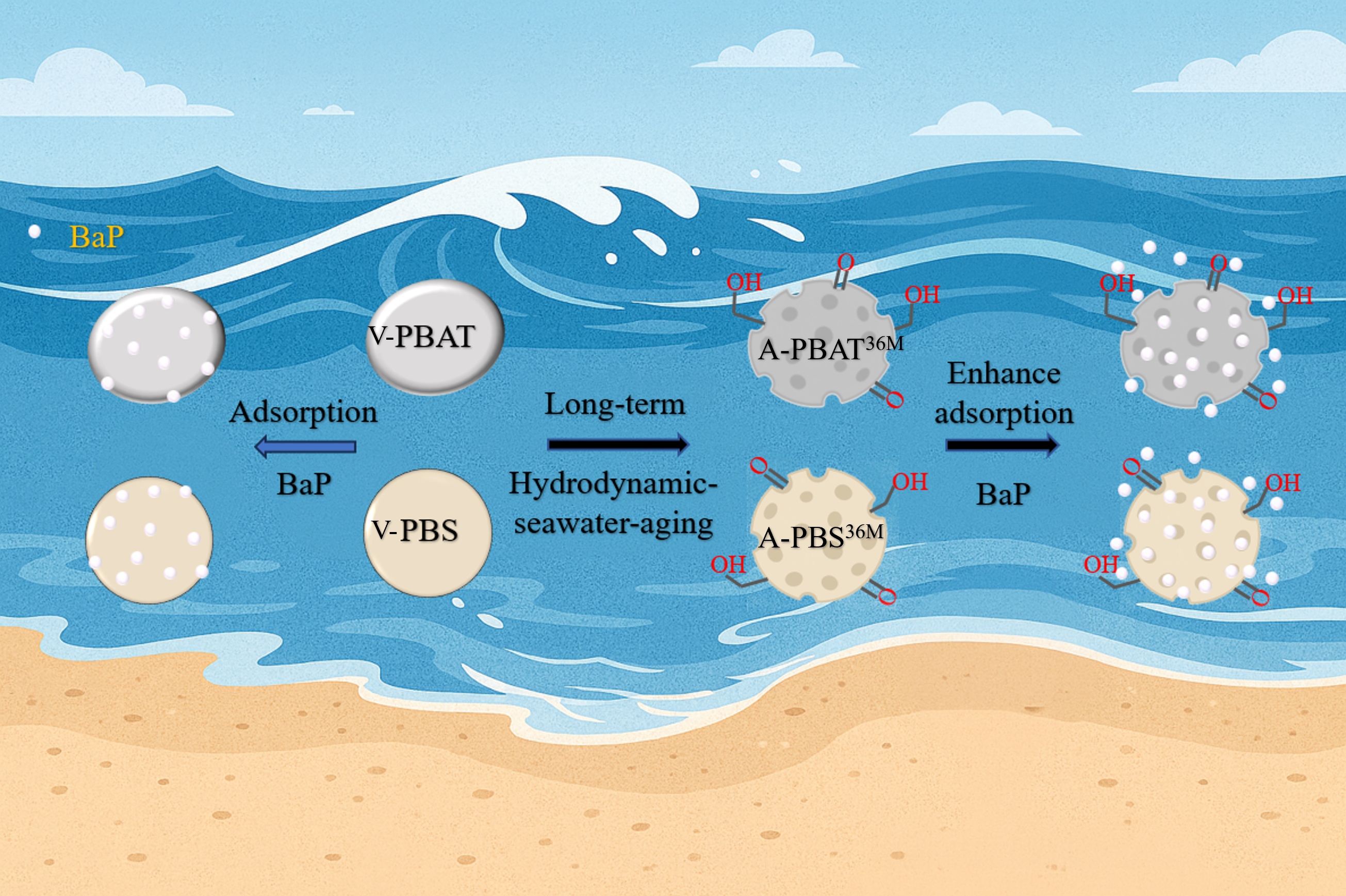
Overall, the adsorption capacity of BaP on PBAT and PBS increased significantly after long-term hydrodynamic seawater aging (Figure 8). This enhancement was primarily driven by two interrelated mechanisms: first, prolonged seawater exposure of PBAT and PBS resulted in the development of porous surface structures and a corresponding increase in their specific surface area, and second, surface oxidation of PBAT and PBS that introduced a substantial number of -C=O and -OH functional groups. The principal adsorption processes were determined to involve hydrophobic partitioning together with weak intermolecular attractions such as hydrogen bonding and van der Waals forces. Collectively, these findings highlight that hydrodynamic aging could significantly modulate the surface physicochemical properties of petroleum-based biodegradable MPs, thereby influencing their interactions with hydrophobic organic contaminants such as BaP.

4. Conclusions

This study systematically investigated the long-term environmental behavior of petroleum-based biodegradable MPs (PBAT and PBS) under hydrodynamic aging and compared them with conventional PE. The results revealed that prolonged hydrodynamic aging significantly altered the surface physicochemical properties of PBAT and PBS by increasing porosity and introducing oxygen-containing functional groups such as -C=O and -OH. These modifications collectively enhanced the adsorption capacity of BaP, driven mainly by hydrophobic interactions, hydrogen bonding, and van der Waals forces. In contrast, PE maintained its chemical stability and exhibited negligible changes in surface structure, functionalization, and adsorption performance. Overall, these findings highlight that, although biodegradable plastics are often promoted as sustainable alternatives, their long-term aging in marine environments can increase their affinity for hydrophobic organic contaminants, thereby influencing pollutant transport and bioavailability. This study provides new insights into the environmental risks of petroleum-based biodegradable plastics and underscores the necessity of considering their aging behavior when evaluating their ecological safety.

Author Contributions

Conceptualization, Y.F. and J.L.; methodology, X.L.; formal analysis, X.L. and X.H.; investigation, X.L.; resources, Y.F.; writing—original draft preparation, X.L.; writing—review and editing, J.W. and Y.F. All authors have read and agreed to the published version of the manuscript.

Funding

This work was financially supported by the Taishan Scholars Program (No. tstp20240522), Wanhua Chemical Group Co., Ltd., and Fundamental Research Funds for the Central Universities (KYWZ120242701).

Institutional Review Board Statement

Not applicable.

Informed Consent Statement

Not applicable.

Data Availability Statement

Data will be made available on request.

Acknowledgments

Many thanks are given to reviewers.

Conflicts of Interest

The authors declare that this study received funding from Wanhua Chemical Group Co., Ltd. The funder was not involved in the study design, collection, analysis, interpretation of data, the writing of this article or the decision to submit it for publication. The authors declare no conflicts of interest.

Abbreviations

The following abbreviations are used in this manuscript:
PBATPoly(butylene adipate-co-terephthalate)
PBSPoly(butylene succinate)
BaPBenzo(a)pyrene
MPsMicroplastics
HPLCHigh-performance liquid chromatography
SEMScanning electron microscope
BETBrunauer–Emmett–Teller
FT-IRFourier transform infrared
XPSX-ray photoelectron spectroscopy

Appendix A

Table A1. The BET surface area, pore volume and pore size of 6 kinds of MPs.
TypeBET Surface Area (m2/g)Pore Volume (cm3/g)Pore Size (nm)
V-PBAT0.18720.0001513.2300
HA-PBAT36M0.19260.0001593.3103
V-PBS0.19200.0001683.3046
HA-PBS36M0.24750.0001912.9703
V-PE0.18750.0001443.0697
HA-PE36M0.16160.0001583.8042
Table A2. The O 1s and C 1s spectral binding energies of the -C-O and -C=O in microplastics.
TypeO 1sC 1s
C=O (eV)C-O
(eV)
C=O
(eV)
C-O
(eV)
C-C/C-H (eV)
V-PBAT531.91533.14288.78286.09284.8
HA-PBAT36M531.98533.21288.75286.2284.8
V-PBS532.05533.36288.68286.12284.8
HA-PBS36M532.25533.55288.79286.13284.8
V-PE531.82533288.32286.62284.8
HA-PE36M532.2533.5288.25286.14284.8

References

  1. Ali, N.; Khan, M.H.; Ali, M.; Sidra; Ahmad, S.; Khan, A.; Nabi, G.; Ali, F.; Bououdina, M.; Kyzas, G.Z. Insight into microplastics in the aquatic ecosystem: Properties, sources, threats and mitigation strategies. Sci. Total Environ. 2024, 913, 169489. [Google Scholar] [CrossRef] [PubMed]
  2. Wei, X.; Yang, W.; Hedenqvist, M.S. Plastic pollution amplified by a warming climate. Nat. Commun. 2024, 15, 2052. [Google Scholar] [CrossRef] [PubMed]
  3. Xiao, S.; Cui, Y.; Brahney, J.; Mahowald, N.M.; Li, Q. Long-distance atmospheric transport of microplastic fibres influenced by their shapes. Nat. Geosci. 2023, 16, 863–870. [Google Scholar] [CrossRef]
  4. Li, C.; Li, X.; Bank, M.S.; Dong, T.; Fang, J.K.; Leusch, F.D.L.; Rillig, M.C.; Wang, J.; Wang, L.; Xia, Y.; et al. The “Microplastome”—A holistic perspective to capture the real-world ecology of microplastics. Environ. Sci. Technol. 2024, 58, 4060–4069. [Google Scholar] [CrossRef]
  5. Wang, T.; Li, B.; Shi, H.; Ding, Y.; Chen, H.; Yuan, F.; Liu, R.; Zou, X. The processes and transport fluxes of land-based macroplastics and microplastics entering the ocean via rivers. J. Hazard. Mater. 2024, 466, 133623. [Google Scholar] [CrossRef]
  6. Kushwaha, M.; Shankar, S.; Goel, D.; Singh, S.; Rahul, J.; Rachna, K.; Singh, J. Microplastics pollution in the marine environment: A review of sources, impacts and mitigation. Mar. Pollut. Bull. 2024, 209, 117109. [Google Scholar] [CrossRef]
  7. Muñiz, R.; Rahman, M.S. Microplastics in coastal and marine environments: A critical issue of plastic pollution on marine organisms, seafood contaminations, and human health implications. J. Hazard. Mater. Adv. 2025, 18, 100663. [Google Scholar] [CrossRef]
  8. Zhao, R.; Ding, J.; Yang, Y.; Huang, H.; Di, Y. Trophic-transferred hierarchical fragmentation of microplastics inducing distinct bio-adaptations via a microalgae-mussel-crab food chain. J. Hazard. Mater. 2025, 489, 137620. [Google Scholar] [CrossRef]
  9. Rafa, N.; Ahmed, B.; Zohora, F.; Bakya, J.; Ahmed, S.; Ahmed, S.F.; Mofijur, M.; Chowdhury, A.A.; Almomani, F. Microplastics as carriers of toxic pollutants: Source, transport, and toxicological effects. Environ. Pollut. 2024, 343, 123190. [Google Scholar] [CrossRef]
  10. Adeleye, A.T.; Bahar, M.M.; Megharaj, M.; Fang, C.; Rahman, M.M. The Unseen threat of the synergistic effects of microplastics and heavy metals in aquatic environments: A Critical review. Curr. Pollut. Rep. 2024, 10, 478–497. [Google Scholar] [CrossRef]
  11. Ali, M.; Xu, D.; Yang, X.; Hu, J. Microplastics and PAHs mixed contamination: An in-depth review on the sources, co-occurrence, and fate in marine ecosystems. Water Res. 2024, 257, 121622. [Google Scholar] [CrossRef]
  12. Marcharla, E.; Vinayagam, S.; Gnanasekaran, L.; Soto-Moscoso, M.; Chen, W.; Thanigaivel, S.; Ganesan, S. Microplastics in marine ecosystems: A comprehensive review of biological and ecological implications and its mitigation approach using nanotechnology for the sustainable environment. Environ. Res. 2024, 256, 119181. [Google Scholar] [CrossRef] [PubMed]
  13. Kim, M.S.; Chang, H.; Zheng, L.; Yan, Q.; Pfleger, B.F.; Klier, J.; Nelson, K.; Majumder, E.L.W.; Huber, G.W. A review of biodegradable plastics: Chemistry, applications, properties, and future research needs. Chem. Rev. 2023, 123, 9915–9939. [Google Scholar] [CrossRef] [PubMed]
  14. Binda, G.; Kalčíková, G.; Allan, I.J.; Hurley, R.; Rodland, E.; Spanu, D.; Nizzetto, L. Microplastic aging processes: Environmental relevance and analytical implications. TrAC Trends Anal. Chem. 2024, 172, 117566. [Google Scholar] [CrossRef]
  15. Sutkar, P.R.; Gadewar, R.D.; Dhulap, V.P. Recent trends in degradation of microplastics in the environment: A state-of-the-art review. J. Hazard. Mater. Adv. 2023, 11, 100343. [Google Scholar] [CrossRef]
  16. Xu, Y.; Ou, Q.; van der Hoek, J.P.; Liu, G.; Lompe, K.M. Photo-oxidation of micro- and nanoplastics: Physical, chemical, and biological effects in environments. Environ. Sci. Technol. 2024, 58, 991–1009. [Google Scholar] [CrossRef]
  17. Zhang, Z.; Zou, S.; Li, P. Aging of plastics in aquatic environments: Pathways, environmental behavior, ecological impacts, analyses and quantifications. Environ. Pollut. 2024, 341, 122926. [Google Scholar] [CrossRef]
  18. Zhao, S.; Kvale, K.F.; Zhu, L.; Zettler, E.R.; Egger, M.; Mincer, T.J.; Amaral-Zettler, L.A.; Lebreton, L.; Niemann, H.; Nakajima, R.; et al. The distribution of subsurface microplastics in the ocean. Nature 2025, 641, 51–61. [Google Scholar] [CrossRef]
  19. Lu, J.; Wu, J.; Zhang, C.; Wang, J.; He, X. Occurrence and possible sources of antibiotic resistance genes in seawater of the South China Sea. Front. Environ. Sci. Eng. 2024, 18, 108. [Google Scholar] [CrossRef]
  20. Guo, M.; Noori, R.; Abolfathi, S. Microplastics in freshwater systems: Dynamic behaviour and transport processes. Resour. Conserv. Recycl. 2024, 205, 107578. [Google Scholar] [CrossRef]
  21. Liu, X.; Feng, Y.; Lu, J.; Wu, J.; Boman, B.J. Enhanced interfacial behaviors of benzo(a)pyrene on the petroleum-based degradable plastics endured long-term bio-aging. Surf. Interfaces 2025, 73, 107632. [Google Scholar] [CrossRef]
  22. Zhu, Z.; Sun, L.; Qin, Q.; Sun, Y.; Yang, S.; Wang, J.; Yang, Y.; Gao, G.; Xue, Y. The adsorption process and mechanism of benzo[a]pyrene in agricultural soil mediated by microplastics. Toxics 2024, 12, 922. [Google Scholar] [CrossRef] [PubMed]
  23. Zhang, Z.; Li, J.; Liu, Z.; Li, Y.; Zhang, B.; Jiang, C. Migration and fate of polycyclic aromatic hydrocarbons in bioretention systems with different media: Experiments and simulations. Front. Environ. Sci. Eng. 2024, 18, 42. [Google Scholar] [CrossRef]
  24. Hernandez-Charpak, Y.D.; Kansara, H.J.; Lodge, J.S.; Eddingsaas, N.C.; Lewis, C.L.; Trabold, T.A.; Diaz, C.A. Quantitative methodology for poly (butylene adipate-co-terephthalate) (PBAT) microplastic detection in soil and compost. Environ. Sci. Pollut. Res. 2025. [Google Scholar] [CrossRef]
  25. Yu, F.; Qin, Q.; Zhang, X.; Ma, J. Characteristics and adsorption behavior of typical microplastics in long-term accelerated weathering simulation. Environ. Sci. Proc. Impacts 2024, 26, 882–890. [Google Scholar] [CrossRef]
  26. Sorasan, C.; Edo, C.; González-Pleiter, M.; Fernández-Piñas, F.; Leganés, F.; Rodríguez, A.; Rosal, R. Ageing and fragmentation of marine microplastics. Sci. Total Environ. 2022, 827, 154438. [Google Scholar] [CrossRef]
  27. Zhou, T.; Wu, J.; Liu, Y.; Xu, A. Seawater accelerated the aging of polystyrene and enhanced its toxic effects on caenorhabditis elegans. Int. J. Mol. Sci. 2023, 24, 17219. [Google Scholar] [CrossRef]
  28. Cui, W.; Hale, R.C.; Huang, Y.; Zhou, F.; Wu, Y.; Liang, X.; Liu, Y.; Tan, H.; Chen, D. Sorption of representative organic contaminants on microplastics: Effects of chemical physicochemical properties, particle size, and biofilm presence. Ecotoxicol. Environ. Saf. 2023, 251, 114533. [Google Scholar] [CrossRef]
  29. Fu, L.; Li, J.; Wang, G.; Luan, Y.; Dai, W. Adsorption behavior of organic pollutants on microplastics. Ecotoxicol. Environ. Saf. 2021, 217, 112207. [Google Scholar] [CrossRef]
  30. Wagstaff, A.; Petrie, B. Enhanced desorption of fluoxetine from polyethylene terephthalate microplastics in gastric fluid and sea water. Environ. Chem. Lett. 2022, 20, 975–982. [Google Scholar] [CrossRef]
  31. Feng, Y.; Hua, W.; Lu, J.; Wu, J.; Zhang, C. Adsorption and desorption of nonylphenol on the biodegradable microplastics in seawater. J. Clean. Prod. 2024, 476, 143778. [Google Scholar] [CrossRef]
  32. Bucking, C.; Wood, C. The effect of postprandial changes in pH along the gastrointestinal tract on the distribution of ions between the solid and fluid phases of chyme in rainbow trout. Aquacult. Nutr. 2009, 15, 282–296. [Google Scholar] [CrossRef]
  33. Wu, J.; Lu, J.; Wu, J. Effect of gastric fluid on adsorption and desorption of endocrine disrupting chemicals on microplastics. Front. Environ. Sci. Eng. 2021, 16, 104. [Google Scholar] [CrossRef]
  34. Tanaka, K.; Takada, H.; Yamashita, R.; Mizukawa, K.; Fukuwaka, M.; Watanuki, Y. Facilitated leaching of additive-derived PBDEs from plastic by seabirds’ stomach oil and accumulation in tissues. Environ. Sci. Technol. 2020, 49, 11799–11807. [Google Scholar] [CrossRef]
  35. Liu, X.; Hua, X.; Lu, J.; Wu, J.; Feng, Y. Degradable plastics could help to protect the marine environment: Proof based on pollutant surface behaviors. New J. Chem. 2025, 49, 9829–9837. [Google Scholar] [CrossRef]
  36. Lu, Q.; Zhou, Y.; Sui, Q.; Zhou, Y. Mechanism and characterization of microplastic aging process: A review. Front. Environ. Sci. Eng. 2023, 17, 100. [Google Scholar] [CrossRef]
  37. Liu, G.; Zhu, Z.; Yang, Y.; Sun, Y.; Yu, F.; Ma, J. Sorption behavior and mechanism of hydrophilic organic chemicals to virgin and aged microplastics in freshwater and seawater. Environ. Pollut. 2025, 246, 26–33. [Google Scholar] [CrossRef]
  38. Kiki, C.; Qiu, Y.; Wang, Q.; Ifon, B.E.; Qin, D.; Chabi, K.; Yu, C.; Zhu, Y.; Sun, Q. Induced aging, structural change, and adsorption behavior modifications of microplastics by microalgae. Environ. Int. 2022, 166, 107382. [Google Scholar] [CrossRef]
  39. Liu, H.; Ma, Y.; Xiao, J.; Zhang, Y.; Li, Y.; Shen, A.; Niu, Z.; Chen, Q.; Chen, B. Biofilm-mediated mass transfer of sorbed benzo[a]pyrene from polyethylene to seawater. Environ. Pollut. 2025, 374, 126257. [Google Scholar] [CrossRef]
  40. Jiang, T.; Wu, X.; Yuan, S.; Lai, C.; Bian, S.; Yu, W.; Liang, S.; Hu, J.; Huang, L.; Duan, H.; et al. A potential threat from biodegradable microplastics: Mechanism of cadmium adsorption and desorption in the simulated gastrointestinal environment. Front. Environ. Sci. Eng. 2024, 18, 19. [Google Scholar] [CrossRef]
  41. Xie, A.; Chen, S.; Liang, X.; Li, L.; Song, Y.; Lv, M.; Liang, F.; Zhou, W. Influence of microplastic aging on the adsorption and desorption behavior of Ni (II) under various aging conditions. Environ. Geochem. Health 2025, 47, 87. [Google Scholar] [CrossRef] [PubMed]
  42. Cid-Samamed, A.; Diniz, M.S. Recent advances in the aggregation behavior of nanoplastics in aquatic systems. Int. J. Mol. Sci. 2023, 24, 13995. [Google Scholar] [CrossRef]
  43. Emecheta, E.E.; Borda, D.B.; Pfohl, P.M.; Wohlleben, W.; Hutzler, C.; Haase, A.; Roloff, A. A comparative investigation of the sorption of polycyclic aromatic hydrocarbons to various polydisperse micro- and nanoplastics using a novel third-phase partition method. Microplast. Nanoplast. 2022, 2, 29. [Google Scholar] [CrossRef]
  44. Liu, X.; Sun, P.; Qu, G.; Jing, J.; Zhang, T.; Shi, H.; Zhao, Y. Insight into the characteristics and sorption behaviors of aged polystyrene microplastics through three type of accelerated oxidation processes. J. Hazard. Mater. 2021, 407, 124836. [Google Scholar] [CrossRef]
  45. Wang, L.; Yang, Z.; Niu, J. Temperature-dependent sorption of polycyclic aromatic hydrocarbons on natural and treated sediments. Chemosphere 2011, 82, 895–900. [Google Scholar] [CrossRef]
  46. Von, O.B.; Kördel, W.; Klein, W. Sorption of nonpolar and polar compounds to soils: Processes, measurements and experience with the applicability of the modified OECD-Guideline 106. Chemosphere 1991, 22, 285–304. [Google Scholar] [CrossRef]
  47. Shi, Y.; Zheng, L.; Huang, H.; Tian, Y.C.; Gong, Z.; Liu, P.; Wu, X.; Li, W.T.; Gao, S. Formation of nano- and microplastics and dissolved chemicals during photodegradation of polyester base fabrics with polyurethane coating. Environ. Sci. Technol. 2023, 57, 1894–1906. [Google Scholar] [CrossRef]
  48. Tuttle, E.; Wiman, C.; Muñoz, S.; Law, K.L.; Stubbins, A. Sunlight-driven photochemical removal of polypropylene microplastics from surface waters follows linear kinetics and does not result in fragmentation. Environ. Sci. Technol. 2024, 58, 5461–5471. [Google Scholar] [CrossRef] [PubMed]
Figure 1. The adsorption kinetics of BaP on V-PBAT (A), HA-PBAT36M (B), V-PBS (C), HA-PBS36M (D), V-PE (E) and HA-PE36M (F) in seawater by pseudo-first-order and pseudo-second-order models.
Sustainability 17 11344 g001
Figure 2. The desorption kinetics of BaP on V-PBAT (A), HA-PBAT36M (B), V-PBS (C), HA-PBS36M (D), V-PE (E) and HA-PE36M (F) by pseudo-first-order and pseudo-second-order models.
Sustainability 17 11344 g002
Figure 3. Effect of salinity (A,B) and pH (C,D) on BaP adsorption (left) and desorption (right) on MPs.
Sustainability 17 11344 g003
Figure 4. The desorption capacity of BaP from microplastics in simulated gastric fluid at the ambient temperature for poikilotherms (18 °C) (A,B) and endotherms (38 °C) (C,D) under different pH conditions.
Sustainability 17 11344 g004
Figure 5. BaP adsorption isotherms for six microplastic types (V-PBAT (A), HA-PBAT36M (B), V-PBS (C), HA-PBS36M (D), V-PE (E), and HA-PE36M (F)) with curves fitted using the Freundlich and Langmuir models. The solid and dashed lines in purple and green represent the Freundlich and Langmuir models at temperatures of 308K and 298K, respectively.
Sustainability 17 11344 g005
Figure 6. SEM images of V-PBAT (A), V-PBS (B), V-PE (C), HA-PBAT36M (D), HA-PBS36M (E), and HA-PE36M (F) MPs, as well as the FT-IR of six kinds of MPs (GI).
Sustainability 17 11344 g006
Figure 7. The high-resolution C 1s and O 1s spectra of V-PBAT (A,D), HA-PBAT36M (B,E), V-PBS (C,F), HA-PBS36M (G,J), V-PE (H,K) and HA-PE36M (I,L) in XPS analysis.
Sustainability 17 11344 g007
Figure 8. Mechanism of BaP adsorption on biodegradable MPs after long-term hydrodynamic aging.
Sustainability 17 11344 g008
Disclaimer/Publisher’s Note: The statements, opinions and data contained in all publications are solely those of the individual author(s) and contributor(s) and not of MDPI and/or the editor(s). MDPI and/or the editor(s) disclaim responsibility for any injury to people or property resulting from any ideas, methods, instructions or products referred to in the content.