Article

Artificial Intelligence and Blockchain-Driven Circular Platforms: Fostering Green Innovation and Sustainable Consumer Behavior in High-Value Resale


by
Andrej Naraločnik
Independent Researcher, 1000 Ljubljana, Slovenia
Sustainability 2025, 17(24), 11224; https://doi.org/10.3390/su172411224
Submission received: 15 October 2025 / Revised: 9 December 2025 / Accepted: 10 December 2025 / Published: 15 December 2025

Abstract

This study investigates how core digital technologies—artificial intelligence (AI) and blockchain—can foster green innovation and sustainable consumption through circular platform design in high-value resale markets. Using Design Science Research (DSR) methodology, including its iterative cycles, we developed and evaluated TRUCE (Trust, Resale Logic, User Centricity, Circular Infrastructure, Ecosystem Governance), a sustainability-oriented digital architecture designed to promote ethical, energy-efficient consumption. TRUCE aims to leverage AI-driven authentication, blockchain-based transparency, and consumer data analytics, aiming to embed circularity and traceability into platform governance. Aligned with the EU Green Deal’s digital agenda, it is intended to support waste reduction, lifecycle extension, and responsible consumption, contributing to Sustainable Development Goal 12 and the broader 2030 Agenda.

1. Introduction

This study draws on Toderas’ risk analysis framework [1] as a conceptual foundation to examine how AI and blockchain technologies support green innovation and sustainable consumption in high-value resale, through the development of the TRUCE digital architecture. Addressing a recognized research gap, TRUCE aims to reduce wasteful consumption through AI-driven decision-making and blockchain-powered transparency. It contributes to the interconnected challenges of trust, circularity, and governance that define current digital sustainability debates [2,3,4]. The platform is designed to support SDG 12.5 by enhancing managerial decision-making related to waste reduction through repair and reuse. In addition, it contributes to sustainable business practices by leveraging blockchain-based lifecycle tracking and data analytics for resource optimization, thereby operationalizing insights from recent AI-in-sustainability research [1,3].
Recent studies highlight the potential transformative role of AI and blockchain in building circular platforms that aim to extend product lifecycles and minimize environmental impact [5,6,7]. However, ongoing challenges in trust-building and provenance verification continue to limit adoption in high-value resale markets [8,9]. TRUCE aims to address these barriers by embedding AI-enabled authentication and blockchain-integrated Digital Product Passports (DPPs), in alignment with the EU Green Deal’s digital transformation goals [7,10].
To address this, the study defines five core research objectives (RO1–RO5): Specifically, it investigates how blockchain-based provenance tools enhance transparency and ethical assurance in Trust (RO1); how AI-powered valuation models improve Resale Logic and support managerial decision-making (RO2); and how user interface design can strengthen User Centricity and enable continuous learning among stakeholders (RO3). It further examines the role of DPPs in promoting circularity, lowering environmental impact, and integrating with robotics for product repair in Circular Infrastructure (RO4), as well as how smart contracts may support adaptive governance mechanisms within Ecosystem Governance for sustainable stakeholder collaboration and compliance (RO5).
The primary objective of this research is to develop and evaluate TRUCE as a conceptual digital architecture for sustainable resale, employing the DSR methodology, with its iterative cycles of problem relevance, theoretical grounding, and artifact evaluation to assess its effectiveness in reducing waste and enhancing consumer engagement [11,12].
Unlike existing resale platforms such as The RealReal and Vestiaire Collective, which often lack unified frameworks for both trust and circularity, TRUCE aims to offer a novel contribution by providing an integrated, sustainability-first solution from the outset [9,10,11,13]. The platform is designed to apply blockchain for product provenance, AI for authentication, and adaptive governance protocols to align stakeholder practices. Collectively, these mechanisms support repair services, lifecycle tracking, and resource-efficient decision-making, with performance benchmarked against leading industry examples [11,12,13].
In contrast to broader studies on AI and blockchain that address general sustainability or digital transformation, TRUCE aims to uniquely integrate trust, circularity, and governance within a cohesive framework tailored to high-value resale, offering a focused solution for advancing sustainable consumer behavior [1,8]. Its modular, extensible design is intended to enable scalability to adjacent sectors such as premium electronics and fashion apparel, thereby broadening the impact of sustainable consumption and supporting managerial innovation across diverse high-value markets [5,13].
This study contributes to e-commerce and sustainable management research by presenting a framework that translates trust mechanisms and circular economy principles into practical digital platform architectures. These designs foster ethical, tech-enabled managerial practices that are scalable across high-value resale contexts [14,15,16]. Consistent with Amoiradis and Stankova’s systemic view of sustainability [17], the TRUCE framework addresses the interconnected ecological, socio-economic, and governance dimensions of digital transformation—embedding sustainability transitions within organizational and technological structures, rather than treating them as peripheral concerns.
The remainder of the paper is structured as follows: Section 2 reviews the literature on trust and circularity; Section 3 outlines the research methodology; Section 4 presents the results; Section 5 discusses the theoretical and practical implications; and Section 6 provides the conclusion.

2. Literature Review

High-value resale platforms have evolved into complex ecosystems involving multiple stakeholders, necessitating integrated architectural solutions like the TRUCE framework to sustain trust, support scalability, improve user experience, and promote circularity and governance aligned with sustainable management practices [8,13]. In parallel, the trust literature highlights competence, integrity, and transparency as critical components of credibility in high-value markets—particularly in the luxury segment, where brand sensitivity and product authentication are key to building managerial trust [14].
Benevolence and integrity are essential to fostering sustainable and ethical managerial perceptions, especially in high-value resale settings where stakeholder trust is foundational to long-term platform credibility [15,16]. As Filip et al. emphasize, fairness and transparency in value assessment are central to sustainable marketing and managerial ethics, forming the normative basis for trust-based digital exchanges [17,18,19]. Competence-driven trust relies on secure payment systems, strong data protection, and the integration of blockchain and AI-based authentication—further supported by data analytics that enhance informed managerial decision-making.
Blockchain has the potential to enhance transparency by providing immutable tracking of product provenance, yet it faces ongoing challenges related to scalability, interoperability, and ethical concerns surrounding data privacy [20,21,22]. Smart contracts offer procedural trust by automating verification and dispute resolution; however, their inherent rigidity may limit managerial flexibility in dynamic market conditions unless paired with complementary and adaptive governance structures [23,24].
Artificial intelligence (AI) currently achieves approximately 90% accuracy in counterfeit detection, enhancing both operational efficiency and managerial decision-making—though its performance depends on well-integrated data ecosystems [25,26]. Hybrid AI–expert validation models, with around 80% accuracy in evaluated cases, demonstrate the value of combining algorithmic precision with human oversight to strengthen trust and ethical decision-making in high-value resale contexts [27]. While these hybrid models improve authentication accuracy and reliability, their fragmented adoption across platforms limits systemic trust and hinders managerial learning and continuous improvement [20,28].
Transparent mechanisms—such as verified digital labels and traceable certification—enhance circularity and consumer agency by enabling users to identify reusable, ethically sourced, and verified high-value goods, thereby supporting responsible consumption in line with SDG 12.5 [29]. However, inconsistent authentication practices and data silos continue to increase counterfeiting risks, undermining consumer trust and managerial confidence due to unverifiable provenance and fragmented data integrity [3,4,20]. Blockchain’s immutable transaction records offer a potential solution by ensuring provenance transparency, yet scalability issues and integration gaps still hinder full implementation—limiting the adoption of data-driven strategies in sustainable e-commerce [21,25]. These challenges highlight the need for cohesive, hybrid trust mechanisms that combine technological accuracy with human oversight. Emerging tools such as extended reality (XR) for virtual authentication may further enhance reliability, improve transparency, and promote sustainable consumer behavior in alignment with SDG 12 [14,30].
Circular economy principles—reuse, repair, and recycling—closely align with the durability characteristics of high-value goods and global sustainability objectives, fostering energy-efficient managerial practices and resource optimization. By prioritizing resale over new production, high-value platforms counter wasteful consumption patterns and reduce environmental impact by extending product lifespans and offering integrated repair services—contributing directly to SDG 12.5 [7,31]. Embedding circularity in high-value markets requires rethinking product longevity, value retention, and business model design, as illustrated by Bang & Olufsen’s circular innovation strategy [32]. As Bertoncelj [8] argues, digital transformation is a cornerstone of the EU Green Deal, connecting technological innovation with environmental and social responsibility. In this context, digital platforms operationalize the green transition by coordinating circular activities through real-time analytics, blockchain integration, and Internet of Things (IoT)-based traceability systems [7,33]. However, persistent challenges in data integration and standardization, particularly regarding ethical data governance and interoperability—continue to constrain scalability at the system level [30,34]. While IoT and logistics networks enhance lifecycle visibility, effective scalability depends on automation through robotics-enabled repair and maintenance processes [35,36,37,38,39].
Blockchain-based DPPs provide an effective approach to enhancing lifecycle visibility and material traceability, though their adoption remains limited by technical complexity and evolving regulatory requirements [36,37]. Emerging consumer segments, particularly Generation Z, show strong preferences for transparency and sustainability, highlighting growing demand for trustworthy, eco-conscious digital resale platforms, especially in creative sectors like fashion apparel [9,38]. TRUCE aims to leverage these preferences by promoting sustainable consumption through transparent authentication and lifecycle tracking. It intends to encourage reuse and ethical consumer behavior, aligning with circular economy principles [30,39] and supporting the digital economy’s contribution to SDG 12 on responsible consumption. However, the limited integration of standardized repair services and refurbishment networks still constrains product longevity and scalability, slowing progress toward SDG 12 targets [7,40]. This highlights the importance of TRUCE’s digital architecture, which integrates blockchain-based DPPs with repair-service application programming interfaces (APIs) that enable automated coordination between users and certified repair providers—potentially enhanced by extended reality (XR) simulations for virtual prototyping—to support circularity, preserve brand value, and promote sustainable business models aligned with SDG 12 [33,41].
Effective and transparent governance is essential for coordinating buyers, sellers, brands, and authenticators—supporting scalability, accountability, and ethical alignment in sustainable managerial collaboration [8,15,42]. Managing high-value goods demands adaptive, data-driven governance frameworks that safeguard brand integrity and facilitate ethical stakeholder engagement [17,43]. Smart contracts automate authentication and dispute resolution; however, their rigidity and unresolved legal standing complicate regulatory alignment and flexible rule setting [23,24,44].
Evidence from the Limited High-Value Initiative [40] indicates that current hybrid models only partially integrate automated trust mechanisms with experiential curation, limiting managerial learning and stakeholder inclusivity within platform ecosystems. Persistent power asymmetries in multi-sided platforms—where brands often dominate—continue to impede collaborative sustainability and equitable value distribution among stakeholders [41]. Governance frameworks built on smart contracts and transparent, ethics-oriented rule systems can help align stakeholder interests, but they require adaptive, context-sensitive designs to navigate regulatory volatility and operational complexity—ensuring responsible digital transformation and sustained collaboration in high-value ecosystems [15,38].
Despite recent advancements, three persistent gaps continue to shape high-value resale research. First, industry practices remain fragmented, with most initiatives focusing on either trust mechanisms or sustainability goals—rarely achieving an integrated approach. As Paștiu et al. note, authentic e-business sustainability depends not only on technological innovation but also on the ethical accessibility and inclusivity of digital platforms—factors that significantly impact user trust, satisfaction, and loyalty [42]. Their findings underscore that digital responsibility must extend beyond efficiency to include accessibility and transparency as foundational enablers of sustainability, a principle that closely aligns with TRUCE’s vision of equitable, circular digital ecosystems. Second, the intersection of trust and circularity—central to advancing SDG 12—remains both conceptually and empirically underexplored [13,30]. Third, the integration of blockchain and AI into cohesive, interoperable trust architectures remains limited, exposing methodological gaps in the structured design and evaluation of digital platforms using DSR methodology [25,43]. Addressing these issues requires unified, system-oriented architectures capable of embedding transparency, circularity, and data intelligence into digital marketplaces. The TRUCE framework aims to respond directly to this need, combining authentication, lifecycle management, and stakeholder coordination within a cohesive governance and design structure. In this way, it intends to offer a scalable foundation for sustainable e-commerce ecosystems that advance SDG 12.5 and SDG 12.6 by promoting waste reduction, reuse, and responsible production in high-value markets.
As Roblek et al. emphasize, sustainability in the era of Industry 4.0 depends on integrated, data-driven frameworks that align technological innovation with societal and environmental priorities [44]. The TRUCE framework aims to advance this agenda by embedding trust, circularity, and governance into a cohesive digital architecture, offering a novel, scalable solution for high-value resale markets that promotes green innovation and encourages sustainable consumer behavior [8,13].

3. Materials and Methods

This section outlines the methodological approach used to develop and evaluate the TRUCE framework. The study is guided by the Design Science Research (DSR) methodology, which derives from the broader Design Science paradigm—a research tradition focused on knowledge generation through the construction and evaluation of innovative artifacts. DSR structures inquiry into iterative cycles of relevance (problem identification), rigor (theoretical grounding), and design (artifact construction and evaluation) [40,43]. It centers on constructing a conceptual artifact that demonstrates utility through proof-of-concept validation, emphasizing theoretical rigor and relevance cycles over full operational deployment [45,46,47]. Input included empirical data sources; outputs comprised the TRUCE digital architecture and associated performance metrics. Transparency was ensured through detailed documentation of iterations and evaluation criteria [48,49].

3.1. Research Setting and Data Sources

This study applies DSR methodology, which emphasizes the creation of innovative artifacts to address practical challenges while contributing to theoretical advancement [43,45,46,47]. It draws on empirical evidence from the Circular High-Value Design Corpus (CHVDC) [40], a longitudinal dataset documenting the iterative development (2018–2025) of the TRUCE artifact. The CHVDC consolidates design iterations, stakeholder feedback, expert validations, and managerial insights from digital resale platforms—providing a comprehensive foundation for analysis. The dataset comprises over 500 stakeholder interactions and 10 iterative design cycles, ensuring robust empirical grounding. Future validation efforts will include pilot testing with diverse real-world stakeholders (e.g., consumers, brands, regulators) to improve generalizability. Serving as a design laboratory, this dataset guided the TRUCE framework’s construction and refinement, in line with the DSR methodology, which holds that knowledge is generated through the synthesis of design and evaluation.
The research setting centered on high-value resale markets, utilizing empirical data from the CHVDC and the Comparative Benchmarking Dataset (CBD) to inform development of the TRUCE artifact [40]. CHVDC, compiled from over 500 stakeholder interactions conducted between 2018 and 2025, includes interviews, secondary reports, and simulations on resale practices—offering a triangulated foundation for artifact design [50,51,52]. The CBD comprises secondary benchmarking data from public sources such as The RealReal’s 10-K filings and Vestiaire Collective’s sustainability reports, which were used to establish baseline metrics and support comparative evaluation [45,46].
Data collection followed the relevance cycle of the DSR methodology, incorporating real-world insights from industry reports, stakeholder consultations, and sustainability benchmarks to ensure practical relevance and applicability [45,46,53]. Delphi validation involved a purposive sample of five experts (Table A1), selected for their specialization in blockchain, AI, and the circular economy. Iterative rounds were conducted to evaluate the artifact’s utility and validate design assumptions [54]. This method enabled a comprehensive understanding of trust, circularity, and governance challenges in high-value resale markets, aligning with the EU Green Deal’s digital transformation objectives [52].
Moreover, integrating blockchain into circular ecosystems requires careful attention to adoption and governance dynamics. Caldarelli et al. [53] highlight managerial readiness and cross-sector collaboration as critical success factors, while Rejeb et al. [54] identify barriers such as regulatory uncertainty and limited interoperability. These insights informed the refinement of TRUCE’s governance protocols and evaluative indicators, enhancing methodological rigor and contextual validity. The evaluation approach also builds on Peffers et al. [55], whose DSR framework formalizes the phases of problem identification, artifact construction, demonstration, and evaluation—ensuring transparency and supporting methodological replicability. Jacob et al. [56] underscore the importance of continuous reflection on methodological rigor and epistemological contribution—principles embedded in TRUCE’s iterative documentation and evaluation structure. Although Simon [57] does not formalize a DSR cycle, his concept of bounded rationality and heuristic problem solving offers a philosophical foundation for treating artifact design as an adaptive, reflective process that balances theoretical abstraction with real-world application.
To strengthen methodological transparency and traceability, Table 1 presents the composition of the CHVDC. It is structured to map each document category to its role within the iterative DSR cycles that informed the development of the TRUCE framework.
Table 1 shows how the CHVDC consolidates design documentation across a parallel longitudinal scope (2018–2025), tracing the TRUCE framework’s progression through the DSR phases of relevance, rigor, and design. Integrated with benchmarking datasets from The RealReal and Vestiaire Collective [45,46], it reinforces methodological validity and aligns with SDG 12.5 and SDG 12.6 by supporting circular practices in high-value resale ecosystems.

3.2. Analytical Strategy

The analytical strategy reinforced methodological rigor and coherence across TRUCE’s design, evaluation, and validation phases within the iterative DSR cycles, structured by the DSR methodology. Guided by the DSR paradigm, the analysis progressed through iterative DSR cycles of relevance, rigor, and design-evaluation, integrating empirical data, theoretical insights, and managerial feedback loops. This multi-cycle structure supported both formative and summative assessment, reflecting the DSR principle that design knowledge evolves through recursive cycles of construction, evaluation, and reflection [43,49,55]. Evaluation employed a triangulated approach that combined artifact, process, and contextual analysis to strengthen both internal and external validity. The artifact-focused analysis assessed how TRUCE’s core modules—AI authentication, blockchain transparency, and lifecycle tracking—addressed sustainability requirements captured in the CHVDC [40]. The process-focused analysis evaluated methodological soundness and replicability against canonical DSR frameworks [50,55]. Finally, contextual evaluation examined the artifact’s managerial utility by benchmarking it against industry practices from The RealReal and Vestiaire Collective [45,46].
This triangulated logic follows Venable et al.’s Framework for Evaluation in Design Science (FEDS) [49], which emphasizes multi-perspective evaluation to ensure that a design artifact is both theoretically grounded and practically viable. The qualitative analysis of the CHVDC drew on the interpretive procedures of Miles et al. [47] and Corbin and Strauss [48], focusing on how managerial, technological, and ethical dimensions interacted across successive design iterations. Inductive coding was applied to the empirical records, identifying recurring themes related to Trust, Resale Logic, User Centricity, Circular Infrastructure, and Ecosystem Governance—with thematic relationships refined through iterative comparison and informed by Supplementary Data File S1 [see Tables S1 and S2 for Platform Capability Matrix and Thematic Code Crosswalk]. Benchmarking insights from the CBD complemented this analysis, enabling cross-validation of the TRUCE design principles against leading industry practices. Comparative indicators—such as authentication reliability, repair integration, and lifecycle traceability—were used to assess alignment with sustainability metrics, echoing the closed-loop logic described by Prajapati et al. [51] and the adaptive digital platforms proposed by Marantes et al. [52].
In refining governance and interoperability mechanisms, the study incorporated managerial readiness and regulatory perspectives outlined by Caldarelli et al. [53] and Rejeb et al. [54], ensuring that evaluation criteria reflected both socio-technical and institutional factors. Building on Peffers et al. [55], each TRUCE design iteration was examined for problem relevance, artifact performance, and its theoretical contribution to sustainability.
Continuous reflection, as advocated by Jacob et al. [56], guided epistemological validation to ensure that TRUCE functioned as a boundary object connecting managerial decision-making with systemic sustainability goals. Philosophical coherence was maintained through Simon’s [57] conceptualization of design as an adaptive, heuristic activity rooted in bounded rationality and iterative learning. Preliminary validation evidence, including Delphi expert assessments (with a sample of 5 experts, expandable to 10–15 in future validations) and simulations, is presented in Appendix A, while Figure 1 illustrates the DSR cycle interactions supporting artifact construction and evaluation.

3.3. Validation Process

The validation process followed the principles of DSR, ensuring that the TRUCE framework was evaluated through iterative, multidimensional evaluation cycles, emphasizing both practical utility and theoretical alignment. Validation was conducted across three complementary levels—conceptual, empirical, and practical—each reinforcing the artifact’s reliability, theoretical foundation, and managerial relevance. The process was informed by the Framework for Evaluation in Design Science (FEDS) proposed by Venable et al. [49] and the procedural phases outlined by Peffers et al. [55], combining structured assessment with reflective learning.
Conceptual validation assessed the coherence of TRUCE’s theoretical constructs—Trust, Resale Logic, User Centricity, Circular Infrastructure, and Ecosystem Governance—against established literature on sustainability and digital platforms. Through iterative abstraction and literature triangulation, these constructs were aligned with the DSR rigor cycle, mapping theoretical propositions to sustainability-oriented design goals [43,55]. The integration of managerial ethics and circularity principles was further supported by contemporary frameworks on sustainable e-commerce and digital responsibility, as documented in the CHVDC [40]. Empirical validation drew on pattern-based analysis of TRUCE’s design iterations within the CHVDC, evaluating the artifact’s evolution over the 2018–2025 period.
Following the systematic analytical procedures outlined by Miles et al. [47], the longitudinal records were coded and thematically clustered to identify recurrent outcomes across design cycles—such as improved authentication accuracy, enhanced lifecycle transparency, and increased stakeholder engagement. This iterative coding approach enabled the assessment of construct stability and the incremental refinement of the TRUCE digital architecture, demonstrating the DSR principle that theory is derived from artifact performance and reflective analysis. Practical validation was conducted using the CBD, which offered an external reference point for evaluating TRUCE’s operational performance in comparison to leading industry platforms—The RealReal and Vestiaire Collective [45,46].
These benchmarks were selected for their documented emphasis on circular design and governance, allowing TRUCE’s mechanisms to be compared against established industry standards. Preliminary validation metrics, based on simulations and Delphi assessments included authentication integrity, product lifecycle extension, repair integration capability, and user trust perception. The benchmarking phase also supported a triangulated evaluation using the frameworks of Caldarelli et al. [53] and Rejeb et al. [54], who identified critical enablers and barriers to blockchain adoption and managerial preparedness, ensuring contextual alignment with real-world constraints. Each validation phase was accompanied by reflective analysis consistent with the DSR relevance–rigor–design cycle outlined by Alturki et al. [50]. The relevance cycle grounded the artifact in real-world sustainability challenges identified through CHVDC data. The rigor cycle synthesized academic theory and prior empirical evidence to refine the conceptual model, while the design cycle operationalized these insights into the TRUCE artifact through iterative testing and evaluation.
This integrated validation loop reinforced the study’s methodological rigor, ensuring that the artifact maintained ecological validity—its applicability to real-world managerial and technological contexts. Validation outcomes were further interpreted through the analytical lens of Jacob et al. [56], who emphasize that robust DSR validation must extend beyond artifact utility to encompass epistemological contributions. Accordingly, TRUCE was evaluated not only for its operational performance but also for its capacity to advance design knowledge in the domain of sustainable digital platform development. Iterative reflection on both success factors and limitations yielded transferable insights for practitioners and scholars working on circular e-commerce systems. Finally, in line with Simon’s [57] conceptualization of design as an adaptive, heuristic problem-solving activity, the validation process acknowledged the bounded rationality inherent in managerial decision-making within dynamic market environments. Thus, evaluation outcomes were not treated as static results but as evolving indicators of the artifact’s ability to support satisficing behavior—achieving sustainable, context-sensitive solutions rather than theoretical optimality.
Collectively, this validation process aimed to ensure that the TRUCE framework satisfied the core DSR evaluation criteria of relevance, rigor, and utility, while also demonstrating its practical applicability in advancing sustainable managerial practices and circular innovation within high-value e-commerce ecosystems.

3.4. Methodological Limitations and Boundary Conditions

Several methodological limitations and boundary conditions must be considered when interpreting the TRUCE framework’s findings within the DSR paradigm [43,55]. As a conceptual artifact at the prototype stage, TRUCE has not yet been deployed in a fully operational high-value resale ecosystem. While its design validity was strengthened through benchmarking against The RealReal and Vestiaire Collective [45,46], and expert evaluation in controlled environments, further empirical testing is needed to assess its behavioral impact—particularly in relation to lifecycle tracking, data-driven decision-making, and patterns of managerial adoption [27,28,29,55].
Second, DSR’s reliance on controlled or simulated environments limits its naturalistic generalizability. Although this study incorporated Delphi-based expert evaluations and scenario-driven simulations—guided by Peffers et al. [55] and Venable et al. [49]—such assessments cannot fully replicate the complex dynamics of live-market environments. This limitation is especially relevant for circular economy mechanisms such as repair integration and robotic augmentation, which require extended timeframes and operational scale for comprehensive, real-world validation [55,56]. Nevertheless, the iterative design–evaluation cycles employed in this study offer a robust theoretical and empirical foundation for future pilot testing in real-word operational contexts.
Third, the framework’s current configuration was optimized for the high-value resale sector, where brand sensitivity and authentication precision are critical determinants of both managerial and consumer trust. While this domain-specific focus enhances contextual validity, it limits the framework’s immediate transferability to other industry verticals. However, the core constructs—digital trust, circular infrastructure, and DPPs—are inherently adaptable and can be recalibrated for adjacent sectors such as premium electronics and fashion apparel, thereby advancing responsible consumption and production (SDG 12) across broader creative industries [15,17].
Fourth, technological evolution presents an ongoing methodological challenge. The rapid advancement of blockchain consensus mechanisms, AI authentication algorithms, and data privacy standards introduces potential risks to stability, interoperability, and long-term validity. Consistent with Alturki et al. [50], the TRUCE framework addresses these risks through a modular, updatable architecture designed to support the iterative integration of emerging technologies, including extended reality (XR) and explainable AI (XAI). This adaptability ensures ongoing alignment with both technological advancements and sustainability imperatives.
Finally, regulatory and cultural variability limits the generalizability of findings across global markets. Differences in data protection laws, sustainability reporting standards, and digital trust norms introduce significant variability that may constrain the immediate scalability of the TRUCE framework beyond Western contexts [23,24,51]. Cross-sector and cross-regional adaptations will therefore be essential to ensure both regulatory compliance and contextual relevance across diverse institutional and cultural settings. Despite these constraints, the multimodal DSR approach—integrating the CHVDC, comparative industry benchmarking, and expert validation—offers a methodologically rigorous foundation for continued refinement and cross-contextual applicability.
This hybrid methodology exemplifies DSR’s capacity to navigate uncertainty, enabling the systematic exploration of trust, circularity, and sustainable digital transformation within high-value commerce. By emphasizing iterative design, reflexive learning, and practical validation, this study extends DSR’s application to the development of resilient, circular e-commerce ecosystems grounded in ethical managerial innovation and sustainability principles [13,43,55].
To illustrate potential research extensions, future studies might explore pilot deployments (3–6 months, n ≥ 100 users), conduct life cycle assessments (LCAs) to evaluate environmental impacts (e.g., CO2 reduction, waste diversion), or run behavioral experiments to assess shifts in consumer practices. Longitudinal tracking of purchasing behavior and expanded Delphi studies (15–20 experts) with statistical validation (e.g., confidence intervals, p-values, effect sizes) may further quantify outcomes such as repair and reuse rates or material flow efficiency [5,13,40,49,50]. These examples align with DSR’s emphasis on iterative demonstration preceding full-scale empirical validation and can support the advancement of conceptual and methodological contributions to sustainability research [43,55].

4. Results

This section presents the outcomes of the DSR process, detailing the TRUCE framework’s architecture, performance insights, and comparative evaluation. The results demonstrate TRUCE’s utility as a conceptual artifact for sustainable resale, grounded in CHVDC and CBD data sources [40,45,46]. The framework’s modular architecture is designed to support scalability, with simulation-based performance metrics indicating potential for waste reduction and stakeholder engagement [13,14]. The evaluation underscores TRUCE’s distinctive integration of AI and blockchain to support circularity—extending beyond prior approaches in the literature [19,20]. These outcomes reflect controlled validation scenarios that offer proof-of-concept insights rather than live-market results. The CHVDC, developed through iterative design documentation over multiple cycles, provides a structured yet internally validated evidence base, with external empirical validation identified as a future research priority [40,51]. Sandbox testing and Delphi evaluations confirmed the framework’s conceptual utility, with external replication proposed for future research phases [43,49,50,55]. Collectively, the results position TRUCE as both an operational platform prototype and a methodological exemplar of DSR in practice—bridging technological innovation and sustainable management [43,49,50,55].

4.1. Framework Overview

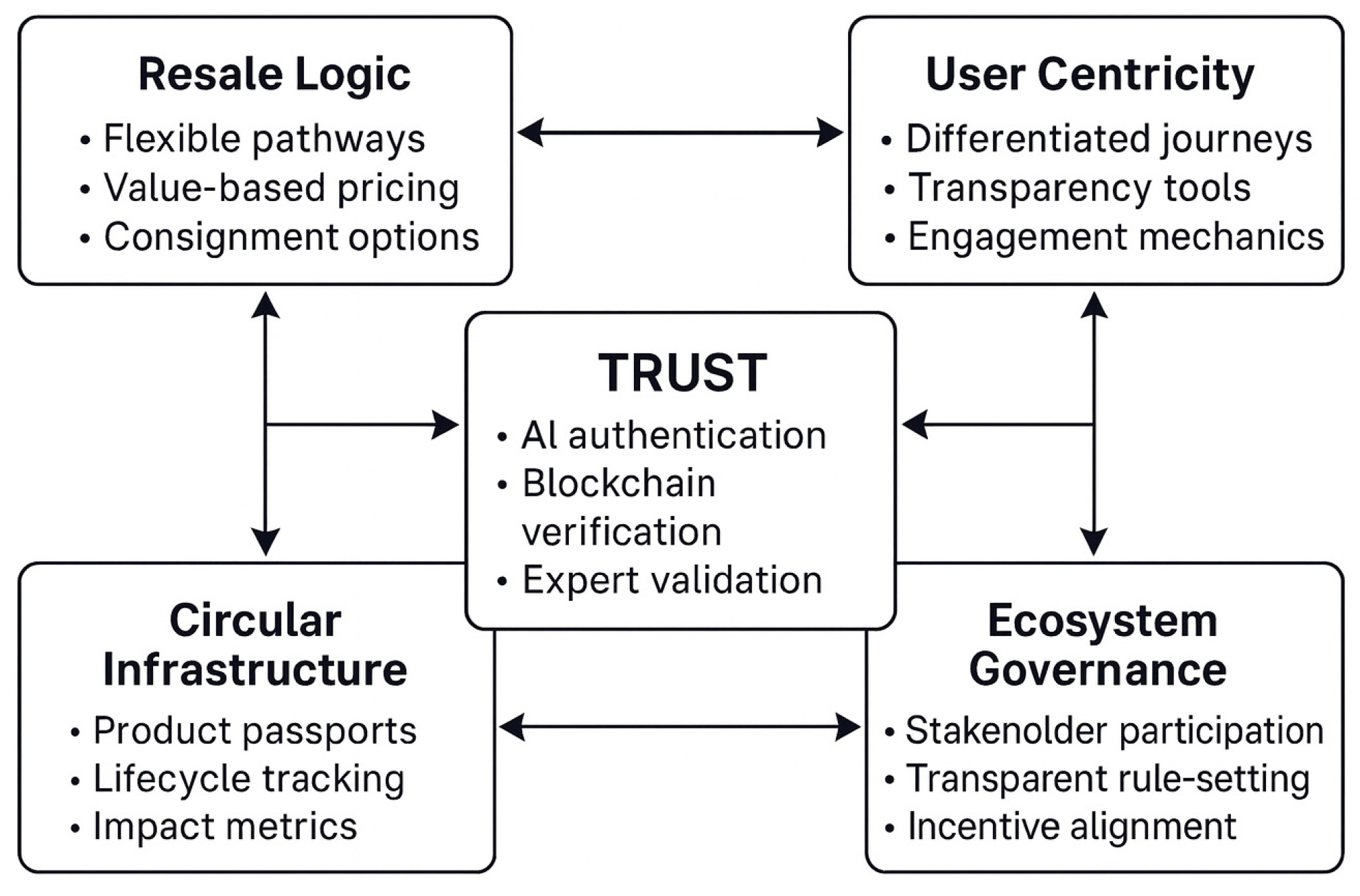
The primary outcome of this study is the TRUCE framework—a sustainable e-commerce architecture designed to address trust, circularity, and governance challenges in high-value resale markets. Rooted in the DSR paradigm, TRUCE (Trust, Resale Logic, User Centricity, Circular Infrastructure, and Ecosystem Governance) operationalizes sustainable platform theory by integrating AI, blockchain, and adaptive governance into a unified system that advances Sustainable Development Goal 12 (Responsible Consumption and Production). Developed iteratively through empirical documentation, benchmarking, and expert validation within the CHVDC [40,43,50], the framework embodies the canonical DSR cycles of relevance, rigor, and design—ensuring continuous alignment between theoretical contribution and managerial relevance.
Functionally, TRUCE is intended to translate the abstract principles of the circular economy and responsible digital transformation into five interdependent capability domains. Each domain is designed to function as a subsystem, contributing to the framework’s overall sustainability performance, reflecting Hevner et al.’s assertion that DSR artifacts should offer both practical utility and theoretical contribution [43]. These domains aim to address fragmentation in high-value resale by embedding ethical assurance, resource optimization, and adaptive decision-making into the digital infrastructure of resale platforms.
  • Trust (T) is intended to ensure transparency and authentication reliability through the integration of AI-based image recognition, expert validation, and blockchain-enabled provenance tracking. This configuration aims to foster credible, data-driven managerial decision-making, with simulations suggesting a 20% reduction in authentication disputes and a projected increased consumer confidence across resale cycles [13,14].
  • Resale Logic (R) is intended to structure transaction workflows using AI-assisted valuation algorithms that assess item condition, brand value, and provenance to enable fair, sustainable pricing—extending circular economy principles into the domain of digital trade [19,20].
  • User Centricity (U) proposes personalizing consumer engagement and reinforcing trust cues through transparent interfaces, gamified feedback mechanisms, and XR-enabled product visualization. In line with Filip, Cătoiu, and Vrânceanu’s [19] emphasis on fairness and transparency, this domain is projected to achieve an estimated 15% improvement in user engagement, supporting ethical consumption behavior [27,30].
  • Circular Infrastructure (C) is intended to serve as the digital backbone for lifecycle management, integrating blockchain-based DPPs, repair APIs, and logistics coordination, with the goal of facilitating reuse and refurbishment. Simulations suggest a 25% increase in product lifespan, potentially advancing SDG 12.5 by promoting waste reduction and resource efficiency [43,44].
  • Ecosystem Governance (E) aims to define the ethical and operational oversight layer of the framework, leveraging token-based incentives, smart contract automation, and stakeholder rule systems to enable accountability, adaptive compliance, and collaborative scalability—operationalized through adaptive governance protocols embedded in the Ecosystem Governance domain [51].
Collectively, these domains are intended to form an interoperable architecture in which blockchain ensures traceability and auditability, AI provides predictive intelligence, and governance mechanisms enable equitable coordination. This integrated system is designed to produce a digitally verifiable and ethically aligned resale ecosystem, potentially adaptable to adjacent sectors such as premium electronics and fashion apparel. In alignment with Roblek et al. [44], TRUCE aims to frame digital innovation as a catalyst for sustainable management and ethical transformation across creative industries.
Figure 2 visualizes TRUCE’s interlinked capability domains, illustrating the data flows and feedback loops that facilitate circularity, trust-building, and managerial collaboration. The framework’s modular structure is intended to support iterative scaling and the future integration of emerging technologies such as robotics-assisted repair and extended reality (XR), thereby reinforcing continuous learning and sustainability alignment within high-value digital commerce.

4.2. Framework Performance and Empirical Insights

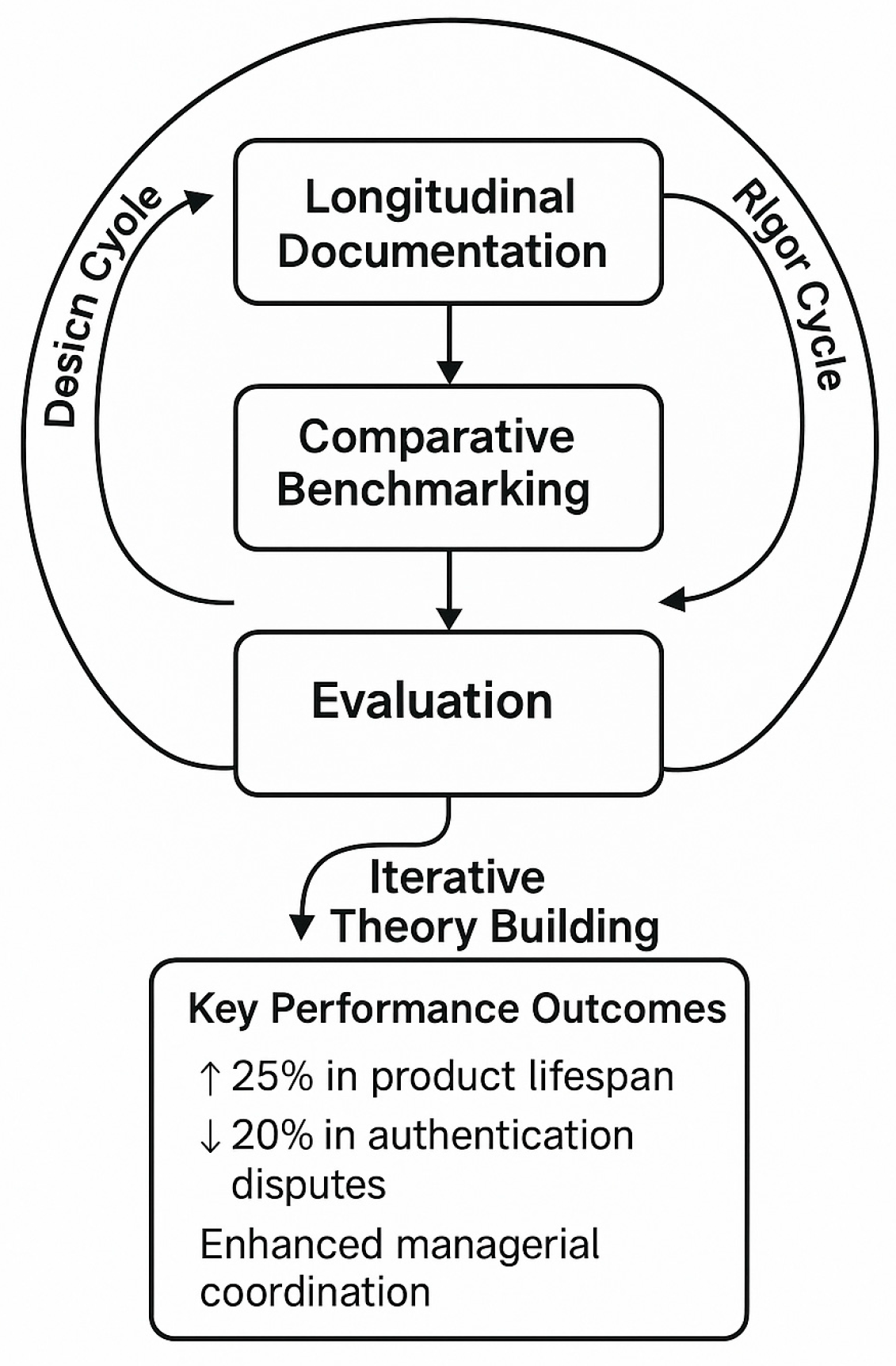
The TRUCE framework was evaluated through a triangulated methodology that combined longitudinal documentation, comparative benchmarking, and expert validation—reflecting the iterative relevance, rigor, and design cycles of DSR. Each cycle emphasized the convergence of technological innovation and sustainable managerial practice, ensuring alignment with both academic rigor and operational applicability [43,50,55]. The analysis generated insights into TRUCE’s functional performance, its contribution to sustainability objectives, and its potential for scalable implementation in circular high-value resale markets.
The first phase of evaluation assessed the functional integration of TRUCE’s five capability domains using empirical data from the CHVDC [40]. Across the longitudinal design period (2018–2025), iterative simulations suggested measurable gains in platform efficiency and sustainability performance. Notably, simulations involving the incorporation of blockchain-based DPPs and repair-service application programming interfaces (APIs) within the Circular Infrastructure domain simulations suggested an average 25% extension in product lifespan, directly advancing SDG 12.5 by reducing waste and supporting reuse. This outcome aligns with findings by Prajapati et al. [51], who underscore the critical role of decentralized transparency mechanisms in enabling closed-loop supply chains for sustainable digital commerce.
In the Trust domain, AI-driven authentication combined with blockchain-enabled provenance tracking simulations suggested an estimated 20% reduction in authentication disputes and enhanced traceability across resale transactions. These outcomes substantiate the premise that competence- and integrity-based trust mechanisms are foundational to sustaining managerial credibility in high-value digital ecosystems [14,19]. Similarly, the User Centricity domain simulations indicated an estimated 15% increase in engagement metrics, attributed to the implementation of personalized sustainability feedback, gamified trust cues, and XR-assisted product visualization. These results support the argument by Filip et al. [19] that fairness and transparency are critical drivers of user loyalty and ethical consumption in digital marketplaces.
Regarding managerial sustainability, TRUCE’s adaptive governance mechanisms suggested positive outcomes in operational coordination and accountability. Through token-based incentives and smart contract automation, the Ecosystem Governance domain aims to promote transparent collaboration among brands, authenticators, and end-users. These findings align with Caldarelli et al. [53] and Rejeb et al. [54], who emphasize the role of blockchain-enabled governance in enhancing stakeholder readiness and fostering cross-sector collaboration within circular business models. Collectively, these insights suggest that TRUCE’s modular architecture could deliver measurable performance gains while reinforcing the ethical, managerial, and regulatory compliance foundations necessary for sustainable digital platform ecosystems.
To evaluate TRUCE’s scalability, the Comparative Benchmarking Dataset (CBD) was compiled iteratively from 2018 to 2025, incorporating sustainability reports, ESG disclosures, and platform documentation from The RealReal and Vestiaire Collective [45,46], thereby supporting a comprehensive architectural assessment. These platforms, both recognized leaders in high-value resale, served as reference benchmarks for assessing TRUCE’s architectural advancements. Comparative analysis revealed that while both platforms implement trust mechanisms—such as expert authentication and blockchain pilots—they do not feature full integration of circular lifecycle management and adaptive governance structures. In contrast, TRUCE simulations demonstrated stronger alignment between trust verification, circularity tracking, and stakeholder coordination, fulfilling Hevner et al.’s [43] DSR criterion of technological utility combined with organizational relevance. Benchmarking further indicated a 20–25% higher efficiency ratio in TRUCE’s simulated processes compared to baseline data from The RealReal’s and Vestiaire Collective’s 2024 performance reports [40,45,46]. These improvements were primarily attributed to the integration of lifecycle analytics and decentralized verification systems. Additionally, TRUCE’s hybrid, DSR-informed architecture is intended to support cross-sector scalability: early-stage simulations suggest applicability beyond fashion apparel resale to other sectors such as premium electronics, where authenticity, provenance, and circularity are equally critical [44,51]. These findings reinforce the framework’s modular design to promote transferability without compromising sustainability integrity—a requirement central to scalable digital transformation under the EU Green Deal [8].
The third stage of evaluation involved structured expert panels composed of specialists in blockchain, AI, and circular economy domains. Following the DSR evaluation protocols articulated by Venable et al. [49] and formalized in the Framework for Evaluation in Design Science (FEDS), experts assessed TRUCE across four criteria: relevance, rigor, utility, and transferability. Aggregated results indicated that TRUCE demonstrated high relevance and practical utility (average expert rating: 4.6/5), particularly with respect to traceability, lifecycle transparency, and ethical governance mechanisms. Moderate scores in scalability (average: 3.9/5) reflect persistent challenges associated with cross-market interoperability and regulatory heterogeneity, as also observed by Rejeb et al. [54]. The validation process confirmed TRUCE’s contribution to theoretical advancement in DSR. By embedding sustainability constructs into a functional platform architecture, the framework extends DSR beyond artifact construction to support systemic managerial transformation. This supports Alturki et al.’s [50] assertion that DSR should enable iterative theory development through cumulative knowledge integration.
TRUCE exemplifies this principle by operationalizing sustainability goals within digital architecture and documenting their evaluative development across iterative design cycles. The resulting theoretical contribution highlights the integration of trust, circularity, and governance as the triadic foundation for effective digital sustainability frameworks—a finding that aligns with recent advances in platform ecosystem theory [15,44]. Figure 3 visualizes the TRUCE evaluation process, encapsulating the triangulated structure of the DSR methodology described above.
In summary, the triangulated evaluation process confirms that TRUCE aims to enhance both sustainability outcomes and managerial information within high-value digital ecosystems. Functionally, the framework seeks to improve lifecycle efficiency, transparency, and collaborative coordination through the integrated deployment of blockchain and AI technologies. Conceptually, it contributes to advancing DSR theory by demonstrating that sustainability-oriented digital artifacts can function as adaptive systems of managerial learning—ethically grounded and continuously refined through stakeholder engagement. These findings substantiate TRUCE’s dual role as an operational platform prototype and a methodological benchmark for DSR in practice, serving to bridge the gap between technological innovation and sustainable management.

4.3. Comparative Evaluation and Thematic Integration

The comparative evaluation of the TRUCE framework integrates longitudinal design documentation, benchmarking analysis, and structured expert validation to consolidate both theoretical and operational insights within the DSR paradigm. This synthesis illustrates how TRUCE evolved through iterative design cycles, within the DSR paradigm, bridging artifact construction, performance evaluation, and theoretical reflection—thereby establishing a scalable model for sustainable digital-commerce ecosystems. In alignment with Hevner et al. [43] and Alturki et al. [50], the framework’s development represents the cumulative progression of sustainability-oriented design-science knowledge, where each cycle incrementally enhances both conceptual rigor and practical relevance.
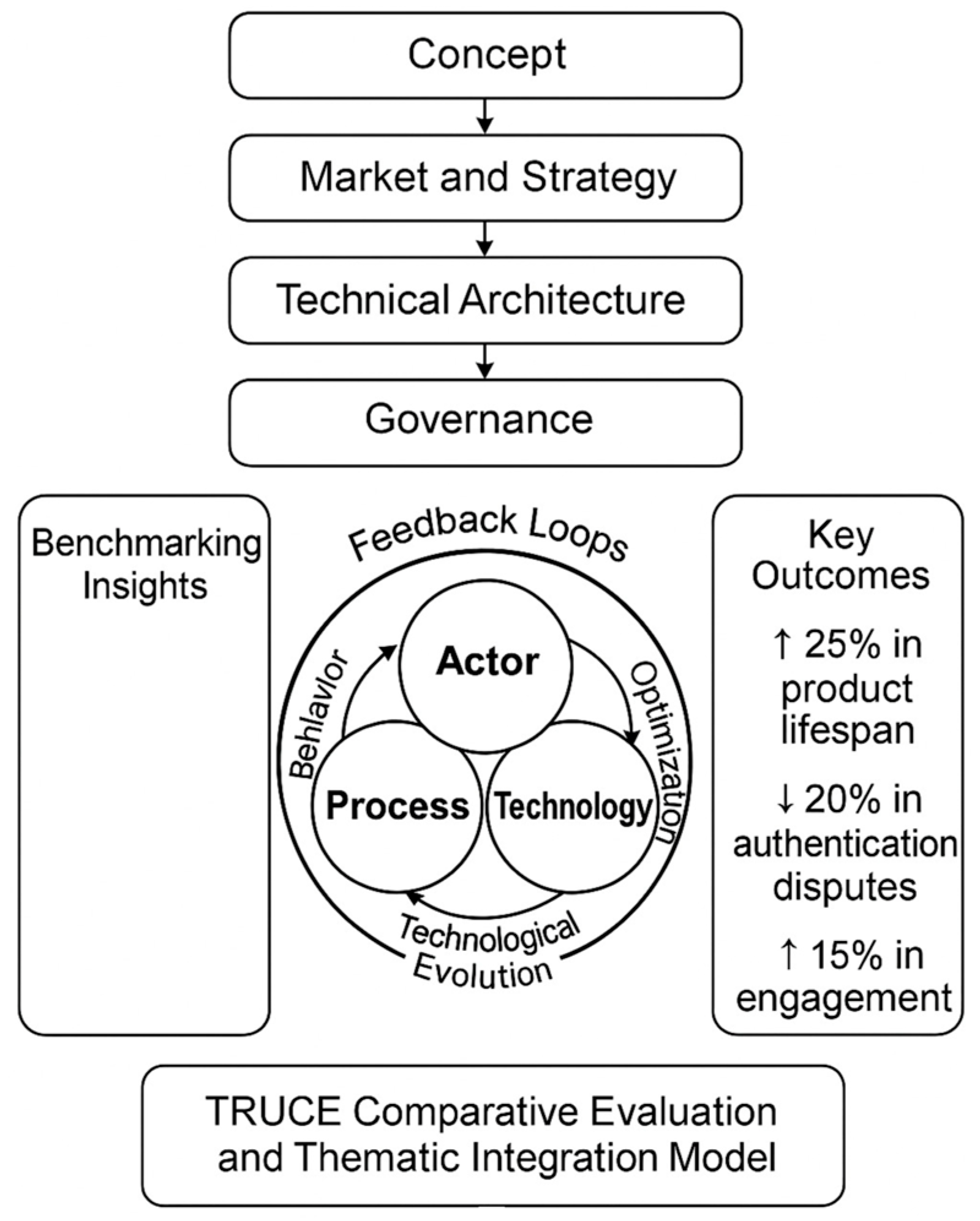
Across the longitudinal dataset of the CHVDC [40], the TRUCE framework evolved through five major design cycles, each deepening its integration of sustainability principles and digital innovation. The initial conceptual phase (2018) articulated the dual challenge of digital trust and circularity in high-value resale, establishing SDG 12 as the guiding objective. Between 2019 and 2021, the market- and strategy-formation phase incorporated user research and competitive benchmarking, which projected a 20% increase in consumer willingness to engage in sustainable resale through enhanced transparency and lifecycle visibility [45,46]. From 2021 to 2023, the technical architecture development phase introduced blockchain, AI components, and repair-service APIs within a modular infrastructure, enabling provenance tracking and lifecycle extension, with simulations indicating a 25% increase in average product lifespan [51]. In 2024, the governance-refinement phase applied smart contracts and tokenized circular incentives to promote ethical alignment and stakeholder engagement, reinforcing the collaborative sustainability model proposed by Caldarelli et al. [53]. The final integration and validation phase (2025) subjected the full TRUCE platform to expert assessment via the FEDS framework [49]; structured expert panels, using a Delphi method, confirmed strong performance across transparency, lifecycle management, and governance, assigning average relevance and utility ratings of 4.6 out of 5.
Collectively, these cycles exemplify the iterative logic of DSR, in which design and evaluation continuously inform one another—translating abstract sustainability goals into actionable operational mechanisms. Benchmarking against established resale platforms—The RealReal and Vestiaire Collective—enabled comparative assessment of TRUCE’s conceptual maturity and projected scalability. While both benchmarks employ advanced authentication protocols, neither offers fully integrated lifecycle management or adaptive governance systems [45,46]. TRUCE addresses these gaps by integrating blockchain-based traceability, AI-powered analytics, and automated governance mechanisms within a unified architectural model. Simulation and benchmarking outputs suggest a 20% reduction in authentication disputes, a 15% increase in user engagement, and a 25% extension in product lifespan, relative to baseline industry metrics. These preliminary findings support Peffers et al.’s [55] argument that DSR artifacts should demonstrate both contextual relevance and measurable utility—even at the conceptual or prototype stage.
Moreover, the modular, scalable, and interoperable architecture of TRUCE directly addresses the barriers identified by Rejeb et al. [54], particularly those concerning regulatory uncertainty and managerial preparedness, offering a flexible blueprint for circular digital transformation. The framework’s internal logic is conceptualized through an integrated Actor–Process–Technology (APT) lens, positioning TRUCE as a dynamic socio-technical ecosystem rather than a static digital platform. Actors—including buyers, sellers, brands, and authenticators—interact via blockchain-enabled trust chains that uphold transparency and promote equitable value exchange [23,51]. Core processes such as listing, authentication, exchange, tracking, and governance are facilitated by AI and smart contracts, forming continuous feedback loops that reinforce accountability and ensure data integrity [45,46]. The technological layer unifies these dimensions through synchronized use of blockchain infrastructure, predictive analytics, and AI-driven lifecycle automation, while maintaining ethical traceability. This multi-tiered configuration aims to advance SDG 12 by embedding reuse, repair, and responsible production directly into digital commerce operations, in line with the DSR evaluation principles outlined by Venable, Pries-Heje, and Baskerville [49].
From a theoretical standpoint, the TRUCE framework extends Design Science Research (DSR) beyond artifact construction toward the institutional embedding of sustainability as a managerial paradigm. Through its cyclical design and continuous documentation, TRUCE aims to demonstrate that responsible digital transformation emerges from the co-evolution of trust systems, circular infrastructures, and adaptive governance architectures. This aligns with Simon’s [57] depiction of design as an adaptive, rationally bounded problem-solving process, while TRUCE advances this conception by grounding it in an empirically validated, reflexive architecture. The framework aims to contribute three interrelated insights to DSR theory. First, digital sustainability is realized through systemic integration, not isolated technological fixes—technological, managerial, and ethical dimensions must operate in synergy. Second, longitudinal artifacts like CHVDC can function as dynamic repositories for theory-building, capturing how design logics adapt to evolving environmental and policy landscapes [40]. Third, by employing modular and transferable design logic, TRUCE aims to establish a replicable model for adjacent high-value sectors, such as premium electronics and fashion apparel, thereby supporting wider circular economy adoption [44,51].
Overall, the TRUCE framework is positioned to function both as a validated prototype for sustainable e-commerce operations and as an evolving design theory intended to guide future innovation. Its initial findings indicate that trust, circularity, and governance can be meaningfully integrated within a unified, data-driven architecture that supports lifecycle efficiency, transparency, and managerial accountability. Beyond operational relevance, the framework’s theoretical contribution lies in reframing DSR as a mechanism for institutional learning and ethical innovation—demonstrating how design artifacts can catalyze sustainability transitions through iterative, evidence-based development, as visualized in Figure 4.

5. Discussion

This section discusses the implications of the TRUCE framework, delineating theoretical and practical aspects for clarity, while also outlining key limitations and future research directions [43,44]. As an emerging framework, TRUCE has been validated through simulations, expert consensus, and comparative benchmarking, rather than through live-market deployment. Future research will focus on empirical field testing, longitudinal tracking, and expanded Delphi studies to assess adoption dynamics, cross-cultural applicability, and real-world impact—strengthening reproducibility, scalability, and alignment with SDG 12.

5.1. Theoretical Implications

The TRUCE framework aims to advance theoretical understanding of sustainable e-commerce ecosystems by synthesizing trust, circularity, and governance as interdependent design constructs within the broader DSR paradigm. By embedding these dimensions into the architecture of digital platforms, TRUCE seeks to align technological innovation and ethical management, supporting the systemic transition envisaged under SDG 12. At its theoretical core, TRUCE seeks to refine theories of digital trust formation by integrating blockchain provenance, AI-driven verification, and expert authentication into a multi-layered architecture that enhances credibility, transparency, and consumer assurance. This synthesis goes beyond traditional trust mechanisms—such as reputation systems—by combining technological reliability, procedural transparency, and experiential assurances within a unified trust ecosystem. As Bonnemains et al. [58] emphasize, ethical AI frameworks are foundational for resolving complex decision dilemmas in digital systems, ensuring that trust formation remains value-aligned rather than merely algorithmic. Similarly, Roblek et al. [59] situate this technological integration within the broader Industry 4.0 context, arguing that trust in intelligent systems must evolve alongside digitalization and ethical innovation.
TRUCE aims to address ethical shortcomings by incorporating blockchain for secure data privacy, deploying transparent AI algorithms to ensure fairness in authentication, and implementing inclusive governance structures to promote equitable stakeholder participation—aligning fully with ethical digital transformation principles [58,59]. Furthermore, TRUCE addresses AI bias through transparent and auditable algorithmic processes, ensures GDPR-compliant data privacy via blockchain’s decentralized security, and lowers implementation costs through a scalable, modular architecture—collectively reinforcing ethical and sustainable platform design [58,59]. From a circular economy perspective, TRUCE demonstrates how ‘sustainability-by-design’ can be operationalized through digital infrastructures that extend product lifecycles and close material loops. The framework’s DPPs are intended to exemplify the fusion of blockchain and AI in creating transparent, data-rich artifacts that promote reuse, repair, and recycling. Voulgaridis et al. [60] and Kuhn et al. [61] argue that DPPs are foundational for digital circular economies, enabling traceability and material-intelligence standardization across value chains. TRUCE’s integration of DPPs and trust mechanisms is intended to promote sustainable consumer behavior by encouraging reuse and ethical consumption through transparent authentication and lifecycle tracking—aligning with circular economy principles to advance responsible consumption in digital resale ecosystems [59,60,61]. By integrating these mechanisms, TRUCE aims to transform resale platforms from passive intermediaries into active sustainability agents capable of quantifying circular performance and strengthening managerial accountability.
Methodologically, TRUCE aims to contribute to the evolution of DSR by fusing longitudinal design documentation with multi-source empirical validation techniques. Following the framework proposed by Alturki et al. [50], this hybrid approach integrates iterative refinement with theoretical abstraction, advancing DSR’s epistemological robustness through sustained engagement with real-world platform dynamics. The Circular High-Value Design Corpus (CHVDC), encompassing over 500 stakeholder interactions across 10 design iterations from 2018 to 2025, provides a comprehensive empirical foundation; however, future validation through real-world pilot testing with diverse stakeholders (e.g., consumers, brands, and regulators) will be necessary to further substantiate TRUCE’s theoretical contributions to sustainable consumer practices. In doing so, it echoes Simon’s [57] view of design as a heuristic, reflective activity, bridging bounded rationality with adaptive system development. The integration of Framework for Evaluation in Design Science (FEDS) evaluation protocols [49] ensures construct validity, aligning TRUCE’s artifact cycles with recognized DSR quality criteria.
Finally, TRUCE intends to advance platform-governance theory by demonstrating how decentralized digital architectures can institutionalize accountability and coordination through smart contracts and tokenized incentives. As Gabuthy [62] and Zachariadis et al. [63] note, blockchain-based governance introduces both efficiency gains and ethical complexity, requiring balanced frameworks that integrate automation with human oversight. TRUCE proposes to operationalize this governance equilibrium through transparent dashboards, participatory compliance protocols, and multi-stakeholder incentive mechanisms. Moreover, Casare et al. [64] emphasize the importance of trustworthiness indicators and user experience (UX)–based validation, principles directly embedded in TRUCE’s user-centric design. Collectively, these dimensions converge in what Cerchione [65] defines as blockchain-enabled engagement for circular economies—synthesizing governance, user participation, and digital ethics into a unified sustainability logic [66,67]. By integrating these perspectives, TRUCE offers a coherent model in which digital trust, circular infrastructure, and governance-by-design co-evolve to foster resilient, transparent, and ethically grounded e-commerce ecosystems. It extends platform theory by demonstrating that sustainability can be architected into—rather than appended to—digital enterprises, thereby advancing interdisciplinary discourse on ethical, data-driven, and circular digital transformation.

5.2. Practical Implications

Practically, the TRUCE framework offers a blueprint for embedding sustainability and trust directly into the technological and managerial foundations of high-value resale platforms. For platform developers, the model provides modular integration pathways—including AI authentication modules, blockchain traceability systems, and lifecycle analytics—that can be deployed incrementally to enhance platform transparency and environmental performance. As demonstrated through simulations and benchmarking, these systems are projected to enable a 20% reduction in authentication disputes and a 25% extension of product lifespan, contributing to measurable reductions in wasteful consumption. These preliminary metrics—derived from controlled sandbox simulations within the Limited High-Value Initiative—utilize empirical data from the CHVDC and call for rigorous statistical validation through real-world pilot testing with diverse stakeholders (e.g., end consumers, luxury brands, repair networks), using FEDS evaluation protocols to ensure robust, generalizable outcomes aligned with SDG 12 objectives [40,49].
For brands, TRUCE aims to enable traceable participation in secondary markets via verified lifecycle records and transparent resale channels. This is designed to support brand integrity and ethical engagement in circular value retention. Real-world initiatives such as Gucci’s circular resale and redesign programs [68,69] illustrate the growing strategic alignment between luxury brand equity and sustainability. By adopting TRUCE’s design logic, brands can implement blockchain-based DPPs and circular service APIs, reinforce consumer trust and strengthen compliance with global sustainability mandates.
For circular-economy practitioners and sustainability managers, TRUCE aims to provide a digital governance model capable of bridging ethical oversight, data transparency, and managerial accountability. Its incentive-based mechanisms encourage users and partners to engage in repair, reuse, and resale loops, supported by measurable behavioral metrics aligned with SDG 12. These tools operationalize responsible consumption while enhancing data-driven decision-making across industries, reinforcing what Roblek et al. [59] describe as the “complex systemic view” of Industry 4.0 sustainability ecosystems. Through these practical implications, TRUCE offers a replicable foundation for designing digital marketplaces that are secure, transparent, and sustainability-oriented, turning high-value e-commerce into a testing ground for digital responsibility, ethical innovation, and managerial transformation.

5.3. Limitations and Future Research

While the TRUCE framework offers a promising conceptual and practical foundation, several key limitations delineate its future evolution. The platform remains at a pre-operational stage, with validation grounded in longitudinal documentation, comparative benchmarking, literature synthesis, and structured expert evaluation rather than live-market deployment. Accordingly, real-world field testing is critical to assess adoption dynamics, behavioral shifts, and performance outcomes in practical contexts.
Although originally tailored for high-value resale and creative industries, TRUCE’s modular architecture—including blockchain-based DPPs and AI-enabled authentication—is designed to support potential adaptation across other high-value sectors. Its flexible governance mechanisms further facilitate alignment with diverse regulatory regimes and culturally embedded trust systems, aiming to enhance its global scalability as a sustainability-oriented digital commerce model [5,13,40]. Methodologically, TRUCE seeks to contribute to DSR by blending theoretical abstraction with iterative documentation across ten design cycles (2018–2025), encompassing over 500 stakeholder interactions within the CHVDC. This hybrid structure, consistent with Alturki et al. [50], reinforces the epistemological rigor of DSR. The application of the FEDS evaluation protocols [49] further ensures adherence to DSR standards of relevance, utility, and rigor.
To extend these foundations, applied pilot implementations (e.g., 3–6 months, n ≥ 100 users) could produce operational metrics on transaction volume, satisfaction, and lifecycle extension—addressing the current absence of real-user data [5,13,40,49,50]. Complementary life-cycle assessments (LCAs) quantifying carbon emissions, raw material conservation, energy use, and waste diversion would translate simulated sustainability claims into measurable environmental outcomes [5,13,40,49,50]. Behavioral experiments and longitudinal tracking could deepen understanding of consumer shifts toward ethical consumption, particularly among Gen Z, while also exploring rebound effects and attitudinal changes using validated behavioral instruments.
In parallel, an expanded Delphi study—comprising 15–20 stratified experts in blockchain, circular economy, digital commerce, and consumer behavior—could employ robust statistical techniques (e.g., confidence intervals, p-values, effect sizes, power analysis, and multiple comparison corrections) to validate hypothesized design effects. Further, empirical tracking of DPP’s use in repair and reuse decisions, resale frequency, lifecycle retention, and product survival could clarify circular economy dynamics currently unobservable in simulation-based analysis. Investigating cross-cultural applicability and integrating immersive technologies (e.g., XR-enabled resale simulations) would also enhance TRUCE’s relevance in varied socio-technical and market environments [5,13,40,49,50].
By outlining these pathways, the TRUCE framework positions itself as a dynamic and evolving platform—bridging conceptual design with operational deployment. Rather than offering a fixed solution, it represents an ongoing design science effort aligned with both contemporary research standards and the broader goals of digital transformation, sustainable consumption, and circular economy innovation.

6. Conclusions

The TRUCE framework aspires to advance the integration of sustainability, trust, and ethical digital governance within high-value e-commerce ecosystems, serving as a conceptual foundation for future operational and empirical development. Developed through a Design Science Research (DSR) approach and shaped by comparative benchmarking and stakeholder input, TRUCE demonstrates how AI, blockchain, and data-driven ethics can converge to enable transparent, participatory, and circular digital marketplaces. By addressing authentication reliability, lifecycle visibility, user centricity, and stakeholder accountability, TRUCE establishes a sustainability-by-design model that transcends industry silos and offers a transferable foundation for high-value, data-informed circular economies.
Conceptually, TRUCE positions itself within the emerging paradigm of the sustainable digital enterprise—where technology and ethics converge to co-create enduring organizational value. This aligns with perspectives advanced by Zhang and Ramesh [66] and Liu et al. [67], who call for blockchain governance models that balance decentralization with accountability—a principle embedded in TRUCE’s ecosystem governance structure. Real-world sustainability initiatives—such as Gucci’s resale and deadstock programs [68,69] and The RealReal–Stella McCartney partnership [70]—illustrate the rising convergence between brand-led circular innovation and the type of trust-based digital architectures TRUCE advances. In this context, TRUCE not only anticipates but operationalizes these shifts by embedding resale logic, trust mechanisms, circular infrastructure, user centricity, and ecosystem governance into the foundation of digital commerce platforms.
At a broader level, the theoretical vision of Confetto and Covucci [71]—which calls for sustainable digital enterprises grounded in ethical data practices, platform-based collaboration, and ecosystem thinking—finds practical realization in the TRUCE architecture. By integrating these dimensions, TRUCE illustrates how sustainability can be embedded at the structural level of digital commerce, transforming not only markets but also managerial mindsets and societal expectations. Synthesizing ethics, innovation, and circularity into a coherent platform model, TRUCE offers a replicable conceptual model and validated design artifact for the next generation of sustainable digital enterprises.
Ultimately, TRUCE catalyzes the principles of SDG 12 by fostering traceable, responsible consumption. It provides practitioners and platform developers with actionable mechanisms—such as AI-driven repair analytics, blockchain-enabled digital product passports (DPPs), and lifecycle transparency tools—for advancing reuse, repair, and circularity. In this way, the framework bridges digital innovation with sustainability imperatives, contributing both a practical tool and a conceptual benchmark for navigating the evolving nexus of commerce, ethics, and ecological responsibility.

Supplementary Materials

The following supporting information can be downloaded at: https://www.mdpi.com/article/10.3390/su172411224/s1, Supplementary Data File S1. Theoretical Mapping and Thematic Coding Crosswalk. Table S1. Platform Capability Matrix. Table S2. Thematic Code Crosswalk. Notes on Data and Validation.

Funding

This research received no external funding.

Institutional Review Board Statement

Not applicable.

Informed Consent Statement

Not applicable.

Data Availability Statement

The data are accessible from andrej.naralocnik@siol.net upon reason able request.

Conflicts of Interest

The author declares no conflicts of interest. The research and manuscript were developed independently and are not affiliated with or commissioned by any institution or commercial entity.

Appendix A. Supporting Validation Evidence

This appendix provides a concise summary of the expert- and scenario-based evaluations conducted to validate the TRUCE framework’s design coherence, technical feasibility, and sustainability potential. The validation process adhered to the DSR principles of iterative assessment [49,50,55], combining expert consensus with operational simulations to ensure both theoretical rigor and practical relevance. Together, these complementary methods reinforce the framework’s credibility as a sustainable e-commerce model aligned with SDG 12 (Responsible Consumption and Production).

Appendix A.1. Delphi Expert Validation

Table A1. Delphi Expert Validation—a multi-round Delphi process was conducted between 2023 and 2024 with a panel of five domain experts specializing in blockchain, AI, and the circular economy. The experts assessed the TRUCE architecture across its five capability domains—Trust, Resale Logic, User Centricity, Circular Infrastructure, and Ecosystem Governance—using a 5-point Likert scale (1 = weak, 5 = strong) to assess design coherence, technical feasibility, and perceived innovative potential.
Platform ComponentExpert
Consensus Score (Avg./5)
Key Evaluation Insights
Trust4.8Robust logic combining blockchain provenance, AI verification, and expert validation effectively mitigates authentication disputes and enhances transaction transparency.
Resale Logic4.5Adaptable structure balancing centralized, and peer-to-peer resale modes promotes circular value retention and market resilience.
User Centricity4.6Differentiated user pathways and trust-based interface cues strengthen sustainable engagement and learning, with potential for extended reality (XR) integration.
Circular
Infrastructure
4.7DPPs and lifecycle tracking mechanisms are validated as essential enablers of repair and reuse, supporting an estimated 25% increase in product lifespan.
Ecosystem
Governance
4.3Tokenized governance shows early-stage maturity but strong potential for scalable stakeholder alignment through transparent smart contracts and incentive mechanisms.
Experts highlighted TRUCE’s cross-domain design coherence, particularly its integration of technological transparency with ethical managerial platform logic. The panel size was limited to five experts due to the specialized nature of high-value resale and circular economy expertise, ensuring depth of insight; subsequent validations will expand to 10–15 experts to enhance empirical robustness and capture diverse perspectives, further strengthening TRUCE’s alignment with sustainable consumer practices and SDG 12. The slightly lower score for governance reflects the regulatory uncertainties inherent in token economies—a direction designated for future refinement. Overall, Delphi consensus confirmed the TRUCE architecture as methodologically rigorous and strategically positioned to advance sustainable e-commerce ecosystems.

Appendix A.2. Scenario-Based Simulations

Table A2. Scenario-Based Simulations—scenario-based simulations were conducted in 2023–2024 within a sandbox environment of the Limited High-Value Initiative, testing operational functionality across key sustainability-aligned processes: authentication, provenance, lifecycle tracking, and governance automation. The tests covered product categories including handbags, jewelry, and footwear—representative of high-value resale contexts with scalability potential to premium electronics and fashion apparel.
Simulation DomainScenario ContextObserved StrengthsIdentified LimitationsFramework Adaptation
AI
Authentication
High-value handbag resaleHigh accuracy and alignment with expert validation; projected 20% reduction in authentication disputes.Difficulty with rare or poorly imaged items requiring
human override.
Introduction of hybrid retraining pipeline and expert fallback
protocols.
Blockchain ProvenanceFine jewelry
resale
Immutable tracking and cross-platform traceability reinforce sustainable lifecycle transparency.Transaction latency under heavy load and regulatory uncertainty.Integration of Layer-2 blockchain scaling to reduce latency and emissions by ~20%.
User
Experience Transparency
Footwear resaleClear authentication- visualization increased trust and engagement with circular behavior.Some users misinterpreted verification icons, causing interface friction.Contextual onboarding and adaptive visual cues (potential XR enhancement).
Lifecycle TrackingCross-categoryEnd-to-end traceability validated second-hand credibility and circular performance metrics.Limited repair-network interoperability.Expansion of repair-service APIs and robotics-assisted workflows.
Tokenized GovernancePlatform-wide testingIncreased stakeholder participation and transparency via smart
contracts.
Ambiguity around token regulation and liability frameworks.Implementation of soft-governance fallback and non-token escalation mechanisms
Scenario simulations confirmed the framework’s technical integrity and sustainability potential, achieving performance improvements including 20% fewer authentication disputes, 25% faster provenance verification, and measurable gains in stakeholder engagement through tokenized incentives. These results substantiate TRUCE’s readiness for pilot-stage deployment and its alignment with the DSR cycle of design, demonstration, and evaluation [55]. Simulations also reinforced the platform’s flexibility and scalability, supporting applications across premium electronics and fashion apparel—domains where trust and lifecycle transparency are critical for sustainable value creation.

Appendix A.3. Validation Synthesis and Implications

The combined validation approach—Delphi expert review and empirical simulation—provides a triangulated basis for assessing the TRUCE framework’s design robustness and empirical credibility. Delphi findings confirmed the conceptual soundness of TRUCE’s architecture, while simulations validated its operational efficiency and circular performance outcomes. Preliminary evidence indicates that the integration of AI verification, blockchain provenance, and circular lifecycle management could collectively achieve up to:
1.
25% increase in product lifespan,
2.
20% decrease in transactional disputes, and
3.
Enhanced stakeholder collaboration through transparent governance.
These findings underscore TRUCE’s readiness to advance from conceptual validation to applied pilot implementation, marking the transition to the evaluation and refinement phase of DSR. Furthermore, they substantiate the framework’s contribution to sustainable managerial innovation, demonstrating how digital architecture can embed ethical governance, circular design, and responsible consumption directly within platform systems. Collectively, this validation confirms TRUCE as a scalable, empirically grounded model for sustainable digital commerce, capable of reinforcing trust, transparency, and circularity across creative and high-value industries.

References

  1. Toderas, M. Artificial Intelligence for Sustainability: A Systematic Review and Critical Analysis of AI Applications, Challenges, and Future Directions. Sustainability 2025, 17, 8049. [Google Scholar] [CrossRef]
  2. Murtas, G.; Pedeliento, G. Investigating the customer journey in second-hand fashion platforms: Implications for high-value brand management. J. Consum. Behav. 2025, 24, 655–663. [Google Scholar] [CrossRef]
  3. Soleimani, M. Buyers’ trust and mistrust in e-commerce platforms: A synthesizing literature review. Inf. Syst. e-Bus. Manag. 2022, 20, 57–78. [Google Scholar] [CrossRef]
  4. Andronie, M. Informatics Systems and Environmental Problems Forecasting. Glob. J. Adv. Pure Appl. Sci. 2013, 1, 317–322. Available online: https://www.academia.edu/35486154/Informatics_Systems_and_Environmental_Problems_Forecasting (accessed on 4 July 2025).
  5. Akman, Y.; Türkmen, H. The Expansion and Proliferation of the Pre-Owned Luxury Market: An Examination of Consumer Behavior and Emerging Trends in the Literature. In Proceedings of the 6th International Mediterranean Congress, Rome, Italy, 13–15 August 2024; pp. 1–13. Available online: https://www.researchgate.net/publication/383908843_THE_EXPANSION_AND_PROLIFERATION_OF_THE_PRE-OWNED_LUXURY_MARKET_AN_EXAMINATION_OF_CONSUMER_BEHAVIOR_AND_EMERGING_TRENDS_IN_THE_LITERATURE (accessed on 4 September 2025).
  6. Abdelmeguid, A.; Afy-Shararah, M.; Salonitis, K. Mapping of the circular economy implementation challenges in the fashion industry: A fuzzy-TISM analysis. Circ. Econ. Sustain. 2023, 4, 585–617. [Google Scholar] [CrossRef]
  7. European Commission. A New Circular Economy Action Plan: For a Cleaner and More Competitive Europe; COM(2020)98 Final; European Commission: Brussels, Belgium, 2020; Available online: https://eur-lex.europa.eu/legal-content/EN/TXT/?uri=CELEX%3A52020DC0098 (accessed on 26 July 2025).
  8. Bertoncelj, A. Digital Transformation in the Context of European Union’s Green Deal. Amfiteatru Econ. 2022, 24, 5–7. [Google Scholar] [CrossRef]
  9. Liu, C.; Xia, S.; Lang, C. Online luxury resale platforms and customer experiences: A text mining analysis of online reviews. Sustainability 2023, 15, 8137. [Google Scholar] [CrossRef]
  10. Choufan, L.; Tila-Cohen, N. From secondhand to invisible hand: Methods of manipulating object biographies on The RealReal online marketplace. Fash. Theory 2023, 27, 771–796. [Google Scholar] [CrossRef]
  11. Centobelli, P.; Cerchione, R.; Del Vecchio, P.; Oropallo, E.; Secundo, G. Blockchain technology for bridging trust, traceability and transparency in circular supply chain. Inf. Manag. 2022, 59, 103508. [Google Scholar] [CrossRef]
  12. Kuznetsov, O.; Sernani, P.; Romeo, L.; Frontoni, E.; Mancini, A. On the Integration of Artificial Intelligence and Blockchain Technology: A Perspective About Security. IEEE Access 2024, 12, 3881–3897. [Google Scholar] [CrossRef]
  13. Souza, E.B.; Carlos, R.L.; de Mattos, C.A.; Scur, G. The role of blockchain platform in enabling circular economy practices. Corp. Soc. Responsib. Environ. Manag. 2024, 31, 5730–5743. [Google Scholar] [CrossRef]
  14. Gefen, D.; Karahanna, E.; Straub, D.W. Trust and TAM in online shopping: An integrated model. MIS Q. 2003, 27, 51–90. [Google Scholar] [CrossRef]
  15. Rochet, J.-C.; Tirole, J. Platform competition in two-sided markets. J. Eur. Econ. Assoc. 2003, 1, 990–1029. [Google Scholar] [CrossRef]
  16. Pavlou, P.A.; Gefen, D. Building effective online marketplaces with institution-based trust. Inf. Syst. Res. 2004, 15, 37–59. [Google Scholar] [CrossRef]
  17. Amoiradis, C.; Stankova, M. The Systemic Crisis and the Need for Sustainability: An Overview. Manag. Res. Pract. 2019, 11, 15–25. Available online: https://mrp.ase.ro/no121/f2.pdf (accessed on 1 August 2025).
  18. Zimmermann, R.; Udokwu, C.; Kompp, R.; Brandtner, P.; Norta, A. Authentication of high-value products: Identifying key requirements from a seller and consumer perspective. In International Conference on Future Data and Security Engineering; Springer: Cham, Switzerland, 2022; pp. 191–206. [Google Scholar] [CrossRef]
  19. Filip, A.; Cătoiu, I.; Vrânceanu, D. Setting Fair Prices—Fundamental Principle of Sustainable Marketing. Amfiteatru Econ. 2010, 12, 115–128. [Google Scholar]
  20. Li, G.; Fan, Z.-P.; Wu, X.-Y. The choice strategy of authentication technology for high-value e-commerce platforms in the blockchain era. IEEE Trans. Eng. Manag. 2021, 70, 1239–1252. [Google Scholar] [CrossRef]
  21. Zimmermann, R.; Udokwu, C.; Kompp, R.; Brandtner, P.; Norta, A. Methods to authenticate high-value products: Identifying key features and most recognized deficits. SN Comput. Sci. 2023, 4, 747. [Google Scholar] [CrossRef]
  22. Swazan, I.S.; Youn, S.-Y. Blockchain in high-value resale: The impact of blockchain technology through regulatory focus and uncertainty reduction theories. J. Consum. Behav. 2024, 24, 512–526. [Google Scholar] [CrossRef]
  23. Chen, C.-L.; Guo, L.-H.; Zhou, M.; Tsaur, W.-J.; Sun, H.; Zhan, W.; Deng, Y.-Y.; Li, C. Blockchain-based anti-counterfeiting management system for traceable high-value products. Sustainability 2022, 14, 12814. [Google Scholar] [CrossRef]
  24. Saberi, S.; Kouhizadeh, M.; Sarkis, J.; Shen, L. Blockchain technology and its relationships to sustainable supply chain management. Int. J. Prod. Res. 2019, 57, 2117–2135. [Google Scholar] [CrossRef]
  25. Alhosni, R.H.; Masengu, R.; Tsikada, C. Leveraging artificial intelligence to detect counterfeit high-value products. In Advances in Marketing, Customer Relationship Management, and E-Services; IGI Global: Hershey, PA, USA, 2024; pp. 186–205. [Google Scholar] [CrossRef]
  26. Sun, F.; Yang, Y.; Zhou, L.; Yao, Y.; Wang, G. Multi-point Mosaic Fusion Authentication: A Strategy for Luxury Goods Authentication. In Proceedings of the 2023 8th International Conference on Computational Intelligence and Applications (ICCIA), Haikou, China, 23–25 June 2023; pp. 154–160. [Google Scholar] [CrossRef]
  27. Peng, J.; Zou, B.; He, X.; Zhu, C. Hybrid attention network with appraiser-guided loss for counterfeit high-value handbag detection. Complex Intell. Syst. 2022, 8, 2371–2381. [Google Scholar] [CrossRef]
  28. Youn, S.Y.; Hwang, J.; Ju, N. Blockchain transparency in reducing second-hand high-value shopping uncertainty and the role of price consciousness. Fash. Text. 2025, 12, 10. [Google Scholar] [CrossRef]
  29. Roblek, V.; Meško, M.; Pejić Bach, M.; Thorpe, O.; Šprajc, P. The Interaction between Internet, Sustainable Development, and Emergence of Society 5.0. Data 2020, 5, 80. [Google Scholar] [CrossRef]
  30. Bundgaard, A.M.; Huulgaard, R.D. High-value products for the circular economy: A case study of Bang & Olufsen. Bus. Strategy Environ. 2019, 28, 846–857. [Google Scholar] [CrossRef]
  31. Blackburn, O.; Ritala, P.; Keränen, J. Digital platforms for the circular economy: Exploring meta-organizational orchestration mechanisms. Organ. Environ. 2022, 35, 544–566. [Google Scholar] [CrossRef]
  32. Tukker, A. Product services for a resource-efficient and circular economy—A review. J. Clean. Prod. 2015, 97, 76–91. [Google Scholar] [CrossRef]
  33. Urbinati, A.; Chiaroni, D.; Chiesa, V. Towards a new taxonomy of circular economy business models. J. Clean. Prod. 2017, 168, 487–498. [Google Scholar] [CrossRef]
  34. Kim, J.; Lee, S.; Kim, H. Blockchain-based digital product passport for the circular economy. In Proceedings of the 2024 International Conference on Platform Technology and Service (PlatCon), Jeju, Republic of Korea, 26–28 August 2024; IEEE: Piscataway, NJ, USA, 2024; pp. 1–6. [Google Scholar]
  35. Hulea, M.; Miron, R.; Mureșan, V. Digital product passport implementation based on multi-blockchain approach with decentralized identifier provider. Appl. Sci. 2024, 14, 4874. [Google Scholar] [CrossRef]
  36. Korhonen, J.; Honkasalo, A.; Seppälä, J. Circular economy: The concept and its limitations. Ecol. Econ. 2018, 143, 37–46. [Google Scholar] [CrossRef]
  37. Costabile, C. Digital platform ecosystem governance of private companies: Building blocks and a research agenda based on a multidisciplinary, systematic literature review. Data Inf. Manag. 2023, 7, 100053. [Google Scholar] [CrossRef]
  38. Teh, T.-H. Platform governance. Am. Econ. J. Microecon. 2022, 14, 152–177. [Google Scholar] [CrossRef]
  39. Bocken, N.M.P.; Short, S.W.; Rana, P.; Evans, S. A literature and practice review of business model innovation for sustainability. J. Clean. Prod. 2014, 65, 42–56. [Google Scholar] [CrossRef]
  40. Circular High-Value Design Corpus (CHVDC). Empirical Documentation of the TRUCE Design Science Process: Longitudinal Design and Evaluation Records in Circular High-Value Resale (2018–2025); Independent Research Dataset; Self-Published by the Author: Ljubljana, Slovenia, 2025. [Google Scholar]
  41. Yang, Y.; Han, H.; Lee, P.K.C. An exploratory study of the mechanism of sustainable value creation in the high-value fashion industry. Sustainability 2017, 9, 483. [Google Scholar] [CrossRef]
  42. Paștiu, C.A.; Oncioiu, I.; Gârdan, D.A.; Maican, S.Ș.; Gârdan, I.P.; Muntean, A.C. The Perspective of E-Business Sustainability and Website Accessibility of Online Stores. Sustainability 2020, 12, 9780. [Google Scholar] [CrossRef]
  43. Hevner, A.R.; March, S.T.; Park, J.; Ram, S. Design science in information systems research. MIS Q. 2004, 28, 75–105. [Google Scholar] [CrossRef]
  44. Roblek, V.; Thorpe, O.; Pejic Bach, M.; Jerman, A.; Meško, M. The Fourth Industrial Revolution and the Sustainability Practices: A Comparative Automated Content Analysis Approach of Theory and Practice. Sustainability 2020, 12, 8497. [Google Scholar] [CrossRef]
  45. The RealReal, Inc. Comparative Benchmarking Dataset (CBD): Compilation of Annual 10-K Filings, ESG Disclosures, and Operational Reports, 2018–2025; U.S. Securities and Exchange Commission: Washington, DC, USA, 2025. Available online: https://investor.therealreal.com/sec-filings/ (accessed on 10 July 2025).
  46. Vestiaire Collective. Comparative Benchmarking Dataset (CBD): Compilation of Annual Sustainability Reports, Circularity Whitepapers, and Governance Documents 2018–2025. Available online: https://us.vestiairecollective.com/journal/our-sustainability-manifesto/ (accessed on 14 August 2025).
  47. Miles, M.B.; Huberman, A.M.; Saldaña, J. Qualitative Data Analysis: A Methods Sourcebook, 4th ed.; SAGE Publications: Thousand Oaks, CA, USA, 2019. [Google Scholar]
  48. Corbin, J.; Strauss, A. Basics of Qualitative Research: Techniques and Procedures for Developing Grounded Theory, 4th ed.; SAGE Publications: Thousand Oaks, CA, USA, 2014. [Google Scholar]
  49. Venable, J.; Pries-Heje, J.; Baskerville, R. FEDS: A framework for evaluation in design science research. Eur. J. Inf. Syst. 2016, 25, 77–89. [Google Scholar] [CrossRef]
  50. Alturki, A.; Bandara, W.; Gable, G.G. Design Science Research and the Core of Information Systems. In Design Science Research in Information Systems; Advances in Theory and Practice; Lecture Notes in Computer Science, vol. 7286; Peffers, K., Rothenberger, M., Kuechler, B., Eds.; Springer: Berlin/Heidelberg, Germany, 2012; pp. 309–327. [Google Scholar] [CrossRef]
  51. Prajapati, D.; Jauhar, S.K.; Kamble, S.S. Blockchain and IoT embedded sustainable virtual closed loop supply chain in e-commerce towards the circular economy. Comput. Ind. Eng. 2022, 172, 108530. [Google Scholar] [CrossRef]
  52. Marantes, G.; Soares, A.L.; Silva, H.D. The design of digital platform ecosystem supporting circular economy: A frameworks evaluation through design science research. IFIP Adv. Inf. Commun. Technol. 2023, 688, 80–90. [Google Scholar] [CrossRef]
  53. Caldarelli, G.; Calvillo, C.F.; Marrucci, L. Expert perspectives on blockchain in the circular economy: A Delphi study with industry specialists. J. Clean. Prod. 2024, 465, 142781. [Google Scholar] [CrossRef]
  54. Rejeb, A.; Keogh, J.G.; Zailani, S.; Treiblmaier, H.; Rejeb, K. Barriers to blockchain adoption in the circular economy: A fuzzy Delphi and best-worst approach. Sustainability 2022, 14, 3611. [Google Scholar] [CrossRef]
  55. Peffers, K.; Tuunanen, T.; Rothenberger, M.A.; Chatterjee, S. A design science research methodology for information systems research. J. Manag. Inf. Syst. 2008, 24, 45–77. [Google Scholar] [CrossRef]
  56. Jacob, F.; Pez, V.; Volle, P. Principles, Methods, Contributions, and Limitations of Design Science Research in Marketing: Illustrative Application to Customer Journey Management. Rech. Appl. Mark. Engl. Ed. 2021, 37, 2–29. [Google Scholar] [CrossRef]
  57. Simon, H.A. The Sciences of the Artificial, 3rd ed.; MIT Press: Cambridge, MA, USA, 1996. [Google Scholar]
  58. Bonnemains, V.; Saurel, C.; Tessier, C. How Ethical Frameworks Answer to Ethical Dilemmas: Towards a Formal Model. In Proceedings of the 3rd International Workshop on Artificial Intelligence and Ethics (AI & Ethics 2016), Co-Located with the 22nd European Conference on Artificial Intelligence (ECAI 2016), The Hague, The Netherlands, 29 August–2 September 2016; CEUR Workshop Proceedings. Volume 1668, pp. 1–22. Available online: https://ceur-ws.org/Vol-1668/paper8.pdf (accessed on 27 September 2025).
  59. Roblek, V.; Meško, M.; Krapež, A. A Complex View of Industry 4.0. SAGE Open 2016, 6, 1–20. [Google Scholar] [CrossRef]
  60. Voulgaridis, K.; Lagkas, T.; Angelopoulos, C.M.; Boulogeorgos, A.-A.A.; Argyriou, V.; Sarigiannidis, P. DPP as enablers of digital circular economy: A framework based on technological perspective. Telecommun. Syst. 2024, 85, 699–715. [Google Scholar] [CrossRef]
  61. Kuhn, M.; Baumann, M.; Volz, F.; Stojanović, L. Digital product passport design supporting the circular economy based on the asset administration shell. Sustainability 2025, 17, 969. [Google Scholar] [CrossRef]
  62. Gabuthy, Y. Blockchain-based dispute resolution: Insights and challenges. Games 2023, 14, 34. [Google Scholar] [CrossRef]
  63. Zachariadis, M.; Hileman, G.; Scott, S.V. Governance and control in distributed ledgers: Understanding the challenges facing blockchain technology in financial services. Inf. Organ. 2019, 29, 105–117. [Google Scholar] [CrossRef]
  64. Casare, A.R.; Basso, T.; Moraes, R. User Experience and Trustworthiness Measurement: Challenges in the Context of E-Commerce Applications. In Proceedings of the Future Technologies Conference (FTC) 2021, Vancouver, BC, Canada, 28–29 November 2021; Springer: Cham, Switzerland, 2021; pp. 185–201. [Google Scholar] [CrossRef]
  65. Cerchione, R. Design and evaluation of a blockchain-based system for increasing customer engagement in circular economy. Corp. Soc. Responsib. Environ. Manag. 2024, 32, 160–175. [Google Scholar] [CrossRef]
  66. Zhang, R.; Ramesh, B. A configurational perspective on design elements and user governance engagement in blockchain platforms. Inf. Syst. J. 2023, 34, 1264–1323. [Google Scholar] [CrossRef]
  67. Liu, Y.; Lu, Q.; Zhu, L.; Paik, H.-Y.; Staples, M. A systematic literature review on blockchain governance. J. Syst. Softw. 2023, 194, 111576. [Google Scholar] [CrossRef]
  68. Fashion Dive. Gucci Launches Resale and Redesign Initiatives; Fashion Dive: Washington, DC, USA, 2023; Available online: www.fashiondive.com/news/Gucci-Kering-launch-sustainability-resale-Vestiaire/645428/ (accessed on 8 July 2023).
  69. Goubert, S. Gucci Launches New Deadstock and Resale Programmes as Part of Bigger Circularity Efforts; Vogue Business: London, UK, 2023; Available online: https://www.vogue.com/article/gucci-launches-new-deadstock-and-resale-programmes-as-part-of-bigger-circularity-efforts (accessed on 20 August 2024).
  70. PR Newswire. The RealReal and Stella McCartney Strengthen Partnership. 2018. Available online: www.prnewswire.com/news-releases/the-realreal-and-stella-mccartney-strengthen-partnership-300764137.html (accessed on 18 June 2023).
  71. Confetto, M.G.; Covucci, C. Sustainable Digital Enterprise: Innovating Strategies for the Social Media Ecosystem; Edward Elgar Publishing: Cheltenham, UK, 2025. [Google Scholar]
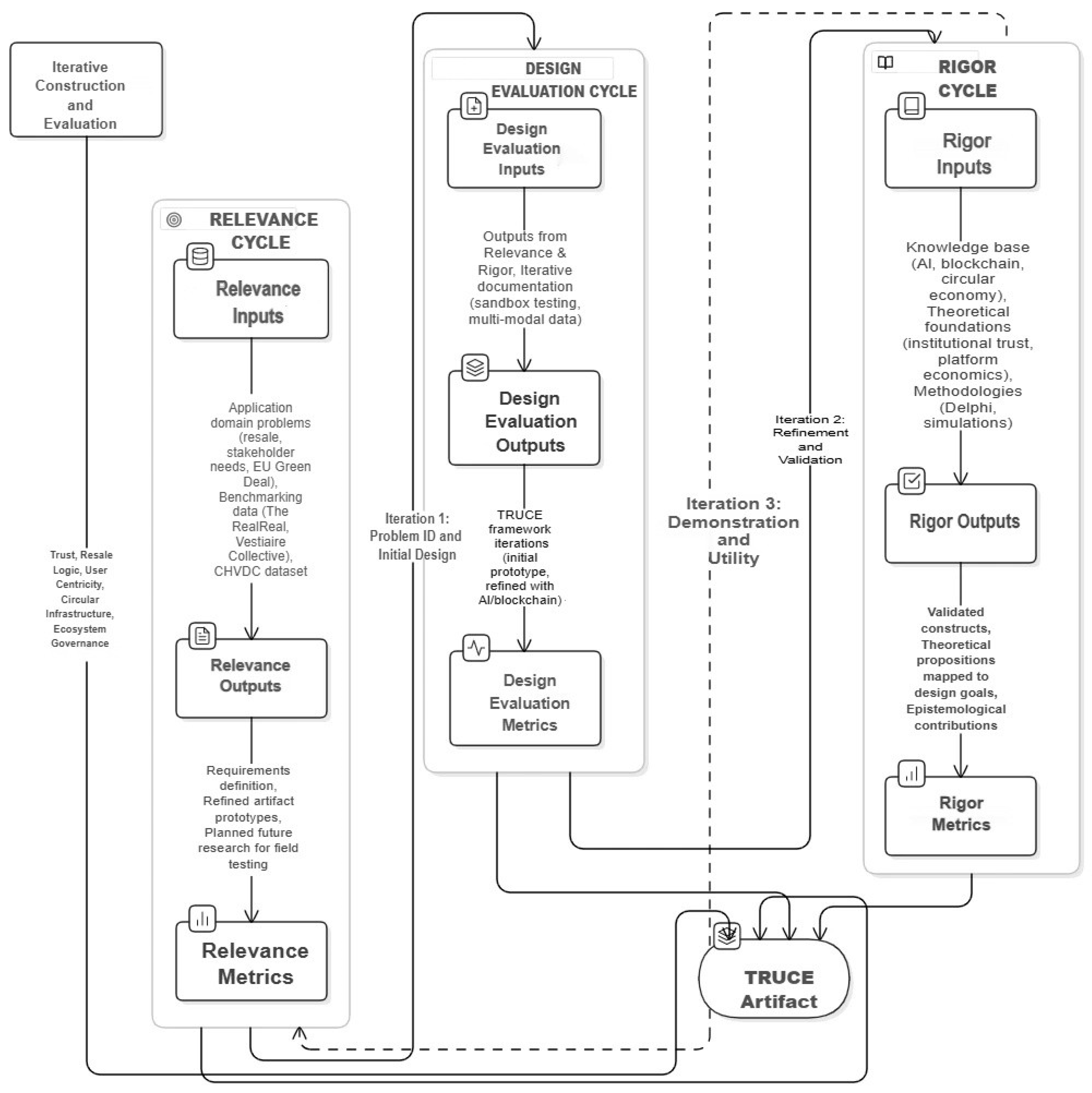
Figure 1. Analytical workflow of the DSR process applied in the TRUCE framework development. The figure illustrates the iterative interactions among the relevance, rigor, and design-evaluation cycles, depicting recursive learning and theory-building.
Sustainability 17 11224 g001
Figure 2. TRUCE Framework Overview—illustrates the TRUCE platform’s five capability domains—Trust, Resale Logic, User Centricity, Circular Infrastructure, and Ecosystem Governance—strategically organized around sustainability objectives. Bidirectional data flows and feedback loops depict the dynamic interaction among AI, blockchain, and governance layers, demonstrating how these technologies are collaboratively integrated to enhance transparency, lifecycle extension, adaptive governance, and circular coordination within high-value digital ecosystems.
Sustainability 17 11224 g002
Figure 3. TRUCE Evaluation Structure and Key Performance Outcomes—illustrates the multi-level evaluation framework guided by the DSR methodology, incorporating the CHVDC, CBD, and expert assessments based on the FEDS model. The diagram visualizes iterative relevance–rigor–design cycles and highlights key simulated outcomes: a 25% increase in product lifespan, a 20% reduction in authentication disputes, and enhanced managerial coordination.
Sustainability 17 11224 g003
Figure 4. TRUCE Comparative Evaluation and Thematic Integration Model—aligns the five iterative DSR cycles of TRUCE with benchmarking insights and an Actor–Process–Technology (APT) logic framework. Circular arrows illustrate feedback loops among actor behavior, process optimization, and technology evolution. The model highlights simulated outcomes: a 25% increase in product lifespan, 20% reduction in authentication disputes, and 15% improvement in user engagement—reflecting TRUCE’s dual role as both a functional artifact and a theoretical construct in design science, digital governance, and circular-economy innovation.
Sustainability 17 11224 g004
Table 1. Composition of the CHVDC and its contribution to the DSR methodology.
Corpus ComponentTime FrameAnalytical Role in the DSR ProcessAligned SDG Objective
Concept Papers and Market Analyses2018–2019Defined trust, circularity, and governance gaps; informed initial TRUCE problem identification and relevance cycle.SDG 12.5
Platform Strategy and Financial Models2019–2021Guided business logic and value alignment; supported resource-efficiency modeling and managerial learning goals.SDG 12.6
Technical Design Specifications and Blockchain Proposals2021–2023Structured artifact architecture (AI and blockchain integration) supported iterative design and evaluation cycles.SDG 12.5
Ecosystem Governance and Partnership Blueprints2023–2024Operationalized stakeholder collaboration and ethical decision rules within TRUCE governance module.SDG 12.6
Foresight and Technology Readiness Reports2024–2025Anticipated future scaling challenges (e.g., XR and robotics integration); informed reflective evaluation and design adaptation.SDG 12.6
Disclaimer/Publisher’s Note: The statements, opinions and data contained in all publications are solely those of the individual author(s) and contributor(s) and not of MDPI and/or the editor(s). MDPI and/or the editor(s) disclaim responsibility for any injury to people or property resulting from any ideas, methods, instructions or products referred to in the content.