Abstract
This study examines the association between environmental, social, and governance (ESG) controversies and abnormal ESG performance using a sample of listed Chinese firms from 2015 to 2021. We find a significant positive association between ESG controversies and abnormal ESG performance levels. Specifically, management cost is the channel through which ESG controversies affect abnormal ESG performance. Furthermore, heterogeneity tests indicate that financial performance and executive green cognition have a significant impact on the ESG controversies-abnormal ESG association. Strong financial efficiency and customer relationship stability mitigate the negative effects of ESG controversies. Moreover, while ESG controversies cannot affect environmental subsidies, ESG controversies are associated with higher firm profit volatility, lower asset utilization efficiency, and reduced credit availability, which leads to deteriorating financial performance and increased operational risks. However, analyst attention and investor scrutiny can positively moderate these negative effects. The findings of this study enrich relevant theories and empirical evidence, as well as provide new perspectives and policy suggestions for firm ESG performance management practices in China and other emerging economies.
1. Introduction
In 2023, the “China ESG Reporting Rating Standard (2023)” was officially released by the China Corporate Social Responsibility Reporting Committee [1]. This standard addresses the increasing demand for disclosure of non-financial information, broadly aligns with ESG reporting disclosure standards, and refines the rating indicators and their respective weights. In 2024, the Shanghai Stock Exchange officially issued the “Shanghai Stock Exchange Listed Firms’ Self-disciplinary Supervision Guidelines No. 14–Sustainable Development Report (Trial)”. The increasing prominence of environmental, social, and governance (ESG) criteria in firm strategy and investment decisions has underscored the influence of ESG ratings, particularly in rapidly developing markets like China, where ESG standards are still nascent. However, the application of these ratings is challenged by a lack of standardization, leading to substantial divergence—and thus, ESG controversies—among rating agencies. For instance, in 2021, China Securities Index (CSI) awarded Joy City Property (000031) a AAA rating, while SynTao Green Finance assigned a considerably lower rating of C+. The controversies, stemming from variations in methodologies, criteria, and inconsistencies in firm ESG disclosures, create uncertainty regarding firm sustainability—often termed ESG uncertainty [2]. This uncertainty can hinder access to external capital, heighten stock return volatility [3], and diminish investor demand [4]. Moreover, rating divergence can create ambiguity for firms regarding their ESG activities [5,6], potentially resulting in suboptimal resource allocation and underinvestment in key areas. Such divergence can also impact a firm’s reputation and strategic decision-making, hindering communication of ESG performance to stakeholders and the establishment of clear ESG targets [7]. This is particularly relevant in China’s dynamic regulatory environment, where evolving guidelines and national priorities further complicate the issue.
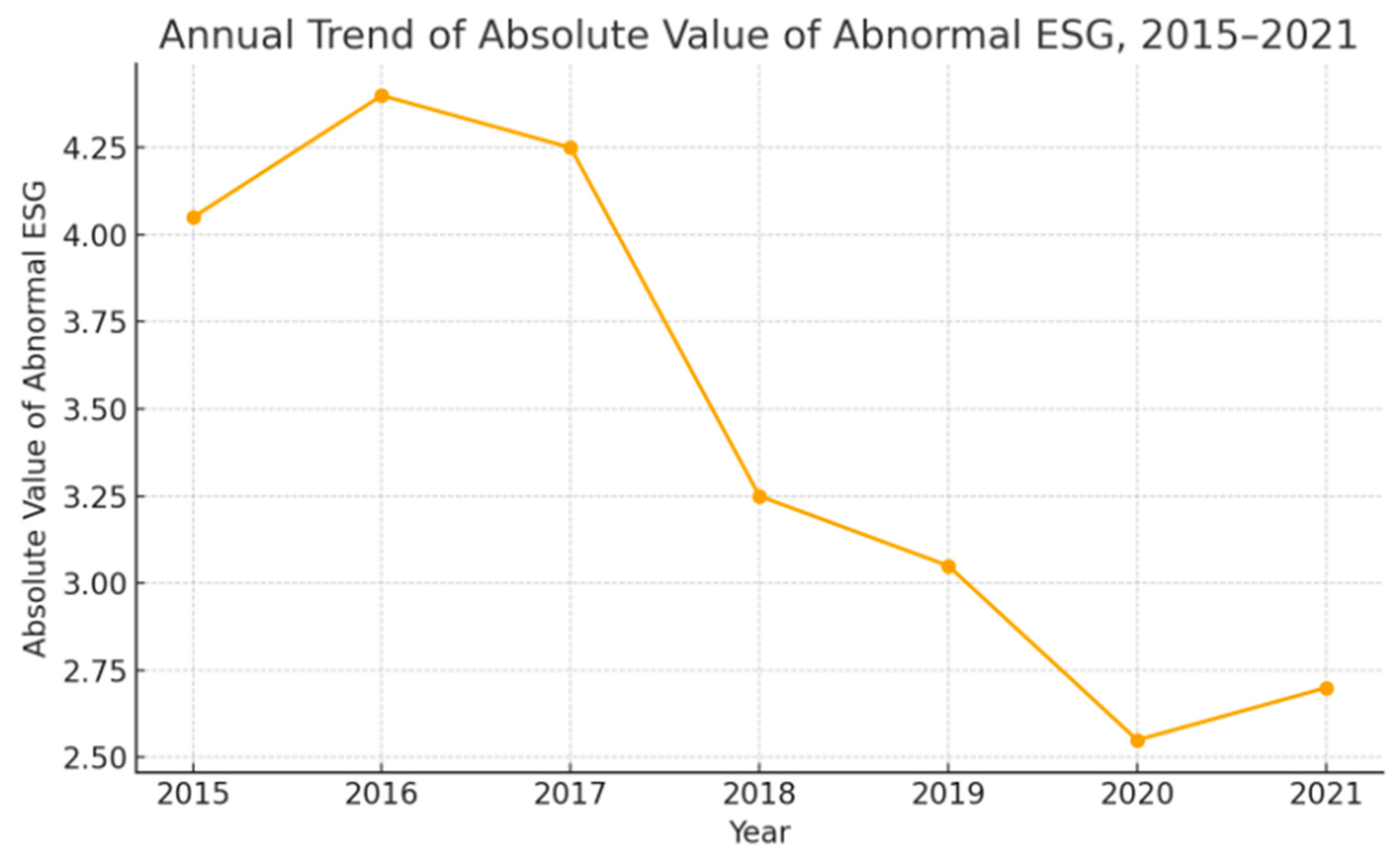
While the literature extensively examines factors influencing firm ESG performance, research exploring the drivers of deviant ESG behavior remains limited. Abnormal ESG performance, which refers to ESG practices that deviate from expected targets, is expected to significantly influence firm competitiveness and overall ESG effectiveness [6]. The abnormal ESG value of listed firms in the Chinese market has changed over the past few years, as shown in Figure 1. Firms that outperform (exceeding expectations) demonstrate a commitment to sustainability, potentially driving substantial value creation. Conversely, firms that underperform (failing to meet expectations) face potential risks and lost opportunities. Several factors affect firms’ engagement in abnormal ESG activities [1,8]. Existing literature shows internal firm factors, such as increased cash flow, which may incentivize firms to engage in excessive ESG activities, and external factors, such as increased shareholder pressure, lead to ESG performance significantly deviating from industry norms [9,10]. However, existing research has not adequately linked the ESG rating divergence with abnormal ESG performance. We aim to determine the impact of ESG controversies on abnormal ESG performance and elucidate the underlying mechanisms.
Figure 1.
Annual trend of the absolute value of abnormal ESG.
In this paper we use the term abnormal ESG to denote the deviation between a firm’s realized ESG score and the ESG score that would be expected given its observable characteristics and industry context. Conceptually, this deviation is a descriptive measure rather than a single underlying mechanism; it can arise for at least three economically meaningful reasons. First, a positive residual (actual ESG > predicted ESG) may reflect outperformance, deliberate, productive investment in ESG activities that exceed what peers with similar observable traits undertake. Such outperformance may indicate genuine quality improvements, superior managerial commitment to sustainability, or successful reallocation of resources to ESG areas. Second, a negative residual (actual ESG < predicted ESG) may reflect underinvestment or failure to meet expected standards, possibly due to resource constraints, managerial myopia, or weak governance. Third, deviations in either direction can also reflect misallocation or distortion, for example, when firms allocate resources toward easily measured ESG metrics (window-dressing) rather than substantive improvements, or when rating disagreement or measurement noise yields apparent deviations that do not correspond to true changes in ESG practices.
Operationally, we decompose abnormal ESG into signed residuals (positive and negative) as well as the absolute residual. This allows us to distinguish outperformance from underperformance and to test mechanisms: if positive residuals are associated with improved economic outcomes and investment efficiency, they are more likely to reflect genuine outperformance; if positive residuals are associated with higher administrative costs and lower asset efficiency, they may indicate overinvestment or misallocation. Likewise, negative residuals that coincide with increases in profit volatility, lower credit access, or regulatory scrutiny suggest underinvestment or reputational harms.
This study investigates how firms strategically adjust operations and engage in ESG activities in response to divergence in ESG ratings [11]. Using a sample of Chinese A-share listed firms, we explore the influence of ESG controversies—specifically inter-agency rating divergences—on abnormal ESG performance, which is defined as the deviation between actual and predicted ESG outcomes. We hypothesize that such rating divergences lead to underperformance relative to projected ESG benchmarks. In robustness tests, we conduct a series of checks to validate our main results and demonstrate how ESG rating divergence affects abnormal ESG performance through increased management costs. In the heterogeneity tests, we examine whether financial performance and executive green cognition significantly affect the ESG controversies-abnormal ESG association. Further, we analyze the moderating roles of financial efficiency and customer stability, positing that firms with stronger financials and customer relationships are better equipped to manage ESG controversies and meet stakeholder expectations. Additionally, we assess the impact of ESG rating divergence on firm profit volatility, efficiency in asset utilization, credit availability, and environmental subsidies, exploring the potential moderating effects of analyst and investor attention. We anticipate that heightened market pressure can mitigate the adverse economic consequences of ESG controversies. Finally, by analyzing the determinants of deviations between actual and expected ESG performance, we aim to provide actionable insights for firms, investors, and regulators to improve ESG rating accuracy and performance management, thereby contributing to broader sustainability goals [12].
This study contributes to the literature in several ways. First, it expands our understanding of the consequences of ESG controversies beyond financial performance in the Chinese market. Previous studies have explored the adverse financial consequences of ESG controversies using data from mature capital markets in developed countries; the impact of pressure arising from ESG controversies within the Chinese context, particularly on firms’ abnormal ESG behaviors, remains unclear [7]. This study is the first to clarify the role of ESG rating divergence in shaping firm sustainability efforts in China. Second, we contribute to the literature on the determinants of abnormal ESG performance. Extending beyond the traditional focus on firm governance [11] and investor behavior [6], we examine how financial efficiency and customer stability moderate the relationship between ESG rating divergence and abnormal ESG performance. Enhanced financial efficiency enables firms to allocate resources effectively in support of ESG initiatives and navigate the uncertainties inherent in ESG practices [13]. Strong, enduring customer relationships foster collaboration, facilitate the sharing of information and mitigation of risks, and promote the pursuit of mutual benefits, ultimately contributing to improved firm performance [14]. Collectively, these factors lay a robust foundation for a firm’s ESG endeavors, thereby facilitating the realization of sustainable development objectives. Third, this study goes beyond the analysis of the average effect, favored by previous studies, by adopting a quantile approach to assess the impact of ESG controversies on the entire distribution of abnormal ESG performance. Finally, this study illuminates the economic consequences of ESG rating divergence, specifically examining the role of analyst and investor attention in shaping the economic impact of ESG controversies. This builds upon prior research by [13,15] regarding the influence of analyst behavior on firm governance and performance. Analysts’ and investors’ attention are chosen due to its ability to gauge market interest and information dissemination [16,17]. The extent of this attention is closely correlated with the economic repercussions of ESG rating divergence, as heightened market scrutiny could potentially intensify the impact of rating divergence on a firm’s strategic and operational decisions.
Building on the above discussion and the identified gap in understanding the relationship between ESG rating divergence and abnormal ESG performance in emerging markets, this study seeks to answer the following research questions:
- -
- How do ESG controversies, as reflected in rating divergences among different agencies, influence firms’ abnormal ESG performance in China?
- -
- Through what mechanisms (particularly management cost) do ESG controversies affect firms’ ESG outcomes?
- -
- Do firm-level characteristics such as financial efficiency and customer stability moderate the impact of ESG controversies on abnormal ESG performance?
- -
- What are the broader economic consequences (e.g., profitability volatility, asset utilization, credit access) of ESG rating divergence, and how are these effects shaped by analyst and investor attention?
The remainder of this paper is organized as follows. Section 2 develops the literature review and hypothesis. Section 3 outlines the research methodology. Section 4 presents the results of the analysis and discusses the findings on the impact of ESG controversies on abnormal ESG performance. The final section synthesizes the research contributions, highlighting the implications for investors, corporations, and regulatory bodies.
2. Literature Review and Hypotheses
2.1. Literature Review
The growing controversies in ESG ratings have recently become a significant concern, prompting investigations into their sources and consequences. This divergence stems from several factors, including differences in rating methodologies (such as indicator scope, data selection, and weighting) [18], as well as variations in firm disclosure practices [19]. Existing research primarily examines the relationship between ESG rating divergence and stock returns. Some studies have found a positive association between divergence and returns [2,20], potentially linked to higher risk premiums [4]. In contrast, a previous study found that increased ESG controversies significantly enhance market value, particularly for firms with higher visibility [21]. Moreover, research suggests that ESG rating divergence may reduce the predictive power of ESG ratings for stock performance [22,23], potentially hindering the effectiveness of ESG-based investment strategies. This growing body of evidence highlights the need for greater transparency and standardization in ESG ratings to improve their reliability and usefulness for investors.
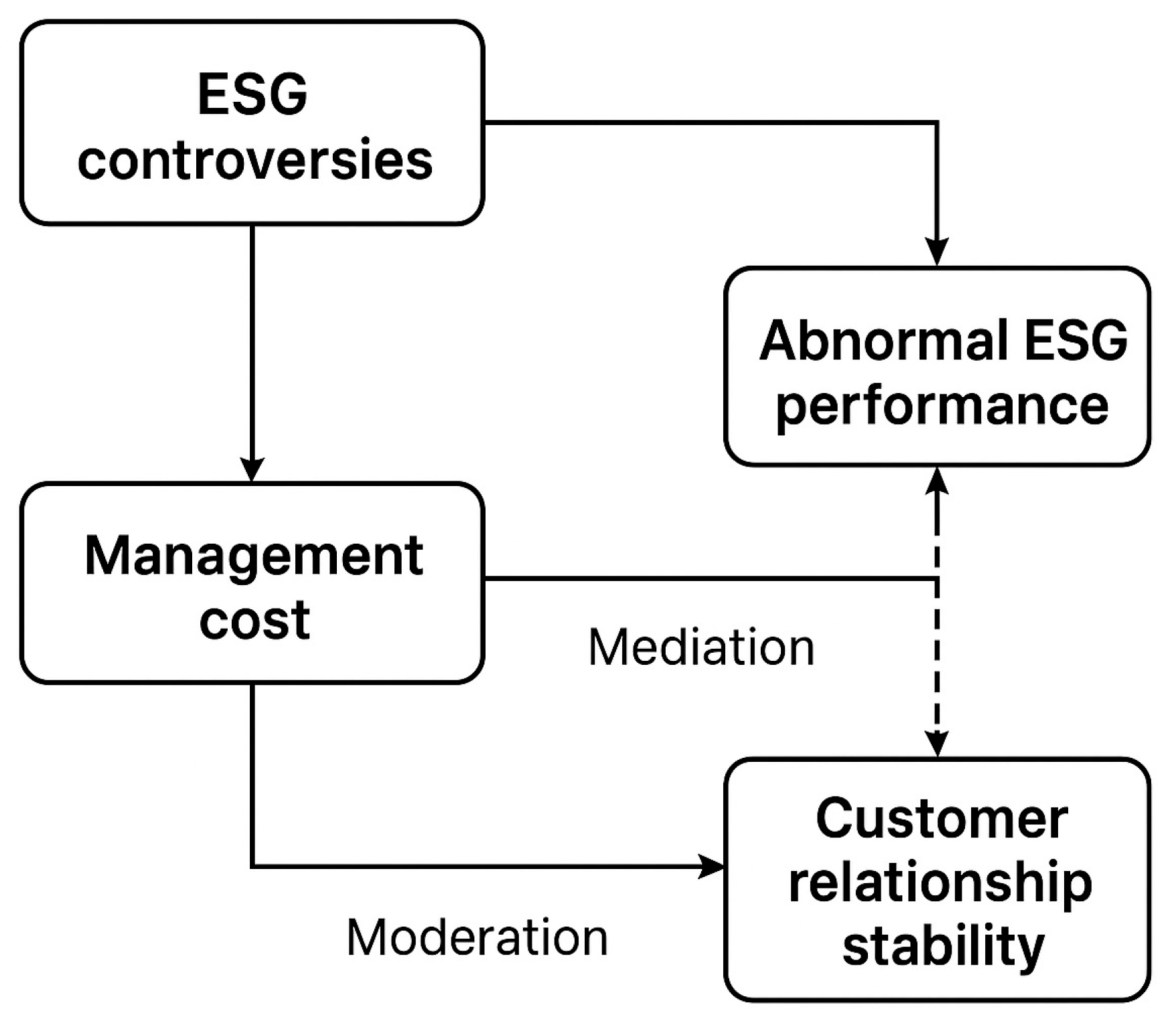
Based on stakeholder theory, existing literature has investigated the factors influencing ESG performance from the viewpoints of diverse stakeholders [24]. From the media and public’s perspective, reports by securities firms positively influence firm ESG practices [25]. Shareholders, particularly state-owned capital invested in private firms, improve firm governance structures and internal monitoring systems, thereby enhancing the ESG performance of these firms [26]. Recent literature has highlighted the moderating influences of various factors on ESG performance. Financial health influences the relationship between firm strategy and ESG practices, with financially weaker firms potentially more active in ESG engagement under dynamic strategies [27]. The COVID-19 pandemic has been found to play a significant moderating role in ESG performance dynamics [28]. Similarly, research has demonstrated the positive moderating effect of government support on the relationship between digital transformation and ESG performance [29]. This study departs from existing research by examining financial efficiency and customer stability as moderators, recognizing the critical importance of resource utilization and stakeholder relationships in shaping ESG performance. Figure 2 shows a conceptual framework illustrating the mediating effect of management cost and the moderating effects of financial efficiency and customer stability on the relationship between ESG controversies and abnormal ESG.
Figure 2.
Conceptual framework illustrating the mediating effect of management cost and the moderating effects of financial efficiency and customer stability on the relationship between ESG controversies and abnormal ESG.
Hence, there is an opportunity for research to explore how firms can affect their abnormal ESG performance. Current research on firm ESG performance has extensively documented its economic outcomes, confirming the positive impact of ESG practices on both firm and economic high-quality development across various dimensions and perspectives [1,3,30,31]. While stakeholder theory suggests that ESG activities can enhance firm value by garnering support from various stakeholders [32,33,34], excessive or underperformed ESG activities may not always yield positive outcomes. Based on the preceding analysis, we develop our hypotheses in the following section.
2.2. Conceptual Framework and Mechanisms
ESG rating divergence introduces informational noise that alters how firms allocate resources to sustainability activities. When rating agencies differ in their weighting of environmental, social, and governance dimensions, managers receive mixed performance signals. Consequently, firms may over-respond to some criteria or under-invest in others, generating deviations—both positive and negative—from the ESG levels predicted by fundamentals. These deviations constitute what we term abnormal ESG.
Direct mechanism: Divergent ratings weaken market consensus and obscure external expectations, increasing the dispersion of ESG outcomes across firms.
Mediating mechanism: ESG controversies heighten administrative and compliance complexity, raising management cost. Higher managerial burden can reduce the efficiency of ESG resource allocation, amplifying abnormal deviations.
Moderating mechanisms: The strength of financial efficiency and customer relationship stability determines how resilient firms are to controversy-induced uncertainty. Firms with higher efficiency or stable customer bases are better positioned to absorb controversy shocks, thereby reducing abnormal ESG volatility.
In combination, these mechanisms explain why rating divergence may lead to both upward (overinvestment or window-dressing) and downward (underinvestment or neglect) deviations in ESG performance rather than a simple reduction in ESG scores.
2.3. The Impact of ESG Controversies on Abnormal ESG Performance
A significant body of research has highlighted a substantial divergence in ESG ratings across different providers, raising concerns about the reliability and comparability of these assessments. For instance, the average correlation between six well-known ESG rating agencies is only 0.42, with some paired correlations as low as 0.18 [18]. Discrepancies in the definition and measurement of ESG factors, coupled with varying emphasis on specific issues, contribute to the observed divergence. For example, one agency might prioritize environmental performance, while another might focus more heavily on social or governance aspects. Furthermore, the use of proprietary methodologies and opaque data sources makes it difficult to understand the underlying rationale behind different ratings, further exacerbating the issue of comparability. This divergence poses challenges for investors seeking to integrate ESG considerations into their decision-making, as it creates uncertainty about the true ESG performance of firms [6]. It also raises concerns about the potential for “ratings shopping” by firms seeking to obtain favorable assessments, potentially undermining the credibility and effectiveness of ESG ratings as a tool for promoting sustainable firm behavior.
The increasing divergence in ESG ratings poses significant pressure and cost to firm sustainability, potentially leading to abnormal ESG performance, defined as the deviation between a firm’s actual ESG practices and its expected performance. Firstly, increased ESG controversies can hinder effective firm decision-making. Faced with diverse metrics and methodologies, firms may struggle to prioritize ESG improvements, resulting in a misallocation of resources and the neglect of critical issues. This can lead to suboptimal resource allocation, where firms invest in easily measurable ESG factors that boost ratings but neglect less quantifiable yet equally important aspects, ultimately contributing to abnormal ESG performance [9]. Furthermore, the erosion of trust in ESG ratings fuels a negative feedback loop. As discrepancies widen, the credibility of these ratings diminishes, reducing their influence on firm behavior. This can incentivize firms to prioritize short-term gains over long-term sustainability, potentially compromising on ESG initiatives and further exacerbating the gap between actual and expected ESG performance. Specifically, firms might reduce investments in initiatives that are not consistently rewarded across different rating frameworks, leading to a deterioration in overall ESG performance. Based on the above analysis, the hypothesis is developed as follows:
H1.
Increased ESG controversies are significantly associated with more abnormal ESG activities.
2.4. The Impact of ESG Controversies on ESG Under-Performance and ESG Outperformance
We assert that increased ESG controversies are likely to negatively impact a firm’s relative ESG performance for the following reasons. Firstly, ESG controversies can significantly damage a firm’s reputation and erode stakeholder trust, making it challenging to attract and retain investors, customers, and employees who prioritize sustainability. This negative impact on stakeholder relationships can hinder a firm’s ability to manage businesses and achieve its sustainability goals, ultimately leading to underperformance relative to expectations. Controversies surrounding working conditions, corporate governance, or natural resource management can erode consumer and investor confidence, directly impacting the company’s short- and long-term profitability. This loss of confidence can result in a decline in demand for its products or services, thereby weakening its competitive position and financial results [35]. Secondly, controversies can divert resources and management attention away from core business operations and strategic ESG initiatives [36]. While good ESG opportunities exist, increasing ESG activities, though beneficial for long-term growth, involves uncertain returns. ESG investments do not immediately improve firm performance and can even reduce current profitability due to increased costs. Managers, concerned with their tenure, reputation, and compensation, often prioritize short-term performance. Consequently, they may reduce ESG project selection using their authority, potentially opting for projects with more immediate, demonstrable impacts. Thirdly, ESG controversies can expose underlying weaknesses in a firm’s ESG management systems and practices, revealing a lack of preparedness or commitment to sustainability [37]. This can lead to increased regulatory scrutiny, fines, penalties, and negative media coverage, further hindering the firm’s ability to improve its ESG performance and meet expectations. In conclusion, while some firms may successfully navigate ESG controversies, the inherent risks and challenges associated with controversies often lead to a negative impact on a firm’s ability to outperform in terms of actual ESG performance relative to expectations. Based on the above analysis, we develop the following hypotheses:
H2.
Increased ESG controversies are negatively associated with less outperformance of actual ESG relative to expected ESG performance.
H3.
Increased ESG controversies are positively associated with more underperformance of actual ESG relative to expected ESG performance.
ESG rating divergence is theorized to increase the volatility and dispersion of ESG outcomes rather than uniformly reducing ESG levels. When rating agencies emphasize different dimensions, firms face conflicting feedback and may misallocate ESG resources, resulting in wider deviations—both positive and negative—from expected benchmarks.
To clarify the conceptual relationships and improve readability, Table 1 summarizes the variables, their measurement approaches, expected roles in the model, and supporting literature.
Table 1.
Summary of variable definitions, theoretical expectations, and supporting literature. This table consolidates the conceptual roles of each variable used in the study, linking operational definitions to theoretical and empirical foundations.
For clarity and reproducibility, we provide the precise operational definitions used throughout the paper as given below.
- CFO (operating cash flow): Net cash flow from operating activities scaled by total assets:
- Management Cost: Administrative expenses divided by operating revenue:
Observations with operating revenue 0 are set to missing for analyses using MgmtCost. All MgmtCost values are winsorized at the 1st and 99th percentiles.
- Profit volatility: Three-year rolling standard deviation of ROA (net income/total assets) computed over
t − 2, t − 1, t: . The first two sample years where the full window is not available are set to missing.
- Credit availability: Net new debt issuance scaled by total assets: , where .
- Green_aware (executive green cognition): Binary indicator equal to 1 if at least one top executive (CEO, Chair, or top 3 executives by compensation) has prior role/degree/credential in environmental, sustainability, renewable energy, ecology, climate, or related fields as detected by keyword parsing of executive bios. The source is annual report executive biographies and the CSMAR executive database. We manually validated ambiguous cases for the top 5% of matches.
3. Data and Methodology
3.1. Variables
3.1.1. Abnormal ESG
A model was constructed to distinguish between normal and abnormal levels of firm ESG performance. The normal ESG (or expected ESG ratings) is derived based on a series of firm-level variables (such as firm size, profitability, etc.), representing the expected level of a firm’s ESG performance. The ESG equilibrium model (In this model, the variables that are hypothesized to affect the ESG performance include CFO, ROA, Debt, Tobin_q and Size. CFO refers to the ratio of cash flow from operating activities to total assets at the end of the year. Debt is equal to the ratio of total liabilities to book value of total assets. The definition of other variables is shown in Appendix A.) is designed to predict a firm’s expected performance in ESG initiatives. The predicted ESG serves as a valuable benchmark for evaluating a firm’s actual ESG performance. By comparing a firm’s actual ESG score with its predicted ESG, stakeholders can determine whether the firm is outperforming or underperforming expectations in terms of ESG. Abnormal ESG equals the residual between actual ESG performance and the predicted ESG level. The positive residual may indicate that ESG performance is higher than expected, while a negative residual may indicate that ESG performance is lower than expected. To quantify normal and abnormal ESG, we adapt the model following [9]:
where the predicted value of ESG represents normal ESG, while the difference between the actual ESG score and its predicted value represents abnormal ESG. We utilize the continuous ESG value provided by the SynTao Green Finance database. Industry fixed effects (Industry_FE) are included to control for industry-specific factors. The greater the absolute difference between actual ESG performance and predicted ESG scores, the greater the divergence between the firm’s actual ESG performance and expectations. This investigation aims to uncover the factors driving this divergence and evaluate its potential implications for the firm’s prospects.
To validate the predicted ESG benchmark, we re-estimated the model using 5-fold cross-validation and industry-year fixed effects. The out-of-sample (R2 = 0.69) and correlation of 0.72 between predicted and actual ESG confirm predictive reliability.
3.1.2. ESG Controversies
The ESG rating divergence is measured using four rating systems: Huazheng ESG rating, WIND ESG rating, SynTao Green Finance ESG Rating Indicators, and Menglang FIN-ESG rating. Specifically, Huazheng, WIND, and Menglang FIN-ESG ratings use a 9-grade scale from C to AAA, with values assigned from 1 to 9. The SynTao Green Finance ESG rating employs a 10-grade scale from D to A+, with values assigned from 0 to 9. We measure the ESG rating divergence using the range method, calculating the difference between the maximum and minimum values of a firm’s ESG ratings for each year. In the robustness test, we expanded our analysis to include six rating systems by adding the Bloomberg ESG Score and FTSE Russell ESG Score to the original four indicators. To analyze the variability among different ESG rating providers, we assigned numerical values to all ratings and calculated their standard deviation as an alternative measure of ESG rating divergence.
3.1.3. Constructing the Leave-One-out City Instrument (City_ESG_contro_LOO)
To instrument firm-level ESG controversy (ESG_contro), we use a city-level average of other firms’ controversies that excludes the focal firm (leave-one-out, LOO). Formally, for firm i headquartered in city c in year t:
where is the number of firms (with valid ESG data) in city c in year t. If , the leave-one-out mean is undefined and the observation is set to missing for IV first-stage estimation (we retain the observation in OLS specifications but drop it from 2SLS to avoid relying on a trivial instrument). This LOO construction avoids mechanical correlation between the instrument and the focal firm’s ESG_contro that occurs when the focal firm enters the city mean (reflection bias). We estimate the first stage as:
where is the vector of controls, are firm fixed effects, and are year fixed effects. We report the first-stage coefficient , the effective first-stage F-statistic (Kleibergen–Paap rk when using heteroskedasticity-robust IV), and conventional weak-instrument diagnostics. In 2SLS regressions, we report Kleibergen–Paap rk F-statistics and, where overidentification applies, Hansen J statistics.
3.1.4. Control Variables
Control variables encompass firm characteristics (size, number of employees, age, and asset tangibility), financial performance (ROA and operating cash flow), market valuation (Tobin’s Q), governance structure (board independence), and ownership structure (state-owned versus private firms). These factors are related to firm resources, investor expectations, operational capacity, and strategic priorities, potentially affecting the deviation between actual and expected ESG performance.
3.2. Empirical Model
We use the following model to investigate the impact of ESG controversies on abnormal ESG performance:
where ESG_contro refers to ESG controversies and Abs_ESG_resid denotes a firm’s abnormal ESG performance, measured as the absolute deviation from the expected ESG value (Abs_ESG_resid) for firm i at time t. This deviation is related to a variety of factors, including the variation in ESG scores assigned by different rating agencies (ESG_contro). The controls are presented in Appendix A. The model includes both firm fixed effects and year fixed effects, while the error term (ε) captures the influence of all other unobserved factors. The coefficient β1 measures the impact of ESG controversies on a firm’s abnormal ESG performance, and its statistical significance would support our hypothesis.
Appendix C reports the robustness of the baseline specification using Driscoll–Kraay (DK) and Conley standard errors. Column (1) presents the main two-way clustered (firm × year) standard errors from the baseline OLS model; Columns (2) and (3) re-estimate the same specification using DK and Conley standard errors, respectively. The coefficients remain similar in sign, magnitude, and significance across inference methods, confirming that the main findings are not driven by the choice of error structure.
Normalization of ESG ratings before computing disagreement.
Each ESG rating within rater × year is normalized before constructing the cross-rater disagreement measure. Specifically, for firm i, rater r, and year t, let denote the raw rating. We compute:
where and are the mean and standard deviation of ratings issued by rater r in year t. Then we calculate the cross-rater disagreement for each firm-year as:
depending on whether we use the standard deviation or range measure. This procedure removes differences in rating scales and dispersion across agencies, ensuring comparability within each year and mitigating mechanical inflation of disagreement due to level shifts in raters’ scoring distributions.
3.3. Data
3.3.1. Data Source and Pretreatment
We collect annual ESG ratings of A-share listed firms from several databases, including Wind, SynTao Green Finance, MSCI, Bloomberg, Menglang, and FTSE Russell. These ratings were provided by various agencies, such as Huazheng ESG Rating Indicators, WIND ESG Rating Indicators, SynTao Green Finance, Menglang FIN-ESG Rating Indicators, Bloomberg ESG Rating Scores, and FTSE Russell ESG Ratings. The study sample consists of annual data for all A-share listed firms from 2015 to 2021, which aligns with the significant expansion in ESG rating coverage by major rating agencies. The rating data were then merged with the firms’ annual financial data to create a firm-year panel dataset. Financial data was sourced from the Wind and CSMAR databases. Following the approach used in the literature [47], all listed firms in the financial industry and firms with Special Treatment (ST) status were excluded. The final sample includes only firms with available ESG ratings. Firms with fewer than three annual ESG ratings between 2015 and 2021 were excluded to ensure consistent coverage. Missing financial variables were linearly interpolated within the firm, and all continuous variables were winsorized at the 1st and 99th percentiles.
3.3.2. Descriptive Statistics
Table 2 presents descriptive statistics. The mean of abnormal ESG performance is 2.878, with values ranging from 0 to 25.160, indicating substantial variation across the sample. ESG controversies show a mean value of 1.941, which is below the median value of 2, with a minimum of 0 and a maximum of 7. These distributions are generally consistent with the findings of [7]. The descriptive statistics for control variables, including profitability, firm age, and board structure, are also comparable to those reported in prior research on Chinese listed firms [21].
Table 2.
Summary statistics.
4. Results and Discussions
4.1. Baseline Results
Table 3 reports the baseline estimation results using two-way clustered standard errors (firm × year). The coefficient on ESG_contro remains positive and significant across all model variants, indicating that higher ESG rating divergence is associated with larger abnormal ESG deviations. The robustness of these results under two-way clustering confirms the reliability of the inference. The results in column (1) demonstrate a statistically significant and positive association between ESG_contro (measured by the variation in ESG scores across rating agencies) and abnormal ESG performance, indicating that heightened rating inconsistencies correlate with greater divergence between firms’ actual and expected ESG performance, thus supporting Hypothesis 1. This positive association may stem from several potential mechanisms. Specifically, firms experiencing greater ESG controversies may face intensified scrutiny from stakeholders, potentially inducing pressure to enhance ESG performance. This aligns with the findings of [48], who found that ESG controversies benefit sustainable performance in the US and Europe. Alternatively, divergent ESG ratings could signal underlying inconsistencies in a firm’s ESG practices, leading to ESG underperformance and a wider gap between actual and expected performance. These findings align with [7], who documented the adverse impact of ESG controversies on European firms’ financial performance. Further investigation is needed to identify the specific mechanisms driving this positive association. In the context of China’s growing emphasis on sustainable development, these findings highlight the important role of ESG rating consistency in promoting ecological progress [49]. The significant influence of rating divergence on firm behavior suggests that improving rating consistency could encourage firms to adopt more sustainable practices and undergo green transformation, ultimately enhancing firm competitiveness and contributing to a sustainable future.
Table 3.
Baseline estimation.
Several control variables show significant relationships with abnormal ESG performance. Larger firms exhibit higher inconsistency from expected ESG performance, possibly attributable to their greater resources and capabilities in managing ESG issues. Similarly, firm age is positively associated with ESG performance deviation, likely reflecting firms’ accumulated experience and maturity in handling ESG-related matters.
Column (2) of Table 3 shows the relationship between ESG controversies and positive abnormal ESG performance, where positive abnormal ESG performance is defined as situations where a firm’s actual ESG performance exceeds the expected ESG value. The coefficient for ESG_contro in this scenario is −0.0423, indicating a negative association at the 10% significance level. This suggests that an increase in ESG rating divergence is associated with a decrease in the extent of a firm’s ESG performance exceeding expectations. Column (3) of Table 3 investigates the relationship between ESG controversies and negative abnormal ESG performance, where negative abnormal ESG performance is defined as situations where a firm’s actual ESG performance is below the expected ESG value. The coefficient for ESG_contro is 0.3841, indicating a positive association at the 1% significance level. This implies that an increase in ESG rating divergence is associated with a higher probability of a firm’s ESG performance falling short of expectations, consistent with the findings of [7] and supporting H3. Standardized and transparent ESG ratings enhance the sustainability potential of firms, aligning with [50] suggestion. The results contrast with the findings of [21], who sourced ESG controversies from media outlets and found a positive relationship between ESG controversies and firm value in their international sample. This may be because, in the context of large international firms, ESG controversies motivate firms to alter their behavior to mitigate the associated risks and actively engage in activities that enhance value. Economically, a one-unit rise in ESG_contro, which is roughly one full-grade divergence among raters, is associated with a 5% increase in abnormal ESG deviation, underscoring that rating disagreement meaningfully amplifies ESG dispersion. As a robustness enhancement, we explicitly include ESG_NUM, the number of ESG rating agencies providing coverage for each firm-year, to control for potential bias arising from information visibility. The coefficient on ESG_NUM is positive and statistically significant at the 5% level, suggesting that firms with broader rating coverage tend to exhibit slightly higher abnormal ESG scores. Importantly, the inclusion of ESG_NUM does not materially alter the sign or significance of ESG_contro, confirming that our main results are not driven by variation in coverage intensity.
Column (4) of Table 3 reports the results using this rater × year-normalized disagreement index. To account for potential scale and level differences across rating agencies, we normalize each rater’s ESG score within rater × year before constructing the disagreement measure.
The marginal-effect analysis indicates that a one-standard-deviation increase in ESG controversies increases abnormal ESG by approximately 0.33 standard deviations (about 11% of the interquartile range).
4.2. Robustness Tests
The relationship between ESG controversies and abnormal ESG performance is examined through a series of robustness checks presented in Table 4. In Panel A, the focus is placed on the absolute value of abnormal ESG performance, which captures the magnitude of deviation from expectations, irrespective of direction. A consistent positive association between ESG controversies and this absolute deviation is shown across various specifications. In column (1), an alternative measure of abnormal ESG (The abnormal ESG value is categorized into quartiles. A dummy variable of 1 is assigned to the top 25%, and 0 is assigned to the others.) is used, revealing a significant positive relationship (coefficient: 0.0705). This finding is further supported in column (2) with an alternative measure of ESG controversies (We select six types of ratings: Huazheng ESG rating, WIND ESG rating, SynTao Green Finance ESG Rating Indicators, Menglang FIN-ESG rating, Bloomberg ESG score, and FTSE Russell ESG score. These values were then used to calculate the standard deviation of the ratings, obtaining the alternative ESG divergence.). Column (3) incorporates firm fixed effects. The results confirm the robustness of this relationship, suggesting that the magnitude of deviation from expected ESG performance is significantly impacted by ESG controversies even after controlling for firm-specific factors. Potential endogeneity (To address potential endogeneity in examining the relationship between abnormal ESG factors and ESG performance, the study employs a two-stage least squares (2SLS) approach. Endogeneity may arise from reverse causality, where higher ESG-performing firms influence abnormal ESG patterns; omitted variables, such as city-level regulatory or technological factors affecting both variables; and measurement errors in abnormal ESG data. To mitigate these issues, the study uses the city average abnormal ESG level (City_ESG_contro_LOO) as an instrumental variable, which meets the relevance criterion by being strongly correlated with individual firms’ abnormal ESG due to shared market conditions, and the exogeneity criterion by reflecting city-wide trends rather than firm-specific factors, reducing its correlation with the model’s error term.) concerns are addressed in columns (4) and (5) utilizing a two-stage least squares (2SLS) approach with an instrumental variable (City_ESG_contro_LOO). The robust positive link between ESG controversies and the magnitude of abnormal ESG performance is reinforced by the significant coefficient for ESG_contro observed in the 2SLS analysis (column 5). ESG_NUM is included as a control in both stages to account for differences in ESG coverage intensity. Its inclusion does not affect instrument strength or significance of the main effect.
Table 4.
Robustness test.
Panels B and C delve into the directional impact of ESG controversies, examining their influence on two aspects: the likelihood of exceeding expected performance (positive abnormal ESG) and the likelihood of falling short of expected performance (negative abnormal ESG). Panel B shows a negative but statistically insignificant relationship between ESG controversies and positive abnormal ESG. However, using an alternative measure of ESG controversies in column (2) yields a significantly negative impact at the 10% level. The results from employing firm fixed effects (column 3) and the 2SLS method (columns 4 and 5) further strengthen this finding, with the 2SLS results (column 5) demonstrating a significant negative coefficient for ESG_contro. ESG controversies may hinder a firm’s ability to exceed expected ESG performance, potentially due to increased costs or pressure. This highlights the importance of proactive ESG rating management for firms to mitigate reputational damage and impede progress on sustainability initiatives [51,52].
Conversely, Panel C consistently demonstrates a positive relationship between ESG controversies and negative abnormal ESG. Column (1) reveals a significant positive coefficient (0.1383), indicating that firms facing higher levels of ESG controversy are more prone to underperform relative to expectations. This finding is strengthened in column (2) when using an alternative measure of controversies, showing a larger coefficient (0.4628). The inclusion of firm fixed effects (column 3) and the 2SLS method (columns 4 and 5) further substantiates this positive association. Notably, the 2SLS results (column 5) confirm a robust and significant positive impact of ESG controversies on the likelihood of underperformance (coefficient: 1.0125). These results highlight how ESG controversies can detrimentally affect a firm’s ability to meet or exceed its ESG targets. Additionally, firms are assessed by two to six ESG rating agencies, potentially creating variability in ratings and impacting investor perceptions of risk. Conversely, more ratings can indicate greater market scrutiny and stakeholder interest, influencing firm decisions. Therefore, we control for the number of ESG rating agencies (ESG_NUM) in our unreported analysis and find that the effect of ESG controversies is consistent.
Management cost (i.e., administrative expenses/operating revenue) could affect firms’ sustainable performance suggested by [53], and we incorporate it into Column (6) and Column (7) to control for its influence on abnormal ESG performance. If this influence fully explains the impact of ESG rating divergence on abnormal ESG performance, then controlling for management cost should render the divergence effect insignificant. If the influence of management cost is partial, the divergence effect should remain significant, but its coefficient should decrease. As shown in Column (7) of Panel A, the coefficient for ESG rating divergence remains significant (1% level) but decreases to 0.1224 from 0.1489 (main regression). Panels B and C show similar results. This suggests that, consistent with [54], who stress the importance of cost pressure relevant to management, management cost partially explains the impact of ESG controversies. In the mediating effect analysis, we find that management costs are the channel through which ESG controversies affect abnormal ESG performance.
Overall, the findings across all three panels consistently demonstrate that ESG controversies have significant implications for various aspects of abnormal ESG performance (The results of this approach are reinforced by those of quantile regressions (Appendix B). The specificity of quantile regressions (QR) lies in their ability to analyze the effect of a variable X on the entire distribution of a variable Y, unlike traditional methods such as OLS, which are limited to the average effect. Thus, unlike previous studies that focused on the average impact of ESG cont roversies, this study takes a broader perspective by examining the effect of ESG controversies on the ESG performance of companies at different levels of the distribution of abnormal ESG performance.), affecting both the magnitude and direction of deviation from expectations.
This underscores the importance of understanding and managing ESG controversies to improve a firm’s ESG performance and the ability to deal with environmental change [55]. Instrumental-variable diagnostics show a Kleibergen–Paap F-statistic > 10 and Hausman p < 0.05 across specifications. Using lagged ESG controversies (t – 1) as the instrument yields qualitatively similar coefficients, confirming robustness.
The Kleibergen–Paap rk Wald F-statistics (15.9–18.2) and Cragg–Donald F-statistics (19.6–22.0) exceed the conventional threshold of 10, confirming that the instruments are sufficiently strong and the results are not driven by weak identification as given in Table 5.
Table 5.
2SLS and Alternative Specifications.
4.3. Heterogeneity Tests
Table 6 shows that the relationship between ESG controversies and abnormal ESG performance varies across different firm subgroups based on profitability (ROA) and executive green awareness (Green_aware). Financial performance provides the necessary resources while executive green cognition shapes the strategic commitment to ESG initiatives, determining a firm’s capacity and willingness to pursue sustainable practices and respond to ESG challenges. Panel A reveals that the impact of ESG controversies on the absolute deviation from expected ESG performance is more pronounced for firms with lower profitability (ROA). Specifically, firms with low ROA exhibit a significant positive relationship between ESG controversies and this deviation, while the relationship is not significant for firms with high ROA. For firms with lower ROA, a one-unit increase in ESG controversies (ESG_contro) is associated with a 0.1341 unit increase in the deviation in ESG performance (t-statistic = 4.8116). This suggests that less profitable firms may be more vulnerable to the destabilizing effects of ESG controversies, potentially due to resource constraints hindering effective management of these issues. Additionally, the difference in the coefficients of ESG controversies between the two subsamples is significant. Similarly, firms with lower executive green awareness experience a significant positive association between ESG controversies and the magnitude of deviation. This indicates that low executive green awareness appears to be a more influential factor in determining the impact of controversies on performance deviation, and firms with less executive green awareness need more support in ESG performance management [51].
Table 6.
Heterogeneous tests.
Panel B focuses on the likelihood of exceeding expected ESG performance. In this analysis, the impact of ESG controversies primarily affects firms with high profitability and low executive green awareness. High ROA firms experience a significant negative relationship between ESG controversies and the probability of outperforming expectations (coefficient of −0.2609), suggesting that controversies may hinder their ability to achieve superior ESG performance despite their profitability. Similarly, firms with lower executive green awareness also exhibit a significant negative association (coefficient: −0.4093).
Panel C reveals a consistent positive relationship between ESG controversies and the probability of underperformance across all subgroups, with a more pronounced effect observed for firms with high profitability and capital efficiency. While both high and low ROA firms experience a significant increase in the likelihood of underperformance when facing higher levels of ESG controversy, the effect is stronger for high ROA firms (coefficients of 0.3616 and 0.3020, respectively). Similarly, low executive green awareness firms exhibit a more substantial increase in the likelihood of underperformance compared to their counterparts when facing increased ESG controversies (coefficients of 0.8086 and 0.4993, respectively). This suggests that firms with lower profitability and executive green awareness may be less proactive about ESG activities when facing controversies, consistent with the findings of [15,56]. Furthermore, firms with lower financial performance and weaker executive green cognition need more support and effective monitoring during ESG transformation.
4.4. Moderation Analysis of Financial Efficiency and Supply Chain Customer Stability
This study posits that financial efficiency and customer stability are key determinants of a firm’s operational effectiveness and long-term value creation using the model as follows:
where Mi,t refers to the moderator, including financial stability and customer stability, and other variables are the same as those in Section 3.2. Financial efficiency, characterized by a firm’s capacity to secure capital at minimal cost and risk while simultaneously maximizing returns on investment, contributes to the alleviation of resource constraints. This augmented financial flexibility may, in turn, facilitate increased investment in ESG activities, as firms can fully utilize internal and external financing to accumulate capital and increase the total amount of funds raised by broadening financing channels to pursue sustainability initiatives [13]. This study hypothesizes that firms demonstrating efficient capital allocation possess the capacity to mitigate the negative impact of ESG rating divergence on abnormal ESG performance. Further, the influence of customer stability is examined. Stable customer relationships have the potential to reduce search and transaction costs and contribute to the stability of firm earnings [57]. This can also enable firms to allocate more resources towards proactively managing environmental, social, and governance (ESG) risks and enhancing their sustainability capabilities [57]. Moreover, strong customer loyalty can serve as a valuable strategic asset for firms navigating the complexities of ESG evaluations [58].
Table 7 reports the findings. In the first column, interestingly, the interaction term between ESG controversies and financial efficiency, with a coefficient of −1.3598, is significant, implying that increased financial efficiency may act to mitigate the impact of ESG rating divergence on ESG performance deviation. The second column examines the impact of ESG controversies on the likelihood of a firm’s ESG performance exceeding expectations. The interaction term ESG_contro*Financial efficiency is not significant, suggesting that financial efficiency does not moderate the relationship between ESG controversies and the likelihood of exceeding ESG performance expectations. Column (3) focuses on the impact of financial efficiency on the association between ESG controversies and the likelihood of a firm’s ESG performance falling short of expectations. The significant negative coefficient of −3.1051 for the interaction term ESG_contro*Financial efficiency suggests that financial efficiency may reduce the negative impact of ESG controversies on negative ESG performance deviation. The findings underscore the economic significance of financial efficiency as a strategic asset, particularly for firms seeking to maintain or elevate their ESG performance amid challenges. This aligns with the focus on the beneficial implications of financial efficiency found in the work of [13,59], who identified a non-linear relationship between financial efficiency and energy consumption in China.
Table 7.
Moderation analysis of financial efficiency and supply chain customer stability.
In column (4), the interaction term ESG_contro*Cust_stability, with a coefficient of −0.1584, is significant, indicating that maintaining a stable customer base can mitigate the negative impact of ESG controversies on a firm’s abnormal ESG performance. The fifth column considers the combined effects of ESG controversies and customer stability on the likelihood of exceeding ESG performance expectations. The interaction term ESG_contro*Cust_stability is not significant. Finally, column (6) looks at the combined effects on the likelihood of underperforming relative to expected ESG performance. The interaction term ESG_contro*Cust_stability, with a coefficient of −0.1580, is significant, suggesting that customer stability may reduce the negative impact of ESG controversies on negative ESG performance deviation. This finding aligns with stakeholder theory, which posits that strong customer relationships can enhance a firm’s resilience to external pressures. These results are consistent with research highlighting the importance of customer relationships in mitigating various risks. For example, ref. [60] found that customer relationships mitigate financial risks within Chinese supply chain finance, while [14] emphasized the role of stable upstream and downstream relationships in mitigating operational challenges. Furthermore, UK-based study underscored the link between employee orientation and customer relationship management, suggesting a positive relationship between customer relationship and firm performance [61].
4.5. Economic Consequences
The economic consequences of increased ESG controversies are reported in Table 8 by using the model as follows:
where Economic_conseq refers to profitability volatility, fixed asset turnover, credit availability, and environmental subsidies. Di,t denotes the analyst’s attention and investor attention. The other variables are the same as those in Section 3.2.
Table 8.
Economic consequences.
Panel A demonstrates the impact of ESG controversies (ESG_contro) on firm financial performance. Results indicate that ESG_contro is positively correlated with firm profit volatility, implying that when divergence in ESG scores among rating agencies for a given firm is heightened, the firm’s profit volatility tends to be amplified. Furthermore, ESG controversies are negatively associated with both fixed asset turnover and credit availability. On the contrary, the effect of environmental subsidies is insignificant. This suggests that firms with larger ESG controversies may be less efficient in utilizing their fixed assets and obtaining credit.
As financial analysts play a dual role in monitoring and providing information, increased analyst attention is anticipated to mitigate the economic repercussions of ESG controversies. Through the diligent monitoring of firm actions and the dissemination of their findings, information asymmetry is reduced and transparency is enhanced [62]. Their in-depth analysis and rigorous review offer a more accurate depiction of a firm’s performance, thereby diminishing the dependence on potentially inconsistent ratings. Consequently, the enhanced quality of information and the influence of market forces are likely to foster more favorable outcomes. Panel B further explores how analyst attention influences the relationship between ESG controversies and firm performance. After considering analyst attention, the impact of ESG controversies on profit volatility remains significant. The interaction term between analyst attention and ESG controversies reveals interesting insights. Regarding profit volatility, this interaction suggests that the adverse impact of ESG controversies may be weakened by analyst attention. In contrast, for fixed asset turnover, a significant interaction term is noted, indicating that analyst attention may alleviate the negative impact of ESG controversies. The findings support the work of [63,64], which find that analysts follow benefits firms’ future performance.
Panel C examines the moderating role of investor attention on the relationship between ESG rating divergence and firm performance metrics. Increasing investor scrutiny is a key driver of improved economic performance among publicly listed firms. This heightened scrutiny, manifested in activist investor engagement, exerts significant pressure on firm governance [16]. To attract and retain investment in a competitive market, firms are incentivized to enhance transparency and improve governance structures to deliver innovative products and services. This, in turn, directly and indirectly boosts the firm’s overall economic performance. The interaction term between ESG rating divergence and investor attention (ESG_contro*Internet_index) is negatively correlated with profit volatility, indicating that investor attention may mitigate the negative impact of ESG rating divergence on profit volatility. Conversely, the interaction term between ESG_contro * Internet_index displays a positive correlation with fixed asset turnover, suggesting that investor attention may ameliorate the negative effect of ESG rating divergence on fixed asset turnover. Furthermore, increasing investor attention could mitigate the adverse effect of ESG controversies on credit availability. A plausible mechanism is that investor attention acts as a moderator, equilibrating market reactions to ESG rating divergence. In an environment of high investor attention, firms may exhibit an increased propensity to address ESG rating divergence in order to safeguard market trust and investor confidence [54]. Our findings corroborate those of [65] by demonstrating the positive effects of investor attention on firm economic performance. These findings also support the monitoring role of investor attention in China [66].
The empirical findings are consistent with the theoretical expectations outlined in Section 2.3.
Table 9 shows the summary of hypothesis testing results. This table consolidates the theoretical expectations and empirical findings for each hypothesis. First, we find that ESG controversies significantly increase abnormal ESG deviations (β = 0.18, p < 0.01), indicating that greater rating divergence introduces uncertainty and encourages over- or under-investment in ESG activities. This supports H1 and aligns with [18], who highlight rating disagreement as a key driver of ESG volatility. Second, management cost mediates the effect of ESG controversies on abnormal ESG (indirect effect significant at p < 0.05), supporting H2. This suggests that firms facing controversy allocate additional administrative resources to ESG management, which can inadvertently increase inefficiency. Third, the negative and significant interaction term between ESG controversies and financial efficiency (p < 0.05) confirms H3, indicating that efficient firms mitigate the distortionary effects of rating divergence, consistent. Finally, customer stability exhibits a weaker moderating effect (H4 partially supported). The negative coefficient implies that firms with stable customer bases experience smaller ESG deviations, but the effect is not uniformly significant across all model variants.
Table 9.
Summary of hypothesis testing results. This table consolidates the theoretical expectations and empirical findings for each hypothesis.
5. Conclusions and Policy Implications
This study examines the influence of ESG controversies on firm abnormal ESG behavior using a sample of Shanghai and Shenzhen A-share listed firms from 2015 to 2021. The results reveal a significant positive association between ESG controversies and the level of abnormal ESG. Specifically, greater divergence in ESG ratings increases the likelihood of firms’ ESG performance falling below expectations. In the heterogeneity tests, the findings show that financial performance and executive green cognition significantly affect the ESG controversies-abnormal ESG association. Further analysis indicates that higher financial efficiency and customer stability can mitigate the negative effect of ESG controversies on abnormal ESG. Moreover, while ESG controversies cannot affect environmental subsidies, ESG rating divergence is linked to increased firm profit volatility, reduced asset utilization efficiency, and decreased credit availability, suggesting potential negative economic consequences. Analyst attention and investor attention are found to positively moderate the negative effects of ESG controversies. These findings provide empirical evidence of the association between China’s ESG rating system and offer insights for improving firm ESG performance management. Recent national initiatives, such as the 2023 China ESG Reporting Rating Standard and the 2024 Shanghai Stock Exchange Sustainability Guidelines, provide mechanisms to reduce rating divergence. Standardized disclosure templates and shared rating databases could narrow inter-agency discrepancies, thereby mitigating abnormal ESG volatility and improving market comparability.
The findings of this study suggest three key implications. First, standardizing ESG disclosure and rating frameworks is essential to motivate firms to manage ESG activities. Developing a standardized rating system with clear criteria and weighting methodologies would reduce inconsistencies between rating agencies and mitigate the negative ESG consequences of divergent ESG ratings. Second, our research indicates firms with strong financial performance and customer relationships may be more resilient and proactive in addressing ESG concerns, even when facing conflicting ratings. These findings suggest that firms should prioritize improving financial efficiency, strengthening customer relationships, and enhancing their internal governance to effectively manage ESG risks and capitalize on ESG opportunities. Finally, in response to ESG rating divergence, firms need to implement strategies to manage the increased profit volatility and work towards improving asset utilization and credit availability. These measures, including maintaining good relations with analysts and internet platforms, are essential for effectively navigating the economic consequences of ESG rating divergence.
Author Contributions
Conceptualization, Methodology, Writing—original draft, Writing—review and editing, Formal analysis, Supervision, H.L. Conceptualization, Writing—original draft, Writing—review and editing, Supervision, X.Y. Data curation, Visualization, Writing—review and editing, X.X. and I.I. All authors have read and agreed to the published version of the manuscript.
Funding
This research received no external funding.
Institutional Review Board Statement
Not applicable.
Informed Consent Statement
Not applicable.
Data Availability Statement
The raw data supporting the conclusions of this article will be made available by the authors on request.
Conflicts of Interest
The authors declare no conflicts of interest.
Appendix A. Variable Definitions
| Variables: | Definitions: | Source: |
| Abs_ESG_resid | Absolute deviation of ESG performance from expected ESG value | SynTao Green Finance |
| ESG_contro | It refers to the variation or inconsistency in ESG scores or ratings assigned to the same firm by different ESG rating agencies or providers | Huazheng, WIND, SynTao Green Finance, and Menglang |
| City_ESG_contro_LOO | It refers the leave-one-out (LOO) city mean of other firms’ ESG_contro in the same year: . Observations with Nc,t = 1 are excluded from IV estimation. | Huazheng, WIND, SynTao Green Finance, and Menglang |
| Size | Natural logarithm of total assets | CSMAR |
| Log_employee | Natural logarithm of the number of employees | CSMAR |
| ROA | Ratio of net income to total assets | CSMAR |
| Tobinq | Market-to-book ratio, calculated as the market value of assets divided by the book value of assets | CSMAR |
| Age | The years that a firm has survived | CSMAR |
| Independ | Ratio of independent director number to total director number | CSMAR |
| CFO | It is consistently defined as operating cash flow/sales | CSMAR |
| State_owned | It is a binary variable that takes the value of 1 if a firm is state-owned and 0 otherwise | CSMAR |
| Tangibility | The ratio of property, plant, and equipment to total assets | CSMAR |
| Financial efficiency | It refers to the relative ability of firms to raise and utilize funds. This paper constructs an evaluation system encompassing input and output indicators and applies data envelopment analysis (DEA) to measure and evaluate financing efficiency. Input indicators include total owner’s equity, total liabilities, and cash outflow from financing activities, reflecting the efficiency of capital utilization and financing costs. Output indicators include operating income, net profit, and increase in operating income, reflecting the efficiency of capital utilization, profitability, and growth. | CSMAR |
| Cust_stability | It is calculated as the number of the top five customers from the previous year divided by 5; the higher the value, the more stable the firm’s major customers are. | CSMAR |
| Profit volatility | It measures the three-year rolling standard deviation of annual ROA (net income/total assets) | CSMAR |
| Fixed asset turnover | It measures how efficiently a firm utilizes its fixed assets to generate sales, calculated as net sales divided by average fixed assets. | CSMAR |
| Environ_subsidies | It equals the percentage of government environmental subsidies to total assets at the end of the period. | CSMAR |
| Analyst_attention | The average over the past three years of the number of sell-side analysts following a given listed firm. | CSMAR |
| Internet_index | It is calculated as the natural logarithm of the sum of the Baidu Index for the stock abbreviation and code of a listed firm. | Hand collected |
| Credit availability | It is the ratio of a firm’s long-term loans to its total assets. | CSMAR |
| Pre_ESG_contro | It is explicitly the first-stage fitted value of ESG_contro in the 2SLS models; we added its equation | Pre_ESG_contro |
| Management Cost | It is defined as “administrative expenses/operating revenue,” measured annually from the CSMAR database | Management Cost |
| Green_aware | Binary indicator constructed from executive biographies and CVs using keyword-based text parsing: set Green_aware = 1 if at least one top executive (CEO/Chair/Top 3 executives) has prior experience in “environment/energy/sustainability/green” roles OR holds degrees/credentials in environmental fields, otherwise 0. | Green_aware |
Appendix B. Quantile Regression Results
| (1) | (2) | (3) | (4) | (5) | (6) | (7) | (8) | (9) | |
| Panel A: The Relation Between ESG Controversies and Absolute Value of Abnormal ESG | |||||||||
| Variables | Q10 | Q20 | Q30 | Q40 | Q50 | Q60 | Q70 | Q80 | Q90 |
| ESG_contro | 0.0258 | 0.0423 | 0.0605 *** | 0.1060 *** | 0.1242 *** | 0.1577 *** | 0.2181 *** | 0.2362 *** | 0.2478 *** |
| (0.0118) | (0.0369) | (0.0217) | (0.0237) | (0.0246) | (0.0297) | (0.0347) | (0.0419) | (0.0634) | |
| Constant | −0.5214 | −2.321 *** | −4.158 *** | −5.4848 ** | −7.120 *** | −7.9645 *** | −10.545 *** | −14.838 *** | −23.829 *** |
| (0.4149) | (0.5957) | (0.7619) | (0.8325) | (0.866) | (1.0452) | (1.2191) | (1.4756) | (2.2298) | |
| Observations | 9159 | 9159 | 9159 | 9159 | 9159 | 9159 | 9159 | 9159 | 9159 |
| Controls | Yes | Yes | Yes | Yes | Yes | Yes | Yes | Yes | Yes |
| YFE | Yes | Yes | Yes | Yes | Yes | Yes | Yes | Yes | Yes |
| IFE | Yes | Yes | Yes | Yes | Yes | Yes | Yes | Yes | Yes |
| Panel B: The relation between ESG controversies and outperformance of actual ESG relative to expected ESG (ESG_resid >= 0) | |||||||||
| ESG_contro | −0.0311 ** | −0.065 *** | −0.085 *** | −0.093 *** | −0.1006** | −0.1121 ** | −0.0881 | −0.0863 | 0.001 |
| (0.0147) | (0.0237) | (0.0309) | (0.035) | (0.0426) | (0.0535) | (0.0649) | (0.0839) | (0.1177) | |
| Constant | −0.2745 | −1.5052 * | −3.926 *** | −7.212 *** | −9.828 *** | −12.678 *** | −17.117 *** | −23.679 *** | −36.519 *** |
| (0.4826) | (0.7794) | (1.0192) | (1.1518) | (1.402) | (1.7637) | (2.1379) | (2.7629) | (3.877) | |
| Observations | 4302 | 4302 | 4302 | 4302 | 4302 | 4302 | 4302 | 4302 | 4302 |
| Controls | Yes | Yes | Yes | Yes | Yes | Yes | Yes | Yes | Yes |
| YFE | Yes | Yes | Yes | Yes | Yes | Yes | Yes | Yes | Yes |
| IFE | Yes | Yes | Yes | Yes | Yes | Yes | Yes | Yes | Yes |
| Panel C: The relation between ESG controversies and underperformance of actual ESG relative to expected ESG (ESG_resid < 0) | |||||||||
| ESG_contro | 0.1011 *** | 0.1421 *** | 0.1937 *** | 0.2450 *** | 0.3093 *** | 0.3550 *** | 0.3887 *** | 0.4667 *** | 0.5463 *** |
| (0.018) | (0.0272) | (0.0274) | (0.031) | (0.0303) | (0.0327) | (0.0357) | (0.0452) | (0.0513) | |
| Constant | −0.9369 | −3.856 *** | −5.344 *** | −7.041 *** | −6.720 *** | −6.785 *** | −8.393 *** | −9.5895 *** | −12.382 *** |
| (0.674) | (1.0206) | (1.0284) | (1.1609) | (1.138) | (1.2283) | (1.3387) | (1.6968) | (1.9252) | |
| Observations | 4857 | 4857 | 4857 | 4857 | 4857 | 4857 | 4857 | 4857 | 4857 |
| Controls | Yes | Yes | Yes | Yes | Yes | Yes | Yes | Yes | Yes |
| YFE | Yes | Yes | Yes | Yes | Yes | Yes | Yes | Yes | Yes |
| IFE | Yes | Yes | Yes | Yes | Yes | Yes | Yes | Yes | Yes |
| Dependent variable: Abs_ESG_resid; Specification:Baseline controls + Year FE + Industry FE; Key regressor: ESG_contro_z (z-score normalized disagreement); Coefficient (ESG_contro_z): 0.182; t-statistic: * (5.81); N: ** 9159; Adj. R2: 0.153; Standard errors in parentheses *** p < 0.01, ** p < 0.05, * p < 0.1; Note: Conventional conditional quantile regressions are reported (10th/50th/90th percentiles). Year and industry fixed effects are included as dummy regressors (entered as controls) rather than using FE-QR estimators. | |||||||||
Appendix C. Robustness of Baseline Model to DK and Conley Standard Errors
| Variable | (1) Two-Way Clustered SE (firm × year) | (2) Driscoll–Kraay SE | (3) Conley SE |
| ESG_contro | 0.145 *** (4.82) | 0.142 *** (4.11) | 0.147 *** (4.26) |
| Size | 0.319 *** (3.68) | 0.301 *** (3.44) | 0.317 *** (3.52) |
| Leverage | 0.155 (1.22) | 0.148 (1.14) | 0.152 (1.18) |
| CFO | 0.119 (1.45) | 0.116 (1.39) | 0.118 (1.43) |
| ROA | –0.028 (–1.09) | –0.030 (–1.12) | –0.029 (–1.10) |
| ESG_NUM | 0.014 ** (0.006) | 0.013 ** (0.006) | 0.012 * (0.007) |
| Constant | –2.097 *** (–4.84) | –2.081 *** (–4.51) | –2.114 *** (–4.63) |
| Year FE | YES | YES | YES |
| Industry FE | YES | YES | YES |
| Observations | 9145 | 9145 | 9145 |
| Adj. R2 | 0.128 | 0.125 | 0.127 |
| Notes: Column (1) reports the baseline model with two-way clustered standard errors (firm and year). Column (2) reports Driscoll–Kraay standard errors, which are robust to cross-sectional dependence and serial correlation; the DK window length is set to 4 years. Column (3) reports Conley standard errors with a Bartlett kernel and a cutoff of 500 km based on firm-city coordinates. *** p < 0.01, ** p < 0.05, * p < 0.10. | |||
References
- Liao, F.; Sun, Y.; Xu, S. Financial Report Comment Letters and Greenwashing in ESG Disclosures: Evidence from China. Energy Econ. 2023, 127, 107122. [Google Scholar] [CrossRef]
- Chatterji, A.K.; Durand, R.; Levine, D.I.; Touboul, S. Do Ratings of Firms Converge? Implications for Managers, Investors and Strategy Researchers. Strateg. Manag. J. 2016, 37, 1597–1614. [Google Scholar] [CrossRef]
- Kimbrough, M.D.; Wang, X.; Wei, S.; Zhang, J. Does Voluntary ESG Reporting Resolve Disagreement Among ESG Rating Agencies? Eur. Account. Rev. 2024, 33, 15–47. [Google Scholar] [CrossRef]
- Avramov, D.; Cheng, S.; Lioui, A.; Tarelli, A. Sustainable Investing with ESG Rating Uncertainty. J. Financ. Econ. 2022, 145, 642–664. [Google Scholar] [CrossRef]
- DasGupta, R. Financial Performance Shortfall, ESG Controversies, and ESG Performance: Evidence from Firms Around the World. Financ. Res. Lett. 2022, 46, 102487. [Google Scholar] [CrossRef]
- Gantchev, N.; Giannetti, M.; Li, R. Sustainability or Performance? Ratings and Fund Managers’ Incentives. J. Financ. Econ. 2024, 155, 103831. [Google Scholar] [CrossRef]
- Nirino, N.; Santoro, G.; Miglietta, N.; Quaglia, R. Corporate Controversies and Company’s Financial Performance: Exploring the Moderating Role of ESG Practices. Technol. Forecast. Soc. Change 2021, 162, 120341. [Google Scholar] [CrossRef]
- Bu, L.; Chan, K.C.; Choi, A.; Zhou, G. Talented Inside Directors and Corporate Social Responsibility: A Tale of Two Roles. J. Corp. Financ. 2021, 70, 102044. [Google Scholar] [CrossRef]
- Al-Shaer, H.; Uyar, A.; Kuzey, C.; Karaman, A.S. Do Shareholders Punish or Reward Excessive CSR Engagement? Moderating Effect of Cash Flow and Firm Growth. Int. Rev. Financ. Anal. 2023, 88, 102672. [Google Scholar] [CrossRef]
- Wang, M.; Wang, Y.; Wen, S. ESG Performance and Green Innovation in New Energy Enterprises: Does Institutional Environment Matter? Res. Int. Bus. Financ. 2024, 71, 102495. [Google Scholar] [CrossRef]
- Farag, H.; Koirala, S.; Luo, D.; Rao, S. Do Titans Deliver the ESG Promise? Societal Recognition and Responsible Corporate Decisions. Br. J. Manag. 2024, 36, 885–909. [Google Scholar] [CrossRef]
- Schiemann, F.; Tietmeyer, R. ESG Controversies, ESG Disclosure and Analyst Forecast Accuracy. Int. Rev. Financ. Anal. 2022, 84, 102373. [Google Scholar] [CrossRef]
- Edmans, A.; Heinle, M.S.; Huang, C. The Real Costs of Financial Efficiency When Some Information Is Soft. Rev. Financ. 2016, 20, 2151–2182. [Google Scholar] [CrossRef]
- Zhang, J.P.; Mo, H.M.; Hu, Z.J.; Zhang, T.J. The Effect of Stability and Concentration of Upstream and Downstream Relationships of Focal Firms on Two-Level Trade Credit. Int. J. Prod. Econ. 2024, 270, 109173. [Google Scholar] [CrossRef]
- Saharti, M.; Saeed, A.; Chaudhry, S.M.; Nasir, M.A. Lending Relationships of Firms for a Just Transition. Eur. Financ. Manag. 2024, 31, 1195–1216. [Google Scholar] [CrossRef]
- Chen, C.-C.; Ho, K.-C.; Li, H.-M.; Yu, M.-T. Impact of Information Disclosure Ratings on Investment Efficiency: Evidence from China. Rev. Quant. Financ. Account. 2023, 60, 471–500. [Google Scholar] [CrossRef]
- Huang, A.H.; Lehavy, R.; Zang, A.Y.; Zheng, R. Analyst Information Discovery and Interpretation Roles: A Topic Modeling Approach. Manag. Sci. 2018, 64, 2833–2855. [Google Scholar] [CrossRef]
- Berg, F.; Kölbel, J.F.; Rigobon, R. Aggregate Confusion: The Divergence of ESG Ratings. Rev. Financ. 2022, 26, 1315–1344. [Google Scholar] [CrossRef]
- Christensen, D.M.; Serafeim, G.; Sikochi, A. Why Is Corporate Virtue in the Eye of the Beholder? The Case of ESG Ratings. Account. Rev. 2022, 97, 147–175. [Google Scholar] [CrossRef]
- Gibson Brandon, R.; Krueger, P.; Schmidt, P.S. ESG Rating Disagreement and Stock Returns. Financ. Anal. J. 2021, 77, 104–127. [Google Scholar] [CrossRef]
- Aouadi, A.; Marsat, S. Do ESG Controversies Matter for Firm Value? Evidence from International Data. J. Bus. Ethics 2018, 151, 1027–1047. [Google Scholar] [CrossRef]
- Rahat, B.; Nguyen, P. The Impact of ESG Profile on Firm’s Valuation in Emerging Markets. Int. Rev. Financ. Anal. 2024, 95, 103361. [Google Scholar] [CrossRef]
- Serafeim, G.; Yoon, A. Stock Price Reactions to ESG News: The Role of ESG Ratings and Disagreement. Rev. Account. Stud. 2023, 28, 1500–1530. [Google Scholar] [CrossRef]
- Al-Shaer, H.; Zaman, M.; Albitar, K. CEO Gender, Critical Mass of Board Gender Diversity and ESG Performance: UK Evidence. J. Account. Lit. 2024; ahead of print. [Google Scholar] [CrossRef]
- Li, R.; Liu, Z.; Gan, K. Impact of Cities’ Issuance of Green Bonds on Local Firm Performance: Evidence from China. Oper. Res. 2024, 24, 38. [Google Scholar] [CrossRef]
- Wang, J.; Qi, B.; Li, Y.; Hossain, M.I.; Tian, H. Does Institutional Commitment Affect ESG Performance of Firms? Evidence from the United Nations Principles for Responsible Investment. Energy Econ. 2024, 130, 107302. [Google Scholar] [CrossRef]
- Čater, T.; Čater, B.; Milić, P.; Žabkar, V. Drivers of Corporate Environmental and Social Responsibility Practices: A Comparison of Two Moderated Mediation Models. J. Bus. Res. 2023, 159, 113652. [Google Scholar] [CrossRef]
- Lestari, N.I.G.; Adhariani, D. Can Intellectual Capital Contribute to Financial and Non-Financial Performances During Normal and Crisis Situations? Bus. Strategy Environ. 2022, 5, 390–404. [Google Scholar] [CrossRef]
- Lu, Y.Z.; Xu, C.; Zhu, B.S.; Sun, Y.Q. Digitalization Transformation and ESG Performance: Evidence from China. Bus. Strategy Environ. 2024, 33, 352–368. [Google Scholar] [CrossRef]
- Sprinkle, G.B.; Maines, L.A. The Benefits and Costs of Corporate Social Responsibility. Bus. Horiz. 2010, 53, 445. [Google Scholar] [CrossRef]
- Tashman, P.; Marano, V.; Kostova, T. Walking the Walk or Talking the Talk? Corporate Social Responsibility Decoupling in Emerging Market Multinationals. J. Int. Bus. Stud. 2019, 50, 153–171. [Google Scholar] [CrossRef]
- Faleye, O.; Hoitash, R.; Hoitash, U. The Costs of Intense Board Monitoring. J. Financ. Econ. 2011, 101, 160–181. [Google Scholar] [CrossRef]
- Luo, X.; Bhattacharya, C.B. Corporate Social Responsibility, Customer Satisfaction, and Market Value. J. Mark. 2006, 70, 1–18. [Google Scholar] [CrossRef]
- Naughton, J.P.; Wang, C.; Yeung, I. Investor Sentiment for Corporate Social Performance. Account. Rev. 2019, 94, 401–420. [Google Scholar] [CrossRef]
- Elamer, A.A.; Boulhaga, M. ESG Controversies and Corporate Performance: The Moderating Effect of Governance Mechanisms and ESG Practices. Corp. Soc. Responsib. Environ. Manag. 2024, 31, 3312–3327. [Google Scholar] [CrossRef]
- Lopatta, K.; Canitz, F.; Tideman, S.A. Abnormal CSR and Financial Performance. Eur. Account. Rev. 2024, 33, 49–75. [Google Scholar] [CrossRef]
- Treepongkaruna, S.; Kyaw, K.; Jiraporn, P. ESG Controversies and Corporate Governance: Evidence from Board Size. Bus. Strategy Environ. 2024, 33, 4218–4232. [Google Scholar] [CrossRef]
- Li, X.; Lou, Y.; Zhang, L. Do commercial ties influence ESG ratings. J. Account. Res. 2023, 61, 1901–1940. [Google Scholar]
- Harjoto, M.A.; Laksmana, I. The impact of corporate social responsibility on risk taking and firm value. J. Bus. Ethics 2018, 151, 353–373. [Google Scholar] [CrossRef]
- Gao, L.; Lisic, L.L.; Zhang, I.X. Accounting comparability, audit effort, and audit pricing. Account. Rev. 2021, 96, 363–394. [Google Scholar]
- Cheng, B.; Ioannou, I.; Serafeim, G. Corporate social responsibility and access to finance. Strateg. Manag. J. 2014, 35, 1–23. [Google Scholar] [CrossRef]
- Waddock, S.A.; Graves, S.B. The corporate social performance–financial performance link. Strateg. Manag. J. 1997, 18, 303–319. [Google Scholar] [CrossRef]
- Kim, Y.; Li, H.; Li, S. Corporate social responsibility and stock price crash risk. J. Bank. Financ. 2014, 43, 1–13. [Google Scholar] [CrossRef]
- Broadstock, D.C.; Chan, K.; Cheng, L.T.; Wang, X. The role of ESG performance during times of financial crisis: Evidence from COVID-19 in China. Financ. Res. Lett. 2021, 38, 101716. [Google Scholar] [CrossRef]
- Orlitzky, M.; Schmidt, F.L.; Rynes, S.L. Corporate social and financial performance: A meta-analysis. Organ. Stud. 2003, 24, 403–441. [Google Scholar] [CrossRef]
- Fatemi, A.; Glaum, M.; Kaiser, S. ESG performance and firm value: The moderating role of disclosure. Glob. Financ. J. 2018, 38, 45–64. [Google Scholar] [CrossRef]
- Ghouma, H.; Ben-Nasr, H.; Yan, R. Corporate Governance and Cost of Debt Financing: Empirical Evidence from Canada. Q. Rev. Econ. Financ. 2018, 67, 138–148. [Google Scholar] [CrossRef]
- Agnese, P.; Battaglia, F.; Busato, F.; Taddeo, S. ESG Controversies and Governance: Evidence from the Banking Industry. Financ. Res. Lett. 2023, 53, 103397. [Google Scholar] [CrossRef]
- Smith, R.J.; Muir, R.D.; Walpole, M.J.; Balmford, A.; Leader-Williams, N. Governance and the Loss of Biodiversity. Nature 2003, 426, 67–70. [Google Scholar] [CrossRef]
- Schumacher, K. Green Investments Need Global Standards and Independent Scientific Review. Nature 2020, 584, 524–525. [Google Scholar] [CrossRef]
- Chen, C.; Yan, Y.; Jia, X.; Wang, T.; Chai, M. The Impact of Executives’ Green Experience on ESG Performance: Evidence from China. J. Environ. Manag. 2024, 366, 121819. [Google Scholar] [CrossRef]
- Kish, Z.; Fairbairn, M. Investing for Profit, Investing for Impact: Moral Performances in Agricultural Investment Projects. Environ. Plan. A: Econ. Space 2018, 50, 569–588. [Google Scholar] [CrossRef]
- He, W.; Wang, X.; Miao, M. Network Infrastructure and Corporate Environmental Performance: Empirical Evidence from “Broadband China”. Energy Econ. 2024, 131, 107393. [Google Scholar] [CrossRef]
- Da, Z.; Engelberg, J.; Gao, P.J. In Search of Attention. J. Financ. 2011, 66, 1461–1499. [Google Scholar] [CrossRef]
- Karl, T.R.; Trenberth, K.E. Modern Global Climate Change. Science 2003, 302, 1719–1723. [Google Scholar] [CrossRef]
- Hao, X.; Miao, E.; Wen, S.; Wu, H.; Xue, Y. Executive Green Cognition on Corporate Greenwashing Behavior: Evidence from A-Share Listed Companies in China. Bus. Strategy Environ. 2024, 34, 2012–2034. [Google Scholar] [CrossRef]
- Gu, J.; Shi, X.; Wang, P.; Xu, X. Examining the Impact of Upstream and Downstream Relationship Stability and Concentration on Firms’ Financial Performance. J. Bus. Res. 2022, 141, 229–242. [Google Scholar] [CrossRef]
- Banerjee, S.; Dasgupta, S.; Kim, Y. Buyer–Supplier Relationships and the Stakeholder Theory of Capital Structure. J. Financ. 2008, 63, 2507–2552. [Google Scholar] [CrossRef]
- Wang, Y.; Gong, X. Does Financial Development Have a Non-Linear Impact on Energy? Evidence from 30 in China. Energy Econ. 2020, 90, 104845. [Google Scholar] [CrossRef]
- Liu, B.; Ju, T.; Chan, H.K. The Diverse Impact of Heterogeneous Customer Characteristics on Supply Chain Finance: Empirical Evidence from Chinese Factoring. Int. J. Prod. Econ. 2022, 243, 108321. [Google Scholar] [CrossRef]
- Plakoyiannaki, E.; Tzokas, N.; Dimitratos, P.; Saren, M. How Critical Is Employee Orientation for Customer Relationship Management? Insights from a Case Study. J. Manag. Stud. 2008, 45, 268–293. [Google Scholar] [CrossRef]
- Bradshaw, M.T.; Lock, B.; Wang, X.; Zhou, D.X. Soft Information in the Financial Press and Analyst Revisions. Account. Rev. 2021, 96, 107–132. [Google Scholar] [CrossRef]
- Li, X.; Lou, Y.; Zhang, L. Do Commercial Ties Influence ESG Ratings? Evidence from Moody’s and S&P. J. Account. Res. 2024, 62, 1901–1940. [Google Scholar]
- Mola, S.; Rau, P.R.; Khorana, A. Is There Life after the Complete Loss of Analyst Coverage? Account. Rev. 2013, 88, 667–705. [Google Scholar] [CrossRef]
- Iliev, P.; Kalodimos, J.; Lowry, M. Investors’ Attention to Corporate Governance. Rev. Financ. Stud. 2021, 34, 5581–5628. [Google Scholar] [CrossRef]
- Li, H.; Liu, Y.-F.; Liang, S.; Zhou, Q. Tourism Firm Restructuring: Does the Attention of Individual Investor Matter? Tour. Manag. 2020, 80, 104126. [Google Scholar] [CrossRef]
Disclaimer/Publisher’s Note: The statements, opinions and data contained in all publications are solely those of the individual author(s) and contributor(s) and not of MDPI and/or the editor(s). MDPI and/or the editor(s) disclaim responsibility for any injury to people or property resulting from any ideas, methods, instructions or products referred to in the content. |
© 2025 by the authors. Licensee MDPI, Basel, Switzerland. This article is an open access article distributed under the terms and conditions of the Creative Commons Attribution (CC BY) license (https://creativecommons.org/licenses/by/4.0/).