You are currently viewing a new version of our website. To view the old version click .
Sustainability
  • Article
  • Open Access

13 December 2025

Ecological Effects of PLES Transformation Along Topographic Gradients in the Yellow River Basin

and
1
School of Geomatics, Liaoning Technical University, Fuxin 123000, China
2
Collaborative Innovation Institute of Geospatial Information Service, Liaoning Technical University, Fuxin 123000, China
*
Author to whom correspondence should be addressed.
Sustainability2025, 17(24), 11172;https://doi.org/10.3390/su172411172 
(registering DOI)

Abstract

As a crucial ecological security barrier in China, the Yellow River Basin faces pressing challenges in balancing human activities and environmental sustainability. This study introduces the production–living–ecological space (PLES) framework to analyze land transformation and its ecological consequences from 1995 to 2024. Using land use transfer matrices, landscape metrics, the InVEST model, and geographical detector analysis, we quantified the spatiotemporal evolution of PLES and its impacts on landscape patterns and habitat quality across topographic gradients. Results show that living space consistently expanded, primarily at the expense of production and ecological spaces, leading to increased landscape fragmentation and habitat degradation. These adverse effects were most severe in low-topographic areas, revealing a clear topographic gradient effect. Both natural and anthropogenic drivers jointly shaped the spatial heterogeneity of ecological impacts. The key contribution of this study lies in systematically coupling PLES transitions with topographic gradients, offering a spatially explicit perspective for understanding regional human–environment interactions. Our findings provide a scientific basis for designing differentiated ecological restoration and spatial governance strategies in the Yellow River Basin, supporting its sustainable development under China’s national strategic framework.

1. Introduction

The Yellow River Basin holds a strategically critical position in China’s ecological security and sustainable development framework [1,2]. However, driven by anthropogenic factors such as rapid urbanization and intensive agricultural activities, significant land use changes have occurred across the basin, triggering a range of ecological degradation issues—including soil erosion and biodiversity loss—that pose serious threats to its ecological barrier functions [3,4,5,6]. Against this backdrop, the concept of PLES has emerged as an integrated spatial governance framework aimed at balancing development and conservation [7]. By identifying and optimizing the functional zoning of territorial space, PLES provides both a theoretical foundation and practical pathway for harmonizing human–land relationships and achieving high-quality regional development [8].
As a typical social–ecological system, the Yellow River Basin has long been a focus in geography, ecology, and resource management studies, with extensive research devoted to the dynamic processes and driving mechanisms of Land Use and Land Cover Change (LUCC) and their ecological effects [9,10,11]. Previous studies, employing approaches such as remote sensing monitoring, landscape pattern indices, and ecosystem service assessment models, have systematically revealed how LUCC processes—including cropland encroachment, construction land expansion, and ecological restoration programs—exert profound impacts on landscape patterns (e.g., fragmentation, heterogeneity) and ecosystem services (e.g., water retention, soil conservation, biodiversity) [12,13,14,15]. These findings provide a solid empirical basis for understanding regional ecological responses under human-induced pressures.
With the ongoing transformation of China’s territorial spatial planning system, the PLES theoretical framework has rapidly evolved from a policy concept into a robust analytical tool, given its strengths in integrating multifunctional spatial management and coordinating human–environment interaction [16,17,18]. Compared with traditional LUCC studies based solely on land cover types [19], PLES focuses on identifying the dominant function of spaces, offering more direct insights into regional development strategies and human activity patterns. As such, it provides a more policy-relevant scientific basis for spatial function identification, conflict diagnosis, and optimization across various scales such as river basins and urban agglomerations [20,21]. Within the research lineage of LUCC and PLES, topographic conditions have been widely recognized as fundamental factors shaping the physical geographic context [22,23]. Topographic gradients—such as elevation and slope—constrain the redistribution of natural elements like light, heat, water, and soil, thereby setting essential boundaries for ecological processes and land use suitability [24,25,26]. At the same time, topography acts as a cost barrier that profoundly influences the spatial distribution of infrastructure, population, and economic activities, indirectly yet powerfully steering the spatial differentiation of human land use decisions [27,28,29]. Therefore, topography is regarded as an indispensable explanatory variable for understanding the spatial heterogeneity of LUCC and associated ecological effects [30,31].
Nevertheless, notable research gaps remain. Most existing studies either treat PLES transformation as an endpoint in itself or assess ecological conditions in a static and isolated manner, with limited systematic linkage between functional PLES transitions and resulting ecological effects. More importantly, although topographic gradients profoundly influence the intensity and pattern of human activities—and likely modulate the ecological consequences of PLES transformation—few studies have thoroughly revealed how these effects vary along topographic gradients at the whole-basin scale. This gap constrains our understanding of the complexity of human–land interactions and hampers the formulation of differentiated spatial management strategies tailored to natural geographic conditions.
Notwithstanding these advancements, notable research gaps remain, which this study seeks to address. First, while numerous studies have treated PLES transformation as an endpoint in itself or assessed ecological conditions in a static manner, there is a limited systematic linkage between functional PLES transitions and their resulting ecological effects in a dynamic process. Second, and more critically, topographic gradients profoundly modulate the intensity of human activities and thus likely alter the ecological consequences of PLES transformation. However, few studies have thoroughly revealed the spatial heterogeneity of these effects along topographic gradients at a whole-basin scale, constraining the formulation of spatially targeted management strategies. The originality of this study lies in its systematic coupling of the PLES functional transition framework with a comprehensive topographic gradient analysis across the entire Yellow River Basin. This integrated approach allows us to move beyond mere description of changes to uncover where and why ecological effects are most pronounced, thereby addressing a critical gap in understanding the complexity of human–land interactions in large, topographically diverse river basins. By quantifying the gradient-dependent ecological impacts, this research provides actionable insights for implementing differentiated spatial planning and ecological restoration, directly supporting the national strategy for ecological conservation and high-quality development in the Yellow River Basin.
To address these research gaps, this study aims to answer a central research question: How does the transformation of PLES impact landscape patterns and habitat quality, and how do these ecological effects vary across topographic gradients in the Yellow River Basin? To systematically address this question, the research objectives are (1) to reveal the spatiotemporal dynamics of PLES in the basin; (2) to quantify the ecological effects of PLES transitions in terms of landscape pattern and habitat quality; (3) to analyze how these ecological effects vary across topographic gradients; and (4) to identify the dominant driving factors behind the spatial differentiation of habitat quality using the geographical detector method. The innovation of this study lies in coupling the PLES functional transition framework with topographic gradient analysis at the basin scale, aiming to systematically unravel the complexity of human–land interactions in the Yellow River Basin. This approach not only deepens the understanding of the mechanisms underlying human–natural environment interactions but also provides actionable, topography-sensitive decision support for spatial planning and ecological restoration under the national strategy for ecological conservation and high-quality development in the Yellow River Basin.

2. Materials

2.1. Study Area

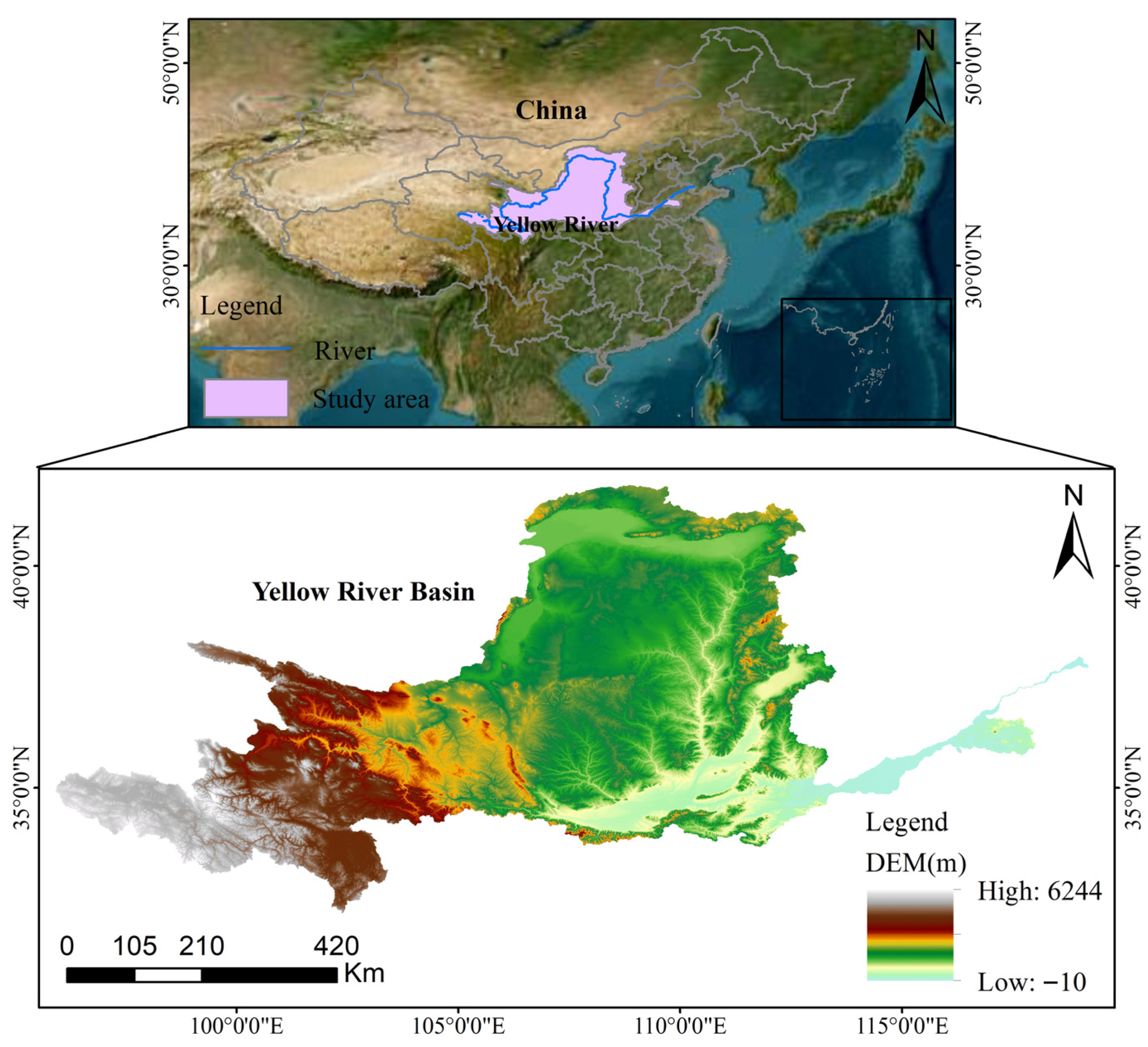
The Yellow River Basin (96°~119° E, 32°~42° N; Figure 1), originating in the Bayan Har Mountains, flows through nine provinces and empties into the Bohai Sea, stretching 5464 km in total length [32]. The basin exhibits a topographical gradient from the high west to the low east, spanning the Tibetan Plateau, the Loess Plateau, and the North China Plain. It features significant climatic heterogeneity and distinct land use gradients within a fragile ecological framework. The upper reaches are predominantly ecological lands with high landscape connectivity. The middle reaches are characterized by an interlaced pattern of cropland and forest, experiencing severe soil erosion and high habitat heterogeneity. In contrast, the lower reaches are dominated by intensive agriculture and urban land use, resulting in pronounced landscape fragmentation. Overall, intensifying human activities are profoundly impacting regional habitat quality and ecological security.
Figure 1. Geographical location of the study area.

2.2. Data Sources and Preprocessing

The land use data for 1995, 2010, and 2024 were obtained from the team led by Professor Huang Xin at Wuhan University [33], with a spatial resolution of 30 m. The elevation data was acquired from the Geospatial Data Cloud platform, also at a 30 m resolution. The driving factor data comprised both natural and socio-economic datasets. Detailed information for all data sources is provided in Table 1.
Table 1. Data source information.
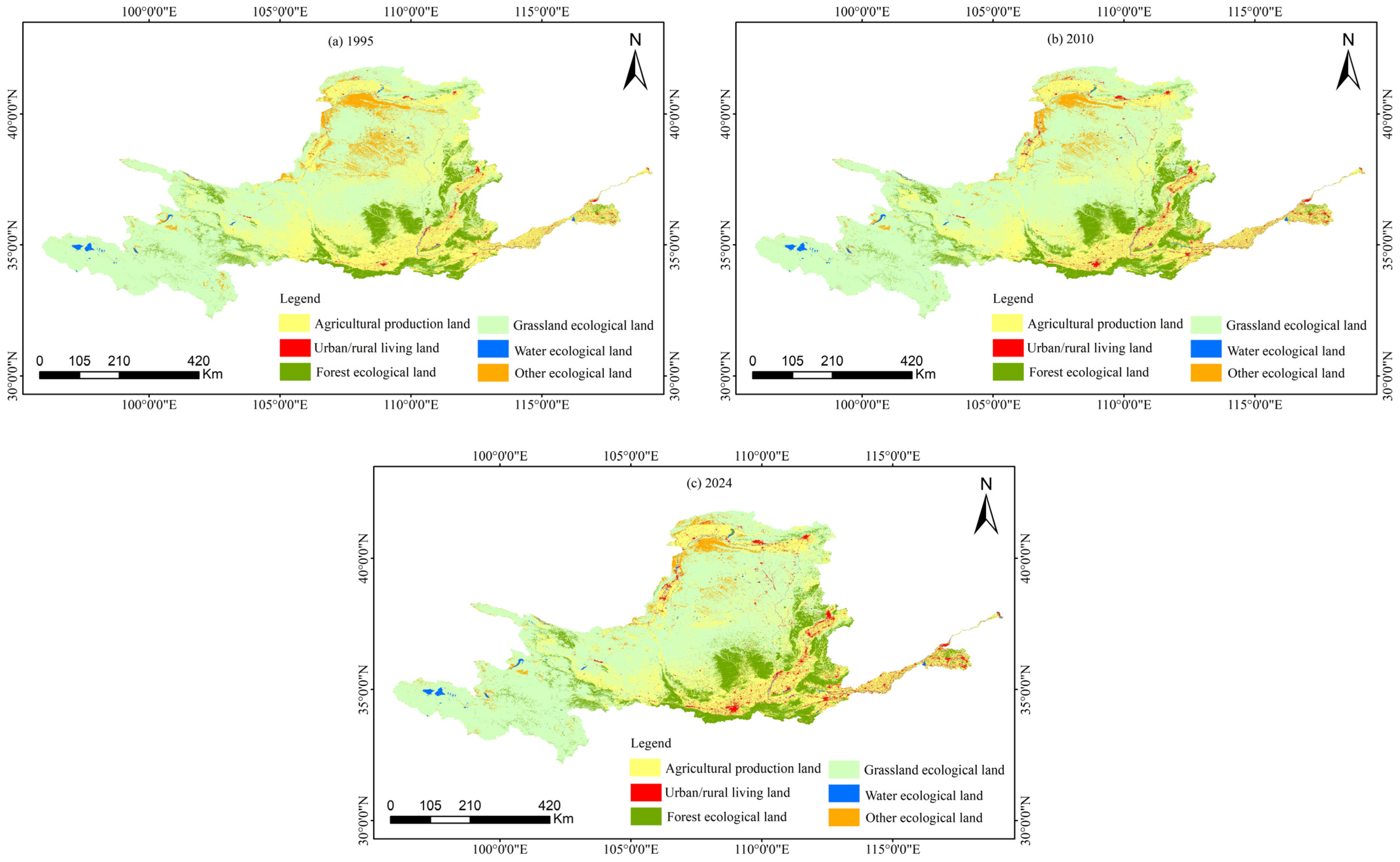
Prior to analysis, the raw data underwent preprocessing, which included data clipping, projection transformation, and reclassification. Furthermore, following established methodologies rooted in China’s national territorial spatial planning guidelines [34] and prior seminal research [35], the base land use data were reclassified based on the dominant function of PLES to construct a PLES classification system (Table 2, Figure 2). This framework operates on the principle of assigning a single, primary socio-ecological function to each land parcel to ensure analytical clarity and consistency at the basin scale. For instance, ‘Cropland’ is categorically defined as Production Space as its primary anthropogenic purpose is agricultural output, notwithstanding its ancillary ecological roles.
Table 2. Land Use Classification of the PLES in the Yellow River Basin.
Figure 2. Spatial distribution of PLES land use in the Yellow River Basin.

3. Methods

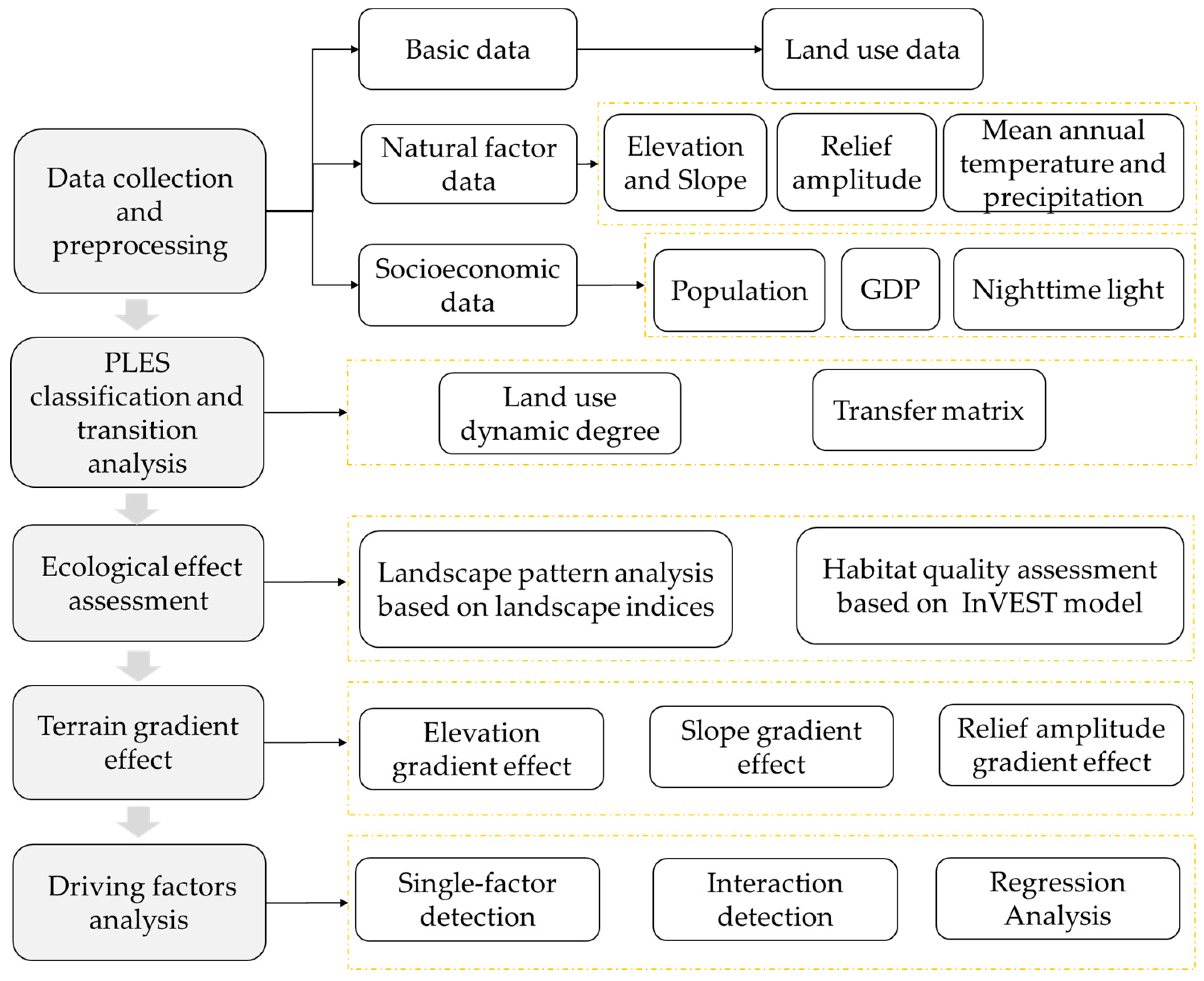
By integrating the classification of PLES, this study systematically evaluated the ecological effects and their topographic gradient differentiation in the Yellow River Basin. The detailed technical workflow is illustrated in Figure 3.
Figure 3. Research Flowchart.

3.1. PLES Transition Analysis

(1)
Land use dynamic degree
To quantify the rate of land use change within a specific region over a defined period, the land use dynamic degree model was adopted in this study. The formula is as follows [36]:
K = H b H a H a × 1 T × 100 %
where K is the land use dynamic degree; H a and H b are the areas of a specific land use type at the start and end of the study period, respectively; and T is the length of the time interval.
(2)
Transfer matrix
This model quantifies the conversion between land use types in a given region over different periods, both in terms of the magnitude and the spatial direction of changes. The calculation formula is as follows [37]:
S i j = S 11 S 12 S n 1 S n n
where S i j is the percentage of the total area that was converted from land use type i to type j during the study period and n is the total number of land use types.

3.2. Ecological Effect Assessment

(1)
Landscape pattern analysis based on landscape indices
Landscape metrics are quantitative indices used to characterize spatial patterns and are widely applied in landscape ecology and geography [38]. In line with previous studies and the specific regional context of the Yellow River Basin, the study selected Patch Density (PD), Landscape Shape Index (LSI), and Aggregation Index (AI) to represent landscape heterogeneity, shape complexity, and patch connectivity, respectively. The calculation formulas are as follows [39]:
P D = N A ,   P D > 0
where N represents the total number of patches in the landscape; A denotes the total landscape area.
L S I = 0.25 E A ,   L S I 1
where N represents the total length of all patch edges in the landscape; A denotes the total landscape area.
A I = g i i max g i i × 100 ,   0 A I 100
where g i i represents the number of like adjacencies between pixels within patch type i .
(2)
InVEST model
Within the InVEST model, the Habitat Quality Module functions as a pivotal tool for evaluating ecosystems’ ability to sustain biodiversity—a vital component of ecosystem services. Its fundamental approach entails two key steps: first, measuring the sensitivity of different land use categories to diverse threat factors; second, assessing the magnitude of threat effects. These steps collectively yield a habitat quality index [40]. The calculation is performed as follows [41]:
D i j = r = 1 R y = 1 Y r ω r r = 1 R ω r r y i r x y β x S j r
Q x j = H j 1 D x j z D x j z + k 2
i r x y = 1 d x y d r m a x
i r x y = e x p 2.99 d x y d r m a x
where D i j represents the habitat degradation degree; R denotes the total number of threat factors; Y r indicates the number of grid cells occupied by threat factor r ; ω r is the weight of threat factor; r y refers to the intensity of threat factor at location y ; β x signifies the accessibility resistance level of grid cell x ; S i j represents the sensitivity of land cover type; i r x y indicates the stress level of threat factor r y in grid cell y on grid cell x ; d x y is the straight-line distance between grid cells x and y ; d r m a x denotes the maximum effective distance of threat factor; Q x j is the habitat quality index; H j refers to the habitat suitability of land cover type; k is the half-saturation constant; and z is a normalization constant.
To further characterize the dynamics of habitat quality in the Yellow River Basin, habitat quality was categorized into five distinct grades (low, relatively low, moderate, relatively high, and high) based on previous studies [42] and the specific regional context.
The parameterization of the Habitat Quality module, including the selection of threat factors, their weights, maximum distances, and the sensitivity scores of land cover types (Table 3 and Table 4), is a critical step. The habitat suitability scores and threat sensitivity values were primarily derived from foundational studies that applied the InVEST model in analogous ecological regions across China [13,43,44,45]. The weights, maximum influence distances, and decay types of threat factors were adapted from the official InVEST user guide [46] and the aforementioned literature. Crucially, these literature-based values were subsequently refined and validated for the specific context of the Yellow River Basin through a structured expert elicitation process. Three domain experts (ecologists and geographers with extensive experience in the basin) independently reviewed and scored the parameters. The final values represent a consensus that reflects regional characteristics. For example, the higher weight assigned to urban expansion reflects its recognized role as a primary and persistent driver of habitat degradation in the region’s development corridors.
Table 3. Threat factors and their weights.
Table 4. The sensitivity of various land use types to threat factors.

3.3. Terrain Gradient Effect

In this research, three topographic factors—elevation, slope, and relief amplitude—were chosen to examine the topographic differentiation features of habitat quality in the Yellow River Basin [47]. To effectively capture the spatial disparities across topographic gradients, each factor was classified into distinct grades using the Natural Breaks method (Table 5) [48].
Table 5. Classification of terrain factors.
To better quantify the topographic gradient effects on PLES types and habitat quality in the Yellow River Basin, the distribution index was introduced to examine their variation characteristics along topographic gradients. The calculation formula is as follows [49]:
I D = ( A i e A i ) / ( A e A )
where I D is the distribution index; A i e is the area of the i -th PLES type/habitat quality class on the e -th topographic gradient; A i is the total area of the i -th PLES type/habitat quality class; A e is the total area of the e -th topographic gradient; and A is the total area of the study region.

3.4. Driving Force Analysis with Geological Detector and Regression Analysis

(1)
Geological detector
The geographical detector method is primarily used to quantify spatial stratified heterogeneity and examine relationships between variables [50,51]. This study employed its factor detector and interaction detector modules to scrutinize the influence of natural and anthropogenic factors on the spatial heterogeneity of habitat quality within the Yellow River Basin [52,53].
(2)
Regression analysis
To quantify the direction and independent influence of each driving factor on habitat quality, we performed a multiple linear regression (MLR) analysis [54]. The analysis was conducted using GeoDa (1.22.0) software. A systematic random sampling across the basin was used to extract the values of all variables, ensuring a representative dataset while mitigating computational burdens and spatial autocorrelation issues. We assessed the overall model fit using the Adjusted R-squared and F-statistic and evaluated the significance of individual drivers based on their p-values (with a significance level of α = 0.05). Furthermore, a suite of diagnostics—including tests for multicollinearity (Condition Number), normality of errors (Jarque–Bera test), heteroskedasticity, and spatial dependence were performed to evaluate the robustness and limitations of the model.

4. Results

4.1. Spatiotemporal Dynamics of PLES

4.1.1. Quantitative Changes in the Area of Tach PLES Type

Statistical results of the PLES area in the Yellow River Basin from 1995 to 2024 (Table 6) reveal a significant structural transformation, characterized by the compression of production space, the expansion of living space, and the optimization of ecological space. In this context, “optimization” refers to the process of internal structural adjustment within the ecological space, manifested as an increase in the proportion of lands with higher ecological value (such as forest and grassland) and a decrease in lands with lower ecological value or undefined functions (categorized as “other ecological lands”), thereby enhancing the overall capacity of the ecosystem to provide services. Specifically, the proportion of agricultural land decreased from 25.62% to 23.04%, while urban and rural living land increased markedly from 1.34% to 2.96%. Within the ecological space, the dominance of forest (increasing from 10.36% to 12.34%) and grassland (from 57.44% to 58.15%) was enhanced, and water saw a slight gain (0.67% to 0.77%). In contrast, the share of other ecological lands decreased from 4.57% to 2.74%, reflecting a concerted shift towards a more optimized ecological structure.
Table 6. Area of PLES types in the Yellow River Basin (1995–2024).
The dynamics of the PLES in the Yellow River Basin from 1995 to 2024, as quantified by the land use dynamic degree (Table 7), revealed distinct phases of change. During the 1995–2010 period, living space expanded at a high rate (4.24%), while production space experienced a consistent decline (−0.53%). The ecological space underwent dramatic internal shifts, characterized by growth in forest land (0.53%) and water (1.02%), but a sharp contraction in other ecological lands (−2.17%). The period of 2010–2024 gave way to a moderated trend: the expansion of living space decelerated (2.31%), and the loss of production space slowed (−0.16%). Structural optimization within the ecological space intensified, with forest land emerging as the core of growth at an accelerated rate (0.69%). In contrast, grassland and water transitioned to negative growth, while the decline of other ecological lands notably narrowed.
Table 7. Dynamics of PLES types in the Yellow River Basin (1995–2024).

4.1.2. PLES Transfer Analysis

The land use transition matrix for the Yellow River Basin from 1995 to 2010 (Table 8) reveals several key trends. Production space experienced the most extensive conversion, with a total of 40,632.06 km2 being converted out. The dominant processes were the shift to grassland (32,020.16 km2) and living space (5502.47 km2), pinpointing the Grain-for-Green program and urbanization as the primary drivers of its decline. Living space exhibited a clear unidirectional expansion, with its gains almost exclusively sourced from production space (5502.47 km2). Within the ecological space, grassland served as the central conversion hub, engaging in large-scale, two-way exchanges with both production land and other ecological lands. This pattern reflects both the inherent variability of the agro-pastoral ecotone and the marked effects of ecological restoration projects.
Table 8. Transfer matrix of PLES types in the Yellow River Basin (1995–2010) (km2).
The period from 2010 to 2024 saw the continuation and intensification of established land use transition trends in the Yellow River Basin (Table 9). Living space maintained its rapid, unidirectional expansion, with 64% of its new area (4642.85 km2) originating from production land, underscoring the persistent dominance of urban encroachment. Concurrently, production space experienced a substantial net conversion of 33,800.19 km2, of which 26,119.67 km2 was transformed into grassland, evidencing the continued implementation of ecological conservation policies. Within the ecological space, forest land emerged as a primary focus of conservation efforts, receiving large-scale inflows (13,033.19 km2) predominantly from grassland (10,636.13 km2). Meanwhile, grassland acted as a pivotal transitional hub, maintaining relative stability in its total area despite intense exchanges, which highlights its crucial intermediary role in the land use system.
Table 9. Transfer matrix of PLES types in the Yellow River Basin (2010–2024) (km2).
Between 1995 and 2024, the Yellow River Basin witnessed significant transitions in its PLES (Table 10). A total of 56,567.43 km2 of production land was converted out, primarily to grassland (40,149.93 km2) and living space (10,262.42 km2), highlighting the central roles of the Grain-for-Green Program (converting cropland to pasture) and urban-rural expansion in its decline. Living space exhibited rigid expansion, with its influx almost entirely sourced from production land (10,262.42 km2), while its outflux was negligible. Meanwhile, ecological space underwent continuous internal optimization: forest land was mainly expanded from grassland (14,994.39 km2), whereas other ecological lands were substantially consolidated into grassland (19,666.53 km2), revealing a systematic and positive structural evolution.
Table 10. Transfer matrix of PLES types in the Yellow River Basin (1995–2024) (km2).

4.2. Ecological Effects of PLES Transition

4.2.1. Changes in Landscape Patterns

(1)
The temporal variation characteristics of landscape index
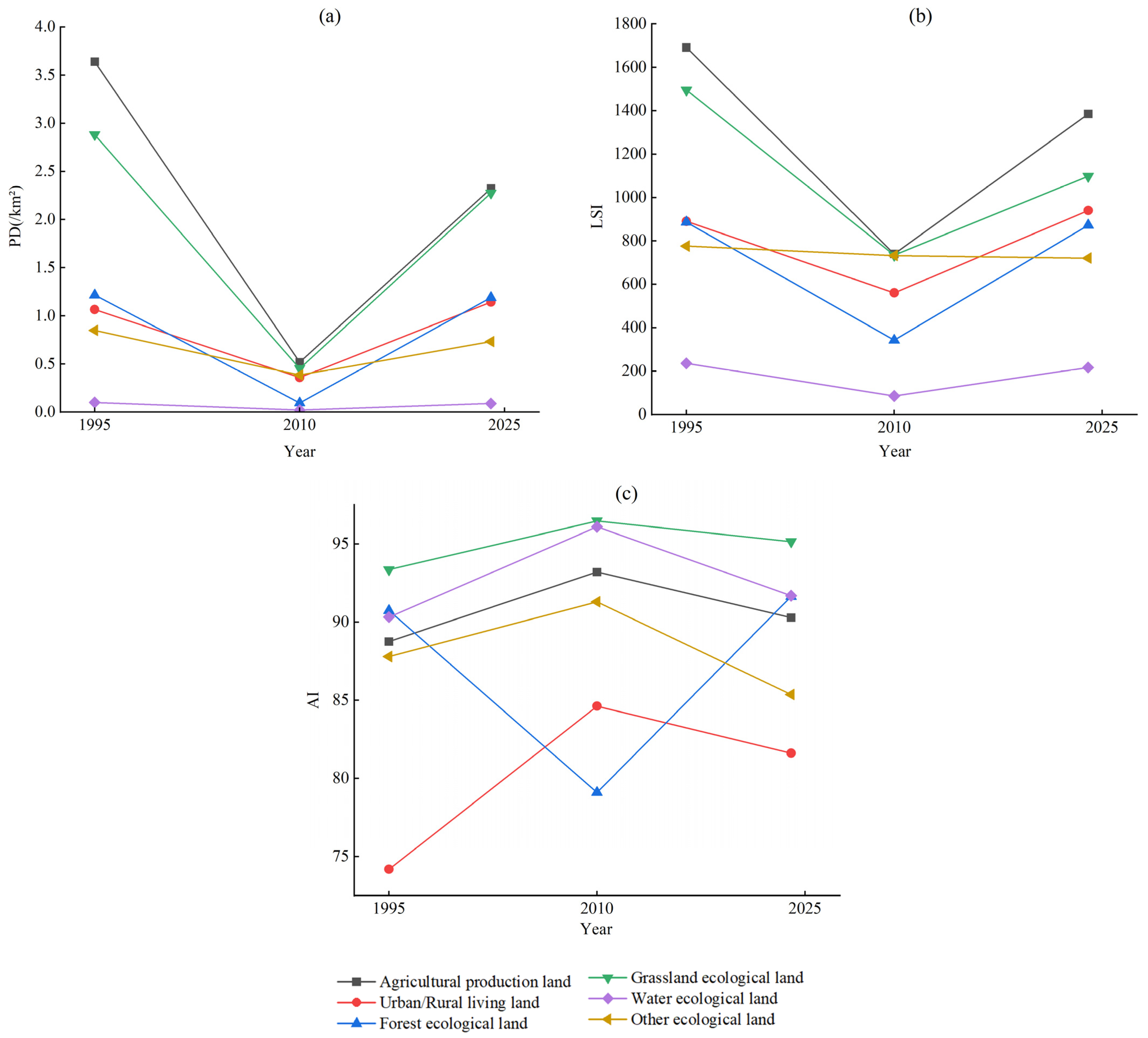
Based on Figure 4, changes in landscape pattern indices in the Yellow River Basin from 1995 to 2024 reveal a distinct transition from disturbance-dominated to restoration-oriented landscape evolution. During the earlier period (until 2010), decreases in the PD and LSI of agricultural and grassland areas indicated large-scale consolidation driven by agricultural mechanization and the Grain for Green Program. Concurrently, the decline in AI of forested areas reflected a process of landscape fragmentation in this period. In the later phase, these trends reversed, with the rise in forest AI particularly signifying the effectiveness of ecological restoration projects in enhancing landscape connectivity and integrity. Meanwhile, the long-term stability of LSI values in other ecological land types underscores their relatively natural state with minimal anthropogenic disturbance.
Figure 4. The temporal variation characteristics of each landscape index. (a) PD; (b) LSI; (c) AI.
(2)
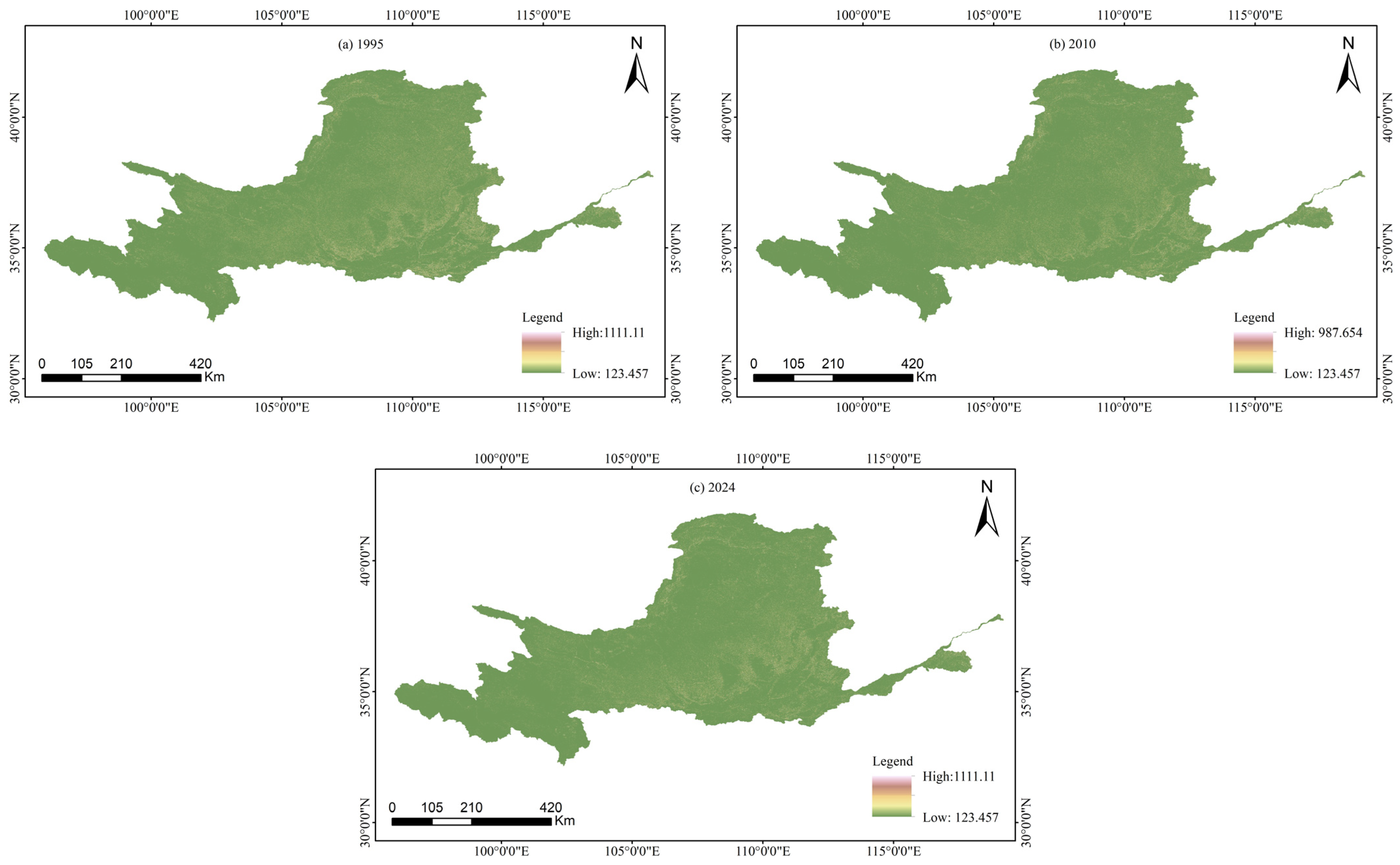
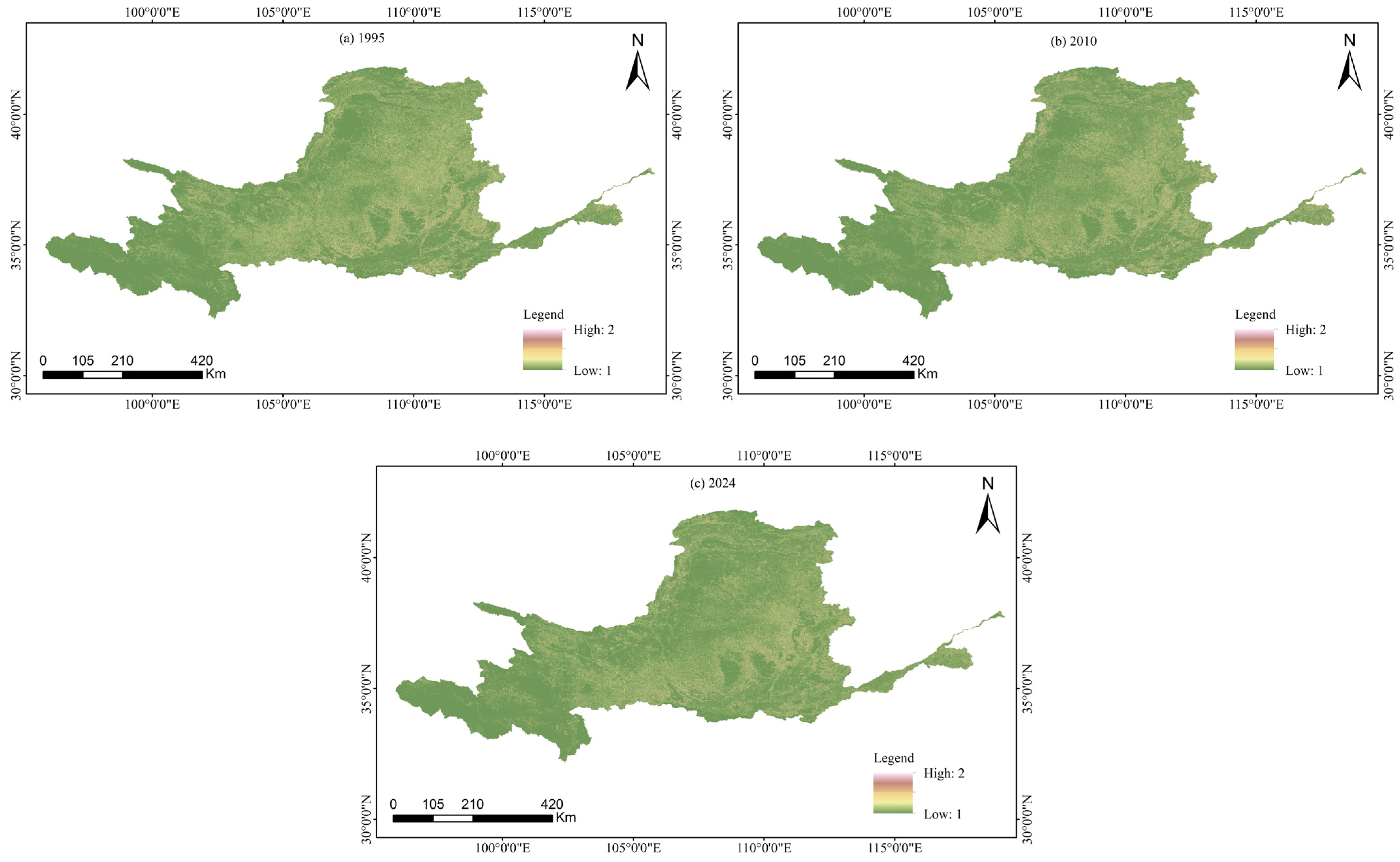
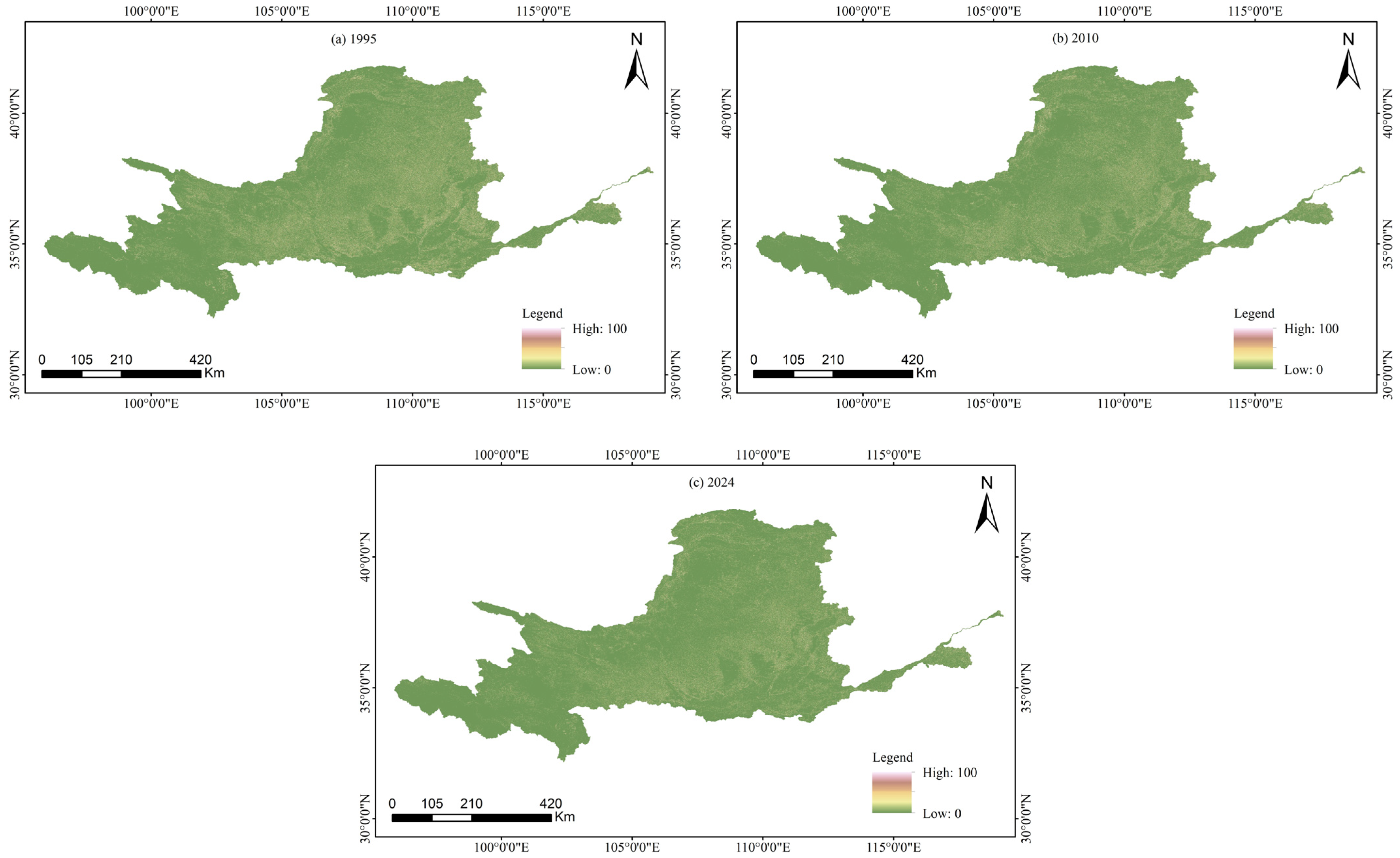
Spatial variation characteristics of landscape indices
Based on Figure 5, significant spatial heterogeneity in landscape fragmentation was observed across the Yellow River Basin from 1995 to 2024. High fragmentation values were concentrated in plain areas and zones of urban and agricultural development, with continued expansion over the study period, indicating that human activities are the primary driver of declining landscape connectivity. In contrast, low fragmentation values were predominantly distributed in western and central mountainous regions, where landscape integrity remains relatively high. However, the emergence of scattered fragmentation patches in these areas suggests that even these ecologically vulnerable zones are facing potential risks of degradation.
Figure 5. The spatial variation characteristics of the PD index.
Based on Figure 6, the landscape shape complexity in the Yellow River Basin exhibited significant spatial heterogeneity from 1995 to 2024. In the plains and valley regions of the middle and lower reaches, urban and agricultural development has led to increasingly complex and irregular landscape shapes. In contrast, landscapes in the mountainous areas of the middle and upper reaches remained relatively regular, reflecting a more intact ecological baseline; however, localized signs of complexity indicate that anthropogenic disturbances are gradually permeating these regions. Temporally, the LSI for the entire basin initially decreased before rising, particularly in areas with intensive human activity, underscoring the strong influence of PLES transformation on landscape morphology.
Figure 6. The spatial variation characteristics of the LSI.
Based on Figure 7, the aggregation index in the Yellow River Basin exhibited significant topographic gradient differentiation from 1995 to 2024. Flat areas in the middle and lower reaches with intensive human activities showed lower AI values, indicating fragmented landscape connectivity, while hilly and mountainous regions in the middle and upper reaches were characterized by higher AI values, reflecting concentrated landscape patterns. Temporally, the AI across the basin initially increased before declining, illustrating that the expansion and consolidation of production and living spaces during the transformation of PLES have led to an overall decrease in the aggregation of natural ecological landscapes.
Figure 7. The spatial variation characteristics of the AI.

4.2.2. Changes in Habitat Quality

(1)
Temporal variation characteristics of habitat quality
As shown in Table 11, the habitat quality structure in the Yellow River Basin underwent significant differentiation from 1995 to 2024, exhibiting a dual trend of “expansion at both ends.” The proportion of high-grade habitat area increased from 10.36% to 12.34%, highlighting the effectiveness of ecological conservation efforts. However, the proportion of low-grade habitat also rose from 1.34% to 2.96%, indicating persistent risks of ecological degradation. Meanwhile, the relatively low and moderate grades serve as critical ecological buffers, continued to shrink, with their combined proportion decreasing from 30.19% to 25.78%, revealing a complex pattern in which ecological conservation and degradation coexist across the basin.
Table 11. The proportion of each level of habitat quality area in the Yellow River Basin from 1995 to 2024 (%).
Based on the habitat quality transition matrix analysis of the Yellow River Basin from 1995 to 2024 (Table 12), the basin experienced intense and asymmetric shifts in habitat quality, demonstrating a degradation pathway characterized by “high-level stability amid mid-level decline.” High-grade habitats remained stable, while moderate and relatively high-grade habitats constitute the dominant categories acting as the primary sources of outward transitions. The net outward shift from these categories was substantial (for instance, the transition from relatively high to medium grade covered 32,475.83 km2), resulting in a notable expansion of low-grade habitat areas. This unidirectional degradation trend has intensified ecological polarization within the basin, highlighting the accumulation of ecological risks during the transformation of PLES.
Table 12. The area transfer of various levels of habitat quality in the Yellow River Basin from 1995 to 2024 (km2).
(2)
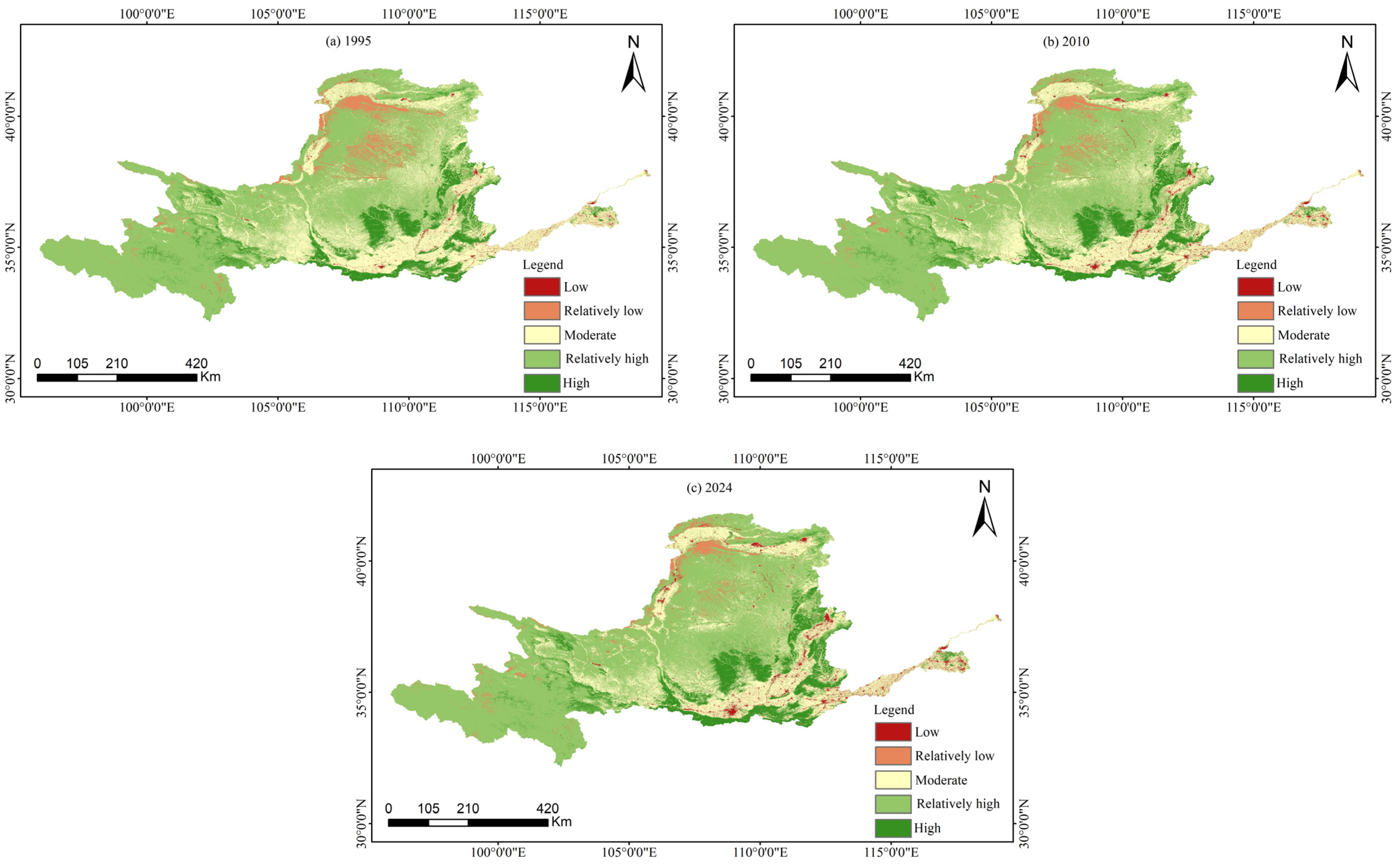
Spatial variation characteristics of habitat quality
Based on the spatiotemporal evolution of habitat quality in the Yellow River Basin from 1995 to 2024 (Figure 8), the spatial distribution of habitat quality exhibits significant heterogeneity, closely correlated with topographic gradients. Over the past three decades, the basin has generally demonstrated a pattern of “stable high-quality areas and degraded low-quality areas” in terms of habitat quality distribution. High and relatively high habitat quality levels are predominantly concentrated in the eastern margin of the Tibetan Plateau in the upper reaches and some mountainous areas in the middle reaches, reflecting the favorable ecological baseline and strong stability of high-topographic-gradient regions. In contrast, low-value habitat quality areas are mainly distributed across the plains and valley zones of the middle and lower reaches, showing an expanding trend over time. This indicates the degradation of ecological functions in low-topographic-gradient regions, resulting from the encroachment of production and living spaces during the transformation of the PLES.
Figure 8. Spatial distribution characteristics of habitat quality at various levels.
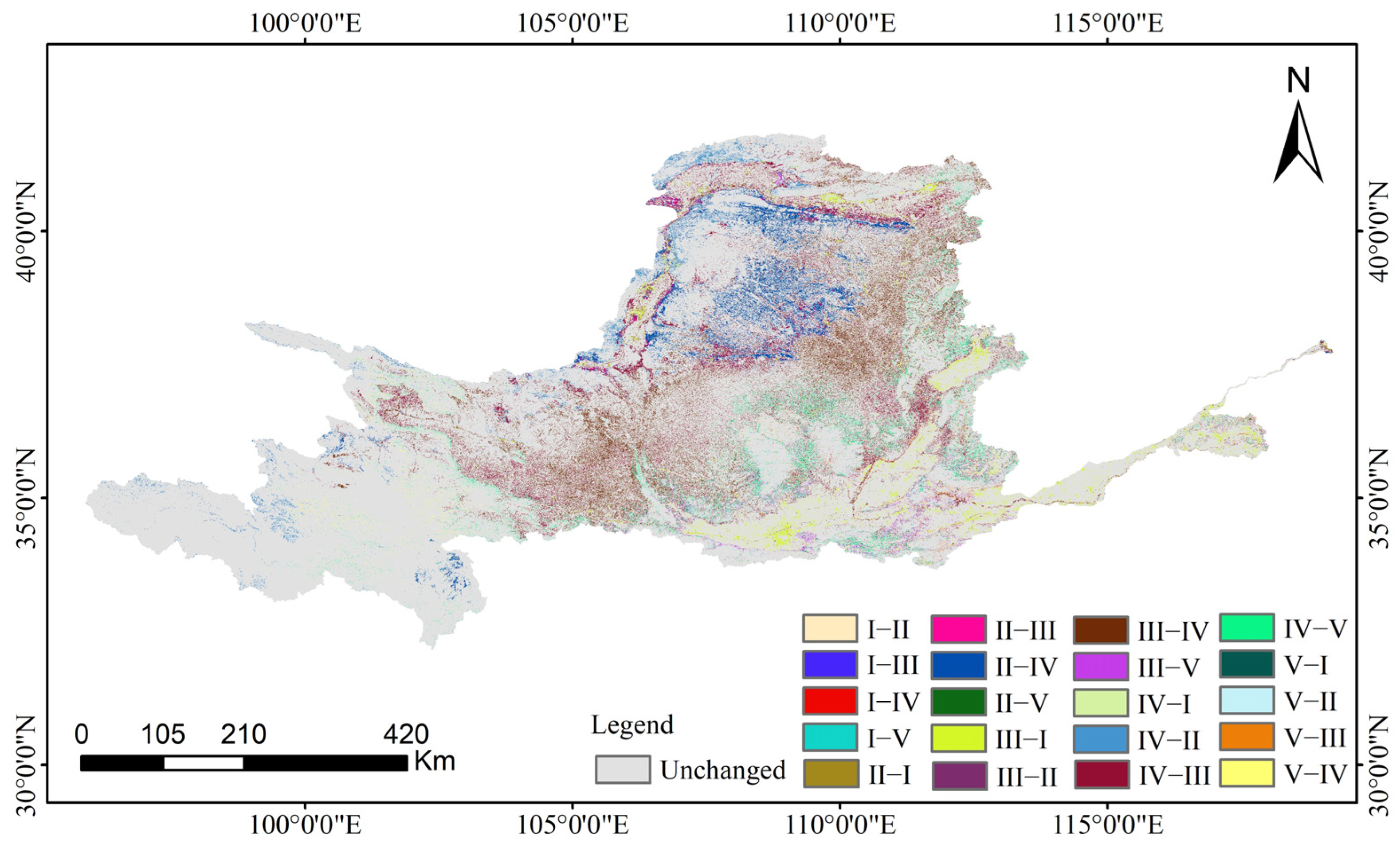
Based on an analysis of the spatial transition characteristics of various habitat quality grades in the Yellow River Basin from 1995 to 2024 (Figure 9), the overall habitat quality structure of the basin exhibits a significant degradation trend and spatial heterogeneity. Habitat quality transitions are characterized by extensive and intense conversion from high-grade areas (Grades IV and V) to moderate and low-grade areas (Grades I–III), forming contiguous degradation zones, particularly in the plains, the Hetao region, and the midstream valley areas. In contrast, the reverse transition from low to high grades is limited in both extent and intensity, reflecting a slow and spatially fragmented habitat restoration process. While high-grade areas, such as the eastern margin of the Tibetan Plateau in the upper reaches, remain relatively stable, localized degradation is still observed along their fringes. The plains in the middle and lower reaches have become focal areas of habitat quality decline, where human activities continue to intensify the encroachment on and disturbance of ecological spaces.
Figure 9. Spatial transfer of habitat quality at various levels from 1995 to 2024. I: Low; II: Relatively low; III: Moderate; IV: Relatively high; V: High.

4.3. Topographic Gradient Differentiation of Ecological Effects

4.3.1. Distribution of PLES Types Across Topographic Gradients

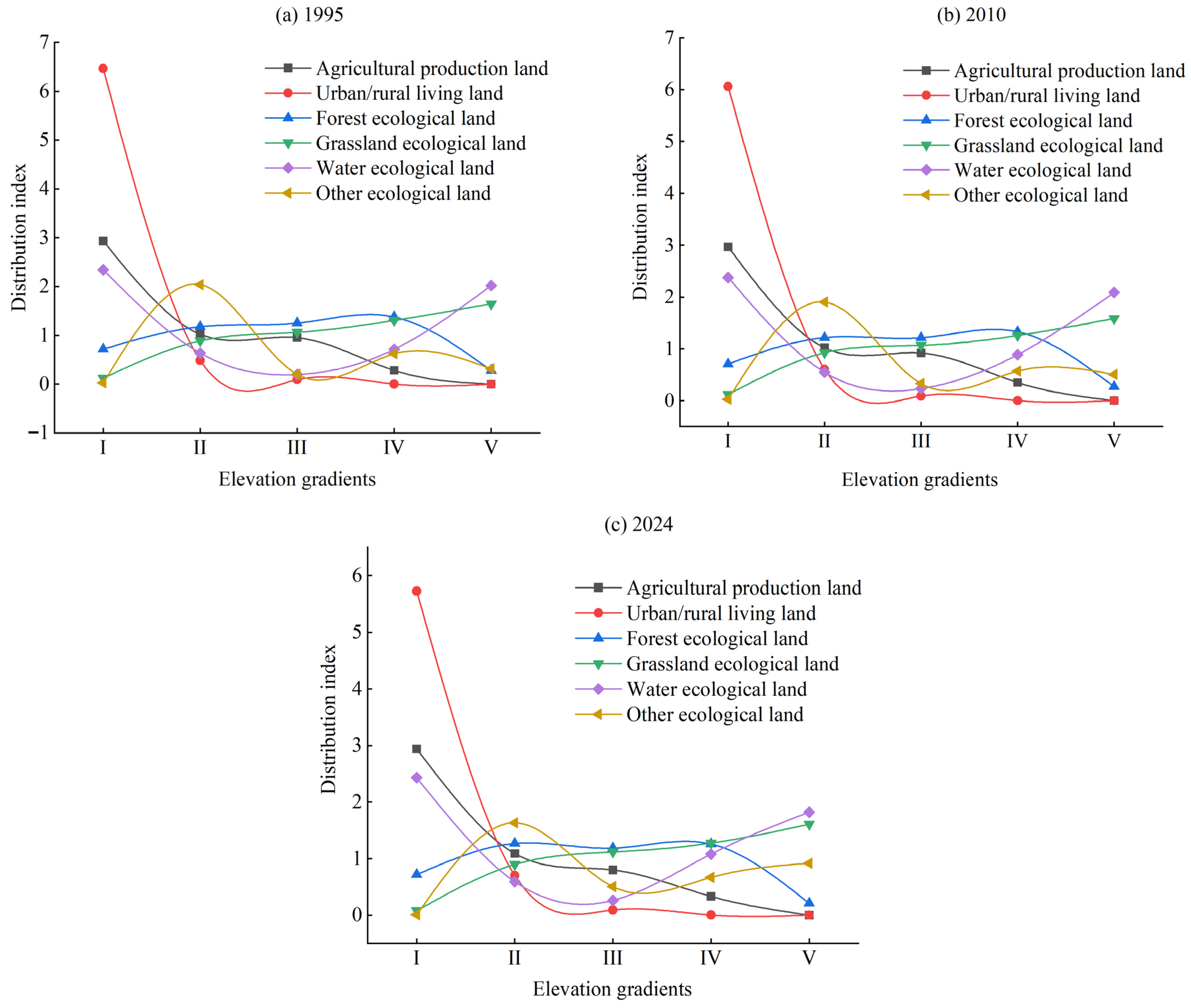
Based on Figure 10, the elevational distribution of PLESs in the Yellow River Basin exhibited distinct patterns during the 1995–2024 period. Urban–rural living spaces demonstrated persistent concentration in low-elevation zones, while agricultural production spaces underwent progressive contraction within low to medium elevational ranges. Among ecological spaces, forest–grassland ecosystems consistently dominated mid-to-high elevational gradients, and water ecosystems maintained long-term concentration in both the lowest and highest gradients. Notably, the proportional increase in other ecological spaces in the highest gradient signifies a trend toward functional diversification in high-altitude regions.
Figure 10. Distribution index of PLES types along elevation gradients (1995–2024).
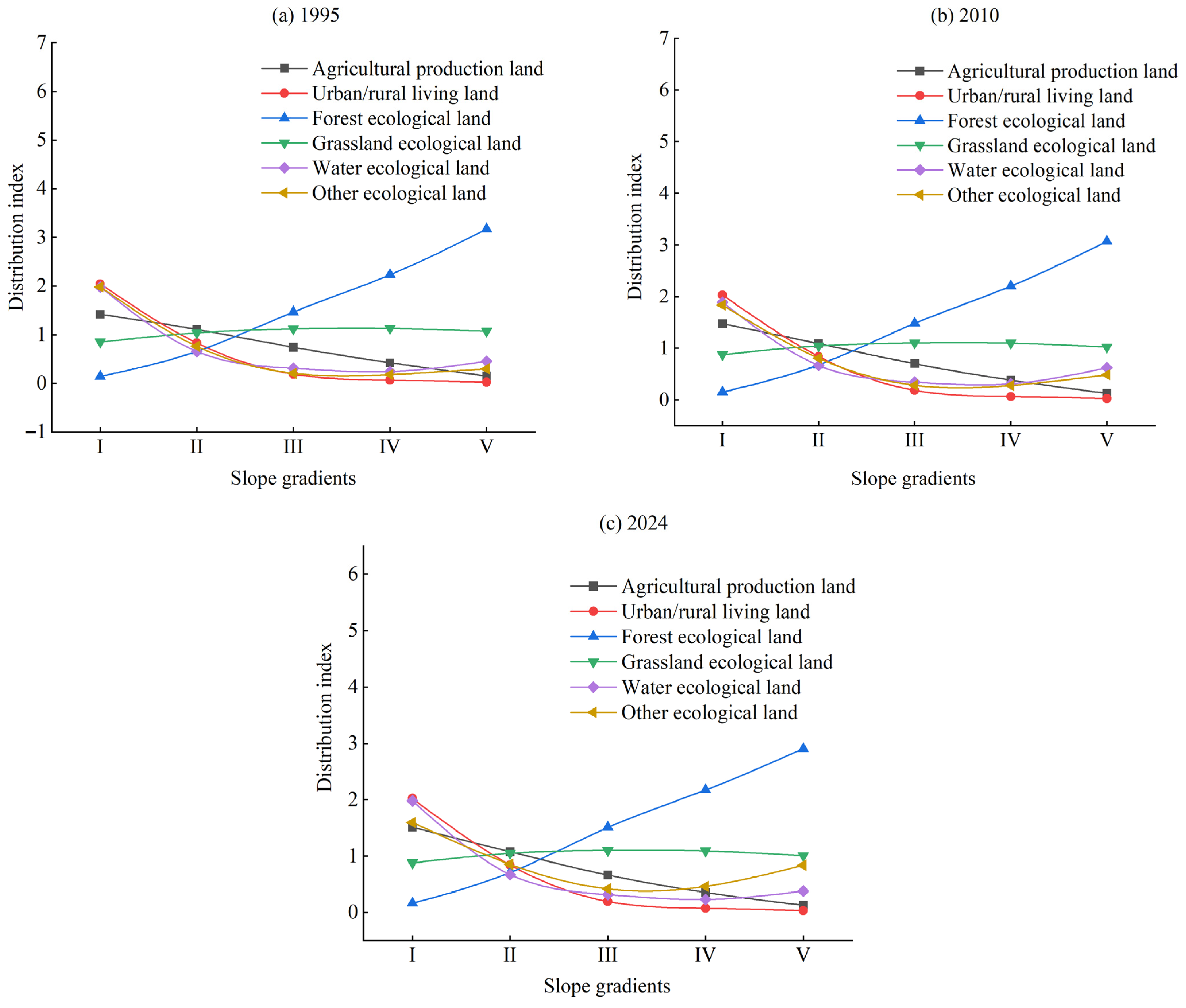
Based on Figure 11, the spatial distribution of Production–Living–Ecological (PLE) land in the Yellow River Basin demonstrated a consistent topographic differentiation pattern along the slope gradient from 1995 to 2024. Urban–rural living land and agricultural production land remained highly concentrated in gentle slope areas, declining rapidly with increasing slope. In contrast, forest ecological land showed a significant increase along the slope gradient, achieving absolute dominance in steep slope regions where it serves as a crucial ecological barrier. Concurrently, the proportional rise in other ecological land types in steep slope areas reflects an increasingly complex ecological structure, indicating ongoing ecological restoration and natural recovery processes in these zones.
Figure 11. Distribution index of PLES types along slope gradients (1995–2024).
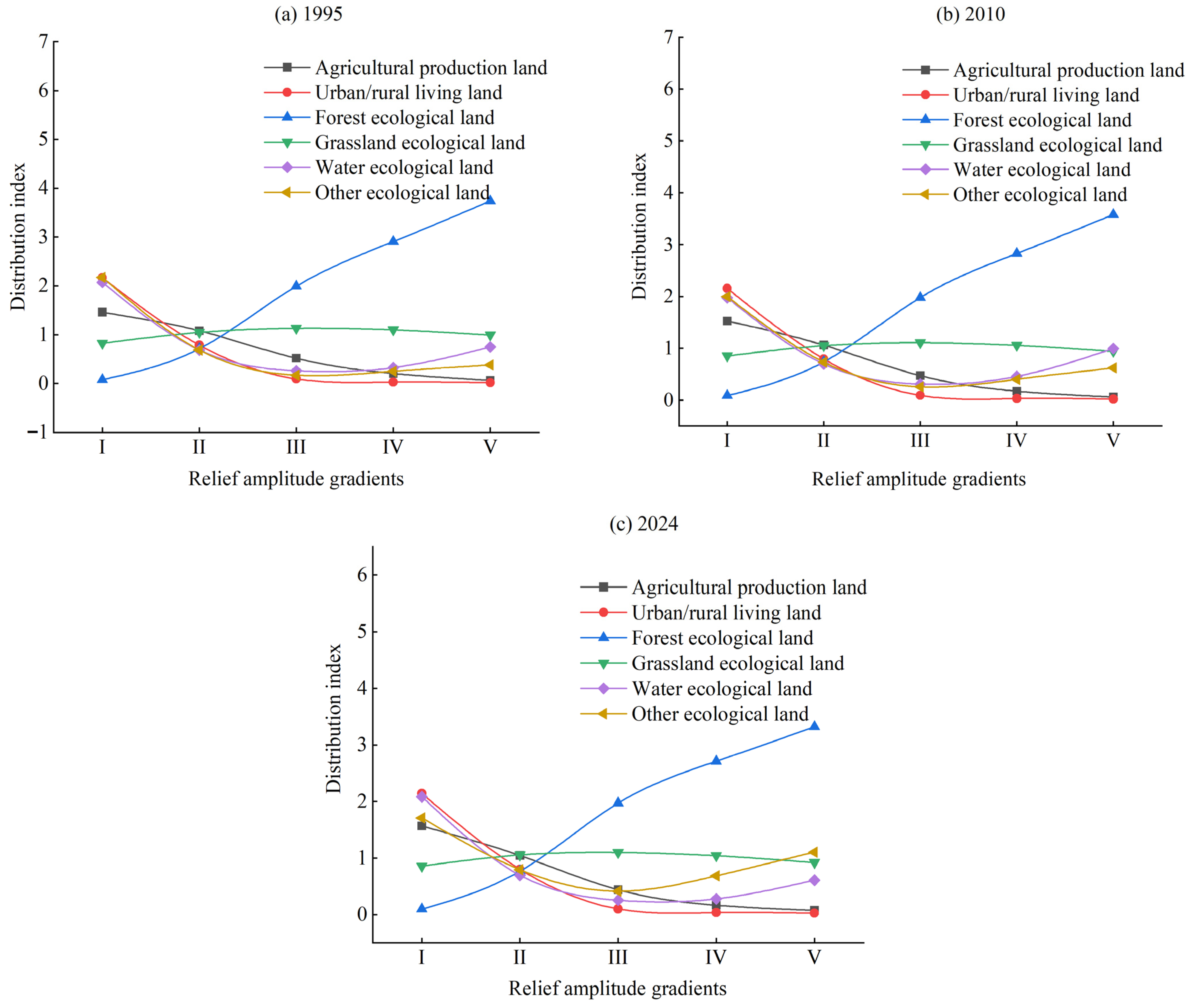
Based on Figure 12, the spatial distribution of PLES land in the Yellow River Basin exhibited significant topographic dependence along the relief amplitude gradient from 1995 to 2024. Urban–rural living land and agricultural production land remained predominantly concentrated in low-relief areas and decreased sharply with increasing terrain heterogeneity. In contrast, forest ecological land demonstrated a continuous strengthening pattern along the gradient, consistently dominating high-relief regions. During this period, other ecological land types in high-relief areas showed marked expansion, while water-body ecological land followed an initial increase followed by decline. Collectively, these dynamics indicate an ongoing diversification of ecological functions in these elevated terrain regions.
Figure 12. Distribution of PLES types along relief amplitude gradients (1995–2024).

4.3.2. Distribution of Habitat Quality Across Topographic Gradients

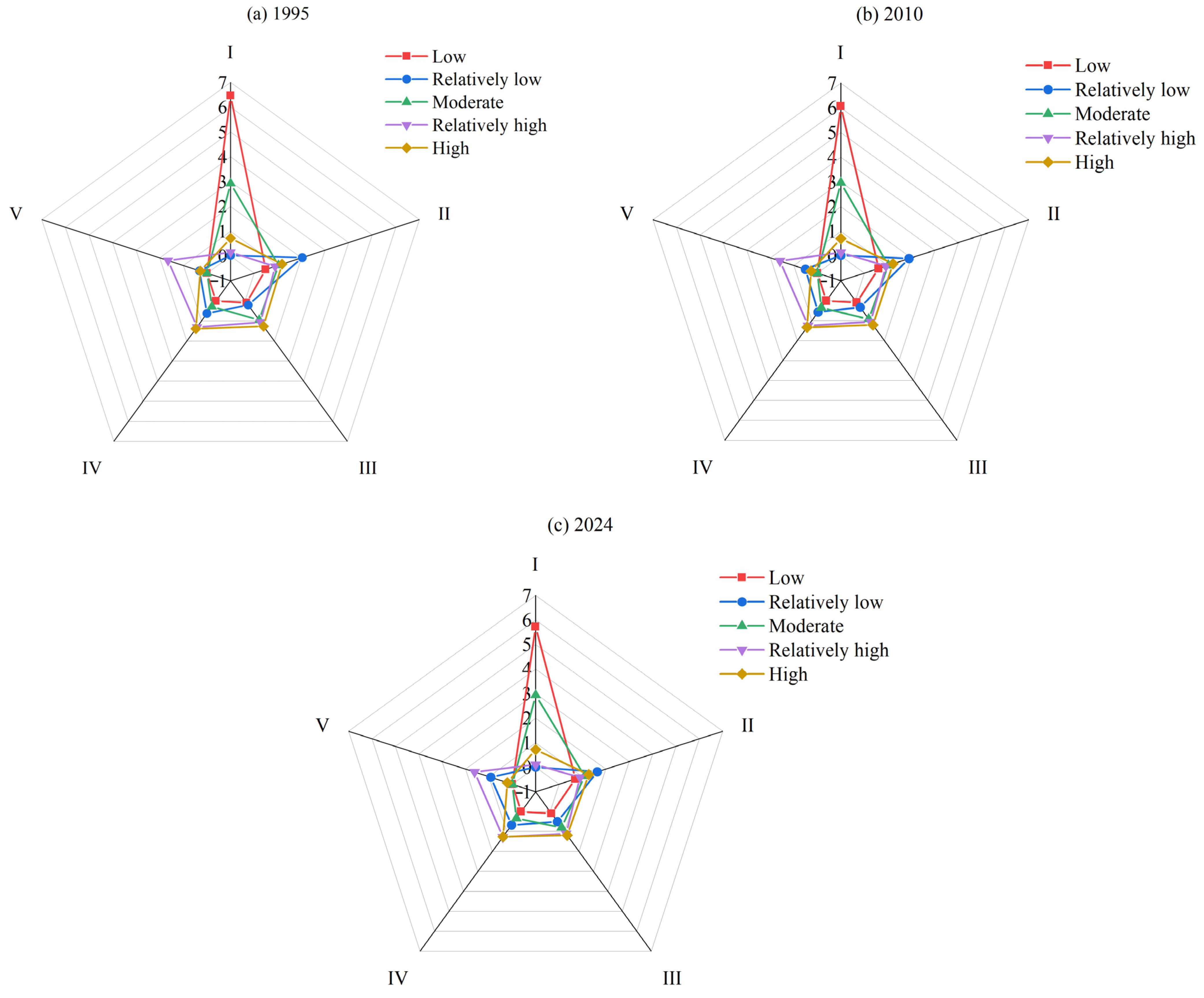
Based on Figure 13, a stable elevational gradient differentiation in habitat quality is observed in the Yellow River Basin from 1995 to 2024. Low habitat quality remains persistently concentrated in low-elevation zones, albeit with a gradually diminishing influence, while medium and high grades of habitat quality exhibit a significant enhancement with increasing elevation. Furthermore, structural adjustments are noted within the highest elevation zone (Grade V), characterized by a decline in high-grade habitat alongside an increase in relatively lower grades. This pattern suggests that these uppermost regions may be experiencing emerging environmental pressures.
Figure 13. Habitat quality distribution index along elevation gradients (1995–2024).
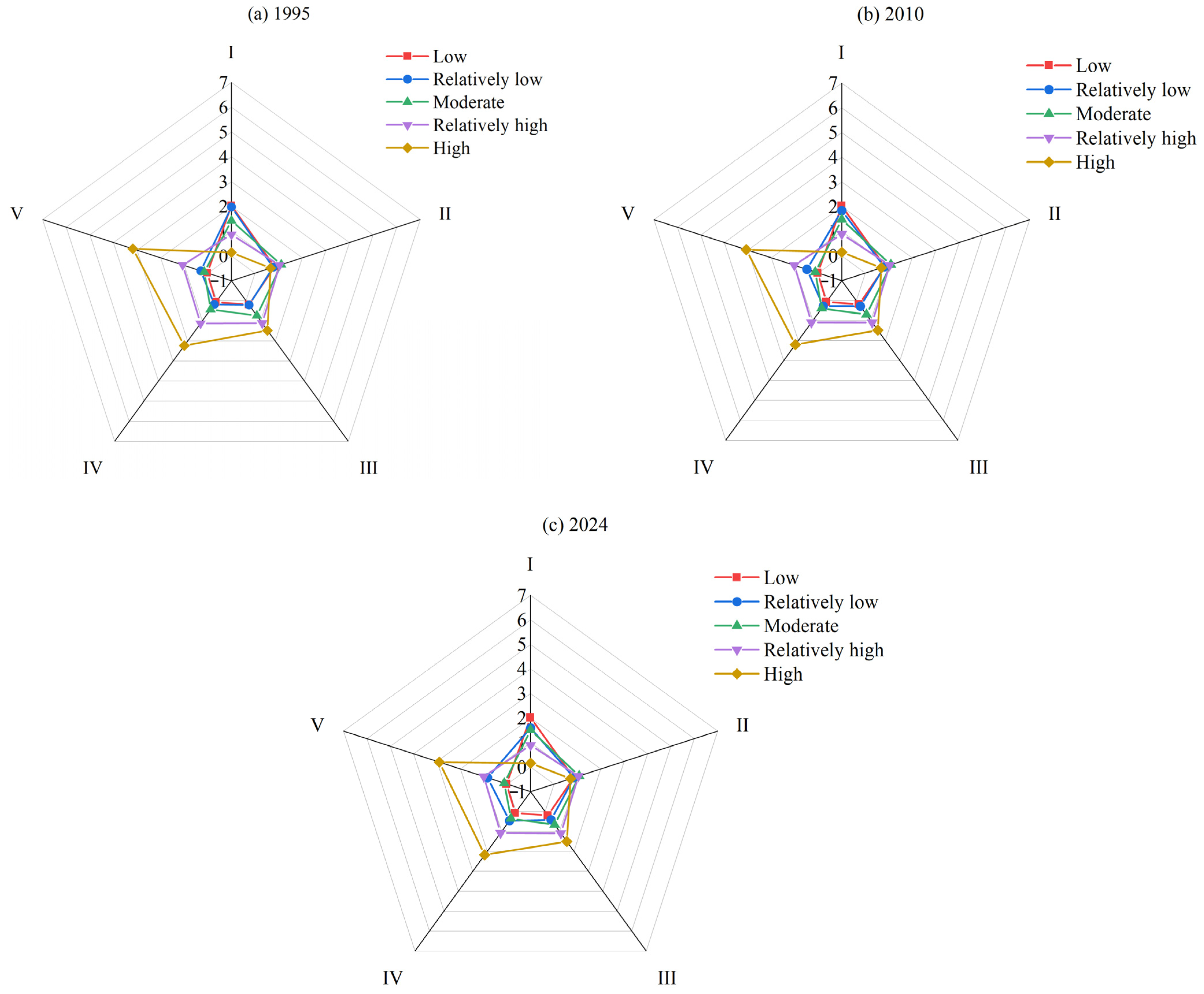
Based on Figure 14, a stable differentiation of habitat quality along the slope gradient is observed in the Yellow River Basin during the period 1995–2024. Low habitat quality remains persistently concentrated in gentle slope areas, whereas high habitat quality increases significantly with slope and consistently dominates steep slope zones. Furthermore, internal structural adjustments within steep slope areas are evident, characterized by a certain decline in high habitat quality alongside a continuous rise in relatively low grades. This pattern suggests that these regions are likely undergoing a complex interplay between natural recovery and anthropogenic disturbance.
Figure 14. Habitat quality distribution index along slope gradients (1995–2024).
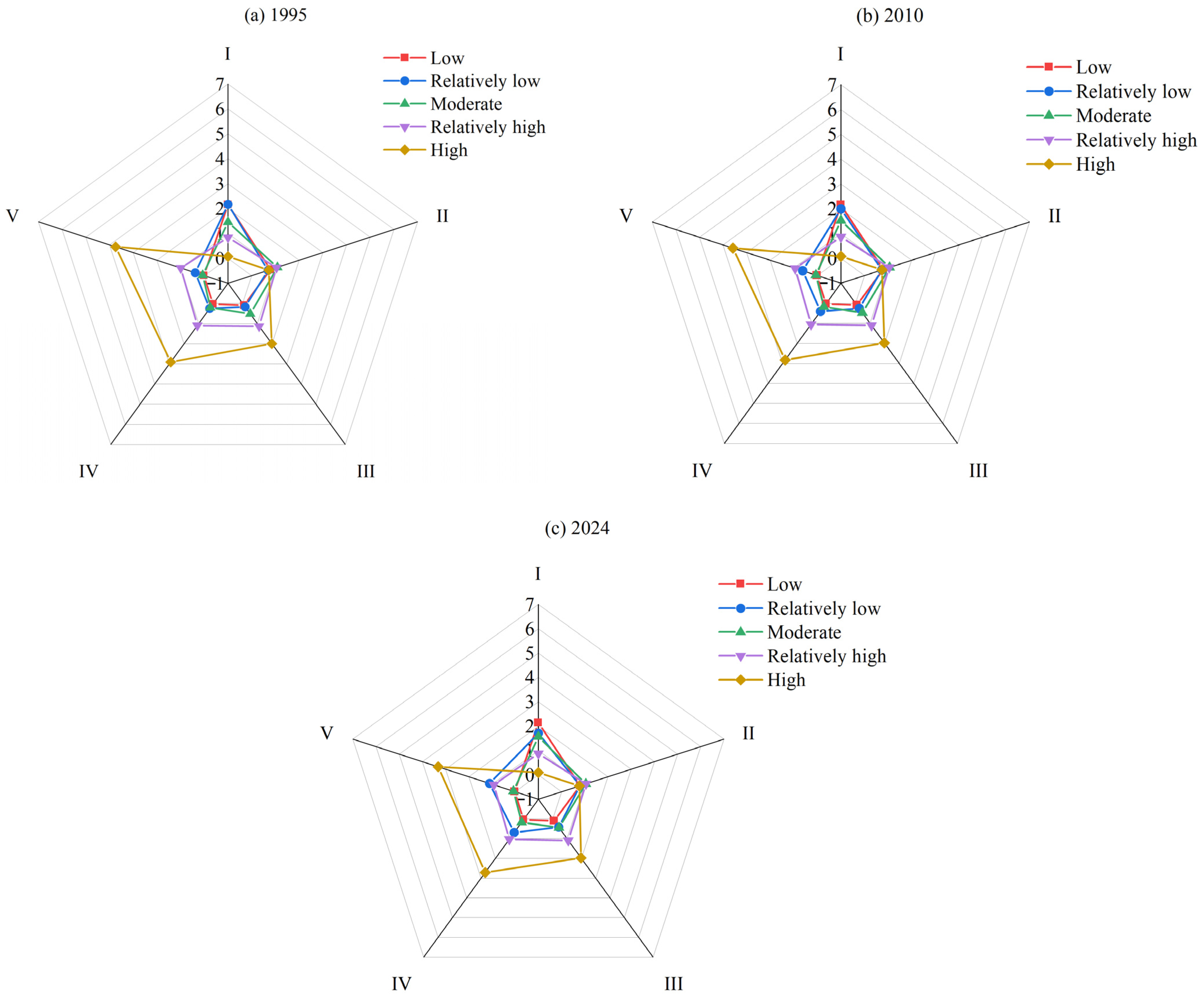
Based on Figure 15, from 1995 to 2024, habitat quality in the Yellow River Basin exhibited a persistent topography-dependent pattern along the relief amplitude gradient: low habitat quality remained densely distributed in low-relief areas and gradually decreased, while high habitat quality increased significantly with greater relief amplitude. Although it has declined somewhat in recent years, high habitat quality remains the dominant type in high-relief areas. Relatively low habitat quality showed sustained rapid growth in high-relief areas, while medium habitat quality remained stable in low-to-medium relief areas. These results indicate that human activities continue to exert a sustained impact on habitat in flat areas, whereas overall habitat quality in high-relief areas remains relatively high, despite significant internal restructuring.
Figure 15. Habitat quality distribution index along relief amplitude gradients (1995–2024).

4.4. Driving Forces of Habitat Quality Spatial Heterogeneity

4.4.1. Results of Factor Detector

Based on the single-factor detection results of the geographical detector (Table 13), the explanatory power (q-value) of each factor on the spatial heterogeneity of habitat quality in the Yellow River Basin varies significantly. Among them, elevation (X1, q = 0.3154) and mean annual temperature (X4, q = 0.2605) emerged as the dominant influencing factors, exhibiting the strongest explanatory power. Population density (X6, q = 0.2354), GDP (X7, q = 0.1802), and relief amplitude (X3, q = 0.1577) demonstrated moderate explanatory power, while slope (X2, q = 0.1487) and mean annual precipitation (X5, q = 0.0974) exerted relatively weaker influences. These results indicate that natural topographic and climatic factors constitute the fundamental drivers of habitat quality differentiation in the Yellow River Basin, while human activity factors also play a non-negligible regulatory role.
Table 13. Single-factor detection results.

4.4.2. Results of Interaction Detector

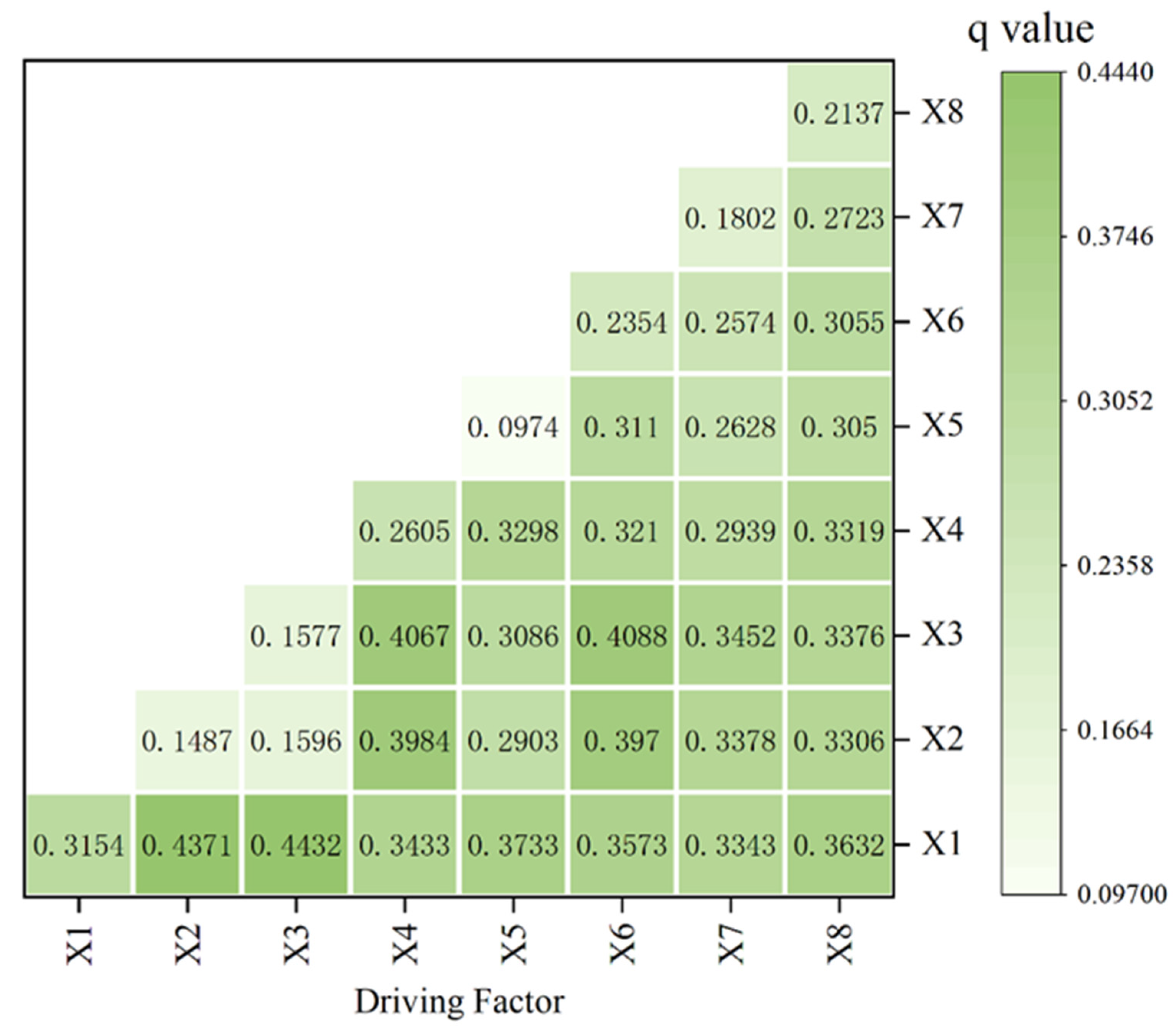
Based on the interaction detection results of the geographical detector (Figure 16), the interactions among influencing factors on the spatial heterogeneity of habitat quality in the Yellow River Basin all exhibit either two-factor enhancement or nonlinear enhancement. Among them, the interaction between elevation (X1) and relief amplitude (X3) demonstrates the strongest explanatory power (q = 0.4432), followed by elevation (X1) and slope (X2) (q = 0.4371). The q-values resulting from interactions between natural factors (e.g., X1, X2, X3, X4) and between natural and human activity factors (e.g., X6, X8) are significantly higher than those of any single factor. This indicates that the differentiation in habitat quality is the product of the combined effects of the physical geographic base and human activities, with a pronounced synergistic amplification effect among multiple factors. These findings underscore the necessity of integratively considering the composite influences of topography, climate, and socioeconomic factors in ecological governance within the Yellow River Basin.
Figure 16. Interaction detection results. X1: Elevation; X2: Slope; X3: Relief amplitude; X4: Mean annual temperature; X5: Mean annual precipitation; X6: population; X7: GDP; X8: Nighttime light.

4.4.3. Results of Regression Analysis

The multiple linear regression model provided a quantitative assessment of the drivers influencing habitat quality (Table 14). The model was highly significant (F = 485.67, p < 0.001) and explained approximately 32.5% (adjusted R2 = 0.325) of the spatial variance in habitat quality across the Yellow River Basin.
Table 14. Results of the multiple linear regression analysis for habitat quality drivers.
As shown in Table 14, elevation and slope exhibited significant positive effects on habitat quality (p < 0.001), confirming that higher and more rugged terrains maintain better ecological conditions. In contrast, factors representing human activities, including population density and nighttime light intensity, showed significant negative effects (p < 0.001). Temperature also displayed a significant negative relationship with habitat quality (p < 0.001). Interestingly, GDP showed a significant but weak positive coefficient (p < 0.001). The effects of relief amplitude and precipitation were not statistically significant (p > 0.05).

5. Discussion

5.1. Interpretation of Major Findings and Underlying Mechanisms

This study reveals that the transformation of PLES and its associated ecological effects in the Yellow River Basin exhibit significant topographic gradient differentiation. More importantly, these patterns are underpinned by a complex coupling process between the physical geographic context and human activities [55], which can be interpreted through several underlying mechanisms.

5.1.1. Intrinsic Formation Mechanisms of the Topographic Gradient Effect

The topographic gradient effect provides a critical perspective for understanding the spatial heterogeneity of ecological impacts [56]. Its intrinsic mechanisms are primarily manifested in three dimensions:
(1)
Biophysical Constraint Mechanism. Topography fundamentally redistributes natural elements such as light, heat, water, and soil, thereby setting essential boundaries for ecological processes and land use suitability [57,58]. Low-gradient areas (e.g., the mid-lower reaches plains and river valleys) are characterized by high accessibility, flat terrain, and fertile soils. This convergence of favorable conditions makes them ideal for urban construction, agricultural production, and ecological conservation alike, triggering intense spatial competition. Our findings confirm that these areas endure the highest pressure from human activities, exhibit ecological vulnerability, and suffer from more severe habitat degradation and landscape fragmentation. In contrast, high-gradient regions (e.g., the eastern margin of the Tibetan Plateau in the upper reaches) are constrained by steep slopes and harsh climates, resulting in prohibitively high costs for human intervention. Consequently, these areas retain more intact and higher-quality ecological spaces, serving as key ecological barriers for the basin. This observed pattern aligns with the “lowland development-upland conservation” gradient observed in other global mountain-plain systems, such as the front ranges of the North American Rocky Mountains and the European Alps.
(2)
Human Activity Cost Mechanism. Topography acts as a cost barrier that profoundly influences the spatial distribution of infrastructure, population, and economic activities, indirectly yet powerfully steering the spatial differentiation of human land use decisions [59]. One of the most prominent changes in the basin is the continuous expansion of living spaces, which is closely linked to rapid urbanization and regional economic growth [60]. The study findings indicate that urban and rural residential land primarily encroaches upon agricultural production land, with a pronounced concentration in low-gradient terrain. This shift toward construction land has directly led to landscape fragmentation and habitat quality degradation in low-elevation and gentle-slope areas, highlighting the inherent conflict between economic development demands and ecological space preservation [61].
(3)
Policy Intervention Response Mechanism. Ecological conservation policies (e.g., the Grain-for-Green Program) have elicited differential responses across topographic gradients. In low-gradient zones, policy focus is on controlling urban sprawl and restoring ecological corridors to mitigate degradation. In mid-gradient zones (typical agro-pastoral ecotones), policies promote sustainable agricultural practices and afforestation to optimize ecological structure. In high-gradient zones, the core policy is strict protection and natural recovery to ensure the provision of key ecosystem services. Our land use transition matrix results clearly reflect these distinct, policy-driven land use transition pathways across different gradient zones.

5.1.2. Nonlinear Coupling Mechanism of Multiple Driving Factors

Geographical detector analysis further corroborates these patterns from a driving-force perspective. Natural factors such as elevation and annual average temperature constitute foundational forces shaping the spatial differentiation of habitat quality, whereas socioeconomic factors, including population density and GDP, exert significant regulatory influences. Importantly, the interaction between any two factors demonstrates either nonlinear enhancement or mutual enhancement, underscoring that the spatial heterogeneity of habitat quality in the Yellow River Basin arises from the nonlinear coupling and synergistic amplification of natural geographic foundations and human socioeconomic activities [62].
For example, the interaction between elevation and population density (one of the highest q-statistics) reveals a core mechanism: in low-elevation areas, the coupling of a superior natural base (favorable elevation, temperature) with high-density human and economic activities jointly drives intense habitat degradation. Conversely, in high-elevation areas, the harsh natural environment (high altitude, cold, steep slopes) effectively “filters out” most human disturbances, allowing natural factors to dominate habitat quality and thus maintaining higher ecological integrity. This finding resonates with global research on “topographic modulation of human footprint intensity.” Furthermore, linking our “PLES” competition framework to the globally discussed Food-Fiber-Fuel Trilemma and theories of Ecosystem Service Trade-offs positions our findings within a broader context of understanding land competition and human-environment interactions across regions at different developmental stages worldwide.
The regression analysis quantitatively corroborates and extends the findings from the geographical detector. The significant positive coefficients for elevation and relief amplitude statistically validate the ‘topographic gradient effect’ as a fundamental determinant of habitat quality, with high-gradient areas acting as ecological refugia. The strong negative impact of population density and nighttime lights underscores the intense human pressure on ecological spaces, particularly in easily accessible lowlands.

5.2. Policy Implications for Differentiated Management

Based on the topographic gradient differentiation patterns of ecological effects, this study proposes the implementation of zoned and categorized spatial management strategies to support ecological conservation and high-quality development in the Yellow River Basin [63].
Low-gradient zones, these areas represent core conflict zones between ecological degradation and intensive human activity. Management should focus on controlling urban sprawl and strictly enforcing ecological protection redlines. Priority should be given to restoring and enhancing the connectivity of key ecological corridors—for instance, through establishing urban forests and rehabilitating riparian vegetation—to mitigate the negative impacts of landscape fragmentation.
Mid-gradient zones, characterized by transitional agropastoral activities and sensitive human-land relationships, these regions should adopt sustainable agricultural practices, such as promoting eco-agriculture and consolidating achievements in cropland-to-forest/grassland conversion. Targeted ecological restoration projects—including afforestation in suitable areas—are recommended to optimize the structure of ecological spaces, improve their overall quality and stability, and balance agricultural production with ecological conservation.
High-gradient zones, serving as the “water towers” and ecological security barriers of the basin, should be managed with an emphasis on strict protection of core ecological spaces and minimization of human disturbance. For degraded areas, close-to-nature restoration measures such as enclosure should be prioritized to facilitate natural ecosystem recovery and ensure the sustained provision of key ecosystem services like water conservation and biodiversity protection.

5.3. Limitations and Future Research

This study also has several limitations that point to directions for future research. First, the Land Use/Land Cover (LULC) data, despite its reputable source and 30 m resolution, may contain classification inaccuracies, particularly between ecologically transitional classes (e.g., shrubland vs. grassland). While these could introduce minor noise into the PLES transition analysis and initial habitat conditions, the large-scale, dominant transition trends (e.g., cropland to grassland) that form the basis of our conclusions are robust and unlikely to be substantially altered. Moreover, while our PLES classification is based on national standards and widely adopted methods [64], we acknowledge the inherent challenge of assigning a single, dominant function to complex land systems. Some landscapes, such as agroforestry systems or grasslands used for grazing, possess intertwined production and ecological functions. Our classification, necessitated by the resolution and type of land use data, prioritizes the primary function for systematic basin-scale analysis. This approach, while robust for identifying macro-level patterns, may oversimplify local functional complexity. Future work could advance this by developing a multi-dimensional functional index or employing higher-resolution data that captures land use intensity, thereby moving from a discrete classification to a more continuous representation of spatial functions. Second, although the parameterization of threat sources in the InVEST model for habitat quality assessment [65] drew upon previous studies, it still involves a degree of subjectivity. While we followed established protocols and adapted parameters to the Yellow River Basin, the absence of localized field data for full calibration means that the absolute values of the habitat quality index should be interpreted with caution. Subsequent research should focus on calibrating and validating these model parameters using localized field survey data. Finally, the spatially interpolated socioeconomic data might not capture hyper-local variations, potentially leading to an underestimation of their explanatory power in the geographical detector analysis. Despite this, the detected strong interactions between natural and anthropogenic factors are coherent and align with theoretical expectations, supporting the robustness of our driving force analysis.
Future research could be advanced through the following directions: (1) System dynamics models should be coupled with spatial simulation models (e.g., FLUS) to project the future evolution of PLES and its ecological consequences under various development scenarios, thereby providing a scientific basis for forward-looking spatial planning. (2) Remote sensing imagery should be employed with higher spatial–temporal resolution and more frequent time-series observations to capture more nuanced spatial transformation processes and enhance the detection of transitional changes.

6. Conclusions

This study systematically analyzed the transformation processes of the PLES in the Yellow River Basin from 1995 to 2024 and quantitatively revealed the topographic gradient heterogeneity of associated ecological effects along with their underlying driving mechanisms. The original contribution of this research lies in its integrated framework that couples PLES functional transitions with topographic gradient analysis at the basin scale, and it provides a mechanistic understanding of spatial heterogeneity. The main conclusions are as follows:
(1)
The spatial structure of land use in the Yellow River Basin has undergone systematic restructuring, demonstrating a clear trend of sustained contraction in production space, accelerated expansion of living space, and internal optimization within ecological space.
(2)
More importantly, PLES transformation has triggered significant ecological consequences: intensified landscape fragmentation and an overall degradation risk in habitat quality. The ‘why’ behind these effects is fundamentally linked to the intensity of human activities which is, in turn, filtered by topography. These ecological effects demonstrate significant topographic gradient dependence: low-gradient areas, which are hotspots of human activity, suffer from more severe landscape fragmentation and habitat degradation. In contrast, high-gradient regions maintain higher landscape connectivity and habitat quality due to lower accessibility and higher conservation costs, functioning as crucial ecological barriers.
(3)
The driving mechanism analysis confirms that habitat quality spatial heterogeneity results from the complex coupling of natural and anthropogenic factors. This is quantitatively validated by multiple linear regression (F = 485.67, p < 0.001; adjusted R2 = 0.325), showing significant positive effects of elevation and slope (p < 0.001) versus negative impacts from population density, nighttime light, and temperature (p < 0.001). The weakly positive GDP effect (p < 0.001) and non-significant relief amplitude and precipitation further demonstrate the nuanced driver interactions.

Author Contributions

Conceptualization, X.F.; methodology, X.F.; software, X.F.; validation, W.S., and X.F.; formal analysis, X.F.; investigation, X.F.; resources, W.S., and X.F.; data curation, X.F.; writing—original draft preparation, X.F.; writing—review and editing, W.S.; visualization, X.F.; supervision, W.S.; project administration, W.S.; funding acquisition, W.S. All authors have read and agreed to the published version of the manuscript.

Funding

This research was funded by the National Natural Science Foundation of China (42071343). Basic Scientific Research Project of the Department of Education of Liaoning Province (LJ212410147065).

Institutional Review Board Statement

Not applicable.

Data Availability Statement

https://zenodo.org/records/8176941 (accessed on 5 September 2025); https://www.gscloud.cn/ (accessed on 1 September 2025); https://www.resdc.cn/ (accessed on 12 August 2025); http://www.geodata.cn (accessed on 1 August 2025).

Acknowledgments

The authors have reviewed and edited the output and take full responsibility for the content of this publication.

Conflicts of Interest

The authors declare no conflicts of interest.

References

  1. Lan, H.; Peng, J.; Zhu, Y.; Li, L.; Pan, B.; Huang, Q.; Li, J.; Zhang, Q. Research on geological and surfacial processes and major disaster effects in the Yellow River Basin. Sci. China Earth Sci. 2021, 65, 234–256. [Google Scholar] [CrossRef]
  2. Wang, R.; Sun, Y.; Zong, J.; Wang, Y.; Cao, X.; Wang, Y.; Cheng, X.; Zhang, W. Remote sensing application in ecological restoration monitoring: A systematic review. Remot Sens. 2024, 16, 2204. [Google Scholar] [CrossRef]
  3. Liu, Q.; Qiao, J.; Li, M.; Huang, M. Spatiotemporal heterogeneity of ecosystem service interactions and their drivers at different spatial scales in the Yellow River Basin. Sci. Total Environ. 2023, 908, 168486. [Google Scholar] [CrossRef]
  4. Zhang, K.; Fang, B.; Zhang, Z.; Liu, T.; Liu, K. Exploring future ecosystem service changes and key contributing factors from a “past-future-action” perspective: A case study of the Yellow River Basin. Sci. Tota Environ. 2024, 926, 171630. [Google Scholar] [CrossRef] [PubMed]
  5. Ren, Z.; Tian, Z.; Wei, H.; Liu, Y.; Yu, Y. Spatiotemporal evolution and driving mechanisms of vegetation in the Yellow River Basin, China during 2000–2020. Ecol. Indic. 2022, 138, 108832. [Google Scholar] [CrossRef]
  6. Chen, G.; Zuo, D.; Xu, Z.; Wang, G.; Han, Y.; Peng, D.; Pang, B.; Abbaspour, K.C.; Yang, H. Changes in water conservation and possible causes in the Yellow River Basin of China during the recent four decades. J. Hydrol. 2024, 637, 131314. [Google Scholar] [CrossRef]
  7. Lin, G.; Jiang, D.; Fu, J.; Zhao, Y. A review on the overall optimization of production–living–ecological space: Theoretical basis and conceptual framework. Land 2022, 11, 345. [Google Scholar] [CrossRef]
  8. Fu, J.; Bu, Z.; Jiang, D.; Lin, G.; Li, X. Sustainable land use diagnosis based on the perspective of production–living–ecological spaces in China. Land Use Policy 2022, 122, 106386. [Google Scholar] [CrossRef]
  9. Du, L.; Dong, C.; Kang, X.; Qian, X.; Gu, L. Spatiotemporal evolution of land cover changes and landscape ecological risk assessment in the Yellow River Basin, 2015–2020. J. Environ. Manag. 2023, 332, 117149. [Google Scholar] [CrossRef]
  10. Cheng, Y.; Chen, Y. Spatial and temporal characteristics of land use changes in the yellow river basin from 1990 to 2021 and future predictions. Land 2024, 13, 1510. [Google Scholar] [CrossRef]
  11. Niu, H.; Xiu, Z.; Xiao, D. Impact of land-use change on ecological vulnerability in the Yellow River Basin based on a complex network model. Ecol. Indic. 2024, 166, 112212. [Google Scholar] [CrossRef]
  12. Wang, H.; Wu, L.; Yue, Y.; Jin, Y.; Zhang, B. Impacts of climate and land use change on terrestrial carbon storage: A multi-scenario case study in the Yellow River Basin (1992–2050). Sci. Tota Environ. 2024, 930, 172557. [Google Scholar] [CrossRef]
  13. Ji, X.; Sun, Y.; Guo, W.; Zhao, C.; Li, K. Land use and habitat quality change in the Yellow River Basin: A perspective with different CMIP6-based scenarios and multiple scales. J. Environ. Manag. 2023, 345, 118729. [Google Scholar] [CrossRef]
  14. Ru, X.; Qiao, L.; Zhang, H.; Bai, T.; Min, R.; Wang, Y.; Wang, Q.; Song, H. Effects of land use and land cover change under shared socioeconomic pathways on future climate in the Yellow River basin, China. Urban Clim. 2024, 55, 101867. [Google Scholar] [CrossRef]
  15. Ji, P.; Yuan, X.; Jiao, Y. Future hydrological drought changes over the upper Yellow River basin: The role of climate change, land cover change and reservoir operation. J. Hydrol. 2023, 617, 129128. [Google Scholar] [CrossRef]
  16. Chen, S.; Mehmood, M.S.; Liu, S.; Gao, Y. Spatial pattern and influencing factors of rural settlements in Qinba Mountains, Shaanxi Province, China. Sustainability 2022, 14, 10095. [Google Scholar] [CrossRef]
  17. Liu, C.; Yang, Q.; Zhou, F.; Ai, R.; Cheng, L. Assessing production–living–ecological spaces and its urban–rural gradients in Xiangyang City, China: Insights from land-use function symbiosis. Environ. Sci. Pollut. Res. 2024, 31, 13688–13705. [Google Scholar] [CrossRef]
  18. Bole, Y.; Rina, S.; Guga, S.; Na, M.; Fan, S.; Zhang, J. Evaluation of resources, environment, and ecological carrying capacity from the perspective of “production-living-ecology” spaces: A case study of western Jilin Province, China. J. Clean. Prod. 2025, 491, 144770. [Google Scholar] [CrossRef]
  19. Jiang, Z.; Shao, M.; Wang, J. Simulation of Spatial and Temporal Patterns of Suitable Wintering Habitat for Hooded Crane (Grus monacha) Under Climate and Land Use Change Scenarios. Animals 2024, 15, 6. [Google Scholar] [CrossRef]
  20. Yang, X.; Wang, J.; Qiao, N.; Bai, Z. Spatiotemporal variation pattern of production-living-ecological space and land use ecological risk and their relationship analysis: A case study of Changzhi City, China. Environ. Sci. Pollut. Res. 2023, 30, 66978–66993. [Google Scholar] [CrossRef]
  21. Huang, J.; Zhang, Y.; Zhang, J.; Qi, J.; Liu, P. Study on the ecological environment quality and its driving factors of the spatial transformation of production-living-ecological space in Baishan City. Sci. Rep. 2024, 14, 18709. [Google Scholar] [CrossRef]
  22. Zhang, H.; Chen, M.; Liang, C. Urbanization of county in China: Spatial patterns and influencing factors. J. Geogr. Sci. 2022, 32, 1241–1260. [Google Scholar] [CrossRef]
  23. Zahura, F.T.; Bisht, G.; Li, Z.; McKnight, S.; Chen, X. Impact of topography and climate on post-fire vegetation recovery across different burn severity and land cover types through random forest. Ecol. Inform. 2024, 82, 102757. [Google Scholar] [CrossRef]
  24. Li, M.; Luo, G.; Li, Y.; Qin, Y.; Huang, J.; Liao, J. Effects of landscape patterns and their changes on ecosystem health under different topographic gradients: A case study of the Miaoling Mountains in southern China. Ecol. Indic. 2023, 154, 110796. [Google Scholar] [CrossRef]
  25. Wang, B.; Cheng, W.; Xu, H.; Wang, R.; Song, K.; Bao, A.; Shi, Q. Vegetation differentiation characteristics and control mechanisms in the Altay region based on topographic gradients. Ecol. Indic. 2024, 160, 111838. [Google Scholar] [CrossRef]
  26. Gxasheka, M.; Gajana, C.S.; Dlamini, P. The role of topographic and soil factors on woody plant encroachment in mountainous rangelands: A mini literature review. Heliyon 2023, 9, e20615. [Google Scholar] [CrossRef]
  27. Wang, X.; Liu, G.; Xiang, A.; Xiao, S.; Lin, D.; Lin, Y.; Lu, Y. Terrain gradient response of landscape ecological environment to land use and land cover change in the hilly watershed in South China. Ecol. Indic. 2022, 146, 109797. [Google Scholar] [CrossRef]
  28. Jiang, Y.; Zhou, L.; Wang, B.; Zhang, Q.; Gao, H.; Wang, S.; Cui, M. The impact of gradient expansion of urban–rural construction land on landscape fragmentation in typical mountain cities, China. Int. J. Digit. Earth 2024, 17, 2310093. [Google Scholar] [CrossRef]
  29. Zhang, H.; Tang, Q.; He, X.; Yang, Q. Land use function changes and trade-offs/synergies across topographic gradients in the Three Gorges Reservoir Area, China. J. Clean. Prod. 2024, 469, 143233. [Google Scholar] [CrossRef]
  30. Dilts, T.E.; Blum, M.E.; Shoemaker, K.T.; Weisberg, P.J.; Stewart, K.M. Improved topographic ruggedness indices more accurately model fine-scale ecological patterns. Landsc. Ecol. 2023, 38, 1395–1410. [Google Scholar] [CrossRef]
  31. Wang, Z.; Shi, P.; Shi, J.; Zhang, X.; Yao, L. Research on land use pattern and ecological risk of lanzhou–xining urban agglomeration from the perspective of terrain gradient. Land 2023, 12, 996. [Google Scholar] [CrossRef]
  32. Qin, Z.; Wang, J.; Lu, Y. Multifractal characteristics analysis based on slope distribution probability in the Yellow River Basin, China. ISPRS Int. J. Geo-Inform. 2021, 10, 337. [Google Scholar] [CrossRef]
  33. Yang, J.; Huang, X. The 30 m annual land cover and its dynamics in China from 1990 to 2019. Earth Syst. Sci. Data Discuss. 2021, 13, 3907–3925. [Google Scholar] [CrossRef]
  34. Liu, Y.; Zhou, Y. Territory spatial planning and national governance system in China. Land Use Policy 2021, 102, 105288. [Google Scholar] [CrossRef]
  35. Zuo, Z.; You, M.; Zhao, W.; Fu, C.; Zhang, W.; He, Z. Changes in the “production-living-ecological space” pattern in the interlocking mountain and river zones of the Yellow River Basin—Taking Xinxiang City as an example. J. Resour. Ecol. 2023, 14, 479–492. [Google Scholar]
  36. Selmy, S.A.H.; Kucher, D.E.; Mozgeris, G.; Moursy, A.R.A.; Jimenez-Ballesta, R.; Kucher, O.D.; Fadl, M.E.; Mustafa, A.-R.A. Detecting, analyzing, and predicting land use/land cover (LULC) changes in arid regions using landsat images, CA-Markov hybrid model, and GIS techniques. Remot Sens. 2023, 15, 5522. [Google Scholar] [CrossRef]
  37. Wu, J.; Luo, J.; Zhang, H.; Yu, M. Driving forces behind the spatiotemporal heterogeneity of land-use and land-cover change: A case study of the Weihe River Basin, China. J. Arid. Land 2023, 15, 253–273. [Google Scholar] [CrossRef]
  38. Wang, J.; Wang, Z.; Cheng, H.; Kang, J.; Liu, X. Land cover changing pattern in pre- and post-earthquake affected area from remote sensing data: A case of Lushan County, Sichuan Province. Land 2022, 11, 1205. [Google Scholar] [CrossRef]
  39. Kang, J.; Wang, Z.; Cheng, H.; Wang, J.; Liu, X. Remote sensing land use evolution in earthquake-stricken regions of Wenchuan County, China. Sustainability 2022, 14, 9721. [Google Scholar] [CrossRef]
  40. Xue, Q.; Zhang, Y.; Zhang, Q.; Wu, Q.; Zhang, X.; Lu, L.; Qin, C. Towards ecological security: Two-thirds of China’s ecoregions experienced a decline in habitat quality from 1992 to 2020. Ecol. Indic. 2025, 172, 113275. [Google Scholar] [CrossRef]
  41. Kang, J.; Yang, F.; Wang, J.; Liu, Y.; Fang, D.; Jiang, C. Spatial-temporal evolution of habitat quality in tropical monsoon climate region based on “pattern–process–quality”–A case study of Cambodia. Open Geosci. 2025, 17, 20220748. [Google Scholar] [CrossRef]
  42. Fan, X.; Gu, X.; Yu, H.; Long, A.; Tiando, D.S.; Ou, S.; Li, J.; Rong, Y.; Tang, G.; Zheng, Y.; et al. The spatial and temporal evolution and drivers of habitat quality in the Hung River Valley. Land 2021, 10, 1369. [Google Scholar] [CrossRef]
  43. Tang, J.; Zhou, L.; Dang, X.; Hu, F.; Yuan, B.; Yuan, Z.; Wei, L. Impacts and predictions of urban expansion on habitat quality in the densely populated areas: A case study of the Yellow River Basin, China. Ecol. Indic. 2023, 151, 110320. [Google Scholar] [CrossRef]
  44. Xu, Y.; Liu, X.; Zhao, L.; Li, H.; Zhu, P.; Liu, R.; Wang, C.; Wang, B. Spatial and Temporal Analysis of Habitat Quality in the Yellow River Basin Based on Land-Use Transition and Its Driving Forces. Land 2025, 14, 759. [Google Scholar] [CrossRef]
  45. Zhang, H.; Wang, F.; Zhao, H.; Kang, P.; Tang, L. Evolution of habitat quality and analysis of influencing factors in the Yellow River Delta Wetland from 1986 to 2020. Front. Ecol. Evol. 2022, 10, 1075914. [Google Scholar] [CrossRef]
  46. Sharp, R.; Chaplin-Kramer, R.; Wood, S.; Guerry, A.; Douglass, J. InVEST User’s Guide; The Natural Capital Project: Stanford, CA, USA, 2018. [Google Scholar]
  47. Zhou, J.; Feng, B.; Wu, H.; Zhang, Z.; Chen, L.; Li, J.; Chen, X.; Kong, Y.; Meng, Z.; Kong, X. Spatio-temporal distribution characteristics and driving factors of forest land in the Da-Xiao Liangshan mountains based on topographic gradient. Sci. Rep. 2025, 15, 7501. [Google Scholar] [CrossRef]
  48. Wang, J.; Wang, Y.; Li, M.; Qi, Z.; Li, C.; Qi, H.; Zhang, X. Improved landslide susceptibility assessment: A new negative sample collection strategy and a comparative analysis of zoning methods. Ecol. Indic. 2024, 169, 112948. [Google Scholar] [CrossRef]
  49. Wu, L.; Yang, Y.; Yang, H.; Xie, B.; Luo, W. A comparative study on land use/land cover change and topographic gradient effect between mountains and flatlands of southwest China. Land 2023, 12, 1242. [Google Scholar] [CrossRef]
  50. Guo, Y.; Cheng, L.; Ding, A.; Yuan, Y.; Li, Z.; Hou, Y.; Ren, L.; Zhang, S. Geodetector model-based quantitative analysis of vegetation change characteristics and driving forces: A case study in the Yongding River basin in China. Int. J. Appl. Earth Obs. Geoinform. 2024, 132, 104027. [Google Scholar] [CrossRef]
  51. Wang, Z.; Wang, J.; Han, J. Spatial prediction of groundwater potential and driving factor analysis based on deep learning and geographical detector in an arid endorheic basin. Ecol. Indic. 2022, 142, 109256. [Google Scholar] [CrossRef]
  52. Liu, C.; Li, W.; Zhu, G.; Zhou, H.; Yan, H.; Xue, P. Land use/land cover changes and their driving factors in the northeastern tibetan plateau based on geographical detectors and google earth engine: A case study in gannan prefecture. Remot Sens. 2020, 12, 3139. [Google Scholar] [CrossRef]
  53. Xixi, X.; Ya, L.; Mengyao, L.; Shuang, Z.; Chunchang, Z.; Xiaoke, L. Land Use Changes and Their Driving Factors in the Liuchong River Basin Based on the Geographical Detector Model. J. Resour. Ecol. 2025, 16, 376–386. [Google Scholar] [CrossRef]
  54. Eberly, L.E. Multiple linear regression. Top. Biostat. 2007, 404, 165–187. [Google Scholar]
  55. Jia, J.; Jiang, E.; Tian, S.; Qu, B.; Li, J.; Hao, L.; Liu, C.; Jing, Y. Land-Use Transformation and Its Eco-Environmental Effects of Production–Living–Ecological Space Based on the County Level in the Yellow River Basin. Land 2025, 14, 427. [Google Scholar] [CrossRef]
  56. Mi, Y.; Li, S.; Wang, Z. Spatial distribution and topographic gradient effects of habitat quality in the Chang-Zhu-Tan Urban Agglomeration, China. Sci. Rep. 2024, 14, 22563. [Google Scholar] [CrossRef]
  57. Ifeanyi, O.B.; Nkiru, N.C.; Chiebonam, I.V. Geospatial Analysis of Topography, Hydrology, and Land Use Dynamics in Owerri and Environs Region, Southeastern Nigeria. Int. J. Recent Eng. Sci. 2024, 11, 97–112. [Google Scholar] [CrossRef]
  58. Mirghaed, F.A.; Souri, B. Contribution of land use, soil properties and topographic features for providing of ecosystem services. Ecol. Eng. 2023, 189, 106898. [Google Scholar] [CrossRef]
  59. Yang, R.; Xu, Q.; Xu, X.; Chen, Y. Rural settlement spatial patterns and effects: Road traffic accessibility and geographic factors in Guangdong Province, China. J. Geogr. Sci. 2019, 29, 213–230. [Google Scholar] [CrossRef]
  60. Zhou, G.; Zhang, D.; Zhou, Q.; Shi, T. Study on the Spatiotemporal Evolution Characteristics of the “Production–Living–Ecology” Space in the Yellow River Basin and Its Driving Factors. Sustainability 2022, 14, 15227. [Google Scholar] [CrossRef]
  61. Zhang, R.; Li, S.; Wei, B.; Zhou, X. Characterizing production–living–ecological space evolution and its driving factors: A case study of the chaohu lake basin in China from 2000 to 2020. ISPRS Int. J. Geo-Inform. 2022, 11, 447. [Google Scholar] [CrossRef]
  62. Wang, L.; Jia, D. Spatiotemporal analysis of habitat quality and driving factors in the middle reaches of the Yellow River Basin. Environ. Monit. Assess. 2025, 197, 1–26. [Google Scholar] [CrossRef]
  63. Hou, Y.; Wu, J.; Guo, Y. Spatial-temporal evolution and prediction of habitat quality in the Yellow River Basin. Front. Environ. Sci. 2025, 13, 1650777. [Google Scholar] [CrossRef]
  64. Wang, J.; Sun, Q.; Zou, L. Spatial-temporal evolution and driving mechanism of rural production-living-ecological space in Pingtan islands, China. Habitat Int. 2023, 137, 102833. [Google Scholar] [CrossRef]
  65. Huang, H.; Xiao, Y.; Ding, G.; Liao, L.; Yan, C.; Liu, Q.; Gao, Y.; Xie, X. Comprehensive evaluation of island habitat quality based on the invest model and terrain diversity: A case study of Haitan Island, China. Sustainability 2023, 15, 11293. [Google Scholar] [CrossRef]
Disclaimer/Publisher’s Note: The statements, opinions and data contained in all publications are solely those of the individual author(s) and contributor(s) and not of MDPI and/or the editor(s). MDPI and/or the editor(s) disclaim responsibility for any injury to people or property resulting from any ideas, methods, instructions or products referred to in the content.

Article Metrics

Citations

Article Access Statistics

Article metric data becomes available approximately 24 hours after publication online.