Review

Corporate Sustainability in the Coffee Industry: Organic Certification for Small Producers in the Sierra Nevada de Santa Marta, Colombia


by
Tatiana Esther Blanco-Pacheco
1,
María Luz De-La-Rosa-Cadavid
1 and
Cristian Yoel Quintero-Castañeda
2,*
1
Faculty of Business and Economics Sciences, Universidad Del Magdalena, Santa Marta 470003, Colombia
2
Faculty of Engineering, Universidad Cooperativa de Colombia, Santa Marta 470003, Colombia
*
Author to whom correspondence should be addressed.
Sustainability 2025, 17(24), 10975; https://doi.org/10.3390/su172410975
Submission received: 25 August 2025 / Revised: 29 November 2025 / Accepted: 5 December 2025 / Published: 8 December 2025
(This article belongs to the Section Economic and Business Aspects of Sustainability)

Abstract

Sustainability is an existing challenge in the coffee industry. For sustaining long-term coffee production, the social, environmental, and economic problems posed by agricultural production systems must be addressed. Voluntary sustainability standards (VSSs) are one of the strategies proposed to address these issues, which aim to guarantee sustainable production within a fair value chain. Organic certification is one of the main VSSs that is established in international markets, well-received by consumers, and overseen by nonprofit organizations. However, the organic production system in the coffee industry faces difficulties due to climate change, market volatility, financial and social risks, and the economic vulnerability of small producers. In this context, this narrative review focuses on the coffee production process, associated environmental impacts, and different sustainability models. Finally, this paper reviews the perspectives on challenges and opportunities of organic certification in the coffee industry and proposes theoretical frameworks based on the triple bottom line (TBL) model. This model can be implemented by small producers in high-value forest regions such as the Sierra Nevada de Santa Marta, Colombia, as well as coffee cultivation areas with similar ecological characteristics.

1. Introduction

Coffee is one of the best-known, consumed, and marketed products in the world. It facilitates social interactions, makes economies dynamic, and disseminates the culture of coffee-producing countries [1,2]. Coffee is cultivated in tropical regions located between 23.5° north and 23.5° south latitudes, across four continents: Oceania, Asia, Africa, and America (Central and South) [3]. Global coffee production and trade are dominated by two species: Coffea arabica (Arabica), typically cultivated in highland areas (600–2000 m a.s.l.), and Coffea canephora (Robusta), primarily grown at low to medium elevations (50–550 m a.s.l.) [4]. Coffee is cultivated in >100 countries, with Brazil ranking first, followed by Vietnam and Colombia [5,6]. Collectively, these three countries account for >55% of the world’s coffee production, which was estimated at 168.2 million 60 kg bags in 2023, equivalent to >10 million tons [7]. In terms of the world’s highest coffee consumers, the European Union leads with ~33%, followed by Asia and Oceania with 22%; the United States and Canada with 19%; South America with 16%; Africa with 7%; and Central America with 3% [8]. More than 50% of coffee is consumed in countries located in the Global North, whereas 100% of coffee is cultivated in countries in the Global South [9].
Coffee cultivation comprises various processes from land preparation for planting coffee plants to coffee bean roasting for consumption [10]. These processes have environmental impacts of varying extents depending on the cultivation techniques employed and the environmental awareness among cultivators and processors [11,12,13]. Agricultural expansion has placed considerable pressure on forest reserves, directly impacting water supply and soil stability and causing the loss of the endemic flora and fauna in tropical ecosystems [2,14,15,16,17].
Traditionally, small coffee cultivators, who own <5 hectares of land but account for 60% of global coffee production [18], employ some agricultural techniques to improve their living conditions and achieve economic prosperity [19,20]. However, the environmental impacts of these techniques are often unassessed, mainly due to lack of knowledge and low awareness of the potential environmental damage [21]. The increasing coffee prices have led many small-scale coffee cultivators to expand cultivation into watersheds and protected areas to increase coffee production and earnings [21,22]. This uncontrolled expansion and land-use changes have generated environmental liabilities that are mostly unknown to coffee cultivators who seek who prioritize income over environmental sustainability [23,24].
To address these issues, various business sustainability models have been developed for small coffee producers, mainly under Voluntary Sustainability Standards (VSS) [12,25,26]. These standards can be voluntarily adopted by coffee producers for economic and social growth and mitigate environmental impacts [20,27,28]. These VSS include organic coffee certification [29], GlobalGAP [30], Rainforest Alliance [31], 4C certification [32], Starbucks® CAFE Practices [33], Nespresso AAA [34], and others [35,36,37], each with their own challenges and opportunities. Some certifications emphasize on social approach, whereas others focus on quality and production improvement as well as environmental protection. Although these standards aim to maintain a balance between various approaches, they cannot be universally used by small producers. This is because production capacity, specific organizational requirements, and high certification costs may act as significant barriers to their adoption [38,39,40].
The Sierra Nevada de Santa Marta (SNSM) has high-value forest and is considered the most irreplaceable natural reserve in the world [41]. It is the habitat of various endemic animal and plant species of the Colombian Caribbean [42] and is the main water source for the northern departments of Colombia [43]. However, anthropogenic activities in recent decades, particularly extensive agriculture and coffee cultivation, have posed significant environmental impacts in this strategic region [44]. The National Federation of Coffee Growers of Colombia (FNC) have reported that the SNSM has a potential area of 170,000 ha for coffee cultivation, of which only 16% is currently used and >95% of coffee is cultivated by small producers with lands smaller than 6 hectares [45,46,47]. This significant potential of the SNSM necessitates the implementation of sustainability models and critical approaches to preserve this natural reserve. Although the environmental, economic, and social impacts of coffee cultivation have been extensively studied, the challenges and opportunities associated with organic certification for small producers in high-value forest areas have not been comprehensively addressed. This topical issue was highlighted in systematic literature reviews by Aragón-Guzmán et al. in 2024 [48] and Jones et al. in 2025 [49]. To address this gap, we conducted a narrative review of organic certification and identified the associated challenges and opportunities for the development of a sustainable economic and social growth model that respects the environment and small producers in the SNSM. The findings will facilitate the development of conceptual foundations that can be extrapolated to other coffee-producing regions worldwide with similar ecological characteristics and high-value forest.

2. Search Strategy and Selection Criteria

This narrative review is guided by the conceptual approaches of the triple bottom line (TBL) model, which enabled a systematic analysis of the environmental, economic, and social dimensions of sustainability in organic coffee production systems. Diverse sources and statistical data were integrated, combining scientific and academic literature, industry data, practical agronomic guidelines, and institutional sources. Consequently, a contextualized and multidisciplinary conceptual framework was created for analyzing coffee production processes, their environmental impacts, industry sustainability, and the main challenges and opportunities associated with organic certification in the coffee industry for small producers in regions of high-value forest.
Inclusion criteria were based on publications with an environmental, economic, or social focus on the organic coffee sector, indexed in recognized databases, manuals and technical reports from government agencies or research centers, and case studies published in university repositories related to Colombia or Latin America. In particular, the scientific literature was searched in the Scopus, Web of Science, and SciELO databases to obtain high-quality peer-reviewed scientific articles. The academic sources of gray literature were consulted in institutional repositories at universities to access high-value local case studies in the coffee sector, given the topic’s practical and territorial nature. In addition, industry data were obtained from internationally recognized institutions such as the National Federation of Coffee Growers of Colombia (FNC), the Institute for Biological Agriculture Research (FiLB), and associations of small organic coffee producers with presence in international markets. Practical agronomic guidelines were obtained from recognized organizations such as the Food and Agriculture Organization of the United Nations (FAO), the National Coffee Research Center (CENICAFE), Economic Commission for Latin America and the Caribbean (CEPAL), and the FNC. Finally, Colombian government institutions such as the Ministry of Environment and Sustainable Development (MinAmbiente), the Information and Communication Network of the Colombian Agricultural Sector (AGRONET), and the National Department of Statistics (DANE) were consulted. The search for relevant information was limited to documents published between 2000 and 2025 either in English, Spanish, or Portuguese.
Search strings combining the following Boolean operators were used:
  • “organic coffee” AND “sustainability”;
  • “coffee” AND “income” AND “small producers”;
  • “organic certification” AND “forest reserves”;
  • “coffee production” AND “Sierra Nevada de Santa Marta”;
  • “voluntary sustainability standards” AND “coffee”;
  • “organic vs. conventional coffee” AND “productivity”.
The exclusion criteria included duplicate publications, publications lacking geographic specificity and support from recognized institutions, and documents that were not conceptually relevant and were not indexed in academic repositories.

3. The Coffee Production Process

Coffee is a perennial crop with an approximate life cycle of 8–12 years under good production conditions. It can be harvested as frequently as once or twice a year depending on the environmental, meteorological, and latitudinal growth conditions. Similarly, coffee cultivation, harvest, and life cycle may vary depending on plantation variety and growing conditions [5].

3.1. Environmental Conditions

Environmental conditions, such as the soil type, water availability, and local flora and fauna, are essential for coffee cultivation [50,51]. The soil must be deep, well aerated, and slightly acidic (pH between 5 and 6) to allow for root development and optimize nutrient uptake, with humidity levels above 50% saturation [52,53]. Endemic flora and fauna are also crucial to organic production models because they directly contribute to soil structure and porosity, facilitate pollination, and provide shade and living barriers necessary for crop protection [9,54].

3.2. Meteorological and Latitudinal Conditions

Weather is a fundamental and limiting factor in the development of Arabica coffee; the high climatic sensitivity of this crop increases the risks associated with its organic production. Optimal cultivation temperatures strictly range between 18 °C and 24 °C. Deviations from 30 °C cause stress and alter photosynthesis, whereas temperatures below 15 °C can cause frost damage [50,55]. These thermal requirements cause the ideal cultivation altitude to vary drastically according to latitude, requiring altitudes above 2000 m near the Equator (central Colombia) and below 1400 m in more remote areas (SNSM) [56,57]. Precipitation (ideally 1250–2500 mm per year) and drought patterns directly influence harvest cycles [58,59]. For example, central Colombia has two rainy seasons, whereas the SNSM experiences a prolonged dry season that restricts the flowering cycle to a single annual harvest.

3.3. Coffee Varieties in Colombia

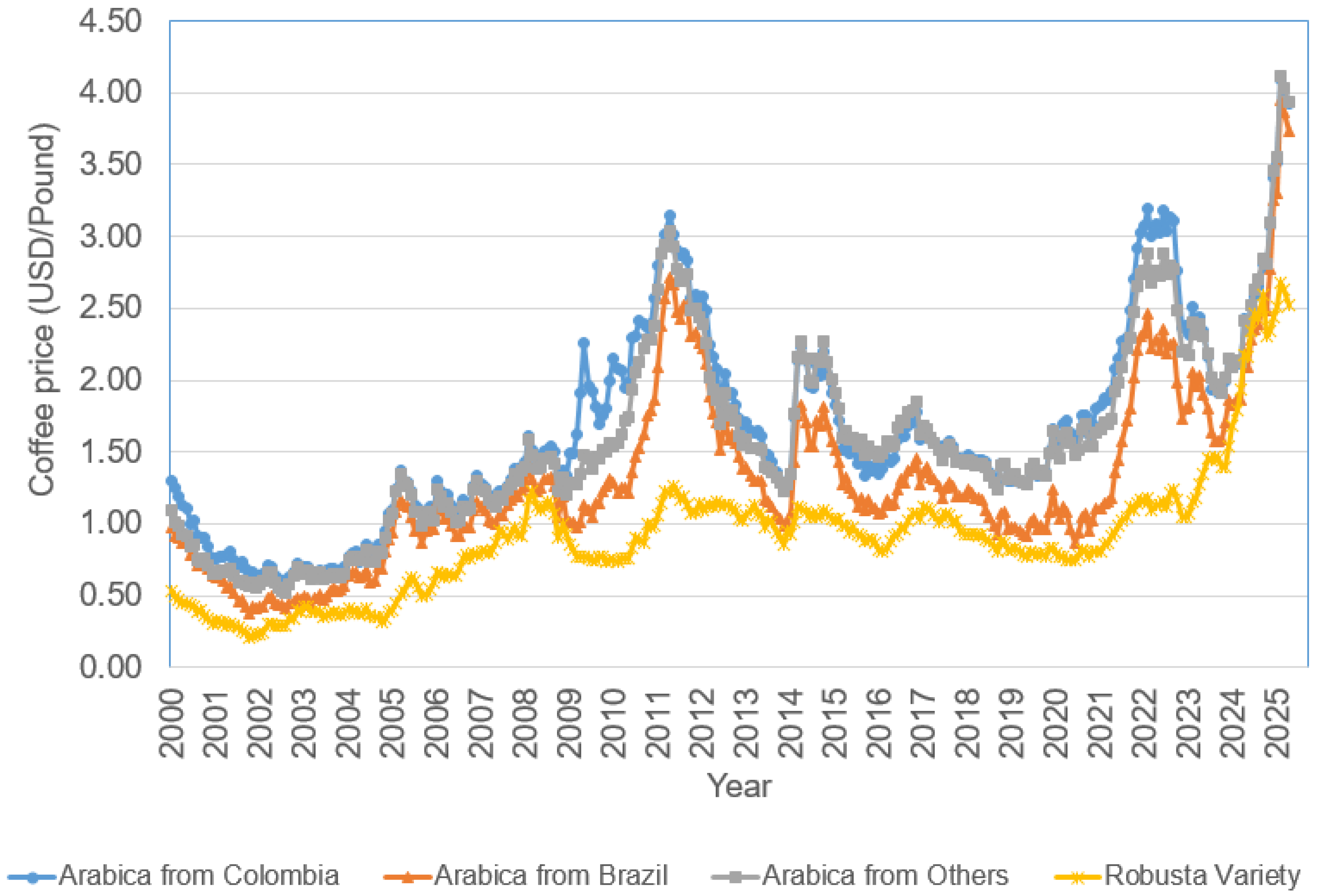
Multiple varieties of coffee are cultivated in Colombia, among which two large groups are recognized: Arabica and Robusta [60]; the former offers a milder flavor, with better consumer acceptance and better prices in international markets. Figure 1 shows the price variations on the New York Stock Exchange for Arabica and Robusta varieties between 2000 and 2025. Arabica has shown consistently higher market prices in the last 25 years, with high susceptibility to market volatility. However, the price of Robusta increased after 2023, following a trend similar to that of Arabica. At some points, the price difference between these varieties has been exceedingly small, even for Arabica coffee from Colombia that exhibited significant price difference until 2023. This market trend has resulted from the decline in production among major Arabica coffee exporters due to factors related primarily to climate change and the spread of pests and diseases in crops. Furthermore, this market trend is creating possibilities for expanding Robusta cultivation because it is more resistant to diseases and has fewer demanding environmental conditions and lower production costs [24,60].
Figure 1. Price variations on the New York Stock Exchange for Arabica and Robusta coffees between 2000 and 2025 in USD per pound (data recovered from FNC [61]).
Sustainability 17 10975 g001
Coffee variety selection in Colombia must balance the quality requirements of the Café de Colombia certification with agronomic risk management. Small Colombian producers primarily cultivate a mixture of traditional and modern Arabica varieties [62]. Tall, traditional varieties such as Tabí, Típica, and Borbón require low planting densities (maximum 3000 plants/ha) [63]. Although these varieties are prized for their quality, their high vulnerability to pests and diseases makes them a significant phytosanitary risk for organic models. In contrast, short, modern varieties such as Castillo and Colombia are known for their resistance to leaf rust; however, they have considerably higher planting densities (up to 10,000 plants/ha) and are mainly cultivated in unshaded systems to increase productivity.

3.4. Production Stages and Maintenance of Coffee Farms

The aforementioned agronomic and climatic factors directly impact the cultivation costs and income of producers, creating specific production cycle vulnerabilities. In regions with unique climatic challenges such as the SNSM, the single-harvest pattern severely restricts cash flow. Thus, producers are forced to manage their expenses during a waiting period of up to eight months, unlike in areas with two harvests [64].
The entire production cycle is characterized by high investment requirements and time-related risks. The growth and production stages are critical because producers must invest in continuous weed and pest control and wait up to three years to obtain a significant harvest [65]. The highest operational cost is incurred during harvest, accounting for 50% and 60% of the total cost because Colombia’s sloping topography requires manual harvesting [66]. This dependence on manual labor is unavoidable for small producers who do not have access to the machinery used on flat land [67,68]. Finally, postharvest production requires immediate and coordinated action (pulping, fermentation, and drying) to obtain dry parchment coffee [69,70]. This need for technical and timely processing underscores the importance of social capital such as infrastructure access and cooperative organization as a mitigating tool to ensure quality and prevent grain losses.

3.5. Coffee Production in Colombia

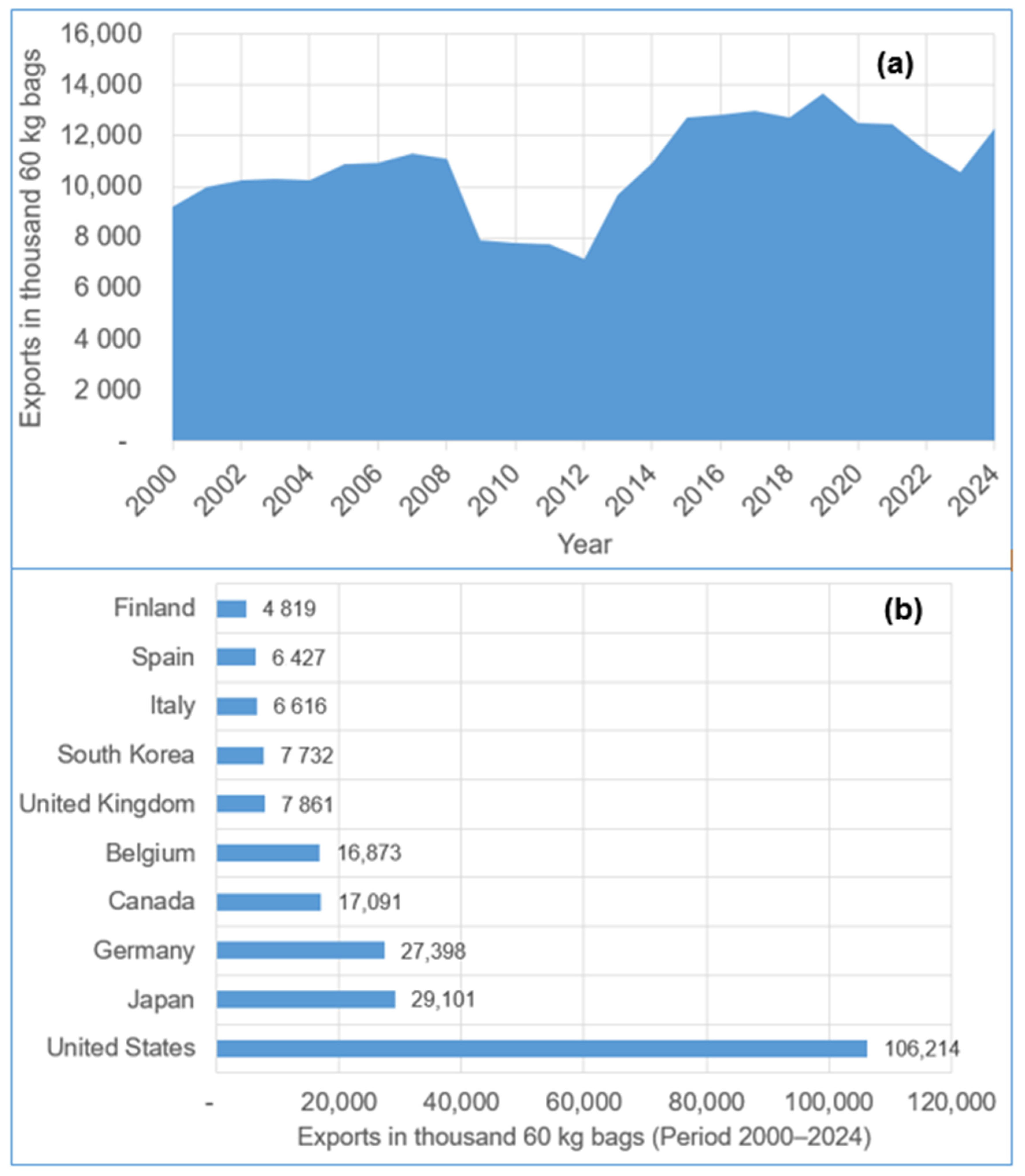
Dry parchment coffee is sold by small producers to cooperatives associated with the FNC or to private companies referred to by coffee cultivators as “threshers.” Cooperatives and threshers continue with the export process or with threshing, roasting, and grinding for sale to consumers. More than 90% of Colombian dry parchment coffee is exported to international markets [71], with the United States being the largest importer, followed by the European Union, Canada, and Japan [61]. Figure 2a,b show Colombian coffee exports in thousands of 60 kg bags over the last 20 years and the top 10 importing countries of Colombian coffee during the same period.
Figure 2. (a) Colombian coffee exports in thousands of 60 kg bags over the last 20 years and (b) top 10 importing countries of Colombian coffee over 2000–2024 (data recovered from FNC [61]).
Sustainability 17 10975 g002
Coffee exports constitute 2% of Colombia’s gross domestic product (GDP) [51], corresponding to 33% of the GDP of the agricultural sector in the third quarter of 2024 [72]. Coffee cultivation is the basis of the rural and agrarian economy of Colombia. According to the FNC data, 25% of the rural population in Colombia is dedicated to coffee cultivation, corresponding to 555,692 families; of these, >90% are small producers and 40% of production units are linked to sustainable production programs seeking to reduce the environmental impacts of coffee production processes [61,73].

4. Corporate Sustainability in the Coffee Industry

4.1. Environmental Impacts of Coffee Production

Each stage of coffee production process poses environmental impacts of various extents depending on factors such as crop conditions, environmental awareness of producers, and monitoring and oversight of regulatory bodies [39,51,74]. Table 1 lists the main environmental impacts associated with each stage of the coffee production process.
Table 1. Environmental impacts of each stage of coffee production process.
StageCoffee Production ProcessEnvironmental ImpactReferences
1Preparation of landSoil erosion and degradation, deforestation, expansion of agricultural frontiers, reduction in riparian and protected areas, loss of biodiversity, soil and water contamination by pesticides, and greenhouse gases emission. [2,75,76]
2Creation of germinators and seedbedsSolid waste generation due to high plastic bag volumes, deforestation of bamboo and timber trees due to the construction of germinators and seedbeds, and soil and water contamination with pesticides and fertilizers.[77,78]
3Sowing stageSoil erosion, water and soil pollution by pesticides and fertilizers that release byproducts and heavy metals into the environment, and solid waste generation.[77,78]
4Maintenance of plantationsSoil erosion and degradation due to coffee monoculture, water and soil pollution from pesticides and fertilizers, solid waste generation, and loss of biodiversity.[2,75,79]
5Fruit harvestingSolid waste generation and if harvesting machines are used, soil compaction and greenhouse gas emissions occur. [77,80,81]
6Pulping and washingContamination of water sources by liquid discharges laden with organic matter (sewage), solid waste generation, contamination of soil and water by leachate, air pollution from engine combustion and electricity consumption.[79,82,83]
7Drying of the parchment coffeeAir pollution from particulate matter and exhaust gas emissions when using silos for coffee drying. Electricity consumption and solid waste generation.[77,79]
8Threshed, roasted, and ground for consumptionAir pollution from engine combustion, electricity consumption, particulate matter, and exhaust gas emissions from mills and roasters. Solid waste generation.[8,84]
Sustainable production processes must be employed to mitigate the environmental and ecological impacts of soil and water contamination caused by pesticides, fertilizers, and coffee byproducts [39]. The expansion of cultivation areas into nature reserves and forest areas has considerably impacted the environment in recent years, considering the global water deficit and environmental stress [15,21,24]. The expansion of the agricultural frontier is one of the main challenges facing small producers in the SNSM [85]. In other words, the cultivation areas are expanded into new territories that were not previously designated for agriculture such as nature reserves and riparian areas [86,87]. Such an expansion can be driven by various factors such as the growing international demand for coffee, high market prices, the search for more fertile soils, or the economic pressure faced by small producers to support their families [88].
Sustainable coffee-production practices have been implemented to mitigate environmental impacts and promote sustainable agriculture [38,39]. These include avoiding the use of chemicals such as pesticides and fertilizers to reduce soil and water pollution, coffee cultivation under shade to maintain local biodiversity, and employing dry ecological processing to reduce freshwater consumption and wastewater generation [28,32].

4.2. Sustainability of Small Producers

Corporate sustainability is essential for promoting sustainable agriculture among small producers and improving conditions for ensuring continued profitable and sustainable coffee production across generations [89,90]. It can be defined as the integration of practices and principles that allow companies to operate in a manner that minimizes the negative environmental impacts without compromising the company’s productivity and long-term economic and social viability [91,92]. In other words, it seeks to satisfy present needs that support organizational development without compromising the ability of future generations to satisfy their own needs [93]. This concept can be linked to reducing the ecological footprint and generating value for the company, society, and the environment. To achieve corporate sustainability, three basic dimensions within the productive unit, namely economic, social, and environmental, must be intrinsically interrelated [94]. These three dimensions are described below:
  • The economic dimension (Profit) focuses on ensuring long-term business profitability for small producers and enhancing the efficiency of production systems within a value chain that maximizes profitability with minimum production costs [95]. It also aims to position a competitive company across national and international markets.
  • The social dimension (People) is based on the company’s responsibility for the well-being of society and its employees, promoting fair labor practices, and respect for human rights [96]. This dimension aims to guarantee minimum incomes that allow small producers to have an excellent quality of life and meet their basic needs.
  • The environmental dimension (Planet) aims to conserve natural resources in productive systems and their surroundings by reducing pollution and environmental impact. It also aims to promote the efficient use of resources, protection of diversity, and adaptation to climate change, among other aspects [97].
Thus, corporate sustainability in the small-scale coffee industry is essential for ensuring the long-term viability of coffee cultivation as well as addressing the current challenges of climate change, environmental protection, food security, fair trade, and social equity. Similarly, responsible agricultural practices, the use of clean technologies, and the adoption of sustainable certification systems will enable the coffee industry to considerably reduce its environmental impact, improve its competitiveness, and contribute to the preservation of ecosystems wherein coffee is cultivated.

4.3. Corporate Sustainability Models for Coffee Production

Previous studies [97,98] have proposed the following strategies for the design and operation of a corporate sustainability model.
  • Optimal management of natural resources such as water, energy, and materials.
  • Implementation of pollution control processes at source.
  • Implementation of a clear and defined product lifecycle.
  • Implementation of solid circular economic processes.
  • Development of open processes for social evaluation to obtain sustainable certification seals.
Among the sustainability models, the VSS remains a successful strategy that guarantees sustainability across the agricultural sector and addresses the environmental, social, and economic challenges faced by producers globally [25,28]. These certifications offer consumers and society with the assurance of quality and sustainability of production processes throughout the production life cycle and value chain [23]. The VSS recognizes good practices via marketing premiums, access to special markets, and bonuses that support and encourage the voluntary commitment of certified coffee producers and organizations [26].
Among the various VSS applied in the coffee industry, nonprofit civil society organizations have promoted several certifications that have local and global impacts on international markets, society, and the environment. The best-known certifications are organic [29], including GlobalGAP [30], Rainforest Alliance [31], Fairtrade [99], and 4C [32]. In contrast, some private companies have also begun to lead their own VSS certifications that guarantee and support the quality and sustainability of their products. These certifications include the CAFE Practices from Starbucks® [33], AAA from Nespresso [34], and Neighbors and Friends from Falcafé [100]. We have subsequently discussed the challenges and opportunities of organic coffee certification, which have been widely discussed in recent years.

5. Organic Coffee Certification: Challenges and Opportunities

5.1. Organic Certification and Sustainability

Organic certification is one of the first VSS implemented in the coffee industry. It aims to promote environmentally friendly production and safe products for the consumer without any contamination from various chemical fertilizers and pesticides used in conventional agriculture [101,102]. This certification offers multiple indisputable environmental and social benefits, including the following [25,101,103]:
  • Protection of endemic biodiversity.
  • Use of organic fertilizers, including coffee waste and other products derived from local composting of production units.
  • Deployment of physical or biological controls as a substitute for chemical pesticides.
  • Protection of water sources and soils.
  • Low waste generation and proper management.
  • Fair trade.
  • Elimination of child labor.
  • Best market prices.
  • Market diversification and purchase guarantee.
Thus, organic certification is analyzed using the TBL model, not as a collection of isolated benefits, but as a system that relies on dynamic trade-offs and synergies between the three aforementioned dimensions [49,104]. The environmental dimension reports considerable gains by favoring ecosystem conservation via sustainable agroecological practices [105]. However, systematic research has shown that this ecological improvement poses increased economic risks for small producers, particularly during the transition to organic models [49,106]. Furthermore, this economic pressure (profit) creates a structural risk to the environmental dimension (planet), as the lower yields inherent to organic production can incentivise an expansion of the cultivated area to maintain total output, potentially driving deforestation and land-use change [24,103]. The capacity to manage this economic–environmental trade-off critically resides in the social dimension of the TBL model, centered on social capital and community organization [40,107]. In addition, compliance with certification standards intrinsically promotes collective action and strengthens governance structures that are more likely to generate tangible benefits for the livelihood assets of small producers. Thus, environmental and economic sustainability is a direct consequence of robust social capital. A mismatch in any dimension, be it an inadequacy of price (profit) or the weakening of organization (people), acts as a risk trigger that can lead small producers to reverse agroecological practices and quickly lose environmental (planet) benefits [49]. Smallholders face such systemic risks due to a complex web of unmanaged interactions and trade-offs between environmental conservation, economic profitability, and social capital [104].
Considering the diversity of coffee production globally and the systemic risk involved, the interdependence and applicability of the TBL model to organic certification can be generalized; however, this model will have to be adapted to each country’s agricultural structure [108]. Although Colombia has focused on social capital (people) to compensate for the aforementioned trade-offs [40,107], empirical studies in Brazil confirm group certification as a key mechanism to ensure social equity [109]. In contrast, evidence from Vietnam emphasizes that efficiency and direct economic benefits (profit) are the main driving forces for the adoption of sustainable practices [110]. Economic complexity is illustrated in Ethiopia, where certification shows a low impact on livelihoods mainly due to low productivity and negligible price premiums [111]. Finally, Peru reports significant benefits in the Andean region, not in the final price (profit), but in community organization (people), asset accumulation, and reduced risk aversion [112]. This shows that although the TBL model can be employed globally, the systemic risk management strategy must be contextualized for adapting the social and economic solutions to the territorial reality of each continent. Therefore, these systemic vulnerabilities must be proactively managed to ensure long-term sustainability, which is primarily discussed in Section 5.2.

5.2. Challenges in Organic Production: Economic, Social, and Environmental Risks
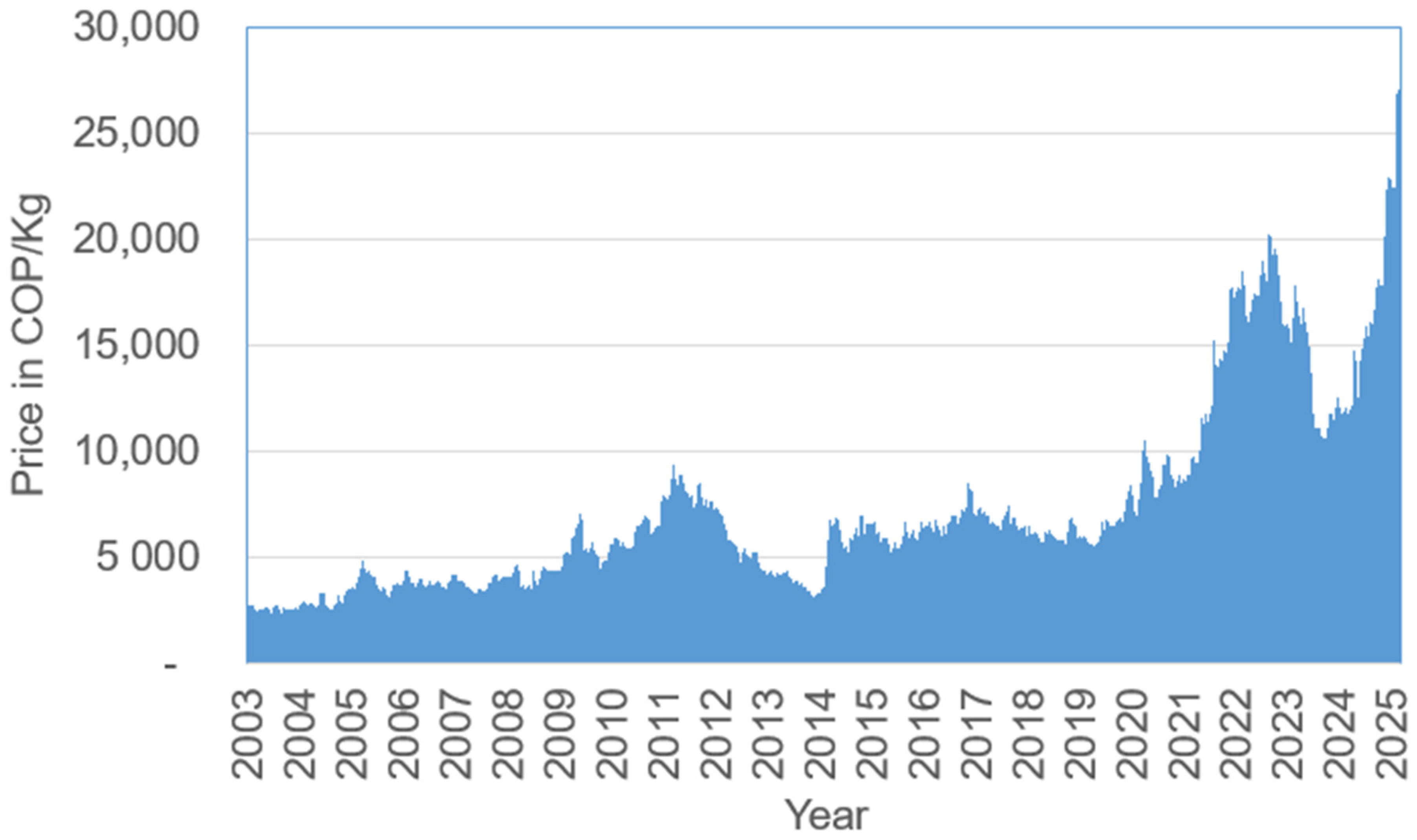
Although organic certification aims to protect and improve the social conditions of small producers and their families, this dimension has been highly questioned. The high costs of obtaining certification, maintaining certification via audits, administrative procedures, and changes in conventional production processes, as well as a transition time of approximately three years, during which small organic coffee producers cannot receive premiums, are some of the greatest concerns of small producers [101,106]. Decreased crop productivity, resulting from the nonuse of conventional chemical fertilizers and pesticides, can affect the profitability of small producers and may require some producers to employ extensive farming systems to compensate for the decreased productivity [113,114]. Moreover, the volatility of coffee markets (Figure 3) leads to unstable and low premiums per kilogram of organic dry parchment coffee, failing to offset the losses incurred with low productivity [115]. This market volatility presents a financial risk to small producers [66].
Figure 3. Coffee price variation in Colombia (in COP/Kg) from 2003 to 2025 (data recovered from FNC [61]).
Sustainability 17 10975 g003
According to the FNC data (Figure 3), a kilogram of dry parchment coffee on 13 February 2020, was priced at 7120 COP (2.10 USD/Kg), whereas on 13 February 2025, it increased to 27,000 COP (6.48 USD/Kg) [61]. However, during the last five years, the maximum premium per kilogram of organic coffee paid to the producer did not exceed 1000 COP (0.2 USD/kg); in some cases, a premium was not paid due to high coffee prices [116]. Thus, at the beginning of 2020, a small producer could only receive a maximum premium of up to 14%, which considerably decreased to 4% or 0% at the beginning of 2025. These values are low considering that organic systems experienced production decreases between 20% and 30% compared with conventional systems [113,117]. This decrease is related to the nonuse of chemical fertilizers and pesticides. A similar scenario was reported in Nicaragua 17 years ago; in 2005, the average premium paid was 30.5%, which decreased to 7.6% in 2008 [117]. This shows that volatility and low premiums continue to be crucial problems in organic coffee certification, limiting the generation of added economic value for small producers when the market prices for coffee are high [116,118].
In contrast, the premium prices of organic products exceed 35% and even 200% in some cases [119,120]. This indicates that the profitability of organic coffee is absorbed by the intermediary processes of threshing, roasting, grinding, and marketing, and only a small fraction reaches small producers [121], who lower their production yields and put their social and economic stability at risk due to their commitment to environmental sustainability. In Nicaragua, 789 kg/ha of coffee was cultivated on organic farms, with profits of USD 539/ha, whereas 1183 kg/ha of coffee was cultivated in conventional farms, with profits of USD 938/ha [117]. In Nepal, the production on conventional farms was 46% higher than that on organic farms [122]. In Costa Rica, 75% higher production was observed on conventional farms than on organic farms [118]. In fact, several studies conducted in different countries have shown that small organic coffee producers have become impoverished or are below the poverty line compared with conventional coffee producers [35,101,106]. This productivity decline has been offset by the intensive use of organic fertilizers such as coffee pulp and cattle or chicken manure [110,123,124]. However, the requirement of large quantities of fertilizers has become a limiting factor in compensating for the nutrients provided by chemical fertilizers [117,125].
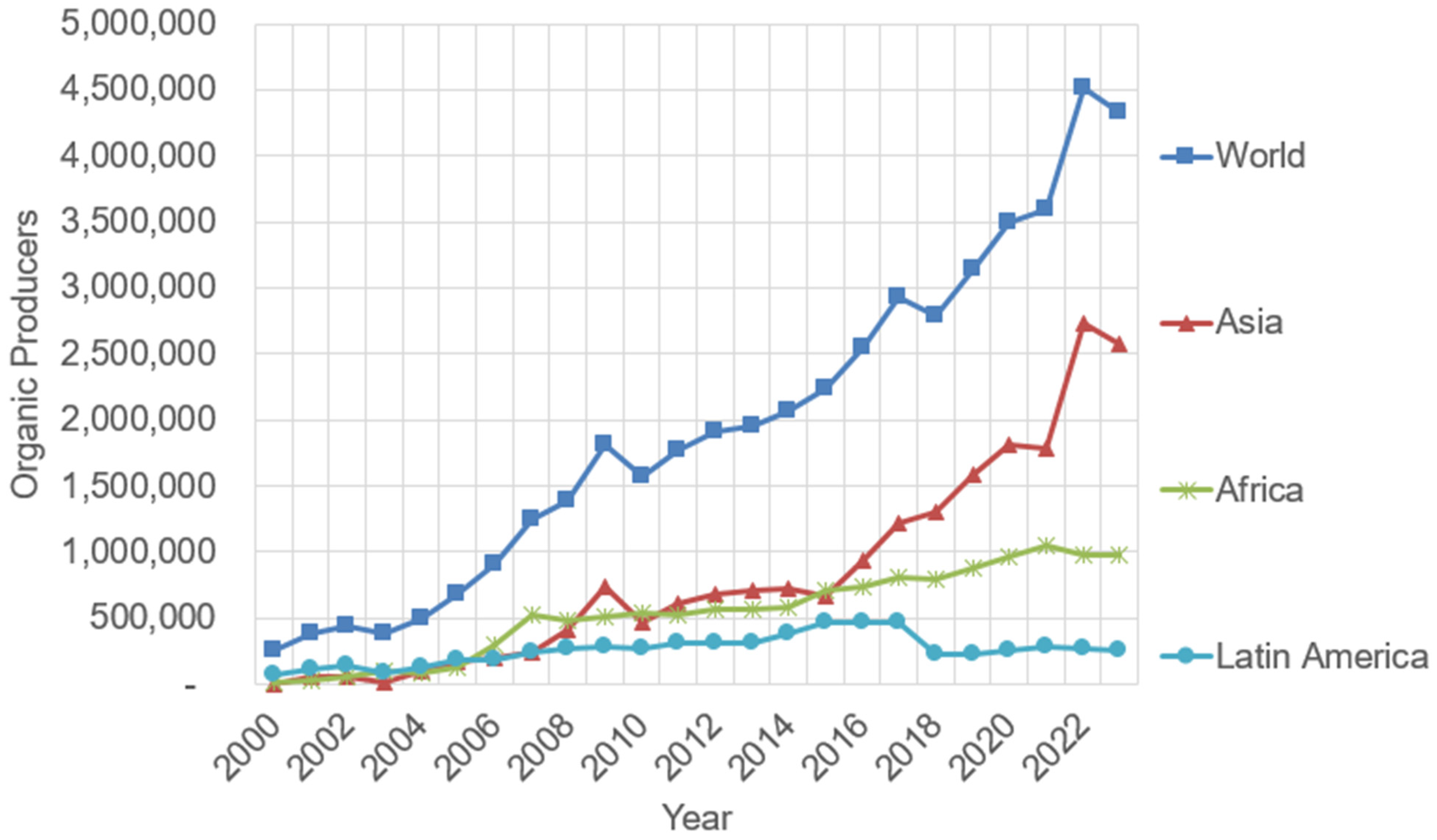
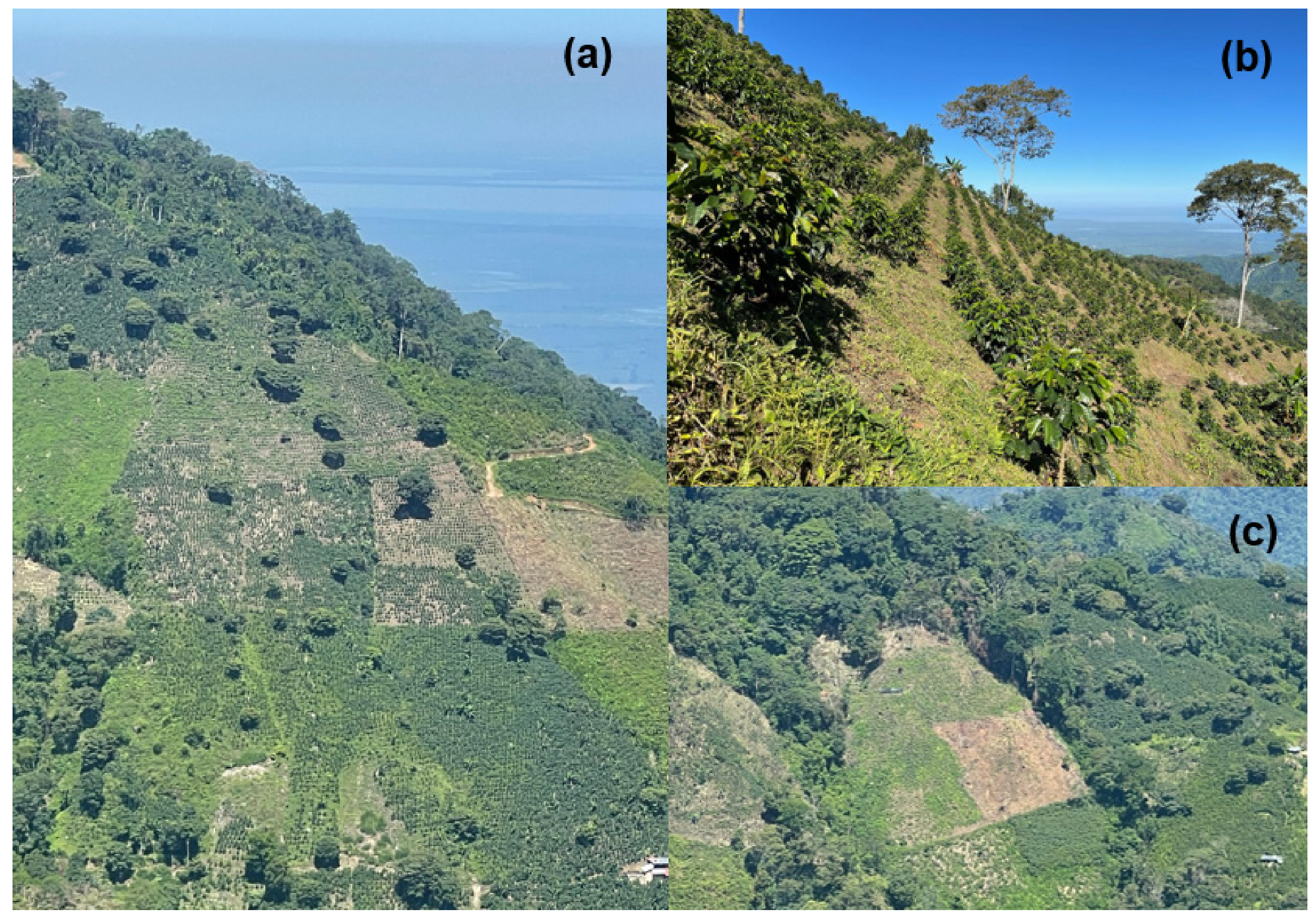
Consequently, many small producers who certified their coffee crops in the early 2000s in Latin America and the SNSM are choosing to return to the conventional system to improve their productivity and income [24], considering that they are low-income, vulnerable communities. Data compiled by the Research Institute of Organic Agriculture (FiBL) show that the number of organic crop producers worldwide has increased between 2000 and 2023. In contrast, this number has decreased in Latin America since 2017 and stabilized in Africa since 2020 (Figure 4). These data confirm the downward trend among small organic coffee producers in Latin America. Furthermore, climate change has facilitated the spread of diseases such as coffee leaf rust to higher-altitude crops, severely impacting organic coffee plantations that were not prepared for these diseases [126,127]. This has forced small producers to renew their coffee plantations and switch to shade-free crops (Figure 5) with high planting densities that are more profitable for their land [24,128]. This involves using agrochemicals to initiate the production stage in a short period after sowing, which would otherwise be a longer and more complex period for organic systems. This switch to shade-free plantations has also completely sidelined agroforestry systems that are closely intertwined with organic coffee production [129].
Figure 4. Organic producers in the world, Asia, Africa, and Latin America between 2000 and 2023 (data recovered from FiBL [130]).
Sustainability 17 10975 g004
Figure 5. (a,b) Photographs illustrating shade-free coffee crops with high planting densities and (c) expansion of the agricultural frontier and reduction in forest reserve areas in the SNSM.
Sustainability 17 10975 g005
In contrast, organic coffee production has been challenged recently with the expansion of cultivated soils to maintain high productivity [24]. Some authors have argued that an organic production system requires two to three times more surface area than traditional production systems [103]. This considerably impacts soil conservation and the protection of forest reserve areas faced with the expansion of the agricultural frontier [113] (Figure 5c). In Latin America, although the number of organic producers has decreased, the cultivated area has increased between 2017 (7,512,590 ha) and 2023 (10,347,832 ha), as reported by FiLB [130]. These findings suggest two hypotheses:
  • The expansion of cultivated areas to compensate for the decline in productivity, as reported by other authors [24,103].
  • Increased participation of large producers in organic production with strong economic capacity to sustain organic certification and production processes.
These hypotheses must be investigated to clarify the current situation and trends of the organic coffee sector in Latin America as this region had the largest number of coffee producers who adopted the organic model in the 2000s. Furthermore, countries within the Coffee Belt share similar socioeconomic and environmental conditions; therefore, the experiences of Latin American coffee producers can serve as a basis for adjusting and improving the organic production model in other coffee-growing regions worldwide. Furthermore, the economic viability of lower-yielding organic production relies on the generation of verifiable price premiums from specialty markets. This value-driven approach is designed to compensate for the volume differential, thereby reducing the economic pressure on smallholders to expand the agricultural frontier into forest reserves.

5.3. Opportunities for Improvement in the Organic Sustainability Model

High yields for large-scale conventional coffee production, difficulty in adapting and renewing organic coffee plantations, and the lack of real economic benefits for small coffee producers with certifications are commonly associated trends with volatile markets. These have limited the adoption of the sustainability model based on voluntary organic certification standards compared with the conventional production model [131]. This can affect the sustainability of the coffee industry; therefore, some aspects of the organic sustainability model must be reconsidered for its adoption by small producers. The following strategies can be employed:

5.3.1. Sustainable Certification

For organic certification to remain sustainable over time, it must have a tangible and verifiable impact on the well-being of small producers. Although qualitative studies have confirmed a high willingness among small producers to adopt the environmentally friendly model [131,132,133], this perception is only strengthened when basic needs are directly met and family economic conditions are improved [131]. Therefore, in practice, organic certification must act as a catalyst and be systematically complemented with other standard initiatives [125,134,135]. This indicates that small producer cooperatives must integrate, for example, certified organic sales with fair trade premiums (to ensure fixed minimum prices) and Rainforest Alliance premiums (to expand environmental and social risk management). In addition, monitoring metrics should include indicators of family livelihood assets, such as the availability of decent housing, access to education, and drinking water supply, to ensure that the proceeds from certification premiums are directly invested in government-supported community infrastructure projects to meet these needs. With these measures, the model’s sense of ownership among small producers is anchored to real improvements in their quality of life, effectively preventing their return to conventional production systems.

5.3.2. Price Surcharge Guarantee and Financial Support

A fixed price surcharge mechanism must be implemented, instead of relying on variable premiums. Certification organizations and buyers should establish a certification premium as a fixed, absolute differential applied to the base market price to ensure that the economic incentive remains relevant even during high international prices for produce [116,118]. Financial support should be offered in form of subsidized credit lines or revolving funds managed by small producer cooperatives to finance plantation renewal and working capital during the costly transition phase into organic models. Evidence from regions such as Kenya [136], Honduras [12], Mexico [137], and Rwanda [138] demonstrates that the access to subsidized credit is crucial for strengthening technical assistance, education, and investment capacity, thereby closing the economic gap between conventional and organic producers.

5.3.3. Reducing Certification Costs

Certification bodies and governments should subsidize initial certification and implement digital audit models, thereby strengthening associations among small producers. These measures can considerably reduce fixed costs per farmer [118,139,140]. In addition, resources should be optimized by implementing information technologies and digital platforms (which can incorporate Blockchain technology for secure traceability) to automate compliance data collection [141,142]. By validating the majority of information remotely, the dependence on and frequency of costly physical on-farm inspections can be reduced, audit processes can be streamlined, and certification process can be made sustainable for small producers.

5.3.4. Compensating the Production Gap

Certifiers should develop production gap indicators to establish real premiums that mitigate the inherent risk of lower organic yields driving land expansion/deforestation. Furthermore, certifiers should define a compensatory premium for the three-year transition period to account for the yield difference between intensive conventional and transitional organic coffee; this is a known economic risk that discourages the adoption of the organic model among small producers [122]. In addition, as many smallholder farmers already operate conventionally under organic conditions due to a lack of access to agrochemicals [125,135], the certification process must be simplified and accelerated, focusing resources on the rapid validation of clean products with sustainable ecological practices.

5.3.5. Added Value and Real Price Premiums

Government-supported producers should invest in logistical and industrial capacities for vertical integration and value addition, ensuring that the original price premiums observed in product marketing reach small producers directly. In addition, small producer associations should consolidate direct participation in international markets and e-commerce platforms as well as establish direct export agreements that eliminate unnecessary intermediaries and shorten the supply chain [143]. Furthermore, investment in local industrial infrastructure (e.g., roasters and grinding equipment) and technical training should be prioritized so that small producers can directly market their own brand of certified organic roasted and ground coffee. Studies in countries such as Bolivia, Colombia, and Brazil have shown that this is the most effective mechanism for considerably increasing the income per unit sold of small producers [143,144,145].

5.3.6. Investment in Resilient Coffee Varieties

Governments, buyers, and industry stakeholders should establish R&D funds and distribution programs for climate- and phytosanitary-resilient seeds [146,147,148,149]. This will help mitigate the agronomic risks that organic production cannot manage without using agrochemicals (e.g., rust and coffee berry borer). The goal is to ensure that organic farmers can renew their crops using genetic materials that drastically reduce exposure to pests and diseases, eliminating the need to incur complex ecological management costs or the use of prohibited inputs. In addition, genetic resilience must become a fundamental pillar of sustainable organic production.

5.3.7. Diversification of Income Sources

Producer cooperatives should formally quantify, certify, and monetize the positive carbon balance and conservation benefits that are inherent in their agroforestry systems [105]. They should establish direct carbon credit sales contracts that generate stable additional income for small producers. In parallel, funds from certification premiums should be allocated to infrastructure investments that reduce operating costs and generate alternative income, such as installing photovoltaic systems for processing plants, as has been implemented in Brazil [150]. These bodies should also formalize the training and infrastructure necessary to transform the biodiversity of organic farms into an additional source of income via ecotourism, creating a direct and steady cash flow for families [40,151]. This approach ensures that environmental sustainability is translated into financial resilience and operational risk mitigation.

6. Implications and Future Research Lines

This narrative review advances the current understanding of coffee production by unifying the perspectives on the challenges and opportunities of organic certification under a TBL model for small-scale coffee producers in high-value forest areas. Furthermore, via a synthetic analysis of literature, industry data, technical manuals, and statistics, this review offers a robust conceptual framework that integrates environmental, economic, and social dimensions to propose adjustments to the current organic certification model of the coffee industry. In this regard, the synergies and trade-offs inherent in the application of VSS in the contexts of high biodiversity, water resources, and forest reserves have been identified. This comprehensive approach highlights human, natural, and economic capital as interdependent components of sustainability for small-scale coffee producers in the SNSM. It serves as the starting point for future research and policies aimed at the conservation of high-value forest areas with agricultural potential. Future research can examine the long-term effects of organic certification on the sustainability of coffee industry using data collected by public, private, and civil society organizations over the past 25 years of globalized digitalization. Prioritised indicators should include the following: (i) Profit: long-term net farmer income, price premium stability, and farm asset investment capacity. (ii) People: intergenerational retention on the farm, educational attainment, and community engagement/cooperation levels. (iii) Planet: longitudinal trends in biodiversity indices, soil health parameters, and the farm’s measurable resilience to climate variability and disease outbreaks. In Colombia, institutions such as the FNC, CENICAFE, and DANE’s agricultural censuses will be fundamental for these long-term analyses. Likewise, raw data from international auditing and certification bodies should be openly accessible to gain a detailed understanding of the evolution of the organic sector.
However, this review demonstrates that organic certification is not a universal solution but rather a tool whose success is intrinsically linked to the coordination of the institutional, cultural, and ecological factors of each territory. This perspective is crucial because it challenges the limited view that certification alone can solve global sustainability problems. It also posits that the effectiveness of these schemes is enhanced when they are aligned with local realities and complemented by supportive policies, technical assistance, and organizational capacity improvements. Finally, this research contributes to a better understanding of organic certification as a catalyst for corporate sustainability in the coffee industry and other agricultural products worldwide.

7. Limitations of This Study

The limitations of this study include its regional focus on the SNSM, Colombia, and mountain coffee-growing regions in high-value forest environments. Therefore, the findings and recommendations may vary with other production environments and regions that have different sociodemographic characteristics. This study does not comprehensively examine the organic coffee industry; instead, it focuses on the experiences of Latin American and SNSM small organic coffee producers, which can serve as a reference point for other regions.

8. Conclusions

Coffee is one of the most widely consumed and globally accepted products, with sustained growth in international markets. However, this sector faces multiple challenges in its production systems and value chain. Climate change affects crop productivity and quality, generating volatility in international coffee prices. Furthermore, the social and economic vulnerabilities of small-scale producers may lead to crop substitution or reduced agricultural activity. In this context, organic certification is a voluntary standard that can provide multiple tools for ensuring business sustainability in the coffee industry, despite its current challenges.
Therefore, the voluntary organic sustainability standard must be revised to ensure compliance with the organic model throughout the value chain and to protect small coffee producers. This is because they are currently the least benefited but sustain the system and guarantee environmental protection with ecological production systems. The main complexity identified is that the effectiveness of the organic standard is conditional and highly reliant on institutional governance to mediate dynamic trade-offs. The lower yields inherent in organic production create a structural pressure towards area expansion and potential deforestation. However, mitigating this environmental risk is only possible when economic viability is secured. Success requires the generation of verifiable price premiums from specialty markets to compensate for the volume differential and, critically, the strengthening of social capital, the successful implementation of policies that specifically mitigate the risk of the transition period for small producers. This integrated approach ensures that environmental benefits are not lost due to market volatility or the weakening of organisational structures. The proposed improvement strategies and mechanisms include: (i) sustainable certification; (ii) price surcharge guarantee and financial support; (iii) reducing certification costs; (iv) compensating the production gap; (v) added value and real price premiums; (vi) investment in resilient coffee varieties; and (vii) diversification of income sources.
Finally, the SNSM has enormous potential in terms of environmental and ecosystem services that must be protected from the expansion of coffee plantations. Existing crops should be managed in ecological synergy with the environment, and the agricultural frontier must be clearly defined and limited to prevent the decline of forest area. Coffee should also be produced under a sustainable standard, such as organic certification, but with appropriate adjustments to the organic model to protect this region of high-value forest and its small producers.

Author Contributions

T.E.B.-P., M.L.D.-L.-R.-C. and C.Y.Q.-C. wrote this paper. All authors have read and agreed to the published version of the manuscript.

Funding

This research received no external funding.

Acknowledgments

The authors are grateful for the support of the Universidad Del Magdalena (NICOP research group) and Universidad Cooperativa de Colombia—UCC (ISI research group).

Conflicts of Interest

The authors declare no conflicts of interest.

Abbreviations

The following abbreviations are used in this manuscript:
VSSVoluntary Sustainability Standards
SNSMSierra Nevada de Santa Marta
FNCNational Federation of Coffee Growers of Colombia (Federación Nacional de Cafeteros de Colombia)
GPDGross domestic product
USDUnited States dollar
COPColombian peso
FiBLResearch Institute of Organic Agriculture
NYSENew York Stock Exchange

References

  1. Quiñones-Ruiz, X.F. Social Brokerage: Encounters between Colombian Coffee Producers and Austrian Buyers—A Research-Based Relational Pathway. Geoforum 2021, 123, 107–116. [Google Scholar] [CrossRef]
  2. Holle, M.J.M.; Apriyani, V.; Mumbunan, S. Systematic Evidence Map of Coffee Agroecosystem Management and Biodiversity Linkages in Producing Countries. Clean. Circ. Bioecon. 2025, 11, 100147. [Google Scholar] [CrossRef]
  3. Cavanagh, Q.; Brooks, M.S.-L.; Rupasinghe, H.P.V. Innovative Technologies Used to Convert Spent Coffee Grounds into New Food Ingredients: Opportunities, Challenges, and Prospects. Future Foods 2023, 8, 100255. [Google Scholar] [CrossRef]
  4. Veloso, T.G.R.; da Silva, M.d.C.S.; Moreira, T.R.; da Luz, J.M.R.; Moreli, A.P.; Kasuya, M.C.M.; Pereira, L.L. Microbiomes Associated with Coffea arabica and Coffea canephora in Four Different Floristic Domains of Brazil. Sci. Rep. 2023, 13, 18477. [Google Scholar] [CrossRef]
  5. Kadigi, R.M.J.; Robinson, E.; Szabo, S.; Kangile, J.; Mgeni, C.P.; De Maria, M.; Tsusaka, T.; Nhau, B. Revisiting the Solow-Swan Model of Income Convergence in the Context of Coffee Producing and Re-Exporting Countries in the World. Sustain. Futures 2022, 4, 100082. [Google Scholar] [CrossRef]
  6. Bilen, C.; El Chami, D.; Mereu, V.; Trabucco, A.; Marras, S.; Spano, D. A Systematic Review on the Impacts of Climate Change on Coffee Agrosystems. Plants 2023, 12, 102. [Google Scholar] [CrossRef]
  7. Ngure, G.M.; Watanabe, K.N. Coffee Sustainability: Leveraging Collaborative Breeding for Variety Improvement. Front. Sustain. Food Syst. 2024, 8, 1431849. [Google Scholar] [CrossRef]
  8. Gosalvitr, P.; Cuéllar-Franca, R.M.; Smith, R.; Azapagic, A. An Environmental and Economic Sustainability Assessment of Coffee Production in the UK. Chem. Eng. J. 2023, 465, 142793. [Google Scholar] [CrossRef]
  9. FAO Manual del Café Arábico para la República Democrática Popular Lao. Available online: https://www.fao.org/4/ae939e/ae939e03.htm (accessed on 20 November 2024).
  10. Magalhães Júnior, A.I.; de Carvalho Neto, D.P.; de Melo Pereira, G.V.; da Silva Vale, A.; Medina, J.D.C.; de Carvalho, J.C.; Soccol, C.R. A Critical Techno-Economic Analysis of Coffee Processing Utilizing a Modern Fermentation System: Implications for Specialty Coffee Production. Food Bioprod. Process. 2021, 125, 14–21. [Google Scholar] [CrossRef]
  11. Irawan, A.; McLellan, B.C. A Comparison of Life Cycle Assessment (LCA) of Andungsari Arabica Coffee Processing Technologies towards Lower Environmental Impact. J. Clean. Prod. 2024, 447, 141561. [Google Scholar] [CrossRef]
  12. Navichoc, D.; Alamneh, M.; Mortara Batistic, P.; Dietz, T.; Kilian, B. Voluntary Sustainability Standards and Technical Efficiency of Honduran Smallholder Coffee Producers. World Dev. Perspect. 2024, 36, 100637. [Google Scholar] [CrossRef]
  13. Quiroga, S.; Suárez, C.; Solís, J.D. Exploring Coffee Farmers’ Awareness about Climate Change and Water Needs: Smallholders’ Perceptions of Adaptive Capacity. Environ. Sci. Policy 2015, 45, 53–66. [Google Scholar] [CrossRef]
  14. Valencia, V.; García-Barrios, L.; Sterling, E.J.; West, P.; Meza-Jiménez, A.; Naeem, S. Smallholder Response to Environmental Change: Impacts of Coffee Leaf Rust in a Forest Frontier in Mexico. Land Use Policy 2018, 79, 463–474. [Google Scholar] [CrossRef]
  15. Abera, W.; Tamene, L.; Kassawmar, T.; Mulatu, K.; Kassa, H.; Verchot, L.; Quintero, M. Impacts of Land Use and Land Cover Dynamics on Ecosystem Services in the Yayo Coffee Forest Biosphere Reserve, Southwestern Ethiopia. Ecosyst. Serv. 2021, 50, 101338. [Google Scholar] [CrossRef]
  16. Reis dos Santos Bastos, T.; Anjos Bittencourt Barreto-Garcia, P.; de Carvalho Mendes, I.; Henrique Marques Monroe, P.; Ferreira de Carvalho, F. Response of Soil Microbial Biomass and Enzyme Activity in Coffee-Based Agroforestry Systems in a High-Altitude Tropical Climate Region of Brazil. CATENA 2023, 230, 107270. [Google Scholar] [CrossRef]
  17. Dröge, S.; Verbist, B.; Maertens, M.; Muys, B. Do Voluntary Sustainability Standards Reduce Primary Forest Loss? A Global Analysis for Food Commodities. Agric. Ecosyst. Environ. 2024, 374, 109158. [Google Scholar] [CrossRef]
  18. Siles, P.; Cerdán, C.R.; Staver, C. Smallholder Coffee in the Global Economy—A Framework to Explore Transformation Alternatives of Traditional Agroforestry for Greater Economic, Ecological, and Livelihood Viability. Front. Sustain. Food Syst. 2022, 6, 808207. [Google Scholar] [CrossRef]
  19. Hoz, J.V.D.L. Aroma de café: Economía y empresas cafeteras en la Sierra Nevada de Santa Marta. Jangwa Pana 2019, 18, 163–181. [Google Scholar] [CrossRef]
  20. Berihun, T.; Gutema, P. The Economic Impact of Sustainability Standards on Smallholder Coffee Producers: Evidence from Ethiopia. Sustain. Prod. Consum. 2025, 55, 268–284. [Google Scholar] [CrossRef]
  21. Santos, V.P.; Ribeiro, P.C.C.; Rodrigues, L.B. Sustainability Assessment of Coffee Production in Brazil. Environ. Sci. Pollut. Res. 2023, 30, 11099–11118. [Google Scholar] [CrossRef]
  22. Barreto Peixoto, J.A.; Silva, J.F.; Oliveira, M.B.P.P.; Alves, R.C. Sustainability Issues along the Coffee Chain: From the Field to the Cup. Compr. Rev. Food Sci. Food Saf. 2023, 22, 287–332. [Google Scholar] [CrossRef]
  23. Nab, C.; Maslin, M. Life Cycle Assessment Synthesis of the Carbon Footprint of Arabica Coffee: Case Study of Brazil and Vietnam Conventional and Sustainable Coffee Production and Export to the United Kingdom. Geo Geogr. Environ. 2020, 7, e00096. [Google Scholar] [CrossRef]
  24. Harvey, C.A.; Pritts, A.A.; Zwetsloot, M.J.; Jansen, K.; Pulleman, M.M.; Armbrecht, I.; Avelino, J.; Barrera, J.F.; Bunn, C.; García, J.H.; et al. Transformation of Coffee-Growing Landscapes across Latin America. A Review. Agron. Sustain. Dev. 2021, 41, 62. [Google Scholar] [CrossRef] [PubMed]
  25. Fernandes Martins, K.; Teixeira, D.; de Oliveira Corrêa, R. Gains in Sustainability Using Voluntary Sustainability Standards: A Systematic Review. Clean. Logist. Supply Chain 2022, 5, 100084. [Google Scholar] [CrossRef]
  26. Rubio-Jovel, K. Coffee Production Networks in Costa Rica and Colombia: A Systems Analysis on Voluntary Sustainability Standards and Impacts at the Local Level. J. Clean. Prod. 2024, 445, 141196. [Google Scholar] [CrossRef]
  27. Rubio-Jovel, K. The Voluntary Sustainability Standards and Their Contribution towards the Achievement of the Sustainable Development Goals: A Systematic Review on the Coffee Sector. J. Int. Dev. 2023, 35, 1013–1052. [Google Scholar] [CrossRef]
  28. Rubio-Jovel, K.; Sellare, J.; Damm, Y.; Dietz, T. SDGs Trade-Offs Associated with Voluntary Sustainability Standards: A Case Study from the Coffee Sector in Costa Rica. Sustain. Dev. 2024, 32, 917–939. [Google Scholar] [CrossRef]
  29. Gómez Ortiz, M.M.; Vivares Vergara, J.A. Organic Coffee Production: Mapping Trends through Bibliometric Analysis. CLIO América 2024, 18, 3. [Google Scholar] [CrossRef]
  30. Tey, Y.S.; Rajendran, N.; Brindal, M.; Sidique, S.F.A.; Shamsudin, M.N.; Radam, A.; Hadi, A.H.I.A. A Review of an International Sustainability Standard (GlobalGAP) and Its Local Replica (MyGAP). Outlook Agric. 2016, 45, 67–72. [Google Scholar] [CrossRef]
  31. Pinto, L.F.G.; Gardner, T.; McDermott, C.L.; Ayub, K.O.L. Group Certification Supports an Increase in the Diversity of Sustainable Agriculture Network–Rainforest Alliance Certified Coffee Producers in Brazil. Ecol. Econ. 2014, 107, 59–64. [Google Scholar] [CrossRef]
  32. Renard, M.-C. Values and the Making of Standards in ‘Sustainable’ Coffee Networks: The Case of 4C and Nestlé in México. Int. Sociol. 2022, 37, 758–776. [Google Scholar] [CrossRef]
  33. Renard, M.-C. In the Name of Conservation: CAFE Practices and Fair Trade in Mexico. J. Bus. Ethics 2010, 92, 287–299. [Google Scholar] [CrossRef]
  34. Alvarez, G.; Pilbeam, C.; Wilding, R. Nestlé Nespresso AAA Sustainable Quality Program: An Investigation into the Governance Dynamics in a Multi-stakeholder Supply Chain Network. Supply Chain Manag. Int. J. 2010, 15, 165–182. [Google Scholar] [CrossRef]
  35. Estrella, A.; Navichoc, D.; Kilian, B.; Dietz, T. Impact Pathways of Voluntary Sustainability Standards on Smallholder Coffee Producers in Honduras: Price Premiums, Farm Productivity, Production Costs, Access to Credit. World Dev. Perspect. 2022, 27, 100435. [Google Scholar] [CrossRef]
  36. Souza Pião, R.; da Fonseca, L.S.; de Carvalho Januário, É.; Saes, M.S.M. Chapter 6—Certification: Facts, Challenges, and the Future. In Coffee Consumption and Industry Strategies in Brazil; de Almeida, L.F., Spers, E.E., Eds.; Woodhead Publishing Series in Consumer Sci & Strat Market; Woodhead Publishing: Cambridge, UK, 2020; pp. 109–123. ISBN 978-0-12-814721-4. [Google Scholar]
  37. Andrade Arango, Y.; Castro Escobar, E.; Ramírez Ospina, D.E.; Andrade Arango, Y.; Castro Escobar, E.; Ramírez Ospina, D.E. Certificaciones e iniciativas de sostenibilidad en el sector cafetero: Un análisis desde la auditoría ambiental en el departamento de Caldas, Colombia. Contad. Adm. 2021, 66, 275. [Google Scholar]
  38. Jones, K.; Njeru, E.M.; Garnett, K.; Girkin, N. Assessing the Impact of Voluntary Certification Schemes on Future Sustainable Coffee Production. Sustainability 2024, 16, 5669. [Google Scholar] [CrossRef]
  39. Pascucci, F. Sustainability in the Coffee Sector: A Literature Review. In Sustainability in the Coffee Supply Chain; Palgrave Macmillan: Cham, Switzerland, 2024; pp. 77–104. ISBN 978-3-031-72502-9. [Google Scholar]
  40. Wright, D.R.; Bekessy, S.A.; Lentini, P.E.; Garrard, G.E.; Gordon, A.; Rodewald, A.D.; Bennett, R.E.; Selinske, M.J. Sustainable Coffee: A Review of the Diverse Initiatives and Governance Dimensions of Global Coffee Supply Chains. Ambio 2024, 53, 984–1001. [Google Scholar] [CrossRef] [PubMed]
  41. Duran-Izquierdo, M.; Olivero-Verbel, J. Vulnerability Assessment of Sierra Nevada de Santa Marta, Colombia: World’s Most Irreplaceable Nature Reserve. Glob. Ecol. Conserv. 2021, 28, e01592. [Google Scholar] [CrossRef]
  42. Granados-Peña, R.; Arias Alzate, A.F.; Zárrate-Charry, D.; González Maya, J.F. Una estrategia de conservación a escala regional para el jaguar (Panthera onca) en el distrito biogeográfico de la Sierra Nevada de Santa Marta, Colombia. Rev. Biodivers. Neotrop. 2014, 4, 141–148. [Google Scholar] [CrossRef]
  43. Bocarejo, D.; Del Cairo, C.; Ojeda, D.; Rojas Arias, F.; Esquinas, M.; Gonzalez, C.; Murcia, F.; Rojas, J.; Martínez, M.; García, M.E.; et al. Caracterización Socioeconómica y Cultural del Complejo de Páramos Sierra Nevada de Santa Marta en Jurisdicción de Corpamag y Corpocesar con Énfasis en Caracterización de Actores, Análisis de Redes y de Servicios Ecosistémicos; Instituto de Investigación de Recursos Biológicos Alexander von Humboldt: Bogotá, Colombia, 2015; p. 99. [Google Scholar]
  44. Durán-Izquierdo, M.L. Sierra Nevada de Santa Marta: Entre las Presiones Antrópicas y el uso Sostenible de sus Recursos. Ph.D. Thesis, Universidad de Cartagena, Bolívar, Colombia, 2022. [Google Scholar]
  45. Corwin Rondano, A.C.; Issa Fontalvo, S.M.; Murillo Sanabria, O.; Morales, A. El ecoturismo como esperanza socioeconómica en territorios rurales de la región cafetera en el departamento del Magdalena. Loginn 2019, 3, 9. [Google Scholar] [CrossRef]
  46. FNC Federación Nacional de Cafeteros. Available online: https://magdalena.federaciondecafeteros.org/cafe-del-magdalena/ (accessed on 23 February 2024).
  47. Hoz, J.V.D.L. Sierra Nevada de Santa Marta: Economía de Sus Recursos Naturales; Banco de la Républica: Cartagena, Colombia, 2005; ISSN 1692–3715. [Google Scholar]
  48. Aragón-Guzmán, S.E.; Regino-Maldonado, J.; Vásquez-López, A.; Toledo-López, A.; Nuria Jurado-Celis, S.; Granados-Echegoyen, C.A.; Landero-Valenzuela, N.; Arroyo-Balán, F.; Quiroz-González, B.; Peñaloza-Ramírez, J.M. A Systematic Literature Review on Environmental, Agronomic, and Socioeconomic Factors for the Integration of Small-Scale Coffee Producers into Specialized Markets in Oaxaca, Mexico. Front. Sustain. Food Syst. 2024, 8, 1386956. [Google Scholar] [CrossRef]
  49. Jones, K.; Njeru, E.M.; Garnett, K.; Girkin, N.T. Organic Management in Coffee: A Systematic Review of the Environmental, Economic and Social Benefits and Trade-Offs for Farmers. Agroecol. Sustain. Food Syst. 2025, 49, 1368–1402. [Google Scholar] [CrossRef]
  50. Hameed, A.; Hussain, S.A.; Suleria, H.A.R. “Coffee Bean-Related” Agroecological Factors Affecting the Coffee. In Co-Evolution of Secondary Metabolites; Mérillon, J.-M., Ramawat, K.G., Eds.; Springer International Publishing: Cham, Switzerland, 2020; pp. 641–705. ISBN 978-3-319-96397-6. [Google Scholar]
  51. Leal-Echeverri, J.C.; Tobón, C. The Water Footprint of Coffee Production in Colombia. Rev. Fac. Nac. Agron. Medellín 2021, 74, 9685–9697. [Google Scholar] [CrossRef]
  52. Nadaf, S.A.; Shivaprasad, P.; Babou, C.; Hariyappa, N.; Chandrashekar, N.; Kumari, P.; Sowmya, P.R.; Hareesh, S.B.; Pati, N.R.; Nagaraja, J.S.; et al. Coffee (Coffea Spp.). In Soil Health Management for Plantation Crops: Recent Advances and New Paradigms; Thomas, G.V., Krishnakumar, V., Eds.; Springer Nature: Singapore, 2024; pp. 337–389. ISBN 978-981-9700-92-9. [Google Scholar]
  53. Schlegel, F.M. Ecologia y Ensenanza Rural: Nociones Ambientales Basicas para Profesores Rurales y Extensionistas; FAO: Rome, Italy, 1996; ISBN 978-92-5-303847-3. [Google Scholar]
  54. FNC Proceso Productivo del Café. Available online: https://federaciondecafeteros.org/static/files/8Capitulo6.pdf (accessed on 20 November 2024).
  55. Cassamo, C.T.; Draper, D.; Romeiras, M.M.; Marques, I.; Chiulele, R.; Rodrigues, M.; Stalmans, M.; Partelli, F.L.; Ribeiro-Barros, A.; Ramalho, J.C. Impact of Climate Changes in the Suitable Areas for Coffea arabica L. Production in Mozambique: Agroforestry as an Alternative Management System to Strengthen Crop Sustainability. Agric. Ecosyst. Environ. 2023, 346, 108341. [Google Scholar] [CrossRef]
  56. DaMatta, F.M.; Ramalho, J.D.C. Impacts of Drought and Temperature Stress on Coffee Physiology and Production: A Review. Braz. J. Plant Physiol. 2006, 18, 55–81. [Google Scholar] [CrossRef]
  57. Ministerio del Medio Ambiente. Guia Ambiental para el Subsector Cafetero; Minambiente, Sociedad de Agricultores de Colombia, Federación Nacional de Cafeteros de Colombia, Eds.; Minambiente: Bogota, Colombia, 2002.
  58. Mamuye, M.; Gallemore, C.; Jespersen, K.; Kasongi, N.; Berecha, G. Changing Rainfall and Temperature Trends and Variability at Different Spatiotemporal Scales Threaten Coffee Production in Certain Elevations. Environ. Chall. 2024, 15, 100950. [Google Scholar] [CrossRef]
  59. Boer, R.; Jadmiko, S.D.; Hidayat, P.; Wachjar, A.; Ardiansyah, M.; Sulistyowati, D.; Situmorang, A.P. Managing Climate Risk in a Major Coffee-Growing Region of Indonesia. In Global Climate Change and Environmental Policy; Springer: Singapore, 2020; pp. 147–205. ISBN 9789811395703. [Google Scholar]
  60. Campuzano-Duque, L.F.; Herrera, J.C.; Ged, C.; Blair, M.W. Bases for the Establishment of Robusta Coffee (Coffea canephora) as a New Crop for Colombia. Agronomy 2021, 11, 2550. [Google Scholar] [CrossRef]
  61. FNC Estadísticas Cafeteras. Available online: https://federaciondecafeteros.org/wp/estadisticas-cafeteras/ (accessed on 23 April 2025).
  62. FNC Cafés Suaves. Available online: https://federaciondecafeteros.org/wp/glosario/cafes-suaves/ (accessed on 21 April 2025).
  63. Cenicafe Cartilla cafetera Cap. 01. Variedades de Café Sembradas en Colombia. Available online: https://www.fundacioncaucarural.org.co/3d-flip-book/cartilla-1-variedades-de-cafe-sembradas-en-colombia/ (accessed on 4 December 2025).
  64. De La Hoz Montes, M.; Perafán Ledezma, A.L.; Martínez-Dueñas, W.A. Apropiaciones sociales de la ciencia y la tecnología en la caficultura en la Sierra Nevada de Santa Marta (Palmor y Río Piedras, Magdalena, Colombia). Jangwa Pana Rev. Cienc. Soc. Humanas 2019, 18, 183–213. [Google Scholar] [CrossRef]
  65. Baker, P.S.; Duque, O.H. Guía para la Caficultura Sostenible en Colombia: Un Trabajo Articulado con los Caficultores Extensionistas y la Comunidad; CENICAFE: Chinchiná, Colombia, 2007; ISBN 978-958-97726-9-0. [Google Scholar]
  66. Leiva, B.; Vargas, A.; Casanoves, F.; Haggar, J. Changes in the Economics of Coffee Production between 2008 and 2019: A Tale of Two Central American Countries. Front. Sustain. Food Syst. 2024, 8, 1376051. [Google Scholar] [CrossRef]
  67. Moreno Cárdenas, E.L.; Oliveros Tascón, C.E.; Alfonso Carvajal, O.A.; Álvarez Mejía, F. Development of a New Striker for a Portable Coffee Harvesting Tool. Rev. Fac. Nac. Agron. Medellín 2013, 66, 7071–7083. [Google Scholar]
  68. Santinato, F.; Silva, R.P.D.; Silva, V.D.A.; Silva, C.D.D.; Tavares, T.D.O. Mechanical Harvesting of Coffee in High Slope. Rev. Caatinga 2016, 29, 685–691. [Google Scholar] [CrossRef]
  69. Abreu, G.F.; Rosa, S.D.V.F.; Coelho, S.V.B.; Pereira, C.C.; Malta, M.R.; Fantazzini, T.B.; Vilela, A.L. Influence Of Hulling And Storage Conditions On Maintaining Coffee Quality. An. Acad. Bras. Ciênc. 2023, 95, e20190612. [Google Scholar] [CrossRef]
  70. Peñuela Martínez, A.E.; JR, S.-U.; RD, M.-R. Influence of Drying Air Temperature on Coffee Quality during Storage. Rev. Fac. Nac. Agron. Medellín 2023, 76, 10493–10503. [Google Scholar] [CrossRef]
  71. Cortés-Macías, E.T.; López, C.F.; Gentile, P.; Girón-Hernández, J.; López, A.F. Impact of Post-Harvest Treatments on Physicochemical and Sensory Characteristics of Coffee Beans in Huila, Colombia. Postharvest Biol. Technol. 2022, 187, 111852. [Google Scholar] [CrossRef]
  72. Presidencia; DANE; Minagricultura. Aumento de Cultivos de Café y Producción Ganadera Jalonaron Crecimiento del Sector Agro en 2024 y de la Economía Nacional. Available online: https://www.presidencia.gov.co/prensa/Paginas/Aumento-de-cultivos-de-cafe-y--produccion-ganadera-jalonaron-crecimiento-250218.aspx (accessed on 23 April 2025).
  73. Agronet Cerca de 549.000 Familias Cafeteras Producen Más de 10,6 Millones de Sacos de Café Cada Año En Colombia. Available online: https://www.agronet.gov.co/Noticias/Paginas/Cerca-de-549-000-familias-cafeteras-producen-m%C3%A1s-de-10,6-millones-de-sacos-de-caf%C3%A9-cada-a%C3%B1o-en-Colombia.aspx (accessed on 23 April 2025).
  74. Arcila Pulgarín, J.; Farfán Valencia, F.F.; Moreno Berrocal, A.M.; Salazar Gutiérrez, L.F.; Hincapie Gómez, E. Sistemas de Producción de Café en Colombia; Federación Nacional de Cafeteros: Bogotá, Colombia, 2007; ISBN 978-958-98193-0-2. [Google Scholar]
  75. Manson, S.; Nekaris, K.a.I.; Rendell, A.; Budiadi, B.; Imron, M.A.; Campera, M. Agrochemicals and Shade Complexity Affect Soil Quality in Coffee Home Gardens. Earth 2022, 3, 853–865. [Google Scholar] [CrossRef]
  76. Noponen, M.R.A.; Edwards-Jones, G.; Haggar, J.P.; Soto, G.; Attarzadeh, N.; Healey, J.R. Greenhouse Gas Emissions in Coffee Grown with Differing Input Levels under Conventional and Organic Management. Agric. Ecosyst. Environ. 2012, 151, 6–15. [Google Scholar] [CrossRef]
  77. Giraldi-Díaz, M.R.; De Medina-Salas, L.; Castillo-González, E.; León-Lira, R. Environmental Impact Associated with the Supply Chain and Production of Grounding and Roasting Coffee through Life Cycle Analysis. Sustainability 2018, 10, 4598. [Google Scholar] [CrossRef]
  78. Muñoz, G.A.A.; Palacios, L.M.; Guarín, H.P.; Castillo, H.S.V. Biodegradable Packaging Colombian Coffee Industry. In Biodegradable Polymers; CRC Press: Boca Raton, FL, USA, 2023; ISBN 978-1-00-323053-3. [Google Scholar]
  79. Adams, M.; Ghaly, A.E. Maximizing Sustainability of the Costa Rican Coffee Industry. J. Clean. Prod. 2007, 15, 1716–1729. [Google Scholar] [CrossRef]
  80. Martins, P.C.C.; Dias Junior, M.d.S.; Andrade, M.L.d.C.; Guimarães, P.T.G. Compaction Caused by Mechanized Operations in a Red-Yellow Latosol Cultivated with Coffee over Time. Ciênc. Agrotecnol 2012, 36, 391–398. [Google Scholar] [CrossRef]
  81. Velmourougane, K. Impact of Organic and Conventional Systems of Coffee Farming on Soil Properties and Culturable Microbial Diversity. Scientifica 2016, 2016, 3604026. [Google Scholar] [CrossRef]
  82. Ijanu, E.M.; Kamaruddin, M.A.; Norashiddin, F.A. Coffee Processing Wastewater Treatment: A Critical Review on Current Treatment Technologies with a Proposed Alternative. Appl. Water Sci. 2020, 10, 11. [Google Scholar] [CrossRef]
  83. Alemayehu, Y.A.; Asfaw, S.L.; Tirfie, T.A. Management Options for Coffee Processing Wastewater. A Review. J. Mater. Cycles Waste Manag. 2020, 22, 454–469. [Google Scholar] [CrossRef]
  84. Gosalvitr, P.; Cuéllar-Franca, R.M.; Smith, R.; Azapagic, A. Environmental and Economic Sustainability Assessment of the Production and Consumption of Different Types of Coffee in the UK. Sustain. Prod. Consum. 2024, 49, 144–162. [Google Scholar] [CrossRef]
  85. Suescún-Barón, C.A.; Giraldo Giraldo, C.A.; Sandoval Castaño, J.P.; Cantor Ávila, V.A.; Suescún-Barón, C.A.; Giraldo Giraldo, C.A.; Sandoval Castaño, J.P.; Cantor Ávila, V.A. La frontera agraria en disputa: Análisis de algunos conflictos territoriales sobre comunidades étnicas y campesinas en Colombia. Cuad. Econ. 2023, 42, 297–329. [Google Scholar] [CrossRef]
  86. Constantino, L.M. La taxonomía integrativa en la resolución de problemas taxonómicos complejos en algunos insectos plaga emergentes de la caficultura colombiana. Mem. Semin. Científico Cenicafé 2022, 73, e73106. [Google Scholar] [CrossRef]
  87. Sevilla Soler, R. La Expansión de la Frontera Agrícola y Los Inicios de la Industrialización Colombiana; CSIC—Escuela de Estudios Hispano-Americanos (EEHA): Sevilla, Spain, 1997; ISBN 978-84-00-07680-1. [Google Scholar]
  88. Santos Delgado, A.; Sánchez Mejía, H.R.; Blanquiceth, M. Public and Private Land for Raising Cattle and Crops of Coffee in a Border Area of the Colombian Caribbean: Valledupar (Magdalena), 1920–1940. Mem. Rev. Digit. Hist. Arqueol. Desde Caribe 2015, 11, 244–275. [Google Scholar] [CrossRef]
  89. Sadovska, V.; Fernqvist, F.; Barth, H. We Do It Our Way—Small Scale Farms in Business Model Transformation for Sustainability. J. Rural Stud. 2023, 102, 103090. [Google Scholar] [CrossRef]
  90. Lankoski, J.; Lankoski, L. Environmental Sustainability in Agriculture: Identification of Bottlenecks. Ecol. Econ. 2023, 204, 107656. [Google Scholar] [CrossRef]
  91. Leal, J. Ecoeficiencia: Marco de Análisis, Indicadores y Experiencias; CEPAL: Santiago, Chile, 2005; ISBN 978-92-1-322721-3. [Google Scholar]
  92. Salazar Ramirez, R. Gestión Verde del Negocio para la Sostenibilidad Empresarial: Ejemplos de empresas en Costa Rica. Master’s Thesis, Universidad Latinoamericana de Ciencia y Tecnología, San José, Costa Rica, 2024. [Google Scholar]
  93. Alfaro, A.C. Economía, salud, desarrollo humano e innovación en el desarrollo sustentable. Conoc. Glob. 2018, 3, 1–9. [Google Scholar]
  94. Martínez León, I.M.; Arcas Lario, N.; García Hernández, M. La influencia del género sobre la responsabilidad social empresarial en las entidades de economía social. REVESCO Rev. Estud. Coop. 2011, 105, 143–172. [Google Scholar]
  95. Padilla, R.; Oddone, N. Manual para el Fortalecimiento de Cadenas de Valor | Comisión Económica para América Latina y el Caribe; FIDA—CEPAL: Ciudad de México, Mexico, 2016. [Google Scholar]
  96. Salazar, A.L.; Hidalgo, J.F.O.; Manríquez, M.R. La responsabilidad social empresarial desde la percepción del capital humano. Estudio de un caso: The corporate social responsibility from the perception of human capital. A case study. Rev. Contab. 2017, 20, 36–46. [Google Scholar] [CrossRef]
  97. Fajardo Fonseca, H. La producción mas limpia como estrategia ambiental en el marco del desarrollo sostenible. Rev. Ing. Matemáticas Cienc. Inf. 2017, 4, 47–59. [Google Scholar] [CrossRef]
  98. Retamoso, C.E.F. Producción Limpia, Contaminación y Gestión Ambiental; Pontificia Universidad Javeriana: Bogotá, Colombia, 2007; ISBN 978-958-683-924-2. [Google Scholar]
  99. Podhorsky, A. A Positive Analysis of Fairtrade Certification. J. Dev. Econ. 2015, 116, 169–185. [Google Scholar] [CrossRef]
  100. Falcafé Falcafé Certification: Neighbors and Friends Program. Available online: http://www.falcafes.com.br/english.php? (accessed on 23 April 2025).
  101. Beuchelt, T.D.; Zeller, M. Profits and Poverty: Certification’s Troubled Link for Nicaragua’s Organic and Fairtrade Coffee Producers. Ecol. Econ. 2011, 70, 1316–1324. [Google Scholar] [CrossRef]
  102. Scialabba, N.E.-H.; Hattam, C.; FAO. Agricultura Organica, Ambiente y Seguridad Alimentaria; Food & Agriculture Organization: Rome, Italy, 2003; ISBN 978-92-5-304819-9. [Google Scholar]
  103. Connor, D.J. What Is the Real Productivity of Organic Farming Systems? Outlook Agric. 2021, 50, 125–129. [Google Scholar] [CrossRef]
  104. Wollni, M.; Bohn, S.; Ocampo-Ariza, C.; Paz, B.; Santalucia, S.; Squarcina, M.; Umarishavu, F.; Wätzold, M.Y.L. Sustainability Standards in Agri-Food Value Chains: Impacts and Trade-Offs for Smallholder Farmers. Agric. Econ. 2025, 56, 373–389. [Google Scholar] [CrossRef]
  105. Walsh, C.; Haggar, J.; Cerretelli, S.; Van Oijen, M.; Cerda B, R.H. Comparing Carbon Agronomic Footprint and Sequestration in Central American Coffee Agroforestry Systems and Assessing Trade-Offs with Economic Returns. Sci. Total Environ. 2025, 961, 178360. [Google Scholar] [CrossRef] [PubMed]
  106. Soleto Polanco, I.T.; Cruz-Morales, J.; Soleto Polanco, I.T.; Cruz-Morales, J. ¿Quién se beneficia de las certificaciones de café orgánico? El caso de los campesinos de La Sepultura, Chiapas. Rev. Pueblos Front. Digit. 2017, 12, 126–148. [Google Scholar] [CrossRef]
  107. Bray, J.G.; Neilson, J. Reviewing the Impacts of Coffee Certification Programmes on Smallholder Livelihoods. Int. J. Biodivers. Sci. Ecosyst. Serv. Manag. 2017, 13, 216–232. [Google Scholar] [CrossRef]
  108. Meemken, E.-M. Do Smallholder Farmers Benefit from Sustainability Standards? A Systematic Review and Meta-Analysis. Glob. Food Secur. 2020, 26, 100373. [Google Scholar] [CrossRef]
  109. Maguire-Rajpaul, V.A.; Rajpaul, V.M.; McDermott, C.L.; Guedes Pinto, L.F. Coffee Certification in Brazil: Compliance with Social Standards and Its Implications for Social Equity. Environ. Dev. Sustain. 2020, 22, 2015–2044. [Google Scholar] [CrossRef]
  110. Trinh, L.T.K.; Hu, A.H.; Lan, Y.C.; Chen, Z.H. Comparative Life Cycle Assessment for Conventional and Organic Coffee Cultivation in Vietnam. Int. J. Environ. Sci. Technol. 2020, 17, 1307–1324. [Google Scholar] [CrossRef]
  111. Jena, P.R.; Chichaibelu, B.B.; Stellmacher, T.; Grote, U. The Impact of Coffee Certification on Small-Scale Producers’ Livelihoods: A Case Study from the Jimma Zone, Ethiopia. Agric. Econ. 2012, 43, 429–440. [Google Scholar] [CrossRef]
  112. Lozano Paredes, D.L.; Okada Saavedra, H.; Moscoso Cuaresma, J.R.; Azabache Moran, C.A.; Yesquén Delgado, K.N.d.P.; Diaz Cruz, M.E.; Salazar Seminario, V.L.; Pastor Pinto, J.; Amer Layseca, T. Fairtrade in Peru: Challenges and Opportunities for Sustainable and Equitable Agricultural Development. Sustainability 2025, 17, 486. [Google Scholar] [CrossRef]
  113. de la Cruz, V.Y.V.; Tantriani; Cheng, W.; Tawaraya, K. Yield Gap between Organic and Conventional Farming Systems across Climate Types and Sub-Types: A Meta-Analysis. Agric. Syst. 2023, 211, 103732. [Google Scholar] [CrossRef]
  114. de Ponti, T.; Rijk, B.; van Ittersum, M.K. The Crop Yield Gap between Organic and Conventional Agriculture. Agric. Syst. 2012, 108, 1–9. [Google Scholar] [CrossRef]
  115. Gómez Cardona, S. Caficultura Orgánica e Identidades en el Suroccidente de Colombia. El Caso de la Asociación de Caficultores Orgánicos de Colombia, ACOC—Café sano. Master’s Thesis, Universidad Nacional de Colombia, Bogotá, Colombia, 2010. [Google Scholar]
  116. RED ECOLSIERRA INFORME GESTIÓN 2023. Available online: https://drive.google.com/file/d/1hHm0lTAKWbbZIp1g9mEagCcLV9uZ6sHl/view (accessed on 9 May 2025).
  117. Valkila, J. Fair Trade Organic Coffee Production in Nicaragua—Sustainable Development or a Poverty Trap? Ecol. Econ. 2009, 68, 3018–3025. [Google Scholar] [CrossRef]
  118. Kilian, B.; Jones, C.; Pratt, L.; Villalobos, A. Is Sustainable Agriculture a Viable Strategy to Improve Farm Income in Central America? A Case Study on Coffee. J. Bus. Res. 2006, 59, 322–330. [Google Scholar] [CrossRef]
  119. Smoluk-Sikorska, J. Differences Between Prices of Organic and Conventional Food in Poland. Agriculture 2024, 14, 2308. [Google Scholar] [CrossRef]
  120. Smoluk-Sikorska, J.; Śmiglak-Krajewska, M.; Rojík, S.; Fulnečková, P.R. Prices of Organic Food—The Gap between Willingness to Pay and Price Premiums in the Organic Food Market in Poland. Agriculture 2024, 14, 17. [Google Scholar] [CrossRef]
  121. Naegele, H. Where Does the Fair Trade Money Go? How Much Consumers Pay Extra for Fair Trade Coffee and How This Value Is Split along the Value Chain. World Dev. 2020, 133, 105006. [Google Scholar] [CrossRef]
  122. Poudel, K.L.; Johnson, T.G.; Yamamoto, N.; Gautam, S.; Mishra, B. Comparing Technical Efficiency of Organic and Conventional Coffee Farms in Rural Hill Region of Nepal Using Data Envelopment Analysis (DEA) Approach. Org. Agric. 2015, 5, 263–275. [Google Scholar] [CrossRef]
  123. Rahmah, D.M.; Mardawati, E.; Kastaman, R.; Pujianto, T.; Pramulya, R. Coffee Pulp Biomass Utilization on Coffee Production and Its Impact on Energy Saving, CO2 Emission Reduction, and Economic Value Added to Promote Green Lean Practice in Agriculture Production. Agronomy 2023, 13, 904. [Google Scholar] [CrossRef]
  124. Rahmah, D.M.; Putra, A.S.; Ishizaki, R.; Noguchi, R.; Ahamed, T. A Life Cycle Assessment of Organic and Chemical Fertilizers for Coffee Production to Evaluate Sustainability toward the Energy–Environment–Economic Nexus in Indonesia. Sustainability 2022, 14, 3912. [Google Scholar] [CrossRef]
  125. Jena, P.R.; Grote, U. Do Certification Schemes Enhance Coffee Yields and Household Income? Lessons Learned Across Continents. Front. Sustain. Food Syst. 2022, 5, 716904. [Google Scholar] [CrossRef]
  126. Torres Castillo, N.E.; Melchor-Martínez, E.M.; Ochoa Sierra, J.S.; Ramirez-Mendoza, R.A.; Parra-Saldívar, R.; Iqbal, H.M.N. Impact of Climate Change and Early Development of Coffee Rust—An Overview of Control Strategies to Preserve Organic Cultivars in Mexico. Sci. Total Environ. 2020, 738, 140225. [Google Scholar] [CrossRef]
  127. de Resende, M.L.V.; Pozza, E.A.; Reichel, T.; Botelho, D.M.S. Strategies for Coffee Leaf Rust Management in Organic Crop Systems. Agronomy 2021, 11, 1865. [Google Scholar] [CrossRef]
  128. Breitler, J.-C.; Etienne, H.; Léran, S.; Marie, L.; Bertrand, B. Description of an Arabica Coffee Ideotype for Agroforestry Cropping Systems: A Guideline for Breeding More Resilient New Varieties. Plants 2022, 11, 2133. [Google Scholar] [CrossRef]
  129. Haggar, J.; Casanoves, F.; Cerda, R.; Cerretelli, S.; Gonzalez-Mollinedo, S.; Lanza, G.; Lopez, E.; Leiva, B.; Ospina, A. Shade and Agronomic Intensification in Coffee Agroforestry Systems: Trade-Off or Synergy? Front. Sustain. Food Syst. 2021, 5, 645958. [Google Scholar] [CrossRef]
  130. FiBL. FiBL Statistics—Key Indicators. Available online: https://statistics.fibl.org/world/key-indicators.html (accessed on 5 May 2025).
  131. Bravo-Monroy, L.; Potts, S.G.; Tzanopoulos, J. Drivers Influencing Farmer Decisions for Adopting Organic or Conventional Coffee Management Practices. Food Policy 2016, 58, 49–61. [Google Scholar] [CrossRef]
  132. Le, Q.V.; Jovanovic, G.; Le, D.-T.; Cowal, S. Understanding the Perceptions of Sustainable Coffee Production: A Case Study of the K’Ho Ethnic Minority in a Small Village in Lâm Đồng Province of Vietnam. Sustainability 2020, 12, 1010. [Google Scholar] [CrossRef]
  133. Liebig, T.; Jassogne, L.; Rahn, E.; Läderach, P.; Poehling, H.-M.; Kucel, P.; Van Asten, P.; Avelino, J. Towards a Collaborative Research: A Case Study on Linking Science to Farmers’ Perceptions and Knowledge on Arabica Coffee Pests and Diseases and Its Management. PLoS ONE 2016, 11, e0159392. [Google Scholar] [CrossRef]
  134. Mitiku, F.; De Mey, Y.; Nyssen, J.; Maertens, M. Do Private Sustainability Standards Contribute to Income Growth and Poverty Alleviation? A Comparison of Different Coffee Certification Schemes in Ethiopia. Sustainability 2017, 9, 246. [Google Scholar] [CrossRef]
  135. Winter, E.; Marton, S.M.R.R.; Baumgart, L.; Curran, M.; Stolze, M.; Schader, C. Evaluating the Sustainability Performance of Typical Conventional and Certified Coffee Production Systems in Brazil and Ethiopia Based on Expert Judgements. Front. Sustain. Food Syst. 2020, 4, 49. [Google Scholar] [CrossRef]
  136. Wanzala, R.W.; Marwa, N.; Lwanga, E.N. Impact of Agricultural Credit on Coffee Productivity in Kenya. World Dev. Sustain. 2024, 5, 100166. [Google Scholar] [CrossRef]
  137. Folch, A.; Planas, J. Cooperation, Fair Trade, and the Development of Organic Coffee Growing in Chiapas (1980–2015). Sustainability 2019, 11, 357. [Google Scholar] [CrossRef]
  138. Ngango, J.; Kim, S.G. Assessment of Technical Efficiency and Its Potential Determinants among Small-Scale Coffee Farmers in Rwanda. Agriculture 2019, 9, 161. [Google Scholar] [CrossRef]
  139. Blackman, A.; Rivera, J. Producer-Level Benefits of Sustainability Certification. Conserv. Biol. J. Soc. Conserv. Biol. 2011, 25, 1176–1185. [Google Scholar] [CrossRef] [PubMed]
  140. Keenan, M.; Fort, R.; Vargas, R. Shocked into Side-Selling? Production Shocks and Organic Coffee Farmers’ Marketing Decisions. Food Policy 2024, 125, 102631. [Google Scholar] [CrossRef]
  141. Alamsyah, A.; Widiyanesti, S.; Wulansari, P.; Nurhazizah, E.; Dewi, A.S.; Rahadian, D.; Ramadhani, D.P.; Hakim, M.N.; Tyasamesi, P. Blockchain Traceability Model in the Coffee Industry. J. Open Innov. Technol. Mark. Complex. 2023, 9, 100008. [Google Scholar] [CrossRef]
  142. Singh, C.; Wojewska, A.N.; Persson, U.M.; Bager, S.L. Coffee Producers’ Perspectives of Blockchain Technology in the Context of Sustainable Global Value Chains. Front. Blockchain 2022, 5, 955463. [Google Scholar] [CrossRef]
  143. Jacobi, J.; Lara, D.; Opitz, S.; de Castelberg, S.; Urioste, S.; Irazoque, A.; Castro, D.; Wildisen, E.; Gutierrez, N.; Yeretzian, C. Making Specialty Coffee and Coffee-Cherry Value Chains Work for Family Farmers’ Livelihoods: A Participatory Action Research Approach. World Dev. Perspect. 2024, 33, 100551. [Google Scholar] [CrossRef]
  144. Lerner, D.G.; Pereira, H.M.F.; Saes, M.S.M.; Oliveira, G.M. de When Unfair Trade Is Also at Home: The Economic Sustainability of Coffee Farms. Sustainability 2021, 13, 1072. [Google Scholar] [CrossRef]
  145. Samoggia, A.; Fantini, A. Revealing the Governance Dynamics of the Coffee Chain in Colombia: A State-of-the-Art Review. Sustainability 2023, 15, 13646. [Google Scholar] [CrossRef]
  146. Pappo, E.; Wilson, C.; Flory, S.L. Hybrid Coffee Cultivars May Enhance Agroecosystem Resilience to Climate Change. AoB Plants 2021, 13, plab010. [Google Scholar] [CrossRef]
  147. Silva, V.A.; Abrahão, J.C.d.R.; Reis, A.M.; Santos, M.d.O.; Pereira, A.A.; Botelho, C.E.; Carvalho, G.R.; Castro, E.M.d.; Barbosa, J.P.R.A.D.; Botega, G.P.; et al. Strategy for Selection of Drought-Tolerant Arabica Coffee Genotypes in Brazil. Agronomy 2022, 12, 2167. [Google Scholar] [CrossRef]
  148. Myers, R.; Mello, C.; Nagai, C.; Sipes, B.; Matsumoto, T. Evaluation of Coffea arabica Cultivars for Resistance to Meloidogyne Konaensis. Agriculture 2023, 13, 1168. [Google Scholar] [CrossRef]
  149. Quiroga-Cardona, J.; Várzea, V.M.P.; Montoya-Restrepo, E.C.; Gaitán-Bustamante, Á.L.; Flórez-Ramos, C.P. Potential of the Colombian Coffee Collection as a Source of Genetic Resistance to Colletotrichum Kahawae JM Waller and PD Bridge. Agronomy 2024, 14, 2277. [Google Scholar] [CrossRef]
  150. Kyrdoda, Y.; Balzano, M.; Vianelli, D. The Formation of a Sustainable Organizational Identity: Insights from Brazilian Coffee Producers. Bus. Strategy Environ. 2025, 34, 1–18. [Google Scholar] [CrossRef]
  151. Liu, S.-Y.; Yen, C.-Y.; Tsai, K.-N.; Lo, W.-S. A Conceptual Framework for Agri-Food Tourism as an Eco-Innovation Strategy in Small Farms. Sustainability 2017, 9, 1683. [Google Scholar] [CrossRef]
Disclaimer/Publisher’s Note: The statements, opinions and data contained in all publications are solely those of the individual author(s) and contributor(s) and not of MDPI and/or the editor(s). MDPI and/or the editor(s) disclaim responsibility for any injury to people or property resulting from any ideas, methods, instructions or products referred to in the content.