Article

Mitigating the Urban Heat Island Effect and Heatwaves Impact in Thessaloniki: A Satellite Imagery Analysis of Cooling Strategies


by
Marco Falda
1,
Giannis Adamos
2,
Tamara Rađenović
3,* and
Chrysi Laspidou
4
1
Department of Physics and Astronomy, University of Bologna, 40127 Bologna, BO, Italy
2
School of Civil Engineering, Aristotle University of Thessaloniki, 541 24 Thessaloniki, Greece
3
Faculty of Occupational Safety, University of Niš, 18000 Niš, Serbia
4
Department of Civil Engineering, University of Thessaly, 383 34 Volos, Greece
*
Author to whom correspondence should be addressed.
Sustainability 2025, 17(24), 10906; https://doi.org/10.3390/su172410906
Submission received: 27 August 2025 / Revised: 6 November 2025 / Accepted: 3 December 2025 / Published: 5 December 2025

Abstract

The urban heat island (UHI) effect poses significant challenges to cities worldwide, particularly in regions like Thessaloniki, Greece, where rising temperatures exacerbate urban living conditions. This study investigates the effectiveness of sustainable urban planning strategies in mitigating the UHI effect by analyzing the spatial distribution of Land Surface Temperature (LST) during the summer heatwave of 2023. Utilizing LANDSAT 8–9 satellite imagery processed with QGIS, we calculated LST, Normalized Difference Vegetation Index (NDVI), and Normalized Difference Built-up Index (NDBI). Additionally, urban structure data from OpenStreetMap (OSM) was integrated to assess the urban fabric. Our findings reveal significant spatial temperature variations, with densely built-up areas, such as the old town and industrial district, exhibiting higher LSTs compared to greener spaces. Based on these results, we propose targeted interventions, including the large-scale implementation of green roofs and the use of light-colored asphalts, which have shown potential for substantial LST reduction. This work underscores the importance of integrating these strategies into a standardized urban planning framework to enhance urban resilience, providing a model that can be applied to other European cities facing similar climate challenges.

1. Introduction

As climate change accelerates, the world is experiencing increasingly frequent, prolonged, and severe heatwaves, posing substantial threats to human health and urban systems [1]. Cities are particularly vulnerable to these challenges due to rapid urbanization, dense construction, and a lack of natural cooling mechanisms, which intensify the UHI effect. This phenomenon causes urban areas to become significantly warmer than their rural surroundings, primarily due to the thermal properties of built surfaces and the scarcity of vegetation [2].
The implications of persistent urban overheating are far-reaching. Heatwaves, exacerbated by the UHI effect, can elevate urban temperatures to dangerous levels, straining infrastructure, increasing energy consumption for cooling, and posing serious health risks, especially for vulnerable populations such as the elderly, children, and individuals with preexisting medical conditions [3]. Furthermore, prolonged exposure to elevated temperatures contributes to air pollution, accelerates material degradation in buildings and roads, and reduces overall urban livability.
With over 70% of Europeans now living in cities, rising urban temperatures and the intensification of extreme heat events pose escalating risks to public health, energy infrastructure, and livability [4]. Thessaloniki, as a dense coastal Mediterranean city, is particularly vulnerable to the UHI effect, which amplifies the impacts of heatwaves and contributes to health risks such as heatstroke, excess mortality, and energy demand surges during summer peaks [5]. Recent studies demonstrate that during heatwaves, urban heat islands can significantly intensify, with city centers registering several degrees higher temperatures than their rural surroundings, in some cases up to 10–15 °C [6]. This evidence highlights the urgency of implementing urban cooling measures [7]. In this context, mitigation strategies such as green roofs, urban vegetation, and reflective pavements are not only theoretical options but are increasingly reflected in policy and regulation. For example, France has mandated that new commercial buildings include either green roofs or solar panels [8], while several German cities subsidize green roof retrofits and integrate climate zoning to protect ventilation corridors [9]. The EU itself has called for the widespread adoption of urban greening through the EU Biodiversity Strategy 2030, which requires all cities above 20,000 residents to prepare Urban Greening Plans [10]. Against this backdrop, our study explores how similar interventions could be adapted for Thessaloniki, providing both a scientific assessment and a set of recommendations with direct planning relevance.
In light of these challenges, it is crucial to explore how cities can adapt their built environments to become more resilient to extreme heat, particularly through the implementation of Nature-based Solutions (NbS). A growing body of research indicates that sustainable planning solutions, especially those incorporating nature-based strategies, may offer effective pathways for mitigation. Recent studies utilizing urban remote sensing have significantly advanced our understanding of the UHI effect and its mitigation. For instance, spectral indicators such as the NDVI and the NDBI have been widely employed to assess vegetation cover and urban density, respectively. Research has shown that NDVI correlates strongly with LST, allowing for the identification of heat-prone areas within urban environments [11,12]. Additionally, studies leveraging Landsat satellite imagery have demonstrated the effectiveness of various mitigation strategies, including green roofs and cool pavements, in reducing LST. For example, analyses have revealed that green roofs can lower LST by 1.5 °C to 4.5 °C, depending on vegetation type, maintenance, and building morphology [13]. In addition to their cooling effect, green roofs contribute to improved stormwater management, biodiversity enhancement, and air quality improvement, making them a valuable tool in urban sustainability frameworks.
Another promising avenue explored in the literature is the use of cool or reflective materials in urban pavements. Traditional black asphalt absorbs and retains solar radiation, making streets a major contributor to the UHI effect. Studies have demonstrated that replacing conventional asphalt with light-colored or reflective surfaces can result in LST reductions of up to 6 °C for beige asphalt and 7.7 °C for white asphalt [14]. In contrast with the literature on green roofs, cool pavements’ case studies, while growing, remain less extensive and are predominantly confined to localized areas, such as those conducted in Athens and Padua [15,16].
Despite these advancements, much of the existing research suffers from key shortcomings. Most studies focus on small-scale, localized interventions, often limiting their analysis to specific neighborhoods or individual buildings. This is particularly true for studies relying on on-site temperature measurements, which provide high precision but limited spatial coverage. Consequently, there is a lack of comprehensive, city-wide analyses that can effectively evaluate the cumulative impact of these solutions on a large scale. Moreover, research often examines different mitigation strategies in isolation, failing to provide an integrated framework for urban planning. Recent studies (2020–2024) have increasingly focused on the cumulative and synergistic effects of multiple mitigation strategies, demonstrating that the combined implementation of green roofs, reflective pavements, and urban vegetation can produce greater and more sustained cooling benefits than isolated measures [17,18]. These works also emphasize the importance of integrating satellite-based monitoring with microclimatic modeling and long-term field validation, providing a more comprehensive understanding of urban thermal dynamics and the co-benefits of mitigation strategies [19,20].
This study innovates by transcending these limitations and aims to address these critical gaps by providing a more thorough and holistic analysis. Our research builds on existing literature, utilizing satellite imagery and advanced remote sensing analysis to extend our evaluation to a full urban scale. While satellite-derived LST measurements may be less precise than on-site sensors, this methodology offers unparalleled efficacy in assessing the impact of mitigation strategies over a large urban area. This work provides the first comprehensive analysis that integrates both green roofs and cool pavements, overcoming the fragmented nature of previous research and providing a more robust foundation for evidence-based urban planning.
Beyond these two core strategies, broader concepts such as green-blue infrastructure, including parks, tree-lined boulevards, water features, and permeable surfaces, have also been recognized for their role in improving microclimates within cities [21]. Furthermore, previous studies [22] emphasize the energy-saving potential of these measures, noting how localized cooling effects reduce the need for artificial cooling and the resulting emissions.
In recent years, scholars have argued for a shift from piecemeal interventions to systemic urban planning approaches, which incorporate heat mitigation as a central criterion in zoning laws, building codes, and urban design standards. Moreover, Liu and Tang [23] stress the importance of embedding climate responsiveness into long-term development strategies, highlighting that only through integrated frameworks can the cumulative benefits of mitigation efforts be fully realized.
This study seeks to address the following scientific questions: How do green roofs and cool pavements collectively impact urban surface temperatures across a city? What are the spatial variations in their effectiveness, and how do these interventions interact with existing urban infrastructure? Additionally, how can the integration of these nature-based solutions inform broader urban planning strategies to enhance resilience against climate change?

2. Materials and Methods

2.1. Study Area

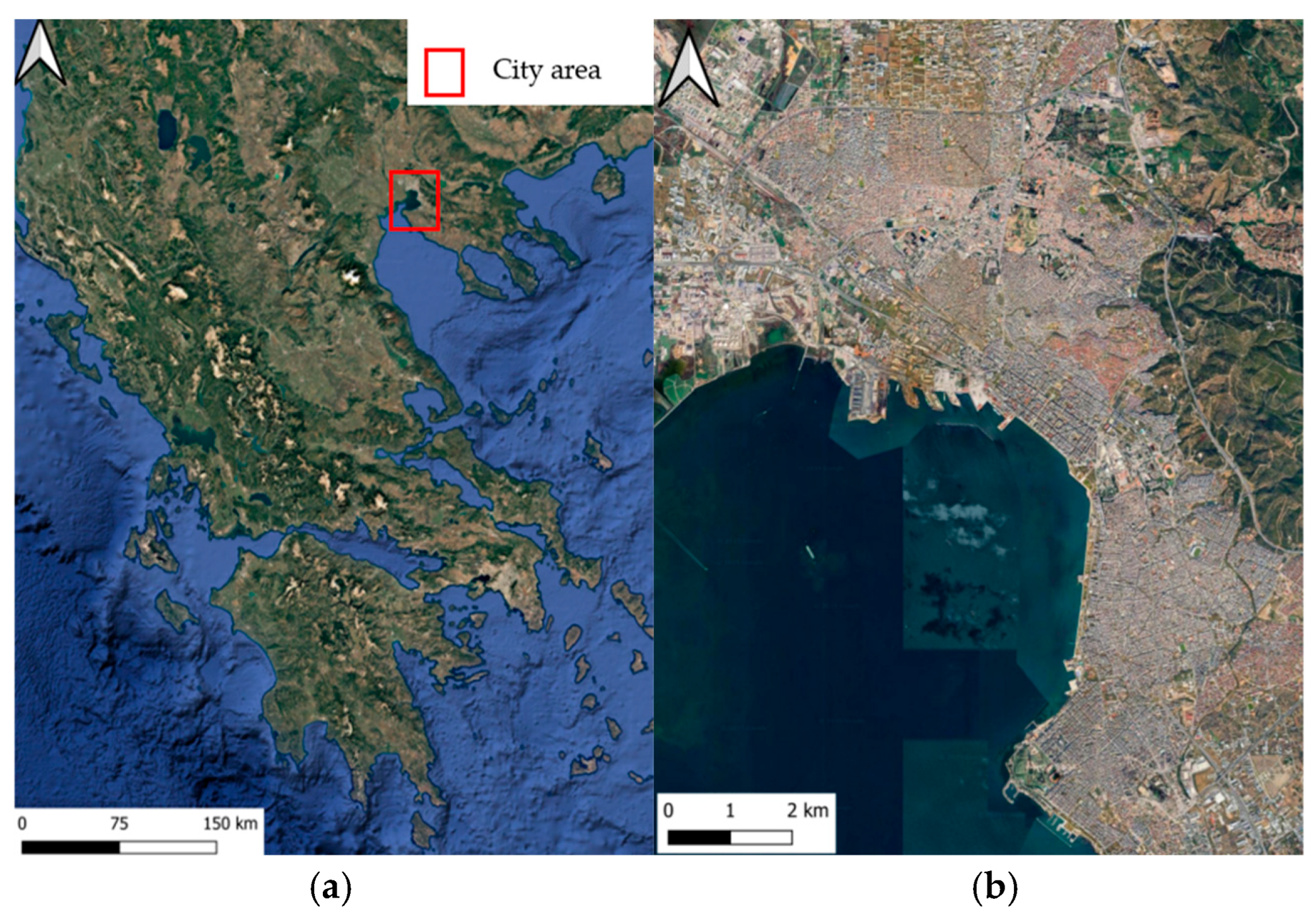
Thessaloniki, the second largest city in Greece, is situated in the northern part of the country (40.64° N, 22.94° E), along the Thermaic Gulf of the Aegean Sea (Figure 1). The metropolitan area hosts over one million inhabitants, making it a densely populated urban region with significant socio-economic importance. The city lies between the sea and surrounding hilly terrain, which constrains urban expansion and contributes to localized microclimatic effects. Thessaloniki has a Mediterranean climate characterized by hot, dry summers and mild, wetter winters, conditions that exacerbate the intensity of the UHI phenomenon. Its heterogeneous urban fabric includes the compact, narrow street network of the historical Old City, contrasted with wide avenues and multistory apartment blocks in the modern center. These features make Thessaloniki a representative case study for examining UHI dynamics and evaluating the effectiveness of nature-based and material-based adaptation strategies.

2.2. Remote Sensing Data

This section presents the data used for the analysis of satellite images. For this study, Landsat 8 and Landsat 9 pre-processed images were utilized, provided by the USGS, with a resolution of 30 × 30 m [24]. The files already contain the constants associated with the corresponding spectral bands used in the formulas explained in Section 2.3.1. The images were selected based on the availability for the day identified as the hottest during the summer, allowing for optimal correlation between meteorological data and the LST observable from satellite imagery [25].

2.3. Remote Sensing Analysis

After selecting the day and downloading the images as raster files (TIFF format), QGIS software (version 3.44.1) is used for geospatial data processing. QGIS’s Raster Calculator is the tool used on the pre-processed images to obtain all necessary parameters for LST retrieval. The calculated parameters, their corresponding equations and the calculation flowchart are listed below [26].

2.3.1. LST Retrieval

The LST retrieval followed a rigorous workflow [27] involving several key steps, starting with the thermal (Band 10) and visible/infrared bands (Bands 4 and 5) from the satellite. The first step was the conversion of the image into spectral radiance at the sensor, or Top of Atmospheric (TOA) Radiance. This step is essential to transform raw data into a measurable physical unit, correcting it using multiplicative and additive rescaling factors provided in the image metadata. The formula used for this conversion is as follows:
L λ = M L   ×   Q c a l + A L O i
where
  • Lλ = Top of Atmospheric (TOA) Spectral Radiance
  • ML = Band-specific multiplicative rescaling factor from the metadata (RADIANCE_MULT_BAND_x, where x is the band number), in this case band 10 has ML = 3.3420 × 10⁻⁴
  • Qcal = The band 10 image
  • AL = Band-specific additive rescaling factor from the metadata (RADIANCE_ADD_BAND_x, where x is the band number), in this case band 10 has AL = 0.1
Subsequently, the TOA radiance was converted into Brightness Temperature (BT) at the sensor. This temperature represents the heat detected by the satellite but does not yet account for the emissive properties of the Earth’s surface.
B T = K 2 l n ( K 1 L λ + 1 ) 273.15
where
  • BT = Top of atmosphere brightness temperature (C)
  • K1 = Band-specific thermal conversion constant from the metadata (K1_CONSTANT_BAND_x, where x is the thermal band number), in this case band 10 has K1 = 774.8853
  • K2 = Band-specific thermal conversion constant from the metadata (K2_CONSTANT_BAND_x, where x is the thermal band number), in this case band 10 has K2 = 1321.0789
  • Lλ = Top of Atmosheric (TOA) Spectral Radiance
BT represents the apparent temperature at the top of the atmosphere, not yet corrected for surface emissivity. To obtain a more accurate LST estimate, the Brightness Temperature was corrected using Land Surface Emissivity (E). This parameter was derived from the Normalized Difference Vegetation Index (NDVI), an established proxy for vegetation cover and condition. NDVI was computed as:
N D V I = N I R B a n d 5 R ( B a n d 4 ) N I R B a n d   5 + R ( B a n d   4 )
where NIR and R correspond to the reflectance values of Bands 5 and 4, respectively. NDVI values close to 1 indicate dense vegetation, while values near 0 or negative denote bare soil, built-up surfaces, or water. From NDVI, the Proportion of Vegetation (PV) was calculated to quantify the fraction of ground covered by vegetation:
P V = ( N D V I N D V I m i n N D V I m a x + N D V I m i n ) 2
This parameter was then used to calculate Land Surface Emissivity (E), a value describing the ability of a material to radiate absorbed thermal energy. Since vegetation and bare soil have different emissivity values, estimating E is a critical step in correcting the temperature.
E = 0.004   ×   P V + 0.986
Finally, the LST was calculated by applying the emissivity correction to the Brightness Temperature, resulting in a detailed thermal map of the urban surface.
L S T = B T 1 + W   ×   B T 14380 l n ( E )
where
  • LST = Land surface temperature (C°)
  • W = Wave length of emitted radiance (=0.00115)
  • BT = Top of atmosphere brightness temperature (C)
  • E = Land surface emissivity
In addition to NDVI, the Normalized Difference Built-up Index (NDBI) was computed to distinguish impervious from vegetated surfaces, using:
N D B I = S W I R N I R S W I R + N I R
where SWIR corresponds to Band 6. NDBI values close to 1 indicate built-up or impervious surfaces, whereas negative values denote vegetation or water bodies. Together, NDVI and NDBI provided complementary information to characterize land cover, enabling accurate emissivity correction and detailed mapping of the urban thermal environment [28]. To enhance reproducibility and transparency, future readers interested in replicating this analysis can refer to standard methodological resources detailing the derivation and application of NDVI and NDBI in urban thermal studies. In particular, Rouse et al. (1974) [29] originally defined the NDVI formula widely used in vegetation monitoring, while Zha et al. (2003) [30] introduced the NDBI to effectively map built-up areas using Landsat imagery. Researchers interested in replicating the analysis can refer to the official USGS Landsat Collection 2 Level-2 Science Product Guides [31], which provide detailed descriptions of spectral band combinations, calibration procedures, and index computation workflows. These resources ensure methodological consistency when processing Landsat 8 and Landsat 9 data and facilitate comparison across studies.

2.3.2. Analysis of Urban Configuration

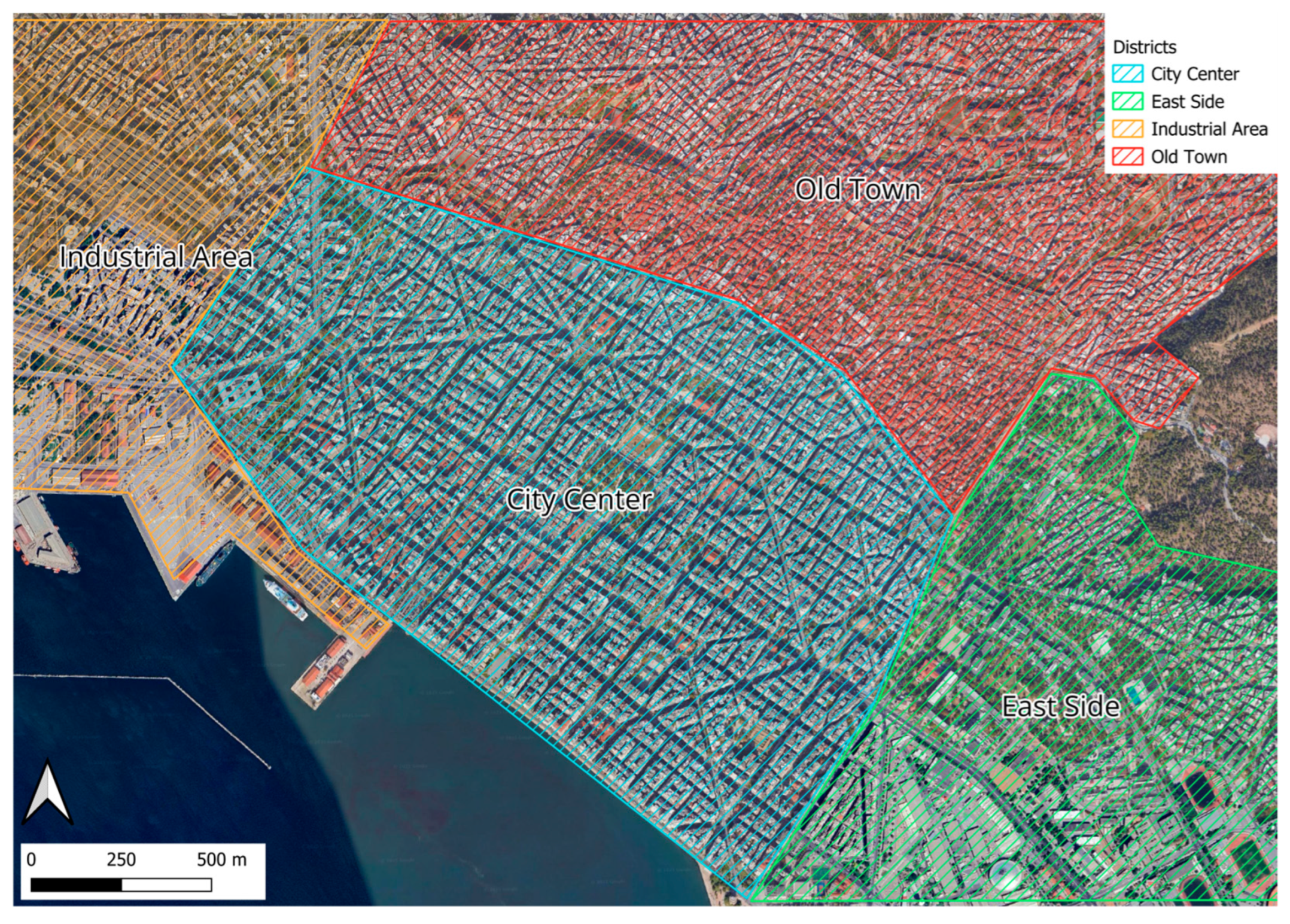
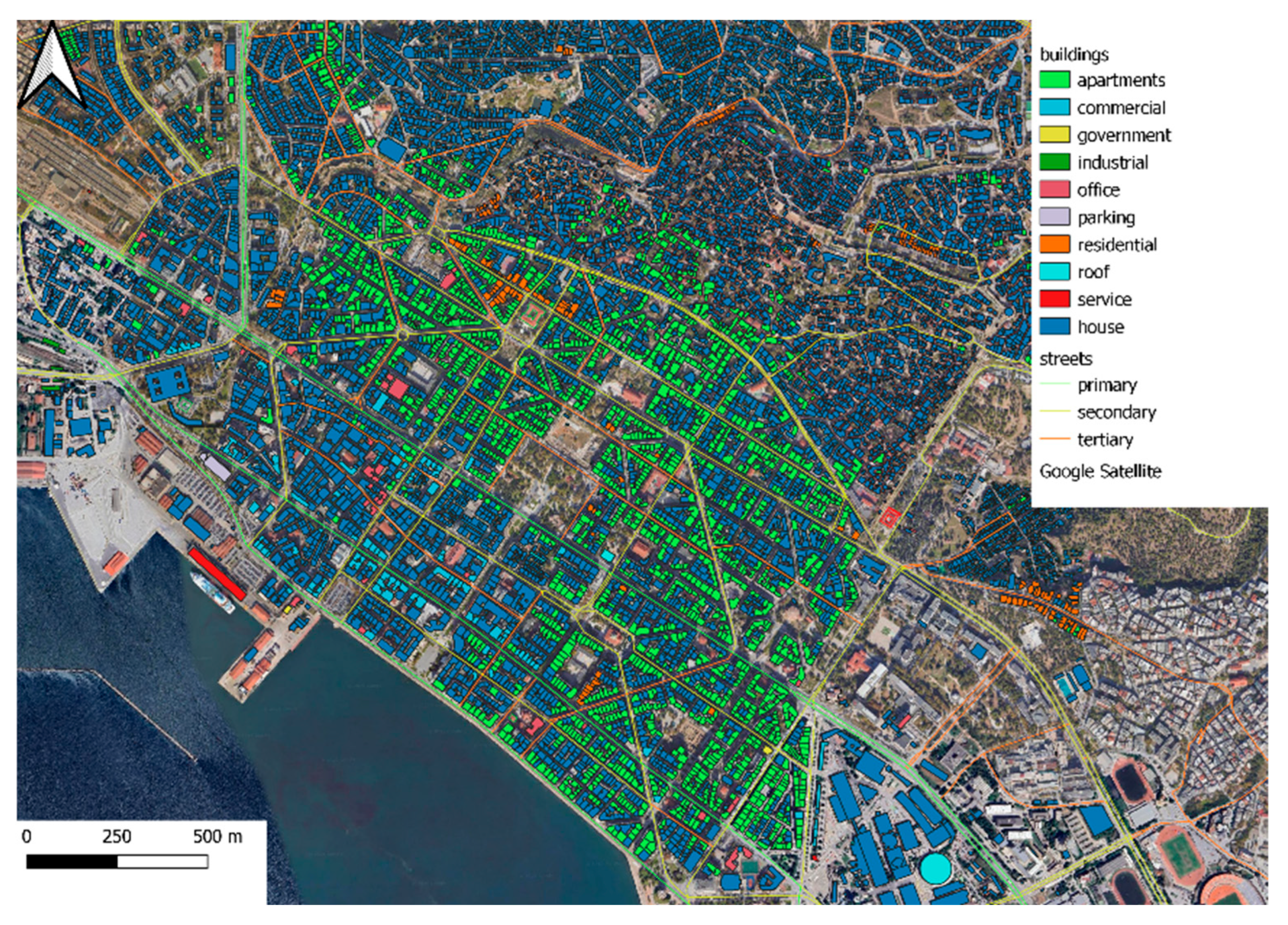
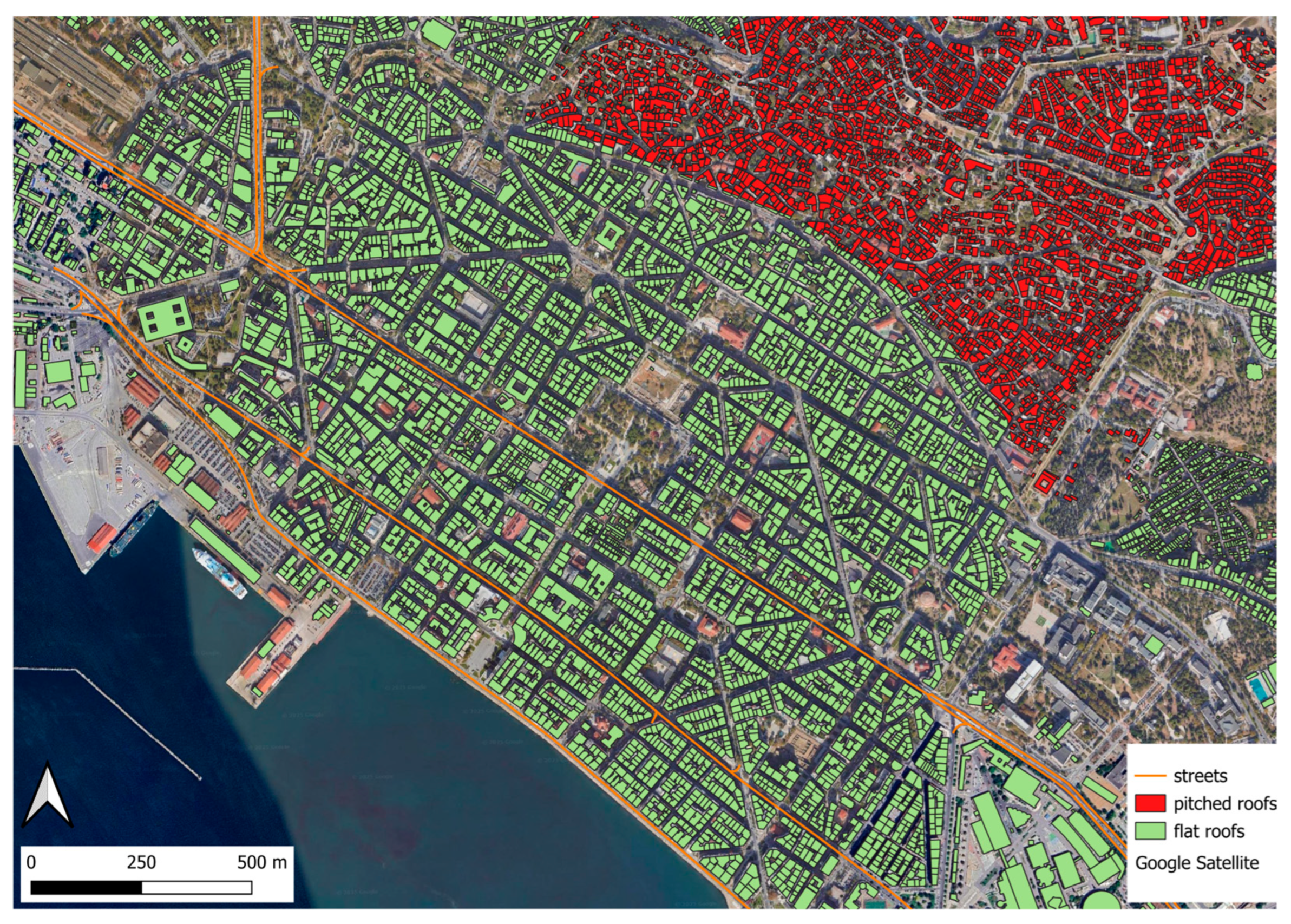
The second phase of the methodology involved analyzing the urban configuration. Using vector data downloaded from OSM via the OSM Downloader plugin in QGIS, detailed information was gathered on buildings, road networks, and functional areas. These data were processed to classify buildings and roads according to their type and function (e.g., residential, commercial, primary, secondary), allowing for precise mapping of the urban fabric. The city was divided into macro functional zones (center, old town, industrial/port area, eastern side) for a comparative analysis of LST results in relation to different urban morphologies (Figure 2). For the purposes of this study, the implementation of green roofs and light-colored asphalt pavements was simulated by applying a corresponding reduction to LST values. Specifically, green roofs were associated with an average reduction of –0.7 °C in LST [32]. In parallel, light-colored asphalt pavements were linked to an average LST reduction of –1.9 °C [33]. In this analysis, their application was simulated exclusively on main streets within the city center, considered as initial pilot areas due to their accessibility and relative ease of implementation, while secondary streets, being narrower and more congested, were deemed less suitable for immediate intervention.

3. Results

3.1. Urban Center Configuration and Existing Heatwave Resilience Measures

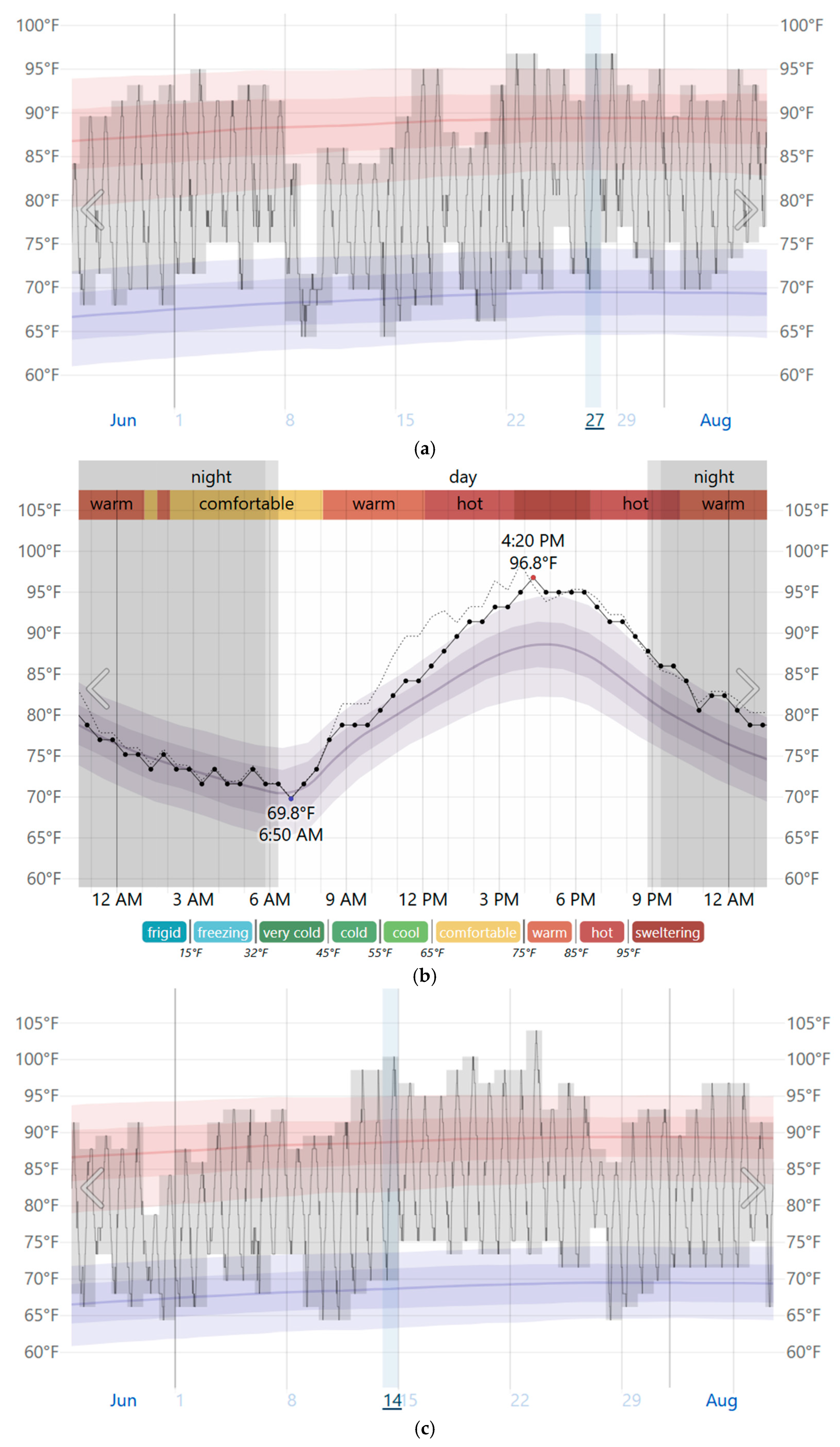
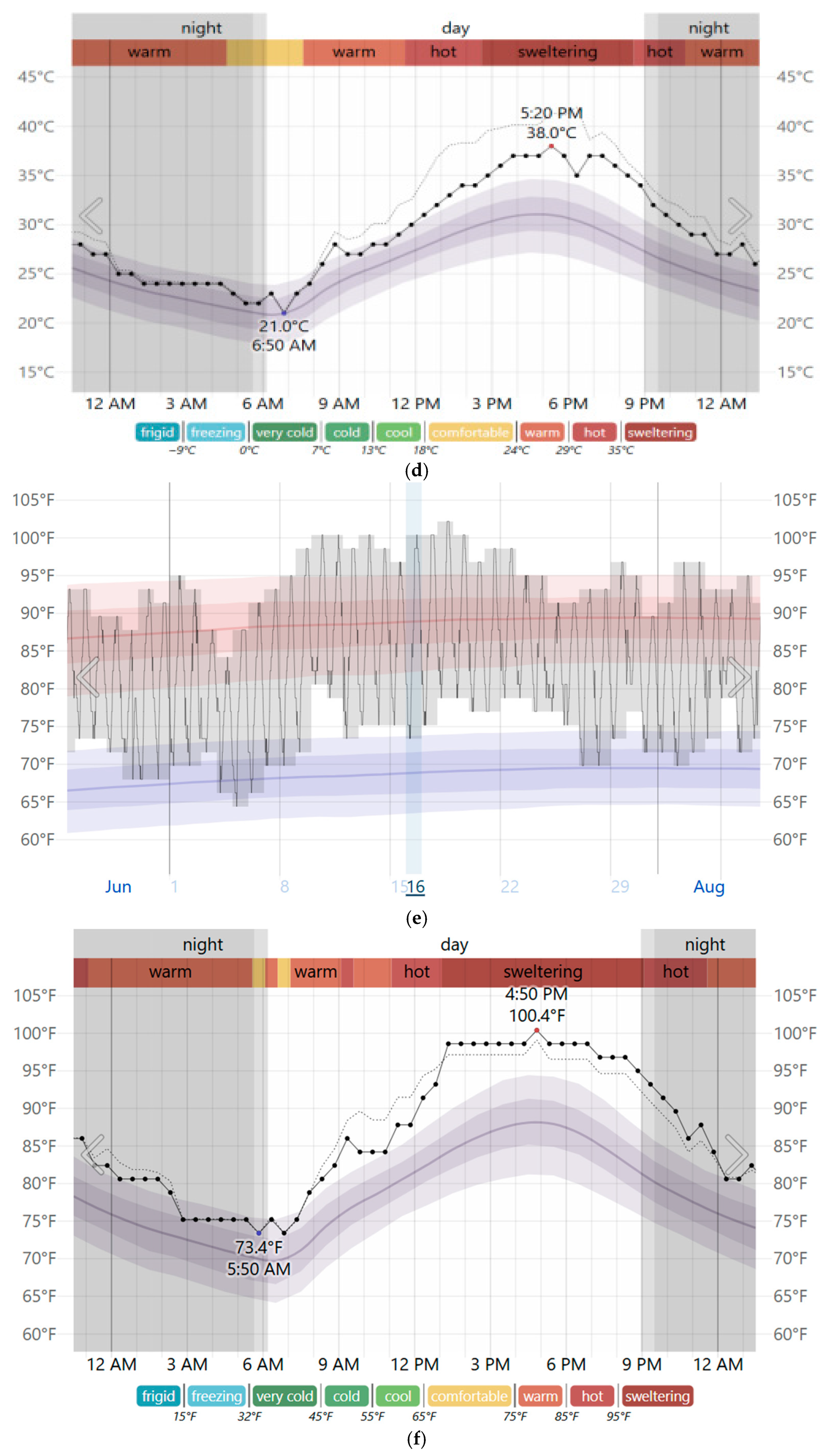
To understand the UHI effect in Thessaloniki during extreme summer heat, an analysis of LST across the city was conducted on 27 July 2022, 14 July 2023, and 16 July 2024. The selection of these dates was based on the availability of LANDSAT 8–9 data and their correspondence with some of the hottest days of recent summers. Each case was preceded by a sequence of days with above-average temperatures, fulfilling the definition of a heatwave as a period of at least three consecutive days with daily maximum temperatures significantly above the seasonal mean [34]. This ensured that the chosen dates are representative of extreme heat conditions. However, it is important to note the absence of nighttime satellite images, which would have provided a clearer understanding of the UHI effect on the urban center. Unfortunately, no suitable nighttime images were found from previous summers for this purpose.
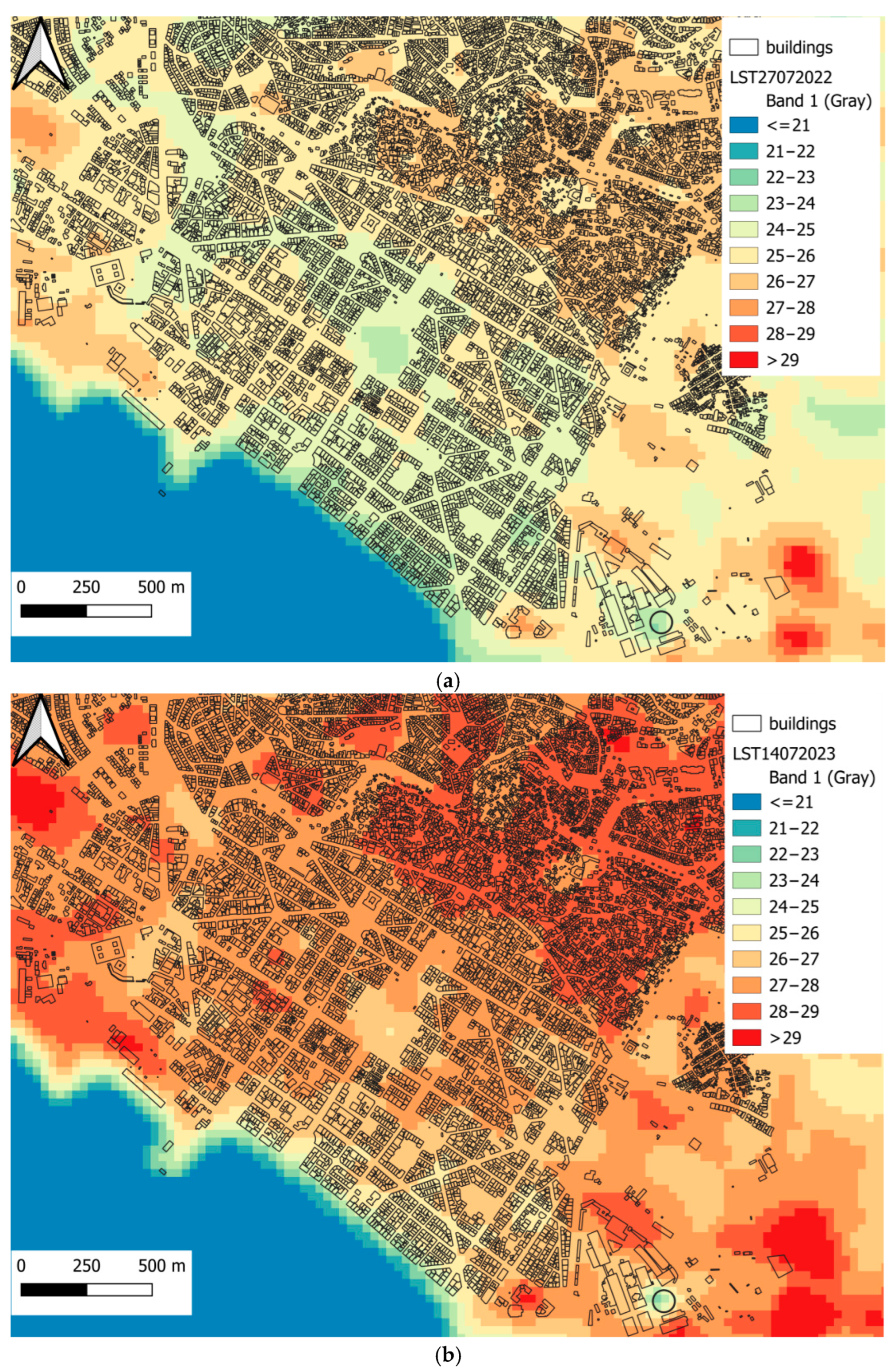
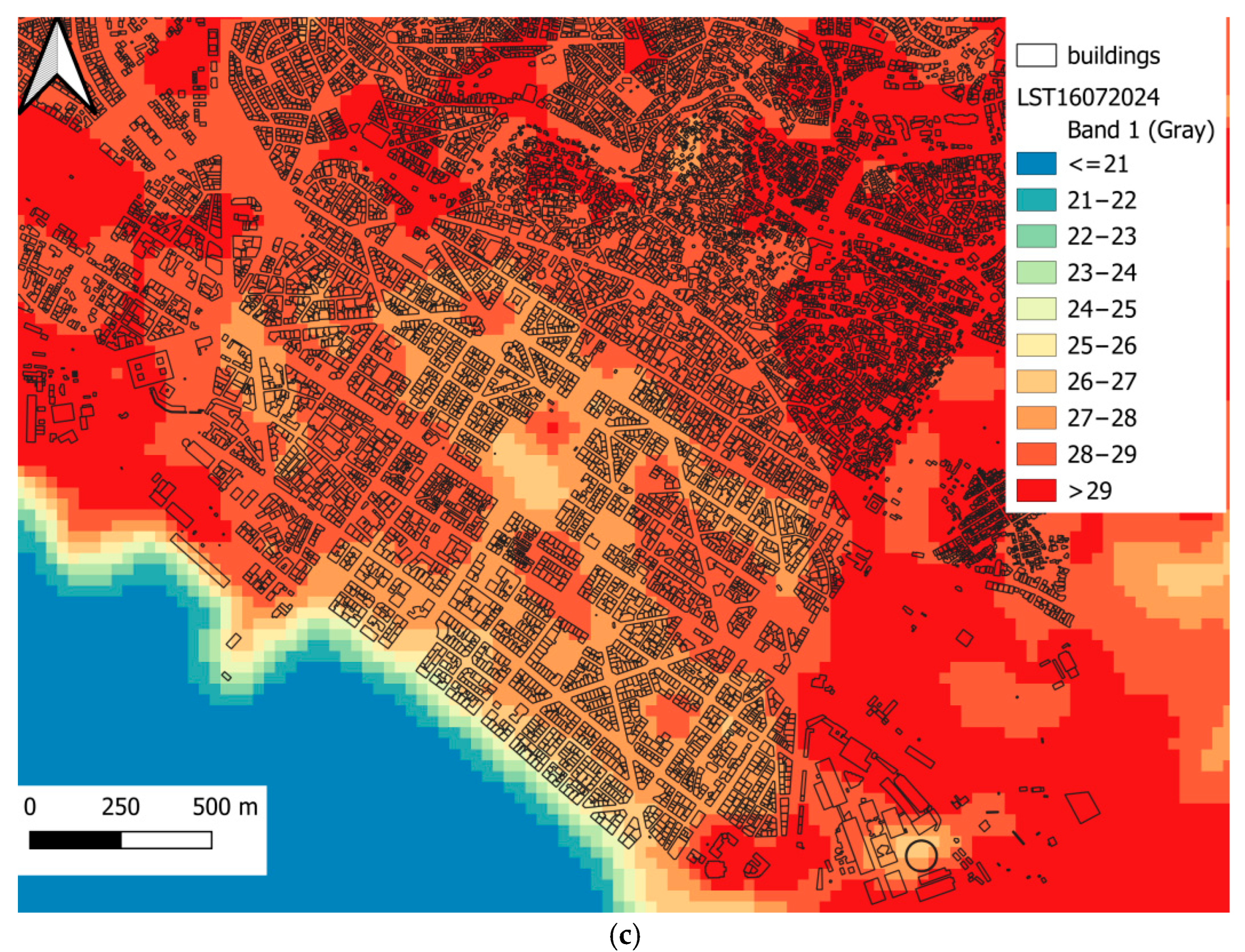
The LST analyses conducted on 27 July 2022, 14 July 2023, and 16 July 2024 (Figure 3) provided a clear representation of the thermal impact on Thessaloniki, confirming both the strong spatial variability of surface temperatures and the presence of a pronounced UHI effect. In all three cases, a consistent thermal gradient emerged, with cooler conditions along the coastline and progressively higher values inland, particularly in densely built areas. A detailed macro area assessment highlights these contrasts (Table 1). The modern city center, located on the coast, recorded average LST values ranging from 24.91 °C in 2022 to 27.95 °C in 2024, with maximum peaks of 28.94–30.09 °C and minimums down to 20.9–23.3 °C. Despite its relatively high building density, this area benefits from sea breezes and wide boulevards, which improve ventilation and partially mitigate heat accumulation. The presence of these design features is critical, as they facilitate airflow and reduce the intensity of the UHI effect, aligning with findings from similar urban studies that emphasize the role of urban morphology in temperature regulation [3,25]. In contrast, the Old City, situated on the northern hillside, consistently appeared as the most critical residential zone (Figure 4). Here, average LST values ranged between 25.85 °C (2022) and 29.05 °C (2024), with maximum up to 31.65 °C. The historical fabric of narrow streets, compact buildings, and a lack of vegetation creates a typical urban canyon effect, where high aspect ratios between building height and street width restrict horizontal air circulation and trap longwave radiation during nighttime, leading to poor ventilation and prolonged heat storage within the built environment. This phenomenon is well-documented in urban climatology, where compact urban forms are associated with higher temperatures due to reduced airflow and increased surface heat absorption [3,21]. The industrial/port area to the west and the eastern university zone emerged as the hottest sectors overall. Mean LST values reached 25.87–29.24 °C, while maximum temperatures peaked at 30.45 °C in 2023 and 34.39 °C in 2024, the highest recorded across the study area. These sectors, though sparsely populated, are dominated by impervious surfaces such as asphalt, concrete, and large warehouse roofs, which amplify heat absorption and radiation. The standard deviation (SD) values reported in Table 1 provide additional insight into the spatial variability of surface temperatures within each urban zone. Lower SD values, as observed in the city center (0.73–0.87) and industrial area (0.75–0.81), indicate a relatively homogeneous thermal behavior, typically associated with uniform land cover and material composition. Conversely, higher SD values, particularly in the eastern side (up to 1.09 in 2024), reflect greater local variability in surface characteristics, where contrasting materials, such as reflective university complexes adjacent to densely built neighborhoods, produce heterogeneous temperature patterns. In the context of UHI analysis, higher SD values are indicative of stronger microclimatic contrasts within a limited area, often linked to uneven distribution of vegetation, albedo, and surface permeability. It is important to note that the SD values reported here can be interpreted in practical terms: a low SD (close to 0.5–0.8 °C) means that most surfaces within the same urban zone experience similar thermal conditions, implying consistent land cover and material use. A high SD (above 1 °C), on the other hand, signals that temperatures vary greatly within short distances, revealing a mix of hot and cool spots. In simple terms, zones with higher SD values correspond to a patchier thermal landscape, where some surfaces retain much more heat than others. This pattern highlights localized overheating risks and identifies priority areas for targeted mitigation, such as increasing vegetation or using high-albedo materials.
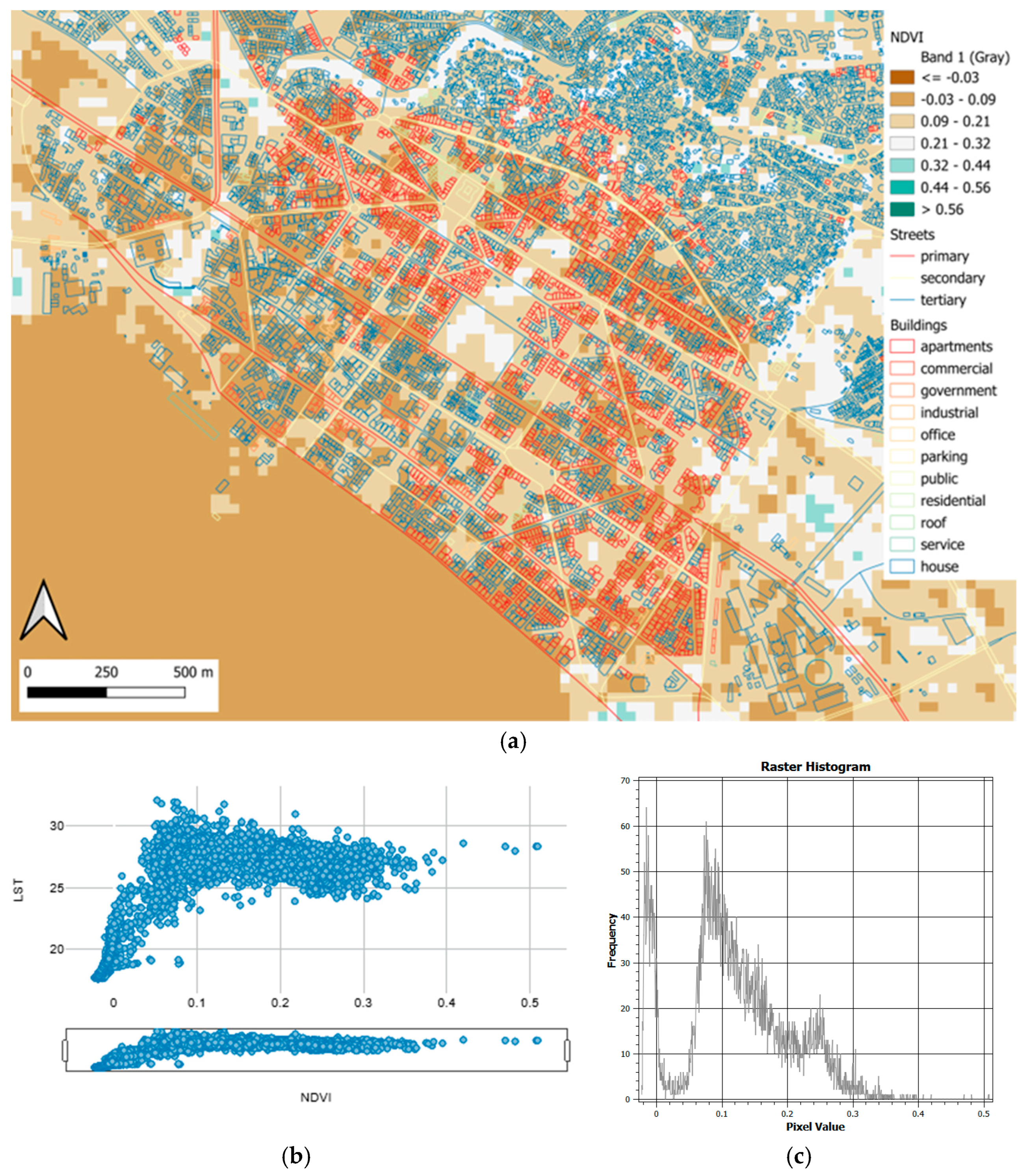
Spatial overlays confirmed that parks and tree-lined boulevards reduced LST by roughly 2 °C compared to adjacent built-up zones (Figure 5). NDVI analysis showed a near-total absence of green roofs, with vegetation indices below 0.2 for the vast majority of buildings, except in urban parks (0.2–0.32) (Figure 6). The NDVI values indicate the following [36]: <0.1: Bare ground or clouds; 0.1–0.2: Almost no vegetative cover; 0.2–0.3: Very low plant cover; 0.3–0.4: Low plant cover with low vigor or very low plant cover with high vigor.
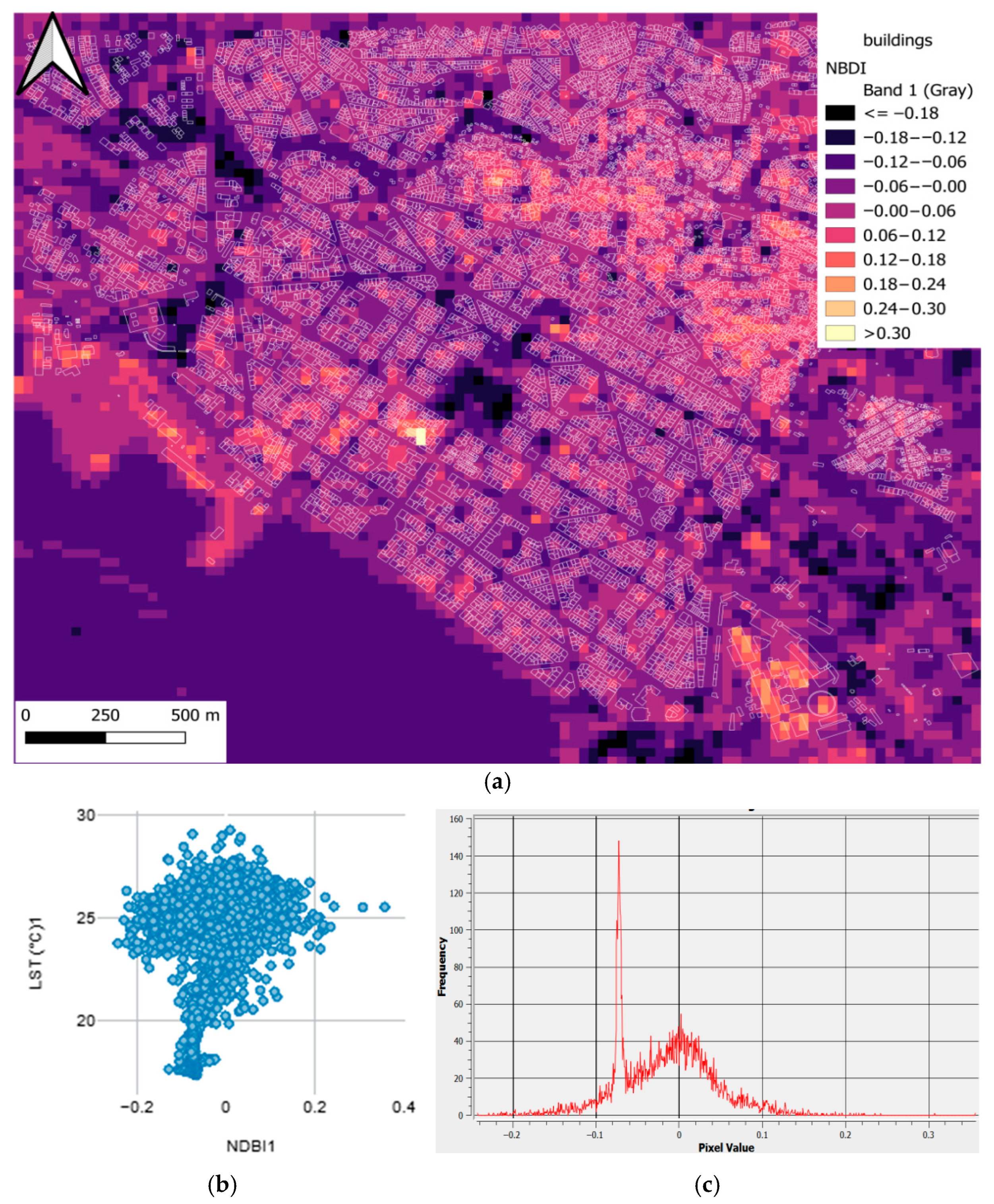
The analysis of NDVI value distribution further demonstrated that the study area has very limited vegetative cover, with most values concentrated between 0.1 and 0.2. This finding identified a major gap in existing mitigation infrastructure, as urban areas with low vegetation are more susceptible to heat stress [12,21]. A visual verification using Google Maps confirmed the virtual absence of green roofs across the urban landscape, which is consistent with established patterns in Greek urban planning [37]. In addition, NDBI analysis highlighted the contrast between built-up and green areas, with values ranging from −0.18 in parks to 0.29 in densely built residential zones, confirming the concentration of impervious surfaces in the urban core (Figure 7). The NDBI values can be interpreted as follows [38]: <−0.1: Vegetated areas (e.g., parks); −0.1 to 0.1: Transition areas with some vegetation; 0.1 to 0.29: Built-up areas with varying degrees of impervious surfaces.
The distribution of NDBI values showed that most pixels fall between −0.1 and 0.1, with a marked peak around −0.08, further confirming the limited presence of vegetated or permeable areas. Finally, the correlation analysis revealed that LST tends to decrease as NDVI increases, highlighting the cooling effect of vegetation, while LST increases sharply with rising NDBI values, underlining the thermal impact of built-up surfaces. The only mitigation infrastructures in the case of high temperatures and persistent heatwaves seem to be found in the modern part of the city, where a few small parks with fountains are unevenly distributed throughout the urban fabric, primarily at major road junctions and the city’s main squares. Along the main roads in both areas, trees are planted along the sidewalks, providing shade; however, they do not cover the main roadway, which remains exposed to solar radiation. The presence of wide boulevards in the coastal part of the city serves as a useful mitigative solution against the UHI effect, allowing for some air circulation that helps to keep the LST in check despite the high density of buildings and urban traffic. This is not the case in the hilly part of the city, where high residential density and narrow streets hinder effective heat dissipation, resulting in a higher average LST on sunny days.

3.2. Proposed Mitigation Strategies

Based on the spatial analysis, two targeted strategies were proposed and evaluated: the installation of green roofs and the application of light-colored asphalts, as the thermal modeling proposed in the literature showed that these combined interventions could significantly reduce surface temperatures. For simplicity, green roofs were assumed to be installed on flat rooftops, predominantly located in the modern city center, whereas the historical Old City lacks suitable roof structures for this intervention, as verified through Google Maps (Figure 8). The coefficients used (−0.7 and −1.9) serve as reference factors to simulate the average impact of these solutions on mean air temperature, providing a realistic estimate of their cooling potential when applied across the urban fabric. It is important to note that LST, as measured by satellites, reflects the radiative “skin” temperature of the surface (i.e., the thermal emission from ground or canopy), rather than the actual near-surface air temperature (typically measured at about 1.5 to 2.0 m above the ground) [39]. Nevertheless, LST remains a valuable proxy for understanding near-surface air temperature patterns and the UHI effect, especially where detailed air temperature observations are lacking [40].
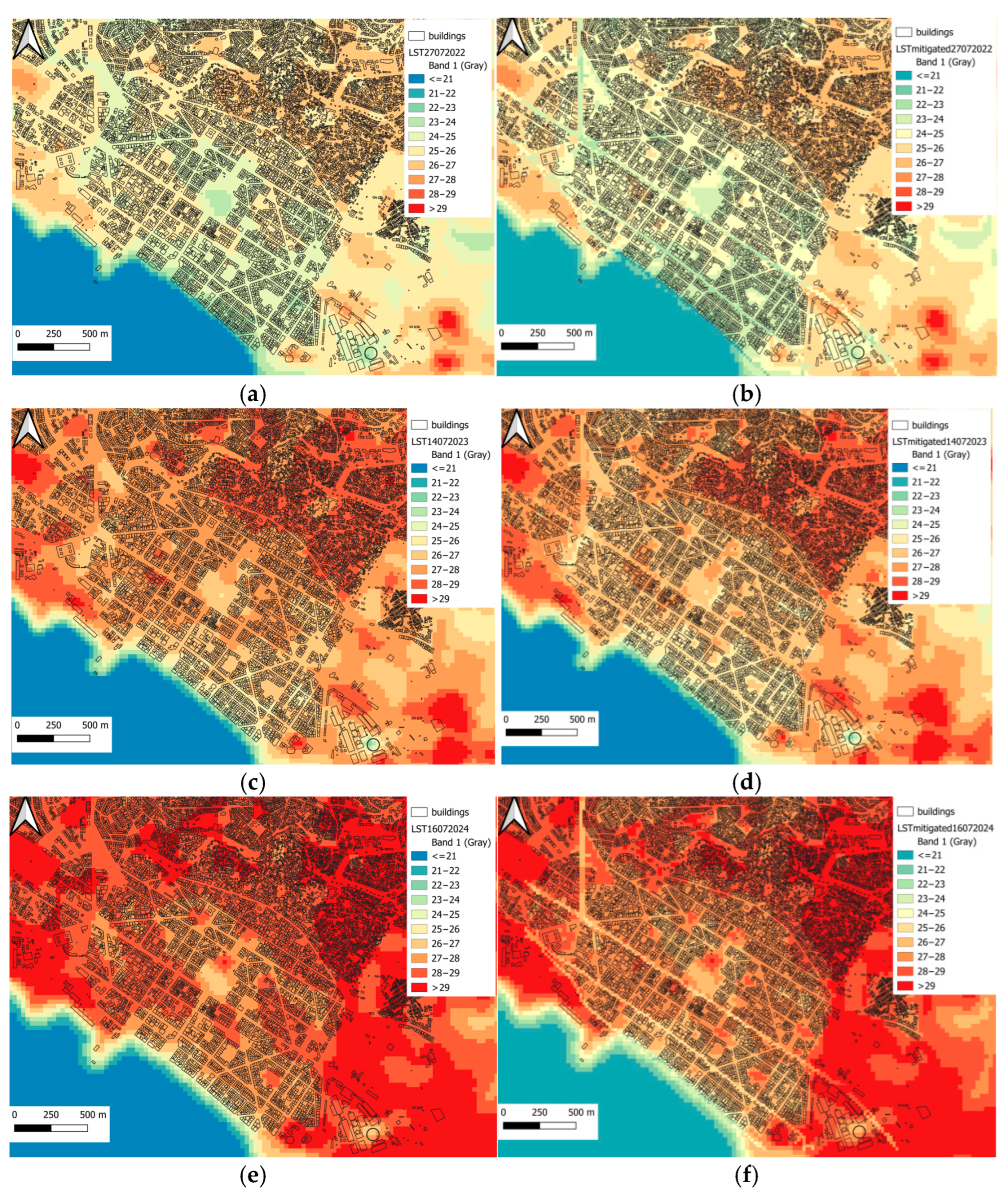
The potential impact of applying the two mitigation measures, green roofs and light-colored pavements, was quantified through spatial thermal analysis across the three reference summers (2022, 2023, 2024) (Figure 9). The results show consistent though spatially differentiated benefits (Table 2). On 14 July 2023, the mean LST in the city center decreased from 27.0 °C to 26.36 °C (−2.37%), while the Old City registered 27.79 °C (−0.79%). The industrial area and the eastern side showed more modest reductions, reaching 28.04 °C (−0.04%) and 27.19 °C (−0.37%), respectively. On 16 July 2024, the city center again showed the highest relative cooling, with a reduction to 27.32 °C (−2.25%), compared to 28.82 °C (−0.79%) in the Old City, 29.23 °C (−0.03%) in the industrial zone, and 29.11 °C (−0.34%) on the eastern side. On 27 July 2022, the mitigation effect was most pronounced, with the city center dropping to 24.27 °C (−2.57%). The Old City reached 25.63 °C (−0.85%), while the industrial zone and eastern side recorded 25.85 °C (−0.08%) and 25.47 °C (−0.39%), respectively. Overall, the analysis highlights that the city center consistently experiences the strongest relative benefits, with reductions between −2.25% and −2.57%, while peripheral and industrial areas show smaller changes, often below −1%. This spatial differentiation underscores the importance of targeting mitigation strategies in dense urban cores, where both the UHI intensity and the potential for temperature reduction are highest. Such interventions are fundamental to strengthening urban resilience, here defined as the capacity of the urban system to sustain acceptable thermal comfort levels, reduce energy demand for cooling, and limit exposure to heat-related risks under increasing temperature extremes, thereby supporting long-term climate adaptation in line with current urban sustainability frameworks [3,25].

4. Discussion

4.1. Insights from the Main Findings

The findings confirm a strong relationship between urban form and thermal behavior, reinforcing previous research on the drivers of the UHI effect. The old town’s elevated LST values, shaped by dense structures and poor ventilation, are consistent with the “urban canyon” hypothesis [41], while the cooling observed in coastal areas demonstrates the importance of design features such as sea-facing boulevards and ventilation corridors. These insights align with the work of [3], who emphasize the influence of morphology and green infrastructure on microclimate regulation.
This study innovates by transcending these limitations and aims to address critical gaps by providing a more thorough and holistic analysis. Our research builds on existing literature, utilizing satellite imagery and advanced remote sensing analysis to extend our evaluation to a full urban scale. While satellite-derived LST measurements may be less precise than on-site sensors, this methodology offers unparalleled efficacy in assessing the impact of mitigation strategies over a large urban area.
The simulation results provide compelling evidence that NbS like green roofs, along with material-based adaptations such as reflective pavements, can yield significant temperature reductions in high-risk zones. Literature supports this approach with two types of coefficients: reductions in LST and reductions in near-surface air temperature. Specifically, the adoption of green roofs was associated with an maximum reduction of −4.5 °C in LST [8], while the corresponding reduction in near-surface air temperature is estimated at −0.7 °C [32]. Similarly, the application of light-colored asphalt led to a maximum LST reduction of −7.7 °C [14], with an associated air temperature reduction of approximately −1.9 °C [33].
Applying these findings to Thessaloniki validates their transferability and suggests scalable strategies for other Mediterranean cities. For instance, studies in Barcelona have demonstrated the significant role of green infrastructure and reflective surfaces in mitigating UHI while also improving urban livability [42]. Similarly, research in Istanbul highlights both the challenges posed by dense morphology and the effectiveness of targeted NbS in alleviating thermal stress [43]. Critically, these cross-city comparisons sit within the broader climatic signature of the Mediterranean region: prolonged, sunny, dry summers, mild/wet winters, and frequent heat-stress episodes [44]. This background amplifies daytime radiative loads and can hinder nocturnal cooling, particularly in compact fabrics, thereby increasing the value of shading, evapotranspirative surfaces that are water-wise, and sea-breeze/ventilation corridors in planning and design. Detailed calibration of the proposed strategies (e.g., drought-tolerant planting palettes, irrigation efficiency, albedo levels that avoid glare and overheating of pedestrians) should reflect local climatic and morphological nuances [41,42].
Unlike earlier UHI studies in Thessaloniki that primarily focused on temperature mapping [3,15], this research adopts a holistic approach by coupling high-resolution satellite-derived thermal data with planning-oriented evaluations of mitigation strategies. To our knowledge, it represents the first city-wide assessment in Thessaloniki that identifies UHI hotspots and tests specific solutions such as green roofs and reflective pavements within the municipal context. Whereas previous Mediterranean studies have largely diagnosed the problem, our work advances the field by proposing and evaluating evidence-based interventions that can be integrated into building codes, zoning regulations, and infrastructure standards. In doing so, it bridges a recognized gap in UHI research, the limited translation of scientific findings into actionable urban policy [9]. The study’s cross-disciplinary scope, combining remote sensing, urban morphology, and policy frameworks, underscores its holistic character. Moreover, by aligning local recommendations with broader European initiatives such as the EU Green Deal [4] and the EU Strategy on Adaptation to Climate Change [45], the paper demonstrates originality not only in method but also in its policy relevance. In this sense, it provides both a novel contribution to scientific understanding and a practical template for moving from data to policy action in Mediterranean cities.
However, while the proposed interventions show promising short-term thermal benefits, their long-term effectiveness depends on several factors, including maintenance quality, material durability, and potential climatic shifts. Continuous monitoring and periodic performance evaluation are essential to ensure that these measures remain effective under evolving environmental conditions and increasing urban densification. In this regard, the establishment of a ground-based temperature monitoring network will be crucial to empirically validate the observed thermal effects and support ongoing calibration of satellite-derived data. Deploying in situ sensors across representative urban typologies, such as dense historical cores, open suburban areas, and coastal zones, will allow continuous verification of surface and air temperature trends. This integration between remote sensing and field observations will enhance the reliability of long-term assessments and provide a solid empirical basis for evaluating the performance of nature-based and material-based interventions. Furthermore, large-scale implementation in Thessaloniki requires careful consideration of financial feasibility, institutional capacity, and public acceptance. Retrofitting existing buildings with green roofs, for example, involves significant structural and economic challenges that may limit widespread adoption without targeted incentives or regulatory support. Similarly, city-wide application of reflective materials demands coordination across multiple municipal departments and consistent technical standards. Future urban planning efforts should therefore combine technical feasibility studies with socio-economic assessments to ensure that these strategies are both sustainable and scalable in the long term. Moreover, a critical review of recent literature reveals that some studies report divergent outcomes regarding the long-term cooling efficiency of NbS. For instance, while most findings confirm significant LST reductions from green roofs and reflective surfaces, several investigations conducted in Central and Northern Europe observed reduced performance under high-humidity or low-irradiance conditions, where evapotranspiration is limited and reflective materials show diminished albedo stability over time [14,19,33]. Similarly, the persistence of cooling benefits from NbS has been questioned in areas facing water scarcity or poor maintenance regimes, suggesting that their effectiveness is highly context-dependent [11,21,37]. Recognizing these contrasts, our study interprets the proposed strategies for Thessaloniki as adaptable rather than universally optimal, measures that must be calibrated to local climatic and operational conditions to ensure durability and efficiency.

4.2. Limitations and Uncertainties

Despite the robust findings, some limitations must be acknowledged. The unavailability of nighttime satellite data restricted analysis of nocturnal heat retention, which often represents the most critical UHI manifestation [7]. Nighttime heat accumulation is especially problematic in Mediterranean cities like Thessaloniki, where prolonged hot spells prevent sufficient nocturnal cooling. This directly affects human health by increasing the risk of heat-related illnesses and mortality, particularly among vulnerable groups such as the elderly. Moreover, insufficient nighttime cooling increases reliance on air conditioning, raising household energy consumption and exacerbating peak electricity demand, with significant economic and environmental costs for the city. As a result, relying only on daytime LST analysis may underestimate the true intensity of the UHI effect by several degrees, masking the severity of thermal stress experienced during the night hours when recovery from daytime heat is essential [46].
Furthermore, the absence of a high-resolution DSM introduced potential bias in the estimation of green roof feasibility. Without accurate classification of rooftops as flat or sloped, the assessment may either overestimate the available area suitable for green roof installation or underestimate the potential by excluding rooftops that could technically accommodate retrofitting. This uncertainty reduces the precision of planning recommendations, highlighting the need for finer 3D urban datasets to better align mitigation strategies with the actual structural characteristics of the building stock.
Another key limitation concerns the methodological reliance on satellite-derived data. While remote sensing provides comprehensive spatial coverage and enables large-scale thermal analysis, it may not fully capture local microclimatic variations caused by factors such as wind patterns, shading effects, building height differences, or surface moisture. The spatial resolution of the Landsat imagery (30 m) can also result in mixed-pixel effects, particularly in densely built environments, where heterogeneous land covers are represented within a single pixel. As a result, temperature readings may smooth out small-scale thermal contrasts, reducing the accuracy of localized assessments.
Additionally, while the hypotheses regarding temperature reductions from green roofs and cool pavements are scientifically plausible and supported by literature, the study lacks empirical validation through field experiments or long-term monitoring data. The simulated or literature-based coefficients used to estimate cooling potential provide valuable insights but do not replace direct measurements of local thermal performance. Consequently, the reported reductions should be interpreted as indicative rather than definitive. To address this limitation, future research will integrate ground-based temperature measurements by using fixed meteorological stations in Thessaloniki. Specifically, we will combine records from the Thessaloniki airport station operated by the Hellenic National Meteorological Service (HNMS) [47] to World Meteorological Organization (WMO) [48] standards and additional automatic stations from the National Observatory of Athens (NOA) METEO network [49]. For each Landsat overpass, station observations will be time-matched with satellite-derived LST, and representative pixel values will be extracted around each station to quantify bias, mean absolute error (MAE), and root mean square error (RMSE). These steps will provide transparent uncertainty bounds and calibrate the relationship between LST and near-surface air temperature, improving the accuracy of future analyses. To further strengthen empirical validation, future campaigns will deploy a network of ground-based temperature sensors strategically distributed across key urban typologies (e.g., dense urban canyons, open squares, and coastal zones) to collect in situ air and surface temperature data. These measurements will be temporally synchronized with satellite overpasses to enable cross-validation and calibration of LST-derived values. Moreover, mobile transects using handheld infrared thermometers and low-cost IoT-based microclimate stations will be employed to capture fine-scale variability and diurnal dynamics. The combination of remote sensing and empirical data will allow for a more robust estimation of the relationship between land surface temperature and near-surface air temperature, improving the overall reliability of UHI assessments.
Future research should aim to incorporate seasonal datasets, finer resolution 3D models, and co-benefit assessments including air quality improvements, energy savings, and biodiversity gains. Extending the analysis to multi-seasonal and multi-year data would also enable a better understanding of interannual variability and long-term effectiveness of the proposed mitigation measures. Broader application across multiple urban contexts would also help test the robustness and adaptability of the proposed methodology. Similar approaches have been successfully applied in other cities, where remote sensing data were coupled with predictive models to simulate and forecast LST variation patterns, as demonstrated by Ahmad et al. (2022) [50]. Incorporating such modeling frameworks in future analyses could further enhance predictive accuracy and policy relevance.

4.3. Embedding Findings in European and Global Policy Frameworks

The UHI mitigation strategies proposed in this study are not ad hoc solutions but align with broader European and international policy frameworks on climate adaptation and sustainable urban development. At the EU level, the European Green Deal explicitly highlights the need for investments in urban greening, nature-based solutions, and resilience to achieve climate neutrality by 2050 [4]. Measures such as green roofs, urban vegetation, and reflective materials that emerged from our simulations directly support this agenda, offering tangible interventions to cool cities while delivering co-benefits in energy efficiency, biodiversity, and public health. In the same direction, the Urban Agenda for the EU, and specifically its Climate Adaptation Partnership, emphasizes multi-level governance and the mainstreaming of nature-based solutions into city planning [51]. Our results therefore resonate with current European urban priorities by demonstrating how local UHI mitigation can reinforce these high-level strategies.
The EU Strategy on Adaptation to Climate Change [45] stresses that cities must avoid “climate-blind” development and integrate resilience into planning and infrastructure investments. This study directly responds to that call by providing spatially explicit evidence of UHI hotspots in Thessaloniki and suggesting interventions that can be operationalized in building codes, street design, and zoning regulations. Building codes should be updated to encourage or mandate the installation of green roofs in new constructions and major renovations. Similarly, technical specifications for road maintenance works should include the requirement to use materials with higher reflectivity. Likewise, the EU Biodiversity Strategy for 2030 urges all cities with populations above 20,000 to develop Urban Greening Plans [10]. Our findings underscore the urgency of enhancing green infrastructure in the city’s most heat-stressed areas, thereby contributing to the Strategy’s goal of “bringing nature back” into urban environments.
Importantly, effective UHI adaptation is not solely a municipal technical issue but a matter of multi-level governance. The Urban Agenda’s Climate Adaptation Partnership recognizes that local authorities often lack the resources and mandate to act alone; national and European support is essential for scaling solutions [47]. As such, the evidence presented here should inform not only Thessaloniki’s municipal climate action plan but also regional and national adaptation frameworks. Coordinated governance structures and targeted funding mechanisms are required to enable cities to mainstream these measures effectively. By aligning local strategies with these overarching policies, cities can enhance their capacity to address climate change while improving urban livability. In particular, the EU Urban Agenda encourages cities to adopt innovative solutions that contribute to climate adaptation and mitigation, emphasizing the importance of NbS in urban planning [4]. Implementing these strategies can help cities meet their climate targets while also improving public health, reducing energy consumption, and enhancing biodiversity. For instance, cities could establish pilot projects to test NbS in various neighborhoods, allowing for the assessment of their effectiveness and scalability.
Beyond general alignment with European policy frameworks, the findings of this study provide operational guidance that can inform existing EU and national instruments. For instance, the spatial identification of UHI hotspots can directly support the implementation of Urban Greening Plans by helping cities prioritize areas where new green infrastructure will yield the highest thermal and ecological benefits. Similarly, the quantitative indicators developed here (e.g., temperature reduction potential of different surface interventions) could be incorporated into the EU Mission on Climate-Neutral and Smart Cities monitoring systems as performance metrics for adaptation measures.
At the national and local scales, the results can feed into spatial planning tools such as Local Climate Adaptation Plans or Sustainable Energy and Climate Action Plans (SECAPs) under the Covenant of Mayors. Specifically, the maps and scenario analyses produced in this study can be used to define zoning incentives (e.g., increased building height allowances or tax credits for properties integrating green roofs and reflective surfaces) and to prioritize funding allocation under EU cohesion policy instruments and the Recovery and Resilience Facility. This adds a concrete policy dimension to the work by demonstrating how the evidence can be embedded in existing decision-making and investment frameworks.
Moreover, the study supports the operationalization of the EU Nature Restoration Law by providing a replicable methodology for quantifying the cooling and co-benefits of nature-based solutions at the neighborhood scale, information essential for reporting progress and targeting restoration actions in urban ecosystems. The approach can therefore act as a technical support tool for municipalities seeking to justify adaptation projects in their funding applications to EU programs such as LIFE or Horizon Europe.
By linking empirical findings to these specific regulatory and financial mechanisms, the study moves beyond descriptive policy alignment and contributes actionable insights that can facilitate the mainstreaming of UHI adaptation into European, national, and local governance systems.
To further strengthen the integration of these strategies into urban governance, it is crucial to engage stakeholders, including local communities, urban planners, and policymakers, in the decision-making process. This collaborative approach can ensure that interventions are tailored to local needs and conditions, thereby increasing their effectiveness and acceptance. Regular workshops, public consultations, and stakeholder meetings can facilitate this engagement. Only through political and regulatory integration can the transition to cooler and more resilient cities be coherent, widespread, and effective over the long term.
Finally, this work contributes to the broader vision of the UN 2030 Agenda for Sustainable Development, particularly SDG 11 (Sustainable Cities and Communities) and SDG 13 (Climate Action). By translating UHI analysis into actionable recommendations for planning and governance, the study demonstrates how urban climate adaptation can be embedded in decision-making across scales. In doing so, it enhances both the originality and policy relevance of the analysis, directly responding to recent calls for climate-informed urban policy in Europe and beyond.

5. Conclusions

This study has provided a comprehensive analysis of the impact of heatwaves on the city of Thessaloniki, revealing a pronounced UHI effect that is intricately linked to the city’s morphological characteristics. The findings indicate that areas with higher building density, particularly in the historical old town, and regions dominated by impervious surfaces, such as the industrial district, are the most critical hotspots, exhibiting significantly elevated surface temperatures. This spatial differentiation underscores the urgent need for targeted interventions in these vulnerable zones. A significant observation from the analysis is the severe lack of green infrastructure, particularly the near-total absence of green roofs, which represents a missed opportunity for effective mitigation of heat stress. The study advocates for two primary intervention strategies: the large-scale implementation of green roofs on flat-roofed buildings and the adoption of light-colored, highly reflective paving materials for road surfaces. These measures are not only supported by robust scientific evidence but also promise to yield substantial co-benefits, including improved air quality, enhanced stormwater management, and increased urban biodiversity.
Beyond their technical feasibility, the originality of this work lies in demonstrating how these strategies can be embedded into building codes, zoning regulations, and infrastructure standards, bridging the persistent gap between UHI research and actionable urban policy. By situating Thessaloniki within the broader Mediterranean context, this study provides transferable insights that can inform climate adaptation across cities facing similar climatic and morphological pressures.
The methodology employed in this research, which utilizes freely accessible satellite data and open-source software, is highly replicable and can serve as a model for other European cities, particularly those in the Mediterranean basin, where hot, dry summers and recurrent heatwaves exacerbate thermal exposure. The experiences of other Mediterranean coastal cities further emphasize the importance of integrating green infrastructure and reflective materials into urban planning frameworks. While the proposed strategies are promising, their successful implementation must consider local morphological, governance, and socio-economic contexts. The adaptation direction identified in this study is consistent across similar climates, suggesting that tailored approaches can be developed to meet specific local needs.
Future research should prioritize the incorporation of nighttime satellite imagery to assess the full UHI cycle, as well as the development of more detailed DSM to accurately estimate the potential for greening interventions. Additionally, the integration of these strategies into a standardized urban planning framework is essential. This is not merely an option but a necessary step toward building resilient cities capable of thriving in an era of inevitable climate change.
The findings of this study highlight the critical intersection of urban morphology, climate resilience, and public health. By aligning local strategies with broader policy frameworks, such as EU Green Deal, the EU Strategy on Adaptation to Climate Change, and the EU Biodiversity Strategy 2030, cities can enhance their capacity to address climate change while simultaneously improving urban livability. Engaging stakeholders, including local communities, urban planners, and policymakers, in the decision-making process will further ensure that interventions are effective, accepted, and sustainable. Only through a collaborative and integrated approach can we transition to cooler, more resilient urban environments that safeguard public health and promote ecological sustainability in the face of ongoing climate challenges.

Author Contributions

Conceptualization, G.A., T.R. and M.F.; methodology, M.F. and G.A.; software, M.F.; validation, M.F. and G.A.; formal analysis, M.F.; investigation, M.F.; resources, G.A.; data curation, M.F.; writing—original draft preparation, M.F.; writing—review and editing, M.F., G.A., C.L. and T.R.; visualization, M.F.; supervision, G.A., C.L. and T.R.; project administration, T.R.; funding acquisition, G.A. and C.L. All authors have read and agreed to the published version of the manuscript.

Funding

This research was funded by the European Cooperation in Science and Technology (COST), under the COST Action CA20138—NEXUSNET, through a Short-Term Scientific Mission (STSM) grant.

Institutional Review Board Statement

Not Applicable.

Informed Consent Statement

Not Applicable.

Data Availability Statement

The original contributions presented in this study are included in the article. Further inquiries can be directed to the corresponding author.

Conflicts of Interest

The authors declare no conflicts of interest.

Abbreviations

The following abbreviations are used in this manuscript:
LSTLand Surface Temperature
UHIUrban Heat Island
DSMDigital Surface Model
NbSNature-based Solutions
OSMOpenStreetMaps
NDVI Normalized Difference Vegetation Index
NDBINormalized Difference Built-up Index
TOATop of Atmospheric
BTBrightness Temperature
NIRNear-InfraRed
PVProportion of Vegetation
ELand Surface Emissivity
SWIRShort-Wave InfraRed
SDStandard Deviation
HNMSHellenic National Meteorological Service
WMOWorld Meteorological Organization
NOANational Observatory of Athens
MAEMean Absolute Error
RMSERoot Mean Square Error

References

  1. Perkins-Kirkpatrick, S.E.; Lewis, S.C. Increasing trends in regional heatwaves. Nat. Commun. 2020, 11, 3357. [Google Scholar] [CrossRef]
  2. Brown, S.J. Future changes in heatwave severity, duration and frequency due to climate change for the most populous cities. Weather Clim. Extrem. 2020, 30, 100278. [Google Scholar] [CrossRef]
  3. Heaviside, C.; Macintyre, H.; Vardoulakis, S. The urban heat island: Implications for health in a changing environment. Curr. Environ. Health Rep. 2017, 4, 296–305. [Google Scholar] [CrossRef]
  4. European Commission. Communication from the Commission: The European Green Deal; COM (2019) 640 Final; European Commission: Brussels, Belgium, 2019; Available online: https://eur-lex.europa.eu/legal-content/EN/TXT/?uri=CELEX:52019DC0640 (accessed on 8 September 2025).
  5. Papadopoulos, G.; Keppas, S.C.; Parliari, D.; Kontos, S.; Papadogiannaki, S.; Melas, D. Future Projections of Heat Waves and Associated Mortality Risk in a Coastal Mediterranean City. Sustainability 2024, 16, 1072. [Google Scholar] [CrossRef]
  6. Joint Research Centre. Cities Are Often 10–15 °C Hotter Than Their Rural Surroundings. 2022. Available online: https://joint-research-centre.ec.europa.eu/jrc-news-and-updates/cities-are-often-10-15-degc-hotter-their-rural-surroundings-2022-07-25_en (accessed on 18 September 2025).
  7. Li, D.; Bou-Zeid, E. Synergistic Interactions between Urban Heat Islands and Heat Waves: The Impact in Cities Is Larger than the Sum of Its Parts. J. Appl. Meteorol. Climatol. 2013, 52, 2051–2064. [Google Scholar] [CrossRef]
  8. Law No 2021-1104 on the Fight Against Climate Change and the Reinforcement of Resilience in the Face of Its Effects—Climate Change Laws of the World. Available online: https://climate-laws.org/documents/law-no-2021-1104-on-the-fight-against-climate-change-and-the-reinforcement-of-resilience-in-the-face-of-its-effects_5af0 (accessed on 18 September 2025).
  9. European Environment Agency, European Topic Centre Climate Change Adaptation (ETC CCA) and European Topic Centre Urban Land and Soil (ETC ULS). Urban Adaptation to Climate Change in Europe 2016—Transforming Cities in a Changing Climate. Publications Office. 2016. Available online: https://data.europa.eu/doi/10.2800/021466 (accessed on 20 October 2024).
  10. ICLEI, Urban Greening Plans Reimagine a More Sustainable and Inclusive Future. 2024. Available online: https://iclei-europe.org/news?Urban_Greening_Plans_reimagine_a_more_sustainable_and_inclusive_future_&newsID=tIVW9pMo (accessed on 18 September 2025).
  11. Velázquez, J.; Anza, P.; Gutiérrez, J.; Sánchez, B.; Hernando, A.; García-Abril, A. Planning and selection of green roofs in large urban areas: Application to Madrid metropolitan area. Urban For. Urban Green. 2019, 40, 323–334. [Google Scholar] [CrossRef]
  12. Spyrou, C.; Koukoula, M.; Saviolakis, P.M.; Zerefos, C.; Loupis, M.; Masouras, C.; Pappa, A.; Katsafados, P. Green roofs as a nature-based solution to mitigate urban heating during a heatwave event in the city of Athens, Greece. Sustainability 2024, 16, 9729. [Google Scholar] [CrossRef]
  13. Stamou, A.; Karachaliou, E.; Dosiou, A.; Tavantzis, I.; Stylianidis, E. Exploring patterns of surface urban heat island intensity: A comparative analysis of three Greek urban areas. Discov. Cities 2024, 1, 18. [Google Scholar] [CrossRef]
  14. Joshi, M.Y.; Teller, J. Assessing urban heat island mitigation potential of realistic roof greening across local climate zones: A highly-resolved Weather Research and Forecasting model study. Sci. Total Environ. 2024, 944, 173728. [Google Scholar] [CrossRef]
  15. Synnefa, A.; Karlessi, T.; Gaitani, N.; Santamouris, M.; Assimakopoulos, D.N.; Papakatsikas, C. Experimental testing of cool colored thin layer asphalt and estimation of its potential to improve the urban microclimate. Build. Environ. 2011, 46, 38–44. [Google Scholar] [CrossRef]
  16. Giorio, M.; Paparella, R. Climate mitigation strategies: The use of cool pavements. Sustainability 2023, 15, 7641. [Google Scholar] [CrossRef]
  17. Del Serrone, G.; Peluso, P.; Moretti, L. Evaluation of Microclimate Benefits Due to Cool Pavements and Green Infrastructures on Urban Heat Islands. Atmosphere 2022, 13, 1586. [Google Scholar] [CrossRef]
  18. Peluso, P.; Persichetti, G.; Moretti, L. Effectiveness of Road Cool Pavements, Greenery, and Canopies to Reduce the Urban Heat Island Effects. Sustainability 2022, 14, 16027. [Google Scholar] [CrossRef]
  19. Habibi, A.; Kahe, N. Evaluating the Role of Green Infrastructure in Microclimate and Building Energy Efficiency. Buildings 2024, 14, 825. [Google Scholar] [CrossRef]
  20. Nagar, C.; Verma, S.K.; Sen, S. Synergistic Deployment of Green Infrastructure and Reflective Pavements for Mitigation of UHI within Urban Blocks. Discov. Cities 2025, 2, 7. [Google Scholar] [CrossRef]
  21. Gunawardena, K.R.; Wells, M.J.; Kershaw, T. Utilising green and bluespace to mitigate urban heat island intensity. Sci. Total Environ. 2017, 584–585, 1040–1055. [Google Scholar] [CrossRef]
  22. Santamouris, M.; Haddad, S.; Saliari, M.; Vasilakopoulou, K.; Synnefa, A.; Paolini, R.; Ulpiani, G.; Garshasbi, S.; Fiorito, F. On the energy impact of urban heat island in Sydney: Climate and energy potential of mitigation technologies. Energy Build. 2018, 166, 154–164. [Google Scholar] [CrossRef]
  23. Liu, C.; Tang, J. Study on the influence of retroreflective materials on the ‘secondary reflection’ on the room above the horizontal sunshade. Front. Archit. Res. 2023, 12, 386–393. [Google Scholar] [CrossRef]
  24. USGS Science for a Changing World. Available online: https://www.usgs.gov/ (accessed on 28 October 2024).
  25. Stamou, A.; Manika, S.; Patias, P. Estimation of land surface temperature and urban patterns relationship for urban heat island studies. In Proceedings of the International Conference on “Changing Cities”, Skiathos Island, Greece, 18–21 June 2013; Volume 2, p. 7. [Google Scholar]
  26. Saputra, R. Mapping Land Surface Temperature (LST) Using Landsat-8 Imagery in ArcMAP. Medium. Available online: https://medium.com/ (accessed on 28 October 2024).
  27. Mondal, S.K.; Patel, V.D.; Bharti, R.; Singh, R.P. Causes and effects of Shisper glacial lake outburst flood event in Karakoram in 2022. Geomat. Nat. Hazards Risk 2023, 14, 2264460. [Google Scholar] [CrossRef]
  28. Zuhairi, A.; Nur Syahira Azlyn, A.; Nur Suhaila, M.R.; Mohd Zaini, M. Land use classification and mapping using Landsat imagery for GIS database in Langkawi Island. Sci. Herit. J. 2020, 2, 59–63. [Google Scholar]
  29. Rouse, J.W., Jr.; Haas, R.H.; Schell, J.A.; Deering, D.W. Monitoring Vegetation Systems in the Great Plains with Erts. NASA Special Publication. 1974. Volume 351. Available online: https://ntrs.nasa.gov/api/citations/19740022614/downloads/19740022614.pdf (accessed on 15 July 2025).
  30. Zha, Y.; Gao, J.; Ni, S. Use of normalized difference built-up index in automatically mapping urban areas from TM imagery. Int. J. Remote Sens. 2003, 24, 583–594. [Google Scholar] [CrossRef]
  31. U.S. Geological Survey. Landsat 8-9 Collection 2 Level 2 Science Product Guide. Available online: https://www.usgs.gov/media/files/landsat-8-9-collection-2-level-2-science-product-guide (accessed on 20 October 2024).
  32. Peng, L.L.H.; Jim, C.Y. Green-roof effects on neighborhood microclimate and human thermal sensation. Energies 2013, 6, 598–618. [Google Scholar] [CrossRef]
  33. Santamouris, M.; Gaitani, N.; Spanou, A.; Saliari, M.; Giannopoulou, K.; Vasilakopoulou, K.; Kardomateas, T. Using cool paving materials to improve microclimate of urban areas—Design realization and results of the flisvos project. Build. Environ. 2012, 53, 128–136. [Google Scholar] [CrossRef]
  34. World Meteorological Organization. Heatwave. Available online: https://wmo.int/topics/heatwave (accessed on 10 March 2023).
  35. WeatherSpark. July 2023 Weather History in Thessaloníki Greece. Available online: https://weatherspark.com/h/m/87975/2023/7/Historical-Weather-in-July-2023-in-Thessalon%C3%ADki-Greece#Figures-Temperature (accessed on 28 October 2024).
  36. Antognelli, S.; Vizzari, M.; Schulp, C.J.E. Integrating ecosystem and urban services in policy-making at the local scale: The SOFA framework. Sustainability 2018, 10, 1017. [Google Scholar] [CrossRef]
  37. Gagliano, A.; Detommaso, M.; Nocera, F.; Berardi, U. The adoption of green roofs for the retrofitting of existing buildings in the Mediterranean climate. Int. J. Sustain. Build. Technol. Urban Dev. 2016, 7, 116–129. [Google Scholar] [CrossRef]
  38. Rafli, M.F.; Nugraha, A.; Shaliza, A.Z.; Zainuddin, S.Z.; Safiqurrohman, F.A.; Kirana, K.H.; Dharmawan, I.A. CitarumView: A Google Earth Engine-based application for Citarum River monitoring. IOP Conf. Ser. Earth Environ. Sci. 2023, 1266, 012011. [Google Scholar] [CrossRef]
  39. Oyler, J.W.; Dobrowski, S.Z.; Holden, Z.A.; Running, S.W. Remotely sensed land skin temperature as a spatial predictor of air temperature across the conterminous United States. J. Appl. Meteorol. Climatol. 2016. [CrossRef]
  40. An, H.; Cai, H.; Xu, X.; Qiao, Z.; Han, D. Impacts of urban green space on land surface temperature from urban block perspectives. Remote Sens. 2022, 14, 4580. [Google Scholar] [CrossRef]
  41. Oke, T.R. Street design and urban canopy layer climate. Energy Build. 1988, 11, 103–113. [Google Scholar] [CrossRef]
  42. Martin-Vide, J.; Moreno-Garcia, M.C. Probability values for the intensity of Barcelona’s urban heat island (Spain). Atmos. Res. 2020, 240, 104877. [Google Scholar] [CrossRef]
  43. Ögçe, H.; Kaya, M.E. Urban heat island phenomenon in Istanbul: A comprehensive analysis of land use/land cover and local climate zone effect. Indoor Built Environ. 2024, 33, 1447–1470. [Google Scholar] [CrossRef]
  44. Lionello, P. (Ed.) The Climate of the Mediterranean Region: From the Past to the Future; Elsevier: Oxford, UK, 2012; ISBN 978-0-12-416042-2. Available online: https://www.cmcc.it/publications/the-climate-of-the-mediterranean-region-from-the-past-to-the-future (accessed on 26 August 2025).
  45. European Commission. Communication from the Commission: Forging a Climate-Resilient Europe—The New EU Strategy on Adaptation to Climate Change; COM(2021) 82 Final; European Commission: Brussels, Belgium, 2021; Available online: https://eur-lex.europa.eu/legal-content/EN/TXT/?uri=COM:2021:82:FIN (accessed on 18 September 2025).
  46. Founda, D.; Santamouris, M. Synergies between Urban Heat Island and Heat Waves in Athens (Greece), during an Extremely Hot Summer (2012). Sci. Rep. 2017, 7, 10973. [Google Scholar] [CrossRef] [PubMed]
  47. HNMS—Hellenic National Meteorological Service—HNMS Stations. Available online: https://emy.gr/en/hnms-stations (accessed on 28 October 2024).
  48. World Meteorological Organization. Available online: https://wmo.int/ (accessed on 28 October 2024).
  49. National Observatory of Athens (NOA) METEO Network. Available online: http://stratus.meteo.noa.gr/index.php (accessed on 28 October 2024).
  50. Ahmad, M.N.; Zhengfeng, S.; Yaseen, A.; Khalid, M.N.; Javed, A. The Simulation and Prediction of Land Surface Temperature Based on SCP and CA-ANN Models Using Remote Sensing Data: A Case Study of Lahore. Photogramm. Eng. Remote Sens. 2022, 88, 783–790. [Google Scholar] [CrossRef]
  51. European Commission. Urban Agenda for the EU: Multi-level Governance in Action; Directorate-General for Regional and Urban Policy: Brussels, Belgium, 5 June 2019; ISBN 978-92-76-03666-1. Available online: https://ec.europa.eu/regional_policy/sources/brochure/urban_agenda_eu_en.pdf (accessed on 28 October 2024).
Figure 1. (a) Thessaloniki geographical location (red square) and (b) satellite map of the city (Source: Authors with QGIS).
Sustainability 17 10906 g001
Figure 2. Classification of the city into macro areas based on their functions and urban fabric (Source: Authors with QGIS).
Sustainability 17 10906 g002
Figure 3. Temperature trends in the selected dates in Thessaloniki (Source: [35]) (a) Summer seasonal temperature of 2022, (c) 2023 and (e) 2024. Daily range of reported temperatures (gray bars) with 24-hour high (red ticks) and low (blue ticks) markers, overlaid on the daily average high (faint red line) and low (faint blue line) temperatures. Shaded percentile bands show the 25–75% and 10–90% ranges. (b) Daily temperature pattern of the selected day over the city on 27 July 2022, (d) 14 July 2023 and (f) 16 July 2024. Measured air temperature at ~2 m above an open field (black dots), with 6-, 12-, and 24-hour low (blue) and high (red) markers. The faint purple line shows the hourly mean, with 25–75% and 10–90% percentile bands. The thin dotted line indicates perceived temperature. Shaded areas denote civil twilight and nighttime. Color scale follows the original WeatherSpark rendering for reproducibility; temperature class breaks are annotated to improve visual discrimination of LST gradients.
Sustainability 17 10906 g003aSustainability 17 10906 g003b
Figure 4. Classification of urban buildings and roads based on type and function and importance (Source: Authors with QGIS).
Sustainability 17 10906 g004
Figure 5. Comparison between urban building distribution and recorded LST, linking urban functionality of different areas to corresponding temperature generation (Authors with QGIS). In order: (a) 27 July 2022, (b) 14 July 2023, (c) 16 July 2024.
Sustainability 17 10906 g005aSustainability 17 10906 g005b
Figure 6. (a) Comparison between urban building distribution and recorded NDVI values to explore the presence of green roofs. (b) Spatial correlation between NDVI and LST, illustrating the negative relationship between vegetation cover and surface temperature. (c) Frequency distribution of NDVI values, highlighting areas with dense vegetation versus impervious surfaces. NDVI was calculated using the Red (Band 4) and NIR (Band 5) bands, following standard methods to quantify vegetative cover and enable accurate emissivity correction for LST estimation (Source: Authors, processed with QGIS; reference date: 27 July 2022).
Sustainability 17 10906 g006
Figure 7. (a) Comparison between urban building distribution and recorded NDBI values to assess the spatial extent of built-up areas and potential green roof presence. (b) Spatial correlation between NDBI and LST, illustrating the positive relationship between surface imperviousness and thermal intensity. (c) Frequency distribution of NDBI values, highlighting the predominance of highly built-up zones (Source: Authors, processed with QGIS; reference date: 27 July 2022). The NDBI was derived using the SWIR (Band 6) and NIR (Band 5) bands, following standard methods to enhance the detection of impervious surfaces and urban density variations.
Sustainability 17 10906 g007
Figure 8. Rough general overview of potential flat roofs that can be converted into green roofs (flat roofs), with the old town lacking similar structures (pitched roofs) (Source: Authors with QGIS).
Sustainability 17 10906 g008
Figure 9. Comparison between LST of (a,c,e) Thessaloniki in the original condition (without green roofs and light-colored asphalts) on 27 July 2022, 14 July 2023 and 16 July 2024, and (b,d,f) with mitigation strategies in the correspondent dates (−0.7 °C for green roofs [32] and −1.9 °C for light-colored streets [33]) (Source: Authors with QGIS).
Sustainability 17 10906 g009
Table 1. Temperature variation within different areas of Thessaloniki during summer heatwaves on the three selected dates. Mean, maximum, and minimum Land Surface Temperature (LST) values are reported for each urban zone, together with the standard deviation (SD). The SD indicates the degree of intra-zone thermal variability, with higher values reflecting greater heterogeneity in surface materials, vegetation cover, and microclimatic conditions.
LST (°C)City Center Old City Industrial Area East Side
27 July 2022Mean 24.9125.8525.8725.57
Max27.0727.8628.0730.57
Min20.923.5420.7922.97
SD0.730.550.750.92
14 July 2023Mean 27.028.0128.0527.29
Max28.9429.230.4532.01
Min21.925.3421.6322.99
SD0.870.510.761
16 July 2024Mean 27.9529.0529.2429.21
Max30.0931.6531.634.39
Min23.327.1423.4226.48
SD0.810.590.811.09
Table 2. Temperature variation within different areas of Thessaloniki in the 3 selected dates considering the simulated effect of mitigation solutions.
LST (°C)City Center Old City Industrial Area East Side
27 July 2022Mean 24.27 (−2.57%)25.63 (−0.85%)25.85 (−0.08%)25.47 (−0.39%)
Max27.0727.8628.0730.57
Min20.25 (−3.11%)23.5420.7922.97
SD0.740.750.770.98
14 July 2023 Mean 26.36 (−2.37%)27.79 (−0.79%)28.04 (−0.04%)27.19 (−0.37%)
Max28.94 29.230.46 (+0.03%)32.01
Min21.81 (−0.41%)25.34 21.63 22.99
SD0.880.670.771.05
16 July 2024Mean 27.32 (−2.25%)28.82 (−0.79%)29.23 (−0.03%)29.11 (−0.34%)
Max30.09 31.6531.634.35 (−0.12%)
Min23.327.11 (−0.11%)23.4226.48
SD0.830.760.831.15
Disclaimer/Publisher’s Note: The statements, opinions and data contained in all publications are solely those of the individual author(s) and contributor(s) and not of MDPI and/or the editor(s). MDPI and/or the editor(s) disclaim responsibility for any injury to people or property resulting from any ideas, methods, instructions or products referred to in the content.