
Article

Integrating Ocean Literacy Through a Locally Contextualized Dobble-like Card Game: An Exploratory Classroom Implementation

by
Carmen Brenes-Cuevas
1,2,*,
Lorena Ruiz
1 and
Carmen Garrido-Pérez
1,3
1
Campus de Exelencia Internacional del Mar (CEIMAR), Puerto Real, 11510 Cádiz, Spain
2
Department of Didactics of Experimental Sciences, Campus Universitario de Puerto Real, University of Cádiz, Puerto Real, 11510 Cádiz, Spain
3
Department of Environmental Technologies, Centro Andaluz de Ciencia y Tecnología Marinas (CACYTMAR), Campus Universitario de Puerto Real, University of Cádiz, Puerto Real, 11510 Cádiz, Spain
*
Author to whom correspondence should be addressed.
Sustainability 2025, 17(23), 10840; https://doi.org/10.3390/su172310840
Submission received: 21 October 2025 / Revised: 21 November 2025 / Accepted: 27 November 2025 / Published: 3 December 2025
(This article belongs to the Section Sustainable Education and Approaches)

Abstract

The accelerated loss of biodiversity and the limited integration of ocean literacy into school curricula highlight the urgent need for innovative approaches in Environmental Education for Sustainability (EES). This study presents the design and classroom implementation of Marine Dobble, a gamified educational activity inspired by the popular card game Dobble®, adapted with illustrations of marine species from the Andalusian coast (Spain). The objective was to explore the feasibility of this tool to foster knowledge, awareness, and commitment toward marine biodiversity conservation among secondary school students. The intervention was carried out in five 1st-year ESO classes (n = 110, ages 12–13) in Cádiz, Spain, during a one-hour workshop facilitated by an environmental educator. A qualitative exploratory design was employed, using group-level observation notes to document participation, reactions, and emergent learning evidence. The activity combined fast-paced gameplay with five reflective pauses addressing key topics: marine habitats, species adaptations, scientific curiosities, environmental problems, and personal commitment. Findings indicate high levels of engagement and participation, with frequent emotional and cognitive responses to novel content such as the ecological role of microalgae and the existence of marine plants. Students progressively incorporated scientific vocabulary and proposed actions for ocean conservation, including reducing plastic waste and promoting sustainable consumption. Differences among groups underscored the relevance of teacher involvement and classroom context for implementation success. Overall, the study suggests that contextualized gamification combined with reflective dialogue is a feasible and promising approach to integrate ocean literacy into secondary education.

1. Introduction

The progressive environmental degradation, the accelerated loss of biodiversity, and the advance of climate change have placed humanity in a critical situation that demands urgent responses from all social sectors, including education. For decades, numerous experts and international organizations have emphasized the need to foster citizens capable of understanding the magnitude of this planetary emergency and acting accordingly [1]. Within this framework, environmental education has emerged as a fundamental driver for promoting behavioral change and cultivating attitudes aligned with sustainability. Over recent decades, the concept of Environmental Education for Sustainability (EES) has evolved toward more integrative approaches that transcend the fragmented treatment of ecological problems [2,3]. These perspectives advocate for a systemic and critical vision of the interconnections between society and the environment [4]. Such approaches not only aim to understand environmental challenges but also to foster students’ active involvement in addressing them, thereby promoting empowerment, environmental justice, and transformative action [5,6]. A key dimension of EES is the incorporation of ocean literacy, understood as the competence to recognize the influence of the ocean on human life and, conversely, the impact of human activities on ocean health, and to act accordingly [7,8]. This perspective acknowledges the essential role of the ocean as a climate regulator, a generator of biodiversity, a source of resources, and a guarantor of planetary habitability [9]. Although ocean literacy has gained increasing visibility in scientific and educational initiatives, it remains largely absent from school curricula, particularly at the secondary level. Recent studies show that neither the new curricular framework nor current textbooks in Spain explicitly incorporate the principles of ocean literacy, thus limiting its presence in classrooms [10]. This underscores the urgency of designing and implementing innovative educational proposals that integrate the ocean–land system into school learning, promoting understanding, systemic thinking, and students’ environmental commitment from a situated perspective. The 2030 Agenda and Spain’s Action Plan for Environmental Education for Sustainability [11] explicitly emphasize the need to strengthen environmental literacy across the education system, embedding sustainability competences transversally [11,12]. Within this framework, teaching strategies grounded in active methodologies such as gamification and project-based learning are increasingly recognized as effective approaches to transforming science education [13,14]. This article presents a teaching experience developed within the program El mar que nos une, aprende conociéndolo, promoted by CEIMAR and the Provincial Council of Cádiz. The initiative integrates the principles of ocean literacy into a playful and participatory resource: Marine Dobble, an educational game inspired by the popular card game Dobble, recontextualized with illustrations of marine fauna and flora from the Andalusian coast, particularly the province of Cádiz. This local focus seeks to strengthen students’ connection with their immediate environment, fostering recognition and appreciation of species that form part of their natural heritage. The activity was implemented with 1º de Educación Secundaria Obligatoria (ESO) students, in line with the basic learning outcomes of the official curriculum. It was structured as a sequence combining game dynamics with reflective pauses facilitated by an environmental educator. During these pauses, students were engaged in questions concerning habitats, adaptations, threats, and conservation actions, along with initial and final assessment activities to evaluate the workshop’s impact on knowledge and attitudes toward marine biodiversity. The proposal is aligned with Sustainable Development Goal 14: Life Below Water [15] and contributes to environmental literacy through an active, playful, and contextualized approach. Furthermore, it resonates with an emerging trend in science education that highlights the value of games as pedagogical tools for fostering meaningful learning, pro-environmental attitudes, and emotional connections with nature [2,9]. In sum, this experience responds to the challenge of integrating ocean literacy into classrooms through an innovative, situated, and transformative proposal that combines science, emotion, action, and commitment to ocean stewardship.

Objectives

This study follows a qualitative exploratory design aimed at examining how a gamified and contextualized activity can foster ocean literacy in secondary education. Accordingly, its objectives are:
1.
To analyze how students engage, participate, and express emotional or cognitive responses during the implementation of the Marine Dobble activity in 1º ESO classrooms.
2.
To identify the types of scientific vocabulary, conceptual understandings, and pro-environmental actions that emerge from group interactions throughout the reflective pauses.
3.
To explore the contextual conditions—such as teacher involvement and classroom climate—that influence the feasibility and potential transferability of the activity to other educational settings.
These objectives align with the principles of Environmental Education for Sustainability and Sustainable Development Goal 14 (Life Below Water), emphasizing the feasibility and formative potential of contextualized gamification as a pathway to foster ocean literacy in formal education.

2. Theoretical Framework

2.1. Theoretical Principles: Environmental Education for Sustainability and Ocean Literacy

The contemporary ecological crisis, characterized by rapid loss of biodiversity, climate change, marine pollution, and the overexploitation of natural resources, poses significant challenges to humanity. This situation has been widely documented in the scientific literature [16,17] and recognized by international organizations such as the United Nations, which, through the 2030 Agenda, emphasize the urgent need for a transformation towards sustainable development models. In this context, education plays an fundamental role as a driver of social change. One of the most relevant conceptual frameworks for understanding the severity of the current planetary situation is that of planetary boundaries, proposed by Rockström et al. [16] and updated by Steffen et al. [18]. This model identifies nine fundamental processes that regulate the stability of the Earth system and establishes threshold values that should not be exceeded to ensure a safe operating space for humanity (Figure 1). Among these boundaries, biodiversity loss is one of the most critically transgressed. According to this framework, the current extinction rate is between 100 and 1000 times higher than the natural background rate, representing a critical threat to ecosystem services that sustain life on Earth [18].
The loss of marine biodiversity is particularly evident in the degradation of coastal habitats, the decline of key species populations, plastic pollution, and the impact of climate change on ocean ecosystems [20,21]. This process directly affects human well-being by reducing the resilience of natural systems and compromising food security, fishery resources, and climate regulation. In response to this situation, Environmental Education for Sustainability (EES) is conceived as a comprehensive formative process aimed at equipping individuals with the competencies, knowledge, attitudes, and values necessary to understand the complexity of environmental problems and actively engage in their resolution [5]. This approach goes beyond the mere transmission of information and fosters critical thinking, transformative action, and commitment to environmental justice [6]. In the school context, EES involves integrating contextualized educational experiences into the curriculum that connect learning with the immediate environment of students and incorporate active methodologies such as inquiry, modeling, project-based learning, or gamification [22]. These strategies not only enable knowledge acquisition but also promote the development of competencies for individual and collective action. In the current context, EES must transcend the transmission of knowledge and instead focus on preparing individuals capable of transforming their environment. For this purpose, the development of specific competencies is essential to help individuals understand the interconnections among natural, social, and economic systems, critically reflect on current development models, and actively participate in building more sustainable societies [15,23]. These competencies include, among others, systems thinking, anticipation, collaboration, complex problem solving, and informed and ethical decision-making [24,25]. They represent crucial capacities to act responsibly and transformatively in the face of global challenges such as biodiversity loss, climate change, and social inequalities, in line with the Sustainable Development Goals (SDGs) of the 2030 Agenda. One of the emerging approaches within EES is ocean literacy, defined as “understanding the influence of the ocean on us and our influence on the ocean” [7]. This concept involves not only acquiring scientific knowledge about the ocean system but also developing attitudes and values that promote its conservation. Ocean literacy is structured around seven fundamental principles [8]:
1.
The Earth has one big ocean with many features.
2.
The ocean and the life within it shape the Earth.
3.
The ocean influences climate and weather.
4.
The ocean makes the Earth habitable.
5.
The ocean supports a great diversity of life and ecosystems.
6.
The ocean and humans are inextricably interconnected.
7.
The ocean is largely unexplored.
Working with these principles in schools contributes to the development of a blue scientific literacy that enables students to understand global phenomena such as climate change, ocean circulation, and marine biodiversity from an interconnected perspective [9]. In addition, it fosters empathy and a sense of responsibility toward the marine environment. Despite its relevance, ocean literacy is still not explicitly integrated into Spanish official curricula, nor into secondary school textbooks [10]. This absence highlights the need to design educational proposals that approach it through innovative and contextualized perspectives. Several studies have shown that addressing socio-environmental issues through experiential and situated approaches fosters deeper and more transformative learning [15,23]. In this regard, experiences such as environmental escape boxes have demonstrated their potential to connect curricular content with real-world challenges such as plastic pollution or biodiversity loss [26,27]. These methodologies, by promoting collaboration, critical thinking, and problem-solving, strengthen the bond between students and their environment, developing active environmental awareness and a commitment to sustainable action. The curriculum of Compulsory Secondary Education regulated by the LOMLOE [28] does not explicitly mention ocean literacy, but it includes core knowledge and key competencies that allow for its integration. In subjects such as Biology and Geology, Scientific Culture, or Environmental Sciences, the curriculum addresses content on ecosystems, biodiversity, sustainability, climate change, and the human–nature relationship.

2.2. Gamification as an Active Methodology in Environmental Education Workshops

In recent years, gamification has become consolidated as an active methodological strategy within innovative teaching–learning approaches. Its application in education seeks to incorporate game-like dynamics, mechanics, and elements (such as challenge, reward, narrative, or chance) into non-playful contexts, with the aim of increasing intrinsic motivation, engagement, and student participation [29,30]. Far from being a simple technique to “make a class fun,” well-designed gamification can foster the acquisition of knowledge, skills, and attitudes by generating meaningful experiences that involve students emotionally, cognitively, and socially [31]. In the field of environmental education, gamification is particularly relevant as a tool to address complex topics—such as biodiversity loss, climate change, or marine conservation—through experiential, emotional, and participatory approaches. As Fernández-Río and Méndez-Giménez [13] highlight, introducing game dynamics in the teaching of environmental issues promotes students’ personal involvement and stimulates critical thinking, contributing to a deeper understanding of the relationships between humans and their environment. In this sense, environmental education workshops are ideal spaces for implementing gamified strategies, since they enable active learning through direct experimentation and shared reflection. Within the framework of the program “El mar que nos une, aprende conociéndolo” [The Sea that Unites Us: Learning through Knowing It], developed by CEIMAR and the Diputación de Cádiz, a gamified educational experience was implemented based on an adaptation of the game Dobble, entitled Marine Dobble. This teaching resource retains the original mechanics of the game—identifying the common symbol between two cards as quickly as possible—but has been recontextualized with illustrations of marine species from the Andalusian and Colombian coasts, selected for their ecological and cultural value. The game includes both emblematic and lesser-known species and represents relationships such as migration, shared habitats, or invasive presence, thus linking local and global biodiversity from an ecosocial perspective. The contextualization of the game is a key element for ensuring meaningful learning, since, as Ausubel [32] and Novak [33] argue, learning only occurs when new information can be related to students’ prior knowledge and life experience. In this regard, adapting the game content to the local environment not only enhances concept comprehension but also strengthens affective bonds with nature and encourages attitudes of respect and care toward marine ecosystems. This emotional and cultural connection to the content, enhanced by the playful dimension of the resource, reinforces the sustainability competencies promoted by environmental education, such as active participation, systems thinking, and responsible decision-making [12,24]. Furthermore, the didactic proposal is structured into five pedagogical phases integrated into the course of the game, which address key aspects such as marine habitats, species adaptations, scientific curiosities, environmental problems, and personal commitment to the ocean. These pauses, designed as collective reflection moments during the game, make it possible to expand and contextualize the content, thereby strengthening the connection between gameplay and the objectives of environmental awareness and consciousness. In addition, recent studies have highlighted the potential of gamification in environmental education through proposals such as the escape box, designed to address complex socio-environmental issues like marine plastic pollution from integrative perspectives. These experiences are framed within Transformative Environmental Education [26,34], the One Health approach [35], and the principles of Ocean Literacy [8,36]. Their implementation has shown a strong impact on students’ motivation, participation, and critical understanding of the connections among marine pollution, animal health, and human health [20,27,37]. Along these lines, recent research reinforces the idea that gamification is an effective pathway to foster environmental literacy and ocean literacy. For example, Aragón and Brenes-Cuevas [38] demonstrated the potential of an escape box designed to explore marine plastic pollution, confirming a positive impact on students’ motivation, involvement, and critical awareness regarding socio-environmental issues. Such proposals, together with resources like Marine Dobble, provide evidence that playful methodologies, when accompanied by reflection and contextualization, can act as catalysts for environmental action and commitment to sustainability.

3. Methodology

3.1. Context and Participants

This study was conducted within a qualitative, exploratory case design focused on the implementation and observation of a gamified marine environmental education workshop. The experience examined the use of gamification as a strategy for teaching content related to biodiversity and ocean conservation in authentic school contexts. The workshop, entitled Marine Dobble, was developed as a case of design and implementation rather than an effectiveness trial. It was implemented in five 1º de la ESO classes in public schools in the province of Cádiz (Spain), with a total participation of 110 students between 12 and 13 years old. Each workshop lasted one hour and was conducted by an environmental educator with the support of a didactic guide structured into five thematic phases.
The classroom group was considered the main unit of analysis, since data were not collected at the individual level. No standardised evaluation instruments, such as pre- and post-game surveys, were administered, as the intervention was not intended to collect quantitative data. Instead, qualitative field notes were used as an observation tool to register group-level participation, interactions, and learning evidence throughout the workshop. These notes captured general impressions of the session’s development, students’ reactions, levels of engagement, and contextual elements such as teacher involvement or classroom climate that could affect feasibility. All photographs included in this article were carefully selected to ensure the protection of participants’ identity. No participants faces or individually recognizable features are visible in the images. The only clearly identifiable person is the corresponding author.

3.2. Design of the Educational Experience

The teaching resource used was an adaptation of the commercial game Dobble, renamed Marine Dobble, in which each of the 31 cards represents eight marine species, and between any pair of cards there is always one match. Students played in groups of four, identifying the species that was repeated between their card and the one in the center, and saying its name out loud. The game proceeded in fast-paced rounds, fostering high levels of participation and visual attention. It is important to note that the educational activity presented in this study is an independent, non-commercial adaptation inspired by the mechanics of the card game Dobble®. All illustrations and graphic elements were created by the authors. This activity is not affiliated with, sponsored, or endorsed by Asmodee or the owners of the Dobble® trademark and is used exclusively for educational and research purposes.
Every 6–7 min, the game was interrupted to introduce a “didactic pause,” during which images were projected, and open-ended questions were posed to the group. These five pauses formed a progressive didactic sequence, aligned with the objectives of Environmental Education for Sustainability and the principles of Ocean Literacy. The phases were organized so that students could establish connections between the species in the game and key ecological concepts: habitat, adaptation, biodiversity, threat, and commitment.
In addition, at the beginning and end of the workshop, open-ended questions were posed to the group, such as: “What marine animals do you know?” or “What do you think you can do to take care of the ocean?” These served as general indicators of student prior knowledge and of the types of learning acquired, as observed through their responses.
The following section presents the structure of the five phases (Table 1) of the workshop, including a synthesis of the contents addressed in each phase and the associated didactic intentions.

3.3. Specific Competencies and Core Knowledge Addressed According to the LOMLOE

The Marine Dobble workshop directly contributes to the development of competencies and core knowledge established by the LOMLOE for 1º de la ESO, particularly in the areas of Biology and Geology, as well as in Civic and Ethical Values Education. Through a participatory and gamified dynamic, students analyze environmental phenomena, recognize ecological relationships, and propose responsible actions, thereby developing key competencies for citizenship committed to sustainability. Among the specific competencies addressed, CE3 (Awareness of the impact of human activity) is especially relevant. This competency is mainly developed during Pause 4, where students collectively reflect on ocean pollution, plastics, and coral bleaching. Students connect their daily habits with global environmental consequences, building a critical understanding of the link between society and nature. Likewise, CE5 (Communicating reasoned proposals and responsible attitudes) is promoted, particularly at the end of the workshop, when students are asked what individual actions they can adopt to protect the ocean. This moment allows them to express ideas related to responsible consumption, plastic reduction, or environmental awareness-raising among peers. With regard to core knowledge, SB D.4 (Water pollution: causes, consequences, and solutions) is especially relevant, as the workshop highlights how human waste affects emblematic marine species such as the loggerhead turtle. Through gameplay and didactic pauses, students gain meaningful understanding of the ecological effects of pollution and the importance of preventing it. In addition, SB E.8 (Valuing biodiversity and the need for its conservation) is worked on transversally across all phases of the workshop by showcasing a wide variety of local species (from both the Andalusian and Colombian coasts) and highlighting their uniqueness, adaptations, and ecological roles. This approach fosters respect, curiosity, and commitment toward marine life and ecosystems.
Overall, the linkage between the workshop and the LOMLOE curriculum was examined qualitatively, interpreting students’ observable behaviors, language use, and proposed actions as contextual evidence of learning transfer and engagement. This interpretive approach is consistent with the exploratory and formative nature of the study.

4. Results and Discussion

4.1. Observation Instrument

To evaluate the pedagogical impact of the Marine Dobble workshop, an observation guide was specifically designed to accompany its implementation in the classroom. This guide, in the form of a field log, allowed for the qualitative recording of the workshop’s development at four key moments: the beginning of the session (activation of prior knowledge), the gameplay dynamics, the didactic pauses between rounds, and the closing questions. No individual or standardised evaluation data were collected; instead, the focus was on identifying group-level patterns of participation, interaction and learning processes. The analysed observations correspond to five 1º ESO groups from different public schools in the province of Cádiz, with a total of approximately 110 students. All sessions were observed by an external, non-participant researcher, who did not intervene in the activity and focused exclusively on documenting observable behaviours, interactions and students’ oral contributions.
To systematise the field notes and facilitate comparability across sessions, the observation guide was organised into four analytical categories aligned with the main stages of the workshop: start of the session, gameplay dynamics, didactic pauses and final reflections. Before each workshop, the observer recorded contextual information such as date, school, class group, approximate number of students, teacher presence and overall classroom climate. For each stage, the guide included open questions in chronicle format and a set of specific aspects to be monitored (e.g., initial participation and curiosity, type of vocabulary used, understanding of the rules, emotional tone, evidence of conceptual understanding, proposed conservation actions and memorable comments). Table 2 summarises these categories, the guiding questions and the main indicators included in the instrument.
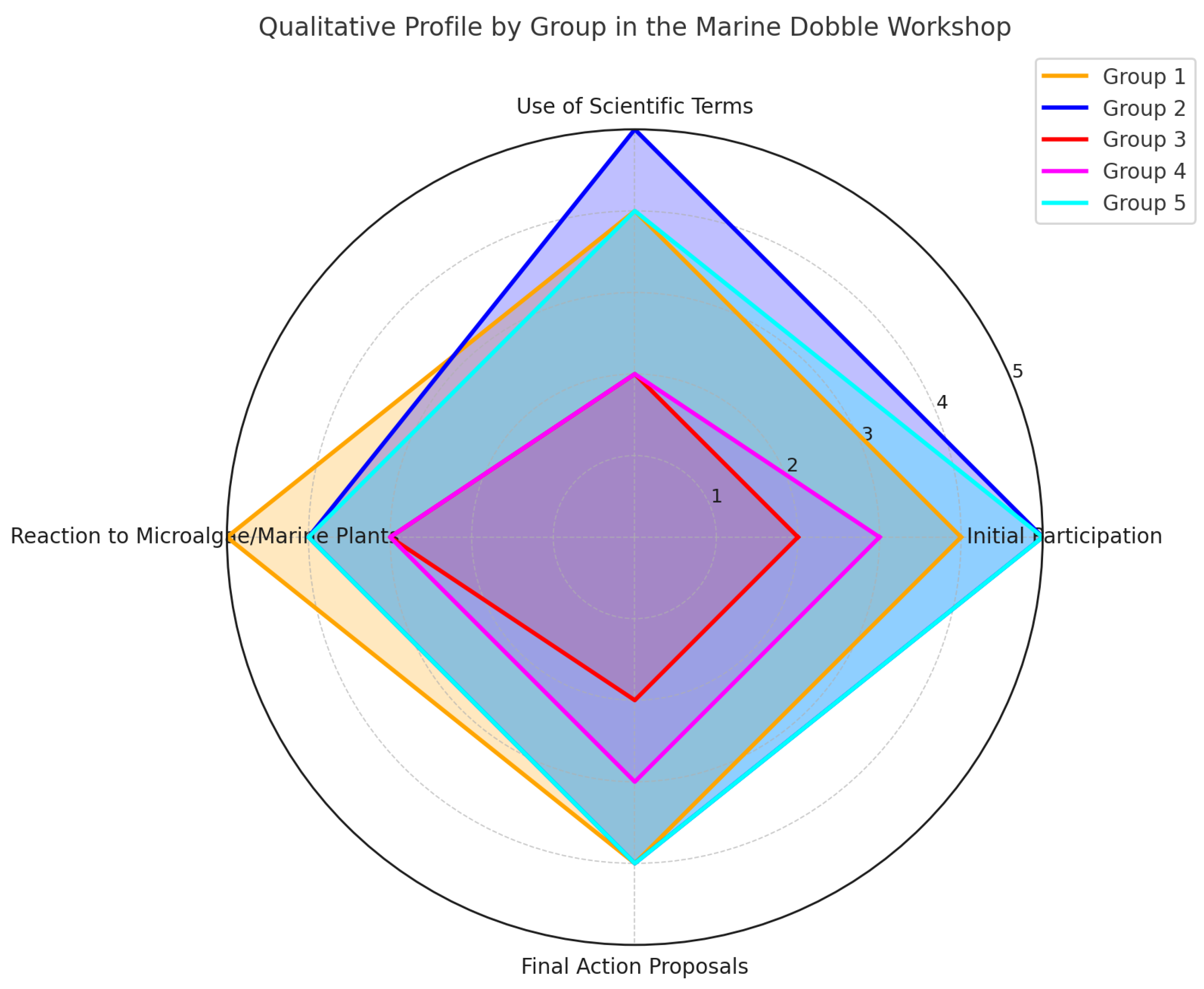
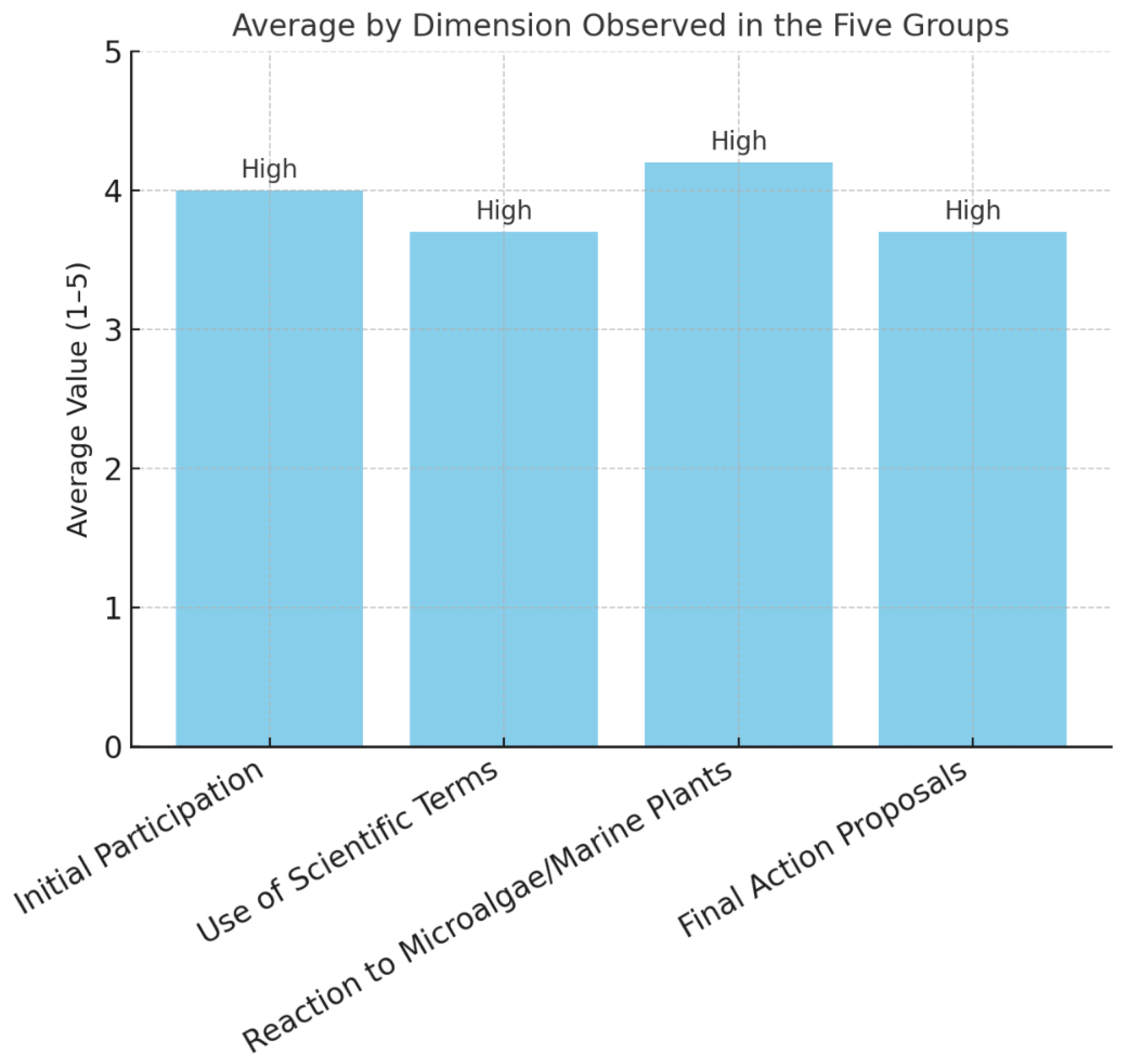
After each session, the field notes recorded with the observation guide were reviewed and synthesised into four interpretive dimensions: participation, vocabulary use, reactions to new content and proposed actions. These dimensions capture recurrent qualitative patterns across groups and provided the basis for the visual summaries presented in Figure 4 and Figure 5. The graphs do not represent numerical scores or statistical comparisons, but rather qualitative trends identified through this thematic synthesis.

4.2. Start of the Workshop: Activation of Prior Ideas and Predisposition

The workshop began with open questions such as ’What marine animals do you know?’, ’Do you know if there are many different types of life in the ocean?’ and “What things do you think harm marine animals?” In all five groups, a clear activation of prior knowledge was observed, although with varying levels of precision and depth. In general, the students responded enthusiastically and in four of the five groups, multiple marine species were cited. In three groups, several students used specific terms such as ’mollusks’, ’cephalopods’, or ’invasive algae’. The Cádiz school group (Group 2) demonstrated an exceptional level of participation and prior knowledge. They correctly identified species such as Posidonia oceanica and the ocean sunfish, differentiated algae from microalgae before receiving explanations, and displayed a highly consolidated scientific vocabulary. In contrast, one group showed lower initial concentration, possibly related to the absence of teacher support during the workshop, which made it more difficult to collect representative responses. However, even in this case, there was occasional participation from particularly interested students.

4.3. Game: Motivation, Interaction, and Connection with Content

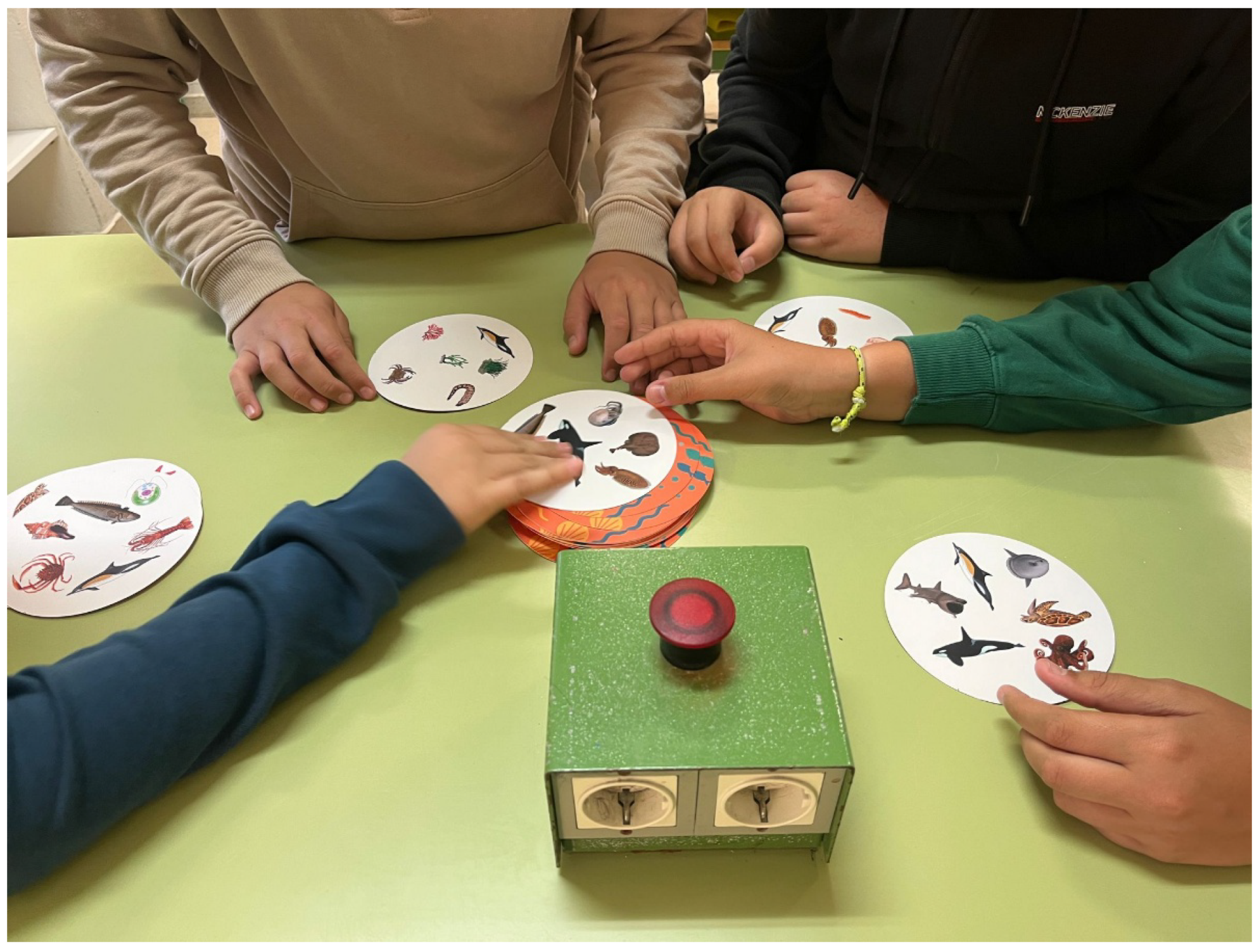
Game dynamics were rapidly understood across all groups, generating a consistent atmosphere of playful competition combined with cooperative interactions (Figure 2). Motivation was uniformly high, but performance diverged when identifying less familiar organisms such as the basking shark, the ocean sunfish, or certain algae. In three groups, initial reliance on generic descriptors (“that one,” “the shell,” “the strange fish”) evolved into the accurate use of species names during the session, evidencing a progressive appropriation of scientific terminology.
One group made a particularly significant observation: before starting to play, they decided to take a few minutes to carefully analyze the cards, anticipating visual patterns and species types. This emergent metacognitive behavior reveals how the game can stimulate strategic thinking and visual literacy within a playful context.

4.4. Didactic Pauses: Wonder, Understanding, and Dialogue

The five pedagogical pauses interspersed throughout the game allowed for the progressive introduction of key content. Each pause generated different levels of participation, curiosity, and reflection depending on the group. The following qualitative synthesis summarizes the most salient patterns observed across groups, without implying numerical measurement.
  • Pause 1: Marine Habitats
In all groups, habitats such as beaches, seafloors, and open waters were recognized. Three groups successfully associated specific species with habitat types, and spontaneous comments arose about “marine neighborhoods.” Understanding was particularly notable in Group 2 and the San Fernando group, where students showed interest in the movements of species such as dolphins and loggerhead turtles.
  • Pause 2: Surprising Adaptations
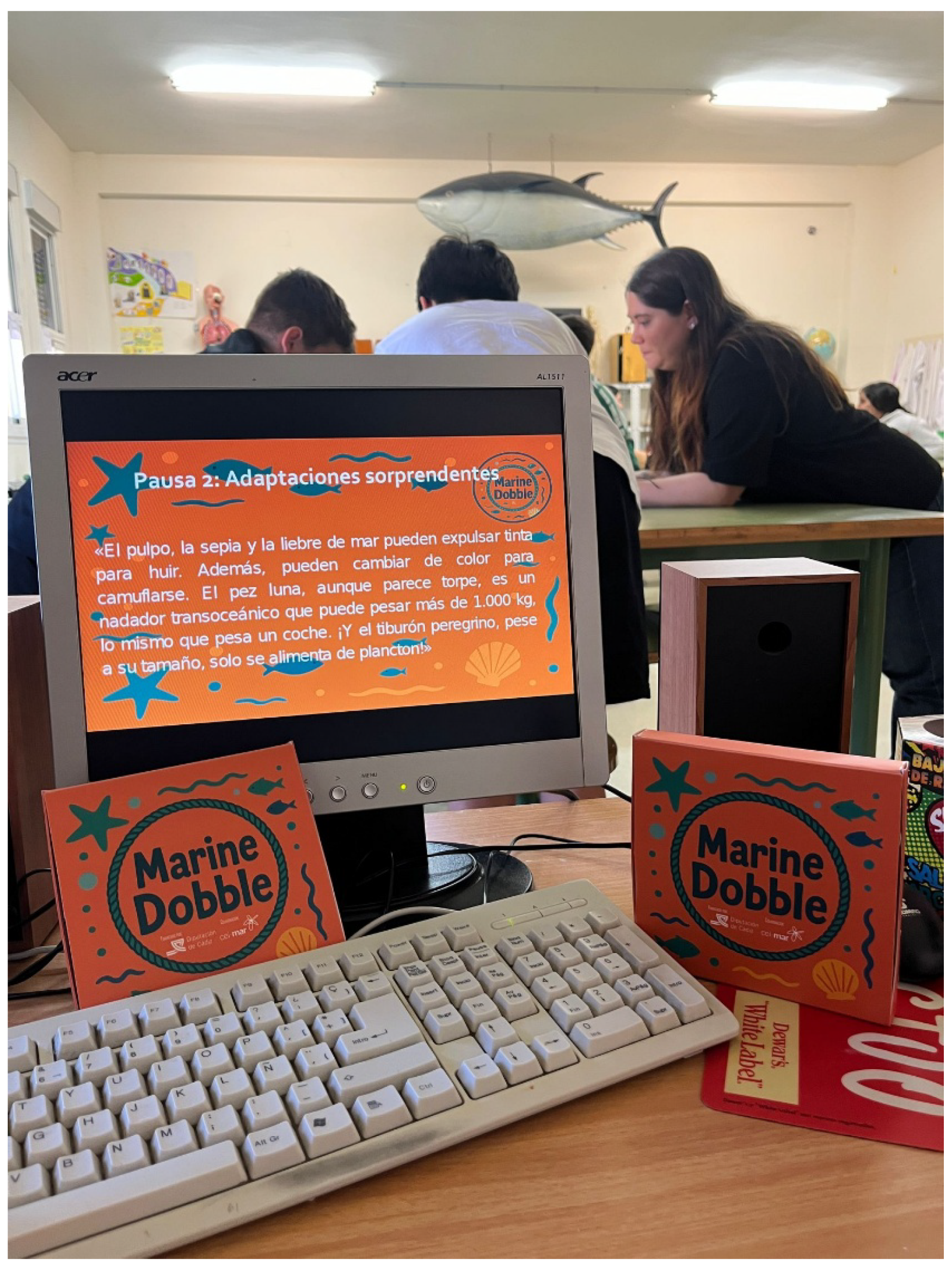
Pause 2 consistently elicited high levels of wonder across groups, particularly in response to the camouflage ability of the octopus and the size of the ocean sunfish (Figure 3). In several groups, the introduction of the term “chromatophore” triggered follow-up questions about mechanisms of color change, indicating that novel scientific vocabulary can function as an effective learning trigger during gameplay.
  • Pause 3: Did You Know…?
This was one of the most powerful moments of the workshop in terms of meaningful learning and scientific conceptualization. In four of the five groups, students expressed surprise at the fact that marine plants produce flowers and fruits, and even more so that microalgae generate a significant portion of the oxygen we breathe. This information elicited emotional reactions—“Really?”, “I didn’t know that!”, “So algae are really important”—and was often reinterpreted as a discovery. In at least two groups, the difference between algae, plants, and microorganisms was discussed, allowing biological classification concepts to be addressed through students’ curiosity.
  • Pause 4: Ocean Problems
Here, a clear progression toward critical awareness was observed. Issues such as pollution, coral bleaching, and plastic impacts were mentioned. In the San Fernando group, oil spills were highlighted, while in two other groups, direct references were made to marine litter and harmful everyday behaviors. Several students expressed empathy toward threatened marine animals and asked how they could help. In one group, the information about turtles mistaking plastic bags for jellyfish generated a moment of reflective silence.
  • Pause 5: Commitment to the Ocean
In this final phase, at least three of the five groups expressed personal proposals for caring for the ocean, including actions such as reducing plastic use, avoiding littering, saving water, or buying sustainable seafood. Some students stated they would share what they had learned with family or friends. Although one group did not have time to complete this part of the workshop, attitudes of respect and affection toward specific species, such as dolphins—described as “beautiful” or “worthy of protection”—were recorded.
The closing questions allowed for the collection of spontaneous learning outcomes and an overall assessment of the workshop’s impact. Among the most frequently mentioned unfamiliar species were the ocean sunfish, sea hare, nautilus, and microalgae. Many students expressed surprise at the existence of “plants that live under the sea and produce flowers” and at “how important algae are for oxygen.” These discoveries were experienced as moments of wonder that reinforced the emotional bond with marine biodiversity. Expressions of curiosity and astonishment were common indicators of meaningful learning and emotional engagement, consistent with the idea that surprise can act as a cognitive trigger in environmental education contexts.
In relation to proposed actions, ideas emerged concerning consumption reduction, water conservation, beach cleanups, and dissemination of the knowledge acquired. In some cases, students went beyond expectations—for example, one asked whether they could take the game home to continue learning. In general, the groups left the workshop with greater environmental awareness, new knowledge, and a positive emotional memory of the experience.
The results of the five sessions suggest that the Marine Dobble workshop functioned as a feasible and engaging tool for combining meaningful learning, emotion, and participation in environmental education contexts. The game’s structure, based on thematic pauses, allowed scientific content and environmental values to be articulated within a playful and progressive framework. The use of a contextualized gamified resource generated consistent interest, even in groups with attention difficulties, and stimulated critical thinking in those with greater autonomy and conceptual background.
In particular, Pause 3 was a turning point, as it allowed students to reinterpret the value of the ocean as a generator of life, oxygen, and plant biodiversity—dimensions often overlooked in formal education. The fact that in nearly all groups this content elicited surprise or excitement reinforces the need to approach marine biology through more experiential and relatable perspectives.
Furthermore, differences among groups highlighted the importance of educational context and teacher involvement. In groups where teachers were present, greater concentration, respect for speaking turns, and better time management were observed. This suggests that, to maximize the workshop’s impact, it is advisable to integrate it within a broader didactic sequence that includes continuity and follow-up.
Figure 4. Qualitative summary of the five groups participating in the Marine Dobble workshop across four key dimensions: initial participation, use of scientific terms, reaction to microalgae and marine plants, and final action proposals. Each line represents relative group tendencies rather than numerical scores, illustrating common patterns and contrasts in engagement and learning.
Sustainability 17 10840 g004
As observed qualitatively across groups (Figure 4 and Figure 5), Groups 2 and 4 showed consistently higher engagement and richer scientific vocabulary, while Groups 3 and 5 displayed lower participation and fewer explicit action proposals. Group 1 demonstrated intermediate involvement, with notable enthusiasm regarding microalgae and marine plants. These contrasts do not represent performance differences but contextual variations influenced by teacher presence, prior knowledge, and classroom climate.
Overall, the visual summaries indicate that curiosity-driven content, especially the ecological role of microalgae and flowering marine plants, consistently triggered both cognitive and emotional engagement across groups. The workshop reliably activated participation, while the depth of conceptual learning appeared to depend on contextual factors such as classroom climate, prior knowledge, and teacher support.
From an interpretive perspective, these findings reinforce the value of adopting active and contextualized methodologies in environmental education. The gamified dynamics of Marine Dobble acted as a catalyst for engagement, enabling both the appropriation of scientific concepts and the emergence of affective connections with marine biodiversity. This pattern aligns with the views of Tilbury [15], Wals [23], and Mogollón et al. [12], who emphasize experiential, participatory, and action-oriented learning as key drivers for sustainability competencies.
Figure 5. Aggregated qualitative tendencies across the four observed dimensions in the five participating groups of the Marine Dobble workshop. All categories—initial participation, scientific vocabulary, reactions to microalgae and marine plants, and action proposals—showed high qualitative levels of engagement and understanding.
Sustainability 17 10840 g005
Contextual conditions—particularly teacher involvement—proved decisive in shaping how students moved from initial enthusiasm to concrete pro-environmental commitments. The strong reactions to content related to microalgae and marine plants highlight the pedagogical potential of combining curiosity and surprise as catalysts of meaningful learning, consistent with Novak [33]. In this exploratory study, the integration of gamification, contextualization, and reflective dialogue emerges as a promising and feasible approach to promote critical and transformative ocean literacy.

5. Conclusions

The results of the five workshops carried out with 1º de la ESO students in schools across the province of Cádiz suggest that the Marine Dobble activity represents a feasible and promising educational approach for addressing marine biodiversity, environmental impacts, and sustainability from a playful and participatory perspective.
The contextualized gamification design fostered emotional, cognitive, and social engagement, even in groups with dispersed attention or lower initial motivation. The activity facilitated the activation of prior knowledge, the incorporation of new concepts, and the connection of scientific content with students’ everyday experiences. The didactic pauses played a pivotal role in conceptual progression, with particularly meaningful reactions emerging around the discovery that some marine plants produce flowers and that microalgae are a key source of atmospheric oxygen. These moments of wonder reinforced students’ connection to the marine environment and deepened their understanding of the ocean as a vital planetary system.
The closing phase revealed early signs of attitudinal and behavioral awareness, as students proposed concrete actions such as reducing waste, protecting species, and sharing knowledge with peers and family. These qualitative indications point to the potential of playful and reflective strategies to nurture responsible citizenship from an early age. At the same time, the findings highlight the importance of contextual factors—such as teacher involvement, classroom climate, and prior experience—which influenced the depth of interaction and the consolidation of learning. This variability underscores the need to embed workshops like Marine Dobble within broader and sustained didactic sequences, ensuring continuity, reinforcement, and deeper long-term impacts on students’ environmental awareness and commitment.
Given the exploratory nature of this study, future implementations will integrate pre-/post-assessments and inter-rater analyses to strengthen methodological reliability. Nevertheless, the present findings already offer valuable insights into the feasibility, motivational value, and formative potential of contextualized gamification for advancing ocean literacy in formal education.

6. Limitations of the Study

As with any educational process implemented in real contexts, the Marine Dobble workshop presents limitations that must be considered when interpreting the results and projecting its application to other settings.
First, the study followed a qualitative and exploratory approach based on group-level observations, without collecting individual data or applying quantitative measures of learning. This restricts the possibility of generalizing the findings or making precise comparisons across groups. In addition, as the observations relied on field notes and the evaluator’s judgment, some nuances may have been lost or subjectively interpreted despite the use of a structured guide.
Second, the one-hour duration of each workshop limited the full development of all phases and, in some cases, prevented the collection of final responses or the exploration of action proposals in depth.
Third, the influence of educational context and teacher involvement proved decisive. Groups without teacher accompaniment showed greater difficulties in maintaining attention and regulating participation, underscoring the importance of implementing such activities in coordination with teaching staff.
Despite these limitations, the experience provides valuable insights for educational practice rather than definitive evidence of effectiveness. The results highlight the pedagogical potential of introducing marine biodiversity through playful and contextualized strategies capable of fostering curiosity, wonder, and environmental awareness, even among students with limited prior knowledge. Moreover, the findings indicate that gamified resources can support the development of transversal competencies—such as critical thinking, ecological empathy, and commitment to sustainability—particularly when accompanied by teacher mediation and collective reflection.
Looking ahead, future implementations should incorporate complementary materials—such as worksheets, videos, and brief pre/post activities—that enable teachers to embed the workshop within broader didactic sequences. Adapted versions for different educational levels, from primary to upper secondary and non-formal education, could enhance its inclusiveness and applicability. In addition, advancing the evaluation through mixed-methods approaches and inter-rater analyses would allow for more robust documentation of learning progression and attitudinal change.
Overall, Marine Dobble emerges as an innovative and feasible tool with potential for integration into educational programs on ocean literacy and sustainability. Rather than claiming generalizability, this exploratory experience underscores the value of playful and reflective approaches in environmental education, where formats such as educational games and escape rooms can foster curiosity, engagement, and responsible action in response to global challenges such as climate change and marine pollution [20,34,37].

Author Contributions

Conceptualization, C.B.-C.; Methodology, C.B.-C.; Formal analysis, C.B.-C.; Resources, L.R. and C.B.-C.; Data curation, C.B.-C.; Writing—original draft, C.B.-C. and L.R.; Writing—review & editing, L.R. and C.G.-P.; Supervision, C.G.-P.; Funding acquisition, C.G.-P. All authors have read and agreed to the published version of the manuscript.

Funding

This research was funded by the Complementary Plan for Marine Sciences ThinkInAzul Andalucía (PCM_00091).

Institutional Review Board Statement

Ethical review and approval were waived for this study by Institutional Committee due to Legal Regulations.

Informed Consent Statement

Informed consent was obtained from all participating institutions and from the legal guardians of the students involved in the study.

Data Availability Statement

The original contributions presented in this study are included in the article. Further inquiries can be directed to the corresponding author.

Acknowledgments

The authors would like to thank the CEIMAR Foundation and the Provincial Council of Cádiz for their support within the environmental education program in which this work is framed, as well as the technical team of the CEIMAR Foundation for their assistance throughout the project. Special thanks are extended to the teachers and students from all participating secondary schools for their collaboration and enthusiasm.

Conflicts of Interest

The authors declare no conflicts of interest.

References

  1. Vilches, A.; Gil, D.; Cañal, P. La educación científica y el cambio global. Rev. Eureka Sobre Enseñanza Divulg. Las Cienc. 2010, 7, 2–19. [Google Scholar]
  2. Guevara Herrero, M.; Bravo Torija, B.; Pérez Martín, D. Cultura oceánica y didáctica de las ciencias: Una revisión crítica. Rev. Eureka Sobre Enseñanza Divulg. Las Cienc. 2020, 17, 3403. [Google Scholar]
  3. Salazar-Sepúlveda, G.; Vega-Muñoz, A.; Contreras-Barraza, N.; Castillo, D.; Torres-Alcayaga, M.; Cornejo-Orellana, C. Bibliometric analysis on ocean literacy studies for marine conservation. Water 2023, 15, 2095. [Google Scholar] [CrossRef]
  4. Vilches, A.; Gil, D.; Cañal, P. Educación para la sostenibilidad: Un reto para la educación actual. Rev. Eureka Sobre Enseñanza Divulg. Las Cienc. 2008, 5, 123–131. [Google Scholar]
  5. Murga-Menoyo, M. Educación para la sostenibilidad: Principios pedagógicos y didácticos. Rev. Int. Educ. Ambient. Cienc. 2018, 3, 7–20. [Google Scholar]
  6. Pérez-Martín, D.; Bravo-Torija, B. Educación para la sostenibilidad en la escuela: Una propuesta de enfoque didáctico. Didácticas Específicas 2018, 19, 49–64. [Google Scholar]
  7. Cava, F.; Schoedinger, S.; Strang, C.; Tuddenham, P. Ocean Literacy: The Essential Principles of Ocean Sciences K–12; NOAA: Washington, DC, USA, 2005.
  8. Payne, D.; Marrero, M. Educating for Ocean Literacy: A How-To Guide for Effective Education; Springer: Cham, Switzerland, 2021. [Google Scholar]
  9. Armario, M.; Brenes-Cuevas, M.C.; Ageitos-Prego, N.; Puig-Mauriz, B. Las orcas, ¿Pasan o se quedan? Alambique: Didáctica de las Ciencias Experimentales 2024, 118, 15–21. [Google Scholar]
  10. Ageitos, N.; Puig, B.; López, A.; Ojeda-Romano, G.; Pintado, J. Desde las orcas hasta la vida marina en suspensión. Promover la cultura oceánica. In Pensar Científicamente. Problemas Sistémicos y Acción Crítica; Puig, B., Crujeiras-Pérez, B., Blanco-Anaya, P., Eds.; Graó: Barcelona, Spain, 2023; pp. 79–93. [Google Scholar]
  11. Ministerio para la Transición Ecológica y el Reto Demográfico. Plan de Acción de Educación Ambiental para la Sostenibilidad (PAEAS) 2021–2025; MITECO: Madrid, Spain, 2021.
  12. Mogollón, J.; Pujol, R.; Sabariego, M. Competencias para la sostenibilidad: Un marco de referencia en educación superior. Rev. Educ. Ambient. Sostenibilidad 2022, 2, 33–49. [Google Scholar]
  13. Fernández-Río, J.; Méndez-Giménez, A. Metodologías activas y educación física: Una revisión sistemática. Rev. Int. Med. Cienc. Act. Física Deporte 2020, 20, 113–129. [Google Scholar]
  14. Torralba-Burrial, A.; Dopico, E. Promoting the Sustainability of Artisanal Fishing through Environmental Education with Game-Based Learning. Sustainability 2023, 15, 12905. [Google Scholar] [CrossRef]
  15. Tilbury, D. Education for Sustainable Development: An Expert Review of Processes and Learning; UNESCO: París, France, 2011. [Google Scholar]
  16. Rockström, J.; Steffen, W.; Noone, K.; Persson, A.; Chapin, F.; Lambin, E.; Lenton, T.M.; Scheffer, M.; Folke, C.; Schellnhuber, H.J.; et al. A safe operating space for humanity. Nature 2009, 461, 472–475. [Google Scholar] [CrossRef]
  17. Martínez, A. La educación ambiental en tiempos de crisis ecosocial. Rev. Univ. Educ. Ambient. 2010, 12, 11–22. [Google Scholar]
  18. Steffen, W.; Richardson, K.; Rockström, J.; Cornell, S.E.; Fetzer, I.; Bennett, E.M.; Biggs, R.; Carpenter, S.R.; De Vries, W.; De Wit, C.A.; et al. Planetary boundaries: Guiding human development on a changing planet. Science 2015, 347, 1259855. [Google Scholar] [CrossRef]
  19. Richardson, K.; Steffen, W.; Lucht, W.; Bendtsen, J.; Cornell, S.E.; Donges, J.F.; Drüke, M.; Fetzer, I.; Bala, G.; Von Bloh, W.; et al. Earth beyond six of nine planetary boundaries. Sci. Adv. 2023, 9, eadh2458. [Google Scholar] [CrossRef]
  20. Jambeck, J.; Geyer, R.; Wilcox, C.; Siegler, T.; Perryman, M.; Andrady, A.; Narayan, R.; Law, K.L. Plastic waste inputs from land into the ocean. Science 2015, 347, 768–771. [Google Scholar] [CrossRef]
  21. Lusher, A.; Hollman, P.; Mendoza-Hill, J. Microplastics in Fisheries and Aquaculture: Status of Knowledge on Their Occurrence and Implications for Aquatic Organisms and Food Safety; FAO Fisheries and Aquaculture Technical Paper No. 615; FAO: Rome, Italy, 2017. [Google Scholar]
  22. Benavides, A.; Cardona, R.; López, J. Estrategias didácticas activas en la enseñanza de las ciencias. Rev. Electron. Educ. Cienc. 2020, 15, 45–62. [Google Scholar]
  23. Wals, A. Beyond Unreasonable Doubt: Education and Learning for Socio-Ecological Sustainability in the Anthropocene; Wageningen University: Wageningen, The Netherlands, 2015. [Google Scholar]
  24. UNECE. Learning for the Future: Competences in Education for Sustainable Development; United Nations Economic Commission for Europe: Geneva, Switzerland, 2012. [Google Scholar]
  25. Wiek, A.; Withycombe, L.; Redman, C. Key competencies in sustainability: A reference framework for academic program development. Sustain. Sci. 2011, 6, 203–218. [Google Scholar] [CrossRef]
  26. Escorcia, J.; Orozco, L. Educación ambiental transformadora. Prax. Saber 2022, 13, 1–20. [Google Scholar]
  27. Torres Castillo, J. Estudio de los flujos de dispersión de los residuos plásticos en el Golfo de Cádiz. Rev. Eureka Sobre Enseñanza Divulg. Las Cienc. 2019, 16, 3501. [Google Scholar]
  28. España. Ley Orgánica 3/2020, de 29 de Diciembre, por la que se Modifica la Ley Orgánica 2/2006, de 3 de mayo, de Educación (LOMLOE); Boletín Oficial del Estado: Madrid, Spain, 2020. Available online: https://www.boe.es/eli/es/lo/2020/12/29/3/con (accessed on 15 October 2025).
  29. Deterding, S.; Dixon, D.; Khaled, R.; Nacke, L. From game design elements to gamefulness: Defining “gamification”. In Proceedings of the 15th International Academic MindTrek Conference: Envisioning Future Media Environments, Tampere, Finland, 28–30 September 2011; pp. 9–15. [Google Scholar] [CrossRef]
  30. Kapp, K. The Gamification of Learning and Instruction: Game-Based Methods and Strategies for Training and Education; John Wiley & Sons: San Francisco, CA, USA, 2012. [Google Scholar]
  31. Zichermann, G.; Cunningham, C. Gamification by Design: Implementing Game Mechanics in Web and Mobile Apps; O’Reilly Media: Sebastopol, CA, USA, 2011. [Google Scholar]
  32. Ausubel, D. The Psychology of Meaningful Verbal Learning; Grune & Stratton: New York, NY, USA, 1963. [Google Scholar]
  33. Novak, J. Learning, Creating, and Using Knowledge: Concept Maps as Facilitative Tools in Schools and Corporations; Routledge: New York, NY, USA, 2010. [Google Scholar]
  34. Milanés, O.; Menezes, P.; Quellis, L. Educación ambiental transformadora. Rev. Pedagógica 2019, 21, 500–523. [Google Scholar] [CrossRef]
  35. Lirussi, F.; Ziglio, E.; Curbelo Perez, D. One Health y las nuevas herramientas para promover la salud. Rev. Iberoam. Bioet. 2021, 17, 1–15. [Google Scholar] [CrossRef]
  36. National Oceanic and Atmospheric Administration (NOAA). 2020 NOAA Science Report; NOAA Science Council: Silver Spring, MD, USA, 2020.
  37. Barboza, L.; Vethaak, A.; Lavorante, B.; Lundebye, A.; Guilhermino, L. Marine microplastic debris. Mar. Pollut. Bull. 2018, 133, 336–348. [Google Scholar] [CrossRef] [PubMed]
  38. Aragón, L.; Brenes-Cuevas, C. A gamified teaching proposal using an escape box to explore marine plastic pollution. Sustainability 2025, 17, 7528. [Google Scholar] [CrossRef]
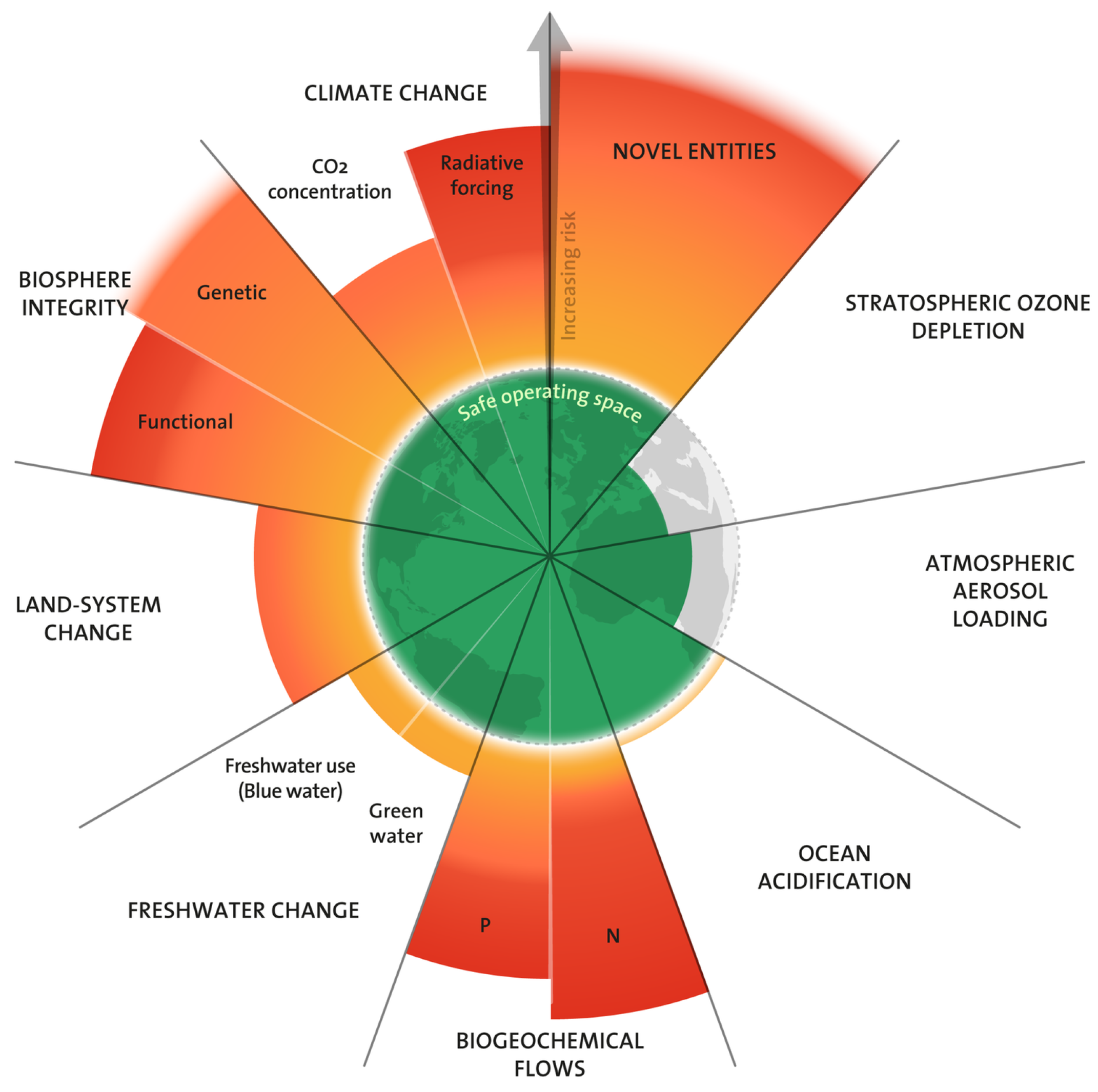
Figure 1. Current state of the planetary boundaries. Visual representation of the status of the nine processes regulating the stability of the Earth system. Green areas represent the safe operating space for humanity. Yellow, orange, and red zones indicate increasing levels of risk, from uncertainty to a high probability of irreversible changes. Of the nine boundaries assessed, six have already been transgressed: climate change, biosphere integrity, nitrogen and phosphorus cycles, freshwater use, land-system change, and pollution by novel entities. This transgression places humanity in a situation of heightened systemic risk. Source: Richardson et al. [19]. Earth system boundaries. Stockholm Resilience Centre. https://www.stockholmresilience.org/research/planetary-boundaries.html accessed on 15 October 2025.
Sustainability 17 10840 g001
Figure 2. Students participating in the Marine Dobble activity, an educational game featuring local marine species, as part of the ocean literacy workshop.
Sustainability 17 10840 g002
Figure 3. Photograph taken during Pause 2 of the Marine Dobble workshop.
Sustainability 17 10840 g003
Table 1. Phases of the Marine Dobble Workshop, Addressed Contents, and Didactic Intentions.
Workshop PhaseTopics WorkedDidactic Intentions
Pause 1: Marine HabitatsDiversity of marine habitats and species distribution (seafloor, beaches, open waters).Recognize the variety of marine ecosystems and their ecological importance.
Pause 2: Surprising AdaptationsPhysiological and behavioral adaptations of species (camouflage, ink, filtration).Appreciate the adaptive richness of marine organisms and their connection with the environment.
Pause 3: Did You Know…?Scientific curiosities: distinctions between algae and plants, remarkable species, living fossils.Foster wonder, scientific thinking, and interest in biodiversity.
Pause 4: Ocean ChallengesEnvironmental impacts: pollution, warming, threatened species, and plastics.To understand the relationship between human activities and environmental degradation.
Pause 5: Commitment to the OceanIndividual and collective commitment to ocean conservation from land.To promote awareness and responsible action in addressing ocean challenges.
Table 2. Summary of the observation guide used during the Marine Dobble workshop.
Stage of the WorkshopGuiding QuestionsMain Indicators
Beginning of the sessionHow do students react to the initial questions about marine animals and habitats? What prior ideas and everyday examples do they mention?Level of participation and curiosity; type of examples provided; presence of misconceptions; use of everyday vs. scientific vocabulary; initial classroom climate.
Gameplay dynamicsHow quickly do students understand the rules and dynamics of the game? How do they interact while playing? What difficulties arise when identifying species or habitats?Engagement and emotional tone; cooperative vs. competitive interactions; negotiation of disagreements; difficulties identifying species; progression from generic to more precise terms.
Didactic pausesHow do students react to the scientific explanations? Which elements surprise them? Do they mention environmental problems or conservation issues?Expressions of wonder; references to habitats and adaptations; reactions to scientific curiosities (e.g., marine plants, microalgae); awareness of environmental problems; types of conservation actions proposed.
Final reflectionsWhat do students say they have learned or found most surprising? What actions do they suggest to protect the ocean?Mention of newly learned species or concepts; explicit expressions of environmental concern; concreteness and feasibility of proposed actions; illustrative spontaneous comments.
Disclaimer/Publisher’s Note: The statements, opinions and data contained in all publications are solely those of the individual author(s) and contributor(s) and not of MDPI and/or the editor(s). MDPI and/or the editor(s) disclaim responsibility for any injury to people or property resulting from any ideas, methods, instructions or products referred to in the content.