Evaluating Ecological Shifts in Mining Areas Using the DPSIR Model: A Case Study from the Xiaoxing’an Mountains Metallogenic Belt, China


Abstract
1. Introduction
2. Materials and Methods
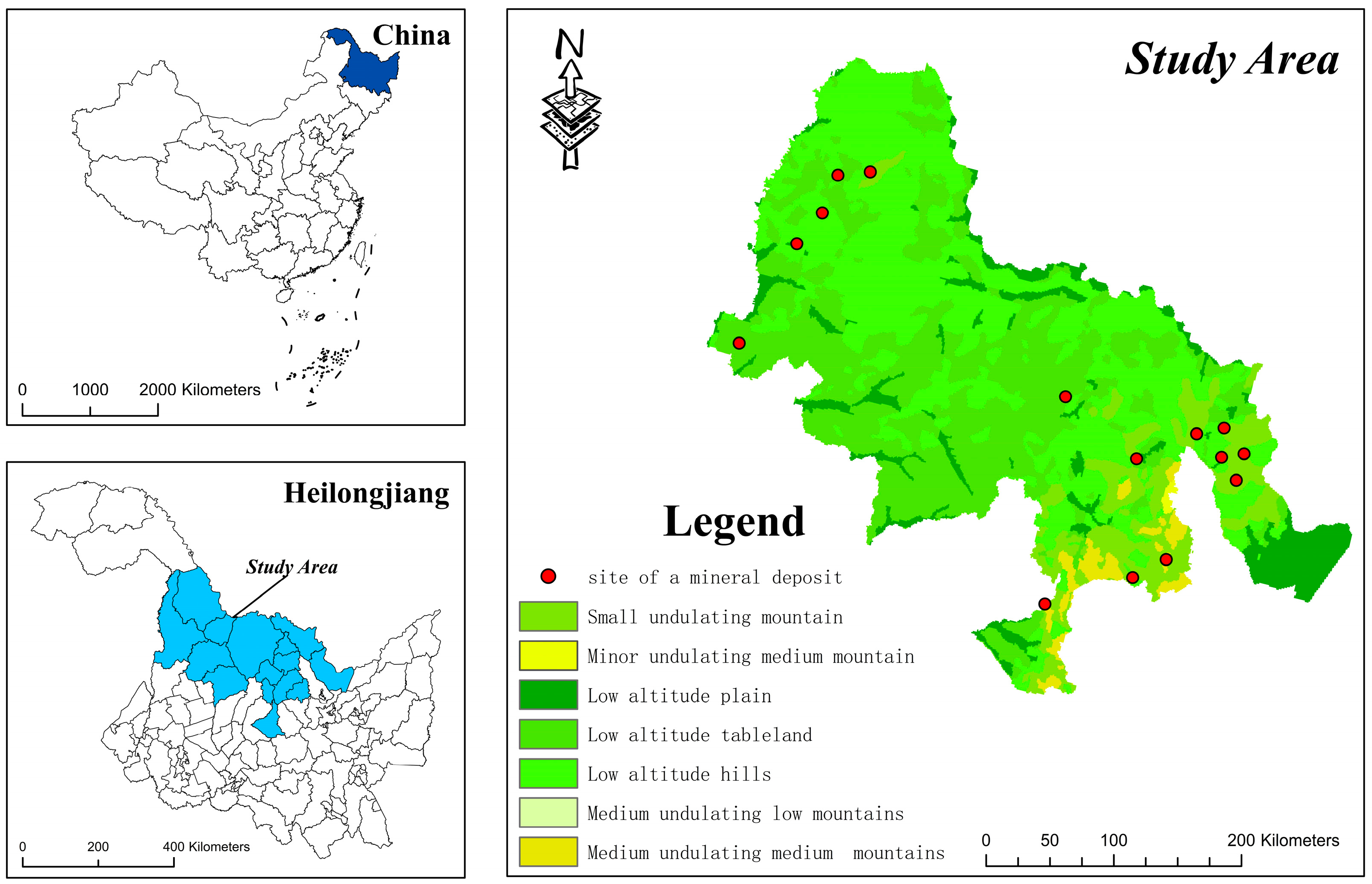
2.1. Overview of the Study Area
2.2. Introduction to Data
2.3. Policies and Regulations
3. Methods
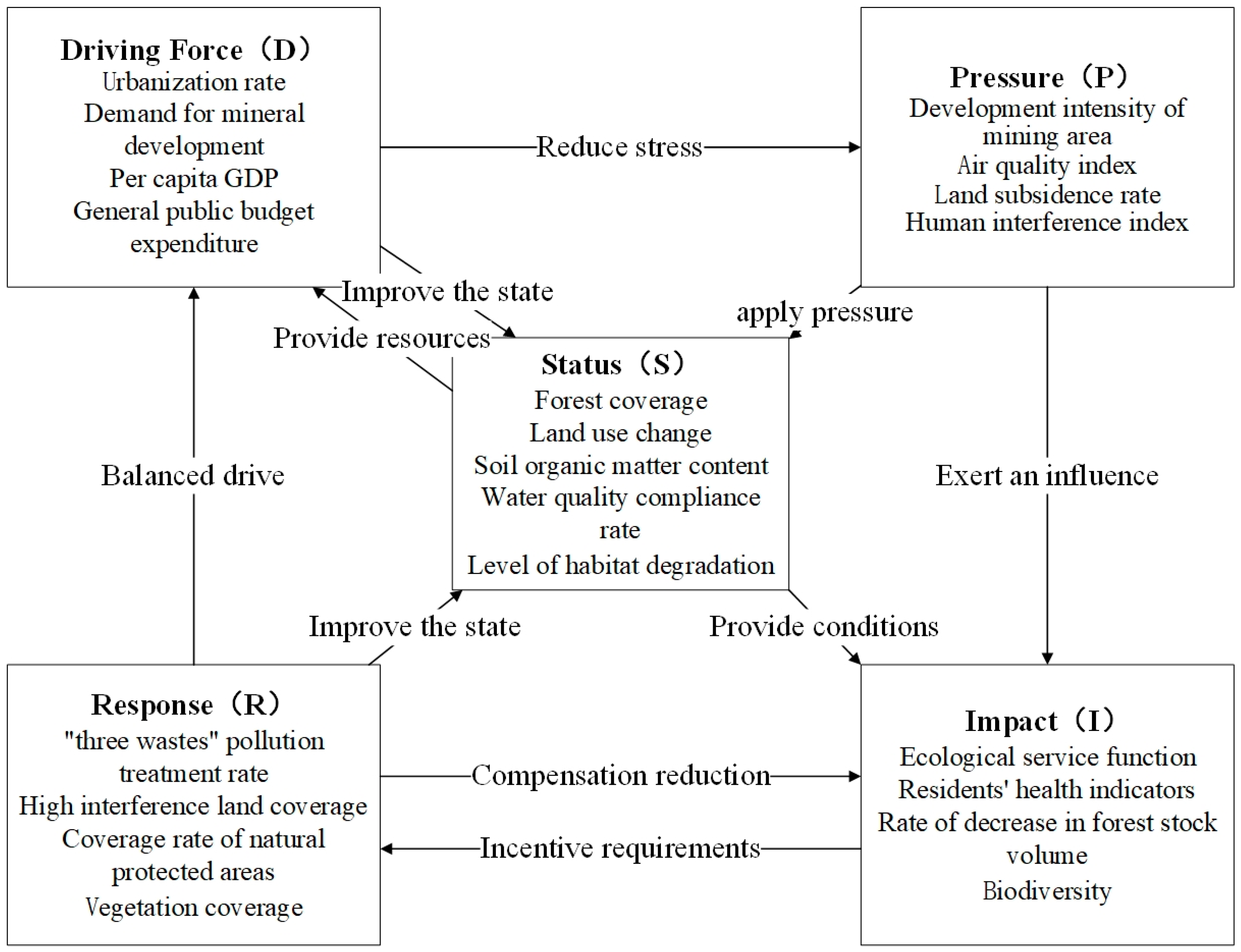
3.1. DPSIR Model
3.2. Constructing an Ecological Research Model for Mining Areas
3.3. Weight Calculation
- (1)
- Firstly, based on m ecological factors of mining areas and their corresponding n regions, construct an evaluation index matrix:
- (2)
- Normalization processing, which converts indicators with different dimensions into the same dimension.
- (3)
- Calculate the index proportion of the i-th region under the ecological factor of the j-th mining area.
- (4)
- Calculate the entropy value of the ecological factor in the j-th mining area.
- (5)
- After determining the index entropy, calculate the weights.
4. Results and Analysis
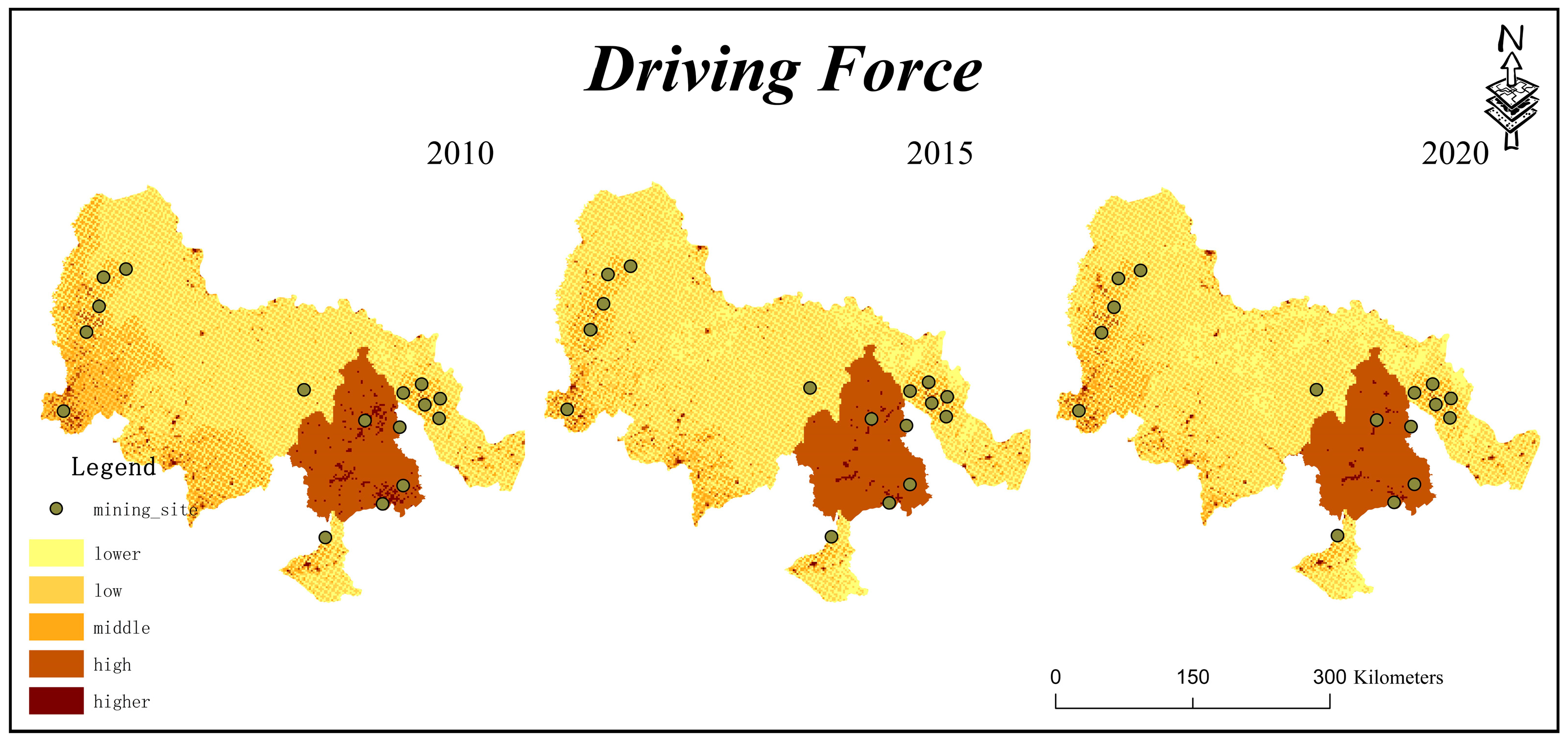
4.1. Driving Force
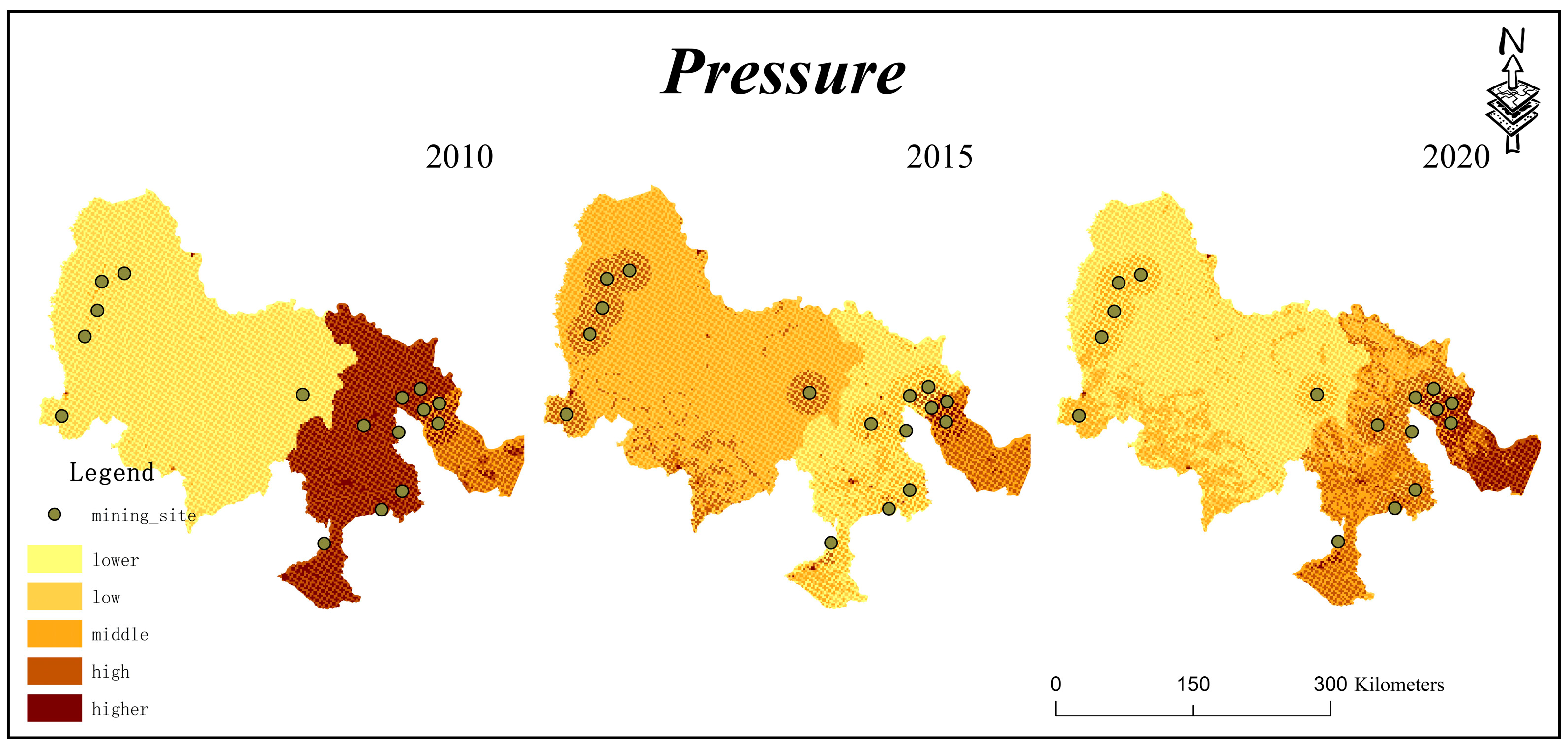
4.2. Pressure
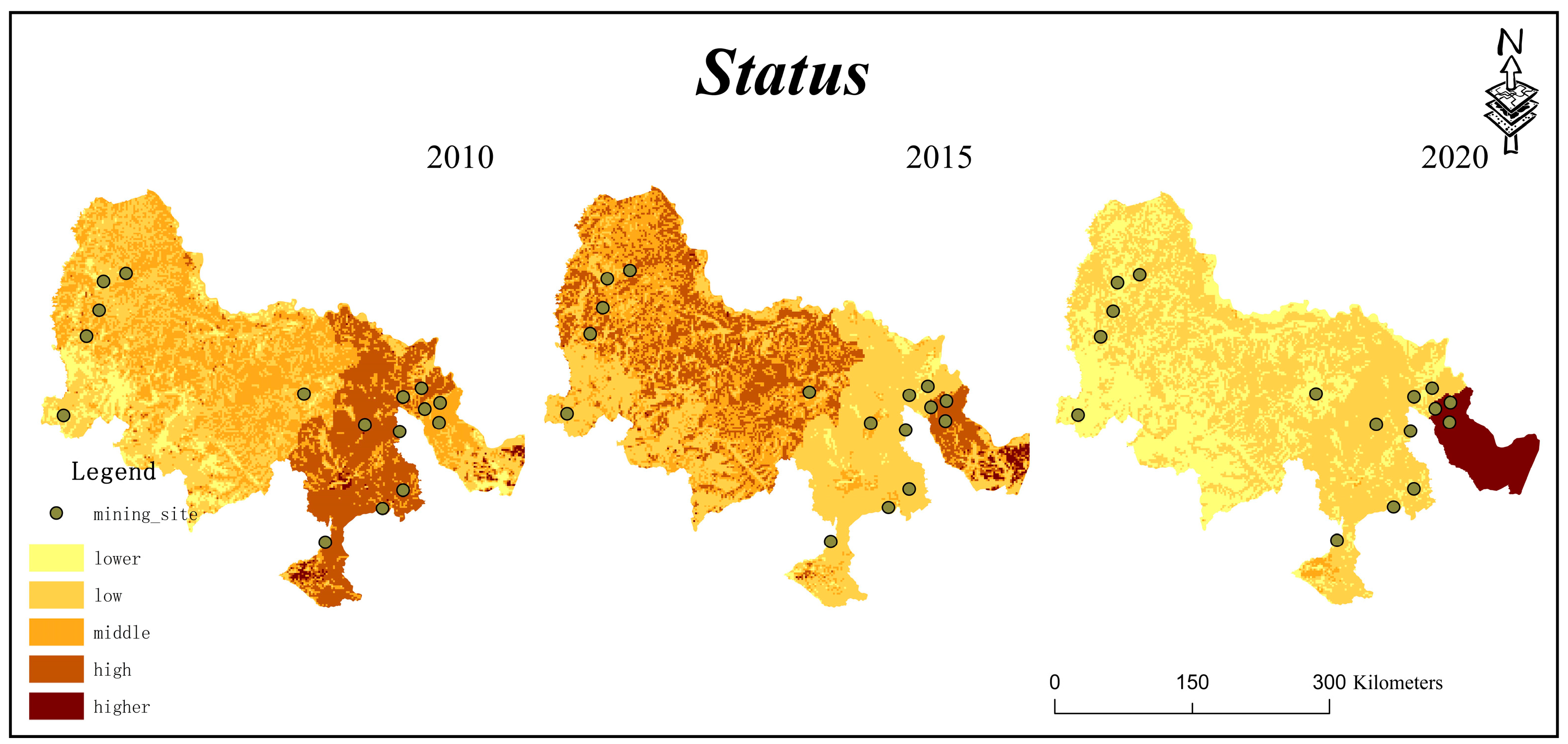
4.3. Status
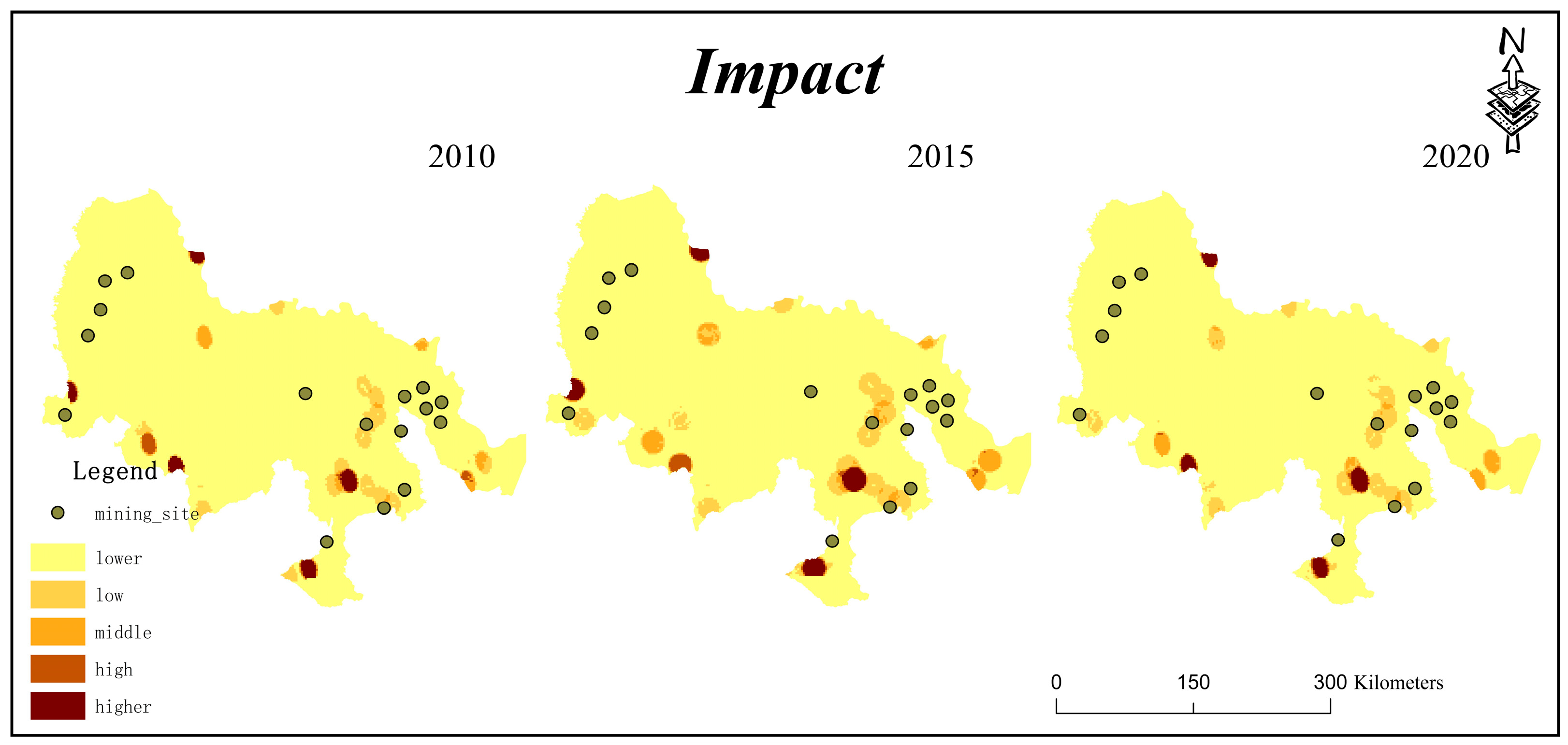
4.4. Impact
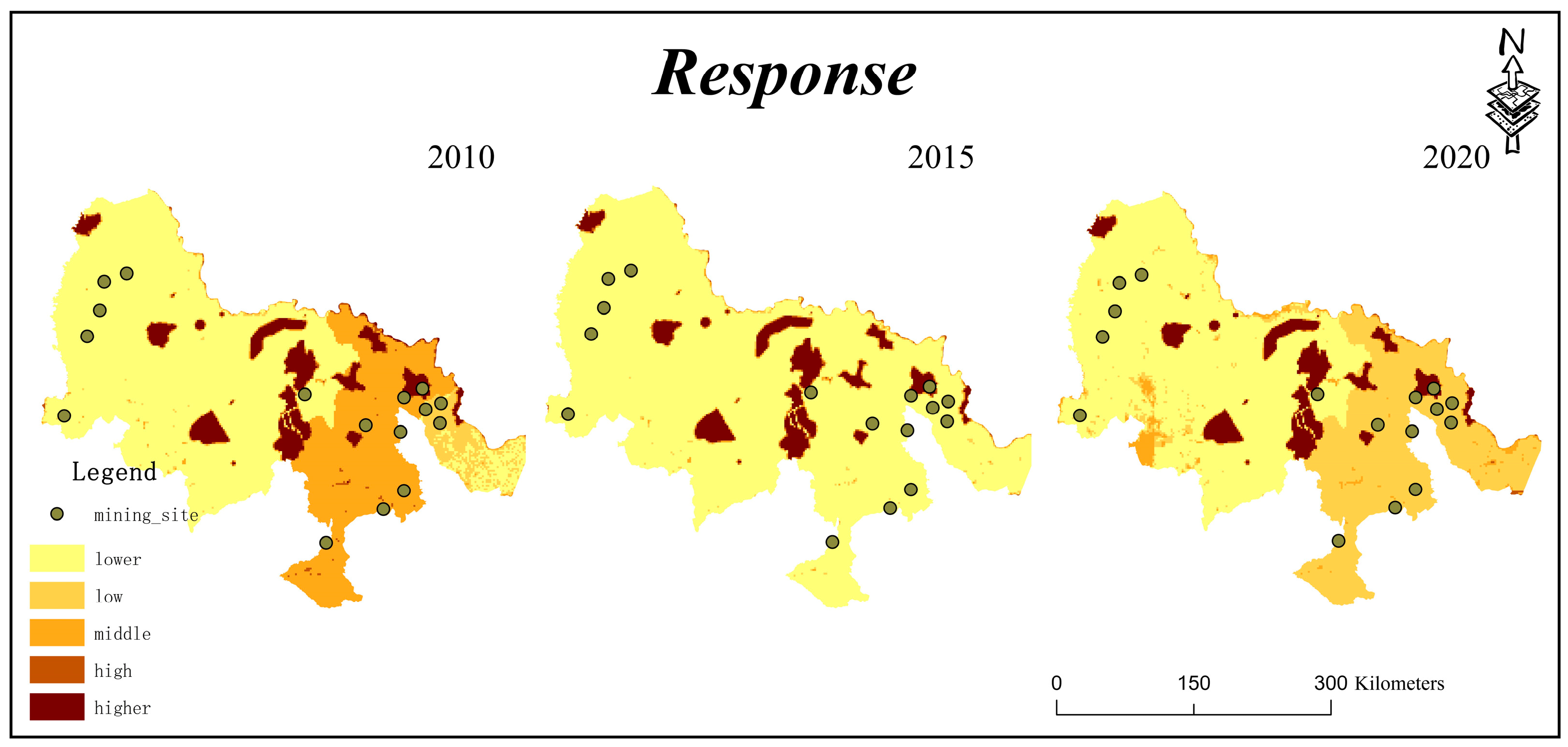
4.5. Response
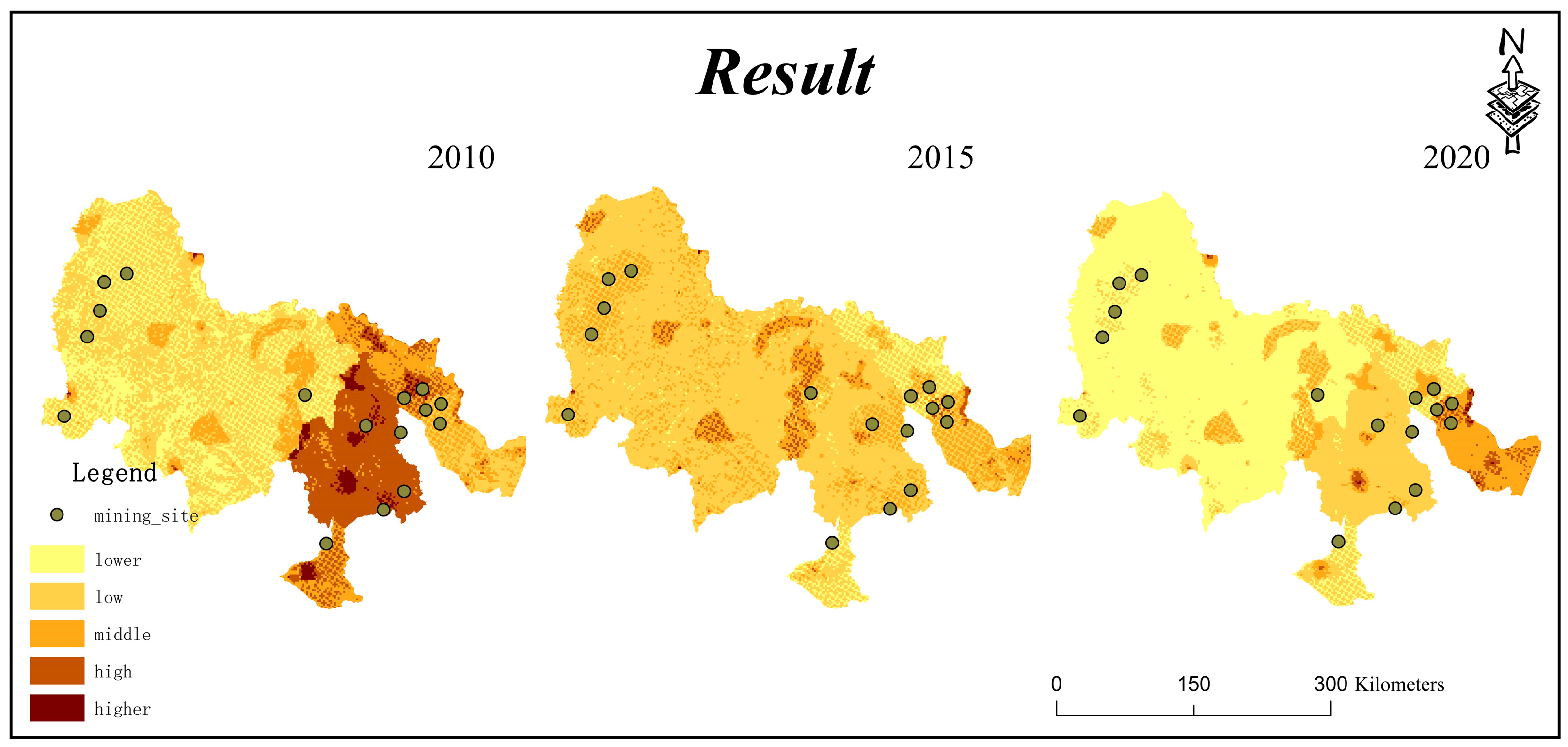
4.6. Result
5. Discussion
6. Conclusions
7. Future Research Directions
Author Contributions
Funding
Institutional Review Board Statement
Informed Consent Statement
Data Availability Statement
Conflicts of Interest
References
- Kentucky Energy and Environment Cabinet. Surface Mining Control and Reclamation Act (SMCRA); Kentucky Energy and Environment Cabinet: Frankfort, KY, USA, 1977. [Google Scholar]
- Skousen, J.; Johnson, C.; Garbutt, K. Natural revegetation of 15 abandoned mine land sites in West Virginia. J. Environ. Qual. 1994, 23, 1224–1230. [Google Scholar] [CrossRef]
- Vickers, H.; Gillespie, M.; Gravina, A. Assessing the development of rehabilitated grasslands on post-mined landforms in north west Queensland, Australia. Agric. Ecosyst. Environ. 2012, 163, 72–84. [Google Scholar] [CrossRef]
- Macdonald, S.E.; Landhäusser, S.M.; Skousen, J.; Franklin, J.; Frouz, J.; Hall, S.; Jacobs, D.F.; Quideau, S. Forest restoration following surface mining disturbance: Challenges and solutions. New For. 2015, 46, 703–732. [Google Scholar] [CrossRef]
- Sweigard, R.; Burger, J.; Zipper, C.; Skousen, J.; Barton, C.; Angel, P. Low compaction grading to enhance reforestation success on coal surface mines. In Appalachian Regional Reforestation Initiative. Forest Reclamation Advisory; US Office of Surface Mining Reclamation and Enforcement: Washington, DC, USA, 2007; p. 3. [Google Scholar]
- Tropek, R.; Hejda, M.; Kadlec, T.; Spitzer, L. Local and landscape factors affecting communities of plants and diurnal Lepidoptera in black coal spoil heaps: Implications for restoration management. Ecol. Eng. 2013, 57, 252–260. [Google Scholar] [CrossRef]
- Thompson, I.D.; Baker, N.E.; Straka, T.J. Forest regeneration on mined lands. For. Ecol. Manag. 2009, 258, 1831–1838. [Google Scholar]
- Sun, H.; Hu, X.; Yang, X.; Wang, H.; Cheng, J. Estimating water pollution and economic cost embodied in the mining industry: An interprovincial analysis in China. Resour. Policy 2023, 86 Pt B, 104284. [Google Scholar]
- Alvarado, E.J.; Raymond, J.; Therrien, R.; Comeau, F.A.; Carreau, M. Geothermal energy potential of active northern underground mines: Designing a system relying on mine water. Mine Water Environ. 2022, 41, 1055–1081. [Google Scholar] [CrossRef]
- Hu, X.; Zhang, Q. Mine Water Treatment, Resource Utilization and Prospects in Coal Mining Areas of Western China. Mine Water Environ. 2024, 43, 210–230. [Google Scholar] [CrossRef]
- Huggett, B.A.; Swanson, F.J. Long-term monitoring and assessment of ecosystems in mined lands. Ecol. Appl. 2012, 22, 1881–1895. [Google Scholar]
- Meng, D.; Bao, N.; Tayier, K.; Li, Q.; Yang, T. A remote sensing based index for assessing long-term ecological impact in arid mined land. Environ. Sustain. Indic. 2024, 22, 100364. [Google Scholar] [CrossRef]
- Bai, L.; Yang, Y.; Zhang, K.; Liu, S.; Liu, G. Monitoring and Analysis of the Driving Forces of Changes in the Ecological Environment of a Mining Area of Western China from 1986 to 2022. Processes 2023, 11, 1721. [Google Scholar] [CrossRef]
- Feng, H.; Zhou, J.; Zhou, A.; Xu, H.; Su, D.; Han, X. Spatiotemporal variation indicators for vegetation landscape stability and processes monitoring of semiarid grassland coal mine areas. Land Degrad. Dev. 2021, 33, 3–17. [Google Scholar] [CrossRef]
- He, T.T.; Zhang, M.; Guo, A.; Zhai, G.; Wu, C.; Xiao, W. A novel index combining temperature and vegetation conditions for monitoring surface mining disturbance using Landsat time series. Catena 2023, 229, 107235. [Google Scholar] [CrossRef]
- Li, H.; Wu, G.; Wang, X. Land Surface Temperature Downscaling Method in Ion-type Rare Earth Mining Area Oriented to Mining Disturbance. Geomat. Inf. Sci. Wuhan Univ. 2021, 46, 133–142. [Google Scholar] [CrossRef]
- Li, J.; Xu, Y.; Zhang, C.; Guo, J.; Wang, X.; Zhang, Y. Unmixing the coupling influence from driving factors on vegetation changes considering spatio-temporal heterogeneity in mining areas: A case study in Xilinhot, Inner Mongolia, China. Environ. Monit. Assess. 2023, 195, 224. [Google Scholar] [CrossRef] [PubMed]
- Worlanyo, A.S.; Li, J. Evaluating the environmental and economic impact of mining for post-mined land restoration and land-use: A review. J. Environ. Manag. 2021, 279, 111623. [Google Scholar] [CrossRef]
- Zine, H.; Hakkou, R.; Papazoglou, E.G.; Elmansour, A.; Abrar, F.; Benzaazoua, M. Revegetation and ecosystem reclamation of post-mined land: Toward sustainable mining. Int. J. Environ. Sci. Technol. 2024, 21, 9775–9798. [Google Scholar] [CrossRef]
- Yu, H.; Luo, C.; Ni, J. Identifying land reuse suitability and transformation strategies towards green development in a post-mining area: A case of Qijiang, Chongqing, China. Ecol. Indic. 2024, 159, 111646. [Google Scholar] [CrossRef]
- Huang, M.; Luo, Y. Mining Land Remediation and Ecological Restoration. Acta Pedol. Sin. 2003, 40, 161–169. [Google Scholar]
- Zhang, X. Study on the Geochemical Characteristics and Environmental Effects of Heavy Metal Element Release and Migration in the Tongling Mining Area, Anhui Province. Ph.D. Thesis, Hefei University of Technology, Hefei, China, 2005. [Google Scholar]
- Cheng, J.; Chen, J.; Yi, X. Research on the evaluation index system of ecological civilization in mining areas. China Popul. Resour. Environ. 2013, 23, 1–10. [Google Scholar]
- Huang, R. Research on the Legal System of Ecological Compensation. Ph.D. Thesis, East China University of Political Science and Law, Shanghai, China, 2009. [Google Scholar]
- Qiu, H. Study on Vegetation Restoration Mode and Its Soil Remediation Effect in Panji Coal Mine Area, Huainan. Ph.D. Thesis, Central South University of Forestry and Technology, Changsha, China, 2012. [Google Scholar]
- Fan, L.; Ma, X.; Jiang, H.; Cheng, S. Hazard zoning of mine water inrush and sand inrush in ecologically fragile mining areas in western China. J. Coal Min. Sci. Technol. 2016, 41, 531–536. [Google Scholar] [CrossRef]
- Li, B. Research on the Evolution of Land Landscape Pattern in Mining Areas and Its Ecological Effects. Ph.D. Thesis, China University of Mining and Technology, Xuzhou, China, 2014. [Google Scholar]
- Zhang, C.; Li, J.; Lei, S.; Yang, J.; Yang, N. Mining area ecological environment quantitative research progress and prospect of remote sensing monitoring. J. Met. Mine 2022, 3, 1–27. [Google Scholar] [CrossRef]
- Ma, L.; Tian, S.; Wang, N. Based on hierarchy analysis and fuzzy mathematics comprehensive evaluation method of the mining area ecological environment evaluation. J. Land Resour. Remote Sens. 2013, 25, 165–170. [Google Scholar]
- Liu, X.; Yan, Y.; Liu, W.; Huang, Z. Carbon neutral strategy under the coal mine area ecological carbon sink system building and improve outlook. J. Environ. Sci. 2022, 43, 2237–2240+2242–2250. [Google Scholar] [CrossRef]
- Xi, X.; Sang, S.; Liu, S. Research Progress on the Synergistic Disposal and Utilization of CO2 from Solid Waste Mineralization and Fixed Storage in Coal Mining Areas and Pollution Reduction and Carbon Emission Reduction. J. Coal 2024, 49, 3619–3634. [Google Scholar] [CrossRef]
- Li, T.; Yan, J.; Zhang, J.; Xu, S.; Zhu, F. Jingyuan mining area landscape ecological risk assessment based on terrain gradient. China’s Min. Ind. 2025, 34, 142–153. [Google Scholar]
- Wu, Y.; Pan, J.; Zhang, W.; Guo, X. The influence of Ecological Restoration Model of Slope in Dry Mining Area Waste Dump on Vegetation-soil Organic Carbon density. Soil Water Conserv. Bull. 2025, 45, 278–285+306. [Google Scholar] [CrossRef]
- Wang, X.; Chen, G. For Ecological Regulation of the Mining Area Ecological Environment Knowledge Map Construction and Application. Met. Mine 2025, 1–11. [Google Scholar] [CrossRef]
- Lan, J.; Tang, H.; Zhou, C.; Zhou, J.; Wang, P.; Long, X. The influence mechanism of ecological restoration projects in large-scale antimony mining areas on the migration and release of antimony in groundwater. Min. Res. Dev. 2025, 45, 182–191. [Google Scholar] [CrossRef]
- Xu, Y.; Li, B.; An, S.; Wang, R.; Jin, K.; Zhang, S. Construction and Optimization of Mining City Ecological Network Based on MSPA Model: A Case Study of Mining Counties in Huainan City. Met. Mines 2025, 7, 207–216. [Google Scholar] [CrossRef]
- Du, Z.; Zhang, J.; Ma, Y.; Wang, Y.; Li, Y.; Yuan, K.; Yuan, J. Research on the Hydrochemical Characteristics and Ecological Reuse of Mine Water: A Case Study of Xishan Mining Area, Shanxi Province. Mod. Geol. 2025, 39, 1363–1372. [Google Scholar] [CrossRef]
- Zhao, Z.; Han, L.; Xu, Y.; Yuan, H.; Sun, Y.; Xu, Y.; Hao, J. Open limestone mine ecological vulnerability assessment and repair strategies discussed. J. Min. Res. Dev. 2025, 7, 242–248. [Google Scholar] [CrossRef]
- Liu, X.; Hou, B.; Sun, G.; Du, Y. Reconstruction of Ecological Restoration Goals in Mining Areas and Adjustment of Policy Tools: Thoughts Based on the Background of Carbon Neutrality. Environ. Prot. 2025, 53, 61–65. [Google Scholar] [CrossRef]
- Wang, X.; Zhang, S.; Hou, H.; Ai, K.; Chen, M.; Wang, X. Construction and Application Verification of Ecosystem Function Value Evaluation System in Mining Areas under Human Disturbance. Bull. Soil Water Conserv. 2025, 45, 199–210. [Google Scholar] [CrossRef]
- Li, C. Application of fuzzy recognition method in mineral resources allocation. Sustain. Comput. Inform. Syst. 2021, 30, 100509. [Google Scholar] [CrossRef]
- Talalay, P.G.; Zhang, N. Antarctic mineral resources: Looking to the future of the Environmental Protocol. Earth-Sci. Rev. 2022, 232, 104142. [Google Scholar] [CrossRef]
- Gałaś, S. Assessment of implementation of protection of mineral deposits in spatial planning in Poland. Land Use Policy 2017, 67, 584–596. [Google Scholar] [CrossRef]
- Wang, H.; Chen, X.; Yu, J. DPSIR framework research review. Econ. Res. Guide 2013, 19, 4–5. [Google Scholar]
- Cao, H. A Brief Review of the DPSIR Model. Environ. Sci. Technol. 2005, S1, 110–111+126. [Google Scholar] [CrossRef]
- Li, Y.; Chen, T.; Wang, G. Evaluation and promotion strategy of water ecological resilience based on DPSIR model—A case study of Tianjin. J. Cities 2024, 3, 36–51. [Google Scholar]
- Wang, J.; He, H.; Chen, K.; Liu, Y.; Zhang, Y.; Ke, H.; Cai, M. Comprehensive Evaluation of the Sustainable Development Capacity of Marine Ecology in the Shandong Peninsula Blue Economic Zone Based on the DPSIR Model. Mar. Sci. 2017, 41, 129–136. [Google Scholar]
- Liu, Q.; Yang, X.; Shi, Y.; Chen, J.; Lu, D. Evaluation of Livelihood Security in the Liupanshan Contiguous Poverty-stricken Area Based on the DPSIR Model. J. Mt. Sci. 2018, 36, 323–333. [Google Scholar]
- Wu, G. Research on the selection of quality evaluation index of entrepreneurship education in Colleges and Universities Based on DPSIR model. J. Soc. Sci. Shanxi Coll. Univ. 2017, 29, 81–83. [Google Scholar]
- Smith, J.; Brown, K.; Li, M.Y. A DPSIR framework for assessing post-mining ecological restoration: Case study of Loess Plateau coal fields. Ecol. Indic. 2021, 128, 107832. [Google Scholar]
- Yang, Z.; Xu, J.; Feng, X.; Guo, M.; Jin, Y.; Gao, X. Impact of land use change on habitat in Northeast China based on invest model. Ecol. Sci. 2018, 37, 139–147. [Google Scholar] [CrossRef]
- Ghosh, S.; Dinda, S.; Chatterjee, N.D.; Bera, D. Linking ecological vulnerability and ecosystem service value in a fast-growing metropolitan area of eastern India: A scenario-based sustainability approach. Environ. Dev. Sustain. 2025, 27, 2285–2315. [Google Scholar] [CrossRef]
- Zhu, W.; Zhang, J.; Cui, Y.; Zheng, H.; Zhu, L. Assessment of ecosystem carbon storage based on land use change scenarios—A case study of the Qi River Basin in Taihang Mountains. Acta Geogr. Sin. 2019, 74, 446–459. [Google Scholar]
- Hou, J.; Chen, J.; Zhang, K.; Zhou, G.; You, H.; Han, X. Temporal and spatial variation characteristics of carbon storage in the source region of the Yellow River and its response to different scenarios in the future based on invest and geosos flus models. Environ. Sci. 2022, 43, 5253–5262. [Google Scholar] [CrossRef]
- Wang, X.; Zhu, J.; Ding, N.; Li, X. Evaluation of ecological transformation and development characteristics of three major urban agglomerations in China based on DPSIR model. Urban Rural. Plan. 2019, 4, 15–23. [Google Scholar]
- Li, Z.; Zhu, J.; Wang, Z.; Yu, J. Risk evaluation index system of ship collision with bridge based on DPSIR model. Railw. Stand. Des. 2019, 63, 70–74. [Google Scholar]



| Input Data | Period | Description | Source |
|---|---|---|---|
| Land use/land cover | 2010 2015 2020 | Environmental Science Data Center of the Chinese Academy of Sciences and land use data produced by the Ministry of Resources of China | https://www.resdc.cn/ (accessed on 15 November 2025) |
| Population data | 2010 2015 2020 | Population data include age distribution, population distribution density, etc. | Census of China Bureau of Statistics |
| Digital Elevation Model data | 2010 2015 2020 | The data download comes from the Geospatial Data Cloud (China) with a resolution of 30 m × 30 m. | http://www.gscloud.cn/sources/ (accessed on 15 November 2025) |
| Yearbook data (Meteorological data, social data, economic data, infrastructure information data) | 2010–2020 | The annual statistical summary of the economic, cultural, natural and other numerical data of the year. | https://www.cnki.net/ (accessed on 15 November 2025) |
| Name | Time | Regarding the Development of Mining Areas |
|---|---|---|
| Environmental Protection Law of the People’s Republic of China | 26 December 1989 | The law requires that measures must be taken to protect the ecological environment when exploiting natural resources; governments at all levels should protect the agricultural environment and prevent the occurrence and development of phenomena such as land desertification and impoverishment, which also includes land reclamation and ecological restoration work in mining areas; no unit or individual may produce, sell, transfer, or use processes, equipment, and products that seriously pollute the environment; this also applies to the emission of pollutants generated during mining in mining areas. |
| Law of the People’s Republic of China on Mineral Resources | 9 March 1986 | Promote the rational development and utilization of mineral resources. Strengthen the protection of mineral resources and the ecological environment. Safeguard both the rights and interests of the state as owner and the legitimate rights and interests of mining rights holders. Clearly stipulate ecological restoration requirements and measures for mining areas. Emphasize the need to strengthen ecological environment protection and implement ecological restoration work in mining areas during mineral resource development. |
| Law of the People’s Republic of China on Land Administration | 25 June 1986 | Any construction activities, including land use required for mineral resource development, must be applied for and approved in accordance with the law. The construction and mining of mining areas need to comply with strict land use control and construction land approval procedures; the law stipulates the responsibility for reclamation of land damage caused by mining of mineral resources. |
| Law of the People’s Republic of China on the Prevention and Control of Soil Pollution | 31 August 2018 | The competent departments of ecology and environment and natural resources of people’s governments at all levels shall strengthen the supervision and management of soil pollution prevention and control in mineral resource development areas in accordance with the law; during the development of mineral resources, strict control shall be imposed on the emission of key pollutants that may cause soil pollution in accordance with relevant standards and total quantity control requirements; the operators and managers of tailings ponds shall strengthen the safety management of tailings ponds in accordance with regulations and take measures to prevent soil pollution; for dangerous, hazardous, diseased, and other tailings ponds that require key supervision, the operators and managers shall also conduct monitoring and regular assessment of soil pollution status; if soil pollution is caused by mineral resource development activities, the relevant responsible persons shall bear the corresponding obligations of soil pollution risk control and restoration. |
| Law of the People’s Republic of China on the Prevention and Control of Water Pollution | 11 May 1984 | Wastewater generated during the development of mineral resources must be effectively treated and meet national or local emission standards before being discharged; mining enterprises should take measures to prevent groundwater pollution during mining and mineral processing; tailings pond operators and management units shall set up tailings water pollution prevention and control facilities in accordance with regulations to prevent direct discharge of tailings water into the environment and cause pollution; after the end of mineral resources development, land reclamation and ecological environment restoration work should be carried out, including restoring damaged surface vegetation and water bodies to reduce the impact on the local water environment. |
| Category | Influencing Factors | Description | Method |
|---|---|---|---|
| Driving force | Urbanization rate | The continuous advancement of urbanization has gradually increased the demand for mineral resources, driving mining area development activities and affecting the speed and quality of ecological restoration. | Urban area/total area * 100% |
| Demand for mineral development | The demand factor for mineral extraction quantifies the driving intensity of society towards the extraction of specific minerals by integrating indicators such as economic growth, resource prices, technical conditions, and policy orientation. It reflects the dynamic balance between resource development and market demand. | Development demand = (resource potential * 0.5) + (reverse value of mining difficulty * 0.3) + (economic benefit * 0.2) | |
| Per capita GDP | Per capita GDP is an effective tool for people to understand and grasp the macroeconomic operation status of a country or region. It is commonly used as an indicator to measure economic development in development economics and is one of the most important macroeconomic indicators. | Data of natural resources center of Chinese Academy of Sciences | |
| General public budget expenditure | General public budget expenditure refers to the allocation and use of funds raised by the national treasury to meet the needs of economic construction and various undertakings. | Assign values to vector files through yearbook data. | |
| Pressure | Development intensity of mining area | The development intensity of a mining area refers to the scale and density of mining activities for mineral resources within a specific area within a certain period of time. | Carry out point density analysis on the ore point data and superimpose the mining difficulty. |
| Air quality index | The air index, also known as the air quality index or air pollution index, is based on the environmental air quality standards and the impact of various pollutants on human health, ecology, and the environment. | AQI itemized calculation shall be carried out according to national standards. | |
| Human disturbance index | The Human Interference Index is a comprehensive indicator that quantitatively evaluates the spatial distribution and intensity of the impact of human activities on the natural environment. | (Standardized Lighting * 0.7) + (Standardized Road Density * 0.3) | |
| Water consumption | The pressure of water resource consumption on ecology refers to the degree of risk of ecological degradation caused by unsustainable human surface and groundwater extraction that exceeds the renewable carrying capacity of ecosystems. | Visualize yearbook data. | |
| Land subsidence rate | The land subsidence rate refers to the percentage of the surface deformation area caused by mining, geological activities, etc., in the total area of the study area per unit time, which is used to quantify the degree of damage to the surface stability caused by human activities or natural factors. | Surface deposition area/unit area * 100% | |
| Human interference index | The human disturbance index is a comprehensive indicator used to quantify the degree of impact on a certain region by human activities. | Data of natural resources center of Chinese Academy of Sciences | |
| Status | Forest coverage | Forest coverage refers to the proportion of forest area in a certain region to the total area of that region, usually expressed in percentage. It is one of the important indicators to measure the abundance of forest resources and the condition of ecological environment in a region. | Forest area/unit area * 100% |
| Soil organic matter content | Soil organic matter content refers to the total amount of plant and animal residues, as well as microbial decomposition products (such as humus and organic carbon) in soil. It reflects soil fertility, structure, and water and nutrient retention capacity, and is a key indicator for assessing soil health and agricultural sustainability. | Sandy soil * sandy soil organic matter content weight + silt * silt organic matter content weight + clay * clay organic matter content weight | |
| Water quality compliance rate | The water quality compliance rate refers to the proportion of water bodies at specific monitoring points that meet the national water quality standards. It is a key indicator for assessing the quality of water resources, pollution control, and the effectiveness of treatment. A higher value indicates that the water quality is closer to or meets the safe usage standards. | Visualize yearbook data. | |
| Level of habitat degradation | The level of habitat degradation refers to the extent to which the quality of habitats in a certain area has declined, reflecting the damage to the structure and function of natural ecosystems. | The invest model is used to process and visualize the data. | |
| Impact | Ecological service function | Such as the restoration of ecological functions like water conservation capacity and carbon sequestration capacity. | The invest model is used to process and visualize the data. |
| Residents’ health indicators | Resident health indicators are standards for measuring the health status of a specific population, including life expectancy, infant mortality rate, disease incidence rate, etc., which are used to evaluate the effectiveness of public health services and the improvement of population health level. | Visualize yearbook data. | |
| Biodiversity | Biological richness refers to the number of species of organisms in a specific area or ecosystem. | (0.25 * “land use score”)+ (0.20 * “NDVI”)+ (0.15 * “distance from road _; standardization”)+ (0.15 * “distance from water body _; standardization”)+ (0.10 * “elevation diversity”)+ (0.15 * “distance from the reserve _0; standardized”) | |
| Rate of decrease in forest stock volume | The rate of forest stock volume reduction refers to the percentage decrease in the forest stock volume (i.e., the total volume of trees) within a certain area over a certain period of time. | (forest volume of the previous year—forest volume of this year)/forest volume of the previous year * 100% | |
| Response | “three wastes” pollution treatment rate | The “three wastes” pollution treatment rate refers to the proportion of wastewater, waste gas, and waste residue generated in industrial production and daily life that have been effectively treated to meet environmental standards. It reflects the level of environmental pollution control and the efficiency of resource recycling. | Visualize yearbook data. |
| High interference land coverage | High-disturbance land coverage refers to the proportion of land area affected by high-intensity human activities in a certain region, as a percentage of the total area of that region. | High interference land area/total area * 100% | |
| Coverage rate of natural protected areas | The coverage rate of natural protected areas refers to the proportion of land area officially designated as natural protected areas within a certain region, as compared to the total area of that region. | Area of nature reserve/unit area * 100% | |
| Vegetation coverage | Vegetation coverage refers to the proportion of land area covered by plants in a certain region to the total area of the region. It is one of the important indicators for assessing the ecological environment status, land use, and management effectiveness of a region. | Data of natural resources center of Chinese Academy of Sciences |
| Category | Weight | Influencing Factors | 2010 | 2015 | 2020 |
|---|---|---|---|---|---|
| Driving force | 0.2 | Urbanization rate | 0.54 | 0.55 | 0.58 |
| Demand for mineral development | 0.1 | 0.1 | 0.07 | ||
| Per capita GDP | 0.2 | 0.19 | 0.18 | ||
| General public budget expenditure | 0.16 | 0.16 | 0.17 | ||
| Pressure | 0.2 | Development intensity of mining area | 0.12 | 0.17 | 0.15 |
| Air quality index | 0.18 | 0.1 | 0.11 | ||
| Human disturbance index | 0.03 | 0.05 | 0.06 | ||
| Human interference index | 0.43 | 0.45 | 0.44 | ||
| Land subsidence rate | 0.03 | 0.03 | 0.04 | ||
| Water consumption | 0.21 | 0.2 | 0.2 | ||
| Status | 0.2 | Forest coverage | 0.21 | 0.2 | 0.24 |
| Soil organic matter content | 0.08 | 0.1 | 0.04 | ||
| Water quality compliance rate | 0.14 | 0.15 | 0.07 | ||
| Level of habitat degradation | 0.57 | 0.55 | 0.65 | ||
| Impact | 0.2 | Ecological service function | 0.11 | 0.1 | 0.1 |
| Residents’ health indicators | 0.7 | 0.69 | 0.7 | ||
| Biodiversity | 0.12 | 0.15 | 0.13 | ||
| Rate of decrease in forest stock volume | 0.07 | 0.05 | 0.07 | ||
| Response | 0.2 | “Three wastes” pollution treatment rate | 0.17 | 0.15 | 0.19 |
| High interference land coverage | 0.47 | 0.49 | 0.35 | ||
| Coverage rate of natural protected areas | 0.24 | 0.29 | 0.36 | ||
| Vegetation coverage | 0.1 | 0.05 | 0.1 |
Disclaimer/Publisher’s Note: The statements, opinions and data contained in all publications are solely those of the individual author(s) and contributor(s) and not of MDPI and/or the editor(s). MDPI and/or the editor(s) disclaim responsibility for any injury to people or property resulting from any ideas, methods, instructions or products referred to in the content. |
© 2025 by the authors. Licensee MDPI, Basel, Switzerland. This article is an open access article distributed under the terms and conditions of the Creative Commons Attribution (CC BY) license (https://creativecommons.org/licenses/by/4.0/).
Share and Cite
Jiang, F.; Mu, F.; Cui, X.; Qu, G.; Wang, B.; Yan, Y. Evaluating Ecological Shifts in Mining Areas Using the DPSIR Model: A Case Study from the Xiaoxing’an Mountains Metallogenic Belt, China. Sustainability 2025, 17, 10766. https://doi.org/10.3390/su172310766
Jiang F, Mu F, Cui X, Qu G, Wang B, Yan Y. Evaluating Ecological Shifts in Mining Areas Using the DPSIR Model: A Case Study from the Xiaoxing’an Mountains Metallogenic Belt, China. Sustainability. 2025; 17(23):10766. https://doi.org/10.3390/su172310766
Chicago/Turabian StyleJiang, Fengshan, Fuquan Mu, Xuewen Cui, Ge Qu, Bing Wang, and Yan Yan. 2025. "Evaluating Ecological Shifts in Mining Areas Using the DPSIR Model: A Case Study from the Xiaoxing’an Mountains Metallogenic Belt, China" Sustainability 17, no. 23: 10766. https://doi.org/10.3390/su172310766
APA StyleJiang, F., Mu, F., Cui, X., Qu, G., Wang, B., & Yan, Y. (2025). Evaluating Ecological Shifts in Mining Areas Using the DPSIR Model: A Case Study from the Xiaoxing’an Mountains Metallogenic Belt, China. Sustainability, 17(23), 10766. https://doi.org/10.3390/su172310766