Article

Study on the Coordinated Development of Resources, Environment and Economy on Fuzzy Multi-Objective Programming: A Case Study of Arid and Semi-Arid River Basin in Northern China


1
School of Statistics and Mathematics, Inner Mongolia University of Finance and Economics, Hohhot 010070, China
2
College of Ecology and Environment, Inner Mongolia University, Hohhot 010021, China
3
Collaborative Innovation Center for Grassland Ecological Security (Jointly Supported by the Ministry of Education of China and Inner Mongolia Autonomous Region), Hohhot 010021, China
4
Ministry of Education Key Laboratory of Ecology and Resource Use of the Mongolian Plateau, Hohhot 010021, China
5
Inner Mongolia Key Laboratory of River and Lake Ecology, Hohhot 010021, China
*
Author to whom correspondence should be addressed.
These authors contributed equally to this work.
Sustainability 2025, 17(23), 10757; https://doi.org/10.3390/su172310757
Submission received: 26 October 2025 / Revised: 15 November 2025 / Accepted: 26 November 2025 / Published: 1 December 2025

Abstract

The Ulansuhai Basin stands as the most crucial ecological and economic zone in northern China. Resource and environmental planning serves as a core strategy, aimed at mitigating the consumption of environmental resources induced by economic expansion within the Ulansuhai Basin and facilitating the synergistic development of the economy and the environment. In this paper, by taking the data of the economy, resource and water environment of the Ulansuhai Basin during the period from 2010 to 2022 as the research basis, a fuzzy multi-objective programming model for the resource–environment and socio-economic system was constructed. The results showed that within the planting industry, giving priority to the cultivation of sunflowers and corn will enable the model results to remain in an optimal state. In the field of animal husbandry, the quantity ratio of cows to pigs should be maintained at 1.5:1, and the quantity ratio of sheep to cows should be controlled at approximately 20:1; these ratio settings were conducive to ensuring the model remains in an optimal state. When the ratio of planting industry to animal husbandry was set at 13.16:1 (with the unit of “head” for livestock quantity and “hm2” for planting area), the model arrived at the optimal solution. This study, by virtue of its analysis of the coordination mechanism of economic development with environmental protection in typical watersheds, can provide meaningful policy references for realizing the synergistic enhancement of ecological quality and economic benefits in arid and semi-arid basins, fragile ecological carrying capacity, and the balance between agricultural production expansion and environmental pollution control in these regions.

1. Introduction

The notion of integrating ecological preservation and economic development as being means to attain sustainable human development was first put forward in the Brundtland Report [1]. This report explicitly argues that there is no discrete environmental crisis or independent development crisis in the global context; instead, these two phenomena are inherently interconnected and should be treated as an integrated whole. In the 1990s, Costanza et al. [2] put forward the proposition that the interactive relationship between ecosystems and natural resource stocks exerts a crucial influence on the operational functioning of the Earth’s life-support system. These international scholarly explorations have laid a theoretical foundation for understanding interdependence and sustainable development; such insights are equally relevant to the analysis of development challenges in specific national contexts. Economic development and the resource-ecological environment exhibit a mutual relationship of constraint and promotion. Driven by the dual impetus of China’s economic growth and urbanization advancement, the issues of resource scarcity and environmental degradation have become increasingly prominent, prompting people to gradually recognize the significance of the coordinated development [3,4]. Lake basins serve as critical carriers that provide abundant resources, while sustaining the diversity of production activities and livelihood patterns. Nevertheless, the expansion of human activities has imposed substantial pressure on the ecosystem of lake basins [5,6]. Consequently, it is imperative to formulate a coordinated conservation and development plan integrating water resources, water ecology, water security, and socio-economic development in lake basins by adopting a dynamic, interrelated, and systematic research approach.
To further advance the implementation of watershed sustainability policies, multi-objective programming algorithms have been extensively applied in the construction of relevant research models [7]. The fields of coordinated development evaluation and coordinated development promotion strategy formulation have especially exhibited remarkable vitality, and such research orientation was highly aligned with the promotion of high-quality development and the pursuit of the “dual carbon” goals. In the current academic context, mainstream research in this field is generally categorized into qualitative and quantitative dimensions. In terms of qualitative theoretical research, Ma & Wang [8] proposed as early as the 1980s that “society, economy and nature are the whole of a composite system”, which laid a robust theoretical foundation for the research on the coordinated and sustainable development. Feng et al. [9] discussed the objective existing problems of the compound system of water resources eco-economy from the system theory. Zhong et al. [10] explored the interaction mechanisms among water resources, social economy, and ecological environment, and further pointed out the most rational development model for these three systems, thereby achieving the harmonious development of the three. In the aspect of quantitative data analysis, academic researchers have carried out empirical analyses and research on the coupling relationship between water resources, economic society, and ecological environment in different regions. Radmehr et al. [11] proposed a fractional nonlinear multi-objective programming model to tackle the challenges associated with the sustainable management of agriculture in arid watersheds of Iran under the context of climate change. The core objective of this model is to optimize crop planting patterns and rationalize resource allocation. Rong et al. [12] established a linear multi-objective programming to determine optimal water resource allocation schemes for the Xinfengjiang Reservoir basin. Tu et al. [13] proposed a two-layer multi-objective interval two-stage robust stochastic programming model. To verify the feasibility and effectiveness its corresponding method, the research team applied it to the Han River Basin in China, providing practical case support for its application in regional water resource management. Meanwhile, there were still many studies on the sustainable development of systems that used other algorithms and models, such as coupled co scheduling models and analytic hierarchy process. Chang et al. [14] employed the system analysis to obtain the coordination degree of water resources system, water environment governance system as well as urban ecological and economic system in eleven provinces along the Yangtze River. However, regardless of whether the research adopts a qualitative or quantitative approach, the fuzzy multi-objective programming algorithm has demonstrated distinct advantages in problem-solving [15]. Specifically, when compared with the coupling coordination degree model and the analytic hierarchy process, the multi-objective programming algorithm exhibits greater efficacy in clarifying the priorities of future development initiatives [16]. By doing so, it can provide more robust theoretical support for managers to make science-based decisions.
China’s Five-Year Plans serve as the core strategic framework for medium-term development, playing pivotal roles in providing top-level strategic guidance to align efforts. In this context, different from previous plans, the 14th Five-Year Plan advances by emphasizing high-quality development and integrating systematic ecological governance, and concretely, it will be a critical stage for constructing a solid ecological security barrier in northern China. The Ulansuhai Basin, as a complex ecological system, serves as both an important grain-producing area in China and a key ecological barrier in northern China. With “water” as the main thread and “river basin” as the starting point, it is evident that the basin faces contradictions between water scarcity and economic development, alongside the fragility of its ecological environment. Therefore, the concept of integrated protection of “mountains, rivers, forests, fields, lakes, grasslands, and deserts” should be adhered to [17,18]. In the previous research on the sustainable and coordinated development of river basins, the construction of relevant research frameworks and evaluation systems was mainly based on indicators such as water resources, land resources, and economic development levels. However, there was a relative scarcity of studies that took agriculture and animal husbandry—especially animal husbandry—as core indicators to establish sustainable development models. Notably, Bayannur City, the administrative location of the Wuliangsuhai River Basin, has long been renowned as the “Sheep Capital of China” and has remained the region with the most integrated and complete sheep industry chain in the country. Therefore, the integration of livestock husbandry-related indicators into the target programming model was consistent with the inherent characteristics of the research area.
In existing research, few studies have incorporated environmental, social, and economic dimensions into the optimal water resource management of the basin, and most have relied on deterministic models [19]. The fuzzy multi-objective programming model can address complex, uncertain decision-making in arid/semi-arid watershed management—filling gaps of traditional deterministic models that missed multi-objective trade-offs (e.g., agricultural vs. ecological water) and parameter uncertainties (e.g., water supply guarantee rate was 90%) by integrating fuzzy information. It was intended for watershed management departments (e.g., water bureaus) to develop medium/long-term plans, simulate scenario-based water allocation (e.g., quoting changes in the water volume of the Yellow River) and evaluate policy effectiveness. For public administration, it enhanced decision scientificity via quantified trade-offs/uncertainties, improved resource allocation efficiency by identifying optimal schemes, and balanced stakeholder interests to boost policy acceptability. For this reason, this study adopts fuzzy mathematics methods to solve the multi-objective model of the Ulansuhai Basin.
According to the research results [20,21,22], the total amount of water resources has been identified as the key factor constraining economic development of the Ulansuhai Basin. Additionally, the widespread and excessive use of pesticides and chemical fertilizers in modern agriculture has become a pressing environmental concern, as these agrochemicals were increasingly transported into adjacent rivers, lakes, and other aquatic ecosystems via precipitation-driven runoff and soil erosion. This non-point source pollution leads to eutrophication, biodiversity loss, and risks to human health [23,24]. To address the challenges associated with the balanced development between humans and nature as outlined earlier, this study incorporated constraints related to water resources and took water security guarantee, high-quality economic development, and ecological environment improvement as objective functions. On this basis, a fuzzy multi-objective programming model was constructed, and a fuzzy nonlinear algorithm was applied to obtain feasible solutions and optimal solutions for the sustainable development of the typical basin in the arid and semi-arid regions of northern China—the Ulansuhai Basin. It should be noted that the sustainable development of the system was of theoretical significance to the development and construction of the entire Ulansuhai Basin.

2. Materials and Methods

2.1. Study Area

In terms of geographical adjacency, the Ulansuhai Basin’s western side connects with the Ulan Buhe Desert, the southern part is adjacent to the Yellow River, the eastern boundary borders Guyang County under the jurisdiction of Baotou City, and the northern area is abutted by the Yinshan Mountain Range and the Urat Grassland (Figure 1). The extensive region encompassing the Hetao Plain constitutes a core area of the “Northern Sand-Control Belt” within China’s “Two Screens and Three Belts” strategic pattern. This region undertakes crucial functions, including regulating the water volume of the Yellow River, safeguarding biodiversity, and improving the regional climate, thereby serving as the “natural kidney” for the ecological security of the Yellow River [25]. Meanwhile, the Hetao Irrigation District, situated in the hinterland of the Ulansuhai Basin, ranks among China’s three major irrigation districts and serves as a key production base for commercial grain and oil [26]. As a critical link connecting the Hetao Irrigation District to the Yellow River, the Ulansuhai Basin (and its associated regions) exerts a crucial role in consolidating national unity and protecting the “Mother River” (the Yellow River) through its unique geographical location and ecological functions.

2.2. Data Sets

Accordingly, with the current literature as the theoretical guide, this study adopted the fuzzy multi-objective programming algorithm to evaluate the overall coordinated development of the Ulansuhai Basin from the perspectives of economy and ecological environment; the specific data sets used are presented in Table 1. The distribution of sampling points involved in the water quality sampling and monitoring is shown in Figure 1. For the individual missing data points within the data set, interpolation methods were applied for estimation to ensure data integrity and reliability.

2.3. Establishment of Fuzzy Multi-Objective Programming Model for Ulansuhai Basin

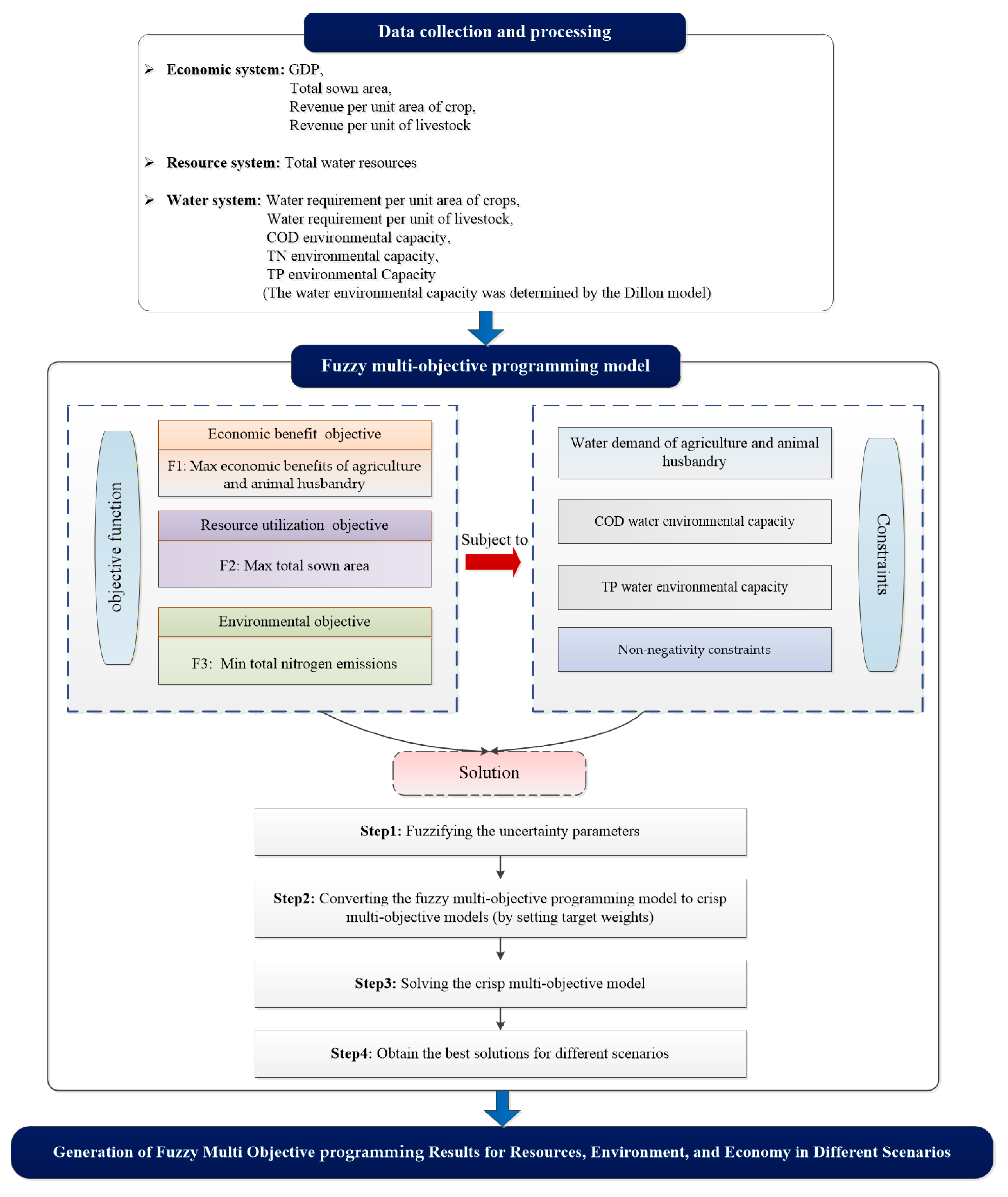
The fuzzy multi-objective programming model’s optimal state was determined via a two-step process: fuzzy set theory and weighted sum method converted it to a crisp nonlinear programming problem, solved by genetic algorithm to maximize comprehensive objective membership; to demonstrate the flexibility of the model, the target expected value was set to be fuzzy. The flowchart is shown in Figure 2. Combined with the actual situation of the Ulansuhai Basin, three objective functions were established, specifically as follows: the maximization of the agricultural and animal husbandry economic benefits, the maximization of the total sown area in the basin, and the minimization of the total nitrogen emissions from the agricultural and animal husbandry sector. Meanwhile, the expected values of the objective functions were also determined in accordance with the actual conditions of the basin. In addition, the water demand of the agricultural and animal husbandry industry, the chemical oxygen demand (COD) discharge, and the total phosphorus (TP) discharge in the basin were taken as the constraint conditions of the model.

2.3.1. The Objective Function of the Fuzzy Multi-Objective Programming Model

The First Objective Function
As shown in Figure 1, the dominant land use types in the Ulansuhai Basin were cultivated land and grassland. Correspondingly, the output value of agriculture and animal husbandry in this basin constitutes a crucial source of economic income for the region. In the process of constructing the fuzzy multi-objective programming model, this study takes the high-quality development of the social economy as the first objective function.
Specifically, the development goal corresponding to this objective function was designed to maximize the total annual economic income generated by the planting industry and animal husbandry within the basin, and its specific formula is expressed as follows:
M ax     f ˜ 1 = i = 1 4 N Y i a N Y i + j = 1 3 X M Y j a X M Y j
where
f ˜ 1 denoted the objective function for maximizing the economic benefits of agriculture and animal husbandry in the Ulansuhai Basin;
a N Y i denoted the net income per unit area of the i-th agricultural crop (unit: CNY/(hm2·year));
NYi denoted the total sown area of the i-th crop (unit: 104 hm2);
i denoted to the crop type, and four major crops were included in this study, namely wheat, corn, sunflower, and melons;
a X M Y j denoted the net income per head/animal of the j-th livestock in the animal husbandry sector (unit: CNY/(head·year));
XMYj denoted the number of the j-th livestock (unit: 104 head/animal);
j denoted to the livestock type, and three major livestock types were included in this study, namely cows, sheep, and pigs.
The Second Objective Function
Planting industry was the main development in Ulansuhai basin. While economic development and environmental protection were taking place, agricultural total sown area and grain output cannot be ignored. In order to ensure the optimal development of agriculture in Ulansuhai basin, we take total sown area in Ulansuhai basin as the second objective function:
M a x   f ˜ 2 = S X M + S Y M + S K H + S G G
where
f ˜ 2 denoted the objective function with the largest total sown area of main agricultural crops in the basin;
SXM, SYM, SKH and SGG denoted the total sown area of wheat, corn, sunflower and melon and fruit, respectively (unit: 104 hm2).
The Third Objective Function
The improvement of the ecological environment was an important development goal for the current Ulansuhai basin [29]. Against the backdrop of the accelerated advancement of the agricultural, the application of nitrogen fertilizers has continued to increase, and the total nitrogen concentration of rivers and lakes in the basin has increased, leading to a deterioration of water quality. While ensuring economic development, we should still focus on the protection of the water environment. In this study, the third objective function was to minimize the total nitrogen emissions from agriculture and animal husbandry in the Ulansuhai basin:
M i n   f ˜ 3 = i = 1 4 N Y i S C X S T N N Y i + j = 1 3 X M Y j S C X S T N X M Y j
where
f ˜ 3 denoted the objective function that minimizes the total nitrogen emissions from agriculture and animal husbandry in the basin;
S C X S T N N Y i denoted the output coefficient of the ith crop pollutant TN;
S C X S T N X M Y j denoted the output coefficient of the jth livestock pollutant TN;
i denoted the crop type (i = 1, 2, 3, 4);
j denoted the livestock type (j = 1, 2, 3).

2.3.2. Constraints of the Fuzzy Multi-Objective Programming Model

The problem of basin environmental planning requires consideration of multiple constraints that restrict basin development. In the environmental planning model for the Ulansuhai Basin, three types of factors were adopted as constraints for the fuzzy multi-objective programming model, specifically including the total amount of water resources, the maximum allowable pollutant carrying capacity of COD and TP, as well as non-negative variables.
The First Constraint
To satisfy the irrigation requirements of farmlands within the basin, the Ulansuhai Basin has adopted an annual water diversion scheme from the Yellow River. Specifically, water is diverted from the Yellow River via the Sanshenggong Hub and then delivered to farmland and lakes through the main canal, thirteen primary canals, and canals at all levels. After irrigation, the water is discharged through the main drainage canal, twelve primary drainage canals, and drainage canals at all levels. Subsequently, the discharged water enters the Ulansuhai drainage and discharge area via the Honggebu Water Station and finally flows back into the Yellow River through the outlet section of the main drainage canal, thereby forming a complete water diversion-irrigation–drainage system. The water consumption of agriculture and animal husbandry accounts for more than 90% of the total water consumption in the Ulansuhai Basin. Accordingly, this study regards the constraint that “the water demand of agriculture and animal husbandry in the Ulansuhai Basin shall not exceed 90% of the maximum available water supply” as one of the constraints for the model. The formula is as follows:
i = 1 4 N Y i X S L N Y i + j = 1 3 X M Y j X S L X M Y j 0.9 M A X S L
where
X S L N Y i denoted the annual water demand of different crops types of crops in agriculture (m3/(hm2·year));
X S L X M Y j denoted the annual water demand of different types of livestock (m3/(head·year));
MAXSL denoted the maximum available water resources (108 m3/a);
i denoted the crop type (i = 1, 2, 3, 4);
j denoted the livestock type (j = 1, 2, 3).
The Second Constraint
Non-point source pollution caused by water receding from farmland in the basin was the main cause of the deterioration of water quality in Ulansuhai lake. In order to protect and improve the water quality of Ulansuhai lake, this study takes the discharge of COD and TP in Ulansuhai basin less than the maximum COD and TP capacity of Ulansuhai lake as the second constraint. According to the investigation conducted by Dong [30], the COD pollutant emissions from agricultural non-point sources and animal husbandry in the Ulansuhai Basin accounted for 54% of the total emissions, while the TP pollutant emissions accounted for 74% of the total. Therefore, in the calculation process, the maximum allowable COD pollutant discharge (54% of the total) and the maximum allowable TP pollutant discharge (74% of the total) were adopted as constraint values, respectively:
i = 1 4 N Y i S C X S C O D N Y i + j = 1 3 X M Y j S C X S C O D X M Y j 0.54 M A X C O D
i = 1 4 N Y i S C X S T P N Y i + j = 1 3 X M Y j S C X S T P X M Y j 0.74 M A X T P
where
S C X S C O D N Y i and S C X S T P N Y i denoted the output coefficients of COD and TP of the ith crop pollutants, respectively.
S C X S C O D X M Y j and S C X S T P X M Y j denoted the output coefficients of the jth livestock pollutant COD and TP, respectively.
MAXCOD and MAXTP denoted the total loading amount of COD and TP under certain environmental target conditions (kg/(hm2·year)), respectively.
The Third Constraint
To avoid solutions conflicting with practical scenarios, non-negativity constraints were imposed on the model:
X S L N Y i , X S L X M Y j , S C X U T N N Y i , S C X U T P N Y j , S C X S C O D N Y i ,         S C X S T N X M Y j , S C X S T P X M Y i , S C X U C O D X M Y j , N Y i , X M Y j ,         M a x C O D , M a x T P , a N Y i , a X M Y j , S X M , S Y M , S K H , S G G > 0
Finally, by combining with the construction method of the fuzzy multi-objective programming model established, the aforementioned objective functions and constraints were systematically organized into corresponding mathematical expressions:
M a x   f ˜ 1 x = i = 1 4 N Y i a N Y i + j = 1 3 X M Y j a X M Y j ˜ z 1 g
M a x   f ˜ 2 = S X M + S Y M + S K H + S G G ˜ z 2 g
M i n   f ˜ 3 = i = 1 4 N Y i S C X S T N N Y i + j = 1 3 X M Y j S C X S T N X M Y j ˜ z 3 g
S.t.
  i = 1 4 N Y i X S L N Y i + j = 1 3 X M Y j X S L X M Y j 0.9 M A X S L
i = 1 4 N Y i S C X S C O D N Y i + j = 1 3 X M Y j S C X S C O D X M Y j 0.54 M A X C O D
i = 1 4 N Y i S C X S T P N Y i + j = 1 3 X M Y j S C X S T P X M Y j 0.74 M A X T P
X S L N Y i , X S L X M Y j , S C X U T N N Y i , S C X U T P N Y j , S C X S C O D N Y i ,         S C X S T N X M Y j , S C X S T P X M Y i , S C X U C O D X M Y j , N Y i , X M Y j ,         M a x C O D , M a x T P , a N Y i , a X M Y j , S X M , S Y M , S K H , S G G > 0

3. Results and Analysis

3.1. Solution of the Fuzzy Multi-Objective Programming Model for Ulansuhai Basin

By defining the upper and lower limit values of relevant data, four distinct development scenarios were formulated for the Ulansuhai Basin. Specifically, these scenarios cover two key dimensions of water resource management and ecological protection: in terms of water supply security, the scenarios include a basin water supply guarantee rate of 90% and a basin water supply guarantee rate of 75%; in terms of ecological environment quality, the scenarios involve meeting the Class IV water quality standard (COD ≤ 30 mg/L, TN ≤ 1.5 mg/L, TP ≤ 0.1 mg/L) for environmental capacity and meeting the Class V water quality standard (COD ≤ 40 mg/L, TN ≤ 2.0 mg/L, TP ≤ 0.2 mg/L) for environmental capacity. According to the Environmental Quality Standards for Surface Water (GB 3838—2002), which was formulated and issued by the Ministry of Ecology and Environment of the People’s Republic of China, the water quality grades examined in this study (i.e., the Class IV water quality standard and the Class V water quality standard) were established in accordance with this national standard.
On this basis, the objective functions corresponding to each scenario were solved using the fuzzy multi-objective programming method, and finally, the optimal solution set that conforms to the sustainable development needs of the Ulansuhai Basin was obtained.

3.1.1. Model Parameter of the Fuzzy Multi-Objective Programming Model for Ulansuhai Basin

The parameters involved in the model were derived from field measurements and systematic data collection in the Ulansuhai Basin. The data sources included the Statistical Yearbook of the Inner Mongolia Autonomous Region (2010–2022), the monitoring data of water quality indices in Ulansuhai Lake (2010–2022), and relevant academic literature. Specifically, the upper and lower limits of constraint indicators and other parameters were presented in Table 2, Table 3 and Table 4, where Table 2 describes the upper and lower limits of total water resources and environmental capacity, Table 3 illustrates the upper and lower limits of net income per unit area and water demand per unit area for four types of crops (wheat, corn, sunflower and fruit), and Table 4 shows the upper and lower limits of income per animal and water demand per animal for three types of livestock (cow, sheep and pig).

3.1.2. Scenario Setting of the Fuzzy Multi-Objective Programming Model for Ulansuhai Basin

In this study, the fuzzy multi-objective programming model for the Ulansuhai Basin was solved by adopting the weighted summation method and utilizing LINGO 12.0 software. The Ulansuhai Basin relies on the Yellow River as the primary water source for agricultural irrigation, while the water quality of Ulansuhai Lake remained in a state of moderate pollution throughout the year. Accordingly, the water supply guarantee rate of the Yellow River’s diverted water and the pollutant quality level were adopted as classification criteria for solving the objective function, and four solution scenarios were further established (Table 5). The watershed water supply guarantee rate was 90% corresponds to normal/wet hydrological years, prioritizing the stability of core water demands to ensure key goals like food security. The watershed water supply guarantee rate was 75% applies to dry years, addressing water shortage risks and avoiding over-reliance on ideal hydrological conditions. Second, it responds to differentiated practical needs. The environmental capacity reaches the Class IV water quality standard and underpins high-priority eco-economic goals, guiding optimizations of pollution intensity and water diversion to protect functional water use standards. The environmental capacity reaches the Class Ⅴ water quality standard and caters to basic ecological protection and low-cost governance, meeting agricultural needs in early governance stages while avoiding excessive economic burdens.

3.2. Analysis of Sustainable Management for the Ulansuhai Basin Based on the Fuzzy Multi-Objective Programming Model for Ulansuhai Basin

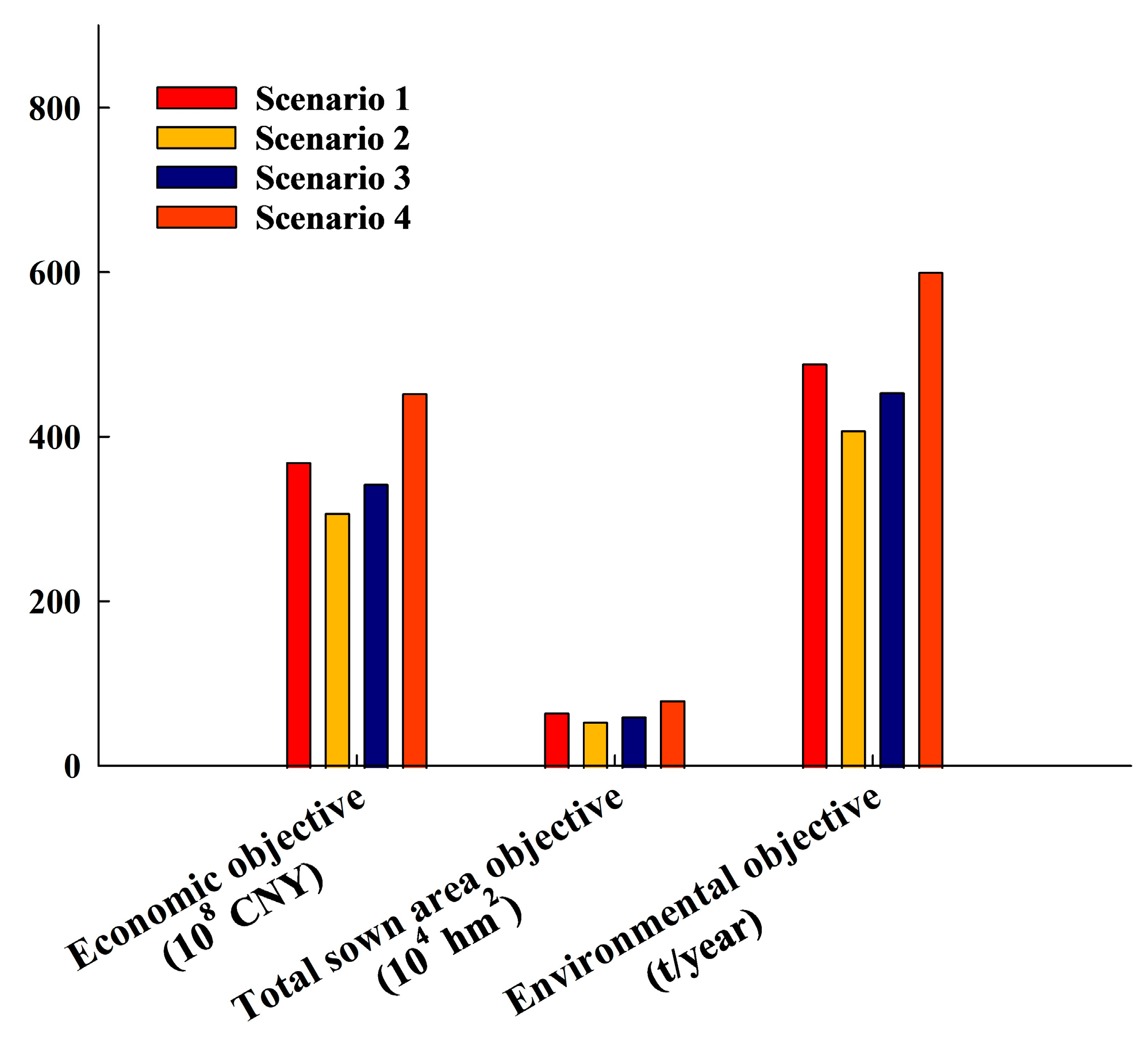
The results obtained from solving the three objective functions of the fuzzy multi-objective programming model, corresponding to the four scenarios, were presented in Figure 3. Taking a water supply volume of 4.5 billion cubic meters as the expected value, when the water supply guarantee rate was 90% (Scenario 1), the economic target reached 6.154 billion CNY higher than that under the 75% water supply guarantee rate; the objective of total sown area was 11.1 ten thousand hm2 larger; and the environmental target showed an annual increase of 81 tons in total nitrogen (TN) emissions. This result indicated that the total amount of water resources is one of the vital factors restricting the economic development of the Ulansuhai Basin. Furthermore, an increase in water consumption from the Yellow River will lead to an expansion of the total sown area in the basin, which in turn increases the application of nitrogen fertilizers, consequently resulting in a rise in TN emissions in the Ulansuhai Basin. There was a significant difference in the results of water environmental capacity between the Class IV water quality standard scenario (Scenario 3) and the Class V water quality standard scenario (Scenario 4). Specifically, the economic objective under the Class IV water quality standard was 11.021 billion CNY lower than that under the Class V water quality standard; the objective of total sown area was 19.87 ten thousand hm2 lower; and the TN emission of the environmental objective was 146 tons per year less.
The plantation industry serves as the primary source of economic income for the primary industry in the Ulansuhai Basin. However, during the development of the plantation industry, the excessive application of pesticides and chemical fertilizers—coupled with the discharge of these substances into rivers and lakes via precipitation and runoff erosion—constitutes the main cause of water environmental pollution. Therefore, only through the coordinated development of crop cultivation and animal husbandry can the balance between the economy and the environment be achieved.
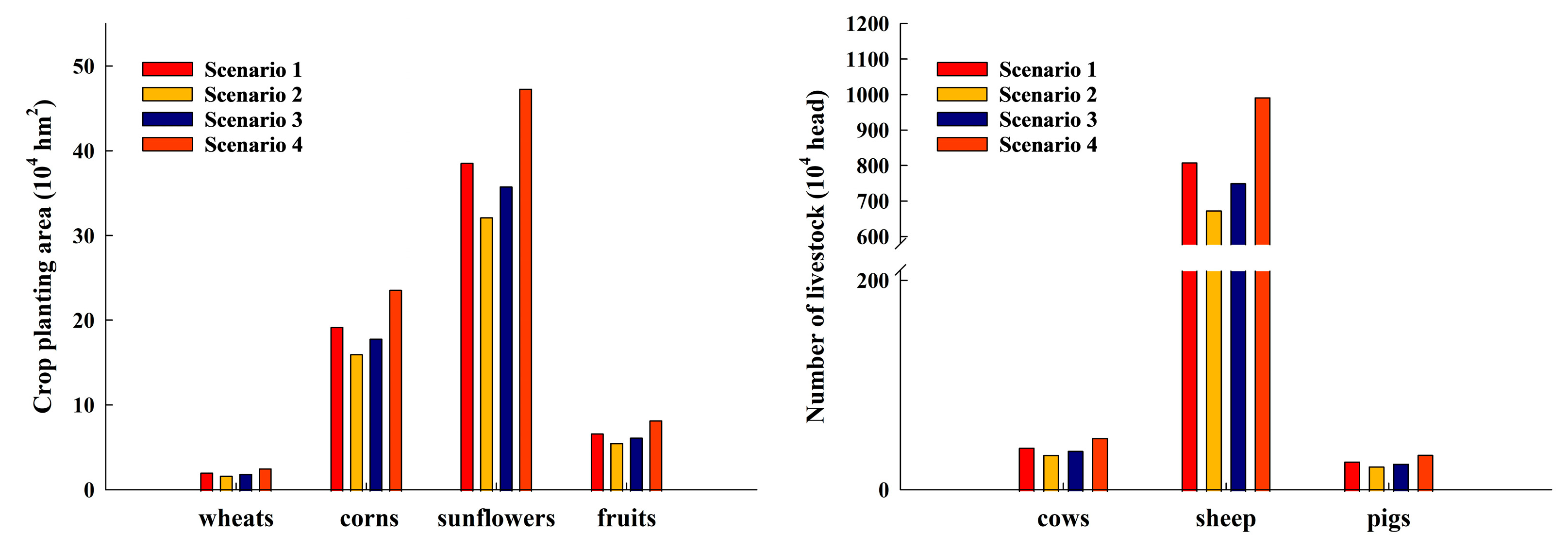
Figure 4 presented the solving results of the decision variables for the fuzzy multi-objective programming model, which corresponded to the four aforementioned scenarios. As could be observed from the decision variable solution results (see Figure 4), within the plantation industry, giving priority to the cultivation of sunflowers and corn was conducive to maintaining the optimal value of the model results. This was primarily because sunflowers and corn exhibited relatively stable adaptability to the climate and soil conditions of the Ulansuhai Basin, while their water and fertilizer demand characteristics aligned with the basin’s water resource constraints and environmental protection requirements, thereby minimizing deviations from the model’s target objectives.
In the animal husbandry sector, to achieve the optimal model results, the quantity ratio of cows to pigs should be maintained at approximately 1.5:1, and the number of sheep should be roughly 20 times that of cows. This specific proportional configuration was derived from the trade-off between the economic benefits of different livestock species and their environmental impact (e.g., pollutant emissions such as nitrogen and phosphorus). It ensured that the scale of animal husbandry neither exceeded the basin’s environmental carrying capacity nor compromised the economic benefits of the sector, thus realizing the coordinated optimization of ecological and economic goals.
In addition, when the scale ratio of plantation to animal husbandry was controlled at 13.16:1 (head:hm2), the economic and environmental development of the Ulansuhai Basin reached the most coordinated state, and the objective function of the fuzzy multi-objective programming model was consistent with the preset expected value. This ratio balanced the resource demand (e.g., water, land) between the plantation and animal husbandry sectors, avoided resource competition or waste caused by an imbalance in the scale of the two industries, and further verified the rationality of the model’s decision variable configuration in guiding the basin’s sustainable development.

4. Discussion

To support the development of local irrigation agriculture, the Hetao Irrigation Area, which was situated in an arid and semi-arid zone, diverts water from the Yellow River for farmland irrigation annually. It is the water diverted from the Yellow River that moistens this arid land, thereby enabling the city to produce abundant, sweet and high-quality fruits. In recent years, agricultural water consumption in the area has continued to decrease, primarily due to two key measures: first, the reduction in planting areas for water-intensive crops; second, the improvement in water diversion efficiency [31,32]. Furthermore, the effective implementation of water-saving projects over the past 20 years has further advanced this reduction trend, lowering the annual water diversion volume from approximately 5.2 billion cubic meters to the current 4.0 billion cubic meters.
After optimizing the model to take into account economic, environmental and ecological considerations, it was found that cash crops have a greater cultivation advantage over grain crops in the Ulansuhai basin, among which sunflowers > corns > fruits > wheats. This was due to the fact that cash crops require less water and have higher returns, which can increase economic income while reducing the negative impact on the downstream water environment [33]. This finding was consistent with the analysis results of Guo et al. [34], who adopted the coupled fuzzy analytic hierarchy process and technique for order preference by similarity to an ideal solution (TOPSIS) method to optimize the planting structure in the Hetao Irrigation Area. It is also consistent with the research outcomes of Chen et al. [35], who employed the sustainability index method to conduct a sustainability analysis of China’s agricultural planting structure. Gao et al. [36] conducted a systematic analysis on the driving factors influencing the changes in crop planting structure within the Hetao Irrigation Area, employing research methods including field spectral measurements and GPS-based calibration of planting areas. The findings of their study indicated that the variations in crop planting areas were attributed to the combined effects of multiple factors, specifically encompassing the water diversion volume from the Yellow River, groundwater depth, temperature conditions, population activity intensity, socio-economic development level, and urban construction scale. Furthermore, their research revealed that the planting areas of corn and sunflowers exhibited a negative correlation with the water diversion volume from the Yellow River, while demonstrating a positive correlation with the Gross Domestic Product (GDP). This conclusion is consistent with both the optimization results obtained in this study and the core concepts of rational water resource allocation and proactive promotion of economic development, thereby providing empirical support for the research hypotheses and practical strategies proposed herein. The adjustment and evolution of the planting structure in the study area are jointly influenced by multiple relevant factors, including the watershed-scale climate conditions, irrigation period arrangement, water diversion volume, and urban construction progress [37]. Formulating targeted planning suggestions for the layout of planting areas and the optimization of planting structures is not only conducive to improving water resource utilization efficiency and promoting the high-quality development of agriculture in the Ulansuhai Basin, but it also plays a positive role in realizing source control of fertilizer application, mitigating ecological environmental pressures, and providing scientific decision-making support for regional managers. Such suggestions further bridge the gap between theoretical research on agricultural production and practical management of the basin ecosystem.
Compared with the constraints imposed by water resource scarcity on regional economic development, the restrictive effect of water environment capacity on economic development is more prominent and far-reaching. Taking the Ulansuhai Lake watershed as the research object, agricultural land constitutes the dominant land use type in this region. Against the backdrop of regional cropping structure adjustment, particularly under the implementation of the “stabilizing grain production and expanding cash crop cultivation” policy that was consistent with the research findings of this paper, the planting area of cash crops in the basin was further expanded [38]. However, the fertilizer requirement per unit area of cash crops is generally approximately 50% higher than that of grain crops; this difference will lead to a further expansion in the scope and dosage of fertilizers and pesticides applied in agricultural production. Meanwhile, the Hetao Irrigation Area—located within the Ulansuhai Lake watershed—serves as a national commercial grain production base and undertakes important grain production tasks [39]. Therefore, it remains necessary to ensure the planting area and output of grain crops while minimizing agricultural non-point source pollution as much as possible.
In the current agricultural production process of the basin, large-scale application of nitrogen and phosphorus fertilizers is not only prevalent, but the application rate of nitrogen-phosphorus compound fertilizer has also reached 127.07 × 10⁴ tons [40]. Notably, the utilization efficiency of phosphorus fertilizer in this agricultural production system is merely 13–20%; due to this low utilization rate, most of the phosphorus fertilizer applied to the soil each year cannot be effectively absorbed and utilized by crops and is instead fixed in the soil matrix. After years of continuous input and cumulative deposition, the phosphorus content in the soil of the Hetao Irrigation Area has generally increased significantly, which in turn disrupts the balance of the soil nutrient cycle and impairs the structural and functional stability of the soil ecosystem. At the same time, frequent agricultural activities have also increased greenhouse gas emissions, posing significant challenges to the sustainable development of global ecosystems [41].
Wang et al. [42] employed the AGNPS model to optimize the economic and environmental objectives of the Ulansuhai Basin. Their research findings indicated that within this basin, a lower level of TN and TP emissions was associated with a corresponding reduction in agricultural income. This conclusion aligned with the results obtained in the present study. The combined effect of the planting structure adjustment-driven agricultural activities (including expanded cash crop cultivation and high fertilizer application) and animal husbandry development has led to a substantial discharge of pollutants, including TN, TP, and COD, through agricultural wastewater runoff and livestock breeding waste. Such large-volume pollutant emissions have exceeded the carrying capacity of the local water environment—exacerbating the contradiction between excessive pollutant discharge and insufficient water environment capacity—and further causing severe damage to the structural integrity of river channels, as well as the functional stability of the water environment and ecosystem of Ulansuhai Lake [40]. This situation not only highlights the urgency of reconciling the relationship between economic development and ecological environment protection in the basin (as the unsustainable development model has posed an imminent threat to the regional ecological security and long-term economic vitality) but also holds important implications for the multi-objective planning of the Ulansuhai Lake watershed, providing critical empirical support for optimizing the balance between agricultural production (including grain security and cash crop development), soil ecosystem protection, and water environment governance in the planning process [43].
The coordinated development of animal husbandry and river basins served as a core link underpinning the sustainable evolution of the river basin’s ecological–economic–social system. It not only resolved the contradictions between traditional breeding practices and river basin protection but also injected diverse impetuses into the sustainable development of river basins. Comparisons of relevant research findings further underscored the necessity and superiority of this coordinated model. At the ecological protection level, the coordinated development of animal husbandry could remarkably reduce environmental problems such as grassland degradation and water eutrophication when compared with traditional extensive farming, which was consistent with the research results of Rosenzweig and Richetti [44]. Meanwhile, in the aspect of economic and industrial development, optimizing the livestock industry could effectively improve the breeding level and efficiency of advantageous livestock species, providing stable support for the sustainable development of the basin economy. Therefore, the optimized development of animal husbandry had achieved synergy between ecological protection in the watershed and increased efficiency in the animal husbandry industry, offering a replicable practical path for the sustainable development of the watershed.

5. Conclusions

The findings of this paper captured the actual state of the associations between economic development and water pollution control in the Ulansuhai Basin during the coordinated development process. Furthermore, an efficient optimization scheme for the economic and environmental development status of the Ulansuhai Basin was proposed via a fuzzy multi-objective programming algorithm. The main conclusions were as follows:
(1)
When the water supply guarantee rate was 90%, the economic objective value was 6.154 billion CNY higher than that at a 75% guarantee rate, the total sown area objective value was 11.11 ten thousand hm2 larger, and the environmental objective value for TN emissions was 81 tons per year higher. In addition, under the Class IV water quality standard, the economic objective value was 11.021 billion CNY lower than that under the Class V standard, the total sown area objective value was 19.87 ten thousand hm2 smaller, and the environmental objective value for TN emissions was 146 tons per year lower.
(2)
Among these four scenarios, Scenario 4 (i.e., environmental capacity meeting the Class V water quality standard, with other objectives maintaining upper limits) exhibited the largest economic and total sown area objective values, and its environmental target was more consistent with the expected value. To attain this state, it is necessary to coordinate the proportion of agricultural and animal husbandry sectors and the efficiency of resource utilization, as well as to enhance the monitoring and early warning capabilities for the ecological environment by integrating the water environmental capacity under different water diversion scenarios of the Yellow River.
(3)
Based on the decision variable results derived from fuzzy multi-objective programming, prioritizing the cultivation of sunflowers and corn maintained the optimal model results. In the livestock sector, maintaining a cattle-to-pig breeding ratio of 1.5:1 and a sheep-to-cattle ratio of approximately 20:1 ensured optimal model results. When the ratio of cultivation area to livestock quantity was 13.16:1 (head:hm2), the Basin’s economic and environmental development was most coordinated, and all objective functions were consistent with the expected values. Currently, the ratio of the planting structure to the livestock structure in the Ulansuhai Basin stands at approximately 9.93:1 (head:hm2). However, there remains a certain gap between this ratio and the sustainable development target of 13.16:1 (head:hm2) established in this study. This finding provides a solid data foundation for relevant departments to further optimize and rationalize the adjustment of the agricultural and animal husbandry structure ratio.
(4)
The multi-objective programming model developed in this study was specifically tailored to arid and semi-arid watersheds characterized by water resource scarcity. Furthermore, by adjusting the weights of the objective function in alignment with the practical conditions of other research regions, the model’s application in the field of ecological environment management can be effectively facilitated.
(5)
In future research related to fuzzy multi-objective programming models, efforts to advance theoretical innovation and algorithmic optimization in this field should be further strengthened. Specifically, such endeavors may focus on addressing existing limitations in theoretical frameworks and optimizing algorithmic efficiency, such as reducing computational complexity while improving solution accuracy for large-scale multi-objective optimization problems.

Author Contributions

Conceptualization, X.L., H.L. and F.G.; methodology, X.L. and S.J.; software, Y.W. and F.G.; visualization, Y.W.; formal analysis, X.L.; resources, S.J.; data curation, X.L.; writing—original draft preparation, X.L.; writing—review and editing, L.W.; supervision, H.L.; project administration, L.W.; funding acquisition, X.L. and L.W. All authors have read and agreed to the published version of the manuscript.

Funding

This research was funded by the National Natural Science Funds, P.R. China (Nos. 32160279, 31960249), Inner Mongolia Natural Science Foundation (2025QN04030); Inner Mongolia University of Finance and Economics, autonomous region “Five Major Tasks” research project (NCXWD2418); Special Research Project for First-Class Disciplines of the Education Department of Inner Mongolia Autonomous Region (YLXKZX-NCD-013).

Data Availability Statement

The raw data supporting the conclusions of this article will be made available by the authors on request.

Conflicts of Interest

The authors declare no conflict of interest.

References

  1. Toprak, Z. Brundtland Report; Springer: Berlin/Heidelberg, Germany, 2013. [Google Scholar]
  2. Costanza, R.; d’Arge, R.; de Groot, R.; Farber, S.; Grasso, M.; Hannon, B.; Limburg, K.; Naeem, S.; O’Neill, R.V.; Paruelo, J.; et al. The value of the world’s ecosystem services and natural capital. Nature 1998, 25, 3–15. [Google Scholar]
  3. Yang, T.; Zhou, C.; Xiao, T.; Xu, Q. Coordinated Development of the Digital Economy and Urban–Rural Integration in the Yangtze River Delta and Its Spatial Correlation Structure. Sustainability 2025, 17, 4144. [Google Scholar] [CrossRef]
  4. Xiao, Y.; Tang, X.; Wang, J.; Huang, H.; Liu, L. Assessment of coordinated development between tourism development and resource environment carrying capacity: A case study of Yangtze River economic Belt in China. Ecol. Indic. 2022, 141, 109125. [Google Scholar] [CrossRef]
  5. Jiang, Y. China’s water security: Current status, emerging challenges and future prospects. Environ. Sci. Policy 2015, 54, 106–125. [Google Scholar] [CrossRef]
  6. Wang, Q.; Yang, Z. Industrial water pollution, water environment treatment, and health risks in China. Environ. Pollut. 2016, 218, 358–365. [Google Scholar] [CrossRef]
  7. Ha, D.W.; Baek, J.H.; Hwang, S.Y.; Lee, Y.J.; Lee, W.S.; Choi, J.Y. Analysis of the Pollution Load Contribution Rate of Inflowing Tributaries for the Sustainable Management of the Seomjin River (Seombon D). Sustainability 2025, 17, 411. [Google Scholar] [CrossRef]
  8. Ma, S.J.; Wang, R.S. The social-economic-natural complex ecosystem. Acta Ecol. Sin. 1984, 4, 56–63. [Google Scholar]
  9. Feng, S.Y.; Liu, G.Q.; Mei, Y.D. Water resources-ecological economic complex system and its sustainable development. Eng. J. Wuhan Univ. 1995, 28, 624–629. [Google Scholar]
  10. Zhong, L.J.; Fang, G.H.; Guo, Y.H. Researches on the relationship among water resources, social economy and ecological environment. J. Econ. Water Resour. 2007, 25, 4–7+81. [Google Scholar]
  11. Radmehr, R.; Brorsen, B.W.; Shayanmehr, S. Adapting to climate change in arid agricultural systems: An optimization model for water-energy-food nexus sustainability. Agric. Water Manag. 2024, 303, 109052. [Google Scholar] [CrossRef]
  12. Rong, Q.; Zhu, S.; Yue, W.; Su, M.; Cai, Y. Predictive simulation and optimal allocation of surface water resources in reservoir basins under climate change. Int. Soil Water Conserv. Res. 2024, 12, 467–480. [Google Scholar] [CrossRef]
  13. Tu, Y.; Lu, Y.; Lev, B. An interval two-stage robust stochastic programming under a bi-level multi-objective framework toward river basin water resources allocation. Comput. Oper. Res. 2025, 180, 107045. [Google Scholar] [CrossRef]
  14. Chang, Y.M. System Coupling model and evaluation of water resources environment and urban eco-economy. Water Resour. Power 2018, 36, 55–58+27. [Google Scholar]
  15. Zhu, C.; Liu, X.; Ding, W.; Zhang, S. Cloud model-based multi-stage multi-attribute decision-making method under probabilistic interval-valued hesitant fuzzy environment. Expert Syst. Appl. 2024, 255, 124595. [Google Scholar] [CrossRef]
  16. Jiang, J.; Liu, X.; Wang, Z.; Ding, W.; Zhang, S.; Xu, H. Large group decision-making with a rough integrated asymmetric cloud model under multi-granularity linguistic environment. Inf. Sci. 2024, 678, 37. [Google Scholar] [CrossRef]
  17. Miao, C.H.; Xia, C.; Jin, F.J.; M, L.; Wen, Z.; Fu, B.J. Implementation effectiveness and promotion strategies of ecological protection and high-quality development strategy in the Yellow River Basin. J. Nat. Resour. 2025, 40, 569–583. [Google Scholar] [CrossRef]
  18. Sun, Y.; Shi, X.; Kang, R.; Yang, Z.; Zhao, S.; Li, G.; Wang, Y.; Huotari, J. Seasonal freeze-thaw CO2 sink ‘midday rest’ phenomenon in lakes: A case study of the largest freshwater lake in the Yellow River Basin. J. Hydrol. 2025, 658, 133208. [Google Scholar] [CrossRef]
  19. Khezri, R.; Mahmoudi, A. Review on the state-of-the-art multi-objective optimisation of hybrid standalone/grid- connected energy systems. IET Gener. Transm. Distrib. 2020, 14, 4285–4300. [Google Scholar] [CrossRef]
  20. Wang, Y.; Yang, W.; Jiao, Y.; Ma, X.; Qi, W. Quantitative analysis of dissolved carbon sources in the farmland artificial ditch drainage-Lake UlanSuhai continuum in the Hetao Irrigation District’s, Inner Mongolia. J. Hydrol. Reg. Stud. 2024, 55, 101910. [Google Scholar] [CrossRef]
  21. Du, C.; Cui, J.; Wang, D.; Li, G.; Lu, H.; Tian, Z.; Zhao, C.; Li, M.; Zhang, L. Prediction of aquatic vegetation growth under ecological recharge based on machine learning and remote sensing. J. Clean. Prod. 2024, 452, 142054. [Google Scholar] [CrossRef]
  22. Zhao, Y.; Qu, S.; Li, M.; Duan, L.; Zhao, Y.; Ren, X.; Yang, X.; Dong, S.; Yu, R. Spatio-temporal variability of lacustrine groundwater discharge and related pollutant fluxes in an agricultural drainage lake: Coupled influence of meteorological factors and vegetation coverage dynamics. J. Hydrol. 2025, 662, 134061. [Google Scholar] [CrossRef]
  23. Li, Y.; Wang, H.; Deng, Y.; Liang, D.; Li, Y.; Gu, Q. Applying water environment capacity to assess the non-point source pollution risks in watersheds. Water Res. 2023, 240, 120092. [Google Scholar] [CrossRef]
  24. Ongley, E.D.; Xiaolan, Z.; Tao, Y. Current status of agricultural and rural non-point source Pollution assessment in China. Environ. Pollut. 2010, 158, 1159–1168. [Google Scholar] [CrossRef] [PubMed]
  25. Liu, X.H.; Liu, H.M.; Jing, J.; Liu, Y.; Xu, Z.; Cao, X.; Ma, L.; Zhuo, Y.; Wen, L.; Wang, L. How the land use/cover changes and environmental factors at different scales affect lake water quality in arid and semi-arid regions. Front. Ecol. Evol. 2023, 11, 1188927. [Google Scholar] [CrossRef]
  26. Wang, J.; Ge, Z.; Xia, R.; He, S.; Zhan, S. Hydrogeochemistry and stable isotopes of water: Characteristics, influencing factors and sources in a semi-arid irrigated basin, Hetao Plain. J. Arid. Environ. 2025, 227, 105313. [Google Scholar] [CrossRef]
  27. Yang, L.; Zhang, S.; Luo, M.; Zhao, X.; Lin, X.; Zhang, Q.; Fang, K.; Lv, S. Impacts of land use and crop structure change on the value of ecosystem services in Hetao Irrigation District of China. J. Clean. Prod. 2024, 480, 144113. [Google Scholar] [CrossRef]
  28. Zhang, W.C.; Zhou, H.; Li, H.H.; Wang, Y.H.; Cui, Z.M.; Shan, C.H.; Wang, F.C.; Shi, H.B. Soil water and salt dynamics under various irrigation and drainage methods in the Hetao irrigation district: A SahysMod-based analysis. Agric. Res. Arid Areas 2025, 43, 245–259. [Google Scholar]
  29. Wang, S. Impacts of Temperature and Nutrient Dynamics on Phytoplankton in a Lake: A Case Study of Wuliangsuhai Lake, China. Sustainability 2024, 16, 11195. [Google Scholar] [CrossRef]
  30. Dong, B.B.; Ma, S.H.; Cao, H.B.; Zhang, Y. Analysis and Countermeasures of Pollution in Wuliangsuhai Basin. J. Anhui Agric. Sci. 2011, 39, 10402–10405+10408. [Google Scholar]
  31. Yu, B.; Shang, S. Integrated assessment of crop planting suitability: A case study in the Hetao Irrigation District of China using HJ-1A/1B satellite data. Agric. Water Manag. 2024, 301, 18939. [Google Scholar] [CrossRef]
  32. Zhao, J.; Duan, J.J.; Wang, T.; Bi, Y.; Gao, F. Prediction of water-saving potential in Inner Mongolia Loop using distributed water cycle model and machine learning. Trans. Chin. Soc. Agric. Eng. 2023, 39, 89–98. [Google Scholar]
  33. Fu, Q.W.; Zhai, J.Q.; Zhao, Y.; He, G.H.; Zhang, Y. Effects of the Planting Structure Adjustment on Water Budget of Field System in Hetao Irrigation Area. J. Irrig. Drain. 2017, 36, 1–8. [Google Scholar]
  34. Guo, P.; Zhao, M.; Zhang, Y.; Zhang, X.; Zhang, F. Optimization and Evaluation of Multi-objective Planting Structure in Hetao Irrigation District Based on Water Footprint. Trans. Chin. Soc. Agric. Mach. 2021, 52, 346–357. [Google Scholar]
  35. Chen, W.; Wang, Q.; Li, Q.; Wang, Y.; Zheng, W. Exploring the impact of rural labor transfer on the production and ecological sustainability of crop planting structure in China. Environ. Sci. Pollut. Res. 2023, 30, 22668–22685. [Google Scholar] [CrossRef]
  36. Gao, Y.; Qiao, R.; Ji, S.; Bai, X.; Wang, L.; Chang, X. Changes and driving factors of crops planting structure in Hetao Irrigation Region in Inner Mongolia. J. Desert Res. 2021, 41, 110–117. [Google Scholar]
  37. Hao, L.; Zhang, S.; Zhang, F.; Ren, Y.; Zhang, X.; Yan, J. Balancing water saving, market attractiveness, and pollution control in crop spatial planting structure planning of arid regions. Agric. Water Manag. 2025, 309, 109348. [Google Scholar] [CrossRef]
  38. Song, B.Q.; Long, K.S. The Impact of non-grain production on fa rmers’ income: From a macro-comparative perspective. Res. Agric. Mod. 2023, 44, 244–253. [Google Scholar]
  39. Lu, Q.W.; Cui, H.Z. Exploration and enlightenment on improving the quality of agricultural and animal husbandry products in Bayannaoer City, Inner Mongolia. China Dev. Obs. 2020, 232, 113–116. [Google Scholar]
  40. Wang, W.G.; Shi, H.B.; Li, X.Y.; Sun, Y.; Zhang, W.; Zhao, H. Effects of irrigation-fertilization-tillage on nutrient loading and crop yield in Ulansuhai watershed based on improved SWAT Model. J. Lake Sci. 2022, 34, 1505–1523. [Google Scholar]
  41. Li, L.; Awada, T.; Shi, Y.; Jin, V.L.; Kaiser, M. Global Greenhouse Gas Emissions From Agriculture: Pathways to Sustainable Reductions. Glob. Change Biol. 2025, 31, e70015. [Google Scholar] [CrossRef]
  42. Wang, X.; Yang, H.; Cai, Y.; Yu, C.; Yue, W. Identification of optimal strategies for agricultural nonpoint source management in Ulansuhai Nur watershed of Inner Mongolia, China. Stoch. Environ. Res. Risk Assess. 2016, 30, 137–153. [Google Scholar] [CrossRef]
  43. Zhang, C.L.; Yang, G.Q.; Wang, C.Z.; Huo, Z. Linking agricultural water-food-environment nexus with crop area planning: A fuzzy credibility-based multi-objective linear fractional programming approach. Agric. Water Manag. 2023, 277, 108135. [Google Scholar] [CrossRef]
  44. Rosenzweig, C.; Richetti, L. Environmental impacts of unregulated livestock production on river basin phosphorus cycles (1980–2017). Nat. Food 2020, 1, 320–328. [Google Scholar]
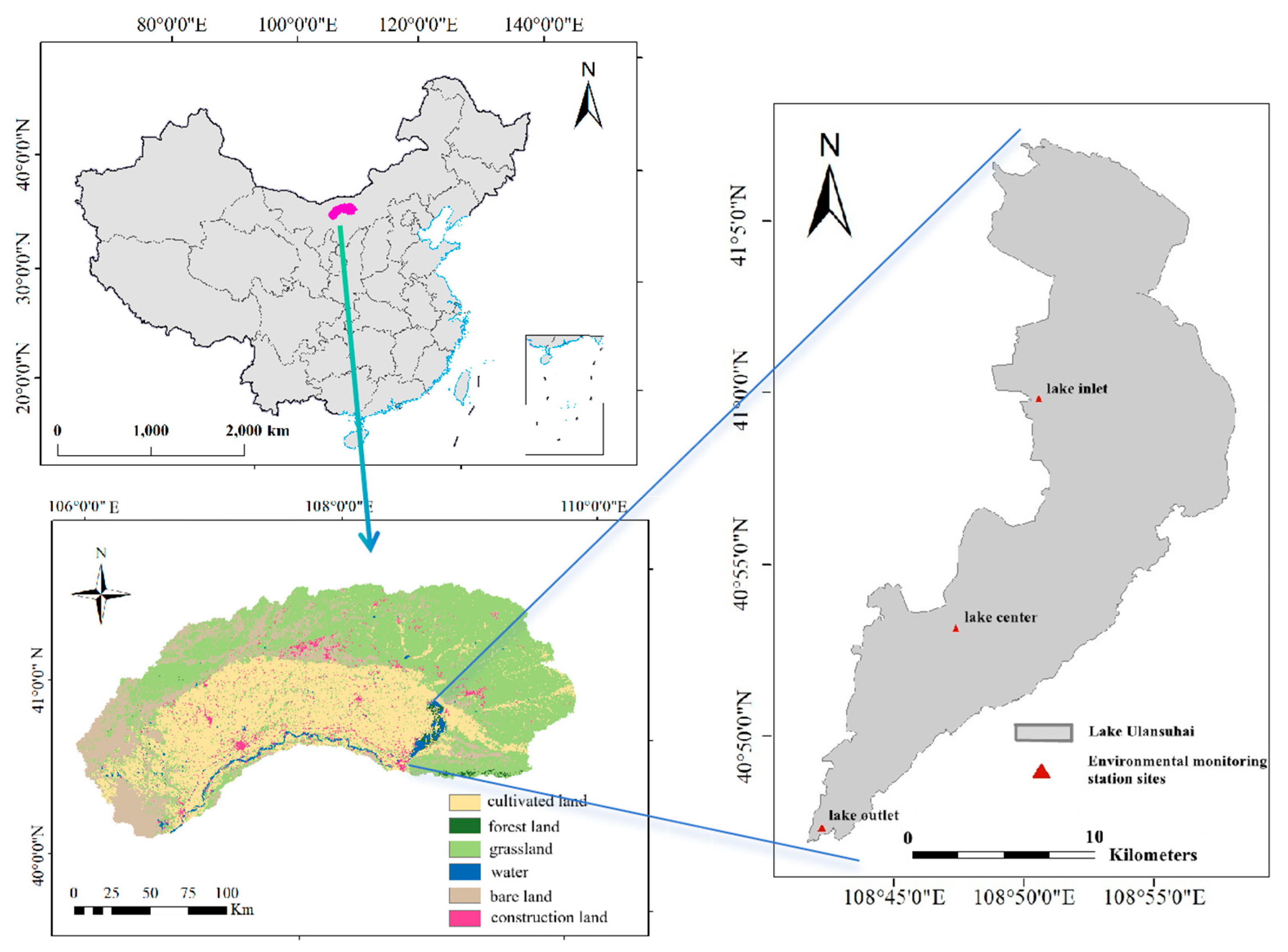
Figure 1. Location of study area, land use types, and distribution of sampling points.
Sustainability 17 10757 g001
Figure 2. Fuzzy multi-objective programming flowchart.
Sustainability 17 10757 g002
Figure 3. Objective function results of fuzzy multi-objective programming model for four scenarios.
Sustainability 17 10757 g003
Figure 4. Decision variable results of fuzzy multi-objective programming model for four scenarios.
Sustainability 17 10757 g004
Table 1. Economic system, resource system and water system indicators and data source.
System TypeIndicatorsUnitData SourceReferences
Economic systemGDP104 CNYStatistical Yearbook of Inner Mongolia Autonomous Region[4]
Total sown areahectare[11]
Revenue per unit area of cropCNY/(hm2·year)China Rural Statistical Yearbook[27]
Revenue per unit of livestockCNY/head
Resource systemTotal water resources108 m3Water Resources Bulletin of Bayannur City[11,12]
Water systemWater requirement per unit area of cropsm3/(hm2·year)[28]
Water requirement per unit of livestockm3/(head·year)
COD environmental capacityt/yearWater quality sampling and monitoring data[7,13]
TN environmental capacityt/year
TP environmental capacityt/year
Table 2. Upper and lower limits of main constraint indicators in the Ulansuhai Basin.
The Obligatory TargetsLower LimitUpper Limit
total water resources (108 m3)4248
COD environmental capacity (t/year)15,875.4021,167.20
TN environmental capacity (t/year)960.371280.49
TP environment capacity (t/year)42.7785.53
Table 3. Income and water demand of main crops in the Ulansuhai Basin.
CropRevenue per Unit Area of Crop
CNY/(hm2·Year)
Water Requirement per Unit Area of Crops
m3/(hm2·Year)
Lower LimitUpper LimitLower LimitUpper Limit
wheat11501800500550
corn8501100447491
sunflower16002000207269
fruit800010,000125.3165.6
Table 4. Income and water demand of animal husbandry in the Ulansuhai Basin.
LivestockRevenue per Unit of Livestock
CNY/Head
Water Requirement per Unit of Livestock
m3/(Head·Year)
Lower LimitUpper LimitLower LimitUpper Limit
cow789511,8431.832.19
sheep164424677.29
pig822.71234.31.441.8
Table 5. Scenario setting for the fuzzy multi-objective programming in the Ulansuhai basin.
Solution ScenariosScenario Description
Scenario 1The watershed water supply guarantee rate was 90%, and other targets were maintained at the upper limit
Scenario 2The watershed water supply guarantee rate was 75%, and other targets were maintained at the upper limit
Scenario 3The environmental capacity reaches the Class IV water quality standard, and other targets were maintained at the upper limit
Scenario 4The environmental capacity reaches the Class V water quality standard, and other targets were maintained at the upper limit
Disclaimer/Publisher’s Note: The statements, opinions and data contained in all publications are solely those of the individual author(s) and contributor(s) and not of MDPI and/or the editor(s). MDPI and/or the editor(s) disclaim responsibility for any injury to people or property resulting from any ideas, methods, instructions or products referred to in the content.