Article

Micro/Nanoplastics Alter Daphnia magna Life History by Disrupting Glucose Metabolism and Intestinal Structure


1
International Genome Center, Jiangsu University, Zhenjiang 212013, China
2
School of Life Sciences, Jiangsu University, Zhenjiang 212013, China
3
School of Environmental and Safety Engineering, Jiangsu University, Zhenjiang 212013, China
4
College of Life Science and Technology, Jinan University, Guangzhou 510632, China
*
Authors to whom correspondence should be addressed.
Sustainability 2025, 17(23), 10728; https://doi.org/10.3390/su172310728
Submission received: 23 October 2025 / Revised: 14 November 2025 / Accepted: 17 November 2025 / Published: 30 November 2025

Abstract

Microplastic pollution poses growing risks to aquatic zooplankton, yet its impact on Daphnia magna life history remains incompletely understood. This study explored the influences of micro/nanoplastics (MPs/NPs) on D. magna by exposing organisms to size- and concentration-varied microplastics, tracking microplastic distribution via fluorescence imaging. Results demonstrated significant microplastic-induced impairments in growth and reproduction. Gut microbiota analysis revealed microplastic-altered microbial communities, with functional prediction identifying disrupted glucose metabolism as a key driver of life-history changes. Intestinal structure observations further showed microplastic-accelerated aging. Collectively, our findings highlight that microplastic accumulation in D. magna disrupts gut microbiota and tissue integrity, ultimately impairing life-history traits. These alterations in growth and gut characteristics of D. magna may further propagate through the aquatic food web, potentially damaging the intestinal structure and function of plankton communities. Given the pivotal role of zooplankton in nutrient cycling and energy transfer, our findings underscore that microplastic-induced disruptions in key species like D. magna could threaten the stability and sustainability of aquatic ecosystems.

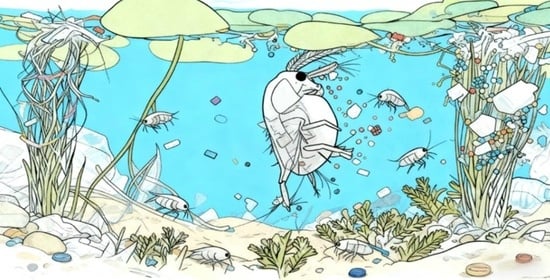
Graphical Abstract

1. Introduction

Environmental pollution resulting from plastics has attracted extensive concern worldwide. Compared with large-sized plastics, small-sized microplastics are more likely to appear in the environment, are more easily ingested, and participate in the nutrient cycling, enriching the consumers’ bodies in the trophic pyramid, ultimately endangering biological health and ecosystem sustainability. Recent studies have confirmed that plastics can further break down into smaller ones, which range from microplastics (MPs ∼1 μm–5 mm) to nanoplastics (NPs < 1000 nm) [1]. The hazards of microplastics to organisms generally manifest in two aspects: direct and indirect effects. Direct hazards include, for example, MPs being able to attach to and bioaccumulate in plant roots and rhizomes, thereby affecting plant growth. Meanwhile, MPs accumulating in the intestines of organisms influence their digestion and absorption. In addition, MPs can enter the body of a living organism, thus inducing severe and sustained negative effects [2]. For indirect hazards, microplastics can be able to combine with organic pollutants (such as antibiotics) to form a compound pollution phenomenon, which exerts synergistic effects on the growth and development of organisms.
In aquatic ecosystems, microplastics can accumulate in sediments and alter their rheological properties [3], disrupting the fertility and offspring growth of benthic organisms [4]. Studies have shown that microplastics can affect the gut microbiota structure of aquatic species and relevant ecological conditions, thereby impacting aquatic ecosystem sustainability [5]. Microplastics can reach and expose aquatic organisms through a variety of pathways. Research on filter-feeding crustaceans (e.g., Daphnia magna) has identified the ingestion of contaminated food and water as their primary exposure route [6]. Once these microplastic particles enter an organism, they can interact with the intestinal microbiota in various ways. Firstly, microplastics can serve as substrates for potentially harmful bacteria to attach and proliferate, thereby changing the intestinal microbiota composition [7]. Secondly, chemicals and additives inherent in MPs could seep out, causing negative effects on intestinal microorganisms [8] and altering the structural properties of the intestine. Generally, organisms at lower trophic levels are more prone to eating microplastics than those at higher trophic levels. Naturally, MPs participate in the food chain transmission, triggering bioaccumulation effects [9].
When available food is mixed with microplastics smaller than 100 μm, zooplankton cannot successfully differentiate plastic particles from food [10], making them one of the aquatic organism groups most threatened by microplastics [11]. Meanwhile, zooplankton are a major food source for fish and invertebrate predators, playing a crucial position in the material cycle and energy transmission in aquatic environments [12]. Therefore, researching the effects of microplastics on zooplankton is essential for revealing the impacts and mechanisms of microplastics on food webs in aquatic ecosystems. For D. magna, its high responsiveness to environmental stress and the ease of obtaining its intestinal microbiota offer a unique chance to study interactions among the host, environment, and microbiota, with a high level of experimental controllability [13,14]. Additionally, due to the relatively low environmental concentrations of microplastics and the difficulty in detection, fluorescently labeled microplastics are often required to track the environmental behavior of microplastic particles in complex environments, thereby clarifying the complex environmental effects of microplastics.
In natural habitats, D. magna occupies the primary consumer trophic level, and it, along with the upper and lower trophic levels (producers and predators), is threatened by MPs. It is known that microplastics reduce the filtering and feeding rates of D. magna, leading to insufficient food intake, malnutrition, slow growth, and even death [15]. Furthermore, microplastics induce an increase in malondialdehyde (MDA) content in Daphnia magna, causing oxidative damage to the organism [15]. However, research on the mechanisms underlying the growth and development of Daphnia magna following microplastic exposure remains insufficient.
To investigate how microplastics influence the intestinal microbiota and intestinal structure of Daphnia magna, and subsequently affect its life history, different particle sizes and concentrations of microplastics were selected to feed Daphnia magna. And research was conducted on the following two aspects: (1) changes in the intestinal microbiota and intestinal structure of zooplankton after ingesting microplastics; and (2) the regulatory mechanism by which microplastic ingestion-induced changes in zooplankton’s intestinal microbiota and intestinal structure ultimately affect their growth and reproduction. Based on the above research, this study explored the influences of microplastic occurrence on the intestinal microbiota and intestinal structural changes in zooplankton, as well as the impacts of these changes on host adaptability.

2. Materials and Methods

2.1. Materials and Reagents

The freshwater crustacean zooplankton Daphnia magna provides a unique opportunity for research. Its short life cycle, asexual reproduction, and ability to clone parental genetic characteristics ensure consistent genetic backgrounds among experimental individuals. With a transparent body, its digestive tract, ovaries, and other structures are clearly distinguishable, facilitating the observation of physiological changes. Therefore, the cladoceran zooplankton Daphnia magna was selected as the experimental subject. And Scenedesmus quadricauda was purchased to feed Daphnia magna. The microplastics used in the experiment were 0.1 μm and 5 μm fluorescent polystyrene green microspheres.

2.2. Experimental Design and Sample Collection

Scenedesmus quadricauda was cultured in BG11 medium until the logarithmic growth phase, then the culture was terminated. The algal solution was centrifuged at 3000 rpm for 15 min. Then, discarding the supernatant, the pellet was resuspended in sterile water, and this was followed by an additional centrifugation step to remove the supernatant. The resulting algal biomass was stored at 4 °C in the dark.
Neonates (<24 h old) were cultured clonally in 250 mL glass beakers containing Aachener Daphnien Medium (Adam) supplemented with two sizes of plastics (0.1 and 5 μm) at three concentrations (0, 0.1, and 1 mg/L) at 20 °C. Each 200 mL glass beaker contained ten D. magna individuals. The D. magna was cultivated with S. quadricauda at a concentration of 1 × 10⁶ cells/mL every day. The light intensity was set to 1200 lx with a 14 h light: 10 h dark cycle. Each treatment was replicated at least 5 times. The beakers were manually shaken three times daily throughout the culture period (LRH-70 biochemical incubator, Shanghai, China, Litao Automation Co., Ltd.). The experimental group was grouped according to the following pattern: CK (control group, without plastic), Group A (0.1 μm NPs at 0.1 mg/L), Group B (0.1 μm NPs at 1 mg/L), Group C (5 μm MPs at 0.1 mg/L), and Group D (5 μm MPs at 1 mg/L).
The data of D. magna body length was collected daily with a light microscope, and the medium (exposure suspensions) was replaced every day. The growth status of D. magna, particularly egg-bearing status, was carefully observed daily; the number of neonates produced was first recorded, and then they were removed. For the samples, they were collected at 0, 2, 7, 14, 21, 28, 35, and 49 days, respectively. After being removed from the medium, D. magna individuals were rinsed 3 times with ultrapure water, then photographed under a fluorescence microscope (Germany, Leica, DM2000 LED) for fluorescence intensity analysis. The intestines of D. magna were dissected under a stereomicroscope (Leica, EZ4) for monitoring changes in intestinal microbiota. Additionally, intestines collected at 0, 2, 7, 21, and 49 days were observed using a scanning electron microscope (USA, Quanta 200 FEG) to examine structural changes.

2.3. DNA Extraction of Intestinal Microbes from D. magna and 16S rRNA Fragment Sequencing

Newly hatched neonates and intestinal samples collected on days 2, 7, 14, 21, 28, 35, and 49 were sent to a sequencing company (Shanghai, China, Tianhao Biotechnology Co., Ltd.) for DNA extraction and high-throughput sequencing (each sample included 3 replicates). Meanwhile, the extracted total DNA was determined by agarose gel electrophoresis. Then, the V3–V4 region of the bacterial 16S rRNA gene in the intestinal samples was amplified by PCR, using the primers listed in Table 1. The PCR reaction system (10 μL total volume) was as follows: 10 × Toptaq Buffer, 1 μL dNTPs (2.5 mM), 0.8 μL Primer F/R (10 μM), 0.2 μL Toptaq DNA Polymerase, 3 μL Template DNA, and deionized water (H2O) added to a final volume of 10 μL. The PCR reaction parameters were as follows: initial denaturation at 94 °C for 2 min; followed by 27 cycles of denaturation at 94 °C for 30 s, annealing at 55 °C for 30 s, and extension at 72 °C for 1 min; with a final extension at 72 °C for 10 min. The reaction system was maintained at 4 °C after completion.

2.4. Observation of Daphnia magna Intestinal Status by Scanning Electron Microscopy

First, the dissected intestines of Daphnia magna were fixed in 4% glutaraldehyde (prepared in 0.2 M phosphate buffer, pH 7.2). They were then rinsed with 0.1 M phosphate buffer (pH 7.2) and post-fixed in 1% osmium tetroxide. After another rinse with 0.1 M phosphate buffer (pH 7.2), the samples were dehydrated through a graded ethanol series: 30% ethanol for 15 min, 50% ethanol for 15 min, 70% ethanol for 15 min, 90% ethanol for 15 min, and 100% ethanol twice (15 min each time). Subsequently, the samples were immersed in isoamyl acetate for two changes (15 min each). After critical point drying and conductive coating (The United Kingdom, EMITECH K850; current: 15 mA, duration: 90 s), the samples were observed using a scanning electron microscope.

2.5. Data Processing

The fluorescence intensity was obtained by analyzing fluorescence images using Image J software (1.8.0). All data results were expressed as mean ± standard deviation, and they were processed and plotted using Origin 8.0 and R software (4.5.2).

3. Results and Discussion

3.1. Changes in Fluorescence Intensity in D. magna

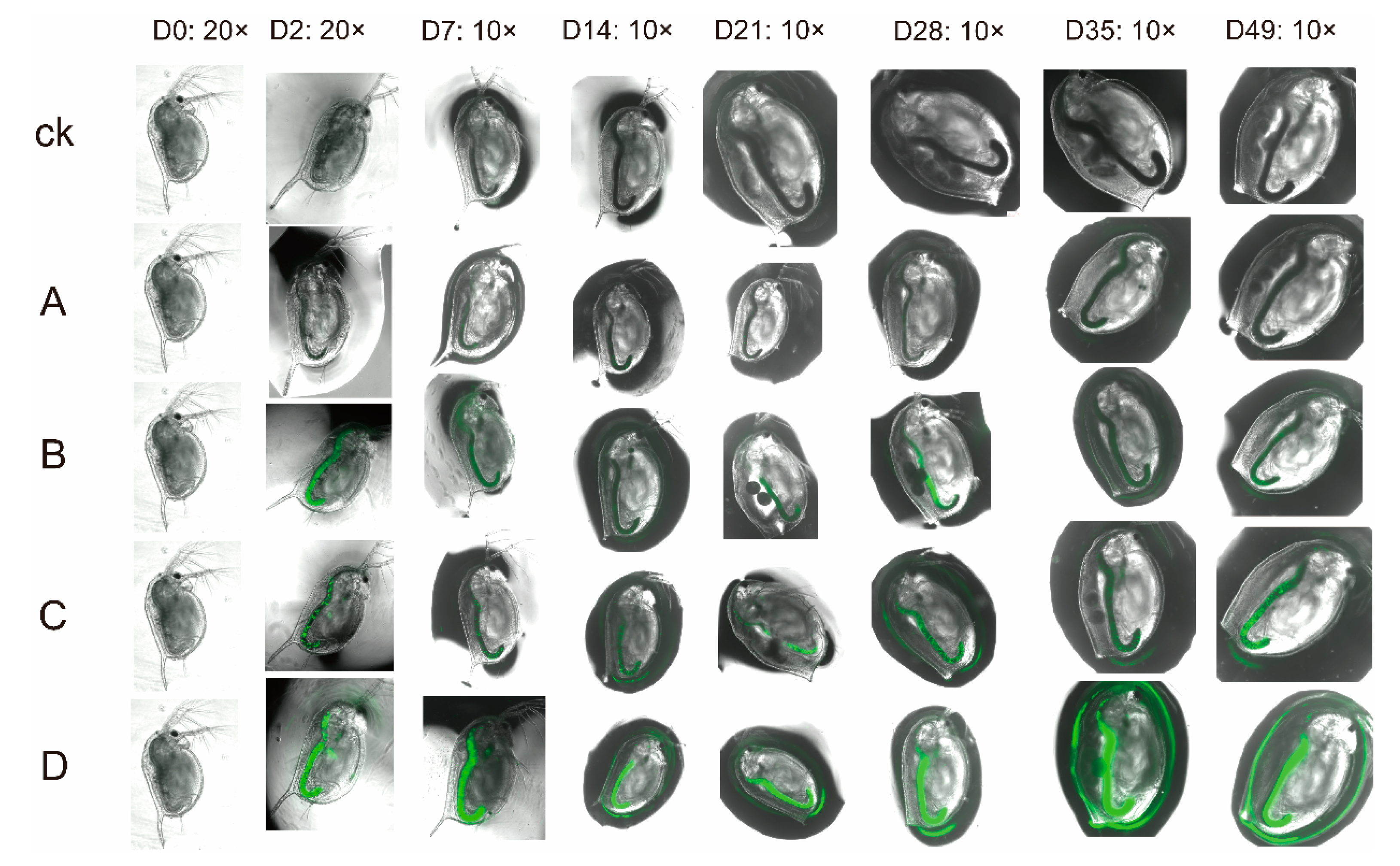
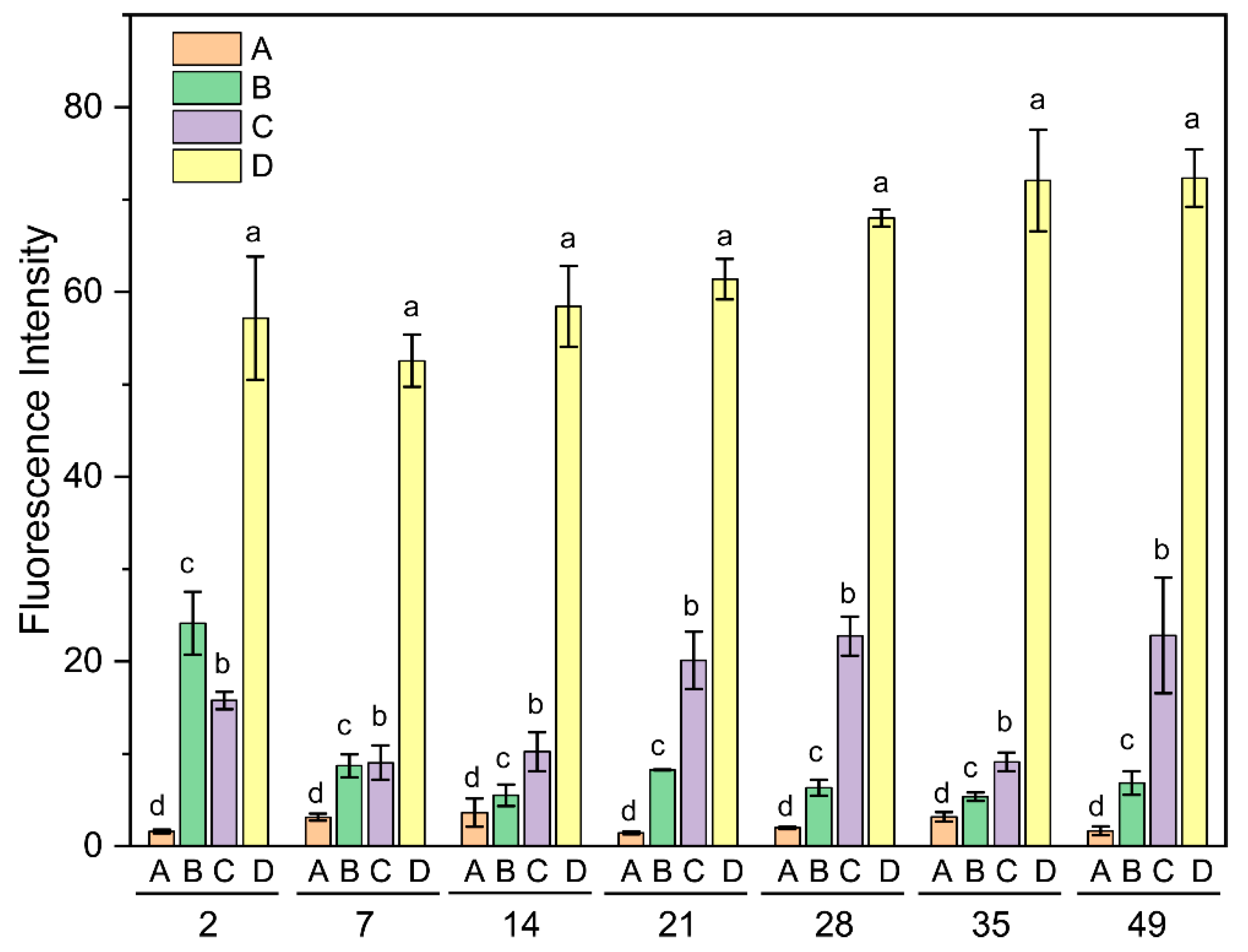
Analysis via fluorescence microscopy imaging (at 0, 2, 7, 14, 21, 28, 35, and 49 days) of microsphere ingestion (Figure 1) and fluorescence intensity (Figure 2) in D. magna revealed significant differences in fluorescence intensity among the experimental groups (A, B, C, and D) (p < 0.001). Throughout the culture period, the fluorescence intensity in D. magna groups complied with the following order: D > C > B > A.
In four groups, the fluorescence intensity of the D group increased throughout the period of microplastic exposure with an increasing trend (p = 0.00621). In Group C, the fluorescence intensity in D. magna first decreased and then increased. In contrast, Group A maintained a low fluorescence intensity level (4–5), while Group B exhibited a gradual decrease followed by stabilization. Additionally, the CK control group, which received no microplastics, showed a fluorescence intensity of 0 in all cases.
These results indicated that D. magna had a growing trend in the ingestion of larger, 5 μm MPs, whereas ingestion of 0.1 μm NPs stayed at a low level or showed a decreasing trend. This phenomenon was likely closely related to the feeding habits of D. magna: microplastics within the optimal size range for ingestion were easily consumed [16]. Since 5 μm MPs were close in size to the natural food of D. magna, they can be continuously extensively ingested and enriched in the intestinal tract.

3.2. Effects of Microplastics on the Growth of D. magna

In this study, one-way analysis of variance (ANOVA) was performed on the survival rates of the experimental groups and the control group (p = 0.319084, no significant difference). The results were aligned with those reported in previous studies [17,18]. The experiment indicated that microplastics have a low lethal rate for zooplankton. However, studies have found that the toxicity of MPs decreased Daphnia populations with increasing food availability, but the extent of this reduction depended largely on the properties of MPs [19].
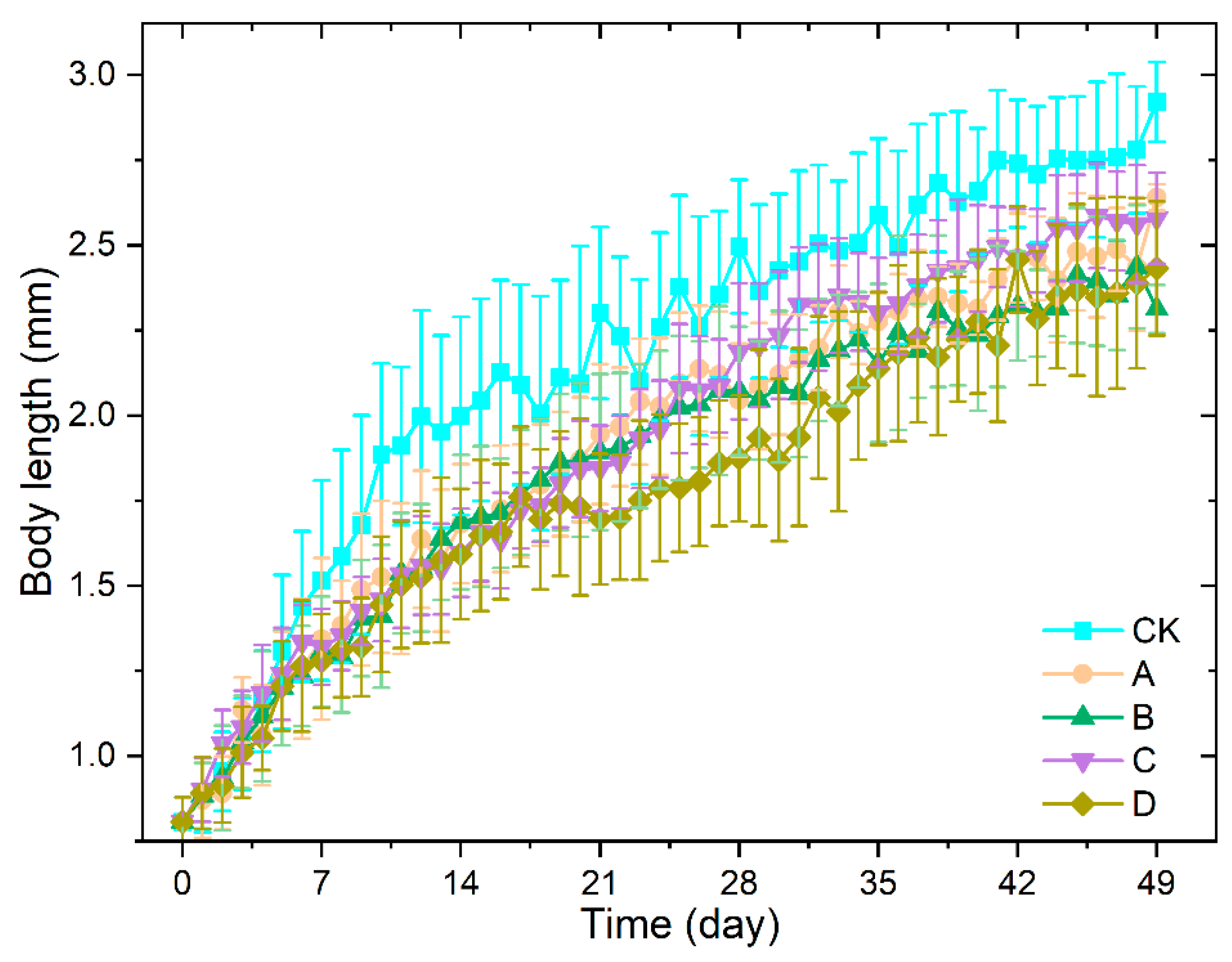
The results of ANOVA analysis demonstrated that differences in the body length of D. magna among the five groups (p = 0.003) appeared. As shown in Figure 3, microplastics had a strong impact on the body length changes in D. magna in the first 14 days. Over time, the order of D. magna body length in descending order was CK, C, A, B, and D. This may be because excessive intake of MPs reduces the nutrient intake of Daphnia magna per unit energy consumption—that is, microspheres occupy intestinal space and interfere with nutrient absorption efficiency, ultimately leading to a slowdown in the growth rate of D. magna [14].

3.3. Effects of Microplastics on Offspring Development of D. magna

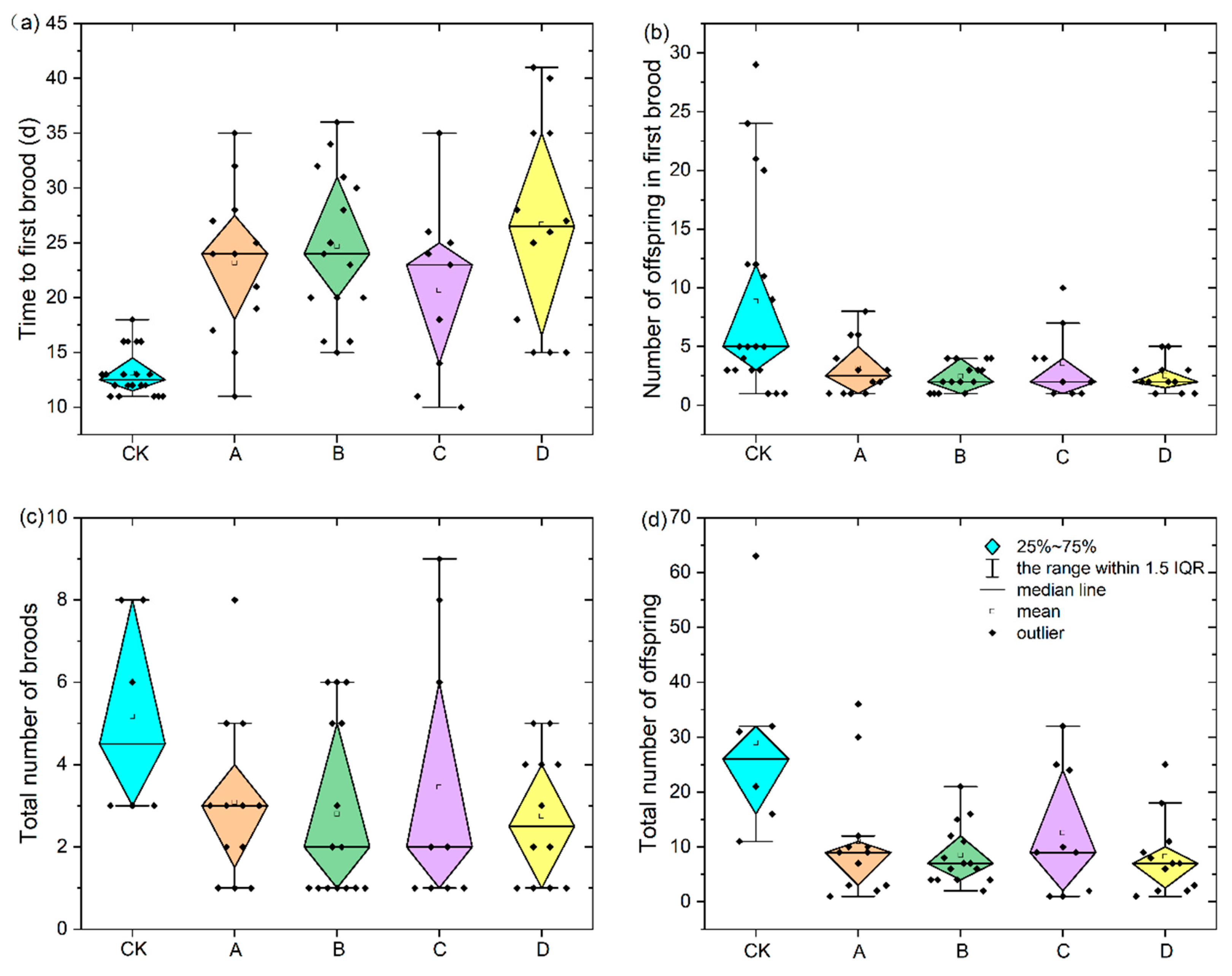
Combining Figure 4 with ANOVA analysis, it was found that there were significant differences among different groups in the first brood time, number of neonates in the first brood, and total number of neonates produced. The order from smallest to largest for the first brood time was CK, C, A, B, and D (p < 0.0001). The order from smallest to largest for the number of neonates in the first brood was D, B, A, C, and CK (p = 0.00088). And the order from smallest to largest for the total number of neonates produced was D, B, A, C, and CK (p = 0.0013). However, there was no significant difference in the number of broods among groups (p = 0.258). These results indicated significant differences in the reproductive activities of D. magna between the control group and experimental groups. Adding 0.1 mg/L of plastics, 0.1 μm NPs exhibited a stronger influence on the reproduction of D. magna than that of 5 μm microplastics. When a high concentration of plastics was added (1 mg/L), the intake of 5 μm MPs would continuously increase while the intake of 0.1 μm NPs was kept basically constant. Then, accumulated high concentrations of 5 μm microplastics exerted a more significant impact on the reproduction of D. magna. Our study has demonstrated that smaller-sized plastics accumulate more in organisms and remain for a longer time, leading to lower feeding rates of organisms and damage to their antioxidant defense systems [15]. The results indicated that the appearance of plastic microspheres has a negative influence on the development and reproduction of parental D. magna, thereby adversely influencing the offspring’s growth. This may result from the direct effects of microspheres, such as mechanical damage to body structures or malnutrition caused by excessive ingestion. Meanwhile, the food ingested by D. magna decreases, leading to food shortage as an indirect effect. Additionally, neonates were more sensitive to MP exposure than adults [14].

3.4. Effects of Microplastics on the Intestinal Microbiota of D. magna

Here, a total of 3,040,960 high-quality bacterial sequences were obtained through high-throughput sequencing of samples, with the sequence count ranging from 7038 to 42,913 and a median length of 428 base pairs. After rarefaction to 10,000 sequences, 4900 ASVs (amplicon sequence variants) were detected from all sequences, with the number of ASVs per sample ranging from 16 to 272. ANOVA analysis revealed no significant differences in alpha diversity between the experimental groups and the CK (p > 0.05). Additionally, no significant differences in alpha diversity across groups over time (p > 0.05) were found. Adonis analysis (permutational MANOVA) was performed on the ASV table grouped by experimental and control groups. The results suggested that every experimental group had a significant difference compared with the CK (p < 0.01). And no significant differences among Group A, B, C, and D were found. However, Group B (0.1 μm NPs at high concentration) differed significantly from Group C (5 μm MPs at low concentration) (p < 0.05), indicating that high-concentration 0.1 μm NPs and low-concentration 5 μm MPs have distinct effects on the intestinal microbiota.
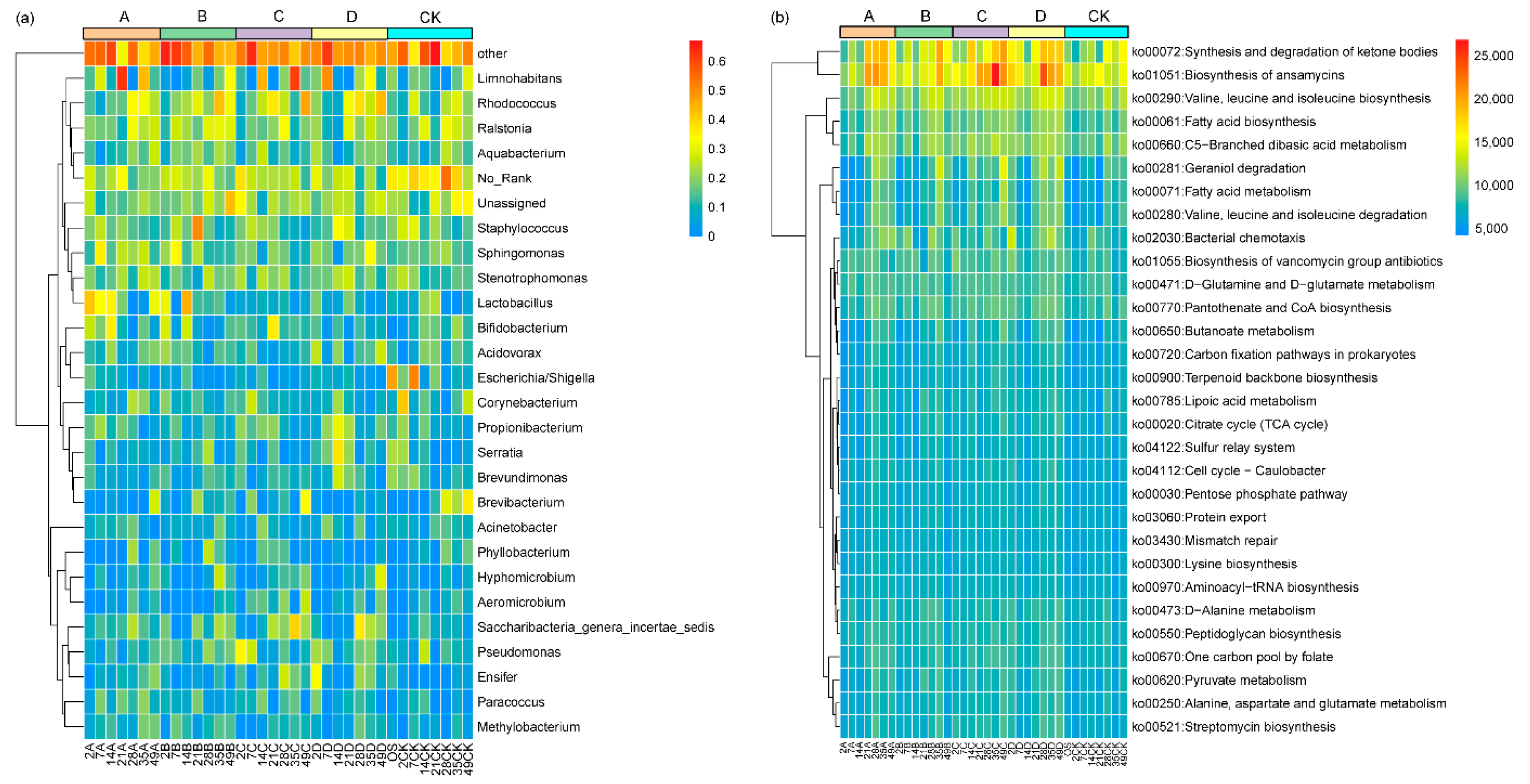
Adonis analysis (permutational MANOVA) of the relative abundance at the genus level across experimental and control groups revealed (Figure 5a) that all experimental groups (A, B, C, and D) showed significant differences from the control group (CK) (p-values: 0.001, 0.01, 0.004, and 0.004, respectively), while no significant differences were observed among the experimental groups themselves. Rhodococcus, Limnohabitans, and Ralstonia were the three genera with the highest relative abundance. Among them, Rhodococcus and Ralstonia exhibited significant differences in relative abundance over the experimental period (p = 0.003 and p = 0.013, respectively). The genus Rhodococcus belongs to the phylum Actinobacteria and is found in many aquatic, soil, and marine environments. The wide distribution of Rhodococcus strains is attributed to their remarkable metabolic versatility (compared to several other bacterial genera), as well as their unique environmental persistence and robustness [20]. The relative abundance of this genus increased with the number of days (p < 0.0001). Studies have shown that an increase in the abundance of symbiotic bacterial species is associated with longer host lifespan, whereas an increase in the abundance of Rhodococcus species is correlated with shorter host lifespan [21]. Ralstonia (family Burkholderiaceae) is a genus where most strains exhibit oxidase and catalase activities. Their metabolic pathways include organic acid utilization, and they are capable of naturally producing the biodegradable plastic poly(3-hydroxybutyrate) (PHB), with PHB content reaching up to 80% of cell dry weight [22].
Microplastics (or other harmful particles) can exert toxicity on D. magna through multiple mechanisms, thereby interfering with their behavior, including intestinal blockage or intestinal intoxication. Existing studies have confirmed that nanoparticles, microplastic aggregates, and adsorbed toxic pollutants (such as cadmium, Cd) can block the intestines of D. magna or cause intestinal intoxication, ultimately inhibiting their feeding behavior and affecting their life history [23,24]. Meanwhile, suspended particles, including microplastics, can alter the intestinal microbiota structure of D. magna, leading to negative impacts such as reduced survival ability and impaired reproduction [7]. Therefore, microplastics can induce toxicity through the dual mechanisms of “intestinal blockage” and “microbiota alteration” [25].
In addition, functional prediction of species was performed using the PICRUSt2 analysis tool. The KEGG-pathway prediction results were shown in Figure 5b. Groups C and D (treated with large-sized microplastics) exhibited significant differences from the CK group, with p-values of 0.012 and 0.018, respectively. The functional pathways with relatively high proportions that exhibited significant differences among groups included the pentose phosphate pathway, pentose and glucuronate interconversions, fatty acid biosynthesis, and oxidative phosphorylation (p = 0.005, 0.004, 0.038, and 0.025, respectively). These pathways were all related to metabolism, and the differences were particularly prominent between Group D and the CK group. Therefore, the addition of microplastics, especially at higher concentrations, can affect the metabolism of D. magna.
Among these, the pentose phosphate pathway, pentose and glucuronate interconversions, and oxidative phosphorylation are key components of glucose metabolic pathways. Glucose is the primary energy source for maintaining physiological functions in organisms and a critical precursor for biosynthesis. Dysregulation of glucose metabolism may lead to growth restriction, developmental disorders, and organ dysfunction [26]. In mouse models, maternal exposure to microplastics has been confirmed to induce glucose metabolism disorders and result in adverse pregnancy outcomes [27]. In studies where polystyrene microplastics induced obesity in mice by reshaping the intestinal microbiota, it was found that MPs upregulated fatty acid synthesis in the mouse liver [28], which is in accordance with the results of this study—fatty acid biosynthesis pathways in the experimental groups were significantly upregulated compared to the CK. This pathway enrichment may be associated with two mechanisms: first, D. magna enhances metabolic processes to obtain energy from “non-food sources” (e.g., decomposing stored fats and carbohydrates during starvation, or activating alternative energy supply pathways when feeding is impaired by MP exposure); second, changes in intestinal bacterial composition cause dysregulation of carbohydrate and fatty acid digestion. After all, carbohydrates and fatty acids play an important role in the energy sources supporting D. magna [23,29,30], and “beneficial gut microbiota” are key players in the digestion and absorption of these substances [31]. Similarly, the studies of the toxic influences of MPs on Caenorhabditis elegans show that when the metabolism of Caenorhabditis elegans is disrupted, their locomotor behavior and reproduction are reduced [32]. Additionally, the pathway of “synthesis and degradation of ketone bodies” [33] is involved in regulating energy metabolism under specific physiological states (e.g., starvation, low-carbohydrate diets). After microplastic addition, this pathway gradually plays an important role due to the impaired feeding of D. magna.

3.5. Effects of Microplastics on the Intestinal Structure of D. magna

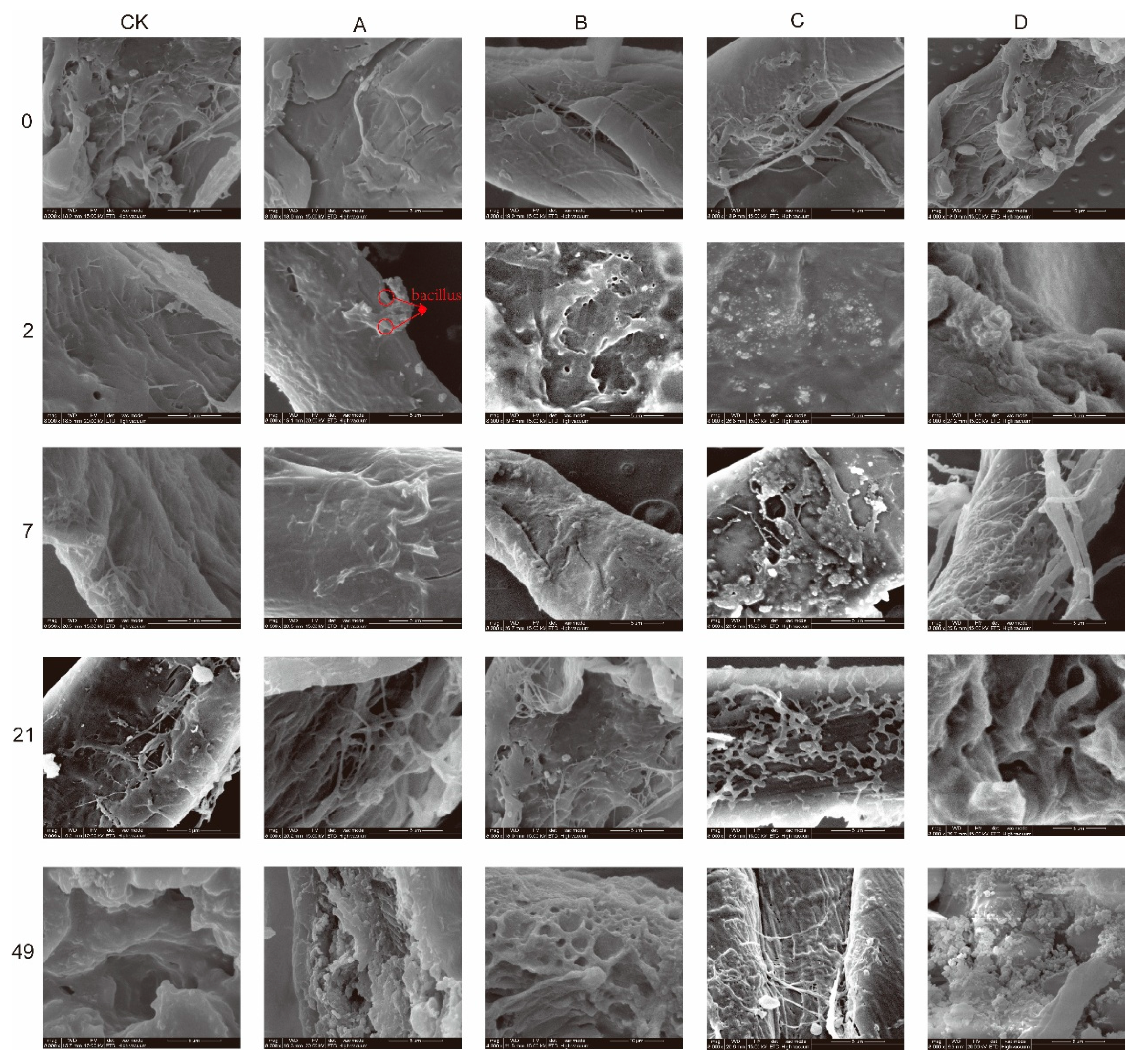
In the scanning electron microscopy test, the results (Figure 6) showed that in the initial state (i.e., newly hatched neonates within 24 h without any treatment, with both experimental and control groups in the same condition), the intestinal interior of D. magna was relatively smooth with clear ridges. As the experiment progressed, the intestinal structure of the control group gradually relaxed, with folds appearing on the surface, and finally, cell shedding was observed in the intestine on day 49. In the low-concentration treatment groups (Groups A and C), after exposure to microplastics, folds appeared on the intestinal surface; Group C showed obvious particles (during imaging, the intestines of Groups C and D were filled with 5 μm microplastic particles, so efforts were made to avoid these particles when capturing images of the intestinal structure). In the high-concentration treatment groups (Groups B and D), more severe damage was observed on the intestinal surface after microplastic exposure, with blurred ridge boundaries and irregular structures. The intestinal lumen contained many microorganisms, including fungi and bacteria (cocci and bacilli) as identified by their morphological characteristics (bacilli are marked in the Figure). Over time, the intestinal structure of D. magna became increasingly loose, with severe folding and gradual loss of its original shape. On day 49 of the experiment, the intestinal structure was found to be loose and deformed, with cell shedding and dissolution in the intestine—these phenomena had already been observed in the experimental groups by day 21. The results indicated that the accumulation of MPs caused injury to the intestinal structure, accelerated its aging, and subsequently restricted the absorption of nutrients during growth, leading to delays in growth and reproduction. Studies have found that microplastics in the mouse intestine can cause damage to the small intestinal structure, reduce goblet cells, induce submucosal hyperplasia, and weaken intestinal digestion and absorption capacity, thereby slowing growth [34]. In summary, the combined effects of parental malnutrition (caused by microsphere interference with nutrient absorption in the digestive tract) and mechanical damage from microspheres in the intestine may lead to delayed growth and development of offspring D. magna and reduced hatching rates.
Normally, the MPs entering the body of Daphnia magna undergo two stages [35]. At the first stage, with continuous peristalsis and desorption processes, a large number of MPs were discharged. At the second stage, some MPs are tightly bound to the intestinal tract and diffused to the circulatory system/body tissue, slowly discharged by an uncertain return process. In the next phase of the study, to investigate the influence of MPs on D. magna development, the ratio of the feed to MP and NP ingestion will be analyzed. And the fecal pellets of D. magna will be collected to calculate the ejection rate, determining the effect of MPs/NPs on its eating habits.

4. Conclusions

This study demonstrates that the deleterious effects of microplastics on D. magna’s reproduction and gut microbiota are co-determined by particle size and concentration, with high concentrations of large (5 μm) particles exerting the most severe impact. As D. magna developed, it preferentially ingested these larger microplastics, which led to a higher accumulation in the gut. This accumulation not only physically damaged the intestinal structure, accelerating aging, but also significantly disrupted the gut microbial community. Functional prediction analysis further revealed that these microbial changes impaired core glucose metabolism pathways, inducing a starvation-like state. Consequently, these intertwined microbial and physical injuries directly resulted in retarded growth and the most pronounced delays in reproduction. Moreover, the observed physiological and metabolic disruptions highlight a broader ecological concern: the potential decline in zooplankton-mediated ecosystem services. As key components of aquatic food webs and biogeochemical cycles, reduced zooplankton populations could impair water quality, alter species composition, and weaken the resilience of freshwater ecosystems. Thus, addressing microplastic pollution is critical not only for protecting sentinel species like D. magna but also for sustaining the functional integrity and resilience of aquatic ecosystems in the face of environmental change.

Author Contributions

Conceptualization, H.-M.Z.; methodology, B.Z.; software, C.W.; formal analysis, B.Z. and C.Z.; investigation, B.Z. and C.Z.; data curation, B.Z.; writing—original draft preparation, B.Z.; writing—review and editing, C.W.; visualization, B.Z.; project administration, H.-M.Z.; funding acquisition, B.Z., C.W. and H.-M.Z. All authors have read and agreed to the published version of the manuscript.

Funding

This research was funded by the National Natural Science Foundation of China (no. 32571837 and 52209102) and the Scientific Research Foundation for Senior Talent of Jiangsu University, China (JDKQ20240702). Guangdong Basic and Applied Basic Research Foundation 2025A1515012790 “Daxiansheng” tutor training program of Jinan University YDXS2403.

Institutional Review Board Statement

Not applicable.

Informed Consent Statement

Not applicable.

Data Availability Statement

All data generated or analysed during this study are included in this published article.

Acknowledgments

The authors would like to thank the anonymous referees for their helpful comments and suggestions on an earlier draft of this paper.

Conflicts of Interest

The authors declare no conflict of interest.

References

  1. Jahnke, A.; Arp, H.P.H.; Escher, B.I.; Gewert, B.; Gorokhova, E.; Kuhnel, D.; Ogonowski, M.; Potthoff, A.; Rummel, C.; Schmitt-Jansen, M.; et al. Reducing uncertainty and confronting ignorance about the possible impacts of weathering plastic in the marine environment. Environ. Sci. Technol. Lett. 2017, 4, 85–90. [Google Scholar] [CrossRef]
  2. Rodriguez-Seijo, A.; Lourenço, J.; Rocha-Santos, T.A.P.; da Costa, J.; Duarte, A.C.; Vala, H.; Pereira, R. Histopathological and molecular effects of microplastics in Eisenia andrei Bouché. Environ. Pollut. 2017, 220, 495–503. [Google Scholar] [CrossRef]
  3. Wu, W.; Zhou, X.; Zhao, Z.; Wang, C.; Jiang, H. Impacts of microplastic concentrations and sizes on the rheology properties of lake sediments. Sci. Total Environ. 2024, 946, 174294. [Google Scholar] [CrossRef]
  4. Sussarellu, R.; Suquet, M.; Thomas, Y.; Lambert, C.; Fabioux, C.; Pernet, M.E.J.; Goïc, N.L.; Quillien, V.; Mingant, C.; Epelboin, Y.; et al. Oyster reproduction is affected by exposure to polystyrene microplastics. Proc. Natl. Acad. Sci. USA 2016, 113, 2430. [Google Scholar] [CrossRef]
  5. Kirstein, I.V.; Kirmizi, S.; Wichels, A.; Garin-Fernandez, A.; Erler, R.; Löder, M.; Gerdts, G. Dangerous hitchhikers? Evidence for potentially pathogenic Vibrio Spp. on microplastic particles. Mar. Environ. Res. 2016, 120, 1–8. [Google Scholar] [CrossRef] [PubMed]
  6. Lamichhane, G.; Acharya, A.; Marahatha, R.; Modi, B.; Paudel, R.; Adhikari, A.; Raut, B.K.; Aryal, S.; Parajuli, N. Microplastics in environment: Global concern, challenges, and controlling measures. Int. J. Environ. Sci. Technol. 2023, 20, 4673–4694. [Google Scholar] [CrossRef] [PubMed]
  7. Gorokhova, E.; Motiei, A.; El-Shehawy, R. Understanding biofilm formation in ecotoxicological assays with natural and anthropogenic particulates. Front. Microbiol. 2021, 12, 632947. [Google Scholar] [CrossRef]
  8. Fackelmann, G.; Sommer, S. Microplastics and the gut microbiome: How chronically exposed species may suffer from gut dysbiosis. Mar. Pollut. Bull. 2019, 143, 193–203. [Google Scholar] [CrossRef] [PubMed]
  9. Setälä, O.; Fleming-Lehtinen, V.; Lehtiniemi, M. Ingestion and transfer of microplastics in the planktonic food web. Environ. Pollut. 2014, 185, 77–83. [Google Scholar] [CrossRef]
  10. Wirtz, K.W. Who is eating whom? Morphology and feeding type determine the size relation between planktonic predators and their ideal prey. Mar. Ecol. Prog. Ser. 2012, 445, 1–12. [Google Scholar] [CrossRef]
  11. Cole, M.; Lindeque, P.; Fileman, E.; Halsband, C.; Goodhead, R.; Moger, J.; Galloway, T.S. Microplastic ingestion by zooplankton. Environ. Sci. Technol. 2013, 47, 6646–6655. [Google Scholar] [CrossRef]
  12. Hébert, M.-P.; Beisner, B.E.; Maranger, R. Linking zooplankton communities to ecosystem functioning: Toward an effect trait framework. J. Plankton Res. 2017, 39, 3–12. [Google Scholar] [CrossRef]
  13. Rutter, E.M.; Banks, H.T.; LeBlanc, G.A.; Flores, K.B. Continuous structured population models for Daphnia magna. Bull. Math. Biol. 2017, 79, 2627–2648. [Google Scholar] [CrossRef]
  14. Cheng, S.; Yoshikawa, K.; Cross, J.S. Effects of nano/microplastics on the growth and reproduction of the microalgae, bacteria, fungi, and Daphnia magna in the microcosms. Environ. Technol. Innov. 2023, 31, 103211. [Google Scholar] [CrossRef]
  15. Gao, J.; Zhao, S.; Li, F.; Yang, X.; Zhang, J.; Xiong, A.; Li, F. Effects of microplastics on feeding behavior and antioxidant system of Daphnia magna. Res. Environ. Sci. 2021, 34, 1205–1212. [Google Scholar] [CrossRef]
  16. Jemec, A.; Horvat, P.; Kunej, U.; Bele, M.; Kržan, A. Uptake and effects of microplastic textile fibers on freshwater crustacean Daphnia magna. Environ. Pollut. 2016, 219, 201–209. [Google Scholar] [CrossRef] [PubMed]
  17. Huang, C.-H.; Chu, T.-W.; Kuo, C.-H.; Hong, M.-C.; Chen, Y.-Y.; Chen, B. Effects of microplastics on reproduction and growth of freshwater live feeds Daphnia magna. Fishes 2022, 7, 181. [Google Scholar] [CrossRef]
  18. Aljaibachi, R.; Laird, W.B.; Stevens, F.; Callaghan, A. Impacts of polystyrene microplastics on Daphnia magna: A laboratory and a mesocosm study. Sci. Total Environ. 2020, 705, 135800. [Google Scholar] [CrossRef] [PubMed]
  19. Lyu, K.; Yu, B.; Li, D.; Gu, L.; Yang, Z. Increased food availability reducing the harmful effects of microplastics strongly depends on the size of microplastics. J. Hazard. Mater. 2022, 437, 129375. [Google Scholar] [CrossRef]
  20. Cappelletti, M.; Presentato, A.; Piacenza, E.; Firrincieli, A.; Turner, R.J.; Zannoni, D. Biotechnology of Rhodococcus for the production of valuable compounds. Appl. Microbiol. Biotechnol. 2020, 104, 8567–8594. [Google Scholar] [CrossRef]
  21. Ravenscraft, A.; Kish, N.; Peay, K.; Boggs, C. No evidence that gut microbiota impose a net cost on their butterfly host. Mol. Ecol. 2019, 28, 1857–2117. [Google Scholar] [CrossRef]
  22. da Cruz Pradella, J.G.; Ienczak, J.L.; Delgado, C.R.; Taciro, M.K. Carbon source pulsed feeding to attain high yield and high productivity in poly(3-hydroxybutyrate) (PHB) production from soybean oil using Cupriavidus necator. Biotechnol. Lett. 2012, 34, 1003–1007. [Google Scholar] [CrossRef] [PubMed]
  23. Campos, B.; Piña, B.; Barata, C. Daphnia magna gut-specific transcriptomic responses to feeding inhibiting chemicals and food limitation. Environ. Toxicol. Chem. 2021, 40, 2510–2520. [Google Scholar] [CrossRef] [PubMed]
  24. Campos, B.; Rivetti, C.; Rosenkranz, P.; Navas, J.M.; Barata, C. Effects of nanoparticles of TiO2 on food depletion and life-history responses of Daphnia magna. Aquat. Toxicol. 2013, 130–131, 174–183. [Google Scholar] [CrossRef] [PubMed]
  25. Carrillo, M.P.; Vila-Costa, M.; Barata, C. Micro-bioplastic impact on gut microbiome, cephalic transcription and cognitive function in the aquatic invertebrate Daphnia magna. Environ. Pollut. 2025, 382, 126690. [Google Scholar] [CrossRef]
  26. Zhou, B.; Zhang, A.; Wang, Y.; Feng, S.; Xue, Q.; Liu, Z.; Zhao, H.; Jing, Z.; Xie, J. Microplastics induce human kidney development retardation through ATP-mediated glucose metabolism rewiring. J. Hazard. Mater. 2025, 486, 137002. [Google Scholar] [CrossRef]
  27. Zhang, R.; Wan, X.; Feng, Y.; Xu, H.; Nie, P.; Fu, F. Polystyrene microplastics disturb maternal glucose homeostasis and induce adverse pregnancy outcomes. Ecotoxicol. Environ. Saf. 2024, 279, 116492. [Google Scholar] [CrossRef]
  28. Huang, H.; Wei, F.; Qiu, S.; Xing, B.; Hou, J. Polystyrene microplastics trigger adiposity in mice by remodeling gut microbiota and boosting fatty acid synthesis. Sci. Total Environ. 2023, 890, 164297. [Google Scholar] [CrossRef]
  29. Fuertes, I.; Jordão, R.; Piña, B.; Barata, C. Time-dependent transcriptomic responses of Daphnia magna exposed to metabolic disruptors that enhanced storage lipid accumulation. Environ. Pollut. 2019, 249, 99–108. [Google Scholar] [CrossRef]
  30. Fuertes, I.; Jordão, R.; Casas, J.; Barata, C. Allocation of glycerolipids and glycerophospholipids from adults to eggs in Daphnia magna: Perturbations by compounds that enhance lipid droplet accumulation. Environ. Pollut. 2018, 242, 1702–1710. [Google Scholar] [CrossRef]
  31. Cooper, R.O.; Cressler, C.E. Characterization of key bacterial species in the Daphnia magna microbiota using shotgun metagenomics. Sci. Rep. 2020, 10, 652. [Google Scholar] [CrossRef] [PubMed]
  32. Xie, D.; Chen, H.; Yang, Y.; Tan, S.; Xiang, M.; Li, T.; Yu, Y. Research progress on toxic effects and mechanisms of microplastics in Caenorhabditis elegans. Environ. Chem. 2023, 43, 1–12. [Google Scholar] [CrossRef]
  33. Hasegawa, S.; Yamasaki, M.; Fukui, T. Degradation of acetoacetyl-CoA synthetase, a ketone body-utilizing enzyme, by legumain in the mouse kidney. Biochem. Biophys. Res. Commun. 2014, 453, 631–635. [Google Scholar] [CrossRef]
  34. Kang, K.; Yang, D.; Huang, Z.; Zhang, S.; Fang, T.; Jiang, Y.; Wu, J. Effects of microplastics on the growth and structure of the mouse small intestine. J. Agro-Environ. Sci. 2020, 39, 256–262. [Google Scholar] [CrossRef]
  35. Zhang, Y.-H.; Gao, R.-Y.; Wang, Z.-J.; Shao, Q.-Q.; Hu, Y.-W.; Jia, H.-B.; Liu, X.-J.; Dong, F.-Q.; Fu, L.-M.; Zhang, J.-P. Daphnia magna uptake and excretion of luminescence-labelled polystyrene nanoparticle as visualized by high sensitivity real-time optical imaging. Chemosphere 2023, 326, 138341. [Google Scholar] [CrossRef]
Figure 1. Distribution of fluorescent microspheres in D. magna for 49 days.
Sustainability 17 10728 g001
Figure 2. The fluorescence intensity for D. magna for 49 days, and the correlation analysis across different groups After the significant difference analysis, the difference results are labeled with letters a, b, c, and d. Any groups marked with the same letter indicate no significant difference, while those marked with different letters indicate a significant difference.
Sustainability 17 10728 g002
Figure 3. Variations in body length of D. magna among different treatment groups during the experiment.
Sustainability 17 10728 g003
Figure 4. Reproductive parameters of D. magna during the experiment ((a) time to first brood, (b) number of offspring in first brood, (c) total number of broods, and (d) total number of offspring).
Sustainability 17 10728 g004
Figure 5. Heatmap analysis of intestinal microbial community composition changes (a) and KEGG-pathway functional prediction (b) among different treatment groups.
Sustainability 17 10728 g005
Figure 6. Scanning electron microscopy (SEM) images of the intestinal tract of D. magna. “should be replaced by “Scanning electron microscopy (SEM) images of the intestinal tract of D. magna in 49 days with different size and concentrations MPs addition.
Sustainability 17 10728 g006
Table 1. Primers of 16S rRNA gene V3V4 region.
Sequencing RegionPrimer NamePrimer Sequence
16S-V3V4341FCCTACGGGNGGCWGCAG
805RGACTACHVGGGTATCTAATCC
Disclaimer/Publisher’s Note: The statements, opinions and data contained in all publications are solely those of the individual author(s) and contributor(s) and not of MDPI and/or the editor(s). MDPI and/or the editor(s) disclaim responsibility for any injury to people or property resulting from any ideas, methods, instructions or products referred to in the content.