Article

Points of Entry for Enhancing Policymakers’ Capacity to Develop Green Economy Agenda-Setting

by
Mahawan Karuniasa
1,* and
Thoriqi Firdaus
2
1
School of Environmental Science, Universitas Indonesia, Central Jakarta 10430, Indonesia
2
Cluster of Social Environment, Community Engagement and Environmental Economic, School of Environmental Science, Universitas Indonesia, Central Jakarta 10430, Indonesia
*
Author to whom correspondence should be addressed.
Sustainability 2025, 17(23), 10727; https://doi.org/10.3390/su172310727 (registering DOI)
Submission received: 9 August 2025 / Revised: 27 October 2025 / Accepted: 26 November 2025 / Published: 30 November 2025

Abstract

Indonesia has articulated ambitious green economy objectives through frameworks such as the Low Carbon Development Initiative (LCDI). Despite this ambition, a critical research gap exists. The weak ‘green political capabilities’ of policymakers—defined as their ability to navigate political processes, build coalitions, and translate technical knowledge into viable policy—hinder effective agenda-setting and implementation. This study addresses this deficit by identifying strategic points of entry for enhancing these capabilities to strengthen a more sustainable economic transition. Employing a mixed-methods approach guided by the UNDP Capacity Assessment Framework, this research gathered data from 170 stakeholders via workshops, focus group discussions, and surveys. The analysis identifies four principal entry points: (1) internal institutional development, (2) accreditation processes, (3) bureaucratic reform, and (4) external partnerships. Critically, ordinal regression reveals which actors most significantly influence capacity development priorities. Governmental/legislative institutions (Estimate = 1.855, p < 0.010) and the private sector (Estimate = 3.173, p < 0.020) exert a significant positive influence on advancing the green economy agenda. Conversely, competencies such as policy strengthening exhibit a significant negative correlation (Estimate = −3.467, p < 0.000), which indicates a concentration of need among institutions with substantial capacity gaps. The study’s key contribution is a framework for systematically integrating green competencies into national accreditation standards and bureaucratic reforms, providing a clear pathway to transform entry points into effective levers for enhancing the state’s green political capabilities.

1. Introduction

In recent years, the green economy has transitioned from a theoretical concept to a mainstream policy objective in various countries, including those with developing market mechanisms [1,2]. This global shift is driven by an acute awareness of planetary boundaries, as highlighted by seminal works like The Limits to Growth [3], and the urgent need to reconcile economic development with social equity and ecological balance [4,5]. Ensuring the efficient and sustainable use of natural resources has thus become a key principle in aligning economic systems with both social development and ecological resilience [6]. One of the strategic efforts is to create a dynamic economic system that safeguards dignified living standards and enables individual and social development [7]. The green economy rests on the premise that meeting essential needs must align with sustainability and justice [8]. The transition from a conventional to a green economy is not merely an economic shift; it is a systemic transformation—from policy frameworks to cultural practices. This warrants an urgent, well-grounded inquiry to inform green-economy agenda-setting.
The transition toward a green economy is a complex and long-term process pursued globally to meet sustainable development and climate goals. Several nations lead by adopting low-carbon development strategies and large-scale green initiatives that boost growth while reducing environmental pressures [9]. For example, countries such as Germany, Denmark, and South Korea advance models integrating renewable energy, innovation, and circular practices [10,11]. Similarly, Kenya [12], India [13], and Brazil [14] show that green growth is feasible beyond high-income contexts. Within this global landscape, Indonesia is a critical case due to its resource base, emissions profile, and policy commitment to mainstream green-economy pathways in national planning.
The points of entry significantly shape the potential for implementing a green economy, serving as leverage points in policy development and adoption. Since each policy arises from specific background characteristics, existing conditions, and strategic perspectives, its point of entry is unique. These entry points are essential for integrating green-economy goals into national development and guiding broader socio-economic transition. In this context, agenda-setting becomes inseparable from policy formulation, as it defines the direction and coherence of implementation across government and society. Globally, such approaches align with the Paris Agreement’s commitment to low-carbon development and net-zero emissions. Against this backdrop, Indonesia’s agenda-setting for a green economy is especially critical, given its dual role as a resource-rich developing nation and a significant global emitter.
Indonesia exemplifies this challenge. As a signatory to the Paris Agreement, it has articulated ambitious green economy objectives, notably through its Low Carbon Development Initiative (LCDI) and its Nationally Determined Contribution (NDC), targeting a 29–41% reduction in emissions by 2030 [15,16]. However, weak institutional capacities, such as inter-agency fragmentation, often impede translation of ambition into actionable policy. Consequently, the most effective targets and modalities for capacity-building remain unclear.
The LCDI Phase 1 Framework was implemented during the 2017–2019 period under a technocratic mechanism, focusing on mainstreaming the LCDI Framework into the 2020–2024 National Medium-Term Development Plan (RPJMN) [17]. Phase 1 of the LCDI guided Indonesia’s National Development Planning to integrate environmental, social, and economic aspects comprehensively and simultaneously. This process enabled the transition of Indonesia’s development toward a low-carbon pathway and the achievement of the Indonesia Vision 2045. The LCDI Phase 2 Framework was designed to continue from the first phase to achieve two objectives. The first objective was to address the challenges identified in Phase 1 of LCDI to support the development of an LCDI model for the subsequent 2025–2029 RPJMN. The second objective was to support the implementation of the LCDI development scenarios within the 2020–2024 RPJMN.
The transition to a green economy is, therefore, inextricably linked to capacity building, particularly within government institutions that act as regulators and evaluators [18,19]. However, current discussions on capacity are often broad and technical. This study moves beyond this general notion to argue that the core impediment is not just a lack of technical knowledge, but a lack of political and strategic skill. Green political capabilities are the composite ability of policymakers to effectively navigate political processes, build cross-sectoral coalitions, frame environmental issues in ways that resonate with economic and social priorities, and translate technical analysis into durable policy agendas. This capability is inherently political, requiring negotiation, strategic communication, and institutional entrepreneurship.
This study addresses this gap by seeking to answer the following research question: what are the primary entry points for enhancing Indonesia’s green political capabilities in developing a robust green economy agenda? This research aims to identify and analyze the key internal and external institutional levers that could accelerate the Indonesian government’s mainstreaming of green economy principles from 2020 to 2021 by strengthening these specific capabilities. The identification of these strategic levers—such as internal institutional development, accreditation processes, bureaucratic reform, and external partnerships—not only directly answers the research question but also provides a practical roadmap for transforming Indonesia’s ambitious green economy pledges into tangible policy action, with potential implications for other developing nations facing similar implementation challenges.

2. Materials and Methods

2.1. Conceptual Framework and Research Design

This research employed a mixed-methods approach, selected to capture the multifaceted nature of policymaker capacity. This design integrates qualitative and quantitative data to provide both breadth and depth, ensuring a comprehensive and nuanced understanding of the research problem [20]. To operationalize this investigation, the study applied the United Nations Development Program (UNDP) Capacity Assessment Framework as its primary analytical lens. The framework is a recognized tool for diagnosing capacity assets and gaps. It suits the assessment of Indonesia’s green-economy agenda-setting because it goes beyond a skills inventory to a strategic gap analysis [21]. This analysis provides the critical foundation for formulating a targeted capacity development response that can leverage existing strengths while addressing specific weaknesses.
The strength of the UNDP framework lies in its structured yet flexible dimensions (Figure 1): (1) points of entry, (2) core issues, and (3) functional and technical capacities [22]. Crucially, the framework recognizes that capacity resides at different levels—the enabling environment, the organization, and the individual. This study explicitly selects the organizational level as its primary point of entry. We made this choice because institutions play an essential role in capacity development and policymaking [23,24]; therefore, focusing our assessment at this level is crucial for identifying levers that can trigger systemic change within the Indonesian government apparatus.
Based on Figure 1, its three core dimensions are as follows: (1) Points of Entry, which defines the level of our analysis. Consistent with the framework, we selected the organizational level as our primary point of entry, focusing on government institutions and their partners; (2) Core Issues is the vertical axis (Institutional Arrangements, Leadership, Knowledge, Accountability), which provided the thematic foundation for our qualitative data collection. Questions in Focus Group Discussions (FGDs) and in-depth interviews were designed to explore these specific issues within the context of green economy agenda-setting; (3) Functional and Technical Capacities is a horizontal axis that guides the identification of specific competency gaps and needs. It helped frame what types of capacities (e.g., formulating policies, managing budgets, and evaluating outcomes) were most critical for policymakers.

2.2. Data Collection and Stakeholder Engagement

Primary policymakers are actors within Indonesia’s executive and legislative branches who hold the formal authority to formulate, enact, and implement policies. This includes officials in national ministries. This study also involves a broader group of ‘influential stakeholders.’ These entities are defined as those that critically shape the policy environment through research, advocacy, and implementation, including academic institutions, the private sector, and civil society organizations. This distinction guided the data collection strategy. It helped capture policymakers’ core capacity needs while clarifying how the broader ecosystem supports or constrains them.
A multi-channel engagement process combined qualitative and quantitative methods to collect comprehensive data from diverse stakeholders—government agencies, academia, the private sector, and community organizations. Qualitative insights were obtained through workshops, FGDs, and interviews, complemented by survey data for quantification. In the quantitative phase, surveys were used to measure key variables and statistically test relationships. A purposive sampling strategy was applied across all data collection methods based on expertise, institutional roles, and relevance to green-economy policymaking [25]. This purposive and exploratory design suited the goal of identifying effective “points of entry” for capacity development.

2.2.1. Process of Stakeholder Engagement

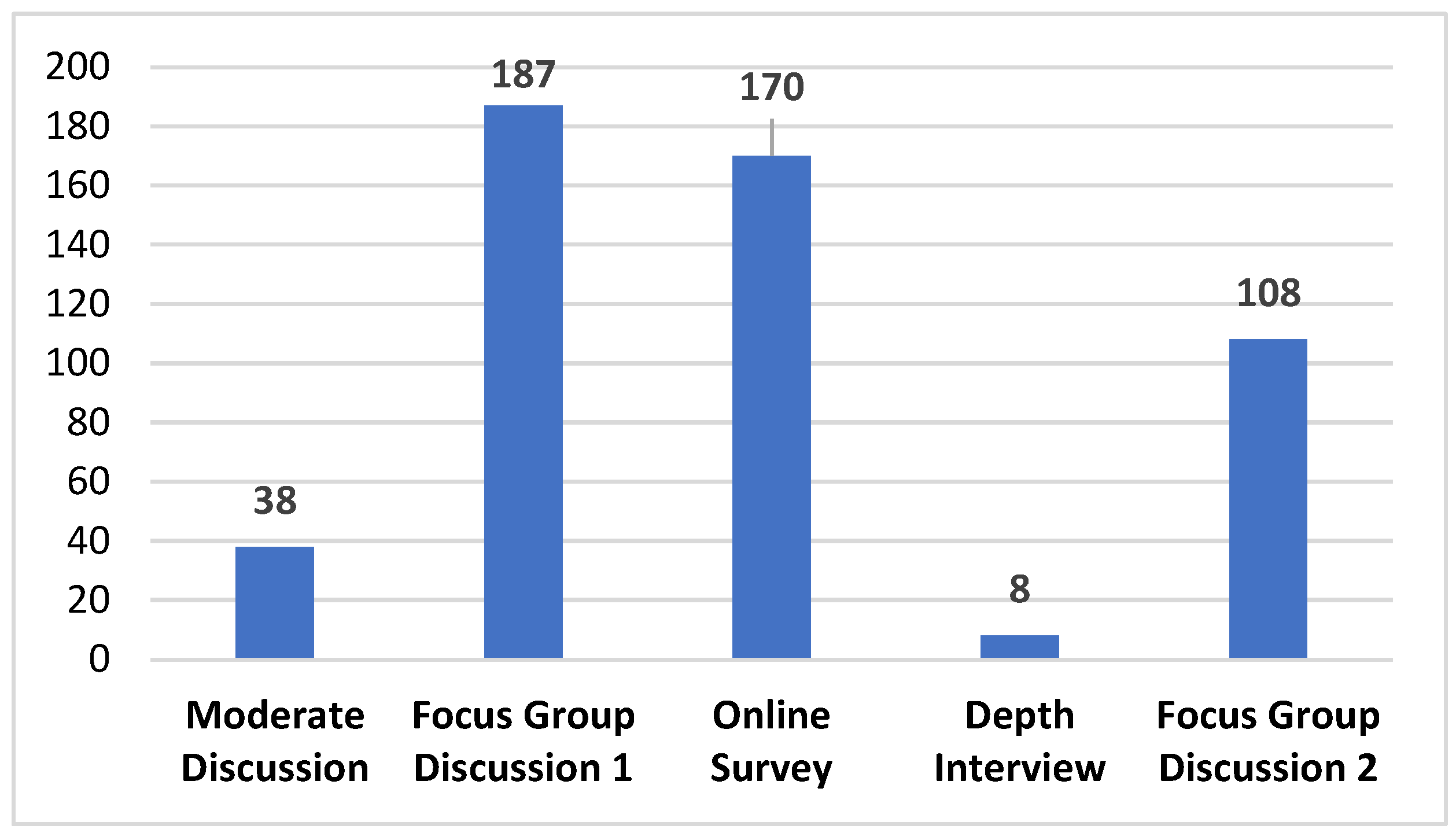
A multi-method approach was designed to triangulate data sources, each addressing specific dimensions of the research question. The process began with a high-level Green Economy Learning Assessment (GELA) workshop, which mapped existing Low Carbon Development Initiative (LCDI)-related policies and secured institutional participation. In total, 170 stakeholders took part, including 38 representatives from government, universities, professional associations, and development partners.
To delve deeper into capacity gaps and needs, we conducted two targeted Focus Group Discussions (FGDs). The first FGD captured non-governmental perspectives on knowledge needs and coalition building for the green economy. It involved 187 participants, mostly academics (counted per session, with overlap). The second FGD concentrated on government institutions—particularly education and training centers under ministries such as LAN—with 108 participants. This session explored internal bureaucratic challenges and opportunities for mainstreaming green competencies. The survey (N = 170 valid responses) unified these insights by reconciling attendance counts with final respondent data.
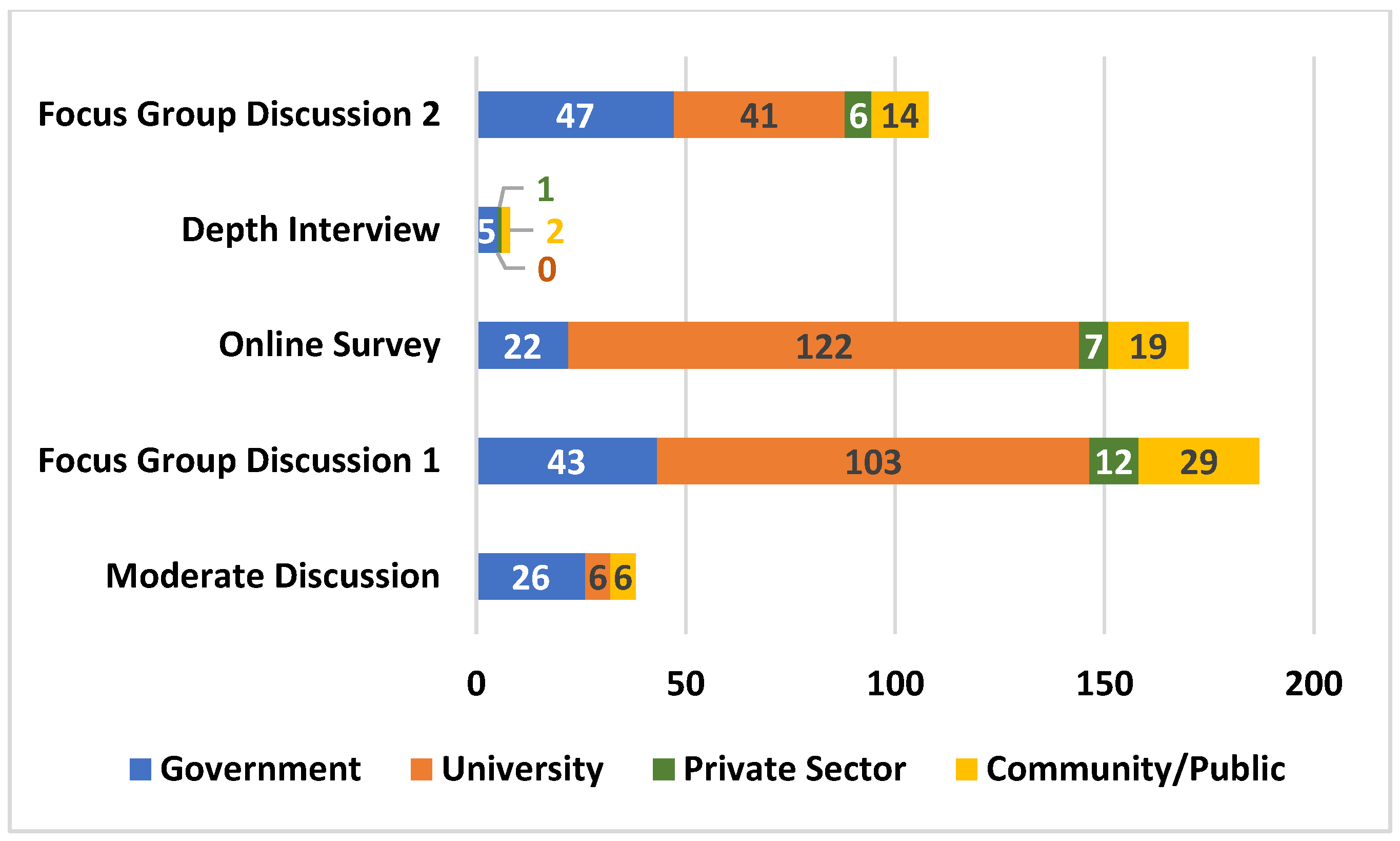
To complement these qualitative insights with quantifiable data and priorities, an online survey was implemented with all stakeholder groups using Google Forms (Google LLC, Mountain View, CA, USA). It ranked capacity-development priorities and supplied data for ordinal regression analysis. In-depth interviews with key institutions added contextual interpretation. Universities formed 72% of respondents, reflecting their central role in knowledge and curriculum development. However, this dominance risks overrepresenting academic views relative to practical policy challenges. To balance perspectives, purposive sampling ensured inclusion of government and private sector actors during FGDs and interviews.
Figure 2 and Figure 3 summarize the participation across these activities and the distribution of institutions, illustrating the diverse yet strategically engaged range of stakeholders.
Figure 2 illustrates the overall participation rates across stakeholder engagement activities, highlighting the extent of involvement from different actors in the study. This distribution is important as it demonstrates the level of inclusiveness and diversity in the data collection process, which directly affects the validity of the findings.
Figure 3 shows the institutional composition of participants, including representation from government, university, the private sector and community/public. Understanding this distribution matters because it reveals potential imbalances that shape the perspectives captured in the study. Through this structured engagement process, this research collected substantial materials and documents directly from key officers, including Heads of Education and Training Centers, ensuring the data was grounded in practical policy and institutional experience.

2.2.2. Participant Selection and Sample Structure Justification

The sample composition revealed a significant representation from universities and research institutions, comprising approximately 70%, which was a deliberate choice given the research’s focus on identifying points of entry for capacity building. In Indonesia, universities and research institutions serve as pivotal hubs for knowledge generation, curriculum development, and training program design. As such, they are considered a crucial starting point for integrating the green economy agenda into national educational and training frameworks, ultimately building future and current policymakers’ capacity. The high participation rate from this group was anticipated and deemed essential for understanding the baseline capacities and existing gaps at the knowledge creation level. While the proportional participation from the government and private sector was lower, their qualitative contributions remained significant. These were captured in a targeted manner through purposive sampling during in-depth interviews to ensure that their strategic perspectives were recorded.
Several steps were taken to ensure data reliability and mitigate potential bias. Data from multiple sources (FGDs, interviews, and surveys) were cross-verified to strengthen the findings. For instance, government officials’ needs identified in FGD 2 were cross-referenced with academic experts from FGD 1 to explore potential curriculum solutions. Participants were not randomly selected but instead based on specific criteria to ensure the relevance and quality of the data. Although this could be a potential limitation in survey methodology, this risk was mitigated by targeting invitations to individuals who were already engaged and invested in the topic through prior workshops and FGDs, thereby increasing the likelihood of well-considered responses.

2.2.3. Measurement and Construction of Variables

The concepts and variables were derived from the qualitative findings of FGDs and interviews, guided by the UNDP Capacity Assessment Framework. The study first established explicit definitions of five core constructs, which served as the foundation for instrument development. (1) Internal Institutional Development refers to processes through which government institutions strengthen organizational structures, resources, and capacities to support green policymaking; (2) Accreditation Processes denote the formal mechanisms and standards used to evaluate and certify institutional performance in relation to sustainability and green competencies; (3) Bureaucratic Reform is defined as the systematic adjustment of administrative procedures, rules, and organizational cultures to enhance efficiency, transparency, and responsiveness in implementing green policies; (4) External Partnerships capture collaborative arrangements between government institutions and external actors—such as universities, civil society organizations, and the private sector—aimed at advancing green economy goals; and (5) Indonesian Policymakers’ Green Political Capabilities are conceptualized as the ability of policymakers to integrate environmental priorities into decision-making, encompassing leadership, coalition-building, and policy formulation skills.
The operationalization of these abstract constructs into measurable items followed the UNDP Capacity Assessment Framework. Each construct was systematically translated into questionnaire items: Internal Institutional Development into items on resource allocation, decision-making, and organizational adaptation; Accreditation Processes into items on quality assurance mechanisms; Bureaucratic Reform into items on transparency, efficiency, and procedural flexibility; External Partnerships into items on collaboration with academia, civil society, and the private sector; and Green Political Capabilities into items on leadership, coalition-building, and policy formulation.
To ensure methodological rigor, the study employed a sequential process: first, achieving conceptual clarity through explicit definitions derived from qualitative analysis; second, operationalizing these constructs into measurable indicators through a validated questionnaire reviewed for content validity; and third, conducting quantitative data collection through surveys. This design ensured that the variables measured were contextually relevant, consistent with qualitative insights, and rooted in the needs and priorities expressed by stakeholders. The detailed measurement of the dependent and independent variables is presented in Table 1.
The primary dependent variable measured respondents’ perception of the priority level of green economy capacity development in their organization. The Likert scale was selected for this measure because it is exceptionally suited for capturing the intensity of attitudes and perceptions [26]. It transforms subjective opinions into quantifiable, ordinal data, allowing us to statistically analyze the degree to which different factors influence priority levels, rather than just their presence or absence.
Similarly, the 17 independent variables (x1 to x17), representing potential influencing factors, were also measured on a 5-point Likert scale (1 = Strongly Disagree to 5 = Strongly Agree). This provides two key advantages: (1) it offers a consistent and intuitive response format for participants, increasing data quality and completion rates, and (2) it generates the necessary variation in responses to perform advanced statistical analyses, such as ordinal regression, to discern nuanced relationships between variables.
The survey items were developed in consultation with a panel of fourteen experts (five academics specializing in public policy, three senior government officials, three from NGOs/media, and three development practitioners) to ensure the clarity, relevance, and comprehensive coverage of the measured concepts. This process was a crucial step in establishing the new instrument’s content validity [27]. An internal consistency analysis was conducted on the multi-item scales for the domains of the independent variables. The analysis yielded a Cronbach’s alpha coefficient of α = 0.86, which applied to the combined set of independent variable domains (institutional arrangements, leadership, knowledge, and accountability). Each domain also achieved alpha values above the acceptable 0.70 threshold, confirming reliability at both the aggregate and domain levels [28,29]. In addition to this reliability assessment, the validated instrument was then applied to test the study’s research propositions, ensuring that the empirical analysis was grounded in robust measurement foundations.

2.3. Ordinal Regression Analysis

Ordinal regression analysis was applied to identify the factors that significantly influence policymakers’ capacity development priorities. All statistical analyses, including the reliability tests and ordinal regression models, were conducted using IBM SPSS Statistics version 27.0 (IBM Corp., Armonk, NY, USA). This model is ideal for an ordinal categorical dependent variable and can accommodate both numerical and categorical independent variables [30,31]. The model predicts the probability of a respondent ranking capacity development as a priority at or below a certain level.
The general form of the model used is as follows:
P y j = e α j k = 1 K β i x i j + e i 1 + e α j k = 1 K β i x i j + e i
where P y j . The cumulative probability of the outcome being in category j or lower is denoted as αj, where x-ij represents the intercept for each category, x i j   represents the independent variables, and β i are the regression coefficients to be estimated. The analysis aimed to determine which of the 17 independent variables (representing institutional arrangements, leadership, etc.) were significant predictors of the perceived need for enhanced capacity in green economy agenda-setting. In addition to hypothesis testing, the survey data were also used to validate the measurement instrument. These analyses ensured that the survey instrument was both reliable and valid prior to testing the research propositions.

3. Results and Discussion

3.1. Demographic Data

3.1.1. Demographic Characteristics of the Institution

Most respondents were from universities, comprising 122 individuals or approximately 71.76% of the total respondents. Government or legislative institutions contributed 22 respondents (12.94%), followed by the private sector with 7 respondents (4.12%). Respondents from community groups, NGOs, and the media accounted for 19 respondents, representing 11.18%. Regarding the educational and training programs analyzed, the most focused area was waste management, with 58 respondents (19.66%), followed by forestry and peatland, with 54 respondents (18.31%), and agriculture, with 52 respondents (17.63%). Energy was also an essential area of focus, with 42 respondents (14.24%), followed by industry (30 respondents or 10.17%). Blue carbon/mangrove initiatives involved 38 (12.88%) respondents, while other categories included 21 (7.12%) respondents.
Furthermore, the target audience for these educational and training programs varied. Academics and researchers formed the most significant audience group, with 113 respondents or 32.94%. Civil servants were also a key target group, with 60 respondents (17.49%), followed by community groups, non-government organizations (NGOs), and media, with 61 respondents (17.78%). National leaders or legislators also represented a significant audience, with 58 respondents (16.91%), and the private sector with 51 respondents (14.87%).
This distribution has important implications for understanding green political capabilities in Indonesia. The strong representation of academic institutions (71.8%) suggests that current capacity development efforts emphasize technical knowledge and theoretical approaches, potentially at the expense of practical policy implementation skills. This academic dominance could indicate a gap in engaging crucial policy implementers within government institutions (only 12.9%), which is essential for developing coalition-building and bureaucratic navigation, skills that constitute green political capabilities. Similarly, the relatively low representation of private sector stakeholders (4.1%) limits perspectives on market-based solutions and public–private partnerships, which are crucial for effective green economy implementation. These findings highlight the need to broaden engagement beyond academic circles to specifically strengthen the political capabilities of government policymakers and private sector actors who face direct implementation challenges. Table 2 summarizes the distribution across institutional types and targeted program audiences.

3.1.2. Demographics of Participants in Education and Training Programs

The relevance of programs to the green economy reveals that most programs are already integrated with a green economy approach. One hundred and eighteen programs (69.4%) are integrated, encompassing green economy aspects, while fifty-two programs (30.6%) are explicitly green economy-based. Notably, none of the programs were deemed irrelevant to the green economy, indicating that all analyzed programs are aligned with green economy initiatives. Most programs in the Low Carbon Development Initiative (LCDI) framework also incorporate the LCDI approach. Specifically, 56 programs (32.94%) are LCDI-based, while 100 (58.82%) integrate LCDI alongside other internal programs. Only 14 programs (8.24%) are unrelated to LCDI and are, instead, based on internal collaborations.
The competencies targeted by these programs vary significantly, with a primary emphasis on policy strengthening, monitoring, evaluation, and reporting. Ninety-four respondents (28.66%) claim monitoring, evaluation, and reporting competencies, while seventy-four respondents (22.56%) focus on policy strengthening. Private sector engagement is targeted by 44 programs (13.41%), while communication and regional engagement are each emphasized in 48 (14.63%) and 63 (19.21%) programs, respectively. Only five programs (1.52%) focused on other competency targets. Regarding competency types, national leadership emerged as a key focus, targeted by 59 respondents (18.67%). However, more than half of the programs (96 or 30.38%) target management competencies. Socio-cultural competencies are emphasized in 85 programs (26.90%), and technical competencies are emphasized in 76 programs (24.05%).
This distribution reveals important insights about Indonesia’s approach to green economy capacity building. The strong emphasis on monitoring, evaluation, and reporting (55.3%) suggests a predominantly compliance-driven approach focused on accountability and measurement, potentially at the expense of more transformative capacities. Meanwhile, the relatively low prioritization of private sector engagement (25.9%) indicates a significant gap in developing the market-oriented partnerships and business engagement strategies essential for transformative green economic transitions. This competency pattern reflects a technical–administrative orientation that is insufficient for fostering the innovative public–private collaborations needed to advance Indonesia’s green economy agenda beyond conventional policy implementation.
The competency framework in educational and training programs is divided into internal and external frameworks. Eighty-one programs (47.65%) use external frameworks, while seventy-eight (45.88%) adopted internal competency frameworks. Eleven programs (6.47%) are not based on a specific competency framework. Knowledge and skills are the critical components of competencies in these programs. One hundred and forty-three programs (56.52%) focus on knowledge development, while one hundred and ten (43.48%) target skills.
Most educational and training programs use internally based curricula, with 82 programs (48.24%) adopting this approach. In addition, 74 programs (43.53%) applied external curricula, while 14 programs (8.24%) did not use a formal curriculum. Consequently, most of the analyzed educational and training programs are highly relevant to the green economy concept and the LCDI framework. The primary competency targets tend to focus on policy strengthening, management, monitoring, and evaluation. These programs employ internal or external competency frameworks and curricula, with a strong emphasis on enhancing knowledge and skills. This distribution indicates that while internal curricula dominate, the integration of external and hybrid approaches reflects an increasing recognition of the need for broader perspectives and adaptive learning to align capacity-building efforts with the evolving demands of the green economy agenda. Table 3 summarizes the overall distribution of program relevance, competency targets, and curriculum frameworks.

3.2. Competency Gaps, Needs, Framework, and Intervention in Green Economy Learning and Policy

The knowledge and skills gaps in green economy learning indicate that all aspects of the green economy, including theoretical and conceptual approaches, assessment tools, and associated benefits, are essential for enhancing policymakers’ green political capabilities. This enhancement is not just about accumulating knowledge but also about developing the ability to deploy that knowledge within the policymaking process strategically. All competency types require enhanced knowledge of the green economy, particularly regarding theoretical environmental and ecological economics aspects [32]. National leadership, management, and socio-cultural competencies need to incorporate additional theoretical grounding, particularly in sustainability and environmental science, as foundational knowledge for comprehending environmental and ecological economics, which are the basis of green economy theories [33,34,35,36].
This study developed a two-step framework tailored to the Indonesian context to identify these competency gaps systematically. First, we mapped the key policy actions required under the government’s Low Carbon Development Initiative (LCDI) Phase 2 Framework. Second, we identified the specific competencies policymakers need to execute these actions effectively. This approach allows for a precise diagnosis of existing gaps and informs the design of targeted capacity-building interventions.

3.2.1. Step 1: Defining the Policy Action Landscape Based on LCDI Interventions

Within the context of the LCDI Phase 2 framework, the competency framework for green economy policy in Indonesia is guided by five core components. Each component dictates a distinct set of competency needs: Component 1 (strengthening LCDI policies) requires analytical and legislative drafting skills; Component 2 (Monitoring, Evaluation, and Reporting–MER) demands technical data analysis and audit capabilities; Component 3 (private sector engagement) necessitates negotiation and partnership-building competencies; Component 4 (communication) calls for strategic messaging and public engagement skills; and Component 5 (regional engagement) relies on decentralized governance and multi-stakeholder coordination abilities.
We analyzed these competencies across three intervention levels—agenda-setting, organizational, and operational—to observe how they manifest in practice. The analysis shows that competencies differ by level, requiring tailored capacity-building for each specific combination
The Government of the Republic of Indonesia issued Presidential Regulation No. 8/2012 regarding Indonesia’s National Qualifications Framework (SKKNI), which is a competency qualification framework that can be compared, standardized, and integrated across education, training, and work experience to provide competency recognition according to job structures in various sectors. The SKKNI recognizes nine qualification levels: levels 1–3 are classified as operator positions, 4–6 are for technical and analyst positions, and 7–9 are related to specialist or expert positions.
This analysis aims to create a clear map of the specific activities that constitute Indonesia’s green economy policymaking. Table 4 presents the policy action landscape, cross-referencing the five LCDI components with the three intervention levels. Table 4 serves as the foundation for identifying the competencies required at each policy cycle stage.
As shown in Table 4, the different components are activated at different levels. For instance, ‘Agenda-setting’ heavily involves policy development (Component 1) and regional mainstreaming (Component 5), whereas the ‘Operational’ level is dominated by MER activities (Component 2). Understanding this landscape is the first critical step. Each SKKNI level is related to knowledge, problem-solving ability, technical ability, and experience in presenting a solution to the problem. Each component (1–5), as the object of intervention, has a specific scope to increase institutional capacity in LCDI implementation. This pattern reflects that strengthening institutional capacity for LCDI implementation requires a differentiated yet interconnected approach, where each component’s unique function must be strategically aligned with the competencies defined at various SKKNI levels.
Agenda-setting must be internalized into five key components, spanning policy formulation to regional public engagement, with a focus on sectoral policy translation, the LCDI model, and integrating LCDI into regional policy. Support for the previous level is provided through organizations that increase the private sector’s institutional capacity and awareness. The next level is operationalization, which is reporting on activities. Implementation of LCDI is necessary to gather feedback on strengths and weaknesses, enabling continuous improvement
Institutions must also strengthen the concept layer, including nature-based solutions, low-carbon development, and other key components of the green economy, i.e., resource efficiency, social inclusion (including just transition/green jobs), and sustainable production–consumption [37,38,39,40]. Relevant approaches to learning are needed in each of the six thematic areas: forestry and peatland, agriculture, energy, industry, waste, blue carbon/mangrove, and mainstreaming LCDI into the sub-national level. To achieve technical competencies in agenda-setting intervention, key basic skills, i.e., economic assessment tools, carbon accounting, green taxes, and system dynamics modeling, are needed in education and training programs [41,42,43]. Fundamental theories and concepts, including specific approaches and assessment tools in each thematic area, should also be involved for technical competency.

3.2.2. Step 2: Mapping Competencies to Policy Actions

Having defined the required policy actions, a general competency framework was developed. A critical gap emerges from this mapping: socio-cultural competencies—such as fostering trust, inclusivity, and behavioral change—are not yet operationalized as systematically as technical and managerial skills. This limits Indonesia’s ability to ensure that the green-economy transition remains both participatory and socially embedded. The framework maps four competency domains—national leadership, management, socio-cultural, and technical—across three intervention levels: agenda-setting, organizational, and operational. Table 5 summarizes the skills and abilities required for each level.
The analysis shows that competency needs vary by intervention level. Thematic findings from FGDs and interviews illustrate this clearly. At the agenda-setting level, participants emphasized strong demand for leadership and technical modeling skills. At the organizational level, capacity building, stakeholder engagement, and communication dominate, requiring management and socio-cultural competencies. At the operational level, the focus shifts to technical monitoring, evaluation, and reporting (MER) capacities. Comparing these requirements with current capacities enables precise identification of knowledge and skill gaps to be addressed through targeted training programs.
Key issues related to capacity building, stakeholder engagement, and communication were identified in the organization, indicating that basic knowledge of the subject should be incorporated in education and training programs [41]. General skills, including capacity-building event organizers, trainers/facilitators, public communication, and social media administration, are required for technical competency.
At the operational level, the sharpest deficits appear in the technical execution of MER. Interviews and FGDs identified three critical gaps: (1) inconsistent data-collection protocols such as GHG inventory methods, (2) weak standardization of performance indicators, and (3) limited proficiency in carbon-accounting software. Broader needs also include knowledge of MER system management, social inclusion, and implementation techniques [44,45,46,47]. Officials further noted that inventory methods vary across metric areas, demanding context-specific training for low-carbon implementation.
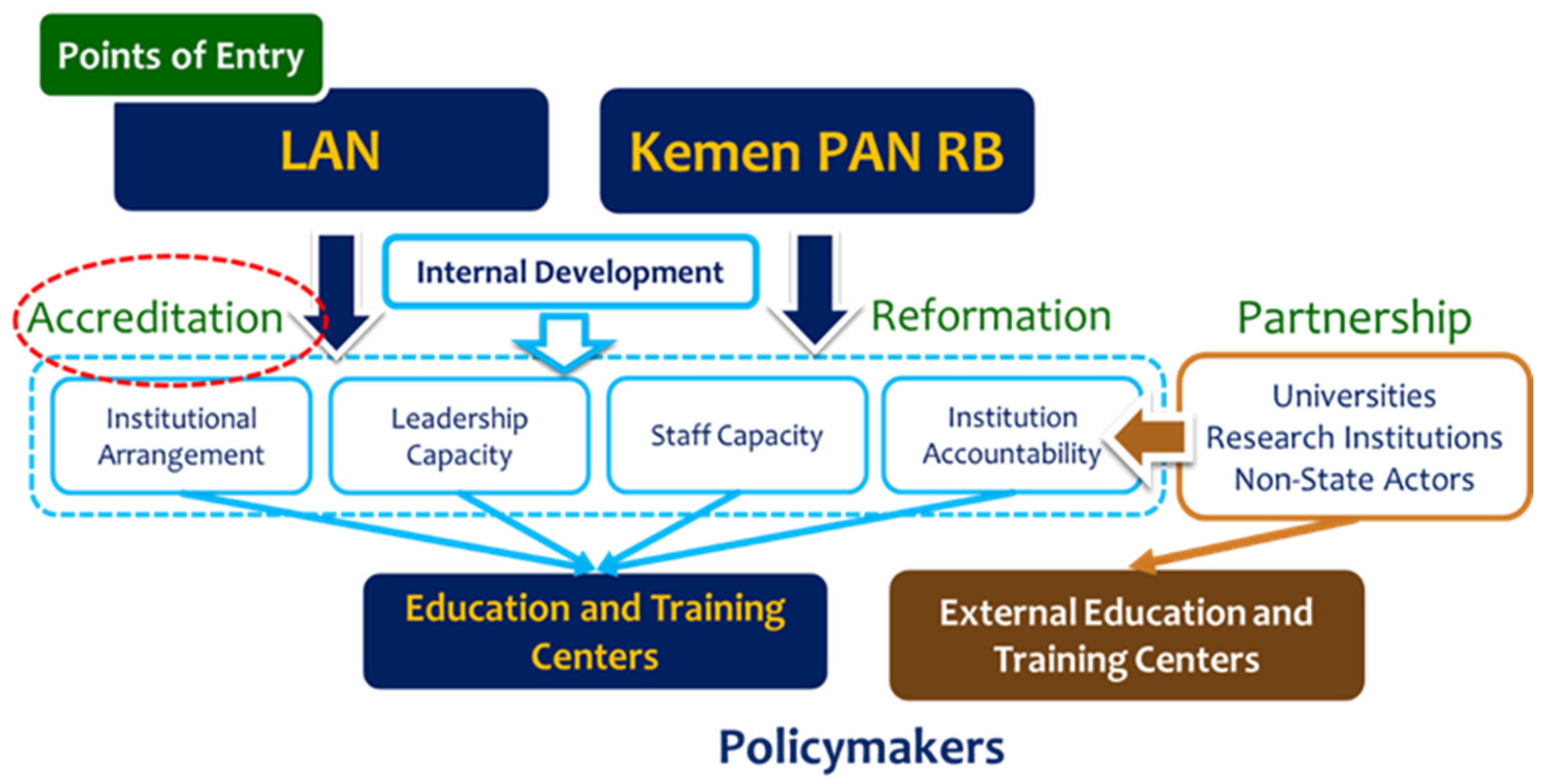
The scope of challenges and opportunity analysis of institutional capacity encompasses four key aspects: institutional arrangement, leadership capacity, staff capacity, and significant external issues [48,49]. The analysis aims to enhance institutional capacity for scaling up green economy learning through national institutions. The objectives of the analysis of challenges and opportunities for scaling up green economy learning through national institutions are (i) to identify points of entry to enhance the capacity of national institutions for scaling up green economy learning, and (ii) to identify challenges and opportunities for scaling up green economy learning through national institutions.
Key areas were identified as points of entry to enhance institutional capacity for scaling up green economy learning in Indonesia, which consists of internal development, accreditation process, reformation policies, and partnership with external institutions such as universities, research institutions, and Non-State Actors (NSAs) (Figure 4). Internal development for scaling up green economy learning would involve key factors of institutional capacity, including institutional arrangement, leadership capacity, staff capacity, and accountability.
Figure 4 identifies the strategic entry points through which green economy learning can be scaled up across institutions and policymaking processes. It highlights areas such as curriculum development, institutional accreditation, and bureaucratic reform, showing how these levers can strengthen policymakers’ capacity. This visualization is important as it connects empirical findings to practical pathways for institutionalizing green economy learning.
According to the Law of State Civil Apparatus (Law No. 5/2014), the key functions and tasks of the State Administration Agency (LAN) include developing and delivering education and training programs and guiding and assessing education and training centers under government institutions and line ministries [50]. Furthermore, LAN is also authorized to conduct accreditation for the development of education and training centers. These key functions and tasks indicate that LAN plays a key role in mainstream green economy learning in education and training centers under government institutions.
Reformation serves as a key entry point through the bureaucratic reform policy under the Ministry of Administrative and Bureaucratic Reform (Kemen PANRB). According to President’s Regulation No. 81/2010 regarding the Grand Design of Bureaucracy Reformation 2010–2025, bureaucracy should be anticipative, proactive, and effective in facing global dynamics and changes, including environmental issues [51]. Some external institutions, such as universities, research institutions, and NSA entities, have been conducting education and training programs related to green economy learning [52]. These modalities could be considered an additional entry point for scaling up and delivering green economy learning.

3.3. Opportunities and Challenges in Enhancing Institutional Capacity and Reform

Several challenges were identified at the outset, covering four areas: internal development, accreditation, reform, and external partnerships. Opportunities were also found to enhance existing education and training systems to meet policymaker competency goals. A central tension defines the challenge of scaling up green economy learning in Indonesia: regulatory rigidity limits the potential of Indonesia’s 719 education and training centers. Rigid internal rules and budget systems reduce flexibility to design or upgrade innovative programs. The absence of systematic internal assessment and a national green-learning strategy further undermines coherence and coordination. Stakeholders repeatedly highlighted the need for a clear lead institution to provide strategic direction. Table 6 summarizes the key opportunities and challenges that shape institutional capacity development in this context.
However, this landscape of constraint exists alongside a significant structural opportunity. Indonesia possesses an extensive and established learning system, comprising 719 units of education and training centers throughout the country, of which 154 are already accredited. This network provides a strong foundation for scaling up green-economy learning. The key challenge is not infrastructure but governance: reforming regulatory and strategic frameworks to unlock potential. Strengthening internal assessment and development will enable these centers to become engines for green capacity building.
According to in-depth interviews and FGDs, leadership capacity at the level of individual education and training centers was generally perceived as adequate and not the primary constraint. In general, leadership in education and training centers is at the expected capacity, providing an opportunity to support green economy learning programs. The more pressing challenge related to leadership is systemic: the constant rotation or change in institutional positions risks eroding this capacity and losing strategic momentum. However, leadership at a higher level significantly influences the education and training programs due to broader authority on budgeting and supporting programs under internal coordination. High-level leaders’ concerns and awareness of the green economy transition have become challenging issues for developing education and training institutions [23].
The capacity of trainers is a key issue, encompassing both quantity and competency. Our analysis reveals a critical contradiction: a general surplus of trainers numerically (5075 staff) exists alongside an acute deficit in specialized green economy expertise. This mismatch risks the tokenistic delivery of content if not addressed. The quantitative aspect is managed through regulations governing participant–trainer ratios across national and regional levels [53]. However, the qualitative competency gap for green economy subjects presents the main challenge. While trainers possess strong expertise in conventional internal programs, they lack specific knowledge in green economy areas. This gap could be overcome by building collaborations with external experts, but the current structure relies on the existing pool, highlighting the urgent need for upskilling to leverage this potent modality effectively and avoid superficial program delivery.
Based on the accreditation process, 21% of education and training centers have been accredited by LAN [lan.go.id], which generally indicates that these institutions have moderate accountability for conducting internal or regular education and training programs. Two main challenges for scaling up green economy learning are a lack of accountability for delivering green economy programs, including a lack of a competency framework as a basis for developing curriculums or modules, and a lack of learning needs and priorities scheme. The existing initiative on pro-green programs under the cooperation between LAN, National Development Planning Agency (BAPPENAS) [bappenas.go.id], and Global Green Growth Institute (GGGI) [gggi.org] is a significant modality for raising awareness of the green economy and the need for strengthening green economy learning.
Beyond internal development, the assessment identified three additional strategic points of entry for systemic change: accreditation, bureaucratic reformation, and external partnership. First, the national accreditation process is a powerful instrument for systematically incorporating green economy competencies into all education and training systems. Second, the broader bureaucracy reformation agenda led by Kemen PANRB, which aims to develop an anticipative and proactive bureaucracy, provides a transformative policy lever to mandate this integration across all government training centers. Finally, external partnerships with universities, research institutions, and non-state actors present a crucial opportunity to leverage existing expertise and programs, bypassing internal capacity constraints and accelerating the scaling up of green economy learning.
Accredited education and training centers result from a targeted institutional readiness that meets proactive processes from authorized accreditation institutions. Targeted institutions’ readiness is often more dominant in its system, regardless of the budgeting issue from the accreditor side. The readiness of education and training centers to deliver a green economy program is one of the main challenges. Another substantial challenge is mainstreaming the green economy learning agenda into the accreditation system.
Scaling up green economy learning through education and training centers should be considered, considering the key roles of LAN in developing such centers. Mainstreaming the green economy agenda into the accreditation process demands concrete concern from LAN’s top management. However, in cooperation with the Ministry of Environment and Forestry, BAPPENAS, and GGGI, LAN initiated pro-green programs to raise civil servants’ awareness, including education and training centers on the transition toward a sustainable economy. This initiative is a crucial milestone for developing green economy learning to support national agenda-setting, particularly the implementation of LCDI.
Significant disjuncture exists between the goals of bureaucratic reform and the green economy agenda. The concrete implementation of President’s Regulation No. 81/2010 on the Grand Design of Bureaucracy Reformation (2010–2025) remains a primary challenge because the reform agenda emphasizes generic governance efficiency but has largely missed a critical alignment with sustainability principles. It focuses predominantly on practices of good governance without proportionally integrating a response to global changes, such as environmental and sustainable economy issues. This represents a major missed opportunity to use a powerful existing policy lever for mainstreaming green competencies.
Furthermore, the current approach to capacity development reveals a critical structural weakness: a high dependence on donor-driven, project-based programs. This model, while generating activity, risks severe fragmentation and a lack of long-term institutionalization, as initiatives often end with the project cycle rather than being integrated into permanent government structures and budgets.
Overcoming these challenges requires heightened political awareness. Politicians in national and legislative institutions wield significant influence over stakeholders and executive agencies. Therefore, their concern and awareness of the transition toward a sustainable economic system are paramount for leveraging the reform agenda and ensuring cohesive, institutionalized support for green economy learning at both national and sub-national levels.
From a practical perspective, capacity development, including education and training programs, has been implemented on many occasions under programs and initiatives involving government institutions at the national, sectoral, and sub-national levels in cooperation with external entities, including the NSA. Unfortunately, in general, these activities are short-term and project-based approaches. These activities are not well structured and coordinated in the context of green economy learning development for policymakers.
However, the programs and initiatives of external entities related to green economy education and training programs could be considered as additional modalities for scaling up green economy learning in Indonesia. Internal regulations are probably the main challenges in enhancing engagement with external partners. Conversely, an existing green economy program in universities, research institutions, and NSA entities, including possible international partnerships and funding, provides a vast opportunity for developing green economy learning in Indonesia [54].

3.4. Influence of Factors on Policymakers’ Competency Levels

3.4.1. Influence of the Main Target of Competency on Institutional Characteristics

The analysis revealed a significant negative relationship between several competency targets and the perceived capacity for agenda-setting. The most significant predictor was a focus on “Policy Strengthening” (Estimate = −3.467, p < 0.000), followed by “Monitoring, Evaluation, and Reporting (MER)” (Estimate = −1.483, p < 0.007) and “Private Sector Engagement” (Estimate = −1.264, p < 0.020). This pattern is best interpreted as an endogeneity issue, namely a situation in which the independent variable (training focus) is correlated with unobserved factors, such as baseline institutional weaknesses, that also influence the dependent variable (agenda-setting capacity). In statistical terms, this creates a non-random allocation of interventions, where programs are systematically deployed in contexts of lowest initial capacity [55,56]. These relationships between competency targets and institutional characteristics are summarized in Table 7.
Thus, the negative coefficients should not be interpreted as evidence of failure but as diagnostic indicators, highlighting that capacity-building is deliberately directed toward areas of greatest deficit. This interpretation is consistent with prior studies that show that negative associations in similar policy evaluation contexts can reflect targeted deployment rather than ineffectiveness [57,58]. The apparent contradiction regarding private sector engagement is reconciled in Section 3.5. Effects for communication and regional engagement were negative but not statistically significant (p > 0.05).
The analysis of institution types reveals which actors most positively influence agenda-setting capacity. Government/legislative institutions show a significant positive association estimate of 1.855 (p < 0.010). This indicates that policies and agendas formulated by the government or legislative bodies strongly impact green economy agenda-setting. The government and legislative institutions appear to be key actors that can lead and facilitate a green economy. Universities also demonstrate a significant positive impact (1.276, p < 0.019). Academic institutions play a critical role in supporting policy formulation through research, innovation, and capacity building. Furthermore, the private sector exhibits the strongest positive association, with an estimated 3.173 (p < 0.020). The result demonstrates that the private sector’s presence and participation as an institutional actor are fundamentally beneficial and crucial for advancing the green economy agenda.
This potent positive influence contrasts sharply with the negative estimate for “Private Sector Engagement” as a competency target. This critical distinction between an institution’s role and the strategy to engage it has a direct practical implication: policy design must move beyond training officials to “engage” the private sector as an external entity. Instead, policy should focus on creating structured platforms and incentives that integrate the private sector as a core co-creator in the policy process itself, thereby leveraging its significant positive influence more effectively.
Overall, none of the educational and training focus areas demonstrated a statistically significant impact on the formulation of the green economy agenda, with all p-values greater than 0.05. This non-significance stems from a fundamental misalignment between the scope of these thematic programs and the core competencies required for high-level agenda-setting. While programs in Forestry, Agriculture, Energy, etc., provide crucial technical knowledge, the act of agenda-setting is a political process requiring strategic coalition-building, negotiation, and narrative framing—skills that are often not the focus of technically oriented training. This suggests a potential methodological insight: our survey, which measured thematic focus areas, has captured the content of training rather than its pedagogical effectiveness in building the “green political capabilities” essential for agenda-setting. Therefore, these thematic areas remain necessary but insufficient; their impact depends on a more strategic and innovative instructional design that specifically targets policy influence and political navigation skills.
The analysis reveals that several key audience groups are associated with constraints on developing the green economy agenda. National leaders/legislators exhibited the strongest negative association (Estimate = −4.575, p < 0.000). This reflects entrenched structural barriers—such as short political cycles and competing economic priorities—that hinder their ability to advance long-term environmental agendas, or alternatively, signifies a critical failure in engagement strategies tailored to their decision-making context.
The civil servant apparatus also shows a strong negative relationship (Estimate = −3.827, p < 0.000), which suggests a systemic misalignment between their current technical–managerial competencies and the innovative, cross-sectoral skills required for a green transition. Similarly, the private sector, community/NGO/media, and academics/researchers all show significant negative associations. This indicates that, despite their essential roles, pervasive challenges—such as fragmented efforts, lack of formalized integration into the policy process, or insufficiently targeted capacity-building—currently prevent these groups from effectively steering the agenda.
Main Empirical Finding on Institutional Influence: The analysis clearly identifies the most influential institutional actors driving the green economy agenda. Governmental/legislative institutions and the private sector exert the strongest significant positive influence, with universities also playing a critical supportive role. This empirically validates their central position as essential drivers for advancing green economy policies.
Interpretive Insight on Capacity-Building: the negative estimates associated with competency targets, however, provide a crucial diagnostic insight into current implementation challenges. Rather than indicating that training in policy strengthening or private sector engagement is counterproductive, these results reveal that such programs are correctly targeted at institutions with the most substantial pre-existing deficits. This pattern points to systemic challenges, such as deep-seated capacity gaps or misaligned engagement strategies. The key implication for capacity-building is the need for a more nuanced, tiered approach that moves beyond generic training to address these specific institutional and strategic barriers.
No education and training focus areas yielded a significant impact, indicating that training approaches must be tailored for better alignment with green economy objectives. This reflects an endogeneity issue, where the demand for basic training is symptomatic of low underlying capacity. Therefore, policymakers must transition from a reactive, gap-filling approach to a more strategic and tiered capacity development model. For instance, national leaders’ interventions should focus on strategic coalition-building, while those for civil servants (ASN) must equip them with specific technical toolkits. This nuanced understanding transcends the mere identification of ‘what’ is needed and elucidates ‘how’ interventions must be designed for maximal impact. These findings suggest that enhancing the capacity of policymakers to formulate a green economy agenda necessitates more strategic engagement, a focus on competency development, and the optimization of the roles of key institutions, such as the government and the private sector.

3.4.2. Influence of the Main Competency Target on Education and Training Programs

For the main target of competency variables, the findings reveal that “Strengthening Policy” has a significant negative association with agenda-setting (Estimate = −3.265, p < 0.000). Consistent with the endogeneity issue identified in Section 3.4.1, this negative association likely reflects that such training is targeted where pre-existing policy deficits are greatest, not that it is ineffective. MER has a negative estimate of −1.515 (p < 0.054), indicating it is nearly significant but not yet a decisive factor in shaping the agenda. Private sector engagement also shows a negative estimate (−1.317, p < 0.093), suggesting engagement strategies remain suboptimal. Meanwhile, communication and regional engagement have no significant impact (p > 0.05). Table 8 summarizes the influence of each main competency target on agenda-setting capacity.
For the variable Target Type of Competency, National Leadership has a negative estimate of −1.044, approaching significance (p < 0.083). The result indicates that, while important, national leadership faces challenges in supporting green economy agenda-setting. Management shows a significant negative impact with an estimate of −0.991 (p < 0.035), indicating that management competency development is likely to be targeted at organizational levels where managerial deficits are most acute. Socio-cultural competencies have a significantly negative impact (−1.366, p < 0.007), suggesting that while important, interventions in this area are still nascent or are grappling with deeply entrenched cultural barriers to green transitions. Additionally, technical competencies have a negative but insignificant impact, with an estimated −0.758 (p < 0.173).
The analysis of the Competency Framework of Education and Training Programs shows that the Internal Framework has a positive but insignificant effect (estimate 1.001, p < 0.153). This suggests that the internal framework has not significantly influenced the development of a green economy agenda. Implementing an external framework also has a positive impact, with an estimated 1.200 (p < 0.085), indicating that the implementation of an external framework has the potential to support the green economy agenda.
For the competency variable component, both knowledge (Estimate = −1.909, p < 0.000) and skills (Estimate = −1.827, p < 0.000) show a significant negative association with green economy agenda-setting. This counterintuitive result does not imply that knowledge or skills are harmful; rather, it reflects a critical methodological insight into capacity-building practices: programs are predominantly allocated to individuals or institutions with the most substantial pre-existing deficits. Therefore, the result implies that knowledge and skills alone, in their current form and delivery context, are insufficient to drive the agenda forward. At an aggregate level, a focus on building basic knowledge and skills correlates with contexts of greater need, highlighting a fundamental selection bias in training allocation. This underscores that transformative agenda-setting requires moving beyond foundational training to develop advanced strategic and political capabilities.
Regarding the Curriculum of Education and Training Programs, the Internal Curriculum-Based approach has a negative but insignificant impact (estimate −0.601, p < 0.375), indicating that an internal curriculum is not yet optimal in supporting the green economy agenda. Implementing an external curriculum also has a negative but insignificant impact (−0.320, p > 0.644).
Policy Strengthening, Management Competencies, and Socio-Cultural Competencies tend to significantly negatively impact green economy agenda-setting, suggesting challenges in ensuring the relevance of existing policies. Knowledge and skills alone are insufficient to support the green economy agenda. This study highlights the need for a more holistic approach that integrates knowledge, skills, and other elements such as strategic insights and collaboration.
Although relevant, programs related to the Low Carbon Development Initiative (LCDI) have not demonstrated a significant impact in advancing the green economy agenda, indicating the need for further evaluation and optimization of these programs. The External Competency Framework approaches significance, suggesting that implementing an external framework could serve as a key entry point that can be further developed to support capacity-building efforts in the green economy agenda.
The consistent negative estimates for competency targets reflect a strategic targeting of capacity-building programs toward groups with the lowest initial capacity, not evidence of program failure. The direction of causality is key: perceived weaknesses (e.g., in policymaking) lead to a focus on specific training (e.g., Policy Strengthening). Therefore, the negative correlation is a diagnostic indicator that interventions are correctly deployed where needs are most acute.
Furthermore, participants or institutions selected for training programs typically have the lowest initial capacity. When data are aggregated, this focus on fundamental components is statistically associated with a lower overall capacity level. It does not reflect a program failure but rather the inherent characteristics of the target audience. These negative estimates should be interpreted as diagnostic indicators rather than failures, since they reveal the targeted allocation of training toward low-capacity actors. In evaluation studies, such patterns are well-documented as manifestations of endogeneity, where intervention intensity is higher precisely where deficits are most severe [55,56]. They are not evidence of a failed intervention, but rather strong pointers to where the most significant capacity gaps and systemic challenges lie within the Indonesian public policy landscape.

3.5. International Comparative Perspective on Green Political Capabilities

The global transition toward a green economy manifests differently across regions due to variations in political systems, developmental priorities, and institutional architectures [59,60]. Comparing Indonesia with the EU, Latin America, and key countries such as Germany, Denmark, South Korea, Kenya, India, and Brazil, clarifies its distinctive trajectory. Indonesia’s fragmented governance and rapidly evolving economy set it apart from the EU’s integrated regulatory approach and Latin America’s more volatile, resource-based political landscape.

3.5.1. Contrast with the European Union: Supranational Institutions’ Power and Regulatory Cohesion

The European Union (EU) represents a top-down, regulatory-driven green transition model, epitomized by the European Green Deal [59]. Its success relies on supranational institutions like the European Commission, which enforces binding targets and mobilizes funding instruments such as InvestEU and the Just Transition Fund [59,60]. Indonesia, by contrast, faces inter-agency fragmentation and limited coordination. Its bottom-up strategy mainstreams green principles into existing development plans (RPJMN) but lacks a strong central enforcement body, resulting in weaker implementation [61]. This contrasts with countries like Germany and Denmark, where strong institutional cohesion and long-term renewable energy policies have enabled consistent progress [62,63,64]. Similarly, South Korea illustrates how centralized industrial policy can accelerate green innovation [65], whereas Indonesia still struggles with fragmented responsibilities across ministries [66].
A report from the Center for Global Sustainability (CGS) and Landscape Indonesia highlights that the country’s renewable energy transformation necessitates major policy reforms and investment to reduce its dependency on coal; however, this is impeded by a deficit of commitment and coordination [61]. Furthermore, state financial backing for fossil projects illustrates a deeper institutional lock-in that systematically undermines green policy coherence; a study from CELIOS indicates that Indonesia remains heavily reliant on fossil fuels, as state-owned banks continue to support non-renewable projects, reflecting and reinforcing this fragmentation in energy policy.

3.5.2. Lessons from Latin America

Latin America provides both parallels and cautionary lessons. Costa Rica has built a strong political consensus linking environmental protection to economic growth, branding itself as a global leader in conservation and ecotourism [67]. However, this success depends on specific domestic conditions and is difficult to replicate elsewhere. In contrast, Brazil’s experience shows how sudden political shifts can reverse environmental progress, exposing green policies to the volatility of regime change [32,68].
Kenya and India offer lessons from the Global South. Kenya’s feed-in-tariff policy spurred private investment in renewable energy [69], while India’s integration of public investment with agro-ecological zones advanced sustainability alongside poverty reduction. These cases underline that without institutionalized mechanisms, such as accreditation and standardized training, green-state capacity remains fragile and dependent on shifting political cycles rather than durable state systems.
Across the European, Latin American, and African contexts, a recurring pattern emerges: countries that have institutionalized coordination mechanisms through supranational governance (EU) or national inter-ministerial frameworks (e.g., Kenya and South Africa) show stronger policy stability and continuity in their green transitions. Conversely, systems that rely mainly on political charisma or short-term coalitions (as in Brazil or parts of West Africa) often experience reversals and fragmented implementation.
Synthesizing these findings, Indonesia’s challenge is hybrid. Like many African states, it struggles with institutional fragmentation; however, similar to the EU’s early phase, it holds opportunities to reinforce bureaucratic integration through standardized accreditation and competency-based training. This cross-regional reflection positions Indonesia between regulatory coherence and developmental volatility, highlighting the importance of adaptive but institutionally grounded governance.

4. Conclusions

The identification of entry points for enhancing the green political capabilities of policymakers is paramount in designing and implementing Indonesia’s green economic agenda. Two primary intervention domains are identified: internal institutional development covering governance, leadership, staff capacity, and accountability and external engagement through accreditation, bureaucratic reform, and partnership. The study’s theoretical contribution lies in clarifying how capacity-building interacts with institutional readiness.
The ordinal regression results, where Policy Strengthening shows a negative correlation with perceived capacity, reveal targeted intervention patterns rather than ineffectiveness. These negative relationships serve as diagnostic indicators of systemic gaps. Advancing Indonesia’s green economy therefore requires not only technical initiatives but also political will, institutional maturity, and public trust supported by clear distinctions between short-term reforms and long-term structural strategies.

4.1. Limitations of the Study

This study offers valuable insights, but is subject to several methodological limitations. The sample composition exhibits a deliberate but notable bias: a significant over-representation of academics and researchers (~72%) alongside an under-representation of core bureaucratic actors from government and the private sector. Although this purposive strategy captured vital knowledge-generator perspectives, the quantitative findings do not fully represent the implementation challenges and political constraints faced by frontline policymakers. Another limitation is the potential self-selection bias, as participation in surveys and FGDs attracts individuals already more engaged or interested in green economy issues, possibly influencing the perspectives captured. Additionally, the context-specific focus on Indonesia limits the direct generalizability of the findings to other governance systems. Furthermore, the cross-sectional nature of the data limits causal inference to correlation; a longitudinal design is necessary to robustly establish causality. This is particularly critical for capacity-building research, as the development of ‘green political capabilities’ and their impact on policy outcomes are inherently long-term processes that unfold over time, beyond the scope of a single snapshot study. Lastly, while the sample of 170 respondents provides a reasonable basis for ordinal regression with 17 predictors, the statistical power should be interpreted with caution, and future studies with larger and more balanced samples are recommended to validate these findings.

4.2. Policy Recommendations and Future Research Directions

4.2.1. Short-Term Actionable Steps

  • Integrating Green Competencies into Accreditation Standards through the National Institute of Public Administration (LAN). This intervention leverages LAN’s pivotal role as the national accreditor to systemically embed green economy principles. While administratively feasible, this recommendation requires modest additional funding for curriculum development and strong coordination between LAN and line ministries to ensure adoption.
  • Implementation of a Tiered and Problem-Oriented Training Approach. Capacity-building must be tailored to specific institutional roles. Given existing training structures, this approach is feasible in the short term with adjustments in training design rather than entirely new funding streams.

4.2.2. Long-Term Strategies

  • Aligning the Green Economy with Bureaucratic Reform (KemenPANRB). This reform should explicitly integrate green economy competencies into civil service performance appraisals and promotion criteria. However, feasibility depends on political buy-in from senior leadership and overcoming institutional resistance to change. Without political endorsement, reforms risk being symbolic rather than substantive.
  • Securing sustainable funding mechanisms. Embedding green training into accreditation and bureaucratic reforms will require stable long-term financing, potentially from climate funds, donor agencies, or earmarked state budget lines. Ensuring funding continuity is critical to prevent reforms from stalling.
To translate these policy recommendations into action, an initial coordination platform should be established between the Ministry of National Development Planning (Bappenas), the National Institute of Public Administration (LAN), and the Ministry of Administrative and Bureaucratic Reform (KemenPANRB). This tripartite platform can synchronize accreditation standards, bureaucratic reforms, and curriculum design for green competencies. In the first phase (2025–2027), pilot programs can be launched within selected government training centers (Pusdiklat) to integrate green modules into accreditation systems. The subsequent phase (2028–2030) should focus on institutionalizing these modules into the national civil service training framework and linking them with performance-based promotion systems. Such phased implementation ensures that capacity development moves from isolated initiatives to a systemic reform embedded within Indonesia’s governance structure.
Future research should employ longitudinal designs to track the impact of training on institutional change, include sectoral case studies, and evaluate training effectiveness across different policymaker groups.

Author Contributions

Conceptualization, M.K. and T.F. methodology, M.K. and T.F.; software, M.K. and T.F.; validation, M.K. and T.F.; formal analysis, M.K. and T.F.; investigation, M.K.; resources, M.K.; data curation, M.K. and T.F.; writing original draft preparation, M.K. and T.F.; writing review and editing, M.K. and T.F.; visualization, T.F.; supervision, M.K.; project administration, M.K.; funding acquisition, M.K. All authors have read and agreed to the published version of the manuscript.

Funding

The study was supported by PPI Q1 2021 funded by DRPM Universitas Indonesia No. NKB-608/UN2.RST/HKP.05.00/2021.

Institutional Review Board Statement

The study was conducted in accordance with the Declaration of Helsinki, and approved by the Institutional Review Board of Universitas Indonesia, Graduate School of Sustainable Development (protocol code S-370/UN2.F13.D/OTL.00/2025 and date of approval 13 November 2025).

Informed Consent Statement

Informed consent was obtained from all subjects involved in the study.

Data Availability Statement

The original contributions presented in this study are included in the article. Further inquiries can be directed to the corresponding author.

Acknowledgments

Thank you to the Institute for Advanced Science, Social and Sustainable Future, who read this article.

Conflicts of Interest

The authors declare no conflicts of interest.

Abbreviations

BAPPENASBadan Perencanaan Pembangunan Nasional (National Development Planning Agency)
FGDFocus Group Discussion
GELAGreen Economy Learning Assessment
GGGIGlobal Green Growth Institute
Kemen PANRBKementerian Pemberdayaan Aparatur Negara dan Reformasi Birokrasi (Ministry of Administrative and Bureaucratic Reform)
LANLembaga Administrasi Negara (State Administration Agency)
LCDILow Carbon Development Indonesia
MERMonitoring, Evaluating, and Reporting
MRVMeasurement, Reporting, and Verification
NDCNationally Determined Contribution
RPJMNRencana Pembangunan Jangka Menengah Nasional (National Mid-Term Development Plan)
SKKNIStandar Kompetensi Kerja Nasional Indonesia (Indonesia’s National Qualification Framework)
UNDPUnited Nations Development Programme

References

  1. Bailey, D.H.; Borwein, J.M.; Caprotti, O.; Martin, U.; Salvy, B.; Taufer, M. Opportunities and Challenges in 21st Century Mathematical Computation: ICERM Workshop Report; Institute for Computational and Experimental Research in Mathematics (ICERM): Providence, RI, USA, 2014; 18p, Available online: https://www.davidhbailey.com/dhbpapers/ICERM-2014.pdf (accessed on 2 March 2024).
  2. Kowalska-Styczeń, A.; Bublyk, M.; Lytvyn, V. Green Innovative Economy Remodeling Based on Economic Complexity. J. Open Innov. Technol. Mark. Complex. 2023, 9, 100091. [Google Scholar] [CrossRef]
  3. Meadows, D.; Randers, J.; Meadows, D. Limits to Growth-The 30 Year Update; Earthscan: London, UK, 2006; 363p, Available online: https://www.peakoilindia.org/wp-content/uploads/2013/10/Limits-to-Growth-updated.pdf (accessed on 20 March 2024).
  4. Jackson, T.; Victor, P. Productivity and Work in the ‘Green Economy’: Some Theoretical Reflections and Empirical Tests. Environ. Innov. Soc. Transit. 2011, 1, 101–108. [Google Scholar] [CrossRef]
  5. Georgeson, L.; Maslin, M.; Poessinouw, M. The Global Green Economy: A Review of Concepts, Definitions, Measurement Methodologies and Their Interactions. Geo 2017, 4, e00036. [Google Scholar] [CrossRef]
  6. UNDP. Transforming Our World: The 2030 Agenda for Sustainable Development, United Nations. 2018. Available online: https://www.undp.org/ukraine/publications/transforming-our-world-2030-agenda-sustainable-development (accessed on 20 March 2024).
  7. Antkowiak, T.M. A “Dignified Life” and the Resurgence of Social Rights. Northwest. J. Hum. Rights 2020, 18, 1–52. Available online: https://scholarlycommons.law.northwestern.edu/njihr/vol18/iss1/1 (accessed on 20 March 2024).
  8. Davies, A.R. Cleantech Clusters: Transformational Assemblages for a Just, Green Economy or Just Business as Usual? Glob. Environ. Change 2013, 23, 1285–1295. [Google Scholar] [CrossRef]
  9. Mealy, P.; Teytelboym, A. Economic Complexity and the Green Economy. Res. Policy 2022, 51, 103948. [Google Scholar] [CrossRef]
  10. Kristiadi, Y.; Sari, R.F.; Herdiansyah, H.; Hasibuan, H.S.; Lim, T.H. Developing DPSIR Framework for Managing Climate Change in Urban Areas: A Case Study in Jakarta, Indonesia. Sustainability 2022, 14, 15773. [Google Scholar] [CrossRef]
  11. Kuramochi, T. Review of Energy and Climate Policy Developments in Japan before and after Fukushima. Renew. Sustain. Energy Rev. 2015, 43, 1320–1332. [Google Scholar] [CrossRef]
  12. Ndiritu, S.W.; Engola, M.K. The Effectiveness of Feed-in-Tariff Policy in Promoting Power Generation from Renewable Energy in Kenya. Renew. Energy 2020, 161, 593–605. [Google Scholar] [CrossRef]
  13. Fan, S.; Hazell, P.; Haque, T. Targeting Public Investments by Agro-Ecological Zone to Achieve Growth and Poverty Alleviation Goals in Rural India. Food Policy 2000, 25, 411–428. [Google Scholar] [CrossRef]
  14. Rabinovitch, J. Innovative Land Use and Public Transport Policy. Land Use Policy 1996, 13, 51–67. [Google Scholar] [CrossRef]
  15. UNFCCC. Enhanced Nationally Determined Contribution Republic of Indonesia; UNFCCC: Bonn, Germany, 2022; 47p, Available online: https://unfccc.int/sites/default/files/NDC/2022-09/23.09.2022_Enhanced%20NDC%20Indonesia.pdf (accessed on 20 March 2024).
  16. Verma, S.; Kandpal, D. Green Economy and Sustainable Development. In Environmental Sustainability and Economy; Elsevier: Amsterdam, The Netherlands, 2021; pp. 325–343. [Google Scholar] [CrossRef]
  17. Elliott, L.; Setyowati, A.B. Toward a Socially Just Transition to Low Carbon Development: The Case of Indonesia. Asian Aff. 2020, 51, 875–894. [Google Scholar] [CrossRef]
  18. El Mouallem, L.; Analoui, F. The Need for Capacity Building in Human Resource Management Related Issues: A Case Study from the Middle East (Lebanon). In Proceedings of the 1st Mediterranean Interdisciplinary Forum on Social Sciences and Humanities, Beirut, Lebanon, 23–26 April 2014; pp. 245–254. Available online: https://eujournal.org/index.php/esj/article/view/3642 (accessed on 20 March 2024).
  19. Nouvan, R. Transforming Financial Systems for Sustainability: The Role of Green Financing in Social-Environmental Progress and Economic Resilience. EcoProfit Sustain. Environ. Bus. 2025, 3, 33–50. [Google Scholar] [CrossRef]
  20. Creswell, J.W.; Clark, V.L.P. Designing and Conducting Mixed Methods Research; Sage Publications: Thousand Oaks, CA, USA, 2017; pp. 1–520. [Google Scholar]
  21. Analoui, F.; Danquah, J.K. Critical Capacity Development; Springer: Cham, Switzerland, 2017. [Google Scholar] [CrossRef]
  22. UNDP. Capacity Assessment Methodology User’s Guide; UNDP: New York, NY, USA, 2008; 76p, Available online: https://www.undp.org/publications/undp-capacity-assessment-methodology (accessed on 20 March 2024).
  23. Rietig, K.; Dupont, C. Presidential Leadership Styles and Institutional Capacity for Climate Policy Integration in the European Commission. Policy Soc. 2021, 40, 19–36. [Google Scholar] [CrossRef]
  24. Yinusa, S.O.; Wehn, U. Institutional Dynamics in National Strategy Development: A Case Study of the Capacity Development Strategy of Uganda’s Water and Environment Sector. Water Policy 2016, 18, 1174–1193. [Google Scholar] [CrossRef]
  25. Palinkas, L.A.; Horwitz, S.M.; Green, C.A.; Wisdom, J.P.; Duan, N.; Hoagwood, K. Purposeful Sampling for Qualitative Data Collection and Analysis in Mixed Method Implementation Research. Adm. Policy Ment. Health Ment. Health Serv. Res. 2015, 42, 533–544. [Google Scholar] [CrossRef]
  26. Joshi, A.; Kale, S.; Chandel, S.; Pal, D. Likert Scale: Explored and Explained. Br. J. Appl. Sci. Technol. 2015, 7, 396–403. [Google Scholar] [CrossRef]
  27. Almanasreh, E.; Moles, R.; Chen, T.F. Evaluation of Methods Used for Estimating Content Validity. Res. Soc. Adm. Pharm. 2019, 15, 214–221. [Google Scholar] [CrossRef]
  28. George, D.; Mallery, P. SPSS for Windows Step by Step: A Simple Guide and Reference, 4th ed.; Allyn & Bacon: Boston, MA, USA, 2003; pp. 1–400. [Google Scholar]
  29. Taber, K.S. The Use of Cronbach’s Alpha When Developing and Reporting Research Instruments in Science Education. Res. Sci. Educ. 2018, 48, 1273–1296. [Google Scholar] [CrossRef]
  30. Agresti, A. Categorical Data Analysis, 3rd ed.; John Wiley & Sons: Hoboken, NJ, USA, 2013; pp. 1–752. [Google Scholar]
  31. McCullagh, P. Regression Models for Ordinal Data. J. R. Stat. Soc. Ser. B Stat. Methodol. 1980, 42, 109–127. [Google Scholar] [CrossRef]
  32. Murga-Menoyo, M. Learning for a Sustainable Economy: Teaching of Green Competencies in the University. Sustainability 2014, 6, 2974–2992. [Google Scholar] [CrossRef]
  33. Collado-Ruano, J.; Segovia Sarmiento, J. Ecological Economics Foundations to Improve Environmental Education Practices: Designing Regenerative Cultures. World Futures 2022, 78, 456–483. [Google Scholar] [CrossRef]
  34. Sunny, F.A.; Jeronen, E.; Lan, J. Influential Theories of Economics in Shaping Sustainable Development Concepts. Adm. Sci. 2024, 15, 6. [Google Scholar] [CrossRef]
  35. Scalabrino, C.; Navarrete Salvador, A.; Oliva Martínez, J.M. A Theoretical Framework to Address Education for Sustainability for an Earlier Transition to a Just, Low Carbon and Circular Economy. Environ. Educ. Res. 2022, 28, 735–766. [Google Scholar] [CrossRef]
  36. Haikal, R.; Firdaus, T.; Herdiansyah, H.; Chairunnisa, R.S. Urban Planning Policies and Architectural Design for Sustainable Food Security: A Case Study of Smart Cities in Indonesia. Sustainability 2025, 17, 7546. [Google Scholar] [CrossRef]
  37. Fitjriyah, A.R.; Dwiputri, I.N. The Impact of Green Finance, Trade Openness, and Fossil Fuel Subsidies on Renewable Energy Consumption: A Global and Asia-Pacific Perspective. J. Environ. Sci. Sustain. Dev. 2025, 8, 201–221. [Google Scholar] [CrossRef]
  38. Buseth, J.T. Narrating Green Economies in the Global South. Forum Dev. Stud. 2021, 48, 87–109. [Google Scholar] [CrossRef]
  39. Dugoua, E.; Dumas, M. Green Product Innovation in Industrial Networks: A Theoretical Model. J. Environ. Econ. Manag. 2021, 107, 102420. [Google Scholar] [CrossRef]
  40. Karydas, C.; Zhang, L. Green Tax Reform, Endogenous Innovation and the Growth Dividend. J. Environ. Econ. Manag. 2019, 97, 158–181. [Google Scholar] [CrossRef]
  41. Aidt, T.S. Green Taxes: Refunding Rules and Lobbying. J. Environ. Econ. Manag. 2010, 60, 31–43. [Google Scholar] [CrossRef]
  42. Taufan, B.A.; Maqvira. Community Development for UMKM on Improving Financial Inclusion. J. Econ. Bus. Account. Res. 2025, 2, 135–148. [Google Scholar] [CrossRef]
  43. Setiani, H.; Valennia, R.; Rusni, N.K. Nickel Export Ban Policy in Indonesia—A Path to Sustainable Economic Development? EcoProfit Sustain. Environ. Bus. 2024, 1, 120–130. [Google Scholar] [CrossRef]
  44. Curtis, E.M.; Lee, J.M. When Do Environmental Regulations Backfire? Onsite Industrial Electricity Generation, Energy Efficiency and Policy Instruments. J. Environ. Econ. Manag. 2019, 96, 174–194. [Google Scholar] [CrossRef]
  45. Fiore, S.M.; Harrison, G.W.; Hughes, C.E.; Rutström, E.E. Virtual Experiments and Environmental Policy. J. Environ. Econ. Manag. 2009, 57, 65–86. [Google Scholar] [CrossRef]
  46. Vallejo, B.; Wehn, U. Capacity Development Evaluation: The Challenge of the Results Agenda and Measuring Return on Investment in the Global South. World Dev. 2016, 79, 1–13. [Google Scholar] [CrossRef]
  47. Akbar, S.; Putra, R.P.; Saragih, I.M.N.; Ranasti, N. Circular Economy Transition through Community-Based Ecopreneurship Empowerment Model: Reconstructing the Environmental Care Community. EcoProfit Sustain. Environ. Bus. 2025, 3, 51–70. [Google Scholar] [CrossRef]
  48. Baum, D.; Yagüe-Blanco, J.L.; Escobar, J. Capacity Development Strategy Empowering the Decentralized Governments of Ecuador towards Local Climate Action. J. Clean. Prod. 2021, 285, 125320. [Google Scholar] [CrossRef]
  49. Domorenok, E.; Graziano, P.; Polverari, L. Introduction: Policy Integration and Institutional Capacity: Theoretical, Conceptual and Empirical Challenges. Policy Soc. 2021, 40, 1–18. [Google Scholar] [CrossRef]
  50. Republic of Indonesia. Law No. 5 of 2014 Concerning the State Civil Apparatus; Database Peraturan BPK: Jakarta, Indonesia, 2014; Available online: https://peraturan.bpk.go.id/Details/38580/uu-no-5-tahun-2014 (accessed on 2 March 2024).
  51. President of the Republic of Indonesia. Presidential Regulation No. 81 of 2010 Concerning the Grand Design of Bureaucratic Reform 2010–2025; Database Peraturan BPK: Jakarta, Indonesia, 2010; Available online: https://peraturan.bpk.go.id/Details/40398/perpres-no-81-tahun-2010 (accessed on 24 March 2024).
  52. Abdenur, A.E.; Da Fonseca, J.M.E.M. The North’s Growing Role in South–South Cooperation: Keeping the Foothold. Third World Q. 2013, 34, 1475–1491. [Google Scholar] [CrossRef]
  53. Holm Olsen, K. Why Planned Interventions for Capacity Development in the Environment Often Fail: A Critical Review of Mainstream. Int. Stud. Manag. Organ. 2006, 36, 104–124. [Google Scholar] [CrossRef]
  54. The Global Green Growth Institute. Review of GGGI Programme in Indonesia (2012–2017); The Global Green Growth Institute: Seoul, Republic of Korea, 2018; pp. 1–48. Available online: https://gggi.org/wp-content/uploads/2021/12/Norway-2018-mid-term-evaluation-of-GGGI-Indonesia-Final-report.pdf (accessed on 25 November 2025).
  55. Wooldridge, J.M. Econometric Analysis of Cross Section and Panel Data; MIT Press: Cambridge, MA, USA, 2010; pp. 1–752. [Google Scholar]
  56. Antonakis, J.; Bendahan, S.; Jacquart, P.; Lalive, R. On Making Causal Claims: A Review and Recommendations. Leadersh. Q. 2010, 21, 1086–1120. [Google Scholar] [CrossRef]
  57. Finkel, S.E.; Pérez-Liñán, A.; Seligson, M.A. The Effects of U.S. Foreign Assistance on Democracy Building, 1990–2003. World Politics 2007, 59, 404–439. [Google Scholar] [CrossRef]
  58. Angrist, J.D.; Pischke, J.-S. Mostly Harmless Econometrics: An Empiricist’s Companion; Princeton University Press: Princeton, NJ, USA, 2009; pp. 1–290. [Google Scholar]
  59. European Union. The European Green Deal to Be the First Climate-Neutral Continent; European Union: Brussels, Belgium, 2025; Available online: https://commission.europa.eu/strategy-and-policy/priorities-2019-2024/story-von-der-leyen-commission/european-green-deal_en (accessed on 25 August 2025).
  60. European Union. European Commission: What Does the Commission Do? European Union: Brussels, Belgium, 2020; Available online: https://european-union.europa.eu/institutions-law-budget/institutions-and-bodies/search-all-eu-institutions-and-bodies/european-commission_en (accessed on 24 May 2024).
  61. Sari, A.P.; Ramdani, D.; Agustina, P.A. Growing Strong, Growing Green, Growing Renewables: Tripling Renewables and Doubling the Pace of Efficiency Improvement by 2030 in Indonesia; University of Maryland: College Park, MD, USA, 2024; Available online: https://cgs.umd.edu/research-impact/publications/growing-strong-growing-green-growing-renewables-tripling-renewables (accessed on 25 August 2025).
  62. Sovacool, B.K. Energy Policymaking in Denmark: Implications for Global Energy Security and Sustainability. Energy Policy 2013, 61, 829–839. [Google Scholar] [CrossRef]
  63. Lund, H. Renewable Energy Systems: A Smart Energy Systems Approach to the Choice and Modeling of Fully Decarbonized Societies, 3rd ed.; Academic Press: Cambridge, MA, USA, 2024; pp. 1–398. [Google Scholar]
  64. Jacobsson, S.; Lauber, V. The Politics and Policy of Energy System Transformation—Explaining the German Diffusion of Renewable Energy Technology. Energy Policy 2006, 34, 256–276. [Google Scholar] [CrossRef]
  65. Lee, E.; Hong, S. An Offshore Energy Innovation Strategy to Implement the Korean Green New Deal. Korea Inst. Ind. Econ. Trade 2023, 269, 1–15. [Google Scholar] [CrossRef]
  66. Resosudarmo, B.P.; Rezki, J.F.; Effendi, Y. Prospects of Energy Transition in Indonesia. Bull. Indones. Econ. Stud. 2023, 59, 149–177. [Google Scholar] [CrossRef]
  67. Pagiola, S. Payments for Environmental Services in Costa Rica. Ecol. Econ. 2008, 65, 712–724. [Google Scholar] [CrossRef]
  68. Ferrante, L.; Fearnside, P.M. Brazil’s New President and ‘Ruralists’ Threaten Amazonia’s Environment, Traditional Peoples and the Global Climate. Environ. Conserv. 2019, 46, 261–263. [Google Scholar] [CrossRef]
  69. Ramalope, D.; Reynolds, C.; Ganti, G.; Welder, L.; Fyson, C.; Mainu, M.; Hare, B. Renewable Energy Transition in Sub-Saharan Africa; Climate Analytics: Berlin, Germany, 2022; pp. 1–65. Available online: https://ca1-clm.edcdn.com/assets/renewable_energy_transition_in_sub-saharan_africa.pdf (accessed on 5 August 2025).
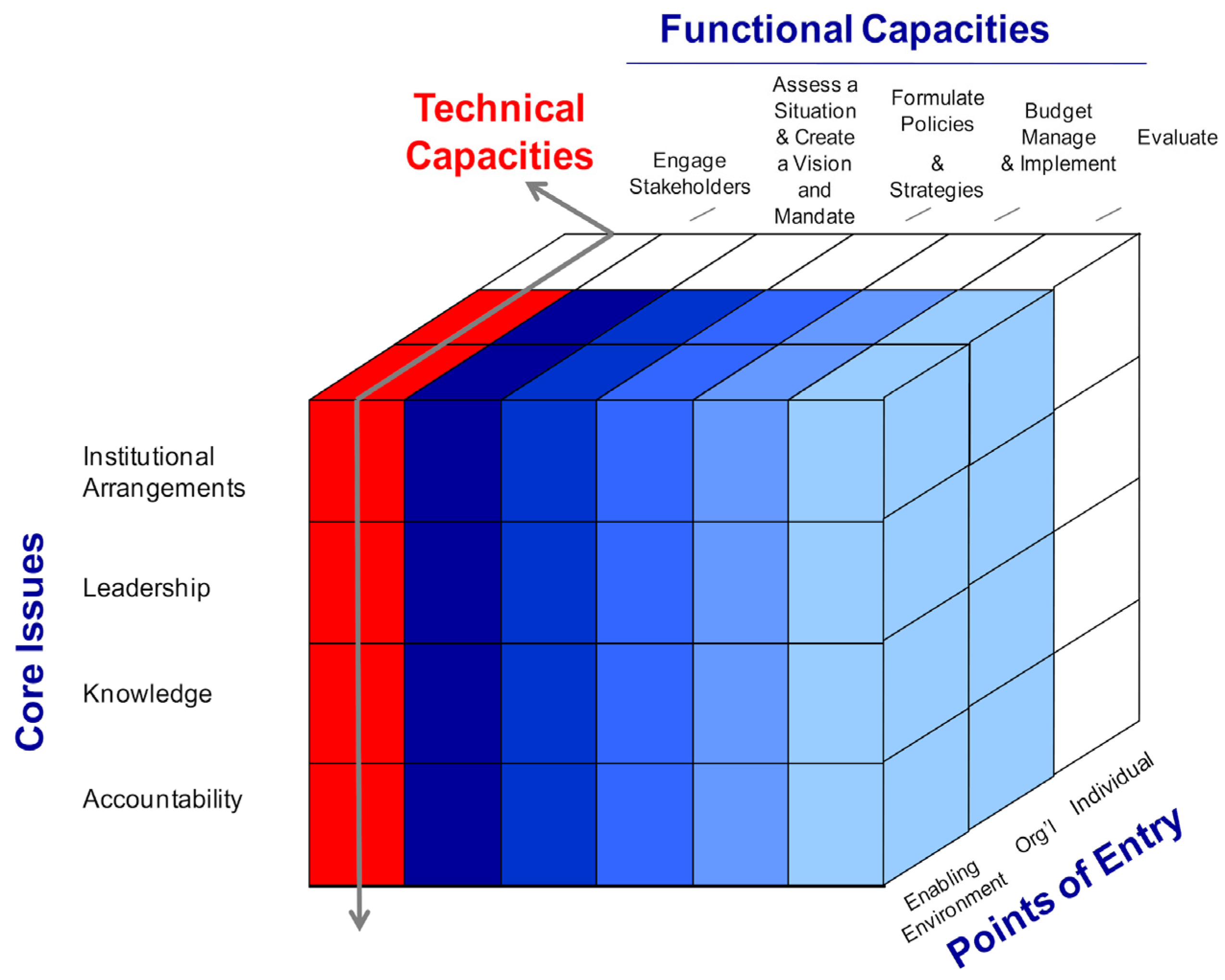
Figure 1. The UNDP Capacity Assessment Framework, illustrating the three dimensions that guided this study’s methodology. Color note: red indicates technical capacities, while the blue gradient represents functional capacities at varying levels of intensity.
Sustainability 17 10727 g001
Figure 2. Total number of participants in stakeholder engagement activity participants. Source: authors’ survey and FGDs (2021).
Sustainability 17 10727 g002
Figure 3. Distribution of institutions/participants in discussions and surveys. Source: authors’ survey and FGDs (2021).
Sustainability 17 10727 g003
Figure 4. Point of entry for scaling up green economy learning. Source: authors’ survey and FGDs (2021).
Sustainability 17 10727 g004
Table 1. Measurement of variables.
Variable TypeNumber of ItemsMeasurement ScaleJustification for Scale Choice
Dependent Variable15-point Likert Scale
(1 = Very Low Priority to 5 = Very High Priority)
To gauge the perceived urgency and commitment towards capacity development, capturing degrees of opinion that a simple yes/no question could not
Independent Variables175-point Likert Scale
(1 = Very Low Priority to 5 = Very High Priority)
To measure the level of agreement or disagreement with statements about influencing factors, providing interval-level data for robust statistical analysis like ordinal regression
Table 2. Demographic characteristics of the institution.
ItemResponseFrequencyPerc (%)
Type of InstitutionGovernment/Legislative2212.94
University12271.76
Private Sector74.12
Community/NGO/Media1911.18
The Focus Area of the Education and Training ProgramForestry and Peatland5418.31
Agriculture5217.63
Energy4214.24
Industry3010.17
Waste5819.66
Blue Carbon/Mangrove3812.88
Others217.12
Target AudienceNational leaders/legislators5816.91
The Civil Servant Apparatus6017.49
Private sector5114.87
Community/NGO/Media6117.78
Academician/Researcher11332.94
Table 3. Demographics of education and training programs.
ItemResponseFrequencyPerc (%)
Program relevant to the Green EconomyGreen economy-based program5230.6
Integrated program including the Green Economy11869.4
Not relevant to the Green Economy00.0
Program relevant to LCDI FrameworkLCDI-based program5632.94
LCDI and the internal integrated program10058.82
Non-LCDI/cooperation/Internal-based program 148.24
The main target of competencyStrengthening policy7422.56
Monitoring Evaluation and Reporting9428.66
Private sector engagement4413.41
Communication4814.63
Regional engagement6319.21
Others51.52
Target type of CompetencyNational Competency in Leadership5918.67
Management competency9630.38
Socio-cultural competency8526.90
Technical competency7624.05
Competency Framework of the Education and Training ProgramThe internal competency framework7845.88
Implement the external competency framework8147.65
Non-competency framework program116.47
Component of competencyKnowledge14356.52
Skill11043.48
Curriculum of the Education and Training ProgramInternal curriculum-based8248.24
Implementation of an external curriculum 7443.53
Non-curriculum-based148.24
Table 4. The LCDI policy action landscape: mapping intervention levels and components.
Intervention LevelsComponent 1
(Strengthening LCDI Policy)
Component 2
(MER)
Component 3
(Private Sector Engagement)
Component 4
(Communication)
Component 5 (Regional Engagement)
Agenda-settingSectoral policy translation, policy development, LCDI model Mainstreaming LCDI into regional policy, sub-national LCDI model
OrganizationalCapacity-building Engagement in the private sectorStakeholders’ communicationEngagement of the regional private sector, and regional stakeholders’ communication
OperationalInternational reportingMonitoring, evaluation, and national reporting (MER) Sub-national reporting, regional MER
Table 5. General competency framework for Indonesia’s green economy policy and action.
Intervention LevelsNational Leadership CompetenciesManagement CompetenciesSocio-Cultural CompetenciesTechnical Competencies
Agenda-setting (Components 1 and 5)Develop policies and integrate the green economy using the LCDI model, considering social, economic, and environmental aspectsManage green economy transitions according to sectoral and regional plansStakeholder engagement for participatory green economy developmentDevelop sectoral/sub-national green economy models using the LCDI framework
Organizational (Components 1, 3, 4, and 5)Build capacity frameworks and networks for transitioning to the green economyManage capacity building and communication with stakeholdersFostering trust and collaboration among diverse stakeholdersLead learning processes for green economy implementation
Operational (Components 1, 2, and 5)Develop systems for monitoring, evaluating, and reporting on the transition of the green economyManage monitoring and reporting systemsEngage stakeholders in evaluation and reportingConduct technical monitoring and reporting
Table 6. Challenges and opportunities for scaling up green economy learning.
Points of Entry (%)Key FactorsChallengesOpportunities
Internal DevelopmentInternal Institutional ArrangementCapacity of internal development, Internal regulations and budget allocation, National strategy and action plan on green economy learning, Hub for building coherence and coordinationExisting learning system large number of education and training centers (719 units), Accredited institutions (154 units)
Leadership CapacityRetaining awareness and capacity, Concern and awareness of high-level leaders in line ministriesGood leadership capacity at education and training center levels
Staff CapacityLack of green economy expertise, Ratio of trainers–participants for big training/high demand eventsProfessional trainers for internal-regular learning programs (n = 5075 trainers)
AccountabilityLack of accountability for organizing green economy learning, Competency framework on green economy, Learning needs and prioritiesModerate level of accountability for delivering internal-regular education and training programs, Existing initiatives on pro-green programs
AccreditationReadiness of targeted education and training centers, Mainstreaming green economy learning in accreditation processesConcern of education and training centers on environmental issues, Supports for scaling up the green economy learning
ReformationTransformative capacity building approach for facing global environmental change political awarenessGrand design for bureaucracy reformation in the face of global dynamics and environmental issues
External PartnershipInternal regulations on external partnershipExisting green economy programs in universities/research institutions/NSA International partnership/funding
Table 7. The influence of the main target of competency on institutional characteristics.
VariablesEstimateSEWaldSig.95% CI
LBWEB
The main target of competency (Y) Threshold
Strengthening policy−3.4670.59833.6050.000−4.640−2.295
Monitoring Evaluation and Reporting−1.4830.5487.3300.007−2.557−0.410
Private sector engagement−1.2640.5445.4010.020−2.331−0.198
Communication−0.9340.5393.0080.083−1.9900.122
Regional engagement−0.2440.5310.2120.645−1.2840.796
Others−0.1530.5300.0830.773−1.1920.886
Type of Institution
Government/Legislative1.8550.7236.5850.0100.4383.272
University1.2760.5455.4900.0190.2092.343
Private Sector3.1731.3655.4040.0200.4985.849
Community/NGO/Media.....
Focus Area of Education and Training Program
Forestry and Peatland−0.7780.4982.4400.118−1.7540.198
Agriculture−0.6120.5171.3990.237−1.6260.402
Energy−0.0060.9550.0000.995−1.8771.866
Industry−2.5271.5782.5640.109−5.6190.566
Waste−0.5580.6080.8430.359−1.7510.634
Blue Carbon/Mangrove−0.3720.6410.3360.562−1.6280.885
Others−0.1060.6260.0290.866−1.3331.122
Combine.....
Target audience
national leaders/legislators−4.5750.86128.2260.000−6.263−2.887
civil servant apparatus−3.8270.73427.1740.000−5.266−2.388
private sector−1.9860.7457.0980.008−3.447−0.525
Community/NGO/Media−2.4750.66813.7380.000−3.783−1.166
Academician/Researcher−2.6070.47030.8360.000−3.528−1.687
Others.....
Table 8. Main target of competency on education and training programs.
VariablesEstimateSEWaldSig.95% CI
LBUB
The main target of competency (Y) Threshold
Strengthening policy−3.2650.81116.1950.000−4.855−1.675
Monitoring Evaluation and Reporting−1.5150.7863.7190.054−3.0550.025
Private sector engagement−1.3170.7832.8280.093−2.8520.218
Communication−1.0130.7801.6890.194−2.5410.515
Regional engagement−0.3660.7740.2240.636−1.8821.151
Others−0.2790.7730.1300.718−1.7941.236
Program relevant to LCDI
LCDI 0.2340.6030.1500.699−0.9491.416
LCDI and internal integrated 0.3160.5580.3200.571−0.7771.409
Non-LCDI/cooperation/Internal 0.....
The target type of Competency
National leadership −1.0440.6023.0120.083−2.2230.135
Management −0.9910.4704.4400.035−1.913−0.069
Socio-cultural −1.3660.5107.1680.007−2.366−0.366
Technical −0.7580.5561.8560.173−1.8480.332
Others0.....
Competency Framework of Education and Training Program
Internal 1.0010.7002.0460.153−0.3702.372
Implement external 1.2000.6962.9690.085−0.1652.564
Non-competency framework0.....
Component of competency
Knowledge−1.9090.42919.7960.000−2.750−1.068
Skill−1.8270.50313.2030.000−2.813−0.842
Knowledge and Skill0.....
Curriculum of Education and Training Program
Internal curriculum based−0.6010.6780.7880.375−1.9290.727
Implement an external curriculum−0.3200.6910.2140.644−1.6731.034
Non-curriculum based0.....
Disclaimer/Publisher’s Note: The statements, opinions and data contained in all publications are solely those of the individual author(s) and contributor(s) and not of MDPI and/or the editor(s). MDPI and/or the editor(s) disclaim responsibility for any injury to people or property resulting from any ideas, methods, instructions or products referred to in the content.