
Article

Insights from the Application of Computer-Aided Mapping Technology in Chinese Education for Urban Forestry

College of Forestry, Beijing Forestry University, Beijing 100083, China
*
Author to whom correspondence should be addressed.
Sustainability 2025, 17(23), 10701; https://doi.org/10.3390/su172310701
Submission received: 28 October 2025 / Revised: 20 November 2025 / Accepted: 26 November 2025 / Published: 28 November 2025
(This article belongs to the Section Sustainable Education and Approaches)

Abstract

In recent years, research into the optimization of teaching reform for computer-aided mapping has continuously advanced in China. It plays a vital role in the development of urban forestry-related curricula and the cultivation of urban forestry professionals in higher education institutions. However, current research into the teaching reform of computer-aided mapping within the urban forestry domain remains insufficient. To address this, the study employs CiteSpace to conduct a visualization analysis of existing literature samples from journals, systematically integrating research trends and cutting-edge knowledge. The results indicate that relevant research perspectives primarily focus on teaching methods and theories, teaching reform and improvement, and teaching application and practice of computer-aided mapping. Furthermore, the study proposes future prospects for existing computer-aided mapping courses within urban forestry disciplines in China. In future higher education teaching, the urban forestry discipline can draw upon existing computer-aided mapping teaching methods, theories, innovative reforms, and practical applications. Emphasis should be placed on conducting more research in areas such as building multi-party academic collaboration, comprehensively utilizing diverse teaching methods, and expanding theories from multiple perspectives. This will facilitate the systematic and scientific development of computer-aided mapping curricula within the urban forestry discipline.

1. Introduction

Computer-aided mapping (CAM) is the product of the deep integration of computer technology and traditional cartography. Its development has been closely linked to the evolution of computer technologies [1]. Since the mid-20th century, when computer technology first emerged, CAM has undergone continuous exploration and innovation. From its early application in engineering fields during the 1960s and 1970s, such as the development of MIT’s line-drawing system and the SKETCHPAD system [2,3], to the widespread use of page description languages like PostScript in desktop publishing during the 1980s, and further to the 21st century, marked by the popularity of powerful software tools such as AutoCAD [4], 3ds Max [5], and Maya (Autodesk Inc., San Rafael, CA, USA) [6], as well as the rise of emerging technologies like 3D printing [7] and virtual reality mapping [8], CAM has consistently expanded its boundaries and brought transformative changes to various disciplines [9].
In education, CAM instruction has been influenced by a variety of pedagogical theories and methods. Under the guidance of constructivist learning theory, educators create real-world project scenarios to facilitate students’ autonomous knowledge construction [10]. Ausubel’s theory of meaningful learning emphasizes the connection between new and existing knowledge to enhance students’ understanding of mapping principles [11]. Meanwhile, Bruner’s cognitive discovery learning theory encourages students to acquire knowledge through independent exploration and inquiry [12]. In practice, teaching methods such as lecture-based instruction, case-based learning, project-based learning, and task-driven instruction have been widely adopted [13]. These approaches, ranging from systematic knowledge transmission to practical case analysis and task-oriented learning, have collectively contributed to the continuous development of CAM education.
Computer-Aided Mapping (CAM) technology has demonstrated multi-level and multi-dimensional application value in the field of forestry, particularly in scientific research. For example, multi-source heterogeneous data were integrated to develop a real-time 3D visualization and web interaction framework at the forest scale, enabling the digital twin representation of macroscopic ecological scenes [14]. Meanwhile, point cloud segmentation and 3D reconstruction at the individual tree level provided graphical technical support for quantitative analysis of fine-scale forest structure [15]. In urban forestry, CAM technology was used to generate high-resolution spatial distribution maps of the leaf area index, accurately characterizing structural parameters of urban forests [16]. Machine learning and remote sensing imagery were also applied to establish an automated mapping workflow for urban forest types, laying a methodological foundation for high spatiotemporal resolution coverage classification and quantitative assessment [17]. Computer-aided mapping is driving the evolution of forestry research from traditional planar mapping toward stereoscopic, intelligent, and real-time capabilities. Its applications exhibit three key characteristics: comprehensive scale coverage (from individual trees to forest landscapes), integration of technical approaches (remote sensing + AI + graphics), and precise service targeting (balancing macro-level decision-making with micro-level management). Collectively, these advancements provide critical visual infrastructure for smart forestry and sustainable development.
Urban forestry is a discipline focused on the sustainable management and planning of forest resources in urban environments and needs computer-aided mapping courses. CAM improves the efficiency and quality of urban forestry work. It visually presents forestry resource information and supports scientific decision-making for resource management and conservation [18]. Furthermore, it assists relevant departments in monitoring dynamic changes to facilitate the formulation of effective protection strategies and sustainable development plans [19,20]. However, despite these advancements, CAM education in China still faces several challenges in the urban forestry area [21,22,23]. Course content often lags behind industry developments, with outdated software versions and insufficient focus on practical applications. There is a lack of high-quality and diverse teaching resources, including up-to-date case studies and datasets. Teaching methods tend to be monotonous, lacking innovation and interactivity. Practical training is often inadequate due to limited class hours and outdated equipment. Moreover, assessment methods are typically one-dimensional, making it difficult to comprehensively and objectively evaluate student performance. These issues have become key constraints hindering the further development of CAM education. Moreover, the study will analyze the following issues:
  • What are the characteristics of scholarly publications on CAM?
  • What are the current research hotspots in CAM?
  • What are the emerging trends and future directions for CAM research?
  • How can CAM technology inform the practical components of urban forestry curricula, and how can its application be optimized to enhance practical skills within the discipline?
This study aims to systematically review the current status, development trends, and research hotspots of CAM education in China from 2000 to 2025. It explores the historical evolution of CAM, including its teaching theories, methods, reforms, and practical applications. Furthermore, it identifies core elements and future prospects for integrating CAM into urban forestry education, with the goal of achieving breakthroughs in curriculum development and interdisciplinary innovation in urban forestry programs.

2. Materials and Methods

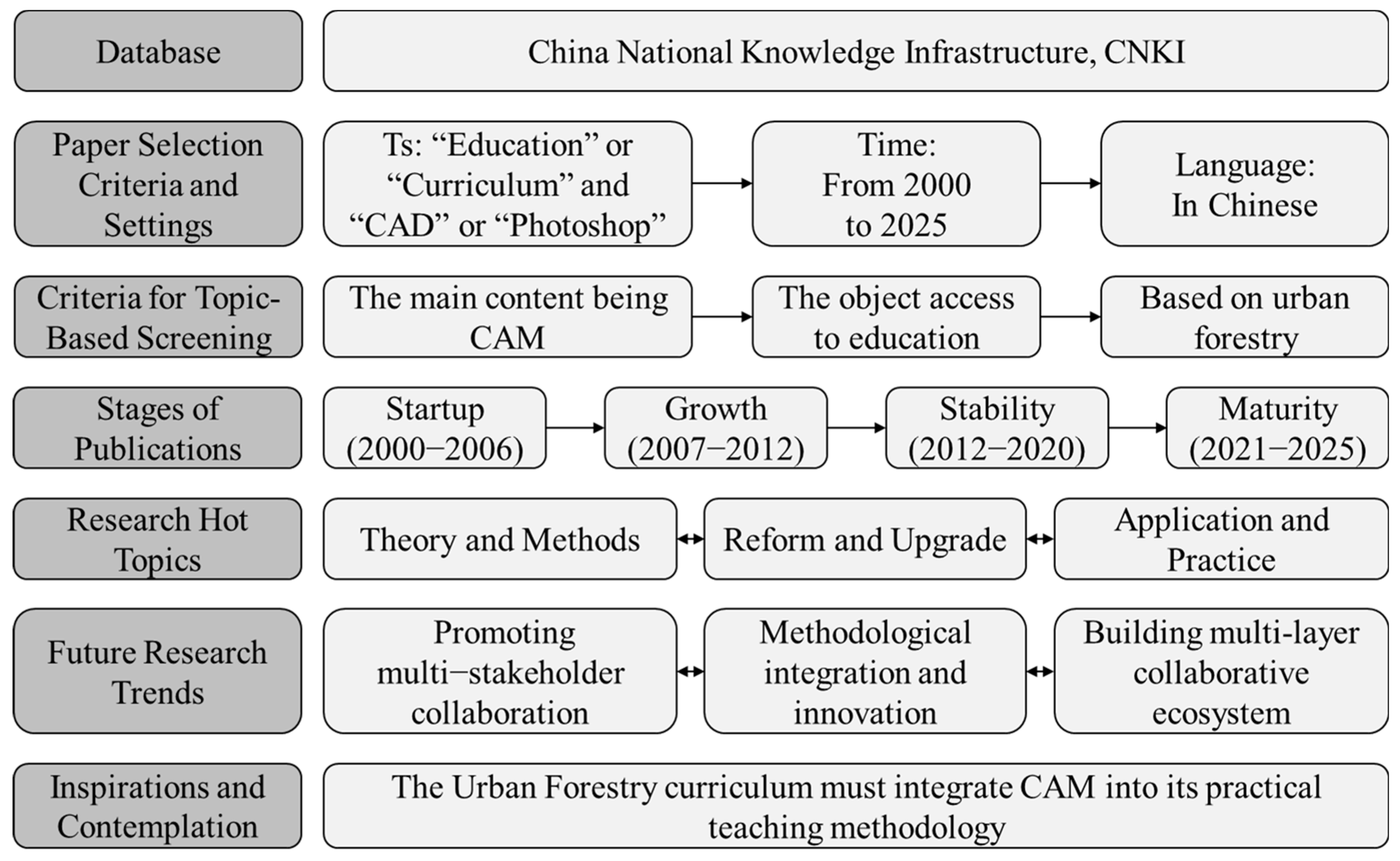
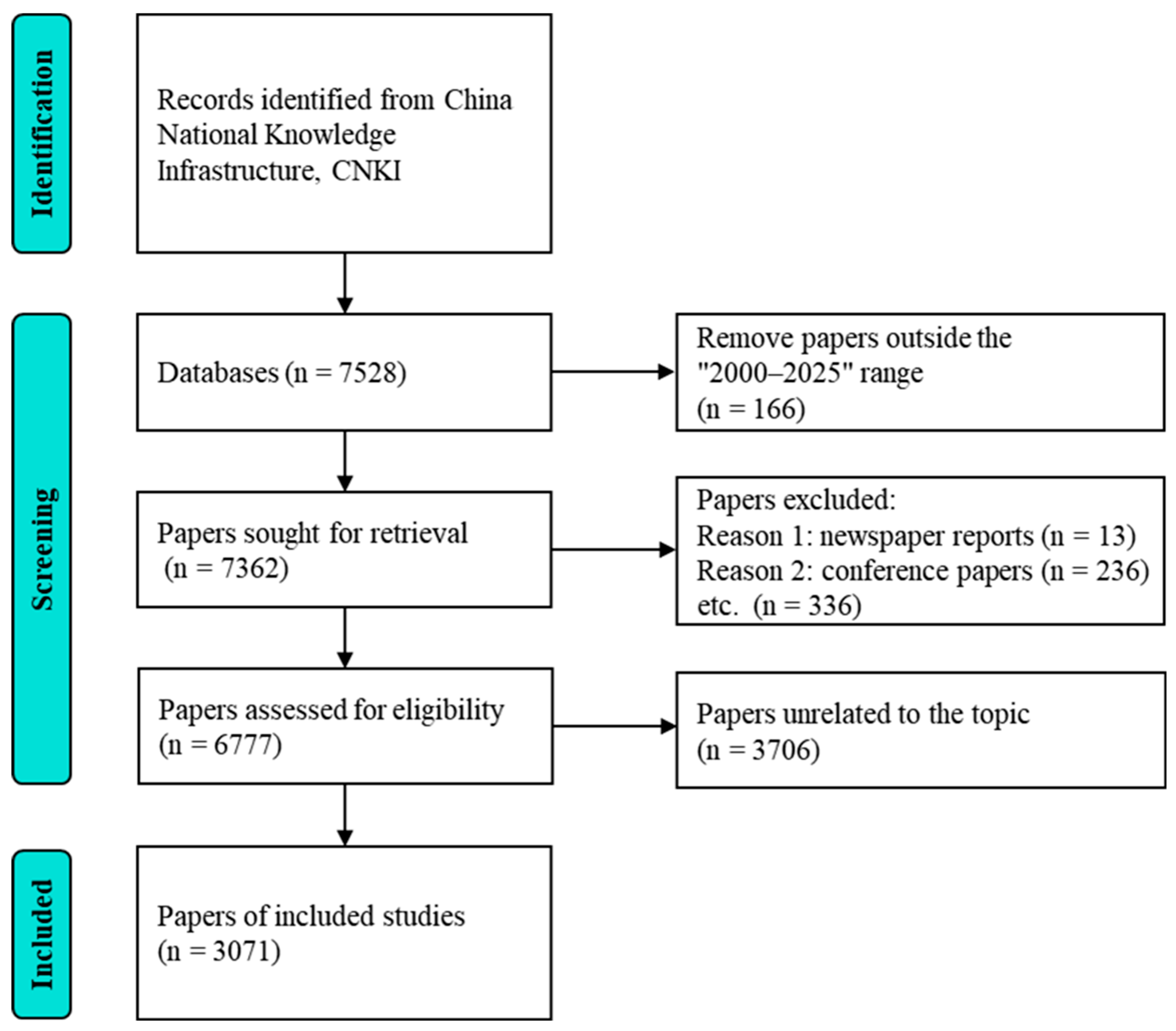
The methodological approach of this study unfolded sequentially, beginning with database selection and scope definition, followed by a bibliometric analysis to characterize publication trends and identify research hotspots across different timeframes [24]. This analysis culminated in projections of future research directions and a critical discussion of their implications for urban forestry (Figure 1).

2.1. Data Sources and Screening

All sample literature was sourced from core journals and CSSCI (Chinese Social Sciences Citation Index) sources in the CNKI (China National Knowledge Infrastructure) database using the search string (“education” or “Curriculum”) and (“computer-aided mapping” or “CAD” or “Photoshop”) for the period 1 January 2000 to 1 January 2025; newspapers, conference papers and other non-academic items were manually removed, leaving 3071 valid articles (Figure 1).

2.2. CiteSpace Operation Methodology and Parameter Configuration

The analysis follows a structured technical pathway (Figure 2). In Section 3.1, the identified literature was chronologically divided into four distinct developmental phases (Startup, Growth, Stability, Maturity) to trace the field’s evolution. From Section 3.2, Section 3.3 and Section 3.4, the cleaned dataset was exported in Refworks format and imported into CiteSpace 6.3. R3; time slicing was set from January 2000 to January 2025 with a one-year slice length, keyword was selected as the node type, and top N per slice was set to 50. The analysis was performed with the following configurations: a pruning strategy that integrated both the minimum spanning tree and sliced network approaches, cluster labels generated through a keyword-based method, and a threshold value left at the software’s default. The software was then used to generate keyword co-occurrence networks, cluster maps, burst detection lists, and timeline views with the objective of mapping conceptual relationships, identifying research themes, detecting emerging trends, and visualizing evolutionary pathways, respectively. After that, core research themes were extracted and categorized into three key areas: Theory and Methods, Reform and Upgrade, and Application and Practice. In Section 4, the study showed three future research trends and the necessity of embedding CAM technologies into the urban forestry curriculum to enhance practical teaching methodologies.

3. Results

3.1. Publication Characteristics of Computer-Aided Mapping Education Research

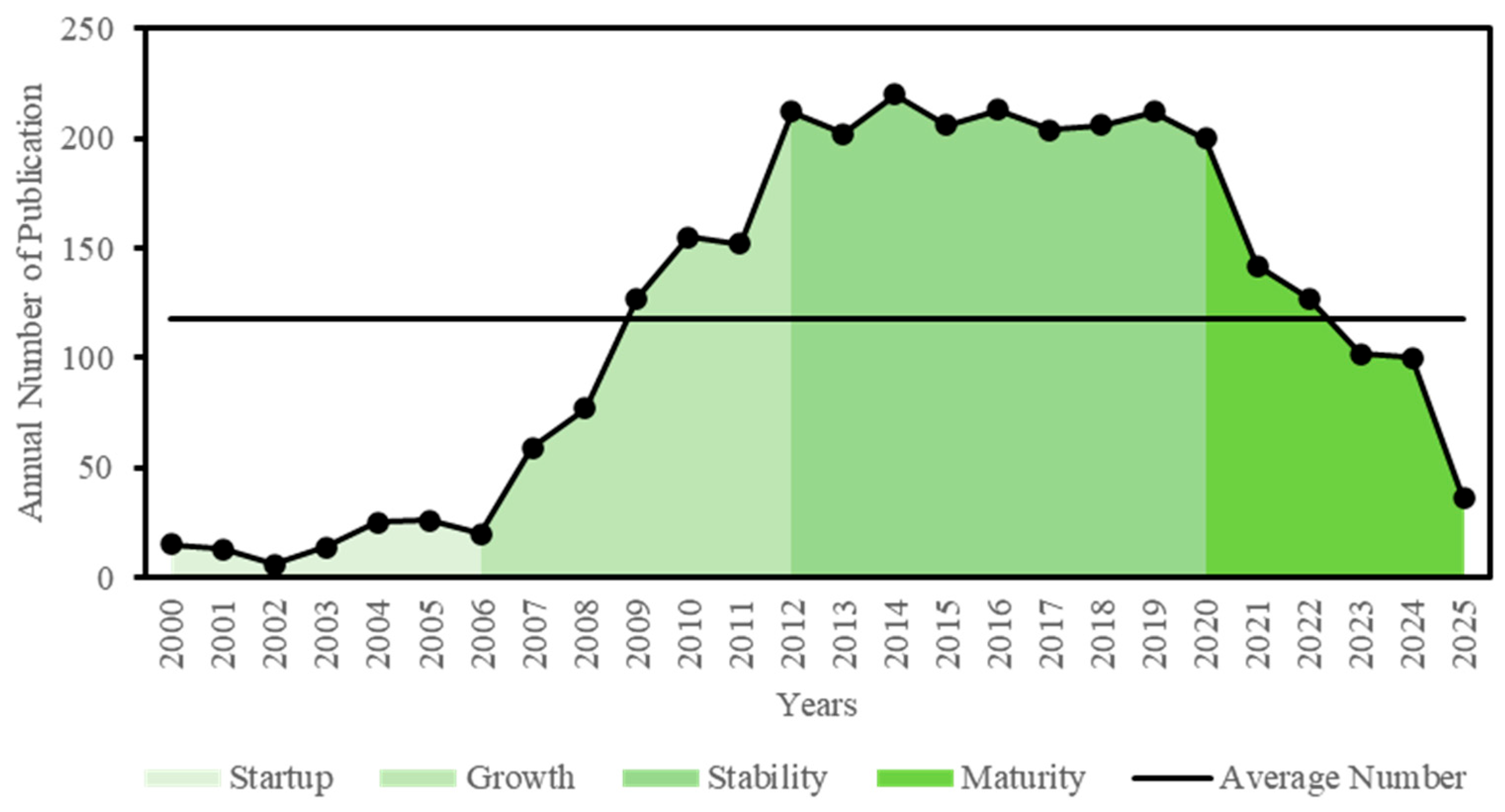
The annual publication volume analysis reveals an average of 118.12 papers per year from 2000 to 2025 (Figure 3), exhibiting a trend of an initial increase followed by a decline. The process can be roughly divided into four stages: (1) Startup Stage (2000–2006): During this period, the number of publications was relatively limited, with an average of 17 articles per year. This stage can be regarded as the early phase of computer technology application in education in China. (2) Rapid Growth Stage (2007–2012): During this stage, computer technology received increasing attention in China’s education sector and entered a phase of rapid development. The overall number of publications grew quickly, with an average of about 130 papers per year, peaking at 220 in 2014. This growth was driven by national policies advocating the integration of computer technology into talent training models and teaching method reforms, emphasizing the interdisciplinary fusion of computer technology with various academic disciplines. (3) Stability Stage (2012–2020): During this period, the average annual publication volume remained stable at around 209. While various disciplines began to use computer-aided mapping to expand their research content, urban forestry programs in Chinese universities were still in their infancy and had not yet effectively integrated CAM technologies. (4) Maturity Stage (2021–2025): During this stage, CAM education and curriculum research in China entered a mature phase, with an average annual publication volume of about 118. Although this number is lower than in the previous two stages, CAM technology continues to be widely used across many disciplines [26,27,28]. It shows that CAM still holds significant relevance for urban forestry education. Against this backdrop, exploring new pathways to empower urban forestry program reform with CAM technology has become an important issue in the field of urban forestry education.

3.2. Development and Evolution Characteristics of Computer-Aided Mapping Education Reform in China

3.2.1. Research Progress: Keyword Timeline Mapping

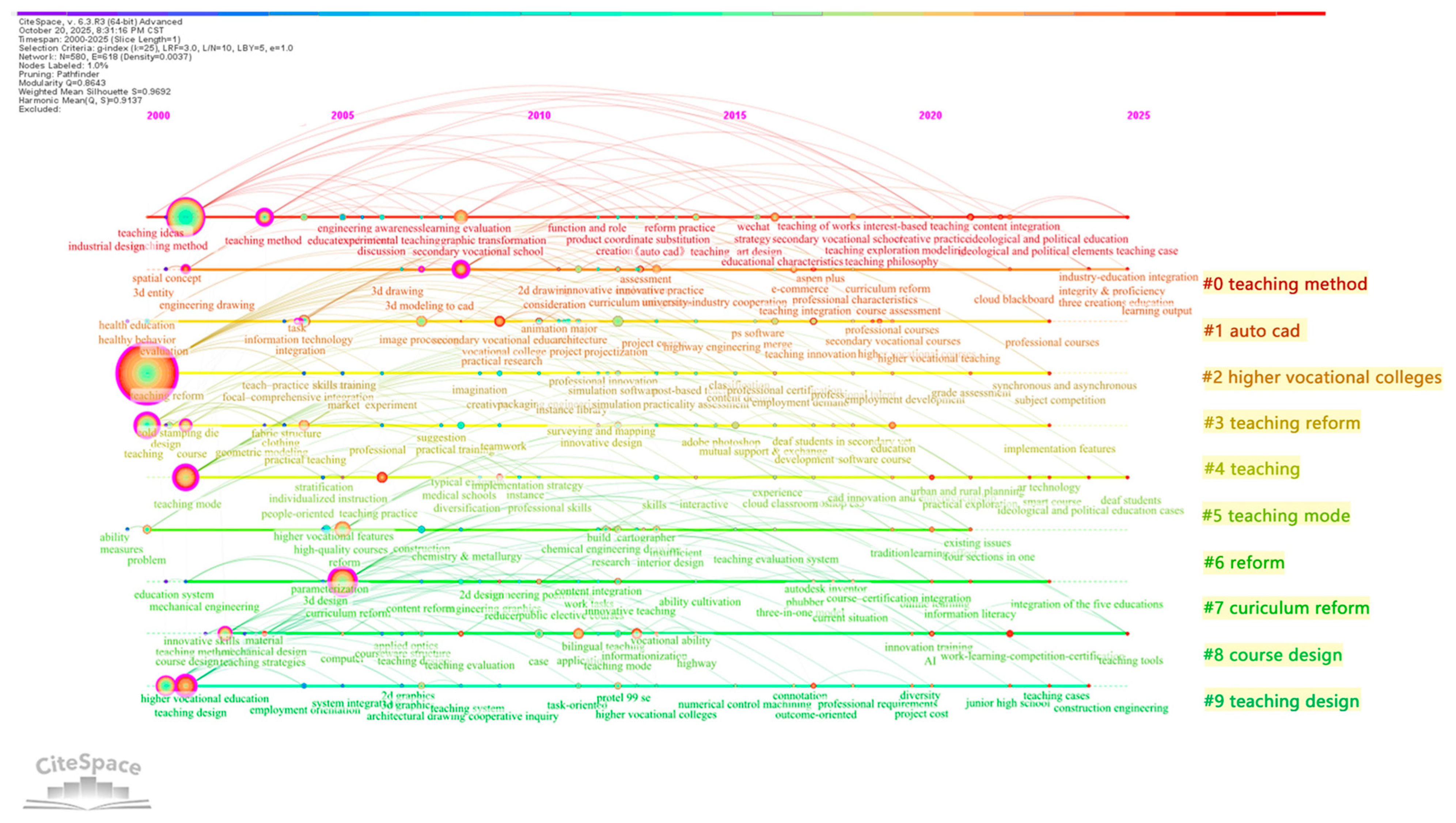
Using the Timeline View in CiteSpace, a keyword timeline map of CAM education research in China was generated. This map effectively illustrates the evolution trajectory and temporal distribution of key terms within each cluster, reflecting the development of CAM curriculum and instruction research over time. The keyword timeline map for CAM research from 2000 to 2025 indicates that (Figure 4): (1) Research focused mainly on basic AutoCAD command training in the early stage (2000–2006). (2) National policies promoted the integration of computer technology and education, with an average of 130 papers per year in the rapid growth period (2007–2012). Keywords such as 3D modeling and school-enterprise cooperation became prominent. (3) After 2012, the field entered a stable stage with diversified teaching models, but urban forestry had not yet effectively integrated CAM technologies. (4) By 2021, curriculum theory and virtual–real integration technologies began to reshape the teaching paradigm in the maturity stage.
A key transition in this process is the shift from single software operation training to interdisciplinary competency development and from mechanical drawing-dominated cases to professional integration with ecological spatial design.

3.2.2. Evolution Trends: Keyword Burst Analysis

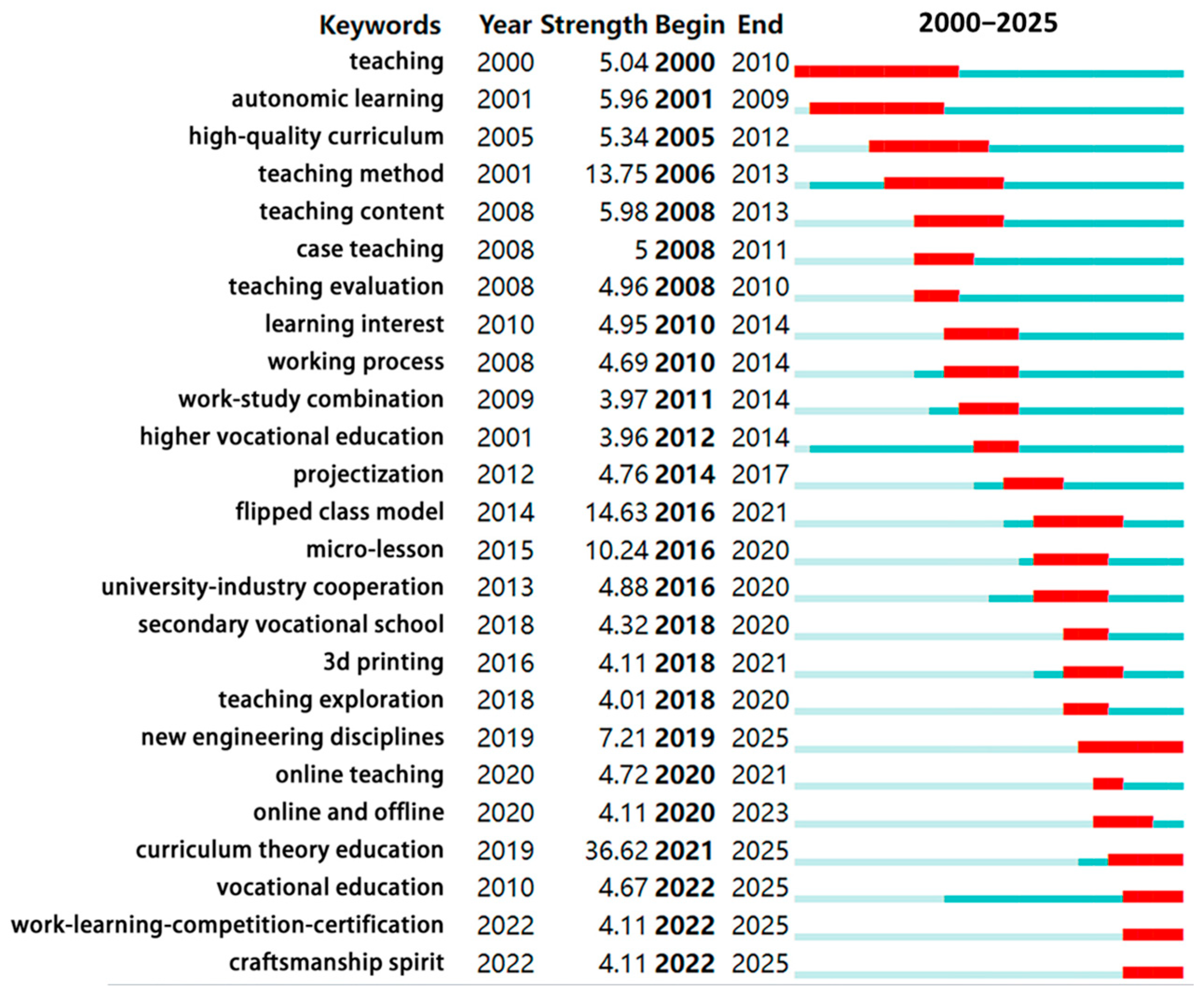
Keyword burst analysis helps identify research frontiers, shifts in focus, and emerging trends in the field (Figure 5). The keyword “teaching” had the longest burst duration, indicating that curriculum and teaching reform in CAM was a continuous research hotspot from 2000 to 2010. The keyword with the highest burst strength is “curriculum theory”, with a strength value of 36.62. It first emerged in 2019, and by 2021, research into integrating ideological and political education into CAM courses became a frontier topic in the field.

3.3. Research Hotspot Themes in Computer-Aided Mapping Education Reform in China

3.3.1. Research Progress: Keyword Timeline Mapping

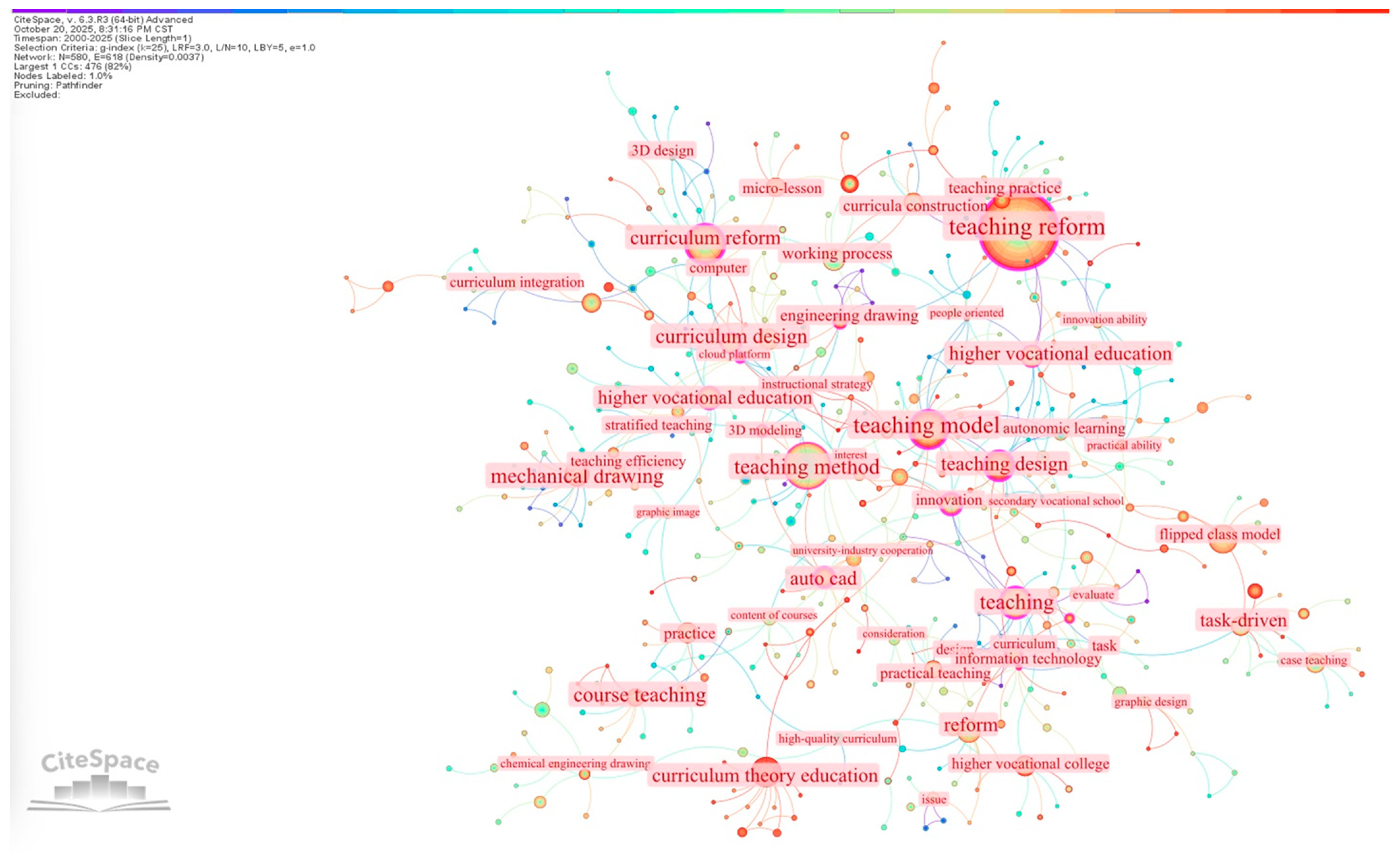
Using the “Keyword” function in CiteSpace, a visual analysis of Chinese-language literature was conducted. The top 10 keywords by frequency (Table 1) and co-occurrence network (Figure 6) indicate that research hotspots are concentrated in “teaching model” (centrality = 0.37), “teaching” (0.28), and “teaching reform” (0.24), demonstrating that these are core concerns in the literature.

3.3.2. Cluster Analysis

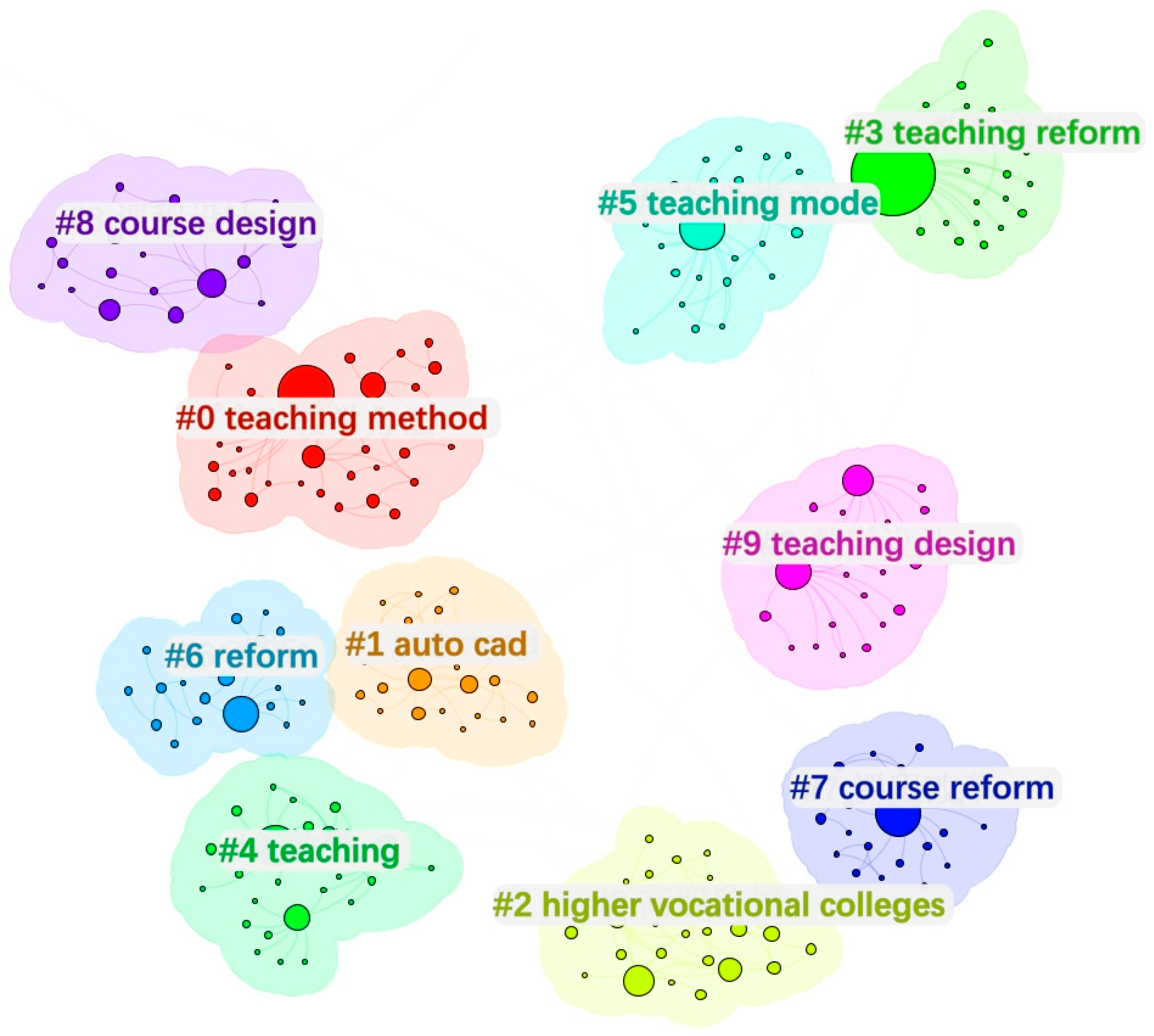
Based on the co-occurrence network, the Log-likelihood Ratio (LLR) algorithm indicated a significant network structure (Q = 0.864 (>0.3)) and high reliability (S = 0.969 (>0.5)) of the keyword clustering map (Figure 7).
Ten major clusters were identified (Table 2): #0 teaching methods, #1 AutoCAD, #2 vocational colleges, #3 teaching reform, #4 teaching, #5 teaching model, #6 reform, #7 curriculum reform, #8 course design, and #9 instructional design. All clusters have silhouette values > 0.9, indicating strong internal consistency. These clusters can be grouped into three thematic areas: Theory and Methods (#0, #1, #5): Focus on teaching strategies, instructional models, and the application of AutoCAD across disciplines. Reform and Enhancement (#3, #6, #7): Emphasize teaching and curriculum reform, including the integration of ideological–political education and innovative pedagogies such as the flipped classroom. Application and Practice (#2, #4, #8, #9): Explore the practical implementation of CAM in vocational education, course design, and instructional planning, with an emphasis on skill development and employability.

3.4. Different Research Hotspot Themes

3.4.1. Theme of “Theory and Method”

Clusters #0, #5, and #1 correspond to teaching methods, teaching models, and AutoCAD. Cluster #0 contains 35 keyword nodes, the largest scale, and centers on instructional strategies and course delivery patterns such as the flipped classroom. AutoCAD is treated as a cross-disciplinary enabler: in architecture, it builds 3-D models of exterior and interior structures; in GIS, it produces geospatial maps; in film and gaming, it provides scene-modeling assets; and in fashion design, it delivers precise pattern expressions [29,30,31]. New pedagogical approaches include project-based learning that situates students in authentic design tasks, case-based learning that deepens understanding through real engineering drawings, task-driven learning that raises initiative by targeting concrete outputs, virtual simulation immersion, and online–offline blended modes that extend time and space. Effective course design, therefore, combines student-centered task tailoring, multi-method integration, strengthened hands-on practice, and diversified assessment. Literature under this theme tracks the continuous updating of methods and models, offering transferable guidance for educators.

3.4.2. Theme of “Reform and Enhancement”

Clusters #6, #7, and #8, totaling 72 keyword nodes, all carry the label “reform”. Computer-aided mapping serves majors ranging from mechanical and chemical engineering to landscape architecture. In food-engineering CAD, for instance, project-driven courses import local enterprise blueprints; students visit sites, draft plans, execute drawings, present outcomes, and receive feedback, linking theory to production reality [32]. In materials science, “Engineering Drawing and CAD” embeds ideological–political elements by explaining traditional Chinese shadow-play optics or the solar-calendar mechanism of the Forbidden City while teaching projection principles, adding cultural depth. Across disciplines, software advances and open-access platforms continuously spawn new elite courses, pushing CAD instruction to higher levels [33].

3.4.3. Theme of “Application and Practice”

Cluster #2 (vocational colleges, 27 nodes) treats CAD as a core employability skill, covering image processing and information technology. Beijing Forestry University’s “Computer Aided Design” course [34], for example, uses case sequences to lead students rapidly through 2-D and 3-D creation, editing, dimensioning, and plotting of geometric figures, buildings, furniture, wood products, machine parts, and packaging; shortcuts are emphasized after functional familiarity is secured. Clusters #4, #8, and #9 (teaching, course design, instructional design, 70 nodes) reshape educational products. Traditional design modes (subject-centered, student-centered, and society-demand-oriented) are compared [35]: the subject-centered model stresses systematic knowledge logic, such as projection theory, before 2-D/3-D skills; the student-centered model focuses on student interest and personalized construction; and the society-demand-oriented model aligns content with workplace tasks like factory drafting projects. Teaching segments (preparation, delivery, discussion, assignment/practice, and evaluation) are re-engineered for CAD: after-class tasks require software-based drawing or real-project completion, while assessment blends final exams, routine assignments, and project quality. Although practice-oriented literature is plentiful under fast-developing information networks, specific strategies and rubrics for formative competency evaluation remain generic; process-oriented assessment tools for CAD courses still await concrete development.

4. Discussion

The study employs bibliometric methods to review and visualize the research landscape of computer-aided mapping (CAM) education in China from 2000 to 2025. The analysis reveals a clear evolutionary path from basic software operation training toward cultivating interdisciplinary competencies and identifies three core research themes: “Theory and Methods,” “Reform and Enhancement,” and “Application and Practice.” These findings not only resonate with the hotspots observed by Jin and Liu in low-carbon education research [24] but also deepen the understanding of developmental patterns for technical courses within educational systems. Based on the results and against a broader backdrop of educational theory and practice, this discussion focuses on the implications of CAM for the urban forestry discipline.

4.1. The Evolution of the CAM Education Paradigm

The timeline visualization and keyword burst analysis clearly demonstrate that the early stage of CAM education in China (2000–2006) was almost exclusively focused on teaching basic commands of software like AutoCAD. This phase, characterized by “teaching the fish,” aimed at enabling students to master a specific tool skill, aligning with the initial phase of technology diffusion where the focus is primarily on tool operability [36]. However, as technology became widespread and educational philosophies deepened, research hotspots rapidly shifted toward “teaching models,” “teaching reform,” and “curriculum theory and politics.” The transition signifies a profound paradigm shift in CAM education from “tool proficiency” to “mindset cultivation” [37]. It is no longer mere software training but has evolved into a comprehensive vehicle for fostering students’ spatial thinking, design thinking, problem-solving abilities, and professional competence [38,39]. CAM education aims to balance instrumental and value rationality, a mission reflected in its keyword trends and aligned with the global emphasis on engineering ethics [40].
For urban forestry, CAM instruction must not remain at the level of teaching students to use software for drawing plans. It is imperative to transcend the “instrumental theory” and position CAM as a “language of thought” for achieving sustainable urban forest planning and management. For instance, when teaching 3D modeling, students should be guided to contemplate how models can simulate the response of different tree species configurations to environmental factors (e.g., light, site conditions), thereby serving the goal of ecologically optimized design and deeply integrating technical operations with ecological principles, landscape aesthetics, and social needs [41,42,43,44].

4.2. The Positive Promoting Role of Multi-Stakeholder Collaboration

Keyword clustering reveals that CAM has been widely applied in numerous specialized fields such as mechanical engineering, chemical engineering, architecture, and art design, forming a pattern of “one tool, multiple applications.” This attests to the powerful permeability of CAM as a general-purpose technology [45]. However, this integration across diverse fields also presents significant challenges, as different disciplines have varying requirements for the depth of CAM knowledge, skill emphasis, and application scenarios. Mechanical engineering emphasizes dimensional accuracy and tolerance fits, while architecture focuses on spatial composition and aesthetic expression. For urban forestry, the core lies in the precise expression and analysis of ecosystem structure and function, social services, and human well-being [46,47]. Current research hotspots indicate that successful interdisciplinary integration relies on “industry-education cooperation,” “school-enterprise cooperation,” and the formation of interdisciplinary teaching teams, constituting a “university-society” collaborative model [39,48].
However, the analysis in this paper also finds that the integration of CAM technology within urban forestry programs remains limited. It is likely because existing CAM teaching case libraries predominantly originate from engineering and architectural design, lacking typical cases directly related to professional scenarios such as urban forest resource inventory, canopy projection analysis, and habitat mapping [40,41,42,43,44,45,46,47,48,49,50]. Therefore, CAM education in the urban forestry field must forge a distinctive path. For example, from the perspective of ecological process visualization, the dynamic functions of CAM can be utilized to simulate processes like tree growth, stand succession, and pest dispersal, upgrading static “maps” into dynamic “decision-making sandboxes” [51,52]. Public participation can also be integrated into the CAM design process, using CAM instruction to cultivate students’ ability to produce easily understandable, visual project renderings to facilitate public communication and participatory planning [53,54,55,56].

4.3. Methodological Integration and Innovation in Future Teaching Models

Teaching has evolved from lecture-based methods to diversified approaches such as online–offline blended learning, virtual simulation, and project-based learning [38,52]. Evolution reflects the increasing influence of constructivist and connectivist learning theories in educational technology. Online platforms (e.g., MOOCs) are responsible for delivering systematic, standardized knowledge and skills, while offline classrooms transform into spaces for higher-order thinking training, collaborative inquiry, and personalized guidance [37,57].
For highly practical fields like CAM and urban forestry, extended reality technologies constitute a key innovation for future teaching models [58,59]. Virtual reality allows students to “immersively” walk through their own designed urban forest schemes, inspecting the design’s rationality and experiential quality from a first-person perspective [56,60]. Augmented reality can overlay digital models onto real urban sites for on-site comparison and adjustment of plans [52,55]. These technologies can significantly compensate for the spatial, temporal, and safety limitations of traditional teaching, providing students with near-authentic practical environments [39,54].
Furthermore, the reform of assessment methods is the crucial link connecting teaching methods with learning objectives. Although current research emphasizes practice, it lacks effective process-oriented assessment tools. In the future, drawing on the concepts of competency-based education, multi-dimensional rubrics should be developed that evaluate not only the standardization of the final design but also students’ abilities throughout the project cycle, including information acquisition, conceptual design, technical implementation, teamwork, and reflective iteration [37,38].

4.4. Building a Multi-Layer Collaborative Ecosystem for CAM Education in Urban Forestry

The study proposes a framework for a multi-layer collaborative ecosystem (Curriculum–Resources–Faculty–Technology) for CAM education in urban forestry to address the current fragmentation. First, at the Curriculum Layer, promote CAM from an elective to a core compulsory course in urban forestry programs. For example, course content should be tightly coupled with specialized courses like “Urban Green Space System Planning” and “Landscape Ecology,” co-designing cross-curricular projects [44,46]. Second, at the Resource Layer, collaborate with urban planning departments, landscaping companies, and research institutions to jointly develop teaching case libraries, databases, and standard symbol libraries based on real urban forestry projects, striving for multi-stakeholder support for urban forestry education [47,61]. Third, at the Faculty Layer, establish interdisciplinary teaching teams and create workshops for CAM instructors and forestry/ecology faculty to co-plan and co-teach courses. Simultaneously, invite industry experts to give lectures, ensuring teaching content remains aligned with industry frontiers [62]. Fourth, at the Technology Layer, actively embrace emerging technologies like BIM, Digital Twins, and AI-generative design [45,49,56]. For instance, explore using AI to generate multiple preliminary plant configurations and spatial layout plans based on local soil, climate, and functional requirements for students to analyze, evaluate, and refine, thereby cultivating critical thinking and complex problem-solving skills [40,41,48]. Similar models include the Maker Education Program in the United States (practice communities, maker courses, maker spaces, and internship programs). It cultivates innovative students and contributes to an innovative economy by building a comprehensive network of community colleges, supporting teachers to integrate education into regular courses, and collaborating with enterprises to carry out work-oriented internship projects [63]. However, the multi-layer collaborative ecosystem is distinctly adapted to national conditions, emphasizes modern technology and cross-disciplinary collaboration, and promotes the development of fields like urban forestry by synthesizing knowledge from various disciplines.

4.5. Limitations and Prospects

The study is subject to several limitations. The scope of literature was restricted to Chinese-language publications and domestic curriculum reform projects focused on computer-aided graphics. It does not include international research or relevant studies published by Chinese authors in international journals, which may constrain the global relevance of the findings. Furthermore, the analysis did not engage in comparative examination with computer-graphics-related curriculum studies from other cultural contexts, limiting the potential for cross-cultural insight. Finally, as a conceptual review, the study lacks empirical support from practical teaching cases. Future research will involve the design of concrete case studies, pilot implementations in collaborative educational institutions, and the use of mixed methods (e.g., surveys and semi-structured interviews) to collect quantitative and qualitative data on the effectiveness of the proposed instructional model. Meanwhile, urban forestry as a discipline stands to benefit significantly from computer-aided graphics and digital simulation tools. Future work should integrate environmental parameters, socioeconomic factors, and human activity data to support the virtual design and planning of urban forests. The incorporation of emerging technologies, alongside public health perspectives, offers a promising pathway for designing more sustainable urban forest layouts, ultimately contributing to improved human well-being and the advancement of socially and ecologically harmonious living environments.

5. Conclusions

The study reveals, through a bibliometric analysis of a 25-year journey, that China’s computer-aided mapping (CAM) education has undergone a paradigm shift from tool training to literacy cultivation, but its application in urban forestry disciplines is significantly lagging behind. In response to this integration gap, the core contribution of this study is to demonstrate this phenomenon empirically for the first time through systematic literature measurement, and to construct a four-dimensional collaborative education ecosystem of “curriculum resources teacher technology” as a theoretical response. It should be pointed out that the conclusions of this study are mainly based on Chinese literature data, and the proposed framework has not been systematically empirically tested. Therefore, future research should adopt action research as a promising strategy to test and refine this framework empirically. This involves implementing it within authentic course settings to evaluate its tangible impact on developing key student abilities like spatial planning and systems thinking. This practice-oriented, iterative cycle of implementation and evaluation is crucial for achieving the deep and meaningful integration of CAM technologies into the urban forestry curriculum.

Author Contributions

Conceptualization, B.M.; methodology, J.L.; software, J.L.; validation, B.M. and T.L.; formal analysis, B.M.; investigation, Z.H.; resources, J.L. and Z.H.; data curation, B.M.; writing—original draft preparation, B.M.; writing—review and editing, B.M. and T.L.; visualization, B.M.; supervision, B.M.; project administration, B.M.; funding acquisition, B.M. All authors have read and agreed to the published version of the manuscript.

Funding

This research was funded by Development of Digital High-Quality Teaching Resources for Core Courses in Urban Forestry, grant number BJFU2023JYZD019; The 5·5 Engineering Research & Innovation Team Project of Beijing Forestry University, grant number BLRC2023B06; A CSR-Based Teaching Approach: Integrating Five Preparations and Three Reflections, grant number BJFU2024JY071; 2023 Beijing Higher Education Undergraduate Teaching Reform and Innovation Project, grant number 202310022004.

Institutional Review Board Statement

Not applicable.

Informed Consent Statement

Not applicable.

Data Availability Statement

The raw data supporting the conclusions of this article will be made available by the authors on request.

Acknowledgments

The authors would like to thank the editors and anonymous reviewers for their insightful comments and suggestions.

Conflicts of Interest

The authors declare no conflicts of interest.

References

  1. Xie, L.; Ma, Y.; Shi, J.; Xu, Y.; Chen, C.; Tang, C. Integrated teaching reform of Engineering Drawing and Computer Graphics for mechanical majors under background of emerging engineering education. Agric. Eng. 2025, 15, 138–143. [Google Scholar] [CrossRef]
  2. Hammond, T. Ladder: A Perceptually-Based Language to Simplify Sketch Recognition User Interface Development. Doctoral Dissertation, Massachusetts Institute of Technology, Cambridge, MA, USA, 2007. [Google Scholar]
  3. Sutherland, I. SKETCHPAD: A Man-Machine Graphical Communication System. Doctoral Dissertation, Massachusetts Institute of Technology, Cambridge, MA, USA, 1963. [Google Scholar]
  4. Autodesk Inc. Available online: https://www.autodesk.com/products/autocad (accessed on 27 October 2025).
  5. Autodesk Inc. Available online: https://www.autodesk.com/products/3ds-max (accessed on 27 October 2025).
  6. Autodesk Inc. Available online: https://www.autodesk.com/products/maya (accessed on 27 October 2025).
  7. Ligon, S.; Liska, R.; Stampfl, J.; Gurr, M.; Mülhaupt, R. Polymers for 3D printing and customized additive manufacturing. Chem. Rev. 2017, 117, 10212–10290. [Google Scholar] [CrossRef]
  8. Teja, S.; Chintalapati, S.; Gupta, V.; Varma, T.; Lee, H.; Sankaranarayanan, A.; Mitra, K. PhotonSplat: 3D scene reconstruction and colorization from SPAD sensors. In Proceedings of the 2025 IEEE International Conference on Computational Photography (ICCP), Toronto, ON, Canada, 21–23 July 2025; pp. 1–17. [Google Scholar] [CrossRef]
  9. Li, D.; Kong, F.; Liu, X.; Shi, N. A brief analysis of the history, current situation and future development of CAD technology. Urban Constr. Theory Res. (Electron. Ed.) 2018, 34, 73. [Google Scholar]
  10. Fan, F.; Pan, R. Construction of forestry professional teaching resource database: Application and practice of constructivist learning theory. Fujian For. 2025, 40, 21–23. [Google Scholar]
  11. Zhang, R. Construction of dialogue teaching model based on Ausubel. Theor. Pract. Educ. 2016, 36, 59–62. [Google Scholar]
  12. Zheng, X.; Chen, R. From educational process to educational culture: Centennial retrospect of Jerome Seymour Bruner. e-Educ. Res. 2019, 40, 5–10. [Google Scholar] [CrossRef]
  13. Ma, J.; Liang, H.; Li, H.; Fan, W. A network meta-analysis of the teaching effect of 11 teaching methods in internal Medicine. Chongqing Med. J. 2025, in press.
  14. Döllner, J.; Amicis, R.; Burmeister, J.; Richter, R. Forests in the digital age: Concepts and technologies for designing and deploying forest digital twins. In Proceedings of the 28th International ACM Conference on 3D Web Technology (Web3D ‘23), San Sebastian, Spain, 9–11 October 2023; pp. 1–12. [Google Scholar] [CrossRef]
  15. Tockner, A.; Gollob, C.; Kraßnitzer, R.; Ritter, T.; Nothdurft, A. Automatic tree crown segmentation using dense forest point clouds from Personal Laser Scanning (PLS). Int. J. Appl. Earth Obs. Geoinf. 2022, 114, 103025. [Google Scholar] [CrossRef]
  16. Klingberg, J.; Konarska, J.; Lindberg, K.; Johansson, L.; Thorsson, S. Mapping leaf area of urban greenery using aerial LiDAR and ground-based measurements in Gothenburg, Sweden. Urban For. Urban Gree. 2017, 26, 31–40. [Google Scholar] [CrossRef]
  17. Jeong, J.; Park, C. Developing a mapping procedure for urban forests using online map services and Sentinel-2A images. Urban For. Urban Gree. 2023, 89, 128095. [Google Scholar] [CrossRef]
  18. Hao, J.; Gao, T.; Qiu, L. How do species richness and colour diversity of plants affect public perception, preference and sense of restoration in urban green spaces? Urban For. Urban Gree. 2024, 100, 128487. [Google Scholar] [CrossRef]
  19. Hu, Z.; He, X.; Li, Y.; Sun, Y.; Ning, Z. Development and application of urban forest management information system (UFMIS) based on CITYgreen mode. Chin. J. Ecol. 2003, 22, 181–185. [Google Scholar] [CrossRef]
  20. Hansen, M.; Potapov, P.; Moore, R.; Hancher, M.; Turubanova, S.; Tyukavina, A.; Thau, D.; Stehman, S.; Goetz, S.; Loveland, T.; et al. High-resolution global maps of 21st-Century forest cover change. Science 2013, 342, 850–853. [Google Scholar] [CrossRef]
  21. Mu, H.; Wang, X.; Cai, B.; Niu, X. Teaching research and practice of computer experiment on CAD of engineering drawing course based on the “Internet Plus”. J. Graph. 2017, 38, 772–778. [Google Scholar] [CrossRef]
  22. Zhao, P. Teaching reform and innovative practice of mechanical design courses driven by discipline competition and engineering projects. Paperm. Equip. Mater. 2025, 54, 174–176. [Google Scholar]
  23. Chen, L.; Shi, W.; He, B. Reform of task based teaching in Computer Aided Drawing course for material major under the background of new engineering. Adv. Educ. 2024, 14, 691–696. [Google Scholar] [CrossRef]
  24. Jin, Y.; Liu, J. Low-Carbon education: Insights and trends for sustainable development through knowledge graphs. Sustainability. 2025, 17, 1933. [Google Scholar] [CrossRef]
  25. PRISMA: Preferred Reporting Items for Systematic Reviews and Meta-Analyses. Available online: https://www.prismastatement.org (accessed on 18 November 2025).
  26. Huang, X.; Cao, Y. Multimodal learning theory and its application in experimental teaching of computer Graphics. Exp. Technol. Manag. 2012, 29, 162–165. [Google Scholar] [CrossRef]
  27. Liu, Y. Recent research progress on computer graphics in China. Sci. Technol. Rev. 2016, 34, 76–85. [Google Scholar] [CrossRef]
  28. Wang, Z. Construction of experimental teaching platform for computer graphics course. Res. Explor. Lab. 2019, 38, 147–151+229. [Google Scholar]
  29. Li, L.; Liu, Z.; Wang, C. Reform and practice on computer mapping practice for Geographic Information Science major. Eng. Surv. Map. 2018, 27, 77–80. [Google Scholar] [CrossRef]
  30. Yang, B.; Liu, B.; Zhu, D.; Zhang, B.; Wang, Z.; Lei, K. Semiautomatic Structural BIM-Model Generation Methodology Using CAD Construction Drawings. J. Comput. Civ. Eng. 2020, 34, 04020006. [Google Scholar] [CrossRef]
  31. Pepe, M.; Costantino, D. Techniques, tools, platforms and algorithms in close range photogrammetry in building 3D model and 2D representation of objects and complex architectures. Comput.-Aided Des. Appl. 2021, 18, 42–65. [Google Scholar] [CrossRef]
  32. He, S.; Huang, S.; Tang, B. Employment-oriented teaching reform practice in “Food Engineering AutoCAD”. Food Ind. 2025, 46, 284–287. [Google Scholar]
  33. Li, Y. Exploration and practice of the teaching reform of curriculum ideological and political education in “Engineering Drawing and CAD” Course. Educ. Teach. Forum. 2021, 9, 103–106. [Google Scholar]
  34. Computer-aided Design. Chinese University MOOC. Available online: https://www.icourse163.org/course/BFU-1003377002 (accessed on 30 September 2025).
  35. Sun, X. Is the current reform of basic education intended to replace the curriculum system centered on subject knowledge?—A discussion with a curriculum perspective. Educ. Res. Exp. 1998, 2, 4–8+71. [Google Scholar]
  36. Stacks, D.W.; Salwen, M.B. An Integrated Approach to Communication Theory and Research; Routledge: Abingdon, UK, 2014. [Google Scholar]
  37. Jonassen, D.H. Toward a design theory of problem solving. Educ. Technol. Res. Dev. 2000, 48, 63–85. [Google Scholar] [CrossRef]
  38. Prince, M. Does active learning work? A review of the research. J. Eng. Edu. 2004, 93, 223–231. [Google Scholar] [CrossRef]
  39. Freeman, S.; Eddy, S.L.; McDonough, M.; Smith, M.K.; Okoroafor, N.; Jordt, H.; Wenderoth, M.P. Active learning increases student performance in Science, Engineering, and Mathematics. Proc. Natl. Acad. Sci. USA 2014, 111, 8410–8415. [Google Scholar] [CrossRef]
  40. Ahern, J. From fail-safe to safe-to-fail: Sustainability and resilience in the new urban world. Landsc. Urban Plan. 2011, 100, 341–343. [Google Scholar] [CrossRef]
  41. Ulrich, R.S. View through a window may influence recovery from surgery. Science 1984, 224, 420–421. [Google Scholar] [CrossRef]
  42. Hartig, T.; Mitchell, R.; De Vries, S.; Frumkin, H. Nature and Health. Annu. Rev. Public Health 2014, 35, 207–228. [Google Scholar] [CrossRef]
  43. Bowler, D.E.; Buyung-Ali, L.; Knight, T.M.; Pullin, A.S. Urban greening to cool towns and cities: A systematic review of the empirical evidence. Landsc. Urban Plan. 2010, 97, 147–155. [Google Scholar] [CrossRef]
  44. Gill, S.E.; Handley, J.F.; Ennos, A.R.; Pauleit, S. Adapting cities for climate change: The role of the green infrastructure. Built Environ. 2007, 33, 115–133. [Google Scholar] [CrossRef]
  45. Goodchild, M.F. Twenty years of progress: GIScience in 2010. J. Spat. Int. Sci. 2010, 1, 3–20. [Google Scholar] [CrossRef]
  46. Tzoulas, K.; Korpela, K.; Venn, S.; Yli-Pelkonen, V.; Kaźmierczak, A.; Niemela, J.; James, P. Promoting ecosystem and human health in urban areas using green infrastructure: A literature review. Landsc. Urban Plan. 2007, 81, 167–178. [Google Scholar] [CrossRef]
  47. Jennings, V.; Gaither, C. Approaching environmental health disparities and green spaces: An ecosystem services perspective. Int. J. Environ. Res. Public Health 2015, 12, 1952–1968. [Google Scholar] [CrossRef]
  48. Norton, B.A.; Coutts, A.M.; Livesley, S.J.; Harris, R.J.; Hunter, A.M.; Williams, N.S.G. Planning for cooler cities: A framework to priorities green infrastructure to mitigate high temperatures in urban landscapes. Landsc. Urban Plan. 2015, 134, 127–138. [Google Scholar] [CrossRef]
  49. Nowak, D.J.; Dwyer, J.F. Understanding the benefits and costs of urban forest ecosystems. In Urban and Community Forestry in the Northeast; Kuser, J.E., Ed.; Springer: Dordrecht, The Netherlands, 2007; pp. 25–46. [Google Scholar]
  50. McPherson, G.; Simpson, J.R.; Peper, P.J.; Maco, S.E.; Xiao, Q. Municipal forest benefits and costs in five US cities. J. Forest. 2005, 103, 411–416. [Google Scholar] [CrossRef]
  51. Sheppard, S.R.J. Landscape visualisation and climate change: The potential for influencing perceptions and behaviour. Environ. Sci. Policy 2005, 8, 637–654. [Google Scholar] [CrossRef]
  52. Bishop, J.; Verleger, M. The flipped classroom: A survey of the research. In Proceedings of the 2013 ASEE Annual Conference & Exposition Proceedings, Atlanta, GA, USA, 23–26 June 2013. [Google Scholar]
  53. Kuo, F.E.; Sullivan, W.C. Environment and crime in the inner city: Does vegetation reduce crime? Environ. Behav. 2001, 33, 343–367. [Google Scholar] [CrossRef]
  54. Newman, P.; Beatley, T.; Boyer, H. Resilient cities: Responding to peak oil and climate change. Aust. Plan. 2009, 46, 59. [Google Scholar] [CrossRef]
  55. Lovett, A.; Appleton, K.; Warren-Kretzschmar, B.; Von Haaren, C. Using 3D visualization methods in landscape planning: An evaluation of options and practical issues. Landsc. Urban Plan. 2015, 142, 85–94. [Google Scholar] [CrossRef]
  56. Grêt-Regamey, A.; Fagerholm, N. Key factors to enhance efficacy of 3D digital environments for transformative landscape and urban planning. Landsc. Urban Plan. 2024, 244, 104978. [Google Scholar] [CrossRef]
  57. O’Flaherty, J.; Phillips, C. The use of flipped classrooms in higher education: A scoping review. Internet High. Educ. 2015, 25, 85–95. [Google Scholar] [CrossRef]
  58. Stauskis, G. Development of methods and practices of Virtual Reality as a tool for participatory urban planning: A case study of Vilnius City as an example for improving environmental, social and energy sustainability. Energ. Sustain. Soc. 2014, 4, 7. [Google Scholar] [CrossRef]
  59. Szczepańska, A.; Kaźmierczak, R.; Myszkowska, M. Virtual Reality as a tool for public consultations in spatial planning and management. Energies 2021, 14, 6046. [Google Scholar] [CrossRef]
  60. Zhang, C.; Zeng, W.; Liu, L. UrbanVR: An immersive analytics system for context-aware urban design. Comput. Graph. 2021, 99, 128–138. [Google Scholar] [CrossRef]
  61. Haase, D.; Frantzeskaki, N.; Elmqvist, T. Ecosystem services in urban landscapes: Practical applications and governance implications. AMBIO 2014, 43, 407–412. [Google Scholar] [CrossRef]
  62. Akhtar, P.; Moazzam, M.; Ashraf, A.; Khan, M.N. The interdisciplinary curriculum alignment to enhance graduates’ employability and universities’ sustainability. Int. J. Manag. Educ. 2024, 22, 101037. [Google Scholar] [CrossRef]
  63. Pepper-Kittredge, C. We are all in this together: Building a network of makerspaces in California community colleges. In Proceedings of the 2nd International Symposium on Academic Makerspaces, Cleveland, OH, USA, 24–27 September 2017; p. 115. [Google Scholar]
Figure 1. The flow diagram of the research [25].
Sustainability 17 10701 g001
Figure 2. Methodological procedures used in the research (Ts represents the topic field in the database; CAM is computer-aided mapping).
Sustainability 17 10701 g002
Figure 3. Keyword timeline map of CAM education research in China (2000–2025).
Sustainability 17 10701 g003
Figure 4. Keyword timeline map of CAM education research in China (2000–2025).
Sustainability 17 10701 g004
Figure 5. Keyword burst analysis map of CAM education research.
Sustainability 17 10701 g005
Figure 6. Keyword co-occurrence network.
Sustainability 17 10701 g006
Figure 7. Keyword co-occurrence network.
Sustainability 17 10701 g007
Table 1. Top 10 keywords by frequency.
NumberFrequencyCentralityKeywords
15140.24Teaching Reform
22280.14Teaching Method
31550.37Teaching Model
41530.21Curriculum Reform
51150.28Teaching
61010.10Mechanical Drawing
7950.21Teaching Design
8860.14Vocational Education
9850.09Reform
10830.04Flipped Classroom
Table 2. Cluster themes of keyword co-occurrence network.
Topic NameCluster NumberSizeContour ValueMarker WordLog-Likelihood Label Value Top Five Keywords
Theory and Methods#0350.966Teaching MethodsTeaching Methods (120.17); Secondary Vocational (32.43); Innovation (30.72); Teaching Reform (28.57); Art Design (26.77)
#1270.969AutoCADAutoCAD (55.63); Engineering Drawing (54.41); 3D Modeling (41.64); Industry-Education Integration (27.1); School-Enterprise Cooperation (19.6)
#5240.992Teaching ModelTeaching Model (151.34); Teaching Practice (39.06); People-Oriented (11.53); Diversification (10.82); Innovation and Entrepreneurship (7.83)
Reform and Upgrading#3260.999Teaching ReformTeaching Reform (295.89); Teaching (17.18); Curriculum reform (17.18); Photoshop (13.55); Flipped Classroom (13.52)
#6230.999ReformReform (61.96); Issues (28.8); Chemical Engineering Drawing (27.99); Premium Courses (22.96); Construction (19.95)
#7230.994Curriculum ReformCurriculum Reform (146.79); 3D Design (24.48); Online Learning (12.21); Mechanical Engineering (12.21); Reducer (12.21)
Applications and Practice#2270.902Vocational CollegesVocational Colleges (43.92); Image Processing (42.24); Information Technology (28.74); Tasks (18.72); Secondary Vocational Education (15.74)
#4260.989TeachingTeaching (98.52); Courses (65.75); Practical Teaching (45.04); Teaching Reform (11.88); Theoretical Teaching (10.97)
#8220.993Course DesignCourse Design (65.64); Informatization (30.14); Case Studies (24.09); Teaching Strategies (24.09); Mechanical Design (24.09)
#9220.924Instructional DesignInstructional Design (91.6); Higher Vocational Education (65.78); Architectural Drafting (13.65); Constructivism (12.02); Teaching Implementation (8.3)
Disclaimer/Publisher’s Note: The statements, opinions and data contained in all publications are solely those of the individual author(s) and contributor(s) and not of MDPI and/or the editor(s). MDPI and/or the editor(s) disclaim responsibility for any injury to people or property resulting from any ideas, methods, instructions or products referred to in the content.