Article

A Comparative Analysis of Corporate Sustainability Reporting: A Multi-Method Approach to China and the United States


1
School of Economics and Management, Ningbo University of Technology, Ningbo 315211, China
2
Liechtenstein Business School, University of Liechtenstein, Fürst-Franz-Josef-Strasse, 9490 Vaduz, Liechtenstein
*
Author to whom correspondence should be addressed.
Sustainability 2025, 17(22), 10315; https://doi.org/10.3390/su172210315
Submission received: 8 October 2025 / Revised: 9 November 2025 / Accepted: 13 November 2025 / Published: 18 November 2025
(This article belongs to the Section Economic and Business Aspects of Sustainability)

Abstract

The increasing importance of sustainability reporting requires a deeper understanding of how companies communicate their sustainability efforts across regions and sectors. This study focuses on China and the United States as subjects. By analyzing corporate sustainability reports from these two major economies in 2022, it evaluates the effects of regional and sectoral differences on sustainable practices, with the aim of deepening the understanding of organizational sustainability. Using topic modeling, this study identified the key topics and patterns that companies in the two countries prioritize in their corporate sustainability reporting. A bag-of-words approach was adopted to analyze the attitudes of corporations in two countries toward environmental, social, and governance dimensions, with a focus on sector-specific differences. Finally, sentiment analysis with ClimateBERT assessed the tone of the reports. The findings reveal similarities and sector-specific differences in corporate sustainability reporting between China and the United States, as well as displaying divergent emphases on climate-related risks and opportunities. This study offers a multi-method approach to evaluating corporate sustainability reporting, contributing to a better understanding of sustainability practices in different national and industrial contexts, and offering effective guidance for actual industry regulators and stakeholders.

1. Introduction

The escalating crisis of climate change, environmental degradation, and the depletion of natural resources underscores the urgent need for businesses to adopt sustainable practices [1]. Over the last decade, sustainability has evolved from a peripheral concern to a core element of corporate strategy [2]. Companies nowadays not only publish their financial reports but also explain their strategies, activities, and practices related to sustainability in separate non-financial reports [3]. This makes sustainability reporting a valuable opportunity for investors and stakeholders to comprehend a company’s actions and commitments within the sustainability domain [4].
To explore the underlying patterns of enterprise development and the key factors affecting enterprise development in sustainability reporting, researchers endeavored to reveal correlations between sustainability reporting and corporate financial performance or capital market valuations [5], while also investigating the complex relationship between sustainability initiatives and corporate performance [6,7,8]. There is no doubt that these studies have drawn greater attention from both the theoretical and practical circles to the non-financial reporting work of enterprises, thereby significantly increasing its complexity and depth. This is conducive to researchers conducting more in-depth analyses of the evolving sustainable development practices and trends, and making certain contributions to the theoretical literature on enterprise sustainability. However, the significance of corporate sustainability practices extends far beyond financial growth. A narrow economic perspective risks overlooking the substantial contributions these initiatives make to environmental protection, social welfare enhancement, and corporate governance optimization. Therefore, current research needs to develop a more systematic understanding of corporate sustainable development, utilizing a diversified analytical framework to evaluate sustainability reporting. This approach will help deepen public understanding of corporate sustainability practices.
Researchers have employed a variety of methods to examine sustainability reporting, such as text mining, Latent Dirichlet allocation (LDA) for topic modeling [9,10,11,12], machine learning models [13], bibliometric analysis [14], and term-frequency analysis [4,15,16,17]. However, most studies have focused on annual reports and identified broad themes through topic modeling, leaving gaps in quantifying sustainable development efforts. Despite recent efforts, such as Heichl and Hirsch’s [16] sustainability fingerprints for European companies, there remains a need for more detailed comparative assessments, particularly regarding sector-specific differences. While the term “sustainability report” often suggests a comprehensive focus on ESG (Environmental, Social, and Governance) factors, that is crucial for various stakeholders [11], these reports frequently vary in depth and detail. Therefore, both academia and industry are still exploring internationally accepted frameworks for standardizing and differentiating corporate sustainability practices. Furthermore, much of the existing literature does not account for the contextual differences in sustainability efforts across regions [18]. The global shift towards sustainability has been embraced by both Eastern and Western markets [19], yet research is often confined to single-country studies [20,21] or limited to culturally similar contexts [16]. This also increases the limitations of understanding sustainable practices for enterprises. These challenges have not yet been effectively addressed, which gives rise to the following research question:
RQ1:
How to evaluate corporate sustainability reporting through a comprehensive and scientific framework?
RQ2:
Under the framework we have proposed, what are the similarities and differences in corporate sustainability practices among different countries?
In order to address the above research questions, this study aims to conduct further exploration based on existing research, in order to deepen the understanding of corporate sustainable practices and the diverse aspects of non-financial reporting. First, this study employs three research methodologies—topic modeling, the bag-of-words approach, and sentiment analysis—within the ESG framework to analyze corporate sustainability reporting. It addresses corporate concerns and enhances analytical depth through industry segmentation and innovative sentiment analysis. Sentiment analysis can interpret the tone and intent behind sustainability reports, since these reports not only convey data but also reflect a company’s attitude and perception of sustainability, which leads to significant differences. Second, our study focuses on the United States and China—the largest and most influential global economies with different cultural contexts—as case studies for understanding sustainability practices in diverse cultural and economic contexts [22]. Both countries can set global standards and significantly impact the environment, making key contributions to sustainable development [19,23]. The United States boasts the biggest economy and the greatest per capita energy use, while China, being a developing country, experiences the most substantial yearly increase in economic and energy consumption [24]. This makes both countries representative case studies for understanding sustainability efforts on a global scale. By comparing sustainability reporting in these two countries, this research uncovers the similarities and differences in corporate practices and attitudes, shedding light on the broader implications for global sustainability efforts.
The contributions of this paper are threefold. Firstly, this study enriches the theoretical literature on analyzing corporate sustainability reports. This study integrates three research methods, including the innovative use of sentiment analysis, to examine the tone and attitude tendency in sustainability reports, offering new insights into the contextual logic underlying corporate sustainable development. Secondly, this study deepens the theoretical interpretation of corporate sustainability reporting. By conducting text analysis within the ESG framework and incorporating industry comparisons, this study establishes a multidimensional analytical framework for evaluating corporate sustainability reports, providing new ideas for scientifically evaluating the sustainable practices of enterprises. Thirdly, this study provides support for understanding the diversity of corporate sustainable practices and enriches the cross-national case studies on corporate sustainable practices. By delving into regional differences, particularly through a comparative analysis of China and the United States, this study enhances the multifaceted understanding of corporate sustainable practices and reveals the regional disparities in corporate sustainability reporting and their underlying causes within various cultural and institutional contexts. These contributions advance the literature on global sustainability efforts and provide actionable insights for practitioners, investors, and policymakers.

2. Literature Review

2.1. Sustainability and Non-Financial Reporting

Sustainability is defined as “meeting the needs of the present without compromising the ability of future generations to meet their own needs” [25]. In response to growing societal expectations and global policy discourse around sustainable development, many companies now face the challenge of taking on broader social and environmental responsibilities than in the past [26]. Based on corporate social responsibility (CSR) theory, CSR activities serve as a vital strategic orientation for organizations to achieve sustainable development. These initiatives not only support long-term corporate growth but also contribute to societal well-being [27], such as promoting the coordinated development of economic, social, and environmental aspects through environmental protection, employee rights protection, and community engagement. Consequently, socially responsible enterprises proactively allocate organizational resources to fulfill their obligations, advocating for the avoidance of opportunistic or unethical practices. This approach aids in fostering a positive corporate image among stakeholders, thereby establishing strong relationships, enhancing corporate reputation and value, and securing a competitive edge [28,29]. Moreover, CSR represents an obligation to respond to the legitimate interests of stakeholders. According to stakeholder theory, stakeholders—including investors, suppliers, employees, consumers, and communities, etc.—have diverse interests in a company. Therefore, focusing solely on economic and financial performance is no longer sufficient for companies seeking long-term legitimacy and success. Stakeholders increasingly demand the integration of sustainability into core business strategies [30], encouraging companies to develop innovative solutions to ecological challenges and to emphasize their sustainability initiatives early on [31]. Therefore, given the long-term development goals of enterprises and the stricter regulatory requirements from stakeholders and financial institutions, more enterprises choose to publish sustainability or non-financial reporting together with financial disclosure to improve compliance and competitiveness [32]. Corporate non-financial reports come in various forms, such as corporate social responsibility reports, sustainability reports, and ESG reports. Although the names of the reports are different, they all reflect the efforts of enterprises in sustainable development. Among them, the ESG framework, as the mainstream standard to measure the sustainability efforts of enterprises, has gained broad acceptance among investors, regulators, academics, and other key stakeholders [30,33,34,35,36]. The disclosure of non-financial reporting, in large part, together with financial data, provides a more comprehensive picture of the company and thus influences investors’ investment management and decisions [30,33]. Nonetheless, there remains a lack of specific, enforceable regulations and a globally uniform structure for sustainability reporting [16]. This regulatory gap results in significant variations in reporting practices across countries, industries, and individual companies, as demonstrated by the sustainable efforts of companies in the United States and China.
In recent years, China’s emphasis on green and low-carbon development, along with sustainable initiatives introduced by the government and relevant institutions, such as the ESG disclosure guidelines issued by the Shenzhen and Shanghai Stock Exchanges, has increased awareness and expectations around economic and social sustainability. As a result, enterprises and the public have become more concerned about how to balance environmental goals with continued economic growth and social stability [37]. Chen and Liu [38] observed that many prominent Chinese companies have recognized the strategic importance and long-term benefits of sustainability. As a result, they have taken proactive measures to facilitate the sustainable transformation of their businesses. These measures include integrating sustainability concepts into their business strategies, establishing dedicated ESG departments, and regularly publishing sustainability reports or related disclosures on their websites. Other companies have adopted these initiatives more reactively, driven by stakeholder demands and institutional pressures [21]. Such efforts aim to promote sustainability principles, engage in social activities to improve corporate reputation, and meet stakeholder expectations [8,21].
In contrast, companies in the United States are largely driven by external stakeholders, including customers, investors, and international peers, who increasingly demand the integration of sustainability into core business strategies [30]. Additionally, Bingler et al. [18] found that firms in the United States tend to disclose more comprehensive information on sustainability strategies compared to their Asian counterparts. Although the quality of sustainability reports across regions is gradually converging, reports from the United States generally place a stronger emphasis on sustainability disclosures than those from Chinese firms [23]. Companies in the United States have increasingly published both voluntary and mandatory summaries of their sustainability efforts over the past few decades. This trend is mostly driven by pressure from investment groups.
In the White Paper on ESG Practices in China, the International Capital Market Association (ICMA) and the China Central Depository & Clearing Co., Ltd. (Beijing, China). (CCDC) discuss the variation in ESG evaluation and disclosure standards between global economies. In China, mandatory ESG disclosures focus on internal governance aspects, such as environmental management systems, pollution control, and board oversight. In contrast, U.S. regulations require disclosures related to greenhouse gas emissions, pollutant outputs, corporate governance (including insider controls and corruption), transparency in proxy voting, as well as human and labor rights [39]. These differences in ESG metrics underscore current challenges in achieving global standardization. However, the ongoing development and alignment of ESG standards could lead to more consistent global practices, potentially enhancing sustainability efforts worldwide. While both Chinese and U.S. corporations recognize the importance of sustainability, this study expects their underlying motivations, approaches, and outcomes in ESG reporting to diverge. However, the existing research lacks more detailed exploration and attention to potential differences. Thus, this study argues that the text information of sustainability reporting or non-financial reporting supplies broader content information, which may contain essential characteristics such as concerns, emotions, suggestions, perceptions, consensus, and so on [40]. Researchers need to follow a variety of research methods in order to carry out a more accurate and differentiated analysis of sustainability reporting.

2.2. Text Analysis of Disclosure Corporate Reports

Establishing a global standard for sustainability reporting is crucial, though defining it will take time [30]. The absence of uniform regulations and frameworks has historically made it challenging to analyze non-financial information in a structured way and to aggregate data effectively [16]. Despite these challenges, many publicly listed companies in China [41] and the United States adhere to the Global Reporting Initiative (GRI) guidelines, providing a baseline for comparison. Additionally, rating agencies like Bloomberg have increasingly integrated sustainability disclosure performance into their ratings, emphasizing the comparative analysis of sustainability strategies [11].
Natural language processing (NLP) techniques have been widely applied to analyze annual corporate social responsibility (CSR) and sustainability reports in recent years. Studies using NLP often focus on broad themes but lack depth due to their exploratory nature [3,11,12]. Székely and vom Brocke [3], for example, examined 9514 sustainability reports from 1999 to 2015, identifying 42 key topics via topic modeling and recommending further detailed investigations. Modapothala et al. [4] employed text mining to analyze reports from 26 industries. They examined 2235 samples based on organizational, environmental, social, and economic criteria, laying the groundwork for more in-depth studies. Liew et al. [10] identified environmental aspects as the primary sustainability elements in 112 process industry reports. In the United States, Clarkson et al. [13] used machine learning to predict CSR performance using CSR reports from 2002 to 2016, while Christensen et al. [20] highlighted economic impacts, behavioral changes, and disclosure heterogeneity driven by mandatory reporting. In China, Parsa et al. [21] identified international standards, government directives, and local culture as key CSR influences. Su and Zhong [42] examined CSR communication in 266 Chinese companies and noted that value- or ethics-driven practices had regional variances. Guo et al. [43] highlighted challenges and inconsistencies in Chinese sustainability reporting, aligning with findings on the scarcity of such practices.
Baier et al. [15] conducted a textual analysis of Standard & Poor’s 100 companies’ annual reports and proxy statements, defining an ESG dictionary for analyzing environmental, social, and governance dimensions. Building on this, Heichl and Hirsch [16] utilized text mining on EU companies’ ESG reports from 2017 to 2021, observing a shift towards future-oriented reporting and balanced ESG aspects and highlighting the need for sector-specific insights. They also introduced a framework for establishing sustainability fingerprints from individual company reports. Empirical evidence of the impact of sustainability practices on corporate performance reveals varied outcomes, ranging from negative to positive effects [11]. Appendix A (Table A1) provides a detailed overview of relevant studies, including methods, objectives, and datasets.
In summary, existing research has recognized the crucial importance of sustainability for enterprises, as well as for economic and social development. Various methods have been employed to analyze corporate non-financial reporting texts, aiming to uncover underlying mechanisms and summarize development trends. However, current text analysis frameworks remain incomplete, with limited research perspectives and insufficient focus areas. For example, there is a lack of comparative analysis of corporate sustainable practices from regions with significant cultural differences, as well as more detailed industry-specific comparisons. This has constrained the comprehensiveness of understanding corporate sustainability. To address these research gaps, this study proposes a multi-method approach integrating topic modeling, text analysis, and sentiment analysis to evaluate corporate sustainability reports in China and the United States. It analyzes the sustainability topics prioritized by enterprises in both countries and examines the commonalities and differences in implementation strategies, operational models, and industry-specific practices regarding environmental, social, and governance (ESG) aspects. Notably, this study pioneers the exploration of corporate perceptions of sustainability opportunities and risks—a previously under-researched area. The findings aim to provide new insights into understanding corporate sustainability practices in complex contexts.

3. Methods and Materials

3.1. Sample

The study commenced sample collection in July 2023 and completed it in April 2024. Due to the delayed release of annual reports, only data from the most recent 2022 report was obtained. Although new reports emerged during the research period, the absence of significant policy changes or disclosure standard updates regarding corporate sustainability in China and the United States over the past three years led the study to conclude that the 2022 data remains highly representative. The reports were selected based on universality, comparability, and accessibility. Universality refers to the need for the selection of research samples to be representative, capable of reflecting the regulatory frameworks and typical practices in sustainability faced by most enterprises in China and the United States. Therefore, this study determines the samples as listed companies in China and the United States. These companies typically have better development potential and are subject to stricter regulations. Comparability refers to the consistency in development patterns and reporting quality among sample enterprises from two countries, enabling comparative analysis under equivalent conditions. Therefore, for the United States, this study focused on companies listed in the Standard & Poor’s 500 (S&P 500). The S&P 500 is an American stock market index that aggregates the stock performance of 500 large companies listed on the United States exchanges, serving as a barometer for the United States economy. As for China, this research concentrated on A-share companies, which are listed on the main boards of Shenzhen and Shanghai Stock Exchanges, and are highly regarded due to their significant local influence and growth potential. Accessibility refers to the ability to publicly search for the listed company’s 2022 annual sustainability English report, and the document text can be recognized for text mining. There is no doubt that setting the report language as English greatly limits the number of Chinese enterprise reports available. But it can significantly improve the accuracy of analysis and the comparability between reports. Due to the absence of a centralized sustainability report database, the authors manually downloaded all reports for the fiscal year 2022 directly from the companies’ websites. This ensured consistent quality, including English-language accuracy and PDF-to-text extraction compatibility. Finally, for the United States, 464 sustainability reports of sufficient quality for text mining were successfully downloaded from a sample of 500 large companies, with a retrieval rate of 93%. For China, 251 sustainability reports that met our structured criteria for comprehensive analysis were successfully compiled from the official websites of 3186 companies, with a retrieval rate of approximately 8%. Given the S&P 500’s broad coverage, reports were categorized into 11 U.S. economic sectors. Successfully extracted PDFs were saved as txt files for analysis. These txt files serve as the foundation for the separate analyses of U.S. and Chinese companies’ reports, with details on sector categorization, average page lengths, and word counts presented in Table 1.
The data indicates that in China, the majority of reports are focused on the Industrial sector, with a total of 54 reports compiled, constituting 21.5% of the sample. In contrast, the Real Estate sector has the lowest representation, with just 2% of the sample, as only five real estate companies have issued sustainability reports. Similarly, in the United States, the Industrial sector is the most prominent, with 70 reports collected, making up 15.1% of the sample. The Communication Services sector has the fewest reports, with only 18, contributing to 3.9% of the sample. According to Hummel and Schlick [44], at least five reports per sector enable meaningful comparisons, a criterion met across sectors. Except for the Materials sector, the number of reports from Chinese companies is consistently less than that of the United States, which may reflect differences in sectoral development between the two countries. In recent years, China’s Materials industry has faced regulatory challenges amid rapid growth [45]. In contrast, the number of companies in the Consumer Discretionary, Health Care, and Real Estate sectors in the United States is substantially higher than in China.
Regarding the length of sustainability reports, on average, companies in the Financials sector in China produce the longest, averaging nearly 79 pages, while those in the Consumer Staples sector report the fewest pages, with fewer than 50 pages. In the United States, companies in the Materials sector report the highest average number of pages, at 114, whereas those in the Real Estate sector report the fewest, with a value of 61 pages. In most sectors, the difference in report length between the two countries is not substantial; however, in the Consumer Staples, Energy, Materials, and Utilities sectors, American companies consistently report more pages than their Chinese counterparts, particularly in the Materials sector.

3.2. Methodology

This methodology addresses research questions by quantifying sustainability from non-financial reports for cross-sector comparison. Topic modeling was applied to identify key themes and patterns within sustainability reports, thereby offering insights into corporate priorities in China and the United States. This was followed by a dictionary-based analysis to examine the prevalence and context of ESG-related terms, with a sector-specific focus on refining the corporate sustainability profiles in each country. Moreover, ClimateBERT was employed for sentiment analysis to assess tone and classify reports as positive, neutral, or negative.
This study conducted country-specific topic modeling to understand the data and current discourse using the widely utilized LDA model [3,46]. The LDA model assumes each report contains multiple topics defined by specific word distributions [47]. This approach enables the analysis of large, unstructured datasets to identify central themes and thematic relationships as well as to systematically organize topics. Topics are determined by analyzing frequently co-occurring terms based on the assumption that such terms likely belong to the same topic [3].
Our second method involved a text analysis utilizing a bag-of-words approach, also referred to as the dictionary approach [43]. This technique extracts insights from the frequency and context of terms in corporate texts and has proven effective for academic research [48] and analysis of annual and sustainability reports, particularly in the ESG domains [15,16]. The acronym ESG is widely recognized as a standard in global sustainability discussions and forms the basis of our analysis. Recognizing the gap in resources covering essential ESG topics, Baier et al. [15] developed dictionaries for annual reports, later adapted for sustainability reports by Heichl and Hirsch [16]. These dictionaries enabled us to evaluate corporate reports’ content and emphasis on ESG factors. This study used the bag-of-words approach as it allows for efficient analysis of the frequency and context of ESG-related terms in corporate reports. Understanding how intensely companies across sectors discuss ESG topics is essential to identifying sectoral differences in prioritizing and addressing sustainability.
Our third method analyzed sentiment in sustainability reports using the ClimateBERT model [49], a pre-trained large language model (LLM) based on BERT (bidirectional encoder representations from transformers) and specifically designed for climate-related text. Trained on diverse climate-related data sources, including scientific articles, corporate disclosures, and news releases, ClimateBERT effectively processes and interprets climate discourse [49]. It classifies sentiment in climate-related company reports as negative (risk), positive (opportunity), or neutral [49]. This study applied this method to determine whether Chinese and U.S. companies in each sector address climate-related topics in their reports predominantly positively or negatively. While the dictionary-based method captures term frequency, ClimateBERT contextualizes these terms within broader climate discourse, identifying whether companies frame climate issues as opportunities or risks. This combination provides a comprehensive view of both the intensity and sentiment of ESG communication, revealing how sectors address climate challenges.

4. Research Results

This chapter summarizes the main findings from topic modeling, dictionary-based text analysis, and sentiment analysis of sustainability reports from China and the United States.

4.1. Dataset and Topic Modeling

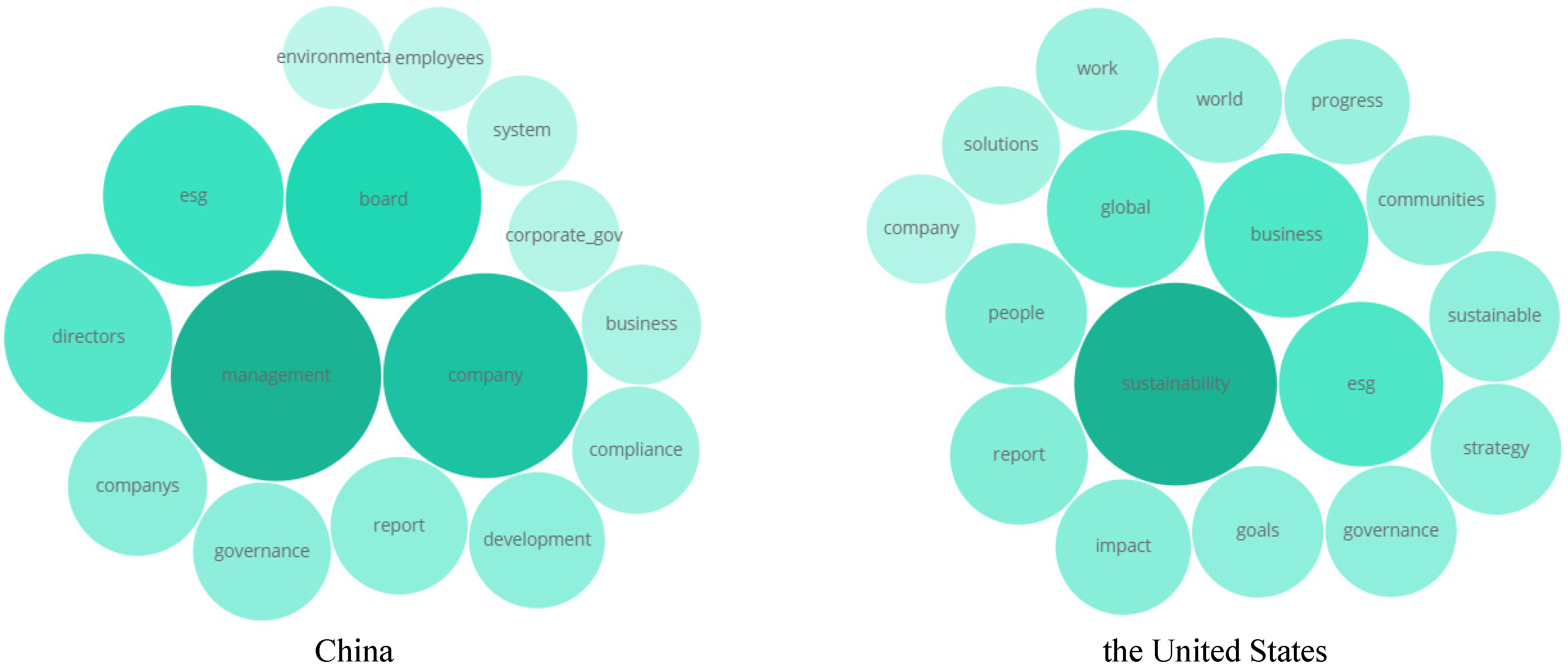
Using Python 3.10.0, a Python script extracted text from the manually downloaded reports for analysis. The authors manually reviewed the data to remove elements like tables of contents and headers that could distort word counts. To gain an initial overview, this study applied country-level topic modeling using MineMyText 1.00.70, which automatically removes stop words, HTML tags, and numbers. Reports were consolidated into one document per country for analysis, aiming to identify the 10 most common topics and regional differences. A detailed listing of all 10 topics can be found in Appendix A (Table A2). Figure 1 shows the most prominent topic, accounting for 25.1% in the United States and 22.9% in China. In the United States, this topic centers on sustainability, with terms such as ESG, business, people, impact, strategy, and governance. In China, it focuses on management and governance, with terms like ESG, directors, compliance, development, and corporate governance.

4.2. Text Analysis Using a Dictionary Approach

A preliminary investigation employing the dictionary approach yielded significant insights into the intensity and distribution of ESG-related terms across the selected reports. We subsequently analyzed each report using a specialized dictionary that targeted the variables of ESG factors, focusing on the prevalence of these elements. The word list was developed by Heichl and Hirsch [16] and has been rigorously tested for robustness and validated for its substantial contribution. The authors designed this dictionary specifically for application in sustainability reports. In total, the word list comprises 661 terms, with 191 related to the environmental context, 236 to the social context, and 234 to the governance context.
The dictionary incorporates individual words and n-grams (e.g., “carbon impact”) to reduce the risk of misinterpretation. For our analysis, we automatically extracted all relevant texts from the sustainability reports, which were then manually checked for accuracy on a sampling basis. The findings were compared across sectors in China and the United States. The results of this analysis yield a value ranging from 0 to 1, as shown in Table 2, reflecting the extent to which the variable is emphasized in the reports.
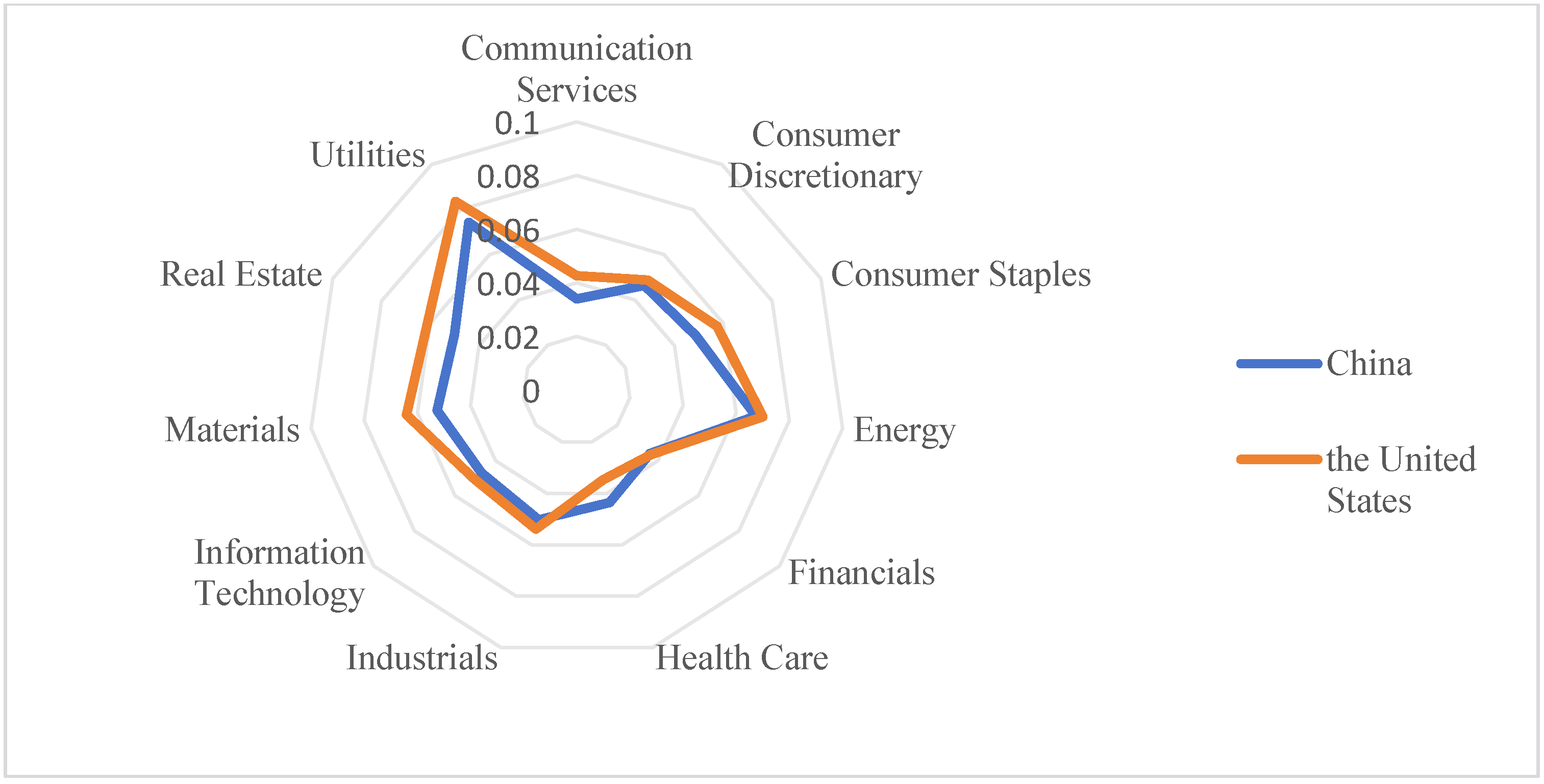
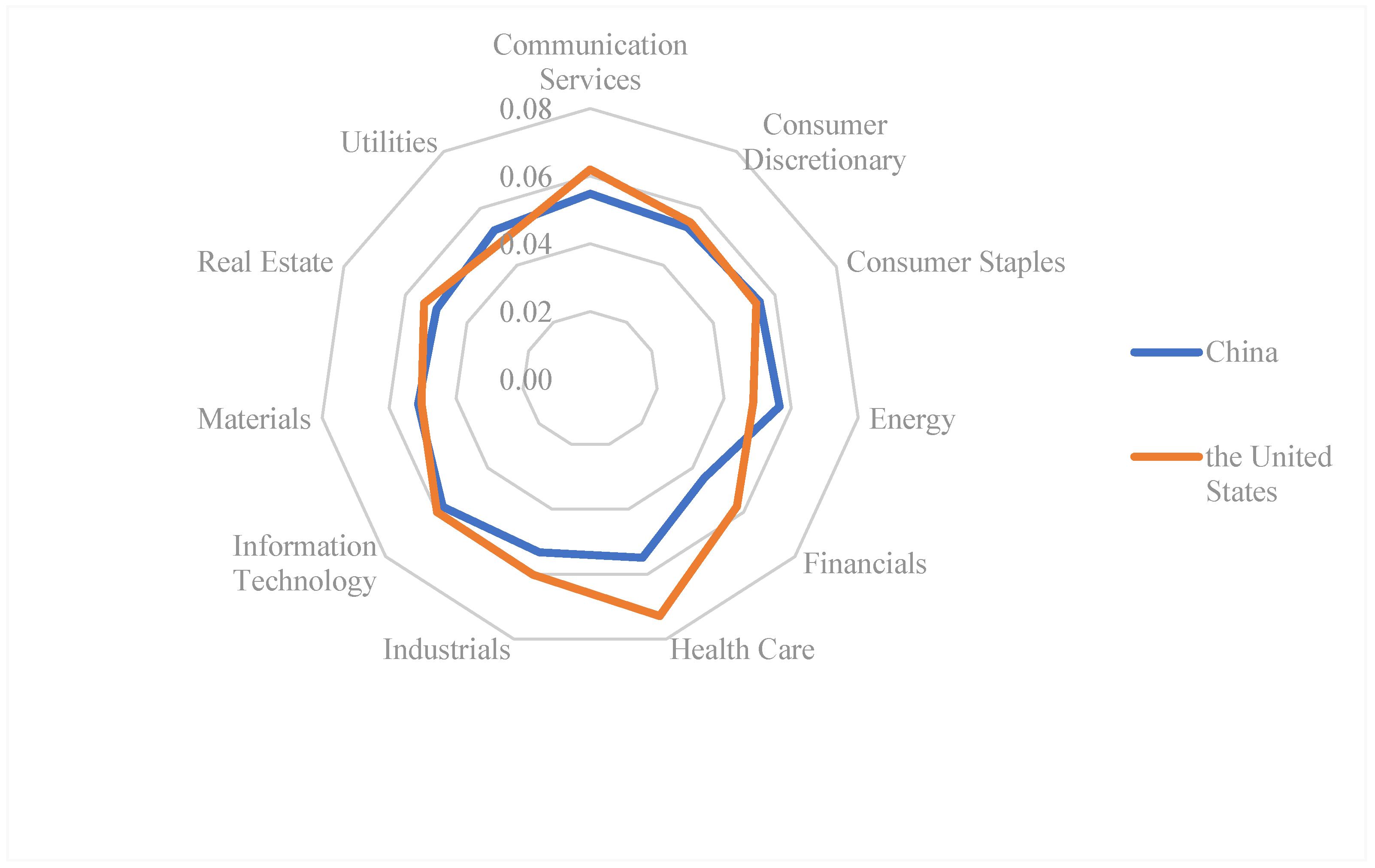
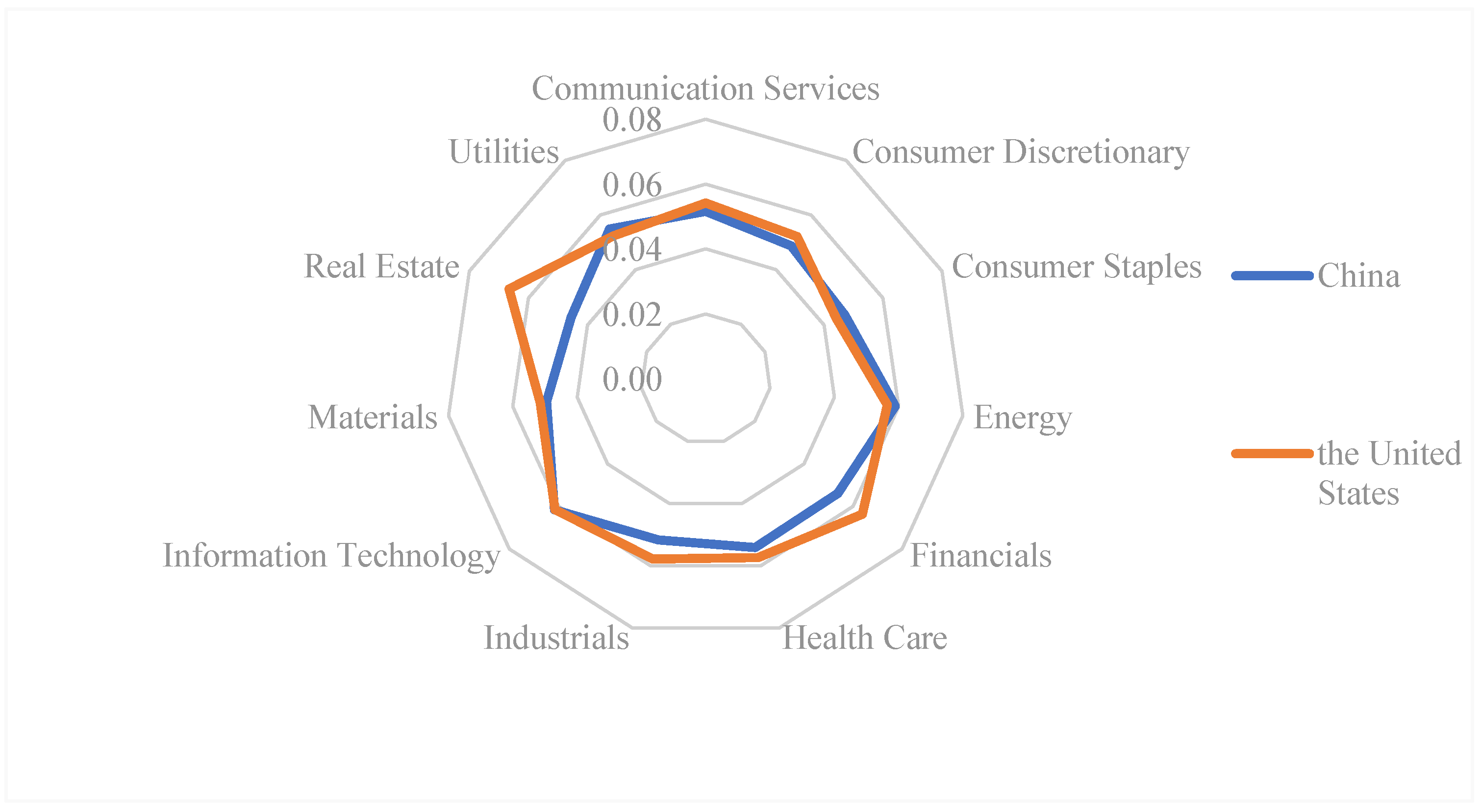
The analysis of Chinese reports reveals sectoral differences in ESG disclosures. In the environmental (ENV) dimension, the Utilities sector exhibits the highest level of environmental content, with a mean value of 0.0743, followed by the Energy sector at 0.0675. Sectors such as Communication Services and Financials display significantly lower environmental disclosures, with mean values below 0.040, markedly below the overall mean of 0.0501. For the social (SOC) dimension, the Information Technology sector displays the most substantial social content, with a score of 0.0576, whereas the Financials sector provides the least, at 0.0446. However, the overall average for social reporting across all sectors is 0.0531. Regarding governance (GOV) disclosures, sectors such as Consumer Discretionary, Consumer Staples, and Real Estate have lower levels of governance content, with values under 0.050. In contrast, the Information Technology sector demonstrates the highest governance content, with a mean value exceeding 0.060. The overall mean for governance across sectors is 0.0525. In conclusion, Environmental (ENV) reporting varies widely across sectors, while social (SOC) disclosures show less variation. Governance (GOV) reporting shows moderate variation.
In the environmental (ENV) dimension within the United States, similar to the pattern observed in China, there are significant differences in environmental reporting across sectors. The Financials sector and the Utilities sector exhibit the greatest disparity, with the comparison revealing figures of 0.0366 and 0.0835, respectively. From a social (SOC) perspective, the overall variability in social disclosures across sectors is relatively modest. Sustainability reports from the Energy, Materials, and Utilities sectors show comparatively lower social content, with scores near 0.050. In contrast, the Health Care sector strongly emphasizes social topics, with a score of 0.0729. In terms of governance (GOV) reporting, the Consumer Staples sector exhibits the least governance content, being the sole sector with a value below 0.05, in contrast to the real estate sector, which boasts the highest score at 0.0665. This indicates that although most sectors highlight governance topics, there remains a variation in the extent of their reporting.
Comparing the comprehensive outcomes of the two countries, the data reveals broader ranges and higher variability in the U.S. ESG scores. Specifically, the United States shows greater fluctuations across all ESG dimensions, with higher means and standard deviations than China. The greatest disparity is observed in the environmental dimension, with a difference of 0.47 percentage points. The social and governance dimensions exhibit relatively consistent gaps, with differences of 0.35 and 0.37 percentage points, respectively. A more detailed sectoral analysis reveals both similarities and significant differences in the reporting practices of the two countries. This detailed sectoral comparison is illustrated in Figure 2, Figure 3 and Figure 4. In Figure 2, regarding the environmental dimension, the data distribution between the two countries is generally comparable. For example, the Utilities sector provides the most extensive reporting on environmental matters, whereas the Financials sector reports the least in this dimension. This echoes the conclusions of previous studies, which have maintained that the Financials sector has little impact on the environment, while the Utilities sector has a higher level of environmental concern [40].
Notable differences are evident in the social and governance dimensions, likely due to these dimensions better reflecting the variations in informal institutions between the two countries. In Figure 3, within the social dimension, there are clear distinctions between Chinese and U.S. companies regarding their emphasis on social issues. From the previous text analysis, it was determined that Chinese enterprises focus most on social issues in the Information Technology sector, while the Financials sector demonstrates the least attention to these issues. In contrast, among U.S. companies, the Energy and Utilities sectors show the least concern for social issues, whereas the Health Care sector exhibits the greatest emphasis on them. This suggests that the two countries may have divergent priorities in addressing social concerns, with U.S. companies displaying a more diverse sectoral focus on social issues compared to their Chinese counterparts.
In Figure 4, within the governance dimension, the most pronounced difference between the two countries is observed in the Real Estate sector. Chinese companies demonstrate the weakest governance focus, whereas U.S. companies exhibit the strongest.
Based on the above analysis, it can be concluded that there is a high degree of similarity in the sustainability reports of Chinese and U.S. enterprises, with notable differences observed only in certain sectors. Overall, the average variation between the two countries is minimal, indicating that standardized reporting practices are being implemented. Furthermore, the findings suggest that companies have generally addressed key ESG issues in their reports.

4.3. Sentiment Analysis Using a Pre-Trained Large Language Model

In the analysis using ClimateBERT, we calculated the average values for all companies to assess the intensity of climate-related discussions across both countries and their respective sectors. This content was categorized into opportunity, neutral, or risk. The aggregate values for each country sum to 1, representing the overall composition of the analyzed reports. The detailed results of this analysis are presented in Table 3.
Table 3 presents the outcomes of the sentiment analysis. For Chinese enterprises, the proportion of statements addressing climate opportunities ranges from 33.5% to 47.3%, while the proportion of statements addressing climate risks ranges from 10.2% to 14.9%. In comparison, the reports of U.S. companies feature climate opportunity statements ranging from 25.7% to 39.1% and climate risk statements ranging from 10.4% to 17.2%. Among the 11 sectors analyzed, five sectors in China report over 40% of their content as climate opportunity statements. The Communication Services sector exhibits the most positive outlook, while the Energy sector demonstrates the highest risk perception. In contrast, none of the sectors in the United States report over 40% for climate opportunity content, with the Consumer Staples sector displaying the most positive outlook. Similarly to the Chinese results, the Energy sector in the U.S. reports the highest proportion of risk-related content. Notably, compared to their Chinese counterparts, U.S. companies report a higher proportion of climate opportunity content only in the Health Care and Utilities sectors.
Overall, our findings demonstrate that Chinese companies tend to have a more optimistic outlook and place less emphasis on climate risks in their sustainability reports compared to U.S. companies. Both countries show similar overall distributions of attitudes toward climate-related content, with nearly 50% of the content classified as neutral in both cases. Sectoral differences in the perception of climate opportunities and risks are evident, but the content distribution is generally consistent between the two countries at the national level. However, at the sector level, the most significant differences in opportunity-related content are found in the Communication Services, Financials, and Real Estate sectors, where Chinese companies report nearly 10% more opportunity-related content than their U.S. counterparts.

5. Discussion and Conclusions

This study presents key findings from a text analysis perspective, focusing on the sustainability reporting and development practices of enterprises in China and the United States. The results provide insights into both similarities and differences in how various sectors within these two countries approach sustainability reporting, and make contributions to deepening the interpretation and understanding of corporate sustainable reporting.
First, this study found that enterprises in the two countries have different strategic priorities in terms of sustainable development. In the United States, the emphasis is on sustainability, ESG, and social issues such as employees and communities. Emissions reduction and energy efficiency are also prominent. In contrast, Chinese companies prioritize structured management and governance, focusing on economic growth, green development, and technology, with particular emphasis on green finance and energy sector development. These differences reflect the unique socio-economic contexts of each country [20] and are closely related to national regulation and policy orientation. American enterprises face increasing pressure from stakeholders. Stakeholder theory emphasizes that companies need to balance the interests of diverse entities, such as internal employees and external communities, to achieve long-term sustainable development [50]. The economic goals of American enterprises are highly dependent on the continuous support of communities and employees, so they must prioritize community and employee engagement as core strategies. Additionally, pressure from investors compels companies to adopt green practices to enhance their sustainability, with the most obvious manifestation being energy conservation and emission reduction. As a country with high power distance and collectivism, the strategic direction of enterprises in China is largely influenced by national initiatives and public attention. With the deepening of national sustainable development initiatives and increasingly rapid technological innovation, more enterprises are beginning to consider integrating technological innovation with sustainability to achieve sustainable development [51]. This is not only reflected in the greening and efficiency of corporate production and operations, but also in technological innovation in corporate governance [52].
Second, the analysis revealed that the general focus on sustainability is consistent between the two countries. Our findings are consistent with Ervis [23], who found no significant variations between Chinese and global companies’ sustainability disclosures; this suggests that, despite differences in specific sectors, overall sustainability priorities may be converging across various countries. In examining sustainability across the three ESG dimensions, we observed only minor differences in the overall evaluations of the two countries. This indicates that the overall layout of sustainable development priorities is converging among the countries, and it also demonstrates the clear direction and joint efforts towards sustainable goals on a global scale. The conclusion that there are still differences between sectors aligns with Christensen et al.’s [20] observation of considerable diversity in how CSR reports are disclosed across different industries and within individual sectors. Our findings suggest a high degree of alignment between the two countries in their environmental reporting practices, possibly due to the widespread adoption of international standards and regulations governing environmental disclosures. Standards and regulations provide clear guidance for companies on environmental information disclosure. This consistency also reflects the strong environmental regulatory power of the two countries, increasing investor and public confidence in the environmental governance of the two countries. However, notable differences emerge in the social and governance dimensions. For instance, U.S. companies, particularly in the Financials and Health Care sectors, place greater emphasis on social issues compared to their Chinese counterparts. The underlying reason may lie in the fact that both sectors involve strong legal supervision and risk-related issues concerning people. For instance, the U.S. Financials sector internalizes social issues such as “financial inclusion” and “fair services” for consumers as compliance obligations for financial institutions, requiring companies to meet the credit needs of community consumers. The Health Care sector imposes stricter restrictions on medical accessibility, patient data privacy, and drug safety. If violations occur, U.S. companies will face hefty fines and lose their corporate reputation. As a result, this inadvertently increases the explicit focus on social elements and transparency of information disclosure by companies in these sectors. In comparison, in China, many listed companies in the Financials and Health Care sectors have state-backed backgrounds, so the thematic content in their reports may more strongly emphasize responses to national macro-strategies, showing a clear difference from U.S. companies [53]. The largest divergence in governance reporting occurs in the Real Estate sector, where U.S. companies report stronger governance concerns than Chinese companies. Based on the evaluation of individual reports and the results from topic modeling, we hypothesize that the divergence in governance reporting between U.S. and Chinese companies in the Real Estate sector is driven by differences in regulatory and ownership frameworks. Another possible reason is the reality that the average quality of ESG reports from China-listed real estate companies is not good enough [54].
Additionally, some sectors exhibit unique characteristics. In China, the Energy sector shows particularly high reporting quality across ESG dimensions, likely due to heightened scrutiny and public attention on the industry, which is the largest contributor to greenhouse gas emissions in the country [22]. The high-quality attention China’s Energy sector pays to the environmental dimension also confirms the conclusion of our topic modeling analysis that China focuses on achieving green transformation of traditional industries through technological innovation. Conversely, despite the large volume of reports from Chinese companies in the Financials sector, their reports show lower effectiveness in addressing ESG issues. In the U.S. dataset, sectors such as Health Care and Financials tend to show extreme values across different dimensions; this indicates that U.S. companies may adopt more targeted approaches to meet investor expectations as investors play a critical role in shaping the various dimensions of ESG reporting [55]. Rather than strictly adhering to uniform standards, companies may prioritize reporting elements that align with investor interests, leading to greater diversity and a more sector-specific focus in their sustainability disclosures.
Third, sentiment analysis was employed to examine the tone of climate-related content in sustainability reports from both countries. Our findings align with Christensen et al. [20], indicating that most companies adopt an optimistic tone emphasizing opportunities over risks. Additionally, there is a possibility that risks are often framed in a positive light [56], since companies need to provide investors with confidence rather than anxiety. More specifically, the analysis reveals significant differences in the tone and focus of sustainability reports across sectors and between the two countries. One reason for this might be influenced by the narrative style of the report. Chinese companies’ reports may lean more towards “opportunity-oriented” narration, which is reflected in the positive attitude of the Communications Service sector. In recent years, with the upgrading and application of digital technologies and internet platforms, this sector has ushered in tremendous development opportunities and has become a new engine for promoting green economic growth. By showcasing positive corporate activities and aligning with national strategies, companies are more likely to obtain policy and resource support. Providing positive signals to investors and other stakeholders is conductive to facilitating investment attraction and the achievement of economic goals. On the other hand, these differences may be influenced by informal institutional frameworks such as normative and cognitive. Stakeholder expectations, cultural background, and other informal institutional factors influence how companies demonstrate their sustainable development initiatives. Compared to Chinese companies, American companies tend to have “clearer orientations”, with institutional investors explicitly requiring companies to report their risks to assist investors in making investment decisions. Several studies have suggested that China’s collectivist orientation and high power distance encourage companies to align with authoritative initiatives and present a consistent image with other enterprises to gain recognition and mitigate risks [57]. As a result, Chinese companies tend to use more positive language when describing their corporate situation. In contrast, the individualistic and risk-taking culture in the United States leads companies to focus more on and explicitly express actual risks. These variations align with the idea of isomorphic pressures, as noted by Ervits [23], where a combination of internal and external factors influences corporate reporting practices.
In conclusion, this study effectively addressed the two core questions raised in the article. Regarding RQ1, this study employed topic modeling, the bag-of-words approach and sentiment analysis methods, using the ESG framework as the deconstruction standard, to provide a multivariate analysis framework for the assessment of corporate sustainable reports and to add an analytical perspective based on sector differences. Regarding RQ2, by comparing the similarities and differences in corporate sustainable practices between China and the United States, this study discovered the potential impact of regional differences on the content of corporate sustainable reports. The research findings and discussions enhance the theoretical and practical understanding of corporate sustainability.
Therefore, this research has made the following contributions in the academic field. Firstly, this paper offers a new perspective for the quantitative analysis of the sustainability of enterprise non-financial reports. By integrating three analysis methods, this paper deepens the scientific understanding of sustainability reports from macro, meso and micro perspectives, providing further supplementation to the future trends of sustainability reporting. Secondly, based on the three-dimensional theoretical framework of ESG, this study systematically analyzes the disclosure contents of different sectors in two countries, and explains the core logic and internal principles behind this phenomenon. This helps deepen awareness of sustainability reporting structure, establish the connection between environment, social, governance and industries, and make research contributions to tracking the achievement of global sustainable goals. Thirdly, this study deepens the research dimension through transnational comparative analysis. The research results reveal the commonalities and differences in sustainable development issues between Chinese and U.S. enterprises. This enriches the existing research conclusions on sustainable reporting analysis and supplements the literature on cross-national sustainable case comparisons.
In practical implications, the research results have important implications for the construction of a sustainable development governance system of enterprises in the future. Firstly, regulatory frameworks must continue to balance global harmonization with local flexibility, addressing country-specific needs and sectoral differences. Secondly, it is crucial to develop sector-specific disclosure guidelines and strengthen stakeholder participation mechanisms. Through structured communication, corporate behavior can be further regulated and enterprises can better understand the expectations of stakeholders, thus enhancing the pertinence and credibility of reporting. Finally, with the gradual tightening of regulations, more enterprises may actively or passively disclose their sustainability reports in the future. Therefore, this study provides a crucial empirical benchmark for cross-regional and cross-sector comparisons, enabling the sustainable practices of enterprises to be objectively measured and observed. In this context, it is necessary to strengthen verification mechanisms such as third-party audits to prevent corporate “greenwashing” and ensure that sustainability reports truly become reliable tools for investment and governance.

6. Limitations and Future Research

This study has several limitations. On the one hand, considering the sample factors, first, it focuses solely on listed companies in China and the United States. This limited scope may not fully reflect the sustainability practices of different regions and companies. Second, language constraints limited our analysis to English-language reports, potentially overlooking the practices of Chinese firms published exclusively in Chinese. Another consideration is the smaller number of Chinese reports, which presents challenges for direct comparisons. The smaller sample size of Chinese companies may distort comparison results or lead to conclusions that fail to accurately reflect broader trends. Nevertheless, the study highlights opportunities for future research to expand representation. Finally, the study’s temporal scope is restricted to a single year, 2022, which may not fully capture long-term trends in sustainability practices. Future research should aim to extend the analysis to at least three to five consecutive years to identify evolving patterns among regions and make comparisons, thereby enhancing the robustness of our findings.
On the other hand, considering the analytical process, the methodology of this paper is inherently limited by each company’s reporting standards and data quality. Diverse reporting standards complicate comparability, as significant variations in reporting methods, data quality, and detail levels among companies may influence analytical outcomes. Moreover, this study primarily highlights discrepancies in reporting disclosures while discussing their underlying causes and potential impacts on corporate practices. However, such discussions lean toward theoretical analysis without empirical data to substantiate deeper causal relationships. Future research could empirically investigate key factors influencing corporate sustainability practices. Finally, companies may use sustainability reporting as a tool to meet the expectations of stakeholders or the public, artificially enhancing their perceived sustainability performance by exaggerating or distorting actual behavior. Therefore, future research could investigate the potential impacts of behaviors such as green marketing and “greenwashing” on corporate practice, while evaluating how external factors—including stakeholders (particularly investors) and evolving regulatory frameworks—shape corporate reporting practices. This deeper exploration would provide a more comprehensive understanding of the dynamics behind ESG disclosures and their practical implications for corporate governance.

Author Contributions

Conceptualization, Q.M., D.K., L.B. and R.E.; Data curation, Q.M. and D.K.; Formal analysis, D.K.; Funding acquisition, Q.M.; Investigation, Q.M. and D.K.; Methodology, D.K.; Software, D.K.; Supervision, L.B. and R.E.; Validation, Q.M. and D.K.; Visualization, Q.M. and D.K.; Writing—original draft, Q.M. and D.K.; Writing—review and editing, Q.M., D.K. and L.B., Q.M. and D.K. should be considered joint first authors. All authors have read and agreed to the published version of the manuscript.

Funding

This research received no external funding.

Institutional Review Board Statement

Not applicable.

Informed Consent Statement

Not applicable.

Data Availability Statement

The authors acquired all the released data and reports through official online channels. The involved data and information are consented to be publicly accessed and studied.

Conflicts of Interest

The authors declare that there are no known competing financial interests or personal relationships that could have appeared to influence the work reported in this paper.

Abbreviations

The following abbreviations are used in this manuscript:
ENVEnvironmental
SOCSocial
GOVGovernance

Appendix A

Table A1. An overview of relevant studies.
YearPaperOverall GoalMethodologyData Used
2010Modapothala et al. [4]Appraise CSR across all industrial sectors according to GRI guidelines.Text/data mining, keyword searches2235 CSR documents across 26 sectors
2014Liew et al. [10]Identify sustainability trends and practices in process industries.Text mining, term frequency, machine learning.112 sustainability reports from Forbes 2000 companies
2017Székely and vom Brocke [3]Identifying sustainability trendsTopic modeling9514 sustainability reports (1999 to 2015)
2017Aureli [9]Text mining and content analysis for company social and environmental reports.Content analysis, text mining20 documents (from four multinationals over five years)
2020Clarkson et al. [13]Examining disclosure patterns in U.S. CSR reports.Supervised machine learning approach2056 U.S. CSR reports (2002–2016)
2020Parsa et al. [21]Examining key drivers of CSR reporting in Chinese listed companies.open-ended interviews27 interviews
2020Baier et al. [15]Assessing ESG reporting trends in U.S. firms.Textual analysis100 10-K reports (25 largest companies over four years), S&P 100 index
2021Ning et al. [11]Understand impact of online sustainability reporting on firm performance.LDA, LMM, probit models680 GRI reports on ESG aspects.
2021Kumar and Das [17]Examine sustainability reports and identify commonly used words.Text mining, keyword extraction, word clouds200 sustainability reports (2008–2017)
2021Christensen et al. [20]Analyze the economic impact of mandatory disclosure and reporting standards for CSR and sustainability on U.S. firms. Literature review, CSR reporting comparison.Academic literature
2021Ervits [23]Analyzing Chinese multinational enterprises’ CSR reporting versus advanced economies’ approaches.quantitative and qualitative content analysis2015–2017 CSR reports from leading Chinese industries.
2022Su and Zhon [42]Investigating CSR issues and stakeholder engagement by Chinese companies.content analysis methodCSR communication of 266 Chinese companies
2022Park et al. [35]Explore ESG trends using Twitter data to understand public sentiment and evolving ESG topics over time.LDA and DTM for topic extraction and sentiment analysis with VADER.1,787,230 ESG-related tweets from 2016 to 2020, with a processed dataset of 73,397,870 words.
2023Moodaley and Telukdarie [14]Exploring AI, ML, greenwashing, and sustainability reporting in a conceptual framework.Bibliometric and thematic analysisBibliometric data
2023Park et al. [12]Clarifying corporate citizenship, CSR and ESG concepts.Term-frequency analysis, topic modeling1235 articles on CSR, ESG, corporate citizenship
2023Heichl and Hirsch [16]Studying EU firms’ ESG reporting patterns.Text mining551 non-financial reports from CAC 40, DAX, FTSE MIB, OMXS30.
Source: Author’s own compilation.
Table A2. 10 topics of topic modeling terms sorted by frequency and country.
Countryin %Terms (Sorted by Frequency)
US25.1sustainability, esg, business, global, people, report, impact, goals, governance, strategy, sustainable, communities, progress, world, work, solutions, company
18.3esg, board, governance, management, business, employees, company, report, including, sustainability, directors, compliance, committee, performance
13.6employees, people, support, program, communities, work, community, associates, programs, inclusion
9.1customers, products, solutions, sustainability, technology, safety, global, employees
8.4emissions, esg, environmental, energy, water, sustainability, report, reduce, reduction, scope_1, data, total, goals
7.4energy, customers, emissions, natural_gas, safety, clean_energy, gas, company
4.8products, packaging, food, product, water, people, goal, brands, consumers, safety, impact
4.8clients, esg, investment, financial, risk, companies, climate, services, business, insurance, data, risks, including, bank, capital
4.5health, patients, care, healthcare, access, people, quality, global, medicines, research
4.0financial, management, company, statements, business, customers, growth
China22.9management, company, board, esg, directors, companies, governance, report, development, compliance, business, corporate_governance, system, employees, environmental_social
20.2development, china, green, report, management, social_responsibility, construction, industry, company, building, national
18.5esg, management, sustainable_development, development, green, sustainable, report, governance, sustainability, employees, environmental, products, global, company, social, performance, industry, strategy, business
7.8energy, company, production, environmental_protection, development, safety, report, environmental, project, management, operation, governance, group, power, environmental_social, esg, coal, mining, projects
7.2company, industry, products, technology, development, intelligent, new_energy, production, equipment, manufacturing, enterprise, green, china, global, report, power, quality
6.1bank, financial, green, development, services, insurance, green_finance, banks, finance, business, real_economy, investment, service, serving, credit, million, billion, customers, financial_services, support, rmb
5.6digital, technology, intelligent, management, information, smart, platform, service, services, business, data, system, industry, products, network, innovation, social, solutions, security, development
4.0company, industry, chemical, innovation, pharmaceutical, products, production, quality, technology, china, management_system, enterprise, shanghai, business, research, association, material, paper
3.9logistics, transportation, cosco_shipping, port, business, shipping, safety, service, services
3.7production, food, company, agricultural, products, brand, feed, health, consumers, people, technology, product, employees
Source: Author’s own compilation.

References

  1. Shin, J.; Kim, C.; Yang, H. The Effect of Sustainability as Innovation Objectives on Innovation Efficiency. Sustainability 2018, 10, 1966. [Google Scholar] [CrossRef]
  2. Kuzma, E.; Padilha, L.S.; Sehnem, S.; Julkovski, D.J.; Roman, D.J. The relationship between innovation and sustainability: A meta-analytic study. J. Clean. Prod. 2020, 259, 120745. [Google Scholar] [CrossRef]
  3. Székely, N.; vom Brocke, J. What can we learn from corporate sustainability reporting? Deriving propositions for research and practice from over 9,500 corporate sustainability reports published between 1999 and 2015 using topic modelling technique. PLoS ONE 2017, 12, e0174807. [Google Scholar] [CrossRef] [PubMed]
  4. Modapothala, J.R.; Issac, B.; Jayamani, E. Appraising the Corporate Sustainability Reports—Text Mining and Multi-Discriminatory Analysis. In Innovations in Computing Sciences and Software Engineering; Sobh, T., Elleithy, K., Eds.; Springer: Dordrecht, The Netherlands, 2010; pp. 489–494. [Google Scholar]
  5. Verbeeten, F.H.; Gamerschlag, R.; Möller, K. Are CSR disclosures relevant for investors? Empirical evidence from Germany. Manag. Decis. 2016, 54, 1359–1382. [Google Scholar] [CrossRef]
  6. Li, J.; Yang, Z.; Chen, J.; Cui, W. Study on the Mechanism of ESG Promoting Corporate Performance: Based on the Perspective of Corporate Innovation. Sci. Sci. Manag. S& T 2021, 42, 71–89. [Google Scholar]
  7. Ng, A.C.; Rezaee, Z. Business sustainability factors and stock price informativeness. J. Corp. Finance 2020, 64, 101688. [Google Scholar] [CrossRef]
  8. Aluchna, M.; Roszkowska-Menkes, M.; Kamiński, B.; Bosek-Rak, D. Do institutional investors encourage firm to social disclosure? The stakeholder salience perspective. J. Bus. Res. 2022, 142, 674–682. [Google Scholar] [CrossRef]
  9. Aureli, S. A comparison of content analysis usage and text mining in CSR corporate disclosure. Int. J. Digit. Account. Res. 2017, 17, 1–32. [Google Scholar] [CrossRef]
  10. Liew, W.T.; Adhitya, A.; Srinivasan, R. Sustainability trends in the process industries: A text mining-based analysis. Comput. Ind. 2014, 65, 393–400. [Google Scholar] [CrossRef]
  11. Ning, X.; Yim, D.; Khuntia, J. Online Sustainability Reporting and Firm Performance: Lessons Learned from Text Mining. Sustainability 2021, 13, 1069. [Google Scholar] [CrossRef]
  12. Park, J.G.; Park, K.; Noh, H.; Kim, Y.G. Characterization of CSR, ESG, and Corporate Citizenship through a Text Mining-Based Review of Literature. Sustainability 2023, 15, 3892. [Google Scholar] [CrossRef]
  13. Clarkson, P.M.; Ponn, J.; Richardson, G.D.; Rudzicz, F.; Tsang, A.; Wang, J. A Textual Analysis of US Corporate Social Responsibility Reports. Abacus 2020, 56, 3–34. [Google Scholar] [CrossRef]
  14. Moodaley, W.; Telukdarie, A. Greenwashing, Sustainability Reporting, and Artificial Intelligence: A Systematic Literature Review. Sustainability 2023, 15, 1481. [Google Scholar] [CrossRef]
  15. Baier, P.; Berninger, M.; Kiesel, F. Environmental, social and governance reporting in annual reports: A textual analysis. Financ. Mark. Inst. Instrum. 2020, 29, 93–118. [Google Scholar] [CrossRef]
  16. Heichl, V.; Hirsch, S. Sustainable fingerprint—Using textual analysis to detect how listed EU firms report about ESG topics. J. Clean. Prod. 2023, 426, 138960. [Google Scholar] [CrossRef]
  17. Kumar, A.; Das, N. A Text-Mining Approach to the Evaluation of Sustainability Reporting Practices: Evidence from a Cross-Country Study. Probl. Sustain. Development 2021, 16, 51–60. [Google Scholar] [CrossRef]
  18. Bingler, J.A.; Kraus, M.; Leippold, M.; Webersinke, N. How cheap talk in climate disclosures relates to climate initiatives, corporate emissions, and reputation risk. J. Bank. Finance 2024, 164, 107191. [Google Scholar] [CrossRef]
  19. Stanislavská, L.K.; Pilař, L.; Fridrich, M.; Kvasnička, R.; Pilařová, L.; Afsar, B.; Gorton, M. Sustainability reports: Differences between developing and developed countries. Front. Environ. Sci. 2023, 11, 1085936. [Google Scholar] [CrossRef]
  20. Christensen, H.B.; Hail, L.; Leuz, C. Mandatory CSR and sustainability reporting: Economic analysis and literature review. Rev. Account. Stud. 2021, 26, 1176–1248. [Google Scholar] [CrossRef]
  21. Parsa, S.; Dai, N.; Belal, A.; Li, T.; Tang, G. Corporate social responsibility reporting in China: Political, social and corporate influences. Account. Bus. Res. 2020, 51, 36–64. [Google Scholar] [CrossRef]
  22. Zaman, Q.U.; Wang, Z.; Zaman, S.; Rasool, S.F. Investigating the nexus between education expenditure, female employers, renewable energy consumption and CO2 emission: Evidence from China. J. Clean. Prod. 2021, 312, 127824. [Google Scholar] [CrossRef]
  23. Ervits, I. CSR reporting by Chinese and Western MNEs: Patterns combining formal homogenization and substantive differences. Int. J. Corp. Soc. Responsib. 2021, 6, 1–24. [Google Scholar] [CrossRef]
  24. Sarkodie, S.A.; Strezov, V. Empirical study of the Environmental Kuznets curve and Environmental Sustainability curve hypothesis for Australia, China, Ghana and USA. J. Clean. Prod. 2018, 201, 98–110. [Google Scholar] [CrossRef]
  25. World Commission on Environment and Development. Our Common Future; Oxford University Press: New York, NY, USA, 1987; pp. 1–300. [Google Scholar]
  26. Geissdoerfer, M.; Vladimirova, D.; Evans, S. Sustainable business model innovation: A review. J. Clean. Prod. 2018, 198, 401–416. [Google Scholar] [CrossRef]
  27. Park, J.; Lee, H.; Kim, C. Corporate social responsibilities, consumer trust and corporate reputation: South Korean consumers’ perspectives. J. Bus. Res. 2014, 67, 295–302. [Google Scholar] [CrossRef]
  28. Pfajfar, G.; Shoham, A.; Malecka, A.; Zalaznik, M. Value of corporate social responsibility for multiple stakeholders and social impact—Relationship marketing perspective. J. Bus. Res. 2022, 143, 46–61. [Google Scholar] [CrossRef]
  29. Han, S.-L.; Lee, J.W. Does corporate social responsibility matter even in the B2B market?: Effect of B2B CSR on customer trust. Ind. Mark. Manag. 2021, 93, 115–123. [Google Scholar] [CrossRef]
  30. Novik-Sandberg, H. Sustainability Reporting: Convergence to Accelerate Progress. 2020. Available online: https://www.ifrs.org/ (accessed on 12 November 2025).
  31. Hashmi, M.A.; Damanhouri, A.; Rana, D. Evaluation of Sustainability Practices in the United States and Large Corporations. J. Bus. Ethics. 2015, 127, 673–681. [Google Scholar] [CrossRef]
  32. Hu, H.; Tu, Z.; Chen, A.; Huang, J. Enterprises’ globalization and ESG performance. Finance Res. Lett. 2023, 58, 104653. [Google Scholar] [CrossRef]
  33. Amel-Zadeh, A.; Serafeim, G. Why and How Investors Use ESG Information: Evidence from a Global Survey. Financ. Anal. J. 2018, 74, 87–103. [Google Scholar] [CrossRef]
  34. Aureli, S.; Gigli, S.; Medei, R.; Supino, E. The value relevance of environmental, social, and governance disclosure: Evidence from Dow Jones Sustainability World Index listed companies. Corp. Soc. Responsib. Environ. Manag. 2019, 27, 43–52. [Google Scholar] [CrossRef]
  35. Park, J.; Choi, W.; Jung, S.-U. Exploring Trends in Environmental, Social, and Governance Themes and Their Sentimental Value Over Time. Front. Psychol. 2022, 13, 890435. [Google Scholar] [CrossRef]
  36. Antari, O.; Sbai, H.; Ed-Dafali, S. Board gender diversity and ESG performance: Evidence from gender diversity reforms in the MENA region. J. Financ. Rep. Account. 2025. [Google Scholar] [CrossRef]
  37. Liu, M.; Luo, X.; Lu, W. Public perceptions of environmental, social, and governance (ESG) based on social media data: Evidence from China. J. Clean. Production. 2023, 387, 135840. [Google Scholar] [CrossRef]
  38. Chen, H.H.; Liu, M.D. Overview, progress and future prospects of ESG research. Contemp. Econ. Manag. 2024, 46, 1–15. [Google Scholar]
  39. International Capital Market Association; China Central Depository; Clearing Co., Ltd. White Paper on ESG Practices in China. 2023. Available online: https://www.icmagroup.org (accessed on 12 November 2025).
  40. Mandas, M.; Lahmar, O.; Piras, L.; De Lisa, R. ESG in the financial industry: What matters for rating analysts? Res. Int. Bus. Finance 2023, 66, 102045. [Google Scholar] [CrossRef]
  41. Yin, G.F.; Yu, Z.H.; Guan, Z.S. Goldenbee Research on Corporate Social Responsibility Reporting in China 2019; Social Sciences Academic Press: Beijing, China, 2019; pp. 1–67. [Google Scholar]
  42. Su, R.; Zhong, W. Corporate Communication of CSR in China: Characteristics and Regional Differences. Sustainability 2022, 14, 16303. [Google Scholar] [CrossRef]
  43. Guo, Y.; Yeh, T.-T.; Yang, D.C.; Li, X.-Y. Corporate social responsibility reporting in China: The case of 106 central enterprises. J. Glob. Responsib. 2023, 14, 476–491. [Google Scholar] [CrossRef]
  44. Hummel, K.; Schlick, C. The relationship between sustainability performance and sustainability disclosure—Reconciling voluntary disclosure theory and legitimacy theory. J. Account. Public Policy 2016, 35, 455–476. [Google Scholar] [CrossRef]
  45. Sueyoshi, T.; Yuan, Y. China’s regional sustainability and diversified resource allocation: DEA environmental assessment on economic development and air pollution. Energy Econ. 2015, 49, 239–256. [Google Scholar] [CrossRef]
  46. Bellstam, G.; Bhagat, S.; Cookson, J.A. A Text-Based Analysis of Corporate Innovation. Manag. Sci. 2021, 67, 4004–4031. [Google Scholar] [CrossRef]
  47. Blei, D.M.; Ng, A.Y.; Jordan, M.I. Latent Dirichlet Allocation. J. Mach. Learn. Res. 2003, 3, 993–1022. [Google Scholar]
  48. Loughran, T.; Mcdonald, B. Textual Analysis in Accounting and Finance: A Survey. J. Account. Res. 2016, 54, 1187–1230. [Google Scholar] [CrossRef]
  49. Webersinke, N.; Kraus, M.; Bingler, J.A.; Leippold, M. ClimateBert: A Pretrained Language Model for Climate-Related Text. 2022. Available online: https://ssrn.com/abstract=4229146 (accessed on 17 December 2022).
  50. Adardour, Z.; Ed-Dafali, S.; Sbai, H.; Hussainey, K. ESG Performance, Family Ownership, and Corporate Risk-Taking: The Moderating Role of the CSR Committee. Int. J. Financ. Econ. 2025. [Google Scholar] [CrossRef]
  51. Hao, P.; Alharbi, S.S.; Hunjra, A.I.; Zhao, S. How do ESG ratings promote digital technology innovation? Int. Rev. Financ. Anal. 2024, 97, 103886. [Google Scholar] [CrossRef]
  52. Li, X.; Hu, Y.; Guo, X.; Wang, M. Government Environmental Information Regulation and Corporate ESG Performance. Sustainability 2024, 16, 8190. [Google Scholar] [CrossRef]
  53. Lou, Q. ESG Information Disclosure: Legal Principle Reflection and Institutional Construction. Secur. Mark. Her. 2023, 3, 24–34. [Google Scholar]
  54. Xie, M.; Pei, X.; Li, Y.; Zhou, F.; Ren, Y. Communication of Finance and Accounting Problems and Improvement Suggestions in the Capitalization Interest Disclosure of Real Estate Enterprises. Commun. Financ. Account. 2024, 7, 102–105+110. [Google Scholar]
  55. Kim, I.; Wan, H.; Wang, B.; Yang, T. Institutional Investors and Corporate Environmental, Social, and Governance Policies: Evidence from Toxics Release Data. Manag. Sci. 2019, 65, 4901–4926. [Google Scholar] [CrossRef]
  56. Bingler, J.A.; Kraus, M.; Leippold, M.; Webersinke, N. Cheap talk and cherry-picking: What ClimateBert has to say on corporate climate risk disclosures. Finance Res. Lett. 2022, 47, 102776. [Google Scholar] [CrossRef]
  57. Weber, E.U.; Hsee, C. Cross-Cultural Differences in Risk Perception, but Cross-Cultural Similarities in Attitudes Towards Perceived Risk. Manag. Sci. 1998, 44, 1205–1217. [Google Scholar] [CrossRef]
Figure 1. Topic modeling: most prominent topic in China and the United States across the entire dataset. Source: Author’s own compilation.
Sustainability 17 10315 g001
Figure 2. Text analysis results comparing the environmental dimension between China and the United States. Source: Author’s own compilation.
Sustainability 17 10315 g002
Figure 3. Text analysis results comparing the social dimension between China and the United States. Source: Author’s own compilation.
Sustainability 17 10315 g003
Figure 4. Text analysis results comparing the governance dimension between China and the United States. Source: Author’s own compilation.
Sustainability 17 10315 g004
Table 1. Sample size of the dataset.
ChinaThe United States
SectorCompanies (n)Pages ( X ¯ )Words ( X ¯ )Companies (n)Pages ( X ¯ )Words ( X ¯ )
Communication Services67117,441187213,746
Consumer Discretionary166918,287498017,145
Consumer Staples194914,535357417,426
Energy157017,603239523,019
Financials397920,808677616,068
Health Care186918,943577817,032
Industrials545915,184706914,249
Information Technology267117,562597515,602
Materials435614,8432711425,152
Real Estate57521,180316112,490
Utilities106314,238289119,490
Total 2516617,3294648017,394
Source: Author’s own compilation.
Table 2. Dictionary-based approach: Comparison Between China and the United States.
Mean ValueChinaThe United States
SectorENVSOCGOVENVSOCGOV
Communication Services0.03390.05480.05160.04270.06190.0542
Consumer Discretionary0.04640.05330.04870.04870.05500.0520
Consumer Staples0.04880.05510.04710.05740.05400.0443
Energy0.06750.05660.05890.07000.04870.0565
Financials0.03610.04460.05380.03660.05740.0637
Health Care0.04370.05490.05410.03480.07290.0573
Industrials0.05030.05330.05160.05390.06020.0578
Information Technology0.04700.05760.06160.05050.05990.0615
Materials0.05250.05140.04950.06410.05030.0514
Real Estate0.05010.04990.04550.06110.05390.0665
Utilities0.07430.05230.05490.08350.04830.0524
Total0.05010.05310.05250.05480.05660.0562
Total in %5.01%5.31%5.25%5.48%5.66%5.62%
Source: Author’s own compilation.
Table 3. Sentiment analysis results: comparison between China and the United States.
Mean ValueChinaThe United States
SectorOpportunityNeutralRiskOpportunityNeutralRisk
Communication Services0.47280.41750.10970.38760.49940.1130
Consumer Discretionary0.42190.47100.10710.38360.50400.1123
Consumer Staples0.43490.46340.10170.39070.50500.1044
Energy0.33490.51640.14870.25740.57090.1717
Financials0.44200.43200.12600.35140.49210.1565
Health Care0.34390.51120.14490.35040.51120.1384
Industrials0.38580.48870.12550.35700.51340.1296
Information Technology0.36700.50690.12620.34600.51990.1341
Materials0.36190.51810.12000.32240.54200.1357
Real Estate0.40670.45220.14110.31070.53950.1498
Utilities0.33760.52090.14150.36950.48910.1414
Total0.39180.48170.12660.34790.51700.1352
Total in %39.18%48.17%12.66%34.79%51.70%13.52%
Source: Author’s own compilation.
Disclaimer/Publisher’s Note: The statements, opinions and data contained in all publications are solely those of the individual author(s) and contributor(s) and not of MDPI and/or the editor(s). MDPI and/or the editor(s) disclaim responsibility for any injury to people or property resulting from any ideas, methods, instructions or products referred to in the content.