Article

Environmental, Technical, and Circular Assessment of the Integration of Additive Manufacturing and Open-Loop Recycling of PET
by
Beatriz Arioli de Sá Teles
1,
Maria Cristina Belli
2,
Irineu Bueno Barbosa Júnior
3,
Sandro Donnini Mancini
4 and
Luiz Kulay
1,*
1
Chemical Engineering Department, Polytechnic School, University of São Paulo (USP), São Paulo 05508-000, Brazil
2
Sinctronics Innovation Center, Sorocaba 18087-125, Brazil
3
Global PET Recycling, São Carlos 13570-829, Brazil
4
Institute of Science and Technology, São Paulo State University (UNESP), Sorocaba 18085-050, Brazil
*
Author to whom correspondence should be addressed.
Sustainability 2025, 17(22), 10068; https://doi.org/10.3390/su172210068
Submission received: 28 September 2025 / Revised: 30 October 2025 / Accepted: 2 November 2025 / Published: 11 November 2025

Abstract

Polyethylene terephthalate (PET) is one of the most widely used plastics globally, and its poor post-consumer management poses serious risks to the environment and human health. Tackling this issue requires innovative strategies that combine recycling and sustainable manufacturing with the principles of the circular economy. This study addresses this challenge by investigating the use of recycled PET, along with reverse logistics, to produce a cell phone holder through additive manufacturing (AM). Characterization was performed using differential scanning calorimetry, thermogravimetric analysis, intrinsic viscosity measurements, and mechanical tensile tests. Environmental and circular performance were evaluated using Life Cycle Assessment (LCA) and the Material Circularity Indicator (MCI), comparing production with 100% virgin PET resin and 100% recycled PET resin. The results showed that the recycled route achieved a tensile strength of 37.7 MPa, with 7.6% strain before rupture, and thermal analysis confirmed its stability during processing. The LCA revealed a 12% reduction in overall environmental impacts when recycled PET replaced virgin resin, with electricity consumption identified as the main critical point. The circularity assessment suggested potential savings of up to 70% if recycled PET products are reprocessed at the end of their life cycles. These findings demonstrate that combining open-loop recycling with additive manufacturing (AM) can effectively turn waste into high-quality, value-added products, advancing circularity and sustainable material innovation.

1. Introduction

Three primary factors drive plastic pollution: the widespread global extraction of non-renewable crude oil, inadequate post-consumer waste disposal practices, and the prevalence of single-use products. In addition to human-related issues, the inherent qualities of plastics, such as durability, potential for accumulation, and micro-scale fragmentation [1], cause significant environmental harm [2]. Additionally, the benefits of using these materials across various societal contexts have been undermined due to poor management and a lack of coordination among production, consumption, and reverse logistics. Therefore, reintegrating plastics into production chains is essential to reduce resource use and emissions while promoting circularity.
Polyethylene terephthalate (PET) is among the most widely used plastics globally, and it is commonly employed in single-use items. In 2021, global consumption of PET bottles reached approximately 583 billion [3], with a large portion improperly discarded. One way to mitigate this issue is to promote the recycling of post-consumer products. PET recycling mainly occurs in two forms: bottle-to-bottle (B2B) and bottle-to-fiber (B2F). Both approaches are associated with fewer environmental harms than virgin PET [4]. Additionally, expanding the use of recycled PET through upcycling and transforming waste materials into higher-value products helps reduce the adverse effects of improper disposal globally [5].
The Life Cycle Assessment (LCA) approach is crucial for evaluating the environmental impacts associated with these scenarios. Over the last few decades, LCA has been used to analyze different management options for PET materials. For example, a study on waste management practices in Brazil [6] found that mechanical recycling offers the most environmentally friendly option among available alternatives. However, the same study noted that this method still requires operational improvements to perform more effectively within a circular economy (CE) framework. Therefore, developing a stronger market for recycled secondary materials is crucial [7]. The draft resolution of the United Nations Environment Assembly (UNEA 5.2) on “End of Plastic Pollution” plays an essential role in advancing CE principles [8]. In response, there is growing interest in creating metrics and strengthening circular practices, with circularity indicators gaining prominence. Among micro-level indicators, the Material Circularity Indicator (MCI) [9] is notable for its consistency and accuracy, as it considers both material flows and lifespans [10].
Combining LCA and MCI approaches enhances assessment accuracy, supports strategic decision making for circular projects, and improves environmental performance. Previous studies have explored this complementarity to identify the advantages and limitations of PET circularity, focusing on recycling in bottle production and various industrial sectors [11]. Systems operating in a closed loop increase circularity at the product level, but only if recovery rates are raised at the PET market level. This suggests that circularity strategies should target the entire product range for a given material, emphasizing the overall market, rather than a single product. Integrating life cycle impacts and circularity metrics is crucial for identifying potential trade-offs in production practices [12], particularly in studies involving PET recycling.
Combining PET recycling methods with modern technologies, such as additive manufacturing (AM), especially Fused AM, a design and manufacturing process guide, could lead to effective and sustainable production strategies. These technologies are expected to grow significantly over the next decade. For example, in the healthcare sector, AM is already used to produce implants. Several benefits, including improved biocompatibility, rapid prototyping, and cost savings, have been reported [13], with projections indicating a nearly threefold market increase by 2026 compared to 2020 [14]. As a part of new production models, these technologies offer eco-friendly solutions associated with reduced resource consumption, lower waste generation, decentralized logistics, and decreased transportation impacts. They also provide notable advantages for polymer materials, including enhanced manufacturing precision and flexibility [15]. However, they also face challenges related to high electricity consumption that require optimization [16,17,18,19,20]. Using recycled plastic filaments as raw material for AM has been shown to reduce environmental impacts [21,22]. Many plastics are recycled worldwide [23,24,25,26], and ongoing evaluations aim to meet increasing demand for these technologies. While recycled PET has shown promise in AM printing [27], its environmental and circularity performance has not yet been fully explored within a framework integrating recycling and AM for the production of secondary goods. Emphasizing the need for further research into environmental impact and circularity, studies on recycled PET also help engage the public in scientific efforts toward sustainable development.
Given that PET remains one of the primary materials used in polymeric applications, enhancing its quality and reusability through high-value recovery methods is essential to increase circularity. Despite the development and implementation of many recycling initiatives, the lack of systemic integration between recycling practices and emerging manufacturing technologies that can valorize post-consumer plastics remains a key challenge. Although several studies have addressed this topic, significant gaps remain in our knowledge of reverse logistics chains, particularly in open-loop recycling routes, such as additive manufacturing (AM). This challenge is further compounded by the need to engage stakeholders across sectors to overcome existing barriers in plastic waste management. Therefore, adopting approaches that combine environmental, circular, and technical aspects is crucial to promote cleaner production, as demonstrated in a case study on replacing virgin polypropylene (PP) with recycled plastic caps [28].
This study presents an additional experiment aligned with this goal, demonstrating a practical application of consumer product manufacturing through AM using fully recycled post-consumer PET within an open-loop recycling system. Implementation forms a part of a reverse logistics chain typical of Brazil, involving coordinated efforts by multiple actors across various industrial sectors. This system promotes circular economy strategies through material recovery and technological innovation. Comparative analyses were conducted on a product made from virgin PET using environmental and circularity assessments. A technical analysis was also performed, including the characterization of thermal, rheological, and mechanical properties. Additionally, this study aims to improve plastic supply chain management and integrate recycling into production through AM, thereby encouraging the growth of secondary markets for recycled materials.

Background: Life Cycle Assessment: Open-Loop Recycling

According to [29], there are several differences between closed-loop recycling (CLR) and open-loop recycling (OLR). CLR occurs when a product is recycled back into the same product system at the end of its life cycle. In contrast, OLR involves recycling a product that can no longer fulfil its original function to substitute virgin materials in the creation of new goods [30], often for a purpose different from that of its predecessor.
OLR systems are often associated with the concept of downcycling [29], which refers to the recovery of waste materials that yield products of inferior quality, reduced functionality, or less value added than those produced using virgin materials. It is important to emphasize that processes involving or resulting in downcycling are not exclusive to OLR systems and may also occur in CLR-class schemes when quality degradation prevents the material from being reused in its original application [31]. Many studies indicate that OLR primarily occurs because the loss of product quality prevents materials from being (re)used for their original purpose after recycling [32]. OLR is influenced by several factors, including shifts in demand for the primary product, the emergence of new cycles and applications that require further study, and technical or environmental limitations to maintaining a closed cycle for a specific product. Due to limited understanding of products and materials, LCA studies generally favor CLR over OLR, reflecting the common assumption that open cycles arise solely from downcycling [33]. Consequently, greater the quality degradation of recycled material, the greater the environmental impact [34]. Both open-loop and closed-loop recycling contribute to achieving the goals of the circular economy, which aims to close material loops. However, their successful adoption depends on the technical and environmental performance of the products created. In environmental analysis, a safe, reliable, and conceptually consistent way to measure this effectiveness is to apply the Life Cycle Assessment (LCA) method to the system under study. LCA considers process parameters and conditions, the use of materials and energy resources in various forms, and emissions resulting from human-induced transformation cycles. It also evaluates the product’s functional characteristics, logistical factors related to the distribution of raw materials, auxiliary materials, and the final product, and even scenarios for disposal. When recycling activities are involved, an LCA-based assessment also accounts for effects arising from interactions between the system being studied and its environment [35].
Modeling an OLR system involves managing multifunctional situations, such as allocating environmental burdens among its functions. Addressing multifunctionality within OLR has been widely discussed and debated in recent decades [31,34,35,36,37,38,39,40,41]. The choice of different methods and practices related to the environmental modeling of OLR systems, however, can produce varying results, which may significantly impact decision making processes [42], as reported by [43] in a study of OLR and CLR PET systems, where the choice of method for allocating recycling burden significantly affected the outcomes.
The treatment of multifunctionalities through allocation in OLR has been applied in various ways using different methods. The Cut-Off approach assigns all environmental burdens associated with fulfilling the initial function exclusively to that product system, while burdens related to material collection, recycling, and final disposal of the secondary product are fully transferred to subsequent functions. Another method, Quality Loss, recognizes that virgin material production and waste treatment require upgraded recycling to preserve function. This method uses quality metrics to distribute environmental impacts across product life cycles according to their product cascade value [42]. The Cut-Off and Quality Loss approaches are commonly used in Attributional Life Cycle Assessment (ALCA) studies [36]. In contrast, the Consequential LCA (CLCA) approach, which does not limit the system, addresses multifunctionality. For OLR situations, one of the most common System Expansion techniques is the 50/50 method, which evenly splits burdens between upstream and downstream functions when recycled materials replace virgin materials and other recycled materials equally [44].
Using the Cut-Off method to address existing multifunctionalities in OLR systems, as applied by [45] to assess the impacts of PET and HDPE recycling via LCA, often results in more environmentally beneficial outcomes than their counterparts that produce single-use products from virgin materials. However, as the author notes, the choice of method for managing multifunctional situations in OLR systems must align with the environmental policy goals of the organizations that oversee them. This caution is warranted because, despite their methodological robustness, any alternative for distributing environmental burdens (e.g., Cut-Off, Relative Quality Loss, Allocation to Material Losses, or Allocation to Virgin Material Use) will influence both the LCA results and subsequent decision making.
In practice, these choices determine how responsibilities and credits are allocated between producers and recyclers, impact the environmental performance of products made from these assets, influence regulatory incentives, shape purchasing decisions, and affect consumer preferences. Therefore, establishing consistent allocation criteria to address the multifunctionalities of OLR systems is essential for supporting policymakers in designing effective recycling incentives.
After comparing two sports field drainage systems, including one with conventional sand and aggregated drainage materials and another with a mixture of OLR plastic waste, the authors of one study [46] concluded that the system based on recycled material had a lower impact. Similarly, research evaluating different OLR routes for PET recycling [47] has demonstrated reduced impacts on non-renewable energy consumption (40–85%) and Global Warming Potential (25–75%) compared to virgin alternatives. Despite these advances, to date, no studies have evaluated OLR sequences for PET intended for high-value applications, such as additive manufacturing, highlighting a significant gap.

2. Materials and Methods

The study proceeded as follows: (i) defining PET OLR life cycle logic specifications, including technological and operational aspects of the first and second life processes for AM of beverage bottles and cell phone holders; (ii) developing characterization scenarios for each production route; (iii) collecting data on each procedural route’s performance, such as raw materials, conversion efficiencies, technical coefficients, and related consumption and emissions; (iv) generating environmental, circularity, and technical assessments of the studied scenarios; and (v) analyzing the results and providing recommendations, mainly at the conceptual level, to reduce the impacts of these systems.

2.1. Specification of Production Routes for the PET Life Cycle Associated with an OLR Analysis

2.1.1. Virgin PET Resin Production

PET polymer synthesis involves three main stages: pre-polymerization, polycondensation, and solid-state polymerization. In the pre-polymerization step, bis-2-hydroxyethyl terephthalate (BHET), the precursor ester for PET, is produced through the direct esterification of purified terephthalic acid (TPA) and monoethylene glycol (MEG). The polymerization of TPA and MEG in the liquid phase produces amorphous PET, with water formed as a byproduct and continuously removed through distillation. The unwanted diethylene glycol byproduct is minimized by maintaining low [MEG:TPA] molar ratios [48].
PTA is produced through the oxidation of p-xylene combined with acetic acid, and ethylene glycol is generated from ethylene derived from naphtha in the petrochemical industry. During the polycondensation step, BHET undergoes pre-polycondensation in a second reactor under vacuum, followed by polycondensation at higher temperatures. The final solid-state polymerization (SSP) step increases polymer chain lengths by applying heat in the absence of oxygen and water, resulting in high-molecular-weight PET (>30,000 g/mol) [49]. The processes used in the production of virgin PET resin are considered elementary, as illustrated in Figure 1, which represents the life cycle of this study.

2.1.2. PET Bottle Manufacturing

PET products, such as bottles and packaging, are typically produced through an injection blow molding process. Processing high-intrinsic-viscosity PET pellets involves ejector and blower temperatures between 260 and 285 °C, with an average conversion rate of 98% per kg of polymer. This process uses extrusion to inject the material into a preformed mold, which is then rapidly cooled to form the preform, reheated, and then placing it into the bottle mold [50]. Compressed air is then expanded and shaped to match the preform. The production of labels and caps is excluded from this analysis.

2.1.3. Reverse Logistics and PET Recycling to Resin

Selective collection in Brazilian programs includes two primary methods: door-to-door and voluntary drop-off points. Brazilian municipal services use collection trucks, cooperatives, or self-employed collectors for the first method. The second method, wherein consumers bring recyclables to designated collection points, is less common. The recycling market involves independent collectors, cooperatives, and medium- to large-scale scrap dealers [51]. These processes, called “Sorting,” involve collecting various materials, including PET, at both levels. This step, which is part of the elementary PET recycling route (Figure 1), involves collecting, receiving, and storing, as well as separating and pressing or baling PET plastics at sorting centers. The primary resources used during this stage are electricity for sorting machinery and diesel fuel for collection trucks [52].
Mechanical material recycling involves four stages: grinding, washing, extrusion, drying, and solid-state post-condensation (SSP), along with effluent pre-treatment. According to interviews and data from a recycling company in São Paulo, southeastern Brazil, waste is only generated during the grinding stage, which is then sent to landfills. The subsequent steps do not produce waste, but they do generate byproducts, such as unwanted plastic material, labels, lids, and PET powder. Byproducts, which are mainly generated during the first two stages, are reduced to less than 0.5% in the final stage and sold to other markets, such as the paint industry.
After arriving at the recycling facility, bottle bales undergo both automatic and manual sorting processes to eliminate undesirable materials, such as other plastics and metals. The PET bottles are then sorted by color for specific recycling campaigns. During the grinding process, the bottles are shredded and reduced to flakes. These flakes are then washed to remove residues, contaminants, and glue from labels. Recycled PET flakes are initially tested for moisture content, color, and intrinsic viscosity to ensure processability. Next, drying and extrusion steps eliminate moisture and convert the flakes into pellets suitable for various industrial uses. Finally, during the SSP step, the material is decontaminated, and PET molecules are regenerated. After the recycled pellets undergo final inspection of their intrinsic viscosity and appearance, they are evaluated to ensure that their properties, such as crystallization and intrinsic viscosity, meet industry standards and market requirements.
Cooling water, electrical energy, and thermal energy—obtained from the combustion of natural gas and LPG—are used at different stages of the recycling process. Public utilities supply all of these resources. To meet quality standards suitable for human consumption, which are also required by small-scale projects like recycling plants, conventional water treatment includes coagulation, flocculation, decantation, filtration, chlorination for disinfection, pH adjustment, and fluoridation. In this study, which took place from 2020 to 2021, the Brazilian electricity matrix primarily consisted of 61% hydroelectric power, 27% thermoelectric power (including 11% natural gas, 8.7% biomass, 3.1% coal, and 2.3% oil and its derivatives), approximately 9.7% wind power, and 2.2% nuclear power. Natural gas demand was primarily met through extraction from offshore gas fields in Brazil (72%) and supplemented by imports from onshore fields in Bolivia (26%) [53,54]. The LPG used by the recycling plant was produced in oil refineries or natural gas processing plants. When derived from crude oil refining, fluid catalytic cracking (FCC) is the most common processing technology [55]. The distances between the bottle collection and storage centers and the recycling plant were also measured. The facility has a material utilization efficiency of 92–96%. Process waste is primarily discarded in landfills. In this study, waste distribution logistics were also analyzed.

2.1.4. Manufacturing a Cell Phone Holder Through 3D Printing

Secondary production, labeled “Product manufacturing: Cell phone support” in Figure 1, involves resin drying, extrusion, creation of recycled PET filaments, filament drying, and AM production. These stages were characterized using primary data from measurements taken at the Sinctronics—Green IT Innovation Center laboratory. Recycled PET filaments were produced from pellets and used as raw material in the AM process. Filament production was carried out using a mini extruder with an Ax plastic co-rotating twin-screw, which includes air-cooling, vacuum, and water-cooling systems.
The extruder features six heating zones, each with a temperature of 155 °C, 215 °C, 230 °C, 235 °C, 240 °C, and 250 °C during extrusion. Initial tests determined the optimal processing range for the equipment. Parameters included a screw feed speed of 8.0 rpm and a screw speed of 28 rpm. Electricity was the primary resource used during the process, and no additional materials were needed for filament production. Printing losses, which made up about 5.0% of the product’s mass, were included in the environmental assessment. The material went through a two-stage drying process. First, the recycled pellets were dried at 120 °C for 12 h. Then, the filaments were dried in the extruder at 70 °C for 1 h. A lower temperature was selected for the second stage because drying above PET’s glass transition temperature (Tg) was not necessary. Before printing, the material requires additional drying to remove excess moisture and maintain the quality of the printed product.
Printing was performed using a GTMAX 3D core AB400 (Fused Deposition Modeling (FDM) 3D printer) GTMAX 3D®, Americana, Brazil with a single print head and a heated bed. It is capable of printing objects up to 40 cm × 40 cm × 40 cm. The printing parameters are summarized in Table 1. Mechanical tensile tests were conducted on specimens measuring 165 mm × 13 mm × 3.2 mm printed in batches of five units, in accordance with ASTM D638 standards [56]. The cell phone holder and test specimens were designed using SolidWorks 2021 (Dassault Systèmes S.A.). The print settings were configured using Simplify3D software, version 5.1.2. The printer’s versatility allowed for the examination of mechanical properties and the production of a cell phone holder using recycled PET filaments.

2.1.5. Use Phase

Virgin PET resin is typically used to make bottles for non-carbonated liquids. The recycled PET resin from the facility examined in this study is generally used to produce bottles for the Brazilian market following a closed-loop recycling (CLR) approach, where the material’s second life closely resembles its original state. Bottles made from recycled PET also meet food-grade standards because the mechanical recycling facility complies with Brazilian, Mercosur, and international food-grade regulations (ANVISA and FDA). Mechanical and chemical tests confirm that recycled PET maintains quality comparable to virgin PET for this purpose. After production, the virgin PET bottles are transported for liquid filling, distributed to retail centers, and ultimately consumed. However, the environmental impacts of these downstream operations were not included in this study due to a lack of consistent and representative data.
Because this study focuses on evaluating an open-loop recycling (OLR) approach wherein the recycled material’s second purpose is to produce a different product from its original use, recycled PET resin from the mechanical recycling process examined through PET reverse logistics was used to create a standard cell phone holder via Additive Manufacturing. This product may have greater market value than bottles. The impacts of this new function were also excluded from the analysis, as they are minimal. It was further assumed that logistics distances do not significantly influence the proposed activity and are therefore reflected in the overall results.

2.1.6. Final Disposal of the Cell Phone Holder

In Brazil, most municipal solid waste, including plastic waste, is sent to sanitary landfills [57]. Therefore, this study assumed such a scenario for the disposal of cell phone holders after use. Production of the cell phone holder results in both direct and indirect air and water emissions. Indirect emissions arise from the raw materials and fuels used to construct landfills, while direct emissions result from operational activities, such as waste transportation, disposal, compaction, and emissions generated by the waste itself [58,59].

2.2. Analysis Dimensions: Technical Performance

2.2.1. Thermal Characterization

Thermal properties were measured using differential scanning calorimetry (DSC) on a Mettler Toledo DSC Gas Controller 200, Star System device ELTRA GmbH, Haan, Germany. Two runs were performed on recycled PET samples in pellet, filament, and test specimen forms inside of an aluminum crucible with a nitrogen flow of 50 mL/min. The first run was performed at a heating rate of 20 °C/min from 30 °C to 320 °C, while the second run used a rate of 10 °C/min over the same temperature range. The initial run was designed to remove any effects from previous heating and cooling cycles the material may have experienced. Sample crystallization under the three processing conditions was calculated using Equation (1).
χ c = H f Δ H °   × 100 %
  • H f : area under the melting endotherm.
  • Δ H ° : heat of fusion for a 100% crystalline sample (estimated to be 140 J/g for PET).
The degree of crystallinity (χc) is expressed relative to the standard enthalpy of melting of a 100% crystalline polymer [60]. Thermogravimetric analysis was performed using a TGA 1 Mettler Toledo Star System, ELTRA GmbH, Haan, Germany. Experiments were conducted in an alumina crucible under a nitrogen atmosphere flowing at 250 mL/min with a heating period of 20 min from 30 °C to 600 °C for recycled PET samples in the form of pellets, filaments, and test specimens.

2.2.2. Rheological Characterization

The rheological properties of the obtained material were assessed using the intrinsic viscosity (η) test to evaluate how different processing treatments during additive manufacturing (AM) affect material behavior and degradation processes. This analysis was performed following ASTM D4603–03 guidelines [61] in a phenol/1,1,2,2-tetrachloroethane solution [60:40] w/w at 30 °C, utilizing a Ubbelohde capillary viscometer for clear liquids, size 1B—series 32660, connected to a thermostatic bath (Q303SR26 Quimis) for kinematic viscosity measurements. According to [62], PET from beverage and oil packaging typically has an intrinsic viscosity of 0.70–0.79 dL/g. However, viscosity decreases with increasing temperature and humidity, and these factors accelerate chain scission and affect the material’s fluidity. As such, drying was performed in ovens to achieve adequate dehydration and to prevent these conditions from affecting the analysis and the results.

2.2.3. Mechanical Characterization

Mechanical tensile tests were performed using an Instron 3366 machine, ChiuVention®, Shimei, China with a load capacity of 10 kN at a rate of 50 mm/min and a vertical testing space of 1193 mm, in accordance with the ASTM D638 standard. The Tensile Strength Limit (TSL) test, which measures traction until failure, was conducted on five samples, as recommended by the standard.

2.3. Analysis Dimensions: Environmental Performance Based on LCA Diagnosis

An LCA was conducted using three different conceptual approaches to allocate environmental burdens in an OLR-type system: the Cut-Off, Quality Loss, and 50/50 approaches. The first two approaches are associated with attributional environmental modeling, while the third follows a consequential framework. ISO standards [30] were followed within a “cradle-to-grave” framework. The Reference Flow (RF) was defined as “manufacture one cell phone support unit (31.38 g).” To model the open-cycle system, three bottles, each with a 600 mL volume and a total mass of mt = 80.62 g, were used as the primary consumer goods [3]. This amount is necessary to produce the cell phone holder without material shortages, accounting for all losses throughout the life cycle.
Technological coverage, considering the operational PET material life cycle constraints discussed in Section 1, applies the OLR scheme to produce two consumer goods in series. The geographic scope for data collection was limited to Brazilian territory, and the timeframe covered the years 2020–2021.
Primary data were used to describe the foreground consumption and emissions related to obtaining resin from recycled PET bottles, filament production, and additive manufacturing (AM) of the product. These data were collected from industrial partners. Secondary data from the Ecoinvent® v3.8 database were employed to model background processes, including the production of chemical compounds and the generation of thermal and electrical energy. The Ecoinvent database was also used to determine the environmental impacts associated with virgin PET polymer production, bottle manufacturing, material sorting as a pre-recycling step, and final sanitary landfill disposal.
The original datasets were refined by incorporating regional environmental parameters that reflect Brazilian conditions to achieve a more accurate representation of the system. Adjustments were based on the scientific literature, technical manuals, and official documents, particularly regarding regionalized electricity and thermal energy generation and representative technological processes. Table 2 presents the data sources and key assumptions used to compile the Life Cycle Inventory (LCI) from both foreground and background data, which are reported at an aggregated level. After integrating and completing the customized dataset for the entire product system, material and energy balances were applied to harmonize the inventory and reduce inconsistencies among data sources.
The Life Cycle Impact Assessment (LCIA) was performed for the following impact categories: Global Warming Potential (GWP), Primary Energy Demand (PED), Terrestrial Acidification (TAc), and Water Scarcity (WS). The GWP was calculated using the method proposed by the Intergovernmental Panel on Climate Change (IPCC) version 1.03 for a 100-year time horizon [63]. This category is a significant environmental concern due to the rising concentrations of atmospheric greenhouse gases, including fossil-derived CO2 and CH4. This study highlights Global Warming Potential (GWP) in assessing the environmental performance of the analyzed systems by considering emissions of these compounds during recycling, manufacturing, and logistics processes.
Energy resource consumption was measured in terms of PED using the Cumulative Energy Demand (CED) v.1.11 method [64]. The product’s PED includes both direct and indirect energy use throughout its life cycle, covering the total primary energy consumed from resource extraction to product disposal. The estimate also considers primary raw and auxiliary material energies. PED was selected as the environmental impact profile because of the energy-intensive processes involved in converting recycled PET into new products through additive manufacturing (AM).
Table 2. Data sources and considerations applied to the Life Cycle Inventory of this study.
DataSourcesComments
Virgin PET resin
production
[48]Adapted to Brazilian conditions
Grid electricity[53,54]Country-specific; Brazilian electricity mix (2020–2021): hydroelectric, 61%; natural gas, 11%; wind, 9.7%; biomass, 8.7%; coal, 3.1%; nuclear, 2.2%; oil and derivatives, 2.3%; solar, 2.0%
Natural gas (NG)
production and
combustion, LPG, fuel oil
[55,65,66,67]Country-specific energy profiles; NG adaptations were conducted based on a model that considers Brazilian and Bolivian productions at a 72:26 ratio (offshore/onshore)
PET manufacturing bottles [48,50]Adapted to Brazilian conditions
Chemical production[68]Data and information on how these processes take place in Brazil were used to bring them closer to that reality, with changes in utility consumption (electricity, NG, and diesel)
Transportation[52,55,69]
Other distances obtained from PET recycled pellet producers
7.5–16 lorry, EURO 4, for road transportation; country-specific procedural and technological requirements were considered for the diesel consumed during transportation
PET sorting and recycling [70]
Recycling processes from a recycled pellet PET producer
The sorting process was adapted to Brazilian conditions; site-specific recycling process (from 2020 and 2021)
Recycled PET filament manufacturing and cell phone holder productionObtained from a pilot study conducted by a companySite-specific (from 2020 and 2021)
Waste management: sanitary landfilling (4.0–8.0%)[70]Adapted to Brazilian conditions
The TAc explains environmental effects in terms of loss of plant species due to lowered soil pH. The primary focus of this modeling is potentially extinct vascular plants across different ecosystems. The impact factors are designed to assess how [H+] affects these species in temperate broadleaf forests, tundra, and (sub)tropical moist broadleaf forests. The cause-and-effect chain starts with emissions of SO2 and NOx from combustion in stationary sources, such as boilers and furnaces, or from diesel- and gasoline-fueled transportation. These oxidized compounds combine with moisture in the air to form weak acids, which release H+ ions upon ionization. The hydrogen ions then react with rainwater, lowering its acidity to pH < 5, a condition known as acid rain [71,72].
Finally, the Water Scarcity (WS) indicator considers both direct and indirect water use, including local and regional resource availability. Direct water use refers to the volume physically consumed in processes like PET washing and cooling, while indirect water use describes the embedded water associated with upstream activities, including electricity and heat generation used in background processes. This category is particularly relevant in this study given the significant amount of water consumed during PET cleaning and the heat supply required for endothermic reactions [73]. Both TAc and WS indicators were evaluated using ReCiPe 2016 Midpoint (H) v.1.01 [70] and SimaPro v.9.0.1 software (Pré Sustainability®, The Netherlands).
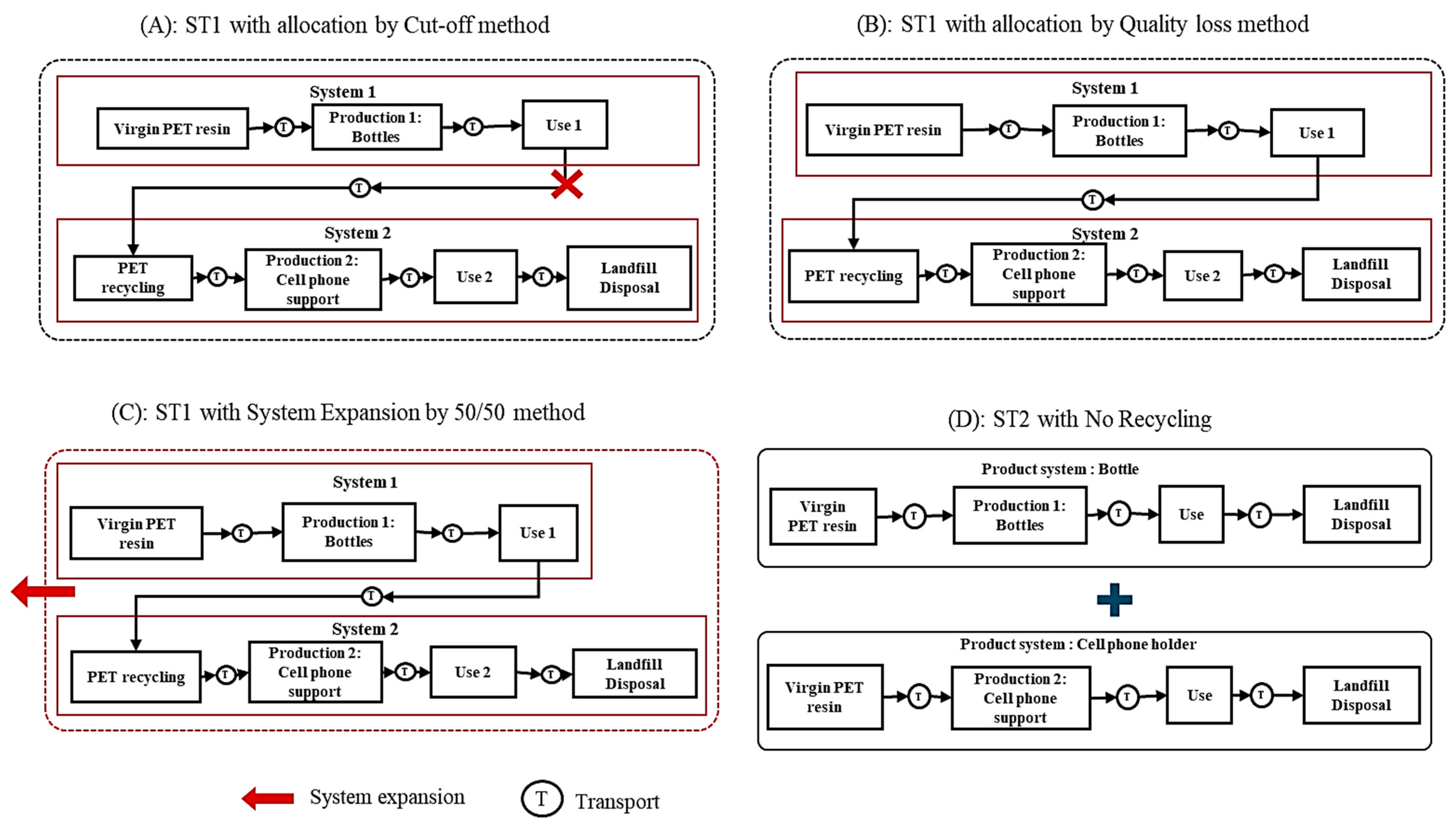
Because the multifunctional treatment method can significantly impact LCA results, alternatives and associated systems (Figure 2) are summarized below.
  • Cut-Off method: The environmental performance of the cell phone holder was evaluated based on the collection of PET bottles used in its manufacturing (Figure 2A);
  • Quality Loss method: The environmental performance of the cell phone holder was evaluated based on the production of the virgin PET resin used in the bottles (Figure 2B). According to this approach, environmental burdens occur during the common stages of systems ST1 and ST2 during the production of virgin PET resin, recycling, and final disposal. Intrinsic viscosity was chosen as the allocation criterion because it can simultaneously reflect the material’s melting point, crystallinity, and tensile strength. The (η) parameter is used to evaluate PET quality given its lower volatility and fewer uncertainties compared to economic criteria. The calculation of (η) is detailed in Section 3.1.2.
  • 50/50 method: This method is a System Expansion option for addressing multifunctional situations in Consequential LCA. It equally allocates all environmental burdens between systems ST1 and ST2 (Figure 2C).
The effects of each method were compared with one another and to a scheme in which the cell phone holder is produced without recycling using virgin PET resin. In this case, each product’s life cycle includes the manufacturing chain, product use, and final landfill disposal (Figure 2D). The environmental impacts of each scheme were compared with those of an OLR process. Mobile holder production using virgin PET resin was not modeled or verified through experimental tests; therefore, it was evaluated using only secondary data. In addition, we assumed that the mobile phone holder could be obtained through AM, fulfilling its intended function with the same effectiveness as other alternatives.

2.4. Analysis Dimensions: Circularity Performance—The MCI Index

As noted, the MCI was used to assess the circularity performance of the cell phone holder made from recycled PET. This index integrates three main product features: (i) the weight of the raw virgin material used in manufacturing, (ii) the weight of non-recoverable waste attributed to the product, which refers to the portion of material ultimately discarded in landfills and excluded from future cycles, and (iii) the product’s lifespan, a utilization factor based on how long and intensely the consumer good is used.
The MCI spans two extremes: the Linear Economic Model, which includes products made from virgin materials discarded in landfills, and the Circular Economic Model, which uses recycled materials and aims for 100% recycling or reuse. This conceptual framework helps analyze the shift between these models, with values ranging from 0.0 (Linear) to 1.0 (Circular).
Some assumptions of the MCI can limit its usefulness, as they do not accurately reflect real-world conditions. One key limitation is that this metric does not assess the quality of recycled products and assumes that the quality of recovered post-consumer material is equivalent to that of virgin material, with no losses during preparation for reuse or recycling. To address this limitation, this study incorporated results from technical analyses of intrinsic viscosity, thermal stability, and mechanical performance as supporting indicators to assess the quality of the recycled material.
However, combining the MCI with other environmental performance indicators, such as those from the LCA, enables strategic decision making for CE projects and helps guide efforts toward improved product and process performance across various environmental aspects. Examples of successful integration include a study on the closed-loop recycling of plastic bottles in the US PET market. The same complementary CEI and LCA analysis has been applied in other cases of plastic waste recycling. For example, ref. [74] investigated circular economy models within the European plastic packaging value chain to develop optimization models that maximize environmental benefits and circularity, while ref. [10] analyzed three-layer plastic packaging in two end-of-life scenarios. Another study used the MCI to evaluate the circularity of recycled PLA filaments for 3D printing [75] to produce protective masks for use during the COVID-19 pandemic, a higher-value application. Although the results showed a high circularity rate for the final product, the authors noted that the analysis needed improvement, particularly given that the MCI evaluated the quality of the parts only indirectly based on the literature, without performing direct tests.

3. Results

3.1. Technical Analyses

3.1.1. Thermal Analysis

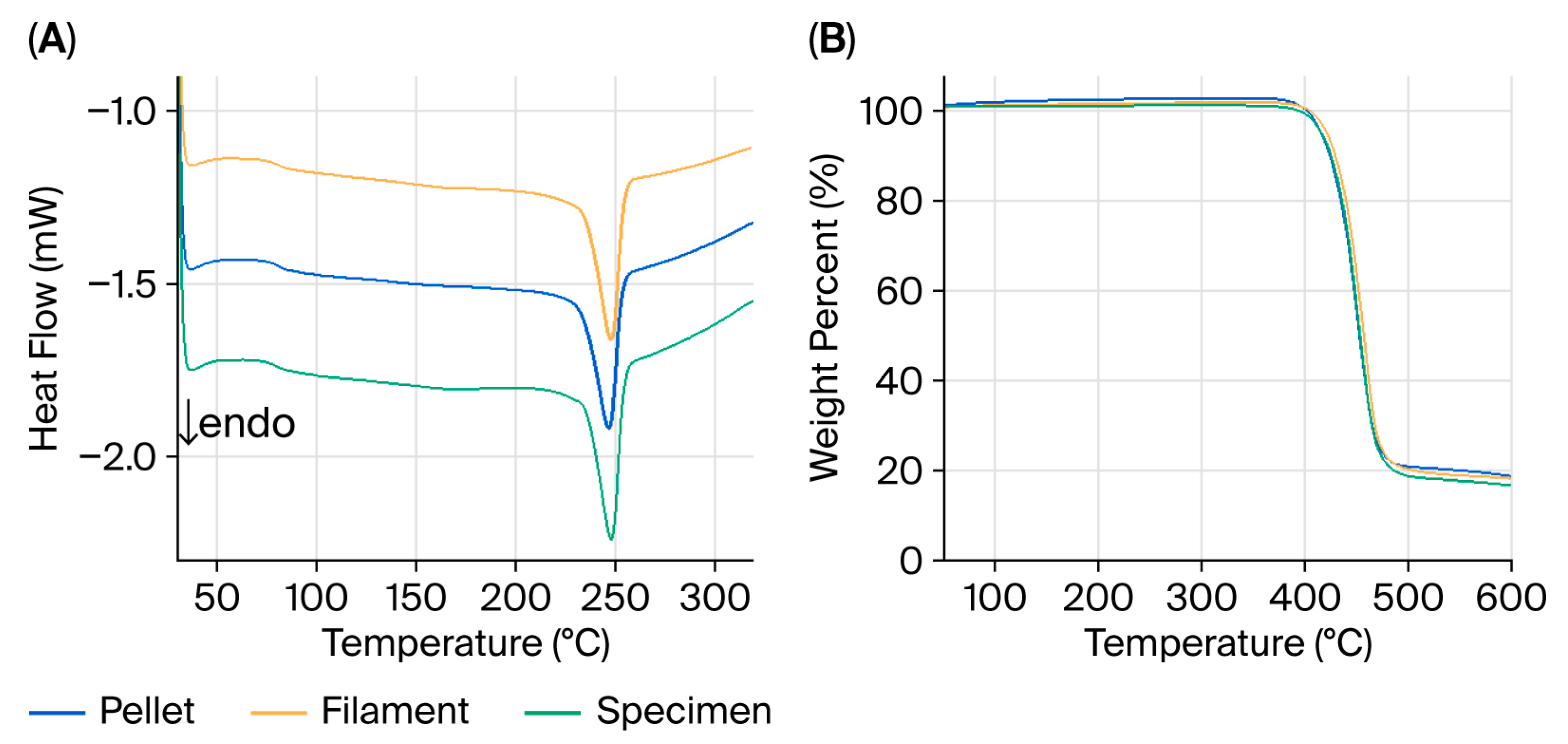
Figure 3 shows the sample characterization results from different processing stages using DSC and TGA, which illustrate the thermal behavior of the material in pellet, filament, and 3D-printed forms. The DSC analysis of the second round of heating (Figure 3A and Table 3) yielded very similar curves and parameters related to the glass transition temperature (Tg) for the three samples, ranging from 86 to 88 °C, as well as a melting temperature (Tm) between 246 and 248 °C and a material fusion enthalpy between 48 and 56 J/g. The crystallinity of the PET polymer in the three samples was assessed by analyzing the enthalpies. Although minor variations in temperature and crystallinity suggest a decrease in molar mass across processing stages, the material demonstrated good thermal stability.
Regarding the TGA (Figure 3B; Table 3), samples showed nearly overlapping curves and a single degradation event, indicating the presence of only one type of polymer and no significant volatile contaminants. Onset of degradation for the PET samples occurred between 391 and 395 °C (the onset temperature) under all three conditions, and degradation was completed between 480 and 495 °C.
The thermal evaluation focused on the onset of degradation and the stability of the melting temperature, rather than just temperature tolerance. This approach provides a more accurate indication of the polymer’s suitability for additive manufacturing (AM).
Slightly better thermal stability was seen in the filament and specimen samples. These samples had a residual mass of 18–22%, indicating the presence of additives or inorganic polymer fillers from previous production runs.
These values match those reported for recycled PET filaments [27]. Based on these results, the extrusion temperatures used for filament production (230–245 °C) and object printing (255–265 °C) did not cause significant thermal degradation of the polymer, as shown by the consistent thermal stability across all samples (Tonset).

3.1.2. Rheological Analysis

The results for intrinsic viscosity and molar mass are shown in Table 4. Viscosity dropped by 17% during the initial transformation from recycled PET pellet resin to filament for additive manufacturing and by 7.0% in the final processing stage when converting the filament into the final product. These decreases indicate material degradation caused by chemical exposure (moisture, oxygen, salts), mechanical stress, and thermal processing. The polymer experiences varying shear stresses at different temperatures, which break polymer chains, leading to lower molar masses and, consequently, reduced intrinsic viscosity.
According to the Berkowitz equation (Equation (2)), the average numerical molar mass (Mn) is derived from the intrinsic viscosity (η) [76]. The Berkowitz equation has been validated for 2000 < η (g/mol) < 200,000 based on measurements of intrinsic viscosity, consistent with the range used in this study [62].
Mn = 3.29 × 1041.54)
The decrease in intrinsic viscosity (η) and number-average molecular weight (Mn) did not affect material layer deposition during printing, and fluidity was confirmed to be suitable for producing the specimens and the cell phone holder. Additionally, secondary additive manufacturing may be more advantageous, supporting higher proportions of recycled materials than traditional plastic processes, such as injection-blow molding, which require high intrinsic viscosity (η > 0.80 dL/g) [77]. Values close to this reference were considered for performance and flowability evaluation.
The AM process seems less sensitive to material conditions, with lower shear stresses, enabling the use of lower viscosities. For example, neat rPET can reach an IV as low as 0.51 dL/g after multiple regranulation steps during filament manufacturing, and a reduction of 0.04 dL/g can occur during printing, also reported by [78]. Future tests related to specific applications may further validate these findings.
In this evaluation, satisfactory product quality was achieved only with recycled materials. Although no chemical additives were incorporated into the final product formulation, future studies could explore the use of green additives in a design-for-recycling approach, such as chain extenders or compatibilizers, to increase recyclability and evaluate different sources of recycled PET. These additives could potentially improve recycling rates not only for PET resins but also for other polymers. Therefore, additive manufacturing can support future recycling efforts by improving material separation and promoting circularity through recyclable design strategies, which is a key factor in achieving this goal.
The SSP stage of the PET recycling process greatly influenced the properties and uniformity of the post-consumer recycled material, producing higher-quality recycled pellets with an (ε) value greater than 0.80 dL/g, which positively impacted subsequent filament processing. Other authors have also highlighted the importance of SSP in bottle-to-bottle recycling processes, demonstrating its role in preserving the quality of recycled PET through multiple cycles. One study demonstrated that the final product quality was not compromised even after multiple recycling cycles, with eleven recycling cycles performed at a 75% recycled PET and 25% virgin PET ratio [78]. In this context, SSP may be necessary to produce a higher-quality product suitable for various applications through AM.

3.1.3. Mechanical Testing

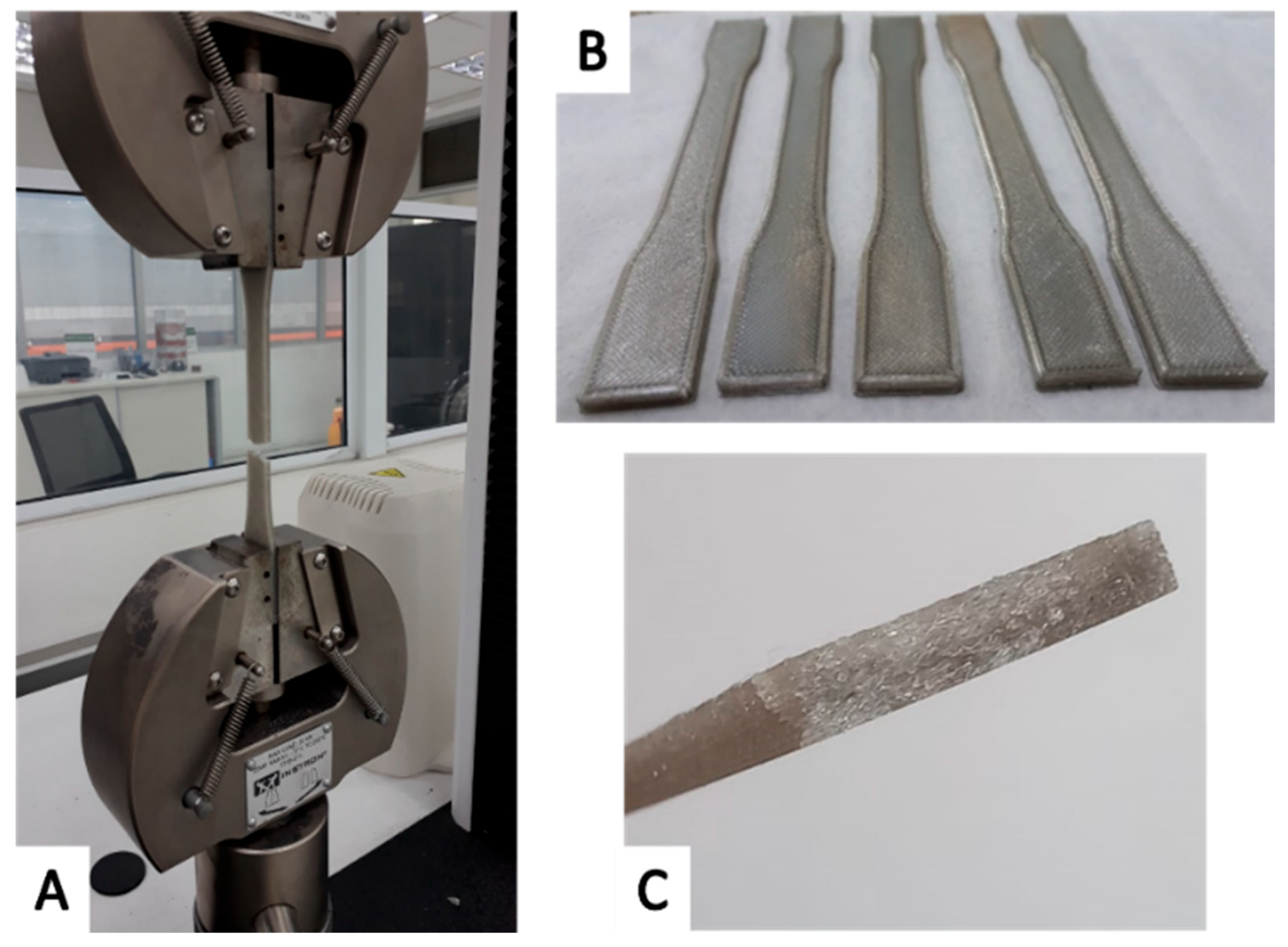
Mechanical properties were analyzed through tensile testing. Tensile strength, elastic modulus, and deformation until rupture of the printed specimens are shown in Table 5 and Figure 4A. Figure 4B displays the printed specimens, while Figure 4C shows the side and front views of the specimen after tensile testing, highlighting the layer-by-layer filling. The tensile strength and deformation until rupture values resemble those reported in the literature for the same type of manufacturing process. The most notable variation was in the elastic modulus, which, even within the margin of error, did not match observations by other authors [27].
The mechanical performance results align with literature reports for 3D-printed objects made from recycled polymers, including recycled PET, as well as injection-molded specimens (produced through conventional manufacturing) and those made with other materials, such as ABS, which is more frequently used in additive manufacturing [79,80,81]. All tests demonstrated tensile strength and elongation at break values comparable to those reported in the literature. Additionally, ref. [80] used ABS in the exact location under identical filament production and printing conditions, reducing discrepancies and uncertainties, as equipment and processing conditions could vary greatly and influence outcomes. Furthermore, the cell phone holder produced using the same printing parameters as the test specimens functioned properly without any issues.
Figure 4A shows the recycled PET filament created as the raw material for AM consumer goods production (Figure 4B). If this material/processing setup were to be further refined, it could expand applications beyond the proposed cell phone holder into different fields, opening new opportunities for the recycling market, especially in open cycles with higher added-value applications.
Although this study did not aim to compare conventional and AM technologies, better performance might be expected when producing products with rPET filaments, which is derived from recycled materials and commonly used in additive manufacturing, compared to traditional products. This is because the material is not evenly dispersed during 3D printing due to layer-by-layer deposition, which encourages the formation of interconnection voids. The superior mechanical properties of traditional manufacturing compared to additive manufacturing should be evaluated based on specific needs and conditions, as both have technical limitations, costs, and availability issues, along with different environmental impacts. These trade-offs require careful evaluation and consideration.

3.2. Environmental Analysis

The environmental performance results for the cell phone holder produced under the OLR arrangement (i.e., additive manufacturing) are shown in Table 6, allowing for comparison with similar results from the conventional system (ST2), which does not consider recycling. Regarding multifunctionality, the OLR cases were analyzed using Cut-Off (ST1A) and Quality Loss (ST1B) methods specifically designed for this purpose. As previously mentioned, these two approaches reflect different ways of distributing the environmental burdens generated by an OLR scheme. The Cut-Off method excludes impacts from the previous life cycle (ST1A), while the Quality Loss method (ST1B) incorporates quality as a criterion for partitioning. Additional details on this methodological setup are discussed in Section 2.3. Furthermore, the mathematical equation used in the Quality Loss approach is described in Table 8 (Equations (3) and (4)), both in a general form and as an applied example specific to the circumstances of this study.
Table 7 presents the LCA results using the consequential modeling approach, where the 50/50 method was employed as an alternative to System Expansion to address multifunctionality in the OLR scenario. Because the methodological assumptions differ between attributional and consequential modeling, the results are not directly comparable and are therefore presented separately, not only for clarity but also to guide the discussions that follow.
Single normalized performance indicators (NSIi) were also calculated for each situation. To this end, the system without recycling was selected as the reference for the calculated estimates. The results of the individualized impacts per category were divided by themselves, producing unit and dimensionless values (NEIj), where (j) represents each impact category. These indicators were then summed up to create a cumulative performance indicator (SIi), which resulted in the (NSIi) when divided by itself.
The OLR system’s logic was similar, although the contributions of each impact category obtained by applying the Cut-Off method were divided by their counterparts only for the cell phone holder (ST2). Conversely, the values calculated using the Quality Loss method were normalized relative to the total impacts of both systems (ST1 + ST2), as the Cut-Off approach does not account for burdens from the first life cycle, whereas the Quality Loss method does.
The overall environmental performance results were analyzed to assess the environmental impact of producing the same product using virgin resin. Although non-recycled materials may have slightly better mechanical properties, as documented in the literature and discussed earlier, recycled PET creates cell phone holders with adequate performance to serve their intended purpose. Additionally, this option offers significant environmental benefits compared to its counterpart made using conventional processes and virgin resin. Practically, it reduces raw material use and waste disposal while maintaining acceptable technical performance. Moreover, the recycled materials market has grown considerably over the past decade, especially for PET, leading to higher manufacturing efficiency and, as a result, lower production costs than when these practices first began. Therefore, the recycling route for manufacturing cell phone holders was compared with the non-recycling route, considering only operations carried out in ST2.
For the environmental evaluation using the Quality Loss method, an allocation factor (Qi) was required, represented by the intrinsic viscosity (η) (Section 3.1.2). The (η) values for the bottles were 0.78 < η (dL/g) < 0.85 [7,28]. Therefore, the average value within this range (η = 0.815 dL/g) was chosen to define the parameter. For the cell phone holder, the experimentally measured (η value was 0.622 dL/g (Table 4). Subsequently, the environmental burdens of the standard parts of both systems were multiplied by this factor, as shown in Table 8.
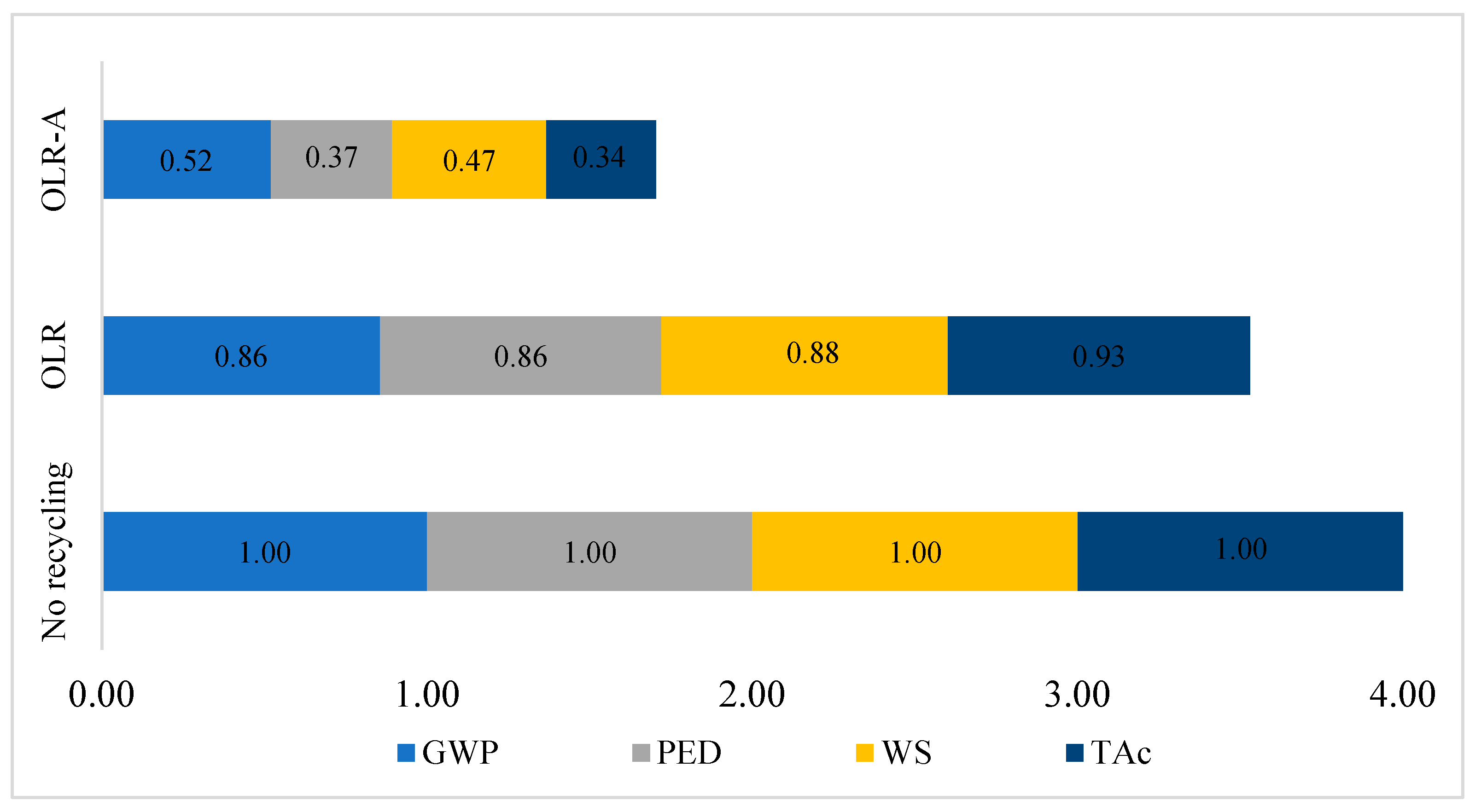
The GWP showed the greatest reduction compared to the baseline scenario, while WS and TAc had minimal impacts. A comparison using unique indicators suggests that the OLR route is superior to a route that ignores recycling in terms of Life Cycle Assessment (LCA), regardless of the treatment method for multifunctional situations.
The Cut-Off perspective is the most common approach to handling multifunctional situations resulting from OLR, mainly due to its simplicity and the lack of data from cycles before or after those analyzed. This method provides a focused view of the product, making it easier to identify areas for improvement and promote targeted actions, especially for company-designed studies. However, a more detailed approach may be necessary to identify environmental gaps beyond the life cycle, particularly concerning consumption and emissions across shared cycles, as a product’s function gradually changes through increasingly circular practices. This perspective is increasingly important with advances in plastic recycling technologies, which improve recyclability.
Conversely, environmental assessments based on the Quality Loss method can offer a more systemic view by linking consumption and emission burdens shared between two products. In this case, using an economic criterion to allocate environmental burdens would be inappropriate because it would not reflect the added value of the secondary product (the cell phone holder) after recycling, which is much higher than that of the primary product (bottles). As such, ref. [82] proposed a method to measure quality loss applicable to both closed-loop and OLR systems considering upcycling and downcycling, aiming to overcome limitations related to environmental load distribution. The adaptation proposed by [44], which utilizes a physical criterion, such as intrinsic viscosity, to correlate quality loss, proved suitable for this study, as it effectively connects quality loss across product cycles. Therefore, the environmental evaluation employed here can lead to a more accurate treatment of multifunctionality by using a key parameter in the PET resin market to ensure consistent production quality.
The 50/50 method suggests that maintaining a balance between the supply and demand of recycled materials is crucial for effective recycling. Thus, using recycled inputs and producing recyclable products is preferable when the environmental impacts of recycling are lower than the combined impacts of virgin material production and final waste treatment [42].
However, because this study focused on analyzing the OLR logic for only two cycles, some adjustments were made to distribute burdens between ST1 and ST2, ensuring an equal share of common burdens (such as virgin material production, waste treatment, and recycling). The typical burdens of each system, including the manufacturing processes for each product, remained assigned to their respective systems.
Although comparisons of the results of different methodological approaches are not recommended, values for various impact categories differ due to environmental modeling peculiarities, particularly in the case of CLCA. However, the conclusion remains consistent, indicating an improvement in environmental performance across methodological scenarios when considering recycling. Additionally, the single indicator showed a similar percentage of gain across the three analyses, with a 12% reduction for the recycling scenario compared to ST2 (no recycling). Therefore, methodological differences did not produce significant changes that could influence decision making around material choices in the production of consumer goods through AM.
The GWP significantly contributed to the steps directly involved in cell phone holder production, including drying, filament production, and 3D printing, in both OLR and virgin PET resin routes. This stage, common to all ST2 configurations, carries significant environmental burdens. Additionally, AM technology heavily relies on electricity (1.17 kWh/RF), thereby contributing more to the evaluated routes given the low mass of the product produced through an electricity-intensive process.
Given the functional unit-driven difference, the impacts related to the OLR systems’ PET recycling stage are not significant. However, the main contributors to impact are electricity use, mainly for sorting and recycling, and thermal energy, specifically natural gas used in recycling processes. Emissions from transportation, particularly during material sorting at the end of the product’s first life cycle, account for 3.7% of the total ST2 value. This is expected, as the trip between these locations can be up to 2000 km in the Brazilian context, as recycling centers are mainly located in the southeast and the south. Therefore, materials are transported long distances from the north and the northeast for recycling, which increases emissions from diesel combustion.
For ST1, regarding the PET bottle’s life cycle, the main contributor is the production of xylene and ethylene, both of which are precursors to virgin PET resin. Other significant sources include electricity and thermal energy used during bottle manufacturing. Additionally, a noteworthy byproduct of PET recycling is PET powder produced during milling. This byproduct can be used as a substitute for phthalic anhydride, a precursor in alkyd resin production, and as an ingredient in alkyd paint formulations.
Exploring the impacts of phthalic anhydride becomes essential when the 50/50 method addresses multifunctionality, as this compound offsets 3.45 g CO2 eq/RF. This mitigated approach affects natural gas and electricity and, notably, the demand for xylene, a fossil-derived input. While relatively small on a global scale, this feature is interesting when considering the CLCA approach, and System Expansion practices in turn impact peripheral systems, influencing their markets [83].
TAc’s impacts mainly stem from two pollutants, SO2 and NOx. The analysis in this study primarily focuses on xylene and ethylene production processes, as well as coal combustion for electricity generation, which is used in the production of virgin PET resin.
Regarding PED impacts, non-renewable fossil (NRF), renewable water (RWA), and renewable biomass (RB) subcategories were the main contributors. NRF’s impacts result from the production of xylene and ethylene for virgin PET resin, as well as the use of natural gas for thermal needs, which are essential for both the production of virgin resin and bottle manufacturing. The previously observed trend in the share of each system for each method remains consistent in this category. For ST2, RWA contributions were the highest across different techniques, primarily due to the influence of the Brazilian electricity grid on electricity consumption.
For ST2, TAc’s contributions stem from the significant influence of electricity on cellular holder manufacturing. The coal and diesel used in thermoelectric power plants (which account for 3.1% of the Brazilian grid) are major sources of these pollutants. Burning sugarcane biomass for electricity generation (8.7% of the Brazilian grid) also impacts emissions due to gaseous ammonia (NH3(g)), another important TAc pollutant. Transportation within the evaluated product system is also a major source of these precursors.
Regarding the CLCA analysis using the 50/50 method, palladium mining processes are multifunctional [84], stemming from the production of this metal. Extraction of 1.0 g of Pd results in 4.38 kg of Cu, 3.16 kg of Ni (95% w/w), 343 mg of Pt, and 27.4 mg of Rh in Russian mines, which are the world’s largest Pd producers [84]. This process significantly impacts the environment due to its high energy consumption, including 36 MWh per kg of Pd in electrical energy used by diesel generators and 169 GJ per kg of thermal energy from fossil fuel combustion.
Marginal processes for extracting these metals were identified, and their environmental impacts were assessed during the extraction process. As a result, this contribution reduced impacts across all categories, mainly affecting TAc’s impacts. Regarding PED, there should be no emphasis on multifunctional scenarios related to System Expansion in terms of environmental burden compensation.
The Water Scarcity category is expressed through water footprints, which measure the direct and indirect environmental impacts of water demand throughout a product’s life cycle. The trend remains consistent for this category among ALCA methods, with an even greater balance in the load shares between the two systems. The contribution profile for ST1 was linked to assets like xylene, ethylene, and other precursors of PET resin production, including PTA. The bottle manufacturing process also appears to be a significant source of water use, primarily due to the need for cooling equipment. The processes comprising ST2 mostly involve electricity consumption from sugarcane production irrigation, which is later used in bagasse transformation.
A negative aspect of accounting for effluent treatment charges was observed with the 50/50 method for process contributions, particularly concerning the overall burden count. This method is essential because it includes multiple inputs, with different marginal processes at various levels within the production chain of virgin PET resin, bottle manufacturing, recycling, and overall electricity generation contributing to effluent production and, consequently, the need for treatment by the relevant system. These issues were also addressed through System Expansion. According to studies guiding the development of the WS method [73], water treatment can help address Water Scarcity, which has been previously caused by the demand for water during essential processes. In other words, liters of water are considered saved due to treated water, enabling the recovery of water’s functionality and its availability for other necessary and water-dependent activities, and there is no need for additional water extraction. This practice provides environmental compensation. Studies like those carried out by [81] suggest that application scales have a significant effect on environmental impacts. For example, additive technology leads to lower environmental impacts than traditional manufacturing methods, such as injection molding, when producing batches of fewer than 14 parts. However, for batch sizes exceeding 50 parts, the injection molding process yields lower GWP and CED impacts.
As previously discussed, electricity is the leading direct source of contributions for GWP and PED, accounting for over 60% of each of their total impacts. Electricity also indirectly influences the results of WS and TAc through the background effects of the Brazilian power grid. Electricity therefore imposes significant environmental restrictions on the OLR configuration used to produce cell phone holders via AM. This finding led to a prospective influence analysis, which involved implementing a proposal to reduce its effects on the system. To achieve this, an alternative scenario replaced the use of the national power grid with photovoltaic electricity generation—a source that, at least in theory, has a minor impact on the categories under analysis—to meet the demand of the cell phone holder manufacturing unit. This condition was tested using the attributional and consequential approaches examined in this study. It is important to note that the other stages making up this OLR system continued to be powered by the Brazilian electricity grid of 2020–2021 [54,55].
The results were normalized for both the original and alternative scenarios. The virgin source route was once again used as the baseline for the composition of the single indicator.
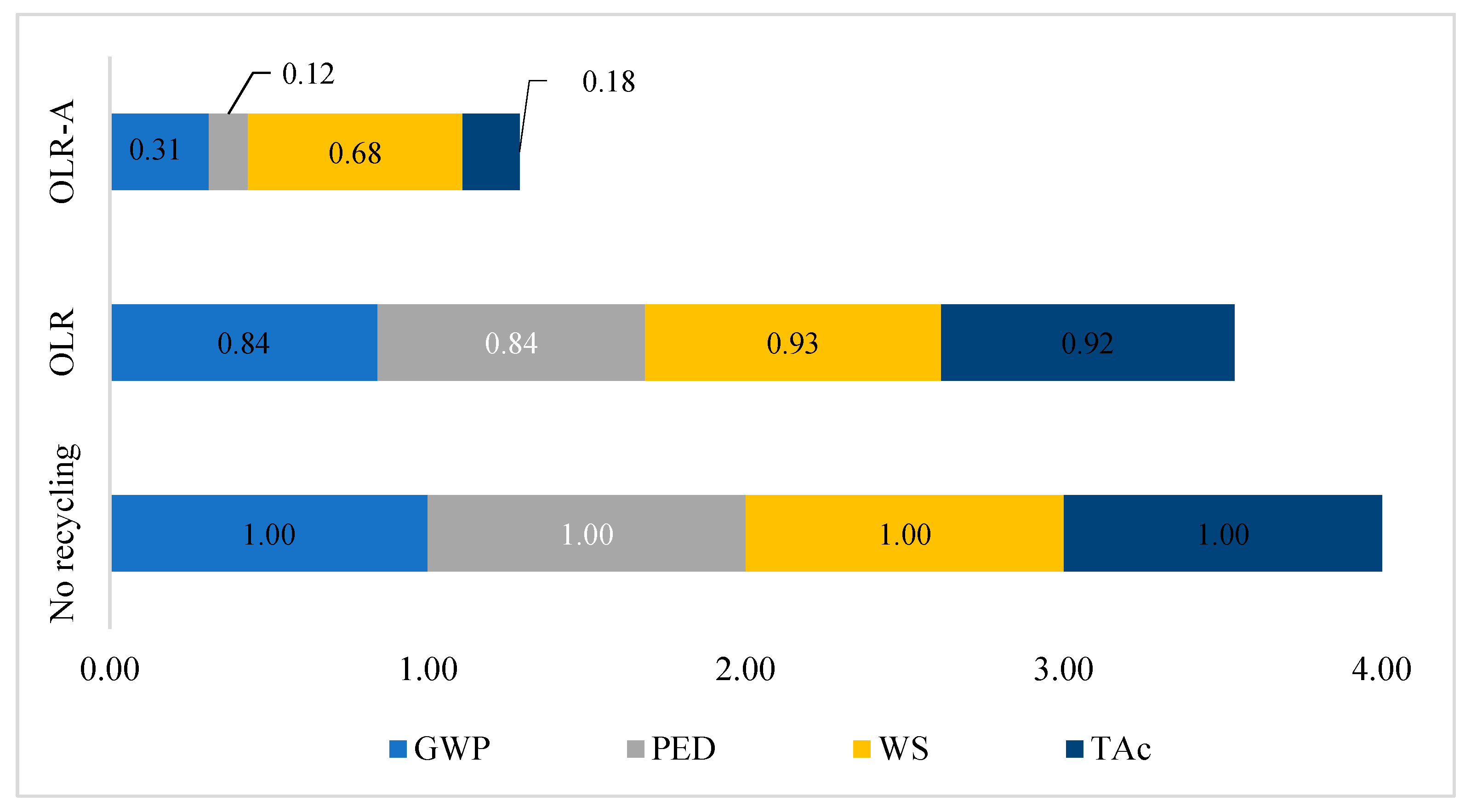
Impact reductions were observed across all evaluated categories following the ALCA approach, as depicted in Figure 5, via the Cut-Off method. Photovoltaic electricity contributes even more significantly, with an overall reduction of 57% compared to the baseline scenario without recycling and 48% relative to the case study. These findings indicate that adopting a low-impact source to address PED and TAc contributions could be advantageous.
Figure 6 illustrates that the same applies to the consequential approach using the 50/50 method, which also resulted in improvements across all evaluated categories. Another essential consideration that differs from the ALCA relates to the extent of impact reduction, which was less significant for GWP, PED, and TAc in this case. This underscores the methodological differences between the two approaches. Despite this, the proposal focusing on electricity use through renewable options, especially solar power, could achieve even greater OLR reductions in the environmental impact categories studied compared to production that uses no recycled material.

3.3. Circularity Analysis

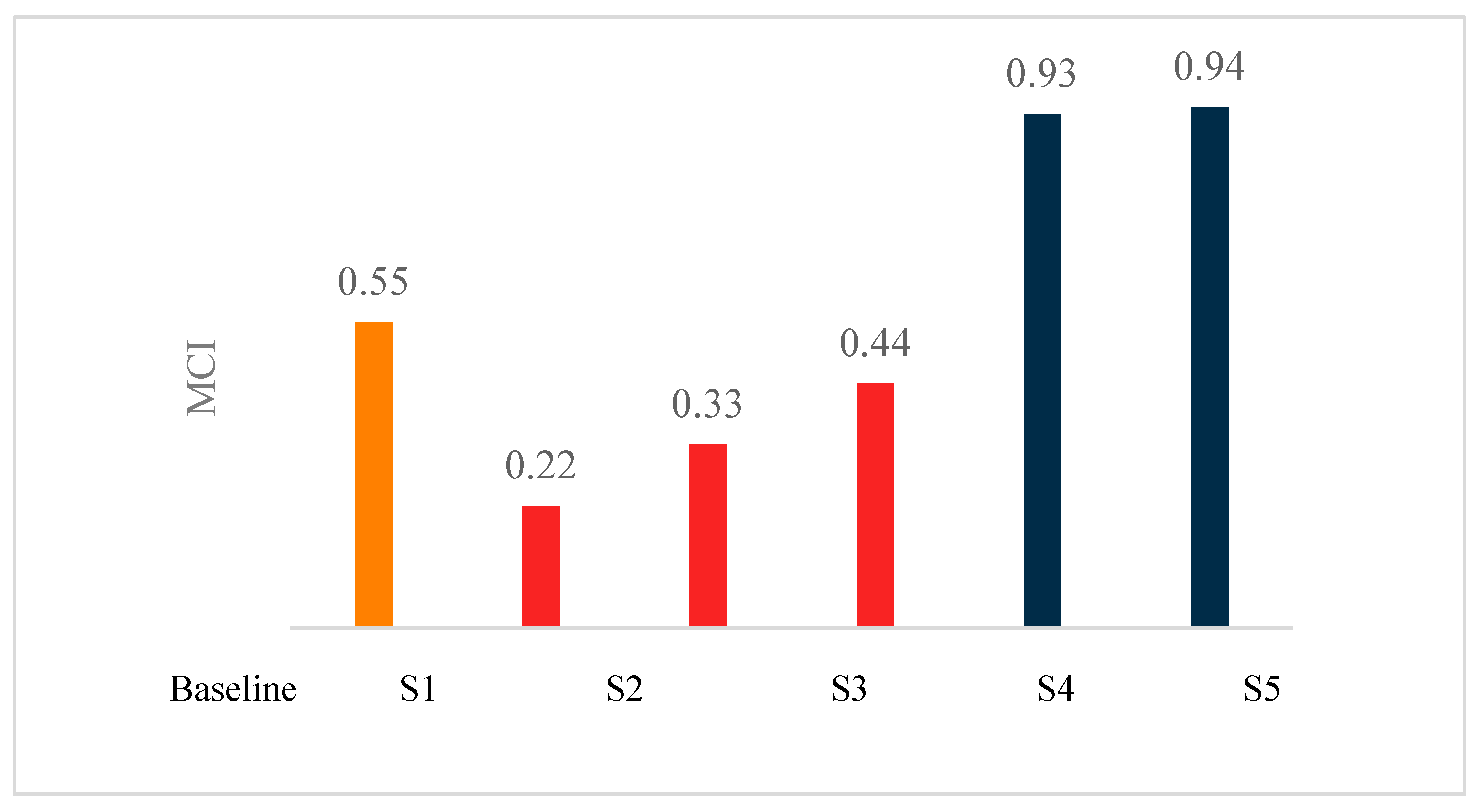
Figure 7 shows the circularity results based on the MCI. An MCI of 0.55 was obtained for the baseline, which is considered moderate in terms of circularity, mainly due to the percentage of the collected product intended for recycling, assuming it would be reused or recycled after its useful life. This baseline was used to ensure consistency in environmental LCA performance by applying the OLR logic only once, allowing for a comprehensive assessment of all stages in this cradle-to-grave process, with final landfill disposal being the last stage. The cell phone holder produced, as a mono-material, facilitates sorting and recycling, and additive manufacturing (AM) offers a clear advantage by enabling production using a single material. Moreover, the percentage of recycled material in the product had a significant impact on this result, with Fr = 100%, indicating that the holder was made entirely from recycled material.
The results also showed that the circularity potential, measured by the MCI, was directly related to the use of materials from repurposing (reuse, recycling, and revalorization) and their retention in the Technosphere as inputs in successive cycles without being released into the environment. The method used to estimate the MCI of materials helps assess circularity because of its simplicity and practical application. However, it also has limitations, such as the previously mentioned inability to evaluate the quality of the recycled product and, therefore, to account for factors affecting the material’s performance in its intended role, even if it functions as a production good in that process.
In this context, a more comprehensive evaluation should include factors beyond material use, such as their role in the supply chain and the impact of logistics on their recirculation. Although they play a peripheral role in production arrangements, it is essential to consider process utilities in the same analysis, especially in terms of their production (or generation) and distribution. Another component that cannot be ignored is the material and energy emissions from the stages involved in the arrangement being analyzed. Because they align with the core principles of the circular economy, these aspects are crucial in determining a material’s degree of circularity [9].
As recommended in the MCI methodology, examining supplementary details can improve the assessment by incorporating other relevant indicators [9]. Although the MCI mainly relies on mass flows, the material’s nature—whether recycled, virgin, or bio-base—can affect its score. Increasing circularity often requires higher material quality; products designed for durability, repair, reuse, or effective recycling typically last longer and have greater recovery potential, thereby raising the MCI. However, quality alone does not guarantee circularity, and even high-quality materials may have a low MCI if made for a single use or if they cannot be recovered at the end of life. Therefore, material quality and circularity are related but separate goals.
Although this study does not compare different product designs or improvements, the circularity analysis using the MCI effectively complements the previous environmental performance assessment of the cell phone holder made with OLR. Table 9 provides additional details showing how changes in virgin material content and recycling efficiency influence system performance. Three scenarios with different virgin contents of 75% (S1), 50% (S2), and 25% (S3) were analyzed, along with the effect of the cell phone holder being sent for a second recycling process, to evaluate how improved recycling efficiency could enhance overall circularity.
Primary data from a company in this sector indicate that PET recycling efficiency can reach up to 85%. Therefore, lower process efficiency rates of 70% and 80% were considered for hypothetical second recycling, as the cell phone holder had already been produced from recycled material. The chosen values were obtained from [47] and used to describe S4 and S5. As expected, the impact of using non-reusable, non-recyclable, or non-biodegradable sources gradually reduced the indicator value (Figure 7). Additionally, recycling end-of-life products again under these process efficiency rates could increase circularity by up to 70%.

4. Discussion

This study aimed to assess the environmental, circular, and technical aspects of OLR PET production and AM production of a secondary product. PET bottles and cell phone holders were chosen as the primary and secondary products.
From an environmental perspective, the Life Cycle Assessment (LCA) technique led to better results across four impact categories, with overall reductions of 12% for both attributional and consequential approaches compared to non-recycling setups. Despite differences between the methodological approaches, environmental performance improvements were evident when considering recycling in the production of consumer goods using additive manufacturing technology. Energy is a significant factor in the environmental impacts associated with cell phone holder manufacturing, particularly in the filament extrusion and additive manufacturing (AM) processes. To mitigate these energy-related impacts, an alternative scenario using renewable electricity from photovoltaic solar energy was examined. This renewable energy scenario led to a 57% reduction in the single-score environmental indicator compared to the scenario using virgin PET in the production process.
The analysis aims to support a comprehensive approach to an OLR system that uses both attributional and consequential modeling within an LCA framework to measure environmental impacts. By integrating these perspectives, this study offers insights to inform the development of more effective waste management policies and evolving practices in the circular economy. For example, initiatives like the Brazilian Federal Government’s Recycling Credit Certificate—Recicla+, created in April 2022 to encourage recycling and reverse logistics, link financial incentives to the collection and sale of recyclable materials, supporting secondary markets and promoting sustainable material use. Connecting LCA-based and MCI assessments with such policy tools can help optimize recycling flows, improve resource efficiency, and advance circular economy goals.
Regarding technical performance, the cell phone holder showed good thermal stability throughout the processing stages. The observed decrease in intrinsic viscosity between stages did not hinder material flow during 3D printing, thus maintaining product quality. Mechanical tests indicated satisfactory performance, with a deformation of 7.6% at rupture and a tensile strength of 37.7 MPa. Therefore, the recycled PET filament can be used in various additional applications, expanding the market for open-loop recycling.
Assessing technical aspects is crucial for circularity evaluations and for systematically considering the other elements that comprise the life cycle of these scenarios. New legislation and pressures surrounding sustainable materials, including recycled ones, will impose significant demands on manufacturers of single-use products, especially those lacking feasible alternatives for their use. Therefore, developing the reverse logistics sector, promoting plastic recycling to produce higher-quality recycled resins, and integrating these resins into consumer goods production should be supported through public and private incentives, as well as increased public awareness.
Circular performance, assessed through the MCI, resulted in median scores of 0.51 for this case study from a cradle-to-grave perspective. However, a potential 70% improvement is possible when considering recycling instead of landfill disposal for end-of-life cell phones, which would result in continuous recycling cycles, underscoring the proposed route’s potential circularity.

Limitations and Future Directions

Despite the valuable insights this study offers, some limitations were identified during its development. The first involves dependence on secondary data to describe the environmental performance of PET bottle production. While this method is commonly used in the literature, it can introduce uncertainties that may affect the precision and accuracy of findings related to environmental performance. Additionally, the study revealed potential improvements in circularity and environmental performance for the analyzed system. However, these results are closely tied to the products (PET bottles and cell phone holders) selected for the case study. The same approach needs to be applied to other products to broaden the opportunities provided by open-loop recycling practices, including increasing the number of connected uses.
In addition, the technical assessments carried out within the scope of this investigation focused on typical and generalist analyses of the materials’ thermal, mechanical, and viscosity properties. Seeking other correlations between materials whose uses have been exhausted will require additional physical–chemical and mechanical verifications to explore different effects.
Finally, although not a limitation by itself, it is highly recommended that future studies on the same topic explore social aspects related to the systems under analysis, especially for cases where OLR logics are implemented in Brazil or countries with a similar socioeconomic profile. In these regions, collection, sorting, and recycling activities can provide a source of income for a significant portion of the population. Considering the systemic approach of the study, this aspect should be examined through a Social Life Cycle Assessment (SLCA) to identify effective strategies for stakeholders involved in the reverse logistics and recycling of plastic waste. Comparing these social analyses with environmental, technical, and circular performance results using Multi-Criteria Decision Methods (MCDMs) can offer comprehensive support for decision making processes.

5. Conclusions

This article demonstrates a feasible, environmentally suitable, and circularly promising approach for producing a cell phone holder from 100% recycled PET using additive manufacturing (AM) within an open-loop recycling (OLR) framework, and it compares this approach to production from 100% virgin PET.
The case study highlights the potential for expanding PET recycling practices in Brazil by leveraging the complex yet compelling dynamics of OLR systems. LCA results indicated reductions of 10–15% in most impact categories under the attributional approach and 13% under the consequential approach, with electricity consumption identified as the main driver and photovoltaic scenarios offering mitigation potential in 57% of cases.
Methodological differences in environmental modeling were not significant for this case study. However, specific modeling choices may influence the results and, consequently, decision making processes, regulatory incentives, or consumer preferences, potentially affecting the perceived carbon footprint of products manufactured from secondary materials. Therefore, complementary methodologies and case-by-case assessments must be employed to ensure a comprehensive evaluation that reflects the specific characteristics of different material types and regional conditions.
Technically, the recycled PET showed good thermal stability and satisfactory mechanical performance (37.7 MPa tensile strength and 7.6% elongation at break) and maintained processability during 3D printing, supporting its potential for use in higher-value applications. Circularity assessment using the MCI revealed moderate performance, with potential improvements of up to 70% if the product were reincorporated into additional recycling cycles.
Overall, these findings demonstrate a viable, environmentally favorable, and technically robust route for PET recycling in Brazilian conditions. The results illustrate how integrating AM can enhance material upcycling and support circular economy strategies by fostering alternative secondary markets for recycled plastics.

Author Contributions

B.A.d.S.T.: conceptualization, data curation, formal analysis, investigation, methodology, software, roles/writing—original draft; M.C.B.: data curation, formal analysis, validation; I.B.B.J.: data curation, formal analysis, validation; S.D.M.: supervision, validation, writing—review and editing; L.K.: conceptualization, formal analysis, methodology, project administration, resources, supervision, validation, writing—review and editing. All authors have read and agreed to the published version of the manuscript.

Funding

The authors gratefully acknowledge the support provided by the National Council for Scientific and Technological Development (CNPq)—Financial Code 130548/2021-9 and the Coordination for the Improvement of Higher Education Personnel (CAPES).

Institutional Review Board Statement

Not applicable.

Informed Consent Statement

Not applicable.

Data Availability Statement

The authors declare that the data supporting the findings of this study are available within the article and the cited references.

Acknowledgments

The authors would like to thank Global PET Recycling S.A. and the Sinctronics—Green IT Innovation Center for supporting this research and providing space for data collection, characterization tests, and the generation of the object of analysis presented in this manuscript.

Conflicts of Interest

Author Maria Cristina Belli was employed by Sinctronics Innovation Center. Author Irineu Bueno Barbosa Júnior was employed by Global PET Recycling. The remaining authors declare that they have no known competing financial interests or personal relationships that could have appeared to influence the work reported in this paper.

Abbreviations

The following abbreviations are used in this manuscript:
CECircular economy
CLRClosed-loop recycling
OLROpen-loop recycling
LCALife Cycle Assessment
ALCAAttributional Life Cycle Assessment
CLCAConsequential Life Cycle Assessment
PETPolyethylene terephthalate
AMAdditive manufacturing
FFFFused Filament Fabrication
B2BBottle-to-bottle
B2FBottle-to-fiber
GWPGlobal Warming Potential
PEDPrimary Energy Demand
WSWater Scarcity
TAcTerrestrial Acidification
MCIMaterial Circularity Indicator
UNEAUnited Nations Environment Assembly
UNEPUnited Nations Environment Programme
DSCDifferential scanning calorimetry
TGAThermogravimetric analysis

References

  1. MacLeod, M.; Arp, H.P.H.; Tekman, M.B.; Jahnke, A. The global threat from plastic pollution. Science 2021, 373, 61–65. [Google Scholar] [CrossRef]
  2. Kumar, R.; Verma, A.; Shome, A.; Sinha, R.; Sinha, S.; Jha, P.K.; Kumar, R.; Kumar, P.; Das, S.S.; Sharma, P.; et al. Impacts of plastic pollution on ecosystem services, sustainable development goals, and the need to focus on circular economy and policy interventions. Sustainability 2021, 13, 9963. [Google Scholar] [CrossRef]
  3. Statista Research Department. Average Weight of Polyethylene Terephthalate Bottles as of 2014, by Type (in Grams). Statista. 2014. Available online: https://www.statista.com/statistics/974035/average-weight-polyethylene-terephthalate-bottles-by-type/ (accessed on 20 June 2025).
  4. Gileno, L.A.; Turci, L.F.R. Life cycle assessment for PET-bottle recycling in Brazil: B2B and B2F routes. Clean. Environ. Syst. 2021, 3, 100057. [Google Scholar] [CrossRef]
  5. Korley, L.T.J.; Epps, T.H., III; Helms, B.A.; Ryan, A.J. Toward polymer upcycling-Adding value and tackling circularity. Science 2021, 373, 66–69. [Google Scholar] [CrossRef] [PubMed]
  6. Martin, E.J.P.; Oliveira, D.S.B.L.; Oliveira, L.S.B.L.; Bezerra, B.S. Life cycle comparative assessment of PET bottle waste management options: A case study for Bauru, Brazil. Waste Manag. 2021, 119, 226–234. [Google Scholar] [CrossRef]
  7. Bassi, S.A.; Tonini, D.; Ekvall, T.; Astrup, T.F. A life cycle assessment framework for large-scale changes in material circularity. Waste Manag. 2021, 135, 360–371. [Google Scholar] [CrossRef]
  8. UNEP. United Nations Environment Assembly of the United Nations Environment Programme: End Plastic Pollution: Towards an International Legally Binding Instrument. United Nations Environment Programme. 2022. Available online: https://digitallibrary.un.org/record/3999257?v=pdf (accessed on 2 March 2025).
  9. Ellen MacArthur Foundation. Circularity Indicators: An Approach to Measuring Circularity-Methodology. Ellen MacArthur Foundation. 2015. Available online: https://content.ellenmacarthurfoundation.org/m/5df196c8314ff61f/original/Circularity-Indicators-Project-Overview.pdf (accessed on 11 February 2025).
  10. Vadoudi, K.; Deckers, P.; Demuytere, C.; Askanian, H.; Verney, V. Comparing a material circularity indicator to life cycle assessment: The case of a three-layer plastic packaging. Sustain. Prod. Consum. 2022, 33, 820–830. [Google Scholar] [CrossRef]
  11. Lonca, G.; Lesage, P.; Majeau-Bettez, G.; Bernard, S.; Margni, M. Assessing scaling effects of circular economy strategies: A case study on plastic bottle closed-loop recycling in the USA PET market. Resour. Conserv. Recycl. 2020, 162, 105013. [Google Scholar] [CrossRef]
  12. Gracida-Alvarez, U.R.; Xu, H.; Benavides, P.T.; Wang, M.; Hawkins, T.R. Circular economy sustainability analysis framework for plastics: Application for poly(ethylene terephthalate) (PET). ACS Sustain. Chem. Eng. 2023, 11, 514–524. [Google Scholar] [CrossRef]
  13. Mobarak, H.; Islam, A.; Hossain, N.; Al Mahmud, Z.; Rayhan, T.; Nishi, N.J.; Chowdhury, M.A. Recent advances of additive manufacturing in implant fabrication-A review. Appl. Surf. Sci. Adv. 2023, 18, 100462. [Google Scholar] [CrossRef]
  14. Statista Research Department. Projected Global Additive Manufacturing Market Growth Between 2020 and 2026. Statista. 2022. Available online: https://www.statista.com/statistics/284863/additive-manufacturing-projected-global-market-size/ (accessed on 23 October 2024).
  15. Colorado, H.A.; Velásquez, E.I.G.; Monteiro, S.N. Sustainability of additive manufacturing: The circular economy of materials and environmental perspectives. J. Mater. Res. Technol. 2020, 9, 8221–8234. [Google Scholar] [CrossRef]
  16. Cruz-Sanchez, F.A.C.; Boudaoud, H.; Camargo, M.; Pearce, J.M. Plastic recycling in additive manufacturing: A systematic literature review and opportunities for the circular economy. J. Clean. Prod. 2020, 264, 121602. [Google Scholar] [CrossRef]
  17. Garcia, F.L.; Moris, V.A.d.S.; Nunes, A.O.; Silva, D.A.L. Environmental performance of additive manufacturing process-An overview. Rapid Prototyp. J. 2018, 24, 1166–1177. [Google Scholar] [CrossRef]
  18. Islam, A.; Mobarak, H.; Rimon, I.H.; Al Mahmud, Z.; Ghosh, J.; Ahmed, M.S.; Hossain, N. Additive manufacturing in polymer research: Advances, synthesis, and applications. Polym. Test. 2024, 132, 108364. [Google Scholar] [CrossRef]
  19. Khosravani, M.R.; Reinicke, T. On the environmental impacts of 3D printing technology. Appl. Mater. Today 2020, 20, 100689. [Google Scholar] [CrossRef]
  20. Saade, M.R.M.; Yahia, A.; Amor, B. How has LCA been applied to 3D printing? A systematic literature review and recommendations for future studies. J. Clean. Prod. 2020, 244, 118803. [Google Scholar] [CrossRef]
  21. Mikula, K.; Skrzypczak, D.; Izydorczyk, G.; Warchoł, J.; Moustakas, K.; Chojnacka, K.; Witek-Krowiak, A. 3D printing filament as a second life of waste plastic-A review. Environ. Sci. Pollut. Res. 2020, 28, 12321–12333. [Google Scholar] [CrossRef] [PubMed]
  22. Mohammed, M.I.; Mohan, M.; Das, A.; Johnson, M.D.; Badwal, P.S.; McLean, D.; Gibson, I. A low carbon footprint approach to the reconstitution of plastics into 3D-printer filament for enhanced waste reduction. KnE Eng. 2017, 2, 234. [Google Scholar] [CrossRef]
  23. Bartolomei, S.S.; da Silva, F.L.F.; de Moura, E.A.B.; Wiebeck, H. Recycling expanded polystyrene with a biodegradable solvent to manufacture 3D printed prototypes and finishing materials for construction. J. Polym. Environ. 2022, 30, 3701–3717. [Google Scholar] [CrossRef]
  24. Chong, S.; Pan, G.T.; Khalid, M.; Yang, T.C.K.; Hung, S.T.; Huang, C.M. Physical characterization and pre-assessment of recycled high-density polyethylene as 3D printing material. J. Polym. Environ. 2017, 25, 136–145. [Google Scholar] [CrossRef]
  25. Gama, N.; Ferreira, A.; Barros-Timmons, A. 3D printed thermoplastic polyurethane filled with polyurethane foams residues. J. Polym. Environ. 2020, 28, 1560–1570. [Google Scholar] [CrossRef]
  26. Kreiger, M.A.; Mulder, M.L.; Glover, A.G.; Pearce, J.M. Life cycle analysis of distributed recycling of post-consumer high-density polyethylene for 3-D printing filament. J. Clean. Prod. 2014, 70, 90–96. [Google Scholar] [CrossRef]
  27. Zander, N.E.; Gillan, M.; Lambeth, R.H. Recycled polyethylene terephthalate as a new FFF feedstock material. Addit. Manuf. 2018, 21, 174–182. [Google Scholar] [CrossRef]
  28. De Sá Teles, B.A.; Cunha, I.L.C.; da Silva Neto, M.L.; Wiebeck, H.; Valera, T.S.; de Souza, S.S.; Schmitt, A.F.O.; Oliveira, V.; Kulay, L. Effect of virgin PP substitution with recycled plastic caps in the manufacture of a product for the telephony sector. Recycling 2023, 8, 51. [Google Scholar] [CrossRef]
  29. Ügdüler, S.; Van Geem, K.M.; Denolf, R.; Roosen, M.; Mys, N.; Ragaert, K.; De Meester, S. Towards closed-loop recycling of multilayer and colored PET plastic waste by alkaline hydrolysis. Green Chem. 2020, 22, 5376–5394. [Google Scholar] [CrossRef]
  30. ISO 14044:2006; Environmental Management-Life Cycle Assessment-Requirements and Guidelines. International Organization for Standardization: Geneva, Switzerland, 2006.
  31. Schrijvers, D.L.; Loubet, P.; Sonnemann, G. Developing a systematic framework for consistent allocation in LCA. Int. J. Life Cycle Assess. 2016, 21, 976–993. [Google Scholar] [CrossRef]
  32. Ligthart, T.N.; Ansems, T.M.M. Modeling of recycling in LCA. In Post-Consumer Waste Recycling and Optimal Production; InTech: Rijeka, Croatia, 2012. [Google Scholar]
  33. Geyer, R.; Kuczenski, B.; Zink, T.; Henderson, A. Common misconceptions about recycling. J. Ind. Ecol. 2015, 20, 1010–1017. [Google Scholar] [CrossRef]
  34. Kim, S.; Hwang, T.; Lee, K.M. Allocation for cascade recycling system. Int. J. Life Cycle Assess. 1997, 2, 217–222. [Google Scholar] [CrossRef]
  35. Ekvall, T.; Tillman, A.-M. Open-loop recycling: Criteria for allocation procedures. Int. J. Life Cycle Assess. 1997, 2, 155–162. [Google Scholar] [CrossRef]
  36. Ekvall, T.; Weidema, B.P. System boundaries and input data in consequential life cycle inventory analysis. Int. J. Life Cycle Assess. 2004, 9, 161–171. [Google Scholar] [CrossRef]
  37. Ekvall, T. A market-based approach to allocation at open-loop recycling. Resour. Conserv. Recycl. 2000, 29, 91–109. [Google Scholar] [CrossRef]
  38. Ekvall, T.; Björklund, A.; Sandin, G. Modeling Recycling in Life Cycle Assessment. Project Report 2020. Available online: https://www.researchgate.net/publication/344364006 (accessed on 5 February 2025).
  39. Klöpffer, W. Allocation rule for open-loop recycling in life cycle assessment—A review. Int. J. Life Cycle Assess. 1996, 1, 27–31. [Google Scholar] [CrossRef]
  40. Kousemaker, T.M.; Jonker, G.H.; Vakis, A. LCA practices of plastics and their recycling: A critical review. Appl. Sci. 2021, 11, 3305. [Google Scholar] [CrossRef]
  41. Vogdtländer, J.G.; Brezet, H.C.; Hendriks, C.E. Allocation in recycling systems. Int. J. Life Cycle Assess. 2001, 6, 344–355. [Google Scholar] [CrossRef]
  42. Nicholson, A.L.; Olivetti, E.A.; Gregory, J.R.; Field, F.R.; Kirchain, R.E. End-of-life LCA allocation methods: Open-loop recycling impacts on the robustness of material selection decisions. In Proceedings of the International Symposium on Sustainable Systems and Technology (ISSST 09), Tempe, AZ, USA, 18–20 May 2009. [Google Scholar]
  43. Chairat, S.; Gheewala, S.H. Life cycle assessment and circularity of polyethylene terephthalate bottles via closed and open loop recycling. Environ. Res. 2023, 236, 116788. [Google Scholar] [CrossRef]
  44. Baumann, H.; Tillman, A.-M. The Hitchhiker’s Guide to LCA: An Orientation in Life Cycle Assessment Methodology and Application; Studentlitteratur: Lund, Sweden, 2004. [Google Scholar]
  45. Bataineh, K.M. Life-cycle assessment of recycling post-consumer high-density polyethylene and polyethylene terephthalate. Adv. Civ. Eng. 2020, 2020, 8905431. [Google Scholar] [CrossRef]
  46. Williams, T.G.J.L.; Heidrich, O.; Sallis, P.J. A case study of the open-loop recycling of mixed plastic waste for use in a sports-field drainage system. Resour. Conserv. Recycl. 2010, 55, 118–228. [Google Scholar] [CrossRef]
  47. Shen, L.; Worrell, E.; Patel, M.K. Open-loop recycling: A LCA case study of PET bottle-to-fiber recycling. Resour. Conserv. Recycl. 2010, 55, 34–52. [Google Scholar] [CrossRef]
  48. Fröhlich, T. An Eco-Profile and Environmental Product Declaration of the European PET Manufacturers: Polyethylene Terephthalate (PET) (Bottle Grade). Plastics Europe Report. 2017. Available online: http://www.inference.org.uk/sustainable/LCA/elcd/external_docs/petb_31116f00-fabd-11da-974d-0800200c9a66.pdf (accessed on 17 March 2025).
  49. Romão, W.; Spinacé, M.A.S.; de Paoli, M.-A. Poli (tereftalato de etileno), PET: Uma revisão sobre os processos de síntese, mecanismos de degradação e sua reciclagem. Polímeros 2009, 19, 121–132. [Google Scholar] [CrossRef]
  50. Hischier, R. Life Cycle Inventories of Packaging and Graphical Papers; Ecoinvent Report No. 11; Swiss Centre for Life Cycle Inventories: Dübendorf, Switzerland, 2007. [Google Scholar]
  51. Lopes, S.G.D.F.; dos Santos, A.T.S. Structure of the reverse chain: “Ways” of PET packing. Produção 2006, 16, 429–441. [Google Scholar]
  52. Paes, M.X.; de Medeiros, G.A.; Mancini, S.D.; Bortoleto, A.P.; de Oliveira, J.A.P.; Kulay, L. Municipal solid waste management: Integrated analysis of environmental and economic indicators based on life cycle assessment. J. Clean. Prod. 2020, 254, 119848. [Google Scholar] [CrossRef]
  53. Energy Research Company (EPE). Brazilian Energy Balance Year 2020; EPE: Brasília, Brazil, 2021. Available online: https://www.epe.gov.br/sites-pt/publicacoes-dados-abertos/publicacoes/PublicacoesArquivos/publicacao-601/topico-596/BEN2021.pdf (accessed on 8 August 2025).
  54. Energy Research Company (EPE). Brazilian Energy Balance Year 2021; EPE: Brasília, Brazil, 2022. Available online: https://www.epe.gov.br/sites-pt/publicacoes-dados-abertos/publicacoes/PublicacoesArquivos/publicacao-675/topico-638/BEN2022.pdf (accessed on 8 August 2025).
  55. Ministry of Mines and Energy (MME); Department of Natural Gas. Monthly Bulletin Monitoring the Natural Gas Industry December 2022; DNG: Brasília, Brazil, 2022. Available online: https://www.gov.br/mme/pt-br/assuntos/secretarias/petroleo-gas-natural-e-biocombustiveis/publicacoes-1/boletim-mensal-de-acompanhamento-da-industria-de-gas-natural/2022-2/12-boletim-de-acompanhamento-da-industria-de-gas-natural-dezembro-de-2022.pdf/view (accessed on 20 October 2025).
  56. ASTM D638-14; Standard Test Method for Tensile Properties of Plastics. ASTM International: West Conshohocken, PA, USA, 2014.
  57. ABRELPE—Associação Brasileira de Empresas de Limpeza Pública e Resíduos Especiais. Panorama dos Resíduos Sólidos no Brasil; ABRELPE: São Paulo, Brazil, 2021; Available online: https://abrelpe.org.br/panorama-2021/ (accessed on 14 March 2025).
  58. Doka, G. Life Cycle Inventories of Waste Treatment Services; Ecoinvent Report No. 13; Swiss Centre for Life Cycle Inventories: Dübendorf, Switzerland, 2009. [Google Scholar]
  59. Paes, M.X.; Mancini, S.D.; de Medeiros, G.A.; Bortoleto, A.P.; Kulay, L. Life cycle assessment as a diagnostic and planning tool for waste management: A case study in a Brazilian municipality. J. Solid. Waste Technol. Manag. 2018, 44, 259–269. [Google Scholar] [CrossRef]
  60. Brandrup, J.; Immergut, E.H. Polymer Handbook, 3rd ed.; Wiley: New York, NY, USA, 1980. [Google Scholar]
  61. ASTM D4603-03; Standard Test Method for Determining Inherent Viscosity of Poly(Ethylene Terephthalate) (PET) by Glass Capillary Viscometer. ASTM International: West Conshohocken, PA, USA, 2003.
  62. Mancini, S.D.; Matos, I.G.; Almeida, R.F. Determinação da variação da viscosidade intrínseca do poli(tereftalato de etileno) de embalagens. Polímeros 2004, 14, 69–73. [Google Scholar] [CrossRef]
  63. IPCC. 2021: Climate Change 2021: The Physical Science Basis; Contribution of Working Group I to the Sixth Assessment Report of the Intergovernmental Panel on Climate Change; Masson-Delmotte, V.P., Zhai, A., Pirani, S.L., Connors, C., Péan, S., Berger, N., Caud, Y., Chen, L., Goldfarb, M.I., Gomis, M., et al., Eds.; Cambridge University Press: Cambridge, UK; New York, NY, USA, 2021; p. 2391. [Google Scholar] [CrossRef]
  64. Frischknecht, R.; Wyss, F.; Büsser Knöpfel, S.; Lützkendorf, T.; Balouktsi, M. Cumulative energy demand in LCA: The energy harvested approach. Int. J. Life Cycle Assess. 2015, 20, 957–969. [Google Scholar] [CrossRef]
  65. Faist, E.M.; Heck, T.; Jungbluth, N.; Tuchschmid, M. Erdgas. In Sachbilanzen von Energiesystemen; Dones, R., Ed.; Ecoinvent Report No. 6-V; Paul Scherrer Institut: Villigen, Switzerland, 2007. [Google Scholar]
  66. Jungbluth, N.; Chudacoff, M.; Dauriat, A.; Dinkel, F.; Doka, G.; Faist, E.M.; Gnausounou, E.; Kljun, N.; Schleiss, K.; Spielmann, M.; et al. Life Cycle Inventories of Bioenergy; Ecoinvent Report No. 17; Swiss Centre for Life Cycle Inventories: Dübendorf, Switzerland, 2007. [Google Scholar]
  67. Sakamoto, H.; Maciel, M.; Cardoso, F.H.; Kulay, L. Energy and environmental contributions for future natural gas supply planning in Brazil. Energy Technol. 2019, 8, 1900976. [Google Scholar] [CrossRef]
  68. Althaus, H.J.; Chudacoff, M.; Hischier, R.; Jungbluth, N.; Osses, M.; Primas, A. Life Cycle Inventories of Chemicals; Ecoinvent Report No. 8, v2.0; EMPA Dübendorf, Swiss Centre for Life Cycle Inventories: Dübendorf, Switzerland, 2009. [Google Scholar]
  69. Spielmann, M.; Dones, R.; Bauer, C. Life Cycle Inventories of Transport Services; Ecoinvent Report No. 14; Swiss Centre for Life Cycle Inventories: Dübendorf, Switzerland, 2007. [Google Scholar]
  70. Haupt, M.; Käji, T.; Hellweg, S. Life cycle inventories of waste management processes. Data Brief. 2018, 19, 1441–1457. [Google Scholar] [CrossRef] [PubMed]
  71. Huijbregts, M.A.J. Life-Cycle Impact Assessment of Acidifying and Eutrophying Air Pollutants: Calculation of Equivalency Factors with RAINS-LCA; University of Amsterdam: Amsterdam, The Netherlands, 1999. [Google Scholar]
  72. Azevedo, L.B.; van Zelm, R.; Hendriks, A.J.; Bobbink, R.; Huijbregts, M.A.J. Global assessment of the effects of terrestrial acidification on plant species richness. Environ. Pollut. 2013, 174, 10–15. [Google Scholar] [CrossRef]
  73. Boulay, A.M.; Bouchard, C.; Bulle, C.; Deschênes, L.; Margni, M. Categorizing water for LCA inventory. Int. J. Life Cycle Assess. 2011, 16, 639–651. [Google Scholar] [CrossRef]
  74. Karayilan, S.; Yilmaz, Ö.; Uysal, Ç.; Naneci, S. Prospective evaluation of circular economy practices within plastic packaging value chain through optimization of life cycle impacts and circularity. Resour. Conserv. Recycl. 2021, 173, 105691. [Google Scholar] [CrossRef]
  75. Gil Muñoz, V.; Muneta, L.M.; Carrasco-Gallego, R.; Marquez, J.d.J.; Hidalgo-Carvajal, D. Evaluation of the circularity of recycled PLA filaments for 3D printers. Appl. Sci. 2020, 10, 8967. [Google Scholar] [CrossRef]
  76. Berkowitz, S. Viscosity-molecular weight relationships for poly (ethylene terephthalate) in hexafluoroisopropanol-pentafluorophenol using SEC-LALLS. J. Appl. Polym. Sci. 1984, 29, 4353–4361. [Google Scholar] [CrossRef]
  77. Chacon, F.A.; Brouwer, M.T.; van Velzen, E.U.T. Effect of recycled content and rPET quality on the properties of PET bottles. Part I: Optical and mechanical properties. Packag. Technol. Sci. 2020, 33, 347–357. [Google Scholar] [CrossRef]
  78. Toth, L.; Slezák, E.; Bocz, K.; Ronkay, F. Progress in 3D Printing of Recycled PET. Addit. Manuf. 2024, 51, 102567. [Google Scholar] [CrossRef]
  79. Pinter, E.; Welle, F.; Mayrhofer, E.; Pechhacker, A.; Motloch, L.; Lahme, V.; Grant, A.; Tacker, M. Circularity study on PET bottle-to-bottle recycling. Sustainability 2021, 13, 7370. [Google Scholar] [CrossRef]
  80. Zander, N.E. Recycled polymer feedstocks for material extrusion additive manufacturing. In Polymer-Based Additive Manufacturing: Recent Developments; Seppala, J.E., Kotula, A.P., Sfronyder, C.R., Eds.; ACS Symposium Series, Vol. 1315; American Chemical Society: Washington, DC, USA, 2019; pp. 37–51. [Google Scholar] [CrossRef]
  81. Garcia, F.L.; Nunes, A.O.; Martins, M.G.; Belli, M.C.; Saavedra, Y.M.B.; Silva, D.A.L.; Moris, V.A.S. Comparative LCA of conventional manufacturing vs. additive manufacturing: The case of injection molding for recycled polymers. Int. J. Sustain. Eng. 2021, 14, 1604–1622. [Google Scholar] [CrossRef]
  82. BASF 3D PRINTING SOLUTIONS BV. Ultrafuse rPET Technical Data Sheet v3.2; BASF: Ludwigshafen, Germany, 2019; Available online: https://info.sculpteo.com/hubfs/Material%20documentation/Ultrafuse%20rPET/Ultrafuse_rPET_Technical_Data_Sheet_EN_v3.2.pdf (accessed on 4 August 2024).
  83. Tanguay, X.; Essoua, G.G.; Amor, B. Attributional and consequential life cycle assessments in a circular economy with the integration of a quality indicator: A case study of cascading wood products. J. Ind. Ecol. 2021, 25, 1462–1473. [Google Scholar] [CrossRef]
  84. Carvalho, K.M.; Alves, R.M.B.; Kulay, L. Environmental performance of alternative green polyol synthesis routes: A proposal for improvement. Processes 2021, 9, 1122. [Google Scholar] [CrossRef]
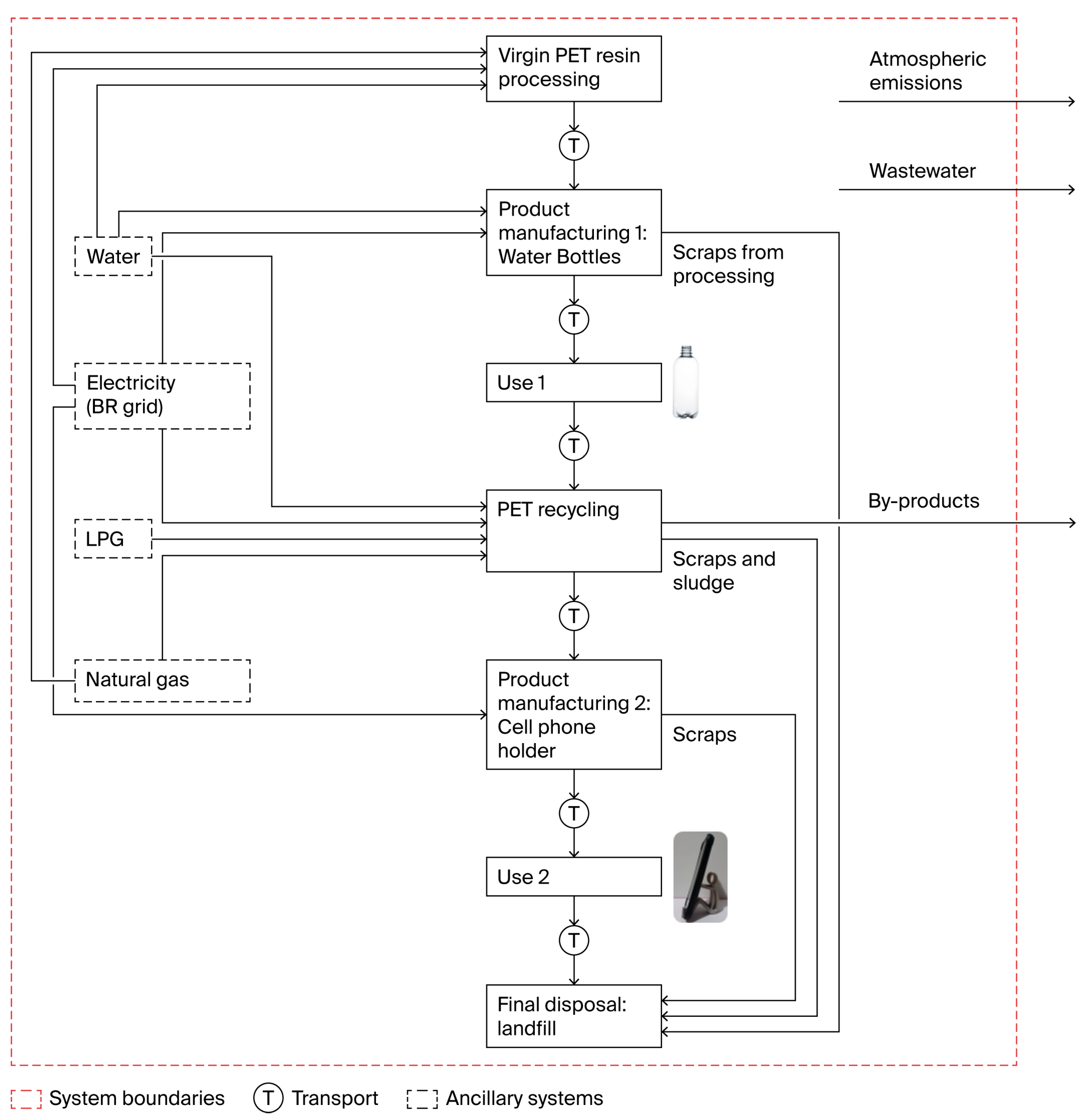
Figure 1. Production system for manufacturing a cell phone holder from waste PET bottles.
Sustainability 17 10068 g001
Figure 2. System ST1: Open-loop recycling (OLR) scenario, illustrating an OLR setup for producing consumer goods. Product 1: bottles. Product 2: cell phone holder. Three methods considered to handle multifunctionality situations: (A) Cut-Off; (B) Quality Loss; and (C) 50/50. (D) System ST2: No recycling scenario, depicting product systems produced without recycling. Product 1: bottles. Product 2: cell phone holder.
Sustainability 17 10068 g002
Figure 3. Results of technical performance tests on recycled material after different processes (pelletization, filament formation, and specimen conformation). (A) Representative differential scanning calorimetry curves and (B) thermogravimetric analysis curves.
Sustainability 17 10068 g003
Figure 4. Images of tensile tests performed on specimens produced via 3D printing. (A) Tensile testing, (B) 3D-printed tensile specimen, and (C) a lateral view of the breaks suffered by the printed parts during the tensile test.
Sustainability 17 10068 g004
Figure 5. Environmental performance of the proposed improvement scenarios concerning the ALCA OLR Cut-Off perspective.
Sustainability 17 10068 g005
Figure 6. Environmental performance of the proposed improvement scenarios concerning the CLCA OLR 50/50 perspective.
Sustainability 17 10068 g006
Figure 7. MCI results for scenarios baseline and S1–S5.
Sustainability 17 10068 g007
Table 1. Parameters of the cell phone holder printing process.
ParametersValues
Layer height0.30 mm
Infill patternRectilinear: 45° and (−) 45°
Infill percentage30%
Bed temperature70 °C
Printing environment28 °C
Extruder temperature255–265 °C
Print speed80 mm/s
Filament diameter1.74 ± 0.50 mm
Table 3. Thermal properties of the analyzed material in pellet, filament, and specimen form during different processing steps.
Sample T G A D S C
T o n s e t Residual   Mass   % T m a x T g T m H f (J/g) X c %
Pellet39121.248186.024655.439.6
Filament39820.149387.124848.234.5
Specimen39518.849187.724850.135.8
Table 4. Intrinsic viscosities ( η ) and molar masses ( M n ) of the material during different processing stages.
Sample η   ( d L / g ) M n   ( g / m o l )
Pellet0.803 ± 0.00223 467
Filament0.667 ± 0.002 17 633
Specimen0.622 ± 0.003 15 835
Table 5. Mechanical properties of the printed recycled PET.
AnalysisTensile Strength
at Yield
Elasticity ModulusElongation
at Yield
(MPa)(MPa)(%)
Samples37.7 ± 5.60771 ± 29.47.64 ± 1.50
Table 6. Environmental performance of cell phone holder production without recycling and with open-loop recycling using ALCA methods.
Environmental
Category
Unit
(/FU)
No RecyclingOLR
Cell Phone Holder
Production (ST2)
Total
(ST1 + ST2)
Cut-Off
(ST1A)
Quality Loss
(ST1B)
GWPg CO2 eq420640354552
PEDMJ16.323.613.720.5
WSL5.489.445.108.27
TAcg SO2 eq18.539.718.831.8
N E I G W P 1.001.000.840.86
N E I P E D 1.001.000.840.87
N E I W S 1.001.000.930.88
N E I T A c 1.001.001.020.80
S I i 4.004.003.633.41
N S I i 1.001.000.910.85
Table 7. Environmental performance of cell phone holder production without recycling and with open-loop recycling using CLCA methods.
Environmental
Category
Unit
(/FU)
No RecyclingOLR
Total
(ST1 + ST2)
50/50
(ST1C)
GWPg CO2 eq656562
PEDMJ24.020.7
WSL11.29.92
Tacg SO2 eq2.812.61
N E I G W P 1.000.86
N E I P E D 1.000.86
N E I W S 1.000.88
N E I T A c 1.000.93
S I i 4.003.53
N S I i 1.000.88
Table 8. Allocation modeling factor via the Quality Loss method.
Consumed GoodEquation η Values
Bottles Q 1 = η 1 η 1 + η 2 (3) 0.815 0.815 + 0.622
Cell phone holder Q 2 = η 2 η 1 + η 2 (4) 0.622 0.815 + 0.622
Table 9. Exploratory scenarios of relative variations in virgin material amounts and recycling efficiency associated with the production of a cell phone holder.
ScenariosRelative Amount of
Virgin Material
Recycling Efficiency
(End-of-Life Alternative)
(%)(%)
Baseline0.00.0
S1750.0
S2500.0
S3250.0
S40.075
S50.080
Disclaimer/Publisher’s Note: The statements, opinions and data contained in all publications are solely those of the individual author(s) and contributor(s) and not of MDPI and/or the editor(s). MDPI and/or the editor(s) disclaim responsibility for any injury to people or property resulting from any ideas, methods, instructions or products referred to in the content.