You are currently viewing a new version of our website. To view the old version click .
Sustainability
  • Article
  • Open Access

29 October 2025

Acceptance of Automated Cars and Shared Mobility Services: Towards a Holistic Analysis for Sustainable Mobility Systems


,
and
1
Institute of Automotive Engineering, Graz University of Technology, Inffeldgasse 11/II, 8010 Graz, Austria
2
Armengaud Innovate GmbH, Paracelsusweg 1, 8144 Tobelbad, Austria
*
Author to whom correspondence should be addressed.

Abstract

Understanding public acceptance is pivotal for integrating automated cars (AC) and shared mobility services (SMS) into mobility systems. This paper presents a holistic framework and demonstrates its application based on a dataset (N = 419; EU-focused sub-sample N = 289) originating from an online survey, capturing metrics like socio-demographics, mobility habits, and perceptions. Acceptance was measured as willingness to use (WTU), and links to willingness to pay (WTP) were examined. A two-stage approach was conducted: non-parametric screening (Chi-square, Spearman’s rank correlation) and proportional-odds ordinal logistic models. Results show that 25.6% would likely use AC and 21.1% would use SMS. WTP for SMS is positively associated with WTU (p < 0.001), whereas WTP and WTU are not statistically related for AC. Perceived usefulness and ease of use are positively related to WTU for both AC and SMS (all p < 0.01). The acceptance of SMS correlates positively with the acceptance of AC (p < 0.001), and the preference for combining SMS with public transport (PT) is associated with higher acceptance. The ordinal logistic models confirm these patterns after adjustment, with perceptions/experience and (for SMS) pricing and PT-related variables remaining significant, while several socio-demographic effects attenuate. The cross-country results indicate modest acceptance in Austria and the UK, aligning with recent European evidence.

1. Introduction

The car industry is facing tremendous changes forced by carbon neutrality-focused policies, advanced technologies in propulsion systems, exhaust treatment, communication methods, autonomous driving systems, and innovative business models [1,2]. Cooperative, Connected, and Automated Mobility (CCAM) is believed to become highly relevant and a reshaping factor of current and future mobility systems [3,4,5], enabling automated vehicles (AVs) and shared mobility systems (SMSs).
AVs are considered as one of the most disruptive concepts in the mobility market [6] and are expected to ease traffic congestion, as well as to reduce emissions by applying smarter mobility management, i.e., platooning or searching for the least congested route [7,8]. There are six levels of automation in road traffic defined by SAE International, ranging from no automation, over driver assistance, partial automation, conditional automation, and high automation, to full automation [9]. Automated cars (ACs) achieving levels 1 to 3 are available on the market, offering greater safety, higher comfort, and simplified driving. Meanwhile, several companies, e.g., Waymo, GM Cruise, and Zoox, but also automotive manufacturers, e.g., Daimler, BMW, and Tesla, are working on AC at levels 4 and 5. In some cases, fully automated cars are already in operation in general traffic, e.g., Waymo in San Francisco and Phoenix. In this context, governments worldwide are preparing regulations for a future of mobility, including AV [10,11].
On the other hand, SMSs have a long history. Shared mobility is the short-term access to a vehicle depending on the user’s needs and convenience, without requiring ownership of the vehicle [12]. SMSs have been available in Europe for over two decades in the form of various business models, such as business-to-business, business-to-consumer, and peer-to-peer. They are offered using different supply methods, i.e., two-way (pickup and return at a fixed location), one-way (pickup and return at different fixed locations), and free-floating (pickup and return at various locations in a similar area) [13]. Shared mobility can lead to a reduction in private cars, and as a result, less parking space is required. Moreover, it has the potential to reduce the total driven mileage, thereby lowering greenhouse gas emissions of the mobility sector [7,14,15]. In this paper, four sharing models are considered, namely car rental (CR), car sharing (CS), carpooling (CP), and ride hailing (RH). CR is the service of temporarily hiring a vehicle from a rental company for a fee and on a short-term basis, typically ranging from a few hours to a couple of weeks. CS is characterized by cars owned by a company and users paying a fee for the car usage. In CP, different passengers share the same ride when they have the same starting point and destination. The cars are owned by individuals; often the drivers and the passengers pay a fee to the drivers, as well as a possible fee to the digital platform that offers the service. In RH, cars are owned by individuals or a company, and the passengers do not drive the cars themselves but pay a fee to be transported from A to B. Hereafter, we use “automated vehicles (AV)” as the broad term and “automated cars (AC)” for passenger cars; “shared mobility services (SMS)” consistently denotes CR, CS, CP, and RH as defined.
As a future with an integral part of AC and SMS in the mobility systems is clearly on the horizon, it has become vital to understand how people perceive these innovative mobility solutions, their level of acceptance, as well as which factors influence their willingness to use (WTU). There have been a large number of studies carried out in this domain, as will be detailed in the following section. However, they usually focus on one of the two concepts [16,17,18,19,20,21], thereby missing out potential interlinks in people’s perception of them [22]. In addition, while some research work did consider both AC and SMS under the same umbrella, they mostly focused on finding out factors influencing users’ WTU AC and SMS as a whole sample [7,23], yet they often lack a comprehensive approach to understand the acceptance level in general. Therefore, this paper proposes a framework for a holistic analysis of the general acceptance regarding AC and SMS, and showcases its application by using survey-collected data.
Another point is that studies exploring to what extent European people are willing to use AC and SMS are scarce [24]. Yet with the European New Green Deal and the goal of becoming the first carbon-neutral continent in the world [25], it is crucial to obtain a viewpoint of European residents on this topic. As a country’s specific context, such as low/high income status [26], gross domestic product (GDP) per capita [24], and its accident rate [17], is apparently an indicator of the general acceptance level of its citizens, new data and analyses for Europe as a whole, as well as data from certain member countries, are called for [27]. Thus, the aim of this paper is twofold. First, to propose a holistic framework for evaluating the user acceptance of AC and SMS. And second, to provide pilot evidence from a European online survey. Due to time and resource constraints, the sample size is limited, and therefore the results are preliminary, and yet they can serve as a stepping stone for further research in this domain.
This study contributes to sustainable mobility transitions by linking user acceptance to pricing and integration with public transport (PT), two levers that shape the mode shift and system efficiency. By jointly analyzing AC and SMS within the same sample and mapping WTU to WTP, behavioral and economic conditions are identified under which shared, automated, and PT solutions can lower vehicle-kilometers traveled, emissions, and resource use, while maintaining accessibility.
The following Section 2 reviews related work and outlines research gaps, while Section 3 presents the utilized framework, data, and the applied methodology. Section 4 reports results and contains the discussion, including cross-country aspects. Section 5 concludes with implications for sustainability, limitations, and directions for future research.

2. Literature Review

A large number of studies on the acceptance of AVs attempt to identify factors influencing people’s perception of the technology. For instance, Nastjuk et al. [16] utilized a mixed-method approach, with a qualitative research design and a model based on the Technology Acceptance Model (TAM) and an online survey (N = 316) to explore the elements that contribute to end-user acceptance of autonomous driving. Pigeon et al. [28] conducted a systematic review of studies published between 1999 and 2019 on the topic of acceptance, acceptability, and usage of non-rail AV in PT. They found out influencing factors at the micro-level, being age, gender, education, income, employment, place of residence or workplace (socio-demographic parameters), travel purpose and weather, attitude towards PT, travel habits, mobility difficulties (travel behavior parameters), trust in AV, technology interest, control, and ecological values (personality parameters). Wintersberger et al. [18] used an online survey (N = 192) and statistical tests to understand if the Austrian market is ready for adopting AV. The study shows that while Austrian consumers have a good understanding of autonomous driving and AV, they express concerns regarding reliability, cybersecurity, and CS models in the future.
On a global scale, Nordhoff et al. [24] conducted a survey (N = 7755) covering 116 countries in order to understand the acceptance level of AV, as well as how countries differ in their people’s opinions. They found out that the general public would find taking a ride in an AV quite enjoyable. However, participants still express their favor over the ability to retain some degree of control in an AV. A recent review by Alqahtani [29] confirms that trust, perceived safety, cybersecurity, and interface design remain first-order predictors of acceptance, with media and regulatory context shaping cross-regional differences. With regard to Europe, Hudson et al. [17] used data from Eurobarometer in the last two months of 2014 on about 1000 citizens in each EU country to analyze their opinions on AV. They concluded that younger individuals, males, city inhabitants, and those with higher education are more in favor of AV. In a rare attempt to understand expectations from different subgroups of transport passengers towards AV, Niesel & Haustein [27] divided the users (N = 3040) into three segments. Their profiling results in enthusiasts being male and younger citizens in urban areas; skeptics are of older age groups and usually live in areas with lower population density; and the indifferent drivers are those without a car or who do not like driving. Orfanou et al. [30] have presented a framework for modeling and impact assessment of AV. They argued that survey-collected data combined with data gained via test vehicles has the potential to develop an accepted AV behavioral model, which can be used as a simulation tool for impact assessment. New cross-country evidence by Torrao et al. [31] shows the gender gap in AV acceptance is heterogeneous across Europe and is larger in countries with higher GDP and Gender Equality Index, suggesting context-dependent equality mechanisms.
WTU and willingness to pay (WTP) may have a strong connection. For instance, Liu et al. [32] found that WTP for AV is influenced by familiarity, age, education, and income, with trust and perceived benefit being positive, while perceived risk and dread are opposite (N = 1355). Meanwhile, Bansal & Kockelman [33] used WTP as one of their indicators to predict Americans’ adoption levels of connected and automated vehicles in 30 years. Their study (N = 2167) shows an increase in WTP from the public at large, a significant reduction in technology costs, and that supportive policies are critical to achieve a homogeneous technology mix in the USA’s light-duty vehicle fleet by 2045. Since it is considered that AVs and SMSs can play a key role for people with disabilities in satisfying their mobility needs [34,35], Miller et al. [36] made an effort to investigate how individuals with different mobility and communication needs perceive the introduction of AVs in PT. They found out that these groups (N = 300) have positive opinions on AVs in PT, yet are concerned about several safety-related issues. European segmentation indicates high but uneven WTP for level 3 automation, with conservative and some younger segments displaying lower WTP, despite their interest [37]. Furthermore, a meta-synthesis also shows that AVs can reduce the value of time relative to conventional cars, albeit with wide heterogeneity by study design and user profile [38]. In addition, survey evidence from four European living labs shows users are willing to pay for physical integration (PT within walking distance, placemaking features), but not for digital integration, implying a public/operational funding need for platform services [39].
Within the theme of acceptance regarding SMS, there is a vast array of research on attitude and perception towards CS, with many trying to figure out the factors motivating or preventing people from using these services. For example, Svennevik et al. [19] conducted interviews (N = 58) and workshops to reveal that advanced digital technologies and regulations are the key factors leading to changes in business models and social norms, resulting in acceptance of CS. It is also recommended to combine electric vehicles (EVs) and CS in policies, as it can make them more accessible to people [40] or influence people’s choices [41,42]. While CS is often considered more suitable in urban areas, Isaksson & Pongolini [13] installed a CS trial in a low-income, fairly low-density, suburban area and interviewed the participants (N = 11). Their results reveal three interrelated processes, namely making CS understandable and useful, integrating CS in daily usage, and communication about how to share a car properly, together with other concerns such as the environmental advantages of sharing and the social benefits to enhance daily life. Similarly, Mitra [43] explored how CS impacts lower-income households (N = 42,431) in California, USA. The author concluded that CS usage actually enhances mobility for both lower- and higher-income families, yet the effect on the former is more substantial, particularly when combined with PT. Coengrachts et al. [44] conducted an analysis across 311 European cities and found that shared-mobility provision is highly fragmented and sensitive to regulatory strictness, economic potential, and operator mix; scooters dominate many markets, while public schemes persist for bikes and cars.
Using another approach, Hu et al. [45] focused on CS usage frequency and its main influencing factors. They found out that at the moment, CS users (N = 14,623) consist mostly of younger people of 25–39 years old and mainly men, yet the market potential for female users is larger. Jain et al. [21] conducted in-depth interviews with focus groups (N = 5) and station-based CS members, former members, and non-members (N = 18) to identify motivators and barriers to CS adoption. They found out that CS adoption involves a multi-stage decision-making process and not just a simple yes/no question. In addition, psycho-social determinants differ for peer-to-peer and fleet-based CS. In a rare study using segmentation to understand how free-floating car sharing (FFCS) affects car ownership over a period of 2.5 years, Haustein [46] found that car ownership changes occur more among car sharers (N = 776) than non-sharers (N = 720). Furthermore, Julagasigorn et al. [47] conducted a systematic literature review to identify psychological factors and theories associated with people’s motivation to use CP. Their study revealed that the Theory of Planned Behavior, the Norm-Activation Model, Consumer Perceived Value, Social Capital, and TAM suit CP research the most. They also recognized eighteen factors, classified into four groups: demographic (age, income, number of people in a household, marital status, education, number of cars in a household), psychological (saving money, reducing congestion, reliability, saving time, environment/sustainability, comfort, convenience, socializing, trust), policy intervention (parking availability, parking cost, cost subsidy, guaranteed ride home, high occupancy vehicle lanes), and situational (fixed/regular work schedule, commute distance, time commuting, population density, fuel costs).
Another research approach is to consider different aspects of automated driving and shared mobility together. Focusing on the potential adoption of AV by CS clients, Curtale et al. [22] found that electric car sharing (ECS) users (N = 2154) would highly accept autonomous driving features. Wu et al. [48] applied a mixture of the trust-in-automation three-factor model, the Unified Theory of Acceptance and Use of Technology model, and the Trust Theory. The study (N = 451) shows that while the autonomy level may potentially increase public acceptance, both directly and indirectly, anthropomorphic characteristics can only make an impact via trust. Tian et al. [23] modeled choices of using AV or shared cars according to the Random Utility Theory. Their results (N = 542) show that people who are more likely to purchase an AV are individuals less than 50 years old who have a salary higher than 90,000 CNY/year, especially those living with their partners and who do not own a car. Regarding CS, male participants like it more than females, and so do young people and households with lower income. Another example is Thurner et al. [7], who provided insights into the Russian market by studying how the people (N = 1671) would adopt EVs, CS, and AVs. Their findings show that age and gender are predictors of the willingness to try EVs and AVs, while CS is positively opinionated by general urban citizens, regardless of their age, income, gender, or education. Zhou et al. [49] examined the effect of using CS and shared AVs on the mode choices of 1500 households in Australia. They concluded that the experience of CS users seems to influence household mode choice significantly, in particular, increasing the likelihood of choosing more diversified means such as two-wheeler sharing and taxi, while decreasing the use of private vehicles. They also highlight that higher-income people would perceive autonomous driving positively, yet female, non-drivers, and seniors generally consider the technology negatively or with caution.
In another study on acceptance of FFCS, Zhua et al. [20] proposed a value adoption model based on self-efficacy (N = 318). Similarly, Zhu et al. [50] investigated motivation factors of adopting ridesharing (RS) among people (N = 314) and found that self-efficacy plays the key role and directly affects the value perceptions and indirectly impacts behavioral intentions. Wang et al. [51] explored factors affecting WTU RS, based on data collected from non-users (N = 378). The results show that while the perceived value influences WTU RS positively, perceived risk has a negative effect.
Based on the literature review, several criteria are recognized as having potential impacts on the acceptance of AC and SMS. To be specific, SMSs are reported to be favored by people of younger age [22,52,53], having higher education [54], and from small households, i.e., living alone [55] or without children [52,56]. However, living location comes with mixed results, as they are found living in rural and less populated areas [57] or urban cities [22,58,59,60,61]. The gender aspect is also contradictory, as Efthymiou et al. [52] and Tian et al. [23] found males prefer CS, yet Kim et al. [62] concluded that women have higher WTU CS than men. Similarly, income also has different findings. Correia & Viegas [63] and Efthymiou et al. [52] found that CS appeals to lower-income people, while Prieto et al. [55] and Martin & Shaheen [59] reported that the middle to upper class are CS supporters. Additionally, people who hold a job or come from a car-owning household have less interest in CS [23]. Travel purpose can be another factor [58], as commuting or business travel plays an important role in promoting CS [64].
On the other hand, individuals who perceive AV positively are mainly male [65,66,67], younger [33,66], have awareness and experience with automation [66], have high driving mileage [24], travel with several transport modes [33], are technology-oriented [24], and live with partners [23]. The WTP for AV is higher with higher income [66]. It is interesting to note that, even though AVs are considered to provide transportation solutions to disadvantaged people, such as non-drivers, seniors, and individuals with disabilities [66,68], it is reported that mobility-impaired individuals have lower WTU than average people [69]. It is also concluded that whether a car is electric has a positive effect on the acceptance of both AV [23] and CS [22]. Details of the reviewed studies can be seen in Table 1 in the last part of this section.
Table 1. Summarized main information from the reviewed studies.
Summarizing, prior scientific work consistently highlights first-order drivers of acceptance, i.e., trust, perceived safety, and interface clarity, while reporting mixed socio-demographic effects [18,28,29]. These contradictions are considered as products of (1) methodological heterogeneity across stated-preference/WTP versus intention surveys and qualitative versus quantitative research designs [21,28,32,33], (2) contextual moderators (urbanity/market structure, regulation, operator mix, and country-level factors) [17,31,44,58,59], and (3) a gap between WTU and WTP, where positive attitudes do not necessarily translate into paying a premium price [32,33,37]. Recent European evidence shows that gender effects are heterogeneous rather than universal, varying with macro indicators (e.g., GDP per capita, Gender Equality Index) [23,31,52]. Likewise, income effects are non-linear and often confounded by ownership and location [52,55,63]. Addressing these research gaps, our study jointly analyzes AC and SMS within the same sample, maps WTU to WTP, and incorporates PT integration and pricing to explain divergent findings and identify policy levers (safety communication, interface design, pricing, and physical integration with PT) [38,39].

3. Methodology

In this paper, acceptance is considered to be similar to acceptability and usage, even though they are distinguished in [28]. The acceptance level is measured via WTU, which can be a synonym for behavioral intention to use [22,66], as well as “would like to take a ride in” [70], or willingness to try [7]. We examine not only willingness to use automated cars (WTU_AC) and willingness to use shared mobility services (WTU_SMS), but also how people would consider the combination of SMSs and PT (WTU_CombiPT) versus using their private vehicle. Since CS has a great potential to pair with PT as a first/last mile solution, and it is found that the demand for SMSs is strong near PT locations [66], yet there are very few studies examining the acceptance of the combined solution [43]. Another parameter, which is worth measuring, is the WTP, in which ACs are expected to be more expensive than a normal car, while SMSs are considered the opposite. This paper explores five hypotheses, as presented in Table 2.
Table 2. The paper’s five hypotheses.
This paper’s contributions are twofold: firstly, proposing a holistic acceptance framework jointly analyzing AC and SMS, including an acceptance-by-category metric enabling like-for-like comparisons; and secondly, an EU pilot applying a two-stage (bivariate and ordinal-logit) strategy that links WTU to pricing and other socio-economic aspects.

3.1. Holistic Framework

We argue that in order to comprehensively understand the acceptance of AC and SMS and its influencing factors, it is important to first explore them together with the same audience, for WTU AC and WTU SMS have potential connections, as indicated by Thurner et al. [7]. Secondly, to include a segmentation analysis for investigating a wide spectrum of (potential) users. In addition to the application of statistical methods to figure out the influencing factors of the WTU. And lastly, cross-country aspects should be explored in case several countries are involved. Figure 1 illustrates this holistic framework.
Figure 1. A holistic framework for acceptance analysis.
In the first step, acceptance-related constructs and/or criteria are identified and classified based on one or a few theory models, a literature review, or qualitative research. Subsequently, the hypotheses are developed and are to be tested in research work. From there, a qualitative and/or quantitative research design is conducted, followed by the step of data collection. For this study, the data have been gathered through an online survey.
For the data analysis step, a descriptive approach has been performed to process the information of the sample, as well as to investigate the general acceptance level [26,32,65,67,70]. Moreover, a segmentation analysis, on the other hand, is a way of “zooming in” and leads to insights from certain groups of people with similar opinions [27,46]. Going beyond the frequency consideration, an influencing factor analysis is meant to identify which parameters have a noticeable effect on the WTU by examining the data statistically [7,16,17,18,22,23,32,48]. The influencing factors are recognized when they are statistically significantly associated with the WTU in either direction. The cross-country analysis is another part of the investigation, but it is optional as it depends on the scope of the study [17,24,26].
The choice of methods to be applied in research depends entirely on the research’s scope and its research questions to be answered. The current paper excludes the segmentation analysis, as it is not relevant to examining our hypotheses.

3.2. Survey Design and Acceptance by Category

The survey is designed in Google Forms, targeting English-speaking current and potential users of AC and SMS. It is composed of three parts: background information, perception of AC, and perception of SMS. The first part aims at collecting various socio-demographic information, as well as mobility-related habits and usage. Respondents are asked to select their country of residence from a list of 27 European member states, as well as 4 EFTA countries and the UK.
In the next sections, respondents are asked to rank their knowledge of ACs, their opinion of their usefulness, ease of use, motivators and barriers, usage purposes, preferred business model, possible non-driving activities to engage in, and their WTP and WTU. It is worth mentioning that ACs are defined as fully automated vehicles (SAE level 5) in this survey, as stated clearly at the beginning of this section in the survey.
One important aspect of the survey is that we utilized closed questions with multiple choices—in most cases, respondents can choose one option, yet multiple options are possible in questions such as “what are your travel modes”, “which travel purpose would you use AC/SMS for”, or “which SMS have you already used”. Furthermore, ranking is utilized for understanding the magnitude of importance, with a 5-point Likert scale ranging from 1 (most important) to 5 (least important). The WTU is measured similarly for both AC and SMS, where respondents can rate among 1 (Not at all), 2 (Maybe), 3 (I will consider it), 4 (I will use it), and 5 (I will definitely use it). A rating of 4 or 5 is accounted for “being willing to use”, as reported in Lang et al. [70]. A new method for the comparative assessment of category-based acceptance is proposed, in which the acceptance of one category (e.g., male, city resident) is measured by the percentage of those who are willing to use the technology or service in that category; see the equation below. In this way, comparisons can be made straightforward between different categories, which represents an enhancement in contrast to the state-of-the-art.
W T U _ X i = F r e q 4 _ X i + F r e q 5 _ X i 1 5 F r e q j _ X i 100 %
where W T U _ X i represents the acceptance or WTU of the technology/service X by category i. In this case, X is either AC or SMS.   F r e q j is the frequency of rating j regarding W T U _ X i (j = 1–5).
On the other hand, WTP for AC starts from “same as a normal car” and goes up 10% for each continuous option, while WTP for SMS starts from the same point, but reduces 10% for each option, respectively. The survey was first tested in a limited trial round, where 15 participants, mixed among students and researchers, were asked to fill in the survey and provide feedback on its design. The inputs received from the trial round led to an adjustment of the survey prior to the mass dissemination via professional and personal networks, social media, and survey swap platforms. The survey details can be found in the Supplementary Materials of this paper.

3.3. Dataset Description

Between May and August 2022, 431 complete responses have been collected. After the dataset cleaning, 419 remained, of which 289 belong to the targeted European region (EU-27, EFTA, and UK). The survey included (1) socio-demographics (gender, age group, living area, education, household composition, car ownership), (2) mobility habits (driving license, annual mileage, commuting distance, PT usage, mobility cost share), and (3) perceptions and intentions for AV/AC and SMS (knowledge of AV, perceived usefulness and ease of use, WTU, WTP relative to a normal car, experience with CR, CS, CP, and RH, and preference for combining SMS with PT).

3.4. Cross-Country Analysis

National context seems to have noticeable implications on general acceptance of AV [17,24] and CS [22], with developed countries being less attracted by autonomous driving in the market [26], while a high rate of car ownership can lead to low acceptance of CS, and countries with a low road fatality ratio possibly show more interest in CS [22]. Table 3 summarizes general acceptance of fully automated cars (i.e., people who are likely or very likely to use these vehicles or would take a ride in such vehicles). In Hudson et al. [17], citizens from the EU-27 plus the UK have quite low acceptance of AC, as they averaged at 3.65 on a 10-point scale from 1 (totally uncomfortable) to 10 (totally comfortable). Of all countries, only Poland shows more than 5 points (5.36), followed by the Netherlands, Sweden, Denmark, and Lithuania. The countries that have the least favorable attitude toward AC are Cyprus (the lowest, 2.43), Malta, Greece, Spain, and Croatia. With regard to SMS, relevant figures are very rare to be seen in the literature. For instance, Zhou & Kockelman [71] reported an estimated WTU CS of 13.4% in Austin, Texas, USA. While about 33% of young Greek individuals possibly use CS currently, according to [49,52].
Table 3. Summary of acceptance level in the literature regarding the use of automated vehicles (AV).
In this paper, the threshold utilized by Kyriakidis et al. [26] has been applied, meaning that a cross-country analysis will be carried out for countries with 25 or more respondents in the sample.

3.5. Statistical Tests

This step means to recognize factors whose association with WTU is statistically significant. Depending on the nature of the data, for example, frequencies or scores, number of independent variables, experimental or correlational design, number of groups for comparison, and type of data (e.g., continuous, categorical, binary, or ordinal), there is a vast array of statistical methods to be utilized [72]. In this section, the selected and executed methods for this study will be briefly introduced but not explained in detail, as it is beyond the paper’s main scope.
Because the outcome scales are ordinal and the number of candidate predictors is large relative to our “events” (shares rating 4 and 5), we followed a theory-guided, two-stage strategy. Firstly, we ran bivariate, non-parametric tests suited to the data type, namely Chi-square for nominal/ordinal groupings and Spearman’s rank correlation for ordered items, to identify variables with detectable association to WTU AC and WTU SMS in this pilot (see Appendix A Table A1 and Table A2). Secondly, we estimated proportional-odds (ordinal logit) models including (1) variables flagged by the bivariate screen and (2) a small set of theory-critical controls (gender, basic travel modes, and preference/experience constructs), even when their bivariate association was weak, to mitigate omitted-variable bias. This balances parsimony (respecting events-per-variable (EPV) constraints) with content validity. The full specification and estimates are reported in Appendix A Table A3 and Table A4.
Hypotheses H1–H5 were tested as follows: H1 (WTU_SMS WTU_AC) via Spearman correlation; H2 (WTU_AC WTP_AC) and H3 (WTU_SMS WTP_SMS) via Spearman; H4a/H4b (usefulness, ease-of-use WTU) via Chi-square for ordinal groupings; and H5 (preference for SMS + PT WTU) via Chi-square/Spearman. In addition, proportional-odds ordinal logistic models for WTU_AC and WTU_SMS are estimated to verify the multivariate robustness of these relationships. Appendix A Table A1, Table A2, Table A3 and Table A4 report effect sizes, p-values, and several socio-demographic associations that attenuate after adjustment.

4. Results and Discussion

4.1. General Acceptance

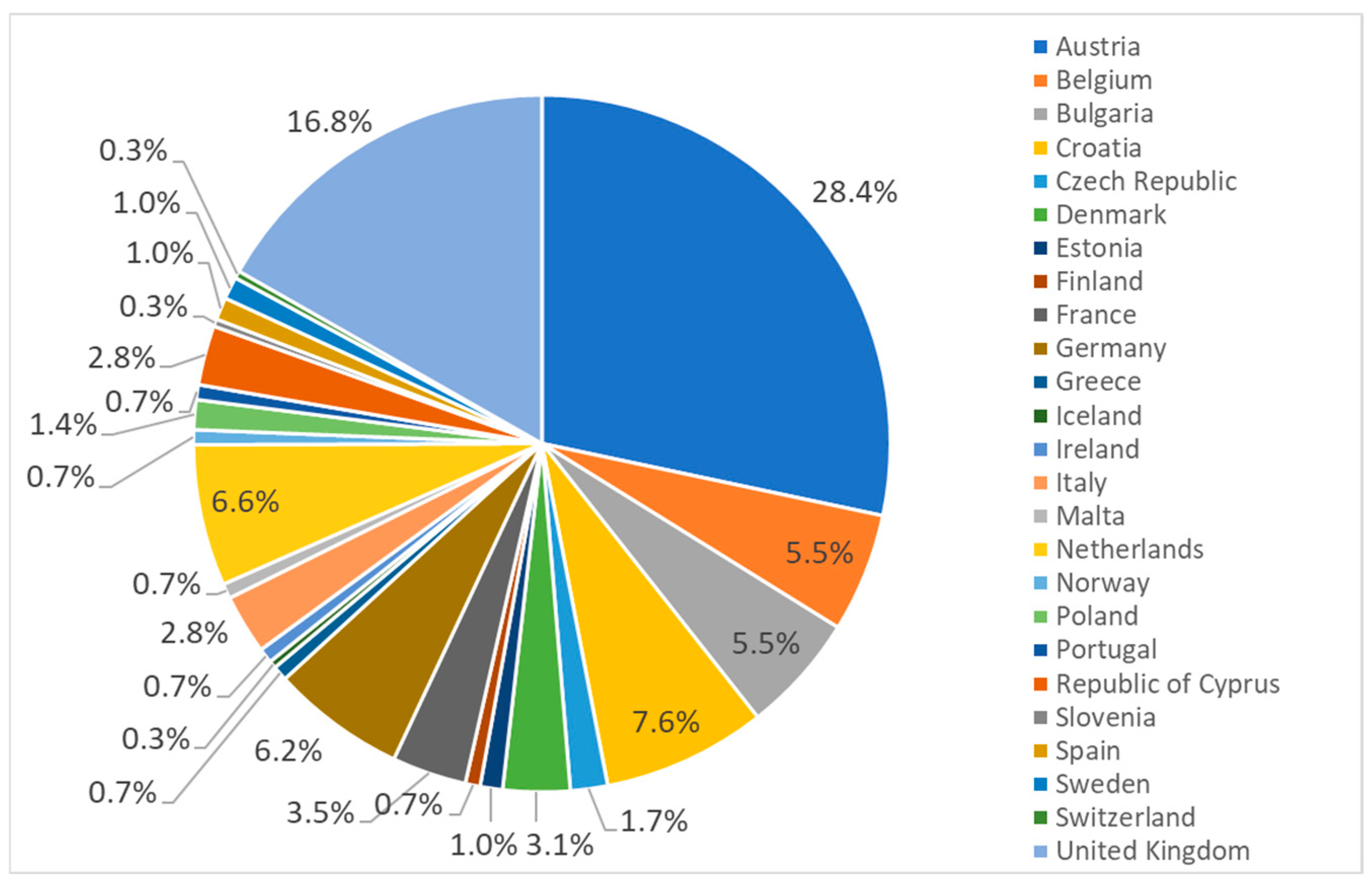
Except for Hungary, Latvia, Liechtenstein, Lithuania, Luxembourg, Romania, and Slovakia, responses have been received from all other countries in the targeted area, with the highest amount belonging to Austria (28%), followed by the UK (17%), as can be seen in Figure 2. More details and other parameters of the sample (N = 289) are shown in Table 4. Given that the studied EU region has a total population of approximately 490 million inhabitants [73] and applying Taro Yamane’s sample size equation [74,75], this sample provides a confidence interval of 94.12% with a margin of error of 5.88%. As a 95% confidence interval within a 5% margin of error is considered a normal industry standard for an excellent sample [76], this sample indicates a fairly representative size for the pilot study. This limitation of the data size means that our findings are not absolute, but rather, they provide a reference for discussing previous and current research outcomes. Furthermore, the sample is a very good representation in terms of gender distribution, with 50.5% being female, in comparison to 51.1% of the EU-27, 50.6% of the UK, and between 48.7% and 50.4% of EFTA countries [77]. It is also interesting to see that the sample has 0.7% of participants defined as non-male/female. Urban population is also well represented among the participants with about 66%, as indeed the majority of inhabitants in the targeted area live in cities, e.g., an average of 67% in EFTA countries and between 54% and 98% in the EU-27 [78]. On the other hand, the survey participants belong to younger age groups, with about 95% being in the range of 18 to 44 years old. This is understandable, as the survey has been conducted online and required participants to be fluent in English, which are two requirements that may have favored younger participants and may have been influenced by the participants’ age in general.
Figure 2. Respondents’ country of residence.
Table 4. Descriptive information and acceptance by category.
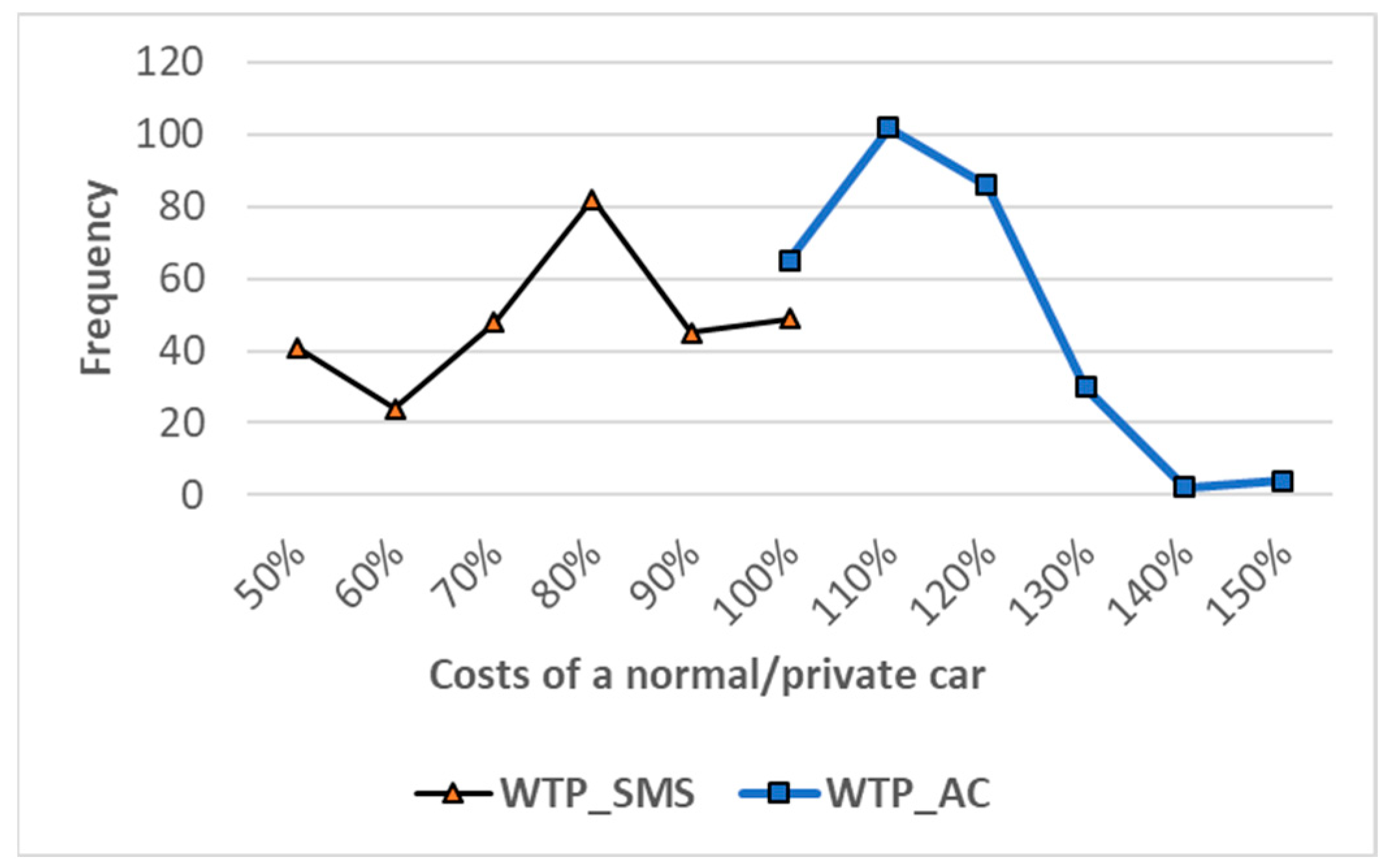
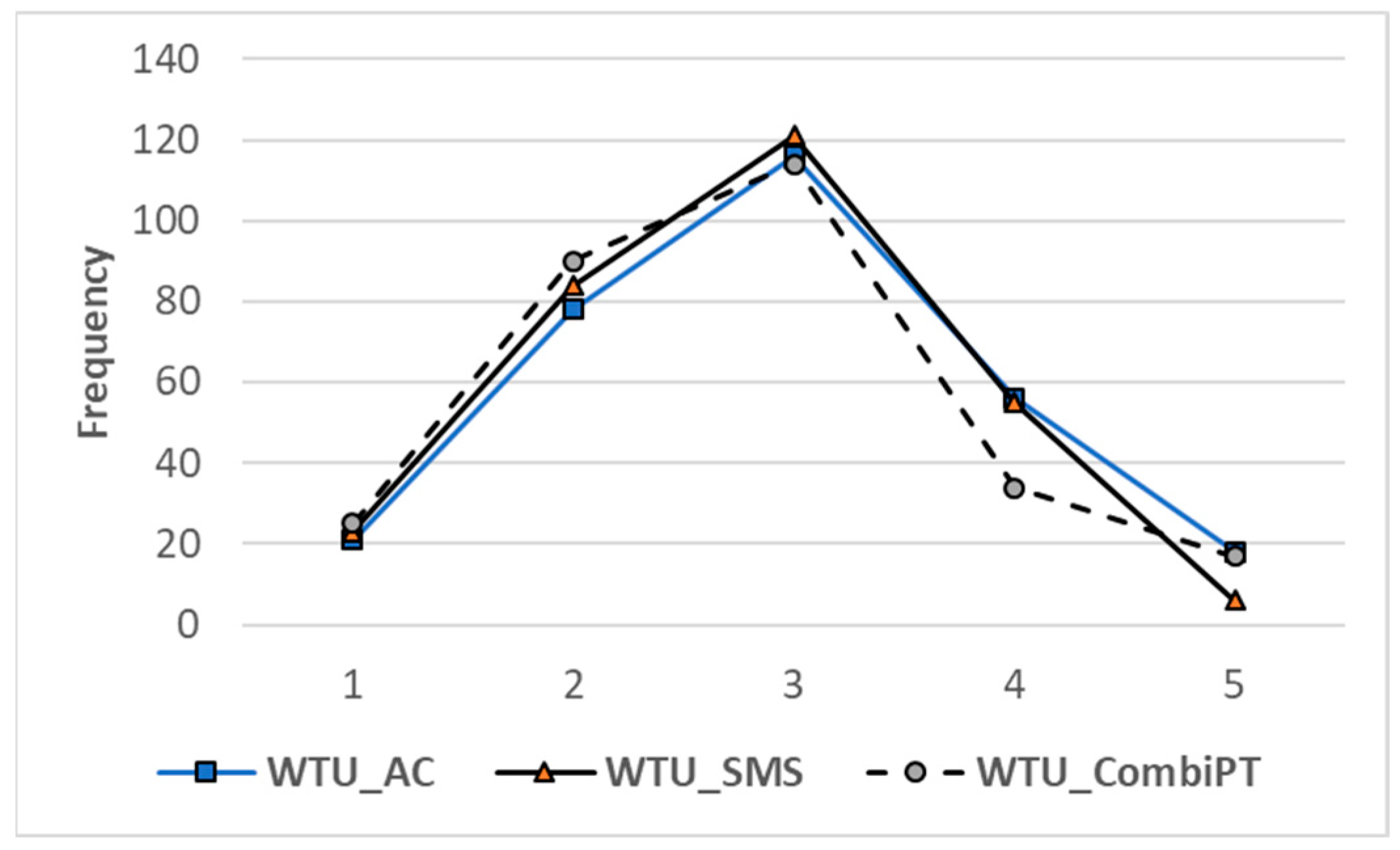
Figure 3 and Figure 4 depict the general acceptance among participants, particularly the WTU (Figure 3) and the WTP (Figure 4). The percentages and figure callouts are verified against the underlying frequencies. Regarding the WTU_AC, the frequency of participants indicating a rating of 4 and 5 is 56 and 18, respectively, resulting in an acceptance level of 25.6%. Furthermore, the survey data reveal 55 ratings of 4 and 6 ratings of 5 with regard to WTU_SMS, representing 21.1% of participants. In fact, the majority of the participants rated 3 for both options (40% for ACs and 42% for SMSs), implying that they are considering but do not yet like to use these two sustainable mobility systems. While this is way below the reported global opinion of roughly 50% in terms of ACs (see Table 3), our results in fact reflect the findings by Hudson et al. [17], who show a very modest acceptance toward AVs all over Europe. While there is a lack of sources displaying the acceptance level for SMSs, this finding is backed up by the fact that businesses for SMSs are still not profitable due to the low number of customers [79]. When SMSs are combined with PT as an additional mobility mode, it has an effect on people’s mode choice with regard to those who are most enthusiastic about SMS. In particular, the WTU, the combination of personal vehicles, resulted in 18.2%. The number of participants who will choose the combination of SMS and PT over using their own cars is almost three times the number of people who will definitely use SMS.
Figure 3. Willingness to use (WTU) automated cars (ACs), shared mobility services (SMSs), and a combination of SMSs and public transport (CombiPT).
Figure 4. Willingness to pay (WTP) for automated cars (ACs) and shared mobility services (SMSs).
With regard to the WTP, 22% (65 respondents) do not want to spend any extra on AC, which is in a similar range as the global result (see Table 3). Surprisingly, the highest number of respondents (35%) would agree to pay up to 10% extra in contrast to a normal car, and almost 30% even have the WTP up to 20% more. This shows that costs do not play a big role for potential customers of AC, up to 1.2 times the costs of a non-autonomous one. On the other hand, 17% of participants (corresponding to a frequency of 49) express that they have the WTP the same as for a private car when using SMS, yet the majority would like to pay less, e.g., 28.4% want to pay 20% less than using their private cars, and about 17% would like to have even 30% less costs. This implies that costs can be one factor to attract or discourage people from using SMS. Regarding the apparent WTP/WTU contradiction, many respondents express positive acceptance but still expect cost parity, especially for SMSs, where lower operating costs are anticipated at scale.

4.2. Influencing Factors on Acceptance of AC and SMS

As can be seen from the test results in Appendix A Table A1 and Table A2, WTU_AC and WTU_SMS indeed have a positive connection, albeit statistically weak (p < 0.001), confirming the hypothesis H1. While the WTU_AC has no statistical relationship with the WTP_AC, with regard to SMS, WTP and WTU have a moderate and positive connection (p < 0.001). Therefore, H2 is rejected and H3 is supported. Our data indeed supports the conclusion of several studies, e.g., [16,24], that perceived usefulness and perceived ease of use are linked to the intention to use AC (both p < 0.001). This also applies to the acceptance of SMS, as perceived usefulness and perceived ease of use are both statistically related to WTU_SMS (p < 0.001 and p < 0.01, respectively). Therefore, H4a and H4b are both supported. The preference to use the combination of SMS and PT over private vehicles is positively linked to not only WTU_SMS (p < 0.001) but also WTU_AC (p < 0.05). Hence, H5 is supported.
Furthermore, the ordinal logistic models (Appendix A Table A3 and Table A4) confirm these patterns after simultaneous adjustment: knowledge/frequency and preference terms remain first-order correlates of both outcomes; several raw socio-demographic associations seen in the bivariate view attenuate once perceptions/experience are included; and for SMS, pricing (WTP) and PT-related use retain independent associations. This coherence between the bivariate screen and the parsimonious multivariate models strengthens the internal validity of our findings within the limits of a pilot sample.
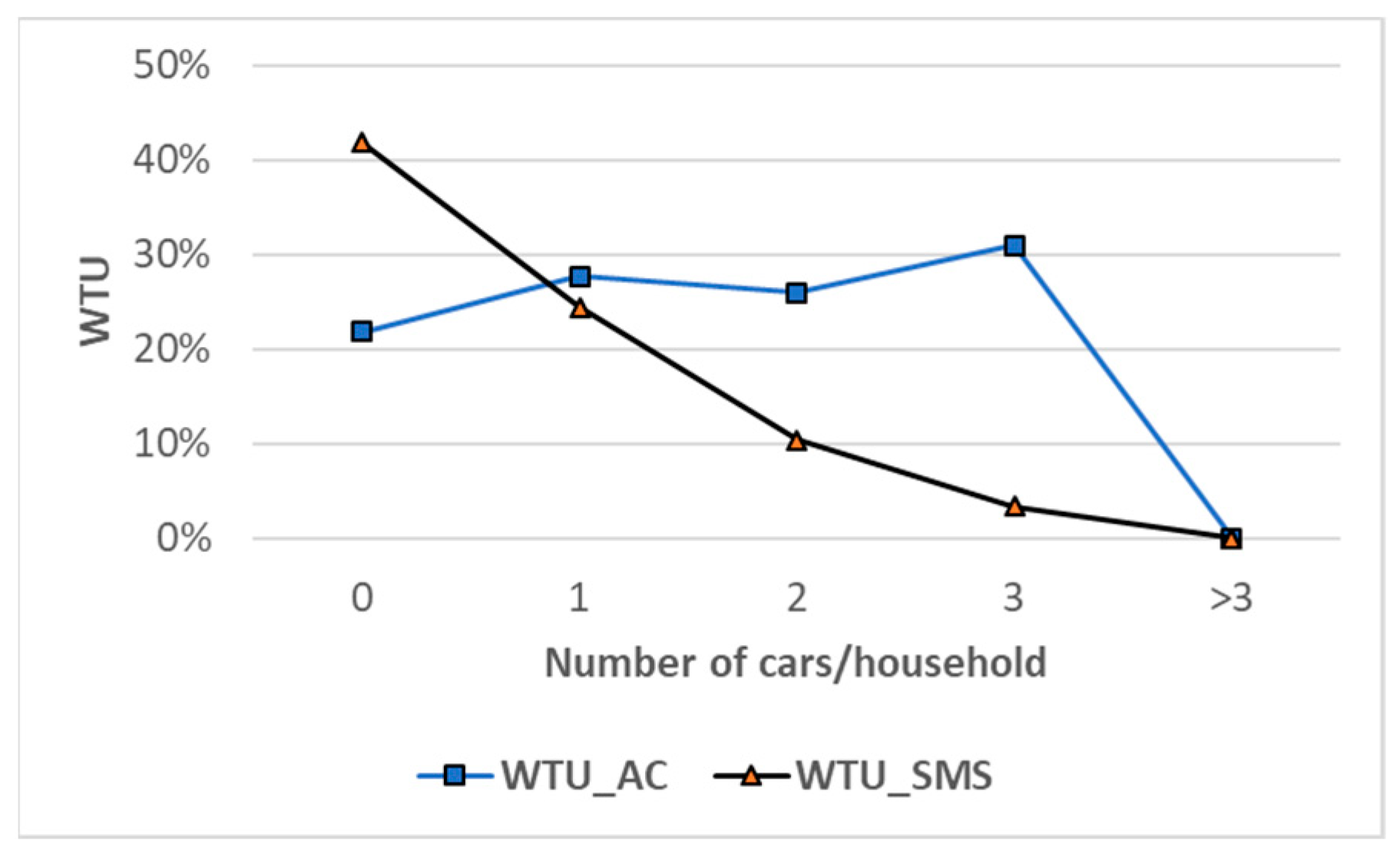
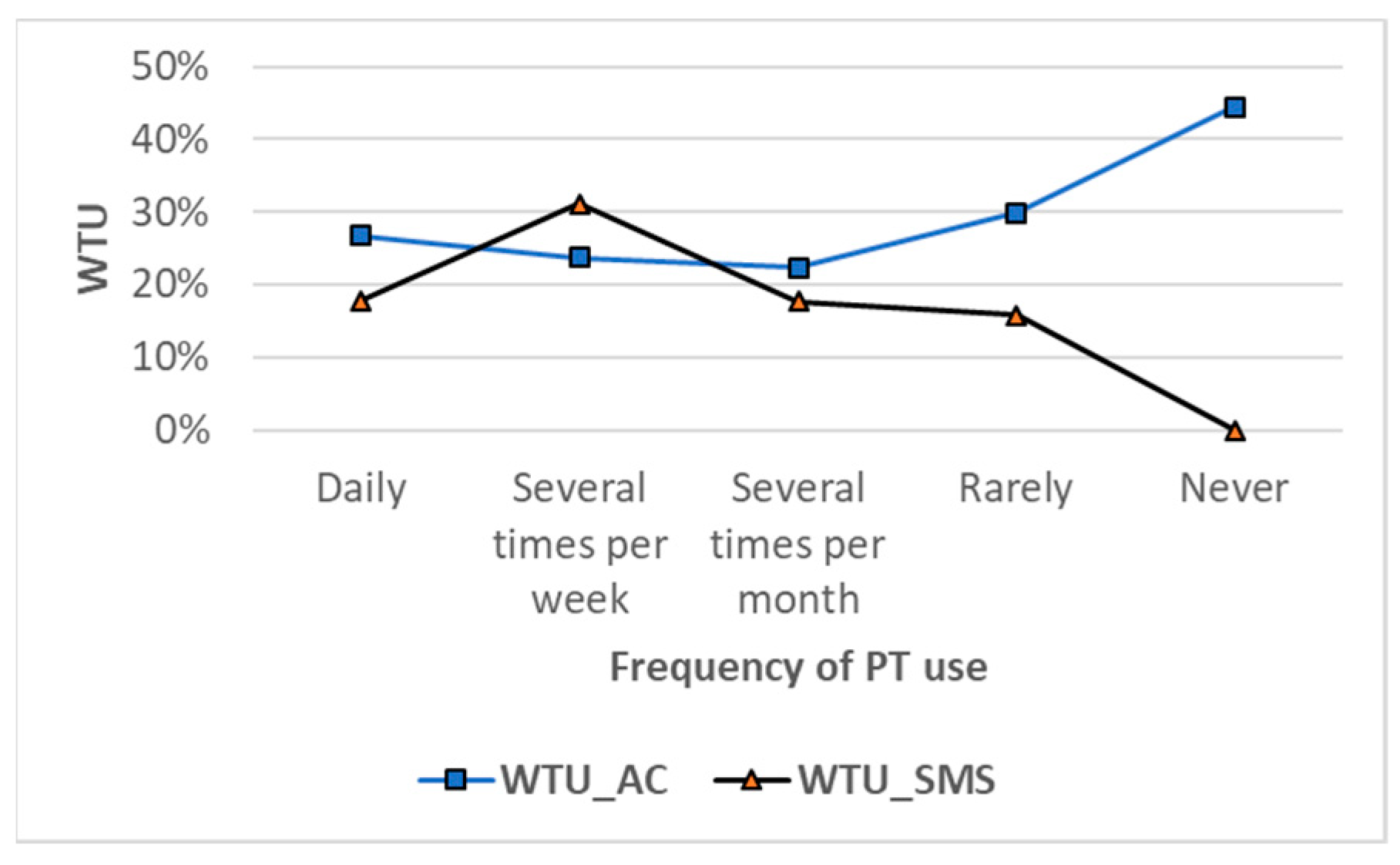
Additionally, the statistical tests confirm several observations that can be drawn from the results of the descriptive analysis outlined in Table 4. To be specific, men indeed have higher acceptance than women regarding AC, with 28.4% versus 21.9% (p < 0.05). The number of cars owned by a household has an effect on WTU_SMS (p < 0.001). It is clearly shown in Figure 5 that the WTU_SMS declines almost linearly with each owned car added to the household. Car-free households accept SMS wholeheartedly, with almost 42% who would like to use the services, then declines to 24.4% when people own a car, 10.4% with two cars available, and only 3.4% with three. When a household has more than three cars, the acceptance level for SMSs is basically zero. An ownership of three cars seems to be a threshold for people’s acceptance of both ACs and SMSs. The annual car mileage has a negative impact on how people accept SMSs (p < 0.01). On the other hand, the frequency of usage of PT is positively linked to WTU_SMS (p < 0.01). Interestingly, daily PT users seem not to be supportive of SMSs, with only 17.8% of them having WTU SMSs (Figure 6). It is possible that for these passengers, the first/last mile problem is not an issue, and they enjoy the services provided by PT more than others. People who are frequent PT users are fond of SMS the most, as 31.2% have the WTU these services, and the ones who are not likely to use PT seem not to use SMSs either, as they may prefer walking or using their own vehicles.
Figure 5. Effects of car ownership on willingness to use (WTU).
Figure 6. Effects of public transport (PT) usage on willingness to use (WTU).
Knowledge of AC affects WTU_AC positively (p < 0.001). As indicated in Table 5, the majority of people have little knowledge of AC, even though they are aware of the technology, as shown by 61.2% of the participants in the survey. This corresponds to a very low acceptance, namely 17.5%, which is only higher than people who have no idea about AC at all. Understanding the technology of AC is indeed helpful, as almost 40% of the participants with a rich knowledge of AC are supportive of it, while almost 36% of people who work on the topic of AC as students or researchers are willing to use it, just like those who develop such vehicles. Previous experience with CS (p < 0.01), CP (p < 0.01), and RH (p < 0.001) seems to positively affect people’s acceptance of SMS, while experience with CR (p < 0.01) and RH (p < 0.001) has a similar impact on WTU_AC. Furthermore, experienced users of SMS show interesting results. While only 15.5% of the participants have used RH, they are the biggest supporting group of SMSs, with 40.3%. The group of CP users comes second, as 19.2% of the participants are among those, yet 36.4% of them show WTU SMS. About a quarter of the sample has used CS, expressed by an acceptance of roughly 29%. CR is probably the most “traditional” sharing business, reflected in about 38% of the participants having experiences with it, the highest amount, yet they have a modest WTU_SMS, standing at 23.2%. Additionally, drivetrain technology is related to both WTU_AC and WTU_SMS (p < 0.01 and p < 0.001, respectively). The commuting distance is negatively linked to the acceptance of AC (p < 0.05) and SMS (p < 0.05). In addition, the WTU AC or SMS has a positive relationship with the expected frequency of usage of that mobility solution (both p < 0.001).
Table 5. Acceptance by category according to specific parameters.
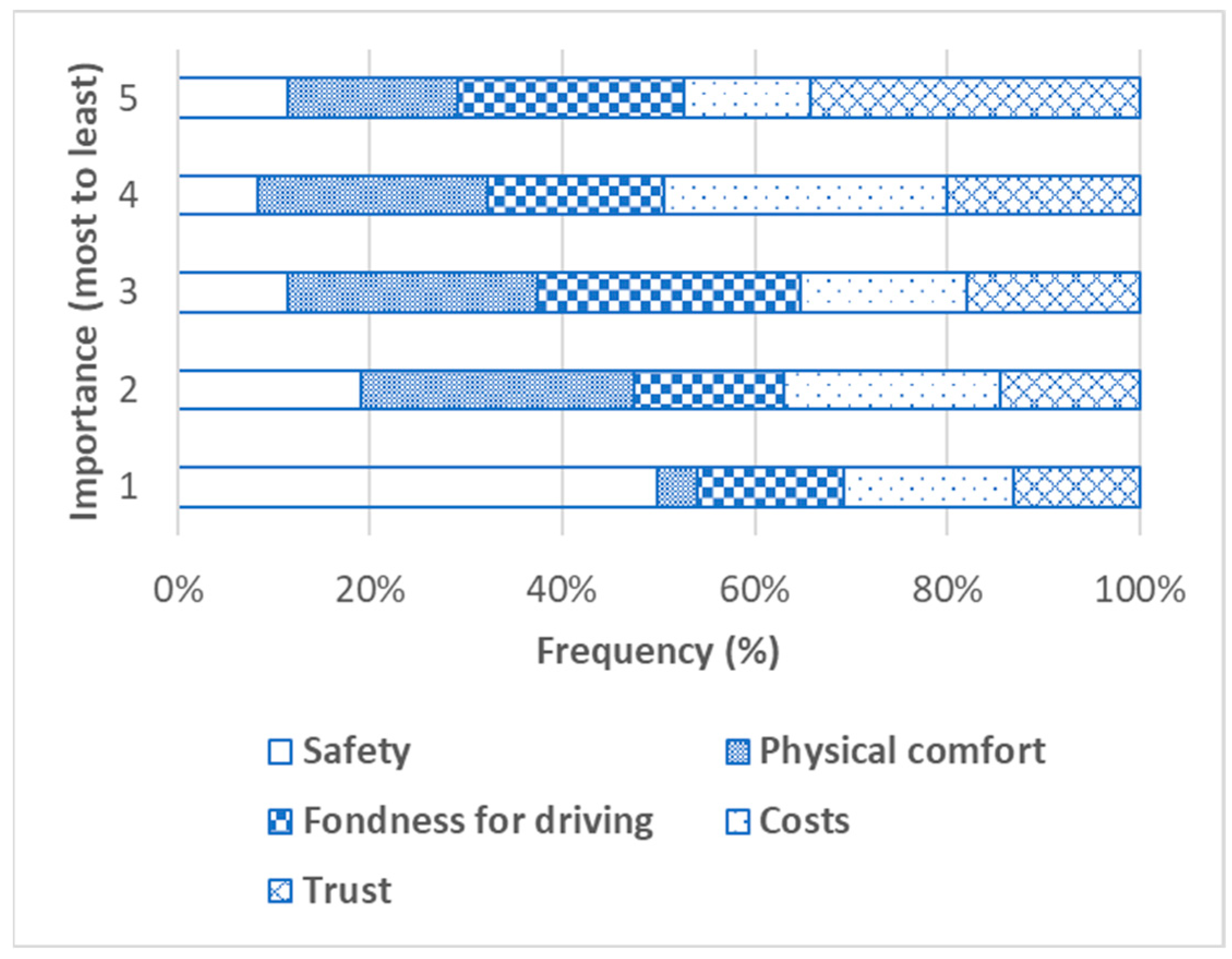
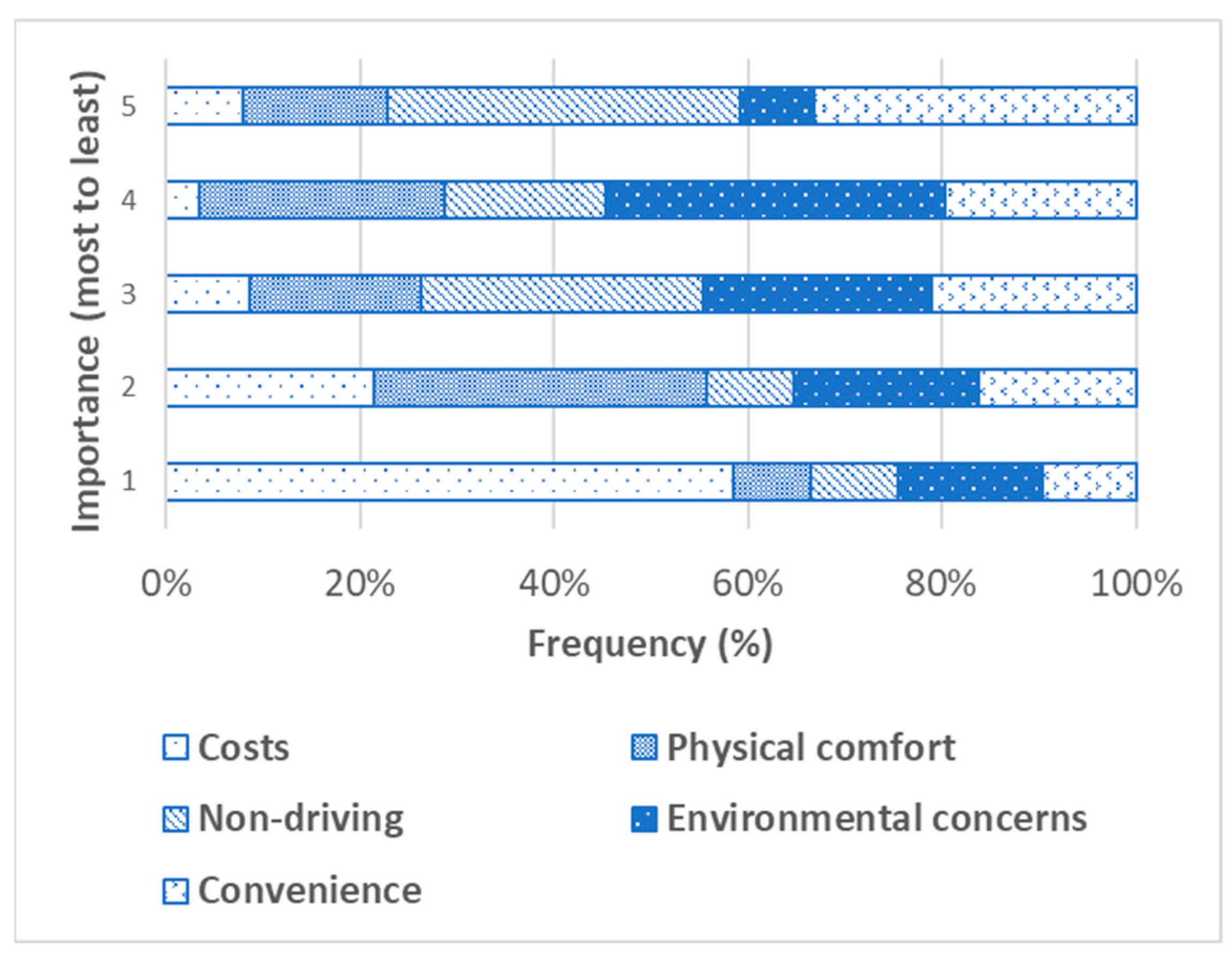
Figure 7, Figure 8 and Figure 9 depict how people rank different aspects as their motivation or barrier to using ACs, as well as their motivation to use SMS. Distribution of importance rankings (1 = most important, 5 = least important) across all respondents. Bars show the percentage of participants assigning each rank to each factor. Across all three figures, respondents reveal distinct yet comparable patterns in how they evaluate motivations and barriers for adopting automated cars and shared mobility services. Safety consistently emerges as a top-ranked concern, valued as a primary motivator for adoption (Figure 7) but also as a major barrier when trust and reliability are uncertain (Figure 8). Cost considerations appear in both motivational and deterrent contexts, indicating that affordability remains pivotal to acceptance. Convenience-related aspects, such as non-driving and comfort, rank highly as motivations in both automated and shared mobility contexts, suggesting users appreciate stress-free travel and time for other activities. Conversely, emotional and experiential factors such as fondness for driving or low trust contribute more strongly to resistance toward automation. In the shared mobility context (Figure 9), environmental concerns add an additional motivational dimension, implying greater sustainability awareness among users considering collective transport options. Overall, the rank distributions highlight that user acceptance depends on a nuanced balance between perceived safety, cost, comfort, and environmental benefit rather than on a single dominant factor.
Figure 7. Motivation to use automated cars (ACs). Distribution of respondents’ importance rankings (1 = most important, 5 = least important) regarding potential motivations for using automated cars. Bars indicate the percentage of participants assigning each rank to key factors, including safety, costs, non-driving convenience, other activities during travel, and physical comfort.
Figure 8. Barrier to using automated cars (ACs). Distribution of importance rankings (1 = most important, 5 = least important) reflecting perceived barriers to the use of automated cars. Frequencies show how respondents prioritized safety, physical comfort, fondness for driving, costs, and trust as obstacles influencing adoption.
Figure 9. Motivation to use shared mobility services (SMSs). Distribution of respondents’ rankings (1 = most important, 5 = least important) for motivations to use shared mobility services. Percentages represent how participants rated factors such as costs, physical comfort, non-driving convenience, environmental concerns, and overall convenience.
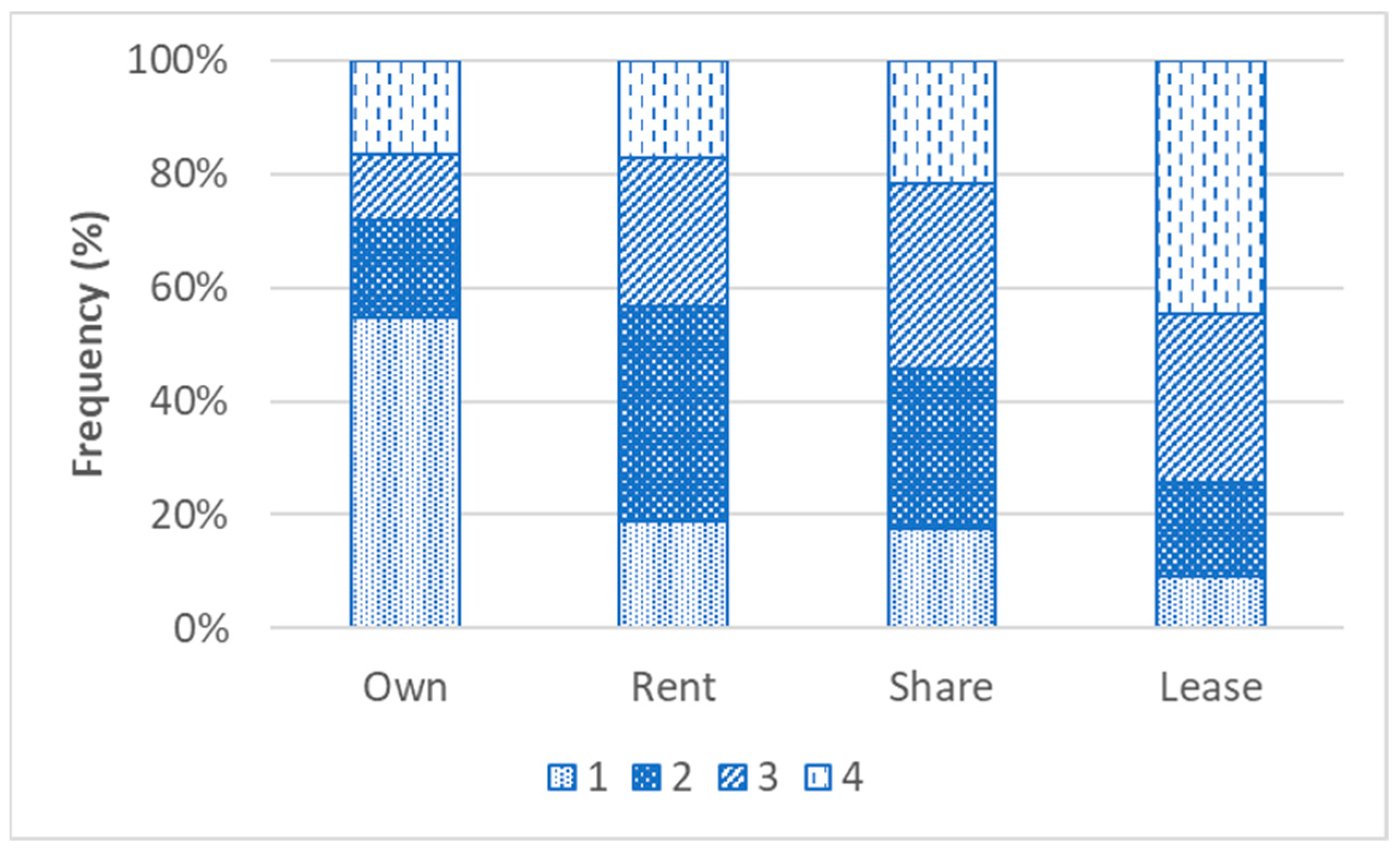
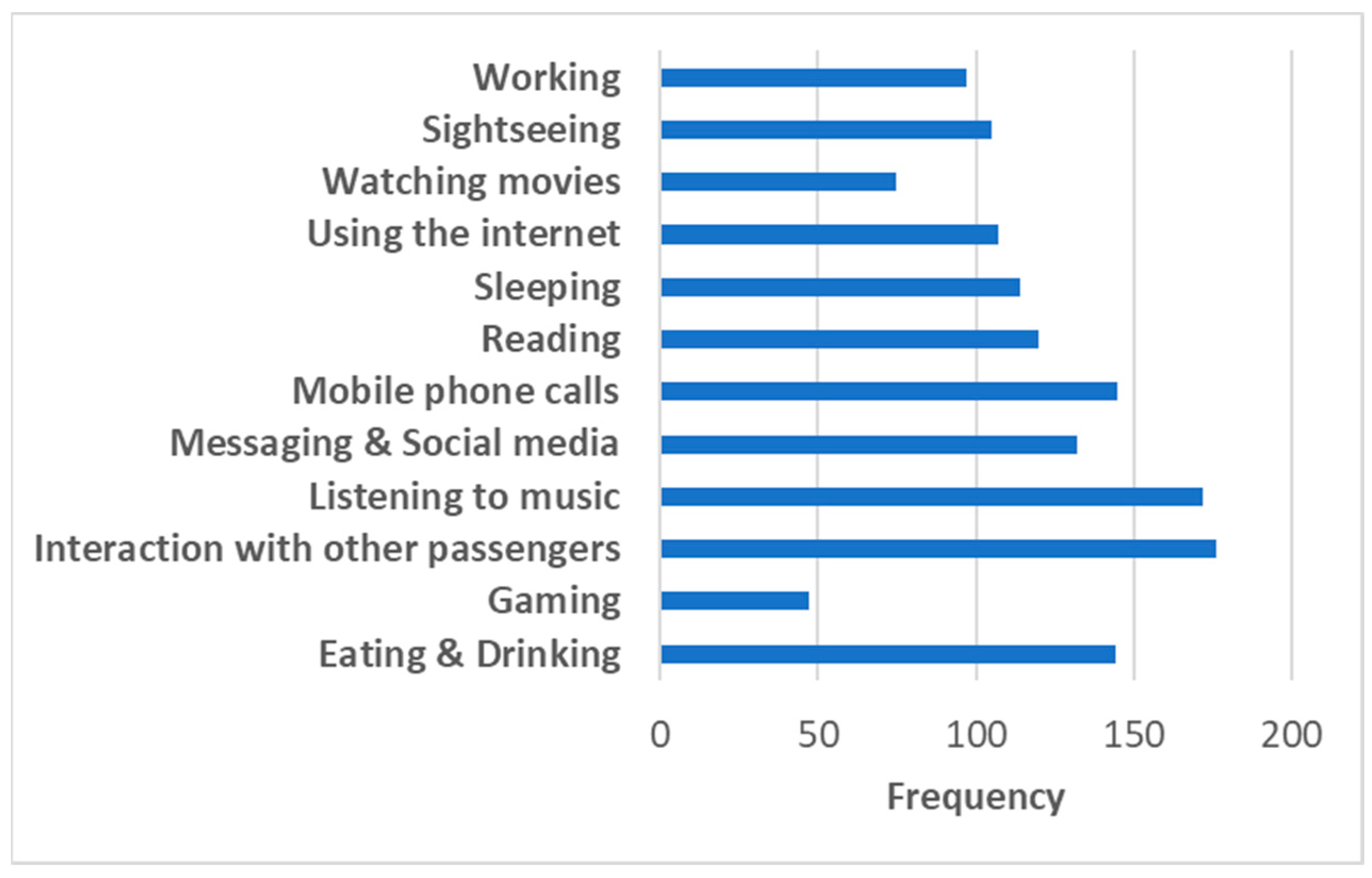
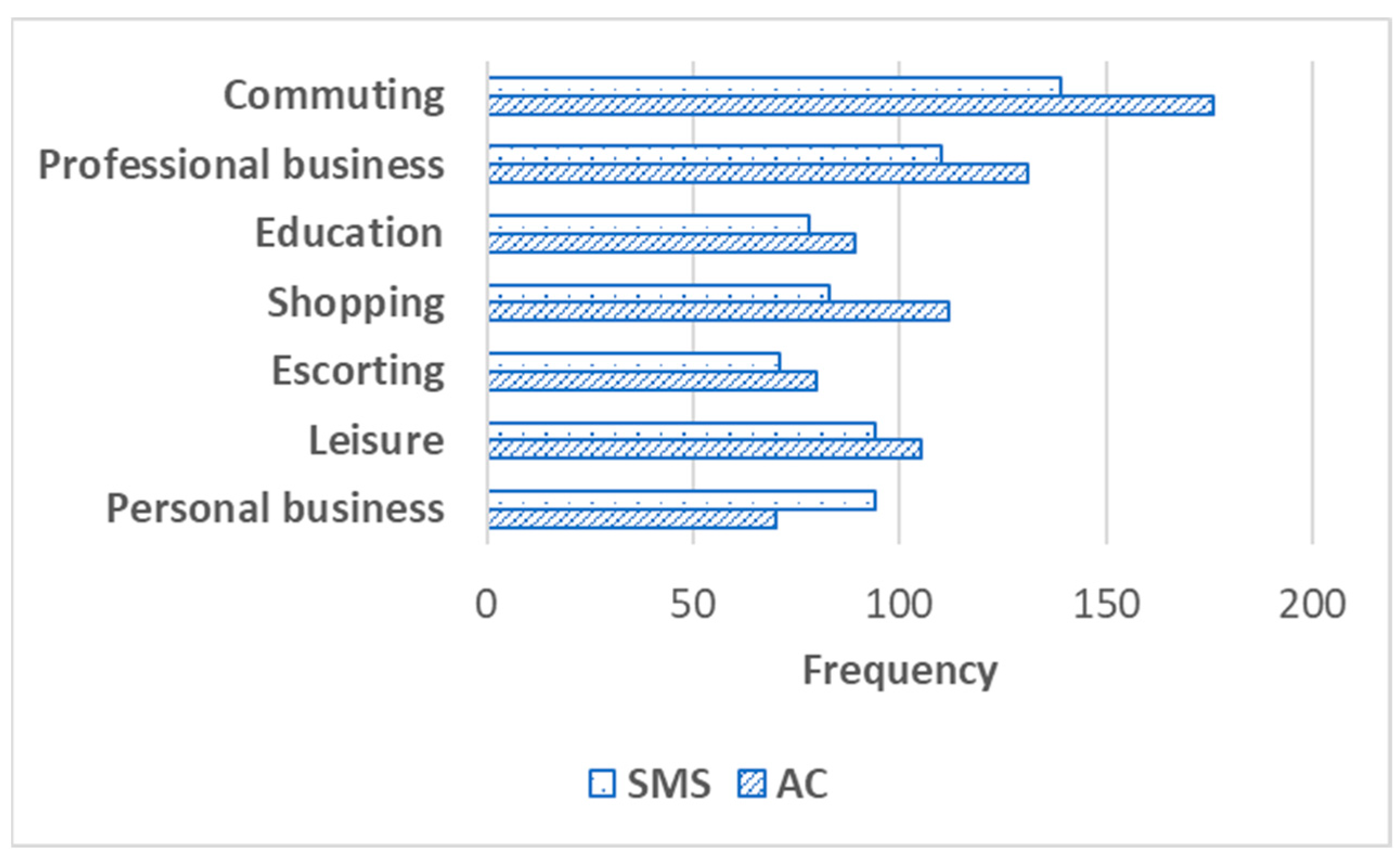
The ability to conduct other activities during driving seems to be important to potential users of AC, as Figure 10 implies that future AC passengers are likely to use the free time for interaction with other passengers, eating and drinking, or performing individual activities. Working, watching movies, and gaming are among the popular selections of the survey participants. Probably because ACs are considered to be used for short-distance trips and may not be adequately equipped for those activities. Regarding the choice of the business model for AC, ownership is the most favored option, followed by leasing and then renting, while sharing an AC is the least preferred choice for the survey participants (see Figure 11). Consequently, this means shared AC may not be suitable for individuals. People expect to use AC and SMS for different travel purposes, as shown in Figure 12. Commuting to work and professional business are the most popular uses for both sustainable mobility systems. As most of the participants are of working age, it shows that AC and SMS will be used for work-related trips rather than personal ones during leisure time.
Figure 10. Non-driving activities while using automated cars (ACs).
Figure 11. Preferred business model for automated cars (ACs), from 1 (most favorite) to 4 (least favorite).
Figure 12. Travel purposes when using automated cars (ACs) and shared mobility services (SMSs).
These results reaffirm the holistic view that user acceptance of new mobility services arises from interlinked technological, economic, and social dimensions. These findings show that users’ perceived usefulness and ease of use emerged as central to acceptance, consistent with recent European evidence on mobility adoption [22,28,29,35,38]. The role of pricing and affordability is likewise confirmed by studies on mobility pricing schemes, which show that acceptability hinges on how costs are structured relative to perceived benefit [13,23,44,45,46].

4.3. Cross-Country Aspects

As can be seen and compared, Table 6 outlines the WTU_AC and WTU_SMS of two countries (Austria and the UK) and the studied EU region. In terms of AC, the acceptance in the UK is lower than in the studied EU region (23% vs. 26%), while Austria has the highest acceptance with 32%. These numbers are much lower than in the figures reported by Lang et al. [70]. However, the results from Austria and the UK are highly in line with Hudson et al. [17], who reported that the attitude toward AVs in the two countries is a lack of enthusiasm, with scores of 4.14 and 3.43 on a scale of 10, respectively. This pattern resonates with broader European findings: recent reviews note that in many European countries, AV acceptance rarely exceeds 30–35% under current conditions [29]. This finding is also similar to Hudson et al. [17] in the sense that Austria has a higher acceptance than their reported EU-28 (EU-27 plus the UK), while the UK is below the regional average of 3.65. Moreover, the results of this study are comparable with Wintersberger et al. [18], who indicated that 37.5% of Austrian participants are willing to use AV for personal use. Regarding the WTP for AC, the results point out that even though Austria has the highest acceptance level for AC, 34% of the Austrian survey participants do not want to pay more for such vehicles, which is noticeably higher than in the studied EU region (22%) and the UK (27%). The regional result is in the same range as the global level [26]. However, the survey results for the UK largely differ from Bansal & Kockelman [33] and Schoettle & Sivak [67], who concluded that more than half of the people in the two countries are unwilling to pay more. Instead, the outlined results indicate that the majority of participants are willing to pay more for the use of AC. This can be explained by the fact that most of our participants are young (18–34 years old) and therefore more willing to try and open-minded toward new technologies.
Table 6. Acceptance of automated cars (ACs) and shared mobility services (SMSs) according to selected countries.
As it seems, SMSs are not favored by Austrian people, with only 11% of the survey participants showing WTU SMSs, which is almost half of the regional acceptance. This can be explained by cultural context, since Austrians are not likely to share cars. Wintersberger et al. [18] reported that 45% of their participants will never be able to share a car, and 73% of people will not share or lend their AV even to make some extra money. The UK appears to be more welcoming toward SMSs, with 25% and 22.9% of participants accepting to use these services, respectively. This is probably due to their openness to innovative technologies and advanced business models.

5. Conclusions

The paper proposes a holistic framework for acceptance assessment of automated cars (ACs) and shared mobility services (SMSs) and presents a pilot study by using data collected via an online survey, focusing on European citizens. Our main findings are that about 26% of the survey participants are willing to use ACs, while 21% would like to use SMS. Approximately 22% of the sample do not want to spend any extra on AC, and 17% of the participants are willing to pay the same as the costs of using a private car for SMSs. Costs can be one factor to attract or discourage people from using SMSs. The acceptance of SMS seems to decline with each car added to a household, and having more than three cars may imply a rejection of both SMSs and ACs. People with a rich knowledge of AC support the technology more, and previous experience with shared mobility positively affects people’s acceptance of both SMSs and ACs. The perceived usefulness and perceived ease of use have a positive relationship with the willingness to use (WTU). Safety has been identified as the most important motivator as well as the biggest barrier for using AC, while costs can motivate people to use SMSs. People would like to own or lease an AC, whereas sharing an AC seems to be the least favored option.
The results also indicate the necessity to understand how people perceive automated driving and SMS in combination. In this context, the acceptance of SMSs appears to have a positive connection to the acceptance of ACs. Additionally, the willingness to pay (WTP) for SMSs seems to be positively linked to the WTU for such services. The preference for using SMS combined with public transport (PT) over private cars can influence the WTU positively. The vehicle’s drivetrain technology is probably associated with the level of acceptance. The number of cars in a household and car mileage can negatively affect the WTU SMS, while the frequency of usage of PT can positively impact it. On average, the studied EU regions, Austria and the UK, show a low to medium-low acceptance for AC. At the same time, people from the UK accept SMS much more than the Austrian survey participants.
By identifying where acceptance is strongest (e.g., PT-inclined users; car-free households) and which factors matter (usefulness, ease of use, pricing), the results support policy measures that pair SMS with PT, manage car parking and car ownership, and target education and safety communication. However, the results have certain limitations. The pilot sample is modest and self-selected, relying on self-reported intentions, and of cross-sectional character. Due to these reasons, the conclusions provided are meant to be a reference and are not claimed to be absolute. This study serves as a stepping stone to indicate the usefulness of the applied holistic framework, as well as to point out that further studies are required. However, by introducing a comprehensive approach for acceptance analysis, this paper contributes to the current research efforts, which are not limited to automated driving and SMS only. In this way, the introduced methodology can be applied for user-related investigations in other fields, too.
The two-stage design to analyze the data of the pilot sample, e.g., non-parametric screening followed by parsimonious ordinal logits, is appropriate for a pilot with limited events-per-variable and heterogeneous item types. The fact that multivariate estimates reproduce the direction and ordering from the bivariate screen suggests that perceptions/experience and pricing/integration are robust levers. To further improve the findings of this study, future research will aim to apply the proposed methodology framework, where larger samples will be analyzed to test partial proportional-odds and regularized models, and will include country/context interactions, as well as segmentations. In this way, future studies can be designed to investigate sustainable mobility strategies by pairing SMS with PT and targeting safety and pricing communication.

Supplementary Materials

The following supporting information can be downloaded at: https://www.mdpi.com/article/10.3390/su17219610/s1, The survey form and the supplementary codebook.

Author Contributions

T.T.N.: conceptualization, methodology, investigation, data curation, formal analysis, visualization, writing—original draft. F.R.: conceptualization, investigation, writing—review and editing. M.H.: conceptualization, supervision, writing—review and editing. All authors have read and agreed to the published version of the manuscript.

Funding

This paper is supported by the Open Access Funding and the Research Initiative “nachhaltige Personen- und Gütermobilität” of Graz University of Technology.

Institutional Review Board Statement

Ethical review and approval were waived for this study by the Ethics Committee of Graz University of Technology, as data collection had been completed in 2022, prior to the committee’s establishment in January 2024. The research was conducted in accordance with the European Code of Conduct for Research Integrity and the Guidelines on Safeguarding Good Scientific Practice of Graz Uni-versity of Technology.

Data Availability Statement

Survey data is not available due to the general data protection regulation.

Conflicts of Interest

Author Florian Ratz was employed by the company Armengaud Innovate GmbH. The remaining authors declare that the research was conducted in the absence of any commercial or financial relationships that could be construed as a potential conflict of interest.

Abbreviations

The following abbreviations are used in this manuscript:
SMSShared Mobility Services
ACAutomated Car
AVAutomated Vehicle
WTUWillingness to Use
CCAMCooperative, Connected, and Automated Mobility
TAMTechnology Acceptance Model
PTPublic Transport
CSCar Sharing
WTPWillingness to Pay
EVElectric Vehicles
FFCSFree-Floating Car Sharing
BIBehavioral Intention to Use
UTAUTUnified Theory of Acceptance and Use of Technology
ECSElectric Car Sharing
AECSAutomated Electric Car Sharing
WTBWillingness to Buy
SAVShared Automated Vehicles
ECElectric Cars
GDPGross Domestic Product
RSRidesharing
FCUFrequency of Car Sharing Use
CRCar Rental
EFTAEuropean Free Trade Association
RHRide hailing
CPCarpooling
WTTWillingness to Try
ACCAdaptive Cruise Control
UI/UXUser Interface/User Experience
VOTValue-of-time
EPVEvents-per-variable

Appendix A

All variables appearing in Table A1, Table A2, Table A3 and Table A4 are elaborated in the Supplementary Codebook.
Table A1. Chi-Square Test Results.
Parameters for Chi-Square Testp-ValueParameters for Chi-Square Testp-Value
WTU_ACLiving area0.596WTU_SMSLiving area0.491
Gender0.030 *Gender0.077
Driving license0.937Driving license0.076
Accident experience0.956Accident experience0.051
Education0.560Education0.918
Physical disadvantages0.321Physical disadvantages0.094
Useful_AC0.000 ***Useful_AC0.000 ***
ETU_AC0.000 ***ETU_AC0.219
Used_CR0.004 **Used_CR0.313
Used_CS0.155Used_CS0.002 **
Used_CP0.526Used_CP0.001 **
Used_RH0.000 ***Used_RH0.000 ***
Preference_SMS0.001 ***Preference_SMS0.001 **
Useful_SMS0.002 **Useful_SMS0.000 ***
ETU_SMS0.069ETU_SMS0.005 **
Drivetrain0.002 **Drivetrain0.000 ***
* p < 0.05, ** p < 0.01, *** p < 0.001.
Table A2. Spearman’s Rank Correlation Test Results.
Parameters for Spearman’s Rank Correlation TestrTsp-Value
WTU_ACAge group−0.0220.3750.708
Commute distance−0.140 (vw)2.3910.017 *
No_people/household−0.0220.3680.713
No_cars/household0.0010.0220.983
Car mileage0.0570.9750.330
FreqUse_PT0.0020.0260.980
Mobility costs0.0130.2200.826
Knowledge_AC0.227 (w)3.9510.000 ***
FreqUse_AC0.336 (w)6.0460.000 ***
WTP_AC0.0901.5220.129
FreqUse_SMS0.0540.9090.364
WTU_CombiPT0.127 (vw)2.1690.031 *
WTP_SMS0.0420.7150.475
WTU_SMS0.262 (w)4.5930.000 ***
WTU_SMSAge group0.0010.0110.991
Commute distance−0.170 (vw)2.9270.004 *
No_people/household−0.0460.7740.439
No_cars/household−0.317 (w)5.6560.000 ***
Car mileage−0.158 (vw)2.7150.007 **
FreqUse_PT0.170 (vw)2.9160.004 **
Mobility costs−0.0911.5540.121
Knowledge_AC0.0741.2570.210
FreqUse_AC0.0490.8300.407
WTP_AC0.0961.6300.104
FreqUse_SMS0.262 (w)4.5930.000 ***
WTU_CombiPT0.276 (w)4.8640.000 ***
WTP_SMS0.628 (m)13.6800.000 ***
N = 289, DF = 287, * p < 0.05, ** p < 0.01, *** p < 0.001, vw: very weak, w: weak, m: moderate.
Table A3. Ordinal Logistic Model Results for WTU_AC (Ordinal Logit, Link = Logit).
PredictorOR95% CIp-Value
GenderMale1.3730.943–2.0010.0983
GenderOther21.9221.661–553.6640.0225 *
CommuteD0.9670.926–1.0100.1302
Transport_bikeYes1.6131.062–2.4570.0253 *
Transport_carYes1.1330.762–1.6860.5379
Know_ACKnow a lot2.1651.426–3.3010.0003 *
Know_ACNo knowledge2.2540.738–6.8580.1504
Know_ACStudy and research1.8440.813–4.1750.1412
FreqUse_ACFew times per week0.5910.336–1.0350.0668
FreqUse_ACNever0.0220.006–0.0720.0000 *
FreqUse_ACOnce per month0.3370.155–0.7260.0057 *
FreqUse_ACOnce per week0.3820.203–0.7120.0026 *
FreqUse_ACRarely0.1320.058–0.2970.0000 *
WTU_SS.L11.3775.092–26.0530.0000 *
WTU_SS.Q2.0351.037–4.0330.0398 *
WTU_SS.C1.0900.649–1.8410.7456
WTU_SS^40.9380.657–1.3380.7226
Preference_SSYes0.4680.317–0.6880.0001 *
* p < 0.05; OR = odds ratio; 95% CI = 95% confidence interval. Ordered predictors are coded to reflect increasing levels; an OR > 1 indicates higher levels are associated with higher willingness. For frequency variables, the omitted baseline is “Daily”.
Table A4. Ordinal Logistic Model Results for WTU_SS (Ordinal Logit, Link = Logit).
PredictorOR95% CIp-Value
CarTyp_MSYes0.6780.380–1.2020.1845
CarTyp_SmulYes0.6660.173–2.5660.5510
Preference_SSYes1.9201.204–3.0760.0063 *
DrivetrainYes, I would prefer electric cars1.8381.109–3.0620.0187 *
No_C0.7370.547–0.9900.0431 *
TbC> 20,000 km1.9800.525–7.5780.3146
TbC03.1410.336–34.0230.3194
TbC10,001–15,000 km0.6620.359–1.2170.1849
TbC15,001–20,000 km0.4140.157–1.0830.0727
TbC5001–10,000 km0.5910.337–1.0320.0648
FreqUse_PTNever1.2650.229–6.5010.7825
FreqUse_PTRarely1.4890.693–3.2160.3088
FreqUse_PTSeveral times per month1.8370.967–3.5080.0640
FreqUse_PTSeveral times per week1.4790.798–2.7450.2137
WTU_AC.L8.5643.732–20.0940.0000 *
WTU_AC.Q1.4370.684–3.0100.3360
WTU_AC.C1.1290.634–2.0160.6803
WTU_AC^41.1460.764–1.7230.5104
FreqUse_SSFew times per week0.3680.139–0.9750.0437 *
FreqUse_SSNever0.0550.012–0.2420.0001 *
FreqUse_SSOnce per month0.4050.139–1.1770.0966
FreqUse_SSOnce per week0.3350.126–0.8900.0277 *
FreqUse_SSRarely0.2570.091–0.7240.0100 *
WTP_SS1–10% less than the costs of using your own car1.7280.756–3.9790.1961
WTP_SS10–20% less than the costs of using your own car1.6520.733–3.7480.2272
WTP_SS20–30% less than the costs of using your own car3.2251.385–7.6040.0069 *
WTP_SS30–40% less than the costs of using your own car3.4751.231–9.9060.0189 *
WTP_SSSame as the costs using your own car2.5641.065–6.2320.0364 *
* p < 0.05; OR = odds ratio; 95% CI = 95% confidence interval. Ordered predictors are coded to reflect increasing levels; an OR > 1 indicates higher levels are associated with higher willingness. For frequency variables, the omitted baseline is “Daily”.

References

  1. Springer India-New Delhi. Automotive Revolution & Perspective Towards 2030. Auto. Tech. Rev. 2016, 5, 20–25. [Google Scholar] [CrossRef]
  2. Nguyen, T.T.; Rust, A.; Brunner, H.; Bachler, J.; Hirz, M. Potential for CO2 Emission Reduction in Future Passenger Car Fleet Scenarios in Europe. In Proceedings of the Resource Efficient Vehicles Conference (rev2021), Stockholm, Sweden, 14–16 June 2021. [Google Scholar] [CrossRef]
  3. Alonso Raposo, M.; Ciuffo, B. The Future of Road Transport—Implications of Automated, Connected, Low-Carbon and Shared Mobility; Publications Office of the European Union: Luxembourg, 2019. [Google Scholar] [CrossRef]
  4. Kuhnert, F.; Stürmer, C.; Koster, A. Five Trends Transforming the Automotive Industry. 2018. Available online: https://www.pwc.com/gx/en/industries/automotive/assets/pwc-five-trends-transforming-the-automotive-industry.pdf (accessed on 10 October 2025).
  5. Nguyen, T.T.; Mahringer, G.; Brunner, H.; Hirz, M.; Landschützer, C. Potential Pathways for Carbon Emission Reduction in Road Passenger and Freight Transport. In Proceedings of the 12th International Scientific Conference on Mobility and Transport (mobil.TUM 2022), Singapore, 5–7 April 2022. [Google Scholar] [CrossRef]
  6. Howard, D.; Dai, D. Public Perceptions of Self-Driving Cars: The Case of Berkeley, California. In Proceedings of the 93rd Annual Meeting of the Transportation Research Board, Washington, DC, USA, 12–16 January 2014; p. 01503729. [Google Scholar]
  7. Thurner, T.; Fursov, K.; Nefedova, A. Early Adopters of New Transportation Technologies: Attitudes of Russia’s Population towards Car Sharing, the Electric Car and Autonomous Driving. Transp. Res. Part A 2022, 155, 403–417. [Google Scholar] [CrossRef]
  8. Nguyen, T.T.; Hirz, M. Effects of Automated Cars on CO2-Equivalent Emissions of European Passenger Car Fleet: A Life Cycle Perspective. Transp. Res. Procedia 2025, 79, 353–360. [Google Scholar] [CrossRef]
  9. SAE International. Taxonomy and Definitions for Terms Related to Driving Automation Systems for On-Road Motor Vehicles; SAE International: Warrendale, PA, USA, 2018. [Google Scholar] [CrossRef]
  10. Ainsalu, J.; Arffman, V.; Bellone, M.; Ellner, M.; Haapamäki, T.; Haavisto, N.; Josefson, E.; Ismailogullari, A.; Lee, B.; Madland, O.; et al. State of the Art of Automated Buses. Sustainability 2018, 10, 3118. [Google Scholar] [CrossRef]
  11. Abe, R. Introducing Autonomous Buses and Taxis: Quantifying the Potential Benefits in Japanese Transportation Systems. Transp. Res. Part A 2019, 126, 94–113. [Google Scholar] [CrossRef]
  12. Machado, C.A.S.; de Salles Hue, N.P.M.; Berssaneti, F.T.; Quintanilha, J.A. An Overview of Shared Mobility. Sustainability 2018, 10, 4342. [Google Scholar] [CrossRef]
  13. Isaksson, C.; Pongolini, M. Do We Really Consider Their Concerns? User Challenges with Electric Car Sharing. Mobilities 2023, 19, 70–86. [Google Scholar] [CrossRef]
  14. Baptista, P.; Melo, S.; Rolim, C. Energy, Environmental and Mobility Impacts of Car-Sharing Systems: Empirical Results from Lisbon, Portugal. Procedia-Soc. Behav. Sci. 2014, 111, 28–37. [Google Scholar] [CrossRef]
  15. Nansubuga, B.; Kowalkowski, C. Carsharing: A Systematic Literature Review and Research Agenda. J. Serv. Manag. 2021, 32, 55–91. [Google Scholar] [CrossRef]
  16. Nastjuk, I.; Herrenkind, B.; Marrone, M.; Brendel, A.; Kolbe, L. What Drives the Acceptance of Autonomous Driving? An Investigation of Acceptance Factors from an End-User’s Perspective. Technol. Forecast. Soc. Change 2020, 161, 120319. [Google Scholar] [CrossRef]
  17. Hudson, J.; Orviska, M.; Hunady, J. People’s Attitudes to Autonomous Vehicles. Transp. Res. Part A 2019, 121, 164–176. [Google Scholar] [CrossRef]
  18. Wintersberger, S.; Azmat, M.; Kummer, S. Are We Ready to Ride Autonomous Vehicles? A Pilot Study on Austrian’s Consumer Perspective. Logistics 2019, 3, 20. [Google Scholar] [CrossRef]
  19. Svennevik, E.M.; Dijk, M.; Arnfalk, P. How Do New Mobility Practices Emerge? A Comparative Analysis of Car-Sharing in Cities in Norway, Sweden, and the Netherlands. Energy Res. Soc. Sci. 2021, 82, 102305. [Google Scholar] [CrossRef]
  20. Zhua, G.; Zheng, J.; Chen, Y. Acceptance of Free-Floating Car Sharing: A Decomposed Self-Efficacy-Based Value Adoption Model. Transp. Lett. 2022, 14, 524–534. [Google Scholar] [CrossRef]
  21. Jain, T.; Rose, G.; Johnson, M. “Don’t You Want the Dream?”: Psycho-Social Determinants of Car Share Adoption. Transp. Res. Part F 2021, 78, 226–245. [Google Scholar] [CrossRef]
  22. Curtale, R.; Liao, F.; Rebalski, E. Transitional Behavioral Intention to Use Autonomous Electric Car-Sharing Services: Evidence from Four European Countries. Transp. Res. Part C 2022, 135, 103452. [Google Scholar] [CrossRef]
  23. Tian, Z.; Feng, T.; Timmermans, H.J.; Yao, B. Using Autonomous Vehicles or Shared Cars? Results of a Stated Choice Experiment. Transp. Res. Part C 2021, 128, 103117. [Google Scholar] [CrossRef]
  24. Nordhoff, S.; de Winter, J.; Kyriakidis, M.; van Arem, B.; Happee, R. Acceptance of Driverless Vehicles: Results from a Large Cross-National Questionnaire Study. J. Adv. Transp. 2018, 5382192. [Google Scholar] [CrossRef]
  25. European Commission. The European Green Deal; European Commission: Brussels, Belgium, 2019. [Google Scholar]
  26. Kyriakidis, M.; Happee, R.; de Winter, J. Public Opinion on Automated Driving: Results of an International Questionnaire among 5000 Respondents. Transp. Res. Part F 2015, 32, 127–140. [Google Scholar] [CrossRef]
  27. Nielsen, T.A.S.; Haustein, S. On Sceptics and Enthusiasts: What Are the Expectations towards Self-Driving Cars? Transp. Policy 2018, 66, 49–55. [Google Scholar] [CrossRef]
  28. Pigeon, C.; Alauzet, A.; Paire-Ficout, L. Factors of Acceptability, Acceptance and Usage for Non-Rail Autonomous Public Transport Vehicles: A Systematic Review. Transp. Res. Part F 2021, 81, 251–270. [Google Scholar] [CrossRef]
  29. Alqahtani, T. Recent Trends in the Public Acceptance of Autonomous Vehicles: A Review. Vehicles 2025, 7, 45. [Google Scholar] [CrossRef]
  30. Orfanou, F.P.; Vlahogianni, E.I.; Yannis, G.; Mitsaki, E. Humanizing Autonomous Vehicle Driving: Understanding, Modeling and Impact Assessment. Transp. Res. Part F 2022, 87, 477–504. [Google Scholar] [CrossRef]
  31. Torrao, G.; Lehtonen, E.; Innamaa, S. The gender gap in the acceptance of automated vehicles in Europe. Transp. Res. Part F Psychol. Behav. 2024, 101, 199–217. [Google Scholar] [CrossRef]
  32. Liu, P.; Guo, Q.; Ren, F.; Wang, L.; Xu, Z. Willingness to Pay for Self-Driving Vehicles: Influences of Demographic and Psychological Factors. Transp. Res. Part C 2019, 100, 306–317. [Google Scholar] [CrossRef]
  33. Bansal, P.; Kockelman, K. Forecasting Americans’ Long-Term Adoption of Connected and Autonomous Vehicle Technologies. Transp. Res. Part A 2017, 95, 49–63. [Google Scholar] [CrossRef]
  34. Lim, H.H.; Shyr, O.F.; Chen, T.S. Ageing and Mobility: Towards Age-Friendly Public Transport in Taiwan. In Planning for Greying Cities, 1st ed.; Stessa Chao, T.-Y., Ed.; Taylor & Francis Group: Abingdon, UK, 2017; p. 192. ISBN 9781315442884. [Google Scholar]
  35. Faber, K.; van Lierop, D. How Will Older Adults Use Automated Vehicles? Assessing the Role of AVs in Overcoming Perceived Mobility Barriers. Transp. Res. Part A 2022, 133, 353–363. [Google Scholar] [CrossRef]
  36. Miller, K.; Chng, S.; Cheah, L. Understanding Acceptance of Shared Autonomous Vehicles among People with Different Mobility and Communication Needs. Travel Behav. Soc. 2022, 29, 200–210. [Google Scholar] [CrossRef]
  37. Skjeret, F.; Bjorvatn, A.; Innamaa, S.; Lehtonen, E.; Malin, F.; Nordhoff, S.; Louw, T. Willingness to Pay for Conditional Automated Driving among Segments of Potential Buyers in Europe. J. Adv. Transp. 2023, 8953109. [Google Scholar] [CrossRef]
  38. Huda, F.Y.; Currie, G.; Kamruzzaman, M. Understanding the value of autonomous vehicles—An empirical meta-synthesis. Transp. Rev. 2023, 43, 1058–1082. [Google Scholar] [CrossRef]
  39. Grigolon, A.; Garritsen, K.; Geurs, K. Willingness to pay for shared mobility hubs: A stated choice joint-survey in four European cities. Netw. Spat. Econ. 2025, 1–22. [Google Scholar] [CrossRef]
  40. Schluter, J.; Weyer, J. Car Sharing as a Means to Raise Acceptance of Electric Vehicles: An Empirical Study on Regime Change in Automobility. Transp. Res. Part F 2019, 60, 185–201. [Google Scholar] [CrossRef]
  41. Cartenì, A.; Cascetta, E.; de Luca, S. A Random Utility Model for Park & Carsharing Services and the Pure Preference for Electric Vehicles. Transp. Policy 2016, 48, 49–59. [Google Scholar] [CrossRef]
  42. Paundra, J.; Rook, L.; van Dalen, J.; Ketter, W. Preferences for Car Sharing Services: Effects of Instrumental Attributes and Psychological Ownership. J. Environ. Psychol. 2017, 53, 121–130. [Google Scholar] [CrossRef]
  43. Mitra, S.K. Impact of Carsharing on the Mobility of Lower-Income Populations in California. Travel Behav. Soc. 2021, 24, 81–94. [Google Scholar] [CrossRef]
  44. Coenegrachts, E.; Vanelslander, T.; Verhetsel, A.; Beckers, J. Analyzing shared mobility markets in Europe: A comparative analysis of shared mobility schemes across 311 European cities. J. Transp. Geogr. 2024, 118, 103918. [Google Scholar] [CrossRef]
  45. Hu, B.; Zhang, Y.; Feng, C.; Dong, X. Understanding the Characteristics of Car-Sharing Users and What Influences Their Usage Frequency. Inf. Process. Manag. 2023, 60, 103400. [Google Scholar] [CrossRef]
  46. Haustein, S. What Role Does Free-Floating Car Sharing Play for Changes in Car Ownership? Evidence from Longitudinal Survey Data and Population Segments in Copenhagen. Travel Behav. Soc. 2021, 24, 181–194. [Google Scholar] [CrossRef]
  47. Julagasigorn, P.; Banomyong, R.; Grant, D.B.; Varadejsatitwong, P. What Encourages People to Carpool? A Conceptual Framework of Carpooling Psychological Factors and Research Propositions. Transp. Res. Interdiscip. Perspect. 2021, 12, 100493. [Google Scholar] [CrossRef]
  48. Wu, M.; Wang, N.; Yuen, K.F. Can Autonomy Level and Anthropomorphic Characteristics Affect Public Acceptance and Trust towards Shared Autonomous Vehicles? Technol. Forecast. Soc. Change 2023, 189, 122–138. [Google Scholar] [CrossRef]
  49. Zhou, F.; Zheng, Z.; Whitehead, J.; Washington, S.; Perrons, R.K.; Page, L. Preference Heterogeneity in Mode Choice for Car-Sharing and Shared Automated Vehicles. Transp. Res. Part A 2020, 132, 633–650. [Google Scholar] [CrossRef]
  50. Zhu, G.; So, K.K.F.; Hudson, S. Inside the Sharing Economy: Understanding Consumer Motivations behind the Adoption of Mobile Applications. Int. J. Contemp. Hosp. Manag. 2017, 29, 9. [Google Scholar] [CrossRef]
  51. Wang, Y.; Gu, J.; Wang, S.; Wang, J. Understanding Consumers’ Willingness to Use Ride-Sharing Services: The Roles of Perceived Value and Perceived Risk. Transp. Res. Part C 2019, 105, 504–519. [Google Scholar] [CrossRef]
  52. Efthymiou, D.; Antoniou, C.; Waddell, P. Factors Affecting the Adoption of Vehicle Sharing Systems by Young Drivers. Transp. Policy 2013, 29, 64–73. [Google Scholar] [CrossRef]
  53. Chun, Y.Y.; Matsumoto, M.; Tahara, K.; Chinen, K.; Endo, H. Exploring Factors Affecting Car Sharing Use Intention in the Southeast-Asia Region: A Case Study in Java, Indonesia. Sustainability 2019, 11, 5103. [Google Scholar] [CrossRef]
  54. Shaheen, S.; Martin, E.; Hoffman-Stapleton, M. Shared Mobility and Urban Form Impacts: A Case Study of Peer-to-Peer (P2P) Carsharing in the US. J. Urban Des. 2021, 26, 141–158. [Google Scholar] [CrossRef]
  55. Prieto, M.; Baltas, G.; Stan, V. Car Sharing Adoption Intention in Urban Areas: What Are the Key Sociodemographic Drivers? Transp. Res. Part A 2017, 101, 218–227. [Google Scholar] [CrossRef]
  56. Münzel, K.; Piscicelli, L.; Boon, W.; Frenken, K. Different Business Models, Different Users? Uncovering the Motives and Characteristics of B2C and P2P Carsharing Adopters in The Netherlands. Transp. Res. Part D 2019, 73, 276–306. [Google Scholar] [CrossRef]
  57. Rotaris, L.; Danielis, R. The Role for Carsharing in Medium to Small-Sized Towns and in Less-Densely Populated Areas. Transp. Res. Part A 2018, 115, 49–62. [Google Scholar] [CrossRef]
  58. LeVine, S.; Lee-Gosselin, M.; Sivakumar, A.; Polak, J. A New Approach to Predict the Market and Impacts of Round-Trip and Point-to-Point Carsharing Systems: Case Study of London. Transp. Res. Part D 2014, 32, 218–229. [Google Scholar] [CrossRef]
  59. Martin, E.; Shaheen, S. The Impact of Carsharing on Public Transit and Non-Motorized Travel: An Exploration of North American Carsharing Survey Data. Energies 2011, 4, 2094–2114. [Google Scholar] [CrossRef]
  60. Costain, C.; Ardron, C.; Habib, K.N. Synopsis of Users’ Behaviour of a Carsharing Program: A Case Study in Toronto. Transp. Res. Part A 2012, 46, 421–434. [Google Scholar] [CrossRef]
  61. Tang, T.; Kong, X.; Li, M.; Wang, J.; Shen, G.; Wang, X. VISOS: A Visual Interactive System for Spatial-Temporal Exploring Station Importance Based on Subway Data. IEEE Access 2018, 6, 42131–42141. [Google Scholar] [CrossRef]
  62. Kim, D.; Ko, J.; Park, Y. Factors Affecting Electric Vehicle Sharing Program Participants’ Attitudes about Car Ownership and Program Participation. Transp. Res. Part D 2015, 36, 96–106. [Google Scholar] [CrossRef]
  63. Correia, G.; Viegas, J.M. Carpooling and Carpool Clubs: Clarifying Concepts and Assessing Value Enhancement Possibilities Through a Stated Preference Web Survey in Lisbon, Portugal. Transp. Res. Part A 2011, 45, 81–90. [Google Scholar] [CrossRef]
  64. Tao, Z.; Nie, Q.; Zhang, W. Research on Travel Behavior with Car Sharing Under Smart City Conditions. J. Adv. Transp. 2021, 6693899. [Google Scholar] [CrossRef]
  65. Payre, W.; Cestac, J.; Delhomme, P. Intention to Use a Fully Automated Car: Attitudes and A Priori Acceptability. Transp. Res. Part F 2014, 27, 252–263. [Google Scholar] [CrossRef]
  66. Becker, H.; Ciari, F.; Axhausen, K.W. Comparing Car-Sharing Schemes in Switzerland: User Groups and Usage Patterns. Transp. Res. Part A 2017, 97, 17–29. [Google Scholar] [CrossRef]
  67. Schoettle, B.; Sivak, M. Public Opinion About Self-Driving Vehicles in China, India, Japan, the U.S., the U.K. and Australia; Transportation Research Institute, University of Michigan: Ann Arbor, MI, USA, 2014. [Google Scholar]
  68. Pettigrew, S.; Worrall, C.; Talati, Z.; Fritschi, L.; Norman, R. Dimensions of Attitudes to Autonomous Vehicles. Urban Plan. Transp. Res. 2019, 7, 19–33. [Google Scholar] [CrossRef]
  69. Fraedrich, E.; Cyganski, R.; Wolf, I.; Lenz, B. User Perspectives on Autonomous Driving: A Use-Case-Driven Study in Germany. Arbeitsberichte 2016, 187. [Google Scholar] [CrossRef]
  70. Lang, N.; Rüssmann, M.; Mei-Pochtler, A.; Dauner, T.; Komiya, S.; Mosquet, X.; Doubara, X. Self-Driving Vehicles, Robo-Taxis, and the Urban Mobility Revolution; Boston Consulting Group: Boston, MA, USA, 2016. [Google Scholar]
  71. Zhou, B.; Kockelman, K. Opportunities for and Impacts of Carsharing: A Survey of the Austin, Texas Market. Int. J. Sustain. Transp. 2011, 5, 135–152. [Google Scholar] [CrossRef]
  72. Parab, S.; Bhalerao, S. Choosing Statistical Test. Int. J. Ayurveda Res. 2010, 1, 187–191. [Google Scholar] [CrossRef] [PubMed]
  73. Statista. Estimated Population of Selected European Countries in 2024. Available online: https://www.statista.com/statistics/685846/population-of-selected-european-countries/ (accessed on 10 October 2025).
  74. Glenn, D.I. Determining Sample Size; University of Florida—IFAS Extension: Gainesville, FL, USA, 2003. [Google Scholar]
  75. Medallia. CheckMarket. Available online: https://www.checkmarket.com/how-to-estimate-your-population-and-survey-sample-size/ (accessed on 18 December 2023).
  76. Drew, J. How to Calculate Sample Size for a Survey. Available online: https://www.tenato.com/market-research/what-is-the-ideal-sample-size-for-a-survey/ (accessed on 10 October 2025).
  77. The World Bank. World Bank Data. Available online: https://data.worldbank.org/indicator/SP.POP.TOTL.FE.ZS?locations=NO-IS-LI-CH-GB (accessed on 10 October 2025).
  78. The Global Economy. Percent Urban Population—EFTA. Available online: https://www.theglobaleconomy.com/rankings/Percent_urban_population/EFTA/ (accessed on 10 October 2025).
  79. Lagadic, M.; Verloes, A.; Louvet, N. Can Carsharing Services Be Profitable? A Critical Review of Established and Developing Business Models. Transp. Policy 2019, 77, 68–78. [Google Scholar] [CrossRef]
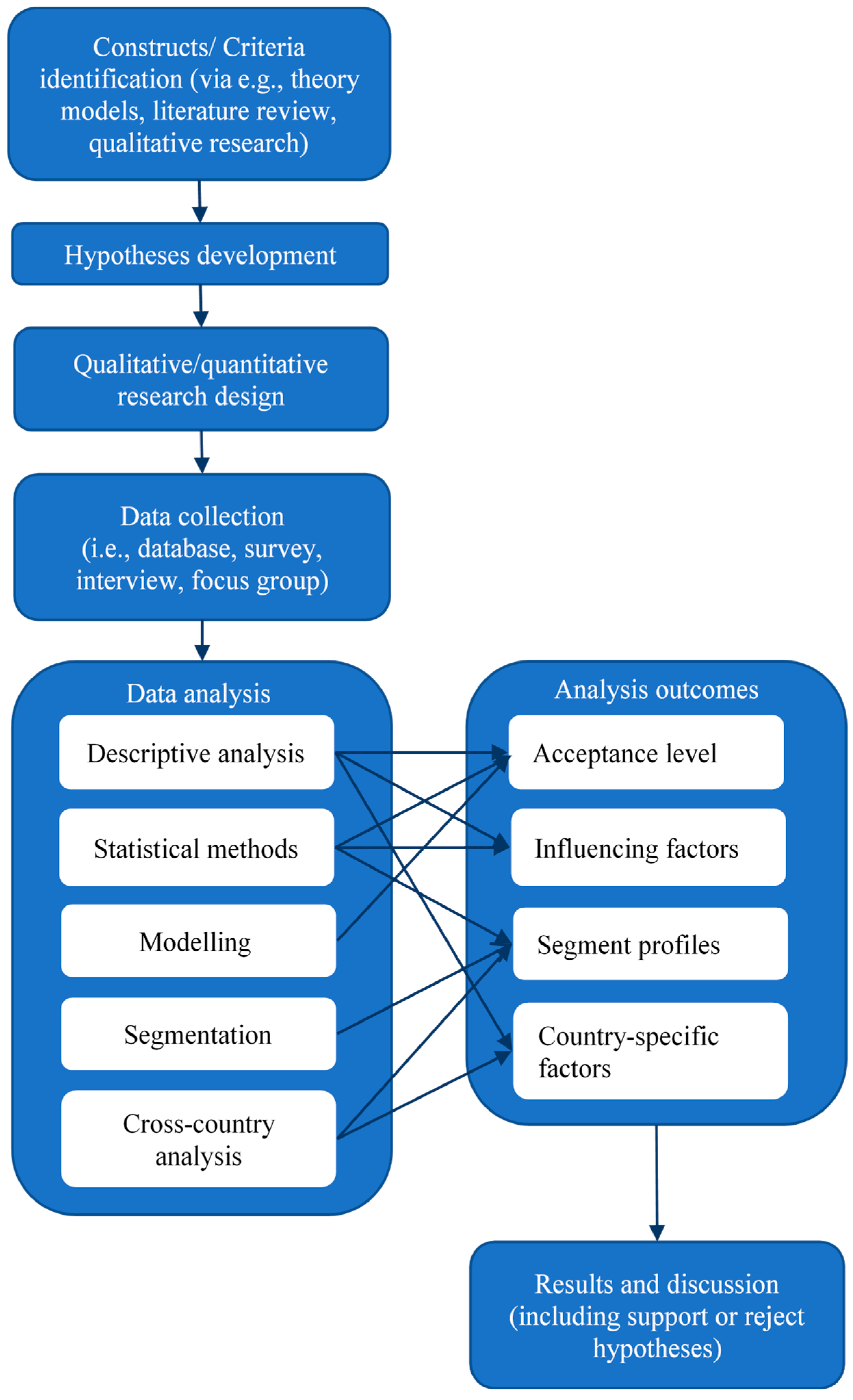
Disclaimer/Publisher’s Note: The statements, opinions and data contained in all publications are solely those of the individual author(s) and contributor(s) and not of MDPI and/or the editor(s). MDPI and/or the editor(s) disclaim responsibility for any injury to people or property resulting from any ideas, methods, instructions or products referred to in the content.

Article Metrics

Citations

Article Access Statistics

Multiple requests from the same IP address are counted as one view.