Article

Carbon Footprint Accounting and Emission Hotspot Identification in an Industrial Plastic Injection Molding Process


1
Department of Industrial Engineering, Çukurova University, 01330 Adana, Türkiye
2
Petka Mold Industry, 01100 Adana, Türkiye
3
Department of Law, Çağ University, 33800 Mersin, Türkiye
*
Author to whom correspondence should be addressed.
Sustainability 2025, 17(21), 9531; https://doi.org/10.3390/su17219531
Submission received: 28 July 2025 / Revised: 13 September 2025 / Accepted: 15 September 2025 / Published: 27 October 2025

Abstract

Climate change is one of the most pressing global environmental challenges, driven by the accumulation of greenhouse gases in the atmosphere. Industrial processes, particularly plastic injection molding, are major contributors due to their high energy demand, raw material use, and waste generation. This study quantifies the carbon footprint of plastic injection molding operations and identifies emission hotspots to support alignment with sustainability objectives. A greenhouse gas inventory was developed for the production processes of Petka Mold Industry in Adana, Türkiye, covering 1 January–31 December 2023. The assessment followed the ISO 14064-1:2019 standard and included emissions from direct fuel consumption, purchased electricity, refrigerant leaks, company vehicles, employee commuting, business travel, purchased goods, and waste transportation. Carbon dioxide, methane, and nitrous oxide were calculated in carbon dioxide equivalent units. This research represents the first comprehensive carbon footprint study in the plastic mold sector integrating all categories (Categories 1–6). In addition, uncertainty and materiality analyses were applied to ensure robustness and transparency, an approach rarely adopted in similar industrial contexts. While most previous studies are limited to Categories 1–3, this work expands the boundaries to all categories, offering a pioneering model for industrial applications. The total corporate GHG emissions for 2023 were calculated as 3922.75 metric tons of CO2e. Among the categories, purchased raw materials and end-of-life product stages were the most significant contributors, whereas transport and auxiliary services had smaller shares. The results provide a reliable baseline for developing action plans and pursuing emission reduction targets. By combining full category coverage with rigorous assessment tools, this study contributes methodological novelty to corporate carbon accounting and establishes a foundation for future progress toward carbon neutrality.

1. Introduction

Climate change is one of the most pressing global challenges of the 21st century, with significant environmental, social, and economic consequences [1,2,3]. Anthropogenic activities such as fossil fuel combustion, deforestation, and intensive industrial processes accelerate greenhouse gas (GHG) accumulation, leading to global warming, biodiversity loss, extreme weather events, and risks to human health and food security [4,5]. Developing countries are disproportionately affected, despite contributing less to historical emissions [6,7].
Türkiye, located in the Mediterranean Basin—a recognized climate hotspot—is highly vulnerable to temperature rise, droughts, floods, and forest fires. Climate projections indicate an average increase of 2.5–4 °C by mid-century, particularly affecting inland and southern regions [8]. The Climate Change National Action Plan identifies critical risks such as water scarcity, agricultural decline, and desertification, underlining the urgent need for mitigation and adaptation [9]. Although Türkiye has ratified the Paris Agreement and committed to achieving net-zero emissions by 2053, industrial activities remain among the primary sources of GHG emissions, especially energy- and resource-intensive manufacturing sectors.
Within this context, the plastic injection molding industry is a significant emitter due to its high energy consumption, raw material use, and waste generation. However, comprehensive studies on emissions accounting in this sector remain limited. Addressing this gap, the present study develops a facility-level GHG inventory for Petka Kalıp San. ve Tic. A.Ş., located in Adana, Türkiye. The inventory was prepared in line with the ISO 14064-1:2019 [10] standard, covering all six emission categories (Categories 1–6) for the year 2023.
To the best of our knowledge, this is the first carbon footprint assessment in the plastic mold sector that integrates all six categories with Bayesian Monte Carlo-based uncertainty analysis. This extended category coverage, combined with a probabilistic approach, is expected to provide a more accurate and transparent emissions profile compared to conventional Category 1–3 assessments. Accordingly, this study aims to quantify GHG emissions, identify emission hotspots, and evaluate uncertainty and materiality, thereby establishing a replicable methodological framework for industrial applications and supporting both corporate and national sustainability strategies.
This study has been prepared to serve as a foundation for Petka Kalıp’s implementation of the ISO 14064-1:2019 [10] standard and is intended to be presented to all relevant stakeholders as the target audience. Through the calculations conducted within the defined categories, Petka Kalıp aims to establish a basis for controlling and reducing its greenhouse gas (GHG) emissions. The assessment of the company’s activities in terms of their contribution to climate change, the reporting of GHG emissions in line with the ISO 14064-1:2019 [10] standard, and the development of a comprehensive greenhouse gas management plan constitute the primary objectives of this work. In addition, this study seeks to increase awareness among company personnel on climate change, energy efficiency, and sustainability. These activities are expected to enhance corporate transparency in resource and energy consumption, identify emission reduction potentials, and strengthen the company’s long-term sustainability vision.
Although the case study focuses on Petka Mold Industry, the category of the work extends beyond company-level reporting. By integrating all emission categories (Categories 1–6) and applying Bayesian Monte Carlo-based uncertainty analysis, this study advances a replicable scientific framework that can be applied to other industrial contexts. Thus, the findings not only provide practical benefits for the company but also contribute to the broader academic literature on corporate carbon accounting, offering methodological novelty and transferable insights for future industrial applications.
The plastic mold sector remains underexplored in terms of comprehensive carbon footprint assessments. Previous studies typically limited their boundaries to Scopes 1–3, neglecting supply-chain and product life-cycle emissions. Moreover, few works have applied uncertainty or materiality analysis, leaving methodological gaps. To the best of our knowledge, this is the first full-scope (1–6) carbon footprint assessment in the plastic mold industry, integrating a Bayesian Monte Carlo uncertainty framework.
We hypothesize that this comprehensive approach provides a more accurate and transparent emissions profile than conventional Scope 1–3 studies. The objective of this study is therefore to quantify GHG emissions across Scopes 1–6, identify hotspots, and evaluate uncertainty and materiality, thereby establishing a replicable methodological model for other industrial applications.
The remainder of this paper is structured as follows: Section 2 reviews the relevant literature. Section 3 details the materials and methods used for emissions accounting. Section 4 presents the results of the study, including emission hotspot identification. Section 5 discusses the findings, and Section 6 concludes with limitations, implications, and future research directions.

2. Literature Review

Academic studies in the field of climate change and greenhouse gas (GHG) emissions clearly demonstrate that human activities have led to increased concentrations of GHGs in the atmosphere, thereby contributing to the rise in global temperatures [1,9]. While carbon dioxide (CO2) is primarily emitted through the combustion of fossil fuels and deforestation, other potent greenhouse gases such as methane (CH4) and nitrous oxide (N2O) are significantly released through agricultural and industrial processes [11,12].
The increase in GHG concentrations has resulted in not only physical impacts—such as the rapid melting of polar ice caps and rising sea levels—but also serious socio-economic consequences, including displacement, food insecurity, and public health crises [13,14]. From a measurement and management perspective, standards such as ISO 14064-1:2019 [10] enable organizations to systematically track their direct and indirect emissions [15,16]. These frameworks facilitate the development and implementation of mitigation strategies, including the transition from fossil fuels to renewable energy sources, the deployment of carbon capture and storage (CCS) technologies, and the promotion of sustainable agricultural practices [17,18].
At the international level, climate finance and multilateral environmental cooperation are critical for achieving the objectives of the PA. However, challenges in implementation and persistent financial gaps remain significant obstacles [19,20]. Research on climate change and GHG emissions extensively illustrates the impacts of anthropogenic increases in major GHGs—namely, CO2, CH4, and N2O—on the climate system [21].
The primary drivers of these emissions include fossil fuel consumption, industrial activities, agricultural practices, deforestation, and land-use changes [22,23,24]. These emissions drive numerous environmental challenges, including sea-level rise, more frequent and severe extreme weather events, loss of biodiversity, reductions in agricultural productivity, and the degradation of ecosystems [12,25,26]. In recent years, it has been observed that the impacts of climate change exhibit regional variations, with vulnerabilities particularly pronounced in developing countries [27].
Thanks to technological advancements, accuracy in monitoring and reporting GHG emissions has improved under standards like ISO 14064-1 [10], with artificial intelligence-based data analytics playing a critical role in this process [28]. Mitigation strategies prioritize the implementation of CCS technologies, the transition to renewable energy, energy-efficiency measures, and sustainable farming practices [29,30]. However, barriers such as insufficient financing, infrastructure deficits, and lack of political will continue to impede the widespread deployment of these technologies [31,32,33,34].
Country-level studies have emphasized that economic growth, energy consumption patterns, and technology adoption significantly influence emission levels. In particular, the industrialization processes in developing countries have been shown to drive increases in GHG emissions [35]. Moreover, the protection and enhancement of natural carbon sinks, sustainable forest management, and soil carbon sequestration are considered to be complementary strategies in the fight against climate change [36].
At the global level, mechanisms of international cooperation—such as the PA—play a vital role; however, financial and political barriers remain critical challenges to effective implementation [37,38,39]. Furthermore, innovative policy approaches, the development of carbon markets, and the enhancement of public awareness are emerging as key complementary elements in climate change mitigation efforts [40].
All of these multidisciplinary studies underscore the complexity of climate change and GHG emissions, while clearly revealing the necessity for sustainable and integrated solutions. Process-based carbon accounting has been conducted in industrial manufacturing processes through the integration of Industry 4.0 technologies and ERP systems, and emission-intensive areas have been identified using digital systems. This approach enables the simultaneous management of production efficiency and environmental impact [41].
In high-energy-consuming industrial zones, fuel- and electricity-based emissions were monitored in real time, and geographic and operational emission hotspot maps were created. The method demonstrated applicability, especially in integrated industrial parks [42]. The “Carbon Emission Composite Curve (CECC)” developed for reducing emissions in chemical process plants identified high-emission sub-processes and proposed reduction scenarios [43].
In the textiles sector, process-level carbon footprint accounting was conducted; emission contributions from energy consumption, fuel use, waste management, and transportation processes were analyzed. This study highlights critical emission sources to achieve sustainable low-carbon production targets and proposes improvement strategies [44].

3. Materials and Methods

This section outlines the methodological framework used for quantifying greenhouse gas (GHG) emissions in the plastic injection molding processes of Petka Mold Industry. The assessment followed the ISO 14064-1:2019 [10] standard and the Greenhouse Gas (GHG) Protocol [45], ensuring consistency with internationally recognized reporting principles. The organizational boundaries were determined using the operational control approach, and emission sources were classified under Categories 1 through 6.

3.1. System Boundaries

The system boundaries were defined to include all direct and indirect emissions from activities conducted at Petka’s facility in Seyhan, Adana, between 1 January and 31 December 2023.
Petka Mold Industry, located in Seyhan, Adana, was selected as the study site for several reasons. First, it is one of the leading companies in Türkiye’s plastic mold sector, with a diverse portfolio of products that reflect the industry’s operational characteristics. Second, the company provided comprehensive access to primary data sources, including invoices, metered energy use, logistics records, and procurement data, enabling reliable and detailed calculations.
Third, Petka has expressed a strong commitment to sustainability and reducing emissions, making it an ideal pilot case for methodological testing. Thus, the company was selected as an appropriate case study to demonstrate the applicability and robustness of a full-category carbon accounting methodology in the plastic mold sector.
The categorization was applied as follows:

3.2. Categories of Emission Sources

In this study, the organizational operational boundaries were established following the criteria outlined in the ISO 14064-1 [10] standard and the Greenhouse Gas (GHG) Protocol. Based on these frameworks, the GHG emissions generated from activities within the boundaries specified in Section 3.2 of this study have been classified into the following categories: direct GHG emissions (Category 1), indirect emissions resulting from purchased energy consumption (Category 2), transportation-related indirect emissions (Category 3), indirect emissions linked to products utilized by the organization (Category 4), emissions and sequestrations related to product usage (Category 5), and other indirect emissions from supplementary sources (Category 6).
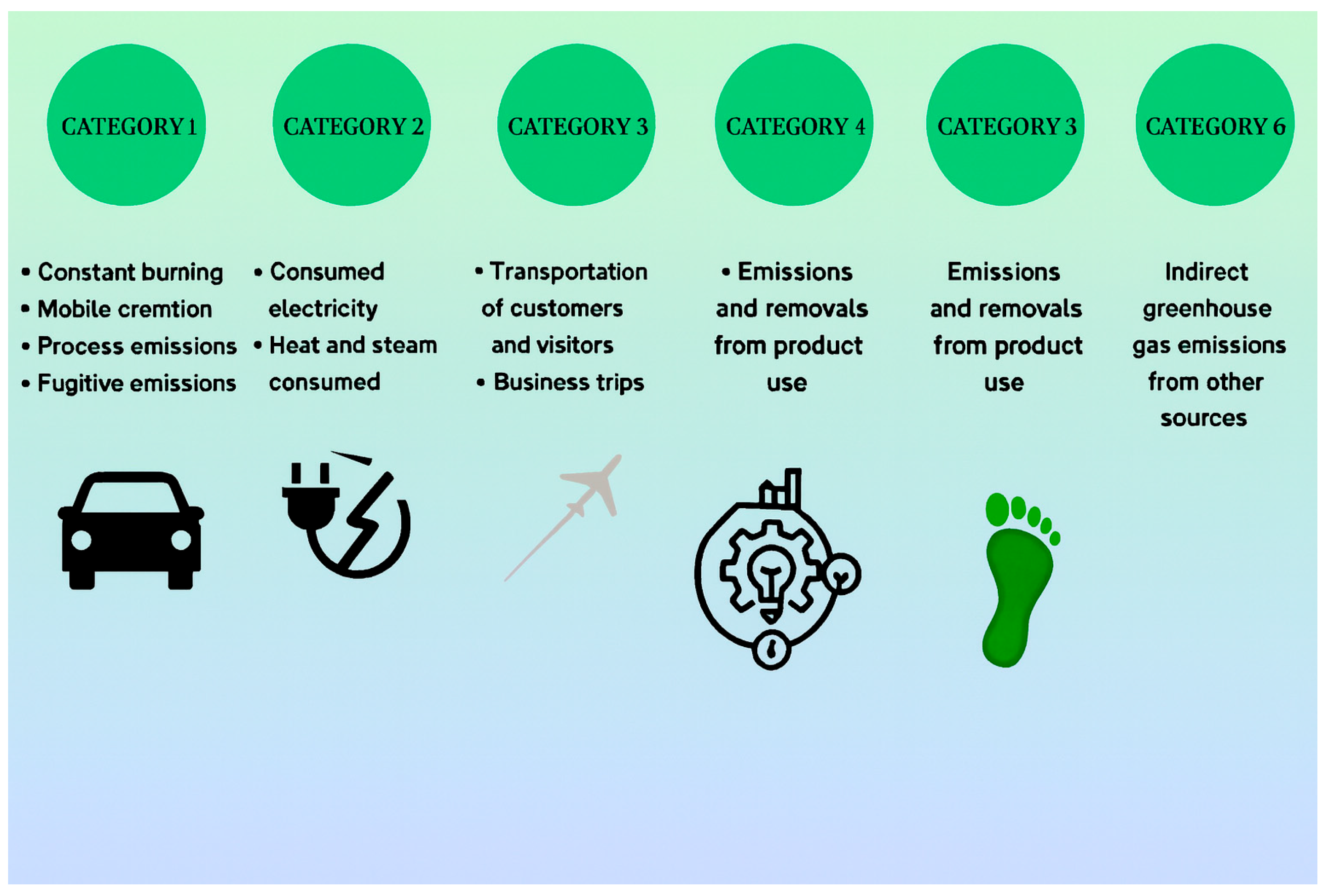
The category-based approach was developed under the GHG Protocol [45] and is intended to facilitate the calculation and reporting of emissions. The components of the organizational carbon footprint, as defined by the categories of the GHG Protocol [45], are illustrated in Figure 1.
A.
Category 1: Direct GHG Emissions
Category 1 encompasses emissions that occur from greenhouse gas sources directly owned or controlled by an organization; the primary activities within this category include stationary combustion, mobile combustion, and fugitive emissions. For Petka Kalıp, Category 1 emissions encompass direct greenhouse gas emissions originating from several sources: fuel usage by company-owned vehicles, fuel consumption of vehicles for which the company bears the fuel costs, generator fuel consumption associated with office and technical operations, and emissions resulting from refrigerant gas leakage and subsequent refilling activities.
B.
Category 2: Indirect GHG Emissions from Imported Energy
Category 2 encompasses greenhouse gas emissions resulting from electricity consumed by an organization that is procured externally.
C.
Category 3: Indirect GHG Emissions from Transportation
These emissions originate from sources outside the organizational boundaries. These sources are mobile, with emissions primarily resulting from fuel combustion in transportation equipment.
For this study, Category 3 emissions consist of emissions from inbound transportation or distribution of goods, emissions from outbound transportation of goods, employee commuting, transportation of customers and visitors, and business travel.
D.
Category 4: Indirect GHG Emissions from Products Used by the Organization
Category 4 emissions refer to greenhouse gas emissions originating from sources outside the organizational boundaries that are associated with products used by the organization. These sources may be either stationary or mobile and can be related to all types of products purchased by the reporting organization.
For this study, Category 4 emissions comprise emissions related to the manufacturing of purchased raw materials, finished products, and semi-finished products, as well as emissions arising from services and from solid and liquid waste.
E.
Category 5: Emissions and Removals from Product Use
Indirect greenhouse gas emissions associated with the post-production use of the organization’s products originate from the products sold by the organization.
F.
Category 6: Indirect GHG Emissions from Other Sources
The purpose of this category is to report any organization-specific emissions that cannot be accounted for in any other category (such as Category 2, Category 3, Category 4, or Category 5). Well-to-Tank (WTT) calculations and electricity distribution loss and leakage data have been included in this category.
This classification is aligned with methodologies recommended by both ISO 14064-1 [10] and recent academic studies on category-based accounting [44].

3.3. Data Collection

Activity data were obtained from primary sources including fuel purchase invoices, electricity consumption records, maintenance reports for refrigerants, transportation and travel documents, and procurement records for purchased goods and services. Secondary data were used where primary data were unavailable, supported by international databases such as IPCC [1], DEFRA [2], and EPA [3].

3.4. Emission Calculation Methodology

GHG emissions were calculated using the activity data multiplied by appropriate emission factors, as expressed in Equation (1):
GHG Emissions (t CO2e) = Activity Data × Emission Factor (t CO2e/unit activity)
Equation (1) follows the general emission calculation approach recommended by the IPCC (2006) guidelines (Equation (1)) and ISO 14064-1:2019 [10], where emissions are determined as the product of activity data, an emission factor, and the Global Warming Potential of the corresponding gas. In this study, four gases were included: CO2, CH4, N2O, and HFCs. These gases cover all relevant sources for the facility—fuel combustion, transportation, and refrigerant leakage. Other Kyoto gases such as SF6, PFCs, and NF3 were excluded, since they are not used in the processes of Petka Mold Industry.
For each emission source, Tier 1 or Tier 2 methods were applied, depending on data availability. For example, electricity-related emissions were calculated using country-specific factors (Tier 2), while fuel combustion relied on Tier 1 default values. This hybrid approach minimized uncertainties and ensured comparability.

3.5. Uncertainty and Materiality Assessment—Bayesian Monte Carlo Approach

To enhance methodological rigor, uncertainty and materiality assessments were integrated into the framework. Uncertainty values were determined based on the quality of measurement instruments, calibration status, and source data reliability, while materiality was assessed by considering emission magnitude, data quality, sector relevance, and mitigation potential. These analyses provide transparency and prioritize emission sources for reduction strategies. Uncertainty in greenhouse gas (GHG) emission inventories arises from multiple sources, including variability in activity data, limitations in emission factor accuracy, and methodological assumptions. To ensure scientific robustness, a Bayesian Monte Carlo (BMC) simulation was applied.
This approach combines the probabilistic sampling power of Monte Carlo methods with Bayesian inference, thereby incorporating both prior knowledge and observed data into the uncertainty estimation process.
In this study, prior distributions for key variables (e.g., fuel consumption, electricity emission factors, refrigerant leakage rates, transportation distances) were defined based on internationally recognized sources such as IPCC [1]/DEFRA [2]/EPA [3]. Posterior distributions were then obtained by iteratively updating these priors with the observed company-specific activity data. A total of 10,000 simulation runs were performed for each emission source to generate probability density functions (PDFs) of the resulting emissions.
The outputs provide not only mean and median estimates of total emissions but also credible intervals (95% CIs) that reflect the likelihood of emission values within a specified range. Compared to conventional Monte Carlo, the Bayesian framework allows for more explicit incorporation of expert judgment and literature-derived priors, ensuring transparency and methodological rigor.
In addition, a sensitivity analysis was conducted to determine which input parameters contributed most significantly to the overall uncertainty. This supports decision-making by prioritizing data quality improvements in areas with the highest influence on inventory results.

3.5.1. Notation and Basic Emissions Model

For each emission source s ∈ S and GHG g ∈ {CO2,CH4,N2O}, the total emission can be determined as follows:
Es,g = AsEFs,g GWPg
where As represents in Table 1 the corresponding activity data (e.g., consumption, distance, or quantity), EFs,g denotes the relevant emission factor, and GWPg refers to the 100-year Global Warmingf Potential. The total emissions of the study are expressed as follows:
E tot =   s S g E s , g
This formulation is consistent with the fundamental method used in the study (“Activity Data × Emission Factor”).

3.5.2. Likelihood Measurement Model

For each source, the relationship between the observed activity data YA,s and the true (latent) activity As > 0 is established using a lognormal measurement model, which is suitable for positive quantities.
Y A , s | A s   LogNormal ( ln A s ,   σ A s   2 )
Similarly, for the emission factor EFs,g > 0,
Y EF , s , g | EF s , g   LogNormal ( ln E F s , g ,   σ E F , s , g   2 )
If no direct observation is available for EF (only a published mean and uncertainty are provided), this term is omitted and only the prior is used.
Adjustment of lognormal scatters in terms of coefficient of variation (CV): The percentage values in the uncertainty values table used in this study are directly treated as CVs.
CVA,s = uA,s, CVEF,s,g = uEF,s,g
Lognormal parameter transformation:
σ 2 = ln 1 +   C V 2 ,   μ   =   ln ( m )     1 2 σ 2
where m is the point estimate of the relevant quantity (activity or EF), such as the invoice/measurement mean or a published mean; (μ, σ s 2 ) are the parameters of the lognormal distribution in the natural log space.

3.5.3. Prior Distributions

Activity data (A):
Weakly informative lognormal prior for meter-based reliable data:
A s   LogNormal ( μ A , s   ( 0 ) ,   σ A , s   0   2 )
μ A , s ( 0 ) , σ A , s 0   2 , according to the data quality derived from the specified CV.

3.5.4. Emission Factors (EFs)

Lognormal prior based on the means and uncertainties provided by IPCC [1]/DEFRA [2]/EPA [3] and national sources:
EF s , g   LogNormal   ( μ E F , s , g   0 ,   σ E F , s , g   0   2 )
For electricity, country-specific EF (Tier 2) priors are used; for fuels, IPCC [1] default values (Tier 1) are applied.
Leakage rates ():
s ∼ Beta(αss), As = capacitys × s
where α and β are selected according to typical leakage rates from IPCC [1]/suppliers (consistent with the logic in Table 2).
Table 2 shows that GHG emissions from fuel consumption were calculated according to established guidelines. For diesel fuel, the equation GHG Emission = Fuel Consumption × Density × NCV × EF was applied, with emission factors of 74,100 kg/TJ (CO2), 3 kg/TJ (CH4), and 0.6 kg/TJ (N2O). For on-road diesel, the same methodology was used, with emission factors of 74,100 kg/TJ (CO2), 3.90 kg/TJ (CH4), and 3.9 kg/TJ (N2O).

3.5.5. Posterior and Bayesian Monte Carlo Sampling

Given the data y = {YA,s, YEF,s,g}, the Bayes rule is as follows:
P (Θ∣y) ∝ p(y∣Θ) p(Θ),
Θ = {As, EFs,g, s}. Without requiring closed-form solutions, sampling is performed from the posterior distribution using the Bayesian Monte Carlo approach.
Algorithm:
for t = 1,…,T (T = iteration)
1.
A s ( t ) p(As|YA,s)
2.
E F s , g ( t ) ∼ p(EFs,g |Y EFs,g )
3.
s ( t ) ∼ p(s|data ), A s ( t ) = capacitys s ( t )
4.
E s , g ( t ) = A s ( t ) E F s , g ( t ) GWPg
5.
E t o t ( t ) = s , g E s , g ( t )
Typical setting: T = 10,000 draws. Outputs include E[Etot] median, 95% credible interval (2.5–97.5 percentiles), and source-based distributions.
Sensitivity analysis:
To rank contributions to total uncertainty, partial rank correlation coefficient (PRCC) or Sobol indices can be used. For PRCC,
PRCC(Xk,Etot) = corr(rank(Xk),rank(Etot)|other X)
where Xk ∈ {As, EFs,g}. This analysis provides prioritization in data quality improvements.
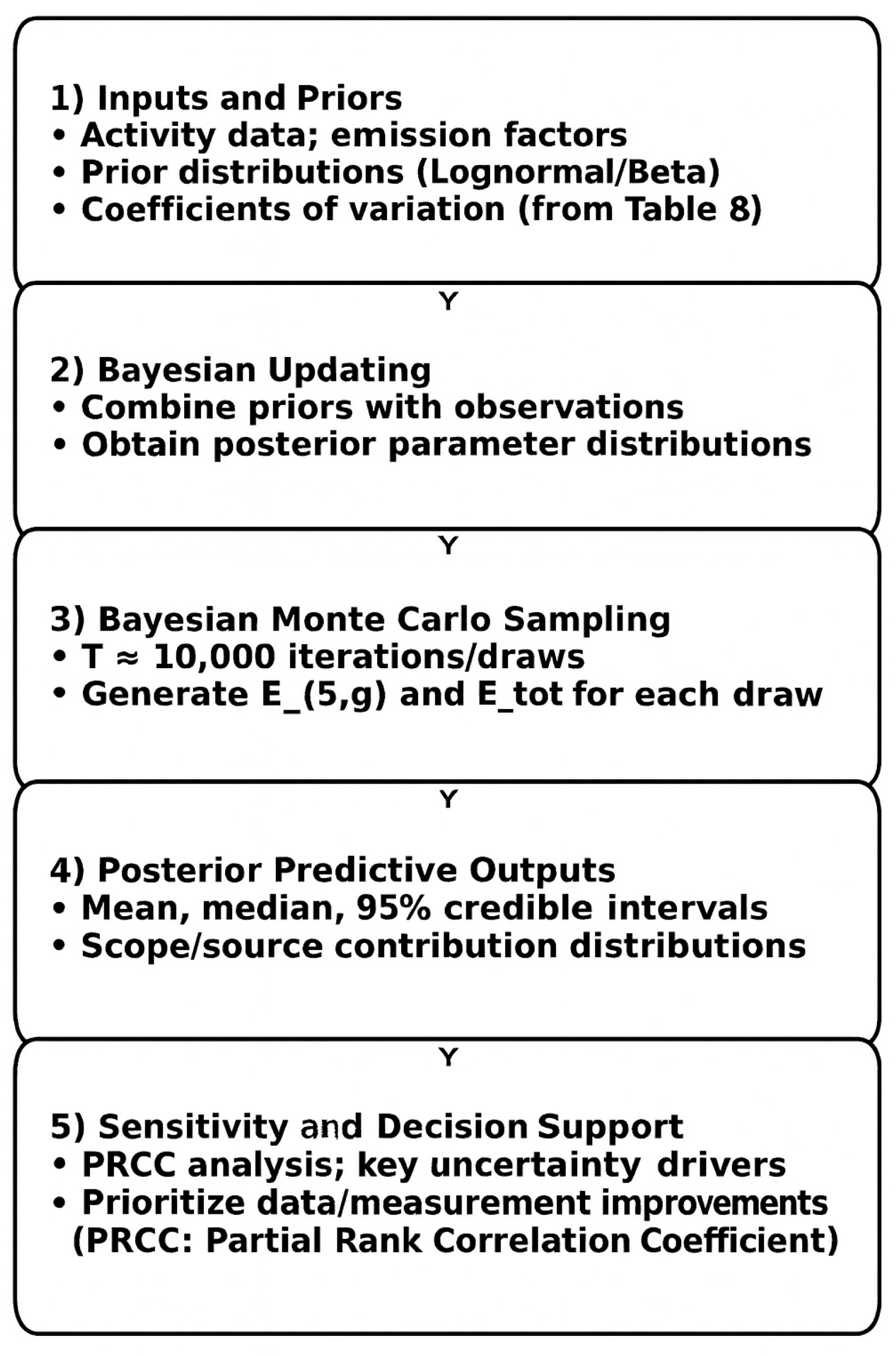
Uncertainty was quantified using a Bayesian Monte Carlo framework that combines literature-based priors (IPCC [1]/DEFRA [2]/EPA [3]) with company-specific observations, generating posterior predictive distributions for source- and gas-level emissions. Credible intervals and PRCC-based sensitivity indices are reported to support robust decision-making (Figure 2).
Literature-based priors (IPCC [1]/DEFRA [2]/EPA [3]; country-specific electricity) were combined with company observations to obtain posterior distributions for activity data and emission factors. Posterior predictive simulations (T ≈ 10,000) yield probability distributions and 95% credible intervals for source- and scope-level emissions. A PRCC-based sensitivity analysis identifies dominant contributors to overall uncertainty, guiding data quality improvements and mitigation prioritization.

3.6. Calculation Methodology

While calculating the greenhouse gas emissions resulting from the activities carried out by Petka Kalıp at the evaluated locations between 1 January 2023, and 31 December 2023, the primary method employed involved multiplying the defined activity data by the corresponding emission factors.
The selected method was determined to align with the available activity data, aiming to minimize uncertainties and obtain accurate, consistent, and comparable results. Therefore, the Tier 1 approach, as outlined in the IPCC [1] Good Practice Guidance and Uncertainty Management in National Greenhouse Gas Inventories 2006, was applied. However, for CO2 emissions resulting from electricity consumption, the Tier 2 approach was utilized due to the use of country-specific emission factors obtained from international sources.
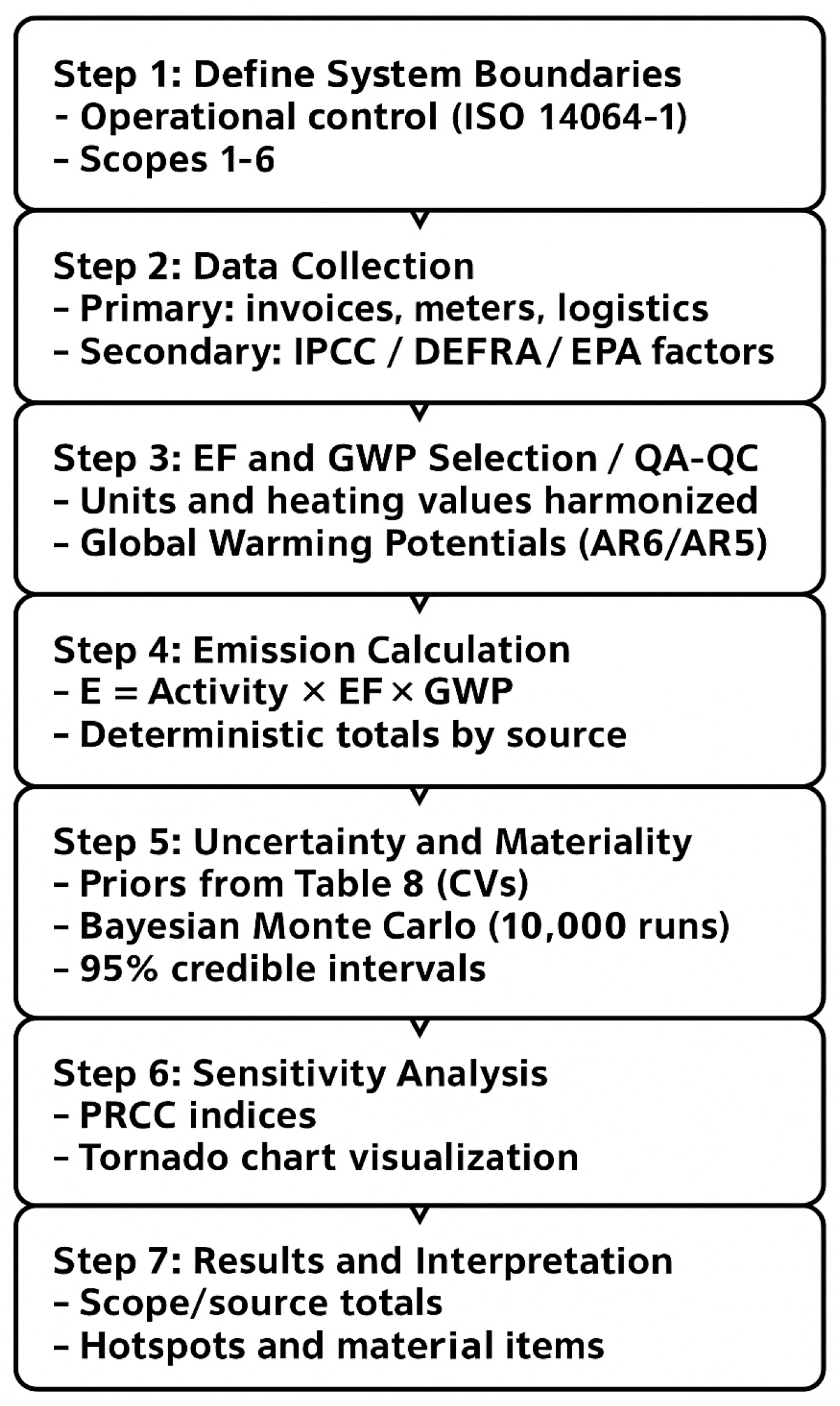
Figure 3 shows a flowchart of the GHG inventory methodology applied to Petka Mold Industry. The process begins with system boundary definition (Categories 1–6) and continues through activity data collection, emission factor assignment, and deterministic emission calculation. Bayesian Monte Carlo simulation with 10,000 iterations was applied to quantify uncertainty, followed by PRCC-based sensitivity analysis. The outputs include category- and source-level emissions, hotspot identification, and uncertainty-adjusted credible intervals.
The formula used for greenhouse gas emission calculations is given in Equation (12):
Greenhouse Gas Emission Quantity (t CO2e) = Activity Data × Emission Factor (t CO2e/activity data)
Table 3 outlines the methods used to estimate direct emissions from leaks and fugitive emissions in anthropogenic systems.
Table 4 presents the calculation approach and emission factors associated with electricity-related emissions, whereas Table 5 specifies the methodology and emission factors for transportation-related indirect greenhouse gas emissions. Table 6 describes the calculation methods and emission factors for indirect emissions linked to products utilized by the organization. Finally, as shown in Table 7, the list of GHG emission sources for the year 2023 provides a comprehensive categorization of the company’s emission activities.
Table 3 shows that fugitive emissions from refrigeration, air-conditioning systems, and fire extinguishers were calculated according to established guidelines. If refilling occurred, emissions were estimated as Gas Charged × GWP. If not, emissions were calculated as Equipment Gas Capacity × Leakage Rate × GWP, with leakage rates of 0.1% for refrigerators, 1% for air conditioners, and 4% for fire extinguishers.
Table 4 shows that electricity-related GHG emissions were calculated as Activity Data (MWh) × Emission Factor. A national grid emission factor of 0.439 tCO2e/MWh was applied.
Table 5 shows that transportation- and travel-related GHG emissions were calculated using activity data and emission factors (EFs). For road, air, and maritime transport, emissions were estimated as Activity Data (USD) ×   EF, with factors of 1.115, 0.976, and 0.618 kgCO2e/USD, respectively. For flights, domestic and international emissions were calculated as passenger.km ×   EF, with factors of 0.18287 and 0.20011 kgCO2e/passenger.km, respectively, while hotel accommodations were calculated as overnight stays × EF, with a factor of 32.1 kgCO2e/overnight stay.
Table 6 provides detailed emission factors (EFs) for diverse activity categories. For domestic water, the EF was calculated as 0.15311 kgCO2e per m3, while wastewater showed a slightly higher value of 0.18574 kgCO2e per m3, indicating the additional treatment- and discharge-related emissions. Household waste exhibited a significantly larger EF of 497.04416 kgCO2e per tonne, reflecting its intensive carbon footprint compared to unit-based service or material categories. Among industrial materials, aluminum had the highest EF, at 1.41 kgCO2e per USD, followed by aluminum products (0.869 kgCO2e/USD) and primary steel (0.549 kgCO2e/USD). In contrast, screws, nuts, and bolts (0.332 kgCO2e/USD) and ball and roller bearings (0.277 kgCO2e/USD) demonstrated lower emission intensities. Service-related categories generally showed smaller emission factors, with accounting (0.05 kgCO2e/USD) and certification/R&D (0.079 kgCO2e/USD) among the lowest, while catering and food services reached 0.155 kgCO2e/USD. The software sector contributed 0.097 kgCO2e/USD, and management consulting and 5S practices each corresponded to 0.084 kgCO2e/USD. Overall, the numerical results highlight the heterogeneity of carbon intensities across categories, with waste- and aluminum-related activities representing the most emission-intensive sources, and with professional services showing comparatively lower contributions.
Table 7 presents the classification of greenhouse gas (GHG) emission sources based on the relevant categories and activity types. Category 1 covers direct emissions such as diesel generator use, fuel consumption of on-road and off-road vehicles, refrigerant gas and fire extinguisher leaks. Category 2 includes indirect emissions from electricity consumption associated with building operating systems, including heating, cooling, and lighting. Category 3 refers to emissions arising from supply chain and logistics activities, including transportation of incoming and outgoing goods, personnel transport, customer/visitor travel, and business travel. Category 4 covers emissions from purchased raw materials and semi-products, solid and liquid waste disposal, and consultancy services. Category 5 includes emissions and removals related to product use and renewable energy systems (e.g., solar power plants). Finally, Category 6 accounts for other indirect emissions such as well-to-tank (WTT) processes and electricity distribution. This classification ensures a systematic consideration of all relevant emission sources, contributing to the comprehensive and transparent development of the GHG inventory.

4. Results

This section outlines the methodological framework used for quantifying greenhouse gas emissions. In line with ISO 14064-1:2019 [10] and the GHG Protocol [45], organizational boundaries were defined, emission sources were categorized under Categories 1–6, and activity data were combined with appropriate emission factors. While the formulae and factors are detailed here, all calculated values and emission distributions are presented in this section to ensure clarity.
In alignment with the objective of carbon footprint accounting and the identification of emission hotspots in industrial plastic injection molding processes, the UCF method serves as a structured and effective approach for assessing the environmental performance of manufacturing operations. Within this framework, critical parameters such as electricity consumption, fuel usage, refrigerant leakage, waste generation, and logistics-related emissions are comprehensively evaluated.
The methodology follows a series of essential steps, including system boundary definition, data acquisition, emission factor application, calculation of CO2-equivalent values, and integration into a consolidated emissions inventory. This approach facilitates the identification of process stages with high emission intensity, thereby enabling the development of targeted mitigation strategies. The carbon emissions presented in Table 2, Table 3, Table 4, Table 5 and Table 6 reflect the operational activities conducted throughout the year 2023. These values, expressed in metric tons, were derived from activity data recorded and verified by the responsible operational units, and they were directly incorporated into the footprint analysis.
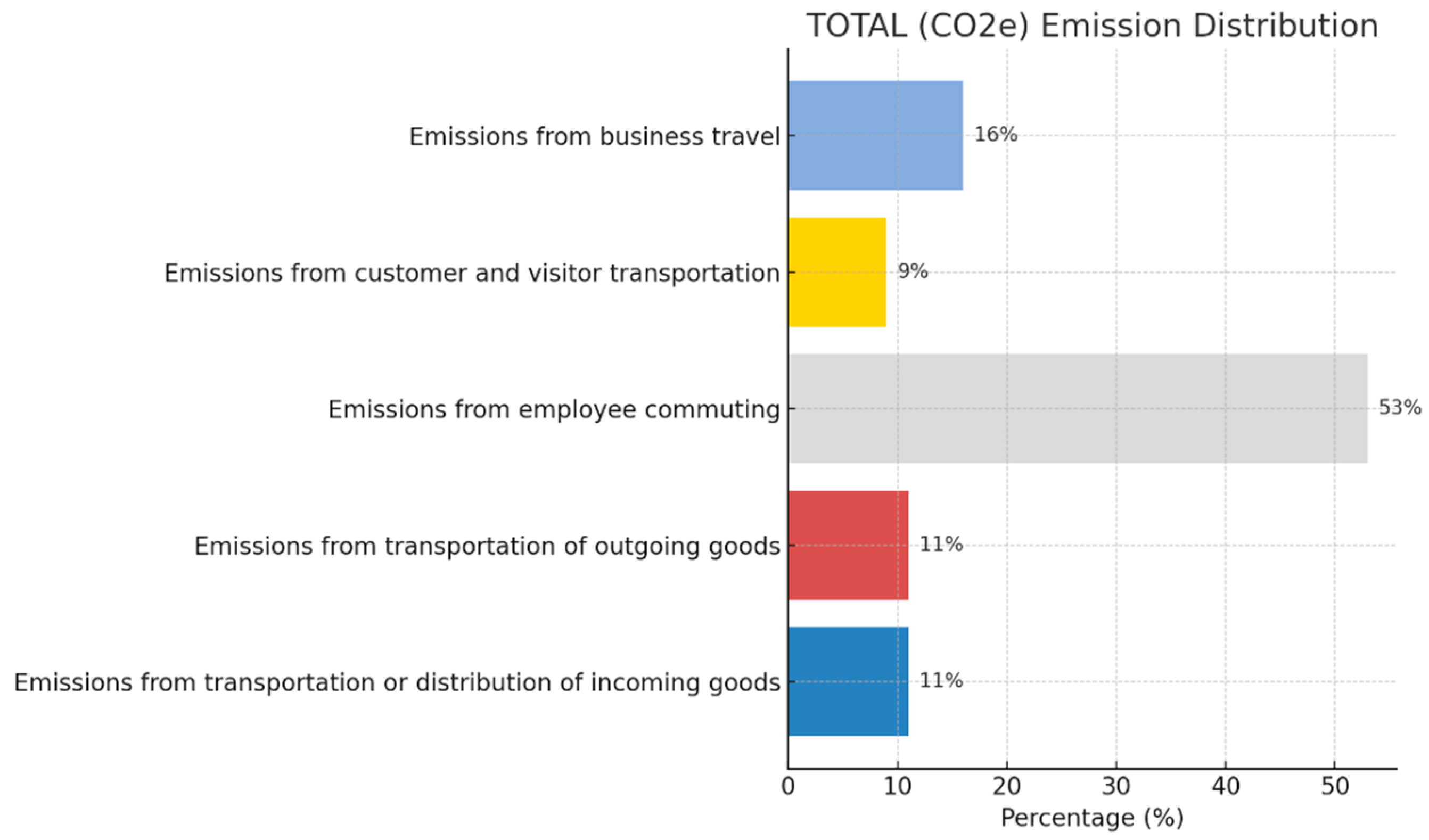
Figure 4 shows that 53% of total transport-related emissions originate from employee commuting, indicating that staff mobility is the dominant contributor and should be prioritized in emission reduction strategies. Business travel accounts for 16%, while the transportation of incoming and outgoing goods contributes 11% each. Customer and visitor transportation represents the smallest share, at 9%. These findings highlight that measures targeting employee commuting (e.g., promoting public transportation, optimizing company shuttles, or transitioning to electric vehicles) are critical for achieving sustainability goals.
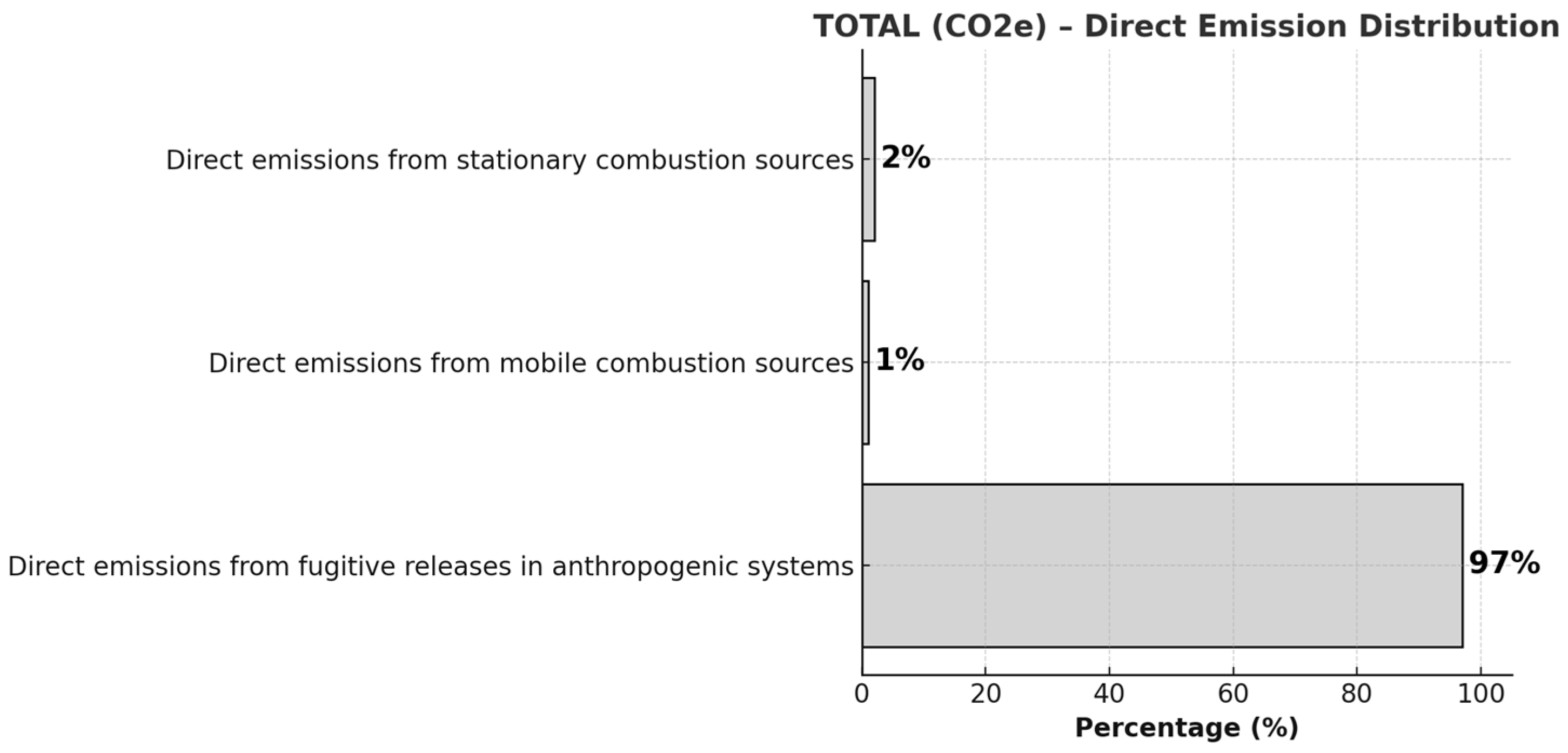
Figure 5 indicates that 97% of total direct (Category 1) emissions stem from fugitive releases in anthropogenic systems, highlighting the dominance of refrigerant leakage and similar uncontrolled sources. In contrast, stationary combustion sources contribute only 2%, and mobile combustion sources account for just 1% of direct emissions. This distribution suggests that emission reduction strategies should primarily target fugitive emissions through improved maintenance, monitoring, and leak prevention programs, while energy-efficiency measures for combustion sources can provide complementary benefits.
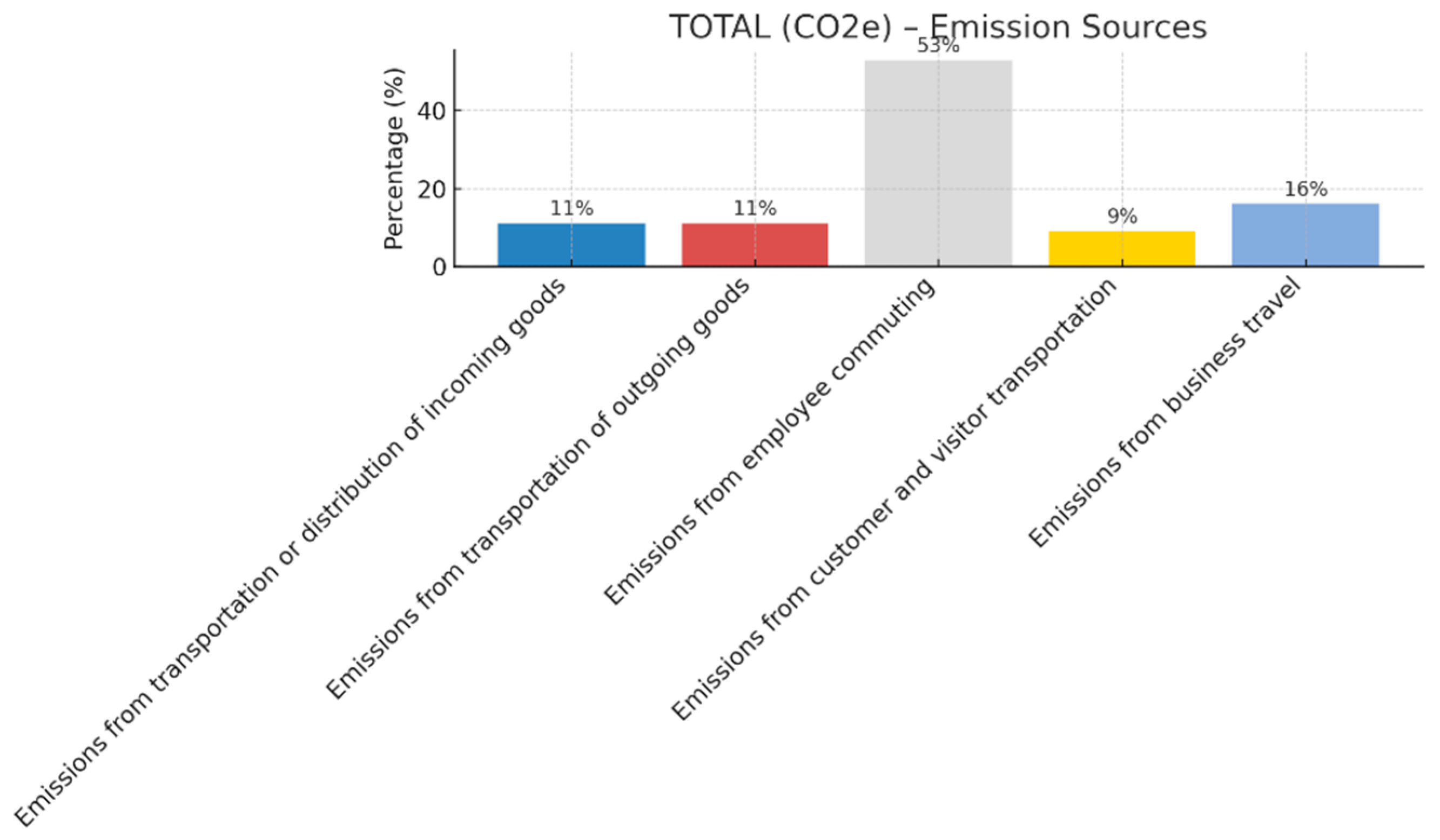
Figure 6 illustrates that employee commuting is the largest contributor to total emissions, accounting for 53%. Business travel follows, with 16%, while both incoming and outgoing goods transportation each represent 11%. Customer and visitor transportation contributes the smallest share, at 9%. These results highlight that mobility-related activities dominate the emissions profile, with employee commuting standing out as the primary hotspot. Consequently, strategies such as promoting public transport, optimizing shuttle services, and adopting remote working practices are critical for reducing the overall carbon footprint.
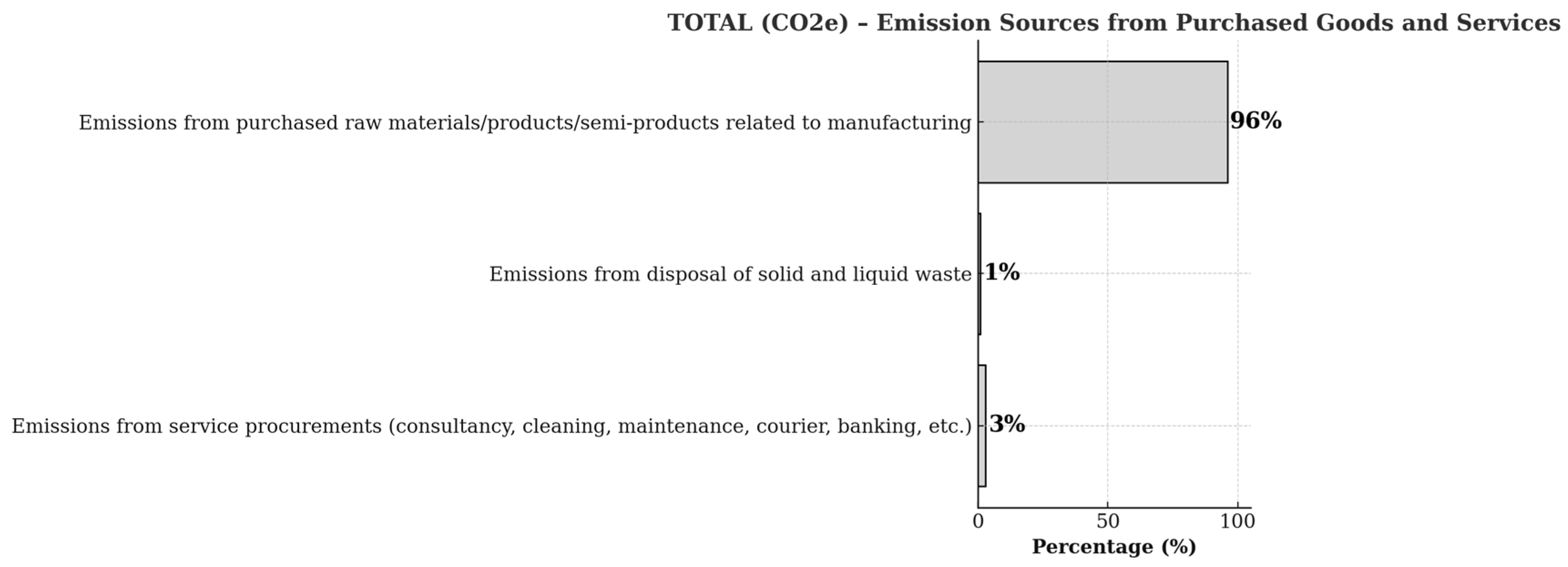
Figure 7 reveals that emissions from purchased raw materials, products, and semi-products related to manufacturing dominate the category of purchased goods and services, accounting for 96% of total emissions. In contrast, emissions from waste disposal contribute 3%, and service procurements such as consultancy, cleaning, or courier services represent only 1%. This distribution highlights that the supply chain and material procurement are the primary hotspots, emphasizing the need for sustainable sourcing, eco-friendly material selection, and supplier engagement strategies to achieve meaningful emission reductions.
In this study, the uncertainty levels for emission components were calculated individually for each emission source. With the exception of refrigerant gas leakage amounts, all data used in the calculations were supported by existing invoice records. The uncertainty in activity data (C) and the uncertainty in emission factors (F) were determined as shown in Table 8. The calculated emission uncertainty percentage (I) was determined using Equation (13).
The first auxiliary variable (K) was obtained by multiplying the t CO2e value of the relevant category by the corresponding I value. The second auxiliary variable was calculated as K2. Finally, the uncertainties were calculated as percentages, and the results are presented in Table 8. The cumulative total uncertainty percentage was calculated using Equation (14).
I = C 2 + F 2
Cumulative   Total   Uncertainty = ± i = 1 n ( t C O 2 e i I i ) 2 t C O 2 e *
* Represents the total tCO2e.
The materiality assessment was conducted for Category 3, Category 4, and Category 5. As 2023 is the base year for Petka Kalıp, Table 9 presents the baseline greenhouse gas inventory and identifies the emission sources considered in the assessment. The impact level of risk was then determined by evaluating greenhouse gas emission magnitude, data quality, mitigation potential, sector-specificity, expectations of target users, and associated risks and opportunities. Based on this determined risk impact level, Table 10 categorizes the sources as “material” or “not material.” The sources categorized as “not material”—including Category 3.1, Category 3.2, Category 3.3, Category 3.4, Category 3.5, Category 4.3, Category 4.5, and Category 6—were still included in the calculations. The Greenhouse Gas Materiality Determination Document was used in this process.
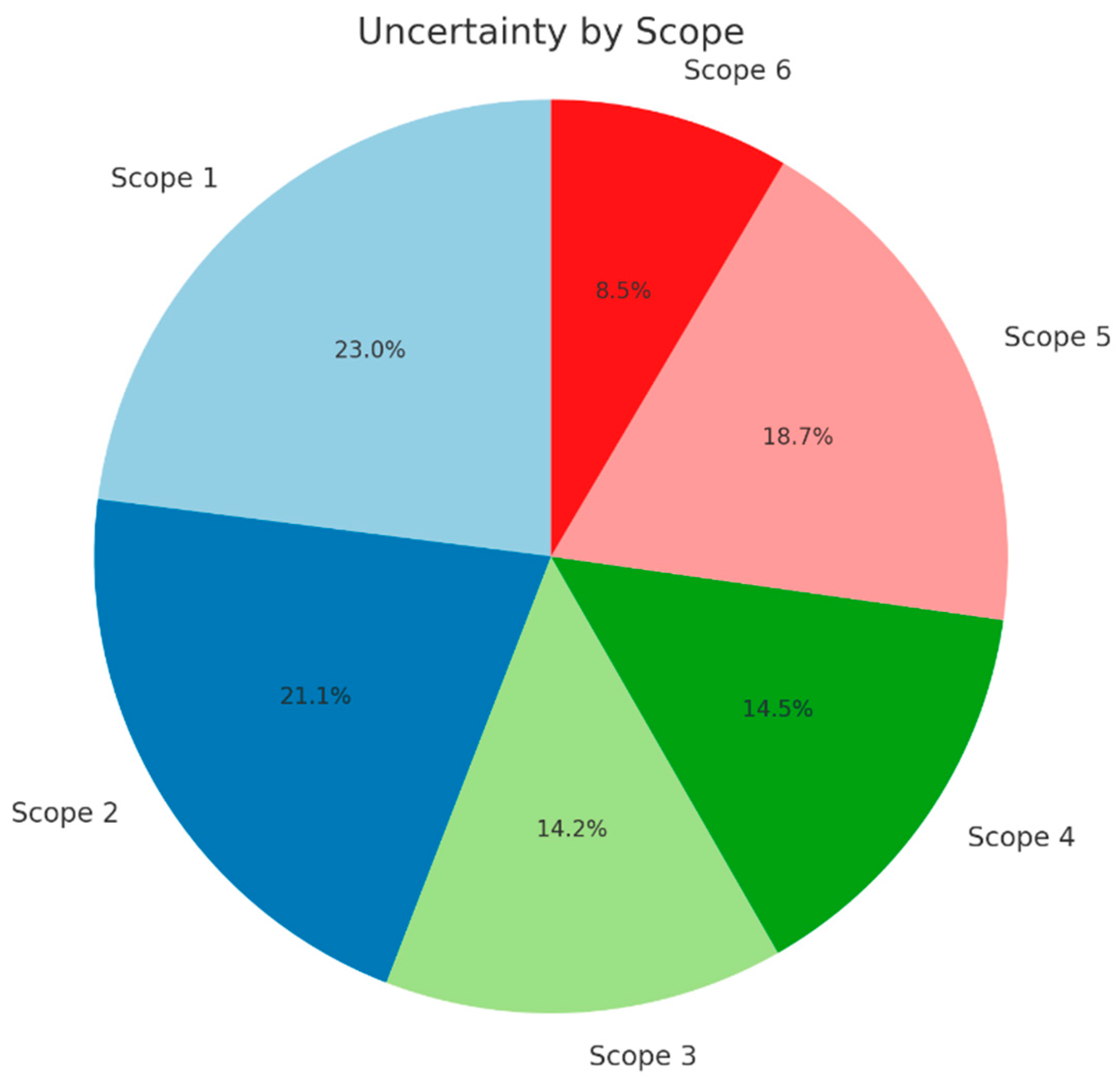
The pie chart (Figure 8) illustrates the distribution of uncertainty values associated with greenhouse gas (GHG) emission calculations across six reporting categories, based on the ISO 14064-1:2019 [10] framework. The analysis reveals that Category 1 (direct emissions from controlled or owned sources) accounts for the largest share of uncertainty, at 23.0%, followed closely by Category 2 (indirect emissions from purchased electricity, heat, or steam) with 21.1% and Category 5 with 18.7%.
In contrast, Category 6, which includes other indirect emissions such as upstream energy distribution (WTT) and electricity transmission losses, exhibits the lowest uncertainty level, at 8.5%, suggesting more robust or less variable data availability for these categories. Categories 3 and 4, covering emissions from transportation, business travel, waste, and purchased goods or services, show moderate uncertainty levels, at 14.2% and 14.5%, respectively.
These results indicate that the highest levels of uncertainty are concentrated in the direct and energy-related emission categories (1 and 2), potentially due to complexities in measuring combustion processes, fuel consumption variations, or gaps in primary data acquisition. Therefore, targeted data quality improvement initiatives in these categories may significantly enhance the overall reliability of the GHG inventory. The visualization provides a clear, proportional comparison that highlights where methodological refinements or data verification efforts should be prioritized in future reporting cycles.
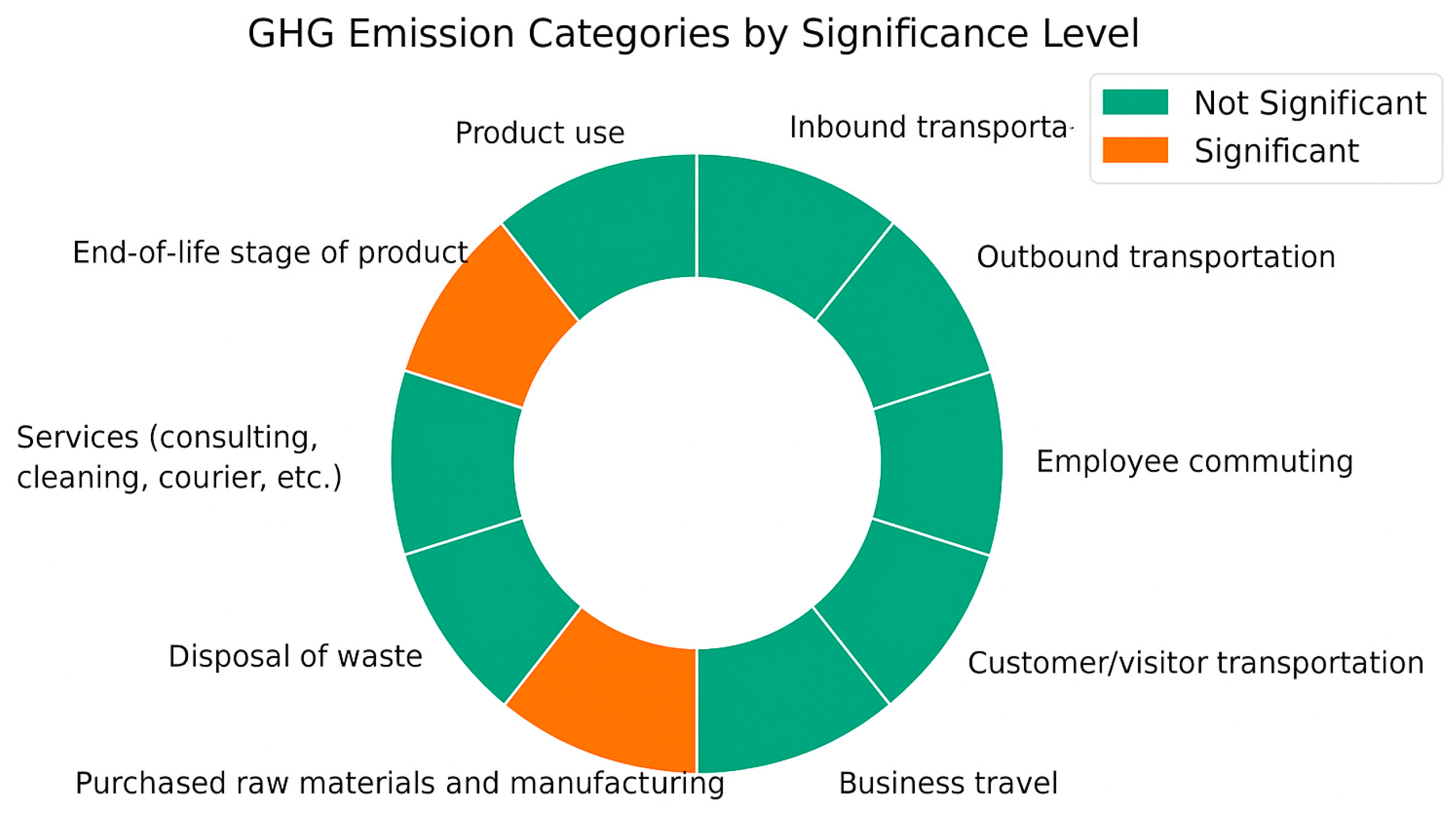
Table 10 and Figure 9 present the classification of corporate greenhouse gas (GHG) emission sources based on their significance level. Several categories, such as transportation, employee commuting, and business travel, are evaluated as significant. In contrast, sources like purchased raw materials, waste disposal, and service procurements are classified as not significant. This distinction contributes to the prioritization of emission reduction strategies within the organizational carbon management framework.
In Table 11, total emissions are presented by category, and the characteristics of the data have been identified and classified as primary and secondary under the heading “Data Type”. As a result, the total greenhouse gas emissions of Petka Kalıp San. ve Tic. A.Ş. for the base year 2023 were calculated to be 3922.75 tons of CO2e.
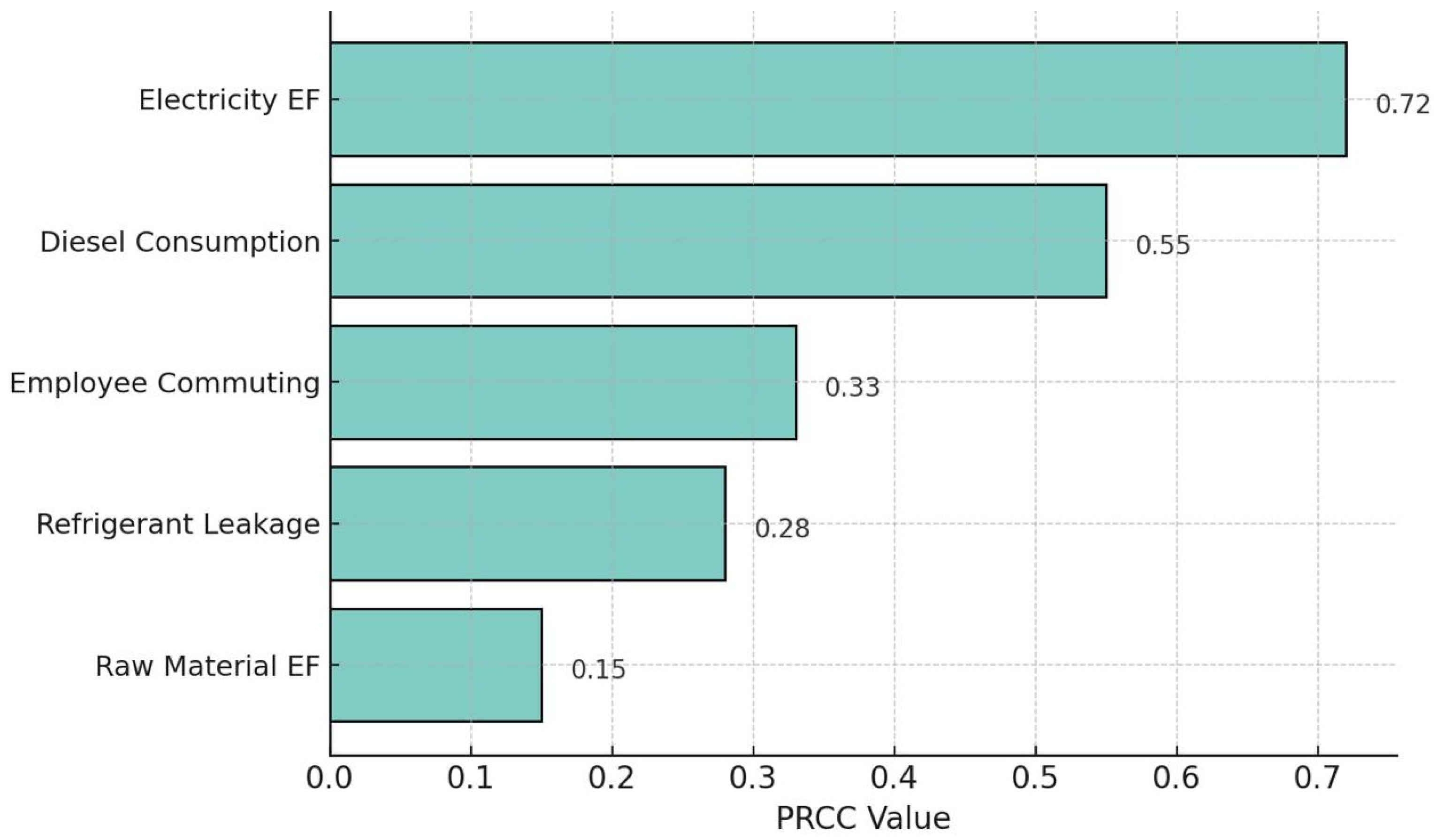
The PRCC-based sensitivity analysis (Figure 10) indicates that the country-specific electricity emission factor is the dominant driver of the total inventory uncertainty, followed by diesel consumption, employee commuting, and refrigerant leakage rates; the raw material emission factor exhibits a comparatively smaller influence. Positive PRCC values imply that upward deviations in the corresponding input increase the posterior estimate of total CO2e, with the largest elasticity observed for electricity. These findings are consistent with the activity-times-factor structure of the accounting model and the uncertainty seeds assigned from our uncertainty value selection table (Table 8).
The Bayesian Monte Carlo outputs further show narrow credible intervals for sources supported by metrologically controlled meters or invoiced data (e.g., grid electricity, diesel) and wider intervals for parameters inferred from supplier labels or default leakage rates (e.g., refrigerants), which is consistent with the data quality classification used in the methods.
Taken together, the results prioritize (i) updating the electricity EF with the most recent, plant-location-specific factor,; (ii) improving the frequency and granularity of diesel and commuting data capture (e.g., odometer-linked logs, HR mobility surveys); and (iii) instituting periodic leak testing with documented refill logs to shrink refrigerant-related uncertainty. Implementing these steps is expected to reduce the posterior credible interval width of the 2023 baseline total (Table 11) without altering the central tendency of the estimate.

5. Discussion

This study presents the first comprehensive carbon footprint assessment of the plastic injection molding sector, conducted in accordance with the ISO 14064-1:2019 [10] standard and applied to Petka Kalıp Sanayi ve Ticaret A.Ş. The 2023 facility-level inventory revealed that upstream raw material procurement and downstream end-of-life processes are the dominant contributors to overall emissions, while electricity consumption represents the most critical operational hotspot. These findings underscore the importance of accounting for both direct and indirect categories (1–6), thereby offering a more comprehensive representation of corporate emissions compared to conventional Category 1–3 reporting.
The results are broadly consistent with those of studies in other carbon-intensive sectors such as cement and steel, where supply-chain emissions significantly outweigh direct operational emissions [44]. However, in contrast to these industries, the plastic mold sector demonstrates a relatively higher share of electricity-related emissions, reflecting the electricity-driven nature of injection molding. This highlights the necessity of developing sector-specific decarbonization pathways that differ from those of energy-intensive industries.
Sensitivity analysis based on partial rank correlation coefficients (PRCCs) further indicated that electricity emission factors, diesel consumption, and refrigerant leakage are the most influential drivers of uncertainty. These results emphasize the critical role of supplier collaboration, eco-design initiatives, and improvements in data quality as key strategies for reducing emissions. Addressing these uncertainty drivers is expected to enhance the accuracy of inventories while enabling more targeted mitigation actions.
A notable methodological contribution of this study is the integration of Bayesian Monte Carlo-based uncertainty analysis, which enhances transparency by quantifying credible intervals for major emission sources. This approach—rarely applied in corporate carbon accounting—provides replicable insights for similar facilities and strengthens the robustness of inventory outcomes. In this way, this study contributes not only to sectoral knowledge but also to methodological advancements in greenhouse gas accounting.
Beyond the case facility, the proposed framework demonstrates transferable value to other energy- and resource-intensive industries. It supports eco-design, fosters supply-chain collaboration, and promotes circularity strategies that are essential for industry-wide decarbonization. At the policy level, the findings are consistent with global sustainability agendas, including the Paris Agreement, the EU Green Deal, and the Corporate Sustainability Reporting Directive (CSRD), thereby underscoring the relevance of this framework to both industrial practice and policy development.
In conclusion, achieving carbon neutrality in the plastic mold sector requires strategies that extend beyond operational efficiency. A combined focus on value-chain decarbonization, product innovation, and enhanced data transparency emerges as a prerequisite for substantial and sustainable reductions in greenhouse gas emissions.

6. Conclusions

6.1. Key Findings

This study provides the first comprehensive carbon footprint assessment of the plastic mold industry, covering all categories (1–6) in line with ISO 14064-1:2019 [10]. The corporate inventory for Petka Kalıp Sanayi ve Ticaret A.Ş.’s facility in Adana established a 2023 baseline of 3922.75 tons of CO2e, supported by ERP-based data management and internal audits to ensure transparency and replicability.
Three main findings emerged: First, upstream raw material procurement and downstream end-of-life processes were identified as the dominant emission hotspots. Second, electricity consumption was confirmed as the most critical operational factor, reflecting the electricity-intensive nature of injection molding. Third, Bayesian Monte Carlo-based uncertainty analysis revealed electricity emission factors, diesel consumption, and refrigerant leakage as the most influential sources of variability. Collectively, these findings highlight the importance of both supply-chain collaboration and operational efficiency improvements for effective emissions reduction.

6.2. Limitations

Several limitations of this research should be acknowledged. The analysis is restricted to a single company, relies partially on secondary data, and covers only one reporting year (2023). As such, the results should be interpreted as a facility-level baseline rather than an industry-wide benchmark.

6.3. Future Research

Future studies should expand the scope through multi-company and multi-year benchmarking to establish sectoral trends. Incorporating dynamic life-cycle assessment (LCA) and digital twin technologies could enhance temporal resolution, while Bayesian hierarchical models offer a pathway for strengthening multi-site inventories. Furthermore, integrating GHG outcomes with financial performance and exploring scenario-based decarbonization strategies would yield valuable managerial insights.

6.4. Implications

Beyond the case facility, the methodological framework—integrating materiality assessment with Bayesian Monte Carlo-based uncertainty analysis—demonstrates strong transferability to other energy- and resource-intensive industries. By delivering robust, transparent, and replicable inventories, this framework supports eco-design, supply-chain collaboration, and circularity strategies, while aligning with global sustainability agendas such as the Paris Agreement, the EU Green Deal, and the Corporate Sustainability Reporting Directive (CSRD).
In conclusion, this study not only advances methodological practice in corporate carbon accounting but also provides actionable guidance for industrial decarbonization, regulatory compliance, and the long-term pursuit of carbon neutrality.

Author Contributions

Conceptualization, G.A. and M.Y.; methodology, G.A. and M.Y.; validation, G.A. and M.Y.; formal analysis, G.A. and M.Y.; investigation, G.A. and M.Y.; resources, K.T.A. and Ö.D.; data curation, G.A. and M.Y.; writing—original draft preparation, K.T.A. and Ö.D.; writing—review and editing, K.T.A. and Ö.D.; visualization, G.A. and M.Y.; supervision, G.A. and M.Y.; project administration, G.A. and M.Y.; funding acquisition, M.Y. All authors have read and agreed to the published version of the manuscript.

Funding

The authors declare that this study received funding from Petka Mold Industry (Design Center Project Number: PTK 01012024). The funder was not involved in the study design; the collection, analysis, or interpretation of data; the writing of this article; or the decision to submit it for publication.

Institutional Review Board Statement

Not applicable.

Informed Consent Statement

Not applicable.

Data Availability Statement

No new data were created or analyzed during this study. Data sharing is not applicable to this article.

Acknowledgments

The authors would like to acknowledge the Petka Mold Industry Design Center for full financial support and the data process.

Conflicts of Interest

The authors Gamze Arslan and Mehmet Yüksel were employed by the company Petka Mold Industry. The remaining authors declare that this research was conducted in the absence of any commercial or financial relationships that could be construed as potential conflicts of interest.

References

  1. IPCC. Climate Change 2023: Synthesis Report; The Intergovernmental Panel on Climate Change: Geneva, Switzerland, 2023; Available online: https://www.ipcc.ch (accessed on 12 February 2025).
  2. DEFRA. UK Government GHG Conversion Factors for Company Reporting; Department for Environment, Food and Rural Affairs: London, UK, 2023. Available online: https://assets.publishing.service.gov.uk/media/6846a4f55e92539572806125/ghg-conversion-factors-2025-full-set.xlsx (accessed on 12 February 2025).
  3. EPA. Inventory of U.S. Greenhouse Gas Emissions and Sinks: 1990–2022; U.S. Environmental Protection Agency: Washington, DC, USA, 2024. Available online: https://pasteur.epa.gov/uploads/10.23719/1531143/SupplyChainGHGEmissionFactors_v1.3.0_NAICS_CO2e_USD2022.csv (accessed on 12 February 2025).
  4. NASA. Global Climate Change: Vital Signs of the Planet; NASA: Washington, DC, USA, 2022. Available online: https://science.nasa.gov/earth/explore/earth-indicators/carbon-dioxide/ (accessed on 12 February 2025).
  5. WMO. State of the Global Climate 2023; World Meteorological Organization: Geneva, Switzerland, 2023; Available online: https://wmo.int/publication-series/state-of-global-climate-2023 (accessed on 10 February 2025).
  6. WHO. Climate Change and Health; World Health Organization: Geneva, Switzerland, 2021; Available online: https://www.who.int/news-room/fact-sheets/detail/climate-change-and-health (accessed on 5 February 2025).
  7. UNHCR. Climate Change and Displacement; United Nations High Commissioner for Refugees: Geneva, Switzerland, 2022; Available online: https://www.unhcr.org/what-we-do/build-better-futures/climate-change-and-displacement (accessed on 12 February 2025).
  8. OECD. Climate Finance Provided and Mobilised by Developed Countries in 2013; OECD: Paris, France, 2020; Available online: https://www.oecd.org/content/dam/oecd/en/publications/reports/2020/11/climate-finance-provided-and-mobilised-by-developed-countries-in-2013-18_5523fb48/f0773d55-en.pdf (accessed on 12 February 2025).
  9. UNDP. Human Development Report 2021/2022; United Nations Development Programme: New York, NY, USA, 2021; Available online: https://hdr.undp.org/system/files/documents/global-report-document/hdr2021-22reportenglish_0.pdf (accessed on 5 February 2025).
  10. ISO 14064-1:2019; Greenhouse Gases—Part 1: Specification with Guidance at the Organization Level for Quantification and Reporting of Greenhouse Gas Emissions and Removals. ISO: Geneva, Switzerland, 2019. Available online: https://www.iso.org/obp/ui/en/#iso:std:iso:14064:-1:ed-2:v1:en (accessed on 2 February 2025).
  11. UNEP. Emissions Gap Report 2022; United Nations Environment Programme: Nairobi, Kenya, 2022; Available online: https://www.unep.org/resources/emissions-gap-report-2022 (accessed on 1 February 2025).
  12. Friedlingstein, P.; O’Sullivan, M.; Jones, M.W.; Andrew, R.M.; Bakker, D.C.E.; Hauck, J.; Landschützer, P.; Le Quéré, C.; Luijkx, I.T.; Peters, G.P.; et al. Global carbon budget 2023. Earth Syst. Sci. Data 2023, 15, 5301–5369. [Google Scholar] [CrossRef]
  13. Smith, P.; Bustamante, M.; Ahammad, H.; Clark, H.; Dong, H.; Elsiddig, E.A.; Haberl, H.; Harper, R.; House, J.; Jafari, M.; et al. Agriculture, Forestry and Other Land Use (AFOLU). In Climate Change 2014: Mitigation of Climate Change; Intergovernmental Panel on Climate Change (IPCC), Cambridge University Press: Cambridge, UK, 2024. [Google Scholar]
  14. Marsland, R.; Staples, J. Time for a Focus on Climate Change and Health. Med. Anthropol. 2024, 43, 1–4. [Google Scholar] [CrossRef]
  15. Hansen, J.; Sato, M.; Hearty, P.; Ruedy, R.; Kelley, M.; Masson-Delmotte, V.; Russell, G.; Tselioudis, G.; Cao, J.; Rignot, E.; et al. Ice melt, sea level rise and superstorms: Evidence from paleoclimate data, climate modeling, and modern observations that 2 °C global warming could be dangerous. Atmos. Chem. Phys. 2016, 16, 3761–3812. [Google Scholar] [CrossRef]
  16. Grecequet, M.; DeWaard, J.; Hellmann, J.J.; Abel, G.J. Climate Vulnerability and Human Migration in Global Perspective. Sustainability 2017, 9, 720. [Google Scholar] [CrossRef] [PubMed]
  17. Yavari, A.; Mirza, I.B.; Bagha, H.; Korala, H.; Dia, H.; Scifleet, P.; Sargent, J.; Tjung, C.; Shafiei, M. ArtEMon: Artificial Intelligence and Internet of Things Powered Greenhouse Gas Sensing for Real-Time Emissions Monitoring. Sensors 2023, 23, 7971. [Google Scholar] [CrossRef] [PubMed]
  18. Zhang, X.; Jasni, N.S.; Ismail, R.F. Current trends in carbon emission trading: Theoretical perspectives, research methods and emerging themes. Edelweiss Appl. Sci. Technol. 2024, 8, 1658–1674. [Google Scholar] [CrossRef]
  19. Filippov, S.P. The economics of carbon dioxide capture and storage technologies. Thermal Eng. 2022, 69, 738–750. [Google Scholar] [CrossRef]
  20. Shahsavari, A.; Akbari, M. Potential of solar energy in developing countries for reducing energy-related emissions. Renew. Sustain. Energy Rev. 2018, 90, 275–291. [Google Scholar] [CrossRef]
  21. Kissinger, G.; Gupta, A.; Mulder, I.; Unterstell, N. Climate Financing Needs in the Land Sector under the Paris Agreement: An Assessment of Developing Country Perspectives. Land Use Policy 2019, 83, 256–269. [Google Scholar] [CrossRef]
  22. Steiner, A.; Kimball, L.A.; Scanlon, J. Global governance for the environment and the role of multilateral environmental agreements in conservation. Oryx 2003, 37, 227–237. [Google Scholar] [CrossRef]
  23. Filonchyk, M.; Peterson, M.P.; Zhang, L.; Hurynovich, V.; He, Y. Greenhouse Gas Emissions and Global Climate Change: Examining the Influence of CO2, CH4, and N2O. Sci. Total Environ. 2024, 935, 173359. [Google Scholar] [CrossRef]
  24. Gabric, A.J. The climate change crisis: A review of its causes and possible responses. Atmosphere 2023, 14, 1081. [Google Scholar] [CrossRef]
  25. Li, L.; Awada, T.; Zhang, Y.; Paustian, K. Global Land Use Change and Its Impact on Greenhouse Gas Emissions. Glob. Change Biol. 2024, 30, e1760. [Google Scholar] [CrossRef] [PubMed]
  26. Singh, B.R.; Singh, O. Study of impacts of global warming on climate change: Rise in sea level and disaster frequency. In Global Warming—Impacts and Future Perspective; Singh, B.R., Ed.; InTech Publishing: London, UK, 2012; pp. 94–118. ISBN 978-953-51-0755-2. [Google Scholar]
  27. Romanello, M.; Di Napoli, C.; Drummond, P.; Green, C.; Kennard, H.; Lampard, P.; Scamman, D.; Arnell, N.; Ayeb-Karlsson, S.; Ford, L.B.; et al. The 2022 report of the Lancet Countdown on health and climate change: Health at the mercy of fossil fuels. Lancet 2022, 400, 1619–1654. [Google Scholar] [CrossRef] [PubMed]
  28. Onoh, U.C.; Ogunade, J.; Owoeye, E.; Awakessien, S.; Asomah, J.K. Impact of climate change on biodiversity and ecosystems services. IIARD Int. J. Geogr. Environ. Manag. 2024, 10, 77–93. [Google Scholar]
  29. Aryal, J.P.; Rahut, D.B.; Marenya, P. Climate risks, adaptation and vulnerability in sub-Saharan Africa and South Asia. In Climate Vulnerability and Resilience in the Global South: Human Adaptations for Sustainable Futures; Springer International Publishing: Cham, Switzerland, 2021; pp. 1–20. [Google Scholar] [CrossRef]
  30. Hamrani, A.; Akbarzadeh, A.; Madramootoo, C.A. Machine learning for predicting greenhouse gas emissions from agricultural soils. Sci. Total Environ. 2020, 741, 140338. [Google Scholar] [CrossRef]
  31. Bahman, N.; Al-Khalifa, M.; Al Baharna, S.; Abdulmohsen, Z.; Khan, E. Review of Carbon Capture and Storage Technologies in Selected Industries: Potentials and Challenges. Rev. Environ. Sci. Biotechnol. 2023, 22, 451–470. [Google Scholar] [CrossRef]
  32. Hait, M.; Chaturwedi, A.K.; Mitra, J.C.; Verma, R.; Kashyap, N.K. Emerging Technologies for Climate Change Mitigation and Adaptation. In Evaluating Environmental Processes and Technologies: Environmental Science and Engineering; Springer: Cham, Switzerland, 2025; pp. 385–437. [Google Scholar] [CrossRef]
  33. Moorthy, K.; Patwa, N.; Gupta, Y. Breaking Barriers in Deployment of Renewable Energy. Heliyon 2019, 5, e01166. [Google Scholar] [CrossRef]
  34. Bowen, F. Carbon capture and storage as a corporate technology strategy challenge. Energy Policy 2011, 39, 2256–2264. [Google Scholar] [CrossRef]
  35. Gajdzik, B.; Wolniak, R.; Nagaj, R.; Grebski, W.W.; Romanyshyn, T. Barriers to renewable energy source (RES) installations as determinants of energy consumption in EU countries. Energies 2023, 16, 7364. [Google Scholar] [CrossRef]
  36. Sarkodie, S.A.; Strezov, V. Effect of foreign direct investments, economic development and energy consumption on greenhouse gas emissions in developing countries. Sci. Total Environ. 2019, 646, 862–871. [Google Scholar] [CrossRef]
  37. Rodrigues, C.I.D.; Brito, L.M.; Nunes, L.J.R. Soil Carbon Sequestration in the Context of Climate Change Mitigation: A Review. Soil Syst. 2023, 7, 64. [Google Scholar] [CrossRef]
  38. Peng, Y.; Thomas, S.C.; Tian, D. Forest management and soil respiration: Implications for carbon sequestration. Environ. Rev. 2008, 16, 93–111. [Google Scholar] [CrossRef]
  39. IPCC. Sixth Assessment Report: Climate Change 2021: The Physical Science Basis; Cambridge University Press: Cambridge, UK, 2023; Available online: https://www.ipcc.ch/report/ar6/wg1/ (accessed on 12 February 2025).
  40. UNFCCC. Paris Agreement Status Report; United Nations Framework Convention on Climate Change: Bonn, Germany, 2023; Available online: https://unfccc.int/files/essential_background/convention/application/pdf/english_paris_agreement.pdf (accessed on 12 February 2025).
  41. Intergovernmental Panel on Climate Change. AR6 Synthesis Report: Climate Change 2023; IPCC: Geneva, Switzerland, 2023; Available online: https://www.ipcc.ch/report/ar6/syr/downloads/report/IPCC_AR6_SYR_LongerReport.pdf (accessed on 1 February 2025).
  42. Liu, H.; Xie, L.; Wei, Y.; Chen, Y.; Liu, X.; Zhang, Y.; Liu, D.; Li, Q. A Real-Time Accounting Method for Carbon Dioxide Emissions in High-Energy-Consuming Industrial Parks. Processes 2024, 12, 2657. [Google Scholar] [CrossRef]
  43. Lye, Y.X.; Chew, Y.E.; Foo, D.C.; How, B.S.; Andiappan, V. Carbon emission reduction strategy planning and scheduling for transitioning process plants towards net-zero emissions. RSC Sustain. 2025, 3, 929–945. [Google Scholar] [CrossRef]
  44. Issa Zadeh, S.B.; López Gutiérrez, J.S.; Esteban, M.D.; Fernández-Sánchez, G.; Garay-Rondero, C.L. A Framework for Accurate Carbon Footprint Calculation in Seaports: Methodology Proposal. J. Mar. Sci. Eng. 2023, 11, 1007. [Google Scholar] [CrossRef]
  45. GHG Protocol. Greenhouse Gas Protocol—Official Website. Available online: https://ghgprotocol.org/ (accessed on 23 February 2025).
  46. Republic of Türkiye Ministry of Energy and Natural Resources. Turkey Electricity Generation and Electricity Consumption Point Emission Factors Information Sheet; Republic of Türkiye Ministry of Energy and Natural Resources: Ankara, Türkiye, 2022. Available online: https://enerji.gov.tr/Media/Dizin/EVCED/tr/%C3%87evreVe%C4%B0klim/%C4%B0klimDe%C4%9Fi%C5%9Fikli%C4%9Fi/UlusalSeraGaz%C4%B1EmisyonEnvanteri/Belgeler/Ek-1.pdf (accessed on 23 February 2025).
Figure 1. The categories defined by the GHG Protocol outline the key components of an organization’s carbon footprint [45].
Sustainability 17 09531 g001
Figure 2. Overview of the Bayesian Monte Carlo (BMC) framework used to quantify inventory uncertainty.
Sustainability 17 09531 g002
Figure 3. Flowchart of the greenhouse gas inventory calculation methodology.
Sustainability 17 09531 g003
Figure 4. Distribution of CO2e by category.
Sustainability 17 09531 g004
Figure 5. Category 1: Direct GHG emissions and removals (CO2e).
Sustainability 17 09531 g005
Figure 6. Category 3: Indirect GHG emissions from transportation sources.
Sustainability 17 09531 g006
Figure 7. Category 4: Indirect GHG emissions from products used by the organization.
Sustainability 17 09531 g007
Figure 8. Uncertainty by category.
Sustainability 17 09531 g008
Figure 9. Materiality figure for the year 2023.
Sustainability 17 09531 g009
Figure 10. Sensitivity analysis (PRCC) of key parameters.
Sustainability 17 09531 g010
Table 1. Global Warming Potentials.
GHG100-Year GWP (Global Warming Potential)
Carbon Dioxide (CO2)1.00
Methane (CH4)27.90
Nitrous Oxide (N2O)273.00
R221960
R32771
R410 A2255.5
R600 A0.006
The data in the table are taken from IPCC 2006 Chapter 7 [1].
Table 2. GHG emission calculation methods for stationary and mobile combustion sources.
Source FlowCO2e Calculation MethodEF CO2 (kg/TJ)EF CH4 (kg/TJ)EF N2O (kg/TJ)References
Diesel FuelGHG Emission = Fuel Consumption (tons/year) × Density (845 kg/m3) × NCV (43 TJ/Gg) × EF (kg/TJ)74.10030.6[1]
On-Road DieselGHG Emission = Fuel Consumption (tons/year) × Density (845 kg/m3) × NCV (43 TJ/Gg) × EF (kg/TJ)74.1003.903.9[1]
Table 3. Greenhouse gas emission calculation methods for direct emissions from leaks and fugitive releases in anthropogenic systems.
GHG Emission SourceCO2e Calculation MethodReferences
RefrigeratorsIf Refilling Has Been Done:
GHG Emission = Gas Charged (kg) × GWP
If Refilling Has Not Been Done:
GHG Emission = Equipment Gas Capacity × Leakage Rate (0.1%) × GWP
[1]
Air Conditioners, Fire ExtinguishersIf Refilling Has Been Done:
GHG Emission = Gas Charged (kg) × GWP
If Refilling Has Not Been Done:
GHG Emission = Equipment Gas Capacity × Leakage Rate (1% for air conditioners, 4% for fire extinguishers) × GWP
Table 4. Calculation methodology and emission factors for electricity GHGs.
GHG Emission SourceCO2e Calculation MethodEF CO2 (ton/Wh)Reference
ElectricityActivity Data (MWh) ×   Emission Factor0.439[46]
Table 5. Calculation methodology and GHG factors for indirect greenhouse gas emissions from transportation sources.
GHG Emission SourceCO2e Calculation MethodEFReferences
Road TransportationGHG Emission = Activity Data (USD) × EF1.115 kg
CO2e/USD
[3]
Air TransportationGHG Emission = Activity Data (USD) × EF0.976
CO2e/USD
Maritime TransportationGHG Emission = Activity Data (USD) × EF0.618
CO2e/USD
Domestic FlightGHG Emission = Activity Data (passenger.km) × EF0.18287kg
CO2e/passenger.km
[41]
International FlightGHG Emission = Activity Data (passenger.km) × EF0.20011
kg CO2e/passenger.km
Hotel AccommodationsGHG Emission = Activity Data (overnight stay) × EF32.1kg
CO2e/overnight stay
Table 6. Calculation methodology and GHG emission factors for indirect GHG emissions from products used by the organization.
GHG Emission SourceCO2e Calculation MethodEFReferences
Domestic WaterGHG Emission = Activity Data (m3) × EF0.15311
kg CO2e/m3
[2,3]
Primary SteelGHG Emission = Activity Data (USD) × EF0.549
kg CO2e/USD
AluminumGHG Emission = Activity Data (USD) × EF1.41
kg CO2e/USD
Aluminum ProductsGHG Emission = Activity Data (USD) × EF0.869
kg CO2e/USD
Screws, Nuts, and BoltsGHG Emission = Activity Data (USD) × EF0.332
kg CO2/USD
Ball and Roller BearingsGHG Emission = Activity Data (USD) × EF0.277
kg CO2e/USD
CleaningGHG Emission = Activity Data (USD) × EF0.405
kg CO2e/USD
Household WasteGHG Emission = Activity Data (tonne) × EF497.04416
kg CO2e/tonne
[2]
WastewaterGHG Emission = Activity Data (m3) × EF0.18574
kg CO2e/m3
CertificationGHG Emission = Activity Data (USD) × EF0.079
kg CO2e/USD
[3]
AccountingGHG Emission = Activity Data (USD) × EF0.05
kg CO2e/USD
Management ConsultingGHG Emission = Activity Data (USD) × EF0.084
kg CO2e/USD
R&D (Research and Development)GHG Emission = Activity Data (USD) × EF0.079
kg CO2e/USD
SoftwareGHG Emission = Activity Data (USD) × EF0.097
kg CO2e/USD
5SGHG Emission = Activity Data (USD) × EF0.084
kg CO2e/USD
Catering/Meals/Food ServiceGHG Emission = Activity Data (USD) × EF0.155
kg CO2e/USD
Table 7. List of GHG emission sources for the year 2023.
Emission SourceCategoryActivity
Generator (diesel)1Electricity generation
Refrigerant gas leaks (refrigerator)1Cooling systems—office coolers and refrigerators
Refrigerant gas (air conditioner filling)1Cooling systems—office coolers
Fire extinguisher leaks1Fire extinguishers
Diesel—vehicles1Fuel consumption of on-road/off-road vehicles
Electricity2Building operating systems—combustion for heating, cooling, and lighting
Emissions from transportation or distribution of incoming goods3Road transportation
Emissions from transportation of outgoing goods3Road/air/sea transportation
Diesel3Combustion emissions for personnel transport
Travel and accommodation data3Emissions from customer and visitor transportation
Travel and accommodation data3Emissions from business travel
Purchased products4Emissions from raw materials/products/semi-products related to manufacturing
Solid and liquid waste transportation4Emissions from disposal of solid and liquid waste
Consultancy4Emissions from consultancy service procurement
Emissions and removals from product use5Emissions/removals from sold products and solar power systems (SPP)
Indirect GHG emissions from other sources6WTT (Well-To-Tank), electricity distribution
Table 8. Uncertainty value selection table.
Data Acquisition MethodEmission Factor Acquisition MethodUncertainty Value (%)
Measurement Device Subject to Legal Metrological ControlIPCC1.5
Measurement Device with Valid Calibration DateInternationally Recognized Data1.5
Measurement Device with Expired/No CalibrationNational Inventories of Countries2.5
Labeled Supplier Data (e.g., Gas Filling Capacity)Labeled Supplier Data (e.g., MSDS)3.5
Supplier DataSupplier Data5
Distance Measurement Programs (e.g., Google Maps)Assumption7
Unclear and Inaccessible Data (Excluded Data)Supplier Data and Unavailable Data10
Table 9. Uncertainty table for the year 2023.
Uncertainty Assessment by Category
Sub-CategoryUncertainty Value
14.68%
24.30%
32.88%
42.95%
53.81%
61.73%
Uncertainty Assessment by Sub-Category
Sub-CategoryUncertainty Value
1.13.81%
1.23.81%
1.44.83%
2.14.30%
3.13.81%
3.22.64%
3.35.22%
3.43.08%
3.52.58%
4.13.00%
4.36.94%
4.53.81%
5.31.73%
6.1
Cumulative Uncertainty Total
2.16%
Table 10. Materiality table for the year 2023.
CategoryEmission DescriptionSignificance Level
3.1Emissions from inbound transportation or distribution of goods to the organization.Not Significant
3.2Emissions from outbound transportation of goods from the organization.Not Significant
3.3GHG emissions from employee commuting.Not Significant
3.4GHG emissions from customer and visitor transportation.Not Significant
3.5GHG emissions from business travel.Not Significant
4.1GHG emissions from purchased raw materials, intermediate goods, or finished goods related to product manufacturing.Significant
4.3GHG emissions from disposal of solid and liquid waste.Not Significant
4.5Emissions from services such as consulting, cleaning, maintenance, courier, and banking.Not Significant
5.3Emissions from the end-of-life stage of the product.Significant
6.1Emissions and removals from product use.Not Significant
Table 11. The 2023 GHG inventory table.
GHG EmissionsData TypeTotal
(CO2e)
CO2CH4N2O
1Category 1: Direct greenhouse gas emissions and removals (CO2e) 255.33255.220.010.09
1.1Direct GHG emissions from stationary combustion sourcesPrimary1.891.880.000.00
1.2Direct GHG emissions from mobile combustion sourcesPrimary6.326.230.010.09
1.4Direct GHG emissions from leakage/fugitive emissions of greenhouse gases in anthropogenic systemsPrimary247.11247.1141--
Indirect GHG Emissions (CO2e)Data TypeTotal
(CO2e)
CO2CH4N2O
2Category 2: Indirect greenhouse gas emissions from imported energy 450.72450.72--
2.1Indirect greenhouse gas emissions from imported electricityPrimary450.72450.72--
3Category 3: Indirect greenhouse gas emissions from transportation sources 191.56100.800.010.01
3.1Emissions from inbound goods transportation or distributionPrimary20.50---
3.2Emissions from outbound goods transportationPrimary29.68---
3.3Greenhouse gas emissions from employee commutingSecondary102.40100.800.010.01
3.4Greenhouse gas emissions from customer and visitor transportationPrimary17.14---
3.5GHG emissions from business travelPrimary21.84---
4Category 4: Indirect greenhouse gas emissions from products used by the organizationPrimary1031.221031.22--
4.1GHG emissions from purchased raw materials/finished goods/semi-finished goods, etc., associated with product manufacturingPrimary993.54993.54--
4.3GHG emissions from the disposal of solid and liquid wastePrimary16.8216.82--
4.5Emissions from purchased services such as consulting, cleaning, maintenance, courier, banking, etc.Primary20.8620.86
5Category 5: Indirect GHG emissions from post-production use of products 1987.491987.49--
5.3Emissions from the end-of-life stage of the productPrimary1987.491987.49
6Category 6: Indirect GHG emissions from other sources 6.436.43--
6.1Indirect GHG emissions from other sourcesPrimary6.436.43
Total:3922.75CO2e (Tonne)
Disclaimer/Publisher’s Note: The statements, opinions and data contained in all publications are solely those of the individual author(s) and contributor(s) and not of MDPI and/or the editor(s). MDPI and/or the editor(s) disclaim responsibility for any injury to people or property resulting from any ideas, methods, instructions or products referred to in the content.