


Article

How E-Commerce Drives Low-Carbon Development: An Empirical Analysis from China

1
School of Economics and Management, Changsha Normal University, Changsha 410100, China
2
School of Mathematics and Statistics, Key Laboratory of Computing and Stochastic Mathematics (Ministry of Education), Hunan Normal University, Changsha 410081, China
*
Author to whom correspondence should be addressed.
Sustainability 2025, 17(19), 8818; https://doi.org/10.3390/su17198818
Submission received: 2 September 2025 / Revised: 25 September 2025 / Accepted: 30 September 2025 / Published: 1 October 2025

Abstract

Using 31 provinces (cities and districts) on the Chinese mainland (2013–2023) as the research object, this study analyzes the development level of e-commerce through the entropy weight method and uses panel data to empirically test the driving effect of e-commerce development level on low-carbon development. According to this study, the overall development of e-commerce has a positive driving effect on low-carbon development. E-commerce development lowers the intensity of carbon emissions by optimizing regional industrial structures, innovating green technologies, and establishing resource sharing. Moreover, the analysis of the effects of regional heterogeneity reveals that, although low-level areas still have great development potential, high-level economic development areas have the greatest effect on low-carbon development. In conclusion, we clarify how e-commerce contributes to low-carbon development and provide resources for enhancing the quality and efficiency of e-commerce to conserve energy and reduce emissions.

1. Introduction

Climate governance has emerged as one of the few global concerns and far-reaching issues in the international, political, economic, and non-traditional security fields due to the rapid development of the economy and the tightening of global environmental constraints. One of the key sectors of the digital economy is e-commerce, which, as a form of business strategy innovation, includes digital orders or a digital platform for online trading activities [1]; it is based on digital information technology [2], relying on this and Internet platforms to break the space limit, expand the space and scope of market trading activities, lower the marginal cost, and increase the marginal benefit of economic activity [3]. These factors are highly compatible with the fundamental idea of reducing consumption and emissions in a low-carbon economy. Therefore, concerning the digital economy, whether e-commerce can become a catalyst for low-carbon economic development and what factors, pathways, and mechanisms drive this effect are key propositions for exploring low-carbon and high-quality economic development in the context of the fusion of digitalization and greening.
According to the E-Commerce Database (ECDB), global e-commerce revenues reached USD 4.6 trillion in 2024, and the global e-commerce market grew at a compound annual growth rate (2017–2025) of 14%. The impact of e-commerce on carbon emissions and environmental pollution has attracted growing scholarly attention. Cheba et al. [4] conducted a study on EU countries to examine the impact of urban e-commerce on environmental sustainability. The research indicates that the surge in online transactions has led to increased logistics and transportation demands, resulting in higher greenhouse gas emissions and exacerbating environmental pollution issues. Datta et al. [5] assessed the impact of e-commerce on landfill waste and greenhouse gas emissions across multiple domains, including packaging waste generation, transportation-related carbon emissions, and supply chain operations. Niemeijer et al. [6] analyzed the carbon emission impacts of using pickup points versus home delivery in last-mile parcel delivery. Their research revealed that establishing pickup points in urban settings holds the greatest potential for net positive carbon emission effects, whereas in rural environments, the carbon reduction benefits from optimized delivery routes are often offset by the carbon footprint associated with customer travel to pickup locations. Imran et al. [7] investigated the effects of e-commerce infrastructure, research and innovation, alternative energy adoption, income development, and trade in services across five Asian economies. The study found that carbon emissions increase during the initial phase of e-commerce expansion but decrease as e-commerce facilities improve in later stages.
China’s e-commerce market plays a pivotal role in the global digital economy, which accounted for 43% of the worldwide e-commerce revenue in 2024, maintaining its position as the world’s largest e-commerce market for multiple consecutive years. Research on digital economy, e-commerce, and their correlations with carbon emissions or environmental impacts has predominantly focused on the Chinese market. Existing research has increasingly focused on the impact of the digital economy on urban low-carbon development among scholars. Existing studies have increasingly focused on the impact of the digital economy on urban low-carbon development [8,9,10,11], while e-commerce—as a vital component and one of the most dynamic manifestations of the digital economy—warrants dedicated research to examine its relationship with low-carbon development. In current research on e-commerce in relation to low-carbon and green development, Cao et al. [12] investigated how e-commerce enhances green total factor productivity (GTFP), finding that the National E-commerce Demonstration City (NEDC) policy significantly promotes urban GTFP growth. Other scholars have also examined the correlation between e-commerce and environmental pollution [13,14]. Additionally, some scholars have explored the relationship between e-commerce and carbon emission reduction from specific singular perspectives, such as the supply chain [15], logistics [16,17], household online shopping [18], and digital payments [19,20].
Findings from relevant studies remain inconsistent. From the perspective of total carbon emissions, some studies suggest that e-commerce may increase carbon emissions. According to Arnold et al. [21], with the rise in online shopping, the number of parcels ordered online is increasing, the consumption of fossil fuels is gradually rising, and carbon dioxide (CO2) emissions are increasing. Light trucks, which consume copious amounts of fuel and emit more CO2, are increasingly being used for parcel delivery [6]. The rapid growth of e-commerce has led to an increase in regional carbon emissions [22]. However, considering economic development, other scholars contend that the development of the e-commerce industry can lower carbon emission intensity and facilitate the low-carbon integration of industries. As one of the most dynamic and concentrated manifestations of the digital economy, e-commerce has rapidly permeated various industries. By leveraging information technology and big data, it creates new online-offline retail models that reduce transaction costs in economic activities, drive the upgrading of urban industrial structures, and facilitate green economic transformation [12]. The networked nature of e-commerce eliminates market fragmentation caused by trade policies and geographical barriers, significantly reducing the carbon emission intensity per unit product [23]. Mangiaracina et al. [24] found that e-commerce avoids substantial carbon emissions through warehouse centralization, a reduction in customer trips, and inventory optimization, demonstrating positive environmental effects. Liu et al.’s [25] research from the “production-distribution-consumption” perspective demonstrates that e-commerce drives regional green consumption transformation by enhancing residents’ purchasing power and promoting corporate green production practices. Wang et al. [26] demonstrated that the construction of e-commerce pilot cities promotes low-carbon economic development through optimizing resource allocation, reducing energy consumption, and upgrading industrial structures.
Distinguished from prior research, this study shifts the focus from examining specific segments of the digital economy or individual e-commerce components to exploring the relationship between e-commerce development and regional low-carbon development. In terms of research dimensions, this study examines whether or not e-commerce development can drive low-carbon development using the dual dimensions of total carbon emissions and carbon emission intensity—moving beyond the singular focus on total carbon emissions (e.g., [27,28]) to capture the economic implications embedded in regional low-carbon transitions. At the research level, this study notes that previous literature has predominantly focused on China’s National E-commerce Demonstration City (NEDC) policy at the urban scale (e.g., [23,27,29,30,31]), while the policy was primarily implemented between 2009 and 2017. In recent years, the rapid expansion of e-commerce in China has extended far beyond the designated E-commerce Demonstration Cities. Across diverse regions, innovative models such as live-streaming e-commerce and rural e-commerce have proliferated, leveraging local characteristics to achieve widespread penetration. Therefore, this study selects the provincial level as the analytical scale to verify whether e-commerce development can serve as an effective driver for promoting low-carbon development. In terms of research design, this study introduces industrial structure optimization, green technology innovation, and resource sharing sets as mediating variables between e-commerce development and carbon emission intensity. This framework aims to unveil the specific pathways and intrinsic mechanisms through which e-commerce drives regional low-carbon development, thereby providing scientifically grounded practical recommendations for formulating targeted low-carbon sustainable economic policies in the digital era. Additionally, in terms of research methodology, to address the issue of human factor deviation and provide a better explanation of the results, the entropy weight method (EWM) is adopted to calculate the comprehensive index of e-commerce development, establish the fixed effect model using the Hausman test, and conduct the robustness test.

2. Theoretical Analysis and Research Hypotheses

2.1. Overall Assumptions

Two key strategies are used to achieve low-carbon development. First, reducing total carbon emissions by optimizing energy structures and improving energy efficiency, which directly decreases absolute emission levels. Second, lowering carbon emission intensity through technological innovation and industrial upgrading to achieve sustained declines in carbon emissions per unit of GDP. While the latter reflects enhanced quality of economic development, the former emphasizes the rigid constraint of absolute emission reduction.
As for the total carbon emissions, logically, the prosperity of e-commerce inevitably leads to increased carbon emissions due to frequent logistics, warehousing, distribution, and reverse logistics generated by returns and exchanges [32]. Moreover, e-commerce relies on online processes such as negotiations, ordering, and payments, which require the construction and operation of data centers consuming substantial electricity, thereby contributing to carbon emissions [33]. The convenience and product diversity of e-commerce may stimulate additional consumer demand, leading to an overall expansion of upstream production, manufacturing, and transportation activities, thereby generating broader implied carbon emissions [34]. However, when considered from the perspective of economic development, e-commerce falls under the categories of market economy, information economy, and network economy integration. The e-commerce industry in the comprehensive, global, timeliness, using digital technology can assign, the high liquidity of data into production, distribution, circulation, consumption and social services, break the barriers between digital space and geographical space, strengthen the regional industrial drive, logistics optimization, employment promotion, investment promotion, etc., which significantly improves local carbon emission efficiency by promoting industrial structure upgrading, green technology innovation, and improving energy efficiency [23,29]. By enabling the efficient flow of data factors, e-commerce breaks geographical constraints and drives the agglomeration of production factors towards high-value-added, low-energy-consumption service industries and advanced manufacturing, thereby reducing the carbon intensity of the entire economy at its source [35]. The E-commerce City Pilot policy enhances green total factor productivity, facilitating urban transformation toward low pollution emissions, low energy consumption, and high economic efficiency [12]. The big data accumulated by e-commerce platforms enables the optimization of social production and circulation systems [36], while the competitive e-commerce environment also forces enterprises to pursue green technology innovation and improve product packaging and supply chain management [37]. Meanwhile, the e-commerce industry is also reducing carbon emissions and promoting green, low-carbon development within the sector through logistics optimization, green warehousing, and digital enhancement [31,38,39]. Based on the above analysis, the following hypothesis was proposed:
Hypothesis H1: 
E-commerce has a positive driving role in low-carbon development.
Hypothesis H1a: 
E-commerce has had a positive impact on total carbon emissions.
Hypothesis H1b: 
E-commerce has had a negative impact on carbon emission intensity.

2.2. Impact Mechanism Analysis and Hypothesis

2.2.1. Electronic Commerce and Industrial Structure Optimization

Gradually turning the relatively advanced industries in the industrial system into an important component of the industrial structure and then promoting the development of the industrial structure toward the direction of high technology and high efficiency is the essence of industrial structure optimization. The industrial sector (the core of secondary industry) is the primary contributor to the growth of carbon emissions [40]. As the industrial structure transitions toward the tertiary sector, carbon emission intensity declines [41]. The development of e-commerce forms a positive interaction with this transition process. E-commerce reduces logistics costs and improves efficiency through the optimization of the supply chain and logistics system, especially the adoption of digital technologies in traditional industries, which is fueling the rise of emerging industries and the development of the service sector [42]. First, at the level of industrial penetration, e-commerce platforms break the geographical constraints of traditional service industries through the cross-spatiotemporal flow of data elements [43]. This enables the large-scale expansion of professional services such as education [44], healthcare [45], and finance [46], thereby increasing the proportion of the service sector in the national economy. Second, at the factor allocation level, the development of e-commerce has driven the transfer of production factors such as capital and talent from traditional manufacturing sectors with diminishing marginal returns to high-value-added producer services like information services and R&D design [47]. The expansion of these service industries enhances the economic influence of the traditional service sector, shifting production resources from low-margin sectors to higher-value-added service industries. This creates a crowding-out effect on high-pollution, high-energy-consuming industries [48]. From the transaction cost perspective, e-commerce platforms have significantly reduced transaction costs, including those associated with information retrieval, contract execution, and compliance monitoring [49]. Enterprises improve production technology and then promote the optimization of industrial structure to obtain more market share [50]. And it has spawned new business models, such as online retailing and electronic payments, which provide opportunities for growth in various service sectors [51]. Service providers operating within the platform economy framework form industrial clusters through network effects [52]. E-commerce enables various types of service providers to offer their services on online marketplaces and service platforms, including logistics, education, catering, etc., thus promoting the development of an industrial structure in the “service-oriented” direction and injecting momentum into the transition toward a low-carbon economy [28]. Based on the above analysis, the following hypothesis was proposed:
Hypothesis H2: 
E-commerce drives low-carbon development by reducing carbon emission intensity through the optimization of the industrial structure.

2.2.2. E-Commerce and Green Technology Innovation

As a strategic player in the digital economy, the e-commerce industry plays a strategic role in socioeconomic restructuring and development [53]. By establishing an open and shared digital ecosystem, it promotes knowledge spillover and collaborative cooperation among innovation entities such as enterprises and research institutions, forming a data-driven innovation network [54]. This network effect not only amplifies the enabling role of digital technologies but also, through the deep integration of the internet and green technology innovation, drives the transformation of China’s economic model from scale expansion to quality enhancement [55]. From the practical level, e-commerce promotes the development and application of cutting-edge technologies such as artificial intelligence and cloud computing [56], continuously optimizes energy consumption management in data centers [57], builds intelligent logistics distribution systems [58], and significantly enhances energy utilization efficiency across the entire chain. These technological innovations not only reduce the platform’s own carbon footprint but also extend to the upstream and downstream of the industrial chain through standardized and modular solutions, driving the transformation of the entire business ecosystem towards low-carbon operation models [59]. Simultaneously, it accelerates the online transaction of green products and services, contributing to the reduction of carbon emissions [60]. From the perspective of policy guidance, the National E-commerce Demonstration Cities policy heightened enterprises’ emphasis on green development, motivated businesses to increase the proportion of green technology innovation, reduced energy consumption and environmental pollution per unit product, and thereby promoted the growth of urban green total factor productivity [12]; it also reduced urban carbon emissions through green technology innovation mechanisms [31]. From the perspective of market mechanisms, the growing demand for green consumption is profoundly influencing corporate strategic decisions through price signals and feedback mechanisms on e-commerce platforms [61]. E-commerce consumers’ purchasing behaviors drive merchants to focus on green technology innovation in digital supply chains and green supply chains as key e-commerce sales channels [62]. This heightened attention spans the entire product lifecycle—from design and manufacturing to packaging and transportation—promoting the innovation, development, and application of carbon footprint reduction and energy-saving technologies [18]. Talent serves as the core foundation for green technology innovation. The e-commerce industry attracts global science and technology talent by creating a large number of high-skilled job opportunities [63]. From the human capital perspective, e-commerce facilitates the establishment of a closed-loop collaborative system for technological innovation talent, significantly accelerating the iterative upgrading and industrial application of green technologies [64]. Based on the above analysis, the following hypothesis was proposed:
Hypothesis H3: 
E-commerce drives low-carbon development by reducing carbon emission intensity through green technology innovation.

2.2.3. E-Commerce and the Establishment of Resource Sharing Set

E-commerce leverages electronic devices, information technology, and network technologies to establish a digital resource-sharing ecosystem that spans the entire supply chain [65]. Through the creation of shared platforms for product and logistics information, enterprises go beyond the mere integration and categorization of product, transaction, and logistics data [66], to achieve a more profound outcome: data-driven, intelligent decision making in demand forecasting, inventory optimization, and route planning, powered by big data and AI algorithms [67]. This enhances transactional efficiency for merchants and consumers and goes a step further to cut energy intensity at the root cause by streamlining redundant processes in production, inventory, and logistics [68]. Consumers browse product information and make purchases on e-commerce platforms such as Taobao and JD.com, which reduces the frequency of in-person shopping trips, enhances transaction convenience and efficiency, and contributes to lower energy consumption [69]. E-commerce possesses an inherent advantage for developing the sharing economy and the circular economy [70]. The proliferation of second-hand e-commerce platforms like Xianyu and Zhuanzhuan facilitates the circulation and reuse of idle items, thereby extending product lifespans and thus reducing the resource extraction and energy consumption associated with new product manufacturing [71]. Some e-commerce platforms with self-supporting logistics service systems, such as Amazon and JD.com, have explored an efficient strategy “logistics service sharing”, which provides services for both them and third-party sellers. This approach has played a significant role in distributing the high costs associated with reducing carbon footprints and improving the utilization of green logistics resources [72]. In a bid to enhance last-mile efficiency, e-commerce firms have implemented parcel lockers and centralized distribution in communities, thereby creating a spatiotemporal shift in last-mile logistics that moves from a synchronous, time-sensitive home delivery model to an asynchronous self-collection system [73]. This approach avoids repeated deliveries to the same consumers, thereby cutting carbon emissions associated with last-mile delivery, freight transport, packaging, and warehousing [21]. Based on the above analysis, the following hypothesis was proposed:
Hypothesis H4: 
E-commerce drives low-carbon development by reducing carbon emission intensity through the establishment of resource-sharing sets.
Figure 1 provides a comprehensive description of the theoretical framework.

3. Research Design

3.1. Econometric Model Setting

3.1.1. Benchmark Regression Model

This study aims to empirically test the driving role of e-commerce in low-carbon development. First, we should construct the following benchmark regression model.
Yi,t = α0 + β0ECi,t + θ0Controlsi,t + αi + λt + εi,t
In the formula, Yi,t represents the carbon emissions (Ti,t) and carbon emission intensity (CIi,t) of the i-th province during period t; ECi,t represents the level of e-commerce development in each province i during period t; Controlsi,t represents the control variables; α i and λ t represent the province and time effects; and ε i,t represents the random term.

3.1.2. Mediator Effect Model

This study draws on the “three-step method” proposed by Wen [74] to construct the mediation effect model. We established resource sharing and industrial structure optimization to demonstrate the impact e-commerce has on low-carbon development through green technology innovation.
Yi,t = α1 + β1ECi,t + θ1Controlsi,t + αi + λt + εi,t
Mi,t = α2 + β2ECi,t + θ2Controlsi,t + αi + λt + εi,t
Yi,t = α3 + β3ECi,t + λ3Mi,t + θ3Controlsi,t + αi + λt + εi,t
In the formula, Equation (2) is used to test the impact of e-commerce on low-carbon development (carbon emission and carbon emission intensity); Equation (3) is used to test the impact of e-commerce on the intermediary variable M (industrial structure optimization, green technology innovation, and the establishment of resource sharing set). After controlling for the influence of ECi,t, Equation (4) is used to test the influence of the intermediary variable M (industrial structure optimization, green technology innovation, and the establishment of resource sharing set) on Y (low-carbon development).

3.2. Variable Measurement and Data Description

Using the panel data of 31 provinces (cities and regions) from 2013 to 2023, this study explored the impact of e-commerce on the low-carbon development. Data loss in Hong Kong, Macao, and Taiwan was serious and eliminated. The relevant research data are from the China Energy Statistical Yearbook, the China Carbon Accounting Database, the China Statistical Yearbook, the China Environmental Statistical Yearbook, statistical yearbooks of various provinces, the EPS database, the China Economic Network database, etc. Based on the principles of scientific rigor and data practicality, this study eliminated data that significantly deviated from natural patterns and exhibited abnormal fluctuations. For missing data, such as earlier-year records from Gansu, Qinghai, and Hainan, regression analysis was applied to examine data trends, impute missing values, and conduct a holistic analysis to ensure the validity of the empirical research.

3.2.1. The Explained Variable

In the empirical study, Y was used as the dependent variable. This study selects the total carbon emission (T) and carbon emission intensity (CI) as the measure of carbon emission development. The calculation formulas are shown in Equations (5) and (6).
Carbon emissions:
T c o 2 = i S i × F i × E
Carbon emission intensity calculation:
CI = T G D P
E for a total energy consumption, Fi for the class I energy carbon emission coefficient, Si for the class i energy proportion of total energy, through Formula (5), it can be concluded that the key to calculation carbon emissions is to query the national energy research institute of the provincial greenhouse gas list guide, the general principles of comprehensive consumption of energy calculation, and China Energy Statistical Yearbook. The carbon emission coefficients for all types of energy are presented in Table 1, as are all types of energy in total energy consumption and energy consumption into standard coal consumption. Formula (6) is the calculation formula of carbon emission intensity, T is carbon emission (10,000 t), and GDP is regional GDP (CNY 100 million).

3.2.2. The Core Explanatory Variable

This study uses e-commerce development (EC) as the core explanatory variable. In measuring the level of e-commerce development, this study integrates indicators widely used in assessing e-commerce development [25], cross-border e-commerce development [75], agri-food e-commerce development [76], and rural e-commerce level [77]. A comprehensive evaluation system for e-commerce development is constructed based on four dimensions: infrastructure (a necessary condition for e-commerce development), transaction scale (a key indicator reflecting e-commerce business volume and economic scale), development potential (reflecting the prospects of e-commerce growth), and human capital (enhancing innovation capability in the e-commerce sector). As shown in Table 2, eighteen second-level indicators are used to measure the development of e-commerce in each province. The entropy weight method is employed to determine indicator weights, as this approach offers distinct advantages in handling the complexities of multidimensional evaluation frameworks. For e-commerce development evaluation—a domain characterized by heterogeneous indicators spanning infrastructure, transaction scale, development potential, and human capital—the entropy method’s data-driven nature avoids overemphasis on any single dimension while capturing systemic interdependencies.
The data are from the National Bureau of Statistics, Statistical Report on China’s Internet Development, China’s E-commerce Industry Development Report, EPS database, China Economic Network, and some of the data are from the research report of China’s Information Industry Network.
Index empowerment and measurement:
I.
Select data: Select m year, k provinces, j index, then Xaij is the value of a year, j index of i province, 1 ≤ ik, 1 ≤ am.
II.
Data standardization processing: In the process of obtaining data, because of the inconsistent measurement units of each index, standardizing the extreme difference of each index to avoid the influence of the dimension is necessary.
Positive indicator standardization:
X aij   =   X a i j m i n ( X a i j ) m a x ( X a i j ) m i n ( X a i j )
Negative indicator standardization:
X aij   =   m a x ( X a i j ) X a i j m a x ( X a i j ) m i n ( X a i j )
where X′aij represents the value after the standardization of the j index a in the i province, m a x ( X a i j )   a n d   m i n ( X a i j ) indicate the maximum minimum value of the j index.
III.
Calculate the index value of item j in the i th province, Paij:
P aij   = X a i j a = 1 m i = 1 k X a i j
IV.
Calculate the entropy value ej for term j:
e j   = 1 ln m a = 1 m i = 1 k ( P a i j ln P a i j )
V.
Calculate the difference coefficient of dj; the information utility value of the j th index mainly depends on the difference between the information entropy ej and 1 of the index, and its value directly affects the size of the weight.
dj=1− ej
VI.
Calculate the index weight wj in item j:
w j = d j j = 1 n d j
VII.
Calculate the comprehensive score of the provinces and cities Iai:
Iai = Paij wj

3.2.3. Mediator Variables

Industrial structure optimization (IS), green technology innovation (GTI) and resource sharing set (RSS) were selected as the intermediary variables in the construction model based on the data that was available. Detailed definitions are presented in Table 3.

3.2.4. Control Variables

Although there are many other factors that affect the intensity of carbon emissions, changes in population size will affect CO2 emissions, and the level of economic development determines the efficiency of social resources, which in turn influences changes in total GDP and, ultimately, the carbon emission intensity. This study selects population size (POPU), R&D intensity (RD), education level (EL), economic development level (PGDP), urbanization level (URBAN) and regional environmental protection expenditure (ENVEXP) for calculation.

3.2.5. Descriptive Statistics

Table 4 presents the descriptive statistics of the main variables. The total carbon emissions (T) have a mean of 7.752 with a standard deviation of 0.64, ranging from 5.84 to 9.12. This indicates significant variations in carbon emission volumes. The carbon emission intensity (CI) averages 1.493 with a standard deviation of 0.325, spanning 0.622 to 2.003. The e-commerce development level (EC) measures 0.11 with a standard deviation of 0.121, fluctuating between 0.007 and 0.78, reflecting uneven development across regions. Coastal developed areas show higher growth rates, while western regions lag significantly behind. The industrial structure optimization (IS) index averages 3.981 with a standard deviation of 0.381, covering 0.875 to 6.19. This demonstrates varying industrial development levels across regions. Green technology innovation (GTI) has a mean of 9.272 with a standard deviation of 1.763, ranging from 2.197 to 12.97. As a crucial driver of low-carbon economic development and a powerful catalyst for e-commerce growth, higher GTI levels correlate more strongly with advanced e-commerce development. The mean value of the Resource Sharing Index (RSS) is 0.279 with a standard deviation of 0.115, ranging from 0.06 to 0.523. The control variables—population size (POPU), R&D intensity (RD), education level (EL), economic development level (PGDP), urbanization level (URBAN), and regional environmental protection policies (ENVEXP)—all demonstrate relatively small standard deviations in their continuous variable samples, showing no significant dispersion issues. The correlation coefficients between these variables generally remain within reasonable ranges, making them suitable for empirical analysis.

4. Empirical Test and Result Analysis

4.1. Analysis of the Benchmark Regression Results

Based on the aforementioned hypothesis analysis, the effect of e-commerce on the development of carbon emission is verified, as presented in Table 5. This study combines the statistical results of LRF test and Hausman test to judge the selection and finally select the fixed effect model. Column (1) is the influence of e-commerce development on carbon emissions of provincial (municipal, district) under the influence of uncontrolled variables. Column (2) is the influence of controlling variables on the development of e-commerce on the carbon emissions of provinces (cities and districts). Column (3) is the influence of e-commerce development on the carbon emission intensity of provincial (city, district) under the influence of uncontrolled variables. Column (4) is the influence of e-commerce development on the carbon emission intensity of the province (city, district) under the influence of control variables. The results indicate that the regression coefficient of Column (1) is 0.067, which is significant at the 1% level, indicating that under the influence of uncontrolled variables, due to the vigorous development of e-commerce, the expansion of carbon emissions of economic scale is rigid, which inevitably increases the total carbon emissions. After incorporating control variables in Column (2), the regression coefficient is no longer statistically significant. The regression coefficients in both Columns (3) and (4) are negative and statistically significant at the 1% level, indicating that the development of e-commerce can significantly reduce the carbon emission intensity in the presence or absence of control variables. In Column (4), the estimated coefficient for e-commerce development is −1.754. This coefficient indicates that one standard deviation increases in e-commerce development level, carbon intensity decreases by 0.653(=1.754 × 0.121/0.325) standard deviations. The results indicate that the reduction effect brought by e-commerce development has economic significance, capable of efficiently driving low-carbon development in regional economies, which verifies the research hypothesis H1.
0.121 and 0.325, respectively, represent the standard deviations of e-commerce development and carbon emission intensity.
Analysis of regression results with control variables reveals that population size, R&D intensity, economic development level, and education levels significantly amplify the carbon footprint of e-commerce growth, while urbanization and regional environmental protection expenditure act as carbon-reducing brakes. The findings demonstrate: Larger populations lead to higher CO2 emissions per unit area; improved education facilitates technological innovation and energy-efficient equipment adoption; enhanced economic development boosts R&D investment value; higher urbanization and more environmental protection expenditure effectively curb carbon emission growth. Among carbon intensity factors, population scale remains a critical breakthrough point for low-carbon development. Notably, education and economic development show inverse correlations: higher education levels, faster economic growth, and higher GDP per capita correlate with lower carbon intensity. Urbanization and robust environmental protection expenditure further reduce per-unit CO2 emissions, enabling sustainable low-carbon economies.
Regression analysis results confirm the significant promoting effect of e-commerce on low-carbon development. To ensure model robustness, we conducted multiple validations through methods including censored data, exclusion of 2015 data, and variable lags (Table 6). Compared with the principal regression model, all three validation methods maintained statistically significant test results, which fully align with the principal regression model’s outcomes. This conclusion strongly demonstrates the robustness of empirical analysis.

4.2. Mediating Effect

Table 7, Table 8 and Table 9 present the impact of e-commerce on carbon emissions under the influence of intermediate variable optimization of industrial structure, green technology innovation and establishment of resource sharing set. (1) (4) is the influence of e-commerce (EC) on carbon emission (T) and carbon emission intensity (CI) without intermediary variables. (2) (5) is the influence of e-commerce (EC) on the intermediary variable industrial structure optimization (IS), green technology innovation (GTI), and resource sharing set (RSS). (3) (6) is the effect of e-commerce (EC) on carbon emission (T) and carbon emission intensity (CI) under the intermediary variable. The hypothesis is verified through the results.
The results indicate that according to (2) (5), the regression coefficient of the development of e-commerce on the intermediary variables optimization of industrial structure (IS), green technology innovation (GTI), and the establishment of resource sharing set (RSS) are all positive, indicating that e-commerce has a positive effect on the intermediary variables. According to (3) (6), under the action of intermediary variables, the regression coefficient of e-commerce on carbon emission is positive, and the regression coefficient on carbon emission intensity is negative. According to the results, e-commerce optimizes the layout of China’s industrial structure, enables the innovation of green technology through digital economy, rationally allocates the energy use structure, and achieves energy efficiency. Despite increasing the total carbon emissions, we should promote the increase in per-capita GDP and reduce the carbon emission intensity, and assume that H2, H3, and H4 are true.

4.3. Heterogeneity Analysis

Due to the influence of economic development and city-scale changes, particularly the high dependence of the e-commerce industry on the development of infrastructure, economy and logistics, the resource factors of different regions vary greatly, which will have different impacts on carbon emissions. This study uses 31 provinces (municipalities and autonomous regions) in mainland China as analytical samples to further test the heterogeneity generated by the size of the region and cities, through the setting method of Ou [78]. According to the log value of economic development level (PGDP), they are divided into high, medium, and low regions, including high-level regions, such as Beijing, Shanghai, etc.; medium-level areas, such as Jilin, Hebei, etc.; and low-level areas, such as Tibet, Xinjiang, etc.
In Table 10, (1) (4), (2) (5), and (3) (6) present the influence of e-commerce on carbon emission and carbon emission intensity at the high, medium, and low development levels, respectively. According to the analysis, in (1) (4), the regression coefficient of e-commerce carbon emissions and carbon intensity is negative; due to the high-economic-level area, the green technology innovation degree is higher than the clean energy utilization rate. The third industry is developing rapidly; low carbon degrees in the city are higher, reducing carbon emissions and concurrently reducing the carbon intensity. According to (2) (5), the first secondary industry is relatively developed and greatly depends on coal and oil fossil energy simultaneously, inevitably increasing the regional carbon emissions; with the continuous progress of economic development, as well as the adjustment and transformation of the industrial structure, carbon intensity has decreased significantly. According to (3) (6), due to the imperfect infrastructure, backward education level, and the low proportion of scientific research investment, the development speed of green technology is slow, which increases the total carbon emissions. Concurrently, the economic development speed is slow, and the carbon emission intensity increases accordingly; thus, there is still room for progress in low-carbon development.

4.4. Discussion

Empirical results demonstrate that e-commerce development significantly drives low-carbon transformation through reducing carbon emission intensity, a finding that aligns with studies finding that NEDC policy enhances green total factor productivity (Cao et al. [12]) and improves carbon emission efficiency (Jiang et al. [23]). However, in contrast to the previous literature that predominantly focused on National E-commerce Demonstration Cities (e.g., [29,30,31]), this study provides additional empirical evidence at the provincial level, demonstrating the potential of e-commerce activities to promote green and low-carbon development in regional economies. In terms of mechanism testing, this study builds upon the mechanistic research of Liu et al. [60]—which demonstrated how e-commerce promotes carbon emission reduction through green technology innovation—to further validate two additional influence pathways: industrial structure optimization and resource-sharing mechanisms. Furthermore, the comprehensive indicator system for e-commerce development level constructed in this study based on the entropy weight method—encompassing dimensions such as infrastructure, transaction scale, and human capital—differs from the use of single indicators like courier parcels [22] or e-commerce transaction volume [60], thereby providing a reusable methodological framework for subsequent research.

5. Conclusions and Recommendations

5.1. Conclusions

This study constructs a benchmark regression model to examine the influence-driven effect of e-commerce on carbon emissions, as well as the mediation mechanism and heterogeneity, using panel data from 31 provinces (municipalities and regions) on the Chinese mainland from 2013 to 2023.
First, the development of e-commerce inevitably increases total carbon emissions, but it significantly reduces carbon emission intensity and positively impacts regional low-carbon development. Second, industrial structure optimization, green technology innovation, and resource-sharing establishment positively influence low-carbon development by decreasing the carbon emission intensity. Innovation in green technology—through new energy technologies, the development and use of clean energy, resource sharing through Internet data integration technology, and resource interaction sharing models—improves delivery efficiency, optimizes industrial structure through adjustment, limits the development of high-carbon industries, increases the proportion of low-carbon industries, helps realize the transition to a low-carbon economy, and promotes the development of energy conservation and emissions reduction. Third, the low level of economic development is significantly lower than that of high-level areas, reflecting obvious regional differences, although e-commerce plays an important role in supporting low-carbon development. The development of green and clean energy technology has played a significant role in reducing carbon emissions, and among them, investment in energy technology innovation and application is relatively large in the area of high economic development. Although there is still much room for progress, the medium-level zone has a decreasing impact on carbon emissions. According to local conditions, the low-level areas must continue making efforts to enhance the energy consumption structure, utilize regional resource advantages, and promote the integrated development of regional e-commerce and carbon emission reduction.

5.2. Policy Recommendations

Following the conclusions, this study proposes the following policy recommendations:
First, the government should guide and support the e-commerce industry by establishing a support system characterized by “policy guidance, fiscal and tax support, and infrastructure empowerment.” This system should fully leverage e-commerce’s role in driving low-carbon economic development through industrial structure optimization, green technology innovation, and resource-sharing mechanisms. Specific measures include formulating specialized incentive policies to encourage e-commerce development, establishing green e-commerce demonstration zones, and creating “green channels” for e-commerce enterprises. The carbon reduction achievements of the e-commerce industry should be incorporated into local governments’ green development assessment indicators. Additionally, efforts should be made to promote carbon footprint accounting for suppliers, e-commerce platforms, and logistics enterprises across the entire e-commerce industry chain, from product production to delivery. Increased financial subsidies and tax incentives should be provided for projects such as e-commerce platform construction, technological research and development, and the cultivation of low-carbon business models. An industrial guidance fund for e-commerce development should be established to leverage social capital and broaden financing channels for e-commerce enterprises. The accelerated advancement of new infrastructure projects, including 5G networks, gigabit optical networks, data centers, and the Internet of Things, should be prioritized to enhance network coverage quality and speed, reduce broadband and mobile network costs, and solidify the foundation for the development of the e-commerce industry.
Second, the integration of e-commerce with the primary, secondary, and tertiary industries should be strengthened to drive the optimization and restructuring of industrial chains, value chains, and innovation chains, thereby promoting the transition of the economy toward digitalization, servitization, and green transformation. Efforts to “revitalize commerce through digital means” in rural areas should be deepened by exploring pathways for e-commerce platforms to use carbon credit exchange mechanisms in supporting low-carbon agricultural production and carbon label certification, thereby fostering a low-carbon agricultural ecosystem across the entire “production–distribution–consumption” chain. Manufacturing enterprises should be encouraged to leverage consumer big data from e-commerce platforms (C2M model) for precision production and on-demand customization, facilitating their transition toward servitization. This shift from “selling products” to “selling products + services” extends the value chain while reducing resource waste and carbon emissions. The development of specialized services based on e-commerce, such as digital marketing, data analysis, supply chain management, agency operations, and cross-border payments, should be vigorously promoted. The integration of e-commerce with cultural tourism should also be encouraged to direct resources toward innovative, low-carbon, and high-value-added modern service industries.
Third, e-commerce’s market-driven impetus and technological integration capabilities should be leveraged to advance green technology innovation. In addition, the following should be implemented: increase investment in the research and development of green carbon reduction technologies, establish specialized R&D funds for green technology innovation, and support the development and application of technologies related to green data centers, low-carbon logistics, green supply chains, and carbon footprint tracking; encourage collaboration between e-commerce enterprises and research institutions to facilitate the application of green technology innovations within the e-commerce industry; and guide e-commerce and logistics companies to adopt more green packaging materials and circular reuse technologies, while accelerating the adoption of renewable energy technologies in energy-intensive areas such as data centers and logistics warehouses. This will help establish a resource-efficient and environmentally friendly industrial development model. In addition, one should strengthen the cultivation of talent in green innovation technologies and promote the absorption of innovative technical professionals by the e-commerce industry, providing technical support for the industry’s technology-driven low-carbon development.
Fourth, one should promote the efficiency of the entire industrial chain through resource sharing facilitated by e-commerce; encourage e-commerce enterprises to integrate storage resources from brand owners and logistics providers to establish regional cloud storage platforms, enabling the sharing of distributed storage networks; and develop shared delivery platforms to dynamically improve vehicle load efficiency, optimize last-mile delivery routes, and reduce carbon emissions from final-stage deliveries. In addition, one should encourage the development of the SaaS (Software as a Service) model, establish shared live-streaming bases for e-commerce, and promote compliant sharing of desensitized consumer trend data between e-commerce platforms and merchants. This will enhance the utilization of data resources, reduce transaction costs, and improve industrial efficiency. One should also support e-commerce innovations in sharing economic models such as second-hand goods, shared mobility, and shared services, fully leveraging e-commerce’s role in optimizing resource allocation and promoting sustainable social development.
Fifth, regional heterogeneity must be considered. When formulating e-commerce development strategies, localities should fully integrate local economic conditions, resource endowments, and regional characteristics. In economically developed regions, greater emphasis should be placed on the green transformation of mature e-commerce industries, the application of green innovation technologies, and the promotion of carbon-inclusive tools in e-commerce. In less developed regions with lower levels of e-commerce development, priority should be given to strengthening e-commerce infrastructure construction and exploring innovative business models that combine e-commerce with local industrial resources, such as live-streaming e-commerce, agricultural product e-commerce, and cultural tourism e-commerce, to enhance local economic development efficiency.

6. Future Research and Limitations

The primary limitations of this study are as follows: First, due to the lack of data in some regional statistical yearbooks from 2013 to 2023, this study addressed missing values through direct deletion, fitted imputation, and value replacement methods. These handling approaches may impose certain limitations on the generalizability of the research findings. Second, regarding the construction of the indicator system, although the entropy weight method was employed to calculate the e-commerce development level index, constraints in data availability prevented the full incorporation of emerging dimensions such as digital payment penetration rates and green packaging utilization rates. Third, the research primarily focuses on the provincial macro-level analysis and lacks support from micro-level enterprise data and consumer behavior data. It does not provide an in-depth examination of e-commerce companies’ low-carbon adaptation strategies or consumers’ low-carbon consumption behaviors driven by e-commerce platforms. Follow-up studies could further explore these aspects. Fourth, while the study validates three mediating mechanisms—industrial structure optimization, green technology innovation, and resource sharing—it does not thoroughly investigate the influence of moderating variables such as region-specific policy environments and disparities in digital infrastructure. Future research could further deepen the analytical hierarchy of these mechanisms.

Author Contributions

Conceptualization, X.H. conceived the idea, analyzed the results, and performed the writing—review and editing, D.M. finished the programming and wrote the paper, L.T. conceived the idea and developed the model. All authors have read and agreed to the published version of the manuscript.

Funding

This research was funded by the General Project of Hunan Provincial Social Science Achievements Evaluation Committee (2024) “Research on the Driving Effects of E-commerce on Low-carbon Economic Development in the Context of Digital Economy” (Grant No. XSP24YBC250).

Data Availability Statement

The data presented in this study are available upon request from the corresponding author.

Conflicts of Interest

The authors declare that they have no known competing financial interests or personal relationships that could have appeared to influence the work reported in this paper.

Abbreviations

The following abbreviations are used in this manuscript:
EWMEntropy Weight Method

References

  1. Yu, W.; Wu, Y.; Tan, X.; Guo, X. The Nexus between Electronic Commerce and Environmental Pollution: The Roles of Energy Efficiency and Resource Consumption. Bus. Strategy Environ. 2024, 33, 2287–2300. [Google Scholar] [CrossRef]
  2. Hu, S.; Zhang, H.; Wang, Y. Does E-Commerce Development Drive Regional Entrepreneurial Activity? Spatial Spillover Effect and Mechanism Analysis. Int. J. Prod. Econ. 2025, 284, 109611. [Google Scholar] [CrossRef]
  3. Qian, X.; Wang, Y.; Pan, M.; Gatto, A.; Taghizadeh-Hesary, F.; Zhao, X. Does E-Commerce Development Reduce Carbon Emissions? Empirical Analysis Based on Spatial Durbin Difference-in-Difference Model. Comput. Ind. Eng. 2025, 203, 110954. [Google Scholar] [CrossRef]
  4. Cheba, K.; Kiba-Janiak, M.; Baraniecka, A.; Kołakowski, T. Impact of External Factors on E-Commerce Market in Cities and Its Implications on Environment. Sustain. Cities Soc. 2021, 72, 103032. [Google Scholar] [CrossRef]
  5. Datta, D.; Bohra, M.; Pjain, S.; Baghel, S. Sustainable E-Commerce: Assessing the Environmental Impact of Online Shopping and Exploring Eco-Friendly Solutions. Int. J. Res. Publ. Rev. 2024, 5, 3889–3895. [Google Scholar]
  6. Niemeijer, R.; Buijs, P. A Greener Last Mile: Analyzing the Carbon Emission Impact of Pickup Points in Last-Mile Parcel Delivery. Renew. Sustain. Energy Rev. 2023, 186, 113630. [Google Scholar] [CrossRef]
  7. Imran, M.; Khan, I.; Nassani, A.A.; Binsaeed, R.H.; Khan, H.U.R.; Abro, M.M.Q.; Zaman, K.; Haffar, M. A Green Perspective: Investigating the Optical Effects of e-Commerce, Renewable Energy Demand, and Services Trade on Carbon Emissions. Optik 2023, 283, 170918. [Google Scholar] [CrossRef]
  8. Xu, Z.; Xu, W.; Xin, D. Digital–Real Economy Integration and Urban Low-Carbon Development in China. Econ. Anal. Policy 2025, 86, 606–621. [Google Scholar] [CrossRef]
  9. Li, K.; Wang, H.; Xie, X. Mechanism and Spatial Spillover Effect of the Digital Economy on Urban Carbon Productivity: Evidence from 271 Prefecture-Level Cities in China. J. Environ. Manag. 2025, 382, 125435. [Google Scholar] [CrossRef]
  10. Sun, H.; Tang, C.; Gao, P.; Zhou, G. Digital Economy, Energy Consumption and Urban Carbon Emission Reduction: Empirical Evidence from 278 Cities in China. Sustain. Futures 2025, 10, 100858. [Google Scholar] [CrossRef]
  11. Du, W.; Liu, X.; Liu, Y.; Xie, J. Digital Economy and Carbon Emission Efficiency in Three Major Urban Agglomerations of China: A U-Shaped Journey towards Green Development. J. Environ. Manag. 2025, 373, 123571. [Google Scholar] [CrossRef] [PubMed]
  12. Cao, X.; Deng, M.; Li, H. How Does E-Commerce City Pilot Improve Green Total Factor Productivity? Evidence from 230 Cities in China. J. Environ. Manag. 2021, 289, 112520. [Google Scholar] [CrossRef] [PubMed]
  13. Song, L.; Yuan, J.; Li, T. Harmonizing Digital Trade for Sustainable Stride: Unveiling the Industrial Pollution Reduction Effect of China’s Cross-Border E-Commerce Comprehensive Pilot Zones. J. Environ. Manag. 2024, 370, 122834. [Google Scholar] [CrossRef] [PubMed]
  14. Guo, A.; Wu, G.; Miao, Z.; Chen, X. E-Commerce and Air Pollution: Evidence from China. J. Clean. Prod. 2024, 480, 144030. [Google Scholar] [CrossRef]
  15. Qin, J.; Fu, H.; Wang, Z.; Xia, L. Financing and Carbon Emission Reduction Strategies of Capital-Constrained Manufacturers in E-Commerce Supply Chains. Int. J. Prod. Econ. 2021, 241, 108271. [Google Scholar] [CrossRef]
  16. Pan, X.; Li, M.; Wang, M.; Zong, T.; Song, M. The Effects of a Smart Logistics Policy on Carbon Emissions in China: A Difference-in-Differences Analysis. Transp. Res. Part E Logist. Transp. Rev. 2020, 137, 101939. [Google Scholar] [CrossRef]
  17. Ding, H.; Liu, C. Carbon Emission Efficiency of China’s Logistics Industry: Measurement, Evolution Mechanism, and Promotion Countermeasures. Energy Econ. 2024, 129, 107221. [Google Scholar] [CrossRef]
  18. Xu, Z.; Yu, J.; Zhang, D.; Xie, K. Shopping Online: E-Commerce and Household Carbon Emissions in China. J. Environ. Manag. 2025, 373, 123621. [Google Scholar] [CrossRef]
  19. Li, T.; Jiang, Y.; Zhao, Y. Does Mobile Payment Foster Low-Carbon Lifestyles? Evidence from Alipay’s “Collecting Five Blessings” Campaign. J. Clean. Prod. 2024, 463, 142513. [Google Scholar] [CrossRef]
  20. Chen, W.; Wang, X. Can Mobile Payment Innovation Contribute to Low-Carbon Sustainable Economic Development? Spatial Econometric Analysis Based on Chinese City-Level Data. Cities 2024, 155, 105425. [Google Scholar] [CrossRef]
  21. Arnold, F.; Cardenas, I.; Sörensen, K.; Dewulf, W. Simulation of B2C E-Commerce Distribution in Antwerp Using Cargo Bikes and Delivery Points. Eur. Transp. Res. Rev. 2018, 10, 2. [Google Scholar] [CrossRef]
  22. Liang, C.; Liu, Z.; Geng, Z. Assessing E-Commerce Impacts on China’s CO2 Emissions: Testing the CKC Hypothesis. Environ. Sci. Pollut. Res. 2021, 28, 56966–56983. [Google Scholar] [CrossRef]
  23. Jiang, H.; Hu, W.; Guo, Z.; Hou, Y.; Chen, T. E-Commerce Development and Carbon Emission Efficiency: Evidence from 240 Cities in China. Econ. Anal. Policy 2024, 82, 586–603. [Google Scholar] [CrossRef]
  24. Mangiaracina, R.; Marchet, G.; Perotti, S.; Tumino, A. A Review of the Environmental Implications of B2C E-Commerce: A Logistics Perspective. Int. J. Phys. Distrib. Logist. Manag. 2015, 45, 565–591. [Google Scholar] [CrossRef]
  25. Liu, Z.; Liu, P. Has E-Commerce Promoted Regional Green Consumption Transformation? Evidence from Chinese Provincial Panel Data. Environ. Impact Assess. Rev. 2025, 112, 107833. [Google Scholar] [CrossRef]
  26. Wang, H.; Li, Y.; Lin, W.; Wei, W. How Does Digital Technology Promote Carbon Emission Reduction? Empirical Evidence Based on e-Commerce Pilot City Policy in China. J. Environ. Manag. 2023, 325, 116524. [Google Scholar] [CrossRef]
  27. Dong, K.; Yang, S.; Wang, J. How Digital Economy Lead to Low-Carbon Development in China? The Case of e-Commerce City Pilot Reform. J. Clean. Prod. 2023, 391, 136177. [Google Scholar] [CrossRef]
  28. Zhang, R.; Liu, H.; Xie, K.; Xiao, W.; Bai, C. Toward a Low Carbon Path: Do E-Commerce Reduce CO2 Emissions? Evidence from China. J. Environ. Manag. 2024, 351, 119805. [Google Scholar] [CrossRef]
  29. Liu, Y.; Zhang, M.; Fan, B.; Fu, S.; Liu, Y. The Green Side of Digital Trade: Evaluating the Impact of National E-Commerce Demonstration Cities Policy. Int. Rev. Econ. Financ. 2025, 99, 104071. [Google Scholar] [CrossRef]
  30. Fan, Z.; Long, R.; Shen, Z. Regional Digitalization, Dynamic Capabilities and Green Innovation: Evidence from e-Commerce Demonstration Cities in China. Econ. Model. 2024, 139, 106846. [Google Scholar] [CrossRef]
  31. Wen, L.; Sun, S. The Impact of Urban E-Commerce Transformation on Carbon Emissions in Chinese Cities: An Empirical Analysis Based on the PSM-DID Method. Sustainability 2023, 15, 5659. [Google Scholar] [CrossRef]
  32. Brown, J.R.; Guiffrida, A.L. Carbon Emissions Comparison of Last Mile Delivery versus Customer Pickup. Int. J. Logist. Res. Appl. 2014, 17, 503–521. [Google Scholar] [CrossRef]
  33. Wang, M.; Zhao, L.; Herty, M. Logistics Service Sharing of Sellers on an E-Commerce Platform Considering the Behaviour of Carbon Emission Pooling. Electron. Commer. Res. Appl. 2023, 59, 101267. [Google Scholar] [CrossRef]
  34. Buldeo Rai, H. The Net Environmental Impact of Online Shopping, beyond the Substitution Bias. J. Transp. Geogr. 2021, 93, 103058. [Google Scholar] [CrossRef]
  35. Zhong, K.; Fu, H.; Li, T. Can the Digital Economy Facilitate Carbon Emissions Decoupling? An Empirical Study Based on Provincial Data in China. Int. J. Environ. Res. Public Health 2022, 19, 6800. [Google Scholar] [CrossRef]
  36. Kamboj, S.; Rana, S. Big Data-Driven Supply Chain and Performance: A Resource-Based View. TQM J. 2023, 35, 5–23. [Google Scholar] [CrossRef]
  37. Singh, P.K.; Chan, S.W. The Impact of Electronic Procurement Adoption on Green Procurement towards Sustainable Supply Chain Performance-Evidence from Malaysian ISO Organizations. J. Open Innov. Technol. Mark. Complex. 2022, 8, 61. [Google Scholar] [CrossRef]
  38. Huang, C.; Min Du, A.; Lin, B. How Does the Digital Economy Affect the Green Transition: The Role of Industrial Intelligence and E-Commerce. Res. Int. Bus. Financ. 2025, 73, 102541. [Google Scholar] [CrossRef]
  39. Pålsson, H.; Pettersson, F.; Winslott Hiselius, L. Energy Consumption in E-Commerce versus Conventional Trade Channels—Insights into Packaging, the Last Mile, Unsold Products and Product Returns. J. Clean. Prod. 2017, 164, 765–778. [Google Scholar] [CrossRef]
  40. Huang, H.; Chen, Z.; Tan, C.; Liu, H. Using a Three-Tier Structural Decomposition Analysis to Assess Industrial Structure Transformation and Carbon Emissions in China. Energy 2025, 335, 137817. [Google Scholar] [CrossRef]
  41. Xiao, H.; Zhou, Y.; Zhang, N.; Wang, D.; Shan, Y.; Ren, J. CO2 Emission Reduction Potential in China from Combined Effects of Structural Adjustment of Economy and Efficiency Improvement. Resour. Conserv. Recycl. 2021, 174, 105760. [Google Scholar] [CrossRef]
  42. Zhao, S.; Peng, D.; Wen, H.; Song, H. Does the Digital Economy Promote Upgrading the Industrial Structure of Chinese Cities? Sustainability 2022, 14, 10235. [Google Scholar] [CrossRef]
  43. Taher, G. E-Commerce: Advantages and Limitations. Int. J. Acad. Res. Account. Financ. Manag. Sci. 2021, 11, 153–165. [Google Scholar] [CrossRef]
  44. Yandrapalli, V.K.; Sharma, S. Cloud-Powered Distance Learning: Breaking Geographical Barriers in Education. In Cloud Computing for Smart Education and Collaborative Learning; Chapman and Hall/CRC: Boca Raton, FL, USA, 2025; pp. 133–144. ISBN 1-003-47253-2. [Google Scholar]
  45. Chakraborty, A.; Gupta, S.; Roy, R.; Sarkar, N. E-Commerce Impact on Consumer Behaviour in Healthcare and Pharmaceutical Industries: Extending UTAUT2 Model. Int. J. Behav. Healthc. Res. 2024, 9, 252–272. [Google Scholar] [CrossRef]
  46. Liu, Y. Digital Financial Policy, Technological Innovation, and the Dynamic Effects of E-Commerce Development. Financ. Res. Lett. 2025, 85, 108257. [Google Scholar] [CrossRef]
  47. Zhang, A.; Zhang, W.; Guo, X. The Digital Economy, Integration of Productive Services and Manufacturing, and High-Quality Development of the Manufacturing Sector: Evidence from China. Sustainability 2024, 16, 10258. [Google Scholar] [CrossRef]
  48. Liu, H.; Liu, J.; Li, M.; Gou, P.; Cheng, Y. Assessing the Evolution of PM2.5 and Related Health Impacts Resulting from Air Quality Policies in China. Environ. Impact Assess. Rev. 2022, 93, 106727. [Google Scholar] [CrossRef]
  49. Zhang, L.; Yang, W.; Yang, L.; Gao, L. How Does the Value Co-Creation of e-Commerce Platform and Manufacturers Affect Channel Performance? The Moderating Role of Innovation Capability and Market Turbulence. Electron. Commer. Res. Appl. 2022, 52, 101120. [Google Scholar] [CrossRef]
  50. Bian, Z.; Zhang, Y. Sustainable Development in the Era of Digital Trade: A Perspective of Industrial Structure Optimization. Sustain. Futures 2025, 9, 100539. [Google Scholar] [CrossRef]
  51. Beyari, H. Revent E-Commerce Trends and Learnings for E-Commerce System Development from a Quality Perspective. Int. J. Qual. Res. 2021, 15, 797–810. [Google Scholar] [CrossRef]
  52. Vakeel, K.A.; Malthouse, E.C.; Yang, A. Impact of Network Effects on Service Provider Performance in Digital Business Platforms. J. Serv. Manag. 2021, 32, 461–482. [Google Scholar] [CrossRef]
  53. Shi, Y.; Wei, F. Comparative Analysis of Digital Economy-Driven Innovation Development in China: An International Perspective. J. Knowl. Econ. 2025, 16, 4422–4464. [Google Scholar] [CrossRef]
  54. Aksoy, C. Digital Business Ecosystems: An Environment of Collaboration, Innovation, and Value Creation in the Digital Age. J. Bus. Trade 2023, 4, 156–180. [Google Scholar] [CrossRef]
  55. Liu, L.; Ding, T.; Wang, H. Digital Economy, Technological Innovation and Green High-Quality Development of Industry: A Study Case of China. Sustainability 2022, 14, 11078. [Google Scholar] [CrossRef]
  56. Chillapalli, N.T.R.; Murganoor, S. The Future of E-Commerce Integrating Cloud Computing with Advanced Software Systems for Seamless Customer Experience. Experience. Libr. Prog.-Libr. Sci. Inf. Technol. Comput. 2024, 44, 22124. [Google Scholar]
  57. Ratra, K.K.; Seth, D.K.; Uppuluri, S. Energy-Efficient Microservices Architecture for Large-Scale E-Commerce Platforms. In Proceedings of the 2025 IEEE Conference on Technologies for Sustainability (SusTech), Los Angeles, CA, USA, 20–23 April 2025; pp. 1–8. [Google Scholar]
  58. Malhotra, G.; Kharub, M. Elevating Logistics Performance: Harnessing the Power of Artificial Intelligence in e-Commerce. Int. J. Logist. Manag. 2025, 36, 290–321. [Google Scholar] [CrossRef]
  59. Han, X.; Zhang, J. Business Model Innovation Paths of Manufacturing Oriented towards Green Development in Digital Economy. Int. J. Environ. Res. Public Health 2022, 19, 16454. [Google Scholar] [CrossRef]
  60. Liu, X.; Cui, W.; Zhang, S. Better E-Commerce Less Carbon Emissions in China? Energy 2025, 318, 134820. [Google Scholar] [CrossRef]
  61. Huang, J.; Wang, X.; Luo, Y.; Yu, L.; Zhang, Z. Joint Green Marketing Decision-Making of Green Supply Chain Considering Power Structure and Corporate Social Responsibility. Entropy 2021, 23, 564. [Google Scholar] [CrossRef]
  62. Mu, Z.; Zheng, Y.; Sun, H. Cooperative Green Technology Innovation of an E-Commerce Sales Channel in a Two-Stage Supply Chain. Sustainability 2021, 13, 7499. [Google Scholar] [CrossRef]
  63. Bănescu, C.-E.; Țițan, E.; Manea, D. The Impact of E-Commerce on the Labor Market. Sustainability 2022, 14, 5086. [Google Scholar] [CrossRef]
  64. Dou, Q.; Gao, X. How Does the Digital Transformation of Corporates Affect Green Technology Innovation? An Empirical Study from the Perspective of Asymmetric Effects and Structural Breakpoints. J. Clean. Prod. 2023, 428, 139245. [Google Scholar] [CrossRef]
  65. Zhang, Y.; Lin, Y.; Esfahbodi, A. Digital Transformations of Supply Chain Management via RFID Technology: A Systematic Literature Review. J. Digit. Econ. 2025, in press. [Google Scholar] [CrossRef]
  66. Shcherbakov, V.; Silkina, G. Supply Chain Management Open Innovation: Virtual Integration in the Network Logistics System. J. Open Innov. Technol. Mark. Complex. 2021, 7, 54. [Google Scholar] [CrossRef]
  67. Nweje, U.; Taiwo, M. Leveraging Artificial Intelligence for Predictive Supply Chain Management, Focus on How AI-Driven Tools Are Revolutionizing Demand Forecasting and Inventory Optimization. Int. J. Sci. Res. Arch. 2025, 14, 230–250. [Google Scholar] [CrossRef]
  68. Zhang, A.; Li, S.; Tan, L.; Sun, Y.; Yao, F. Intelligent Measurement and Monitoring of Carbon Emissions for 5G Shared Smart Logistics. J. Sens. 2022, 2022, 8223590. [Google Scholar] [CrossRef]
  69. Zhao, Y.-B.; Wu, G.-Z.; Gong, Y.-X.; Yang, M.-Z.; Ni, H.-G. Environmental Benefits of Electronic Commerce over the Conventional Retail Trade? A Case Study in Shenzhen, China. Sci. Total Environ. 2019, 679, 378–386. [Google Scholar] [CrossRef]
  70. Tran, A.V.; Khoa, B.T. Global Research Trends in Circular Economy: A Bibliometric Analysis in E-Commerce. Hum. Behav. Emerg. Technol. 2025, 2025, 8645845. [Google Scholar] [CrossRef]
  71. Fan, J. The Future of Circular Economy: Second-Hand E-Commerce. Sci. J. Econ. Manag. Res. 2021, 3, 44–49. [Google Scholar]
  72. Qin, X.; Liu, Z.; Yang, Z.; Tian, L. Carbon Footprint Reduction in an E-Commerce Market: Impacts of Logistics Service Sharing. Omega 2025, 131, 103205. [Google Scholar] [CrossRef]
  73. Pang, K.-W.; Xu, J.; Jiang, R.; Liu, R. Parcel-Locker-Sharing Model for E-Commerce Logistics Service Providers. Mathematics 2024, 12, 2802. [Google Scholar] [CrossRef]
  74. Wen, Z.L.; Zhang, L.; Hou, J.T.; Liu, H.Y. Testing and Application of the Mediating Effects. Acta Psychol. Sin. 2004, 36, 614–620. [Google Scholar]
  75. Ning, K.; Chen, X.; Xiao, Y. Cross-Border e-Commerce, Foreign Investment and Export Trade Resilience. Financ. Res. Lett. 2025, 82, 107595. [Google Scholar] [CrossRef]
  76. Yang, R.; Liu, J.; Cao, S.; Sun, W.; Kong, F. Impacts of Agri-Food e-Commerce on Traditional Wholesale Industry: Evidence from China. J. Integr. Agric. 2024, 23, 1409–1428. [Google Scholar] [CrossRef]
  77. Feng, G.; Zhang, M. The Coupling Coordination Development of Rural E-Commerce and Rural Revitalization: A Case Study of 10 Rural Revitalization Demonstration Counties in Guizhou. Procedia Comput. Sci. 2022, 199, 407–414. [Google Scholar] [CrossRef]
  78. Ou, Y.X.; Liu, Z.Y. Human Capital’s Comprehensive Advantages and Economic Growth in Large Developing Countries—Research Based on Heterogeneity and Adaptability. China Ind. Econ. 2010, 11, 26–35. [Google Scholar] [CrossRef]
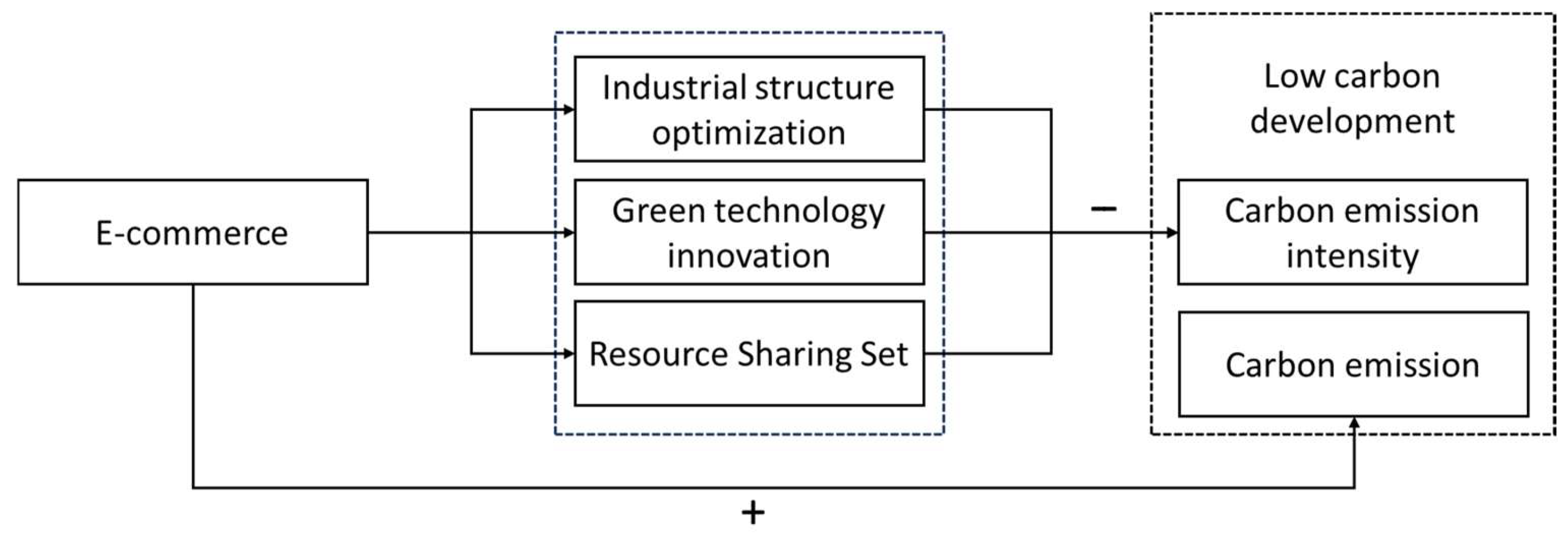
Figure 1. The mechanism of action research on the impact of e-commerce on low-carbon development.
Sustainability 17 08818 g001
Table 1. Carbon emission coefficient of various energy sources.
Energy TypesCarbonOilGasHydropower, Nuclear Power, etc.
Fi (t carbon/ten t standard coal)0.74760.58520.44350
Data Source: Guidelines for Provincial Greenhouse Gas Inventories (Energy Research Institute, National Development and Reform Commission).
Table 2. E-commerce development evaluation index system.
IndexPrimary IndicatorsSecondary IndicatorsEncoded
Electronic Commerce
Level of development
Infrastructure Long-distance optical cable line length (km)X1
Internet broadband access users (ten thousand households)X2
Mobile phone penetration rate (department/100 people)X3
Number of domain names (ten thousand)X4
Number of web pages (ten thousand)X5
Transaction scaleProportion of e-commerce-related transaction activities (%)X6
E-commerce sales volume (CNY 100 million)X7
E-commerce purchase amount (CNY 100 million)X8
Express delivery business volume (ten thousand pieces)X9
Express delivery business income (CNY 10,000)X10
Development potential Number of websites owned by enterprises (one)X11
Total postal service volume (CNY 100 million)X12
Postal office (office)X13
Total telecom business volume (CNY 100 million)X14
Number of patent applications (pieces)X15
Human capitalR&D personnel full-time equivalent (person-year)X16
R&D expenses (CNY 10,000)X17
Transportation, warehousing, and postal service employment personnel (10,000 people)X18
Table 3. Symbols and definitions of variables.
Variable NameVariableDefinitions
Carbon emissionsTLogarithm of the total carbon emission
Carbon emission intensityCICarbon dioxide emissions per unit of gross domestic product
E-commerce development levelECEntropy right method measures the development level of e-commerce
Optimization of industrial structureISIncrement of the tertiary industry to the GDP increment
Green technology innovationGTILogarithm of the number of patent application grants
Establishment of a resource-sharing setRSSProportion of Internet broadband access to users and the permanent resident population
Population sizePOPULogarithm of the population per year
Research and development intensityRDRatio of the internal expenditure of the RD funds to the regional GDP
Educational level ELAverage log of students in higher education per 100,000 population
Economic level PGDPLogarithm of the per-capita GDP
Urbanization levelURBANProportion of urban permanent residents to total population
Environmental protection expenditureENVEXPProportion of fiscal environmental protection expenditure to general budgetary expenditure
Table 4. Descriptive statistics.
VariableObsMeanStd. Dev.MinMax
T3417.7520.645.849.12
CI3411.4930.3250.6222.003
EC3410.110.1210.0070.78
IS3413.9810.3810.8756.19
GTI3419.2721.7632.19712.97
RSS3410.2790.1150.060.523
POPU3418.1370.845.7599.448
RD3410.1080.060.0020.265
EL3417.9230.37.0588.691
PGDP34111.0060.44510.0512.899
URBAN34160.95212.29323.97589.583
ENVEXP3412.8620.9671.036.814
Table 5. Baseline regression.
(1)(2)(3)(4)
TCI
EC0.067 ***0.083−2.079 ***−1.754 ***
(0.242)(0.312)(0.092)(0.128)
POPU 0.397 *** −0.017
(0.041) (0.017)
RD 3.102 *** 0.798 ***
(0.686) (0.282)
EL −0.409 *** −0.195 ***
(0.119) (0.049)
PGDP 0.504 *** −0.039
(0.108) (0.044)
URBAN −0.019 *** −0.006 ***
(0.004) (0.002)
ENVEXP −0.015 −0.013
(0.026) (0.011)
Cons5.417 ***3.096 **1.723 ***4.027 ***
(0.034)(1.248)(0.015)(0.513)
Yearyesyesyesyes
Individualyesyesyesyes
N341341341341
R20.3040.5530.6010.706
Note: The dependent variable T represents the logarithm of the total carbon emissions; CI represents the carbon dioxide emissions per unit of gross domestic product. The core explanatory variables EC denotes the e-commerce development level. Details of the calculation are provided in Section 3.2. Control variables include POPU, RD, EL, PGDP, URBAN, and ENVEXP. Table 3 in Section 3.2.3 provides detailed definitions for all variables. ** and *** represent statistical significance at 5% and 1%. The values in parentheses are the standard errors.
Table 6. Robustness test.
Data Tail Reduction ProcessingExclude Time VariablesPeriod of Variation Samples
TCITCITCI
EC0.309 **−0.796 ***0.194−0.656 ***0.0112−0.1359
(0.133)(0.097)(0.137)(0.098)(0.1541)(0.0965)
POPU0.385 ***0.305 ***0.298 **0.232 ***0.2325 **0.1445 **
(0.121)(0.088)(0.115)(0.083)(0.1157)(0.0724)
RD1.901 ***1.831 ***2.043 ***1.791 ***1.3918 **0.1745
(0.489)(0.356)(0.496)(0.356)(0.5523)(0.3457)
EL0.248 ***−0.0440.181 ***−0.0490.0635−0.0966 *
(0.069)(0.050)(0.069)(0.050)(0.0857)(0.0537)
PGDP−0.041−0.009−0.032−0.015−0.0327−0.0078
(0.043)(0.031)(0.042)(0.030)(0.0347)(0.0217)
URBAN0.009 ***−0.019 ***0.011 ***−0.019 ***0.0228 ***0.0134 ***
(0.003)(0.002)(0.003)(0.002)(0.0058)(0.0036)
ENVEXP0.0050.0000.009−0.0010.0157−0.0031
(0.010)(0.007)(0.009)(0.007)(0.0095)(0.0060)
Cons2.348 **0.5163.339 ***1.1924.2048 ***0.5306
(1.101)(0.802)(1.057)(0.758)(1.1845)(0.7414)
YearyesyesyesyesYESyes
IndividualyesyesyesyesYESyes
N341341310310310310
R20.3540.6200.3640.5960.37950.7033
Note: The dependent variable T represents the logarithm of the total carbon emissions; CI represents the carbon dioxide emissions per unit of gross domestic product. The core explanatory variables EC denotes the e-commerce development level. Details of the calculation are provided in Section 3.2. Control variables include POPU, RD, EL, PGDP, URBAN, and ENVEXP. Table 3 in Section 3.2.3 provides detailed definitions for all variables. *, **, and *** represent statistical significance at 10%, 5%, and 1%. The values in parentheses are the standard errors.
Table 7. Mediating effect 1(IS).
(1)(2)(3)(4)(5)(6)
TISTCIISCI
EC0.08320.5558 **0.0764−1.7541 ***0.5558 **−1.7630 ***
(0.3116)(0.2554)(0.3143)(0.1281)(0.2554)(0.1291)
IS 0.0122 0.0160
(0.0670) (0.0275)
POPU0.3969 ***−0.02630.3972 ***−0.0171−0.0263−0.0167
(0.0414)(0.0339)(0.0415)(0.0170)(0.0339)(0.0170)
RD3.1025 ***−2.0089 ***3.1269 ***0.7982 ***−2.0089 ***0.8303 ***
(0.6863)(0.5625)(0.7004)(0.2821)(0.5625)(0.2877)
EL−0.4086 ***0.1836 *−0.4108 ***−0.1954 ***0.1836 *−0.1984 ***
(0.1188)(0.0974)(0.1196)(0.0488)(0.0974)(0.0491)
PGDP0.5037 ***−0.06510.5045 ***−0.0388−0.0651−0.0378
(0.1082)(0.0886)(0.1084)(0.0445)(0.0886)(0.0445)
URBAN−0.0194 ***0.0114 ***−0.0195 ***−0.0057 ***0.0114 ***−0.0059 ***
(0.0041)(0.0034)(0.0042)(0.0017)(0.0034)(0.0017)
ENVEXP−0.0149−0.0045−0.01480.0134−0.00450.0135
(0.0256)(0.0210)(0.0256)(0.0105)(0.0210)(0.0105)
Cons3.0956 **2.9284 ***3.0601 **4.0268 ***2.9284 ***3.9800 ***
(1.2479)(1.0227)(1.2650)(0.5129)(1.0227)(0.5196)
Yearyesyesyesyesyesyes
Individualyesyesyesyesyesyes
N341341341341341341
R20.54370.13470.54230.70030.13470.6997
Note: The dependent variable T represents the logarithm of the total carbon emission, CI represents the carbon dioxide emissions per unit of gross domestic product, IS represents optimization of industrial structure. The core explanatory variables EC denotes the e-commerce development level. Details of the calculation are provided in Section 3.2. Control variables include POPU, RD, EL, PGDP, URBAN, and ENVEXP. Table 3 in Section 3.2.3 provides detailed definitions for all variables. *, **, and *** represent statistical significance at 10%, 5%, and 1%. The values in parentheses are the standard errors.
Table 8. Mediating effect 2 (GTI).
(1)(2)(3)(4)(5)(6)
TGTITCIGTICI
EC0.08320.24070.1654−1.7541 ***0.2407−1.7426 ***
(0.3116)(0.3222)(0.2922)(0.1281)(0.3222)(0.1274)
GTI −0.3417 *** −0.0478 **
(0.0497) (0.0217)
POPU0.3969 ***1.2707 ***0.8310 ***−0.01711.2707 ***0.0437
(0.0414)(0.0428)(0.0740)(0.0170)(0.0428)(0.0323)
RD3.1025 ***8.2327 ***5.9153 ***0.7982 ***8.2327 ***1.1921 ***
(0.6863)(0.7097)(0.7620)(0.2821)(0.7097)(0.3323)
EL−0.4086 ***0.2650 **−0.3180 ***−0.1954 ***0.2650 **−0.1827 ***
(0.1188)(0.1229)(0.1121)(0.0488)(0.1229)(0.0489)
PGDP0.5037 ***0.3160 ***0.6117 ***−0.03880.3160 ***−0.0237
(0.1082)(0.1118)(0.1025)(0.0445)(0.1118)(0.0447)
URBAN−0.0194 ***0.0323 ***−0.0084 **−0.0057 ***0.0323 ***−0.0042 **
(0.0041)(0.0042)(0.0042)(0.0017)(0.0042)(0.0018)
ENVEXP−0.01490.0046−0.01330.01340.00460.0136
(0.0256)(0.0264)(0.0240)(0.0105)(0.0264)(0.0105)
Cons3.0956 **−9.4798 ***−0.14334.0268 ***−9.4798 ***3.5732 ***
(1.2479)(1.2904)(1.2603)(0.5129)(1.2904)(0.5497)
Yearyesyesyesyesyesyes
Individualyesyesyesyesyesyes
N341341341341341341
R20.54370.93560.59940.70030.93560.7037
Note: The dependent variable T represents the logarithm of the total carbon emissions, CI represents the carbon dioxide emissions per unit of gross domestic product, and GTI represents green technology innovation. The core explanatory variables EC denotes the e-commerce development level. Details of the calculation are provided in Section 3.2. Control variables include POPU, RD, EL, PGDP, URBAN, and ENVEXP. Table 3 in Section 3.2.3 provides detailed definitions for all variables. ** and *** represent statistical significance at 5% and 1%. The values in parentheses are the standard errors.
Table 9. Mediating effect 3 (RSS).
(1)(2)(3)(4)(5)(6)
TRSSTCIRSSCI
EC0.08320.1364 **0.0185−1.7541 ***0.1364 **−1.7474 ***
(0.3116)(0.0623)(0.3129)(0.1281)(0.0623)(0.1291)
RSS 0.4744 * −0.0493
(0.2732) (0.1127)
POPU0.3969 ***−0.01090.4021 ***−0.0171−0.0109−0.0176
(0.0414)(0.0083)(0.0413)(0.0170)(0.0083)(0.0171)
RD3.1025 ***−0.08873.1446 ***0.7982 ***−0.08870.7938 ***
(0.6863)(0.1373)(0.6847)(0.2821)(0.1373)(0.2826)
EL−0.4086 ***0.1223 ***−0.4666 ***−0.1954 ***0.1223 ***−0.1894 ***
(0.1188)(0.0238)(0.1231)(0.0488)(0.0238)(0.0508)
PGDP0.5037 ***0.1551 ***0.4302 ***−0.03880.1551 ***−0.0312
(0.1082)(0.0216)(0.1159)(0.0445)(0.0216)(0.0478)
URBAN−0.0194 ***−0.0025 ***−0.0182 ***−0.0057 ***−0.0025 ***−0.0059 ***
(0.0041)(0.0008)(0.0041)(0.0017)(0.0008)(0.0017)
ENVEXP−0.0149−0.0058−0.01210.0134−0.00580.0131
(0.0256)(0.0051)(0.0256)(0.0105)(0.0051)(0.0105)
Cons3.0956 **−2.1452 ***4.1134 ***4.0268 ***−2.1452 ***3.9209 ***
(1.2479)(0.2496)(1.3752)(0.5129)(0.2496)(0.5676)
Yearyesyesyesyesyesyes
Individualyesyesyesyesyesyes
N341341341341341341
R20.54370.43700.54640.70030.43700.6995
Note: The dependent variable T represents the logarithm of the total carbon emissions, CI represents the carbon dioxide emissions per unit of gross domestic product, and RSS represents resource-sharing set. The core explanatory variables EC denotes the e-commerce development level. Details of the calculation are provided in Section 3.2. Control variables include POPU, RD, EL, PGDP, URBAN, and ENVEXP. Table 3 in Section 3.2.3 provides detailed definitions for all variables. *, **, and *** represent statistical significance at 10%, 5%, and 1%. The values in parentheses are the standard errors.
Table 10. Heterogeneity test.
(1)(2)(3)(4)(5)(6)
TTTCICICI
EC−1.605 **−1.042 **1.605−2.456 ***−0.677 ***−3.837 ***
(0.679)(0.412)(1.625)(0.379)(0.133)(0.831)
POPU0.601 ***1.180 ***0.133−0.062 **0.0070.022
(0.050)(0.174)(0.082)(0.026)(0.036)(0.037)
RD2.669 ***−3.359−3.124 ***2.121 ***−1.095 **−0.789
(0.867)(2.257)(1.158)(0.523)(0.512)(0.520)
EL−0.876 ***−0.894 ***0.336 **−0.213 **0.035−0.185 ***
(0.162)(0.298)(0.143)(0.092)(0.066)(0.059)
PGDP0.2421.180 ***0.3580.1600.195 **0.052
(0.229)(0.316)(0.219)(0.120)(0.084)(0.090)
URBAN0.0100.001−0.009 *−0.015 ***−0.024 ***0.001
(0.008)(0.019)(0.005)(0.005)(0.005)(0.002)
ENVEXP0.0230.094 ***−0.314 ***0.0060.070 ***−0.037 **
(0.026)(0.035)(0.037)(0.016)(0.009)(0.015)
Cons6.318 ***−7.750 ***1.6202.913 **0.4222.640 ***
(2.353)(2.538)(2.151)(1.281)(0.676)(0.915)
Yearyesyesyesyesyesyes
Individualyesyesyesyesyesyes
N114113114114113114
R20.6750.7960.6720.7370.9060.766
Note: The dependent variable T represents the logarithm of the total carbon emissions; CI represents the carbon dioxide emissions per unit of gross domestic product. The core explanatory variables EC denotes the e-commerce development level. Details of the calculation are provided in Section 3.2. Control variables include POPU, RD, EL, PGDP, URBAN, and ENVEXP. Table 3 in Section 3.2.3 provides detailed definitions for all variables. *, **, and *** represent statistical significance at 10%, 5%, and 1%. The values in parentheses are the standard errors.
Disclaimer/Publisher’s Note: The statements, opinions and data contained in all publications are solely those of the individual author(s) and contributor(s) and not of MDPI and/or the editor(s). MDPI and/or the editor(s) disclaim responsibility for any injury to people or property resulting from any ideas, methods, instructions or products referred to in the content.


