Article

Optimizing Laundry for Sustainability: Balancing Washing Efficiency and Environmental Impact in the Clothing Use Phase


Univ. Lille, ENSAIT, ULR 2461—GEMTEX—Génie et Matériaux Textiles, F-59000 Lille, France
*
Author to whom correspondence should be addressed.
Sustainability 2025, 17(18), 8411; https://doi.org/10.3390/su17188411
Submission received: 22 July 2025 / Revised: 15 September 2025 / Accepted: 17 September 2025 / Published: 19 September 2025
(This article belongs to the Section Resources and Sustainable Utilization)

Abstract

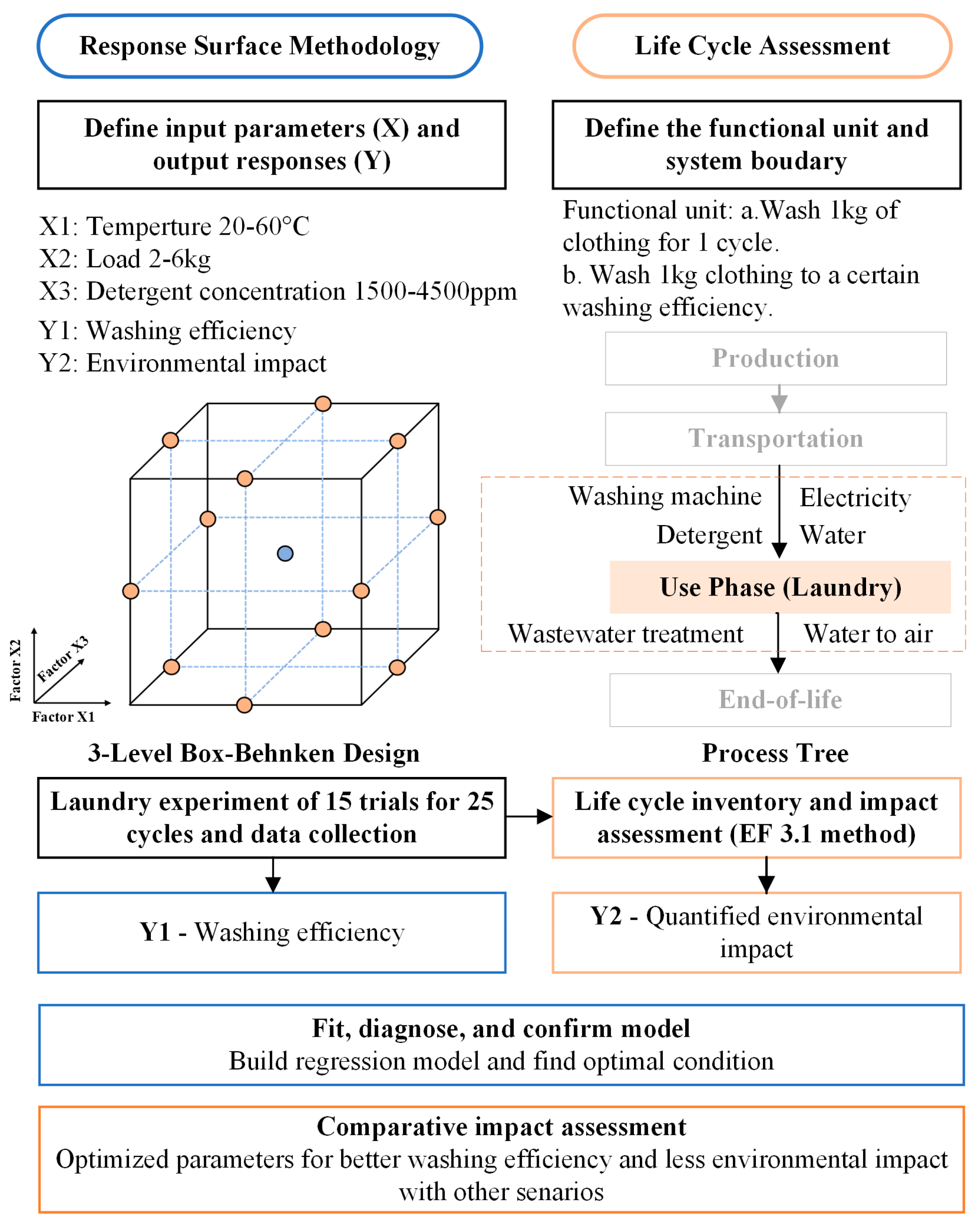
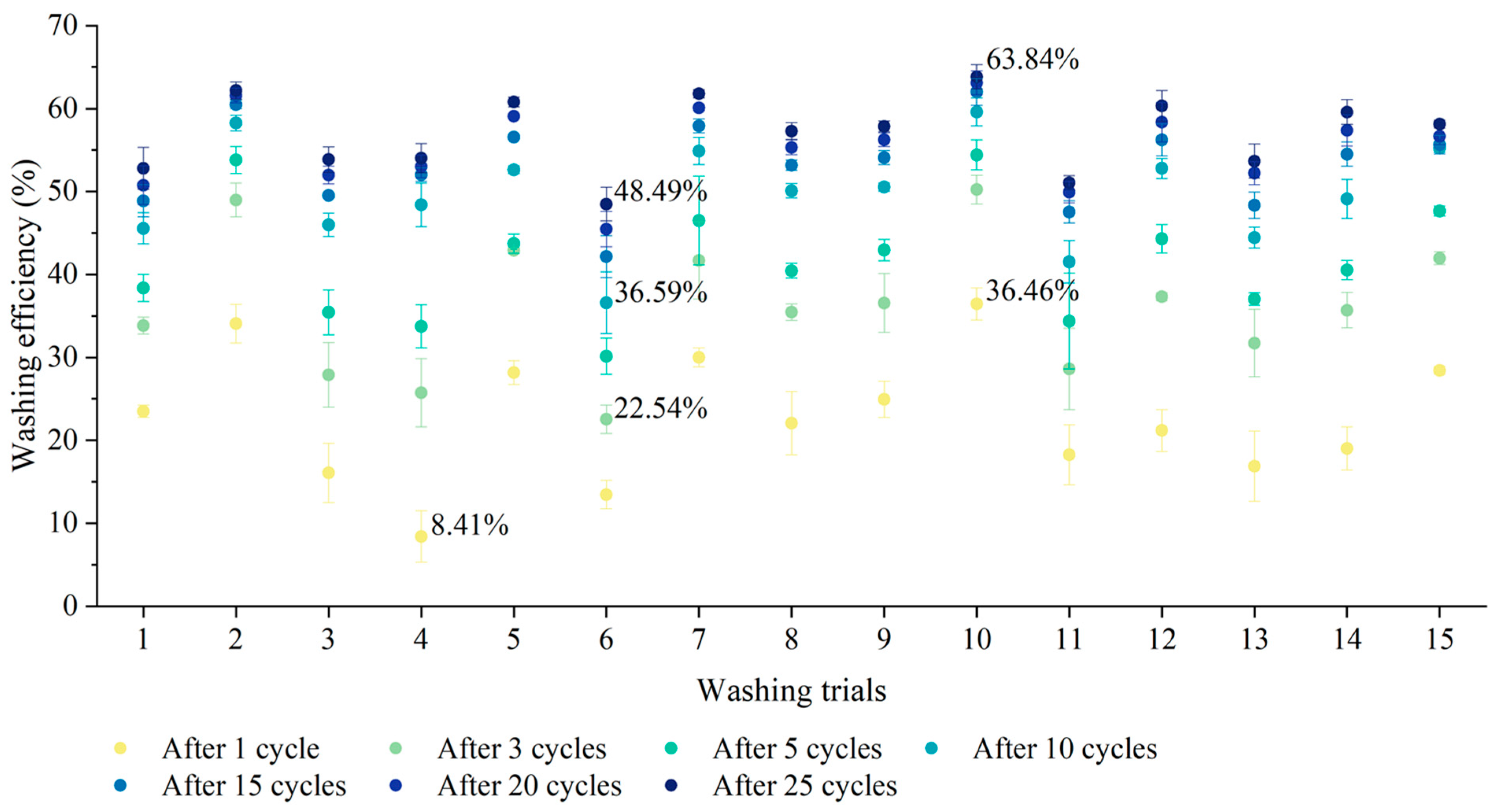
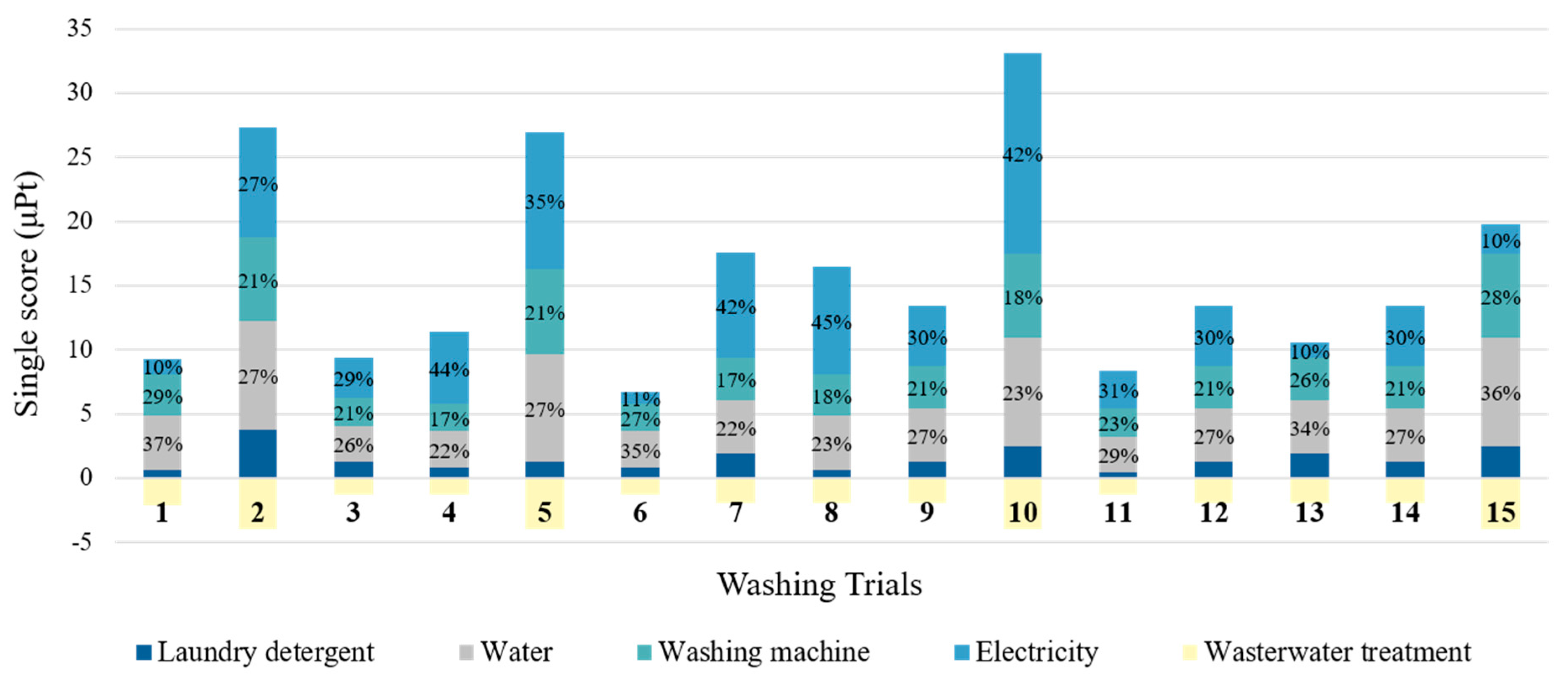
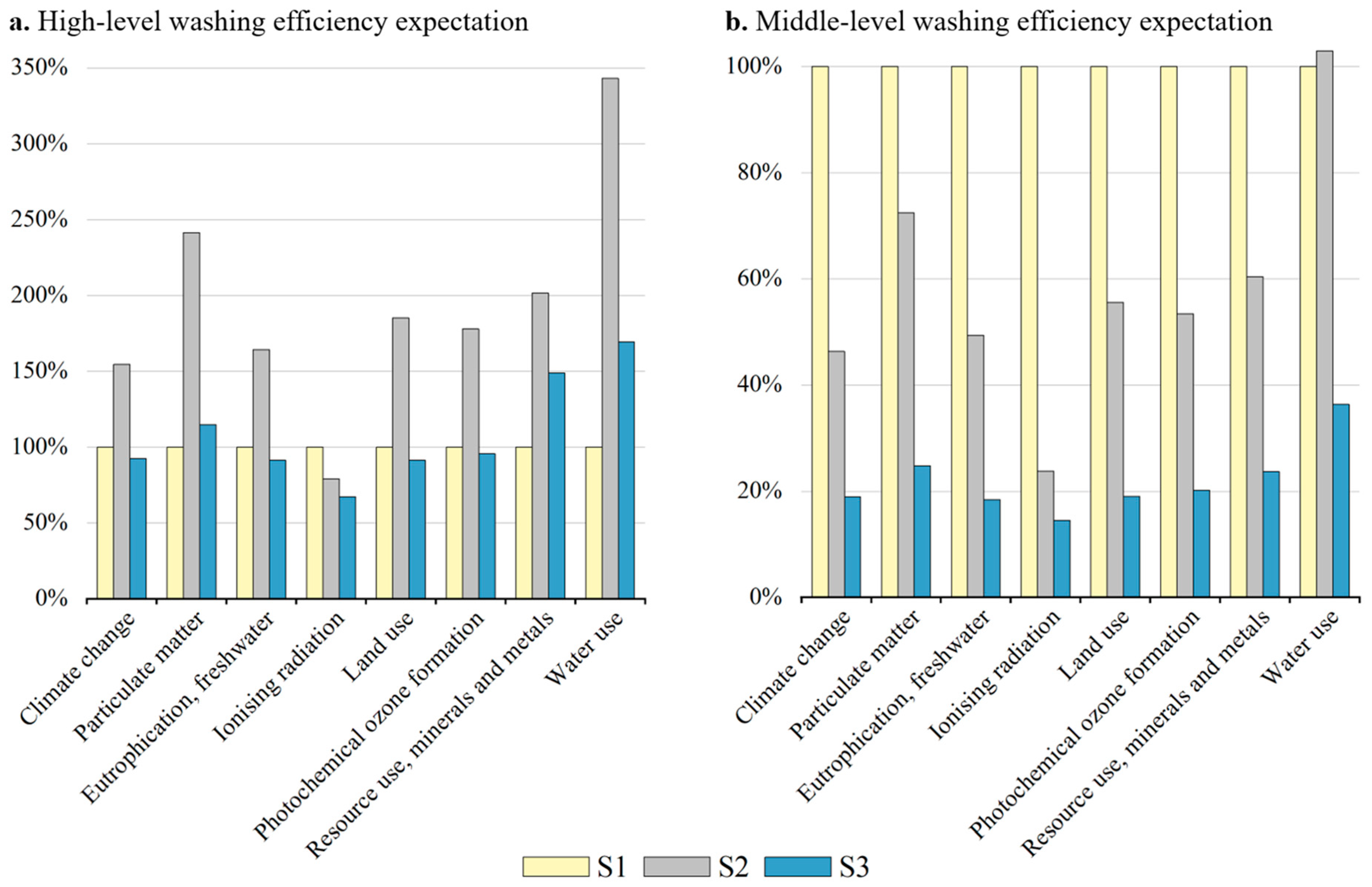
The use phase of clothing contributes significantly to the overall environmental impacts due to clothing care practices. Decreasing environmental impact while maintaining washing performance in the use phase can be an effective strategy for sustainability and circularity in the textile value chain. However, existing studies on the environmental impacts of use phase usually consider limited washing conditions and neglect their impacts on washing efficiency. This study proposes a research framework that integrates the Response Surface Methodology (RSM) and Life Cycle Assessment (LCA) methodology to optimize washing parameters for better washing efficiency with less environmental impact in the clothing use phase. A series of laundry experiments were conducted to simulate household laundry, and an environmental impact assessment was conducted based on the experimental data. The optimized washing parameters were explored under eight impact categories and in terms of washing efficiency, and comparative analyses were conducted between three different washing scenarios. The results indicated that input load is the most significant factor influencing both washing efficiency and environmental impact, but with a negative correlation. The optimized washing conditions provided effective trade-offs, demonstrating notable environmental benefits through the scenario study. In the daily washing scenario with an expectation for a middle level of washing efficiency, using the optimized washing conditions can reduce the environmental impact by 80% on average compared to the high-washing-efficiency-oriented washing process and 60% on average compared to the low-environmental-impact-oriented washing process. However, for high washing efficiency demand, optimized washing conditions are less competitive due to increased washing time and detergent use. The results emphasized the importance of choosing appropriate washing parameters according to the demand for washing efficiency. Consistent environmental improvements can be achieved by changing consumer washing habits.
Keywords: clothing; use phase; washing efficiency; life cycle assessment; response surface methodology clothing; use phase; washing efficiency; life cycle assessment; response surface methodology