High-Temperature Risk Assessment and Adaptive Strategy in Dalian Based on Refined Population Prediction Method



Abstract
1. Introduction
2. Data and Methods
2.1. Study Area
2.2. Preliminary Assessment Indicator Library
2.3. Data Acquisition and Processing
2.4. Evaluation System Construction
2.4.1. Calculate the Metrics
- (1)
- Exposure indicators.
- (2)
- Sensitivity indicators.
- (3)
- Adaptability indicators.
2.4.2. Indicator Weights Are Determined
2.4.3. Build a Model
3. Results
3.1. Population Simulation and Result Verification
3.2. Distribution of High-Temperature Heat Wave Risks in Dalian City
3.2.1. Exposure
3.2.2. Sensitivity
3.2.3. Adaptability
3.2.4. High-Temperature Risk
4. Discussion
4.1. A New Method for Population Prediction Based on Random Forests
4.2. High-Temperature Risk Assessment System Under the HVI Framework
4.3. Adaptive Strategies
4.4. Study Limitations
5. Conclusions
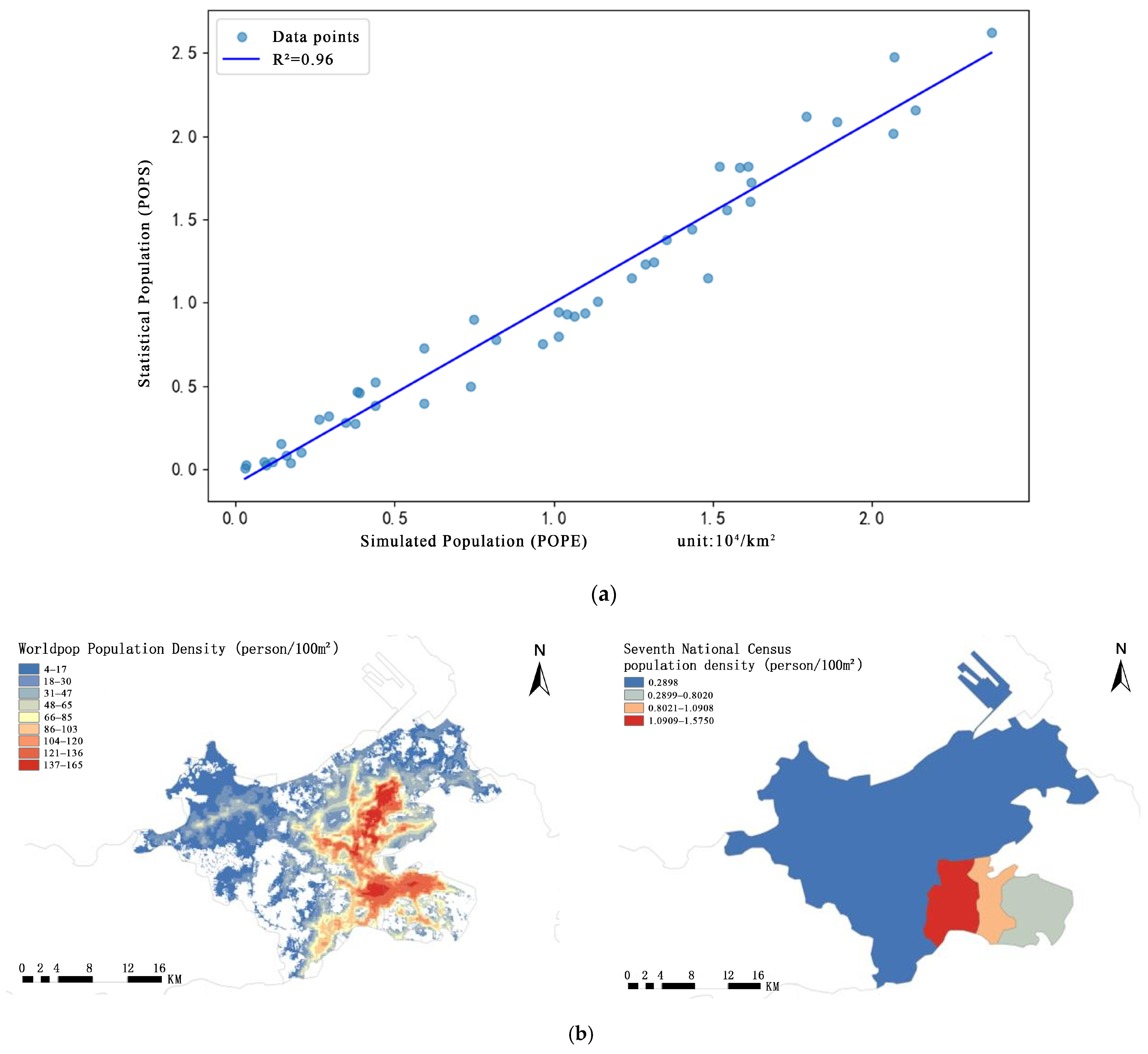
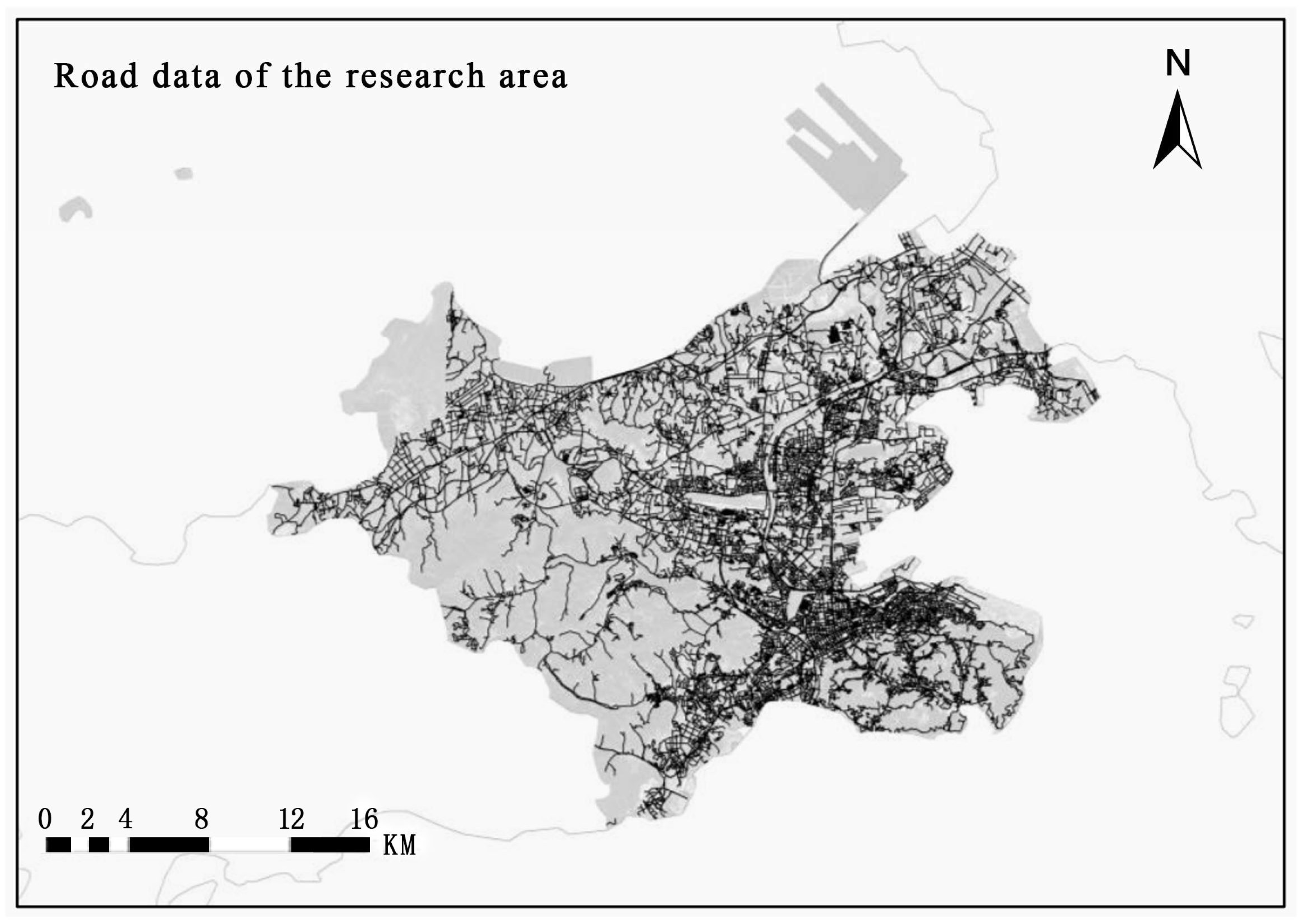
- In population density prediction, there is a strong positive correlation between night light brightness (NL), road network density (RD), the flat area ratio (SLP), surface temperature (LST), and demographic data. The correlation coefficients for NL and RD both reach 0.963, while the correlation coefficient for SLP is 0.956, and for LST, it is 0.954.
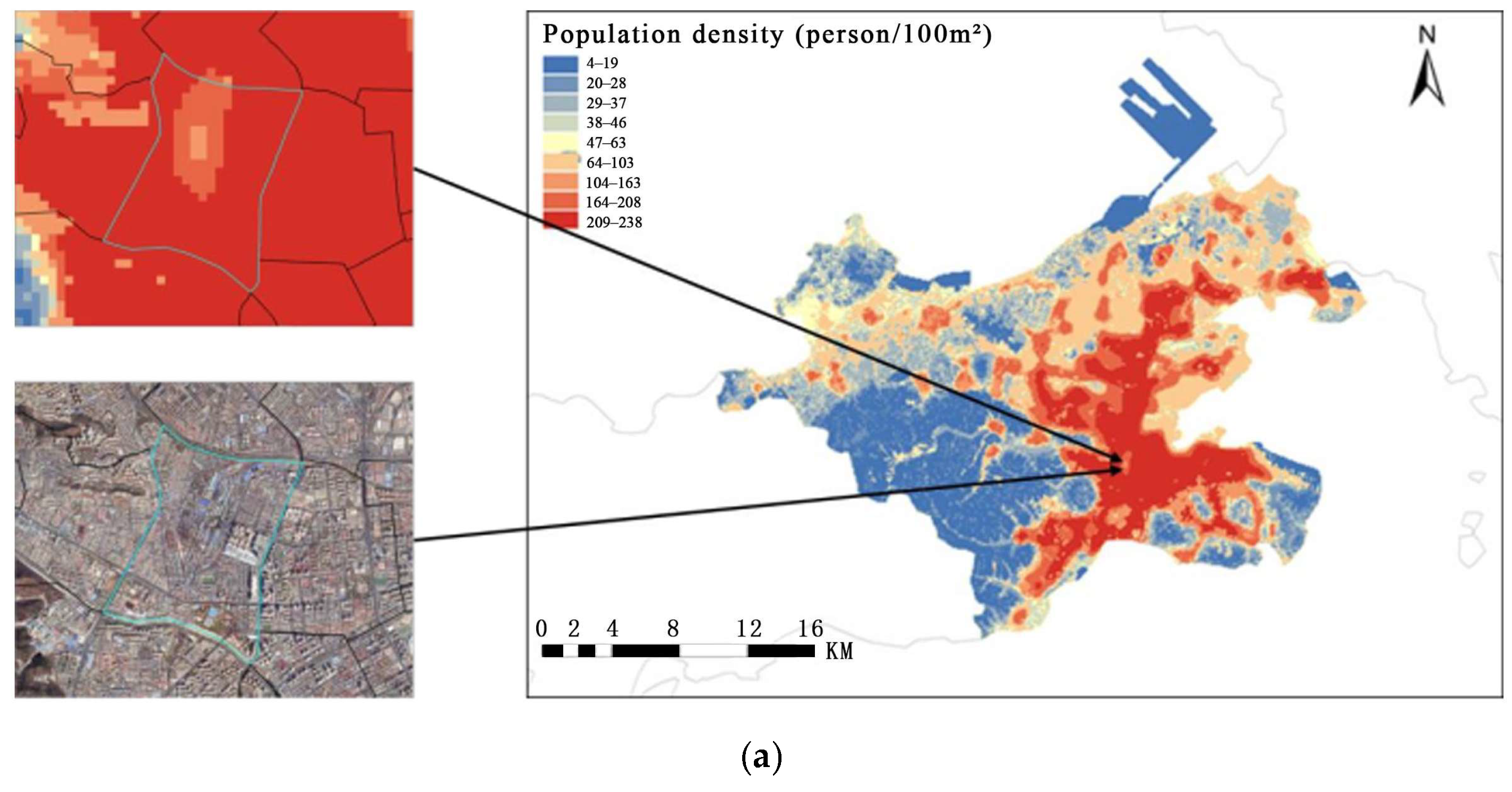
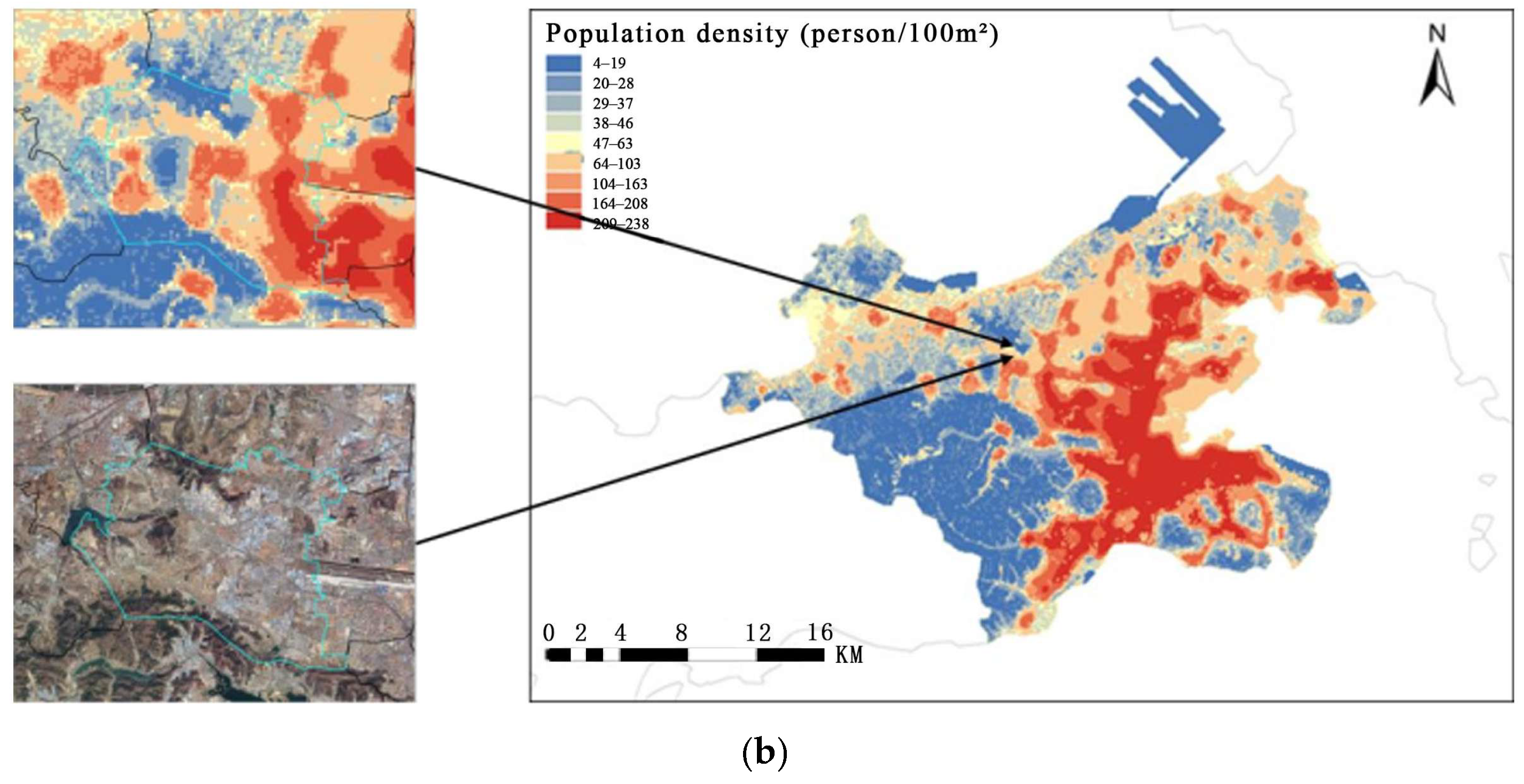
- In the high-resolution population distribution map of the study area generated by integrating multi-source data, the population in the four districts of the Dalian City center is mainly concentrated in the eastern part of Ganjingzi District, the northeast of Shahekou District, the northern part of Xigang District, and the northwest of Zhongshan District, with population densities generally exceeding 209 people per 100 square meters.
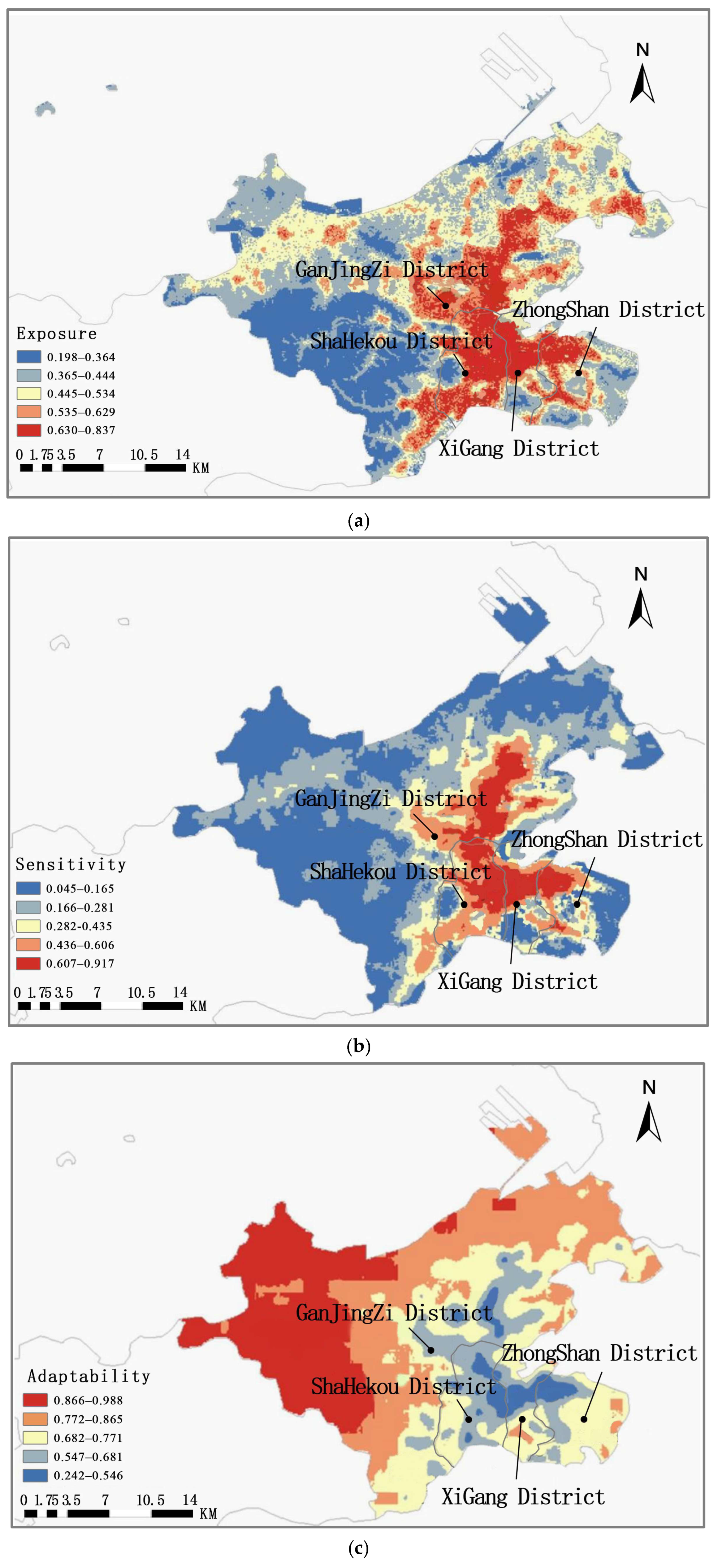
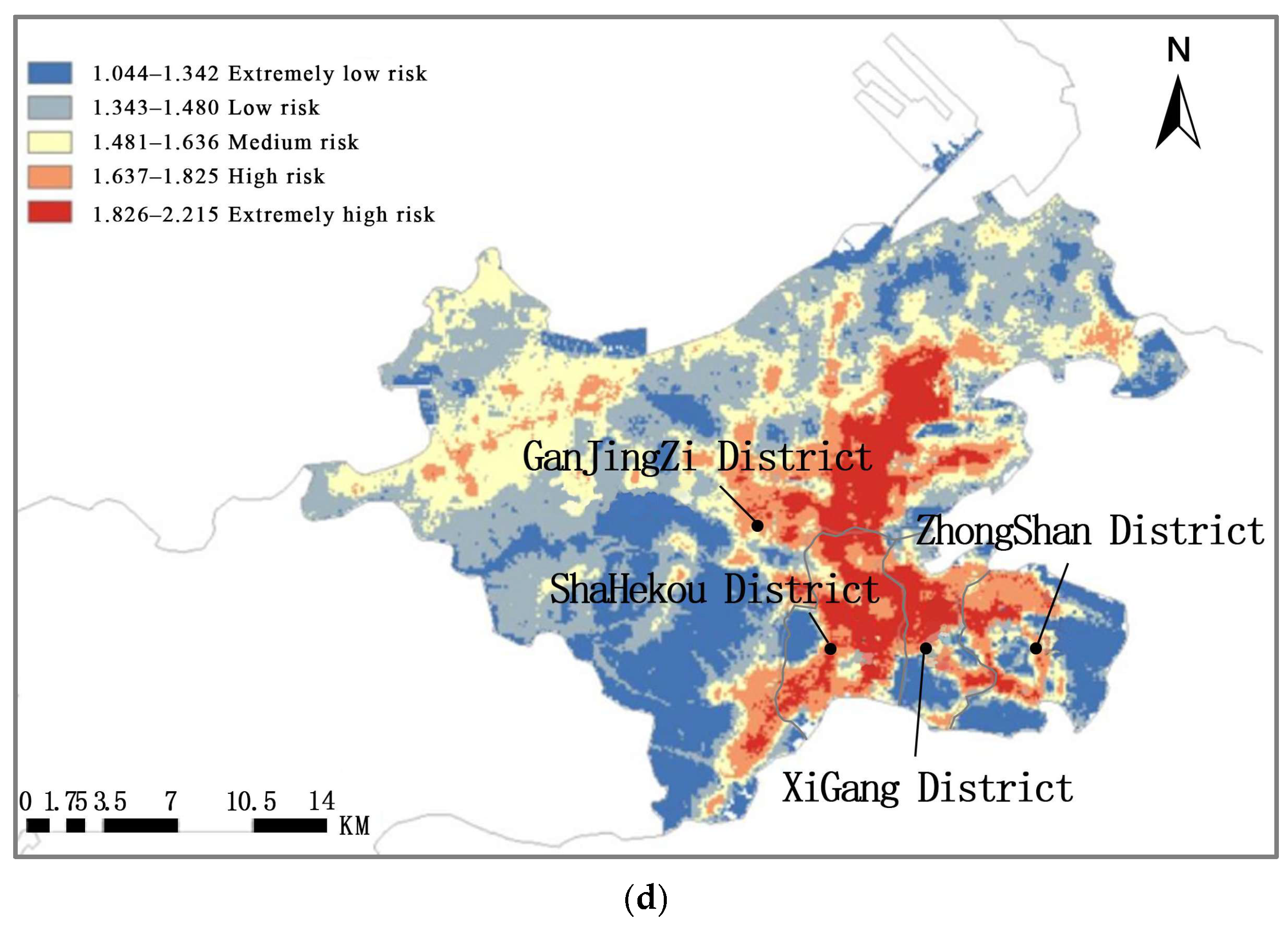
- In the high-temperature risk map, the spatial distribution of high-temperature heatwave risks within the study area shows a significant pattern of decreasing from east to west and from the coast to the inland region. There are notable differences in the distribution of different criteria levels within the main urban area of Dalian, with areas of high exposure accounting for 13.04%, high sensitivity areas for 8.05%, and low adaptability areas for 21.44%. Exposure is the primary cause of high-temperature risks.
Author Contributions
Funding
Institutional Review Board Statement
Informed Consent Statement
Data Availability Statement
Conflicts of Interest
References
- Wang, Y.; Zhao, N.; Wu, C.; Quan, J.; Chen, M. Future population exposure to heatwaves in 83 global megacities. Sci. Total Environ. 2023, 888, 164142. [Google Scholar] [CrossRef]
- Piao, S.; Wang, X. Biological systems under climate change: What do we learn from the IPCC AR6. Glob. Change Biol. 2023, 29, 5120–5121. [Google Scholar] [CrossRef] [PubMed]
- Zhang, M.; Zhou, Y.; Li, X.; Sun, Z.; Yang, G.; Xie, Z. Quantifying the Contributions of Regional Human Activities and Global Climate Change to the Regional Climate in a Typical Mountain-Oasis-Desert System of Arid Central Asia From 1979 to 2018. J. Geophys. Res. Atmos. 2022, 128, e2022JD037110. [Google Scholar] [CrossRef]
- Li, T.; Horton, R.M.; Bader, D.A.; Zhou, M.; Liang, X.; Ban, J.; Sun, Q.; Kinney, P.L. Aging Will Amplify the Heat-related Mortality Risk under a Changing Climate: Projection for the Elderly in Beijing, China. Sci. Rep. 2016, 6, 28161. [Google Scholar] [CrossRef]
- Moyer, R.P. Heat-related illness. Emerg. Med. Clin. N. Am. 2004, 22, 315–327. [Google Scholar]
- Shen, X.; Li, G. Neurological damage caused by abnormal thermoregulation. China Med. Rev. 2014, 11, 155–158. [Google Scholar]
- Koken, P.J.M.; Piver, W.T.; Ye, F.; Elixhauser, A.; Olsen, L.M.; Portier, C.J. Temperature, air pollution, and hospitalization for cardiovascular diseases among elderly people in Denver. Environ. Health Perspect. 2003, 111, 1312–1317. [Google Scholar] [CrossRef]
- Lin, S.; Luo, M.; Walker, R.J.; Liu, X.; Hwang, S.A.; Chinery, R. Extreme high temperatures and hospital admissions for respiratory and cardiovascular diseases. Epidemiology 2009, 20, 738. [Google Scholar] [CrossRef]
- Wahid, S.S.; Raza, W.A.; Mahmud, I.K.B.A. Climate-related shocks and other stressors associated with depression and anxiety in Bangladesh: A nationally representative panel study. Lancet Planet. Health 2023, 7, E137–E146. [Google Scholar] [CrossRef]
- Zhang, L.; Hou, Y.; Wang, L. Characteristics of summer high temperature variation and the cause of an abnormal high temperature event in Dalian. J. Liaoning Norm. Univ. (Nat. Sci. Ed.) 2023, 46, 540–545. [Google Scholar]
- Zhang, M. Research on the Characteristics of Summer High Temperature Variation and its Influence Process in China. Ph.D. Thesis, Nanjing University of Information Science and Technology, Nanjing, China, 2011. [Google Scholar]
- Li, H.; Chen, H.; Wang, H.; Sun, J.; Ma, J. Can Barents Sea Ice Decline in Spring Enhance Summer Hot Drought Events over Northeastern China? J. Clim. 2018, 31, 4705–4725. [Google Scholar] [CrossRef]
- Nan, P. Urban Climate Prediction and Adaptive Planning Strategy for the Future (2050s) Based on WRF. Master’s Thesis, Dalian University of Technology, Liaoning, China, 2021. [Google Scholar]
- Wu, X. Research on Flexible Urban Planning Strategy in Harbin under the Background of Risk Society. Master’s Thesis, Harbin Institute of Technology, Heilongjiang, China, 2016. [Google Scholar]
- Guo, X.; Weinberger, K.R.; Tamburic, L.; Peters, C.E.; McLeod, C.B. Heat-related illness among workers in British Columbia, Canada: Extreme hot weather in 2021 compared to 2001–2020. Scand. J. Work. Environ. Health 2024, 50, 545. [Google Scholar] [CrossRef] [PubMed]
- Fang, C. Research on Cooling Design Method of High-Density Urban Blocks in Guangzhou to Cope with High Temperature Problems. Master’s Thesis, Guangzhou University, Guangzhou, China, 2023. [Google Scholar]
- Xiong, Y.; Zhang, F. Analysis of thermal environment effects and influencing factors of human settlements in Changsha based on multi-source data. Acta Geogr. Sin. 2020, 75, 2443–2458. [Google Scholar]
- Pei, X.; Wu, J.; Xue, J.; Zhao, J.; Liu, C.; Tian, Y. Adaptation of urban climate change in China. Urban Dev. Res. 2022, 29, 39–46. [Google Scholar]
- Guo, F.; Zheng, R.; Zhao, J.; Zhang, H.; Dong, J. Framework of street grid-based urban heat vulnerability assessment: Integrating entropy weight method and BPNN model. Urban Clim. 2024, 56, 102067. [Google Scholar] [CrossRef]
- Yang, M.; Liu, R.; Gou, X.; Li, G.; Xu, Y. Spatio-temporal analysis and risk assessment of high temperature heat wave in the Chengdu-Chongqing Twin Cities Economic Circle. Geophys. Geochem. Explor. Comput. Tech. 2022, 44, 392–402. [Google Scholar]
- Ding, X.; Liu, S.; Xu, X. Review of Risk Assessment Methods for Small-area Heatwaves. Inn. Mong. Meteorol. 2010, 1, 24–28. [Google Scholar]
- Vescovi, L.; Rebetez, M.; Rong, F. Assessing public health risk due to extremely high temperature events: Climate and social parameters. Clim. Res. 2005, 30, 71–78. [Google Scholar] [CrossRef]
- Jiang, T.; Li, X.; Chao, Q.; Yuan, J.; Lin, R. Main Conclusions and New Understanding of Climate Change 2014: Impacts, Adaptation and Vulnerability. Res. Prog. Clim. Change 2014, 10, 157–166. [Google Scholar]
- Wu, X.; Liu, Q.; Liu, G.; Huang, C.; Li, H. Review of high temperature heat wave risk assessment. J. Geo-Inf. Sci. 2019, 21, 1029–1039. [Google Scholar]
- Kim, Y.J.; Li, D.; Xu, Y.; Zhang, Y.; Li, X.; Muhlenforth, L.; Xue, S.; Brown, R. Heat vulnerability and street-level outdoor thermal comfort in the city of Houston: Application of google street view image derived SVFs. Urban Clim. 2023, 51, 101617. [Google Scholar] [CrossRef]
- Zheng, M.; Zhang, J.; Shi, L.; Zhang, D.; Pangali, S.T.P.; Prohan, F.A. Mapping Heat-Related Risks in Northern Jiangxi Province of China Based on Two Spatial Assessment Frameworks Approaches. Int. J. Environ. Res. Public Health 2020, 17, 6584. [Google Scholar] [CrossRef]
- Huang, X.; Wang, B.; Liu, M.; Guo, Y.; Li, Y. Characteristics of high temperature and social vulnerability in Chinese cities. Geogr. Res. 2020, 39, 1534–1547. [Google Scholar]
- Balk, D.L. Determining Global Population Distribution: Methods, Applications and Data. Adv. Parasitol. 2006, 62, 119. [Google Scholar]
- Tatem, A.J.; Guerra, C.A.; Kabaria, C.W.; Noor, A.; Hay, S. Human population, urban settlement patterns and their impact on Plasmodium falciparum malaria endemicity. Malar. J. 2008, 7, 218. [Google Scholar] [CrossRef]
- Shi, Z. Surface Thermal Environment and Thermal Risk Assessment from the Perspective of Local Climate Zoning. Master’s Thesis, Liaoning Normal University, Liaoning, China, 2023. [Google Scholar]
- Yang, X.; Jiang, D.; Wang, N.; Liu, H. Processing method of population data spatialization. Acta Geogr. Sin. 2002, 57, 70–75. [Google Scholar]
- Liu, J.; Yue, T.; Wang, Y.; Qiu, D.; Liu, M. Digital Simulation of Chinese Population Density. Acta Geogr. Sin. 2003, 58, 17–24. [Google Scholar]
- Cheng, L. Spatio-Temporal Variation of Chinese Population Distribution Based on DMSP/OLS Night Light Data; Institute of Remote Sensing Applications, Chinese Academy of Sciences, Cartography and Geographic Information System: Beijing, China, 2008. [Google Scholar]
- Zhuo, L.; Chen, J.; Shi, P.; Gu, Z.; Fan, Y.; Ichinose, T. Modeling Population Density of China in 1998 Based on DMSP/OLS Nighttime Light Image. Acta Geogr. Sin. 2005, 60, 266–276. [Google Scholar]
- Su, M.D.; Lin, M.C.; Hieh, H.I.; Tsai, B.W.; Lin, C.H. Multi-layer multi-class dasymetric mapping to estimate population distribution. Sci. Total Environ. 2010, 408, 4807–4816. [Google Scholar] [CrossRef]
- Breiman, L. Random Forests. Mach. Learn. 2001, 45, 5–32. [Google Scholar] [CrossRef]
- Dodge, Y. Gini Index. In The Concise Encyclopedia of Statistics; Springer: Berlin/Heidelberg, Germany, 2008. [Google Scholar]
- Zhao, J. Correlation Between High Temperature Heat Wave and Coastal Urban Morphology and Coping Strategies. Master’s Thesis, Dalian University of Technology, Liaoning, China, 2020. [Google Scholar]
- Cutter, S.L.; Boruff, B.J.; Shirley, W.L. Social Vulnerability to Environmental Hazards. In Social Science Quarterly; Wiley-Blackwell: Hoboken, NJ, USA, 2002. [Google Scholar]
- Fei, G.; Guining, F.; Jun, Z.; Hongchi, Z.; Jing, D.; Hui, M.; Na, L. Urban heat health risk inequality and its drivers based on local climate zones: A case study of Qingdao. China Build. Environ. 2025, 275, 112827. [Google Scholar]
- Yan, C.; Guo, Q.; Li, H.; Li, L.; Qiu, G. Quantifying the cooling effect of urban vegetation by mobile traverse method: A local-scale urban heat island study in a subtropical megacity. Build. Environ. 2020, 169, 106541. [Google Scholar] [CrossRef]
- Yin, Z.; Liu, Z.; Liu, X.; Zheng, W.; Yin, L. Urban heat islands and their effects on thermal comfort in the US: New York and New Jersey. Ecol. Indic. 2023, 154, 110765. [Google Scholar] [CrossRef]
- Chen, J.; Tao, H.; Zhai, J.; Su, B.; Jiang, T. Risk assessment of extreme heat events in the China-Pakistan Economic Corridor. J. Nat. Disasters 2022, 31, 65–74. [Google Scholar]
- Prosdocimi, D.; Klima, K. Health effects of heat vulnerability in Rio de Janeiro: A validation model for policy applications. SN Appl. Sci. 2020, 2, 1948. [Google Scholar] [CrossRef]
- Hu, K.; Huang, X. Research on the planning of heat prevention and disaster prevention and disaster avoidance based on adaptive theory. In Proceedings of the 2019 China Urban Planning Annual Conference, Chongqing, China, 19–21 October 2019. [Google Scholar]
- Luo, M.; Tang, H.; Guo, F.; Liu, Y.; Zhang, H.; Dong, J.; Zhao, J.; Miao, S. How do geometric forms of public squares affect year-round thermal comfort? A field study in a cold coastal city. Urban Clim. 2025, 60, 102352. [Google Scholar] [CrossRef]
- Chen, S.; Zhang, H.; Zhuang, D. GIS-Based Spatial Autocorrelation Analysis of Housing Prices Oriented towards a View of Spatiotemporal Homogeneity and Nonstationarity: A Case Study of Guangzhou, China. Complexity 2020, 2020, 1079024. [Google Scholar] [CrossRef]
- Yang, C.; He, S.; Zhang, S.; Tang, J.; Bu, K.; Yu, L.; Yan, F. Estimation of the relationship between urban heat island and land surface factors using Landsat8 data: A case study in Changchun, China. J. Arid. Land Resour. Environ. 2016, 30, 110–115. [Google Scholar]
- Chen, Z.; Yu, B.; Yang, C.; Zhou, Y.; Yao, S.; Qian, X.; Wang, C.; Wu, B.; Wu, J. An extended time series (2000–2018) of global NPP-VIIRS-like nighttime light data from a cross-sensor calibration. Earth Syst. Sci. Data 2021, 13, 889–906. [Google Scholar] [CrossRef]
- Qin, Z. Single-window algorithm for calculating surface temperature using Landsat TM6 data. Acta Geogr. Sin. 2001, 56, 456–466. [Google Scholar]
- Li, X.; Tian, X.; Duan, T.; Cao, X.; Yang, K.; Lu, Q.; Wang, F. Remote sensing estimation of woody and herbaceous plant coverage in temperate sparse forest grassland using UAV and satellite imagery. J. Remote Sens. 2023, 27, 2139–2152. [Google Scholar]
- Chen, J.; Gao, M.; Cheng, S.; Hou, W.; Song, M.; Liu, X.; Liu, Y. Global 1 km × 1 km gridded revised real gross domestic product and electricity consumption during 1992–2019 based on calibrated nighttime light data. Sci. Data 2022, 9, 202. [Google Scholar] [CrossRef] [PubMed]
- Ebert, U.; Welsch, H. Meaningful environmental indices: A social choice approach. J. Environ. Econ. Manag. 2004, 47, 270–283. [Google Scholar] [CrossRef]
- Wang, J.; Wang, Y.; Chen, J.; Cai, J.; Xie, B.; SU, H. High temperature disaster risk assessment based on spatialization of disaster bearers: A case study of the Yangtze River Delta of China. Water Conserv. Hydropower Technol. 2022, 53, 1–12. [Google Scholar]
- Li, Y.; Cheng, Y.; Cui, G.; Peng, C.; Xu, Y.; Wang, Y.; Liu, Y.; Liu, J.; Li, C.; Wu, Z.; et al. Association between high temperature and mortality in metropolitan areas of four cities in various climatic zones in China: A time-series study. Environ. Health 2014, 13, 65. [Google Scholar] [CrossRef]
- Gu, W.; Fu, H. Assessment of Thermal Vulnerability and Spatial Distribution Characteristics of Urban Human Settlements: A Case Study of the Main Urban Area of Chengdu. West. J. Hum. Settl. Environ. 2023, 38, 67–74. [Google Scholar]
- Zong, J. Heat-Related Health Vulnerability Assessment in China Based on Directed Networks. Master’s Thesis, Shandong University, Shandong, China, 2023. [Google Scholar]
- Xiang, Z.; Qin, H.; He, B.J.; Han, G.; Chen, M. Heat vulnerability caused by physical and social conditions in a mountainous megacity of Chongqing, China. Sustain. Cities Soc. 2022, 80, 103792. [Google Scholar] [CrossRef]
- He, M.; Xu, Y.; Mo, Y.; Zhu, S. Comprehensive assessment of high temperature and heat wave risk in Beijing based on multi-source remote sensing data. Chin. J. Geogr. 2023, 43, 1270–1280. [Google Scholar]
- Luo, Y.; Cheng, X.; He, J.B.; Dewancker, B.J. Identification and assessment of heat disaster risk: A comprehensive framework based on hazard, exposure, adaptation and vulnerability. Int. J. Environ. Sci. Technol. 2024, 22, 11275–11294. [Google Scholar] [CrossRef]
- Han, G.; Chen, M.; Zeng, W.; Cai, Z. The planning of high temperature disasters in urban areas should be studied and developed. West. J. Hum. Settl. Environ. Stud. 2018, 33, 77–84. [Google Scholar]
- Jiang, Z. OneNYC: Outline of the “One New York” Plan. Shanghai Econ. 2015, 9, 57–62. [Google Scholar]
- Yang, J.; Zhu, X. Research on Climate Response Planning in Large Cities: A Case Study of the Chicago Climate Action Plan: The New Normal: Inheritance and Change. In Proceedings of the 2015 China Urban Planning Annual Conference (07 Urban Ecological Planning), Hangzhou, China, 25–27 November 2015. [Google Scholar]
- Shen, S. San Francisco Bay Area Air Regulatory District Formulates Carbon Emission Reduction and Clean Air Action Plan. Int. J. Urban Plan. 2017, 4, 135. [Google Scholar]
- Guo, L. Case Introduction of Low-carbon Eco-City (38): Copenhagen: Carbon Neutral City (Part I). Urban Plan. Commun. 2014, 20, 17. [Google Scholar]
- Karlsson, M. Sweden’s Climate Act—Its origin and emergence. Clim. Policy 2021, 21, 1132–1145. [Google Scholar] [CrossRef]



| Indicator Type | Metric Content | Function |
|---|---|---|
| Exposure Metrics | Daytime Surface Temperature | It directly reflects the degree to which the ground receives and stores solar radiant heat. |
| Population Density | Relevant studies have shown that higher population density is associated with higher thermal health risks [40]. | |
| Road Network Density | Visually reflects the density of roads in the study area. | |
| Elevation Data | Affect population distribution and infrastructure construction. | |
| Plant Coverage | A large number of studies have shown that green spaces and other areas with abundant vegetation have natural cooling functions, which can effectively alleviate the impact of the thermal environment on the human body and provide free summer space for the public [41,42]. | |
| Sensitivity Indicators | Distribution of Geriatric Population | The body functions deteriorate, and the ability to adjust and adapt to high temperatures is weakened. |
| Female Demographics | The physiological structure and hormone level characteristics also make it less tolerant to high temperatures. | |
| Demographic Distribution of Children | The body is not yet fully developed, and the body temperature regulation mechanism is relatively fragile. | |
| GDP | Cities with higher GDP have more sound facilities and are less affected by high temperatures. Regions with low GDP are more at risk of extreme heat due to less economic resilience [43]. | |
| Adaptability Indicators | Health Care Facilities | The accessibility of medical and health facilities significantly affects the thermal adaptability of individuals [44], which can intuitively reflect the ability of different regions to cope with the health risks of high temperatures. |
| A Place to Avoid High Temperatures | Reasonable layout and configuration of high-temperature shelter sites can significantly reduce the risk of high temperature and improve the adaptability of residents during high-temperature heat waves, while vice versa may exacerbate the risk [45].The geometry of the space also has an impact on outdoor thermal comfort [46]. | |
| Housing Values | Areas with higher housing values tend to have well-planned and maintained green landscapes, high-quality community property services, and well-developed infrastructure [47], and residents are more resilient. | |
| Electricity Consumption | To a certain extent, it reflects the cooling capacity of the region in the face of high-temperature risk, and the higher the power consumption within the load range of the grid, the stronger the cooling capacity. |
| Data Type | Calculation Formula | Remark |
|---|---|---|
| NPP/VIIRS-like nighttime light data | containing multi-dimensional socio-economic characteristics was created. | |
| Digital elevation | reflecting the topographic and geomorphological characteristics was constructed. | |
| slope | reflecting the terrain suitability was constructed. | |
| Type of land cover | was constructed to quantify the regional land use characteristics. | |
| Road network density | represents the area of each street. |
| Variable Type | Variable | R |
|---|---|---|
| Core Variables | NL | 0.963 |
| RD | 0.963 | |
| SLP | 0.956 | |
| LST | 0.954 | |
| Other Variables | ALT | 0.945 |
| Administrative Divisions | Permanent Resident Population of Dalian Seventh National Population Census (10,000 People) | Area (Km2) | Population Density (10,000 People/Km2) |
|---|---|---|---|
| Shahekou District | 67.031 | 42.56 | 1.574977 |
| Zhongshan District | 38.8564 | 48.45 | 0.80199 |
| Ganjingzi District | 153.4722 | 529.66 | 0.289756 |
| Xigang District | 30.5317 | 27.99 | 1.090807 |
| Criterion Layer | Evaluation Factors | Influence Relationships | Source Data | Data Processing |
|---|---|---|---|---|
| Exposure Factor | Surface temperature during a heat wave | + | Landsat 8 OLI/TIRS Satellite digital products | ENVI surface temperature inversion + ArcGIS drawings |
| Vegetation coverage | − | Landsat 8 OLI/TIRS Satellite digital products | ENVI calculates vegetation cover + ArcGIS drawings | |
| population density | + | Nighttime light brightness, elevation, area proportion of flat area (slope less than 5°), urban function type, road network density, and land surface temperature, population density of Qipu | Population estimation models were constructed and modified using random forests | |
| Road network density | + | BBBike website | ArcGIS Kernel Density tool drawing | |
| Elevation | − | COP-DEM 30 m resolution elevation data | ArcGIS drawings | |
| Sensitivity Factors | Distribution of the population aged 65 years and over | + | WorldPop website | Obtain the overlay of population data for the age group of 65 and above |
| Demographic distribution of children | + | AutoNavi map Dalian children’s agency POI data | ArcGIS Kernel Density tool drawing | |
| Female demographics | + | WorldPop website | Obtain the overlay of female population data in the 20–65 age group | |
| GDP | − | Dalian 2023 Statistical Yearbook | Excel Statistics + ArcGIS Plotting | |
| Adaptation Factors | Housing values | − | Housing data of Dalian City | ArcGIS ordinary kriging interpolation + drawing |
| Distribution of medical and health facilities | − | AutoNavi map Dalian health institution POI data | ArcGIS kernel density analysis + drawing | |
| Electricity consumption data | − | DMSP/OLS and NPP/VIIRS nighttime light data | ArcGIS cropping | |
| Distribution of high-temperature shelter places | − | AutoNavi map Dalian City park green space POI data | ArcGIS kernel density analysis + drawing |
| Steps | Calculation Formula | Remark |
|---|---|---|
| Standardized Metrics | (Normalization of positive indicators) (Normalization of negative indicators) | The original values of each indicator are normalized to dimensionless values in the interval [0, 1] by a standardized method. |
| Define Information Entropy | A system with an ordered state has a low information entropy; In disordered or chaotic systems, the information entropy value is significantly increased. | |
| Calculate Entropy Weights | Calculations are carried out separately at the criterion level. |
| Criterion Level | Evaluation Indicators | Information Entropy (Zj) | Entropy Weight (Wj) |
|---|---|---|---|
| Exposure | Surface temperature | 0.967 | 0.208 |
| Population density | 0.967 | 0.207 | |
| Plant coverage | 0.969 | 0.198 | |
| Elevation data | 0.970 | 0.190 | |
| Road network density | 0.969 | 0.197 | |
| Sensitivity | Elderly population over 65 years old | 0.961 | 0.309 |
| Female population | 0.969 | 0.246 | |
| Child population | 0.958 | 0.334 | |
| GDP | 0.986 | 0.111 | |
| Adaptability | Electricity | 0.977 | 0.165 |
| Housing value | 0.969 | 0.224 | |
| High-temperature shelter place | 0.958 | 0.302 | |
| Medical Places | 0.957 | 0.309 |
| Article Title | Author | Evaluation Framework | Select Metrics | Empowerment Method | Reference |
|---|---|---|---|---|---|
| Heat Vulnerability and Street-Level Outdoor Thermal Comfort in the City of Houston: Application of Google Street View Image Derived SVFs | Kim Y J, Li D, Xu Y, et al. | HVI Risk Assessment Framework | Exposure: thermal comfort during the day, thermal comfort at night, SVF, normalized vegetation index Sensitivity: hypertension, asthma, diabetes, obese population, population density, child population, elderly population, non-white population, single population, disabled population Adaptability: unemployed people, poor people, people not in high school, buildings built before 1970, buildings built before 1980 | Principal component analysis | [25] |
| Heat vulnerability caused by physical and social conditions in a mountainous megacity of Chongqing, China | Xiang Z, Qin H, He B J, et al. | HVI Risk Assessment Framework | Exposure: Surface temperature, population density Sensitivity: plot ratio, urban surface roughness, skyscape factor, sensitive population, year of construction Adaptability: normalized vegetation index, housing value, medical and health services, living places | Equal-weight method | [58] |
| Beijing based on multi-source remote sensing data Comprehensive assessment of the risk of high temperature and heat wave in the city | He Miao, Xu Yongming, Mo Yaping, et al. | HVI Risk Assessment Framework | Exposure: population density, normalized vegetation index, normalized water body index, normalized building index Danger: average daily maximum temperature, number of high-temperature days Vulnerability: proportion of elderly population, proportion of people living alone, per capita income, proportion of construction personnel, average ownership rate of air conditioners | Subjective and objective weighting method | [59] |
| Identification and assessment of heat disaster risk: a comprehensive framework based on hazard, exposure, adaptation and vulnerability | Luo Y, Cheng X, He JB, et al. | HEVA Risk Assessment Framework | Hazard: rainfall, geography, surface temperature, air quality, air temperature, humidity, etc. Exposure: census data, outdoor activities, population density, working hours, living environment, landscape coverage, etc. Adaptability: population density, preparedness and prevention, cooling facilities (density and scale), medical facilities (density, size, personnel, beds), etc. Vulnerability: economy, population, health education facilities, high-density conditions of residential buildings, etc. | Analytic hierarchy process + entropy weight method | [60] |
| Planning Level | Coping Aspect | Relevant Factors | Specific Measures | Time Frame | Responsible Party |
|---|---|---|---|---|---|
| Master Plan | Climate pattern | Building/population/structure/land | (1) Build a spatial climate model to accurately understand climate characteristics and change laws (2) Combine the natural pattern of Dalian’s mountains and seas to avoid the risk of high-temperature disasters | Long term | Government agencies |
| Greenfield system | Urban scale/functional structure/land use/green square | (1) Build a network ecological green space system, improve the ecological network, and improve the urban heat regulation function (2) Build diversified ecological corridors to form ecological cooling channels (3) Build a park and green space system with regional characteristics (such as coastal city characteristics) to enrich urban green space | Medium term | Government agencies | |
| Space layout | Construction/roads/infrastructure/industry/layout/land | (1) Build a mitigation zone with specific roads to optimize the urban spatial structure (2) Take important nodes as the main improvement core to improve the comfort of the regional thermal environment (3) Expand the east–west development space and optimize the horizontal layout of the city (4) Set up an open space in the north–south direction to guide the airflow | Medium term | Government agencies | |
| Industrial function | Industry/layout/land | (1) Build a cascade industrial layout, optimize industrial spatial distribution, and promote industrial collaborative cooling (2) Upgrade and transform traditional industries, cultivate and develop emerging industries, and reduce the heat production of industrial operations | Long term | Government agencies | |
| Detailed planning | Road traffic | Construction/population/roads/land/industry | (1) Road system planning: optimize the road system; design orientation, density, and traffic organization in combination with ventilation needs (2) Road section planning: improve road permeability; Work together to build a protective green space | Short term | Government agencies and Communities |
| Building control | Building/land | (1) Building height: evaluate high-rise buildings and super-high-rise buildings; control the building height on both sides of the ventilation duct (2) Building density: high-rise and low-density distribution are adopted | Medium term | Government agencies | |
| Public spaces | Building/land/population | (1) Arrange urban public open space nodes according to high-temperature risk levels (2) Form a highly accessible open space network | Short term | Government agencies and Communities | |
| Special planning | High-temperature disaster shelter | Greenspace/infrastructure/industry | (1) Build a four-level disaster shelter system of “community-street-district-municipal level” (2) Rational use of public open spaces such as green spaces and squares (3) Establish a thermal environment monitoring system to monitor the temperature, humidity, and other environmental parameters in the site in real time | Short term | Government agencies and Communities |
| Ventilation corridors | Green spaces/roads | (1) Use ecological cold sources such as large parks and green spaces as important nodes of ventilation corridors (2) Make full use of roads and rivers to guide the airflow | Medium term | Government agencies and Communities | |
| Urban cold island | Green space/land use | (1) Reasonably control the intensity of development near the cold island (2) Delineate prohibited construction areas | Medium term | Government agencies |
Disclaimer/Publisher’s Note: The statements, opinions and data contained in all publications are solely those of the individual author(s) and contributor(s) and not of MDPI and/or the editor(s). MDPI and/or the editor(s) disclaim responsibility for any injury to people or property resulting from any ideas, methods, instructions or products referred to in the content. |
© 2025 by the authors. Licensee MDPI, Basel, Switzerland. This article is an open access article distributed under the terms and conditions of the Creative Commons Attribution (CC BY) license (https://creativecommons.org/licenses/by/4.0/).
Share and Cite
Wang, Z.; Du, Z.; Guo, F.; Dong, J.; Zhang, H. High-Temperature Risk Assessment and Adaptive Strategy in Dalian Based on Refined Population Prediction Method. Sustainability 2025, 17, 7985. https://doi.org/10.3390/su17177985
Wang Z, Du Z, Guo F, Dong J, Zhang H. High-Temperature Risk Assessment and Adaptive Strategy in Dalian Based on Refined Population Prediction Method. Sustainability. 2025; 17(17):7985. https://doi.org/10.3390/su17177985
Chicago/Turabian StyleWang, Ziding, Zekun Du, Fei Guo, Jing Dong, and Hongchi Zhang. 2025. "High-Temperature Risk Assessment and Adaptive Strategy in Dalian Based on Refined Population Prediction Method" Sustainability 17, no. 17: 7985. https://doi.org/10.3390/su17177985
APA StyleWang, Z., Du, Z., Guo, F., Dong, J., & Zhang, H. (2025). High-Temperature Risk Assessment and Adaptive Strategy in Dalian Based on Refined Population Prediction Method. Sustainability, 17(17), 7985. https://doi.org/10.3390/su17177985