1. Introduction
An increasing share of public resources, both at the EU [
1] and Italian national level, is nowadays devoted to developing and implementing satellite Earth observation (EO) capabilities to acquire relevant, accurate, and up-to-date data on the Earth’s surface and its change. The use of such data transformed into valuable information, with the use of big-data-processing technologies such as the one based on AI and machine learning, has been recognised as central to supporting the implementation of several international policies and agreements, such as the Sendai Framework for Disaster Risk Reduction 2015–2030 [
2], the Paris Climate Agreement (2015), and the EU Green Deal [
3]. They are also essential for supporting and accelerating the so-called ‘twin transition’ (green and digital) through the EU’s DestinE—Destination Earth initiative [
4], which aims to develop a digital Earth model that is essential for decision-makers to monitor, simulate, and, thus, develop predictive models of the interactions between human activities and nature. On a global scale, according to UNOOSA—United Nations Office for Outer Space Affairs, almost half of the 169 goals defined globally by the UN 2030 Agenda for Sustainable Development make use of geo-location and Earth observation activities [
5].
In this context, the role of cities and regions is crucial, as they are increasingly at the centre of complex and multidimensional challenges OECD (2023) [
6]. While the EU’s awareness of the central role of cities and regions in achieving the objectives of the Urban Agenda for the EU [
7] and the twin transition (Bianchi 2024 JRC) [
8] has led to the definition of programming tools to support their actions, on the other hand, institutions (such as ESA and EUSPA), academia, and the EO downstream services market have intensified their efforts to develop applications based on Earth observation satellite data that directly address urban and regional challenges, including the support to the decision-making.
European investment to enhance the uptake of EO data at local and regional levels. Many efforts have been put in place at the EU (and global level [
9]) to enhance the use of EO data at regional and local levels. As is known, the most important investment in Europe is ’Copernicus’, the EU-funded Earth observation programme. Launched in 2014 [
10] and previously known as Global Monitoring for Environment and Security (GMES), Copernicus is now considered the world’s most important provider of space data [
11], producing more than 150 terabytes per day [
12], delivered in an open and free-of-charge format. As stated in its establishing, in Regulation (EU) N. 377/2014, national and local authorities are considered the main users of the programme (art. 3, paragraph 9). Several urban and regional interest topics are covered within its six thematic services aiming at processing and transforming EO data into relevant information. Some services are particularly addressed to meet specific LRAs’ knowledge needs. This is the case, for example, with the Urban Atlas [
13] (designed within the Copernicus Land Monitoring Service), which provides detailed land cover/land use maps, including street tree maps, building block height measurements, and population estimates, for 788 Functional Urban Areas across Europe, or of the GHSL—Global Human Settlement established within the Copernicus Emergency Management Service, Layer to check the degree of urbanisation. Moreover, the on-going pilot cases developed within the DestinE Initiative should also be mentioned. Indeed, through the Destination Earth Service Platform (DESP), several cases using EO data have initiated its development on topics strictly related to local and urban planning, such as “Urban Heat Island”, “Urban Square”, or “Polar Voyage Planning” [
14].
The Italian NRRP investment with IRIDE EOS4LPA. Within this general framework, the investment of the Italian government must be located for the new EO Italian constellation called “IRIDE” [
15], funded by the Italian NRRP and managed by ESA, which represents one of the most important current investments in the Space Economy at the EU level. Pertinent to this article, it is essential to mention the “Services for Local Public Administration—EOS4LPA” project, a key component of the major investment for IRIDE. The project aims to increase the effective use of Earth-observation-based information in the operational activities of local and regional public administrations. The project involves ten “champion users” engaged by ESA among local PAs, including eight regions, five municipalities, one metropolitan city, and one district basin authority. A portfolio of five thematic services, which emerged as those best meeting the needs of local PA, will be developed and tested by the champion users within IRIDE by 2026.
The suboptimal level of EO data utilisation by LRAs. Nevertheless, despite the growing public investment and the speed of technological advancements, which makes it possible to obtain satellite data with an ever higher resolution and ever faster revisiting time at an ever lower cost (Craglia 2020) [
16], EO data, including Copernicus data and information, remain under-exploited (Lacava et al., 2020 [
17] and Apicella et al., 2022 [
18]). Although high benefits are perceived by LRAs using EO data, as emerged in the literature hereafter described and also confirmed in
Section 3 of this article, the EO data and services uptake by PA, especially by local and regional authorities (LRAs), still seems suboptimal (EU Court of Auditors 2021) with an urgent need to promote the uptake of Copernicus data and services by users [
19]. Thus far, LRAs account for only 6% of the EU Earth observation services market (vs 60% National/EU PA) (EARSC 2023) [
20], and, according to the study conducted by Nereus in 2016, 70% of LRAs responding to the on-line consultation from all over Europe did not use any Copernicus services or EO technology [
21].
This limited use of EO technologies by LRAs poses societal and economic challenges. From a public policy perspective, it overlooks the potential to enhance LRAs’ capabilities in effectively addressing climate change and promoting sustainable development. Moreover, it has relevant implications for industrial policy since it may hinder optimising the return on public investment in the space segment by posing a threat to its sustainability model. In addition, as highlighted in the subsequent literature review, from the academic literature, the end-user’s perspective has been underexplored (Paravano et al., 2023) [
22], revealing a shortage of up-to-date data on the current level of adoption of EO data and services by LRAs at the EU level.
Literature review. To verify the extent to which previous studies address the topic of the influential factors and benefits of adopting EO data and services by LRAs and to place this article properly in this context, a brief literature review was carried out on “Scopus [
23]”. The following keywords were used: “EO Stakeholders’ Perspectives”, “EO end-users perspectives”, and “Copernicus users’ uptake”. The result is that the literature generally focusing on EO stakeholders’ perspectives is not very extensive (54 documents starting from 2006 with half of the publication concentrated in the last four years 2019–2023) and narrowing the scope to the “end-users’ perspectives of Earth observation” leads to an even less wide scope of results with only 27 articles, while using the keywords “Copernicus users’ uptake” reduced it even further with 19 results. Overall, it can be seen that the analysis of the stakeholders and end-users perspectives is generally gaining attention, and it has been focusing on different types of stakeholders (both private and institutional) and various thematic domains such as water monitoring (Agnoli et al., 2023 [
24]), energy, and insurance (Paravano et al., 2023 [
21]), agriculture (Schiavon et al., 2023 [
25]), land use and urban planning (Apicella 2022 [
26]), and environmental management (Cerbaro 2020 [
27]). Despite this growing interest, the specific perspective of local and regional authorities’ end-users on EO data and services adoption remains scarcely explored.
Regarding the adoption of EO satellite data and services by the local and regional authorities (LRAs), two studies funded by the European Space Agency (ESA) were conducted in 2015–2016. These studies present different results based on surveys distributed to LRAs at the European level by the networks Eurisy and Nereus. According to the analysis of the online consultation conducted by Nereus 2016 [
20], almost 70% of LRAs that responded did not use any Copernicus services or EO technology. In contrast, the Eurisy study [
28], based on a case study approach and focused generally on PAs (including the national level), reported that the percentage of PAs declaring they currently rely on satellite-based services is 93%. These different outcomes complicate forming a clear and definitive picture of the EO adoption level. However, the Nereus survey can be considered more representative for this article due to its specific focus on LRAs and wider geographic coverage.
While analysing the perceived benefits of using EO satellite data reveals relatively homogeneous data, analysing the perceived barriers and challenges presents a more varied landscape. A review of previous studies (Research Center Council, 2003 [
29]; Nereus 2016 [
20]; Eurisy 2015 [
27]; SeB Earsc 2020 [
30], Cerbaro et al., 2020 [
26], Apicella et al., 2021 [
31]) focusing on these barriers and challenges has identified the following emerging dimensions: political/institutional, financial, technological, and skills/capabilities. Within the
political/institutional dimension, the most recurrent barriers are a general lack of awareness of the EO potential, but also the absence of binding legal inputs and the uncertainty about the recognition of the legal value of EO data [
28], and the difficulty in obtaining authorisations or funds [
27].
Financial barriers are mostly related to the availability of resourcing for EO data processing [
20] but also for updating hardware and software and for the imagery itself (Research Council 2003), as well as for training people (National Research Council 2003). Moreover, difficulties in the management of the procurement process have been reported.
Technological barriers refer to the insufficient infrastructure for processing and storing data (Nereus 2016 [
21]) and difficulty translating needs into technical specifications (Eurisy 2015 [
27]).
Skills/Capabilities have also been mentioned as relevant due to a lack of trained staff. In this regard, according to what was reported by the National Research Council 2003, even if the staff in the public sector was highly trained, some of those with remote sensing responsibilities were not trained on the topic but were self-taught. Finally, social barriers, understood as the resistance towards changing working practices and doubts about the reliability of EO data, have been reported by Nereus [
20].
This article will have three research objectives to address the knowledge gap identified and the need for updated and comprehensive data focusing on the LRAs’ perspective in using EO services. RO1 is to map the actual level of adoption and use of EO technologies and services by LRAs in Italy; RO2 is to investigate the existence of barriers and the benefits perceived from their adoption; and RO3 is to identify the most relevant factors influencing their adoption. For this purpose, the article is structured in five sections. The first section will investigate the state of the art of the literature on the topic. The second section will present the methodology adopted for the case study analysis. The survey results on which the analysis is based will be presented in the third section, while the fourth section will be devoted to discussing the survey’s results. The conclusion and recommendations will be presented in the fifth section.
2. Materials and Methods
The research design employs a qualitative methodological approach based on multiple case studies (R. K. Yin 2017) [
32]. This methodological approach was chosen given the nature of the research questions, which aimed to explore not only the extent of EO adoption, but also the underlying factors, perceptions, and organisational contexts that influence this process. The multi-case study approach is key to examining multiple LRAs in different regions and organisational types, providing a comprehensive understanding of variations in EO adoption. In particular, it has made it possible to identify disparities between regions (e.g., variation in EO adoption rates between southern and northern Italy), and to capture differences in adoption by type of organisation, i.e., between municipalities, metropolitan cities, and regions. Moreover, the qualitative method was very important particularly in the analysis of influencing factors. Indeed, it led to the identification of possible correlations and causal mechanisms determined by the analysis of respondents’ experiences, perceptions, and motivations.
Given the identified knowledge gap in the literature, particularly regarding research objectives 2 and 3, the research assumes an exploratory nature (Swedberg 2020) [
33].
To address the three research objectives outlined in the introduction, this article aims to answer the following research questions:
RO1: EO satellite data use mapping
R.Q.1: What is the current level of adoption of EO satellite technologies and services by LRAs in Italy? Does the adoption rate vary according to the type of organisation, its size, or the organisational functions of the respondents?
R.Q.2: In which thematic areas (e.g., urban planning and climate adaptation) and for which specific purposes (e.g., planning, monitoring, forecasting, and law design) are EO satellite technologies used by LRAs?
RO2: Barriers and Benefits
R.Q.3: What are the most common barriers perceived by LRAs to the adoption of EO satellite technologies and services? Specifically, are these barriers related to technological issues (e.g., complexity and compatibility)? Organisational challenges (e.g., staff training and leadership awareness)? Environmental barriers (e.g., regulatory incentives and external collaboration)?
R.Q.4: What tangible and perceived benefits have LRAs experienced from adopting EO technologies? How do these benefits relate to operational efficiency (e.g., time savings), financial savings (e.g., cost reductions), and improvements in decision-making or service delivery?
RO3: Influential factors
R.Q.5: What are the most influential factors in the adoption and use of EO satellite data by LRAs? How do individual factors (e.g., expertise, academic background, and position), organisational factors (e.g., leadership awareness, and trained staff), environmental factors (e.g., collaboration, and regulatory framework), and technological factors (e.g., geoportal and digital twin project equipment) contribute to adoption?
R.Q.6: According to the perceptions and experiences of LRAs, were the factors driving EO adoption primarily exogenous (e.g., external funding and policy) or endogenous (e.g., internal needs and leadership)? Was EO adoption predominantly a bottom-up or top-down process? What factors might influence a new agency to adopt EO technologies now? In addition, what factors would influence a new agency to adopt them now?
The unit of analysis has been the adoption of EO satellite technologies by users within local and regional authorities in Italy, focusing on its diffusion, potential barriers, and benefits. The analysis has been conducted at the individual and the organisational levels of Regional and Local Italian Authorities, placing this article into the broader empirical context of the Italian position in the EO downstream services adoption.
2.1. Survey Design and Variables
The adoption of EO satellite data by LRAs can be seen as a pertinent example of innovation in the public sector as defined by Osborne, S. P., and Brown, K., 2005 [
34], who describe it as “the introduction of new elements into a public service—in the form of new knowledge, a new organisation, and/or new management or processual skills. It represents discontinuity with the past”. More specifically, it can be traced to the “process innovation” concept, highlighting how public administrations can innovate their processes by adopting new technologies and methodologies. The impact of adopting EO data within LRAs and the subsequent degree of change/discontinuity in procedures is discussed in
Section 3 of this article.
Several studies have analysed the barriers and factors influencing the generation or adoption of innovation in Public Administration from various perspectives (DiMaggio and Powell 1983 [
35], Pollitt and Bouckaert (2004) [
36], Borins 2014 [
37], Brown and Osborne 2005 [
33], De Vries, Bekkers and Tummers (2015) [
38], Cinar, Trott & Simms 2019 [
39], OECD 2022 [
40]). Given the focus of this article, it was decided to adopt and adapt the interdisciplinary heuristic framework developed by De Vries, Bekkers, and Tummers (2015) following the exploration of the academic literature on public sector innovation through an empirical lens. The framework incorporates the contribution of Osborne and Brown (2005) [
33] concerning the definition of innovation in the public sector and of Rogers (1983) [
41] regarding the characteristics of innovation diffusion. The framework identified four critical dimensions influencing PA innovation: environmental level, organisational level, innovation characteristics, and individual/employee level. An ad hoc survey was developed based on this model to address the key research questions, incorporating six dimensions, two of which were added to the original model to explore the EO data adoption by LRAs better.
As reported in
Table 1, a specific section focusing on EO use and adoption by LRAs, comprising five variables, was introduced to address RO1, while RO2 was investigated through the dimension “Technology characteristics and benefits perceived”, which includes nine variables. A two-way investigation was conducted to address RO3, the most exploratory objective. The analysis of potential correlation among individual factors, organisational factors, environmental factors, and technology characteristics has been carried out. Additionally, a specific question investigated the influential factors directly perceived by LRAs.
The pre-defined list of factors included the following:
Existence of specific PA knowledge needs that required and/or benefited from the use of Earth observation data and technologies, and individual awareness and motivation;
Participation in a special project/initiative;
Availability of budget and resources;
Good cooperation with regional public agencies (e.g., ARPA);
Good collaboration with the university (or research body);
High level of awareness and engagement at the political/institutional level;
Good collaboration with a service provider (private industry small and medium enterprises);
Good cooperation with ESA;
Good collaboration with ASI.
One of the survey’s aims was to map the adoption of EO satellite data by LRAs. To this end, the survey included a pivotal conditional question to differentiate respondents based on their adoption of EO data. It was designed as question number 13, which analysed the survey’s dependent variable: the adoption of EO data by LRAs. For the regional and local authorities that answered “no” to this question, an additional question investigated whether they had used EO in the past, after which the survey concluded. Thirty-seven variables, including binary, nominal, and ordinal, have been analysed through 40 questions with pre-defined multiple options.
2.2. Target Group and Location
The survey’s target group consisted of Italian local and regional authorities, divided into four sub-groups representing three levels of government (municipal, metropolitan, and regional). It included 21 regions, 14 metropolitan cities, 21 regional capitals, and 105 provincial capitals for 119 individual unique organisations (the group of region’s capital cities overlap with the province’s capital cities). In some cases, environmental regional public agencies (ARPA, APPA) (N = 5) and provinces (N = 1) were also surveyed (usually following an indication provided by the regions/municipalities themselves).
The research uses a qualitative methodology based on multiple case studies and does not aim at statistical sampling. However, to increase the representativeness of the data collected and to mitigate potential geographical distribution bias, LRAs have been categorised into four macro-regions (corresponding to NUTS-2): North-East, North-West, Centre, and South and Islands, aggregating South and Island in one. The recipients were selected among the staff of the LRAs across different departments and hierarchical positions. In order to increase the coverage of the survey, several people belonging to different departments in the same organisation were contacted.
2.3. Data Collection
The survey has been deployed by Limesurvey software version 6.4 and distributed in Italian. The compilation time of the survey was about 15–20 min, while, for users not using EO data, the compilation time was reduced to 5 min. Given the large size of the potentially concerned population, purposive sampling techniques were used in the first phase of the survey distribution. A search was carried out on the web and the European Commission’s portal of EU-funded projects [
42]. Recipients were selected based on evidence of their participation in projects focusing on the use of digital and innovative technologies, open data, EO satellite data, and remote sensing techniques. An initial test phase involved around twenty different respondents.
In many cases, the completion of the questionnaire was preceded by an introductory call to clarify the objectives and context of the research. The general administration of the survey was then conducted using snowball sampling techniques. Overall, for about half of the respondents, an introductory call to facilitate the completion of the questionnaire was conducted.
2.4. Data Analysis Methods
Descriptive analysis techniques were adopted to summarise the basic features of the data collected in investigating RO1, RO2, and RO3. Absolute and relative frequencies, including means and standard deviations, were calculated to provide insights into the response distribution and identify central tendencies and variability within the data.
For RO1 and RO2, univariate analysis techniques, including the Kruskal–Wallis test, were used to examine variations in EO adoption and usage (RO1) and perceived benefits (RO2). The non-parametric Kruskal–Wallis’s test was chosen due to the non-normal distribution of the EO adoption variable (Scheff 2016 [
43]), and verified through the one-sample Kolmogorov–Smirnov test.
To investigate RO3, bivariate analysis techniques and correlation analyses were employed to identify relationships between different factors influencing EO adoption and use. Chi-Square [
44] and Cramer’s V [
45] tests have been used to determine the existence of a significative relationship between categorical variables, such as “Top management awareness on EO”, “Inputs to promote EO”, “Training’s opportunity provision”, and the “EO adoption” variable.
The non-parametric Spearman’s rank correlation test was applied to verify the strength of relations among two continuous variables: “the perceived degree of decision-making autonomy” and “the perception of the organisation’s innovativeness”. The analysis has been conducted using SPSS Statistic software version 29.02.0.
2.5. Limitations
The article presents some limitations. Firstly, the size and composition of the sample provide relevant insights, particularly given the scarcity of previous studies on the matter. However, the adoption of purposive and snowballing sampling techniques and the relatively low response rate in the South and Island macroregion suggest caution in generalising the analysis’ findings at the national level, especially concerning the EO data adoption rate. Secondly, the research design predominantly relies on analysing data collected through an ad hoc survey distribution. While this approach offers an original contribution, integrating triangulation methods and conducting in-depth interviews in future research could provide a more comprehensive understanding of the topic and help validate the findings. Thirdly, the analysis is based on the Italian landscape of LRAs. Conducting comparative analyses across different countries will be beneficial in future research to enrich the findings and assess their generalisability beyond the Italian context.
3. Results
3.1. Overview of the Respondents
The survey distribution lasted approximately five months, collecting 182 individual answers (107 completed) against approximately 230 people individually reached through e-mail sending. Additionally, two more surveys were completed directly by providing the relevant information by email. Out of approximately 230 individuals contacted through email, the response rate for completed surveys was estimated at 47%, based on the 109 fully completed responses.
3.1.1. Geographical Provenience, Departments and Role Within the Organisation, Academic Background
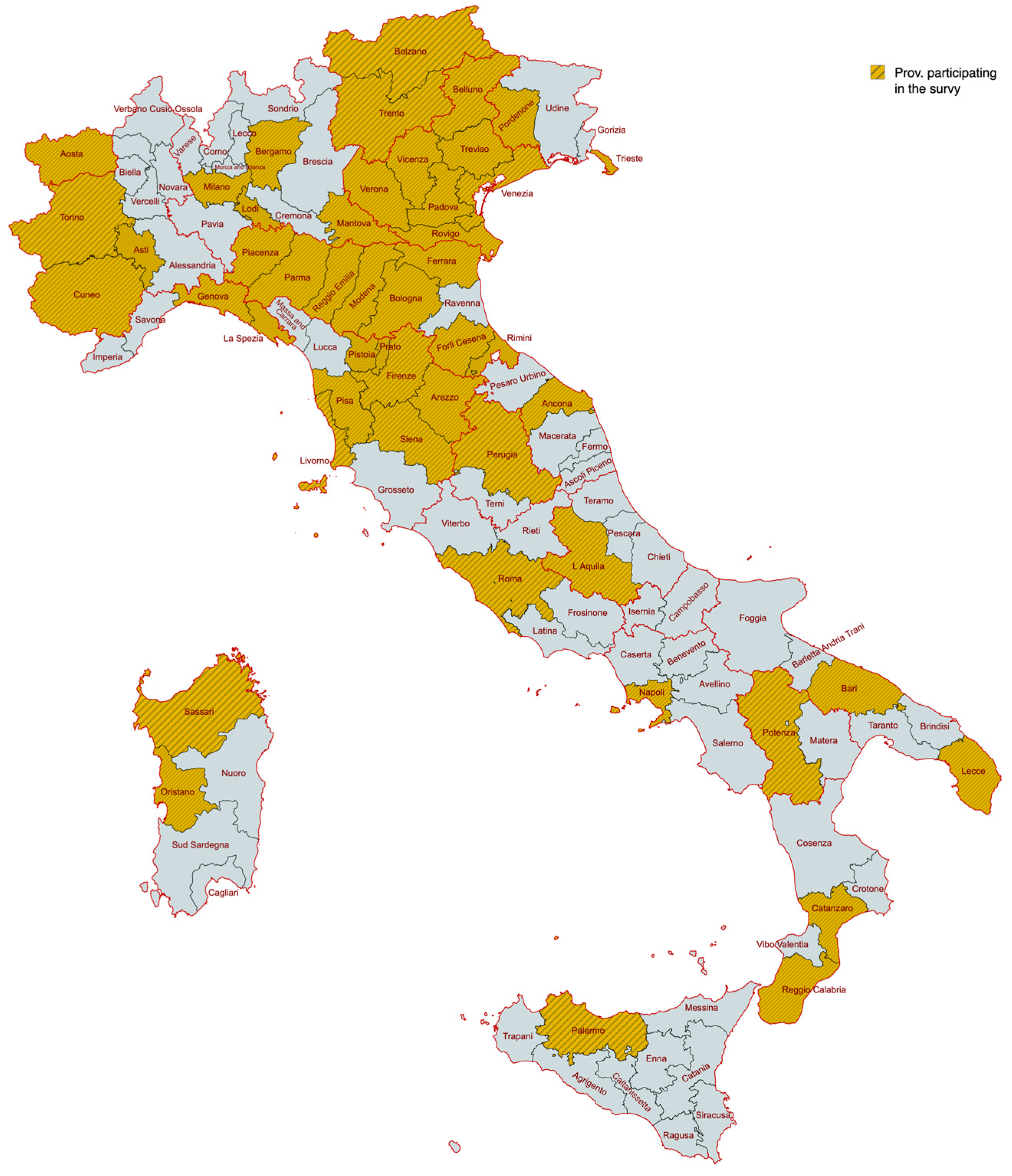
The respondents represented nearly all Italian regions (20 out of 21), with strong participation in Emilia-Romagna (N = 15), Tuscany (N = 14), and Veneto (N = 12). Only the Molise Region is not represented. Respondents hailed from 49 provinces, covering about 44% of the Italian provinces. Within the organisation, most respondents (68%) were concentrated in three departments: Environment and Urban Greening (N = 28), SIT (Informative Territorial System), Digital Innovation (N = 28), and Town Planning (N = 18). These are followed by the Department of European Projects (N = 9), Geological and Civil Protection Service (N = 5), Forestry (N = 3), and Agriculture and Economic Development (N = 1), while ten respondents selected the option “Other”. Regarding organisational roles, as shown in
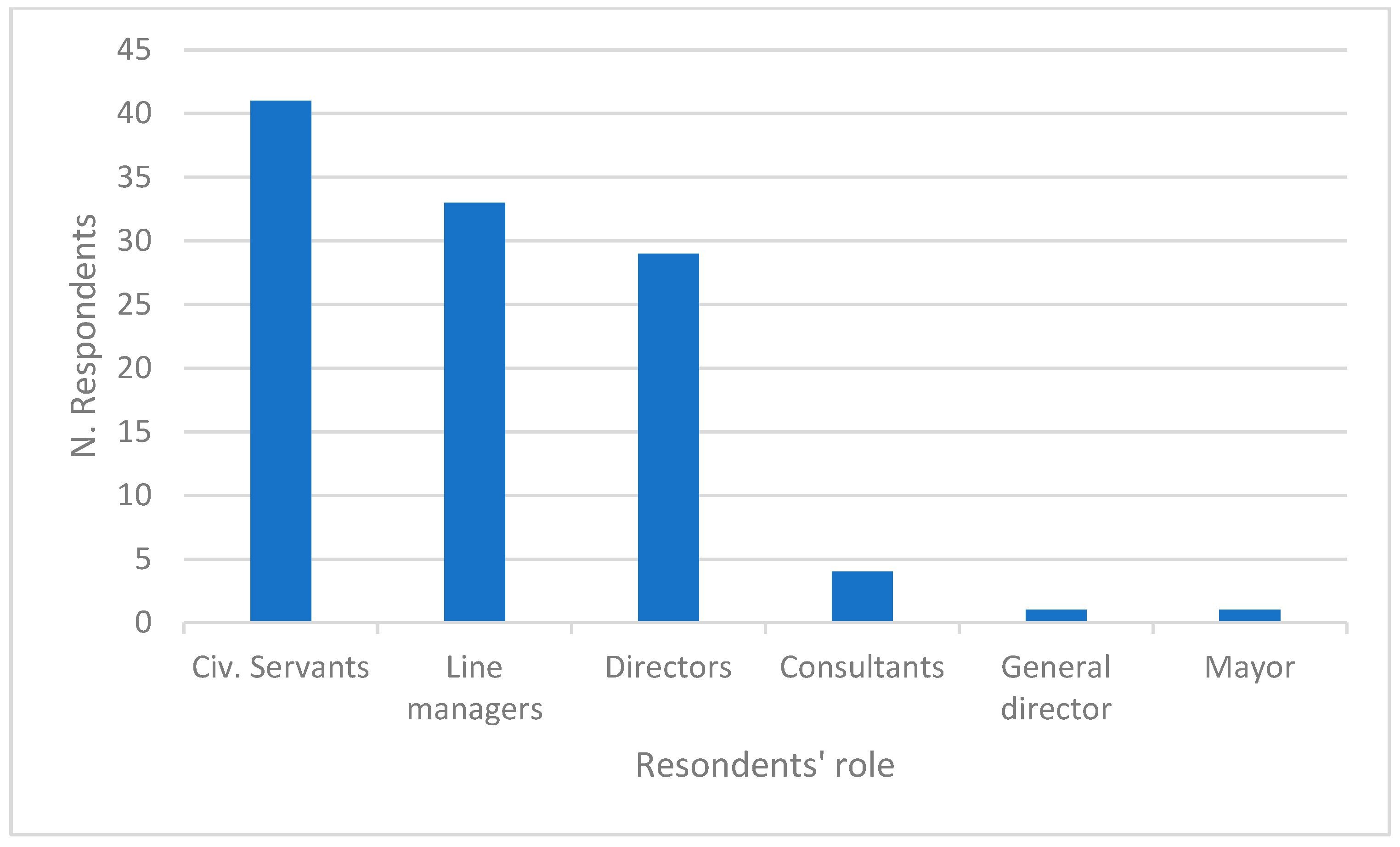
Figure 1, there is a predominance of civil servants (N = 41), closely followed by line managers (N = 33) and directors (N = 29). The remaining respondents included consultants/temporary workers (N = 4), one general director, and one mayor.
The academic background of the respondents is predominantly concentrated in technical–scientific disciplines, including STEM fields, with engineering being the most common. Specifically, nearly a third of the respondents (N = 31, 28.4%) hold degrees in engineering, including 11 who specialise in ICT engineering. Also significant is architecture, represented by 22 respondents (accounting for 20.2% of the total). Additionally, 10.1% of the respondents (N = 11) have a PhD in technical–scientific disciplines, while the other 10.1% have an economic–legal–political profile (N = 11). Other scientific specialisations, such as geology (N = 8, 7.3%), mathematics/physics (N = 6, 5.5%), and biology/chemistry (N = 6, 5.5%), are represented with smaller frequencies. A further 12% (N = 13) selected the category ’Other’, and one respondent did not answer.
3.1.2. Coverage of the Sample
Considering the population of reference at the individual organisation level and treating regions, metropolitan cities, regional capital cities, and provincial capital cities as units, the survey’s coverage in data collected, counting only one response from one single organisation, is detailed in
Table 2. As may be seen, the sample’s representativeness is very high concerning the regions, counting for 90% of the total of the Italian region. For regional capital cities, the coverage is 71% and, for metropolitan cities, it is 64%. The coverage rate is lower when referring to province capital cities (36%), although, nevertheless, it represents more than one-third of the total.
As represented in
Figure 2, the response rate varied among the different macro-regions with a concentration in the North-East and Centre regions. Respondents belonging to the North-Est represent 36.23%, the Centre 21.7%, and the North-West 20.2%, showing a higher response rate than the ones located in the South and Islands, which accounts for 18.8% of the total of the respondents.
3.2. Individual Level—EO Knowledge and Experience
Under this dimension, three variables have been analysed: knowledge and experience with Earth observation data, awareness of the Copernicus programme, and awareness of the IRIDE Programme.
The level of knowledge and experience with Earth observation data, services, and technologies varies widely among respondents. Notably, as shown in
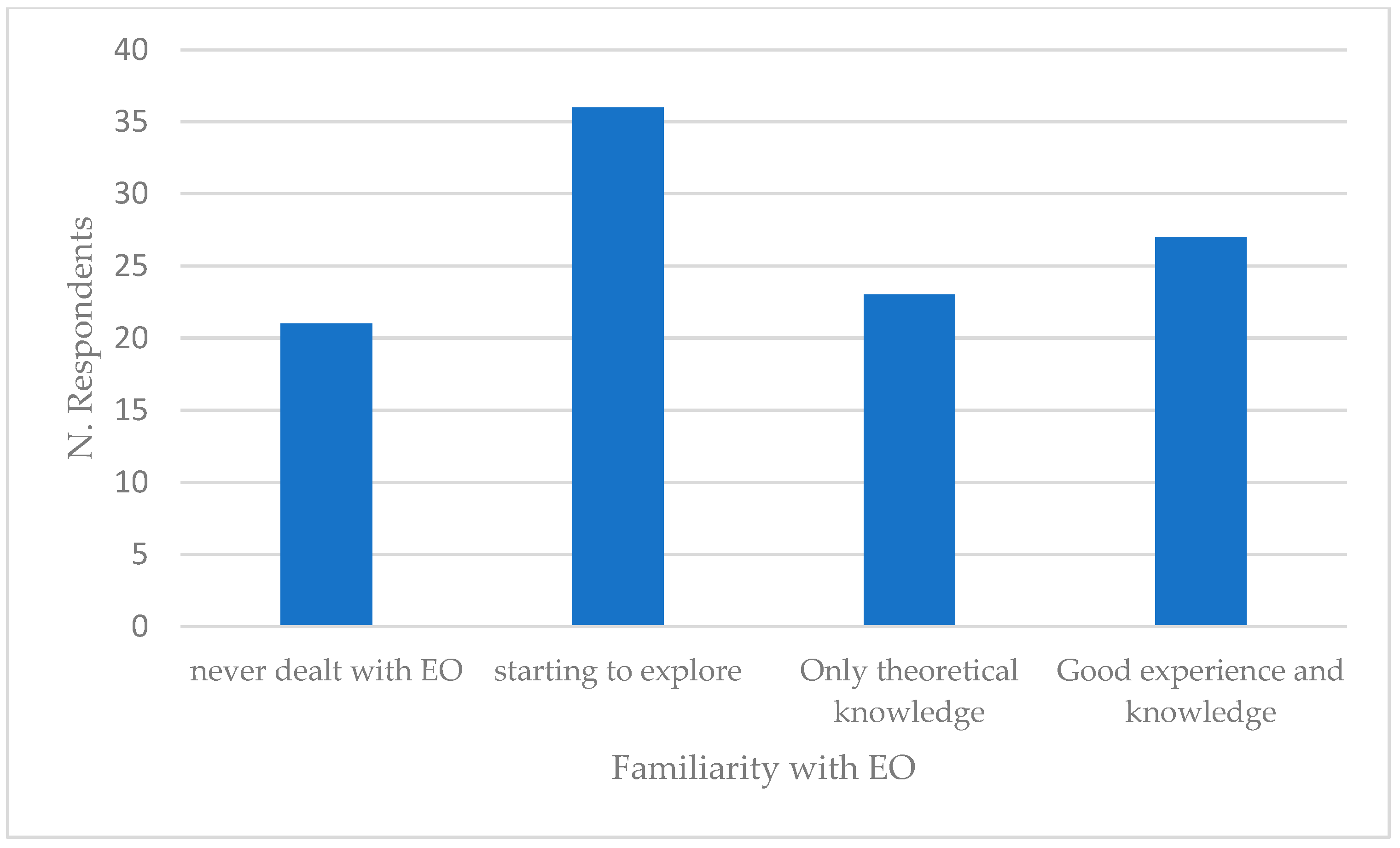
Figure 3, around 20% (N = 21) of respondents declare that they have never dealt with this subject. The largest group, accounting for 34% (N = 36), consists of those just starting to explore the subject but lacking practical experience. Additionally, another 21% (N = 23) of respondents report having a fair amount of theoretical knowledge but no direct experience, indicating untapped potential. The most proficient, those with good theoretical knowledge and practical experience in the field, account for 25% (N = 27). An analysis of the cumulative percentage indicates that over half of the respondents possess either no knowledge or only a very basic understanding of EO. Furthermore, a significant majority (75%) report having no direct practical experience with EO.
As shown in
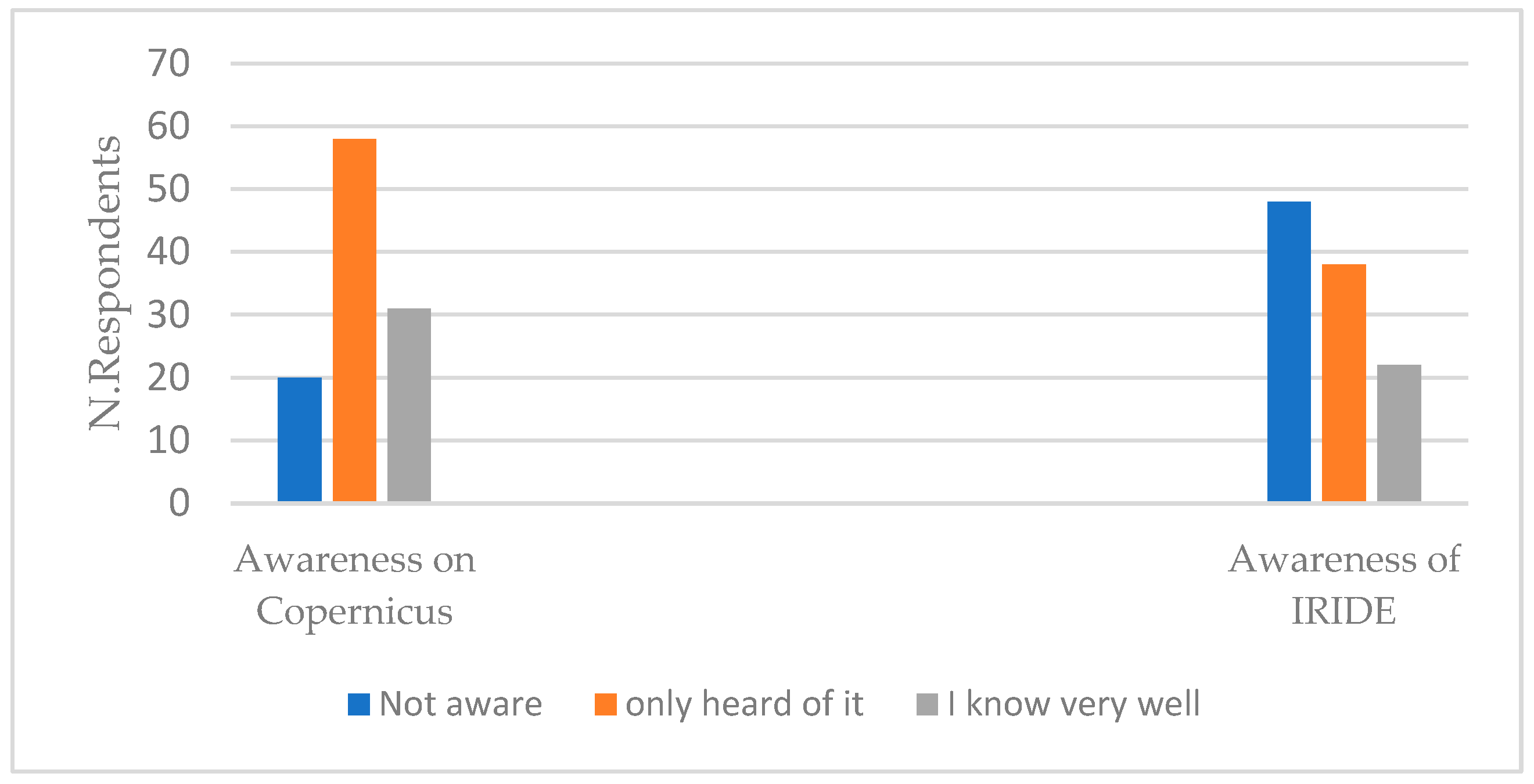
Figure 4, in cumulative terms, more than 80% (N = 89) of respondents were be aware of Copernicus, which is the EU-funded Earth observation programme providing free and open EO satellite data. However, this knowledge appears often superficial. Specifically, 53.2% (N = 58) of the respondents have only “heard of it”, while the other 28.4% (N = 31) declared that they have a deeper familiarity. On the other hand, about 18.4% (N = 20) of respondents claim to be unaware of the programme. Not surprisingly, as shown in
Figure 4 (columns of the right side), awareness differs when considering Italy’s ongoing investment in the IRIDE Earth observation constellation. Here, 44.4% (N = 48) of respondents declare they are not aware of it, 35.2% (N = 38) have only heard of it, and 20.4% (N = 22) are aware and also follow its activities closely. Notably, this is a much more recent programme, launched in Italy in 2022, involving only ten champion users among Italian regions and cities in this experimental phase. Therefore, more than half of the respondents, including organisations not directly involved in this phase, are aware of the investment, which may be positive data.
Overall, three sub-groups can therefore be distinguished: those who have no direct knowledge or experience of the subject, which corresponds to about one-fifth of the respondents; those who are just beginning to engage in Earth observation, who have heard of Copernicus but have no direct experience, which is the largest group and corresponds in total to more than half of the respondents; and those who have gained experience and are familiar with the Copernicus programme and IRIDE, counting for about one-quarter of the respondents.
3.3. EO Satellite Data Use Adoption by Local and Regional Authorities in Italy
The data collected in this section aims to map the current level of adoption of EO satellite data and services by LRAs in Italy. The topic has been investigated through the following question: “To the best of your knowledge, does your organisation use satellite data and Earth observation services, even on an experimental basis (directly or through the use of services provided by third parties)?”. The respondents have been provided with five options: “No”; “I do not know”; “Yes”; “Yes, only indirectly, for example, through Google Earth”; and “No, but we are considering its adoption”.
A total of 51 out of 107 respondents to this question, counting 47.6%, reported that their organisation uses Earth observation (EO) satellite data. In addition, another 20.5% of respondents declared that they use it only indirectly, for example, through Google Earth. In comparison, 17.7% were unaware of its use, 8.4% reported not using EO satellite data, and 7.4% are not currently using it but are considering its adoption.
These respondents belong to 40 unique organisations, accounting for 58% of the 69 unique organisations in the dataset. Among these 40 organisations, there are 5 metropolitan cities (out of a total of 9), 18 municipalities (out of 40), 13 regions (out of 17), and 3 regional public agencies out of 3. As shown in
Table 3, the adoption rate of EO satellite data and services varies by organisation type, finding a higher rate of adoption among regional public agencies (100%) and regions (82%), with a lower rate in cities (45%).
Overall, the organisations that reported using Earth observation (EO) satellite data and services are predominantly concentrated in the North-East of Italy, accounting for 40% of the total organisations. The Center follows it with 27.5%, and the North-West with 17.5%, and, in the South and Islands macroregion, about 15% of organisations report using satellite data.
3.4. Use of EO Satellite Data and Services by Thematic Domains of Application and Purposes
3.4.1. Use of EO Technologies by Thematic Domains
The use of EO data and services has been investigated with the following question: “To the best of your knowledge, in your area and your organisation, in this thematic domain, are these EO technologies applied today?”. The question has been repeated for 13 thematic domains (chosen based on the ones provided by IRIDE), and respondents have been asked to provide an answer for each one with the following options: “Yes”, “No”, and “I do not know”.
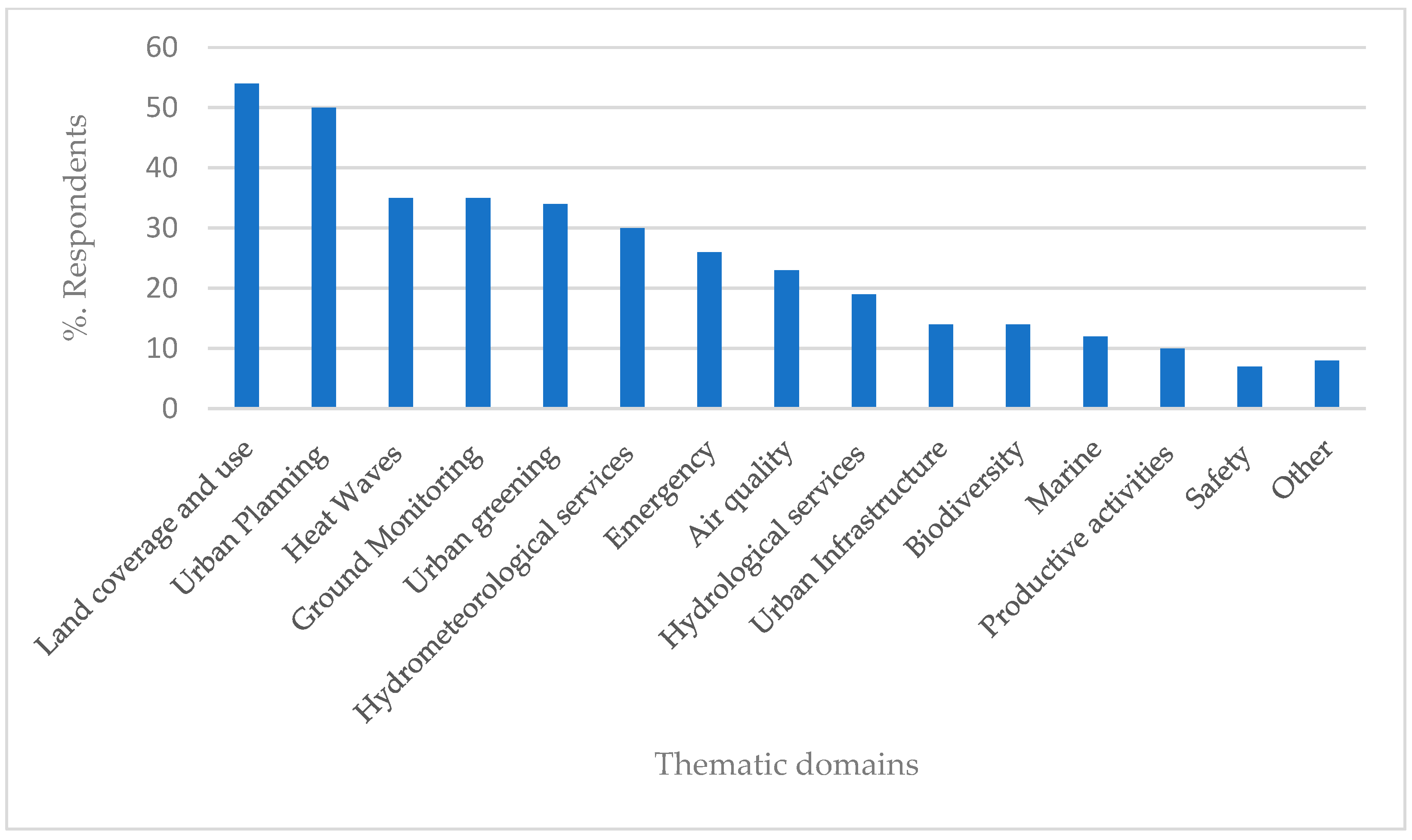
Figure 5 shows the ranking produced on an aggregated basis, analysing the percentage of “Yes” responses concerning the use of the services. More than half of the respondents use EO data and services for land coverage and use, at 54%, closely followed by urban planning at 50%. More than one-third of the respondents also mention heat waves (35%), ground motion monitoring (35%), urban greening (34%), and hydrometeorological services (30%). A significative use of EO data has also been recorded in emergency (26%), air quality (23%), and hydrological services (19%). In comparison, a more sporadic use is recorded in urban infrastructure (14%), biodiversity (14%), marine activities (11%), productive activities (10%), and safety (7%). A small group (8%) also use EO data in other thematic domains.
3.4.2. Purposes in Using EO Satellite Data and Services Within LRAs
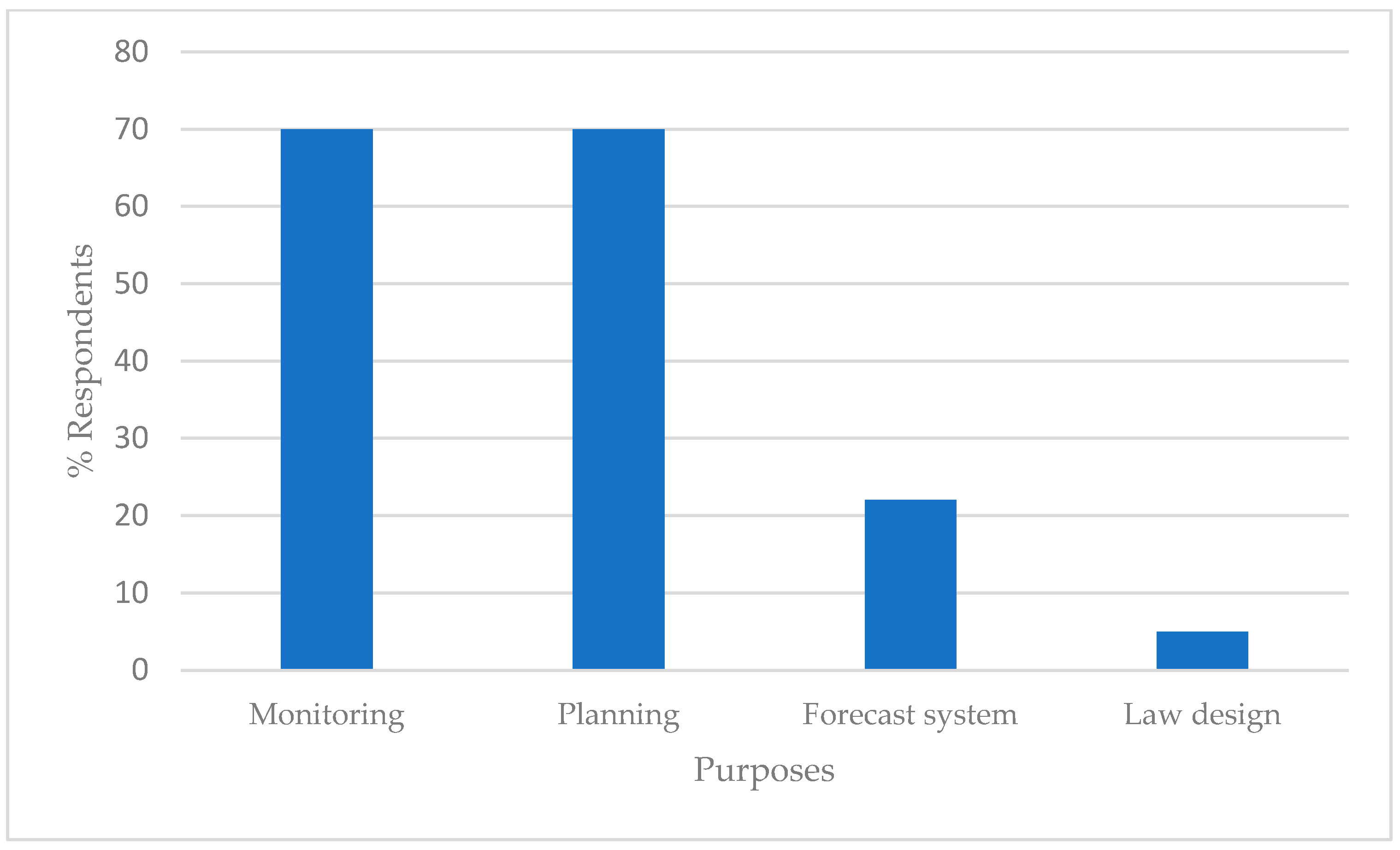
Respondents have been asked about the main purposes for which EO satellite data and services are currently used in their organisation. Four options were provided, and participants were allowed to choose more than one: “Law design”, “Monitoring”, “Planning”, and “Forecasting system”. As shown in
Figure 6, the activities in which EO data are used the most are “Monitoring” and “Planning”, which have been chosen by 70% of the respondents. A more limited group also declared that they use the data for the “development of forecasting system” (22.4%). In comparison, only 5.6% of respondents declared that they use it in the “Law design system” (cities and regions only).
It is interesting to note that the monitoring use is predominant, especially among regional agencies (100%) and regions (93%). In comparison, metropolitan cities and cities use the data most for planning activities (chosen by 100% of metropolitan cities and 73% of cities). Moreover, the forecast system development use is predominant in cities (50% of organisations using EO for forecasting are cities).
3.4.3. Modalities of Provisions of EO Services and Resources for Its Implementation
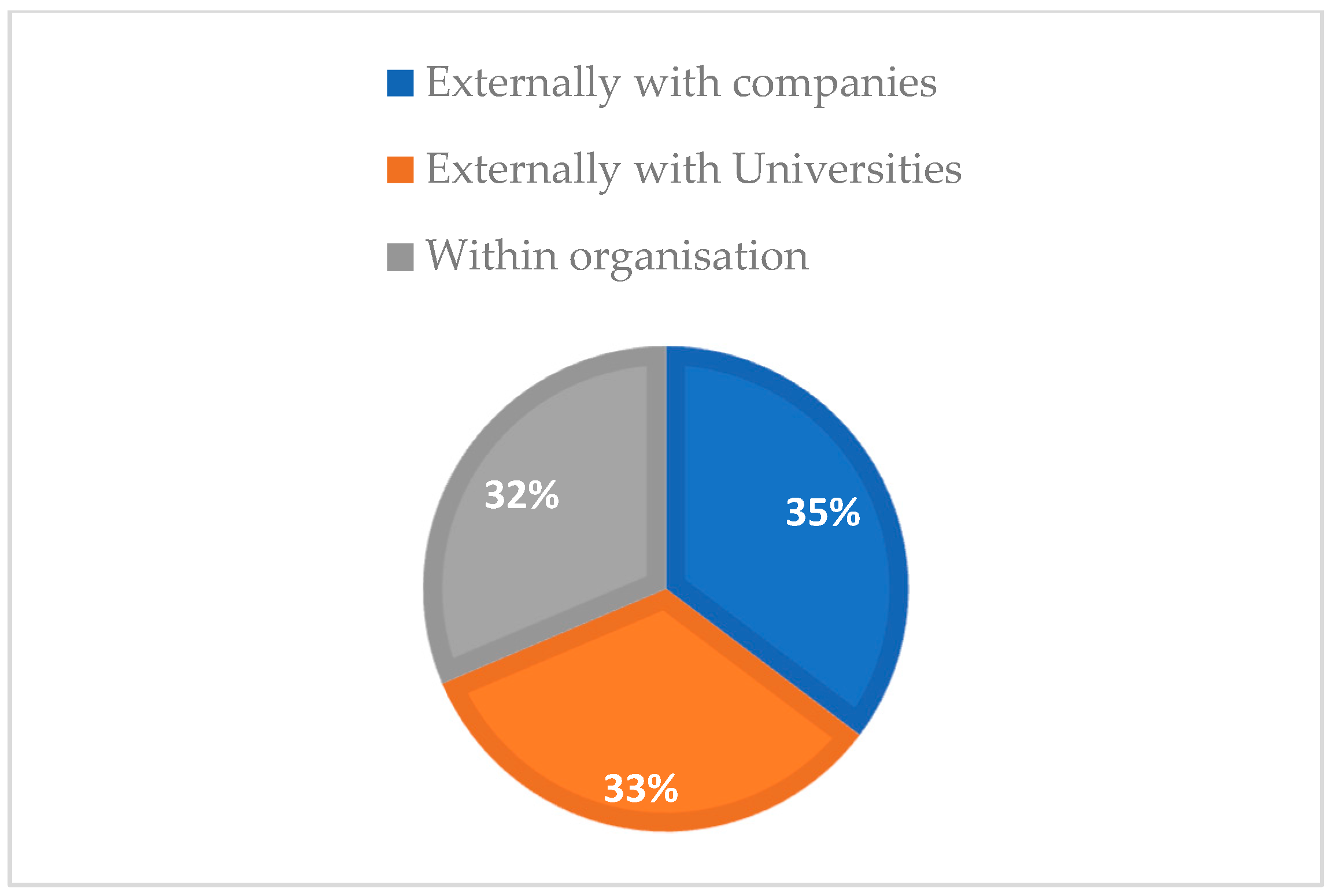
As shown in
Figure 7, a very heterogenous landscape has emerged with three different modalities of provision of EO services substantially equivalent externally with companies and providers (N = 18, 35%), externally with universities or research centres (N = 17, 33%), and internally to the organisation (N = 16, 32%). The picture varies when we look at the type of organisation. Indeed, municipalities and metropolitan cities are more likely to externalise the service (77.3%) compared to regions that prefer to carry out this process internally (43.8%).
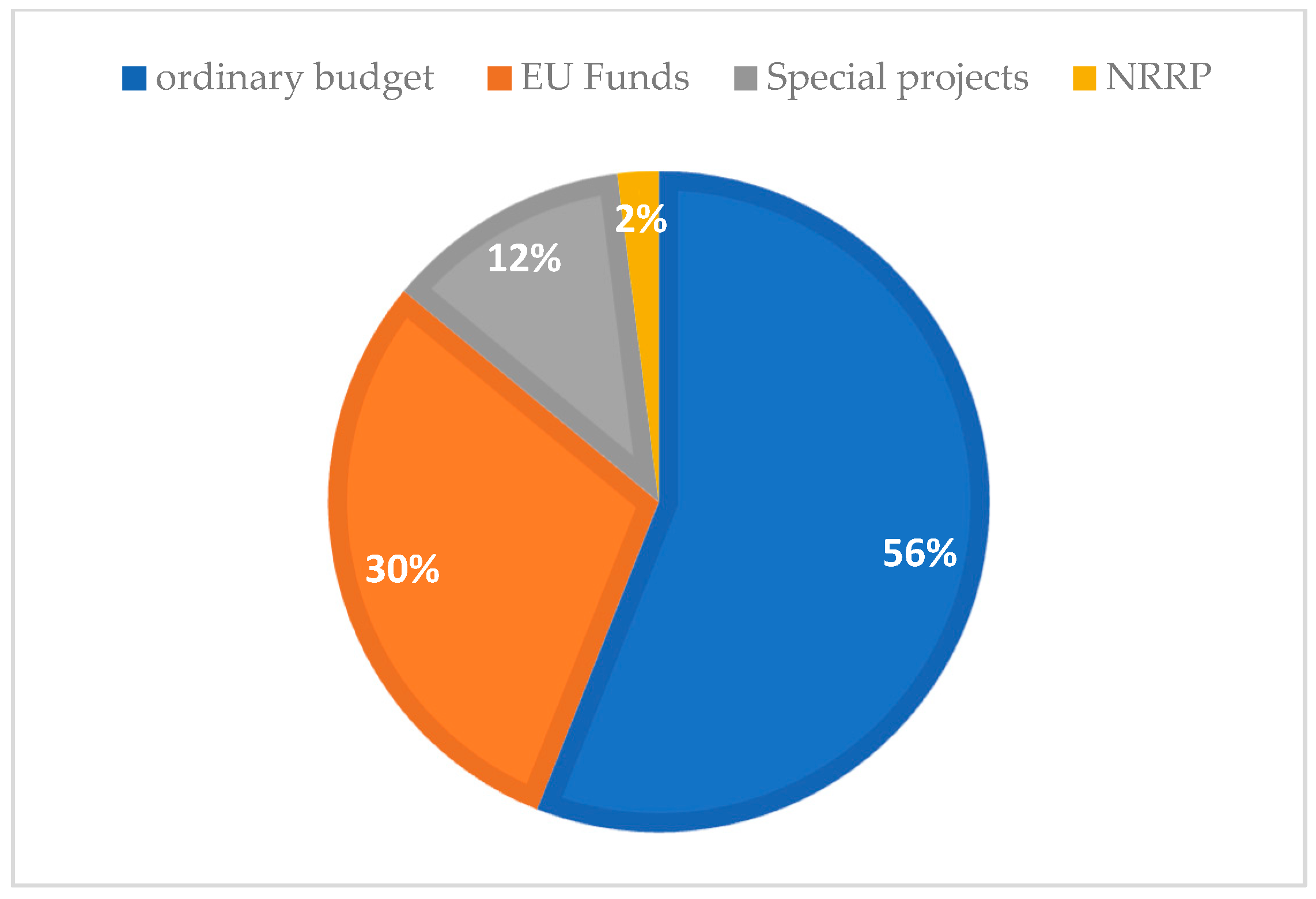
As shown in
Figure 8, the resources to implement these services/activities belong to the internal ordinary budget for more than half of the respondents (N = 28, 56%), even though a significative role is also attributed to EU funding (direct funds and ERDF) (N = 15, 30%), followed by special projects (N = 6, 12%) and NRRP (N = 1, 2%).
3.5. Technology-Related Barriers and Benefits
In this section, we investigated the main perceived barriers related to the technology’s features and perceived benefits. Data have been collected on eight different variables, listed as follows:
The initial complexity in understanding Earth observation technology;
The complexity in operationally using Earth observation technology;
The accessibility of data and services in terms of the ease of knowing what services are available;
The ease of finding data of interest on web portals, and the ease of acquiring and downloading data;
The alignment between the organisation’s knowledge needs and the characteristics of EO data and services;
The complexity of the procurement process;
The compatibility, integration, and suitability of EO data and services with existing platforms and projects.
The last three variables were further investigated by proposing a question for each, asking respondents to choose from the proposed options which factor most influenced the previous answer.
As shown in
Table 4, the level of initial complexity in understanding EO data and technologies is perceived as relatively high, as well as the complexity in using EO data operationally, with significant variability in the responses expressed by a high standard deviation (1.9). This operational complexity suggests how the use of EO technology, such as satellite data, in practical activities, can be challenging for LRAs.
Perceived EO Technology’ Accessibility
As shown in
Table 5, the accessibility of data and services was found to be moderate with a mean of 5 across the dimensions, namely, “easiness of finding data” and “acquiring data”. It should be noted that this value was found to be independent from the degree of familiarity with Earth observation technologies and knowledge of the Copernicus programme declared by the participants. It may suggest that the complexity of finding the data is not based very much on the respondents’ awareness.
Table 6 shows the alignment between the organisation’s knowledge needs and the characteristics of EO data and services. According to the semantic anchorage proposed, a mean of 5.8 indicates a fair degree of alignment but also shows that some knowledge needs of the organisation are still unsatisfied. This dimension was explored with a further question by asking which factors influenced the response and by proposing a series of options, among which it appears that spatial resolution (N = 15) is considered the most important, followed by visual representation (N = 12), data format (N = 12), and temporal resolution (N = 10).
The complexity of the procurement process is then studied. The procurement process is considered quite complex (Mean = 6, SD = 1.6). When analysed in more detail with a further question, this complexity seems to lie mainly in the “internal procedures within the administration, for example, in need to involve other offices” (N = 31), followed by the timing of procurement procedures (N = 12). At the same time, for a small group, the most relevant factor is the alignment between product categories and the requirements of innovative products and services (N = 7).
Generally, EO data and services’ compatibility, integration, and appropriateness with existing platforms and projects are perceived as moderate (Mean = 6.1, SD = 1.8). This refers to the extent to which EO data can be seamlessly used within existing software, systems, and platforms, and also processed by the LRAs. Specifically, it includes factors such as whether the data formats are compatible with current platforms, whether they can be integrated with other datasets, and their relevance to specific domains of applications, for example, in terms of suitable resolution.
In this case, among the set of options provided, the respondents find that the most important factors are “ease of use” (N = 25), and “ease of finding data” (N = 16), followed by “ease of downloading” (N = 5). It should be noted, however, that metropolitan cities reported much lower levels of compatibility than municipalities and regions (average 4 vs. municipalities 6.8).
3.6. Benefits Experienced by LRAs as a Result of Adopting EO Data and Technologies
Under this section, we explored the benefits perceived by the respondents in using EO satellite data and technologies compared to ordinary data procedures across three dimensions: time saving, monitoring efficacy, and economic saving. As shown in
Table 7, the values are high for all three dimensions with min. and max. values between 5 and 10 for all three variables.
After conducting a Kruskal–Wallis test, no statistical difference emerged concerning the type of organisation, except for the “time-saving” benefit, which was found to be higher among municipalities compared to metropolitan cities (p value: 0.32, (p < 0.05). Indeed, by assessing both perceived barriers and benefits, metropolitan cities emerged as the type of organisation experiencing more difficulties in EO data accessibility, ease of use, and compatibility, with lower benefits compared to the other types of organisations.
Degree of Change/Discontinuity with Ordinary Procedures Introduced by the Use of EO
This dimension has been explored through the following question: “In your experience, has the adoption of EO technologies and services resulted in the need to redesign ordinary processes and procedures?” Overall, 35% of respondents (N = 17) said “yes”, and almost half of the respondents, 49% (N = 34), said “yes, only in some cases”, while only 16% (N = 8) chose “no”. The results confirm that adopting EO data and technologies tends to produce a change in the internal process by aligning with the concept of the innovation process.
3.7. Influential Factors Two-Way Analysis
The section is divided into two sub-sections. Under the first sub-section, we explored the most influential factors in adopting and using EO data by LRAs. Initially, we employed descriptive statistics to provide an overview of the data. Following this, we conduct a correlation analysis for each set of variables belonging to organisational factors, individual factors (as previously introduced), and environmental factors. The second sub-section focuses on the analysis of the influential factors as perceived by LRAs. Here, we also present recommendations for other PAs regarding adopting EO data and technologies as identified directly by the respondents.
3.7.1. Influential Factors: Perceived Impact of the Organisational Model on EO Data and Technologies Adoption
The perceived role of the organisational model in influencing the adoption of EO satellite data adoption has been investigated through a specific question. Overall, as shown in
Table 8, most respondents (N = 36) reported that it was not relevant, having a slight influence. A smaller group felt it had a positive influence (N = 10), while a minority felt it had a negative influence (N = 4).
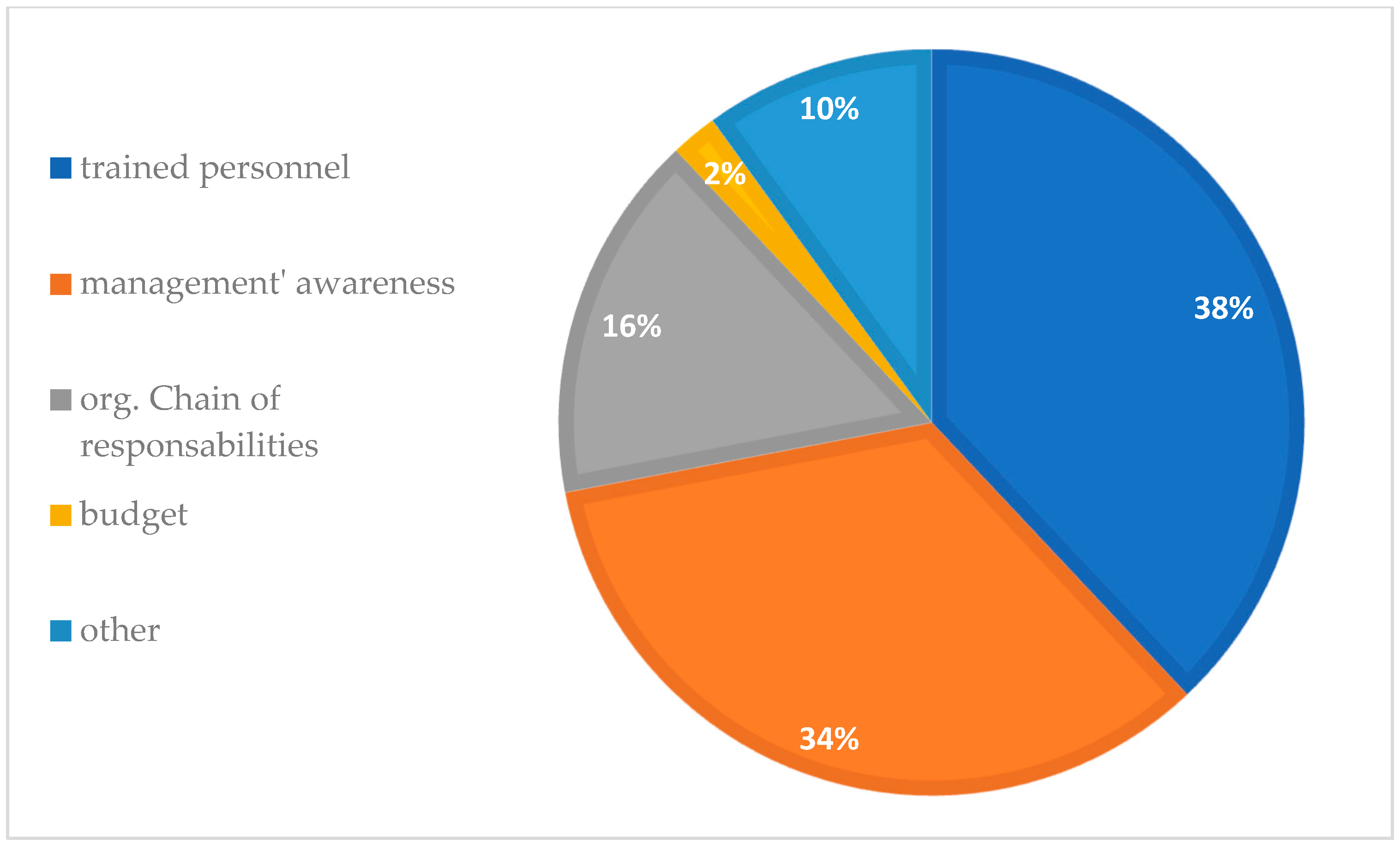
In this context, as shown in
Figure 9, a further question revealed the factors influencing these perceptions. Among the respondents, 38% of the respondents attributed the influence on the availability of adequately trained personnel for the use of EO satellite data, 34% to the awareness of the management, only 16% to the internal organisation of the chain of responsibility, and 2% to the availability of budget. Moreover, 10% of the respondents choose “other”, suggesting the existence of other factors.
More specifically, those who believe that the organisational model has a negative impact cite the level of management awareness (N = 2) as the main factor, followed by the presence of adequately trained personnel (N = 1) and the organisation of the internal chain of responsibility (N = 1). At the same time, the budget does not seem to be a relevant factor. Those who consider that their internal organisation has a positive impact on EO adoption, not too dissimilarly, cite the presence of trained staff (N = 4), management awareness (N = 3), and the internal chain of responsibility (N = 2), again with budget not appearing to be a relevant factor.
Although the overall small number of cases in the sample does not allow for a direct, statistically significant correlation, it can be observed that three out of four LRAs, considering that the organisational model of the institution has a negative impact on the adoption of EO technologies, makes use of private external providers. Conversely, the majority (6 out of 10) of those who consider that their organisational model positively impacts adopting EO technologies are institutions that process EO data internally. In this sense, this distribution may indicate a trend that sees a positive association between the internalisation of processes/services and the positive perception of the impact of the organisational model. Conversely, if the PA perceives an inefficient organisational model, it seems more inclined to turn to external companies.
3.7.2. Influential Factors: Organisational Factors
In this section, we analysed eight variables related to the organisational characteristics regarding the following:
Organisation endowment in terms of the following:
- ○
Geoportal, Digital Transition Responsible;
- ○
SECAP (Sustainable Energy and Climate Action Plan), which is the key planning document required for the cities joining the European Conventant of Mayors for Climate and Energy initiative;
Strategic planning;
Digital twin;
The individual perception of autonomy within the decision-making process;
The individual perception of the organisation’s innovativeness;
Top management awareness of EO technologies potential;
Top management provision of political inputs in prioritising and promoting the use of EO technologies;
The provision of training opportunities on EO data;
The availability of appropriate technical infrastructure to access, process, and analyse EO data effectively;
The availability of adequate staff trained to handle EO data.
Organisation Endowment in Geoportal, Strategic Planning, SECAP, and Digital Twin
In some cases, answers were given by more than one individual from the same organisation. Therefore, data were aggregated by organisation to analyse this first question, considering only positive responses and counting them only once per organisation.
As shown in
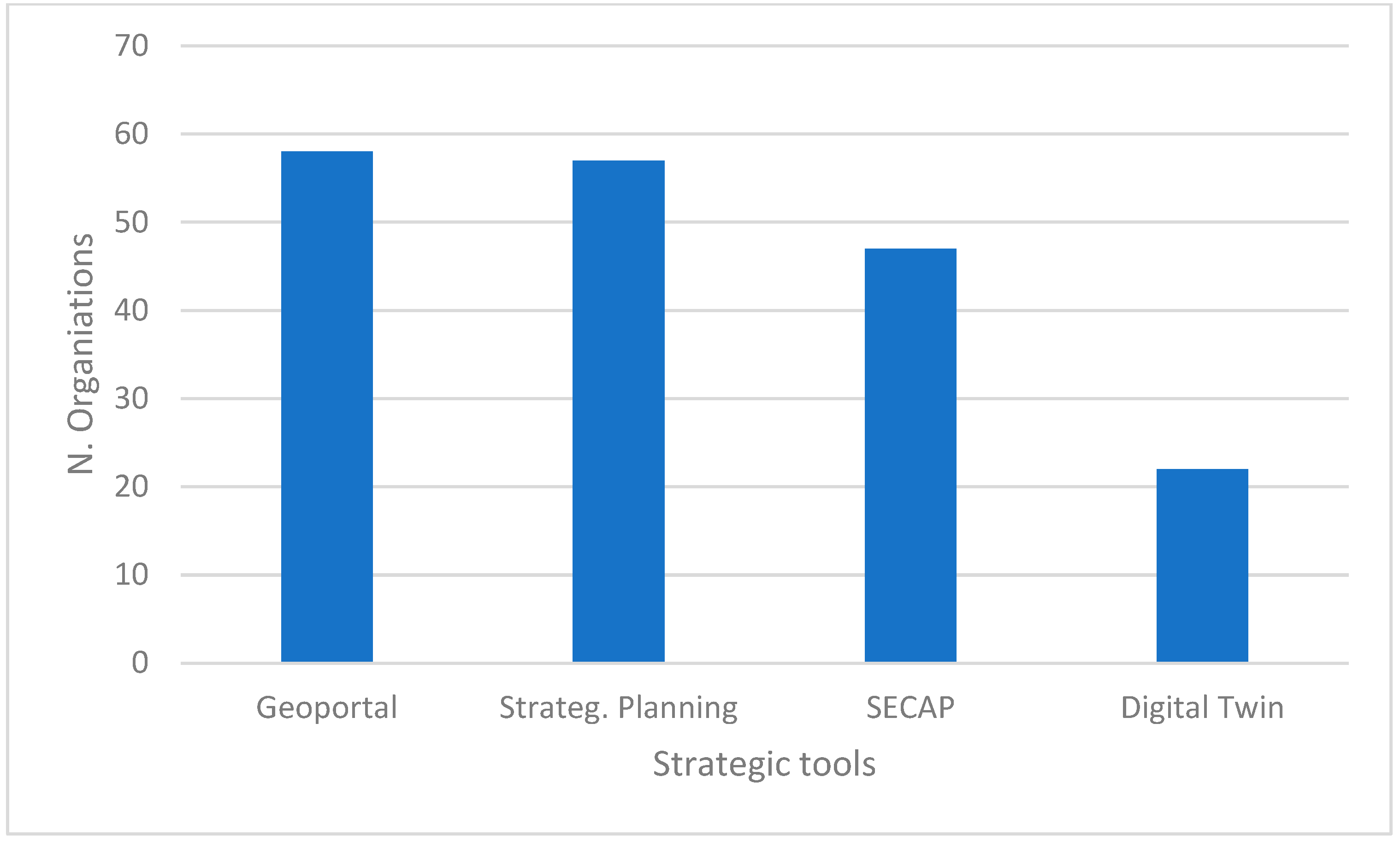
Figure 10, most organisations are equipped with a
geoportal (Yes = 58, No = 11). However, disaggregating the data by type of organisation, the percentage of organisations with a geoportal is significantly lower in municipalities (Yes, N = 31 from a total of 40) than in regions (Yes = 15 from a total of 17). Most organisations also have
strategic planning documents (Yes, N = 57; No, N = 12). A Sustainable Energy and Climate Action Plan (SECAP) is also reported in most LRAs surveyed (Yes, N = 47; No, N = 22), showing a quite high level of interest in climate and energy planning. It should be noted that the Sustainable Energy and Climate Action Plans (SECAPs), required as a mandatory tool for LA signatories to the Covenant of Mayors, include planning actions grouped into three pillars: climate mitigation, climate adaption, and sustainable energy planning [
46].
An interesting case is represented by the “
Digital twin project also in the design or development phase”. The concept of digital twins applied to the urban level has gained significant attention in recent years. It can be understood as “a live virtual model that mirrors a physical system, including its surroundings and operational processes, facilitating a continuous flow of data between the virtual and physical worlds” [
47].
In this instance, almost two-thirds of the LRAs (N = 47) give a negative answer, while almost one-third (N = 22) declare that they have a digital twin project. It should be noted that, of these 22 organisations with a digital twin, 14 are cities. However, it is impossible to establish a direct correlation between the existence of an on-going digital twin project and the use of satellite data. Notably, 19 out of 22 organisations developing a digital twin use Earth observation (EO) data and services. Approximately 86,3% of the organisations engaged with digital twin development are utilising EO data and services compared to the average value of EO adoption of 58%. Of the 51 organisations using EO satellite data, 17 have developed a digital twin. These data suggest that the development of a digital twin may influence the adoption of EO data and service, of which the digital twin strongly benefit. Conversely, there is no direct correlation between the adoption of EO data and the development of DT.
Overall, it can be seen that most organisations have a geoportal (although to a lesser extent among cities), strategic planning documents, and SECAPs, while only a minority of organisations (mainly cities) have a digital twin project underway. Among these factors, a significant correlation with the adoption of Earth observation satellite data seems to emerge only with respect to having a geoportal, which can be considered the enabling and essential infrastructure for using EO data. Additionally, a consistent trend can be observed with the development of the digital twin project, which seems to require EO data for its full development.
Individual Perception of the Organisation’s Innovativeness and Autonomy Within the Decision-Making Process
Through the following two variables, we investigated individuals’ perceptions of their autonomy within the organisation’s decision-making process and the degree to which their organisation promotes innovative practices and models. The questions were structured using a Likert scale from 1 to 10.
As shown in
Table 9, both variables’ mean and median values are close and quite central, indicating that the perception of decision-making autonomy and organisational innovativeness is moderate. However, it varies significantly among respondents (SD = 2.38). A positive correlation was observed between the two variables: as the perceived degree of decision-making autonomy increases, so does the perception that the organisation is innovative (Spearman’s rho value of 0.444 with a
p-value less than 0.001). Furthermore, as shown in
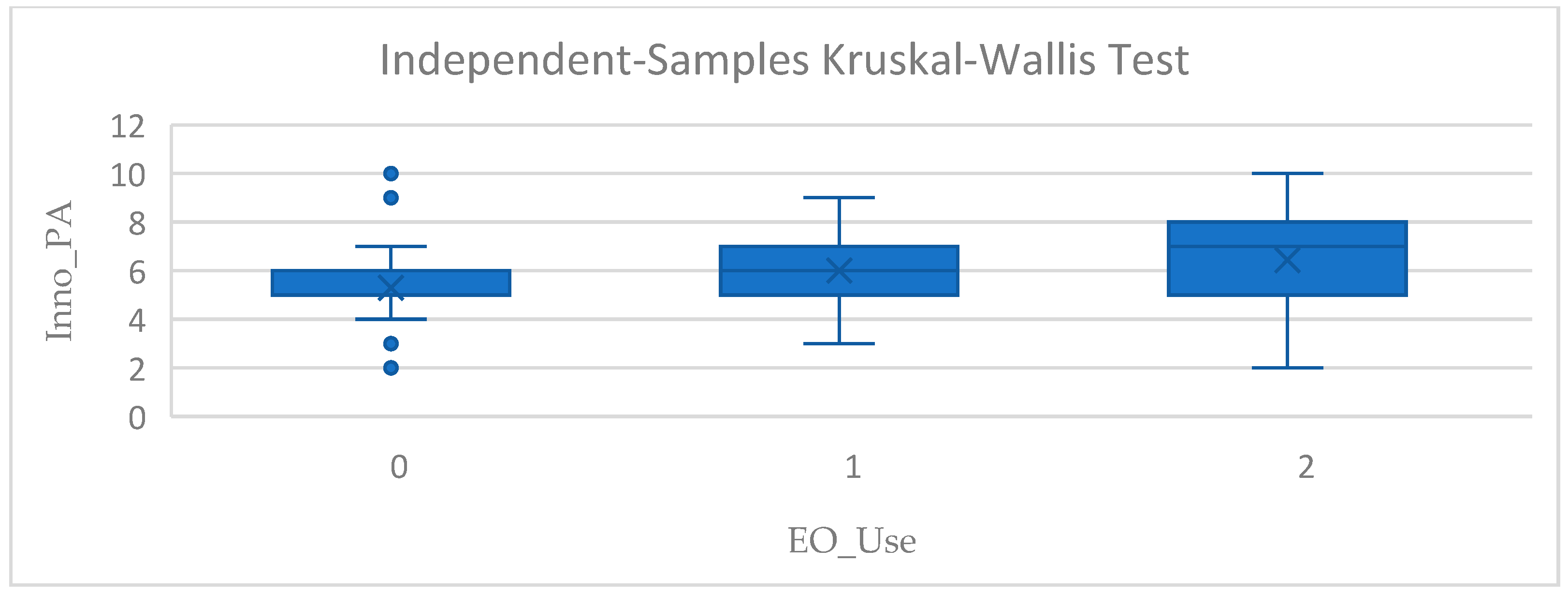
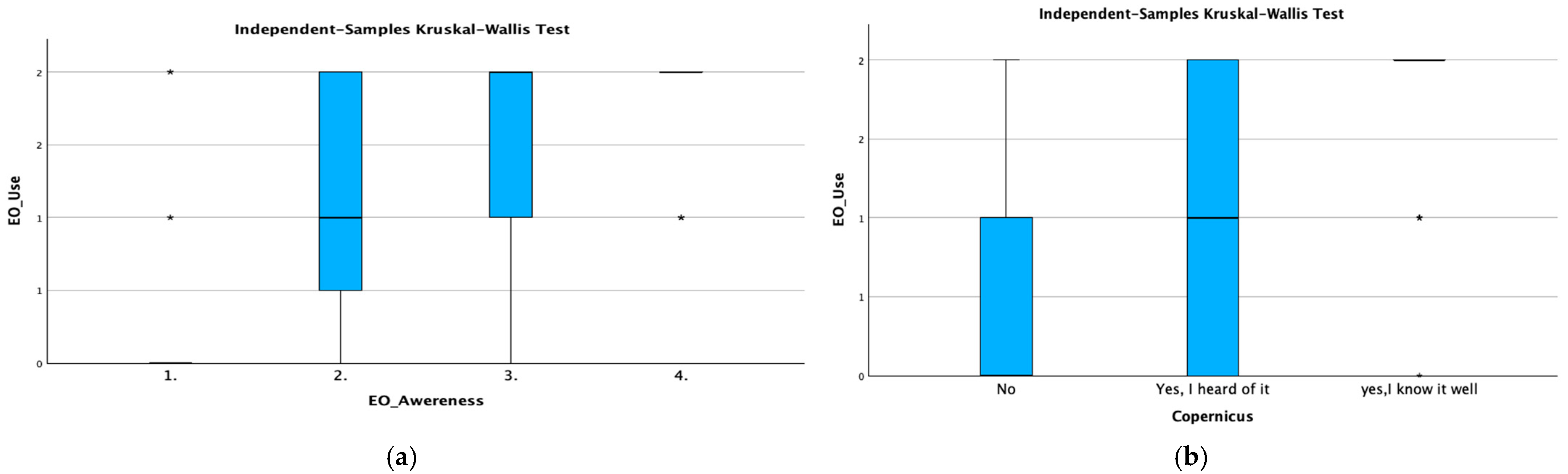
Figure 11, a positive correlation was observed between the perceived level of organisational innovation and the use of EO data and services (Kruskal–Wallis test
p-value (0.009)). It is possible to infer that individuals who view their organisations as innovative may be more inclined to adopt and use EO data and services.
EO Training Opportunities, Infrastructure, and Trained Staff
The last three variables aimed to explore respondents’ perceptions of their organisation’s endowment in terms of “specific EO training opportunities”, of “adequate technical infrastructure to process and/or use EO data and services effectively”, and of “sufficient adequately trained human resources to process and/or use EO data and services”.
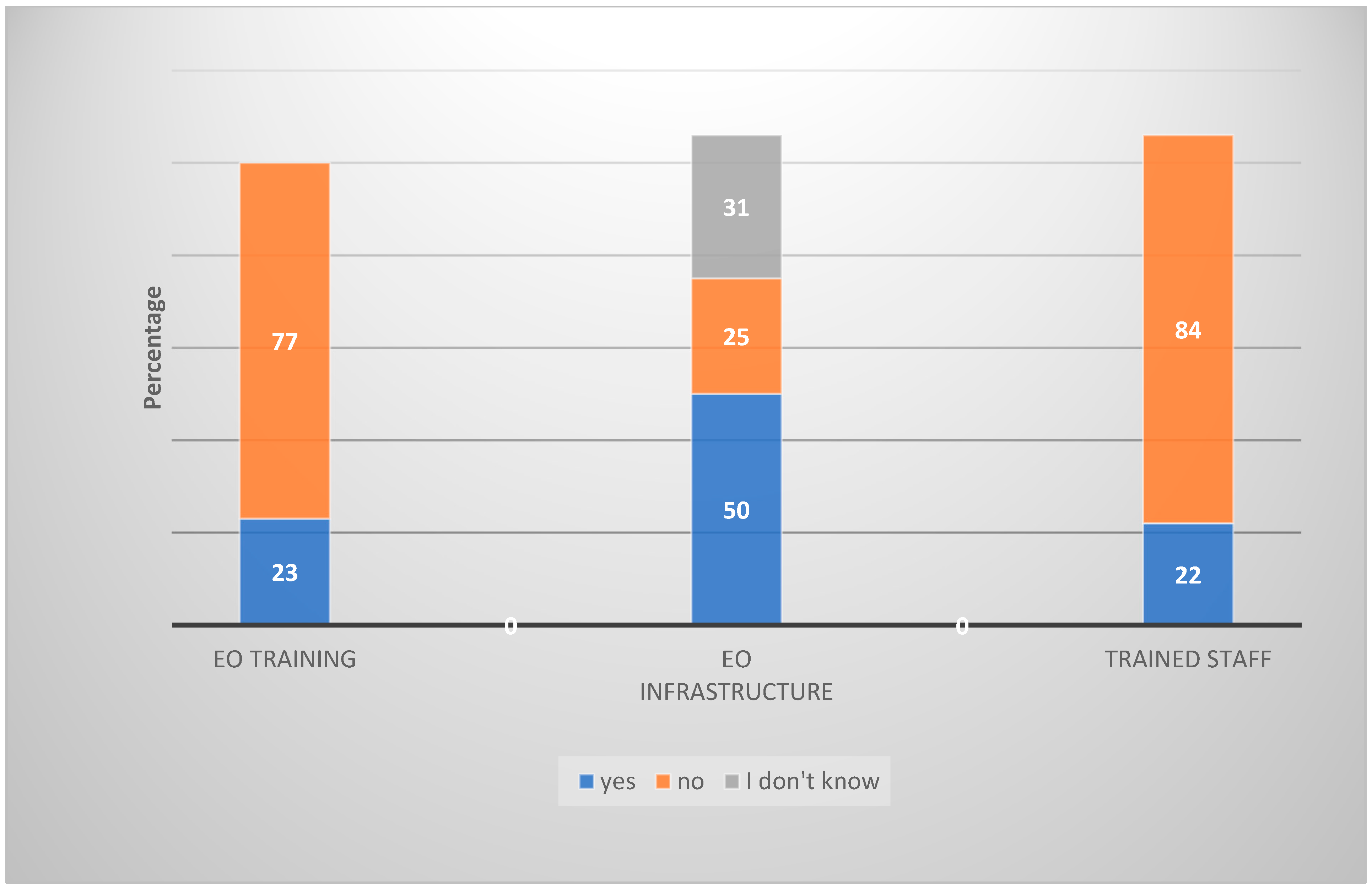
Overall, as shown in
Figure 13, the majority of respondents, 77% (N = 83), indicated that they never had the opportunity to receive specific training on Earth observation, with only 23% (N = 25) having benefited from such training. In particular, municipalities (Yes, N = 8, 13%) and metropolitan areas (Yes, N = 1, 13%) have had fewer training opportunities. The scenario changes concerning the availability of adequate technical infrastructure for the effective use of Earth observation data, which 47% (N = 50) of the respondents claim to have, while 29% claim not to have it (N = 31) and 24% are unable to answer (N = 25). However, only 20% of respondents (N = 22) declare their organisation has enough adequately trained staff, while 79% (N = 84) do not have such resources. A moderate association between providing training opportunities and using EO has been identified (Phi value of 0.347,
p-value of 0.002).
3.7.3. Influential Factors: Environmental Factors
In this section, the analysis focused on four variables related to potential incentives/barriers deriving from the environmental context, specifically focusing on the following:
The law/regulatory framework incentive;
The perception of government promotional actions on EO adoption;
The exposure to networks with other PA for exchange;
The mutual influence dynamics among public authorities (PAs);
The dataset is reduced to 51 since the questions have been posed only to the sub-group of respondents declaring to use EO satellite data and services.
Law incentives: The existence of significant incentives deriving from the law and regulatory framework at the European, national, or regional level for adopting EO data and technologies has been investigated with the following question: “Are the activities carried out in your organisation using Earth observation (EO) data and services generally in implementation of a specific law or regulatory framework?”
As shown in
Table 12, the results indicate that, in almost half of the cases, using EO data implements specific laws or regulatory frameworks at various governmental levels (45%), and, in some cases, only at the regional level (12%). However, in almost half of the cases (43%), using EO data and services is unrelated to any laws’ implementation.
Networking, the exchange dimension, and inspiration among LRAs in the use of EO data: The following two variables have investigated the extent to which respondents are exposed to an exchange dimension through participation in thematic networks of PAs and whether other public authorities inspire them to adopt satellite data. As shown in
Table 13, more than half (53%) of the respondents indicated that their organisation participates in networks with other public authorities focused on space, data, or innovation. Only 12% reported not participating, while 35% did not know.
Table 14 shows that most respondents indicated that they are inspired by other public administrations when using innovative technologies, although the intensity varies. Specifically, 38% reported being often inspired, while 44% are sometimes inspired. Only 18% claimed not to be influenced.
Perception of government encouragement for EO technologies’ adoption: Through this variable, the perceived encouragement by the government at both the EU and national levels regarding the adoption and use of EO technologies through laws, strategies, and initiatives has been investigated. As shown in
Table 15, nearly half of the respondents (47%) declare that they are aware of the promotion efforts at the EU and national levels, while 21.6% perceive it at the EU level only and 4% at the national level only. However, 27.4% of the participants do not perceive these government efforts. Considering that the question has been posed to respondents who currently use EO technologies, this perception may indicate a need for the enhanced awareness of activities by governments and the introduction of more impactful incentives.
3.7.4. Influential Factors: Individual Factors
Under this section, the possible existence of a correlation between the adoption of EO satellite data and the individual variables previously described and analysed in
Section 3 and 3.1 was explored, corresponding to
knowledge and experience with Earth observation data, services, and technologies; awareness of the Copernicus programme; awareness of IRIDE programme; academic background; and
role in the organisation; departments.Considering the non-parametric distribution of the variable, a Kruskal–Wallis test has been conducted.
Figure 14 shows a correlation with using EO satellite data for three variables, all referring to individual knowledge and experience with EO technologies and programmes. Indeed, as the level of knowledge and experience of EO reported by respondents increases, so does their adoption of EO satellite data. The same correlation is also true regarding the respondent’s knowledge of the Copernicus programme. However, it should be noted that, of the 30 respondents who claim to be familiar with Copernicus, five do not directly use satellite data. While this confirms the strong correlation between the two variables, it also may suggest how the adoption of satellite data can be hindered by other factors (e.g., lack of top management awareness, and so forth).
3.7.5. Influential Factors Perceived by LRAs and Peer-to-Peer Recommendations
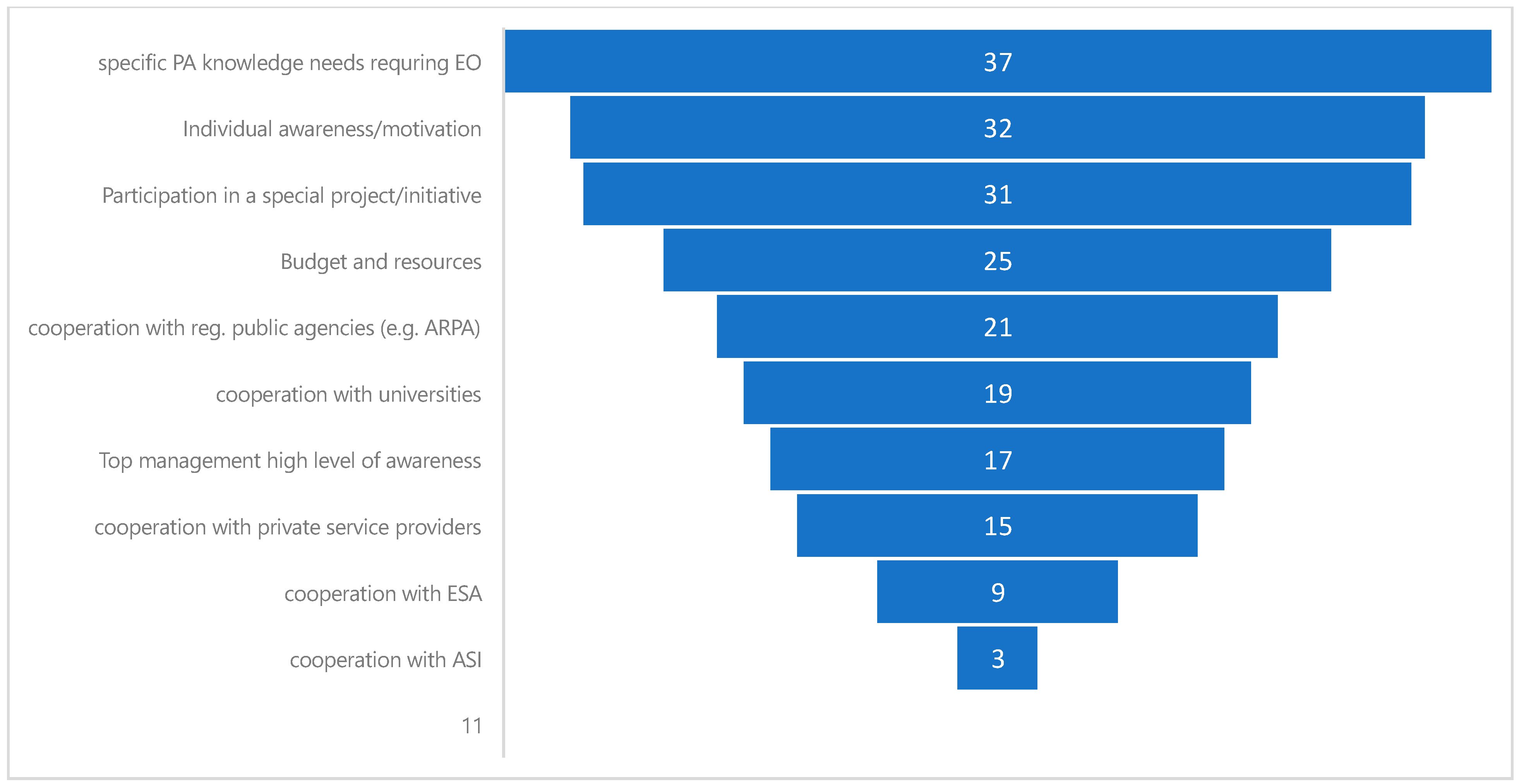
This section is structured in two questions to investigate the respondents’ perception about what factors stimulated the adoption of EO data and services within their organisation and what recommendations they would give now to another PA willing to adopt EO data and services from scratch. The first question, “In your experience, which of the following factors played a decisive role in fostering the adoption of EO?”, was structured by providing respondents with a list of factors that had possibly fostered the adoption of EO satellite data. Respondents were asked to rank the first five in order of importance. The aim was to reconstruct the motivation that drove the EO data introduction.
As shown in
Figure 15, the top five factors considered to have been the most relevant in influencing the adoption of Earth observation data by PA are as follows:
The existence of specific PA knowledge needs that required and/or benefited from the use of Earth observation data and technologies: N = 37;
Individual awareness and motivation: N = 32;
Participation in a special project/initiative: N = 31;
The availability of budget and resources: N = 25.
These are followed by the following:
Good cooperation with regional public agencies (e.g., ARPA): N = 21;
A good collaboration with the university (or research body): N = 19;
A high level of awareness and engagement at the political/institutional level: N = 17;
A good collaboration with a service provider (private industry small and medium enterprises): N = 15;
Good cooperation with ESA: N = 9;
A good collaboration with ASI: N = 3.
3.7.6. Recommendations for Public Authorities to Start Using Earth Observation Data and Services
To answer the second question, “
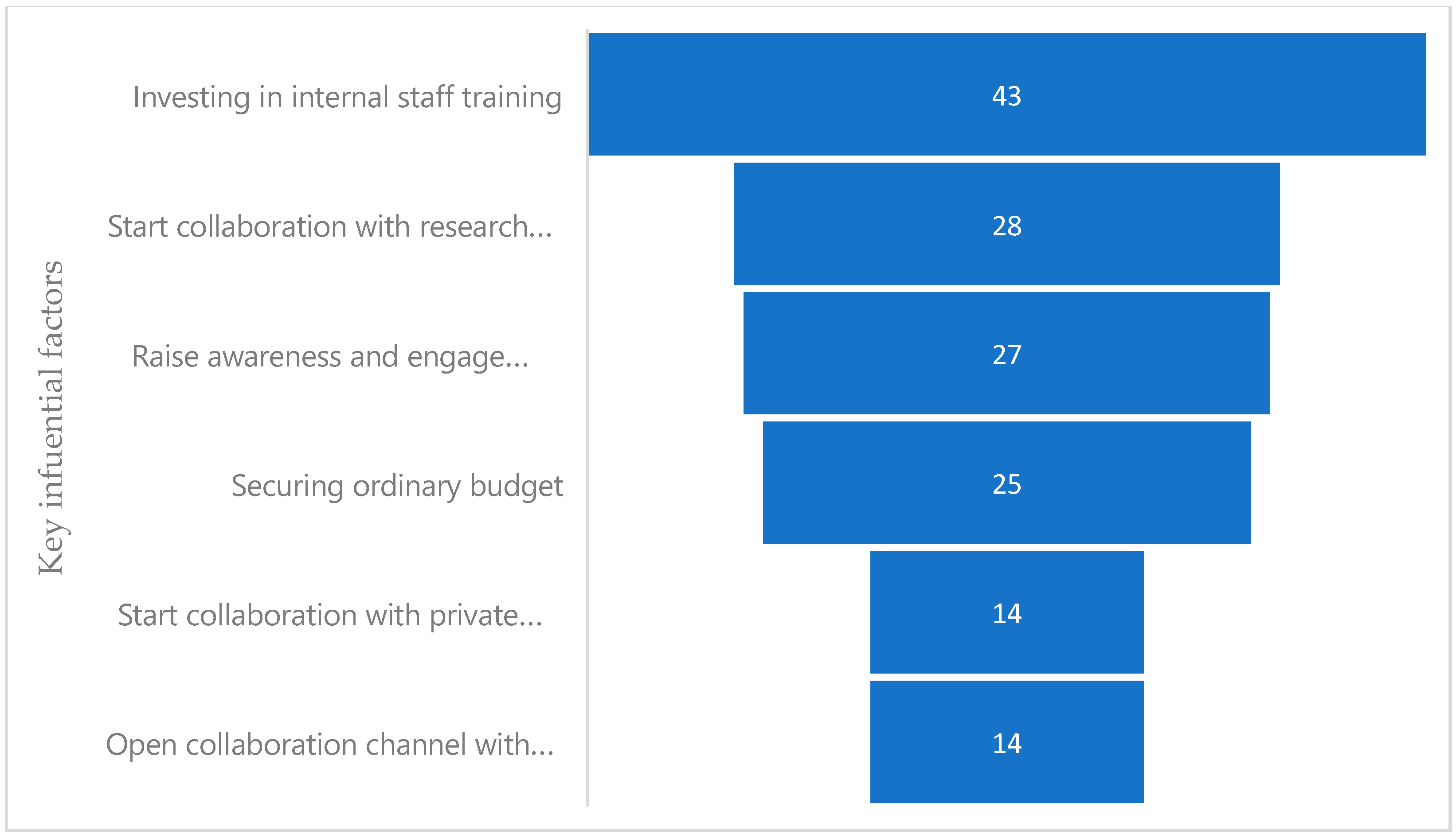
Based on your experience, if you had to advise a PA that wants to start using Earth observation data and services, which of the following would you give?”, respondents were asked to choose the first three most relevant factors/recommendations they would share now with other PAs willing to adopt EO data and technologies. As shown in
Figure 16, the three top pieces of advice are investing in internal staff training (N = 43), initiating a collaboration with research centres and universities (N = 28), and raising awareness and engaging the political level on the importance of EO technologies (N = 27), followed by securing an ordinary budget (N = 25) (mostly from cities and metro cities), starting a collaboration with a private provider for service development on measures (N = 14), and opening a collaboration channel with ESA, Asi Copernicus (N = 14).
4. Discussion
This article presents the analysis of data collected through the distribution of an ad hoc survey, described under
Section 2.1, aimed at investigating the adoption of Earth observation (EO) satellite data and services by local and regional authorities (LRAs) in Italy. The study addressed three main objectives and their related key research questions, as outlined in the introduction, namely, RO1, mapping the use of EO satellite data by LRAs by examining the current level of adoption, thematic domains, and purposes of application; RO2, identifying barriers and benefits perceived by LRAs in adopting EO data and services; and RO3, analysing the factors influencing EO data adoption, as perceived by LRAs and through a correlation analysis.
A total of 109 respondents participated in the survey, yielding a response rate of approximately 47% and representing, in terms of origin, all Italian regions except one (Molise). The survey coverage is quite representative of the population of reference at the organisational level, including responses from 90% of Italian regions, 64% of metropolitan cities, 71% of regional capital cities, and 36% of provincial capital cities.
However, the response rate varied by type of organisation and macroregion, with a notable concentration in North-East and Central Italy. As revealed by the data collected, this geographic skew is also consistent with the observed EO satellite data adoption trends, suggesting an increased interest in EO satellite data among LRAs already familiar with the topic. The sample of participants is heterogeneous in terms of roles, with a slight predominance of civil servants, but also includes individuals holding organisational positions and directors. The respondents came from different departments, primarily, Environment and Urban Greening, Informative Territorial System and Digital Innovation, and Urban Planning, providing a comprehensive picture of the perception of EO satellite data adoption within the organisations.
Three sub-groups regarding knowledge and experience with EO, Copernicus, and IRIDE programmes have been identified. The largest sub-group comprises just beginners in Earth observation, who have heard of Copernicus but have no direct experience, representing more than half of the respondents. It is followed by those who have gained experience in EO and are familiar with Copernicus and those who are not familiar with EO and Copernicus at all. These findings indicate that, while EO satellite data and the Copernicus programme are not entirely new to most participants, their knowledge is generally superficial, with little direct experience. This group represents a priority target for a policy action: increasing their awareness and supporting them in experimentation may be crucial steps to enhancing EO satellite data adoption.
4.1. EO Satellite Data Use Mapping
R.Q.1: What is the current level of adoption of EO satellite technologies and services by LRAs in Italy?
R.Q.2: In which thematic domains and for what purposes are the EO satellite technologies being used?
By aggregating data from individual organisations, it is determined that 58% of the unique organisations in the survey (40 out of 69) have adopted EO satellite data and services. This suggests a moderate rate of adoption. Although it cannot be compared to the European or global average rate due to a lack of available consistent data statistics, this adoption rate is higher compared to emerging technologies such as AI, whose use in local public administration, according to a survey launched in 2023, has been recorded only by 28% of the respondents [
48].
In addition, significant variation by type of organisation has been observed, ranging from 100% adoption among regional public agencies and 85% among regions to 45% among cities. Moreover, 17% of the organisations, particularly 25% of cities, report using EO data indirectly through Google Earth. This finding has two important implications: it indicates an underuse of EO data, whose potential is not fully understood. Moreover, it highlights a paradox in industrial policy, where Italian LRAs rely on non-European companies for the easy access to and elaboration of data provided open and free by an EU programme (Copernicus).
The geographical distribution of the organisations adopting EO satellite data shows a high concentration in the North-East of Italy, accounting for 40% of the total organisations, followed by Central Italy with 27.5%, and the North-West with 17.5%, and, in the South and Islands regions, about 15% of organisations report using satellite data. Further investigation is needed to formulate a consistent hypothesis explaining this distribution’s variation. Thus far, it can be observed how the geographical concentration of EO data use does not appear to be dependent on the industrial space EO chains, such as those involved in the realisation of the IRIDE programme, which are primarily located in North-West and Central Italy. On the other side, this distribution seems consistent with trends in the more general digitisation attitude of regions (Benecchi 2023 [
49]) and of cities (ICity Rank 2023 [
50]), as well as to the size of the city, with larger cities having a higher adoption rate possibly due to more staff and internal resources (Walker 2006) [
51].
Confirming the importance of EO data in managing and improving sustainability at the local level, the most prevalent application of EO satellite data has been recorded in the thematic domains of land cover (54%) and urban planning (50%), both used by more than half of the respondents. Approximately one-third of the respondents also declare that they use it in other thematic domains such as heat waves (35%), ground monitoring (35%), urban greening (34%), and hydrometeorological services (30%). From these data, two trends can be observed. First is the primacy of land coverage analysis and monitoring. It aligns with the EARSC SeBS Survey 2021 [
52], which reported that most of the satellite data SMEs’ use comes from Sentinel-2 (41%) and Sentinel-1 (30%). Both missions are components of the EU programme Copernicus, with Sentinel-2 being a multispectral imager with 13 spectral bands primarily aimed at land monitoring and vegetation [
53], and Sentinel-1 being a C-band synthetic aperture radar used for forestry, agriculture, urban deformation mapping, flood monitoring, and earthquake analysis [
54].
It is important to note that these are among the first missions of the Copernicus programme, launched in 2015 and 2014, respectively. These services support various functions of local administrations, particularly in planning and monitoring across sectors. Notably, the Italian Institute for Environmental Protection and Research (ISPRA) regularly provides updated land coverage reports in Italy [
55]. The second trend is the climate-related use of EO data at the urban level. While it can be assumed that regions have been using these data for a longer time and a variety of thematic areas, the increase in the use of EO data in cities seems to be linked to the need to address, adapt to, and mitigate the effects of climate change. It includes actions such as managing urban vegetation and monitoring heat waves, which 44.4% and 37% of cities use.
The primary purpose of using EO satellite data is planning and monitoring, chosen by 70% of respondents. In contrast, the development of forecasting systems is selected by a smaller group (22.4%), and only a few organisations use these data for law design. This indicates that, while currently LRAs are utilising EO data for relatively traditional purposes, more experimental and innovative applications are still underutilised. Given the potential of using EO satellite data to feed forecasting systems such as those included in the digital twin, there is a significant potential for improvement. The adoption rate for law-making purposes remains extremely low.
The services are being realised in LRAs at approximately one-third with industrial services providers (especially in cities and metropolitan cities), one-third with research institutes and universities, and one-third internally to the organisation (especially in regions). This distribution may correlate with the higher adoption rate in regions with more internal staff and resources to manage EO satellite data compared to cities that mostly rely on external services. The ordinary budget (56%) is the main funding source for implementing these services, even though EU funds also play a crucial role (30%), followed by special projects and NRRPs.
4.2. Barriers and Benefits
R.Q.3: What are the most common technological barriers LRAs perceive concerning the adoption of EO satellite technologies and services?
R.Q.4: What benefits have LRAs experienced from adopting EO technologies?
The difficulty of the initial understanding and the operational use of EO satellite data are perceived as relatively high, albeit with significant variability among the respondents. At the same time, the accessibility of data and services, encompassing knowledge of service offerings, data finding, and acquisition, was found to be only moderate (average value = 5 on a scale of 1 to 10). This moderate accessibility rating is consistent regardless of the respondents’ familiarity with Earth observation and the Copernicus programme, suggesting that the complexity is more dependent on the technology rather than individual awareness.
The alignment between knowledge needs and EO data and services characteristics is fairly good, but some organisation’s knowledge needs remain unsatisfied. The most relevant factors contributing to this unmet need are spatial resolution, visual representation, data format, and temporal resolution. On a more administrative side, the procurement process is considered quite complex, especially due to internal procedures within the administration, such as the need to involve other offices.
Regarding the integration performance of the technology with existing platforms and services, a moderate value (average value = 6.15 on a scale of 1 to 10) has been recorded in terms of compatibility and integration. The most relevant factor influencing this rating is the usability of the data. Among the different types of LRAs, metropolitan cities recorded lower compatibility values.
Despite the complexity and a moderate level of the technology’s accessibility, the perceived benefits of LRAs using EO satellite data are quite high and homogeneous. Indeed, high levels of benefits (average value = 8 on a scale of 1 to 10) perceived in using EO satellite data compared to ordinary data and procedures have been recorded in all three dimensions investigated: time-saving, monitoring efficacy, and economic saving.
However, metropolitan cities again stand out as an exception, recording lower average values, especially with regard to the time-saving benefit. While a more in-depth analysis should be conducted to investigate the topic further, it is noteworthy that, in Italy, metropolitan cities are relatively recent entities (established in 2015) and operate on a supra-municipal scale. Their difficulty may be related to the scale and their administrative functions.
Overall, the data analysis reveals several crucial findings. Firstly, overcoming the initial complexity of understanding EO data is significantly influenced by individual-level factors, emphasising the importance of training and capacity-building initiatives. However, the moderate rating of accessibility (average value = 5) of EO technology and its integration with existing platforms suggests the existence of substantial barriers to accessing EO data and services, mostly dependent on the technology features. Therefore, it is crucial to take further action to improve the accessibility of EO technology and make EO satellite data more user-friendly. This finding aligns with Cerbaro (2020) [
26], who emphasised the need for easy-to-use platforms to enable a wider audience to understand the information generated from EO data.
Moreover, addressing the partial mismatch between the knowledge needs of LRAs and the capabilities of EO satellite data services, as shown in a mean of 5.8 on a scale of 1 to 10 (
Table 7), is essential. As noted in some industry sectors (Paravano 2023 [
21]), there remains a gap between end-user expectations and the delivered value of EO satellite data services. This issue is also relevant for the local public administration, where achieving a full alignment of needs at the institutional level is necessary. Leveraging established and active networks, such as the Copernicus Users Forum, and fostering enhanced dialogue between service providers and LRA end-users may be the key to bridging this gap.
4.3. Influential Factors
R.Q.5: What are the most influential factors in the adoption and use of EO data by LRAs?
The existence of influential factors in the adoption of EO satellite data by LRAs has been investigated through correlation analysis, leading to the following key findings:
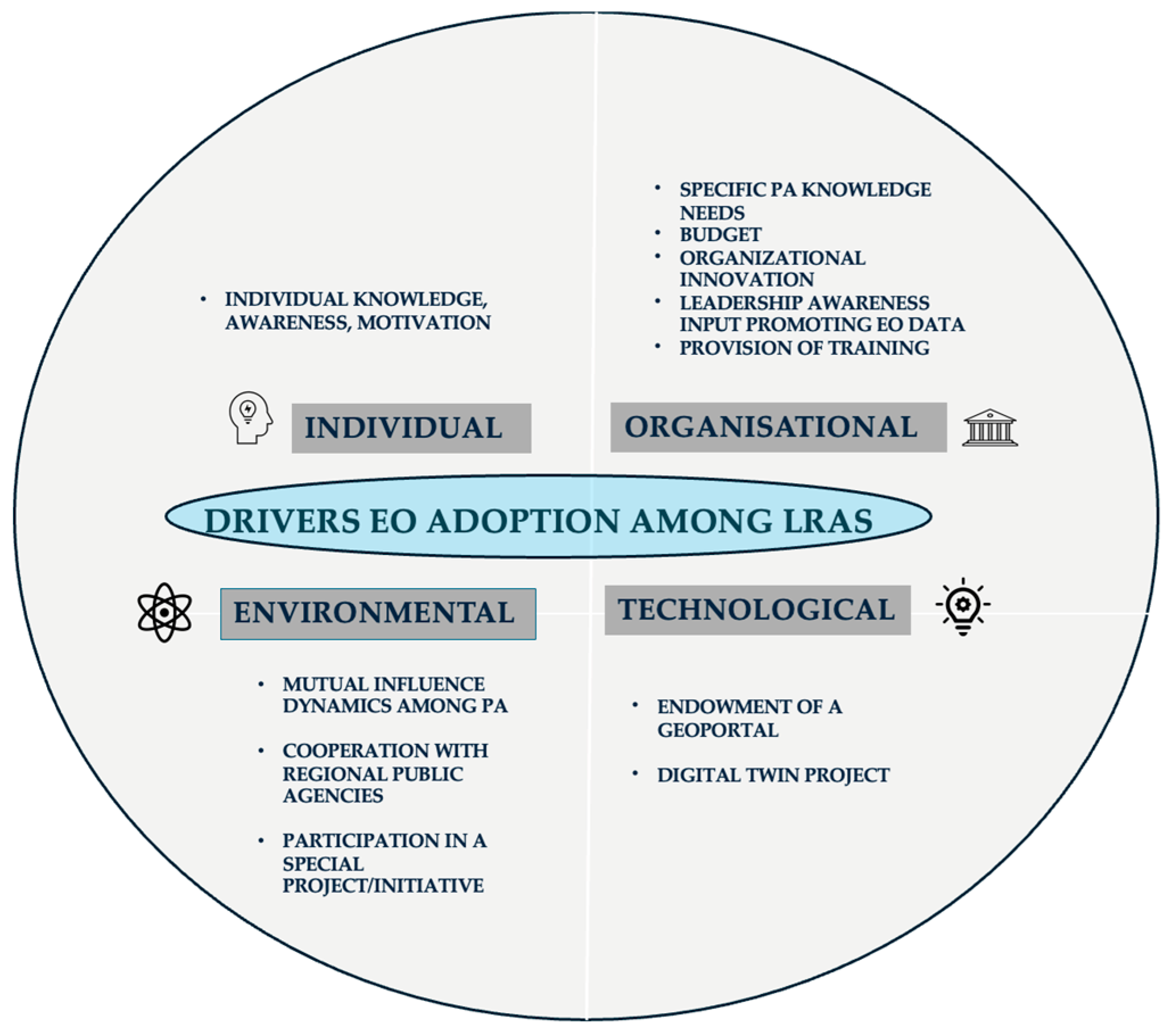
Organisational factors. Among the factors investigated under the organisation’s dimension, a positive correlation with adopting Earth observation data and technology emerges concerning the organisation’s availability of a geoportal, considered the enabling infrastructure for using EO data. Additionally, a positive association trend has been observed concerning the development of digital twin (DT) projects, which may require EO data for their full development (19 out of the 22 organisations developing a DT use Satellite data.). Given that 14 of these 22 organisations are cities, this may confirm a strong commitment to experimentation at the urban level. However, considering the eminently technological nature of these two factors (geoportal and digital twin project), we decided to re-classify them as technological factors/drivers.
A positive correlation has also been identified between the perceived level of an organisation’s innovativeness and the adoption of EO data and services. It may indicate that organisations with higher perceived levels of innovation are more likely to adopt EO technologies. These findings underscore the importance of a general positive attitude towards introducing innovative practices and procedures as a pre-condition for adopting EO satellite data.
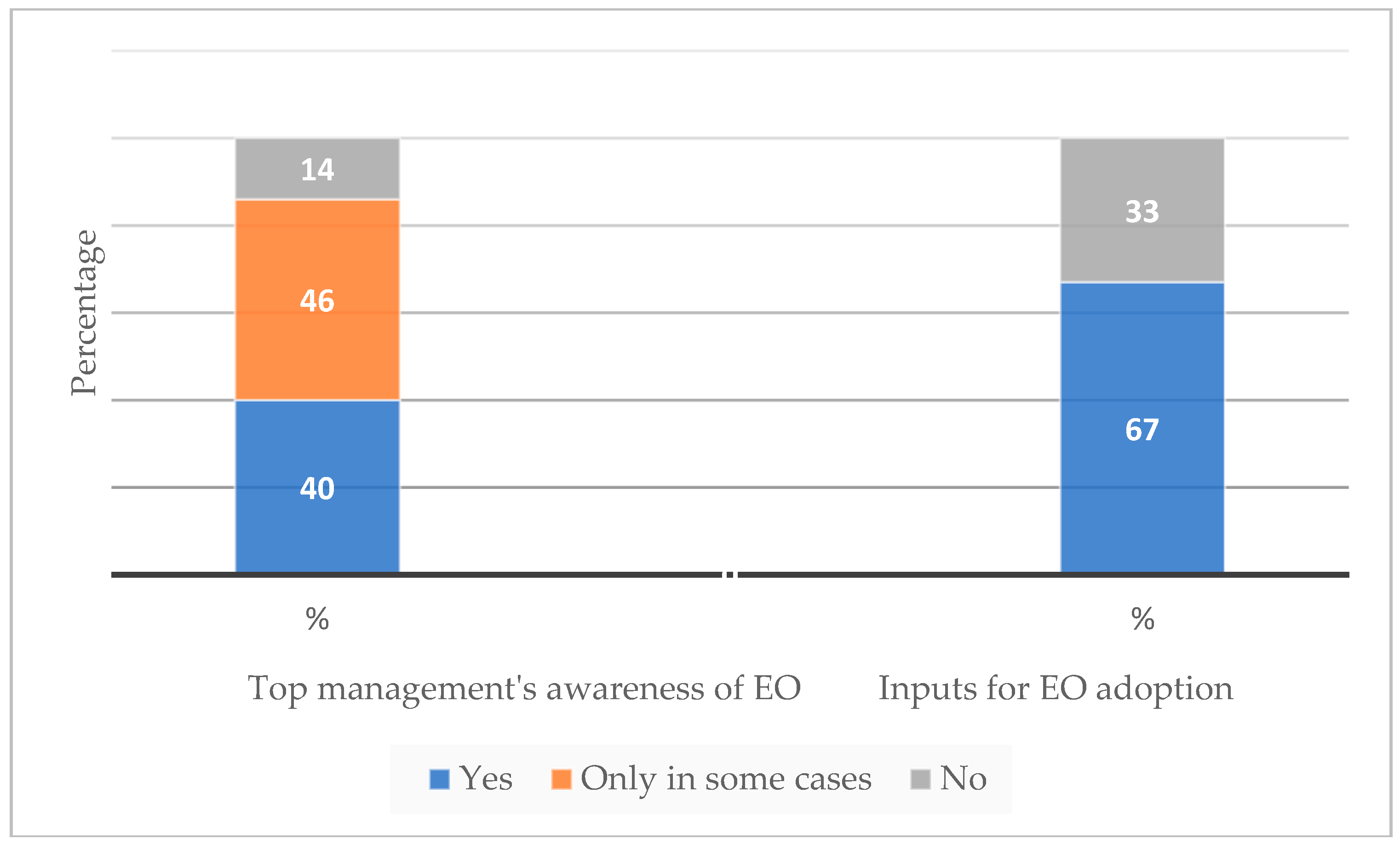
Two key points are related to top management awareness and the promotion of EO Data adoption. The data highlight a low level of awareness of the EO data potential among top management (only 14% reported being fully aware), and no inputs for promoting the adoption of EO data and services have been reported by 67% of the respondents. However, factors that positively influence the adoption of EO data include having top management be aware of EO data’s potential and receiving specific inputs to promote EO adoption, which correlates with higher levels of EO adoption. Additionally, the provision of specific training opportunities, reported by only 23% of the respondents, has been identified as a positive influential factor. In contrast, no significant association has been found between the availability of adequate technical infrastructure and the effective processing or use of EO data and services, suggesting that many organisations may have adequate technical infrastructure but are not adopting EO data. These findings may suggest that, among organisational factors, human resources are crucial. Training human resources and raising top management awareness are decisive factors for increasing the adoption of EO satellite data and services.
Environmental factors. Among the environmental factors, two important findings emerge that tend to confirm the bottom-up nature of the process. On the one hand, it can be observed that most respondents state that they are, to some extent, inspired by other PAs in adopting innovative practices such as satellite data, confirming the critical role of peer exchange and comparisons. This influence occurs not only within formalised networks but also informally outside them. This observation supports the isomorphism hypothesis, suggesting that organisations may emulate other compatible organisations’ innovative behaviour/practices (DiMaggio & Powell, 1983 [
27]). Secondly, the regulatory environment does not seem to play a decisive role in influencing the adoption of satellite data. Nearly half of the respondents state that using EO data is not aimed at implementing laws. It suggests a potential for introducing regulatory incentives to encourage the adoption of satellite data. Although this issue warrants further investigation, it may potentially be decisive in promoting wider EO data usage.
Individual factors. Among the individual factors, correlation with EO satellite data has been identified for three variables related to the respondent’s knowledge and experience with EO technologies and the Copernicus programme. In general, the data indicate that, as the level of knowledge and experience of EO and Copernicus reported by respondents increases, so does the likelihood of adopting EO satellite data. This finding is consistent with the analysis of the organisational factors, where training opportunities were shown to be more important than the availability of technical infrastructure for adopting EO data and services.
R.Q.6: According to the LRAs’ experience and perception, were the factors that stimulated EO adoption exogenous or endogenous? Was it mainly a bottom-up or top-down process? Moreover, what factors would influence a new PA to adopt it now?
By cross-checking the findings of the correlation analysis with the direct perception of LRAs, explored through a specific question, a list of the top five most relevant factors that stimulated the adoption of EO within the organisation has been produced based on respondents’ feedback.
The top five factors’ ranking includes exogenous and endogenous elements, revealing some previously less visible factors. While the two most important factors are endogenous and related to the individual and organisational levels, the third, fourth, and fifth factors have an exogenous dimension that did not emerge from previous analyses. Indeed, combined with the specific knowledge needs of PAs and individual motivation and awareness, a crucial role in the adoption of EO satellite data has been recognised to be played by the participation in a special project or initiative (and possibly related to that) by the availability of budget and resources, and by a good collaboration with regional public agencies (i.e., ARPA) or universities.
Assuming that the first input comes from within the organisation and mostly at the individual level, we could infer that enabling conditions are provided by external elements, such as the opportunity to have a proper budget and to cooperate with external actors such as environmental regional public agencies, highlighting the importance of such initiatives in overcoming initial barriers. Even if not among the first five, the high level of awareness and engagement at the political/institutional level has also been mentioned as relevant. It seems to suggest that it was not the main driver factor in most cases, but it played a decisive role in consolidating the process. Overall, the bottom-up nature of the process emerged as predominant, with weak top-down inputs understood both as law requirements and/or specific inputs of top management.
When respondents were asked to rank the three most relevant recommendations they would give to other LRAs willing to adopt EO data from scratch, the picture changed slightly. Investing in internal staff training is the first recommendation, indicating the individual factor is the most relevant. Establishing a collaboration with research centres and universities is the second recommendation, followed closely by the recommendation to raise awareness and engage the political level on the importance of EO technologies, which has been indicated by more than half of cities and regions. What is relevant here is that, despite top management’s current low awareness of EO potential, increasing their awareness is recognised as one of the most effective recommendations. It highlights the strategic role of leadership in fostering innovation within public administrations, a point widely recognised in the literature (for example, Borins 2002 [
56], and Andrews et al., 2010 [
57]).
To summarise, considering the positive influential factors (understood as “drivers”) and the barriers analysed in the different dimensions, both endogenous and exogenous, and integrating the technological dimension previously investigated, an influential factors matrix represented in
Table 16 has been produced.
Exogenous and endogenous factors among the four identified dimensions affect individual knowledge, organisational resources (financial and trained human resources), leadership awareness and proactive commitment, technological infrastructure, and the cooperation and exchange dynamics. It confirms the complex and multidimensional nature of the EO technology adoption process within the PA.
Bringing more attention on the identified drivers of the EO satellite data adoption among LRAs, the circular diagram, shown in
Figure 17, has been produced, by isolating and highlighting the positive influential factors only. Accordingly, strategies to promote EO data adoption among LRAs should consider all four dimensions and should be targeted at the individual as well as organisational, environmental, and technological levels.