Article

Sustaining Carbon Storage: An Analysis of Land Use and Conservation Strategies in China’s Huang-Huai-Hai Plain


by
Xiaofang Wang
1,
Weiwei Zhang
2,
Xinghui Zhao
1,
Dongfeng Wang
2 and
Yongsheng Li
1,*
1
College of Forestry, Henan Agricultural University, Zhengzhou 450046, China
2
Henan Provincial Forestry and Ecological Construction and Development Center, Zhengzhou 450046, China
*
Author to whom correspondence should be addressed.
Sustainability 2025, 17(1), 139; https://doi.org/10.3390/su17010139
Submission received: 21 November 2024 / Revised: 18 December 2024 / Accepted: 25 December 2024 / Published: 27 December 2024

Abstract

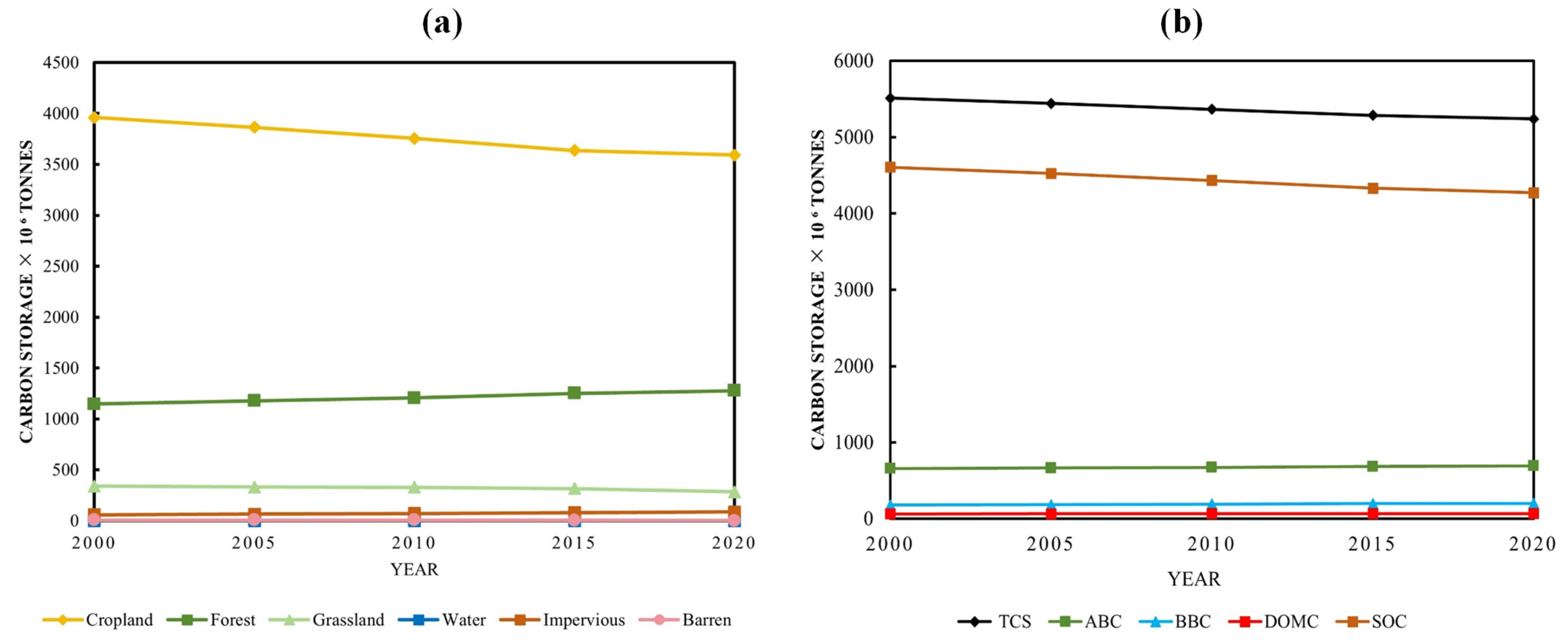
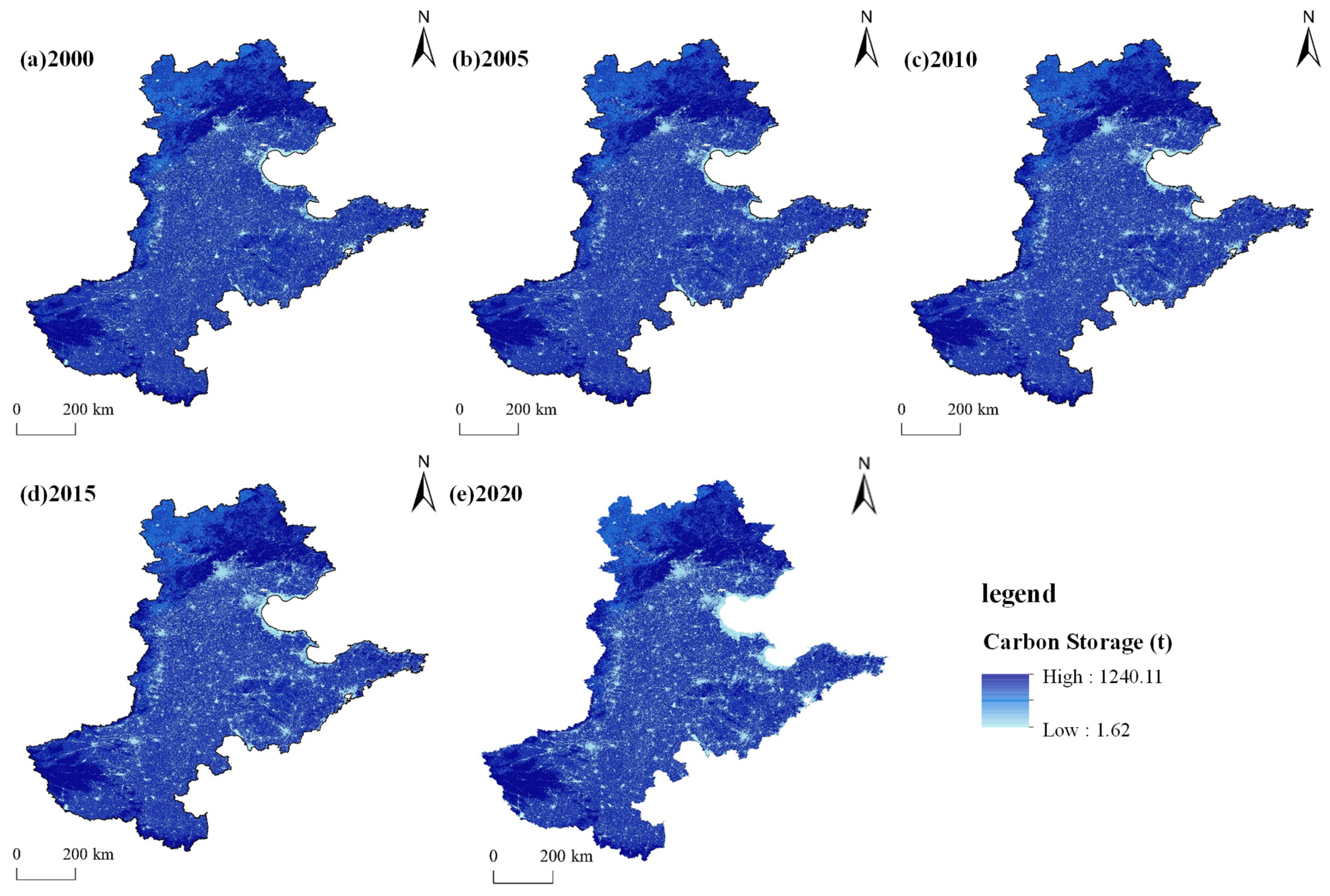
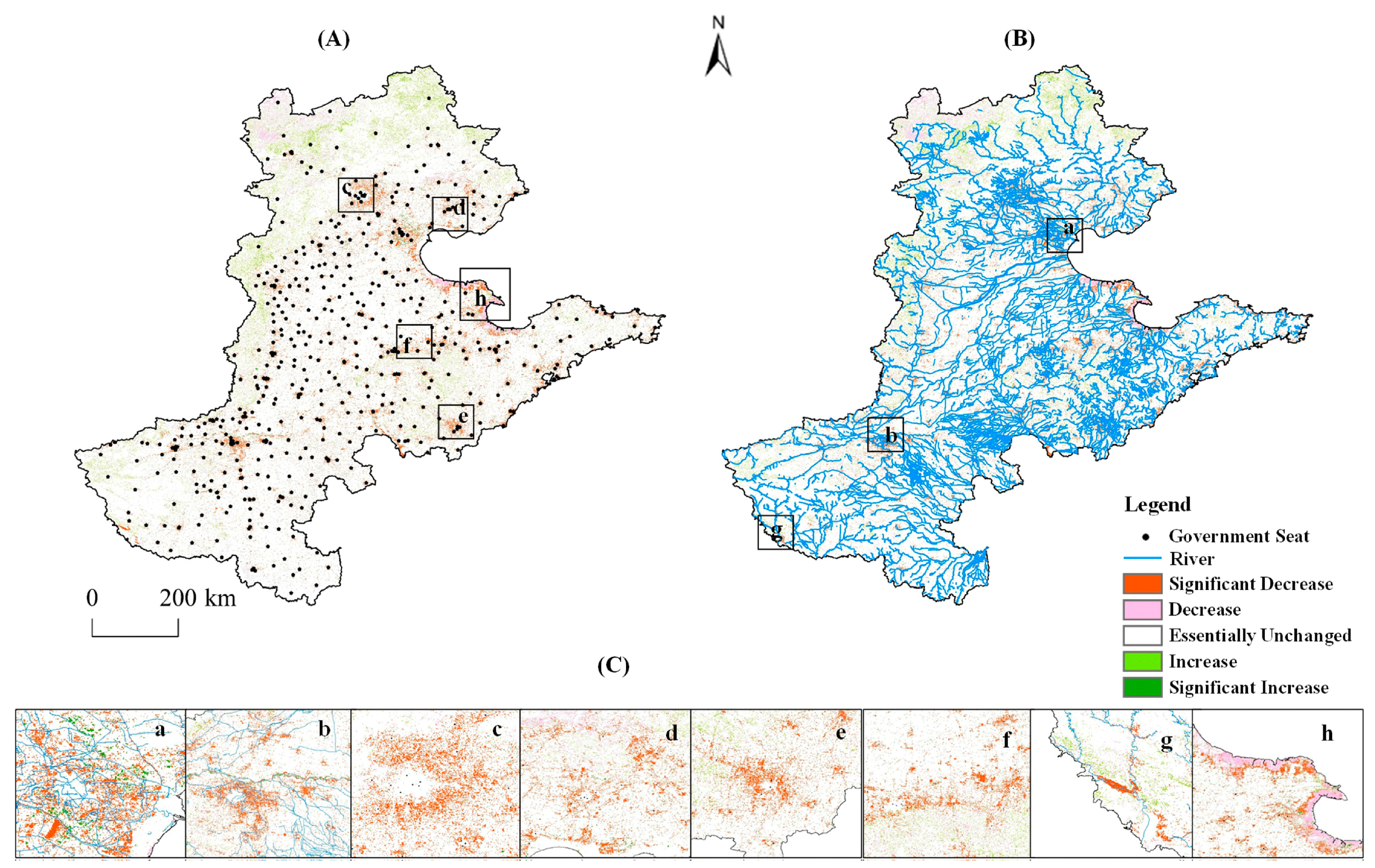
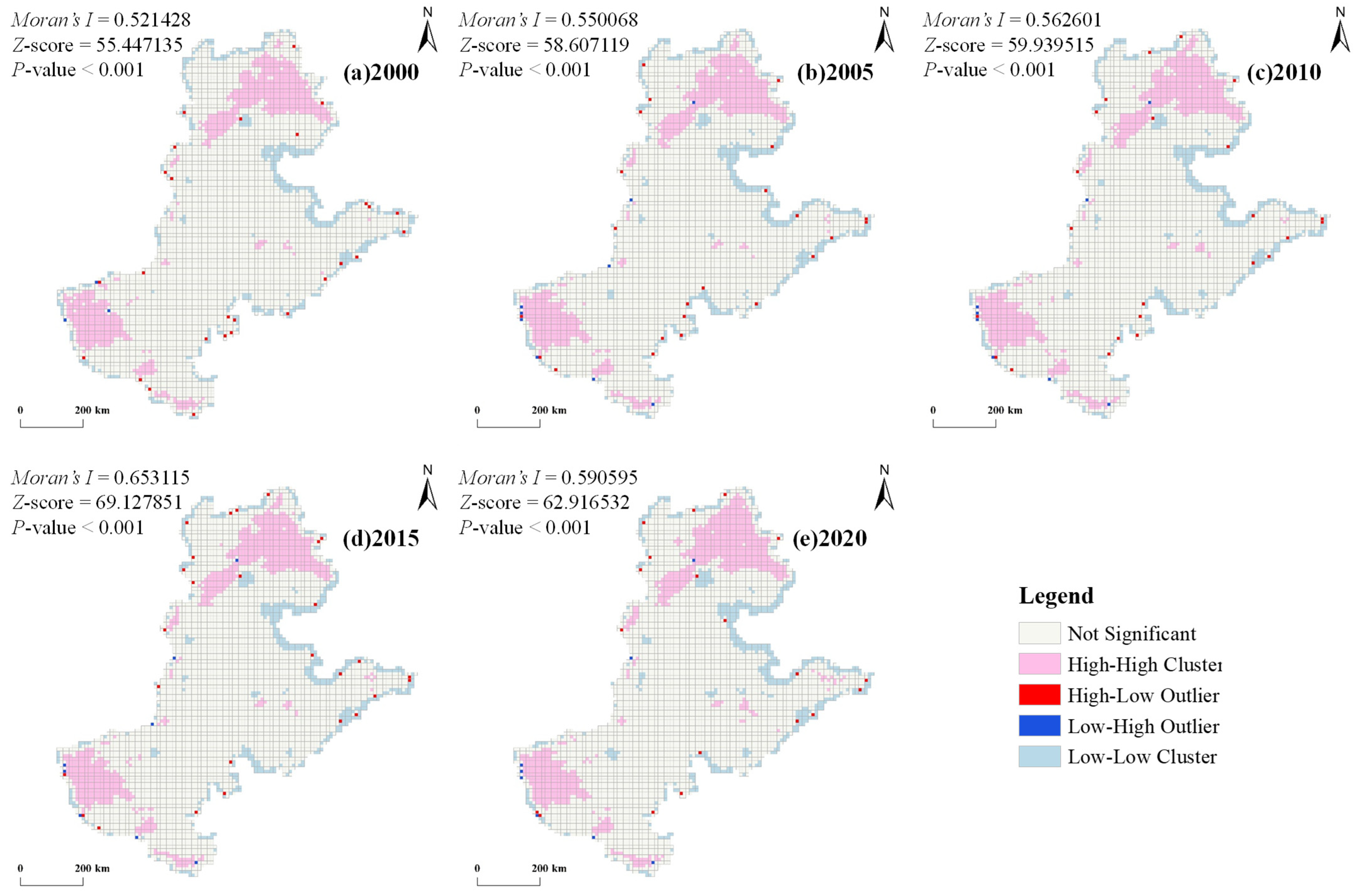
The Huang-Huai-Hai Plain, a vital agricultural area in China with a significant amount of arable land, plays a pivotal role in influencing grain production, ecological carbon cycles, and global climate change through its shifts in land use. Within this research, we have employed the ArcGIS tool and the In-VEST-Geodetector-PLUS methodology to scrutinize the shifts in carbon storage from the year 2000 to 2020, determine the pivotal influences behind these shifts, and anticipate the projected carbon storage for 2030. Although there has been a slight increase in forested areas as a result of environmental policies, the conversion of cropland to impervious surfaces due to urbanization has led to a persistent decrease in carbon storage, with a cumulative loss of 272.79 million metric tons over the two decades. The Normalized Difference Vegetation Index (NDVI), Night-Time Lights (NTL), Gross Domestic Product (GDP), and Population (POP) are critical factors impacting carbon storage, reflecting the intricate connection between socio-economic development and natural ecosystems. The multi-scenario simulations for 2030 suggest that the least reduction in carbon storage would occur under the scenario of protecting arable land, while the most significant decrease would be under the urban expansion scenario, highlighting the impact of urbanization. The study’s results emphasize the critical need to harmonize agricultural land conservation with economic progress for the enduring growth of the Huang-Huai-Hai region.
Keywords: carbon storage dynamics; urbanization impact; land use change; ecosystem services; sustainable land management; Huang-Huai-Hai plain carbon storage dynamics; urbanization impact; land use change; ecosystem services; sustainable land management; Huang-Huai-Hai plain