Article

Exploring Characteristics of Regenerative Business Models through a Delphi-Inspired Approach

Centre for Economic Transformation, Amsterdam University of Applied Sciences, 1102 CR Amsterdam, The Netherlands
*
Author to whom correspondence should be addressed.
Sustainability 2024, 16(7), 3062; https://doi.org/10.3390/su16073062
Submission received: 5 February 2024 / Revised: 12 March 2024 / Accepted: 29 March 2024 / Published: 7 April 2024
(This article belongs to the Collection Toward a Restorative Economy)

Abstract

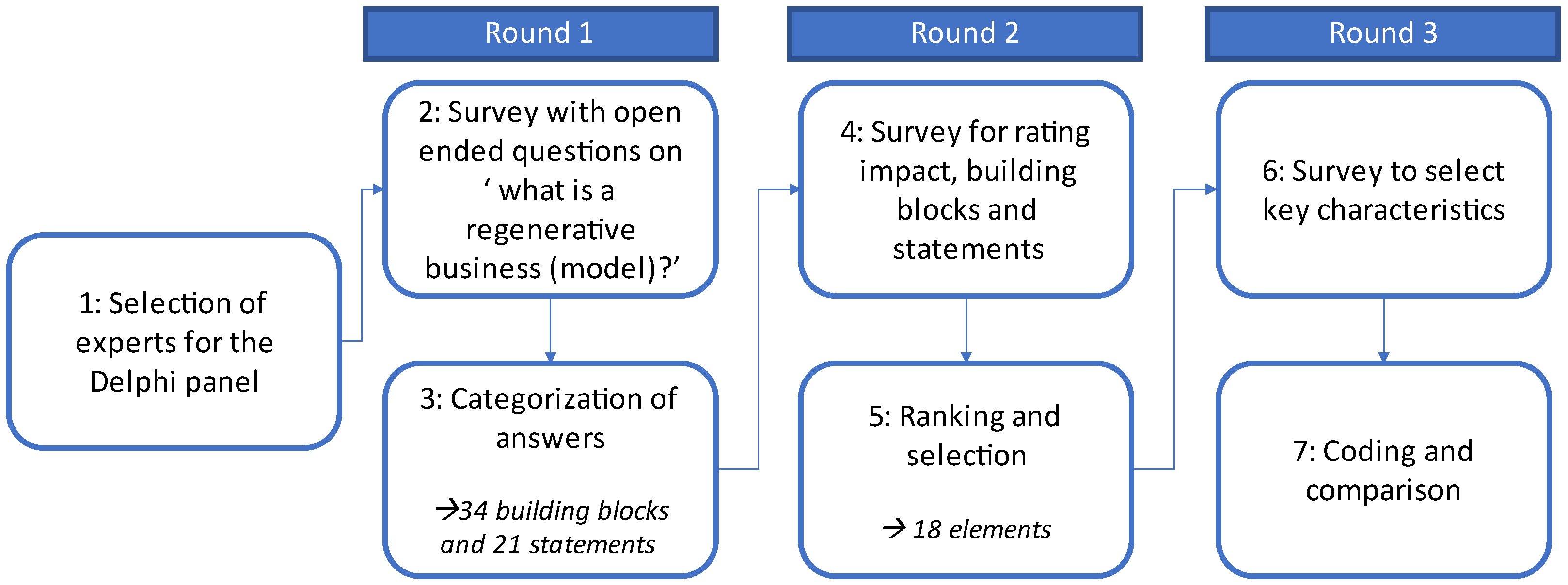
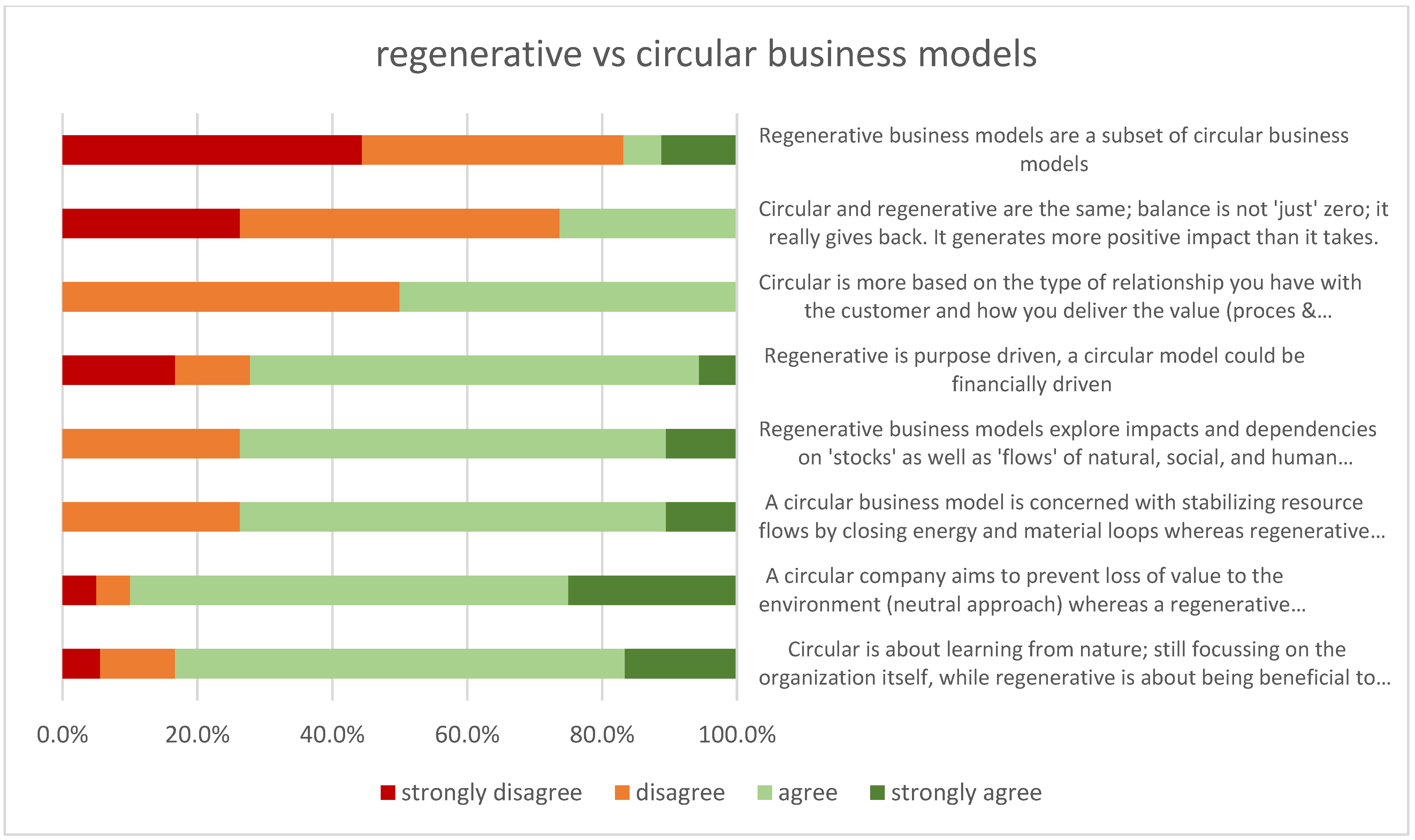
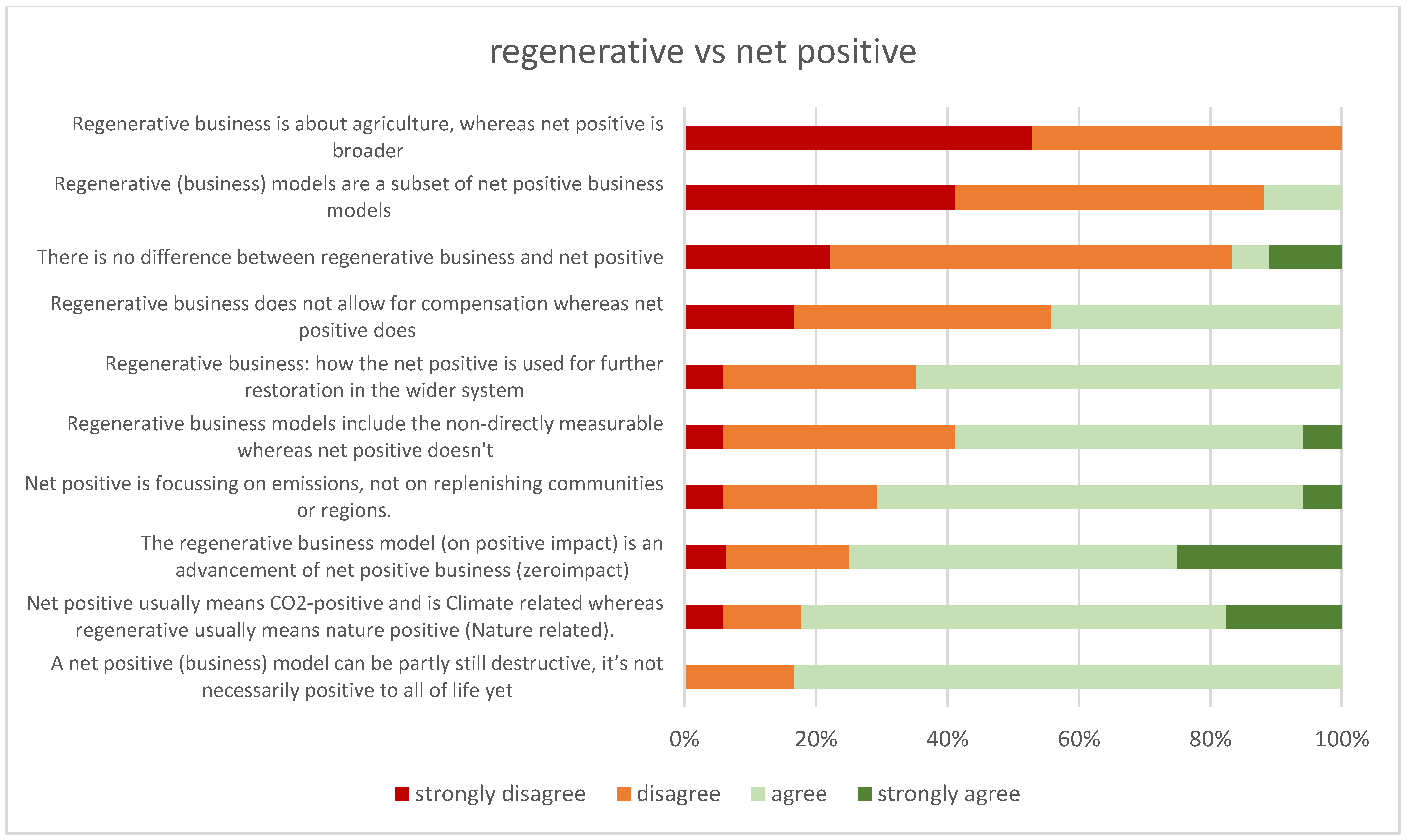
Amidst escalating environmental and social challenges, this study explores regenerative business models’ definition and characteristics. While sustainable models have made considerable strides in research, policy, and practice, the advent of regenerative business models offers a progressive leap forward. Regenerative business models aspire to contribute to ecological restoration and societal well-being. The regenerative business model concept is, however, still in its infancy and lacks a comprehensive definition. Our study aims to expand this knowledge, using a Delphi-inspired approach that builds on the knowledge of academic and business experts. Our approach includes three rounds of surveys: an open-ended survey, a survey for rating and ranking the earlier responses of all participants, and a final survey to select key characteristics. We investigate patterns and distinctions among regenerative, regenerative business, and regenerative business models, and analyze their positioning vis-a-vis circular and net-positive models. Findings underscore that organizations adopting regenerative business models focus on planetary health and societal well-being. They generate value across multiple stakeholder levels, including nature, societies, customers, suppliers, shareholders, and employees. Despite overlapping with circular and net-positive models, regenerative business models also emphasize interdependencies between humans and nature, and provide a more holistic approach, centered on restoration rather than mere mitigation.
Keywords: regenerative business; Delphi study; business models; net-positive; entrepreneurship regenerative business; Delphi study; business models; net-positive; entrepreneurship