Article

Technical Feasibility of a Hydrail Tram–Train in NA: Okanagan Valley Electric Regional Passenger Rail (OVER PR)

1
School of Engineering, University of British Columbia, Okanagan, Kelowna, BC V1V 1V7, Canada
2
DB E.C.O. NA Inc., Sacramento, CA 95814, USA
*
Author to whom correspondence should be addressed.
Sustainability 2024, 16(7), 3042; https://doi.org/10.3390/su16073042
Submission received: 11 January 2024 / Revised: 22 March 2024 / Accepted: 28 March 2024 / Published: 5 April 2024

Abstract

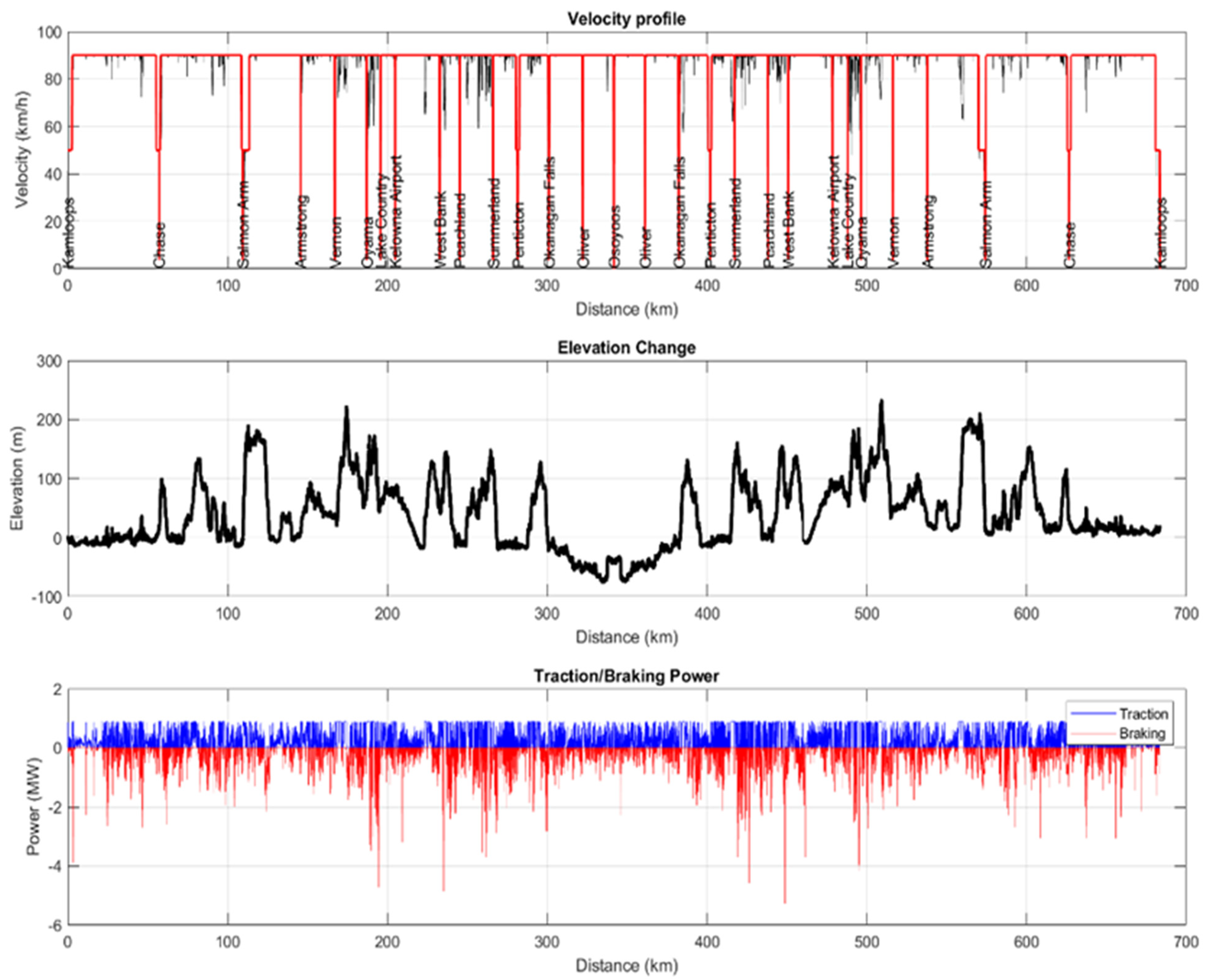
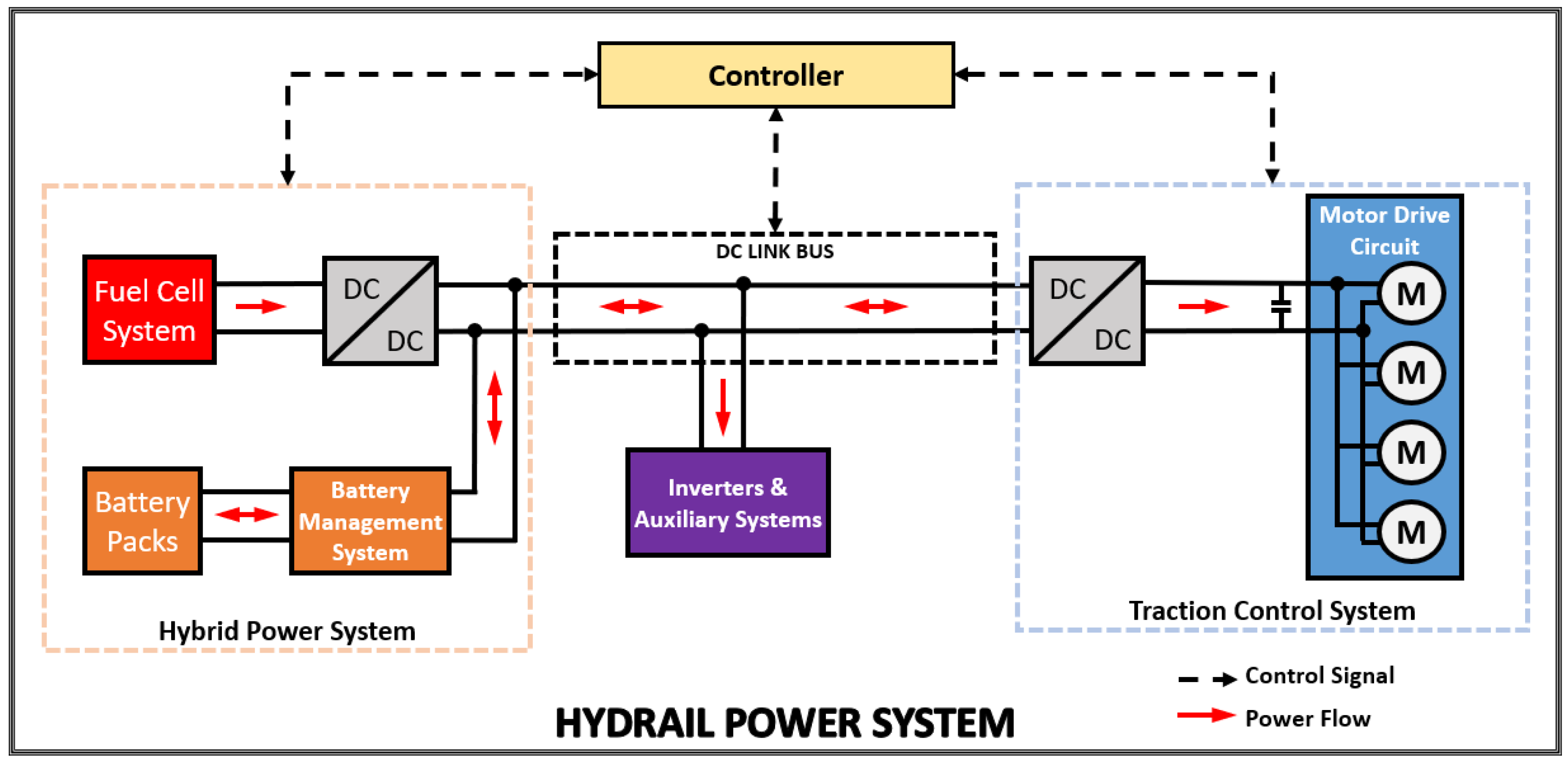
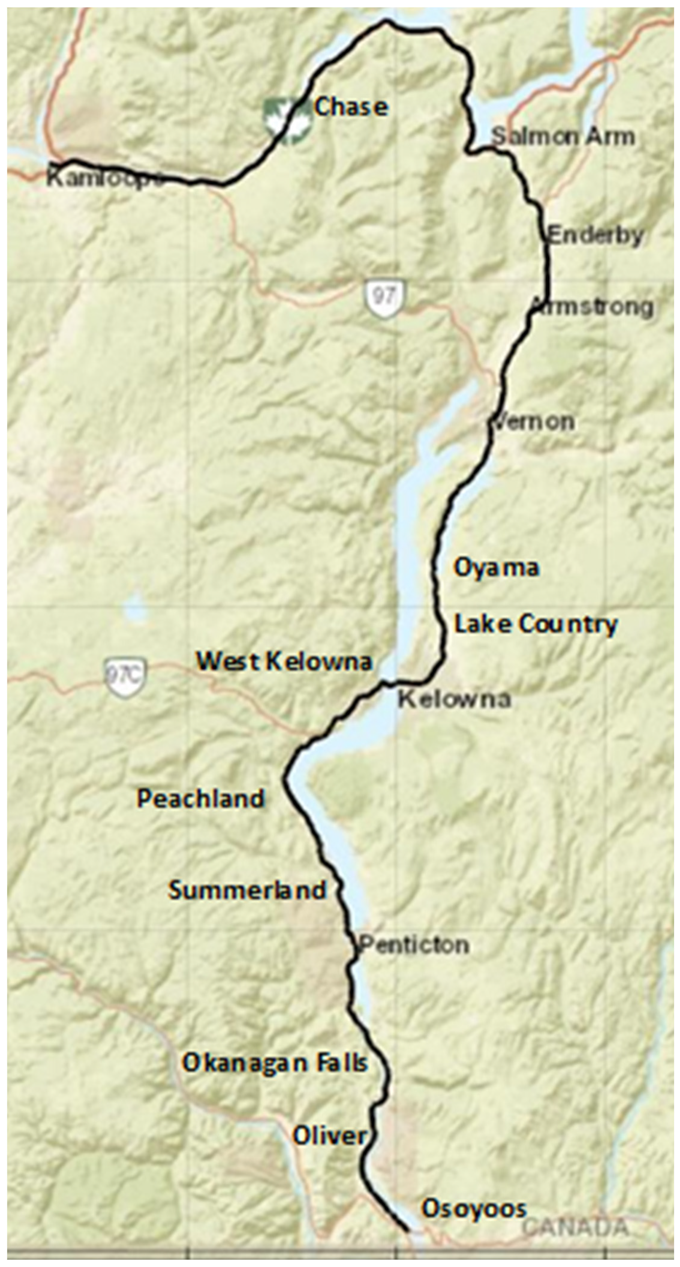
Booming population and tourism have increased congestion, collisions, climate-harming emissions, and transport inequities in The Okanagan Valley, Canada. Surveys suggest that over 30% of residents would shift from cars back to public transit and intercity tram–trains if regional service and connections were improved. Intercity streetcars (aka light-rail tram–trains) have not run in Canada since their replacement in the 1950′s by the national highway system. UBC researchers analyzed a tram–train service fashioned after the current Karlsruhe model but powered by zero-emission hydrogen fuel cell/battery hybrid rail power (hydrail) technology, along a 342 km route between Osoyoos, B.C. at the US Border and Kamloops, B.C., the Canadian VIA rail hub. Hydrail trains have operated successfully since 2018 in Germany and were demonstrated in Quebec, Canada in 2023. However, hydrail combined with tram–train technology has never been tried in Canada. Single-train simulations (STSs) confirmed its technical feasibility, showing a roughly 8 h roundtrip travel time, at an average train velocity of 86 km/h. Each hydrail tram–train consumed 2400 kWh of energy, translating to 144 kg of hydrogen fuel per roundtrip. In total, five tons of H2/day would be consumed over 16 h daily by the 16-tram–train-vehicle fleet. The results provide valuable insights into technical aspects and energy requirements, serving as a foundation for future studies and decision-making processes in developing zero-emission passenger tram–train services not just for Okanagan Valley communities but all of Canada and NA.
Keywords: intercity hydrail passenger tram–train; hydrail; hydrogen power; train–trams; zero emission; interurban streetcars; passenger rail; steep hills; cold climates; vehicle specifications intercity hydrail passenger tram–train; hydrail; hydrogen power; train–trams; zero emission; interurban streetcars; passenger rail; steep hills; cold climates; vehicle specifications