Article

Evaluating the Spatial Evolution of the Eco-Economy Harmony in Anxi County, China, Based on Ecosystem Services Value


1
College of Digital Economy, Fujian Agriculture and Forestry University, Fuzhou 350002, China
2
Institute of Agroecology, Fujian Agriculture and Forestry University, Fuzhou 350002, China
3
College of Rural Revitalization, Fujian Agriculture and Forestry University, Fuzhou 350002, China
4
Ecological Civilization Research Center, Fujian Agriculture and Forestry University, Fuzhou 350002, China
*
Authors to whom correspondence should be addressed.
These authors contributed equally to this work.
Sustainability 2024, 16(4), 1491; https://doi.org/10.3390/su16041491
Submission received: 11 December 2023 / Revised: 4 February 2024 / Accepted: 7 February 2024 / Published: 9 February 2024
(This article belongs to the Section Sustainable Urban and Rural Development)

Abstract

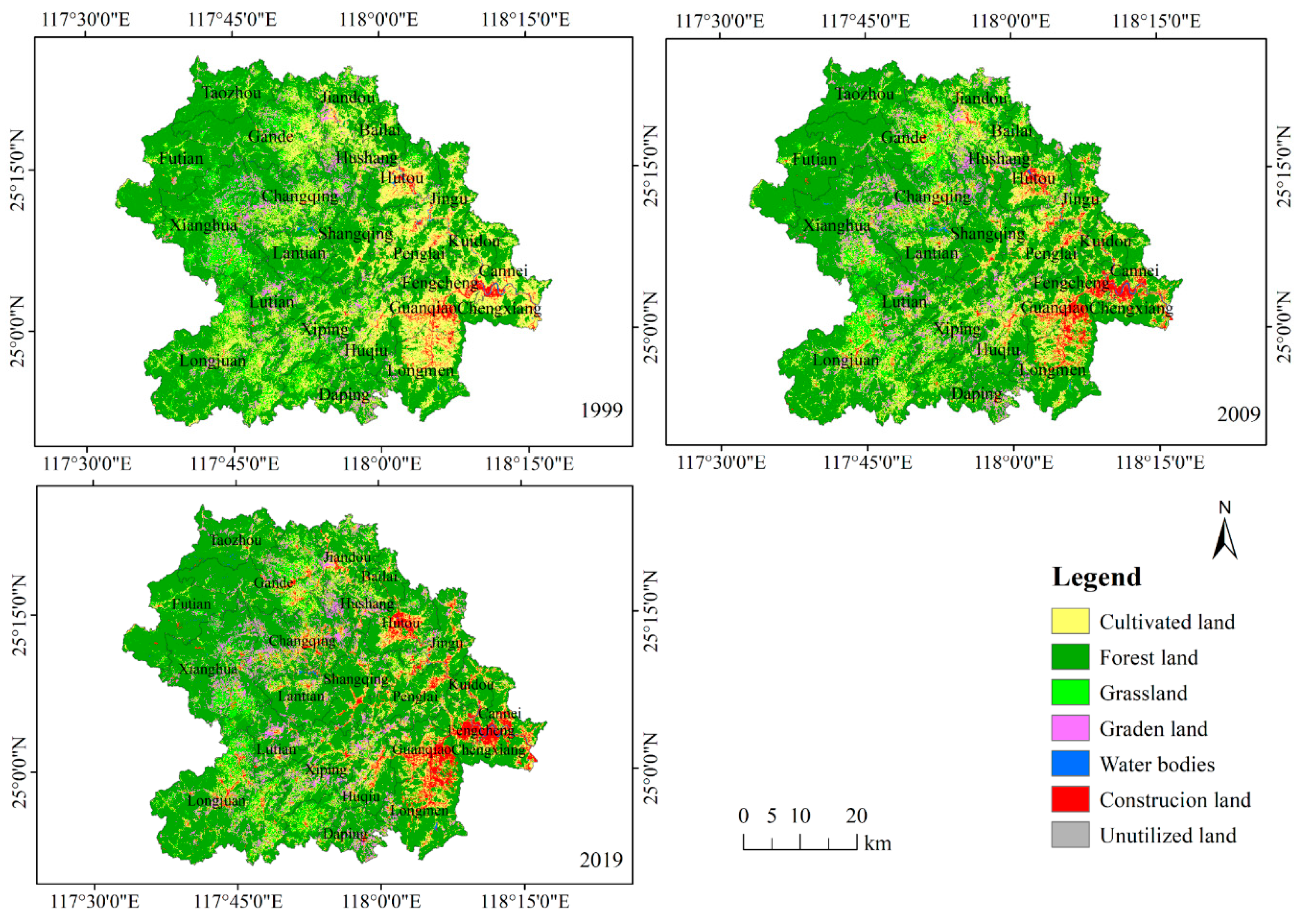
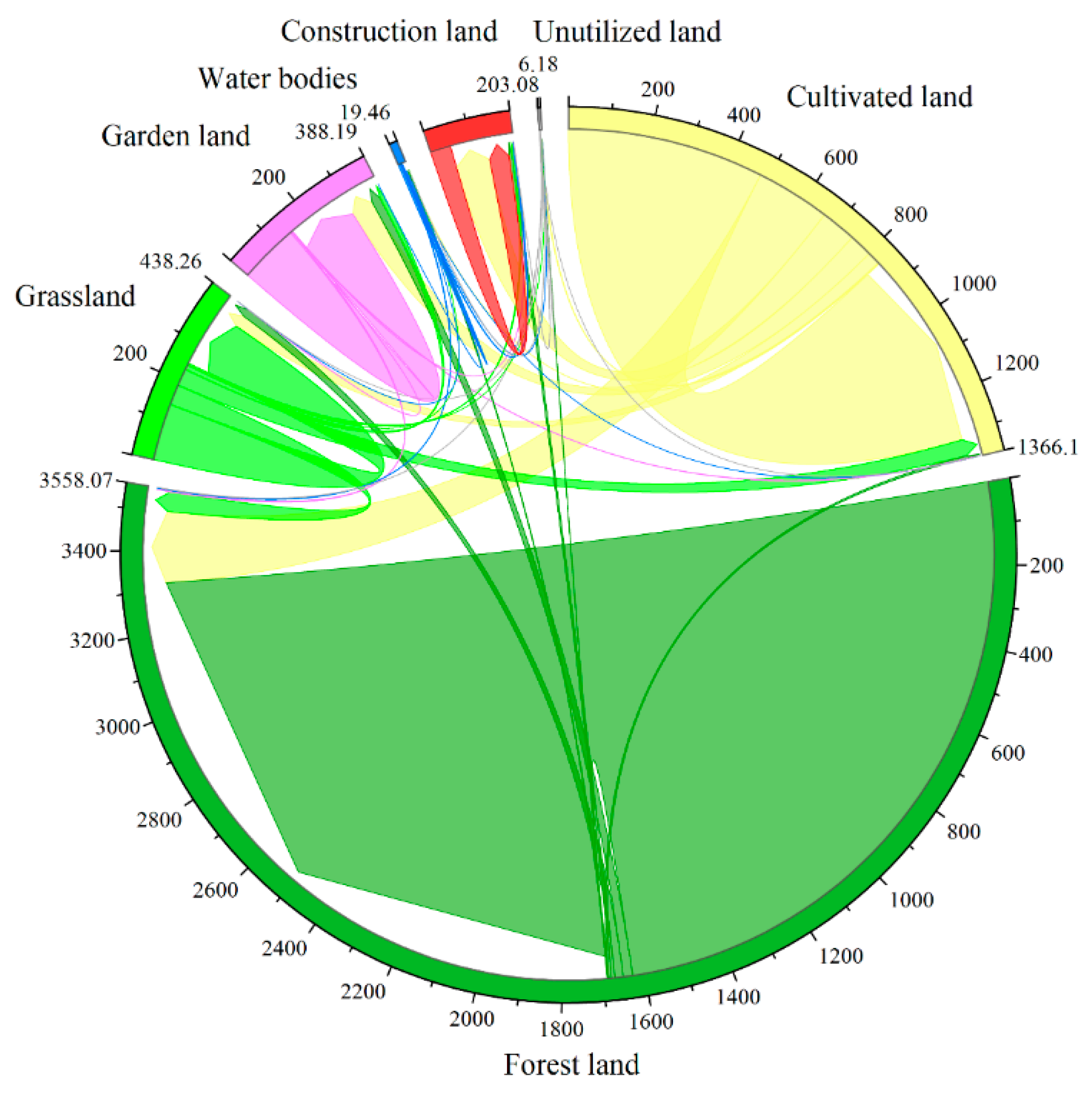
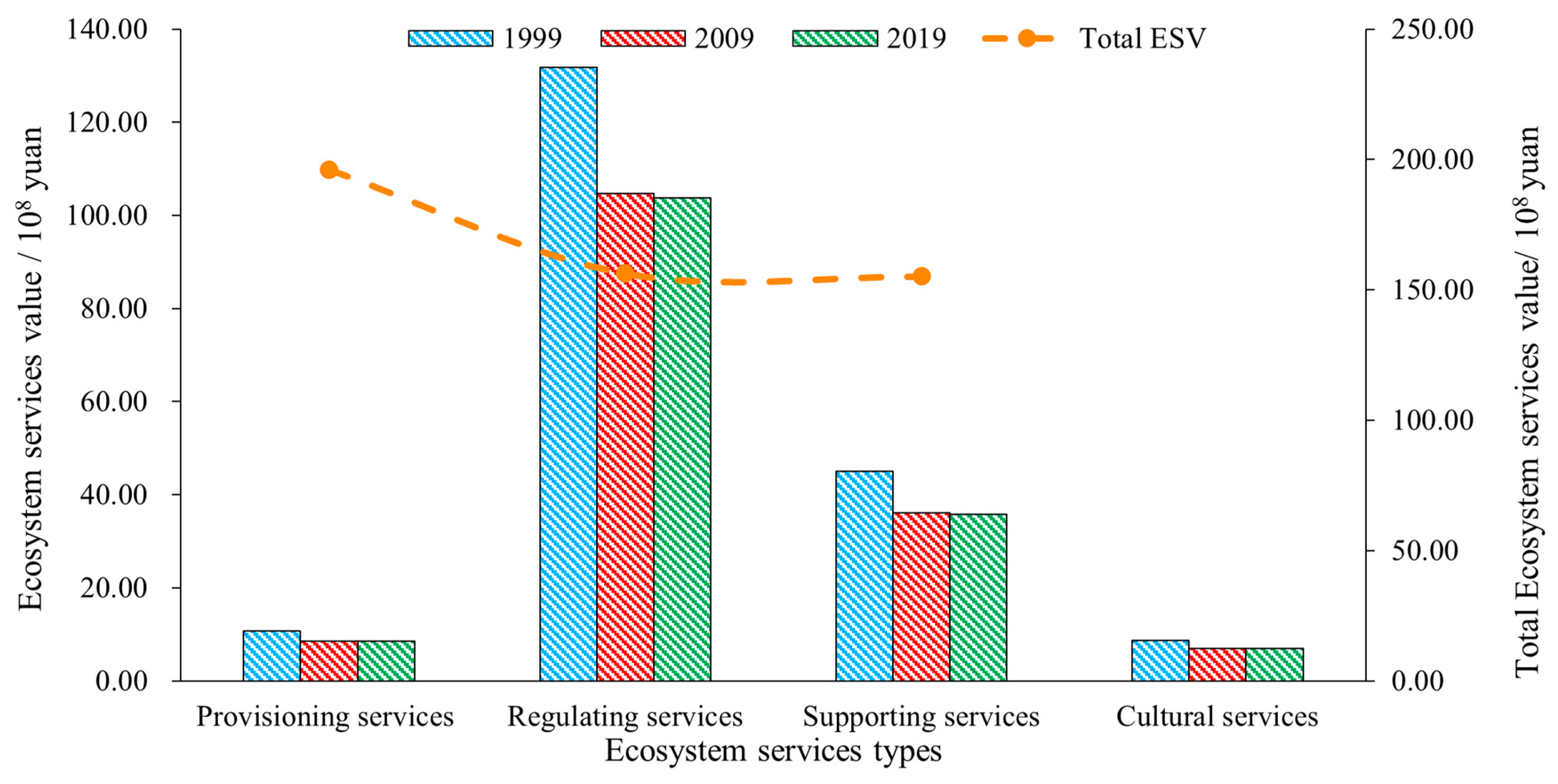
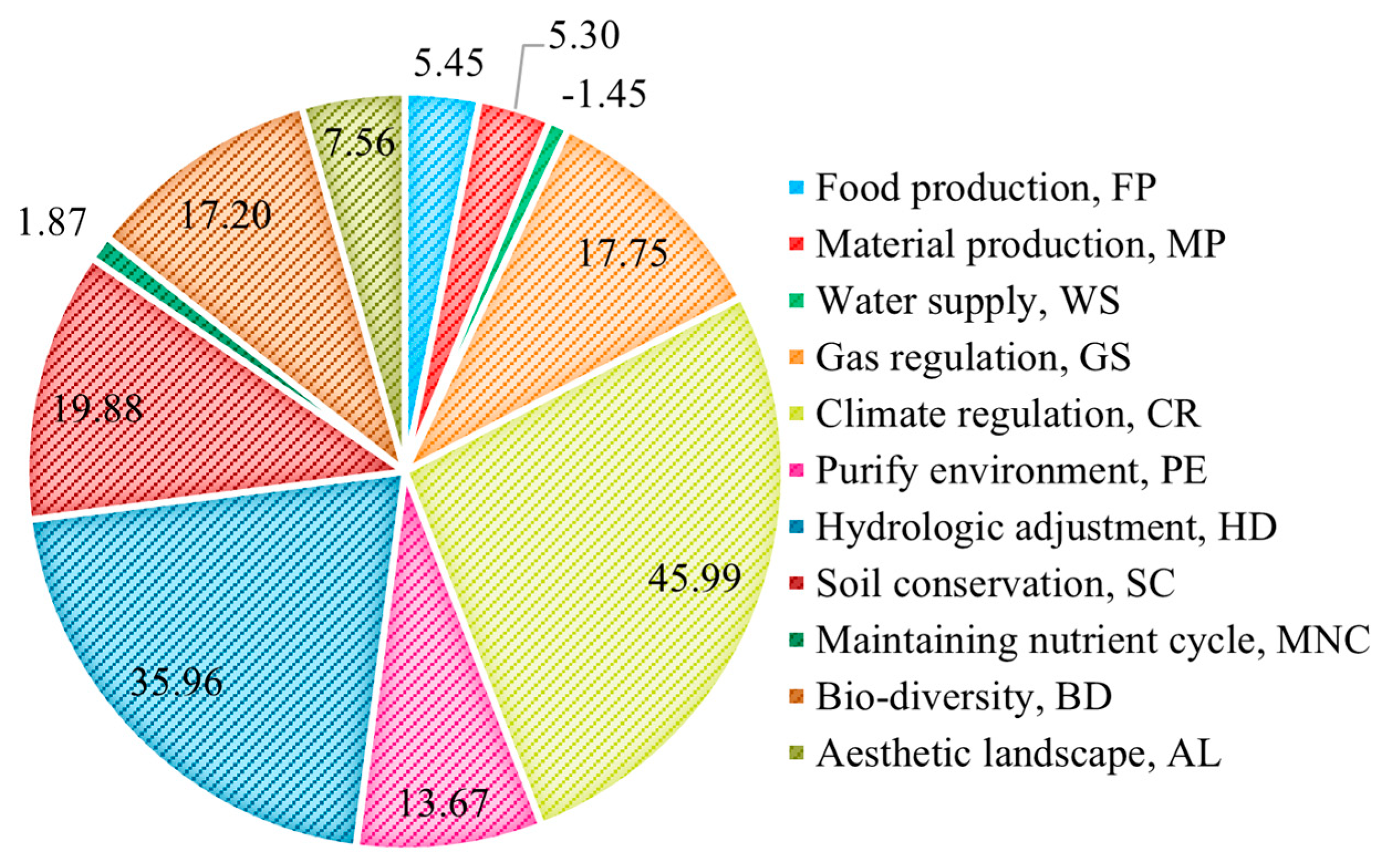
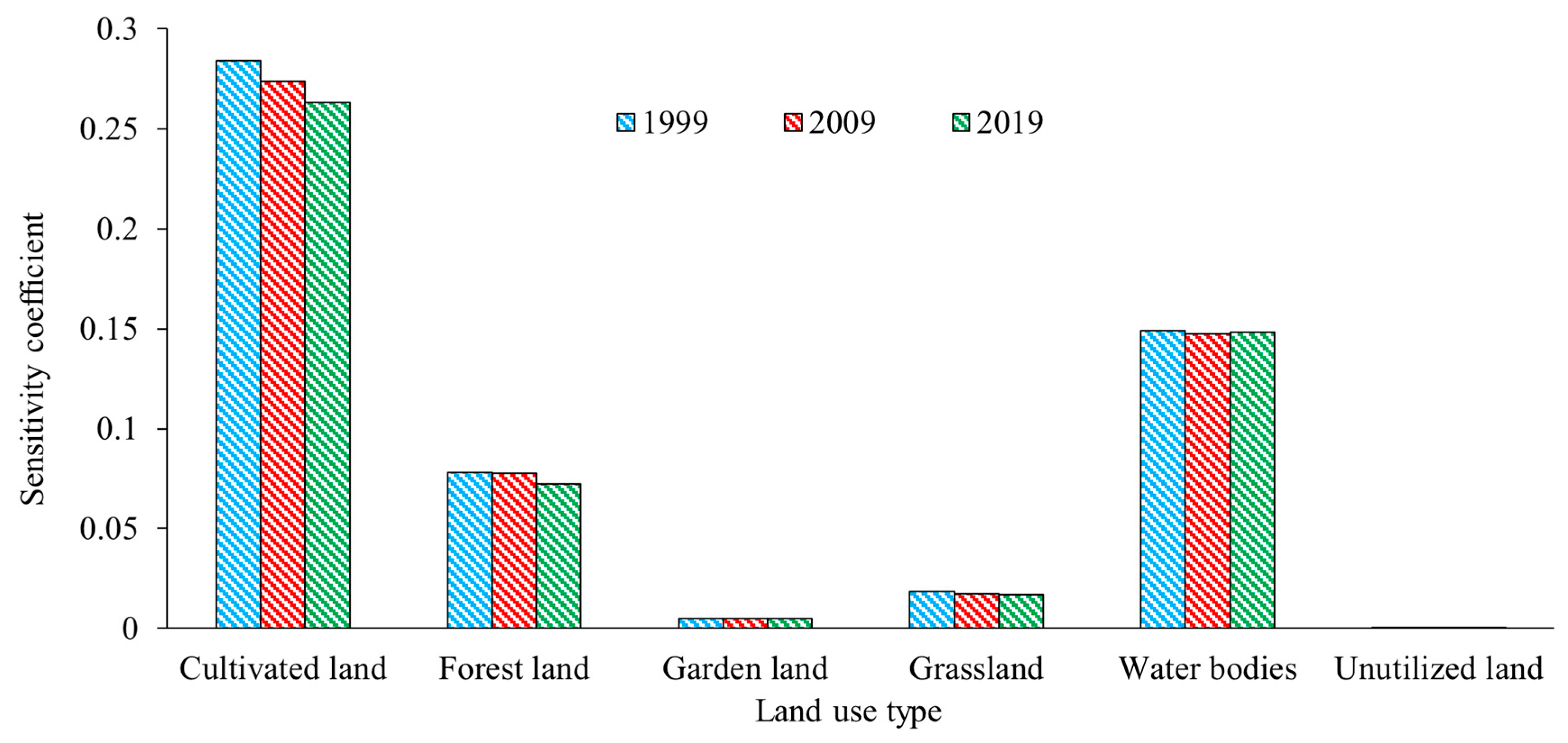
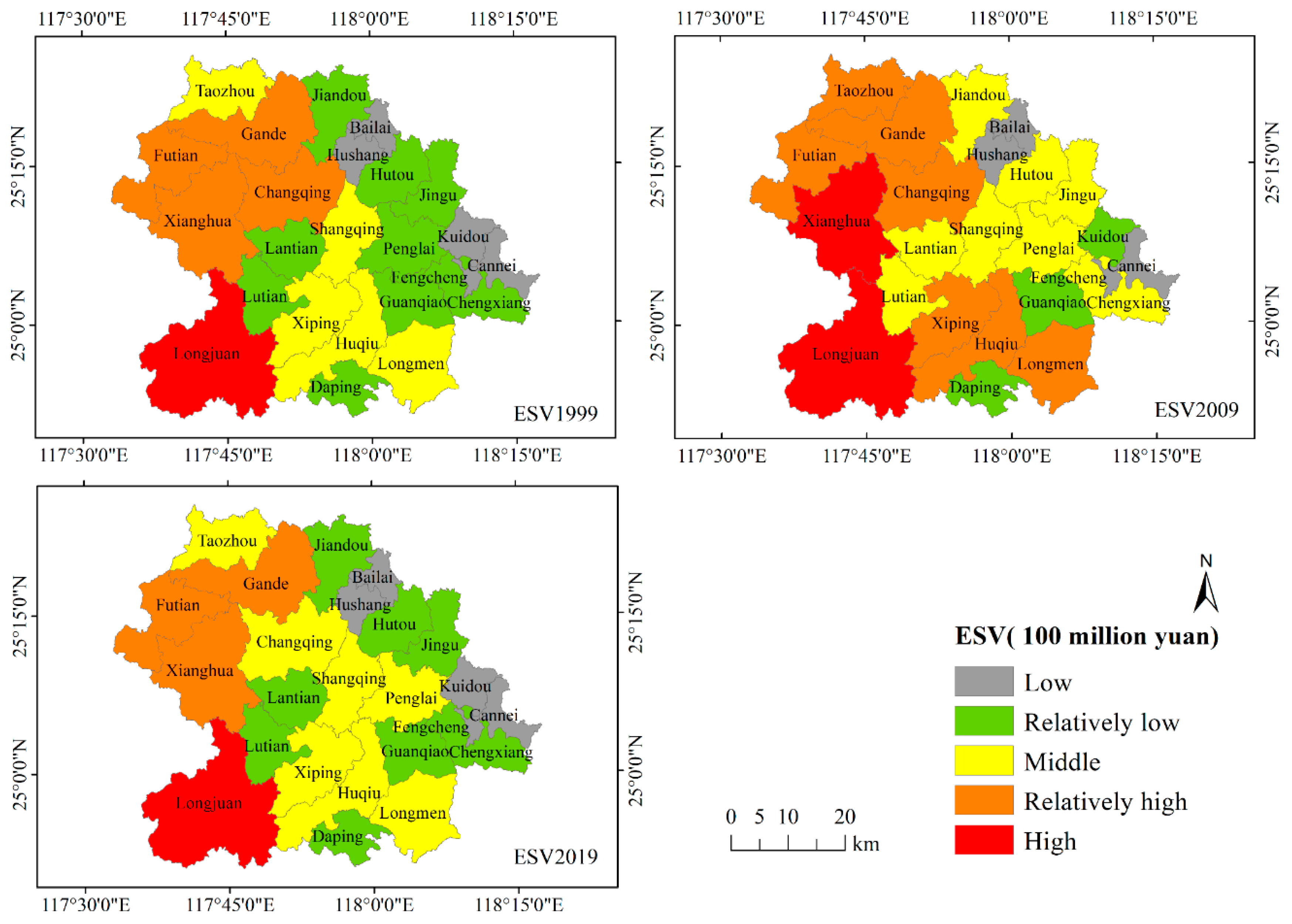
The harmonious development of the ecological environment and the economy is extremely important to achieve regional ecological construction and sustainable development. To properly assess the status of the harmonious development of the ecosystem and the economy, this study constructed an improved ecosystem services value (ESV) and eco-economic harmony (EEH) model to analyze the coordination relationships between the ecosystem and the economy in this region, based on Landsat TM/OLI data of Anxi County in 1999, 2009, and 2019. The results were as follows. (1) Significant changes in land- use occurred in Anxi County between 1999 and 2019. While grassland, cultivated land, and water bodies decreased by 22.91%, 36.82%, and 8.18%, respectively, other land-use types expanded including construction land (206.10%), garden land (56.39%), forest land (10.37%), and unutilized land (90.43%). (2) The ESV decreased by CNY 41.02 billion during this period, with the largest contribution from forest land and the most important service function being regulating services, and mountainous townships made a great contribution to the total ESV. (3) The eco-economic system of Anxi County was at an inharmonic level. The evaluation model produced more favorable results, especially at the township scale, which is highly sensitive to economic policy. This can provide scientific evidence for inter-regional ecological compensation and sustainable development while providing reference and inspiration for similar areas around the world to carry out relevant research.
Keywords: eco-economic system; land-use change; ecosystem services; equivalent factor; ecological value; eco-economic harmony eco-economic system; land-use change; ecosystem services; equivalent factor; ecological value; eco-economic harmony