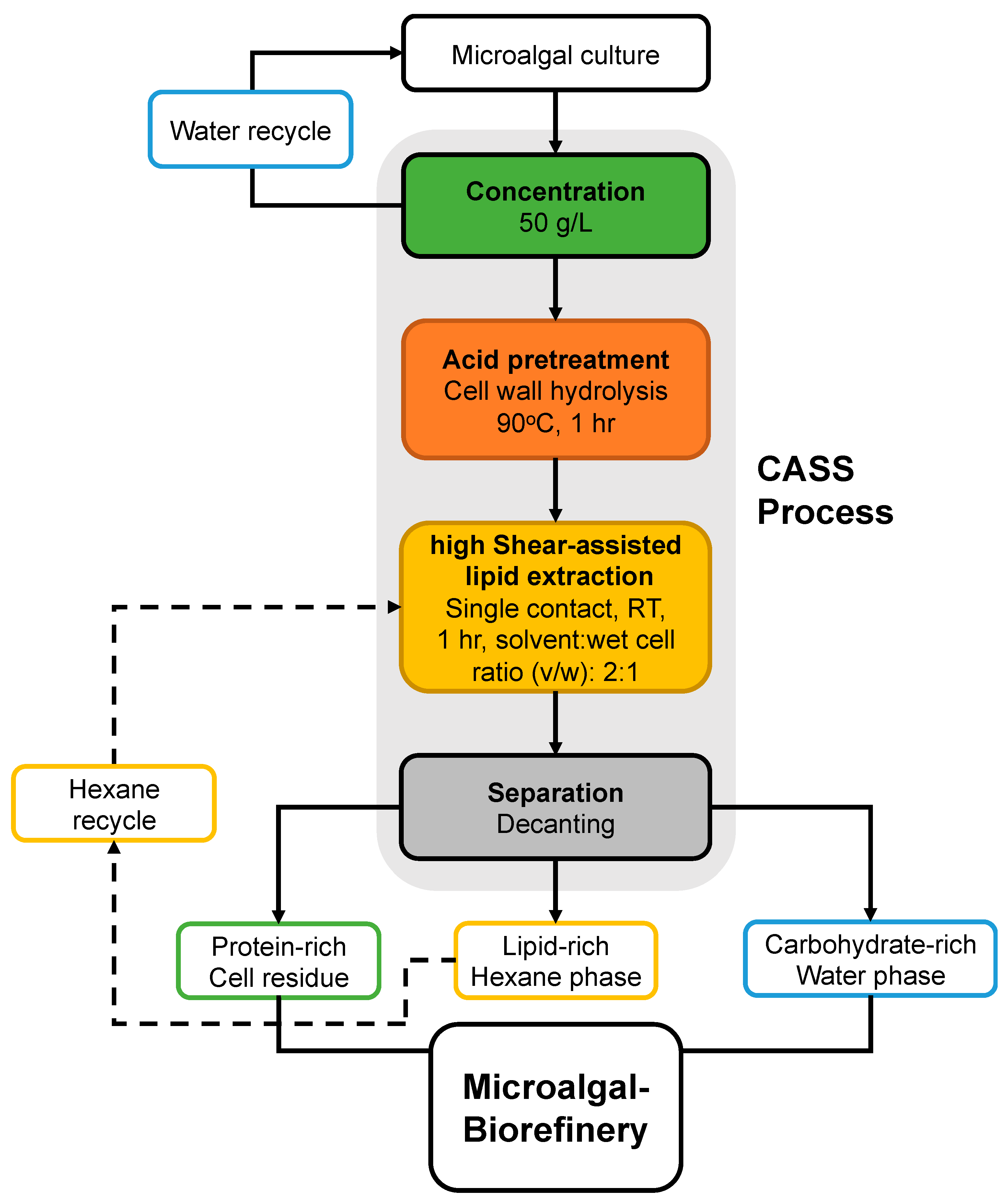
Two-Step Macromolecule Separation Process with Acid Pretreatment and High-Shear-Assisted Extraction for Microalgae-Based Biorefinery

Abstract
Share and Cite
Kim, D.; Kang, S.-G.; Chang, Y.K.; Kwak, M. Two-Step Macromolecule Separation Process with Acid Pretreatment and High-Shear-Assisted Extraction for Microalgae-Based Biorefinery. Sustainability 2024, 16, 7589. https://doi.org/10.3390/su16177589
Kim D, Kang S-G, Chang YK, Kwak M. Two-Step Macromolecule Separation Process with Acid Pretreatment and High-Shear-Assisted Extraction for Microalgae-Based Biorefinery. Sustainability. 2024; 16(17):7589. https://doi.org/10.3390/su16177589
Chicago/Turabian StyleKim, Donghyun, Seul-Gi Kang, Yong Keun Chang, and Minsoo Kwak. 2024. "Two-Step Macromolecule Separation Process with Acid Pretreatment and High-Shear-Assisted Extraction for Microalgae-Based Biorefinery" Sustainability 16, no. 17: 7589. https://doi.org/10.3390/su16177589
APA StyleKim, D., Kang, S.-G., Chang, Y. K., & Kwak, M. (2024). Two-Step Macromolecule Separation Process with Acid Pretreatment and High-Shear-Assisted Extraction for Microalgae-Based Biorefinery. Sustainability, 16(17), 7589. https://doi.org/10.3390/su16177589